QuizTraffic rulesMexico

Test your knowledge with our multiple-choice quiz. Learn from each answer and improve your understanding of the traffic rules and road signs of Mexico.

For informational purposes only. Always follow official regulations. Some content and images were created with AI assistance.


What is the safest choice if you have consumed alcohol?

151. What is the safest choice if you have consumed alcohol?

Drink coffee before driving.
✓ Do not drive and arrange a sober form of transport.
Drive slowly and avoid busy roads.
Eat something and wait a short while.

Alcohol can impair judgement, coordination, vision, and reaction time. A sober driver, taxi, public transport, or an overnight stay is the safer choice.

Alcohol consumption and the decision not to drive
AI-generated by Traffic-rules.com • WCIT • CC BY-SA
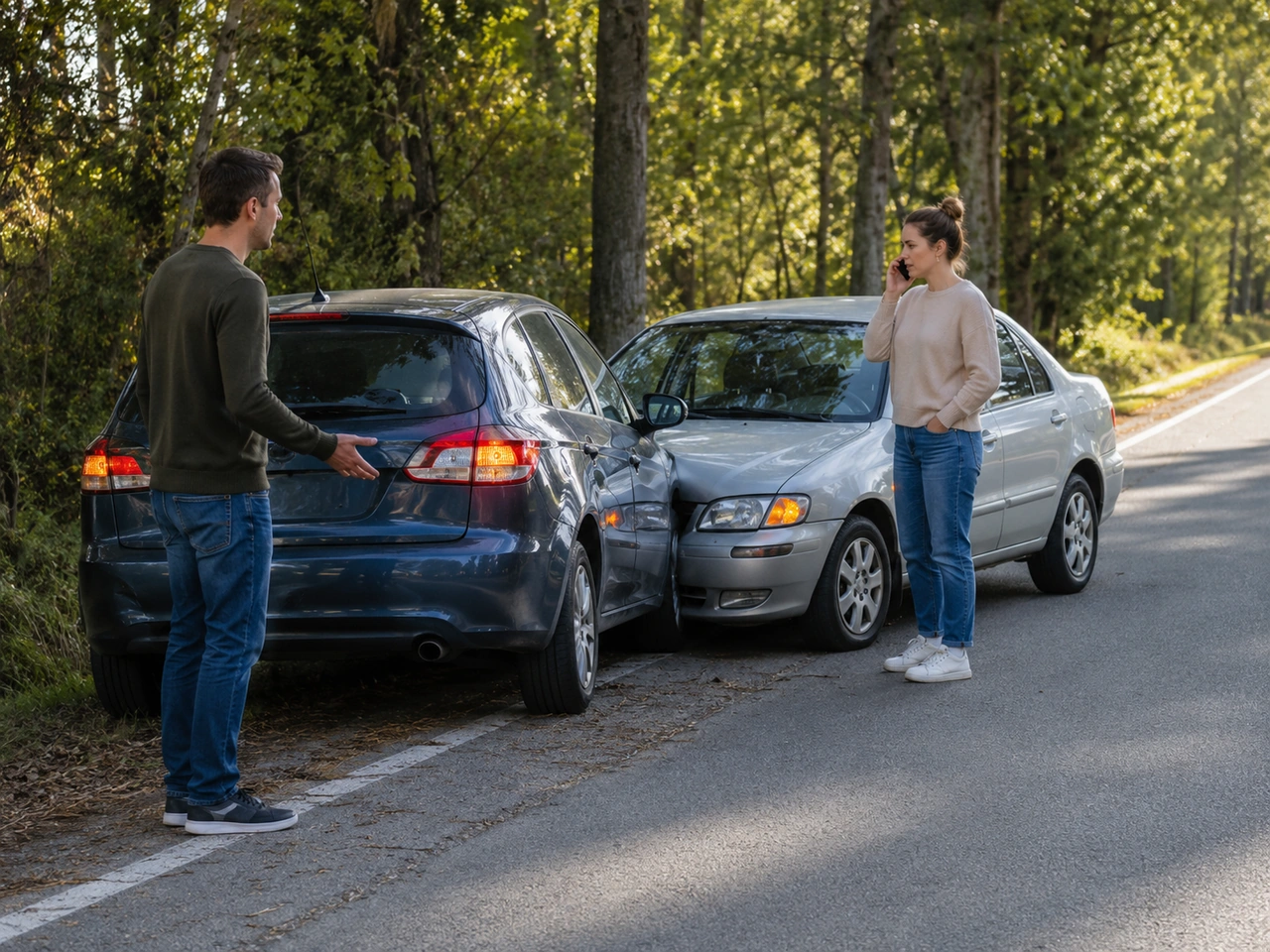
What should you do first after a collision?

152. What should you do first after a collision?

Check the vehicle damage before checking for injuries.
✓ Stop, check for danger and injuries, and call for help if needed.
Continue driving if the vehicles can still move.
Call your insurance company before checking for danger.

Stop the vehicle, warn other traffic where appropriate, assess immediate danger and injuries, and contact the emergency services when needed. Exchange any details required by local law.

Vehicles stopped after a road collision
AI-generated by Traffic-rules.com • WCIT • CC BY-SA
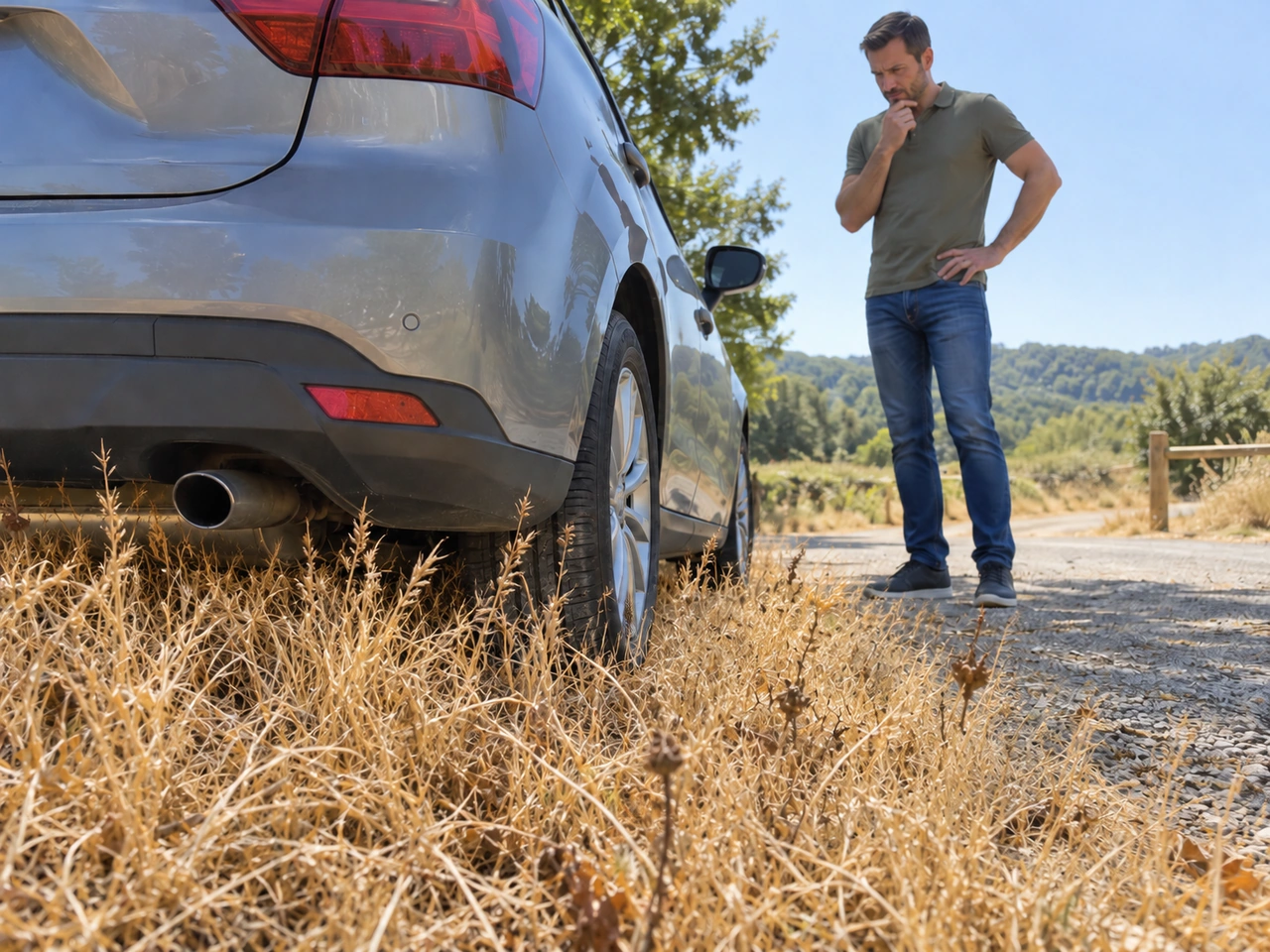
Why should you avoid parking a petrol or diesel vehicle on dry grass?

153. Why should you avoid parking a petrol or diesel vehicle on dry grass?

The engine could become difficult to restart.
The grass could block the vehicle's ventilation system.
The tyres could lose pressure more quickly.
✓ Hot exhaust components could ignite the vegetation.

Parts of the exhaust system, especially the catalytic converter, can become very hot while driving. Parking over dry grass, leaves, or other combustible vegetation can create a fire risk. Park on a suitable non-flammable surface whenever possible.

Vehicle exhaust close to dry grass
AI-generated by Traffic-rules.com • WCIT • CC BY-SA
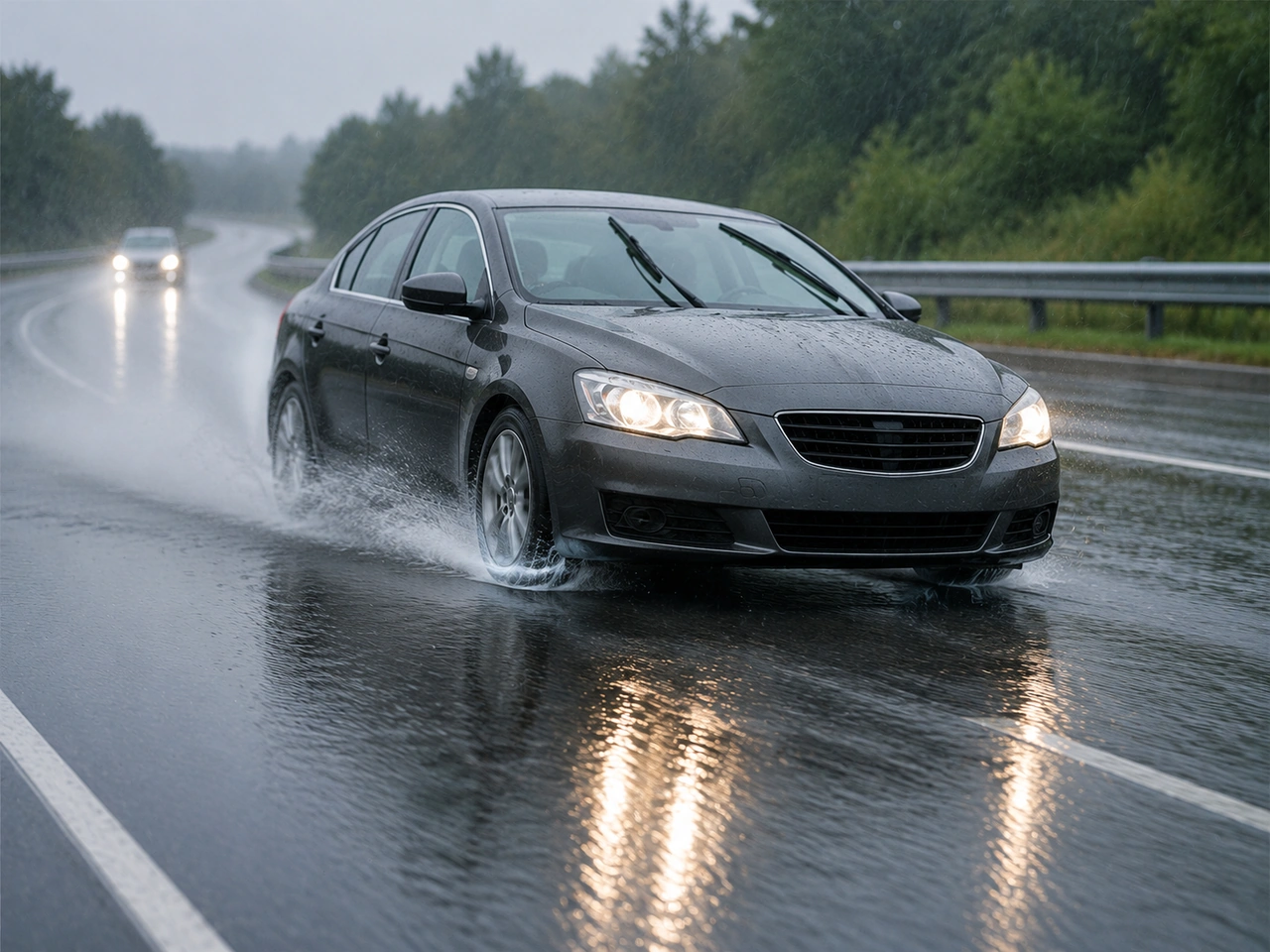
What is aquaplaning?

154. What is aquaplaning?

When wet brakes become too hot to work properly.
When steering becomes heavier on a dry road.
When low tyre pressure causes a tyre to burst.
✓ When tyres ride on a layer of water and lose contact with the road.

Aquaplaning occurs when water builds up between the tyres and the road, causing a loss of grip and control. The risk increases at higher speeds.

Water separating a tyre from the road surface
AI-generated by Traffic-rules.com • WCIT • CC BY-SA
Why should you leave extra space behind a vehicle climbing a steep hill?

155. Why should you leave extra space behind a vehicle climbing a steep hill?

It must always stop before reaching the top.
✓ It may slow down suddenly or roll backward.
Its tyres may warm up more quickly.
Its engine may become louder on the hill.

Vehicles may lose speed or briefly roll backward when starting on a steep incline. Extra space gives you more time to react.

Vehicle following another up a steep hill
AI-generated by Traffic-rules.com • WCIT • CC BY-SA
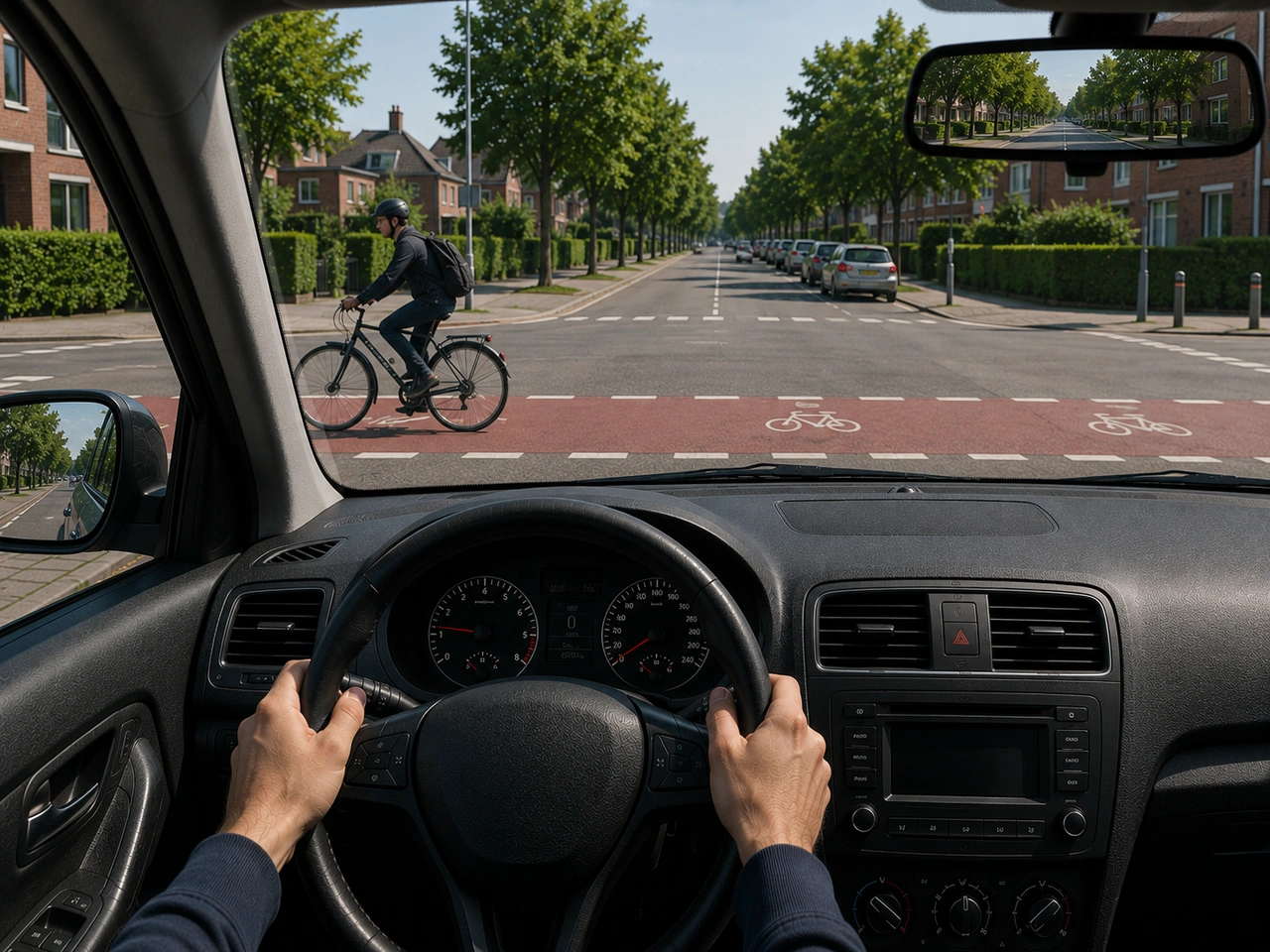
What should you do before turning across a cycle lane?

156. What should you do before turning across a cycle lane?

✓ Check mirrors and blind spots carefully for cyclists.
Turn quickly before cyclists reach the junction.
Sound your horn and turn immediately.
Ignore the cycle lane if you are signalling.

Cyclists may be beside or behind you when you turn. Check mirrors and blind spots, signal clearly, and turn only when it is safe.

Vehicle preparing to turn across a cycle lane
AI-generated by Traffic-rules.com • WCIT • CC BY-SA
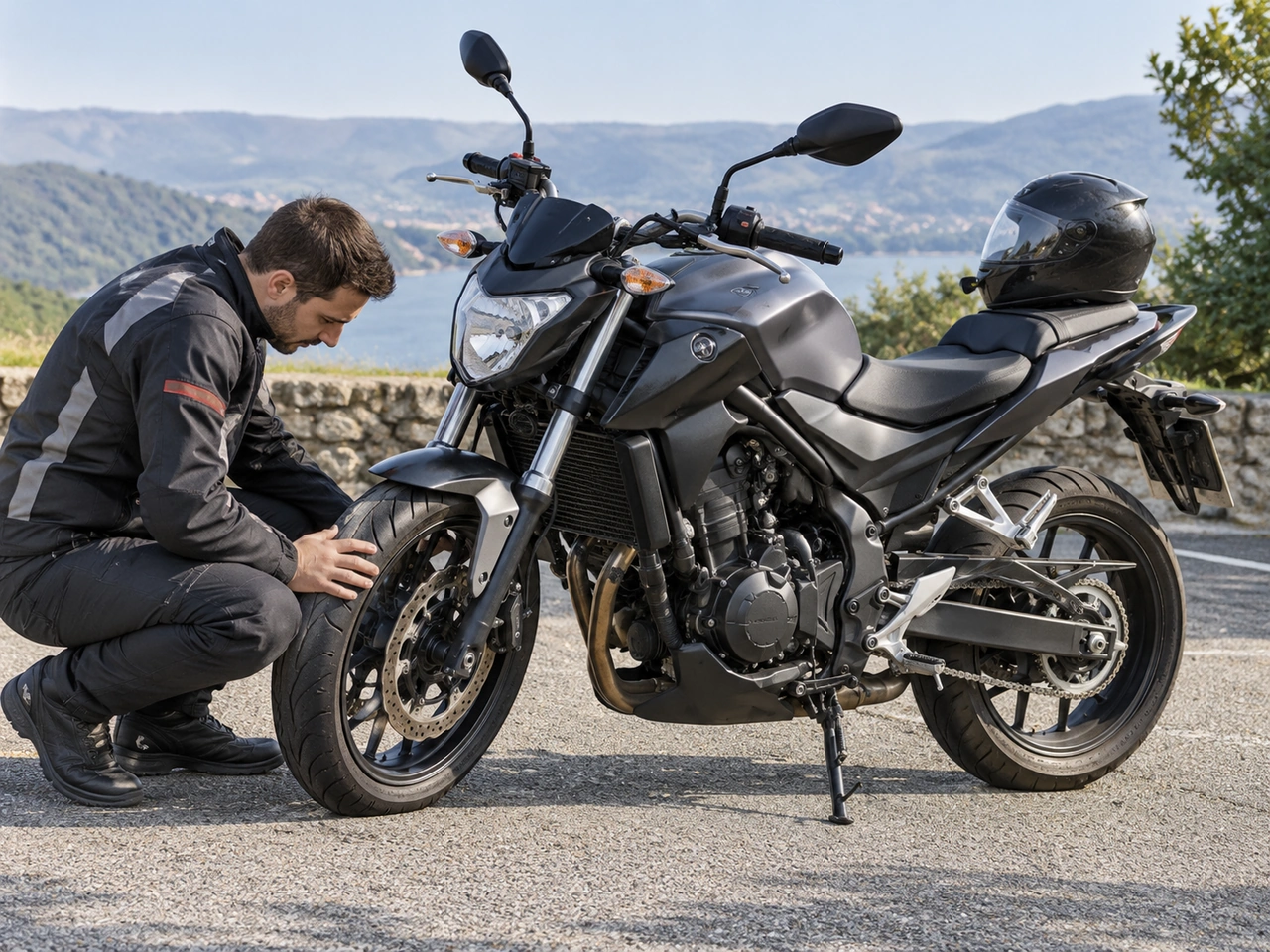
What should you check before starting a motorcycle journey?

157. What should you check before starting a motorcycle journey?

Only the tyres if the journey is long.
Only the brakes and lights.
Nothing if the motorcycle was recently serviced.
✓ Tyres, brakes, lights, steering, and controls.

Before riding, carry out a basic safety check. Check the tyres, brakes, lights, steering and controls, and inspect the drive chain, belt or other drive components where applicable. Finding a problem before setting off can prevent a breakdown or loss of control.

Checking a motorcycle before a journey
AI-generated by Traffic-rules.com • WCIT • CC BY-SA
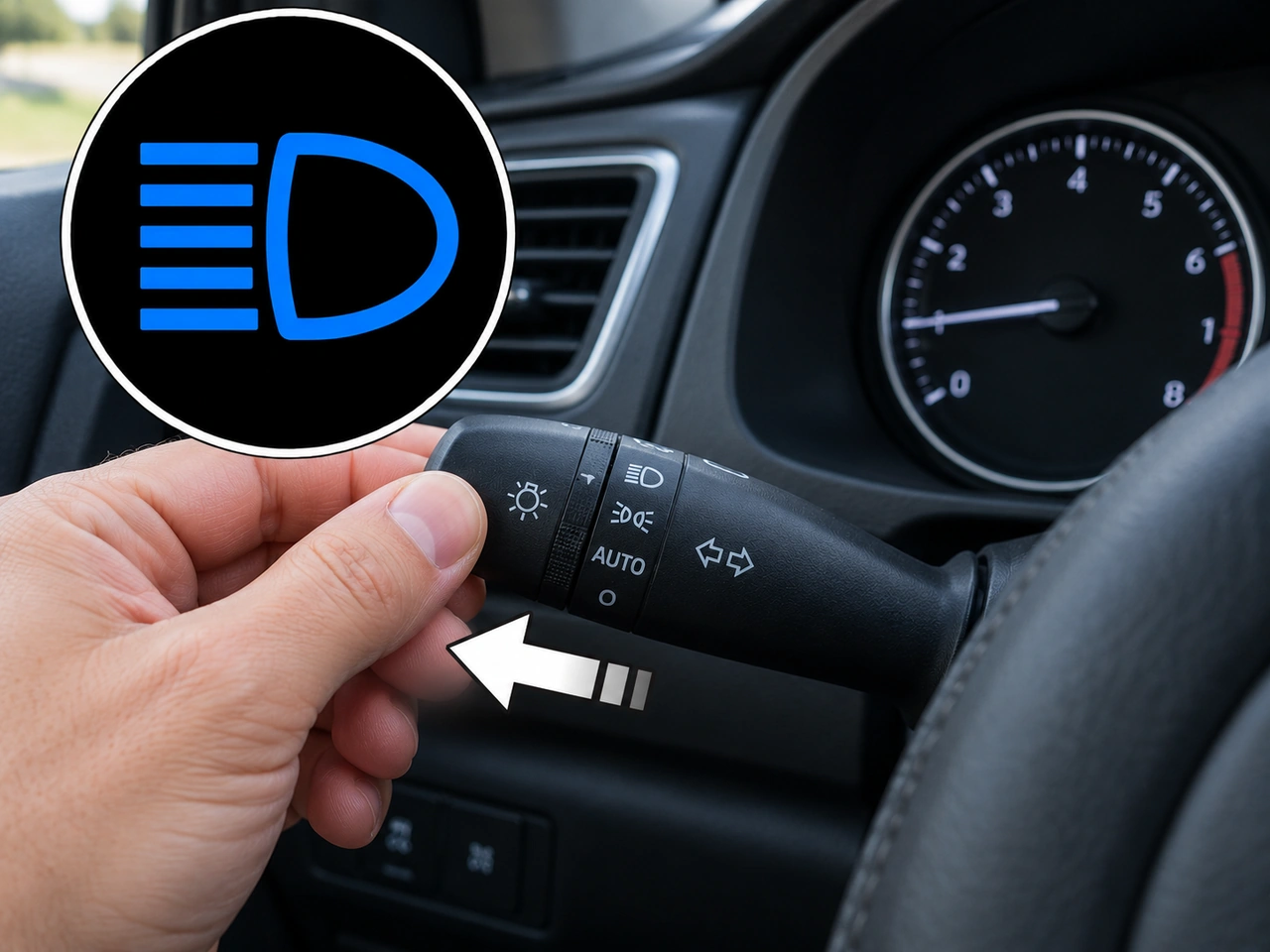
What does pulling the lighting stalk towards you normally do?

158. What does pulling the lighting stalk towards you normally do?

Activate the hazard warning lights.
✓ Flash the main-beam headlights.
Switch on the dipped headlights.
Switch on the front fog lights.

Pulling the lighting stalk towards you normally flashes the main-beam headlights. This briefly illuminates the main beam while the stalk is held or operated.

Lighting stalk used to flash the main-beam headlights
AI-generated by Traffic-rules.com • WCIT • CC BY-SA
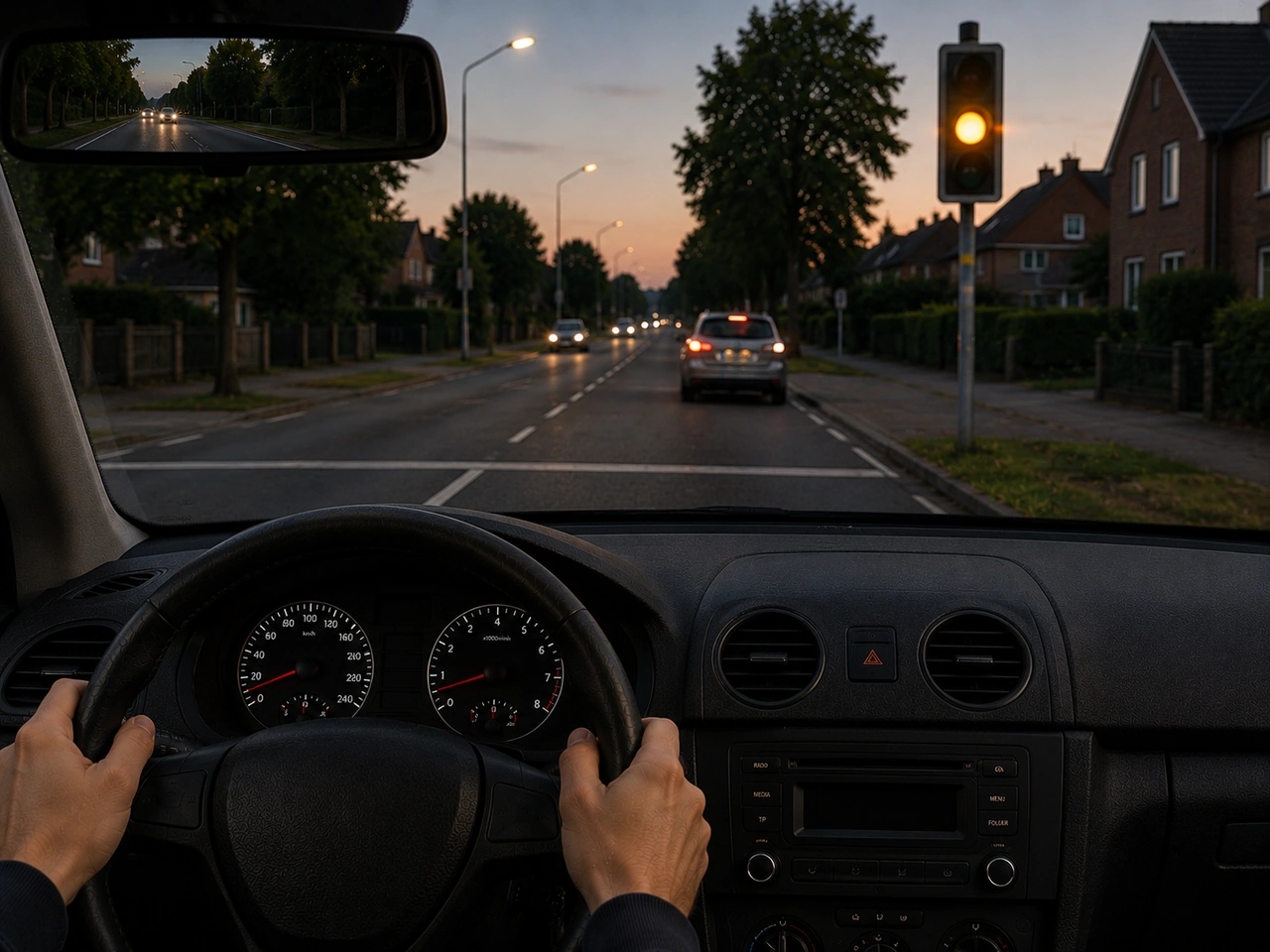
What should you do when traffic lights change to amber as you approach?

159. What should you do when traffic lights change to amber as you approach?

Accelerate to pass before the light turns red.
✓ Stop if you can do so safely.
Treat it like a green light until it turns red.
Continue at the same speed if the junction looks clear.

An amber light warns that the signal is changing. Stop if it is safe, but avoid sudden braking that could cause danger behind you.

Vehicle approaching an amber traffic light
AI-generated by Traffic-rules.com • WCIT • CC BY-SA
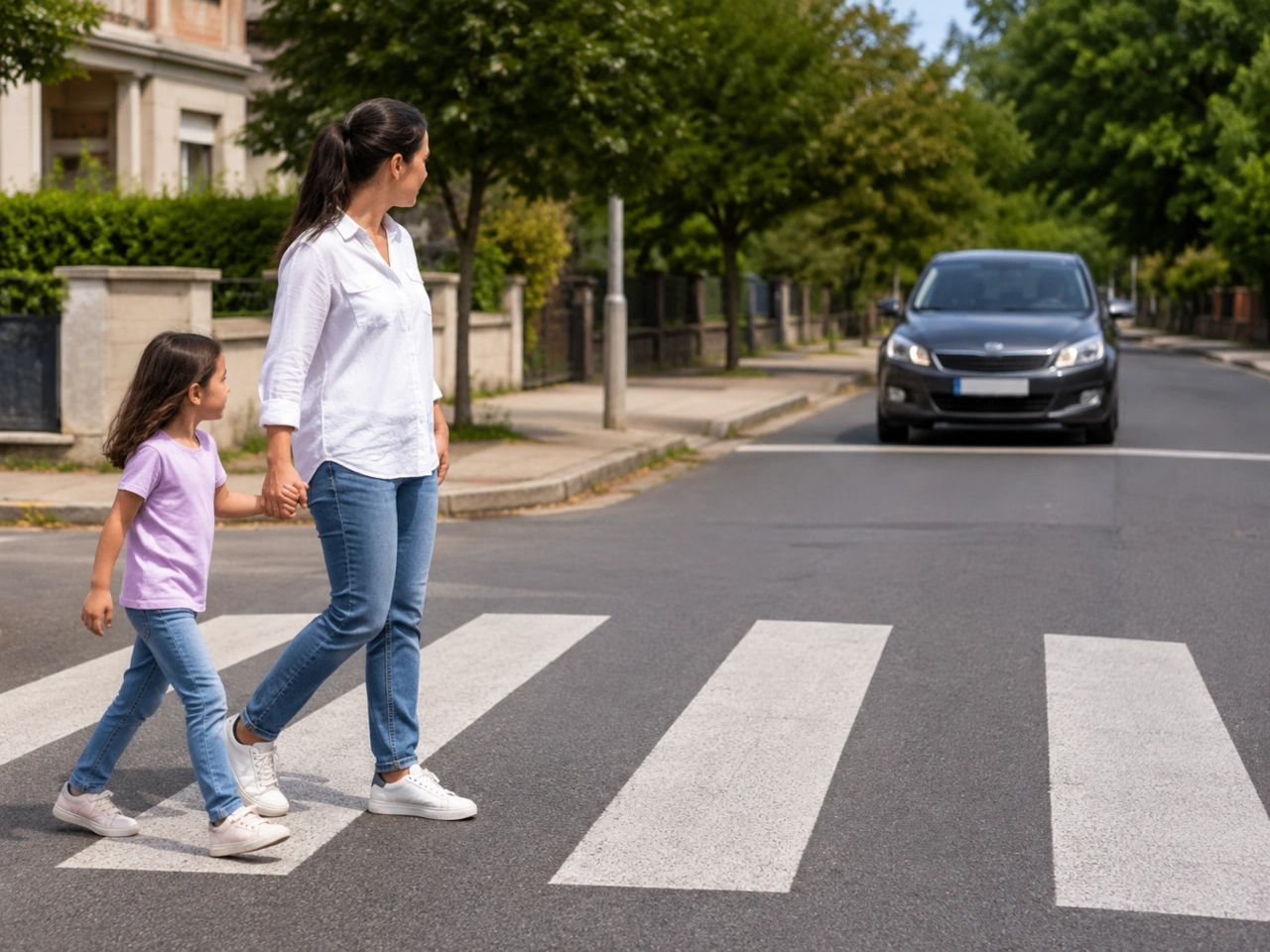
What is the safest way to cross the road with a child?

160. What is the safest way to cross the road with a child?

Ask them to decide when it is safe to cross.
Cross separately so everyone has more space.
Let them run once the first lane is clear.
✓ Hold their hand and keep them close.

Children can be unpredictable near traffic. Keep them close and guide them safely across the road.

Adult holding a child's hand while crossing the road
AI-generated by Traffic-rules.com • WCIT • CC BY-SA
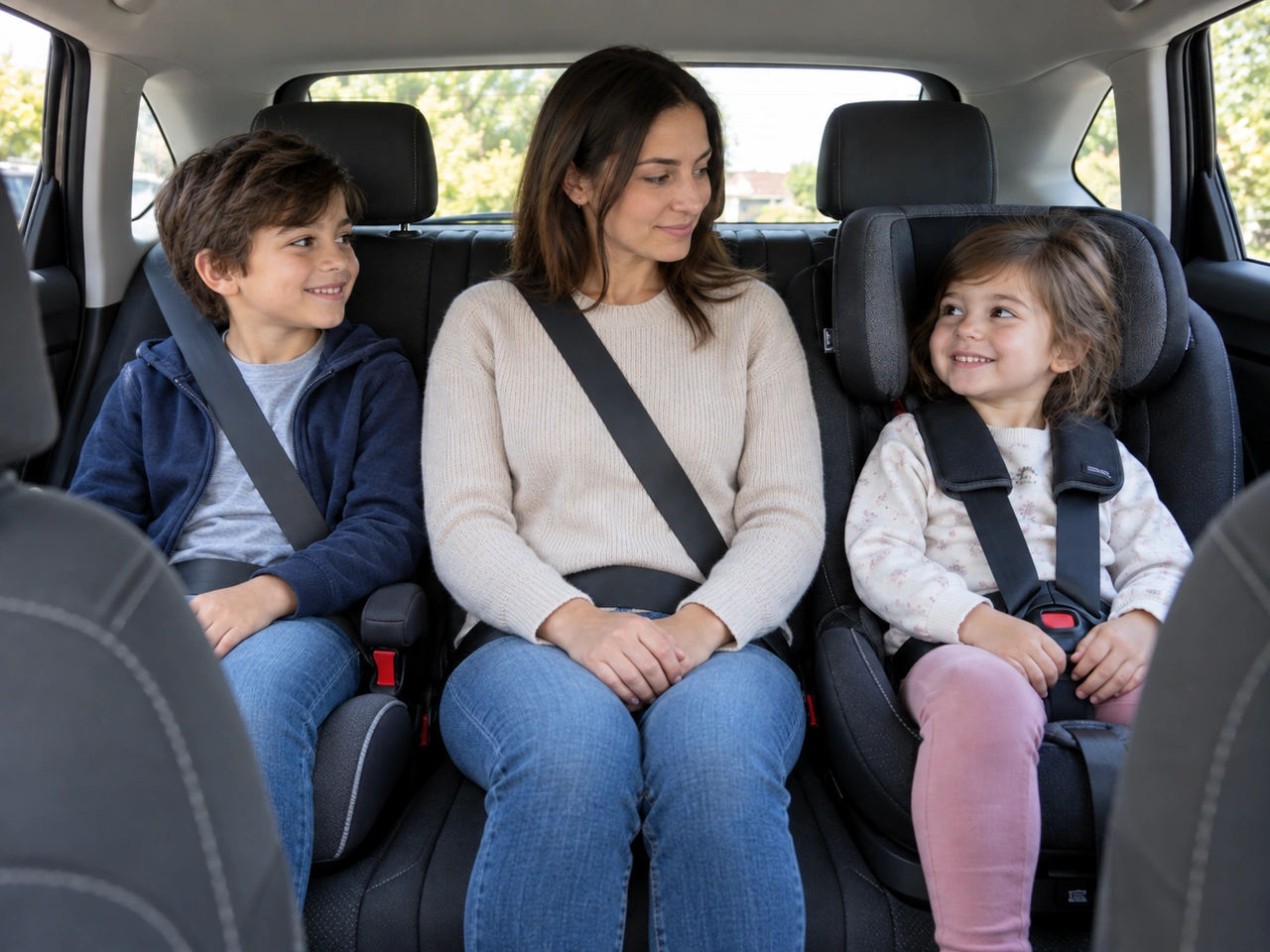
Should rear-seat passengers be securely restrained?

161. Should rear-seat passengers be securely restrained?

No, only front-seat occupants need to be restrained.
✓ Yes, using seat belts or suitable child restraints as appropriate.
Only if the vehicle does not have rear airbags.
Only when travelling on motorways or at higher speeds.

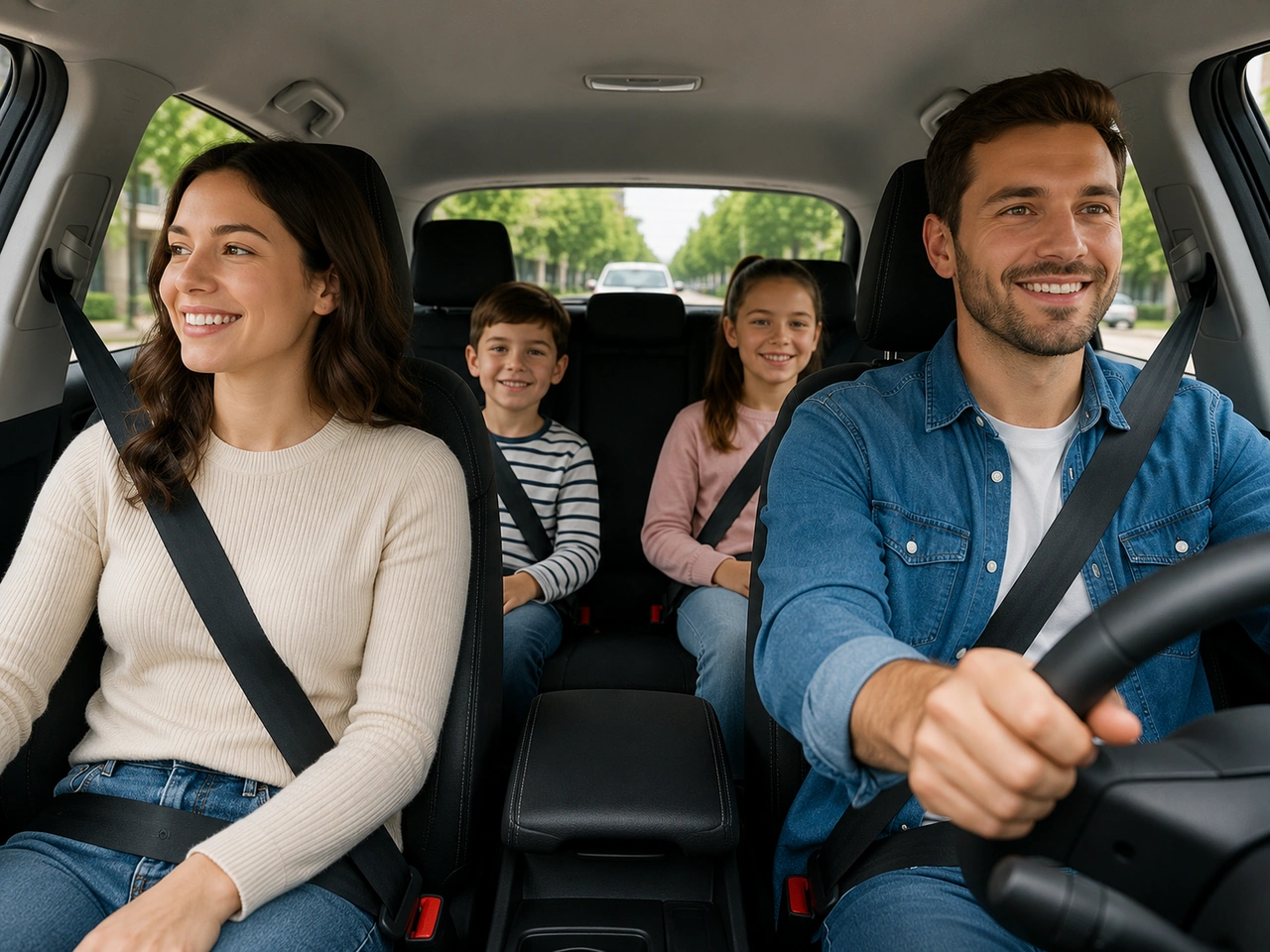
Rear-seat passengers should be securely restrained using seat belts or suitable child restraints as appropriate. Proper restraint reduces the risk of serious injury and prevents occupants from being thrown around or forwards in a collision.

Rear-seat passengers secured for a journey
AI-generated by Traffic-rules.com • WCIT • CC BY-SA
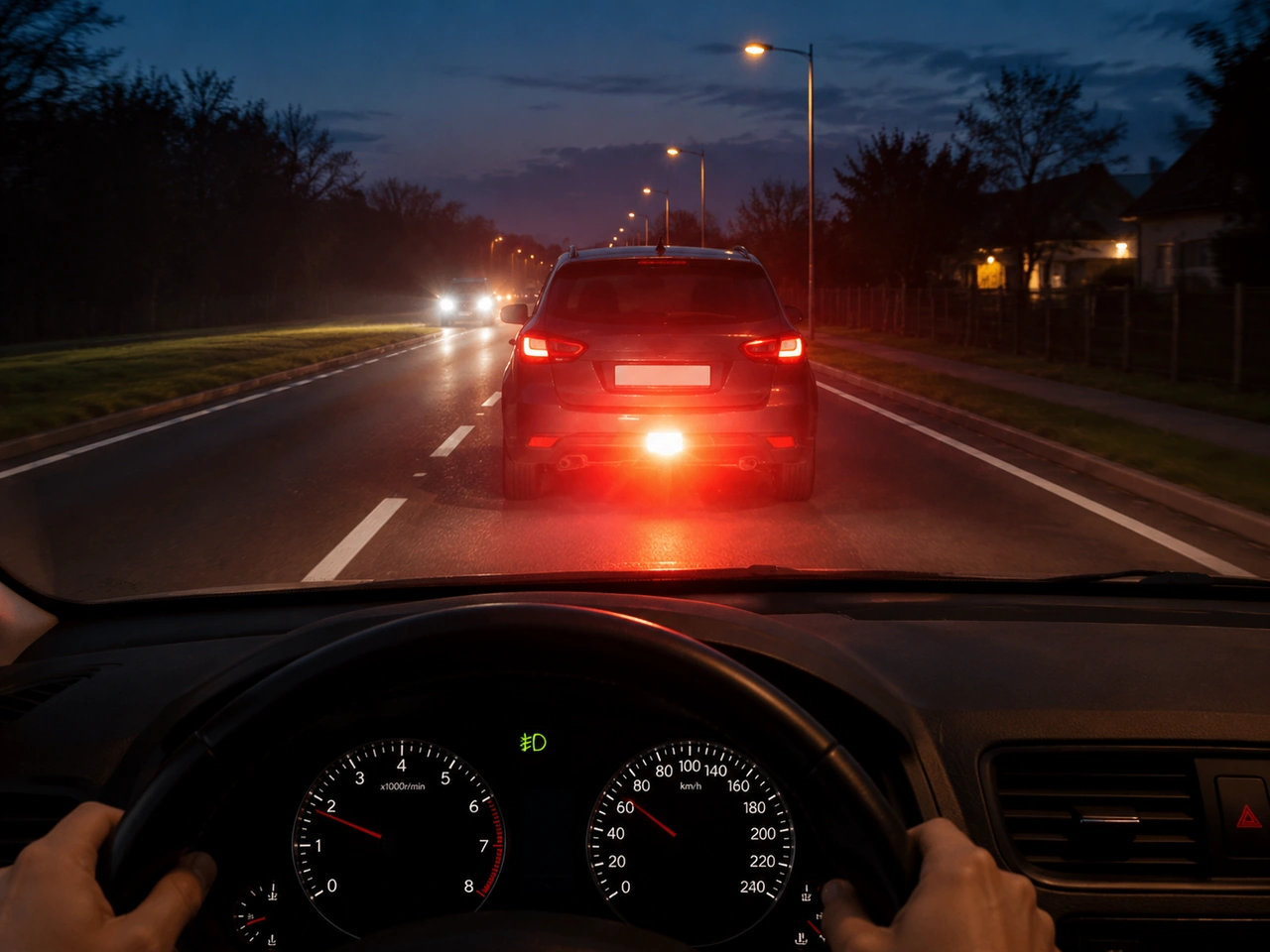
When should you switch off your fog lights?

162. When should you switch off your fog lights?

Never, because they always improve visibility.
Whenever you stop at a traffic light.
Only after the journey is finished.
✓ When visibility improves and they are no longer needed.

Fog lights can dazzle other road users when visibility is normal, so switch them off when conditions improve.

Fog-light control as visibility improves
AI-generated by Traffic-rules.com • WCIT • CC BY-SA
What should you do if another road user makes a mistake?

163. What should you do if another road user makes a mistake?

✓ Stay calm and avoid creating more danger.
Keep your course and expect them to correct their mistake.
Immediately overtake them to get past the situation.
Use your horn repeatedly to express your frustration.

Road users can make mistakes. Staying calm and reacting safely helps prevent crashes.

Driver responding to another road user's mistake
AI-generated by Traffic-rules.com • WCIT • CC BY-SA
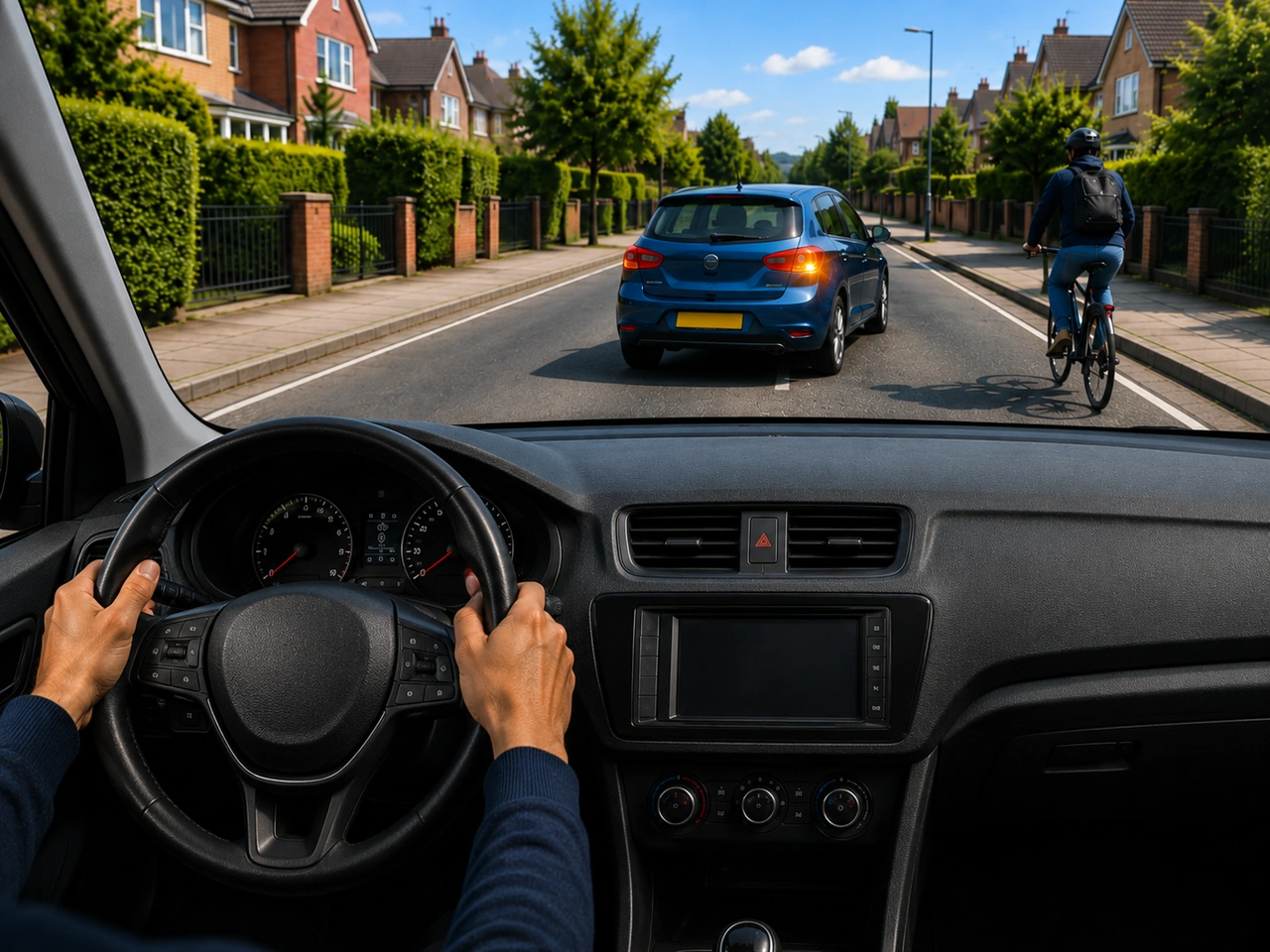
Why can temporary road surfaces increase stopping distance?

164. Why can temporary road surfaces increase stopping distance?

Roadworks switch off anti-lock braking.
Construction dust increases tyre pressure.
Temporary roads always slope downhill.
✓ Loose gravel, mud, or uneven material may reduce tyre grip.

Temporary surfaces may provide less grip than normal asphalt. Reduce speed and allow more distance for braking.

Loose or uneven road surface through roadworks
AI-generated by Traffic-rules.com • WCIT • CC BY-SA
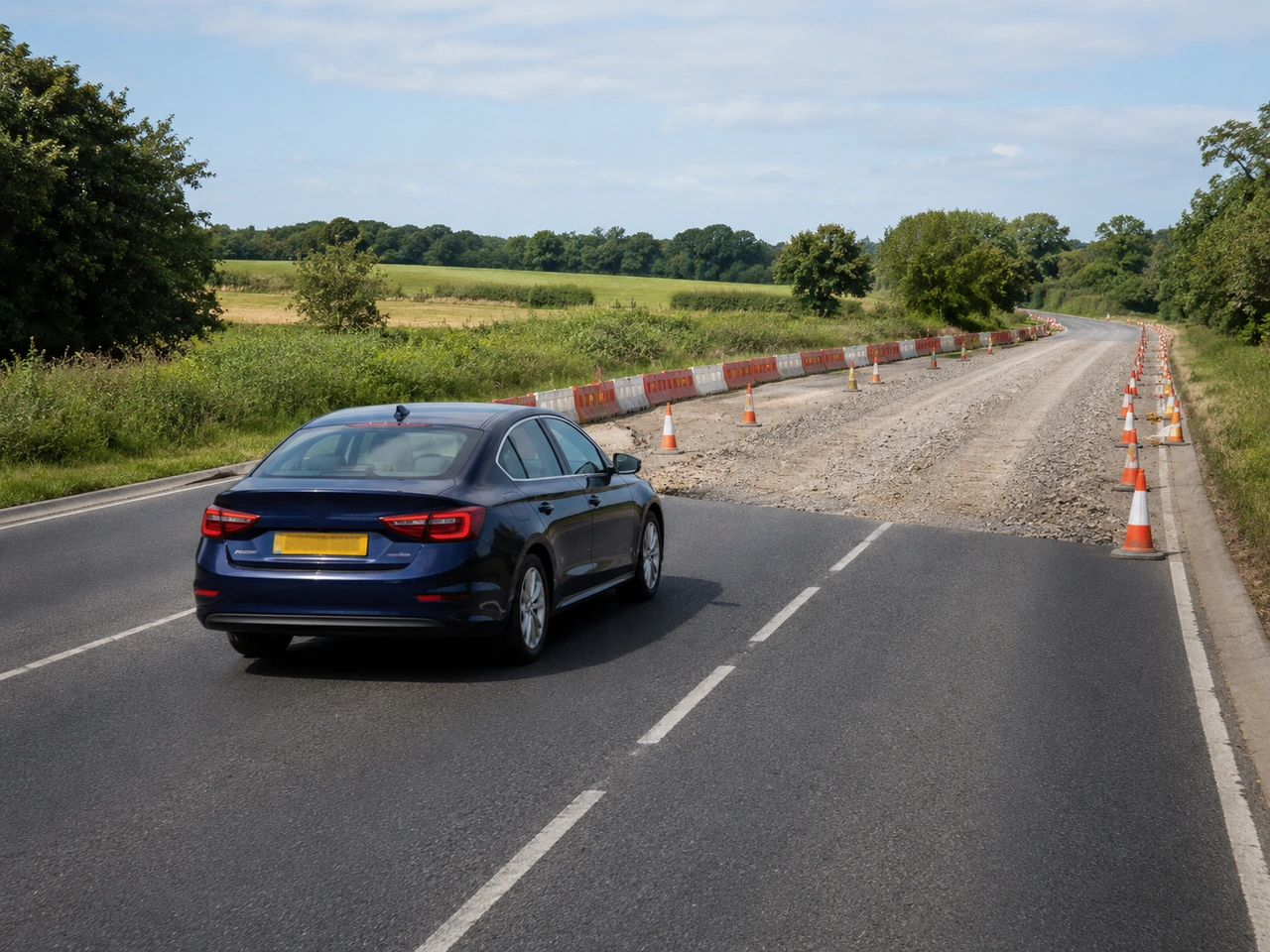
What does this vehicle-control symbol indicate?

165. What does this vehicle-control symbol indicate?

Mirror adjustment.
Child safety lock.
Boot release.
✓ Central door locking.

This control operates the vehicle's central door locking system. Pressing it locks or unlocks the vehicle's doors, depending on the current lock state.

Central door-locking control and symbol
AI-generated by Traffic-rules.com • WCIT • CC BY-SA
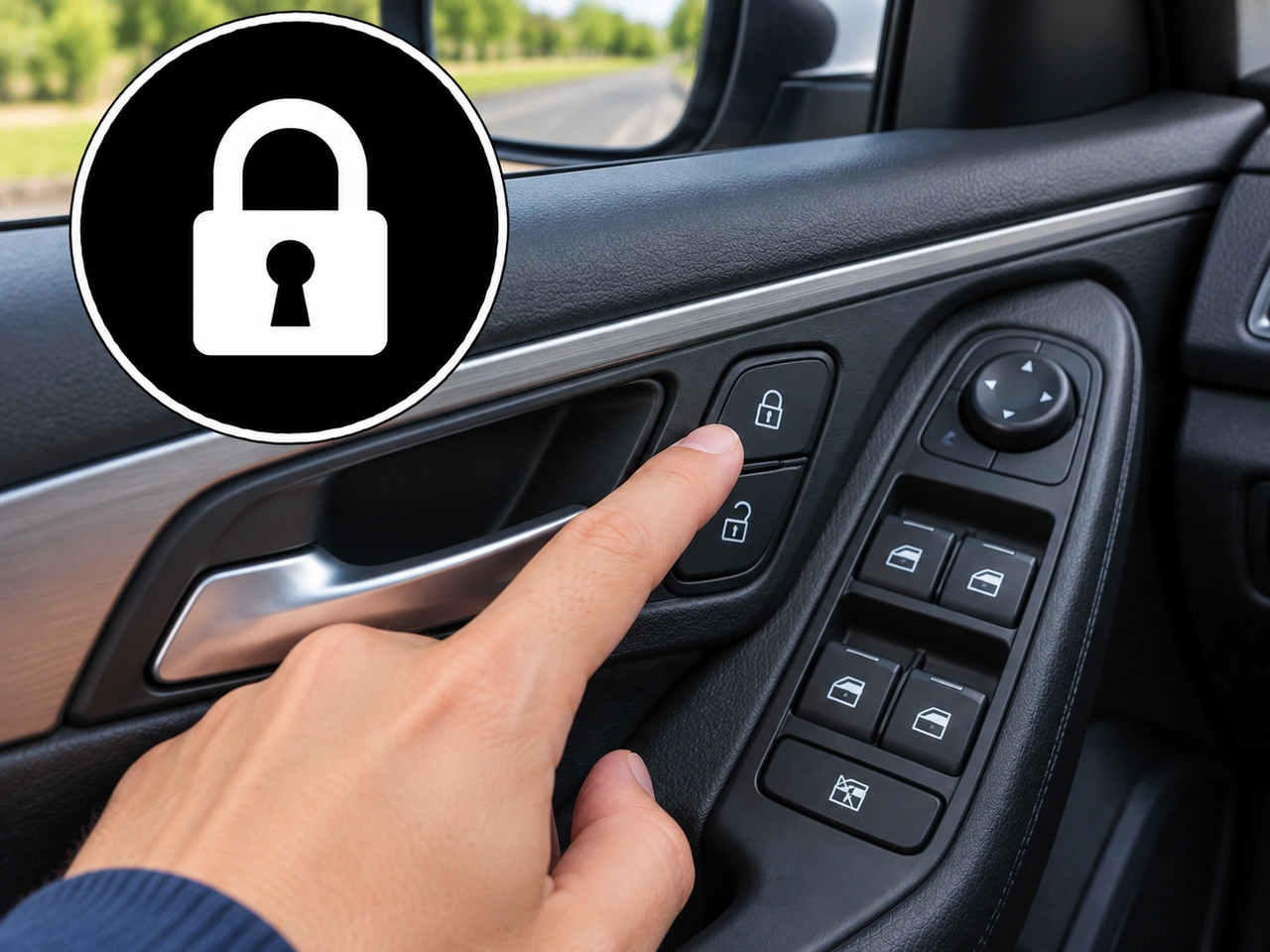
What can uneven tyre wear indicate?

166. What can uneven tyre wear indicate?

✓ Incorrect pressure, poor alignment, or a suspension or braking problem.
The tyres have reached normal operating temperature.
The vehicle has been driven mainly at low speeds.
The tyres are correctly inflated.

Uneven wear may result from incorrect tyre pressure, wheel misalignment, worn suspension parts, or a brake that is not releasing properly.

Uneven wear across a vehicle tyre
AI-generated by Traffic-rules.com • WCIT • CC BY-SA
What should you do with the ignition key once the engine starts?

167. What should you do with the ignition key once the engine starts?

Remove it from the ignition.
Turn it immediately to ACC.
✓ Release it so it returns from START to ON.
Keep holding it in the START position.

Once the engine starts, release the ignition key so it returns from START to the ON position. Holding the key in START unnecessarily can keep the starter motor engaged.

Releasing the ignition key after the engine starts
AI-generated by Traffic-rules.com • WCIT • CC BY-SA
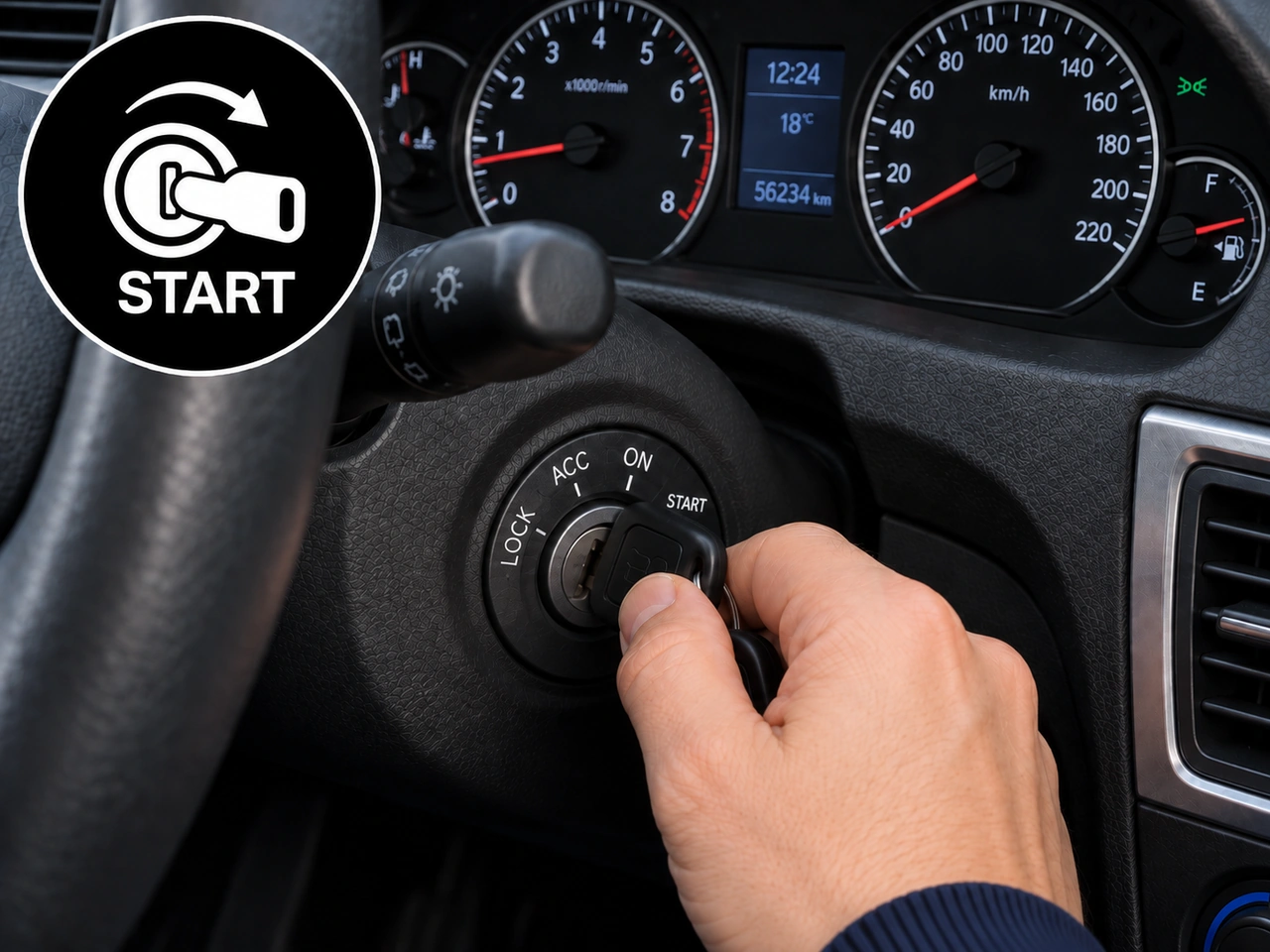
Why should you leave space when cycling beside parked cars?

168. Why should you leave space when cycling beside parked cars?

To stay outside the marked parking area.
Because parked vehicles have priority over cyclists.
Because the road could be slippery beside parked cars.
✓ A door may open suddenly.

A driver or passenger may open a door without seeing you. Leaving space reduces the risk of a dooring collision.

Cyclist riding beside parked cars
AI-generated by Traffic-rules.com • WCIT • CC BY-SA
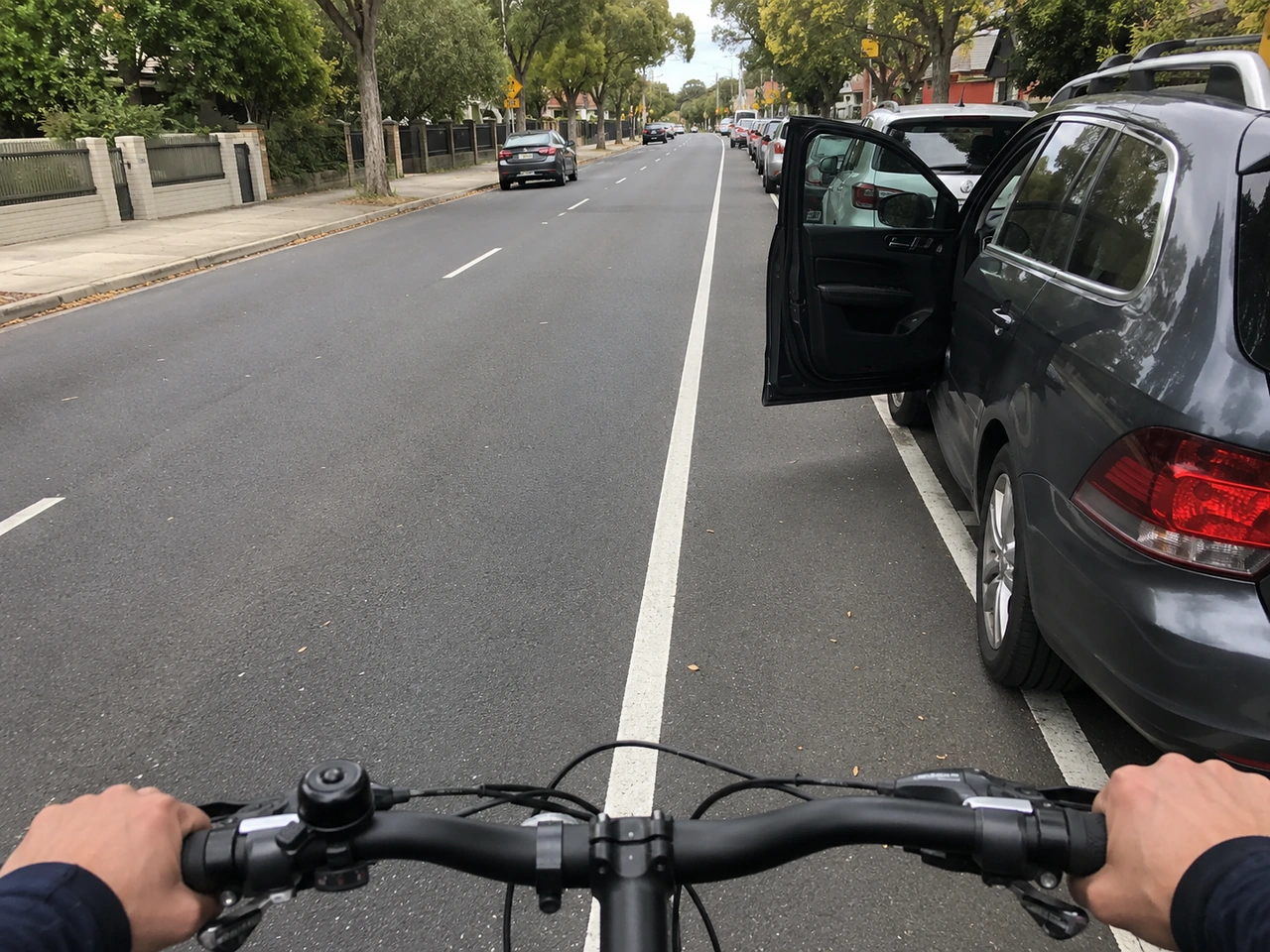
Why are roads especially slippery during rain after a dry period?

169. Why are roads especially slippery during rain after a dry period?

✓ Oil, dust, and dirt mix with water on the road surface.
Tyres need time to adjust to a wet road.
Rain temporarily reduces the weight of the vehicle.
Cold rain quickly reduces the tyre pressure.

After a dry period, oil and dirt can build up on the road. The first rain mixes with them and can make the surface very slippery.

Rain falling on a road after dry weather
AI-generated by Traffic-rules.com • WCIT • CC BY-SA
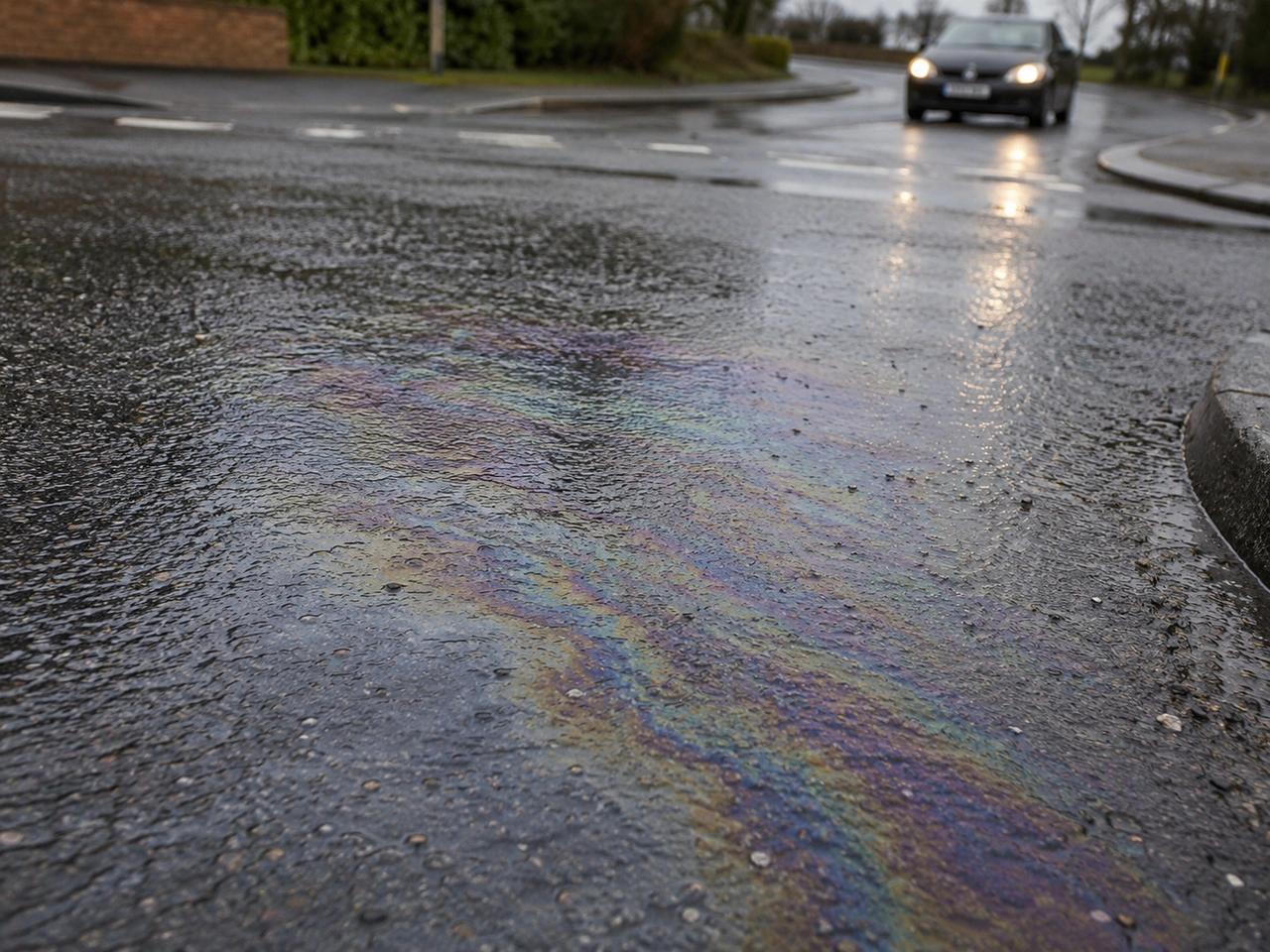
What should you do if a vehicle is reversing near you?

170. What should you do if a vehicle is reversing near you?

Stand close behind it so the driver can see you.
Cross behind it once the driver looks forward.
Rely on the reversing sensors to make it stop.
✓ Stay clear and make sure the driver can see you.

Reversing vehicles have blind spots. Stay away from the vehicle and make sure the driver can see you.

Pedestrian near a reversing vehicle
AI-generated by Traffic-rules.com • WCIT • CC BY-SA
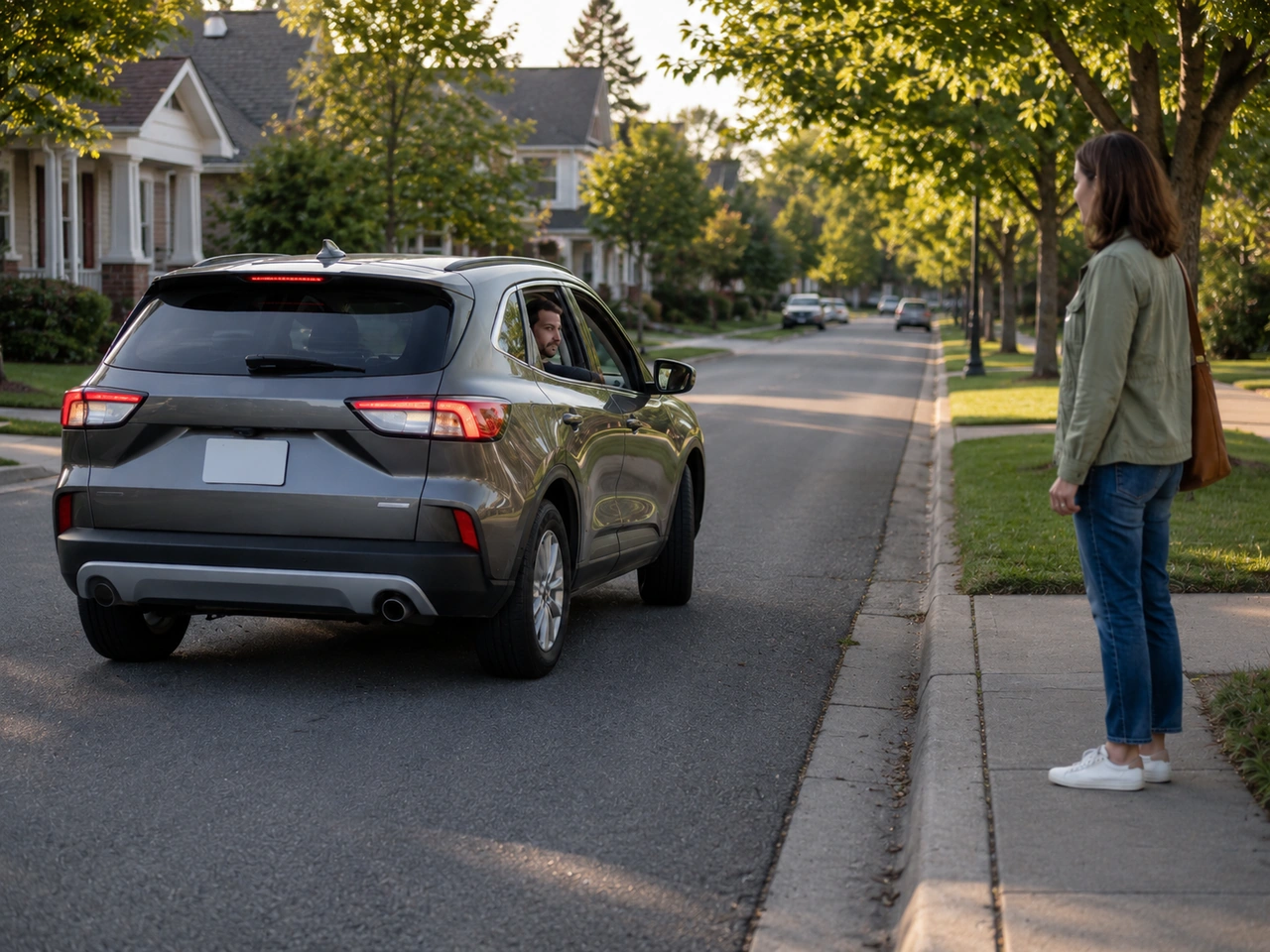
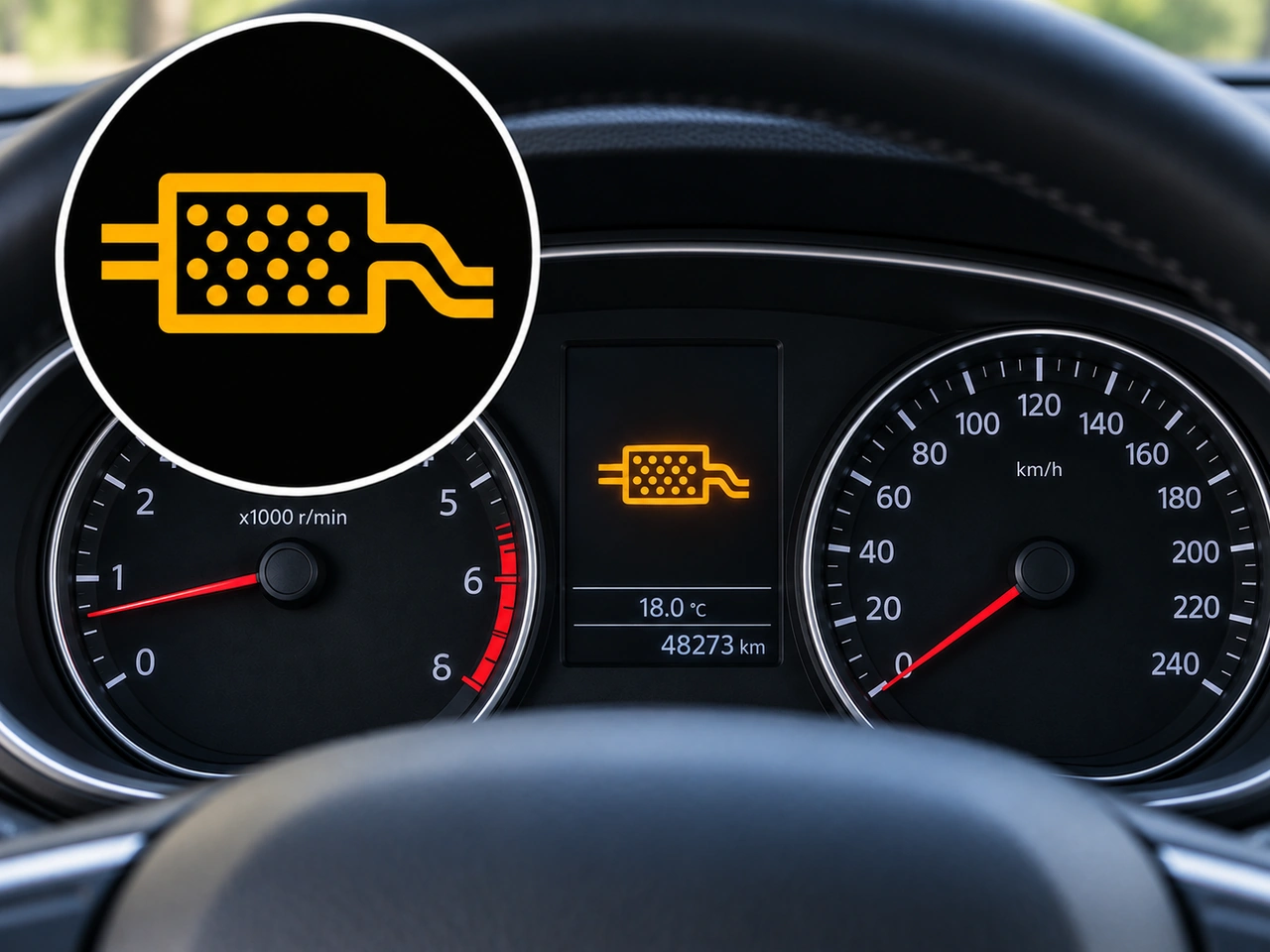
What does this dashboard symbol indicate?

171. What does this dashboard symbol indicate?

Oil-pressure warning.
Charging-system warning.
Engine-temperature warning.
✓ Diesel particulate filter warning.

This symbol indicates a problem with the diesel particulate filter (DPF), often because soot has accumulated in the filter. The vehicle may require regeneration or professional inspection, depending on the vehicle and warning status.

Diesel particulate filter warning symbol on the dashboard
AI-generated by Traffic-rules.com • WCIT • CC BY-SA
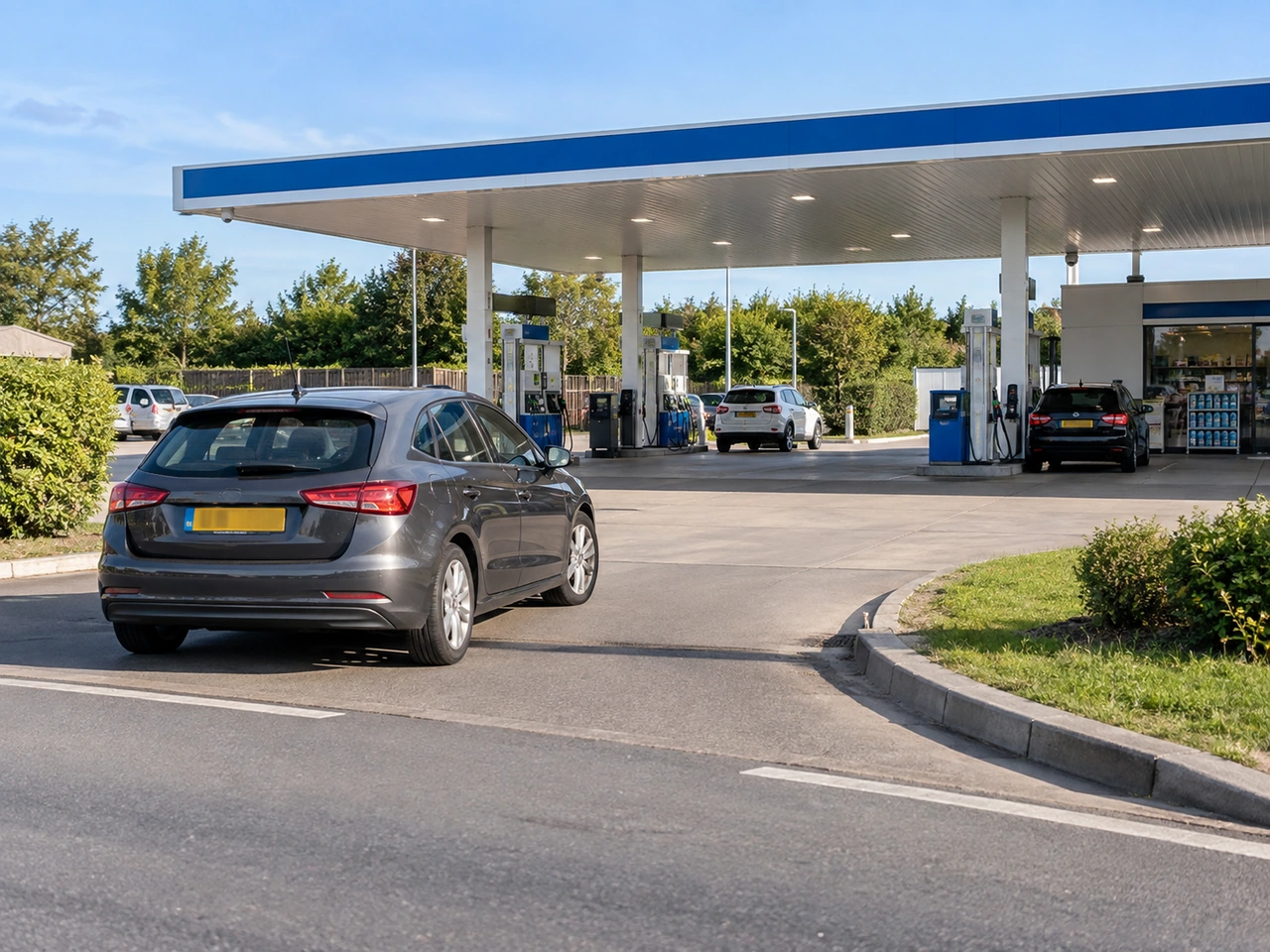
How should you position your vehicle beside a fuel pump?

172. How should you position your vehicle beside a fuel pump?

At an angle so the rear of the vehicle is closest to the pump.
With the fuel hose stretched tightly across the vehicle.
✓ With the fuel-filler side close enough for the hose to reach safely.
Wherever there is space, regardless of the fuel-filler position.

Position the vehicle so the fuel filler is close to the pump and the hose can reach without being stretched tightly across or around the vehicle. Stop within the designated refuelling area and leave enough space to use the pump safely.

Vehicle positioned beside a fuel pump
AI-generated by Traffic-rules.com • WCIT • CC BY-SA
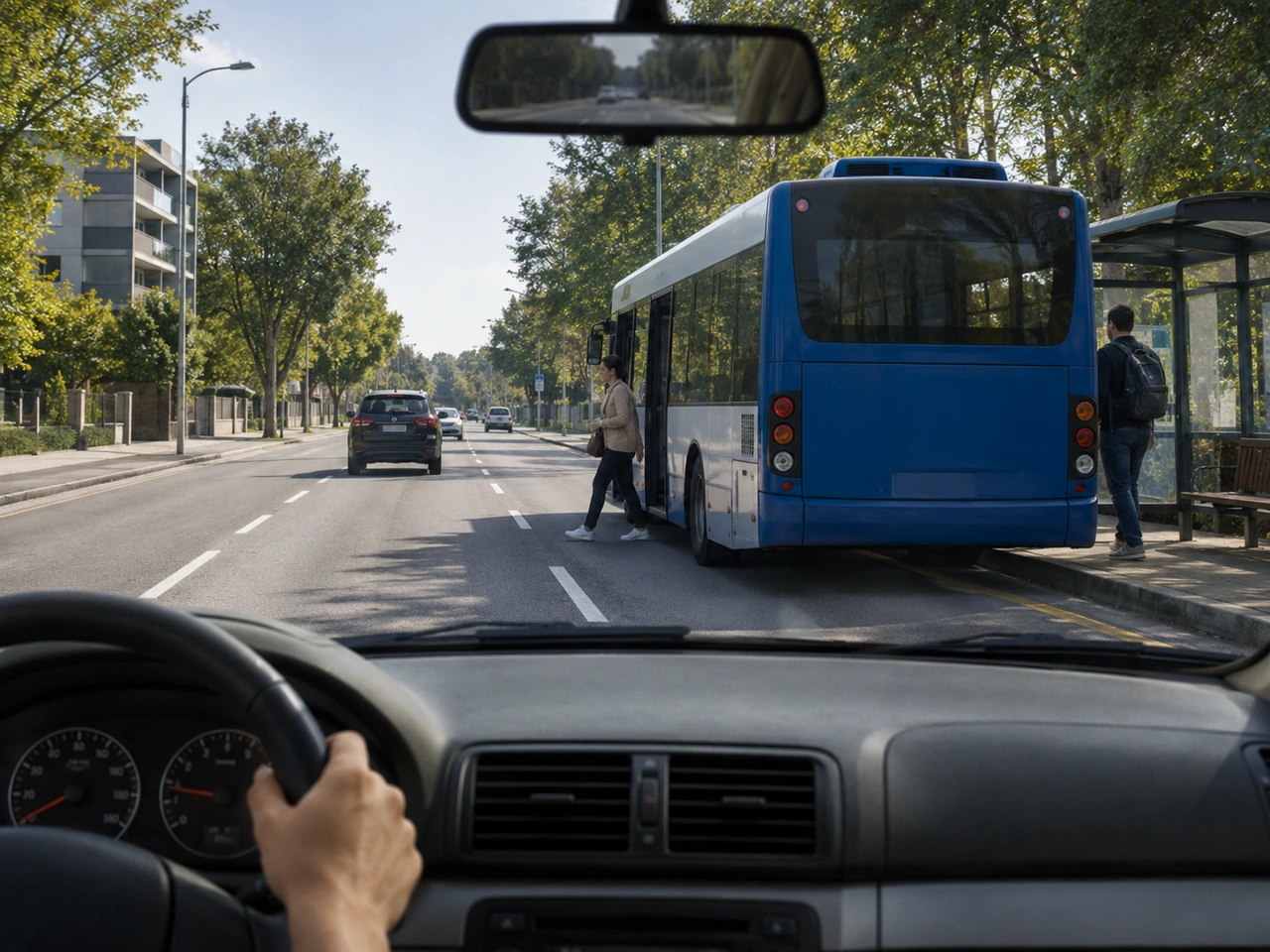
Why should you be careful when driving beside a bus at a stop?

173. Why should you be careful when driving beside a bus at a stop?

The road surface is usually more slippery near bus stops.
A stopped bus always has priority over passing traffic.
Vehicles beside a bus must always stop and wait.
✓ Passengers may step out or cross near the bus.

Stopped buses can hide pedestrians, and passengers may cross unexpectedly. Slow down and be ready to react.

Vehicle passing a bus at a stop
AI-generated by Traffic-rules.com • WCIT • CC BY-SA
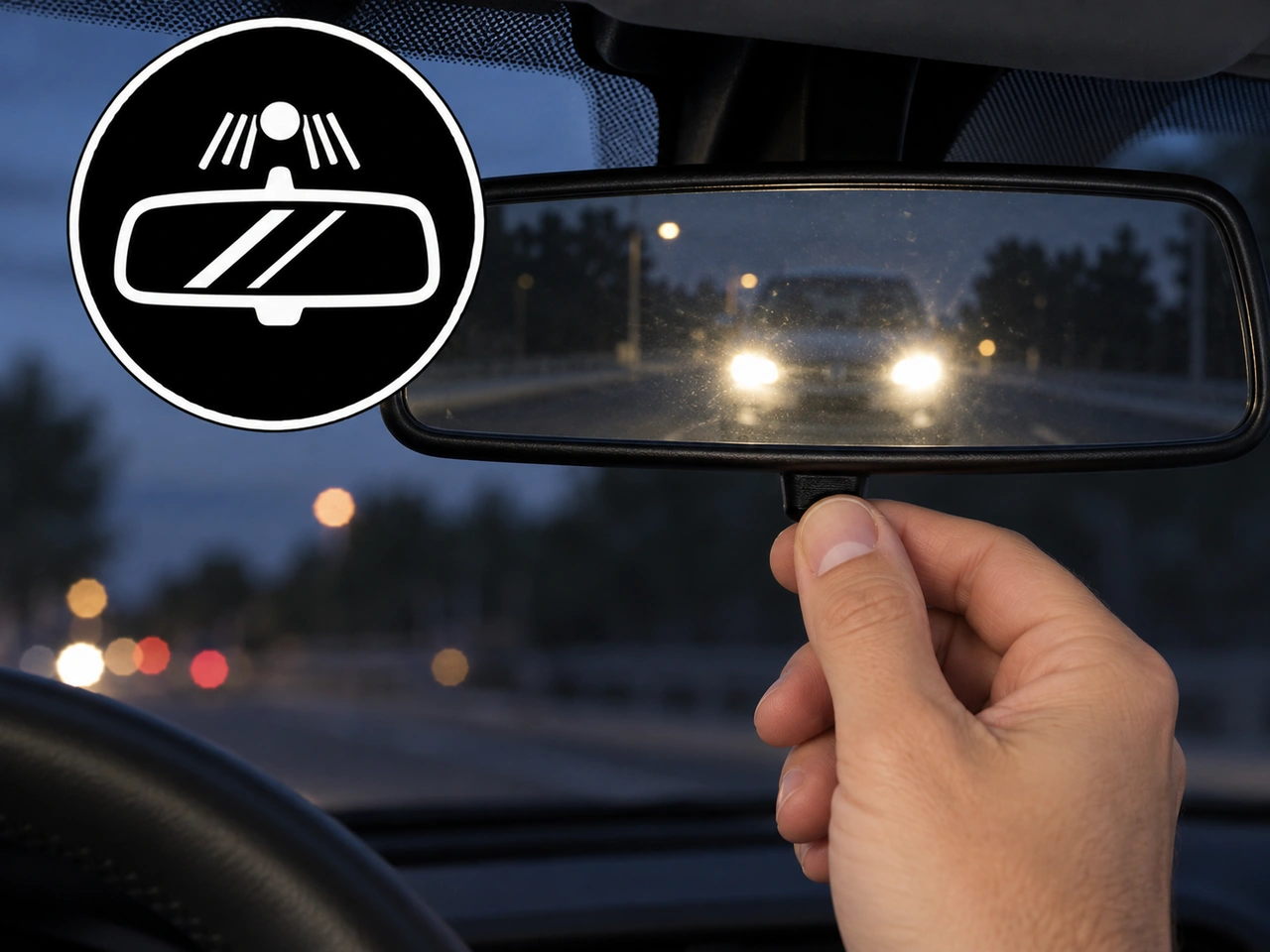
What is the purpose of the anti-dazzle control on the rear-view mirror?

174. What is the purpose of the anti-dazzle control on the rear-view mirror?

To heat the rear window.
✓ To reduce glare from headlights behind.
To activate the reversing camera.
To enlarge the view behind.

The anti-dazzle setting reduces glare from the headlights of vehicles behind, helping the driver maintain a clear view without being dazzled.

Anti-dazzle control on an interior rear-view mirror
AI-generated by Traffic-rules.com • WCIT • CC BY-SA
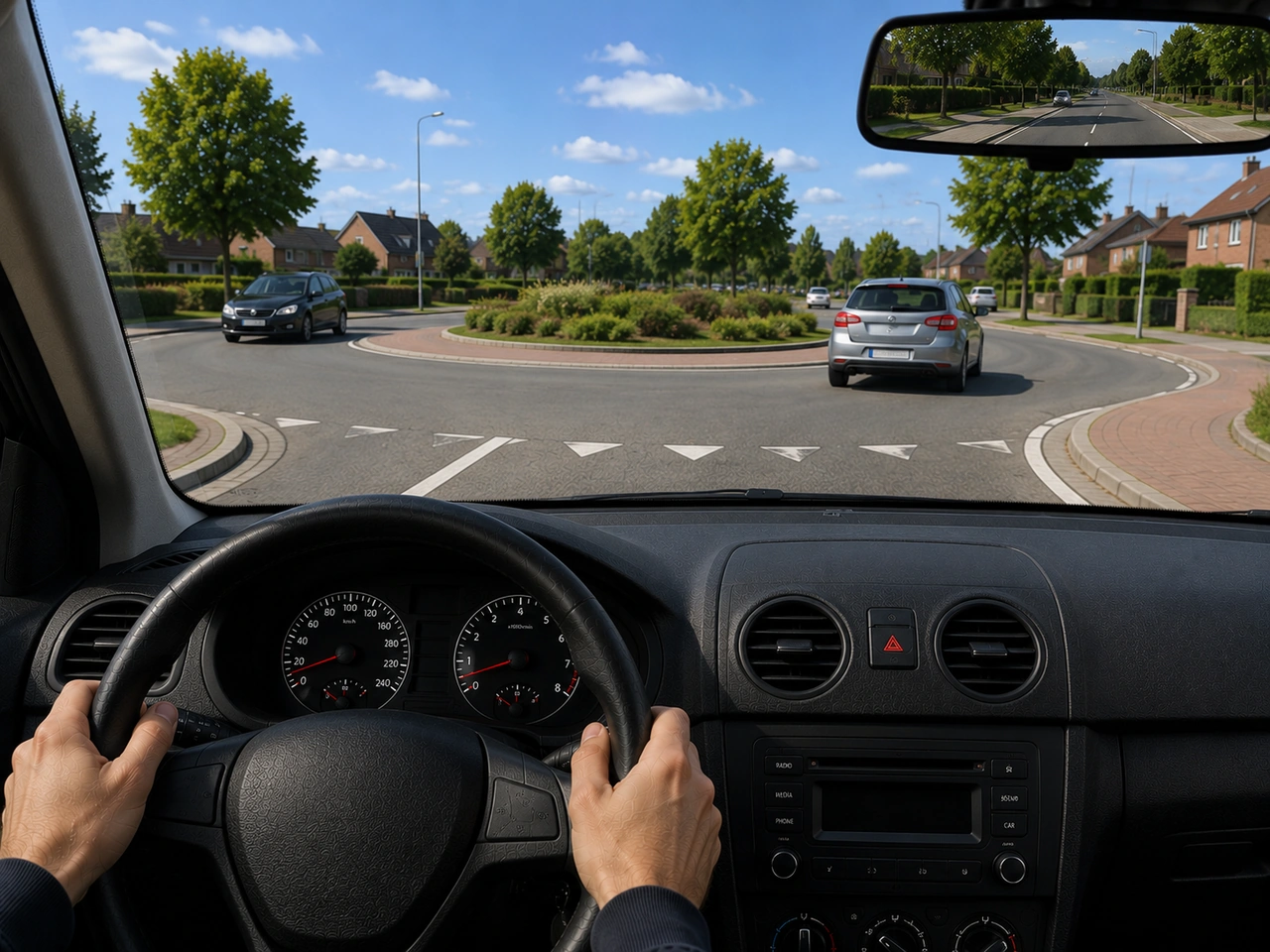
What should you do when entering a roundabout?

175. What should you do when entering a roundabout?

✓ Slow down, give way when required, and enter only when safe.
Give way only to traffic in the lane nearest to you.
Enter if there is space, even if other traffic must slow down.
Stop and wait until the roundabout is completely empty.

When approaching a roundabout, reduce your speed, observe traffic, follow the signs and local priority rules, and enter only when it is safe.

Vehicle at a roundabout entrance
AI-generated by Traffic-rules.com • WCIT • CC BY-SA
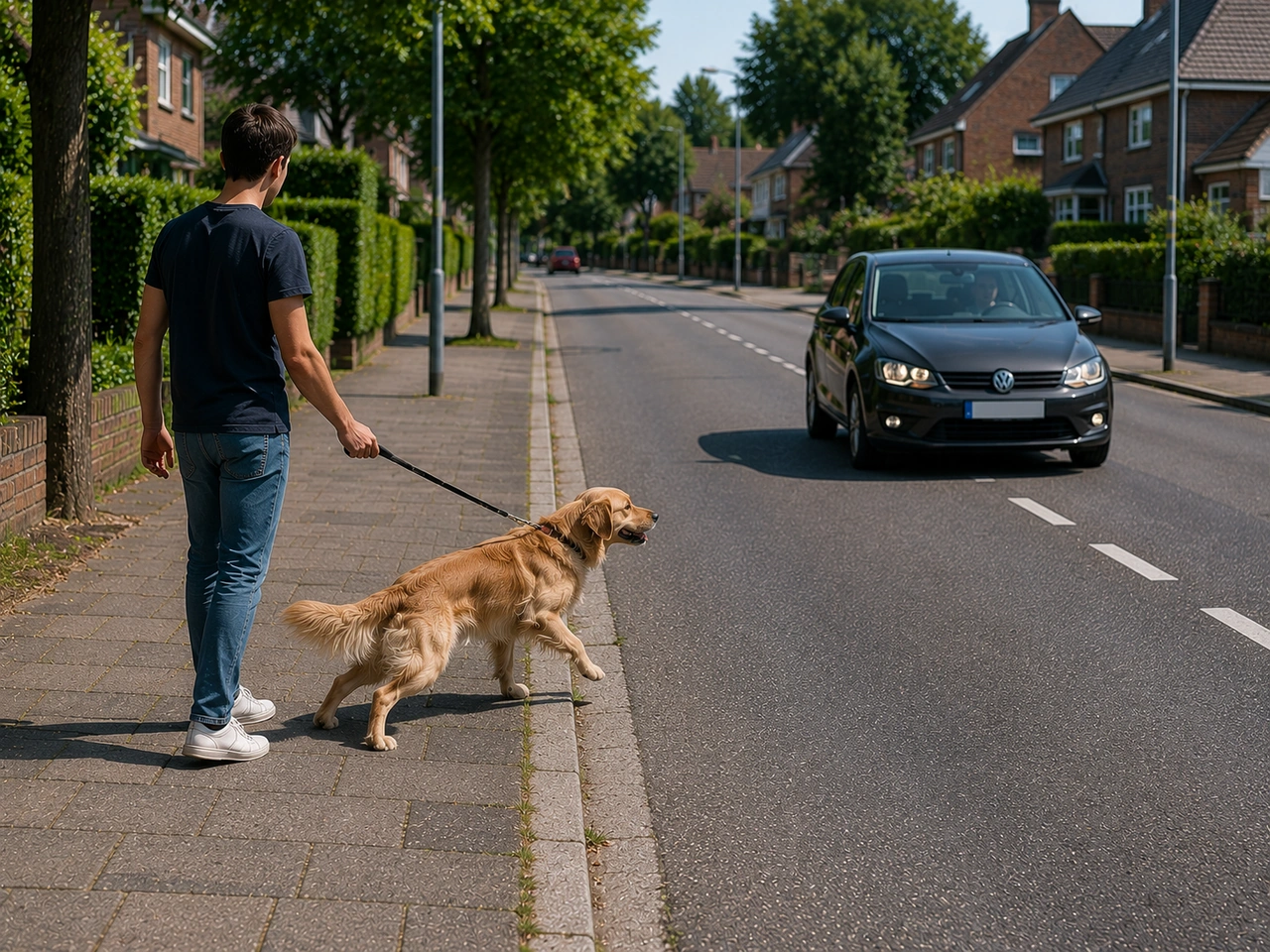
Why should pedestrians avoid sudden movements near traffic?

176. Why should pedestrians avoid sudden movements near traffic?

✓ Drivers may not have enough time to react.
Drivers always expect pedestrians to walk straight.
You lose priority if you change direction suddenly.
Pedestrians are only allowed to walk slowly.

Sudden movements can surprise drivers and reduce the time they have to slow down or stop safely.

Pedestrian movements close to road traffic
AI-generated by Traffic-rules.com • WCIT • CC BY-SA
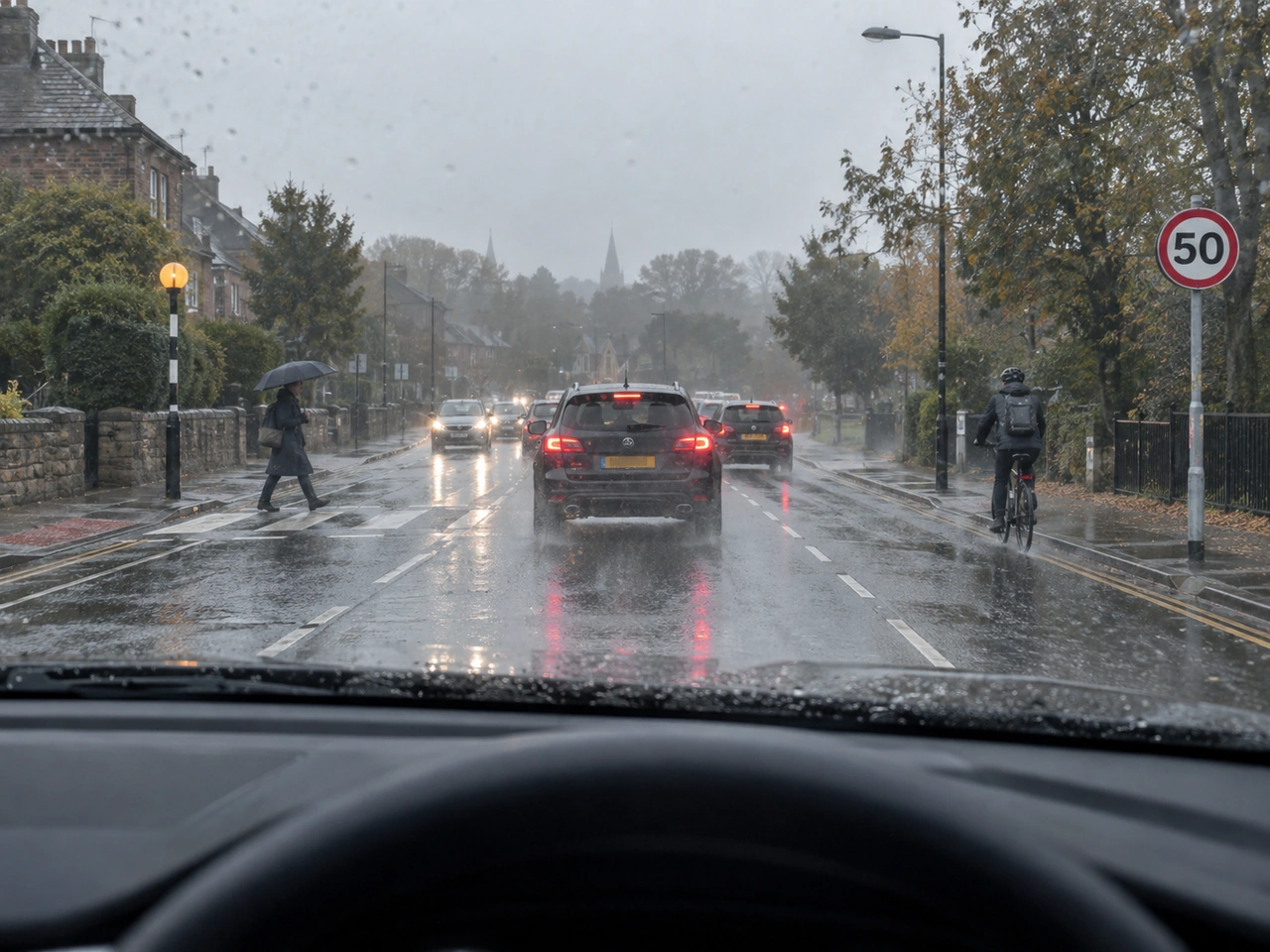
Does driving at the speed limit always mean your speed is safe?

177. Does driving at the speed limit always mean your speed is safe?

Yes, the speed limit is always the safest speed.
Yes, if your vehicle is in good condition.
✓ No, you may need to drive more slowly for the conditions.
Only when driving outside built-up areas.

A speed limit is a maximum permitted speed, not a target. You may need to drive more slowly because of traffic, poor visibility, weather, road conditions, pedestrians, cyclists, or other hazards.

Speed-limit sign and changing road conditions
AI-generated by Traffic-rules.com • WCIT • CC BY-SA
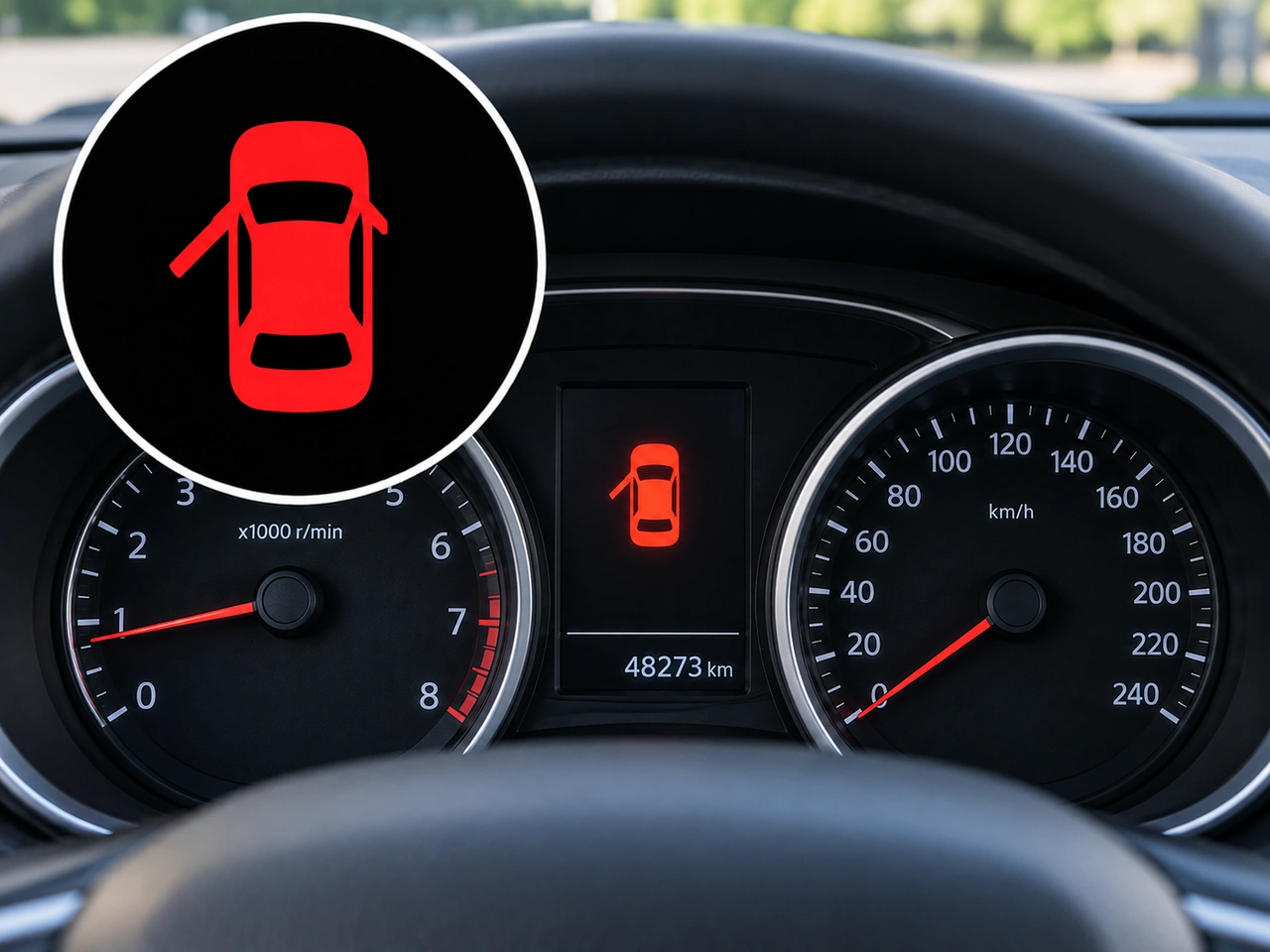
What does this dashboard symbol indicate?

178. What does this dashboard symbol indicate?

✓ A door is open.
The airbag system has a fault.
The anti-theft system is active.
The parking brake is applied.

This symbol indicates that one or more vehicle doors are not fully closed. Check that all doors are securely shut before driving.

Door-open warning symbol on the dashboard
AI-generated by Traffic-rules.com • WCIT • CC BY-SA
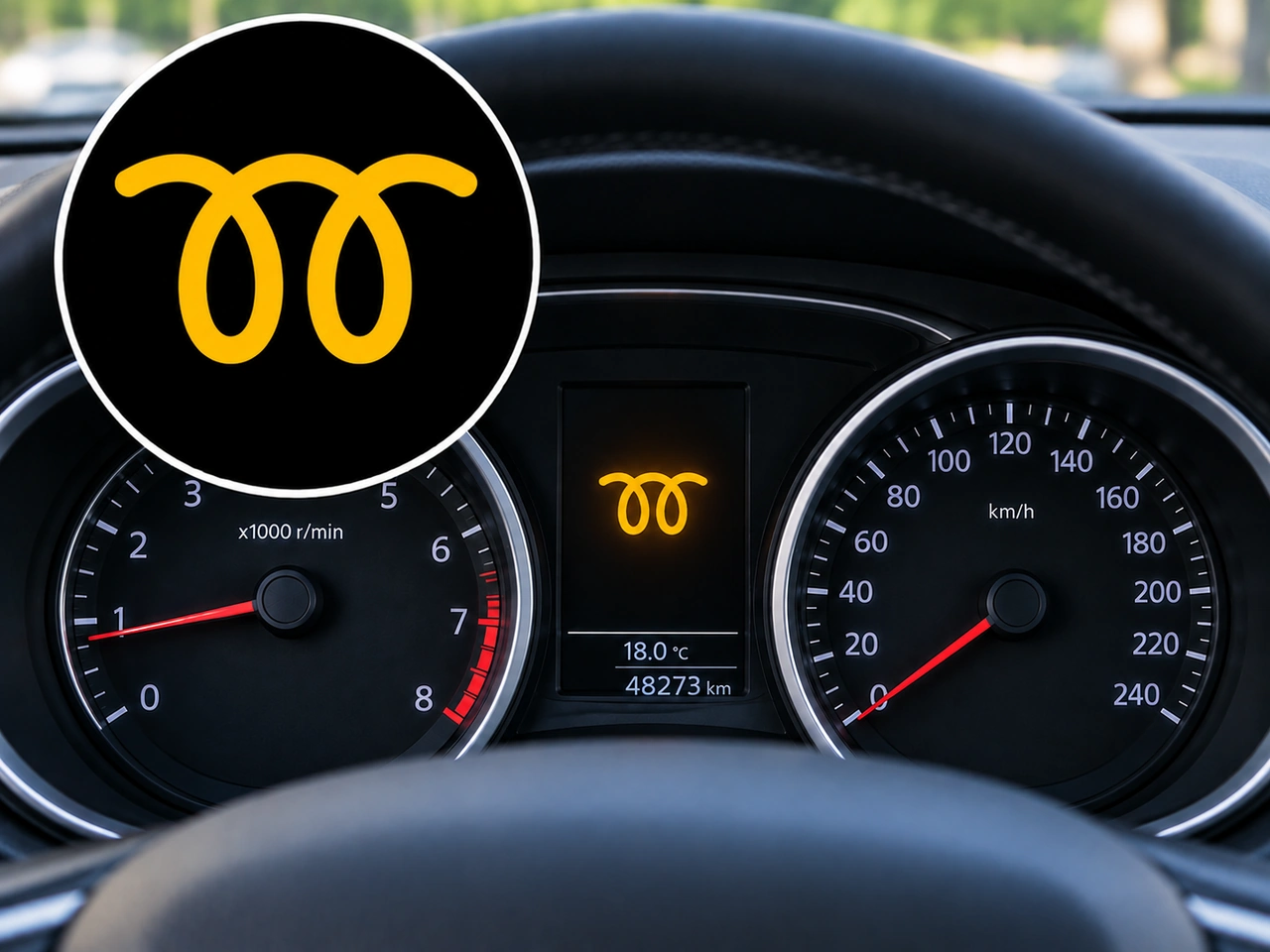
What does this dashboard symbol indicate?

179. What does this dashboard symbol indicate?

Engine-temperature warning.
Charging-system warning.
Engine-management warning.
✓ Diesel glow-plug preheating.

This symbol indicates the diesel glow-plug preheating system. In a diesel vehicle, wait for the light to go out before starting the engine when required. If it remains illuminated or flashes while driving, it may indicate a fault.

Diesel glow-plug preheating symbol on the dashboard
AI-generated by Traffic-rules.com • WCIT • CC BY-SA
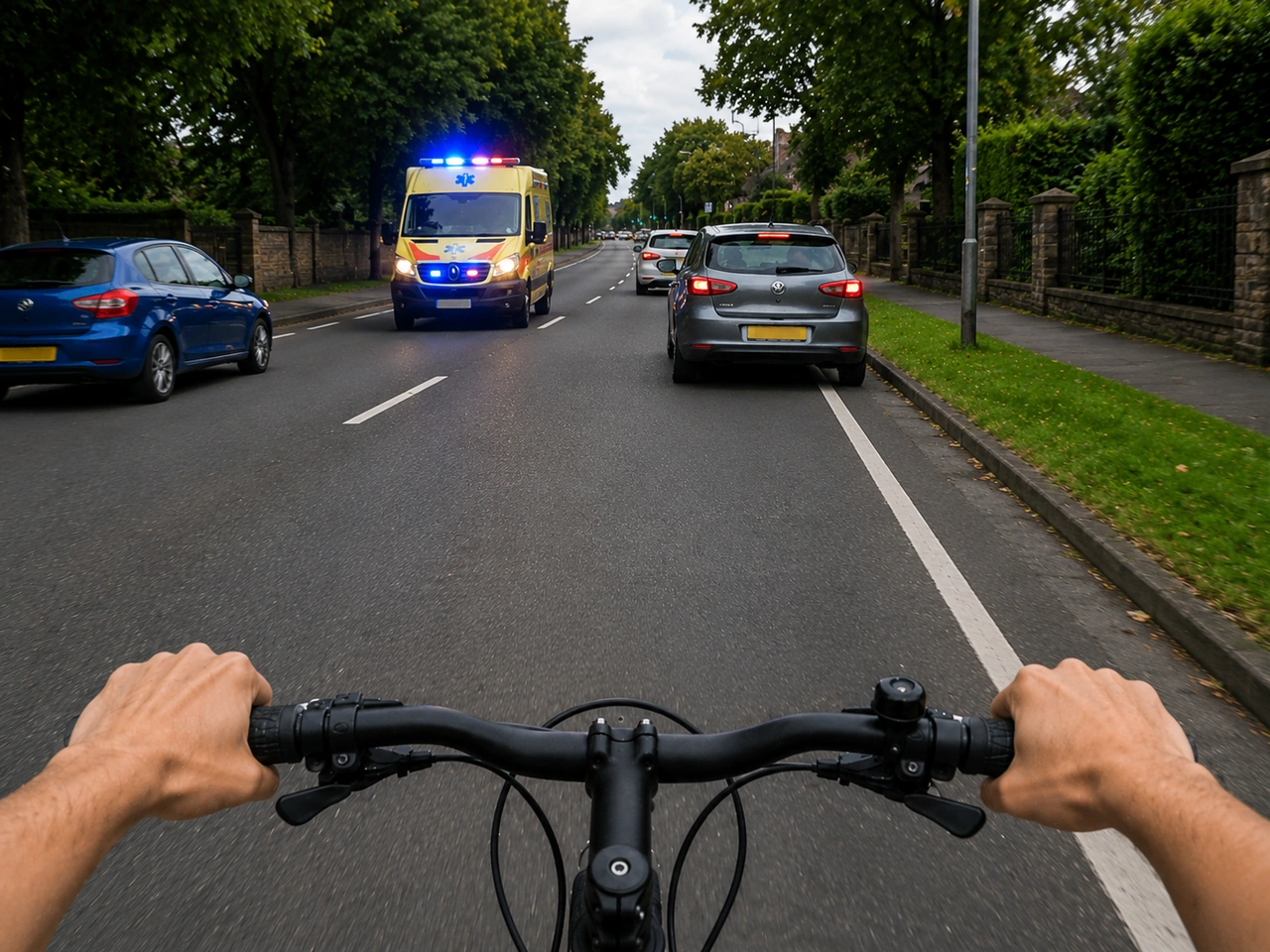
What should cyclists do when an emergency vehicle with lights and siren approaches?

180. What should cyclists do when an emergency vehicle with lights and siren approaches?

Stop immediately, even if you are in the traffic lane.
✓ Stay alert and move to a safe position without obstructing it.
Follow closely behind it once it passes.
Move aside quickly without checking around you.

Emergency vehicles need a clear route. Move predictably and stop only where doing so is safe.

Cyclist near an approaching emergency vehicle
AI-generated by Traffic-rules.com • WCIT • CC BY-SA
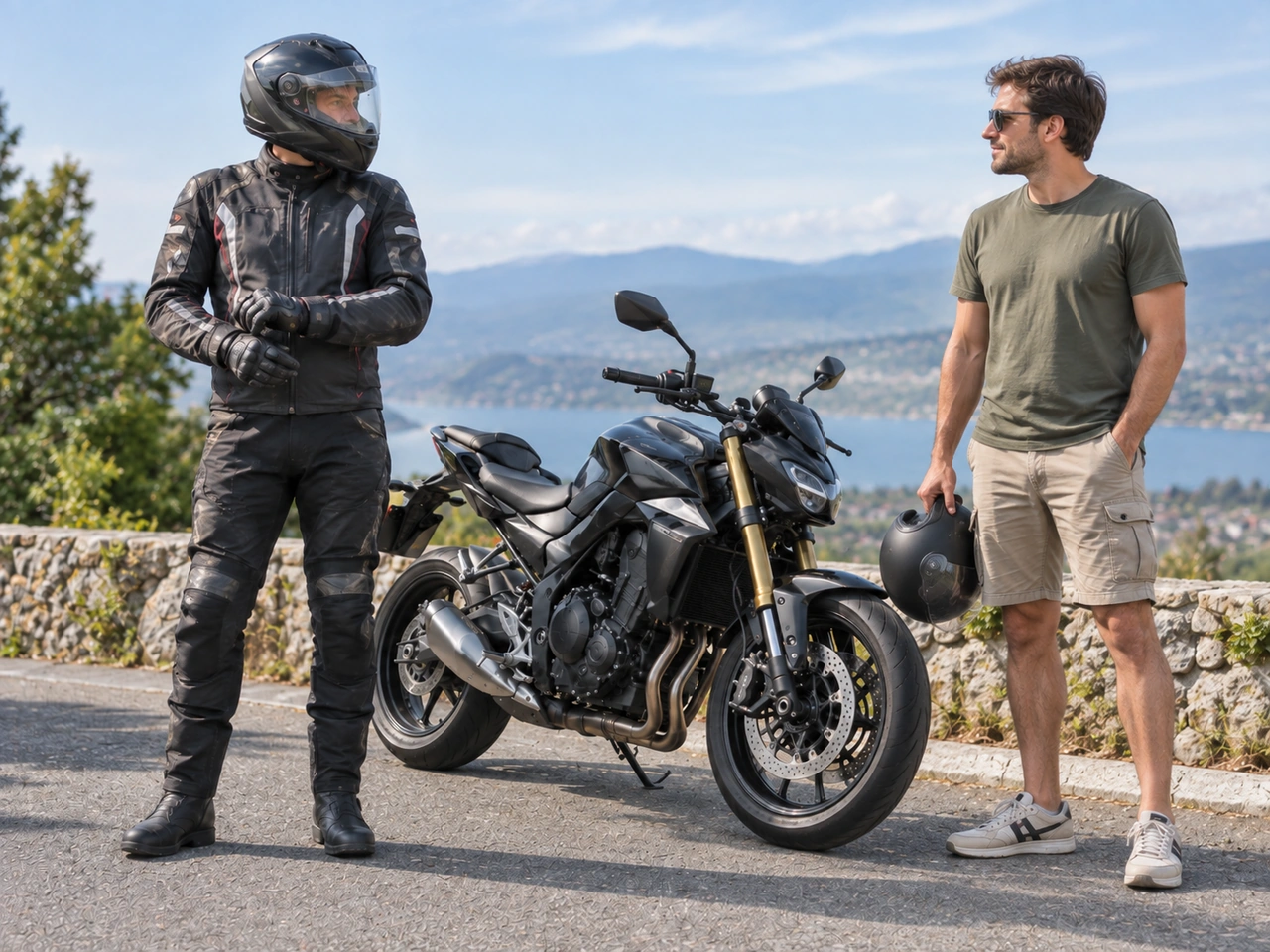
Should motorcyclists wear protective clothing?

181. Should motorcyclists wear protective clothing?

✓ Yes, it can reduce injuries from falls and contact with the road.
No, it is only useful when riding at high speeds.
Yes, but only when riding on motorways.
No, a helmet provides enough protection on its own.

Motorcyclists should wear protective clothing because it can reduce injuries from falls, impacts and sliding on the road. Suitable jackets, trousers, gloves and boots provide additional protection, but they do not replace a securely fitted helmet or safe riding.

Motorcyclist wearing protective riding clothing
AI-generated by Traffic-rules.com • WCIT • CC BY-SA
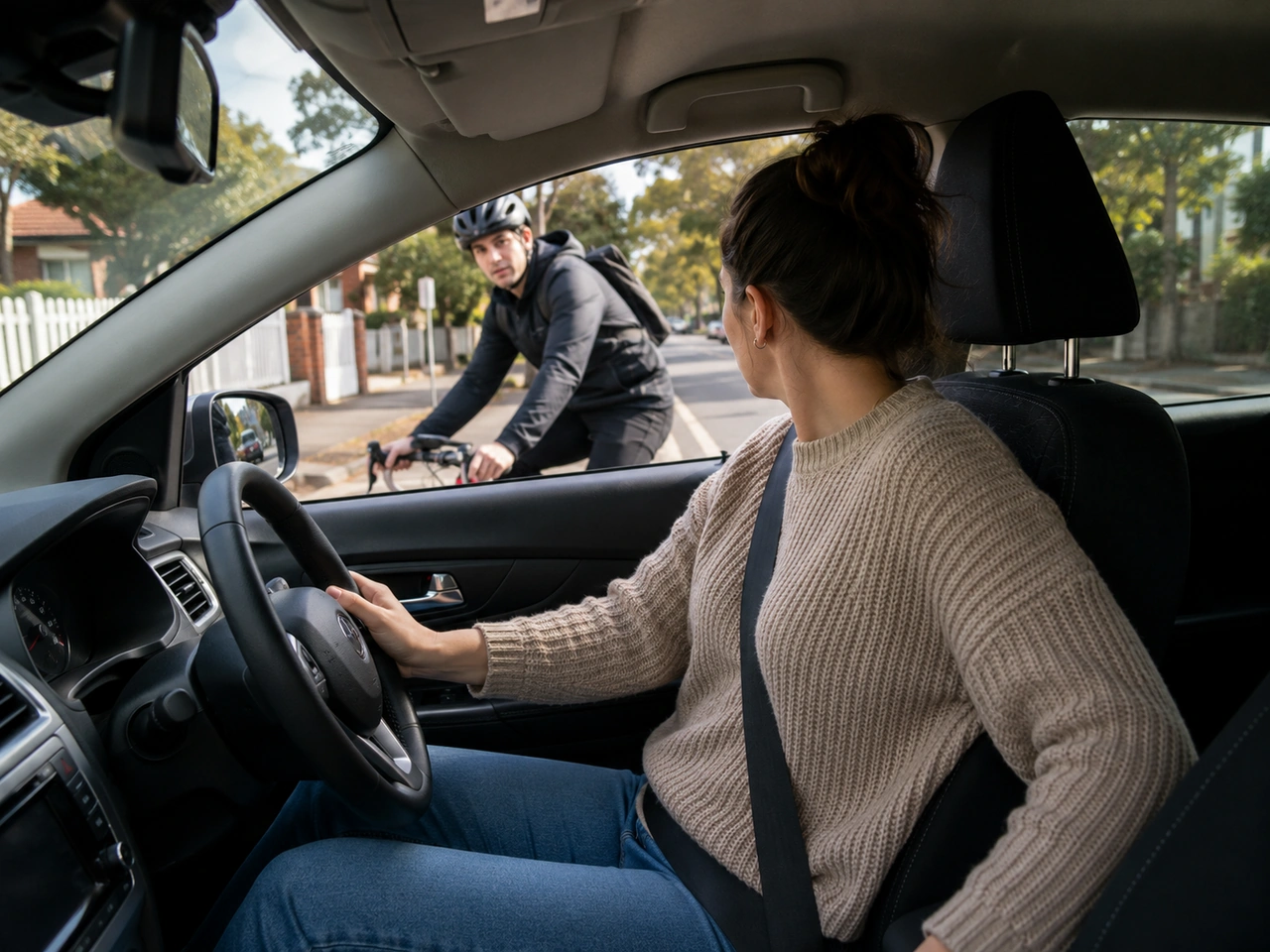
Why should you check blind spots before moving off?

182. Why should you check blind spots before moving off?

✓ A cyclist, pedestrian, or vehicle may be beside you.
To check whether the road ahead is clear.
To make sure your mirrors are adjusted correctly.
To confirm other drivers have seen your indicator.

Mirrors do not show every area around your vehicle. A blind-spot check can reveal cyclists, pedestrians, motorcyclists, or vehicles before you move off.

Driver checking a blind spot before moving off
AI-generated by Traffic-rules.com • WCIT • CC BY-SA
Why should you avoid driving too close to the edge of the road?

183. Why should you avoid driving too close to the edge of the road?

It can reduce the effectiveness of your mirrors.
✓ The edge may be uneven or weak.
It can make the steering require more effort.
It can make your speed harder to judge.

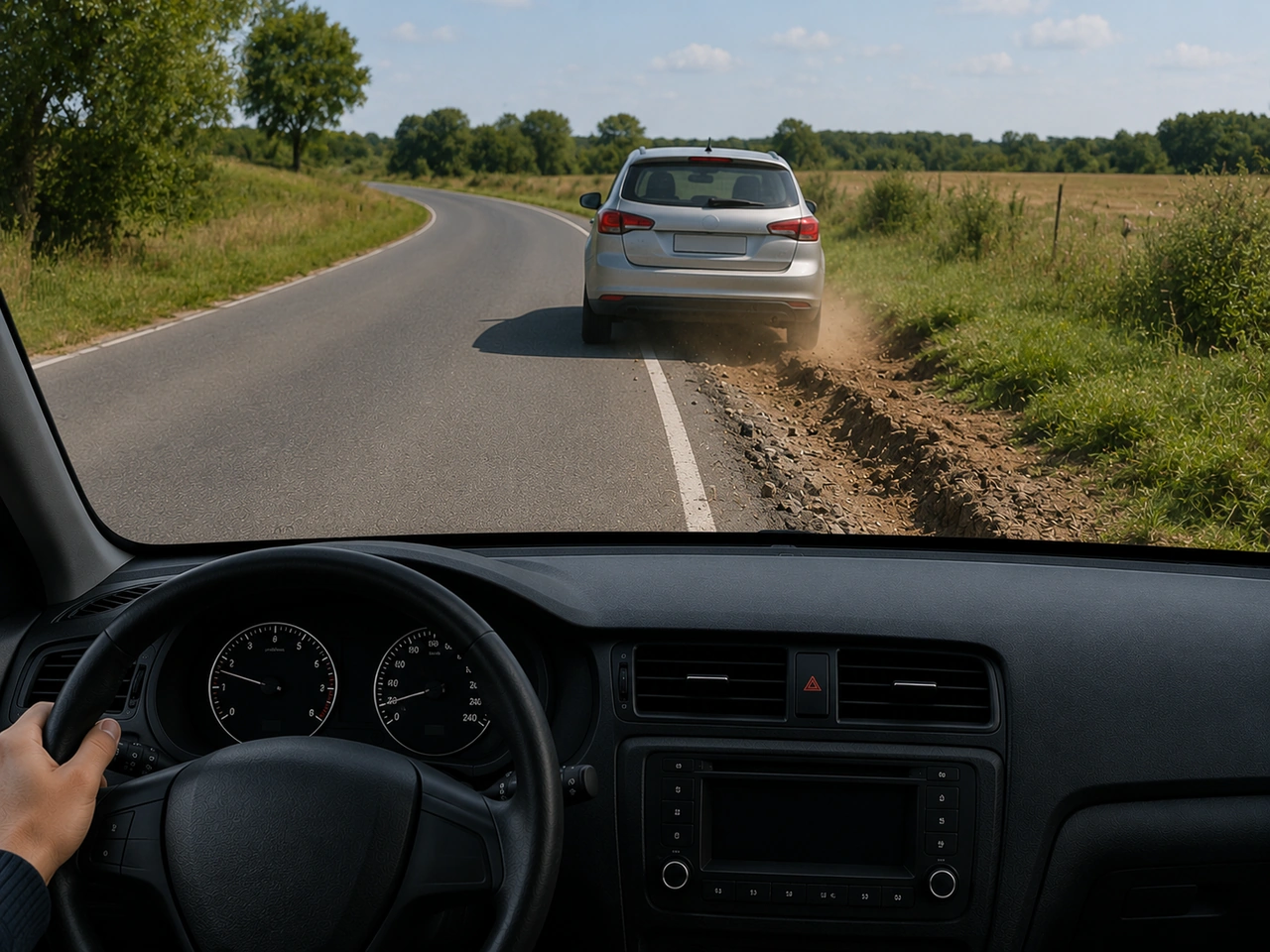
Road edges can be soft, uneven, or damaged. Driving too close to the edge can reduce control or cause the vehicle to leave the road.

Vehicle travelling close to the road edge
AI-generated by Traffic-rules.com • WCIT • CC BY-SA
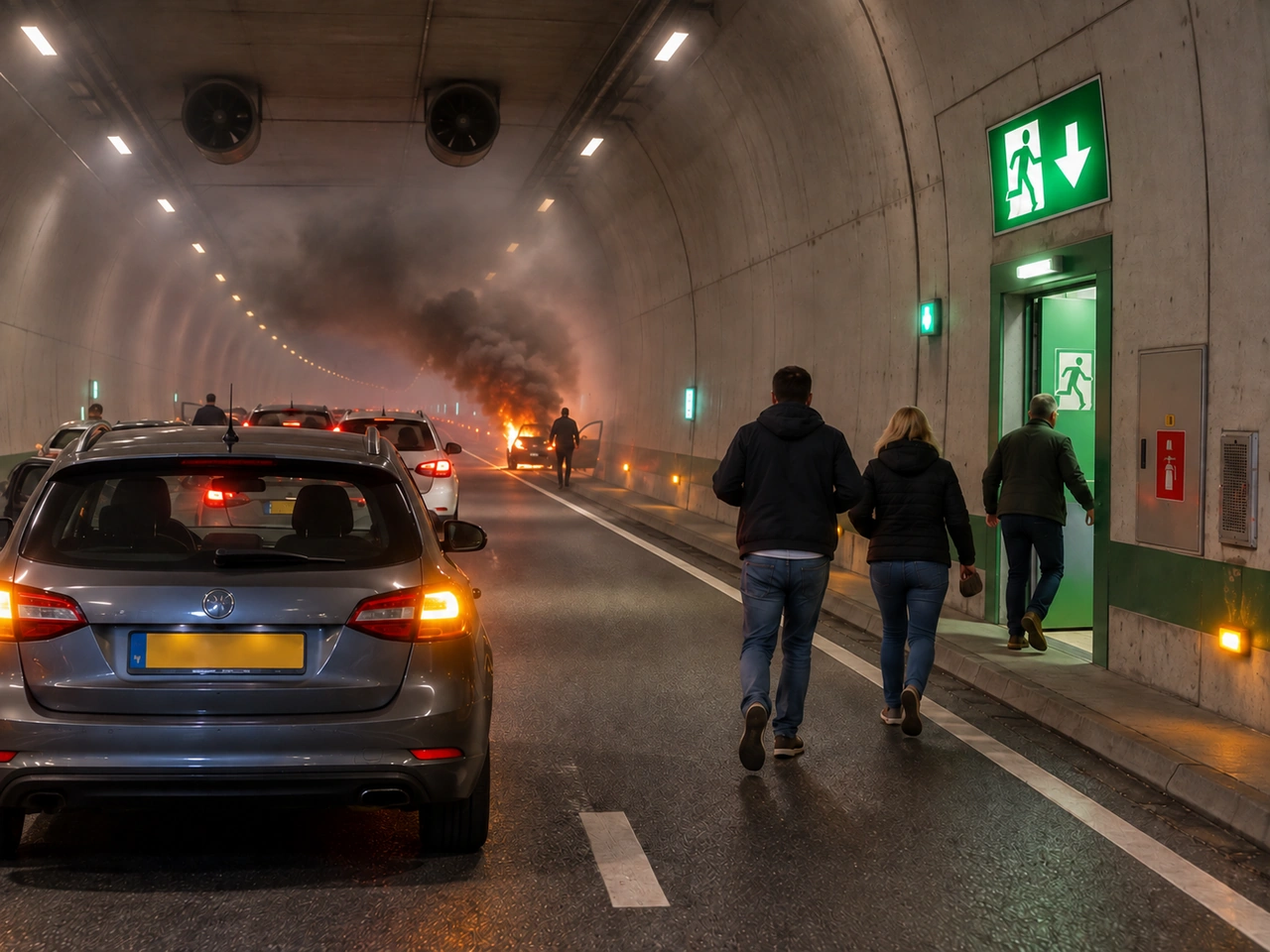
What should you do if you see smoke or fire inside a tunnel?

184. What should you do if you see smoke or fire inside a tunnel?

Stay inside the vehicle and wait for the smoke to clear.
Reverse toward the entrance without checking behind.
Stop near the fire so you can assess the situation.
✓ Follow tunnel instructions and leave the tunnel if it is safe to do so.

If it is safe to drive out of the tunnel, do so. If you cannot continue safely, stop, switch off the engine, leave the vehicle, and use the marked emergency exits or refuge routes. Follow tunnel-control instructions.

Smoke inside a road tunnel
AI-generated by Traffic-rules.com • WCIT • CC BY-SA
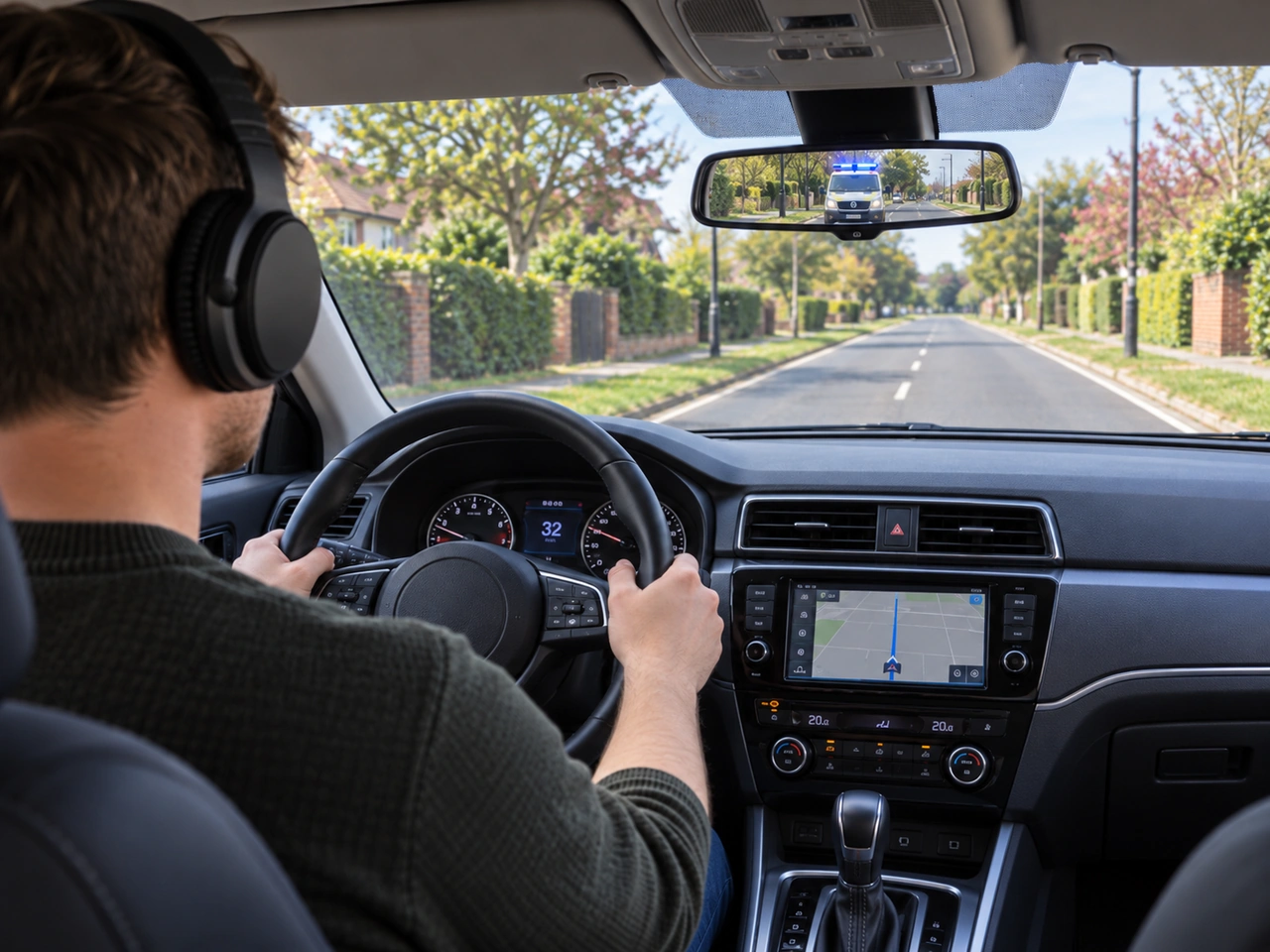
Why can headphones or very loud music be dangerous while driving?

185. Why can headphones or very loud music be dangerous while driving?

They can prevent the horn from working properly.
They can make the mirrors more difficult to adjust.
✓ They can make important warning sounds harder to hear.
They can make road signs harder to read.

Headphones or very loud music can reduce your awareness of horns, sirens, warning sounds, and surrounding traffic. Keep the volume at a level that allows you to remain aware of what is happening around the vehicle.

Driver wearing headphones at the wheel
AI-generated by Traffic-rules.com • WCIT • CC BY-SA
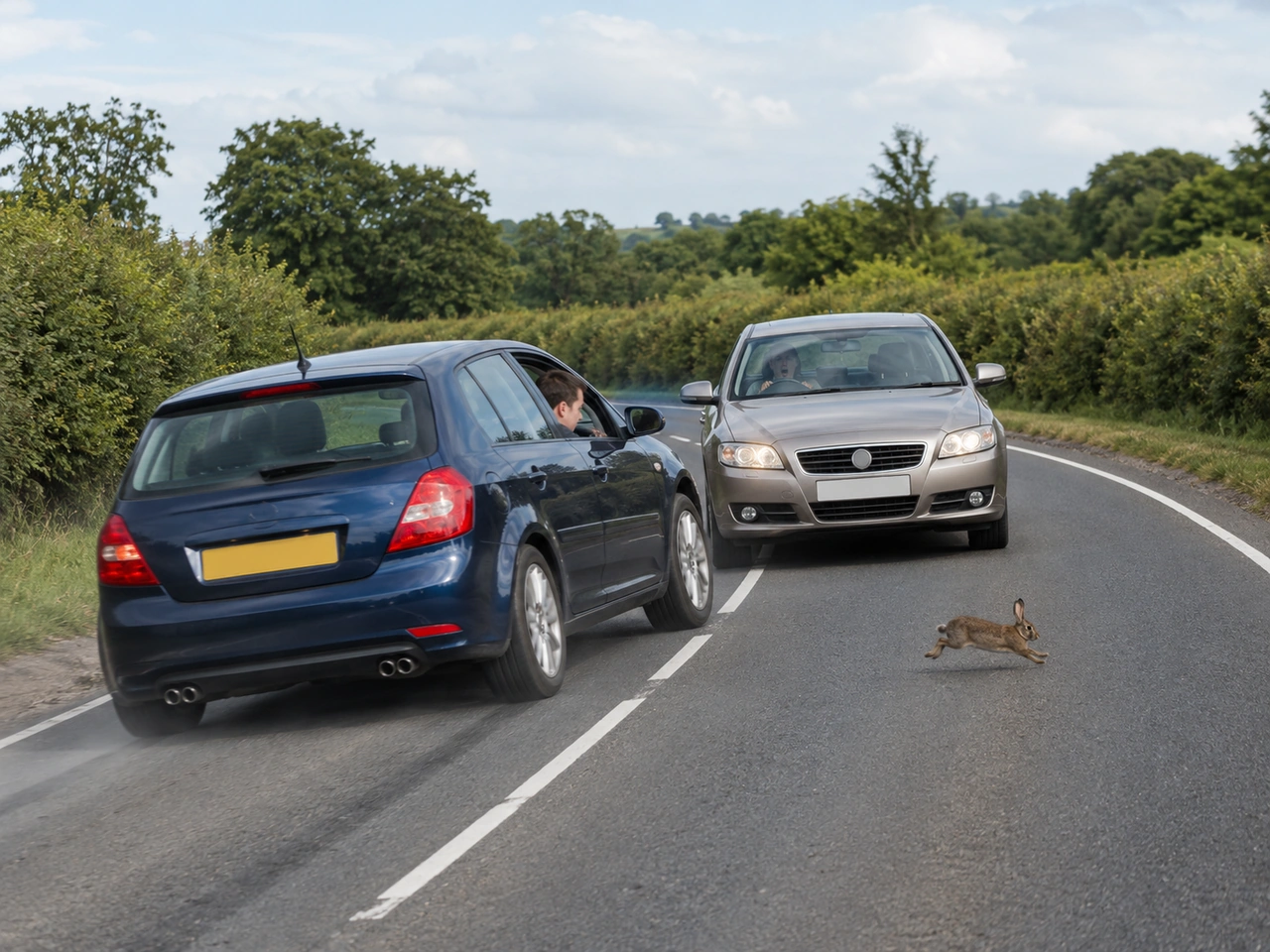
Why can swerving suddenly to avoid a small animal be dangerous?

186. Why can swerving suddenly to avoid a small animal be dangerous?

Small animals have fast reaction times.
The tyres can be damaged by sudden steering.
Swerving increases the vehicle's stopping distance.
✓ You may lose control or collide with another road user.

A sudden swerve can take you into another lane, off the road, or into nearby traffic.

Small animal in the road ahead of a vehicle
AI-generated by Traffic-rules.com • WCIT • CC BY-SA
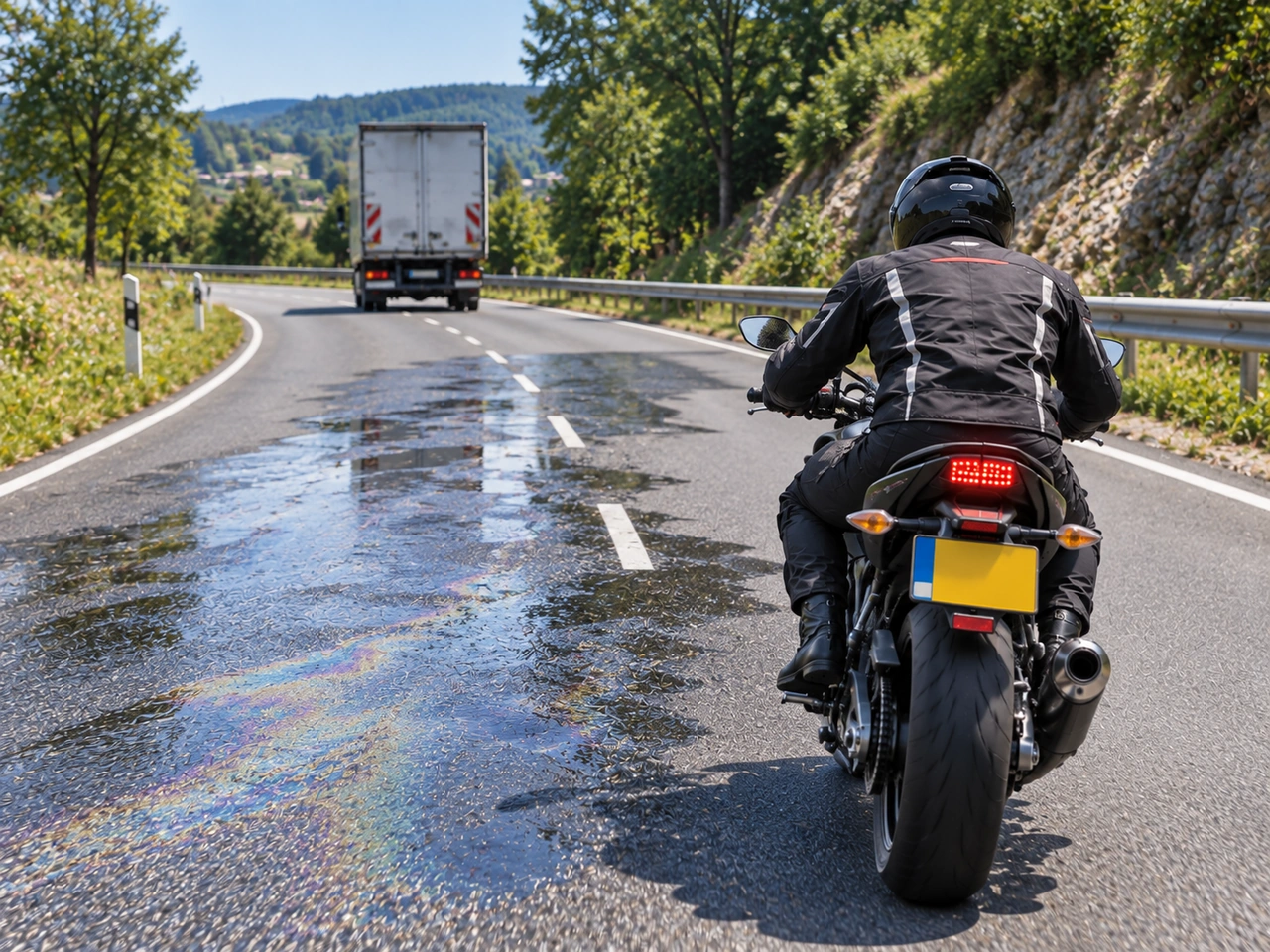
Why should you take extra care if oil or diesel is spilled on the road?

187. Why should you take extra care if oil or diesel is spilled on the road?

✓ It can make the road extremely slippery.
It can make the brakes overheat.
It can damage road markings immediately.
It can make the road surface much softer.

Oil, diesel and other fluids can create a very slippery road surface, particularly for motorcycles and bicycles. Reduce speed, avoid sudden braking or steering and keep the vehicle as stable as possible when crossing a contaminated area.

Oil or diesel spilled on a road surface
AI-generated by Traffic-rules.com • WCIT • CC BY-SA
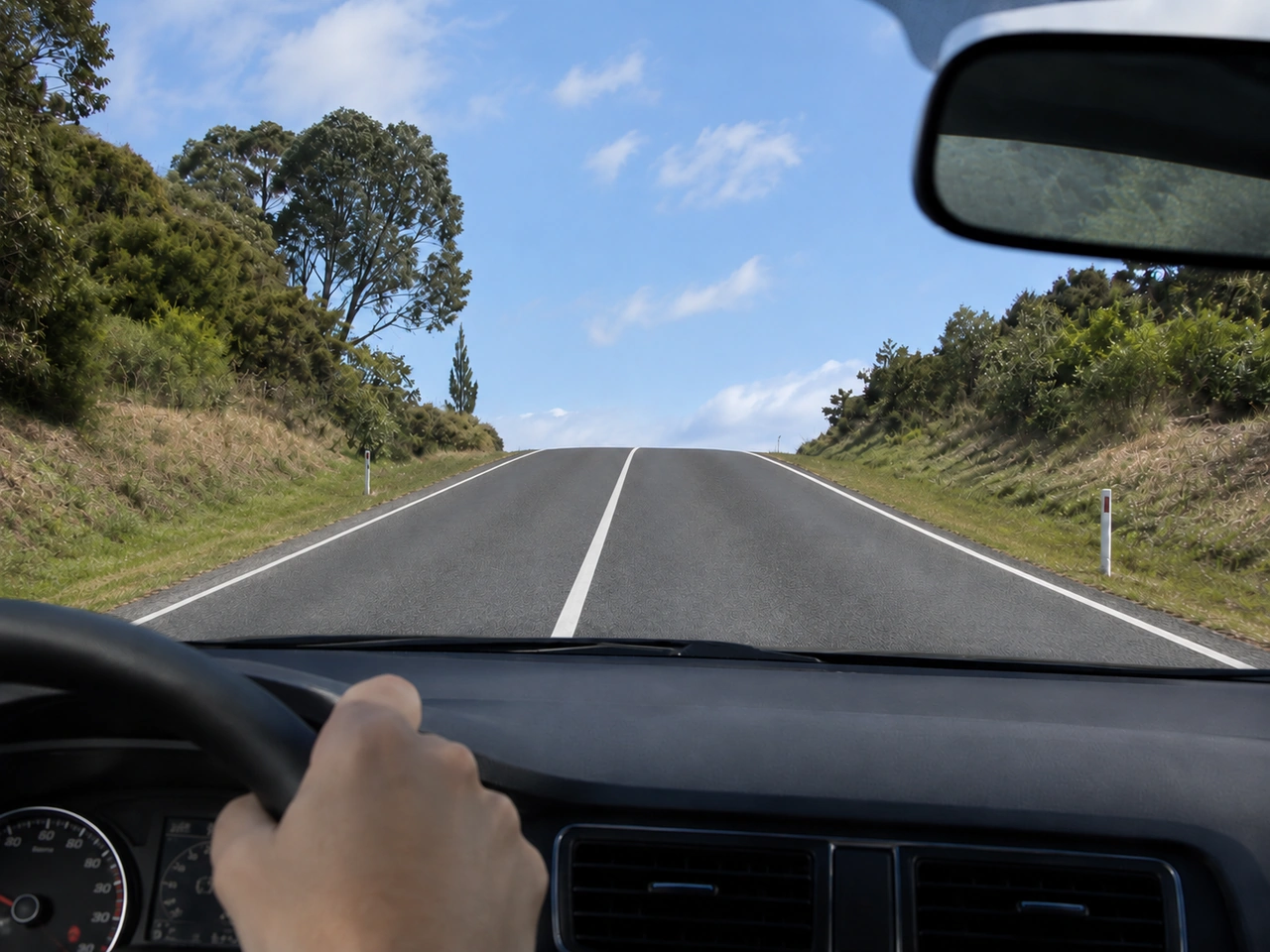
What should you do when approaching a hill crest?

188. What should you do when approaching a hill crest?

Overtake before reaching the crest.
Maintain speed if no traffic is visible.
Follow the vehicle ahead closely for guidance.
✓ Slow down and be prepared for hidden hazards.

A hill crest can hide vehicles, cyclists, pedestrians, or obstacles. Reduce speed and stay in your lane.

Vehicle approaching the crest of a hill
AI-generated by Traffic-rules.com • WCIT • CC BY-SA
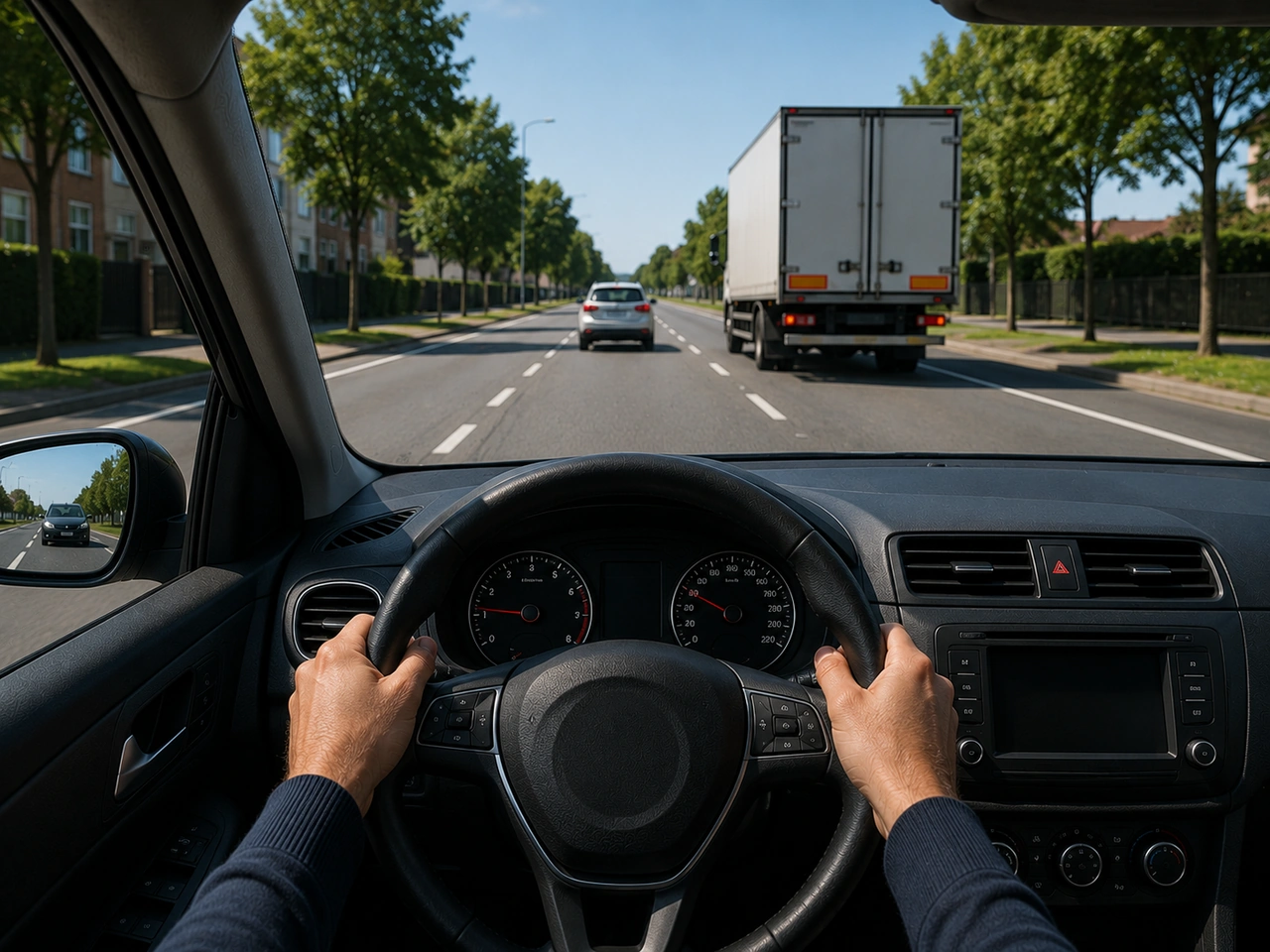
You should stay focused on the road and avoid unnecessary distractions.

189. You should stay focused on the road and avoid unnecessary distractions.

✓ True.
False.

Distractions reduce awareness and reaction time, making driving more dangerous.

Driver keeping attention on the road ahead
AI-generated by Traffic-rules.com • WCIT • CC BY-SA
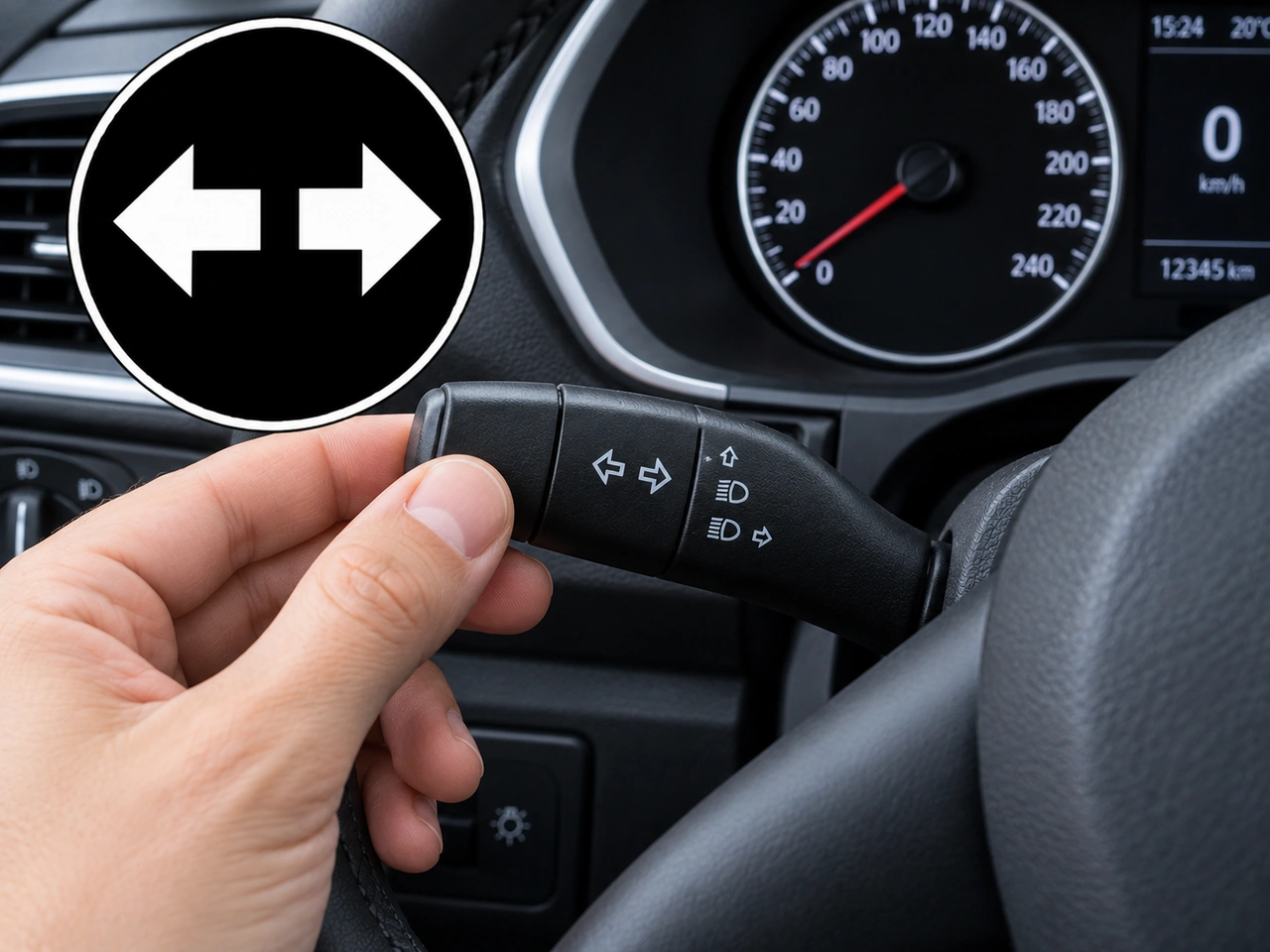
Which control is normally used to operate the direction indicators?

190. Which control is normally used to operate the direction indicators?

The headlight-level control.
✓ The steering-column indicator stalk.
The windscreen-wiper stalk.
The cruise-control button.

The direction indicators are normally operated using a stalk beside the steering wheel. Moving the stalk up or down activates the indicators on the corresponding side of the vehicle.

Steering-column stalk for the direction indicators
AI-generated by Traffic-rules.com • WCIT • CC BY-SA
What should you do when approaching an uncontrolled junction?

191. What should you do when approaching an uncontrolled junction?

Continue at normal speed unless another vehicle is visible.
✓ Slow down, look carefully in all directions, and proceed only when safe.
Enter first if you reach the junction before another vehicle.
Check only the direction from which traffic usually has priority.

At an uncontrolled junction, priority may not be obvious. Reduce speed, check carefully, and only enter when you are sure it is safe.

Vehicle approaching an uncontrolled junction
AI-generated by Traffic-rules.com • WCIT • CC BY-SA
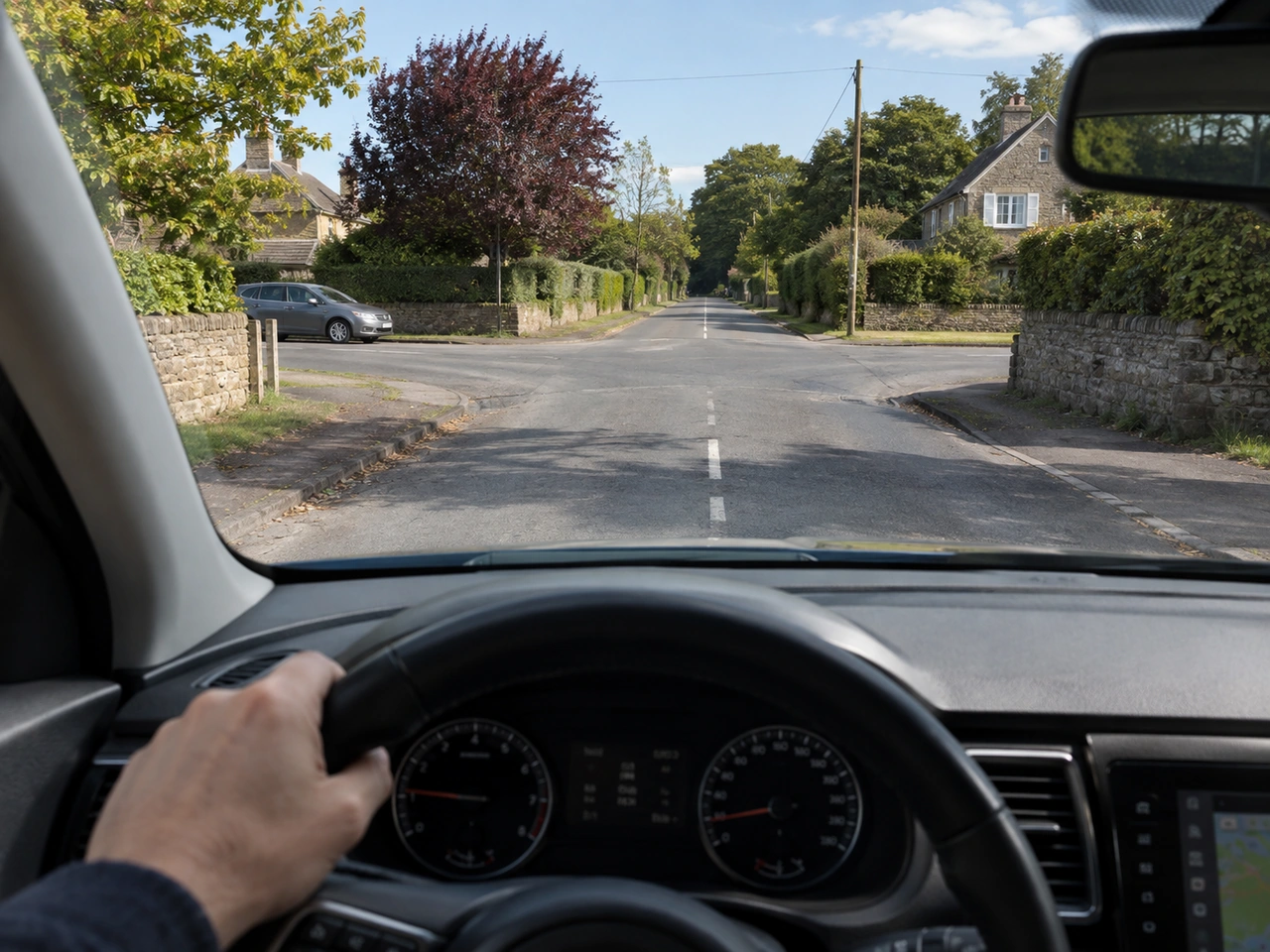
What should a motorcyclist do before entering a bend?

192. What should a motorcyclist do before entering a bend?

Accelerate before checking how sharp the bend is.
Move close to the centre of the road.
Look only at the road directly in front of the wheel.
✓ Reduce speed before the bend and look through it.

Adjust your speed before entering the bend so you can steer smoothly and remain within a safe position. Look through the bend towards where you want to travel and be prepared for hazards that may be hidden from view.

Motorcyclist approaching a bend
AI-generated by Traffic-rules.com • WCIT • CC BY-SA
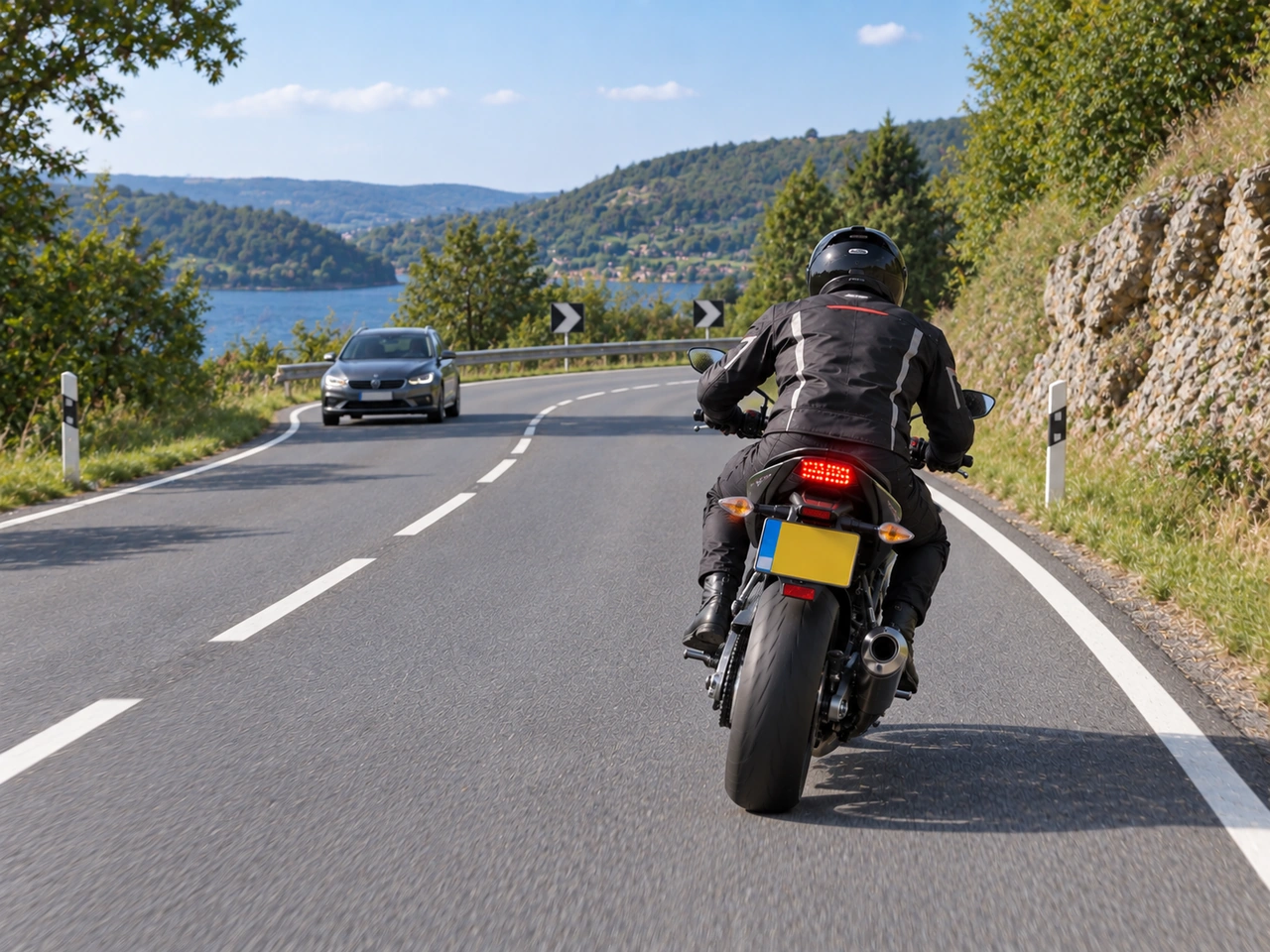
Which side is normally used for overtaking in Mexico?

193. Which side is normally used for overtaking in Mexico?

Right-hand side.
✓ Left-hand side.

Drivers normally overtake on the left-hand side in Mexico.

Vehicle overtaking on the left
AI-generated by Traffic-rules.com • WCIT • CC BY-SA
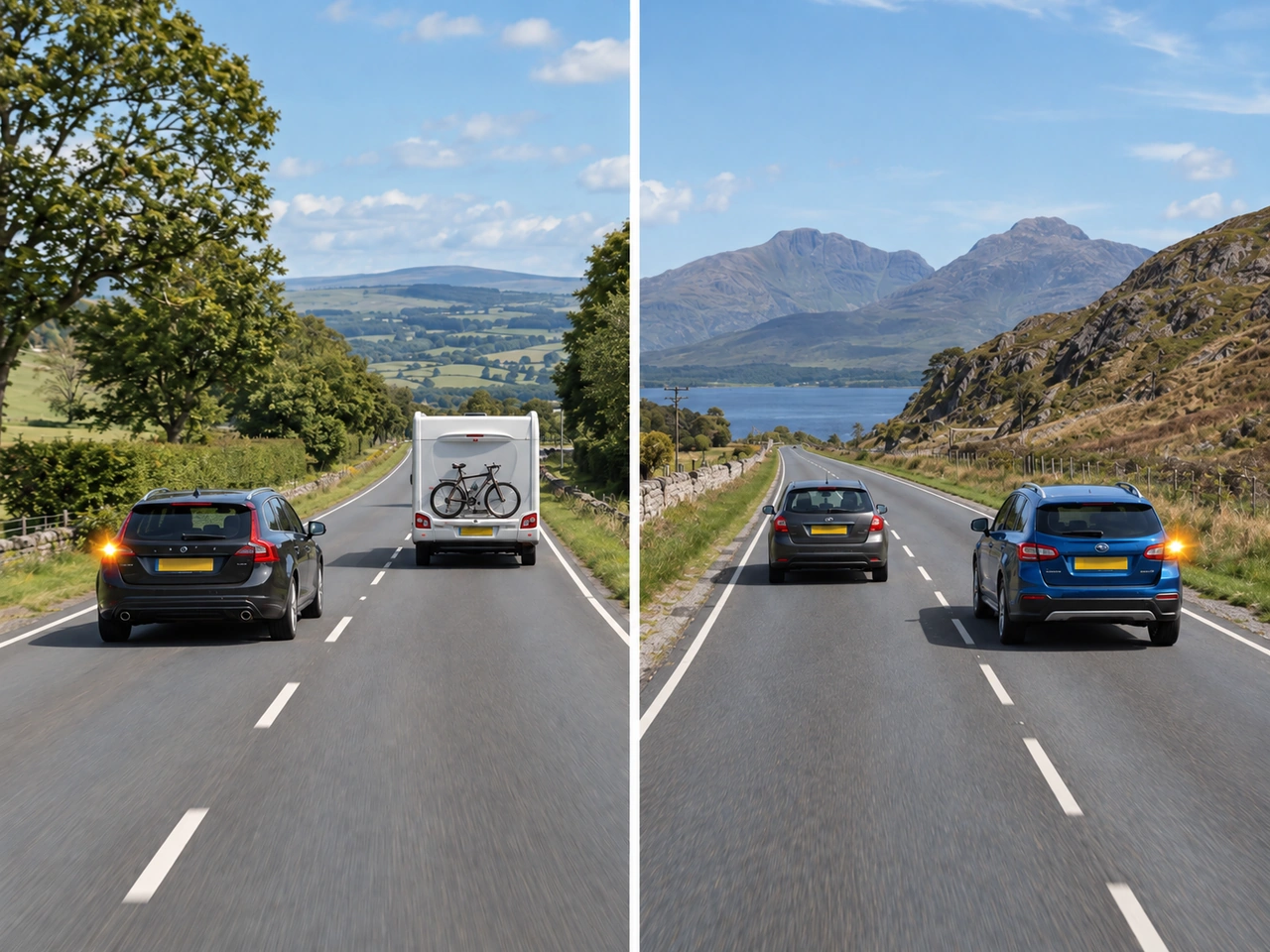
Why should you leave extra space behind a motorcycle?

194. Why should you leave extra space behind a motorcycle?

Motorcycles need less space to stop than cars.
Motorcyclists cannot see vehicles directly behind them.
Following closely makes it easier to overtake safely.
✓ Motorcycles can slow down quickly and are more vulnerable.

Motorcyclists are more exposed than car drivers. Extra following distance gives you more time to react safely.

Following distance behind a motorcycle
AI-generated by Traffic-rules.com • WCIT • CC BY-SA
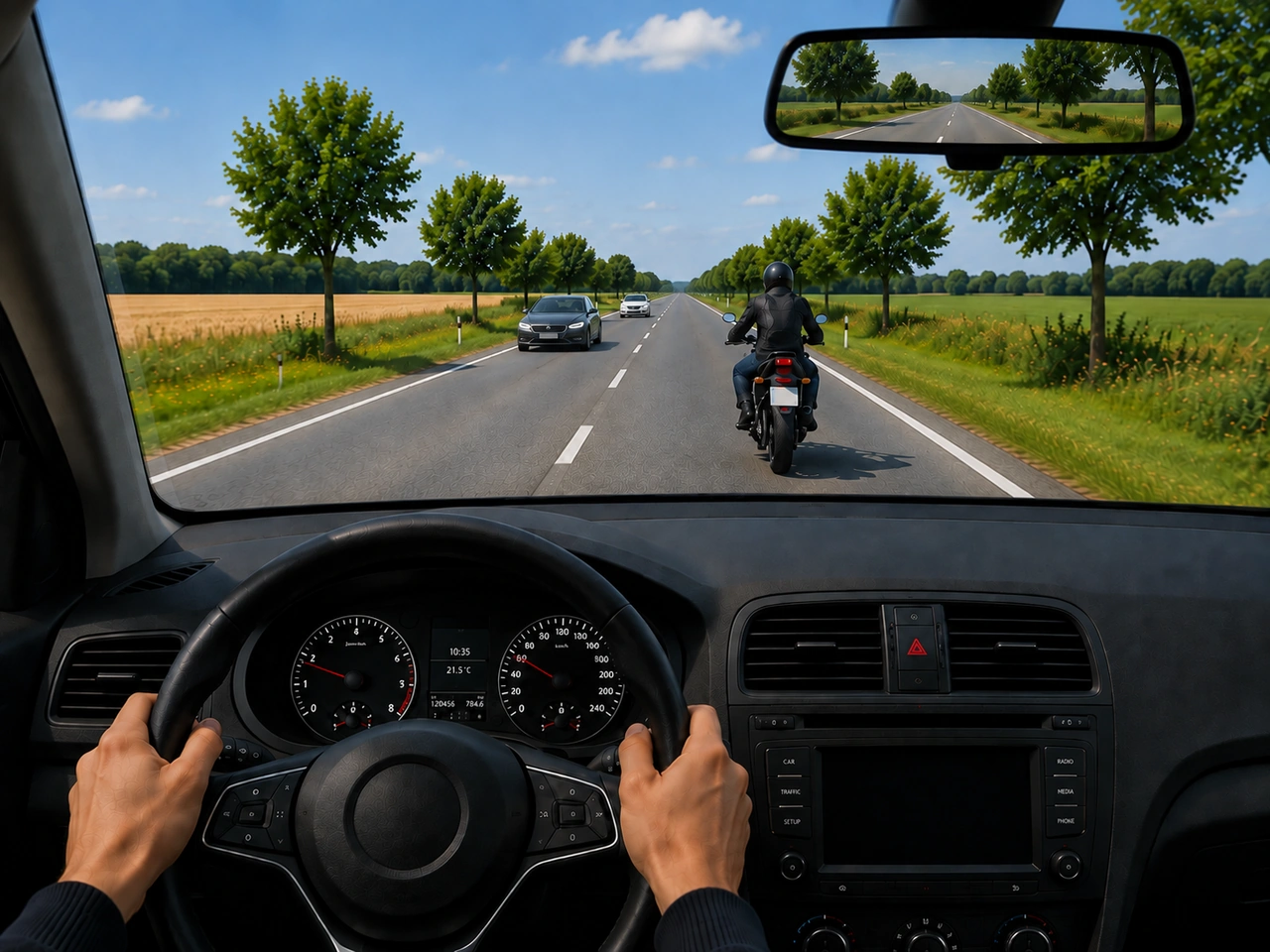
What should you do if you are dazzled by low sun?

195. What should you do if you are dazzled by low sun?

Follow the vehicle ahead closely as a guide.
Maintain your speed if you can still see the road markings.
Look only at the road immediately in front of you.
✓ Slow down and use the sun visor if needed.

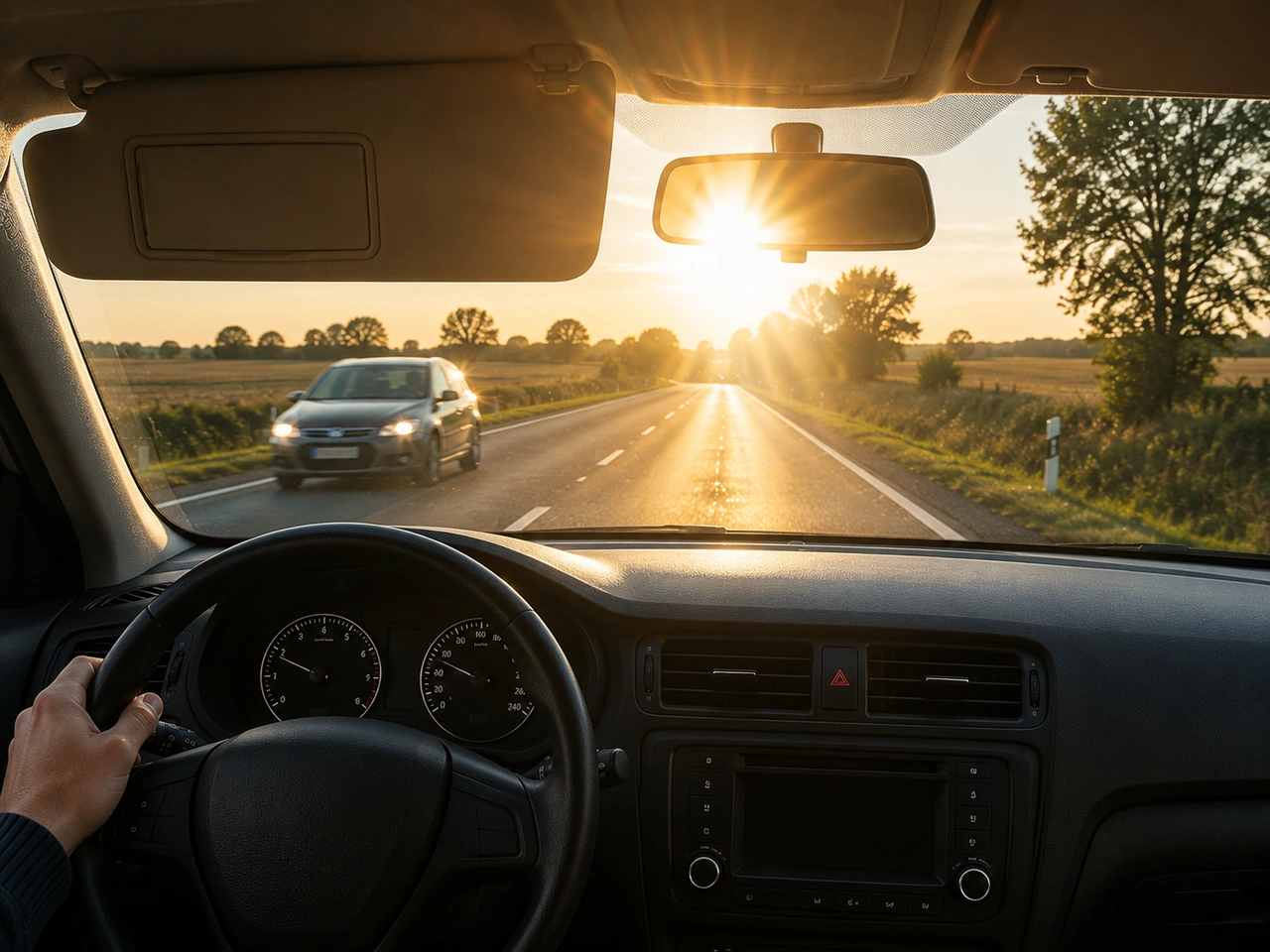
Low sun can greatly reduce visibility. Slow down, increase your safety margin, and use the sun visor or sunglasses if needed.

Low sunlight dazzling a driver
AI-generated by Traffic-rules.com • WCIT • CC BY-SA
What should happen after an airbag has deployed?

196. What should happen after an airbag has deployed?

The airbag can be reused if it is not torn.
Only the airbag warning light needs to be reset.
✓ The restraint system should be professionally inspected and repaired.
The airbag can be folded back into the dashboard.

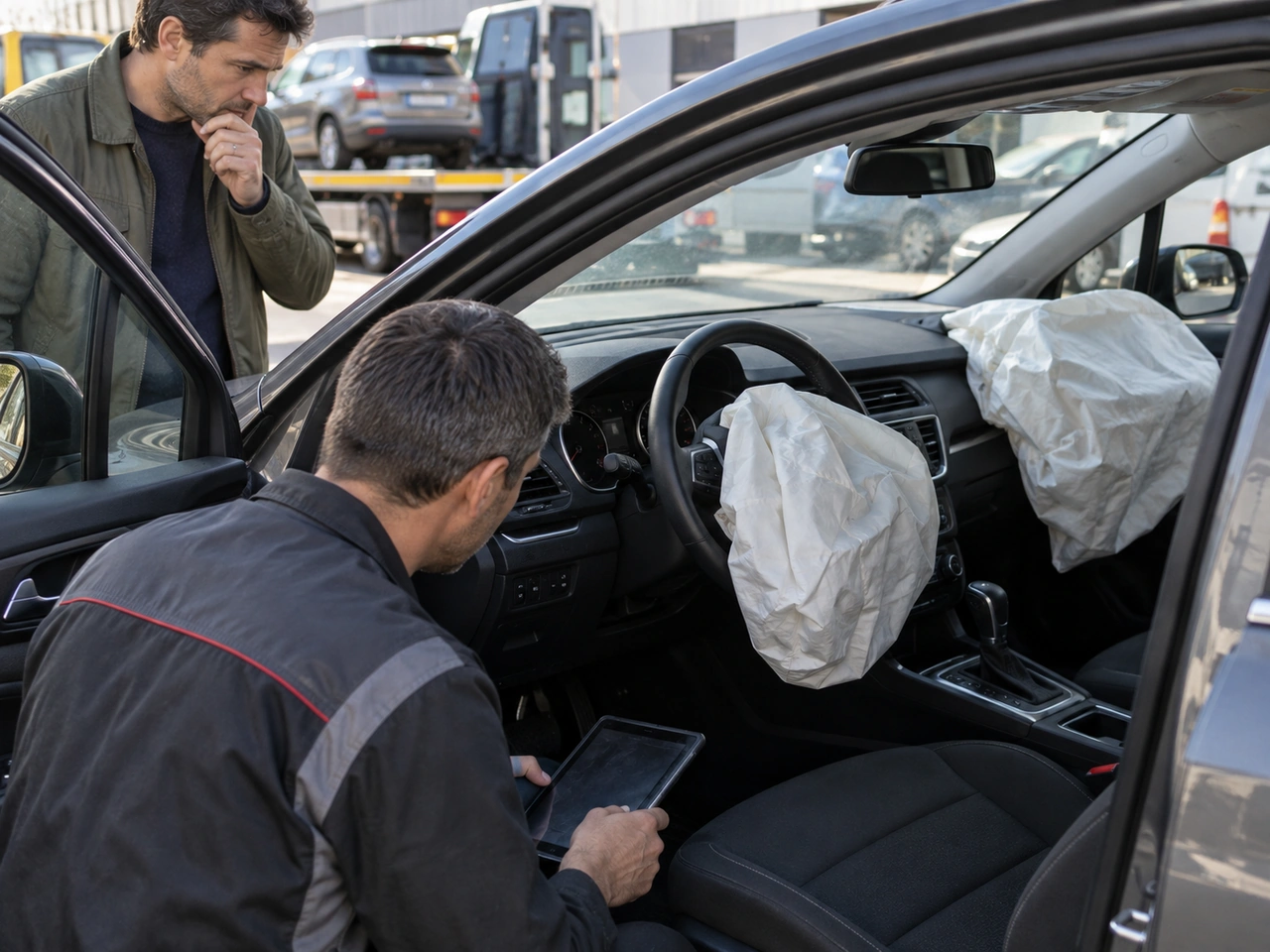
A deployed airbag is a single-use safety component. After deployment, the restraint system should be professionally inspected and the airbag and any other affected components replaced or repaired as required before the system is relied upon again.

Deployed airbag inside a vehicle
AI-generated by Traffic-rules.com • WCIT • CC BY-SA
What is the best place to cross the road?

197. What is the best place to cross the road?

✓ At a designated crossing.
Near a bend if approaching traffic seems slow.
At the shortest point, even if visibility is limited.
Between parked vehicles if traffic appears quiet.

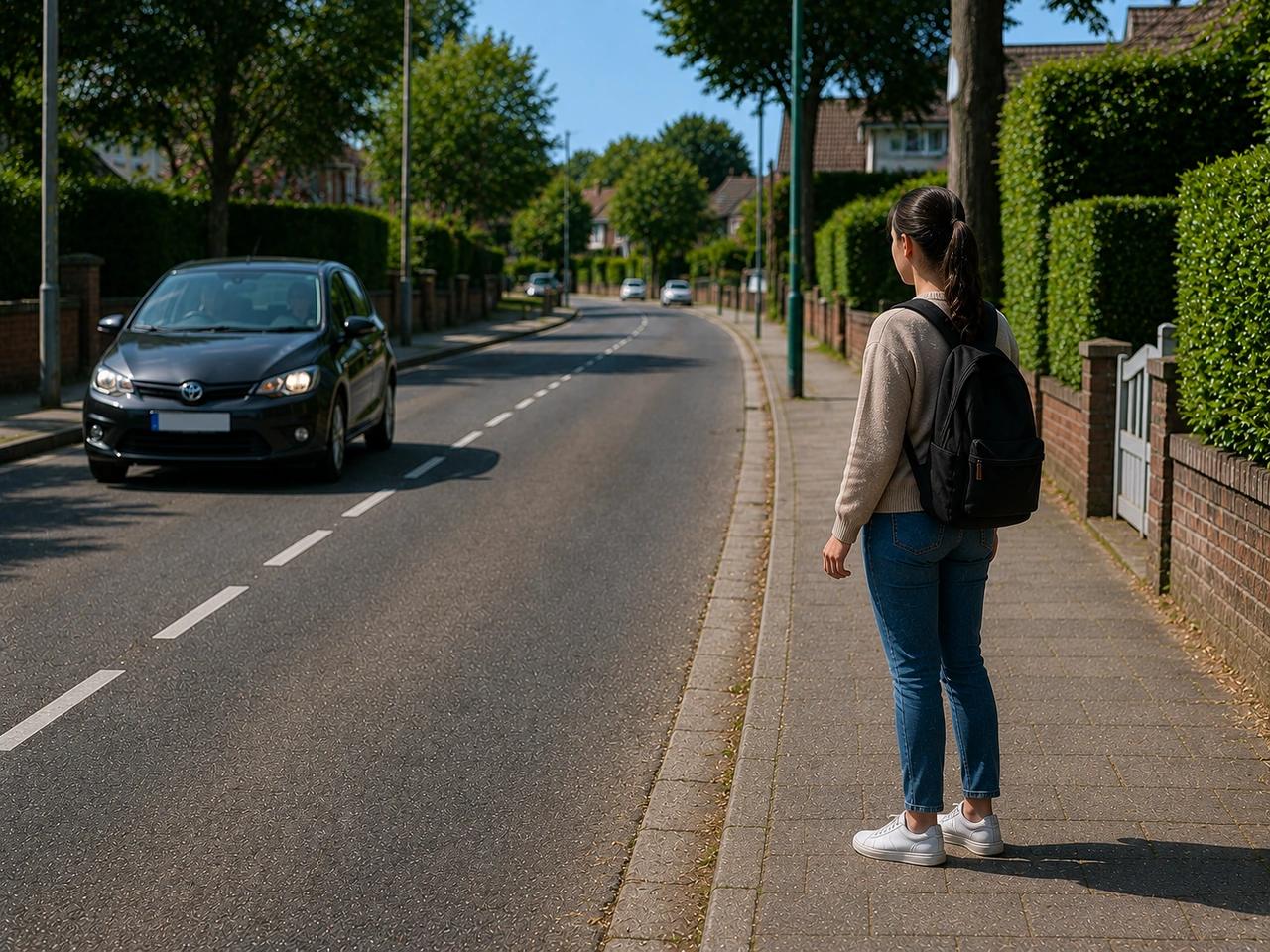
Use a designated crossing whenever possible. It is usually the safest place to cross the road.

Designated crossing for pedestrians
AI-generated by Traffic-rules.com • WCIT • CC BY-SA
What should you do if another vehicle is tailgating you?

198. What should you do if another vehicle is tailgating you?

✓ Stay calm and increase your safety margin ahead.
Move toward the centre to discourage them from passing.
Tap the brakes to make them increase their distance.
Speed up to create more space behind you.

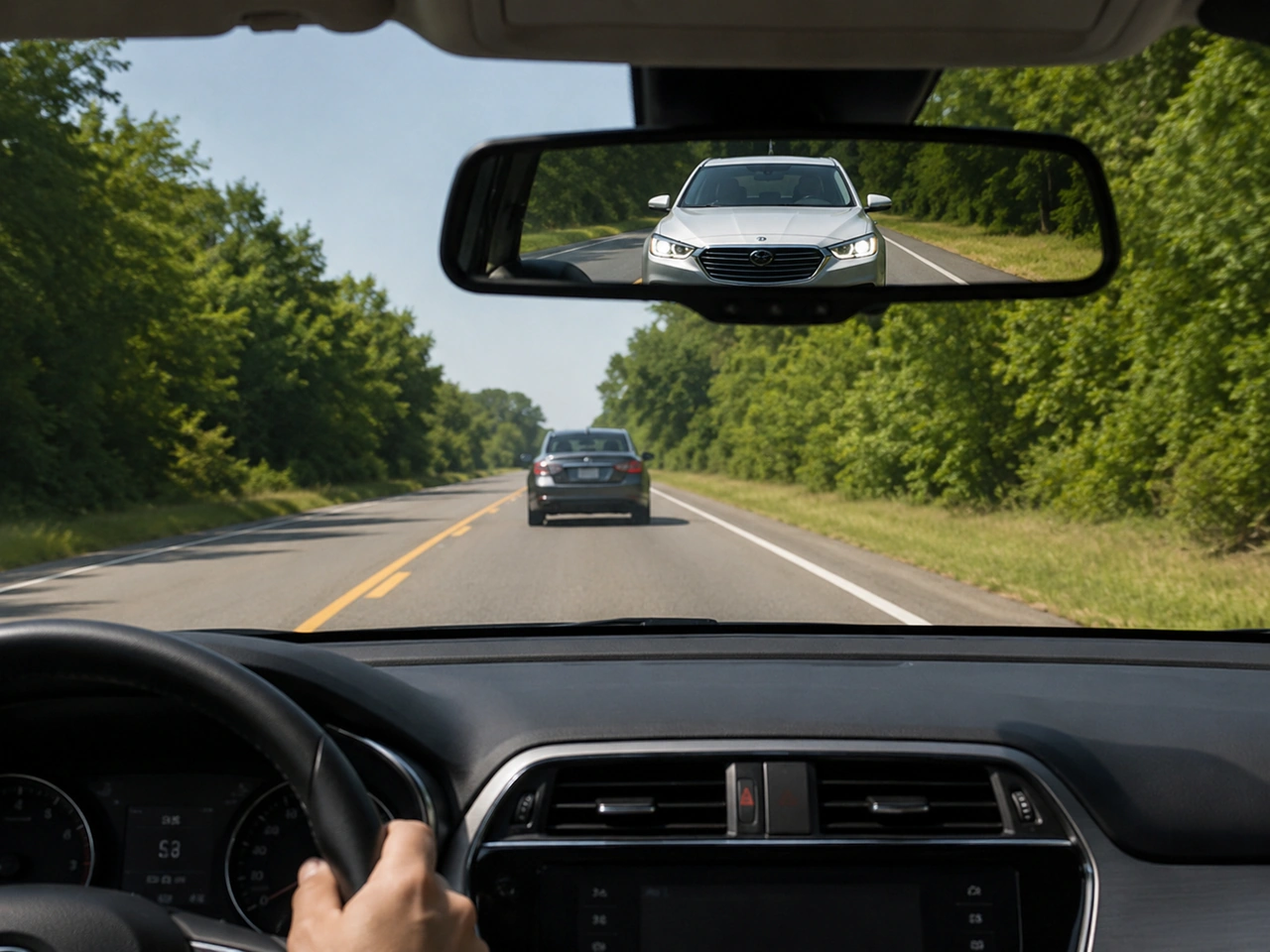
If someone follows too closely, avoid sudden actions. Keeping more space in front gives you more time to brake gently if needed. If it is safe, allow the tailgating vehicle to pass.

Following vehicle visible close behind
AI-generated by Traffic-rules.com • WCIT • CC BY-SA
Who should always wear a seat belt?

199. Who should always wear a seat belt?

Only the driver.
Only children and young passengers.
✓ Everyone in the vehicle.
Only people in seats without airbags.

Seat belts greatly reduce the risk of serious injury in a crash and should be worn by everyone in the vehicle.

Vehicle occupants wearing seat belts
AI-generated by Traffic-rules.com • WCIT • CC BY-SA
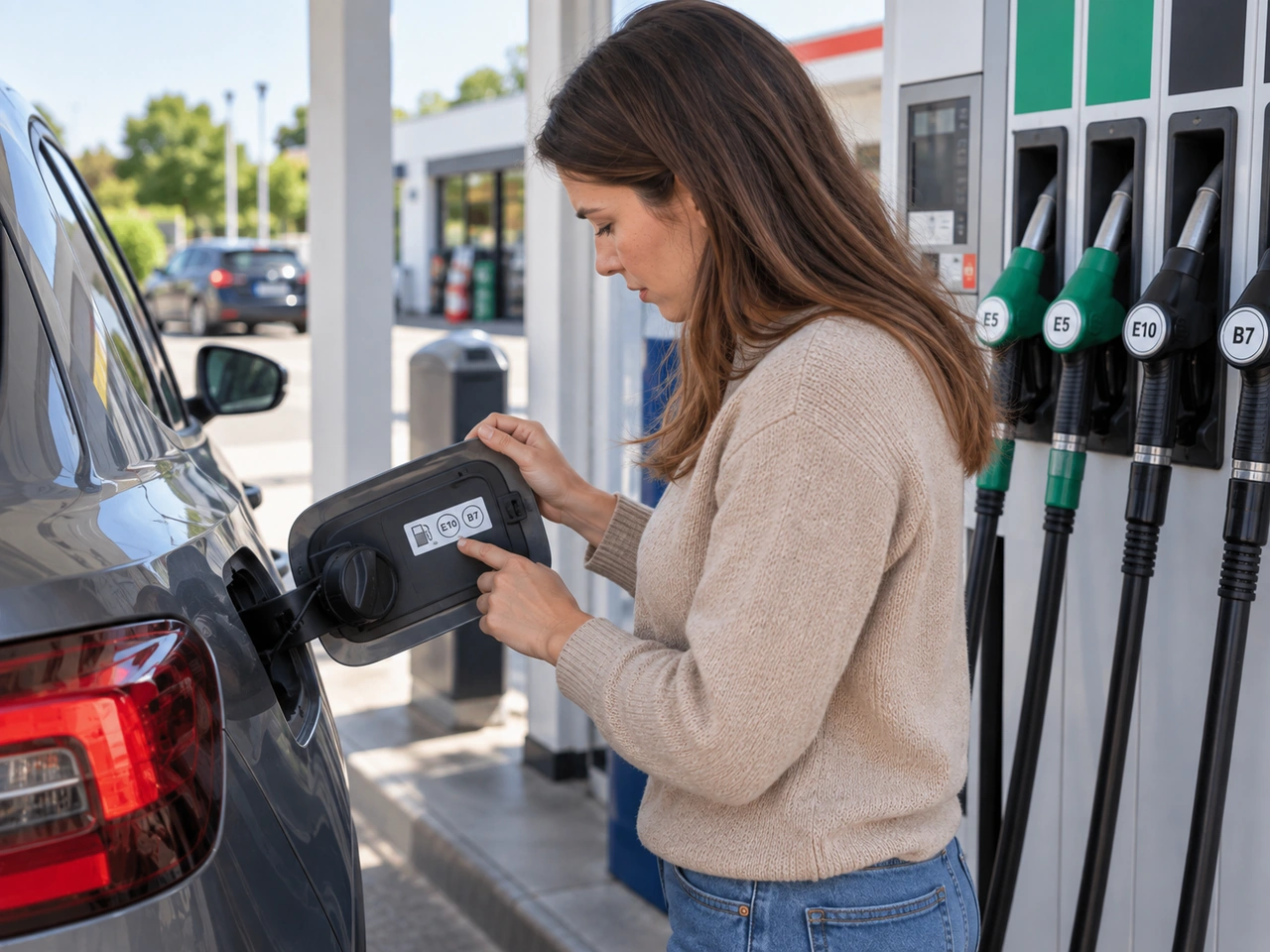
How can you check which fuel is suitable for your vehicle?

200. How can you check which fuel is suitable for your vehicle?

Use petrol unless the engine sounds like a diesel.
Choose whichever fuel is cheapest at the station.
Ask another driver with a similar-looking vehicle.
✓ Check the fuel-filler label, fuel cap, or vehicle information.

Before refuelling, check which fuel type the vehicle requires. The correct fuel is often shown inside the fuel-filler flap, on or near the fuel cap, or in the vehicle information or owner's manual. Do not rely only on nozzle colours, as these can vary between filling stations and countries.

Checking the fuel label before refuelling
AI-generated by Traffic-rules.com • WCIT • CC BY-SA