


Railway crossingNepal
 Traffic rules
 Nepal
1. Railway crossing
A railway crossing, also called a level crossing or railroad crossing, is a place where a road or path crosses railway tracks at the same level. It may be protected by barriers, warning lights, bells, traffic signs or a combination of these measures.
Road users must approach carefully and never enter when a train is approaching, warning signals are active or the exit is blocked. They should cross promptly and must never stop, wait or become trapped on the tracks.
When must drivers stop at a railway level crossing in Nepal?
At a crossing in Nepal, obey red warning signals, barriers, STOP signs and authorised railway personnel. Stop whenever a train is approaching and it is not safe to cross; rules at an unguarded crossing may differ from a crossing controlled by lights or barriers.
🔗 dor.gov.np • Warnings B40–B41, regulatory stop controls and authorised directions
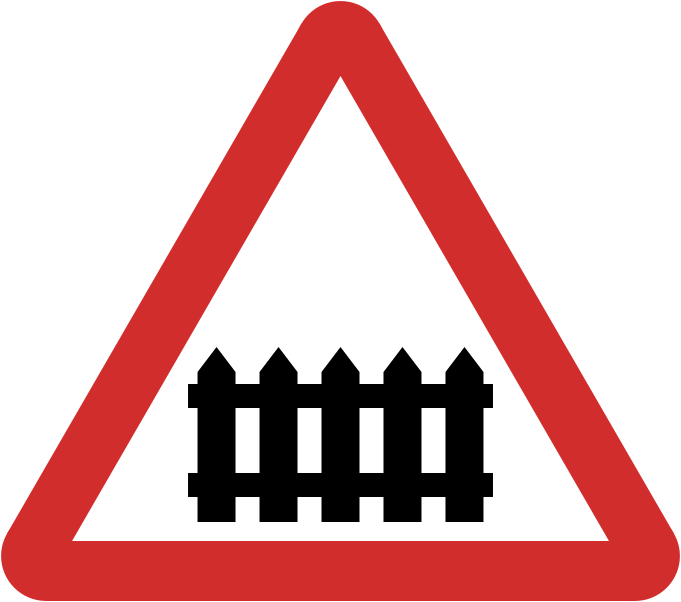 Warning for a railway crossing with barriers.
English • Traffic sign B41 • Level crossing with gates or barriers. Obey the crossing controls.
नेपाली • B41 • फाटक भएको रेल क्रसिङ। अगाडि फाटक वा बार भएको रेल क्रसिङ छ। फाटक र क्रसिङको निर्देशन पालना गर्नुहोस्।
Sources
🔗 Commons.wikimedia.org
🔗 Dor.gov.np • सडक विभाग • Traffic Signs Manual, 1997 • B41 • PDF पृष्ठ 121
SVG source: Commons.wikimedia.org • Original SVG
Nepali Department of Roads • Public domain • Original revision 2022-02-22. Wikimedia original unmodified.
Artwork reviewed against the Department of Roads Traffic Signs Manual 2018, Volume 2: Dor.gov.np • PDF page 77. Catalogue-equivalent illustration; intentional update from the previous PNG. The earlier manual is retained as supporting evidence.
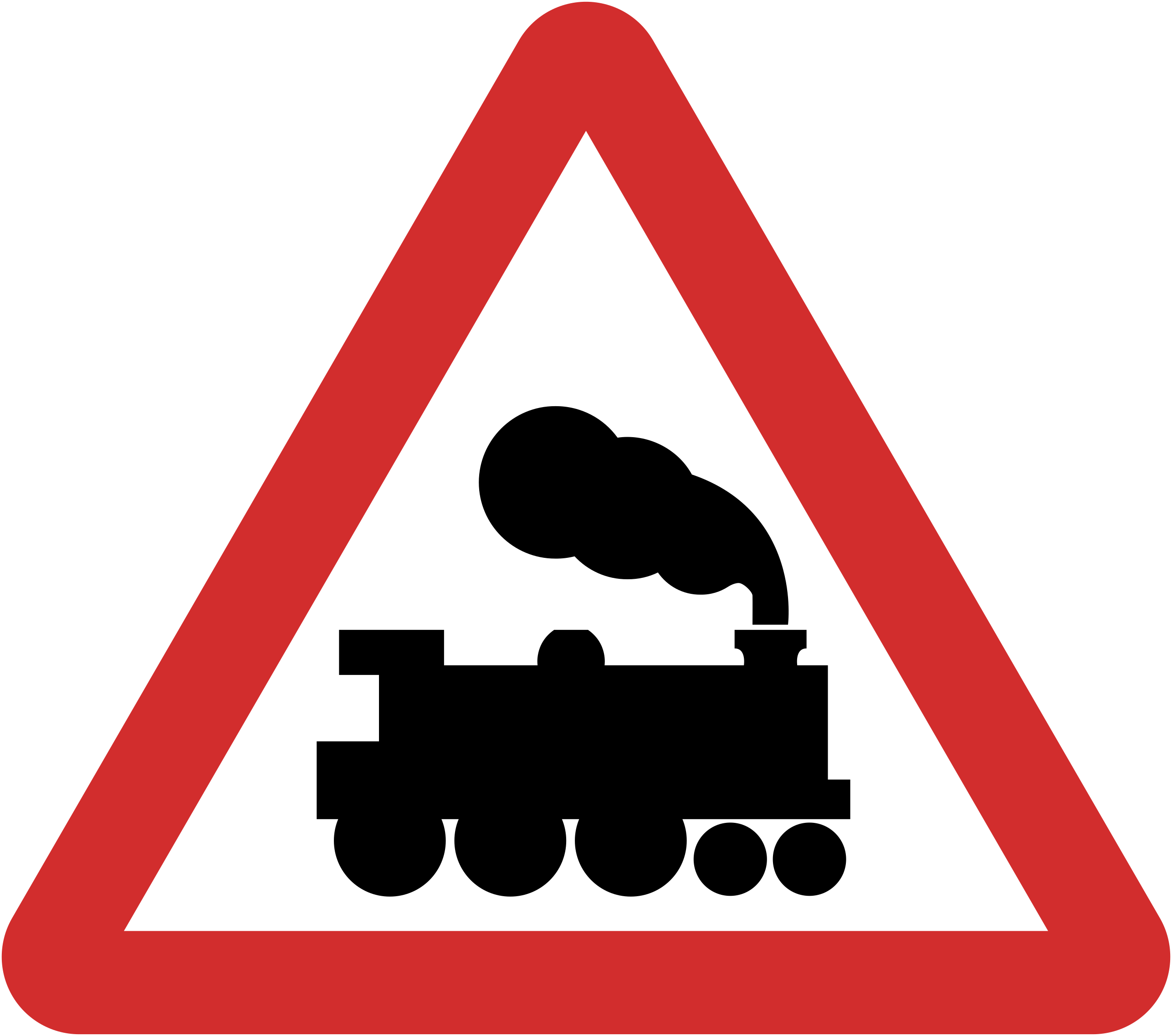 Warning for a railway crossing without barriers.
English • Traffic sign B40 • Level crossing without gates. Check for trains before crossing safely.
नेपाली • B40 • फाटक नभएको रेल क्रसिङ। अगाडि फाटक नभएको रेल क्रसिङ छ। रेल आउँदै छ कि छैन जाँच गरेर मात्र पार गर्नुहोस्।
Sources
🔗 Commons.wikimedia.org
🔗 Dor.gov.np • सडक विभाग • Traffic Signs Manual, 1997 • B40 • PDF पृष्ठ 120
SVG source: Commons.wikimedia.org • Original SVG
Nepali Department of Roads • Public domain • Original revision 2020-03-09. Wikimedia original unmodified.
Artwork reviewed against the Department of Roads Traffic Signs Manual 2018, Volume 2: Dor.gov.np • PDF page 76. Catalogue-equivalent illustration; intentional update from the previous PNG. The earlier manual is retained as supporting evidence.
Must I stop at every unguarded railway crossing in Nepal?
In Nepal, the stopping duty depends on the actual STOP or GIVE WAY controls and any additional national or vehicle-specific rule. Look and listen carefully; do not assume a crossing without barriers is automatically safe or that the same stop rule applies in every country.
🔗 dor.gov.np • Warnings B40–B41, regulatory stop controls and authorised directions
What if road traffic is queued beyond a railway crossing in Nepal?
Wait before the tracks until there is room to take your entire vehicle off the crossing. Do not follow another vehicle onto the tracks without checking the exit. Keep the tracks clear even if no train is visible.
🔗 dor.gov.np • Warnings B40–B41, regulatory stop controls and authorised directions

