QuizTraffic rulesRomania

This interesting quiz helps you test your knowledge in a clear and visual way. With easy multiple-choice questions, you can quickly build confidence and learn new facts while keeping it simple, interactive, and fun.


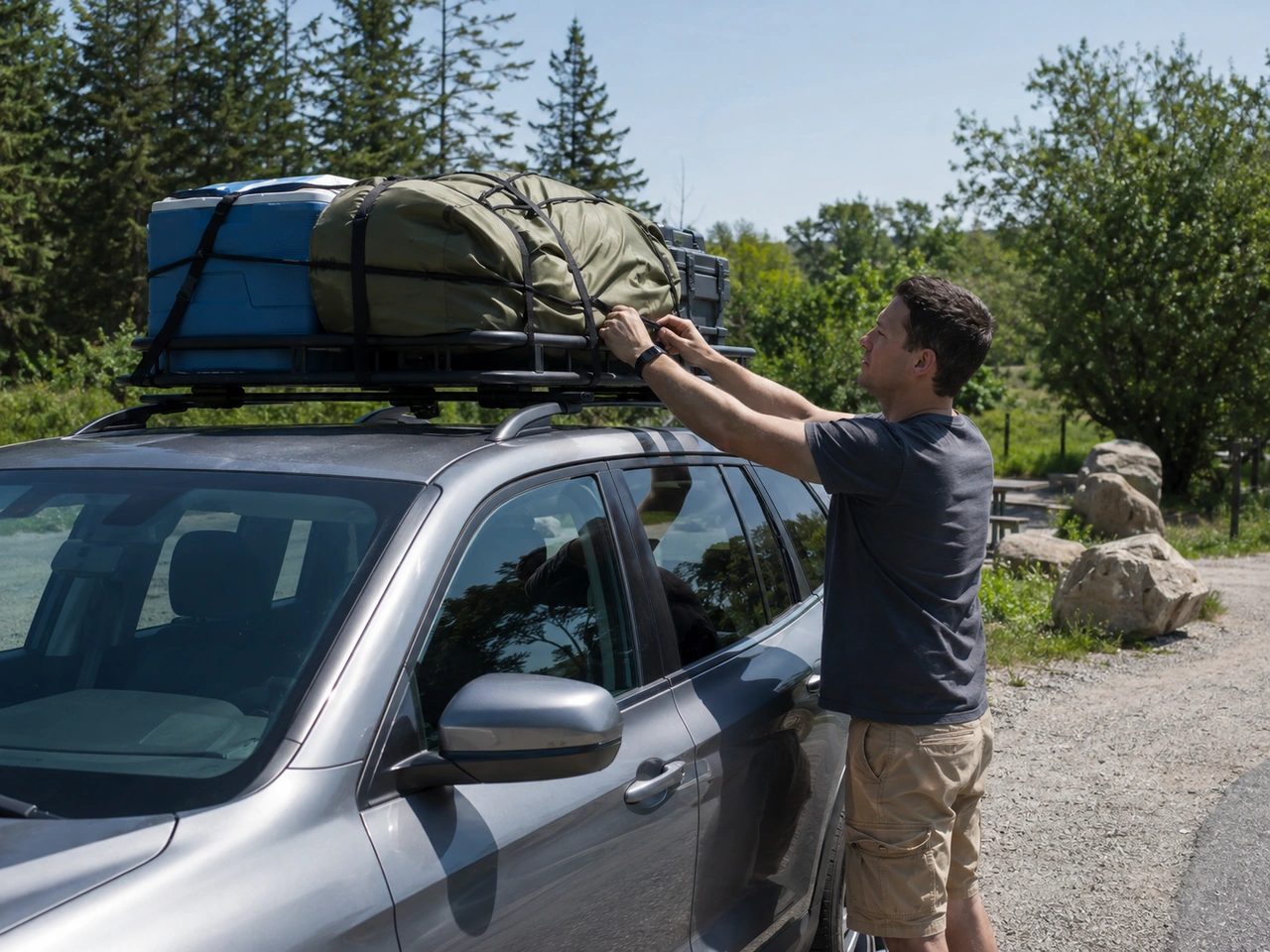
Why must a roof load be securely attached?

551. Why must a roof load be securely attached?

Because light roof loads cannot be affected by the wind.
✓ It could shift or fall and create a serious hazard.
Because the roof will hold the load in place while driving.
To stop the roof rack from increasing fuel consumption.

A roof load is exposed to strong airflow and movement. It must be restrained correctly and kept within the permitted limits.

Load secured to a vehicle's roof
AI-generated by Traffic-rules.com • WCIT • CC BY-SA
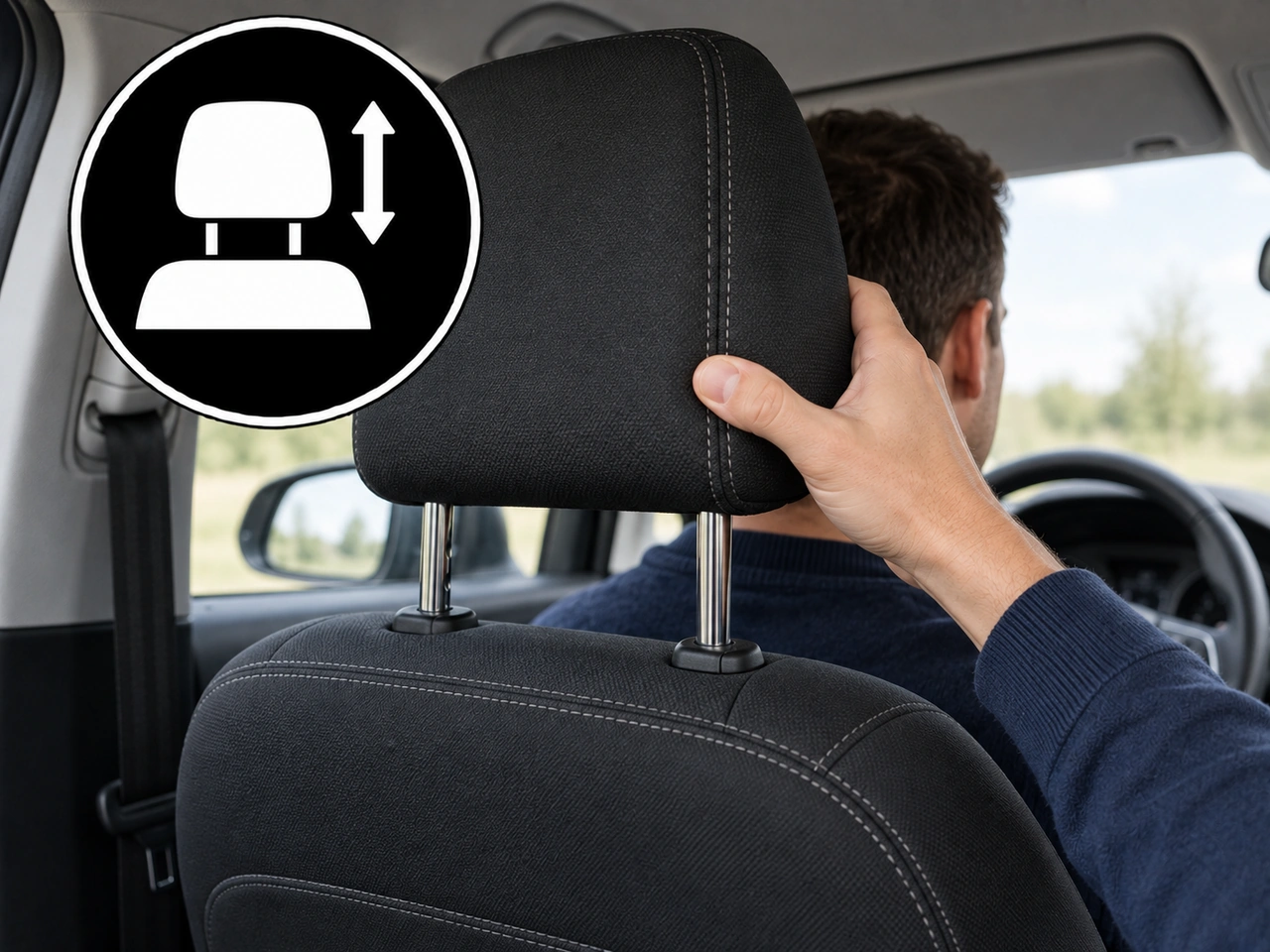
Why should the head restraint be adjusted correctly?

552. Why should the head restraint be adjusted correctly?

✓ To reduce the risk of neck injury in a collision.
To improve rear visibility.
To support the lower back.
To make the seat belt tighter.

A correctly adjusted head restraint helps support the head and can reduce the risk of neck injury, especially in a rear-end collision. The top of the restraint should normally be level with the top of the head.

Adjusting a vehicle seat's head restraint
AI-generated by Traffic-rules.com • WCIT • CC BY-SA
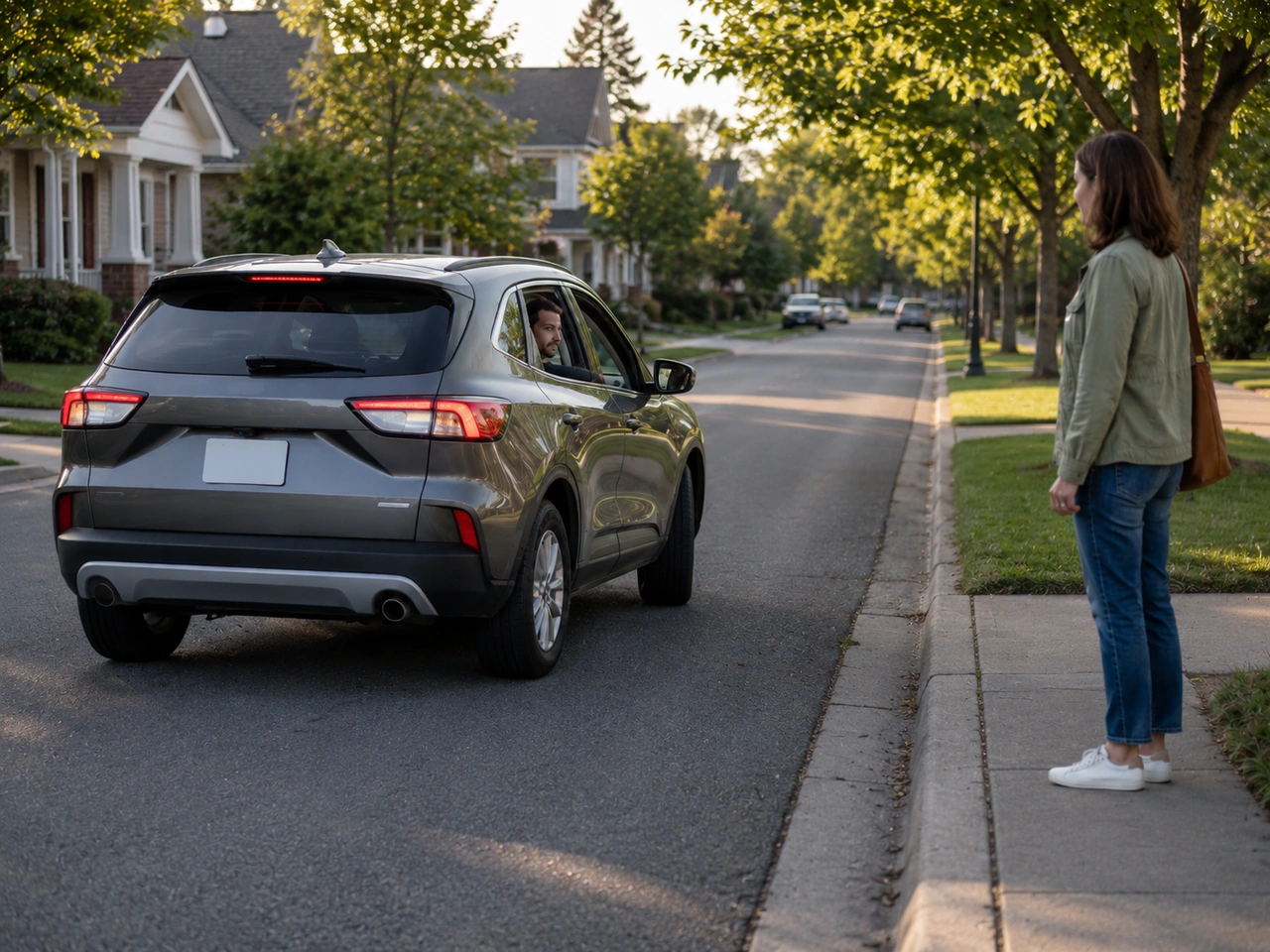
What should you do if a vehicle is reversing near you?

553. What should you do if a vehicle is reversing near you?

Stand close behind it so the driver can see you.
Cross behind it once the driver looks forward.
✓ Stay clear and make sure the driver can see you.
Walk behind it if it is reversing slowly.

Reversing vehicles have blind spots. Stay away from the vehicle and make sure the driver can see you.

Pedestrian near a reversing vehicle
AI-generated by Traffic-rules.com • WCIT • CC BY-SA
Can you assume that you are safe to drive the morning after drinking?

554. Can you assume that you are safe to drive the morning after drinking?

Yes, sleep removes all alcohol from your body.
✓ No, alcohol may still remain in your body.
Yes, if you feel completely sober.
Yes, if you only need to drive a short distance.

The body needs time to process alcohol. Sleeping, eating, showering, or drinking coffee does not instantly remove it.

Fitness to drive the morning after drinking
AI-generated by Traffic-rules.com • WCIT • CC BY-SA
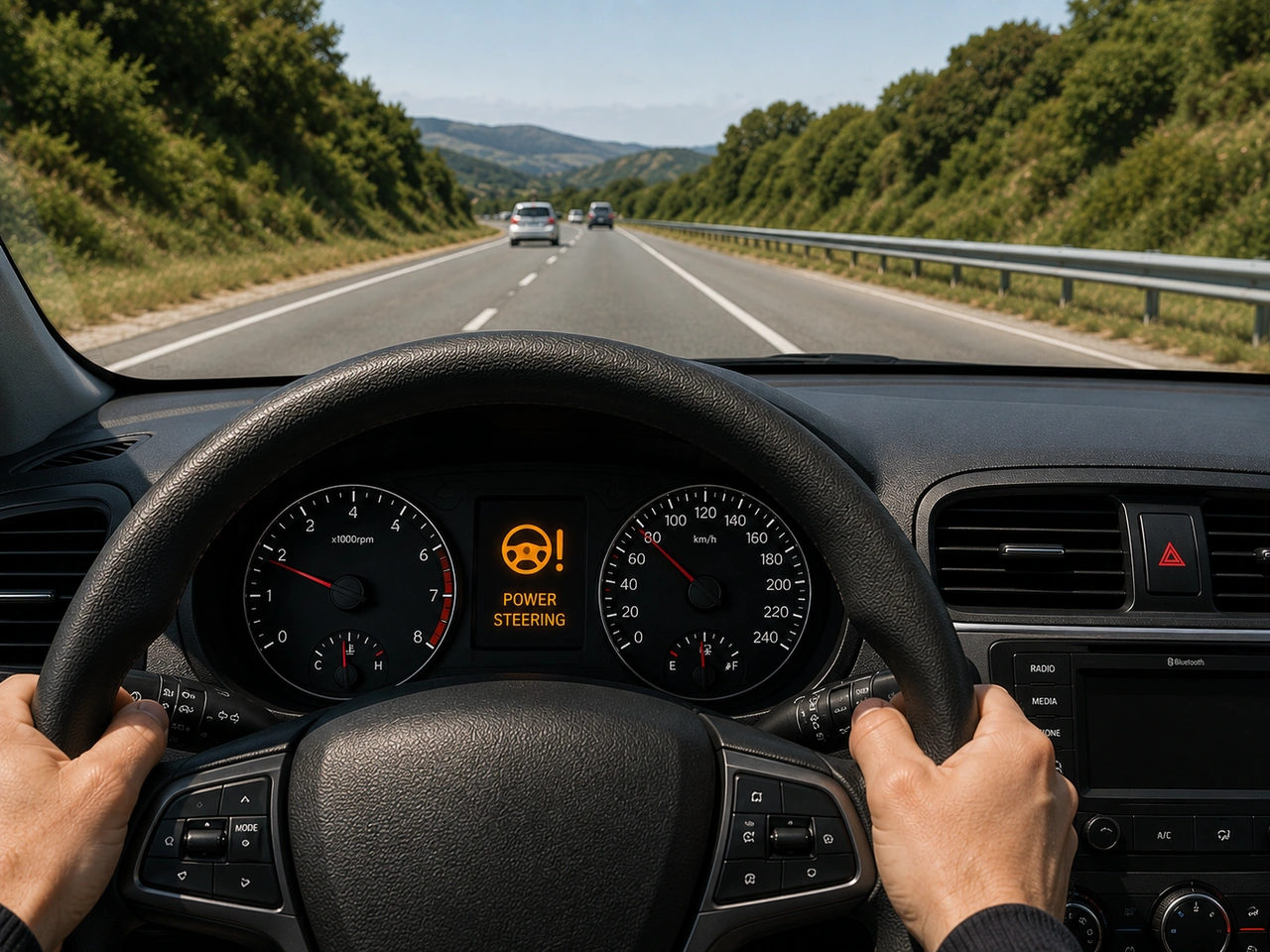
What should you do if the power steering suddenly stops assisting you?

555. What should you do if the power steering suddenly stops assisting you?

Make sharp steering movements to test the remaining assistance.
Accelerate to make the steering easier.
Switch off the engine while moving to reset the system.
✓ Hold the wheel firmly, use greater steering effort, and stop safely.

The vehicle can normally still be steered, but much more effort may be required. Reduce speed and arrange an inspection.

Driver coping with a loss of power-steering assistance
AI-generated by Traffic-rules.com • WCIT • CC BY-SA
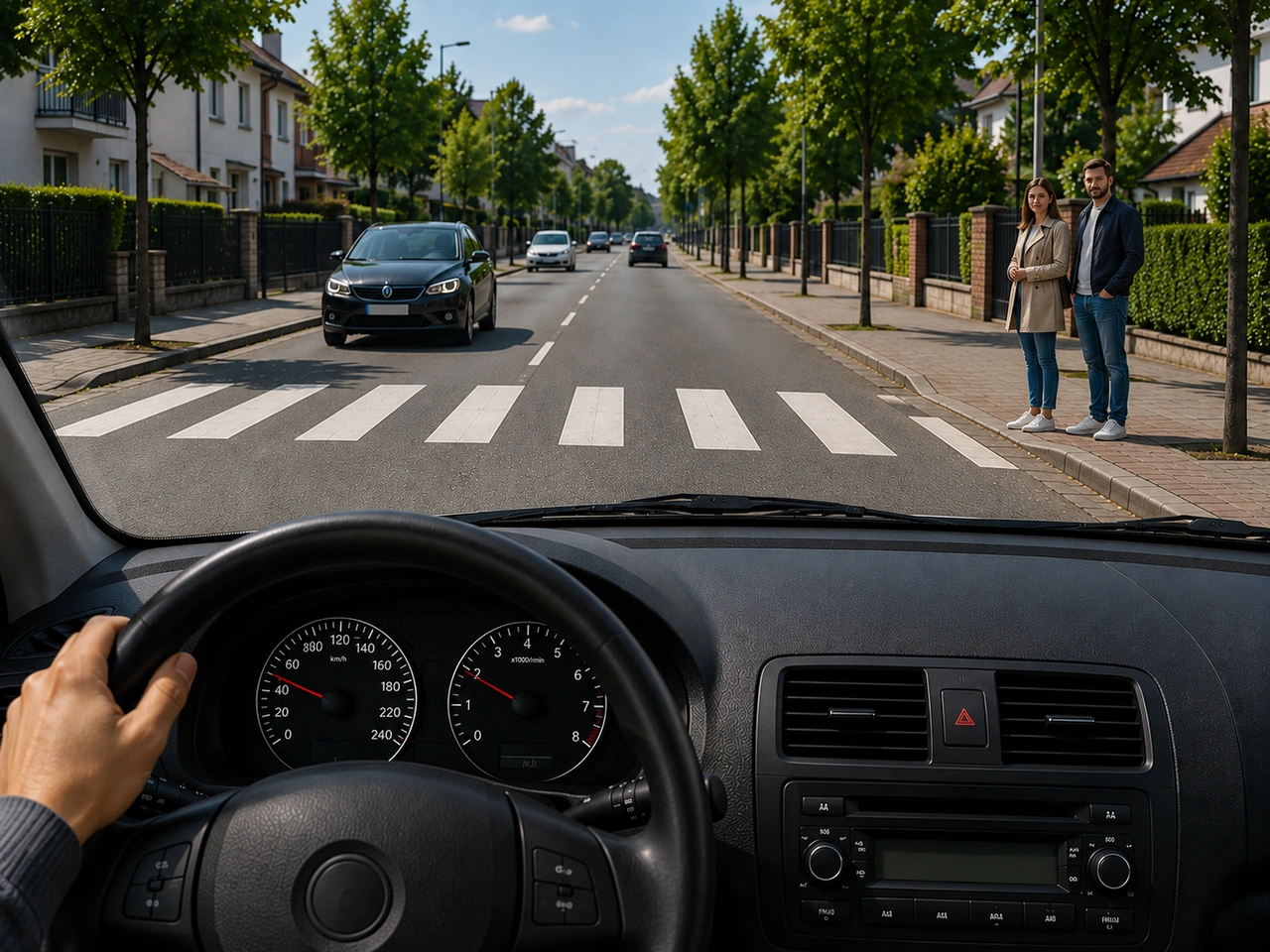
What should you do when people are waiting at a pedestrian crossing?

556. What should you do when people are waiting at a pedestrian crossing?

Sound your horn so pedestrians wait.
Maintain your speed until someone starts crossing.
Drive through if the pedestrians are still waiting.
✓ Slow down and stop if they want to cross.

When people are waiting near a pedestrian crossing, reduce your speed and be ready to stop. Pedestrians may begin crossing at any moment.

People waiting at a pedestrian crossing
AI-generated by Traffic-rules.com • WCIT • CC BY-SA
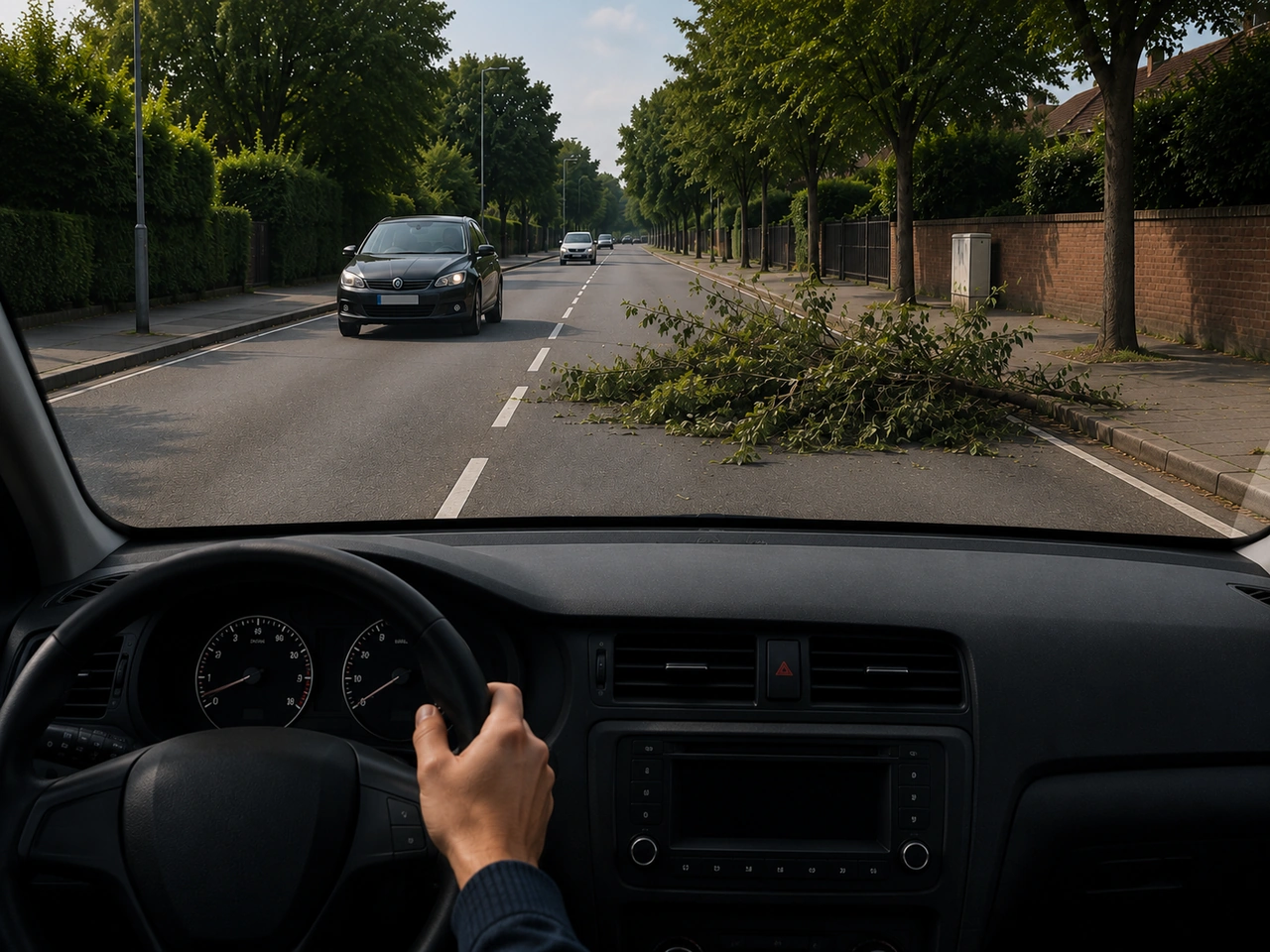
What should you do if your lane is blocked by an obstacle?

557. What should you do if your lane is blocked by an obstacle?

✓ Slow down, check carefully, and give way if needed.
Move around it because the obstacle gives you priority.
Follow another vehicle around it without checking yourself.
Signal and expect oncoming traffic to make room.

If your lane is blocked, reduce speed, check mirrors and oncoming traffic, and only move around the obstacle when it is safe.

Obstacle blocking a vehicle's lane
AI-generated by Traffic-rules.com • WCIT • CC BY-SA
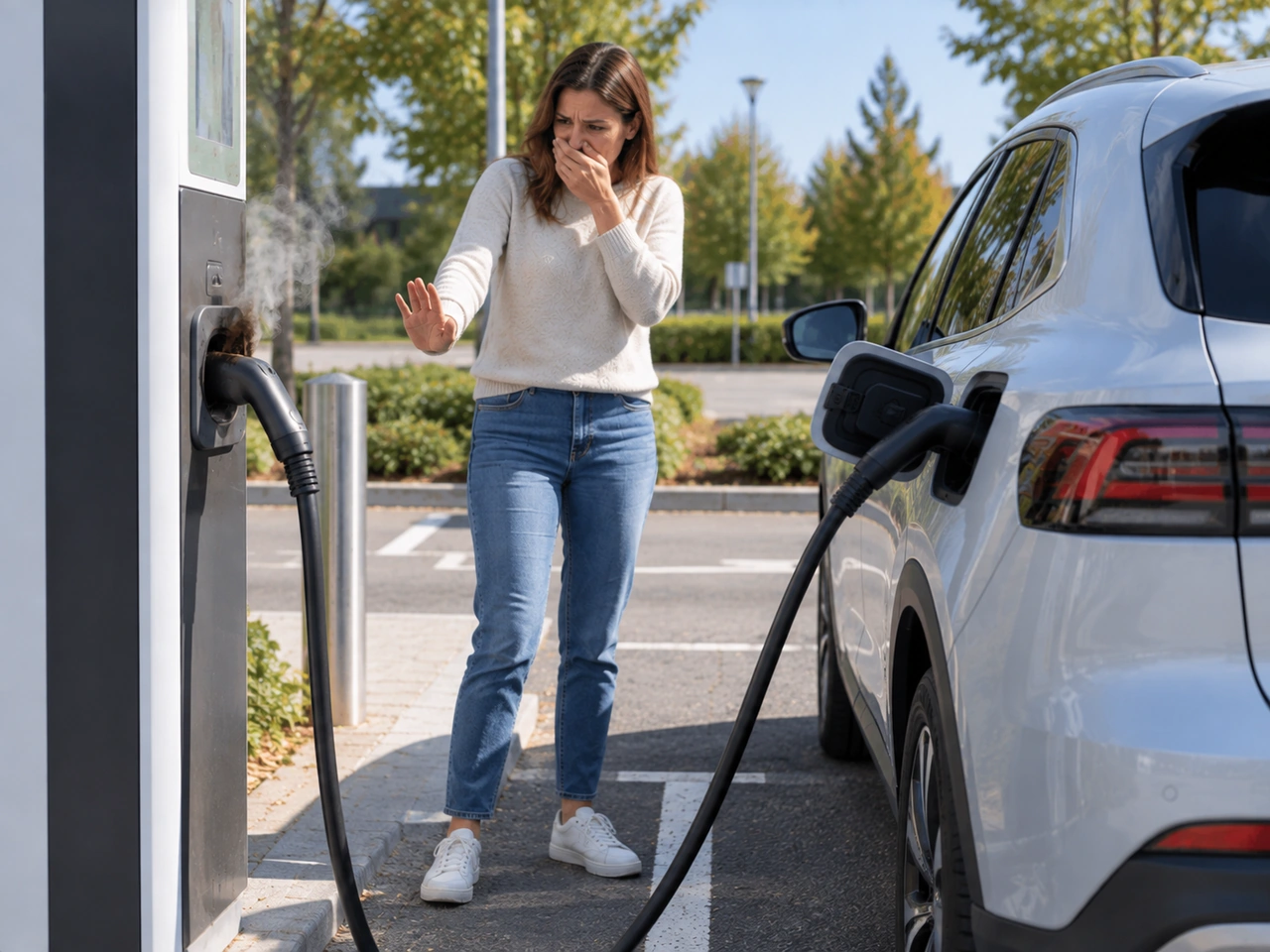
What should you do if EV charging equipment becomes unusually hot or smells burnt?

558. What should you do if EV charging equipment becomes unusually hot or smells burnt?

Pour water over the equipment to cool it.
✓ Stop the charging session, keep clear, and report the fault.
Cover the equipment to contain the heat.
Continue charging at a lower power setting.

Unusual heat, a burning smell, smoke, sparks, or repeated charging faults can indicate an electrical problem. Stop using the charging equipment if it is safe to do so, keep clear of anything damaged or overheating, and report the fault or seek appropriate assistance.

Faulty electric-vehicle charging equipment
AI-generated by Traffic-rules.com • WCIT • CC BY-SA
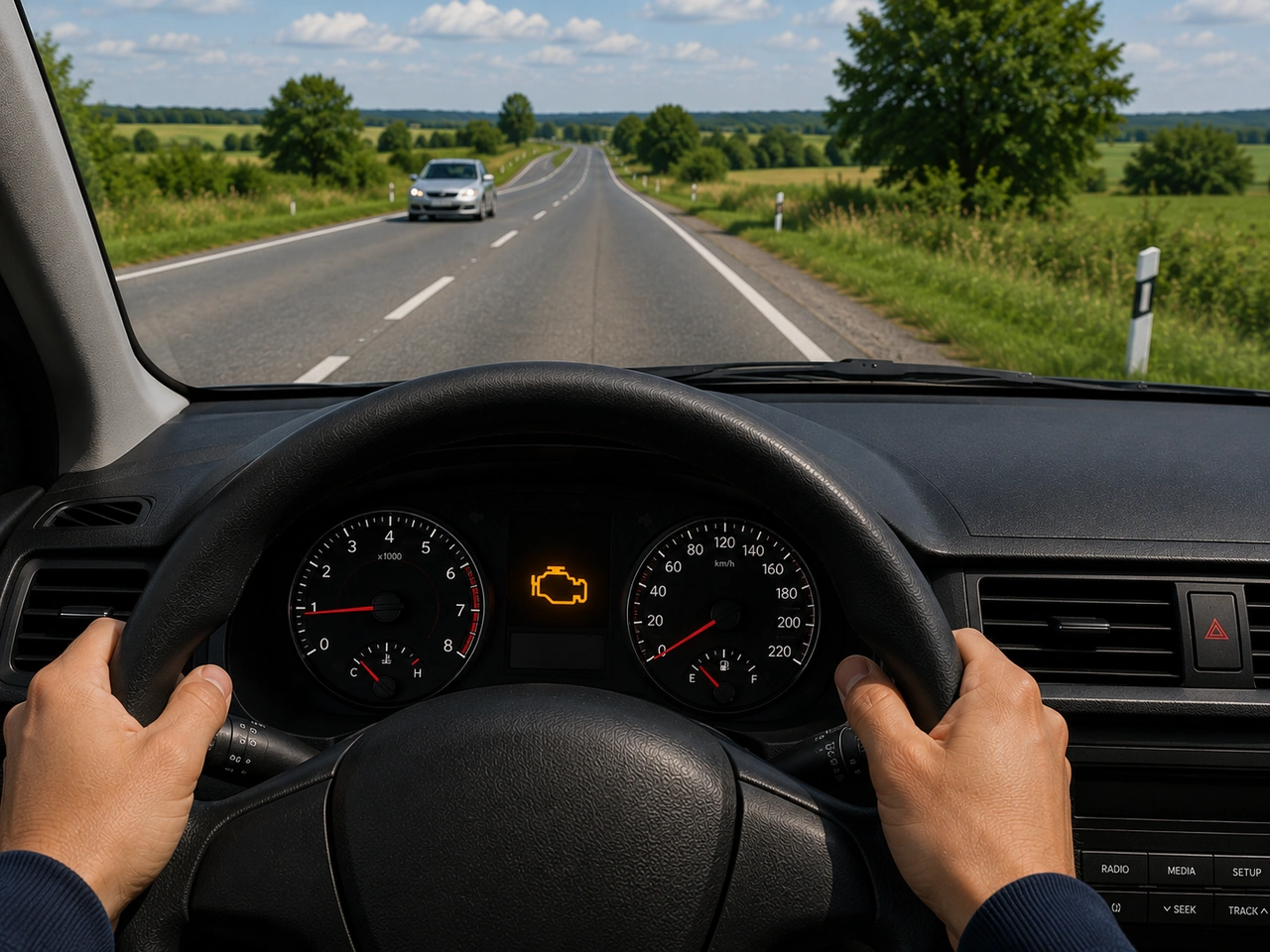
What should you expect if the engine suddenly stalls while the vehicle is moving?

559. What should you expect if the engine suddenly stalls while the vehicle is moving?

✓ Steering and braking may require more effort, so move to a safe place.
Power assistance will continue working normally.
The steering and brakes will stop working completely.
The vehicle will stop immediately when the engine stops.

Power assistance may be reduced when the engine stops. Keep control, use the hazard lights if needed, and steer toward a safe stopping area.

Driver responding to an engine stall while moving
AI-generated by Traffic-rules.com • WCIT • CC BY-SA
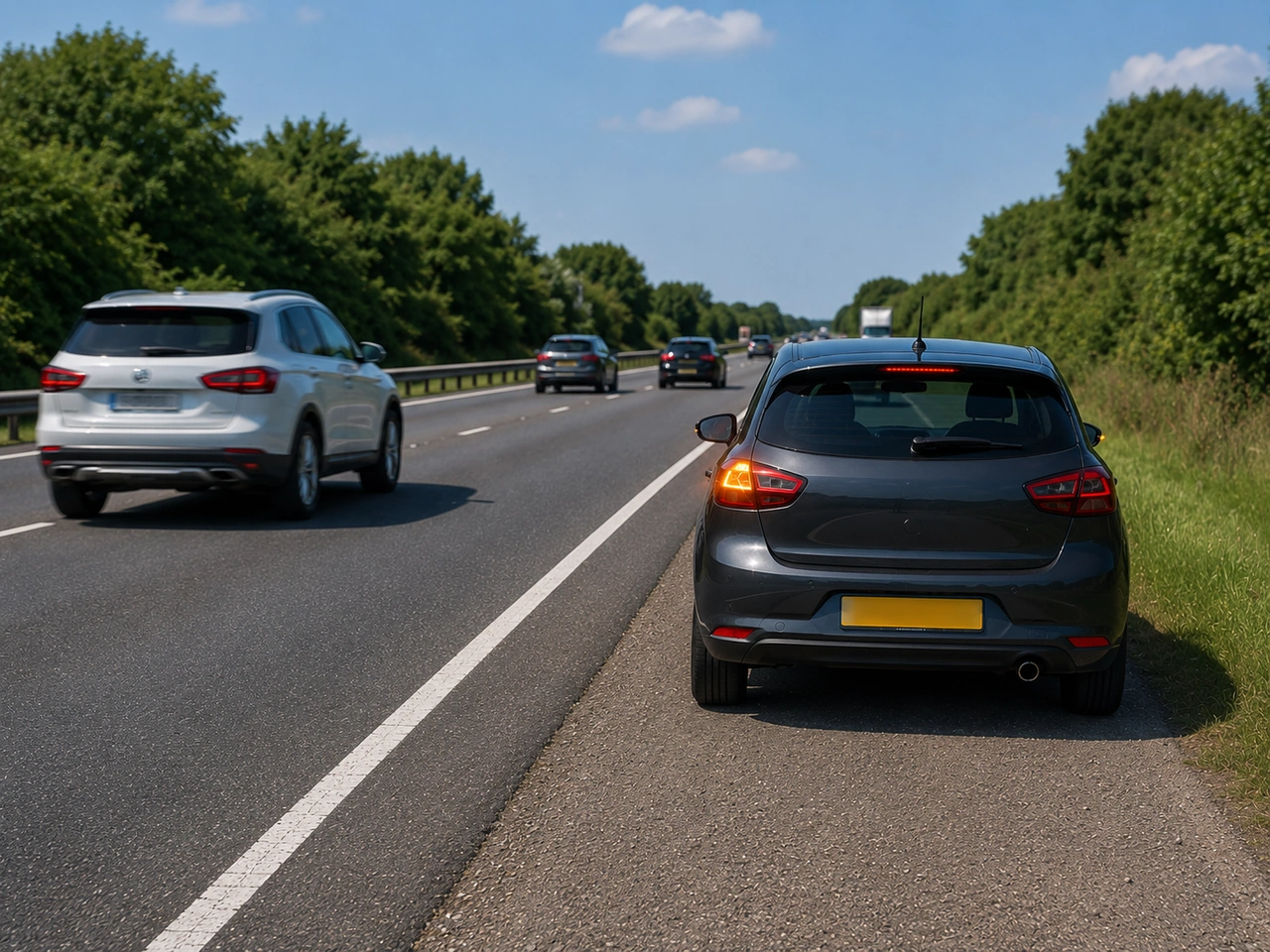
What should you do before rejoining traffic after a breakdown?

560. What should you do before rejoining traffic after a breakdown?

✓ Check all around, signal, and enter only when there is a safe gap.
Enter the lane slowly so other traffic has time to react.
Signal and expect approaching traffic to slow down.
Check your mirrors only and pull out if they look clear.

Check mirrors and blind spots, signal clearly, and build up speed safely without causing approaching traffic to brake suddenly.

Vehicle preparing to rejoin traffic after a breakdown
AI-generated by Traffic-rules.com • WCIT • CC BY-SA
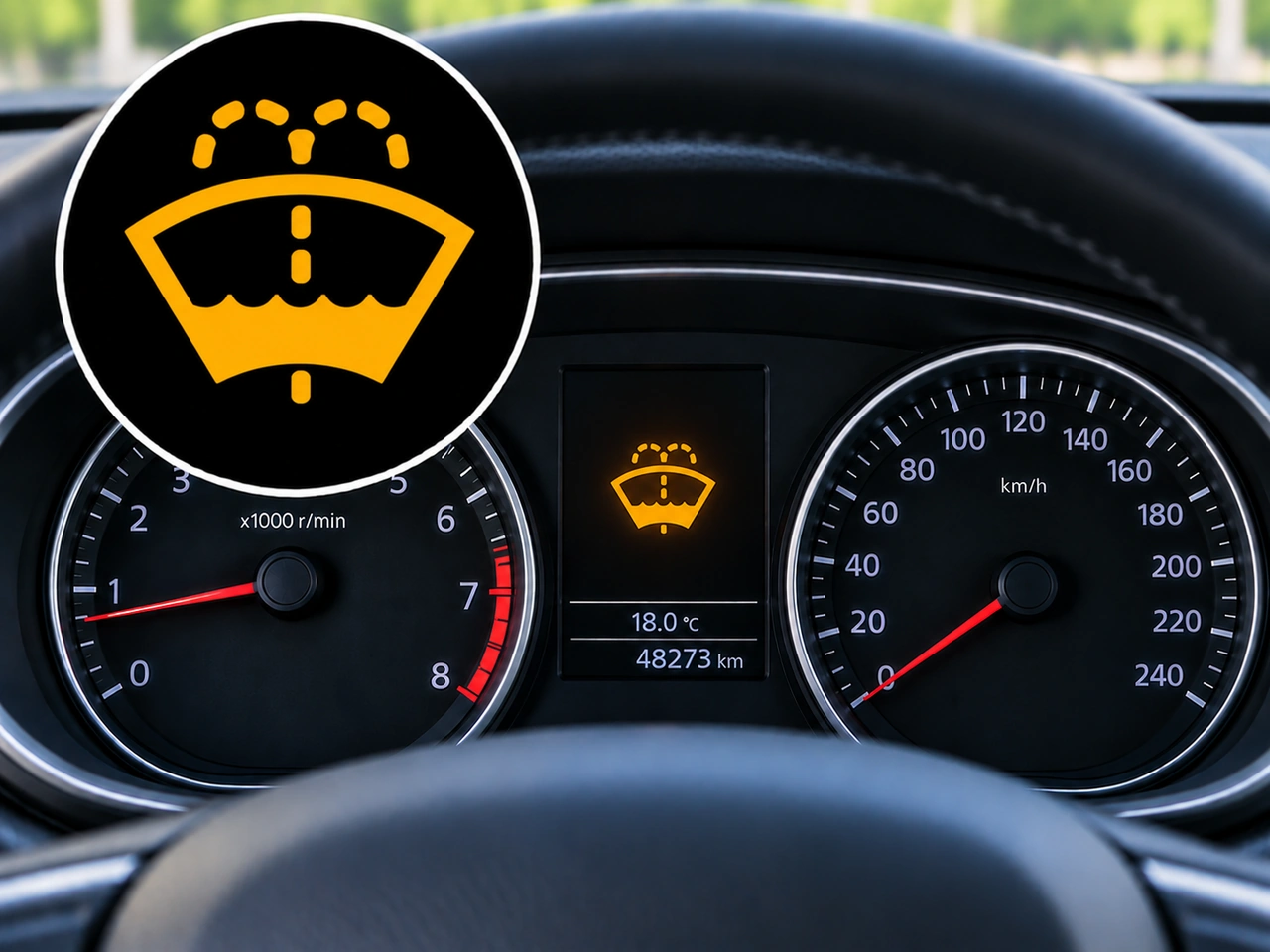
What does this dashboard symbol indicate?

561. What does this dashboard symbol indicate?

Low coolant level.
Windscreen demister active.
✓ Low windscreen washer fluid.
Engine-temperature warning.

This symbol indicates that the windscreen washer fluid level is low. Refill the washer-fluid reservoir with suitable fluid when possible.

Low washer-fluid warning symbol on the dashboard
AI-generated by Traffic-rules.com • WCIT • CC BY-SA
What is the main emergency number in Romania?

562. What is the main emergency number in Romania?

111.
123.
000.
✓ 112.

The main emergency number in Romania is 112.

112 emergency telephone number
AI-generated by Traffic-rules.com • WCIT • CC BY-SA
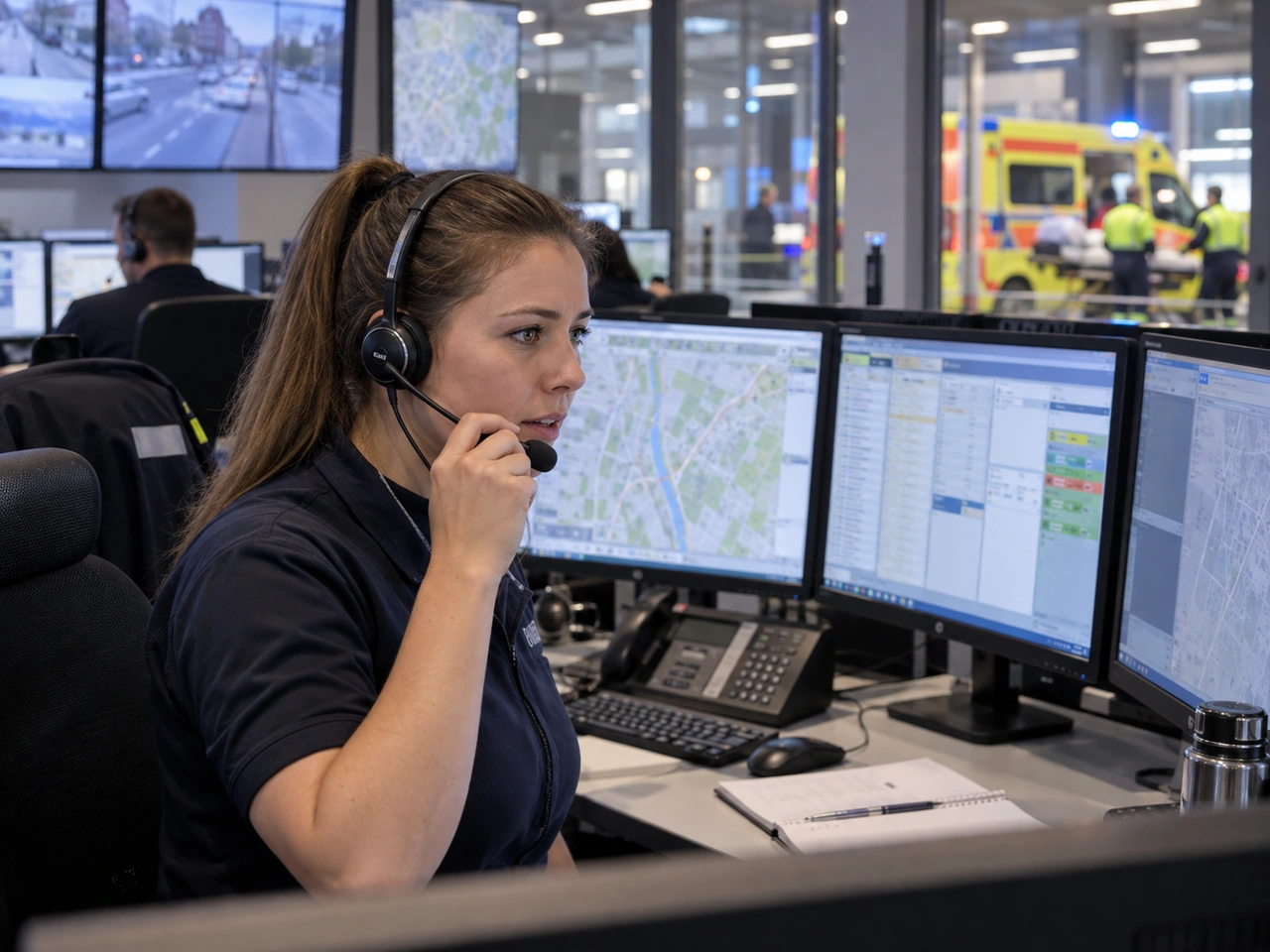
Why should you not rely only on a reversing camera?

563. Why should you not rely only on a reversing camera?

It shows every blind spot around the vehicle.
It guarantees that the path behind is clear.
✓ It may not show everything around the vehicle.
It makes mirrors unnecessary when reversing.

Reversing cameras can help, but they may have blind spots and limited coverage. Always check your mirrors and surroundings, look around where possible, and reverse slowly.

Reversing-camera display inside a vehicle
AI-generated by Traffic-rules.com • WCIT • CC BY-SA
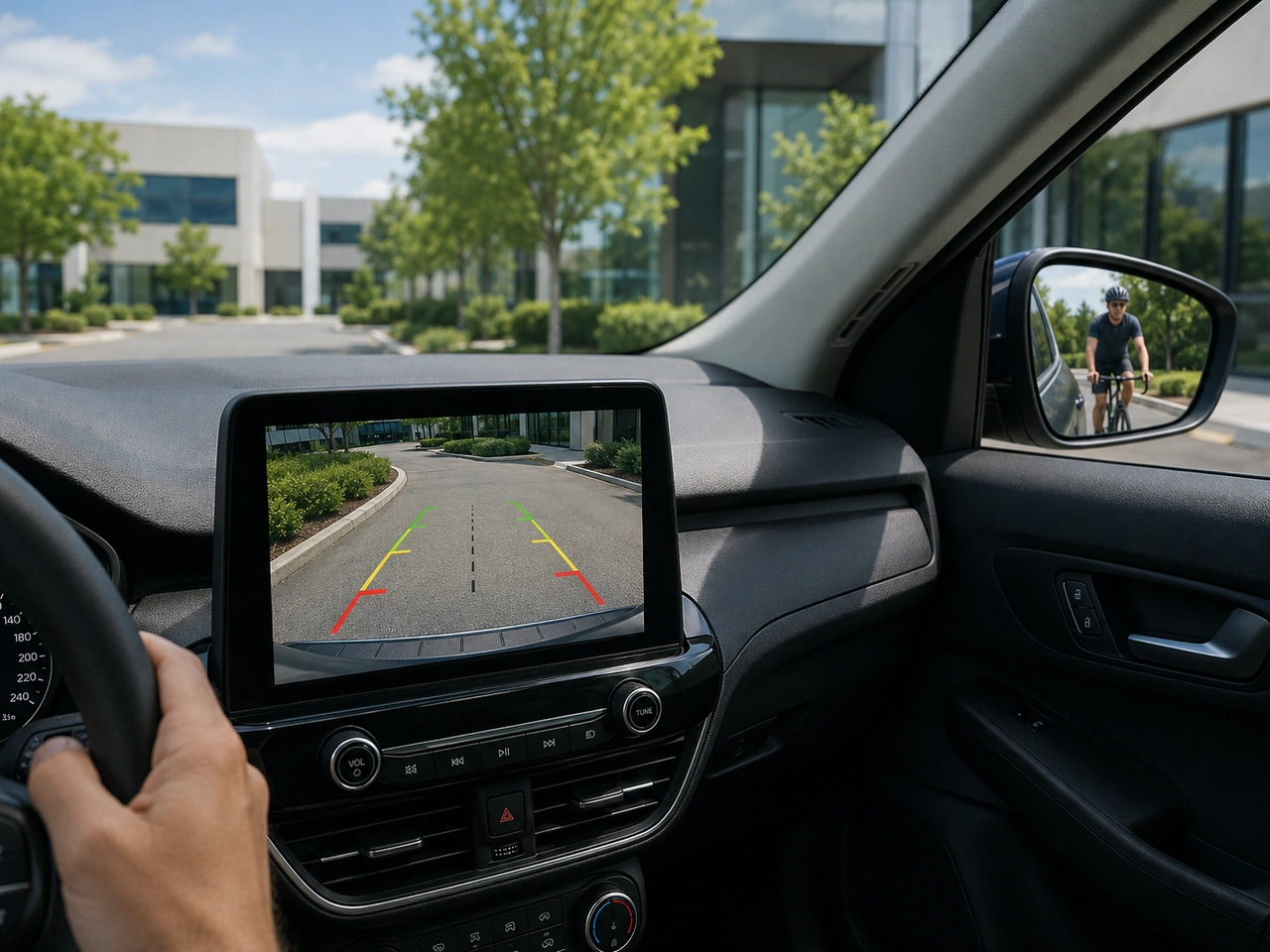
Can drivers use a handheld phone while driving in Romania?

564. Can drivers use a handheld phone while driving in Romania?

Yes.
✓ No.

Drivers in Romania are generally not allowed to use a handheld phone while driving.

Driver using a handheld phone
AI-generated by Traffic-rules.com • WCIT • CC BY-SA
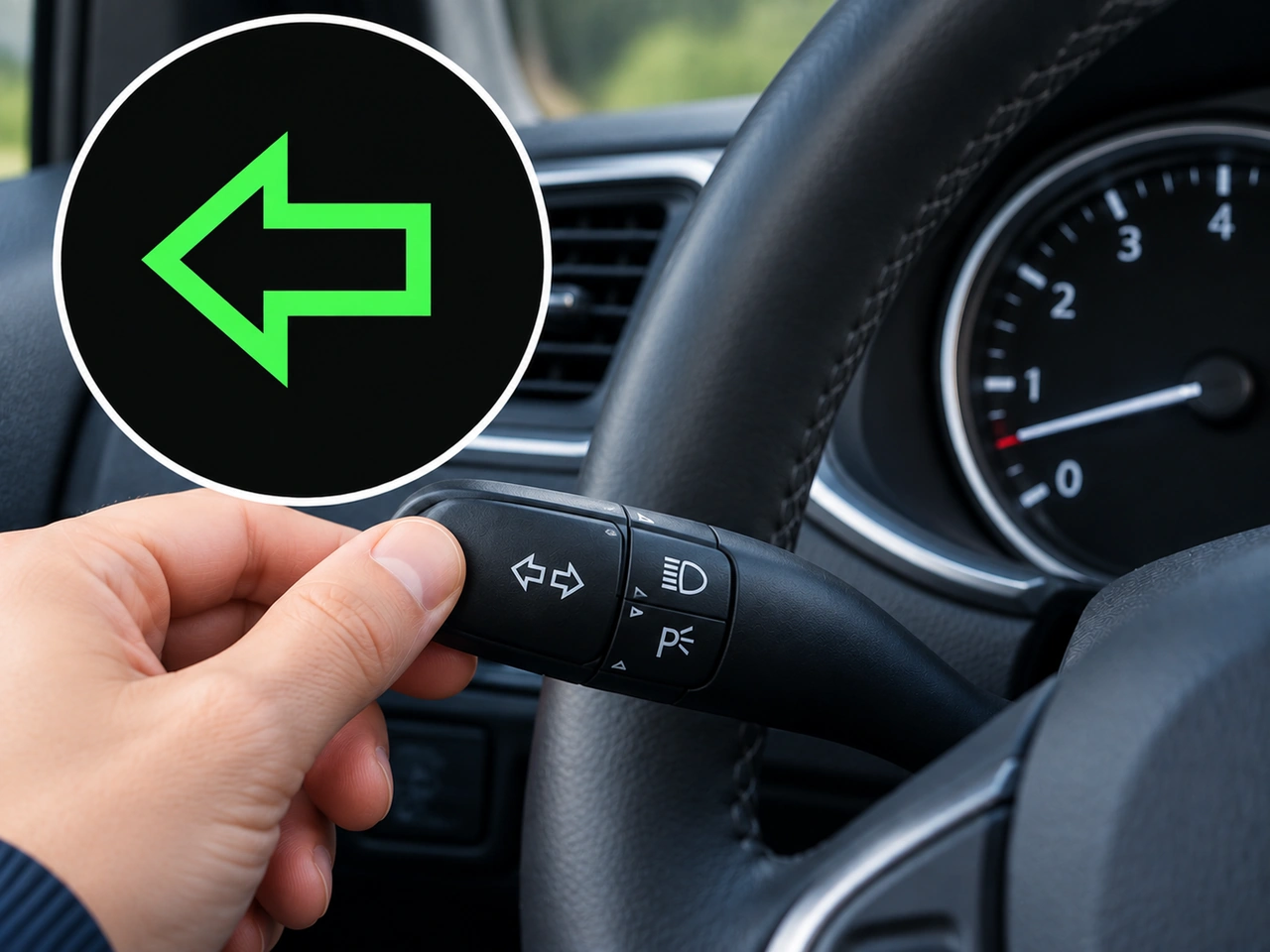
What does this dashboard symbol indicate?

565. What does this dashboard symbol indicate?

Dipped headlights.
Main beam.
Sidelights.
✓ Direction indicators.

This symbol indicates that a direction indicator is operating. The flashing indicator shows the direction in which the driver intends to turn or change position on the road.

Direction-indicator symbol on the dashboard
AI-generated by Traffic-rules.com • WCIT • CC BY-SA
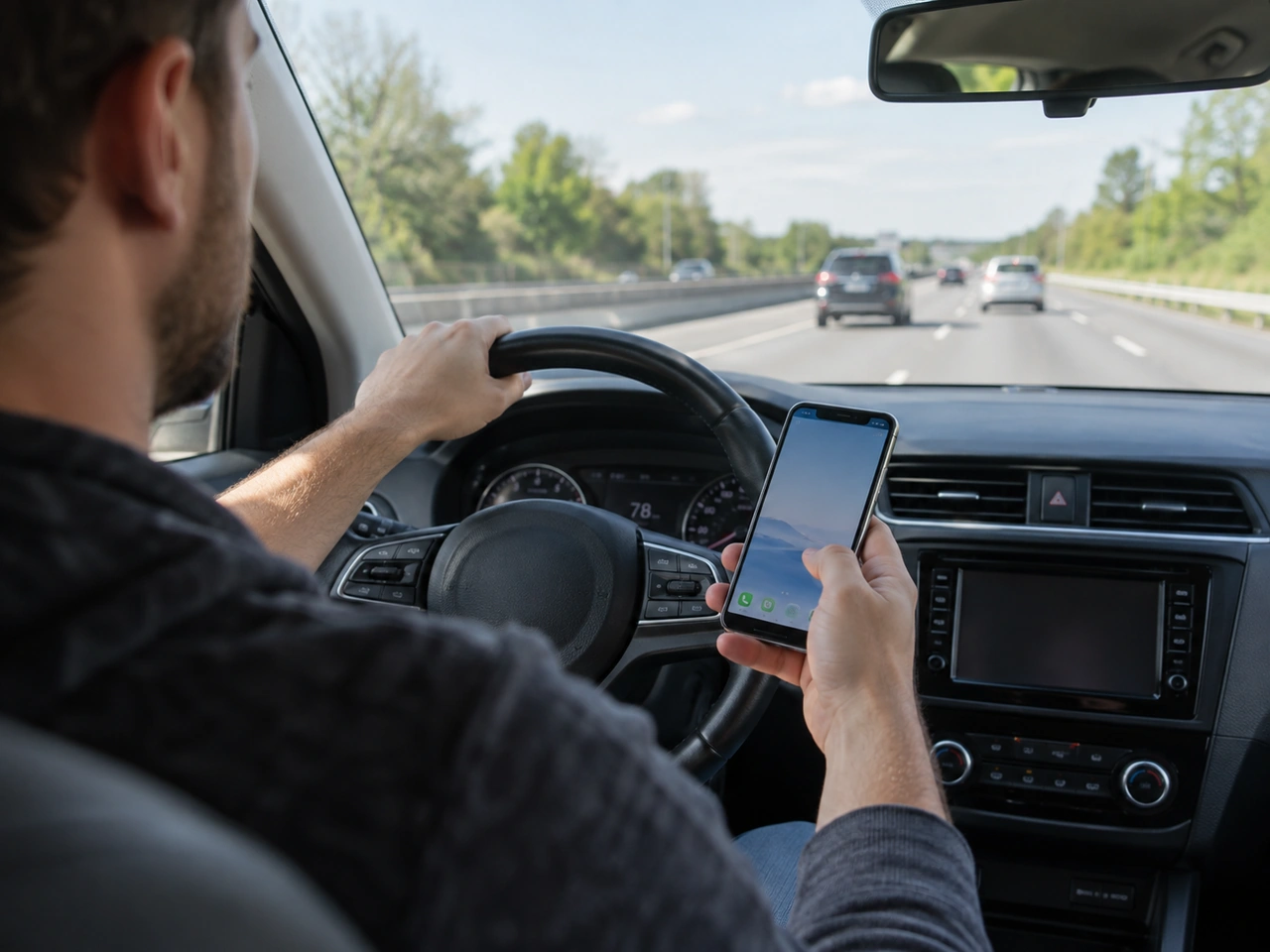
Why should you avoid keeping the clutch pedal pressed while driving?

566. Why should you avoid keeping the clutch pedal pressed while driving?

It locks the steering.
✓ It reduces engine braking and vehicle control.
It applies the parking brake.
It increases tyre pressure.

Keeping the clutch pedal pressed while the vehicle is moving disconnects the engine from the transmission. This reduces engine braking and can reduce your control of the vehicle.

Clutch held down while a vehicle is moving
AI-generated by Traffic-rules.com • WCIT • CC BY-SA
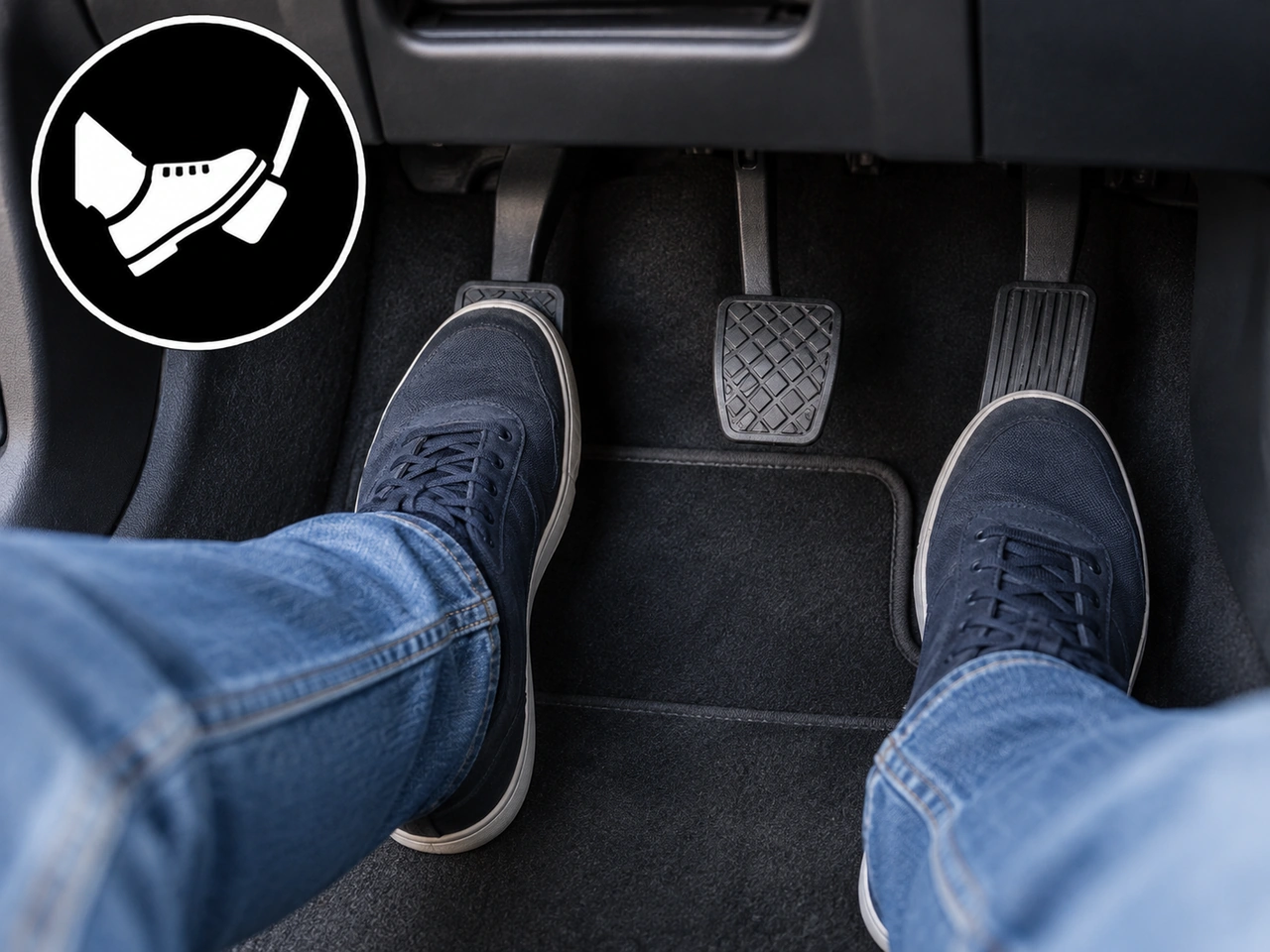
What should you do before joining a motorway?

567. What should you do before joining a motorway?

Check your mirrors only and assume the blind spot is clear.
Wait until the end of the slip road before checking for a gap.
✓ Check your mirrors and blind spot, signal, and look for a safe gap.
Move onto the motorway as soon as the lane markings allow.

Observe motorway traffic early, signal clearly, and merge only when there is a safe gap.

Driver checking motorway traffic before merging
AI-generated by Traffic-rules.com • WCIT • CC BY-SA
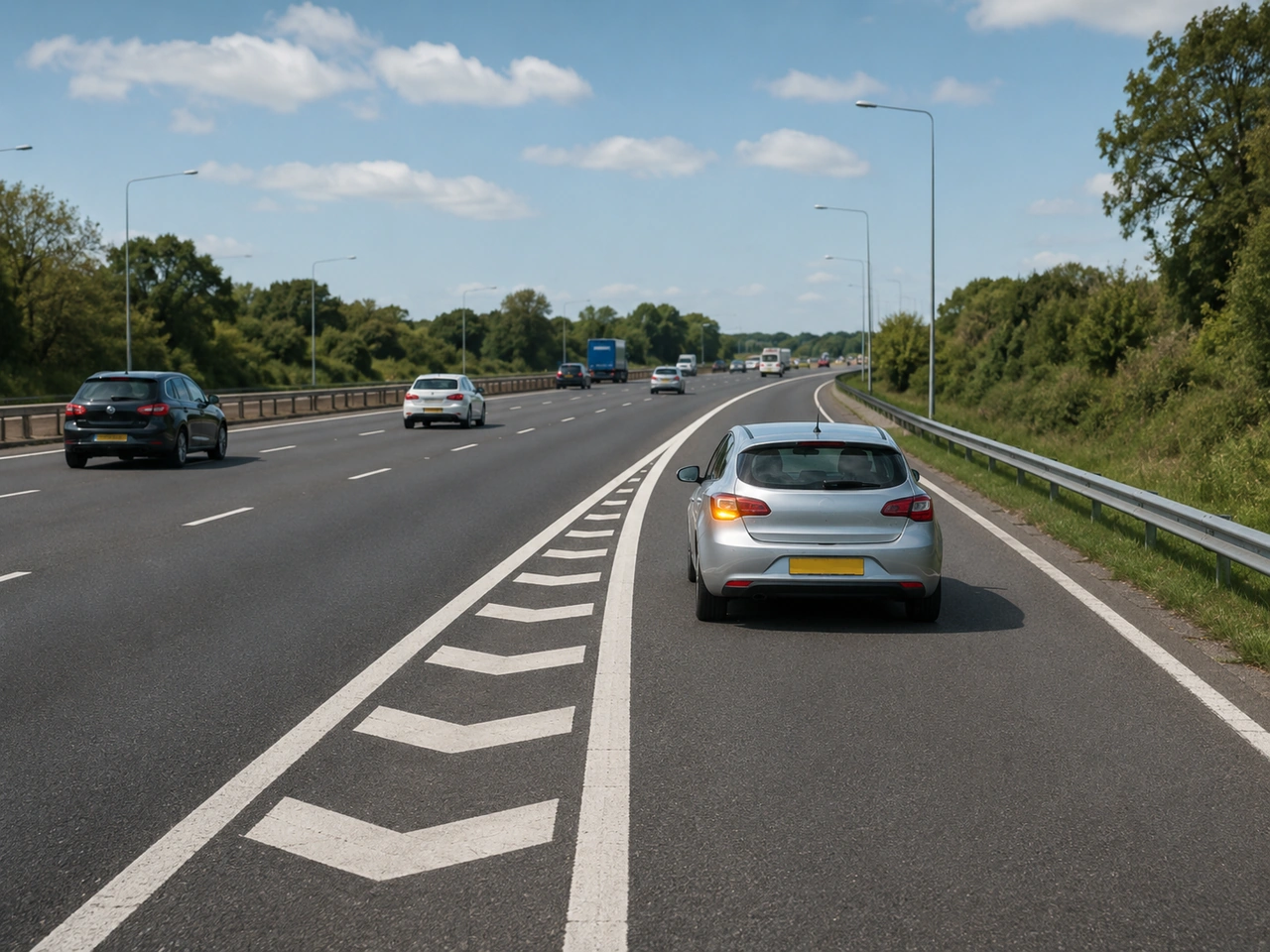
What should you do when roadworks are ahead?

568. What should you do when roadworks are ahead?

✓ Slow down and follow the temporary signs.
Maintain normal speed if your lane remains open.
Use your horn to warn road workers that you are approaching.
Follow the vehicle ahead closely through the work zone.

Roadworks can create narrow lanes, workers near traffic, uneven surfaces, and temporary rules. Slow down and follow the signs.

Roadworks and temporary traffic signs ahead
AI-generated by Traffic-rules.com • WCIT • CC BY-SA
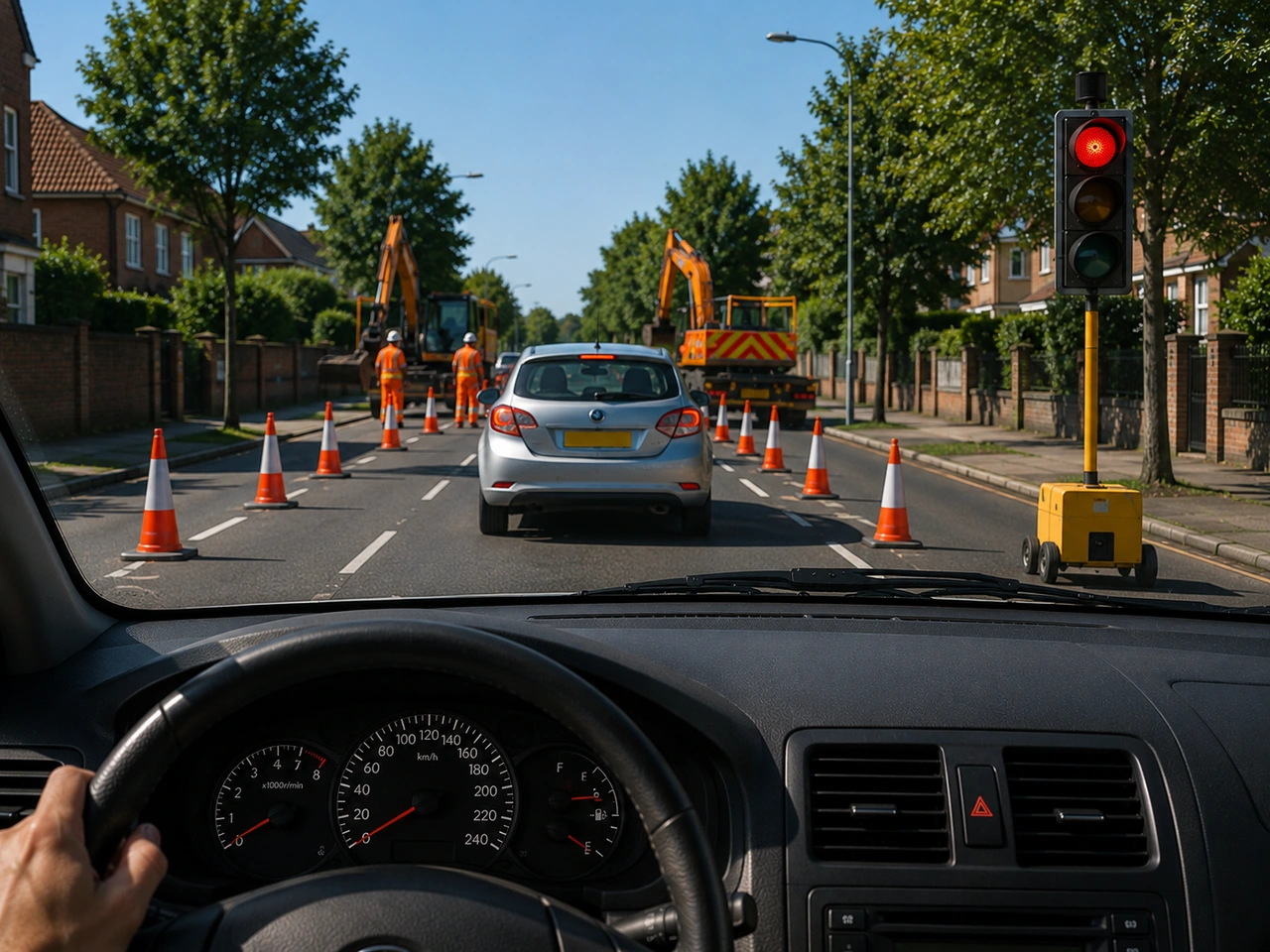
What should you do if oncoming headlights dazzle you at night?

569. What should you do if oncoming headlights dazzle you at night?

✓ Slow down and look toward the edge of your lane.
Look briefly at the headlights to judge their position.
Move closer to the centre of the road for a clearer view.
Maintain your speed until the vehicle has passed.

Bright headlights can reduce your vision. Avoid staring at them, slow down if needed, and use the road edge or lane markings to guide you safely.

Oncoming headlights dazzling a driver at night
AI-generated by Traffic-rules.com • WCIT • CC BY-SA
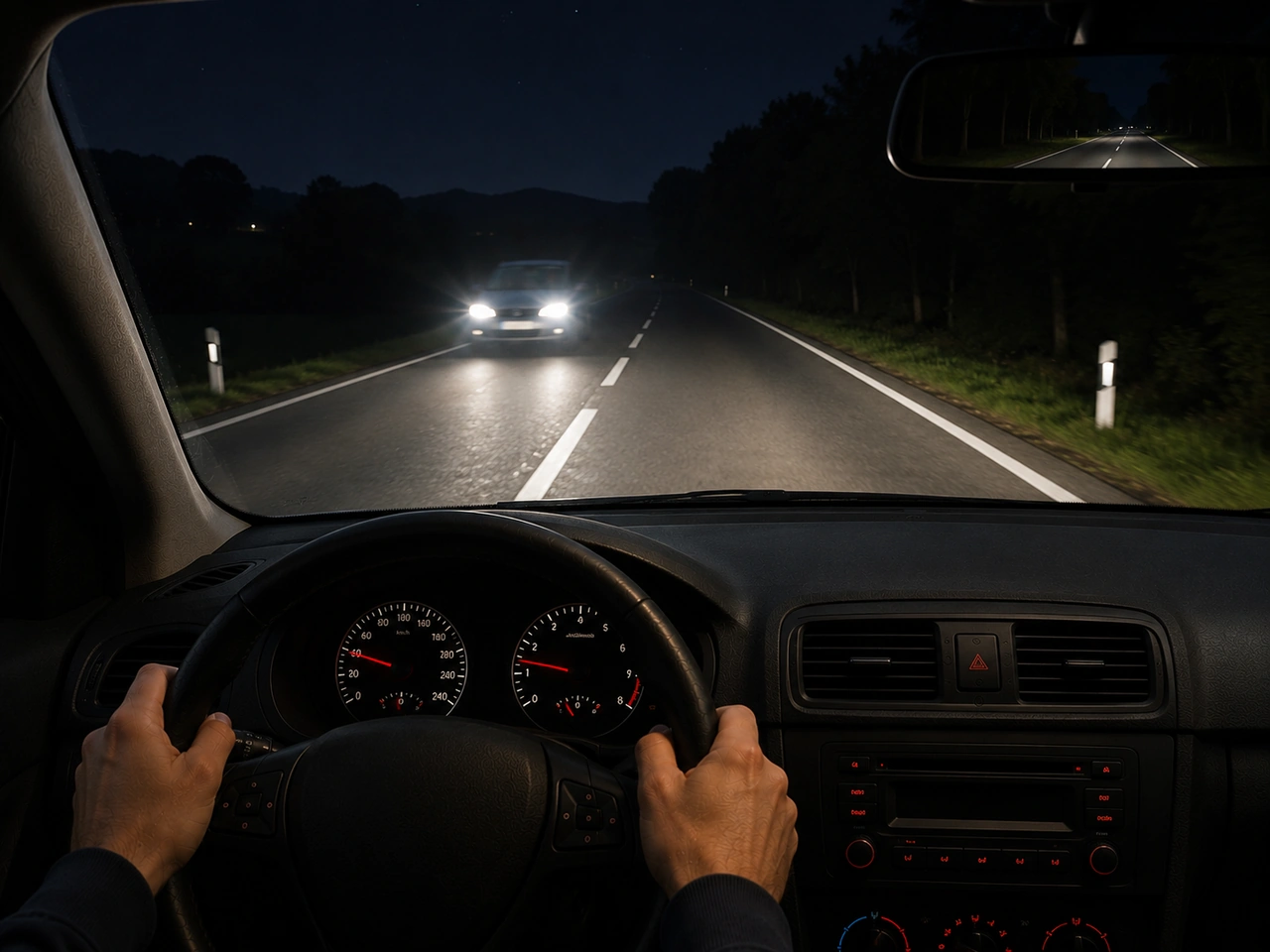
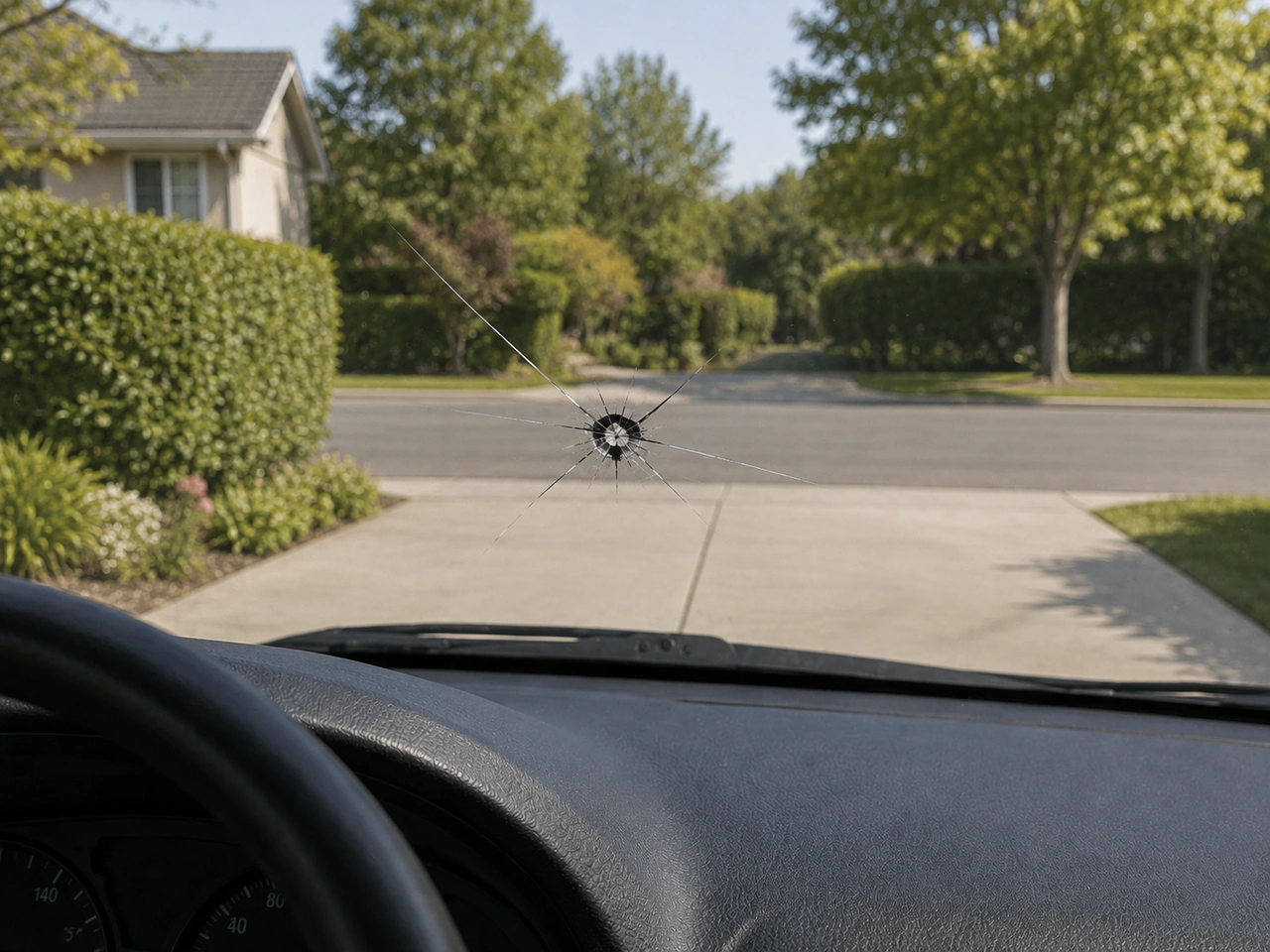
What should you do about a chip in the windscreen?

570. What should you do about a chip in the windscreen?

✓ Have it assessed and repaired promptly.
Ignore it if it is outside your direct view.
Clean the glass and continue driving normally.
Wait until the chip becomes a larger crack.

A chip can obstruct your view, weaken the glass, and develop into a larger crack. Have it checked and repaired promptly.

Stone chip in a vehicle's windscreen
AI-generated by Traffic-rules.com • WCIT • CC BY-SA
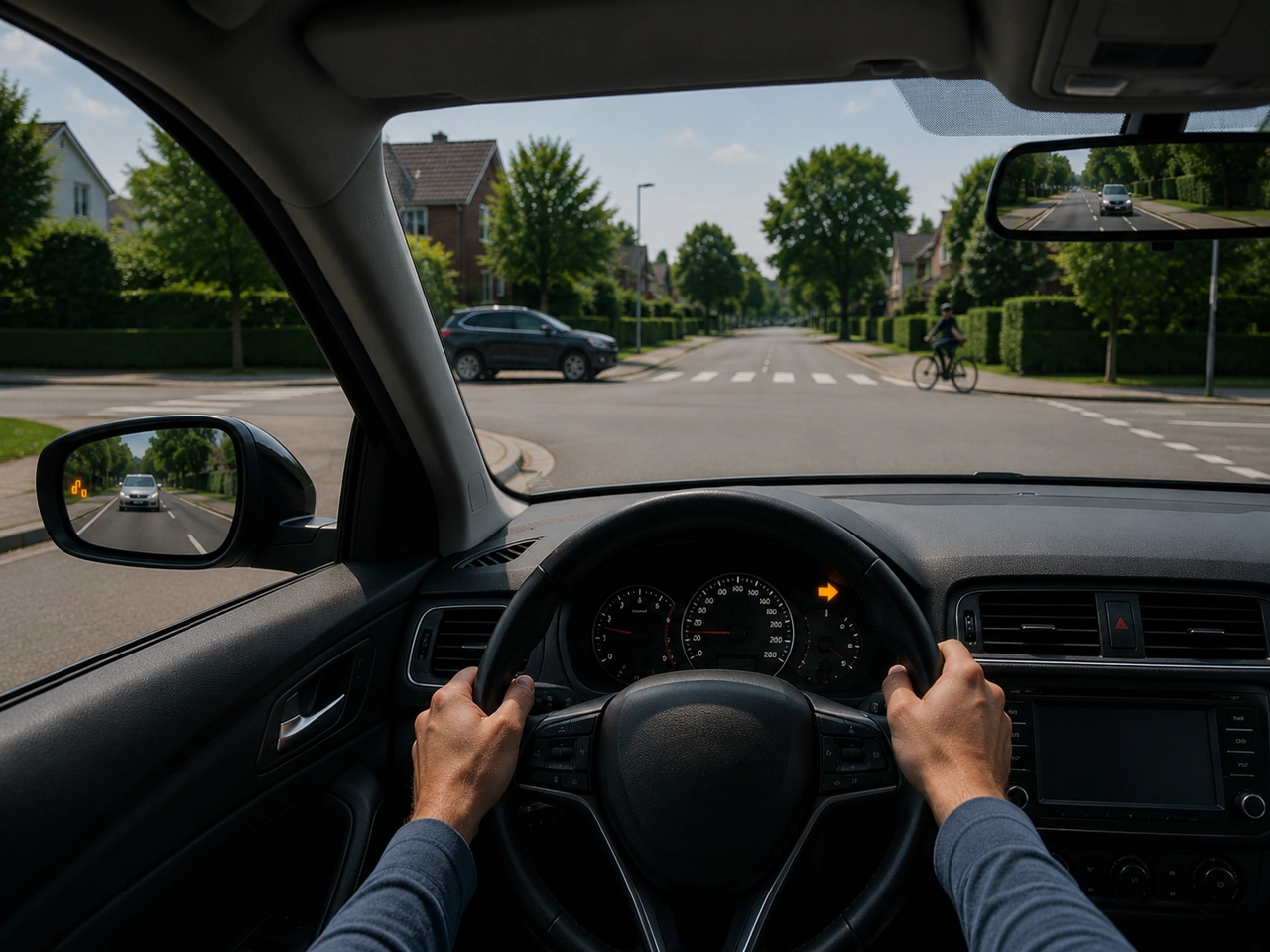
What should you do before making a turn?

571. What should you do before making a turn?

Turn as soon as the road ahead appears clear.
Check only the traffic directly ahead.
✓ Check mirrors, signal, and make sure it is safe.
Rely on other road users to slow down for you.

Before turning, check your mirrors, use your indicator, and make sure the turn can be made safely.

Driver preparing to turn at a junction
AI-generated by Traffic-rules.com • WCIT • CC BY-SA
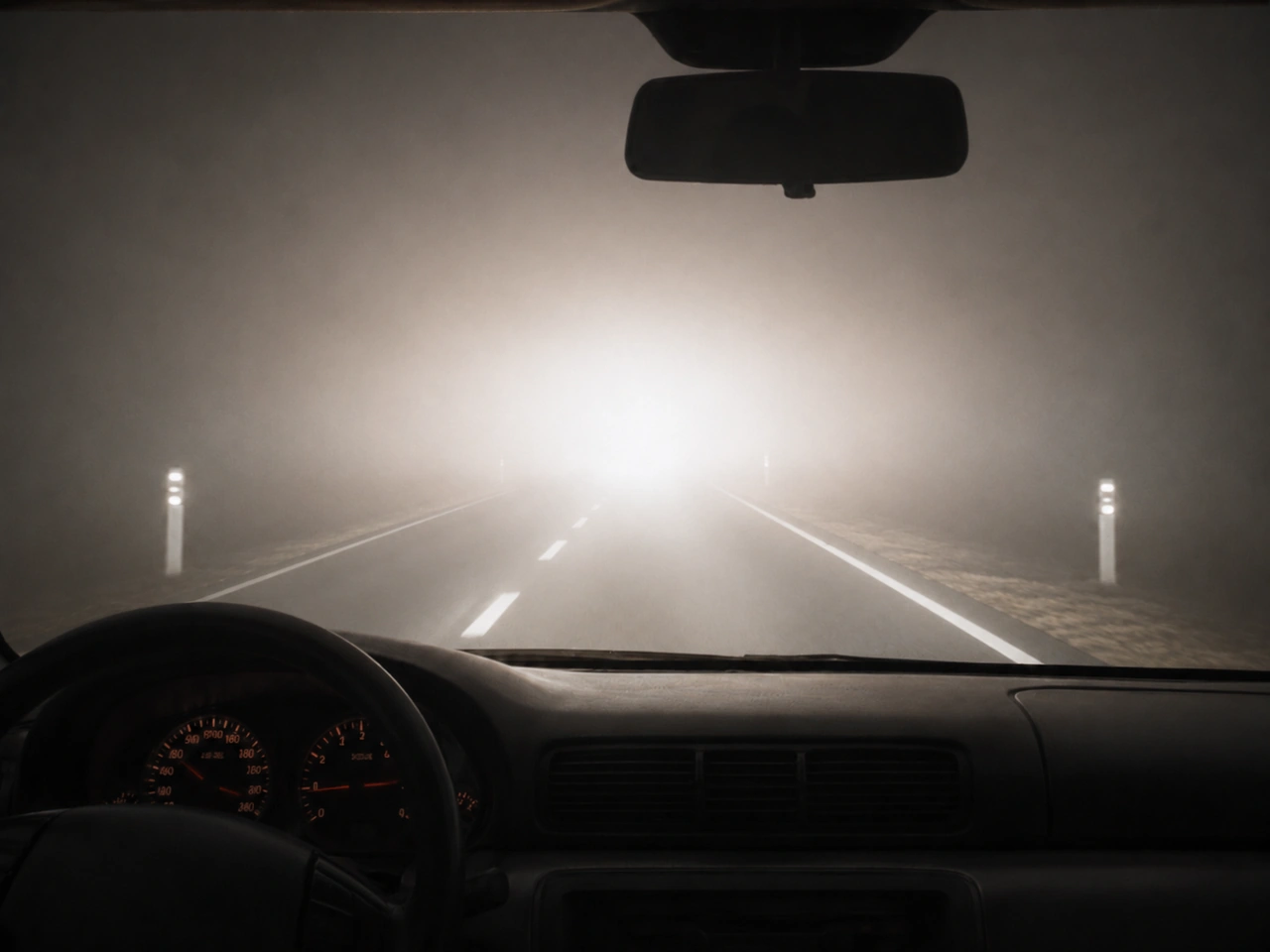
Why can main-beam headlights make driving in fog more difficult?

572. Why can main-beam headlights make driving in fog more difficult?

The stronger beam uses too much electrical power.
✓ The light can reflect off fog droplets and reduce visibility.
The brighter light makes the windscreen mist more quickly.
Main beam makes interior lights less effective.

Main beam can reflect back from fog and create glare, making it harder to see the road ahead.

Headlight glare reflected by fog
AI-generated by Traffic-rules.com • WCIT • CC BY-SA
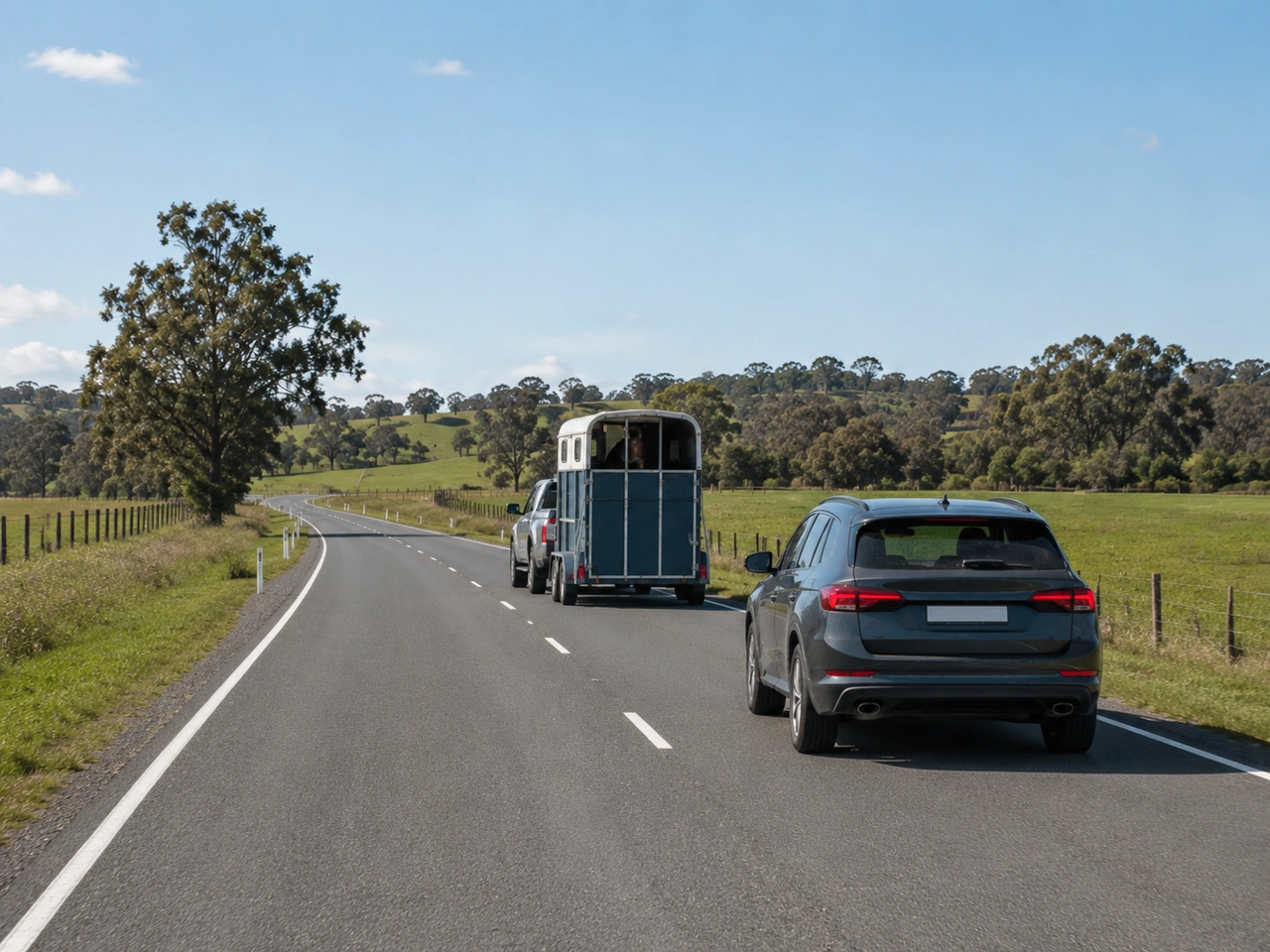
Why should you leave extra space behind a vehicle carrying animals?

573. Why should you leave extra space behind a vehicle carrying animals?

✓ Because it may move slowly or stop unexpectedly.
Because they cannot use brake lights.
Because these vehicles always have priority.
Because they must always travel in the centre of the road.

Vehicles transporting animals may accelerate slowly, take bends carefully, or brake gently to protect their load.

Vehicle following an animal transporter
AI-generated by Traffic-rules.com • WCIT • CC BY-SA
What is the safest choice if you have consumed alcohol?

574. What is the safest choice if you have consumed alcohol?

Drink coffee before driving.
Drive slowly and avoid busy roads.
✓ Do not drive and arrange a sober form of transport.
Drive only if you do not feel drunk.

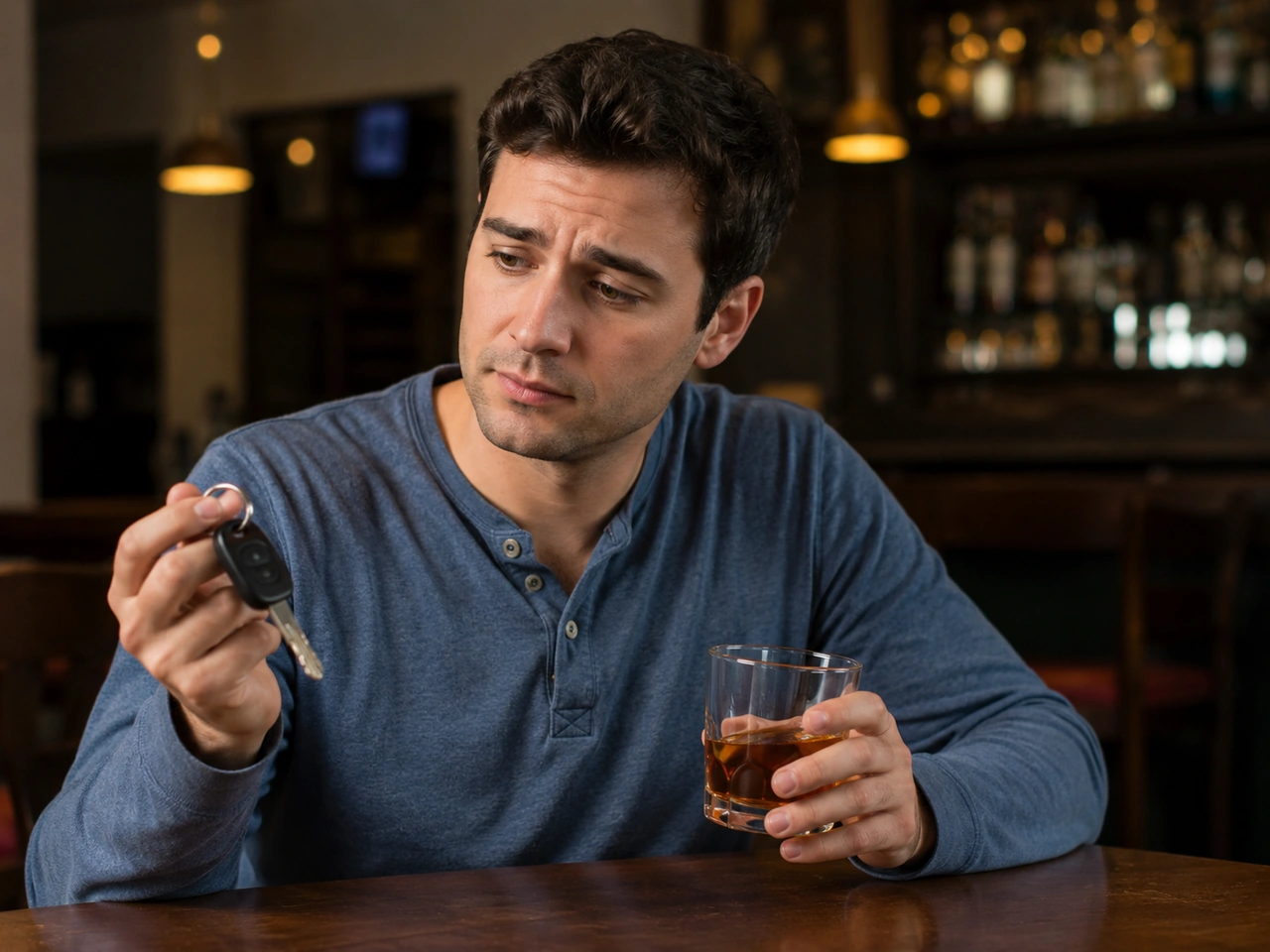
Alcohol can impair judgement, coordination, vision, and reaction time. A sober driver, taxi, public transport, or an overnight stay is the safer choice.

Alcohol consumption and the decision not to drive
AI-generated by Traffic-rules.com • WCIT • CC BY-SA
Why should cyclists avoid using a handheld phone?

575. Why should cyclists avoid using a handheld phone?

Because a phone may be used only at low speeds.
Because phones must be switched off while cycling.
✓ It reduces your control and attention.
Because phones can interfere with bicycle electronics.

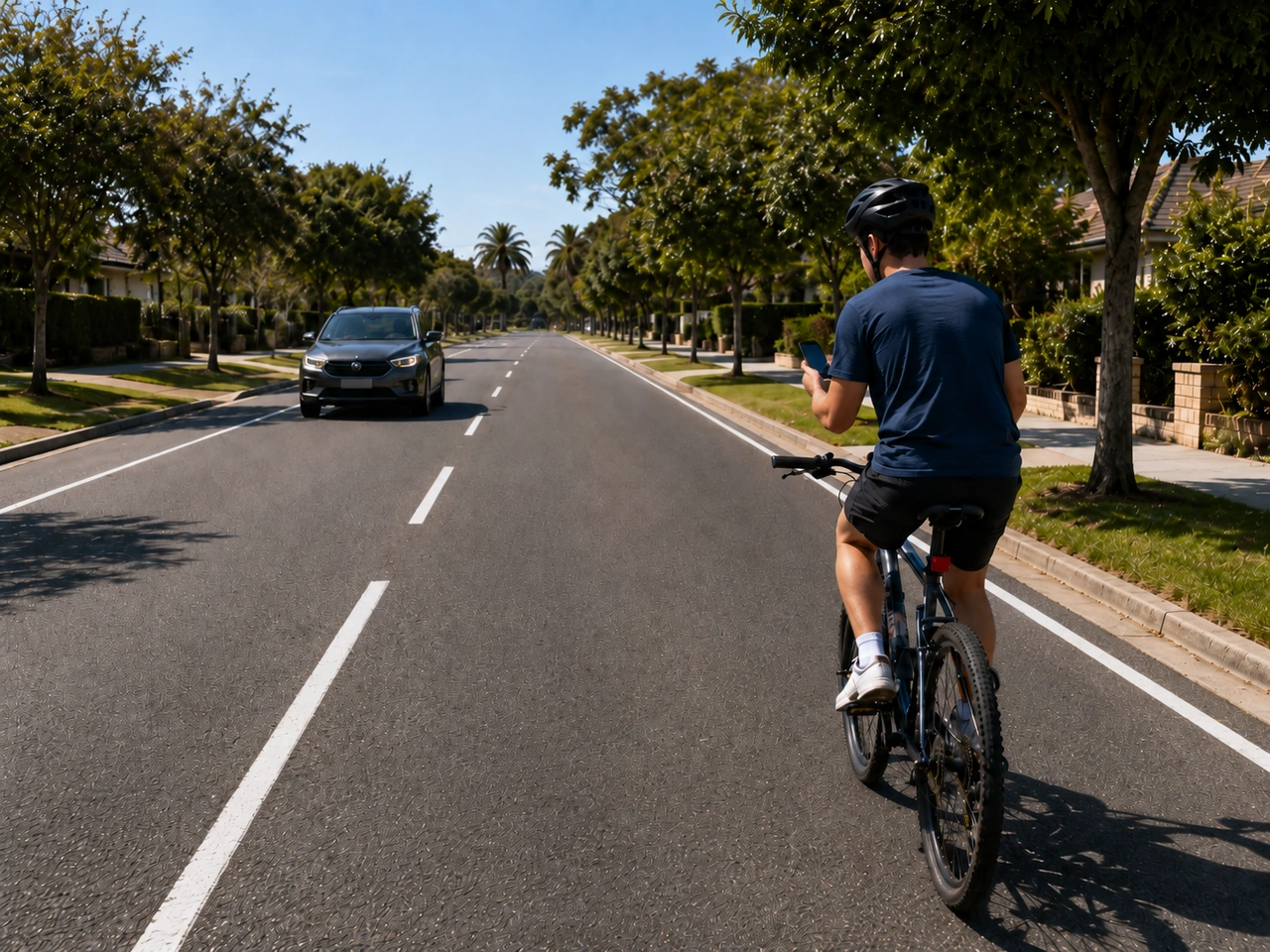
Using a phone can distract you and may prevent you from steering, braking, or reacting properly.

Cyclist using a handheld phone
AI-generated by Traffic-rules.com • WCIT • CC BY-SA
How should you normally brake on a motorcycle?

576. How should you normally brake on a motorcycle?

✓ Use both brakes smoothly and progressively.
Use only the rear brake.
Use only the front brake.
Alternate between the front and rear brakes.

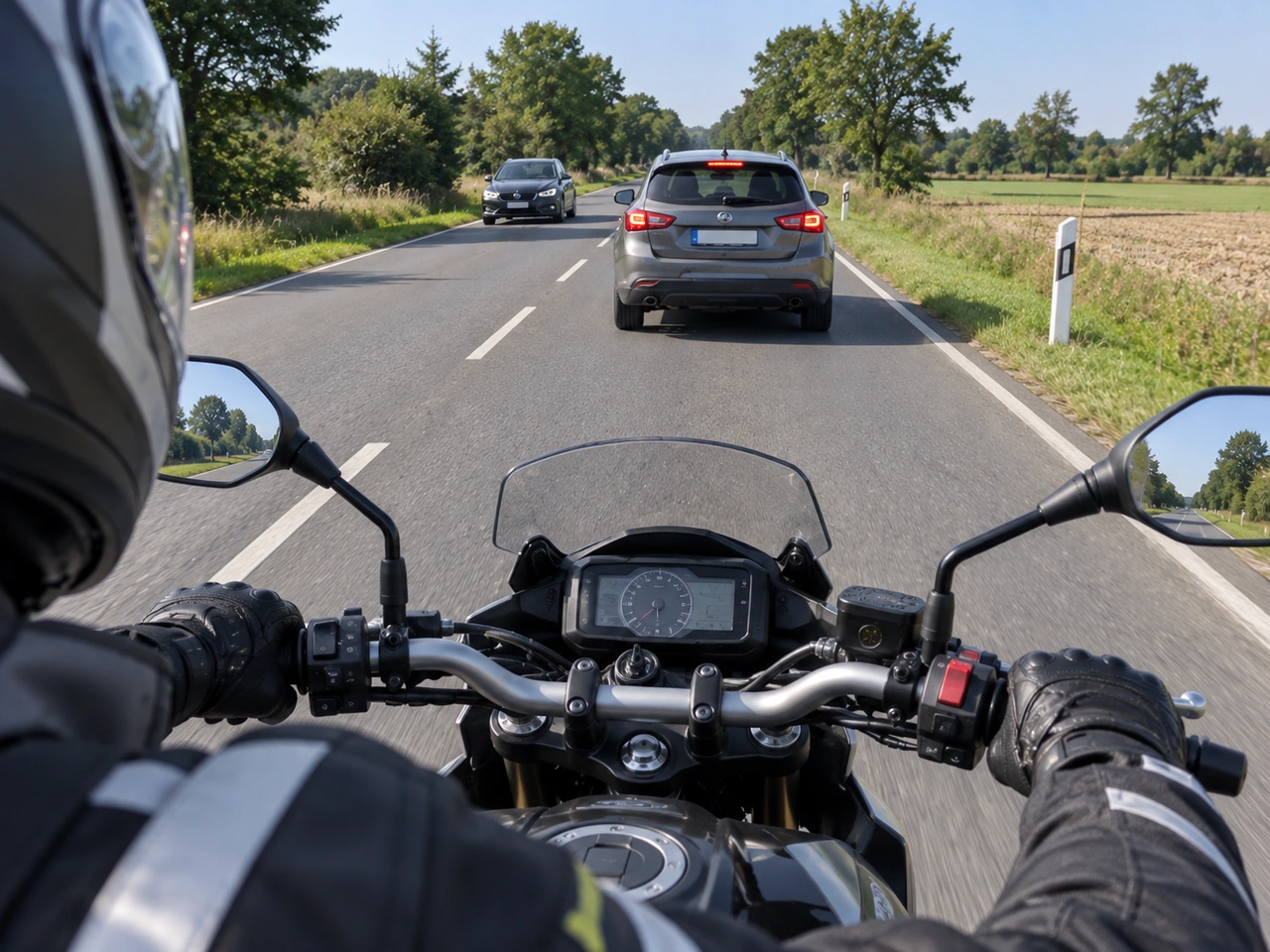
During normal braking, use both the front and rear brakes smoothly and progressively. The front brake normally provides much of the braking force, while the rear brake also helps slow and stabilise the motorcycle. Sudden or poorly balanced braking can reduce stability or cause a wheel to lose grip.

Motorcyclist using the front and rear brakes
AI-generated by Traffic-rules.com • WCIT • CC BY-SA
What does the SET function of cruise control normally do?

577. What does the SET function of cruise control normally do?

Applies the brakes automatically.
Returns to a previously stored speed.
Switches cruise control off.
✓ Stores the current speed as the cruising speed.

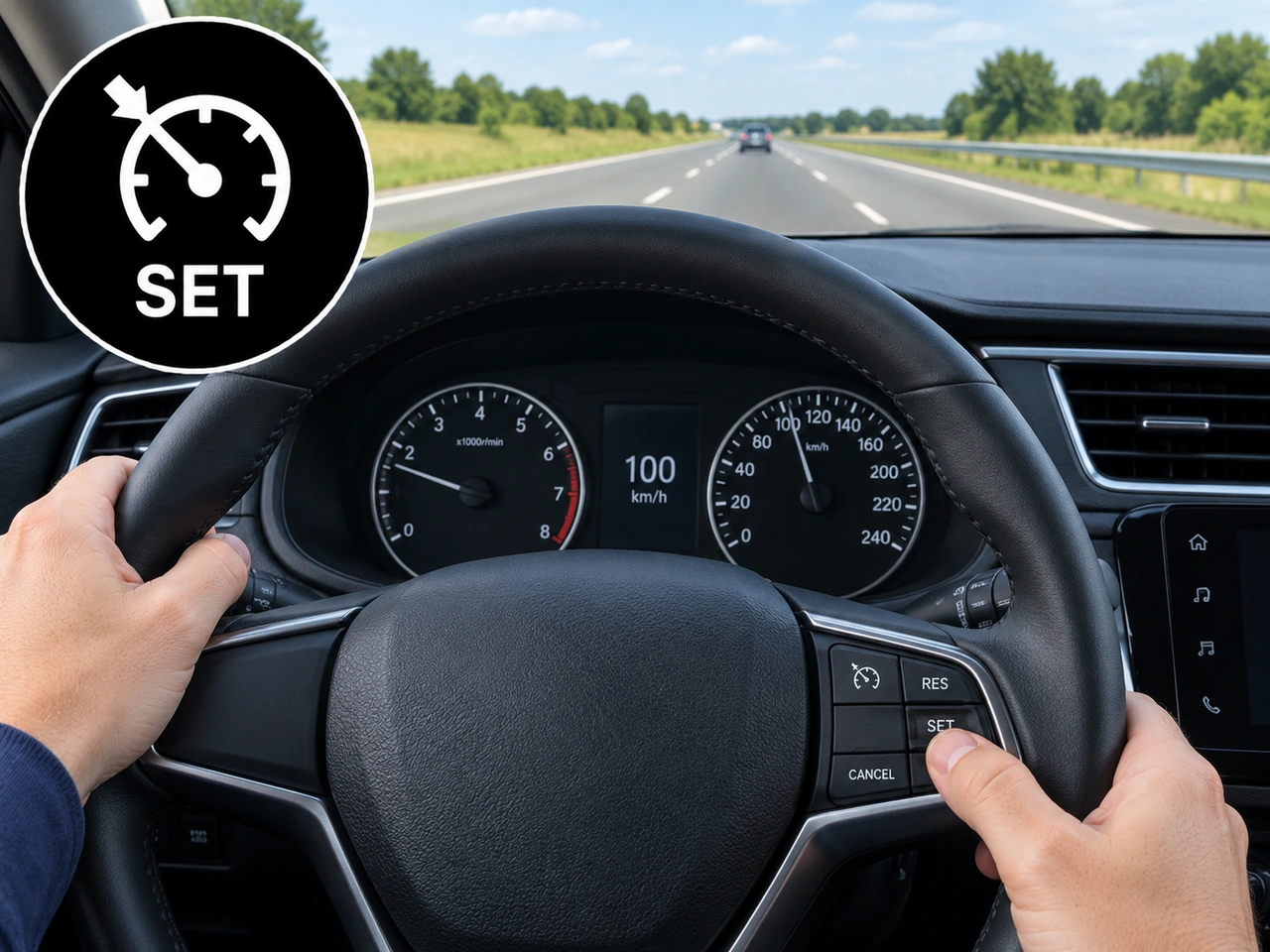
The SET function normally stores the vehicle's current speed as the cruise-control speed. Use it only when the road, traffic, and driving conditions are suitable.

SET button for storing a cruising speed
AI-generated by Traffic-rules.com • WCIT • CC BY-SA
Why should you keep a safe following distance?

578. Why should you keep a safe following distance?

✓ To have enough time to stop.
To make your vehicle easier to see ahead.
To reduce wear on the brakes.
To make overtaking easier.

A safe following distance gives you enough time to react if the vehicle in front slows down or stops suddenly.

Gap between a vehicle and the traffic ahead
AI-generated by Traffic-rules.com • WCIT • CC BY-SA
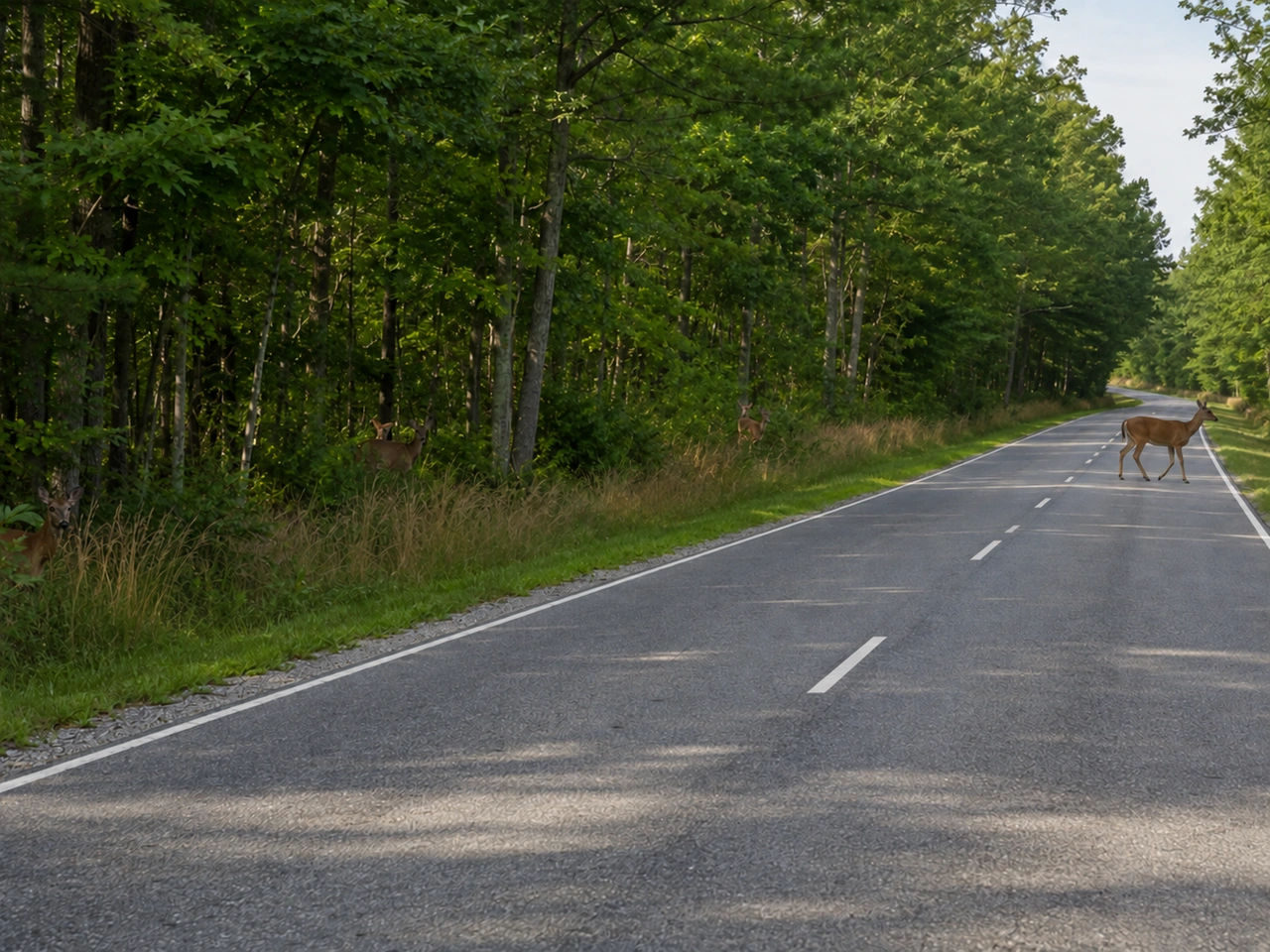
What should you expect after one wild animal crosses the road?

579. What should you expect after one wild animal crosses the road?

You can continue normally once the animal has passed.
The road is likely to remain clear.
✓ More animals may follow.
Wild animals normally cross roads one at a time.

Many animals travel in groups. Slow down and continue watching both sides of the road.

Wild animals crossing a road
AI-generated by Traffic-rules.com • WCIT • CC BY-SA
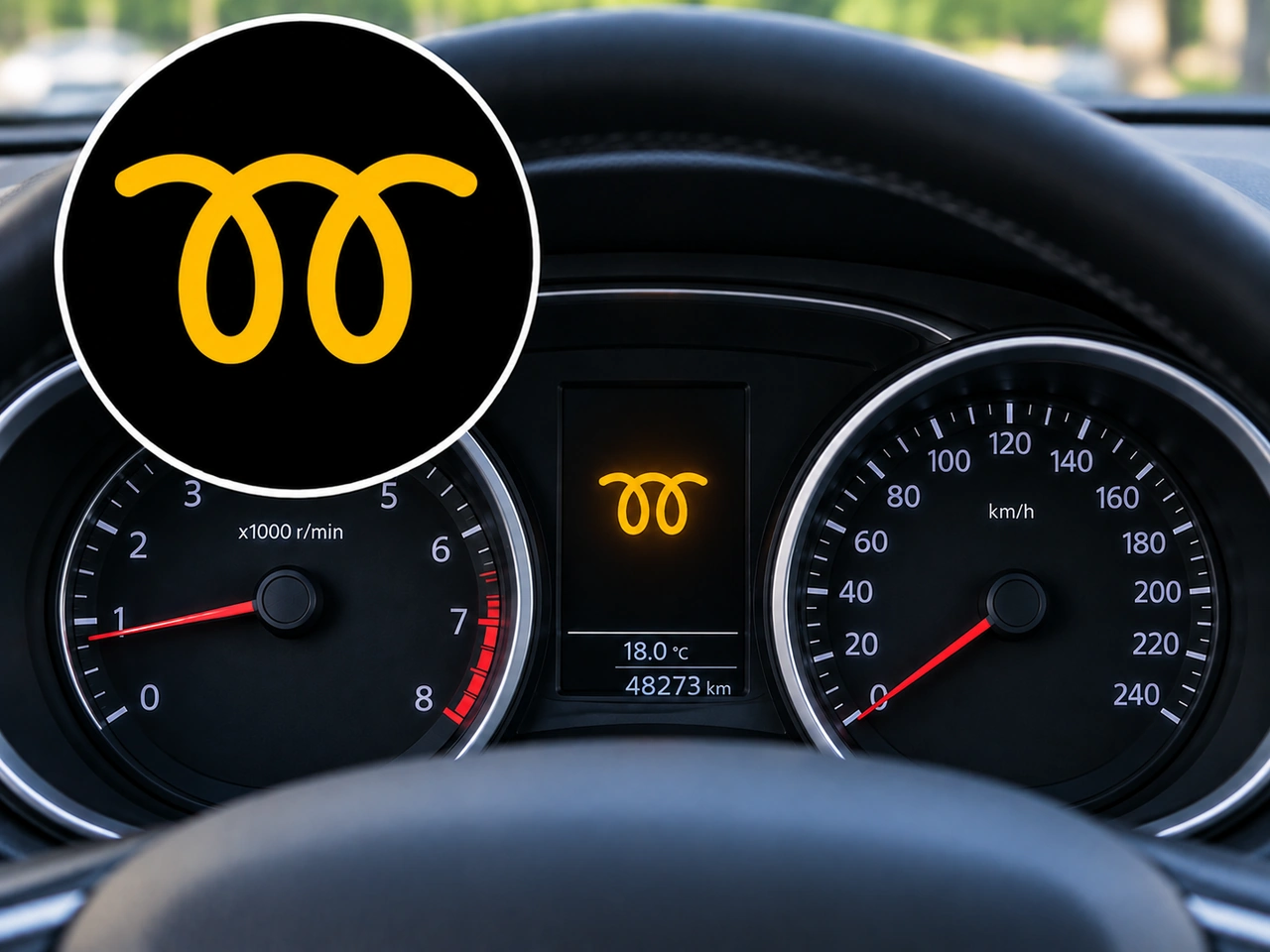
What does this dashboard symbol indicate?

580. What does this dashboard symbol indicate?

Charging-system warning.
Diesel particulate filter warning.
✓ Diesel glow-plug preheating.
Engine-temperature warning.

This symbol indicates the diesel glow-plug preheating system. In a diesel vehicle, wait for the light to go out before starting the engine when required. If it remains illuminated or flashes while driving, it may indicate a fault.

Diesel glow-plug preheating symbol on the dashboard
AI-generated by Traffic-rules.com • WCIT • CC BY-SA
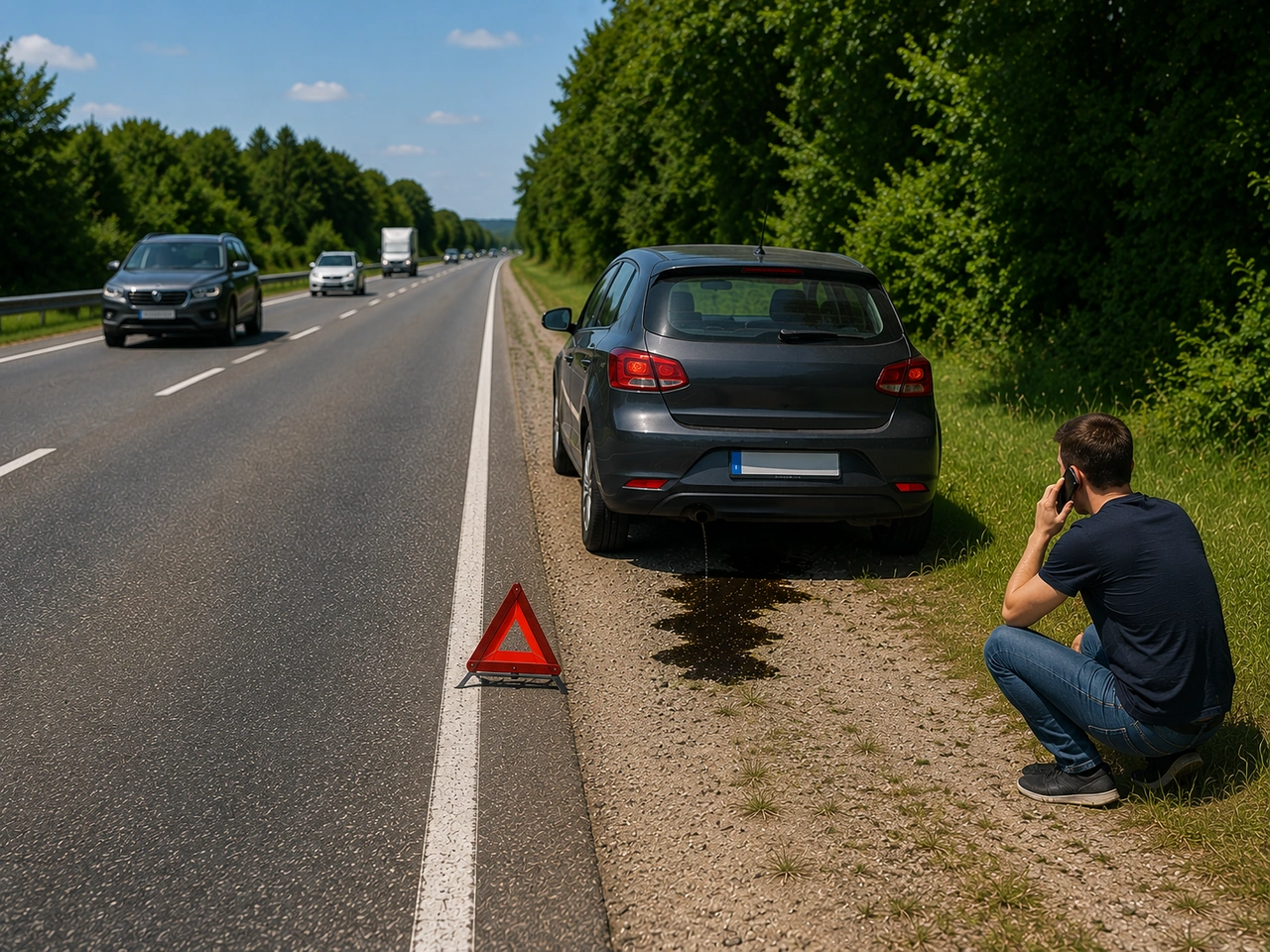
What should you do if you smell fuel or see fuel leaking from your vehicle?

581. What should you do if you smell fuel or see fuel leaking from your vehicle?

Drive slowly to the nearest fuel station.
Wash the leaking fuel away with water.
Ignore a small leak if the fuel level remains stable.
✓ Stop, switch off the engine, avoid flames or sparks, and call for assistance.

Leaking fuel creates a serious fire risk. Keep people away, do not restart the engine, and arrange professional assistance.

Fuel leaking from a vehicle
AI-generated by Traffic-rules.com • WCIT • CC BY-SA
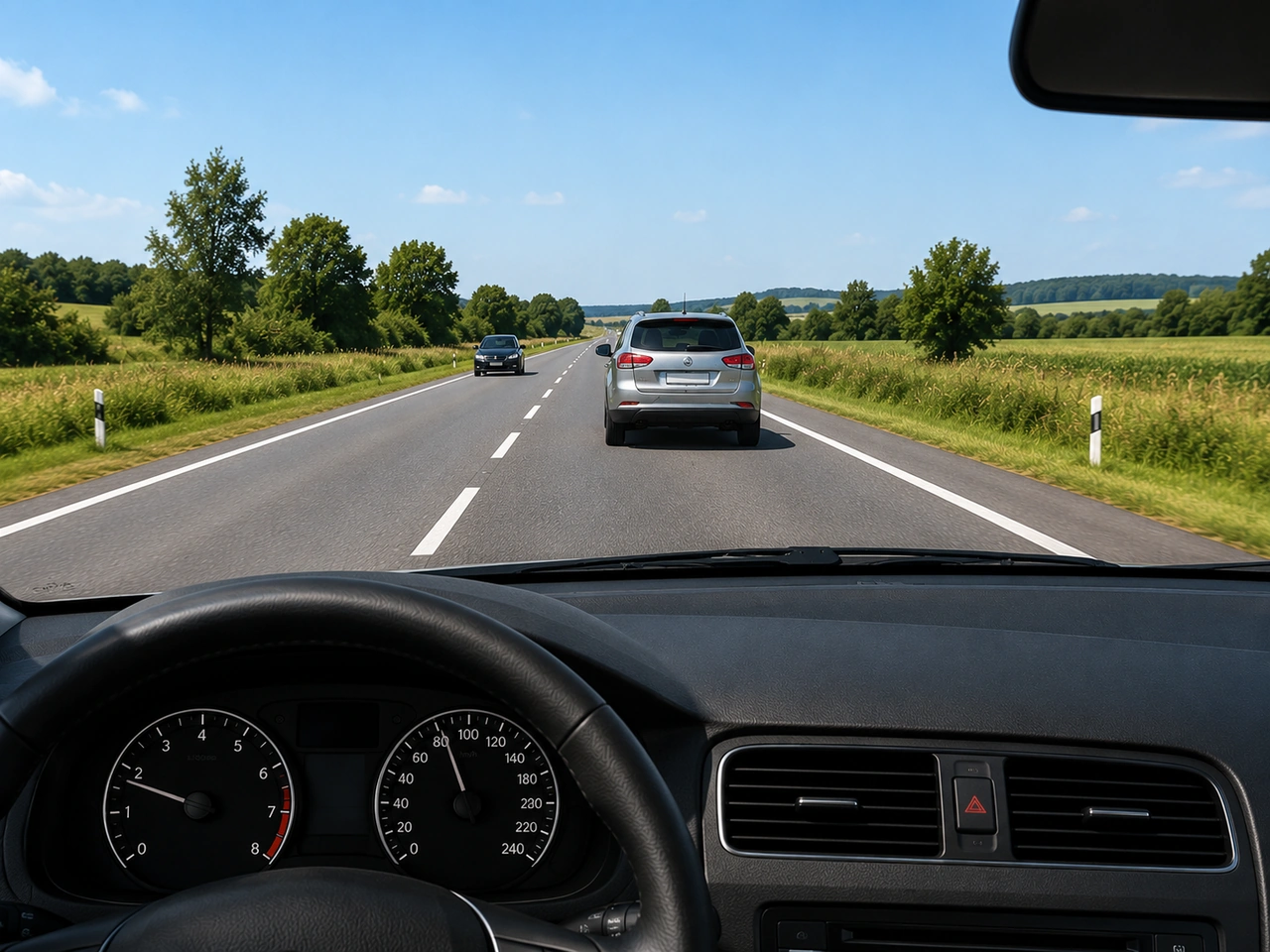
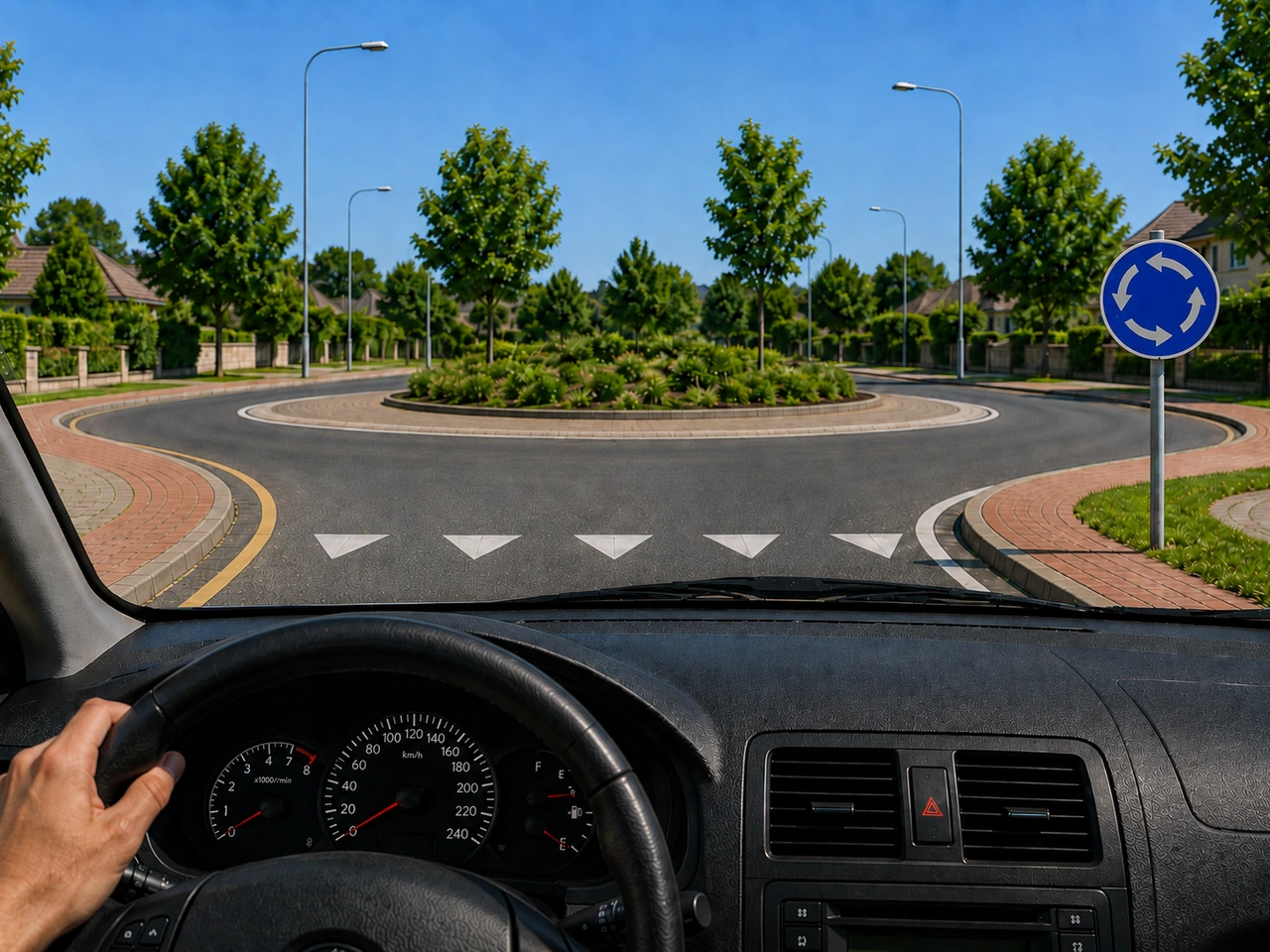
What should you do before entering a roundabout?

582. What should you do before entering a roundabout?

Enter without giving way if you are going straight ahead.
✓ Slow down and give way when required.
Enter first if you reach the roundabout before other traffic.
Stop before every roundabout, even when it is clear.

Before entering a roundabout, reduce your speed, observe traffic, and give way according to the local rules.

Vehicle approaching a roundabout
AI-generated by Traffic-rules.com • WCIT • CC BY-SA
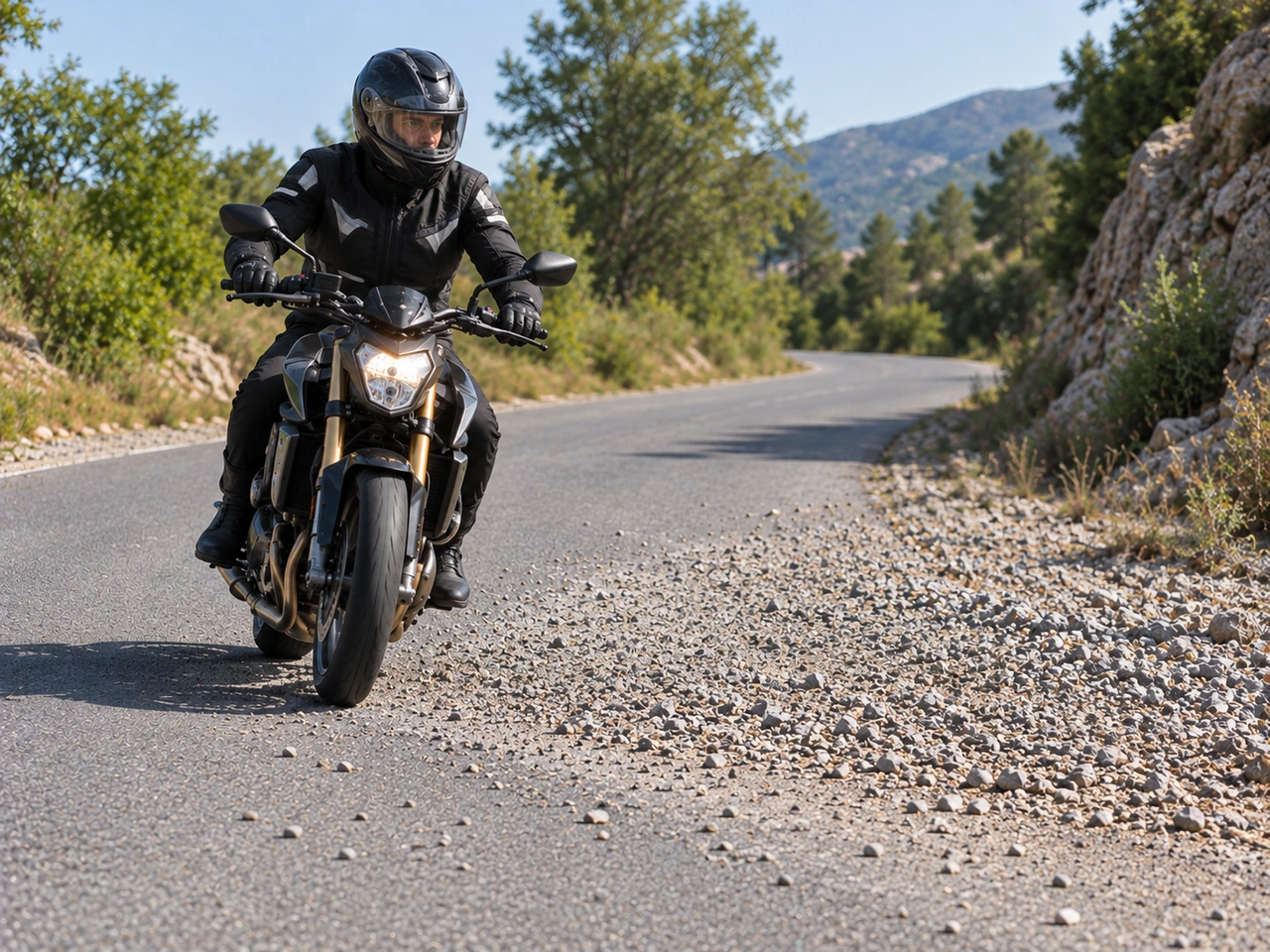
What should a motorcyclist do when approaching loose gravel?

583. What should a motorcyclist do when approaching loose gravel?

Brake hard while riding over it.
✓ Reduce speed before reaching it and use smooth controls.
Lean the motorcycle more than usual.
Accelerate sharply to cross it quickly.

Loose gravel can significantly reduce tyre grip. Reduce speed before reaching it, keep the motorcycle as upright as practical, and avoid sudden braking, acceleration or steering while crossing the loose surface.

Motorcyclist approaching loose gravel
AI-generated by Traffic-rules.com • WCIT • CC BY-SA
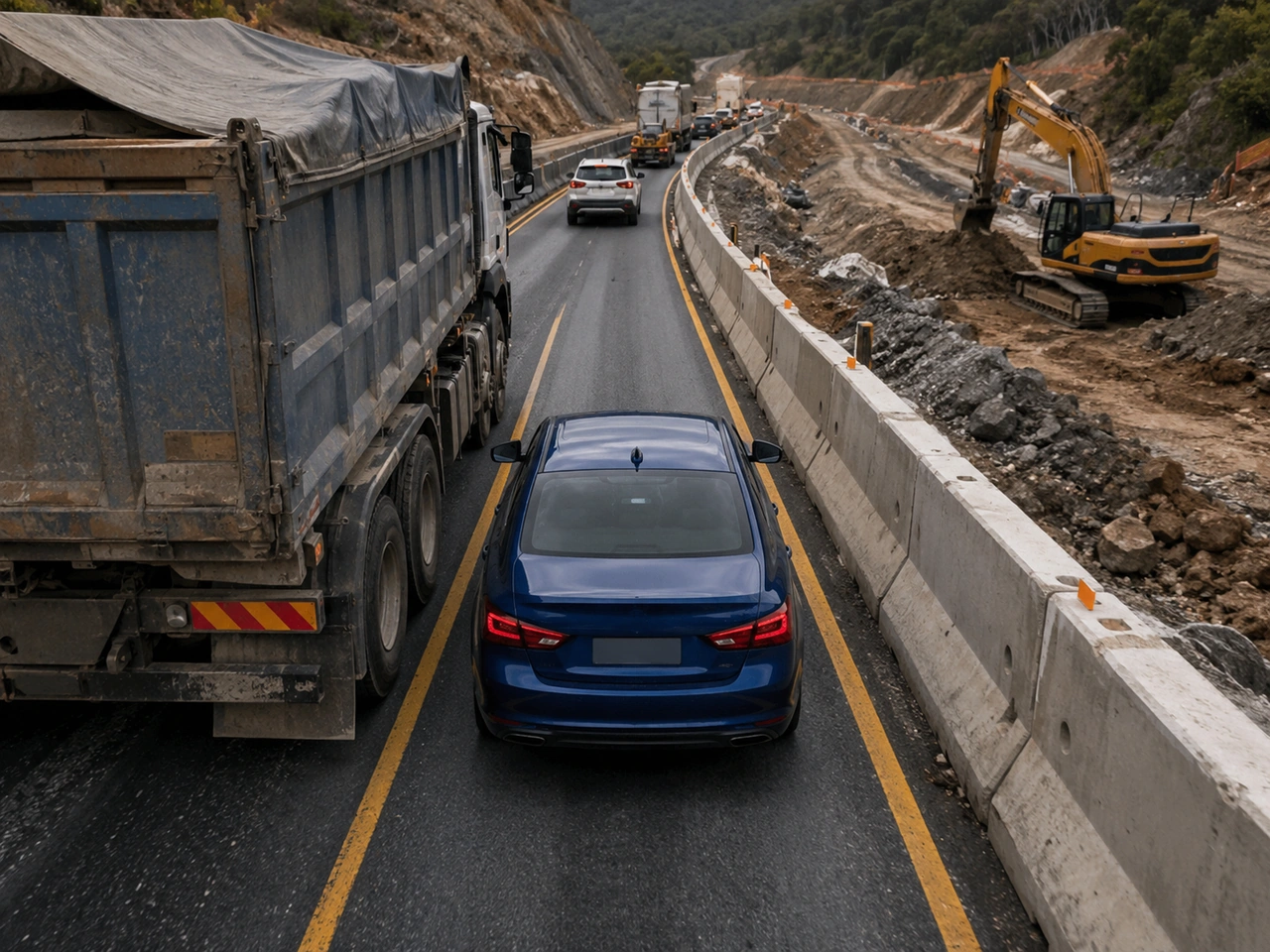
Why should you avoid unnecessary lane changes in roadworks?

584. Why should you avoid unnecessary lane changes in roadworks?

Drivers should always use the lane with fewer vehicles.
Temporary lanes are designed for frequent lane changes.
Lane changes are safer when traffic is moving slowly.
✓ Narrow lanes and changing layouts increase the risk of collision.

Frequent lane changes create additional risk where space is limited and drivers are already adapting to temporary layouts.

Vehicles travelling through restricted roadworks lanes
AI-generated by Traffic-rules.com • WCIT • CC BY-SA
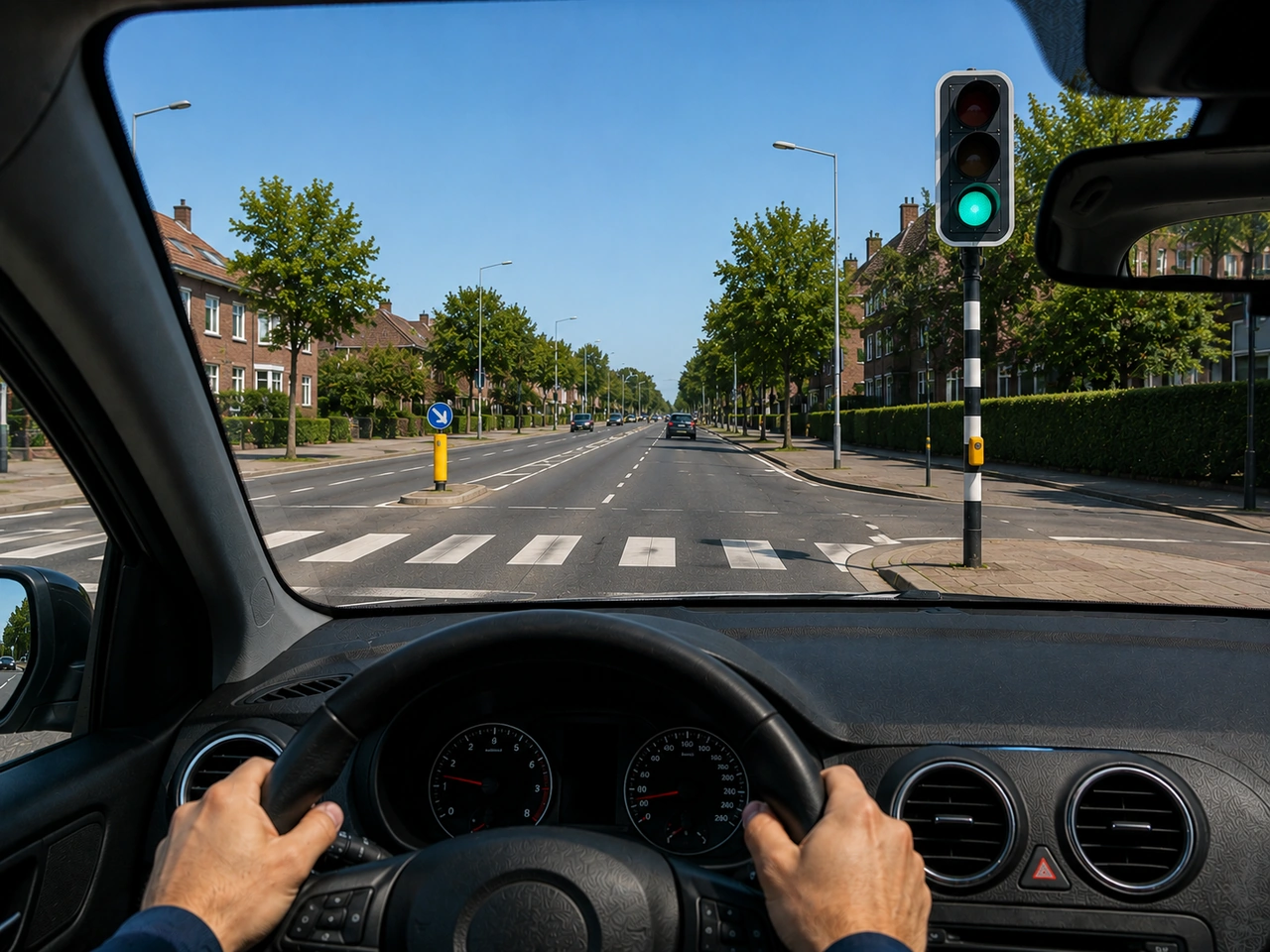
What does a green traffic light mean?

585. What does a green traffic light mean?

You have priority over all other road users.
You may enter even if traffic is blocking the junction.
You may turn in any direction without checking the signs.
✓ You may proceed if it is safe.

A green light allows you to continue, but you must still watch for pedestrians, cyclists, and other road users.

Green traffic light at a junction
AI-generated by Traffic-rules.com • WCIT • CC BY-SA
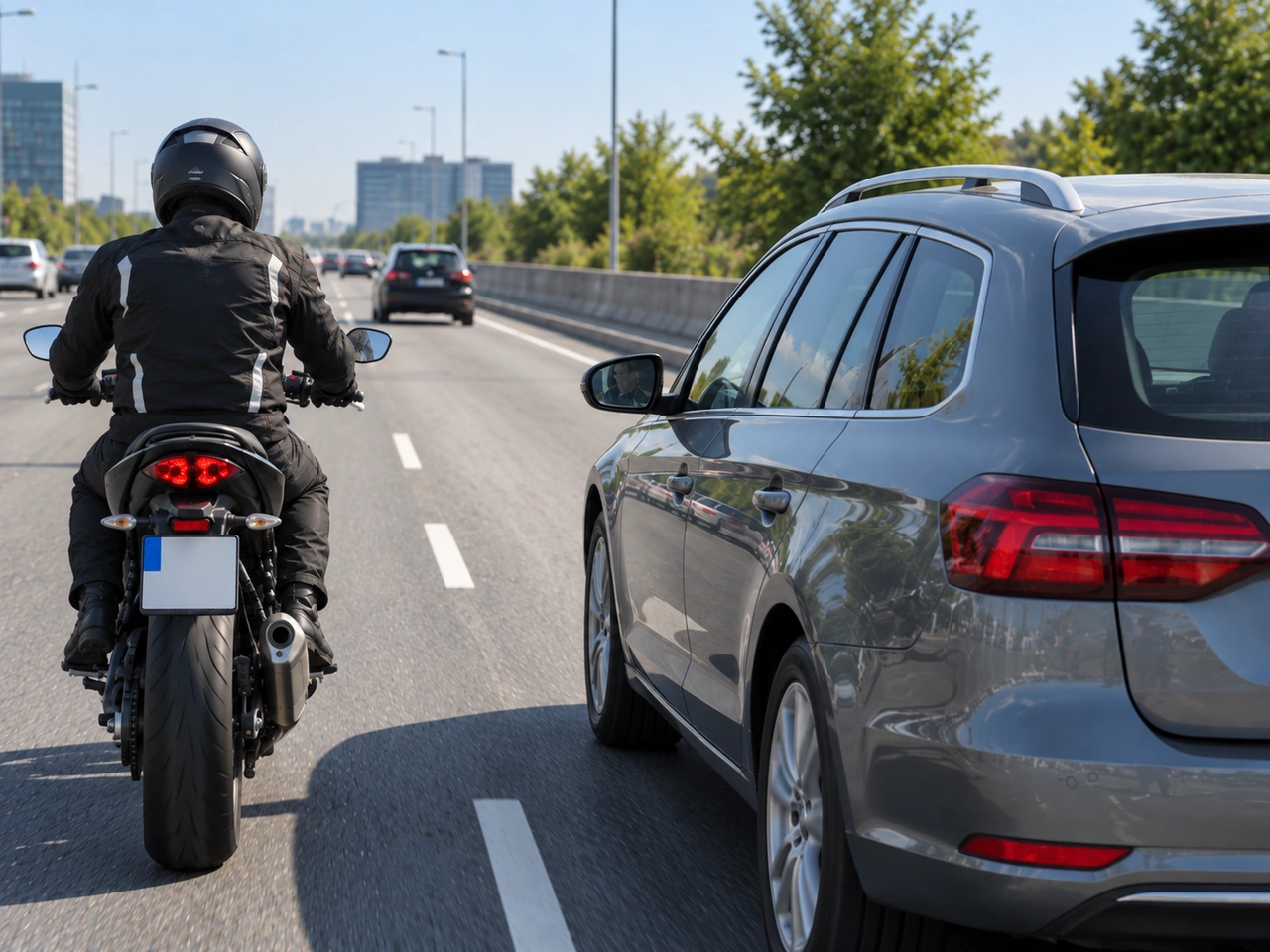
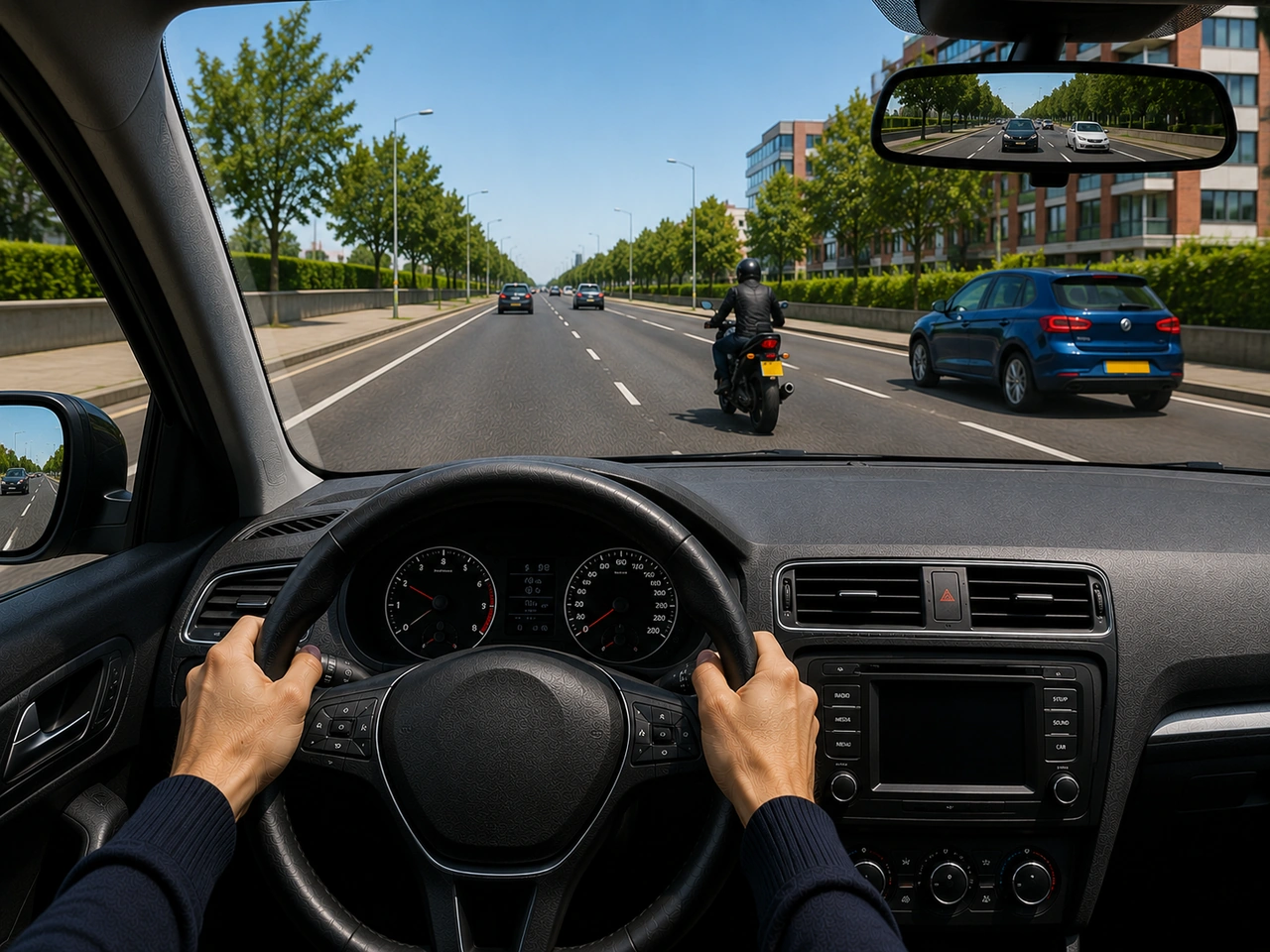
Why should you check for motorcyclists before changing lanes?

586. Why should you check for motorcyclists before changing lanes?

✓ Motorcycles can be harder to see and may be in your blind spot.
Motorcyclists are required to stay beside the kerb.
Motorcycles always travel faster than other traffic.
Motorcyclists must stop when a car changes lanes.

Motorcyclists are smaller and can be hidden in blind spots. Check mirrors, signal, and look carefully before changing lanes.

Motorcycle near a vehicle preparing to change lanes
AI-generated by Traffic-rules.com • WCIT • CC BY-SA
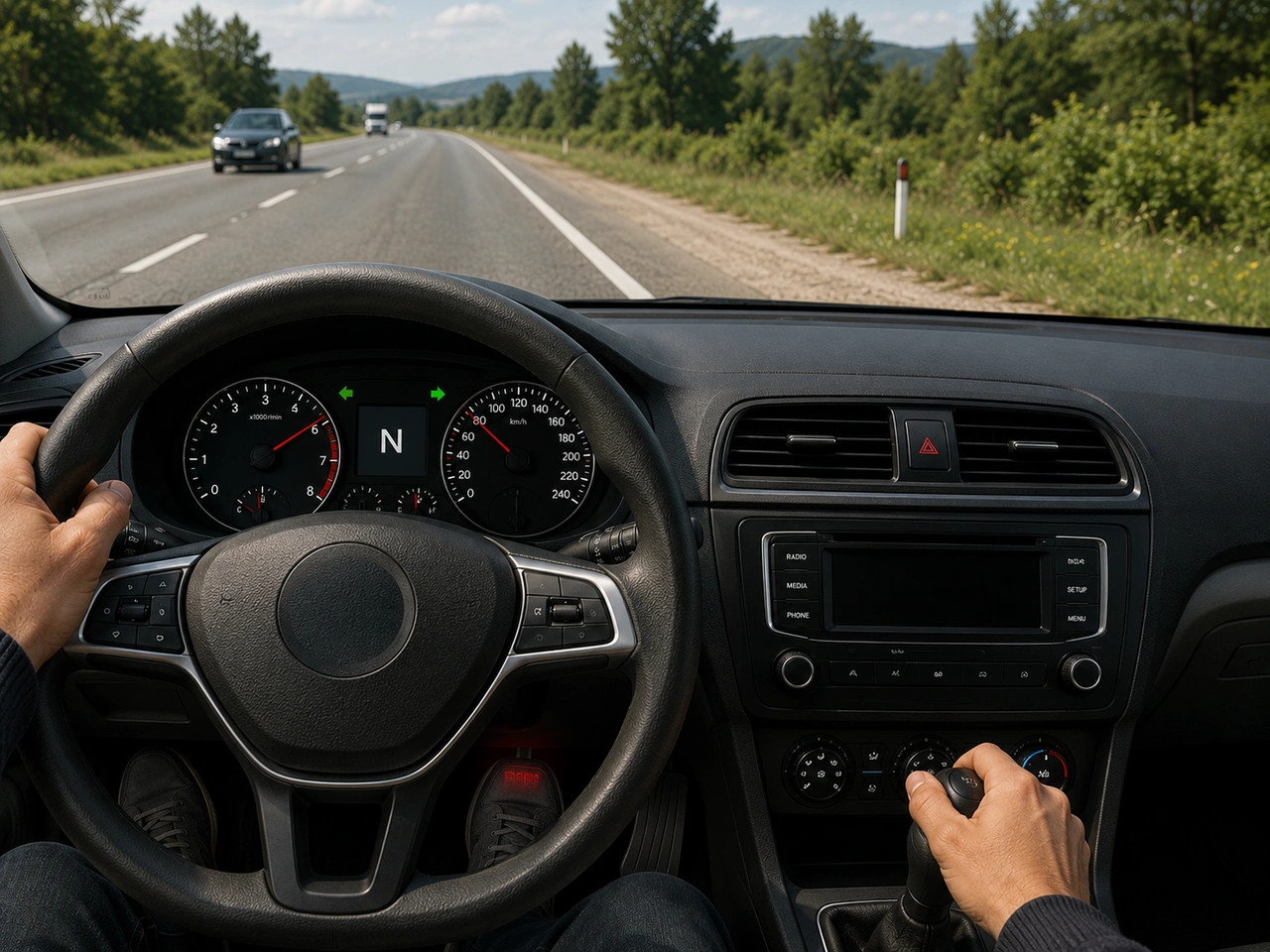
What should you do if the accelerator becomes stuck while you are driving?

587. What should you do if the accelerator becomes stuck while you are driving?

✓ Select neutral, brake firmly, and steer to a safe stopping place.
Keep driving and wait for the accelerator to release.
Press the accelerator harder to try to free it.
Apply the parking brake sharply while moving.

Selecting neutral disconnects engine power from the wheels. Brake firmly, maintain steering control, and switch off the engine after stopping safely.

Stuck accelerator pedal in a vehicle
AI-generated by Traffic-rules.com • WCIT • CC BY-SA
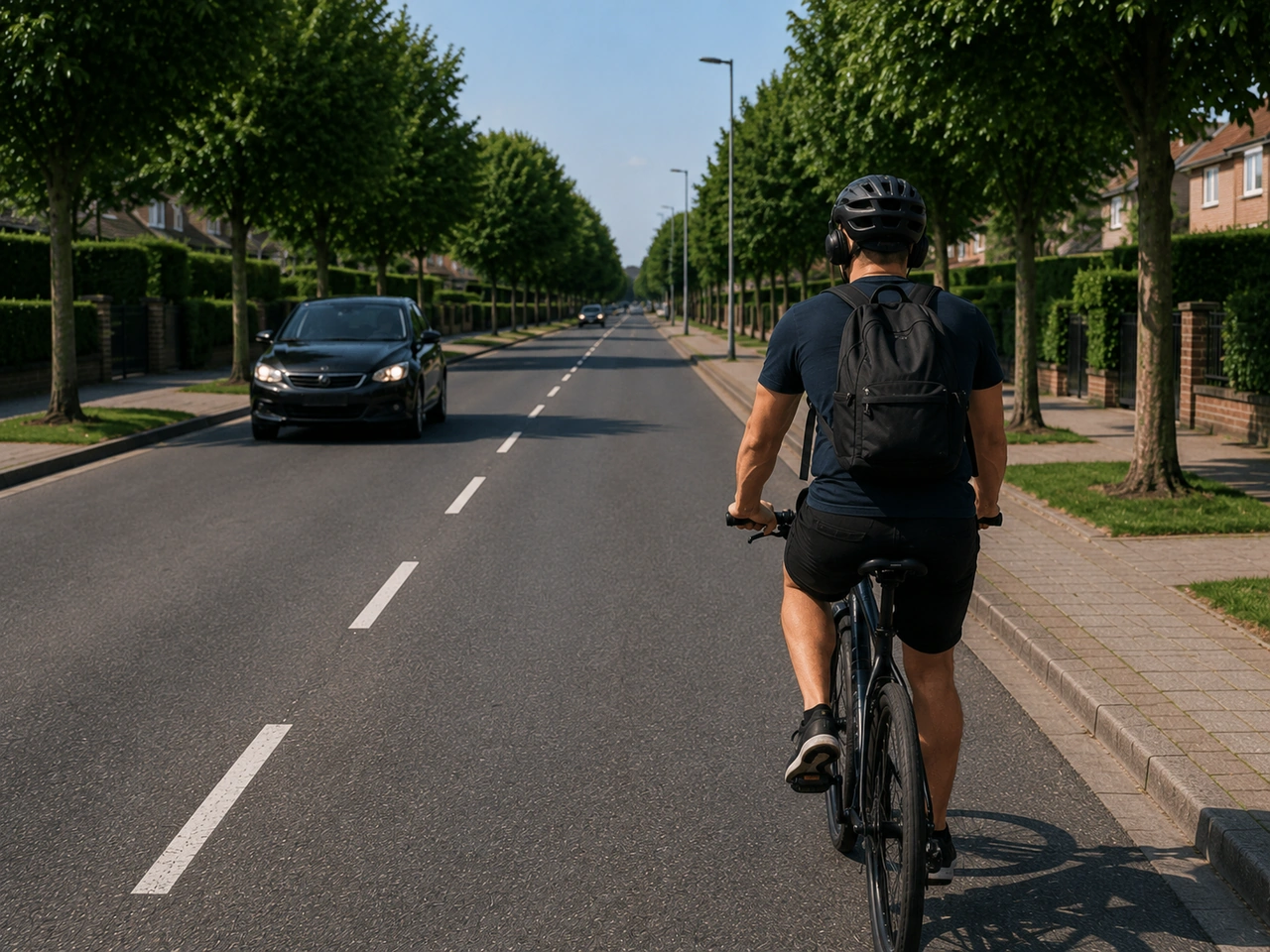
Why can loud music be dangerous while cycling?

588. Why can loud music be dangerous while cycling?

It makes bicycle lights less effective.
It reduces the grip of the tyres.
It makes the brakes respond more slowly.
✓ You may not hear traffic or warning sounds.

Hearing approaching vehicles, bells, horns, and other warning sounds is an important part of staying aware.

Cyclist listening to music near traffic
AI-generated by Traffic-rules.com • WCIT • CC BY-SA
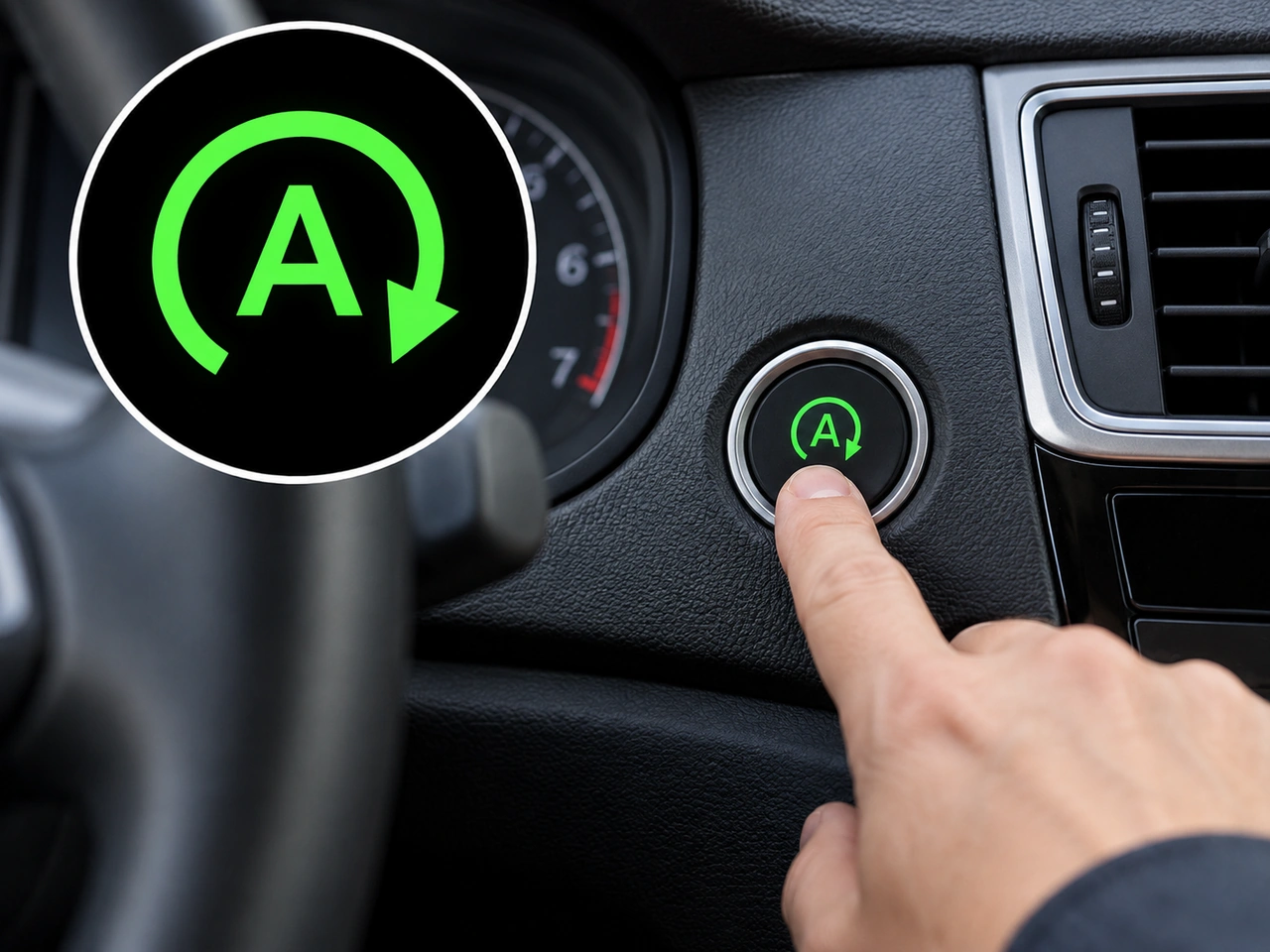
What does this dashboard symbol indicate?

589. What does this dashboard symbol indicate?

Anti-theft system.
Cruise control.
✓ Automatic start-stop system.
Engine-management warning.

This symbol relates to the automatic start-stop system, which can switch the engine off temporarily while the vehicle is stationary and restart it when driving resumes. The exact colour and appearance may vary between vehicles.

Automatic start-stop system symbol on the dashboard
AI-generated by Traffic-rules.com • WCIT • CC BY-SA
What should you do when joining a motorway from an entry lane?

590. What should you do when joining a motorway from an entry lane?

✓ Match your speed, check around you, and merge into a safe gap.
Merge as soon as the entry lane begins.
Force your way into the nearest gap.
Stop at the end of the entry lane and wait for a large gap.

Use the entry lane to build a suitable speed, check carefully, signal, and merge only when it is safe.

Vehicle joining a motorway from an entry lane
AI-generated by Traffic-rules.com • WCIT • CC BY-SA
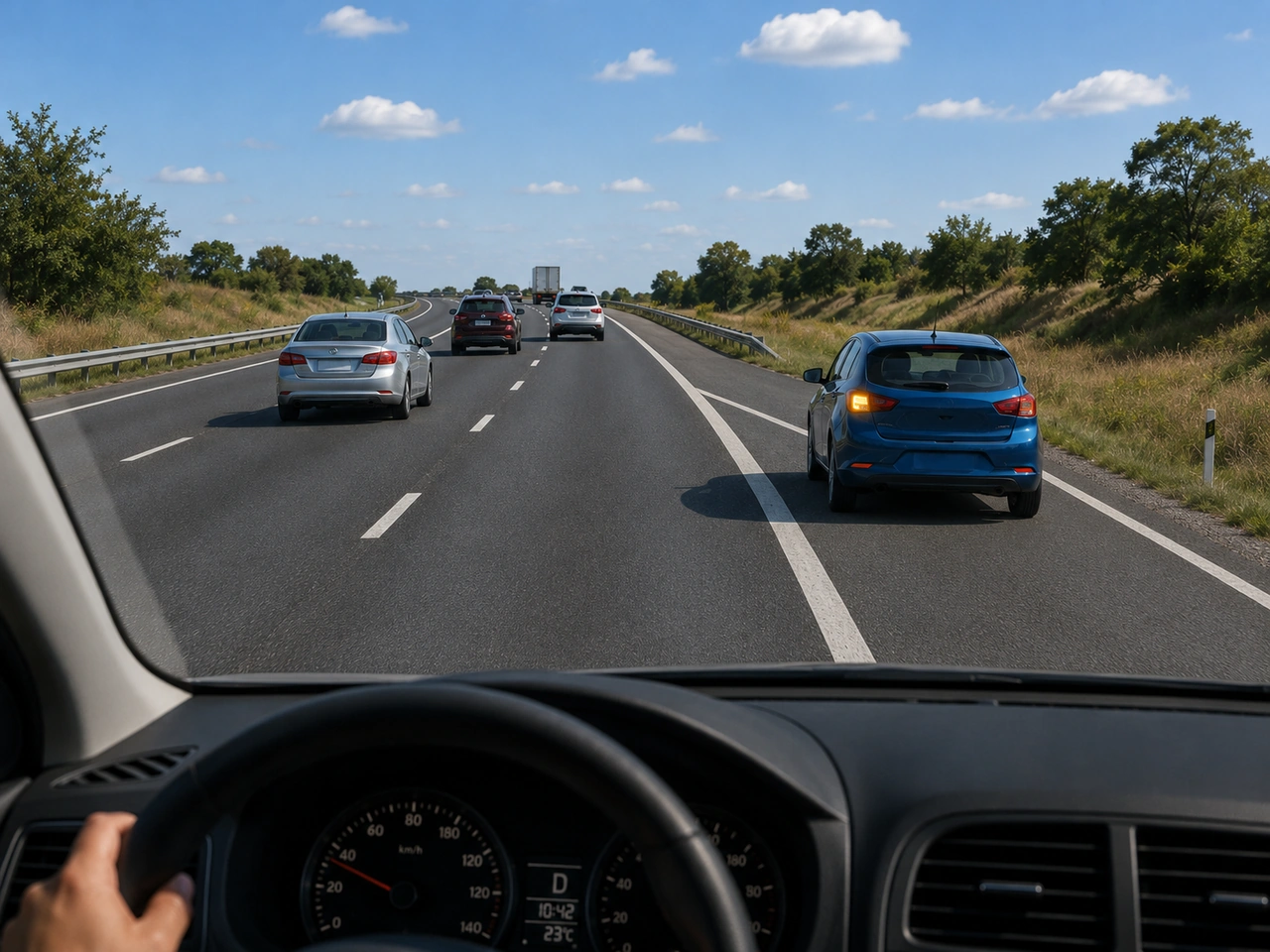
Why should you check your mirrors regularly while driving?

591. Why should you check your mirrors regularly while driving?

✓ To stay aware of traffic around you.
To check whether passengers are comfortable.
To see whether road signs behind you have changed.
To avoid having to check your blind spots.

Regular mirror checks help you understand what is happening behind and beside your vehicle.

Driver checking traffic in a rear-view mirror
AI-generated by Traffic-rules.com • WCIT • CC BY-SA
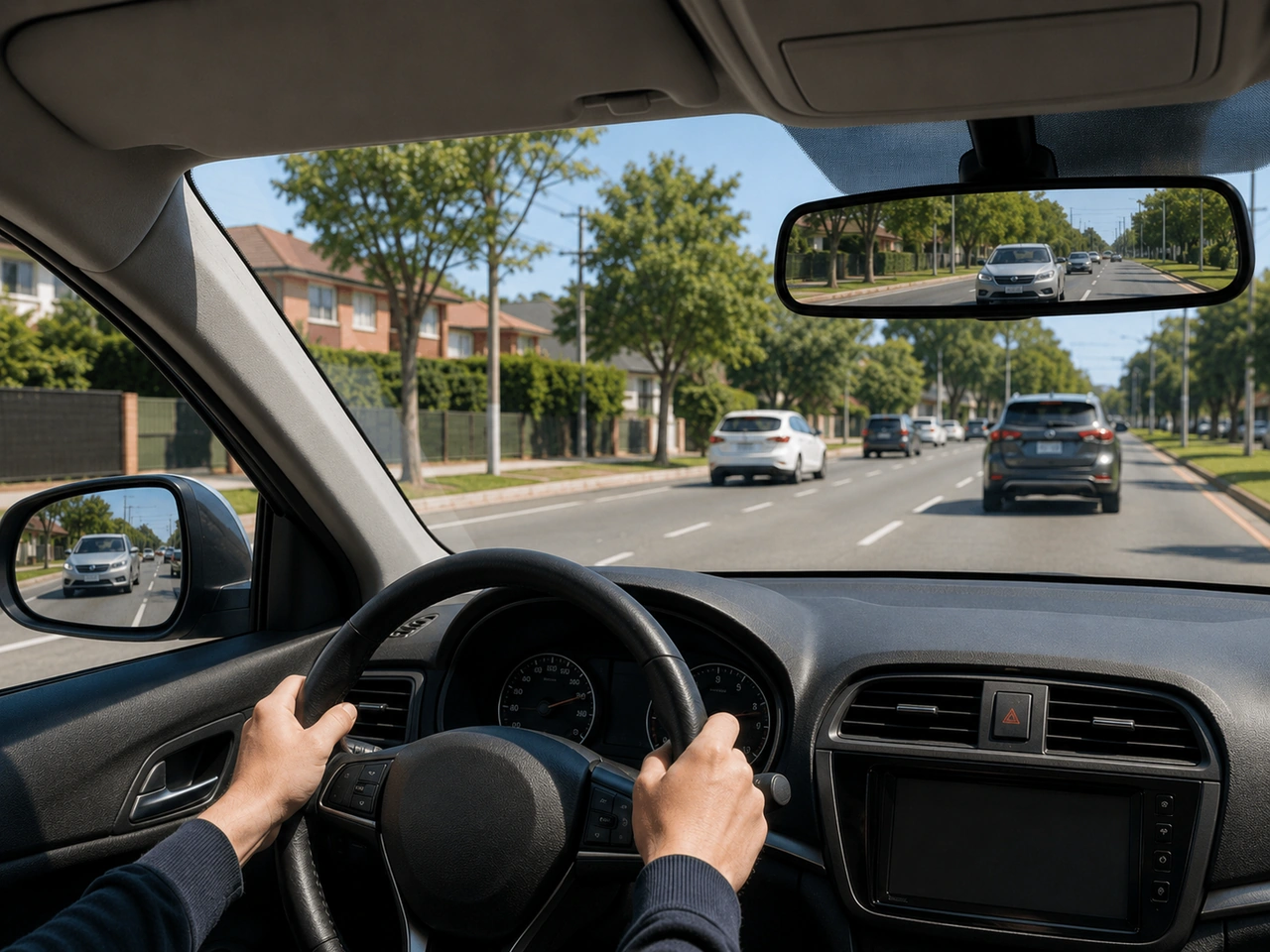
Why should you reduce speed in residential areas?

592. Why should you reduce speed in residential areas?

Parked vehicles have priority over moving traffic.
Overtaking is prohibited throughout residential areas.
✓ Pedestrians, cyclists, and children may be nearby.
Because residential roads are usually more slippery.

Residential areas often have pedestrians, cyclists, parked vehicles, driveways, and children, and hazards may appear suddenly. Lower speed gives you more time to react and stop safely.

Vehicle travelling through a residential street
AI-generated by Traffic-rules.com • WCIT • CC BY-SA
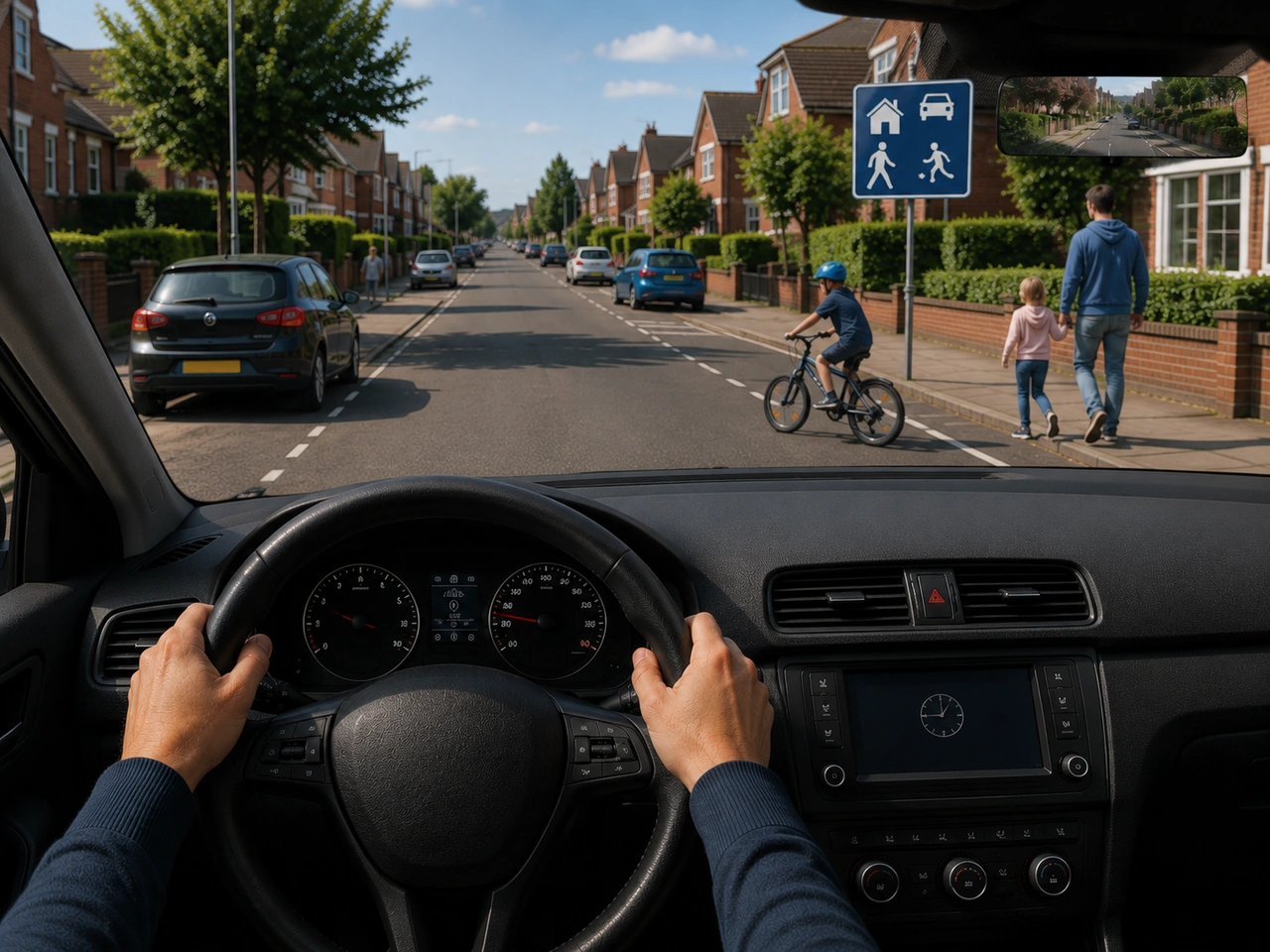
What should you do with the parking brake before leaving a parked vehicle?

593. What should you do with the parking brake before leaving a parked vehicle?

Apply it only on a slope.
Release it completely.
✓ Apply it securely.
Leave it partly applied.

Before leaving a parked vehicle, apply the parking brake securely to help prevent unintended movement. Also select the appropriate gear or transmission position for parking.

Securing a parked vehicle with the parking brake
AI-generated by Traffic-rules.com • WCIT • CC BY-SA
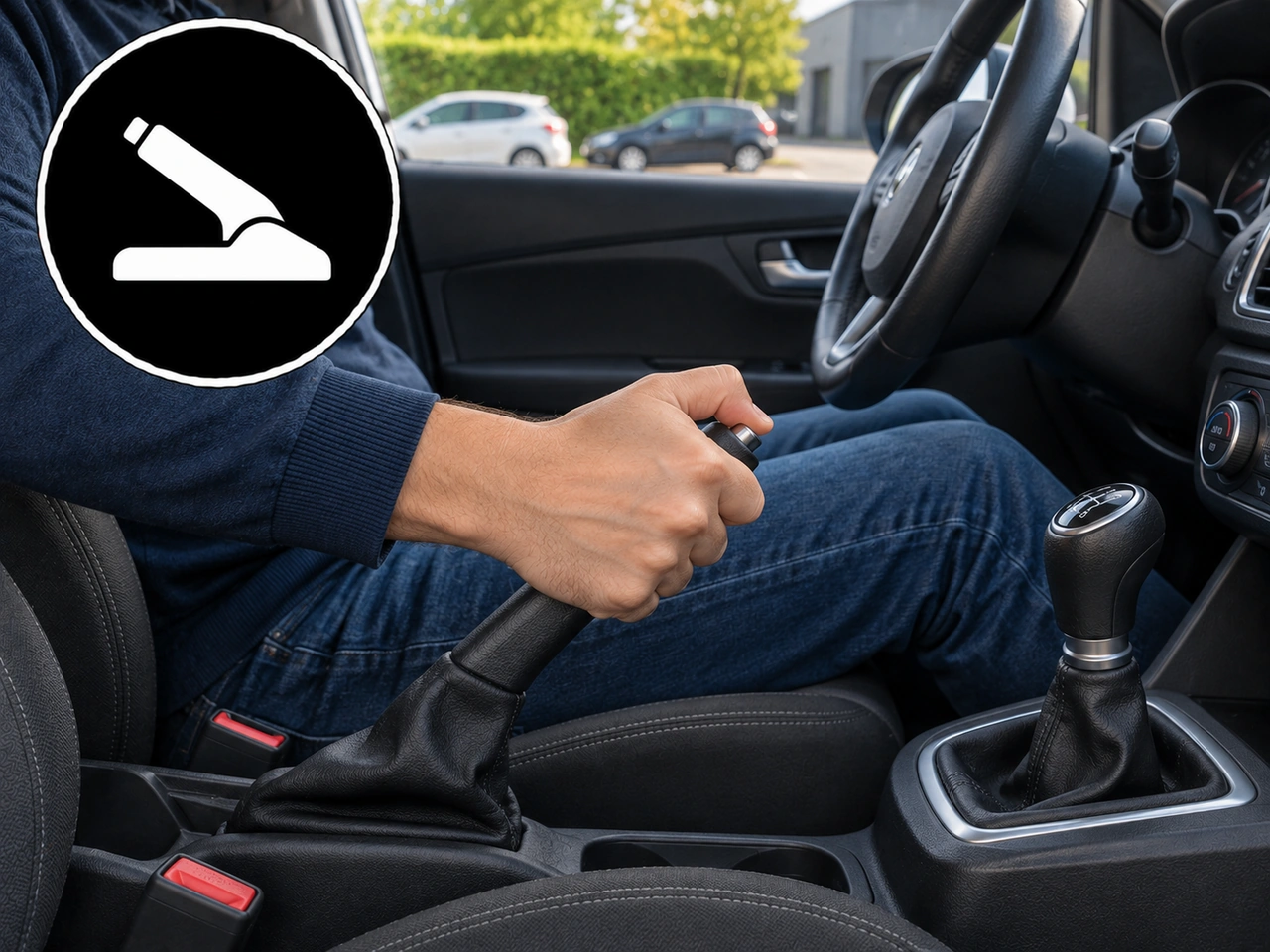
What does this dashboard symbol indicate?

594. What does this dashboard symbol indicate?

✓ Power-steering warning.
Brake-system warning.
Low tyre pressure.
Electronic stability control.

This symbol indicates a possible fault with the power-steering system. Steering assistance may be reduced or unavailable, making the steering wheel harder to turn.

Power-steering warning symbol on the dashboard
AI-generated by Traffic-rules.com • WCIT • CC BY-SA
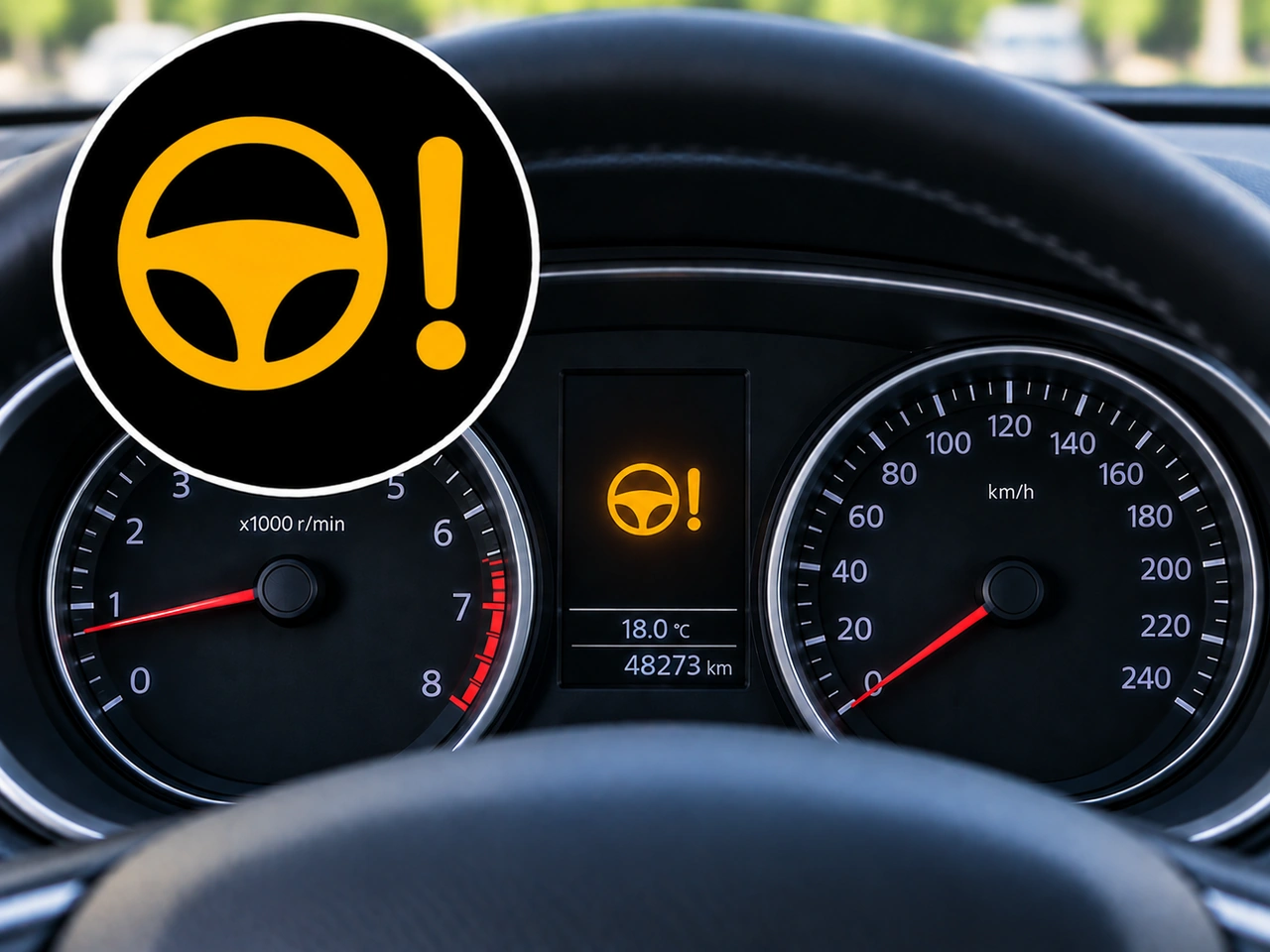
How does higher speed affect a vehicle's stopping distance?

595. How does higher speed affect a vehicle's stopping distance?

✓ It increases the distance needed to stop.
It affects braking distance only on wet roads.
It decreases the distance needed to stop.
It affects reaction distance but not braking distance.

As speed increases, the vehicle travels farther while the driver reacts and requires more distance to brake. This means the total stopping distance increases significantly as speed rises.

Vehicle speed and the distance needed to stop
AI-generated by Traffic-rules.com • WCIT • CC BY-SA
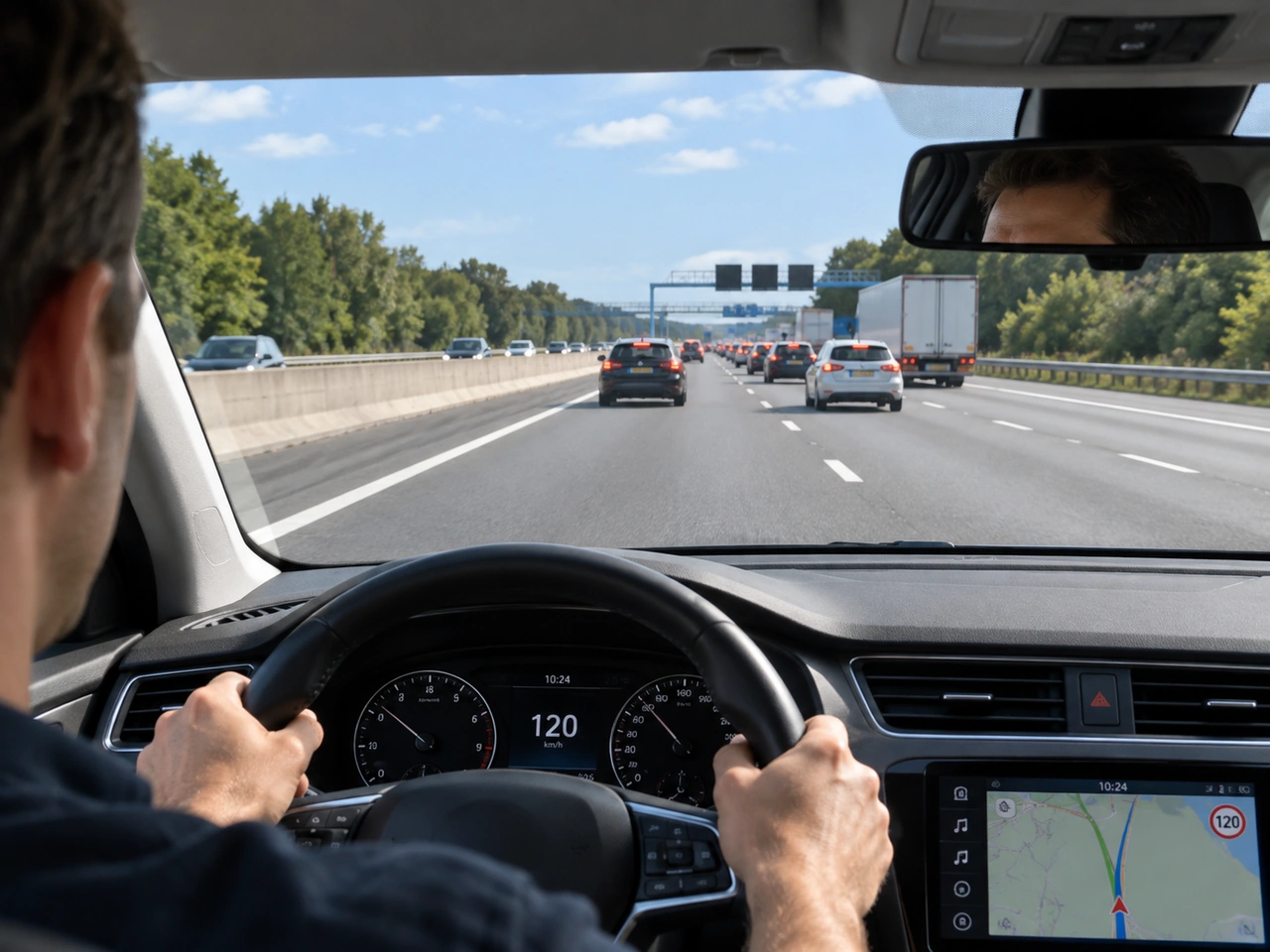
What should you do if the charging-system warning light comes on?

596. What should you do if the charging-system warning light comes on?

✓ Reduce electrical use, stop safely, and seek assistance.
Switch on more electrical systems to test the battery.
Increase engine speed until the warning light goes out.
Continue driving until the battery is completely discharged.

The alternator or charging system may have failed. The vehicle may stop once the remaining battery charge is exhausted.

Charging-system warning illuminated on the dashboard
AI-generated by Traffic-rules.com • WCIT • CC BY-SA
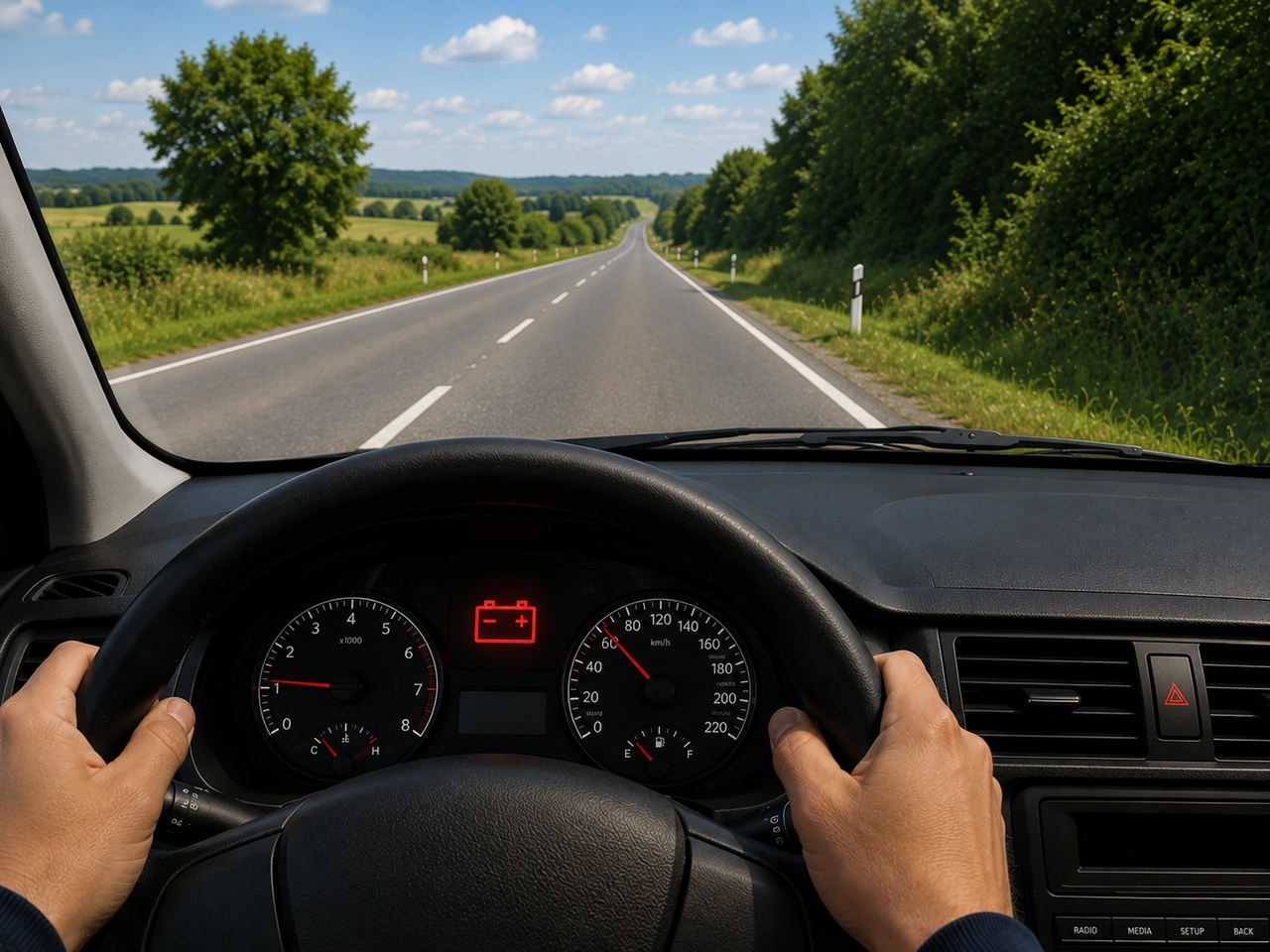
What should you check before starting a long journey?

597. What should you check before starting a long journey?

Only the dashboard warning lights.
Nothing if the vehicle was recently serviced.
✓ Tyres, lights, fluids, windows, mirrors, and essential equipment.
Only the tyres and fuel level.

A brief vehicle check can reveal tyre damage, low fluid levels, faulty lights, or visibility problems before they cause danger. Also confirm that any spare wheel or tyre-repair equipment is available and usable.

Vehicle safety checks before a long journey
AI-generated by Traffic-rules.com • WCIT • CC BY-SA
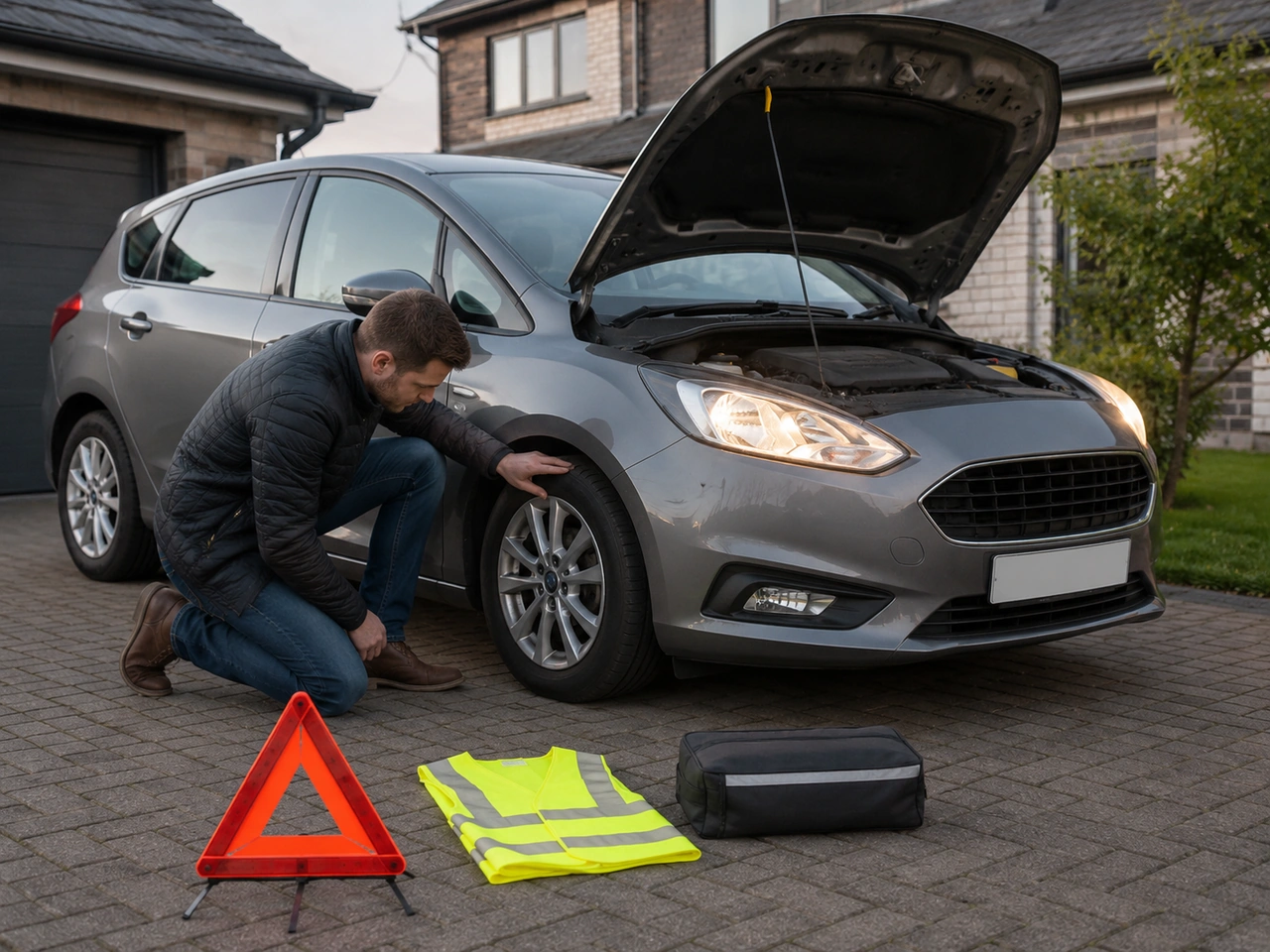
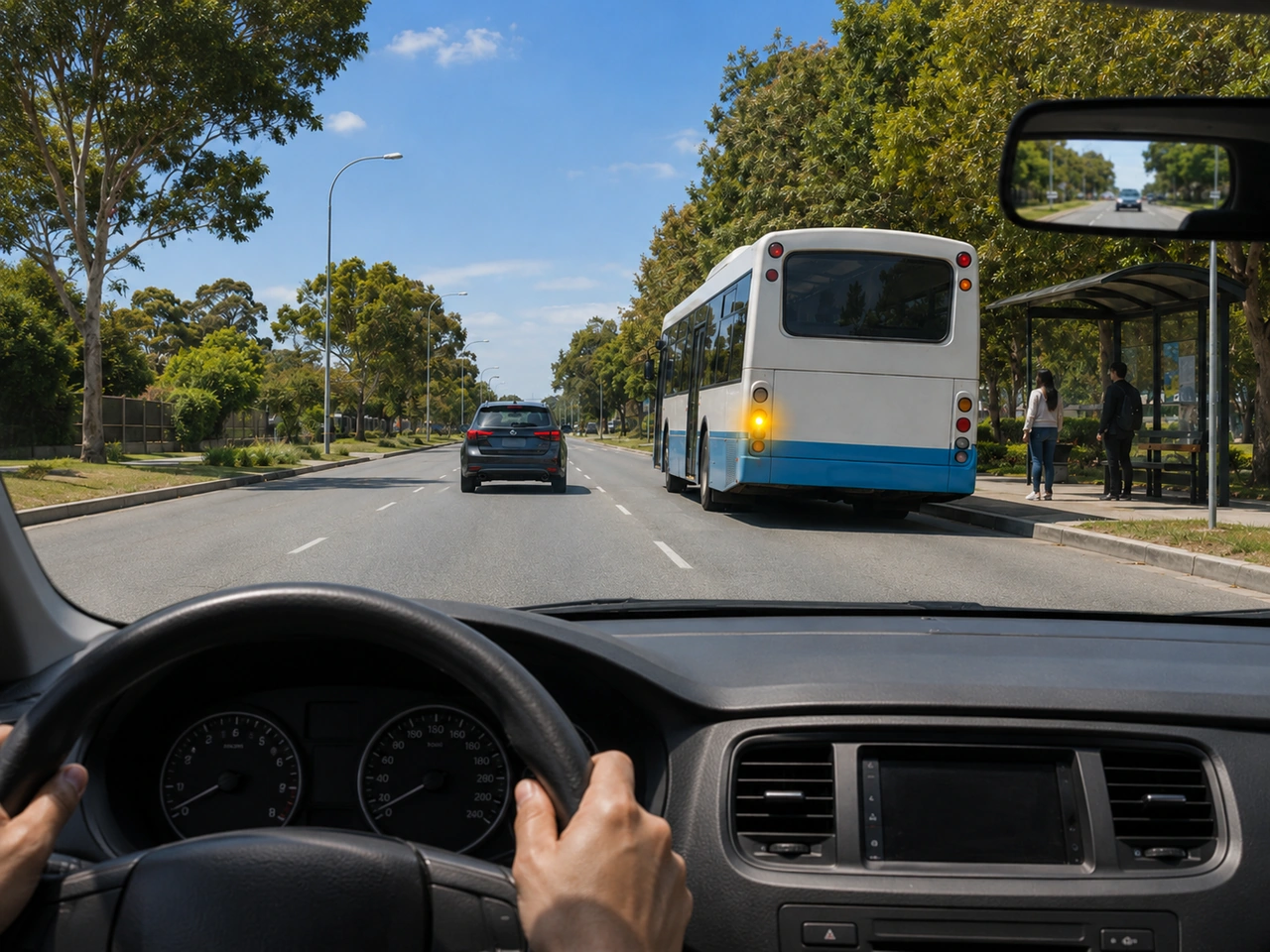
What should you do when a bus signals to pull away from a bus stop?

598. What should you do when a bus signals to pull away from a bus stop?

Ignore the signal until the bus starts moving.
Drive closely beside the bus to prevent it moving out.
Sound your horn so the bus waits for you.
✓ Slow down and be prepared to let it move out when safe.

Buses may pull away after picking up passengers. Slow down, check the traffic situation, and allow space when it is safe.

Bus signalling to pull away from a stop
AI-generated by Traffic-rules.com • WCIT • CC BY-SA
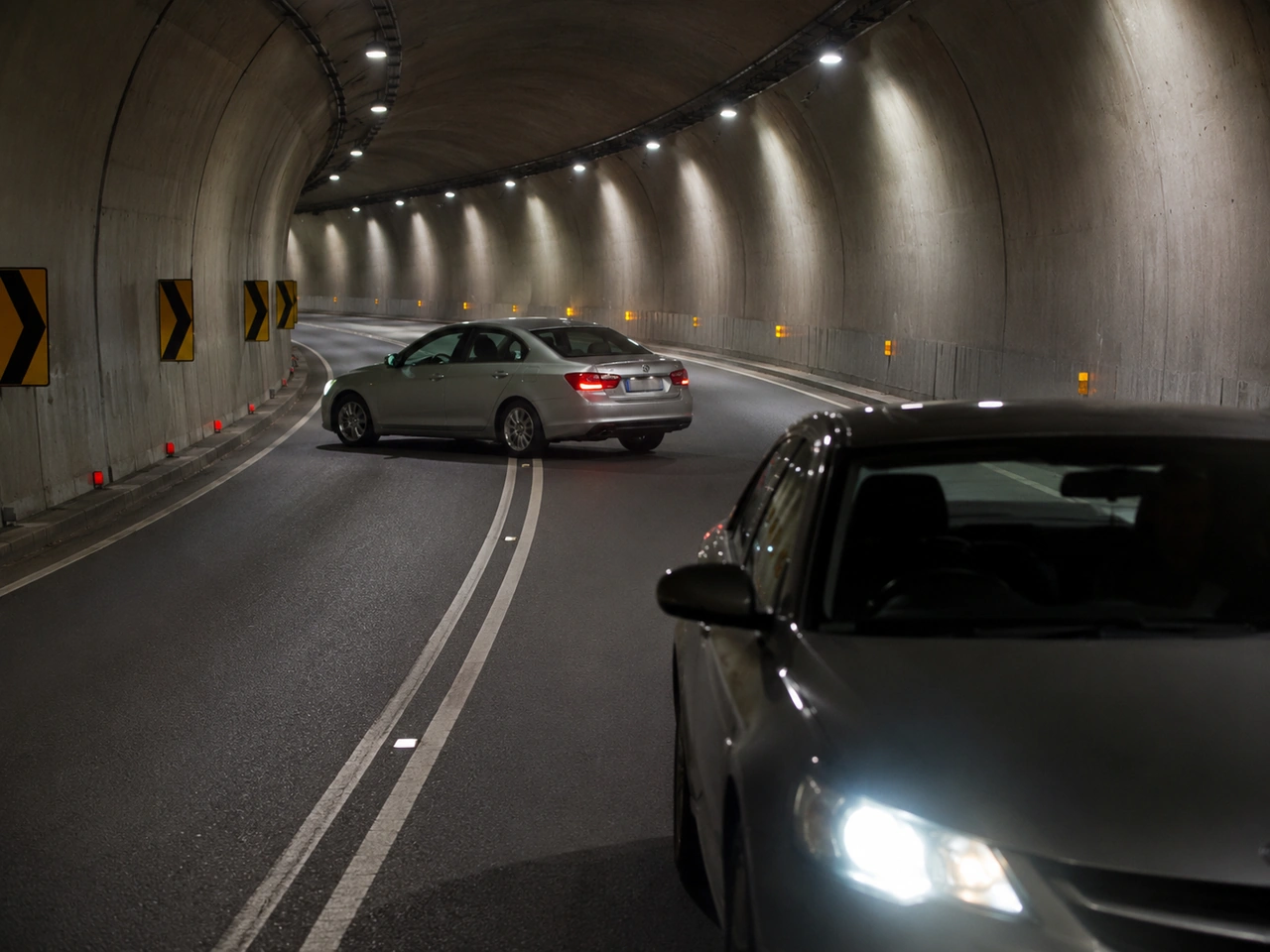
Why should you never reverse or make a U-turn inside a tunnel unless directed?

599. Why should you never reverse or make a U-turn inside a tunnel unless directed?

Reversing can interfere with the tunnel lighting.
✓ It can cause a serious collision with approaching traffic.
Tunnel ventilation works only in the normal direction of travel.
The tunnel may be too narrow for the vehicle to turn.

Other drivers may not expect a vehicle to reverse or turn around. Only change direction when instructed by police or tunnel staff.

Vehicle manoeuvring inside a road tunnel
AI-generated by Traffic-rules.com • WCIT • CC BY-SA
Why should a motorcyclist avoid riding in another vehicle's blind spot?

600. Why should a motorcyclist avoid riding in another vehicle's blind spot?

✓ The driver may not be able to see the motorcycle.
The vehicle ahead must always change lanes.
The motorcycle will use more fuel.
The motorcycle's brakes may become less effective.

Motorcycles can be difficult to see, particularly when they remain in another vehicle's blind spot. Avoid staying alongside a vehicle where the driver may not see you, and choose a position where you are more likely to be visible.

Motorcycle in another vehicle's blind spot
AI-generated by Traffic-rules.com • WCIT • CC BY-SA