


Traffic signsUnited States
 Traffic rules
 United States
151. Speedometer
A speedometer is an instrument in a vehicle that shows the vehicle's current speed. It is normally displayed on the instrument panel and may use an analogue dial, a digital display or both.
Drivers should use the speedometer to monitor their speed and remain within the applicable speed limit. The displayed unit is usually kilometres per hour or miles per hour, depending on the country and vehicle.

Wikimedia.org • Andreas Schmidt • CC BY-SA
Which units can a speedometer use?
A speedometer may display speed in kilometres per hour (km/h), miles per hour (mph) or both, depending on the vehicle and market.

152. Play street
A play street is a street that is temporarily closed or restricted to normal motor traffic so that people, especially children, can use the roadway for play and recreation. Play streets are usually created during specific hours or days and are marked with temporary barriers or traffic signs.
Within a play street, people playing are given priority over permitted vehicle traffic. Any vehicles that are allowed to enter must travel very slowly and avoid endangering or obstructing people using the street.

Wikimedia.org • Jim Griffin • CC0
How should permitted vehicles drive in a play street?
Follow the local law for the signed street. For example, Belgium’s designated play streets require authorised drivers to travel at walking pace, leave the passage clear for people playing and stop when necessary. A similar-looking street elsewhere may have different rules.
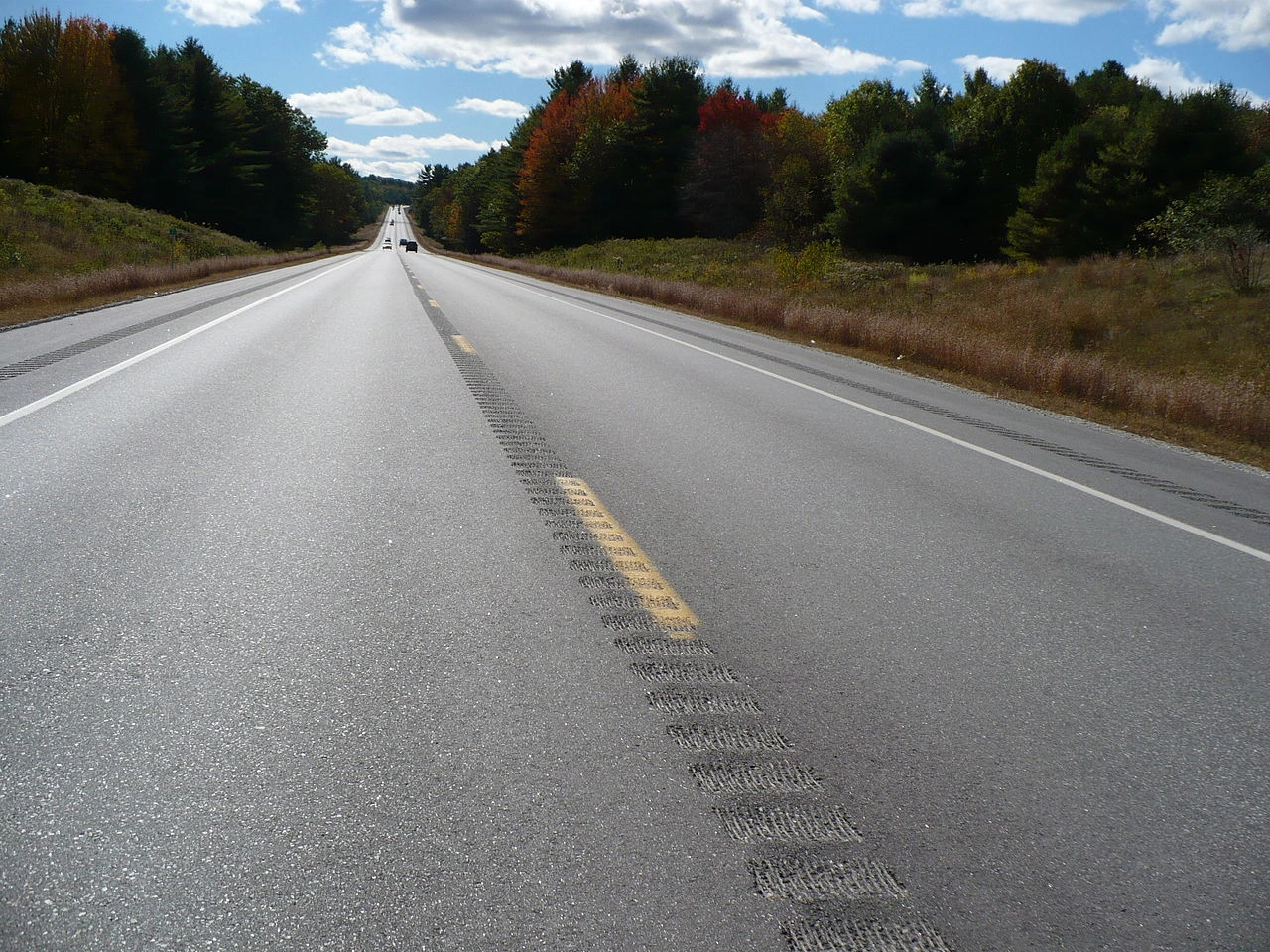
153. Rumble strip
A rumble strip is a raised, grooved or textured section of road surface that creates vibration and noise when a vehicle drives over it. Rumble strips are used to attract a driver's attention and warn of hazards, lane departure, an approaching junction or another situation requiring increased caution.
Rumble strips may be installed across a traffic lane or along the edge or centre of a road. They are primarily a warning device and do not by themselves necessarily impose a particular speed limit or traffic restriction.
Wikimedia.org • SayCheeeeeese • CC0
Does a rumble strip impose a speed limit?
Not by itself. A rumble strip warns or attracts attention, while any legally binding speed restriction must be established by the applicable traffic rules or regulatory signs.
🔗 hse.gov.uk • UK HSE, workplace transport speed and physical traffic calming; design example
🔗 gov.uk • Great Britain Highway Code, Rules 124–126; national guidance example
154. Ride height
Ride height is the height at which a vehicle's body or chassis sits above the road surface. It is determined mainly by the suspension, wheels and tyres and can also change according to the vehicle's load.
Changing the ride height by lowering or raising the suspension can affect ground clearance, wheel alignment, handling and the space available between the vehicle and the road. Vehicle modifications must comply with the technical and approval rules that apply in the country.
Wikimedia.org • mark6mauno • CC BY
Can a vehicle's ride height be changed?
Yes, but suspension changes must remain safe and meet local requirements. Britain’s MOT manual, for example, treats a suspension modification that makes the system inoperative or likely to foul other components as a dangerous defect. Check the applicable modification and inspection rules before altering the vehicle.
🔗 gov.uk • DVSA, suspension inspection and unsafe modifications
🔗 gov.uk • DVLA, current structural vehicle modifications guidance
155. Dirt road
A dirt road is an unpaved road whose surface consists mainly of natural soil, earth or compacted ground rather than asphalt, concrete or an added gravel surface. Dirt roads are commonly found in rural, agricultural, forest and remote areas.
Drivers on dirt roads should adapt their speed to the surface conditions and avoid sudden braking, acceleration or steering. Dust, mud, ruts, potholes and reduced tyre grip can make driving more difficult, especially during or after bad weather.

Wikimedia.org • Игоревич • CC0
How should you drive on a dirt road?
Use a suitable speed, increase following distance when necessary and accelerate, brake and steer smoothly. Extra care may be required when the surface is dusty, muddy, rutted or uneven.
🔗 gov.uk • Great Britain Highway Code, Rules 124–126; national guidance example
🔗 gov.uk • Great Britain Highway Code, Rules 226–237; national guidance example
156. Driving
Driving is the act of controlling and operating a vehicle or other recognised means of transport in traffic. It involves steering, accelerating, braking, observing the road and interacting safely with other road users.
Safe driving requires the driver to remain in control, follow traffic rules and signals, observe surrounding traffic and adapt to road, weather and visibility conditions.

Wikimedia.org • BP63Vincent • CC BY-SA
Who can legally drive a motor vehicle?
The requirements vary by country and vehicle type. Drivers may need to meet minimum-age, driving-licence, medical-fitness and vehicle-category requirements.
🔗 gov.uk • Great Britain Highway Code, Rules 124–126; national guidance example
🔗 gov.uk • Great Britain Highway Code, Rules 226–237; national guidance example
157. Start-stop system
A start-stop system is a vehicle system that automatically switches off the engine when the vehicle is stationary and restarts it when the driver is ready to move again. It is commonly used in vehicles with combustion engines to reduce unnecessary engine idling.
The system normally operates automatically when certain conditions are met, such as when the vehicle stops in traffic. Its operation does not replace the driver's responsibility to control the vehicle safely and follow the applicable traffic rules.
Wikimedia.org • Bindydad123 • CC BY-SA
Does the engine always switch off when the vehicle stops?
Not necessarily. The system may keep the engine running when operating conditions do not allow an automatic stop, depending on the vehicle and its systems.
158. Manual transmission
A manual transmission is a vehicle transmission in which the driver selects the gears manually, usually using a gear lever together with a clutch pedal. The driver operates the clutch to disconnect and reconnect the engine from the transmission when starting, stopping or changing gears.
Driving a manual vehicle requires the driver to coordinate the clutch, accelerator and gear selection. Compared with an automatic transmission, gear changes are controlled directly by the driver rather than being performed automatically by the vehicle.
Wikimedia.org • 21C117 • CC BY-SA
What is the difference between a manual and automatic transmission?
With a manual transmission, the driver selects and changes gears. An automatic transmission normally selects the appropriate gears automatically without requiring a conventional clutch pedal.
159. Automatic transmission
An automatic transmission is a vehicle transmission that changes gears automatically without requiring the driver to operate a conventional clutch pedal and manually select each gear. Depending on the design, the driver normally selects positions such as park, reverse, neutral and drive while the transmission manages gear changes.
An automatic transmission can make driving simpler by removing the need to coordinate a clutch pedal and manual gear changes. Automatic transmissions include several different technologies, such as conventional automatics, continuously variable transmissions and dual-clutch systems.
Wikimedia.org • Jhcbs1019 • CC BY-SA
Do all automatic transmissions work in the same way?
No. Automatic transmission controls, operating modes and procedures differ between vehicles. Read the handbook for selecting drive, parking, hill driving and breakdown towing rather than assuming that a familiar selector or procedure works in every model.
160. Throttle
A throttle is a control used to regulate the power produced by an engine or motor. In most cars and trucks, the driver controls the throttle through the accelerator pedal, while motorcycles commonly use a twist grip on the handlebar.
Increasing the throttle generally increases the power available for acceleration, while reducing it decreases the power delivered to the wheels. The exact system differs between combustion-engine, hybrid and electric vehicles.

Wikimedia.org • Santeri Viinamäki • CC BY-SA
Is the throttle the same as the accelerator?
They are closely related. The accelerator is the driver’s control. In a combustion-engine vehicle, it commands the throttle system that regulates engine output; electronic systems can transmit that command through a computer rather than a mechanical linkage.
161. Tachometer
A tachometer is an instrument that shows the rotational speed of an engine or motor, usually measured in revolutions per minute (RPM). It is commonly displayed on the vehicle's instrument panel near the speedometer.
A tachometer helps the driver understand how fast the engine is rotating and can assist with selecting an appropriate gear in vehicles with a manual transmission. It measures engine speed rather than the vehicle's road speed.
Wikimedia.org • メルビル • CC BY-SA
Is a tachometer the same as a speedometer?
No. A tachometer shows engine rotational speed, while a speedometer shows the vehicle's road speed.
162. Steering wheel
A steering wheel is the primary control used by a driver to change the direction of a vehicle. Turning the steering wheel operates the steering system, which changes the angle of the steered wheels and directs the vehicle along the intended path.
The driver should use the steering wheel smoothly and remain in full control of the vehicle. Modern steering systems may include power assistance, electronic controls and buttons for functions such as audio, cruise control or driver information.

Wikimedia.org • Mario Roberto Durán Ortiz • CC BY-SA
Should you make sudden steering movements?
Normally, no. Steering should be smooth and controlled because sudden movements can destabilise the vehicle or create danger for other road users.
🔗 hella.com • HELLA, hydraulic steering pump function and failure effects
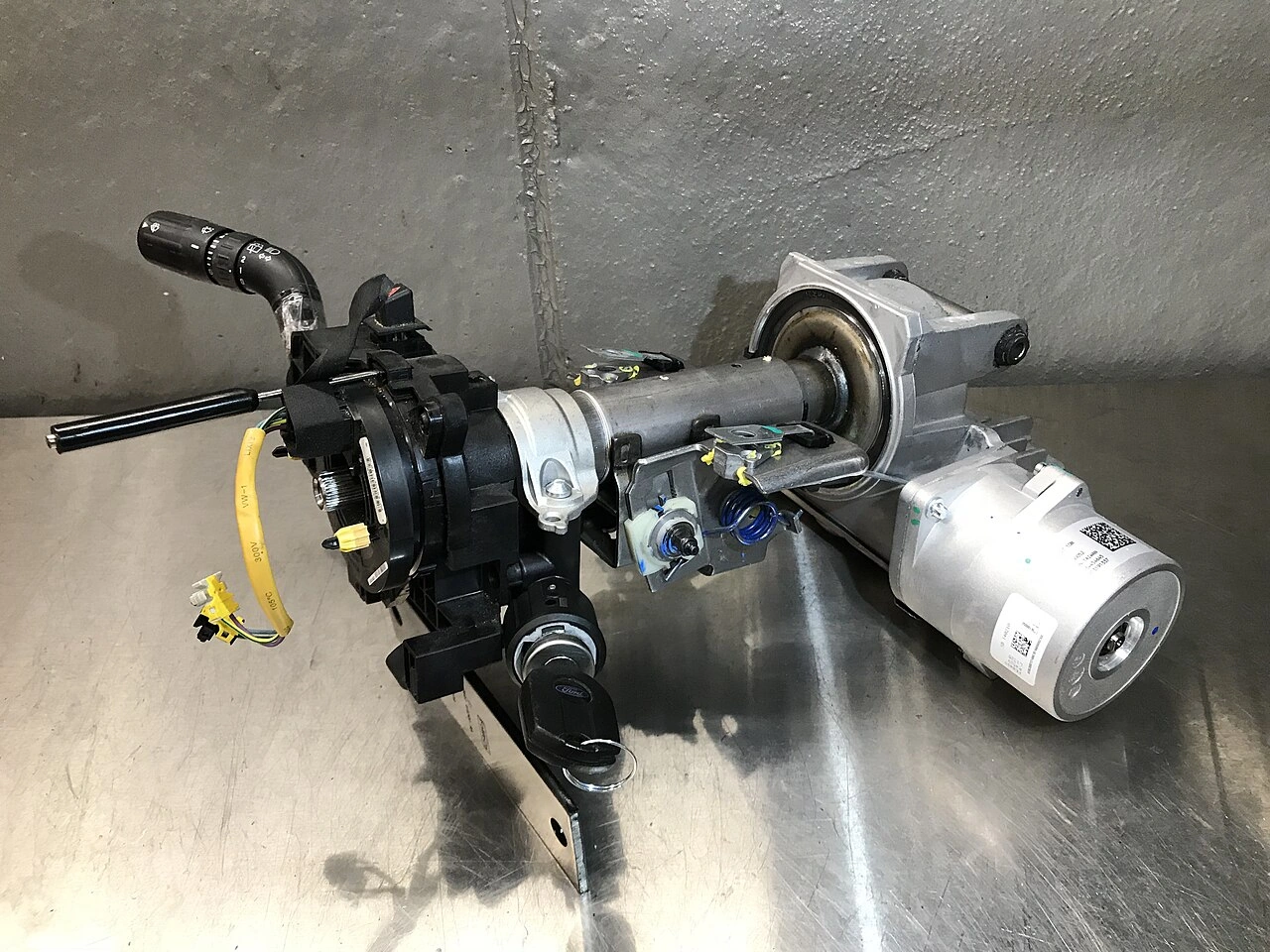
163. Power steering
Power steering is a steering system that assists the driver in turning the vehicle's wheels, reducing the physical effort required at the steering wheel. The assistance may be provided hydraulically, electrically or by a combination of systems.
Power steering makes vehicles easier to manoeuvre, particularly at low speeds and while parking. The amount of assistance may vary with vehicle speed so that steering remains stable and responsive during faster driving.
Wikimedia.org • Samf4u • CC BY-SA
What happens if power steering fails?
Steering may become considerably heavier or a warning may appear. The driver should maintain control, reduce speed safely and have the steering system checked as soon as possible.
🔗 hella.com • HELLA, hydraulic steering pump function and failure effects
164. Visual scanning
Visual scanning is the driving technique of continuously observing the road ahead, mirrors, side areas and surrounding traffic to identify hazards and changing traffic situations as early as possible. Effective scanning means moving attention regularly between different parts of the traffic environment rather than concentrating on a single point.
Drivers should look well ahead, check mirrors regularly and observe relevant side areas and blind spots, particularly before changing speed, direction or road position.

Wikimedia.org • B137 • CC BY-SA
Why is scanning important?
Scanning helps drivers identify hazards earlier and gives them more time to adjust speed, position or direction safely.
165. Mirror
A mirror is a device fitted to a vehicle that allows the driver to observe traffic behind and beside the vehicle without turning away from the road ahead for an extended period. Vehicles commonly use an interior rear-view mirror and one or more exterior side mirrors.
Mirrors help drivers monitor surrounding traffic before changing direction, changing lane, overtaking, merging or slowing down. Because mirrors cannot show every area around a vehicle, drivers should also check their blind spots by direct observation where necessary before manoeuvring.
Wikimedia.org • Petar Milošević • CC BY-SA
What is a vehicle mirror?
A vehicle mirror allows the driver to observe traffic and other road users behind or beside the vehicle.
What is the difference between an interior and exterior mirror?
An interior rear-view mirror normally provides a view through the rear window, while exterior side mirrors provide views along the sides and towards the rear of the vehicle.
Can a damaged mirror affect road safety?
Yes. A cracked, loose, missing or badly adjusted mirror can reduce the driver's view of surrounding traffic and should be repaired or replaced when necessary.
166. Fuel
Fuel is a source of energy used to power a vehicle's engine. Common vehicle fuels include petrol, diesel, LPG, CNG and alternative fuels. Electric vehicles use electricity rather than conventional liquid or gaseous fuel.
Drivers should always use a fuel that is compatible with their vehicle. Using the wrong fuel can damage the engine or fuel system, while economical driving and proper vehicle maintenance can reduce fuel consumption.

Wikimedia.org • Santeri Viinamäki • CC BY-SA
Which fuels are commonly used in road vehicles?
Common road-vehicle fuels include petrol, diesel, LPG, CNG and compatible alternative fuels. Battery-electric vehicles store electricity in a traction battery; other electric-drive designs, such as fuel-cell vehicles, obtain their propulsion energy differently.
🔗 energy.gov • US Department of Energy, Internal Combustion Engine Basics
🔗 afdc.energy.gov • US Department of Energy AFDC, BEV components
🔗 afdc.energy.gov • US Department of Energy AFDC, fuel-cell electric components
🔗 afdc.energy.gov • US Department of Energy AFDC, hybrid components
🔗 gov.uk • GOV.UK, E10 petrol explained; GB fuel-compatibility example
How can a driver reduce fuel consumption?
Smooth acceleration, anticipating traffic, maintaining an appropriate speed, correct tyre pressure, avoiding unnecessary loads and keeping the vehicle properly maintained can help reduce fuel consumption.
🔗 energy.gov • US Department of Energy, Internal Combustion Engine Basics
🔗 afdc.energy.gov • US Department of Energy AFDC, BEV components
🔗 afdc.energy.gov • US Department of Energy AFDC, fuel-cell electric components
🔗 afdc.energy.gov • US Department of Energy AFDC, hybrid components
🔗 gov.uk • GOV.UK, E10 petrol explained; GB fuel-compatibility example
167. Fuel gauge
A fuel gauge is an instrument on a vehicle's dashboard that indicates approximately how much fuel remains in the fuel tank. It usually displays a scale from empty to full and may also include a low-fuel warning light.
The reading is an estimate and can change slightly when the vehicle is on a slope, accelerating, braking or cornering. Drivers should refuel before the tank becomes completely empty.

Wikimedia.org • Santeri Viinamäki • CC BY-SA
What does a fuel gauge show?
A fuel gauge shows the approximate amount of fuel remaining in the vehicle's tank. Most gauges use a scale between empty and full.
Is a fuel gauge completely accurate?
Treat the fuel gauge as an estimate and follow the handbook’s low-fuel warnings. Do not assume that one indicated level guarantees an exact usable quantity or remaining distance; the display and warning behaviour depend on the vehicle.
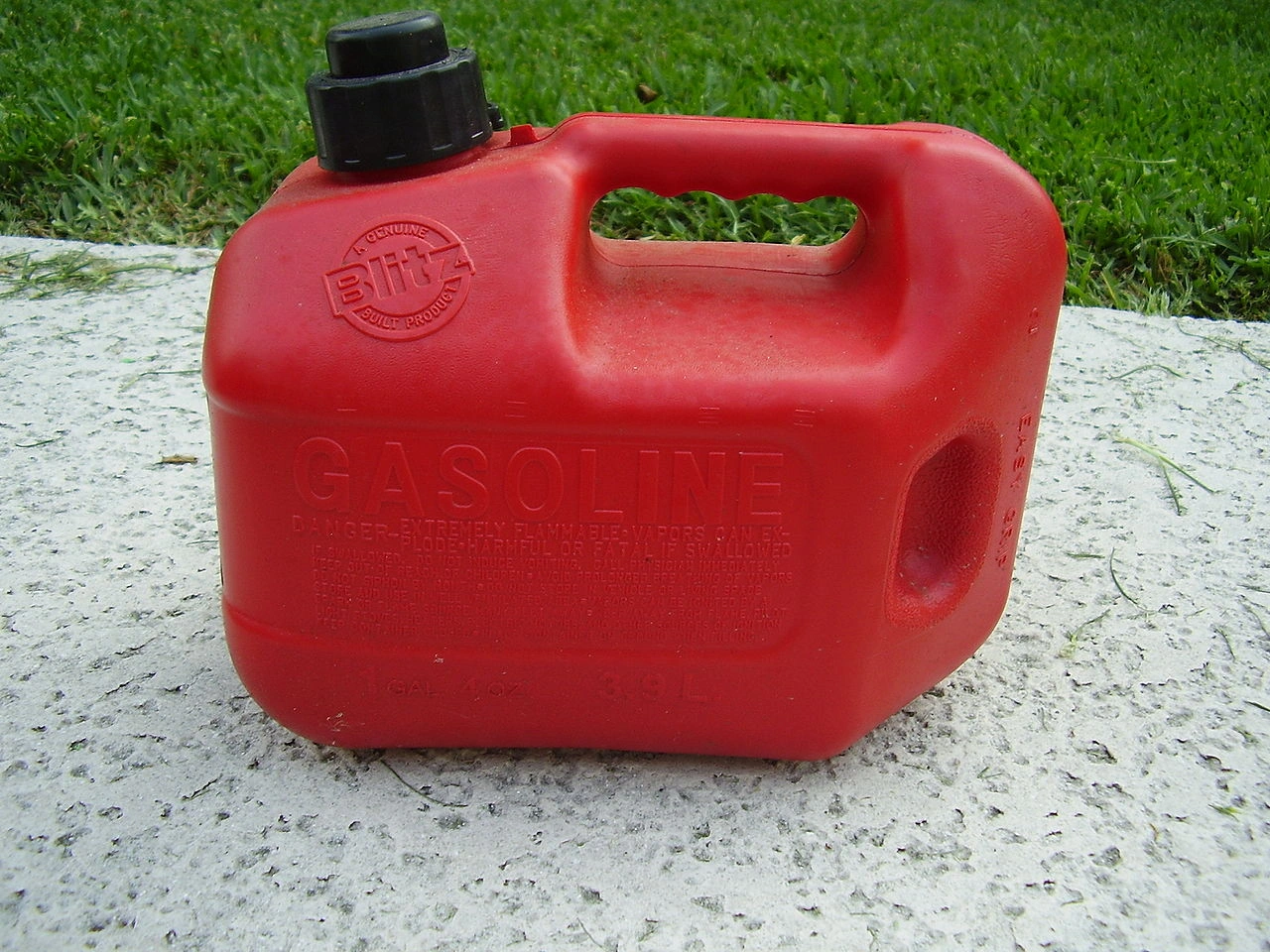
168. Petrol
Petrol, also called gasoline, is a liquid fuel commonly used in spark-ignition engines. It is produced mainly from petroleum and may contain renewable components such as ethanol.
Different grades of petrol are identified by their octane rating and ethanol content. Drivers should always use a fuel that meets the specifications recommended by the vehicle manufacturer.
Wikimedia.org • WhisperToMe • CC0
What is the difference between E5 and E10 petrol?
E5 and E10 indicate the permitted ethanol content of petrol. E5 contains up to 5% ethanol by volume, while E10 contains up to 10%. Drivers should check whether their vehicle is compatible with the selected fuel.
🔗 energy.gov • US Department of Energy, Internal Combustion Engine Basics
🔗 afdc.energy.gov • US Department of Energy AFDC, BEV components
🔗 afdc.energy.gov • US Department of Energy AFDC, fuel-cell electric components
🔗 afdc.energy.gov • US Department of Energy AFDC, hybrid components
🔗 gov.uk • GOV.UK, E10 petrol explained; GB fuel-compatibility example
169. Diesel
Diesel is a liquid fuel used in compression-ignition engines. Unlike petrol engines, diesel engines ignite the fuel through the heat produced by compressing air rather than by using spark plugs.
Diesel fuels can contain renewable components such as biodiesel. Drivers should always use a diesel grade that is approved by the vehicle manufacturer, as using an incompatible fuel can damage the engine or fuel system.

Wikimedia.org • Okq8 se • CC BY-SA
Can every diesel vehicle use every type of diesel?
No. Compatibility depends on the vehicle and engine. Drivers should follow the manufacturer's specifications before using fuels such as B10, higher biodiesel blends or synthetic diesel.
🔗 energy.gov • US Department of Energy, Internal Combustion Engine Basics
🔗 afdc.energy.gov • US Department of Energy AFDC, BEV components
🔗 afdc.energy.gov • US Department of Energy AFDC, fuel-cell electric components
🔗 afdc.energy.gov • US Department of Energy AFDC, hybrid components
🔗 gov.uk • GOV.UK, E10 petrol explained; GB fuel-compatibility example
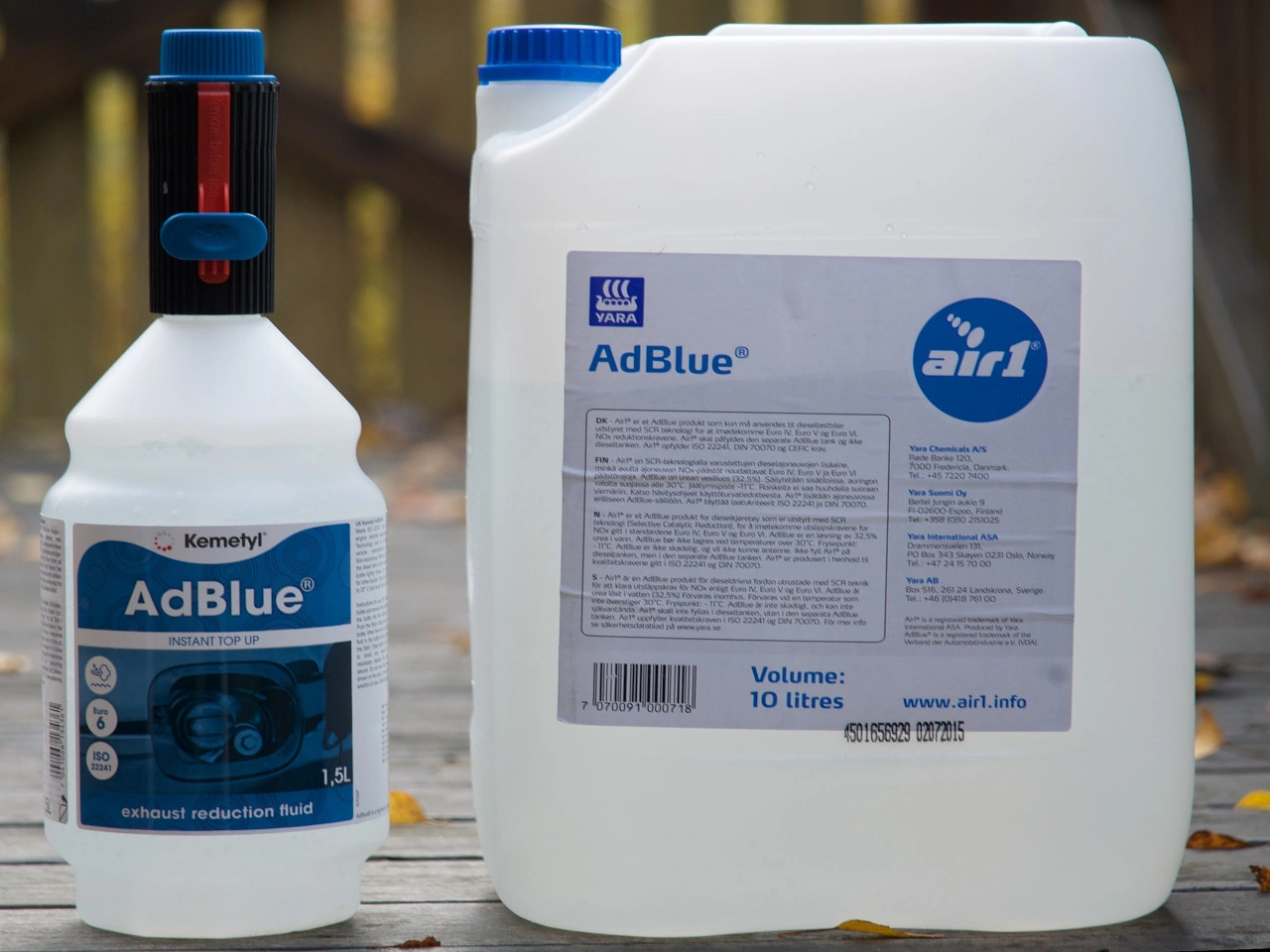
170. Diesel exhaust fluid
Diesel exhaust fluid (DEF) is a liquid used by many modern diesel vehicles with selective catalytic reduction (SCR) systems to reduce harmful nitrogen oxide (NOx) emissions. In Europe it is commonly known by the trade name AdBlue.
DEF is not diesel fuel and is stored in a separate tank. It is a solution containing high-purity urea and water that is injected into the exhaust system, where it helps convert nitrogen oxides into less harmful substances.
Wikimedia.org • Lenborje • CC BY-SA
What should you do when the DEF warning appears?
Refill the DEF tank with fluid that meets the specification required by the vehicle manufacturer. Do not ignore the warning, because some vehicles can restrict operation or prevent restarting if the DEF supply becomes empty.
🔗 audi.nl • Audi Nederland, AdBlue refill and empty-tank restart warning
171. Car insurance
Car insurance is financial protection for risks associated with owning or using a motor vehicle. Depending on the policy, it can cover liability for injury or damage caused to other people, as well as damage to, theft of or other losses involving the insured vehicle.
The minimum insurance required by law varies between countries. Drivers can often purchase additional cover beyond the compulsory minimum, such as collision, comprehensive, theft, fire or roadside-assistance protection.

Wikimedia.org • Charles Edward Miller • CC BY-SA
What does car insurance cover?
Coverage depends on the policy. Liability insurance generally covers injury or damage caused to other people, while optional forms of insurance may also cover damage to the insured vehicle, theft, fire or other risks.
🔗 europa.eu • Your Europe, vehicle registration documents and formalities; EU example
🔗 europa.eu • Your Europe, compulsory and optional motor insurance; EU example
🔗 gov.uk • GOV.UK, driving abroad, destination-specific documentation
🔗 gov.uk • UK Department for Transport, vehicle licensing definitions, keeper versus owner
What is the difference between liability and comprehensive insurance?
Liability insurance primarily covers damage or injury for which the insured driver is legally responsible toward others. Comprehensive or similar optional cover can also protect the insured vehicle against risks such as theft, fire, vandalism or accidental damage, depending on the policy.
🔗 europa.eu • Your Europe, vehicle registration documents and formalities; EU example
🔗 europa.eu • Your Europe, compulsory and optional motor insurance; EU example
🔗 gov.uk • GOV.UK, driving abroad, destination-specific documentation
🔗 gov.uk • UK Department for Transport, vehicle licensing definitions, keeper versus owner
172. First aid kit
A first aid kit is a collection of medical supplies intended for providing immediate basic care after an injury or accident. A vehicle first aid kit commonly contains items such as sterile dressings, bandages, adhesive plasters and other basic wound-care materials.
Some countries require certain vehicles to carry a first aid kit, while in others it is only recommended. The kit should be stored where it can be reached when needed, and its contents should be checked regularly so that required items remain complete and usable.

Wikimedia.org • Red Cross • CC0
Why should a first aid kit be carried in a vehicle?
A first aid kit provides basic materials that can be used to treat injuries or control bleeding while waiting for professional medical assistance.
🔗 gov.uk • Great Britain Highway Code, Annex 7, first aid on the road; national guidance example
🔗 nhs.uk • NHS, head injury and concussion, emergency warning signs
173. Fire extinguisher
A fire extinguisher is a portable safety device used to control or extinguish a small fire. Vehicle fire extinguishers are designed for fires that may involve materials, fuel, electrical equipment or other components, depending on the extinguisher type.
Some countries require certain vehicles to carry a fire extinguisher, while in others it is only recommended. An extinguisher should be securely mounted, readily accessible, suitable for vehicle use and kept in working condition.

Wikimedia.org • Senado Federal • CC BY
What should you do if your vehicle catches fire?
Stop safely, get everyone out and move to a safe place away from the vehicle. Call the emergency services. Do not open a burning engine compartment or put yourself at risk trying to fight the fire.
🔗 gov.uk • UK Highway Code, vehicle maintenance, Vehicle fire safety; 🔗 wegcode.be • Belgian Vehicle Technical Regulations, Article 70, extinguisher mounting (Belgian example)
Where should a vehicle fire extinguisher be kept?
It should be securely mounted in an accessible location and protected from damage. Drivers should also check its condition, seal and expiry or service information according to the applicable requirements.
174. High-visibility clothing
High-visibility clothing is clothing designed to make a person easier for other road users to see. It commonly uses bright fluorescent material combined with retro-reflective strips that reflect light from vehicle headlights.
High-visibility clothing is especially useful when a driver or passenger must leave a vehicle after a breakdown or emergency. Requirements vary between countries, so drivers should check whether a reflective safety vest must be carried or worn.

Wikimedia.org • Kecko • CC BY
Is high-visibility clothing compulsory for drivers?
This depends on the country. Some countries require a reflective vest to be carried in the vehicle and worn in specified breakdown or emergency situations, while others only recommend it.
🔗 gov.uk • GOV.UK, driving abroad and destination equipment requirements
175. First aid
First aid is the immediate assistance given to a person who is injured or suddenly becomes ill before professional medical help is available. Its purpose is to preserve life, prevent the condition from becoming worse and support recovery.
At a road accident, first aid begins with making sure the scene is safe, assessing the casualty and contacting the emergency services when necessary. Assistance should be limited to actions the helper knows how to perform safely.

Wikimedia.org • Cory H Jones • CC BY-SA
Should an injured person always be moved?
No. An injured person should generally not be moved unnecessarily because movement can worsen certain injuries. Moving the casualty may be necessary when remaining in the location creates an immediate danger, such as fire or approaching traffic.
🔗 gov.uk • Great Britain Highway Code, Annex 7, first aid on the road; national guidance example
🔗 nhs.uk • NHS, head injury and concussion, emergency warning signs