

Señales de tráficoValonia
 Normas de tráfico
 Valonia
176. Sistema de control de tracción
El sistema de control de tracción (TCS) es un sistema de seguridad activa que ayuda a evitar que las ruedas motrices patinen excesivamente durante la aceleración. Cuando detecta pérdida de tracción, puede reducir la potencia del motor, aplicar el freno a una o varias ruedas o combinar ambas acciones.
Es especialmente útil al acelerar sobre superficies mojadas, heladas, nevadas o sueltas. Ayuda al vehículo a aprovechar mejor la adherencia disponible, pero no puede crear adherencia donde existe poca o ninguna.

What does traction control do on a vehicle in Belgium?
Traction control helps prevent excessive wheel spin when accelerating. If a driven wheel begins to lose grip, the system can reduce engine power or apply braking to help restore traction.
What does it mean when the traction-control light flashes?
A flashing traction-control indicator generally means that the system is actively intervening because one or more driven wheels are losing grip. The driver should accelerate smoothly and adapt speed to the road conditions.
Does traction control make slippery roads safe?
No. Traction control can only work with the grip available between the tyres and the road. Drivers must still reduce speed, accelerate gently and maintain appropriate distances on wet, snowy or icy roads.

177. Casco
Un casco es un equipo de protección para la cabeza diseñado para reducir el riesgo y la gravedad de lesiones craneales durante una colisión o caída. Existen cascos específicos para motocicletas, ciclomotores, bicicletas y otras actividades, y pueden estar sujetos a normas de seguridad concretas.
Que su uso sea obligatorio depende del país, categoría del vehículo, usuario y, a veces, edad. Debe ser adecuado para su finalidad, ajustarse correctamente y llevarse bien abrochado para proporcionar la protección para la que fue diseñado.

Must motorcyclists wear a helmet in Belgium?
Yes. Motorcycle riders and passengers must wear an approved protective helmet, subject to limited exceptions for vehicles with a passenger compartment and appropriate restraint systems.
Must moped riders wear a helmet in Belgium?
Yes. Riders and passengers of mopeds without a passenger compartment must wear a protective helmet. This applies to both class A and class B mopeds.
Must speed-pedelec riders wear a helmet in Belgium?
Yes. Both the rider and passenger of a speed pedelec must wear either a moped helmet or an appropriate bicycle helmet.
What bicycle helmet may be used on a Belgian speed pedelec?
A bicycle helmet used on a speed pedelec must satisfy the applicable approval requirements and provide additional protection to the temples and the back of the head. Belgian federal guidance specifies an EN 1078-approved bicycle helmet with this additional protection.
Is a helmet compulsory on an ordinary bicycle in Belgium?
No. There is currently no general Belgian requirement for riders of ordinary bicycles to wear a helmet, although wearing one is recommended for additional protection.
Is a helmet compulsory on an ordinary electric bicycle?
No for an ordinary electrically assisted bicycle that remains legally classified as a bicycle. The helmet requirement changes when the vehicle is legally classified as a speed pedelec or another category for which helmets are compulsory.
Is a helmet compulsory on a motorised bicycle limited to 25 km/h?
No general helmet requirement applies when the vehicle remains within the Belgian motorised-cycle category. This should not be confused with a speed pedelec, for which a helmet is compulsory.
Must a motorcycle passenger wear a helmet in Belgium?
Yes. The helmet requirement applies to both the driver and passenger of a motorcycle, subject only to the specific legal exceptions for certain vehicles with a passenger compartment and restraint system.
Must a moped passenger wear a helmet in Belgium?
Yes. A passenger on a moped without a passenger compartment must wear a protective helmet just like the driver.
Can you wear a bicycle helmet on an ordinary Belgian motorcycle?
No. An ordinary motorcycle requires the appropriate approved protective helmet. The special option to use a qualifying bicycle helmet applies to speed pedelecs, not ordinary motorcycles.
Does wearing a helmet satisfy all Belgian motorcycle clothing requirements?
No. Motorcycle riders and passengers must additionally wear gloves, a long-sleeved jacket, long trousers or an overall and boots or ankle boots that protect the ankles.
Do motorised three- and four-wheelers require helmets in Belgium?
Riders and passengers of motorised three- and four-wheelers without a passenger compartment generally have to wear a protective helmet. Belgian law provides specific exceptions for certain agricultural vehicles and particular vehicles using approved restraint systems.
178. Casco de bicicleta
Un casco de bicicleta es un equipo de protección para la cabeza diseñado para reducir el riesgo y gravedad de las lesiones craneales si un ciclista cae o se ve implicado en una colisión. Normalmente consta de un revestimiento absorbente de impactos, una carcasa exterior y una correa de retención que mantiene el casco firmemente en la cabeza.
Debe ajustarse correctamente, quedar nivelado sobre la cabeza y estar bien abrochado. Un casco dañado debe sustituirse porque su capacidad de protección puede haberse reducido incluso cuando el daño no es inmediatamente visible.

Is a bicycle helmet compulsory for ordinary cyclists in Belgium?
No. Cyclists using an ordinary bicycle or standard electric bicycle are not generally required to wear a bicycle helmet in Belgium, although wearing one is strongly recommended for additional head protection.
Is a helmet compulsory on a speed pedelec in Belgium?
Yes. Drivers and passengers of speed pedelecs must wear either a moped helmet or a suitable bicycle helmet. A bicycle helmet used for this purpose must comply with the applicable standard and protect the temples and the back of the head.
Does a normal bicycle helmet automatically qualify for use on a Belgian speed pedelec?
No. When a bicycle helmet is used instead of a moped helmet on a speed pedelec, it must meet the required approval standard and provide protection for the temples and the back of the head.
179. Manos libres
Manos libres se refiere al uso de un teléfono o sistema de comunicación sin sostener el dispositivo con la mano. Puede utilizar el sistema integrado del vehículo, auriculares, control por voz o un teléfono fijado en un soporte adecuado.
El funcionamiento manos libres reduce la necesidad de manipular físicamente el dispositivo, pero una conversación o interacción todavía puede distraer al conductor. Por ello, conviene minimizar su uso y mantener la atención en la carretera.
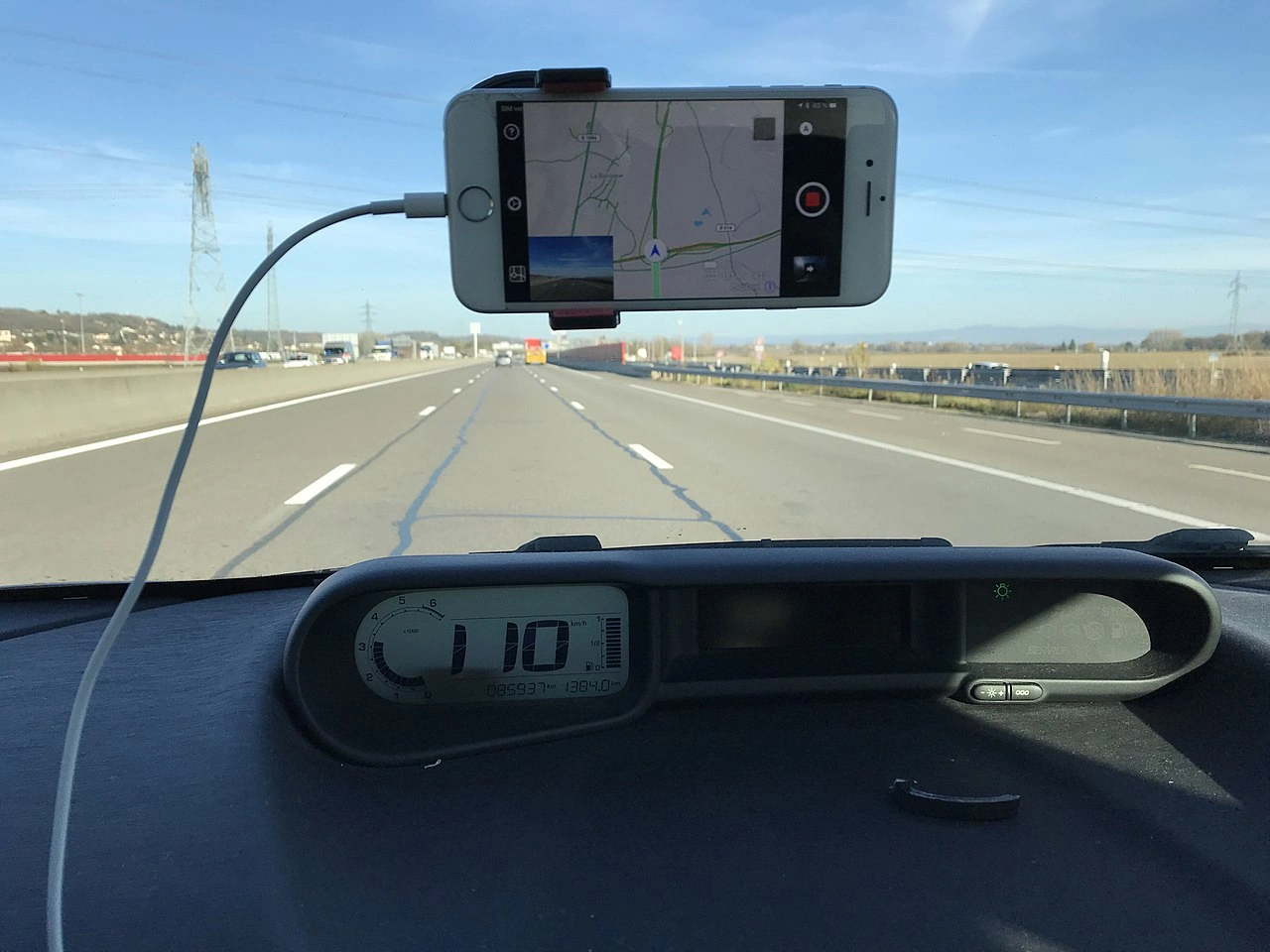
Is hands-free calling allowed while driving in Belgium?
Yes. Hands-free calling is allowed provided the driver does not hold or improperly use the phone. For example, calling through earphones is permitted when the phone is not held in the hand.
Can you use a phone mounted in a holder while driving in Belgium?
Yes. A mobile electronic device with a screen may be used when it is properly secured in a holder designed for that purpose. However, interacting with the screen can still distract the driver and should be kept to a minimum.
Is using speakerphone while holding the phone considered hands-free in Belgium?
No. Holding the phone remains prohibited even when the loudspeaker or another hands-free function is active. A phone resting on the driver's lap or held between the shoulder and ear is also prohibited.
180. Smartphone
Un smartphone es un dispositivo electrónico móvil que combina funciones de teléfono, mensajería, internet, navegación, cámara y aplicaciones. En el tráfico puede ofrecer funciones útiles como navegación o comunicación manos libres, pero también puede generar una importante distracción visual, manual y mental.
Los conductores deben evitar manipularlo o mirarlo mientras conducen. Cuando su uso esté permitido, el dispositivo debe colocarse y utilizarse conforme a las normas locales sin interferir con el control seguro del vehículo.

Can you hold a smartphone while driving in Belgium?
No. While driving, you may not use, hold or manipulate a smartphone unless it is secured in a holder designed for that purpose. Holding it in your hand, placing it on your lap or otherwise handling it while driving is prohibited.
Can you use a mounted smartphone for navigation in Belgium?
Yes. A smartphone may be used when it is properly secured in a holder designed for that purpose. The driver must nevertheless remain attentive and should minimise interaction with the device while driving.
Does the Belgian smartphone rule also apply while waiting in traffic?
Yes. The exception applies when the vehicle is legally stopped or parked, not simply because it is temporarily motionless in normal traffic. Drivers should therefore not handle a smartphone while waiting in a traffic queue or at traffic controls unless the legal conditions for being stopped or parked are met.
181. GPS
El GPS (Sistema de Posicionamiento Global) es un sistema de posicionamiento y navegación por satélite que permite a un dispositivo compatible determinar su ubicación. En los vehículos, la navegación GPS puede combinar información de posición con mapas digitales para calcular rutas y proporcionar indicaciones visuales o habladas.
Es preferible configurar el destino antes de iniciar el viaje y evitar interacciones innecesarias con el sistema durante la conducción. Las indicaciones del GPS son orientativas y nunca deben seguirse si contradicen señales, normas de tráfico o las condiciones reales de la carretera.
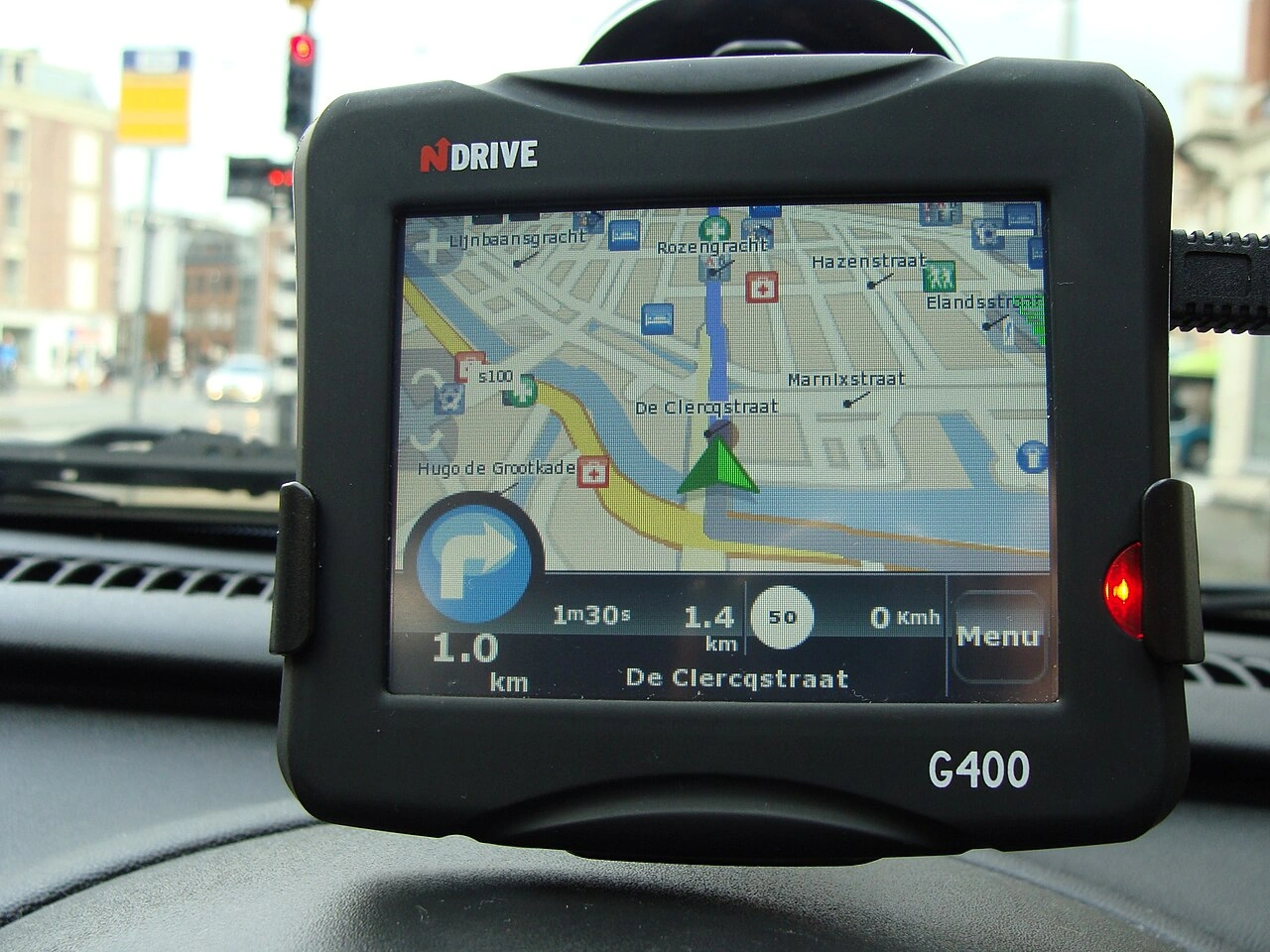
Can you use GPS navigation while driving in Belgium?
Yes. GPS navigation may be used while driving, but a mobile navigation device or smartphone with a screen must be properly secured in a holder designed for that purpose when the rules for mobile electronic devices apply.
Can you hold a smartphone to use GPS navigation in Belgium?
No. A driver may not hold or manipulate a smartphone while driving. When a smartphone is used for navigation, it must be secured in an appropriate holder.
Can you operate a mounted GPS or smartphone while driving in Belgium?
Using the screen of a device that is correctly secured in an appropriate holder is not specifically prohibited by the mobile-device rule, but it is strongly discouraged because looking at or operating the screen can distract the driver. Destinations and major route changes should preferably be entered before driving or while safely stopped.
182. Freno
Un freno es un sistema del vehículo utilizado para reducir la velocidad, detenerlo o mantenerlo inmóvil. La mayoría de los vehículos de carretera utilizan frenos de fricción en las ruedas, mientras que los eléctricos e híbridos también pueden emplear frenado regenerativo para recuperar energía al reducir la velocidad.
El sistema de frenado debe mantenerse en buen estado. Componentes desgastados, sobrecalentamiento, fallos mecánicos o menor adherencia de los neumáticos pueden aumentar la distancia de frenado y reducir la capacidad del conductor para controlar el vehículo con seguridad.

What braking systems are required on vehicles in Belgium?
Belgian technical regulations distinguish between a service braking system for normal braking, an emergency braking system that can stop the vehicle if part of the normal system fails, and a parking braking system that keeps the vehicle stationary.
Must the normal brakes operate on all axles in Belgium?
For vehicles covered by the applicable technical requirements, the service braking system must operate on all axles and its braking action must be appropriately distributed between the axles and symmetrically between the wheels of the same axle.
Are brakes checked during Belgian technical inspection?
Yes. Braking systems are part of vehicle roadworthiness requirements and can be checked during technical inspection. Defective or insufficient braking performance can therefore result in a defect being recorded.
183. Freno de estacionamiento
El freno de estacionamiento, también conocido como freno de mano, es un sistema de frenado utilizado para impedir que un vehículo detenido se mueva después de haber sido estacionado. Los sistemas tradicionales utilizan una palanca accionada con la mano, mientras que los vehículos modernos pueden emplear un freno de estacionamiento accionado con el pie o de tipo electrónico.
El freno de estacionamiento debe aplicarse firmemente siempre que el vehículo esté estacionado, especialmente en una pendiente. Funciona de forma independiente del freno de servicio normal para que el vehículo pueda permanecer inmóvil incluso cuando el conductor no esté presente.
What is the purpose of the handbrake in Belgium?
The handbrake or parking brake is used to keep a parked vehicle securely stationary. It must be capable of holding the vehicle on both an uphill and downhill gradient, even when the driver is no longer in the vehicle.
Does a Belgian car need a traditional hand-operated handbrake?
No. The legal requirement concerns the parking-brake function rather than a traditional hand lever. A vehicle may therefore use another approved system, such as an electronic parking brake.
How strong must a parking brake be in Belgium?
For vehicles covered by the applicable technical requirements, the parking brake must be capable of holding the loaded vehicle stationary on an uphill or downhill gradient of 18%.
184. Líquido de frenos
El líquido de frenos es un fluido hidráulico utilizado en muchos sistemas de frenado para transmitir la fuerza desde el pedal de freno, a través del circuito hidráulico, hasta los frenos de las ruedas. Debe soportar altas temperaturas y mantener propiedades hidráulicas adecuadas para garantizar una frenada fiable.
El nivel y el estado del líquido de frenos deben comprobarse siguiendo las instrucciones del fabricante del vehículo. Solo debe utilizarse el tipo de líquido especificado, ya que un fluido incompatible o contaminado puede perjudicar el funcionamiento del sistema de frenos.

Is brake fluid important for the Belgian technical inspection?
Yes. The braking system is checked during technical inspection, and problems with the brake fluid can be treated as defects. The fluid should therefore be at the correct level and in suitable condition.
What happens if brake fluid is too low in Belgium?
An insufficient brake-fluid level can indicate a problem with the braking system and should not be ignored. The cause should be investigated and repaired rather than simply repeatedly adding fluid.
Should Belgian drivers know where the brake-fluid reservoir is?
Yes. Drivers should know how to locate the brake-fluid reservoir or the vehicle's electronic brake-fluid level indication. During the Belgian category B practical driving examination, candidates may be asked to identify where the brake-fluid level is checked.
185. Neumáticos
Los neumáticos son los componentes de caucho montados alrededor de las ruedas de un vehículo que proporcionan el contacto con la carretera. Transmiten las fuerzas de frenado, aceleración y dirección y desempeñan un papel importante en la estabilidad y adherencia del vehículo.
Deben tener una profundidad de dibujo suficiente, la presión correcta y no presentar daños graves ni desgaste excesivo. Los conductores deben utilizar neumáticos adecuados para el vehículo y comprobar regularmente su estado, especialmente antes de viajes largos o de conducir con condiciones meteorológicas difíciles.

What is the minimum tyre tread depth in Belgium?
For cars, the principal tread grooves must be at least 1.6 mm deep. The principal grooves are the broad grooves in the central part of the tread covering approximately three quarters of its width.
Are tyres checked during Belgian technical inspection?
Yes. Tyres are checked as part of the vehicle's wheels, tyres and suspension inspection. Checks include tread wear, damage and whether the tyres meet the applicable technical requirements.
Must tyres on the same axle match in Belgium?
During technical inspection, tyres on the same axle must have the same dimensions and the same construction type, such as radial or diagonal. Using matching tyres on the same axle is also recommended for predictable handling.
186. Código del neumático
El código del neumático es la serie de letras y números marcada en el flanco de un neumático que identifica características importantes como la anchura, relación de aspecto, construcción, diámetro de la llanta, capacidad de carga e índice de velocidad. Un ejemplo habitual es 205/55 R16 91V.
Los conductores deben utilizar neumáticos cuyas especificaciones sean adecuadas para el vehículo. Las dimensiones e índices requeridos normalmente figuran en el manual del vehículo, el certificado de conformidad u otra información del fabricante.

What tyre-code information is important in Belgium?
Important markings include the tyre size, construction type, load index and speed rating. These characteristics must be suitable for the vehicle and its approved technical specifications.
Are tyre codes checked during technical inspection in Belgium?
Yes. Tyre characteristics are part of the technical inspection. Depending on the applicable requirements, inspectors can check characteristics such as tyre size, construction, load capacity, approval marking and speed category.
Must tyres on the same axle have matching specifications in Belgium?
Yes. During technical inspection, tyres on the same axle must have compatible specifications. In particular, their dimensions and construction type must match according to the applicable inspection requirements.
187. Neumáticos de invierno
Los neumáticos de invierno están diseñados para ofrecer una mejor tracción y rendimiento de frenado con bajas temperaturas, nieve y otras condiciones invernales. Su dibujo y compuesto de caucho están concebidos para seguir siendo eficaces a temperaturas reducidas y proporcionar más adherencia que los neumáticos de verano en condiciones apropiadas de invierno.
Pueden identificarse mediante marcas en el flanco. El símbolo 3PMSF, que muestra un copo de nieve dentro de una montaña de tres picos, indica que el neumático ha cumplido requisitos de rendimiento especificados para condiciones de nieve intensa.
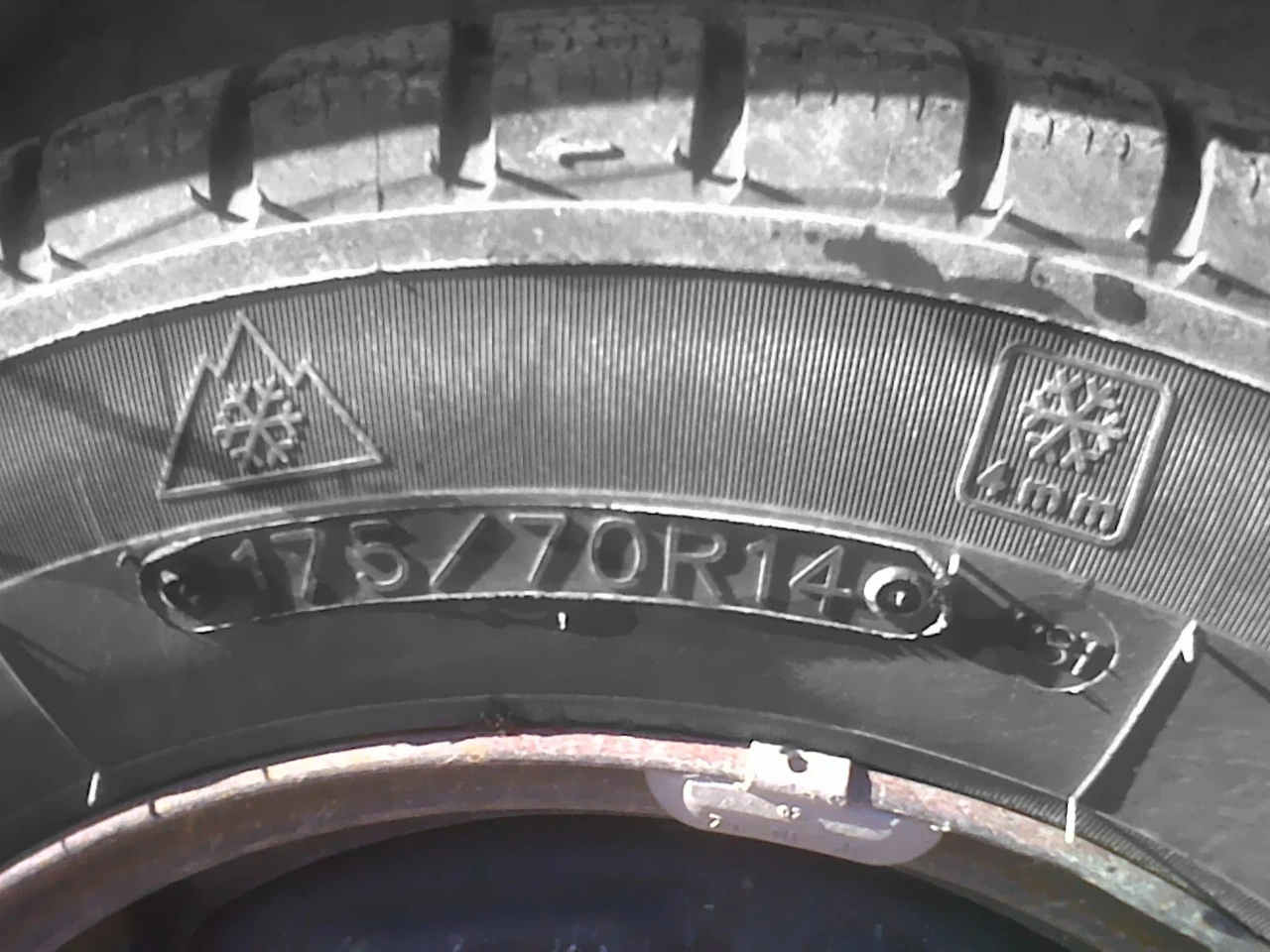
Are winter tyres compulsory in Belgium?
No. Belgium does not currently impose a general requirement for passenger cars to use winter tyres during the winter months. Drivers may nevertheless choose them for improved performance in cold, snowy or icy conditions.
What minimum tread depth applies to winter tyres in Belgium?
The normal legal minimum tread depth for passenger-car tyres also applies to winter tyres: the principal tread grooves must be at least 1.6 mm deep. For effective winter performance, replacing tyres before they reach the legal minimum may be advisable.
Should Belgian drivers check winter-tyre rules before travelling abroad?
Yes. Several countries bordering or near Belgium impose winter-tyre requirements under certain conditions or during specified periods. Drivers should therefore check the rules for every country they intend to enter before travelling.
188. Presión de los neumáticos
La presión de los neumáticos es la presión del aire contenida en el interior de un neumático. Una presión correcta ayuda a mantener su forma prevista y el contacto adecuado con la carretera, y es importante para el comportamiento, frenado, desgaste y consumo de combustible.
Debe comprobarse periódicamente y ajustarse al valor indicado por el fabricante del vehículo. La presión recomendada puede variar según el vehículo, el tamaño del neumático y la carga, y los neumáticos delanteros y traseros pueden requerir valores diferentes.
How often should tyre pressure be checked in Belgium?
Belgian federal mobility guidance recommends checking tyre pressure at least once a month because tyres naturally lose air over time.
Which tyre pressure should you use in Belgium?
Use the pressure prescribed by the vehicle manufacturer. The correct pressure can differ between vehicles and may also vary according to tyre size, axle and vehicle load.
Why should Belgian drivers maintain correct tyre pressure?
Correct tyre pressure supports safe and predictable vehicle behaviour and helps limit unnecessary tyre wear and fuel consumption. An underinflated or otherwise incorrectly inflated tyre should be adjusted to the manufacturer's specified pressure.
189. Cadenas para nieve
Las cadenas para nieve son dispositivos de tracción que se colocan alrededor de los neumáticos para mejorar la adherencia en carreteras cubiertas de nieve o hielo. Resultan especialmente útiles en carreteras empinadas o de montaña donde los neumáticos normales pueden no proporcionar tracción suficiente.
Deben instalarse siguiendo las instrucciones del fabricante del vehículo y de las cadenas, normalmente en las ruedas motrices. Deben retirarse cuando ya no sean necesarias, ya que circular con ellas sobre una carretera despejada puede dañar los neumáticos, las cadenas y el pavimento.

Are snow chains compulsory in Belgium?
No general Belgian rule requires passenger cars to carry or use snow chains. They are optional equipment intended for appropriate winter conditions.
When may snow chains be used in Belgium?
Snow chains may only be used when there is snow or ice. They should therefore be removed when road conditions no longer justify their use.
Should Belgian drivers carry snow chains when travelling abroad?
It may be necessary. Several European countries have their own winter-equipment rules, and snow chains can be compulsory on particular roads or in certain weather conditions. Drivers should check the requirements for every country on their route.
190. Neumático de bicicleta
Un neumático de bicicleta es el neumático de caucho montado alrededor de una rueda de bicicleta que proporciona el contacto entre la bicicleta y la carretera u otra superficie. Su dibujo, presión, anchura y construcción influyen en la adherencia, resistencia a la rodadura, comodidad y comportamiento.
Debe estar correctamente inflado y revisarse con regularidad para detectar desgaste, cortes, grietas, objetos incrustados u otros daños. El tipo y la presión adecuados dependen de la bicicleta, el ciclista, la carga y las condiciones de uso.

Is there a minimum tread depth for bicycle tyres in Belgium?
The current Belgian rules for bicycle equipment do not specify a general numerical minimum tread depth for ordinary bicycle tyres. Cyclists should nevertheless replace tyres that are excessively worn or damaged because their condition directly affects grip and safety.
Can Belgian bicycle tyres provide the required side reflectors?
Yes. A bicycle can satisfy the side-reflector requirement by having a continuous white retro-reflective strip on each side of both the front and rear tyre. Alternatively, suitable yellow or orange reflectors can be fitted to the spokes.
Does tyre width affect how some bicycles are classified in Belgium?
Yes. Tyre dimensions form part of the definitions used for certain bicycle categories. For example, a racing bicycle can have tyres with a cross-section of no more than 25 mm, while specified mountain-bike categories use wider minimum tyre sections.
191. Oruga continua
Una oruga continua es un sistema de propulsión en el que una banda o cadena continua gira alrededor de una serie de ruedas o rodillos en lugar de desplazarse sobre ruedas convencionales. Se utiliza habitualmente en maquinaria de construcción, vehículos agrícolas, vehículos militares y otras máquinas que necesitan buena tracción sobre terreno blando o irregular.
Las orugas distribuyen el peso del vehículo sobre una superficie de contacto relativamente grande, lo que puede mejorar la tracción y reducir la presión sobre el terreno. Pueden estar fabricadas de metal, caucho o una combinación de materiales, y su uso en vías públicas depende del vehículo y de la normativa aplicable.

Are tracked vehicles recognised in Belgium?
Yes. Belgian vehicle rules recognise certain vehicles equipped with continuous tracks. Agricultural and forestry tractors, for example, can be constructed with wheels or tracks.
Can a tracked vehicle use a public road in Belgium?
It can when the vehicle satisfies the applicable registration, approval, technical and road-use requirements. The exact conditions depend on the vehicle type, its use and its technical characteristics.
Does a tracked agricultural vehicle automatically fall under driving-licence category G in Belgium?
No. Category G depends on the vehicle being an agricultural or forestry tractor used for agricultural or forestry activities. When the same vehicle is used for another activity, the appropriate driving-licence category is determined according to the vehicle's characteristics rather than simply because it has tracks.
192. Peso bruto del vehículo
El peso bruto del vehículo (GVW) es el peso total real de un vehículo en un momento determinado, incluidos el propio vehículo, conductor, pasajeros, combustible, equipaje y cualquier otra carga. Cambia a medida que se añaden o retiran personas o mercancías.
No debe confundirse con la clasificación de peso bruto del vehículo (GVWR) ni con la masa máxima autorizada (MMA), que representan el peso total máximo permitido especificado para el vehículo. El peso bruto real nunca debe superar ese máximo autorizado.
What is Gross Vehicle Weight called in Belgium?
Belgian regulations generally distinguish the vehicle's actual laden mass from its maximum authorised mass. The maximum authorised mass is commonly abbreviated as MTM in Dutch and MMA in French.
Is Gross Vehicle Weight the same as MTM in Belgium?
No. Gross Vehicle Weight refers to what the vehicle actually weighs when loaded at a particular moment. MTM is the maximum authorised mass that the vehicle is permitted to have when loaded.
Why does MTM matter for Belgian driving licences?
The maximum authorised mass is used to determine which driving-licence category is required. For example, category B normally covers passenger vehicles with an MTM of no more than 3500 kg, subject to the applicable passenger and trailer rules.
193. Clasificación de peso bruto del vehículo
La clasificación de peso bruto del vehículo (GVWR) es el peso total máximo para el que un vehículo está diseñado o autorizado a funcionar cuando está completamente cargado. Incluye el propio vehículo junto con conductor, pasajeros, combustible, equipaje, carga y demás equipamiento transportado.
El GVWR es un valor máximo fijo y no debe confundirse con el peso bruto del vehículo (GVW), que es el peso real del vehículo en un momento determinado. El peso real cargado no debe superar el máximo permitido.
What is the Belgian equivalent of GVWR?
The closest commonly used Belgian term is maximum authorised mass, abbreviated MTM in Dutch and MMA in French. It represents the maximum total mass at which the vehicle is authorised to operate.
Is MTM the same as the vehicle's actual weight?
No. MTM is a fixed maximum permitted mass. The vehicle's actual laden mass changes according to its passengers, cargo and other load and must remain within the applicable maximum.
Why is the maximum authorised mass important in Belgium?
It is used for matters such as vehicle classification and determining the required driving-licence category. For example, an ordinary category B licence generally covers a passenger vehicle with a maximum authorised mass of no more than 3500 kg.
194. Carga
La carga comprende las mercancías, materiales, equipos u otros objetos transportados por un vehículo o remolque. Puede abarcar desde equipaje personal y bicicletas hasta mercancías comerciales, maquinaria o materiales a granel.
Debe colocarse y asegurarse de forma que no pueda desplazarse, caer del vehículo, interferir con la visibilidad del conductor ni afectar a la estabilidad. La carga total también debe mantenerse dentro de los límites autorizados de peso y carga por eje del vehículo.
How must cargo be carried in Belgium?
Cargo must be positioned and secured so that it cannot endanger the driver, passengers or other road users, fall or drag on the road, affect vehicle stability or obstruct the driver's visibility.
May cargo cover a vehicle's lights or number plate in Belgium?
No. Cargo must not make the vehicle's lights, reflectors or registration number invisible.
Must cargo-securing equipment be in good condition in Belgium?
Yes. Equipment used to secure or cover cargo, such as straps, chains, nets or tarpaulins, must be in good condition, used correctly and fitted closely enough to secure the load effectively.
195. Carrocería
La carrocería es la estructura exterior de un automóvil que rodea el habitáculo y los compartimentos de equipaje y da forma al vehículo. Incluye componentes como el techo, puertas, capó, tapa del maletero, aletas, paneles de carrocería y, en muchos vehículos modernos, secciones estructurales portantes.
Ayuda a proteger a los ocupantes y sirve de soporte a componentes como puertas, ventanas, luces y parachoques. Los daños, corrosión o reparaciones deficientes en secciones estructurales pueden reducir la seguridad del vehículo y deben repararse correctamente.

Is the car body checked during technical inspection in Belgium?
Vehicle structural condition forms part of roadworthiness inspection. In Flanders, the chassis is specifically included among the components examined during the technical inspection.
Can damaged bodywork cause a problem at a Belgian technical inspection?
Yes. Structural damage, dangerous looseness or defects affecting the safe attachment of vehicle components can result in a defect being recorded. Cosmetic damage that does not affect safety is different from damage affecting the vehicle's structure or secure assembly.
Is the car body always separate from the chassis?
No. Many modern passenger cars have a self-supporting body in which the body structure itself carries much of the vehicle's load. Other vehicles can have a separate chassis with the body mounted on it.
196. Maletero
El maletero es el compartimento cerrado de un automóvil destinado a transportar equipaje, herramientas, compras y otras cargas. Normalmente se encuentra en la parte trasera, aunque algunos vehículos disponen de un compartimento de almacenamiento delantero.
Los objetos transportados deben colocarse de forma segura para que no se desplacen peligrosamente al frenar, acelerar o tomar curvas. Los objetos pesados deben situarse con cuidado y no deben superarse los límites autorizados de carga y carga por eje.

Can luggage be carried in the trunk of a car in Belgium?
Yes. The trunk is the normal place for carrying luggage and other cargo, provided the load is arranged safely and the vehicle's permitted weight limits are respected.
Must cargo in a Belgian car trunk be secured?
Cargo must be arranged so that under normal road conditions it cannot create danger, fall from the vehicle, affect vehicle stability or interfere with the driver's visibility. Heavy or movable items should therefore be positioned and secured appropriately.
Can cargo extending from an open trunk hide the number plate or lights in Belgium?
No. A vehicle's load must not make its lights, reflectors or registration number invisible. Projecting loads must also comply with the applicable rules concerning dimensions and marking.
197. Baca
Una baca es un sistema de transporte de carga fijado al techo de un vehículo. Puede utilizarse para llevar equipaje, bicicletas, esquís, tablas de surf o un cofre de techo cuando no resulta práctico transportarlos dentro del vehículo.
La baca y su carga deben estar firmemente sujetas y mantenerse dentro del límite de carga del techo establecido por el fabricante. Las cargas sobre el techo elevan el centro de gravedad y pueden afectar al comportamiento, estabilidad, consumo de combustible y altura total del vehículo.
Is a roof rack allowed on a car in Belgium?
Yes. A roof rack may be used provided it is suitable for the vehicle, securely fitted and the load complies with the applicable rules concerning securing, weight and vehicle dimensions.
How high may a car with a roof load be in Belgium?
The total height of a loaded vehicle may generally not exceed 4 metres. Objects carried on a roof rack or in a roof box count towards this overall loaded height.
How must a roof-rack load be secured in Belgium?
The load must be secured so that it cannot fall, drag, endanger other road users, affect vehicle stability or obstruct required lights or the registration number. Drivers must also respect the vehicle and roof rack manufacturer's permitted load limits.
198. Parabrisas
El parabrisas es la ventana frontal transparente de un vehículo a través de la cual el conductor observa la carretera. También ayuda a proteger a los ocupantes del viento, lluvia, residuos y otros elementos externos.
Debe proporcionar una visión clara y suficientemente libre de distorsiones. Grietas, impactos, suciedad, adhesivos u otros objetos pueden reducir la visibilidad, especialmente cuando se encuentran dentro de la zona barrida por los limpiaparabrisas.
Is the windscreen checked during technical inspection in Belgium?
Yes. The windscreen is checked for damage, deterioration and anything that significantly obstructs the driver's view.
Can a cracked windscreen cause a vehicle to fail inspection in Belgium?
Yes. Certain cracks, deformation or discoloration can result in a negative inspection result, particularly when the damage lies within the area cleaned by the windscreen wipers or significantly affects visibility.
Can objects or stickers obstruct the windscreen in Belgium?
No object may significantly obstruct the driver's view forward or to the side. Legally required windscreen stickers are not treated as prohibited visibility obstructions simply because they are attached to the glass.
199. Martillo de emergencia
Un martillo de emergencia es una herramienta de seguridad diseñada para romper determinadas ventanillas del vehículo cuando las puertas o salidas normales no pueden utilizarse durante una emergencia. Se encuentra habitualmente en autobuses, autocares y otros vehículos de pasajeros cerca de ventanas designadas como salidas de emergencia.
Solo debe utilizarse cuando evacuar por las salidas normales resulte imposible o inseguro. La herramienta debe permanecer accesible y, cuando esté destinada a una ventana de emergencia, debe utilizarse siguiendo las instrucciones indicadas en el vehículo.

Is an emergency hammer compulsory in an ordinary car in Belgium?
No. An emergency hammer is not part of the standard compulsory safety equipment required for an ordinary passenger car. Specific requirements do apply to certain vehicles equipped with breakable emergency windows.
Do Belgian buses and coaches have emergency hammers?
Where an emergency window is designed to be opened by breaking the glass, an emergency hammer may be installed inside the vehicle immediately next to that emergency window. The window must be made from material that can be broken appropriately for this purpose.
Can an emergency hammer be required in a Belgian motorhome?
Yes. If the emergency exit from the living area of a motorhome can only be opened by breaking the glass, an emergency hammer must be fixed to the wall immediately beside that exit.
200. Batería del coche
La batería del coche es un dispositivo de almacenamiento de energía eléctrica que suministra corriente al sistema eléctrico del vehículo. En automóviles convencionales de gasolina y diésel, la batería de arranque de 12 voltios proporciona la elevada corriente necesaria para arrancar el motor y alimenta los equipos eléctricos cuando el motor o el sistema de carga no suministran suficiente energía.
Las baterías pierden gradualmente carga y capacidad con la edad y el uso. Una batería débil puede provocar un arranque lento o fallido, problemas eléctricos o mensajes de advertencia, y la batería de sustitución debe tener especificaciones adecuadas para el vehículo.
Is the car battery relevant to technical inspection in Belgium?
Yes. The battery and electrical system form part of vehicle roadworthiness. A battery that is insecure, improperly attached, leaking or presents a risk of short circuit can constitute a technical defect.
Does every Belgian car use the same type of battery?
No. The required battery depends on the vehicle's electrical system and equipment. Vehicles with start-stop systems commonly require batteries specifically designed for frequent charging and starting cycles, such as EFB or AGM types.
Should you replace a car battery with one of the correct specification?
Yes. The replacement battery should meet the vehicle manufacturer's requirements for characteristics such as voltage, capacity, starting performance, dimensions and battery technology.