

Señales de tráficoValonia
 Normas de tráfico
 Valonia
226. Puertas
Las puertas permiten acceder al vehículo y ayudan a proteger a los ocupantes mientras está en movimiento. Deben abrir y cerrar correctamente, permanecer firmemente cerradas durante la conducción y disponer de bisagras, cierres y mecanismos de bloqueo en buen estado. Una puerta dañada o suelta puede crear un grave riesgo de seguridad, especialmente si puede abrirse de forma inesperada o no puede cerrarse correctamente.
Are vehicle doors checked during the technical inspection in Belgium?
Yes. Vehicle doors and their hinges, catches and supporting structure can be checked during the technical inspection to ensure they are secure and operate correctly.
Can a door that does not open or close correctly fail the Belgian technical inspection?
Yes. A door that does not open or close correctly is considered a defect during technical inspection and may lead to rejection depending on its severity.
What if a vehicle door can open unexpectedly?
A door that can open unexpectedly or cannot remain securely closed is a serious safety defect. The severity can depend on the type of door and the risk it creates.
Are damaged hinges or door catches a problem during inspection?
Yes. Damaged, missing or loose doors, hinges, catches or door pillars can be recorded as defects during the technical inspection.
Are door inspection requirements based on European rules?
Belgian technical inspection requirements are based in part on European roadworthiness rules, which include checks of doors, hinges and catches as part of the vehicle body inspection.

227. Guantera
La guantera es un compartimento de almacenamiento integrado en el salpicadero delante del asiento del acompañante. Se utiliza habitualmente para guardar documentos del vehículo, el manual del propietario y otros objetos pequeños al alcance de la mano. Debe mantenerse cerrada durante la conducción para que no moleste a los pasajeros ni permita que objetos sueltos caigan al interior del vehículo. Conviene evitar guardar objetos de valor o elementos que puedan dañarse por las altas temperaturas que pueden alcanzarse dentro de un vehículo estacionado.
Do vehicle documents have to be kept in the glovebox in Belgium?
No. Belgian rules require certain vehicle and driver documents to be available while driving, but they do not have to be stored specifically in the glovebox.
Which documents should you have with you when driving in Belgium?
Required documents include the driving licence and identity card, proof of insurance, registration certificate, technical inspection certificate and certificate of conformity where applicable.
Can you keep copies of the vehicle documents in the glovebox in Belgium?
Copies do not normally replace the required originals during a police check. The Federal Police advises drivers to be able to present the original vehicle documents.
Should you leave the original vehicle documents in the glovebox when the car is parked?
The Belgian Federal Police advises against leaving the original documents permanently in an unattended vehicle because of the risk of theft. They recommend keeping them together in a document holder and taking them with you when leaving the vehicle.
Do you need the vehicle documents for a technical inspection in Belgium?
Yes. When presenting a vehicle for technical inspection, the required vehicle documents must be provided, including documents such as the registration certificate, certificate of conformity, previous inspection certificate and proof of insurance where applicable.
228. Visibilidad
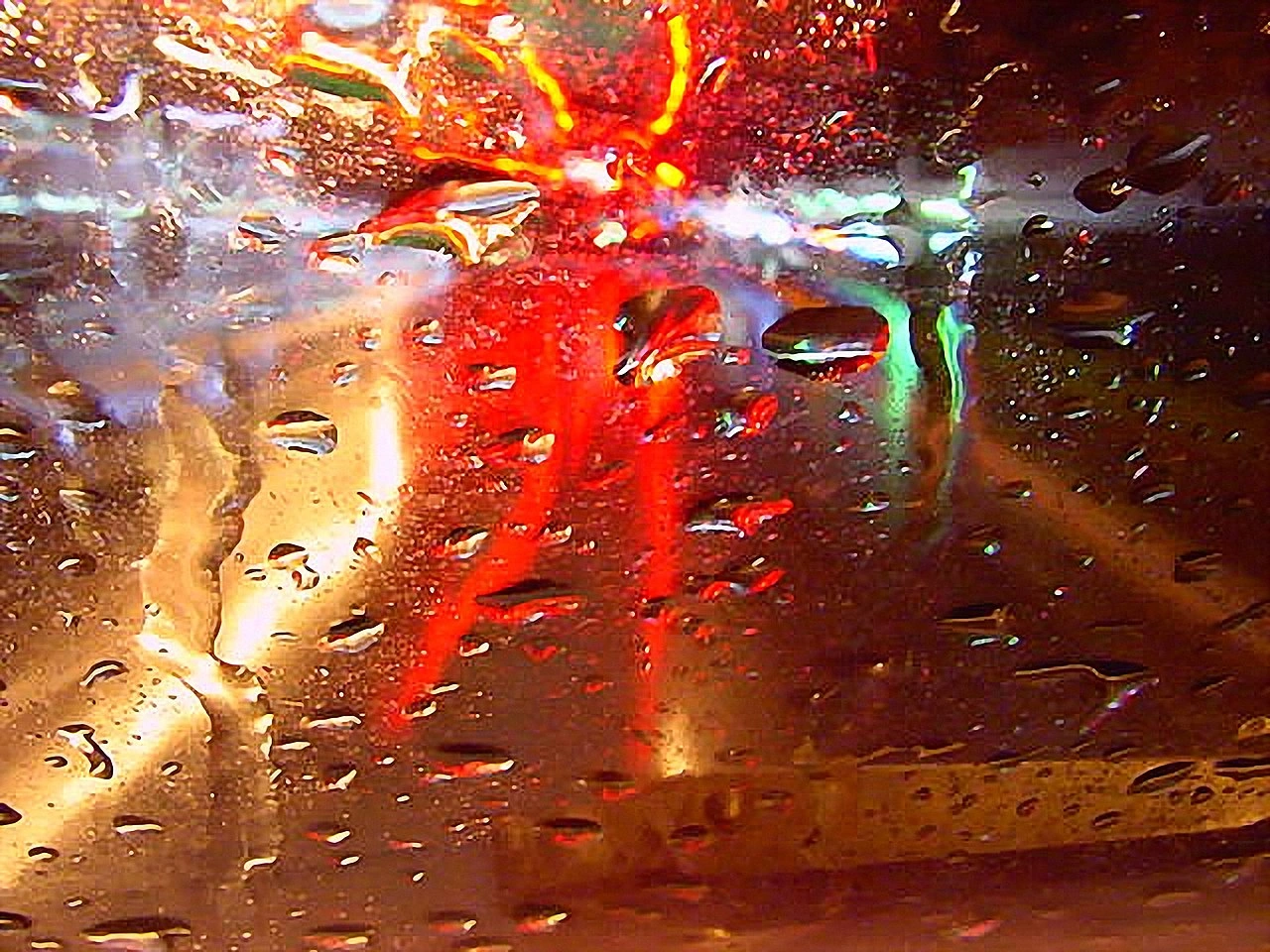
La visibilidad es la capacidad del conductor para ver con claridad la carretera, otros usuarios y posibles peligros, al tiempo que hace visible el vehículo para los demás. Puede reducirse por oscuridad, niebla, lluvia, nieve, cristales sucios o empañados, deslumbramiento y objetos que obstruyan el campo de visión. El conductor debe mantener limpios los cristales, espejos y luces, retirar cualquier elemento que limite su visión y utilizar el alumbrado adecuado cuando la visibilidad disminuya.
Must a driver have a clear view of the road in Belgium?
Yes. Belgian vehicle requirements provide that the driver must have a sufficient view ahead and to the sides. Windscreens, windows and other equipment should therefore not unnecessarily obstruct the driver’s field of vision.
Can a vehicle's load obstruct the driver's visibility in Belgium?
No. A vehicle and its load must be arranged so that the load does not obstruct the driver's visibility, create danger or hide required lights, reflectors or the registration number.
When must vehicle lights be used because of poor visibility in Belgium?
Under the current Belgian traffic rules, the prescribed vehicle lights must be used between nightfall and dawn and whenever it is no longer possible to see clearly for approximately 200 metres.
When must rear fog lights be used in Belgium?
Rear fog lights must be used when fog or snowfall reduces visibility to less than approximately 100 metres and also during heavy rain. They may not be used in other circumstances.
Can windscreen damage affect visibility and the technical inspection in Belgium?
Yes. Windscreen cracks, scratches, discoloration and other damage can affect visibility. In Flanders, certain damage within the area swept by the windscreen wipers can result in a red inspection certificate.
Should mirrors be adjusted for good visibility in Belgium?
Yes. The driver should adjust the vehicle's systems for indirect vision, such as mirrors, so that traffic behind and beside the vehicle can be observed from the driving position.
229. Lluvia
La lluvia puede reducir la visibilidad, la adherencia y el control del vehículo, además de aumentar la distancia de frenado. El agua sobre la carretera también puede provocar aquaplaning, cuando los neumáticos pierden contacto con el pavimento. El conductor debe reducir la velocidad, aumentar la distancia de seguimiento, evitar maniobras o frenadas bruscas y utilizar las luces adecuadas cuando disminuya la visibilidad. Se necesita especial precaución durante lluvias intensas y cuando se acumula agua en las rodadas o en carreteras con mal drenaje.
Do you have to reduce your speed in rain in Belgium?
Yes. Belgian traffic rules require drivers to adapt their speed to the weather conditions, visibility, road condition and traffic situation. Drivers must also maintain a sufficient safety distance and be able to stop before a foreseeable obstacle.
When must rear fog lights be used in heavy rain in Belgium?
Under the current Belgian traffic rules, rear fog lights must be used in heavy rain when the vehicle is equipped with them. They may not be used in other circumstances unless another permitted condition, such as sufficiently dense fog or snowfall, applies.
May front fog lights be used in heavy rain in Belgium?
Yes. Under the current rules, front fog lights may be used during heavy rain. They may replace the dipped or main-beam headlights or be used together with them.
Do you have to use normal vehicle lights when rain reduces visibility in Belgium?
Yes. The prescribed vehicle lights must be used whenever it is no longer possible to see clearly for approximately 200 metres, including when heavy rain reduces visibility.
What should you do if there is standing water on the road in Belgium?
Reduce your speed and avoid sudden steering or braking. Belgian rules require drivers to adapt their driving to the weather and road conditions, which includes water on the road and an increased risk of aquaplaning.
Will the fog-light rules for heavy rain change under Belgium’s new Road Code?
Yes. Under the new Code of the Public Road, rear and front fog lights are linked to heavy precipitation that reduces visibility to less than approximately 100 metres. This differs from the current rule, which specifically permits or requires fog-light use in heavy rain without that same visibility threshold.
230. Niebla
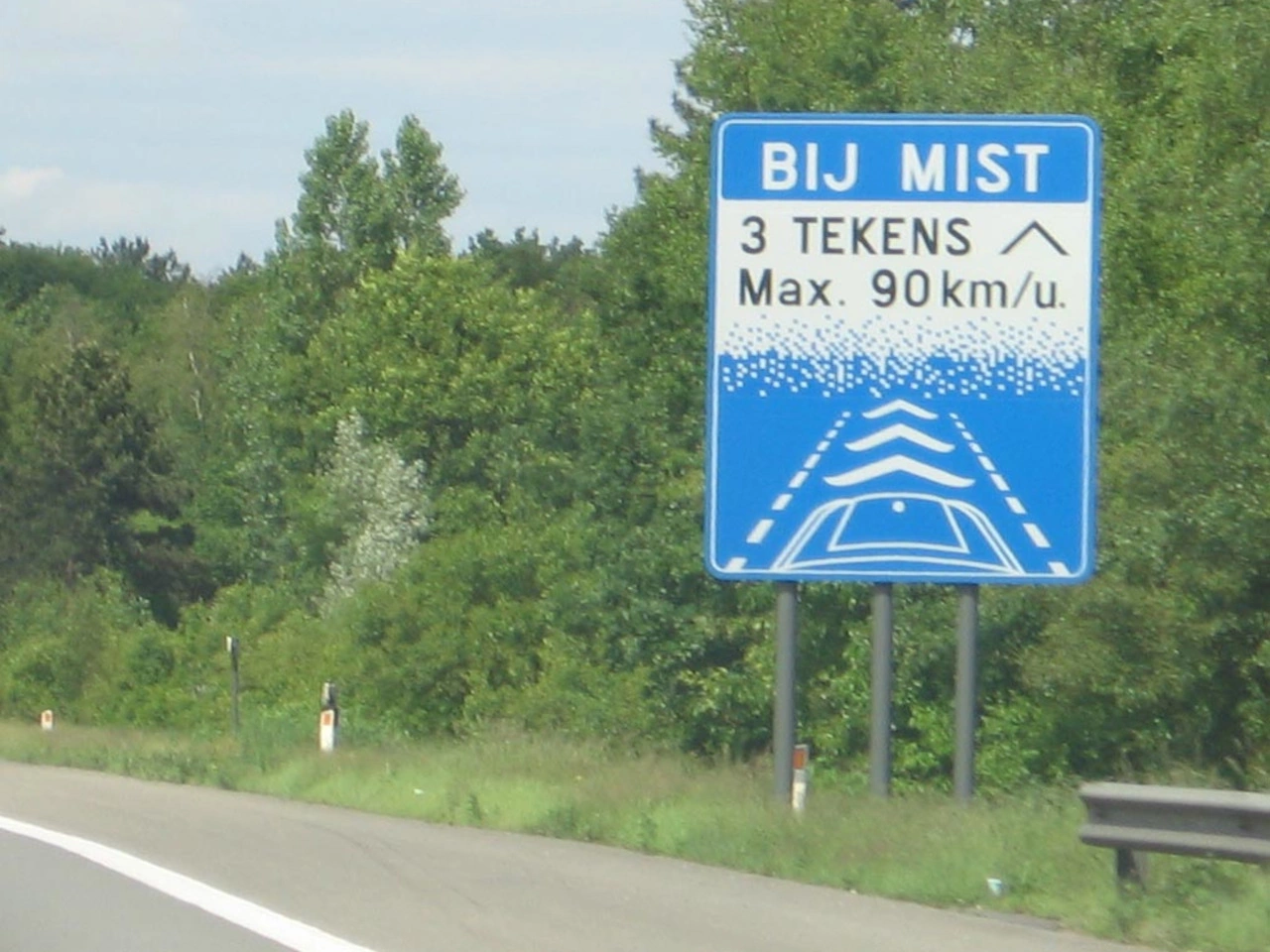
La niebla puede reducir enormemente la visibilidad y dificultar la estimación de la velocidad, distancia y posición de otros usuarios. El conductor debe reducir la velocidad, aumentar la distancia de seguimiento y utilizar las luces adecuadas sin deslumbrar a los demás. No conviene depender únicamente del vehículo que circula delante como referencia, y hay que estar preparado para cambios repentinos de visibilidad. Cuando la niebla es muy densa, detenerse en un lugar seguro puede ser la mejor opción.
Do you have to reduce your speed in fog in Belgium?
Yes. Belgian traffic rules require drivers to adapt their speed to visibility, weather, road conditions and traffic. The posted speed limit may therefore be too fast when visibility is reduced by fog.
When must rear fog lights be used in Belgium?
Under the current Belgian rules, rear fog lights must be used when fog reduces visibility to less than approximately 100 metres. They may not be used in other circumstances unless another permitted condition applies.
May front fog lights be used in fog in Belgium?
Yes. Under the current rules, front fog lights may be used in fog. They may replace the dipped or main-beam headlights or be used together with them.
Do normal vehicle lights also have to be used in fog in Belgium?
Yes. The prescribed vehicle lights must be used whenever visibility is sufficiently reduced. Fog lights are additional or alternative lighting under the conditions allowed by the traffic rules.
Will the fog-light rules change under Belgium’s new Road Code?
The basic rule remains similar. Under the new Code of the Public Road, rear fog lights must be used and front fog lights may be used when fog reduces visibility to less than approximately 100 metres. The new code uses the same approximate 100-metre threshold for heavy precipitation as well.
231. Granizo
El granizo puede reducir la visibilidad, hacer que la carretera sea resbaladiza y crear condiciones peligrosas de forma repentina. Los granizos pueden acumularse sobre el pavimento y reducir la adherencia de forma similar al hielo o material suelto, mientras que los de mayor tamaño también pueden dañar el parabrisas y la carrocería. El conductor debe reducir la velocidad, aumentar la distancia de seguimiento, evitar maniobras o frenadas bruscas y, si las condiciones se vuelven severas, considerar detenerse en un lugar seguro hasta que pase la granizada.
Do you have to reduce your speed during hail in Belgium?
Yes. Belgian traffic rules require drivers to adapt their speed to the weather, visibility, road condition and traffic situation. The posted speed limit may therefore be too fast during a hailstorm.
Do you have to use your lights during hail in Belgium?
The prescribed vehicle lights must be used whenever conditions make it impossible to see clearly for approximately 200 metres. This can apply when a severe hailstorm significantly reduces visibility.
Are there special traffic rules specifically for hail in Belgium?
There is no separate driving regime specifically for hail. Drivers must follow the general rules and adapt their driving to the weather and road conditions, including slippery roads and poor visibility caused by hail.
What should you do if hail accumulates on the road in Belgium?
Reduce speed, increase your following distance and avoid sudden steering or braking. Accumulated hail can create a slippery road surface with greatly reduced grip.
Can hail damage affect the safety of a vehicle in Belgium?
Yes. Hail can damage the windscreen, windows, mirrors or lights. If damage affects the driver’s visibility or the safe operation of the vehicle, it should be repaired before continuing to drive when necessary.
232. Luz solar
La luz solar puede reducir la visibilidad cuando el sol está bajo o cuando una luz intensa se refleja en carreteras mojadas, nieve, edificios u otros vehículos. El deslumbramiento puede dificultar ver semáforos, señales, peatones y otros usuarios. El conductor debe reducir la velocidad cuando sea necesario, mantener limpio el parabrisas, utilizar el parasol o gafas de sol adecuadas y dejar más espacio para reaccionar ante peligros que puedan quedar temporalmente ocultos por el resplandor.

Do you have to reduce your speed when sunlight reduces visibility in Belgium?
Yes. Belgian traffic rules require drivers to adapt their speed to visibility, weather, road conditions and traffic. Strong sun glare can therefore require a lower speed even when the posted speed limit is higher.
Must the driver have a clear view of the road in Belgium?
Yes. Belgian vehicle requirements provide that the driver must have a sufficient view ahead and to the sides. Objects or equipment should therefore not significantly obstruct the driver’s field of vision.
Can a dirty or damaged windscreen make sun glare more dangerous in Belgium?
Yes. Dirt, scratches, cracks or discoloration can scatter sunlight and reduce visibility. Keeping the windscreen clean and in good condition is particularly important when driving toward a low sun.
Can windscreen damage cause a vehicle to fail technical inspection in Belgium?
Yes. Certain cracks, scratches, distortions or discolorations within the area swept by the windscreen wipers can result in rejection during technical inspection.
Are there special Belgian traffic rules specifically for sun glare?
There is no separate driving regime specifically for sunlight. The general rule applies: the driver must adapt speed and driving behaviour to the available visibility and remain able to drive safely.
233. Gafas de sol
Las gafas de sol pueden reducir el deslumbramiento y mejorar el confort visual al conducir con mucha luz, especialmente cuando el sol está bajo o se refleja en carreteras mojadas, nieve u otras superficies. Deben elegirse lentes que permitan seguir viendo claramente semáforos, señales y otros usuarios. Las lentes muy oscuras pueden reducir la visibilidad en túneles, de noche o con cambios de iluminación, por lo que deben retirarse cuando dificulten ver la carretera con seguridad.

Can you wear sunglasses while driving in Belgium?
Yes. There is no general prohibition on wearing sunglasses while driving, and the Belgian Federal Police recommends them as a useful way to reduce glare from a low sun. They should not make it harder to see the road safely.
Do sunglasses replace the need to reduce speed when the sun affects visibility in Belgium?
No. Even when wearing sunglasses, drivers must adapt their speed to the available visibility and driving conditions. Sunglasses can reduce glare but cannot eliminate every visibility problem.
What if your Belgian driving licence requires you to wear glasses?
Belgian driving licences can contain medical restriction codes for vision correction, including code 01.01 for glasses and 01.06 for glasses or contact lenses. Drivers must respect any vision-correction requirement shown on their licence.
Can you wear very dark sunglasses while driving in Belgium?
There is no separate general rule setting a specific darkness for ordinary sunglasses, but the driver must still be able to see sufficiently well to drive safely. Lenses that substantially reduce visibility should therefore not be used.
Should sunglasses be removed in tunnels in Belgium?
There is no special Belgian rule requiring sunglasses to be removed in every tunnel, but drivers should remove them if they reduce visibility in the darker environment.
234. Sal
La sal se utiliza habitualmente para deshelar y prevenir la formación de hielo en las carreteras durante el invierno. Reduce el punto de congelación del agua, ayudando a impedir que se forme hielo o a derretir nieve y hielo existentes. Las autoridades pueden esparcir sal seca, sal húmeda o salmuera antes o durante condiciones de congelación. Mejora la seguridad, pero el conductor debe seguir reduciendo la velocidad y adaptándose a superficies resbaladizas, ya que las carreteras tratadas pueden seguir siendo peligrosas durante nevadas intensas, lluvia engelante o temperaturas muy bajas.
Is salt used to treat roads in Belgium?
Yes. Belgian road authorities use salt, wet salt and brine to help prevent or remove snow and ice during winter conditions.
Are Belgian roads salted before ice forms?
Yes. Road authorities can carry out preventive salting before frost, ice, snow or freezing rain develops. This is known as anti-icing and can reduce the risk of slippery roads.
Who is responsible for salting roads in Belgium?
Responsibility depends on the road. Regional authorities maintain motorways and regional roads, while municipalities are generally responsible for local roads under their control.
Does salting mean a Belgian road is no longer slippery?
No. Even after treatment, roads can remain slippery during snowfall, freezing rain, frost or rapidly changing temperatures. Drivers must still adapt their speed and following distance to the actual conditions.
Does Belgium use preventive salting?
Yes. In Flanders and Wallonia, winter services use preventive treatments based on weather forecasts and road-condition monitoring to reduce the risk of frost and ice forming.
When does the winter road service operate in Belgium?
The exact organisation differs by region. In Flanders, the winter service normally runs from the third Monday of October until the fourth Monday of April. In Wallonia, the regional winter service normally runs from 15 October to 15 April.
235. Aire acondicionado
El aire acondicionado ayuda a controlar la temperatura y humedad dentro del vehículo y puede mejorar el confort y la visibilidad. En tiempo caluroso enfría el habitáculo, mientras que en condiciones húmedas ayuda a eliminar humedad del aire y desempañar los cristales con mayor rapidez. Debe utilizarse de forma que mantenga una temperatura confortable sin crear diferencias excesivas, y el sistema debe recibir mantenimiento para que siga funcionando eficazmente.
Is air conditioning mandatory in cars in Belgium?
No. Air conditioning itself is not generally mandatory equipment for passenger cars in Belgium. However, the vehicle must still provide adequate visibility and comply with applicable technical requirements.
Is the demisting system important in Belgium?
Yes. A functioning demisting and defrosting system is important for maintaining clear visibility through the windscreen and forms part of the applicable vehicle safety requirements.
Is the demisting system checked during the Belgian technical inspection?
Yes. European roadworthiness rules used as the basis for Belgian technical inspection include checks of the windscreen demisting system. A system that does not operate correctly can be recorded as a defect.
Does the air-conditioning system itself have to work for the Belgian technical inspection?
The periodic technical inspection focuses on roadworthiness and safety systems. The air-conditioning system itself is not generally treated as a mandatory comfort feature, although related systems such as demisting and ventilation may be relevant to visibility and safety.
Can air conditioning help improve visibility in Belgium?
Yes. Using air conditioning together with the vehicle's ventilation system can remove moisture from the air and help clear misted windows, which is especially useful in damp or cold weather.
236. Aquaplaning
El aquaplaning se produce cuando se forma una capa de agua entre los neumáticos y la superficie de la carretera, haciendo que los neumáticos pierdan contacto con el pavimento. La dirección, frenado y aceleración pueden volverse entonces mucho menos eficaces. El riesgo aumenta con la velocidad, el agua acumulada y los neumáticos desgastados. El conductor debe reducir la velocidad con lluvia intensa, evitar giros o frenadas bruscas y asegurarse de que los neumáticos estén en buen estado y tengan suficiente profundidad de dibujo.
Do you have to reduce your speed when there is a risk of hydroplaning in Belgium?
Yes. Belgian traffic rules require drivers to adapt their driving to the weather, visibility and condition of the road. Heavy rain or standing water can therefore require a lower speed than the posted maximum.
Is there a special Belgian speed limit for hydroplaning?
No. Belgium does not have a general speed limit specifically for hydroplaning. Drivers must instead choose a speed that is safe for the actual road and weather conditions.
What is the minimum tyre tread depth for cars in Belgium?
For ordinary passenger-car tyres, the main grooves must have at least 1.6 mm of remaining tread depth. Tyres below that limit do not meet the applicable technical requirements.
Are tyres checked for tread depth during the Belgian technical inspection?
Yes. Tyre condition and tread depth are checked during technical inspection. In Flanders, a tyre whose tread has worn below 1.6 mm can result in a red inspection certificate with a prohibition on use.
Can you still hydroplane with legal tyres in Belgium?
Yes. Meeting the legal minimum tread depth does not eliminate the risk of hydroplaning. Speed, water depth, tyre pressure and tyre condition all influence how well the tyres maintain contact with a wet road.
What should you do if your car starts hydroplaning in Belgium?
Ease off the accelerator, avoid sudden braking or steering and allow the tyres to regain grip. Belgian rules require drivers to adapt their behaviour to the road and weather conditions.
237. Distracción
La distracción es cualquier elemento que desvía la atención del conductor de controlar el vehículo con seguridad y observar la carretera. Entre las distracciones habituales están el teléfono móvil, sistemas de navegación, pasajeros, comer, ajustar controles o apartar la mirada del tráfico. Puede ser visual, manual o mental y aumentar considerablemente el tiempo de reacción. El conductor debe mantener la atención en la vía, preparar navegación y otros ajustes antes de iniciar la marcha y evitar actividades que interfieran con una conducción segura.

Can you use a mobile phone while driving in Belgium?
Not while holding or manipulating it. Unless the vehicle is stopped or parked, a driver may not use, hold or manipulate a mobile electronic device with a screen unless it is fixed to the vehicle in a holder intended for that purpose.
Does the Belgian phone rule apply only to smartphones?
No. The rule applies broadly to mobile electronic devices with a screen, not only phones. This can include devices such as tablets and smartwatches.
Can you use a phone mounted in a holder in Belgium?
The specific prohibition on using a mobile electronic device does not apply when the device is fixed to the vehicle in a holder intended for that purpose. The driver must nevertheless remain in control of the vehicle and avoid unsafe distraction.
Can you hold your phone without using it while driving in Belgium?
No. The prohibition covers not only active use but also holding or manipulating the device while the vehicle is not stopped or parked.
Are other forms of distraction also a problem under Belgian traffic rules?
Yes. Belgian rules require every driver to be able to perform all necessary driving manoeuvres and remain in control of the vehicle. An activity that prevents this can therefore be unsafe even when it is not specifically named in the mobile-device rule.
Will Belgium’s new Road Code change the mobile-device rule?
The new Code of the Public Road keeps the same basic prohibition on using, holding or manipulating a mobile electronic device with a screen unless the vehicle is stopped or parked or the device is mounted in a suitable holder. It also expressly applies the prohibition to a person accompanying a learner driver during driver training.
238. Emociones
Las emociones pueden influir en la atención, juicio y comportamiento al volante. La ira, estrés, miedo, tristeza o excitación pueden hacer que el conductor se distraiga, pierda paciencia o asuma más riesgos. Las emociones intensas también pueden afectar a la concentración y al tiempo de reacción. El conductor debe reconocer cuándo su estado emocional está interfiriendo con una conducción segura y, si es necesario, reducir la velocidad, hacer una pausa o detenerse en un lugar seguro hasta sentirse capaz de continuar con calma y atención.

Are there specific Belgian traffic rules about emotions while driving?
No. Belgian traffic rules do not create a separate offence specifically for being angry, stressed or upset while driving. However, every driver must be fit to drive, remain able to perform the required manoeuvres and keep control of the vehicle.
Can strong emotions make your driving unlawful in Belgium?
Potentially. If emotions lead to behaviour such as speeding, dangerous manoeuvres, failing to keep control or ignoring traffic rules, the driver can be responsible for those violations.
What should you do if anger or stress affects your driving in Belgium?
If you can no longer concentrate or control your driving safely, it is better to stop at a safe and permitted place and continue only when you are able to drive calmly and attentively.
Does Belgian law require drivers to remain in control of their vehicle?
Yes. Under the current Road Code, every driver must be in a condition to drive and constantly able to perform the necessary manoeuvres while maintaining control of the vehicle.
Can road rage lead to traffic offences in Belgium?
Yes. Road rage itself is not a separate general traffic rule, but actions resulting from it, such as dangerous driving, aggressive manoeuvres, speeding or threatening behaviour, can lead to offences under the applicable rules.
239. Agresividad al volante
La agresividad al volante es un comportamiento agresivo, hostil o intimidatorio de un usuario hacia otros en el tráfico. Puede incluir tocar el claxon en exceso, circular demasiado cerca, gritar, hacer gestos amenazantes, bloquear a otro vehículo o realizar maniobras deliberadamente agresivas. La ira puede reducir el juicio y aumentar la asunción de riesgos, convirtiendo un pequeño conflicto en una situación peligrosa. El conductor debe evitar la confrontación, mantener la calma, dejar una distancia segura y nunca responder con conductas agresivas.
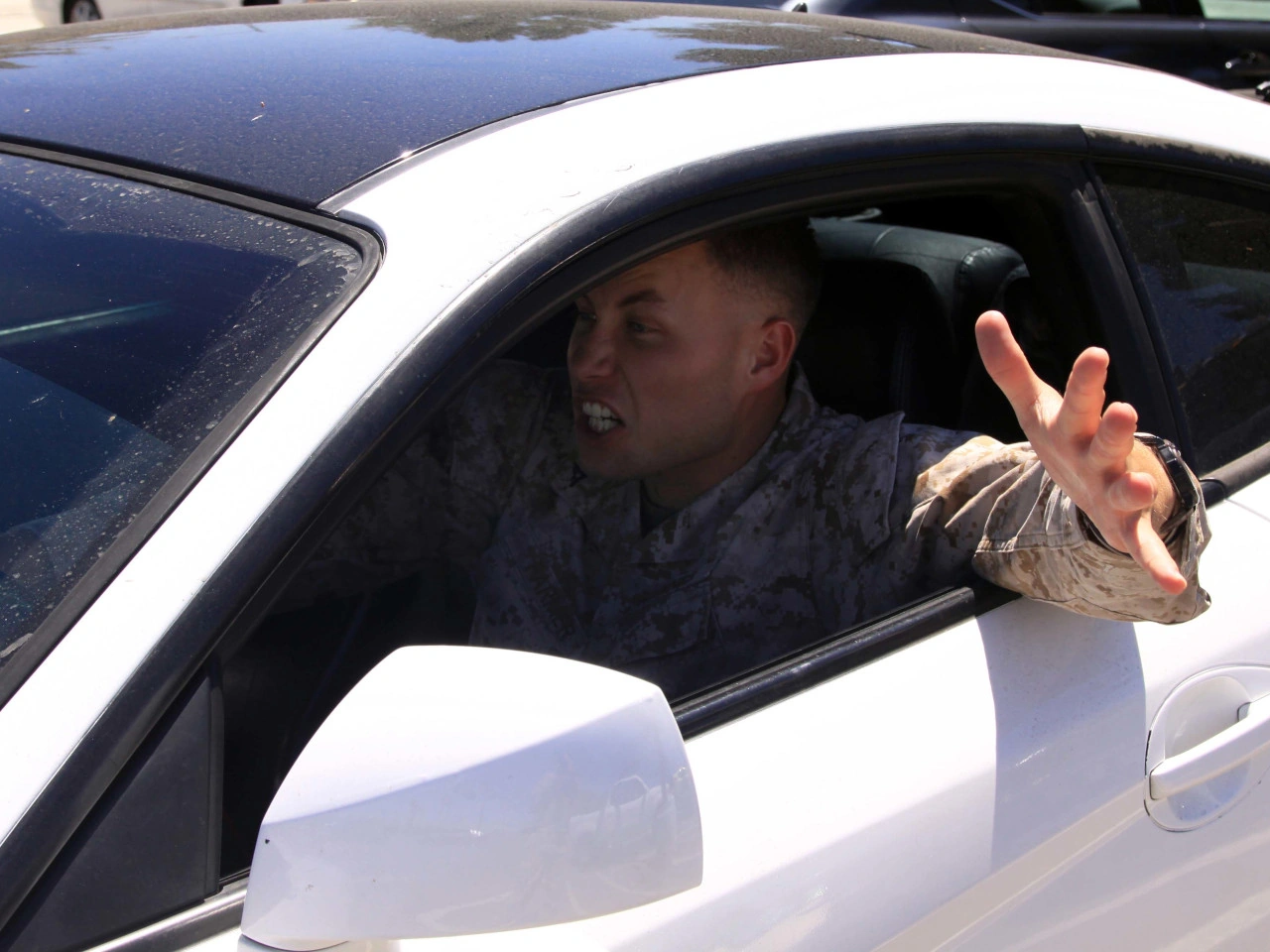
Is road rage a separate traffic offence in Belgium?
Road rage is not a separate named traffic offence under the Belgian Road Code. However, specific behaviour caused by road rage can violate traffic rules or other laws.
Can aggressive driving violate Belgian traffic rules?
Yes. Belgian road users must behave so that they do not cause danger or obstruction to other road users. Aggressive manoeuvres that create danger can therefore breach the traffic rules.
Does a driver have to remain in control of the vehicle in Belgium?
Yes. Every driver must be capable of performing the necessary driving manoeuvres and remain in control of the vehicle at all times.
Can you use the horn to express anger in Belgium?
No. Sound signals must be as short as possible and may only be used when necessary to prevent an accident or, outside built-up areas, when appropriate to warn a driver you intend to overtake.
Can tailgating or deliberately blocking another driver be a problem in Belgium?
Yes. Behaviour such as following another vehicle dangerously closely or deliberately obstructing another road user can create danger or hinder traffic and may violate applicable traffic rules.
Will Belgium’s new Road Code change the general rule on aggressive behaviour?
The same basic principle remains. Under the new Code of the Public Road, every road user must avoid causing danger or obstruction and adapt their behaviour to the traffic situation, visibility, road and weather conditions and other road users.
240. Salud
La salud puede afectar a la capacidad de una persona para conducir con seguridad. Enfermedades, lesiones, mala visión, movilidad reducida, fatiga, determinadas afecciones médicas y algunos medicamentos pueden interferir con la concentración, tiempo de reacción, juicio o control del vehículo. Los conductores deben reconocer cuándo su estado físico o mental puede hacer insegura la conducción y buscar consejo médico cuando sea necesario. En algunos países determinadas enfermedades deben declararse y pueden requerir un reconocimiento médico o restricciones en el permiso de conducir.

Do you have to be medically fit to drive in Belgium?
Yes. Belgian law requires drivers to meet minimum physical and mental fitness standards. Driving fitness means that no medical condition, disability, injury or medication significantly increases the risk of an accident.
Who is responsible for checking their medical fitness to drive in Belgium?
The driver is responsible for ensuring that they continue to meet the medical fitness standards. If a health problem may affect safe driving, medical assessment may be required.
What should you do if a health condition may affect your driving in Belgium?
You should consult your doctor. Depending on the condition, the doctor may issue a driving-fitness certificate or refer you to a specialised driving-fitness centre for further assessment.
Which health conditions can affect driving fitness in Belgium?
Conditions that may affect driving include vision problems, neurological disorders, diabetes, heart conditions, balance problems, reduced strength, cognitive problems and the effects of certain medicines. The impact depends on the individual condition and its severity.
What is CARA in Belgium?
CARA is a specialised driving-fitness centre operated by Vias institute. It assesses drivers whose medical or functional limitations may affect their ability to drive safely and can recommend restrictions or vehicle adaptations.
Can a Belgian driving licence contain medical restrictions?
Yes. If a driver is considered fit to drive only under certain conditions, those conditions can be recorded on an adapted driving licence using restriction codes.
Do professional drivers have stricter medical requirements in Belgium?
Yes. Drivers who use certain licence categories for paid passenger or goods transport are subject to group 2 medical fitness requirements and periodic medical examinations.
241. Epilepsia
La epilepsia es una afección neurológica que puede causar crisis recurrentes, con posibles cambios en la conciencia, movimiento, sensaciones o estado de alerta. Como una crisis puede impedir temporalmente controlar un vehículo con seguridad, la epilepsia puede afectar a la aptitud para conducir y a los requisitos del permiso. Las normas varían entre países y suelen depender del tipo de crisis, tiempo sin episodios, tratamiento y valoración médica. Cualquier persona que sufra una crisis debe seguir las normas aplicables y solicitar asesoramiento médico antes de volver a conducir.

Can you drive with epilepsy in Belgium?
A person with epilepsy is initially considered not medically fit to drive, but may later be declared fit if the legal medical criteria are met, including the required seizure-free period and a favourable neurological assessment.
How long must someone with epilepsy be seizure-free to drive a car in Belgium?
For a group 1 licence, which includes ordinary cars and motorcycles, a person with epilepsy can generally be declared fit after being seizure-free for at least one year, provided the other medical conditions are satisfied.
What are the rules after a single epileptic seizure in Belgium?
For group 1 drivers, a person who has experienced a single epileptic seizure may generally be declared fit after at least six seizure-free months. In certain circumstances, this can be reduced to three months when neurological tests meet the required conditions.
Who decides whether a person with epilepsy is fit to drive in Belgium?
A neurologist or neuropsychiatrist assesses the epilepsy syndrome, seizure type and risk of recurrence. A neurologist can issue the required driving-fitness advice, and in appropriate cases a doctor can issue the certificate based on the neurological report.
Does changing epilepsy medication affect driving fitness in Belgium?
It can. If a seizure occurs because anti-epileptic medication was reduced or changed, specific seizure-free periods apply before driving fitness can be restored. The exact period depends on whether the previous treatment is resumed or a different treatment is started.
How long is a Belgian driving-fitness certificate valid for someone with epilepsy?
For group 1 drivers, the first certificate is generally valid for a maximum of one year. If the person remains seizure-free, the validity can subsequently be extended according to the legal criteria.
Are the epilepsy rules stricter for truck and bus drivers in Belgium?
Yes. Group 2 drivers, including drivers of trucks and buses and certain professional drivers, are subject to much stricter requirements. For established epilepsy, driving fitness generally requires a substantially longer seizure-free period than for ordinary car drivers.
Who is responsible for checking continued driving fitness in Belgium?
The driver is responsible for ensuring that they continue to meet the medical fitness requirements. If epilepsy or another medical condition may affect safe driving, medical assessment is required before continuing to drive where applicable.
242. Ceguera nocturna
La ceguera nocturna, también llamada nictalopía, es una capacidad reducida para ver en oscuridad o con poca luz. Puede dificultar reconocer peatones, ciclistas, marcas viales, curvas u obstáculos de noche y durante el crepúsculo. Puede tener distintas causas, incluidas algunas enfermedades oculares, deficiencias vitamínicas o problemas de retina. Los conductores que tengan dificultades para ver con poca luz deben evitar conducir cuando su visión sea insuficiente y solicitar atención profesional de la vista.
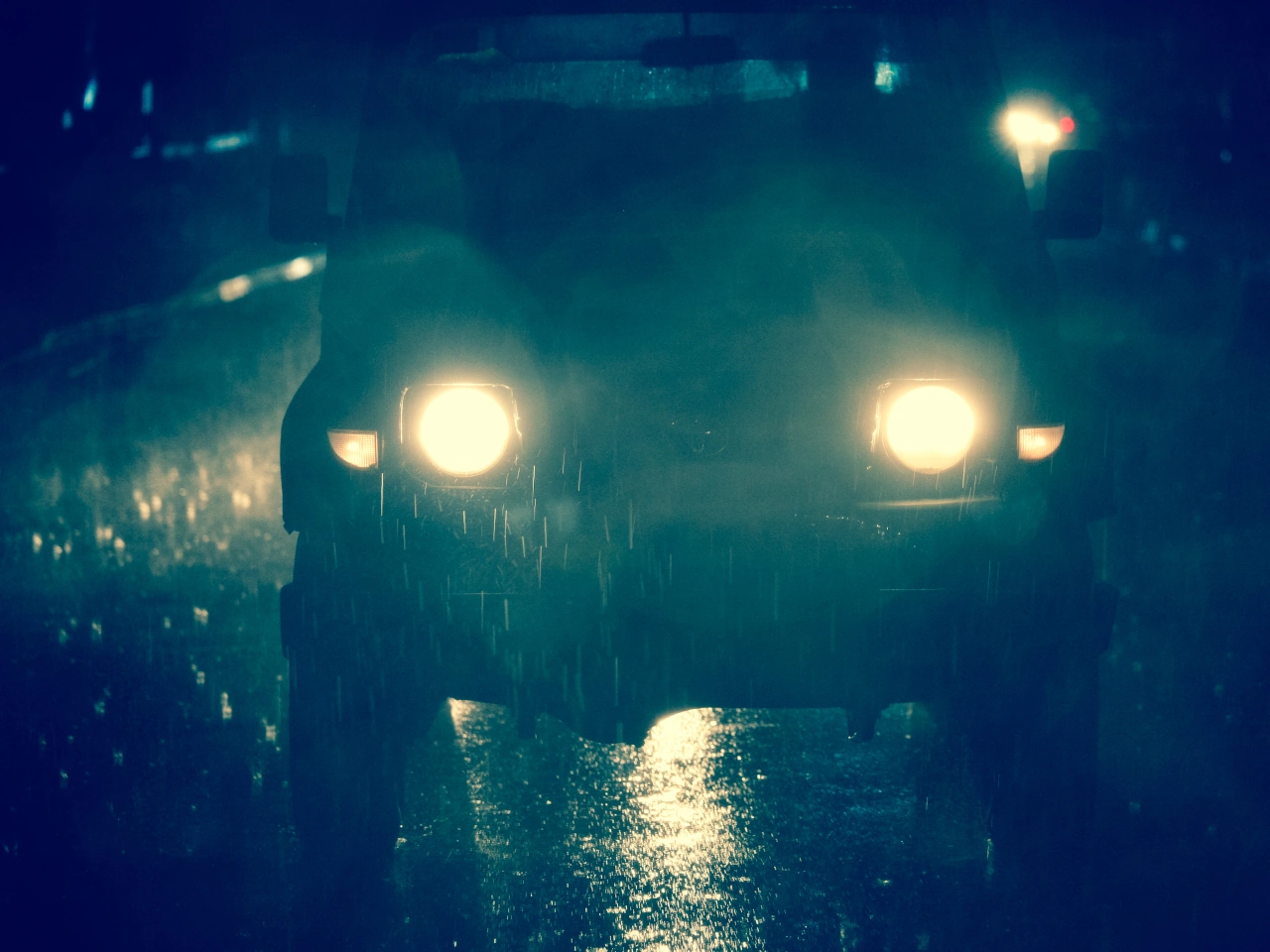
Are there minimum vision requirements for driving at night in Belgium?
Yes. Belgian driving-fitness standards consider several aspects of vision, including visual acuity, visual field, twilight vision, sensitivity to light and contrast and other visual functions needed for safe driving.
What should you do if you have difficulty seeing at night in Belgium?
If your vision may no longer meet the driving-fitness standards, you should have it assessed by an ophthalmologist. The ophthalmologist can determine whether you remain medically fit to drive or whether further assessment is needed.
Can night blindness affect your Belgian driving licence?
Yes. If reduced night or twilight vision affects driving fitness, a driver may be declared fit with conditions or restrictions, temporarily unfit or unfit to drive, depending on the medical assessment.
Can a Belgian driving licence restrict you to daytime driving?
Yes. A person who remains fit to drive only under certain conditions can receive an adapted driving licence with restrictions. One possible restriction is driving only during daylight.
Do Belgian licence applicants have to meet visual requirements at night?
Yes. Applicants for group 1 licences must declare that, with or without optical correction, they have sufficient visual acuity, including at night. If they cannot meet the required visual standards, a medical examination is necessary.
Who assesses visual fitness to drive in Belgium?
When vision may be insufficient, an ophthalmologist assesses driving fitness. The driver may also be referred to CARA or another authorised driving-fitness centre for further evaluation when necessary.
243. Discapacidad visual
La discapacidad visual es una reducción de la visión que puede afectar a la capacidad de ver con claridad, calcular distancias, detectar movimiento o reconocer peligros. Puede incluir menor agudeza visual, campo visual restringido, baja sensibilidad al contraste, visión doble o dificultad para ver con poca luz. Como la conducción segura depende en gran medida de la visión, los conductores deben cumplir los requisitos mínimos de vista exigidos en su país y utilizar gafas, lentes de contacto u otras ayudas visuales autorizadas cuando sea necesario.

Are there minimum eyesight requirements for driving in Belgium?
Yes. Belgian driving-fitness rules assess visual acuity, field of vision, twilight vision, contrast and light sensitivity, double vision and other visual functions that are important for safe driving.
What is the minimum visual acuity for an ordinary driving licence in Belgium?
For a group 1 licence, including ordinary cars and motorcycles, the driver must generally have a binocular visual acuity of at least 5/10, with optical correction if necessary.
What field of vision is required for a group 1 driving licence in Belgium?
The binocular horizontal field of vision must generally be at least 120°, extending at least 50° to the left and right and 20° upward and downward, with no absolute defect in the central 20°.
Can you drive in Belgium if you use only one eye?
Yes, in some circumstances. A person who functionally uses only one eye can be declared fit to drive if the applicable visual-field and visual-function requirements are met and an ophthalmologist considers driving safe.
Can a Belgian driving licence require glasses or contact lenses?
Yes. If optical correction is necessary for safe driving, the licence can include a restriction code requiring glasses, contact lenses or either form of correction.
What should you do if your eyesight may no longer be good enough to drive in Belgium?
You should have your vision assessed by an ophthalmologist. The ophthalmologist can determine whether you remain fit to drive and may refer you to a specialised driving-fitness centre for further assessment.
Can visual impairment result in an adapted Belgian driving licence?
Yes. A driver may be declared fit with conditions or restrictions, such as compulsory glasses, daytime-only driving, a limited driving area or other limitations recorded on an adapted licence.
Are the eyesight requirements stricter for professional drivers in Belgium?
Yes. Group 2 drivers, including many truck, bus and professional drivers, are subject to stricter visual standards. They generally need at least 8/10 visual acuity in the better eye and 1/10 in the other eye, with correction if necessary.
244. Fatiga
La fatiga reduce la concentración, el tiempo de reacción, el juicio y la capacidad de mantenerse alerta mientras se conduce. Puede aparecer después de mucho tiempo al volante, falta de sueño, enfermedad, horarios irregulares o conducción en momentos en los que el cuerpo espera descansar. Entre las señales de advertencia están bostezos frecuentes, párpados pesados, dificultad para mantener velocidad o posición en el carril y olvidar partes del trayecto. El conductor debe detenerse y descansar en cuanto note cansancio y no debe confiar en cafeína, aire fresco o música alta como sustitutos del sueño.
Is it illegal to drive while extremely tired in Belgium?
Belgian traffic rules do not set a specific fatigue limit, but every driver must be fit to drive, able to perform the necessary manoeuvres and remain in control of the vehicle. Driving when fatigue prevents this can therefore conflict with the general driving requirements.
Is fatigue included in Belgian driver training and theory exams?
Yes. Belgian driving-licence rules specifically include the effects of fatigue on driver behaviour, perception, judgement and reaction among the subjects covered by the theory examination.
What should you do if you become tired while driving in Belgium?
Stop at a safe and permitted place and rest before continuing. Do not continue driving if fatigue prevents you from remaining alert and in full control of the vehicle.
Are professional drivers subject to driving and rest-time rules in Belgium?
Yes. Professional drivers covered by EU driving-time rules must respect mandatory driving limits, breaks and rest periods. These rules are intended in part to reduce fatigue-related risk.
How long may an applicable professional driver drive before taking a break?
Under EU rules that apply in Belgium, an applicable professional driver must normally take a break of at least 45 minutes after 4.5 hours of driving, unless a rest period begins instead.
Will Belgium’s new Road Code change the basic rule on driver fitness?
No. The new Code of the Public Road keeps the requirement that a driver must have the necessary physical fitness and remain capable of performing all required driving manoeuvres while keeping the vehicle under control.
245. Defectos
Los defectos son fallos, daños o desgaste que pueden afectar a la seguridad, aptitud para circular o cumplimiento de los requisitos técnicos de un vehículo. Pueden afectar a neumáticos, frenos, luces, dirección, suspensión, cristales, carrocería, sistemas eléctricos u otros componentes. Algunos son menores y deben repararse pronto, mientras que defectos graves o peligrosos pueden hacer que el vehículo no sea seguro para circular. El conductor debe comprobar periódicamente el vehículo y reparar los problemas antes de que se conviertan en un riesgo.

How are vehicle defects classified during technical inspection in Belgium?
Belgian technical inspections distinguish between minor, serious and dangerous defects. The result determines whether the vehicle receives a green or red inspection certificate and whether reinspection is required.
What happens if only minor defects are found in Belgium?
A vehicle can receive a green inspection certificate with remarks. Some defects must be repaired as soon as possible, while others must be monitored even though no immediate reinspection is required.
What happens if serious defects are found in Belgium?
Serious defects can result in a red inspection certificate with limited validity. In Flanders, code 2 normally gives 15 days to repair the defects and present the vehicle for reinspection.
What happens if a dangerous defect is found in Belgium?
A dangerous defect can result in a prohibition on using the vehicle in traffic. The vehicle must be repaired before it can return to normal use.
Can a defective light cause a vehicle to fail inspection in Belgium?
Yes. Missing, defective, badly adjusted or non-compliant lights can result in a red inspection certificate. Extremely serious lighting defects, such as all brake lights being defective, can lead to a prohibition on use.
Can worn tyres cause a vehicle to fail inspection in Belgium?
Yes. Tyres are checked for tread depth, damage and condition. A tyre worn below the legal minimum can result in rejection and, depending on the severity and applicable inspection rules, a prohibition on use.
Can you drive with a red inspection certificate in Belgium?
This depends on the type of red certificate. A vehicle with a limited-validity certificate may be driven only under the applicable restrictions, while a vehicle with a prohibition on use may not circulate normally.
246. Infracción de tráfico
Una infracción de tráfico es una acción que incumple una ley o norma vial, como superar la velocidad permitida, ignorar una señal, utilizar un dispositivo prohibido al conducir o no ceder el paso. Las infracciones varían en gravedad y pueden dar lugar a advertencias, multas, pérdida de puntos, suspensión del permiso u otras sanciones según el país. Los comportamientos más graves que crean un alto riesgo para otros usuarios pueden conllevar sanciones mayores o procedimientos penales.
How are traffic violations classified in Belgium?
Belgian traffic violations are divided into four degrees. The higher the degree, the more serious the offence and the heavier the possible penalty.
What is a first-degree traffic violation in Belgium?
A first-degree violation is generally a less serious traffic offence. Provisions of the traffic regulations that are not specifically assigned to another degree are normally treated as first-degree violations.
What are the current immediate fines for traffic violations in Belgium?
Since 1 July 2026, the standard immediate collections are €64 for a first-degree violation, €128 for a second-degree violation and €191 for a third-degree violation. A fourth-degree offence carries much heavier consequences and normally leads to court proceedings for Belgian residents.
Can a traffic violation lead to a driving ban in Belgium?
Yes. A court can impose a disqualification from driving for certain second- and third-degree offences, while a driving ban is mandatory for fourth-degree offences. Specific rules can also apply to novice drivers.
Are speeding offences included in the four-degree system in Belgium?
Speeding has its own fine and penalty rules based on factors such as how far the speed limit was exceeded and where the offence occurred. It is therefore treated separately from the standard four-degree classification.
Are alcohol and drug offences treated like ordinary traffic violations in Belgium?
No. Driving under the influence is subject to separate rules and sanctions, which can include fines, immediate driving restrictions, court proceedings and disqualification from driving.
Will Belgium’s new Road Code change the traffic rules?
Yes. The new federal Code of the Public Road and the three regional codes will replace the current traffic regulations on 1 June 2027. Until then, the current rules and offence classifications remain applicable.
247. Alcohol
El alcohol afecta al juicio, tiempo de reacción, coordinación, concentración y visión, haciendo peligrosa la conducción incluso antes de que una persona se sienta ebria. El límite legal varía entre países y puede ser inferior para conductores profesionales, noveles o jóvenes. La opción más segura es no beber alcohol antes de conducir. Quien haya consumido alcohol debe utilizar una alternativa como un conductor designado sobrio, transporte público o taxi.
What is the legal alcohol limit for ordinary drivers in Belgium?
For most drivers, the maximum permitted concentration is 0.21 mg/l of alcohol in exhaled breath. A driver becomes punishable from 0.22 mg/l, corresponding to 0.5‰ in the blood.
Is the alcohol limit lower for young or inexperienced drivers in Belgium?
No. The standard limit of 0.5‰ in the blood also applies to young and inexperienced drivers. Belgium does not currently impose a separate lower alcohol limit simply because a driver is new or young.
Is there a lower alcohol limit for professional drivers in Belgium?
Yes. Professional drivers performing applicable passenger or goods transport are punishable from 0.09 mg/l in exhaled breath or 0.2‰ in the blood. The stricter limit also applies when driving certain heavy vehicle categories even outside professional work.
How can the police test drivers for alcohol in Belgium?
The police can use screening devices, breath tests and breath-analysis equipment. In certain circumstances, a blood test can also be used to determine the alcohol concentration.
Can driving under the influence of alcohol lead to a driving ban in Belgium?
Yes. Depending on the alcohol concentration and circumstances, consequences can include an immediate driving prohibition or licence withdrawal, fines, court proceedings and disqualification from driving.
Can a Belgian court require an alcohol interlock?
Yes. A court can impose an alcohol interlock for certain alcohol offences, repeat offences or high alcohol concentrations. In some serious cases, the court is required to impose one unless the law allows a specifically reasoned exception.
What are the immediate fines for alcohol offences in Belgium in 2026?
Since 1 July 2026, immediate collections for alcohol offences handled on the spot start at €116 for applicable professional drivers between 0.09 and 0.22 mg/l of exhaled breath, and at €197 for ordinary offences between 0.22 and 0.35 mg/l. Higher concentrations result in higher penalties and may lead to court proceedings.
Is it safest to drive after drinking if you remain below the Belgian legal limit?
No. Alcohol can impair driving before the legal limit is reached. The safest approach is not to drink alcohol when you plan to drive.
248. Control de alcoholemia
Un control de alcoholemia es una comprobación en carretera utilizada para determinar si un conductor ha consumido alcohol y si ha superado el límite legal. La policía puede utilizar un dispositivo de detección, prueba de aliento, análisis de aire espirado o, en determinadas situaciones, un análisis de sangre. El procedimiento exacto y los límites legales varían entre países. Normalmente el conductor debe colaborar con las pruebas autorizadas, y negarse a una prueba legal puede conllevar sanciones por sí mismo.
Can the police require any driver to take an alcohol test in Belgium?
Yes. Police can require a breath test from anyone driving on a public road, anyone preparing to drive, a person accompanying a learner driver and people who may have been involved in a traffic accident.
How does an alcohol control work in Belgium?
Police may first use an alcohol-detection device or breath test. When the breath test reaches the applicable legal threshold, a more precise breath analysis is carried out to measure the alcohol concentration.
When is a breath analysis required in Belgium?
For ordinary drivers, a breath analysis is carried out when the breath test indicates at least 0.22 mg/l of alcohol in exhaled alveolar air. For drivers subject to the stricter professional limit, the threshold is 0.09 mg/l.
Can a blood test be used during an alcohol control in Belgium?
Yes. A blood test can be ordered in situations where the breath test or breath analysis cannot be carried out or in other circumstances provided by law.
What happens if you refuse an alcohol test in Belgium?
Refusing a required breath test or breath analysis is itself punishable and also results in an immediate temporary prohibition on driving.
How long is the immediate driving prohibition after a positive alcohol control in Belgium?
Since 1 July 2026, the standard immediate driving prohibition is 12 hours when the applicable alcohol threshold is reached or when the driver refuses the required test.
Can you automatically drive again after the 12-hour prohibition?
No. Before driving again, the person must undergo a new breath test or breath analysis. If the result remains at or above the legal threshold, or the person refuses the test, the prohibition is extended by another 12 hours.
Can you request a blood test to challenge a Belgian breath-analysis result?
When a breath analysis measures at least 0.35 mg/l, the person must be informed of the right to request a counter-analysis by blood test. The cost is borne by the person if the blood test confirms the offence.
249. Dispositivo de bloqueo por alcohol
Un dispositivo de bloqueo por alcohol, también llamado alcolock, es un equipo de análisis de aliento conectado al sistema de arranque del vehículo. Antes de poder arrancar, el conductor debe proporcionar una muestra de aliento por debajo de un límite de alcohol programado. El dispositivo también puede exigir pruebas adicionales durante el viaje y registrar información sobre pruebas, intentos fallidos y posibles manipulaciones. En algunos países se utiliza como medida de seguridad o requisito legal para conductores condenados por infracciones relacionadas con el alcohol.

What is an alcohol interlock in Belgium?
An alcohol interlock is a breath-testing device connected to the vehicle. A driver subject to an alcohol-interlock programme can only start the vehicle after providing a breath sample below the required alcohol limit.
What alcohol limit does a Belgian alcohol interlock use?
The vehicle can only be started after a breath test showing less than 0.09 mg/l of alcohol in exhaled breath, corresponding to less than approximately 0.2‰ alcohol in the blood.
When can a Belgian court impose an alcohol interlock?
A court can impose an alcohol interlock for certain alcohol offences, including drivers caught with more than 0.8‰ alcohol, drivers in a state of intoxication and repeat offenders.
When is an alcohol interlock mandatory for a Belgian court?
A court must normally impose an alcohol interlock on drivers caught with at least 1.8‰ alcohol, unless it expressly gives reasons not to do so, and on serious repeat offenders caught twice with at least 1.2‰ within three years.
How long can an alcohol interlock be imposed in Belgium?
A Belgian court can impose an alcohol interlock for one to three years or for life, depending on the offence and circumstances.
Where must an alcohol interlock be installed in Belgium?
The device must be installed by an authorised service centre. The centre is responsible for installation, maintenance, technical checks, repairs and removal at the end of the programme.
Does a driver with an alcohol interlock have to follow a programme in Belgium?
Yes. The driver must participate in an official supervision programme with an authorised organisation and comply with the programme conditions.
Is the alcohol interlock shown on the Belgian driving licence?
Yes. A driver restricted to vehicles equipped with an alcohol interlock receives a driving licence with restriction code 69 for the applicable vehicle categories.
Who pays for the alcohol interlock in Belgium?
The convicted driver normally pays the costs of the alcohol-interlock system and programme. A judge may reduce the fine wholly or partly to take those costs into account.
250. Prueba de aliento
Una prueba de aliento es una prueba preliminar en carretera utilizada para detectar alcohol en el aire espirado y determinar si se necesita una comprobación adicional. La persona sopla en un dispositivo portátil que compara el nivel de alcohol con umbrales predefinidos. Generalmente se utiliza como prueba de detección, no como medición probatoria definitiva. Si el resultado alcanza el límite aplicable, puede realizarse un análisis de aire espirado más preciso u otra prueba reconocida legalmente.
What is a breath test in Belgium?
A Belgian breath test is a preliminary alcohol test in which a person blows into an approved device that indicates the level of alcohol in the exhaled alveolar air relative to specified legal thresholds.
Does a Belgian breath test show the exact alcohol concentration?
Normally, no. The breath-test device indicates a result category based on legal thresholds rather than displaying the exact alcohol concentration used as the evidential result. The precise measurement is obtained by a breath analysis.
What results can an ordinary driver receive on a Belgian breath test?
For ordinary drivers, the device distinguishes between alcohol levels below 0.22 mg/l, from 0.22 mg/l to below 0.35 mg/l, and 0.35 mg/l or higher. These are represented by result codes such as S, A and P.
Are the breath-test thresholds different for professional drivers in Belgium?
Yes. For applicable professional drivers, the test also uses the lower threshold of 0.09 mg/l, producing an additional result category between 0.09 mg/l and 0.22 mg/l.
Who can be required to take a breath test in Belgium?
Police can require a breath test from drivers, people preparing to drive, persons accompanying learner drivers and people who may have caused or contributed to a traffic accident, including an accident victim where applicable.
What happens after a positive breath test in Belgium?
When the breath test reaches the applicable legal threshold, a breath analysis is normally performed to measure the exact alcohol concentration. Police may also proceed directly to a breath analysis without first carrying out a breath test.
Can a blood test follow a breath test in Belgium?
Yes. If the breath test reaches the applicable threshold but a breath analysis cannot be performed, a blood sample can be ordered under the conditions provided by law.
Can refusing a breath test lead to a driving prohibition in Belgium?
Yes. Refusing a legally required breath test can lead to penalties and an immediate temporary prohibition on driving. Since 1 July 2026, the standard prohibition in the applicable alcohol-control procedure is 12 hours.