


Panneaux de signalisationRoyaume-Uni
 Règles de circulation
 Royaume-Uni
 Panneaux de priorité
 Panneaux de danger
 Panneaux d’interdiction
 Panneaux d’obligation
 Panneaux d’indication
 Panneaux additionnels
Panneaux de signalisation
Un panneau de signalisation est un symbole visuel standardisé placé le long des routes afin de guider, avertir ou réglementer les conducteurs, cyclistes et piétons. Ces panneaux fournissent des informations essentielles sur l’état de la route, les règles, les directions et les dangers potentiels, contribuant à la sécurité et à la fluidité du trafic. Ils existent sous différentes formes et couleurs, comme les panneaux triangulaires de danger, les panneaux circulaires d’interdiction ou d’obligation et les panneaux rectangulaires d’information, chacune étant conçue pour être rapidement reconnue et clairement comprise.

51. Attention aux tracteurs
Ce panneau de signalisation indique un avertissement pour tracteurs. Il avertit les conducteurs de la possible présence de tracteurs ou de véhicules agricoles lents sur ou traversant la route. Les conducteurs doivent réduire la vitesse et s’attendre à des véhicules lents. Soyez prudent en doublant, en particulier sur des routes étroites ou sinueuses. Lieux fréquents : zones rurales, routes agricoles, passages entre champs ou fermes.
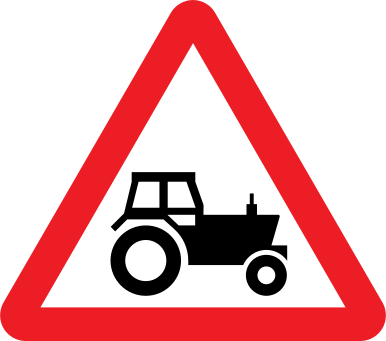
English • GB diagram 553.1 • Agricultural vehicles. Agricultural vehicles are likely to be in the road ahead.
Sources
🔗 Commons.wikimedia.org
🔗 Legislation.gov.uk • Traffic Signs Regulations and General Directions • Great Britain
🔗 Gov.uk • Department for Transport • Know your traffic signs
SVG source: UK Government • Public domain • Original revision 2011-11-12. Wikimedia original unmodified.
52. Avertissement pour les tramways
Ce panneau de signalisation indique un avertissement pour tramways. Il avertit les usagers de la route de la présence ou du croisement de tramways devant. Les conducteurs doivent ralentir et être prêts à croiser ou partager la chaussée avec des tramways. Céder le passage si nécessaire (les tramways ont souvent la priorité). Soyez attentif aux rails enfoncés dans la chaussée et à l’arrivée discrète des tramways.
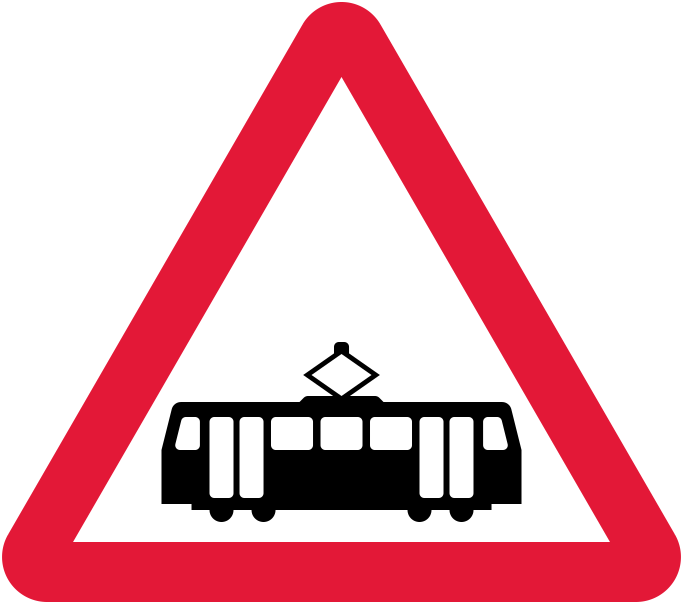
English • GB diagram 772 • Tramcars crossing. Tramcars cross the road ahead. Observe the signals, signs and markings.
Sources
🔗 Commons.wikimedia.org
🔗 Legislation.gov.uk • Traffic Signs Regulations and General Directions • Great Britain
🔗 Gov.uk • Department for Transport • Know your traffic signs
SVG source: UK Government • Public domain • Original revision 2024-11-10. Wikimedia original unmodified.
Artwork verified against Legislation.gov.uk • official published diagram 772.
53. Avertissement pour un passage à niveau sans barrières
Ce panneau de signalisation indique un avertissement pour un passage à niveau sans barrières. Il prévient les conducteurs de la présence imminente d’un passage à niveau où les voies ferrées traversent la route sans barrière ou portail pour arrêter la circulation. Les conducteurs doivent ralentir et regarder dans les deux sens pour repérer un train.
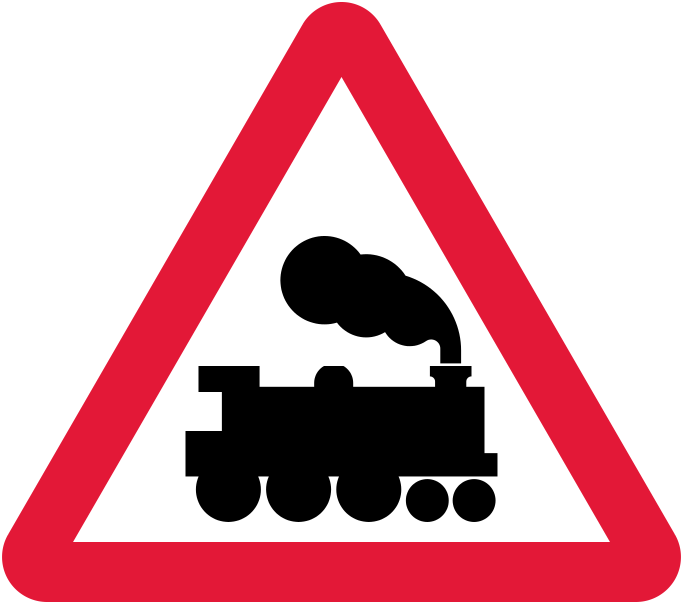
English • GB diagram 771 • Level crossing without a gate or barrier. A railway level crossing without gates or barriers is ahead.
Sources
🔗 Commons.wikimedia.org
🔗 Legislation.gov.uk • Traffic Signs Regulations and General Directions • Great Britain
🔗 Gov.uk • Department for Transport • Know your traffic signs
SVG source: UK Government • Public domain • Original revision 2024-11-10. Wikimedia original unmodified.
Artwork verified against Legislation.gov.uk • official published diagram 771.
54. Avertissement pour un passage à niveau avec barrières
Ce panneau de signalisation indique un avertissement pour un passage à niveau avec barrières. Il avertit les conducteurs de l’approche d’un passage à niveau équipé de barrières ou de portes qui se ferment à l’arrivée d’un train. Les conducteurs doivent être prêts à s’arrêter lorsque les barrières sont fermées ou que les feux clignotent. Ne tentez jamais de traverser lorsque les barrières se ferment ou sont fermées.
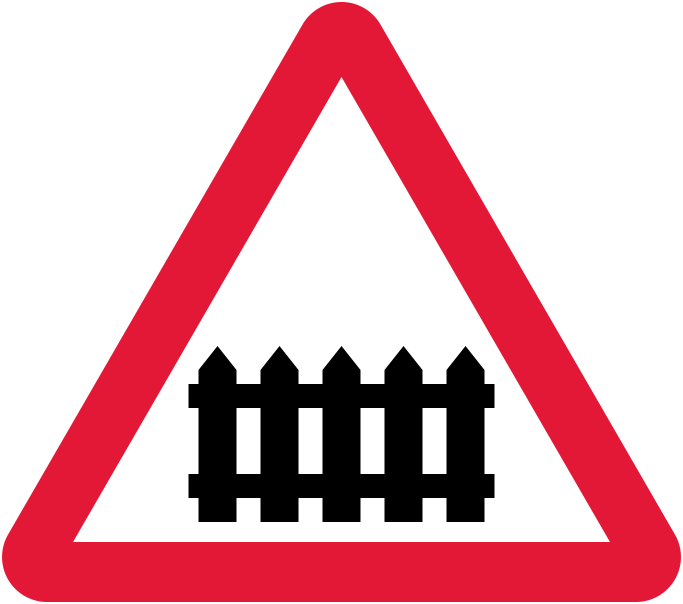
English • GB diagram 770 • Level crossing with a gate or barrier. A railway level crossing with gates or barriers is ahead.
Sources
🔗 Commons.wikimedia.org
🔗 Legislation.gov.uk • Traffic Signs Regulations and General Directions • Great Britain
🔗 Gov.uk • Department for Transport • Know your traffic signs
SVG source: UK Government • Public domain • Original revision 2024-11-10. Wikimedia original unmodified.
Artwork verified against Legislation.gov.uk • official published diagram 770.
55. Avertissement pour un passage à niveau avec une voie ferrée
Ce panneau de signalisation indique un avertissement pour un passage à niveau avec une voie ferrée. Il avertit les conducteurs d’un passage à niveau où une seule voie de chemin de fer croise la route. Les conducteurs doivent aborder ce passage avec prudence et se préparer à s’arrêter, même en l’absence de barrières ou de feux.

English • GB diagram 774 • Level crossing without a gate or barrier. This sign marks the location of a railway or tramway level crossing without gates or barriers. It does not indicate a specific number of tracks.
Sources
🔗 Commons.wikimedia.org
🔗 Legislation.gov.uk • Traffic Signs Regulations and General Directions • Great Britain
🔗 Gov.uk • Department for Transport • Know your traffic signs
SVG source: UK Government • Public domain • Original revision 2024-11-10. Wikimedia original unmodified.
Artwork verified against Legislation.gov.uk • official published diagram 774.
56. Sens interdit
Ce panneau de signalisation signifie sens interdit. Les conducteurs ne peuvent pas entrer depuis la direction où le panneau est placé.
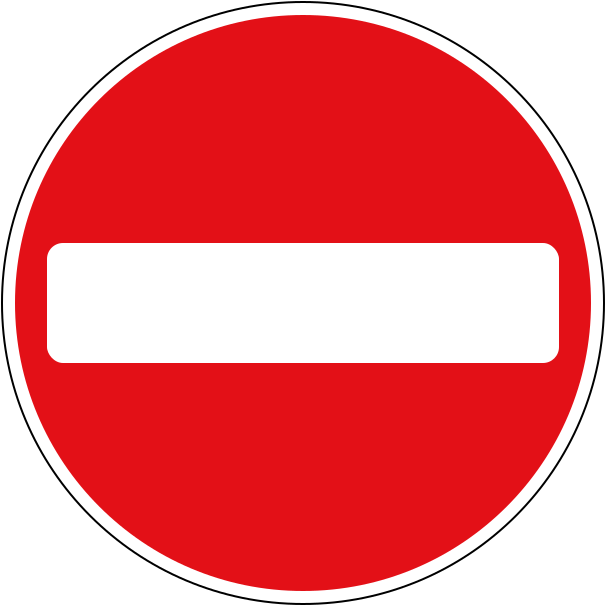
English • GB diagram 616 • No entry. Vehicular traffic must not enter from this direction. Read any permitted exception plate.
Sources
🔗 Commons.wikimedia.org (Government of the United Kingdom – Department for Transport • Crown copyright • OGL v1.0)
🔗 Legislation.gov.uk • Traffic Signs Regulations and General Directions • Great Britain
🔗 Gov.uk • Department for Transport • Know your traffic signs
SVG source: Government of the United Kingdom – Department for Transport • OGL v1.0 • Original revision 2024-11-14. Wikimedia original unmodified. © Crown copyright. Traffic signs are Crown copyright. You may reproduce traffic signs free of charge and without having to seek permission, but you must reproduce them accurately and not in a misleading context (e.g. not on roadside billboards where they could mislead drivers). (ref [1])
Artwork verified against Gov.uk • official published diagram 616.
Current design and permitted variants verified against Legislation.gov.uk • TSRGD, current text.
57. Accès interdit dans les deux sens
Ce panneau de signalisation indique que l’accès est interdit dans les deux sens. Les conducteurs ne peuvent entrer sur la route depuis aucune des deux directions.
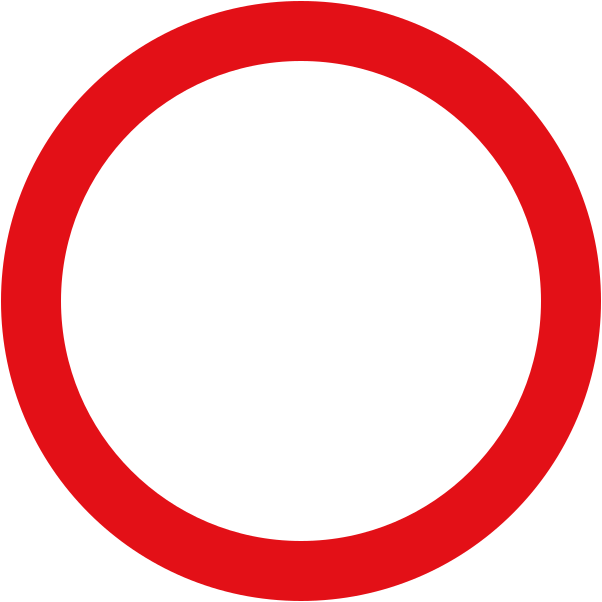
English • GB diagram 617 • All vehicles prohibited. All vehicles are prohibited, apart from non-mechanically propelled vehicles pushed by pedestrians. Any signed exemptions also apply.
Sources
🔗 Commons.wikimedia.org (Government of the United Kingdom – Department for Transport • Crown copyright • OGL v1.0)
🔗 Legislation.gov.uk • Traffic Signs Regulations and General Directions • Great Britain
🔗 Gov.uk • Department for Transport • Know your traffic signs
SVG source: Government of the United Kingdom – Department for Transport • OGL v1.0 • Original revision 2022-01-19. Wikimedia original unmodified. © Crown copyright. Traffic signs are Crown copyright. You may reproduce traffic signs free of charge and without having to seek permission, but you must reproduce them accurately and not in a misleading context (e.g. not on roadside billboards where they could mislead drivers). (ref [1])
Artwork verified against Gov.uk • official published diagram 617.
Current design and permitted variants verified against Legislation.gov.uk • TSRGD, current text.
58. Piétons interdits
Ce panneau de signalisation indique que les piétons sont interdits. Cela signifie que les piétons ne sont pas autorisés à passer au-delà de ce point. Les autres usagers (véhicules, vélos, etc.) peuvent être autorisés sauf indication contraire.
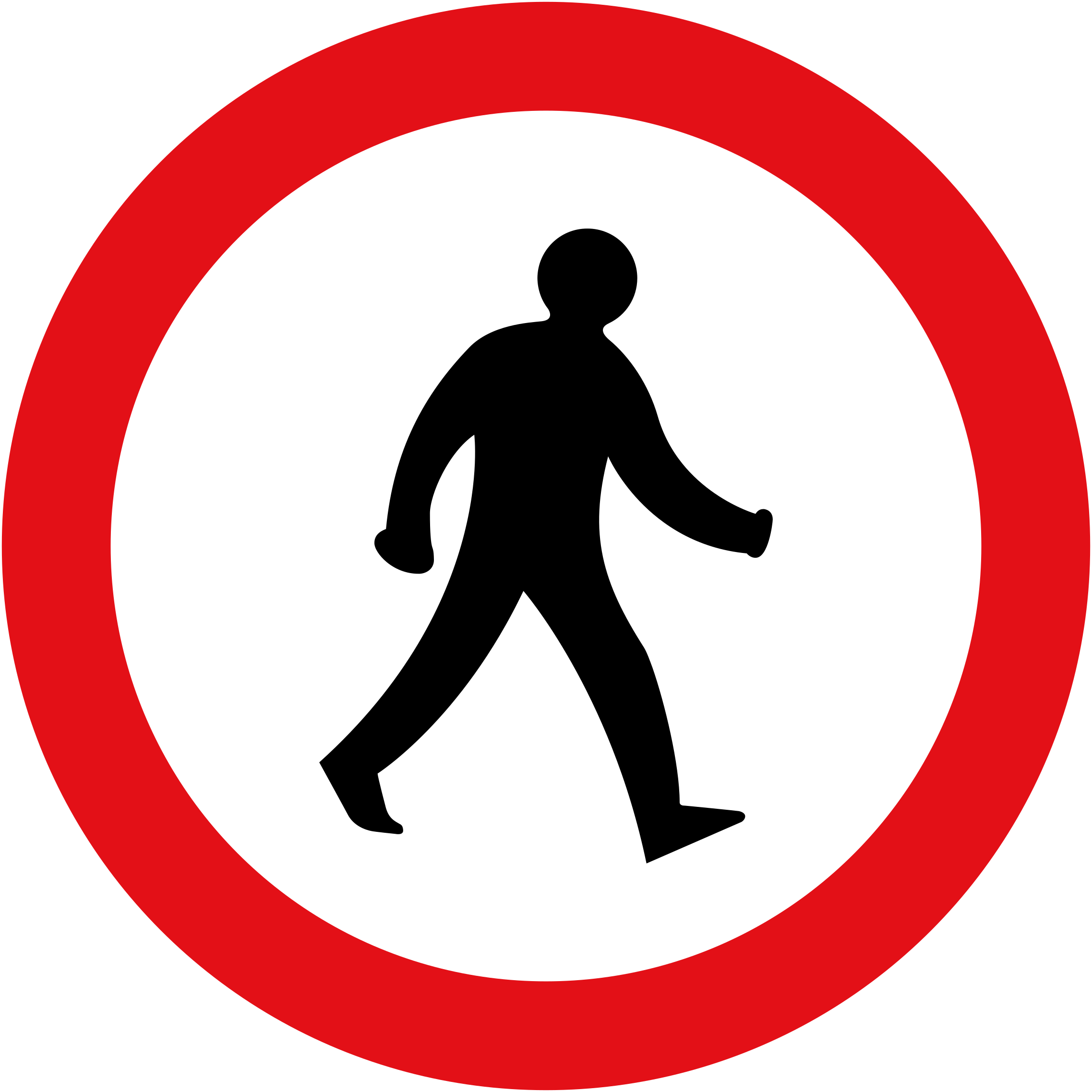
English • GB diagram 625.1 • No pedestrians. Pedestrians must not use the route indicated by this sign.
Sources
🔗 Commons.wikimedia.org (Government of the United Kingdom – Department for Transport • Crown copyright • OGL v1.0)
🔗 Legislation.gov.uk • Traffic Signs Regulations and General Directions • Great Britain
🔗 Gov.uk • Department for Transport • Know your traffic signs
SVG source: Government of the United Kingdom – Department for Transport • OGL v1.0 • Original revision 2021-11-26. Wikimedia original unmodified. © Crown copyright. Traffic signs are Crown copyright. You may reproduce traffic signs free of charge and without having to seek permission, but you must reproduce them accurately and not in a misleading context (e.g. not on roadside billboards where they could mislead drivers). (ref [1])
Artwork verified against Gov.uk • official published diagram 625.1.
Current design and permitted variants verified against Legislation.gov.uk • TSRGD, current text.
59. Cycles interdits
Ce panneau de signalisation indique que les cyclistes sont interdits. Cela signifie que les vélos (cyclistes) ne sont pas autorisés à entrer ou à utiliser la route au-delà de ce point. Les autres véhicules (voitures, piétons, etc.) peuvent être autorisés, sauf restriction spécifique.
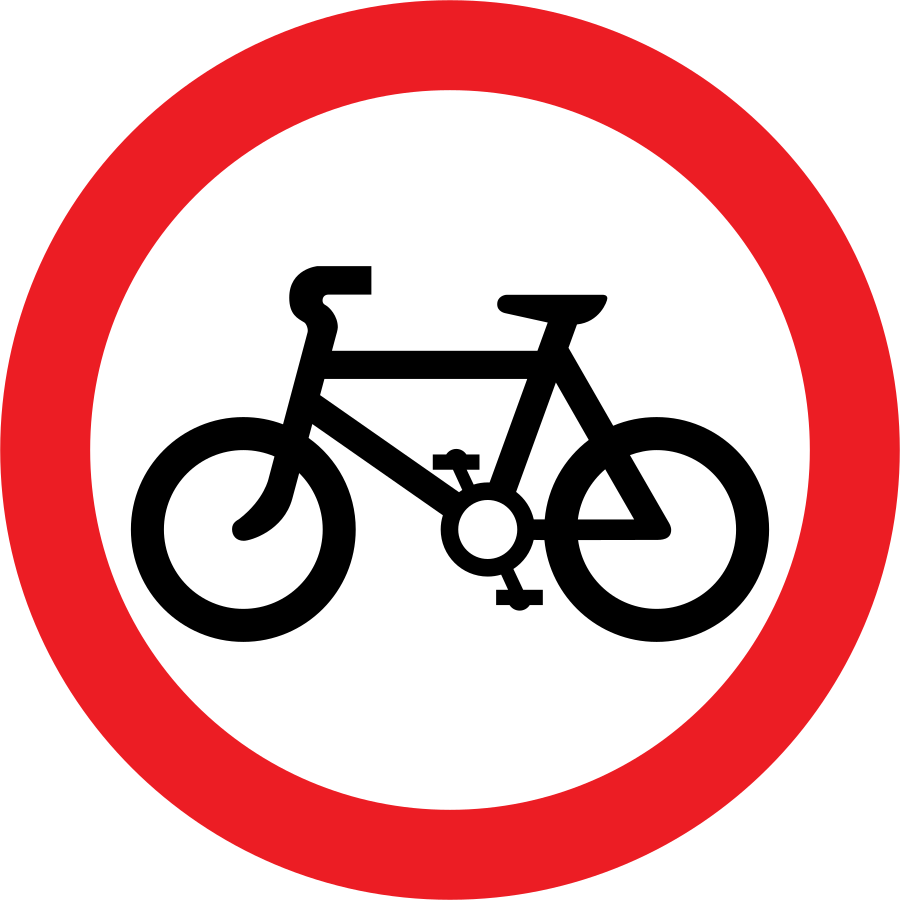
English • GB diagram 951 • No cycling. Riding pedal cycles is prohibited. In Great Britain, the current rule also covers electric scooters used in authorised trials where applicable.
Sources
🔗 Commons.wikimedia.org (UK Government • Crown copyright • OGL v1.0)
🔗 Legislation.gov.uk • Traffic Signs Regulations and General Directions • Great Britain
🔗 Gov.uk • Department for Transport • Know your traffic signs
SVG source: UK Government • OGL v1.0 • Original revision 2014-09-26. Wikimedia original unmodified. © Crown copyright. Traffic signs are Crown copyright. You may reproduce traffic signs free of charge and without having to seek permission, but you must reproduce them accurately and not in a misleading context (e.g. not on roadside billboards where they could mislead drivers). (ref [1])
Artwork verified against Gov.uk • official published diagram 951.
Current design and permitted variants verified against Legislation.gov.uk • TSRGD, current text.
60. Interdiction de motos
Ce panneau de signalisation indique que les motos sont interdites. Cela signifie que les motos ne sont pas autorisées au-delà de ce panneau. Les autres véhicules (voitures, cyclomoteurs, vélos, etc.) peuvent être autorisés sauf indication contraire.
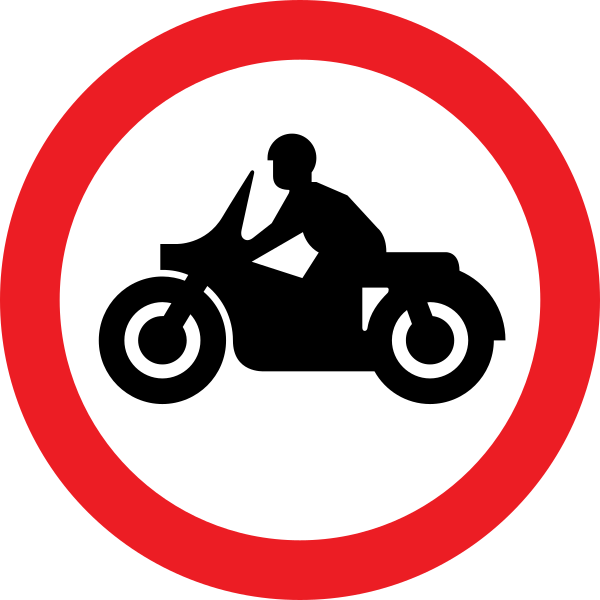
English • GB diagram 619.2 • No solo motorcycles. Solo motorcycles are prohibited. In Great Britain, electric scooters used in authorised trials are excepted where applicable; read any other signed exemptions.
Sources
🔗 Commons.wikimedia.org
🔗 Legislation.gov.uk • Traffic Signs Regulations and General Directions • Great Britain
🔗 Gov.uk • Department for Transport • Know your traffic signs
SVG source: UK Government • Public domain • Original revision 2011-01-21. Wikimedia original unmodified.
61. Voitures interdites
Ce panneau indique que les voitures sont interdites. Cela signifie que les voitures ne sont pas autorisées à entrer ou continuer au-delà du panneau. Seules les voitures particulières (et parfois des véhicules privés similaires) sont interdites. Les autres véhicules comme les bus, motos ou vélos peuvent être autorisés sauf indication contraire.
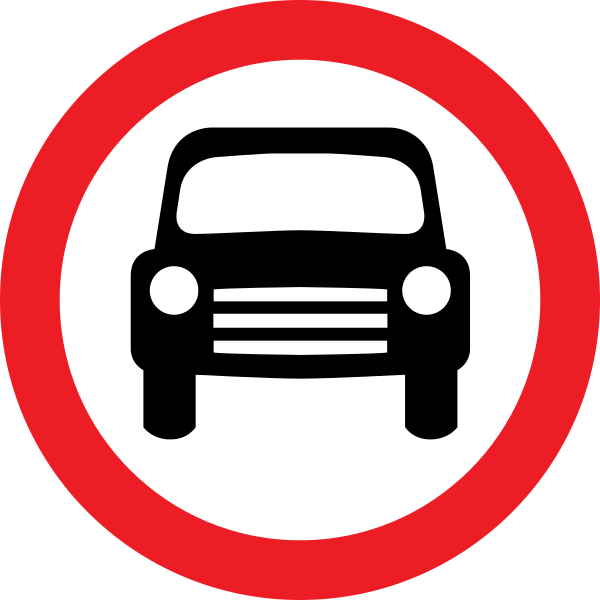
English • GB diagram 619.1 • No motor vehicles except solo motorcycles. Motor vehicles are prohibited except solo motorcycles. This car symbol represents a wider restriction than passenger cars alone.
Sources
🔗 Commons.wikimedia.org
🔗 Legislation.gov.uk • Traffic Signs Regulations and General Directions • Great Britain
🔗 Gov.uk • Department for Transport • Know your traffic signs
SVG source: UK Government • Public domain • Original revision 2011-01-21. Wikimedia original unmodified.
62. Caravanes interdites
Ce panneau indique que les caravanes sont interdites. Cela signifie que les véhicules motorisés tractant des caravanes (remorques destinées au camping ou à l’hébergement) ne sont pas autorisés au-delà de ce point. Seuls les véhicules avec caravane sont interdits. Les voitures, camions ou autres véhicules sans caravane peuvent rester autorisés.
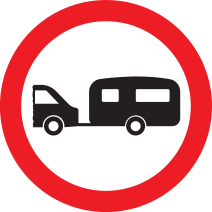
English • GB diagram 622.7 • No towed caravans. Towed caravans are prohibited; this symbol does not prohibit every vehicle with a trailer.
Sources
🔗 Commons.wikimedia.org
🔗 Legislation.gov.uk • Traffic Signs Regulations and General Directions • Great Britain
🔗 Gov.uk • Department for Transport • Know your traffic signs
SVG source: UK Government • Public domain • Original revision 2011-11-12. Wikimedia original unmodified.
63. Bus interdits
Ce panneau indique que les bus sont interdits. Cela signifie que les bus ne sont pas autorisés à entrer ou circuler au-delà du panneau. Seuls les bus (généralement de transport public ou de grand gabarit) sont interdits. Les autres véhicules (voitures, camions, etc.) peuvent être autorisés sauf restriction supplémentaire.
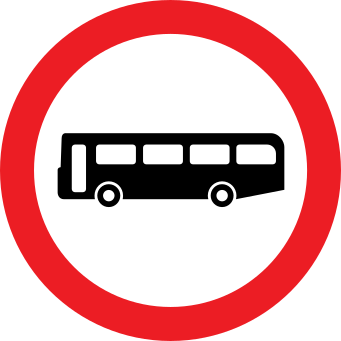
English • GB diagram 952 • No buses. Buses with more than eight passenger seats are prohibited, subject to any signed exemption.
Sources
🔗 Commons.wikimedia.org
🔗 Legislation.gov.uk • Traffic Signs Regulations and General Directions • Great Britain
🔗 Gov.uk • Department for Transport • Know your traffic signs
SVG source: UK Government • Public domain • Original revision 2011-11-13. Wikimedia original unmodified.
64. Équidés interdits
Ce panneau de signalisation indique que les cavaliers sont interdits. Cela signifie que les cavaliers (personnes à cheval) ne sont pas autorisés au-delà de ce point. Les autres usagers (piétons, cyclistes, véhicules) peuvent être autorisés sauf indication contraire.
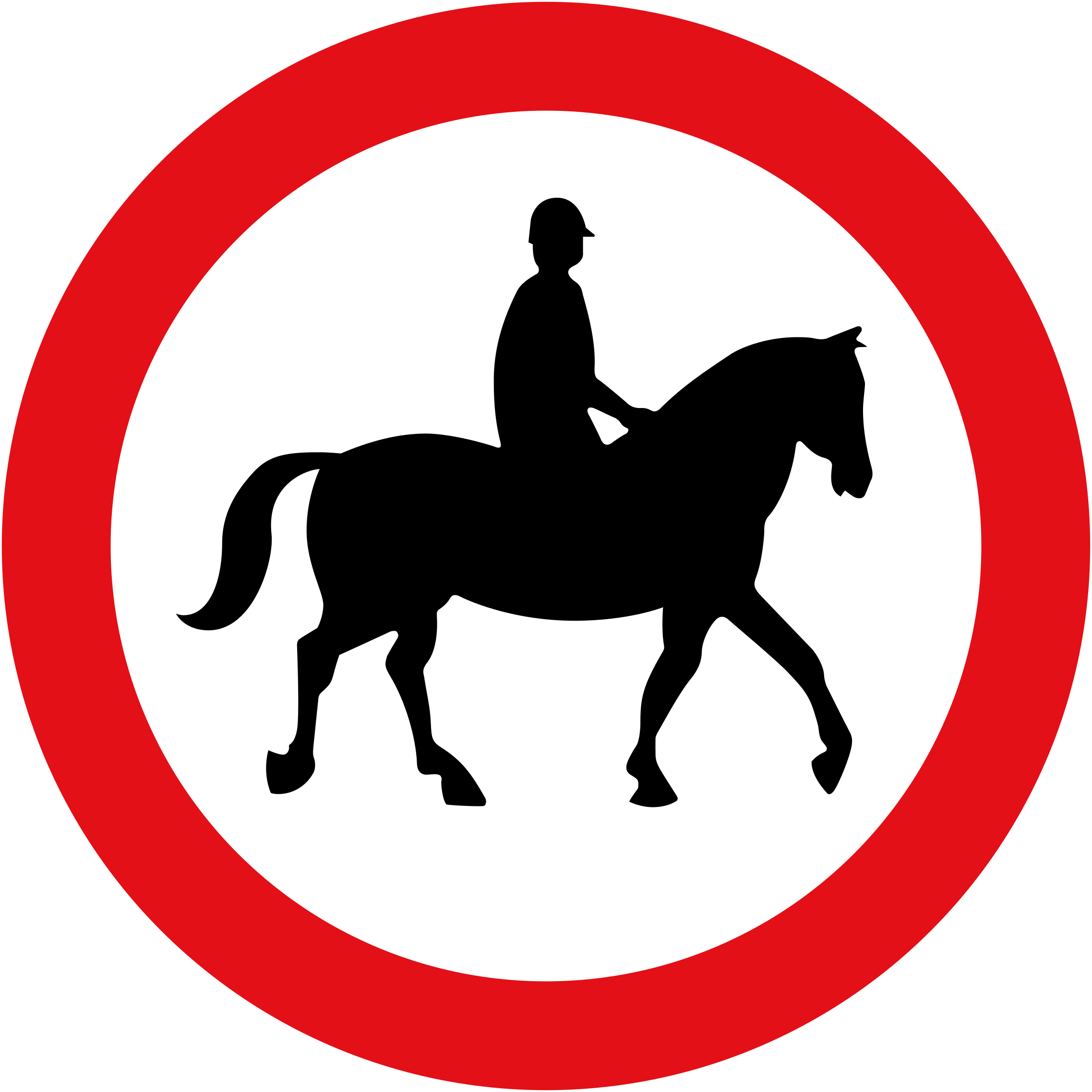
English • GB diagram 622.6 • No ridden or accompanied horses. Ridden or accompanied horses are prohibited.
Sources
🔗 Commons.wikimedia.org (Government of the United Kingdom – Department for Transport • Crown copyright • OGL v1.0)
🔗 Legislation.gov.uk • Traffic Signs Regulations and General Directions • Great Britain
🔗 Gov.uk • Department for Transport • Know your traffic signs
SVG source: Government of the United Kingdom – Department for Transport • OGL v1.0 • Original revision 2021-07-14. Wikimedia original unmodified. © Crown copyright. Traffic signs are Crown copyright. You may reproduce traffic signs free of charge and without having to seek permission, but you must reproduce them accurately and not in a misleading context (e.g. not on roadside billboards where they could mislead drivers). (ref [1])
Artwork verified against Gov.uk • official published diagram 622.6.
Current design and permitted variants verified against Legislation.gov.uk • TSRGD, current text.
65. Véhicules hippomobiles interdits
Ce panneau de signalisation indique que les charrettes à chevaux sont interdites. Cela signifie que les véhicules hippomobiles, comme les charrettes à chevaux, ne sont pas autorisés au-delà de ce point. Les autres véhicules (voitures, vélos, etc.) peuvent être autorisés sauf restriction par d'autres panneaux.
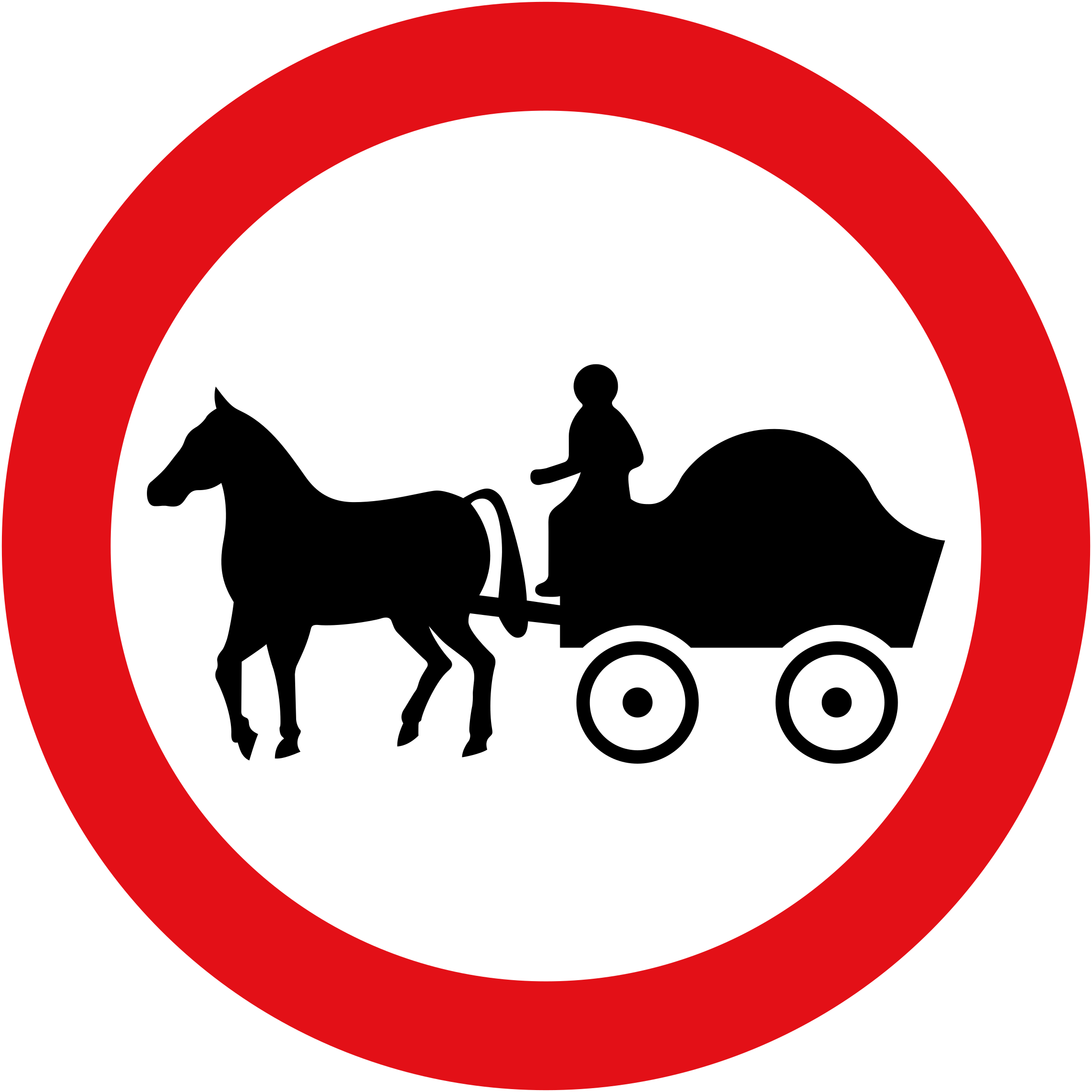
English • GB diagram 622.5 • No horse-drawn vehicles. Horse-drawn vehicles are prohibited.
Sources
🔗 Commons.wikimedia.org (Government of the United Kingdom – Department for Transport • Crown copyright • OGL v1.0)
🔗 Legislation.gov.uk • Traffic Signs Regulations and General Directions • Great Britain
🔗 Gov.uk • Department for Transport • Know your traffic signs
SVG source: Government of the United Kingdom – Department for Transport • OGL v1.0 • Original revision 2021-07-15. Wikimedia original unmodified. © Crown copyright. Traffic signs are Crown copyright. You may reproduce traffic signs free of charge and without having to seek permission, but you must reproduce them accurately and not in a misleading context (e.g. not on roadside billboards where they could mislead drivers). (ref [1])
Artwork verified against Gov.uk • official published diagram 622.5.
Current design and permitted variants verified against Legislation.gov.uk • TSRGD, current text.
66. Interdiction de motos et de voitures
Ce panneau de signalisation indique que les motos et les voitures sont interdites. Cela signifie que les motos et les voitures particulières ne sont pas autorisées au-delà de ce point. Les autres usagers (comme les cyclomoteurs, vélos, piétons ou tracteurs) peuvent être autorisés sauf indication contraire.
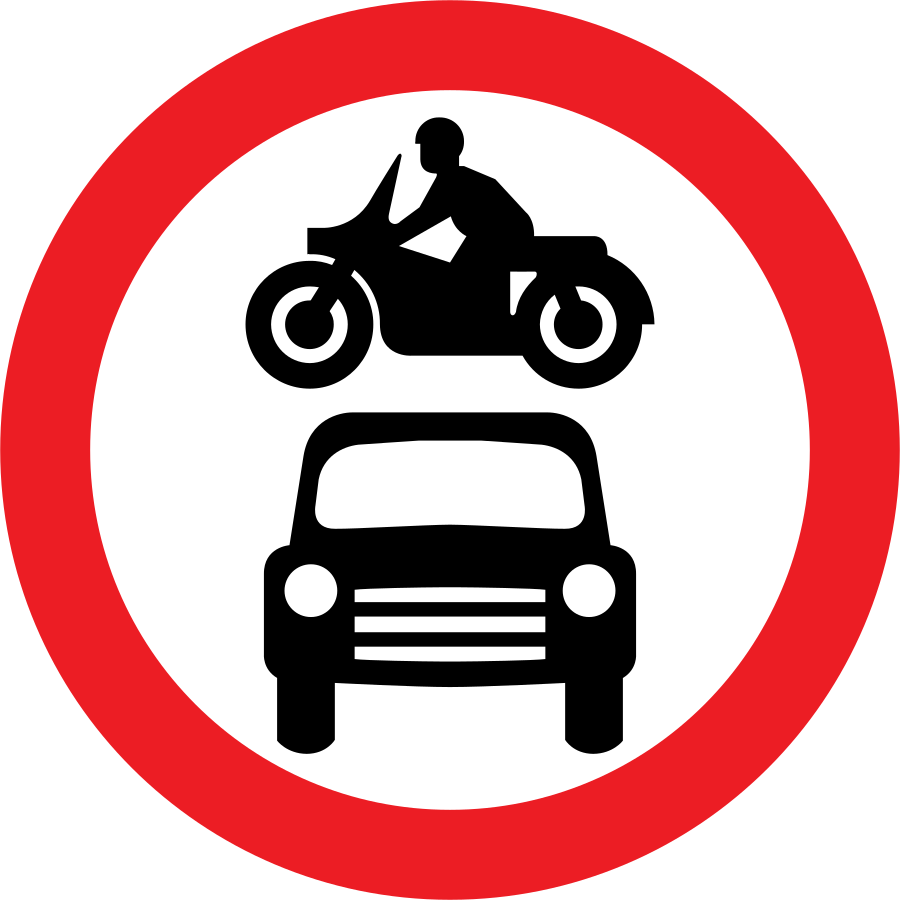
English • GB diagram 619 • No motor vehicles. Motor vehicles are prohibited. In Great Britain, electric scooters used in authorised trials are excepted where applicable; any signed exemptions must also be observed.
Sources
🔗 Commons.wikimedia.org
🔗 Legislation.gov.uk • Traffic Signs Regulations and General Directions • Great Britain
🔗 Gov.uk • Department for Transport • Know your traffic signs
SVG source: UK Government • Public domain • Original revision 2014-09-22. Wikimedia original unmodified.
Artwork verified against Legislation.gov.uk • official published diagram 619.
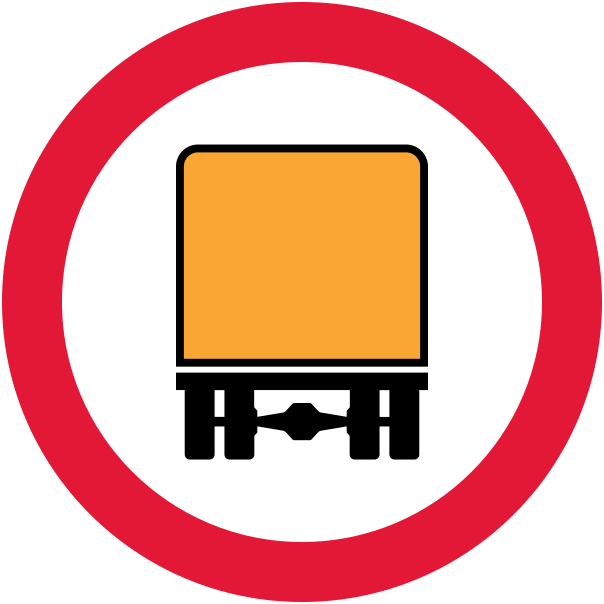
67. Véhicules transportant des matières dangereuses interdits
Ce panneau de signalisation indique que les véhicules transportant des matières dangereuses sont interdits. Cela signifie que les véhicules transportant des marchandises dangereuses ne sont pas autorisés à passer au-delà de ce panneau.
Sources
SVG source: UK Government • Public domain • Original revision 2023-10-09. Wikimedia original unmodified.
68. Véhicules transportant des explosifs interdits
Ce panneau de signalisation indique que les véhicules transportant des matières explosives sont interdits. Cela signifie que les véhicules transportant des substances explosives (comme des munitions, feux d’artifice ou explosifs) ne peuvent pas aller au-delà de ce point.
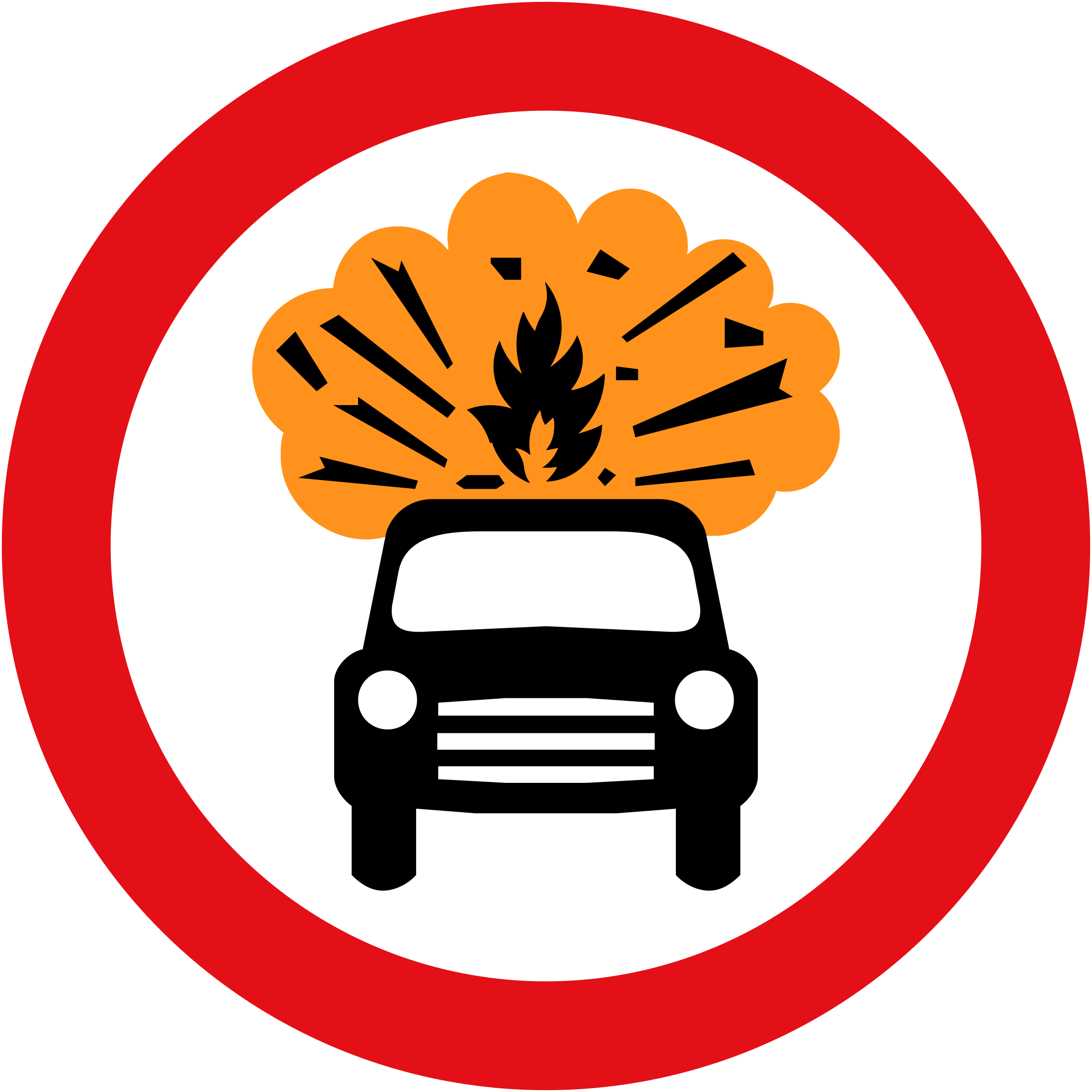
English • GB diagram 622.8 • No vehicles carrying explosives. Vehicles carrying explosives must not proceed. A supplementary plate may specify explosives or inflammables and explosives.
Sources
🔗 Commons.wikimedia.org (Government of the United Kingdom – Department for Transport • Crown copyright • OGL v1.0)
🔗 Legislation.gov.uk • Traffic Signs Regulations and General Directions • Great Britain
🔗 Gov.uk • Department for Transport • Know your traffic signs
SVG source: Government of the United Kingdom – Department for Transport • OGL v1.0 • Original revision 2021-08-01. Wikimedia original unmodified. © Crown copyright. Traffic signs are Crown copyright. You may reproduce traffic signs free of charge and without having to seek permission, but you must reproduce them accurately and not in a misleading context (e.g. not on roadside billboards where they could mislead drivers). (ref [1])
Artwork verified against Gov.uk • official published diagram 622.8.
Current design and permitted variants verified against Legislation.gov.uk • TSRGD, current text.
69. Véhicules de plus de la largeur indiquée interdits
Ce panneau indique que les véhicules plus larges que la limite indiquée sont interdits. Cela signifie que les véhicules dépassant la largeur spécifiée ne sont pas autorisés au-delà de ce point, généralement afin d'éviter un blocage ou des dommages dans des espaces étroits. Les véhicules d'une largeur égale ou inférieure à la limite sont autorisés. Courant dans : rues étroites, centres historiques, tunnels ou voies à gabarit réduit.
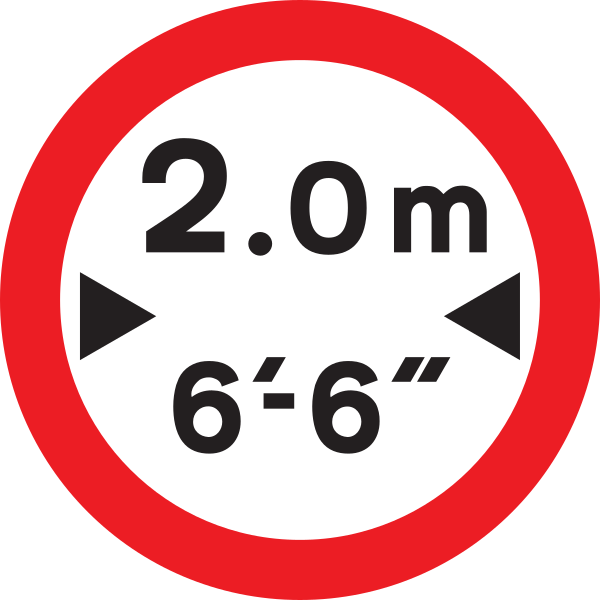
English • GB diagram 629A • Maximum width. Vehicles wider than the stated 2.0 m / 6 ft 6 in must not proceed. Include the load when checking width.
Sources
🔗 Commons.wikimedia.org
🔗 Legislation.gov.uk • Traffic Signs Regulations and General Directions • Great Britain
🔗 Gov.uk • Department for Transport • Know your traffic signs
SVG source: UK Government • Public domain • Original revision 2011-12-10. Wikimedia original unmodified.
70. Véhicules de plus de la hauteur indiquée interdits
Ce panneau de signalisation indique que les véhicules plus hauts que la hauteur indiquée sont interdits. Cela signifie que les véhicules dépassant la hauteur spécifiée ne peuvent pas passer au-delà de ce point en raison de limitations de hauteur, par exemple : ponts, tunnels, passages supérieurs ou autres structures basses. Les véhicules à hauteur égale ou inférieure à la limite sont autorisés.
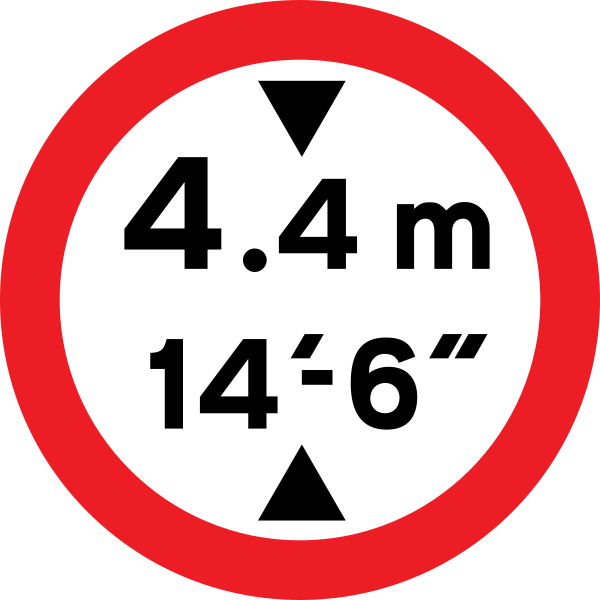
English • GB diagram 629.2A • Maximum height. Vehicles higher than the stated 4.4 m / 14 ft 6 in must not proceed. Include the load when checking height.
Sources
🔗 Commons.wikimedia.org
🔗 Legislation.gov.uk • Traffic Signs Regulations and General Directions • Great Britain
🔗 Gov.uk • Department for Transport • Know your traffic signs
SVG source: UK Government • Public domain • Original revision 2011-10-29. Wikimedia original unmodified.
71. Véhicules de plus de la longueur indiquée interdits
Ce panneau de signalisation indique que les véhicules plus longs que la longueur indiquée sont interdits. Cela signifie que les véhicules dépassant une certaine longueur ne peuvent pas continuer au-delà de ce point. Utilisé pour empêcher les véhicules trop longs d'entrer sur des routes inadaptées à leur rayon de braquage, à leur largeur ou à leurs exigences de sécurité. Les véhicules dont la longueur est égale ou inférieure à la limite peuvent circuler.
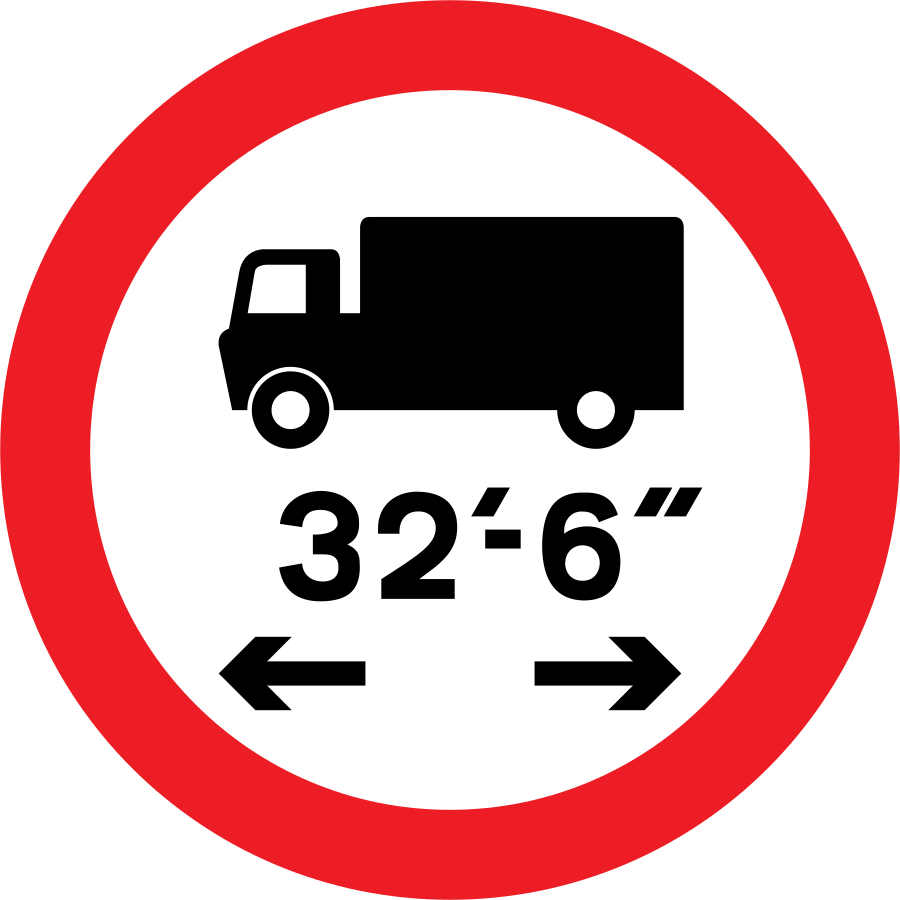
English • GB diagram 629.1 • Maximum length. Vehicles or combinations longer than 32 ft 6 in must not proceed. This imperial-only artwork is an older sign type; current new signs display both metric and imperial dimensions.
Sources
🔗 Commons.wikimedia.org
🔗 Legislation.gov.uk • Traffic Signs Regulations and General Directions • Great Britain
🔗 Gov.uk • Department for Transport • Know your traffic signs
🔗 Legislation.gov.uk • Retention of existing signs • regulation 14
🔗 Legislation.gov.uk • Earlier prescribed signs • TSRGD 2002
Image via Commons.wikimedia.org
UK Government • Public domain • Source revision 2014-09-30. Wikimedia original unmodified.
72. Véhicules de plus du poids indiqué interdits
Ce panneau de signalisation indique que les véhicules plus lourds que le poids indiqué sont interdits. Cela signifie que tout véhicule dont le poids total dépasse la limite indiquée ne peut pas aller au-delà de ce point. Généralement utilisé aux ponts et autres structures qui ne peuvent supporter de lourdes charges ou pour restreindre les camions lourds sur certaines routes. Les véhicules plus légers (à la limite ou en dessous) sont autorisés.
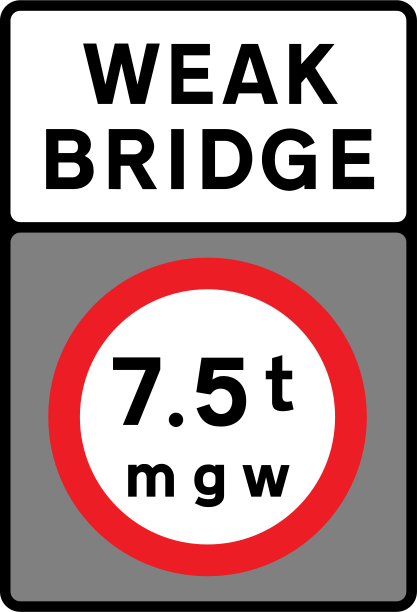
English • GB diagram 626.2A • Weak bridge — maximum gross weight. Vehicles with a maximum gross weight exceeding 7.5 tonnes must not cross the bridge. The limit refers to maximum gross weight, not merely the load currently carried. This artwork does not show an exemption for empty vehicles.
Sources
🔗 Commons.wikimedia.org (Martinvl • Crown copyright • OGL v1.0)
🔗 Legislation.gov.uk • Traffic Signs Regulations and General Directions • Great Britain
🔗 Gov.uk • Department for Transport • Know your traffic signs
SVG source: Martinvl • OGL v1.0 • Original revision 2015-01-05. Wikimedia original unmodified. © Crown copyright. Traffic signs are Crown copyright. You may reproduce traffic signs free of charge and without having to seek permission, but you must reproduce them accurately and not in a misleading context (e.g. not on roadside billboards where they could mislead drivers). (ref [1])
Artwork verified against Gov.uk • official published diagram 626.2A.
Current design and permitted variants verified against Legislation.gov.uk • TSRGD, current text.
73. Camions plus lourds que l’indication interdits
Ce panneau de signalisation indique que les camions dépassant le poids indiqué sont interdits. Cela signifie que les camions dont le poids total autorisé en charge (PTAC) dépasse la limite spécifiée ne sont pas autorisés au-delà du panneau. Les camions plus légers et les autres véhicules (voitures, utilitaires, motos) sont autorisés sauf indication contraire. Utilisé pour protéger : routes fragiles, ponts, zones urbaines ou limiter le trafic de poids lourds en zone résidentielle ou sensible.
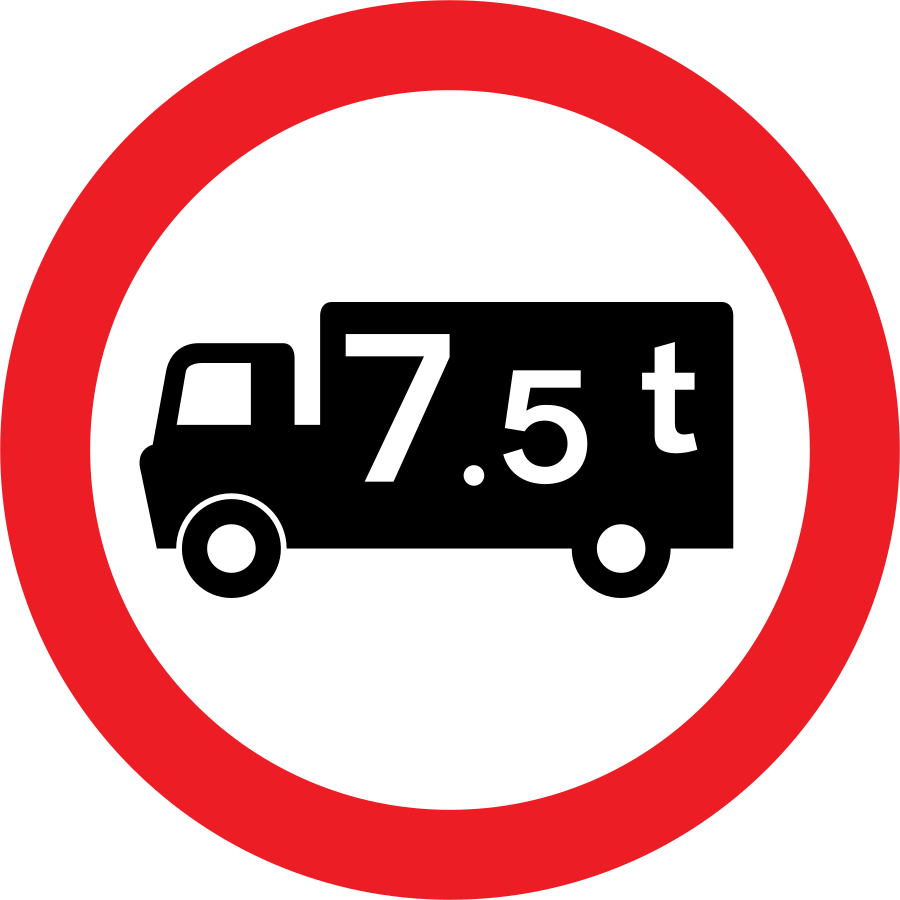
English • GB diagram 622.1A • Goods vehicle weight restriction. Goods vehicles with a maximum gross weight exceeding 7.5 tonnes are prohibited. Read any accompanying exemption, such as access or loading.
Sources
🔗 Commons.wikimedia.org (Martinvl • Crown copyright • OGL v1.0)
🔗 Legislation.gov.uk • Traffic Signs Regulations and General Directions • Great Britain
🔗 Gov.uk • Department for Transport • Know your traffic signs
SVG source: Martinvl • OGL v1.0 • Original revision 2015-01-05. Wikimedia original unmodified. © Crown copyright. Traffic signs are Crown copyright. You may reproduce traffic signs free of charge and without having to seek permission, but you must reproduce them accurately and not in a misleading context (e.g. not on roadside billboards where they could mislead drivers). (ref )
Artwork verified against Gov.uk • official published diagram 622.1A.
Current design and permitted variants verified against Legislation.gov.uk • TSRGD, current text.
74. Rétrécissement : cédez le passage au trafic opposé
Ce panneau de signalisation indique un rétrécissement de la chaussée où vous devez céder le passage aux véhicules venant en sens inverse. Il signale un rétrécissement de la route où vous devez céder le passage à la circulation en sens opposé. Il est généralement utilisé lorsque la route devient trop étroite pour permettre à deux véhicules de se croiser simultanément.
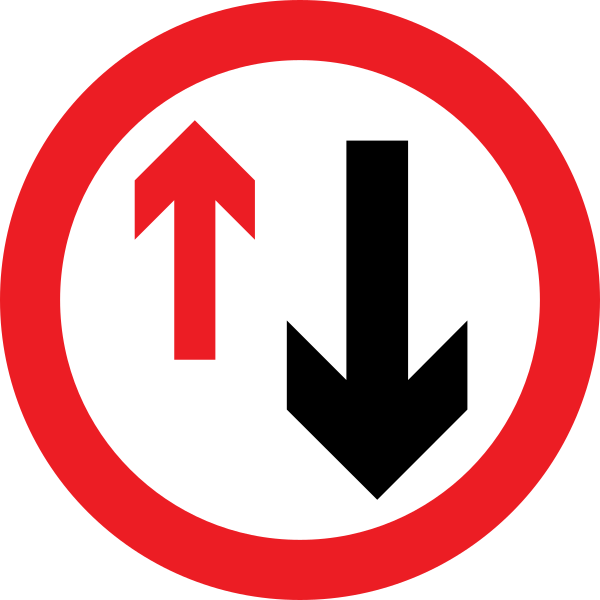
English • GB diagram 615 • Give way to oncoming vehicles. You must give priority to vehicles approaching from the opposite direction at the narrow section.
Sources
🔗 Commons.wikimedia.org
🔗 Legislation.gov.uk • Traffic Signs Regulations and General Directions • Great Britain
🔗 Gov.uk • Department for Transport • Know your traffic signs
SVG source: UK Government • Public domain • Original revision 2011-01-20. Wikimedia original unmodified.
75. Interdiction de tourner à gauche
Ce panneau de signalisation indique que le virage à gauche est interdit. Cela signifie que les virages à gauche ne sont pas autorisés à l’intersection ou au carrefour où le panneau est affiché. Aller tout droit ou tourner à droite peut être autorisé (sauf indication contraire).
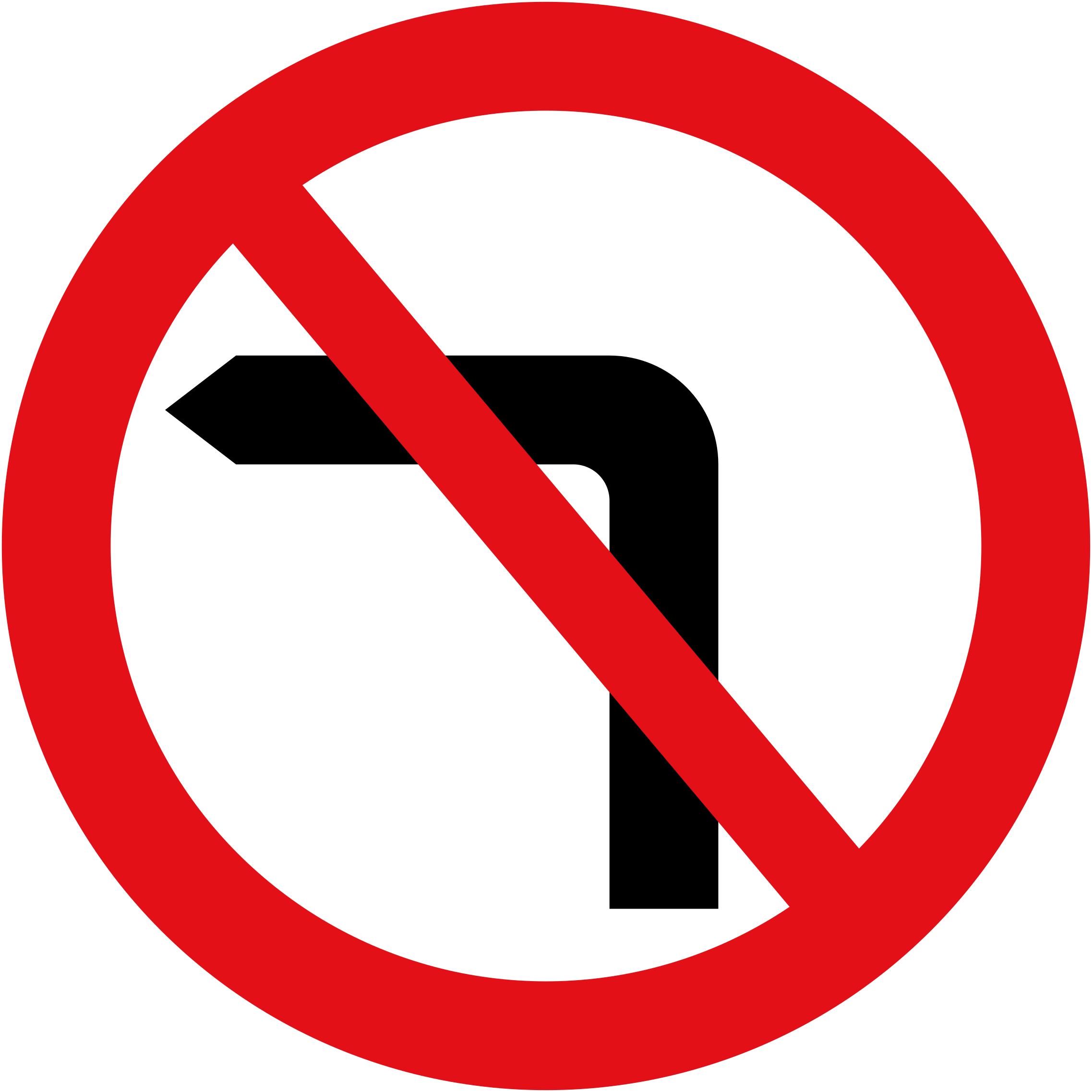
English • GB diagram 613 • No left turn. Vehicular traffic must not turn left at the junction, subject to any signed exemption.
Sources
🔗 Commons.wikimedia.org (Government of the United Kingdom – Department for Transport • Crown copyright • OGL v1.0)
🔗 Legislation.gov.uk • Traffic Signs Regulations and General Directions • Great Britain
🔗 Gov.uk • Department for Transport • Know your traffic signs
SVG source: Government of the United Kingdom – Department for Transport • OGL v1.0 • Original revision 2021-07-06. Wikimedia original unmodified. © Crown copyright. Traffic signs are Crown copyright. You may reproduce traffic signs free of charge and without having to seek permission, but you must reproduce them accurately and not in a misleading context (e.g. not on roadside billboards where they could mislead drivers). (ref [1])
Artwork verified against Gov.uk • official published diagram 613.
Current design and permitted variants verified against Legislation.gov.uk • TSRGD, current text.
76. Interdiction de tourner à droite
Ce panneau de signalisation indique qu'il est interdit de tourner à droite. Cela signifie que les virages à droite ne sont pas autorisés au prochain carrefour ou à la prochaine intersection. Les conducteurs peuvent toujours aller tout droit ou tourner à gauche (sauf indication contraire).
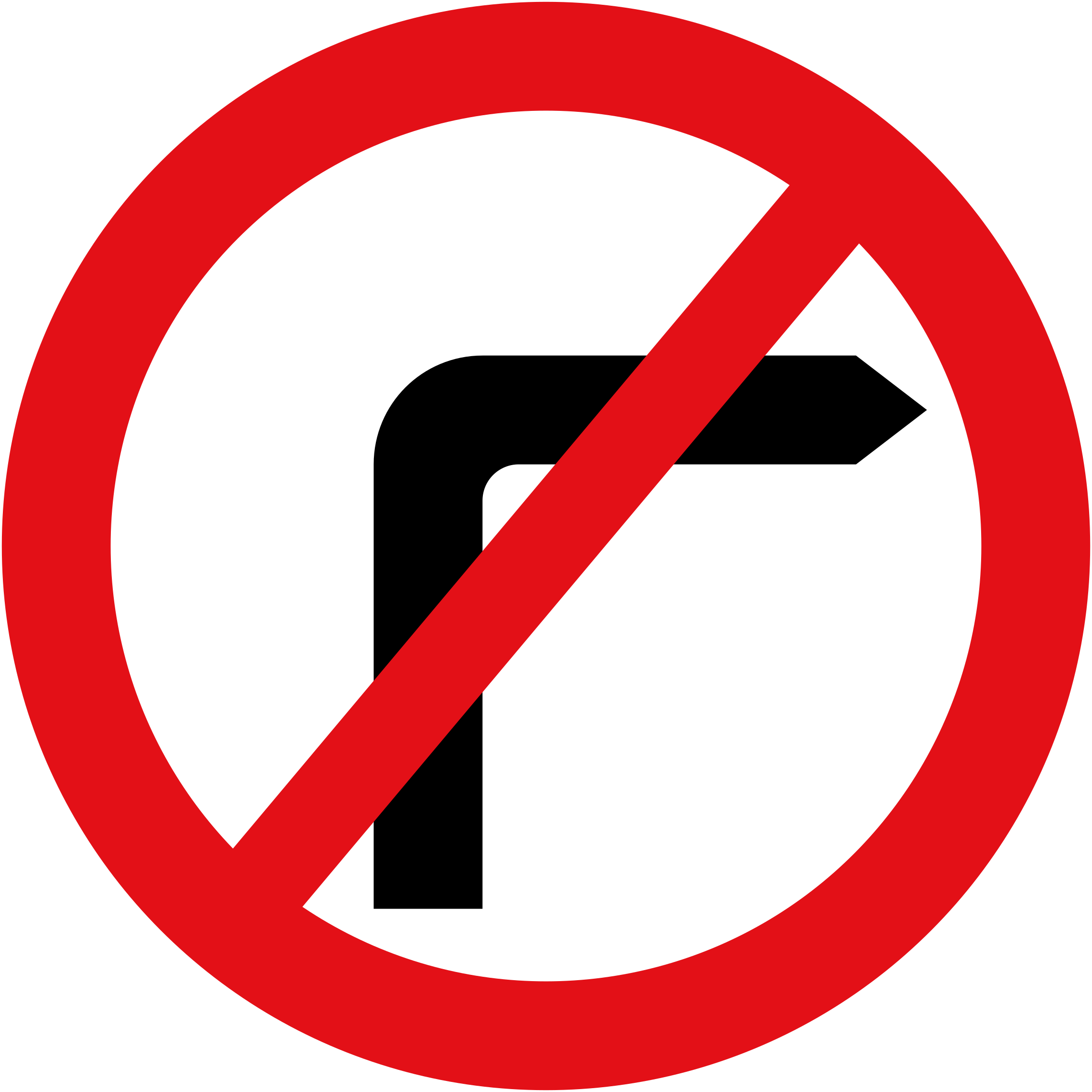
English • GB diagram 612 • No right turn. Vehicular traffic must not turn right at the junction, subject to any signed exemption.
Sources
🔗 Commons.wikimedia.org (Government of the United Kingdom – Department for Transport • Crown copyright • OGL v1.0)
🔗 Legislation.gov.uk • Traffic Signs Regulations and General Directions • Great Britain
🔗 Gov.uk • Department for Transport • Know your traffic signs
SVG source: Government of the United Kingdom – Department for Transport • OGL v1.0 • Original revision 2021-07-06. Wikimedia original unmodified. © Crown copyright. Traffic signs are Crown copyright. You may reproduce traffic signs free of charge and without having to seek permission, but you must reproduce them accurately and not in a misleading context (e.g. not on roadside billboards where they could mislead drivers). (ref [1])
Artwork verified against Gov.uk • official published diagram 612.
Current design and permitted variants verified against Legislation.gov.uk • TSRGD, current text.
77. Demi-tour interdit
Ce panneau de signalisation indique que le demi-tour est interdit. Cela signifie que les demi-tours ne sont pas autorisés à hauteur ou au-delà de ce panneau. Vous pouvez encore être autorisé à tourner à gauche, à droite, ou à continuer tout droit (sauf restrictions complémentaires).
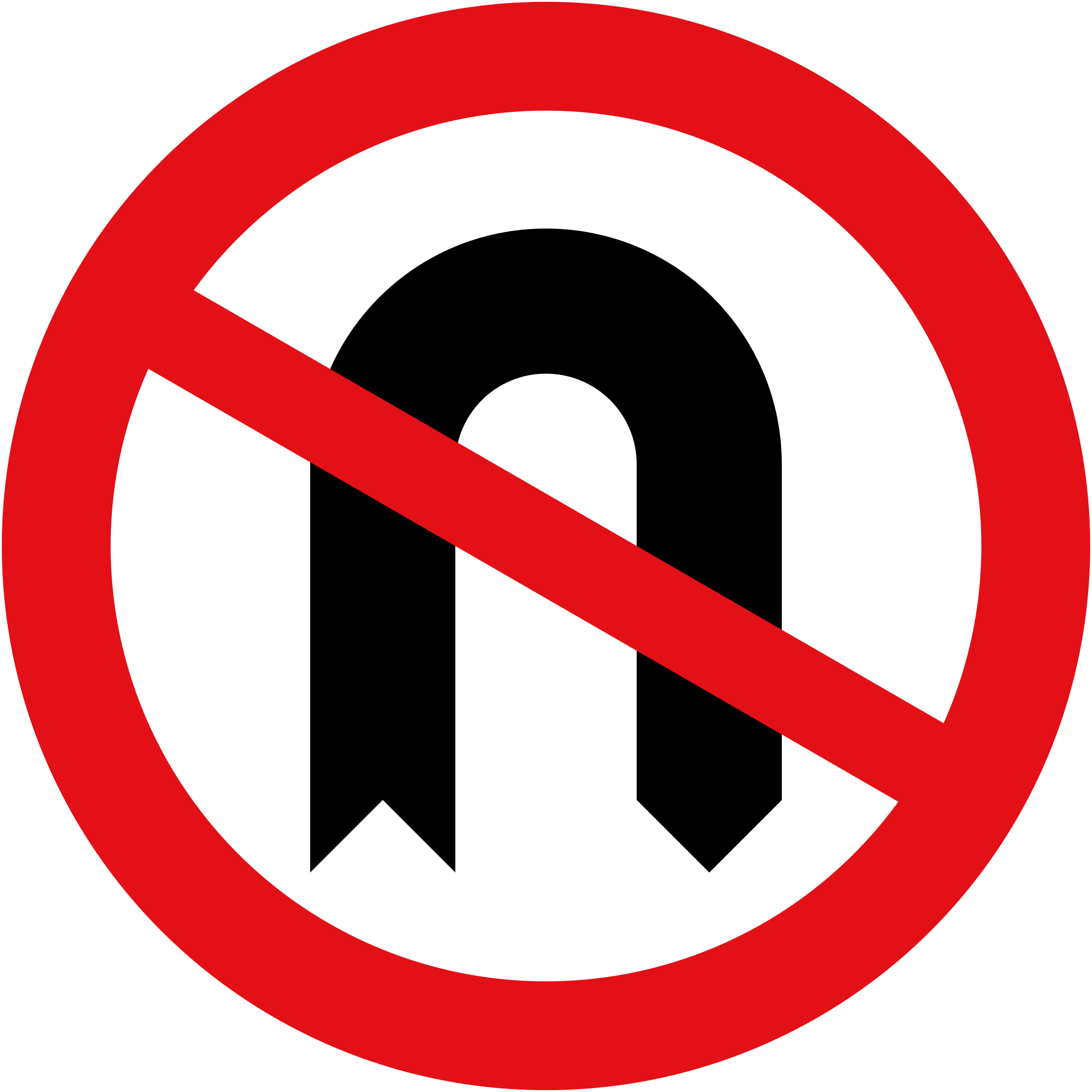
English • GB diagram 614 • No U-turns. Vehicular traffic must not make a U-turn, subject to any signed exemption.
Sources
🔗 Commons.wikimedia.org (Government of the United Kingdom – Department for Transport • Crown copyright • OGL v1.0)
🔗 Legislation.gov.uk • Traffic Signs Regulations and General Directions • Great Britain
🔗 Gov.uk • Department for Transport • Know your traffic signs
SVG source: Government of the United Kingdom – Department for Transport • OGL v1.0 • Original revision 2024-11-14. Wikimedia original unmodified. © Crown copyright. Traffic signs are Crown copyright. You may reproduce traffic signs free of charge and without having to seek permission, but you must reproduce them accurately and not in a misleading context (e.g. not on roadside billboards where they could mislead drivers). (ref [1])
Artwork verified against Gov.uk • official published diagram 614.
Current design and permitted variants verified against Legislation.gov.uk • TSRGD, current text.
78. Dépassement interdit
Ce panneau de signalisation indique dépassement interdit. Cela signifie que le dépassement des véhicules à moteur à plus de deux roues est interdit. Vous pouvez toujours dépasser : vélos, cyclomoteurs, ...
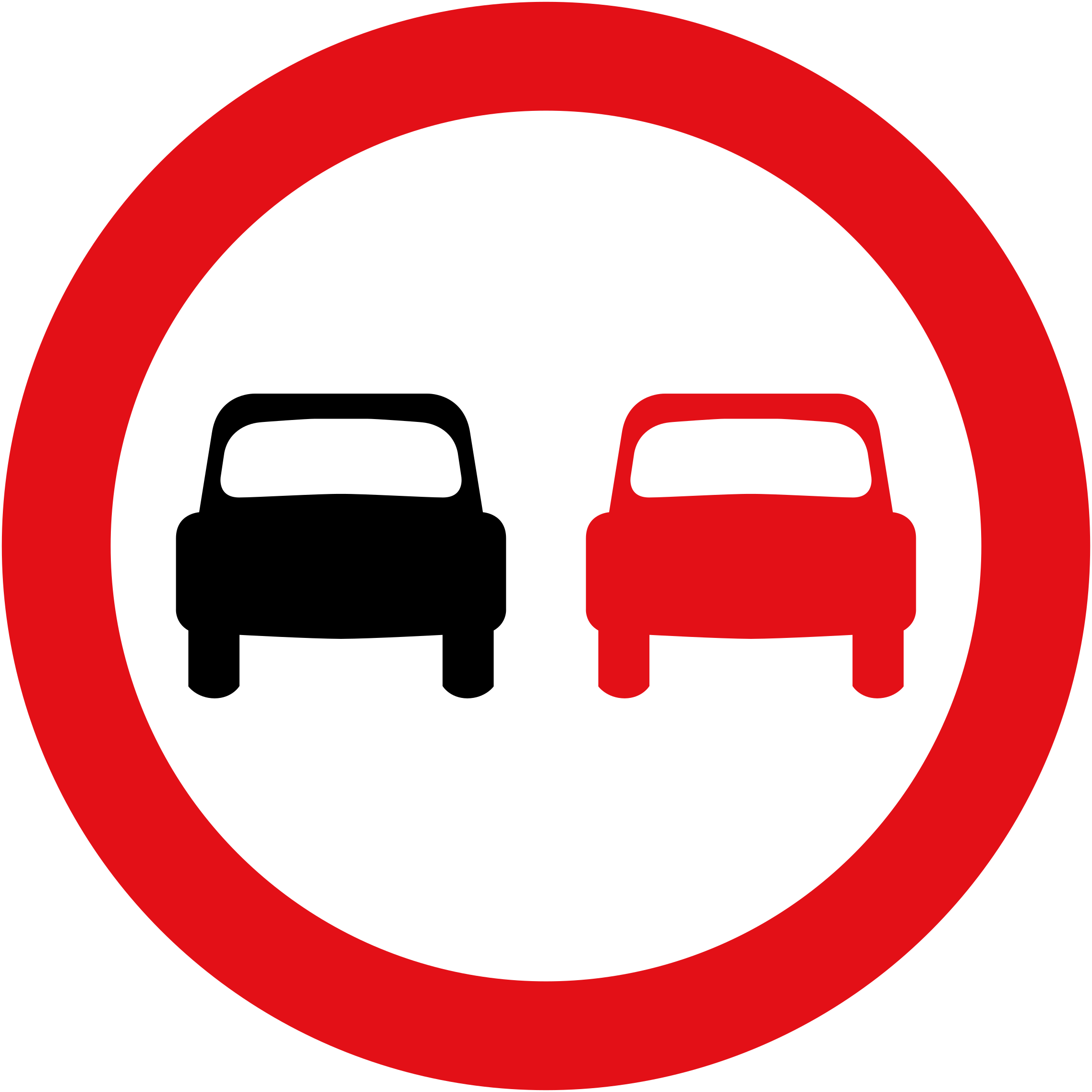
English • GB diagram 632 • No overtaking. Overtaking is prohibited. The depicted cars represent the prohibition rather than limiting it to passenger cars.
Sources
🔗 Commons.wikimedia.org (Government of the United Kingdom – Department for Transport • Crown copyright • OGL v1.0)
🔗 Legislation.gov.uk • Traffic Signs Regulations and General Directions • Great Britain
🔗 Gov.uk • Department for Transport • Know your traffic signs
SVG source: Government of the United Kingdom – Department for Transport • OGL v1.0 • Original revision 2021-07-17. Wikimedia original unmodified. © Crown copyright. Traffic signs are Crown copyright. You may reproduce traffic signs free of charge and without having to seek permission, but you must reproduce them accurately and not in a misleading context (e.g. not on roadside billboards where they could mislead drivers). (ref [1])
Artwork verified against Gov.uk • official published diagram 632.
Current design and permitted variants verified against Legislation.gov.uk • TSRGD, current text.
79. Début d'une limitation de vitesse
Ce panneau de signalisation indique le début d'une limitation de vitesse. Cela signifie le commencement d'une limitation de vitesse maximale que les usagers doivent respecter à partir de ce point, rouler plus vite est interdit. Cela s'applique jusqu'à l'apparition d'un nouveau panneau de limitation de vitesse ou d'un panneau « fin de limitation de vitesse ».
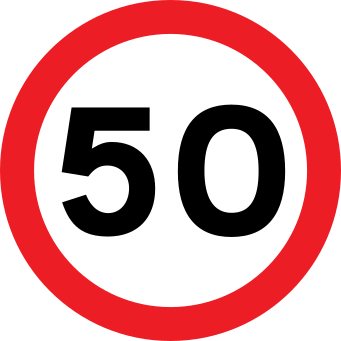
English • GB diagram 670 • Maximum speed limit. The maximum permitted speed is 50 mph. UK speed limit numbers are in miles per hour.
Sources
🔗 Commons.wikimedia.org
🔗 Legislation.gov.uk • Traffic Signs Regulations and General Directions • Great Britain
🔗 Gov.uk • Department for Transport • Know your traffic signs
SVG source: UK Government • Public domain • Original revision 2011-11-12. Wikimedia original unmodified.
80. Début d'une zone à vitesse limitée
Ce panneau de signalisation indique le début d'une zone à limitation de vitesse. Cela signifie le commencement d'une zone (et non d'une simple portion de route) où une limitation de vitesse spécifique s'applique jusqu'à l'apparition d'un panneau de fin de zone. La limite reste en vigueur jusqu'à une signalisation explicite de fin de zone. Utilisé notamment dans : zones résidentielles, abords d'écoles, centres-villes ou zones apaisées.
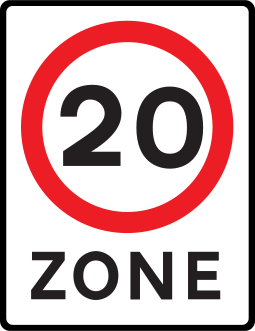
English • GB diagram 674 • 20 mph zone. You are entering a 20 mph zone. The limit continues throughout the zone until its end is signed.
Sources
🔗 Commons.wikimedia.org
🔗 Legislation.gov.uk • Traffic Signs Regulations and General Directions • Great Britain
🔗 Gov.uk • Department for Transport • Know your traffic signs
SVG source: UK Government • Public domain • Original revision 2011-11-13. Wikimedia original unmodified.
Artwork verified against Legislation.gov.uk • official published diagram 674.
81. Fin de la zone avec limitation de vitesse
Ce panneau de signalisation indique la fin de la zone à limitation de vitesse. Cela marque la fin d’une zone où une limite de vitesse spécifique était en vigueur. À partir de ce point, les limitations de vitesse standards ou nouvellement affichées s’appliquent.
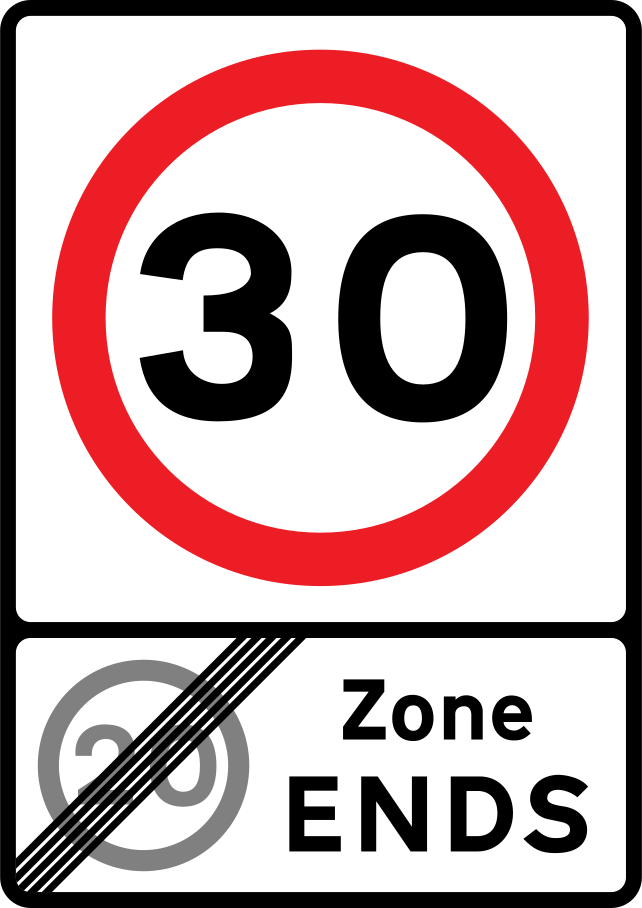
English • GB diagram 675 + 670 • End of 20 mph zone. The 20 mph zone ends here. The upper sign establishes a maximum speed of 30 mph beyond the zone.
Sources
🔗 Commons.wikimedia.org
🔗 Legislation.gov.uk • Traffic Signs Regulations and General Directions • Great Britain
🔗 Gov.uk • Department for Transport • Know your traffic signs
🔗 Legislation.gov.uk • Retention of existing signs • regulation 14
🔗 Legislation.gov.uk • Earlier prescribed signs • TSRGD 2002
SVG source: UK Government • Public domain • Original revision 2011-11-13. Wikimedia original unmodified.
82. Entrée interdite (point de contrôle)
Ce panneau de signalisation indique un poste de contrôle. Cela signifie que l’accès n’est pas autorisé à un poste de contrôle — par exemple : poste-frontière, douane, zone militaire ou zone à accès contrôlé. Accès interdit à tout véhicule et personne non autorisés. L’accès peut être possible uniquement sur autorisation, par exemple : carte d’identité ou passeport valide, documents de fret (pour la douane), accréditation de sécurité.
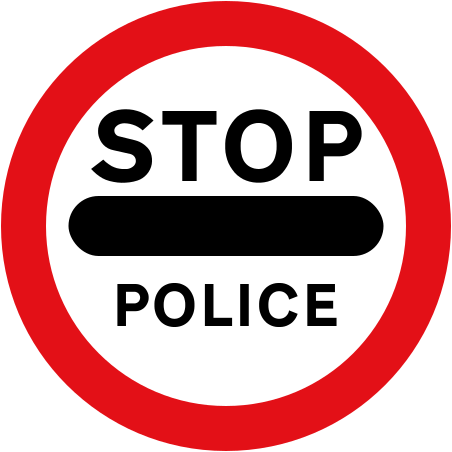
English • GB diagram 633 • Stop — police. You must not proceed beyond this sign when it is displayed by a police officer in uniform or an authorised traffic warden.
Sources
🔗 Commons.wikimedia.org (Government of the United Kingdom – Department for Transport • Crown copyright • OGL v1.0)
🔗 Legislation.gov.uk • Traffic Signs Regulations and General Directions • Great Britain
🔗 Gov.uk • Department for Transport • Know your traffic signs
SVG source: Government of the United Kingdom – Department for Transport • OGL v1.0 • Original revision 2026-07-29. Wikimedia original unmodified. © Crown copyright. Traffic signs are Crown copyright. You may reproduce traffic signs free of charge and without having to seek permission, but you must reproduce them accurately and not in a misleading context (e.g. not on roadside billboards where they could mislead drivers). (ref [1])
Artwork verified against Gov.uk • official published diagram 633.
Current design and permitted variants verified against Legislation.gov.uk • TSRGD, current text.
83. Stationnement interdit
Ce panneau de signalisation indique que le stationnement est interdit. Cela signifie que le stationnement n’est pas autorisé dans la zone où le panneau est placé. Cela s’applique à tous les véhicules, sauf exceptions mentionnées. L’arrêt temporaire (sans quitter le véhicule) peut être autorisé.
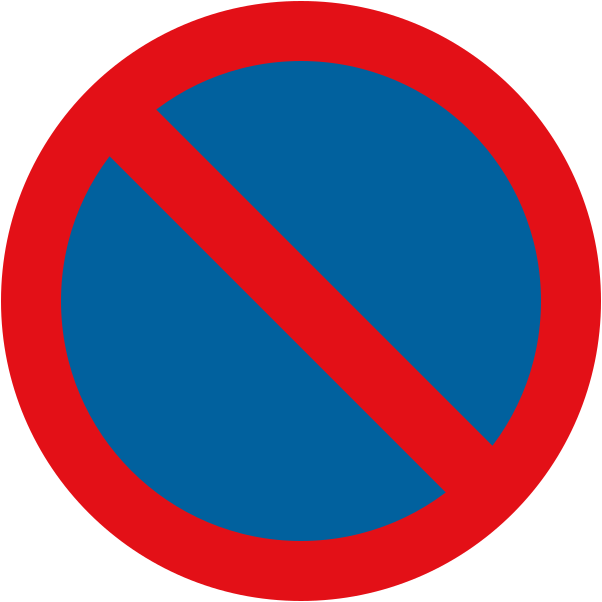
English • TSRGD S4 • No waiting symbol. Waiting is prohibited during the indicated times. Read the accompanying time plate, zone signs and road markings to determine its extent; any loading restriction is separate.
Sources
🔗 Commons.wikimedia.org (Government of the United Kingdom – Department for Transport • Crown copyright • OGL v1.0)
🔗 Legislation.gov.uk • Traffic Signs Regulations and General Directions • Great Britain
🔗 Gov.uk • Department for Transport • Know your traffic signs
SVG source: Government of the United Kingdom – Department for Transport • OGL v1.0 • Original revision 2022-01-23. Wikimedia original unmodified. © Crown copyright. Traffic signs are Crown copyright. You may reproduce traffic signs free of charge and without having to seek permission, but you must reproduce them accurately and not in a misleading context (e.g. not on roadside billboards where they could mislead drivers). (ref [1])
Artwork verified against Legislation.gov.uk • official published diagram 636.
Current design and permitted variants verified against Legislation.gov.uk • TSRGD, current text.
84. Arrêt et stationnement interdits
Ce panneau de signalisation indique que le stationnement et l’arrêt sont interdits. Cela signifie que le stationnement ainsi que l'arrêt du véhicule sont strictement interdits dans la zone où le panneau est placé. Arrêt interdit : il n’est même pas permis de s’arrêter brièvement, même pour déposer ou prendre des passagers. Stationnement interdit : il n’est pas autorisé non plus, car il inclut l’arrêt. Les infractions peuvent entraîner une amende ou une mise en fourrière.
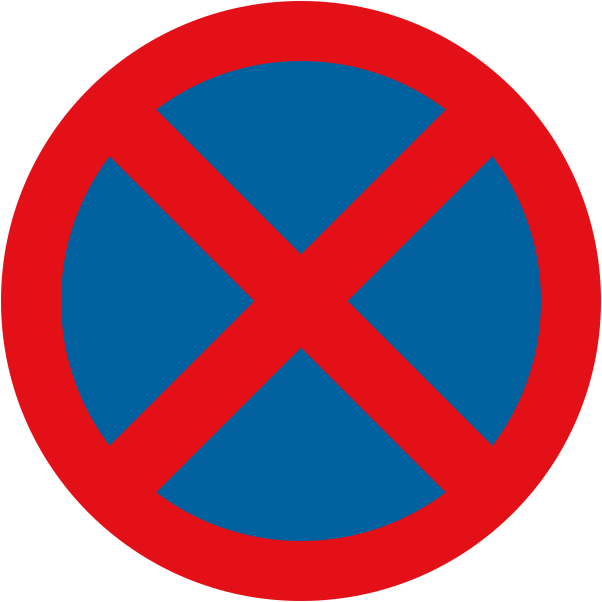
English • GB diagram 642 • No stopping on the main carriageway. This is a clearway restriction: stopping on the main carriageway is prohibited. Observe its signed extent and any statutory exceptions.
Sources
🔗 Commons.wikimedia.org (Government of the United Kingdom – Department for Transport • Crown copyright • OGL v1.0)
🔗 Legislation.gov.uk • Traffic Signs Regulations and General Directions • Great Britain
🔗 Gov.uk • Department for Transport • Know your traffic signs
SVG source: Government of the United Kingdom – Department for Transport • OGL v1.0 • Original revision 2022-01-23. Wikimedia original unmodified. © Crown copyright. Traffic signs are Crown copyright. You may reproduce traffic signs free of charge and without having to seek permission, but you must reproduce them accurately and not in a misleading context (e.g. not on roadside billboards where they could mislead drivers). (ref [1])
Artwork verified against Gov.uk • official published diagram 642.
Current design and permitted variants verified against Legislation.gov.uk • TSRGD, current text.
85. Sens obligatoire du rond-point
Ce panneau de signalisation indique une obligation de suivre le sens du rond-point. Vous êtes tenu d’entrer et de circuler dans le rond-point dans le sens indiqué. Tourner à gauche, à droite ou aller tout droit sans suivre le rond-point est interdit.
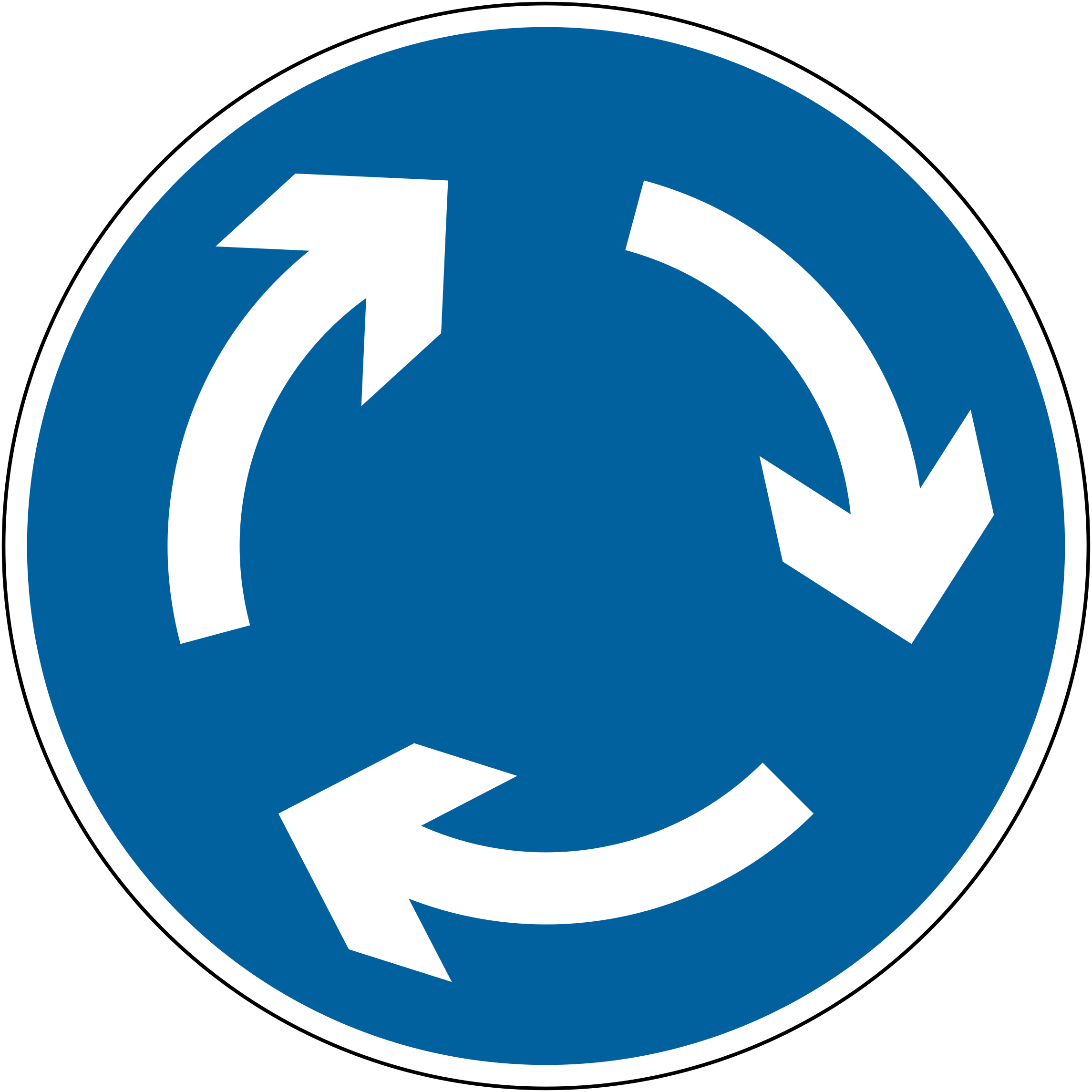
English • GB diagram 611.1 • Mini-roundabout. Give priority to traffic from the right at the give-way markings. Pass to the left of the central white circle and circulate clockwise, unless the size of the vehicle or layout makes passing to the left impracticable.
Sources
🔗 Commons.wikimedia.org (Government of the United Kingdom – Department for Transport • Crown copyright • OGL v1.0)
🔗 Legislation.gov.uk • Traffic Signs Regulations and General Directions • Great Britain
🔗 Gov.uk • Department for Transport • Know your traffic signs
SVG source: Government of the United Kingdom – Department for Transport • OGL v1.0 • Original revision 2021-12-21. Wikimedia original unmodified. © Crown copyright. Traffic signs are Crown copyright. You may reproduce traffic signs free of charge and without having to seek permission, but you must reproduce them accurately and not in a misleading context (e.g. not on roadside billboards where they could mislead drivers). (ref [1])
Artwork verified against Gov.uk • official published diagram 611.1.
Current design and permitted variants verified against Legislation.gov.uk • TSRGD, current text.
86. Obligation de tourner à gauche
Ce panneau de signalisation indique que le virage à gauche est obligatoire. Cela signifie que toute la circulation doit tourner à gauche à la prochaine intersection ou carrefour. Aller tout droit ou tourner à droite est interdit. Cela permet d'assurer la circulation et la sécurité aux intersections.
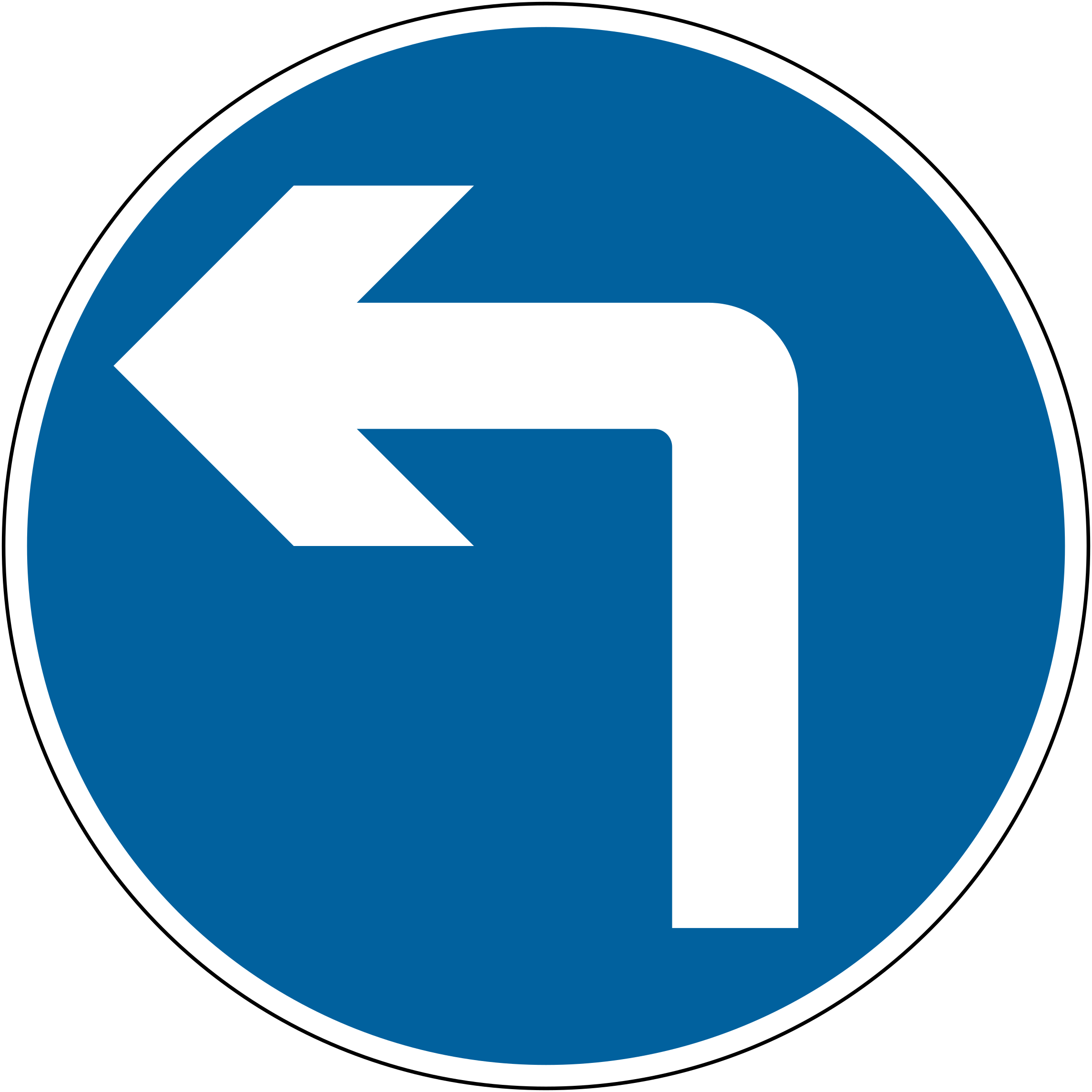
English • GB diagram 609 • Turn left ahead. Vehicular traffic must turn left ahead, subject to any signed exemption.
Sources
🔗 Commons.wikimedia.org (Government of the United Kingdom – Department for Transport • Crown copyright • OGL v1.0)
🔗 Legislation.gov.uk • Traffic Signs Regulations and General Directions • Great Britain
🔗 Gov.uk • Department for Transport • Know your traffic signs
SVG source: Government of the United Kingdom – Department for Transport • OGL v1.0 • Original revision 2021-12-18. Wikimedia original unmodified. © Crown copyright. Traffic signs are Crown copyright. You may reproduce traffic signs free of charge and without having to seek permission, but you must reproduce them accurately and not in a misleading context (e.g. not on roadside billboards where they could mislead drivers). (ref [1])
Artwork verified against Gov.uk • official published diagram 609.
Current design and permitted variants verified against Legislation.gov.uk • TSRGD, current text.
87. Obligation de tourner à droite
Ce panneau de signalisation indique qu'il est obligatoire de tourner à droite. Cela signifie que tous les véhicules doivent tourner à droite à la prochaine intersection ou au carrefour. Aller tout droit ou à gauche n'est pas autorisé.
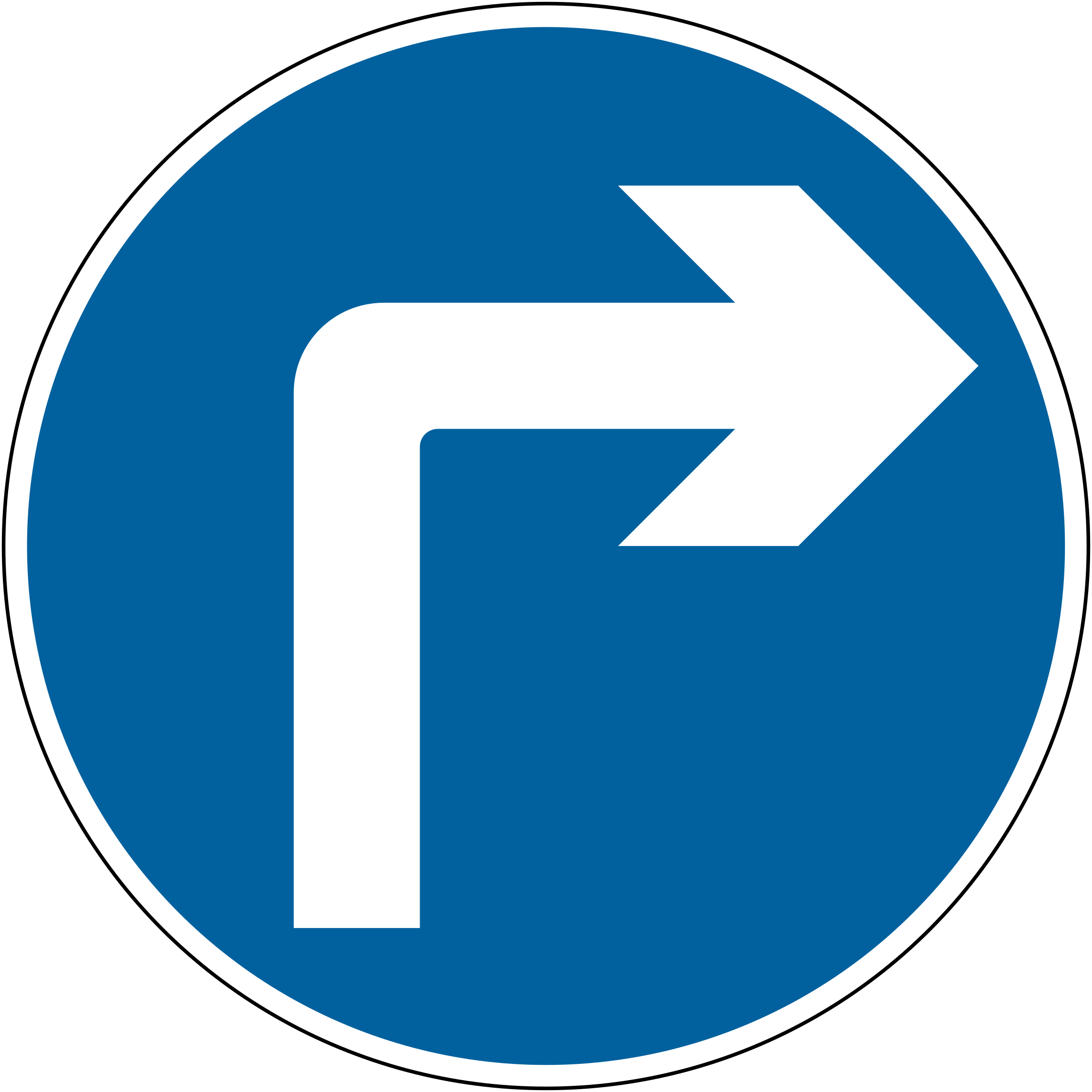
English • GB diagram 609 • Turn right ahead. Vehicular traffic must turn right ahead, subject to any signed exemption.
Sources
🔗 Commons.wikimedia.org (Government of the United Kingdom – Department for Transport • Crown copyright • OGL v1.0)
🔗 Legislation.gov.uk • Traffic Signs Regulations and General Directions • Great Britain
🔗 Gov.uk • Department for Transport • Know your traffic signs
SVG source: Government of the United Kingdom – Department for Transport • OGL v1.0 • Original revision 2021-12-18. Wikimedia original unmodified. © Crown copyright. Traffic signs are Crown copyright. You may reproduce traffic signs free of charge and without having to seek permission, but you must reproduce them accurately and not in a misleading context (e.g. not on roadside billboards where they could mislead drivers). (ref [1])
Artwork verified against Gov.uk • official published diagram 609.
Current design and permitted variants verified against Legislation.gov.uk • TSRGD, current text.
88. Contourner l'obstacle par la gauche
Ce panneau de signalisation indique que la circulation doit contourner l’obstacle par la gauche. Restez à gauche de l’obstacle et suivez les éventuels marquages ou panneaux complémentaires.
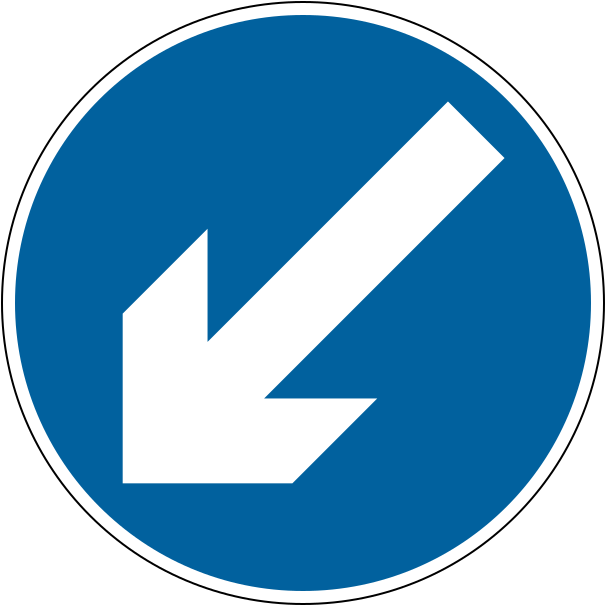
English • GB diagram 610 • Keep left. Traffic must pass to the left of the sign or obstruction, following the arrow.
Sources
🔗 Commons.wikimedia.org (Government of the United Kingdom – Department for Transport • Crown copyright • OGL v1.0)
🔗 Legislation.gov.uk • Traffic Signs Regulations and General Directions • Great Britain
🔗 Gov.uk • Department for Transport • Know your traffic signs
SVG source: Government of the United Kingdom – Department for Transport • OGL v1.0 • Original revision 2022-01-17. Wikimedia original unmodified. © Crown copyright. Traffic signs are Crown copyright. You may reproduce traffic signs free of charge and without having to seek permission, but you must reproduce them accurately and not in a misleading context (e.g. not on roadside billboards where they could mislead drivers). (ref [1])
Artwork verified against Gov.uk • official published diagram 610.
Current design and permitted variants verified against Legislation.gov.uk • TSRGD, current text.
89. Contourner l'obstacle par la gauche ou la droite
Ce panneau de signalisation indique que la circulation doit contourner l’obstacle par la gauche ou par la droite. Utilisez l’un des côtés autorisés en suivant l’aménagement et la signalisation.
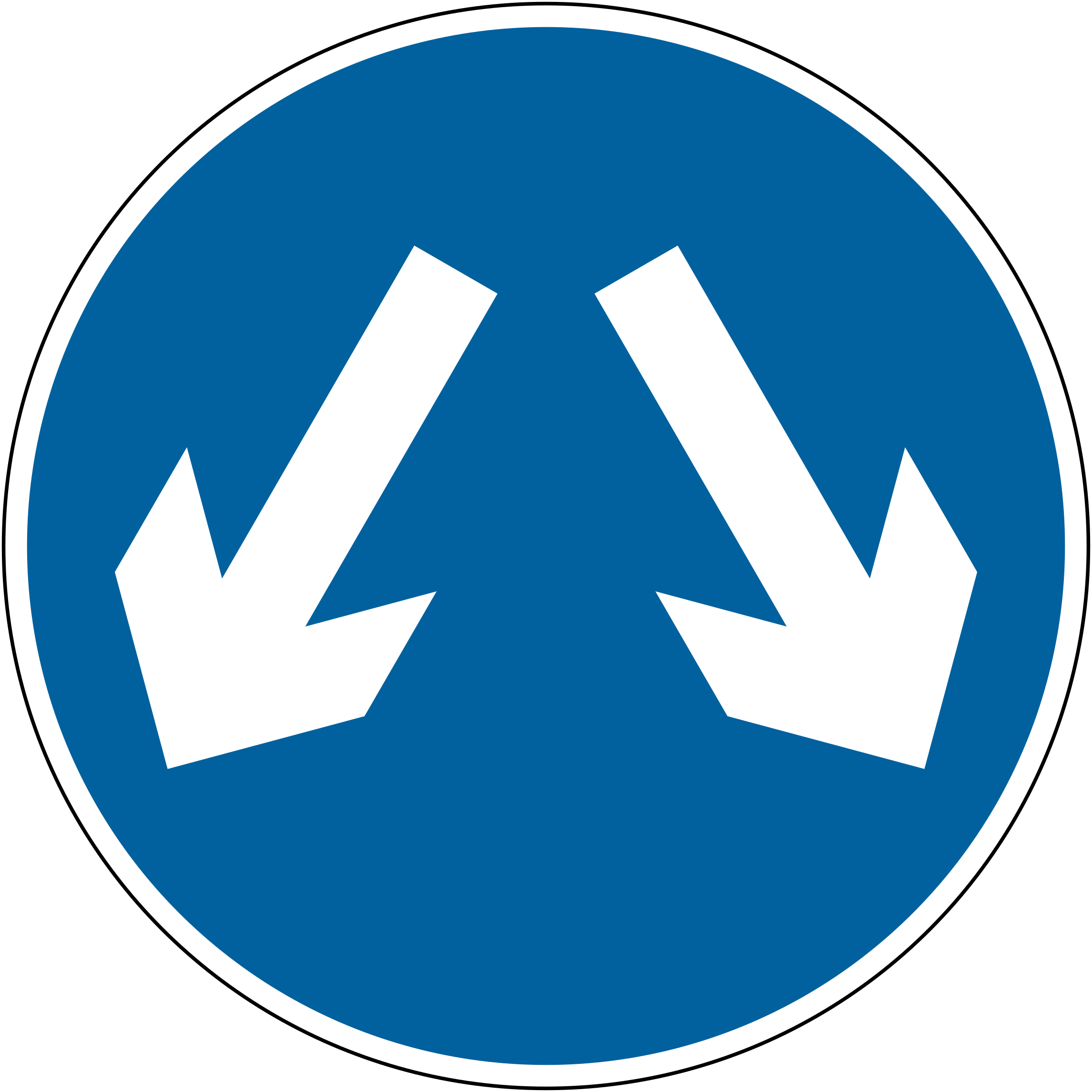
English • GB diagram 611 • Pass either side. Traffic may pass either side of the sign to reach the same destination.
Sources
🔗 Commons.wikimedia.org (Government of the United Kingdom – Department for Transport • Crown copyright • OGL v1.0)
🔗 Legislation.gov.uk • Traffic Signs Regulations and General Directions • Great Britain
🔗 Gov.uk • Department for Transport • Know your traffic signs
SVG source: Government of the United Kingdom – Department for Transport • OGL v1.0 • Original revision 2021-12-19. Wikimedia original unmodified. © Crown copyright. Traffic signs are Crown copyright. You may reproduce traffic signs free of charge and without having to seek permission, but you must reproduce them accurately and not in a misleading context (e.g. not on roadside billboards where they could mislead drivers). (ref [1])
Artwork verified against Gov.uk • official published diagram 611.
Current design and permitted variants verified against Legislation.gov.uk • TSRGD, current text.
90. Contourner l'obstacle par la droite
Ce panneau de signalisation indique que la circulation doit contourner l’obstacle par la droite. Restez à droite de l’obstacle et suivez les éventuels marquages ou panneaux complémentaires.
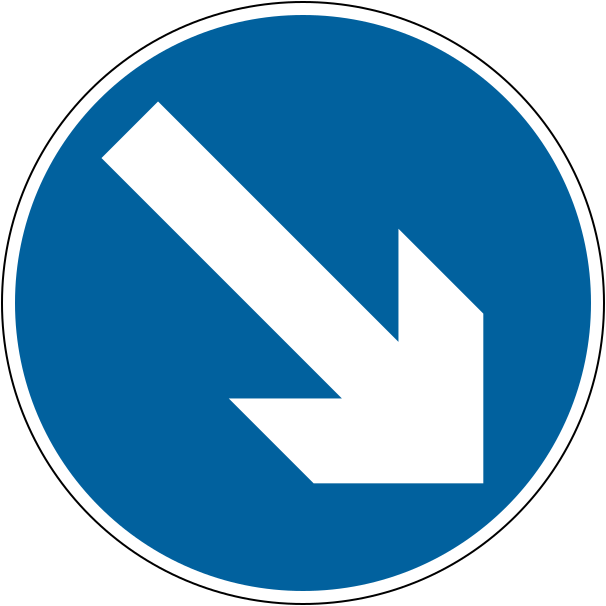
English • GB diagram 610 • Keep right. Traffic must pass to the right of the sign or obstruction, following the arrow.
Sources
🔗 Commons.wikimedia.org (Government of the United Kingdom – Department for Transport • Crown copyright • OGL v1.0)
🔗 Legislation.gov.uk • Traffic Signs Regulations and General Directions • Great Britain
🔗 Gov.uk • Department for Transport • Know your traffic signs
SVG source: Government of the United Kingdom – Department for Transport • OGL v1.0 • Original revision 2022-01-17. Wikimedia original unmodified. © Crown copyright. Traffic signs are Crown copyright. You may reproduce traffic signs free of charge and without having to seek permission, but you must reproduce them accurately and not in a misleading context (e.g. not on roadside billboards where they could mislead drivers). (ref [1])
Artwork verified against Gov.uk • official published diagram 610.
Current design and permitted variants verified against Legislation.gov.uk • TSRGD, current text.
91. Obligation de tourner à gauche
Ce panneau indique une obligation de tourner à gauche. Cela signifie que tous les véhicules doivent tourner à gauche à l'endroit où le panneau est situé. Aller tout droit ou tourner à droite est interdit.
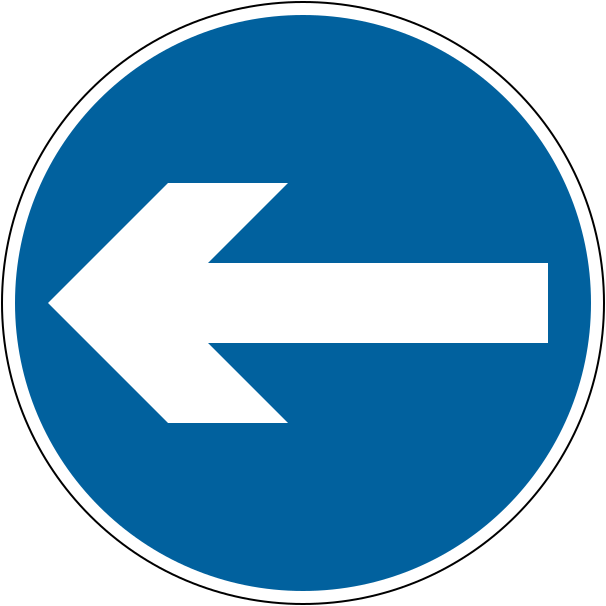
English • GB diagram 606 • Proceed left. Vehicular traffic must proceed in the direction of the left-pointing arrow, subject to any signed exemption.
Sources
🔗 Commons.wikimedia.org (Government of the United Kingdom – Department for Transport • Crown copyright • OGL v1.0)
🔗 Legislation.gov.uk • Traffic Signs Regulations and General Directions • Great Britain
🔗 Gov.uk • Department for Transport • Know your traffic signs
SVG source: Government of the United Kingdom – Department for Transport • OGL v1.0 • Original revision 2022-01-15. Wikimedia original unmodified. © Crown copyright. Traffic signs are Crown copyright. You may reproduce traffic signs free of charge and without having to seek permission, but you must reproduce them accurately and not in a misleading context (e.g. not on roadside billboards where they could mislead drivers). (ref [1])
Artwork verified against Gov.uk • official published diagram 606.
Current design and permitted variants verified against Legislation.gov.uk • TSRGD, current text.
92. Obligation de tourner à droite
Ce panneau de signalisation indique une obligation de tourner à droite. Cela signifie que tout le trafic doit tourner à droite à l'endroit où le panneau est placé. Aller tout droit ou tourner à gauche est interdit.
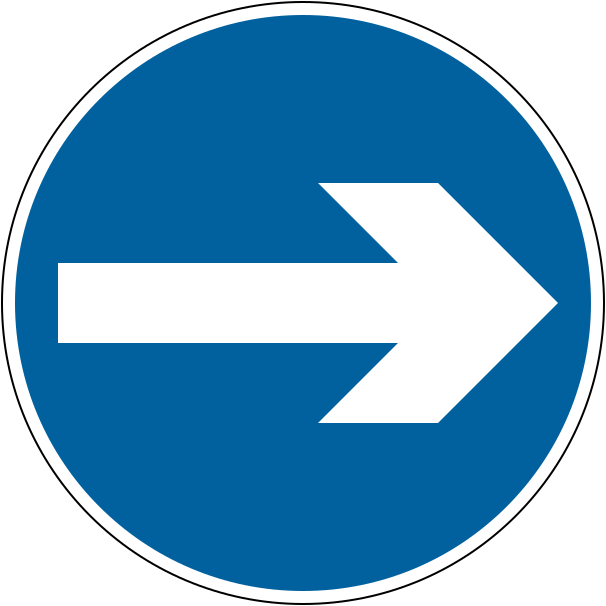
English • GB diagram 606 • Proceed right. Vehicular traffic must proceed in the direction of the right-pointing arrow, subject to any signed exemption.
Sources
🔗 Commons.wikimedia.org (Government of the United Kingdom – Department for Transport • Crown copyright • OGL v1.0)
🔗 Legislation.gov.uk • Traffic Signs Regulations and General Directions • Great Britain
🔗 Gov.uk • Department for Transport • Know your traffic signs
SVG source: Government of the United Kingdom – Department for Transport • OGL v1.0 • Original revision 2022-01-15. Wikimedia original unmodified. © Crown copyright. Traffic signs are Crown copyright. You may reproduce traffic signs free of charge and without having to seek permission, but you must reproduce them accurately and not in a misleading context (e.g. not on roadside billboards where they could mislead drivers). (ref [1])
Artwork verified against Gov.uk • official published diagram 606.
Current design and permitted variants verified against Legislation.gov.uk • TSRGD, current text.
93. Circulation tout droit obligatoire
Ce panneau de signalisation indique que rouler tout droit est obligatoire, il est interdit de tourner à gauche ou à droite. Cela signifie que les véhicules doivent continuer tout droit — il est interdit de tourner à gauche ou à droite.
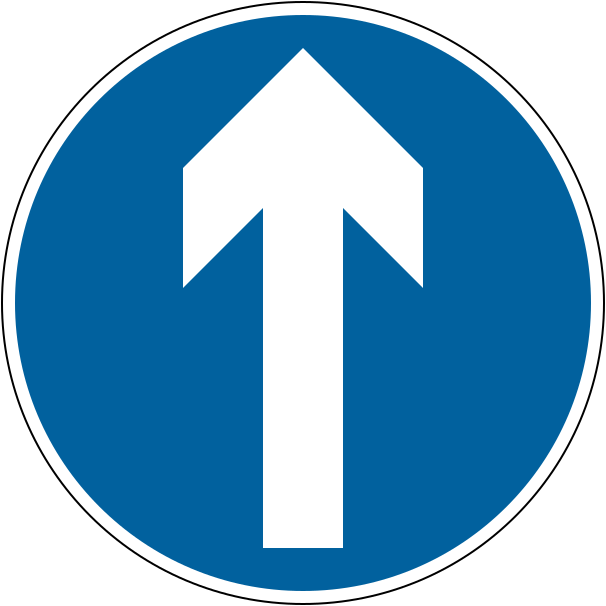
English • GB diagram 606 • Ahead only. Vehicular traffic must proceed straight ahead, subject to any signed exemption. This circular sign gives an instruction at its location.
Sources
🔗 Commons.wikimedia.org (Government of the United Kingdom – Department for Transport • Crown copyright • OGL v1.0)
🔗 Legislation.gov.uk • Traffic Signs Regulations and General Directions • Great Britain
🔗 Gov.uk • Department for Transport • Know your traffic signs
SVG source: Government of the United Kingdom – Department for Transport • OGL v1.0 • Original revision 2022-01-14. Wikimedia original unmodified. © Crown copyright. Traffic signs are Crown copyright. You may reproduce traffic signs free of charge and without having to seek permission, but you must reproduce them accurately and not in a misleading context (e.g. not on roadside billboards where they could mislead drivers). (ref [1])
Artwork verified against Gov.uk • official published diagram 606.
Current design and permitted variants verified against Legislation.gov.uk • TSRGD, current text.
94. Voie obligatoire pour cyclistes
Ce panneau de signalisation indique le début d'une piste cyclable. Cela signifie que les cyclistes doivent emprunter la piste cyclable désignée et ne sont pas autorisés à circuler sur la route principale avec les véhicules motorisés. Cela assure la sécurité des cyclistes et un trafic fluide.
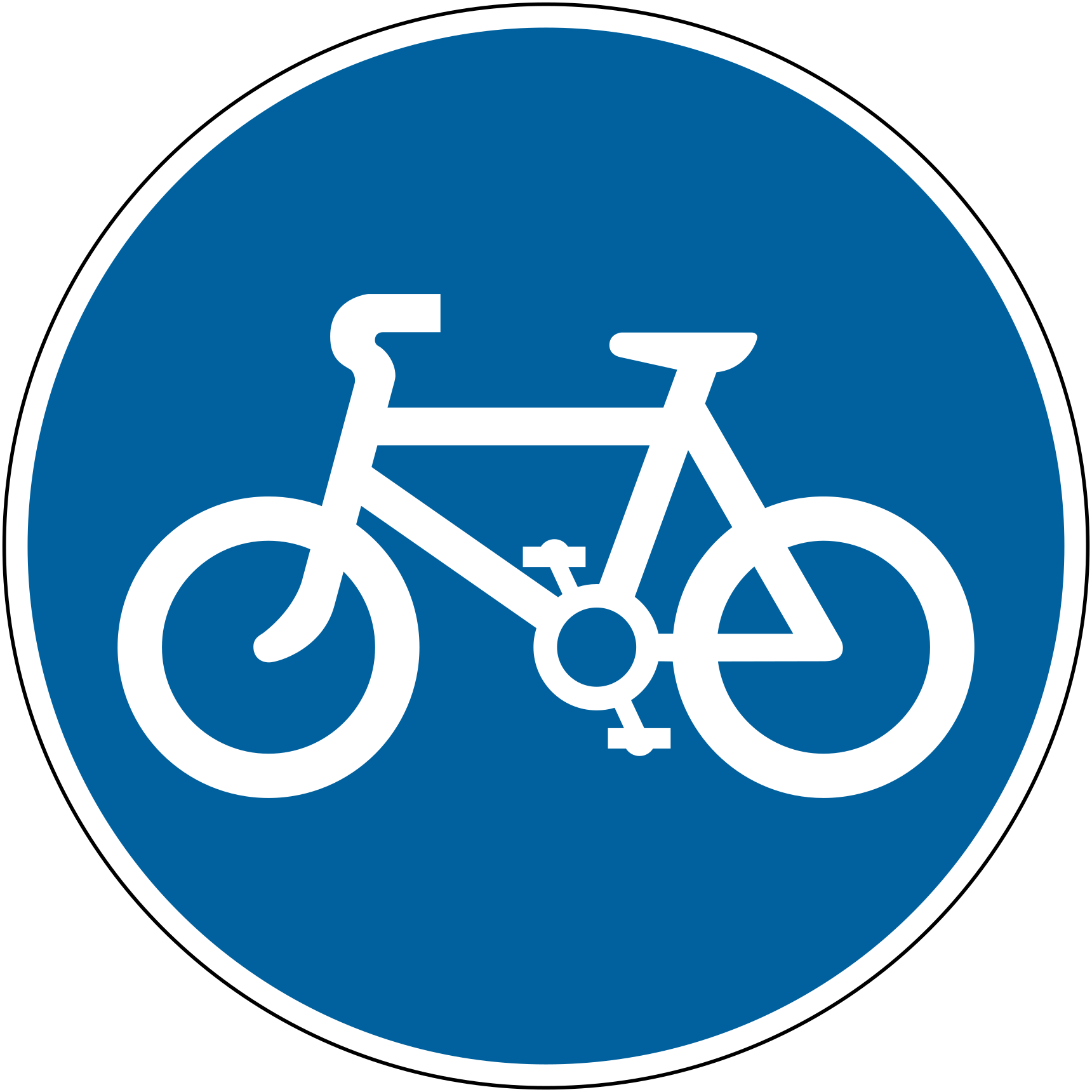
English • GB diagram 955 • Route for pedal cycles. This route is for pedal cycles only. In Great Britain, permitted trial electric scooters are also included where applicable.
Sources
🔗 Commons.wikimedia.org (Government of the United Kingdom – Department for Transport • Crown copyright • OGL v1.0)
🔗 Legislation.gov.uk • Traffic Signs Regulations and General Directions • Great Britain
🔗 Gov.uk • Department for Transport • Know your traffic signs
SVG source: Government of the United Kingdom – Department for Transport • OGL v1.0 • Original revision 2021-08-02. Wikimedia original unmodified. © Crown copyright. Traffic signs are Crown copyright. You may reproduce traffic signs free of charge and without having to seek permission, but you must reproduce them accurately and not in a misleading context (e.g. not on roadside billboards where they could mislead drivers). (ref [1])
Artwork verified against Gov.uk • official published diagram 955.
Current design and permitted variants verified against Legislation.gov.uk • TSRGD, current text.
95. Voie obligatoire pour bus
Ce panneau de signalisation indique une voie obligatoire pour les bus. Cela signifie qu’une voie de circulation spécifique est réservée exclusivement aux bus et, dans certains cas, également aux taxis, vélos ou tramways selon la réglementation locale. Les autres véhicules ne sont pas autorisés à entrer ou à emprunter cette voie.
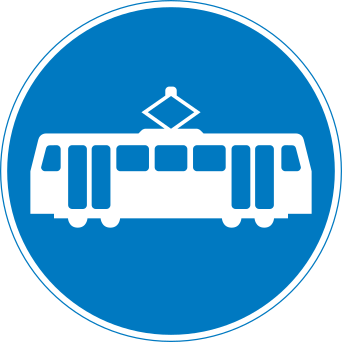
English • GB diagram 953.1 • Tramcars only. This route is for tramcars only, subject to any authorised and signed exception.
Sources
🔗 Commons.wikimedia.org (UK Government • Crown copyright • OGL v1.0)
🔗 Legislation.gov.uk • Traffic Signs Regulations and General Directions • Great Britain
🔗 Gov.uk • Department for Transport • Know your traffic signs
SVG source: UK Government • OGL v1.0 • Original revision 2011-11-13. Wikimedia original unmodified. © Crown copyright. Traffic signs are Crown copyright. You may reproduce traffic signs free of charge and without having to seek permission, but you must reproduce them accurately and not in a misleading context (e.g. not on roadside billboards where they could mislead drivers). (ref [1])
Artwork verified against Gov.uk • official published diagram 953.1.
Current design and permitted variants verified against Legislation.gov.uk • TSRGD, current text.
96. Voie partagée obligatoire pour piétons et cyclistes
Ce panneau de signalisation indique le début d'une voie partagée entre piétons et cyclistes. Cela signifie qu'une voie spécifique est partagée par les piétons et les cyclistes, et que les deux groupes doivent l'utiliser. Le chemin n'est pas divisé. Il s'agit d'un espace commun où chacun doit être vigilant et partager prudemment.
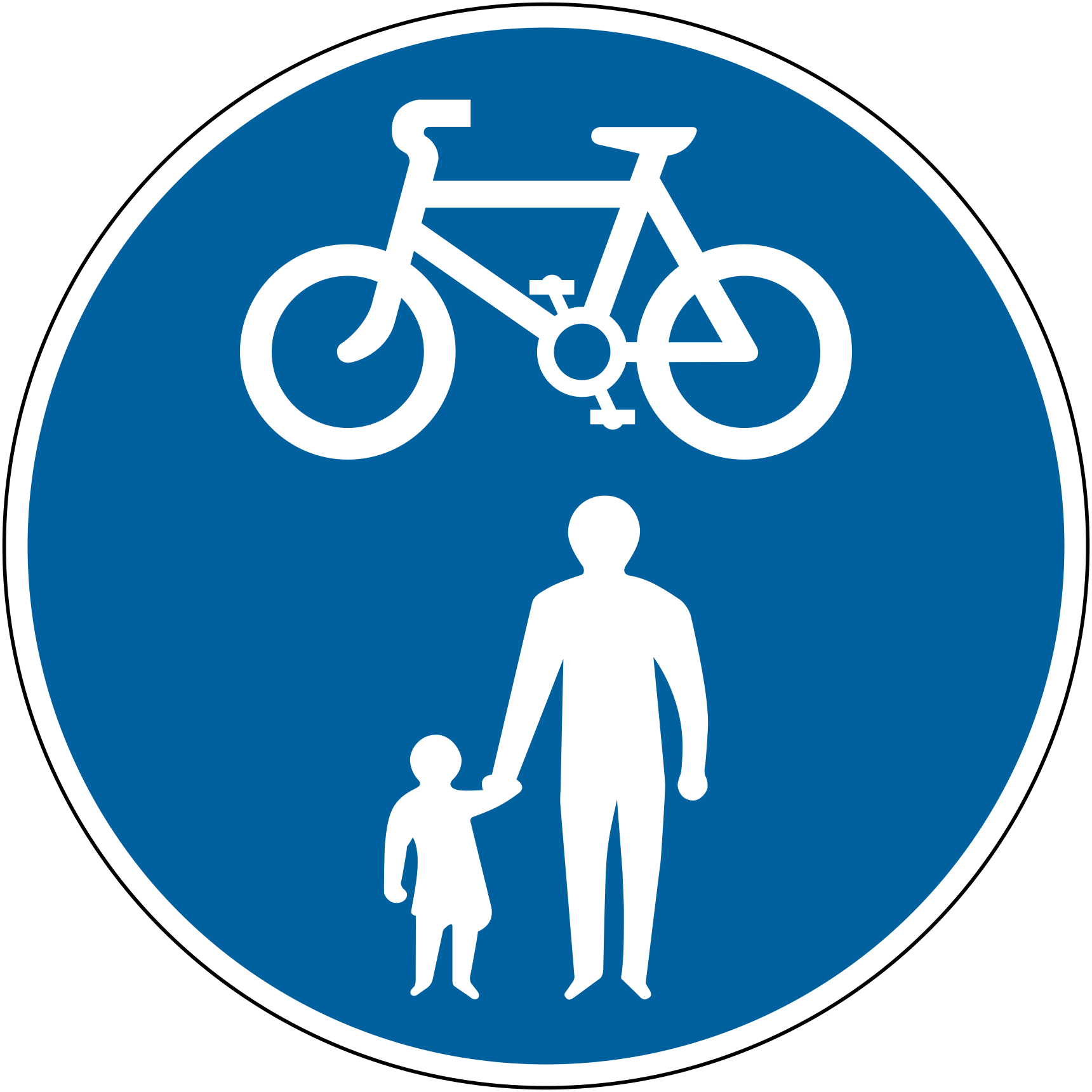
English • GB diagram 956 • Shared pedestrian and cycle route. Pedestrians and pedal cycles share the same route. In Great Britain, permitted trial electric scooters are also included where applicable.
Sources
🔗 Commons.wikimedia.org (Government of the United Kingdom – Department for Transport • Crown copyright • OGL v1.0)
🔗 Legislation.gov.uk • Traffic Signs Regulations and General Directions • Great Britain
🔗 Gov.uk • Department for Transport • Know your traffic signs
SVG source: Government of the United Kingdom – Department for Transport • OGL v1.0 • Original revision 2021-08-02. Wikimedia original unmodified. © Crown copyright. Traffic signs are Crown copyright. You may reproduce traffic signs free of charge and without having to seek permission, but you must reproduce them accurately and not in a misleading context (e.g. not on roadside billboards where they could mislead drivers). (ref [1])
Artwork verified against Gov.uk • official published diagram 956.
Current design and permitted variants verified against Legislation.gov.uk • TSRGD, current text.
97. Chemin divisé obligatoire pour piétons et cyclistes
Ce panneau de signalisation indique le début d’un chemin partagé, séparé pour piétons et cyclistes. Il signifie qu’il existe un chemin d’usage commun, physiquement ou visuellement séparé en deux voies : une pour les piétons et une pour les cyclistes. Chaque groupe d’usagers doit rester sur sa voie dédiée.
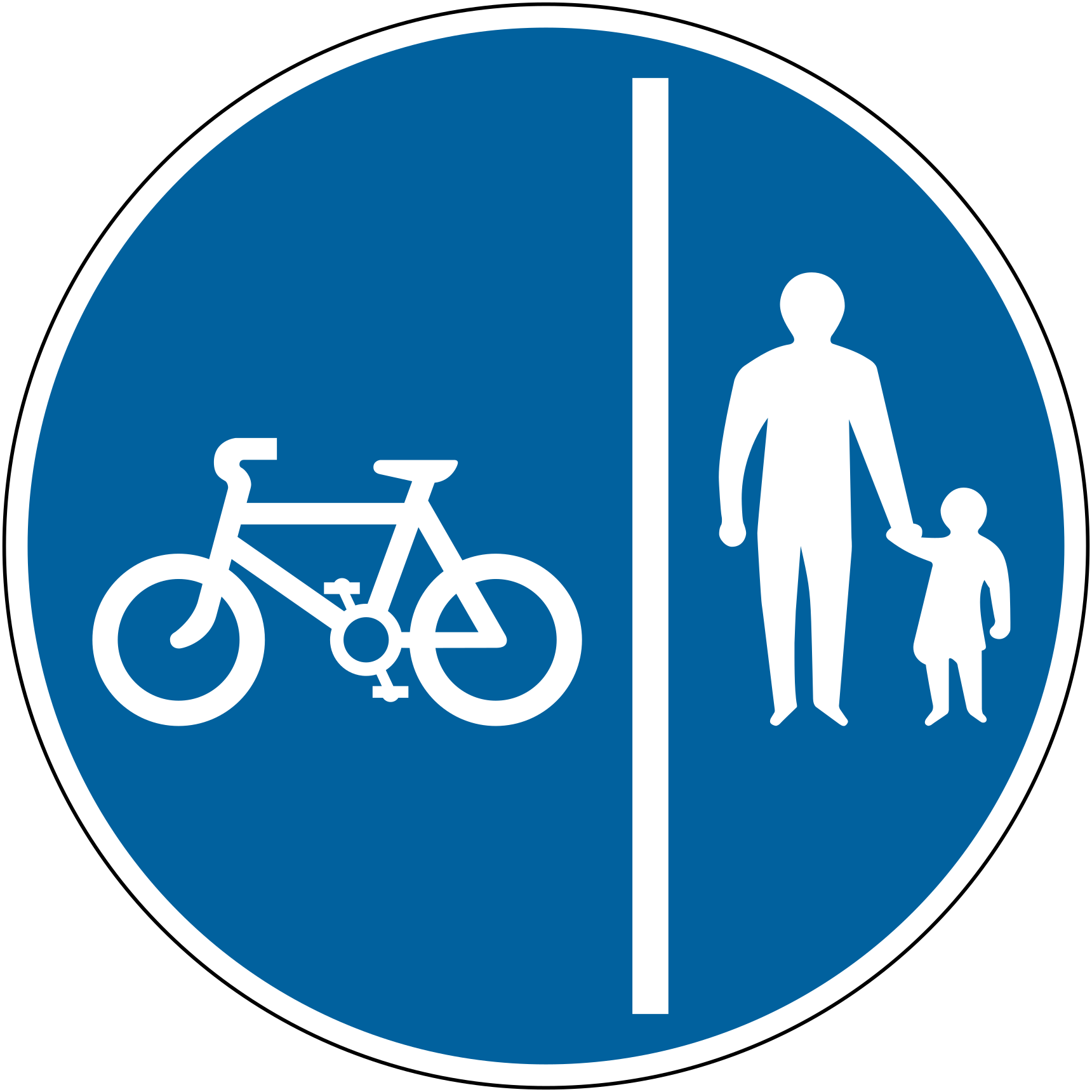
English • GB diagram 957 • Segregated pedestrian and cycle route. Use the side shown for your class of traffic: cycles on the left and pedestrians on the right. In Great Britain, permitted trial electric scooters use the cycle side where applicable.
Sources
🔗 Commons.wikimedia.org (Government of the United Kingdom – Department for Transport • Crown copyright • OGL v1.0)
🔗 Legislation.gov.uk • Traffic Signs Regulations and General Directions • Great Britain
🔗 Gov.uk • Department for Transport • Know your traffic signs
SVG source: Government of the United Kingdom – Department for Transport • OGL v1.0 • Original revision 2021-08-02. Wikimedia original unmodified. © Crown copyright. Traffic signs are Crown copyright. You may reproduce traffic signs free of charge and without having to seek permission, but you must reproduce them accurately and not in a misleading context (e.g. not on roadside billboards where they could mislead drivers). (ref [1])
Artwork verified against Gov.uk • official published diagram 957.
Current design and permitted variants verified against Legislation.gov.uk • TSRGD, current text.
98. Chemin divisé obligatoire pour piétons et cyclistes
Ce panneau de signalisation indique le début d’un chemin partagé, séparé pour piétons et cyclistes. Il signifie qu’il existe un chemin d’usage commun, physiquement ou visuellement séparé en deux voies : une pour les piétons et une pour les cyclistes. Chaque groupe d’usagers doit rester sur sa voie dédiée.
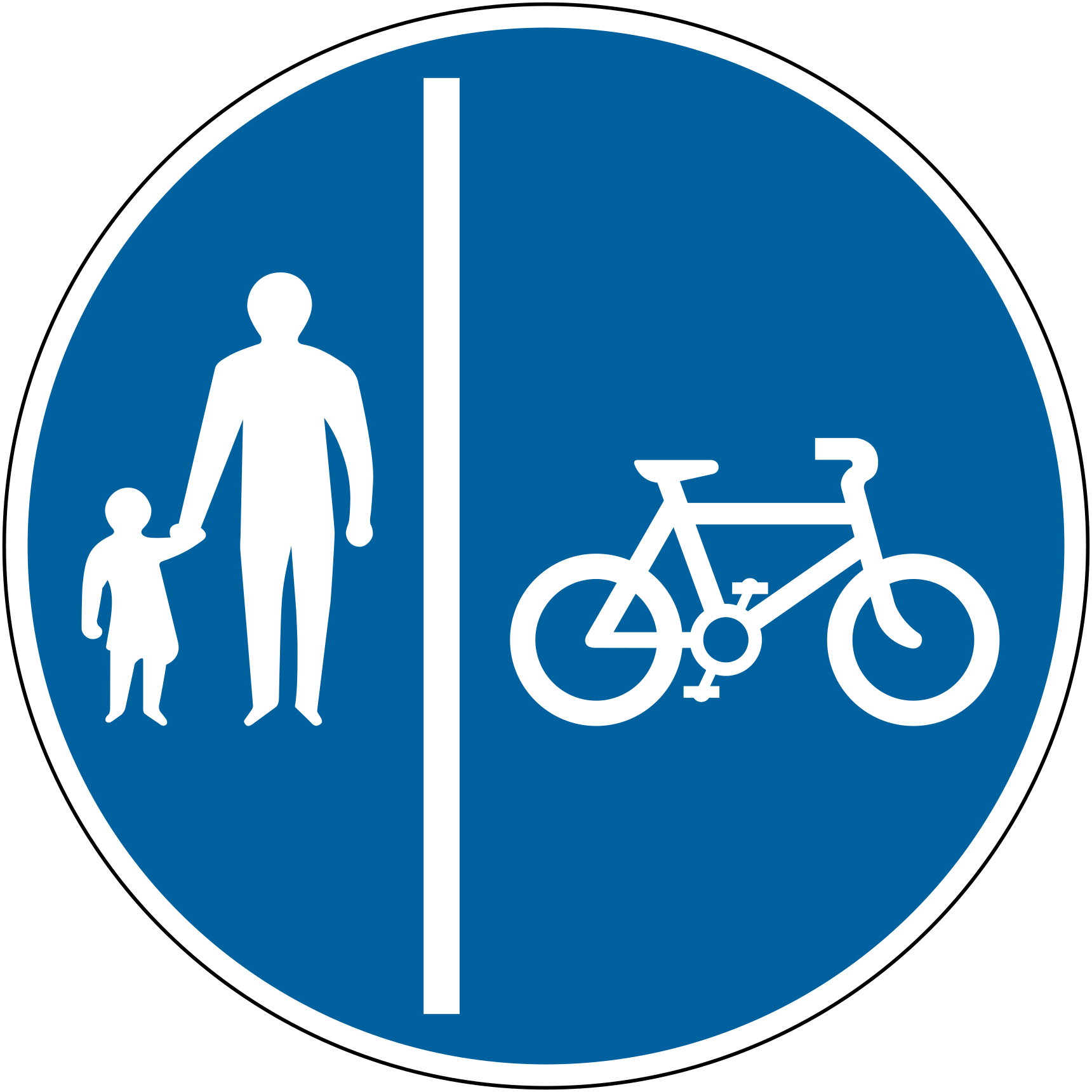
English • GB diagram 957 • Segregated pedestrian and cycle route. Use the side shown for your class of traffic: pedestrians on the left and cycles on the right. In Great Britain, permitted trial electric scooters use the cycle side where applicable.
Sources
🔗 Commons.wikimedia.org (Government of the United Kingdom – Department for Transport • Crown copyright • OGL v1.0)
🔗 Legislation.gov.uk • Traffic Signs Regulations and General Directions • Great Britain
🔗 Gov.uk • Department for Transport • Know your traffic signs
SVG source: Government of the United Kingdom – Department for Transport • OGL v1.0 • Original revision 2021-08-02. Wikimedia original unmodified. © Crown copyright. Traffic signs are Crown copyright. You may reproduce traffic signs free of charge and without having to seek permission, but you must reproduce them accurately and not in a misleading context (e.g. not on roadside billboards where they could mislead drivers). (ref [1])
Artwork verified against Gov.uk • official published diagram 957R.
Current design and permitted variants verified against Legislation.gov.uk • TSRGD, current text.
99. Voie obligatoire pour bus et tramways
Ce panneau de signalisation indique le début d’une voie réservée aux bus et tramways. Cela signifie qu’une voie spécifique est exclusivement réservée aux bus et aux tramways. Tous les autres véhicules y sont interdits. Voitures, motos et autres véhicules ne peuvent pas y accéder. Emplacement courant : le long de rues desservies par bus et tram.
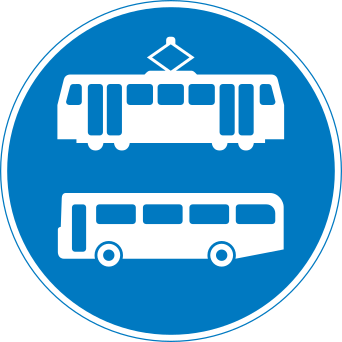
English • GB diagram 953.1 variant • Tramcars and buses only. This route is for tramcars and buses only, subject to any authorised and signed exception.
Sources
🔗 Commons.wikimedia.org (UK Government • Crown copyright • OGL v1.0)
🔗 Legislation.gov.uk • Traffic Signs Regulations and General Directions • Great Britain
🔗 Gov.uk • Department for Transport • Know your traffic signs
SVG source: UK Government • OGL v1.0 • Original revision 2011-11-13. Wikimedia original unmodified. © Crown copyright. Traffic signs are Crown copyright. You may reproduce traffic signs free of charge and without having to seek permission, but you must reproduce them accurately and not in a misleading context (e.g. not on roadside billboards where they could mislead drivers). (ref [1])
Artwork verified against Gov.uk • official published diagram 953.1V.
Current design and permitted variants verified against Legislation.gov.uk • TSRGD, current text.
100. Début d'une vitesse minimale
Ce panneau de signalisation indique le début d’une vitesse minimale. Cela signifie que tous les véhicules doivent circuler à une vitesse égale ou supérieure à la limite indiquée — rouler plus lentement est interdit, sauf en cas de circulation, météo ou urgence le justifiant. Vise à empêcher que les véhicules lents ne gênent la circulation. Exceptions possibles en cas de danger, d’embouteillage ou de mauvaises conditions. Emplacements courants : autoroutes, tunnels, voies rapides.
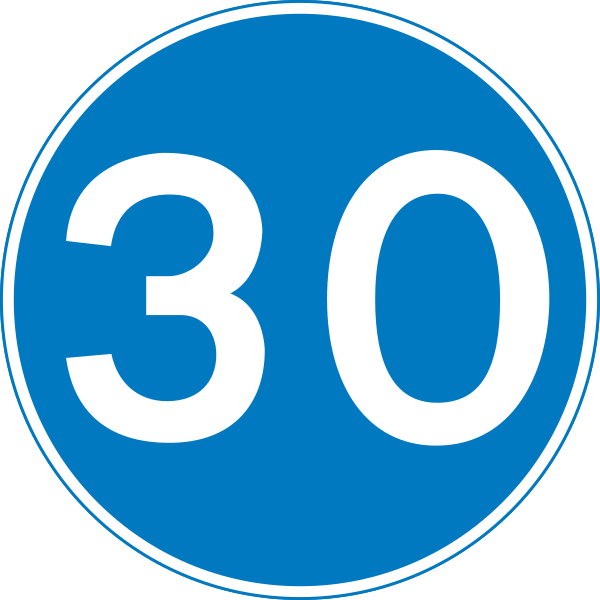
English • GB diagram 672 • Minimum speed limit. The minimum speed is 30 mph, subject to circumstances requiring a lower speed for safety.
Sources
🔗 Commons.wikimedia.org
🔗 Legislation.gov.uk • Traffic Signs Regulations and General Directions • Great Britain
🔗 Gov.uk • Department for Transport • Know your traffic signs
SVG source: UK Government • Public domain • Original revision 2011-01-24. Wikimedia original unmodified.