


Panneaux de signalisationRoyaume-Uni
 Règles de circulation
 Royaume-Uni
26. Traversée d’animaux
Un avertissement de traversée d’animaux indique un endroit ou une section où des animaux sauvages, du bétail ou des animaux montés peuvent pénétrer sur la route ou la traverser. Les animaux peuvent apparaître soudainement, se déplacer de manière imprévisible ou être difficiles à voir dans l’obscurité, la végétation ou par mauvais temps.
Les conducteurs doivent réduire leur vitesse, surveiller les deux côtés de la route et rester prêts à s’arrêter. Le panneau d’avertissement ne donne pas à lui seul la priorité aux animaux et n’impose pas une limitation numérique, mais les conducteurs doivent éviter de les effrayer, de les mettre en danger ou de les heurter.
What does an animals-crossing sign mean?
It warns that animals may enter or cross the road in the area ahead.
Which animals may the sign refer to?
Depending on the symbol and local conditions, it may refer to deer, cattle, horses, sheep, goats, wild boar or other animals.
How can you recognise an animals-crossing sign?
It is commonly a triangular warning sign displaying the silhouette of an animal. The species shown may indicate the type of animal most likely to be encountered.
Does the sign mean animals are always present?
No. It indicates an increased likelihood of animals crossing, not that animals will be present every time.
Does the sign impose a speed limit?
No. The normal posted or general speed limit remains applicable, but drivers must reduce speed when necessary to react safely.
Do animals have priority because of the sign?
No automatic priority is created by the warning sign. Drivers must nevertheless avoid danger and allow animals already on the road to pass safely.
How should you approach an animal-crossing area?
Reduce speed, increase your following distance and scan the road, verges, fields and vegetation for movement or reflected eyes.
When are wild animals most likely to appear?
Animal activity is often greater around dawn, dusk and darkness, although animals may cross at any time.
Why should you expect more than one animal?
Many animals travel in groups. When one animal crosses, others may follow immediately from the same direction.
Should you sound the horn?
Avoid unnecessary horn use or engine revving because it may frighten an animal and make its movement less predictable. Use a warning only when reasonably necessary to prevent danger.
Should you use full-beam headlights?
Use the appropriate lights without dazzling other road users. When an animal is visible, reduce speed and avoid relying on full beam to make it move away.
What should you do when an animal is on the road?
Slow down smoothly, stop when necessary and allow it enough time and space to leave. Avoid sudden acceleration or aggressive steering.
Should you swerve to avoid an animal?
Avoid an uncontrolled swerve that could cause a collision with another vehicle, tree, barrier, cyclist or pedestrian. Brake firmly while maintaining control and steer only when a safe escape path is clearly available.
How should you pass livestock?
Pass only when the animals and their handlers have sufficient space. Drive slowly, avoid noise and be prepared for an animal to change direction unexpectedly.
How should you pass a horse and rider?
Reduce speed, leave a large lateral distance and pass quietly. Avoid sounding the horn, accelerating sharply or passing when oncoming traffic prevents sufficient clearance.
Must you follow instructions from an animal handler?
Follow lawful instructions from an authorised person and cooperate with handlers controlling animals on or across the road.
May you overtake near an animal crossing?
The warning sign does not necessarily prohibit overtaking, but overtaking should be avoided when animals, limited visibility or approaching traffic make the manoeuvre unsafe.
What if an animal appears behind another vehicle?
Maintain enough following distance to see beyond the vehicle ahead. Be prepared for it to brake suddenly when an animal enters the road.
What should motorcyclists and cyclists do?
Reduce speed, keep both hands firmly in control and avoid sudden movements. Animals may react unexpectedly to quiet or fast-approaching two-wheeled vehicles.
What should you do after hitting an animal?
Stop safely, activate the hazard warning lights and check for injured people. Contact the emergency services or police when necessary and do not approach a wounded wild animal, which may defend itself.
Should you move an injured or dead wild animal?
Normally not. Keep a safe distance and allow the police, wildlife authorities or an animal-rescue service to handle it.
Can animals be present without a warning sign?
Yes. Drivers remain responsible for observing the road and adjusting their speed even where no animal warning sign is displayed.

27. Chaussée glissante
Une chaussée glissante offre une adhérence réduite des pneus et peut rendre la direction, le freinage et l’accélération moins efficaces. Une route peut devenir glissante à cause de la pluie, de la glace, de la neige, de la boue, de l’huile, de matériaux meubles ou d’autres substances sur la surface. Les conducteurs doivent réduire leur vitesse, augmenter la distance de sécurité et éviter les mouvements brusques de direction, freinage ou accélération. Une prudence accrue est nécessaire dans les virages, sur les ponts et partout où l’état de la chaussée change de manière inattendue.
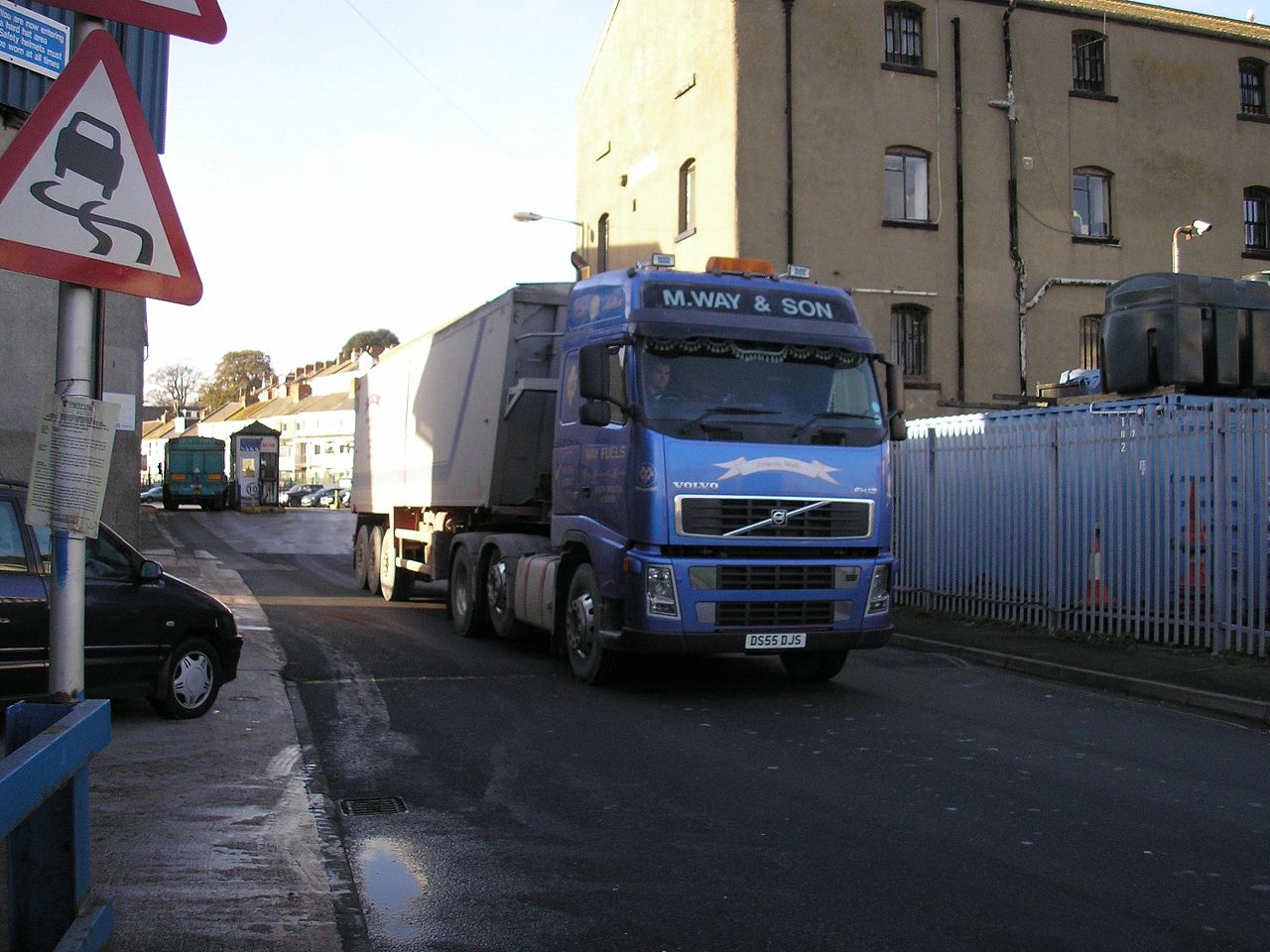
What makes a road slippery?
A road can become slippery because of rain, ice, snow, mud, oil, loose material or other substances that reduce tyre grip.
How should you drive on a slippery road?
Reduce speed, increase your following distance and use smooth steering, braking and acceleration. Sudden movements can cause the tyres to lose grip.
Why does braking distance increase on a slippery road?
Reduced tyre grip means the tyres cannot generate as much braking force, so the vehicle may need a longer distance to slow down or stop.
Can a road be slippery even when it looks dry?
Yes. Oil, dust, loose material or a thin layer of ice can reduce grip even when the road does not appear obviously wet or slippery.
Are bends more dangerous on slippery roads?
Yes. Turning requires tyre grip, so a slippery surface can make it easier for the vehicle to skid or leave its intended path, especially at higher speeds.
What should you do if your vehicle starts to skid?
Stay calm and avoid sudden braking or steering. Make smooth corrections and allow the tyres to regain grip. The correct response can depend on the vehicle and its safety systems.
28. Chutes de pierres
Un avertissement de chutes de pierres signale une section où des rochers ou pierres peuvent tomber d’une falaise, d’une tranchée ou d’un versant abrupt, ou où des matériaux tombés peuvent déjà se trouver sur la chaussée. Le danger peut concerner toute la chaussée et apparaître soudainement.
Les conducteurs doivent réduire leur vitesse, surveiller la route et les pentes devant eux, augmenter leur distance de sécurité et rester prêts à s’arrêter. Ils doivent éviter les arrêts inutiles dans la section exposée et ne jamais tenter de déplacer eux-mêmes des rochers instables.
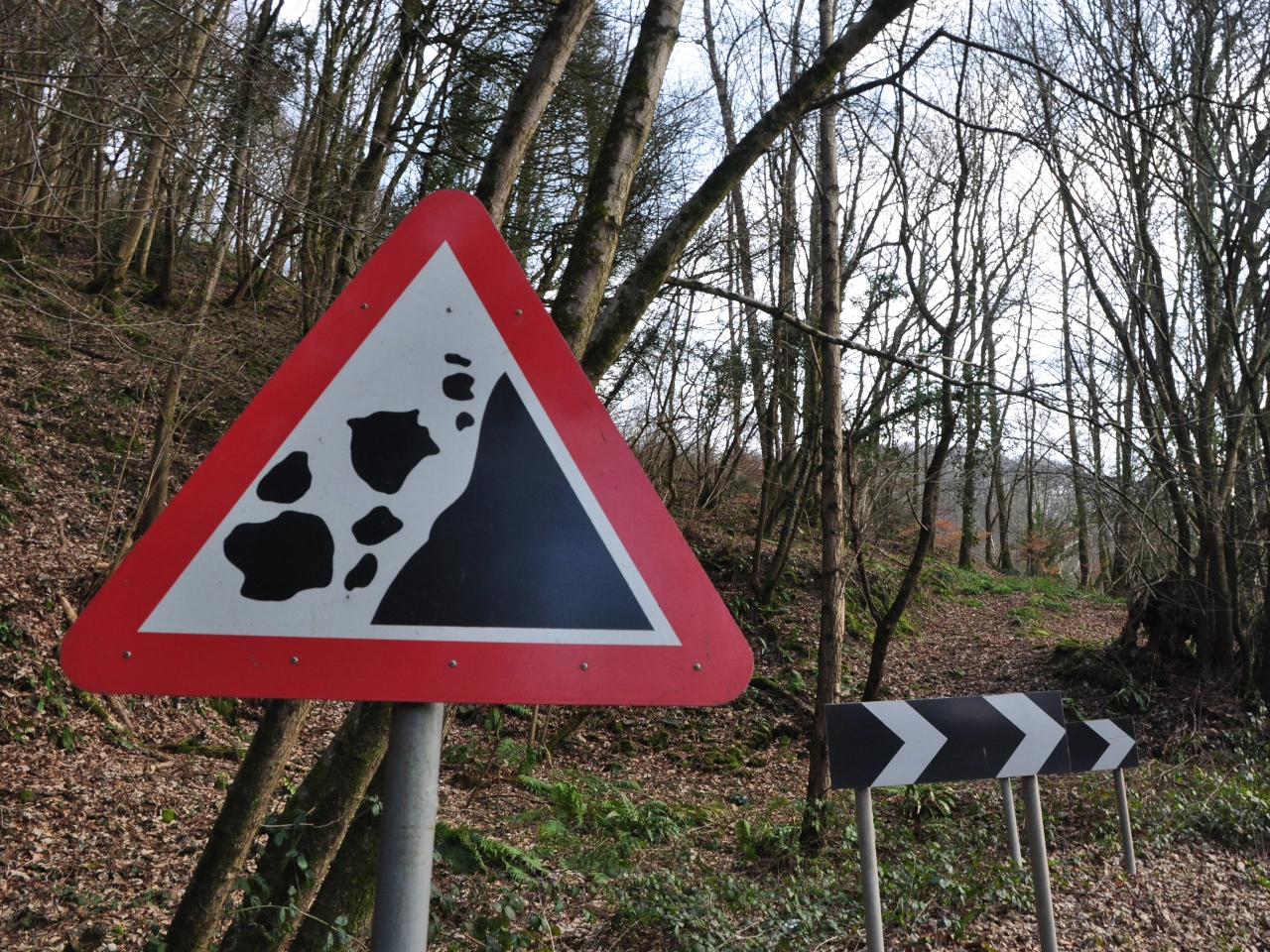
What does a rockfall warning mean?
It warns that rocks or stones may fall onto the road or may already be lying on the carriageway.
How can you recognise a rockfall sign?
It is commonly a triangular warning sign showing rocks falling from a steep slope. The exact colour and design vary between countries.
Does the sign mean rocks are falling at that moment?
No. It indicates an increased risk. The road may be clear, contain stones from an earlier fall or become dangerous without additional warning.
Does the sign warn only about falling rocks?
Not necessarily. It may also warn about loose or fallen stones already present on the road.
What can cause a rockfall?
Rockfalls may be caused by erosion, heavy rain, frost and thawing, storms, ground movement, vegetation loss, roadworks or natural instability.
When can the risk be greater?
The risk may increase during or after heavy rain, freezing weather, rapid thawing, strong winds, earthquakes or work on a nearby slope.
Does a rockfall sign impose a speed limit?
No. It normally warns of danger rather than setting a numerical limit. Drivers must reduce speed when necessary to react safely.
Does the sign change priority?
No. Traffic lights, priority signs and the ordinary priority rules remain applicable.
How should you approach a rockfall area?
Reduce speed smoothly, increase your following distance and watch the road surface, slope, barriers and vehicles ahead for signs of falling or fallen material.
Should you drive close to the vehicle ahead?
No. Leave additional distance so you can see stones on the road and react if the vehicle ahead brakes or changes direction suddenly.
Should you stop in a rockfall area?
Avoid unnecessary stopping in the exposed section. Stop only when required by traffic, an obstruction or an emergency, and choose the safest available location.
May you overtake in a rockfall area?
The warning sign does not necessarily prohibit overtaking, but drivers should avoid overtaking when visibility, road width, loose stones or the risk of falling material makes it unsafe.
May you stop or park beneath an unstable slope?
Avoid doing so. Even where parking is not expressly prohibited, remaining beneath an unstable cliff or slope may expose the vehicle and its occupants to unnecessary danger.
What should you do when stones are lying on the road?
Reduce speed without harsh steering or braking. Pass only when there is enough clear space and visibility; otherwise, stop at a safe distance and report the obstruction.
Should you swerve around a rock?
Avoid a sudden uncontrolled swerve. Brake while maintaining control and steer around the obstruction only when the adjacent space is clearly safe.
What if the road is completely blocked?
Stop at a safe distance, activate the hazard warning lights when appropriate and contact the police, road authority or emergency services. Do not attempt to drive over unstable debris.
What should you do during an active rockfall?
Do not enter the affected section. Stop well before the danger where possible and move away only when this can be done safely without reversing blindly or entering another hazard.
Should you leave the vehicle during an active rockfall?
Do not stand near the unstable slope or falling material. Leave the vehicle only when remaining inside creates a greater immediate danger and a protected escape route is available.
May you move rocks from the road yourself?
Normally not. A stone may be too heavy, unstable or followed by additional falling material. Keep a safe distance and allow trained services to clear the road.
Why are motorcycles and bicycles especially vulnerable?
Even small stones can cause a rider to lose balance or damage a tyre. Riders should reduce speed, avoid sudden steering and keep a greater distance from other traffic.
Can protective nets eliminate the danger?
No. Nets, barriers and retaining structures reduce the risk but cannot guarantee that every stone will be contained.
What does a distance panel below the sign mean?
It may indicate how far ahead the danger begins. Another panel may indicate the length of the hazardous road section.
What should you do after striking a rock?
Keep control of the vehicle, stop at a safe location and activate the hazard warning lights. Check the tyres, wheels and underside only when it is safe and report any dangerous debris.
Does the absence of a sign mean there is no rockfall risk?
No. Drivers must remain attentive wherever roads run beside cliffs, cuttings or steep slopes, even when no warning sign is displayed.
29. Aéronefs
Un avertissement concernant les aéronefs indique que des aéronefs peuvent passer à basse altitude au-dessus ou près de la route, généralement à proximité d’un aéroport, aérodrome ou couloir aérien. L’avertissement vise à préparer les conducteurs à l’apparition ou au bruit soudain d’aéronefs volant bas.
Les conducteurs doivent rester concentrés sur la route et éviter tout freinage ou mouvement de direction brusque lorsqu’un aéronef passe au-dessus d’eux. La conception et l’utilisation de ces panneaux d’avertissement varient selon les pays.
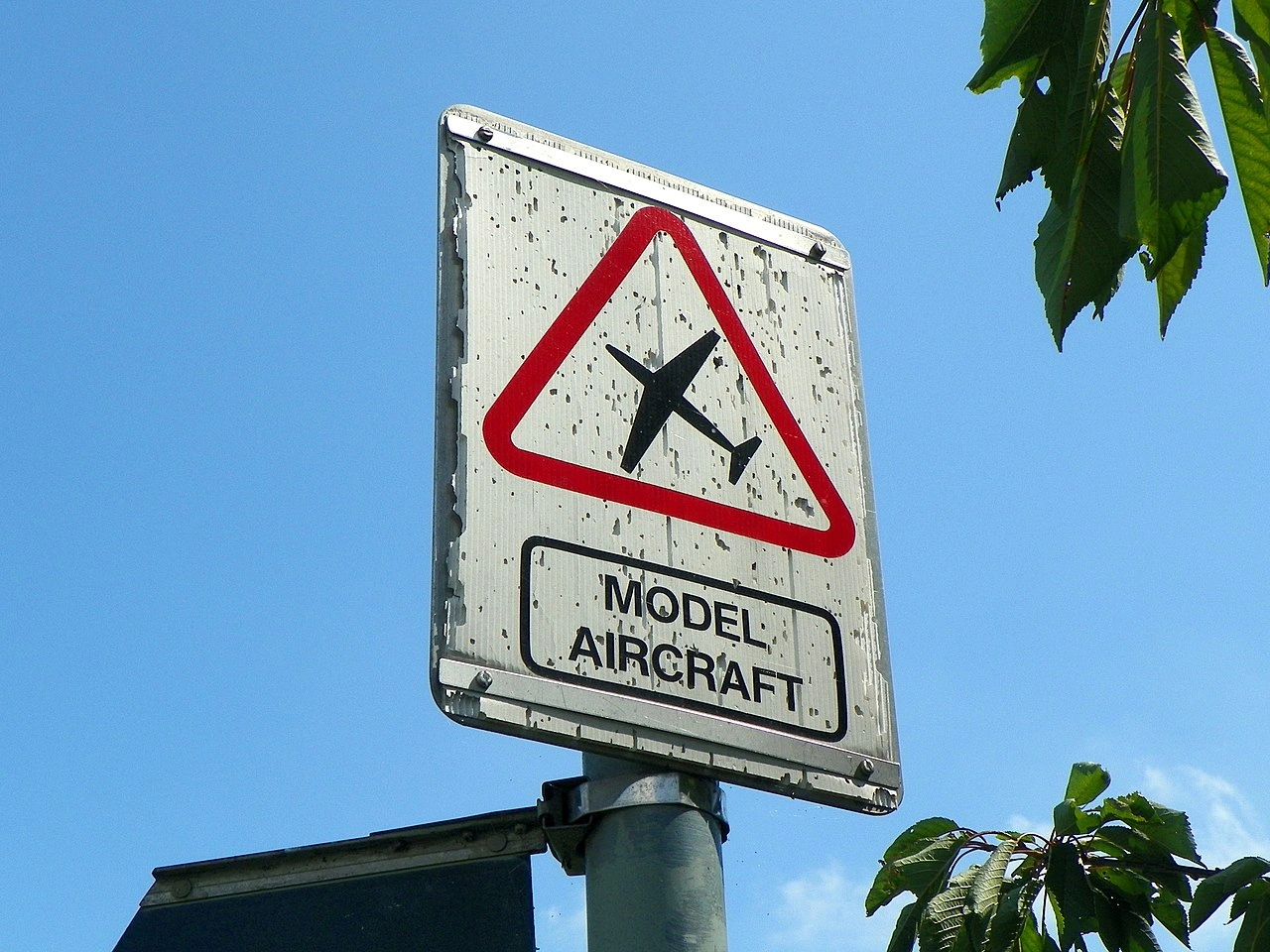
What does an aircraft warning mean?
An aircraft warning alerts drivers that aircraft may pass at low altitude over or near the road.
Where are aircraft warning signs commonly used?
They are commonly used near airports, airfields and flight paths where low-flying aircraft or sudden aircraft noise may surprise road users.
How should you react to a low-flying aircraft?
Continue to concentrate on the road and avoid sudden braking, steering or other unnecessary manoeuvres because of the aircraft.
30. Virage
Un virage est une section de route qui change de direction vers la gauche ou la droite. Un virage serré, inattendu ou peu visible peut réduire la vue du conducteur sur les véhicules approchant, les véhicules arrêtés, les piétons et d’autres dangers.
Les conducteurs doivent réduire leur vitesse avant d’entrer dans le virage, rester dans leur voie et utiliser une direction, un freinage et une accélération progressifs. Des panneaux d’avertissement peuvent indiquer la direction du premier virage ou une série de virages successifs.

What is a road curve?
A road curve is a section where the road changes direction to the left or right.
How can you recognise a dangerous curve?
It may be indicated by a triangular warning sign showing a curved line. The symbol normally indicates whether the first curve turns left or right.
What is a double curve?
A double curve consists of two curves in opposite directions. The warning sign normally shows the direction of the first curve.
Can a sign warn of more than two curves?
Yes. A double-curve symbol may also warn of a longer sequence of successive curves. A supplementary panel may indicate the length of the winding section.
Does a curve-warning sign impose a speed limit?
No. It normally warns of danger rather than setting a numerical limit. Drivers must still reduce speed when the permitted maximum would be unsafe.
When should you reduce speed for a curve?
Reduce speed before entering the curve, while the vehicle is travelling straight and has maximum stability.
Should you brake heavily while cornering?
No. Harsh braking in a curve can reduce stability and grip. Complete most braking beforehand and use smooth adjustments where necessary.
Should you accelerate through a curve?
Maintain a controlled speed through the curve. Accelerate smoothly only when the exit becomes visible and the vehicle is stable.
Where should you look while driving through a curve?
Look towards the path you intend to follow and the visible exit of the curve. Continue checking the road surface, lane position and nearby traffic.
Must you remain in your lane?
Yes. Do not cross the centre line or cut across another lane, even when this would make the curve appear easier to negotiate.
Why is visibility limited in a curve?
Buildings, vegetation, slopes, barriers and the road alignment may hide oncoming traffic, cyclists, pedestrians, stopped vehicles or debris.
How fast should you drive through a curve?
Choose a speed that allows you to remain in your lane and stop within the distance you can see to be clear. The safe speed may be far below the legal maximum.
What is an advisory speed for a curve?
An advisory speed is a recommended safe speed for negotiating the curve under suitable conditions. It is not necessarily the legal maximum speed.
How do rain, snow or ice affect a curve?
They reduce tyre grip and increase the risk of skidding. Reduce speed earlier, use smooth controls and leave additional distance from other vehicles.
What should you do if gravel or debris is present?
Avoid sudden braking or steering. Reduce speed smoothly and follow a clear path without entering another traffic lane.
May you overtake in a curve?
Do not overtake when visibility is insufficient to see approaching traffic and complete the manoeuvre safely. Local law, signs and continuous road markings may also prohibit overtaking.
May you stop or park in a curve?
Only where it is permitted and the vehicle remains clearly visible. Stopping or parking in a poorly visible curve may create a serious hazard and is often prohibited.
Should you follow another vehicle closely through a curve?
No. Leave enough distance to react if the vehicle ahead brakes for a hidden obstruction or a sharper part of the curve.
Why should motorcyclists take extra care?
Motorcycles require grip for both cornering and braking. Riders should reduce speed before the curve, choose a stable line and avoid painted markings, gravel and slippery surfaces.
How can a curve affect a trailer or caravan?
A trailer may sway, track closer to the inside of the curve or become unstable when speed and steering inputs are excessive. Enter slowly and steer smoothly.
Why do large vehicles need more space?
Buses and trucks may move closer to lane boundaries because of their length and width. Other drivers should avoid travelling beside them through a tight curve.
What should you do if an oncoming vehicle crosses the centre line?
Reduce speed, move safely towards your side of the road and avoid a sudden manoeuvre that could cause another collision. Sound a warning only when reasonably necessary.
Does the absence of a warning sign mean every curve is safe at the speed limit?
No. Drivers must assess every curve and adapt their speed even when no warning sign is displayed.
31. Chevron
Un chevron est un repère routier en forme de V ou de flèche utilisé pour indiquer un changement marqué de direction de la route. Les panneaux à chevrons sont normalement placés à l’extérieur d’un virage de manière à ce que leurs pointes indiquent la direction dans laquelle la route continue.
Les chevrons améliorent la visibilité et l’alignement d’un virage, surtout dans l’obscurité ou par mauvais temps. Ils n’imposent normalement pas de limitation de vitesse et ne déterminent pas la priorité ; les conducteurs doivent donc réduire leur vitesse avant le virage et respecter tous les autres panneaux et marquages routiers.
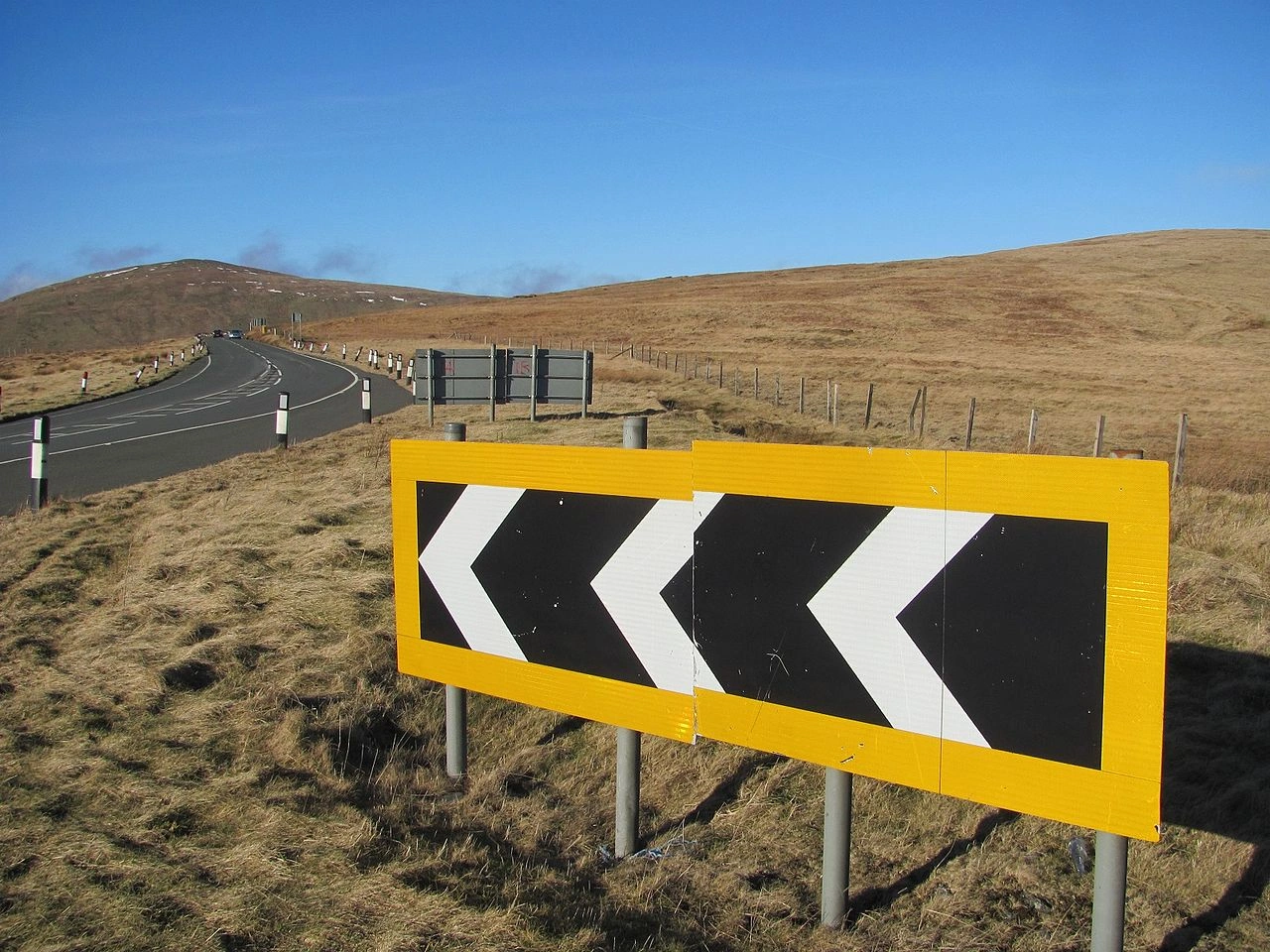
What is a road chevron?
A road chevron is a V-shaped or arrow-shaped marker used to guide drivers through a curve or another sharp change in road direction.
How can you recognise a chevron?
It is normally displayed on a rectangular board using strongly contrasting colours. Several chevrons may be placed in sequence around a curve.
Which direction does a chevron indicate?
The point of the chevron indicates the direction in which the road continues. A chevron pointing left guides traffic through a left curve, while one pointing right guides traffic through a right curve.
Where are chevrons normally placed?
They are generally placed along the outside of a curve, facing approaching traffic so that drivers can clearly see the road alignment.
What is the purpose of a series of chevrons?
A series of chevrons visually traces the curve and helps drivers judge its direction, length and changing alignment.
Is a chevron the same as a curve-warning sign?
No. A curve-warning sign normally warns drivers before the curve. Chevron boards are usually positioned within or around the curve to guide drivers through it.
Does a chevron impose a speed limit?
No. It guides drivers through the change in direction but does not normally introduce a numerical speed limit.
Does a chevron show a recommended speed?
Not by itself. A separate advisory-speed or speed-limit sign may indicate an appropriate or legally required speed.
Does a chevron determine priority?
No. Traffic lights, priority signs and the ordinary priority rules remain applicable.
Does a chevron mean the curve is dangerous?
It normally indicates that the curve requires additional visual guidance. Drivers should expect a noticeable or potentially sharp change in direction.
Does the number of chevrons show how sharp the curve is?
Not directly. The number and spacing depend on the length, radius and design of the curve and on the road authority’s signing standards.
Does a larger chevron mean a sharper curve?
Not necessarily. Larger boards may be used where approach speeds are higher or where greater visibility is needed.
How should you approach chevrons?
Reduce speed before the curve, observe the direction of the boards and remain within your traffic lane.
Should you brake heavily after reaching the chevrons?
No. Complete most braking before entering the curve and use smooth steering, braking and acceleration while following it.
May you drive towards the chevron boards?
No. The boards normally mark the outside edge of the curve. Follow the road around them rather than steering towards them.
May you cut across the centre line to straighten the curve?
No. Remain within your lane and do not enter the path of oncoming traffic.
May you overtake beside chevrons?
The chevrons do not automatically prohibit overtaking, but overtaking is unsafe when the curve restricts visibility or available road width.
Why are chevrons reflective?
Reflective material makes the boards easier to see in darkness and poor weather when illuminated by vehicle headlights.
Can chevrons be illuminated?
Yes. Some high-risk curves use illuminated or flashing chevrons to make the change in direction more conspicuous.
Can chevrons have different colours?
Yes. Their colours and design vary between countries, but contrasting colours are used to make the direction clearly visible.
What should motorcyclists consider?
Reduce speed before the curve, choose a stable path and look through the turn. Do not focus exclusively on the chevrons or allow the motorcycle to cross the centre line while leaning.
Does the absence of chevrons mean a curve is safe at the speed limit?
No. Drivers must assess every curve and select a safe speed whether or not chevron boards are installed.
32. Circulation à contresens
La circulation à contresens se produit lorsqu’un conducteur roule dans le sens opposé au sens de circulation légalement autorisé. Cela peut arriver sur une route à sens unique, une route à chaussées séparées, une entrée ou sortie d’autoroute ou une autre section réservée à une seule direction.
La circulation à contresens crée un risque extrême de collision frontale. Les conducteurs doivent respecter les panneaux directionnels, les sens interdits, les flèches de voie et les marquages routiers. Toute personne s’engageant accidentellement à contresens doit ralentir, avertir les autres usagers, s’arrêter à l’endroit le plus sûr disponible et contacter les services d’urgence.
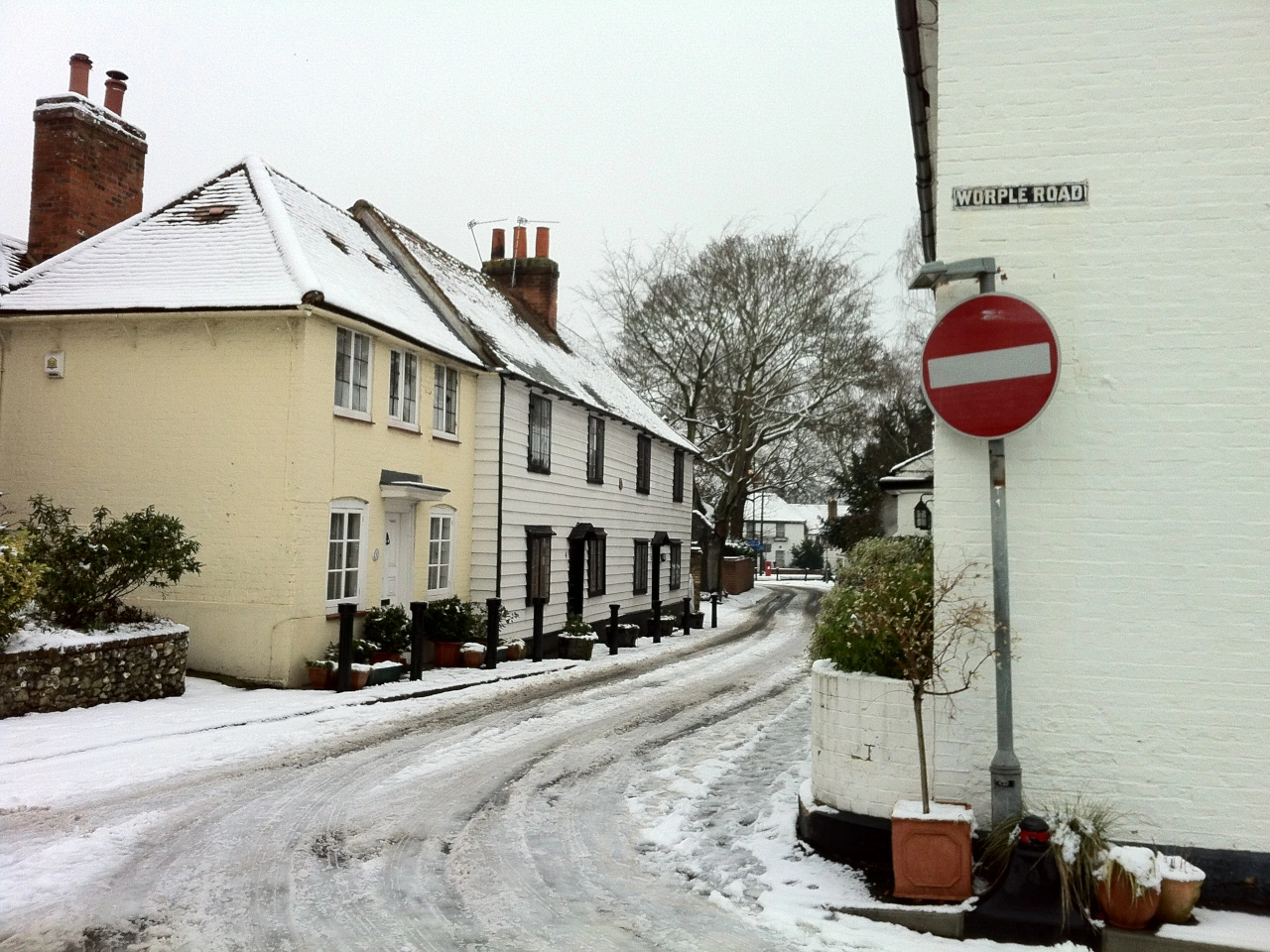
What is wrong-way driving?
Wrong-way driving means travelling against the legally permitted direction of traffic.
Where can wrong-way driving occur?
It can occur on one-way streets, divided roads, motorways, slip roads, tunnels, car parks and temporary traffic arrangements.
Why is wrong-way driving especially dangerous?
Other drivers do not expect approaching traffic in their lane, and the combined speeds can make a head-on collision extremely severe.
How can you recognise a prohibited direction?
Look for no-entry signs, one-way signs, mandatory-direction signs, lane arrows and road markings. Motorway exits may also have repeated signs or warning systems facing the wrong direction.
Is wrong-way driving the same as entering a no-entry road?
Entering past a no-entry sign can cause wrong-way driving, but the term also covers turning around on a divided road or using the wrong carriageway without passing such a sign.
Is driving against a one-way street always prohibited?
Normally, yes. However, signs may expressly permit certain road users, such as cyclists or public transport, to travel in the opposite direction.
Is authorised contraflow traffic wrong-way driving?
No. A cyclist, bus or other road user travelling in an expressly authorised contraflow lane or direction is using the road legally.
Can roadworks temporarily change the normal direction?
Yes. Temporary signs, barriers, lane signals and markings may redirect traffic onto another lane or carriageway. Follow the temporary arrangement rather than the usual road layout.
What should you do when you see a wrong-way driver?
Reduce speed immediately, keep as far as safely possible towards the outer edge of your carriageway and avoid sudden lane changes. Warn the police or emergency services as soon as this can be done safely.
Should you attempt to stop the wrong-way driver?
No. Do not block, chase or turn after the vehicle. Protect yourself and allow trained emergency services to intervene.
Should you flash your headlights?
A brief warning may help the driver recognise the error, but avoid prolonged or aggressive signalling that could cause panic or an unpredictable manoeuvre.
Should you sound the horn?
Use the horn only when reasonably necessary to warn of immediate danger. Your first priority is to reduce speed and create as much safe space as possible.
Should you stop in a live traffic lane?
Normally not. Sudden stopping may cause a rear-end collision. Slow down and move towards a safe shoulder, refuge or other protected location where possible.
What should you do after receiving a wrong-way-driver warning?
Reduce speed, stop overtaking, increase your following distance and remain in the lane or position recommended by the local authorities or warning system.
Should you continue using the overtaking lane?
Avoid unnecessary use of lanes nearest opposing or central traffic when a wrong-way driver has been reported. Follow local emergency guidance and electronic signs.
What should you do if you are driving in the wrong direction?
Slow down immediately, activate the hazard warning lights and use dipped headlights where required. Move to the safest available edge or shoulder and stop.
Should you accelerate to reach the next exit?
No. Increasing speed greatly increases the collision risk. Stop safely and wait for instructions from the police.
Should you make a U-turn across traffic?
No. Do not turn across live lanes, cross a central reservation or attempt to correct the mistake through another dangerous manoeuvre.
Should you reverse back to the entrance?
No. Reversing against traffic or along a motorway slip road creates additional danger. Stop safely and contact the emergency services.
Should you leave the vehicle after stopping?
This depends on the location and immediate danger. Remain protected from moving traffic and follow instructions from the emergency services. Do not stand in a live lane.
How should you contact the emergency services?
Stop safely before using a handheld phone. A passenger may call while the vehicle is moving when local law permits and this can be done without distracting the driver.
What information should you report?
Report the road name or number, direction, nearby exit or landmark, vehicle description and the wrong-way driver’s approximate location and direction.
What commonly causes wrong-way driving?
Possible causes include confusion at junctions, poor visibility, unfamiliar roads, impairment, navigation errors, turning around illegally or deliberately ignoring traffic signs.
How can drivers prevent entering the wrong direction?
Slow down at unfamiliar junctions, read signs before turning, verify the road layout and do not rely exclusively on navigation instructions.
Does a navigation system override traffic signs?
No. Traffic signs, signals, markings and instructions from authorised persons always take precedence over navigation guidance.
33. Travaux routiers
Les travaux routiers sont des activités de construction, d’entretien, de réparation ou d’inspection effectuées sur ou à côté d’une route. Ils peuvent modifier temporairement la configuration de la route, la largeur des voies, les limitations de vitesse, la priorité, les directions autorisées et les aménagements destinés aux piétons ou cyclistes.
Les conducteurs doivent respecter les panneaux temporaires, feux de circulation, barrières, marquages et instructions du personnel autorisé. Ils doivent réduire leur vitesse, augmenter la distance de sécurité et rester prêts à rencontrer des voies étroites, des véhicules arrêtés, des travailleurs, des engins et des changements soudains d’itinéraire.
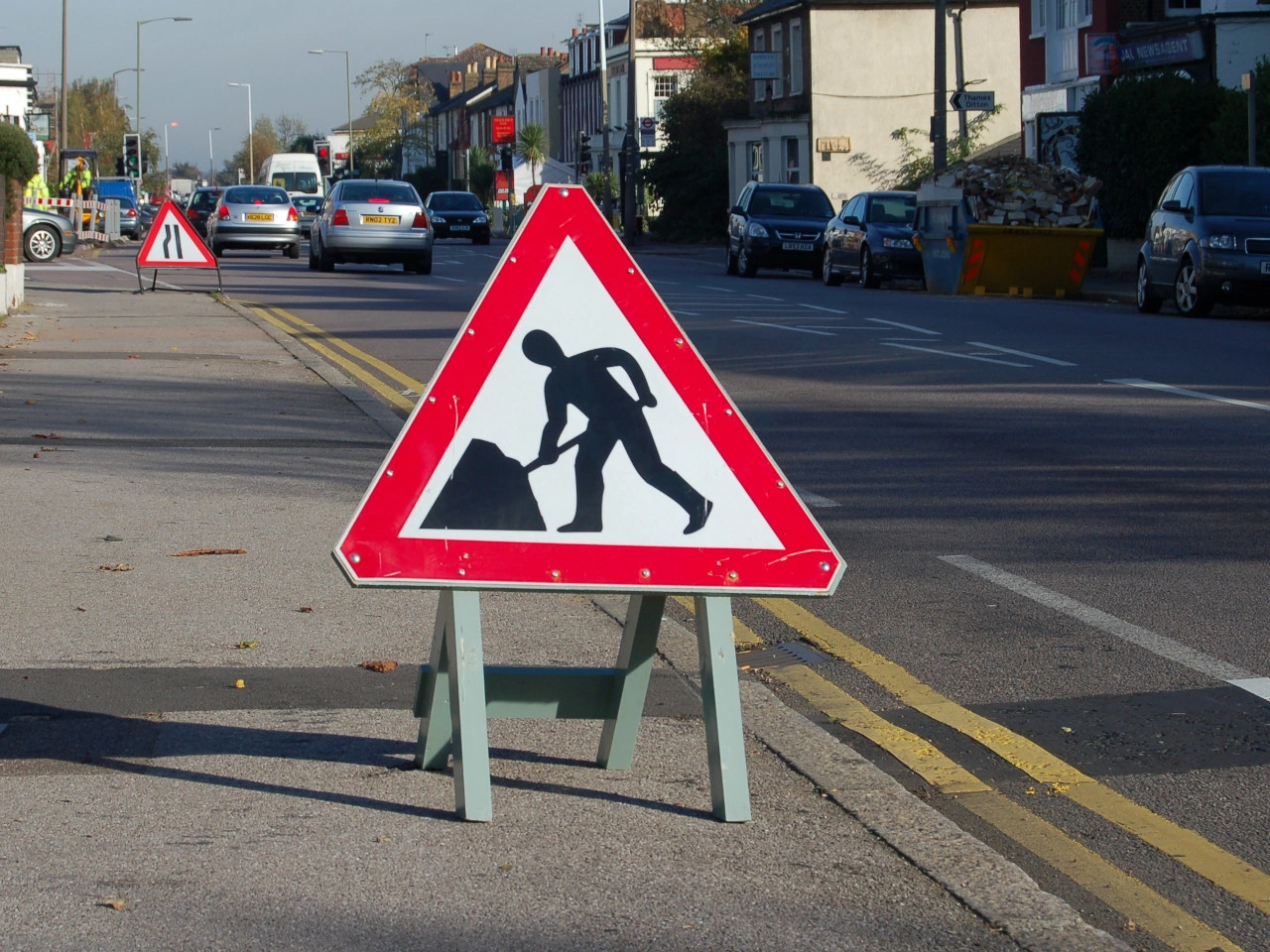
What are roadworks?
Roadworks are construction, maintenance, repair or inspection activities carried out on or beside a road.
How can you recognise roadworks?
They may be indicated by a roadworks warning sign, cones, barriers, temporary markings, flashing lights, machinery or workers.
Does a roadworks sign impose a speed limit?
No, not by itself. A separate temporary or permanent speed-limit sign establishes the legal maximum speed.
Must you drive below the speed limit?
Yes, when necessary. Narrow lanes, workers, machinery, poor surfaces, congestion or limited visibility may require a substantially lower speed.
Are temporary traffic signs legally binding?
Yes. Correctly installed temporary signs must be obeyed for as long as they are in force.
Which road markings should you follow?
Follow the temporary markings that guide traffic through the works. Local law determines how they take priority over older permanent markings.
Must you obey temporary traffic lights?
Yes. Stop at the line or signal when required and do not proceed until the applicable light permits it.
Must you obey road workers directing traffic?
Obey instructions from workers or controllers who are legally authorised to regulate traffic. Their signals may temporarily replace the ordinary traffic arrangement.
What should you do when a lane closes?
Observe the signs and lane arrows, check mirrors and blind spots and merge safely into the continuing lane.
What is zipper merging?
Zipper merging means that vehicles in an ending or blocked lane merge alternately with vehicles in the continuing lane near the narrowing during congested traffic.
Should you merge early?
This depends on local law and traffic conditions. Where zipper merging applies during congestion, use both lanes and merge near the narrowing. In flowing traffic, change lanes when a safe gap is available.
Who has priority when your lane is obstructed?
Without another traffic control, the driver whose route is obstructed commonly has to yield before moving into the path of approaching or adjacent traffic.
Can temporary lights control alternating traffic?
Yes. Temporary signals may allow only one direction at a time through a narrow section.
May you enter when the exit is blocked?
No. Do not enter a narrow section, intersection or temporary crossing when congestion may leave you stopped inside it.
May you move cones or barriers?
No. Do not move, pass around or ignore traffic-control equipment unless an authorised person instructs you to do so.
May you overtake in roadworks?
Only when signs and markings permit it and sufficient width and visibility remain. Overtaking is often unsafe in narrow or shifted lanes.
May you stop or park in roadworks?
Only where temporary and permanent signs permit it. Do not obstruct workers, machinery, emergency access or temporary pedestrian and cycle routes.
What should you watch for near workers?
Expect workers to enter the road, machinery to move or reverse and vehicles to leave the worksite. Reduce speed and leave generous space.
What should cyclists do at roadworks?
Follow the signed temporary cycle route or lane. Check surrounding traffic carefully before leaving a closed or obstructed bike path.
What should pedestrians do?
Use the designated temporary walkway or crossing and follow barriers, signs, signals and instructions from authorised personnel.
Why should you increase your following distance?
Traffic may brake suddenly because of queues, lane changes, machinery, debris or changing signals. Additional distance provides more time to react.
What should you do if your vehicle breaks down in roadworks?
Move to the safest available location where possible, activate the hazard warning lights and contact assistance. Avoid standing in a live or narrow traffic lane.
Do ordinary traffic rules still apply?
Yes. Rules concerning safe speed, following distance, signalling, priority and vulnerable road users continue to apply unless a lawful temporary arrangement changes them.
34. Limitation de hauteur
Une limitation de hauteur interdit l’accès ou le passage aux véhicules dont la hauteur totale dépasse la valeur indiquée sur une section de route, un pont, un tunnel, un portail ou un autre ouvrage. La hauteur du véhicule comprend son chargement et tout équipement fixé au-dessus.
Les conducteurs de véhicules hauts doivent connaître leur hauteur exacte, tenir compte des avertissements en amont et emprunter un autre itinéraire si nécessaire. Ils ne doivent jamais se fier uniquement à leur appréciation visuelle ni tenter de passer sous un ouvrage lorsque la hauteur libre disponible est incertaine.
What does a height-limit sign mean?
It prohibits vehicles whose total height exceeds the displayed value from continuing beyond the sign.
How can you recognise a height-limit sign?
It is commonly a circular regulatory sign showing a height in metres, feet or another local unit between vertical arrows.
What is included in the vehicle’s total height?
The height includes the vehicle, its load and any attached equipment, such as roof boxes, bicycles, machinery, antennas or raised loading equipment.
Does the limit apply to trailers?
Yes. Every part of a vehicle combination must fit beneath the restriction, including the towing vehicle, trailer and load.
Does the sign show the exact physical clearance?
Not necessarily. Road authorities may display a lower value than the measured clearance to provide a safety margin.
May a vehicle exactly as high as the displayed value pass?
The legal wording commonly prohibits vehicles higher than the displayed value, but drivers should not attempt to pass without a practical safety margin. Measurement errors, movement and road conditions can reduce the available clearance.
How can a vehicle’s height change?
Loading, tyre pressure, suspension settings, raised equipment, replacement tyres and road movement can alter the vehicle’s total height.
Can air suspension affect the height?
Yes. The vehicle may rise or lower depending on its suspension mode, speed and load. Use the maximum travelling height when planning the route.
Can the clearance vary between lanes?
Yes. An arched bridge, tunnel roof or overhead structure may provide different clearance in each lane. Follow lane-specific signs and markings.
Can the clearance vary across the width of one lane?
Yes. Clearance may be lower near the edge of an arch or where the road slopes sideways. Remain within the authorised marked path.
Can resurfacing reduce the available clearance?
Yes. A new road surface can raise the road level and reduce the space beneath a bridge or structure.
Can snow, water or road debris affect clearance?
Yes. Material on the road can raise the vehicle or restrict the usable route. Flooding may also conceal the road surface or another hazard.
Where are height restrictions commonly found?
They are common at bridges, tunnels, car parks, loading areas, gateways, railway structures and roads with overhead equipment.
Is a height-limit sign a warning or a prohibition?
It is normally a prohibition. A vehicle that exceeds the displayed height may not pass.
Does a height-limit sign impose a speed limit?
No. The applicable road or posted speed limit remains in force, although drivers should approach cautiously.
Does the sign change priority?
No. Traffic lights, priority signs and ordinary priority rules remain applicable.
Can a height restriction be announced in advance?
Yes. An advance sign may show the restriction and the distance to it so that high vehicles can choose another route.
What should you do when your vehicle is too high?
Do not continue. Stop where safe and follow the signed diversion or another suitable route. Do not reverse into traffic without assistance.
Should you rely on a navigation system?
No. Navigation may contain outdated or incomplete vehicle restrictions. Traffic signs and the actual road conditions always take precedence.
Should professional drivers know their vehicle’s height?
Yes. Drivers of trucks, buses, motorhomes and vehicles carrying roof loads should know and, where useful, display the vehicle’s maximum travelling height inside the cab.
What should you do when uncertain about your height?
Stop before the restriction in a safe place and verify the vehicle’s height. Choose another route when safe clearance cannot be confirmed.
May you move into another lane with greater clearance?
Only when signs and markings permit it and the manoeuvre can be completed safely. Do not cross a closed lane, continuous line or opposing traffic merely to gain clearance.
May you lower or remove equipment to pass?
Only in a safe place and when the equipment can be secured correctly afterwards. Never stop beneath the structure or in a live lane to alter the vehicle.
What should you do if your vehicle strikes a bridge?
Stop immediately where safe, activate the hazard warning lights and contact the emergency services or police. Do not continue because the vehicle, load or structure may be unstable.
Should traffic continue beneath a struck bridge?
No, when damage may have occurred. Keep away from the structure and follow instructions from the police, road authority or railway operator.
35. Panneau de contrôle radar
Un panneau de contrôle radar avertit les conducteurs que la vitesse des véhicules peut être contrôlée par une caméra fixe, un radar mobile, un lidar ou un système de contrôle de vitesse moyenne. Il rappelle aux conducteurs de vérifier et de respecter la limitation applicable.
Le panneau ne fixe normalement pas lui-même la limitation de vitesse. Les conducteurs doivent respecter la limitation générale, affichée ou variable applicable à la route et ne doivent pas freiner brusquement simplement parce qu’un contrôle de vitesse est signalé.
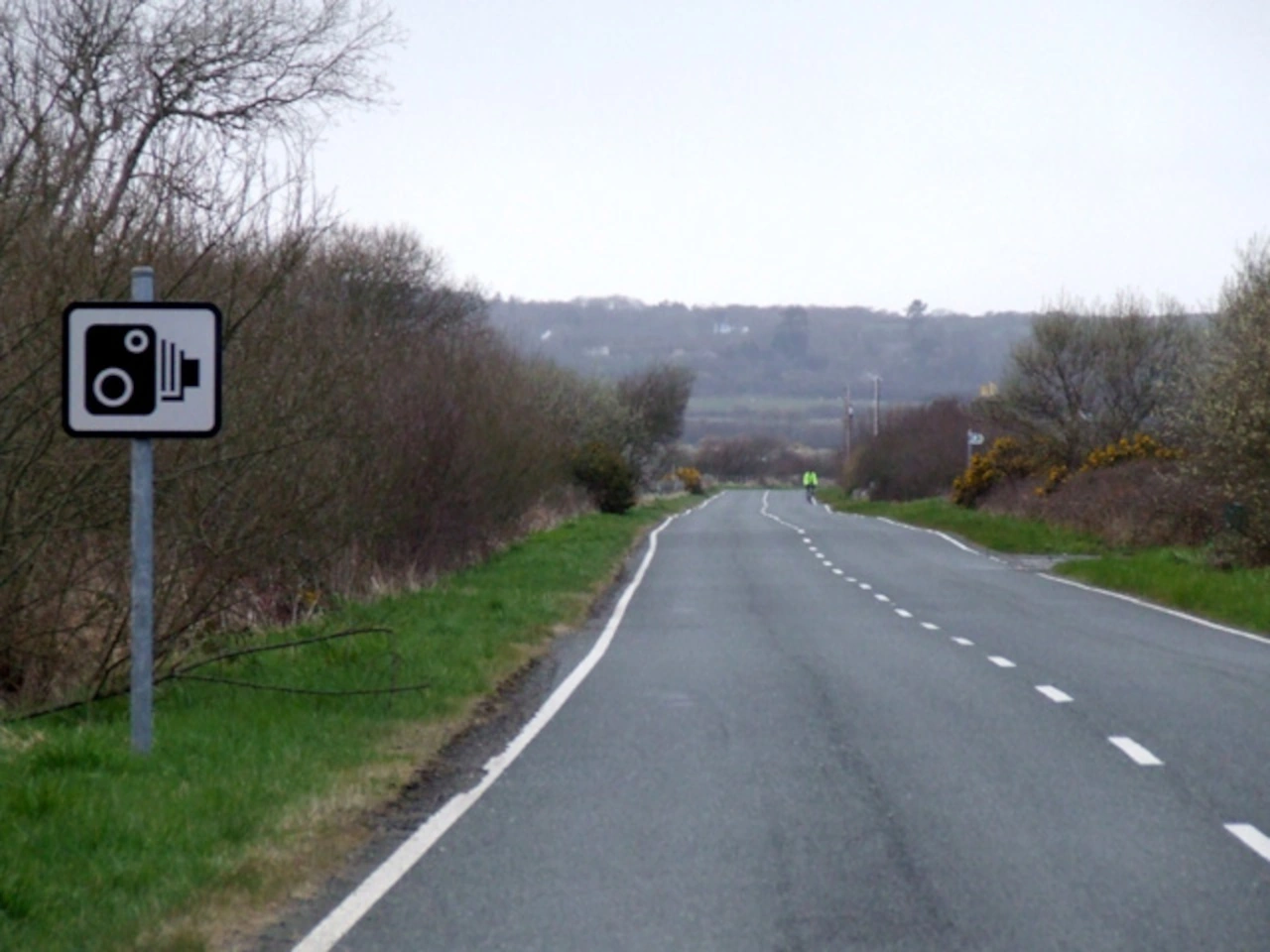
What does a radar speed sign mean?
It warns that vehicle speeds may be measured or enforced on the road ahead or throughout a specified section.
Is a radar speed sign the same as a speed-limit sign?
No. A speed-limit sign establishes the maximum legal speed. A radar sign only warns that compliance with an applicable limit may be monitored.
Where can the applicable speed limit be found?
Check the most recent speed-limit sign, variable sign, speed-zone sign or general limit applying to the road and vehicle category.
Does the radar sign impose a lower speed?
No. It does not normally change the existing limit. Drivers must nevertheless travel more slowly when traffic, visibility, weather or road conditions require it.
Does the sign mean a camera is definitely present?
It may announce a permanent camera, a mobile-control area or a section where enforcement can occur. The exact meaning depends on the country and sign design.
Does the sign guarantee that the camera is active?
No. Drivers should never rely on assumptions about whether equipment is operating and should respect the speed limit at all times.
What is a fixed speed camera?
A fixed speed camera is permanently installed at a particular location and measures the speed of passing vehicles.
What is a mobile speed camera?
A mobile speed camera is temporarily positioned in a police vehicle, trailer, roadside unit or another approved location.
What is lidar speed enforcement?
Lidar uses laser pulses to measure the speed and position of vehicles. It may be used by police officers or in temporary automatic installations.
What is average-speed enforcement?
Average-speed enforcement records a vehicle at two or more points and calculates its average speed across the controlled section.
Can slowing only at the camera avoid an average-speed offence?
No. Average-speed enforcement considers the travel time across the complete measured section rather than speed at only one point.
Can a camera enforce both speed and red lights?
Yes. Some systems monitor vehicle speed and whether a vehicle passes a red traffic signal.
Is a radar warning sign legally required everywhere?
No. Some authorities announce speed cameras, while others permit enforcement without advance warning. The rules differ between countries and regions.
Can speed enforcement occur without a radar sign?
Yes. The absence of a warning sign does not normally prevent police or authorised authorities from carrying out a lawful speed check.
Does the sign give permission to drive at the displayed road limit?
The applicable limit remains a maximum rather than a target. Drivers must reduce speed whenever travelling at that limit would be unsafe.
Should you brake suddenly after seeing the sign?
No. Check your speed and reduce it smoothly when necessary. Sudden braking can cause a rear-end collision.
May you accelerate again after passing the camera?
Only while remaining within the applicable limit and driving safely. The restriction may continue, and another camera or average-speed section may follow.
Does the radar sign end the speed limit?
No. Passing a camera or radar sign does not end the applicable speed restriction.
What is a radar speed display?
A radar speed display measures an approaching vehicle and shows its current speed, sometimes with a colour, message or smiley symbol.
Is a radar speed display an enforcement camera?
Not necessarily. Many displays are preventive devices intended to make drivers aware of their speed and may collect anonymous traffic statistics without issuing penalties.
Is the displayed speed legally authoritative?
No. The roadside display is generally informational. Drivers remain responsible for observing the vehicle’s speedometer and the legal speed limit.
Can radar monitor motorcycles?
Yes. The technical ability to measure a motorcycle and the method used to identify it depend on the enforcement equipment.
Can a camera monitor several lanes?
Yes. Modern systems may measure vehicles in one or more lanes and may distinguish between traffic directions or vehicle categories.
Can different vehicles have different speed limits?
Yes. Heavy vehicles, buses, trailers or other vehicle categories may be subject to lower limits than passenger cars on the same road.
What should you do when you are already exceeding the limit?
Release the accelerator and reduce speed smoothly and safely. Do not brake harshly or make an abrupt lane change.
36. Barrières sélectives
Les barrières sélectives sont des dispositifs physiques de contrôle d’accès qui permettent le passage de certains usagers ou véhicules autorisés tout en limitant les autres. Elles peuvent comprendre des bornes fixes, amovibles, rabattables ou escamotables, des portails, des barrières et des dispositifs de filtrage par largeur.
Les usagers autorisés sont déterminés par les panneaux de signalisation, les conditions d’accès et la réglementation locale, et non par la barrière seule. Les conducteurs doivent approcher lentement, vérifier qu’ils sont autorisés et attendre que toute barrière mobile soit entièrement ouverte ou escamotée avant de continuer.
What is a selective barrier?
A selective barrier is a physical access-control device that blocks some traffic while allowing specified road users or authorised vehicles to pass.
What types of selective barriers exist?
Common examples include fixed bollards, removable posts, folding posts, retractable bollards, gates, rising barriers and width-filtering installations.
Why are selective barriers used?
They may prevent through traffic, protect pedestrian or cycling routes, control access to restricted areas or allow only residents, public transport, deliveries or emergency services to enter.
Does the barrier itself determine who may pass?
Not normally. The permitted users are determined by traffic signs, permits, access systems and local regulations.
May cyclists pass through a selective barrier?
Only when cycling is permitted and sufficient safe space is provided. Cyclists must follow the signs applying to the road or path.
May pedestrians pass through?
Pedestrians may pass where pedestrian access is permitted and a safe route is available. They should not walk beneath a moving gate or through a vehicle-only opening.
May motorcycles pass between bollards?
Only when motorcycles are legally permitted beyond the barrier and the opening is intended for them. Being physically able to fit through does not create permission.
May emergency vehicles pass?
Emergency vehicles may have keys, remote controls, automatic recognition or another authorised method of opening the barrier. Other road users must keep the access clear.
May residents or delivery vehicles enter?
They may enter only when local access rules, permits or traffic signs authorise them. Permission may apply only during specified hours.
What is a retractable bollard?
A retractable bollard is a post that can rise from or lower into the road surface to control vehicle access.
How may a retractable bollard be activated?
It may operate through a badge, remote control, access code, number-plate recognition, timer, control centre or automatic detection system.
When may you drive over a retractable bollard?
Only after confirming that you are authorised and the bollard is fully lowered. Do not move merely because another vehicle has activated it.
May you follow another authorised vehicle through?
No, unless your own access is also authorised and the system clearly permits it. The barrier may rise immediately after the first vehicle.
What do warning lights near a barrier mean?
Red lights normally require road users to stop, while another signal may indicate when passage is permitted. Follow the displayed signals and local instructions.
What should you do when the barrier is moving?
Stop at a safe distance and wait until it has completed its movement. Never drive, cycle or walk beneath a moving gate or across a rising bollard.
What if the barrier appears to be stuck?
Do not force, move or drive around it. Use the intercom or contact the operator, road authority or emergency service indicated at the location.
May you move a removable bollard yourself?
No, unless you are specifically authorised. Removing or repositioning access-control equipment may create danger and allow prohibited traffic to enter.
Does a lowered bollard mean everyone may enter?
No. Traffic signs and access restrictions remain applicable even when the physical barrier is temporarily open or lowered.
Does an open gate cancel a no-entry sign?
No. An open physical barrier does not cancel a regulatory traffic sign.
Does a selective barrier impose a speed limit?
Not by itself. Drivers must follow the applicable speed limit and approach slowly enough to stop before the installation.
Does it change priority?
No. Traffic lights, priority signs and ordinary priority rules remain applicable unless another traffic arrangement indicates otherwise.
May you stop or park in front of a selective barrier?
Do not stop or park where the vehicle would block authorised access, emergency services, pedestrians or cyclists.
Why are bollards dangerous for cyclists and motorcyclists?
They may be difficult to see, especially in darkness, congestion or poor weather. A collision can cause a rider to fall into nearby traffic or other obstacles.
How should cyclists approach bollards?
Reduce speed, identify the intended opening and pass through in a straight and controlled line. Avoid overtaking another cyclist at the barrier.
What should drivers do when leaving a restricted area?
Approach slowly, wait for the access system to respond and check for pedestrians and cyclists before crossing their route.
What if your vehicle strikes a barrier?
Stop safely, activate the hazard warning lights where appropriate and report the collision. Do not continue if the vehicle, barrier or access system may be damaged.
37. Zone à faibles émissions
Une zone à faibles émissions, ou ZFE, est une zone définie dans laquelle l’accès des véhicules les plus polluants est limité afin de réduire la pollution de l’air liée au trafic. Les véhicules ne satisfaisant pas aux critères d’émissions requis peuvent être interdits d’accès ou nécessiter un permis temporaire, une exemption ou un pass journalier.
Les règles d’accès dépendent généralement de facteurs tels que la catégorie du véhicule, le type de carburant et la norme d’émissions Euro. Les exigences des zones à faibles émissions varient selon les pays et les villes ; les conducteurs doivent donc vérifier les règles applicables avant d’y entrer.
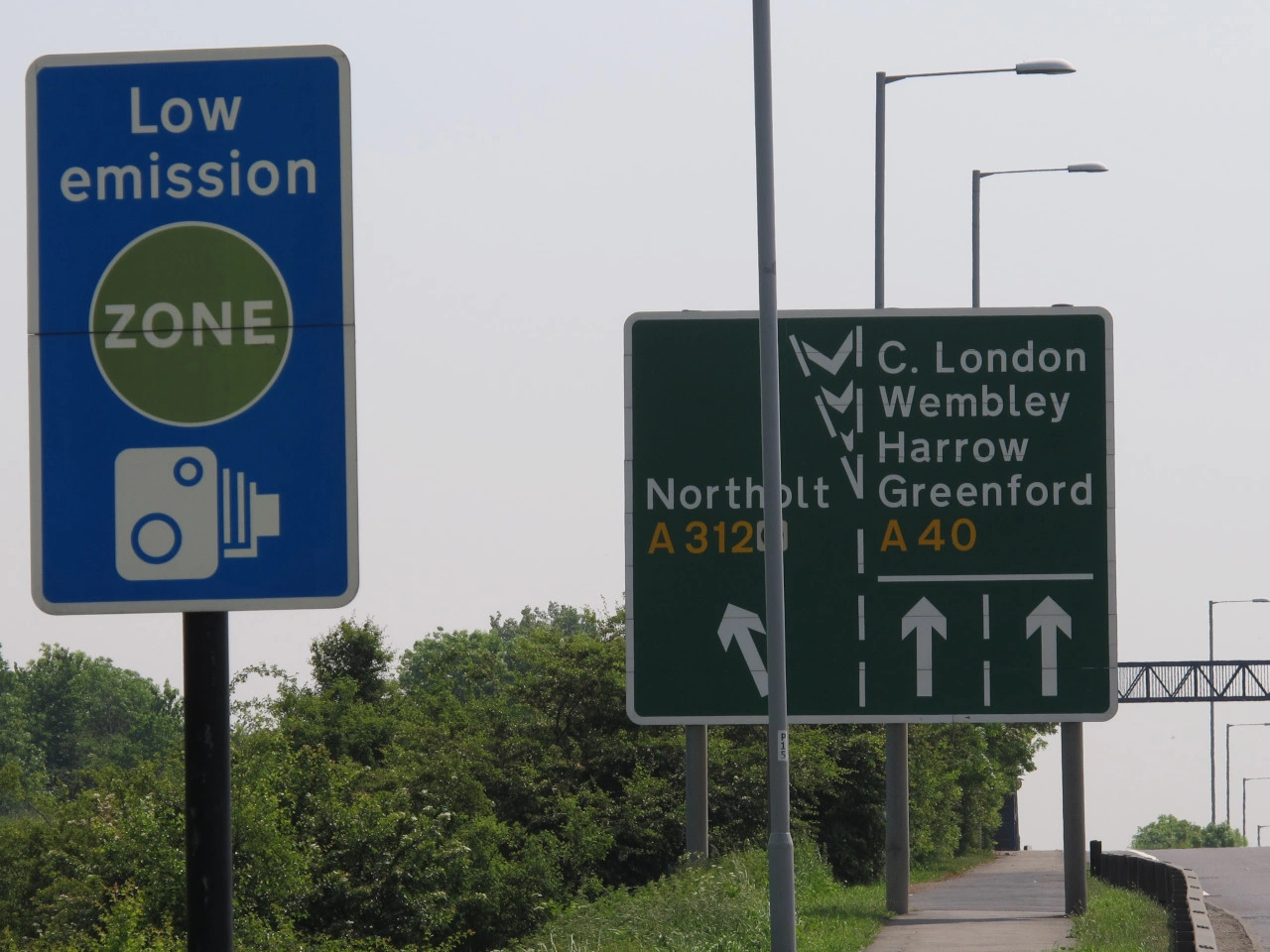
What is a low-emission zone?
A low-emission zone is an area where access by more polluting vehicles is restricted in order to improve air quality.
Why are low-emission zones introduced?
They are intended to reduce traffic-related air pollution, particularly pollutants produced by older or higher-emitting vehicles.
Which vehicles can be restricted in a low-emission zone?
Restrictions may apply to cars, vans, trucks, buses, motorcycles or other motor vehicles, depending on the local regulations.
How is access to a low-emission zone determined?
Access commonly depends on the vehicle's fuel type, Euro emission standard, vehicle category and sometimes other technical characteristics.
What is a Euro emission standard?
A Euro emission standard indicates which European pollutant-emission requirements a vehicle satisfies. Higher Euro numbers generally represent newer and stricter emissions requirements.
Are diesel and petrol vehicles treated the same?
Not necessarily. Low-emission zones often apply different access criteria to diesel and petrol vehicles because their pollutant-emission characteristics differ.
Can electric vehicles enter a low-emission zone?
Fully electric vehicles are generally permitted because they produce no combustion-engine exhaust emissions while driving, although local registration or administrative requirements may still apply.
Can a vehicle that does not meet the normal criteria still enter?
Some low-emission zones provide exemptions, temporary permits or day passes for certain vehicles or circumstances.
How can you recognise a low-emission zone?
Traffic signs normally indicate the entrance and exit of the zone. Drivers should check the applicable restrictions before passing the entry sign.
How are low-emission zones enforced?
Enforcement may use automatic licence-plate cameras, roadside controls or registration databases. The exact system varies between cities and countries.
Do foreign vehicles have to follow low-emission-zone rules?
Yes. Foreign vehicles must comply with the applicable access criteria and may also have to complete an online registration before entering.
Are low-emission-zone rules the same everywhere?
No. Each country, region or city can establish different boundaries, emission requirements, exemptions and enforcement procedures.
38. Priorité au prochain carrefour
La priorité au prochain carrefour signifie que les conducteurs circulant sur une route déterminée ont priorité sur le trafic arrivant des routes qui la croisent au prochain carrefour. Le régime de priorité est normalement indiqué par des panneaux faisant face à la fois au trafic prioritaire et à celui qui doit céder le passage.
Contrairement à une route prioritaire continue, cette priorité ne s’applique qu’à l’intersection indiquée. Les conducteurs doivent néanmoins approcher avec prudence et respecter les feux de circulation, agents habilités, passages, règles de changement de direction et autres panneaux applicables.

What does priority at the next junction mean?
It means that drivers travelling on the indicated road have priority over traffic entering from intersecting roads at the next junction.
Is this the same as a priority road?
No. Priority at the next junction applies to one particular junction. A priority road normally keeps its priority across several junction until its status ends.
Is a main road always a priority road?
No. The term main road may describe a larger, busier or more important road, but legal priority is determined by traffic signs, signals and local rules.
How can you recognise priority at the next junction?
It may be indicated by a priority-junction sign showing a thick line for the priority route and thinner lines for the roads that must give way.
Does the thick line show the priority route?
Yes. On signs using a junction diagram, the thicker line normally represents the road followed by traffic with priority.
Does the priority route always continue straight ahead?
No. The priority route may turn left or right. A diagram or supplementary panel may show which branch retains priority.
What signs do drivers on the side roads normally see?
They commonly face a give-way or stop sign, requiring them to yield to traffic on the priority route.
Does priority from the right still apply?
Not when legally placed signs establish another priority arrangement at that junction. Drivers must follow the actual signs rather than the ordinary default rule.
Does the sign give priority at later junctions?
No. After passing the indicated junction, the priority arrangement at the next junction must be determined separately.
Does having priority mean you may enter without slowing down?
No. Approach at a safe speed and remain prepared for another road user to fail to give way.
Does having priority mean you must proceed first?
No. Priority is not an obligation to continue. Slow down or stop whenever proceeding would create danger.
May you enter a blocked junction?
No. Do not enter when congestion is likely to leave your vehicle stopped inside the junction and obstructing other traffic.
Does the sign impose a speed limit?
No. The applicable general, zonal, posted or vehicle-specific speed limit remains in force.
Does it give priority over pedestrians?
No. Drivers must still yield to pedestrians where crossings, traffic signals or turning rules require it.
Does it give priority over cyclists?
It regulates priority between traffic approaching the junction, but drivers must still respect continuing bike paths, cycle crossings and turning rules.
Must you signal when the priority route turns?
Yes, when following the route involves a change of direction and local law requires signalling. Priority does not remove the obligation to indicate.
Does signalling give you priority?
No. An indicator communicates your intended movement but does not allow you to endanger or obstruct another road user.
Must you yield to oncoming traffic when turning left?
Normally, yes. Priority over side-road traffic does not automatically give a left-turning driver priority over lawful oncoming traffic.
Do functioning traffic lights override the priority signs?
Functioning traffic lights normally control the junction instead of the priority signs. Local rules determine what applies when the lights are switched off or flashing.
Do authorised officers override the signs?
Yes. Instructions from an authorised traffic controller normally take precedence over signs, signals and ordinary priority rules.
Does the sign prohibit overtaking?
No. Overtaking remains subject to the ordinary rules, visibility, road markings and any separate prohibition signs.
Does the sign prohibit stopping or parking?
No. The ordinary stopping and parking rules and any local signs or markings remain applicable.
What applies after you pass the intersection?
The special priority indicated by the sign has been completed. At later junctions, follow the signs, signals or default priority rule applying there.
39. Feux de circulation
Les feux de circulation utilisent des lumières colorées, des flèches ou des symboles pour indiquer quand les usagers peuvent avancer, doivent se préparer à s’arrêter ou doivent rester arrêtés. Des signaux distincts peuvent s’appliquer à certaines directions, voies, aux piétons, cyclistes ou véhicules de transport public.
Un feu vert autorise le mouvement uniquement lorsque le passage est libre et que la manœuvre est par ailleurs légale. Les usagers doivent toujours respecter les règles de priorité, interdictions de tourner, marquages de voie et instructions des agents habilités.
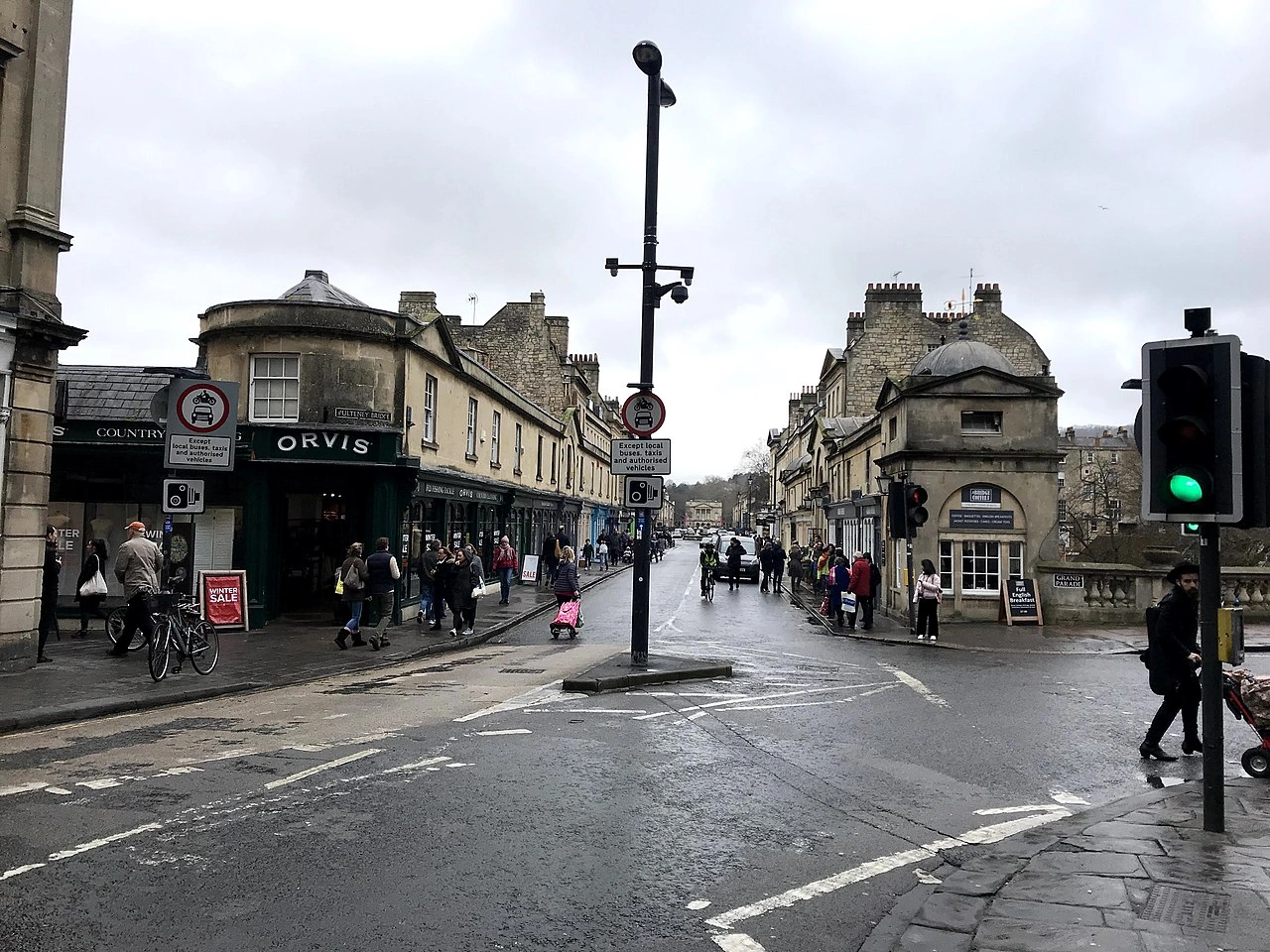
What are traffic lights?
Traffic lights are signals that use coloured lights, arrows or road-user symbols to regulate traffic movements.
What does a red traffic light mean?
A red light requires road users to stop before the stop line or signal and remain stopped until movement is permitted.
What does a steady amber light mean?
A steady amber light normally requires drivers to stop unless they are already too close to stop safely. It warns that the signal is changing to red.
What does a green traffic light mean?
A green light permits road users to pass the signal, but only when the route is clear and the intended movement is otherwise legal.
Does green mean that you have priority over everyone?
No. You may still have to give way to pedestrians, cyclists, oncoming traffic or other road users when turning or following a conditional arrow.
May you enter a blocked intersection on green?
No. Do not enter when congestion is likely to leave you stopped inside the intersection and obstructing crossing traffic.
Where should you stop at a red light?
Stop before the stop line. When no stop line is provided, stop before the traffic light or at another legally prescribed position.
May you cross the stop line and then stop?
No. The required stop must normally be completed before the stop line. Do not stop on a pedestrian or cycle crossing.
What if the light changes to amber while you are approaching?
Stop when this can be done safely. Continue only when you are already too close to stop without creating danger.
Should you accelerate to pass an amber light?
No. Do not accelerate to avoid stopping. Maintain control and stop unless doing so safely is no longer possible.
What do arrow-shaped traffic lights mean?
They have the same general meaning as circular lights, but the prohibition or permission applies only to the direction shown by the arrow.
What does a green arrow displayed with a red light mean?
It may permit travel in the indicated direction while other movements remain prohibited. Drivers may still have to give way to conflicting traffic and pedestrians.
Does a green arrow override a no-turn sign?
Not universally. Drivers must follow the complete local sign arrangement. A traffic signal does not necessarily cancel a separate regulatory prohibition.
May you turn right on red?
Only where local law or a specific sign or signal expressly permits it. There is no universal right to turn on red.
What does a flashing amber light mean?
It warns of a potential hazard and normally allows cautious passage. The ordinary priority arrangement remains applicable.
What should you do when the normal lights are flashing amber?
Reduce speed, observe the intersection carefully and follow the applicable priority signs or default priority rules.
What does a flashing red light mean?
Its meaning depends on local law. At railway crossings and some movable bridges, flashing red lights normally require road users to stop.
What do lane-control signals mean?
A red cross normally closes the lane, a green downward arrow opens it and an amber diagonal arrow instructs drivers to leave the lane in the indicated direction.
May you continue beneath a red lane-control cross?
No. Move out of the lane safely before reaching the red cross unless an authorised person or emergency rule directs otherwise.
What does an amber diagonal lane arrow mean?
It warns that the lane is closing or unavailable ahead. Drivers must move into the adjacent lane indicated by the arrow when safe.
Can separate lights apply to cyclists?
Yes. A signal displaying a bicycle symbol applies to the road users legally covered by that signal rather than to general motor traffic.
Can separate lights apply to pedestrians?
Yes. Pedestrian lights normally use red and green human figures to indicate whether pedestrians may begin crossing.
What does a flashing green pedestrian light mean?
It normally warns that the crossing period is about to end. Pedestrians who have not started should wait for the next green signal.
What if the pedestrian signal changes while someone is crossing?
A person who entered lawfully should continue without unnecessary delay. Turning drivers must allow the crossing to be completed safely.
Can buses and trams have separate traffic lights?
Yes. Public-transport signals may use bars, circles, triangles or other symbols that apply only to authorised service vehicles.
Do functioning traffic lights override priority signs?
They commonly replace the priority arrangement at that location. Priority signs may apply again when the normal signals are inactive or flashing.
Do instructions from a police officer override traffic lights?
Yes. Instructions from an authorised traffic controller normally take precedence over lights, signs, markings and ordinary rules.
What should you do when the lights are not working?
Reduce speed and follow the priority signs, temporary signals, authorised personnel or default priority rules that apply.
May you clear an intersection after the light turns red?
Yes, when you entered lawfully and must leave the intersection. Complete the movement cautiously without endangering other road users.
Does a green light impose a minimum speed?
No. Drivers may proceed but must continue at a safe and legal speed.
May you use a handheld phone while waiting at red?
This depends on local law. In many countries, a driver temporarily stopped in traffic is still considered to be driving and may not use a handheld device.
40. Avertissement de feux de circulation
Un avertissement de feux de circulation est un panneau qui informe les conducteurs de la présence de feux plus loin. Il est couramment utilisé lorsque les feux peuvent être inattendus, difficiles à voir de loin ou situés sur une route où les conducteurs ont besoin de temps supplémentaire pour se préparer à s’arrêter.
Les conducteurs qui approchent de cet avertissement doivent réduire leur vitesse si nécessaire, surveiller les feux plus loin et être prêts à s’arrêter si le signal change ou si des véhicules attendent au carrefour.
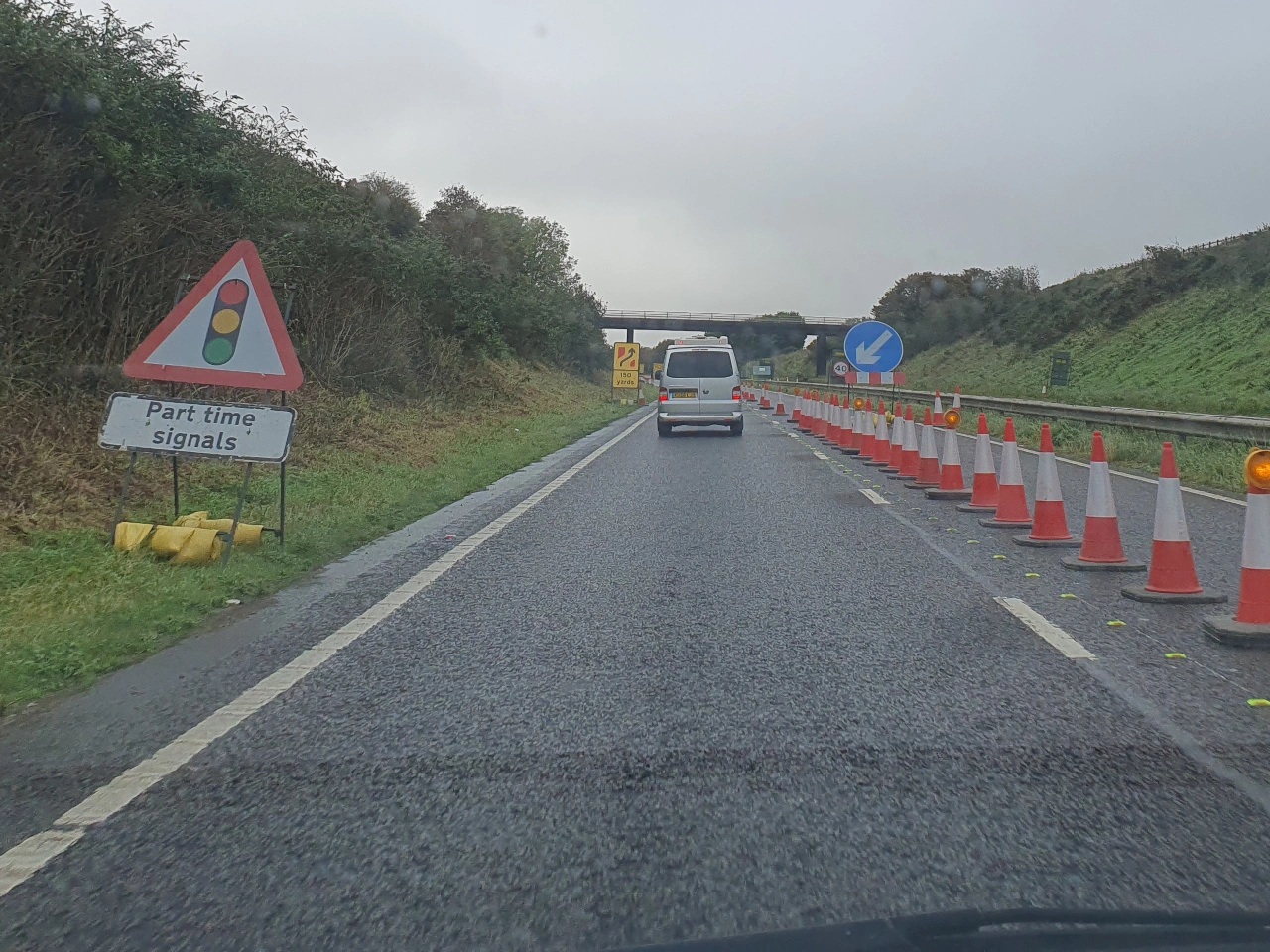
What does a traffic lights warning mean?
A traffic lights warning alerts drivers that traffic signals are located ahead.
Why is a traffic lights warning sign used?
It may be used where traffic lights are unexpected, difficult to see sufficiently early or located on a road where advance warning improves safety.
How should you react to a traffic lights warning?
Remain alert, reduce speed when necessary and be prepared to stop at the traffic lights or behind waiting traffic.
41. Marquages routiers
Les marquages routiers sont des lignes, symboles, flèches, mots ou autres indications appliqués sur la chaussée pour réglementer, guider ou informer les usagers. Ils peuvent séparer les voies et les sens opposés, indiquer où les véhicules doivent s’arrêter ou céder le passage, signaler des passages pour piétons et cyclistes et identifier des zones réservées à certains usagers.
Les usagers doivent respecter la signification de chaque marquage routier et l’interpréter avec les panneaux, signaux et règles de circulation applicables. Les couleurs, motifs et significations juridiques peuvent varier selon les pays.
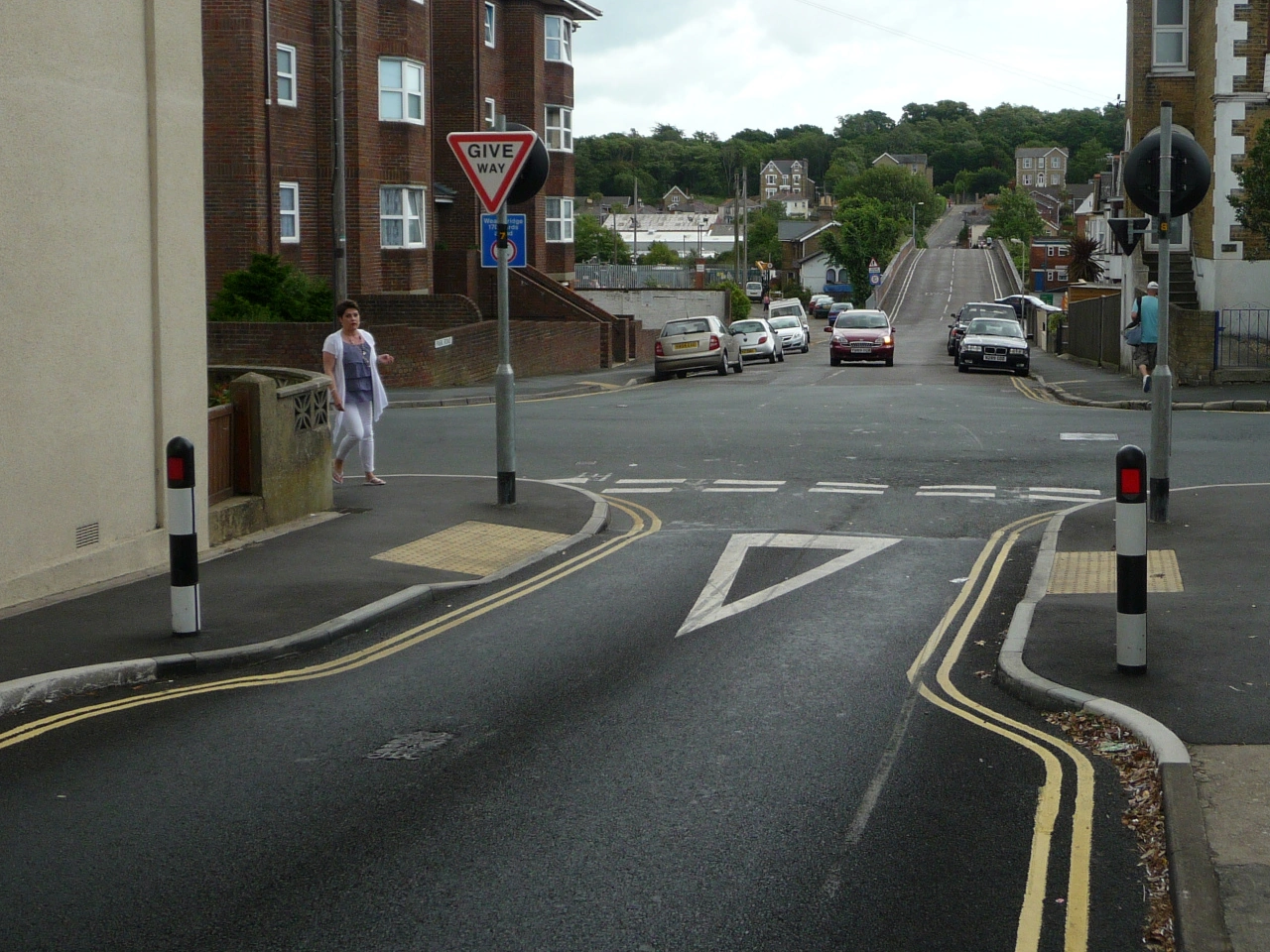
What are road markings?
Road markings are lines, symbols, arrows or words placed on the road surface to regulate, guide or provide information to road users.
What are road markings used for?
They can separate traffic lanes, indicate stopping or priority points, guide traffic movements and mark crossings or reserved areas.
Are road markings the same in every country?
No. Many markings are internationally similar, but their colours, designs and exact legal meanings can vary between countries.
42. Voie pour véhicules lents
Une voie pour véhicules lents est une voie supplémentaire aménagée sur une section en montée pour les véhicules dont la vitesse diminue fortement en côte, notamment les véhicules lourds ou peu puissants. Elle permet aux véhicules plus rapides de dépasser sans devoir utiliser une voie réservée au trafic venant en sens inverse.
Les conducteurs utilisant cette voie doivent respecter les panneaux et marquages qui déterminent les usagers autorisés et se réinsérer en sécurité dans la voie normale lorsque la voie pour véhicules lents se termine. Les règles précises et les usagers autorisés varient selon les pays.
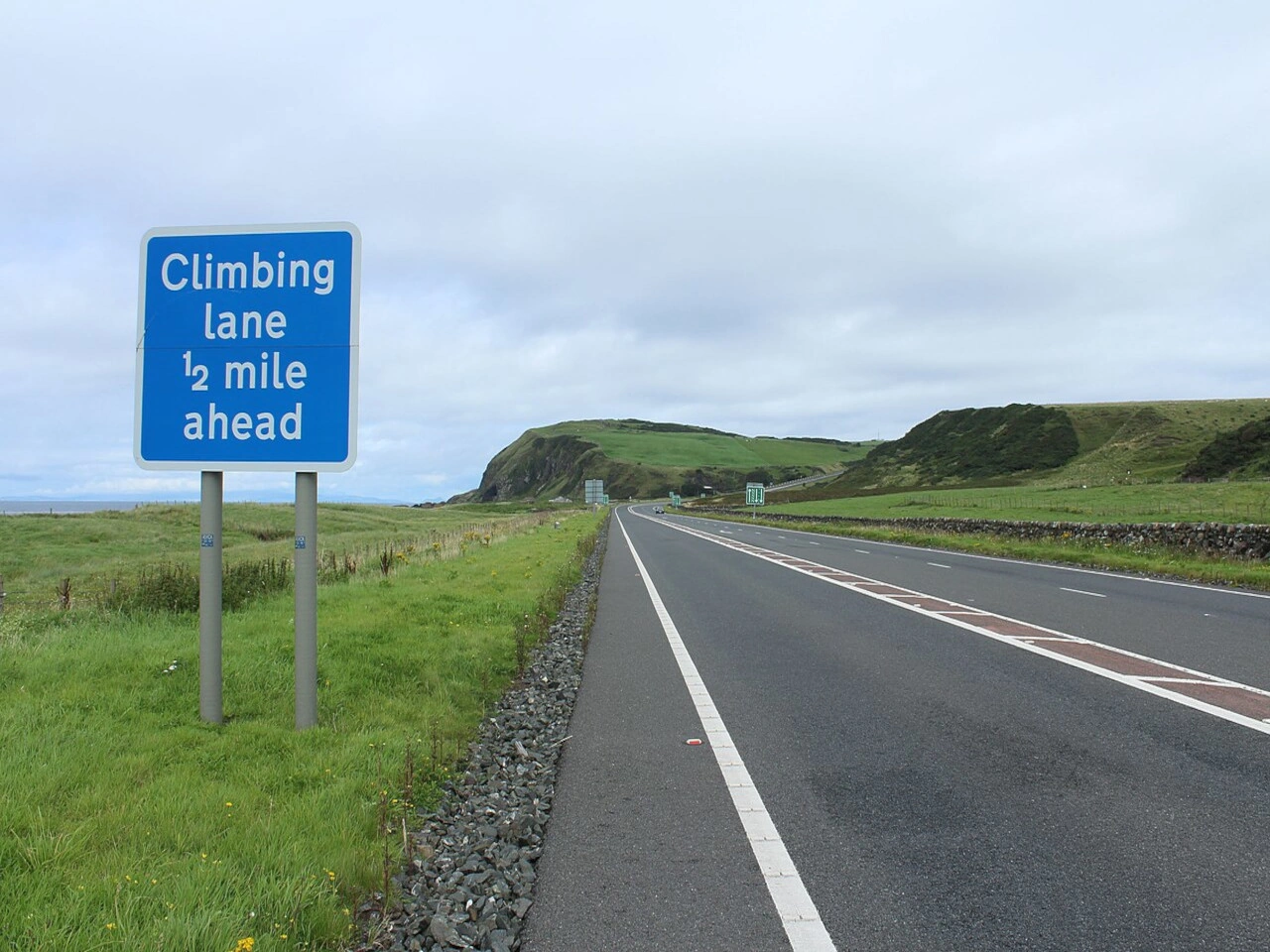
What is a climbing lane?
A climbing lane is an additional lane on an uphill section of road that provides space for slower vehicles while allowing faster vehicles to continue past them.
Who should use a climbing lane?
Climbing lanes are generally intended for vehicles travelling substantially slower than the normal traffic flow, particularly heavy vehicles. The exact restrictions depend on local signs and traffic rules.
What should you do when a climbing lane ends?
Follow the road markings and signs, check surrounding traffic and merge safely into the continuing traffic lane without forcing other road users to brake or change direction suddenly.
43. Sas vélo
Un sas vélo, également appelé zone d’arrêt avancée, est un espace marqué à un carrefour à feux où les cyclistes peuvent attendre devant les véhicules à moteur lorsque le feu est rouge. Il est généralement placé entre deux lignes d’arrêt et peut comporter un symbole de vélo.
Un sas vélo contribue à améliorer la visibilité des cyclistes et leur permet de se positionner clairement avant le redémarrage de la circulation. Les usagers autorisés, marquages et règles liées aux feux varient selon les pays.

What is a bike box?
A bike box is a marked waiting area at a signal-controlled intersection where cyclists can position themselves ahead of motor vehicles during a red light.
Why are bike boxes used?
They help make cyclists more visible to drivers and allow cyclists to position themselves according to the direction they intend to travel.
Can cars stop inside a bike box?
Normally, no. Motor vehicles should stop behind the stop line provided for them so that the designated cyclist waiting area remains clear.
44. Circulation à gauche
La circulation à gauche est un système dans lequel les véhicules roulent normalement sur le côté gauche de la route. Dans les pays à circulation à gauche, les véhicules dépassent généralement par la droite et la plupart des voitures ont le volant à droite.
Les conducteurs peu habitués à la circulation à gauche doivent être particulièrement attentifs aux intersections, ronds-points, changements de direction et lorsqu’ils entrent sur une route ou la quittent, car les mouvements habituels sont inversés par rapport à la circulation à droite.

What does left-hand traffic mean?
Left-hand traffic means that vehicles normally drive on the left side of a two-way road. Traffic approaching from the opposite direction therefore passes on the driver's right.
On which side do you normally overtake in left-hand traffic?
Vehicles normally overtake on the right, although exceptions can apply depending on the road layout and national traffic rules.
Which side is the steering wheel on in countries with left-hand traffic?
Most vehicles designed for left-hand traffic have the steering wheel on the right-hand side. However, vehicles with the steering wheel on the opposite side can also be legally used in many countries.
45. Affichage de vitesse
Un affichage de vitesse est un système de sécurité routière qui mesure la vitesse d’un véhicule approchant et l’affiche au conducteur. L’écran peut indiquer la vitesse mesurée avec un message, une couleur ou un symbole montrant si le véhicule respecte la limitation applicable.
Ces dispositifs visent principalement à sensibiliser les conducteurs à leur vitesse et à les inciter à ralentir lorsque cela est nécessaire. Ils ont normalement un rôle préventif ou éducatif plutôt que de fixer une nouvelle limitation.

What is a speed feedback display?
A speed feedback display is an electronic roadside device that measures an approaching vehicle's speed and shows that speed to the driver.
Why are speed feedback displays used?
They are used to increase drivers' awareness of their actual speed and encourage compliance with the applicable speed limit.
Does a speed feedback display set the speed limit?
Normally, no. The legally applicable speed is determined by the traffic rules and regulatory speed-limit signs, while the feedback display simply informs the driver of their measured speed.
46. Permis de conduire
Un permis de conduire est un document officiel autorisant une personne à conduire une ou plusieurs catégories déterminées de véhicules à moteur. Il peut comporter des conditions, restrictions, codes de catégorie et dates d’expiration déterminant les véhicules que son titulaire peut conduire.
Les conducteurs doivent posséder un permis valide pour la catégorie de véhicule et la juridiction concernées. Un permis peut être provisoire, définitif, restreint, suspendu ou retiré, et des qualifications supplémentaires peuvent être exigées pour la conduite professionnelle.
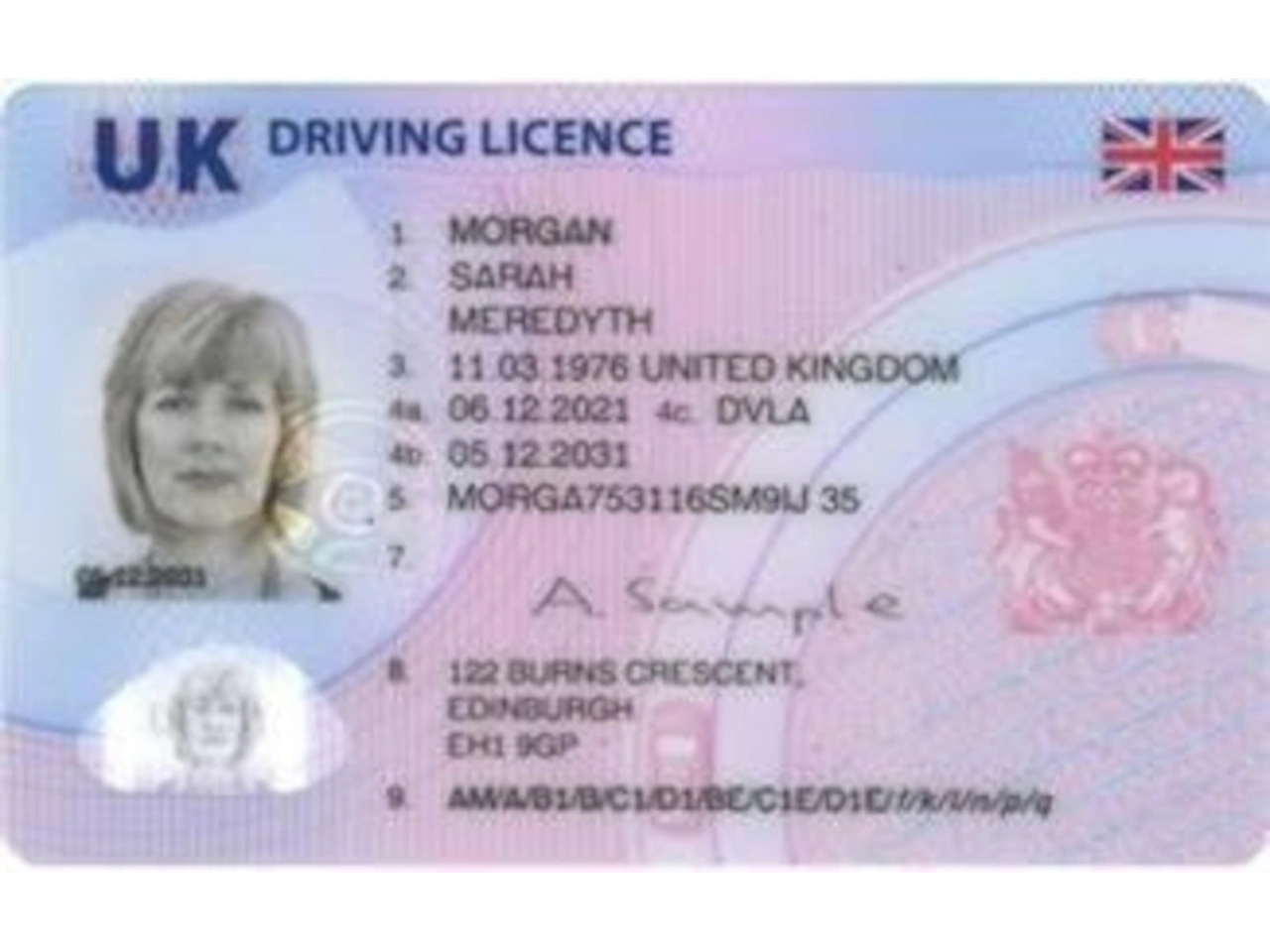
What is a driving licence?
A driving licence is an official authorisation to drive specified categories of motor vehicle.
Is a driving licence the same as a driving permit?
The terms may refer to the same document, depending on the country. Some countries use permit specifically for learners or temporary authorisations.
What is a provisional driving licence?
A provisional or learner licence allows a person to practise driving under specified restrictions before obtaining a full licence.
What is a full driving licence?
A full licence is issued after the holder has completed the required tests or training. Restrictions may still apply because of age, vehicle type, medical fitness or licence codes.
Does one licence allow you to drive every vehicle?
No. Driving licences are divided into categories for motorcycles, cars, buses, trucks, trailers and other vehicles.
What is a licence category?
A licence category identifies the type and size of vehicle the holder is authorised to drive.
Must the licence be valid for the vehicle being driven?
Yes. Holding a licence for one category does not normally authorise driving a vehicle belonging to another category.
Can a licence contain restrictions?
Yes. Codes may restrict the holder to an automatic transmission, corrective lenses, an adapted vehicle or another specified condition.
What is the difference between an automatic and manual licence?
In some countries, passing the test in an automatic vehicle restricts the holder to automatic vehicles until an additional test or procedure is completed.
Does a driving licence expire?
Usually, yes. The document, individual categories or medical authorisation may have expiry dates and require renewal.
May you drive with an expired licence?
No. The licence and the category required for the vehicle must remain valid.
Must you carry your driving licence?
This depends on local law. Many countries require drivers to carry the original licence and present it to an authorised officer when requested.
Is a photograph or copy of the licence sufficient?
Not normally. A photograph, scan or photocopy is not generally a substitute for the original document unless an official digital-licence system is legally recognised.
Does a driving licence prove that you own the vehicle?
No. It proves driving authorisation, not ownership, registration or insurance.
What tests are required to obtain a licence?
Requirements may include a theory test, eyesight test, practical driving test, medical examination or compulsory training.
Is there a universal minimum driving age?
No. Minimum ages differ between countries and vehicle categories.
Can a learner drive without supervision?
Only where the provisional-licence system permits independent driving. Other learners must be accompanied by an approved supervisor or instructor.
Can a learner drive in another country?
Often not. Provisional and learner licences are frequently valid only in the country or region that issued them.
What is an international driving permit?
An international driving permit is a standardised translation of a valid national licence intended to help authorities interpret it abroad.
Does an international driving permit replace a national licence?
No. It normally has legal value only when presented together with the valid national driving licence on which it is based.
Is a national licence valid abroad?
This depends on the destination, length of stay, residence status and agreements between the countries concerned. An exchange or international permit may be required.
Can a foreign licence be exchanged?
Some countries exchange recognised foreign licences without new tests, while others require theory, practical or medical examinations.
Can medical fitness affect a licence?
Yes. A medical condition may require an assessment, shorter validity period, adapted vehicle or licence restriction.
Must changes in medical fitness be reported?
This depends on local law. Drivers remain responsible for ensuring that they are physically and mentally fit to drive safely.
Do professional drivers need additional qualifications?
Often, yes. Drivers of trucks, buses, taxis or vehicles used commercially may require professional competence, medical examinations or periodic training.
What happens when a licence is suspended?
The holder may not drive during the suspension period, even if the physical document remains in their possession.
What is disqualification from driving?
Disqualification is a legal prohibition on driving, usually imposed by a court or competent authority for a specified period or until conditions are fulfilled.
What should you do if the licence is lost or stolen?
Report it where required and apply for a replacement through the competent licensing authority. Do not continue driving when local law requires the original document to be carried.
What should you do if the licence is damaged?
Request a replacement when the document is unreadable, damaged or no longer allows the holder to be identified reliably.
Does changing address require a new licence?
This depends on the country and whether the address appears on the licence. Drivers must follow the local notification and replacement procedure.
47. Itinéraire cyclable
Un itinéraire cyclable est un itinéraire planifié ou balisé destiné à guider les cyclistes entre différents lieux ou à travers une zone. Il peut emprunter des pistes cyclables, rues calmes, routes partagées, voies vertes ou autres itinéraires considérés comme adaptés au vélo.
Un itinéraire cyclable n’accorde pas nécessairement l’usage exclusif de la route ou du chemin aux cyclistes et ne doit pas être confondu avec une piste ou une bande cyclable. Les règles de circulation, de priorité et les usagers autorisés dépendent de chaque route ou chemin composant l’itinéraire et de la signalisation et réglementation locales.
How can you recognise a cycling route?
Cycling routes are commonly indicated by direction signs, bicycle symbols, route numbers, colours or destination markers. The design of the signs and route-numbering system varies between countries and regions.
Do cyclists have to follow a cycling route?
Usually not. A cycling-route sign normally provides direction or route guidance rather than imposing a mandatory direction. However, separate mandatory traffic signs may require cyclists to use a particular cycle path or direction.
Is a cycling route the same as a cycle path?
No. A cycle path is a specific part of a road or separate path intended for cyclists under local traffic rules. A cycling route is an entire itinerary and may include cycle paths, ordinary roads, cycle streets and other types of infrastructure.
Are cycling routes reserved for cyclists?
Not necessarily. Many cycling routes use roads and paths that are also open to motor vehicles, pedestrians or other road users. Access is determined by the signs and rules applying to each individual section.
Do cyclists have priority on a cycling route?
Not automatically. Being on a designated cycling route does not normally change the priority rules. Cyclists must continue to obey traffic lights, give-way and stop signs, crossing rules and other applicable traffic regulations.
Does a cycling route always have cycle paths?
No. A route may combine dedicated cycle infrastructure with quiet streets, shared roads, rural roads and other suitable connections. The quality and level of separation from motor traffic can therefore change along the route.
Can a cycling route cross busy roads?
Yes. A cycling route may cross or temporarily follow busy roads. At such locations, cyclists must follow the crossing, priority and traffic-light rules indicated by local signs and markings.
Can other vehicles use roads forming part of a cycling route?
Yes, unless access is restricted by separate traffic signs or regulations. A cycling-route designation by itself does not normally prohibit cars, motorcycles or other vehicles from using an otherwise public road.
Can cycling routes be recreational or long-distance routes?
Yes. Cycling routes may be designed for daily travel, tourism or recreation. Some form part of regional, national or international networks and may be identified by route names or numbers.
What should you do when a cycling-route sign conflicts with a traffic sign?
Always follow the official traffic signs, signals and road markings. A route marker provides navigation and does not override a prohibition, mandatory direction, road closure or other traffic regulation.
48. Stationnement
Le stationnement consiste à laisser un véhicule immobile à un endroit pendant un certain temps, plutôt que de s’arrêter brièvement en raison de la circulation ou d’une nécessité immédiate. De nombreux pays distinguent le stationnement d’un arrêt bref effectué pour faire monter ou descendre des passagers ou pour charger ou décharger des marchandises, même si la définition juridique précise varie.
Le stationnement peut être autorisé, limité, réservé, soumis à une durée maximale ou interdit par des panneaux, marquages, zones de stationnement et règlements locaux. Les conducteurs doivent stationner sans créer de danger ni de gêne inutile et respecter toute condition concernant le paiement, les permis, les catégories de véhicules ou la durée maximale.
What is the difference between parking and stopping?
Parking generally means leaving a vehicle stationary for longer than a brief stop required for passengers, loading or unloading. A vehicle stopped because of traffic lights, congestion, an emergency or another traffic condition is normally not considered parked. The precise legal definitions vary between countries.
How can you tell where parking is allowed?
Look for parking signs, prohibition signs, road markings and parking-zone signs. Local rules may also permit parking along certain roads even when individual parking spaces are not marked.
Can you park anywhere if there is no sign prohibiting parking?
No. General traffic rules can prohibit parking even when no specific prohibition sign is present. Common examples include locations where a parked vehicle would obstruct visibility, crossings, intersections, cycle facilities or the movement of other traffic.
Can you park on a pavement or sidewalk?
Parking on a pavement or sidewalk is prohibited or restricted in many countries unless signs or markings specifically allow it. Vehicles must not force pedestrians into the roadway or block an accessible pedestrian route.
Can you park near a pedestrian crossing?
Parking on or close to a pedestrian crossing is generally restricted because a vehicle can hide pedestrians from approaching drivers. The required clearance distance varies between countries.
Can you park close to an intersection?
Many countries prohibit parking within a specified distance of an intersection because parked vehicles can reduce visibility and obstruct turning traffic. Follow the local distance requirements and any signs or markings.
What does a parking sign mean?
A parking sign identifies a place or area where parking is permitted or regulated. Additional signs or panels may specify time limits, payment requirements, vehicle categories, permits or particular parking arrangements.
How does paid parking work?
Where parking is subject to payment, drivers must follow the instructions displayed locally. Payment may be made through a parking meter, ticket machine, mobile application or another authorised system. The permitted duration and charging periods vary by location.
Who may use an accessible parking space?
Spaces marked for people with disabilities are reserved for vehicles displaying or registered with the required disability parking permit. Eligibility, permit display requirements and parking privileges depend on national and local law.
Can you leave a vehicle parked for an unlimited time?
Not necessarily. Local rules may impose a maximum parking duration, even where parking is otherwise permitted. Different limits may apply to abandoned, commercial, heavy or recreational vehicles.
49. Stationnement interdit
Stationnement interdit signifie que les véhicules ne peuvent pas être laissés en stationnement à l’endroit ou sur la section couverte par la restriction. Selon la loi locale, un conducteur peut encore être autorisé à s’arrêter brièvement pour faire monter ou descendre des passagers ou pour charger ou décharger des marchandises, à condition que l’arrêt lui-même ne soit pas interdit.
Une interdiction de stationner peut s’appliquer en permanence ou seulement à des horaires, jours, catégories de véhicules ou sections de route déterminés. Son étendue exacte et ses exceptions sont définies par le panneau, les panneaux additionnels, les marquages et la réglementation locale.

What does a no-parking sign mean?
A no-parking sign prohibits leaving a vehicle parked in the area or along the section of road to which the restriction applies. The exact legal definition of parking and the extent of the prohibition vary between countries.
Is no parking the same as no stopping?
No. A no-parking restriction commonly still permits certain brief stops, such as picking up or dropping off passengers or loading or unloading goods. A no-stopping restriction is stricter and generally prohibits voluntary stopping as well as parking.
Can you wait in your vehicle where parking is prohibited?
Remaining inside the vehicle does not necessarily mean that it is not parked. If the vehicle remains stationary beyond what local law permits as a brief stop, it may legally be considered parked even when the driver stays inside.
Can you pick up or drop off passengers in a no-parking area?
Often yes, if stopping is permitted and the vehicle remains there only as long as reasonably necessary for passengers to get in or out. Local rules may impose stricter restrictions at particular locations.
Can you load or unload goods where parking is prohibited?
In many countries, genuine loading or unloading is treated as stopping rather than parking and may therefore be permitted. The vehicle should remain there only for the time reasonably necessary for the activity.
How far does a no-parking restriction apply?
This depends on the country's signing rules. The restriction may continue to the next intersection, an end sign, a stated distance or the end of a designated zone. Supplementary arrows or distance panels may indicate its exact extent.
Does a no-parking sign apply on both sides of the road?
Usually a roadside no-parking sign applies only to the side of the road on which it is placed, unless it forms part of a zonal restriction or local signs indicate otherwise.
Can a no-parking restriction apply only at certain times?
Yes. A supplementary panel may restrict the prohibition to particular hours, days or periods. Outside those periods, parking may be permitted if no other rule prohibits it.
Can a no-parking restriction apply only to certain vehicles?
Yes. Additional signs or symbols may make a parking restriction applicable to particular vehicle categories, such as heavy vehicles, motorcycles or other specified vehicles.
Can you park immediately after a no-parking sign ends?
Only if parking is otherwise legal. The end of a specific no-parking restriction does not override general parking prohibitions near crossings, intersections, driveways, traffic signs or other protected locations.
50. Parc relais
Un parc relais est une installation où les conducteurs laissent leur véhicule puis poursuivent leur trajet en transport public, à vélo ou par un autre mode de transport. Ces parkings sont couramment situés en périphérie d’une ville ou près de grands axes de transport.
Les parkings relais peuvent réduire la circulation et la demande de stationnement dans les zones urbaines très fréquentées en incitant les conducteurs à effectuer une partie du trajet sans voiture. Les tarifs, la durée maximale et les correspondances avec les transports publics varient selon les lieux.
What does P+R mean?
P+R stands for park and ride. It indicates a facility where drivers can park their vehicle and continue their journey using public transport or another form of transport.
Where are park-and-ride facilities usually located?
They are commonly located on the outskirts of cities, near major roads or beside railway, metro, tram or bus connections so that drivers can transfer conveniently to another mode of transport.
Is parking at a park-and-ride always free?
No. Some facilities are free, while others charge for parking or offer special combined parking and public-transport fares. Conditions depend on the individual facility and local authority.