

道路標識フランデレン
 交通ルール
交通ルール
 フランデレン
226. ドア
ドアは車両への出入りを可能にし、走行中の乗員保護にも役立ちます。正しく開閉し、走行中は確実に閉じ、ヒンジ、ラッチ、ロック機構が正常に作動する必要があります。損傷・緩みがあり突然開く、または適切に閉じられないドアは重大な安全リスクになります。
Are vehicle doors checked during the technical inspection in Belgium?
Yes. Vehicle doors and their hinges, catches and supporting structure can be checked during the technical inspection to ensure they are secure and operate correctly.
Can a door that does not open or close correctly fail the Belgian technical inspection?
Yes. A door that does not open or close correctly is considered a defect during technical inspection and may lead to rejection depending on its severity.
What if a vehicle door can open unexpectedly?
A door that can open unexpectedly or cannot remain securely closed is a serious safety defect. The severity can depend on the type of door and the risk it creates.
Are damaged hinges or door catches a problem during inspection?
Yes. Damaged, missing or loose doors, hinges, catches or door pillars can be recorded as defects during the technical inspection.
Are door inspection requirements based on European rules?
Belgian technical inspection requirements are based in part on European roadworthiness rules, which include checks of doors, hinges and catches as part of the vehicle body inspection.

227. グローブボックス
グローブボックスは、助手席前のダッシュボードに組み込まれた収納スペースです。車両書類、取扱説明書、小物などを手の届く場所に保管するため使われます。走行中は閉じておき、乗員を妨げたり物が落ちたりしないようにします。貴重品や、駐車中の高温で損傷する物の保管は避けます。
Do vehicle documents have to be kept in the glovebox in Belgium?
No. Belgian rules require certain vehicle and driver documents to be available while driving, but they do not have to be stored specifically in the glovebox.
Which documents should you have with you when driving in Belgium?
Required documents include the driving licence and identity card, proof of insurance, registration certificate, technical inspection certificate and certificate of conformity where applicable.
Can you keep copies of the vehicle documents in the glovebox in Belgium?
Copies do not normally replace the required originals during a police check. The Federal Police advises drivers to be able to present the original vehicle documents.
Should you leave the original vehicle documents in the glovebox when the car is parked?
The Belgian Federal Police advises against leaving the original documents permanently in an unattended vehicle because of the risk of theft. They recommend keeping them together in a document holder and taking them with you when leaving the vehicle.
Do you need the vehicle documents for a technical inspection in Belgium?
Yes. When presenting a vehicle for technical inspection, the required vehicle documents must be provided, including documents such as the registration certificate, certificate of conformity, previous inspection certificate and proof of insurance where applicable.
228. 視界
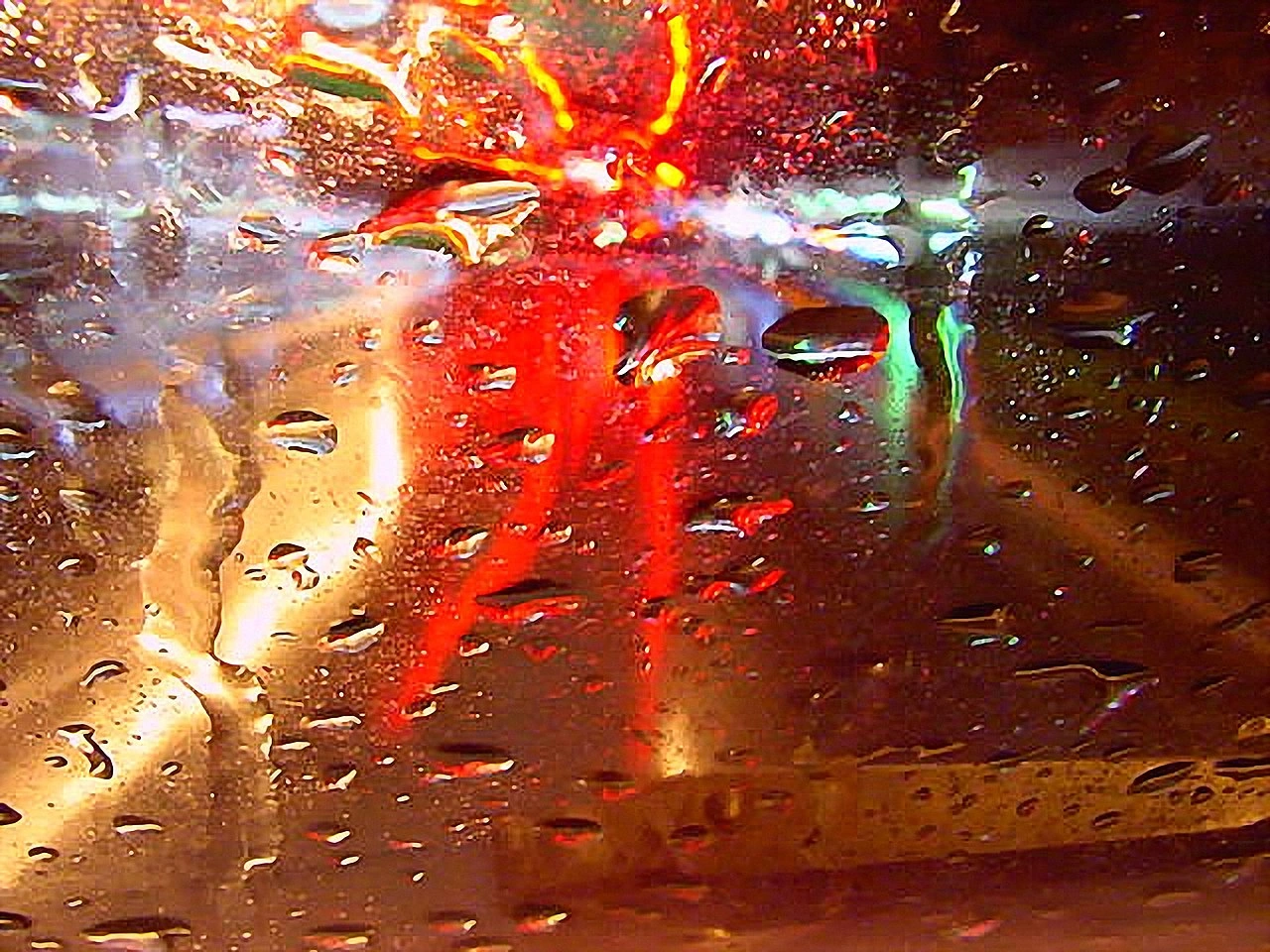
視界は、運転者が道路、他の道路利用者、危険を明瞭に見られ、同時に車両が他者から見える状態を指します。暗闇、霧、雨、雪、汚れ・曇りのある窓、まぶしさ、視野を遮る物などで低下します。窓、ミラー、灯火を清潔に保ち、視野を妨げる物を除き、視界低下時は適切な灯火を使用します。
Must a driver have a clear view of the road in Belgium?
Yes. Belgian vehicle requirements provide that the driver must have a sufficient view ahead and to the sides. Windscreens, windows and other equipment should therefore not unnecessarily obstruct the driver’s field of vision.
Can a vehicle's load obstruct the driver's visibility in Belgium?
No. A vehicle and its load must be arranged so that the load does not obstruct the driver's visibility, create danger or hide required lights, reflectors or the registration number.
When must vehicle lights be used because of poor visibility in Belgium?
Under the current Belgian traffic rules, the prescribed vehicle lights must be used between nightfall and dawn and whenever it is no longer possible to see clearly for approximately 200 metres.
When must rear fog lights be used in Belgium?
Rear fog lights must be used when fog or snowfall reduces visibility to less than approximately 100 metres and also during heavy rain. They may not be used in other circumstances.
Can windscreen damage affect visibility and the technical inspection in Belgium?
Yes. Windscreen cracks, scratches, discoloration and other damage can affect visibility. In Flanders, certain damage within the area swept by the windscreen wipers can result in a red inspection certificate.
Should mirrors be adjusted for good visibility in Belgium?
Yes. The driver should adjust the vehicle's systems for indirect vision, such as mirrors, so that traffic behind and beside the vehicle can be observed from the driving position.
229. 雨
雨は、視界、タイヤグリップ、車両制御を低下させ、停止距離を増やします。路面の水により、タイヤが路面との接触を失うハイドロプレーニングが起こることもあります。運転者は減速し、車間距離を増やし、急な操舵・制動を避け、視界が低下したら適切な灯火を使用します。大雨や、わだち・排水不良道路に水がたまる場所では特に注意します。
Do you have to reduce your speed in rain in Belgium?
Yes. Belgian traffic rules require drivers to adapt their speed to the weather conditions, visibility, road condition and traffic situation. Drivers must also maintain a sufficient safety distance and be able to stop before a foreseeable obstacle.
When must rear fog lights be used in heavy rain in Belgium?
Under the current Belgian traffic rules, rear fog lights must be used in heavy rain when the vehicle is equipped with them. They may not be used in other circumstances unless another permitted condition, such as sufficiently dense fog or snowfall, applies.
May front fog lights be used in heavy rain in Belgium?
Yes. Under the current rules, front fog lights may be used during heavy rain. They may replace the dipped or main-beam headlights or be used together with them.
Do you have to use normal vehicle lights when rain reduces visibility in Belgium?
Yes. The prescribed vehicle lights must be used whenever it is no longer possible to see clearly for approximately 200 metres, including when heavy rain reduces visibility.
What should you do if there is standing water on the road in Belgium?
Reduce your speed and avoid sudden steering or braking. Belgian rules require drivers to adapt their driving to the weather and road conditions, which includes water on the road and an increased risk of aquaplaning.
Will the fog-light rules for heavy rain change under Belgium’s new Road Code?
Yes. Under the new Code of the Public Road, rear and front fog lights are linked to heavy precipitation that reduces visibility to less than approximately 100 metres. This differs from the current rule, which specifically permits or requires fog-light use in heavy rain without that same visibility threshold.
230. 霧
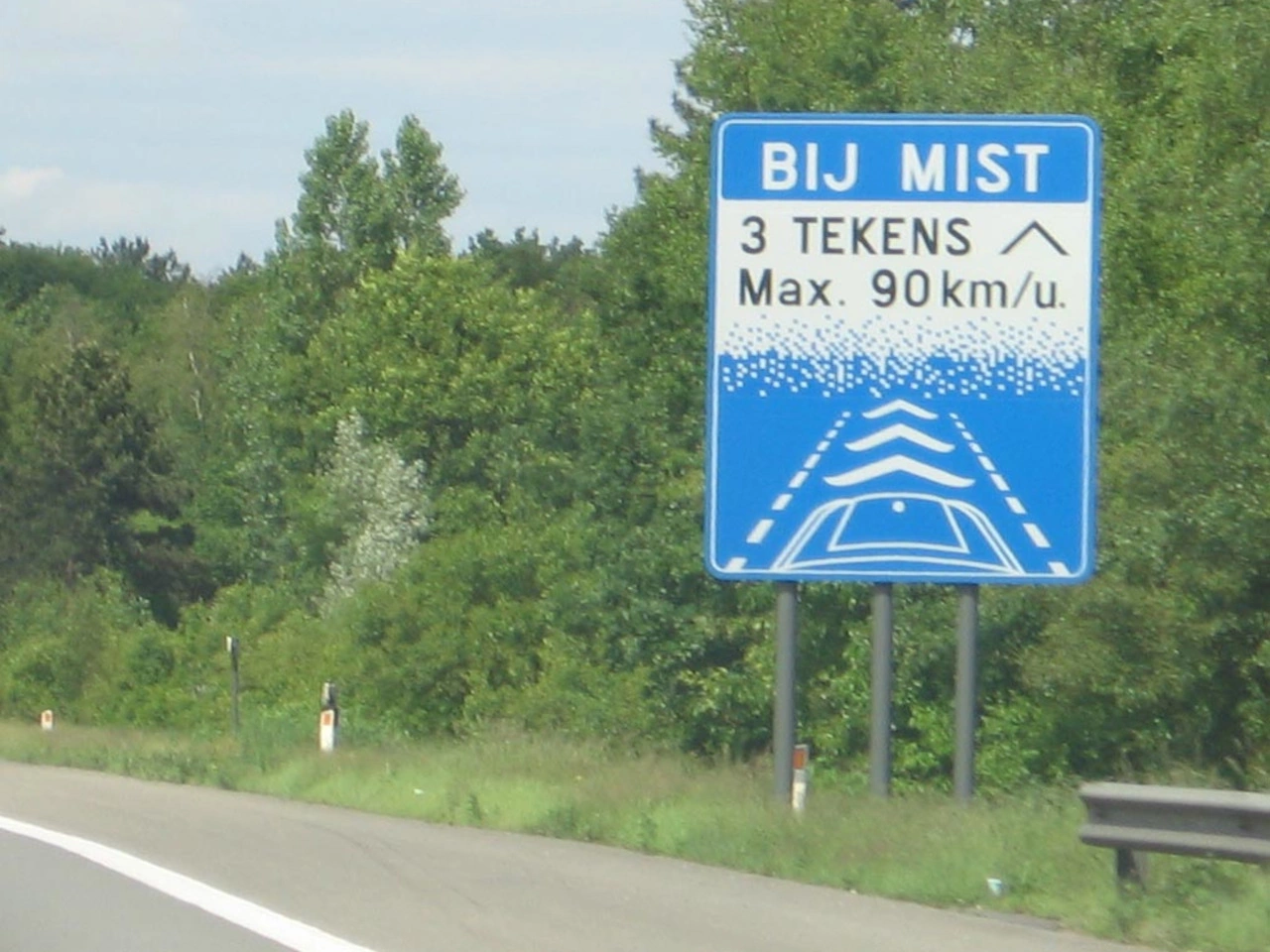
霧は視界を大幅に低下させ、速度、距離、他の道路利用者の位置を判断しにくくします。運転者は減速し、車間距離を増やし、他者を眩惑しない適切な灯火を使います。前車だけを目印にせず、視界が突然変化することにも備えます。非常に濃い霧では、安全な場所へ停止することが最善の場合があります。
Do you have to reduce your speed in fog in Belgium?
Yes. Belgian traffic rules require drivers to adapt their speed to visibility, weather, road conditions and traffic. The posted speed limit may therefore be too fast when visibility is reduced by fog.
When must rear fog lights be used in Belgium?
Under the current Belgian rules, rear fog lights must be used when fog reduces visibility to less than approximately 100 metres. They may not be used in other circumstances unless another permitted condition applies.
May front fog lights be used in fog in Belgium?
Yes. Under the current rules, front fog lights may be used in fog. They may replace the dipped or main-beam headlights or be used together with them.
Do normal vehicle lights also have to be used in fog in Belgium?
Yes. The prescribed vehicle lights must be used whenever visibility is sufficiently reduced. Fog lights are additional or alternative lighting under the conditions allowed by the traffic rules.
Will the fog-light rules change under Belgium’s new Road Code?
The basic rule remains similar. Under the new Code of the Public Road, rear fog lights must be used and front fog lights may be used when fog reduces visibility to less than approximately 100 metres. The new code uses the same approximate 100-metre threshold for heavy precipitation as well.
231. ひょう
ひょうは、視界を低下させ、路面を滑りやすくし、突然危険な運転条件を作ります。道路上にたまると氷や小石のようにタイヤグリップを低下させ、大きなひょうはフロントガラスや車体を損傷することもあります。減速し、車間距離を増やし、急な操舵・制動を避け、状況が激しい場合は安全な場所へ停止して通過を待つことを検討します。
Do you have to reduce your speed during hail in Belgium?
Yes. Belgian traffic rules require drivers to adapt their speed to the weather, visibility, road condition and traffic situation. The posted speed limit may therefore be too fast during a hailstorm.
Do you have to use your lights during hail in Belgium?
The prescribed vehicle lights must be used whenever conditions make it impossible to see clearly for approximately 200 metres. This can apply when a severe hailstorm significantly reduces visibility.
Are there special traffic rules specifically for hail in Belgium?
There is no separate driving regime specifically for hail. Drivers must follow the general rules and adapt their driving to the weather and road conditions, including slippery roads and poor visibility caused by hail.
What should you do if hail accumulates on the road in Belgium?
Reduce speed, increase your following distance and avoid sudden steering or braking. Accumulated hail can create a slippery road surface with greatly reduced grip.
Can hail damage affect the safety of a vehicle in Belgium?
Yes. Hail can damage the windscreen, windows, mirrors or lights. If damage affects the driver’s visibility or the safe operation of the vehicle, it should be repaired before continuing to drive when necessary.
232. 日光
日光は、太陽が低い位置にある場合や、濡れた道路、雪、建物、他車から強い光が反射する場合に視界を低下させます。まぶしさにより信号、標識、歩行者などを見つけにくくなることがあります。必要に応じて減速し、フロントガラスを清潔に保ち、サンバイザーや適切なサングラスを使用し、一時的に隠れた危険へ対応できる余裕を持ちます。

Do you have to reduce your speed when sunlight reduces visibility in Belgium?
Yes. Belgian traffic rules require drivers to adapt their speed to visibility, weather, road conditions and traffic. Strong sun glare can therefore require a lower speed even when the posted speed limit is higher.
Must the driver have a clear view of the road in Belgium?
Yes. Belgian vehicle requirements provide that the driver must have a sufficient view ahead and to the sides. Objects or equipment should therefore not significantly obstruct the driver’s field of vision.
Can a dirty or damaged windscreen make sun glare more dangerous in Belgium?
Yes. Dirt, scratches, cracks or discoloration can scatter sunlight and reduce visibility. Keeping the windscreen clean and in good condition is particularly important when driving toward a low sun.
Can windscreen damage cause a vehicle to fail technical inspection in Belgium?
Yes. Certain cracks, scratches, distortions or discolorations within the area swept by the windscreen wipers can result in rejection during technical inspection.
Are there special Belgian traffic rules specifically for sun glare?
There is no separate driving regime specifically for sunlight. The general rule applies: the driver must adapt speed and driving behaviour to the available visibility and remain able to drive safely.
233. サングラス
サングラスは、特に太陽が低い場合や濡れた道路、雪などから反射する明るい光の中で、まぶしさを減らし視覚的快適性を高めます。信号、標識、他の道路利用者が明瞭に見えるレンズを選びます。非常に濃いレンズはトンネル、夜間、明るさが変化する状況で視界を低下させるため、安全に見えにくくなる場合は外します。

Can you wear sunglasses while driving in Belgium?
Yes. There is no general prohibition on wearing sunglasses while driving, and the Belgian Federal Police recommends them as a useful way to reduce glare from a low sun. They should not make it harder to see the road safely.
Do sunglasses replace the need to reduce speed when the sun affects visibility in Belgium?
No. Even when wearing sunglasses, drivers must adapt their speed to the available visibility and driving conditions. Sunglasses can reduce glare but cannot eliminate every visibility problem.
What if your Belgian driving licence requires you to wear glasses?
Belgian driving licences can contain medical restriction codes for vision correction, including code 01.01 for glasses and 01.06 for glasses or contact lenses. Drivers must respect any vision-correction requirement shown on their licence.
Can you wear very dark sunglasses while driving in Belgium?
There is no separate general rule setting a specific darkness for ordinary sunglasses, but the driver must still be able to see sufficiently well to drive safely. Lenses that substantially reduce visibility should therefore not be used.
Should sunglasses be removed in tunnels in Belgium?
There is no special Belgian rule requiring sunglasses to be removed in every tunnel, but drivers should remove them if they reduce visibility in the darker environment.
234. 凍結防止剤(塩)
塩は、冬季の道路で凍結防止・融氷のため一般的に使われます。水の凍結温度を下げ、氷の形成を防ぐ、または既存の雪や氷を溶かすのに役立ちます。道路管理者は乾燥塩、湿塩、塩水などを凍結前や凍結中に散布します。塩で安全性は向上しますが、大雪、着氷性の雨、極低温では処理済み道路でも危険なため、速度を下げ状況へ適応します。
Is salt used to treat roads in Belgium?
Yes. Belgian road authorities use salt, wet salt and brine to help prevent or remove snow and ice during winter conditions.
Are Belgian roads salted before ice forms?
Yes. Road authorities can carry out preventive salting before frost, ice, snow or freezing rain develops. This is known as anti-icing and can reduce the risk of slippery roads.
Who is responsible for salting roads in Belgium?
Responsibility depends on the road. Regional authorities maintain motorways and regional roads, while municipalities are generally responsible for local roads under their control.
Does salting mean a Belgian road is no longer slippery?
No. Even after treatment, roads can remain slippery during snowfall, freezing rain, frost or rapidly changing temperatures. Drivers must still adapt their speed and following distance to the actual conditions.
Does Belgium use preventive salting?
Yes. In Flanders and Wallonia, winter services use preventive treatments based on weather forecasts and road-condition monitoring to reduce the risk of frost and ice forming.
When does the winter road service operate in Belgium?
The exact organisation differs by region. In Flanders, the winter service normally runs from the third Monday of October until the fourth Monday of April. In Wallonia, the regional winter service normally runs from 15 October to 15 April.
235. エアコン
エアコンは、車内の温度と湿度を調整し、快適性と視界を改善します。暑い時は室内を冷やし、湿気が多い時は空気中の水分を除いて窓の曇りを早く取るのに役立ちます。車内外の温度差が極端にならないよう適切に使い、十分に機能するよう整備します。
Is air conditioning mandatory in cars in Belgium?
No. Air conditioning itself is not generally mandatory equipment for passenger cars in Belgium. However, the vehicle must still provide adequate visibility and comply with applicable technical requirements.
Is the demisting system important in Belgium?
Yes. A functioning demisting and defrosting system is important for maintaining clear visibility through the windscreen and forms part of the applicable vehicle safety requirements.
Is the demisting system checked during the Belgian technical inspection?
Yes. European roadworthiness rules used as the basis for Belgian technical inspection include checks of the windscreen demisting system. A system that does not operate correctly can be recorded as a defect.
Does the air-conditioning system itself have to work for the Belgian technical inspection?
The periodic technical inspection focuses on roadworthiness and safety systems. The air-conditioning system itself is not generally treated as a mandatory comfort feature, although related systems such as demisting and ventilation may be relevant to visibility and safety.
Can air conditioning help improve visibility in Belgium?
Yes. Using air conditioning together with the vehicle's ventilation system can remove moisture from the air and help clear misted windows, which is especially useful in damp or cold weather.
236. ハイドロプレーニング
ハイドロプレーニング(aquaplaning)は、タイヤと路面の間に水膜ができてタイヤが路面との接触を失う現象です。操舵、制動、加速が大幅に効きにくくなります。速度、滞水、摩耗タイヤで危険が高まります。大雨時は減速し、急な操舵・制動を避け、十分な溝深さのある良好なタイヤを使用します。
Do you have to reduce your speed when there is a risk of hydroplaning in Belgium?
Yes. Belgian traffic rules require drivers to adapt their driving to the weather, visibility and condition of the road. Heavy rain or standing water can therefore require a lower speed than the posted maximum.
Is there a special Belgian speed limit for hydroplaning?
No. Belgium does not have a general speed limit specifically for hydroplaning. Drivers must instead choose a speed that is safe for the actual road and weather conditions.
What is the minimum tyre tread depth for cars in Belgium?
For ordinary passenger-car tyres, the main grooves must have at least 1.6 mm of remaining tread depth. Tyres below that limit do not meet the applicable technical requirements.
Are tyres checked for tread depth during the Belgian technical inspection?
Yes. Tyre condition and tread depth are checked during technical inspection. In Flanders, a tyre whose tread has worn below 1.6 mm can result in a red inspection certificate with a prohibition on use.
Can you still hydroplane with legal tyres in Belgium?
Yes. Meeting the legal minimum tread depth does not eliminate the risk of hydroplaning. Speed, water depth, tyre pressure and tyre condition all influence how well the tyres maintain contact with a wet road.
What should you do if your car starts hydroplaning in Belgium?
Ease off the accelerator, avoid sudden braking or steering and allow the tyres to regain grip. Belgian rules require drivers to adapt their behaviour to the road and weather conditions.
237. 注意散漫
注意散漫は、安全な車両制御や道路観察から運転者の注意をそらすものです。携帯電話、ナビゲーション、乗客、飲食、操作装置の調整、道路から目を離す行為などが含まれます。視覚的、手動的、精神的な注意散漫があり、反応時間を大きく延ばす可能性があります。運転者は道路へ注意を集中し、ナビゲーションなどの設定は出発前に済ませ、安全運転を妨げる活動を避けます。

Can you use a mobile phone while driving in Belgium?
Not while holding or manipulating it. Unless the vehicle is stopped or parked, a driver may not use, hold or manipulate a mobile electronic device with a screen unless it is fixed to the vehicle in a holder intended for that purpose.
Does the Belgian phone rule apply only to smartphones?
No. The rule applies broadly to mobile electronic devices with a screen, not only phones. This can include devices such as tablets and smartwatches.
Can you use a phone mounted in a holder in Belgium?
The specific prohibition on using a mobile electronic device does not apply when the device is fixed to the vehicle in a holder intended for that purpose. The driver must nevertheless remain in control of the vehicle and avoid unsafe distraction.
Can you hold your phone without using it while driving in Belgium?
No. The prohibition covers not only active use but also holding or manipulating the device while the vehicle is not stopped or parked.
Are other forms of distraction also a problem under Belgian traffic rules?
Yes. Belgian rules require every driver to be able to perform all necessary driving manoeuvres and remain in control of the vehicle. An activity that prevents this can therefore be unsafe even when it is not specifically named in the mobile-device rule.
Will Belgium’s new Road Code change the mobile-device rule?
The new Code of the Public Road keeps the same basic prohibition on using, holding or manipulating a mobile electronic device with a screen unless the vehicle is stopped or parked or the device is mounted in a suitable holder. It also expressly applies the prohibition to a person accompanying a learner driver during driver training.
238. 感情
感情は、注意、判断、運転行動へ影響します。怒り、ストレス、恐怖、悲しみ、興奮などにより注意散漫、焦り、リスクを取る行動が起こりやすくなります。強い感情は集中力や反応時間にも影響します。自分の感情状態が安全運転を妨げていると感じたら、必要に応じて減速、休憩、安全な場所への停止を行い、落ち着いて注意深く続けられる状態になるまで待ちます。

Are there specific Belgian traffic rules about emotions while driving?
No. Belgian traffic rules do not create a separate offence specifically for being angry, stressed or upset while driving. However, every driver must be fit to drive, remain able to perform the required manoeuvres and keep control of the vehicle.
Can strong emotions make your driving unlawful in Belgium?
Potentially. If emotions lead to behaviour such as speeding, dangerous manoeuvres, failing to keep control or ignoring traffic rules, the driver can be responsible for those violations.
What should you do if anger or stress affects your driving in Belgium?
If you can no longer concentrate or control your driving safely, it is better to stop at a safe and permitted place and continue only when you are able to drive calmly and attentively.
Does Belgian law require drivers to remain in control of their vehicle?
Yes. Under the current Road Code, every driver must be in a condition to drive and constantly able to perform the necessary manoeuvres while maintaining control of the vehicle.
Can road rage lead to traffic offences in Belgium?
Yes. Road rage itself is not a separate general traffic rule, but actions resulting from it, such as dangerous driving, aggressive manoeuvres, speeding or threatening behaviour, can lead to offences under the applicable rules.
239. ロードレージ
ロードレージは、交通中に他者へ向ける攻撃的、敵対的、威圧的な行動です。過度なクラクション、車間距離を詰める、怒鳴る、威嚇的ジェスチャー、進路妨害、意図的に攻撃的な運転操作などがあります。怒りは判断を低下させリスク行動を増やし、小さな交通上の対立を危険な状況へ発展させることがあります。対立を避け、落ち着き、安全な距離を保ち、攻撃的行動へ報復してはいけません。
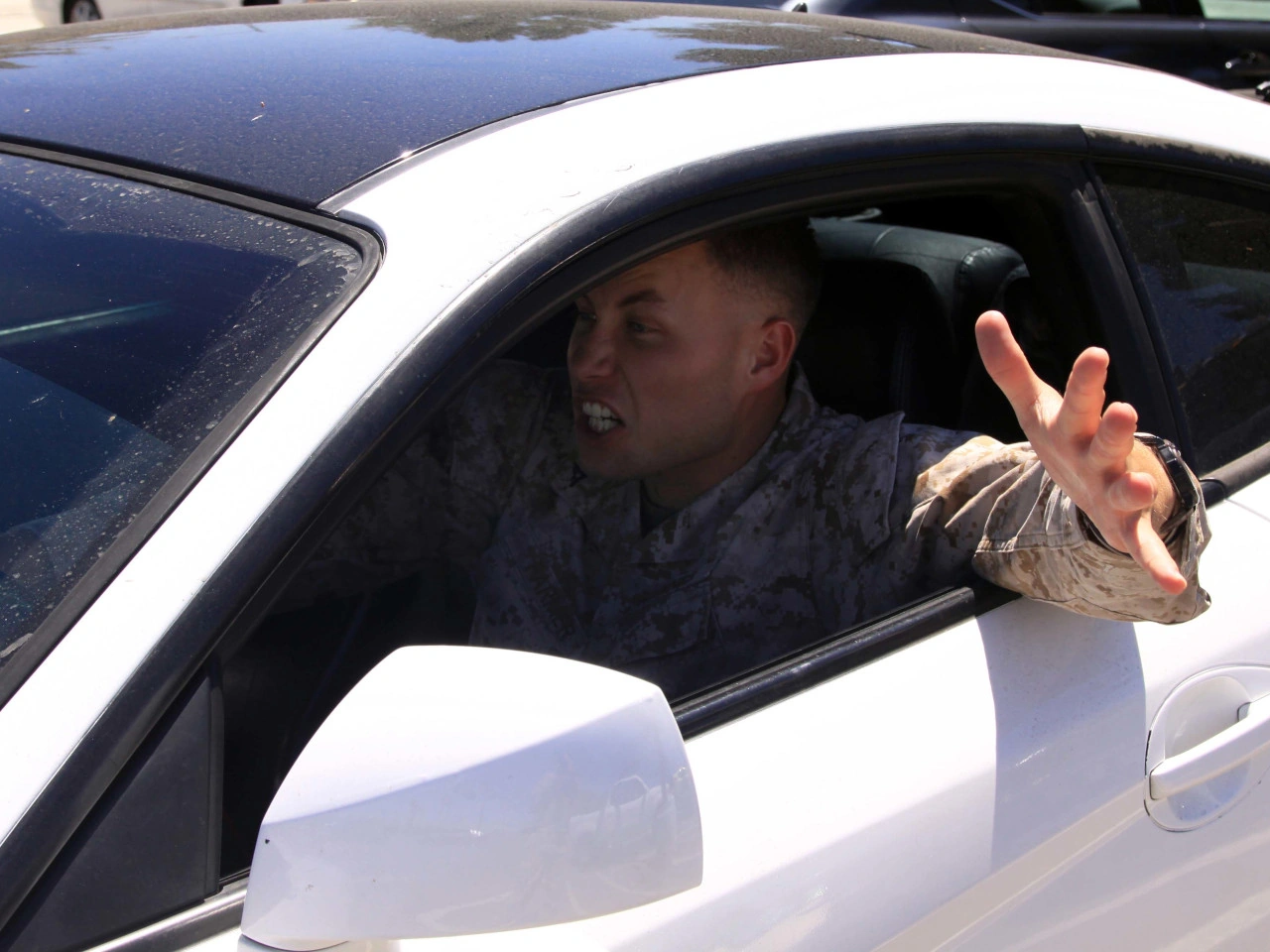
Is road rage a separate traffic offence in Belgium?
Road rage is not a separate named traffic offence under the Belgian Road Code. However, specific behaviour caused by road rage can violate traffic rules or other laws.
Can aggressive driving violate Belgian traffic rules?
Yes. Belgian road users must behave so that they do not cause danger or obstruction to other road users. Aggressive manoeuvres that create danger can therefore breach the traffic rules.
Does a driver have to remain in control of the vehicle in Belgium?
Yes. Every driver must be capable of performing the necessary driving manoeuvres and remain in control of the vehicle at all times.
Can you use the horn to express anger in Belgium?
No. Sound signals must be as short as possible and may only be used when necessary to prevent an accident or, outside built-up areas, when appropriate to warn a driver you intend to overtake.
Can tailgating or deliberately blocking another driver be a problem in Belgium?
Yes. Behaviour such as following another vehicle dangerously closely or deliberately obstructing another road user can create danger or hinder traffic and may violate applicable traffic rules.
Will Belgium’s new Road Code change the general rule on aggressive behaviour?
The same basic principle remains. Under the new Code of the Public Road, every road user must avoid causing danger or obstruction and adapt their behaviour to the traffic situation, visibility, road and weather conditions and other road users.
240. 健康状態
健康状態は、安全運転能力へ影響することがあります。病気、けが、視力低下、運動能力低下、疲労、特定の医療状態、薬などは集中力、反応時間、判断、車両制御を妨げます。身体的・精神的状態が運転を危険にする可能性を認識し、必要なら医師へ相談します。国によっては特定の健康状態を申告し、医学検査や免許条件が必要です。

Do you have to be medically fit to drive in Belgium?
Yes. Belgian law requires drivers to meet minimum physical and mental fitness standards. Driving fitness means that no medical condition, disability, injury or medication significantly increases the risk of an accident.
Who is responsible for checking their medical fitness to drive in Belgium?
The driver is responsible for ensuring that they continue to meet the medical fitness standards. If a health problem may affect safe driving, medical assessment may be required.
What should you do if a health condition may affect your driving in Belgium?
You should consult your doctor. Depending on the condition, the doctor may issue a driving-fitness certificate or refer you to a specialised driving-fitness centre for further assessment.
Which health conditions can affect driving fitness in Belgium?
Conditions that may affect driving include vision problems, neurological disorders, diabetes, heart conditions, balance problems, reduced strength, cognitive problems and the effects of certain medicines. The impact depends on the individual condition and its severity.
What is CARA in Belgium?
CARA is a specialised driving-fitness centre operated by Vias institute. It assesses drivers whose medical or functional limitations may affect their ability to drive safely and can recommend restrictions or vehicle adaptations.
Can a Belgian driving licence contain medical restrictions?
Yes. If a driver is considered fit to drive only under certain conditions, those conditions can be recorded on an adapted driving licence using restriction codes.
Do professional drivers have stricter medical requirements in Belgium?
Yes. Drivers who use certain licence categories for paid passenger or goods transport are subject to group 2 medical fitness requirements and periodic medical examinations.
241. てんかん
てんかんは、意識、運動、感覚、認知などに変化を生じる反復性発作を起こすことがある神経疾患です。発作中は一時的に車両を安全に制御できなくなるため、運転適性と免許要件へ影響します。規則は国によって異なり、発作の種類、発作がない期間、治療、医学的評価などによって決まります。発作を経験した人は適用される運転規則に従い、再び運転する前に医療専門家へ相談します。

Can you drive with epilepsy in Belgium?
A person with epilepsy is initially considered not medically fit to drive, but may later be declared fit if the legal medical criteria are met, including the required seizure-free period and a favourable neurological assessment.
How long must someone with epilepsy be seizure-free to drive a car in Belgium?
For a group 1 licence, which includes ordinary cars and motorcycles, a person with epilepsy can generally be declared fit after being seizure-free for at least one year, provided the other medical conditions are satisfied.
What are the rules after a single epileptic seizure in Belgium?
For group 1 drivers, a person who has experienced a single epileptic seizure may generally be declared fit after at least six seizure-free months. In certain circumstances, this can be reduced to three months when neurological tests meet the required conditions.
Who decides whether a person with epilepsy is fit to drive in Belgium?
A neurologist or neuropsychiatrist assesses the epilepsy syndrome, seizure type and risk of recurrence. A neurologist can issue the required driving-fitness advice, and in appropriate cases a doctor can issue the certificate based on the neurological report.
Does changing epilepsy medication affect driving fitness in Belgium?
It can. If a seizure occurs because anti-epileptic medication was reduced or changed, specific seizure-free periods apply before driving fitness can be restored. The exact period depends on whether the previous treatment is resumed or a different treatment is started.
How long is a Belgian driving-fitness certificate valid for someone with epilepsy?
For group 1 drivers, the first certificate is generally valid for a maximum of one year. If the person remains seizure-free, the validity can subsequently be extended according to the legal criteria.
Are the epilepsy rules stricter for truck and bus drivers in Belgium?
Yes. Group 2 drivers, including drivers of trucks and buses and certain professional drivers, are subject to much stricter requirements. For established epilepsy, driving fitness generally requires a substantially longer seizure-free period than for ordinary car drivers.
Who is responsible for checking continued driving fitness in Belgium?
The driver is responsible for ensuring that they continue to meet the medical fitness requirements. If epilepsy or another medical condition may affect safe driving, medical assessment is required before continuing to drive where applicable.
242. 夜盲症
夜盲症(nyctalopia)は、暗闇や低照度で視力が低下する状態です。夜間や薄暮時に歩行者、自転車、路面標示、カーブ、障害物を認識しにくくなります。眼疾患、ビタミン不足、網膜の問題など原因はさまざまです。暗い場所で見えにくい運転者は、視力が不十分な条件での運転を避け、眼科など専門的な診察を受けます。
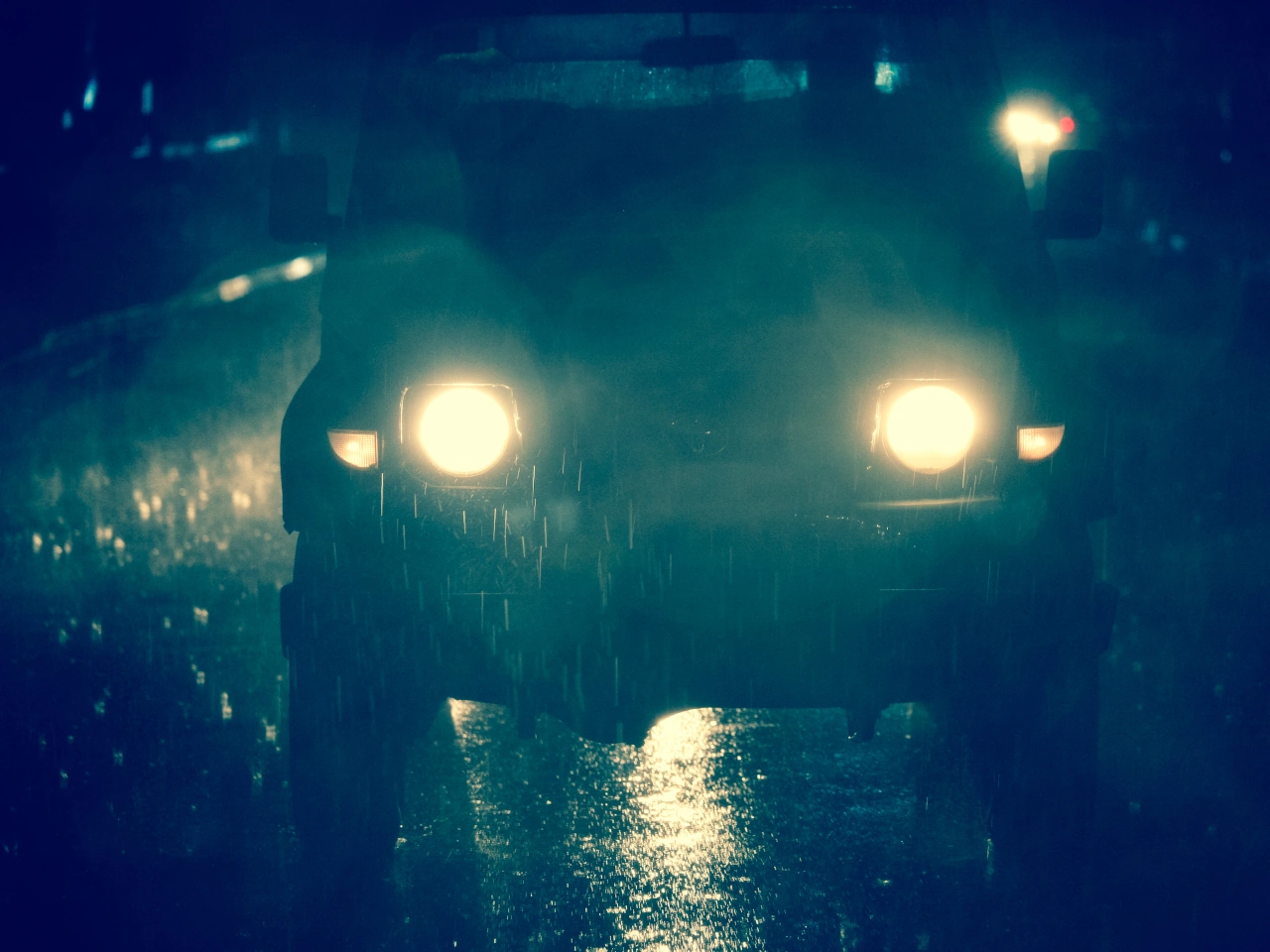
Are there minimum vision requirements for driving at night in Belgium?
Yes. Belgian driving-fitness standards consider several aspects of vision, including visual acuity, visual field, twilight vision, sensitivity to light and contrast and other visual functions needed for safe driving.
What should you do if you have difficulty seeing at night in Belgium?
If your vision may no longer meet the driving-fitness standards, you should have it assessed by an ophthalmologist. The ophthalmologist can determine whether you remain medically fit to drive or whether further assessment is needed.
Can night blindness affect your Belgian driving licence?
Yes. If reduced night or twilight vision affects driving fitness, a driver may be declared fit with conditions or restrictions, temporarily unfit or unfit to drive, depending on the medical assessment.
Can a Belgian driving licence restrict you to daytime driving?
Yes. A person who remains fit to drive only under certain conditions can receive an adapted driving licence with restrictions. One possible restriction is driving only during daylight.
Do Belgian licence applicants have to meet visual requirements at night?
Yes. Applicants for group 1 licences must declare that, with or without optical correction, they have sufficient visual acuity, including at night. If they cannot meet the required visual standards, a medical examination is necessary.
Who assesses visual fitness to drive in Belgium?
When vision may be insufficient, an ophthalmologist assesses driving fitness. The driver may also be referred to CARA or another authorised driving-fitness centre for further evaluation when necessary.
243. 視覚障害
視覚障害は、明瞭に見る、距離を判断する、動きを検知する、危険を認識する能力へ影響する視力低下です。視力低下、視野狭窄、コントラスト感度低下、複視、暗所視力低下などがあります。安全運転は視覚へ大きく依存するため、運転者はその国の最低視力基準を満たし、必要なら眼鏡、コンタクトレンズなど認められた視力補助具を使用します。

Are there minimum eyesight requirements for driving in Belgium?
Yes. Belgian driving-fitness rules assess visual acuity, field of vision, twilight vision, contrast and light sensitivity, double vision and other visual functions that are important for safe driving.
What is the minimum visual acuity for an ordinary driving licence in Belgium?
For a group 1 licence, including ordinary cars and motorcycles, the driver must generally have a binocular visual acuity of at least 5/10, with optical correction if necessary.
What field of vision is required for a group 1 driving licence in Belgium?
The binocular horizontal field of vision must generally be at least 120°, extending at least 50° to the left and right and 20° upward and downward, with no absolute defect in the central 20°.
Can you drive in Belgium if you use only one eye?
Yes, in some circumstances. A person who functionally uses only one eye can be declared fit to drive if the applicable visual-field and visual-function requirements are met and an ophthalmologist considers driving safe.
Can a Belgian driving licence require glasses or contact lenses?
Yes. If optical correction is necessary for safe driving, the licence can include a restriction code requiring glasses, contact lenses or either form of correction.
What should you do if your eyesight may no longer be good enough to drive in Belgium?
You should have your vision assessed by an ophthalmologist. The ophthalmologist can determine whether you remain fit to drive and may refer you to a specialised driving-fitness centre for further assessment.
Can visual impairment result in an adapted Belgian driving licence?
Yes. A driver may be declared fit with conditions or restrictions, such as compulsory glasses, daytime-only driving, a limited driving area or other limitations recorded on an adapted licence.
Are the eyesight requirements stricter for professional drivers in Belgium?
Yes. Group 2 drivers, including many truck, bus and professional drivers, are subject to stricter visual standards. They generally need at least 8/10 visual acuity in the better eye and 1/10 in the other eye, with correction if necessary.
244. 疲労
疲労は、運転中の集中力、反応時間、判断力、覚醒維持能力を低下させます。長時間運転、睡眠不足、病気、不規則勤務、身体が通常休息を求める時間帯の運転などで生じます。頻繁なあくび、まぶたが重い、速度や車線位置を一定に保てない、走行区間を思い出せないなどが警告サインです。眠気を感じたら早めに停止・休息し、カフェイン、外気、大音量音楽を睡眠の代わりにしてはいけません。
Is it illegal to drive while extremely tired in Belgium?
Belgian traffic rules do not set a specific fatigue limit, but every driver must be fit to drive, able to perform the necessary manoeuvres and remain in control of the vehicle. Driving when fatigue prevents this can therefore conflict with the general driving requirements.
Is fatigue included in Belgian driver training and theory exams?
Yes. Belgian driving-licence rules specifically include the effects of fatigue on driver behaviour, perception, judgement and reaction among the subjects covered by the theory examination.
What should you do if you become tired while driving in Belgium?
Stop at a safe and permitted place and rest before continuing. Do not continue driving if fatigue prevents you from remaining alert and in full control of the vehicle.
Are professional drivers subject to driving and rest-time rules in Belgium?
Yes. Professional drivers covered by EU driving-time rules must respect mandatory driving limits, breaks and rest periods. These rules are intended in part to reduce fatigue-related risk.
How long may an applicable professional driver drive before taking a break?
Under EU rules that apply in Belgium, an applicable professional driver must normally take a break of at least 45 minutes after 4.5 hours of driving, unless a rest period begins instead.
Will Belgium’s new Road Code change the basic rule on driver fitness?
No. The new Code of the Public Road keeps the requirement that a driver must have the necessary physical fitness and remain capable of performing all required driving manoeuvres while keeping the vehicle under control.
245. 車両の不具合
車両の不具合は、安全性、道路適合性、技術要件への適合へ影響する故障、損傷、摩耗です。タイヤ、ブレーキ、灯火、操舵、サスペンション、窓、車体、電気系統などに発生します。軽微でも早めに修理すべきものと、走行を危険にする重大・危険な不具合があります。定期的に点検し、安全リスクになる前に修理します。

How are vehicle defects classified during technical inspection in Belgium?
Belgian technical inspections distinguish between minor, serious and dangerous defects. The result determines whether the vehicle receives a green or red inspection certificate and whether reinspection is required.
What happens if only minor defects are found in Belgium?
A vehicle can receive a green inspection certificate with remarks. Some defects must be repaired as soon as possible, while others must be monitored even though no immediate reinspection is required.
What happens if serious defects are found in Belgium?
Serious defects can result in a red inspection certificate with limited validity. In Flanders, code 2 normally gives 15 days to repair the defects and present the vehicle for reinspection.
What happens if a dangerous defect is found in Belgium?
A dangerous defect can result in a prohibition on using the vehicle in traffic. The vehicle must be repaired before it can return to normal use.
Can a defective light cause a vehicle to fail inspection in Belgium?
Yes. Missing, defective, badly adjusted or non-compliant lights can result in a red inspection certificate. Extremely serious lighting defects, such as all brake lights being defective, can lead to a prohibition on use.
Can worn tyres cause a vehicle to fail inspection in Belgium?
Yes. Tyres are checked for tread depth, damage and condition. A tyre worn below the legal minimum can result in rejection and, depending on the severity and applicable inspection rules, a prohibition on use.
Can you drive with a red inspection certificate in Belgium?
This depends on the type of red certificate. A vehicle with a limited-validity certificate may be driven only under the applicable restrictions, while a vehicle with a prohibition on use may not circulate normally.
246. 交通違反
交通違反は、速度超過、交通標識無視、運転中の禁止機器使用、優先義務違反など、交通法や道路規則に違反する行為です。重大度により、警告、罰金、違反点数、免許停止などの処分を受ける場合があります。他の道路利用者へ大きな危険を生じる重大行為は、より重い処分や刑事手続の対象となることがあります。
How are traffic violations classified in Belgium?
Belgian traffic violations are divided into four degrees. The higher the degree, the more serious the offence and the heavier the possible penalty.
What is a first-degree traffic violation in Belgium?
A first-degree violation is generally a less serious traffic offence. Provisions of the traffic regulations that are not specifically assigned to another degree are normally treated as first-degree violations.
What are the current immediate fines for traffic violations in Belgium?
Since 1 July 2026, the standard immediate collections are €64 for a first-degree violation, €128 for a second-degree violation and €191 for a third-degree violation. A fourth-degree offence carries much heavier consequences and normally leads to court proceedings for Belgian residents.
Can a traffic violation lead to a driving ban in Belgium?
Yes. A court can impose a disqualification from driving for certain second- and third-degree offences, while a driving ban is mandatory for fourth-degree offences. Specific rules can also apply to novice drivers.
Are speeding offences included in the four-degree system in Belgium?
Speeding has its own fine and penalty rules based on factors such as how far the speed limit was exceeded and where the offence occurred. It is therefore treated separately from the standard four-degree classification.
Are alcohol and drug offences treated like ordinary traffic violations in Belgium?
No. Driving under the influence is subject to separate rules and sanctions, which can include fines, immediate driving restrictions, court proceedings and disqualification from driving.
Will Belgium’s new Road Code change the traffic rules?
Yes. The new federal Code of the Public Road and the three regional codes will replace the current traffic regulations on 1 June 2027. Until then, the current rules and offence classifications remain applicable.
247. アルコール
アルコールは、判断力、反応時間、協調運動、集中力、視力へ影響し、酔った感覚がない段階でも運転を危険にします。法定アルコール上限は国によって異なり、職業運転者、初心者、若年運転者にはより低い基準が適用される場合があります。最も安全なのは運転前に飲酒しないことです。飲酒した場合は、飲酒していない指定運転者、公共交通、タクシーなどを利用します。
What is the legal alcohol limit for ordinary drivers in Belgium?
For most drivers, the maximum permitted concentration is 0.21 mg/l of alcohol in exhaled breath. A driver becomes punishable from 0.22 mg/l, corresponding to 0.5‰ in the blood.
Is the alcohol limit lower for young or inexperienced drivers in Belgium?
No. The standard limit of 0.5‰ in the blood also applies to young and inexperienced drivers. Belgium does not currently impose a separate lower alcohol limit simply because a driver is new or young.
Is there a lower alcohol limit for professional drivers in Belgium?
Yes. Professional drivers performing applicable passenger or goods transport are punishable from 0.09 mg/l in exhaled breath or 0.2‰ in the blood. The stricter limit also applies when driving certain heavy vehicle categories even outside professional work.
How can the police test drivers for alcohol in Belgium?
The police can use screening devices, breath tests and breath-analysis equipment. In certain circumstances, a blood test can also be used to determine the alcohol concentration.
Can driving under the influence of alcohol lead to a driving ban in Belgium?
Yes. Depending on the alcohol concentration and circumstances, consequences can include an immediate driving prohibition or licence withdrawal, fines, court proceedings and disqualification from driving.
Can a Belgian court require an alcohol interlock?
Yes. A court can impose an alcohol interlock for certain alcohol offences, repeat offences or high alcohol concentrations. In some serious cases, the court is required to impose one unless the law allows a specifically reasoned exception.
What are the immediate fines for alcohol offences in Belgium in 2026?
Since 1 July 2026, immediate collections for alcohol offences handled on the spot start at €116 for applicable professional drivers between 0.09 and 0.22 mg/l of exhaled breath, and at €197 for ordinary offences between 0.22 and 0.35 mg/l. Higher concentrations result in higher penalties and may lead to court proceedings.
Is it safest to drive after drinking if you remain below the Belgian legal limit?
No. Alcohol can impair driving before the legal limit is reached. The safest approach is not to drink alcohol when you plan to drive.
248. アルコール検査
アルコール検査は、運転者が飲酒しているか、法定上限を超えているか確認する路上検査です。警察はスクリーニング装置、呼気検査、精密呼気分析、場合によっては血液検査を使用します。手順と法定値は国によって異なります。通常、運転者は権限ある検査へ協力する必要があり、適法な検査を拒否すること自体が処罰対象となる場合があります。
Can the police require any driver to take an alcohol test in Belgium?
Yes. Police can require a breath test from anyone driving on a public road, anyone preparing to drive, a person accompanying a learner driver and people who may have been involved in a traffic accident.
How does an alcohol control work in Belgium?
Police may first use an alcohol-detection device or breath test. When the breath test reaches the applicable legal threshold, a more precise breath analysis is carried out to measure the alcohol concentration.
When is a breath analysis required in Belgium?
For ordinary drivers, a breath analysis is carried out when the breath test indicates at least 0.22 mg/l of alcohol in exhaled alveolar air. For drivers subject to the stricter professional limit, the threshold is 0.09 mg/l.
Can a blood test be used during an alcohol control in Belgium?
Yes. A blood test can be ordered in situations where the breath test or breath analysis cannot be carried out or in other circumstances provided by law.
What happens if you refuse an alcohol test in Belgium?
Refusing a required breath test or breath analysis is itself punishable and also results in an immediate temporary prohibition on driving.
How long is the immediate driving prohibition after a positive alcohol control in Belgium?
Since 1 July 2026, the standard immediate driving prohibition is 12 hours when the applicable alcohol threshold is reached or when the driver refuses the required test.
Can you automatically drive again after the 12-hour prohibition?
No. Before driving again, the person must undergo a new breath test or breath analysis. If the result remains at or above the legal threshold, or the person refuses the test, the prohibition is extended by another 12 hours.
Can you request a blood test to challenge a Belgian breath-analysis result?
When a breath analysis measures at least 0.35 mg/l, the person must be informed of the right to request a counter-analysis by blood test. The cost is borne by the person if the blood test confirms the offence.
249. アルコール・インターロック
アルコール・インターロック(alcolock)は、車両の始動系へ接続された呼気検査装置です。始動前に運転者が設定上限未満の呼気サンプルを提出する必要があります。走行中の追加検査を求めたり、検査、失敗、改ざんの可能性を記録したりする場合もあります。一部の国では飲酒運転違反者への安全措置や法的義務として使用されます。

What is an alcohol interlock in Belgium?
An alcohol interlock is a breath-testing device connected to the vehicle. A driver subject to an alcohol-interlock programme can only start the vehicle after providing a breath sample below the required alcohol limit.
What alcohol limit does a Belgian alcohol interlock use?
The vehicle can only be started after a breath test showing less than 0.09 mg/l of alcohol in exhaled breath, corresponding to less than approximately 0.2‰ alcohol in the blood.
When can a Belgian court impose an alcohol interlock?
A court can impose an alcohol interlock for certain alcohol offences, including drivers caught with more than 0.8‰ alcohol, drivers in a state of intoxication and repeat offenders.
When is an alcohol interlock mandatory for a Belgian court?
A court must normally impose an alcohol interlock on drivers caught with at least 1.8‰ alcohol, unless it expressly gives reasons not to do so, and on serious repeat offenders caught twice with at least 1.2‰ within three years.
How long can an alcohol interlock be imposed in Belgium?
A Belgian court can impose an alcohol interlock for one to three years or for life, depending on the offence and circumstances.
Where must an alcohol interlock be installed in Belgium?
The device must be installed by an authorised service centre. The centre is responsible for installation, maintenance, technical checks, repairs and removal at the end of the programme.
Does a driver with an alcohol interlock have to follow a programme in Belgium?
Yes. The driver must participate in an official supervision programme with an authorised organisation and comply with the programme conditions.
Is the alcohol interlock shown on the Belgian driving licence?
Yes. A driver restricted to vehicles equipped with an alcohol interlock receives a driving licence with restriction code 69 for the applicable vehicle categories.
Who pays for the alcohol interlock in Belgium?
The convicted driver normally pays the costs of the alcohol-interlock system and programme. A judge may reduce the fine wholly or partly to take those costs into account.
250. 呼気スクリーニング検査
呼気スクリーニング検査は、呼気中のアルコールを検知し、さらに精密な検査が必要か判断する予備的な路上検査です。携帯装置へ息を吹き込み、アルコール値を所定の基準と比較します。通常、最終的な証拠測定ではなくスクリーニングに使われます。結果が基準へ達した場合、より精密な呼気分析など法的に認められた検査が続くことがあります。
What is a breath test in Belgium?
A Belgian breath test is a preliminary alcohol test in which a person blows into an approved device that indicates the level of alcohol in the exhaled alveolar air relative to specified legal thresholds.
Does a Belgian breath test show the exact alcohol concentration?
Normally, no. The breath-test device indicates a result category based on legal thresholds rather than displaying the exact alcohol concentration used as the evidential result. The precise measurement is obtained by a breath analysis.
What results can an ordinary driver receive on a Belgian breath test?
For ordinary drivers, the device distinguishes between alcohol levels below 0.22 mg/l, from 0.22 mg/l to below 0.35 mg/l, and 0.35 mg/l or higher. These are represented by result codes such as S, A and P.
Are the breath-test thresholds different for professional drivers in Belgium?
Yes. For applicable professional drivers, the test also uses the lower threshold of 0.09 mg/l, producing an additional result category between 0.09 mg/l and 0.22 mg/l.
Who can be required to take a breath test in Belgium?
Police can require a breath test from drivers, people preparing to drive, persons accompanying learner drivers and people who may have caused or contributed to a traffic accident, including an accident victim where applicable.
What happens after a positive breath test in Belgium?
When the breath test reaches the applicable legal threshold, a breath analysis is normally performed to measure the exact alcohol concentration. Police may also proceed directly to a breath analysis without first carrying out a breath test.
Can a blood test follow a breath test in Belgium?
Yes. If the breath test reaches the applicable threshold but a breath analysis cannot be performed, a blood sample can be ordered under the conditions provided by law.
Can refusing a breath test lead to a driving prohibition in Belgium?
Yes. Refusing a legally required breath test can lead to penalties and an immediate temporary prohibition on driving. Since 1 July 2026, the standard prohibition in the applicable alcohol-control procedure is 12 hours.