KurveNepal

Lerne Verkehrsregeln mit klaren Erklärungen und visuellen Beispielen in unserem illustrierten Buch – einfach, verständlich und anschaulich.


3. Kurve

Eine Kurve ist ein Straßenabschnitt, der seine Richtung nach links oder rechts ändert. Eine enge, unerwartete oder schlecht einsehbare Kurve kann die Sicht auf Gegenverkehr, stehende Fahrzeuge, Fußgänger und andere Gefahren einschränken.

Fahrer sollten vor dem Einfahren in die Kurve die Geschwindigkeit verringern, im eigenen Fahrstreifen bleiben und gleichmäßig lenken, bremsen und beschleunigen. Warnzeichen können die Richtung der ersten Kurve oder eine Folge mehrerer Kurven anzeigen.
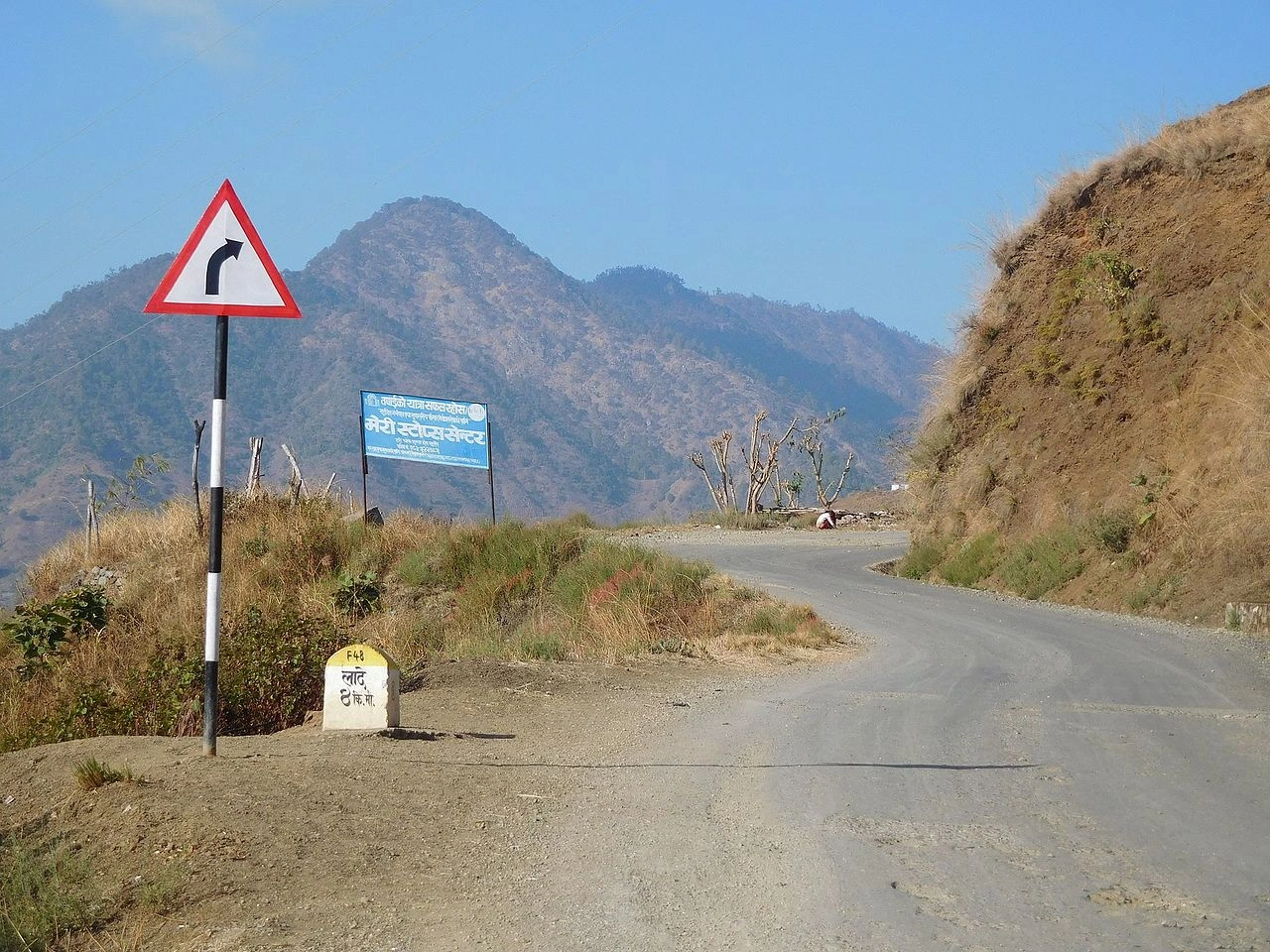
Kurve
What is a road curve?

A road curve is a section where the road changes direction to the left or right.

How can you recognise a dangerous curve?

It may be indicated by a triangular warning sign showing a curved line. The symbol normally indicates whether the first curve turns left or right.

What is a double curve?

A double curve consists of two curves in opposite directions. The warning sign normally shows the direction of the first curve.

Can a sign warn of more than two curves?

Yes. A double-curve symbol may also warn of a longer sequence of successive curves. A supplementary panel may indicate the length of the winding section.

Does a curve-warning sign impose a speed limit?

No. It normally warns of danger rather than setting a numerical limit. Drivers must still reduce speed when the permitted maximum would be unsafe.

When should you reduce speed for a curve?

Reduce speed before entering the curve, while the vehicle is travelling straight and has maximum stability.

Should you brake heavily while cornering?

No. Harsh braking in a curve can reduce stability and grip. Complete most braking beforehand and use smooth adjustments where necessary.

Should you accelerate through a curve?

Maintain a controlled speed through the curve. Accelerate smoothly only when the exit becomes visible and the vehicle is stable.

Where should you look while driving through a curve?

Look towards the path you intend to follow and the visible exit of the curve. Continue checking the road surface, lane position and nearby traffic.

Must you remain in your lane?

Yes. Do not cross the centre line or cut across another lane, even when this would make the curve appear easier to negotiate.

Why is visibility limited in a curve?

Buildings, vegetation, slopes, barriers and the road alignment may hide oncoming traffic, cyclists, pedestrians, stopped vehicles or debris.

How fast should you drive through a curve?

Choose a speed that allows you to remain in your lane and stop within the distance you can see to be clear. The safe speed may be far below the legal maximum.

What is an advisory speed for a curve?

An advisory speed is a recommended safe speed for negotiating the curve under suitable conditions. It is not necessarily the legal maximum speed.

How do rain, snow or ice affect a curve?

They reduce tyre grip and increase the risk of skidding. Reduce speed earlier, use smooth controls and leave additional distance from other vehicles.

What should you do if gravel or debris is present?

Avoid sudden braking or steering. Reduce speed smoothly and follow a clear path without entering another traffic lane.

May you overtake in a curve?

Do not overtake when visibility is insufficient to see approaching traffic and complete the manoeuvre safely. Local law, signs and continuous road markings may also prohibit overtaking.

May you stop or park in a curve?

Only where it is permitted and the vehicle remains clearly visible. Stopping or parking in a poorly visible curve may create a serious hazard and is often prohibited.

Should you follow another vehicle closely through a curve?

No. Leave enough distance to react if the vehicle ahead brakes for a hidden obstruction or a sharper part of the curve.

Why should motorcyclists take extra care?

Motorcycles require grip for both cornering and braking. Riders should reduce speed before the curve, choose a stable line and avoid painted markings, gravel and slippery surfaces.

How can a curve affect a trailer or caravan?

A trailer may sway, track closer to the inside of the curve or become unstable when speed and steering inputs are excessive. Enter slowly and steer smoothly.

Why do large vehicles need more space?

Buses and trucks may move closer to lane boundaries because of their length and width. Other drivers should avoid travelling beside them through a tight curve.

What should you do if an oncoming vehicle crosses the centre line?

Reduce speed, move safely towards your side of the road and avoid a sudden manoeuvre that could cause another collision. Sound a warning only when reasonably necessary.

Does the absence of a warning sign mean every curve is safe at the speed limit?

No. Drivers must assess every curve and adapt their speed even when no warning sign is displayed.

1 Nepal 2 Steigung oder Gefälle 3 Kurve 4 Rückwärtsfahren 5 Polizei 6 Krankenwagen 7 Schlagloch 8 Weg 9 Feinstaub 10 Luftverschmutzung 11 Hauptverkehrszeit 12 Straßenverkehrsordnung 13 Straßenrinne 14 Lastenfahrrad 15 Forstfahrzeug 16 Baufahrzeug 17 Sattelzug 18 Oberleitungsbus 19 Speed-Pedelec 20 Lieferfahrzeug 21 Leerlauf 22 Abschleppwagen 23 Allradantrieb 24 Fahrrad 25 Motorradausrüstung 26 Gleis 27 Wohnwagen 28 Anhänger 29 Anhängerkupplung 30 Sirene 31 Konvoi 32 Warnbeleuchtung von Einsatzfahrzeugen 33 Landwirtschaftliche Maschinen 34 Elektrofahrrad 35 Elektrofahrzeug 36 Pedelec 37 Leichtkraftfahrzeug 38 Microcar 39 Geländefahrzeug 40 Lieferwagen 41 Freizeitfahrzeug 42 Motorroller 43 Trikke 44 Persönliches Mobilitätsgerät 45 Skateboard 46 Segway 47 Tretroller 48 Rollschuhe 49 Postzusteller 50 Anhalter 51 Kleinkind 52 Kind 53 Behinderung 54 Autoreisezug 55 km/h 56 mph 57 Tachometer 58 Bodenfreiheit 59 Erdstraße 60 Fahren 61 Start-Stopp-System 62 Schaltgetriebe 63 Automatikgetriebe 64 Gassteuerung 65 Drehzahlmesser 66 Lenkrad 67 Servolenkung 68 Verkehrsbeobachtung 69 Spiegel 70 Kraftstoff 71 Tankanzeige 72 Benzin 73 Diesel 74 Diesel-Abgasflüssigkeit 75 Kfz-Versicherung 76 Erste-Hilfe-Kasten 77 Feuerlöscher 78 Warnkleidung 79 Erste Hilfe 80 Beton-Schutzwand mit Stufenprofil 81 Absperrungen 82 Fahrzeugbeleuchtung 83 Straßenbeleuchtung 84 Abblendlicht 85 Fernlicht 86 Nebelleuchten 87 Nebelscheinwerfer 88 Nebelschlussleuchten 89 Begrenzungsleuchten 90 Blinker 91 Warnblinkanlage 92 Kontrollleuchten 93 Fahrradbeleuchtung 94 Fahrradklingel 95 Lichthupe 96 Sicherheitsgurt 97 Kinderrückhaltesysteme 98 Kopfstützen 99 Airbag 100 ABS ...