QuizTraffic rulesAustralia

Test your knowledge with our multiple-choice quiz. Learn from each answer and improve your understanding of the traffic rules and road signs of Australia.

For informational purposes only. Always follow official regulations. Some content and images were created with AI assistance.


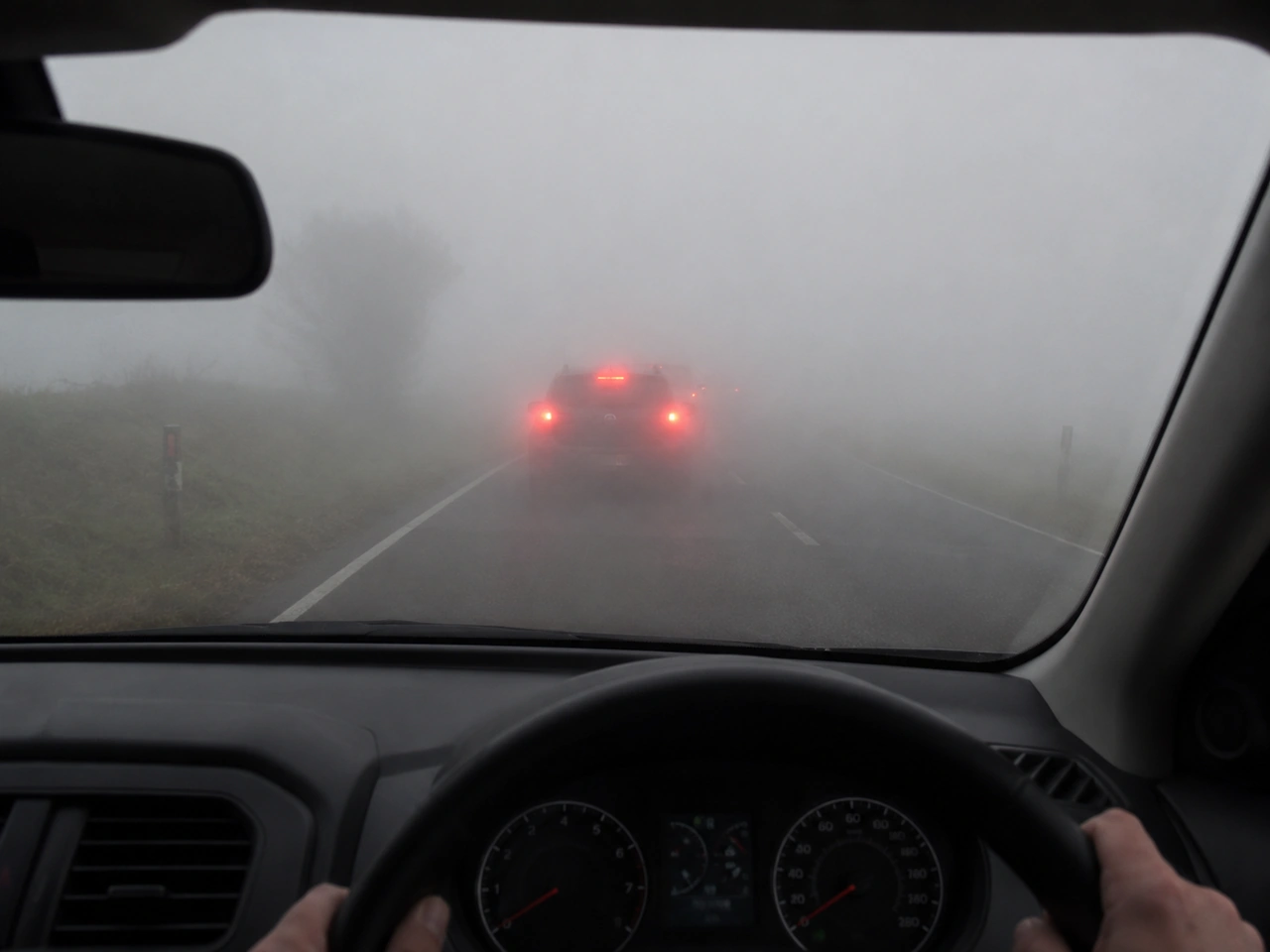
Why should you reduce speed in fog?

101. Why should you reduce speed in fog?

To prevent the windscreen from misting.
To reduce fuel consumption.
✓ Because you have less time to react to hazards you cannot see.
To prevent moisture from entering the engine.

Fog can hide obstacles, pedestrians, and other vehicles. Lower speed gives you more time to react.

Fog limiting a driver's view ahead
AI-generated by Traffic-rules.com • WCIT • CC BY-SA
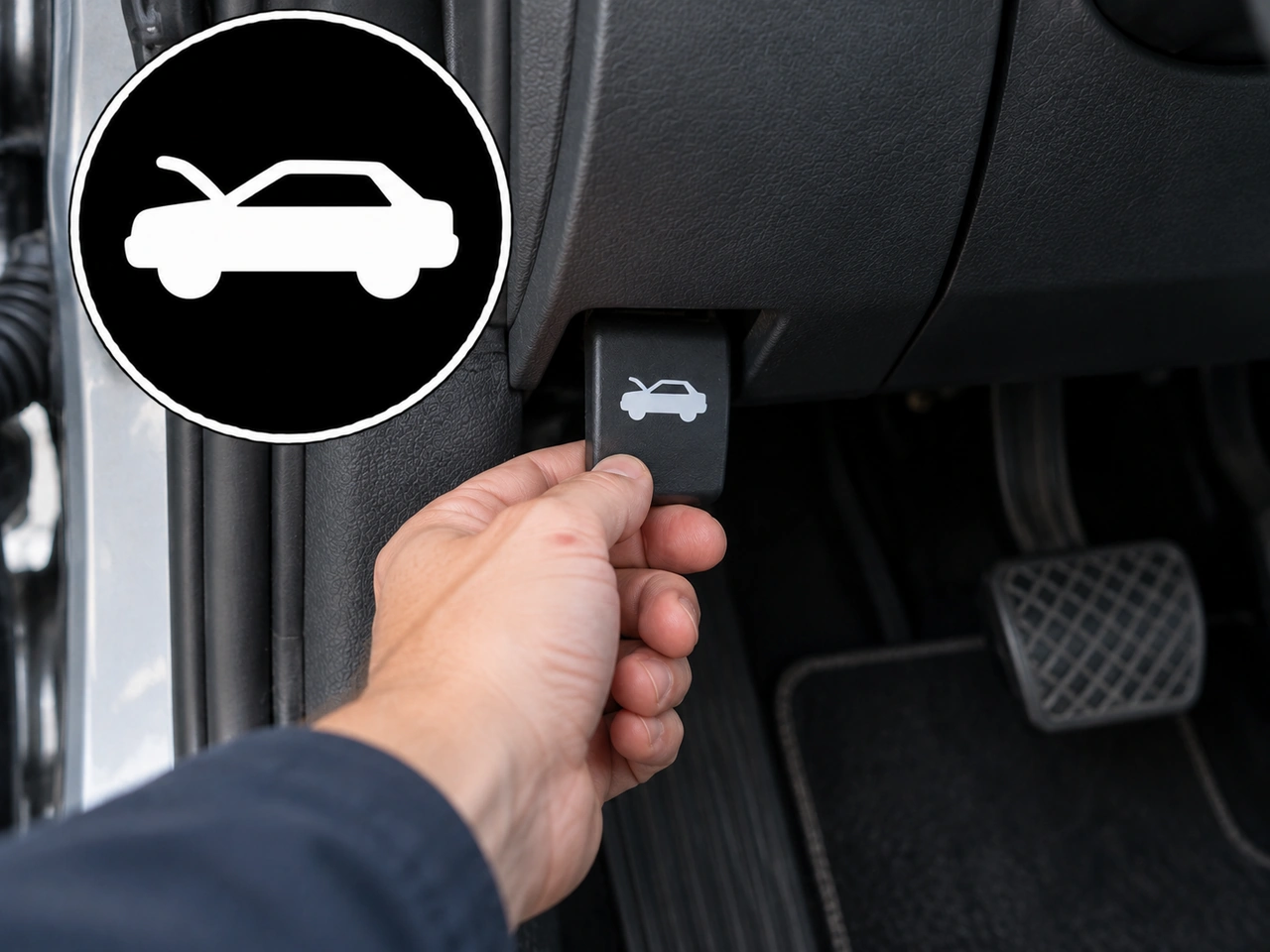
What does this vehicle-control symbol indicate?

102. What does this vehicle-control symbol indicate?

Fuel-filler flap release.
Central door locking.
Parking brake.
✓ Bonnet release.

This control releases the bonnet so that it can be opened. A secondary safety catch under the bonnet normally has to be released before it can be fully raised.

Bonnet-release control and symbol
AI-generated by Traffic-rules.com • WCIT • CC BY-SA
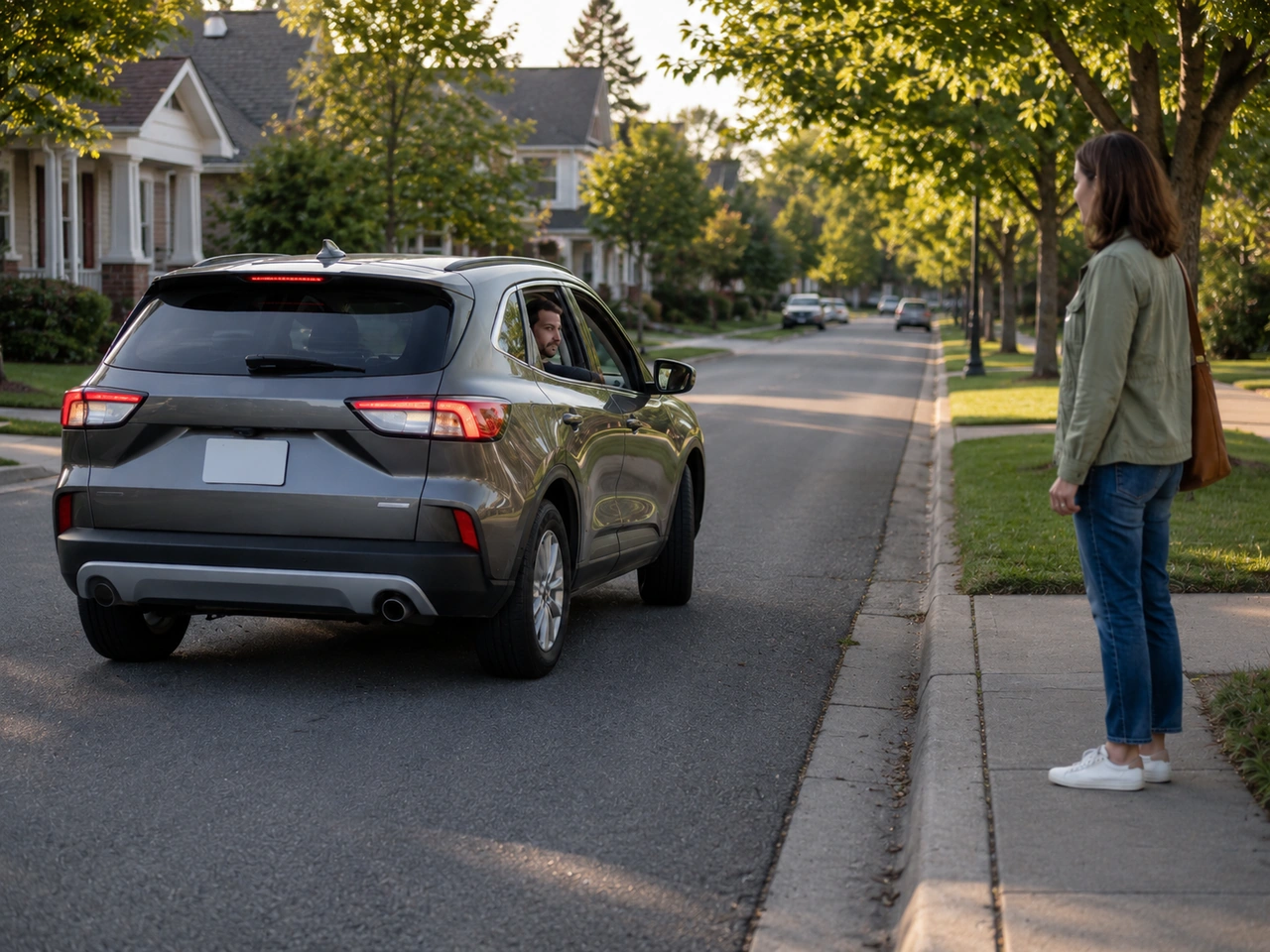
What should you do if a vehicle is reversing near you?

103. What should you do if a vehicle is reversing near you?

✓ Stay clear and make sure the driver can see you.
Walk behind it if it is reversing slowly.
Rely on the reversing sensors to make it stop.
Stand close behind it so the driver can see you.

Reversing vehicles have blind spots. Stay away from the vehicle and make sure the driver can see you.

Pedestrian near a reversing vehicle
AI-generated by Traffic-rules.com • WCIT • CC BY-SA
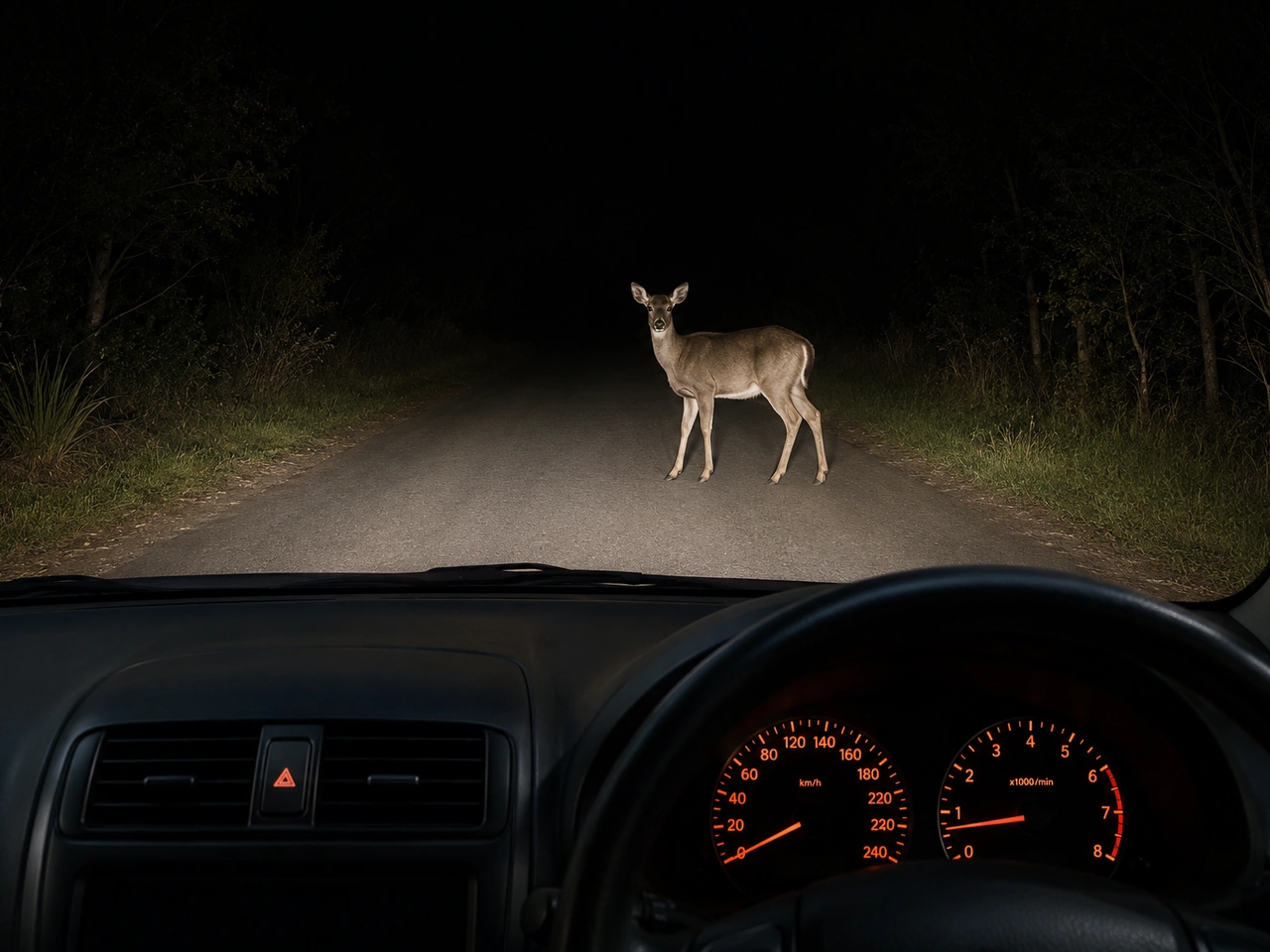
What should you do if an animal is standing on the road at night?

104. What should you do if an animal is standing on the road at night?

Flash your headlights repeatedly to make it move.
✓ Slow down and be prepared to stop.
Drive around it immediately without slowing down.
Sound your horn and continue at the same speed.

Animals may freeze, turn back, or move unpredictably when caught in vehicle headlights.

Animal standing on a road at night
AI-generated by Traffic-rules.com • WCIT • CC BY-SA
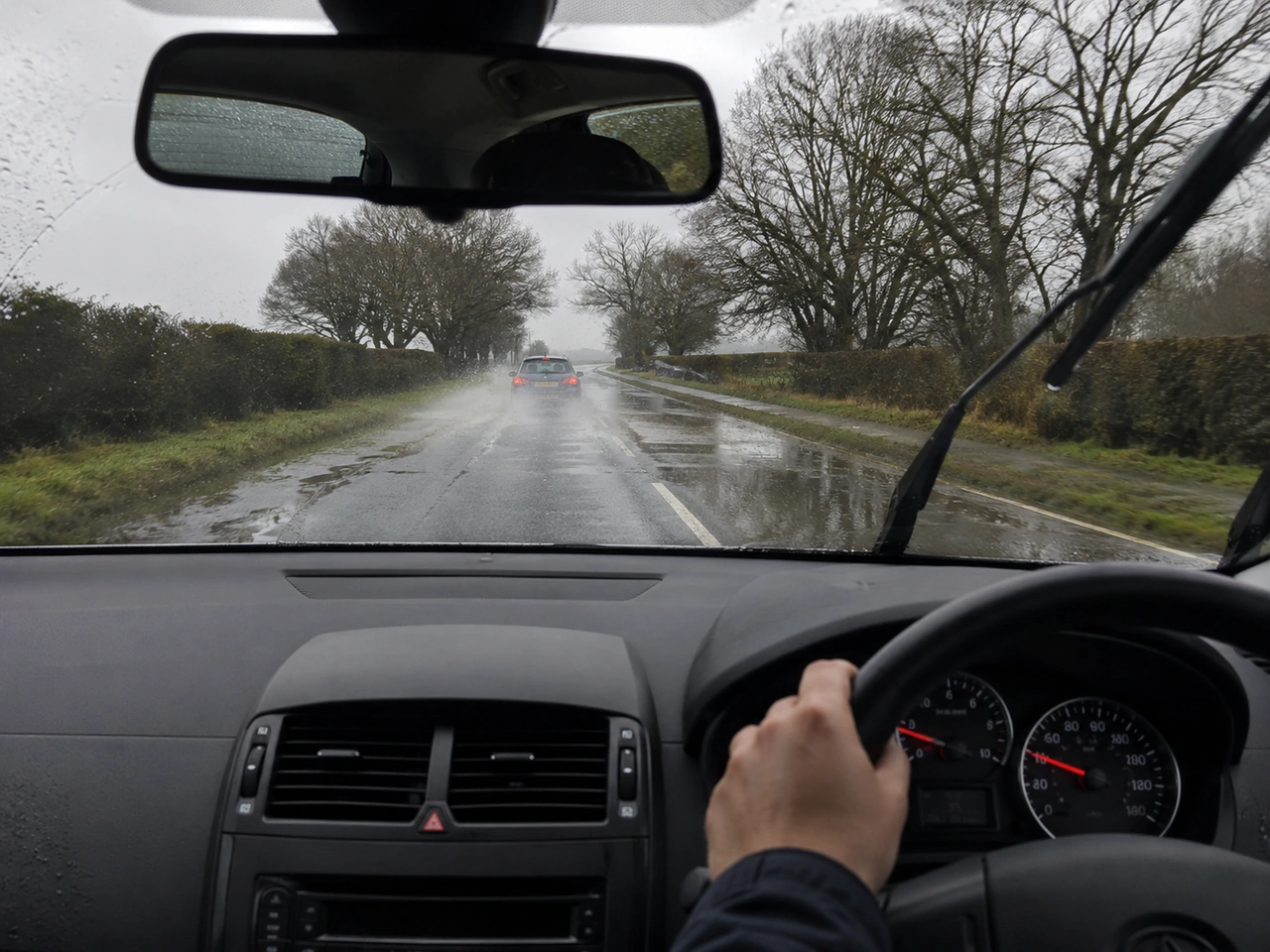
Why is it dangerous to drive through standing water at speed?

105. Why is it dangerous to drive through standing water at speed?

✓ The tyres may lose contact with the road.
The brakes become more effective when wet.
The suspension becomes firmer at higher speed.
The water can increase tyre pressure.

Driving too fast through water can cause aquaplaning, where the tyres lose grip and the driver may lose control.

Vehicle travelling through standing water
AI-generated by Traffic-rules.com • WCIT • CC BY-SA
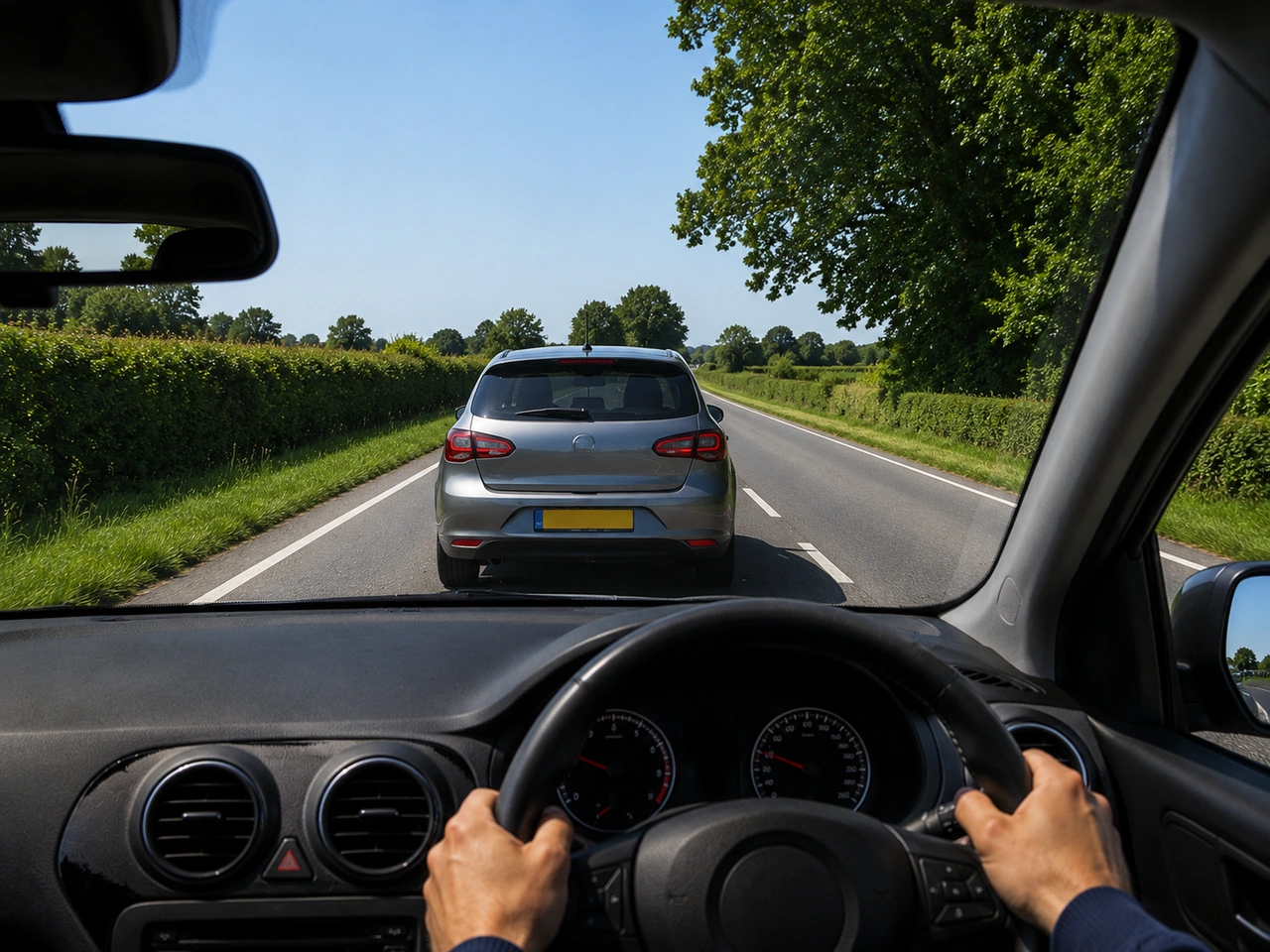
Why should you not drive too close behind another vehicle?

106. Why should you not drive too close behind another vehicle?

It makes your headlights less effective.
It causes the vehicle ahead to use more fuel.
It increases tyre pressure.
✓ You may not have enough time to stop.

Driving too close, or tailgating, reduces the time and space available to react and increases the risk of a rear-end collision. Use defensive driving and keep a safe following distance.

Vehicle tailgating the traffic ahead
AI-generated by Traffic-rules.com • WCIT • CC BY-SA
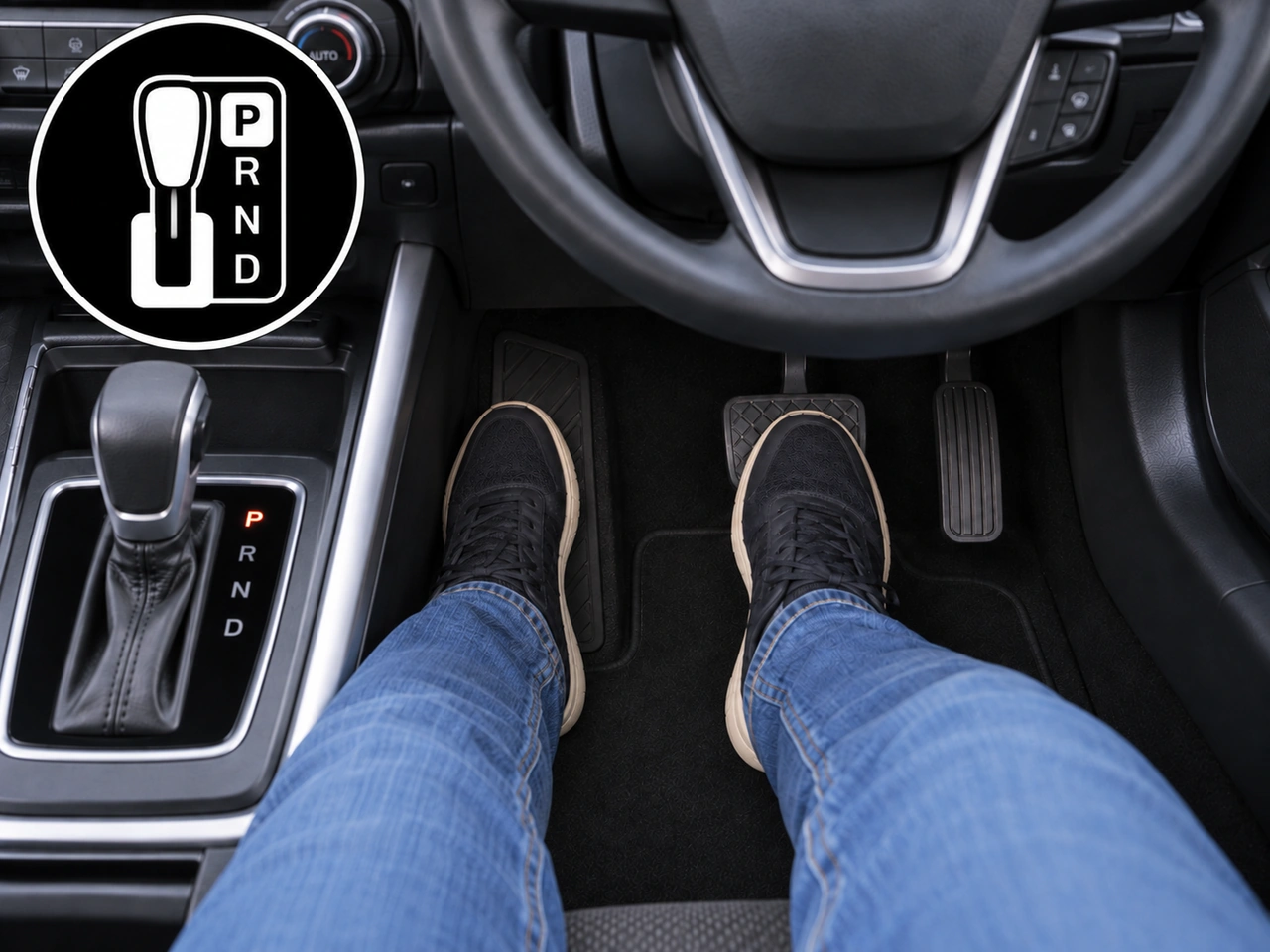
What should you normally do before starting an automatic vehicle?

107. What should you normally do before starting an automatic vehicle?

✓ Select P or N and press the brake pedal.
Select D and press the accelerator.
Select R and release the parking brake.
Leave the selector between two positions.

Before starting an automatic vehicle, make sure P (Park) or N (Neutral) is selected and press the brake pedal. Many automatic vehicles will only allow the engine to start when these conditions are met.

Gear selector and brake before starting an automatic vehicle
AI-generated by Traffic-rules.com • WCIT • CC BY-SA
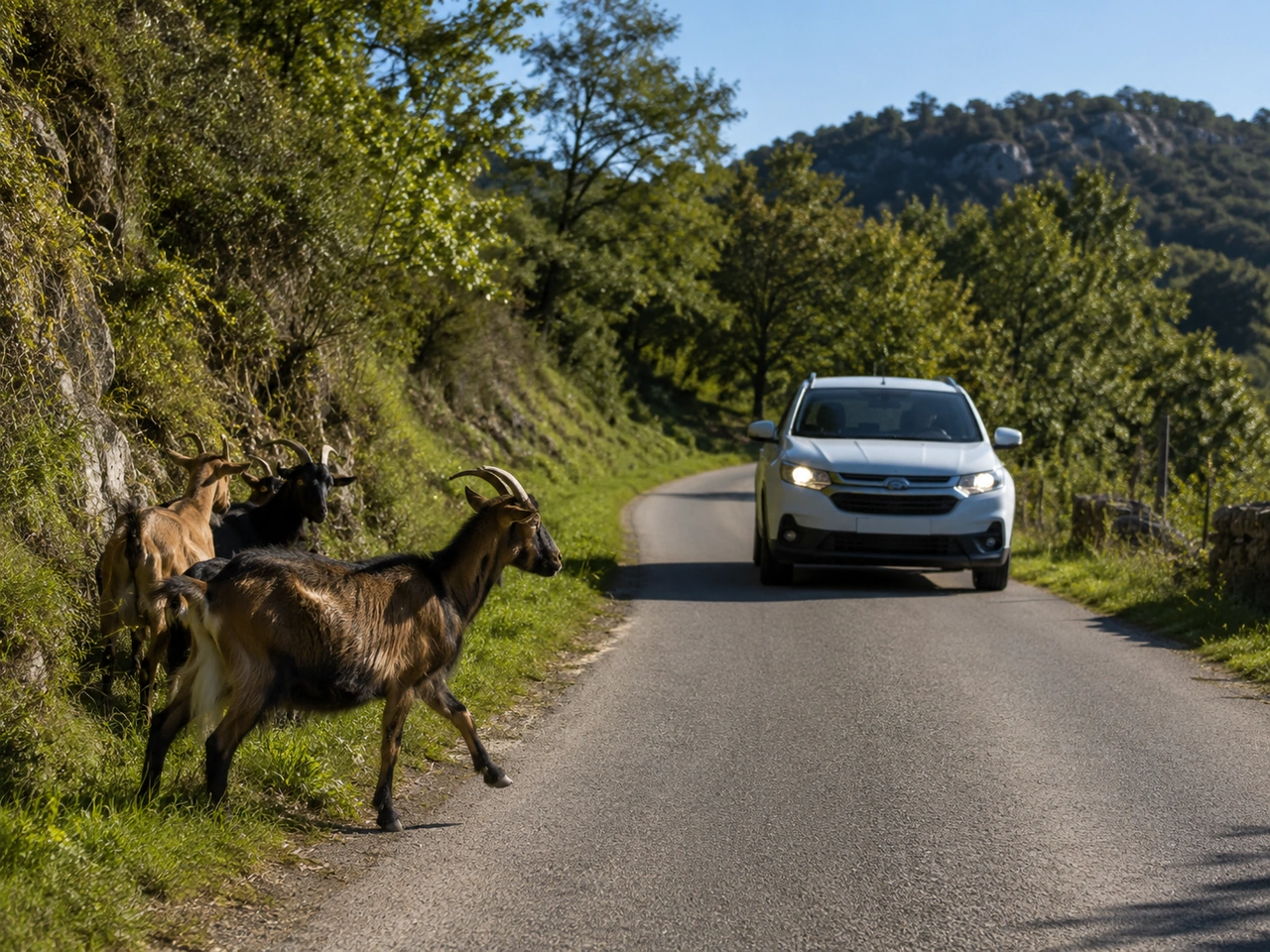
What should you do if animals are gathered beside a narrow rural road?

108. What should you do if animals are gathered beside a narrow rural road?

Sound your horn so the animals move away.
Drive close to prevent them entering your lane.
✓ Reduce speed and pass only when there is enough space.
Maintain speed because the animals are beside the road.

Animals beside a narrow road may step into your path. Slow down and leave as much safe space as possible.

Animals gathered beside a narrow rural road
AI-generated by Traffic-rules.com • WCIT • CC BY-SA
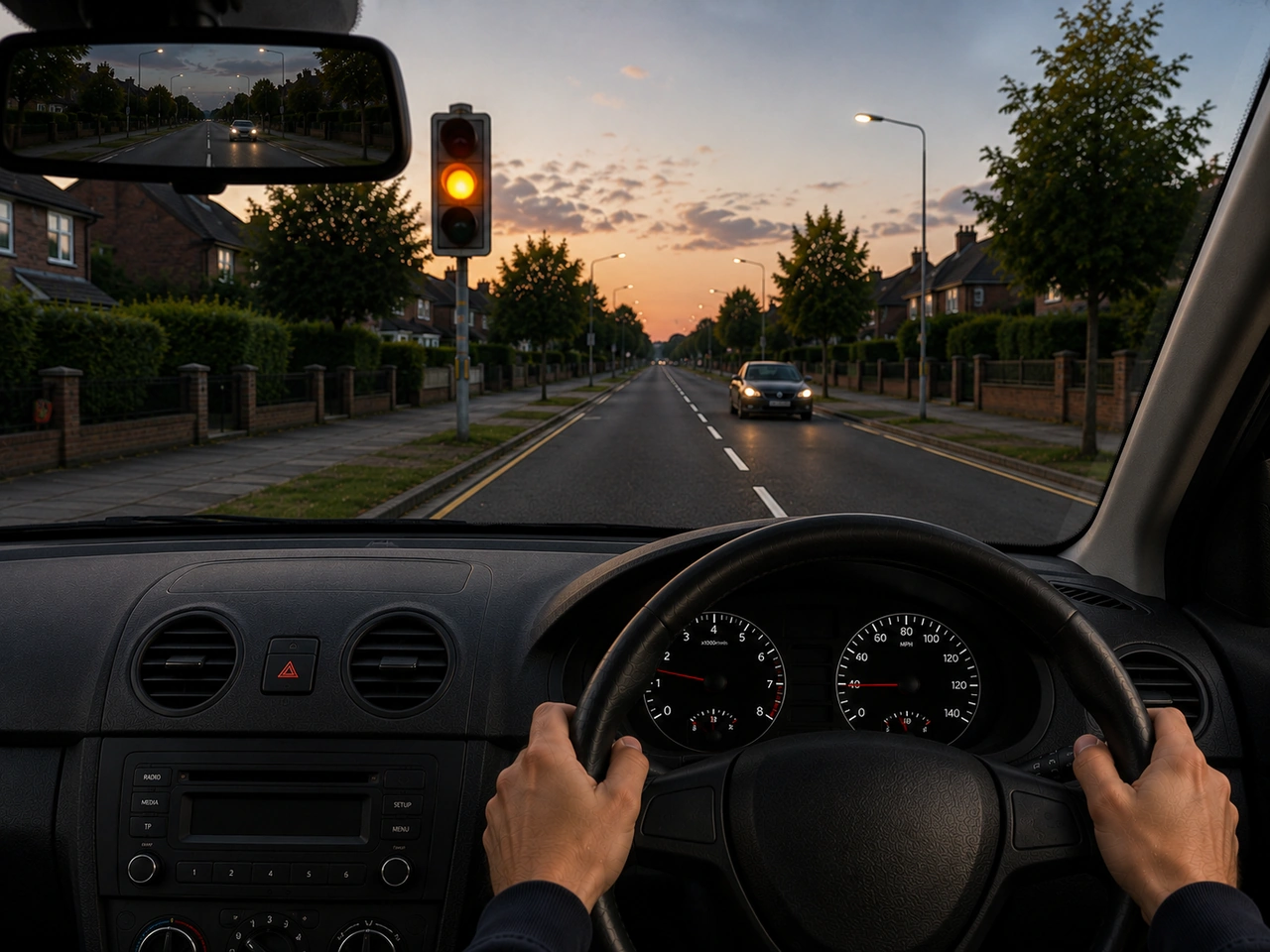
What should you do when traffic lights change to amber as you approach?

109. What should you do when traffic lights change to amber as you approach?

Continue at the same speed if the intersection looks clear.
✓ Stop if you can do so safely.
Treat it like a green light until it turns red.
Stop even if this requires sudden harsh braking.

An amber light warns that the signal is changing. Stop if it is safe, but avoid sudden braking that could cause danger behind you.

Vehicle approaching an amber traffic light
AI-generated by Traffic-rules.com • WCIT • CC BY-SA
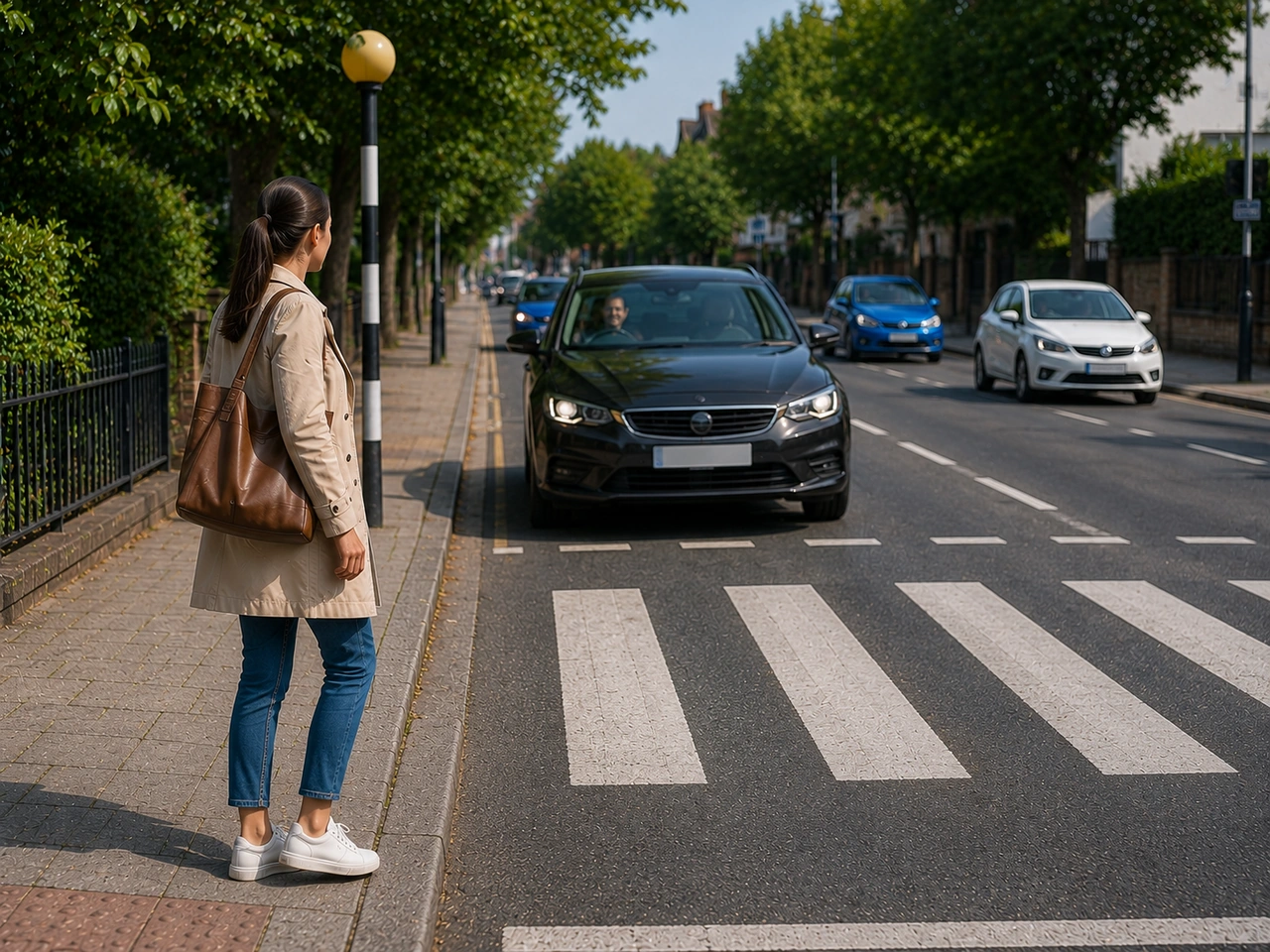
What should you do if traffic stops and a driver waves you across?

110. What should you do if traffic stops and a driver waves you across?

✓ Check that all lanes are safe before crossing.
Assume traffic in the other lanes will also stop.
Watch the stopped driver instead of the other traffic.
Cross immediately once the driver waves you through.

One driver may stop, but other vehicles may still be moving. Always check all lanes before crossing.

Driver waving a pedestrian across the road
AI-generated by Traffic-rules.com • WCIT • CC BY-SA
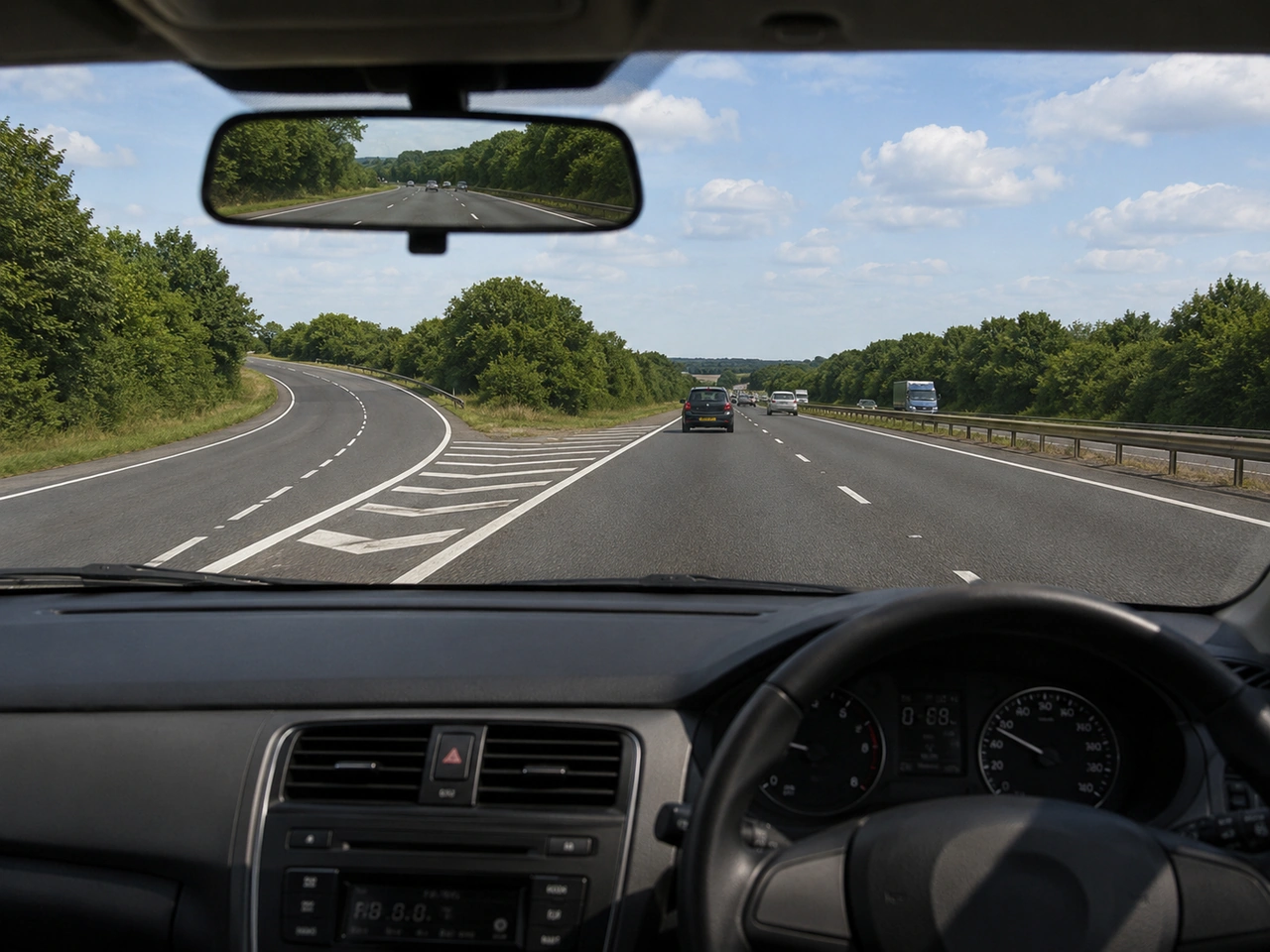
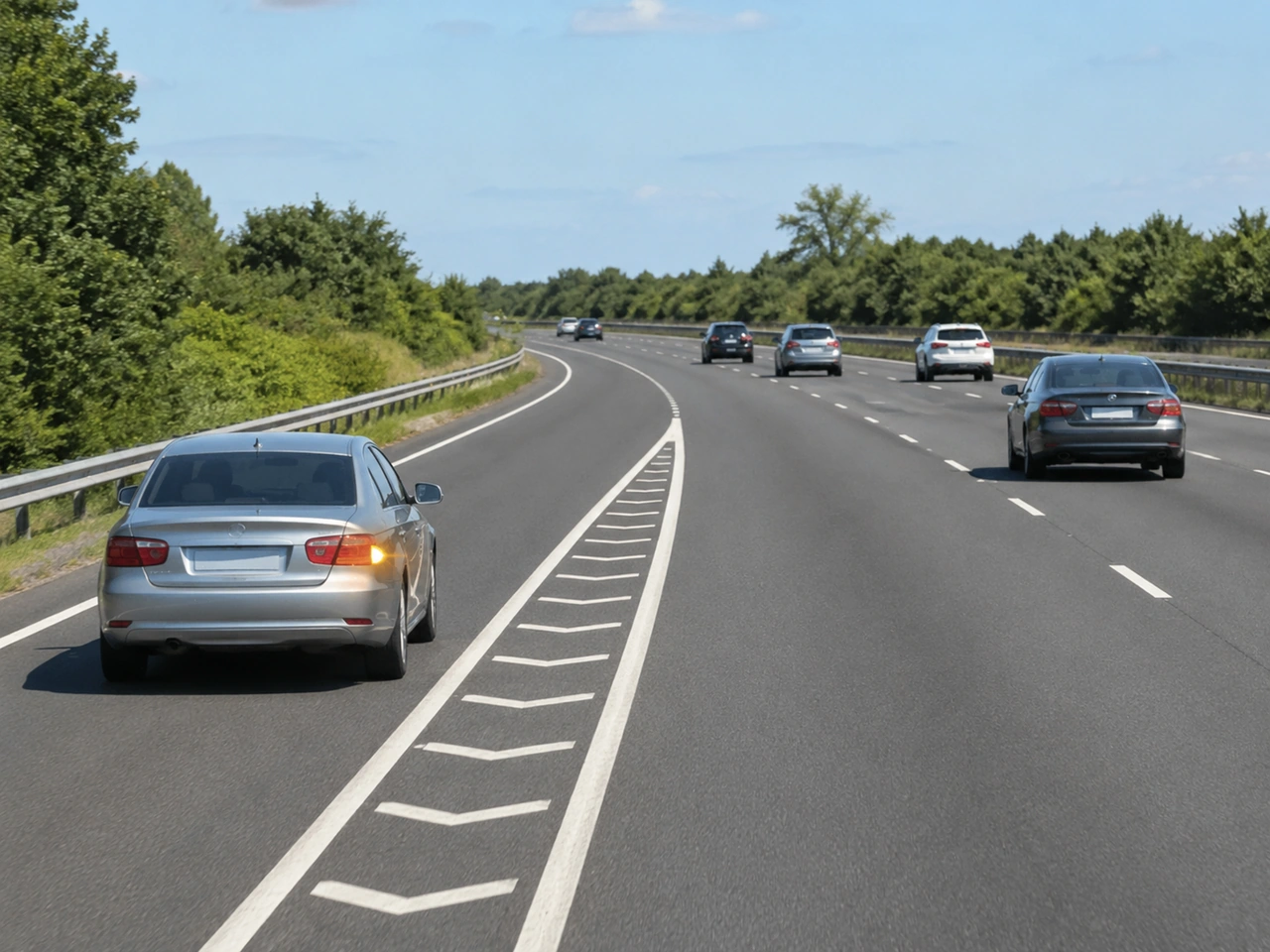
What should you do if you miss your motorway exit?

111. What should you do if you miss your motorway exit?

Cross the painted separation area back to the exit.
✓ Continue to the next exit.
Turn around if traffic is light enough.
Move onto the shoulder and reverse carefully.

Never reverse or make a sudden manoeuvre. Continue safely and change your route at the next suitable exit.

Vehicle continuing past a motorway exit
AI-generated by Traffic-rules.com • WCIT • CC BY-SA
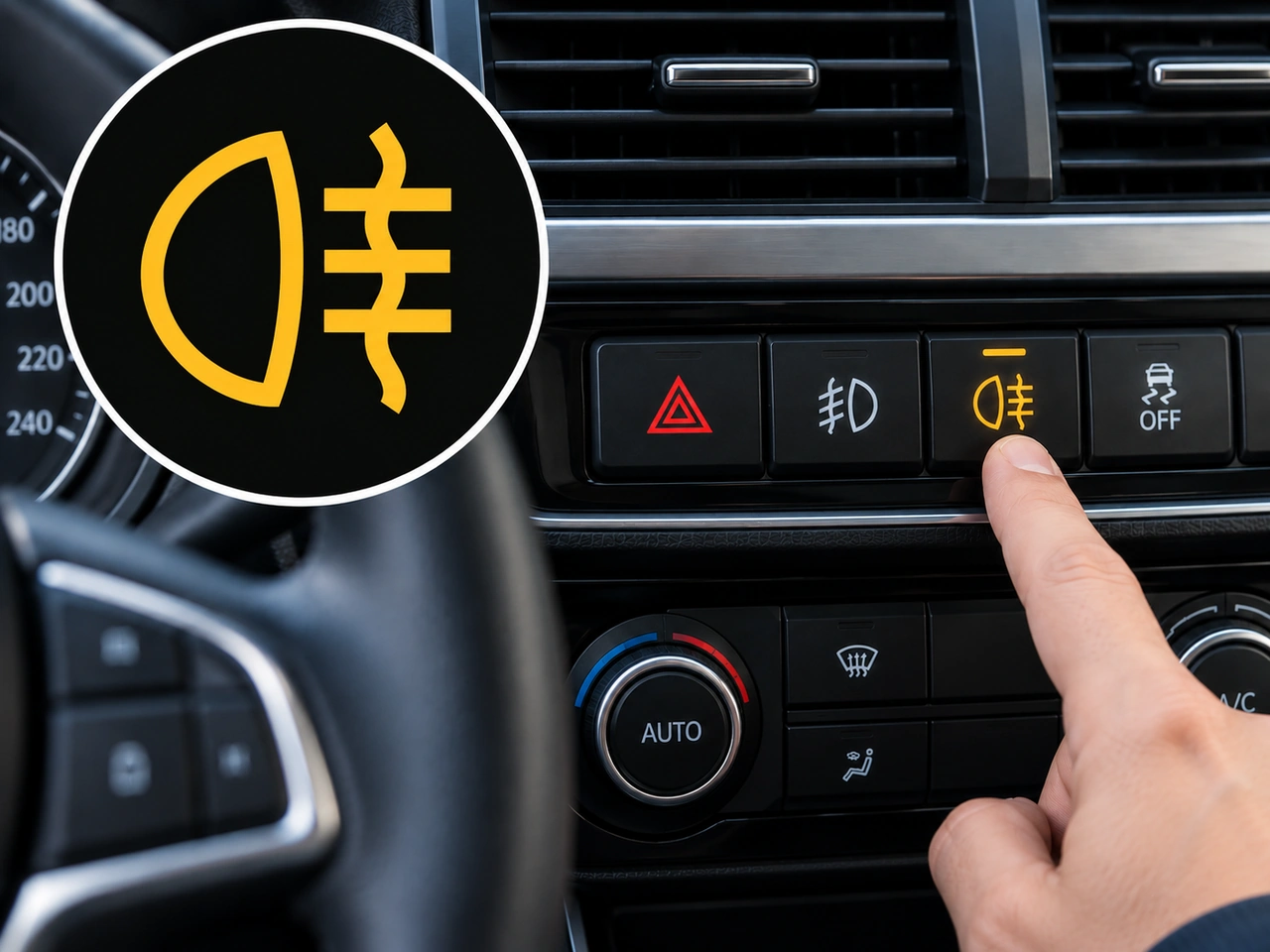
What does this dashboard symbol indicate?

112. What does this dashboard symbol indicate?

✓ Rear fog lights.
Low-beam headlights.
Front fog lights.
Sidelights.

This symbol indicates that the rear fog lights are switched on. Rear fog lights make the vehicle more visible from behind in conditions of severely reduced visibility, but they can dazzle other road users when used unnecessarily.

Rear fog-light symbol on the dashboard
AI-generated by Traffic-rules.com • WCIT • CC BY-SA
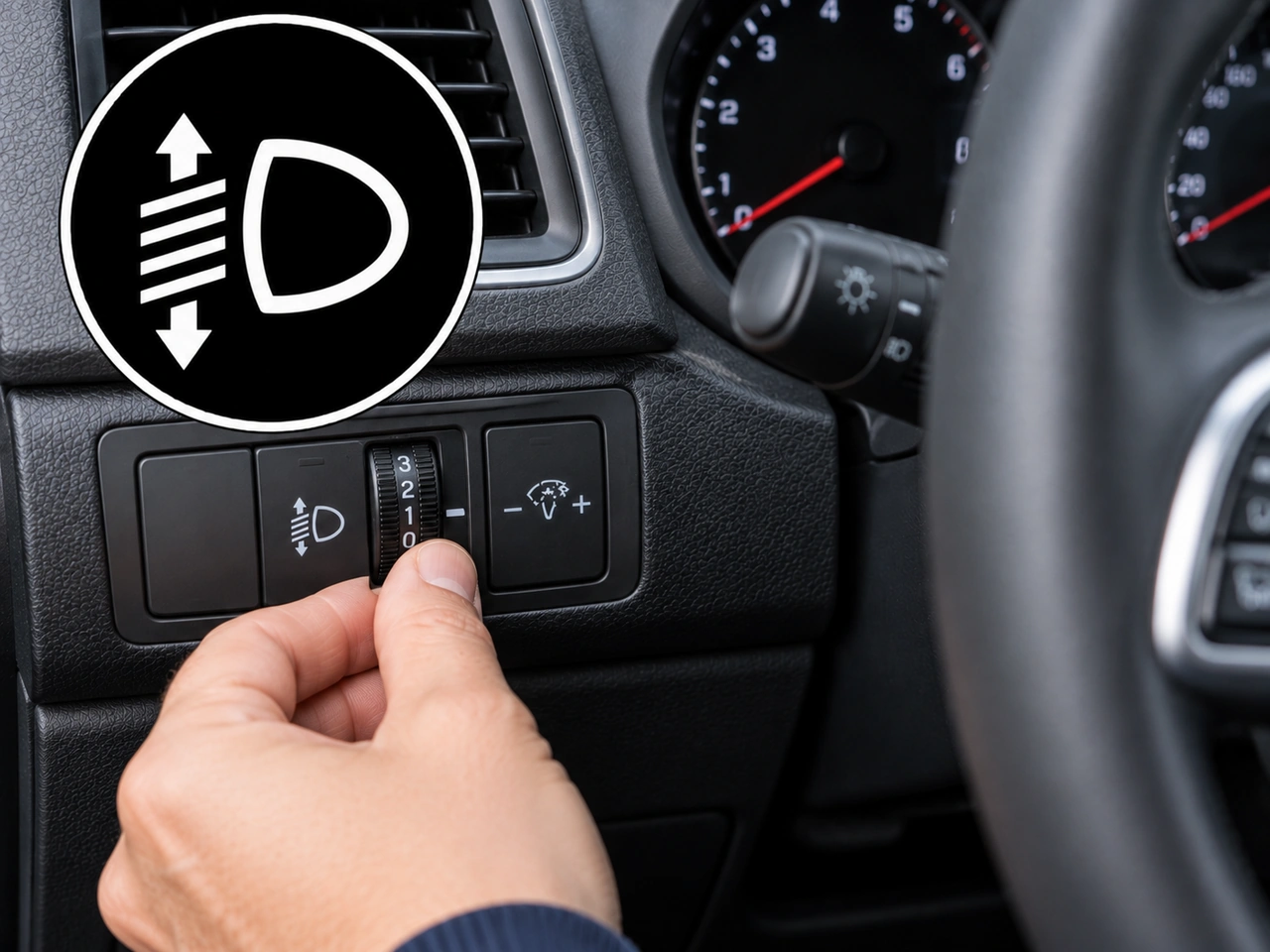
What does this vehicle-control symbol indicate?

113. What does this vehicle-control symbol indicate?

Automatic headlights.
Front fog lights.
✓ Headlight level adjustment.
Instrument-panel brightness.

This control adjusts the vertical aim of the headlights. It can be used to lower the beam when the vehicle is heavily loaded, helping to avoid dazzling other road users.

Control for adjusting the headlight beam height
AI-generated by Traffic-rules.com • WCIT • CC BY-SA
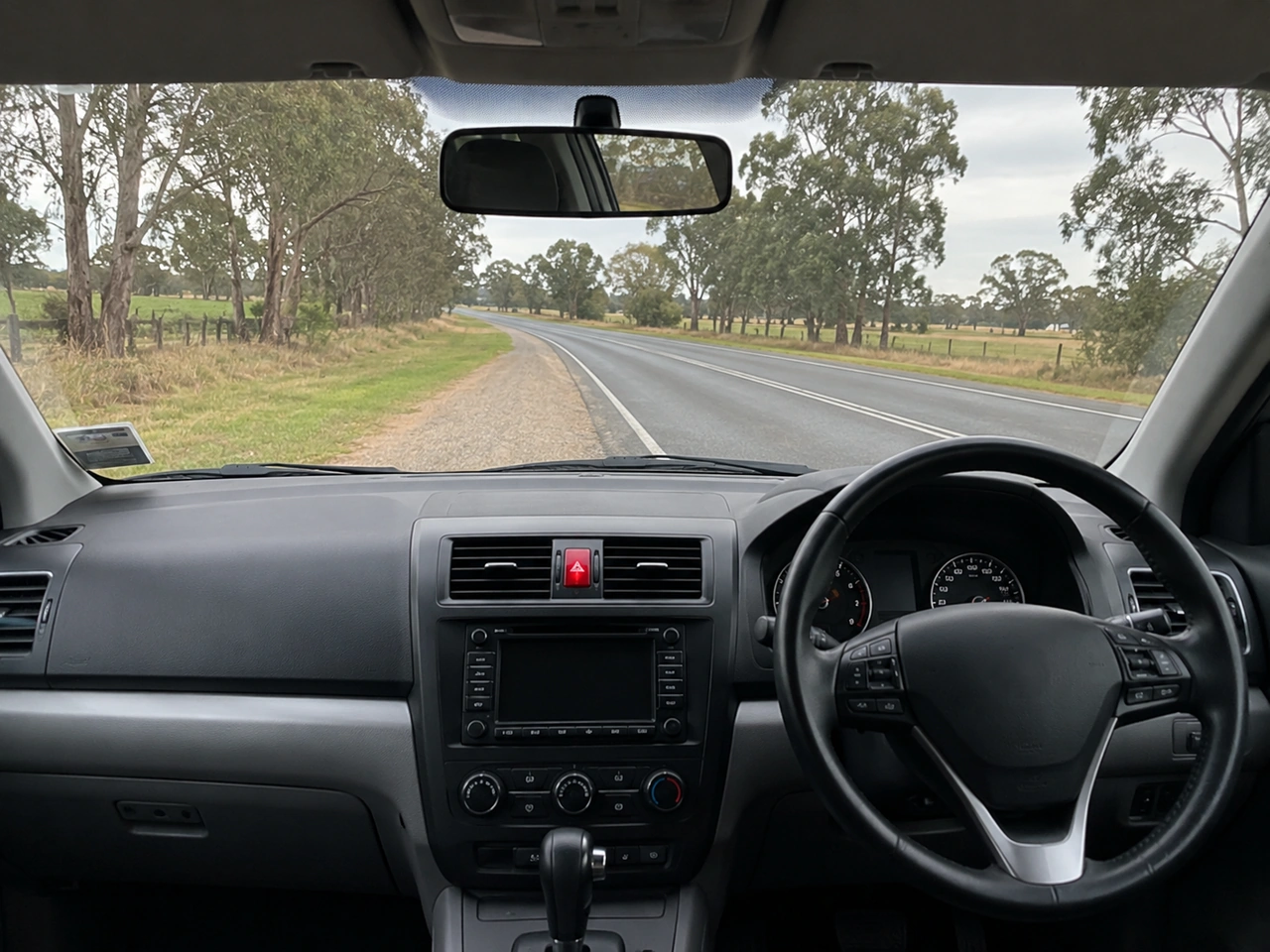
How should you leave a broken-down vehicle when traffic is passing nearby?

114. How should you leave a broken-down vehicle when traffic is passing nearby?

Get out immediately without checking for traffic.
Stand beside the vehicle before moving away.
Walk around the vehicle on the traffic side.
✓ Use the door furthest from moving traffic when it is safe to do so.

Leaving through the side away from traffic reduces the risk of being struck by a passing vehicle.

Leaving a broken-down vehicle away from passing traffic
AI-generated by Traffic-rules.com • WCIT • CC BY-SA
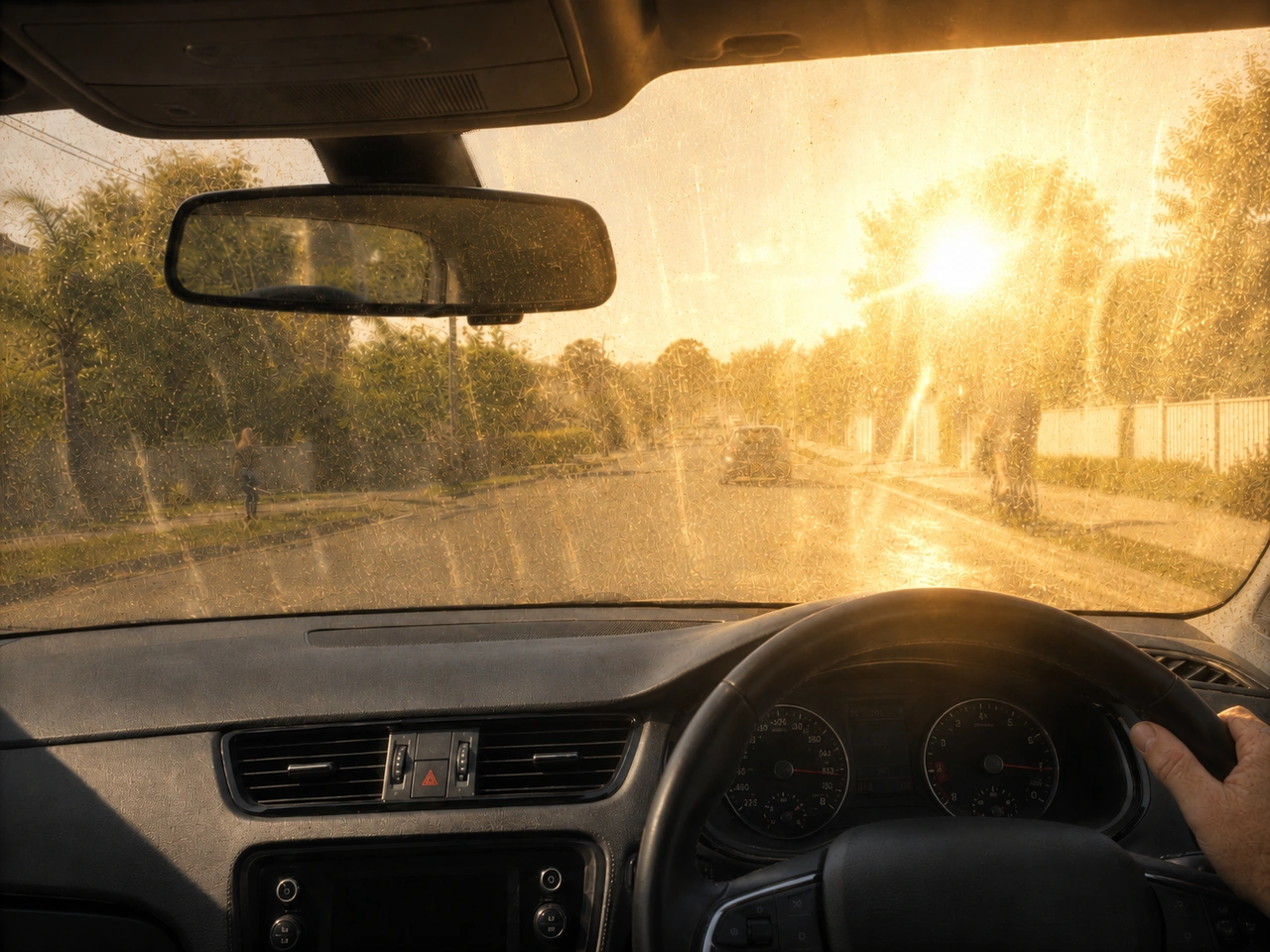
Why should you keep your windscreen clean?

115. Why should you keep your windscreen clean?

To prevent windscreen damage.
✓ To see the road clearly.
To reduce fuel consumption.
To make the headlights brighter.

A clean windscreen gives you a clear view of the road, signs, pedestrians, cyclists, and other vehicles.

Cleaning a windscreen to improve the driver's view
AI-generated by Traffic-rules.com • WCIT • CC BY-SA
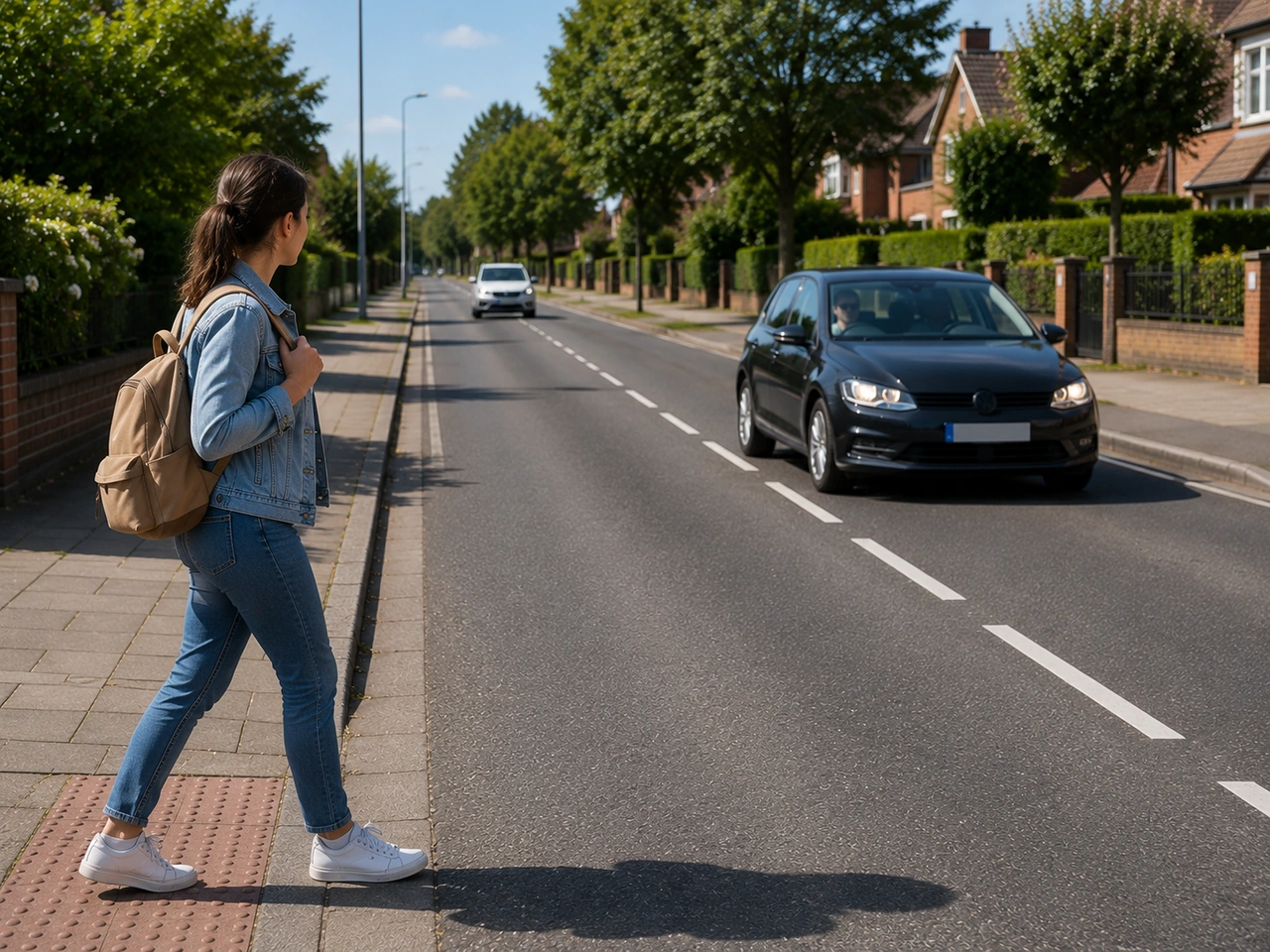
What should you do before crossing the road?

116. What should you do before crossing the road?

✓ Look for traffic in all directions.
Cross if the nearest vehicle is slowing down.
Follow another pedestrian without checking yourself.
Look only where traffic normally comes from.

Always check for approaching traffic from every direction before crossing.

Pedestrian checking for traffic before crossing
AI-generated by Traffic-rules.com • WCIT • CC BY-SA
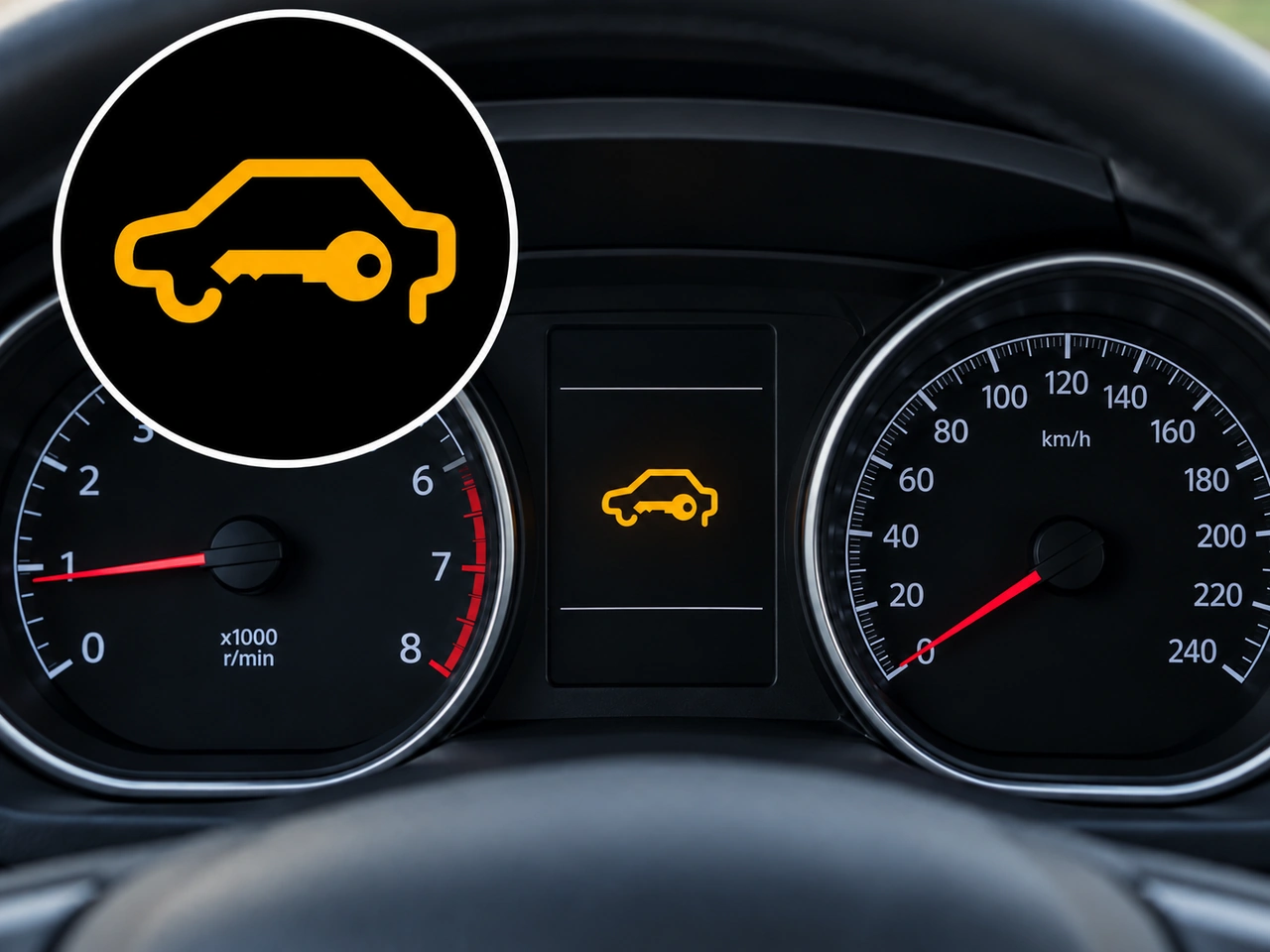
What does this dashboard symbol indicate?

117. What does this dashboard symbol indicate?

Engine-management warning.
Charging-system warning.
✓ Immobiliser or anti-theft system.
Power-steering warning.

This symbol relates to the vehicle's immobiliser or anti-theft system. If it remains illuminated or flashes unexpectedly, the vehicle may not recognise the key or there may be a fault in the security system.

Immobiliser indicator symbol on the dashboard
AI-generated by Traffic-rules.com • WCIT • CC BY-SA
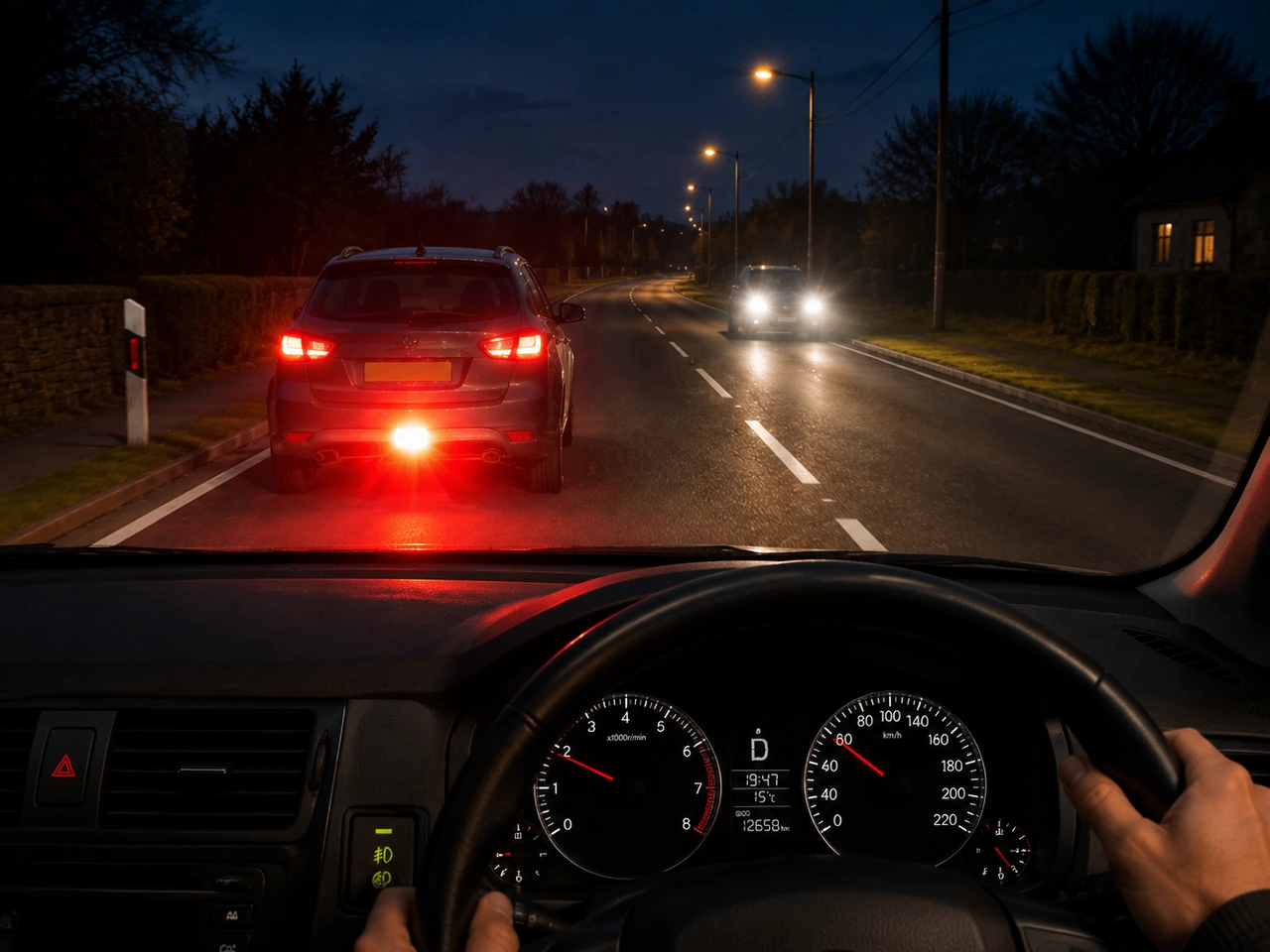
When should you switch off your fog lights?

118. When should you switch off your fog lights?

Never, because they always improve visibility.
Whenever you stop at a traffic light.
Only after the journey is finished.
✓ When visibility improves and they are no longer needed.

Fog lights can dazzle other road users when visibility is normal, so switch them off when conditions improve.

Fog-light control as visibility improves
AI-generated by Traffic-rules.com • WCIT • CC BY-SA
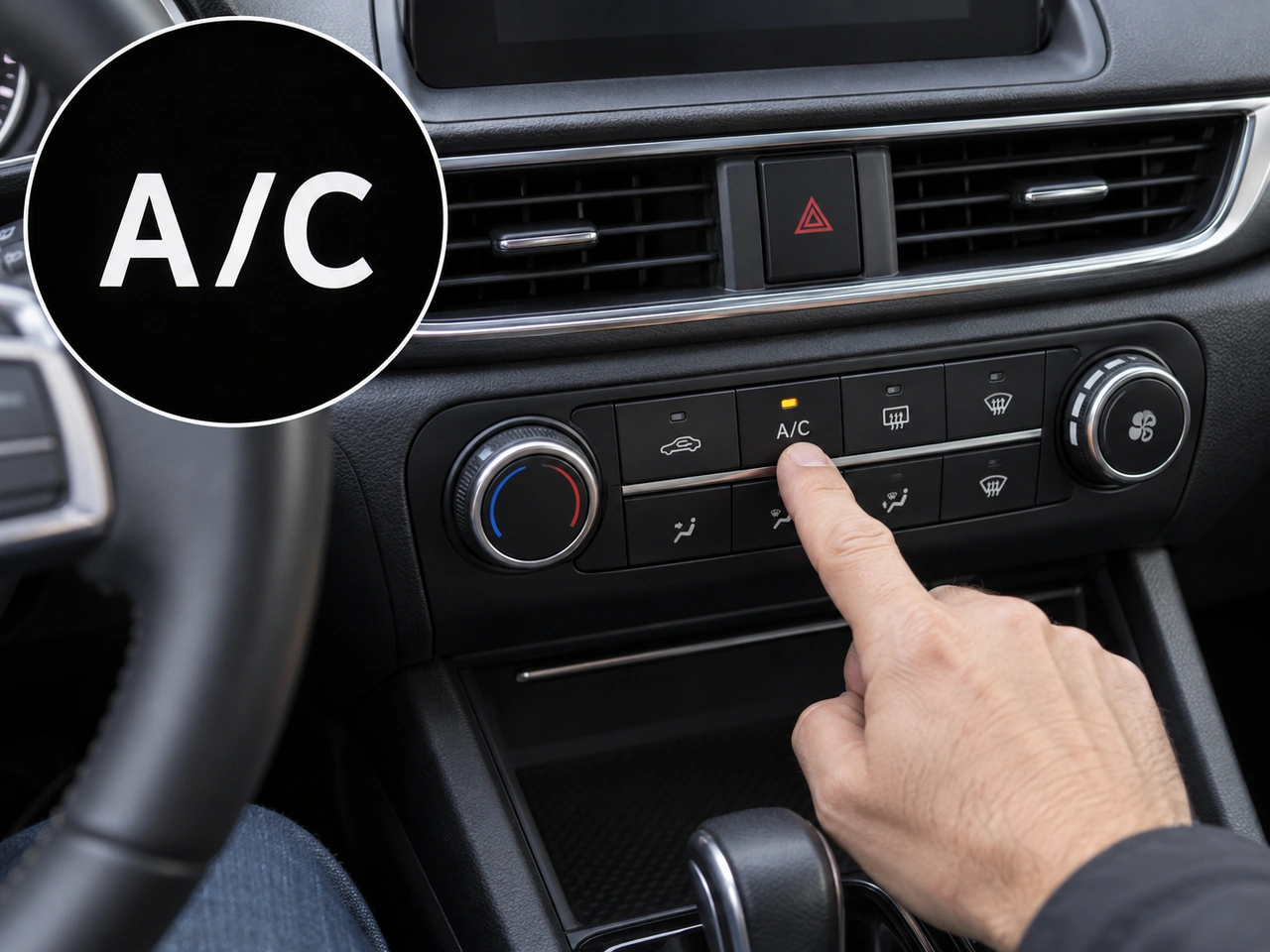
What does this vehicle-control symbol indicate?

119. What does this vehicle-control symbol indicate?

✓ Air conditioning.
Rear window demister.
Fan speed.
Air recirculation.

The A/C symbol controls the vehicle's air-conditioning system. Air conditioning can cool and dehumidify the air inside the vehicle, which can also help clear mist from the windows.

Air-conditioning control with the A/C symbol
AI-generated by Traffic-rules.com • WCIT • CC BY-SA
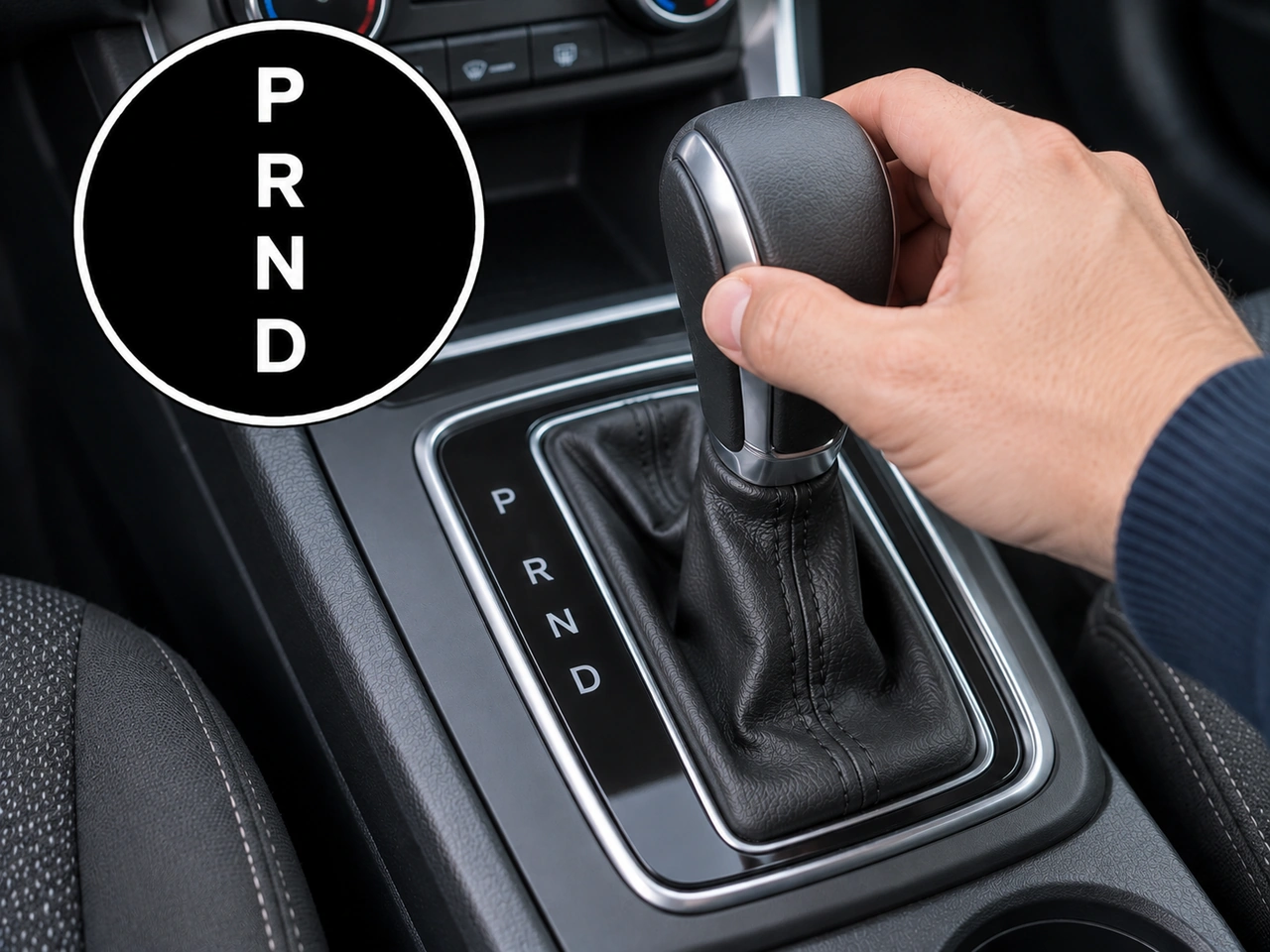
Which selector position prevents drive being transmitted to the wheels?

120. Which selector position prevents drive being transmitted to the wheels?

P (Park).
✓ N (Neutral).
D (Drive).
R (Reverse).

Select N (Neutral) when drive should not be transmitted to the wheels. Unlike Park, Neutral does not lock the transmission to prevent the vehicle from rolling.

Automatic gear selector with P, R, N and D positions
AI-generated by Traffic-rules.com • WCIT • CC BY-SA
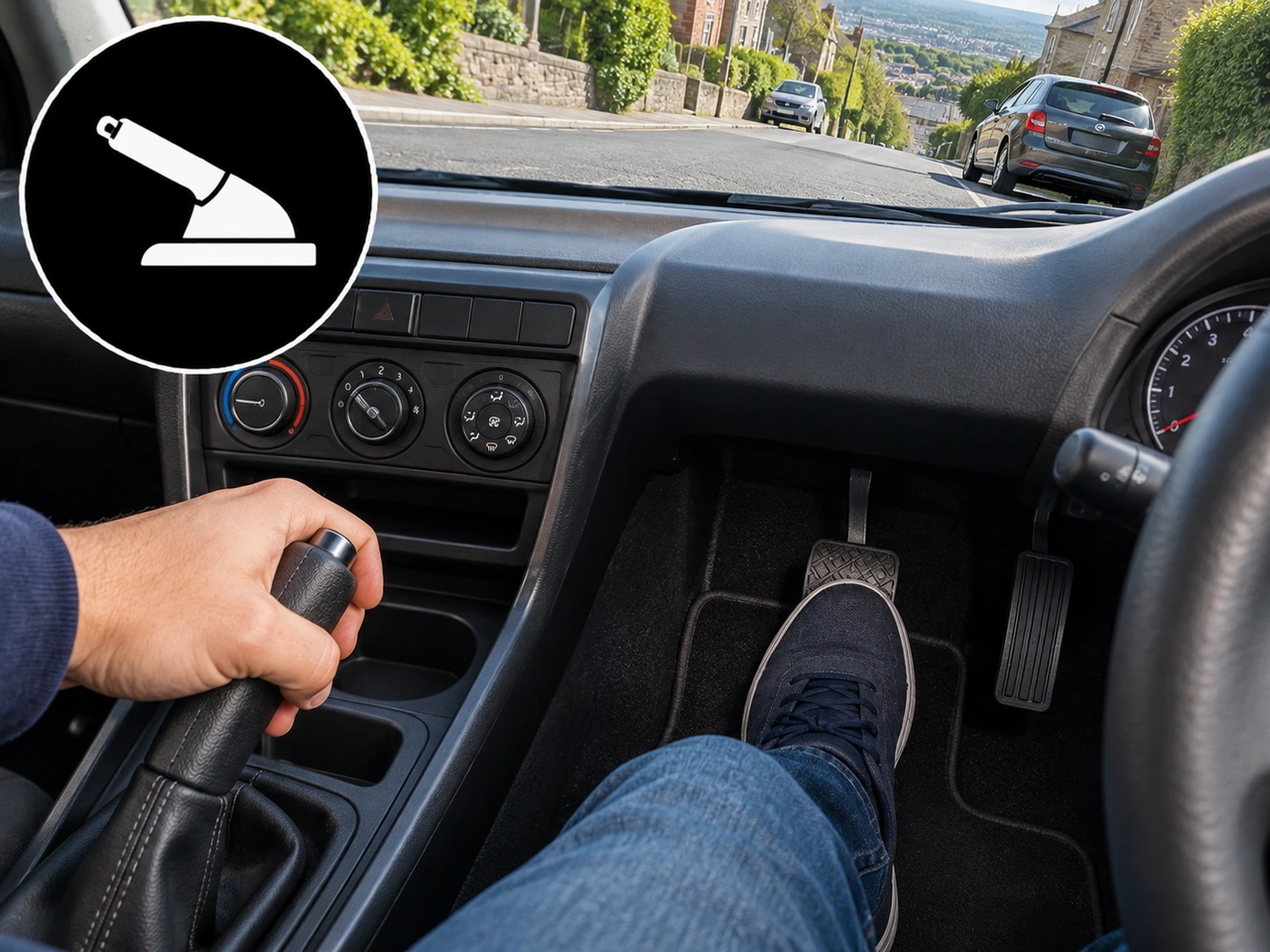
What should you do before releasing the parking brake on a slope?

121. What should you do before releasing the parking brake on a slope?

✓ Make sure the vehicle is securely controlled before releasing it.
Press the accelerator fully.
Select neutral and release all pedals.
Turn the steering wheel fully.

Before releasing the parking brake on a slope, make sure the vehicle cannot roll unexpectedly. Use the service brake or, when moving off in a manual vehicle, establish the clutch biting point and sufficient power before releasing the parking brake.

Preparing to release the parking brake on a slope
AI-generated by Traffic-rules.com • WCIT • CC BY-SA
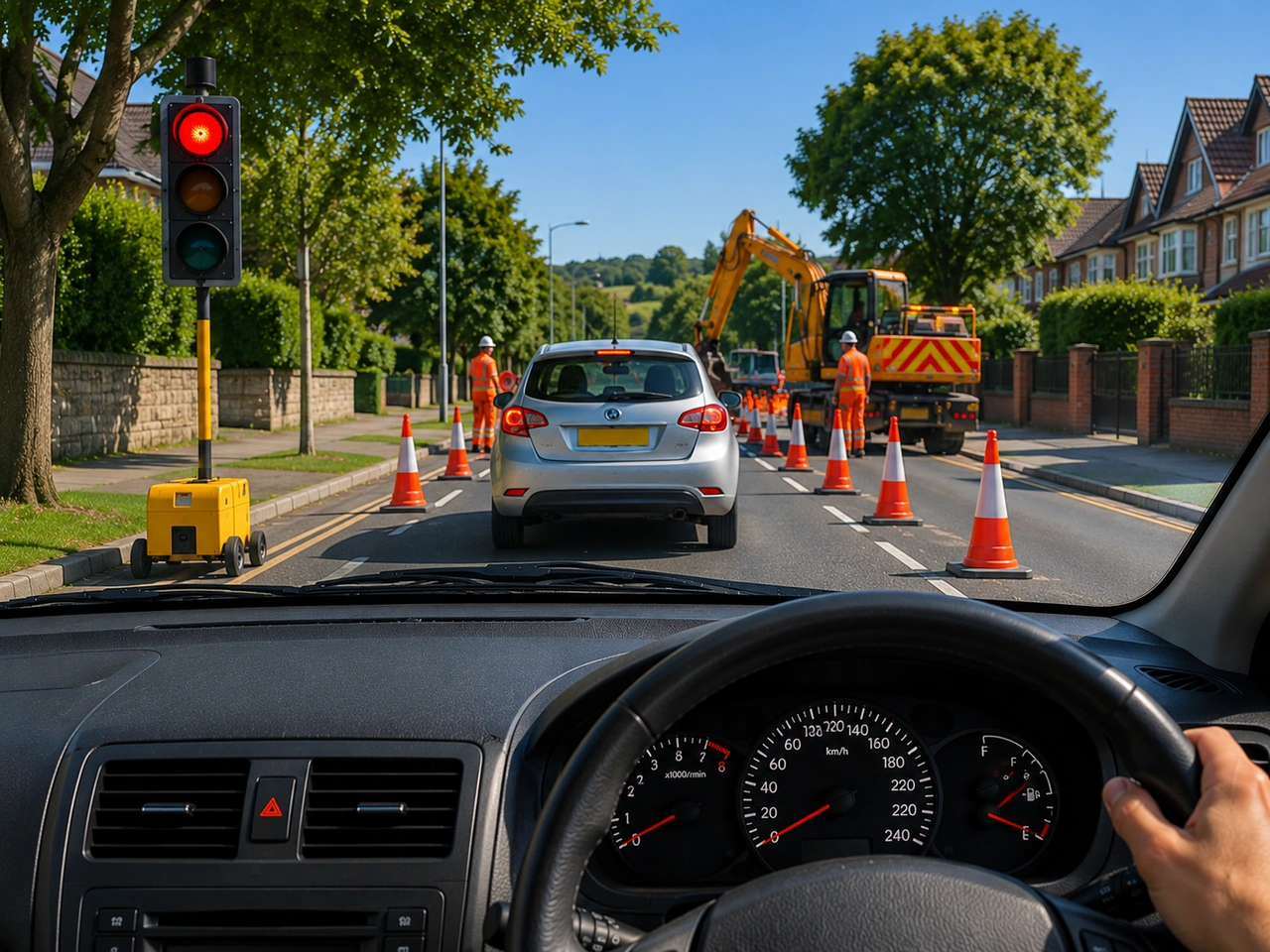
What should you do when roadworks are ahead?

122. What should you do when roadworks are ahead?

Follow the vehicle ahead closely through the work zone.
Ignore temporary signs if permanent signs are still visible.
Use your horn to warn road workers that you are approaching.
✓ Slow down and follow the temporary signs.

Roadworks can create narrow lanes, workers near traffic, uneven surfaces, and temporary rules. Slow down and follow the signs.

Roadworks and temporary traffic signs ahead
AI-generated by Traffic-rules.com • WCIT • CC BY-SA
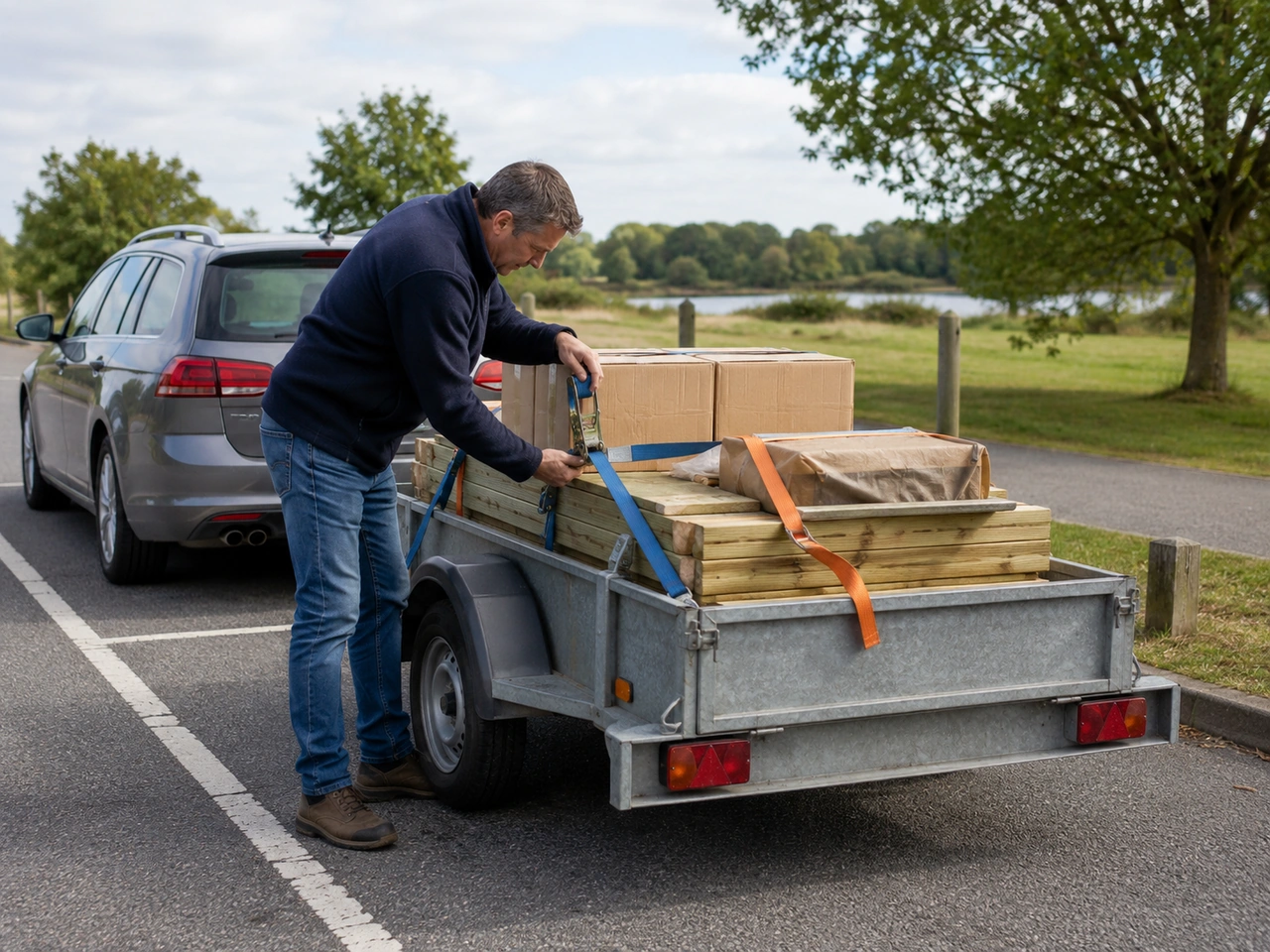
What should you check shortly after securing a load?

123. What should you check shortly after securing a load?

Increase speed briefly to test the restraints.
Check the load only when you reach your destination.
Loosen the restraints slightly after the load has settled.
✓ Stop safely and check that the restraints are still tight.

Loads and straps may settle or loosen after the journey begins. Recheck them at a safe stopping place.

Rechecking straps securing a vehicle's load
AI-generated by Traffic-rules.com • WCIT • CC BY-SA
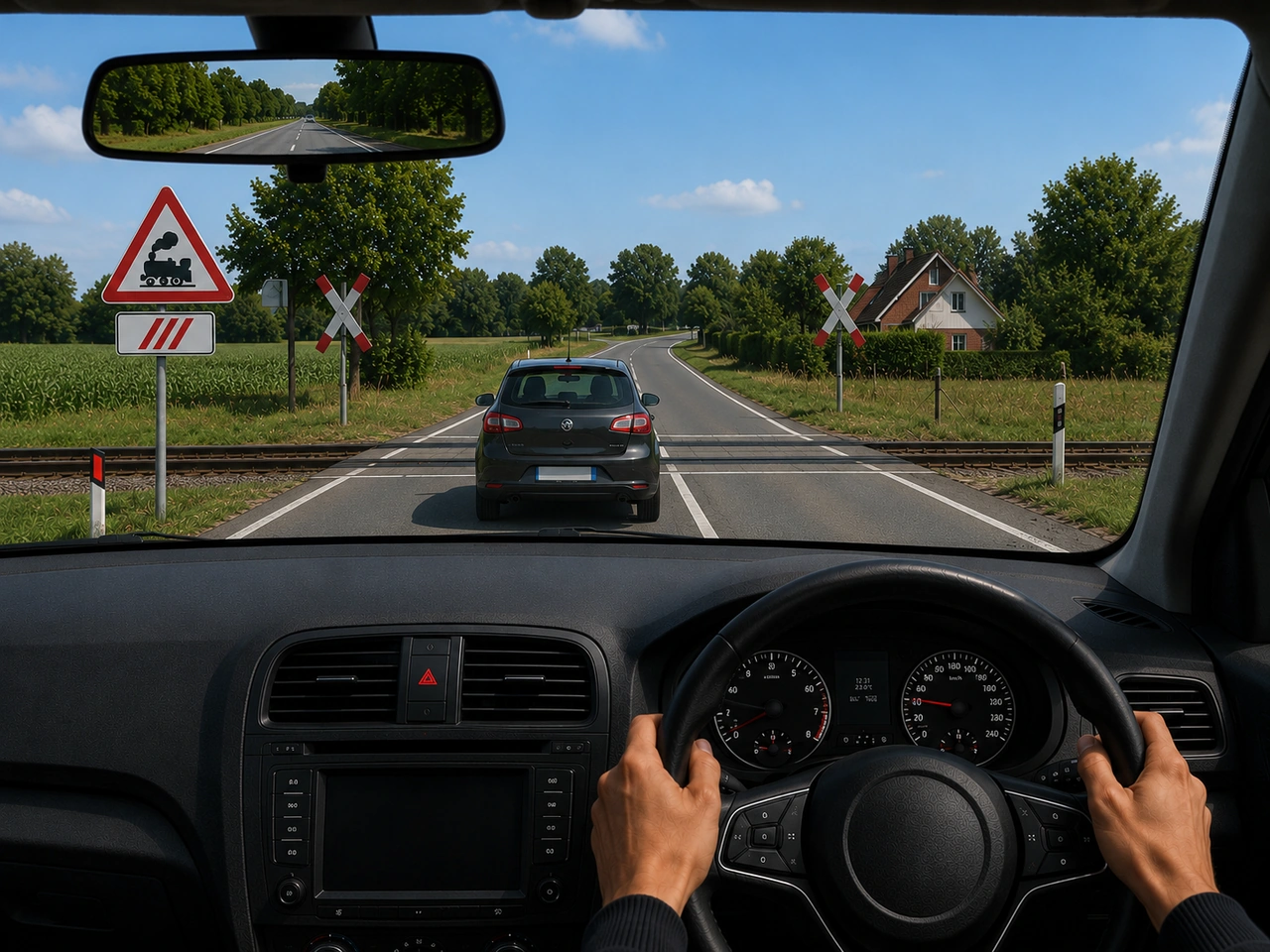
What should you do at a railway crossing without barriers?

124. What should you do at a railway crossing without barriers?

Follow the vehicle ahead without checking yourself.
Stop only if you hear a train approaching.
✓ Stop if required, check carefully, and cross only when safe.
Cross quickly if you cannot see a train.

Approach railway crossings carefully, obey any requirement to stop and any warning signals or barriers, and cross only when it is safe.

Railway crossing without barriers
AI-generated by Traffic-rules.com • WCIT • CC BY-SA
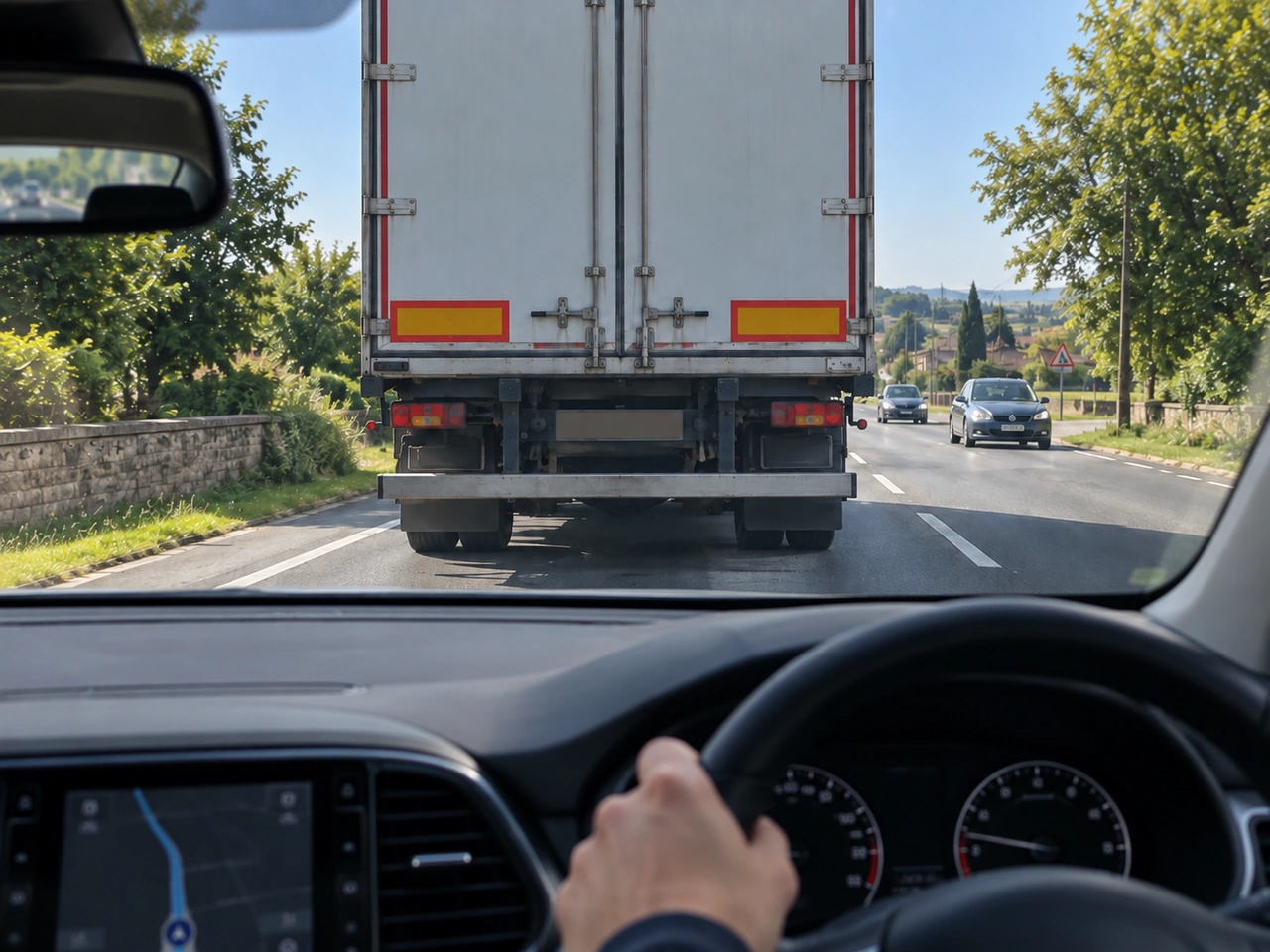
Why should you leave extra space when following a large vehicle?

125. Why should you leave extra space when following a large vehicle?

✓ To improve your view ahead and give yourself more time to react.
To make it easier for the large vehicle to accelerate.
To make overtaking possible without checking ahead.
To prevent the large vehicle from changing lanes.

A large vehicle can block your view of traffic, signs, intersections, or hazards ahead. Leaving extra space improves your view and gives you more time to react if traffic slows or a hazard develops.

Large vehicle limiting a following driver's view
AI-generated by Traffic-rules.com • WCIT • CC BY-SA
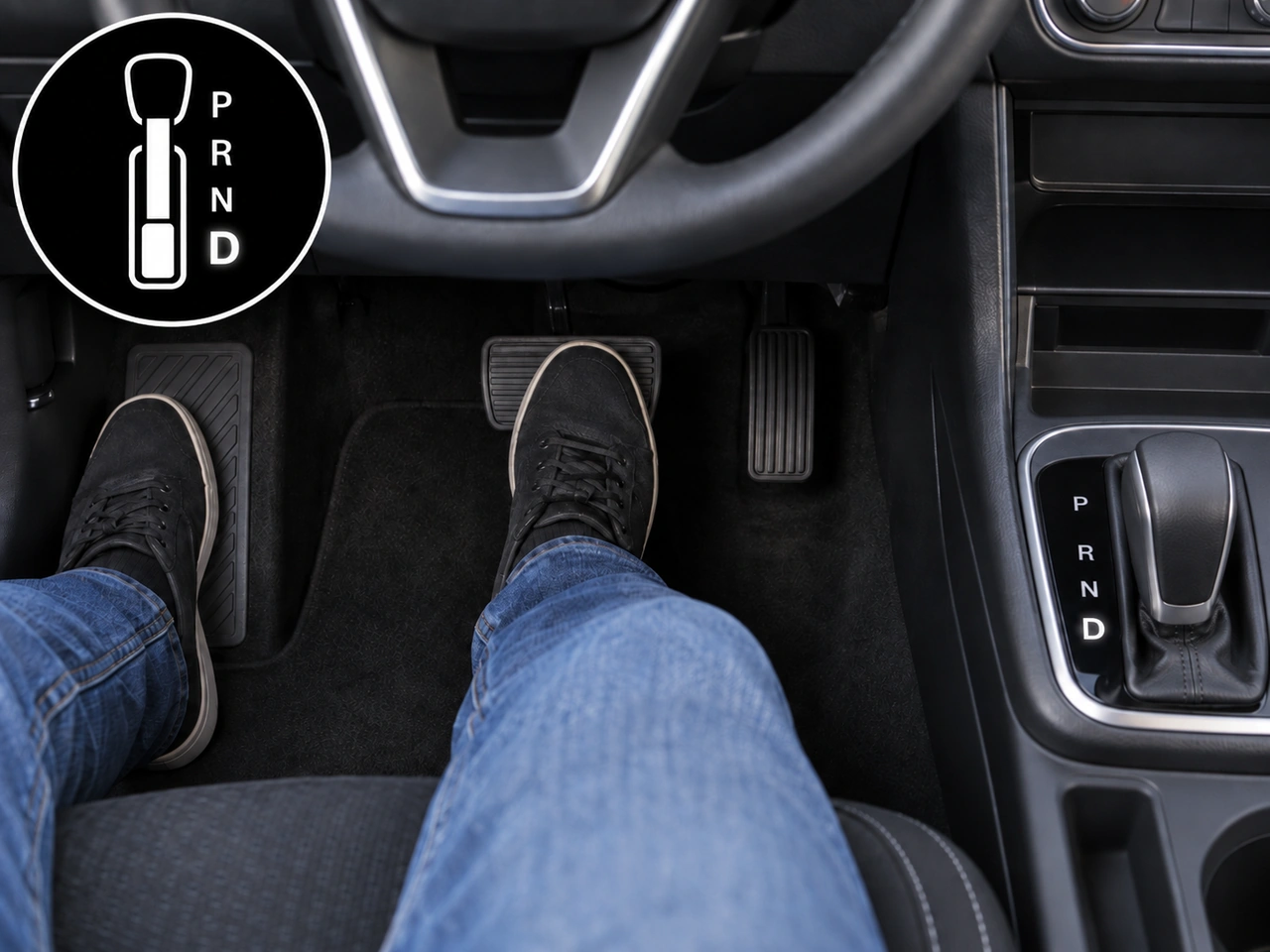
What should you do when an automatic vehicle is stationary in D?

126. What should you do when an automatic vehicle is stationary in D?

✓ Keep the brake pedal pressed.
Select reverse gear.
Press the accelerator lightly.
Release the parking brake.

An automatic vehicle may creep forward when D (Drive) is selected, even without pressing the accelerator. Keep the brake pedal pressed while stationary to prevent unintended movement.

Automatic gear selector in Drive and brake-pedal control
AI-generated by Traffic-rules.com • WCIT • CC BY-SA
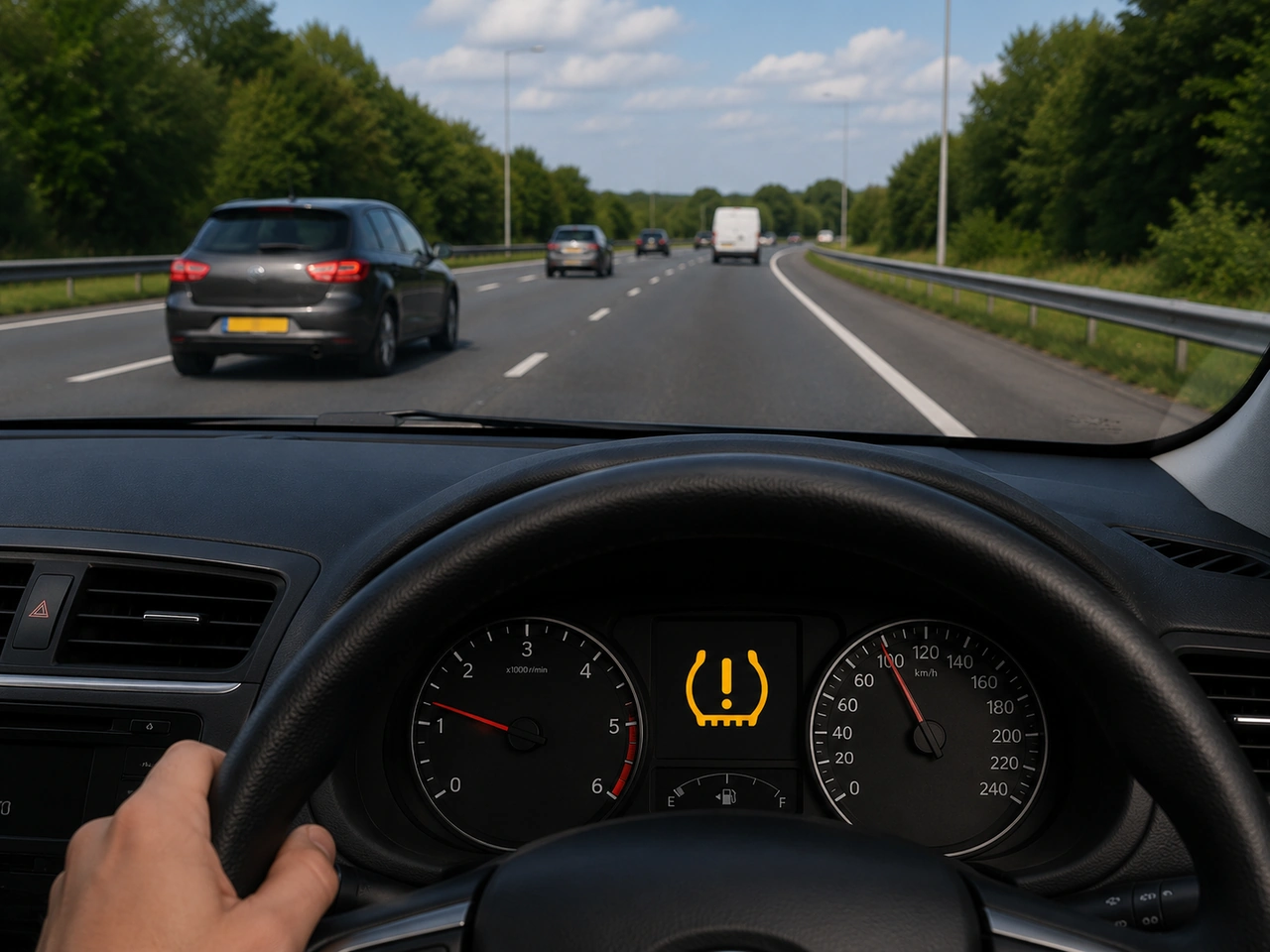
What should you do if a tyre-pressure warning appears and handling changes?

127. What should you do if a tyre-pressure warning appears and handling changes?

Accelerate slightly to warm the tyre.
✓ Reduce speed and stop safely to check the tyres.
Release air from the other tyres to balance the pressure.
Continue until the warning light goes out by itself.

A pressure loss or damaged tyre can affect steering and braking. If the tyre-pressure warning appears together with a change in handling, it may indicate a serious tyre problem. Stop safely and inspect the tyres before continuing.

Tyre-pressure warning and a tyre inspection
AI-generated by Traffic-rules.com • WCIT • CC BY-SA
Why is adequate tyre tread important?

128. Why is adequate tyre tread important?

It makes wheel alignment unnecessary.
It keeps the tyres from becoming warm while driving.
It prevents tyres from losing air pressure.
✓ It helps maintain grip and move water away from the tyre.

Tyre tread helps the vehicle grip the road and disperse water. Worn tread increases the risk of skidding and aquaplaning, especially in wet conditions.

Tread grooves on a vehicle tyre
AI-generated by Traffic-rules.com • WCIT • CC BY-SA
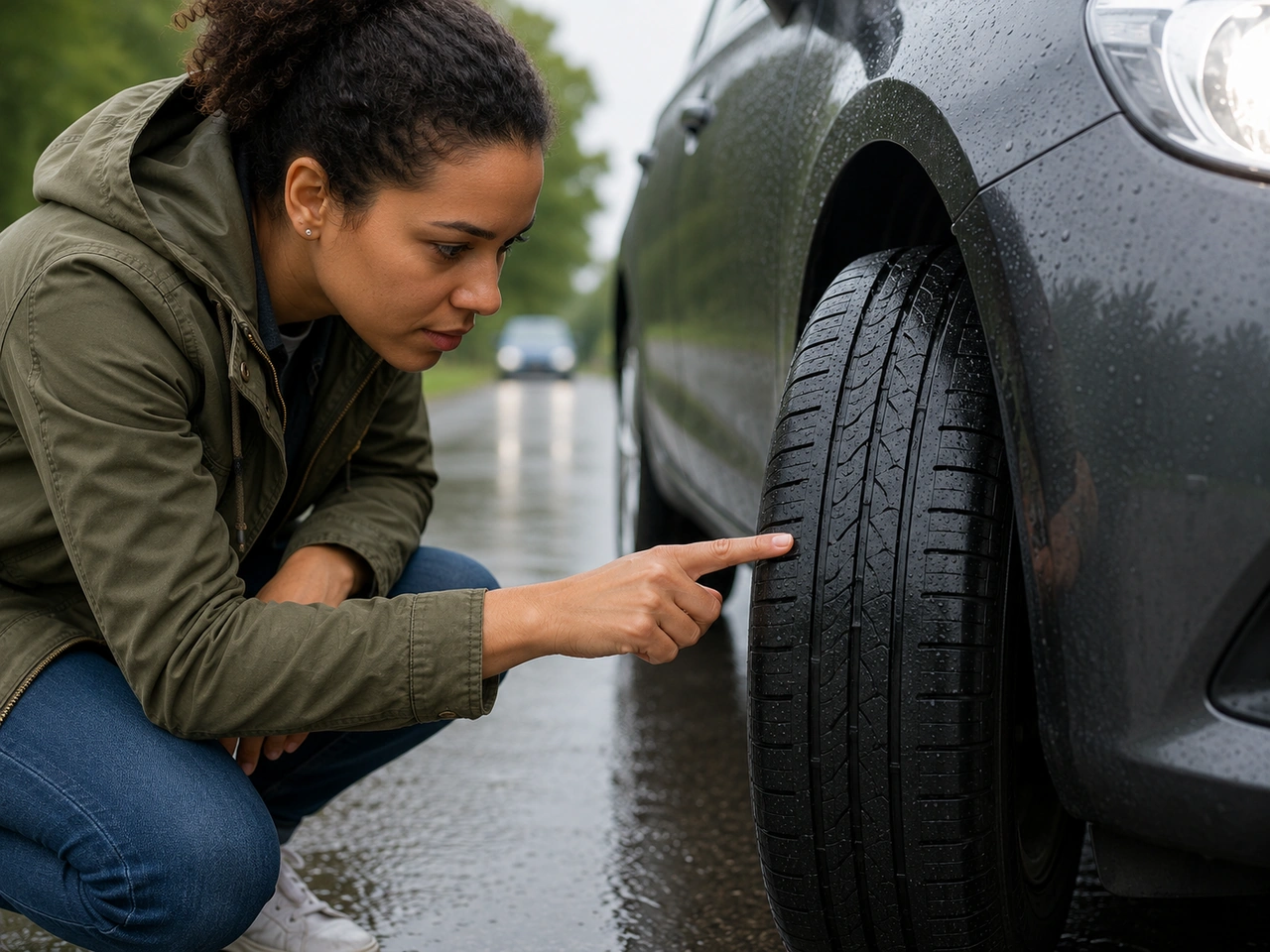
What is the purpose of a pedestrian crossing?

129. What is the purpose of a pedestrian crossing?

To allow pedestrians to cross without checking traffic.
To provide a place where vehicles may stop temporarily.
✓ To help pedestrians cross the road safely.
To give pedestrians priority throughout the whole street.

Pedestrian crossings provide a designated place where people can safely cross the road.

Pedestrian crossing across a road
AI-generated by Traffic-rules.com • WCIT • CC BY-SA
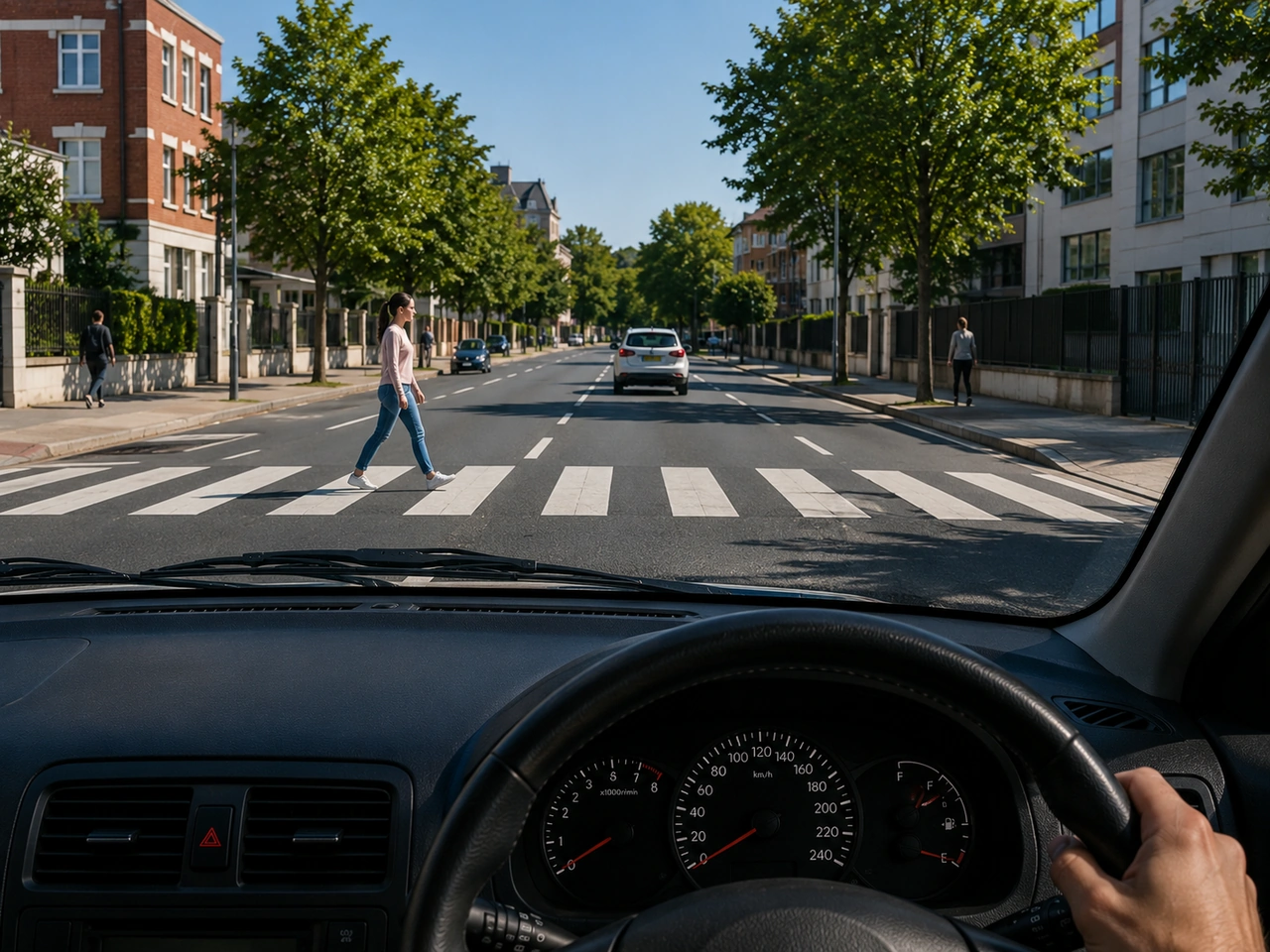
How should you brake on a slippery road?

130. How should you brake on a slippery road?

Brake harder than usual to shorten the stopping distance.
✓ Brake gently and progressively.
Steer sharply while braking to avoid slippery areas.
Use the parking brake to help slow the vehicle.

Sudden braking can cause the wheels to lose grip. Smooth, progressive braking reduces the risk of skidding.

Braking on a slippery road surface
AI-generated by Traffic-rules.com • WCIT • CC BY-SA
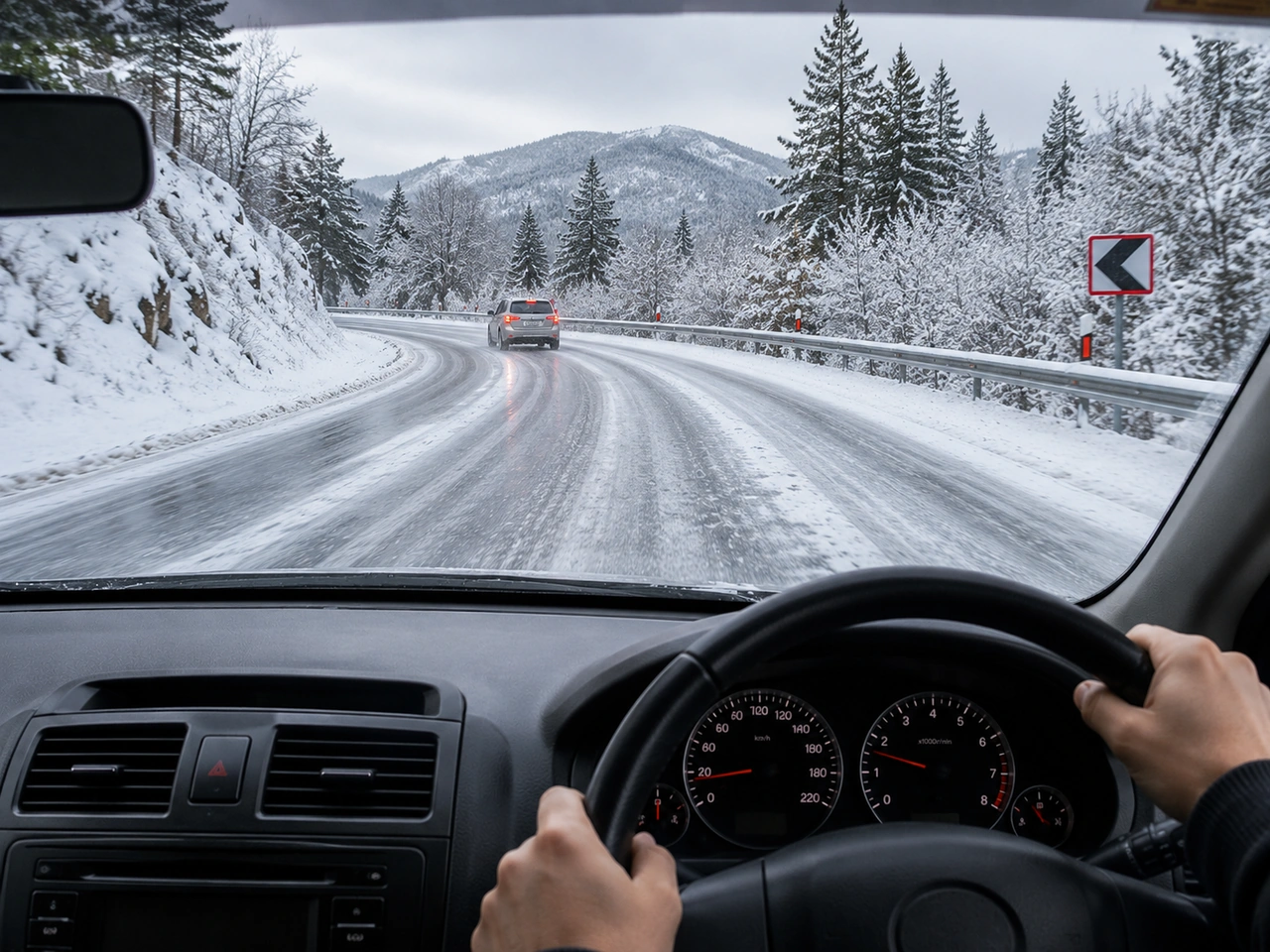
What should you do if your lane is blocked by an obstacle?

131. What should you do if your lane is blocked by an obstacle?

Signal and expect oncoming traffic to make room.
Move around it because the obstacle gives you priority.
✓ Slow down, check carefully, and give way if needed.
Follow another vehicle around it without checking yourself.

If your lane is blocked, reduce speed, check mirrors and oncoming traffic, and only move around the obstacle when it is safe.

Obstacle blocking a vehicle's lane
AI-generated by Traffic-rules.com • WCIT • CC BY-SA
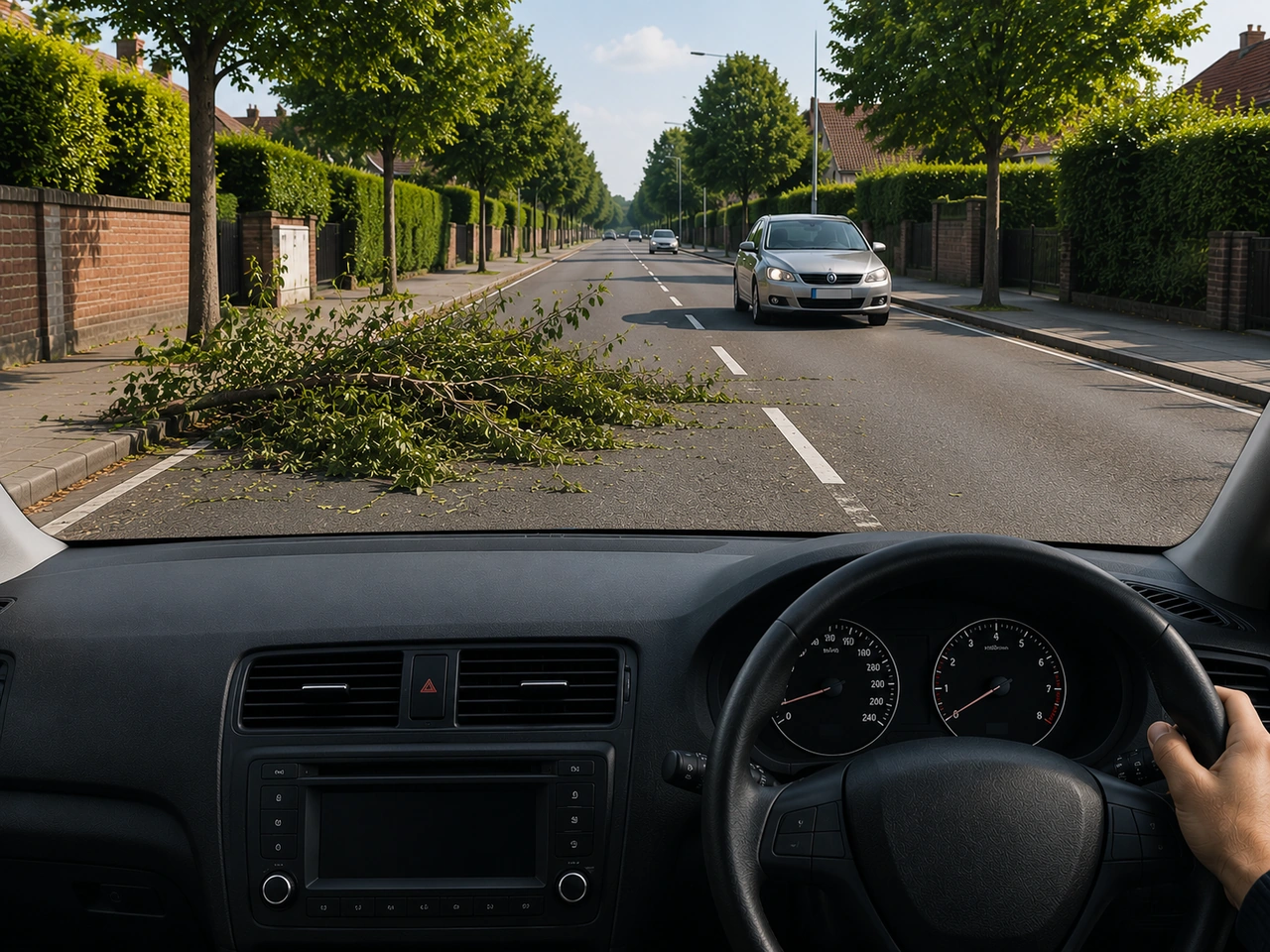
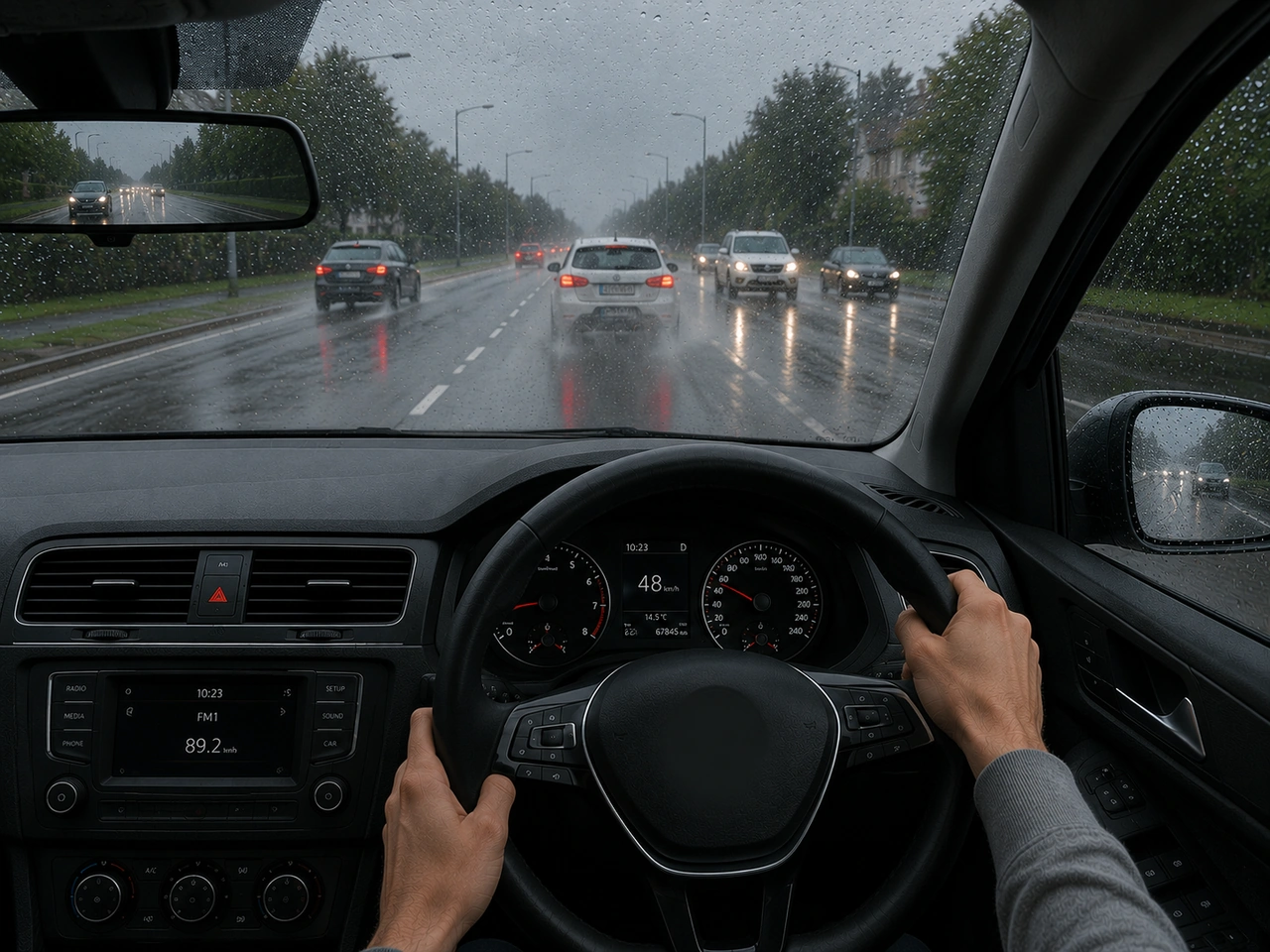
Rain can reduce tyre grip and increase stopping distance.

132. Rain can reduce tyre grip and increase stopping distance.

✓ True.
False.

Wet roads reduce traction, so your vehicle may need more distance to stop safely.

Vehicle travelling on a wet road
AI-generated by Traffic-rules.com • WCIT • CC BY-SA
What colour is a stop sign usually?

133. What colour is a stop sign usually?

Yellow.
✓ Red.
Blue.
White.

Stop signs are almost always red because red is universally associated with danger and the need to stop immediately.

Red octagonal stop sign
AI-generated by Traffic-rules.com • WCIT • CC BY-SA
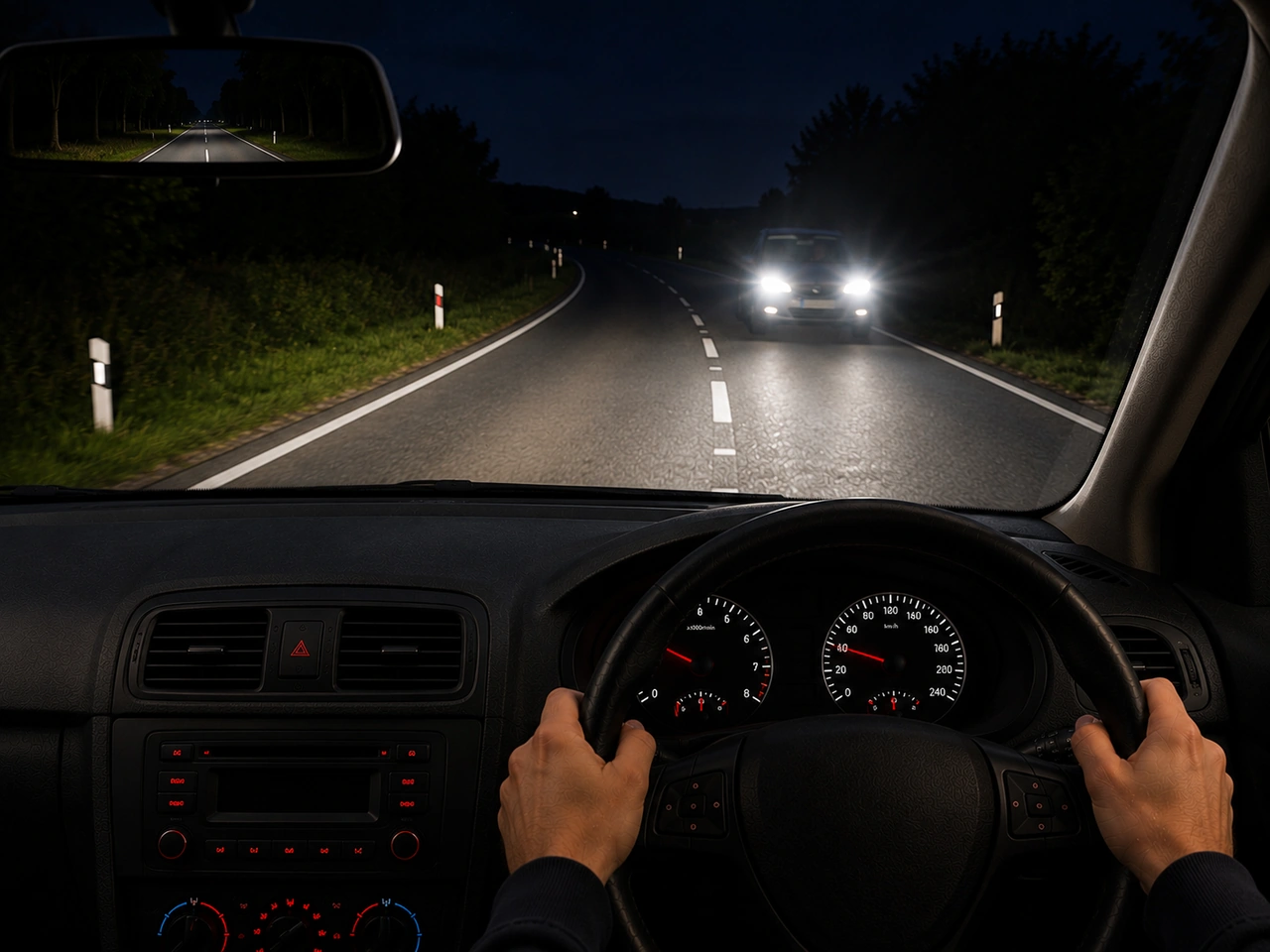
What should you do if oncoming headlights dazzle you at night?

134. What should you do if oncoming headlights dazzle you at night?

Maintain your speed until the vehicle has passed.
✓ Slow down and look toward the edge of your lane.
Look briefly at the headlights to judge their position.
Turn on your interior lights to reduce the glare.

Bright headlights can reduce your vision. Avoid staring at them, slow down if needed, and use the road edge or lane markings to guide you safely.

Oncoming headlights dazzling a driver at night
AI-generated by Traffic-rules.com • WCIT • CC BY-SA
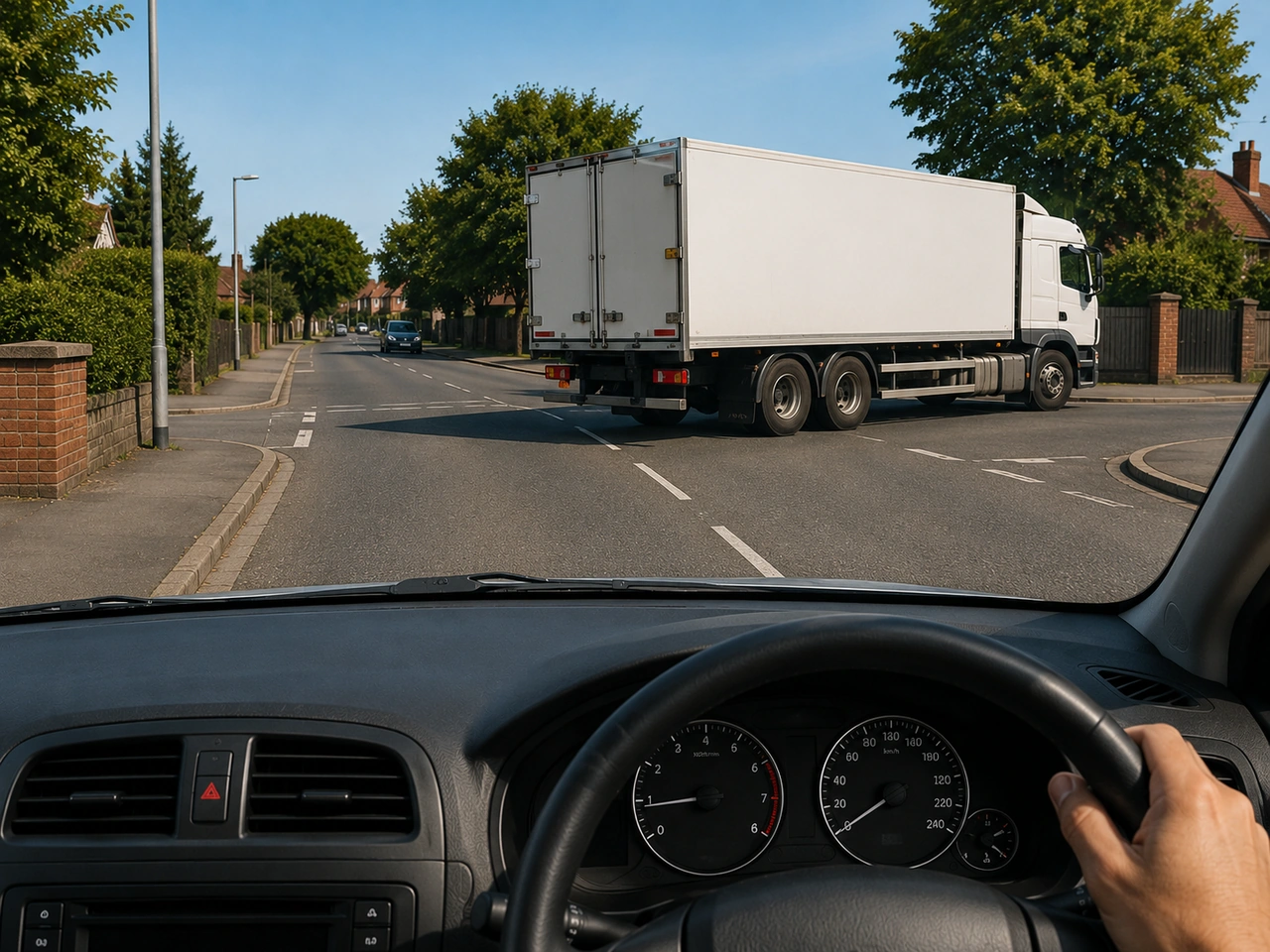
Why should you leave space beside large vehicles when they turn?

135. Why should you leave space beside large vehicles when they turn?

✓ They may need extra room to complete the turn.
They always turn more slowly than cars.
They can turn only from the centre of the road.
They must stop before making every turn.

Large vehicles often swing wide when turning and have larger blind spots. Keep clear and do not move into the space beside them.

Large vehicle needing extra space to turn
AI-generated by Traffic-rules.com • WCIT • CC BY-SA
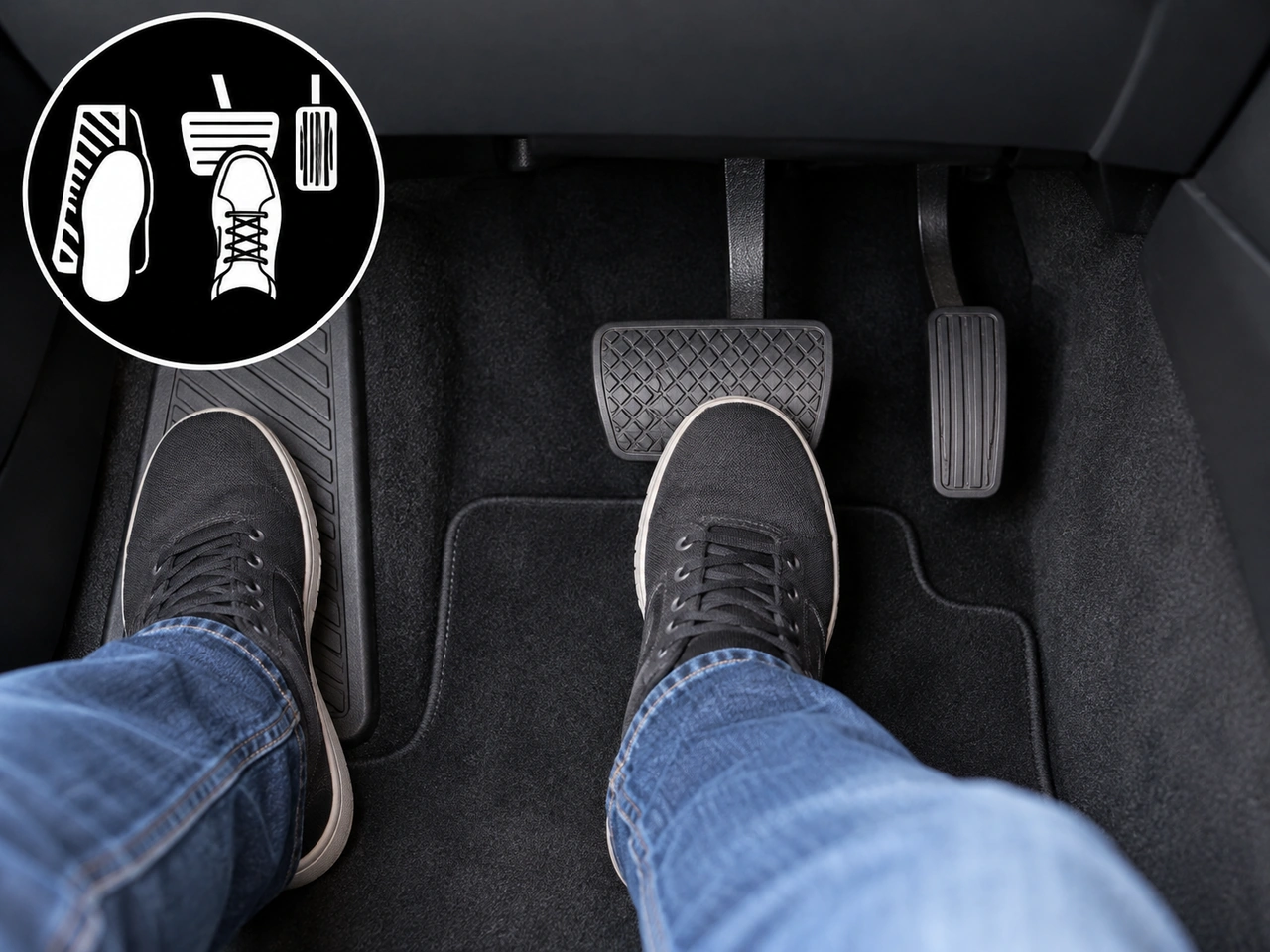
Which foot should normally operate the brake and accelerator in an automatic vehicle?

136. Which foot should normally operate the brake and accelerator in an automatic vehicle?

✓ The right foot.
Both feet together.
Either foot at the same time.
The left foot.

In an automatic vehicle, the right foot should normally operate both the brake and accelerator pedals. The left foot should rest on the footrest to reduce the risk of pressing both pedals at the same time.

Right-foot control of an automatic vehicle's pedals
AI-generated by Traffic-rules.com • WCIT • CC BY-SA
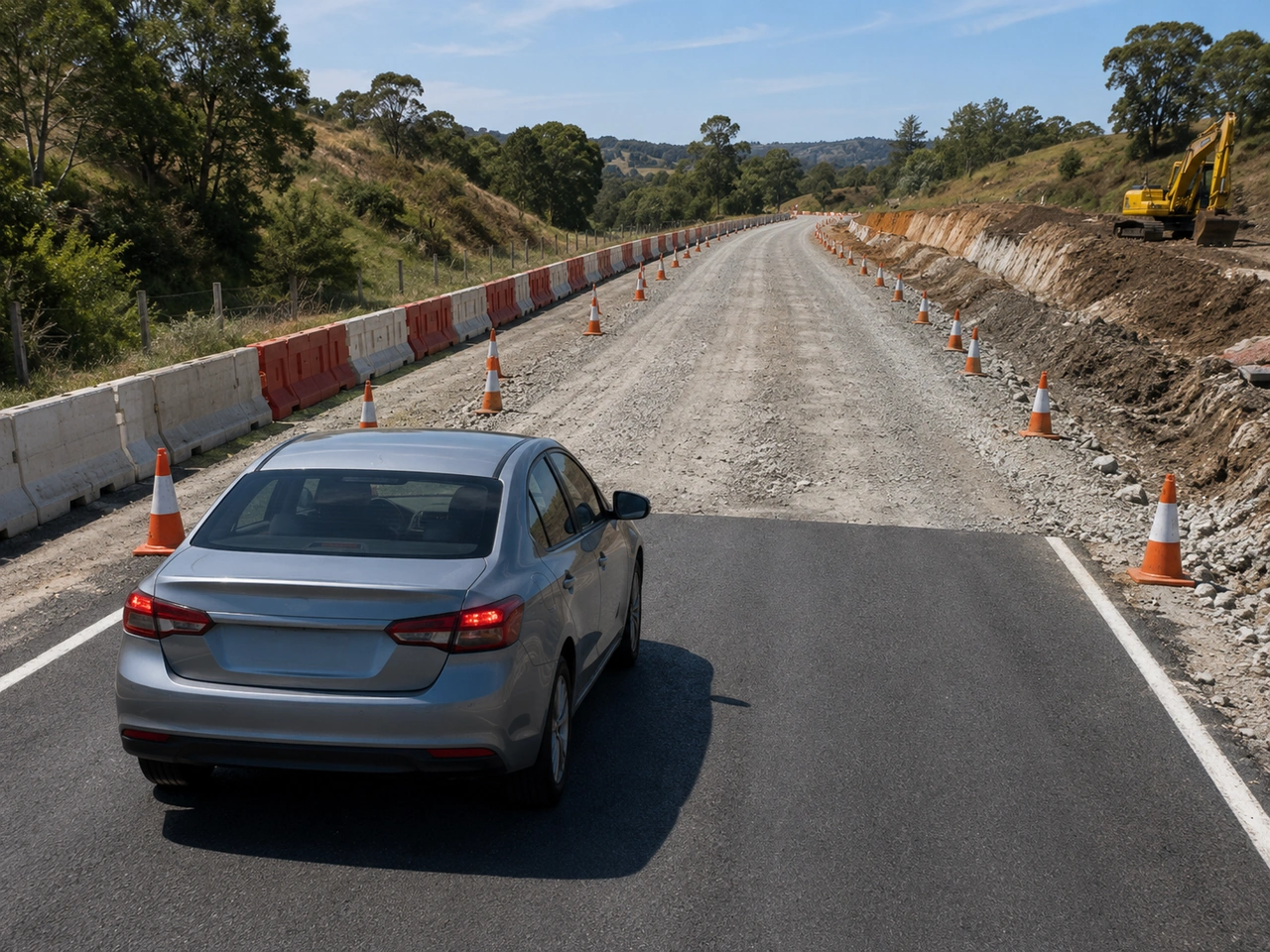
Why can temporary road surfaces increase stopping distance?

137. Why can temporary road surfaces increase stopping distance?

Temporary surfaces make the brakes colder.
Temporary roads always slope downhill.
✓ Loose gravel, mud, or uneven material may reduce tyre grip.
Roadworks switch off anti-lock braking.

Temporary surfaces may provide less grip than normal asphalt. Reduce speed and allow more distance for braking.

Loose or uneven road surface through roadworks
AI-generated by Traffic-rules.com • WCIT • CC BY-SA
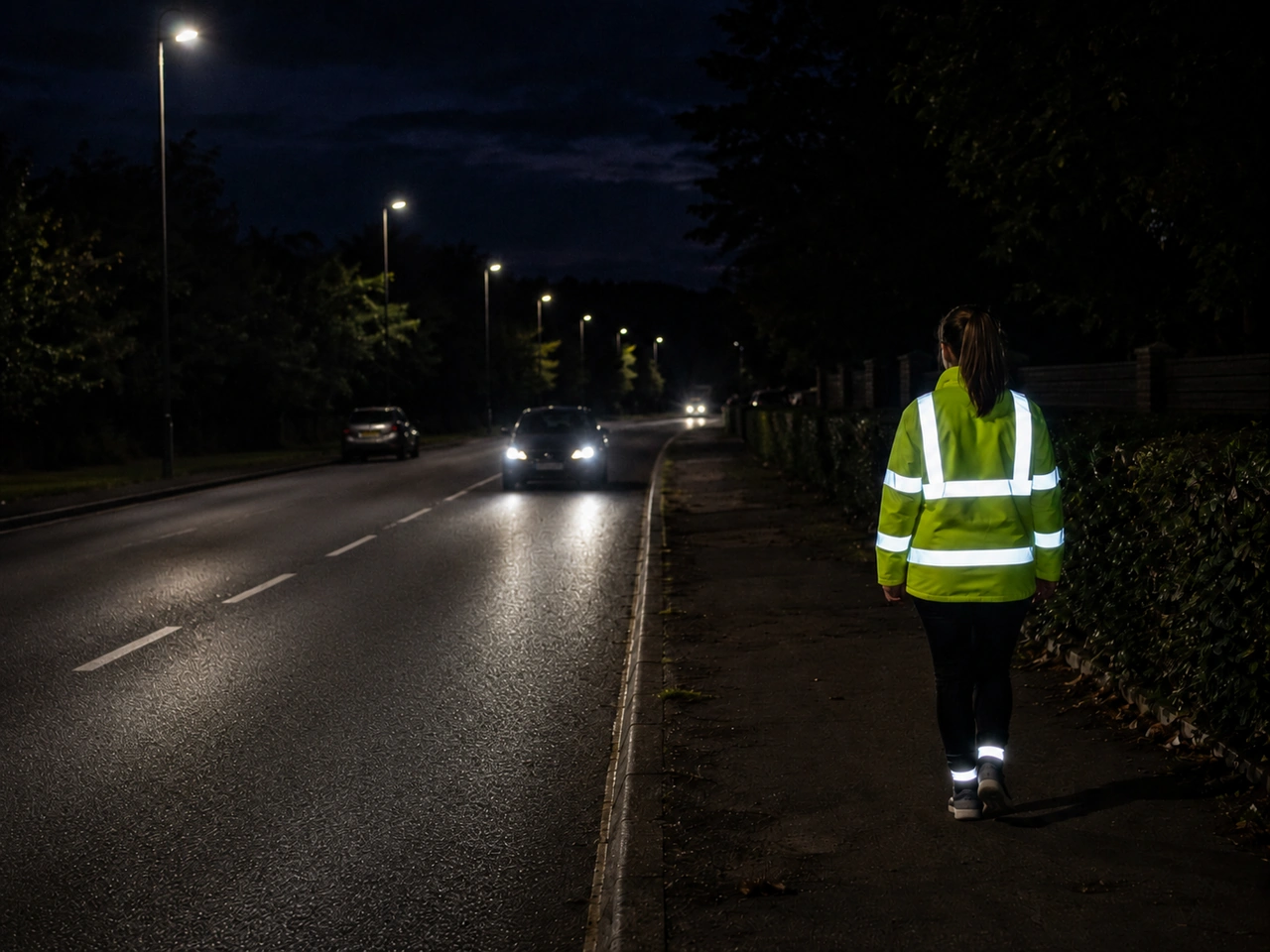
Why is it important to make yourself visible at night?

138. Why is it important to make yourself visible at night?

To ensure drivers can always stop in time.
To make it safe to walk closer to moving traffic.
To avoid checking for approaching vehicles.
✓ To make drivers see you more easily.

Bright or reflective clothing helps drivers notice pedestrians in low-light conditions.

Pedestrian visibility beside a road at night
AI-generated by Traffic-rules.com • WCIT • CC BY-SA
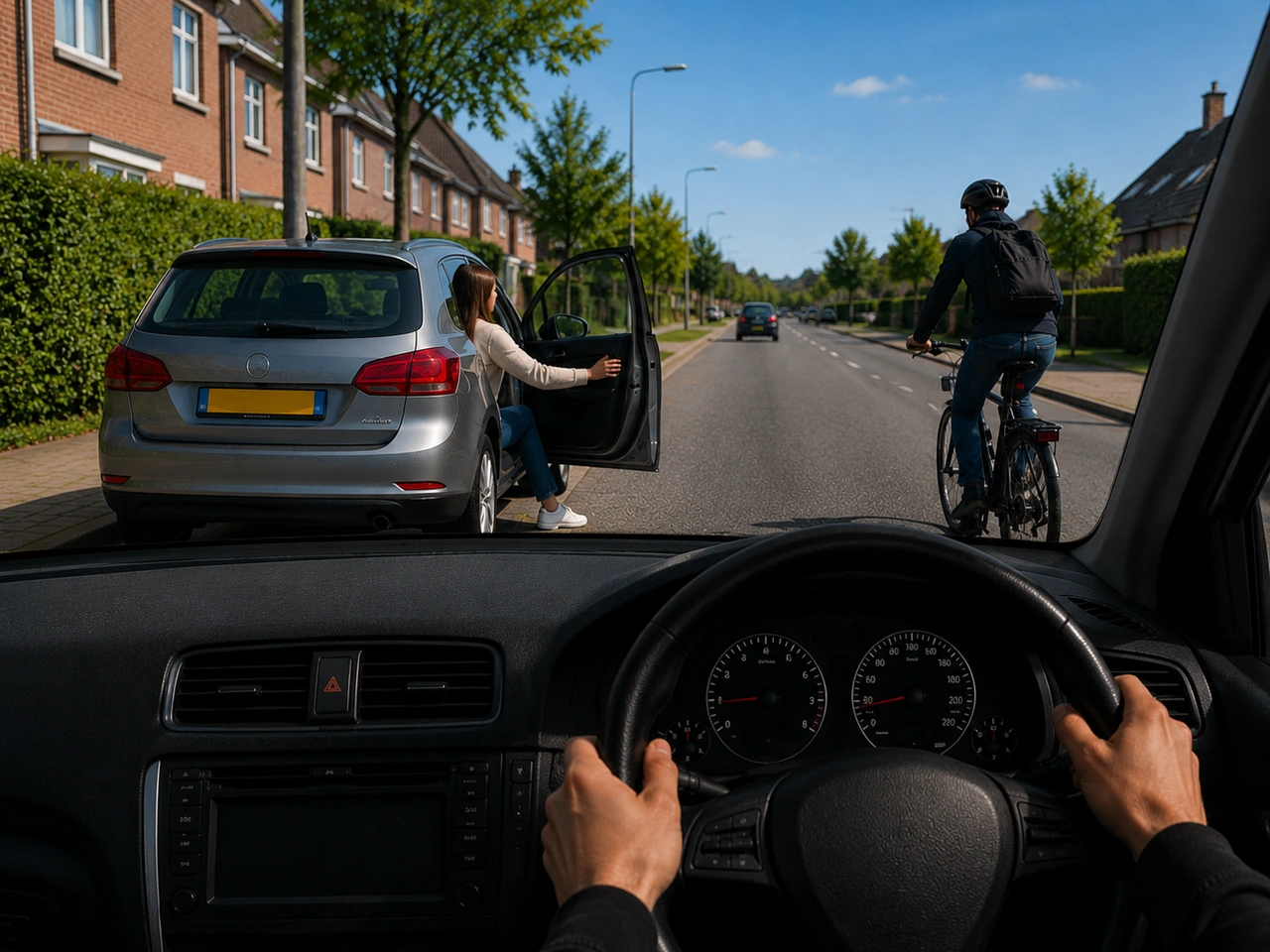
What should you do before opening your car door near traffic?

139. What should you do before opening your car door near traffic?

Check only for vehicles, not cyclists or pedestrians.
Open the door slowly and expect traffic to avoid you.
Signal before opening the door without checking behind.
✓ Check for cyclists, pedestrians, and vehicles.

Before opening a car door, check carefully for cyclists, pedestrians, and vehicles to avoid causing a collision.

Checking for passing road users before opening a car door
AI-generated by Traffic-rules.com • WCIT • CC BY-SA
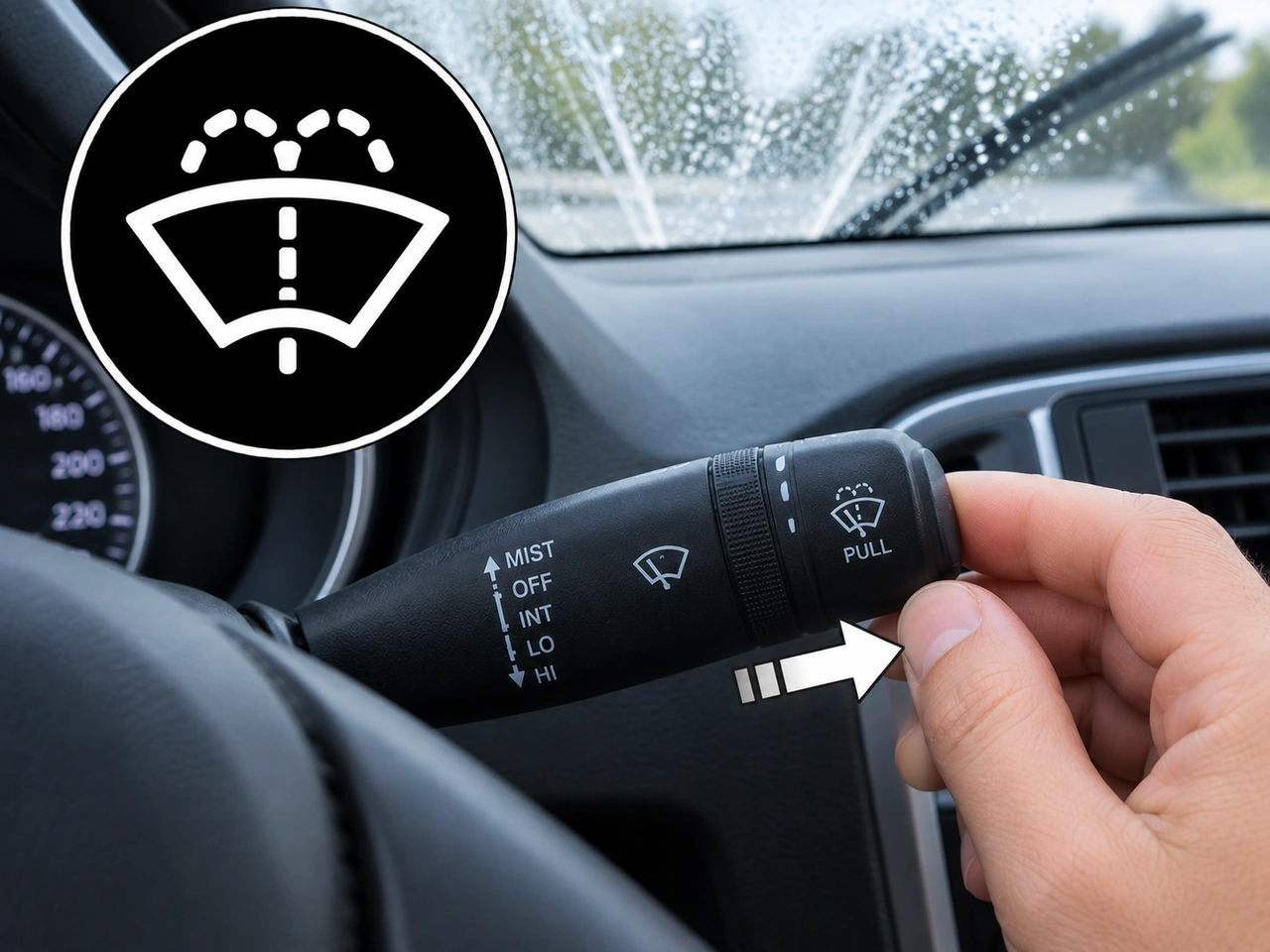
What does this vehicle-control symbol indicate?

140. What does this vehicle-control symbol indicate?

✓ Windscreen washer.
Rear window demister.
Windscreen wiper speed.
Front windscreen demister.

This symbol indicates the windscreen washer. Operating the control sprays washer fluid onto the windscreen and normally activates the wipers to help clean the glass.

Windscreen-washer control and spray symbol
AI-generated by Traffic-rules.com • WCIT • CC BY-SA
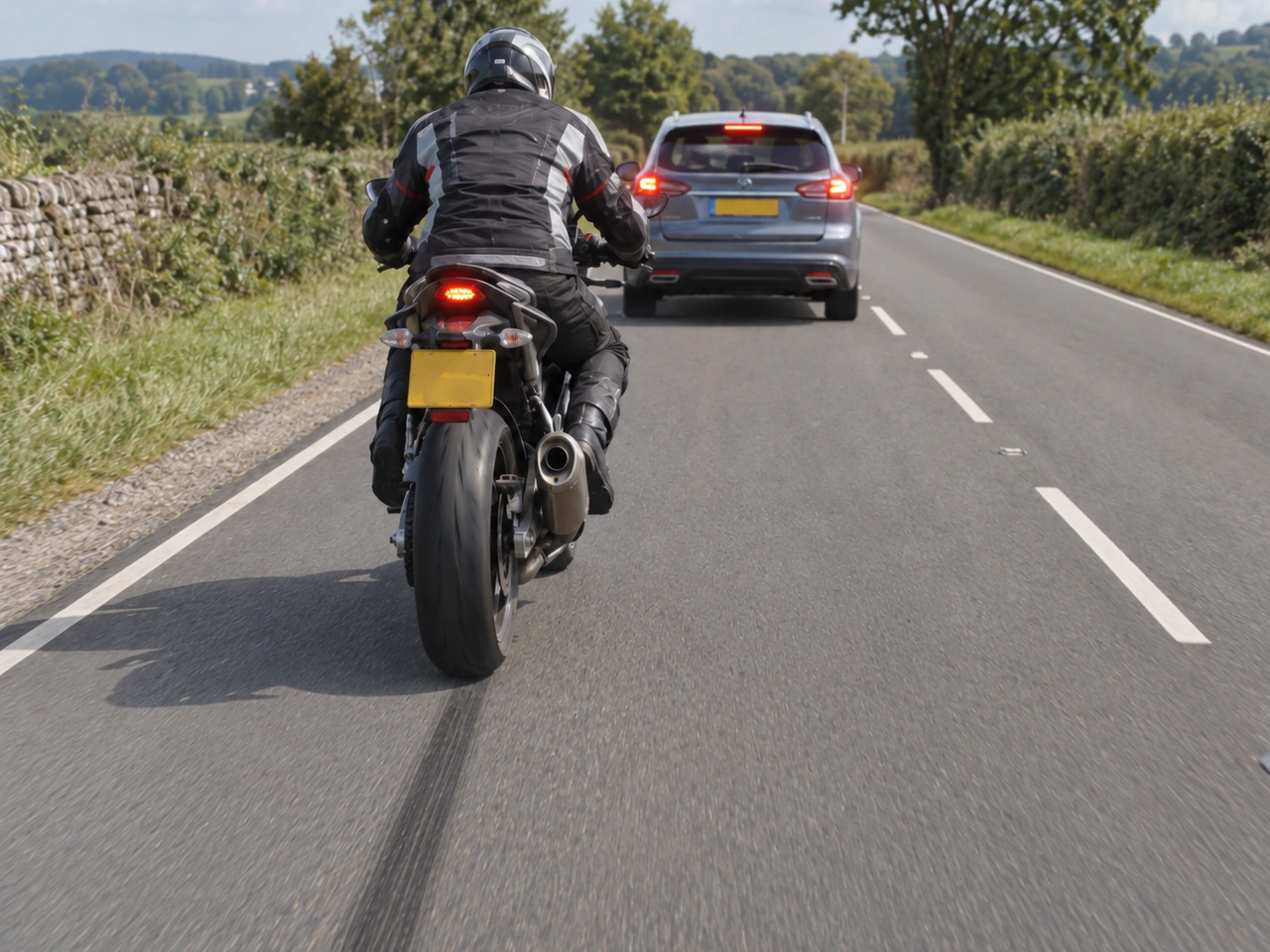
How should a motorcyclist brake in an emergency?

141. How should a motorcyclist brake in an emergency?

✓ Apply both brakes firmly and progressively.
Use only the rear brake.
Steer sharply while braking hard.
Grab the front brake as suddenly as possible.

During emergency braking, use both brakes firmly and progressively while keeping the motorcycle as upright and stable as practical. Avoid sudden steering. If ABS is fitted, maintain firm braking pressure and allow the system to work.

Motorcyclist making an emergency stop
AI-generated by Traffic-rules.com • WCIT • CC BY-SA
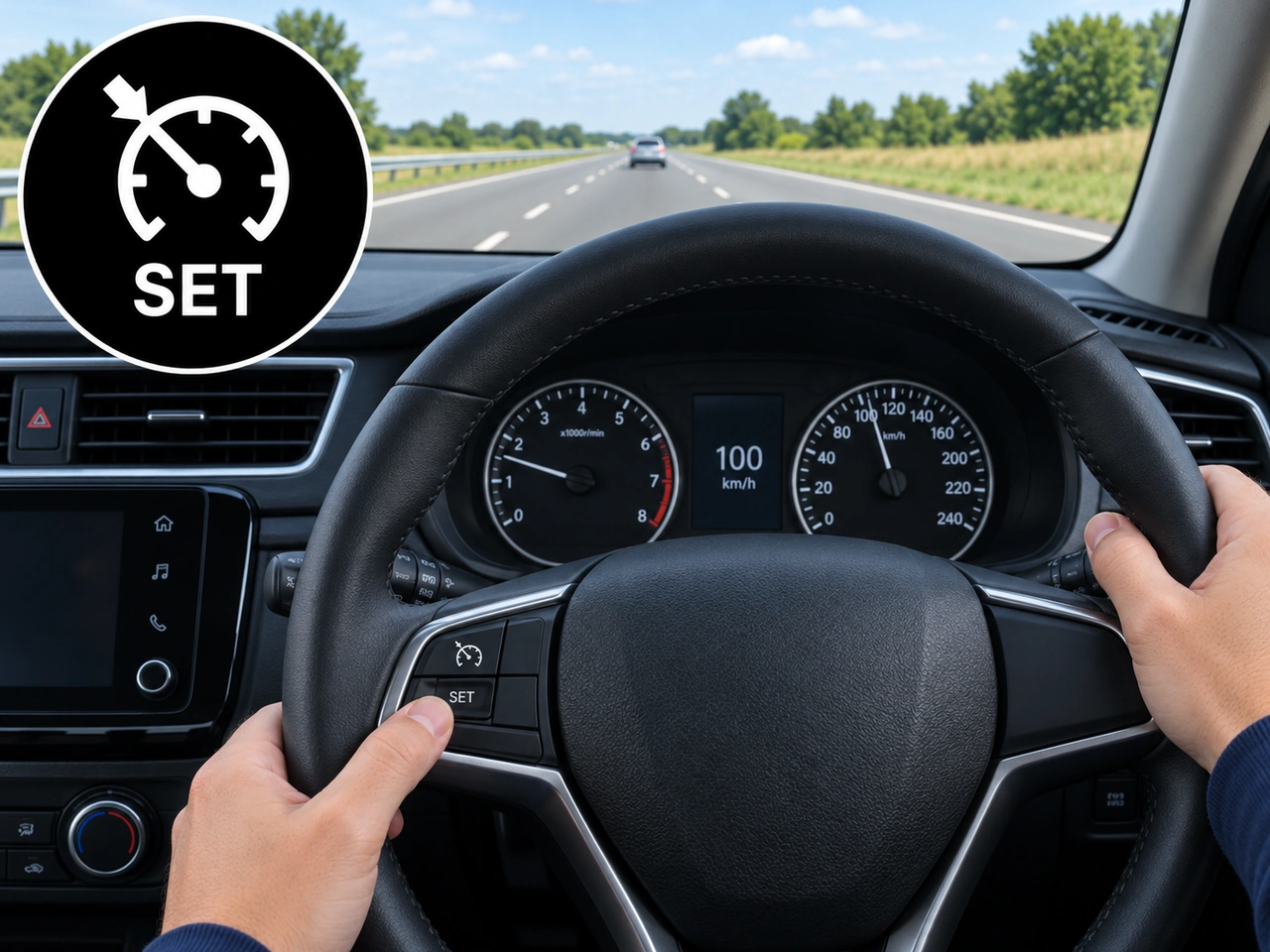
What does the SET function of cruise control normally do?

142. What does the SET function of cruise control normally do?

Applies the brakes automatically.
Switches cruise control off.
Returns to a previously stored speed.
✓ Stores the current speed as the cruising speed.

The SET function normally stores the vehicle's current speed as the cruise-control speed. Use it only when the road, traffic, and driving conditions are suitable.

SET button for storing a cruising speed
AI-generated by Traffic-rules.com • WCIT • CC BY-SA
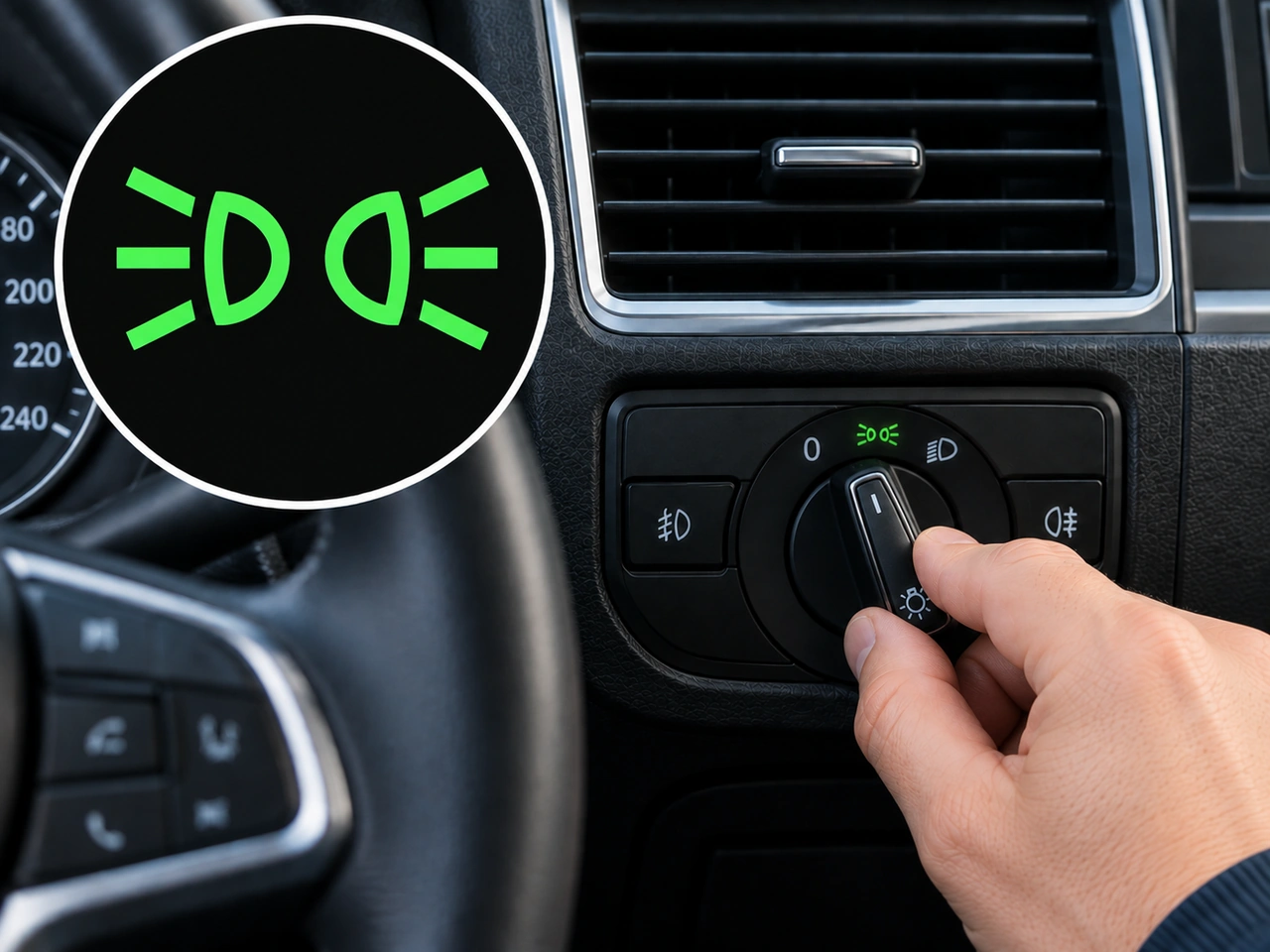
What does this dashboard symbol indicate?

143. What does this dashboard symbol indicate?

Low-beam headlights.
✓ Sidelights.
Rear fog lights.
Front fog lights.

This symbol indicates that the sidelights, also known as position or parking lights, are switched on. They help make the vehicle visible to other road users but provide little illumination of the road ahead.

Sidelight indicator symbol on the dashboard
AI-generated by Traffic-rules.com • WCIT • CC BY-SA
What should you do if an emergency vehicle approaches with lights or siren on?

144. What should you do if an emergency vehicle approaches with lights or siren on?

Ignore it if there is not enough room to pass.
Speed up so the vehicle can follow you.
Move aside without checking surrounding traffic.
✓ Stay calm and make room safely.

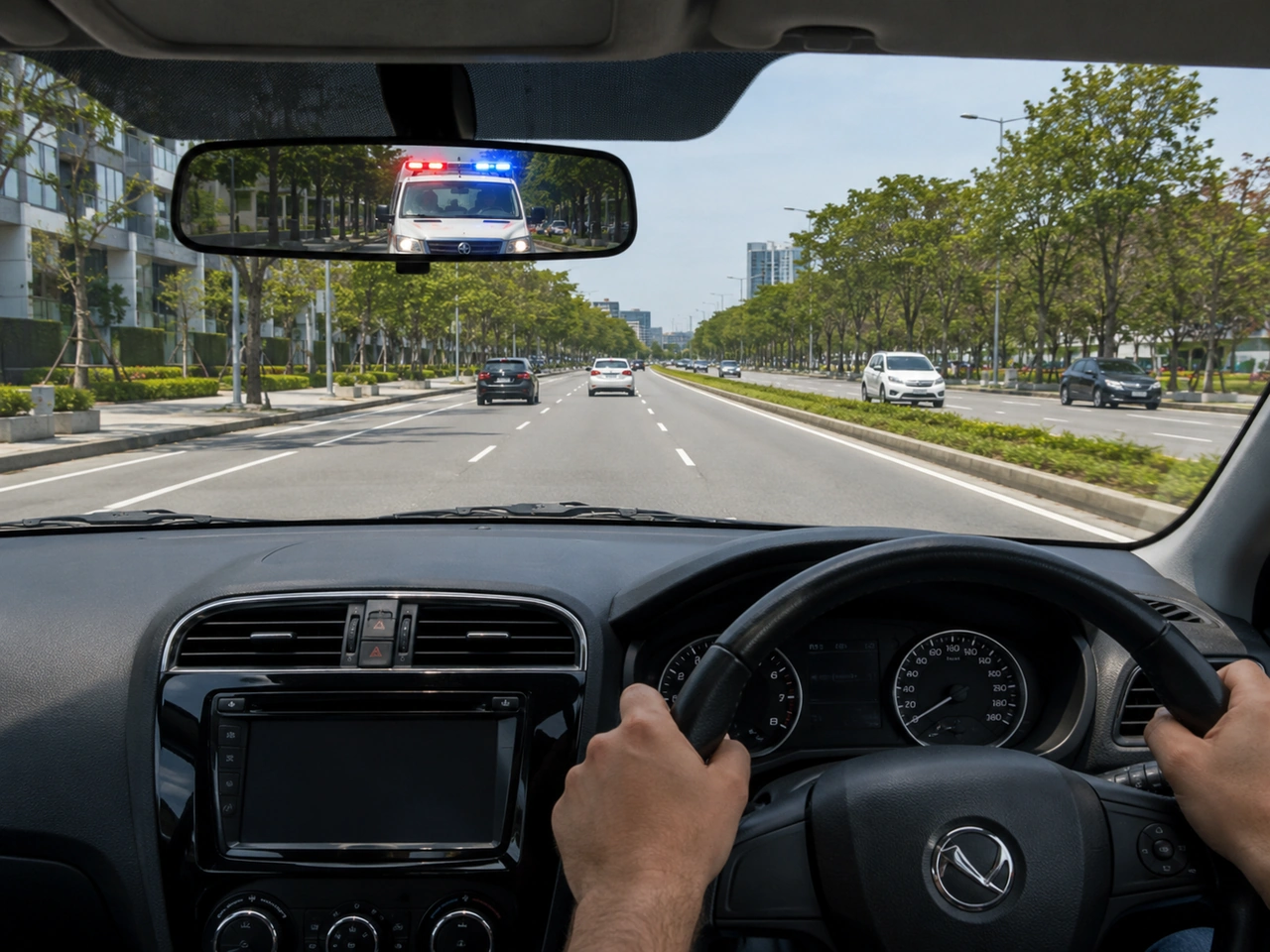
When an emergency vehicle uses lights or siren, check your surroundings and make room safely without sudden or dangerous movements.

Emergency vehicle approaching with warning lights flashing
AI-generated by Traffic-rules.com • WCIT • CC BY-SA
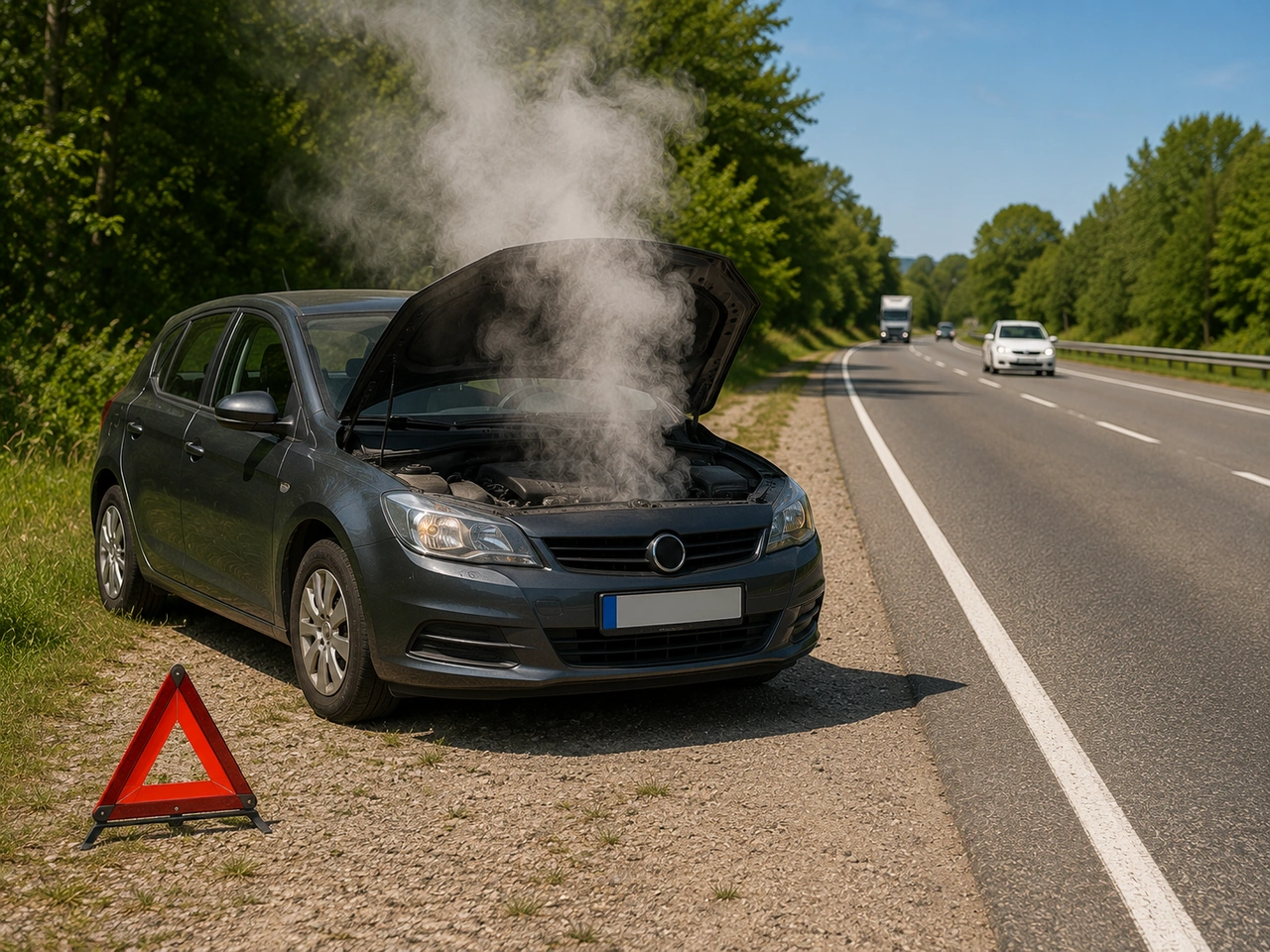
What should you do if steam begins coming from underneath the bonnet?

145. What should you do if steam begins coming from underneath the bonnet?

Continue driving slowly until the steam stops.
Pour cold water over the engine immediately.
Keep the engine running so the cooling system keeps working.
✓ Stop safely, switch off the engine, and keep clear until it has cooled.

Steam can indicate an overheated and pressurised cooling system. Do not remove the coolant cap while the system is hot.

Steam rising from underneath a vehicle's bonnet
AI-generated by Traffic-rules.com • WCIT • CC BY-SA
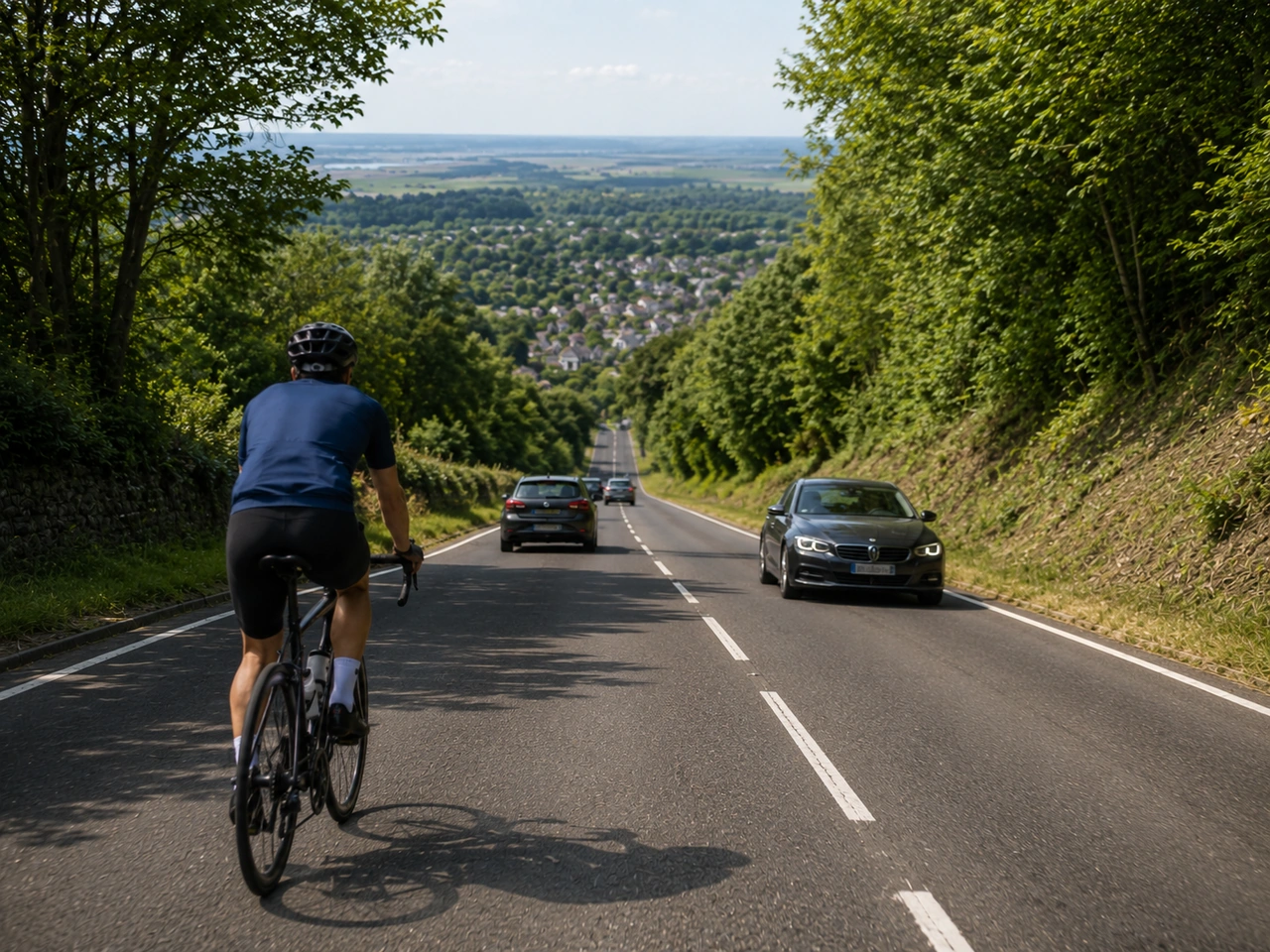
What should cyclists do when cycling downhill?

146. What should cyclists do when cycling downhill?

✓ Control your speed and keep both hands ready to brake.
Brake as late as possible before curves.
Look only at the road directly in front of you.
Let the bicycle gain speed while the road ahead is clear.

Higher speed increases stopping distance and reduces reaction time. Maintain a speed that allows you to stop safely.

Cyclist riding down a hill
AI-generated by Traffic-rules.com • WCIT • CC BY-SA
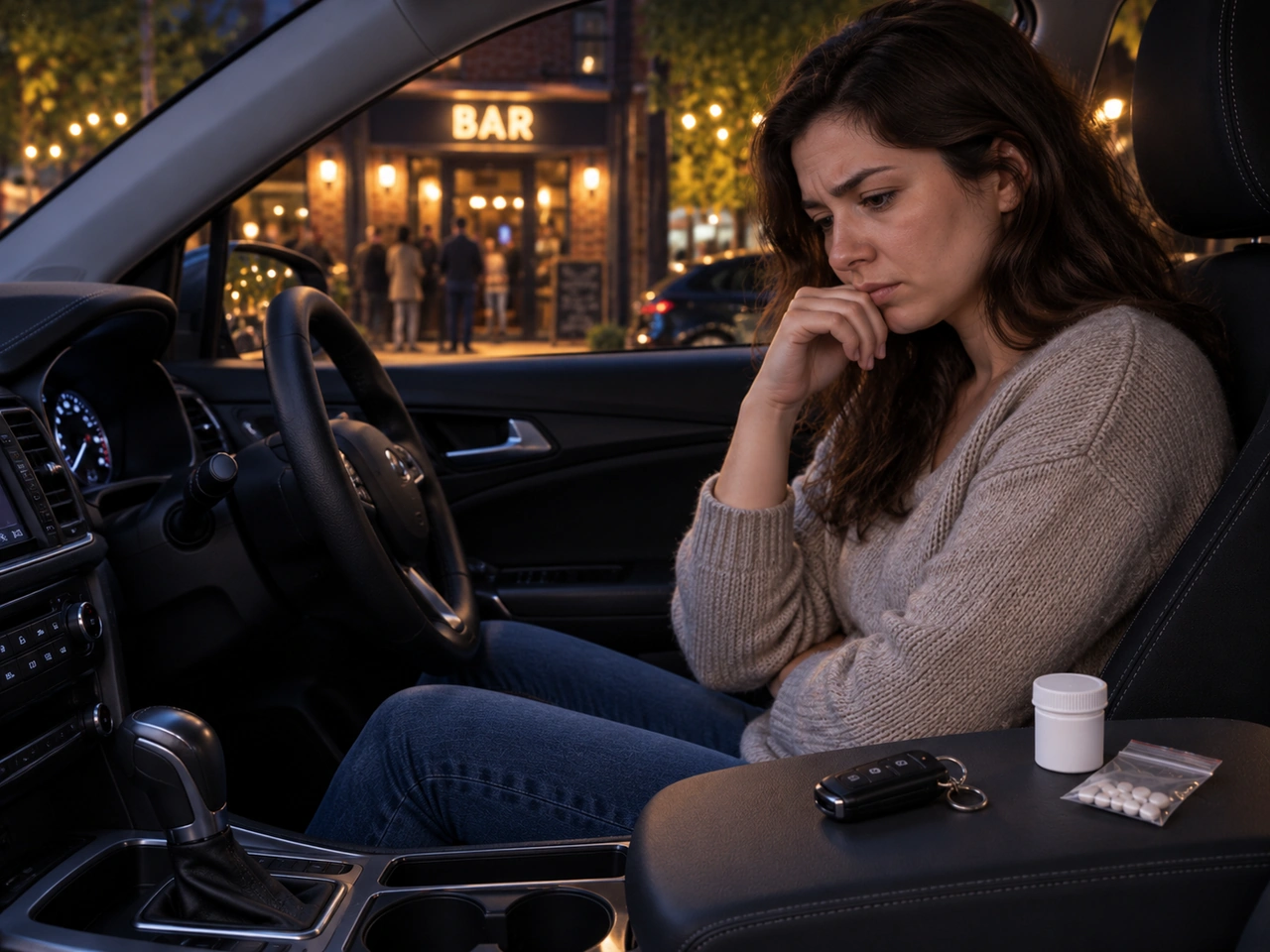
What should you do if you have taken drugs that may impair your driving?

147. What should you do if you have taken drugs that may impair your driving?

Wait until you feel more confident.
Drive slowly and avoid motorways.
✓ Do not drive.
Drive only on familiar roads.

Drugs can impair judgement, coordination, concentration, and reaction time. Their effects can be unpredictable and may continue after you feel that the main effects have passed. Do not drive while impaired.

Drug impairment and the decision not to drive
AI-generated by Traffic-rules.com • WCIT • CC BY-SA
What should you do when joining a motorway from an entry lane?

148. What should you do when joining a motorway from an entry lane?

✓ Match your speed, check around you, and merge into a safe gap.
Merge as soon as the entry lane begins.
Force your way into the nearest gap.
Stop at the end of the entry lane and wait for a large gap.

Use the entry lane to build a suitable speed, check carefully, signal, and merge only when it is safe.

Vehicle joining a motorway from an entry lane
AI-generated by Traffic-rules.com • WCIT • CC BY-SA
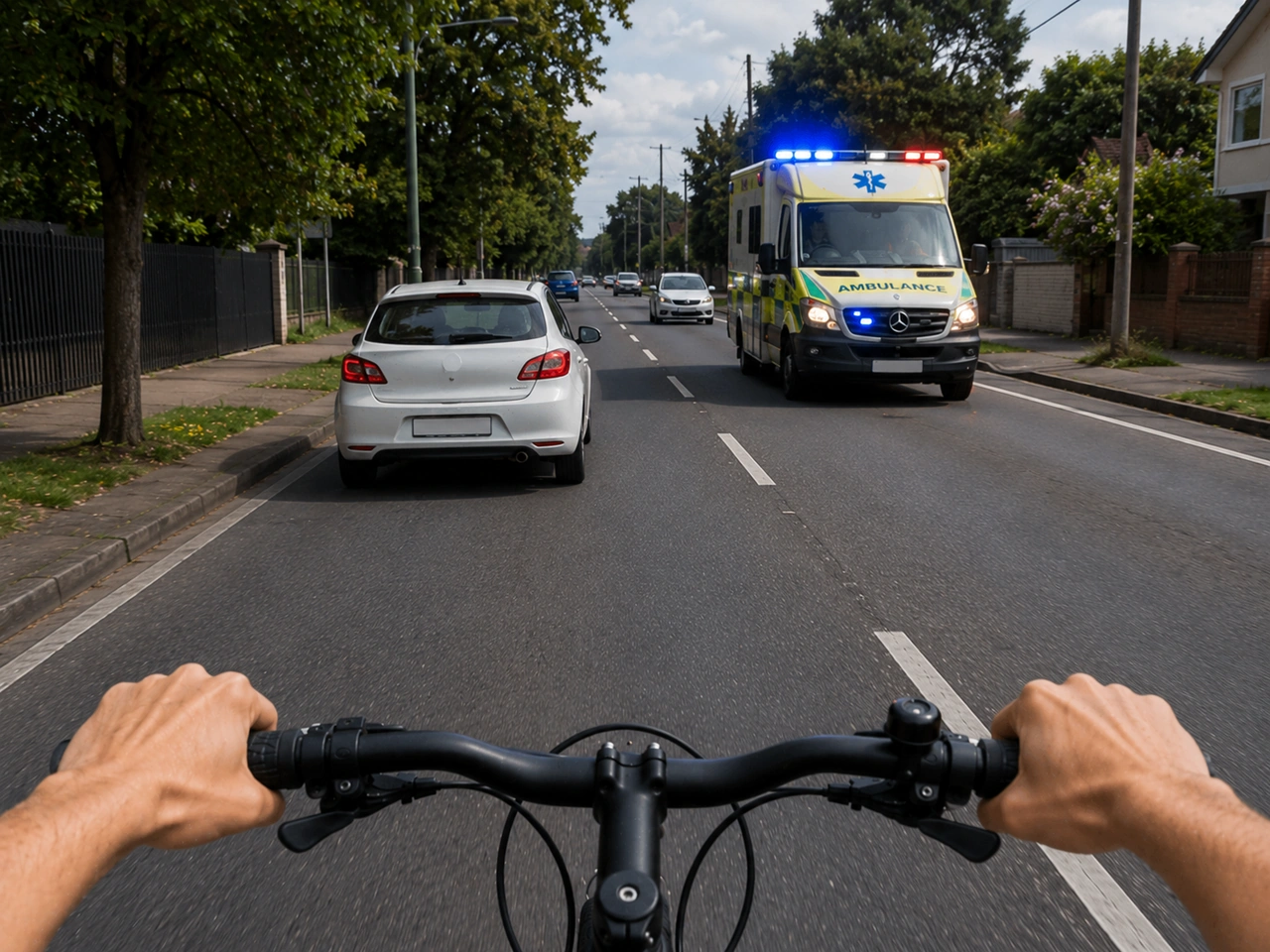
What should cyclists do when an emergency vehicle with lights and siren approaches?

149. What should cyclists do when an emergency vehicle with lights and siren approaches?

✓ Stay alert and move to a safe position without obstructing it.
Stop immediately, even if you are in the traffic lane.
Follow closely behind it once it passes.
Keep riding normally and let the driver find a way past.

Emergency vehicles need a clear route. Move predictably and stop only where doing so is safe.

Cyclist near an approaching emergency vehicle
AI-generated by Traffic-rules.com • WCIT • CC BY-SA
What should you do when traffic lights are not working?

150. What should you do when traffic lights are not working?

Treat the intersection as if you have priority.
Follow the vehicle ahead through the intersection.
✓ Proceed carefully and follow signs or priority rules.
Proceed if the intersection appears clear.

If traffic lights are not working, slow down, observe carefully, and follow signs, road markings, or local priority rules.

Intersection with traffic lights out of operation
AI-generated by Traffic-rules.com • WCIT • CC BY-SA