QuizTraffic rulesBosnia and Herzegovina

This interesting quiz helps you test your knowledge in a clear and visual way. With easy multiple-choice questions, you can quickly build confidence and learn new facts while keeping it simple, interactive, and fun.


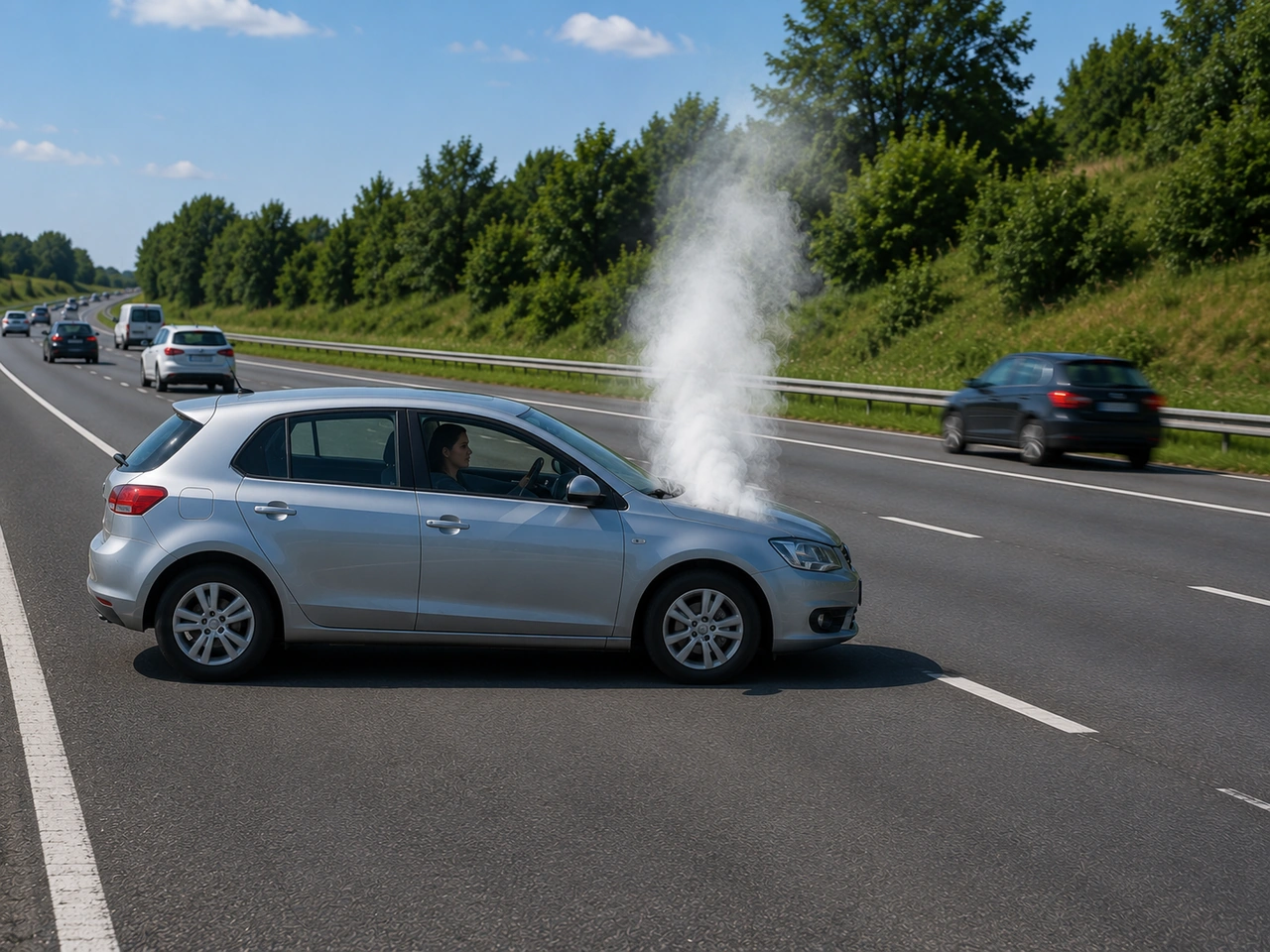
What should you do if your vehicle breaks down on a busy road?

551. What should you do if your vehicle breaks down on a busy road?

✓ Move to a safe place, use hazard lights, and stay clear of traffic.
Sound the horn continuously to warn other drivers.
Stand beside the vehicle while waiting for help.
Remain in the traffic lane even if you can move to safety.

If your vehicle breaks down, make it visible and get yourself away from moving traffic. Safety comes before repairing the vehicle.

Broken-down vehicle beside a busy road
AI-generated by Traffic-rules.com • WCIT • CC BY-SA
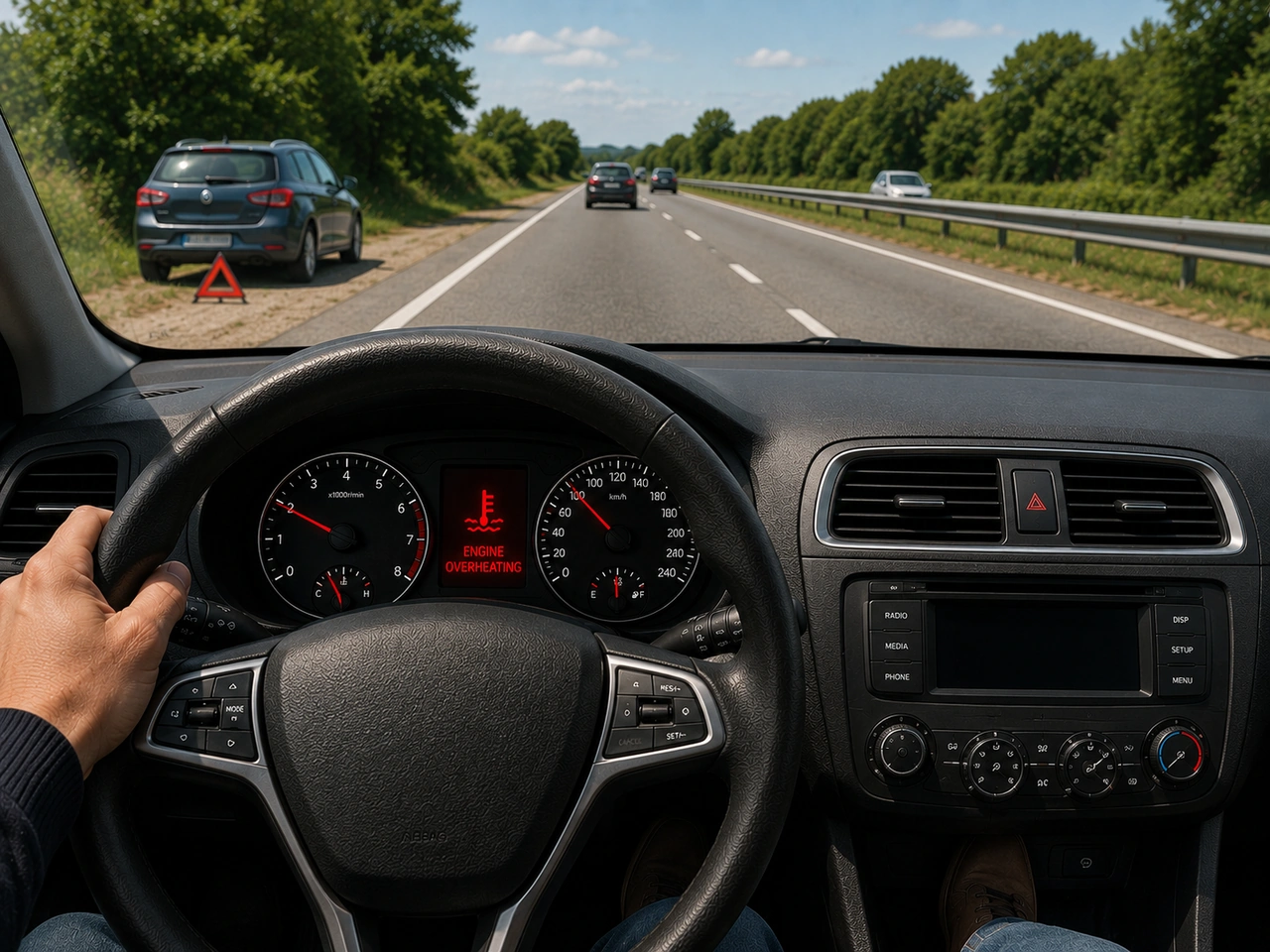
What should you do if the engine-temperature warning shows overheating?

552. What should you do if the engine-temperature warning shows overheating?

Continue driving slowly until the warning disappears.
✓ Stop safely, switch off the engine, and allow it to cool.
Increase engine speed to improve coolant circulation.
Open the coolant cap immediately to release heat.

Continuing to drive an overheating vehicle can cause severe damage. Allow the engine to cool and follow the manufacturer's instructions.

Engine-overheating warning on the dashboard
AI-generated by Traffic-rules.com • WCIT • CC BY-SA
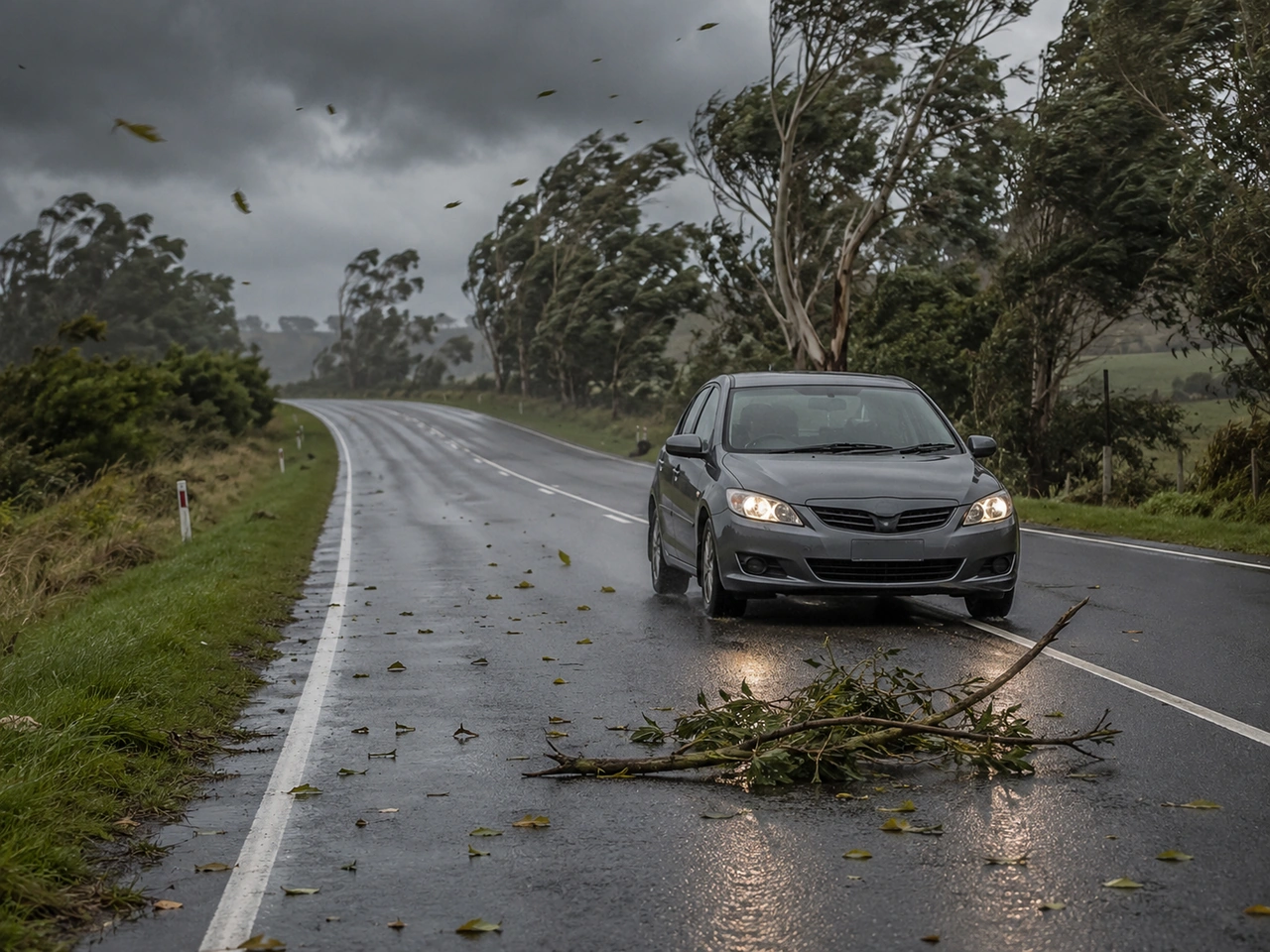
What should you do when branches or debris are blowing onto the road?

553. What should you do when branches or debris are blowing onto the road?

✓ Slow down and avoid hazards safely.
Maintain speed and steer around them when necessary.
Change lanes immediately without reducing speed.
Drive over smaller debris if it appears harmless.

Wind can blow unexpected obstacles onto the road. Reduce speed and avoid them safely.

Wind-blown branches and debris on a road
AI-generated by Traffic-rules.com • WCIT • CC BY-SA
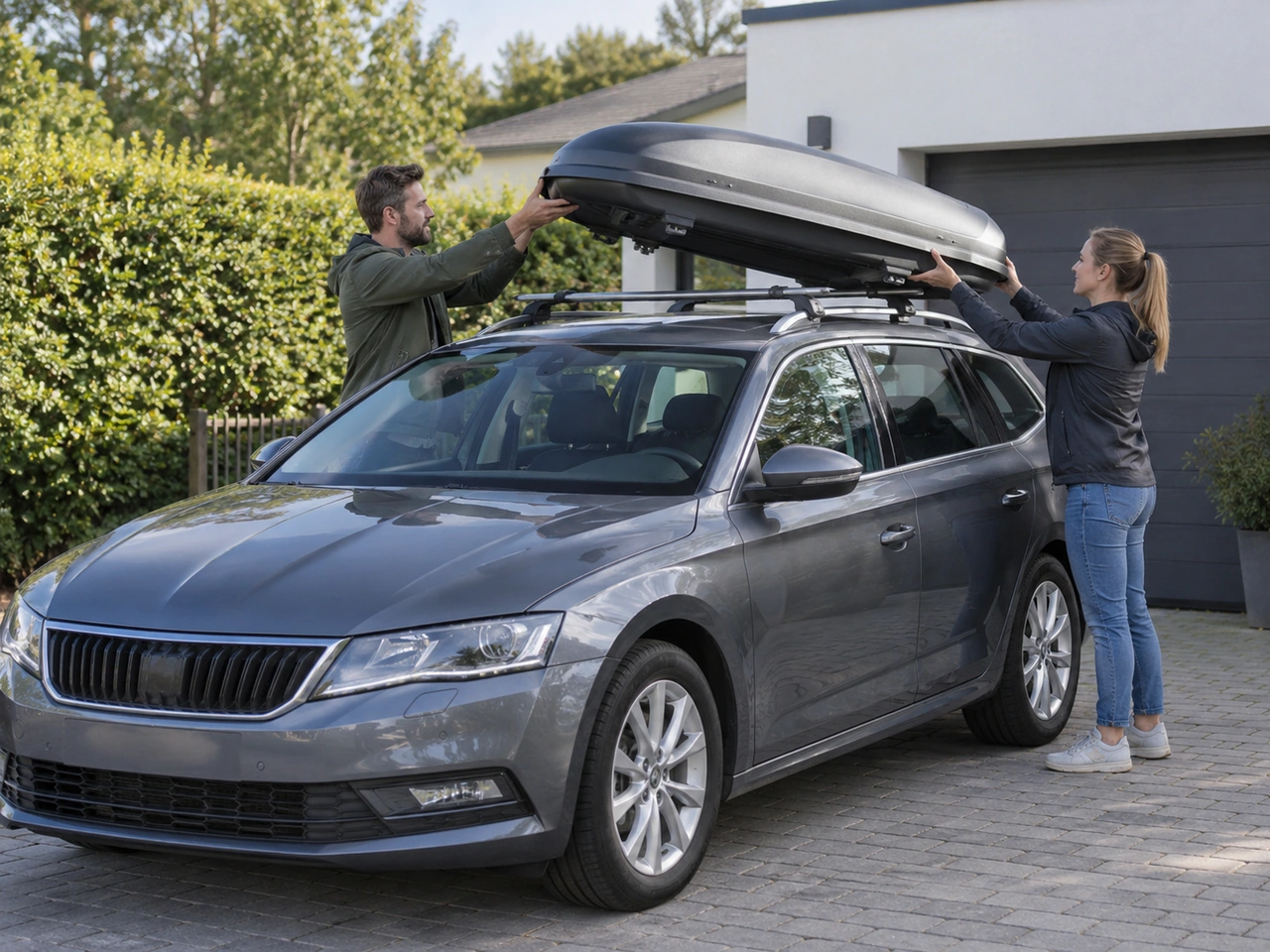
Why should an unused roof rack or roof box be removed?

554. Why should an unused roof rack or roof box be removed?

✓ It can increase aerodynamic drag and energy use.
It reduces the vehicle's braking power.
It increases tyre pressure.
It makes the steering wheel harder to turn.

An unused roof rack or roof box increases aerodynamic drag, particularly at higher speeds. Removing it when it is not needed can reduce fuel or energy consumption.

Roof rack or roof box fitted to a vehicle
AI-generated by Traffic-rules.com • WCIT • CC BY-SA
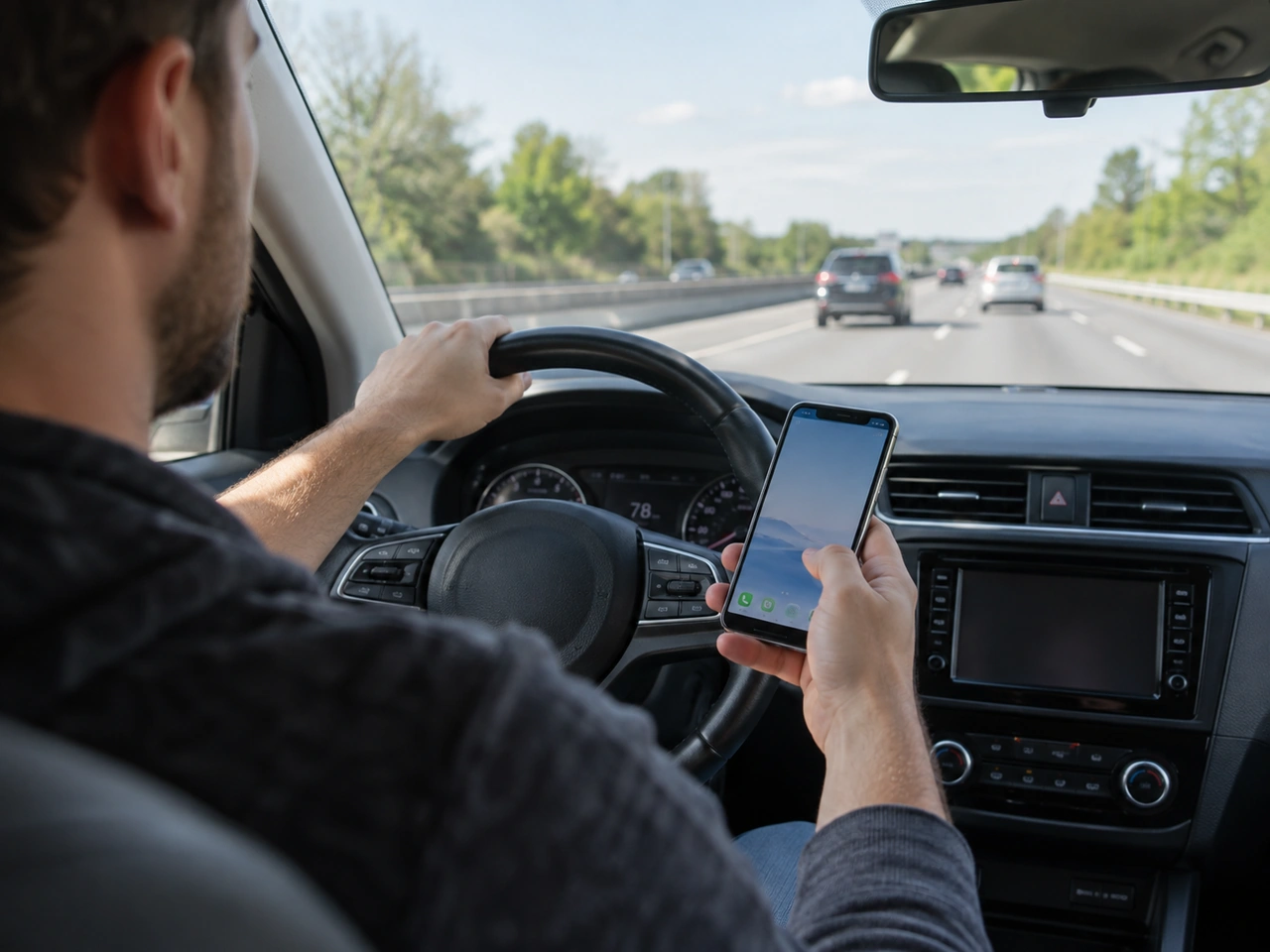
Can drivers use a handheld phone while driving in Bosnia and Herzegovina?

555. Can drivers use a handheld phone while driving in Bosnia and Herzegovina?

Yes.
✓ No.

Drivers in Bosnia and Herzegovina are generally not allowed to use a handheld phone while driving.

Driver using a handheld phone
AI-generated by Traffic-rules.com • WCIT • CC BY-SA
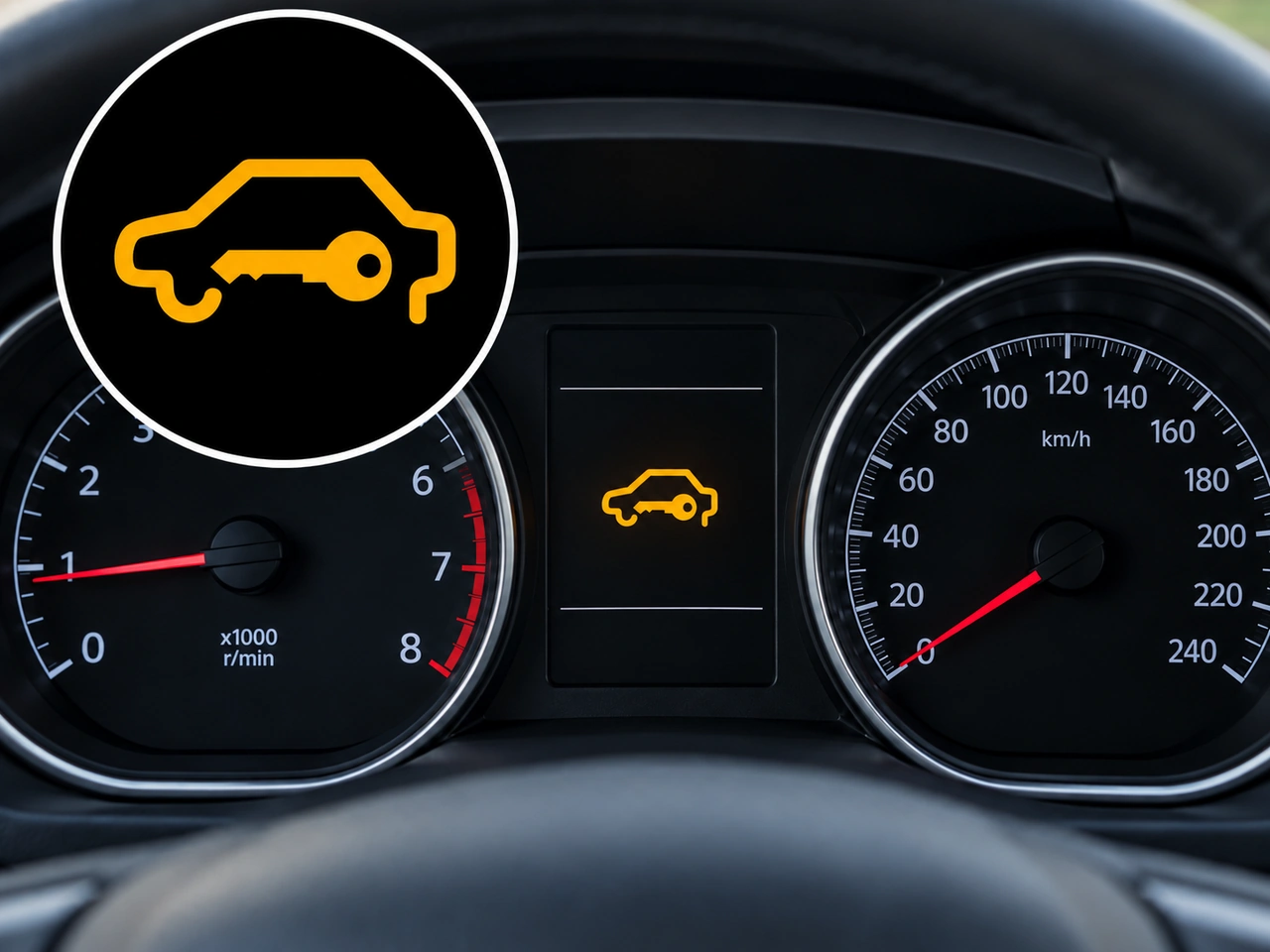
What does this dashboard symbol indicate?

556. What does this dashboard symbol indicate?

Door-open warning.
✓ Immobiliser or anti-theft system.
Engine-management warning.
Charging-system warning.

This symbol relates to the vehicle's immobiliser or anti-theft system. If it remains illuminated or flashes unexpectedly, the vehicle may not recognise the key or there may be a fault in the security system.

Immobiliser indicator symbol on the dashboard
AI-generated by Traffic-rules.com • WCIT • CC BY-SA
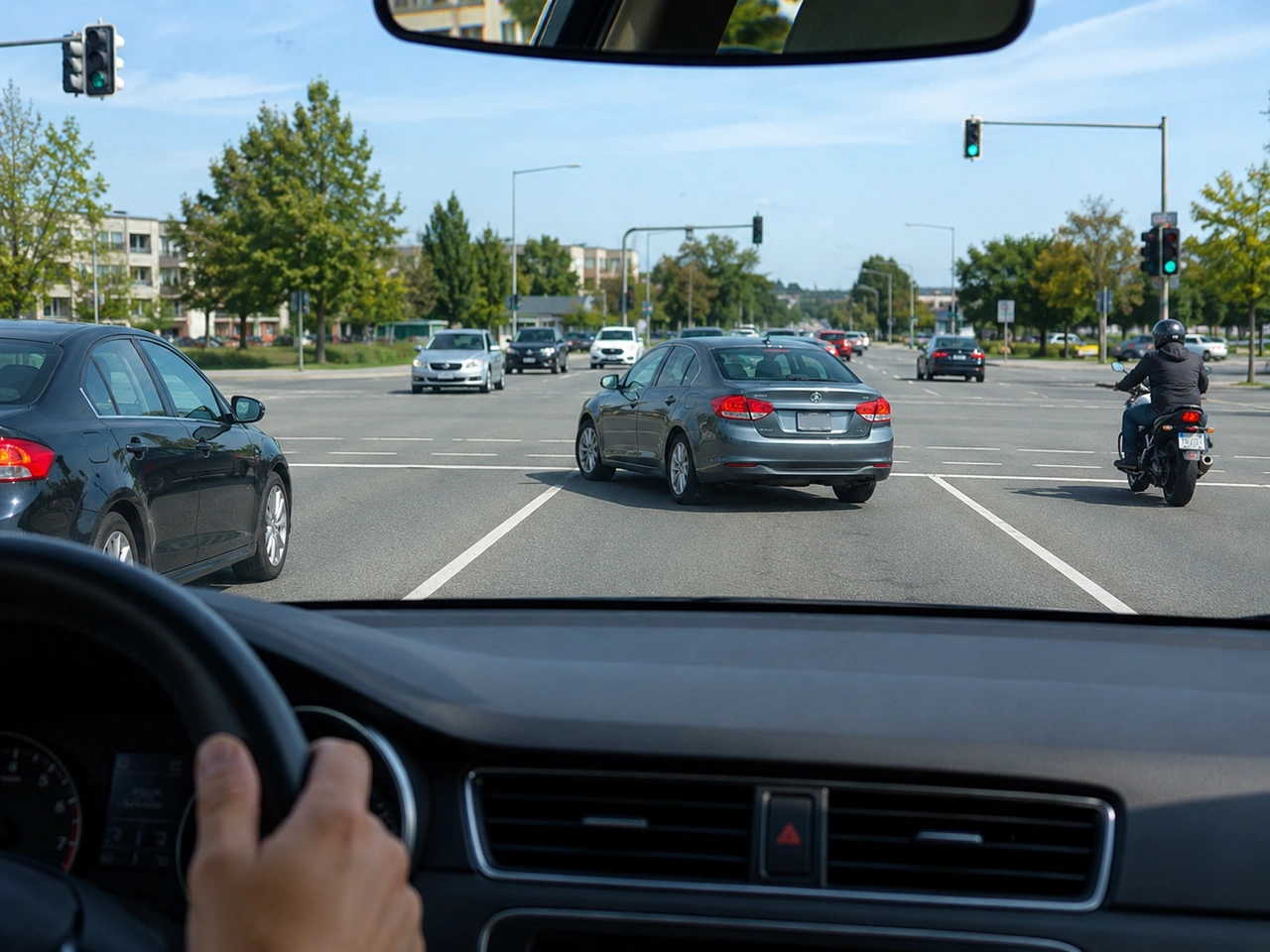
Why should you avoid changing lanes inside an intersection?

557. Why should you avoid changing lanes inside an intersection?

✓ It can confuse other road users and increase collision risk.
It can reduce the effectiveness of your indicators.
It can make road markings harder to follow.
It can make your route through the junction longer.

Changing lanes inside an intersection can surprise drivers, cyclists, and pedestrians. It is safer to choose the correct lane before entering.

Vehicle changing lanes within a junction
AI-generated by Traffic-rules.com • WCIT • CC BY-SA
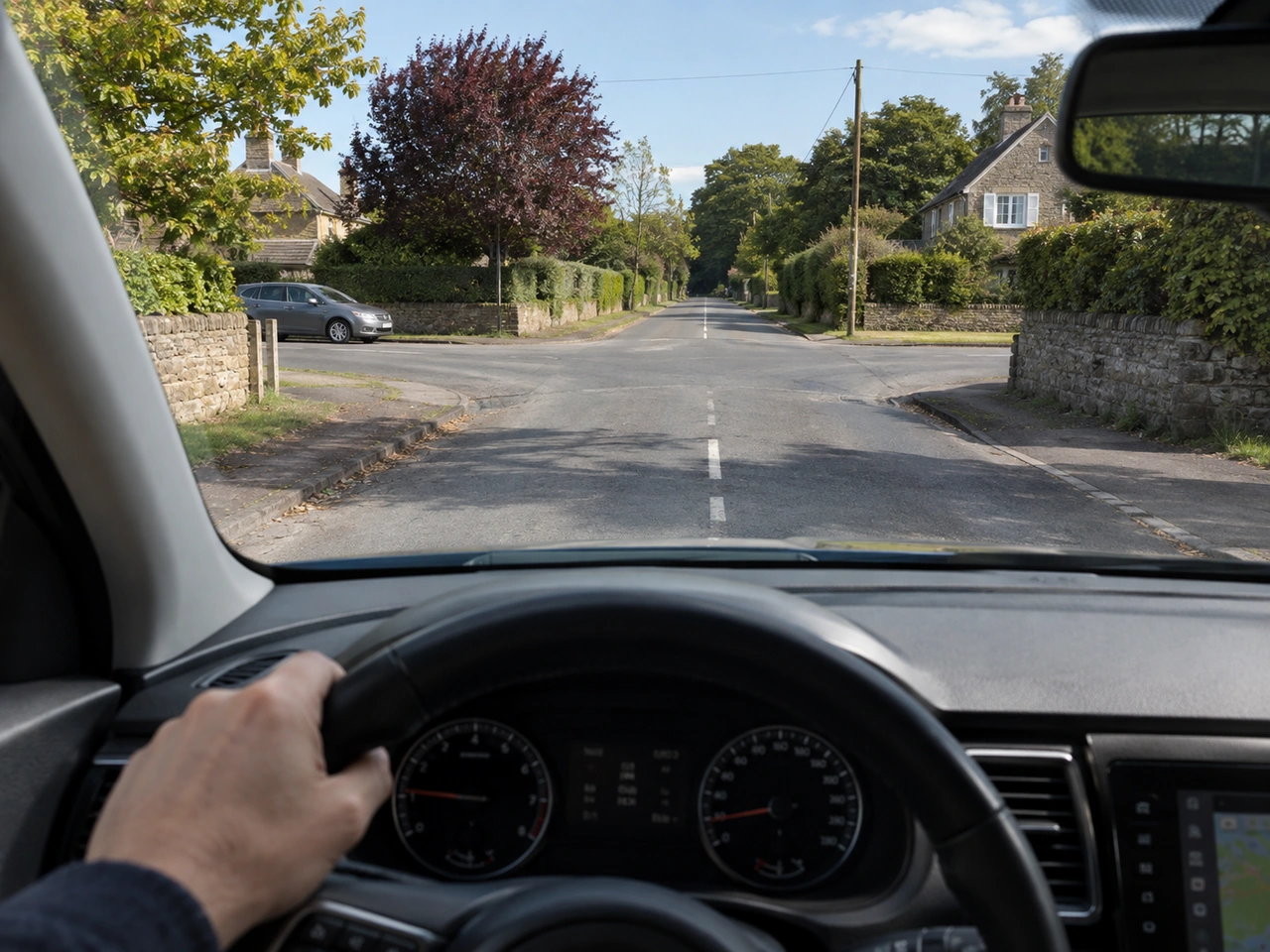
What should you do when approaching an uncontrolled junction?

558. What should you do when approaching an uncontrolled junction?

Check only the direction from which traffic usually has priority.
Enter first if you reach the junction before another vehicle.
Rely on the priority rule without reducing your speed.
✓ Slow down, look carefully in all directions, and proceed only when safe.

At an uncontrolled junction, priority may not be obvious. Reduce speed, check carefully, and only enter when you are sure it is safe.

Vehicle approaching an uncontrolled junction
AI-generated by Traffic-rules.com • WCIT • CC BY-SA
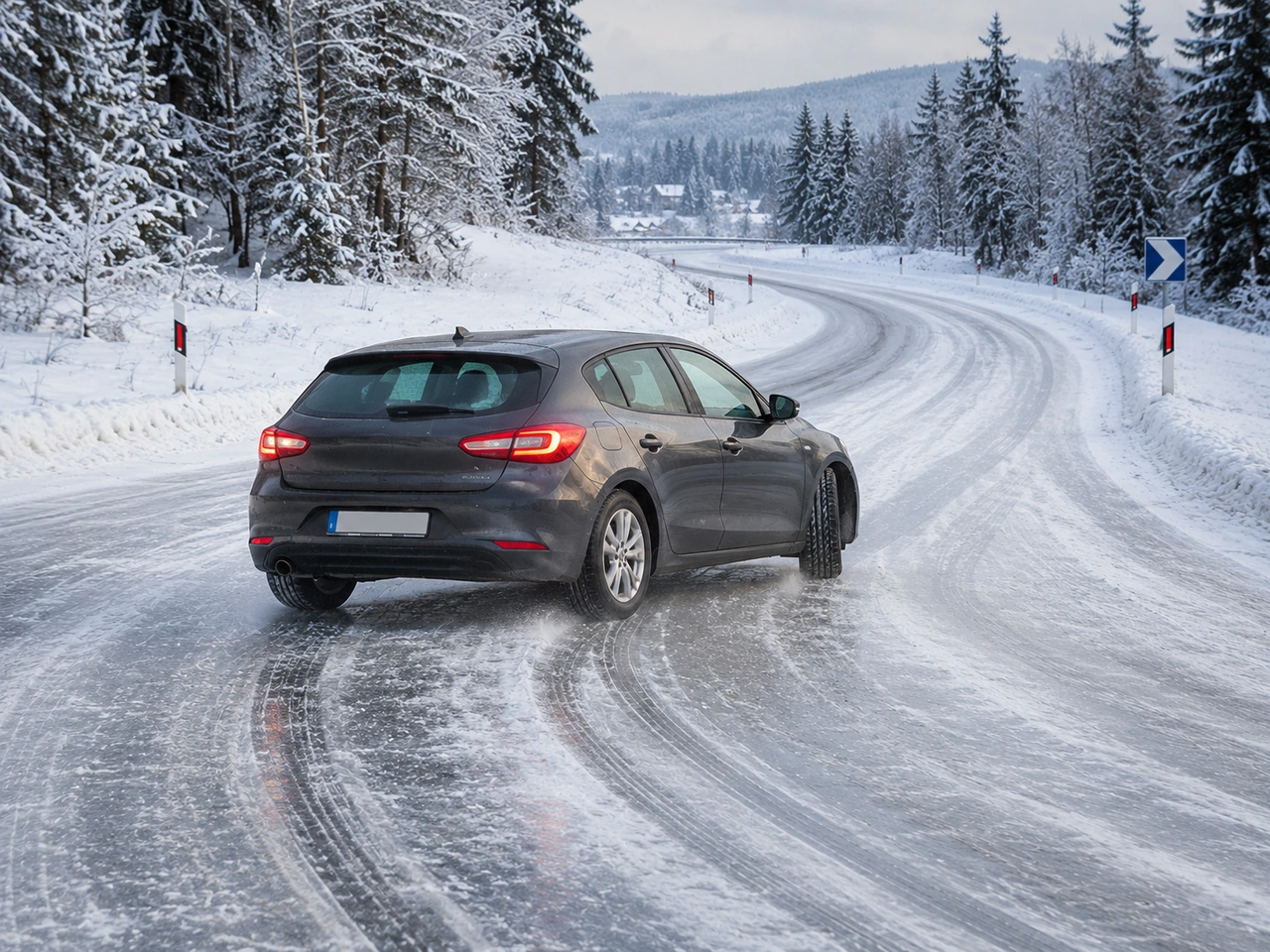
What should you do if your vehicle begins to skid on ice?

559. What should you do if your vehicle begins to skid on ice?

Steer rapidly from side to side.
Accelerate sharply to regain traction.
Apply the parking brake to straighten the vehicle.
✓ Ease off the accelerator and steer smoothly in the direction you want to travel.

Avoid sudden braking or steering. Look where you want to go and use gentle controls while the tyres regain grip.

Vehicle skidding on an icy road
AI-generated by Traffic-rules.com • WCIT • CC BY-SA
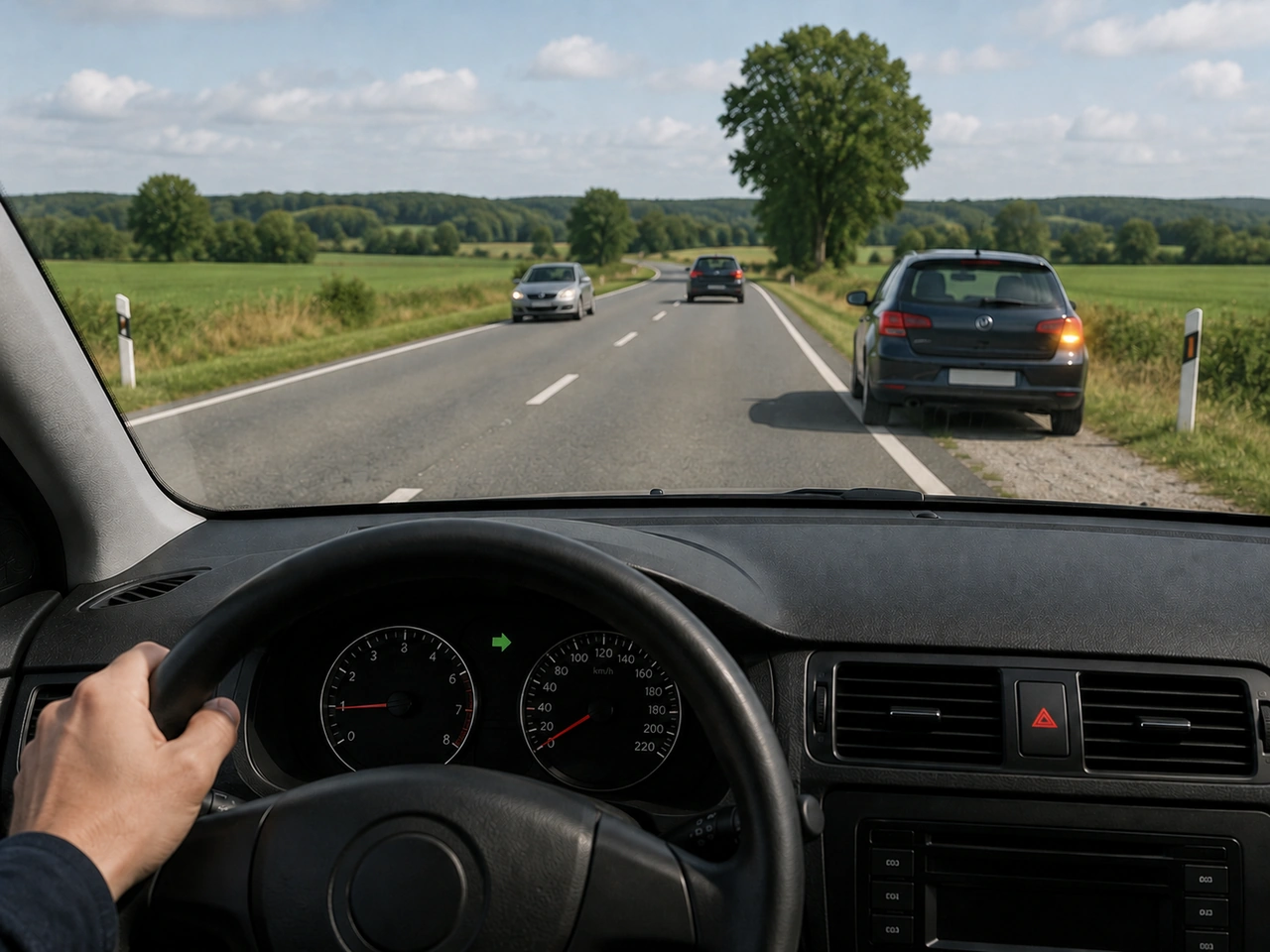
What should you do if your vehicle develops a serious fault while driving?

560. What should you do if your vehicle develops a serious fault while driving?

✓ Keep control, reduce speed, and move to a safe place if possible.
Stop immediately in the traffic lane.
Continue driving until the vehicle stops by itself.
Accelerate to see if the fault disappears.

Your first priority is to keep control of the vehicle. Reduce speed smoothly and move out of the path of traffic where possible, signalling when appropriate. Avoid harsh steering or braking unless necessary.

Vehicle stopped after developing a mechanical fault
AI-generated by Traffic-rules.com • WCIT • CC BY-SA
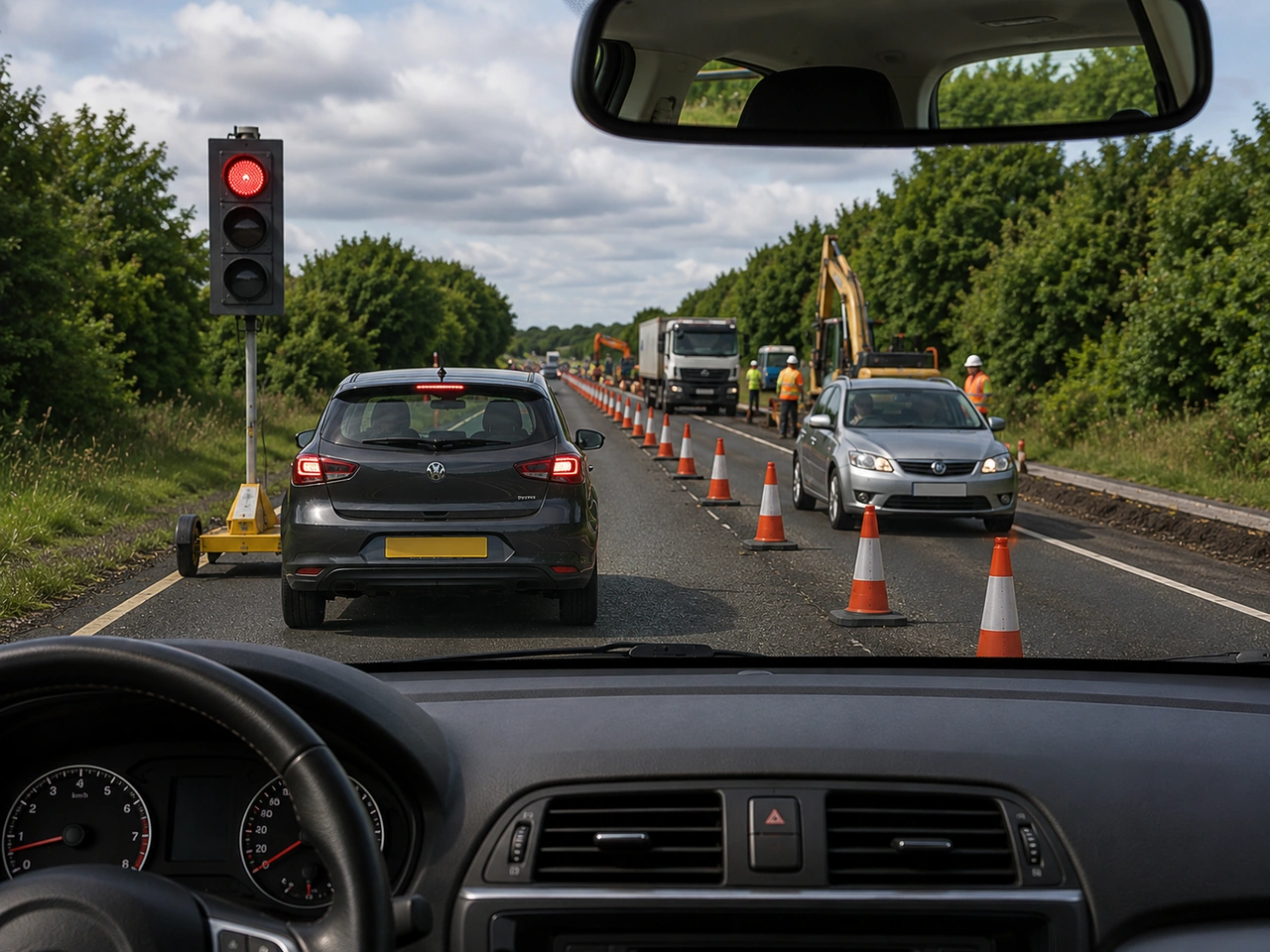
What should you do when temporary traffic lights show red?

561. What should you do when temporary traffic lights show red?

Proceed if no road workers are visible.
Only permanent traffic lights are valid.
Follow the vehicle ahead through the signal.
✓ Stop before the signal or temporary stop line.

Temporary traffic signals must be obeyed like permanent signals. Stop and wait until you are permitted to continue.

Red signal on temporary roadworks traffic lights
AI-generated by Traffic-rules.com • WCIT • CC BY-SA
What should cyclists do when riding over loose gravel or road debris?

562. What should cyclists do when riding over loose gravel or road debris?

Accelerate to keep the bicycle stable.
Brake hard while turning.
✓ Reduce speed and steer smoothly.
Keep the same speed as on a dry, smooth road.

Loose material reduces tyre grip. Smooth steering and controlled speed lower the chance of losing balance.

Cyclist riding over loose gravel
AI-generated by Traffic-rules.com • WCIT • CC BY-SA
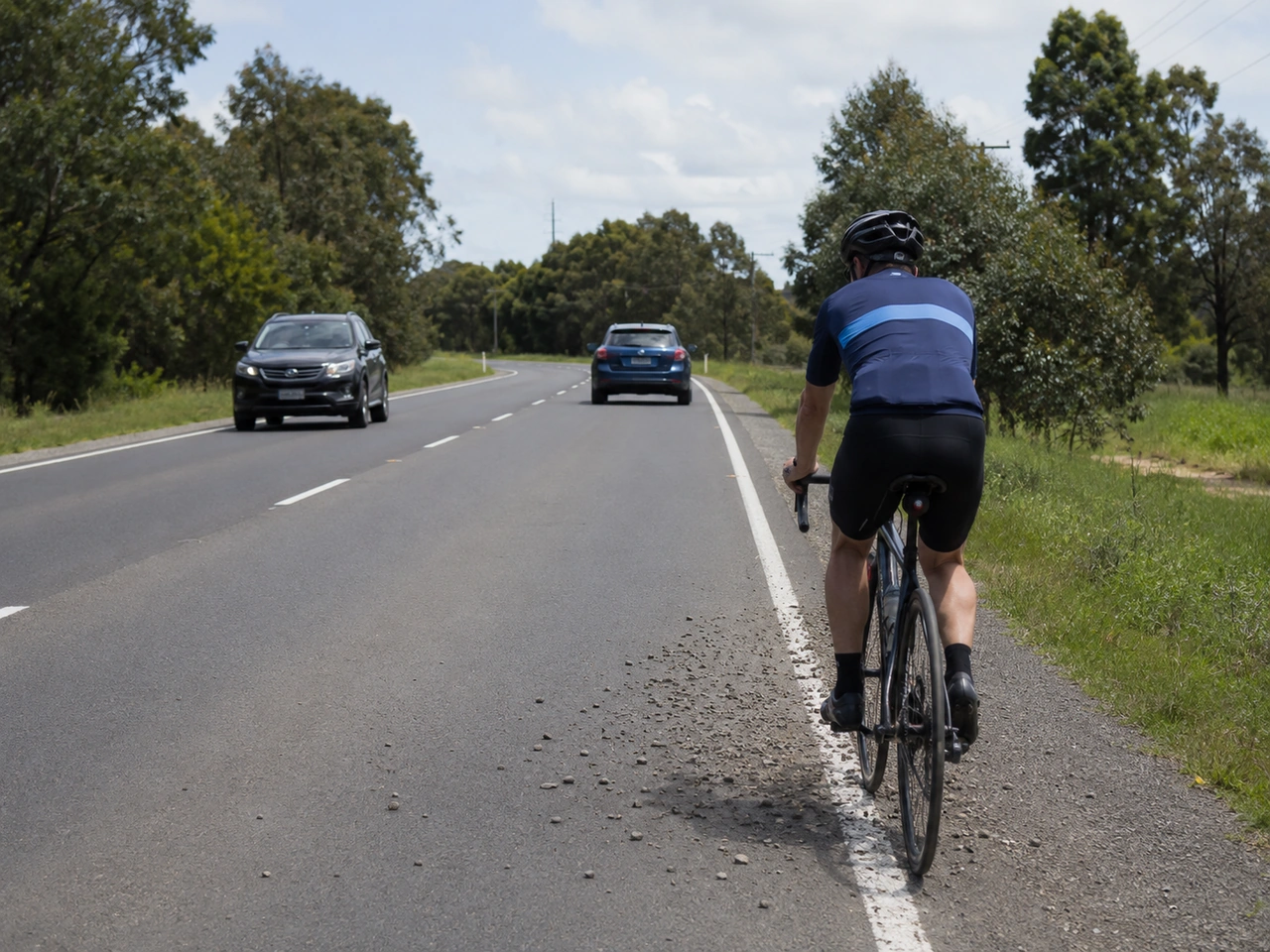
Why is it dangerous to cross between parked cars?

563. Why is it dangerous to cross between parked cars?

You cannot hear approaching traffic between cars.
Parked cars make the crossing distance longer.
✓ Drivers may not see you or expect you to cross.
Traffic always moves faster beside parked cars.

Parked vehicles can block the view between pedestrians and drivers. This makes it harder to see approaching traffic and harder for drivers to see you.

Pedestrian crossing between parked cars
AI-generated by Traffic-rules.com • WCIT • CC BY-SA
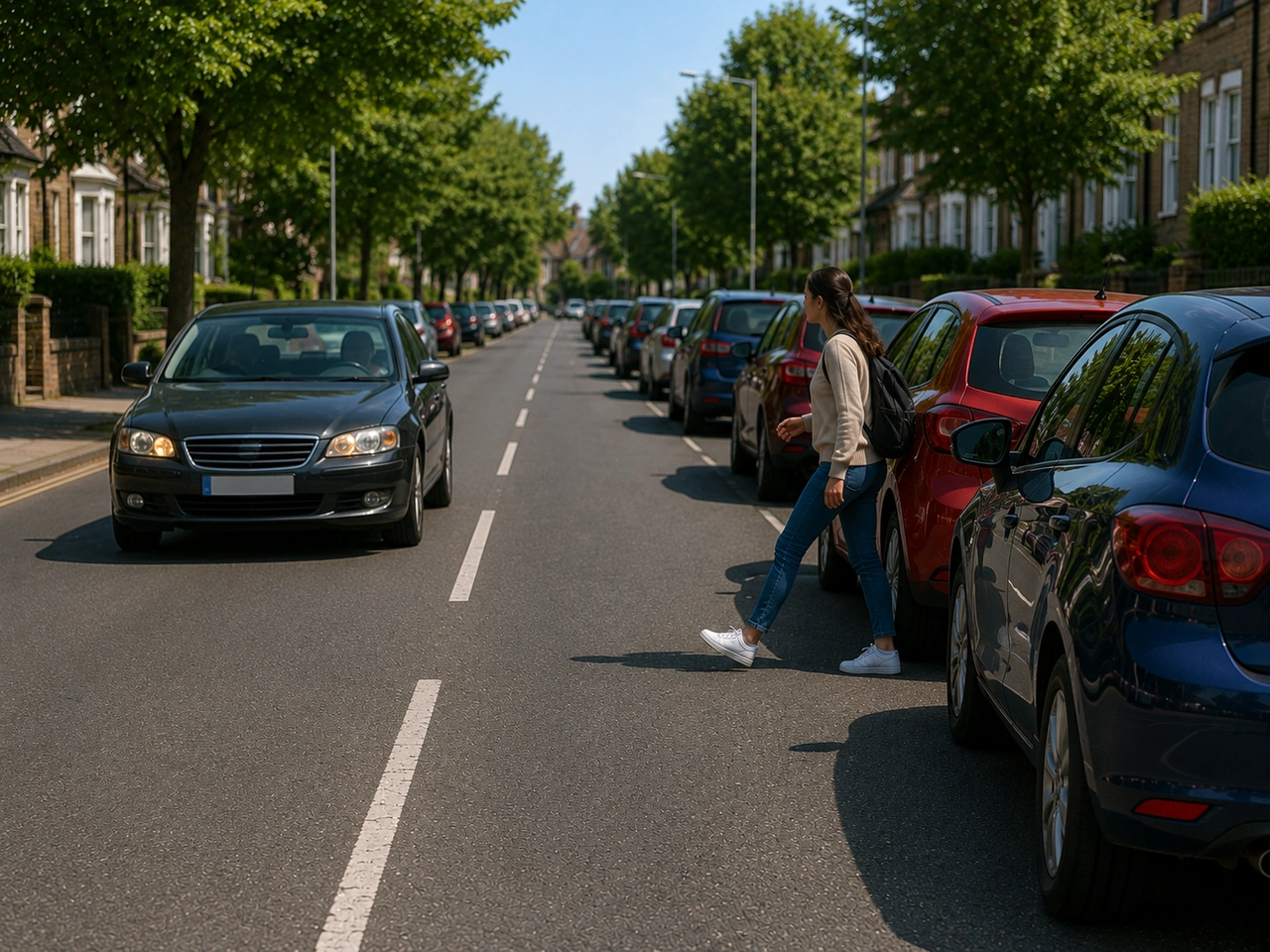
What should you do if a trailer begins to sway?

564. What should you do if a trailer begins to sway?

Steer quickly from side to side.
✓ Ease off the accelerator and reduce speed smoothly.
Accelerate to pull the trailer straight.
Brake hard as soon as the sway begins.

Sudden steering or braking can worsen trailer sway. Stay calm, hold a steady course, and reduce speed smoothly.

Trailer swaying behind a towing vehicle
AI-generated by Traffic-rules.com • WCIT • CC BY-SA
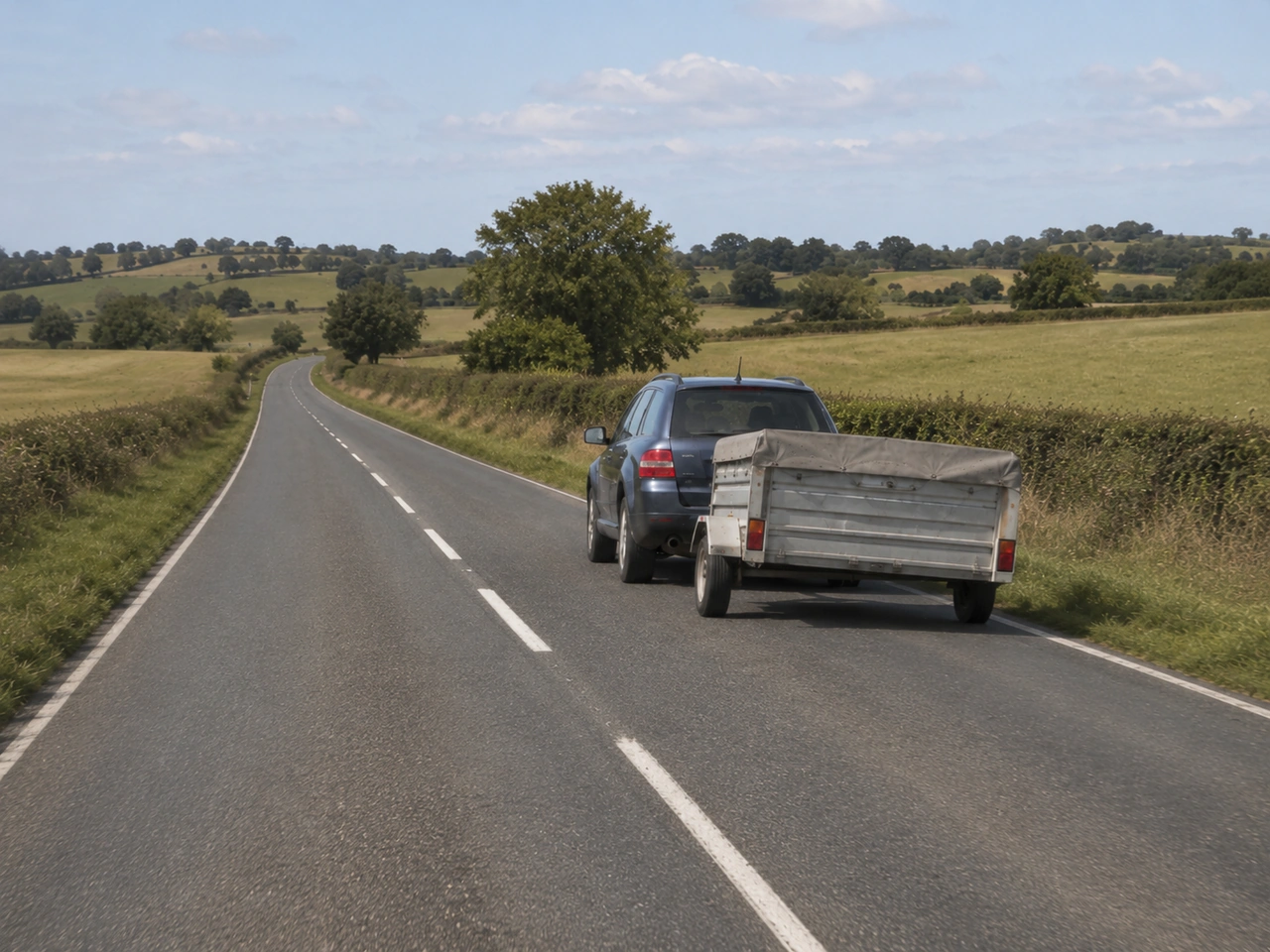
Why is it dangerous to cross while listening to loud music?

565. Why is it dangerous to cross while listening to loud music?

✓ You may not hear approaching traffic.
Drivers may not hear you crossing.
Music can make you lose your balance.
You may not see approaching traffic clearly.

Loud music can reduce your awareness of vehicles, bicycles, horns, and other warning sounds.

Pedestrian listening to music while crossing the road
AI-generated by Traffic-rules.com • WCIT • CC BY-SA
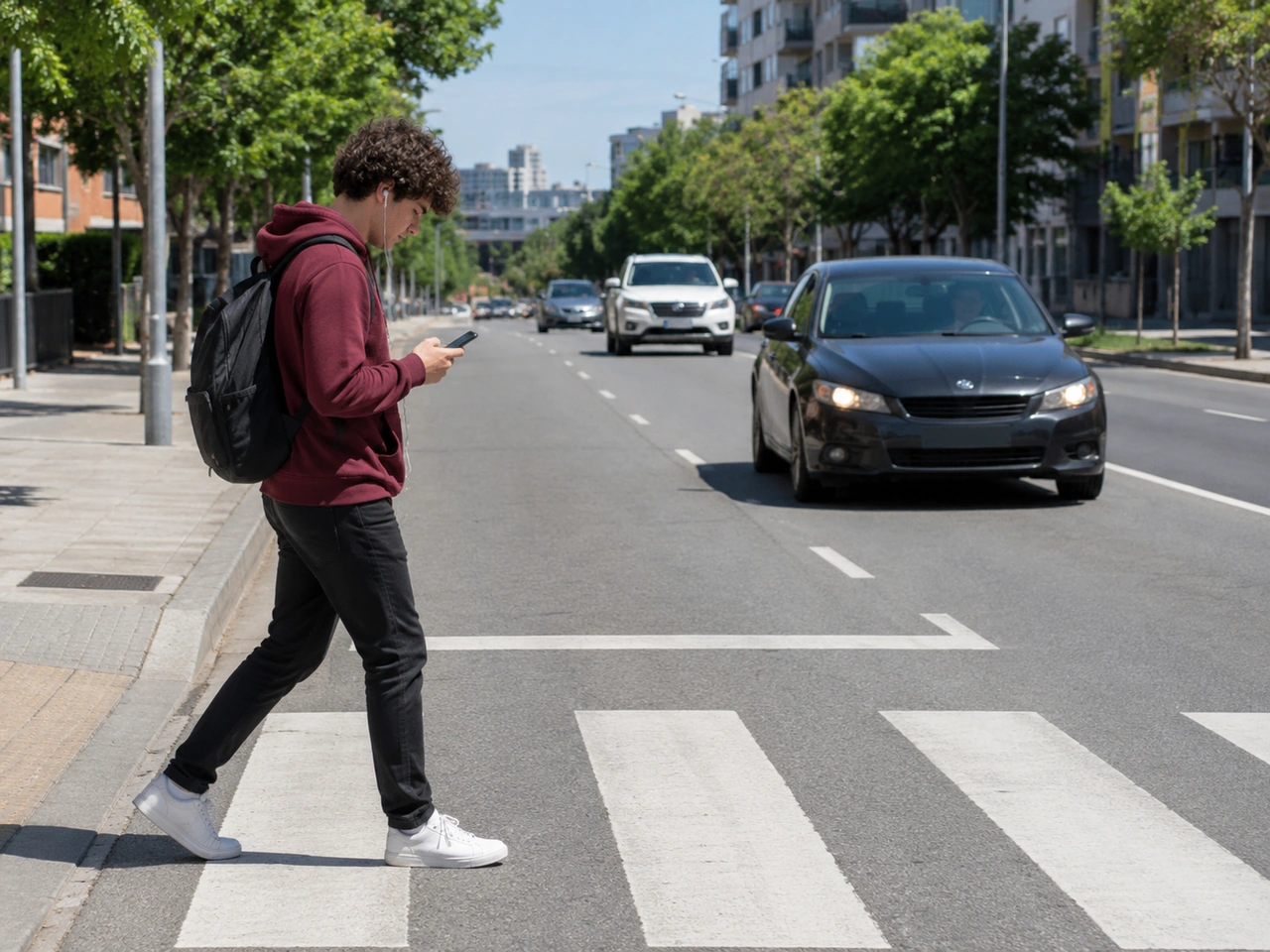
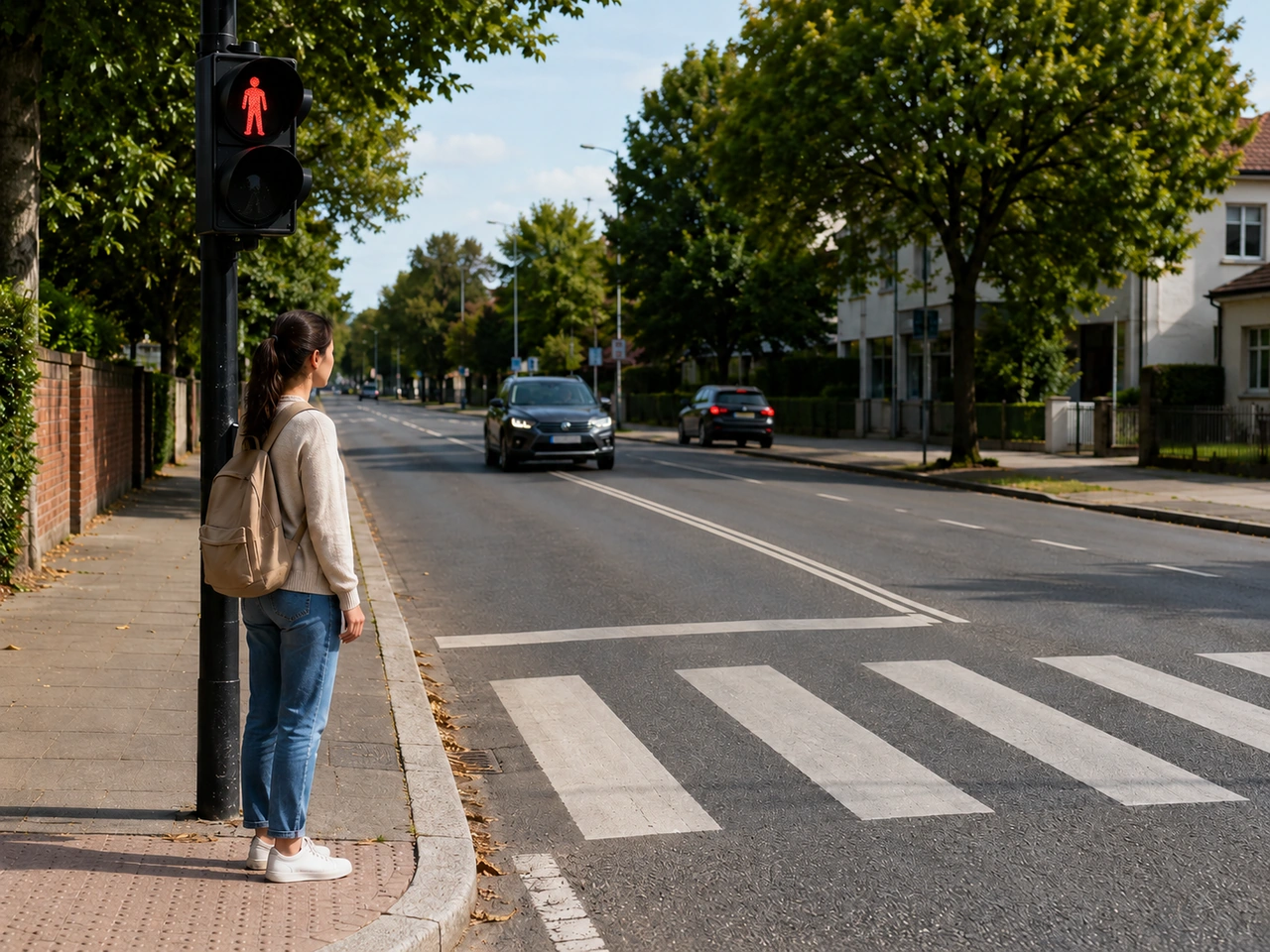
What should you do if the pedestrian light is red?

566. What should you do if the pedestrian light is red?

✓ Wait until it turns green.
Cross if nearby vehicles appear to have stopped.
Cross if there is a large enough gap in traffic.
Cross if another pedestrian has already started.

A red pedestrian signal means you should wait before crossing.

Red pedestrian signal at a crossing
AI-generated by Traffic-rules.com • WCIT • CC BY-SA
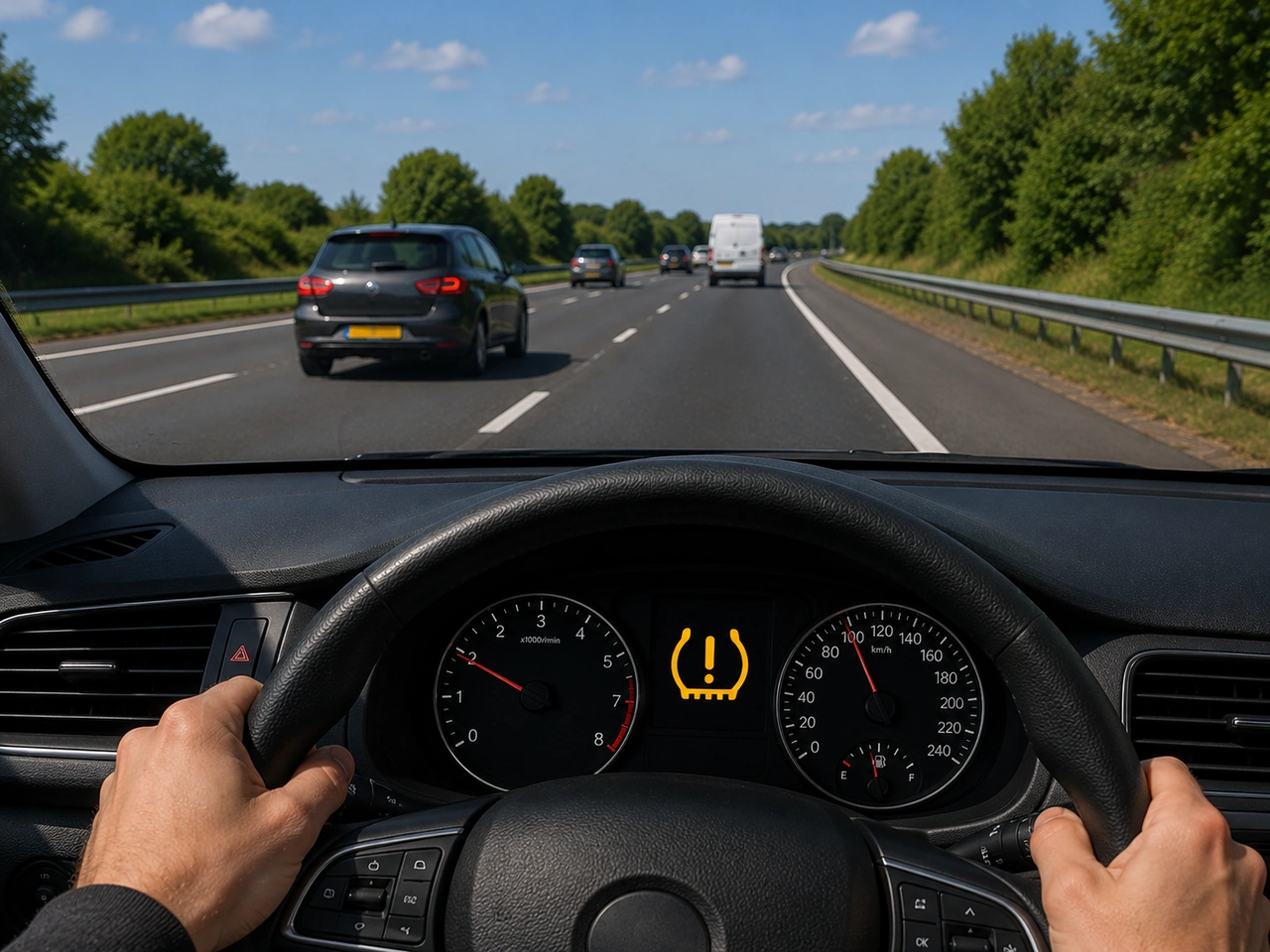
What should you do if a tyre-pressure warning appears and handling changes?

567. What should you do if a tyre-pressure warning appears and handling changes?

Accelerate slightly to warm the tyre.
Brake firmly to test whether the tyre still has grip.
Release air from the other tyres to balance the pressure.
✓ Reduce speed and stop safely to check the tyres.

A pressure loss or damaged tyre can affect steering and braking. If the tyre-pressure warning appears together with a change in handling, it may indicate a serious tyre problem. Stop safely and inspect the tyres before continuing.

Tyre-pressure warning and a tyre inspection
AI-generated by Traffic-rules.com • WCIT • CC BY-SA
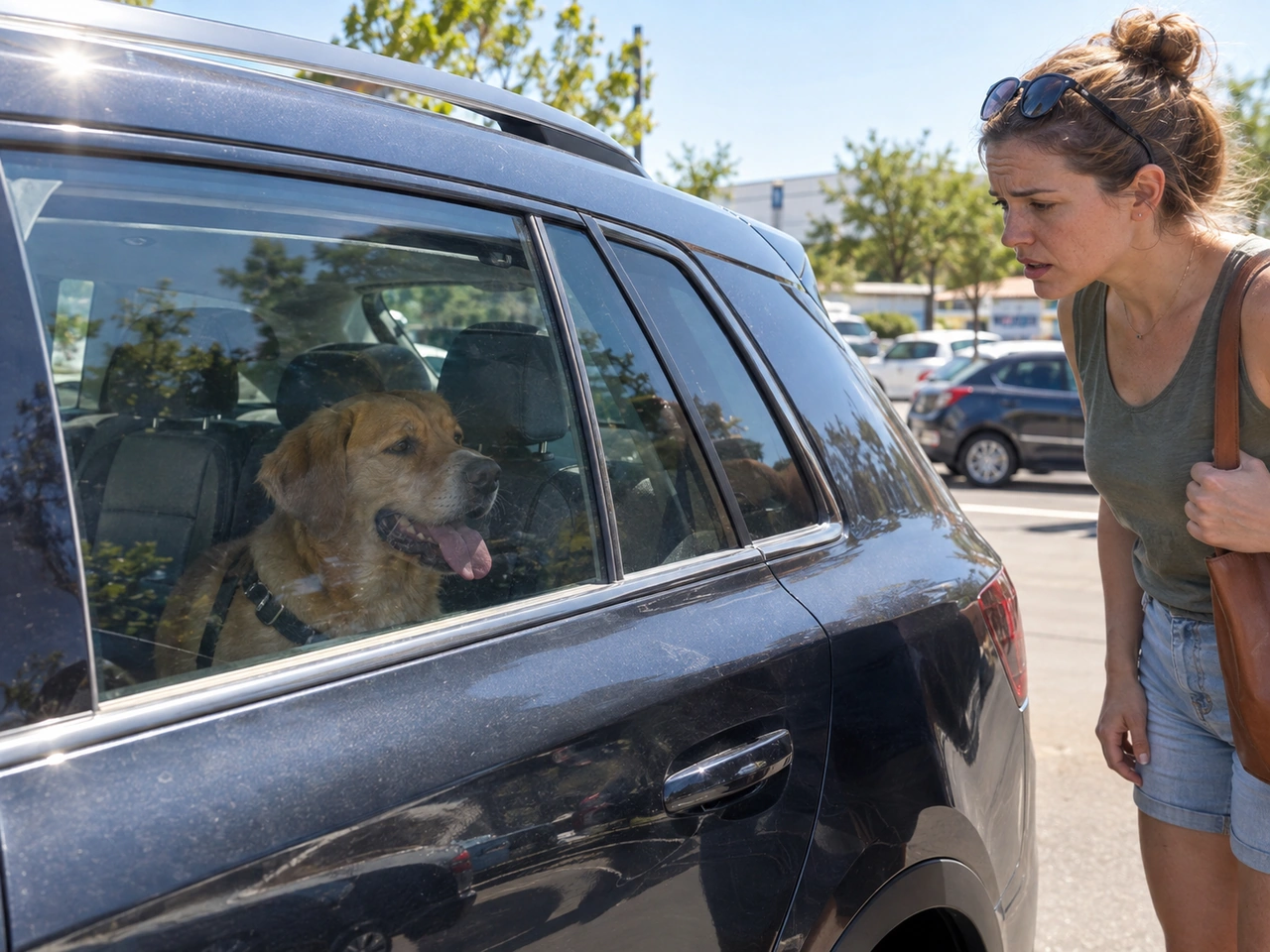
Why should you never leave a child or pet alone in a parked vehicle on a warm day?

568. Why should you never leave a child or pet alone in a parked vehicle on a warm day?

The tyres may lose pressure while the vehicle is parked.
✓ The interior can heat up quickly and cause serious heat illness.
The windows may become difficult to open.
The vehicle battery may discharge more quickly.

The inside of a parked vehicle can heat up rapidly, even when the outside temperature does not feel extreme. Children and animals are particularly vulnerable to overheating and heatstroke. Leaving a window partly open does not make the vehicle safe.

Parked vehicle and the danger of interior heat
AI-generated by Traffic-rules.com • WCIT • CC BY-SA
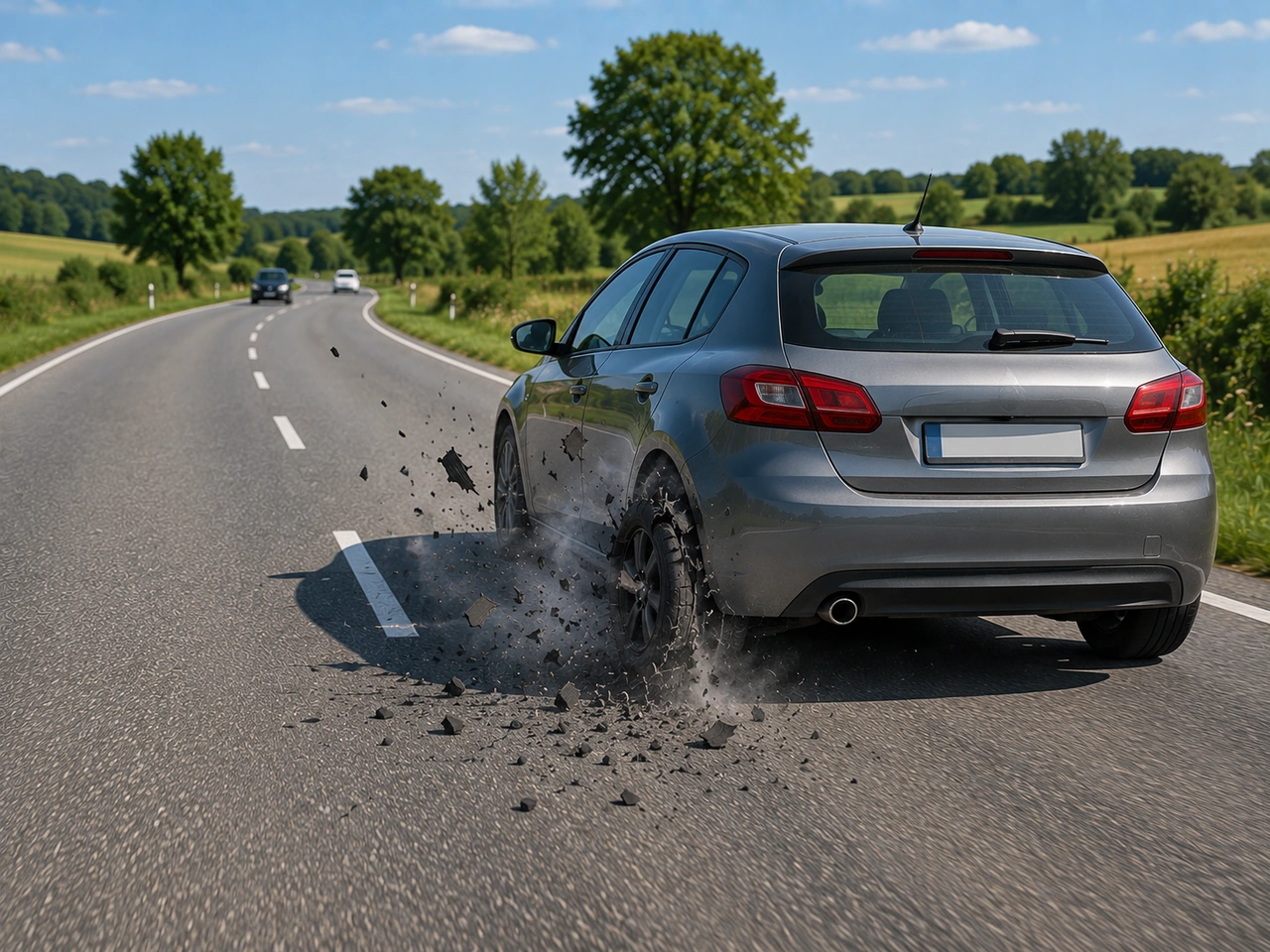
What should you do if one of your tyres suddenly bursts while driving?

569. What should you do if one of your tyres suddenly bursts while driving?

Accelerate briefly to stabilise the vehicle.
✓ Hold the steering wheel firmly and slow down gradually.
Steer quickly toward the side of the road.
Release the steering wheel and let the vehicle slow itself.

A tyre burst can make the vehicle unstable. Hold the wheel firmly, avoid sudden braking or steering, and slow down gradually.

Vehicle tyre damaged by a sudden blowout
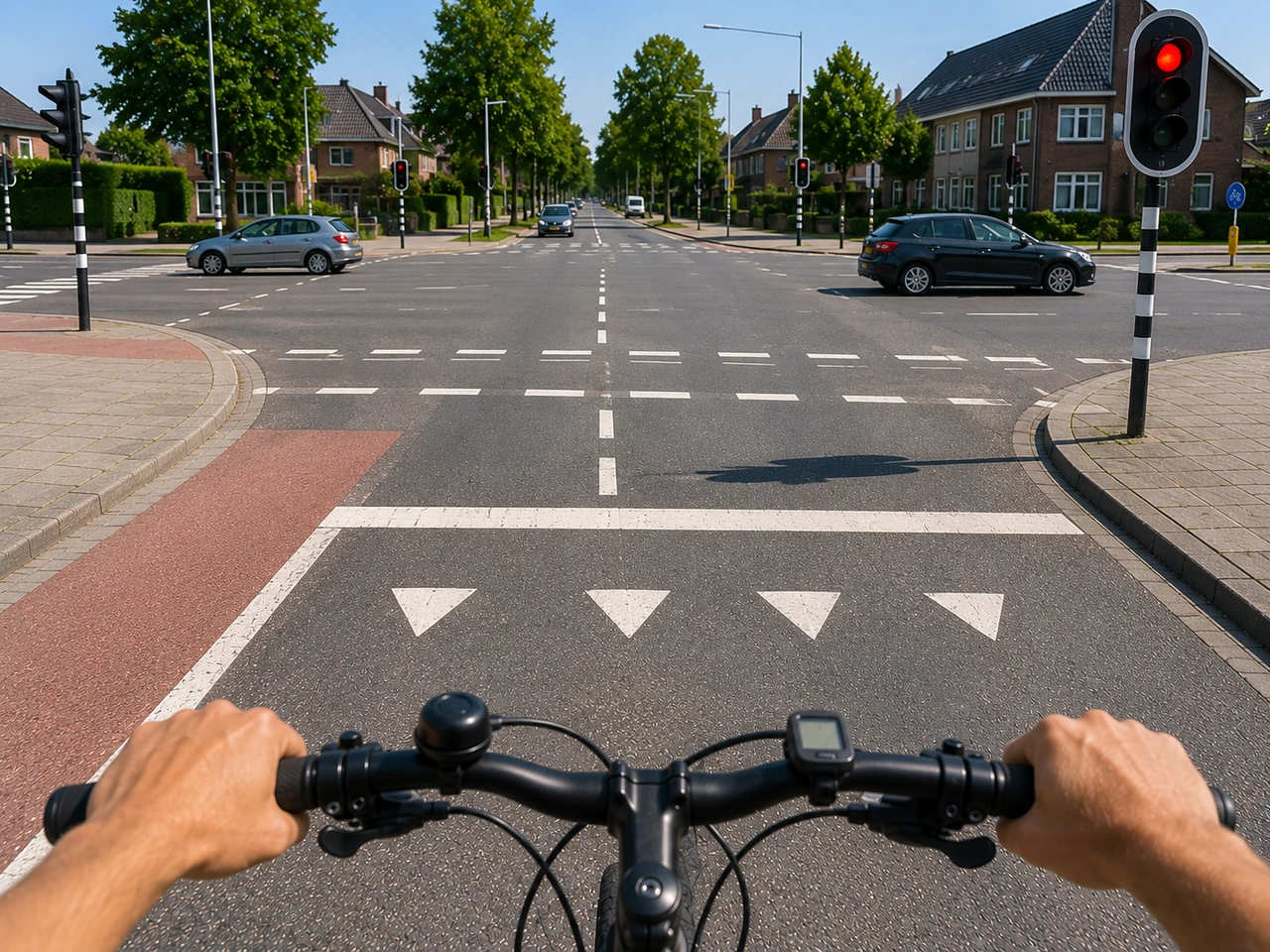
AI-generated by Traffic-rules.com • WCIT • CC BY-SA
What should cyclists do when approaching a junction?

570. What should cyclists do when approaching a junction?

Rely on other road users to give way to you.
Accelerate so you spend less time at the junction.
Watch only the traffic directly ahead of you.
✓ Reduce speed, observe carefully, and be ready to stop.

Junctions create conflict points between road users. Slowing down gives you more time to see hazards and react safely.

Cyclist approaching a road junction
AI-generated by Traffic-rules.com • WCIT • CC BY-SA
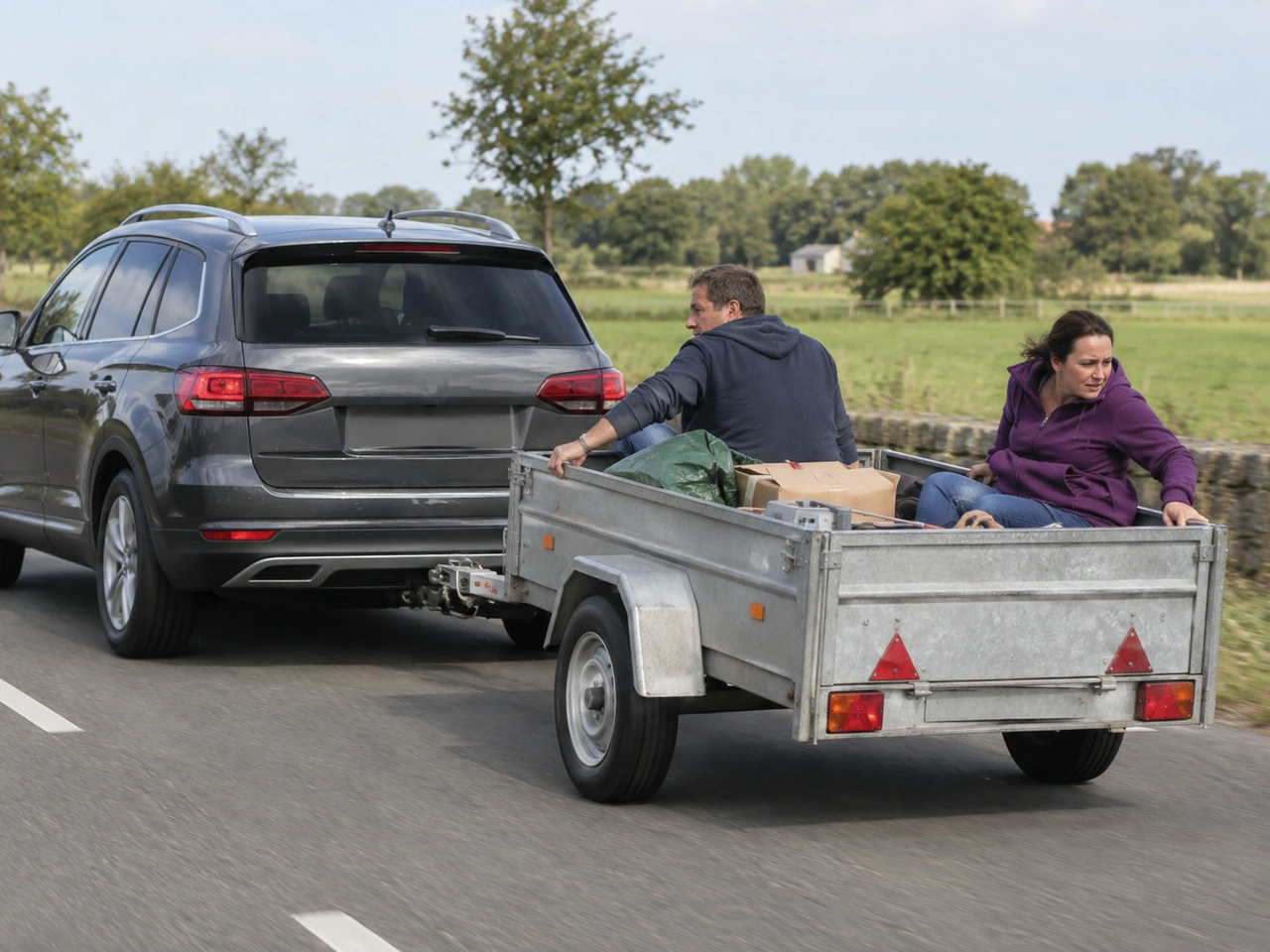
Should passengers travel in an ordinary goods trailer?

571. Should passengers travel in an ordinary goods trailer?

Only on short journeys or quiet roads.
Yes, if the passengers remain seated on the floor.
Only when the trailer has high sides.
✓ No, passengers should travel in approved seating positions.

An ordinary goods trailer is not designed to carry passengers and normally has no suitable seats or restraint systems. Passengers should travel in seating positions designed and approved for carrying people. Special passenger-carrying trailers may be subject to different local rules.

Ordinary goods trailer and passenger safety
AI-generated by Traffic-rules.com • WCIT • CC BY-SA
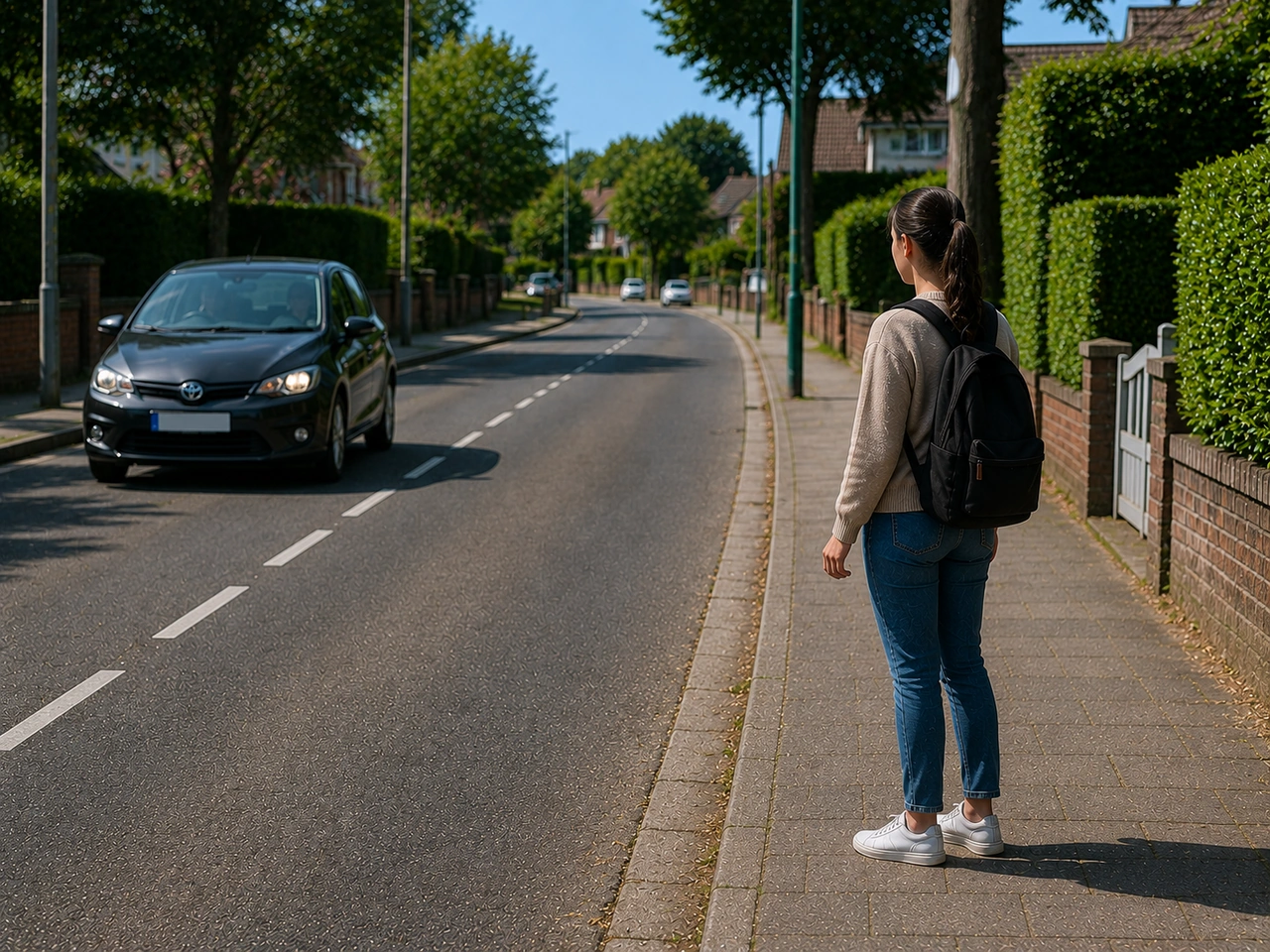
What is the best place to cross the road?

572. What is the best place to cross the road?

✓ At a designated crossing.
Near a bend if approaching traffic seems slow.
At the shortest point, even if visibility is limited.
Between parked vehicles if traffic appears quiet.

Use a designated crossing whenever possible. It is usually the safest place to cross the road.

Designated crossing for pedestrians
AI-generated by Traffic-rules.com • WCIT • CC BY-SA
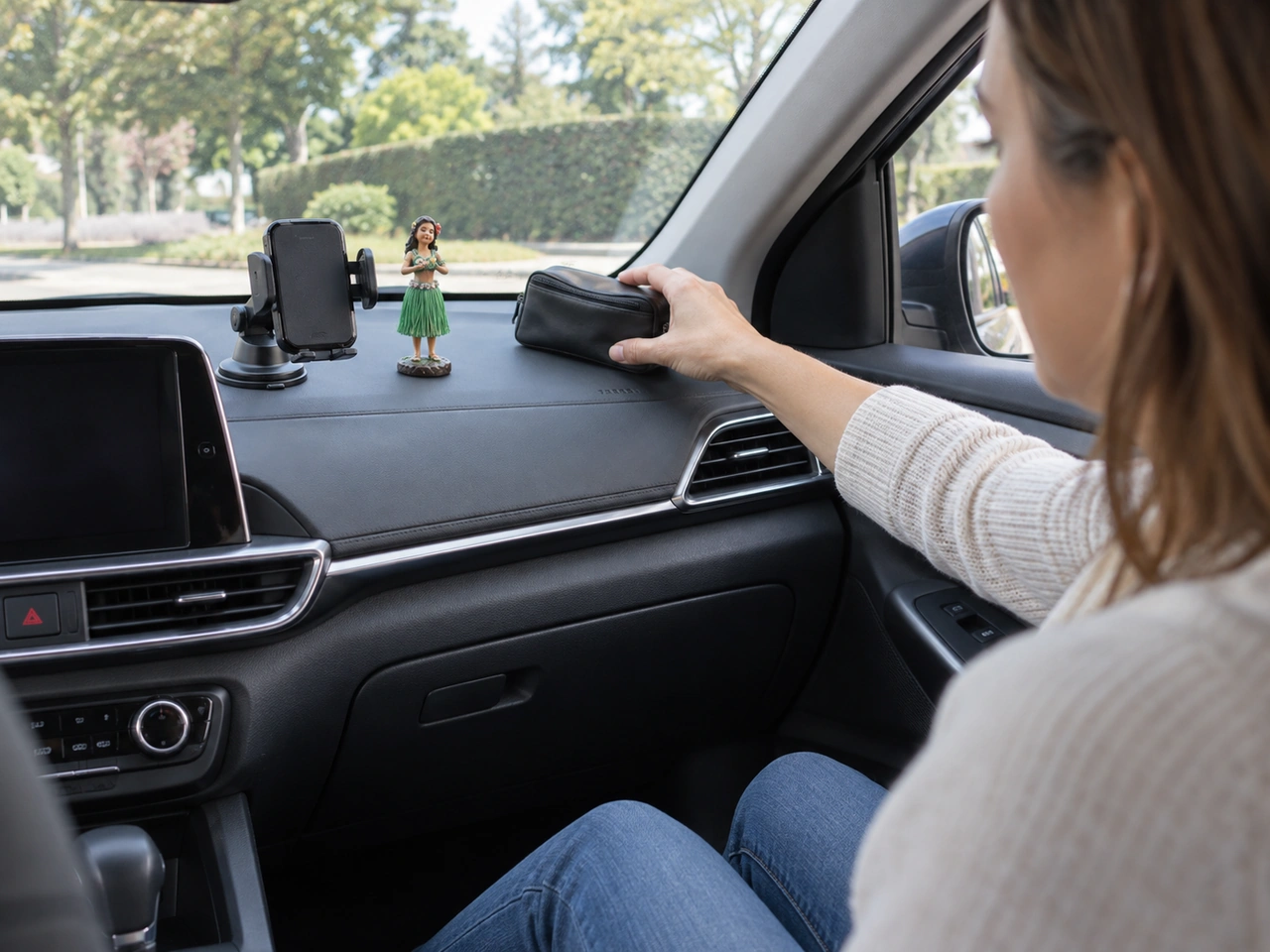
Why should you avoid placing objects on or over an airbag cover?

573. Why should you avoid placing objects on or over an airbag cover?

✓ They could interfere with deployment and become dangerous projectiles.
They could make the airbag deploy too slowly.
They could make the dashboard harder to clean.
They could prevent the seat belt from locking.

Do not place or attach objects over an airbag cover or in an airbag's deployment area. They may interfere with the airbag as it inflates and could be thrown towards occupants when the airbag deploys.

Objects placed over a vehicle's airbag cover
AI-generated by Traffic-rules.com • WCIT • CC BY-SA
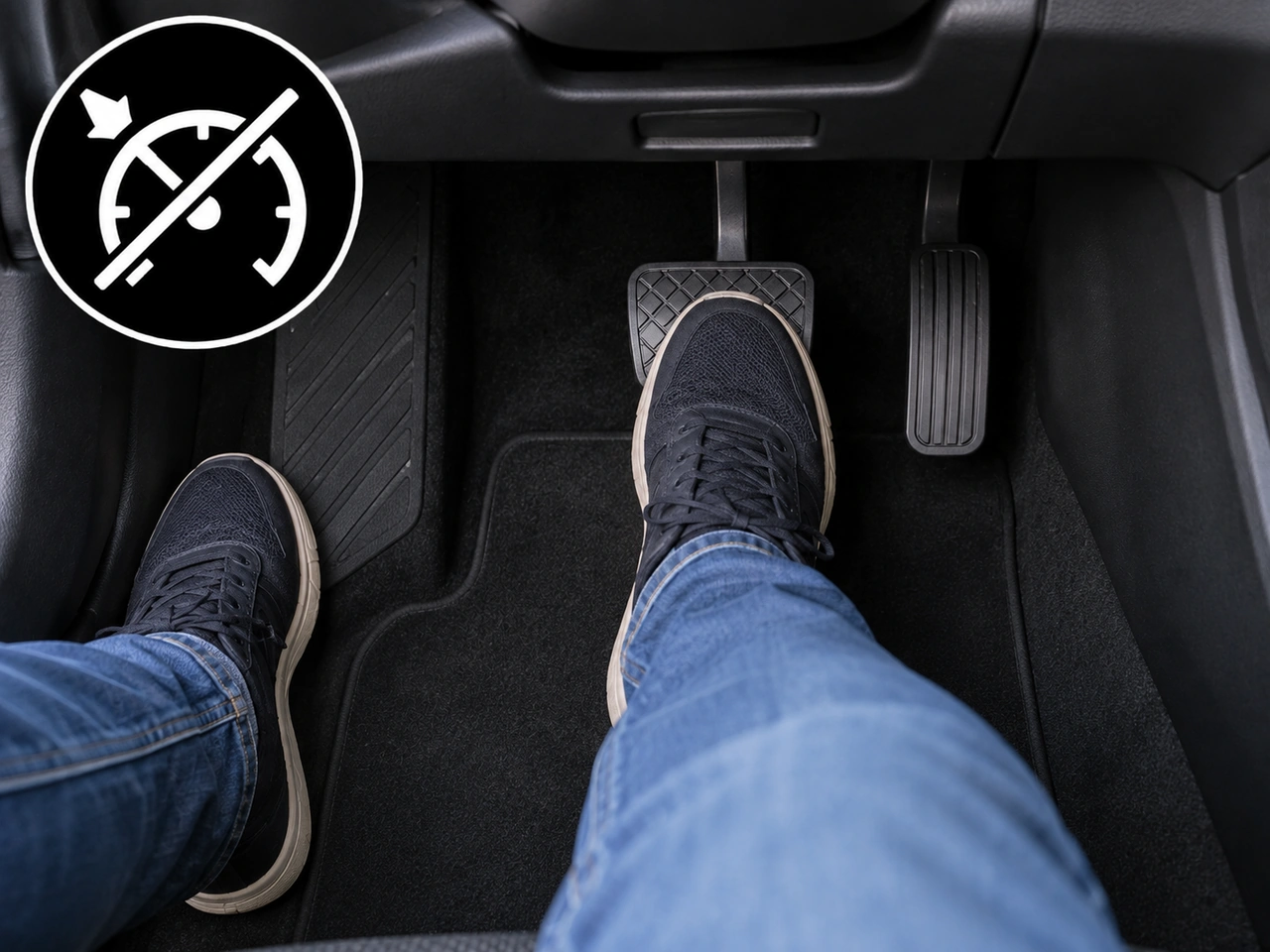
What normally happens to cruise control when you press the brake pedal?

574. What normally happens to cruise control when you press the brake pedal?

The parking brake is applied.
The accelerator pedal locks in position.
The selected speed increases.
✓ Cruise control is cancelled or temporarily disengaged.

Pressing the brake pedal normally cancels or temporarily disengages cruise control, returning speed control to the driver.

Brake-pedal operation to disengage cruise control
AI-generated by Traffic-rules.com • WCIT • CC BY-SA
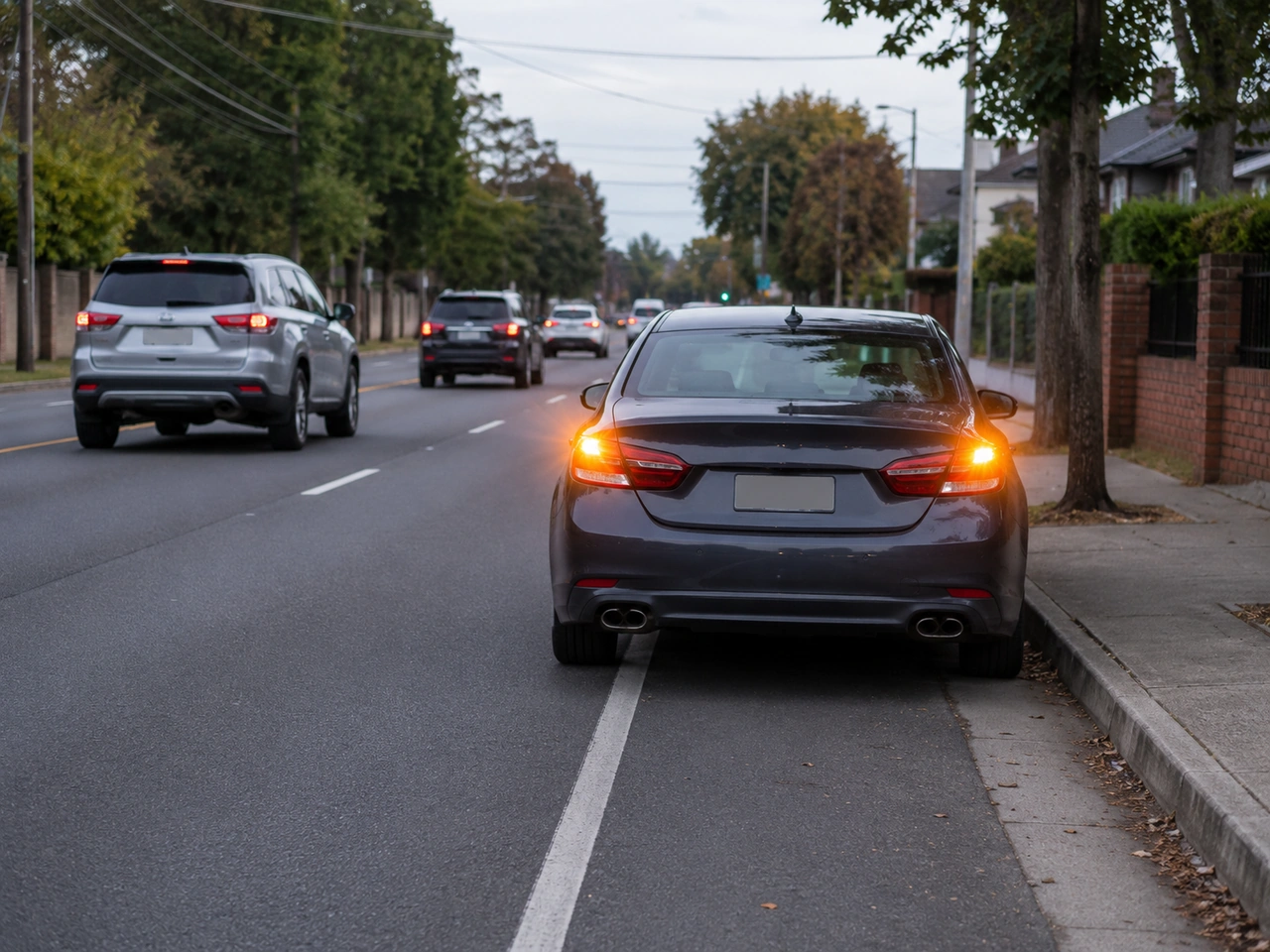
You may park anywhere as long as you leave your hazard lights on.

575. You may park anywhere as long as you leave your hazard lights on.

✓ False.
True.

Hazard lights are used to warn other road users of a hazard or an unexpectedly stopped vehicle. They do not make illegal or unsafe parking acceptable.

Parked vehicle with hazard warning lights flashing
AI-generated by Traffic-rules.com • WCIT • CC BY-SA
Why can mixing alcohol with medicine be dangerous for drivers?

576. Why can mixing alcohol with medicine be dangerous for drivers?

Medicine prevents alcohol from causing drowsiness.
✓ The combination may increase drowsiness or impairment.
Alcohol leaves the body faster when taking medicine.
Medicine can cancel out the effects of alcohol.

Some prescription and non-prescription medicines can intensify alcohol-related drowsiness, dizziness, poor coordination, or reduced concentration.

Alcohol and medicine as a driving-impairment risk
AI-generated by Traffic-rules.com • WCIT • CC BY-SA

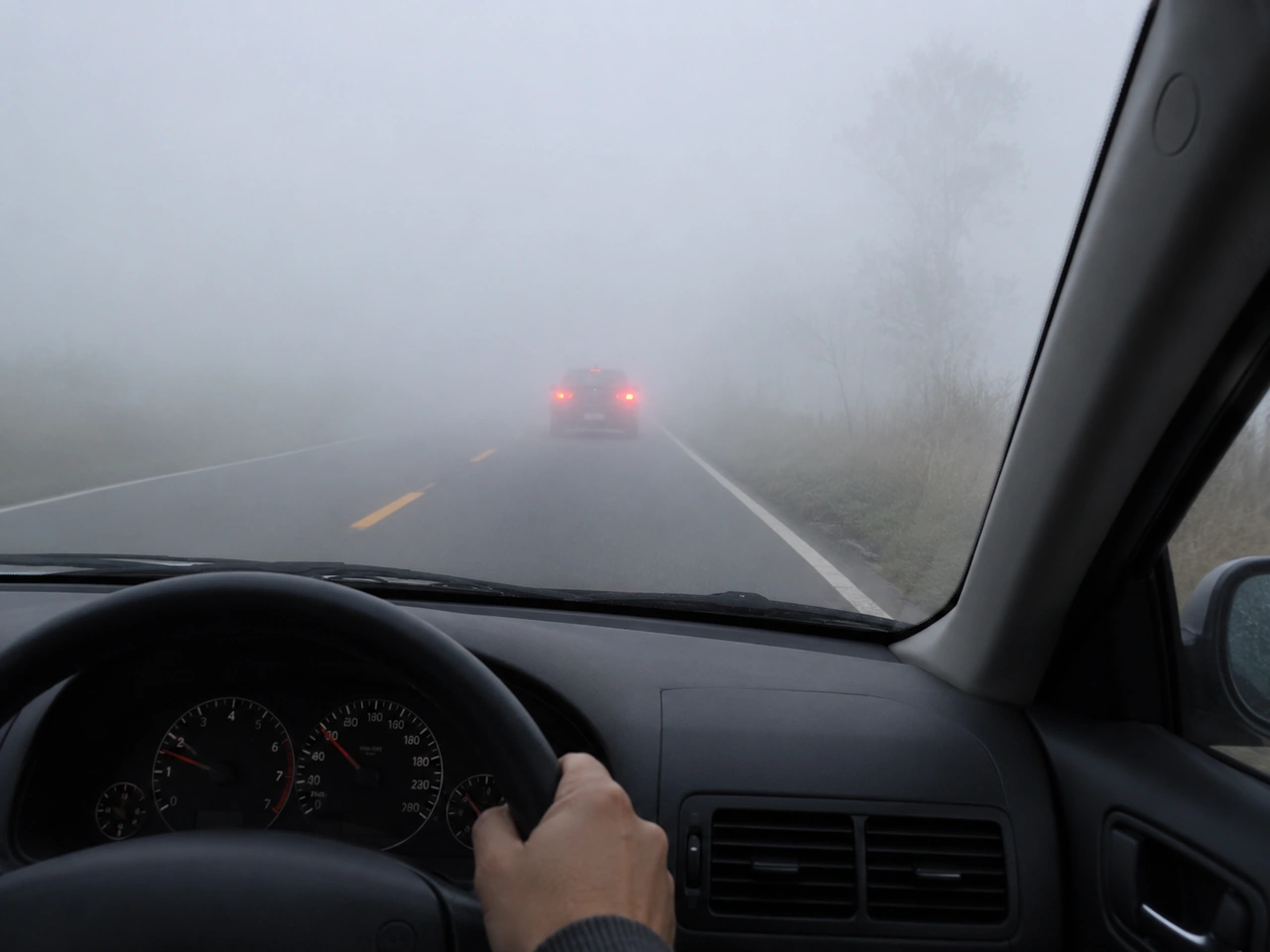
Why should you reduce speed in fog?

577. Why should you reduce speed in fog?

To prevent the windscreen from misting.
To reduce vehicle emissions.
To prevent moisture from entering the engine.
✓ Because you have less time to react to hazards you cannot see.

Fog can hide obstacles, pedestrians, and other vehicles. Lower speed gives you more time to react.

Fog limiting a driver's view ahead
AI-generated by Traffic-rules.com • WCIT • CC BY-SA
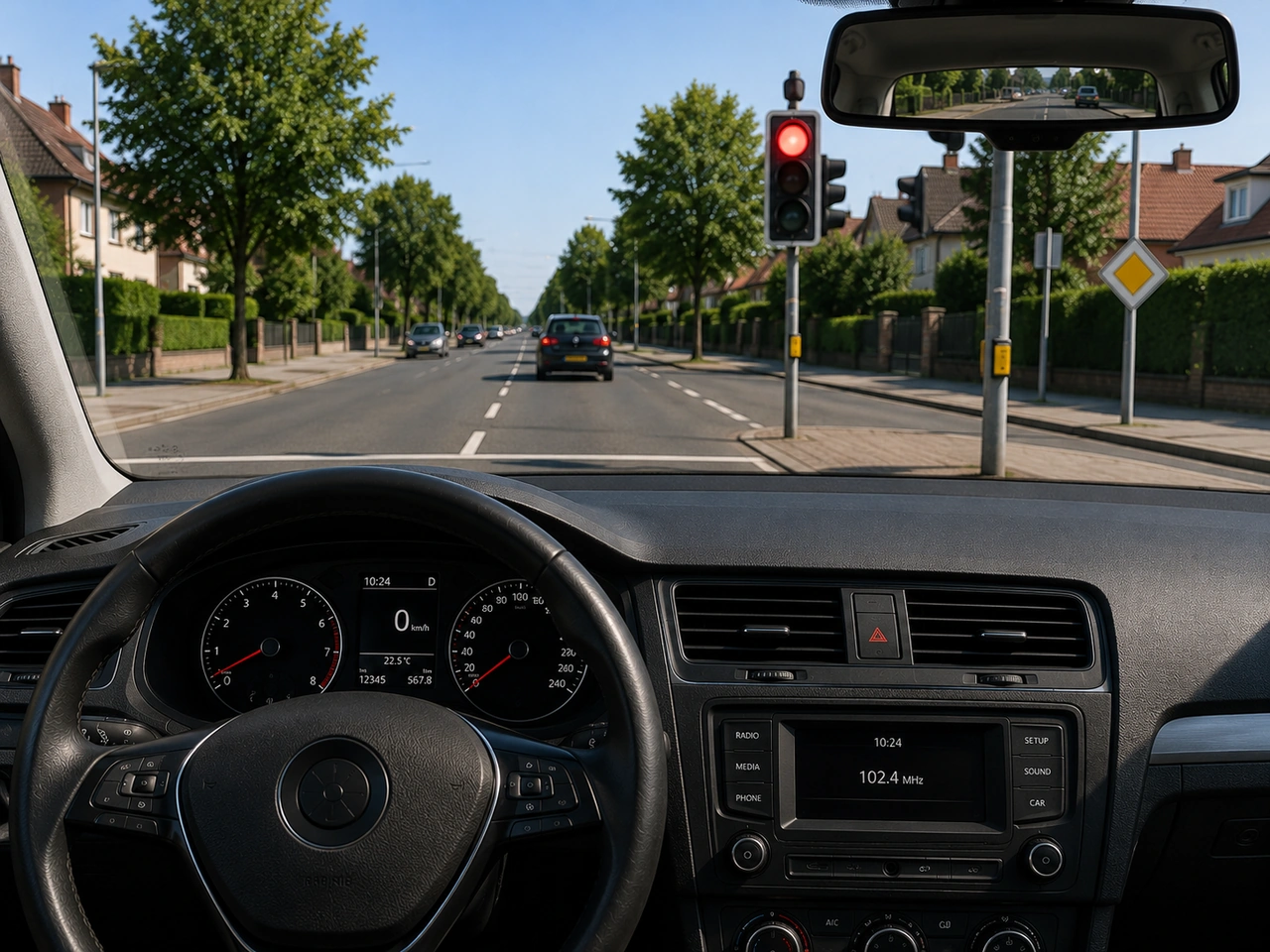
You must stop at a red traffic light.

578. You must stop at a red traffic light.

✓ True.
False.

A red traffic light means you must stop and wait until it is allowed to proceed.

Vehicle stopped at a red traffic light
AI-generated by Traffic-rules.com • WCIT • CC BY-SA
Why should you avoid sudden steering movements on snow or ice?

579. Why should you avoid sudden steering movements on snow or ice?

They increase fuel consumption.
They make the steering wheel harder to turn.
✓ They can cause the tyres to lose grip and the vehicle to skid.
They make the tyres wear more quickly.

Abrupt steering can overwhelm the limited grip available on a slippery surface. Steering smoothly helps keep the vehicle stable.

Steering a vehicle on a snowy road
AI-generated by Traffic-rules.com • WCIT • CC BY-SA
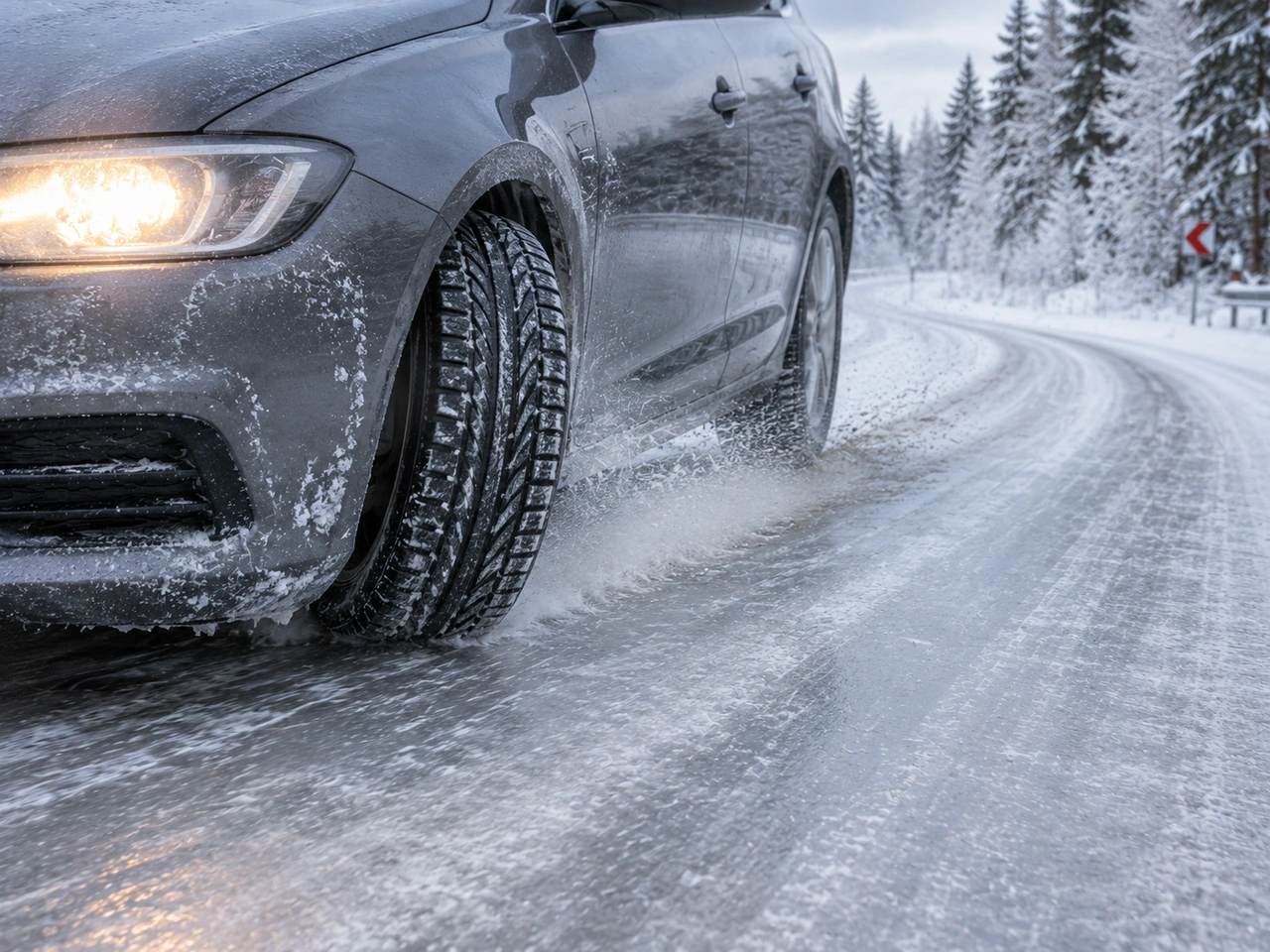
How may drivers normally use a phone while driving in Bosnia and Herzegovina?

580. How may drivers normally use a phone while driving in Bosnia and Herzegovina?

✓ Hands-free.
Either handheld or hands-free.
Only for texting.
Handheld.

When phone use while driving is permitted in Bosnia and Herzegovina, drivers must generally use a hands-free system rather than holding the phone.

Hands-free phone use inside a vehicle
AI-generated by Traffic-rules.com • WCIT • CC BY-SA
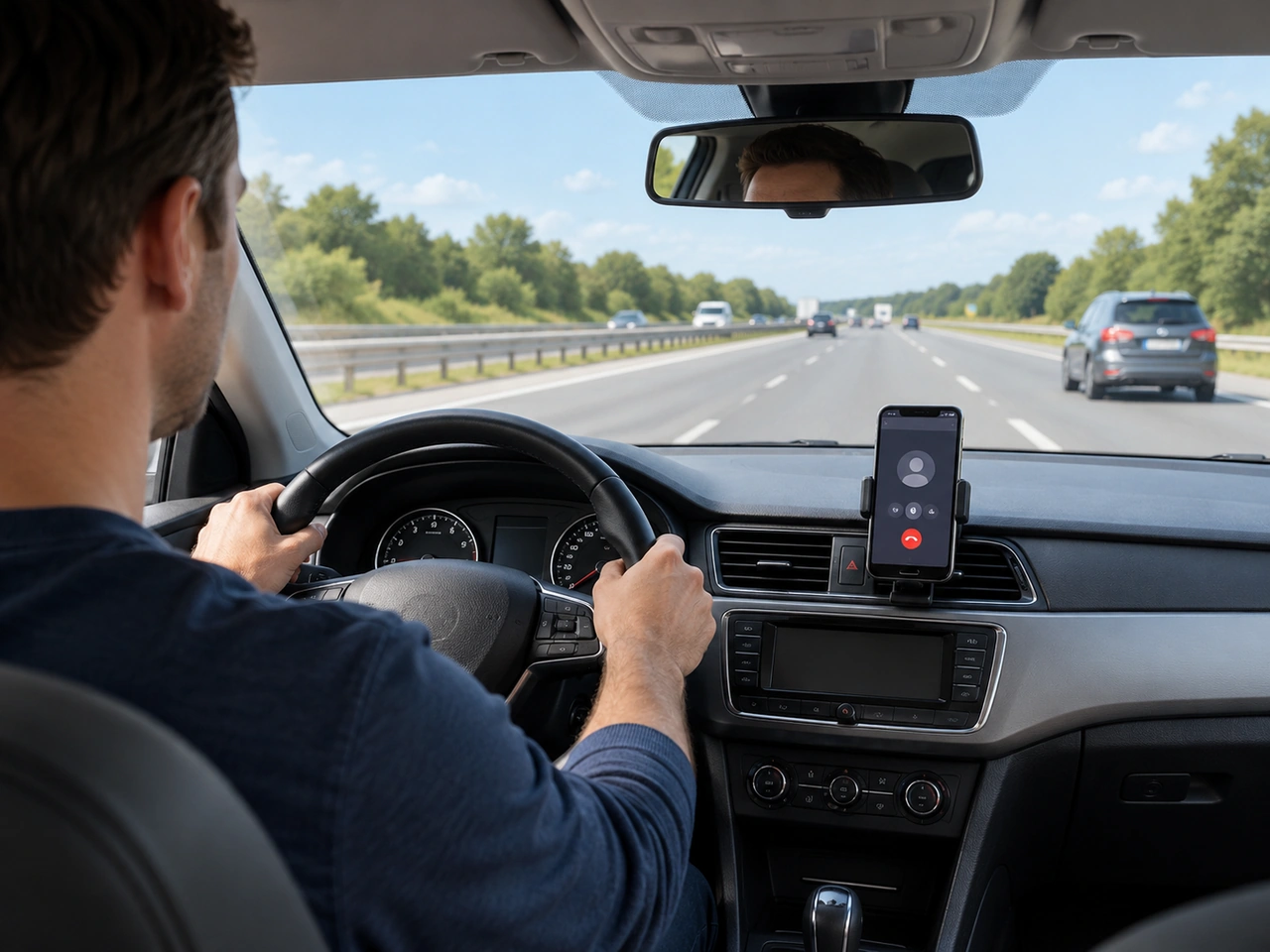
What should you do if the accelerator becomes stuck while you are driving?

581. What should you do if the accelerator becomes stuck while you are driving?

Press the accelerator harder to try to free it.
Apply the parking brake sharply while moving.
✓ Select neutral, brake firmly, and steer to a safe stopping place.
Keep driving and wait for the accelerator to release.

Selecting neutral disconnects engine power from the wheels. Brake firmly, maintain steering control, and switch off the engine after stopping safely.

Stuck accelerator pedal in a vehicle
AI-generated by Traffic-rules.com • WCIT • CC BY-SA
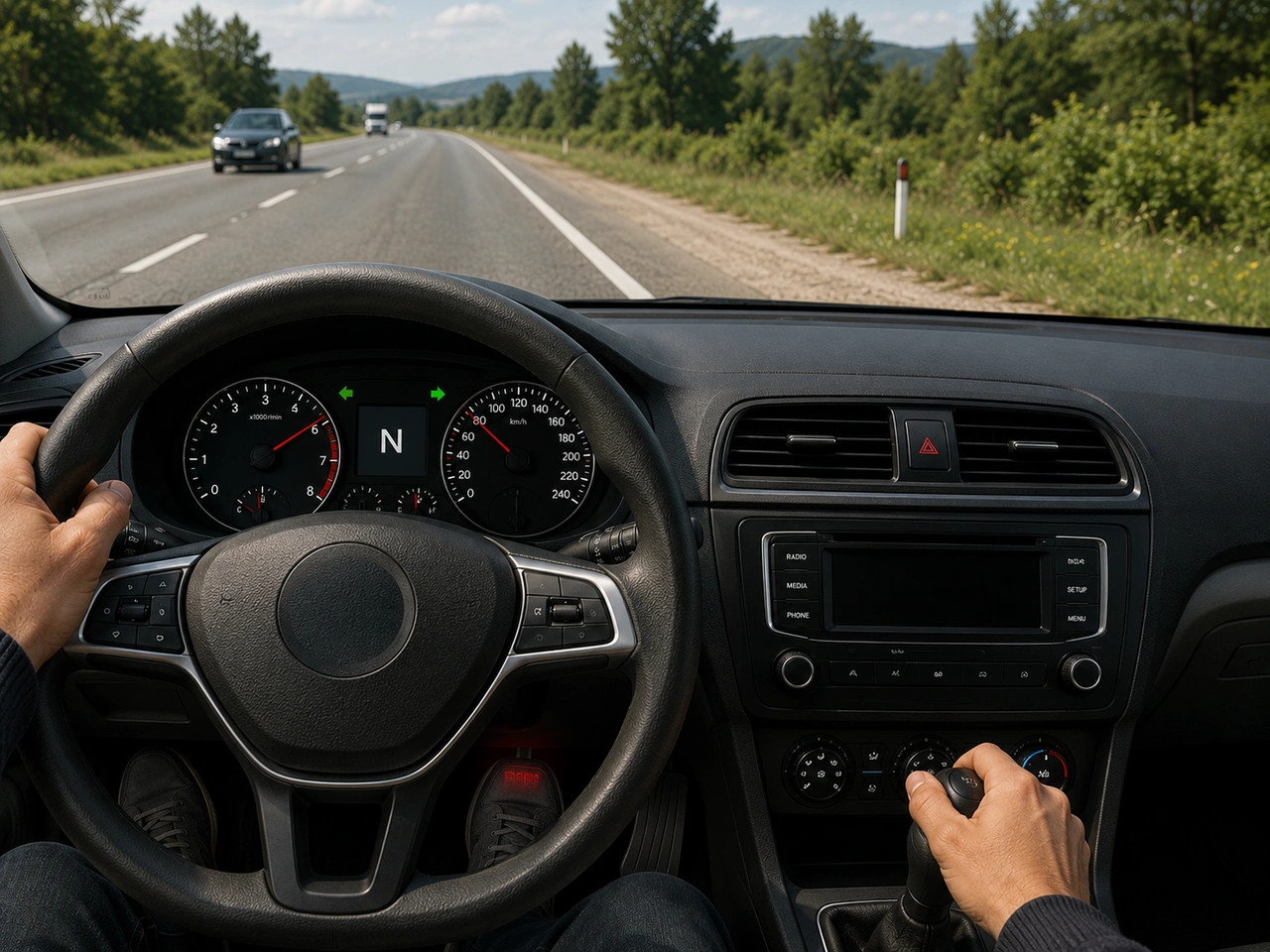
How should luggage be carried on a bicycle?

582. How should luggage be carried on a bicycle?

On one handlebar if the bag is not very heavy.
✓ Securely, without affecting steering, braking, or balance.
On one side of the bicycle to leave the other side clear.
As high as possible to keep it away from the wheels.

Loose or badly positioned luggage can interfere with control, become caught in the wheels, or hide bicycle lights.

Luggage carried on a bicycle
AI-generated by Traffic-rules.com • WCIT • CC BY-SA
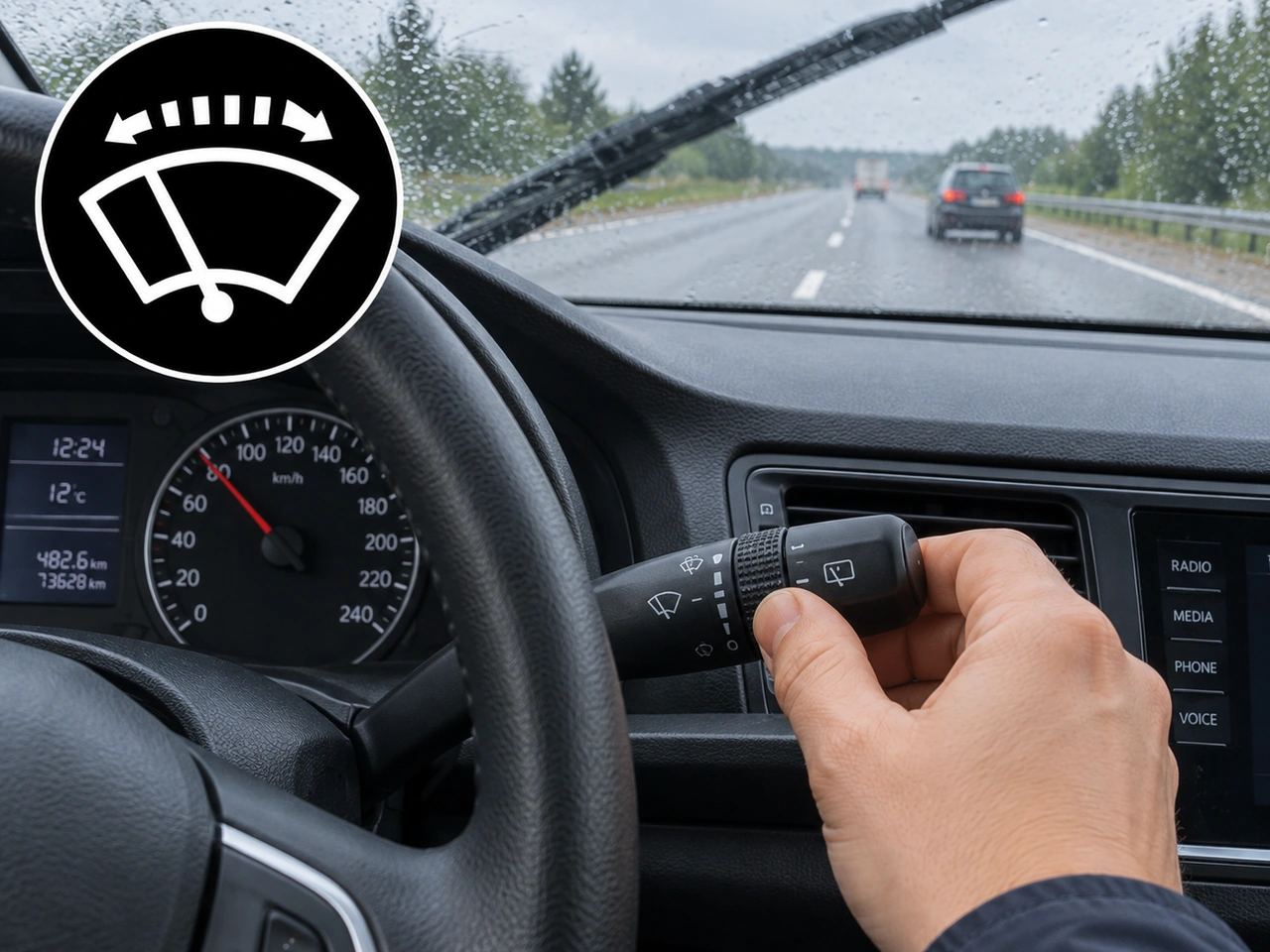
What does the intermittent wiper interval control adjust?

583. What does the intermittent wiper interval control adjust?

The amount of washer fluid sprayed.
✓ The time between wiper sweeps.
The speed of the rear wiper.
The brightness of the dashboard.

The intermittent wiper interval control adjusts the time between windscreen-wiper sweeps, allowing the driver to match the wiping frequency to light rain or spray.

Interval adjustment for intermittent windscreen wiping
AI-generated by Traffic-rules.com • WCIT • CC BY-SA
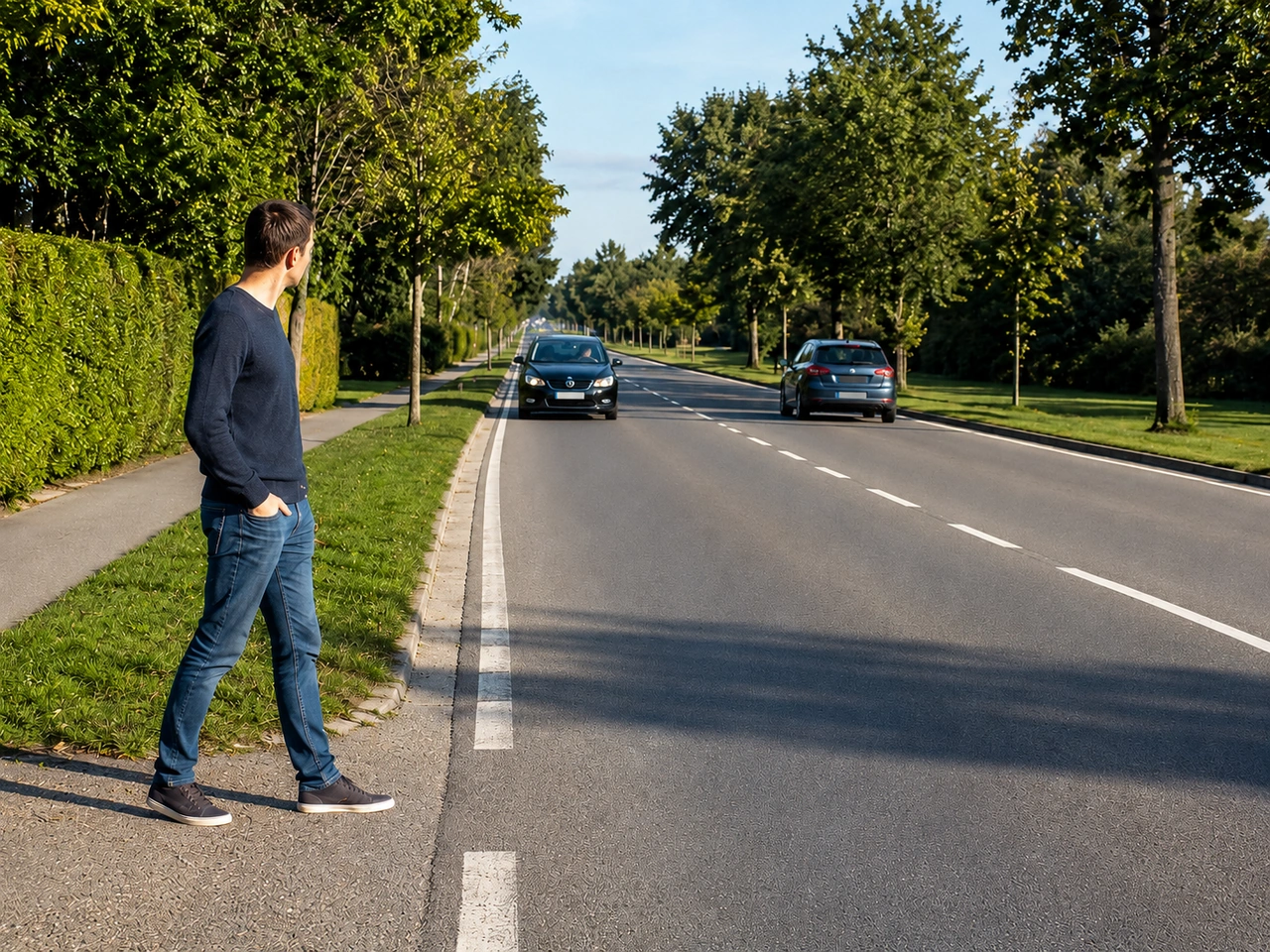
What should you do when crossing a road with no marked crossing nearby?

584. What should you do when crossing a road with no marked crossing nearby?

Cross where the road is narrowest, even if visibility is poor.
Cross near a bend if approaching traffic seems slow.
✓ Choose a place with a clear view in both directions.
Cross diagonally to spend less time in each lane.

If there is no marked crossing nearby, choose a safe place where you can clearly see approaching traffic.

Pedestrian preparing to cross a road without a marked crossing
AI-generated by Traffic-rules.com • WCIT • CC BY-SA
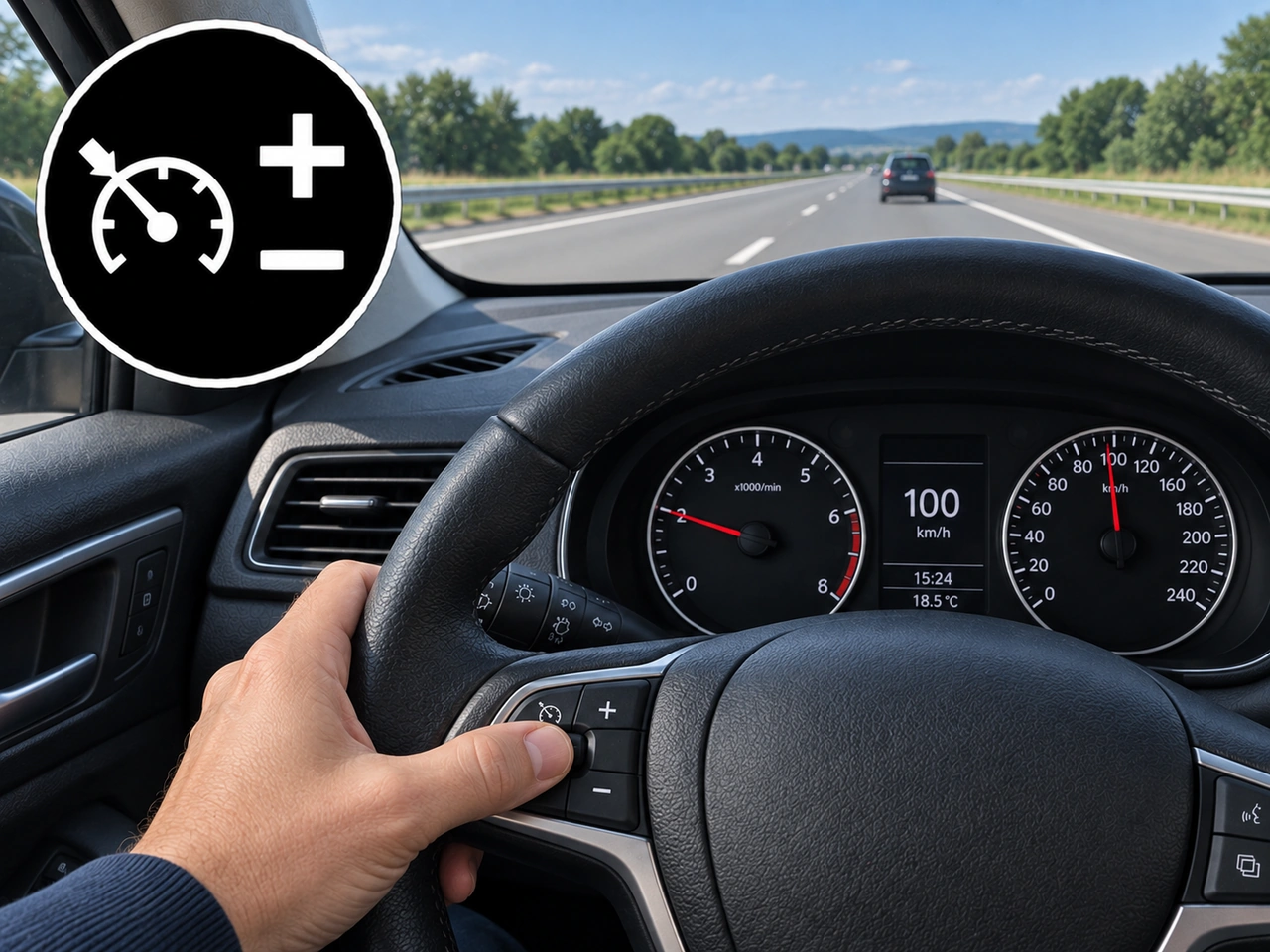
What do the + and − controls of cruise control normally do?

585. What do the + and − controls of cruise control normally do?

✓ Increase or decrease the selected cruising speed.
Change the transmission gear.
Apply or release the parking brake.
Switch between cruise control and the speed limiter.

When cruise control is active, the + and − controls normally increase or decrease the selected cruising speed. The amount of each adjustment can vary between vehicles.

Plus and minus controls for the cruising speed
AI-generated by Traffic-rules.com • WCIT • CC BY-SA
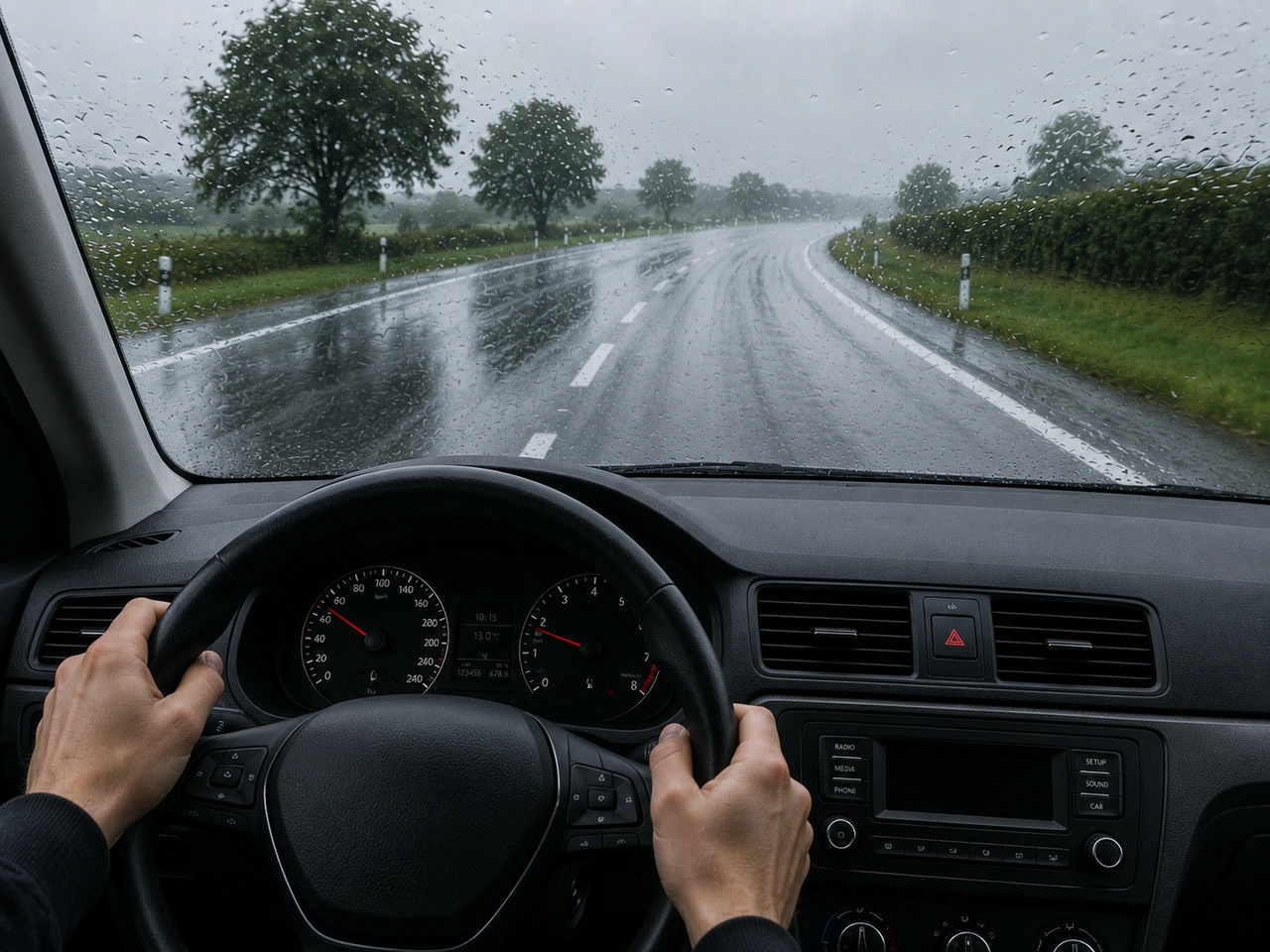
What should you do if your vehicle begins to aquaplane?

586. What should you do if your vehicle begins to aquaplane?

Turn the steering wheel sharply to regain grip.
Accelerate to push through the water.
Change lanes immediately to find a drier surface.
✓ Ease off the accelerator and keep steering gently.

Aquaplaning happens when the tyres lose contact with the road surface. Ease off the accelerator, avoid sudden movements, and wait for grip to return.

Vehicle losing tyre contact on a water-covered road
AI-generated by Traffic-rules.com • WCIT • CC BY-SA
What should you normally do after completing an overtake?

587. What should you normally do after completing an overtake?

Slow down before returning to the normal lane.
✓ Return to the normal driving lane when it is safe.
Remain in the overtaking lane until another vehicle approaches.
Stay beside the vehicle until there is another reason to change lanes.

After overtaking, return to the normal driving lane when you have passed the other vehicle by a safe distance. Check your mirrors, signal when appropriate, and avoid moving back too soon.

Vehicle returning to its lane after overtaking
AI-generated by Traffic-rules.com • WCIT • CC BY-SA
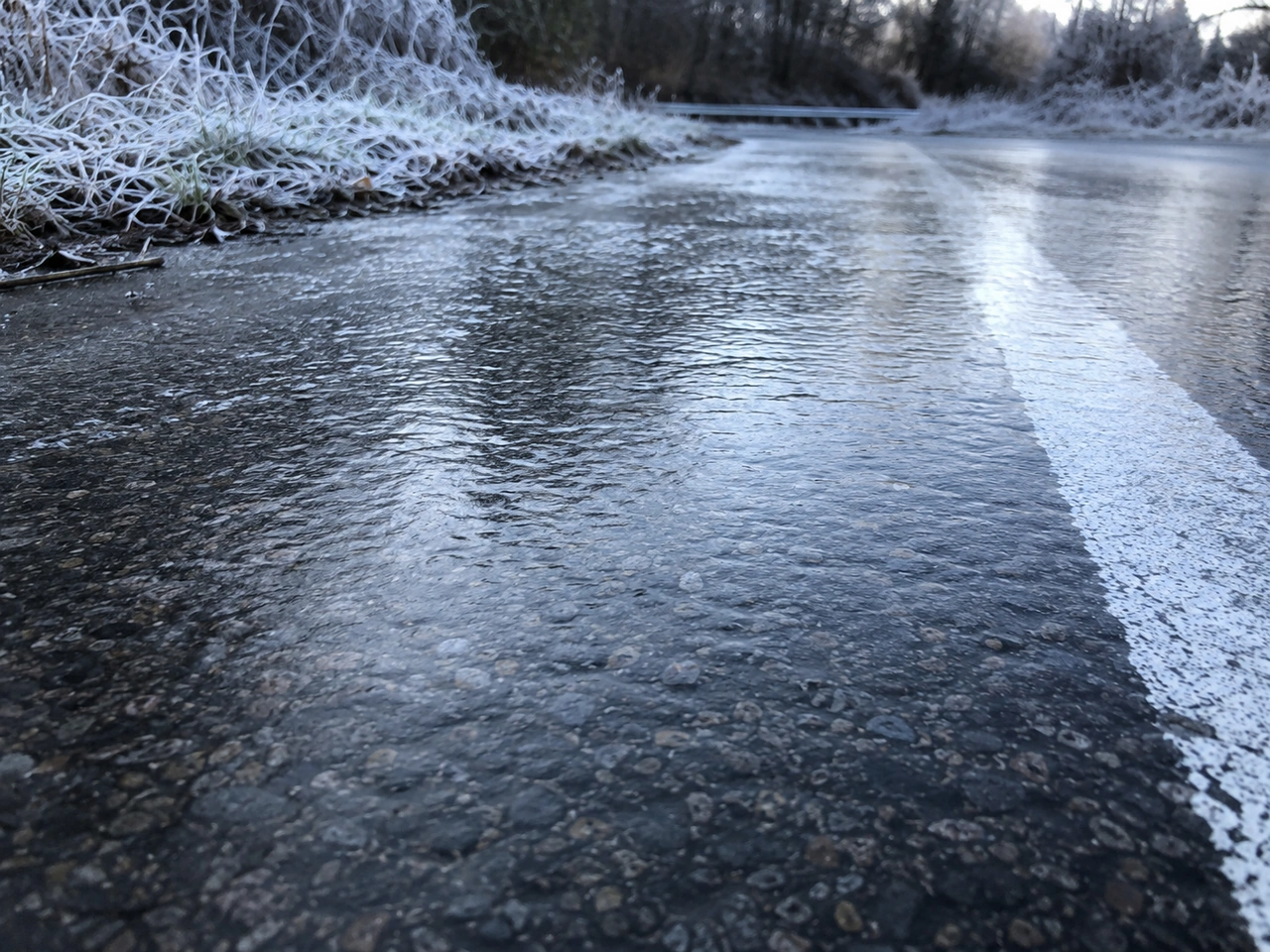
What is black ice?

588. What is black ice?

Snow mixed with road dirt.
Ice that forms only during darkness.
✓ A thin, often transparent layer of ice that can be difficult to see.
A dark patch of wet asphalt.

Black ice is difficult to detect because the road surface may look merely wet. It can cause a sudden and severe loss of grip.

Thin ice covering a road surface
AI-generated by Traffic-rules.com • WCIT • CC BY-SA
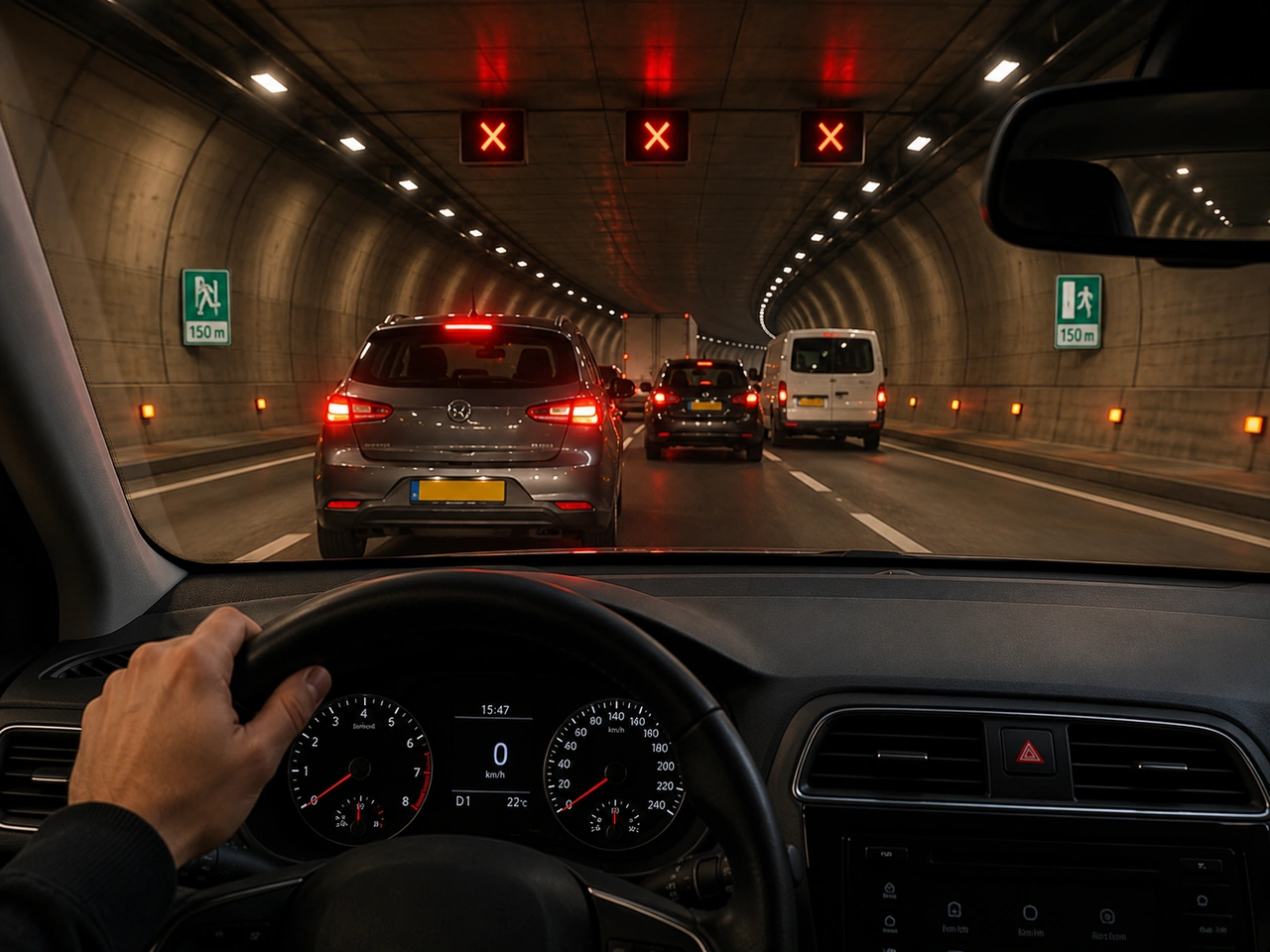
What should you do if traffic stops inside a tunnel?

589. What should you do if traffic stops inside a tunnel?

Reverse toward the tunnel entrance.
✓ Stop at a safe distance and follow signals or instructions.
Drive onto the pedestrian walkway.
Make a U-turn and leave the tunnel.

Remain calm, keep space from the vehicle ahead, and obey traffic signals, signs, or instructions from tunnel staff.

Traffic stopped inside a road tunnel
AI-generated by Traffic-rules.com • WCIT • CC BY-SA
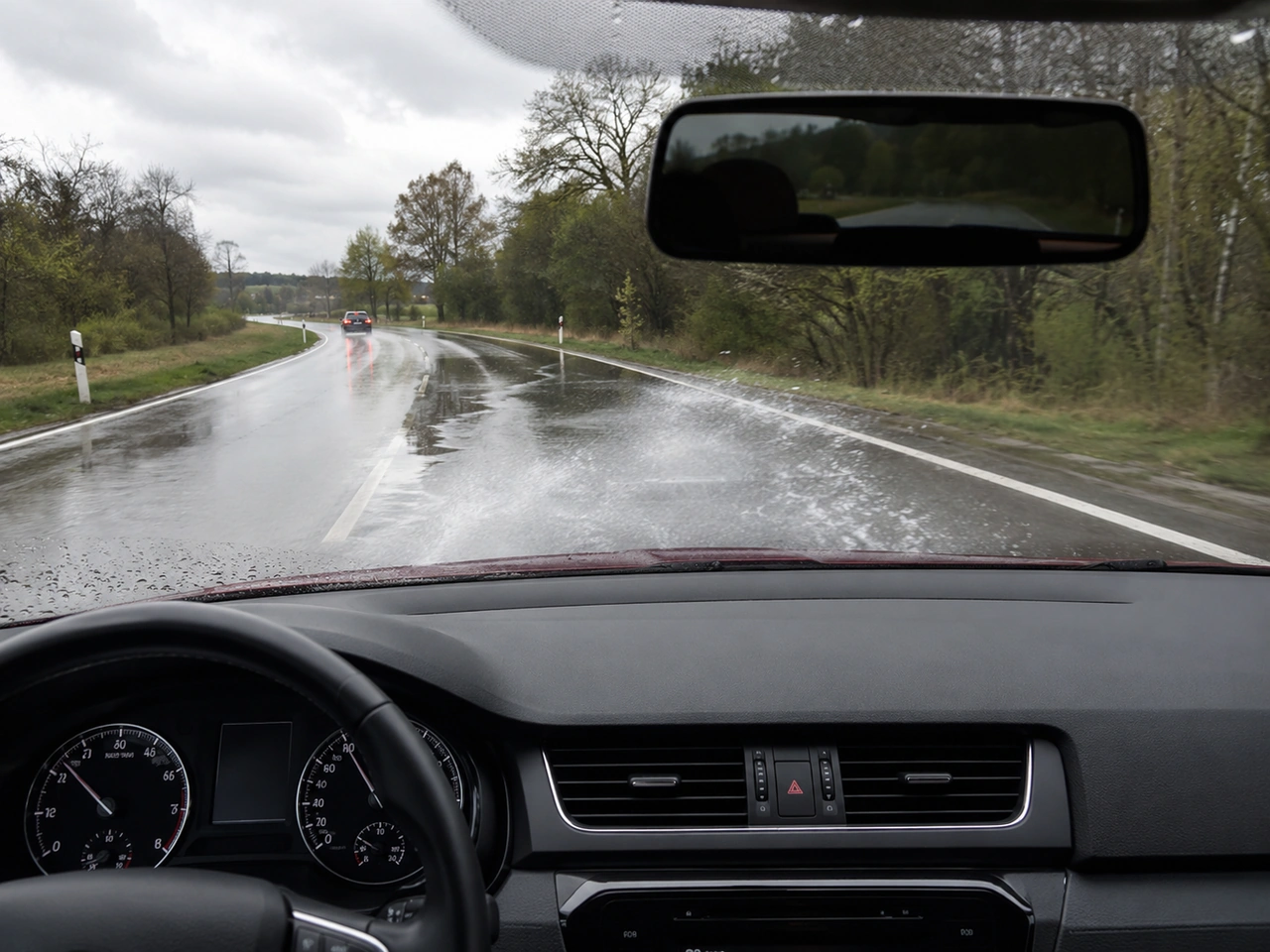
Why is it dangerous to drive through standing water at speed?

590. Why is it dangerous to drive through standing water at speed?

The suspension becomes firmer at higher speed.
The water can increase tyre pressure.
✓ The tyres may lose contact with the road.
The brakes become more effective when wet.

Driving too fast through water can cause aquaplaning, where the tyres lose grip and the driver may lose control.

Vehicle travelling through standing water
AI-generated by Traffic-rules.com • WCIT • CC BY-SA
What should you do if passengers are distracting you while driving?

591. What should you do if passengers are distracting you while driving?

Ignore the traffic until the distraction has passed.
Drive faster so you can finish the journey sooner.
Continue the conversation while watching the road.
✓ Ask them to stop and keep your attention on the road.

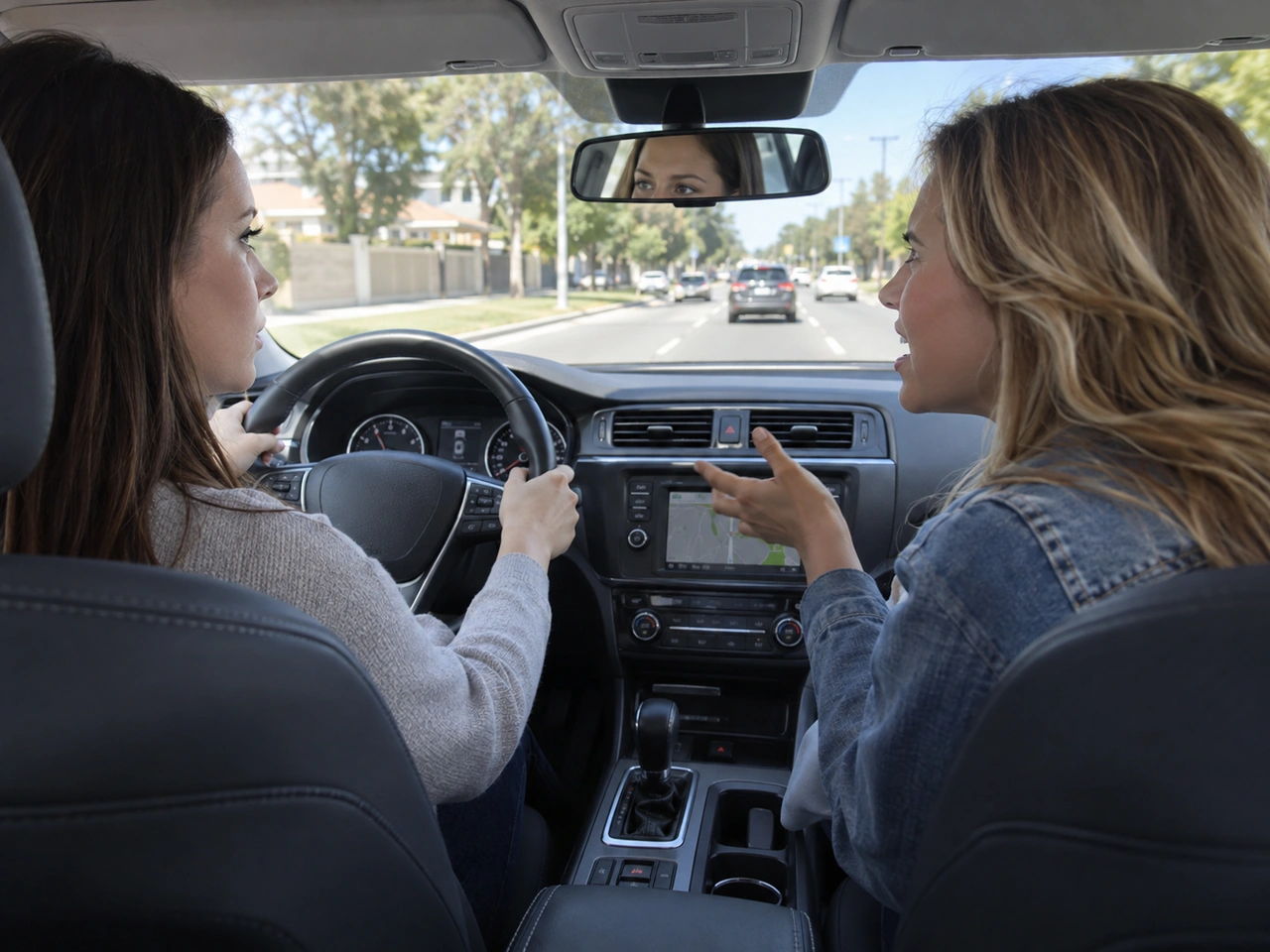
Passengers can reduce a driver's attention and concentration. If their behaviour becomes distracting, ask them to stop and keep your focus on driving. If necessary, stop somewhere safe before dealing with the situation.

Passengers distracting a driver
AI-generated by Traffic-rules.com • WCIT • CC BY-SA
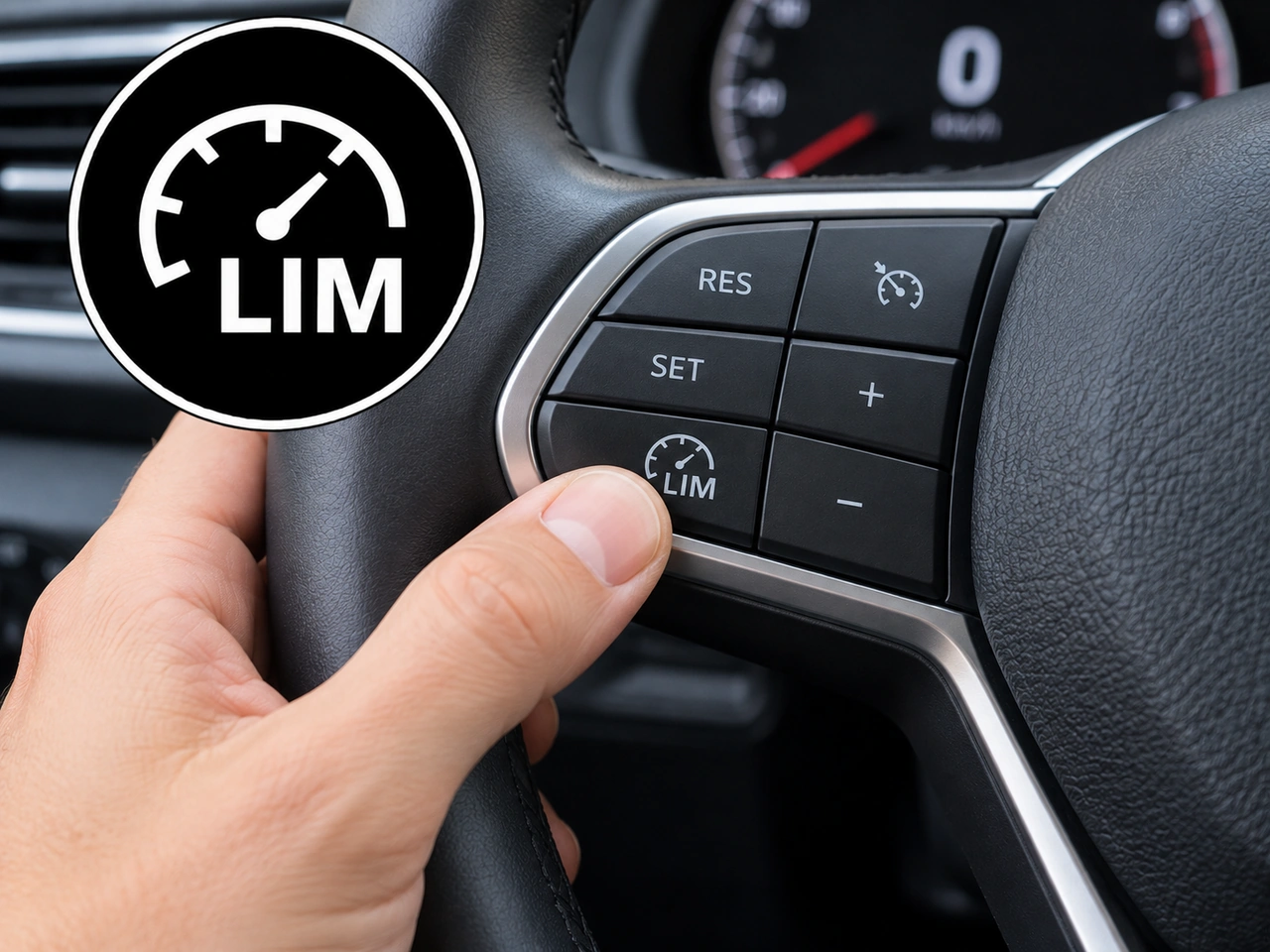
What does this vehicle-control symbol indicate?

592. What does this vehicle-control symbol indicate?

Cruise control.
Electronic stability control.
✓ Speed limiter.
Adaptive cruise control.

The speed limiter allows the driver to set a maximum speed that the vehicle should not normally exceed while the accelerator is being used.

Vehicle speed-limiter control and symbol
AI-generated by Traffic-rules.com • WCIT • CC BY-SA
You should check your mirrors before changing lanes.

593. You should check your mirrors before changing lanes.

✓ True.
False.

Checking your mirrors helps you see surrounding traffic before moving into another lane.

Driver checking a mirror before changing lanes
AI-generated by Traffic-rules.com • WCIT • CC BY-SA