


Traffic signsUnited Kingdom
 Traffic rules
 United Kingdom
201. Windscreen
A windscreen, also called a windshield, is the transparent front window of a vehicle through which the driver views the road ahead. It also helps protect occupants from wind, rain, debris and other external elements.
The windscreen must provide the driver with a clear and sufficiently undistorted view. Cracks, chips, dirt, stickers or other objects can reduce visibility, particularly when they are located within the area swept by the windscreen wipers.
Wikimedia.org • Vcx • CC BY-SA
What is the purpose of a windscreen?
The windscreen allows the driver to see the road ahead while protecting vehicle occupants from wind, rain, insects, stones and other debris.
Can a cracked windscreen be dangerous?
Yes. Cracks, chips or deformation can interfere with the driver's view and may weaken the windscreen. Damage in the driver's main field of vision is particularly important and should be repaired or assessed promptly.
Why must windscreen wipers keep the glass clear?
Windscreen wipers remove rain, snow and dirt from the driver's viewing area. A clear windscreen is essential for maintaining adequate forward visibility in poor weather.

202. Emergency hammer
An emergency hammer is a safety tool designed to break certain vehicle windows when normal doors or exits cannot be used during an emergency. It is commonly found in buses, coaches and other passenger vehicles near windows designated as emergency exits.
An emergency hammer should only be used when evacuation through the normal exits is impossible or unsafe. The tool must remain accessible and, where provided for an emergency window, should be used according to the instructions displayed in the vehicle.

Wikimedia.org • Santeri Viinamäki • CC BY-SA
What is an emergency hammer used for?
An emergency hammer is used to break a suitable vehicle window so occupants can escape when normal doors or emergency exits cannot be opened.
Where are emergency hammers normally located?
In vehicles equipped with them, emergency hammers are normally mounted in an easily accessible position close to an emergency window or other designated escape point.
Can an emergency hammer break every vehicle window?
No. Vehicle windows can use different types of glazing, and not every window is designed to be broken as an emergency exit. Occupants should use designated emergency windows and follow the instructions provided in the vehicle.
203. Car battery
A car battery is an electrical energy-storage device that supplies power to a vehicle's electrical system. In conventional petrol and diesel cars, the 12-volt starter battery provides the high current needed to start the engine and supplies electrical equipment when the engine or charging system is not providing enough power.
Car batteries gradually lose charge and capacity with age and use. A weak battery can cause slow or unsuccessful starting, electrical problems or warning messages, and the replacement battery should have specifications suitable for the vehicle.
Wikimedia.org • Filipograf • CC BY-SA
What does a car battery do?
A car battery stores electrical energy, supplies the power required to start the engine and supports the vehicle's electrical and electronic systems when necessary.
What are signs of a weak car battery?
Possible signs include slow engine cranking, difficulty starting, dim or unstable electrical equipment and battery or charging-system warnings. Similar symptoms can also have other causes, so the charging system may need to be checked.
Can any replacement battery be fitted to a car?
No. The battery must have specifications and technology suitable for the vehicle. Cars equipped with start-stop systems, for example, may require AGM or EFB battery technology designed for repeated starting and charging cycles.
204. Traction battery
A traction battery is a rechargeable battery that stores electrical energy used to propel an electric or hybrid vehicle. It supplies power to one or more electric traction motors and is normally much larger and more powerful than the vehicle's conventional 12-volt starter battery.
Traction-battery capacity is commonly expressed in kilowatt-hours (kWh) and strongly influences an electric vehicle's driving range. Its performance and usable capacity can gradually decrease with age, charging cycles, temperature and use.
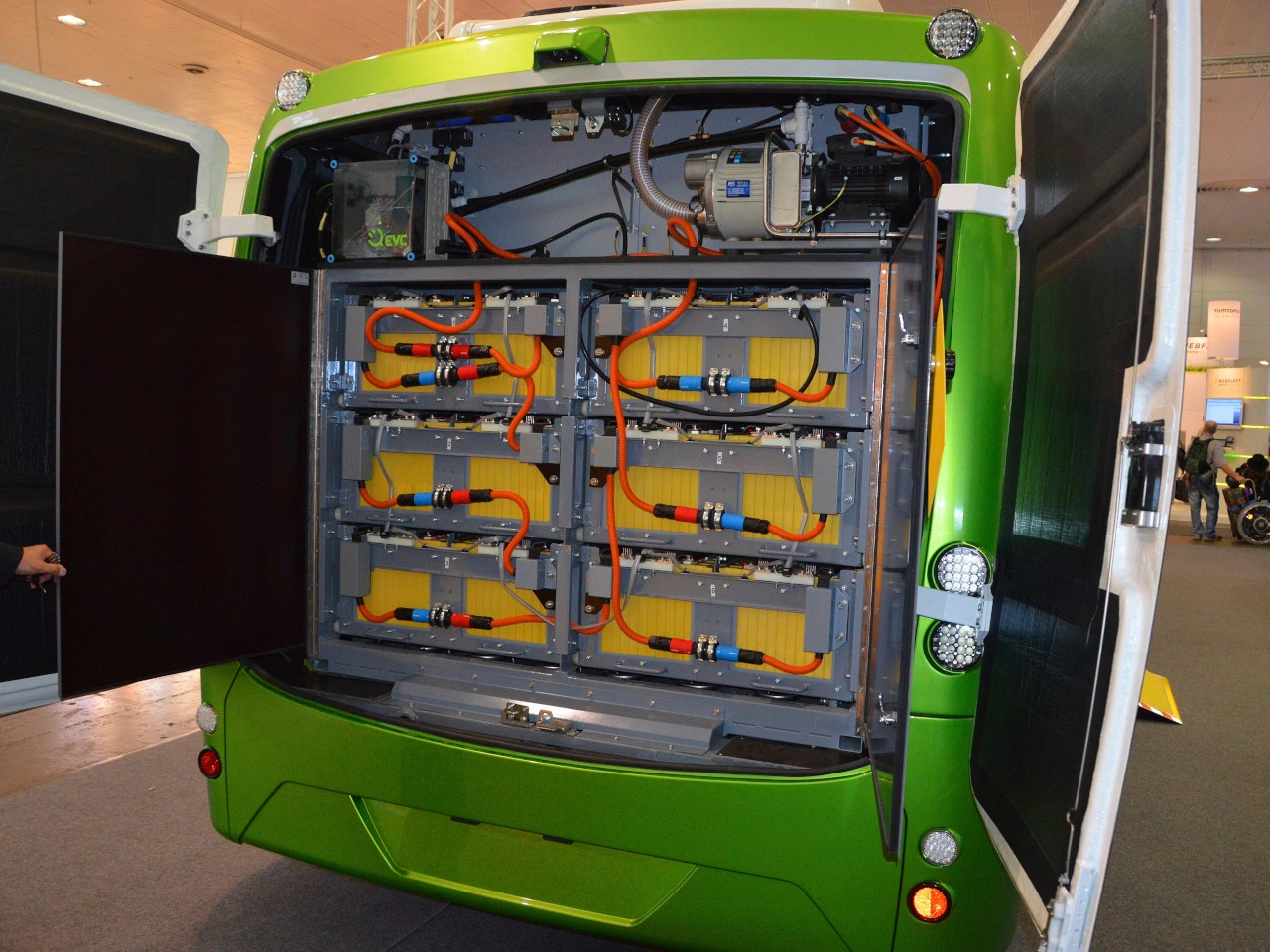
Wikimedia.org • Spielvogel • CC0
What does a traction battery do?
A traction battery stores electrical energy and supplies it to the electric motor or motors that propel the vehicle. In hybrid vehicles it works together with another power source, while in battery-electric vehicles it provides the main source of propulsion energy.
What is the difference between a traction battery and a 12-volt car battery?
The traction battery provides the large amount of electrical energy needed to propel the vehicle. The conventional 12-volt battery mainly supplies low-voltage systems and supports functions such as vehicle electronics, control systems and starting procedures.
What does traction-battery capacity mean?
Battery capacity indicates how much electrical energy the battery can store and is commonly expressed in kilowatt-hours (kWh). A larger usable capacity generally allows more electrical energy to be available for driving.
205. Suspension
Suspension is the system that connects a vehicle's wheels and axles to its body or chassis. It includes components such as springs, shock absorbers, control arms, joints and links that allow the wheels to move while helping keep the vehicle stable and comfortable.
The suspension helps maintain tyre contact with the road, absorbs bumps and contributes to steering, braking and vehicle stability. Worn or damaged suspension components can reduce handling and increase uneven tyre wear.
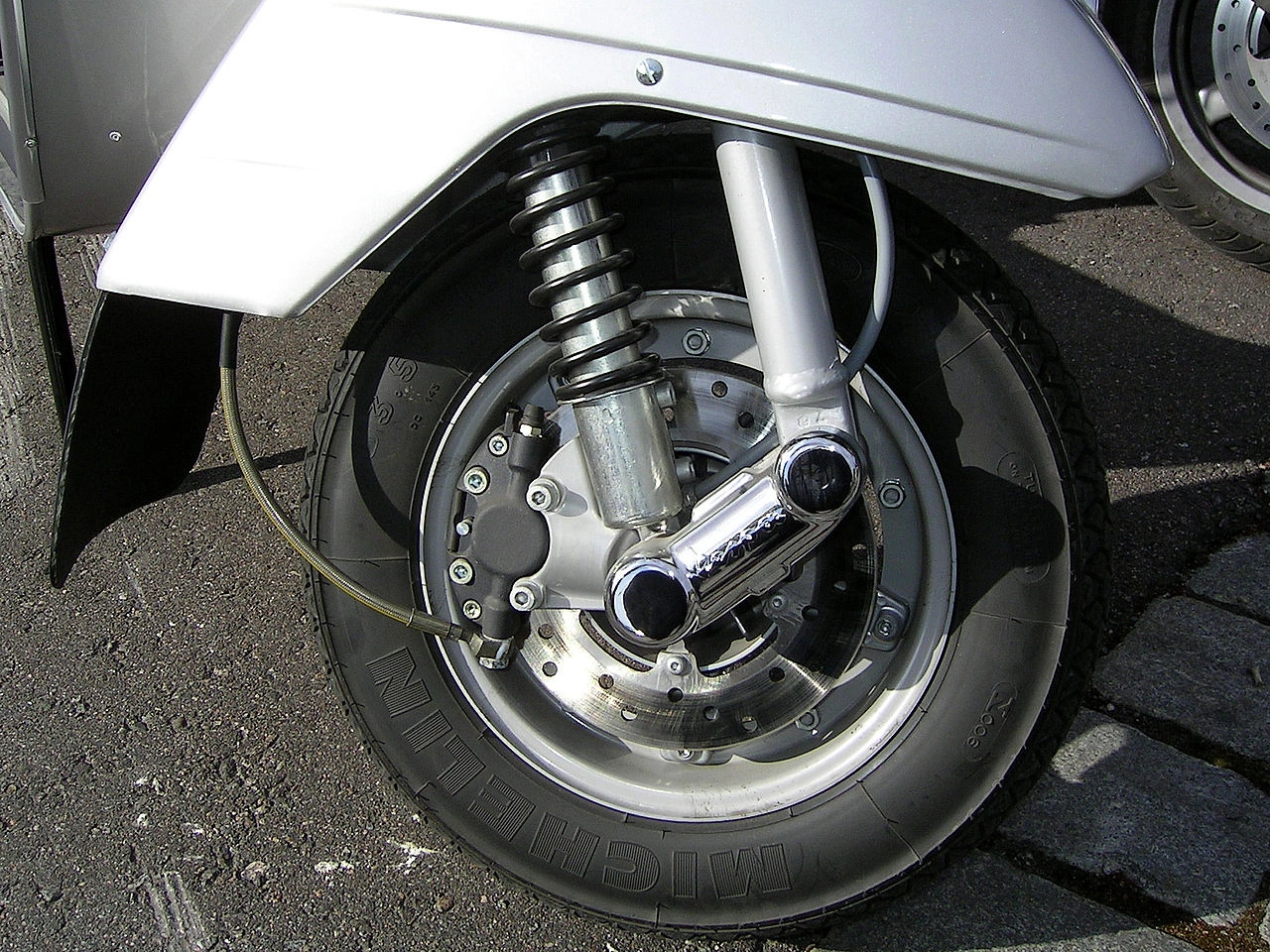
Wikimedia.org • Khaosaming • CC BY-SA
What does a vehicle suspension system do?
The suspension supports the vehicle, allows the wheels to move over uneven surfaces and helps keep the tyres in contact with the road while controlling body movement.
What components are part of the suspension?
Common suspension components include springs, shock absorbers or dampers, control arms, bushings, ball joints and other links connecting the wheels to the vehicle structure.
What are signs of worn suspension?
Possible signs include excessive bouncing, unusual noises, poor stability, uneven tyre wear, excessive body movement in bends or a vehicle that sits unevenly. These symptoms should be inspected because they can also have other causes.
206. Shock absorber
A shock absorber is a suspension component that controls the movement of a vehicle's springs and wheels. It reduces excessive bouncing after bumps and helps keep the tyres in consistent contact with the road.
Worn or damaged shock absorbers can reduce vehicle stability, increase body movement and negatively affect steering and braking behaviour. They should be inspected if the vehicle bounces excessively, handles poorly or shows signs of fluid leakage.

Wikimedia.org • Avsar Aras • CC BY-SA
What does a shock absorber do?
A shock absorber controls suspension movement by damping the repeated movement of the springs. This helps stabilise the vehicle and maintain tyre contact with the road.
What are signs of worn shock absorbers?
Possible signs include excessive bouncing, increased body movement, poor stability, unusual suspension noises, uneven tyre wear or visible fluid leakage from the shock absorber.
Are shock absorbers the same as springs?
No. Springs support the vehicle and allow the suspension to move over bumps, while shock absorbers control and damp that movement. The two components work together as part of the suspension system.
207. Spring
A spring is a suspension component that supports the vehicle's weight and allows the wheels to move vertically over bumps and uneven road surfaces. Common types include coil springs, leaf springs, torsion bars and air springs.
Springs absorb and store energy as the suspension moves, while shock absorbers control that movement. A damaged or broken spring can change the vehicle's ride height, handling and stability and should be repaired promptly.

Wikimedia.org • Qz10 • CC BY-SA
What does a suspension spring do?
A suspension spring supports the vehicle and allows the wheels to move over uneven surfaces while helping maintain the vehicle's normal ride height.
What types of suspension springs are used in vehicles?
Common designs include coil springs, leaf springs, torsion bars and air springs. The type used depends on the vehicle and suspension design.
What are signs of a damaged suspension spring?
Possible signs include an uneven ride height, unusual suspension noises, poor handling or a visibly cracked or broken spring. A suspected spring defect should be inspected promptly.
208. Exhaust
An exhaust system carries combustion gases away from a vehicle’s engine and releases them safely behind or beneath the vehicle. The exhaust system can include pipes, silencers or mufflers, catalytic converters, particulate filters and other emissions-control components.
A damaged or leaking exhaust can increase noise, allow harmful gases to escape in unintended locations and interfere with the vehicle's emissions-control system. Exhaust components should therefore remain securely attached and in good condition.

Wikimedia.org • Steevven1 • CC BY
What does a vehicle exhaust system do?
The exhaust system carries combustion gases away from the engine and directs them out of the vehicle. It can also reduce exhaust noise and use emissions-control equipment to reduce pollutants.
What are signs of an exhaust problem?
Possible signs include unusually loud exhaust noise, rattling, visible damage, unusual exhaust smells, warning lights or emissions problems. A suspected leak should be inspected promptly.
What is included in an exhaust system?
Depending on the vehicle, the system can include an exhaust manifold, pipes, silencers, catalytic converters, particulate filters, sensors and other emissions-control components.
209. Exhaust gas
Exhaust gas is the mixture of gases and particles produced by an internal-combustion engine and discharged through the vehicle's exhaust system. It contains combustion products such as carbon dioxide and water vapour and can also contain pollutants including carbon monoxide, nitrogen oxides, hydrocarbons and particulate matter.
Modern vehicles use emissions-control systems such as catalytic converters and particulate filters to reduce harmful exhaust emissions. The amount and composition of exhaust gas depend on factors including the fuel, engine design, operating conditions and condition of the emissions-control system.

Wikimedia.org • Santeri Viinamäki • CC BY-SA
What is contained in vehicle exhaust gas?
Exhaust gas contains products of fuel combustion and can include carbon dioxide, water vapour, carbon monoxide, nitrogen oxides, unburned hydrocarbons and particulate matter. The quantities depend on the engine, fuel and emissions-control system.
Why can exhaust gas be harmful?
Some exhaust components, including carbon monoxide, nitrogen oxides and fine particles, can harm human health or contribute to air pollution. Exhaust should therefore never be allowed to accumulate in an enclosed space.
How are harmful exhaust emissions reduced?
Vehicles can use technologies such as catalytic converters, particulate filters and electronic engine-management systems to reduce pollutants. Emission standards also limit the amount of certain pollutants that vehicles may produce.
210. Soot
Soot is a dark, carbon-rich form of particulate matter produced by incomplete combustion. In road vehicles, it is mainly associated with exhaust from diesel engines and consists of very small particles that can contribute to air pollution.
Modern diesel vehicles use particulate filters to trap much of this material before it leaves the exhaust. Excessive soot emissions can indicate problems with combustion, the engine or the emissions-control system.

Wikimedia.org • Ilya Plekhanov • CC BY-SA
What causes soot in vehicle exhaust?
Soot is produced when fuel does not burn completely. Diesel engines can produce particularly significant amounts of particulate matter, especially when combustion or emissions-control systems are not functioning correctly.
What does a diesel particulate filter do with soot?
A diesel particulate filter traps a large proportion of the soot particles in the exhaust. The filter periodically removes accumulated material through a process known as regeneration.
Can excessive soot indicate a vehicle problem?
Yes. Unusually high soot emissions can result from engine faults, poor combustion, a defective particulate filter or other problems with the emissions-control system.
211. Catalytic converter
A catalytic converter is an emissions-control device fitted in a vehicle's exhaust system. It uses chemical reactions to convert harmful exhaust pollutants into less harmful substances before the exhaust gases are released into the atmosphere.
Depending on the engine and system, a catalytic converter can reduce pollutants such as carbon monoxide, unburned hydrocarbons and nitrogen oxides. It must reach an appropriate operating temperature to work effectively and can be damaged by contamination, overheating or engine faults.
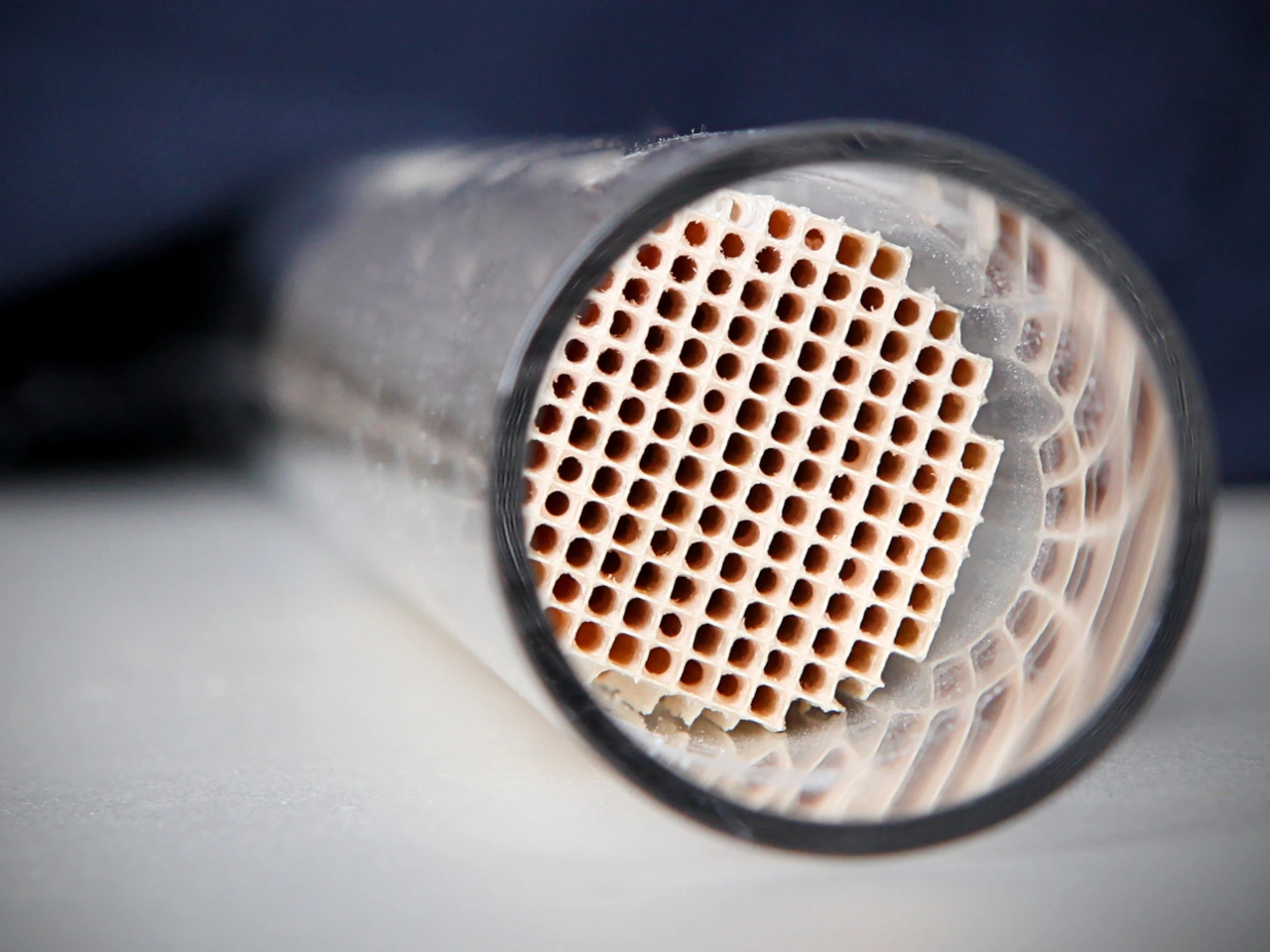
Wikimedia.org • Oak Ridge National Laboratory • CC BY
What does a catalytic converter do?
A catalytic converter reduces harmful pollutants in engine exhaust by converting them through chemical reactions into less harmful substances before they leave the exhaust system.
Where is the catalytic converter located?
It is installed in the exhaust system between the engine and the exhaust outlet. Its exact position varies between vehicles and may be relatively close to the engine so that it reaches its operating temperature quickly.
What are signs of a faulty catalytic converter?
Possible signs include an emissions or engine warning light, excessive exhaust emissions, reduced engine performance, unusual exhaust smells or failure of an emissions test. These symptoms can also have other causes and should be diagnosed properly.
212. Engine
An engine is the machine that produces the power needed to propel a motor vehicle. In conventional vehicles, an internal-combustion engine burns fuel such as petrol or diesel, while electric vehicles use one or more electric motors instead of a combustion engine.
An engine contains many components that work together to convert energy into mechanical power. Proper lubrication, cooling, maintenance and emissions control are important for reliable operation and vehicle safety.
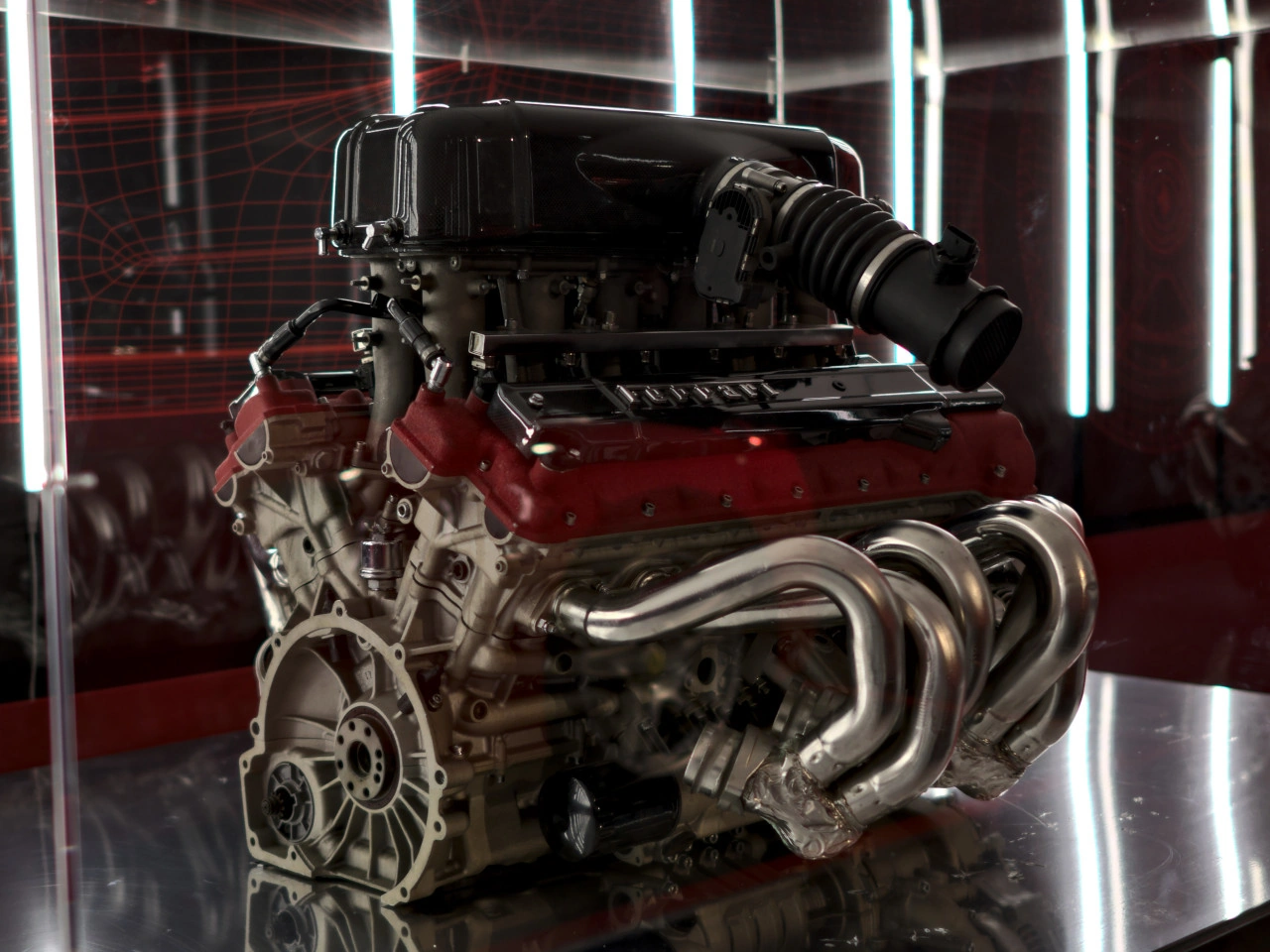
Wikimedia.org • Yanko Malinov • CC BY-SA
What does a vehicle engine do?
An engine converts energy into mechanical power that can be used to drive the vehicle's wheels. Internal-combustion engines obtain this energy by burning fuel, while electric vehicles use electrical energy in traction motors.
What are common signs of an engine problem?
Possible signs include unusual noises, loss of power, excessive smoke, overheating, fluid leaks, difficult starting or an engine warning light. These symptoms can have many different causes and should be investigated when necessary.
Why is regular engine maintenance important?
Maintenance helps keep lubrication, cooling, fuel, ignition and emissions systems working correctly. Following the manufacturer's service requirements can improve reliability and help prevent serious mechanical damage.
213. Petrol engine
A petrol engine is an internal-combustion engine that normally uses spark plugs to ignite a mixture of air and petrol. For this reason, it is also known as a spark-ignition or positive-ignition engine.
Petrol engines convert the energy released by combustion into mechanical power that drives the vehicle. Modern petrol engines use electronic engine management and emissions-control systems such as catalytic converters to improve efficiency and reduce harmful exhaust emissions.

Wikimedia.org • Florian Lindner • CC BY
How does a petrol engine work?
A petrol engine draws or injects fuel and air into the engine, compresses the mixture and ignites it using a spark plug. The resulting combustion produces pressure that moves the pistons and generates mechanical power.
What is the difference between a petrol and diesel engine?
A petrol engine normally uses spark ignition, while a diesel engine uses compression ignition. The two engine types also differ in fuel, combustion characteristics and emissions-control systems.
What emissions can a petrol engine produce?
Petrol-engine exhaust can contain pollutants such as carbon monoxide, hydrocarbons, nitrogen oxides and, particularly with some direct-injection engines, particulate matter. Modern emissions-control systems are designed to reduce these pollutants.
214. Diesel engine
A diesel engine is an internal-combustion engine that normally ignites fuel through the heat created by highly compressed air rather than by using spark plugs. For this reason, it is also known as a compression-ignition engine.
Diesel engines are commonly used in passenger cars, trucks, buses and machinery because they can provide strong low-speed torque and efficient fuel use. Modern diesel engines use emissions-control systems such as particulate filters and selective catalytic reduction to reduce harmful exhaust emissions.

Wikimedia.org • Vitaly V. Kuzmin • CC BY-SA
How does a diesel engine work?
A diesel engine compresses air inside the cylinder until it becomes very hot. Diesel fuel is then injected into the compressed air and ignites because of the high temperature.
What is the difference between a diesel and petrol engine?
A diesel engine normally uses compression ignition, while a petrol engine normally uses spark plugs to ignite an air-fuel mixture. The two engine types also differ in fuel, combustion characteristics and emissions-control systems.
What emissions can a diesel engine produce?
Diesel engines can produce pollutants including nitrogen oxides and particulate matter or soot. Modern vehicles use systems such as diesel particulate filters and other emissions-control technologies to reduce these pollutants.
215. Electric motor
An electric motor is a machine that converts electrical energy into mechanical power. In an electric or hybrid vehicle, one or more electric motors can provide the torque needed to drive the wheels.
Electric motors can deliver torque from very low speeds and operate without the combustion process used by petrol or diesel engines. During regenerative braking, some electric motors can also operate as generators and convert part of the vehicle's motion back into electrical energy.

Wikimedia.org • Oleg Alexandrov • CC BY-SA
What does an electric motor do in a vehicle?
An electric motor converts electrical energy into mechanical power that can propel the vehicle. Depending on the drivetrain, one or more motors may drive the wheels.
Do hybrid vehicles have electric motors?
Yes. Hybrid electric vehicles combine at least one electric propulsion motor with another propulsion-energy source, normally an internal-combustion engine.
Can an electric motor generate electricity?
Yes. In vehicles equipped with regenerative braking, the traction motor can operate as a generator while the vehicle slows down, converting part of its kinetic energy into electrical energy that can be stored in the traction battery.
216. Timing belt
A timing belt is a toothed belt in an internal-combustion engine that synchronises the rotation of the crankshaft and camshaft so that the engine's valves open and close at the correct time relative to piston movement.
The timing belt is a wear component and must be replaced according to the vehicle manufacturer's maintenance schedule. If it becomes excessively worn or breaks, the engine can stop suddenly and, in many engine designs, serious internal engine damage can occur.

Wikimedia.org • Thesupermat • CC BY-SA
What does a timing belt do?
The timing belt synchronises the crankshaft and camshaft so that the pistons and valves move in the correct sequence while the engine is operating.
When should a timing belt be replaced?
The replacement interval depends on the vehicle and engine. Drivers should follow the manufacturer's specified mileage and age interval rather than waiting for obvious symptoms of wear.
What happens if a timing belt breaks?
The engine will stop operating and, depending on the engine design, the pistons and valves can collide and cause severe internal engine damage.
217. Glow plug
A glow plug is an electrical heating element used in diesel engines to help ignite the fuel during cold starting. It heats the combustion chamber so that the compressed air reaches conditions suitable for reliable combustion.
Modern glow plugs can continue operating briefly after the engine starts to improve combustion, reduce cold-start emissions and help the engine run smoothly while warming up.

Wikimedia.org • Chris828 • CC0
What does a glow plug do?
A glow plug heats the combustion chamber of a diesel engine before and during cold starting so that the injected diesel fuel can ignite more reliably.
Do diesel engines use glow plugs instead of spark plugs?
Diesel engines normally ignite fuel through compression rather than an electrical spark. Glow plugs therefore assist cold combustion but do not continuously ignite the fuel in the same way that spark plugs do in a petrol engine.
What are signs of faulty glow plugs?
Possible signs include difficult cold starting, rough running shortly after startup, increased cold-start smoke or a glow plug or engine warning light. Similar symptoms can have other causes, so proper diagnosis may be necessary.
218. Cylinder
A cylinder is a chamber inside a reciprocating internal-combustion engine in which a piston moves up and down. Air or an air-fuel mixture is compressed inside the cylinder, and combustion produces pressure that pushes the piston and helps generate mechanical power.
Most car engines have several cylinders arranged in configurations such as inline, V-shaped or horizontally opposed layouts. The combined swept volume of all cylinders is known as the engine displacement or cylinder capacity.

Wikimedia.org • Nick johns • CC0
What happens inside an engine cylinder?
A piston moves inside the cylinder while the engine draws in air or an air-fuel mixture, compresses it and uses combustion to create pressure. This pressure acts on the piston and contributes to turning the crankshaft.
How many cylinders does a car engine have?
The number varies by engine design. Common passenger-car engines can have three, four, six or more cylinders, while some engines use different configurations according to their size and performance requirements.
What is cylinder capacity?
Cylinder capacity or engine displacement is the total swept volume of the engine's cylinders. It is commonly expressed in cubic centimetres (cm³) or litres.
219. Engine oil
Engine oil is a lubricant used inside an internal-combustion engine to reduce friction and wear between moving components. It also helps remove heat, keep internal surfaces clean and protect components against corrosion.
The oil level and condition should be checked according to the vehicle manufacturer's instructions. Only oil with the correct specification and viscosity should be used, and the oil and oil filter should be replaced at the recommended maintenance intervals.

Wikimedia.org • Dvortygirl • CC BY-SA
What does engine oil do?
Engine oil lubricates moving components, reduces friction and wear, helps carry away heat and keeps contaminants suspended so that they can be removed by the oil filter or during an oil change.
How do you check the engine oil level?
Depending on the vehicle, the level is checked with an oil dipstick or an electronic oil-level system. The vehicle manufacturer's instructions should be followed because the required procedure can vary between engines.
Can you use any engine oil?
No. Engine oils have different viscosity grades and technical specifications. Only oil meeting the requirements specified by the vehicle manufacturer should be used.
220. Coolant
Coolant is a fluid that circulates through a vehicle's cooling system to remove excess heat from the engine or other components. It usually contains water mixed with antifreeze and corrosion inhibitors so that the cooling system can operate safely across a wide range of temperatures.
The coolant level should be checked according to the vehicle manufacturer's instructions. The correct coolant specification must be used, and the cooling system should only be opened when it is safe to do so because hot coolant can be under pressure.

Wikimedia.org • Gasper12345 • CC BY-SA
What does engine coolant do?
Coolant absorbs heat from the engine and carries it to the radiator, where the heat can be released. It also helps protect the cooling system against freezing, corrosion and excessive temperatures.
Can you use any type of coolant?
No. Vehicles can require different coolant specifications and mixtures. Drivers should use coolant that meets the vehicle manufacturer's requirements and avoid mixing incompatible coolant types.
Should you open the coolant reservoir when the engine is hot?
No. A hot cooling system can be pressurised and opening it can release hot coolant or steam. Allow the system to cool and follow the vehicle manufacturer's instructions before opening the reservoir.
221. Maintenance
Maintenance is the regular inspection, servicing and repair of a vehicle to keep it safe, reliable and in good working condition. It includes tasks such as checking fluids, tyres, brakes, lights and other components and replacing worn parts when necessary.
Maintenance should follow the vehicle manufacturer's recommended service schedule. Regular maintenance can help prevent breakdowns, reduce wear, maintain safety systems and identify defects before they become more serious.

Wikimedia.org • Nigel Sandridge • CC0
Why is regular vehicle maintenance important?
Regular maintenance helps keep safety-critical and mechanical systems working correctly, reduces the risk of breakdowns and can identify worn or damaged components before they cause larger problems.
What does routine vehicle maintenance include?
It can include checking and replacing engine oil and filters, inspecting tyres and brakes, checking fluid levels, lights, suspension and other components, and performing other work specified by the vehicle manufacturer.
How often should a vehicle be serviced?
Service intervals depend on the vehicle, engine, mileage, age and operating conditions. Drivers should follow the maintenance schedule provided by the vehicle manufacturer.
222. Spare tyre
A spare tyre is an additional tyre, usually already mounted on a wheel, carried in a vehicle so that a damaged or punctured road wheel can be temporarily replaced. Vehicles may carry a full-size spare wheel, a compact temporary spare or a tyre-repair kit instead.
A temporary spare wheel is normally intended only for emergency and short-term use. Drivers must follow the manufacturer's restrictions concerning speed, distance, tyre pressure and installation and should replace or repair the damaged normal tyre as soon as possible.

Wikimedia.org • Mike-fiesta • CC BY-SA
What is a spare tyre?
A spare tyre is an additional tyre, normally mounted on a wheel, that can temporarily replace a punctured or damaged road wheel.
Is a spare tyre the same as a spare wheel?
In everyday use the terms are often used interchangeably. Technically, a spare wheel usually consists of both the wheel rim and the tyre already fitted to it.
What is a space-saver spare wheel?
A space-saver is a smaller and lighter temporary spare designed to take up less storage space. It normally has stricter speed and distance limitations than a normal road wheel.
Can you drive normally on a temporary spare wheel?
No. Temporary spare wheels are intended for emergency use. Follow the maximum speed, distance and other restrictions specified by the vehicle or tyre manufacturer.
Do all cars have a spare tyre?
No. Many modern cars instead use a tyre-repair kit, run-flat tyres or roadside-assistance arrangements.
Can a tyre-repair kit replace a spare wheel?
For some punctures, yes. A repair kit may temporarily seal a small puncture, but it may not work for severe tyre damage, sidewall damage or a damaged wheel rim.
Should you check the pressure of a spare tyre?
Yes. A spare tyre can lose pressure while stored for long periods. Check it periodically according to the manufacturer's recommended pressure.
Can any spare wheel be fitted to any car?
No. The wheel dimensions, bolt pattern, load capacity and other specifications must be compatible with the vehicle. Use only a spare approved or specified for the vehicle.
What should you do after fitting a spare wheel?
Drive cautiously, respect any temporary-wheel restrictions and have the damaged tyre repaired or replaced as soon as reasonably possible.
Is carrying a spare tyre compulsory?
This depends on the country and vehicle category. Some jurisdictions require particular breakdown equipment, while others allow vehicles to operate without a spare wheel.
223. Flat tyre
A flat tyre is a tyre that has lost enough air pressure that it can no longer support the vehicle or operate safely. It can result from a puncture, damaged valve, damaged wheel, tyre failure or a gradual air leak.
A flat tyre can seriously affect steering, braking and vehicle stability. The driver should reduce speed smoothly, avoid sudden steering or braking and stop in a safe place as soon as possible rather than continuing to drive on the damaged tyre.

Wikimedia.org • Stian Martinsen • CC BY-SA
What should you do if a tyre becomes flat while driving?
Keep control of the vehicle, reduce speed gradually and move to a safe stopping place. Avoid sudden braking or steering because the vehicle's handling may be significantly affected.
Can you continue driving on a flat tyre?
Normally no. Driving on a deflated tyre can damage the tyre and wheel and can make the vehicle difficult to control. Some run-flat tyres permit limited continued driving under specified conditions, so the manufacturer's instructions should be followed.
What can cause a flat tyre?
Common causes include punctures, damaged valves, cracked or damaged wheels, tyre sidewall damage and gradual air leakage. Regular tyre-pressure and condition checks can help identify some problems before complete pressure loss occurs.
224. Jack
A jack is a portable lifting device used to raise part of a vehicle off the ground, commonly when changing a wheel. Vehicle jacks can be mechanical, hydraulic or electrically operated.
A jack should only be used at the lifting points specified by the vehicle manufacturer and on a firm, stable surface. The parking brake should be applied and the vehicle secured against movement before lifting.

Wikimedia.org • Santeri Viinamäki • CC BY-SA
What is a vehicle jack used for?
A jack is used to lift part of a vehicle so that a wheel can be removed or certain maintenance tasks can be performed.
Where should a jack be placed?
The jack should only be positioned at the lifting points specified by the vehicle manufacturer. Using an unsuitable location can damage the vehicle or cause it to become unstable.
Is it safe to work underneath a vehicle supported only by a jack?
No. A jack is primarily a lifting device and should not be relied upon as the sole support when working underneath a raised vehicle. Appropriate supporting equipment should be used for work beneath the vehicle.
225. Vehicle inspection
A vehicle inspection is an official check to determine whether a vehicle is safe, roadworthy and compliant with applicable technical and environmental requirements. Depending on the country and type of vehicle, inspections may check the brakes, tyres, steering, suspension, lights, emissions, identification and other safety-related components. Inspection rules and intervals vary between countries: some vehicles require regular periodic inspections, while others may also need an inspection after major modifications, an accident, importation or a change of ownership.

Wikimedia.org • Roman Zázvorka • CC BY-SA
What is a vehicle inspection?
A vehicle inspection is an official examination of a vehicle to check whether it meets applicable safety, technical and environmental requirements.
What is checked during a vehicle inspection?
The inspection may include the brakes, tyres, steering, suspension, lights, vehicle identification and emissions. The exact inspection points depend on the country, vehicle type and type of inspection.
How often does a vehicle need to be inspected?
The inspection interval depends on the country and type of vehicle. Some countries require annual inspections, while others use longer intervals based on the vehicle's age, use or condition.
What happens if a vehicle fails the inspection?
A vehicle that does not meet the required standards may need to be repaired and presented for another inspection. Serious defects may restrict or prohibit the vehicle from being used until they are repaired.
Do all countries have the same vehicle inspection rules?
No. Vehicle inspection systems differ between countries, including which vehicles must be inspected, how often inspections are required and which technical standards are checked.
Do electric vehicles need a vehicle inspection?
In countries with periodic vehicle inspections, electric vehicles are generally also subject to inspection. Some inspection points differ because electric vehicles do not have a conventional combustion engine or exhaust-emission system.