


Bus laneGreece
 Traffic rules
 Greece
1. Bus lane
A bus lane is a traffic lane reserved primarily for buses or other authorised public-transport vehicles. It is intended to improve the reliability and flow of public transport by allowing authorised vehicles to avoid general traffic congestion.
Other road users, such as taxis, cyclists, motorcycles or vehicles carrying several occupants, may also be permitted when signs expressly allow them. The operating hours, permitted vehicles, direction of travel and rules for entering or crossing the lane depend on local traffic signs and regulations.
Which vehicles may use a bus lane in Greece?
Greek bus lanes are subject to their signs and the applicable reservation for public transport. Check the authorised vehicle class, direction and any operating hours before entering.
🔗 aade.gr • Greece, Road Traffic Code 5209/2025 — articles 7–8, 29, 38
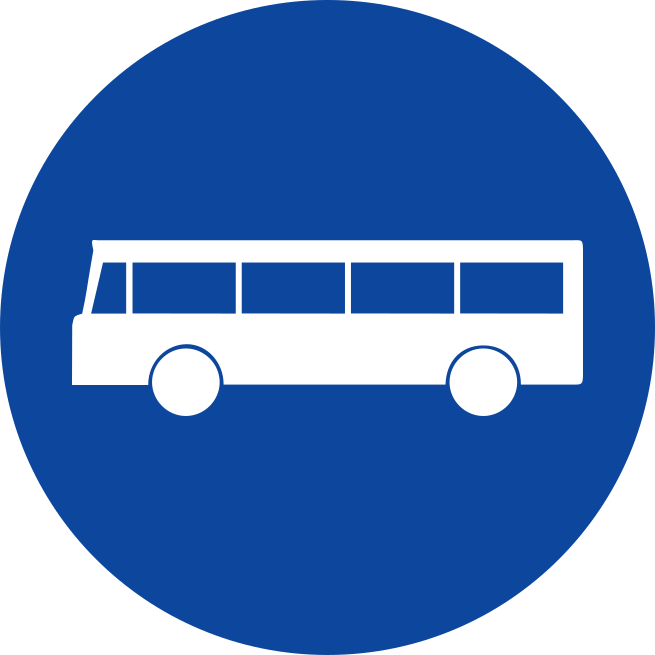 Mandatory lane for buses.
English • Traffic sign Ρ-67 • Buses or trolleybuses only.
Ελληνικά • Ρ-67 • Αποκλειστική διέλευση λεωφορείων ή τρόλεϊ.
Sources
🔗 Commons.wikimedia.org (Gigillo83 • CC BY-SA 3.0)
🔗 Aade.gr • Ν. 5209/2025 • ΚΟΚ • άρθρο 7 παρ. 3 περ. ογ
🔗 Aade.gr • Παράρτημα Α΄ • Ρ-67
SVG source: Gigillo83 • CC BY-SA 3.0 • Original revision 2022-01-27. Wikimedia original unmodified.
May bicycles and motorcycles use a bus lane in Greece?
Do not assume that bicycles, taxis or motorcycles are included in every bus-lane reservation. Use the actual indications and local traffic arrangement.
🔗 aade.gr • Greece, Road Traffic Code 5209/2025 — articles 7–8, 29, 38
Does bus-lane access also allow stopping or parking in Greece?
Keep the reserved lane and its stops clear and apply the Code’s stopping and parking restrictions. Lane-use authorisation and permission to park are separate matters.
🔗 aade.gr • Greece, Road Traffic Code 5209/2025 — articles 7–8, 29, 38

