QuizTraffic rulesGreece

This interesting quiz helps you test your knowledge in a clear and visual way. With easy multiple-choice questions, you can quickly build confidence and learn new facts while keeping it simple, interactive, and fun.


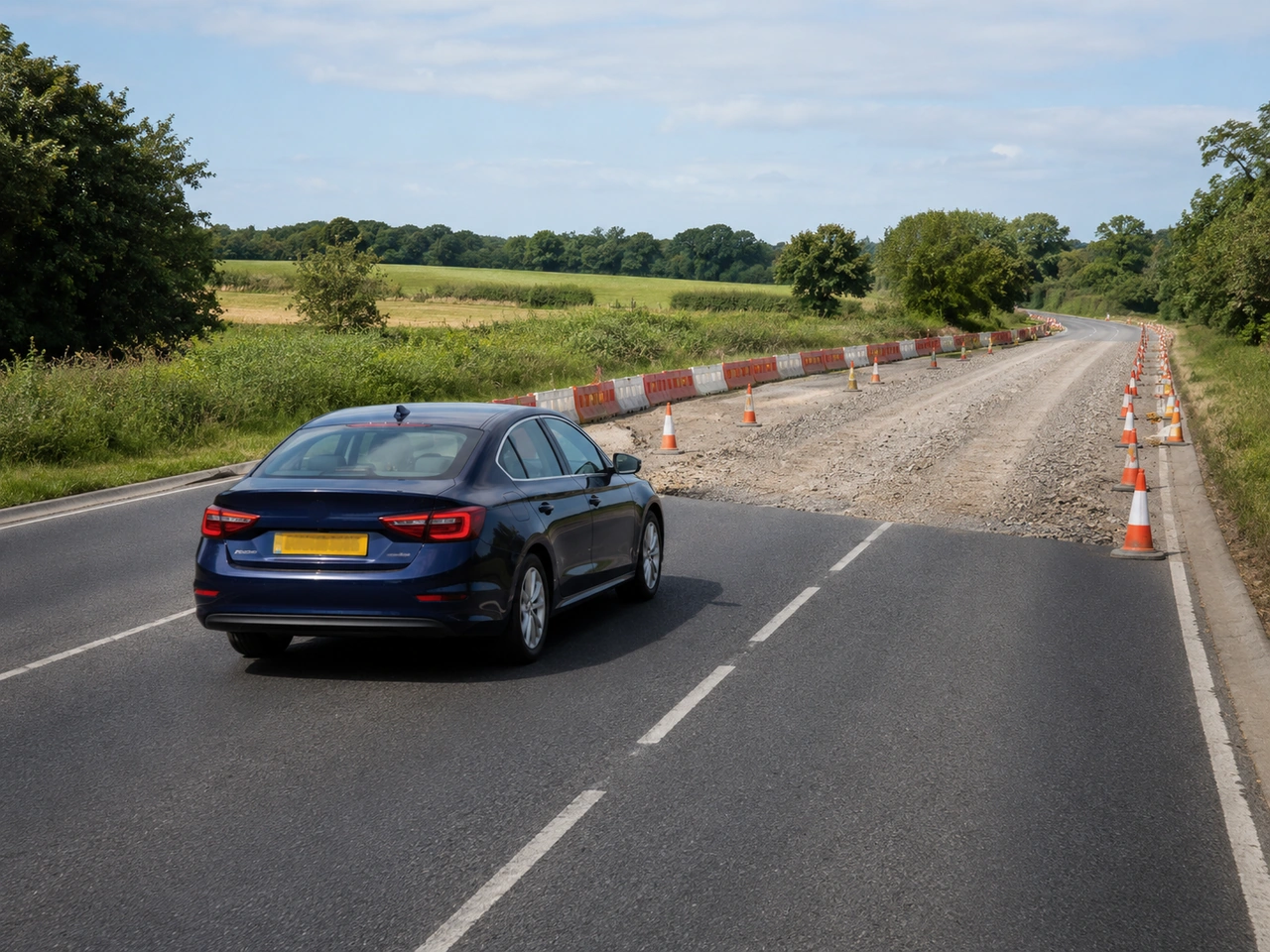
Why can temporary road surfaces increase stopping distance?

501. Why can temporary road surfaces increase stopping distance?

Roadworks switch off anti-lock braking.
✓ Loose gravel, mud, or uneven material may reduce tyre grip.
Temporary roads always slope downhill.
Temporary surfaces make the brakes colder.

Temporary surfaces may provide less grip than normal asphalt. Reduce speed and allow more distance for braking.

Loose or uneven road surface through roadworks
AI-generated by Traffic-rules.com • WCIT • CC BY-SA
What makes up the total stopping distance of a vehicle?

502. What makes up the total stopping distance of a vehicle?

✓ Reaction distance and braking distance.
Tyre distance and braking distance.
Braking distance and overtaking distance.
Reaction distance and following distance.

The total stopping distance consists of the distance travelled while the driver reacts to a hazard plus the distance travelled while the vehicle is braking to a stop.

Reaction and braking distances before a vehicle stops
AI-generated by Traffic-rules.com • WCIT • CC BY-SA
What should you do when walking near a driveway?

503. What should you do when walking near a driveway?

Watch only for vehicles leaving the driveway.
✓ Watch for vehicles entering or leaving.
Rely on engine noise to warn you of vehicles.
Assume vehicles will stop before crossing your path.

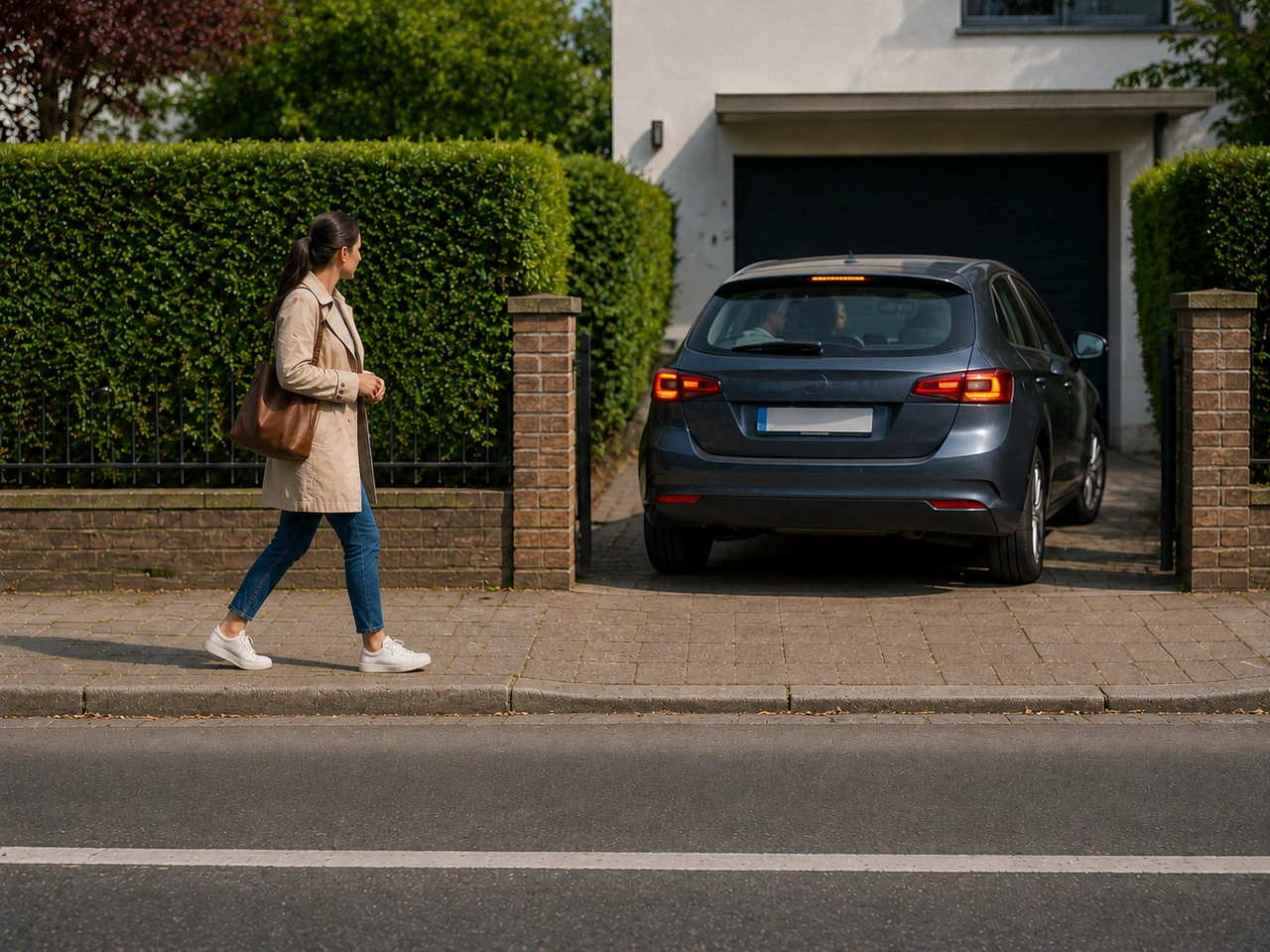
Vehicles may enter or leave driveways suddenly. Stay alert and check for moving vehicles.

Pedestrian passing a driveway entrance
AI-generated by Traffic-rules.com • WCIT • CC BY-SA
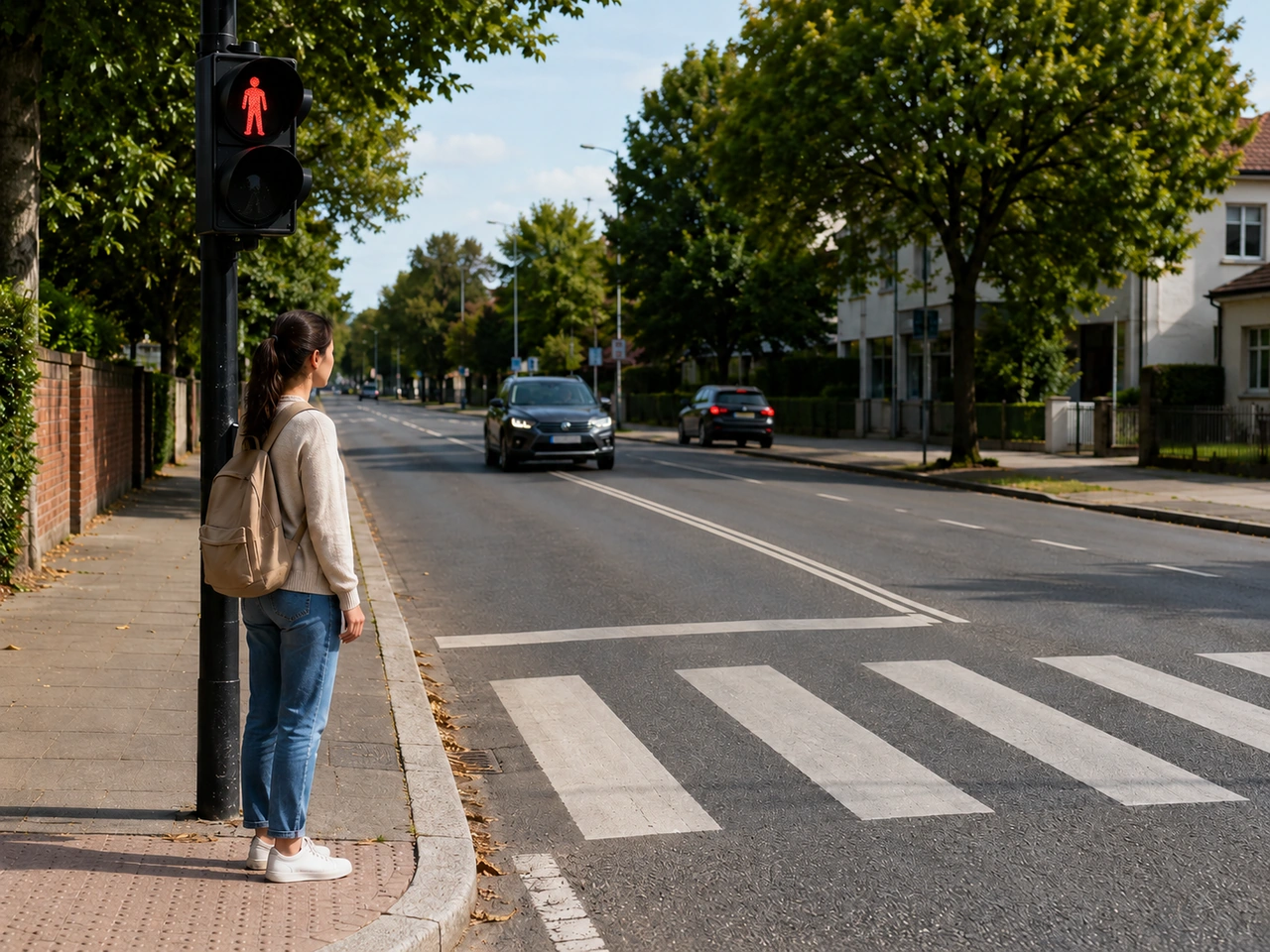
What should you do if the pedestrian light is red?

504. What should you do if the pedestrian light is red?

Cross if nearby vehicles appear to have stopped.
✓ Wait until it turns green.
Cross if another pedestrian has already started.
Cross if there is a large enough gap in traffic.

A red pedestrian signal means you should wait before crossing.

Red pedestrian signal at a crossing
AI-generated by Traffic-rules.com • WCIT • CC BY-SA
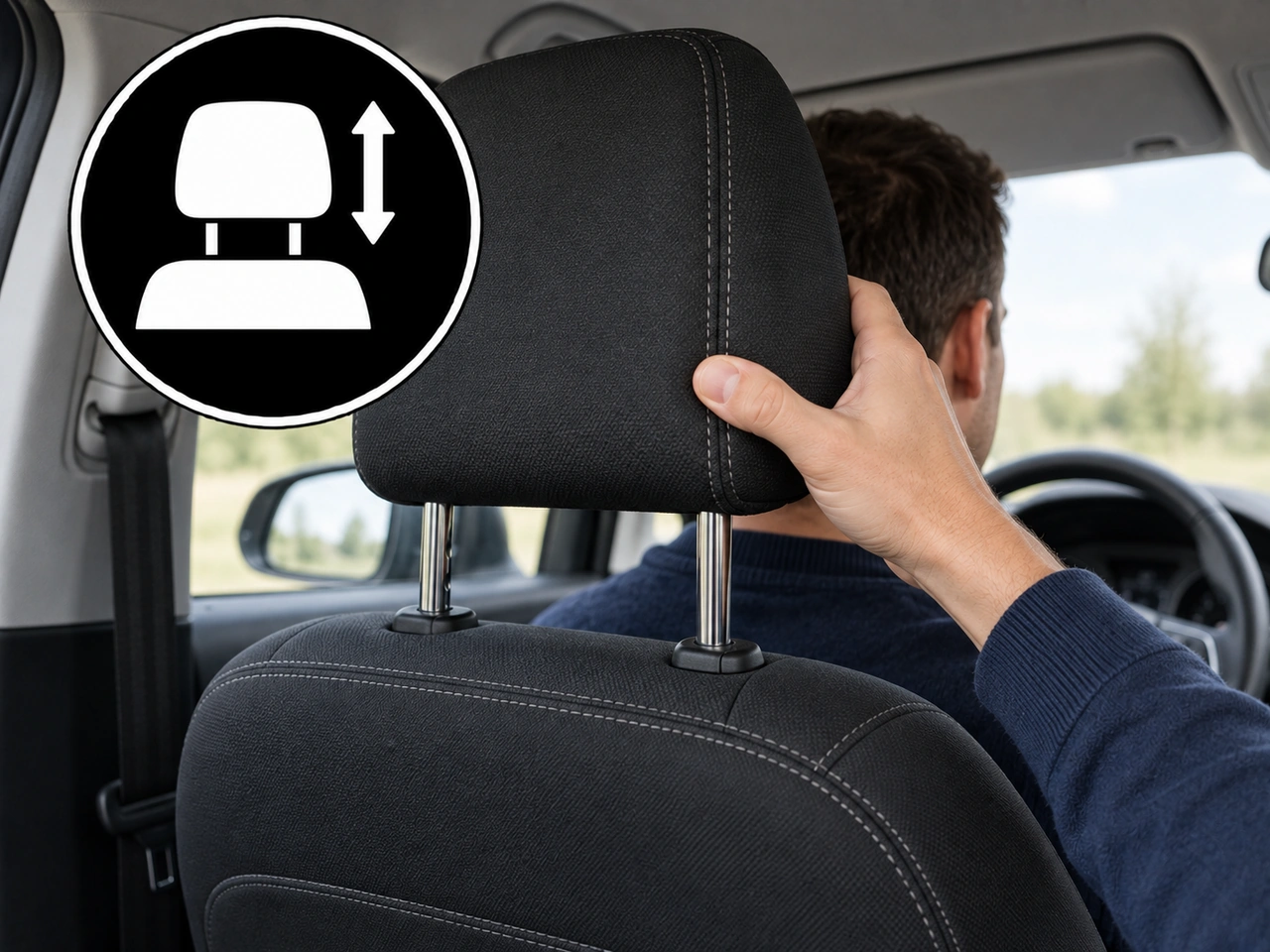
Why should the head restraint be adjusted correctly?

505. Why should the head restraint be adjusted correctly?

To make the seat belt tighter.
To support the lower back.
✓ To reduce the risk of neck injury in a collision.
To improve rear visibility.

A correctly adjusted head restraint helps support the head and can reduce the risk of neck injury, especially in a rear-end collision. The top of the restraint should normally be level with the top of the head.

Adjusting a vehicle seat's head restraint
AI-generated by Traffic-rules.com • WCIT • CC BY-SA
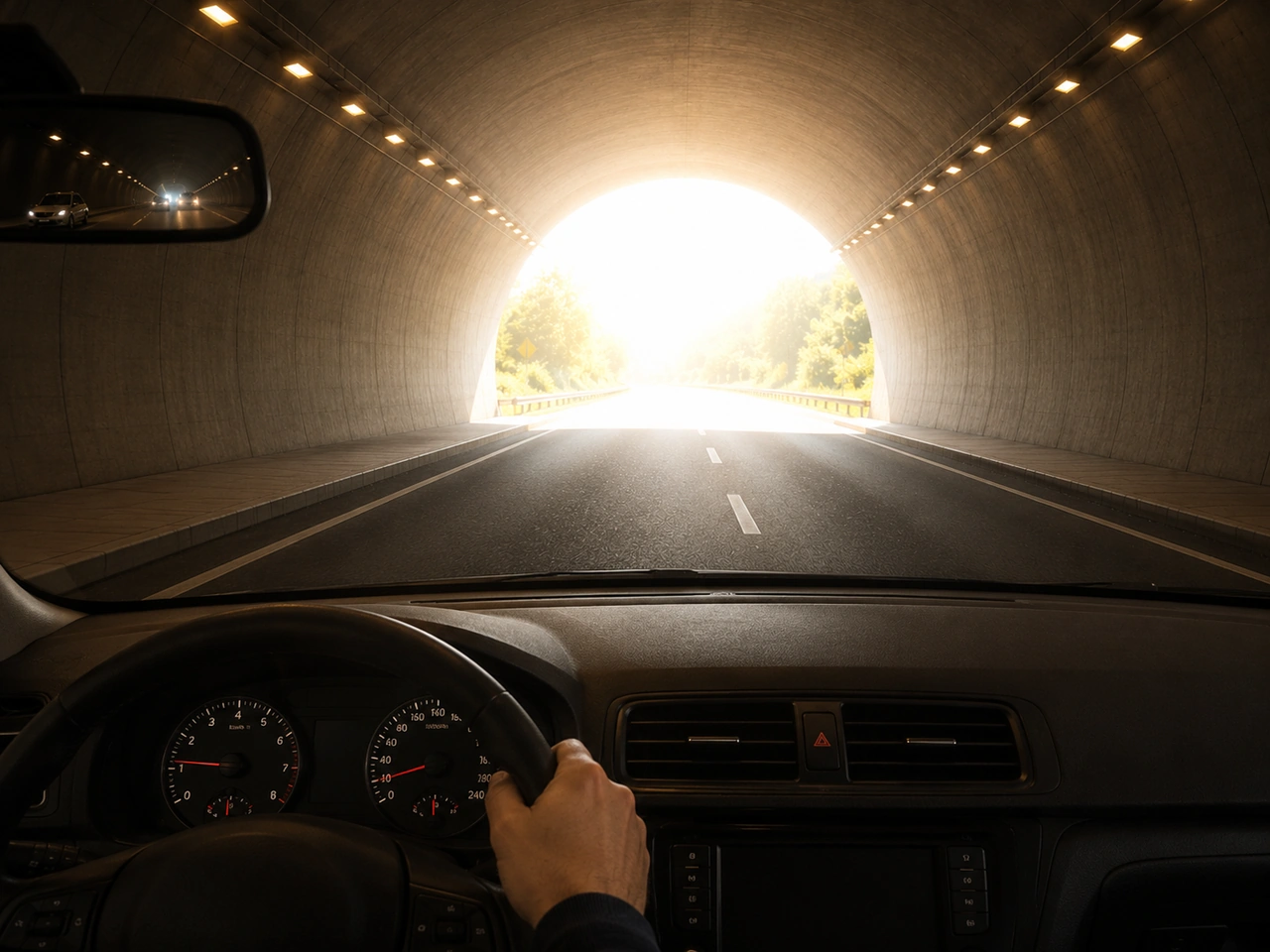
What should you expect when leaving a tunnel in bright sunlight?

506. What should you expect when leaving a tunnel in bright sunlight?

The steering becoming heavier.
✓ Temporary glare and reduced visibility.
The speed limit automatically increasing.
The brakes becoming more powerful.

Your eyes may need time to adjust from the darker tunnel to bright daylight. Reduce speed if necessary and remain alert.

Bright sunlight at the exit of a road tunnel
AI-generated by Traffic-rules.com • WCIT • CC BY-SA
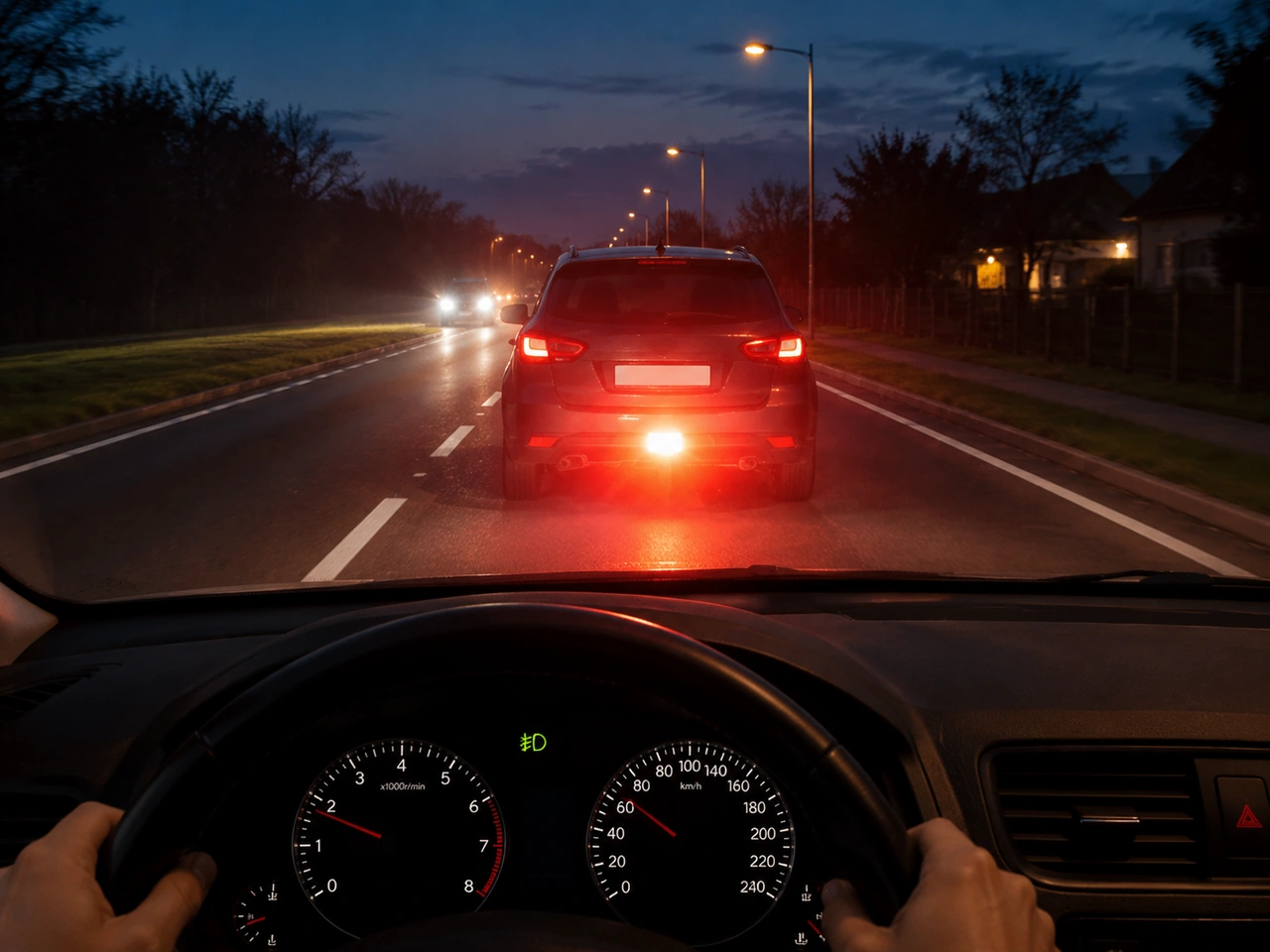
When should you switch off your fog lights?

507. When should you switch off your fog lights?

Never, because they always improve visibility.
Whenever you stop at a traffic light.
✓ When visibility improves and they are no longer needed.
When you enter a built-up area.

Fog lights can dazzle other road users when visibility is normal, so switch them off when conditions improve.

Fog-light control as visibility improves
AI-generated by Traffic-rules.com • WCIT • CC BY-SA
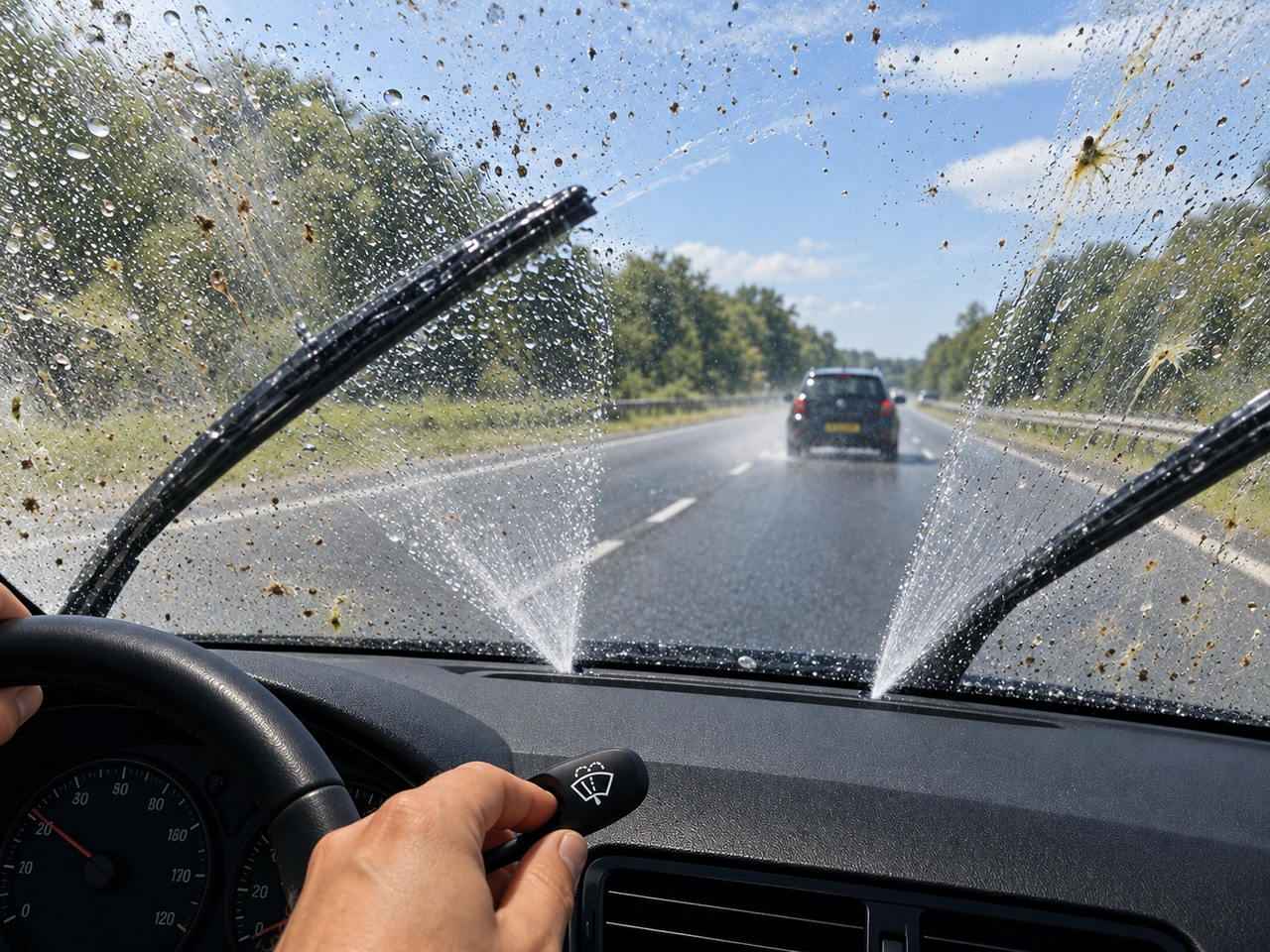
Why should the windscreen washer reservoir contain suitable washer fluid?

508. Why should the windscreen washer reservoir contain suitable washer fluid?

Washer fluid is needed only in freezing weather.
Any household cleaning product can be used instead.
The reservoir needs fluid only when the windscreen is visibly dirty.
✓ It helps remove dirt, salt, insects, and spray from the windscreen.

A clear windscreen is essential for safe observation. Suitable washer fluid helps clean the glass and may provide protection against freezing in cold conditions.

Windscreen washer-fluid reservoir in a vehicle
AI-generated by Traffic-rules.com • WCIT • CC BY-SA
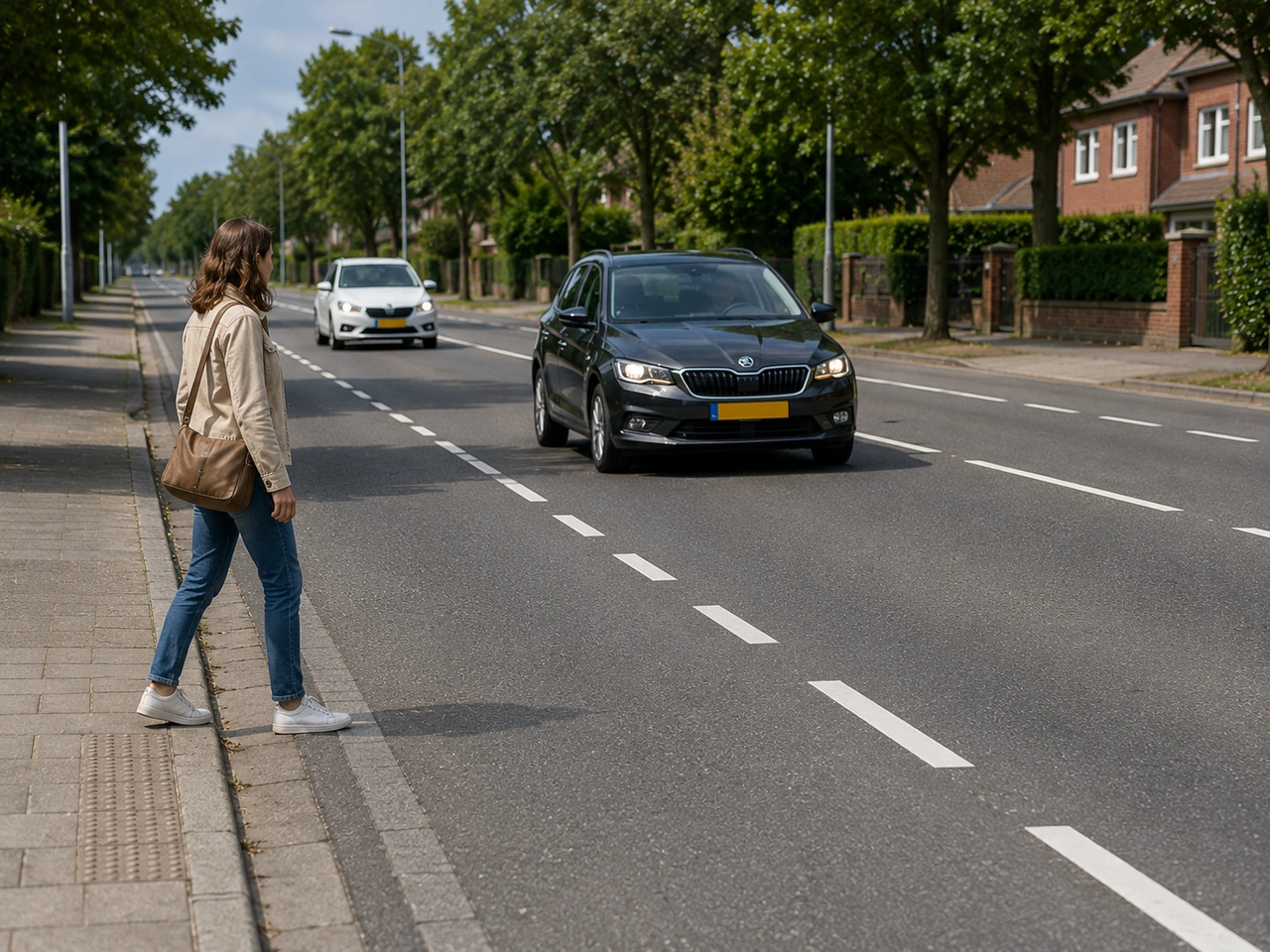
What should you do before crossing the road?

509. What should you do before crossing the road?

Listen for vehicles instead of looking.
Cross if the nearest vehicle is slowing down.
✓ Look for traffic in all directions.
Look only where traffic normally comes from.

Always check for approaching traffic from every direction before crossing.

Pedestrian checking for traffic before crossing
AI-generated by Traffic-rules.com • WCIT • CC BY-SA
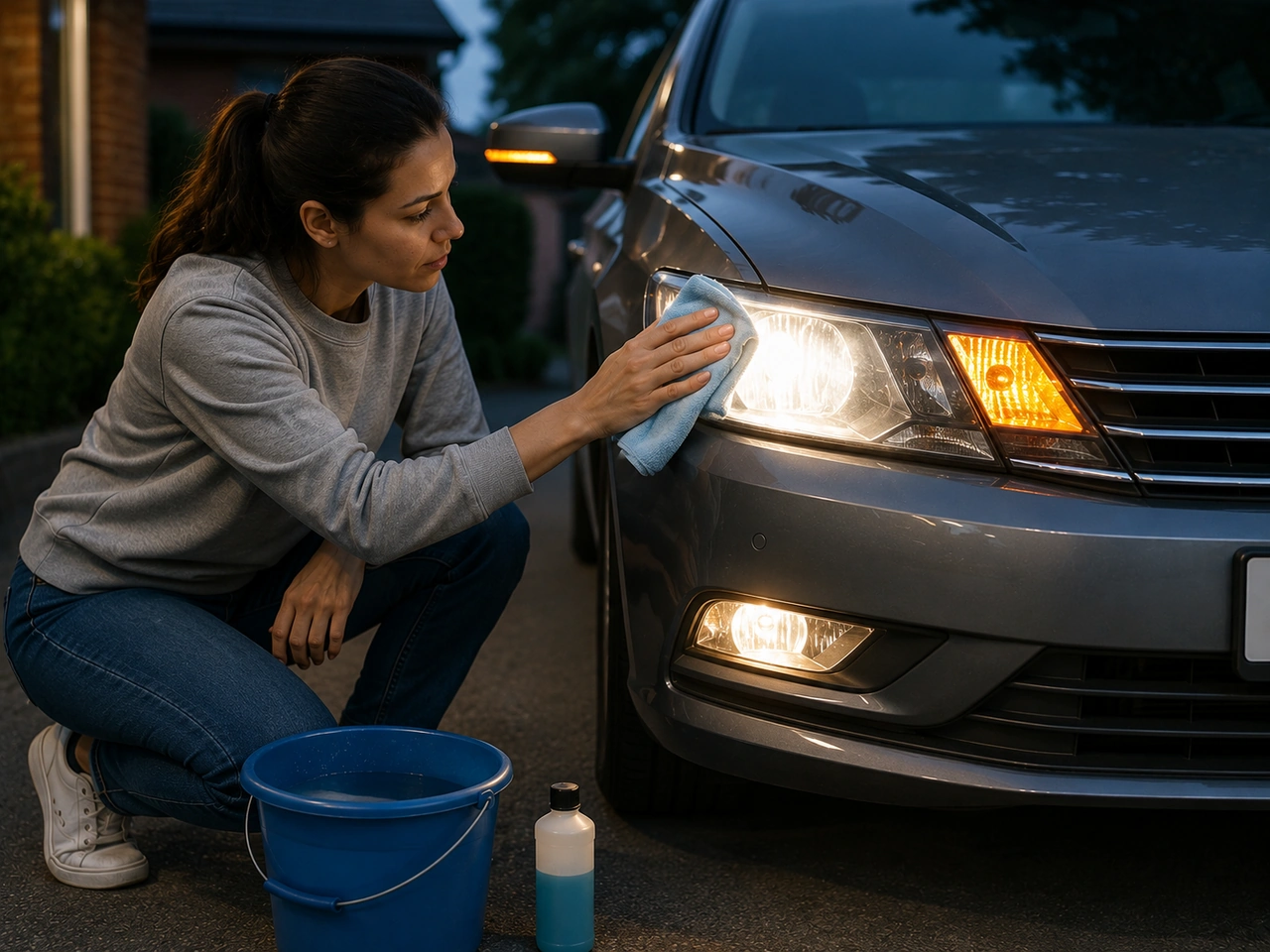
Why should headlights, indicators, and other exterior lights be kept clean and working?

510. Why should headlights, indicators, and other exterior lights be kept clean and working?

They only need to work when you drive at night.
They make the vehicle use less fuel.
They prevent the windscreen from misting.
✓ They help you see, be seen, and communicate your intentions.

Dirty or faulty lights reduce visibility and make it harder for other road users to understand when you are braking, turning, reversing, or changing position.

Checking and cleaning a vehicle's exterior lights
AI-generated by Traffic-rules.com • WCIT • CC BY-SA
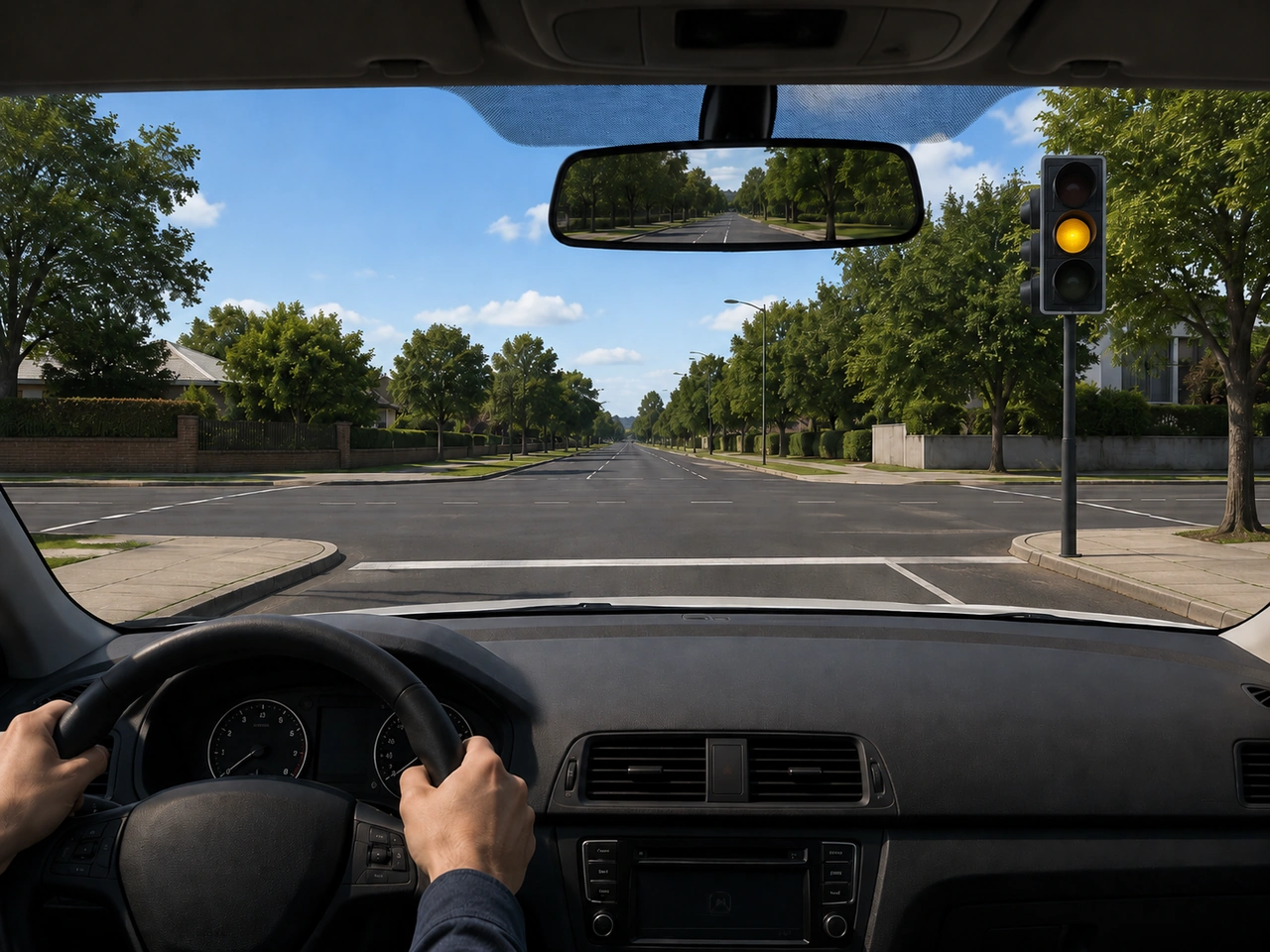
You may drive through an amber light without slowing down.

511. You may drive through an amber light without slowing down.

True.
✓ False.

An amber light means you should stop if you can do so safely. If you are too close to stop safely, continue through the junction with caution.

Vehicle approaching an amber traffic light
AI-generated by Traffic-rules.com • WCIT • CC BY-SA
What should you do when the road is covered with snow or ice?

512. What should you do when the road is covered with snow or ice?

Follow other vehicles closely in their tyre tracks.
✓ Reduce speed, increase following distance, and drive gently.
Drive at the normal speed limit if the road looks clear.
Use quick steering movements if the vehicle starts to slide.

Snow and ice greatly reduce tyre grip. Lower speed, extra distance, and gentle steering, braking, and acceleration help maintain control.

Vehicle travelling on a snow-covered road
AI-generated by Traffic-rules.com • WCIT • CC BY-SA
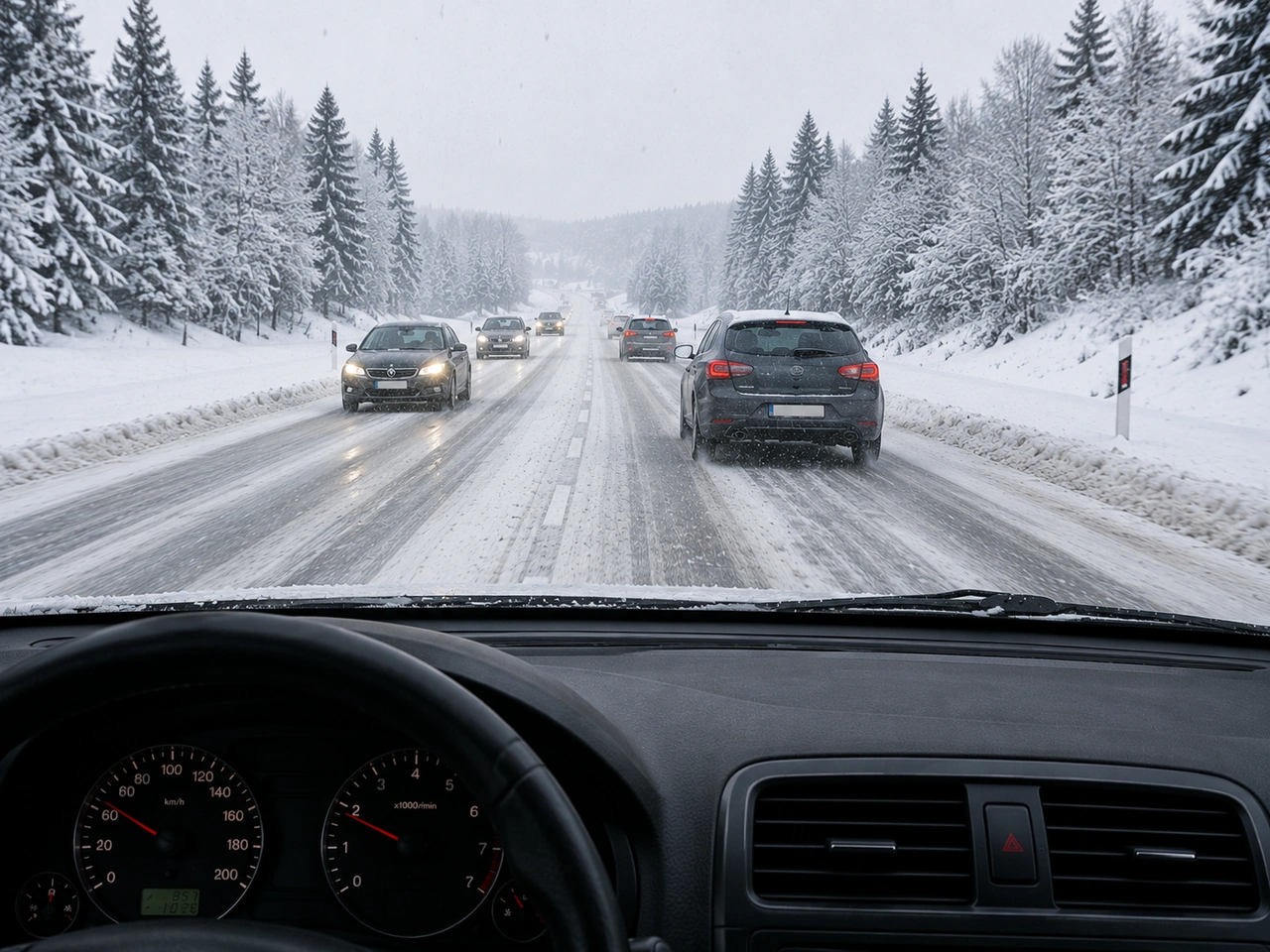
What should you do when approaching a curve with poor visibility?

513. What should you do when approaching a curve with poor visibility?

Maintain your speed if the road ahead appears clear.
Follow the vehicle ahead closely through the curve.
Brake only after entering the curve if necessary.
✓ Slow down and stay in your lane.

A curve can hide oncoming traffic, obstacles, cyclists, or pedestrians. Reduce speed and keep a safe position.

Road bend with a restricted view ahead
AI-generated by Traffic-rules.com • WCIT • CC BY-SA
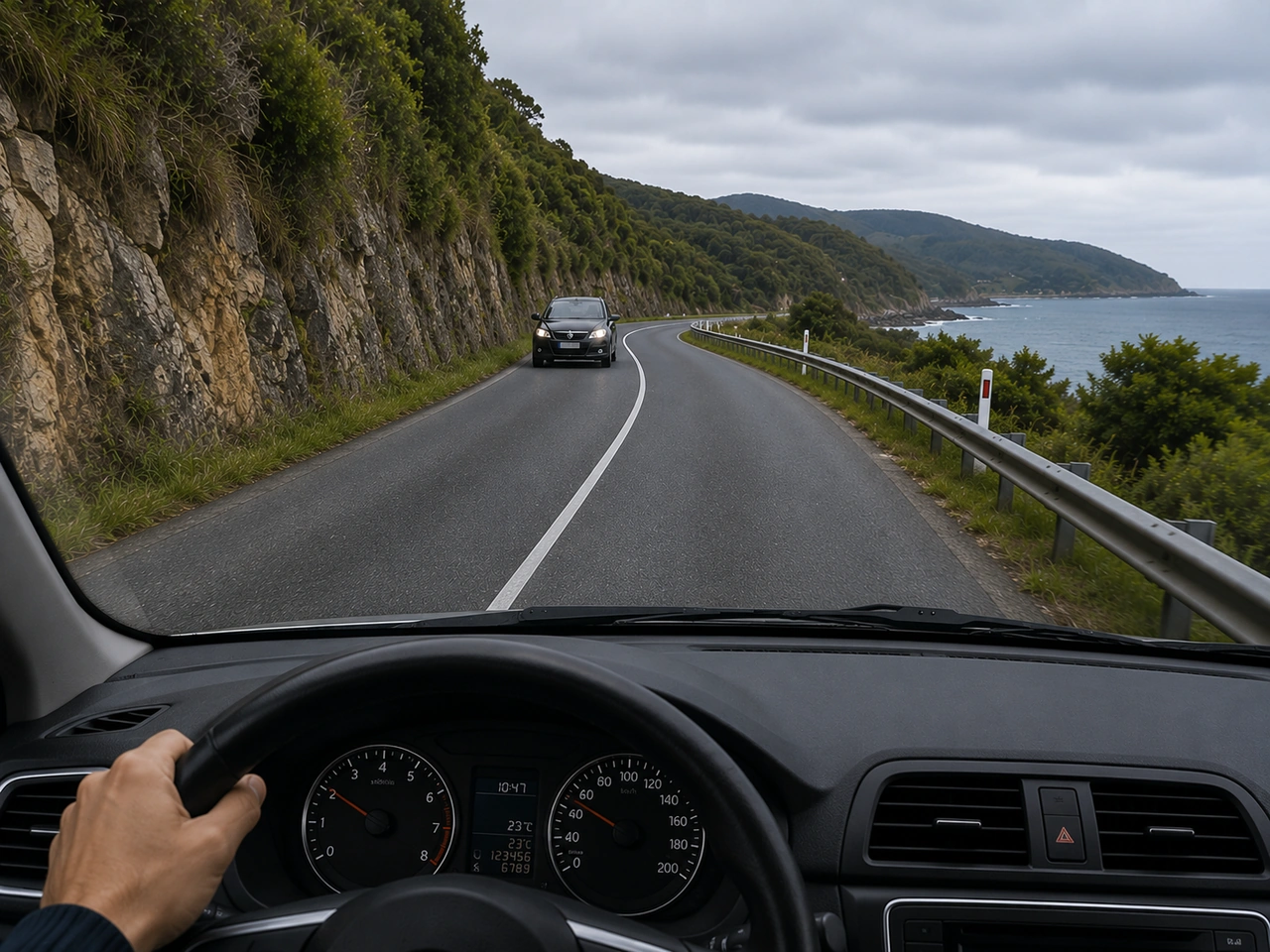
What should you do when driving on icy roads?

514. What should you do when driving on icy roads?

Maintain normal speed if the road appears clear.
Use quick steering corrections if the vehicle starts to slide.
✓ Drive slowly and avoid sudden braking, steering, or acceleration.
Brake firmly before bends to reduce speed.

Ice greatly reduces tyre grip. Drive gently, keep extra distance, and avoid sudden movements that could cause a skid.

Vehicle travelling on an icy road
AI-generated by Traffic-rules.com • WCIT • CC BY-SA
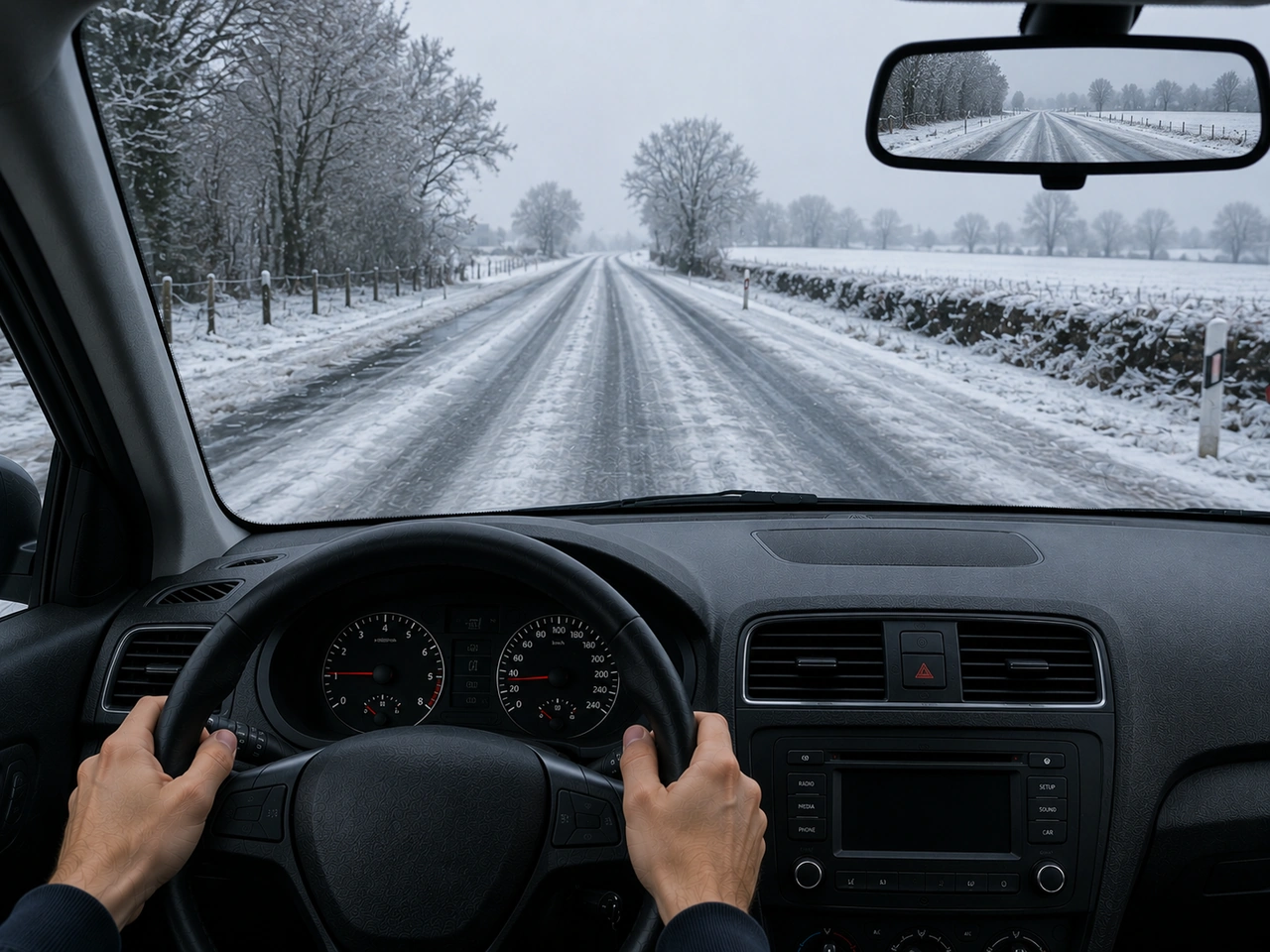
Why should you check blind spots before moving off?

515. Why should you check blind spots before moving off?

To make sure your mirrors are adjusted correctly.
To confirm other drivers have seen your indicator.
✓ A cyclist, pedestrian, or vehicle may be beside you.
To check whether the road ahead is clear.

Mirrors do not show every area around your vehicle. A blind-spot check can reveal cyclists, pedestrians, motorcyclists, or vehicles before you move off.

Driver checking a blind spot before moving off
AI-generated by Traffic-rules.com • WCIT • CC BY-SA
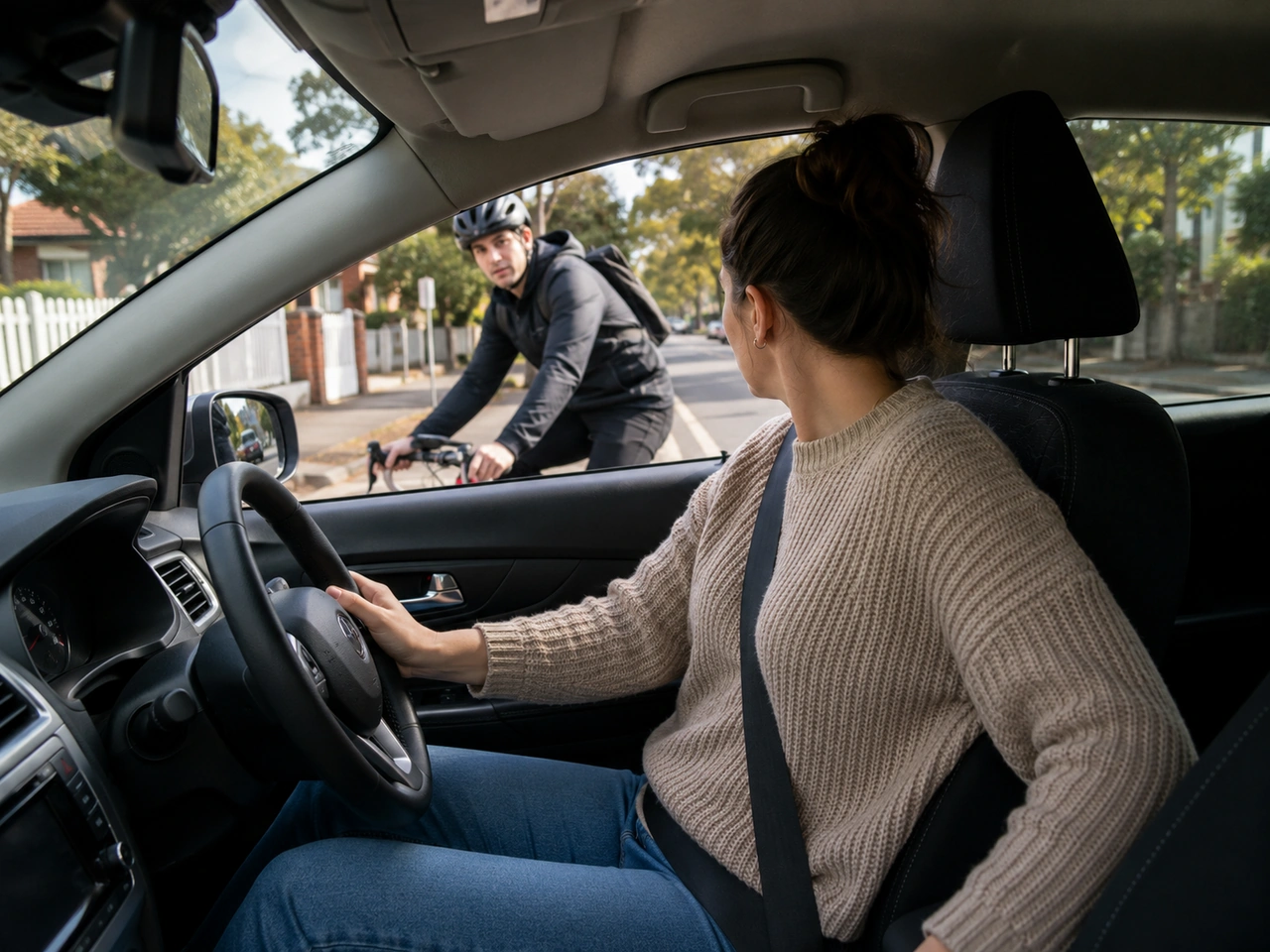
What should you do if the charging-system warning light comes on?

516. What should you do if the charging-system warning light comes on?

Continue driving until the battery is completely discharged.
Restart the engine repeatedly to reset the warning.
Increase engine speed until the warning light goes out.
✓ Reduce electrical use, stop safely, and seek assistance.

The alternator or charging system may have failed. The vehicle may stop once the remaining battery charge is exhausted.

Charging-system warning illuminated on the dashboard
AI-generated by Traffic-rules.com • WCIT • CC BY-SA
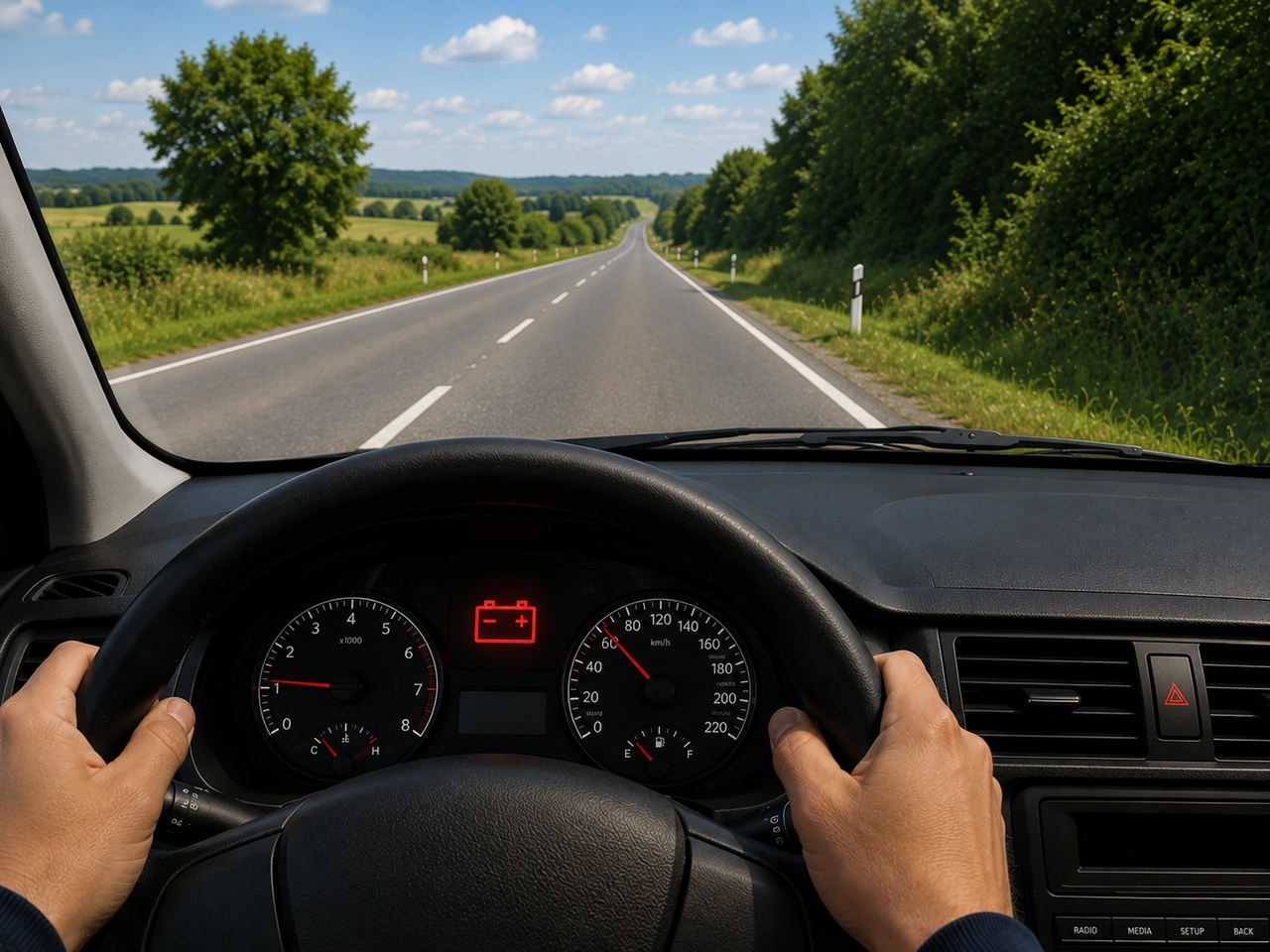
What should you do if your vehicle begins to drift onto the shoulder?

517. What should you do if your vehicle begins to drift onto the shoulder?

Brake firmly before returning to the road.
Steer back onto the road as quickly as possible.
✓ Ease off the accelerator and steer back smoothly when safe.
Keep driving on the shoulder until the road becomes wider.

If you drift onto the shoulder, avoid sudden steering or braking. Slow gently and return to the road smoothly when it is safe.

Vehicle drifting towards the road shoulder
AI-generated by Traffic-rules.com • WCIT • CC BY-SA
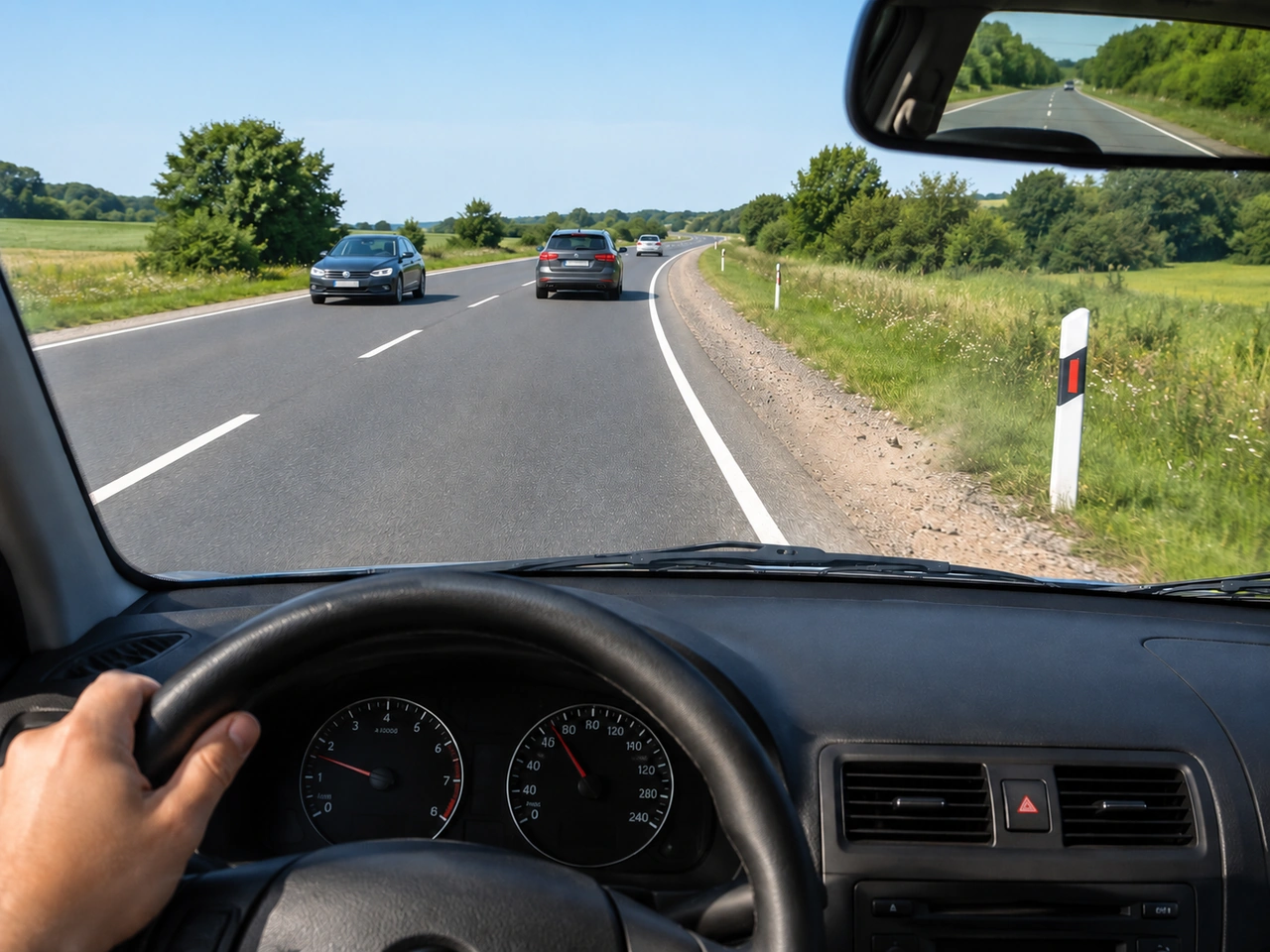
What should you do if an overtaking vehicle is coming toward you?

518. What should you do if an overtaking vehicle is coming toward you?

✓ Slow down and move slightly aside if safe.
Maintain your speed and expect the other driver to return to their lane.
Brake sharply as soon as the vehicle enters your lane.
Move closer to the centre so the other driver notices you.

If an oncoming vehicle creates danger while overtaking, reduce speed and make space if it is safe to do so. Avoid sudden movements that could create an additional hazard.

Oncoming vehicle overtaking into the driver's lane
AI-generated by Traffic-rules.com • WCIT • CC BY-SA
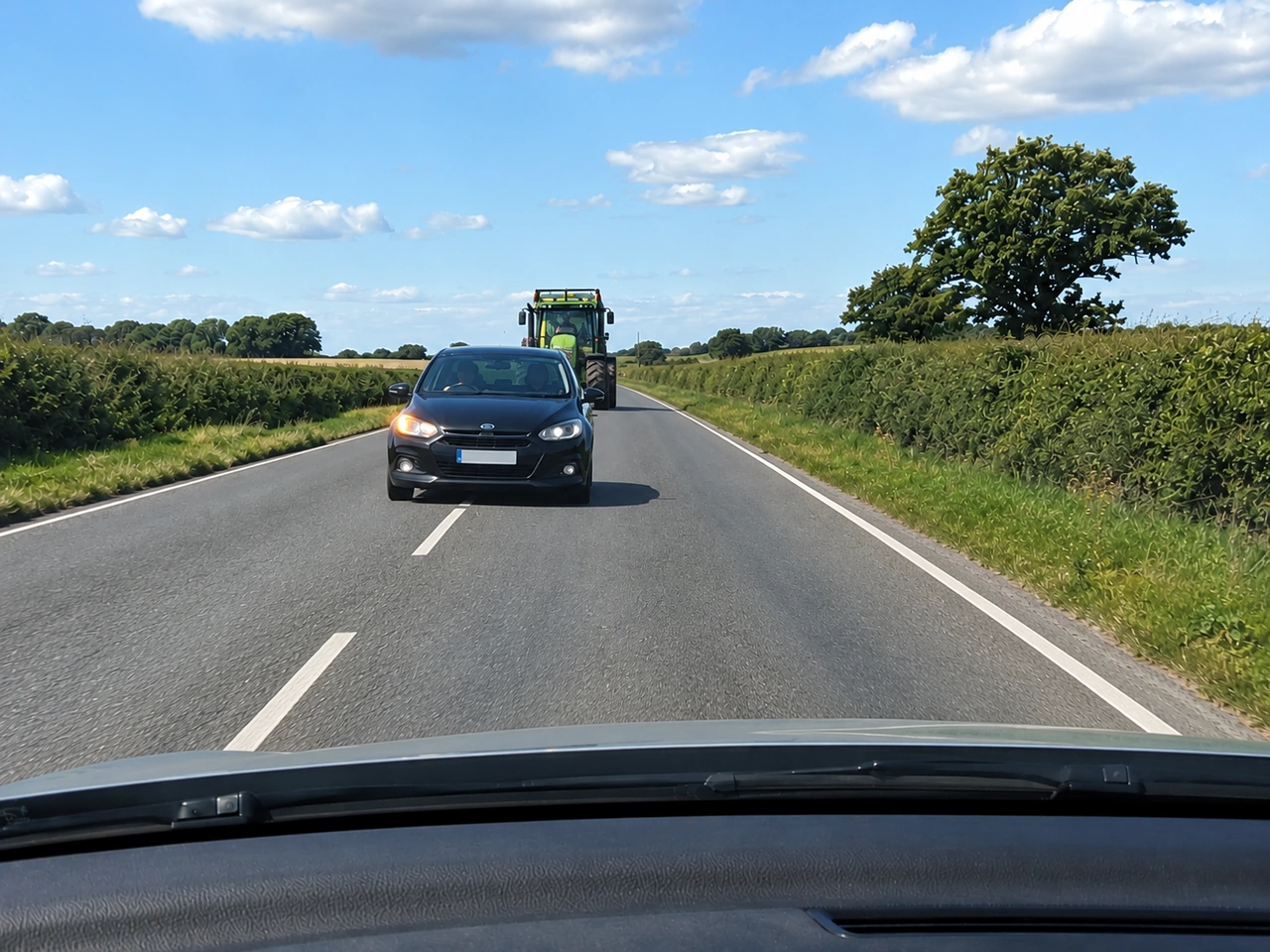
Why should you avoid using a phone while driving?

519. Why should you avoid using a phone while driving?

Because it can cause road rage.
Because it can make your reactions faster.
Because it can disable the cruise control system.
✓ Because it distracts you from the road.

Using a phone while driving reduces attention, reaction time, and control of the vehicle. A hands-free system may reduce the need to handle the phone, but the conversation itself can still be distracting.

Phone distracting a driver from the road
AI-generated by Traffic-rules.com • WCIT • CC BY-SA
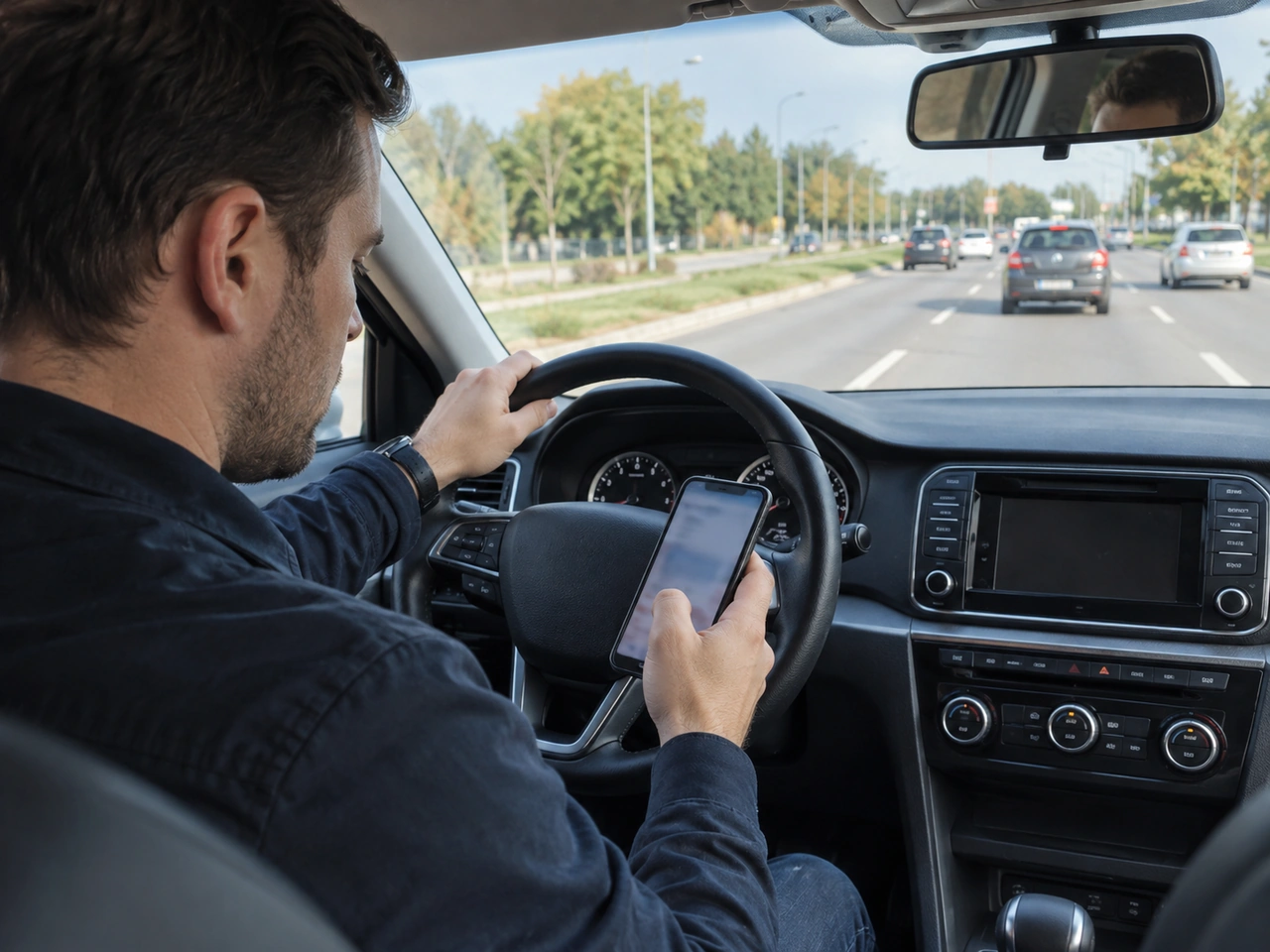
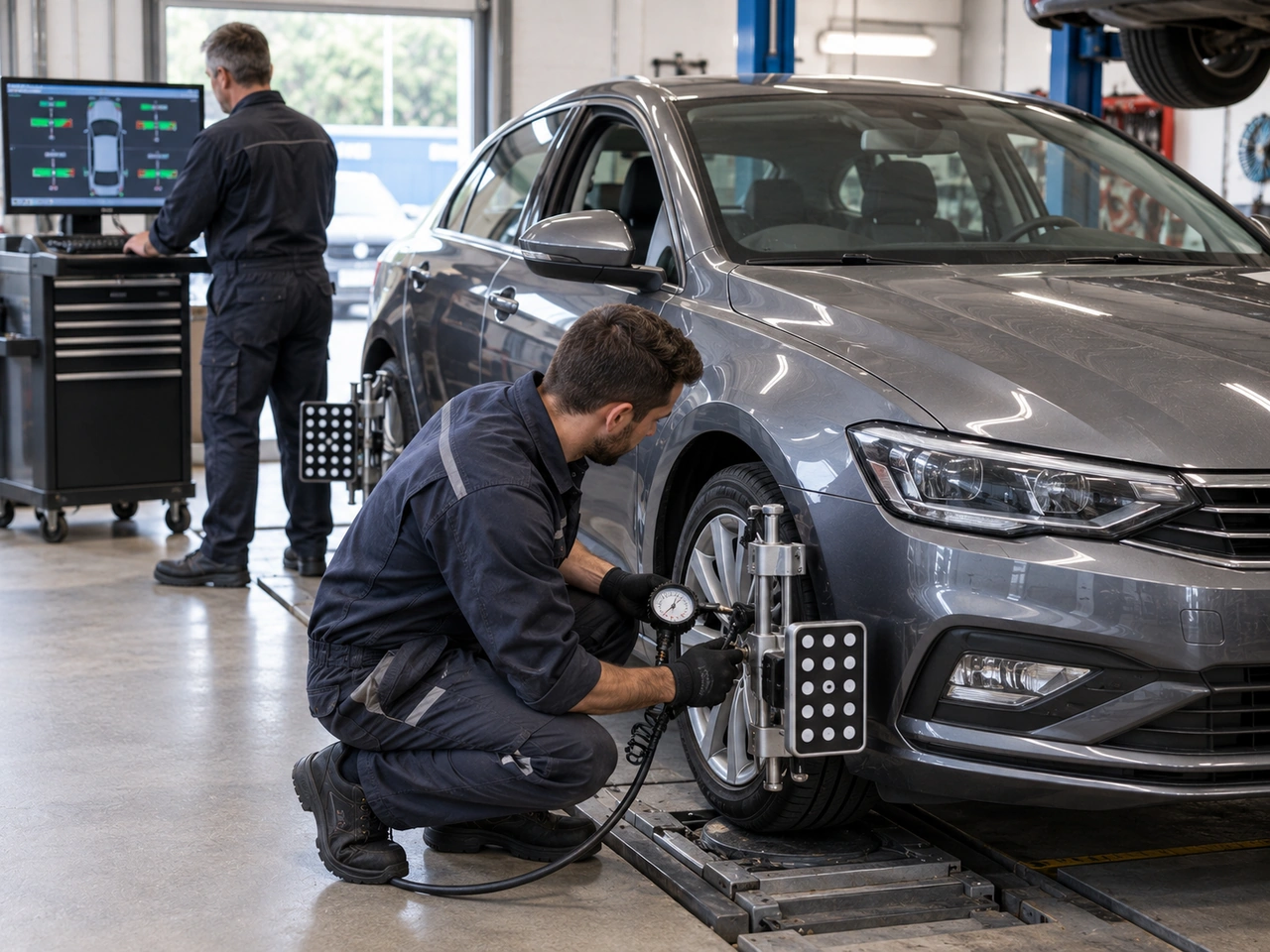
What should you do if the vehicle consistently pulls to one side?

520. What should you do if the vehicle consistently pulls to one side?

Increase speed to see if the vehicle straightens.
Reduce pressure in the tyre on the opposite side.
✓ Check the tyre pressures and have the steering, alignment, and brakes inspected.
Keep driving and correct the steering as needed.

Persistent pulling can be caused by incorrect tyre pressure, wheel misalignment, suspension wear, or a braking fault. It should not be ignored.

Vehicle pulling to one side while travelling
AI-generated by Traffic-rules.com • WCIT • CC BY-SA
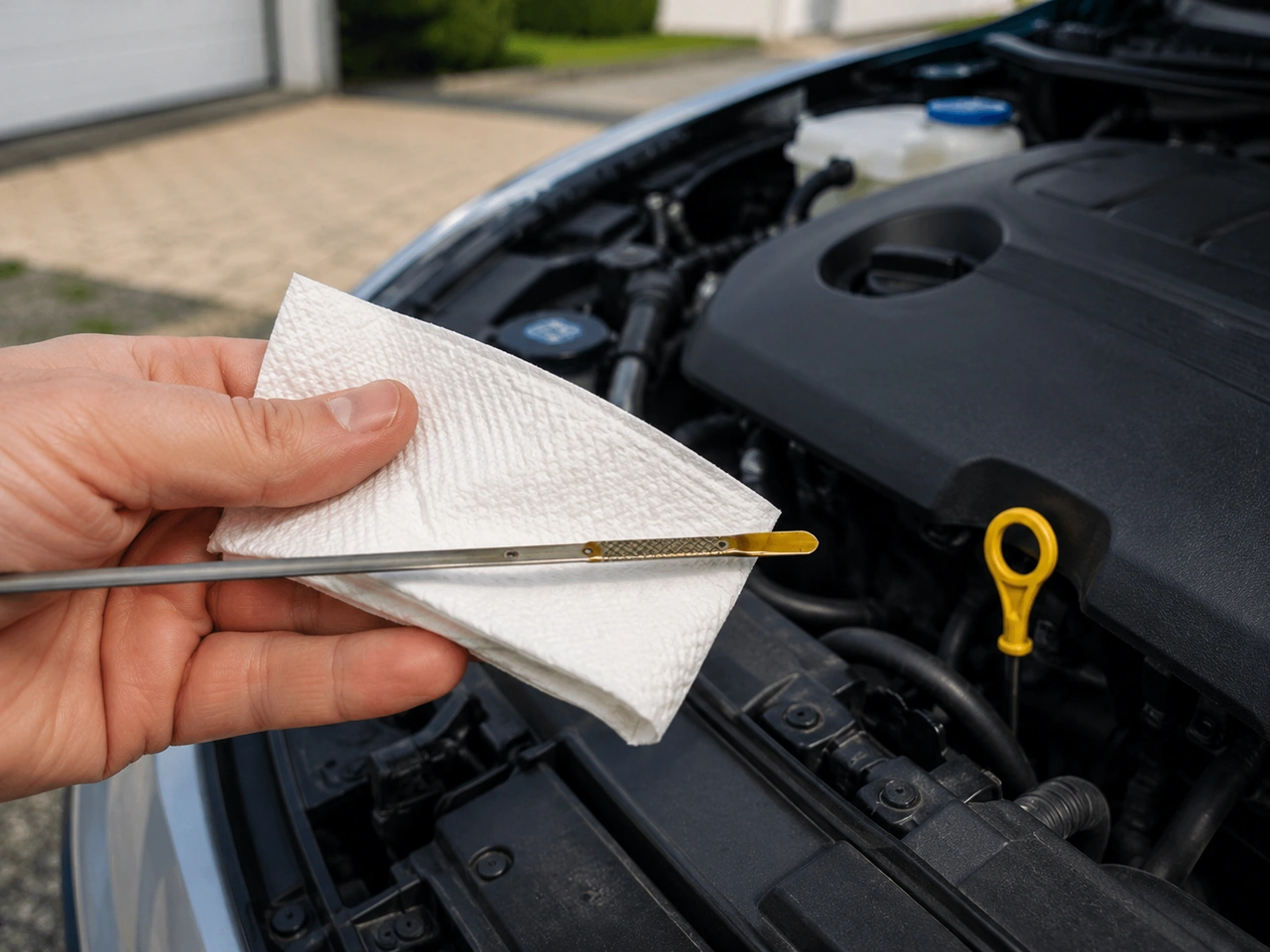
How should you check the engine oil level?

521. How should you check the engine oil level?

✓ Follow the manufacturer's instructions with the vehicle on level ground.
Use the coolant reservoir to measure the oil level.
Check it while the engine is running at high speed.
Fill the engine until oil reaches the filler opening.

Use the dipstick or electronic oil-level system as described in the owner's manual. The engine is usually switched off, and the vehicle should be standing on level ground.

Checking the engine oil level
AI-generated by Traffic-rules.com • WCIT • CC BY-SA
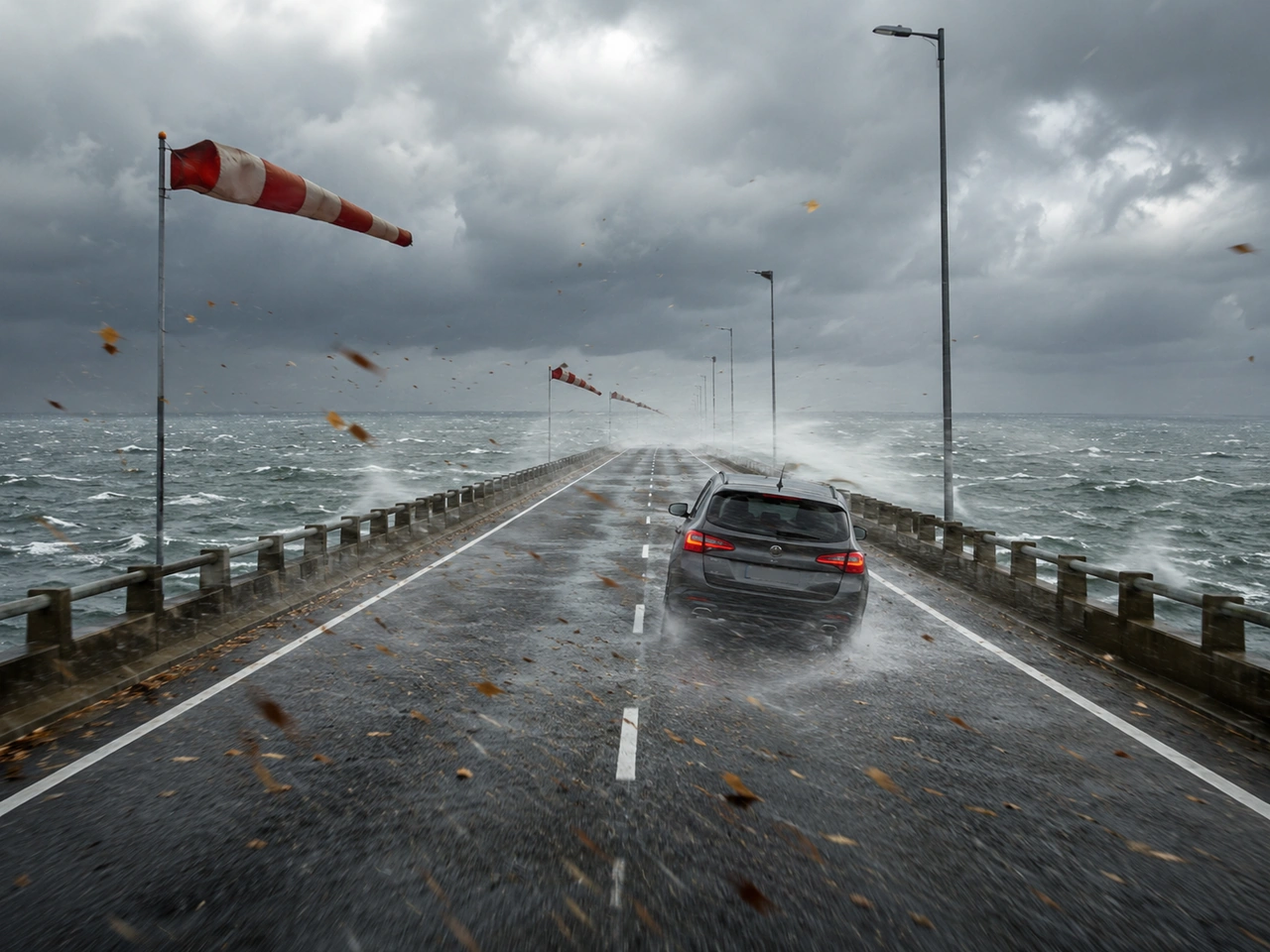
Why can bridges be dangerous in strong winds?

522. Why can bridges be dangerous in strong winds?

✓ They are often exposed to stronger gusts.
Vehicles require more engine power on bridges.
Bridge lighting makes it harder to judge speed.
Vehicles automatically accelerate on bridges.

Bridges are often open and exposed, allowing strong winds to affect vehicles more suddenly.

Exposed bridge in strong wind
AI-generated by Traffic-rules.com • WCIT • CC BY-SA
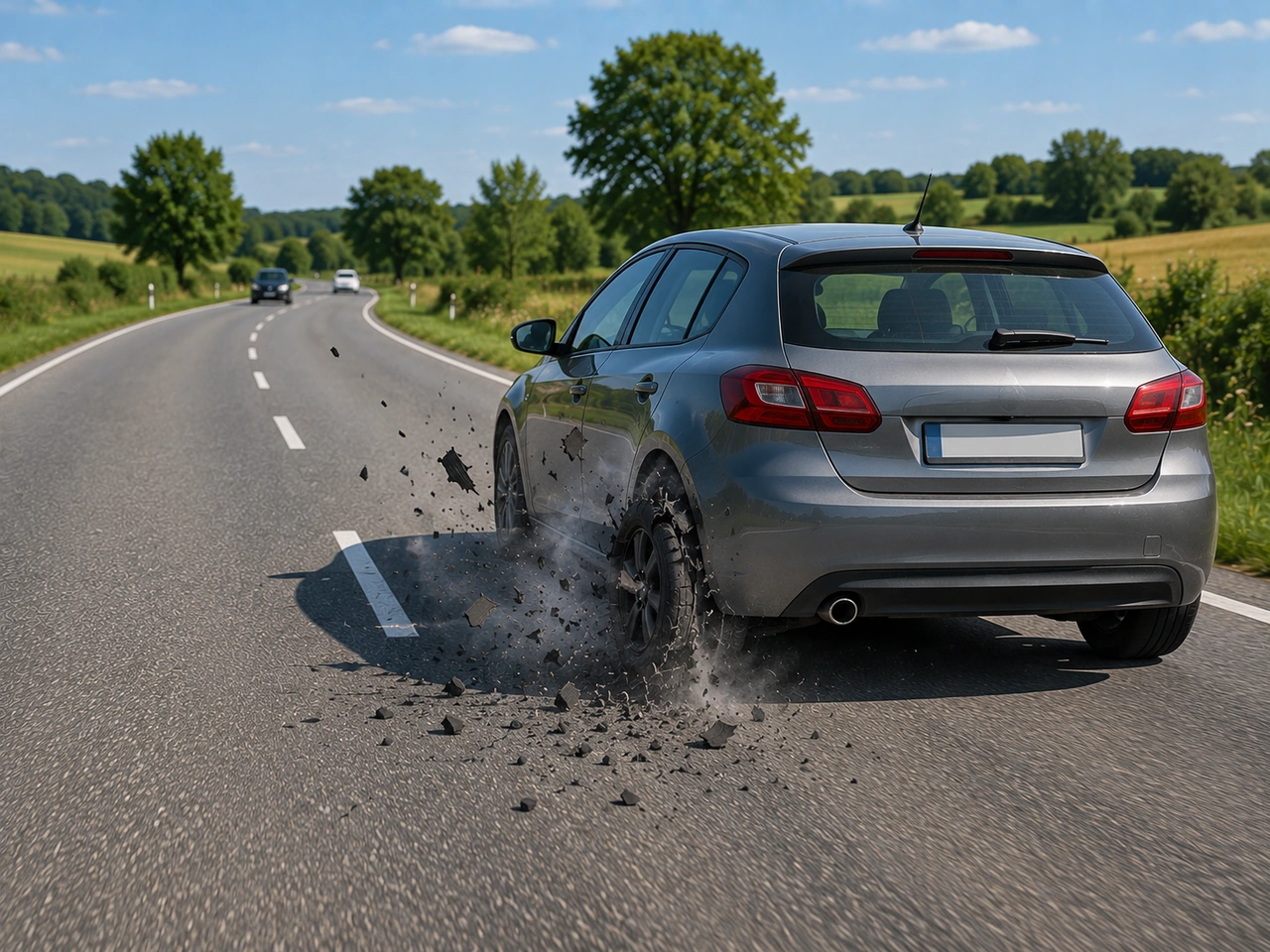
What should you do if one of your tyres suddenly bursts while driving?

523. What should you do if one of your tyres suddenly bursts while driving?

Steer quickly toward the side of the road.
✓ Hold the steering wheel firmly and slow down gradually.
Release the steering wheel and let the vehicle slow itself.
Accelerate briefly to stabilise the vehicle.

A tyre burst can make the vehicle unstable. Hold the wheel firmly, avoid sudden braking or steering, and slow down gradually.

Vehicle tyre damaged by a sudden blowout
AI-generated by Traffic-rules.com • WCIT • CC BY-SA
What should you check before starting a long journey?

524. What should you check before starting a long journey?

Nothing if the vehicle was recently serviced.
✓ Tyres, lights, fluids, windows, mirrors, and essential equipment.
Only the tyres and fuel level.
Only the lights if you plan to drive at night.

A brief vehicle check can reveal tyre damage, low fluid levels, faulty lights, or visibility problems before they cause danger. Also confirm that any spare wheel or tyre-repair equipment is available and usable.

Vehicle safety checks before a long journey
AI-generated by Traffic-rules.com • WCIT • CC BY-SA
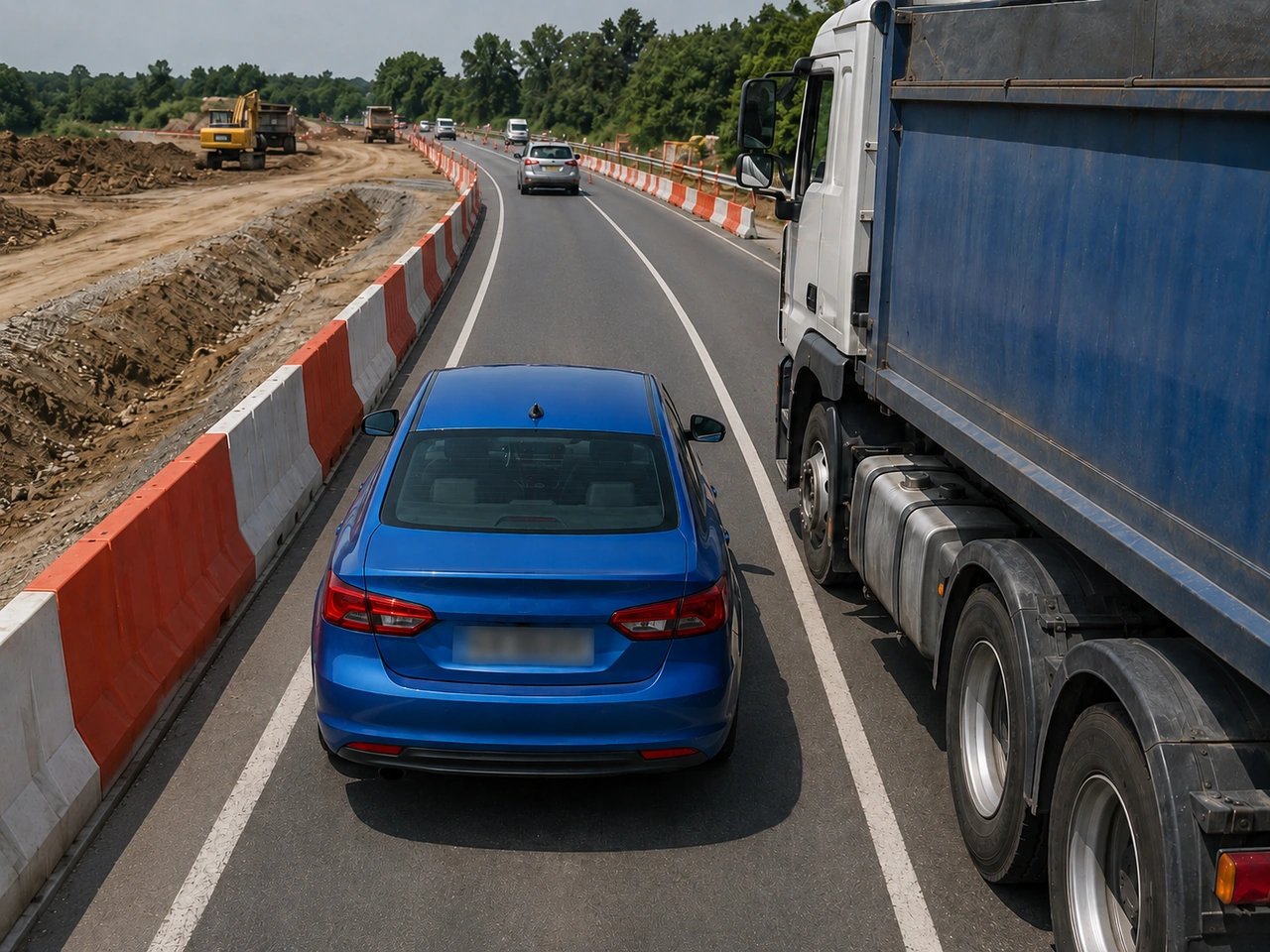
What should you expect when lanes become narrower in roadworks?

525. What should you expect when lanes become narrower in roadworks?

All vehicles must drive in the centre of the lane.
Large vehicles must stop before entering the narrow section.
✓ Less space between your vehicle, barriers, and other traffic.
The speed limit automatically increases.

Narrow lanes leave less room for error. Keep a steady position, avoid drifting toward barriers or nearby vehicles, and reduce speed if necessary.

Narrow traffic lanes through roadworks
AI-generated by Traffic-rules.com • WCIT • CC BY-SA
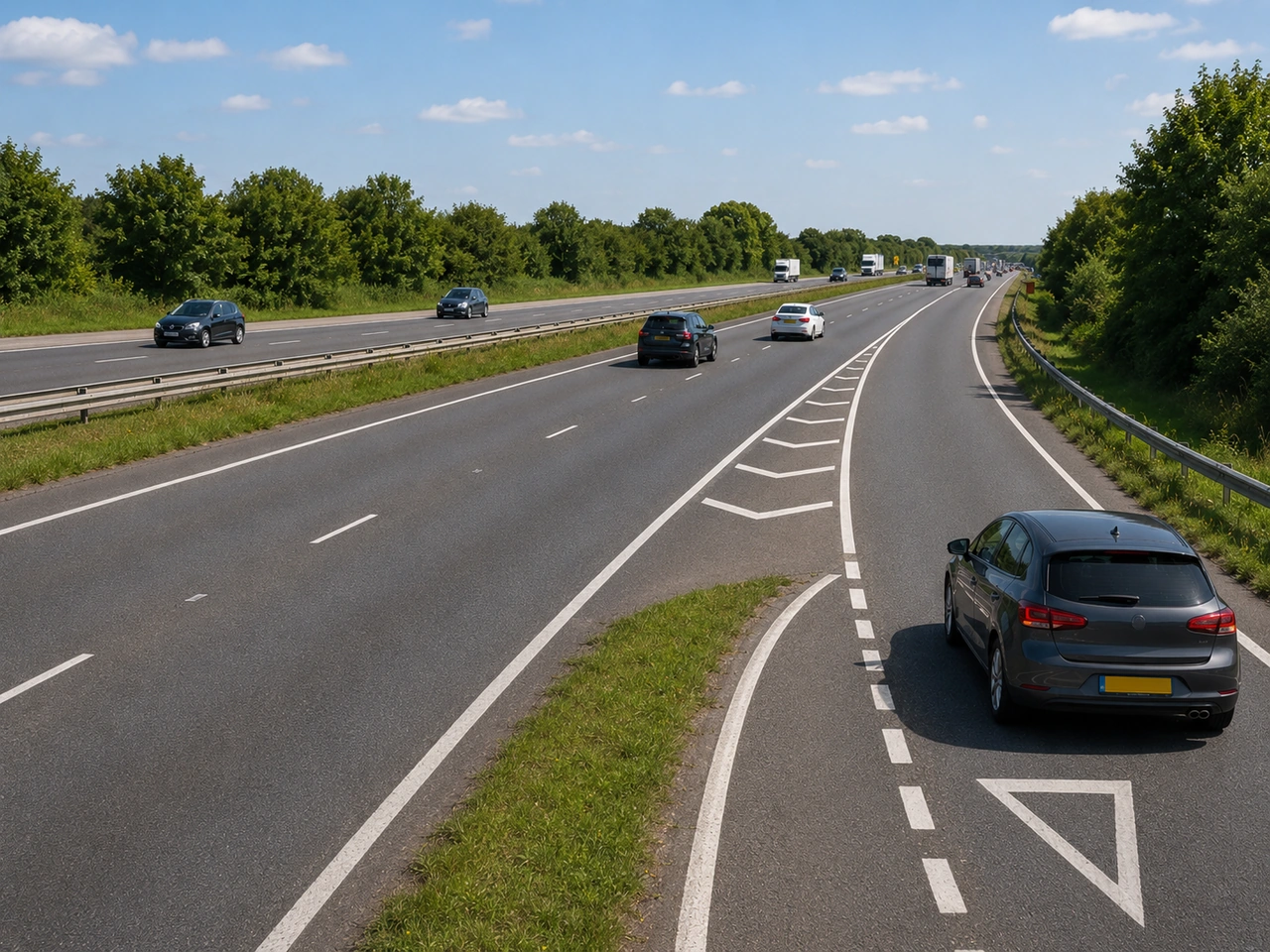
Who normally has priority when you enter a motorway from an entry lane?

526. Who normally has priority when you enter a motorway from an entry lane?

Whichever vehicle reaches the merge point first.
The vehicle travelling at the higher speed.
The vehicle closest to the end of the entry lane.
✓ Traffic already travelling on the motorway.

You must adjust your speed and find a safe gap without forcing motorway traffic to brake or change direction.

Vehicle entering beside traffic already on a motorway
AI-generated by Traffic-rules.com • WCIT • CC BY-SA
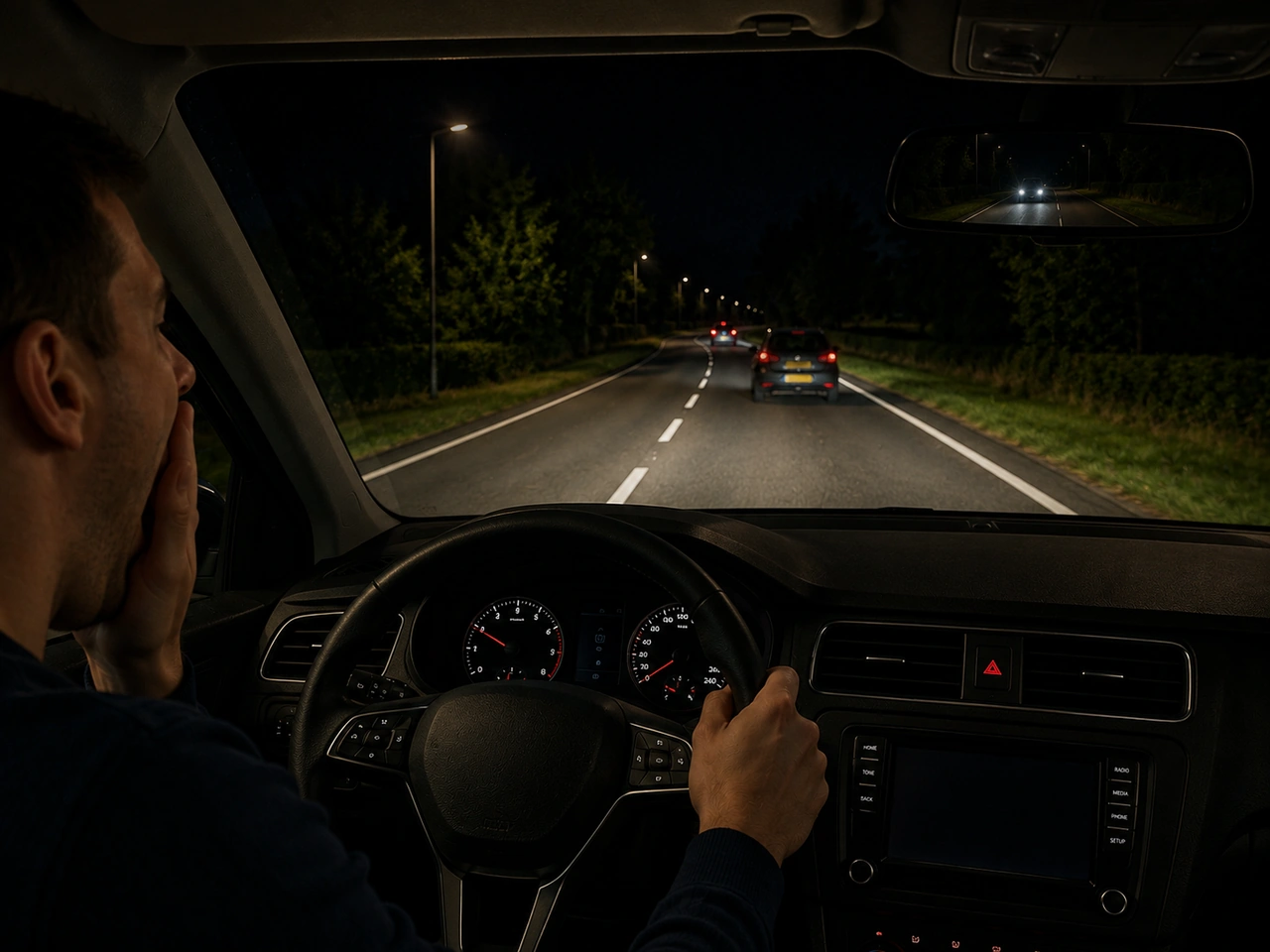
What should you do if you feel tired while driving?

527. What should you do if you feel tired while driving?

Turn up the radio to stay alert.
✓ Stop in a safe place and take a break.
Open a window and continue driving.
Drink coffee and continue without stopping.

Driving while tired reduces concentration and reaction time. Stop somewhere safe and rest before continuing.

Tired driver taking a break from a journey
AI-generated by Traffic-rules.com • WCIT • CC BY-SA
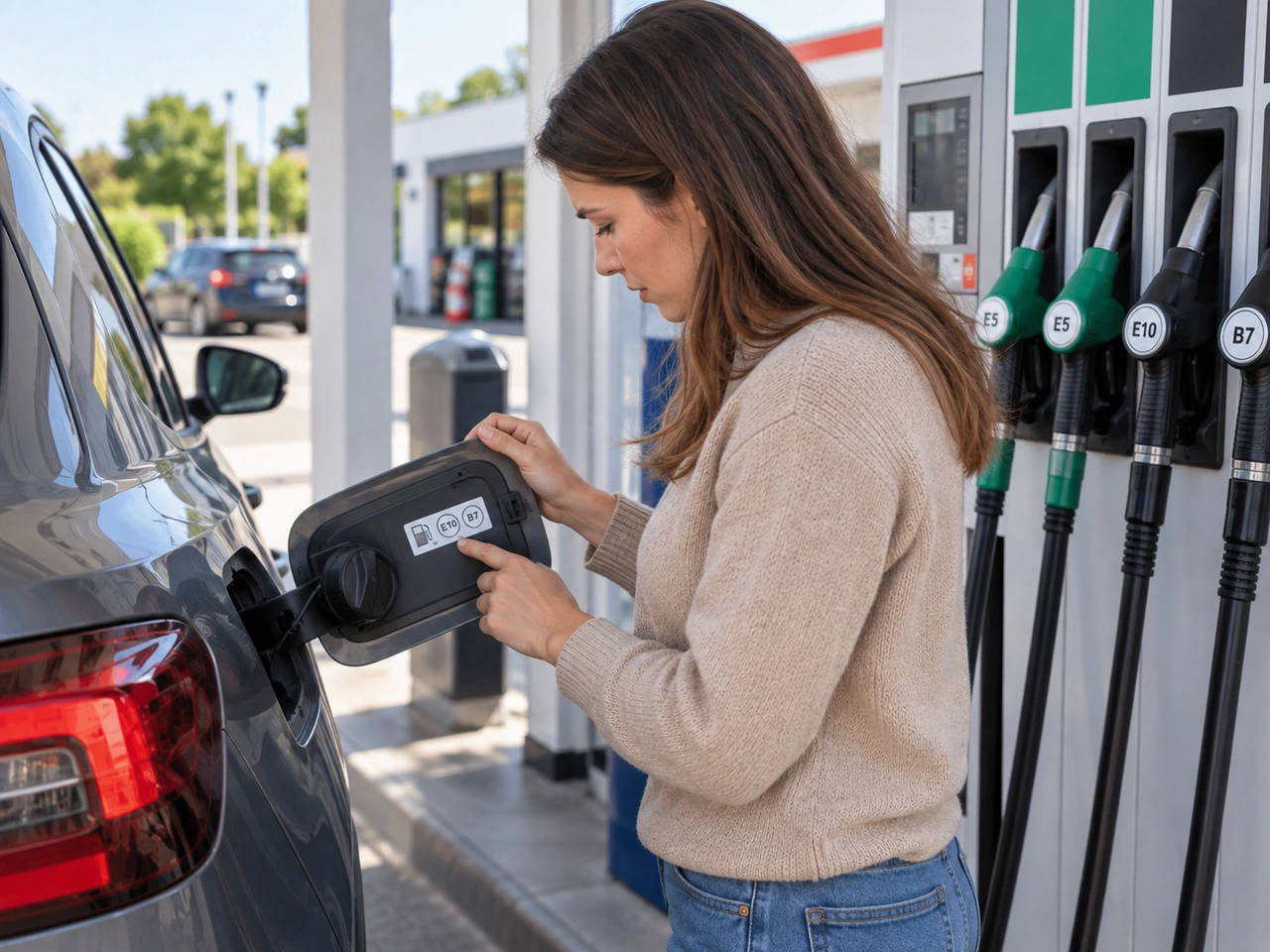
How can you check which fuel is suitable for your vehicle?

528. How can you check which fuel is suitable for your vehicle?

Choose the fuel that has the same colour nozzle as last time.
Choose whichever fuel is cheapest at the station.
✓ Check the fuel-filler label, fuel cap, or vehicle information.
Ask another driver with a similar-looking vehicle.

Before refuelling, check which fuel type the vehicle requires. The correct fuel is often shown inside the fuel-filler flap, on or near the fuel cap, or in the vehicle information or owner's manual. Do not rely only on nozzle colours, as these can vary between filling stations and countries.

Checking the fuel label before refuelling
AI-generated by Traffic-rules.com • WCIT • CC BY-SA
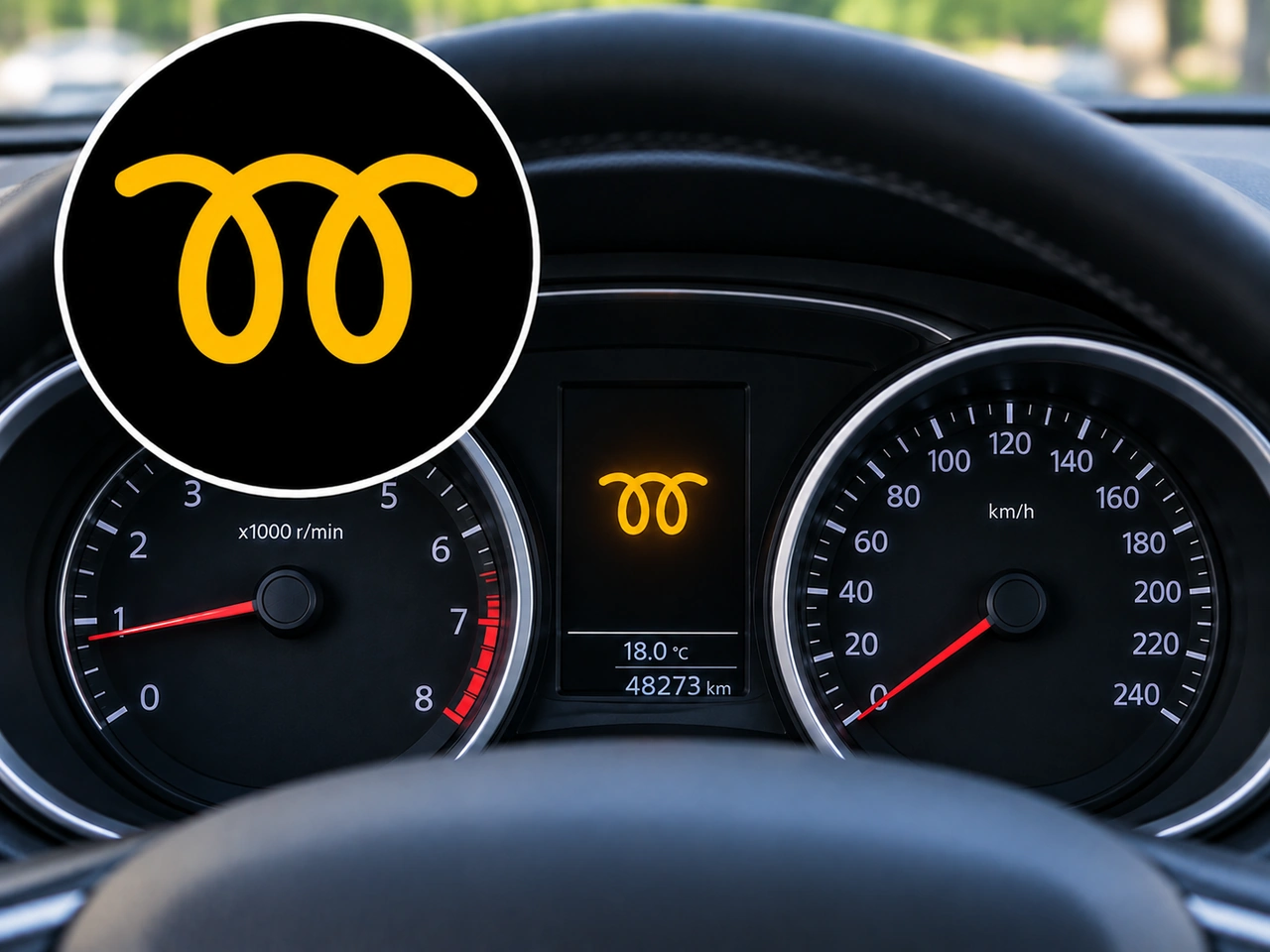
What does this dashboard symbol indicate?

529. What does this dashboard symbol indicate?

✓ Diesel glow-plug preheating.
Engine-management warning.
Diesel particulate filter warning.
Charging-system warning.

This symbol indicates the diesel glow-plug preheating system. In a diesel vehicle, wait for the light to go out before starting the engine when required. If it remains illuminated or flashes while driving, it may indicate a fault.

Diesel glow-plug preheating symbol on the dashboard
AI-generated by Traffic-rules.com • WCIT • CC BY-SA
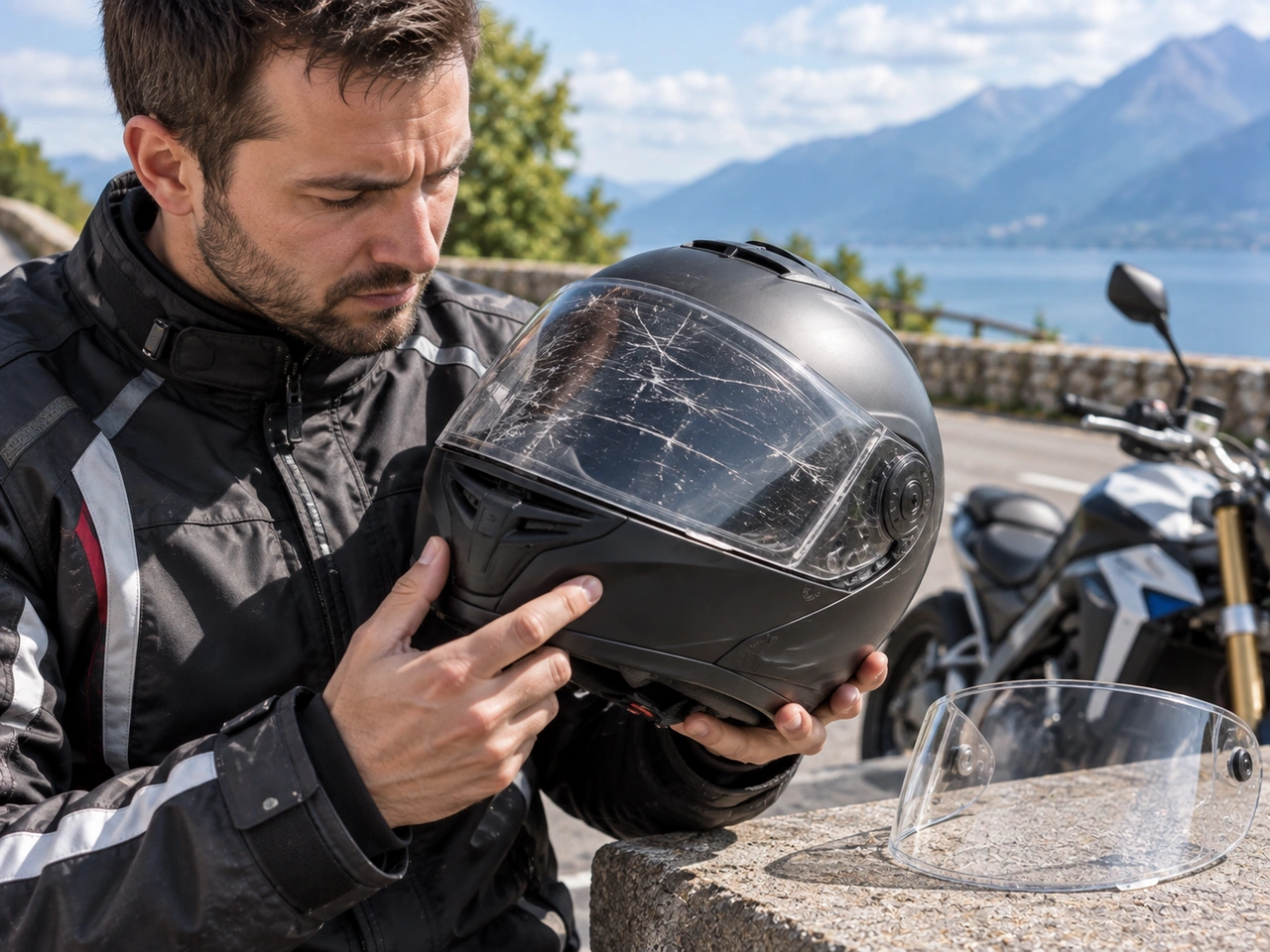
What should you do if a motorcycle helmet visor is badly scratched?

530. What should you do if a motorcycle helmet visor is badly scratched?

Keep using it if the weather is dry.
✓ Replace it before riding.
Use it only during daylight.
Cover the scratches with clear tape.

A badly scratched or damaged visor can reduce or distort your view, especially in bright sunlight or at night. Replace a visor that no longer provides a clear, safe view and follow the helmet manufacturer's instructions.

Scratched visor on a motorcycle helmet
AI-generated by Traffic-rules.com • WCIT • CC BY-SA
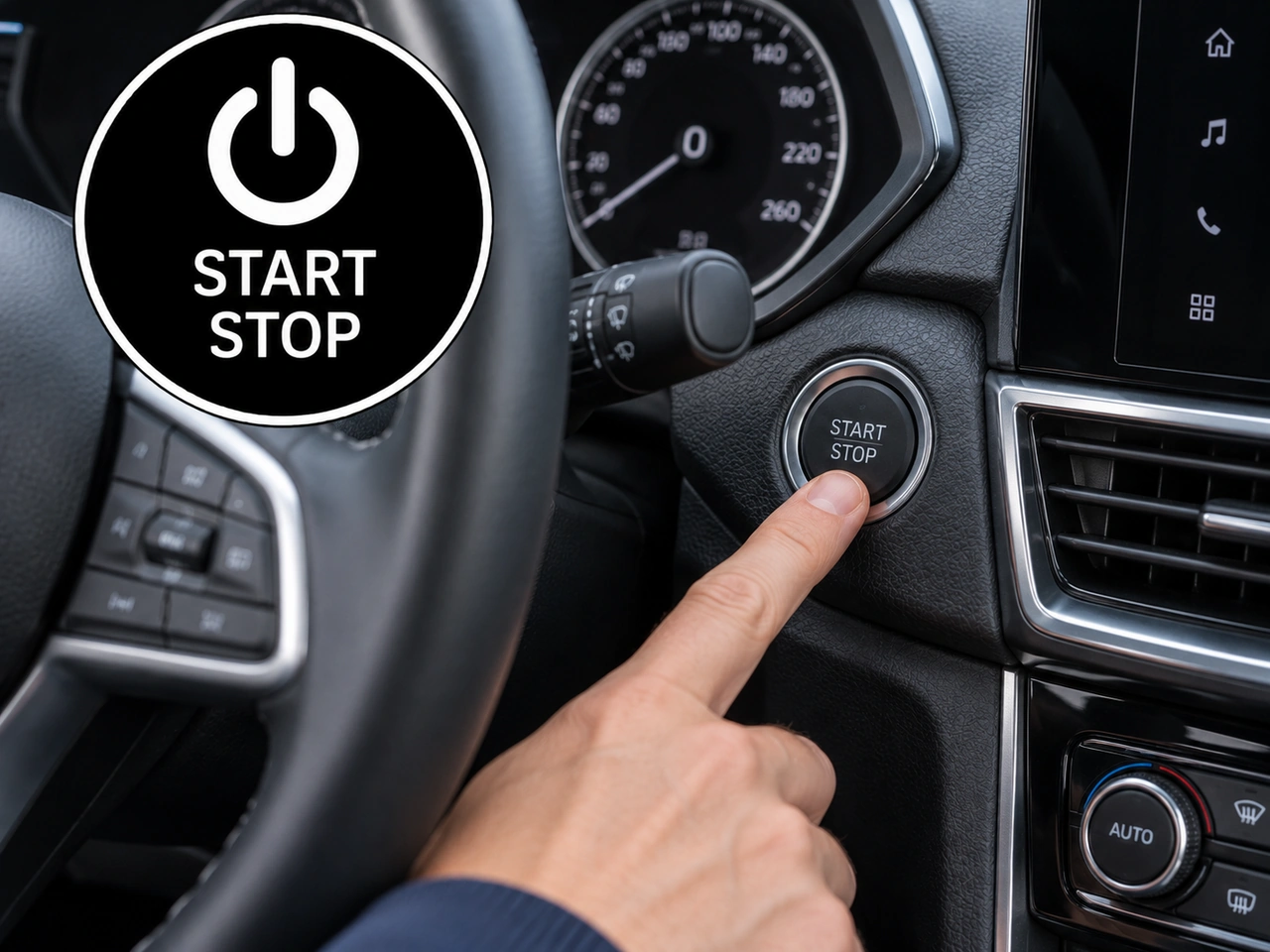
What does this vehicle-control button operate?

531. What does this vehicle-control button operate?

✓ The engine or drive system.
The hazard warning lights.
The automatic start-stop system.
The parking brake.

The engine start/stop button is used to start or switch off the vehicle's engine or electric drive system. Starting the vehicle normally also requires the brake or clutch pedal to be pressed.

Engine start/stop button in a vehicle
AI-generated by Traffic-rules.com • WCIT • CC BY-SA
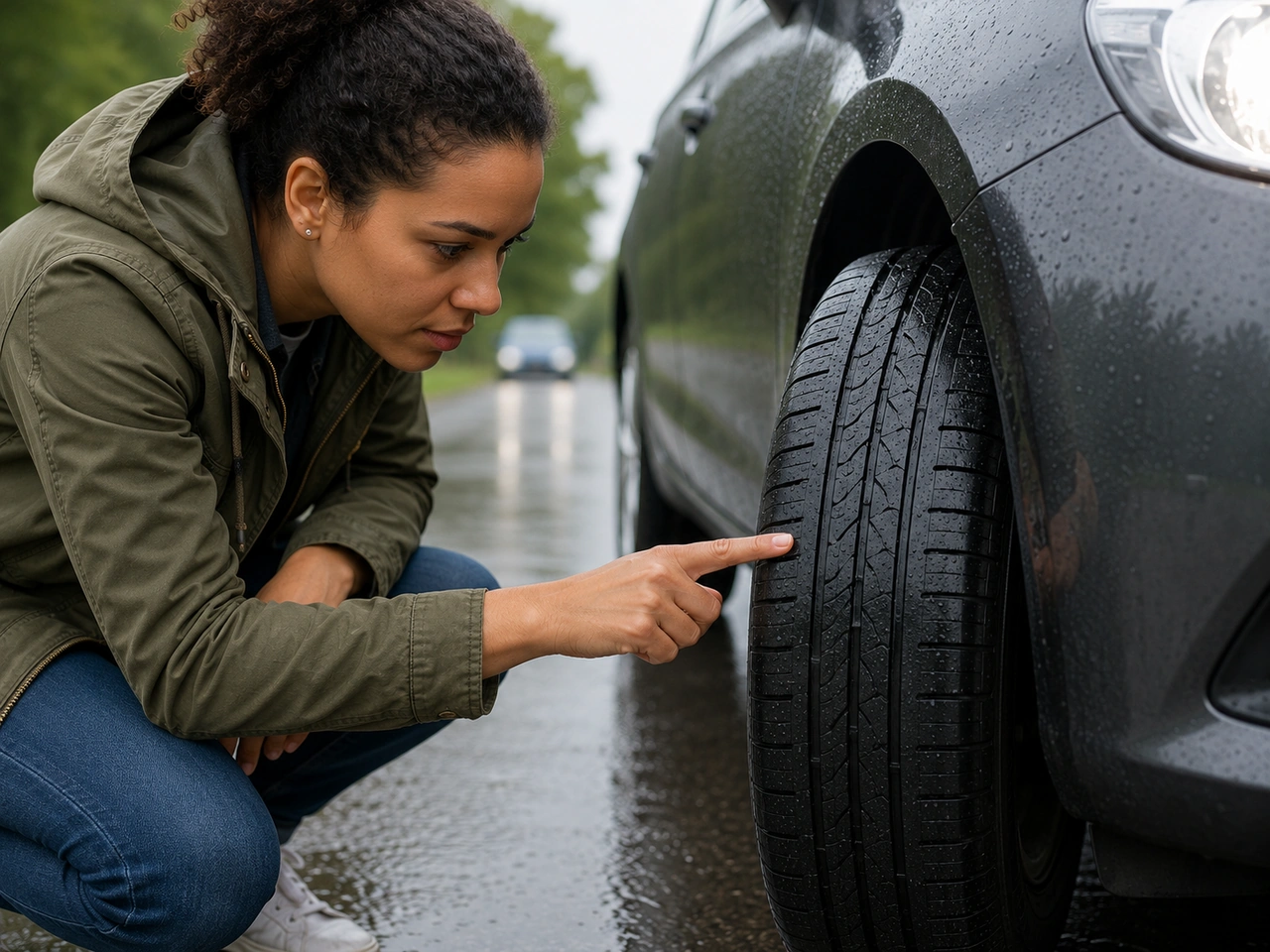
Why is adequate tyre tread important?

532. Why is adequate tyre tread important?

✓ It helps maintain grip and move water away from the tyre.
It increases the amount of power from the engine.
It keeps the tyres from becoming warm while driving.
It prevents tyres from losing air pressure.

Tyre tread helps the vehicle grip the road and disperse water. Worn tread increases the risk of skidding and aquaplaning, especially in wet conditions.

Tread grooves on a vehicle tyre
AI-generated by Traffic-rules.com • WCIT • CC BY-SA
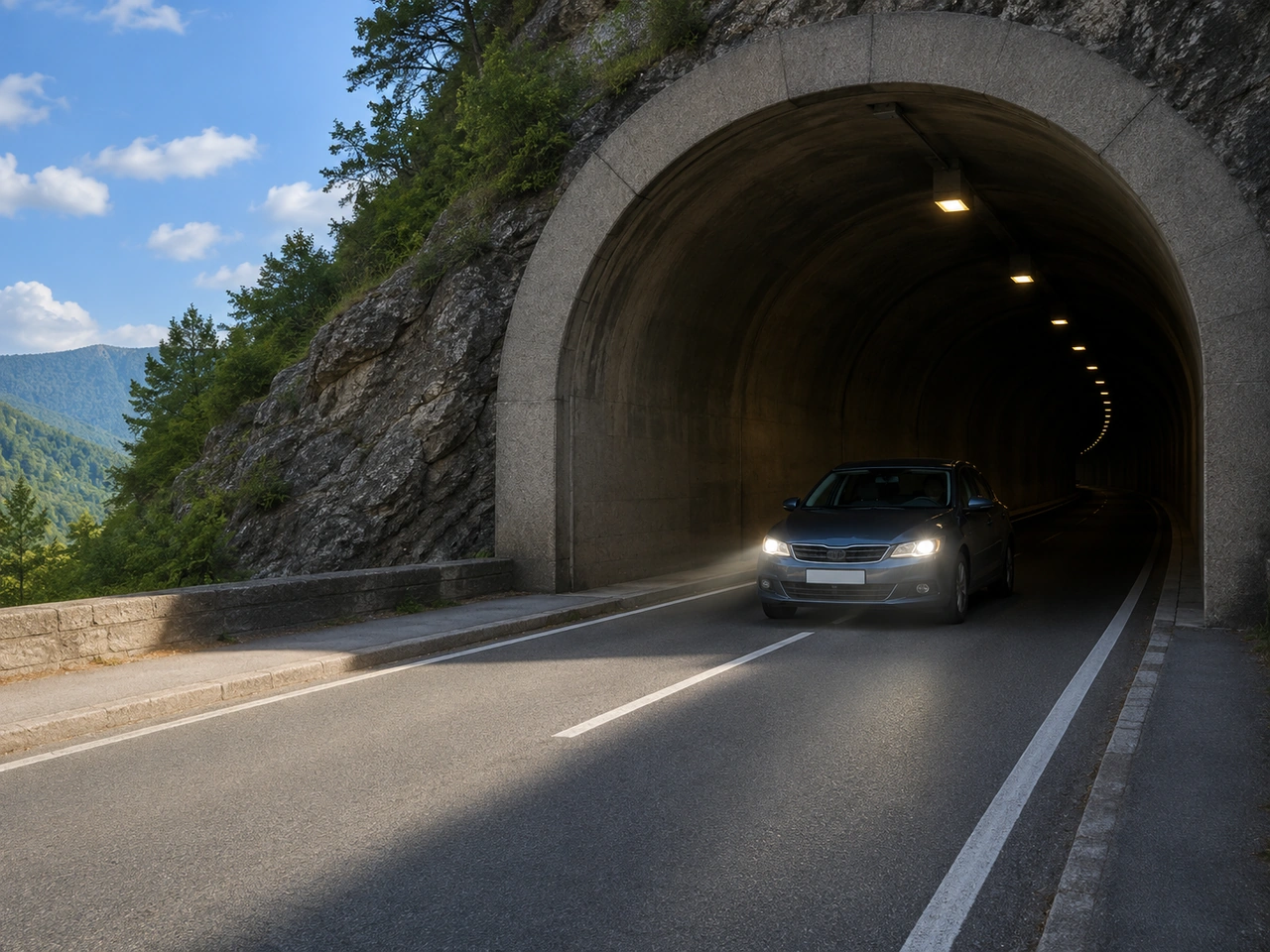
Why should you switch on dipped headlights before entering a tunnel?

533. Why should you switch on dipped headlights before entering a tunnel?

To prevent the tunnel lights from becoming too bright.
To reduce fuel consumption.
✓ To improve visibility and help other road users see you.
To reduce tyre wear inside the tunnel.

Tunnel lighting may be much darker than daylight. Dipped headlights help you see and make your vehicle more visible.

Vehicle using dipped headlights before entering a tunnel
AI-generated by Traffic-rules.com • WCIT • CC BY-SA
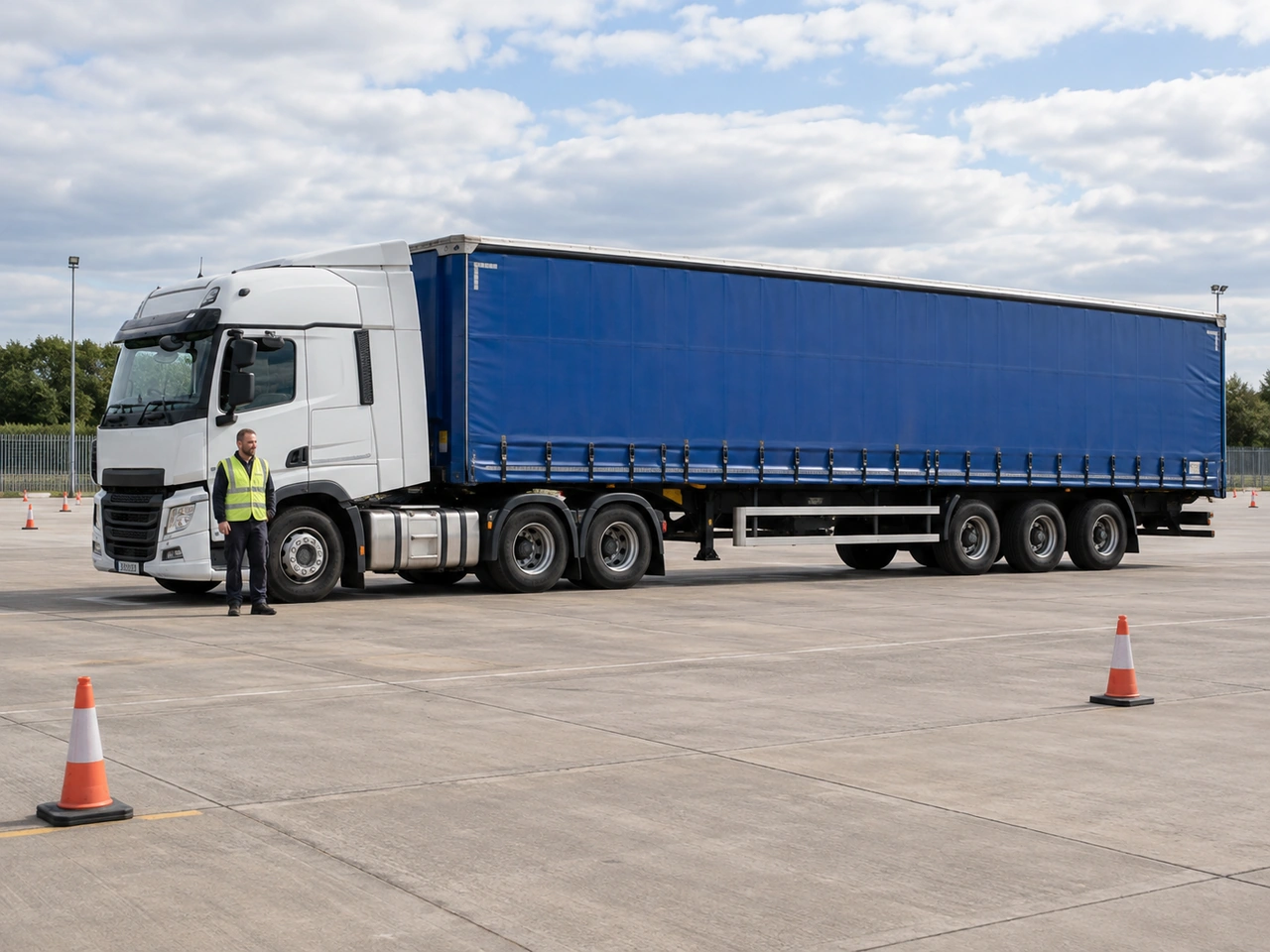
What is the minimum licence for a C vehicle towing a trailer over 750 kg?

534. What is the minimum licence for a C vehicle towing a trailer over 750 kg?

Licence C1.
Licence C1E.
✓ Licence CE.
Licence C.

Category C permits a trailer with a maximum authorised mass of up to 750 kg. A category C vehicle towing a trailer or semi-trailer above 750 kg requires category CE.

Category C vehicle towing a trailer over 750 kg
AI-generated by Traffic-rules.com • WCIT • CC BY-SA
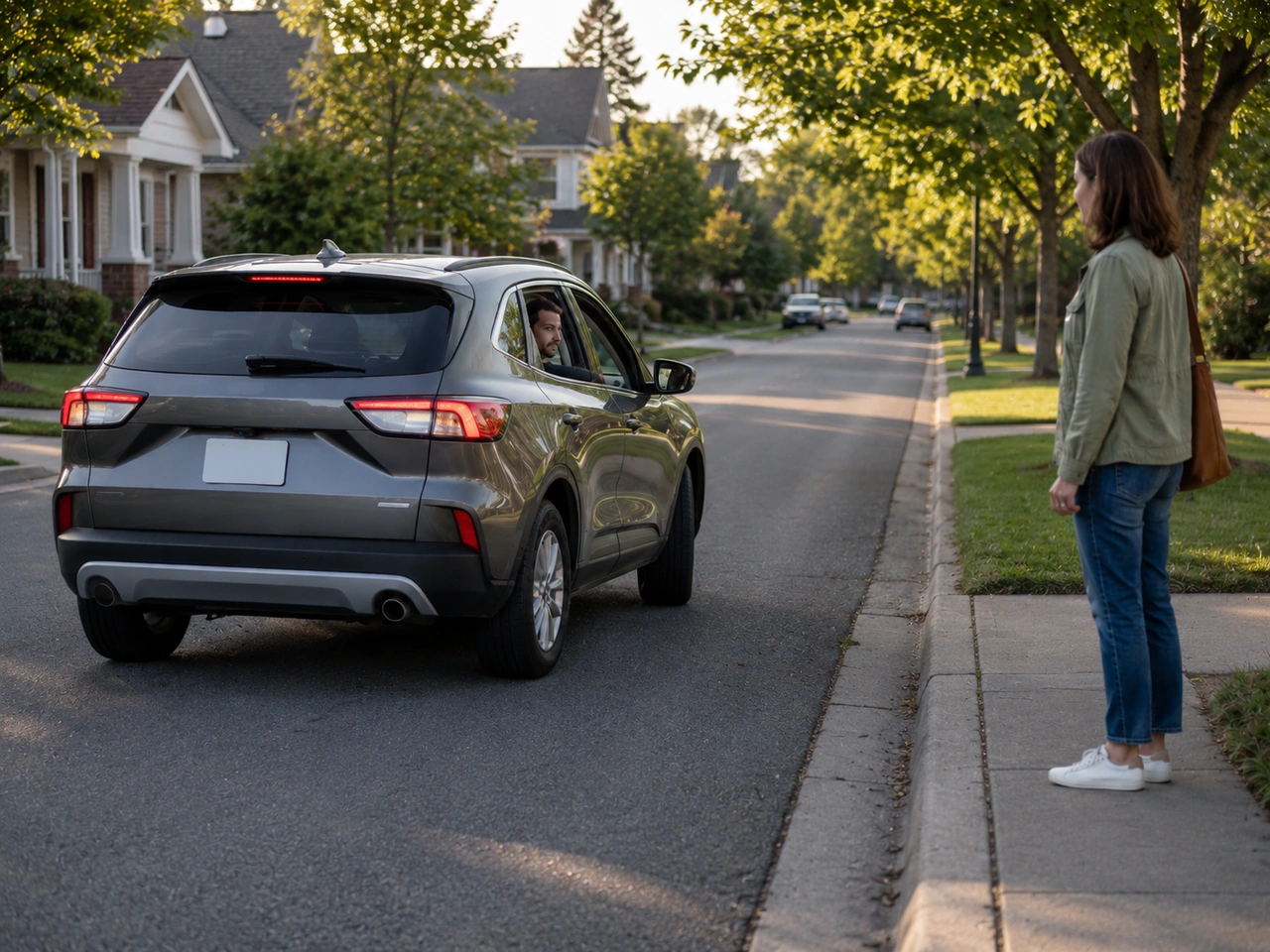
What should you do if a vehicle is reversing near you?

535. What should you do if a vehicle is reversing near you?

Stand close behind it so the driver can see you.
Cross behind it once the driver looks forward.
Rely on the reversing sensors to make it stop.
✓ Stay clear and make sure the driver can see you.

Reversing vehicles have blind spots. Stay away from the vehicle and make sure the driver can see you.

Pedestrian near a reversing vehicle
AI-generated by Traffic-rules.com • WCIT • CC BY-SA
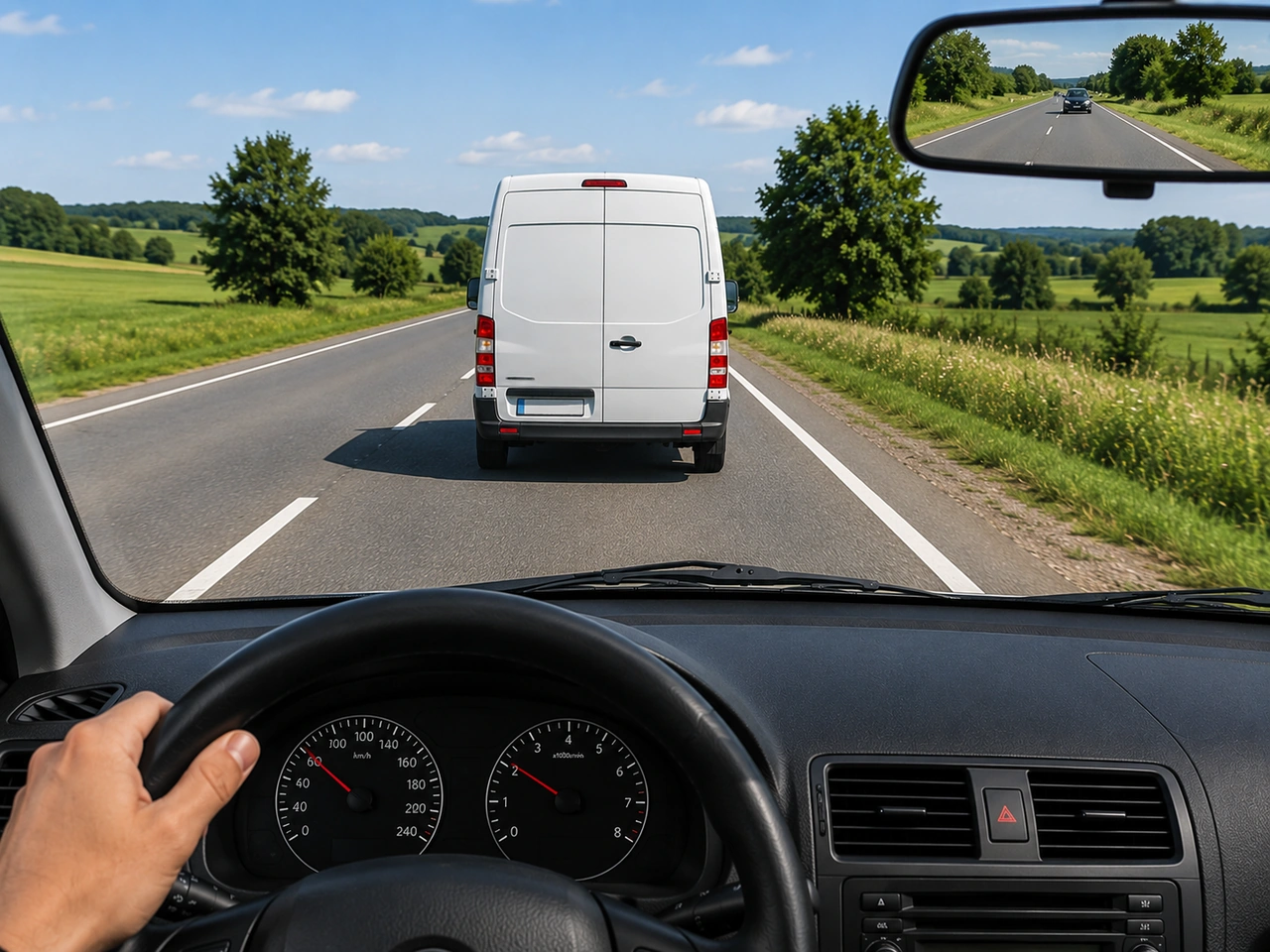
What is the main risk when following a vehicle with limited rear visibility?

536. What is the main risk when following a vehicle with limited rear visibility?

The driver cannot use the side mirrors.
The vehicle must always travel more slowly.
✓ The driver may not see you clearly.
The driver can see you better if you follow closely.

Vans, trucks, and vehicles with blocked rear windows may have limited visibility. Keep extra distance and avoid sitting in blind spots.

Vehicle with limited rearward visibility
AI-generated by Traffic-rules.com • WCIT • CC BY-SA
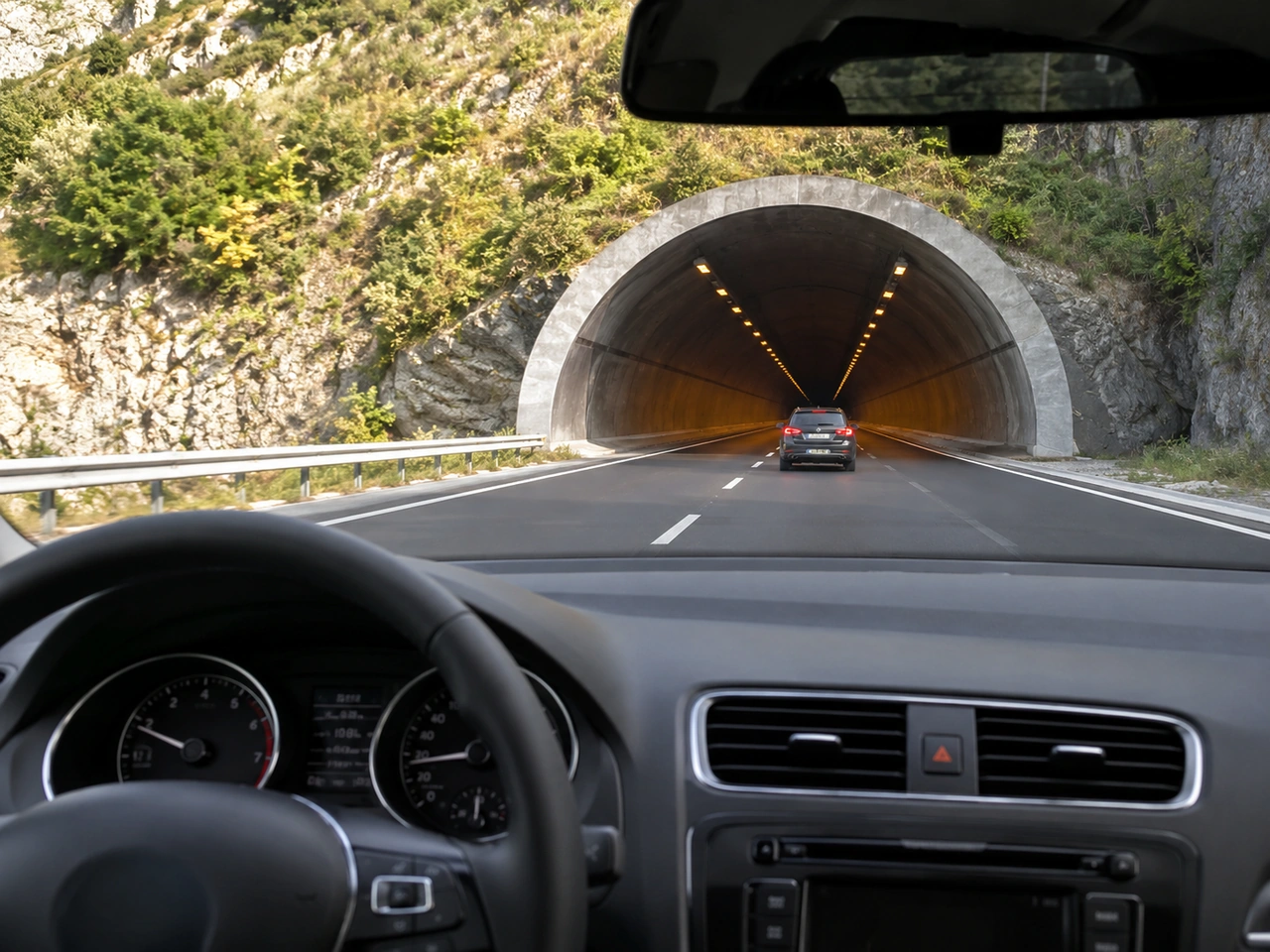
What should you do when approaching a tunnel?

537. What should you do when approaching a tunnel?

✓ Use the correct lights and keep a safe distance.
Increase speed to spend less time inside.
Switch on the hazard lights before entering.
Stop and wait until the tunnel is clear.

When entering a tunnel, use the correct lights, keep enough distance, and stay alert for slower traffic.

Vehicle approaching a road tunnel
AI-generated by Traffic-rules.com • WCIT • CC BY-SA
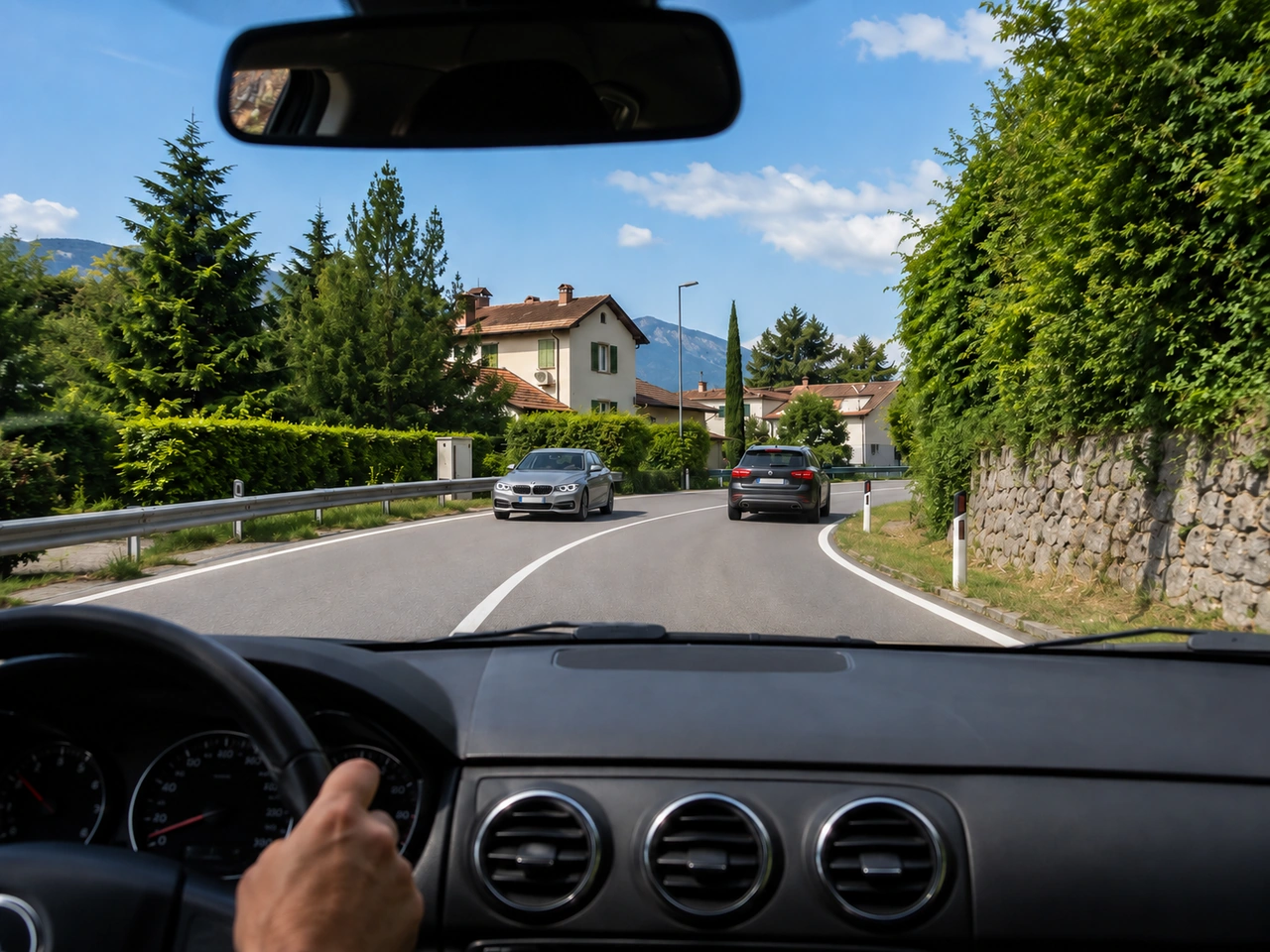
Why should you slow down before a sharp bend?

538. Why should you slow down before a sharp bend?

✓ To keep control of the vehicle.
To prevent other vehicles from overtaking.
To make the steering feel lighter.
To reduce fuel consumption.

Sharp bends reduce your view and can make the vehicle harder to control, so you should slow down before entering the bend.

Vehicle approaching a sharp bend
AI-generated by Traffic-rules.com • WCIT • CC BY-SA
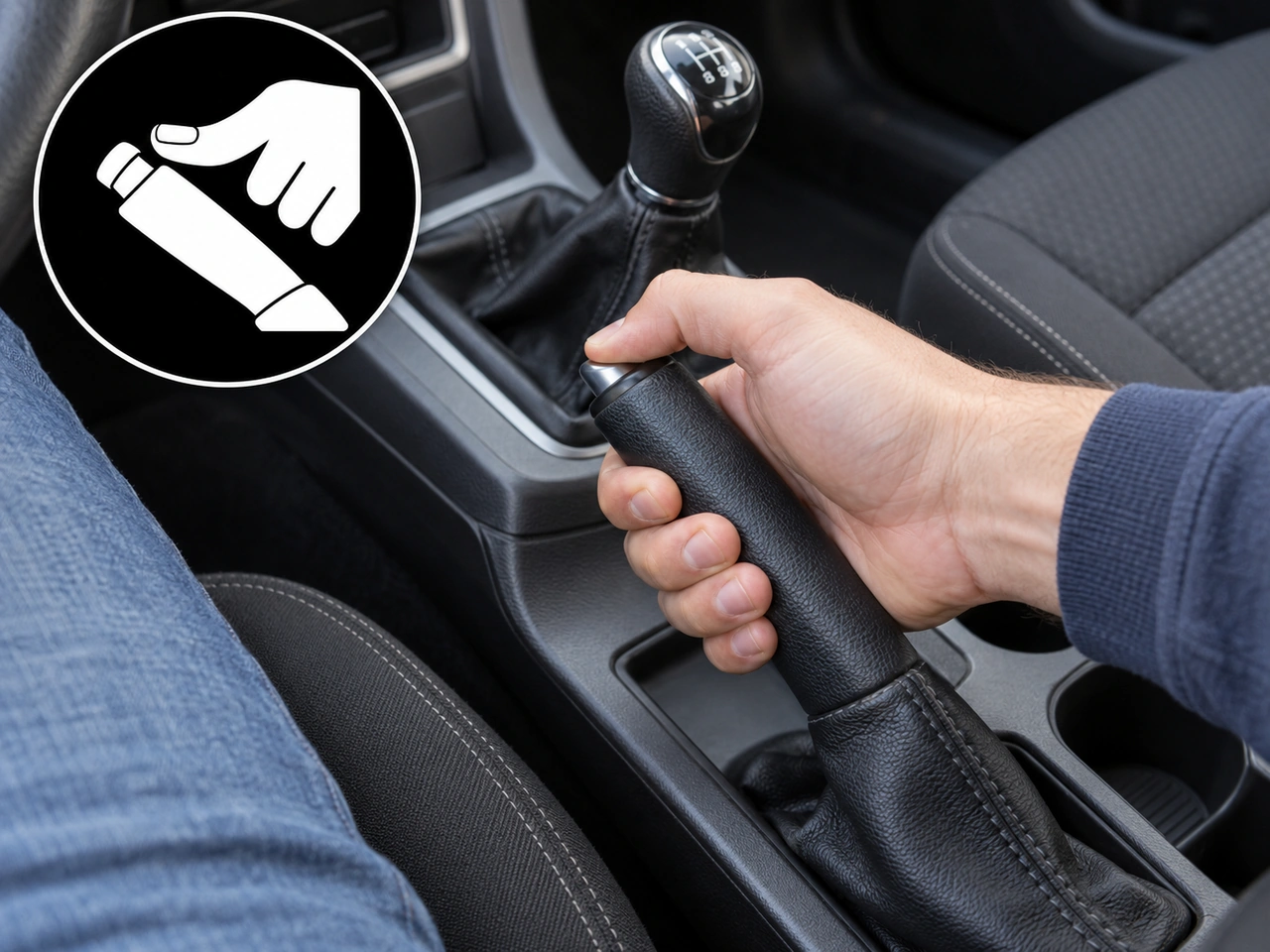
What is the button on a manual handbrake lever used for?

539. What is the button on a manual handbrake lever used for?

To unlock the steering.
To select reverse gear.
To apply the service brakes.
✓ To release the handbrake mechanism.

To release a manual handbrake, pull the lever up slightly, press and hold the release button, then lower the lever under control.

Release button on a manual handbrake lever
AI-generated by Traffic-rules.com • WCIT • CC BY-SA
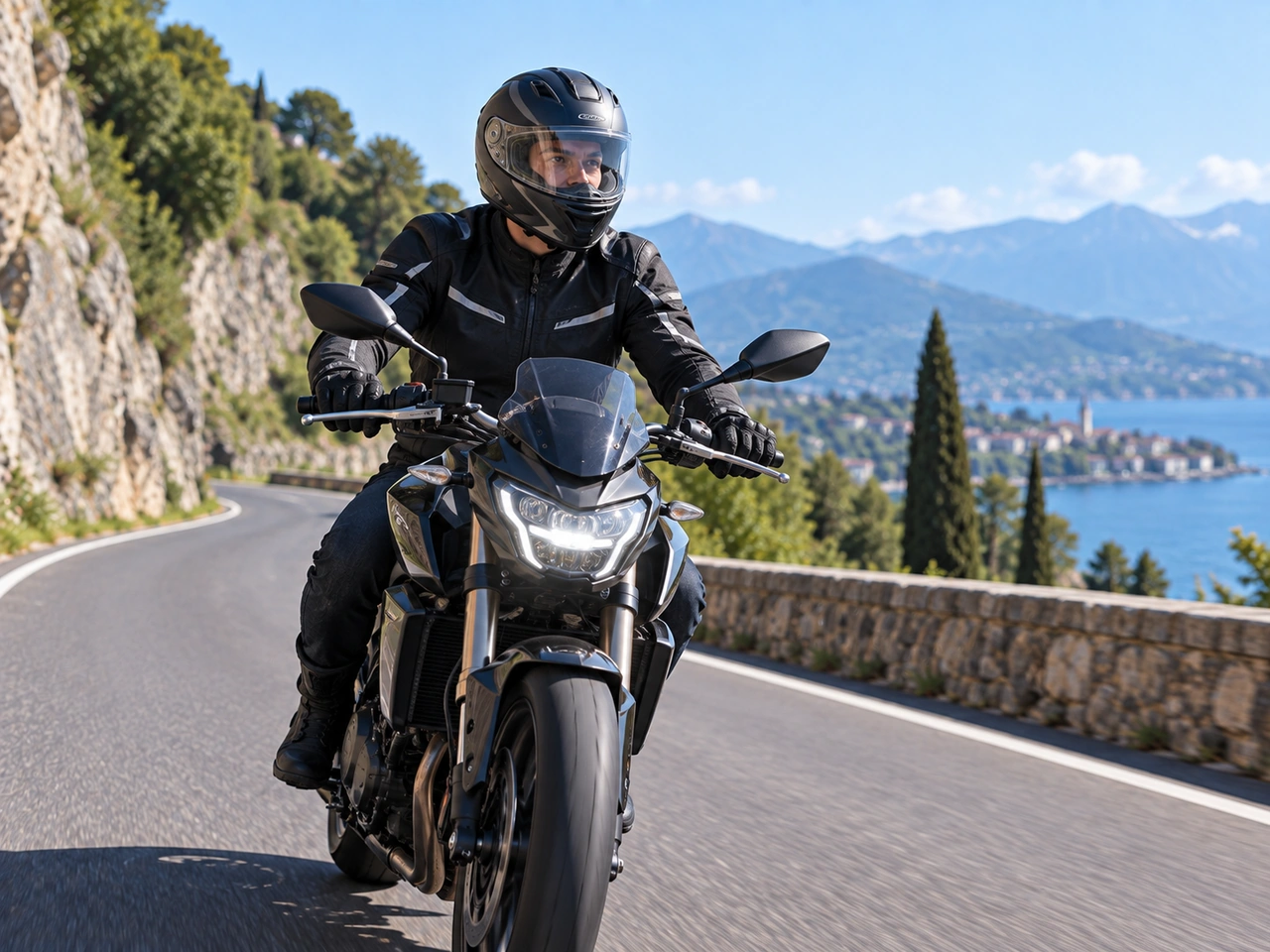
Are motorcycle riders generally required to wear a helmet in Greece?

540. Are motorcycle riders generally required to wear a helmet in Greece?

✓ Yes.
No.

Motorcycle riders in Greece are generally required to wear an approved helmet.

Motorcyclist wearing a protective helmet
AI-generated by Traffic-rules.com • WCIT • CC BY-SA
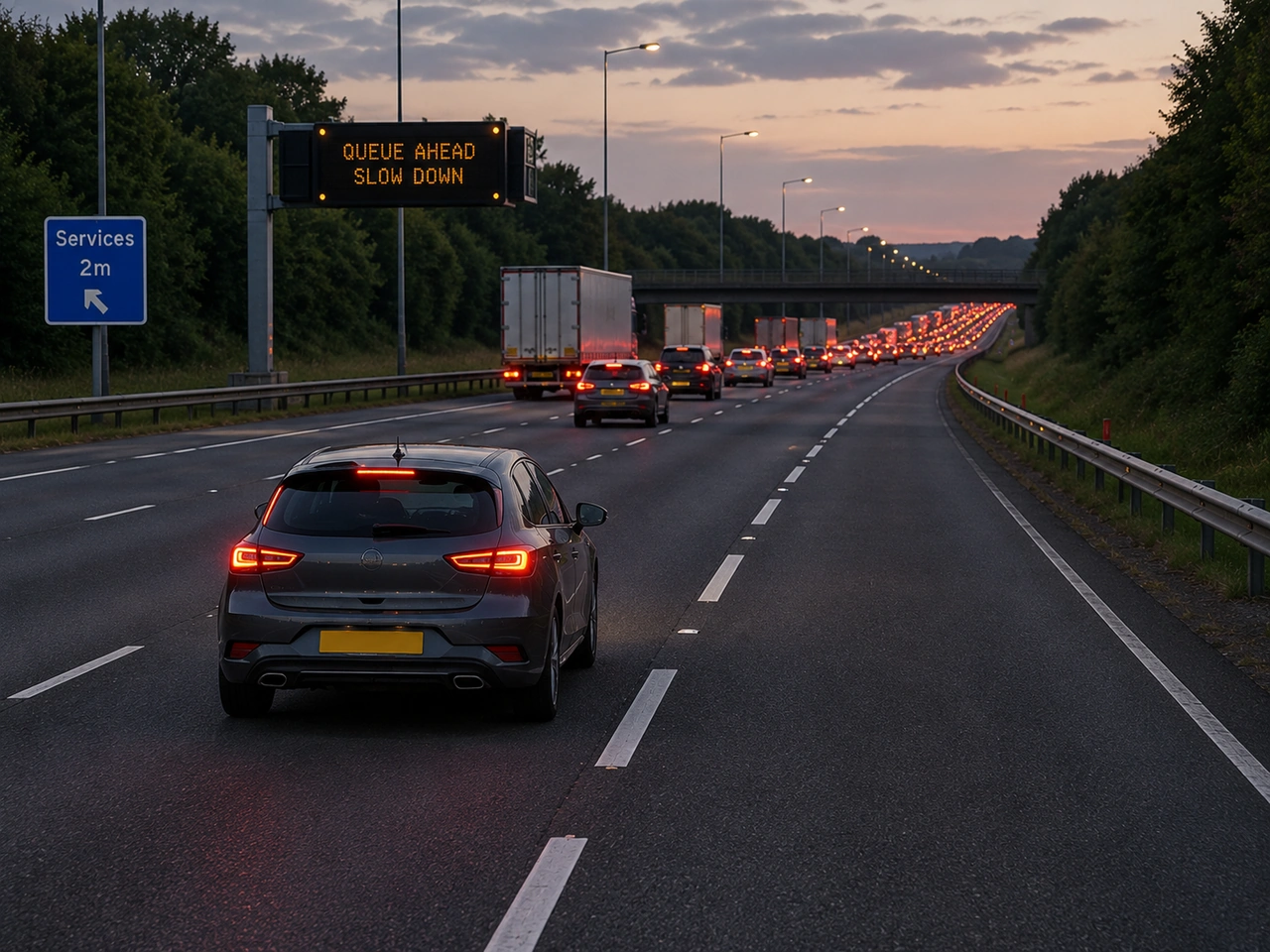
What should you do when approaching stationary or slow-moving traffic on a motorway?

541. What should you do when approaching stationary or slow-moving traffic on a motorway?

Change lanes immediately to avoid slowing down.
Brake only when the vehicle ahead begins braking.
Follow the vehicle ahead closely to keep traffic moving.
✓ Reduce speed early and be prepared to stop.

Motorway queues can appear suddenly. Early braking gives following traffic more time to react.

Slow-moving traffic ahead on a motorway
AI-generated by Traffic-rules.com • WCIT • CC BY-SA
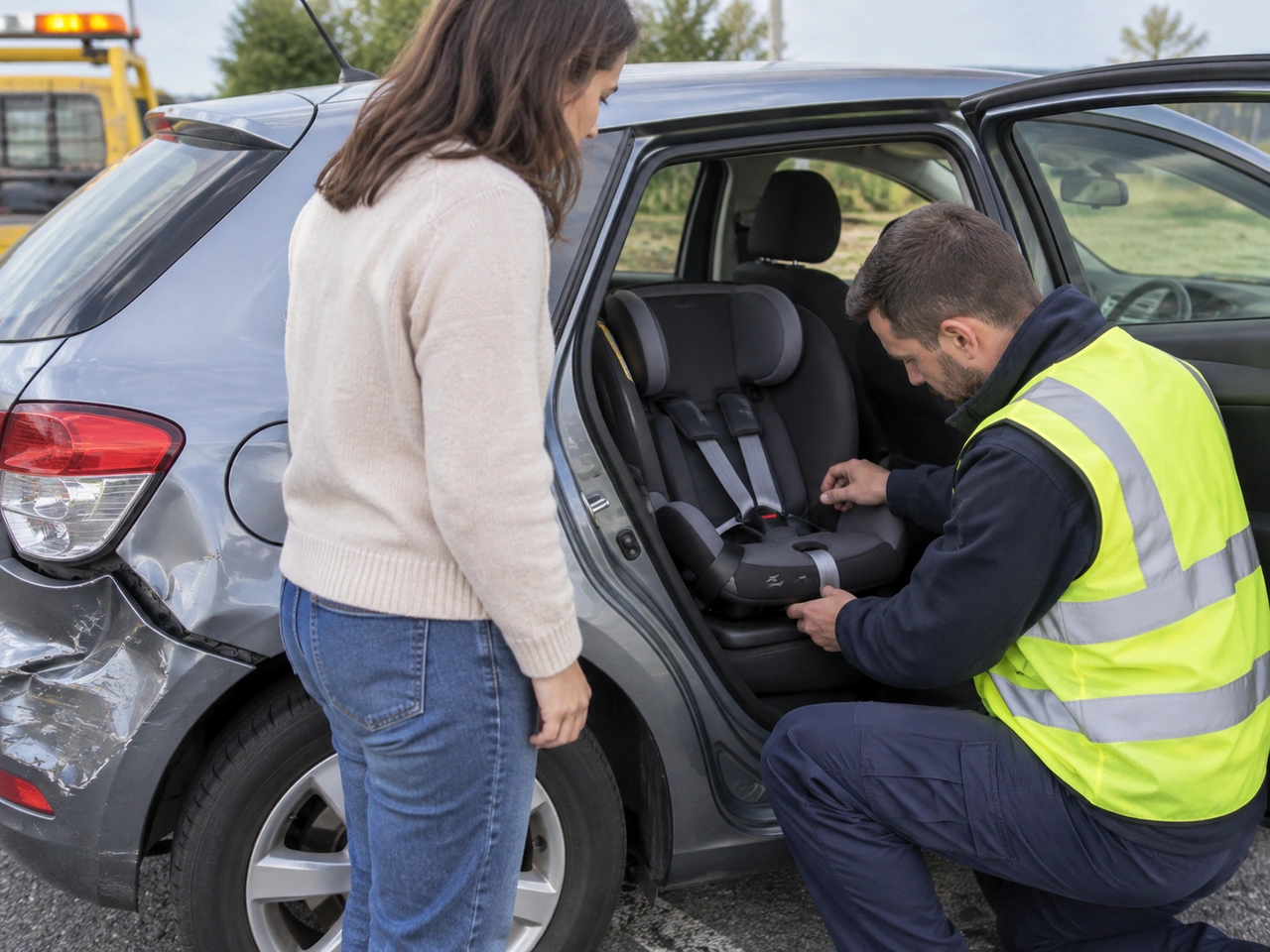
What should you do with a child restraint after a collision?

542. What should you do with a child restraint after a collision?

Keep using it if no damage is visible.
✓ Follow the manufacturer's instructions about inspection or replacement.
Repair damaged parts yourself.
Use it normally after tightening the straps.

A child restraint may be damaged in a collision even when the damage is not obvious. Follow the manufacturer's instructions, as the restraint may need to be inspected or replaced before it is used again.

Child car seat requiring inspection after a collision
AI-generated by Traffic-rules.com • WCIT • CC BY-SA
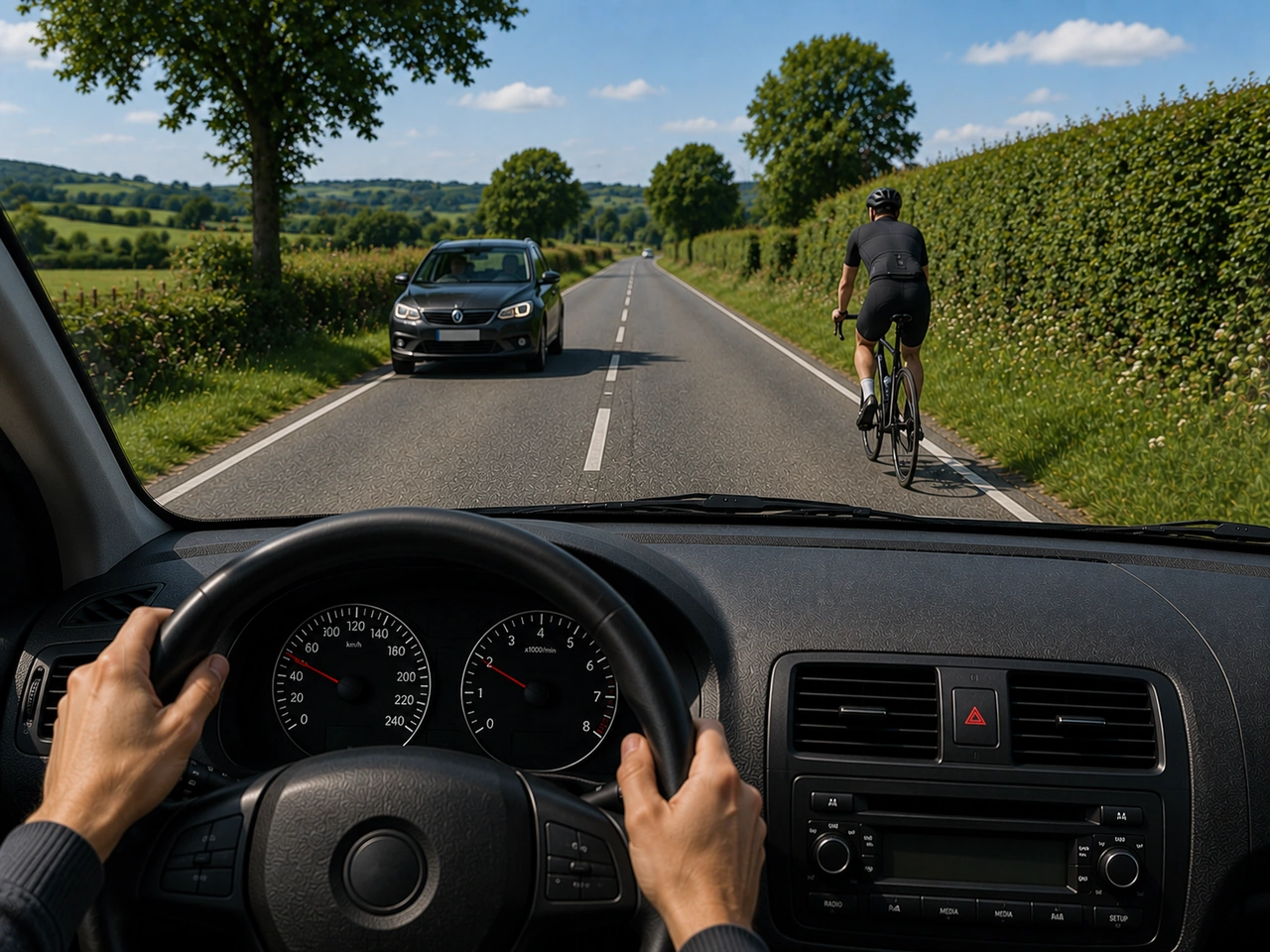
What should you do when following a cyclist on a narrow road?

543. What should you do when following a cyclist on a narrow road?

✓ Keep a safe distance and overtake only when there is enough space.
Sound your horn so the cyclist moves aside.
Pass even if you cannot leave much space.
Drive close behind until there is room to pass.

Cyclists may need to avoid potholes, drains, or wind gusts. Keep distance and only pass when you can leave plenty of space.

Vehicle following a cyclist on a narrow road
AI-generated by Traffic-rules.com • WCIT • CC BY-SA
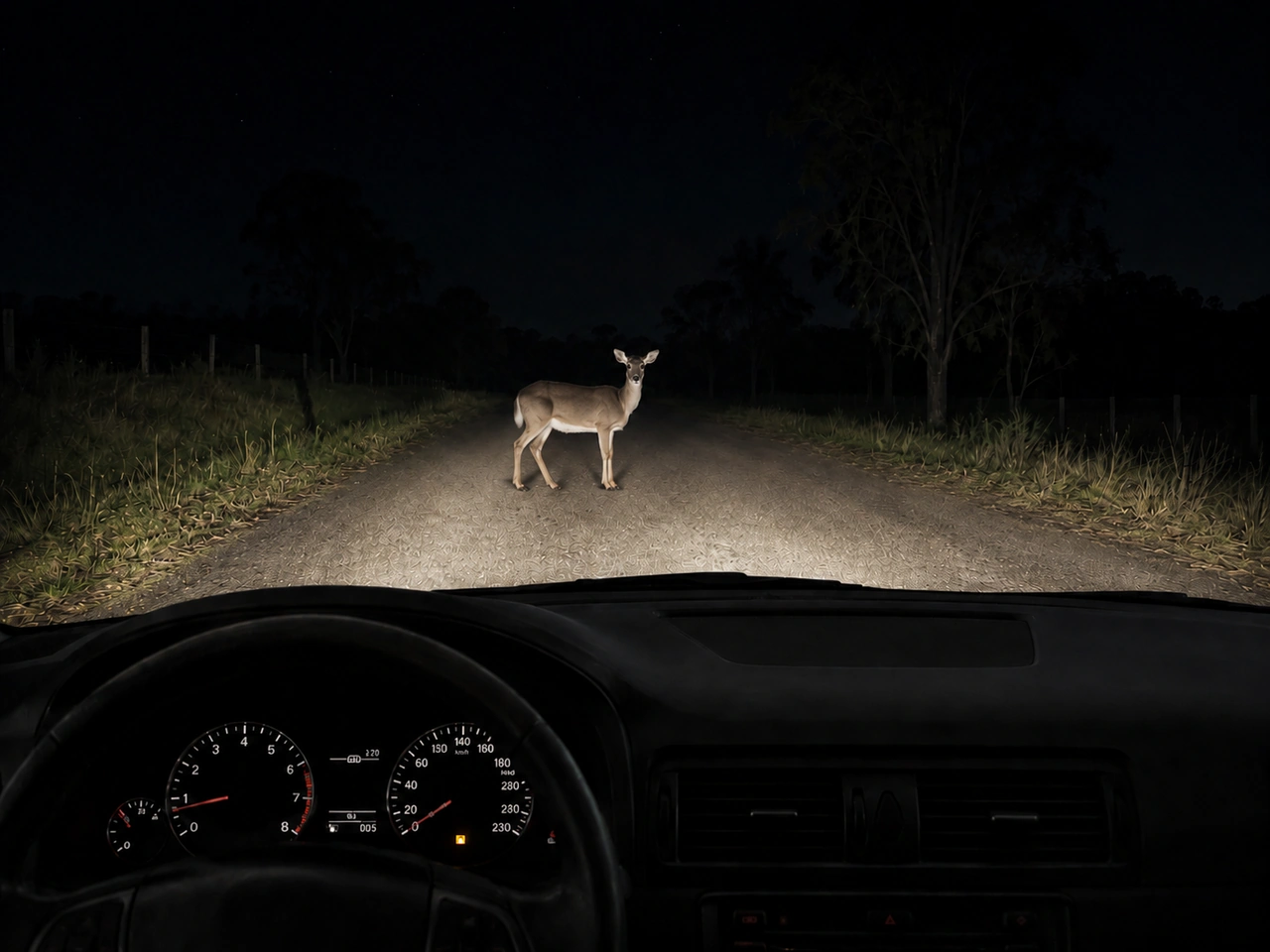
What should you do if an animal is standing on the road at night?

544. What should you do if an animal is standing on the road at night?

✓ Slow down and be prepared to stop.
Flash your headlights repeatedly to make it move.
Switch off your headlights as you approach.
Sound your horn and continue at the same speed.

Animals may freeze, turn back, or move unpredictably when caught in vehicle headlights.

Animal standing on a road at night
AI-generated by Traffic-rules.com • WCIT • CC BY-SA
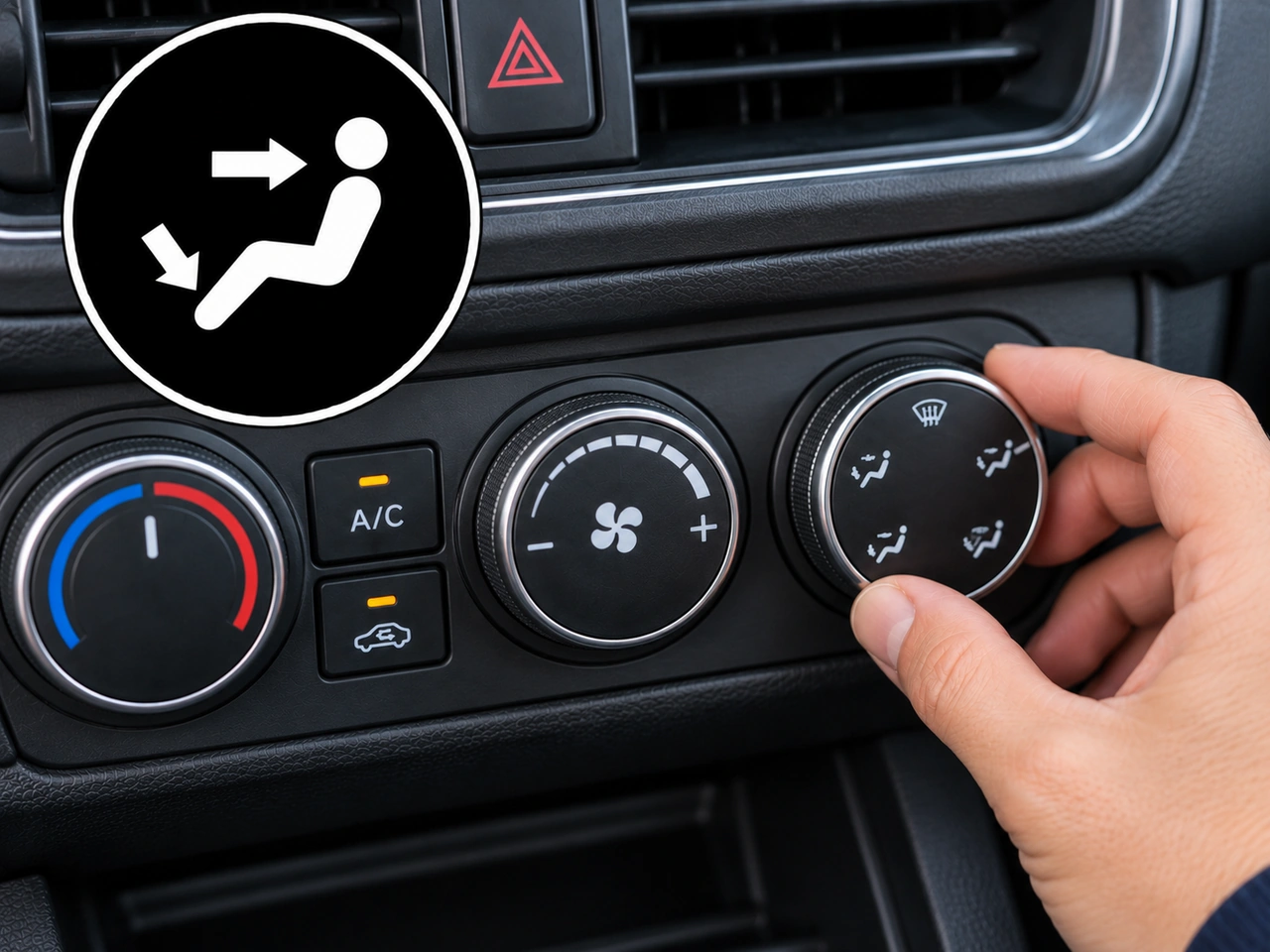
What does this vehicle-control symbol indicate?

545. What does this vehicle-control symbol indicate?

✓ Airflow direction.
Cabin fan speed.
Air conditioning.
Cabin temperature adjustment.

This control selects the direction of the ventilation airflow, such as towards the face, feet or windscreen.

Control for directing cabin ventilation airflow
AI-generated by Traffic-rules.com • WCIT • CC BY-SA
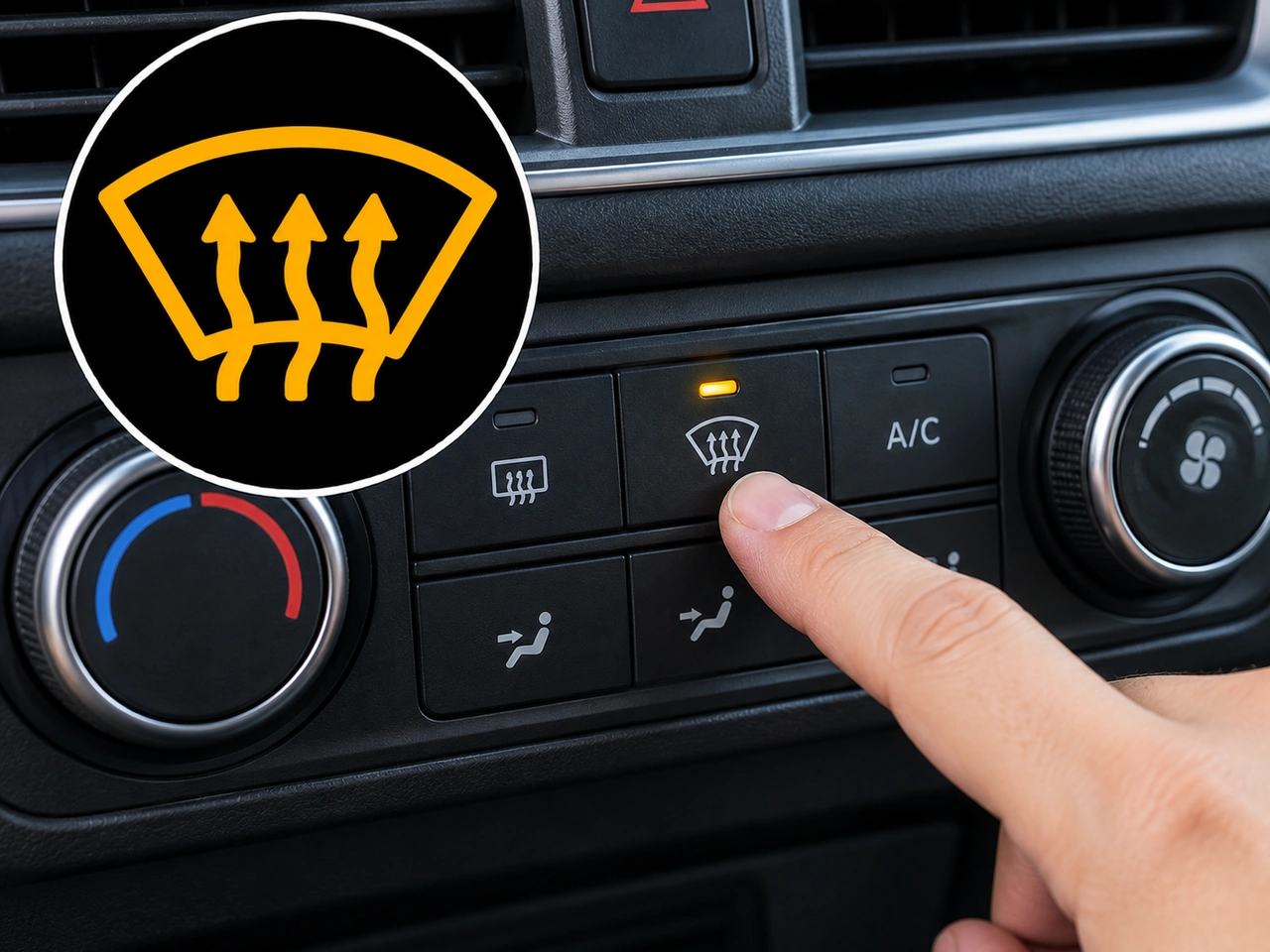
What does this dashboard symbol indicate?

546. What does this dashboard symbol indicate?

Air recirculation.
Windscreen washer.
Air conditioning.
✓ Front windscreen demister.

This symbol indicates the front windscreen demister. It directs airflow towards the windscreen to help clear condensation, mist or frost and restore a clear view.

Front windscreen demister symbol on the dashboard
AI-generated by Traffic-rules.com • WCIT • CC BY-SA
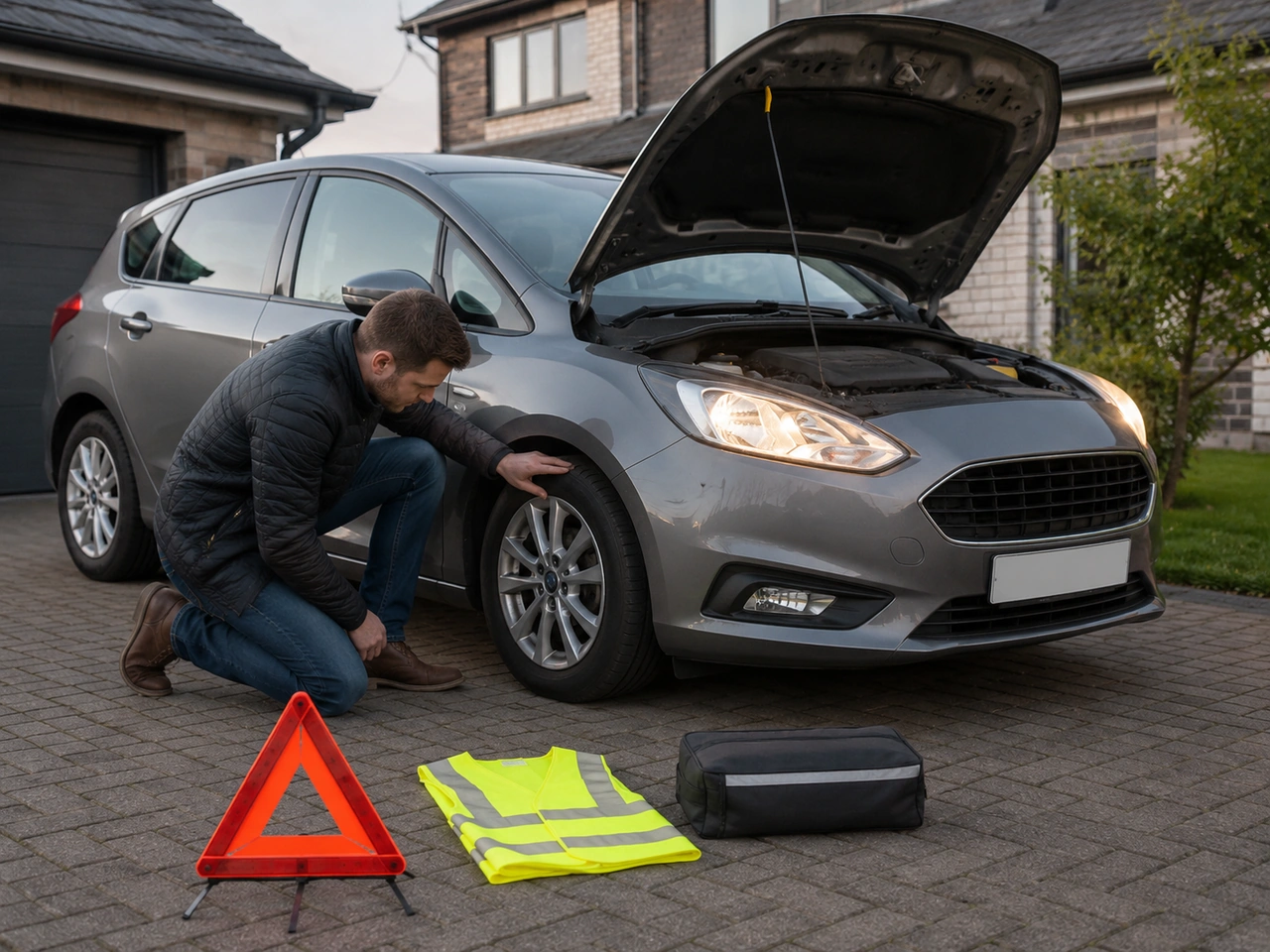
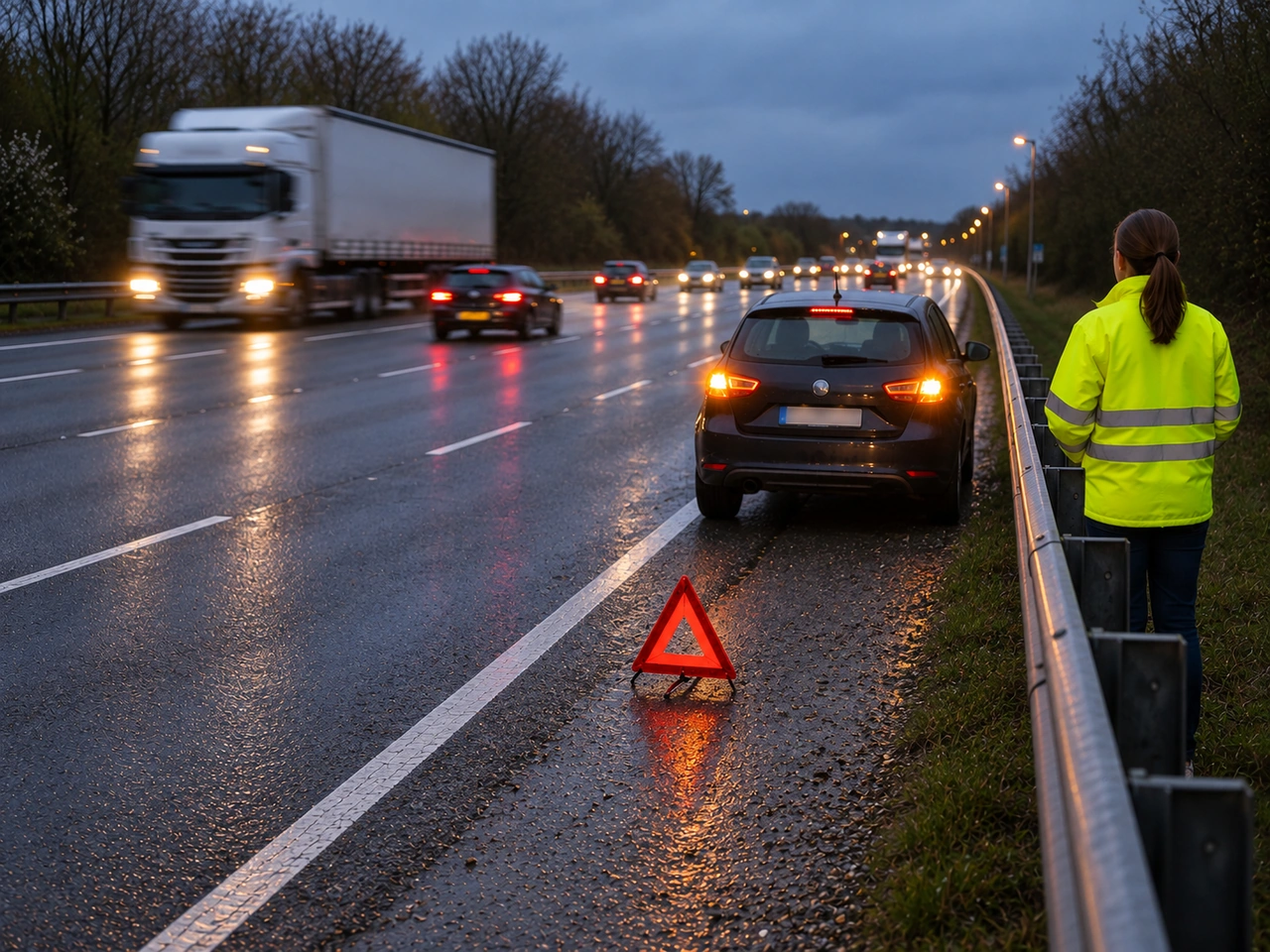
Why is high-visibility clothing useful during a roadside breakdown?

547. Why is high-visibility clothing useful during a roadside breakdown?

✓ It makes you easier for approaching drivers and recovery workers to see.
It allows you to remain close to moving traffic.
It makes hazard warning lights unnecessary.
It protects you from injury if a vehicle hits you.

High-visibility clothing improves your visibility, especially at night or in poor weather, but you must still remain away from traffic.

High-visibility clothing worn during a roadside breakdown
AI-generated by Traffic-rules.com • WCIT • CC BY-SA
What should you do if traffic stops and a driver waves you across?

548. What should you do if traffic stops and a driver waves you across?

Check only the lane nearest to you.
Assume traffic in the other lanes will also stop.
✓ Check that all lanes are safe before crossing.
Cross immediately once the driver waves you through.

One driver may stop, but other vehicles may still be moving. Always check all lanes before crossing.

Driver waving a pedestrian across the road
AI-generated by Traffic-rules.com • WCIT • CC BY-SA
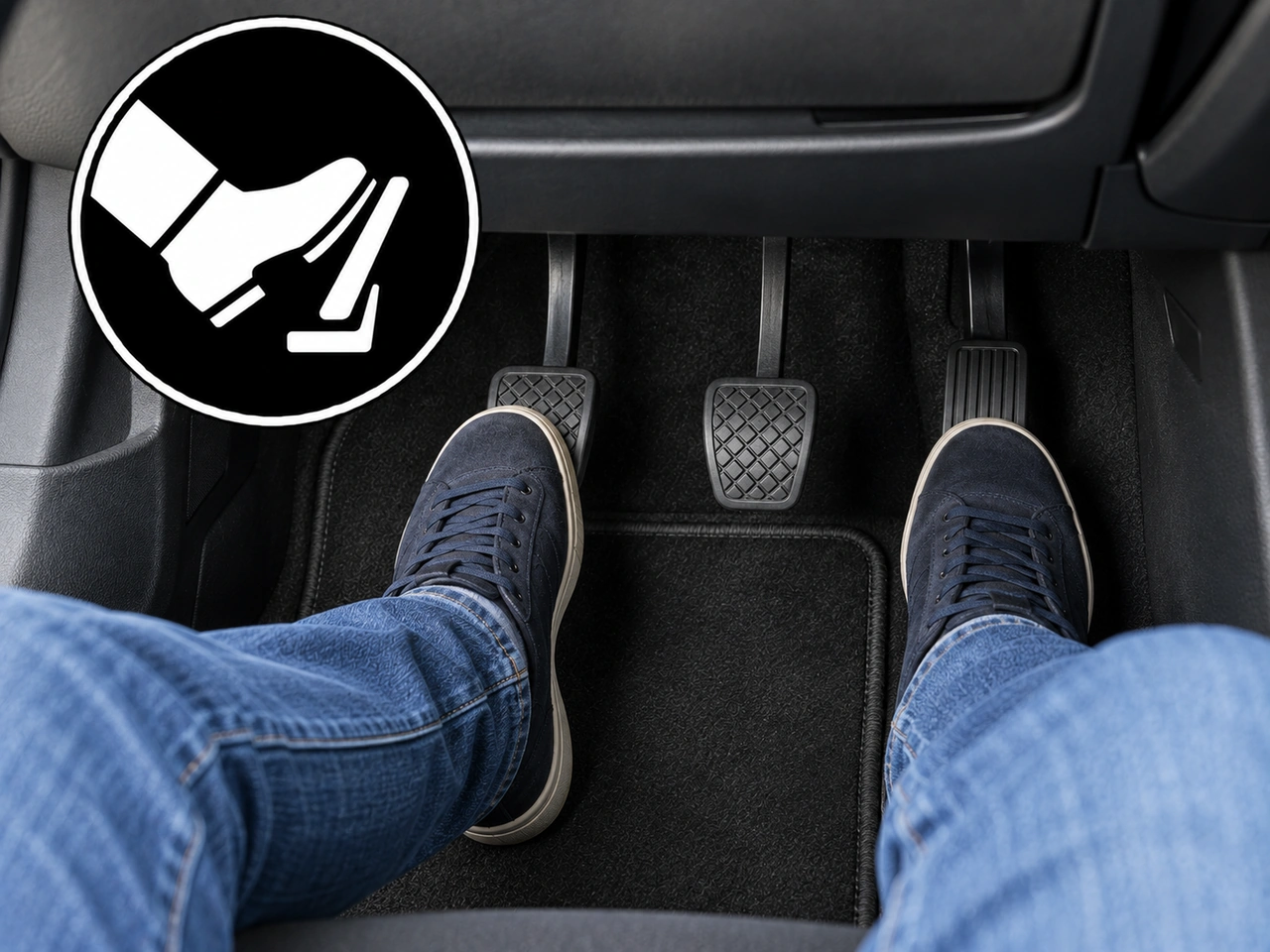
What is the clutch biting point?

549. What is the clutch biting point?

The point where the engine switches off.
The point where the clutch pedal is fully pressed.
✓ The point where the clutch begins to transmit power to the wheels.
The point where the parking brake releases.

The clutch biting point is reached as the clutch pedal is released and the clutch begins to transmit power from the engine to the transmission. Controlling this point helps the driver move off smoothly.

Clutch-pedal control when moving off
AI-generated by Traffic-rules.com • WCIT • CC BY-SA
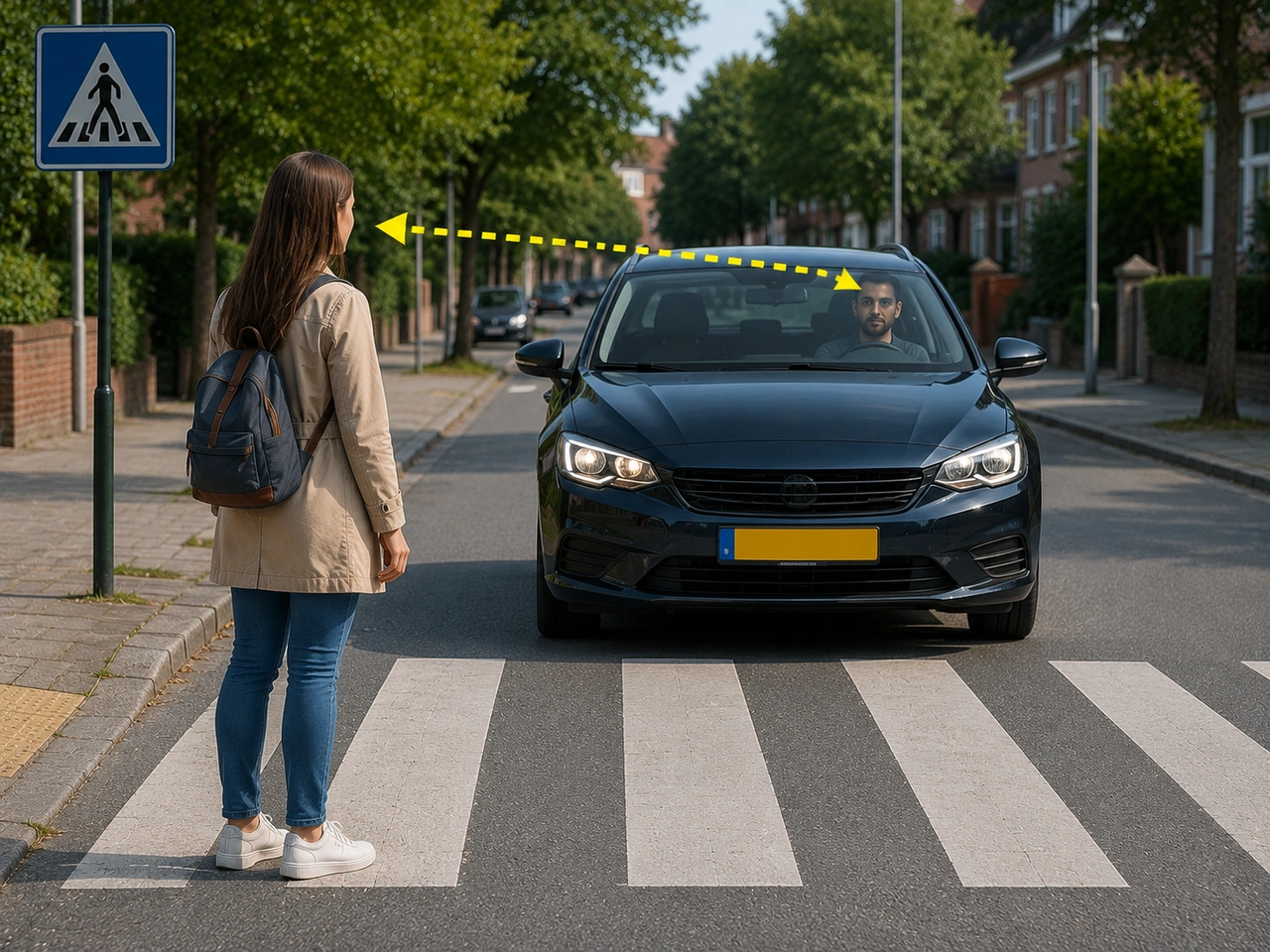
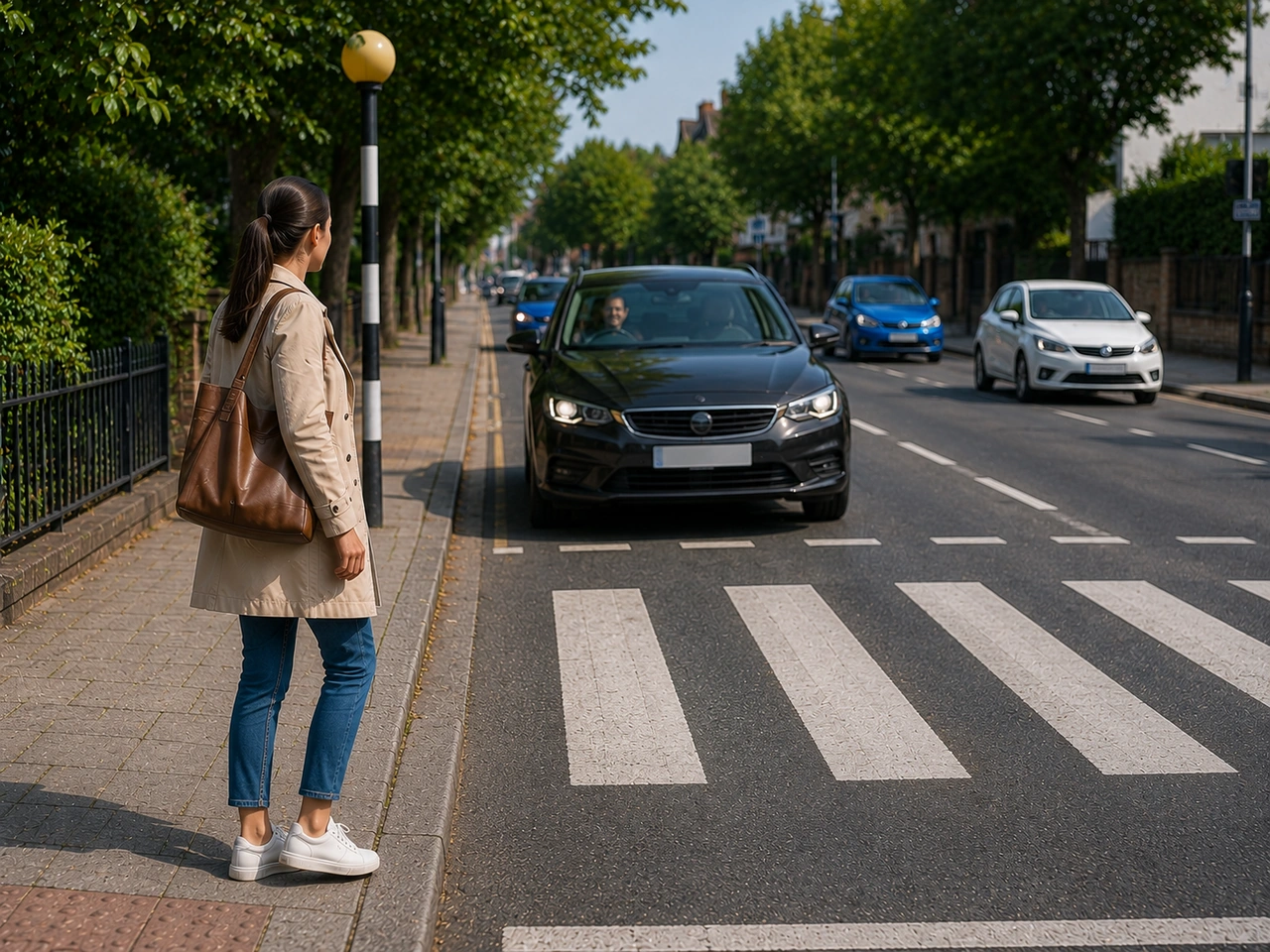
Why should you make sure drivers have seen you before crossing?

550. Why should you make sure drivers have seen you before crossing?

Once a driver sees you, no further checks are needed.
Eye contact means the driver must stop for you.
✓ To reduce the risk of stepping into their path.
Making eye contact gives you priority.

Before crossing, make sure approaching drivers have noticed you and that it is safe to proceed. Do not assume that a driver will stop simply because you have seen each other.

Pedestrian checking whether an approaching driver has seen them
AI-generated by Traffic-rules.com • WCIT • CC BY-SA