QuizTraffic rulesJapan

Test your knowledge with our multiple-choice quiz. Learn from each answer and improve your understanding of the traffic rules and road signs of Japan.

For informational purposes only. Always follow official regulations. Some content and images were created with AI assistance.


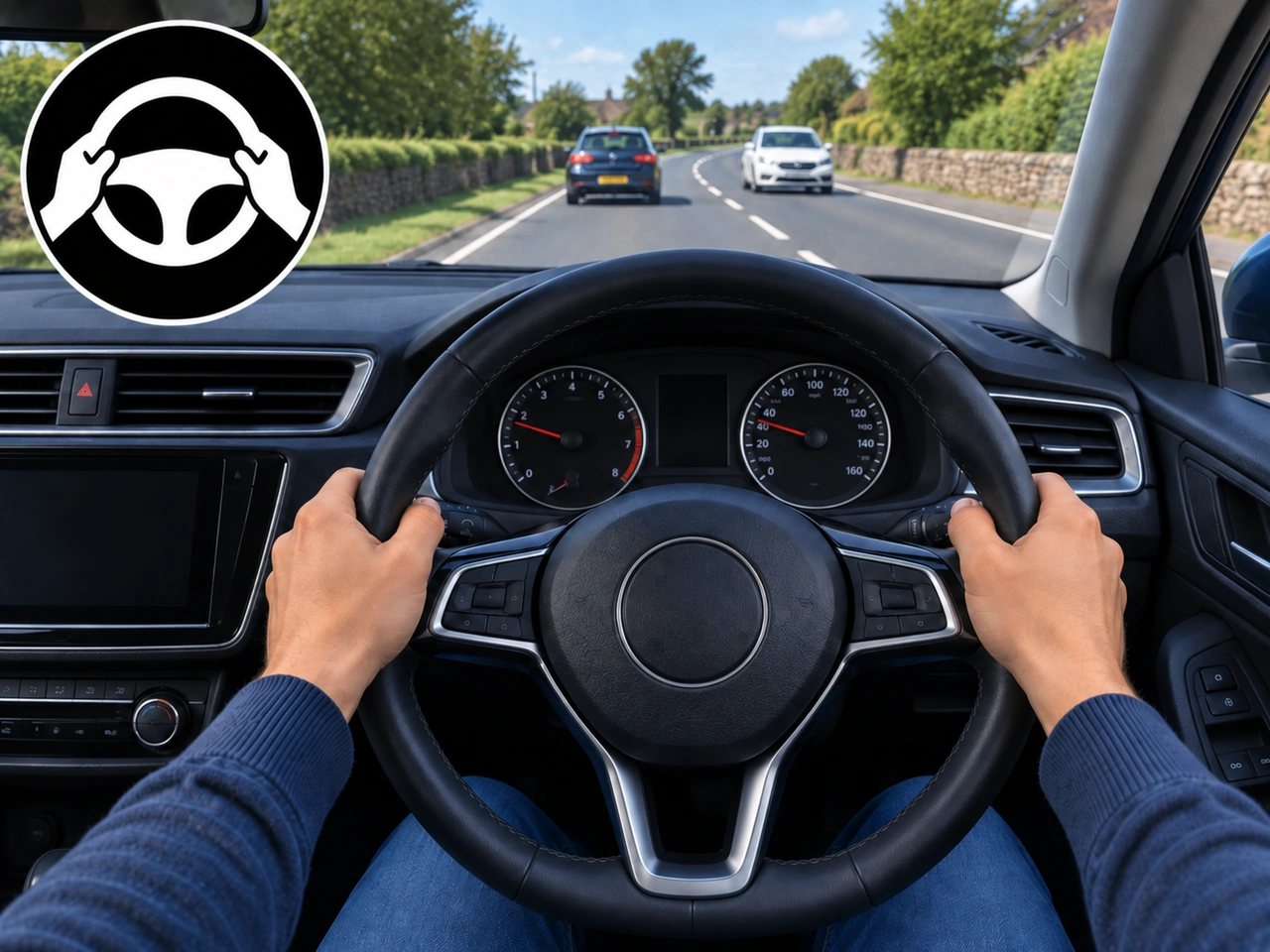
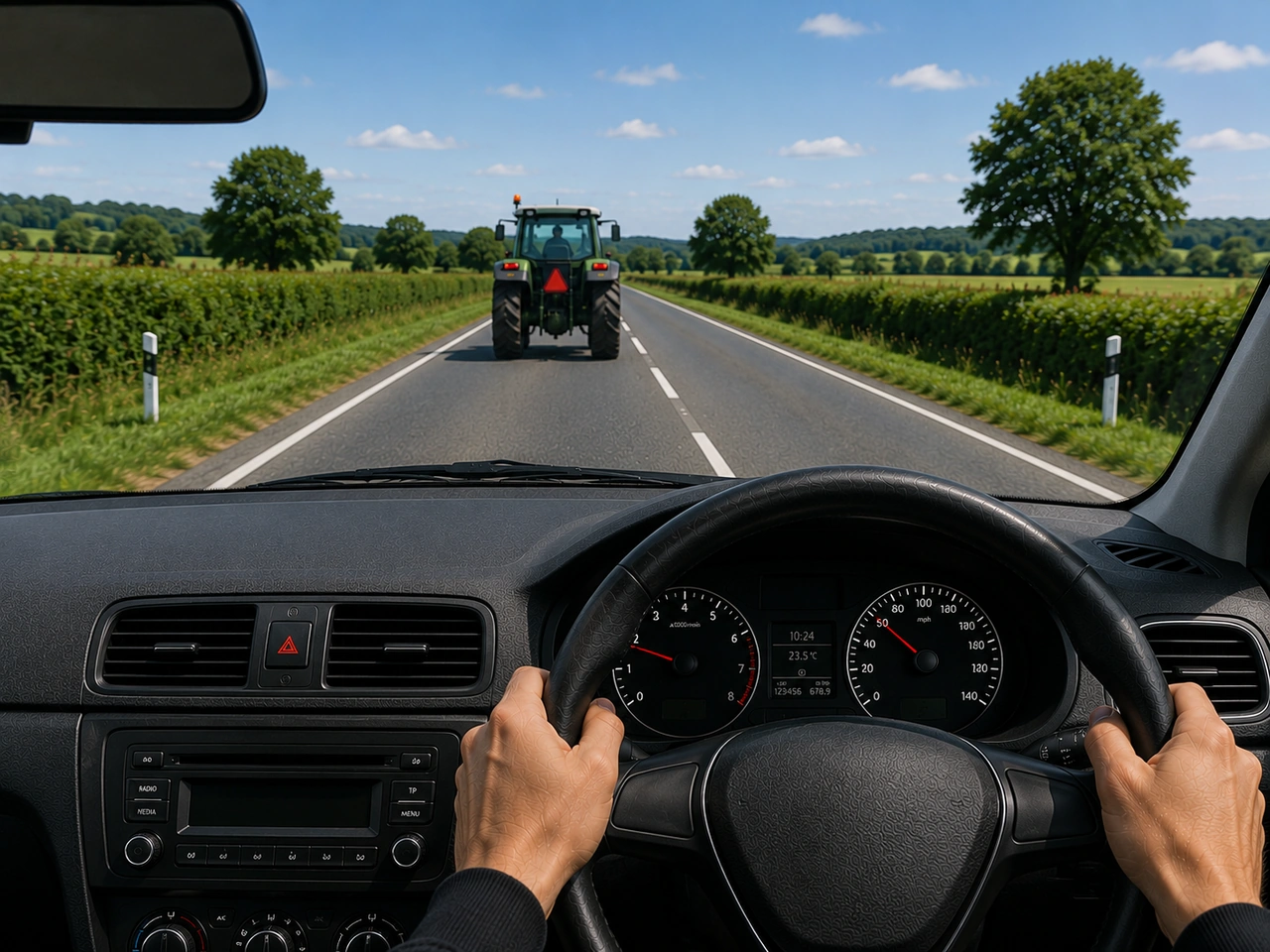
How should you normally hold the steering wheel while driving?

201. How should you normally hold the steering wheel while driving?

With one hand at the top of the wheel.
With both hands together at the bottom.
✓ With both hands in a balanced position.
With one hand resting on the gear lever.

Hold the steering wheel with both hands in a balanced position so that you can steer smoothly and react quickly. A position around nine and three o'clock generally provides good control.

Driver holding the steering wheel with both hands
AI-generated by Traffic-rules.com • WCIT • CC BY-SA
Why should you leave extra space behind a vehicle climbing a steep hill?

202. Why should you leave extra space behind a vehicle climbing a steep hill?

✓ It may slow down suddenly or roll backward.
Its headlights may point higher uphill.
Its tyres may warm up more quickly.
Its engine may become louder on the hill.

Vehicles may lose speed or briefly roll backward when starting on a steep incline. Extra space gives you more time to react.

Vehicle following another up a steep hill
AI-generated by Traffic-rules.com • WCIT • CC BY-SA
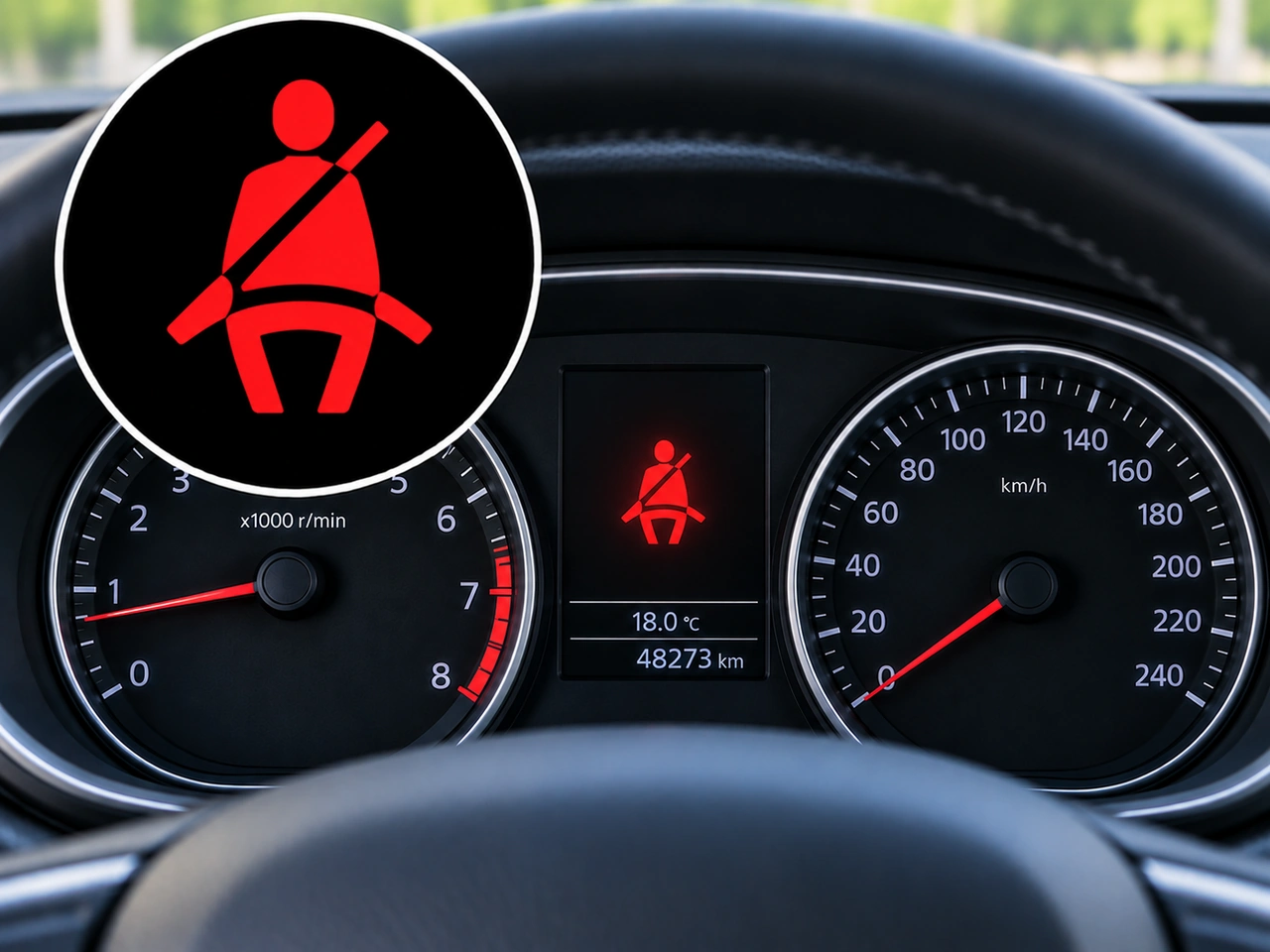
What does this dashboard symbol indicate?

203. What does this dashboard symbol indicate?

Parking brake applied.
Door open.
Brake-system warning.
✓ Seat belt not fastened.

This symbol is a seat-belt reminder. It indicates that the driver or another detected occupant has not fastened their seat belt.

Seat-belt reminder symbol on the dashboard
AI-generated by Traffic-rules.com • WCIT • CC BY-SA
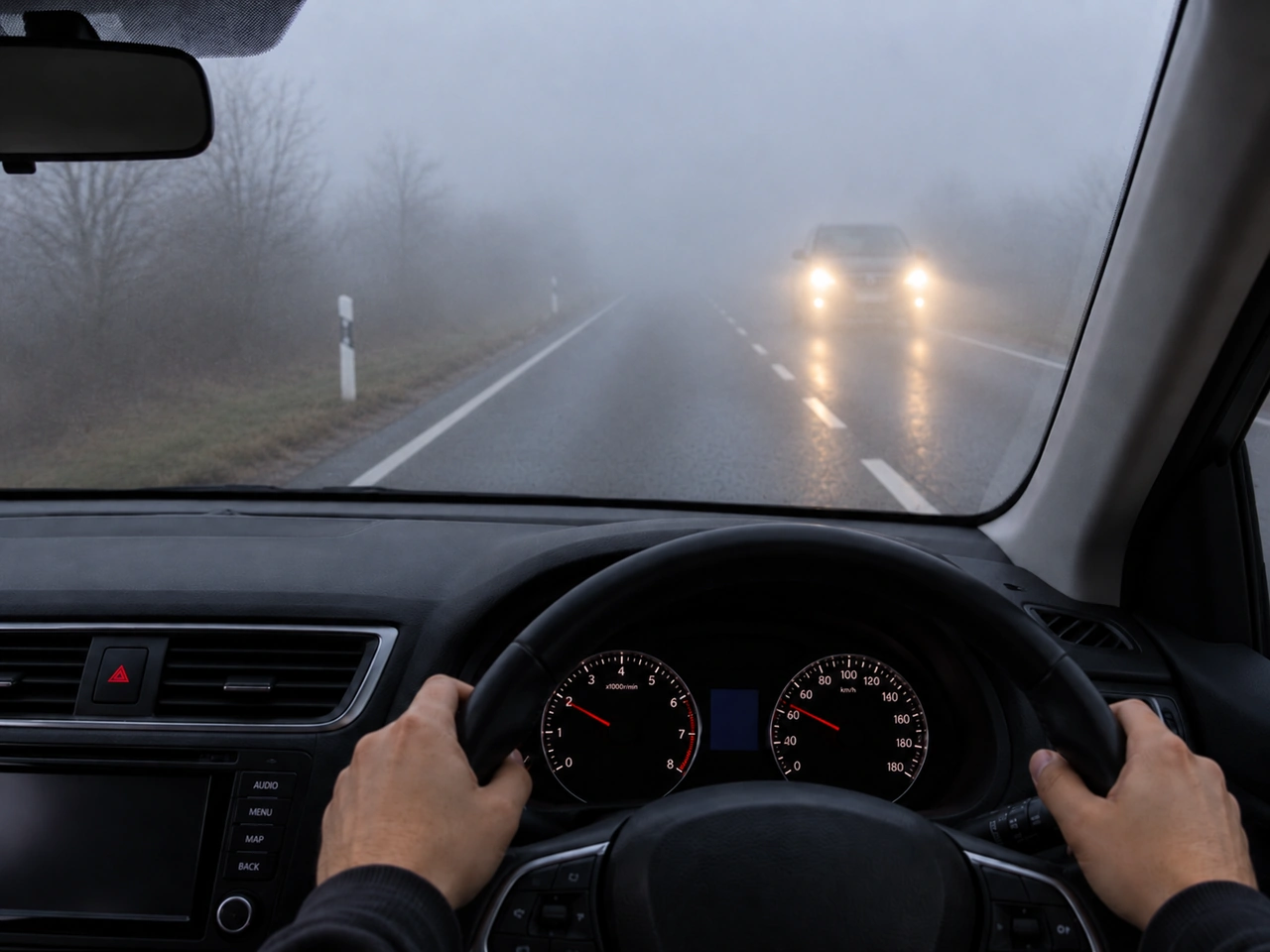
Why can fog make it difficult to judge the speed of other vehicles?

204. Why can fog make it difficult to judge the speed of other vehicles?

Fog causes vehicles to travel at uneven speeds.
Fog makes road markings appear closer together.
Fog changes the way mirrors show moving vehicles.
✓ Limited visibility makes distances and movement harder to estimate.

Fog reduces visual information, making it harder to judge how far away another vehicle is and how quickly it is approaching.

Other traffic partly obscured by fog
AI-generated by Traffic-rules.com • WCIT • CC BY-SA
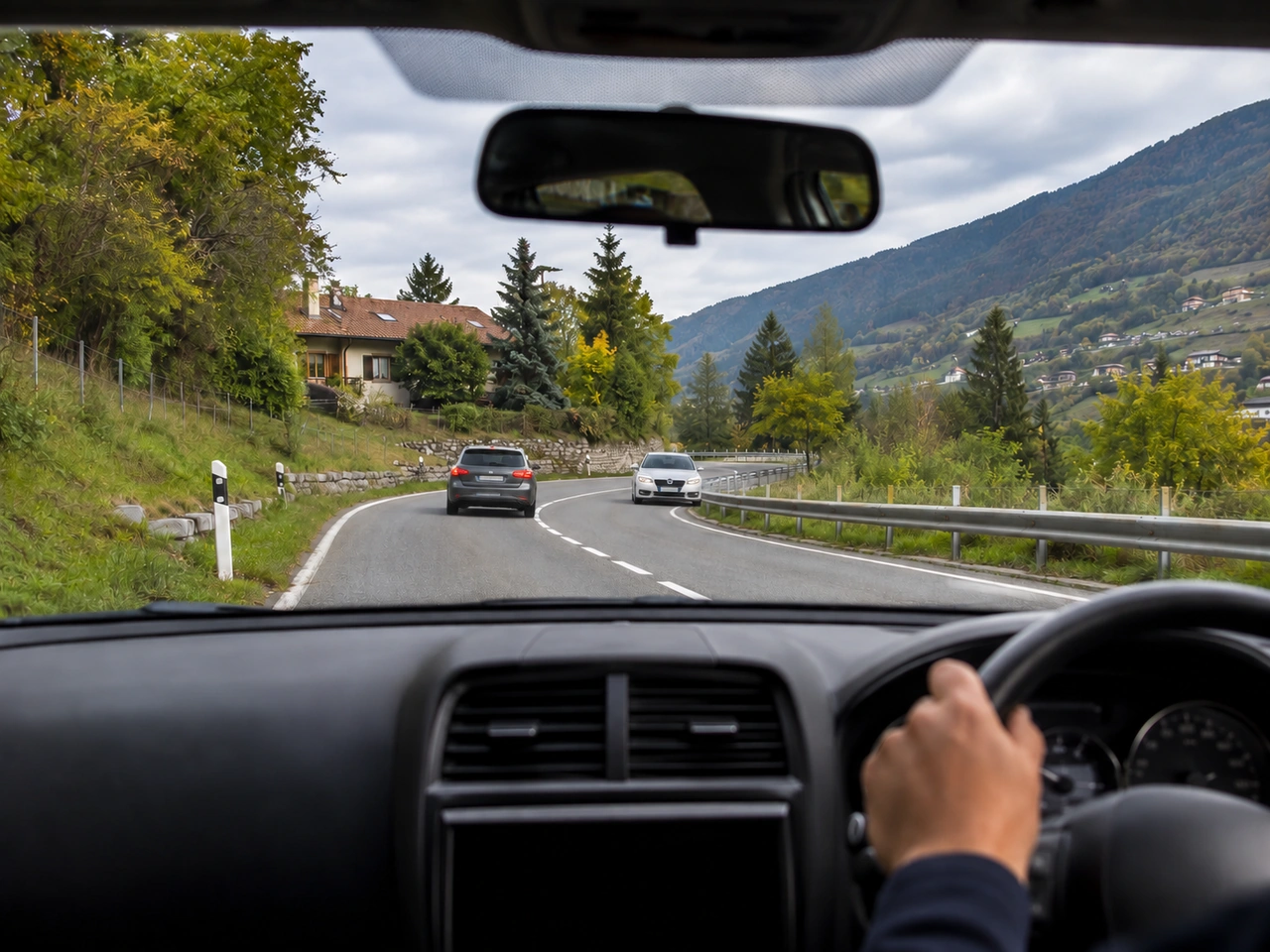
Why should you slow down before a sharp bend?

205. Why should you slow down before a sharp bend?

✓ To keep control of the vehicle.
To prevent other vehicles from overtaking.
To make the bend easier to see from a distance.
To make the steering feel lighter.

Sharp bends reduce your view and can make the vehicle harder to control, so you should slow down before entering the bend.

Vehicle approaching a sharp bend
AI-generated by Traffic-rules.com • WCIT • CC BY-SA
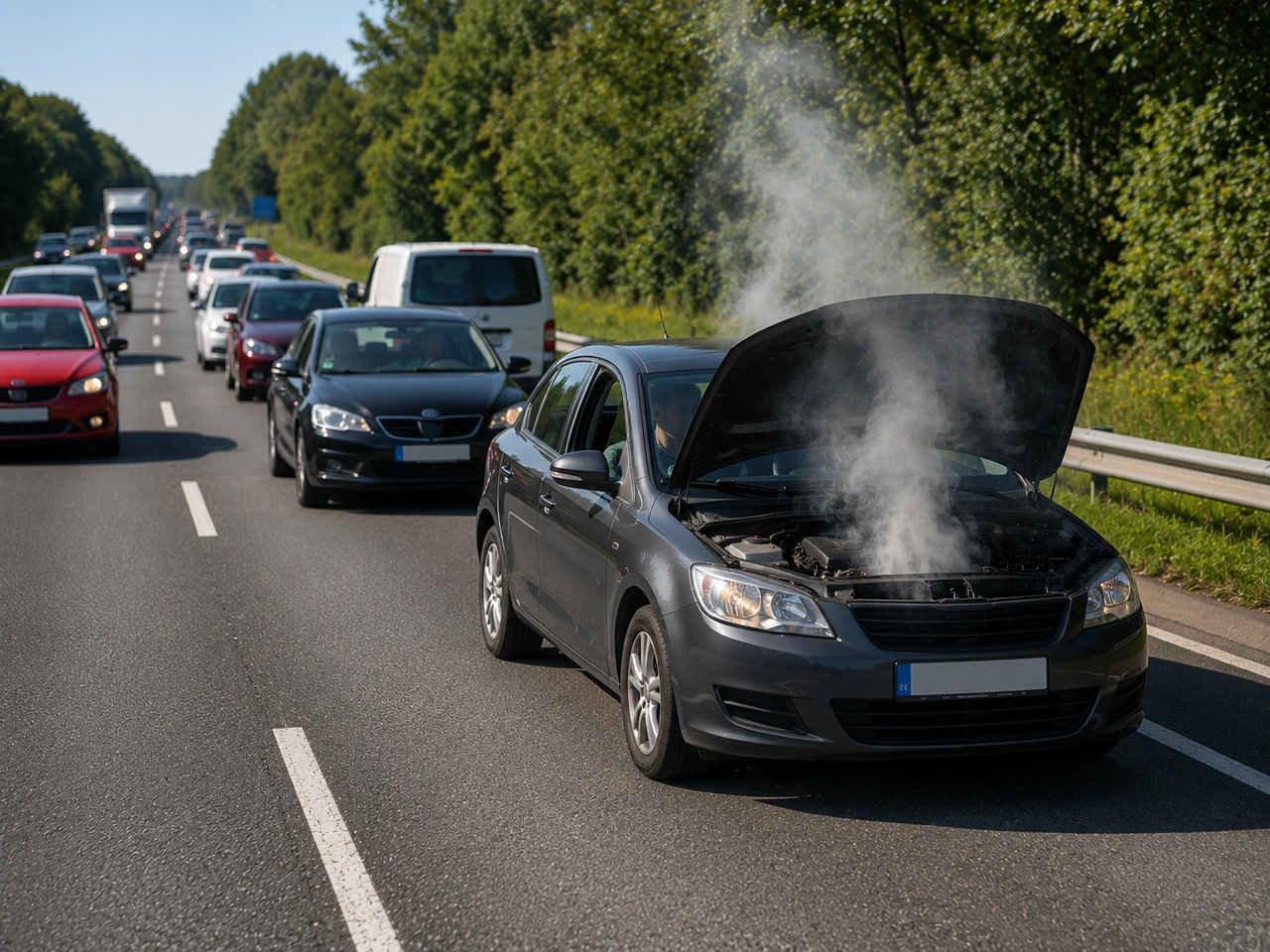
What should you do if your vehicle breaks down on a busy road?

206. What should you do if your vehicle breaks down on a busy road?

Sound the horn continuously to warn other drivers.
✓ Move to a safe place, use hazard lights, and stay clear of traffic.
Stand beside the vehicle while waiting for help.
Stay close to the vehicle so other drivers can see you.

If your vehicle breaks down, make it visible and get yourself away from moving traffic. Safety comes before repairing the vehicle.

Broken-down vehicle beside a busy road
AI-generated by Traffic-rules.com • WCIT • CC BY-SA
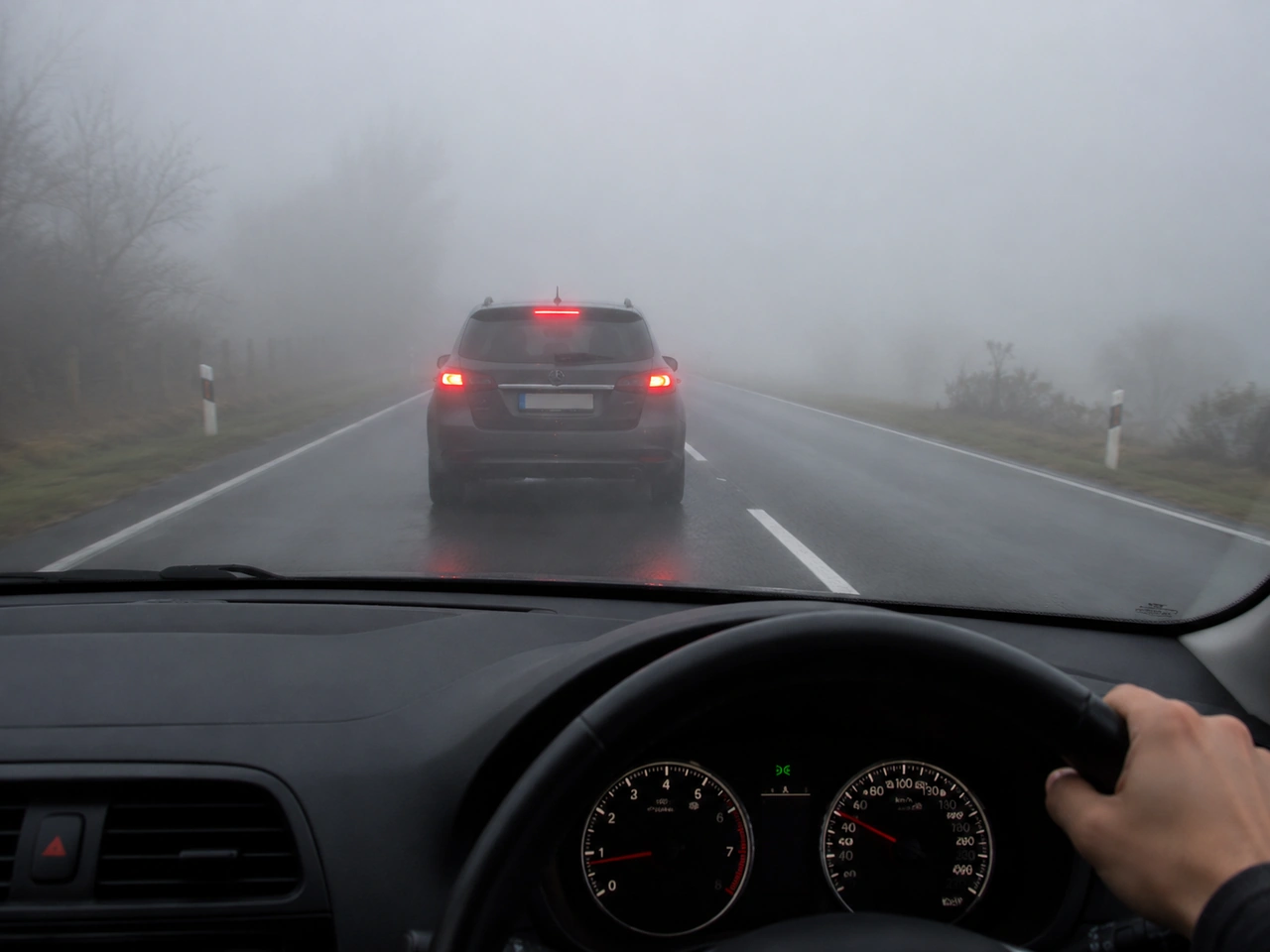
Why should you avoid following another vehicle too closely in fog?

207. Why should you avoid following another vehicle too closely in fog?

To increase stopping distance.
✓ You may have too little time to react if it brakes suddenly.
To reduce fuel consumption in poor visibility.
To keep the windscreen clearer.

Following too closely reduces your reaction time and can lead to a collision if the vehicle ahead slows unexpectedly.

Following another vehicle in fog
AI-generated by Traffic-rules.com • WCIT • CC BY-SA
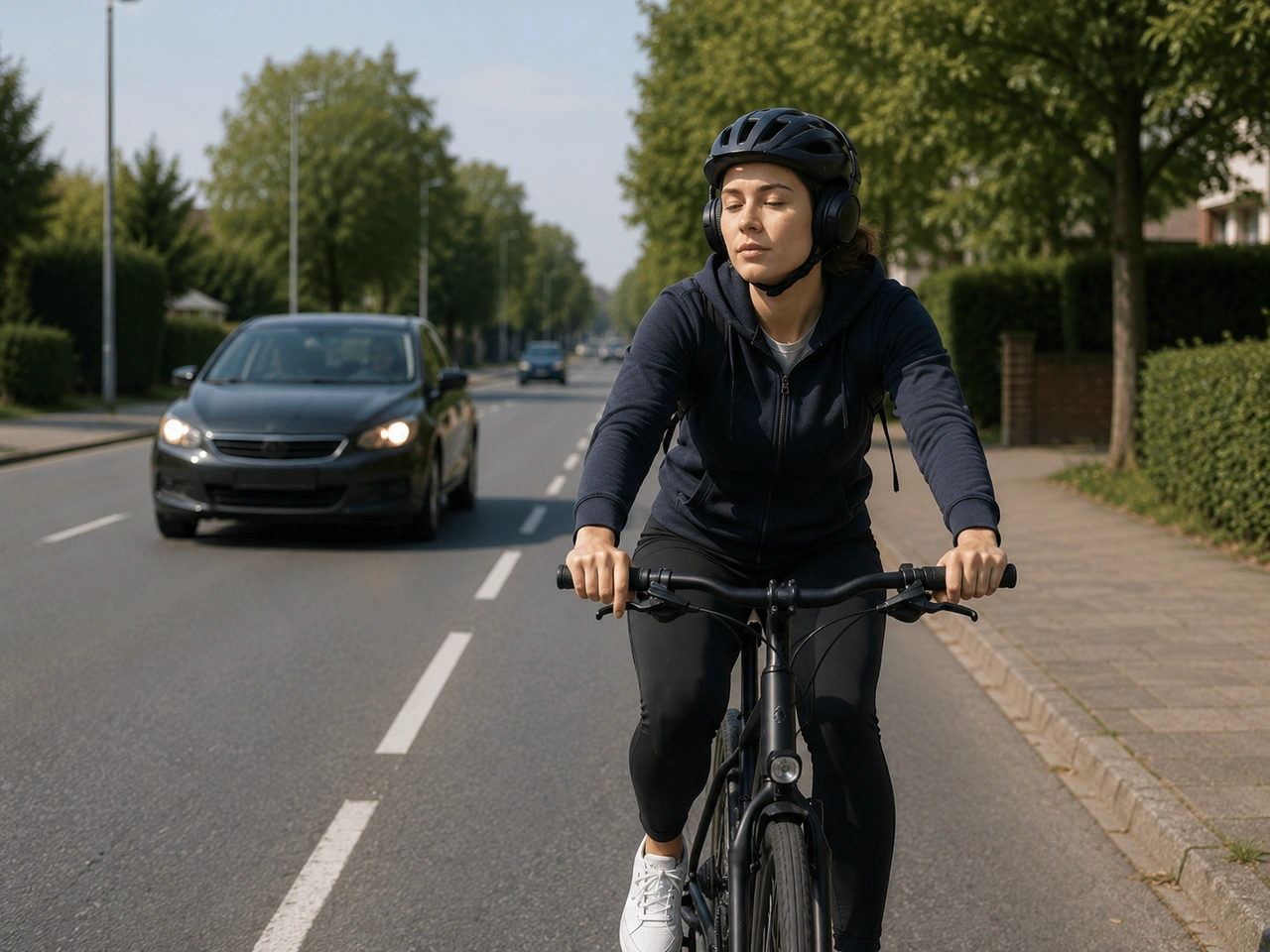
Why can loud music be dangerous while cycling?

208. Why can loud music be dangerous while cycling?

It reduces the grip of the tyres.
It makes the brakes respond more slowly.
It makes bicycle lights less effective.
✓ You may not hear traffic or warning sounds.

Hearing approaching vehicles, bells, horns, and other warning sounds is an important part of staying aware.

Cyclist listening to music near traffic
AI-generated by Traffic-rules.com • WCIT • CC BY-SA
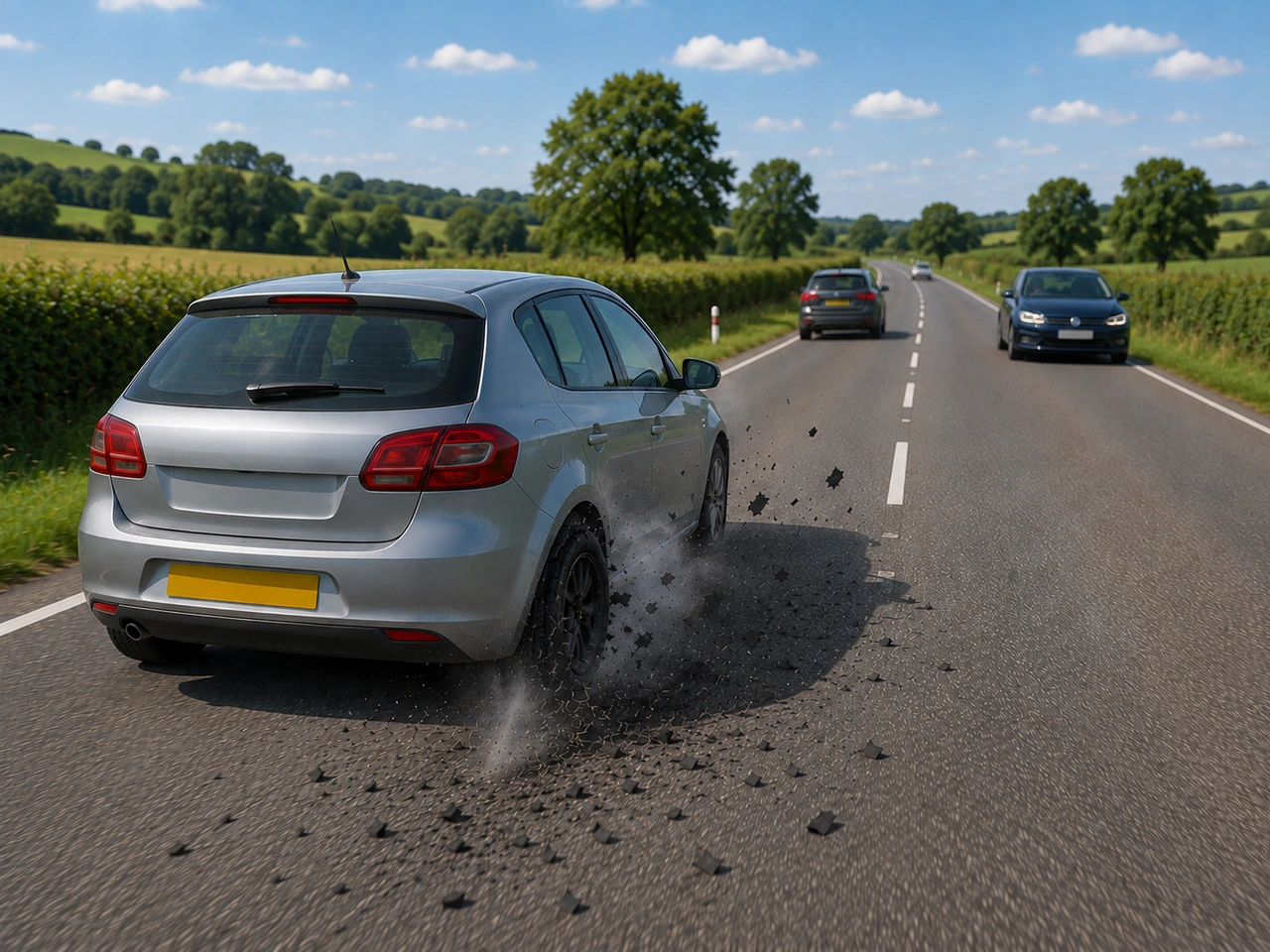
What should you do if one of your tyres suddenly bursts while driving?

209. What should you do if one of your tyres suddenly bursts while driving?

Steer quickly toward the side of the road.
✓ Hold the steering wheel firmly and slow down gradually.
Release the steering wheel and let the vehicle slow itself.
Accelerate briefly to stabilise the vehicle.

A tyre burst can make the vehicle unstable. Hold the wheel firmly, avoid sudden braking or steering, and slow down gradually.

Vehicle tyre damaged by a sudden blowout
AI-generated by Traffic-rules.com • WCIT • CC BY-SA
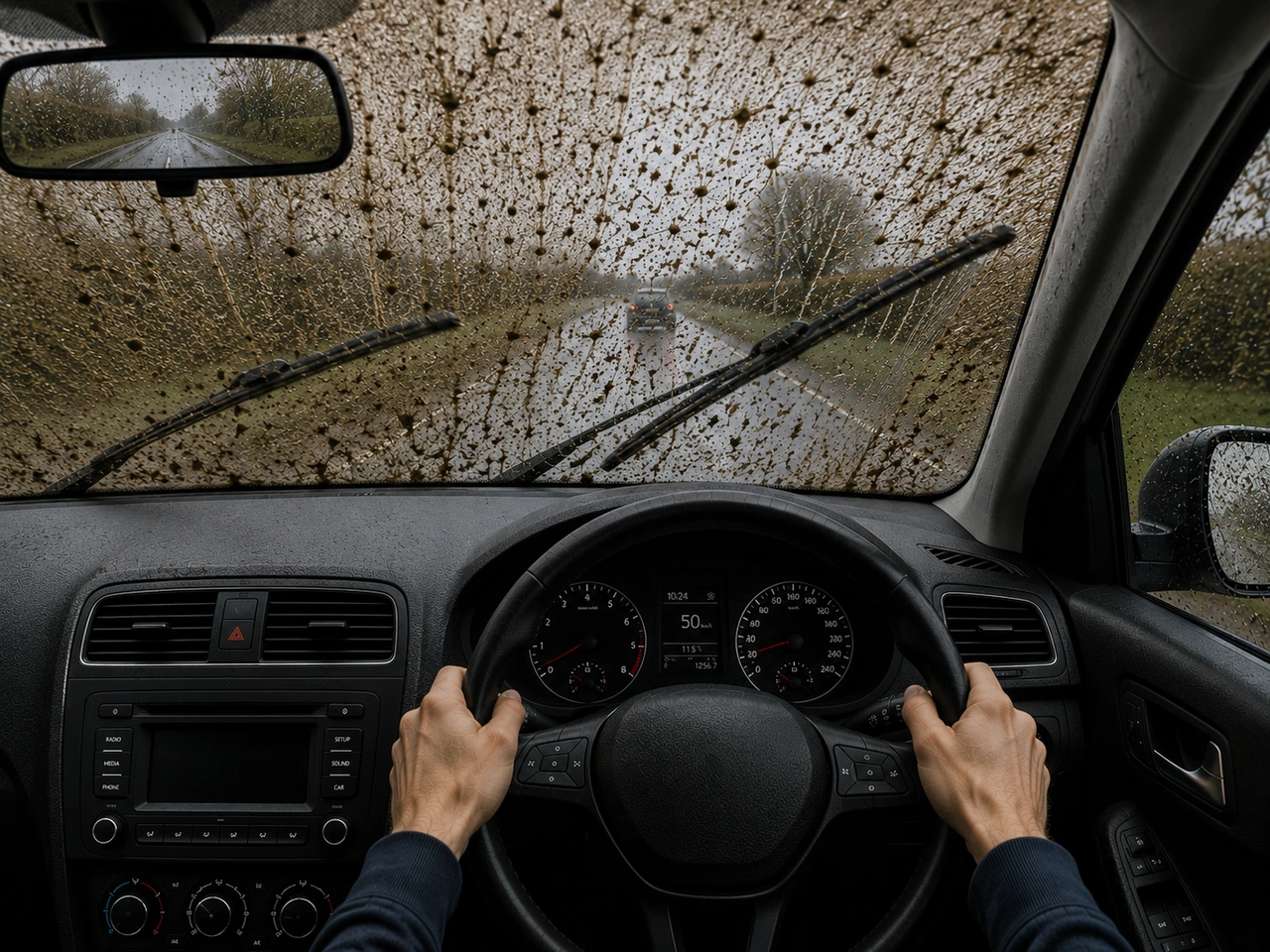
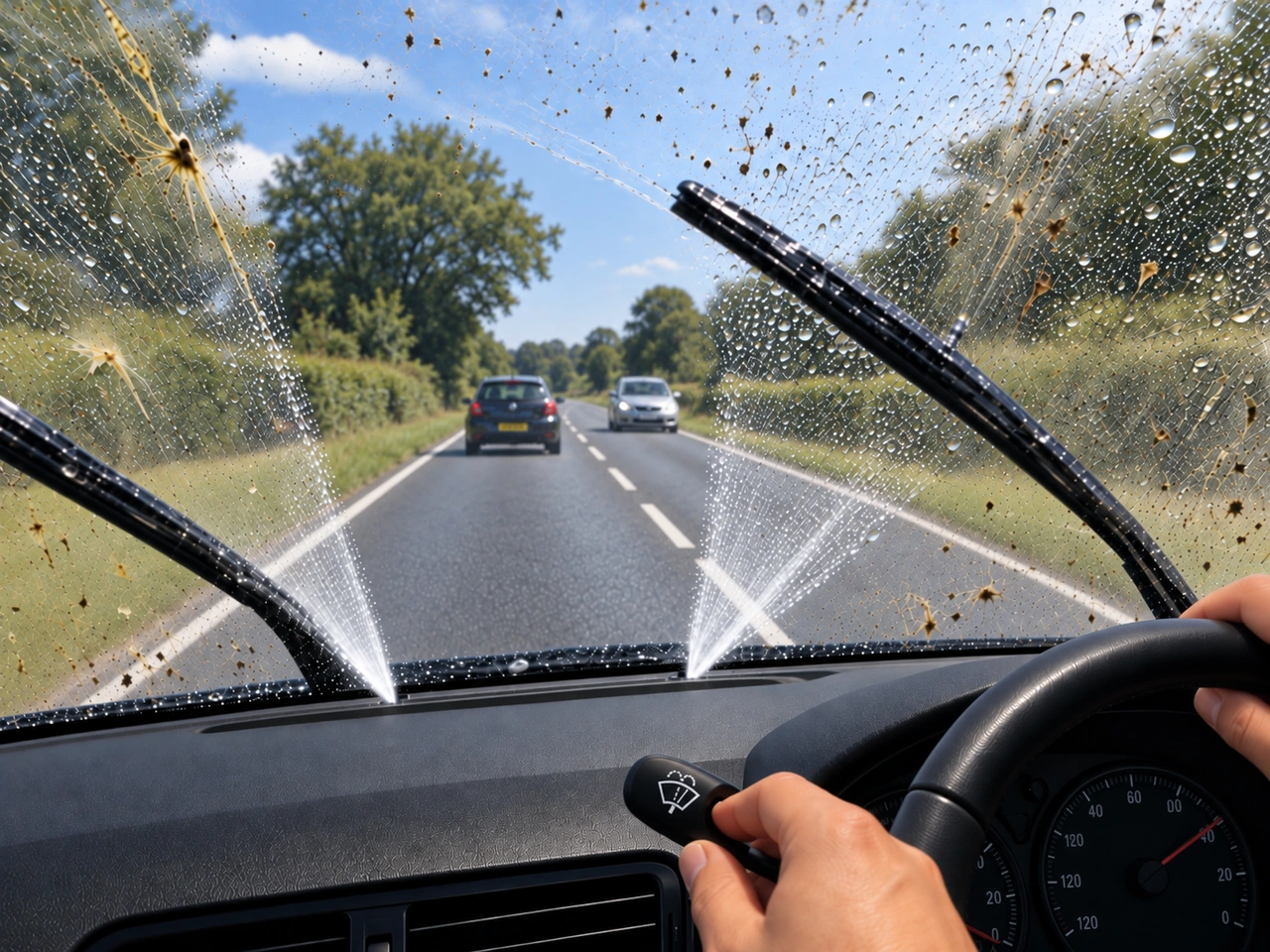
What should you do if your windscreen becomes covered with mud or spray?

210. What should you do if your windscreen becomes covered with mud or spray?

Use the demister instead of the washers.
✓ Slow down and use the washers and wipers to restore clear vision.
Switch off the wipers until the windscreen dries.
Continue driving and wait for the spray to clear.

Clear visibility is essential. Slow down safely and use your washers and wipers until you can see the road clearly again.

Mud and spray obscuring a vehicle's windscreen
AI-generated by Traffic-rules.com • WCIT • CC BY-SA
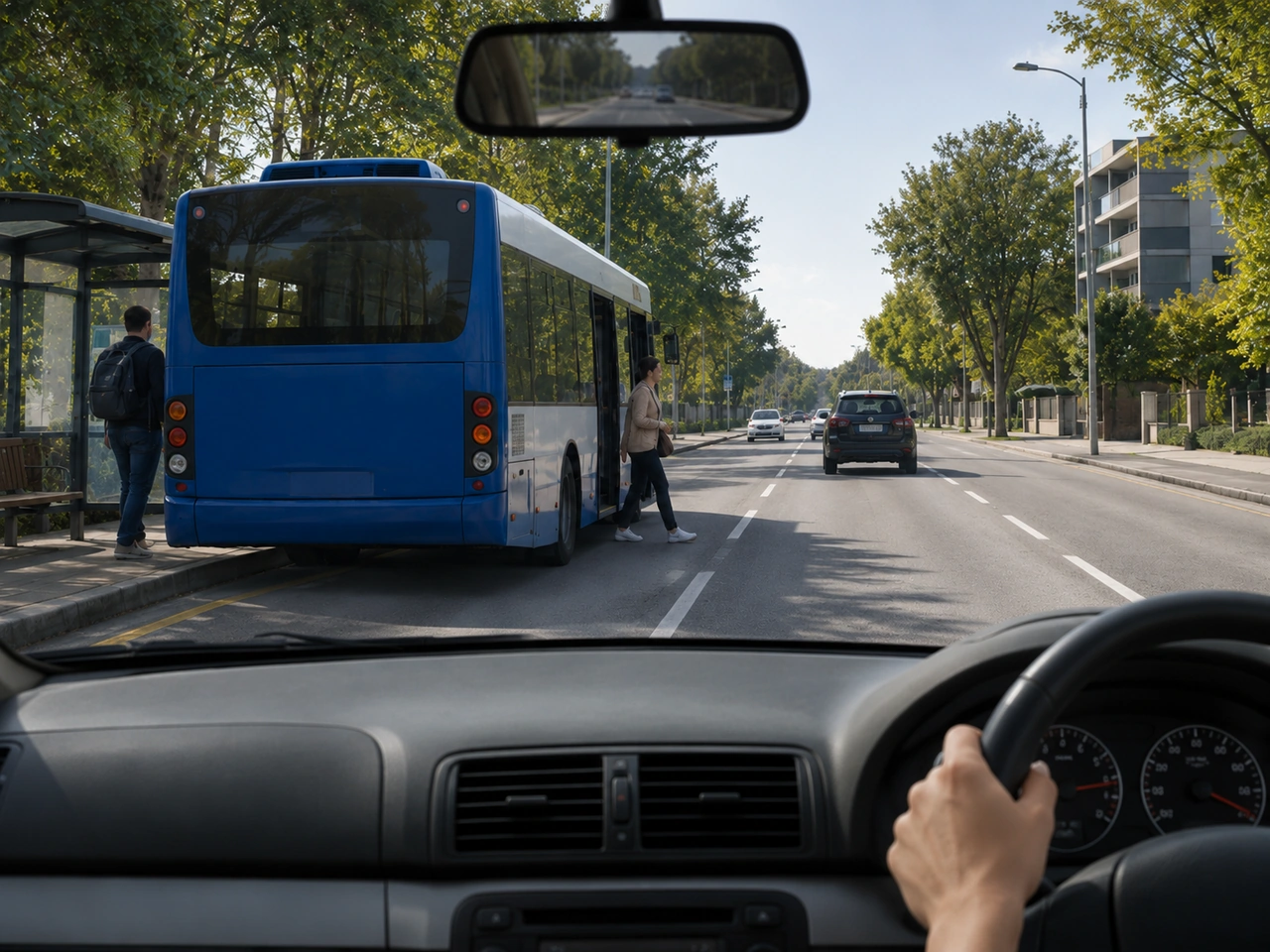
Why should you be careful when driving beside a bus at a stop?

211. Why should you be careful when driving beside a bus at a stop?

The road surface is usually more slippery near bus stops.
A stopped bus always has priority over passing traffic.
✓ Passengers may step out or cross near the bus.
Bus stops usually have a lower speed limit.

Stopped buses can hide pedestrians, and passengers may cross unexpectedly. Slow down and be ready to react.

Vehicle passing a bus at a stop
AI-generated by Traffic-rules.com • WCIT • CC BY-SA
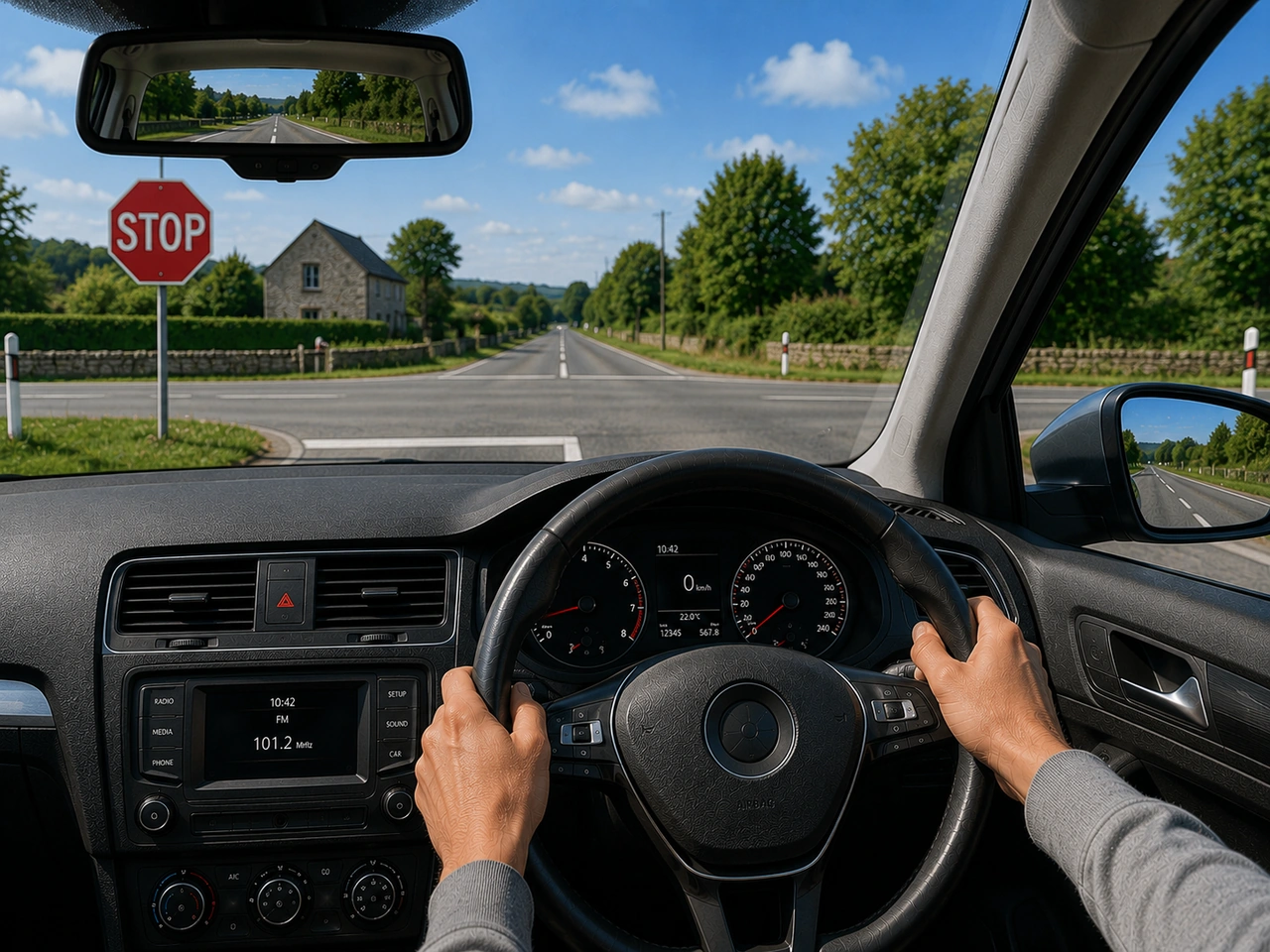
You may ignore a stop sign if the road looks empty.

212. You may ignore a stop sign if the road looks empty.

✓ False.
True.

A stop sign means you must come to a complete stop, even if no other traffic is visible.

Stop sign at a quiet junction
AI-generated by Traffic-rules.com • WCIT • CC BY-SA
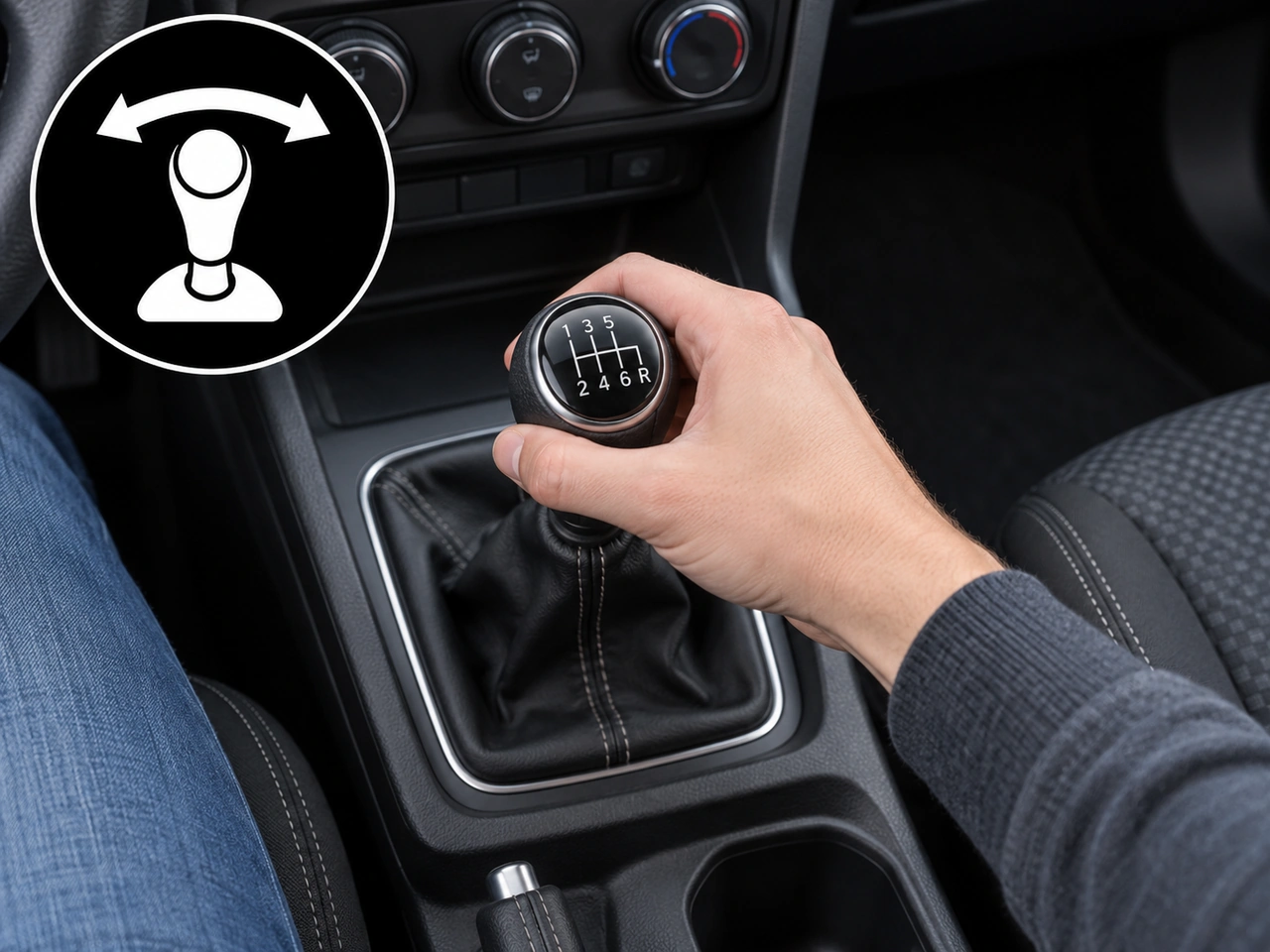
How can you check that a manual gearbox is in neutral?

213. How can you check that a manual gearbox is in neutral?

Turn the steering wheel.
✓ Move the gear lever gently from side to side.
Pull up the parking brake.
Press the accelerator pedal.

When a manual gearbox is in neutral, the gear lever can normally be moved freely from side to side across the centre of the gear pattern. Check that neutral is selected before starting the engine when appropriate.

Checking neutral with a manual gear lever
AI-generated by Traffic-rules.com • WCIT • CC BY-SA
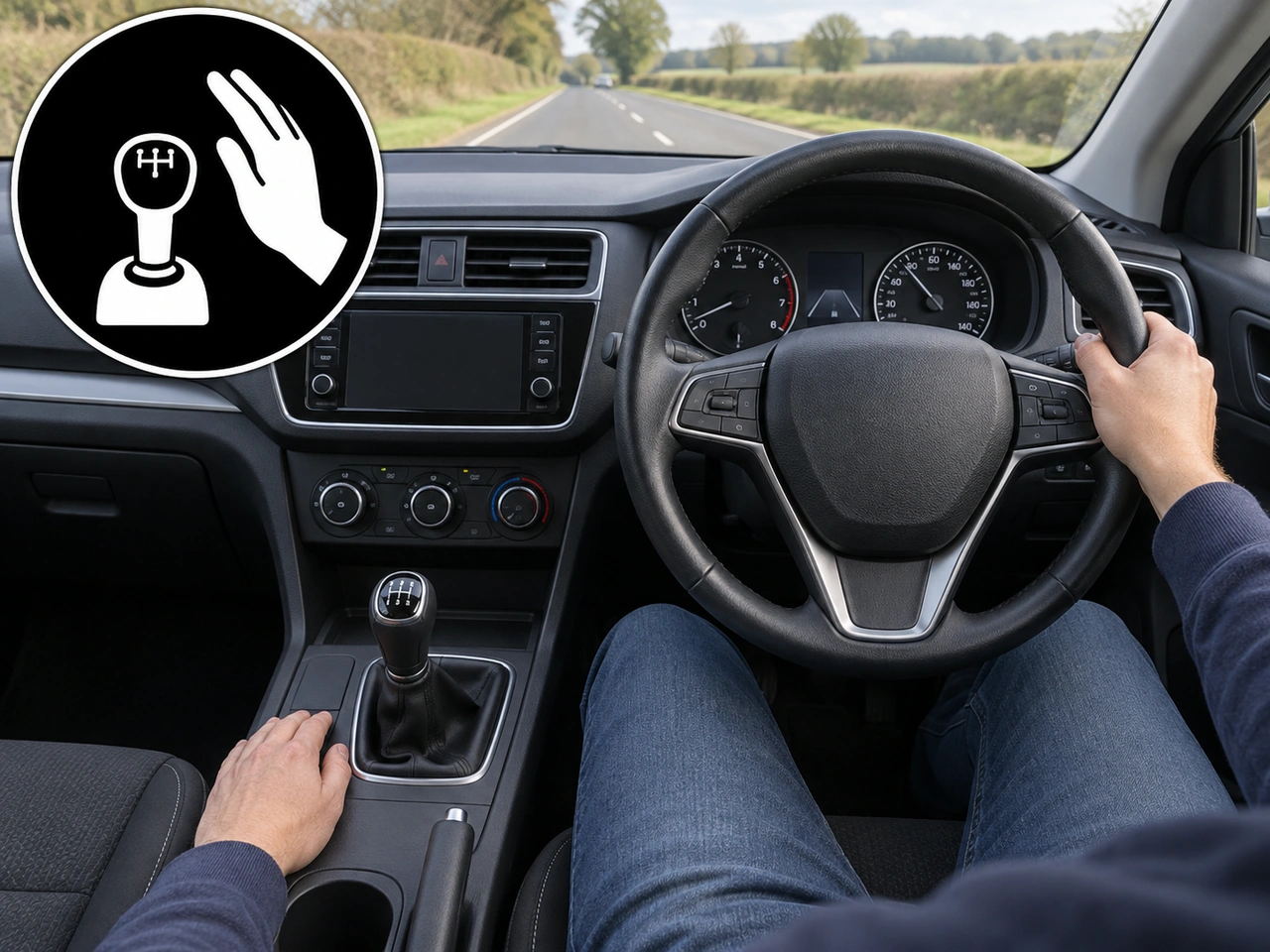
Why should you avoid resting your hand on the gear lever while driving?

214. Why should you avoid resting your hand on the gear lever while driving?

It can disengage the clutch.
It can apply the parking brake.
It can increase engine speed.
✓ It can cause unnecessary wear in the gear-selection mechanism.

Resting your hand on the gear lever can place unnecessary pressure on parts of the gear-selection mechanism and contribute to wear. Keep both hands on the steering wheel when you are not changing gear.

Driver's hand resting on a manual gear lever
AI-generated by Traffic-rules.com • WCIT • CC BY-SA
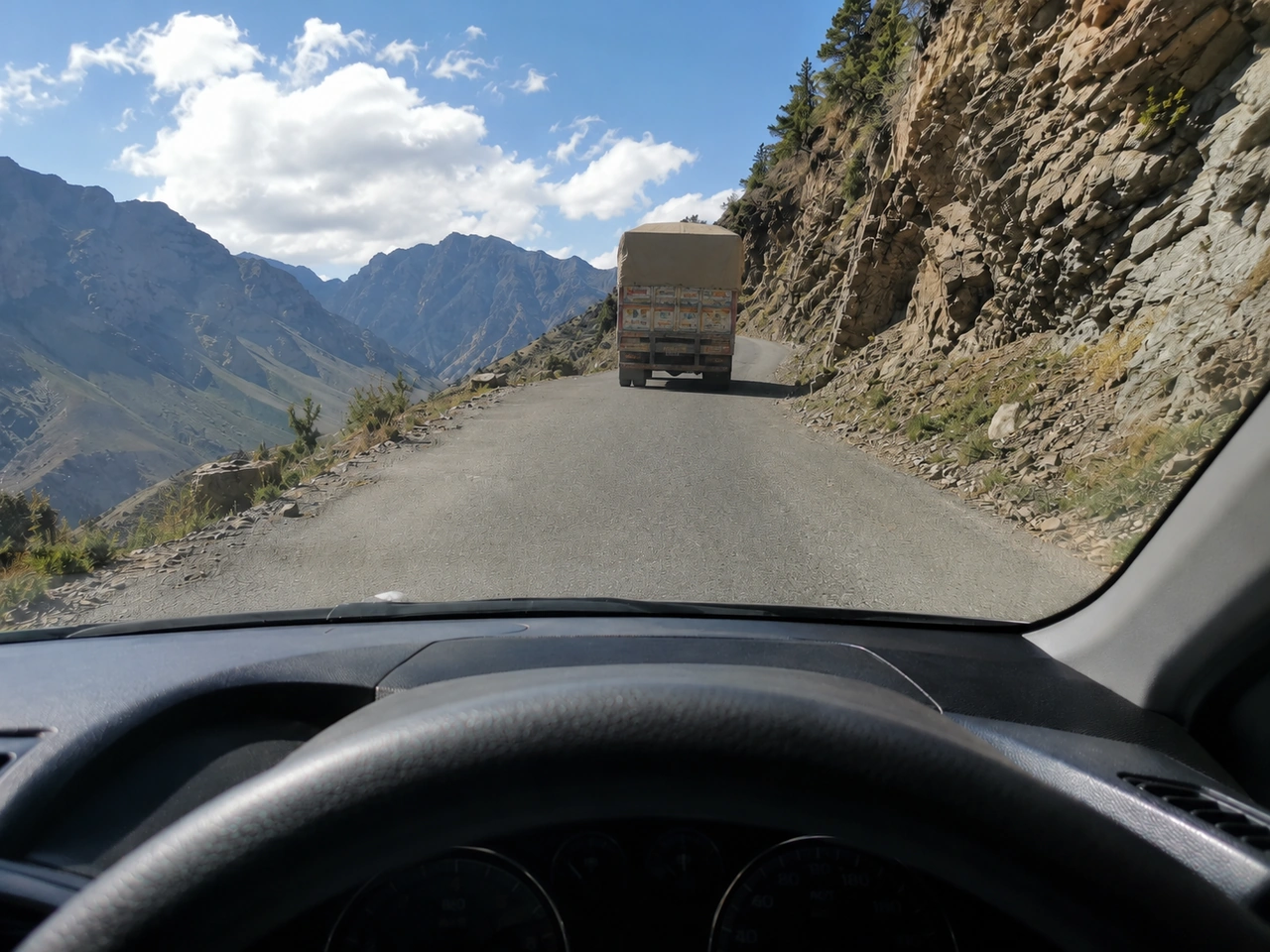
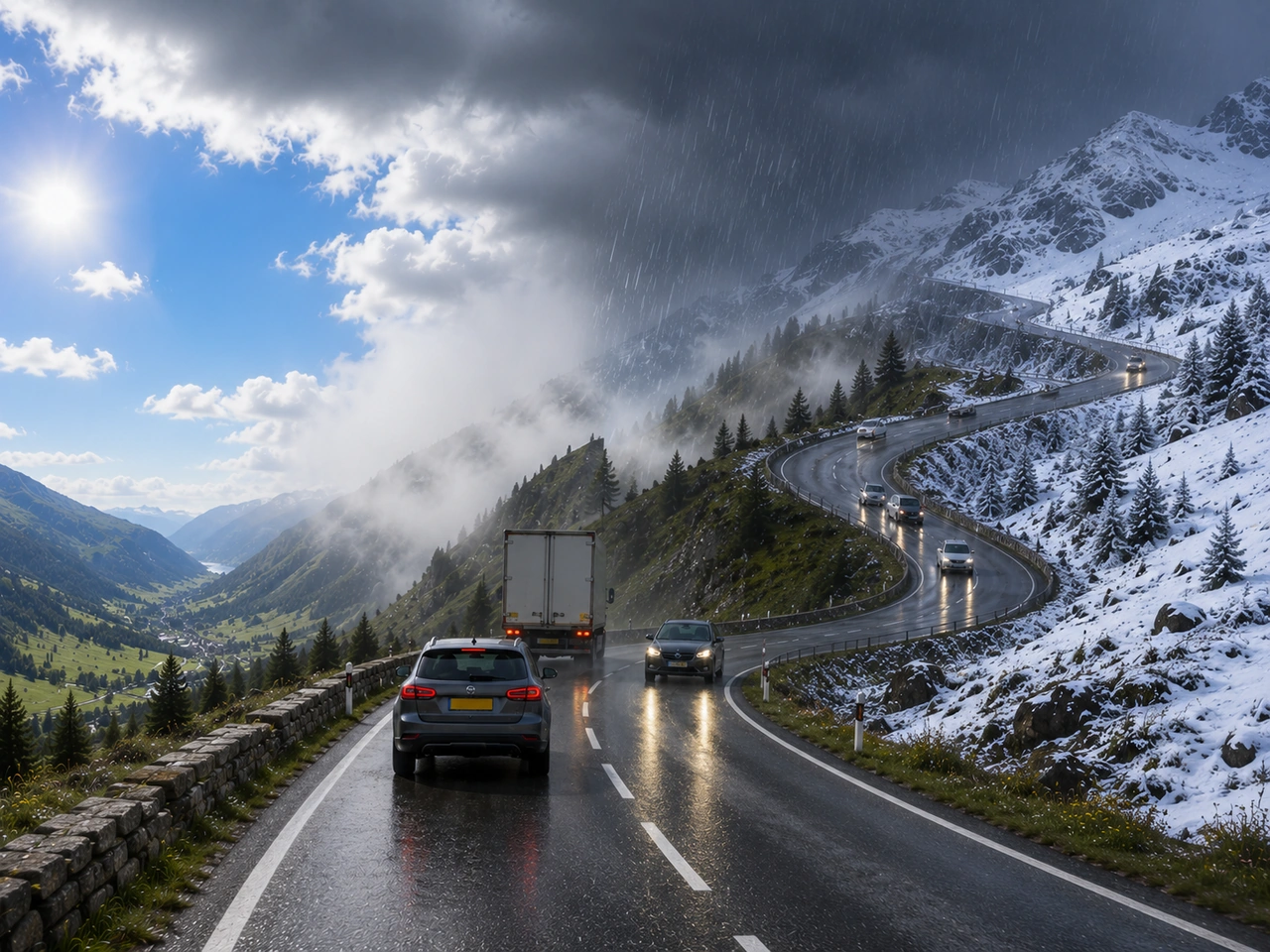
Why should you be prepared for changing conditions on mountain roads?

215. Why should you be prepared for changing conditions on mountain roads?

✓ Weather, visibility, and road conditions can change quickly.
Mountain roads always have the same weather.
Road signs become less important at higher elevations.
Vehicles automatically lose engine power in the mountains.

Fog, rain, snow, ice, falling rocks, and strong winds can develop rapidly in mountainous areas.

Changing visibility and weather on a mountain road
AI-generated by Traffic-rules.com • WCIT • CC BY-SA
What should you do before overtaking a slow-moving vehicle?

216. What should you do before overtaking a slow-moving vehicle?

Signal first and then check whether there is enough space.
Move closer before checking whether the road ahead is clear.
✓ Check that the road ahead is clear and that overtaking is safe.
Follow another vehicle that starts overtaking ahead of you.

Before overtaking, make sure you have enough visibility, space, and time. Signal clearly before moving out, do not exceed the speed limit, and never overtake if the road ahead is not clear.

Vehicle preparing to pass slow-moving traffic
AI-generated by Traffic-rules.com • WCIT • CC BY-SA
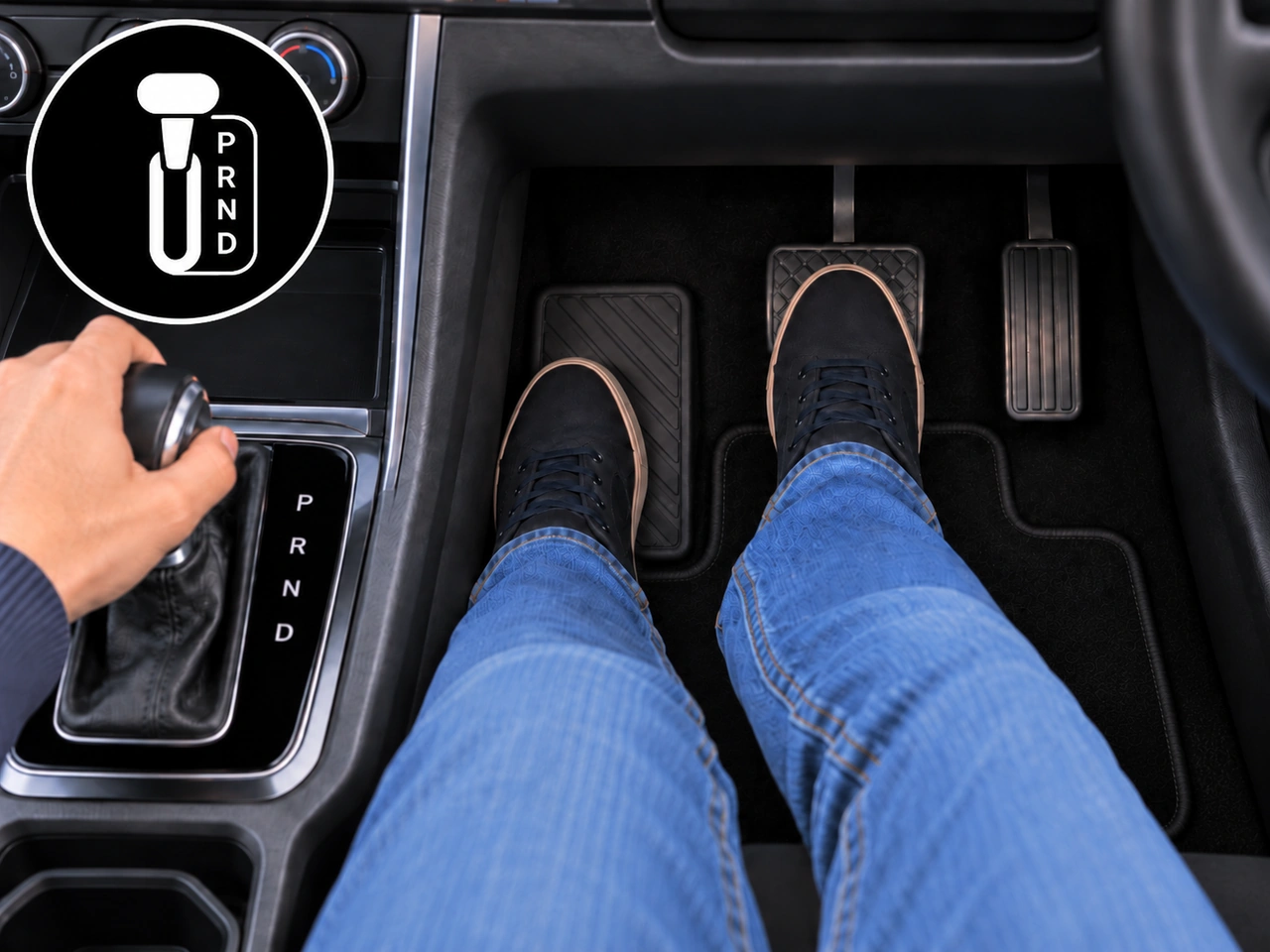
What should you normally do before selecting D or R in an automatic vehicle?

217. What should you normally do before selecting D or R in an automatic vehicle?

✓ Press and hold the brake pedal.
Apply the parking brake only.
Switch off the engine.
Press the accelerator pedal.

Before selecting D (Drive) or R (Reverse), keep the brake pedal pressed to prevent the vehicle from moving unexpectedly when the gear is engaged.

Holding the brake before selecting an automatic driving gear
AI-generated by Traffic-rules.com • WCIT • CC BY-SA
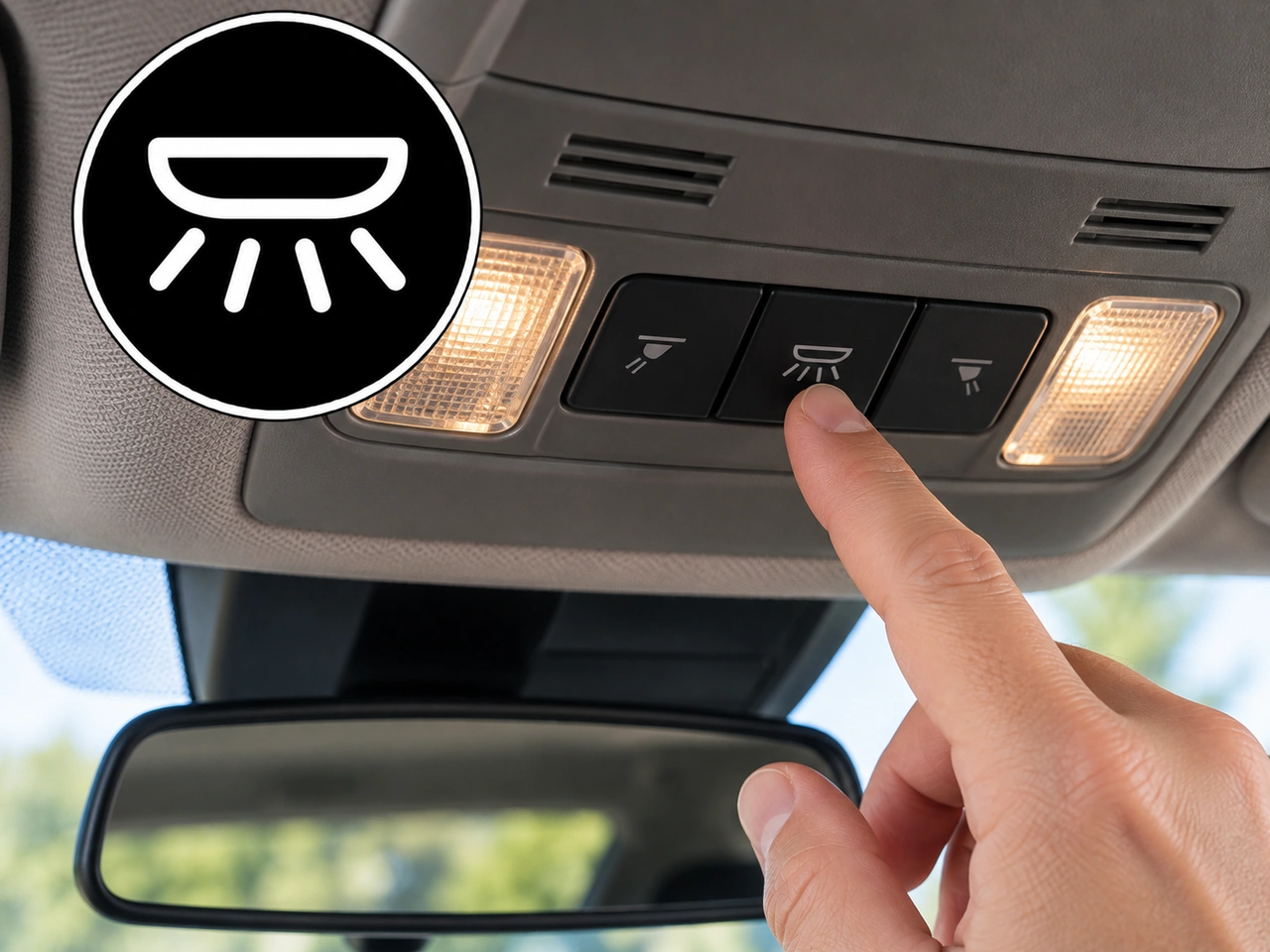
What does this vehicle-control symbol indicate?

218. What does this vehicle-control symbol indicate?

Instrument-panel brightness.
Parking lights.
Hazard warning lights.
✓ Interior lighting.

This control operates the vehicle's interior lighting. Depending on the vehicle, the lights can be switched on manually or set to illuminate automatically when a door is opened.

Control for the vehicle's interior lighting
AI-generated by Traffic-rules.com • WCIT • CC BY-SA
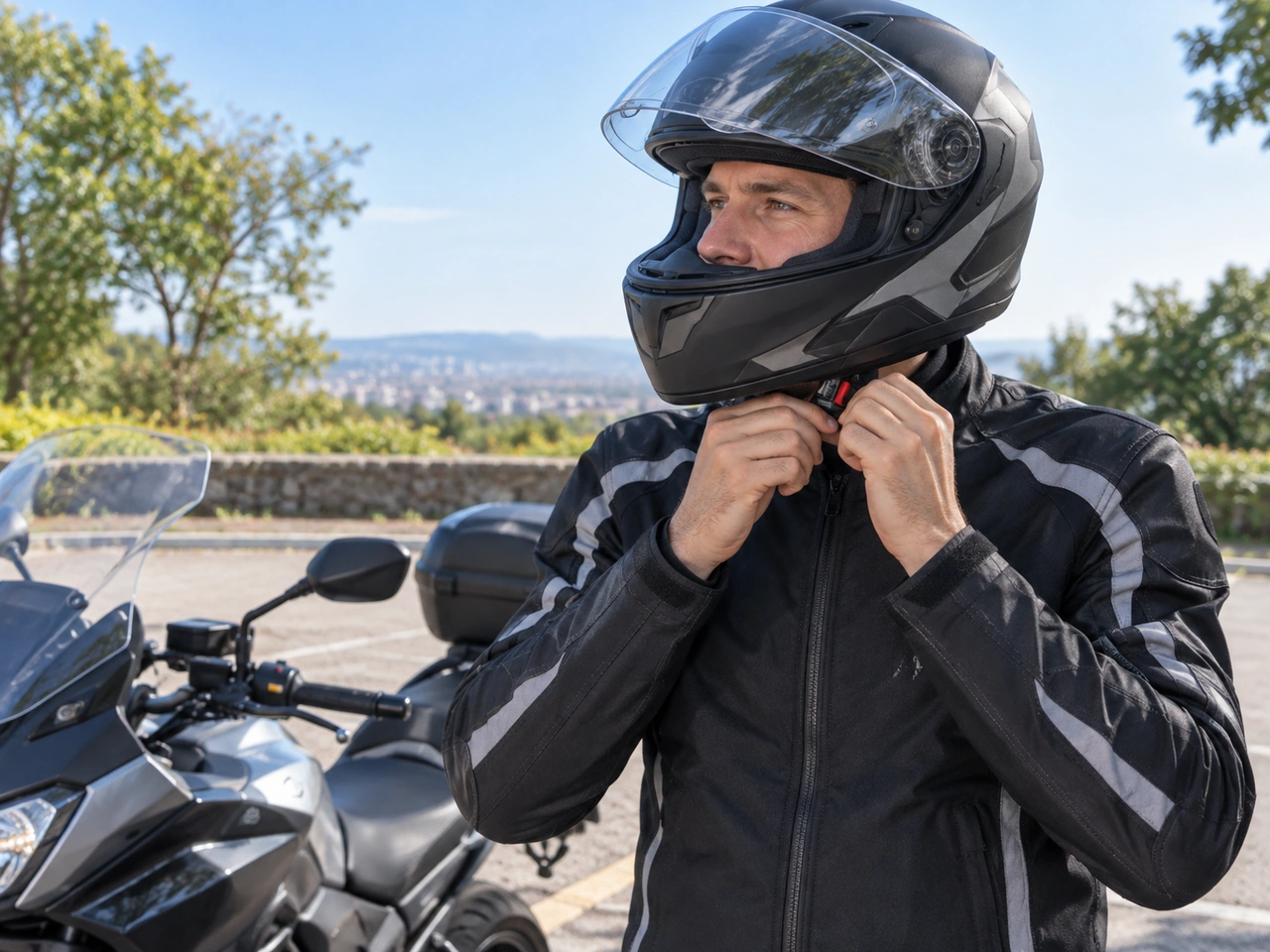
Why should a motorcycle helmet be worn correctly and securely fastened?

219. Why should a motorcycle helmet be worn correctly and securely fastened?

To make the motorcycle easier to balance.
✓ To reduce the risk of serious head injury in a collision.
To prevent the motorcycle from skidding.
To improve the rider's hearing in traffic.

A correctly fitted and securely fastened motorcycle helmet helps protect the rider's head and can reduce the risk and severity of head injury in a collision or fall.

Motorcyclist wearing a securely fastened helmet
AI-generated by Traffic-rules.com • WCIT • CC BY-SA
What does this vehicle-control symbol indicate?

220. What does this vehicle-control symbol indicate?

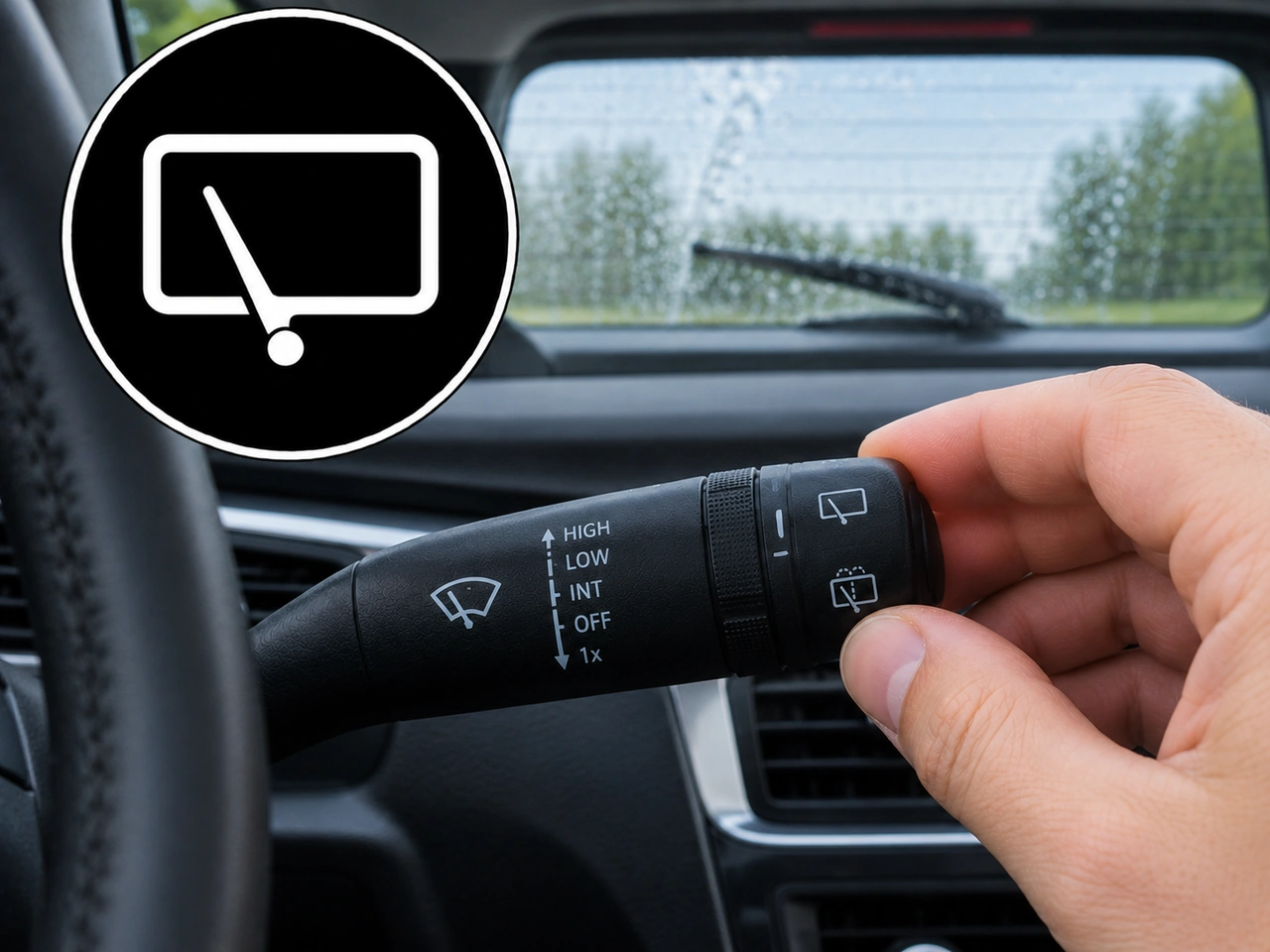
✓ Rear window wiper.
Rear window demister.
Windscreen wiper.
Windscreen washer.

This symbol controls the rear window wiper. Depending on the vehicle, the same control may also operate the rear-window washer.

Rear-window wiper control and symbol
AI-generated by Traffic-rules.com • WCIT • CC BY-SA
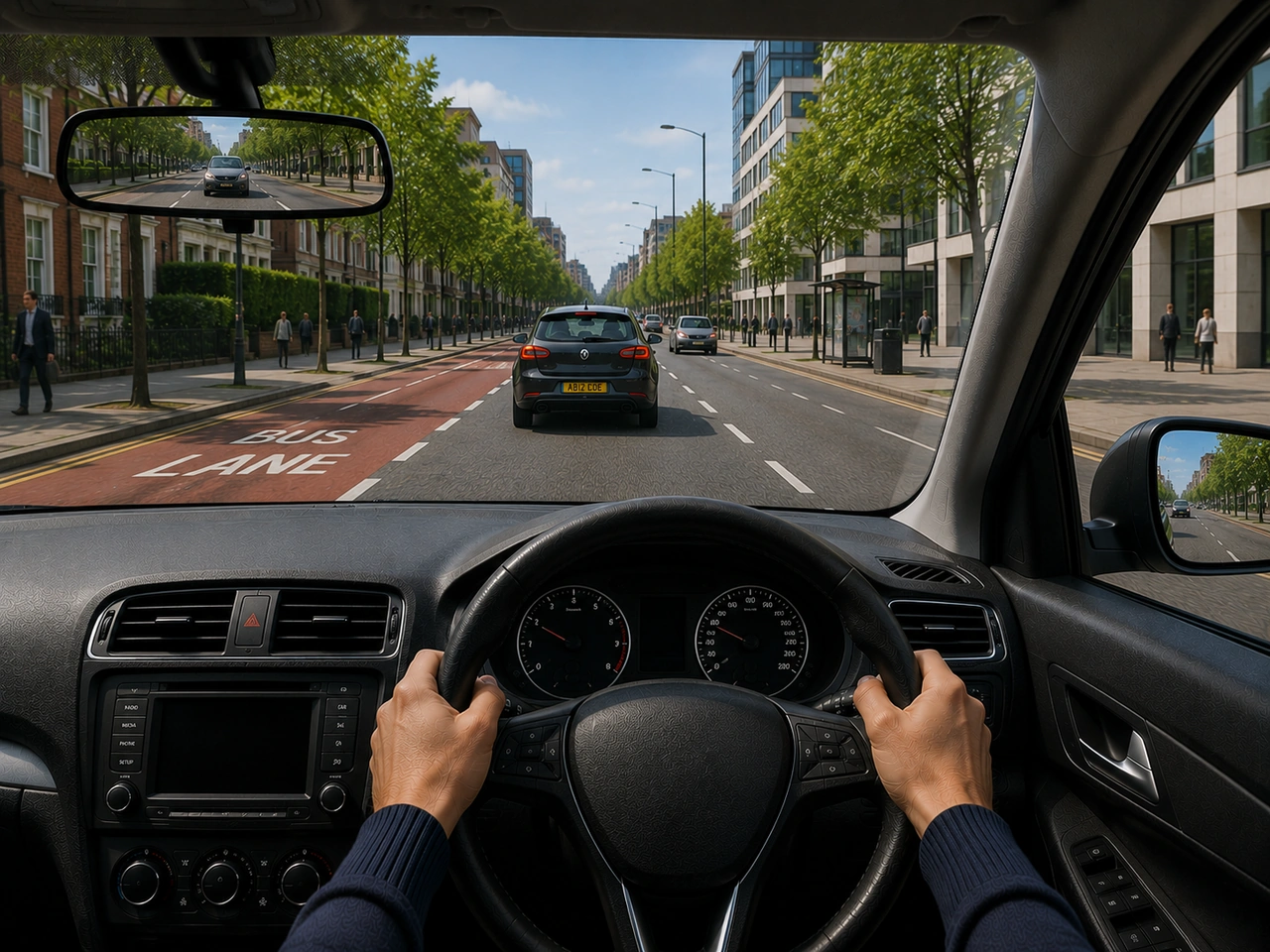
Why should you take extra care when crossing a tram or bus lane?

221. Why should you take extra care when crossing a tram or bus lane?

✓ A tram or bus may approach quickly.
These lanes are usually free from moving traffic.
You only need to check for traffic from one direction.
Cars always have priority over trams and buses.

Check carefully before crossing or entering a tram or bus lane. Trams cannot steer around obstacles, and both trams and buses may need significant distance to stop.

Traffic crossing a lane used by public transport
AI-generated by Traffic-rules.com • WCIT • CC BY-SA
What should cyclists do when passing pedestrians on a shared path?

222. What should cyclists do when passing pedestrians on a shared path?

Pass quickly before they change direction.
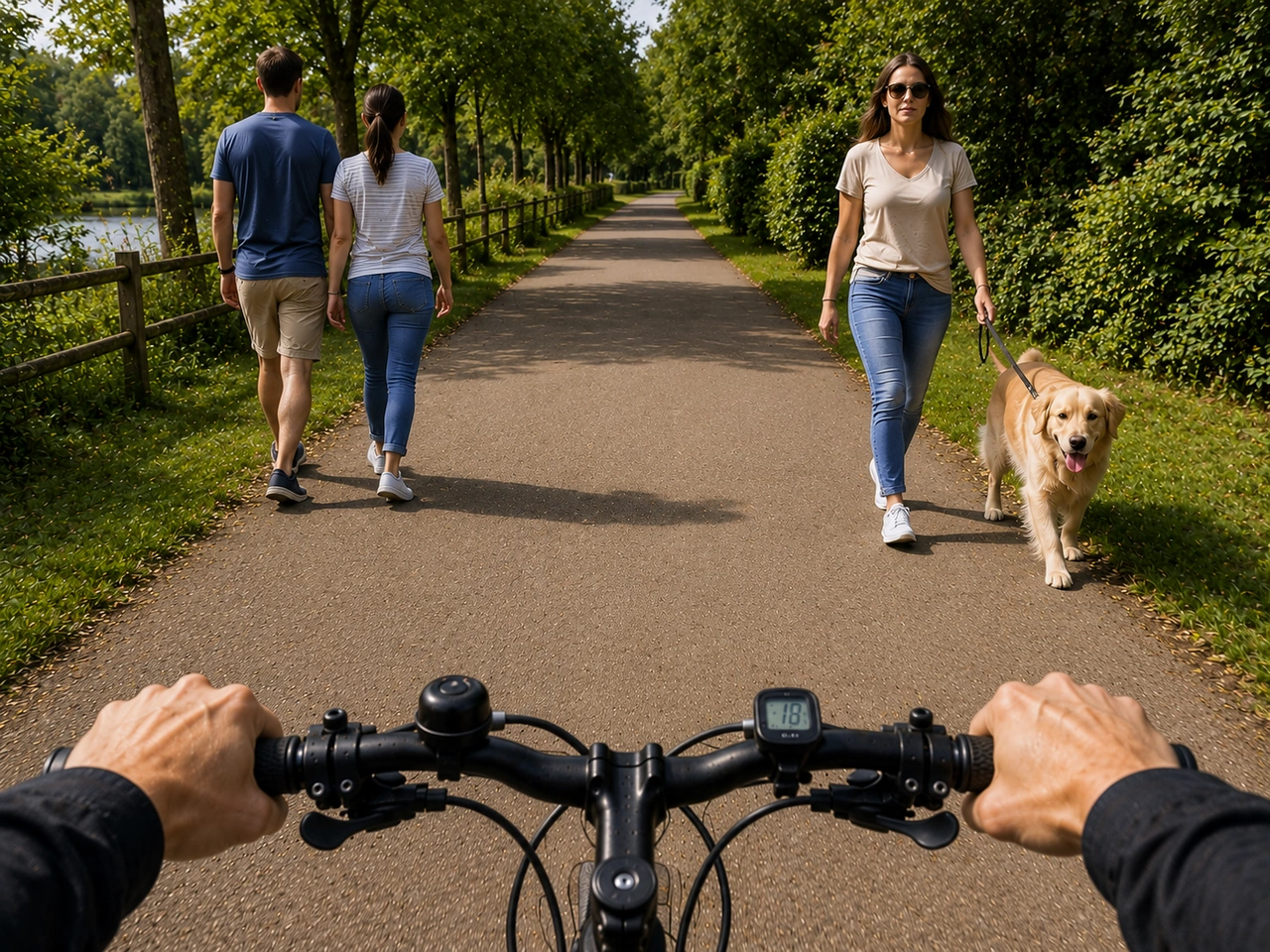
✓ Slow down, give warning, and leave enough space.
Use your bell and keep the same speed.
Pass closely if there is not enough room.

Pedestrians may change direction unexpectedly. A warning and safe passing distance reduce the risk of a collision.

Cyclist passing pedestrians on a shared path
AI-generated by Traffic-rules.com • WCIT • CC BY-SA
What does this dashboard symbol indicate?

223. What does this dashboard symbol indicate?

Rear fog lights.
Charging-system warning.
Engine-management warning.
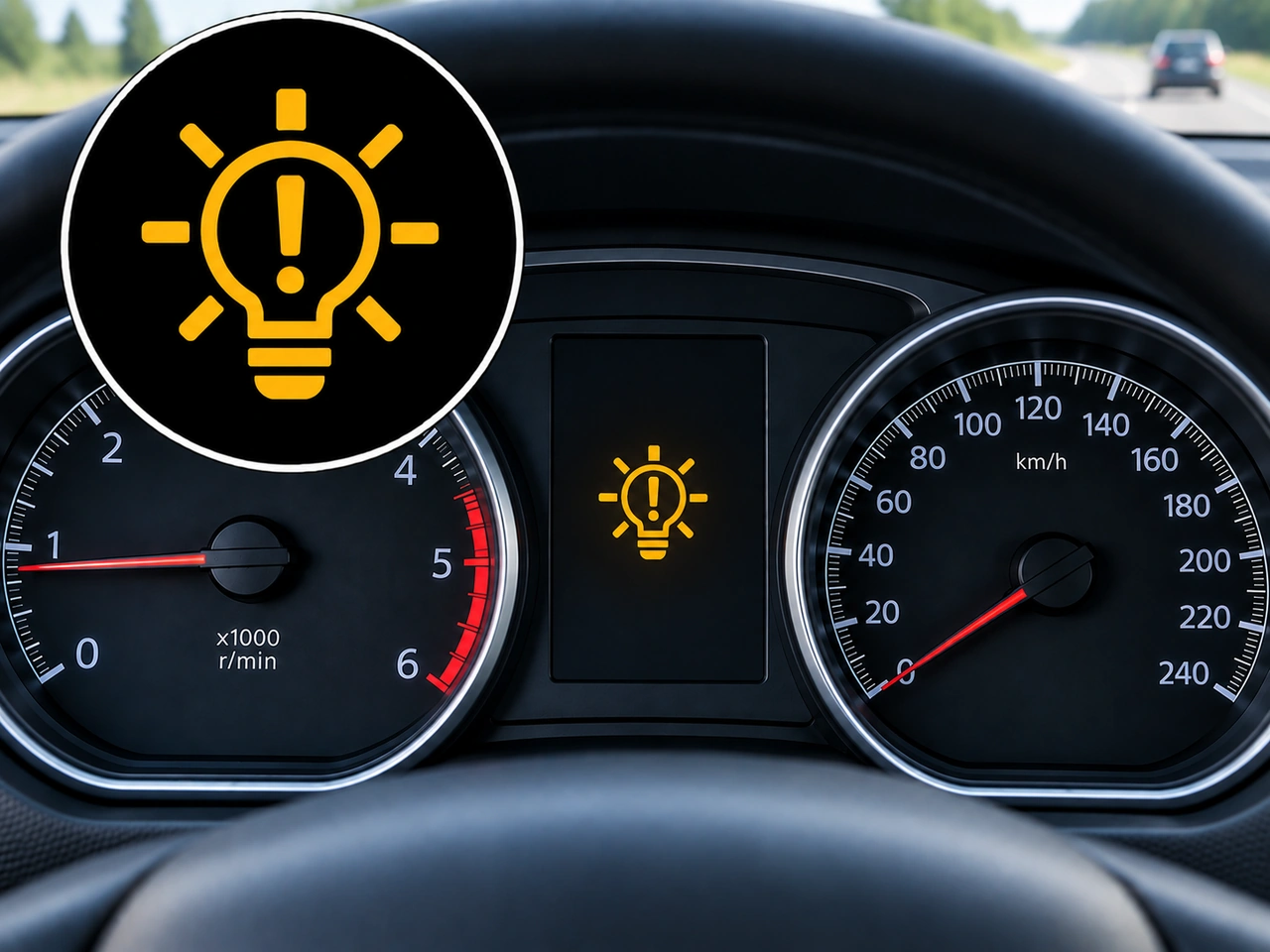
✓ Exterior-light failure.

This symbol indicates a possible failure of an exterior vehicle light, such as a headlight, tail light, brake light or indicator. Check the vehicle's exterior lights and replace or repair any faulty light.

Exterior-light failure warning symbol on the dashboard
AI-generated by Traffic-rules.com • WCIT • CC BY-SA
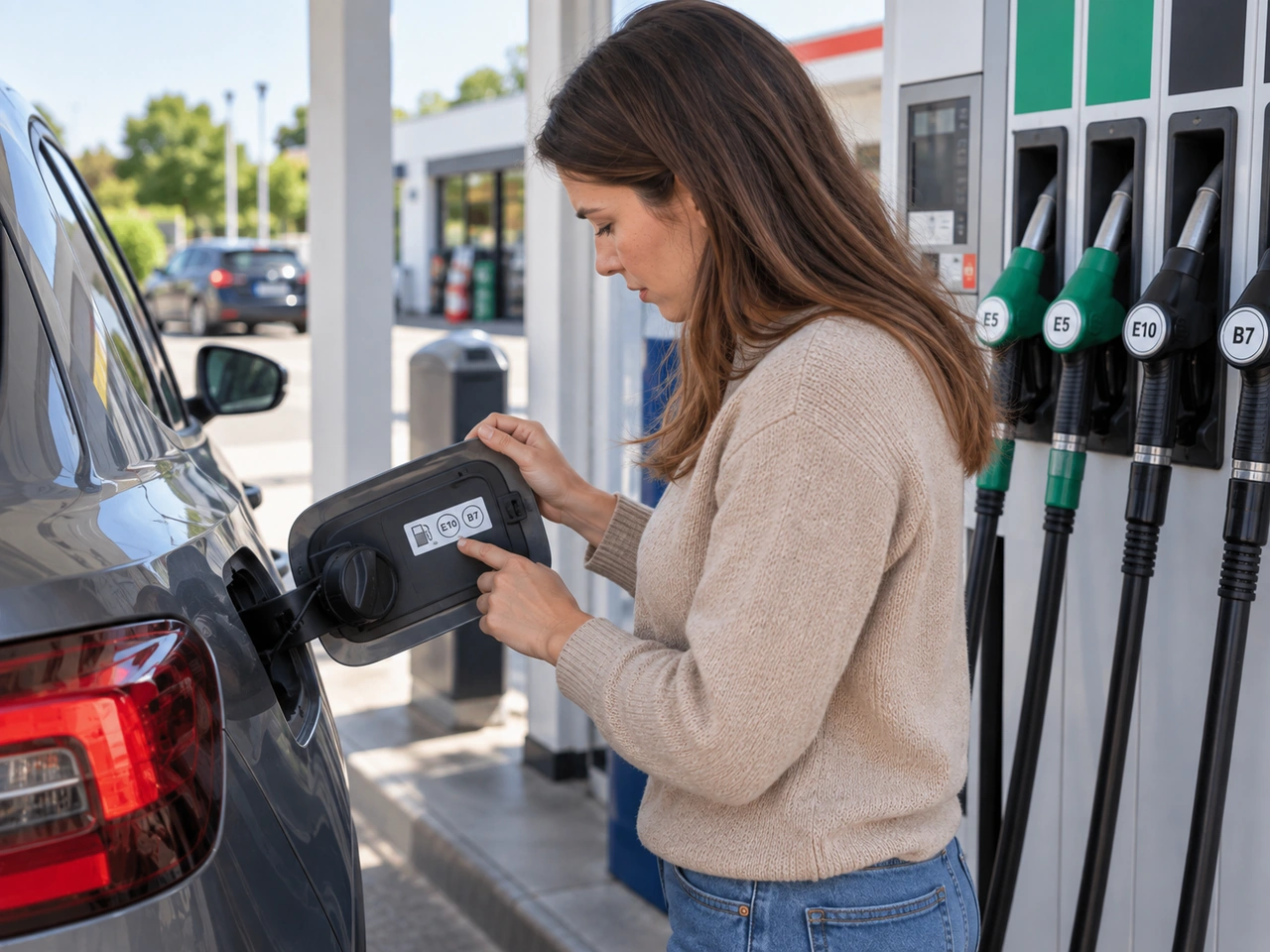
How can you check which fuel is suitable for your vehicle?

224. How can you check which fuel is suitable for your vehicle?

Use petrol unless the engine sounds like a diesel.
Choose whichever fuel is cheapest at the station.
Ask another driver with a similar-looking vehicle.
✓ Check the fuel-filler label, fuel cap, or vehicle information.

Before refuelling, check which fuel type the vehicle requires. The correct fuel is often shown inside the fuel-filler flap, on or near the fuel cap, or in the vehicle information or owner's manual. Do not rely only on nozzle colours, as these can vary between filling stations and countries.

Checking the fuel label before refuelling
AI-generated by Traffic-rules.com • WCIT • CC BY-SA
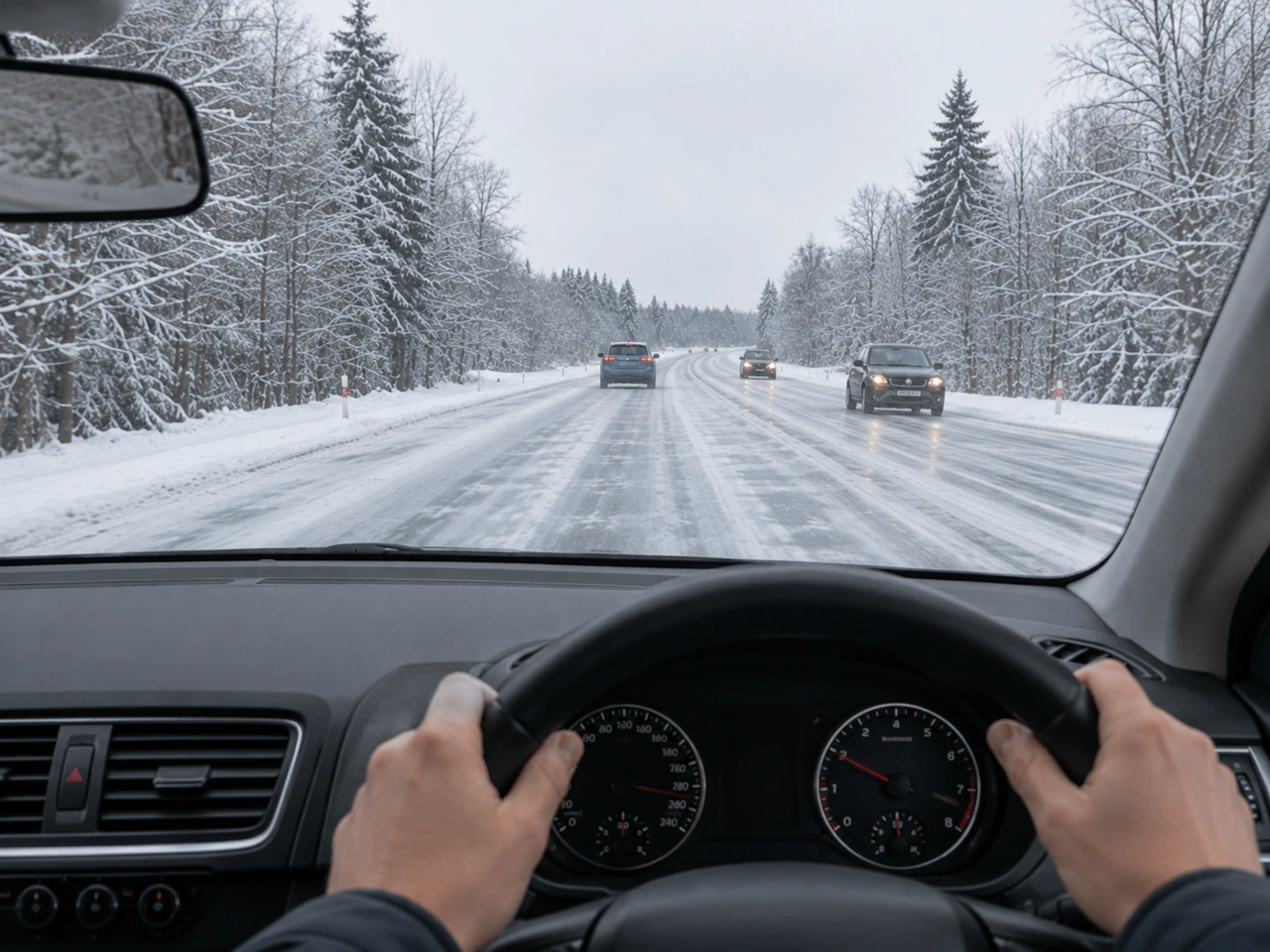
Why should you leave a much larger following distance on an icy road?

225. Why should you leave a much larger following distance on an icy road?

To give the engine more time to warm up.
✓ Because stopping distances can be much longer.
To prevent ice from forming on the windscreen.
To make the headlights work more effectively.

Tyres have much less grip on ice, so braking takes longer. Extra distance gives you more time to slow down safely.

Following distance between vehicles on an icy road
AI-generated by Traffic-rules.com • WCIT • CC BY-SA
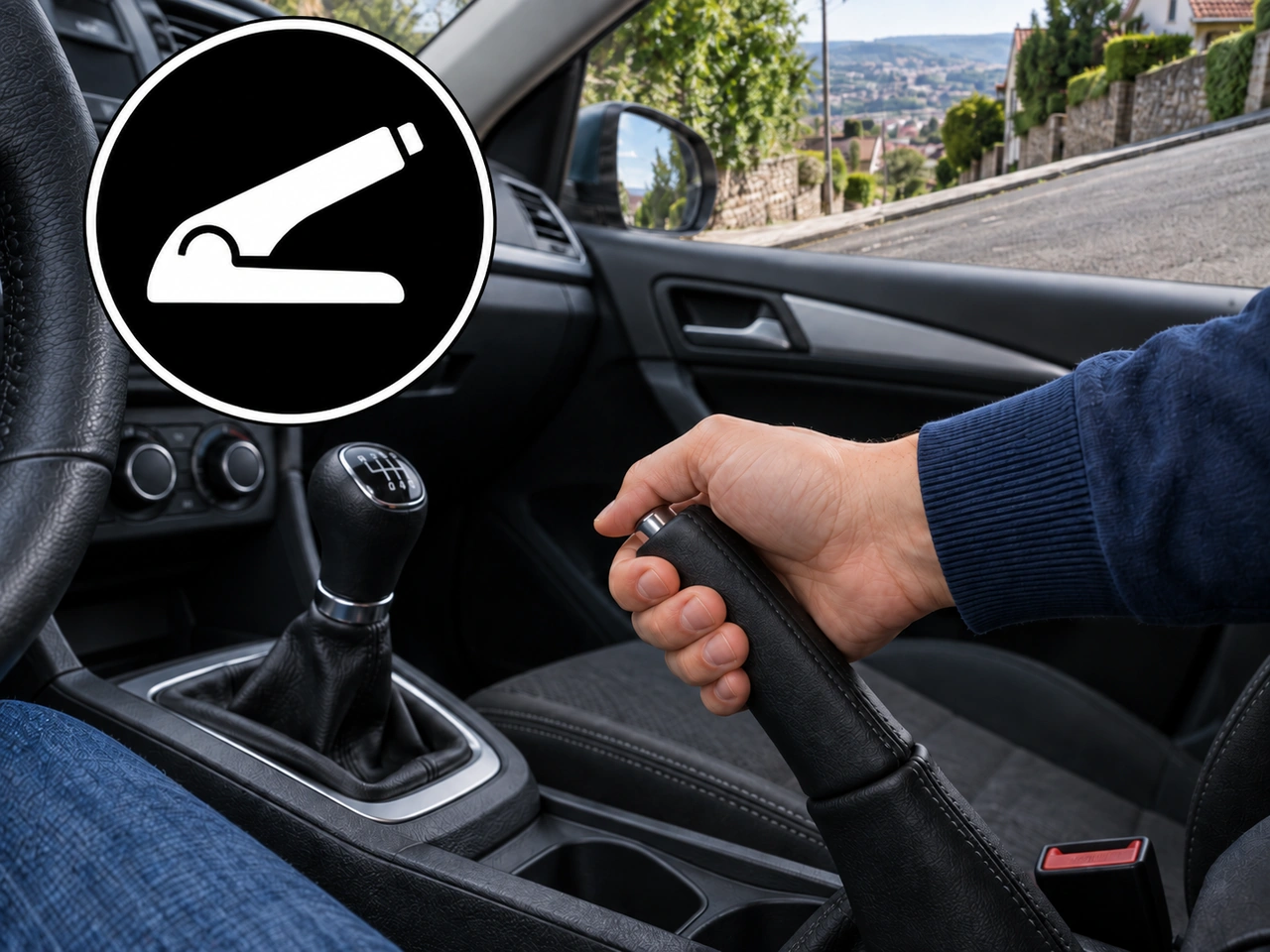
What should you do with the parking brake when parking on a slope?

226. What should you do with the parking brake when parking on a slope?

✓ Apply it firmly.
Release it completely.
Leave it partly applied.
Use it only if the engine is running.

When parking on a slope, apply the parking brake firmly to help prevent the vehicle from rolling. Selecting an appropriate gear or Park provides additional security.

Using the parking brake when parking on a slope
AI-generated by Traffic-rules.com • WCIT • CC BY-SA
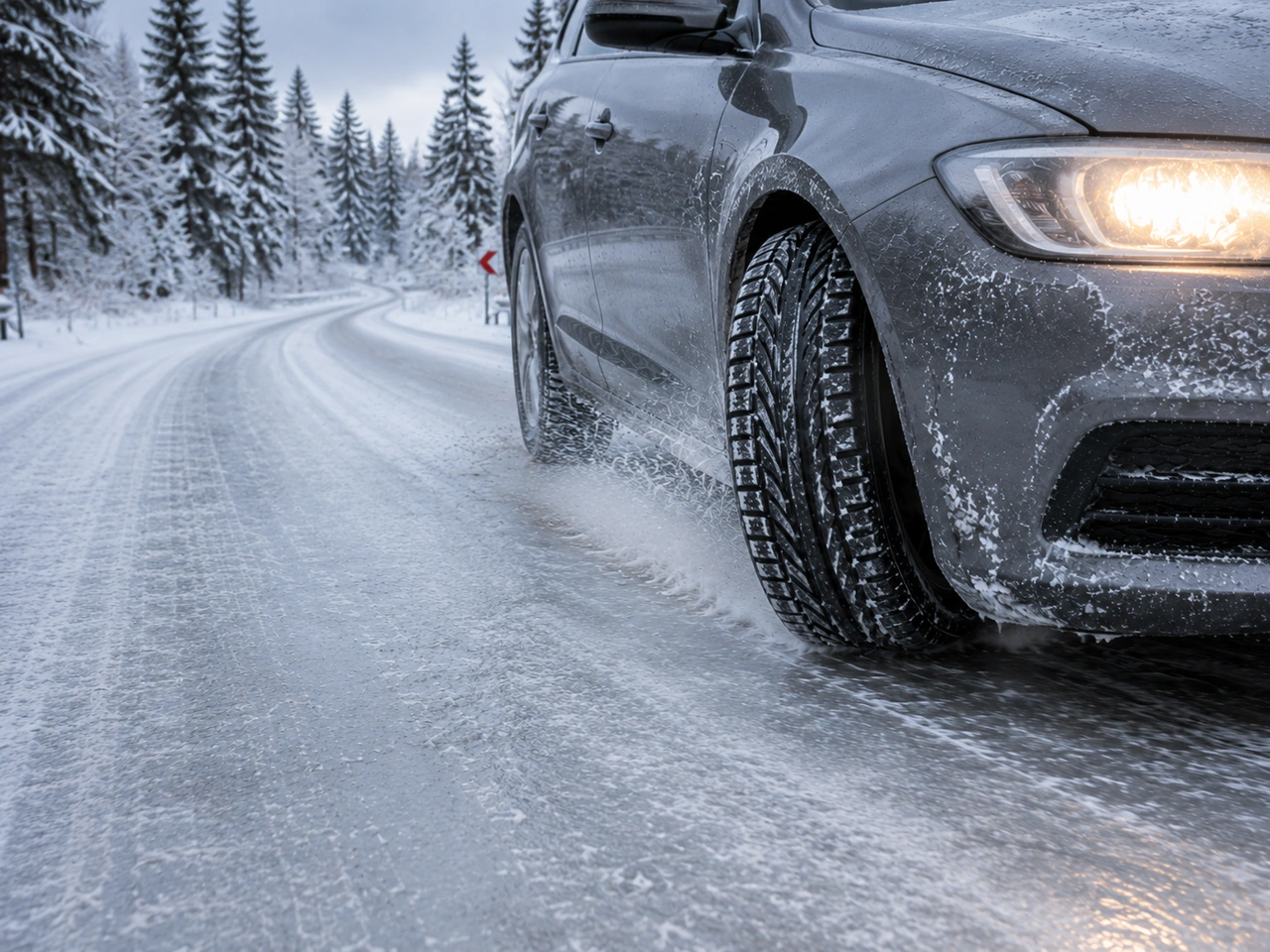
Why should you avoid sudden steering movements on snow or ice?

227. Why should you avoid sudden steering movements on snow or ice?

They increase fuel consumption.
They make the steering wheel harder to turn.
They reduce the effectiveness of the headlights.
✓ They can cause the tyres to lose grip and the vehicle to skid.

Abrupt steering can overwhelm the limited grip available on a slippery surface. Steering smoothly helps keep the vehicle stable.

Steering a vehicle on a snowy road
AI-generated by Traffic-rules.com • WCIT • CC BY-SA
What should you do if your vehicle develops a serious fault while driving?

228. What should you do if your vehicle develops a serious fault while driving?

Stop immediately in the traffic lane.
Switch off the engine before slowing down.
✓ Keep control, reduce speed, and move to a safe place if possible.
Continue driving until the vehicle stops by itself.

Your first priority is to keep control of the vehicle. Reduce speed smoothly and move out of the path of traffic where possible, signalling when appropriate. Avoid harsh steering or braking unless necessary.

Vehicle stopped after developing a mechanical fault
AI-generated by Traffic-rules.com • WCIT • CC BY-SA
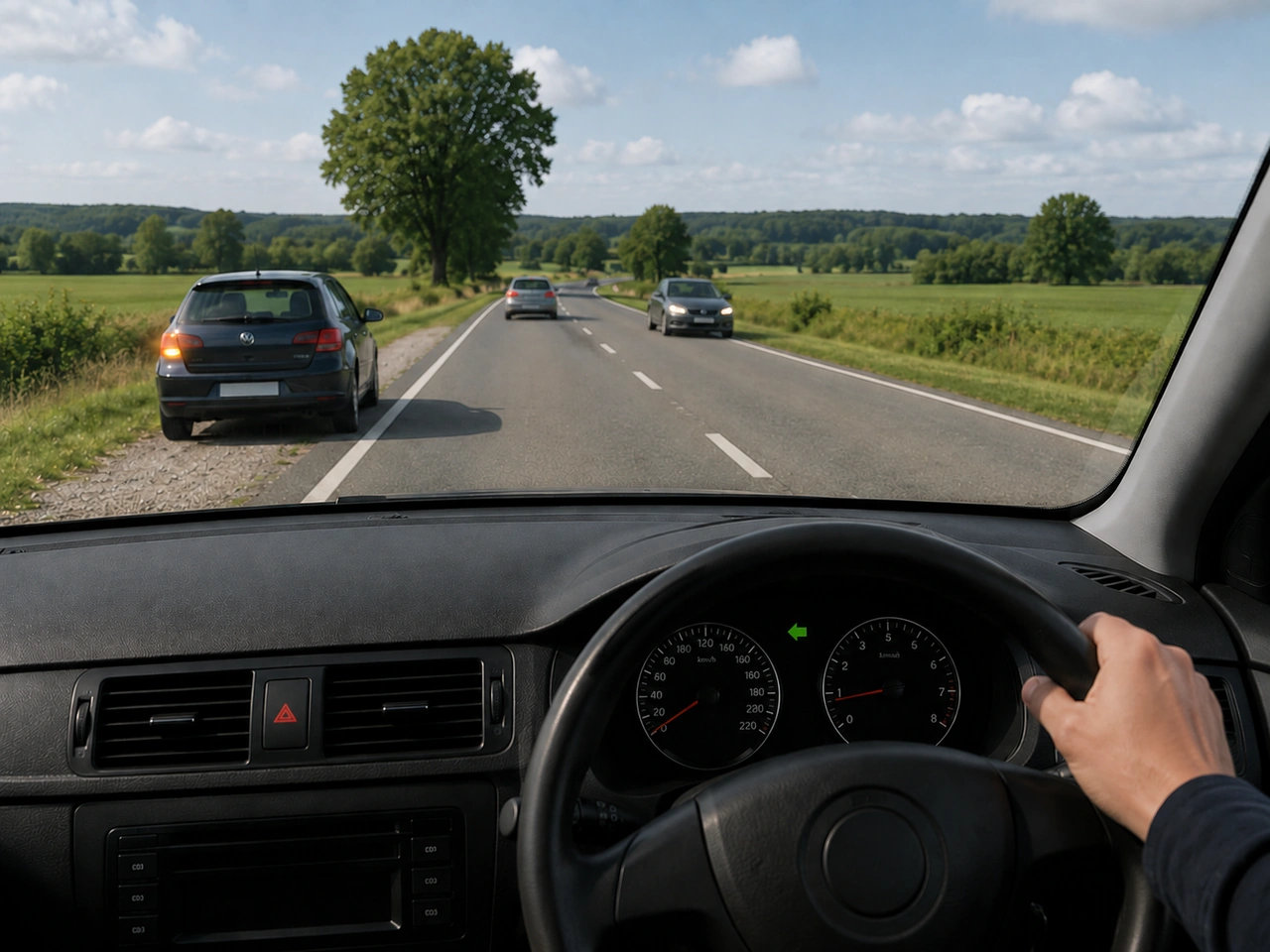
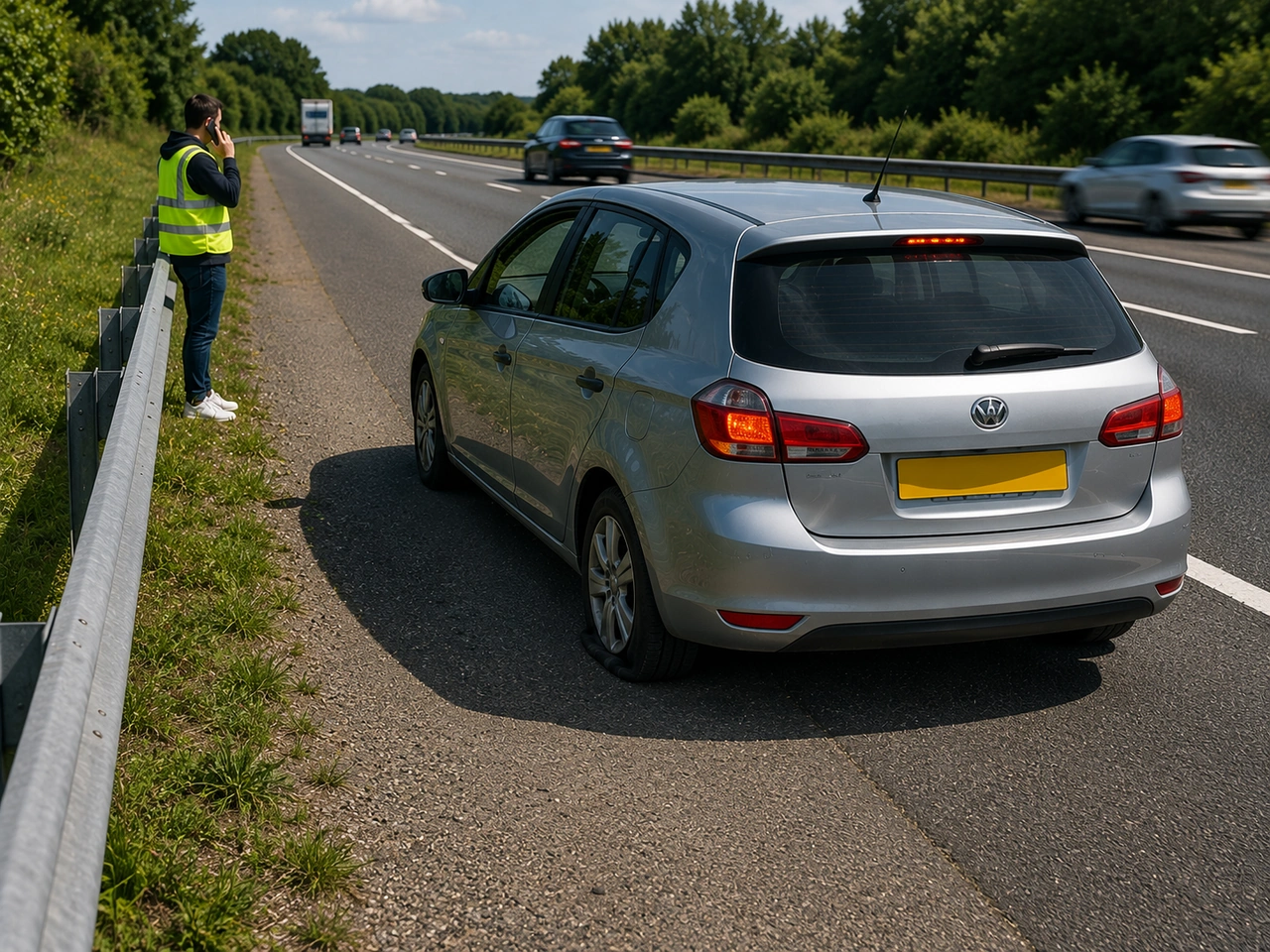
What should you do about a flat tyre on a high-speed road?

229. What should you do about a flat tyre on a high-speed road?

Drive slowly on the damaged tyre to the next exit.
Repair the tyre beside the traffic lane using hazard lights.
✓ Move to a protected location if possible and call for professional recovery.
Stop immediately and change the tyre where you are.

Changing a wheel close to high-speed traffic is extremely dangerous. Move away from traffic and use professional assistance.

Vehicle stopped with a flat tyre on a high-speed road
AI-generated by Traffic-rules.com • WCIT • CC BY-SA
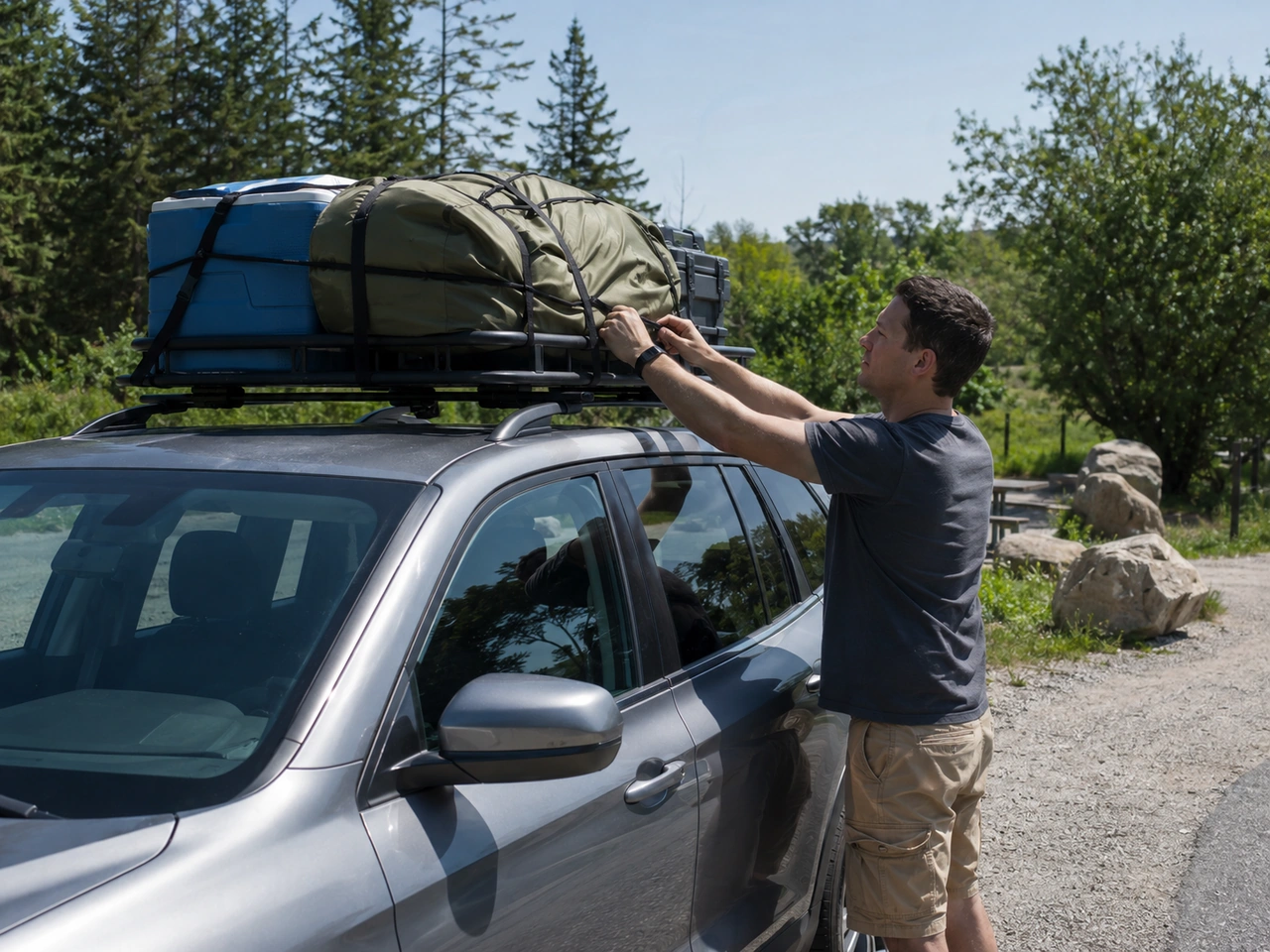
Why must a roof load be securely attached?

230. Why must a roof load be securely attached?

✓ It could shift or fall and create a serious hazard.
To stop the roof rack from increasing fuel consumption.
Because light roof loads cannot be affected by the wind.
To keep the vehicle within its normal height.

A roof load is exposed to strong airflow and movement. It must be restrained correctly and kept within the permitted limits.

Load secured to a vehicle's roof
AI-generated by Traffic-rules.com • WCIT • CC BY-SA
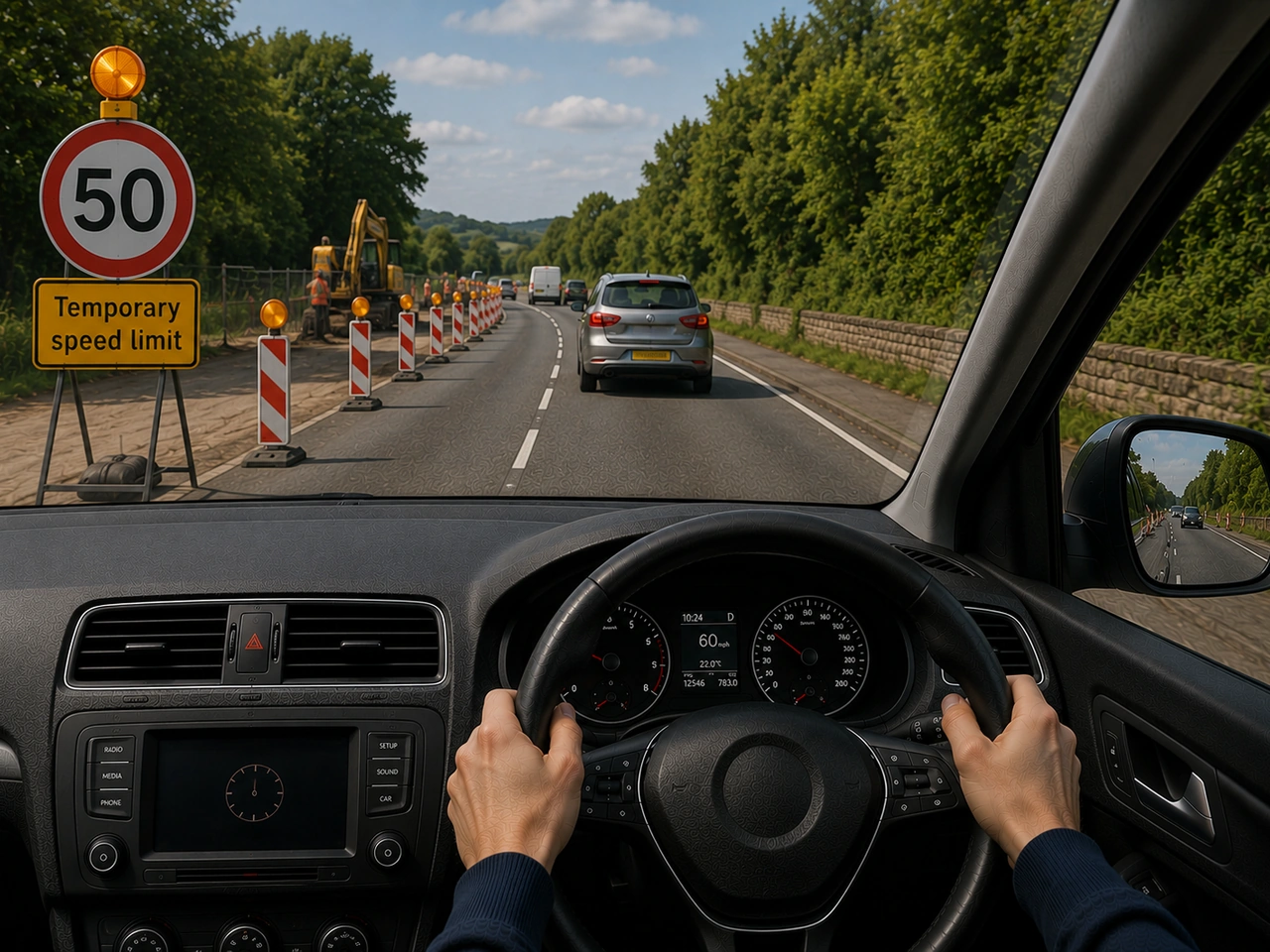
Why should you not ignore temporary speed limits?

231. Why should you not ignore temporary speed limits?

They are recommendations rather than limits.
They apply only to road workers.
✓ They are used to protect people and manage hazards.
They can be ignored when the road looks clear.

Temporary speed limits may be used near roadworks, accidents, events, or dangerous conditions. They help keep traffic safe.

Temporary speed-limit sign at roadworks
AI-generated by Traffic-rules.com • WCIT • CC BY-SA
What can selecting a lower gear provide in a manual vehicle?

232. What can selecting a lower gear provide in a manual vehicle?

✓ Greater engine braking.
A shorter steering ratio.
Higher tyre pressure.
Automatic parking-brake operation.

Selecting a suitable lower gear can increase engine braking, helping the vehicle slow or control its speed without relying entirely on the brakes.

Manual gear selection for engine braking
AI-generated by Traffic-rules.com • WCIT • CC BY-SA
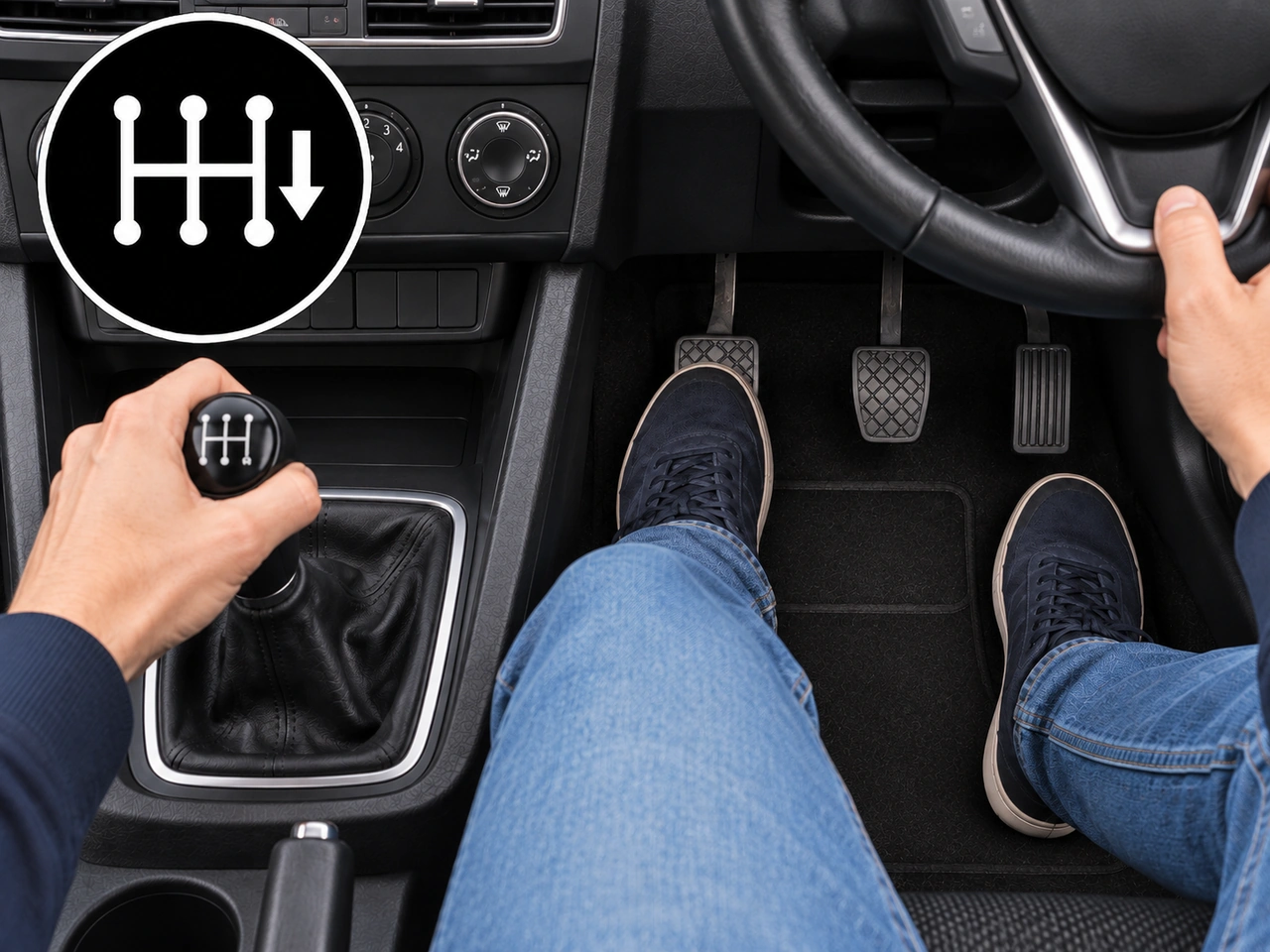
Can you assume that you are safe to drive the morning after drinking?

233. Can you assume that you are safe to drive the morning after drinking?

Yes, if you feel completely sober.
Yes, if you eat breakfast before driving.
Yes, if you only need to drive a short distance.
✓ No, alcohol may still remain in your body.

The body needs time to process alcohol. Sleeping, eating, showering, or drinking coffee does not instantly remove it.

Fitness to drive the morning after drinking
AI-generated by Traffic-rules.com • WCIT • CC BY-SA
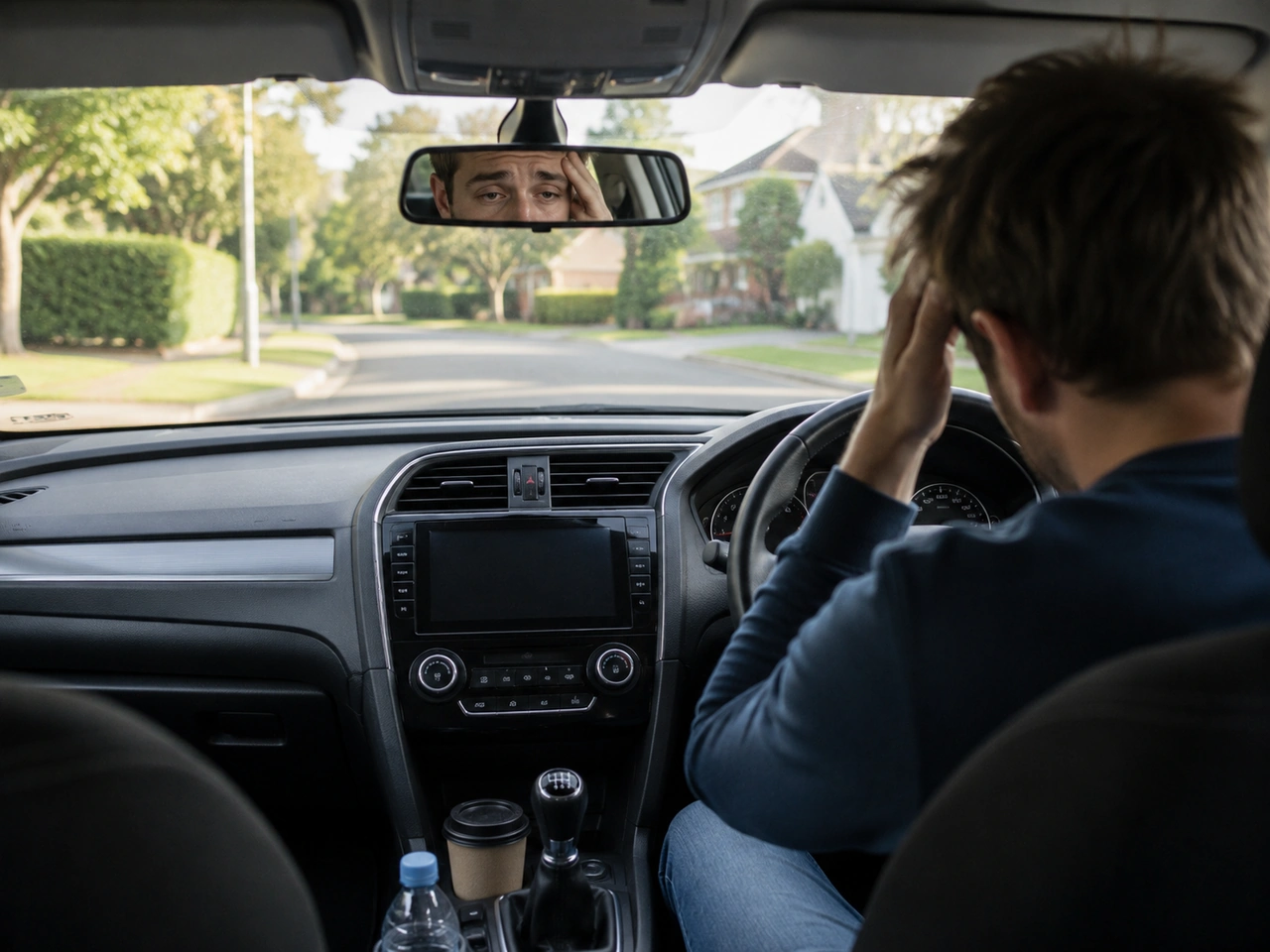
What does this vehicle-control symbol indicate?

234. What does this vehicle-control symbol indicate?

✓ Airflow direction.
Cabin temperature adjustment.
Cabin fan speed.
Air conditioning.

This control selects the direction of the ventilation airflow, such as towards the face, feet or windscreen.

Control for directing cabin ventilation airflow
AI-generated by Traffic-rules.com • WCIT • CC BY-SA
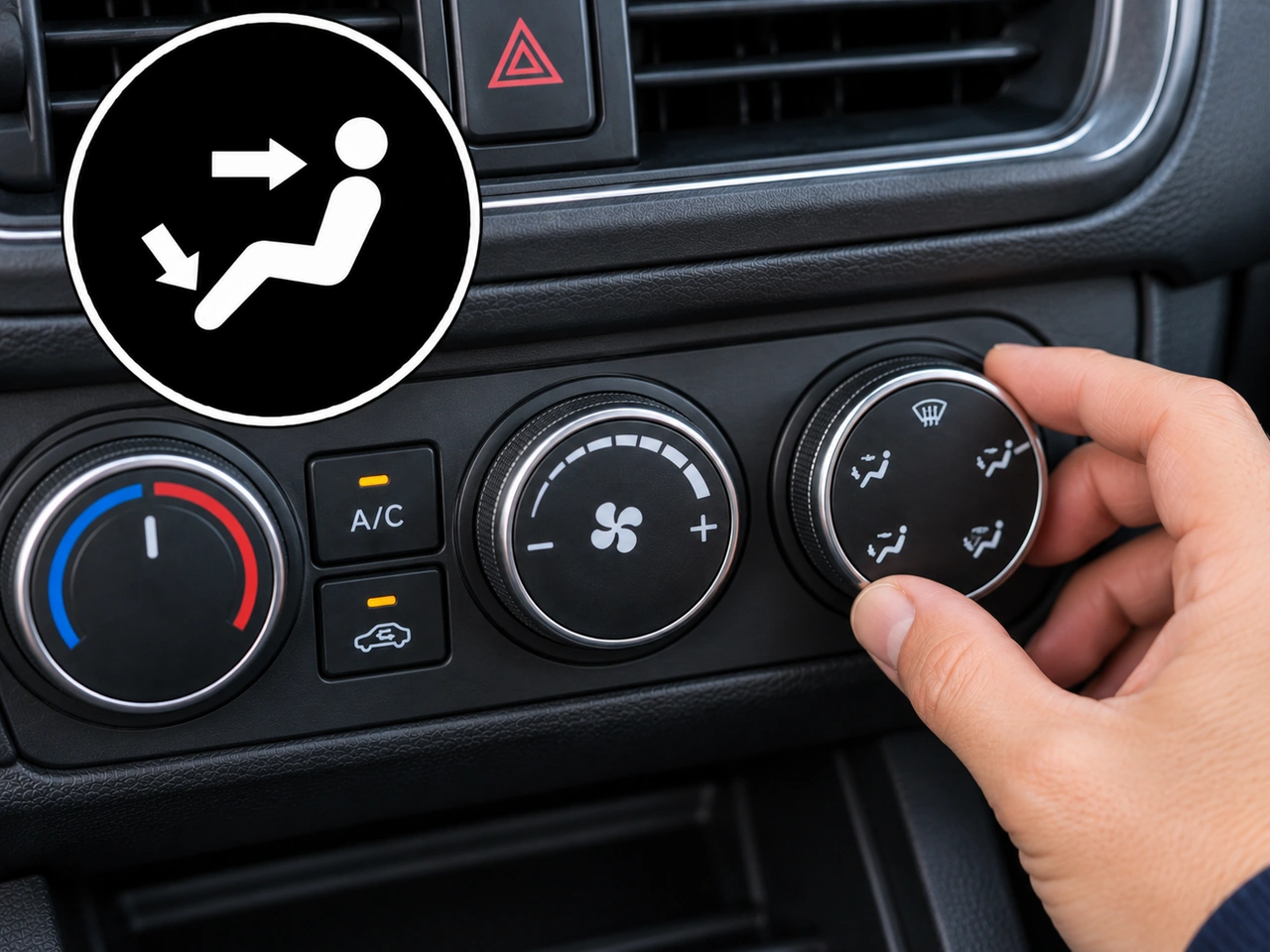
Which pedal is used to increase the vehicle's speed?

235. Which pedal is used to increase the vehicle's speed?

✓ The accelerator pedal.
The brake pedal.
The clutch pedal.
The footrest.

The accelerator pedal controls the amount of power delivered by the engine and is used to increase or maintain the vehicle's speed. It is the right-hand pedal.

Accelerator pedal in the driver's footwell
AI-generated by Traffic-rules.com • WCIT • CC BY-SA
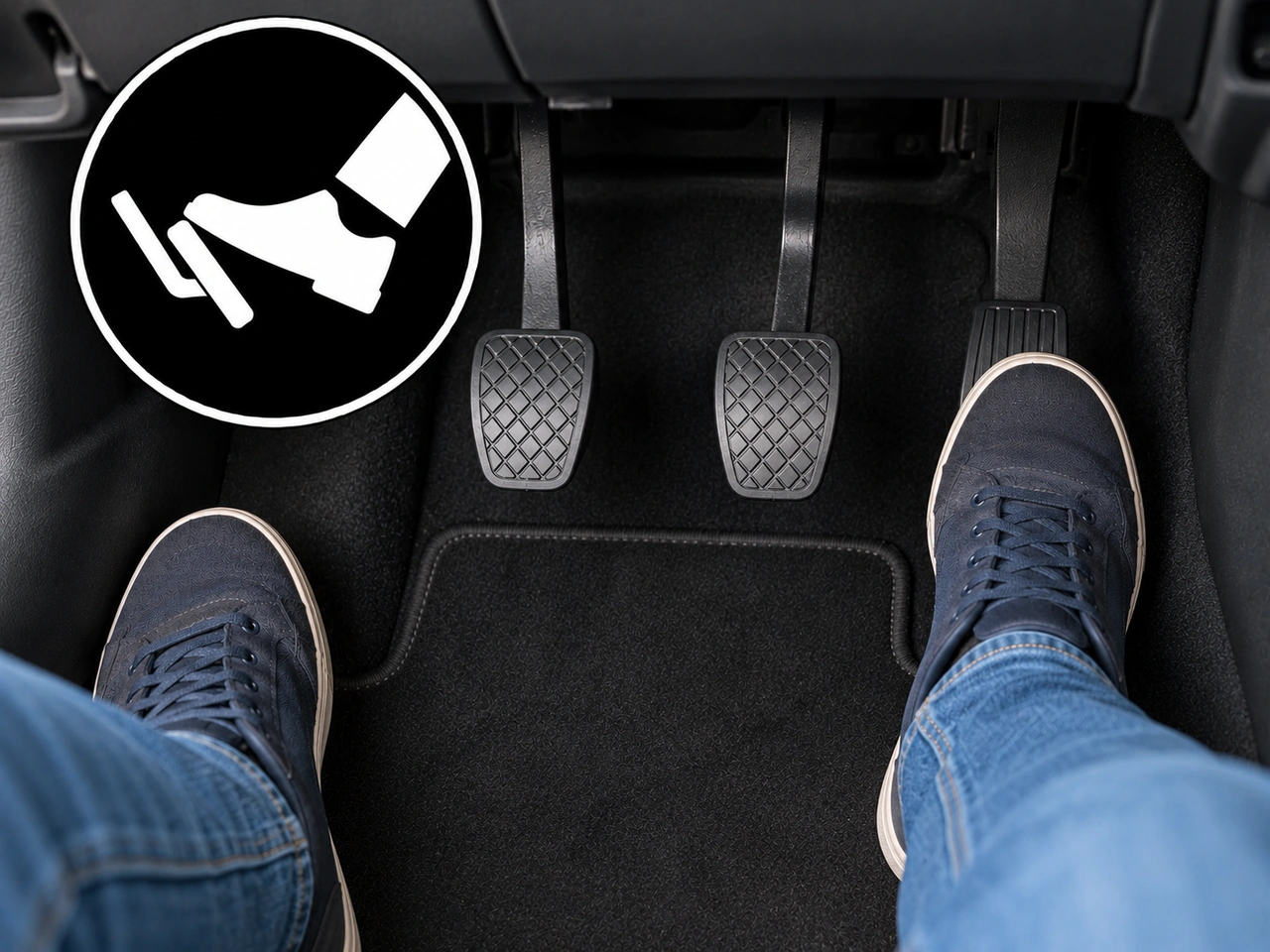
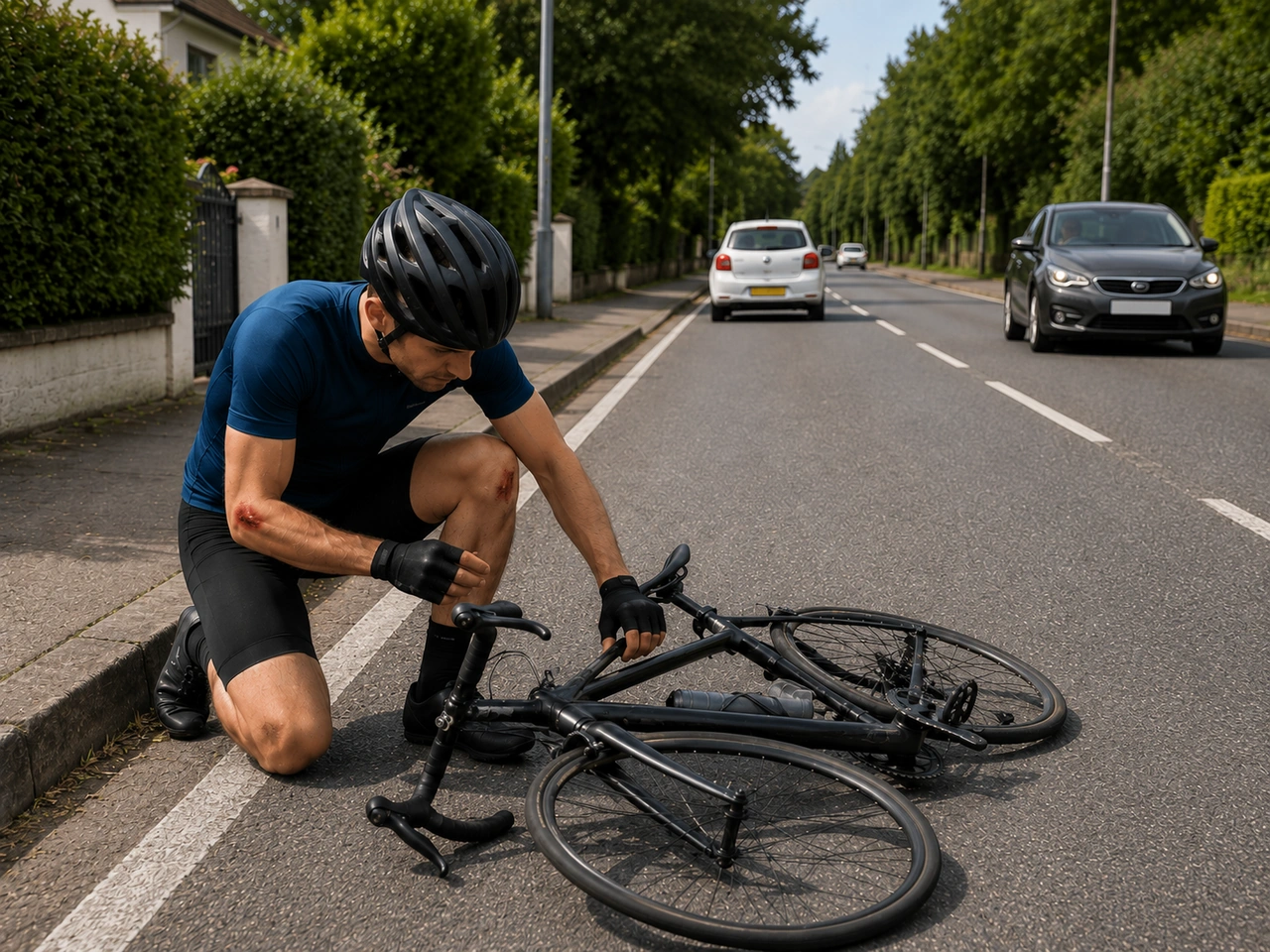
What should cyclists do after a collision or hard fall?

236. What should cyclists do after a collision or hard fall?

Continue if you feel fine and the bicycle looks normal.
✓ Check yourself and inspect the bicycle before riding again.
Test the bicycle by riding it before checking for damage.
Check only the bicycle and ignore minor injuries.

A fall can damage the brakes, wheels, frame, handlebars, or helmet. Injuries may also not be immediately obvious.

Checking a bicycle after a fall or collision
AI-generated by Traffic-rules.com • WCIT • CC BY-SA
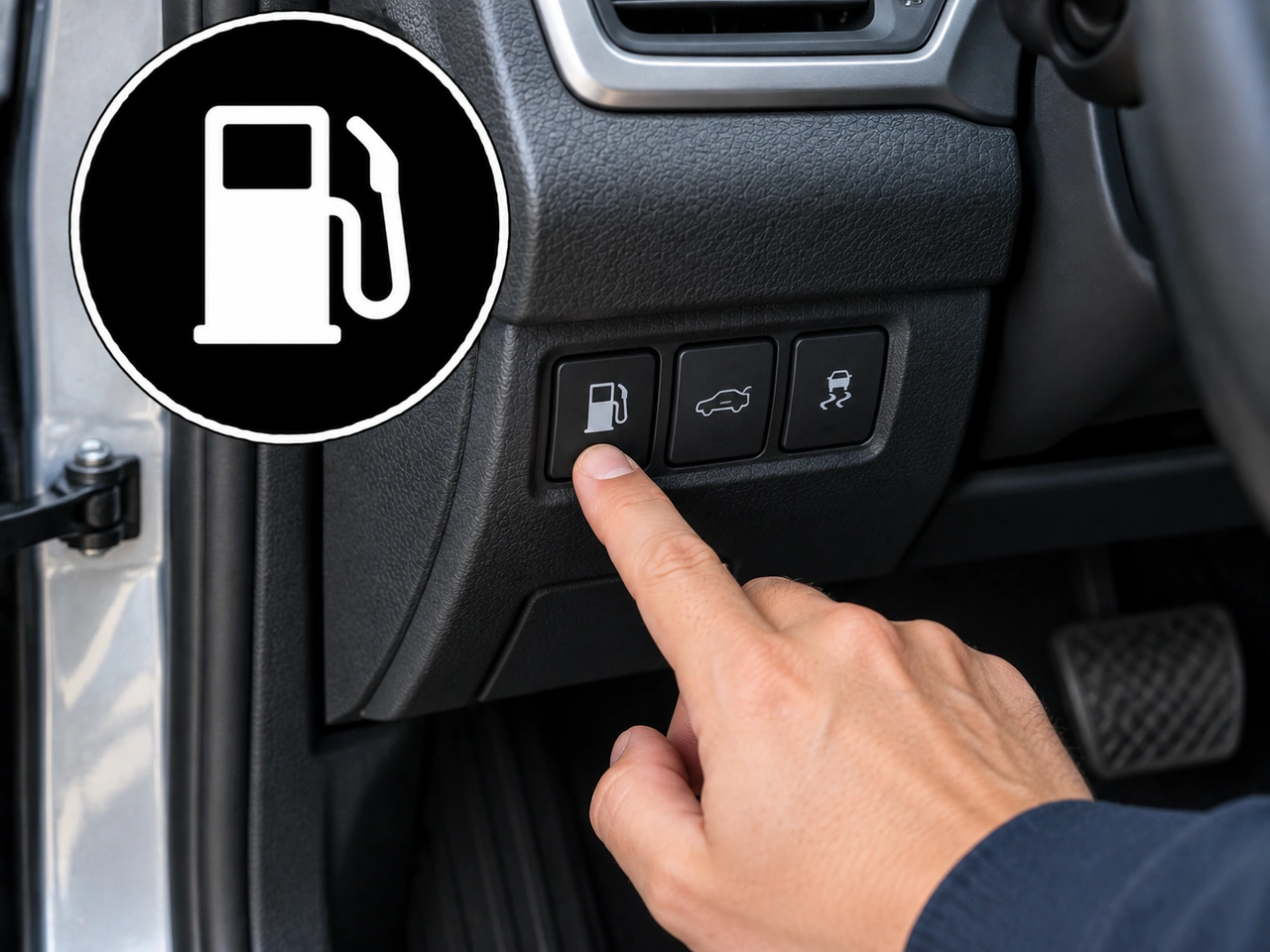
What does this vehicle-control symbol indicate?

237. What does this vehicle-control symbol indicate?

Boot release.
✓ Fuel-filler flap release.
Central door locking.
Bonnet release.

This control releases the fuel-filler flap, allowing access to the vehicle's fuel filler.

Release control for the fuel-filler flap
AI-generated by Traffic-rules.com • WCIT • CC BY-SA
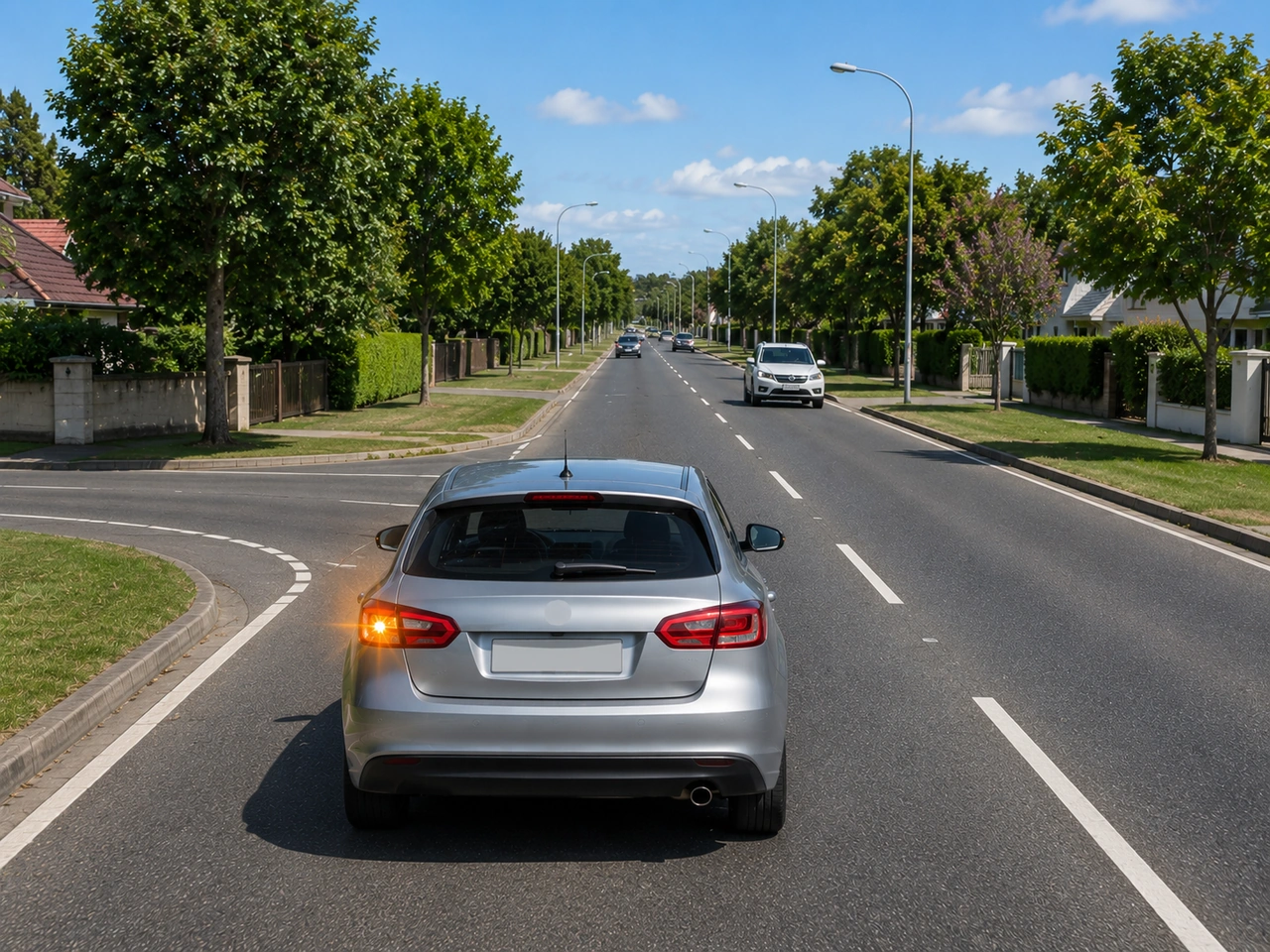
Why should you use your indicator before turning?

238. Why should you use your indicator before turning?

To make other road users stop for you.
✓ To show other road users what you plan to do.
To replace checking mirrors and blind spots.
To give yourself priority over other traffic.

Indicators help other drivers, cyclists, and pedestrians understand your intentions in time.

Vehicle indicator signalling an intended turn
AI-generated by Traffic-rules.com • WCIT • CC BY-SA
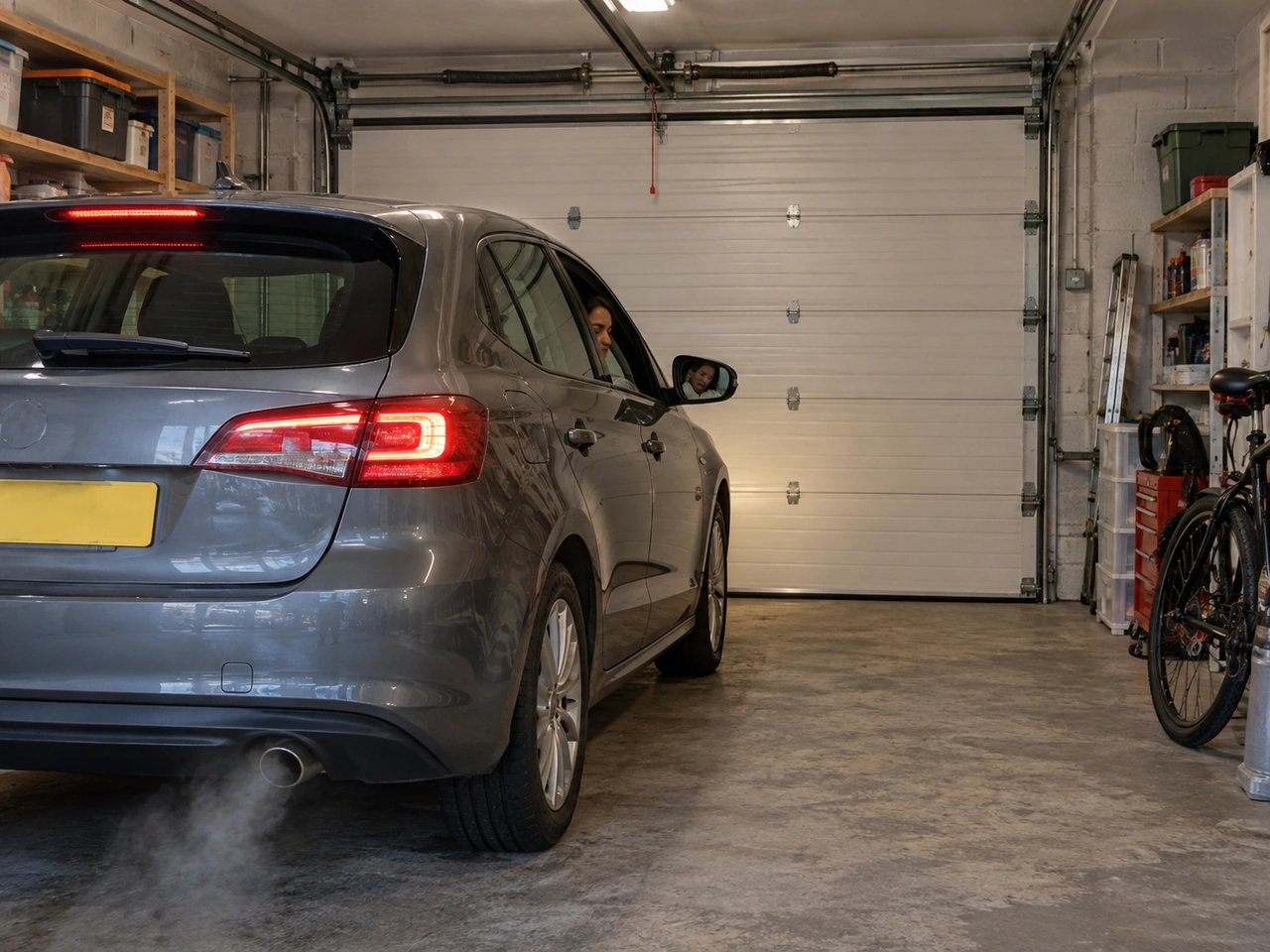
Why should you never leave a petrol or diesel engine running in an enclosed space?

239. Why should you never leave a petrol or diesel engine running in an enclosed space?

The battery can become overcharged.
The tyres can lose pressure more quickly.
The cooling system can stop working.
✓ Dangerous carbon monoxide can build up.

Exhaust gases from petrol and diesel engines can contain carbon monoxide, a poisonous gas that can build up quickly in an enclosed or poorly ventilated space. Never leave the engine running inside a closed garage or similar area.

Running vehicle engine in an enclosed space
AI-generated by Traffic-rules.com • WCIT • CC BY-SA
You should check your mirrors before changing lanes.

240. You should check your mirrors before changing lanes.

✓ True.
False.

Checking your mirrors helps you see surrounding traffic before moving into another lane.

Driver checking a mirror before changing lanes
AI-generated by Traffic-rules.com • WCIT • CC BY-SA
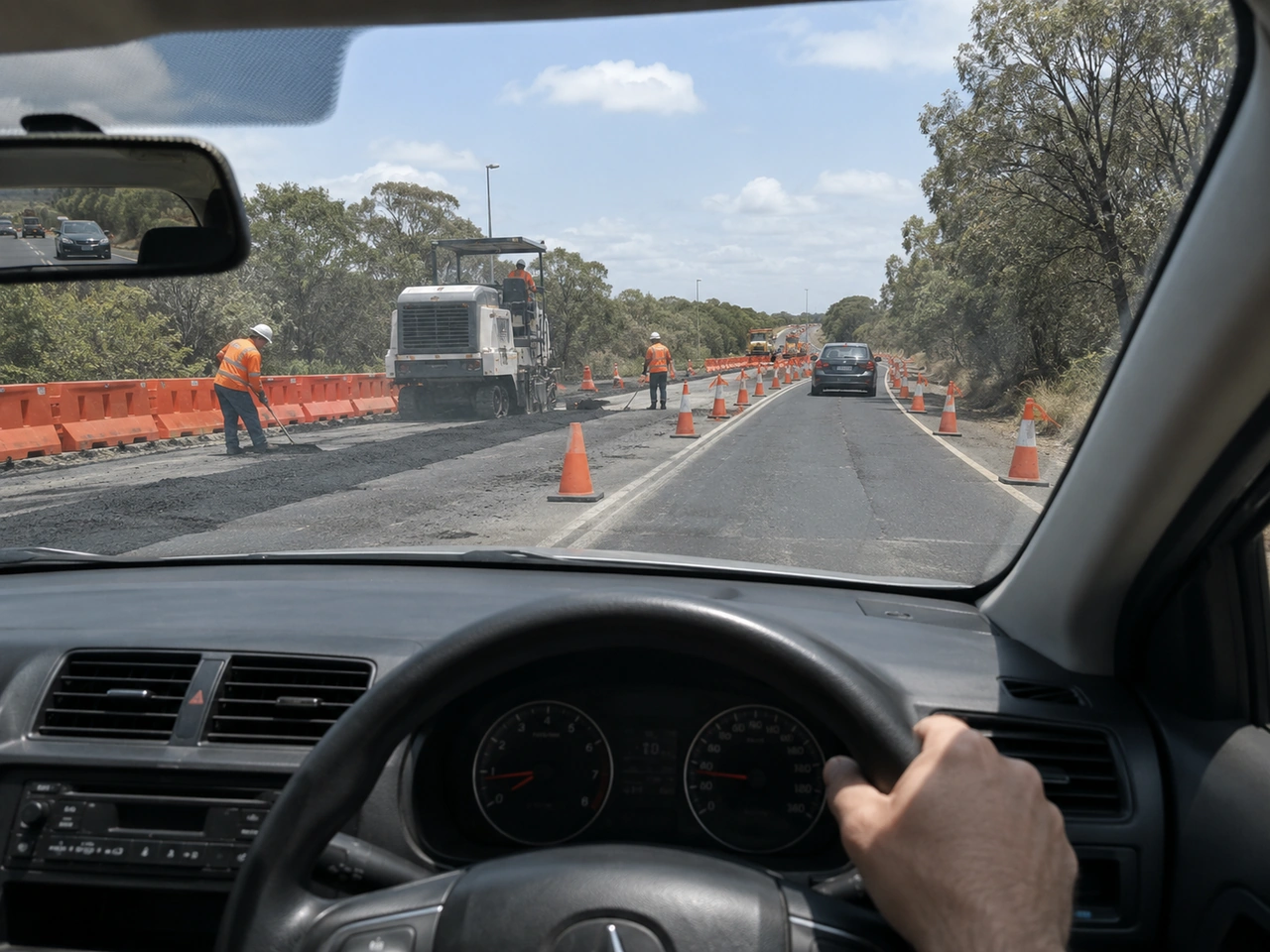
Why should you reduce speed when approaching roadworks?

241. Why should you reduce speed when approaching roadworks?

You should not reduce speed near roadworks.
✓ Road workers, narrow lanes, and unexpected hazards may be present.
To keep construction dust off the windscreen.
To reduce exhaust gases near construction sites.

Roadworks can involve workers, machinery, changing lane layouts, and uneven surfaces. Lower speed gives you more time to react.

Vehicle approaching a roadworks area
AI-generated by Traffic-rules.com • WCIT • CC BY-SA
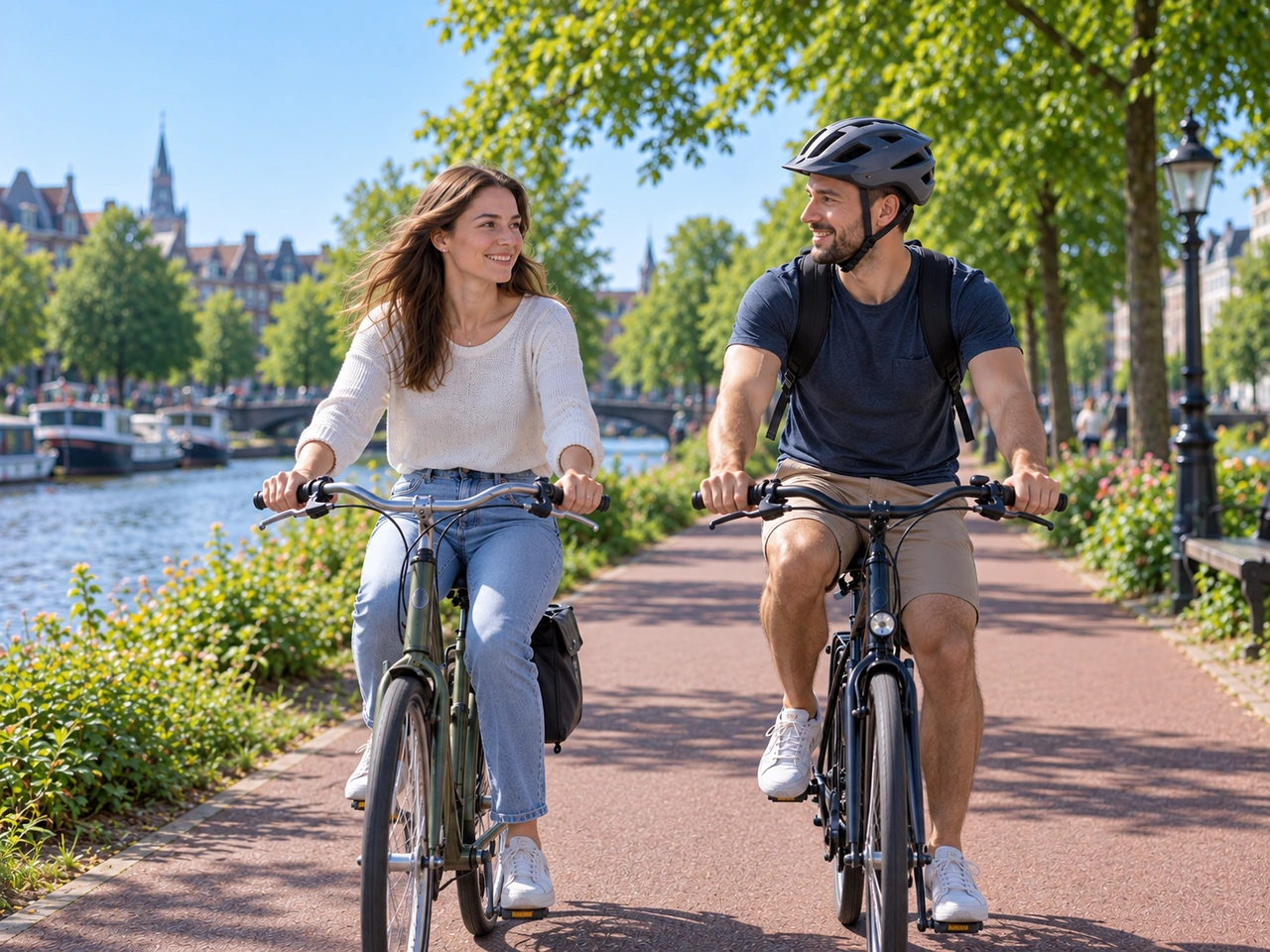
Are bicycle helmets generally required in Japan?

242. Are bicycle helmets generally required in Japan?

✓ No.
Yes, for all cyclists.
Yes, for all adults.

Bicycle helmets are not generally required for all cyclists in Japan, although specific age or regional rules may apply.

Cyclist wearing a bicycle helmet
AI-generated by Traffic-rules.com • WCIT • CC BY-SA
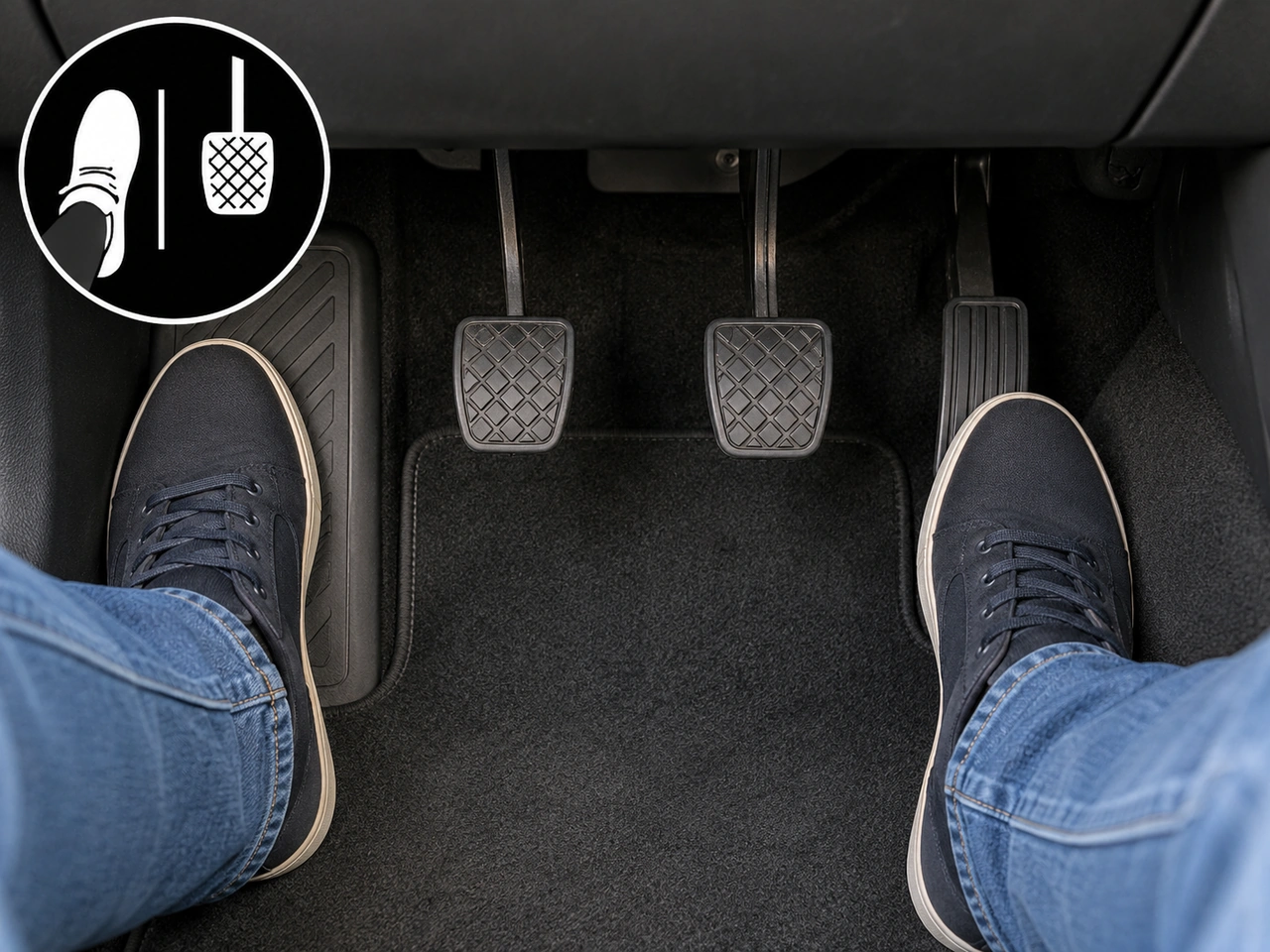
Why should you avoid resting your foot on the clutch pedal while driving?

243. Why should you avoid resting your foot on the clutch pedal while driving?

✓ It can cause unnecessary clutch wear.
It can increase tyre pressure.
It can lock the steering.
It can apply the parking brake.

Resting your foot on the clutch pedal can apply slight pressure to the clutch mechanism and cause unnecessary wear. Keep your left foot off the clutch when it is not needed.

Foot position near the clutch pedal
AI-generated by Traffic-rules.com • WCIT • CC BY-SA
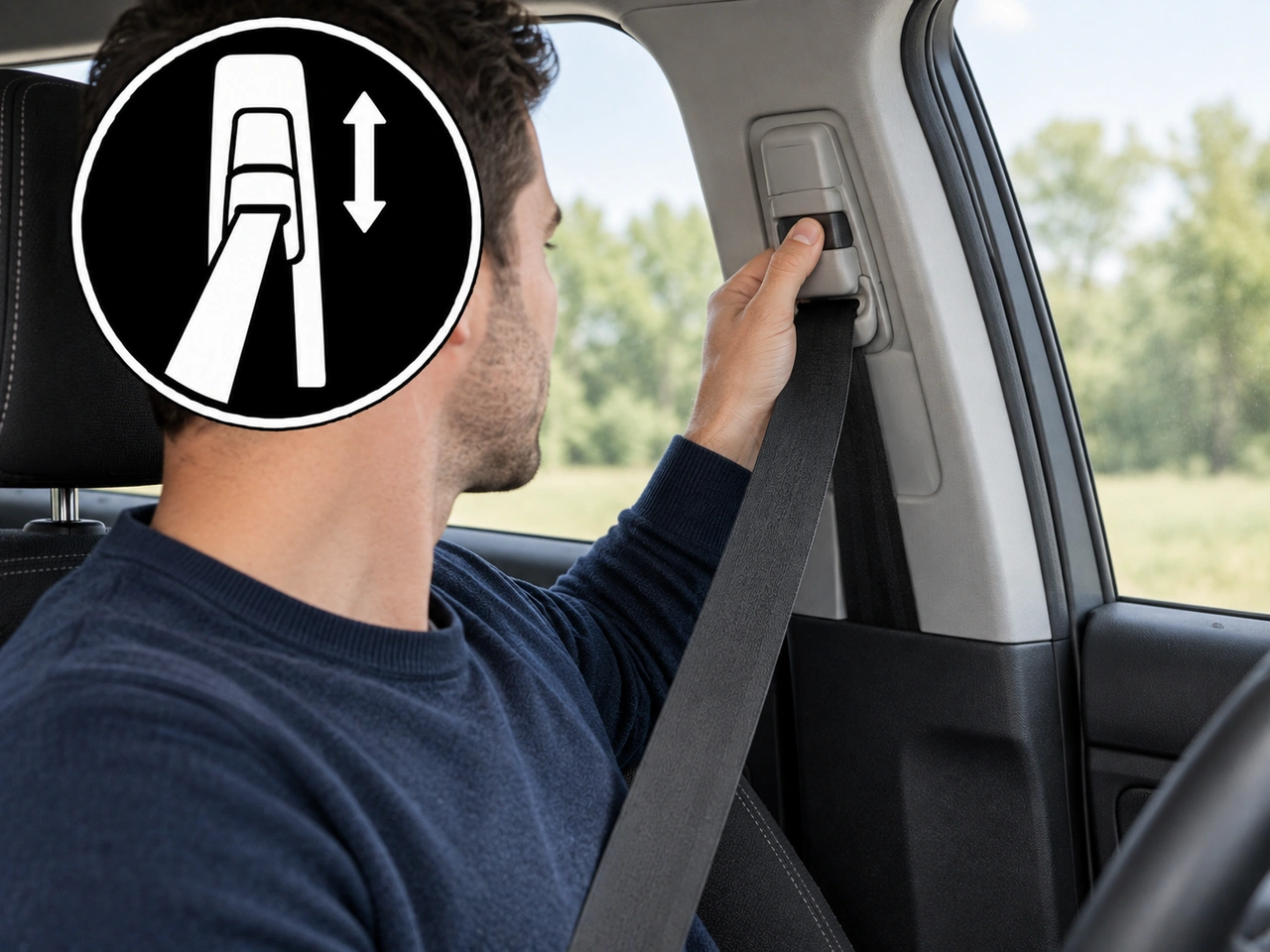
Why should the seat-belt height be adjusted correctly?

244. Why should the seat-belt height be adjusted correctly?

To make the belt easier to unfasten.
To prevent the seat from moving.
To increase the length of the lap belt.
✓ To position the shoulder belt correctly across the body.

The seat-belt height adjustment helps position the shoulder belt correctly across the chest and shoulder. It should not run across the neck or under the arm.

Height adjustment for the shoulder section of a seat belt
AI-generated by Traffic-rules.com • WCIT • CC BY-SA
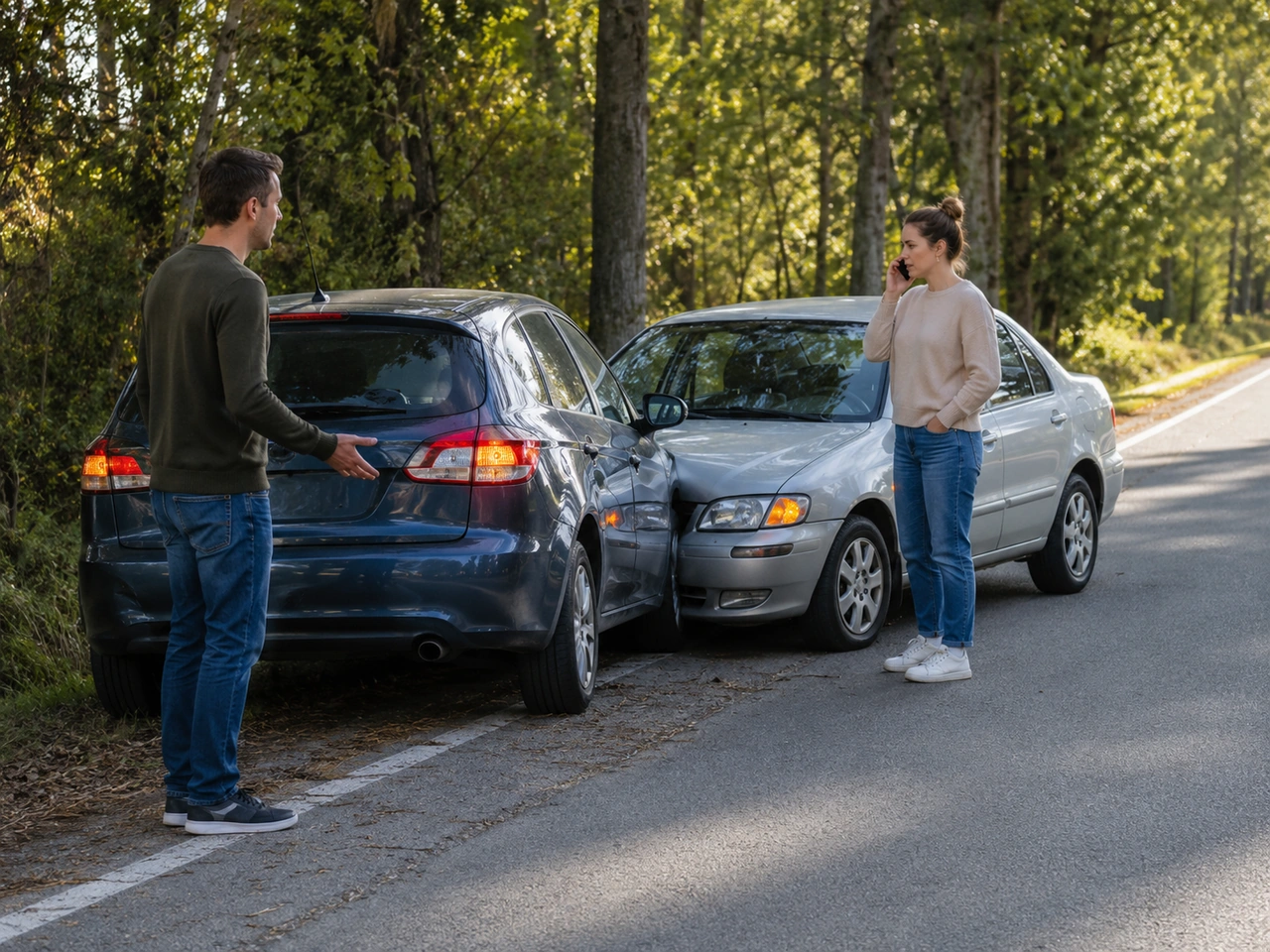
What should you do first after a collision?

245. What should you do first after a collision?

Discuss who caused the collision before calling for help.
Call your insurance company before checking for danger.
✓ Stop, check for danger and injuries, and call for help if needed.
Check the vehicle damage before checking for injuries.

Stop the vehicle, warn other traffic where appropriate, assess immediate danger and injuries, and contact the emergency services when needed. Exchange any details required by local law.

Vehicles stopped after a road collision
AI-generated by Traffic-rules.com • WCIT • CC BY-SA
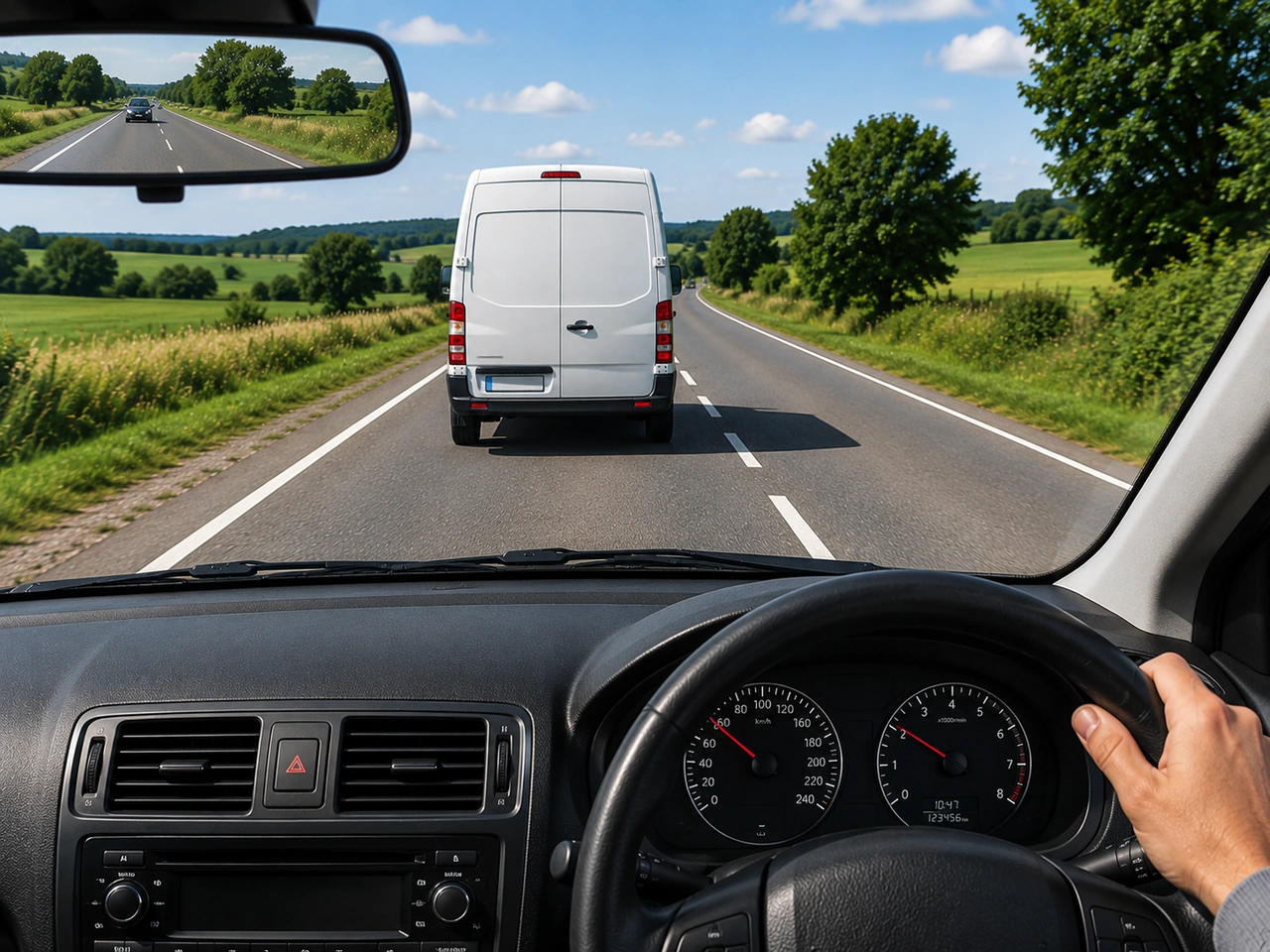
What is the main risk when following a vehicle with limited rear visibility?

246. What is the main risk when following a vehicle with limited rear visibility?

The driver cannot use the side mirrors.
The vehicle has priority when changing lanes.
✓ The driver may not see you clearly.
The vehicle must always travel more slowly.

Vans, trucks, and vehicles with blocked rear windows may have limited visibility. Keep extra distance and avoid sitting in blind spots.

Vehicle with limited rearward visibility
AI-generated by Traffic-rules.com • WCIT • CC BY-SA
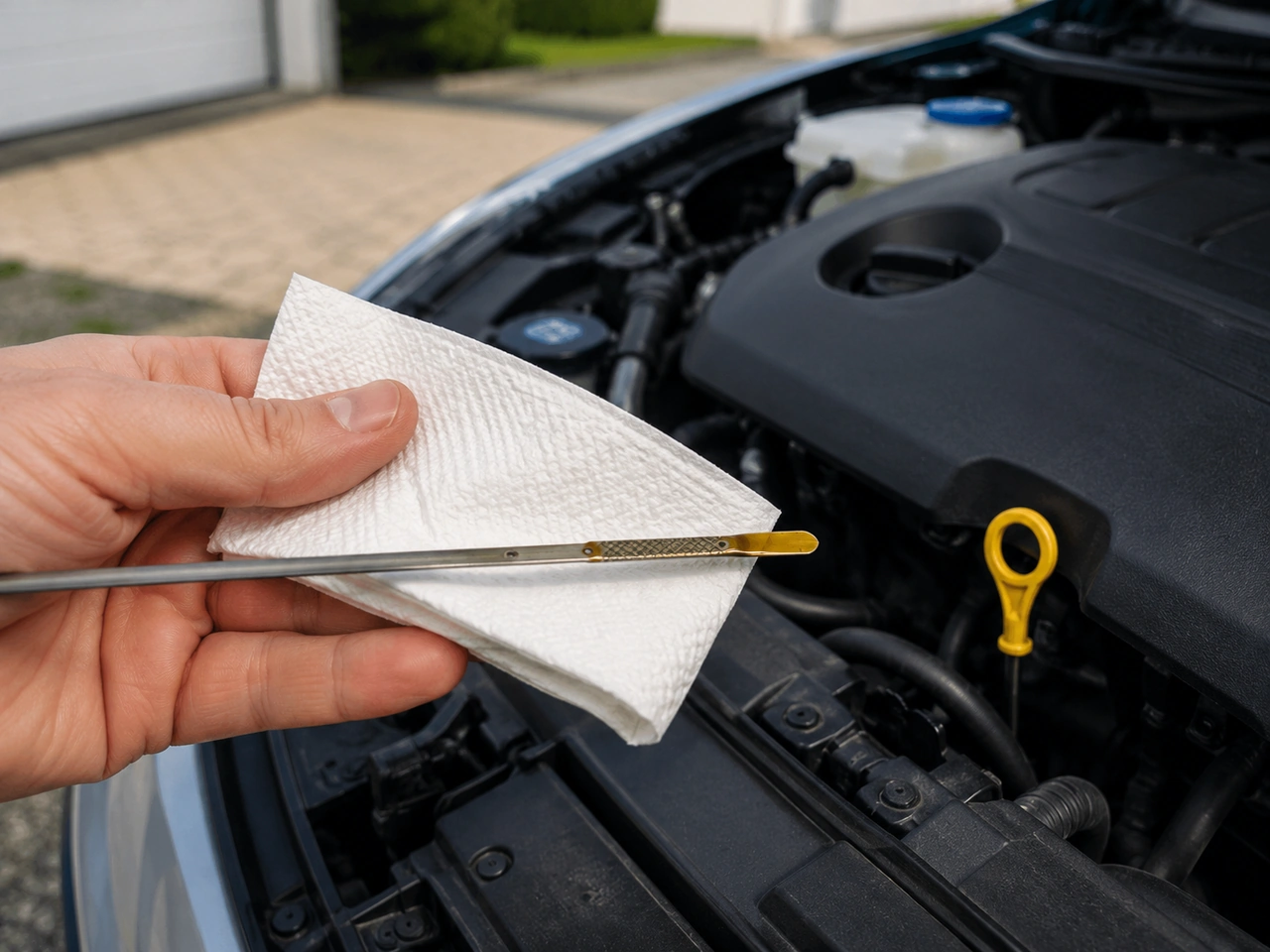
How should you check the engine oil level?

247. How should you check the engine oil level?

Fill the engine until oil reaches the filler opening.
✓ Follow the manufacturer's instructions with the vehicle on level ground.
Add oil every time you refuel the vehicle.
Check it while the engine is running at high speed.

Use the dipstick or electronic oil-level system as described in the owner's manual. The engine is usually switched off, and the vehicle should be standing on level ground.

Checking the engine oil level
AI-generated by Traffic-rules.com • WCIT • CC BY-SA
Why should the windscreen washer reservoir contain suitable washer fluid?

248. Why should the windscreen washer reservoir contain suitable washer fluid?

Washer fluid is needed only in freezing weather.
✓ It helps remove dirt, salt, insects, and spray from the windscreen.
The reservoir needs fluid only when the windscreen is visibly dirty.
Plain water always cleans the windscreen just as well.

A clear windscreen is essential for safe observation. Suitable washer fluid helps clean the glass and may provide protection against freezing in cold conditions.

Windscreen washer-fluid reservoir in a vehicle
AI-generated by Traffic-rules.com • WCIT • CC BY-SA
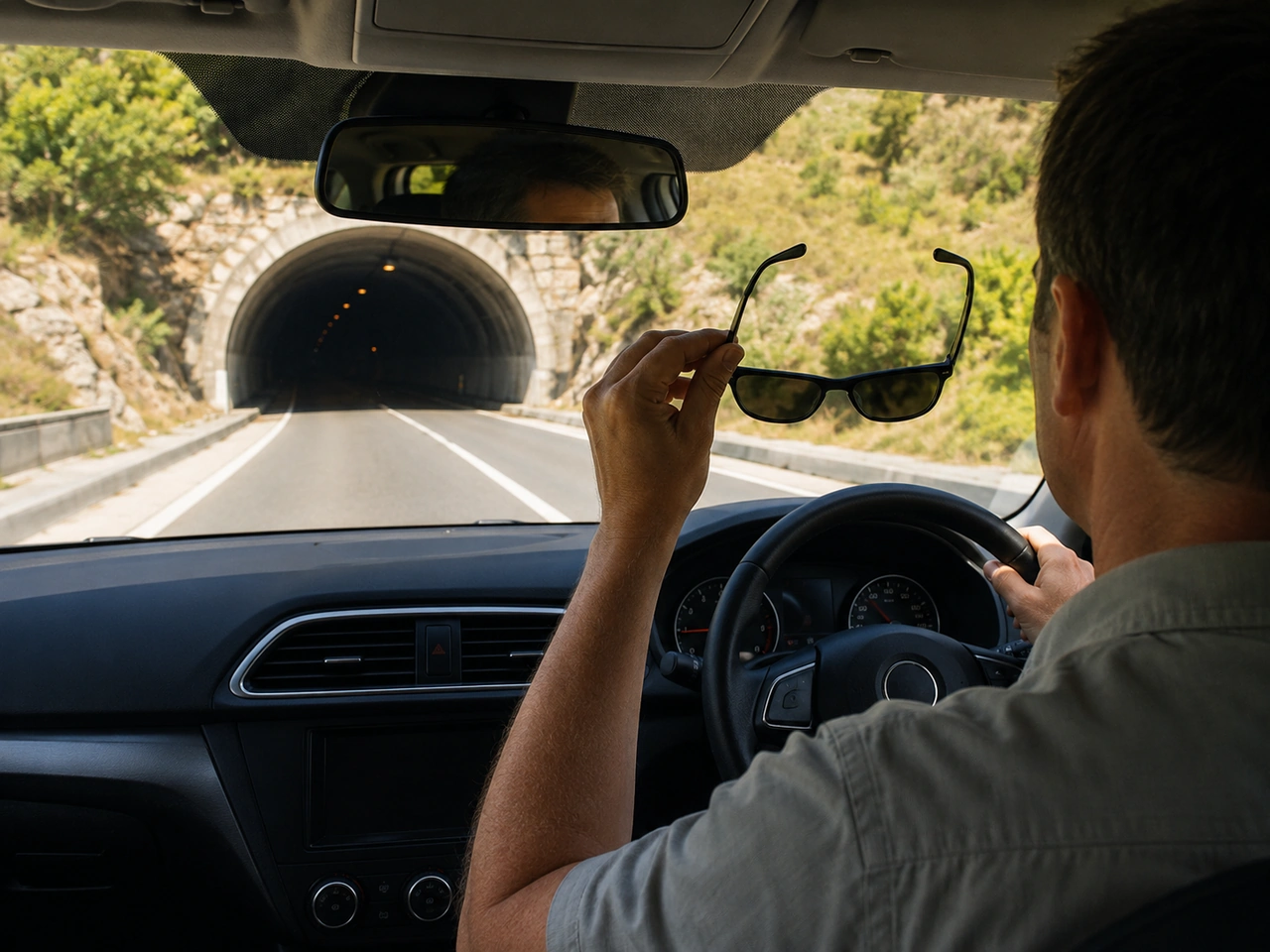
Why should you remove dark sunglasses before entering a tunnel?

249. Why should you remove dark sunglasses before entering a tunnel?

To prevent the lenses from reflecting tunnel lights.
To prevent the automatic lights from switching on.
✓ Your eyes need to adjust to the lower light level.
Because tunnel lighting can damage dark lenses.

Dark sunglasses reduce the amount of light reaching your eyes and can make hazards inside a tunnel harder to see.

Driver removing sunglasses before entering a tunnel
AI-generated by Traffic-rules.com • WCIT • CC BY-SA
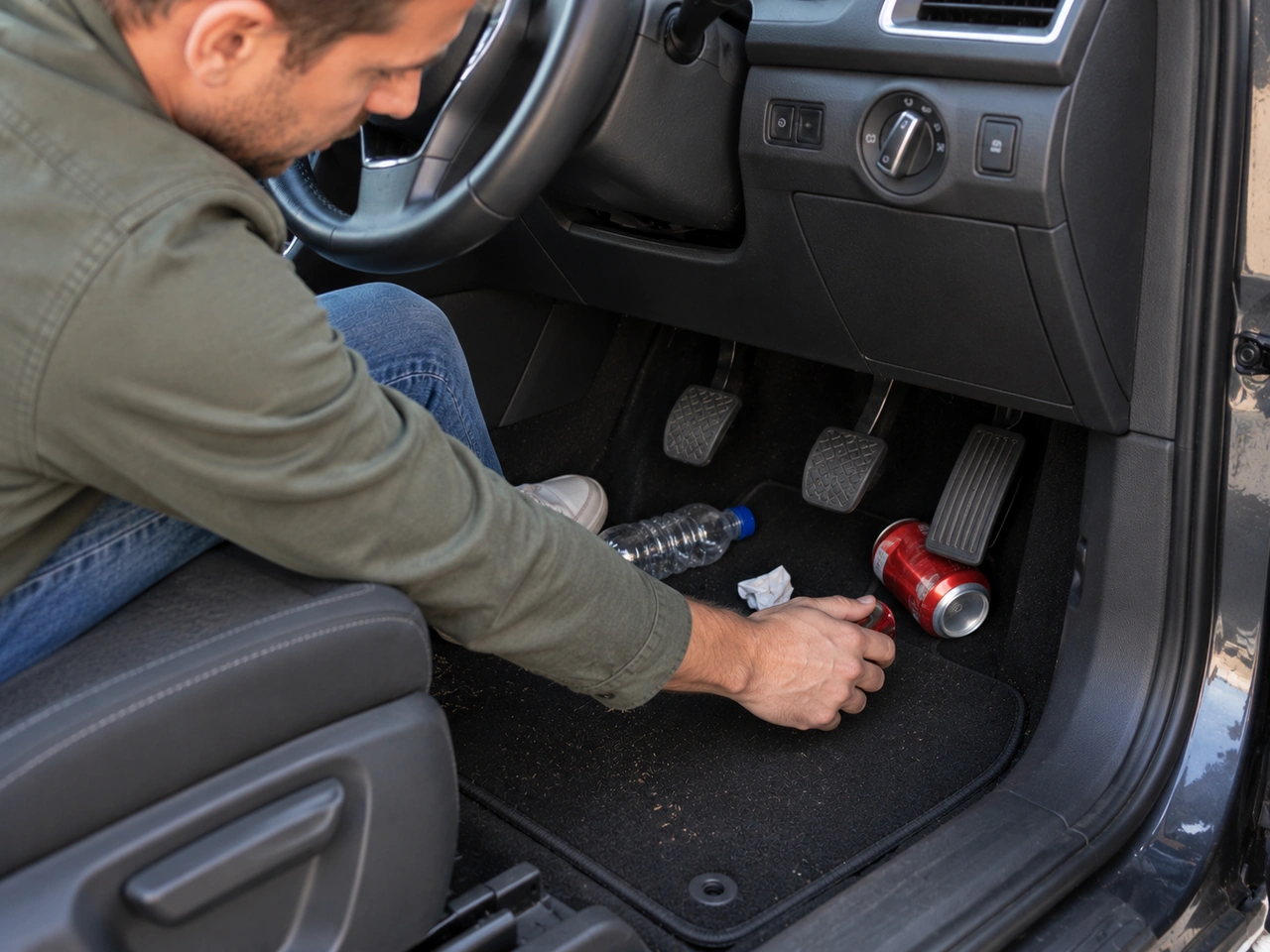
Why should you keep the driver's footwell free of loose objects?

250. Why should you keep the driver's footwell free of loose objects?

They could make it harder to adjust the driver's seat.
✓ They could roll into the pedals and interfere with control.
They could make the pedals noisier to operate.
They could block the footwell ventilation.

Loose objects in the driver's footwell, such as bottles, cans, or rubbish, can roll into the pedal area and interfere with the accelerator, brake, or clutch. Keep the footwell clear so you can operate the pedals safely and without obstruction.

Loose objects in the driver's footwell
AI-generated by Traffic-rules.com • WCIT • CC BY-SA