QuizTraffic rulesNetherlands

This interesting quiz helps you test your knowledge in a clear and visual way. With easy multiple-choice questions, you can quickly build confidence and learn new facts while keeping it simple, interactive, and fun.


What should you do when joining a motorway from an entry lane?

1. What should you do when joining a motorway from an entry lane?

Stop at the end of the entry lane and wait for a large gap.
✓ Match your speed, check around you, and merge into a safe gap.
Merge as soon as the entry lane begins.
Enter at a low speed and let motorway traffic adjust.

Use the entry lane to build a suitable speed, check carefully, signal, and merge only when it is safe.

Vehicle joining a motorway from an entry lane
AI-generated by Traffic-rules.com • WCIT • CC BY-SA
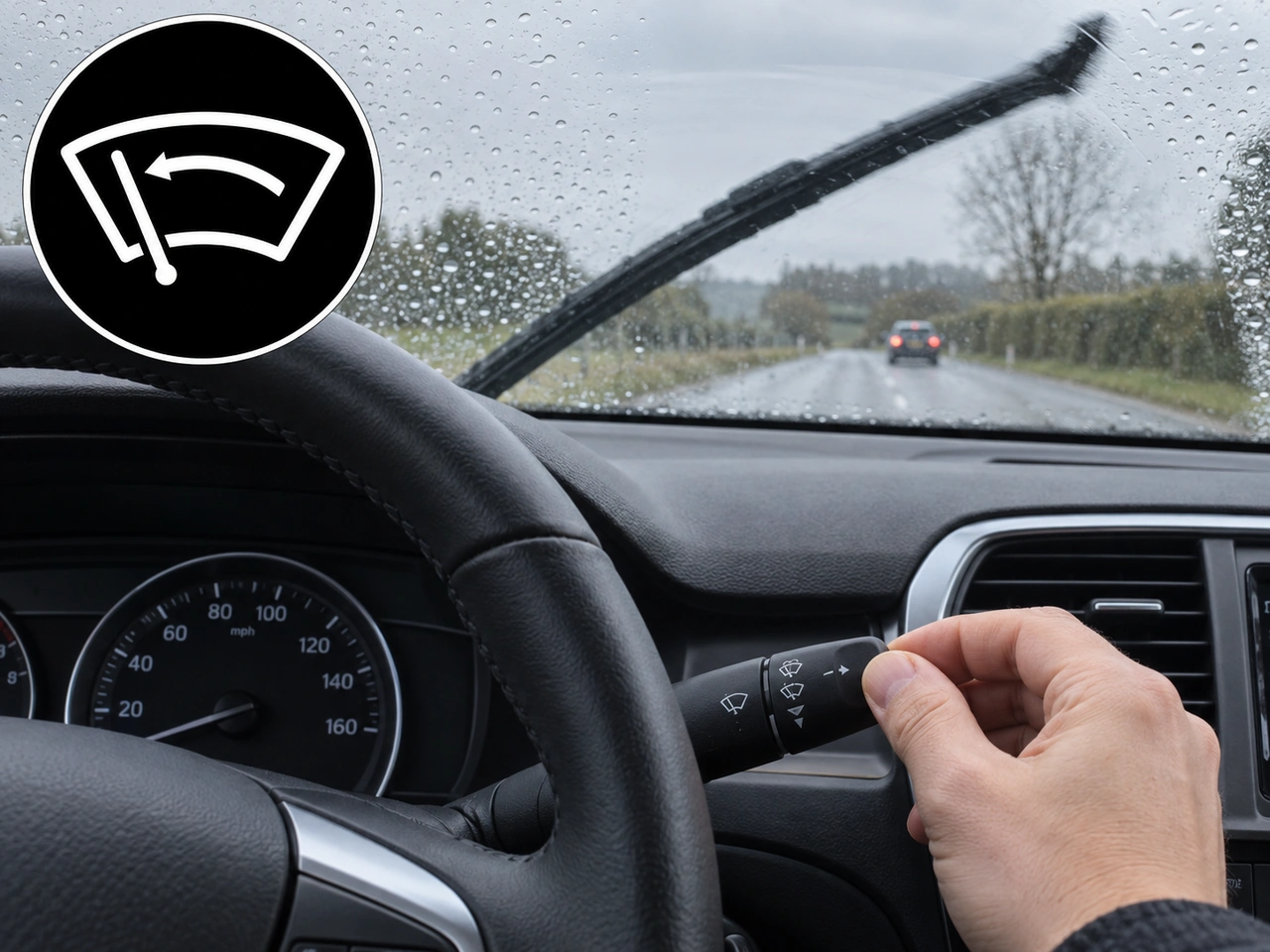
What does the intermittent wiper interval control adjust?

2. What does the intermittent wiper interval control adjust?

The amount of washer fluid sprayed.
The brightness of the dashboard.
The speed of the rear wiper.
✓ The time between wiper sweeps.

The intermittent wiper interval control adjusts the time between windscreen-wiper sweeps, allowing the driver to match the wiping frequency to light rain or spray.

Interval adjustment for intermittent windscreen wiping
AI-generated by Traffic-rules.com • WCIT • CC BY-SA
When should you use rear fog lights?

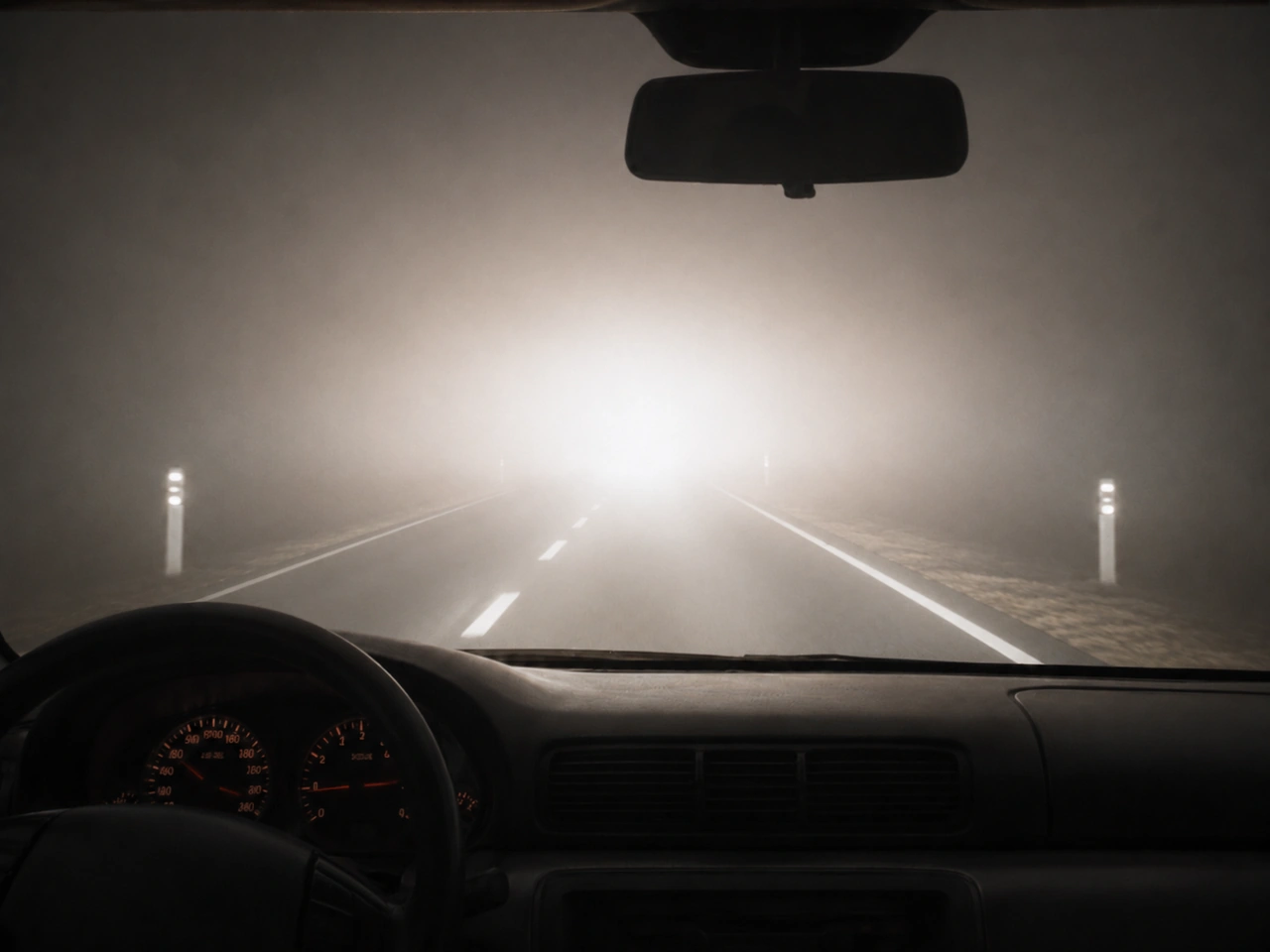
3. When should you use rear fog lights?

When driving on an unlit road.
When driving on high-speed roads at night.
When another vehicle is following closely.
✓ When visibility is seriously reduced by fog or similar conditions.

Rear fog lights are very bright and should only be used when visibility is poor enough to require them.

Rear fog lights used in severely reduced visibility
AI-generated by Traffic-rules.com • WCIT • CC BY-SA
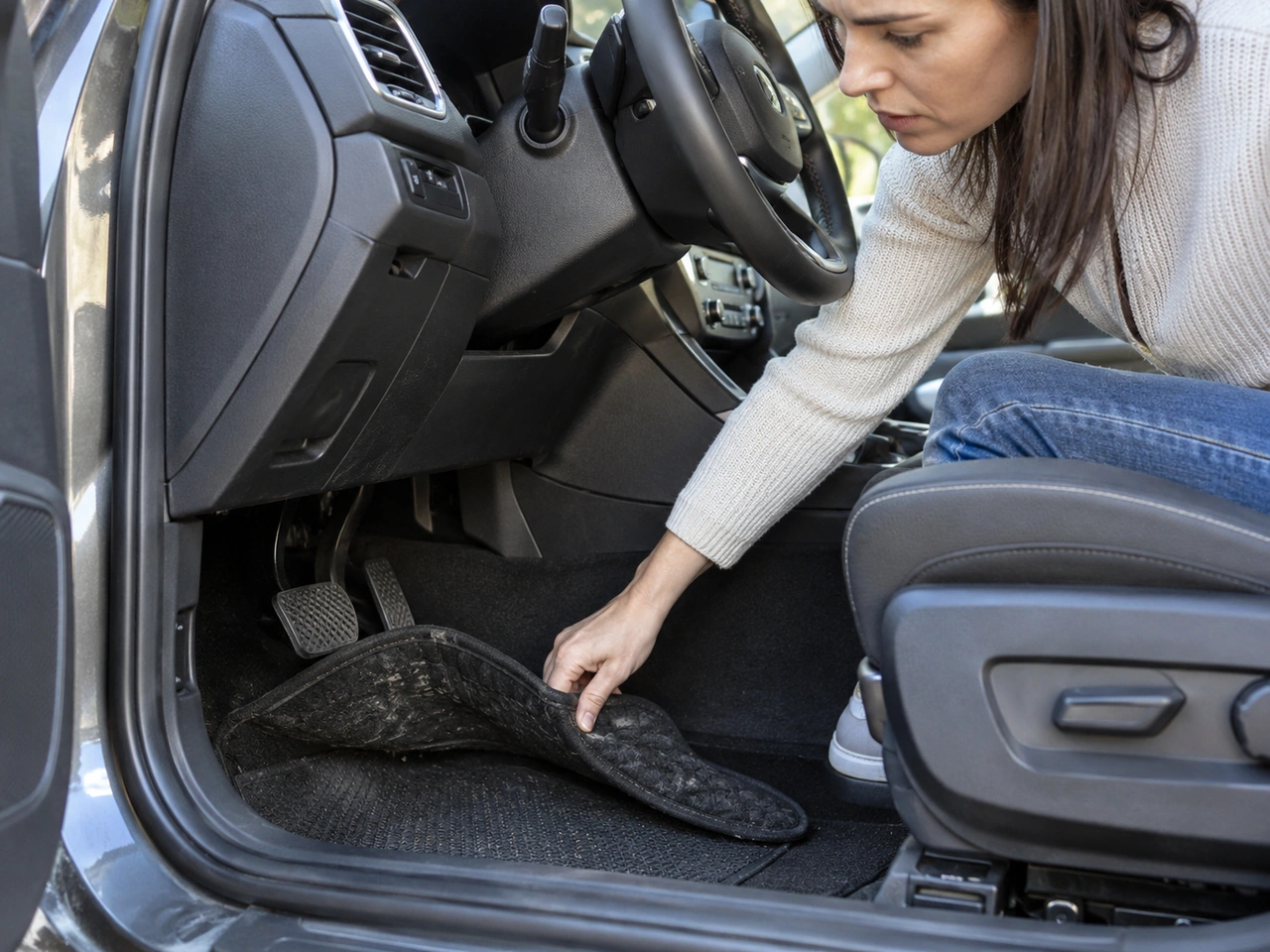
What should you do about a chip in the windscreen?

4. What should you do about a chip in the windscreen?

Cover the chip so it cannot spread.
Ignore it if it is outside your direct view.
Clean the glass and continue driving normally.
✓ Have it assessed and repaired promptly.

A chip can obstruct your view, weaken the glass, and develop into a larger crack. Have it checked and repaired promptly.

Stone chip in a vehicle's windscreen
AI-generated by Traffic-rules.com • WCIT • CC BY-SA
What should you do with a child restraint after a collision?

5. What should you do with a child restraint after a collision?

Replace only the seat cover.
Use it normally after tightening the straps.
Repair damaged parts yourself.
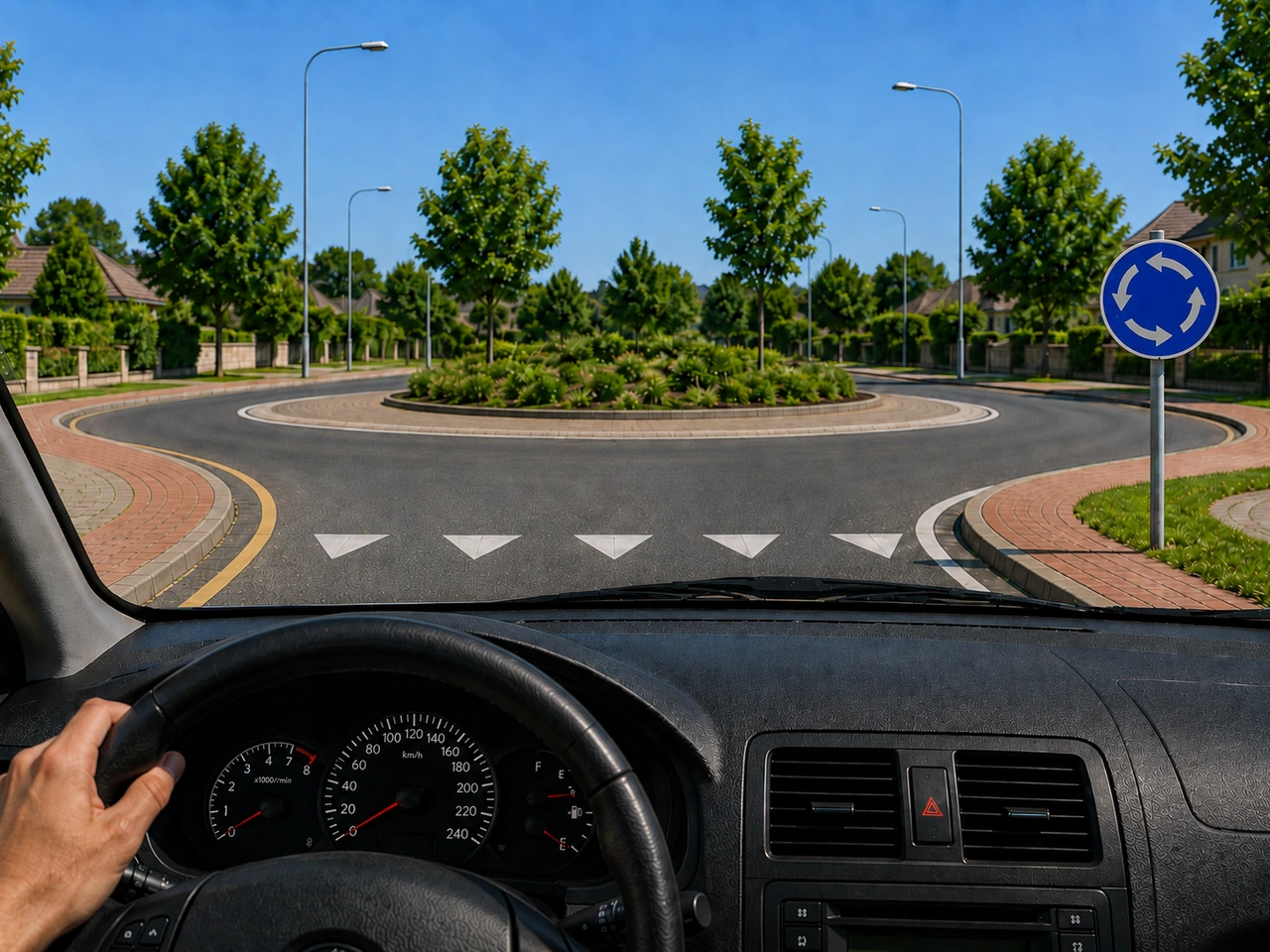
✓ Follow the manufacturer's instructions about inspection or replacement.

A child restraint may be damaged in a collision even when the damage is not obvious. Follow the manufacturer's instructions, as the restraint may need to be inspected or replaced before it is used again.

Child car seat requiring inspection after a collision
AI-generated by Traffic-rules.com • WCIT • CC BY-SA
What does this dashboard symbol indicate?

6. What does this dashboard symbol indicate?

Engine-temperature warning.
Brake-system warning.
Engine-management warning.
✓ Charging-system warning.

This symbol indicates a problem with the vehicle's charging system. If it remains illuminated while the engine is running, the battery may not be charging correctly because of a fault with the alternator, battery, wiring, or related components.

Charging-system warning symbol on the dashboard
AI-generated by Traffic-rules.com • WCIT • CC BY-SA
What should a designated driver do?

7. What should a designated driver do?

Stop drinking shortly before driving.
Drink only low-alcohol drinks.
Do not carry passengers who have been drinking.
✓ Remain alcohol-free for the entire journey.

A designated driver should remain sober so they can drive safely and respond properly to traffic conditions.

Alcohol-free designated driver for a journey
AI-generated by Traffic-rules.com • WCIT • CC BY-SA
How can air conditioning help demist the windows?

8. How can air conditioning help demist the windows?

By heating the rear window directly.
By increasing air recirculation.
By opening the windows automatically.
✓ By removing moisture from the air.

Using the air conditioning can help demist the windows because it removes moisture from the cabin air. Directing this drier air towards the windscreen can clear condensation more quickly.

Air-conditioning controls used to demist the windscreen
AI-generated by Traffic-rules.com • WCIT • CC BY-SA
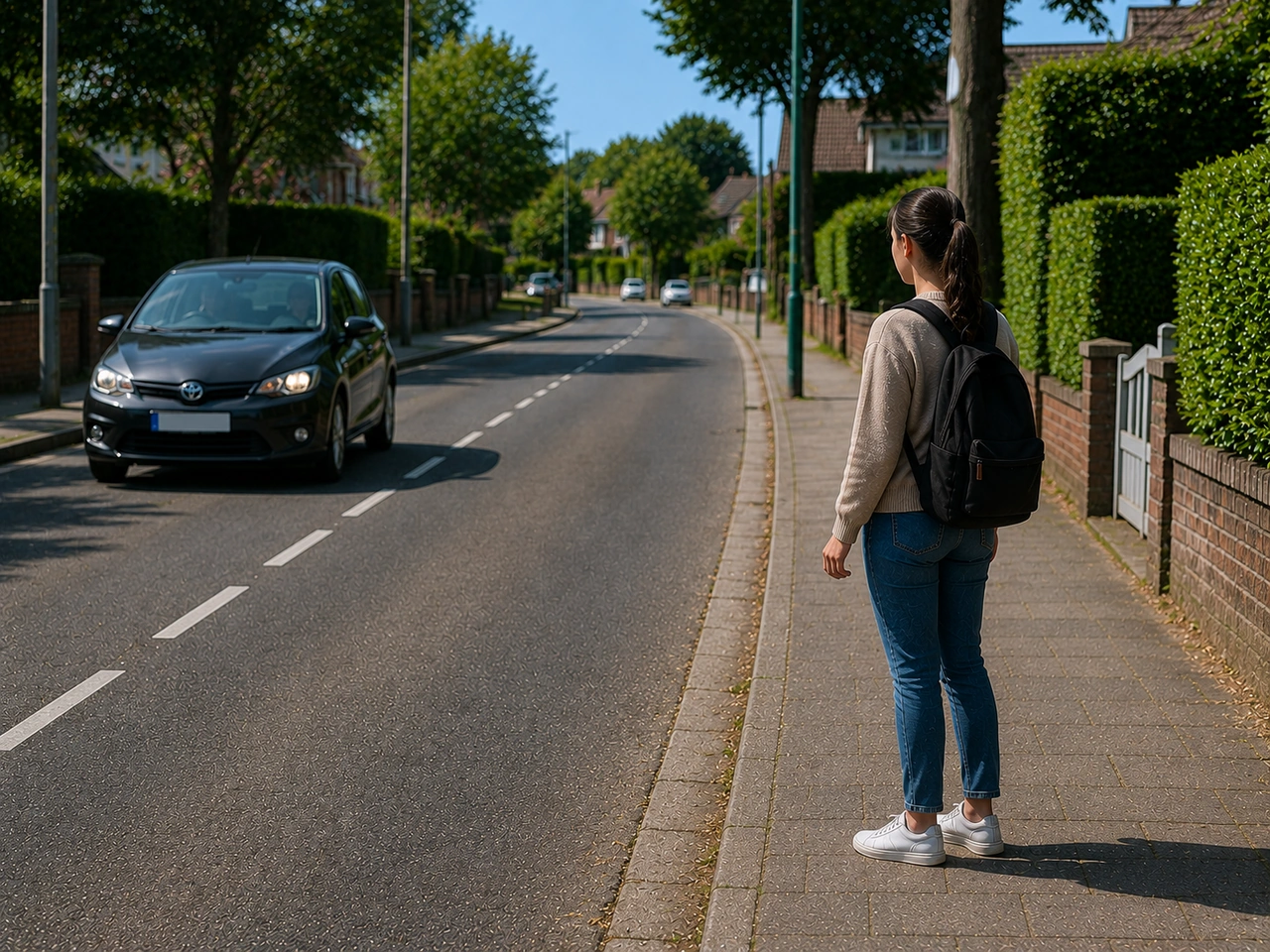
Why should you leave extra space when passing road workers?

9. Why should you leave extra space when passing road workers?

Road workers are protected by the construction barriers.
Road workers always have priority over passing traffic.
To keep construction dust away from your vehicle.
✓ They may be working close to moving traffic.

Workers may be only a short distance from passing vehicles. Reduce speed and leave as much safe space as possible.

Vehicle passing workers close to the road
AI-generated by Traffic-rules.com • WCIT • CC BY-SA
How can a roof load affect vehicle handling?

10. How can a roof load affect vehicle handling?

It affects only fuel consumption, not handling.
It reduces the effect of strong crosswinds.
It lowers the vehicle's centre of gravity.
✓ It can raise the centre of gravity and reduce stability.

Weight carried high on the vehicle can increase body movement and make sudden steering or cornering less stable.

Vehicle carrying a raised roof load
AI-generated by Traffic-rules.com • WCIT • CC BY-SA
What should you do around a damaged electric or hybrid vehicle?

11. What should you do around a damaged electric or hybrid vehicle?

Disconnect exposed electrical components yourself.
Assume the system is safe once the vehicle is switched off.
Move damaged high-voltage parts away from the road.
✓ Keep clear of damaged high-voltage components and call trained assistance.

Electric and hybrid vehicles can contain dangerous high-voltage systems. Do not touch damaged cables, batteries, or electrical components.

Damaged electric vehicle and high-voltage safety risks
AI-generated by Traffic-rules.com • WCIT • CC BY-SA
What should you do when approaching a temporary lane closure?

12. What should you do when approaching a temporary lane closure?

Merge without checking if traffic is moving slowly.
Reverse back the way you came.
Follow construction vehicles through the closed lane.
✓ Follow the temporary signs and merge safely when required.

Observe the temporary signs, adjust your speed, and merge safely according to the traffic situation and local rules.

Temporary traffic-lane closure ahead
AI-generated by Traffic-rules.com • WCIT • CC BY-SA
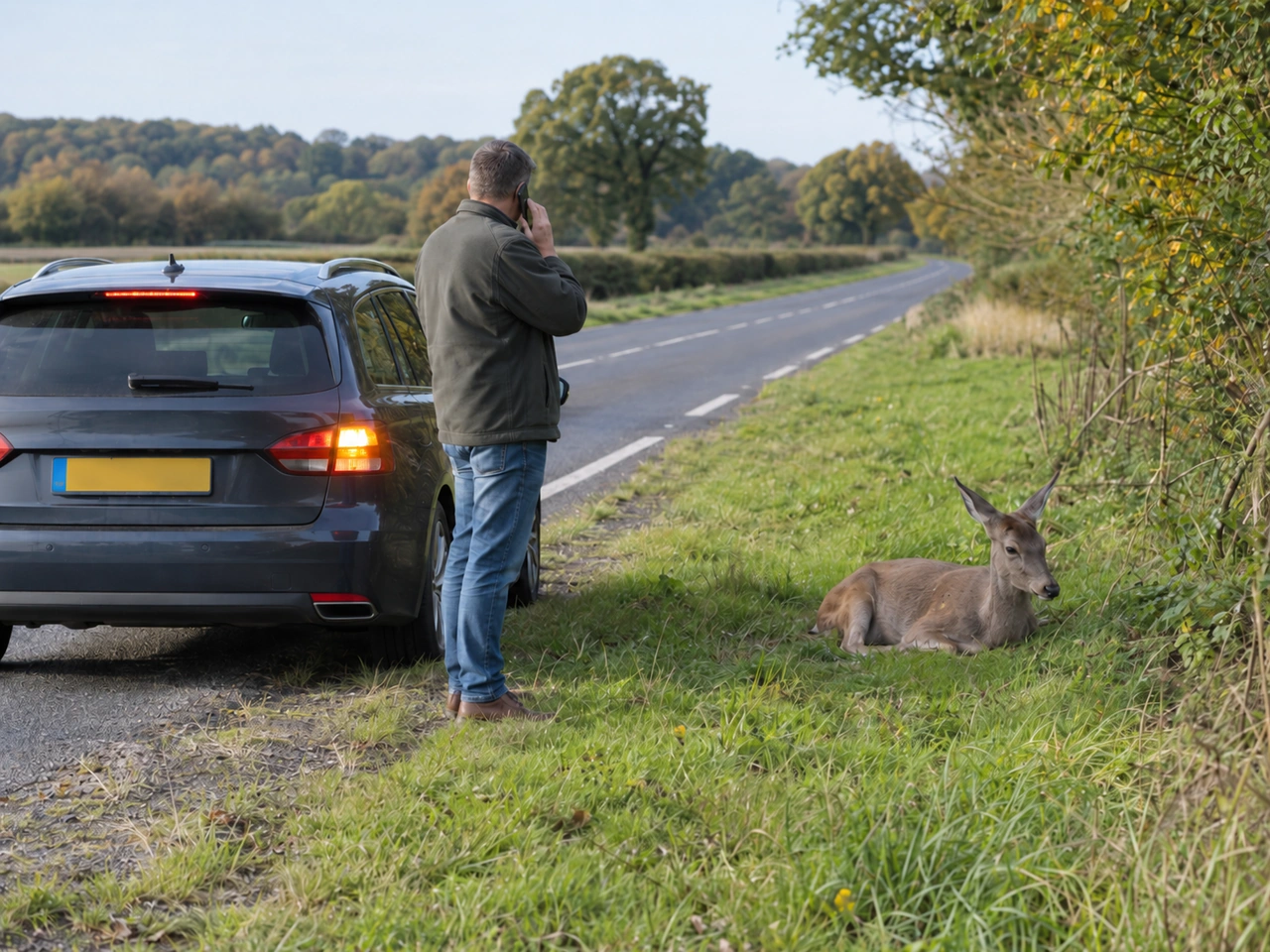
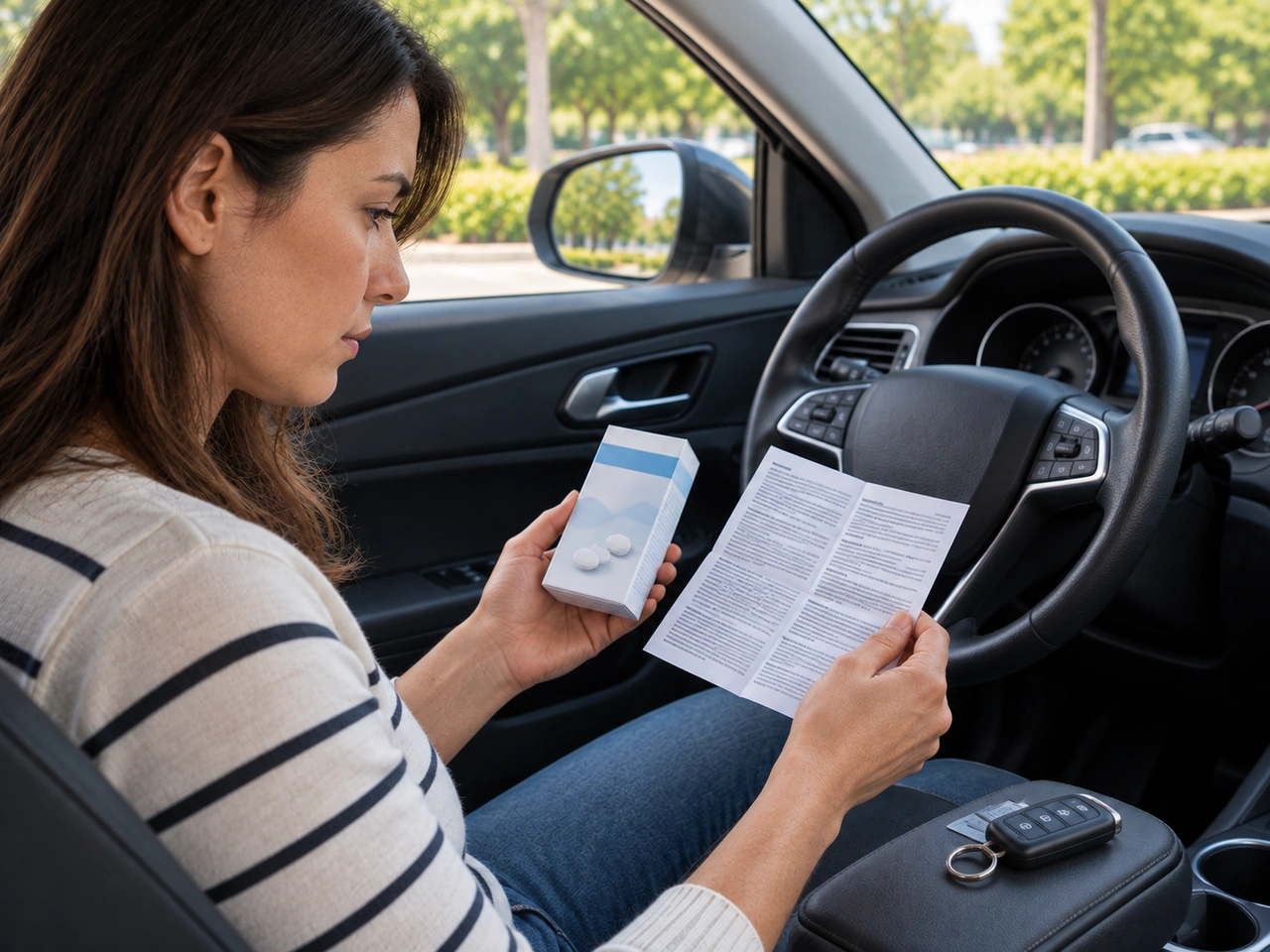
What should you do before driving after taking medicine?

13. What should you do before driving after taking medicine?

Take an extra dose before a long journey.
Drive slowly until you know how it affects you.
Drink coffee to prevent any side effects.
✓ Check whether it may affect your ability to drive.

Some medicines can affect driving ability by causing drowsiness, dizziness, blurred vision, slower reactions, or reduced concentration. Check the label or patient information and follow advice from your doctor or pharmacist before driving.

Checking medicine warnings before driving
AI-generated by Traffic-rules.com • WCIT • CC BY-SA
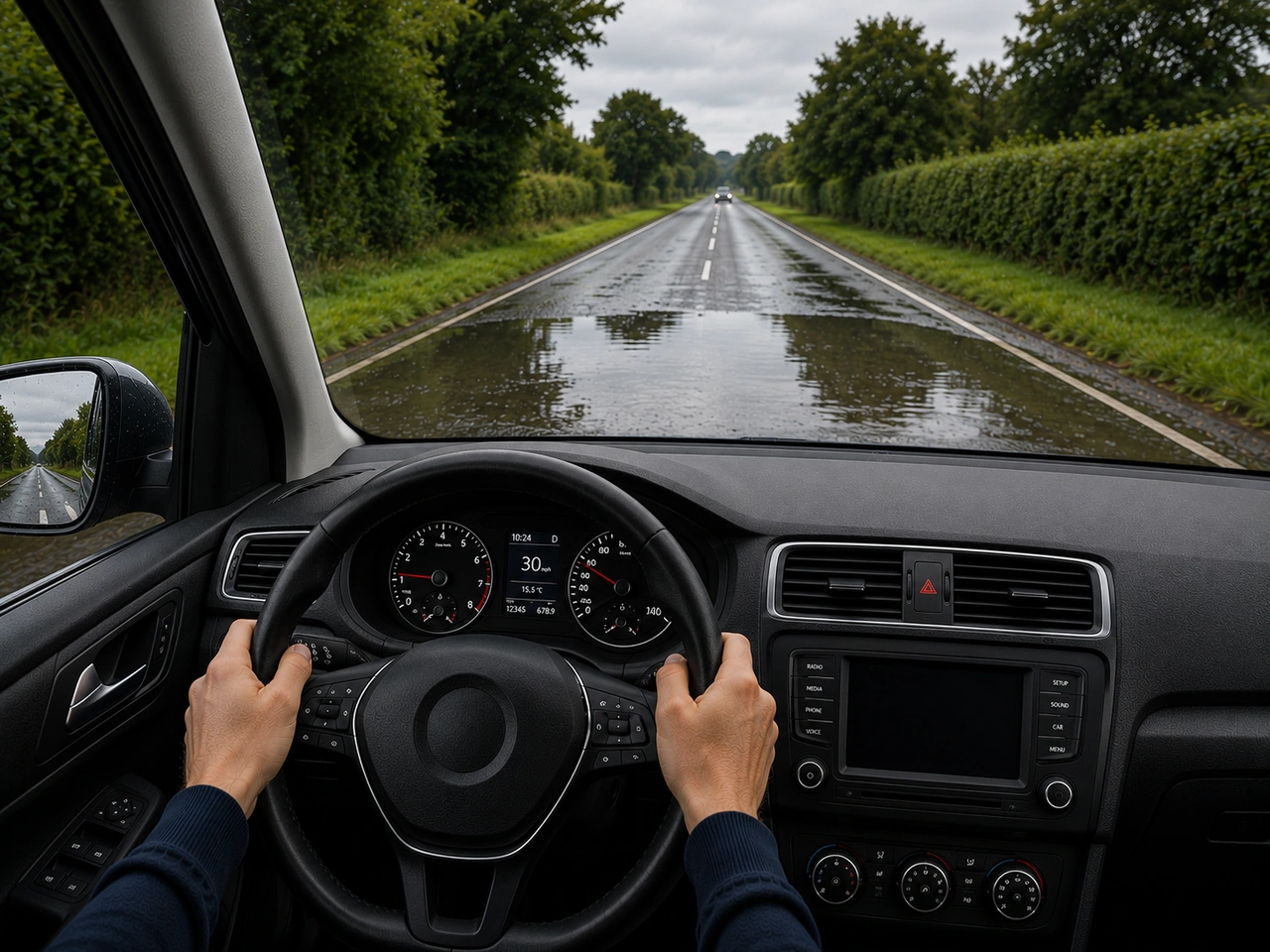
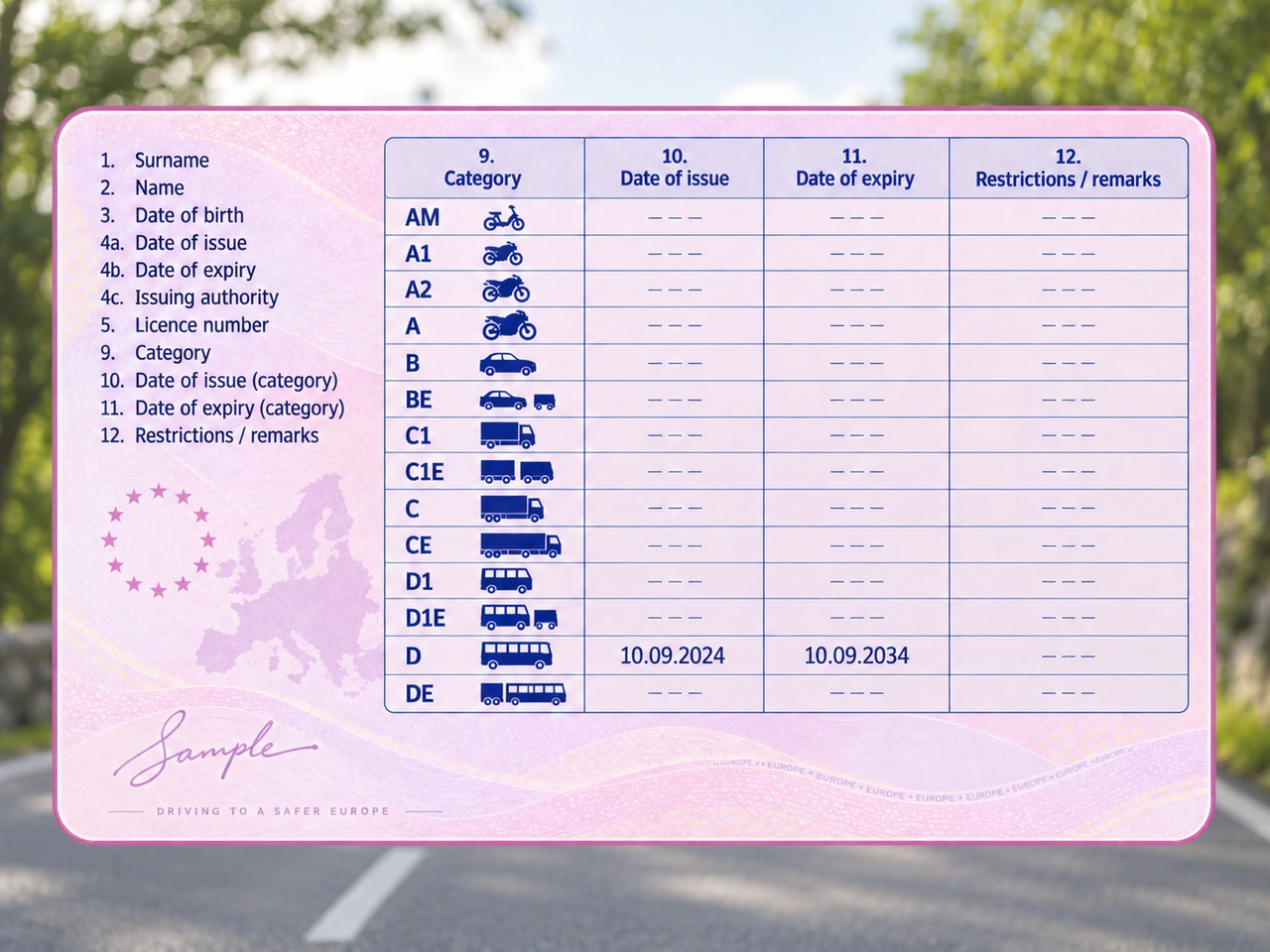
Which vehicle combination is covered by driving licence C1E?

14. Which vehicle combination is covered by driving licence C1E?

Any category C vehicle with a heavy trailer.
A category D1 minibus with a heavy trailer.
Any combination weighing more than 12,000 kg.
✓ A C1 vehicle with a heavy trailer, up to 12,000 kg combined.

Category C1E covers a category C1 vehicle with a trailer over 750 kg, provided the combination does not exceed 12,000 kg. It can also cover certain category B vehicles towing trailers over 3,500 kg, again with a combined maximum authorised mass not exceeding 12,000 kg.

Goods vehicle and trailer covered by category C1E
AI-generated by Traffic-rules.com • WCIT • CC BY-SA
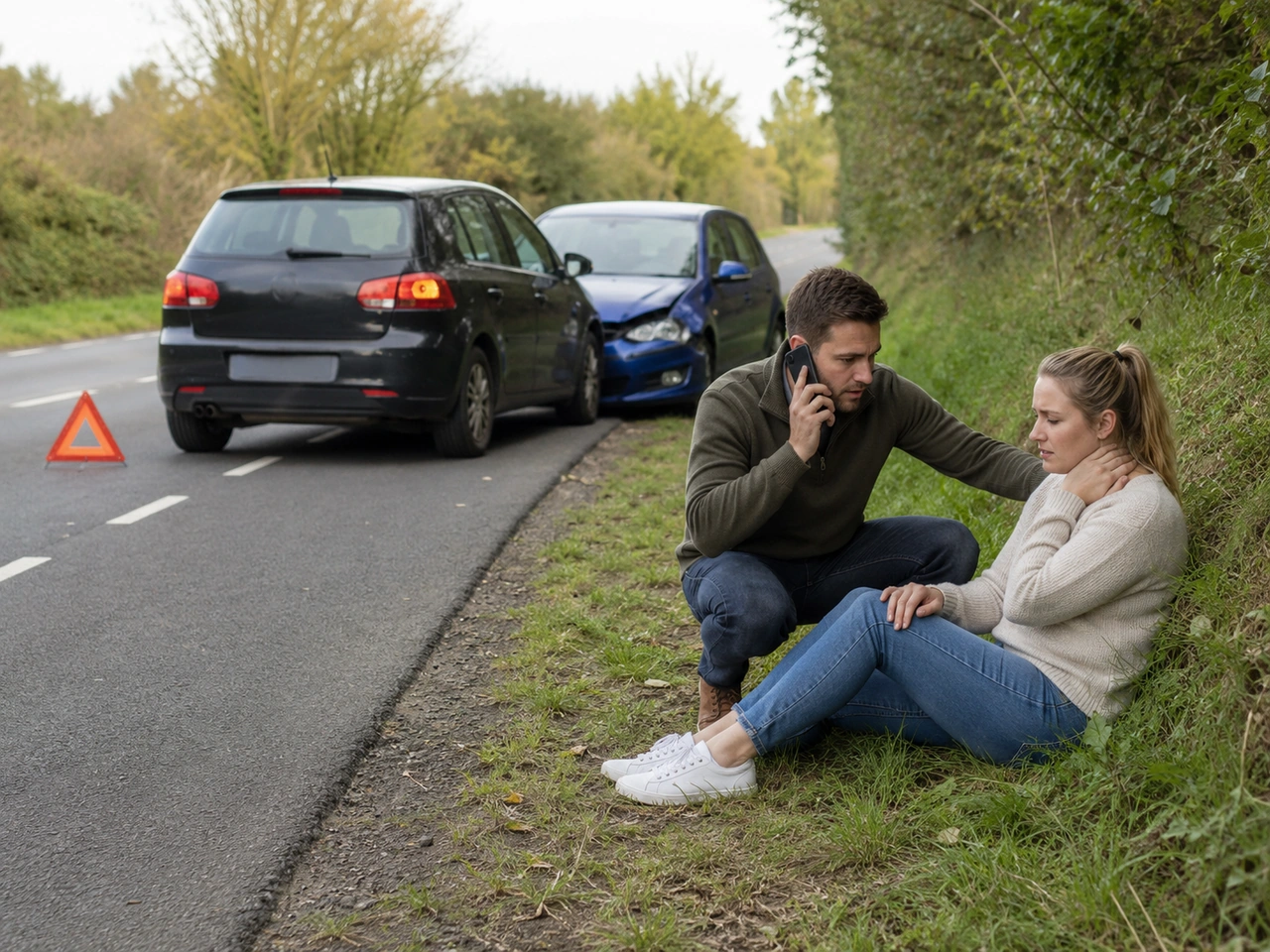
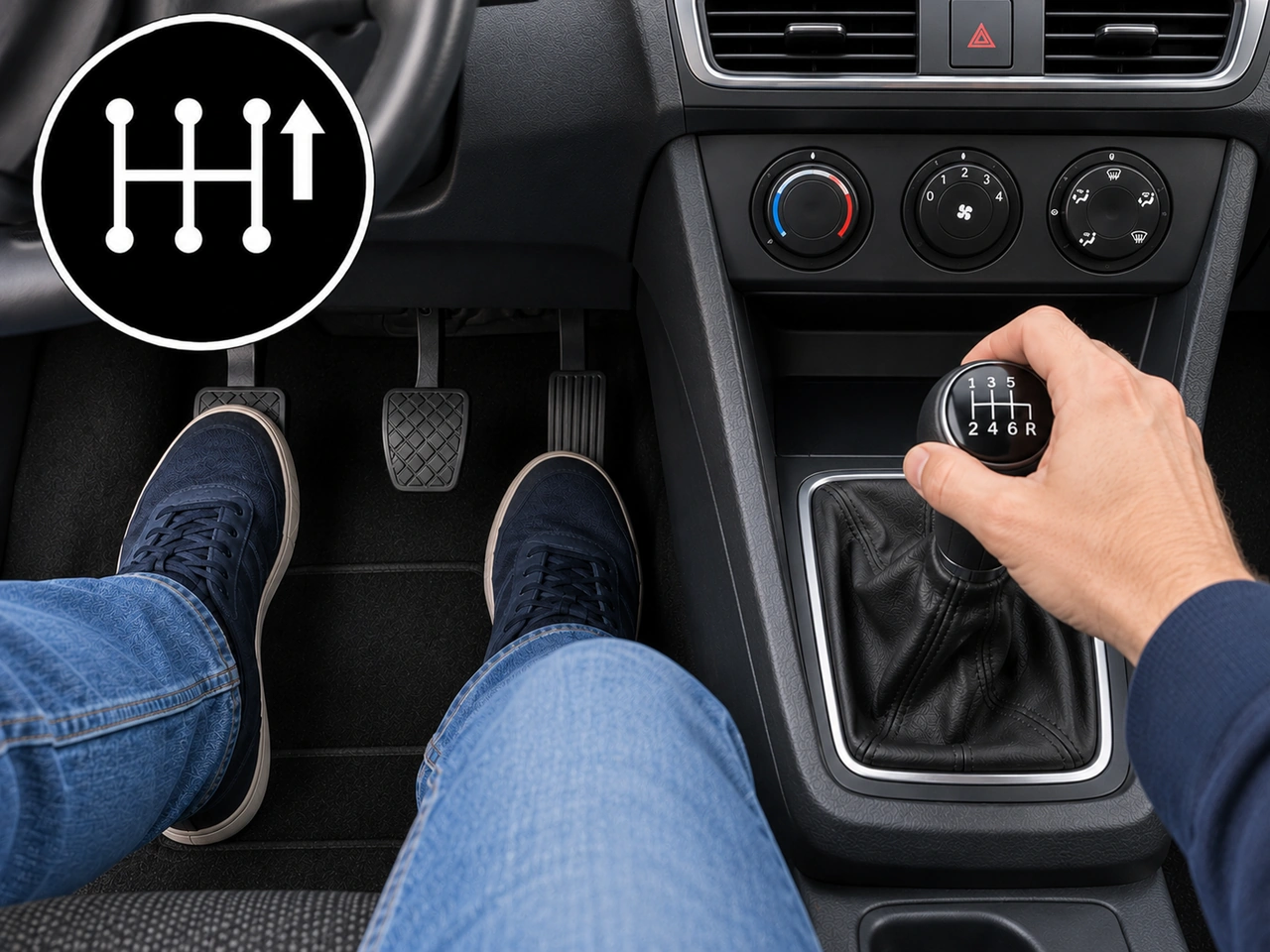
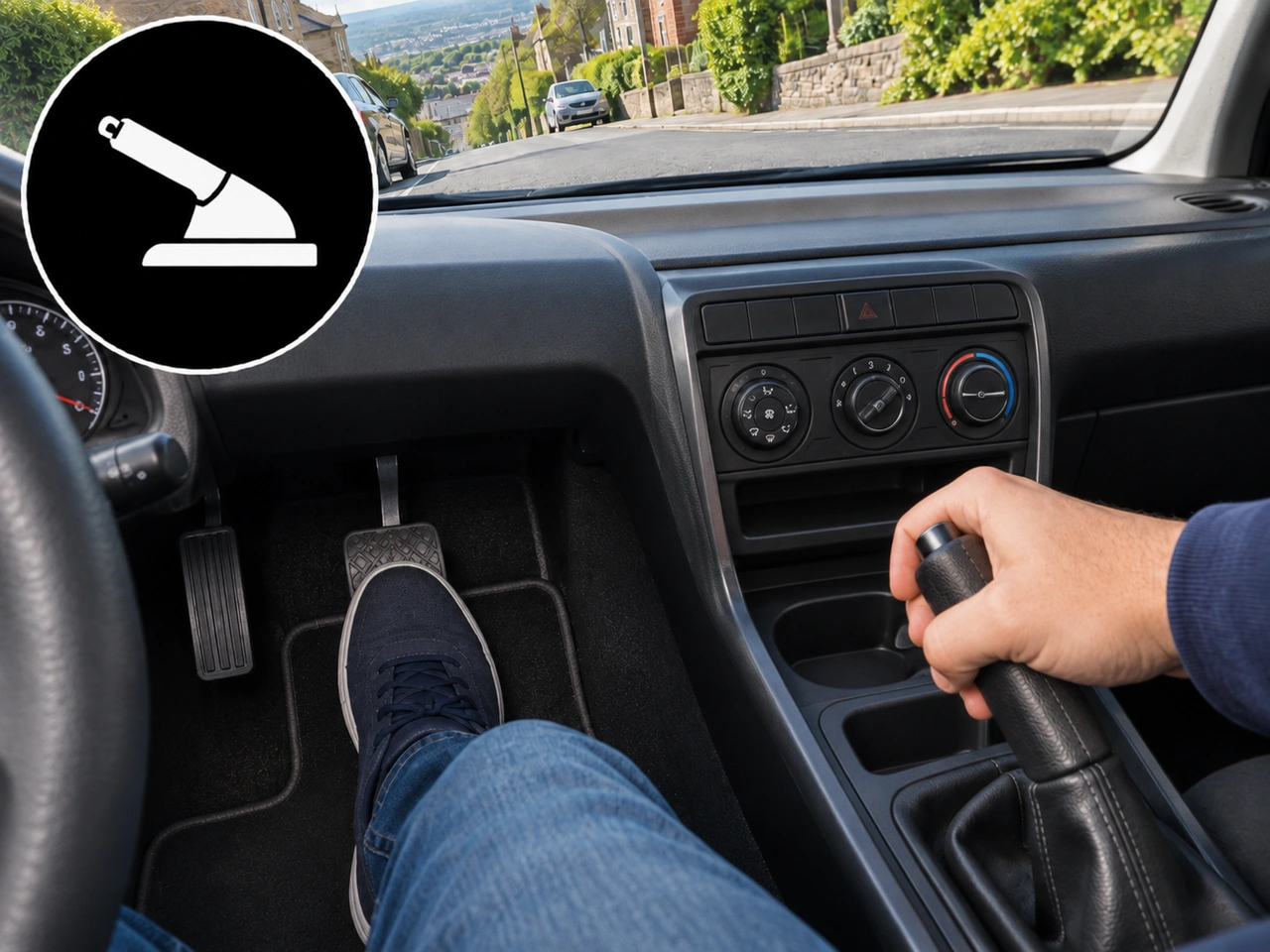
What may happen if you release the clutch too quickly when moving off?

15. What may happen if you release the clutch too quickly when moving off?

The steering may lock.
The parking brake may engage.
The headlights may switch off.
✓ The engine may stall.

Releasing the clutch pedal too quickly when moving off can cause the engine to stall. Release the clutch smoothly through the biting point while applying the accelerator progressively.

Clutch release and engine stalling when moving off
AI-generated by Traffic-rules.com • WCIT • CC BY-SA
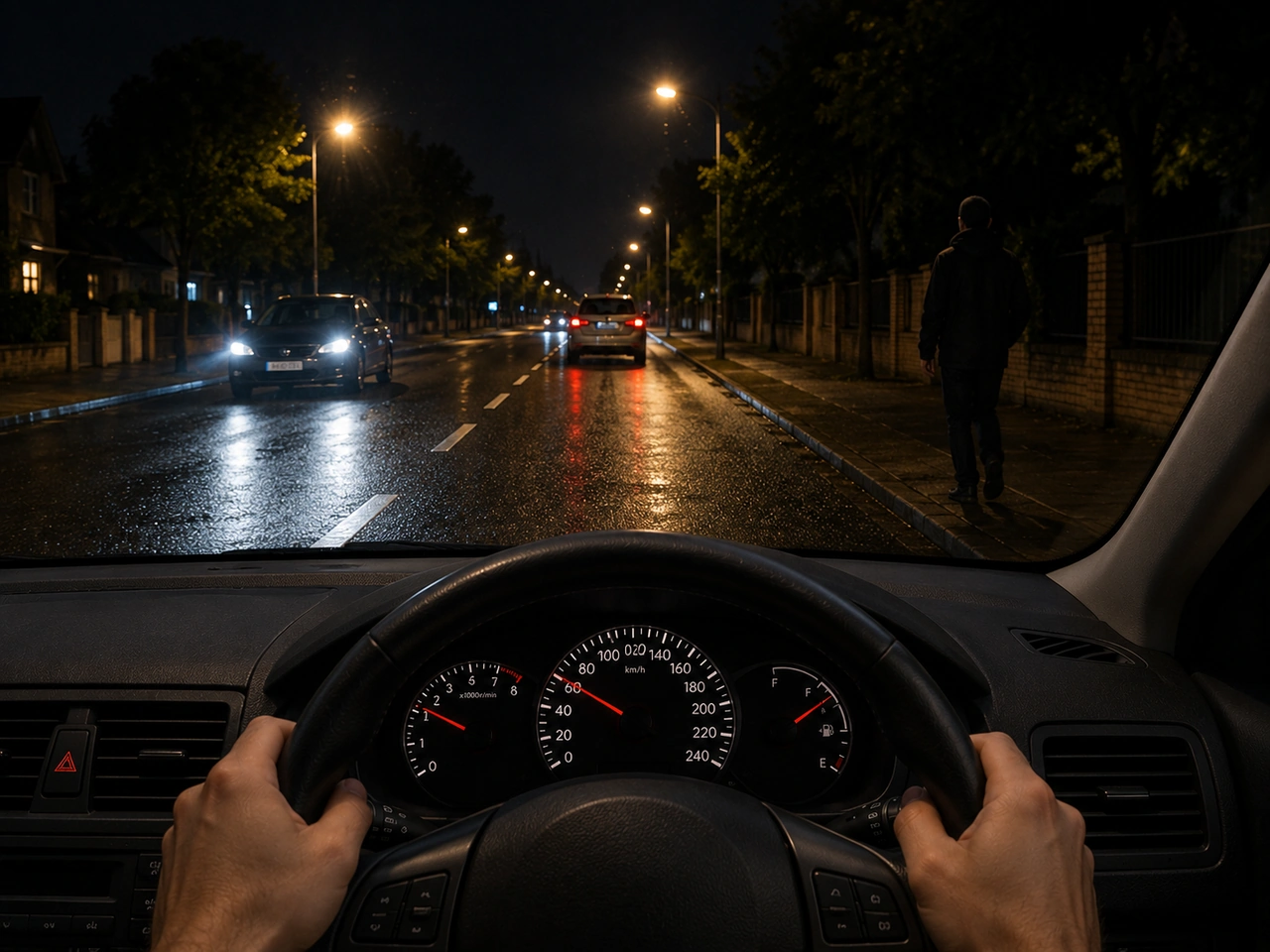
What should you do if exhaust fumes begin entering the car?

16. What should you do if exhaust fumes begin entering the car?

Open the windows and continue to your destination.
Turn up the heater to clear the fumes.
Ignore the fumes if no warning lights appear.
✓ Open the windows, stop safely, leave the vehicle, and seek assistance.

Exhaust gases may contain carbon monoxide, which is poisonous and may not be visible. The exhaust system should be inspected before the vehicle is used again.

Vehicle exhaust fumes and cabin ventilation
AI-generated by Traffic-rules.com • WCIT • CC BY-SA
Which vehicles are normally covered by driving licence B?

17. Which vehicles are normally covered by driving licence B?

Buses carrying more than eight passengers.
Any vehicle towing a heavy trailer.
Heavy goods vehicles of any mass.
✓ Cars and light vehicles up to 3,500 kg.

Category B normally covers motor vehicles with a maximum authorised mass of no more than 3,500 kg and designed to carry no more than eight passengers in addition to the driver. Trailer rules depend on the trailer and combined authorised mass.

Car covered by category B
AI-generated by Traffic-rules.com • WCIT • CC BY-SA
Why should you not use water on a fire involving live electrical equipment?

18. Why should you not use water on a fire involving live electrical equipment?

Water prevents the power supply from switching off.
Water makes electrical cables harder to disconnect.
Water can cause the battery to charge more quickly.
✓ Water can conduct electricity and create an electric-shock hazard.

Do not use water on a fire involving energised electrical equipment, because water can conduct electricity and create a serious electric-shock hazard. Keep clear, disconnect the power only if it is safe to do so, and call the emergency services. Use only a suitable fire extinguisher if it is safe and you know how to use it.

Fire involving live electrical equipment
AI-generated by Traffic-rules.com • WCIT • CC BY-SA
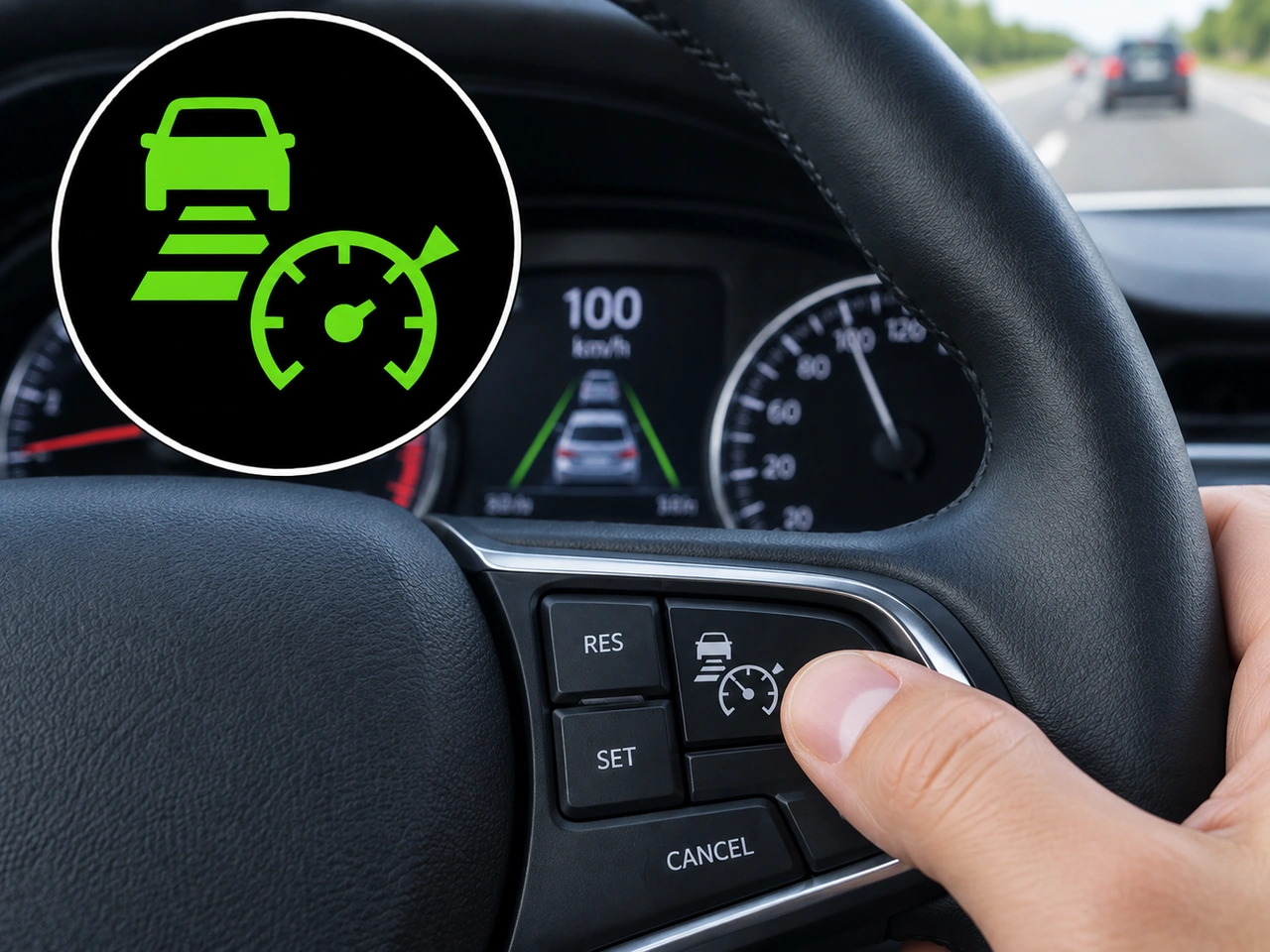
What does this vehicle-control symbol indicate?

19. What does this vehicle-control symbol indicate?

Adaptive cruise control.
Driving mode selection.
Electronic stability control.
✓ Speed limiter.

The speed limiter allows the driver to set a maximum speed that the vehicle should not normally exceed while the accelerator is being used.

Vehicle speed-limiter control and symbol
AI-generated by Traffic-rules.com • WCIT • CC BY-SA
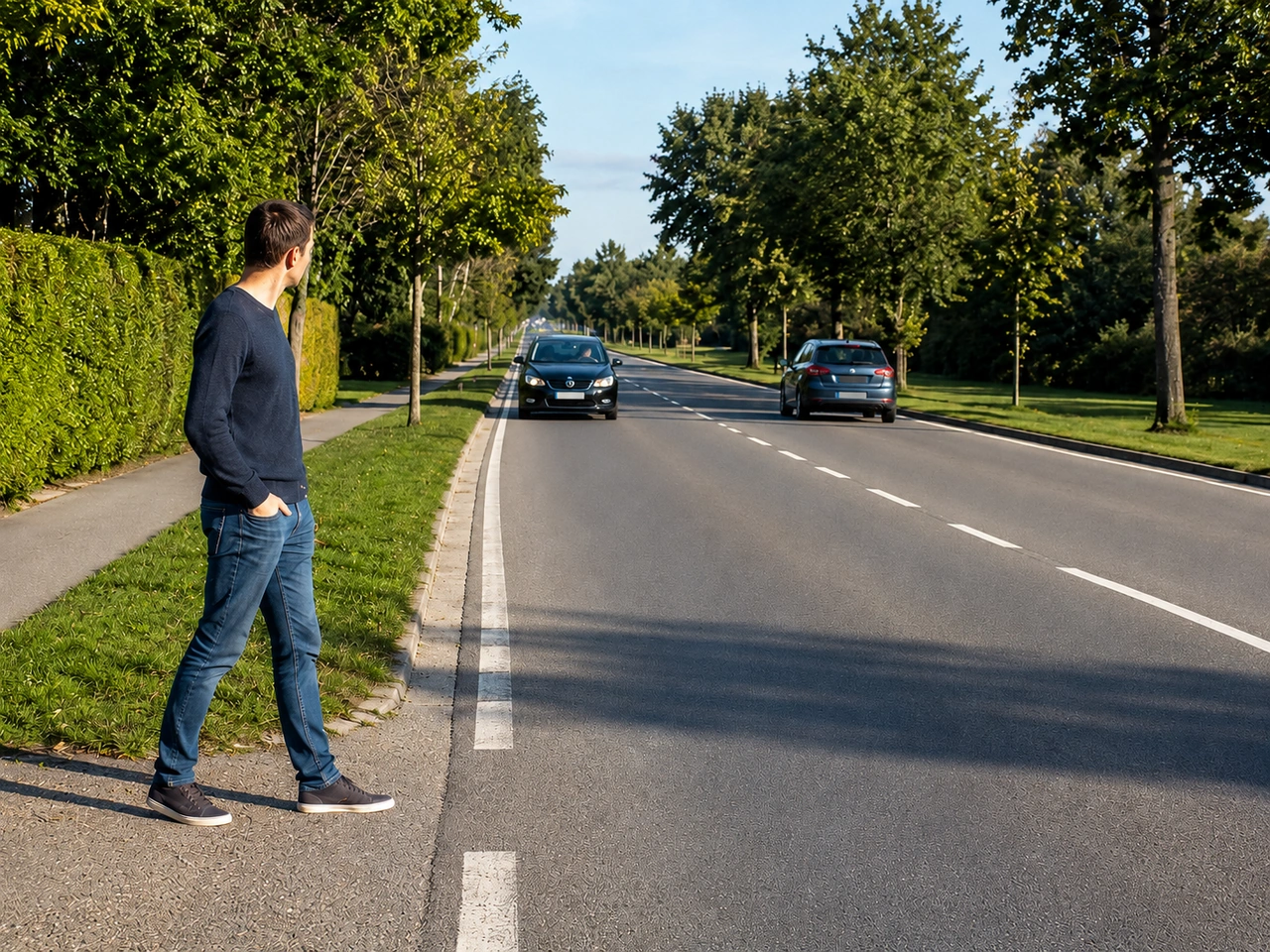
Why should the windscreen washer reservoir contain suitable washer fluid?

20. Why should the windscreen washer reservoir contain suitable washer fluid?

Washer fluid is needed only in freezing weather.
Any household cleaning product can be used instead.
The reservoir needs fluid only when the windscreen is visibly dirty.
✓ It helps remove dirt, salt, insects, and spray from the windscreen.

A clear windscreen is essential for safe observation. Suitable washer fluid helps clean the glass and may provide protection against freezing in cold conditions.

Windscreen washer-fluid reservoir in a vehicle
AI-generated by Traffic-rules.com • WCIT • CC BY-SA
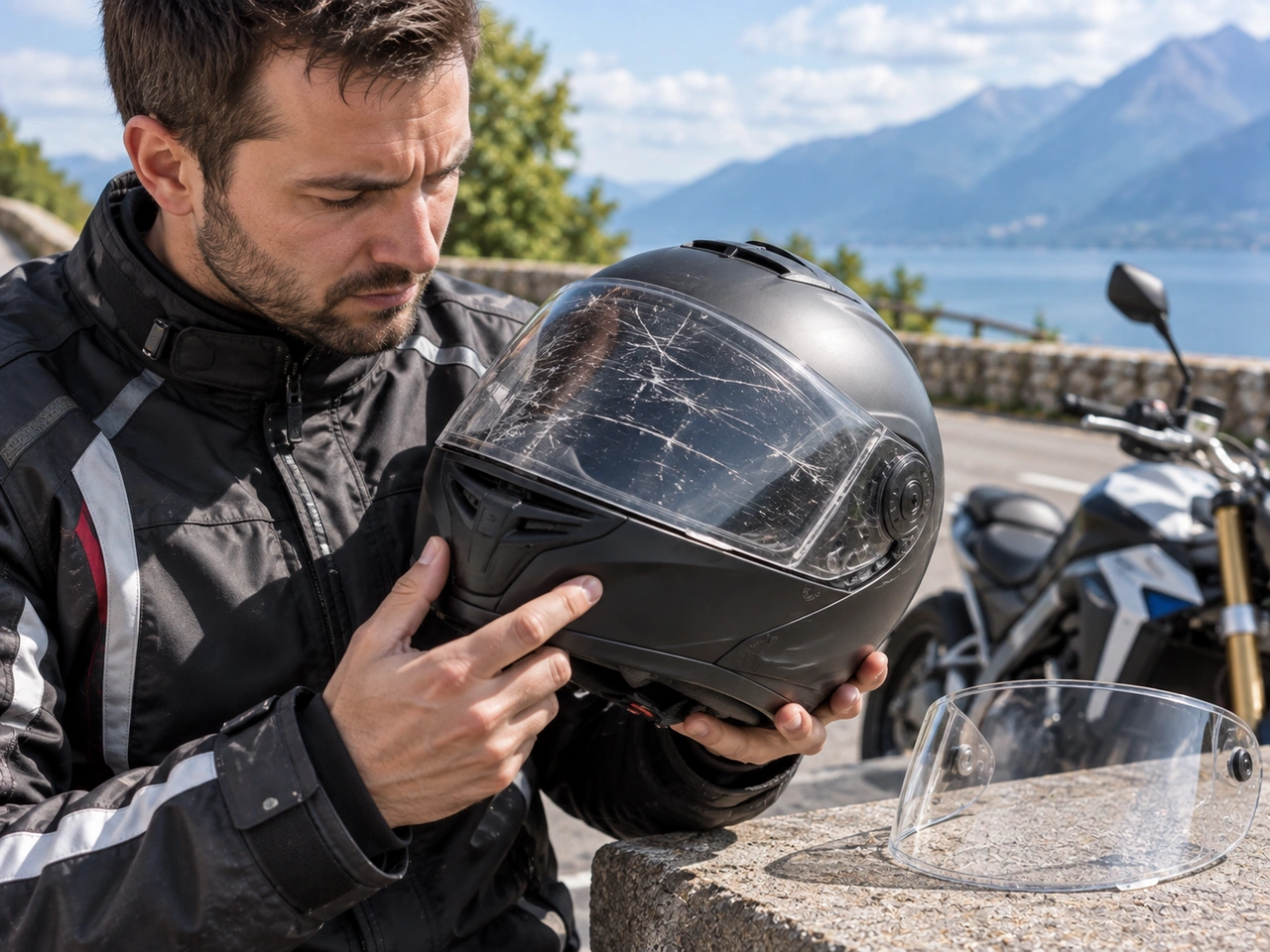
Why is riding a bicycle after drinking alcohol dangerous?

21. Why is riding a bicycle after drinking alcohol dangerous?

A small amount of alcohol improves balance.
A helmet protects you from alcohol-related risks.
Cycling after drinking is safe on quiet roads.
✓ Alcohol can reduce your balance, coordination, judgement, and reaction time.

Alcohol can make it harder to balance, steer, judge distances, and react to hazards. Riding a bicycle while impaired may also be against the law.

Alcohol consumption and bicycle-riding safety
AI-generated by Traffic-rules.com • WCIT • CC BY-SA
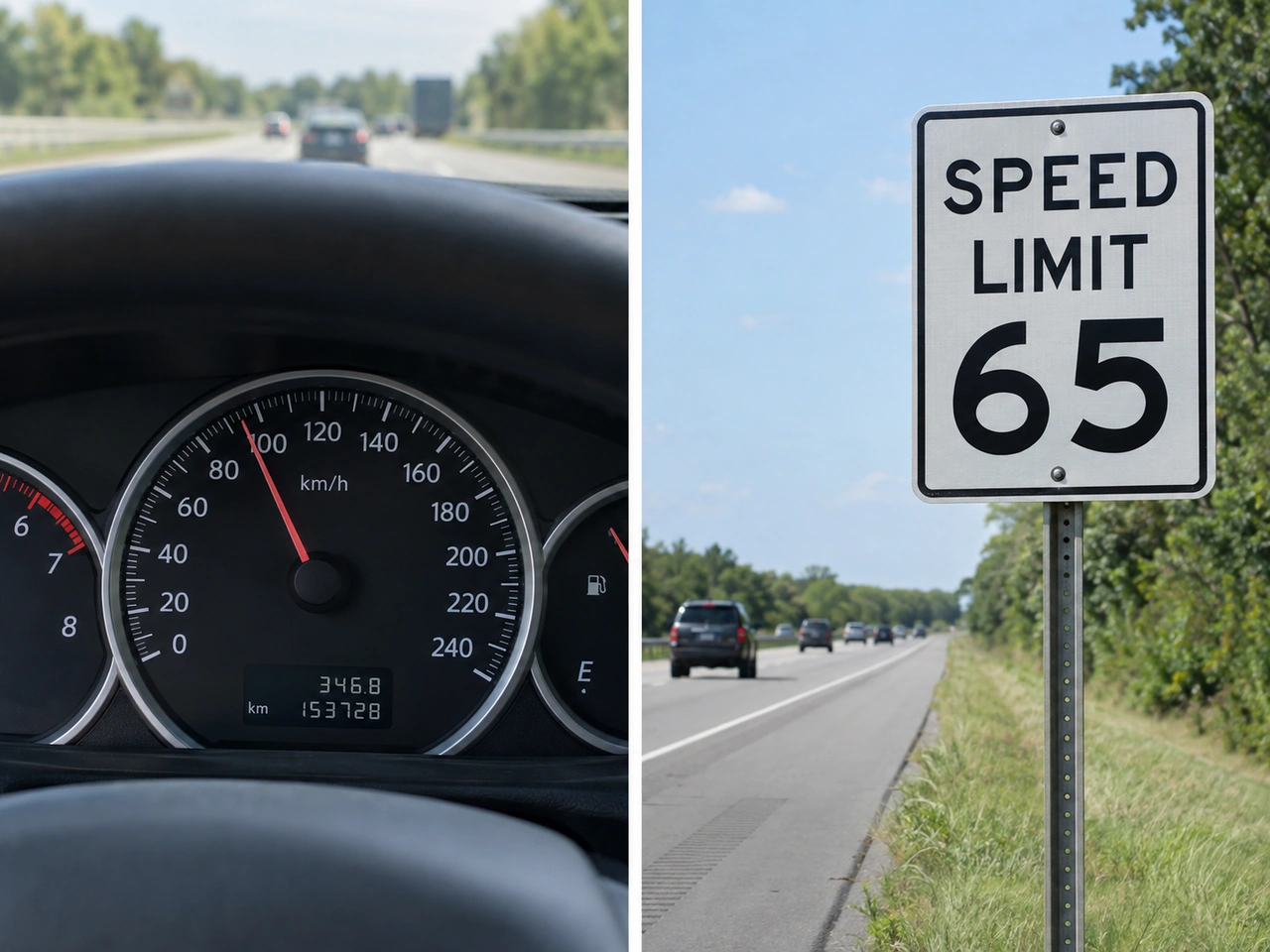
What should you do when a road worker directs traffic?

22. What should you do when a road worker directs traffic?

Obey only if traffic has completely stopped.
Wait for a police officer to confirm the signal.
Follow the vehicle ahead instead of the worker's signal.
✓ Follow the worker's signals and instructions.

Authorised road workers may control traffic through a work zone. Watch carefully and follow their directions.

Road worker directing traffic
AI-generated by Traffic-rules.com • WCIT • CC BY-SA
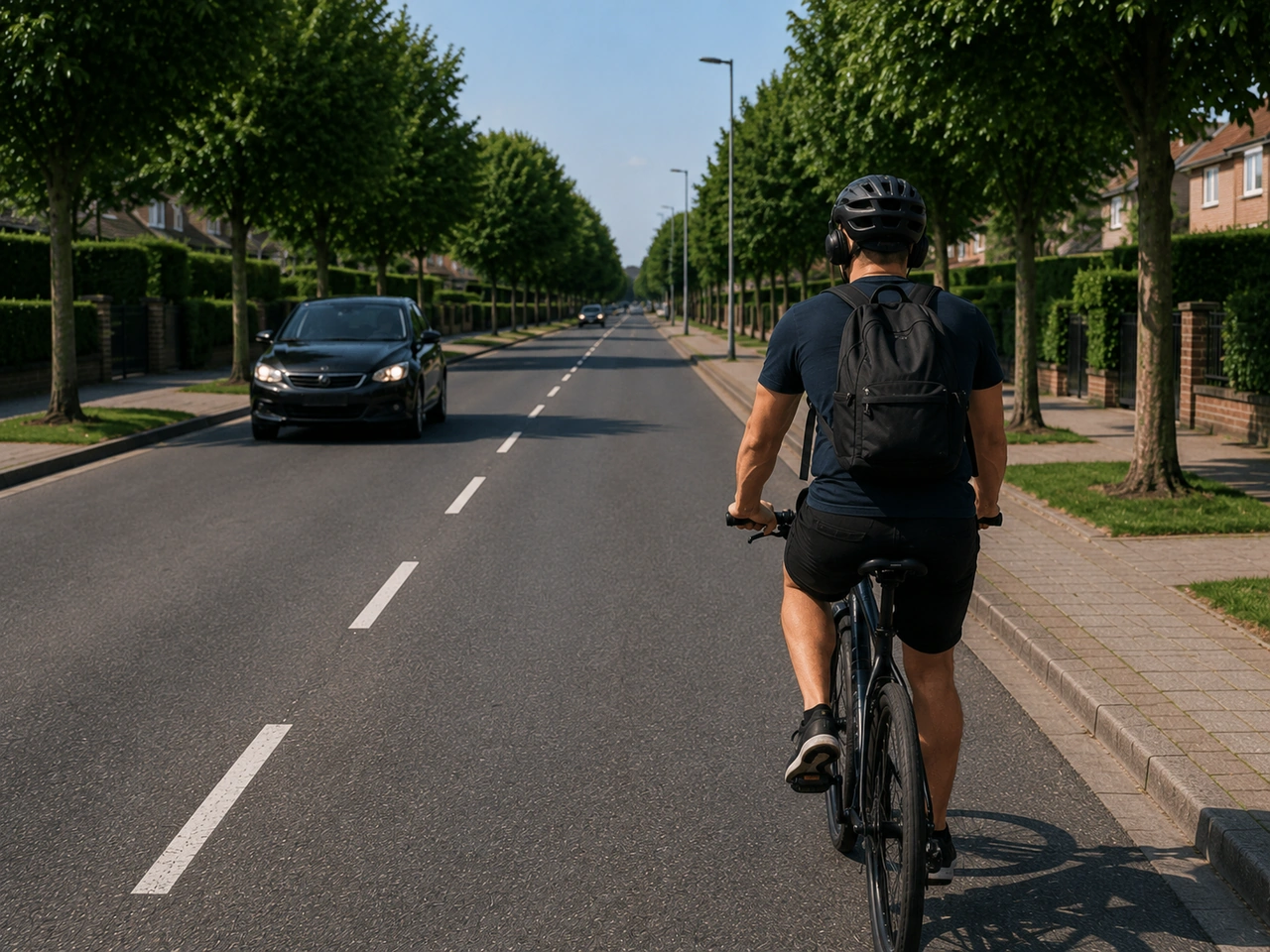
What should you do if traffic stops inside a tunnel?

23. What should you do if traffic stops inside a tunnel?

Make a U-turn and leave the tunnel.
Drive onto the pedestrian walkway.
Sound the horn continuously until traffic moves.
✓ Stop at a safe distance and follow signals or instructions.

Remain calm, keep space from the vehicle ahead, and obey traffic signals, signs, or instructions from tunnel staff.

Traffic stopped inside a road tunnel
AI-generated by Traffic-rules.com • WCIT • CC BY-SA
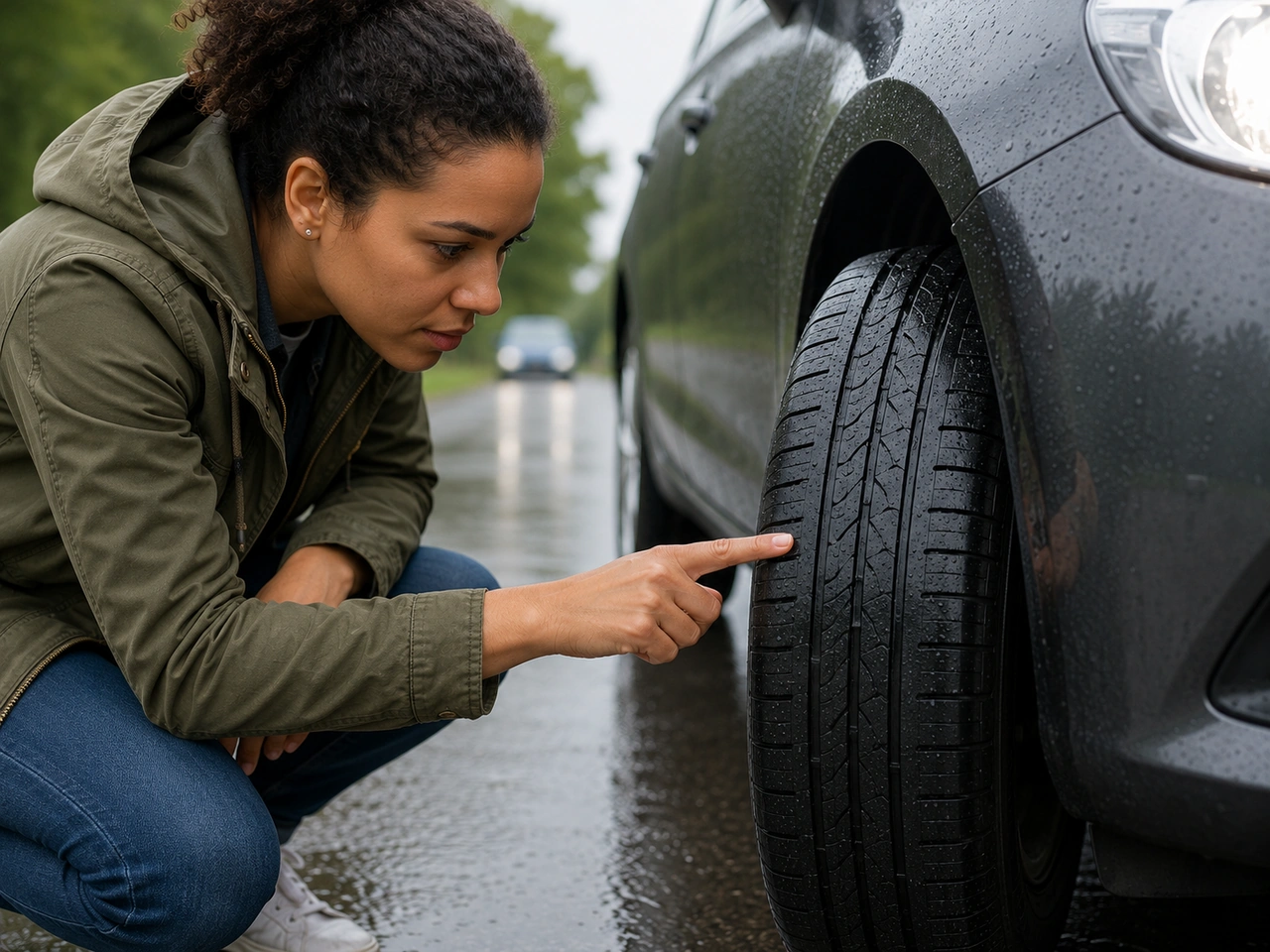
When should you switch off your fog lights?

24. When should you switch off your fog lights?

Never, because they always improve visibility.
Whenever you stop at a traffic light.
Only after the journey is finished.
✓ When visibility improves and they are no longer needed.

Fog lights can dazzle other road users when visibility is normal, so switch them off when conditions improve.

Fog-light control as visibility improves
AI-generated by Traffic-rules.com • WCIT • CC BY-SA
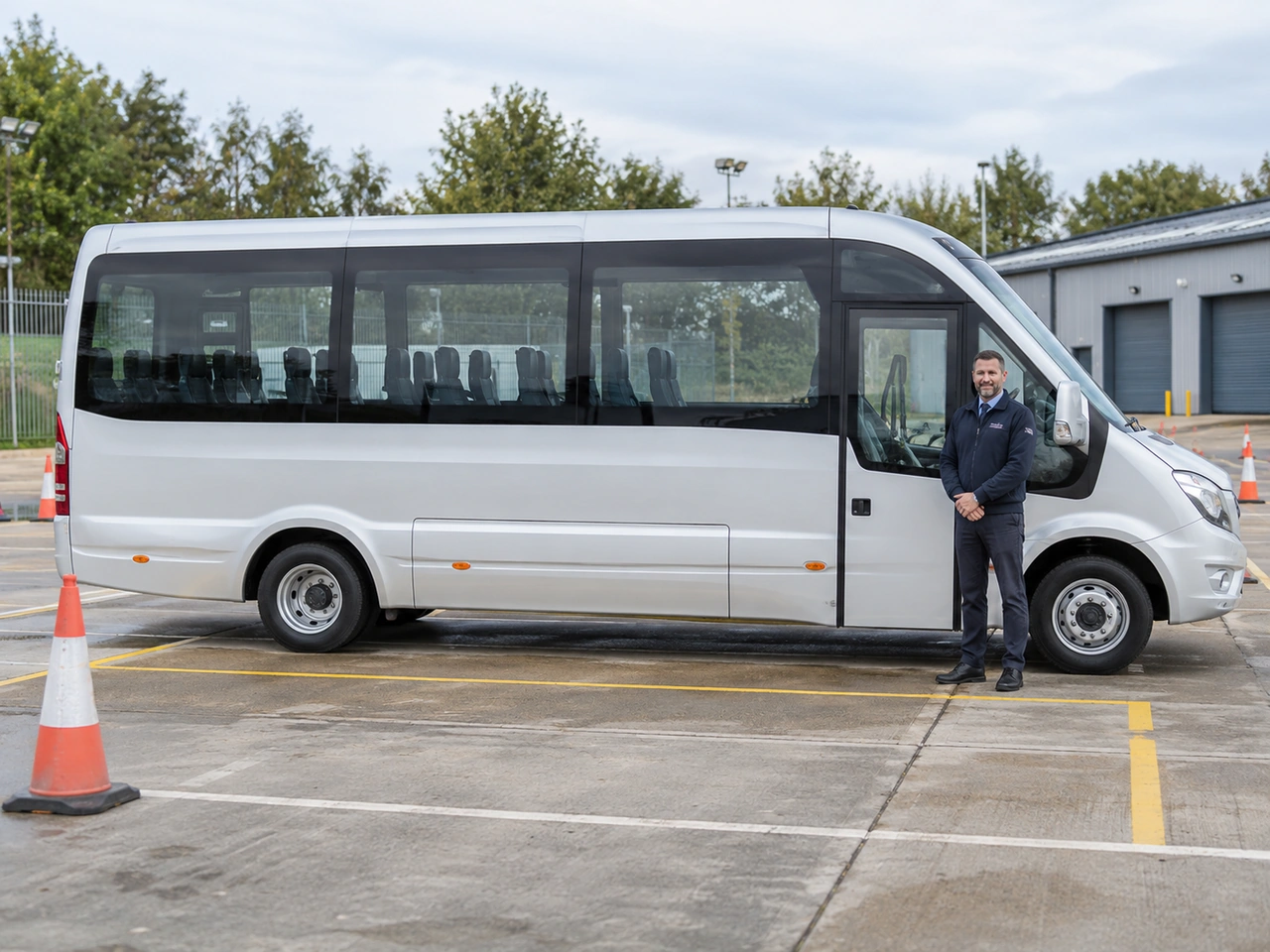
What should you do with a helmet that has taken a significant impact in a collision?

25. What should you do with a helmet that has taken a significant impact in a collision?

Use it again after tightening the straps.
Replace only the outer shell if it is scratched.
Keep using it if the visor or straps still work.
✓ Stop using it and follow the manufacturer's replacement guidance.

A helmet can be damaged internally by a significant impact even when no damage is visible from the outside. Stop using the helmet and follow the manufacturer's guidance, which will commonly require replacement after a significant impact.

Helmet inspection after a significant impact
AI-generated by Traffic-rules.com • WCIT • CC BY-SA
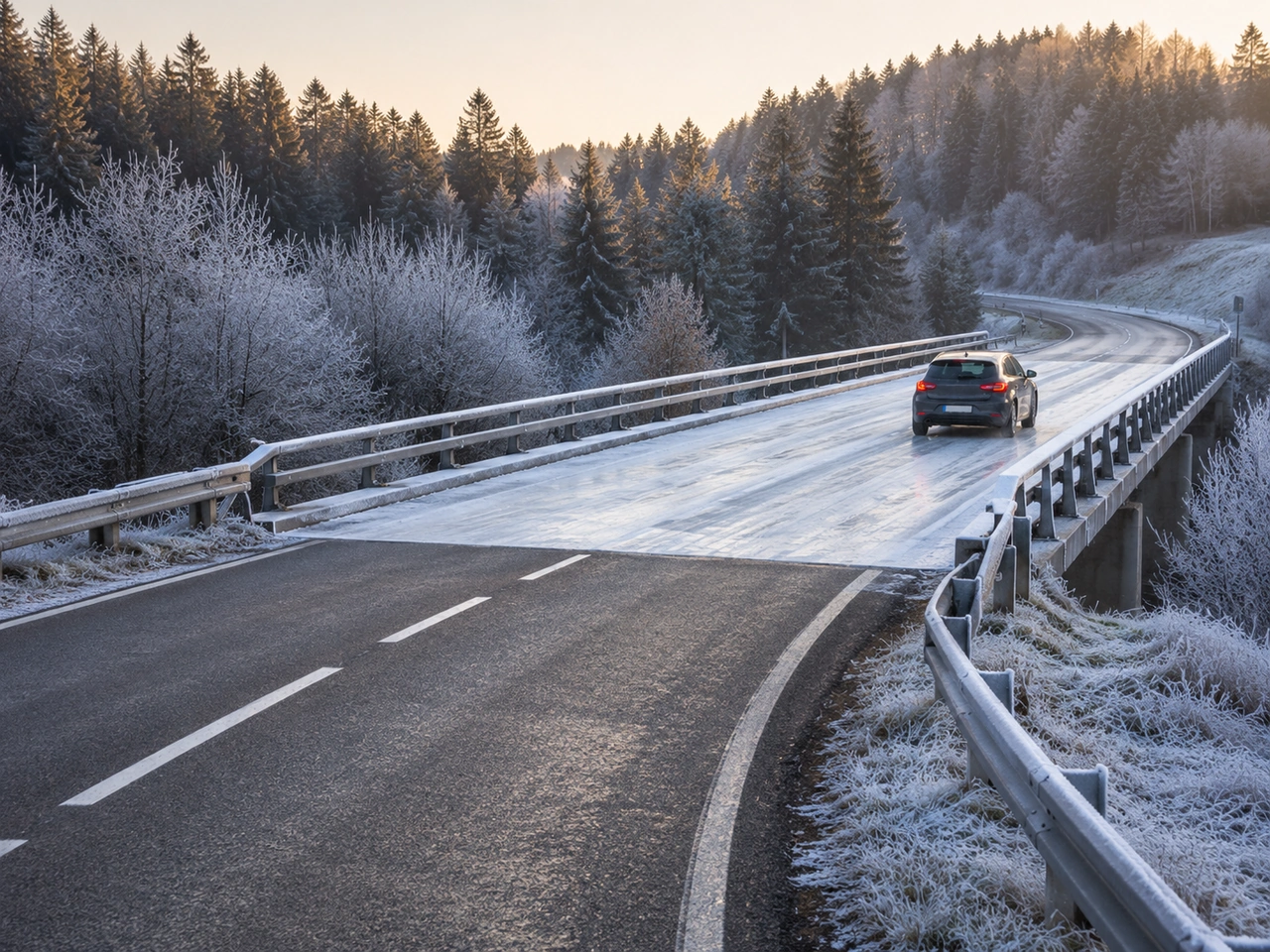
What should you do if fuel spills while you are refuelling?

26. What should you do if fuel spills while you are refuelling?

Continue filling the tank and clean it up afterwards.
Wash the spill away with water and continue refuelling.
Ignore the spill if only a small amount escaped.
✓ Stop refuelling, avoid ignition sources, and alert station staff.

If fuel is spilled, stop refuelling immediately and keep flames, sparks, and other ignition sources away. Do not start the vehicle until the situation is safe. Alert filling-station staff and follow their instructions for dealing with the spill.

Fuel spilled during refuelling
AI-generated by Traffic-rules.com • WCIT • CC BY-SA
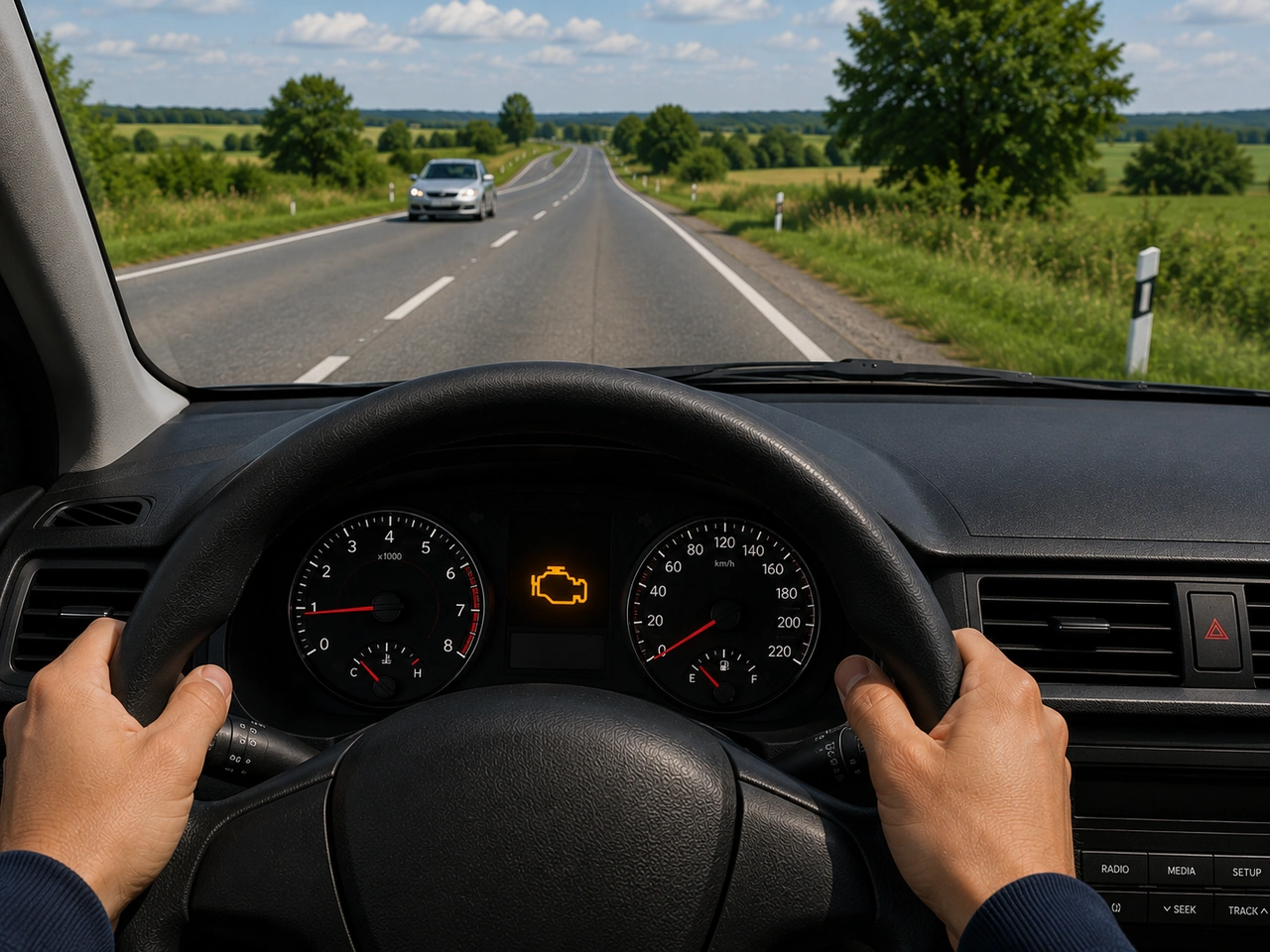
How does higher speed affect a vehicle's stopping distance?

27. How does higher speed affect a vehicle's stopping distance?

It affects reaction distance but not braking distance.
It affects braking distance only on wet roads.
It has no effect if the brakes are in good condition.
✓ It increases the distance needed to stop.

As speed increases, the vehicle travels farther while the driver reacts and requires more distance to brake. This means the total stopping distance increases significantly as speed rises.

Vehicle speed and the distance needed to stop
AI-generated by Traffic-rules.com • WCIT • CC BY-SA
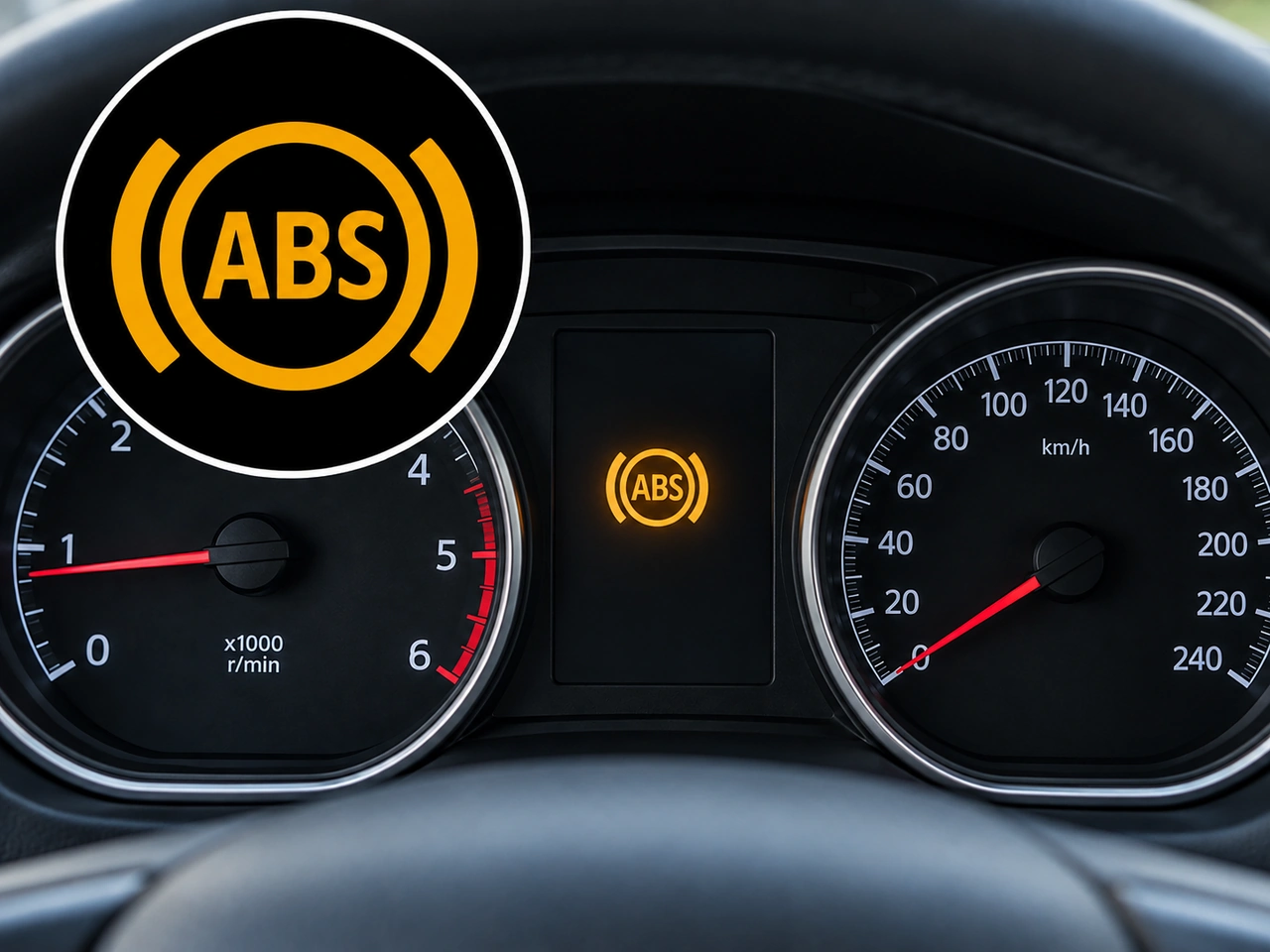
What should you do after stopping because of a breakdown?

28. What should you do after stopping because of a breakdown?

Switch off the hazard lights once the vehicle has stopped.
Leave the parking brake off if the road is level.
Stand behind the vehicle to warn approaching traffic.
✓ Apply the parking brake, switch off the engine, and use hazard lights.

Secure the vehicle so that it cannot move and use the hazard warning lights to alert approaching traffic. Where required and safe, place a warning triangle to give additional warning.

Broken-down vehicle with hazard warning lights
AI-generated by Traffic-rules.com • WCIT • CC BY-SA
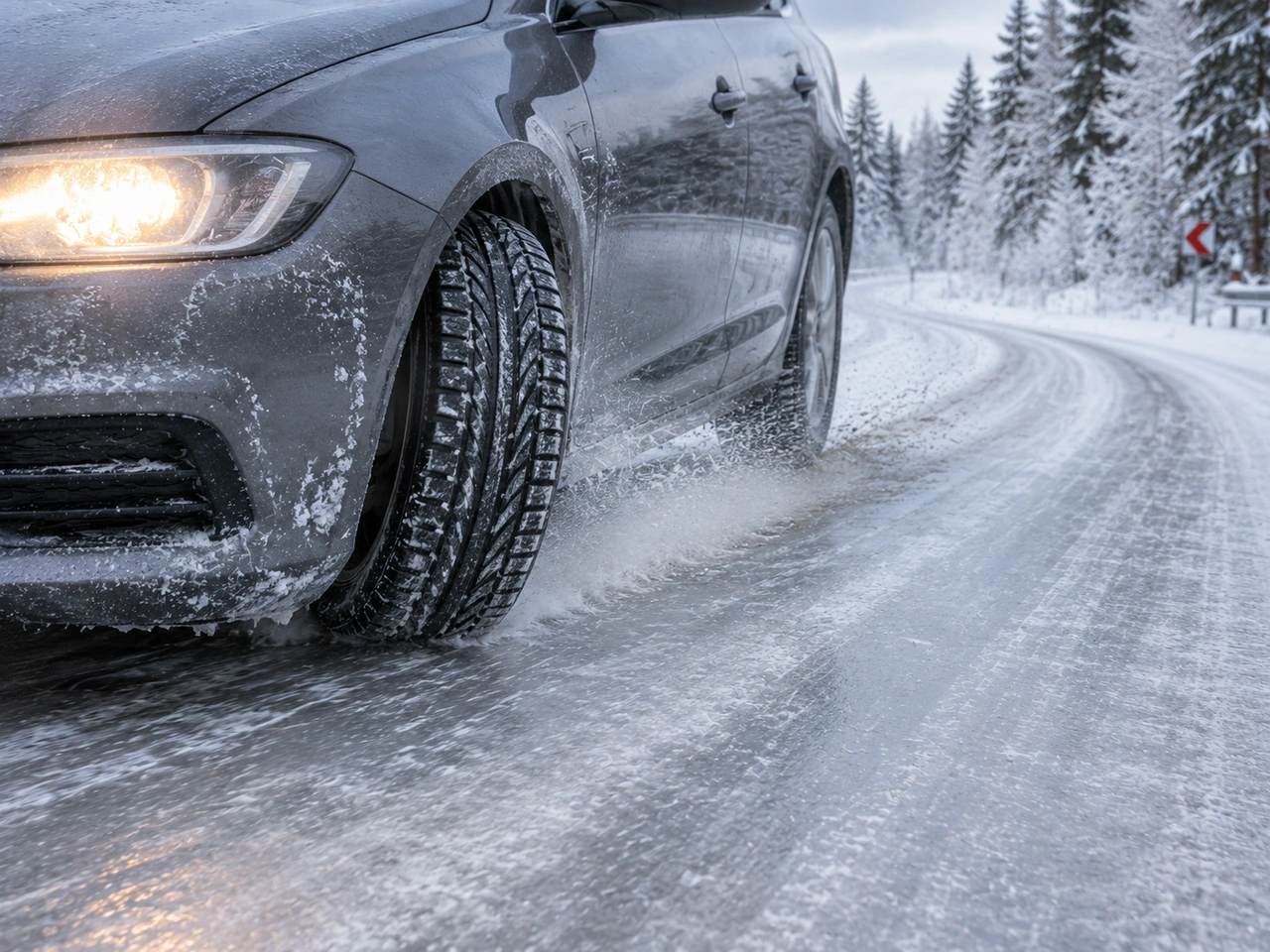
Why should you take extra care if oil or diesel is spilled on the road?

29. Why should you take extra care if oil or diesel is spilled on the road?

It can increase tyre pressure.
It can make the brakes overheat.
It can damage road markings immediately.
✓ It can make the road extremely slippery.

Oil, diesel and other fluids can create a very slippery road surface, particularly for motorcycles and bicycles. Reduce speed, avoid sudden braking or steering and keep the vehicle as stable as possible when crossing a contaminated area.

Oil or diesel spilled on a road surface
AI-generated by Traffic-rules.com • WCIT • CC BY-SA
Which licence category is mainly associated with trucks?

30. Which licence category is mainly associated with trucks?

Licence D.
Licence A.
Licence AM.
✓ Licence C.

Driving licence C is mainly associated with trucks. Category C1 covers smaller heavy vehicles, C covers larger heavy vehicles, and C1E and CE allow heavier trailers.

Truck and category C driving licence
AI-generated by Traffic-rules.com • WCIT • CC BY-SA
What is the main emergency number in Netherlands?

31. What is the main emergency number in Netherlands?

000.
111.
123.
✓ 112.

The main emergency number in Netherlands is 112.

112 emergency telephone number
AI-generated by Traffic-rules.com • WCIT • CC BY-SA
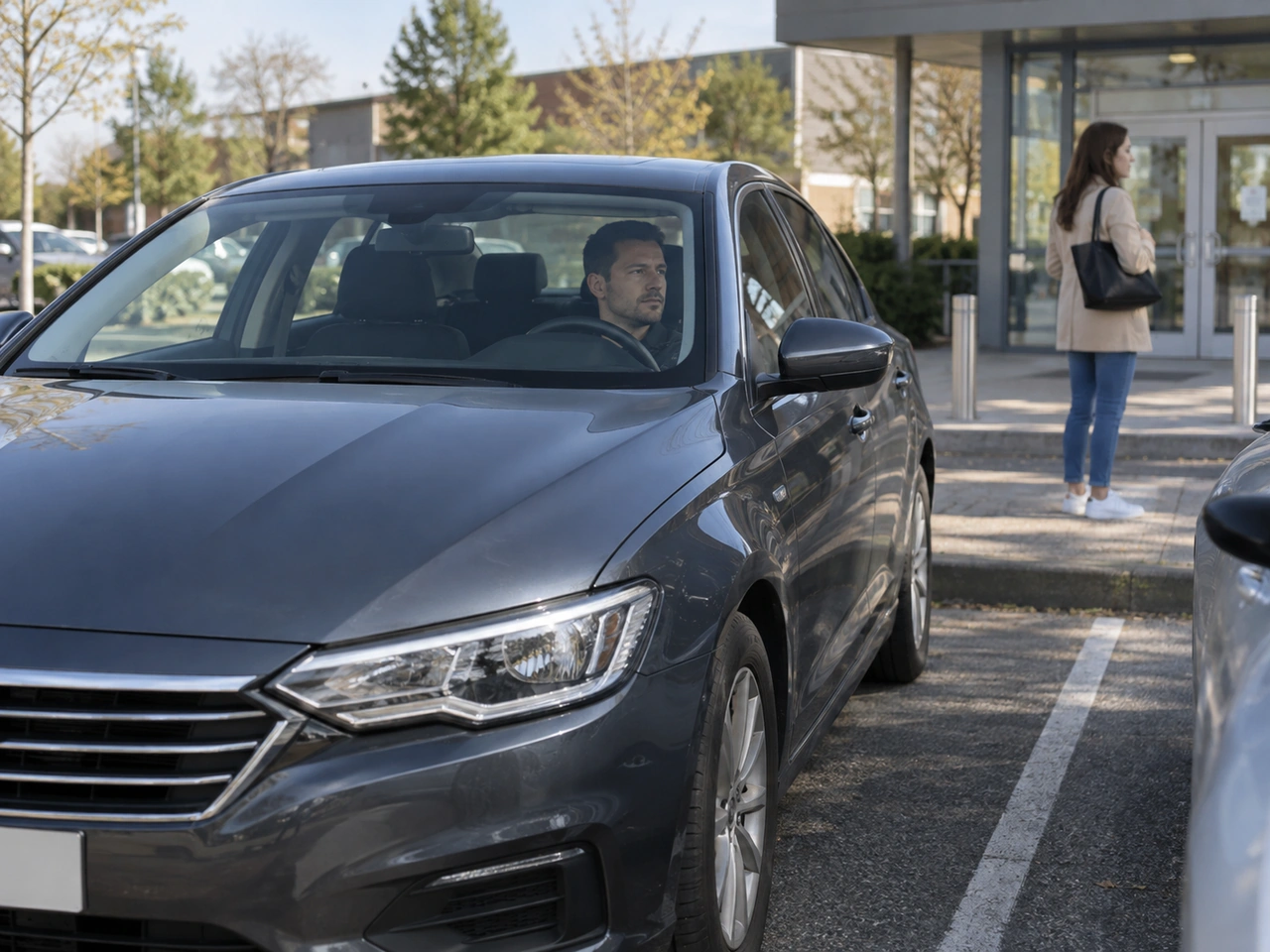
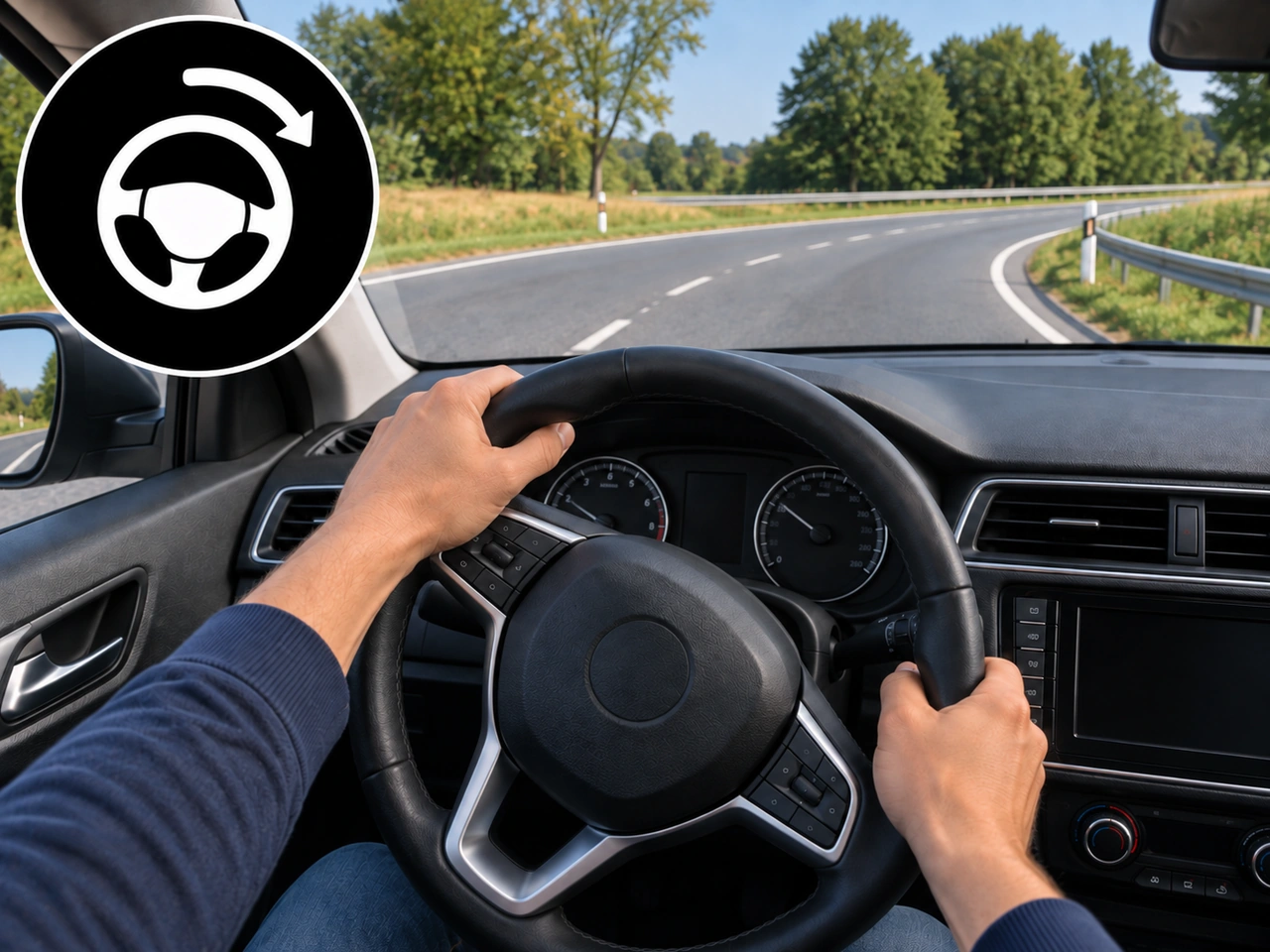
Why should you avoid braking hard on a curve?

32. Why should you avoid braking hard on a curve?

It can make the steering feel heavier.
It can increase tyre pressure during the turn.
It can make the vehicle accelerate more slowly afterwards.
✓ It can reduce control and increase the risk of skidding.

Hard braking on a curve can upset the vehicle's balance and reduce grip. Slow down before the curve and steer smoothly.

Vehicle braking while negotiating a bend
AI-generated by Traffic-rules.com • WCIT • CC BY-SA
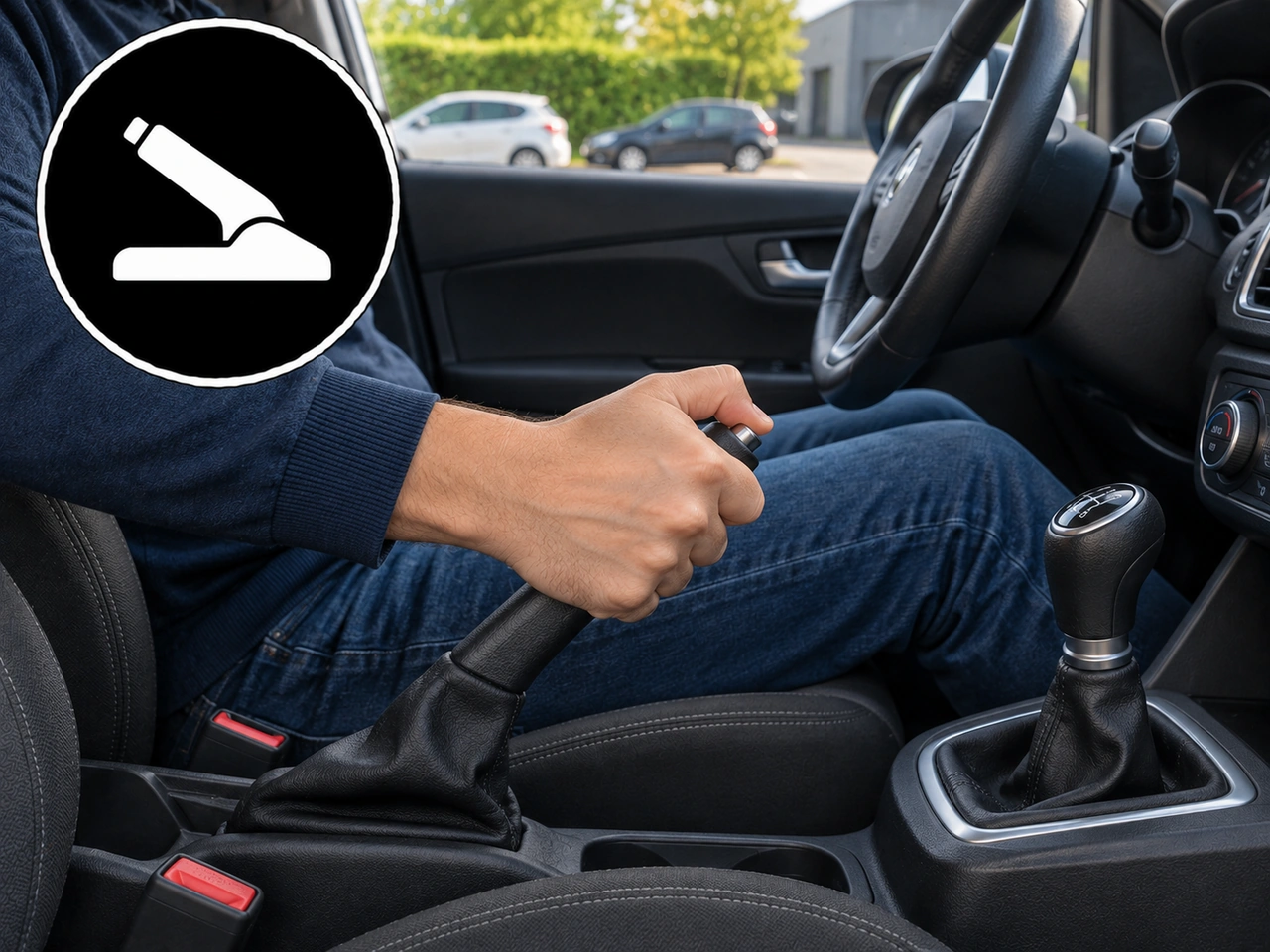
Why is it important to use bicycle lights at night?

33. Why is it important to use bicycle lights at night?

They give cyclists priority over other traffic.
They make reflective clothing unnecessary.
They are needed only on roads without street lighting.
✓ They help you see and help others notice you.

Front and rear lights improve visibility and make it easier for drivers, cyclists, and pedestrians to detect you.

Bicycle lights used when riding at night
AI-generated by Traffic-rules.com • WCIT • CC BY-SA
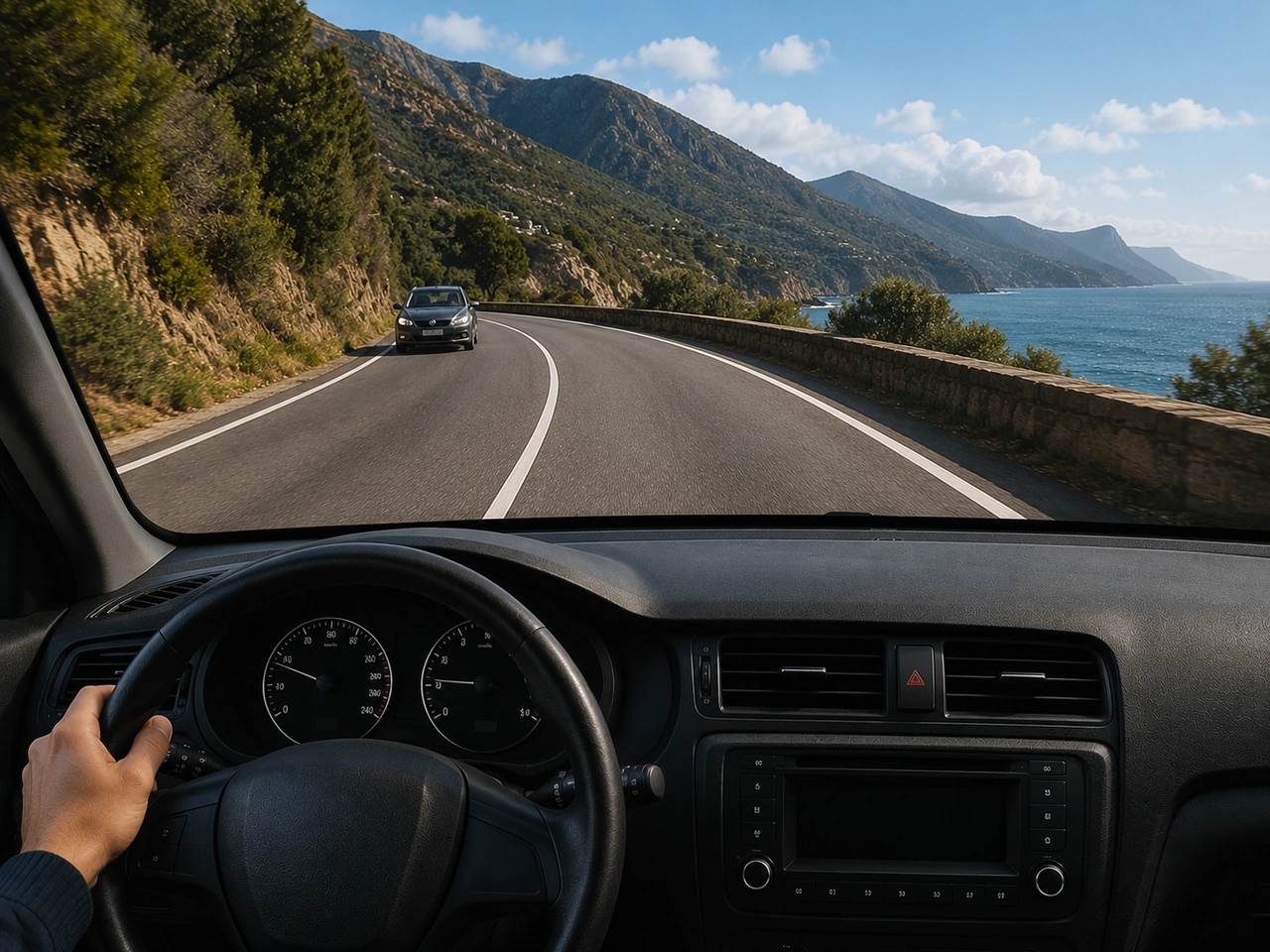
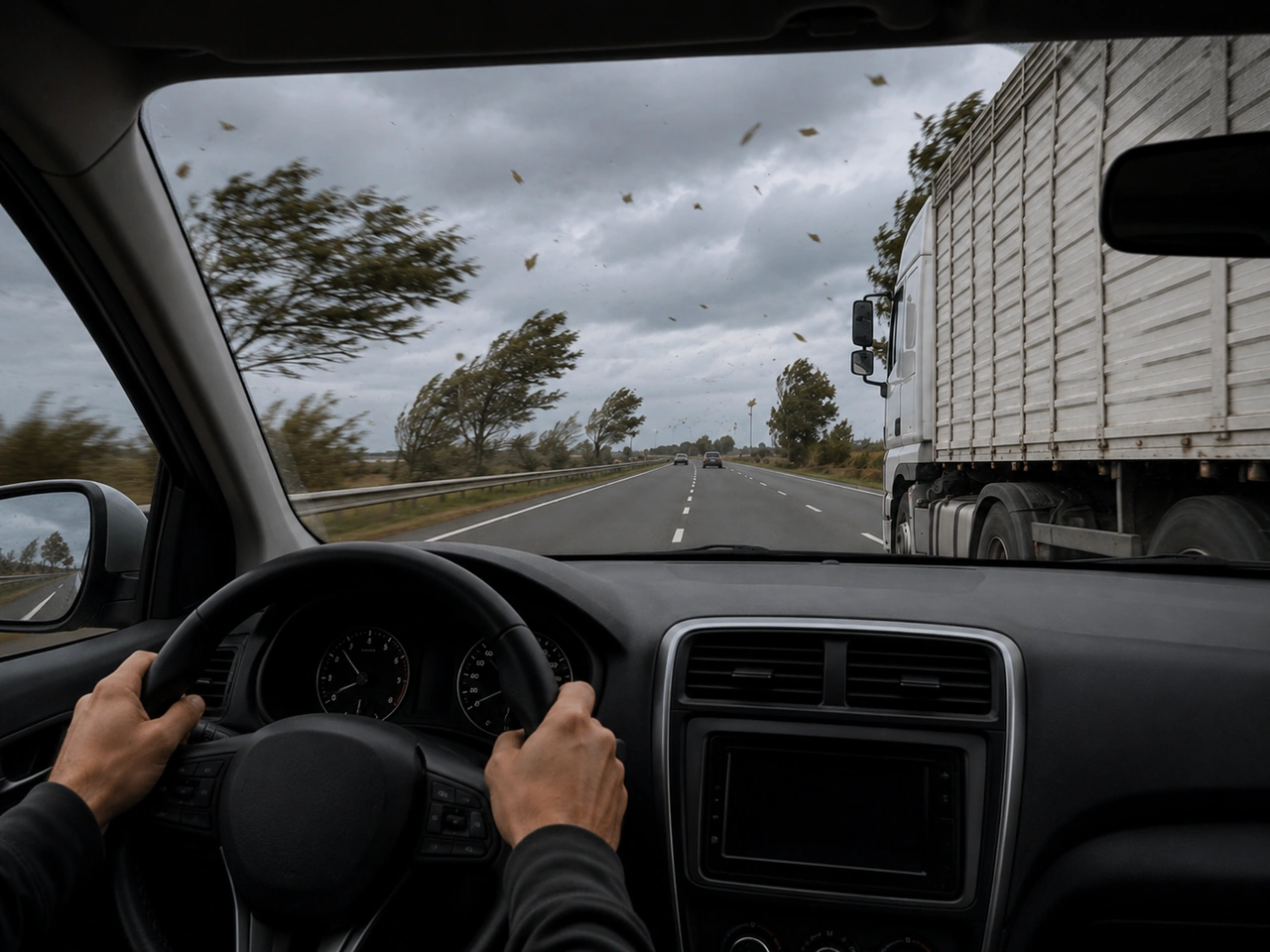
What should a motorcyclist do in strong crosswinds?

34. What should a motorcyclist do in strong crosswinds?

Ride as close to the edge of the road as possible.
Follow a large vehicle closely for protection from the wind.
Make sudden steering movements whenever the wind changes.
✓ Reduce speed and be prepared for sudden gusts.

Strong crosswinds can push a motorcycle sideways and sudden gusts can affect its stability. Reduce speed, keep a steady grip on the handlebars and allow extra space, especially on exposed roads, bridges, or when passing gaps and large vehicles.

Motorcyclist riding in strong crosswinds
AI-generated by Traffic-rules.com • WCIT • CC BY-SA
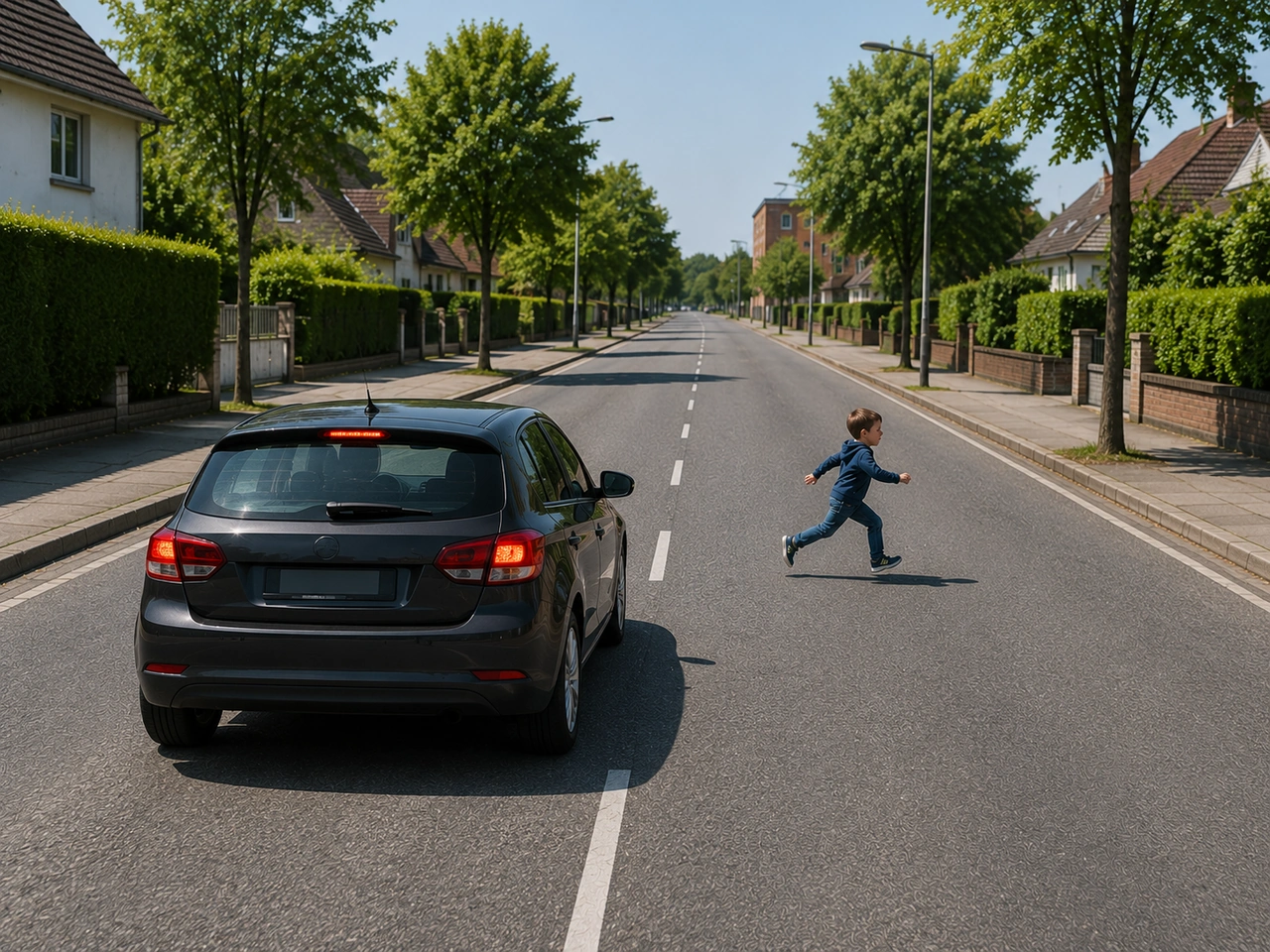
What should you do if birds are swooping at you while cycling?

35. What should you do if birds are swooping at you while cycling?

Wave your arms to frighten the birds away.
Stop near the nest to see why they are swooping.
Throw objects towards the birds.
✓ Slow down, stay calm, and leave the area without provoking them.

Some birds become territorial during the breeding season and may swoop people near their nests. Stay calm, avoid provoking or approaching the birds, and leave the area safely. If necessary and safe, dismount and walk your bicycle through or away from the area while keeping your helmet on.

Bird swooping near a cyclist
AI-generated by Traffic-rules.com • WCIT • CC BY-SA
It is safe to look at your phone briefly while driving.

36. It is safe to look at your phone briefly while driving.

True.
✓ False.

Using your phone while driving is distracting and dangerous, even for a very short moment.

Driver glancing at a phone while driving
AI-generated by Traffic-rules.com • WCIT • CC BY-SA
What does this dashboard symbol indicate?

37. What does this dashboard symbol indicate?

Rear fog lights.
Charging-system warning.
Engine-management warning.
✓ Exterior-light failure.

This symbol indicates a possible failure of an exterior vehicle light, such as a headlight, tail light, brake light or indicator. Check the vehicle's exterior lights and replace or repair any faulty light.

Exterior-light failure warning symbol on the dashboard
AI-generated by Traffic-rules.com • WCIT • CC BY-SA
How can alcohol affect your driving ability?

38. How can alcohol affect your driving ability?

It improves your ability to judge distance.
✓ It can reduce judgement, coordination, and reaction speed.
It improves your vision in poor light.
It makes your reactions faster.

Alcohol affects several abilities needed for safe driving, including concentration, decision-making, coordination, and hazard perception.

Alcohol impairment and driving ability
AI-generated by Traffic-rules.com • WCIT • CC BY-SA
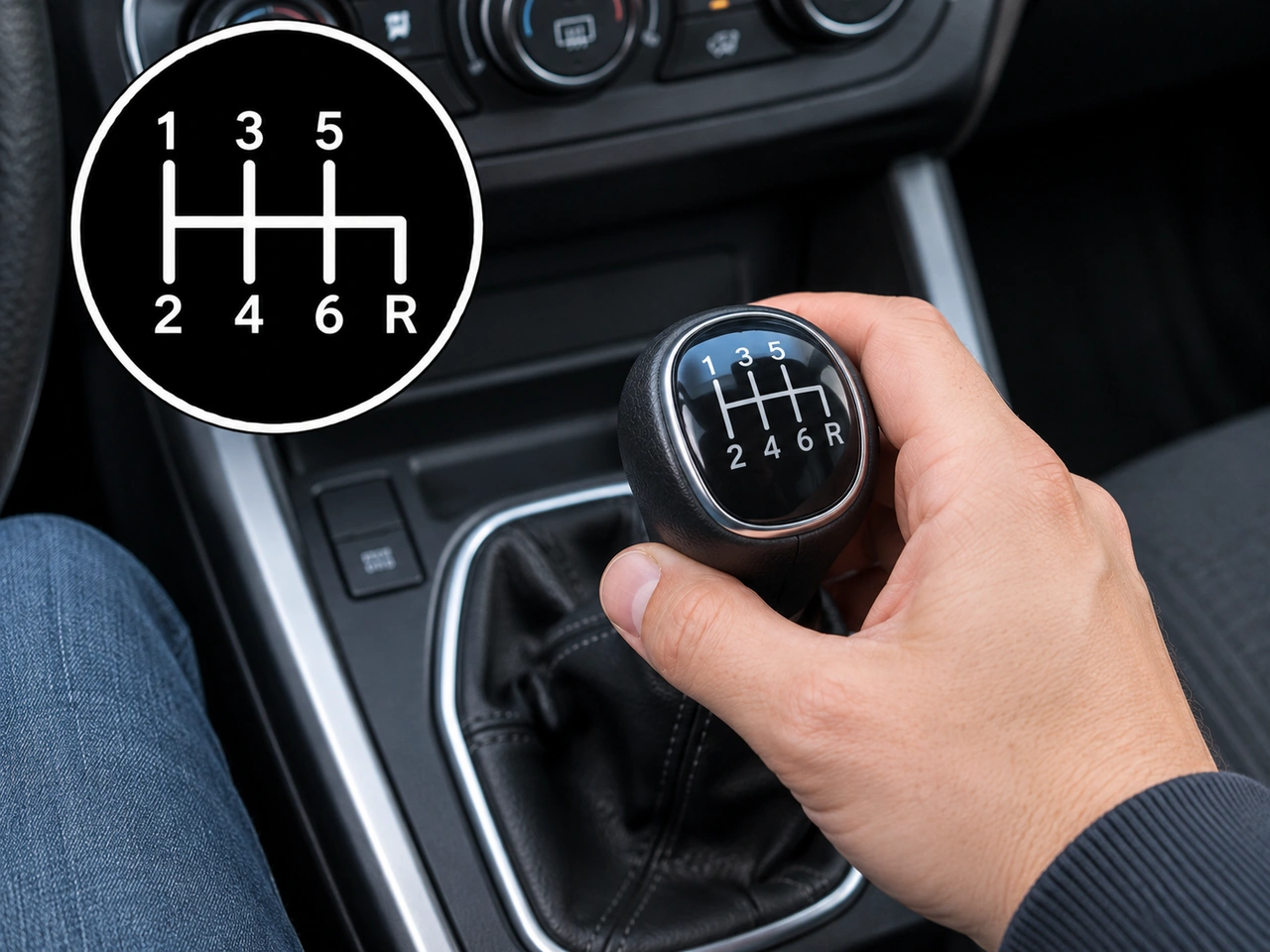
How should you check the engine oil level?

39. How should you check the engine oil level?

✓ Follow the manufacturer's instructions with the vehicle on level ground.
Check it while the engine is running at high speed.
Add oil every time you refuel the vehicle.
Fill the engine until oil reaches the filler opening.

Use the dipstick or electronic oil-level system as described in the owner's manual. The engine is usually switched off, and the vehicle should be standing on level ground.

Checking the engine oil level
AI-generated by Traffic-rules.com • WCIT • CC BY-SA
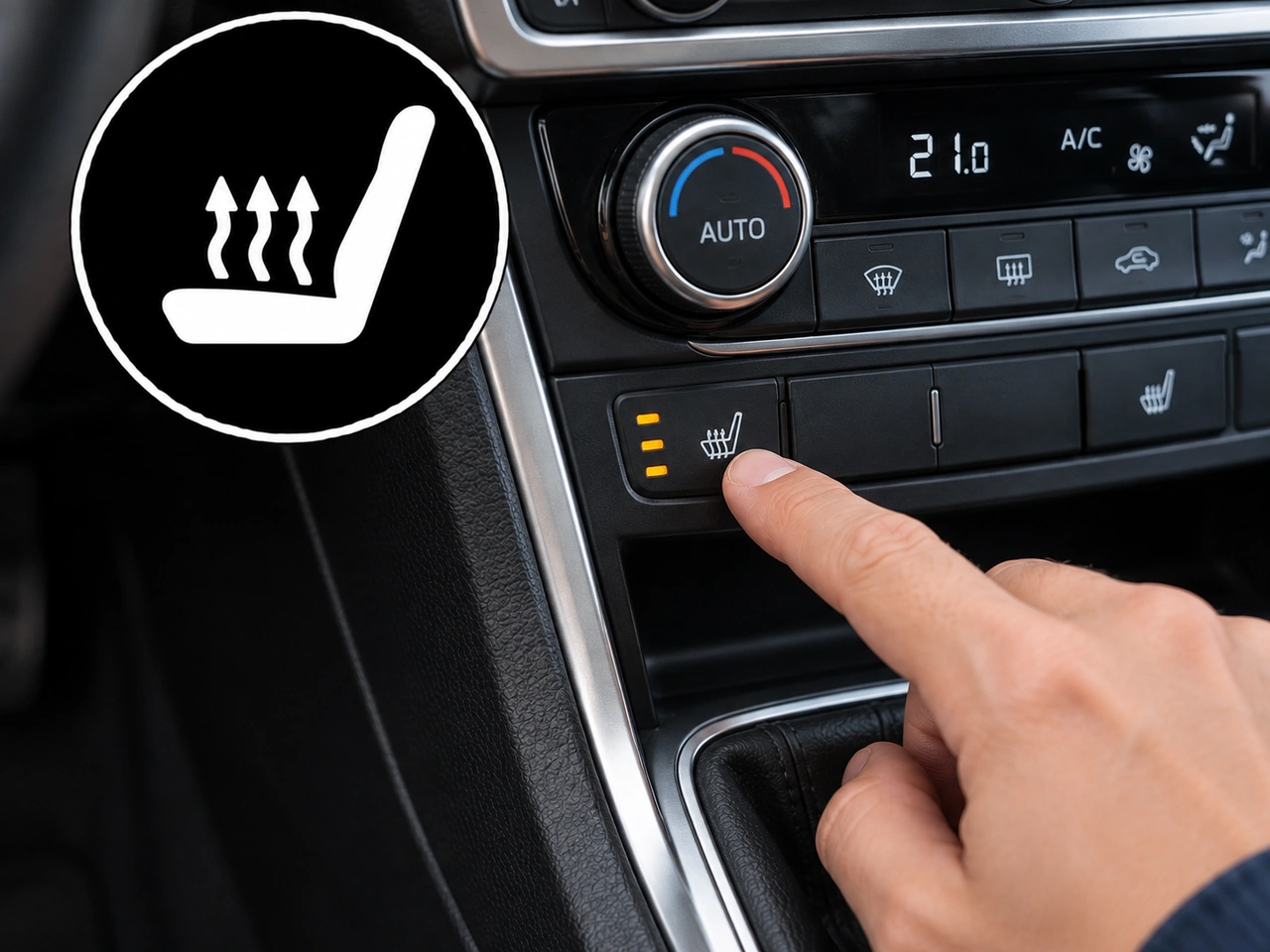
Should the side stand be fully raised before riding a motorcycle?

40. Should the side stand be fully raised before riding a motorcycle?

No, it only needs to be raised on motorways.
Yes, but only when carrying a passenger.
No, the stand helps stabilise the motorcycle while moving.
✓ Yes, a lowered stand could catch the road and affect control.

The side stand should be fully raised before riding. If it remains down, it may strike the road surface, particularly when turning, and could cause the rider to lose control.

Motorcycle side stand and pre-ride checks
AI-generated by Traffic-rules.com • WCIT • CC BY-SA
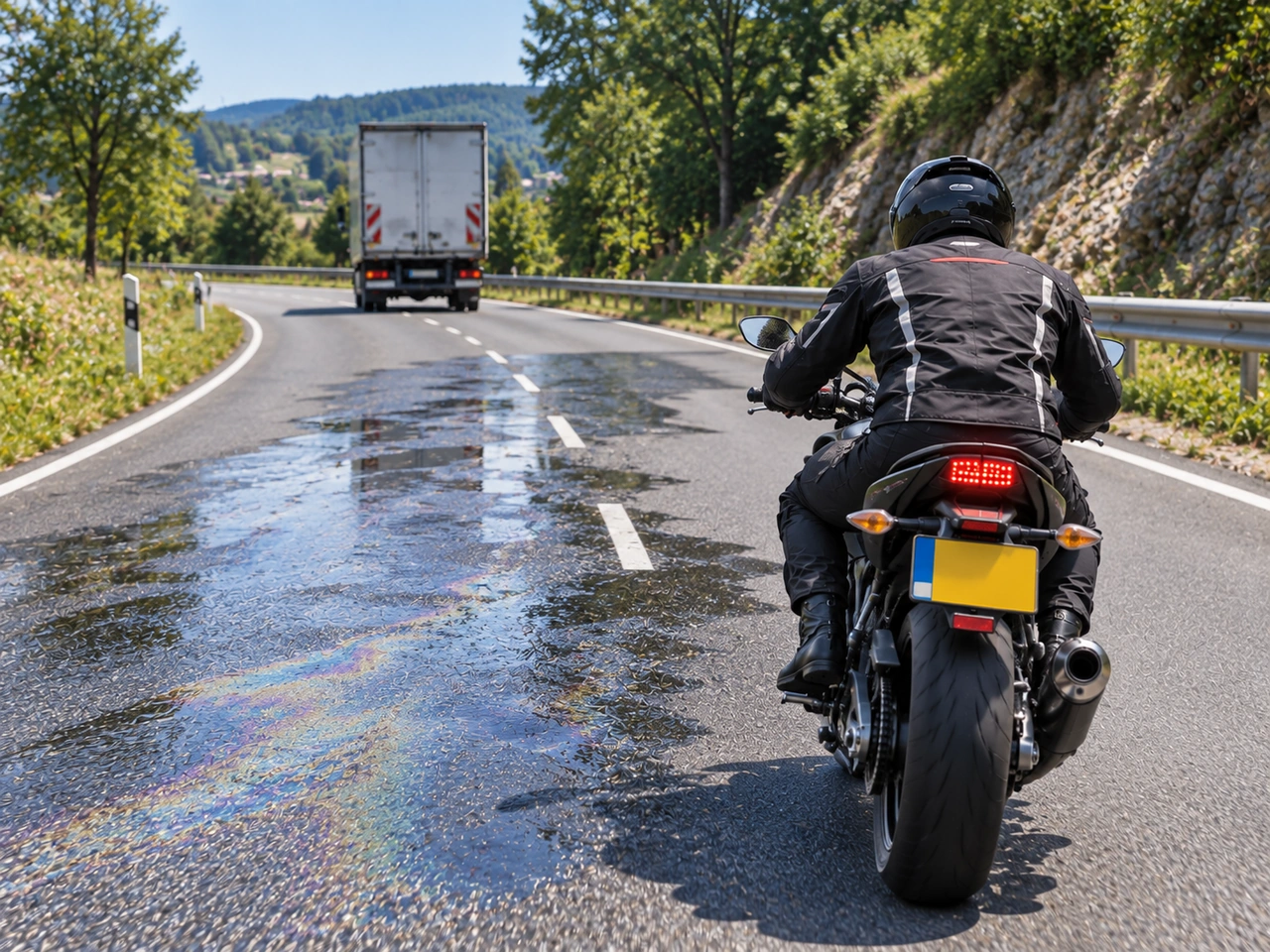
Which vehicles are covered by driving licence AM?

41. Which vehicles are covered by driving licence AM?

Motorcycles up to 125 cm³.
Cars up to 3,500 kg.
✓ Mopeds over 25 and up to 45 km/h, and light quadricycles.
Any two-wheeled motor vehicle.

Category AM covers certain two- and three-wheeled mopeds with a maximum design speed above 25 km/h and not exceeding 45 km/h, as well as light quadricycles.

Category AM mopeds and light quadricycles
AI-generated by Traffic-rules.com • WCIT • CC BY-SA
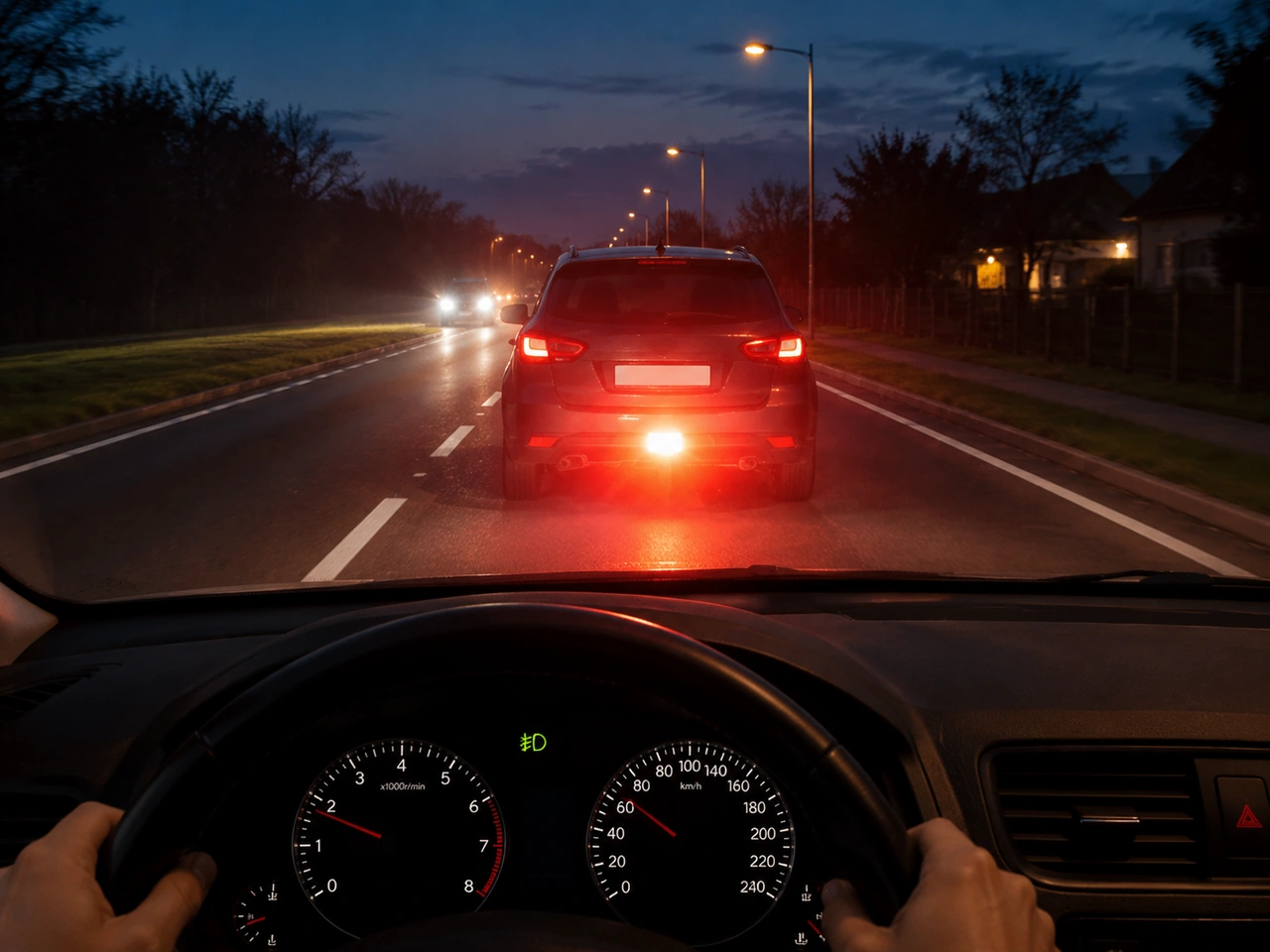
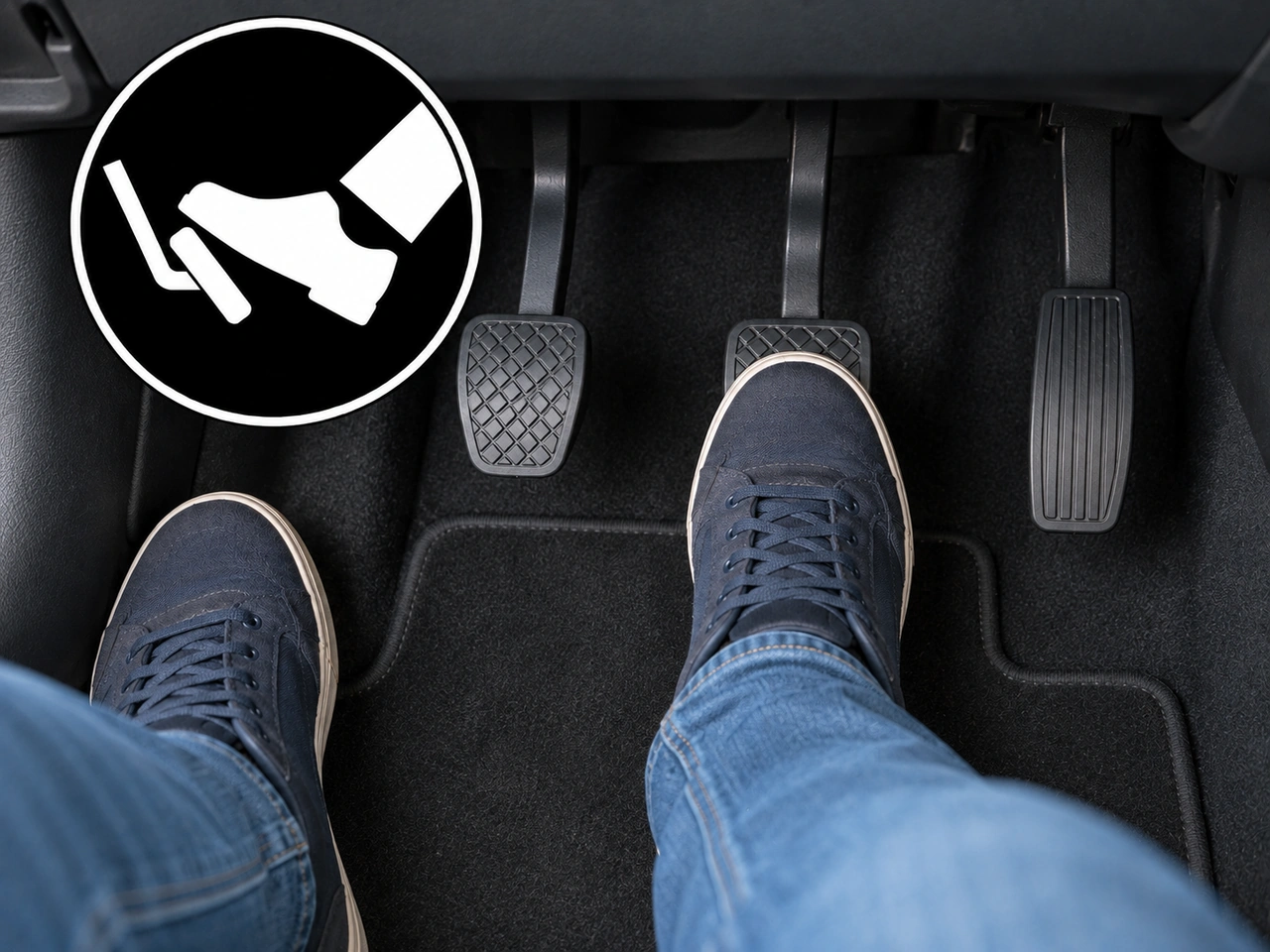
Why should you wear suitable footwear when driving?

42. Why should you wear suitable footwear when driving?

So the vehicle uses less fuel.
So the brakes respond more quickly.
✓ So you can operate the pedals accurately and safely.
So the pedals require less force to operate.

Suitable footwear helps you operate the accelerator, brake, and clutch accurately. Loose, bulky, or slippery footwear can interfere with pedal control or become caught around the pedals.

Driver's footwear and contact with the pedals
AI-generated by Traffic-rules.com • WCIT • CC BY-SA
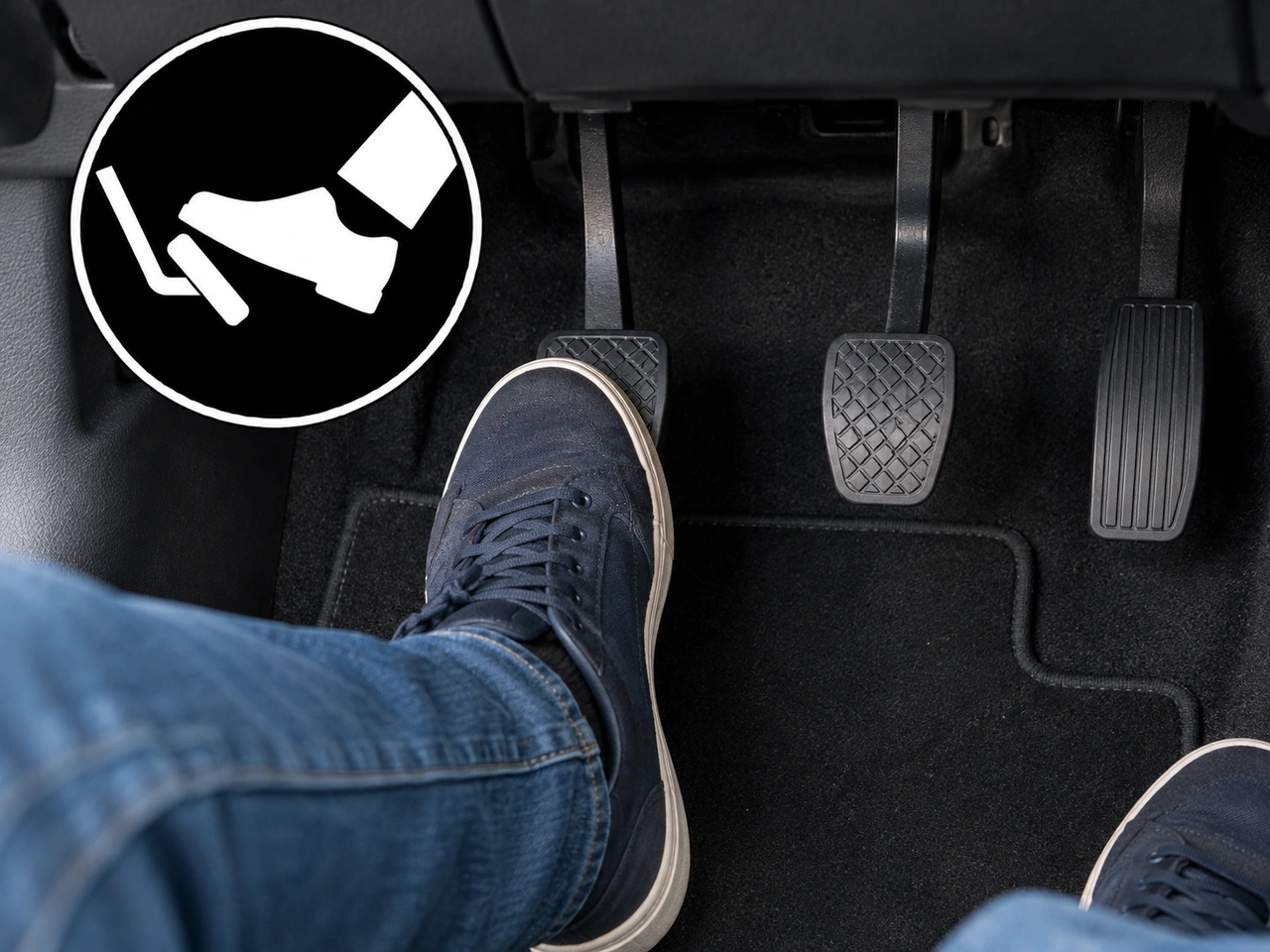
Who generally has priority at an uncontrolled intersection in Netherlands?

43. Who generally has priority at an uncontrolled intersection in Netherlands?

✓ Traffic approaching from the right.
The vehicle travelling fastest.
The largest vehicle.
Traffic approaching from the left.

At an uncontrolled intersection in Netherlands, you generally give way to traffic approaching from the right.

Vehicles approaching an uncontrolled junction from different directions
AI-generated by Traffic-rules.com • WCIT • CC BY-SA
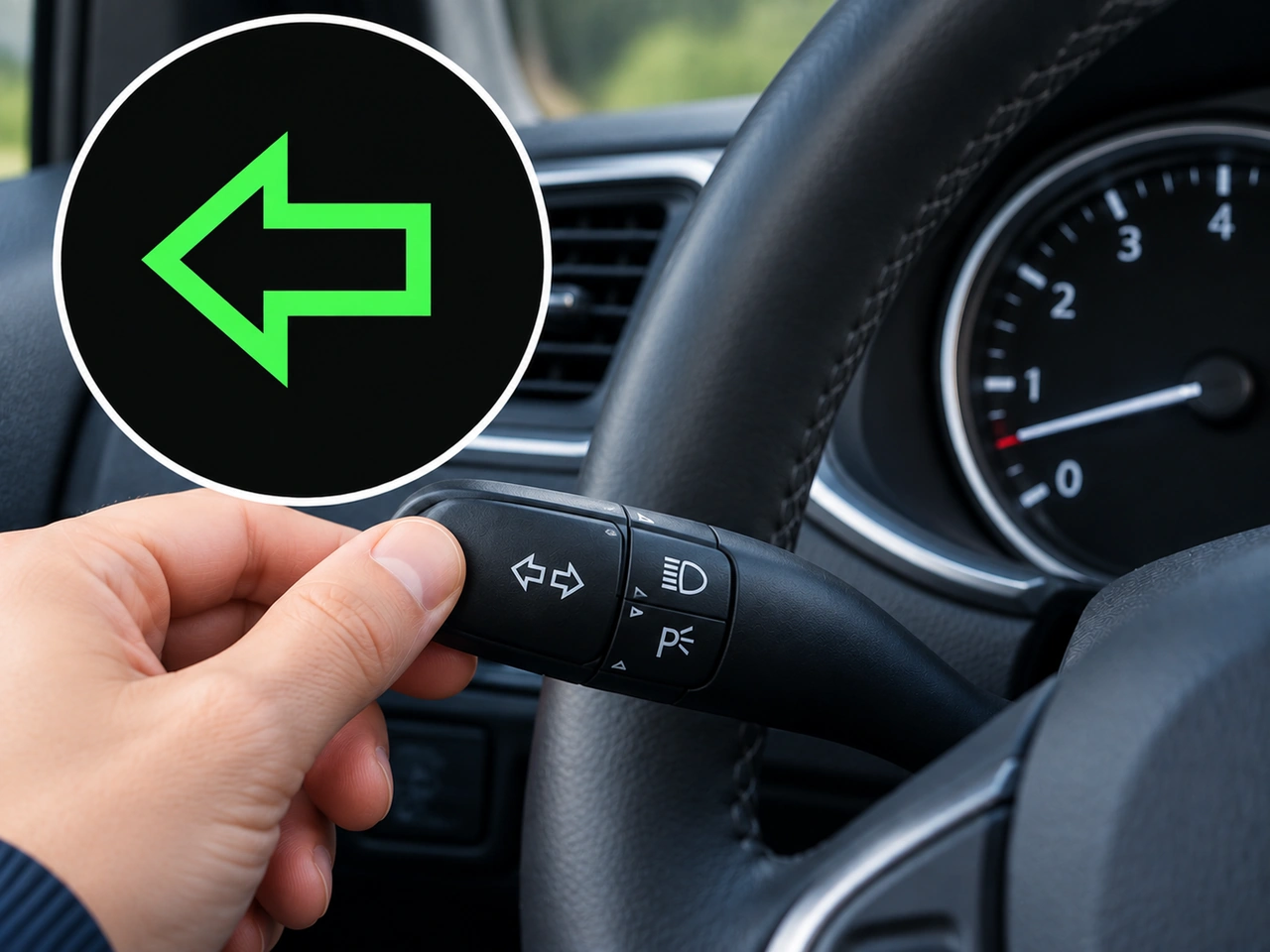
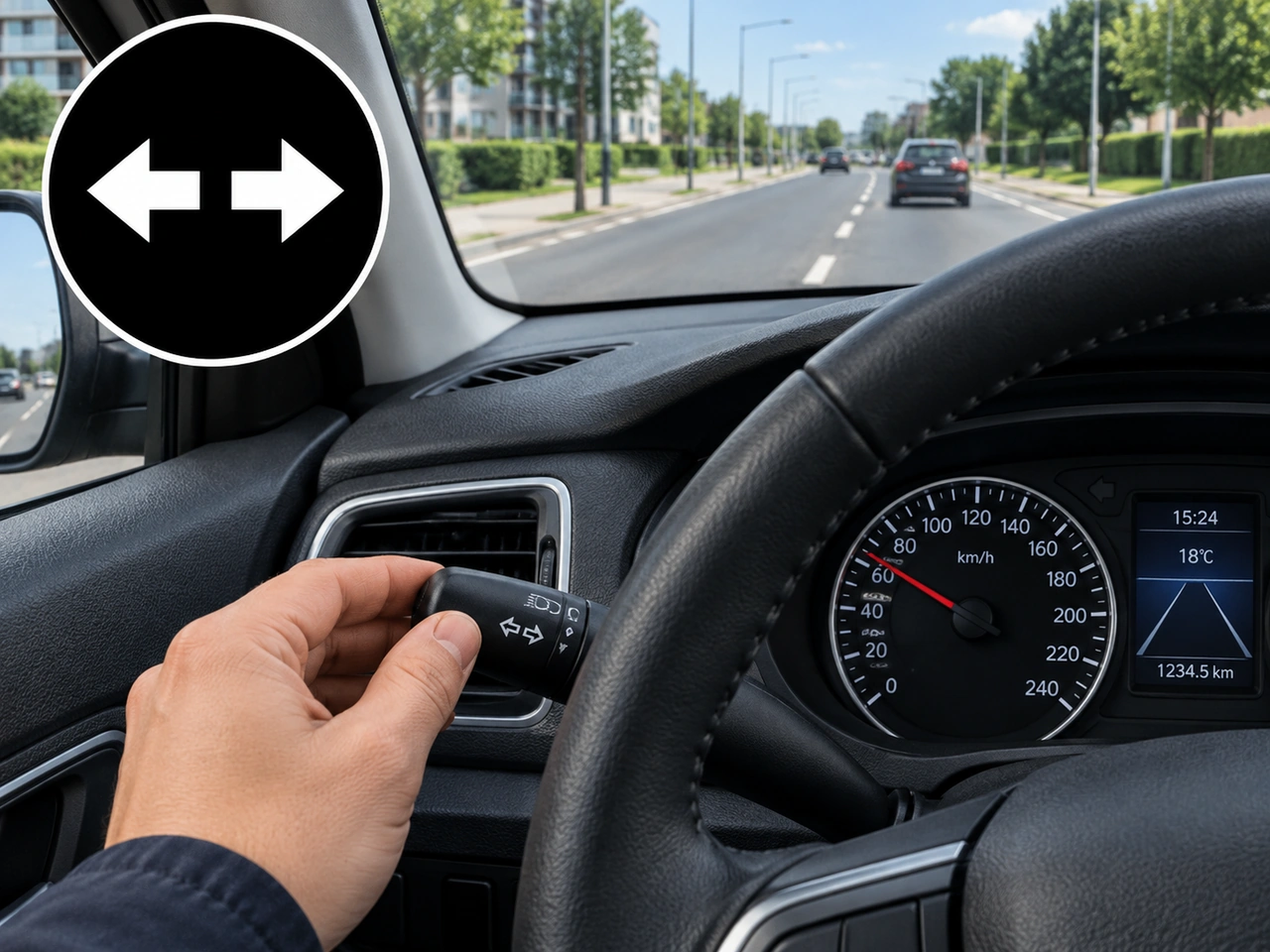
What should you do if a direction indicator does not cancel after a turn?

44. What should you do if a direction indicator does not cancel after a turn?

Press the horn.
Switch on the hazard warning lights.
✓ Return the indicator control to its neutral position.
Leave it flashing until the next turn.

Direction indicators often cancel automatically after a turn, but if an indicator remains on, return the indicator control to its neutral position so you do not mislead other road users.

Returning the indicator stalk to its neutral position
AI-generated by Traffic-rules.com • WCIT • CC BY-SA
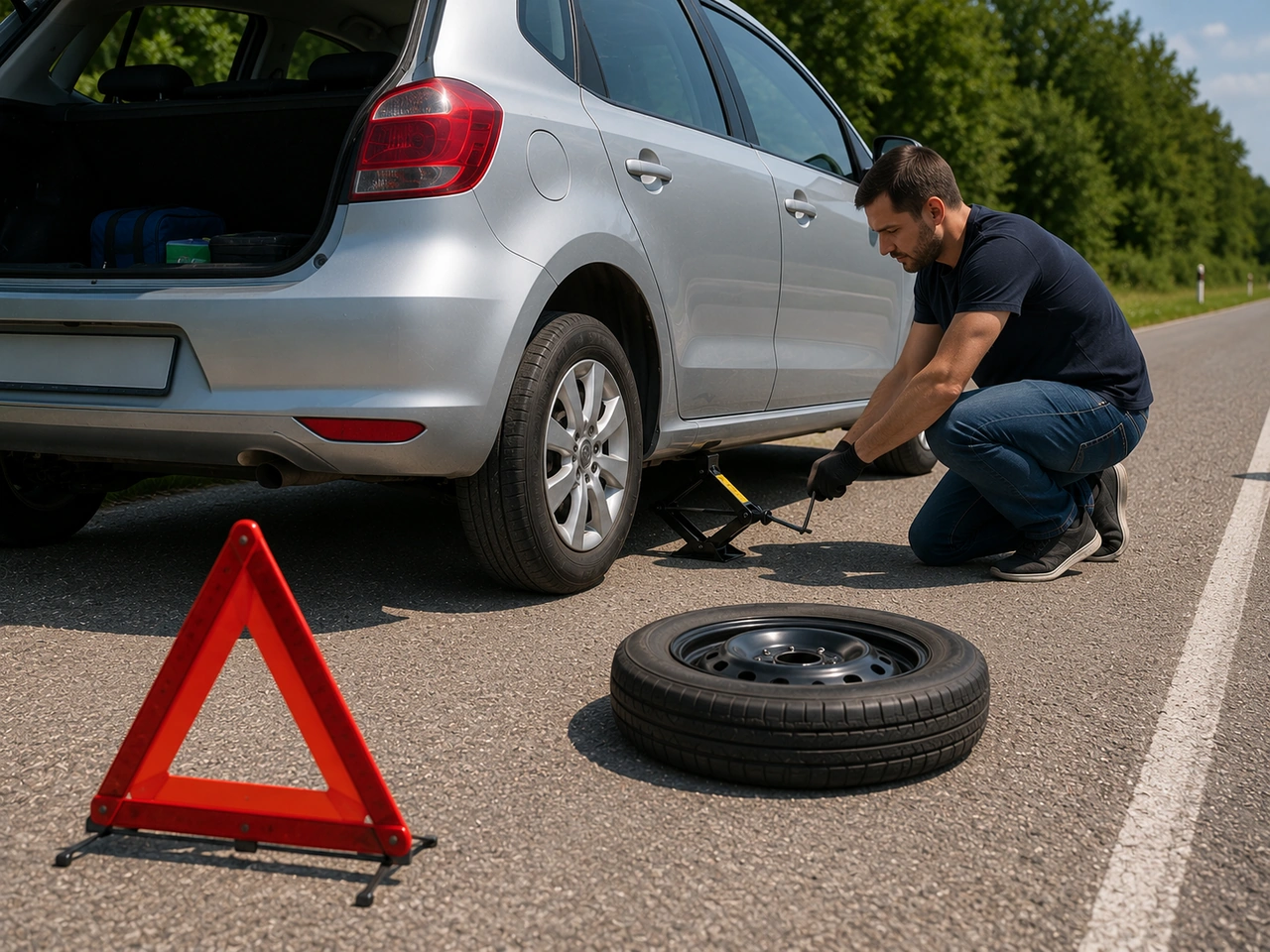
What should you do at a railway crossing when the barriers are closing?

45. What should you do at a railway crossing when the barriers are closing?

✓ Stop and wait until the barriers are completely open.
Continue if the barriers are not fully closed.
Cross quickly if you cannot see a train.
Stop only when the barriers are fully lowered.

Never enter a railway crossing when barriers are closing or warning signals are active. Stop and wait until it is safe.

Barriers closing at a railway crossing
AI-generated by Traffic-rules.com • WCIT • CC BY-SA
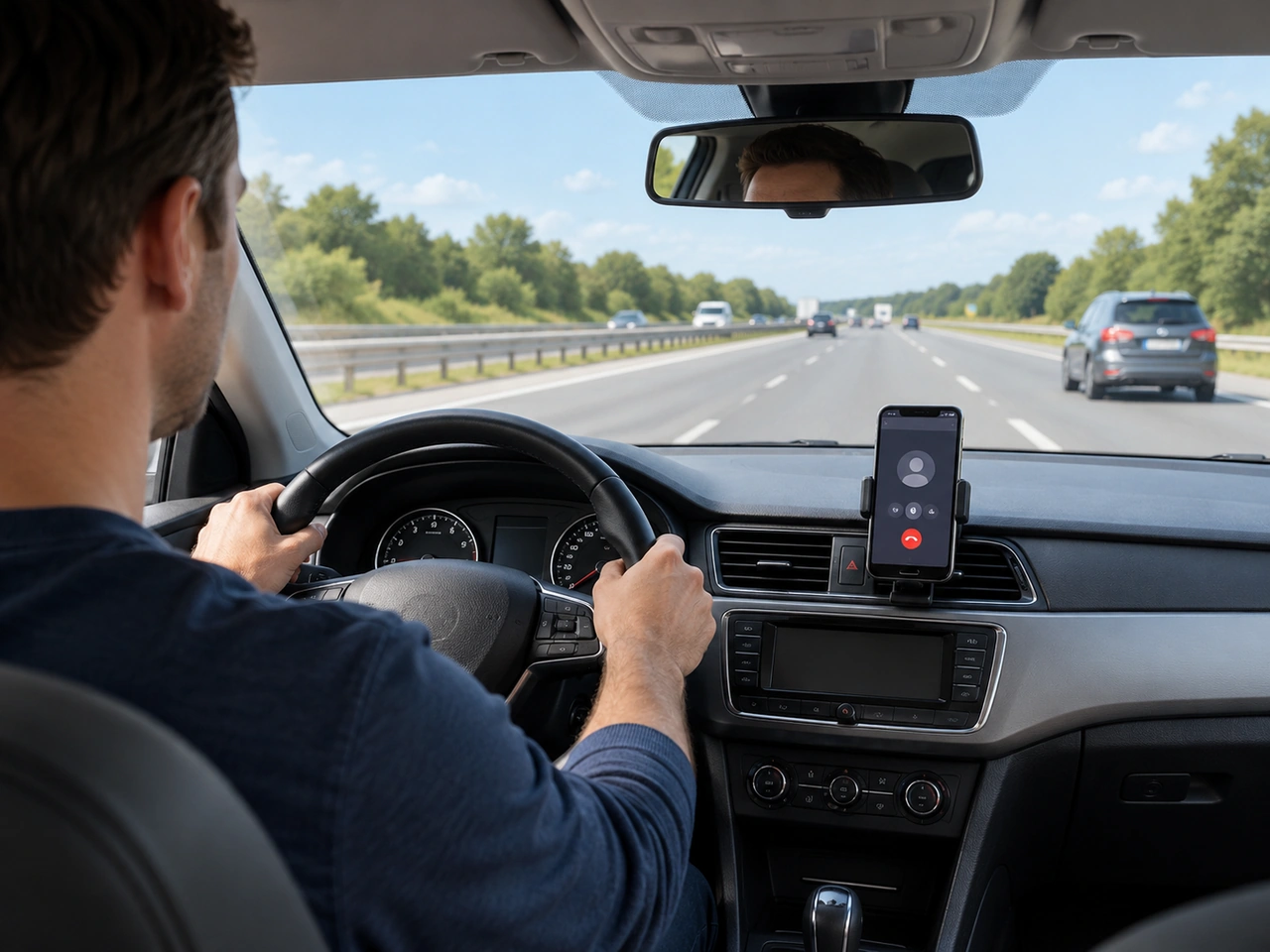
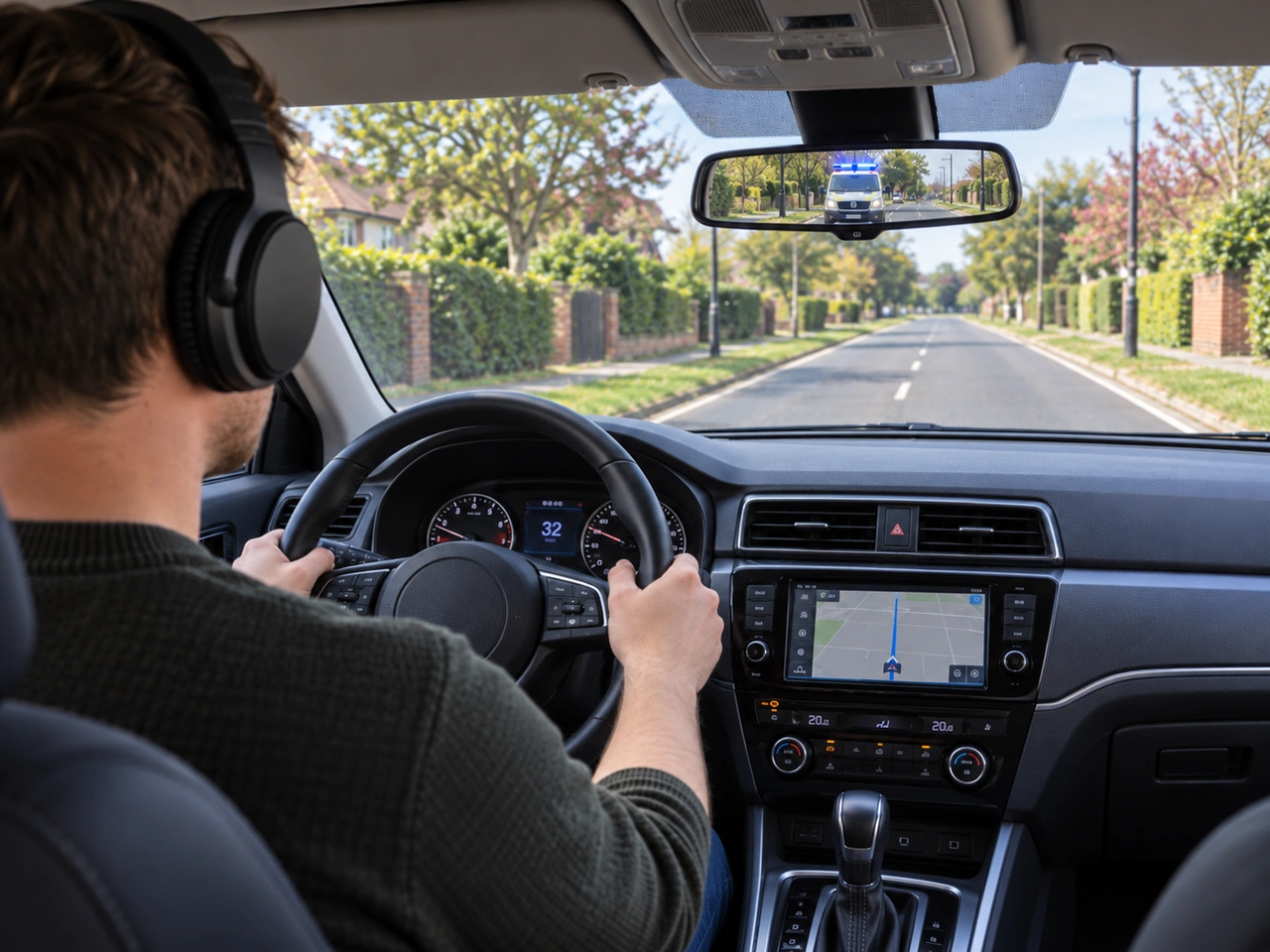
What should you do if an emergency vehicle approaches with lights or siren on?

46. What should you do if an emergency vehicle approaches with lights or siren on?

Ignore it if there is not enough room to pass.
Speed up so the vehicle can follow you.
Move aside without checking surrounding traffic.
✓ Stay calm and make room safely.

When an emergency vehicle uses lights or siren, check your surroundings and make room safely without sudden or dangerous movements.

Emergency vehicle approaching with warning lights flashing
AI-generated by Traffic-rules.com • WCIT • CC BY-SA
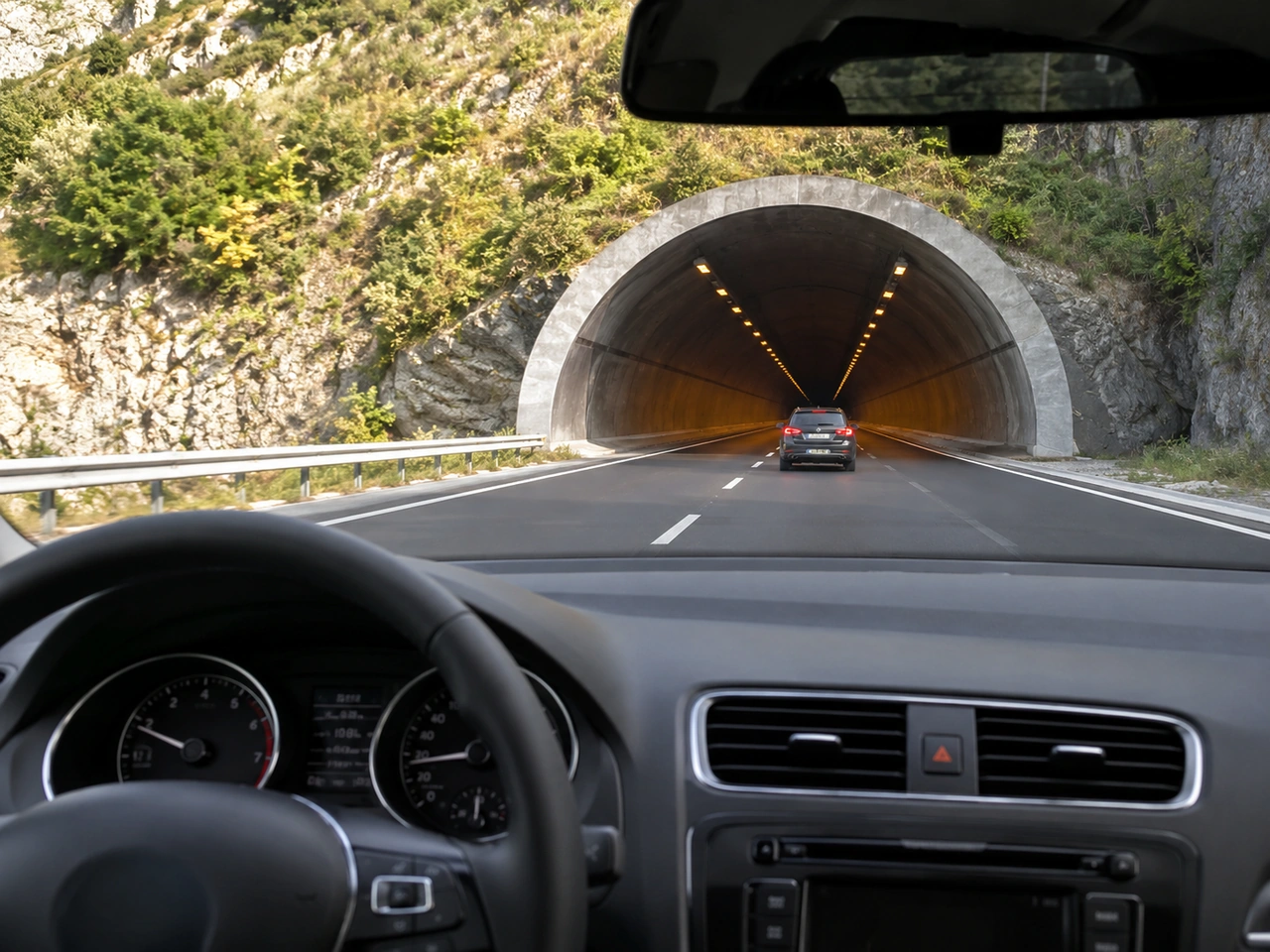
What does this vehicle-control symbol indicate?

47. What does this vehicle-control symbol indicate?

✓ Exterior mirror adjustment.
Electric window control.
Mirror folding.
Seat adjustment.

This control adjusts the vehicle's exterior mirrors. The driver normally selects the left or right mirror and then moves the control to change its angle.

Control for adjusting the exterior mirrors
AI-generated by Traffic-rules.com • WCIT • CC BY-SA
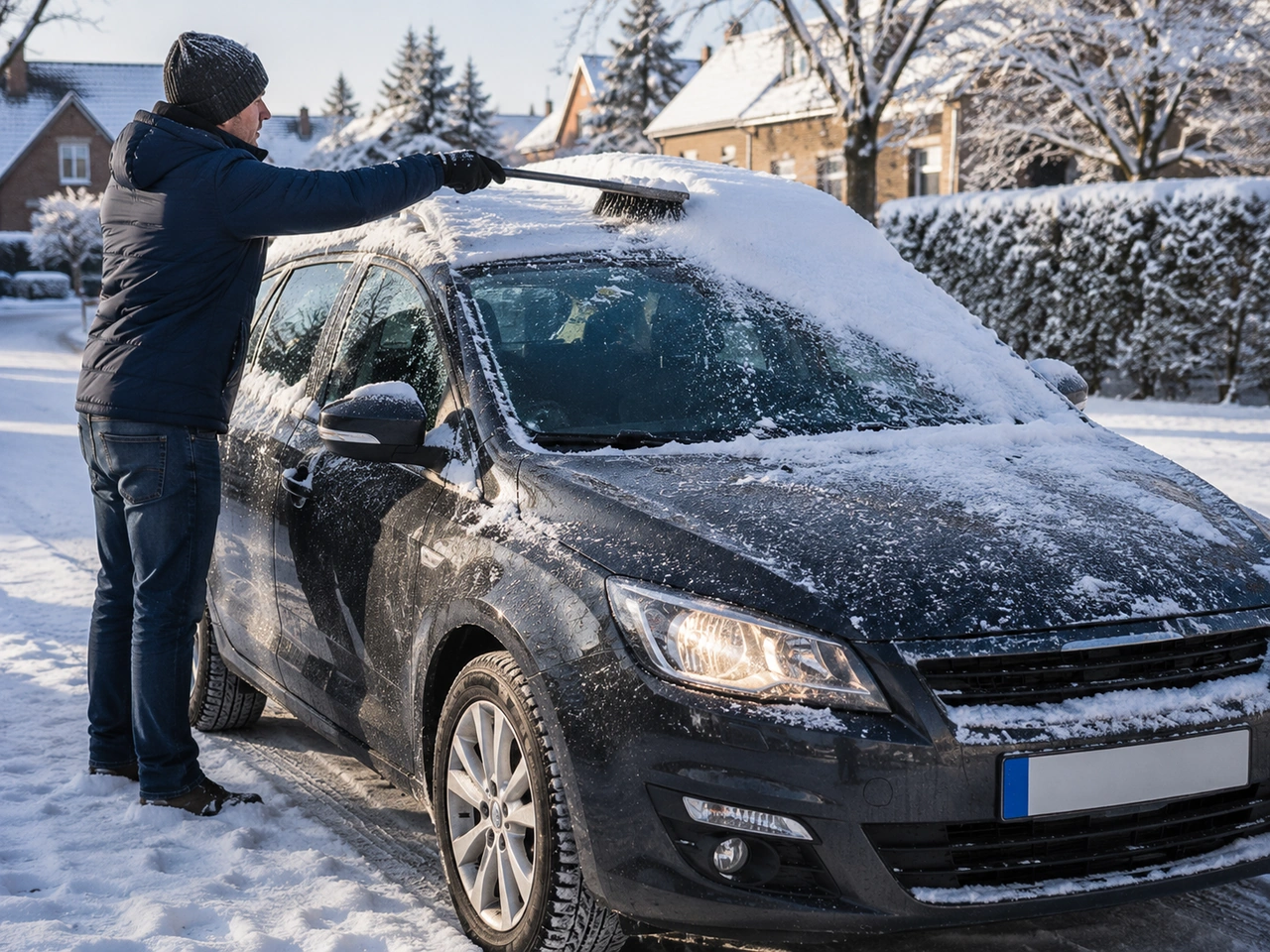
Why should you avoid sounding the horn near horses?

48. Why should you avoid sounding the horn near horses?

✓ The noise may frighten them.
Using the horn gives the horse rider priority.
The rider may think you are signalling them to stop.
Horses cannot hear a vehicle horn clearly.

Horses can be startled by sudden or loud noises and may move unpredictably. Slow down, give them plenty of space, and avoid using the horn unless necessary.

Vehicle approaching a horse and rider
AI-generated by Traffic-rules.com • WCIT • CC BY-SA
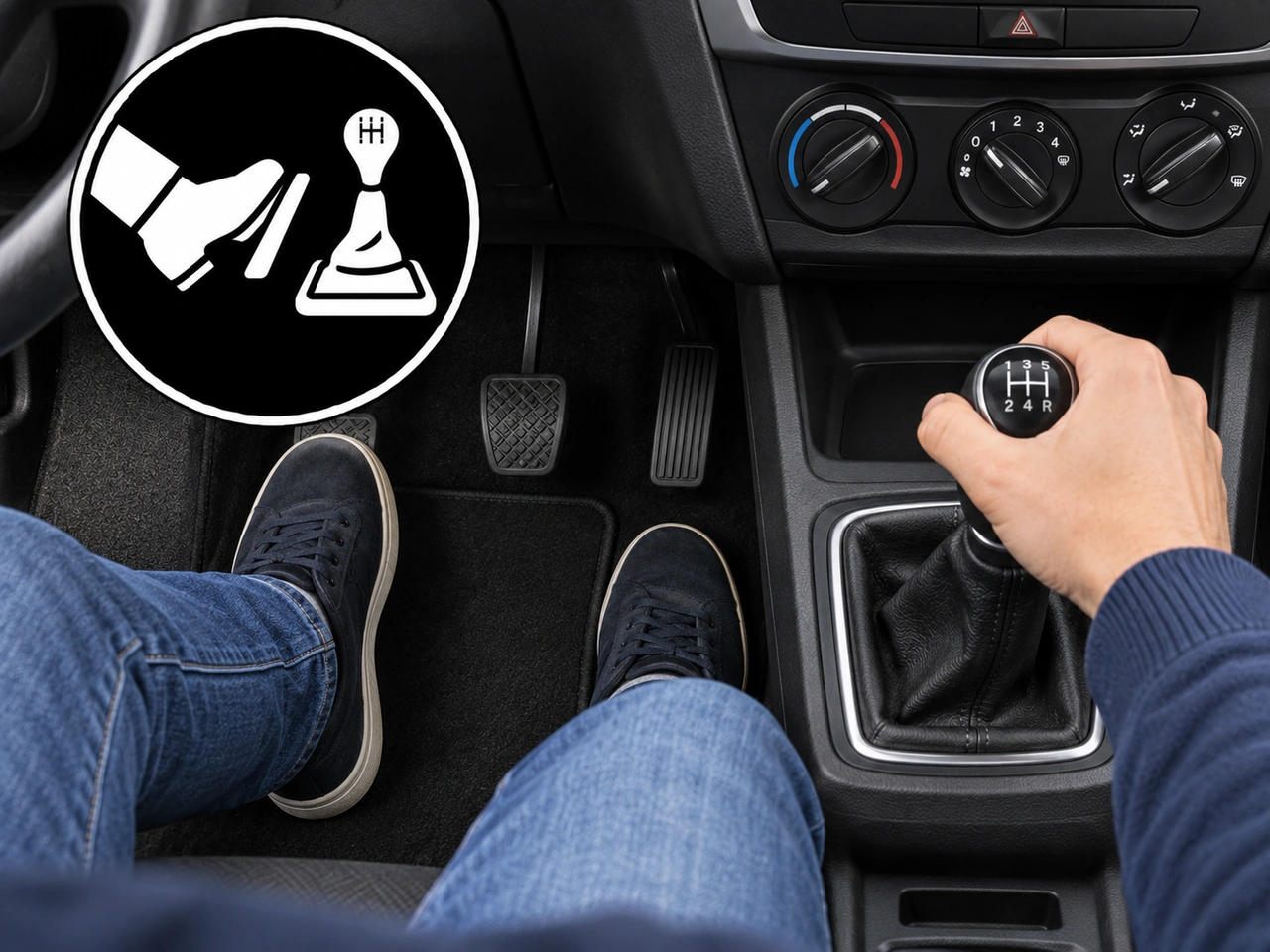
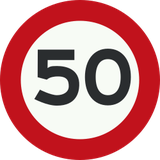
What is the general speed limit for cars in built-up areas in Netherlands?

49. What is the general speed limit for cars in built-up areas in Netherlands?

30 km/h.
✓ 50 km/h.
60 km/h.
40 km/h.

The general speed limit for cars in built-up areas in Netherlands is 50 km/h, unless signs indicate otherwise.

Speed limits for cars in built-up areas
AI-generated by Traffic-rules.com • WCIT • CC BY-SA
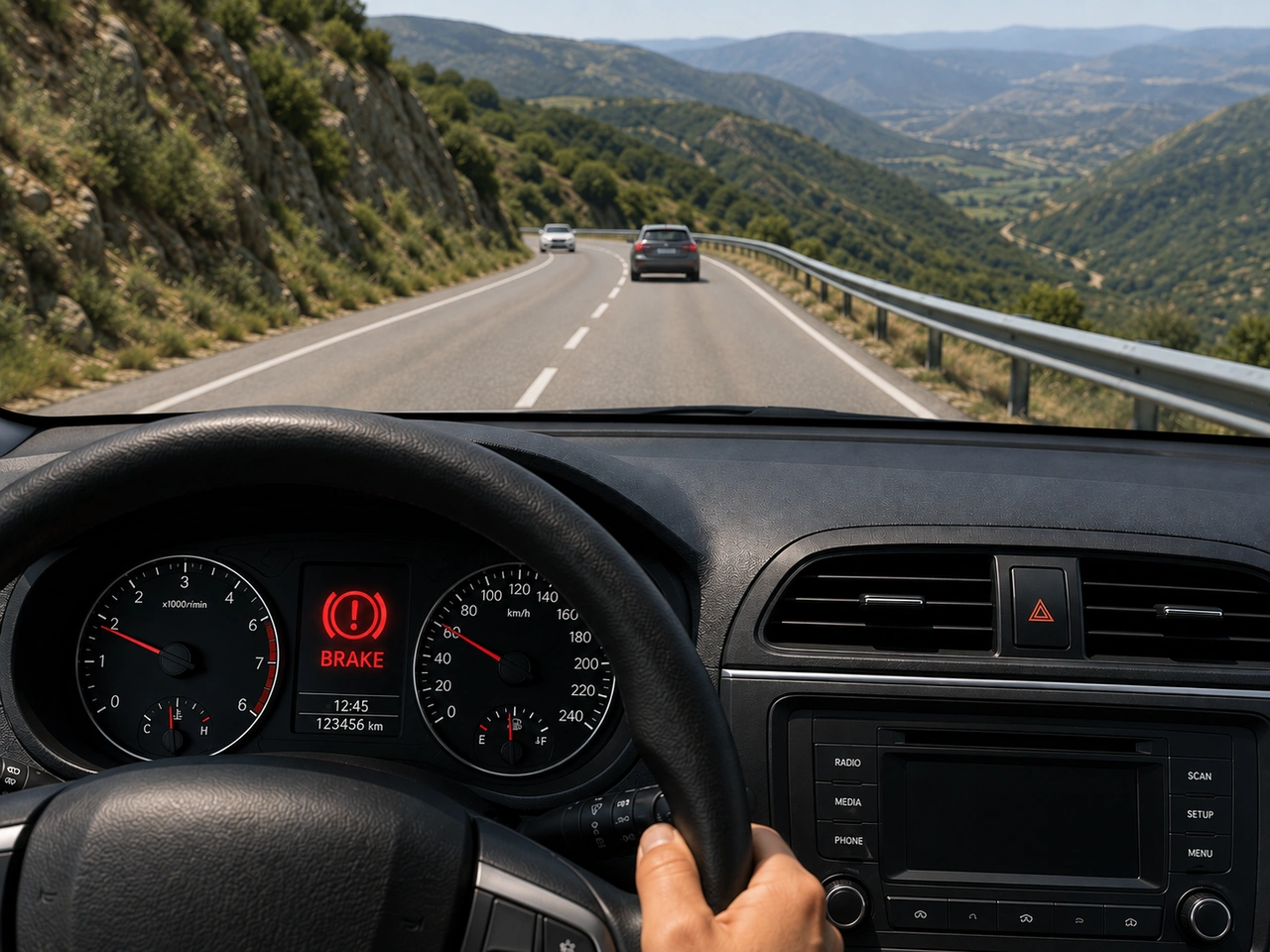
What is the safest choice if you have consumed alcohol?

50. What is the safest choice if you have consumed alcohol?

Drive slowly and avoid busy roads.
✓ Do not drive and arrange a sober form of transport.
Eat something and wait a short while.
Drink coffee before driving.

Alcohol can impair judgement, coordination, vision, and reaction time. A sober driver, taxi, public transport, or an overnight stay is the safer choice.

Alcohol consumption and the decision not to drive
AI-generated by Traffic-rules.com • WCIT • CC BY-SA