QuizTraffic rulesNorway

This interesting quiz helps you test your knowledge in a clear and visual way. With easy multiple-choice questions, you can quickly build confidence and learn new facts while keeping it simple, interactive, and fun.


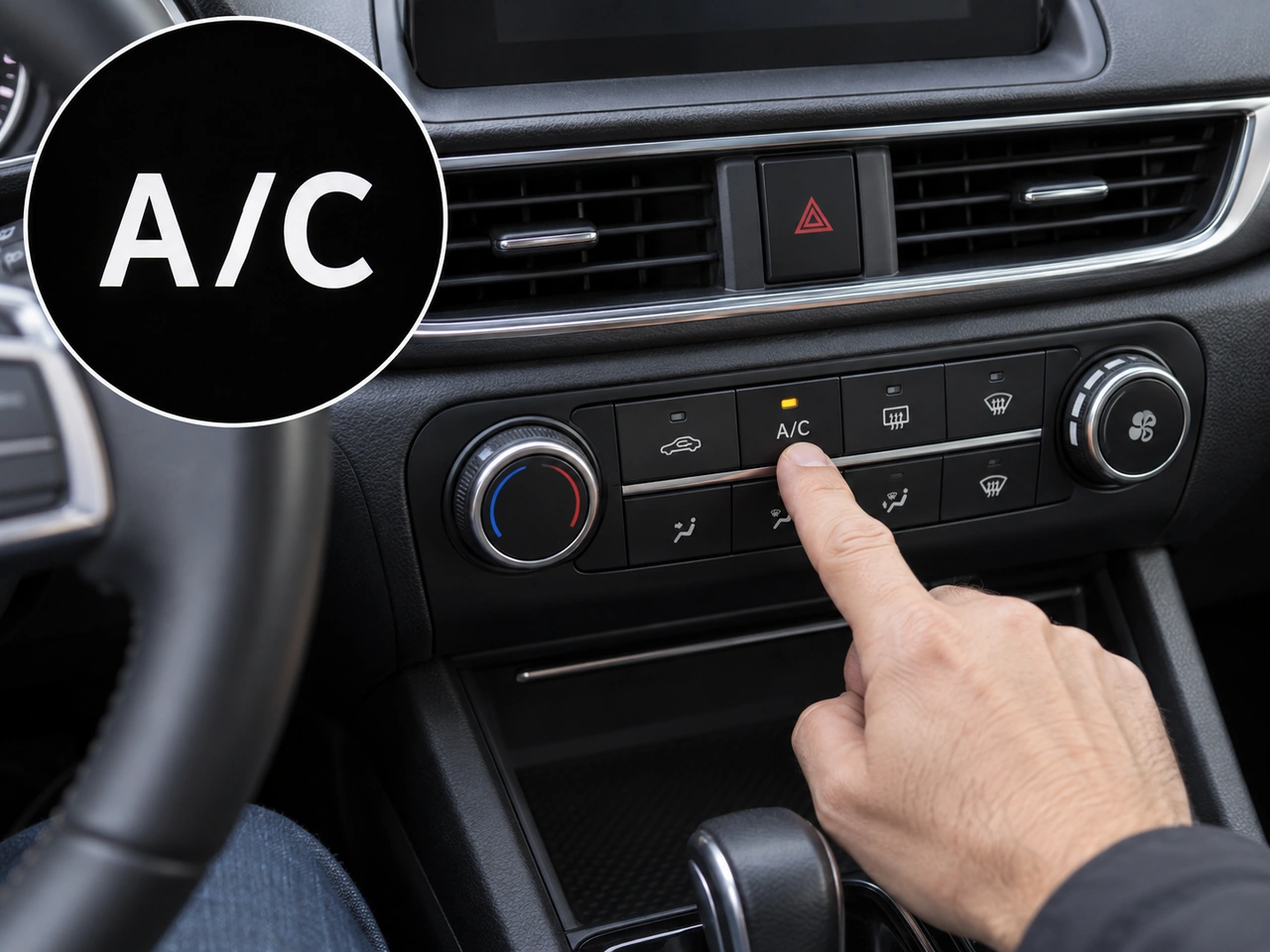
What does this vehicle-control symbol indicate?

501. What does this vehicle-control symbol indicate?

Rear window demister.
✓ Air conditioning.
Air recirculation.
Fan speed.

The A/C symbol controls the vehicle's air-conditioning system. Air conditioning can cool and dehumidify the air inside the vehicle, which can also help clear mist from the windows.

Air-conditioning control with the A/C symbol
AI-generated by Traffic-rules.com • WCIT • CC BY-SA
You must stop at a red traffic light.

502. You must stop at a red traffic light.

✓ True.
False.

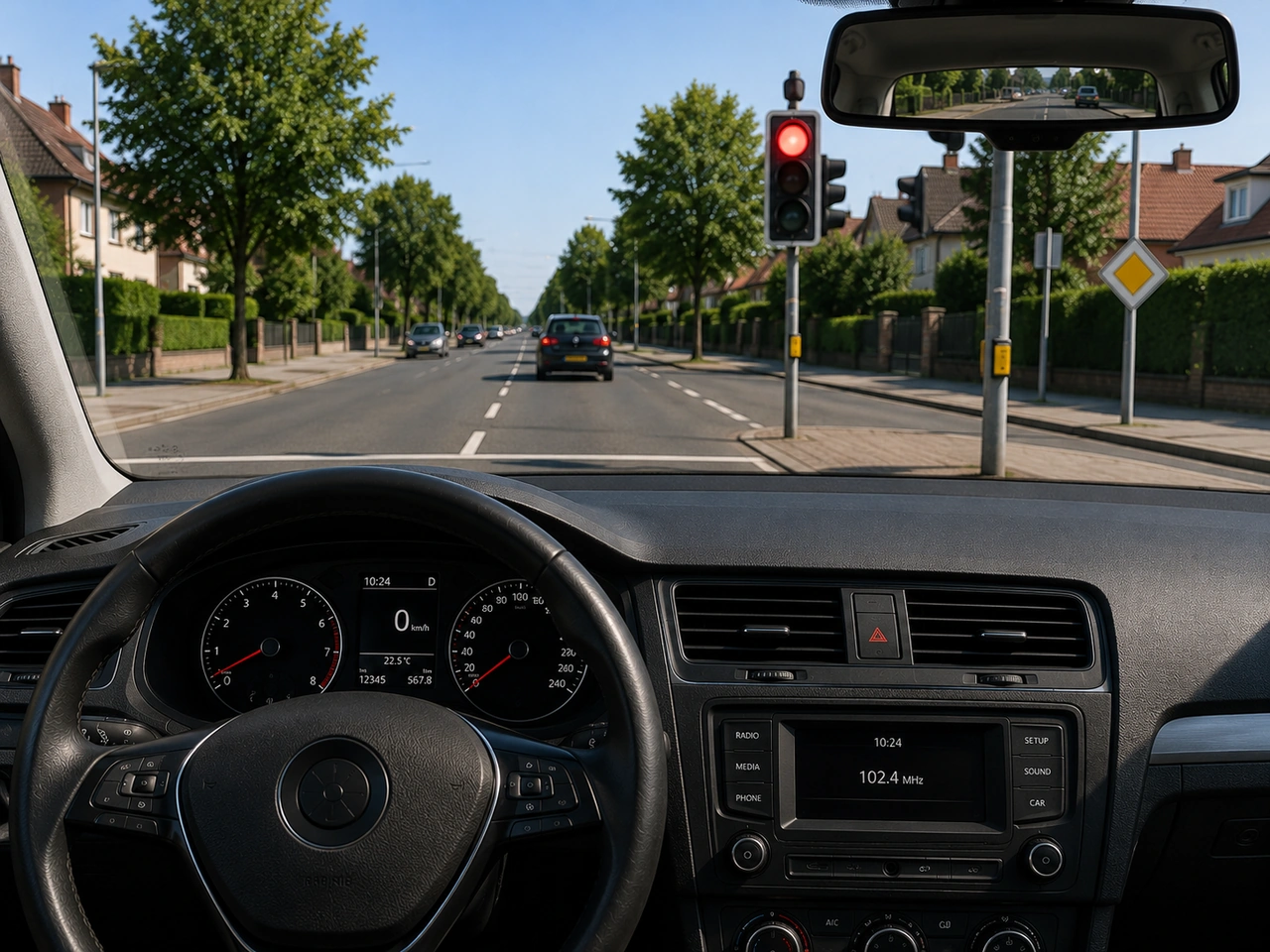
A red traffic light means you must stop and wait until it is allowed to proceed.

Vehicle stopped at a red traffic light
AI-generated by Traffic-rules.com • WCIT • CC BY-SA
Why should you make sure drivers have seen you before crossing?

503. Why should you make sure drivers have seen you before crossing?

Once a driver sees you, no further checks are needed.
✓ To reduce the risk of stepping into their path.
Making eye contact gives you priority.
Eye contact means the driver must stop for you.

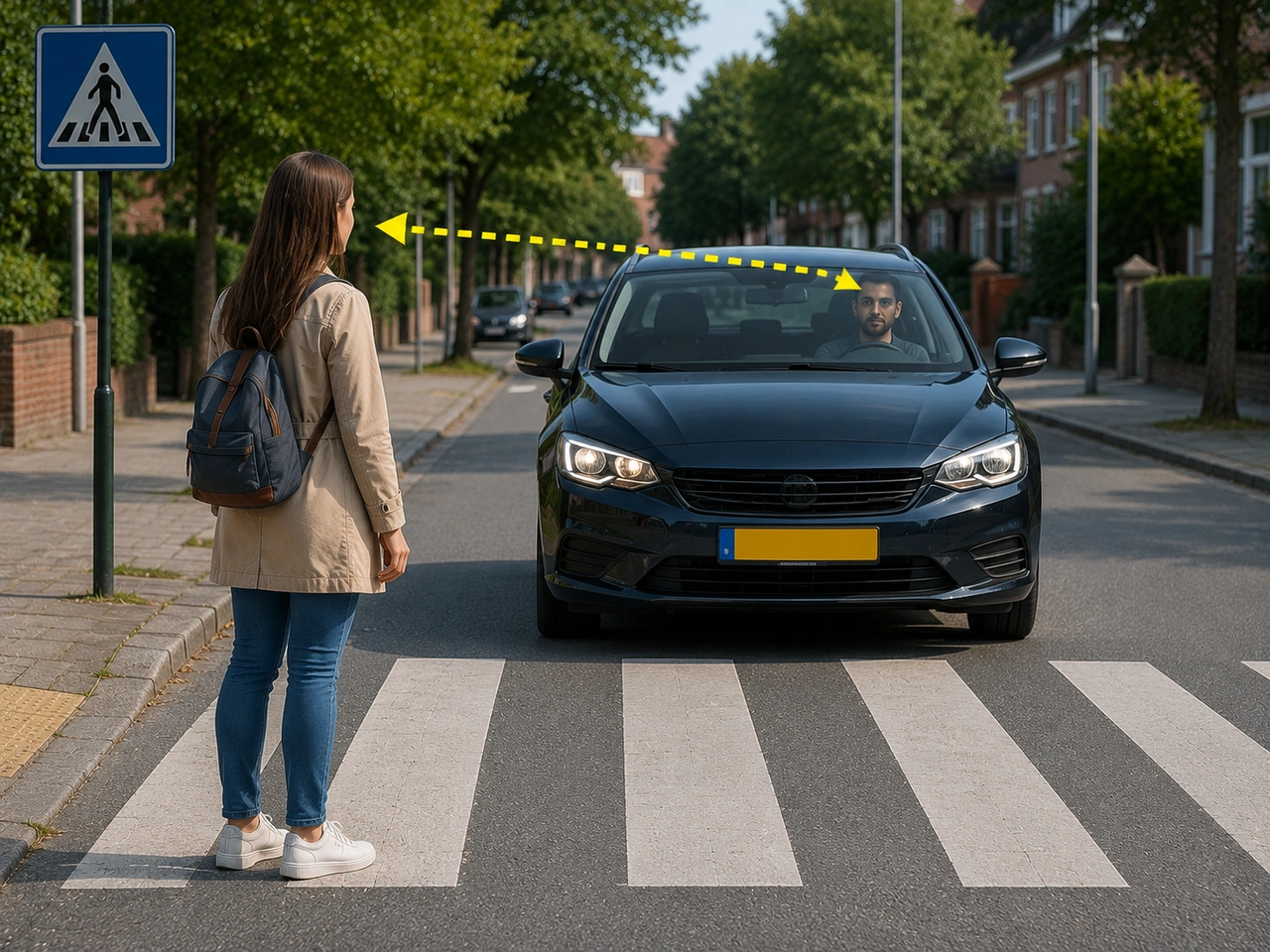
Before crossing, make sure approaching drivers have noticed you and that it is safe to proceed. Do not assume that a driver will stop simply because you have seen each other.

Pedestrian checking whether an approaching driver has seen them
AI-generated by Traffic-rules.com • WCIT • CC BY-SA
Which licence category is mainly associated with trucks?

504. Which licence category is mainly associated with trucks?

Licence D.
Licence A.
✓ Licence C.
Licence B.

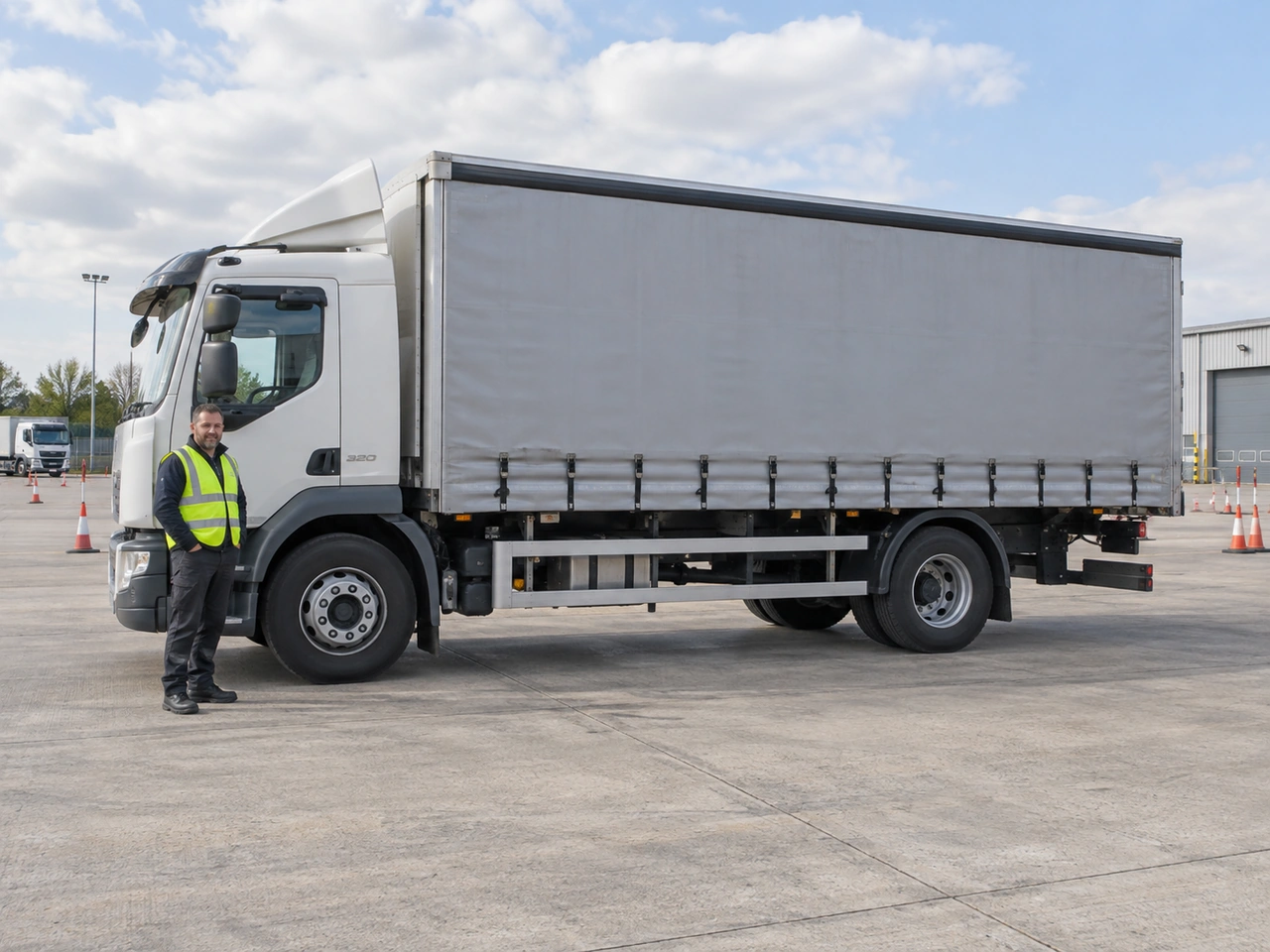
Driving licence C is mainly associated with trucks. Category C1 covers smaller heavy vehicles, C covers larger heavy vehicles, and C1E and CE allow heavier trailers.

Truck and category C driving licence
AI-generated by Traffic-rules.com • WCIT • CC BY-SA
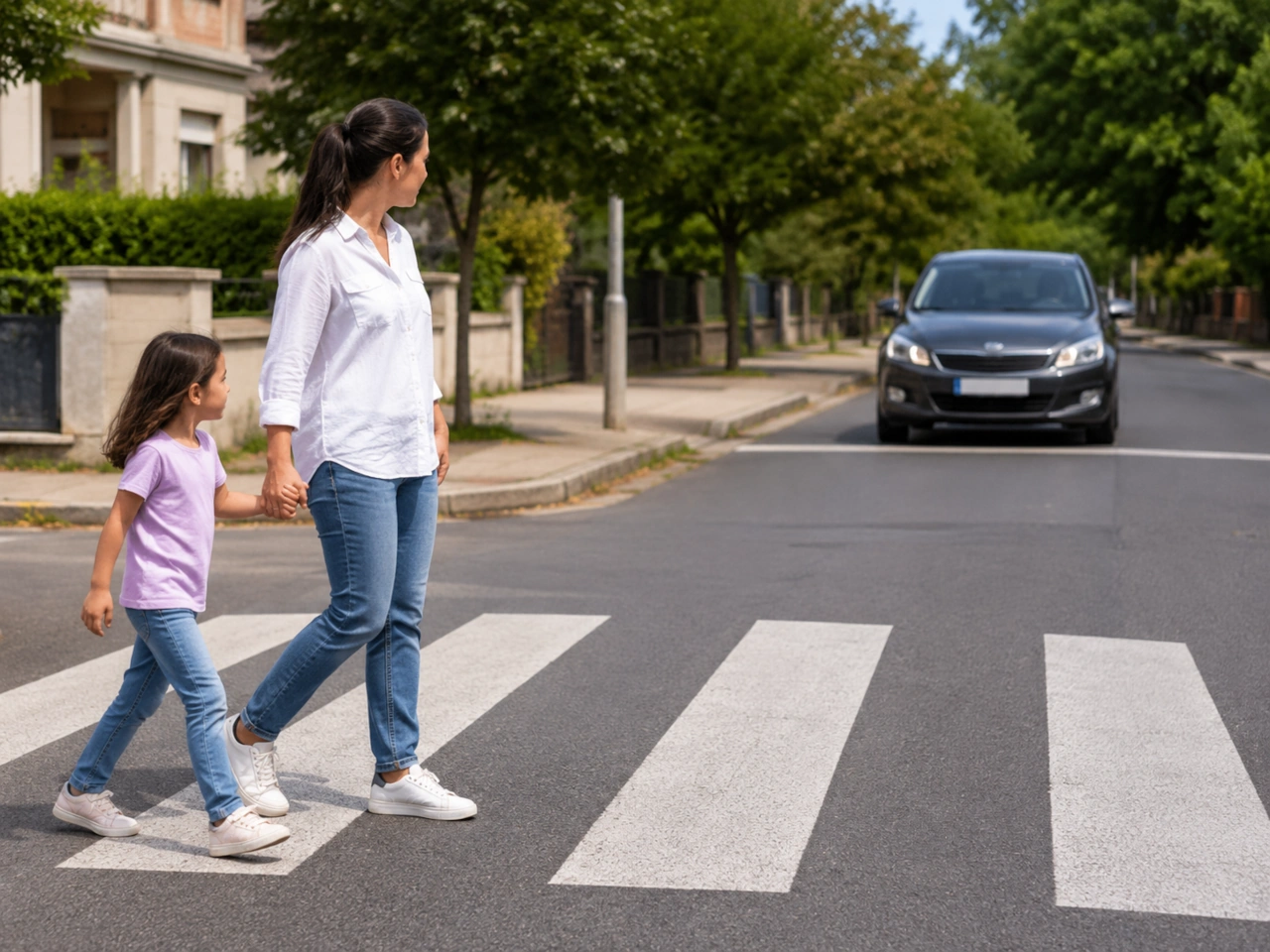
What is the safest way to cross the road with a child?

505. What is the safest way to cross the road with a child?

Let them walk slightly ahead of you.
Cross separately so everyone has more space.
✓ Hold their hand and keep them close.
Let them run once the first lane is clear.

Children can be unpredictable near traffic. Keep them close and guide them safely across the road.

Adult holding a child's hand while crossing the road
AI-generated by Traffic-rules.com • WCIT • CC BY-SA
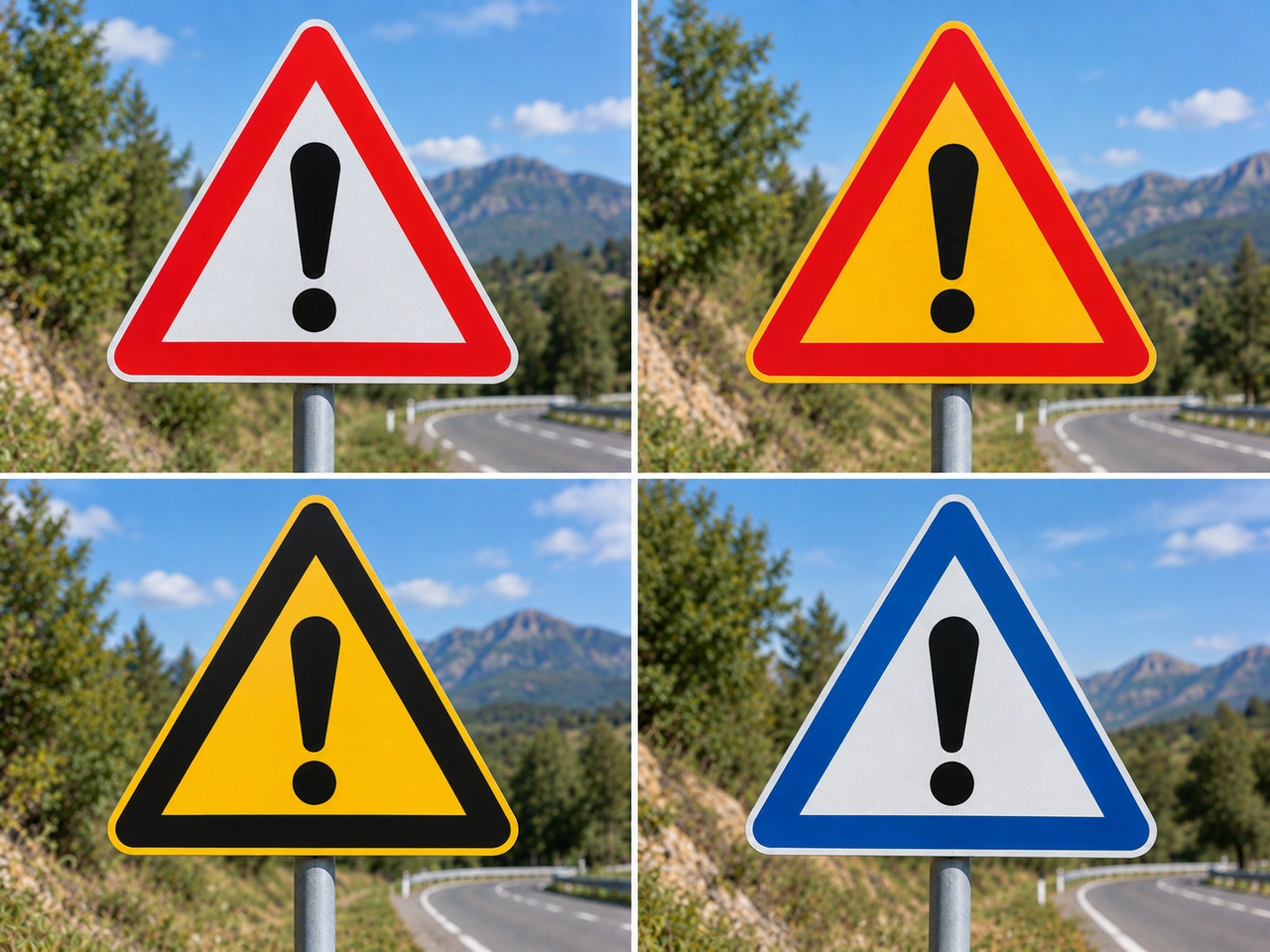
Which colour combination is commonly used for warning signs in Norway?

506. Which colour combination is commonly used for warning signs in Norway?

✓ Red border with white background.
Blue border with white background.
Red border with yellow background.
Black border with yellow background.

Most warning signs in Norway have a red border with a white background.

Colour combinations used for road warning signs
AI-generated by Traffic-rules.com • WCIT • CC BY-SA
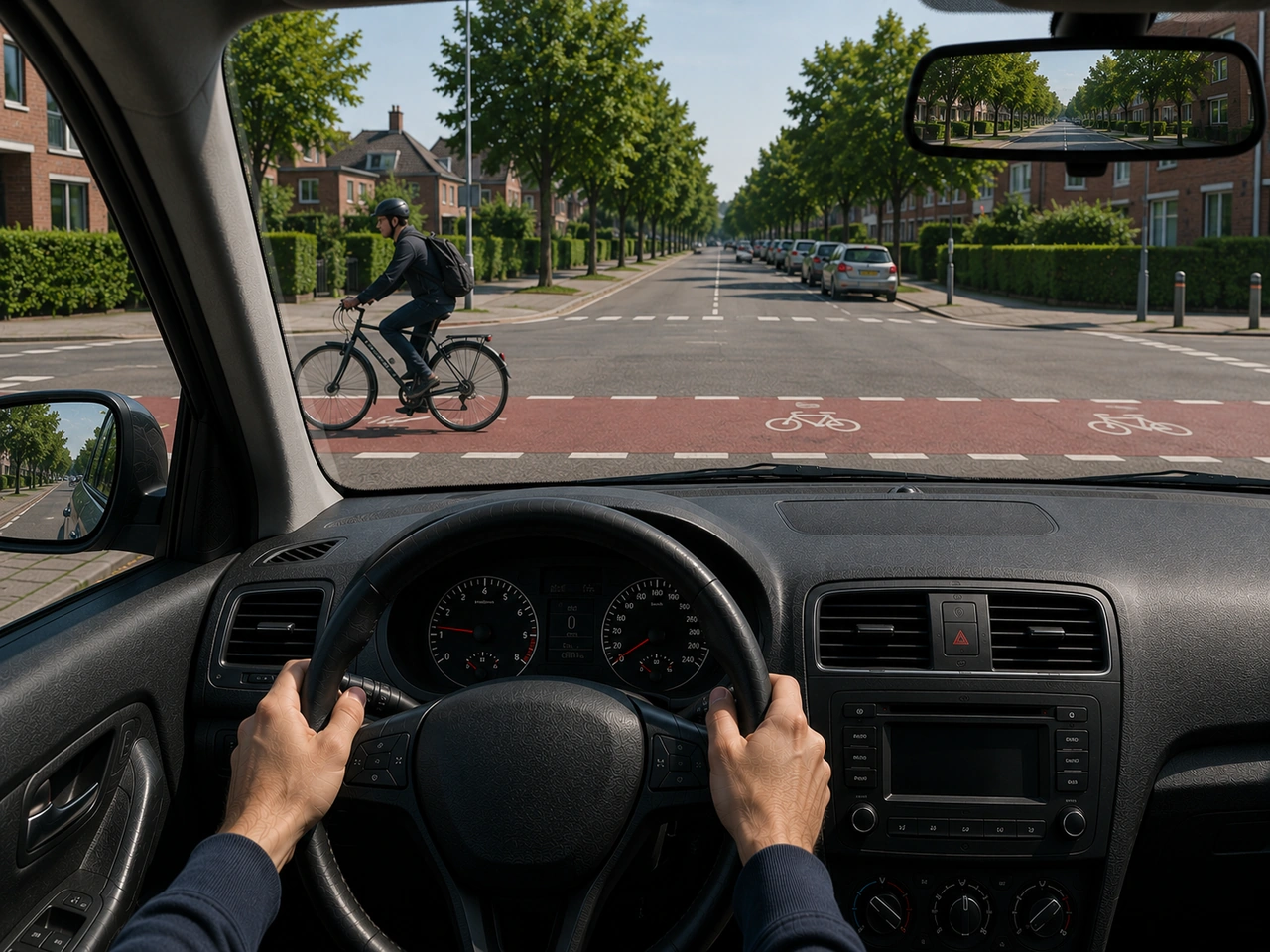
What should you do before turning across a cycle lane?

507. What should you do before turning across a cycle lane?

Ignore the cycle lane if you are signalling.
Enter the cycle lane without checking behind.
Sound your horn and turn immediately.
✓ Check mirrors and blind spots carefully for cyclists.

Cyclists may be beside or behind you when you turn. Check mirrors and blind spots, signal clearly, and turn only when it is safe.

Vehicle preparing to turn across a cycle lane
AI-generated by Traffic-rules.com • WCIT • CC BY-SA
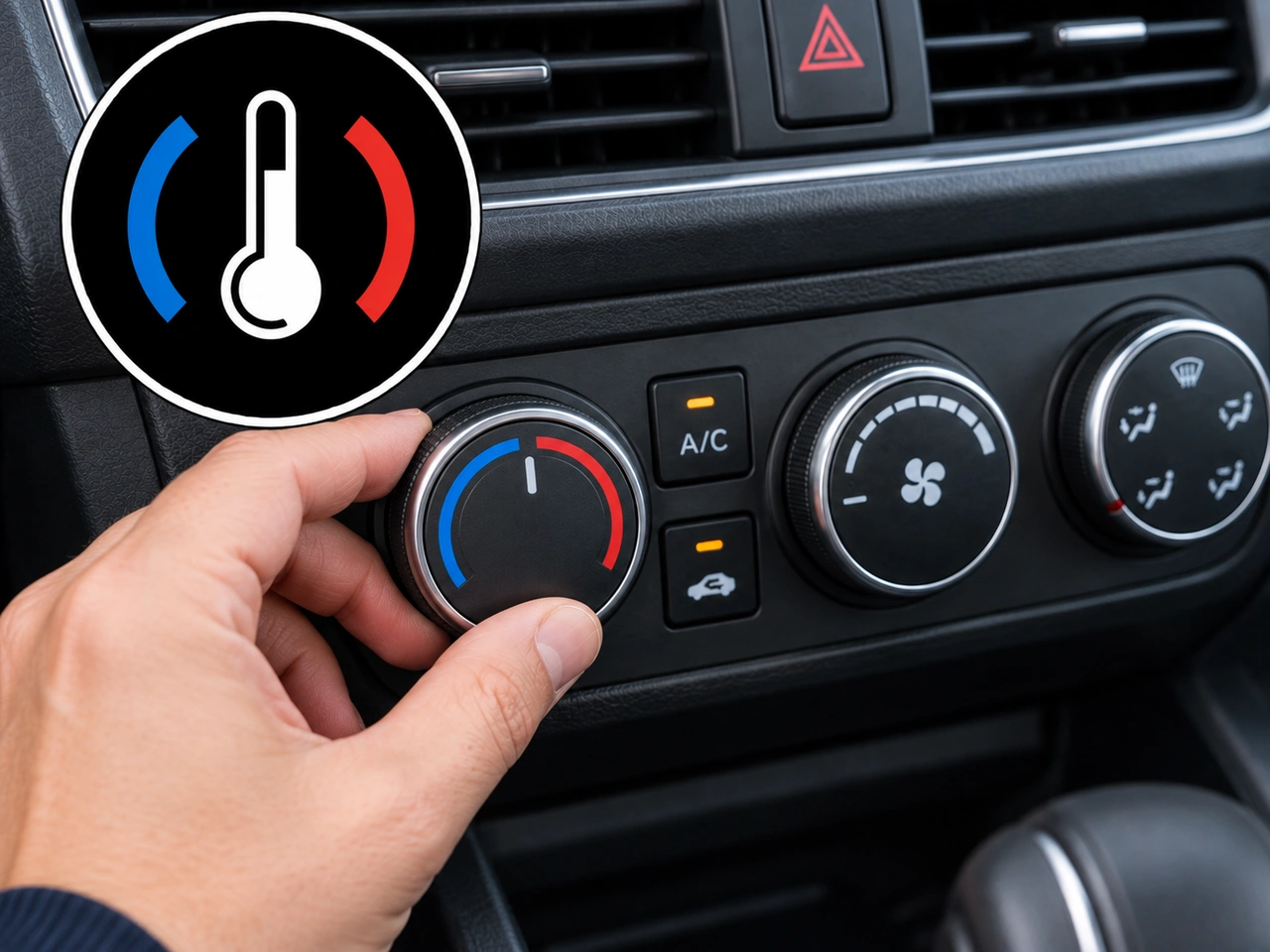
What does this vehicle-control symbol indicate?

508. What does this vehicle-control symbol indicate?

Air recirculation.
✓ Cabin temperature adjustment.
Cabin fan speed.
Seat heating.

This control adjusts the temperature of the air supplied to the cabin. Turning it towards the blue side lowers the selected temperature, while turning it towards the red side raises it.

Control for adjusting the cabin temperature
AI-generated by Traffic-rules.com • WCIT • CC BY-SA
How should a disabled vehicle be towed?

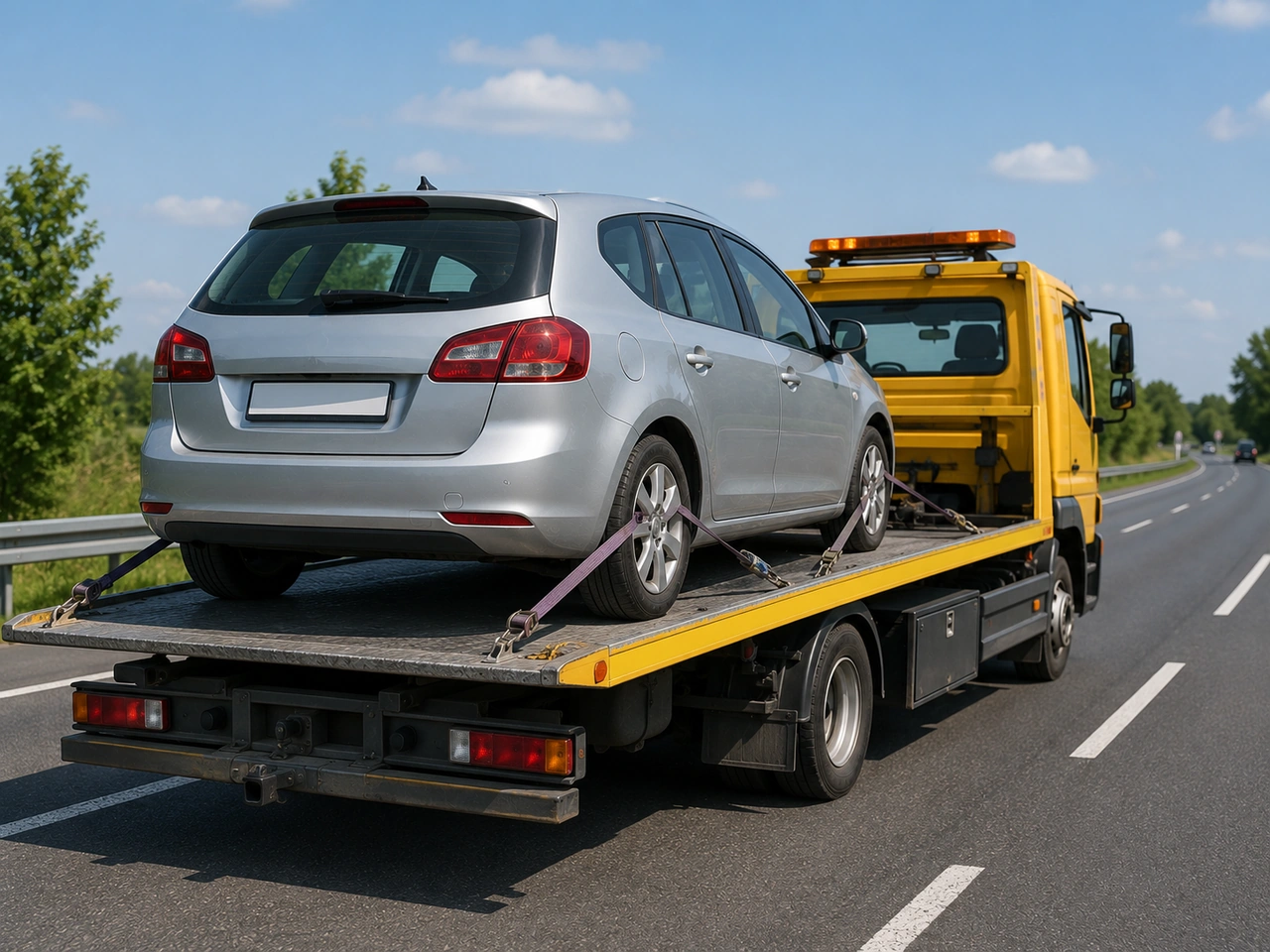
509. How should a disabled vehicle be towed?

With nobody controlling the disabled vehicle.
At the highest possible safe speed.
✓ Use approved towing points and a method permitted by local rules.
By attaching a rope to the bumper.

Incorrect towing can damage the vehicle or cause loss of control. Follow the manufacturer's instructions and local rules, and use professional recovery when the correct procedure is uncertain.

Disabled vehicle being towed
AI-generated by Traffic-rules.com • WCIT • CC BY-SA
What does this dashboard symbol indicate?

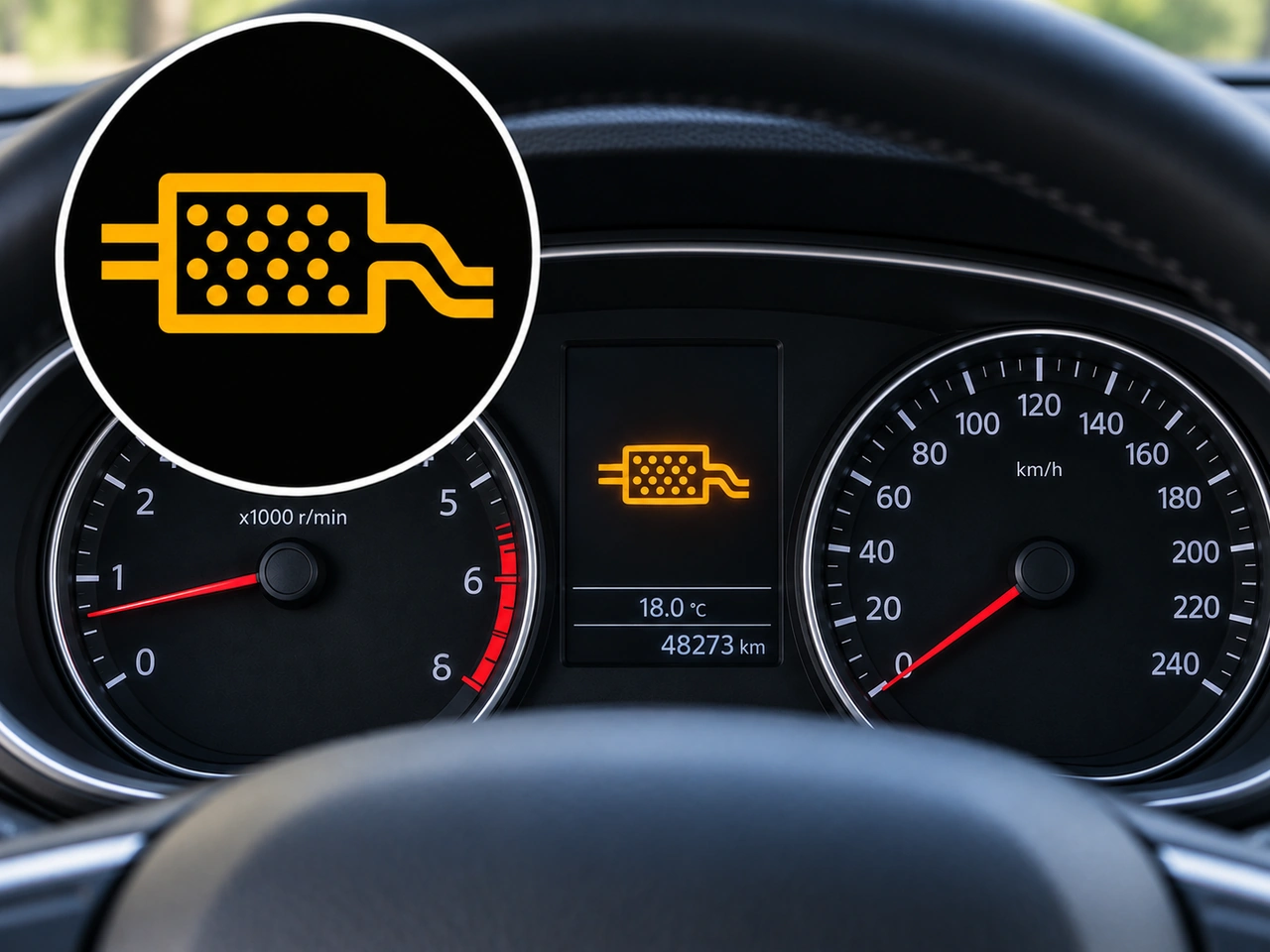
510. What does this dashboard symbol indicate?

Engine-management warning.
✓ Diesel particulate filter warning.
Charging-system warning.
Oil-pressure warning.

This symbol indicates a problem with the diesel particulate filter (DPF), often because soot has accumulated in the filter. The vehicle may require regeneration or professional inspection, depending on the vehicle and warning status.

Diesel particulate filter warning symbol on the dashboard
AI-generated by Traffic-rules.com • WCIT • CC BY-SA
What should you do if another driver does not give way when they should?

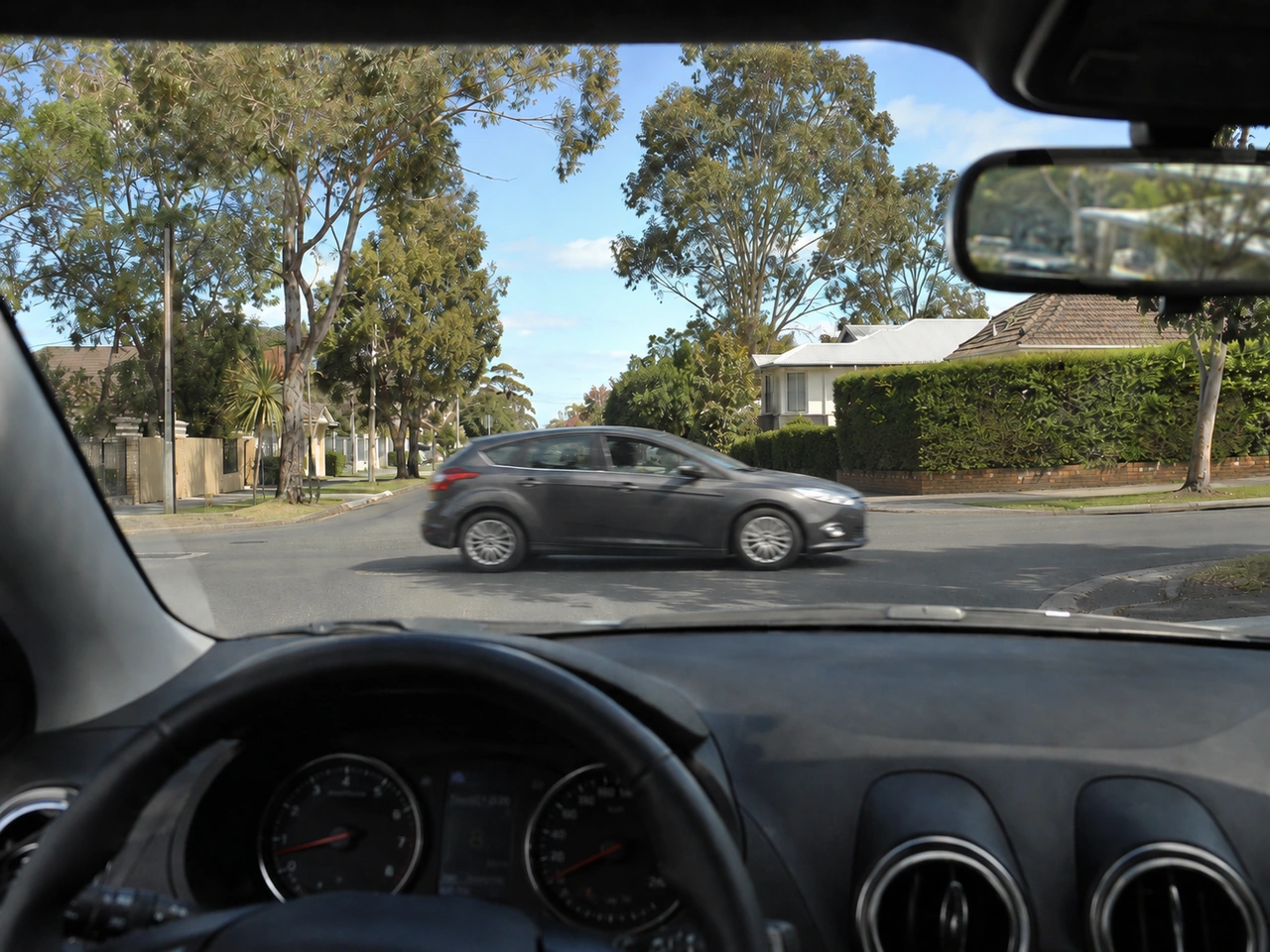
511. What should you do if another driver does not give way when they should?

Move closer so the other driver is forced to give way.
Maintain your speed because you have priority.
✓ Slow down and avoid a collision.
Use the horn and continue at the same speed.

Even if you have priority, safety comes first. Slow down, stay calm, and avoid creating a dangerous situation.

Conflicting vehicle movements at a junction
AI-generated by Traffic-rules.com • WCIT • CC BY-SA
What should you do when approaching a hill crest?

512. What should you do when approaching a hill crest?

Follow the vehicle ahead closely for guidance.
Overtake before reaching the crest.
Maintain speed if no traffic is visible.
✓ Slow down and be prepared for hidden hazards.

A hill crest can hide vehicles, cyclists, pedestrians, or obstacles. Reduce speed and stay in your lane.

Vehicle approaching the crest of a hill
AI-generated by Traffic-rules.com • WCIT • CC BY-SA
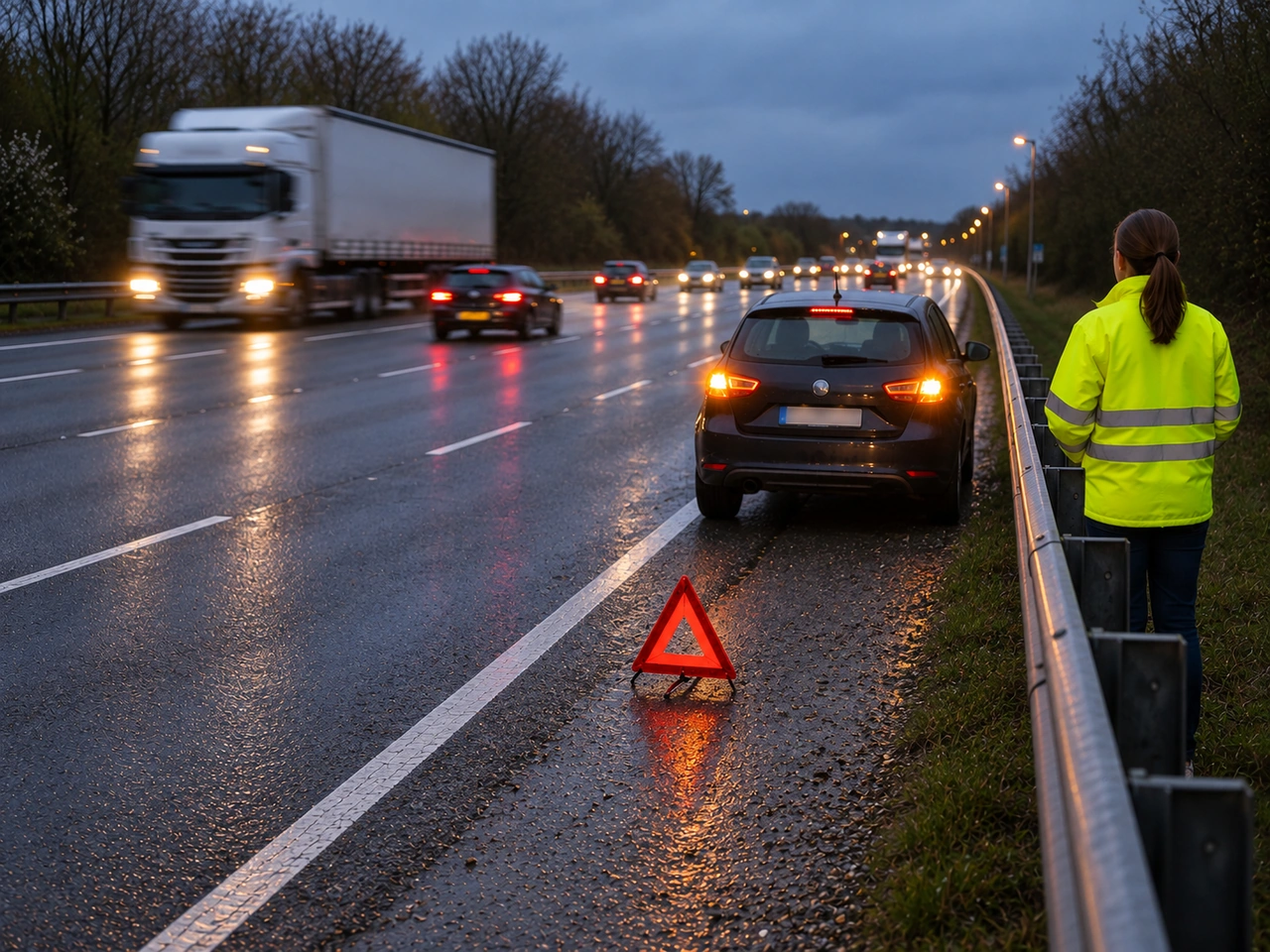
Why is high-visibility clothing useful during a roadside breakdown?

513. Why is high-visibility clothing useful during a roadside breakdown?

It allows you to remain close to moving traffic.
It gives you priority when walking beside the road.
✓ It makes you easier for approaching drivers and recovery workers to see.
It makes hazard warning lights unnecessary.

High-visibility clothing improves your visibility, especially at night or in poor weather, but you must still remain away from traffic.

High-visibility clothing worn during a roadside breakdown
AI-generated by Traffic-rules.com • WCIT • CC BY-SA
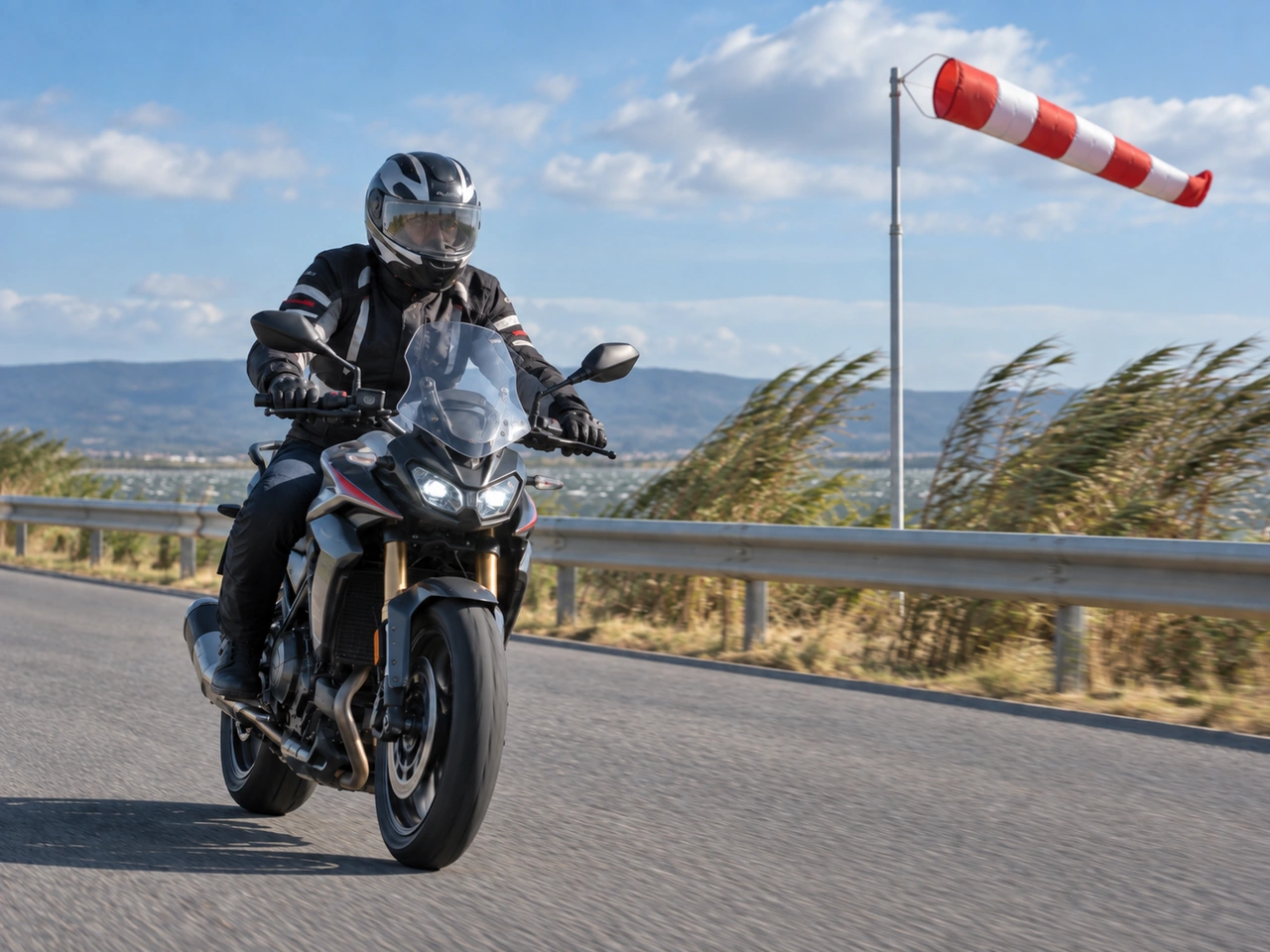
What should a motorcyclist do in strong crosswinds?

514. What should a motorcyclist do in strong crosswinds?

Ride as close to the edge of the road as possible.
✓ Reduce speed and be prepared for sudden gusts.
Accelerate to get through the windy area quickly.
Follow a large vehicle closely for protection from the wind.

Strong crosswinds can push a motorcycle sideways and sudden gusts can affect its stability. Reduce speed, keep a steady grip on the handlebars and allow extra space, especially on exposed roads, bridges, or when passing gaps and large vehicles.

Motorcyclist riding in strong crosswinds
AI-generated by Traffic-rules.com • WCIT • CC BY-SA
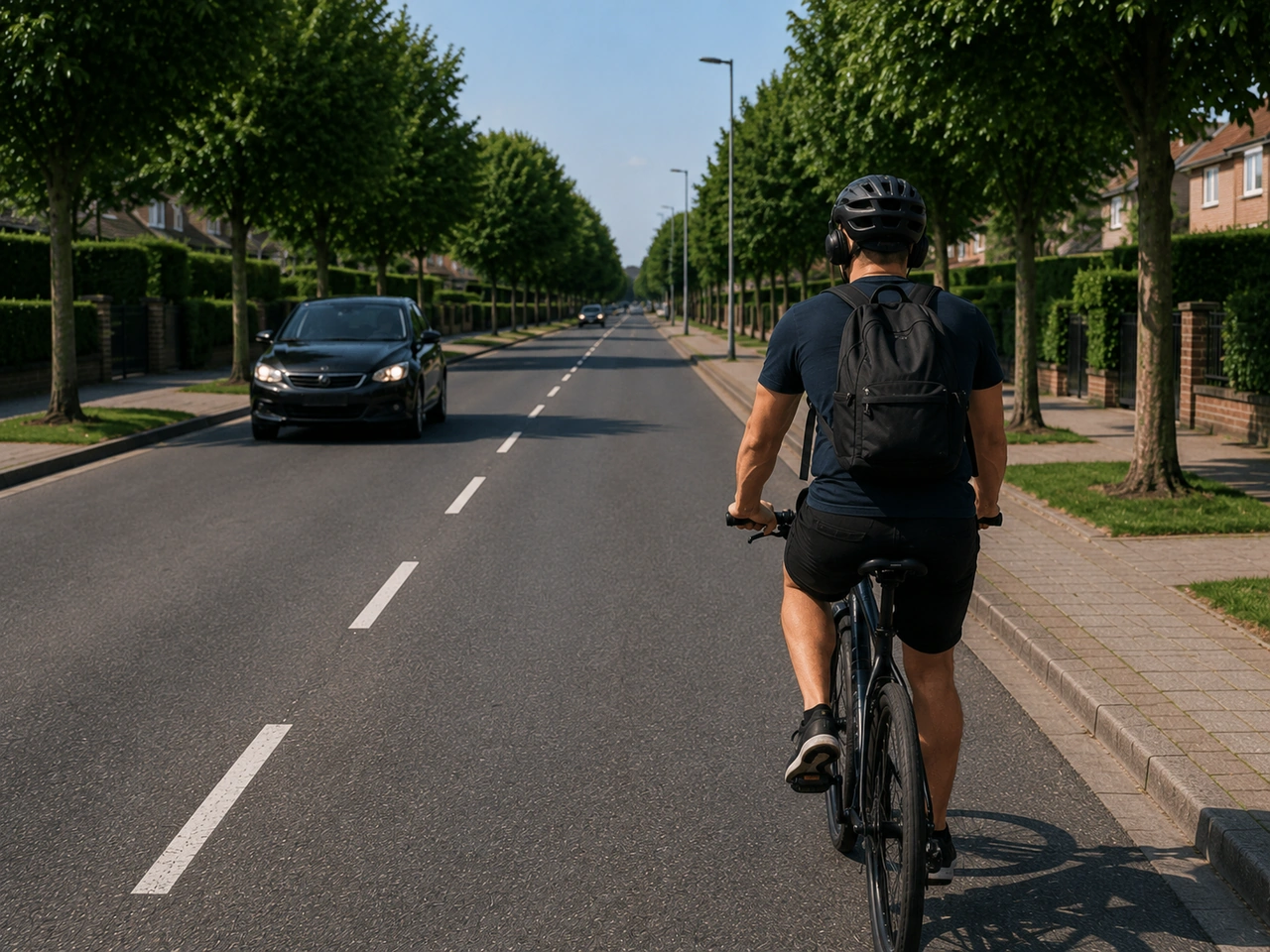
Why can loud music be dangerous while cycling?

515. Why can loud music be dangerous while cycling?

It reduces the grip of the tyres.
✓ You may not hear traffic or warning sounds.
It makes bicycle lights less effective.
It makes the bicycle harder to balance.

Hearing approaching vehicles, bells, horns, and other warning sounds is an important part of staying aware.

Cyclist listening to music near traffic
AI-generated by Traffic-rules.com • WCIT • CC BY-SA
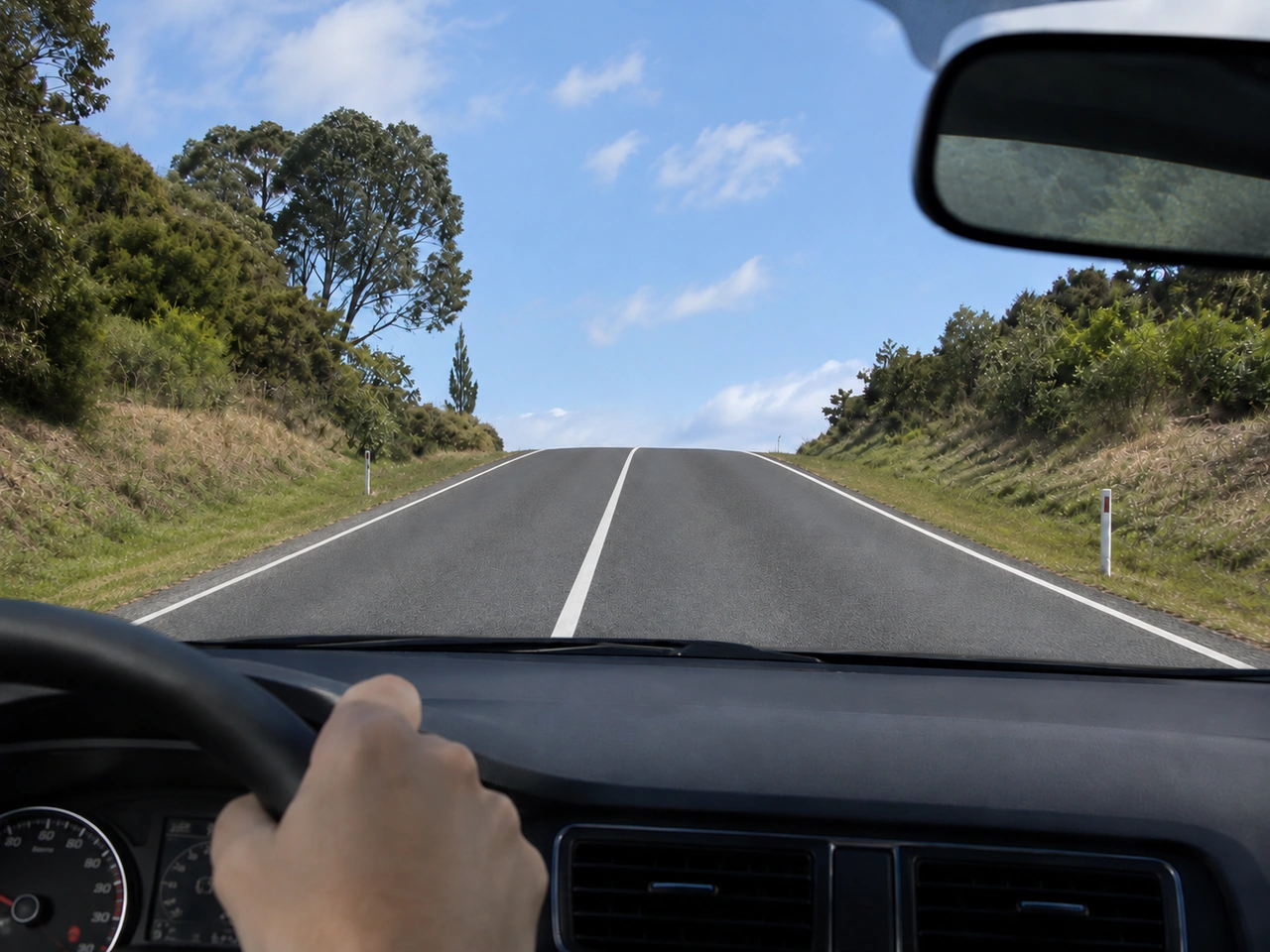
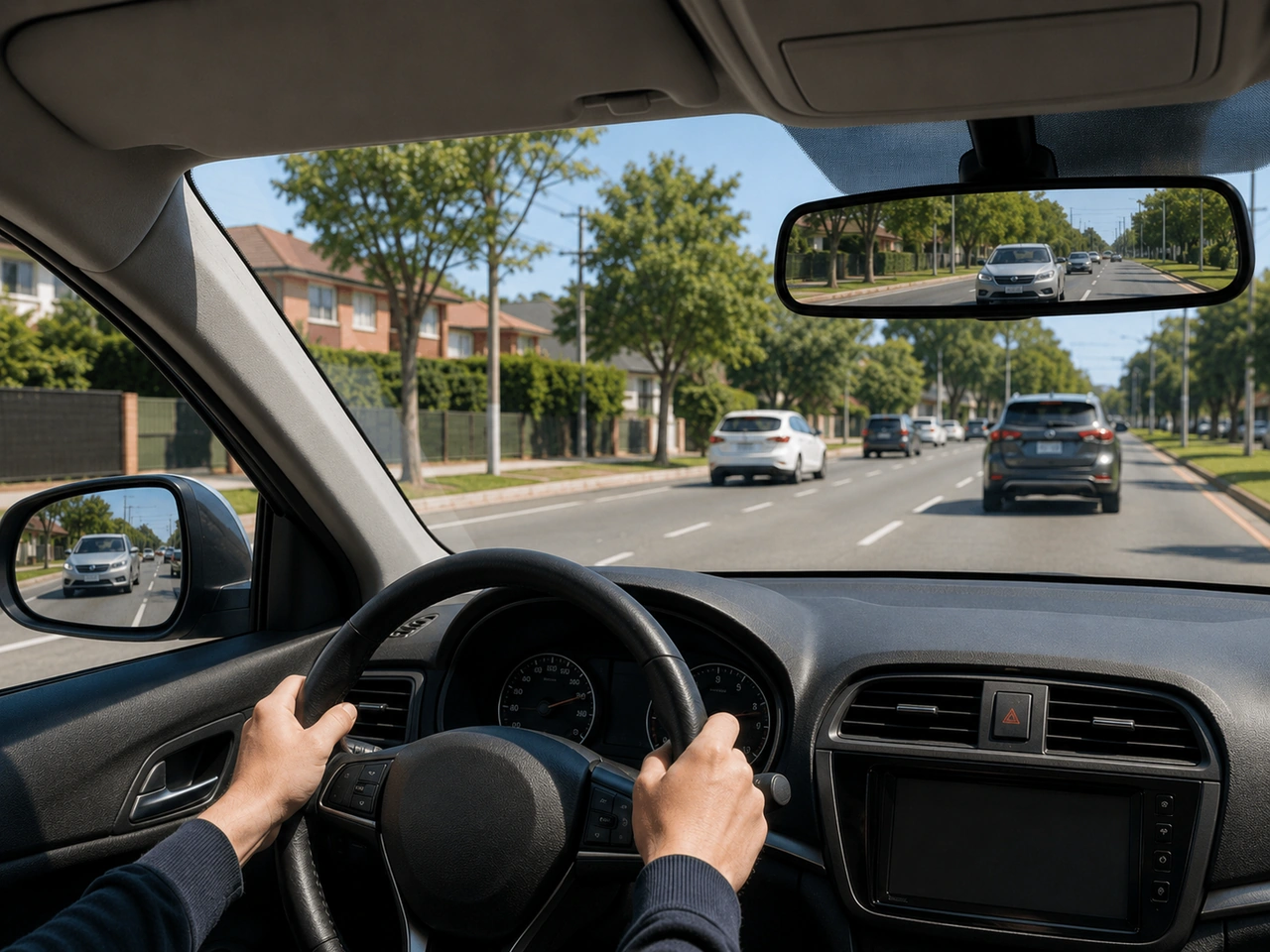
Why should you check your mirrors regularly while driving?

516. Why should you check your mirrors regularly while driving?

To judge your speed from vehicles behind.
To see whether road signs behind you have changed.
To avoid having to check your blind spots.
✓ To stay aware of traffic around you.

Regular mirror checks help you understand what is happening behind and beside your vehicle.

Driver checking traffic in a rear-view mirror
AI-generated by Traffic-rules.com • WCIT • CC BY-SA
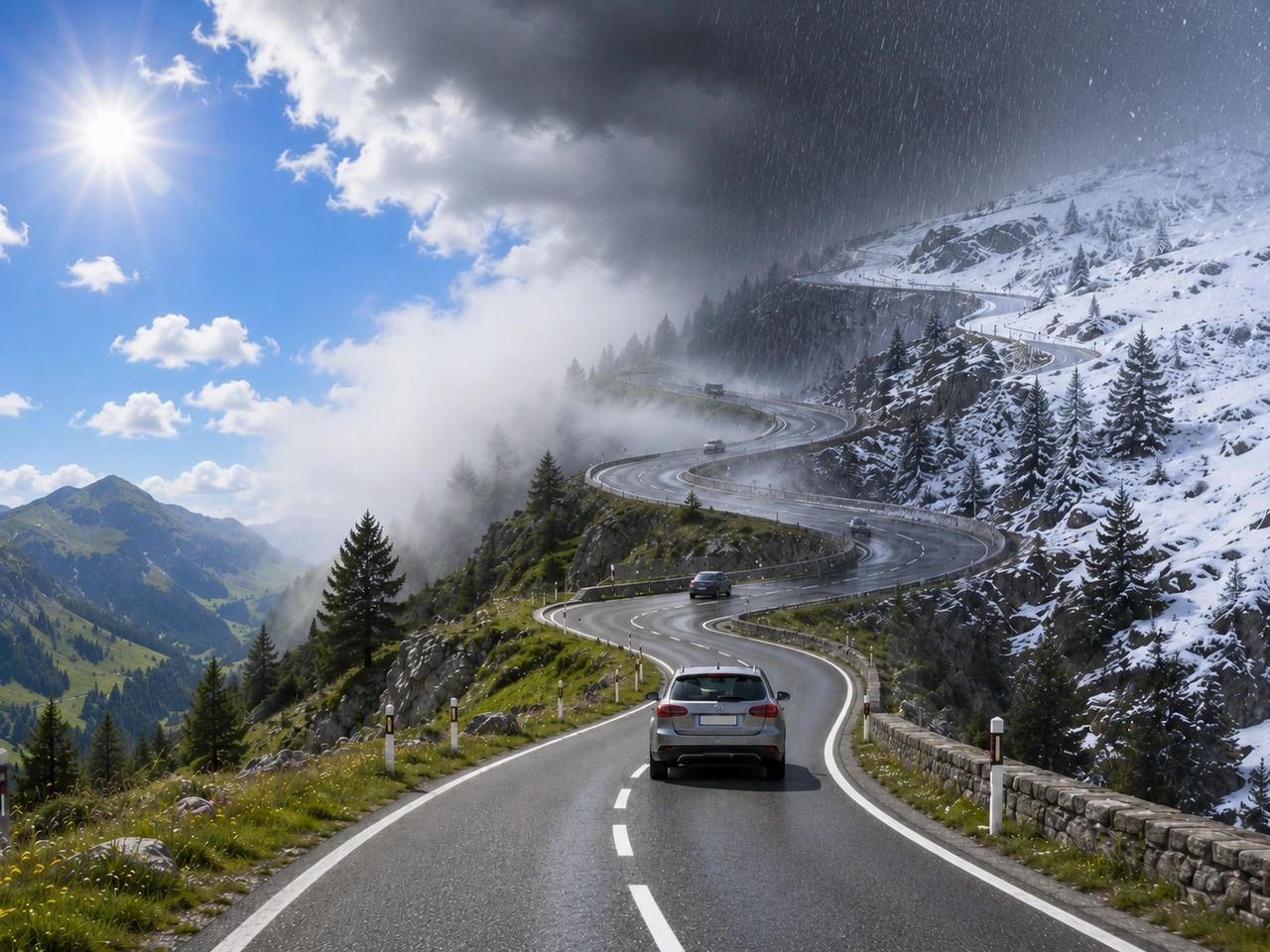
Why should you be prepared for changing conditions on mountain roads?

517. Why should you be prepared for changing conditions on mountain roads?

Mountain roads always have the same weather.
✓ Weather, visibility, and road conditions can change quickly.
Road conditions usually improve as altitude increases.
Vehicles automatically lose engine power in the mountains.

Fog, rain, snow, ice, falling rocks, and strong winds can develop rapidly in mountainous areas.

Changing visibility and weather on a mountain road
AI-generated by Traffic-rules.com • WCIT • CC BY-SA
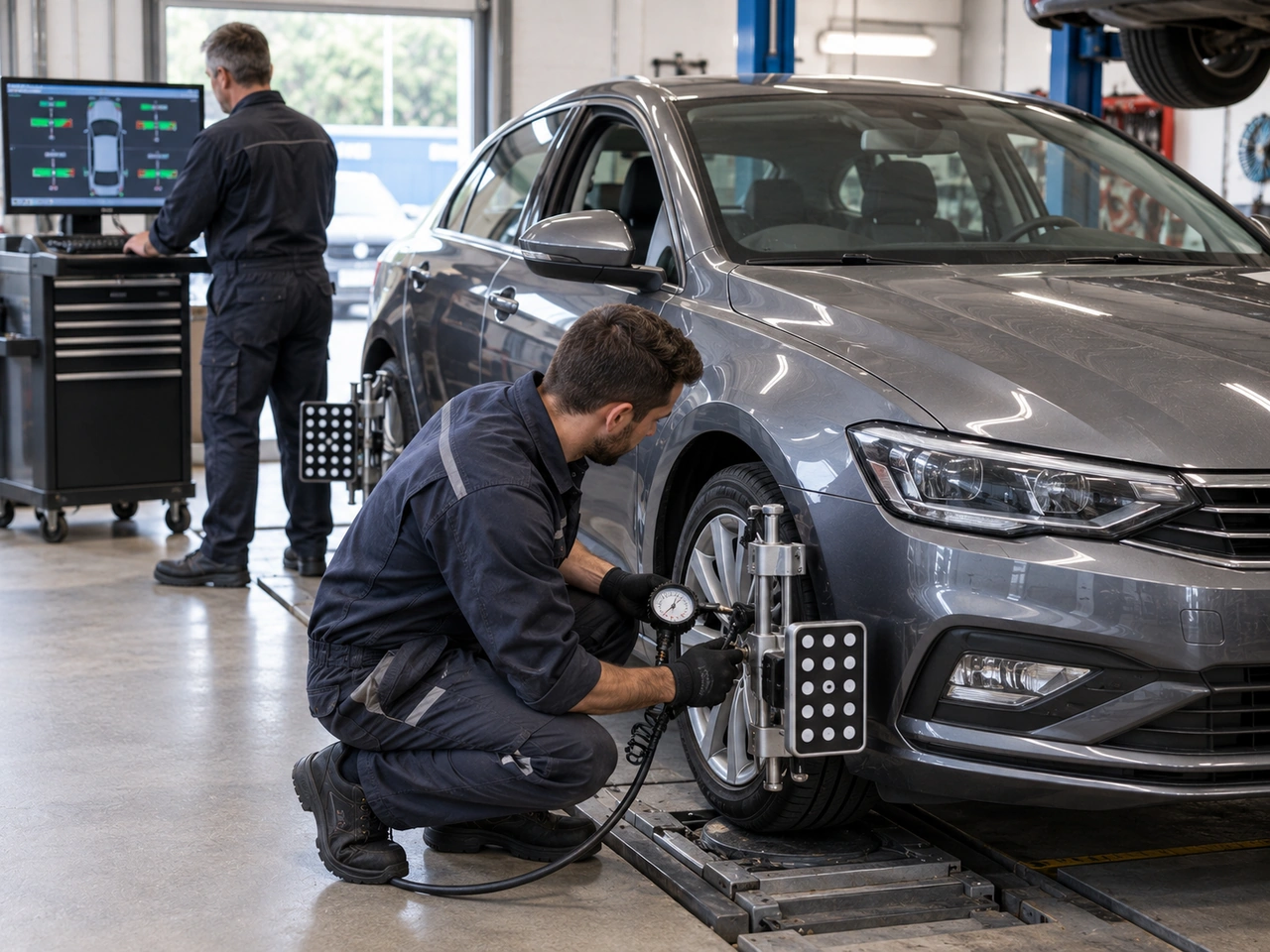
What should you do if the vehicle consistently pulls to one side?

518. What should you do if the vehicle consistently pulls to one side?

Ignore it if the tyres appear normal.
Increase speed to see if the vehicle straightens.
Reduce pressure in the tyre on the opposite side.
✓ Check the tyre pressures and have the steering, alignment, and brakes inspected.

Persistent pulling can be caused by incorrect tyre pressure, wheel misalignment, suspension wear, or a braking fault. It should not be ignored.

Vehicle pulling to one side while travelling
AI-generated by Traffic-rules.com • WCIT • CC BY-SA
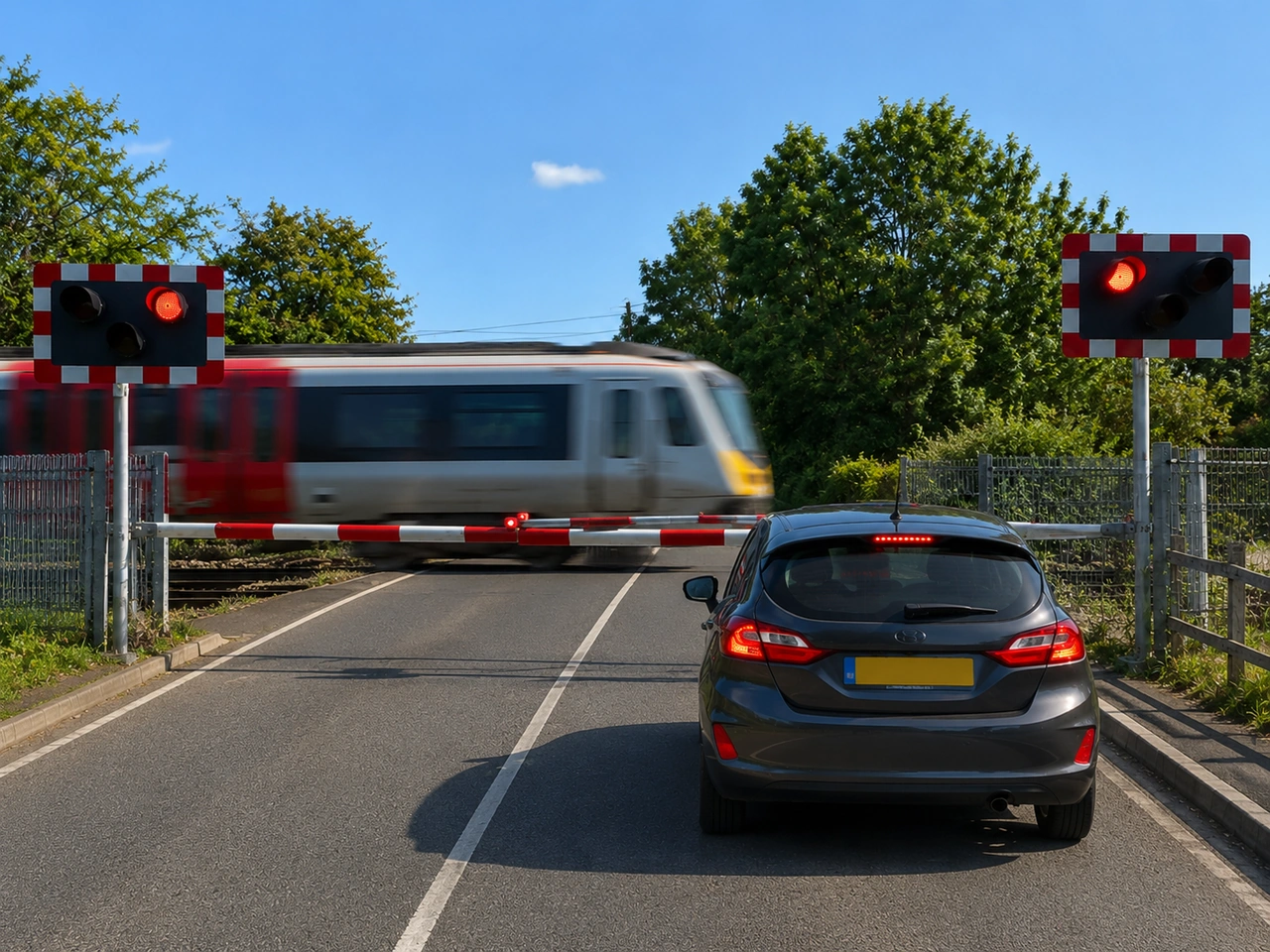
What should you do at a railway crossing when the barriers are closing?

519. What should you do at a railway crossing when the barriers are closing?

✓ Stop and wait until the barriers are completely open.
Stop only when the barriers are fully lowered.
Follow the vehicle ahead across the tracks.
Continue if the barriers are not fully closed.

Never enter a railway crossing when barriers are closing or warning signals are active. Stop and wait until it is safe.

Barriers closing at a railway crossing
AI-generated by Traffic-rules.com • WCIT • CC BY-SA
What should you do if another road user makes a mistake?

520. What should you do if another road user makes a mistake?

Immediately overtake them to get past the situation.
Drive closer so they notice your presence.
✓ Stay calm and avoid creating more danger.
Use your horn repeatedly to express your frustration.

Road users can make mistakes. Staying calm and reacting safely helps prevent crashes.

Driver responding to another road user's mistake
AI-generated by Traffic-rules.com • WCIT • CC BY-SA
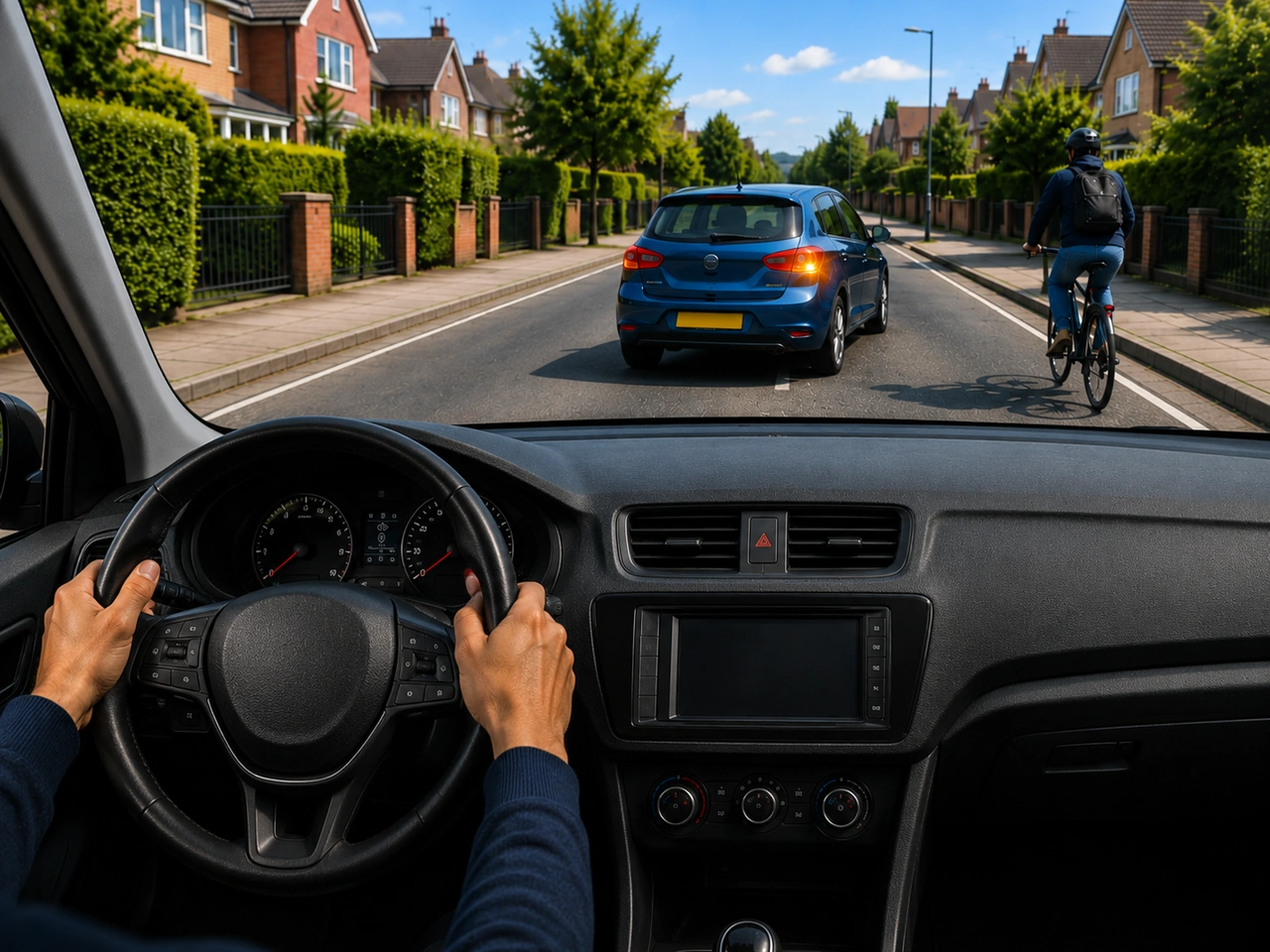
Why should you avoid using an ordinary extension lead to charge an electric vehicle?

521. Why should you avoid using an ordinary extension lead to charge an electric vehicle?

It will always charge the vehicle too quickly.
It prevents the charging port from closing afterwards.
✓ It may overheat because it is not designed for continuous high-power charging.
It prevents the vehicle from locking while charging.

An ordinary household extension lead may not be designed for the sustained electrical load required for EV charging and can overheat. Use suitable approved charging equipment and follow the vehicle and charging-equipment manufacturer's instructions.

Extension lead used for electric-vehicle charging
AI-generated by Traffic-rules.com • WCIT • CC BY-SA
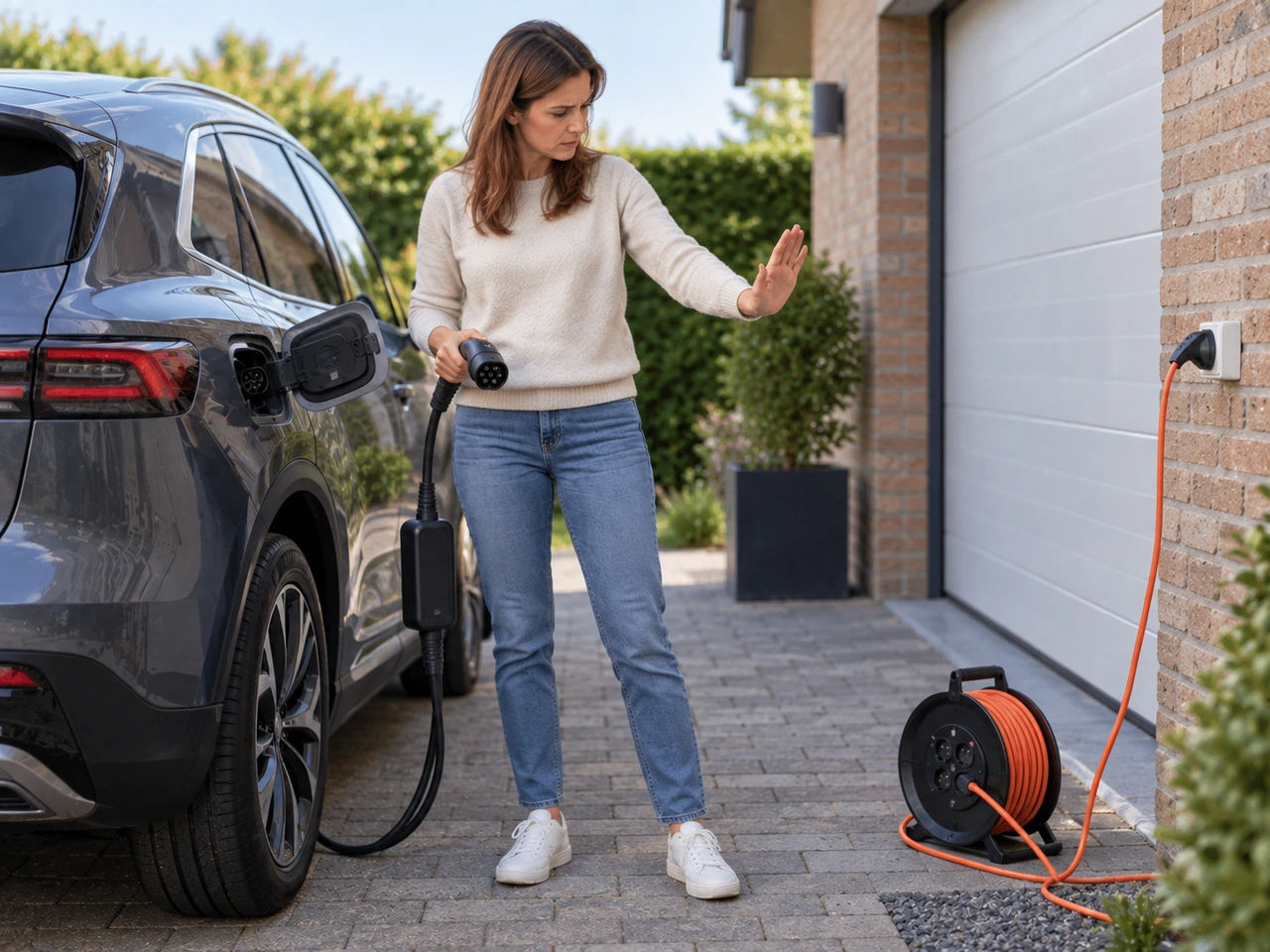
How can alcohol affect your driving ability?

522. How can alcohol affect your driving ability?

It makes your reactions faster.
It improves your vision in poor light.
It has no effect if you drive slowly.
✓ It can reduce judgement, coordination, and reaction speed.

Alcohol affects several abilities needed for safe driving, including concentration, decision-making, coordination, and hazard perception.

Alcohol impairment and driving ability
AI-generated by Traffic-rules.com • WCIT • CC BY-SA
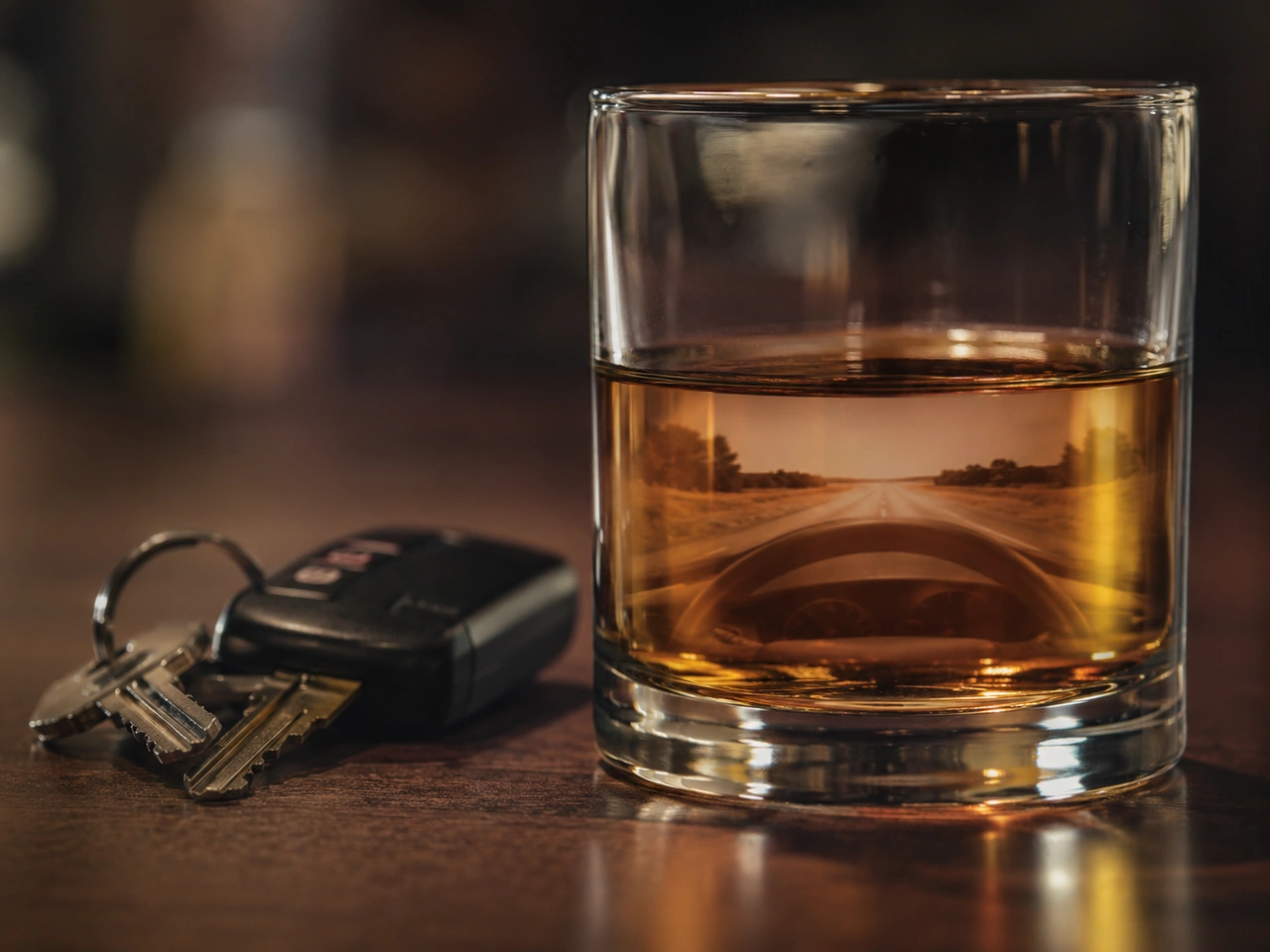
What should you do if traffic stops and a driver waves you across?

523. What should you do if traffic stops and a driver waves you across?

✓ Check that all lanes are safe before crossing.
Cross immediately once the driver waves you through.
Watch the stopped driver instead of the other traffic.
Check only the lane nearest to you.

One driver may stop, but other vehicles may still be moving. Always check all lanes before crossing.

Driver waving a pedestrian across the road
AI-generated by Traffic-rules.com • WCIT • CC BY-SA
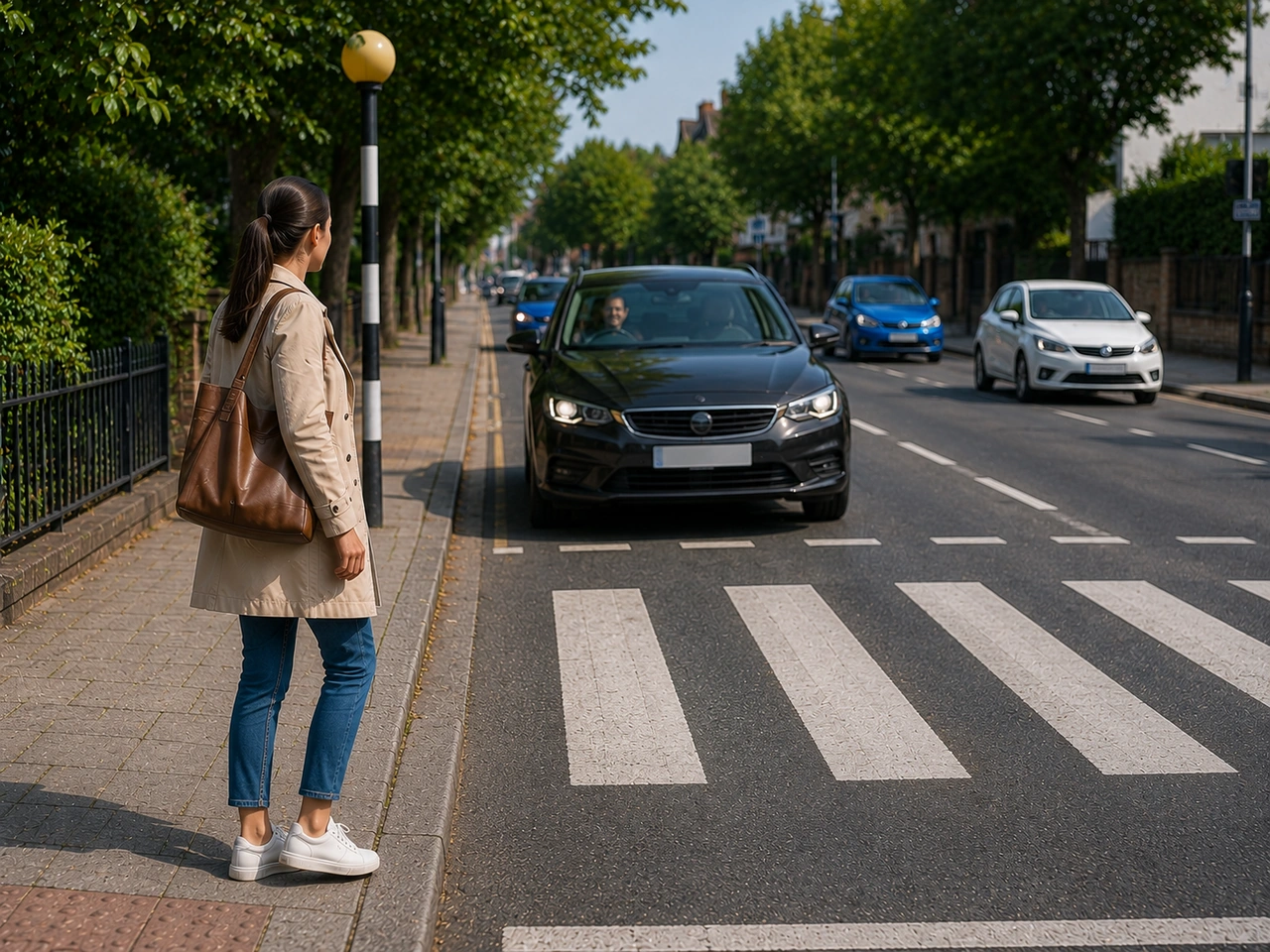
When should you consider delaying a journey because of severe weather?

524. When should you consider delaying a journey because of severe weather?

Only when your vehicle has no winter tyres.
Whenever the weather forecast mentions rain.
✓ When conditions make driving unsafe.
Only when roads are closed.

Severe weather can create dangerous conditions. Delaying a journey may be the safest choice when risks are too high.

Severe weather making a road journey hazardous
AI-generated by Traffic-rules.com • WCIT • CC BY-SA
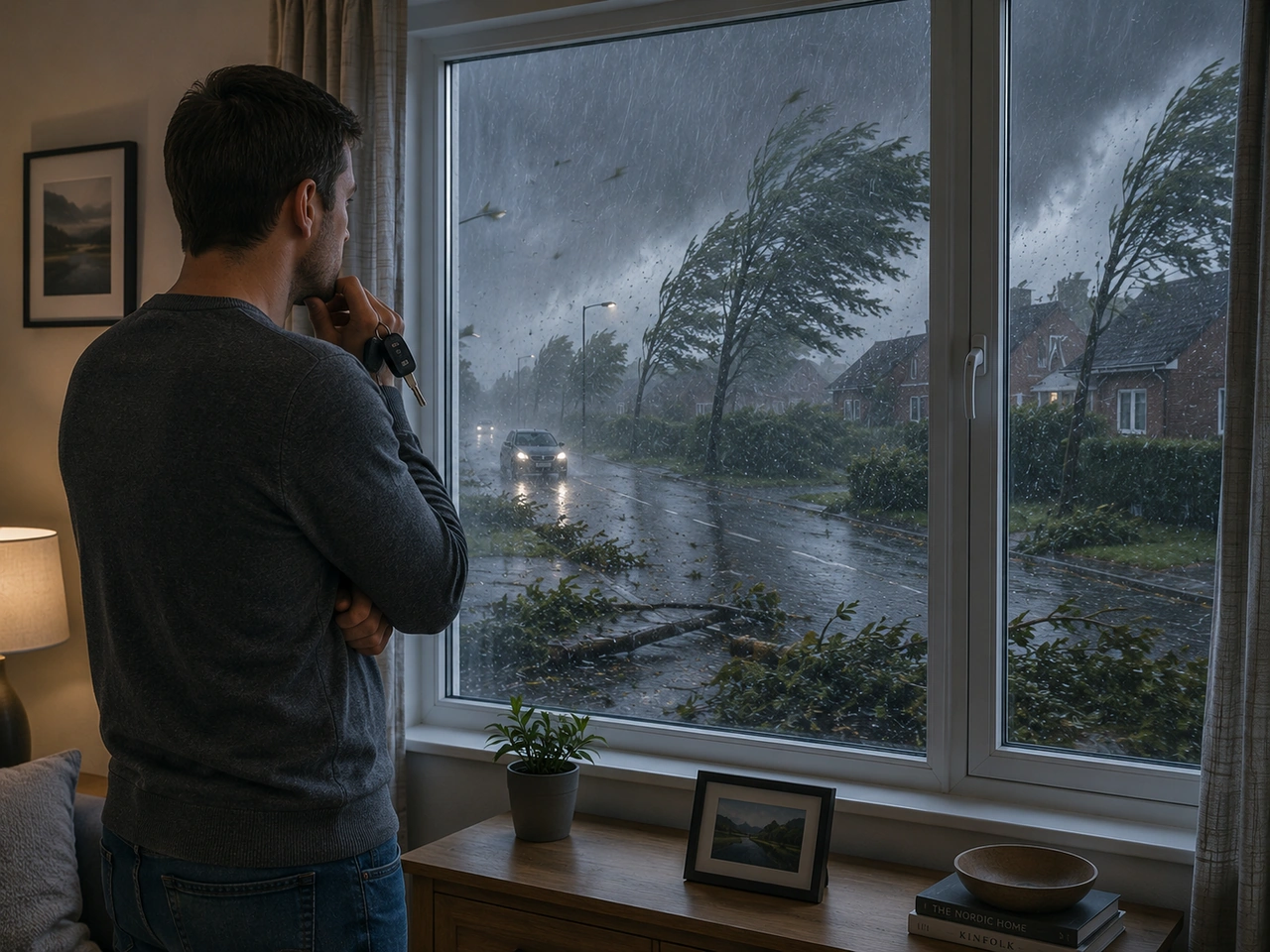
Why should loose clothing be avoided when riding a motorcycle?

525. Why should loose clothing be avoided when riding a motorcycle?

It can reduce the pressure in the tyres.
✓ It can become caught in moving parts or distract the rider.
It can prevent the engine from cooling properly.
It can make the motorcycle use more fuel.

Loose clothing, straps or scarves can flap in the wind or become caught in moving parts such as the chain or wheel. Motorcycle clothing should fit securely and should not have loose items that could interfere with safe riding.

Motorcyclist wearing loose clothing
AI-generated by Traffic-rules.com • WCIT • CC BY-SA
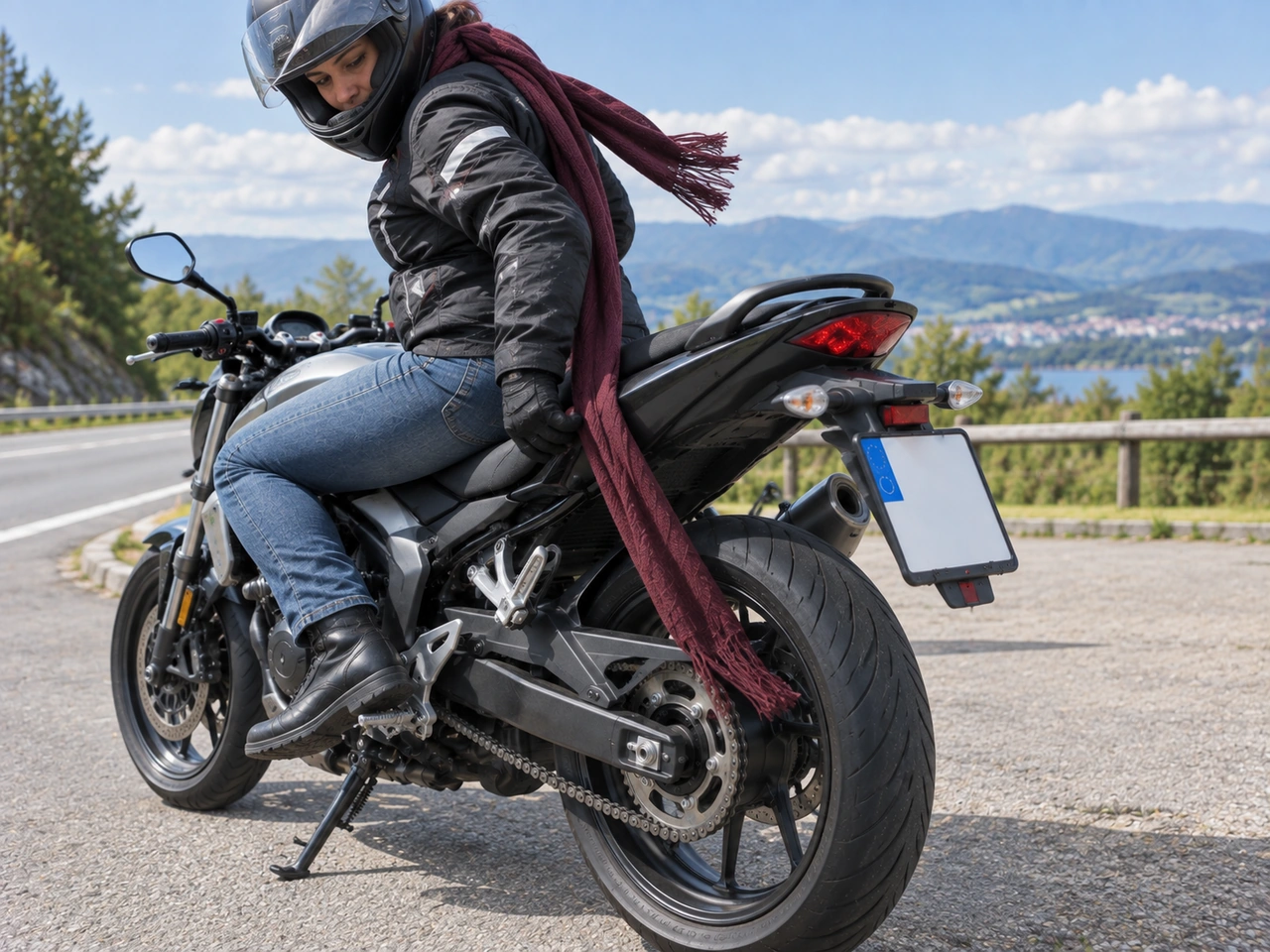
What should you do if there is no pavement?

526. What should you do if there is no pavement?

Always walk in the same direction as traffic.
Choose the side with the smoothest road surface.
Pay attention only to traffic approaching from behind.
✓ Walk where you can be seen and stay alert.

If there is no pavement, stay as far from traffic as possible and remain alert. The exact side of the road depends on local traffic rules.

Pedestrian walking beside a road without a pavement
AI-generated by Traffic-rules.com • WCIT • CC BY-SA
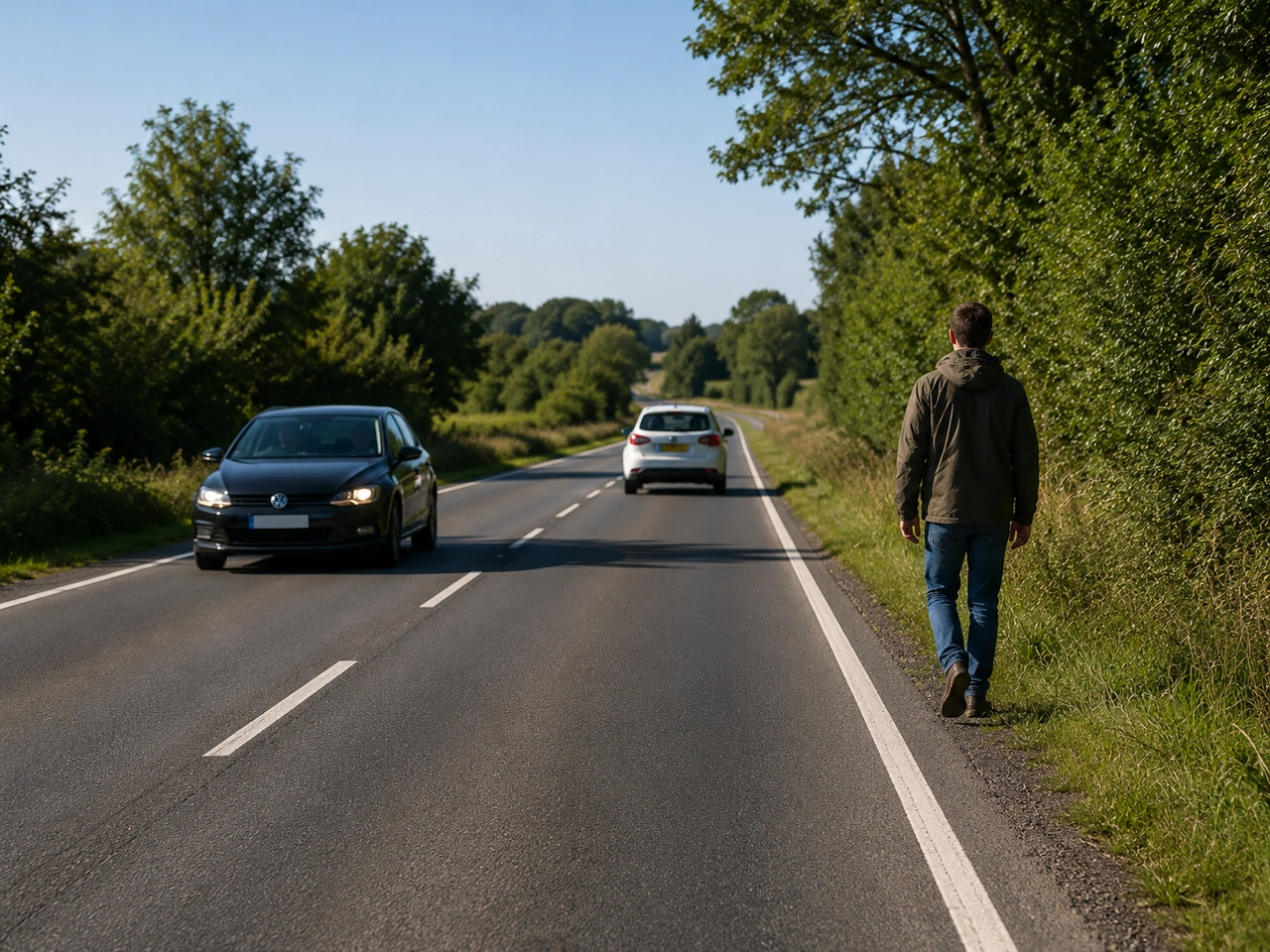
What should you do when approaching a temporary lane closure?

527. What should you do when approaching a temporary lane closure?

✓ Follow the temporary signs and merge safely when required.
Reverse back the way you came.
Follow construction vehicles through the closed lane.
Ignore the temporary signs if your lane is still open.

Observe the temporary signs, adjust your speed, and merge safely according to the traffic situation and local rules.

Temporary traffic-lane closure ahead
AI-generated by Traffic-rules.com • WCIT • CC BY-SA
Why should you avoid placing objects on or over an airbag cover?

528. Why should you avoid placing objects on or over an airbag cover?

They could make the dashboard harder to clean.
They could make the airbag deploy too slowly.
✓ They could interfere with deployment and become dangerous projectiles.
They could cause the airbag warning light to stay on.

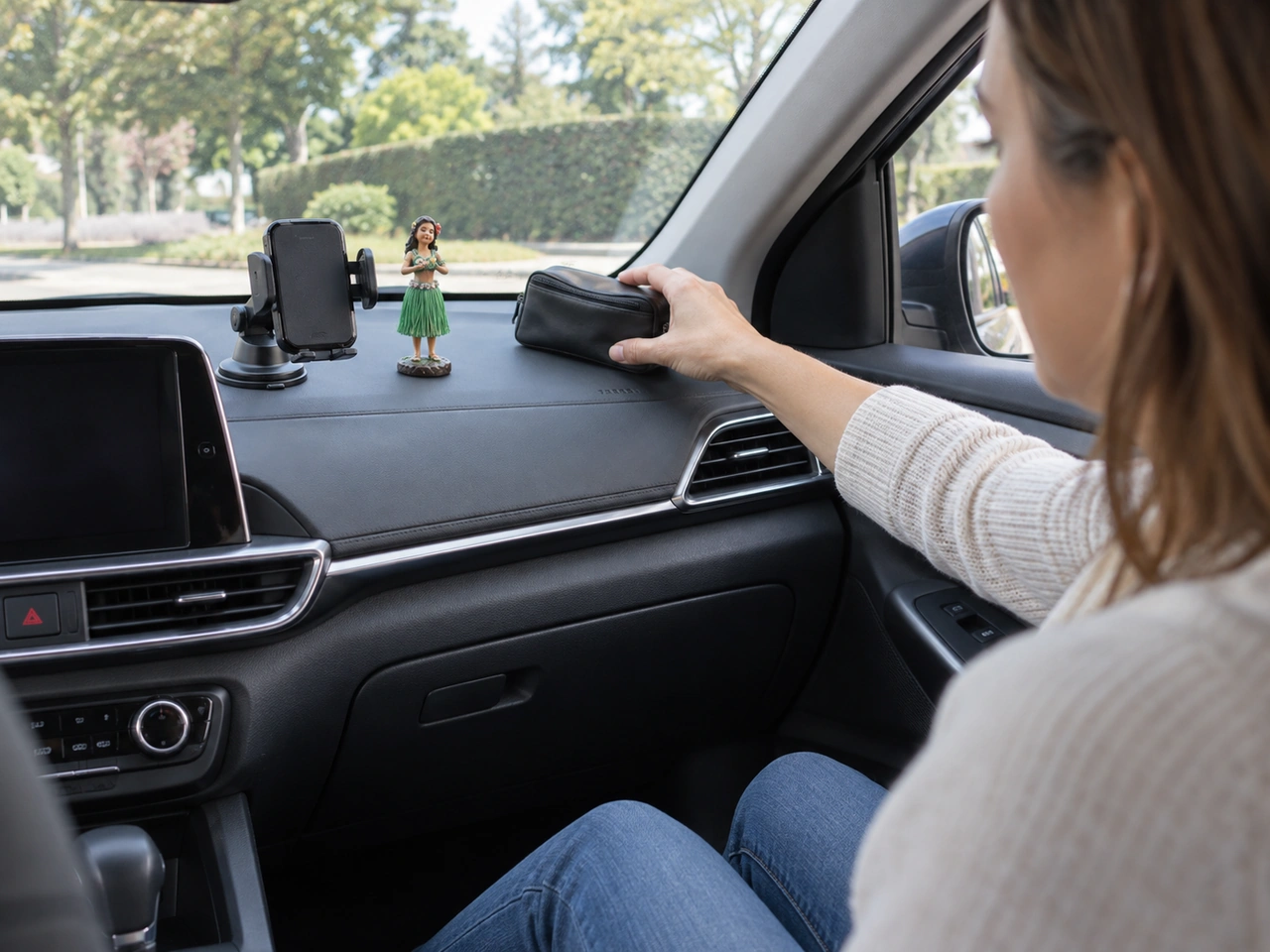
Do not place or attach objects over an airbag cover or in an airbag's deployment area. They may interfere with the airbag as it inflates and could be thrown towards occupants when the airbag deploys.

Objects placed over a vehicle's airbag cover
AI-generated by Traffic-rules.com • WCIT • CC BY-SA
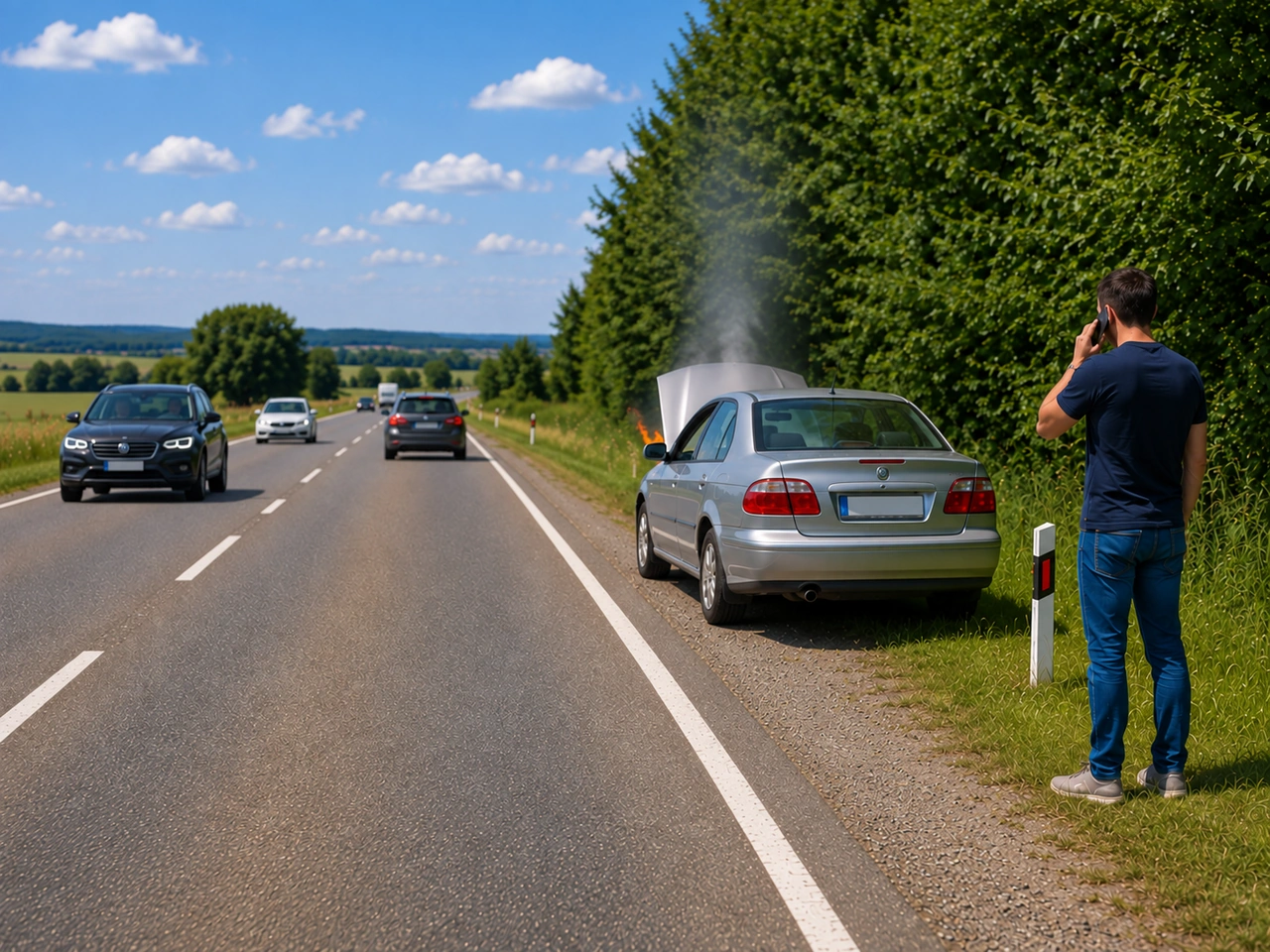
What should you do if your vehicle catches fire?

529. What should you do if your vehicle catches fire?

Try to move personal belongings out before leaving.
Keep driving slowly until you find a safer place to stop.
✓ Stop, switch off the engine, evacuate everyone, and call the emergency services.
Stay inside the vehicle while waiting for assistance.

Move everyone well away from the vehicle and call emergency services. If the fire is small and it is safe to do so, use a suitable fire extinguisher. Opening the bonnet fully can supply additional oxygen and cause the fire to intensify.

Vehicle with a fire breaking out
AI-generated by Traffic-rules.com • WCIT • CC BY-SA
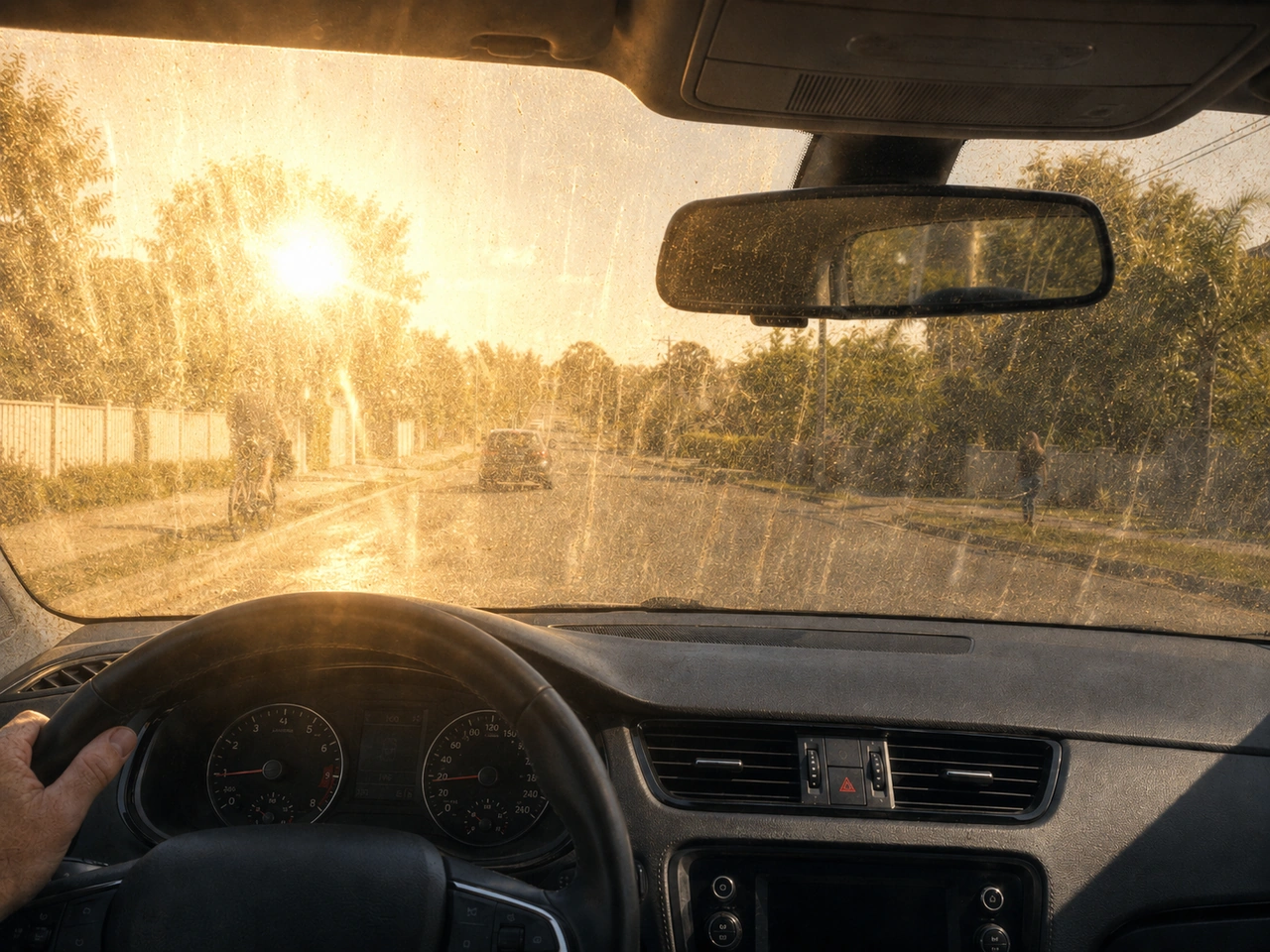
Why should you keep your windscreen clean?

530. Why should you keep your windscreen clean?

✓ To see the road clearly.
To reduce fuel consumption.
To improve engine cooling.
To prevent windscreen damage.

A clean windscreen gives you a clear view of the road, signs, pedestrians, cyclists, and other vehicles.

Cleaning a windscreen to improve the driver's view
AI-generated by Traffic-rules.com • WCIT • CC BY-SA
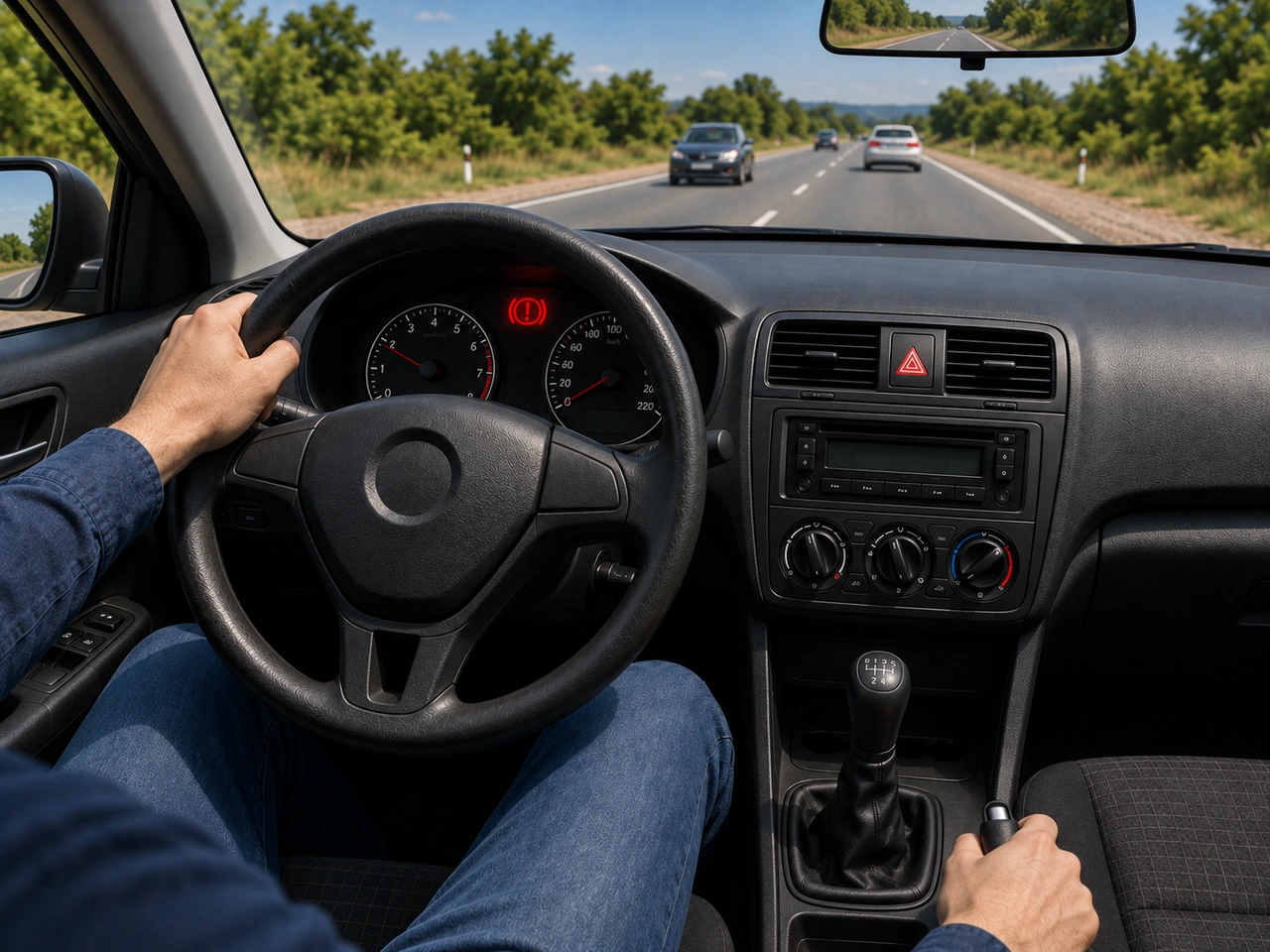
What should you do if the service brakes fail while driving?

531. What should you do if the service brakes fail while driving?

Apply the parking brake suddenly at full force.
✓ Reduce speed using other available braking methods and stop safely.
Switch off the engine immediately while moving.
Continue slowly until the brakes begin working again.

Remain calm, warn other road users, and use other available braking methods to reduce speed. This may include engine braking or a lower gear, and careful use of the parking or emergency brake according to the vehicle's design. Steer toward the safest available stopping area.

Vehicle braking-system failure while driving
AI-generated by Traffic-rules.com • WCIT • CC BY-SA
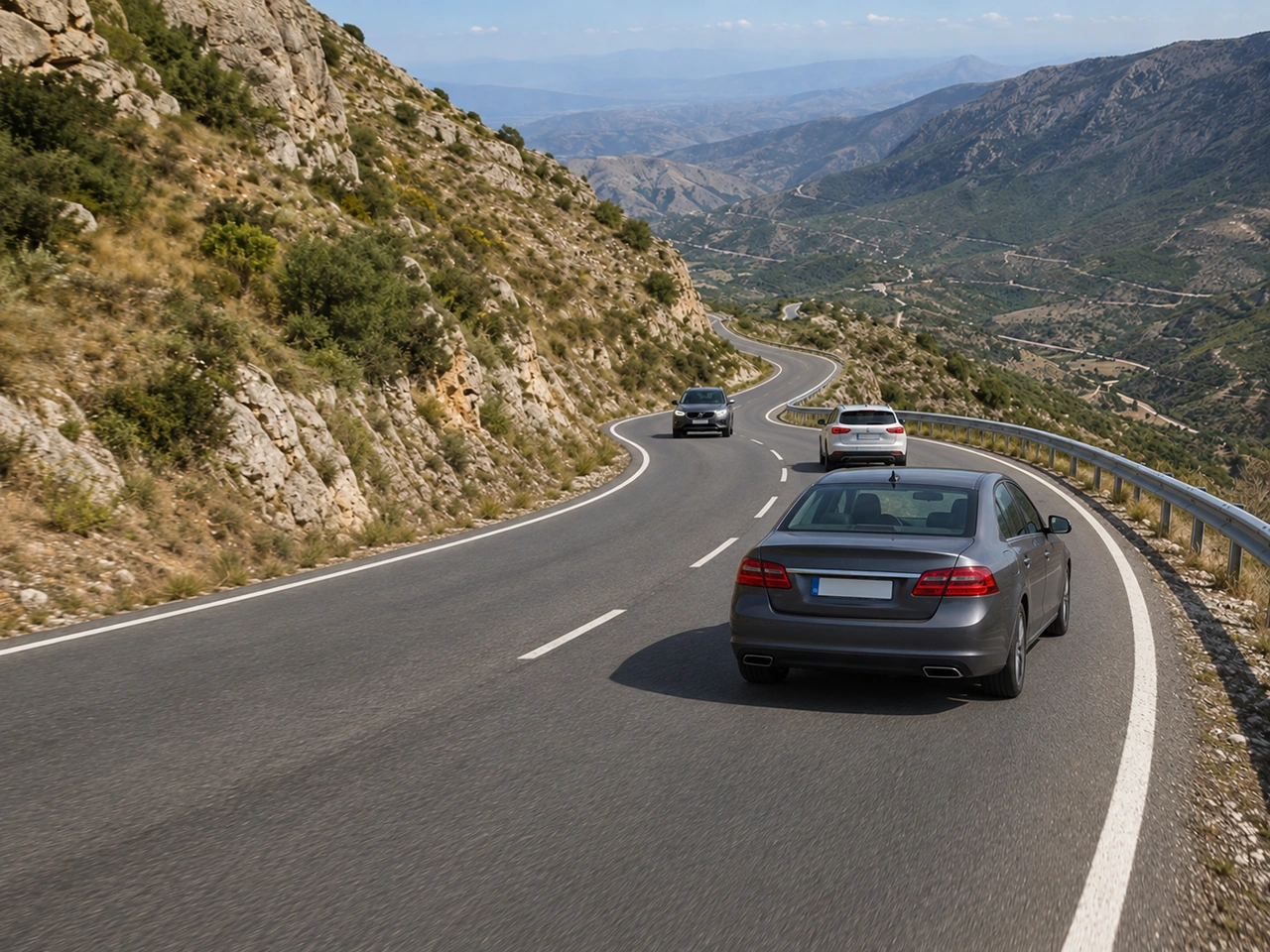
What can happen if you use the brakes continuously on a long descent?

532. What can happen if you use the brakes continuously on a long descent?

The brakes may become more effective as they heat up.
✓ The brakes may overheat and become less effective.
The brakes will automatically cool while being used.
The engine may automatically slow the vehicle.

Continuous braking can cause the brakes to overheat and fade, reducing braking performance. Use a lower gear to help control speed with engine braking.

Vehicle braking during a long descent
AI-generated by Traffic-rules.com • WCIT • CC BY-SA
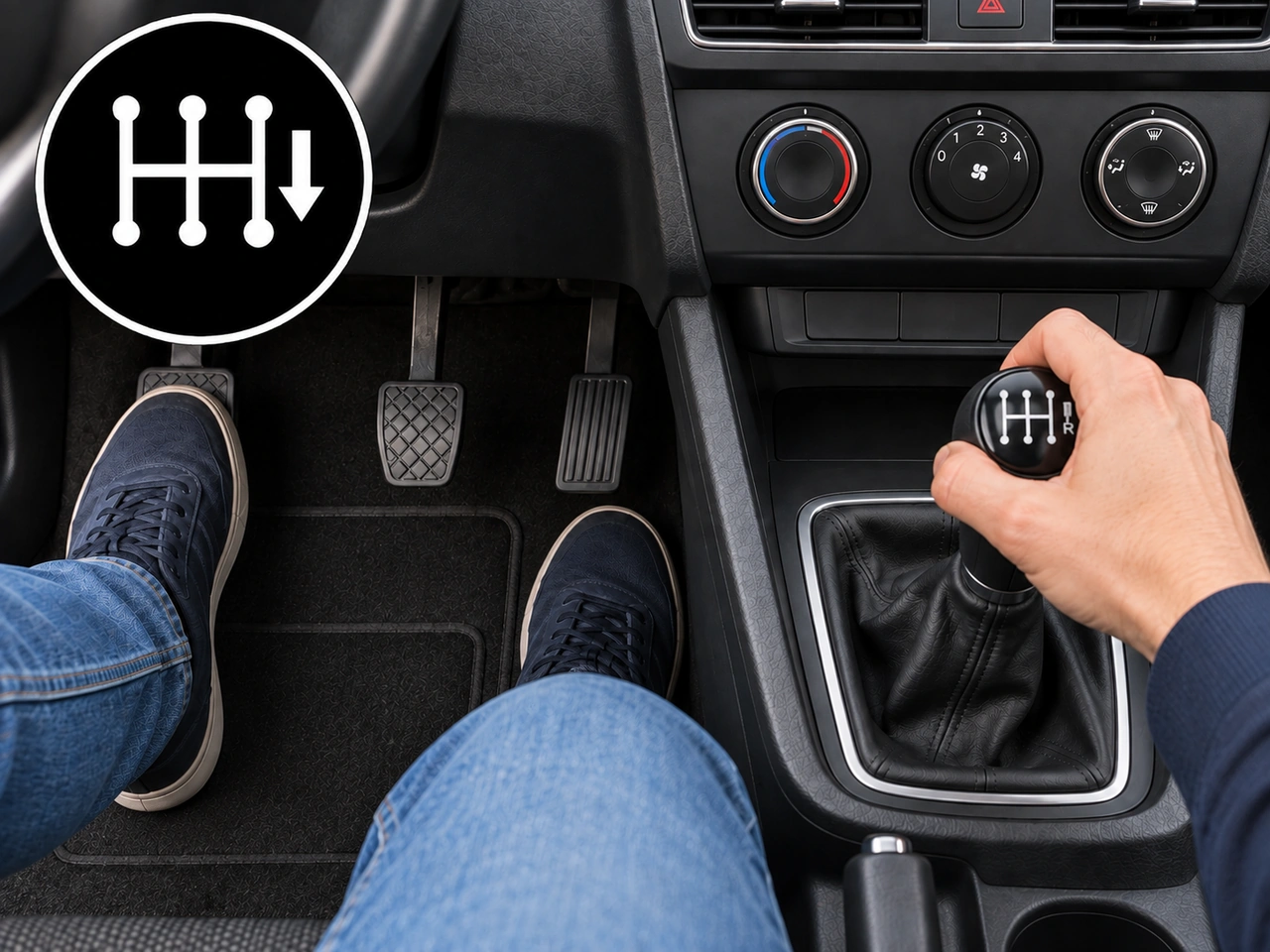
What can selecting a lower gear provide in a manual vehicle?

533. What can selecting a lower gear provide in a manual vehicle?

Automatic parking-brake operation.
✓ Greater engine braking.
Higher tyre pressure.
A shorter steering ratio.

Selecting a suitable lower gear can increase engine braking, helping the vehicle slow or control its speed without relying entirely on the brakes.

Manual gear selection for engine braking
AI-generated by Traffic-rules.com • WCIT • CC BY-SA
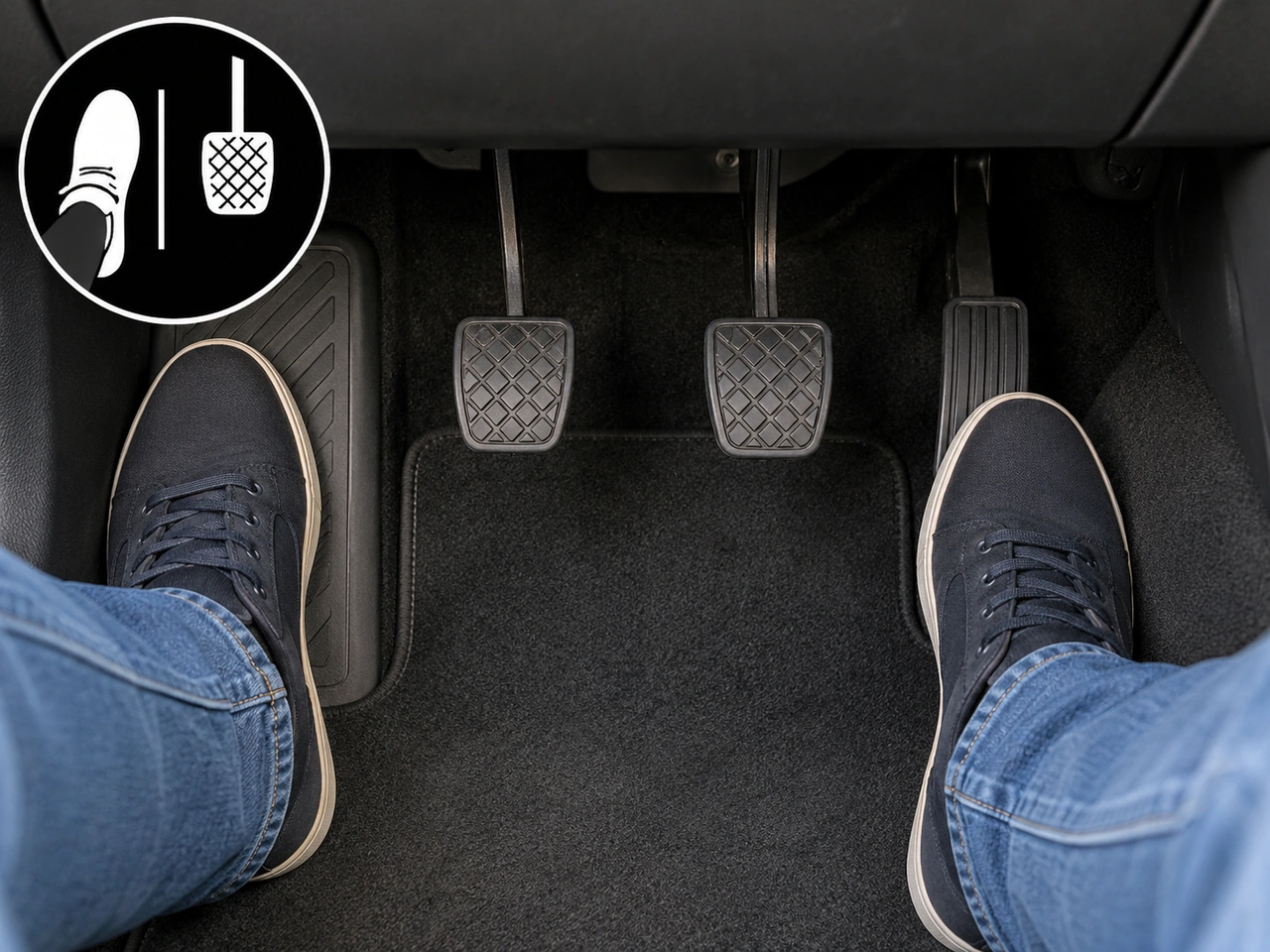
Why should you avoid resting your foot on the clutch pedal while driving?

534. Why should you avoid resting your foot on the clutch pedal while driving?

It can increase tyre pressure.
✓ It can cause unnecessary clutch wear.
It can lock the steering.
It can apply the parking brake.

Resting your foot on the clutch pedal can apply slight pressure to the clutch mechanism and cause unnecessary wear. Keep your left foot off the clutch when it is not needed.

Foot position near the clutch pedal
AI-generated by Traffic-rules.com • WCIT • CC BY-SA
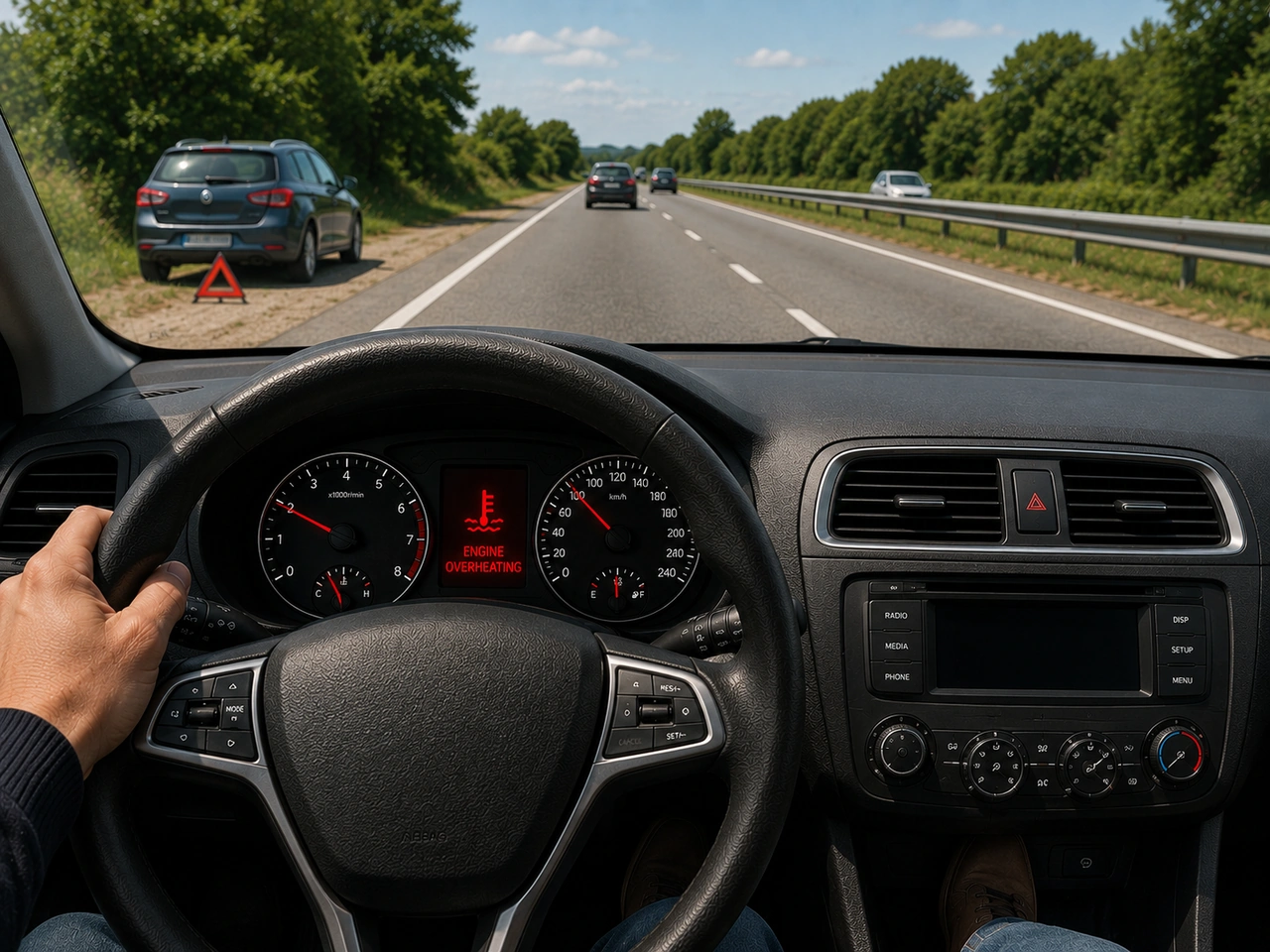
What should you do if the engine-temperature warning shows overheating?

535. What should you do if the engine-temperature warning shows overheating?

Continue driving slowly until the warning disappears.
✓ Stop safely, switch off the engine, and allow it to cool.
Ignore it if the engine still sounds normal.
Increase engine speed to improve coolant circulation.

Continuing to drive an overheating vehicle can cause severe damage. Allow the engine to cool and follow the manufacturer's instructions.

Engine-overheating warning on the dashboard
AI-generated by Traffic-rules.com • WCIT • CC BY-SA
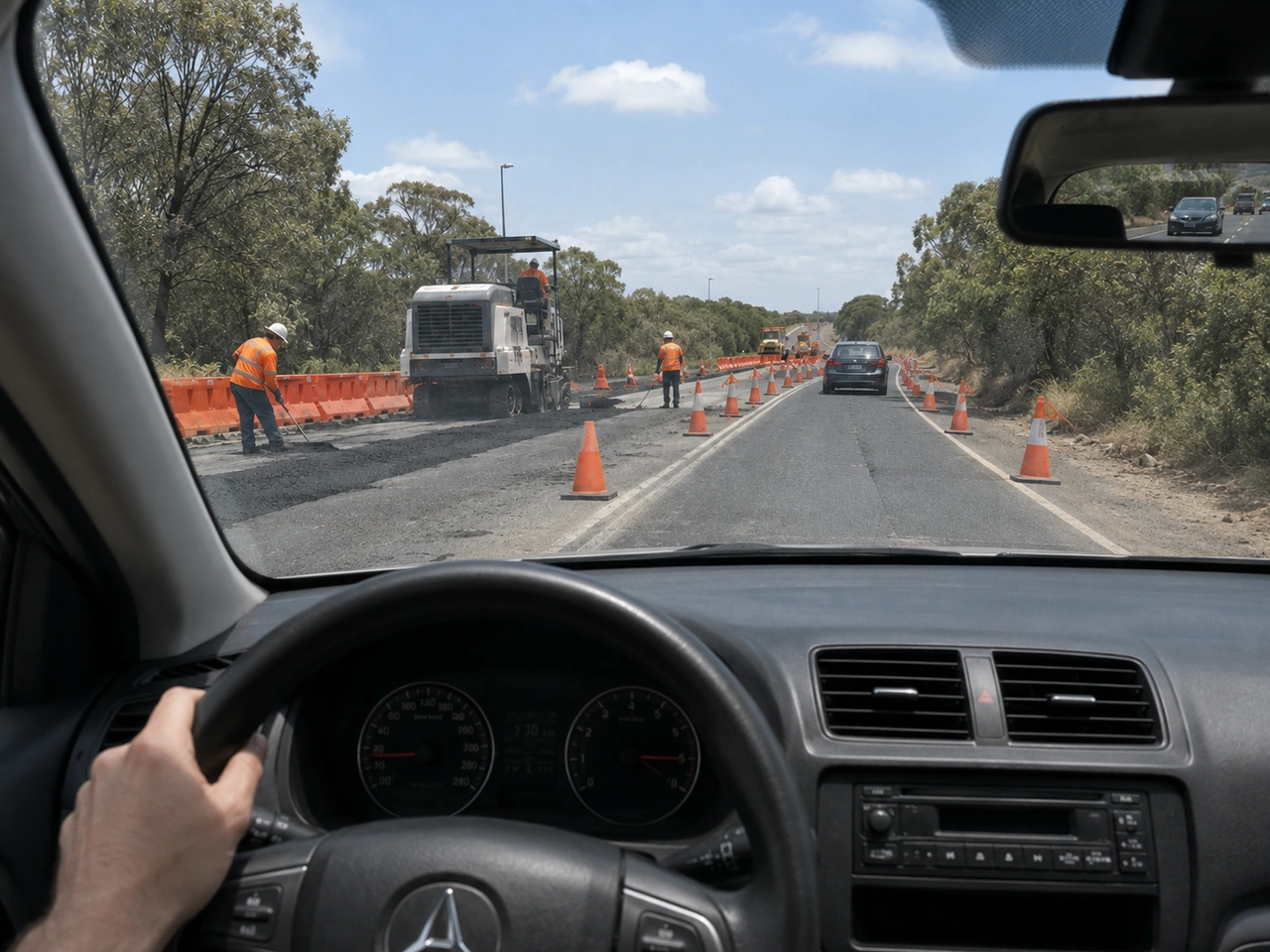
Why should you reduce speed when approaching roadworks?

536. Why should you reduce speed when approaching roadworks?

✓ Road workers, narrow lanes, and unexpected hazards may be present.
You should not reduce speed near roadworks.
To reduce exhaust gases near construction sites.
To keep construction dust off the windscreen.

Roadworks can involve workers, machinery, changing lane layouts, and uneven surfaces. Lower speed gives you more time to react.

Vehicle approaching a roadworks area
AI-generated by Traffic-rules.com • WCIT • CC BY-SA
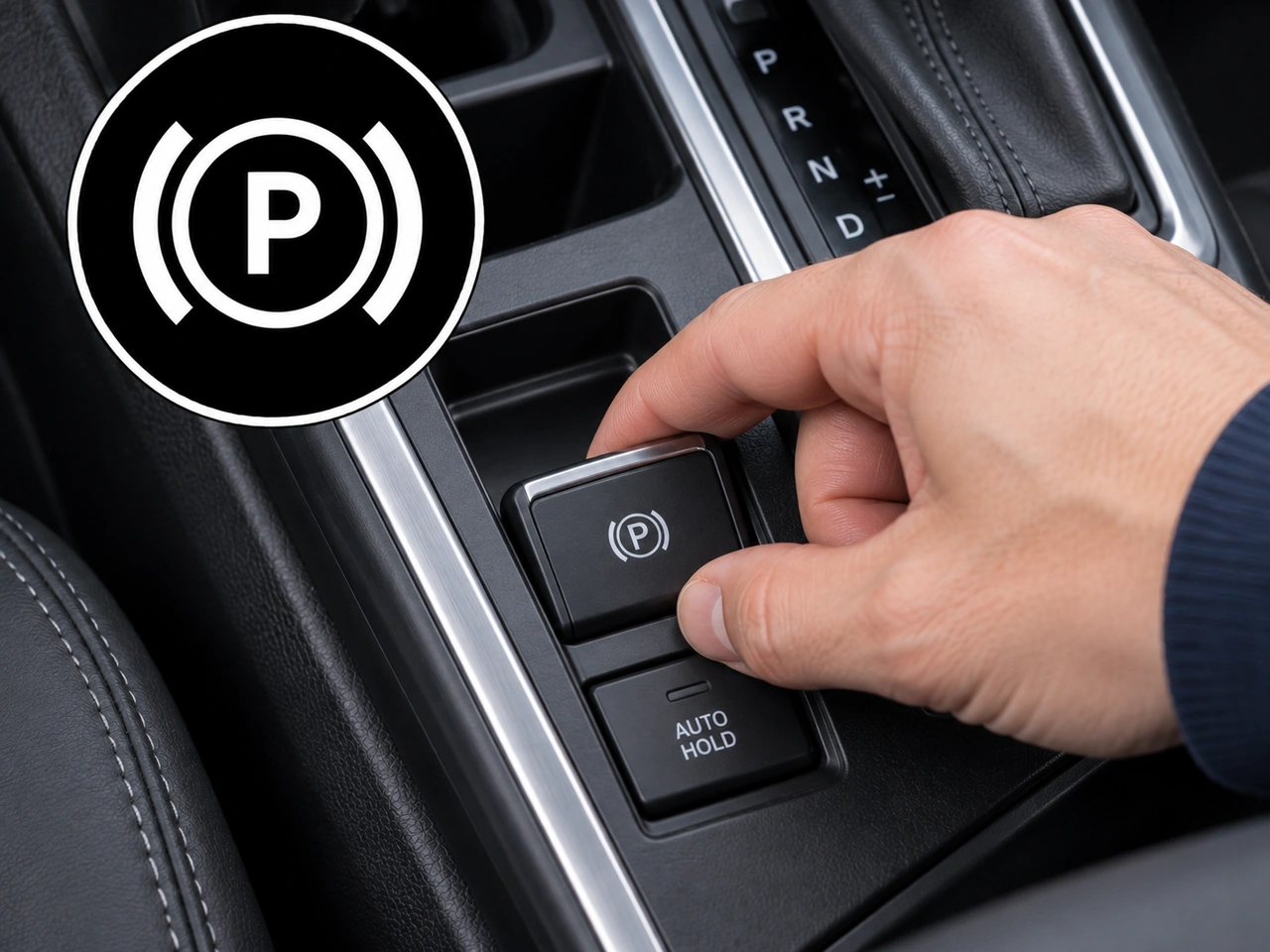
What does this vehicle-control symbol indicate?

537. What does this vehicle-control symbol indicate?

Brake-system warning.
Cruise control.
Parking assistance.
✓ Electronic parking brake.

This control operates the electronic parking brake. Pulling or pressing the switch applies or releases the parking brake, depending on the vehicle.

Electronic parking-brake switch and symbol
AI-generated by Traffic-rules.com • WCIT • CC BY-SA
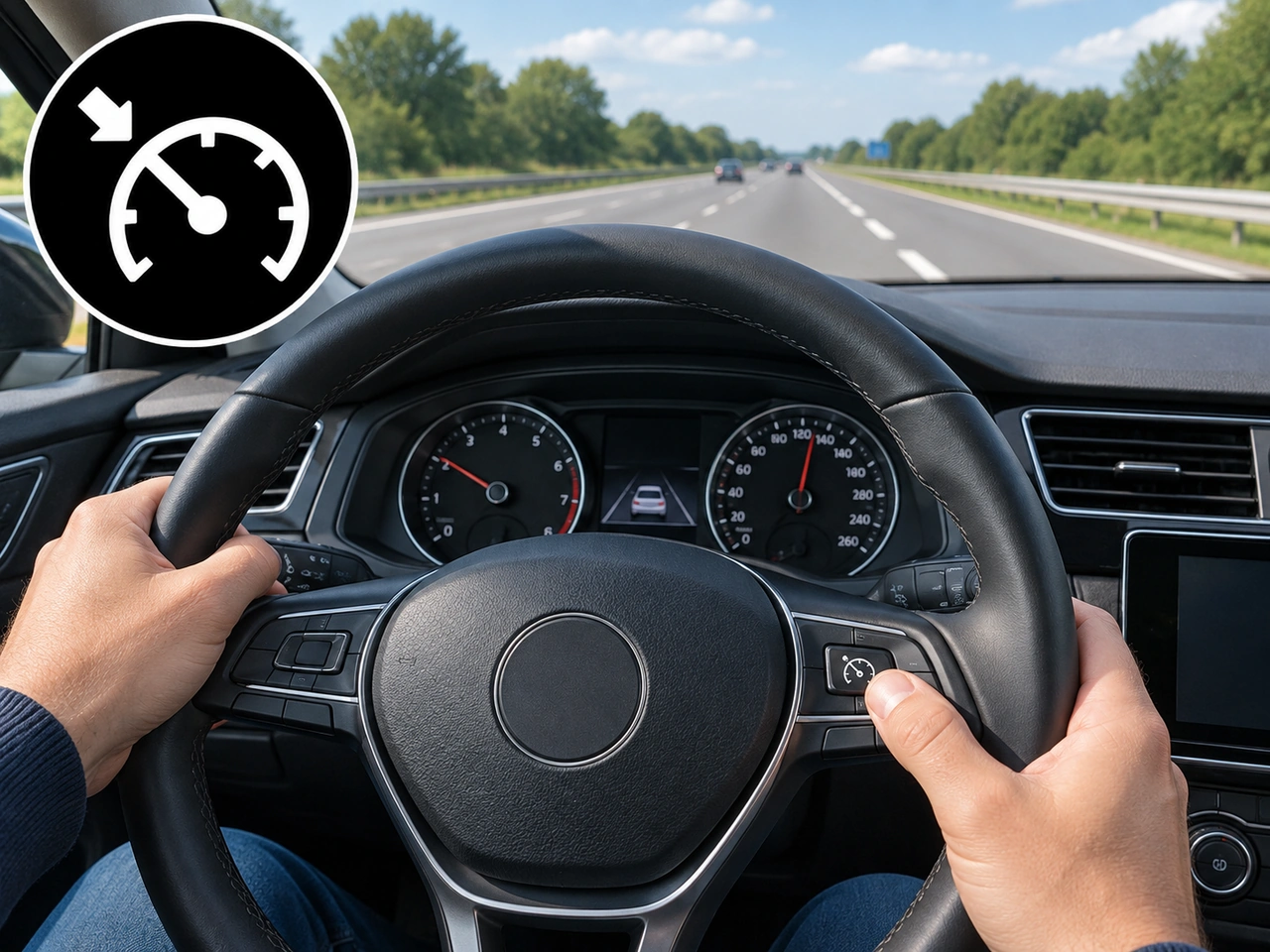
What is the purpose of cruise control?

538. What is the purpose of cruise control?

To steer the vehicle automatically.
✓ To maintain a selected speed without continuous accelerator use.
To prevent the vehicle from exceeding any speed limit.
To keep a fixed distance from the vehicle ahead.

Cruise control can maintain a selected speed without the driver continuously pressing the accelerator. The driver must remain attentive and ready to brake or take control when necessary.

Vehicle cruise-control buttons and symbol
AI-generated by Traffic-rules.com • WCIT • CC BY-SA
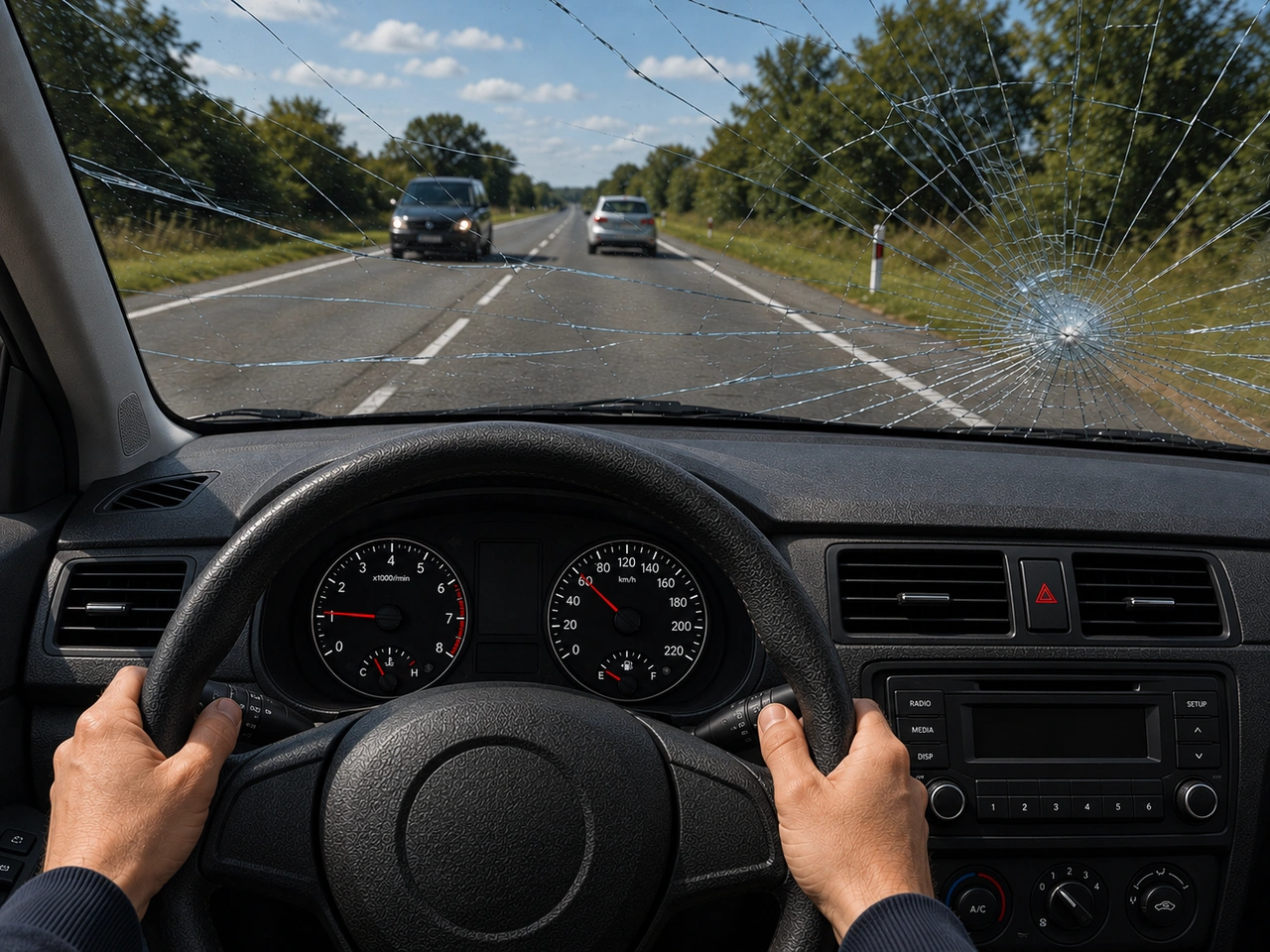
What should you do if the windscreen becomes damaged while driving?

539. What should you do if the windscreen becomes damaged while driving?

Rely on the mirrors instead of the windscreen.
Remove loose glass while the vehicle is moving.
Drive faster to reach a safe place sooner.
✓ Reduce speed and stop safely if your view is affected.

Severe damage can obstruct your view and weaken the glass. Do not continue if you cannot see the road clearly.

Damaged windscreen affecting the driver's view
AI-generated by Traffic-rules.com • WCIT • CC BY-SA
What makes up the total stopping distance of a vehicle?

540. What makes up the total stopping distance of a vehicle?

Reaction distance and following distance.
Tyre distance and braking distance.
✓ Reaction distance and braking distance.
Braking distance and overtaking distance.

The total stopping distance consists of the distance travelled while the driver reacts to a hazard plus the distance travelled while the vehicle is braking to a stop.

Reaction and braking distances before a vehicle stops
AI-generated by Traffic-rules.com • WCIT • CC BY-SA
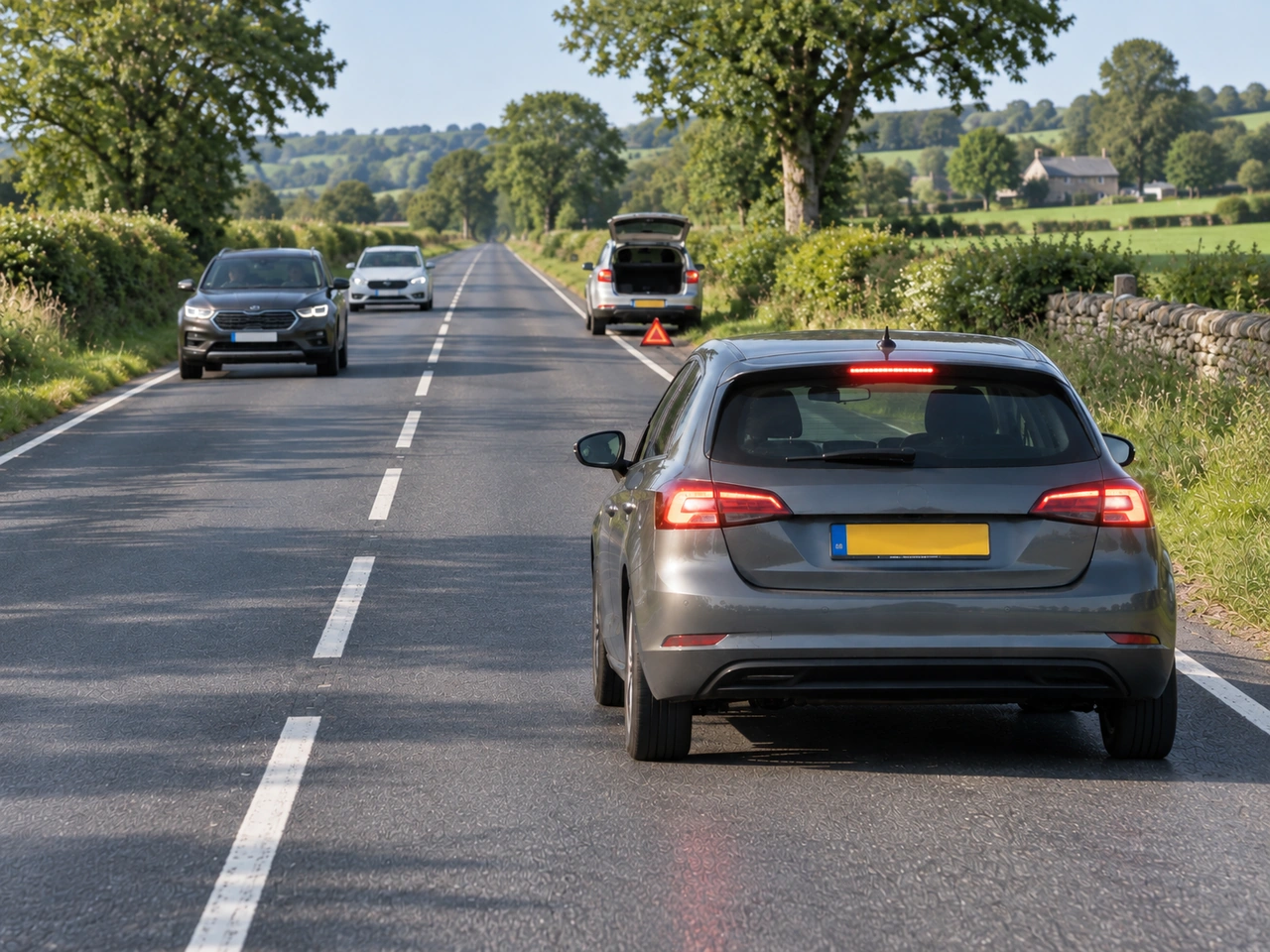
Why is counting drinks an unreliable way to decide whether you can drive?

541. Why is counting drinks an unreliable way to decide whether you can drive?

The number of drinks matters more than their strength.
✓ Drink strength, serving size, and individual effects can vary.
You can judge your alcohol level by how sober you feel.
Food makes each drink count as less alcohol.

Alcohol concentration and serving sizes vary, and factors such as body size, food, medication, and time can affect impairment.

Alcoholic drinks with different strengths and serving sizes
AI-generated by Traffic-rules.com • WCIT • CC BY-SA
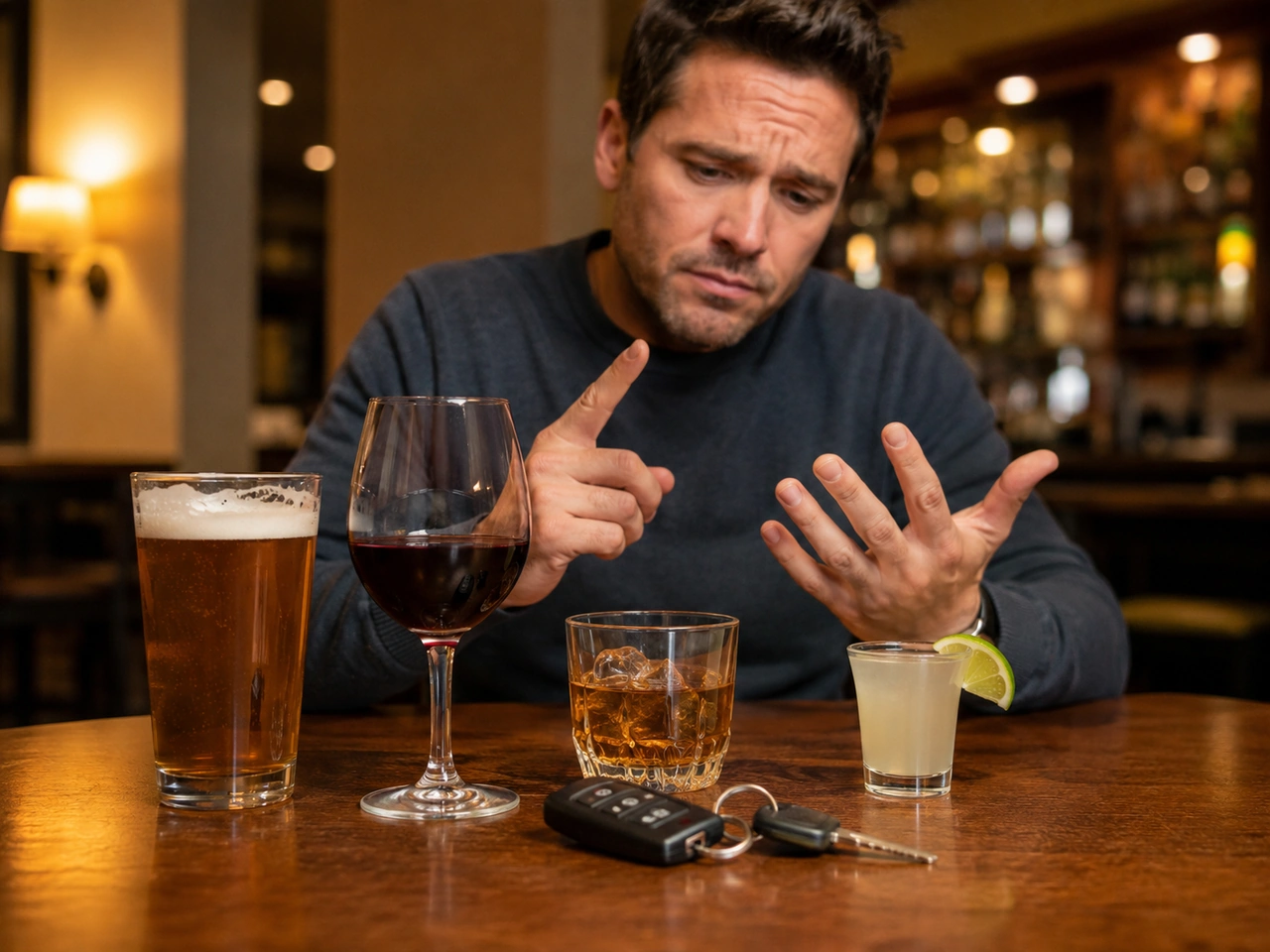
Does the priority-to-the-right rule apply in Norway?

542. Does the priority-to-the-right rule apply in Norway?

✓ Yes.
No.

In Norway, the priority-to-the-right rule generally applies at uncontrolled intersections.

Vehicle approaching a junction from the right
AI-generated by Traffic-rules.com • WCIT • CC BY-SA
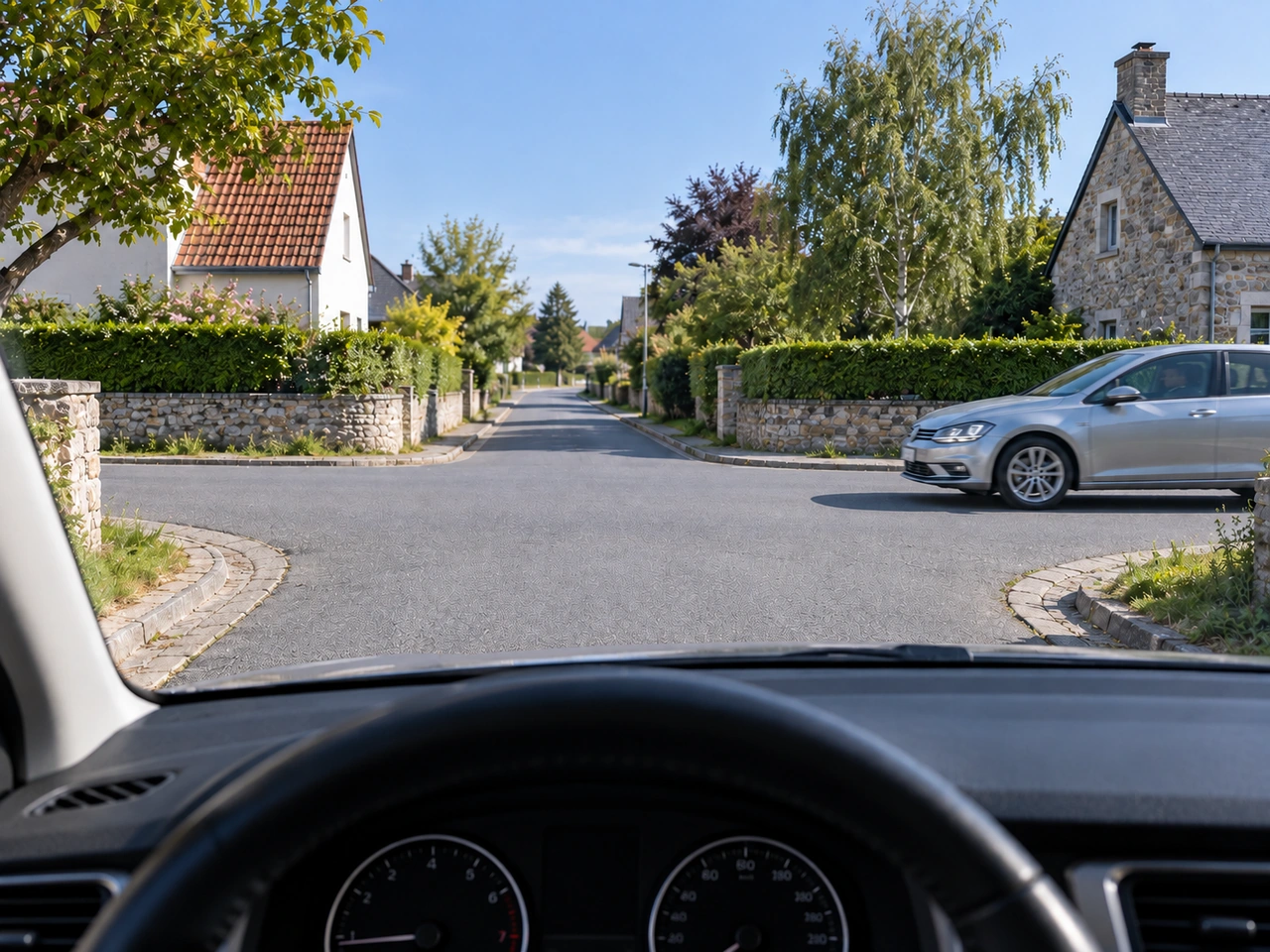
What does this vehicle-control symbol indicate?

543. What does this vehicle-control symbol indicate?

Bonnet release.
Central door locking.
Parking brake.
✓ Fuel-filler flap release.

This control releases the fuel-filler flap, allowing access to the vehicle's fuel filler.

Release control for the fuel-filler flap
AI-generated by Traffic-rules.com • WCIT • CC BY-SA
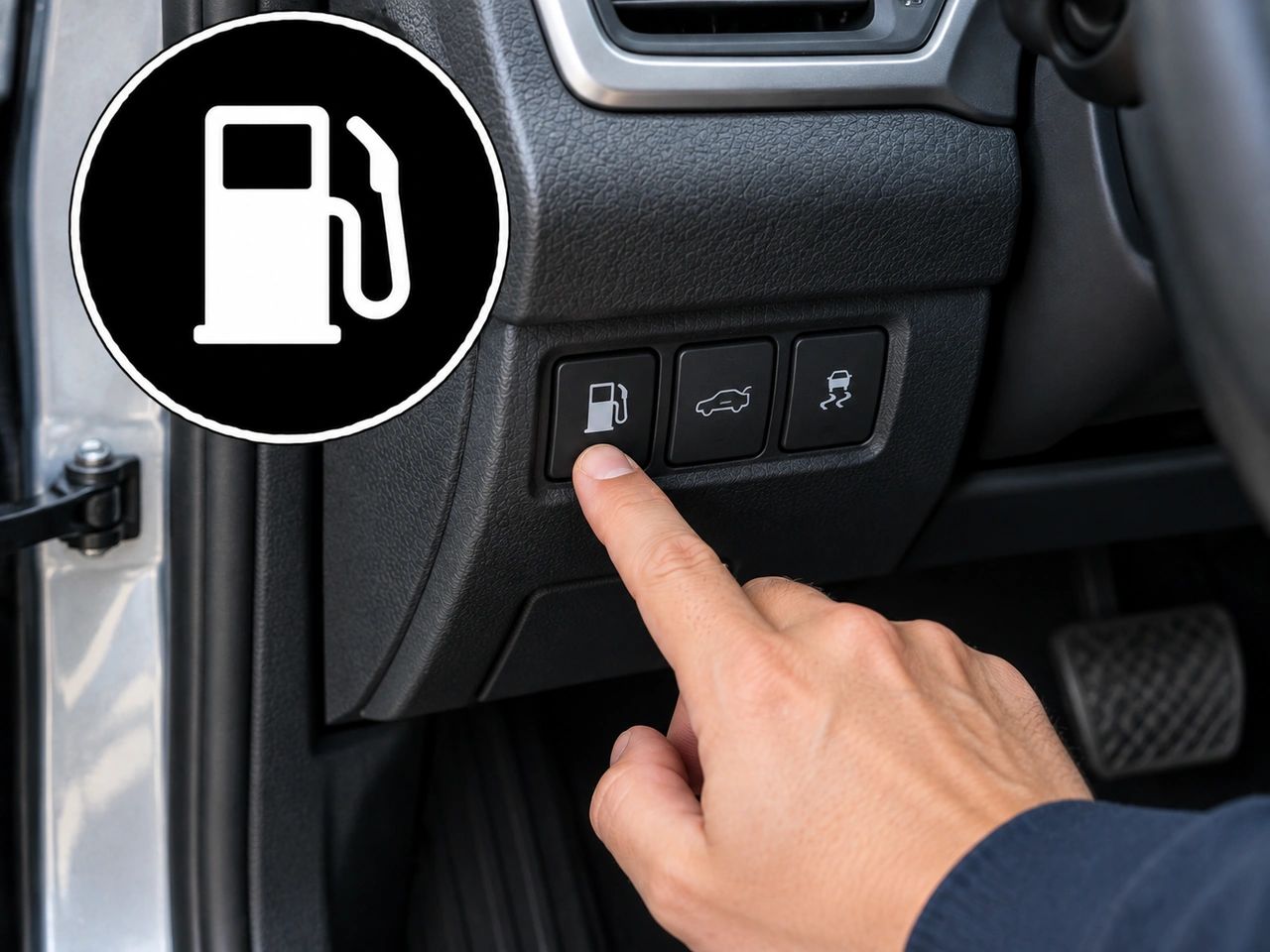
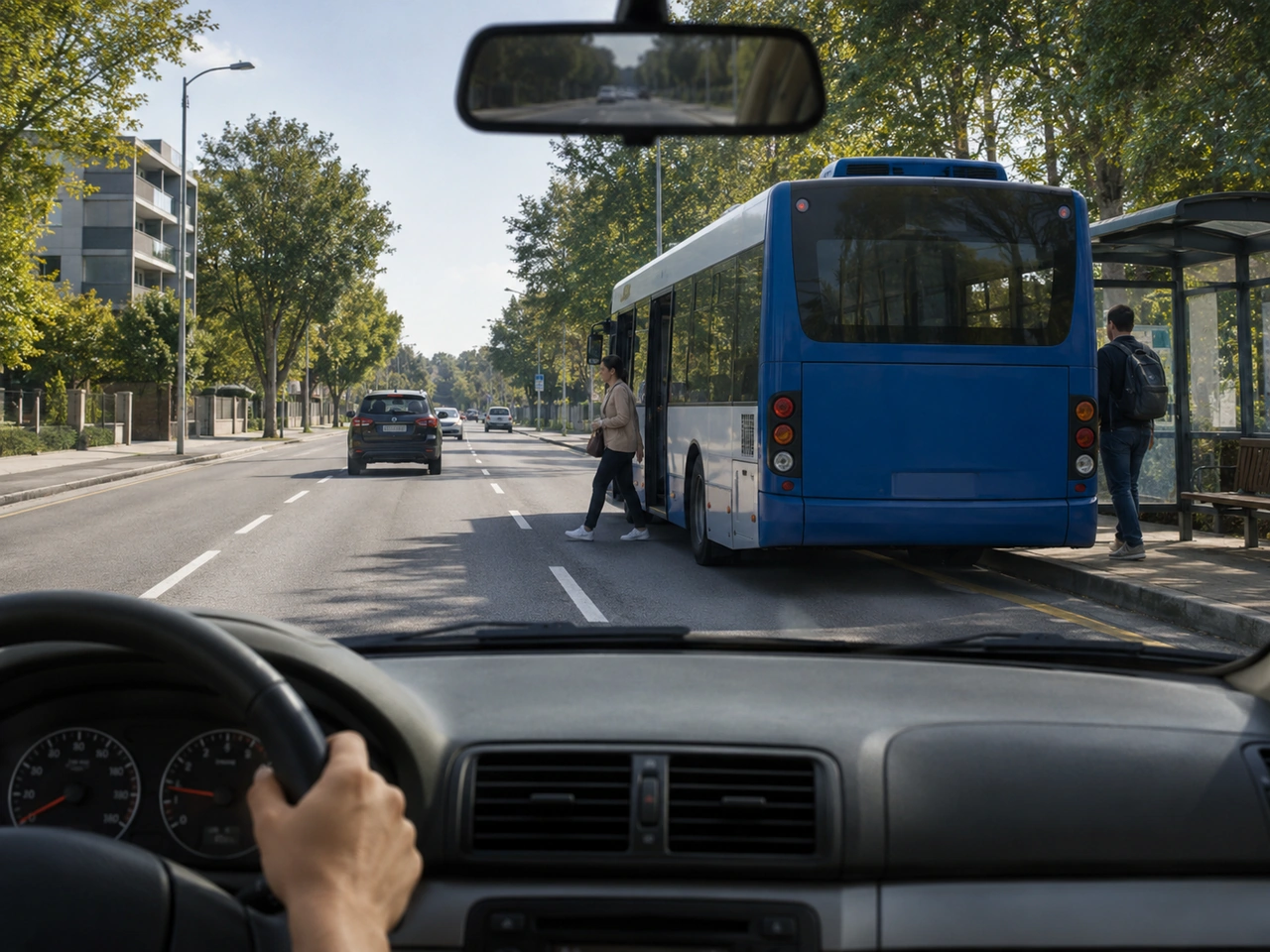
Why should you be careful when driving beside a bus at a stop?

544. Why should you be careful when driving beside a bus at a stop?

Vehicles beside a bus must always stop and wait.
Bus stops usually have a lower speed limit.
✓ Passengers may step out or cross near the bus.
A stopped bus always has priority over passing traffic.

Stopped buses can hide pedestrians, and passengers may cross unexpectedly. Slow down and be ready to react.

Vehicle passing a bus at a stop
AI-generated by Traffic-rules.com • WCIT • CC BY-SA
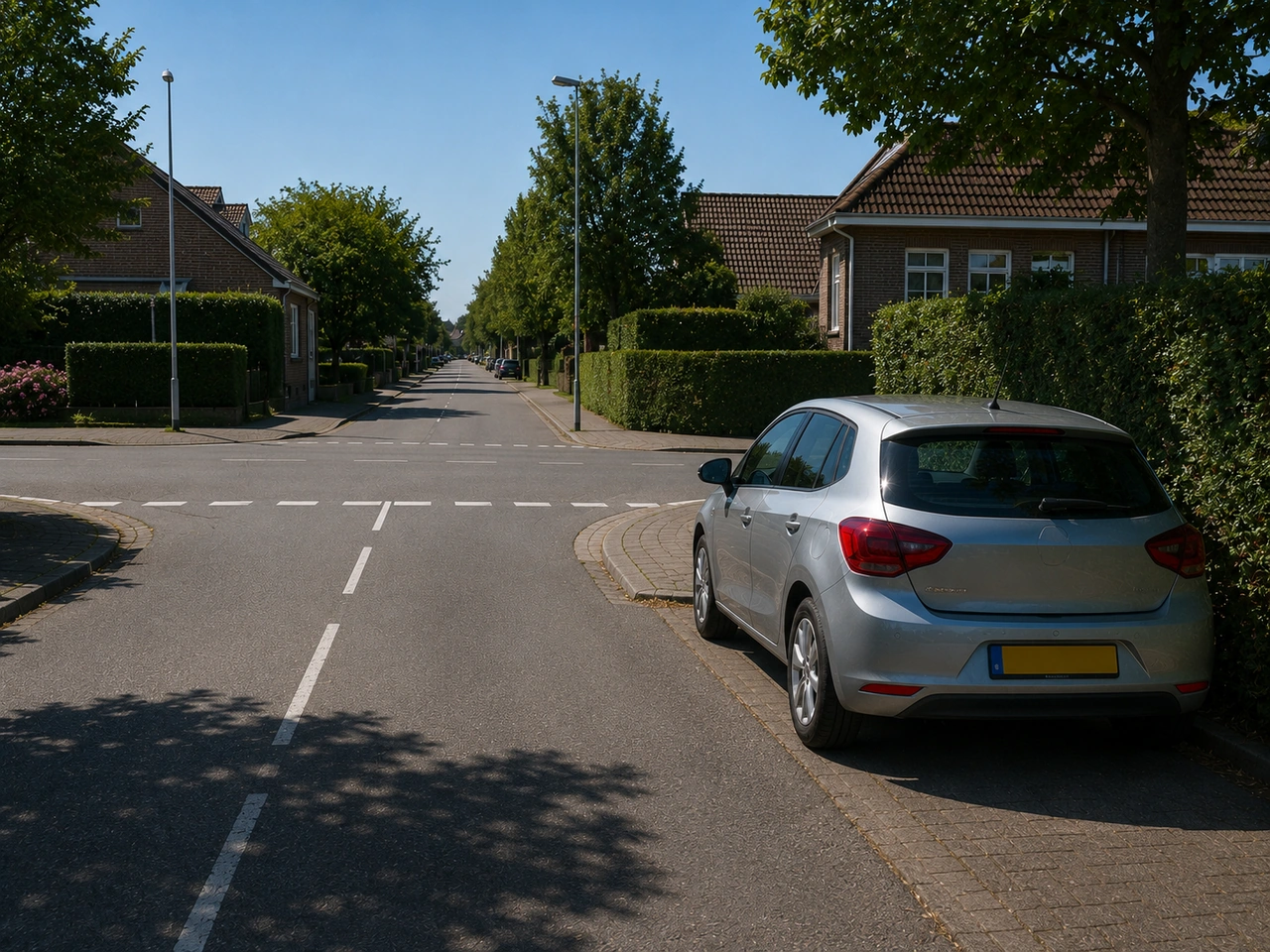
How can parking too close to a junction affect visibility?

545. How can parking too close to a junction affect visibility?

✓ It can block the view between road users.
It improves visibility by slowing down traffic.
It affects only the driver of the parked vehicle.
It blocks the view only for pedestrians.

Parking too close to a junction can block visibility. Drivers, cyclists, and pedestrians may have difficulty seeing each other in time.

Parked vehicle obstructing visibility near a junction
AI-generated by Traffic-rules.com • WCIT • CC BY-SA
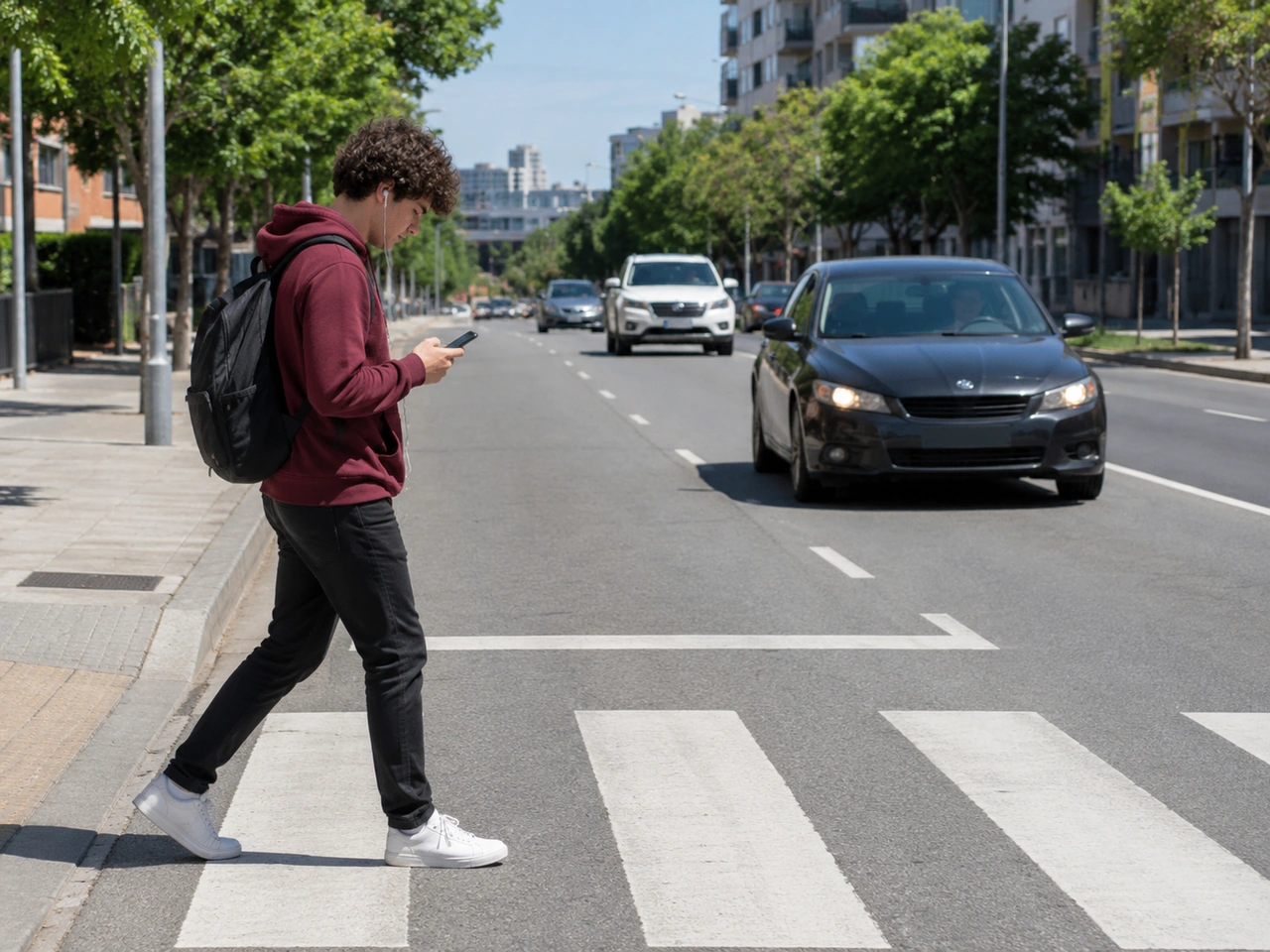
Why is it dangerous to cross while listening to loud music?

546. Why is it dangerous to cross while listening to loud music?

It makes you walk more slowly across the road.
Drivers may not hear you crossing.
Music can make you lose your balance.
✓ You may not hear approaching traffic.

Loud music can reduce your awareness of vehicles, bicycles, horns, and other warning sounds.

Pedestrian listening to music while crossing the road
AI-generated by Traffic-rules.com • WCIT • CC BY-SA
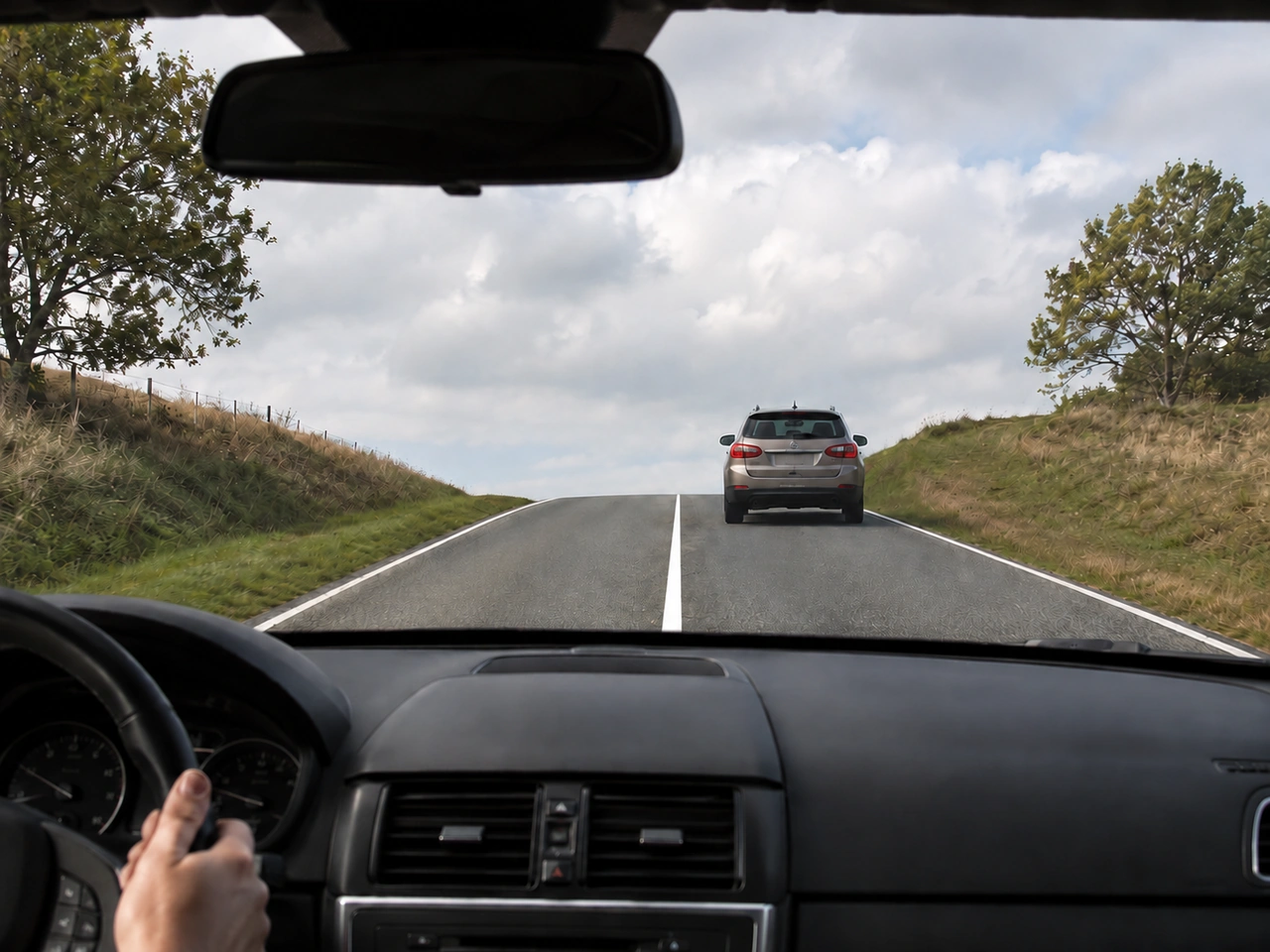
Why should you not overtake near the top of a hill?

547. Why should you not overtake near the top of a hill?

Speed limits always decrease near hill crests.
Vehicles ahead always have priority on hills.
Hilltops usually have a slippery road surface.
✓ You may not see oncoming traffic or hidden hazards.

Near the top of a hill, your view ahead is limited. Oncoming vehicles, cyclists, pedestrians, or obstacles may be hidden.

Hill crest hiding the road ahead
AI-generated by Traffic-rules.com • WCIT • CC BY-SA
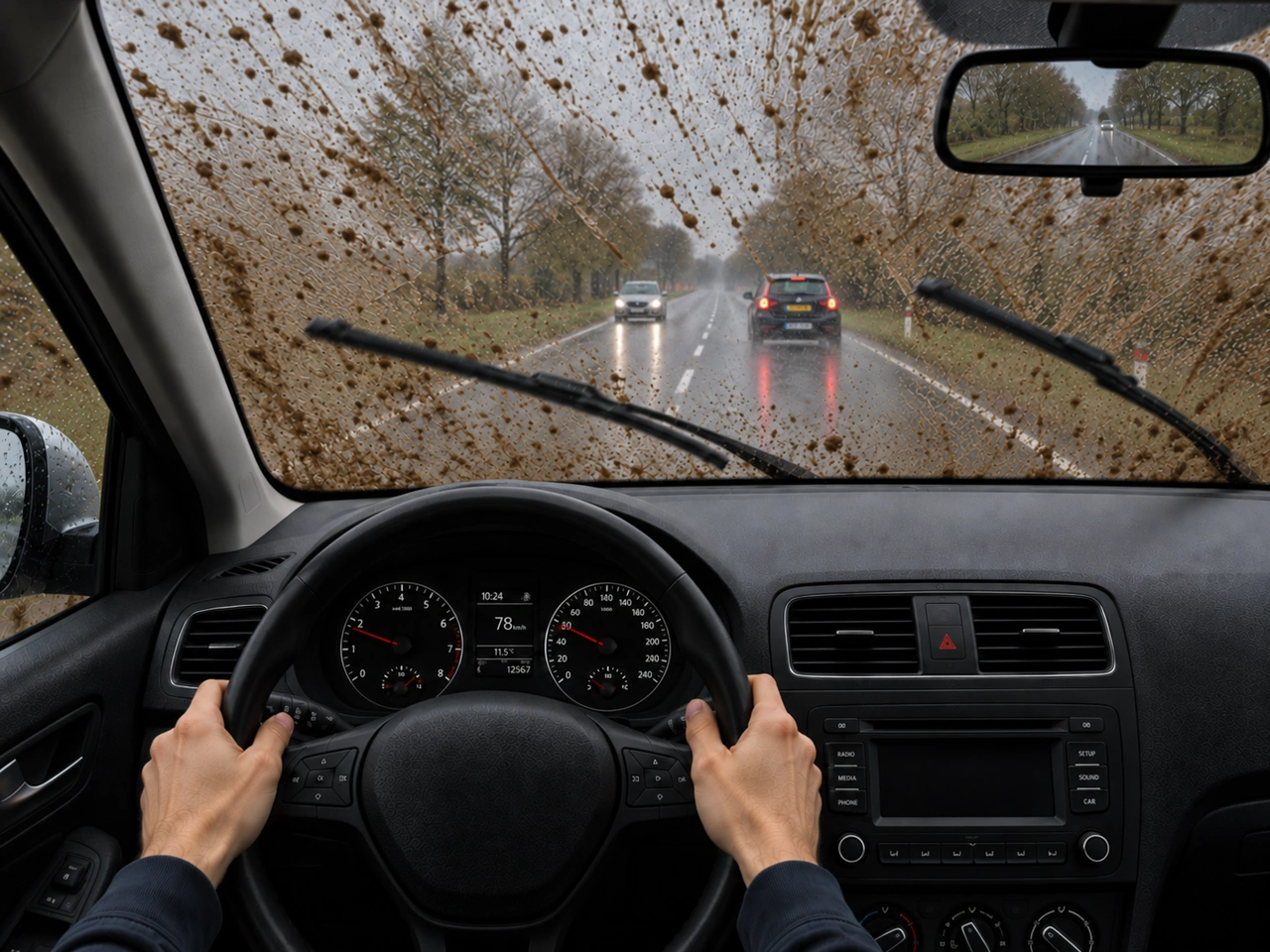
What should you do if your windscreen becomes covered with mud or spray?

548. What should you do if your windscreen becomes covered with mud or spray?

✓ Slow down and use the washers and wipers to restore clear vision.
Increase speed so the airflow clears the windscreen.
Switch off the wipers until the windscreen dries.
Continue driving and wait for the spray to clear.

Clear visibility is essential. Slow down safely and use your washers and wipers until you can see the road clearly again.

Mud and spray obscuring a vehicle's windscreen
AI-generated by Traffic-rules.com • WCIT • CC BY-SA
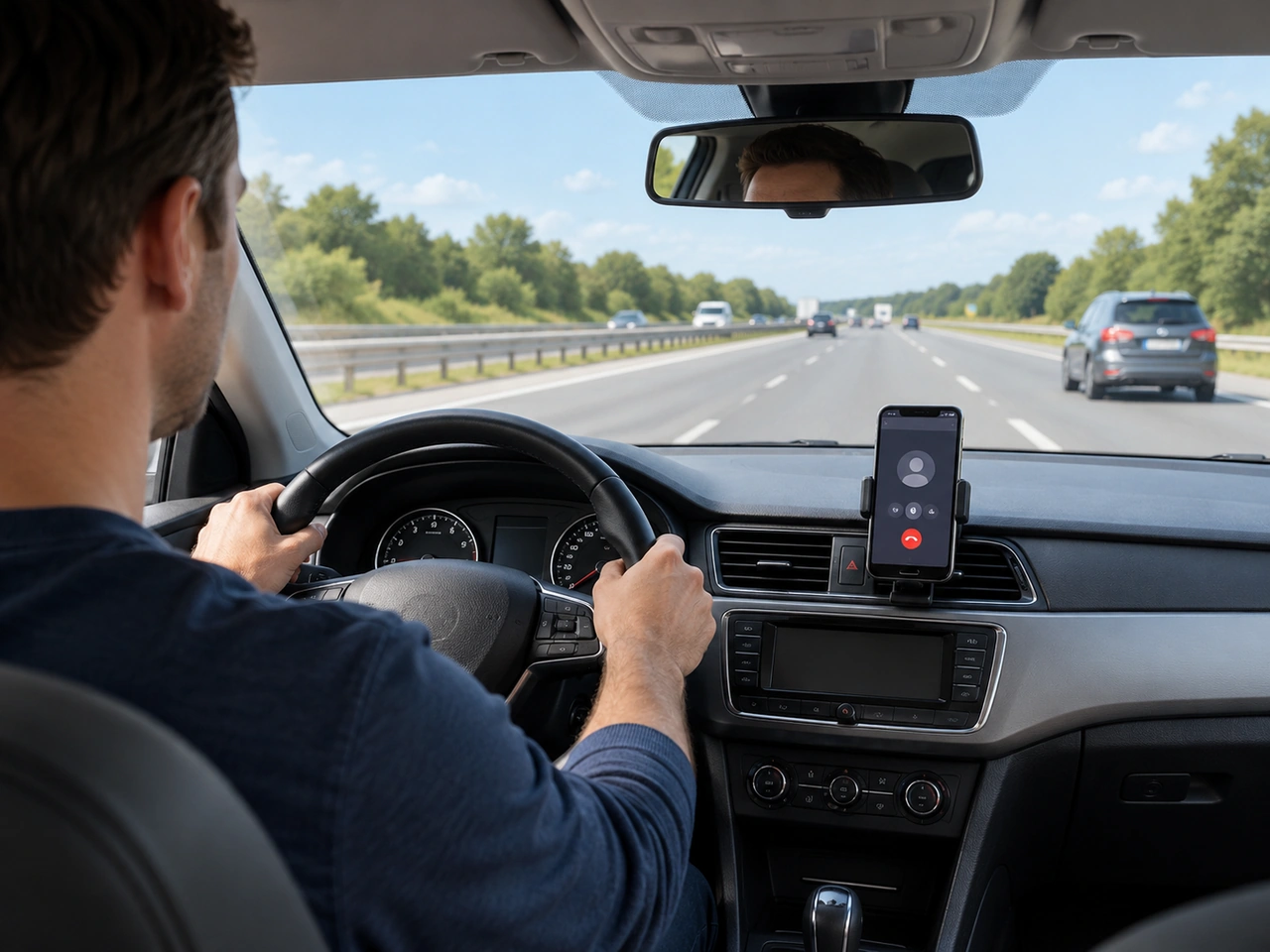
How may drivers normally use a phone while driving in Norway?

549. How may drivers normally use a phone while driving in Norway?

Either handheld or hands-free.
✓ Hands-free.
Only for texting.
Handheld.

When phone use while driving is permitted in Norway, drivers must generally use a hands-free system rather than holding the phone.

Hands-free phone use inside a vehicle
AI-generated by Traffic-rules.com • WCIT • CC BY-SA
What should you do when traffic lights change to amber as you approach?

550. What should you do when traffic lights change to amber as you approach?

Accelerate to pass before the light turns red.
Stop even if this requires sudden harsh braking.
Treat it like a green light until it turns red.
✓ Stop if you can do so safely.

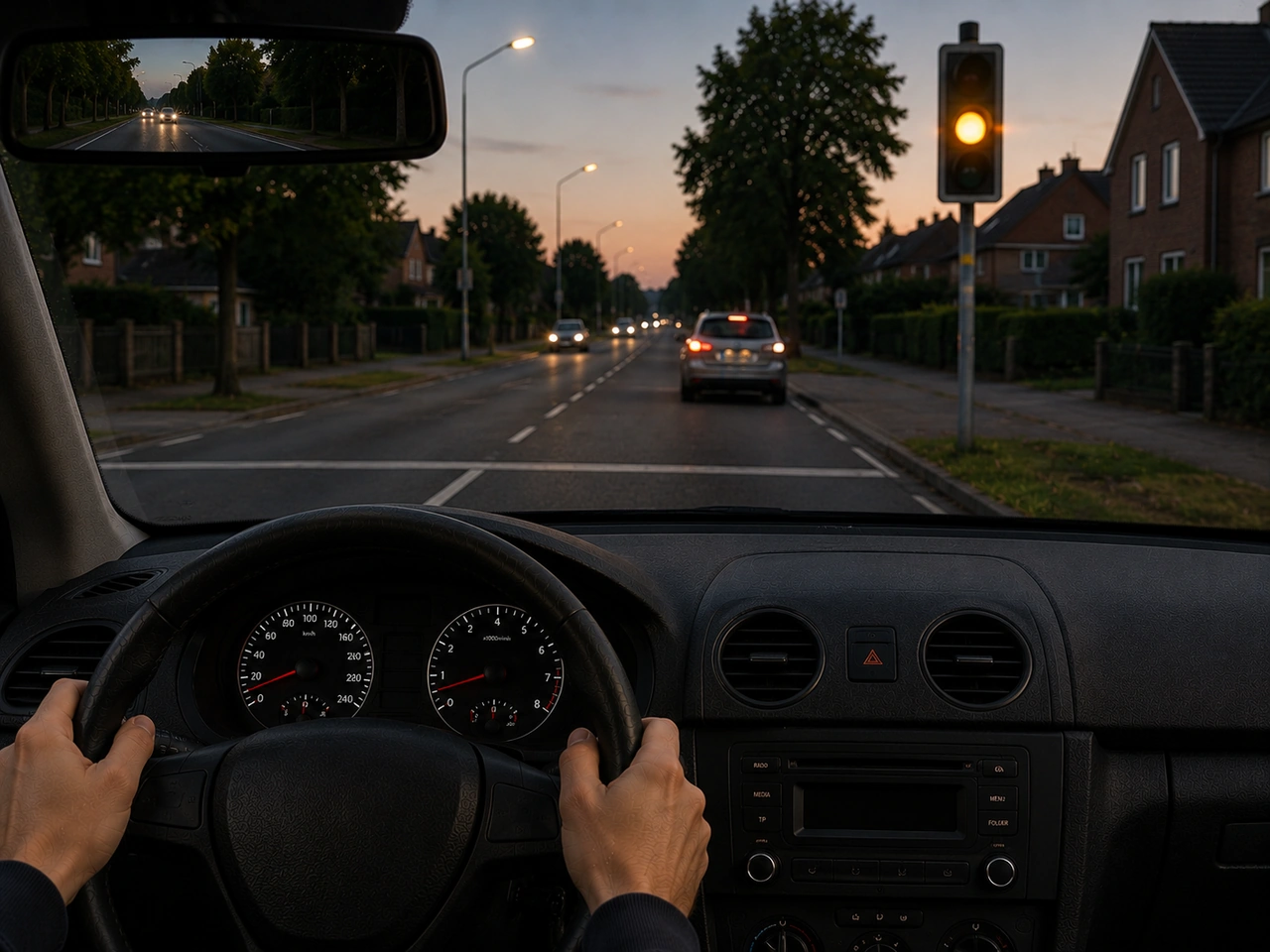
An amber light warns that the signal is changing. Stop if it is safe, but avoid sudden braking that could cause danger behind you.

Vehicle approaching an amber traffic light
AI-generated by Traffic-rules.com • WCIT • CC BY-SA