
Traffic rulesPeru
Learn the traffic rules of Peru with lots of pictures, clear traffic signs and interactive quizzes. Simple, visual and easy to follow.


The driving-licence system in Peru
Who issues driving licences in Peru?
The Ministry of Transport and Communications (MTC) and the competent regional transport authorities administer the national driving-licence system.
What is a driving licence commonly called in Peru?
It is commonly called a brevete.
Is a Peruvian driving licence valid nationwide?
Yes. A valid licence authorises the holder to drive the recorded vehicle class and category throughout Peru.
What is the National Driver System?
It is the national electronic system in which medical results, examinations, licence transactions, sanctions and driver records are registered.
Who conducts examinations in Lima?
The Touring y Automóvil Club del Perú operates the authorised evaluation centre for many Class A examinations in Lima.
Who conducts examinations outside Lima?
Authorised evaluation centres working with the relevant regional transport authority conduct the examinations.
Can a licence be issued electronically?
Yes. Eligible Class A applicants can request an electronic licence that is valid nationwide.
Is a physical licence also available?
Yes. Applicants can select the physical document through the applicable issue or renewal procedure.
Can licence status be checked online?
Yes. The MTC provides online services for checking licence status, driver history, sanctions and points.
Must the driver hold the correct category?
Yes. The licence class and category must correspond to the vehicle and the type of service being provided.
Eligibility and the first Class A-I licence
What is the minimum age for a Class A-I licence?
The applicant must be at least 18 years old.
What vehicles does Class A-I cover?
It covers private passenger vehicles in categories M1 and M2 and light goods vehicles in category N1, subject to the legal technical limits.
Can a person drive commercially with only Class A-I?
Only where the vehicle and activity fall within the private Class A-I entitlement; professional passenger or goods services require the appropriate higher category.
What are the main stages for a first Class A-I licence?
Medical and psychological evaluation, traffic-rules examination, practical driving examination and licence issue.
Must the applicant have valid identification?
Yes. A valid DNI or accepted immigration or protection document is required.
Can a foreign resident follow the ordinary first-licence route?
Yes. A foreign national with accepted valid documents can complete the Peruvian medical and examination process.
Can a person apply while judicially prohibited from driving?
No. The applicant must declare that no final judicial resolution removes the right to drive land-transport vehicles.
Must unpaid fines be resolved?
Yes. Outstanding electoral fines, traffic fines or unfulfilled sanctions can block issue or renewal.
Is driving-school attendance compulsory for Class A-I?
No. The driver-training course is optional for an ordinary first Class A-I application.
Does passing all tests allow immediate driving?
Driving begins only after a valid physical or electronic licence has been issued.
Can examination or identity fraud invalidate the application?
Yes. Impersonation, false certificates or altered results can cause refusal, cancellation and criminal consequences.
Should regional applicants follow Lima fees and locations?
No. Examination centres, charges and issue procedures can differ by region.
Medical and psychological assessment
Is a medical examination compulsory?
Yes. The applicant must pass a medical and psychological fitness evaluation before taking the knowledge examination.
Where must the assessment be completed?
At a health establishment authorised by the MTC.
Is fasting required?
The official guidance states that fasting is not necessary.
What does the assessment normally cover?
General health, vision, hearing, psychological fitness, coordination and other abilities relevant to safe driving.
Can glasses or contact lenses be required?
Yes. Necessary corrective lenses can be recorded as a driving restriction.
Can a medical condition shorten licence validity?
Yes. Fitness conditions and senior-driver rules can lead to shorter validity.
Does disability automatically prevent licensing?
No. Fitness is assessed individually, and restrictions or vehicle adaptations may be recorded where permitted.
Can the MTC verify the certificate electronically?
Yes. The approved result must be registered in the National Driver System.
How long is a medical result normally valid for the transaction?
Applicants should complete the remaining process within the validity period recorded by the authorised health centre and national system.
Can a later health problem affect an existing licence?
Yes. Medical unfitness can lead to restrictions, suspension, non-renewal or cancellation.
The traffic-rules examination
How many questions are in the Class A traffic-rules examination?
There are 40 multiple-choice questions.
How long does the examination last?
A maximum of 40 minutes.
How many correct answers are needed?
At least 35 correct answers.
What subjects are tested?
Traffic rules, signs, infringements, sanctions, efficient driving, accident insurance and safe road behaviour.
Must the medical examination be passed first?
Yes.
Does the MTC publish an official question bank?
Yes. Official question collections are available by class and category.
Is an official practice simulator available?
Yes. The MTC provides a free online examination simulator.
How many attempts are available in the ordinary process?
The applicant has two attempts in the examination process.
Must the second attempt be scheduled?
Yes. The candidate must arrange the repeat attempt through the evaluation centre.
Is the result registered electronically?
Yes. The evaluation result is automatically recorded in the MTC system.
Must the theory test be passed before the practical test?
Yes, for a first licence.
Can applicants take the test in every regional office?
They must use the authorised evaluation centre serving their region and confirm its current schedule.
The practical driving examination
Is a practical examination required for Class A-I?
Yes. The applicant must pass an examination of driving skills.
What does the examination assess?
Vehicle control, observation, manoeuvring, signalling, compliance with traffic rules and safe decision-making.
Must the vehicle correspond to the requested category?
Yes.
Who provides the test vehicle?
The applicable evaluation centre procedure determines whether the applicant uses an authorised centre vehicle or another accepted vehicle.
Can one serious safety error cause failure?
Yes. Dangerous driving, loss of control or examiner intervention can result in failure.
Must the theory examination already be passed?
Yes.
Is valid identity evidence required at the test?
Yes.
Can the practical result be registered nationally?
Yes. The approved result is recorded in the National Driver System.
What happens after failure?
The applicant follows the authorised centre’s repeat-test procedure and remaining-attempt rules.
Does a practical pass alone issue the licence?
No. The applicant must complete the official issue transaction and payment.
Can a regional test procedure differ from Lima?
Yes. Booking, facilities and charges differ by authorised centre.
Should the applicant confirm the vehicle requirements before attending?
Yes. The test can be refused if the vehicle or documentation does not satisfy the centre’s rules.
Class A licence categories
What does Class A-I authorise?
Private cars, SUVs, pickups, station wagons, vans and other qualifying M1, M2 and N1 vehicles.
What does Class A-IIa add?
It adds authorised passenger-service vehicles such as taxis and other qualifying passenger vehicles.
What does Class A-IIb add?
It includes qualifying goods vehicles and passenger vehicles such as microbuses and minibuses within the category limits.
What does Class A-IIIa cover?
Large passenger vehicles such as urban, interurban, interprovincial and articulated buses.
What does Class A-IIIb cover?
Heavy goods and special vehicles such as platform trucks, dump trucks, cranes, trailers and similar vehicles.
What does Class A-IIIc cover?
It combines the principal passenger and goods entitlements of A-IIIa and A-IIIb.
Does A-I automatically authorise a taxi?
No. Professional passenger service requires the appropriate category, such as A-IIa.
Does A-IIb automatically authorise every large bus?
No. Larger passenger vehicles require A-IIIa or A-IIIc.
Does A-IIIa automatically authorise heavy goods combinations?
No. Heavy goods combinations require A-IIIb or A-IIIc.
Must the vehicle registration and service use match the licence?
Yes.
Professional recategorisation and training
What is recategorisation?
It is the process of obtaining a higher professional Class A category.
What is required for A-IIa?
At least 21 years of age and at least two years with Class A-I.
What is required for A-IIb?
At least 21 years of age and either three years with A-I or one year with A-IIa.
What is required for A-IIIa?
At least 24 years of age and two years with A-IIb.
What is required for A-IIIb?
At least 24 years of age and two years with A-IIb.
What is required for A-IIIc?
At least 27 years of age and either four years with A-IIb or one year with A-IIIa or A-IIIb.
Is a professional driver-training programme compulsory?
Yes. Professional recategorisation requires completion of the applicable authorised training programme.
How long is the ordinary recategorisation course from A-I?
The official guidance describes a 55-hour programme with 30 theory hours and 25 driving hours for relevant professional categories.
What course applies when moving from A-IIb to A-IIIc?
The official guidance describes a 100-hour programme with 50 theory and 50 practical hours.
Must the medical, theory and practical examinations be passed again?
Yes. The applicant must satisfy the requirements for the higher category.
Can unpaid sanctions block recategorisation?
Yes.
Must the previous licence be surrendered when the new category is issued?
Yes. The new licence replaces the former card or record while retaining the authorised lower categories.
Class B licences for two- and three-wheel vehicles
What does Class B-I cover?
Non-motorised three-wheel vehicles used for special public passenger transport.
What does Class B-IIa cover?
Mopeds or motorised bicycles used to transport passengers or goods.
What does Class B-IIb cover?
B-IIa vehicles plus motorcycles and motorcycles with sidecars used for passengers or goods.
What does Class B-IIc cover?
B-IIa and B-IIb vehicles plus mototaxis and three-wheel motor vehicles used for passenger transport.
Who issues Class B licences?
The competent provincial or local authority administers these licences under national rules.
Does a Class A-I licence automatically include motorcycles?
No.
Must a motorcycle applicant pass a medical examination?
Yes, under the applicable Class B issue or renewal process.
Is a knowledge examination required?
Yes. National question banks exist for B-IIa, B-IIb and B-IIc.
Is a practical examination required for first issue?
Yes.
How long are Class B licences valid?
The general renewal guidance gives a five-year validity period.
Validity, renewal and electronic licences
How long is a clean or lightly sanctioned A-I licence valid?
Up to 10 years.
What validity applies after a grave or very grave offence that did not cause suspension?
The renewed A-I licence is valid for eight years.
What validity applies after a suspension or temporary disqualification?
The renewed A-I licence is valid for five years.
How long is an unsanctioned professional Class A licence valid?
Up to five years.
Can renewal be requested before expiry?
Yes. It may be requested while the licence remains valid or after expiry.
Is driving with an expired licence allowed?
No. It is classified as a very grave infringement.
Is a medical examination required for renewal?
Yes.
Must professional drivers always retake the knowledge test?
Not always. Exemption can apply when the driver has no disqualifying serious infringements.
Is an electronic licence legally valid?
Yes. The MTC electronic licence is valid nationwide.
What is needed for online electronic renewal?
An active MTC electronic mailbox, completed requirements, no blocking fines or sanctions and the applicable payment.
Senior-driver validity rules
What validity applies to A-I from age 70 to under 75?
Five years.
What validity applies to A-I from age 75 to under 81?
Three years.
What validity applies to A-I from age 81?
Two years.
What validity applies to professional Class A licences from age 70 to under 76?
One year.
What validity applies to professional Class A licences from age 76 to under 81?
Six months.
What is the maximum age for a professional Class A licence?
The official guidance states 80 years.
Is a favourable medical and psychological assessment required?
Yes.
Is there a maximum age for holding A-I?
The official rules provide shorter renewal periods rather than a fixed maximum age for the private A-I category.
Can medical fitness produce an even shorter period?
Yes.
Should age be calculated on the issue or renewal date?
The authority applies the age band in force when processing the licence transaction.
Foreign licences and exchange
Can a foreign visitor drive in Peru?
A foreign national may use a valid home-country licence during the permitted period when the applicable international agreement and immigration conditions are satisfied.
What period did the MTC confirm in February 2026?
Up to six months of stay when a ratified international convention applies.
What happens after that period?
The driver must obtain or exchange for a Peruvian licence to continue driving lawfully.
Can a valid foreign licence be exchanged?
Yes. The applicant can request a Peruvian licence of the equivalent class and category.
Is a medical certificate required for exchange?
Yes.
Is official verification of the foreign licence required?
Yes. A certificate from the issuing authority, embassy or consulate is generally required.
Must the applicant pass the knowledge examination?
Usually yes, unless an applicable reciprocal exchange agreement provides an exemption.
Which countries have official reciprocal-exchange agreements?
The government lists Chile, Colombia, Bolivia, Spain and South Korea as countries with agreements in force.
Is an International Driving Permit the same as a Peruvian licence?
No. It supports temporary foreign driving and does not replace a required national exchange after the permitted period.
Can a foreign resident without a foreign licence obtain a Peruvian licence?
Yes. The person follows the ordinary medical, knowledge and practical examination route.
Points, alcohol and licence sanctions
How are traffic points classified?
Light infringements add 5 to 20 negative points, grave infringements 20 to 50 and very grave infringements 50 to 100.
What happens after reaching 100 points for the first time?
The licence is suspended for six months.
What happens after reaching 100 points a second time?
The licence is suspended for one year.
What happens after reaching 100 points a third time?
The licence is cancelled and the driver is permanently disqualified.
How long do firm negative points remain active?
Two years.
Can offence-free driving create a bonus?
Yes. A driver with no infringements for 24 months receives a non-cumulative 20-point bonus valid for two years.
Can a road-safety course reduce negative points?
Yes. An eligible driver can receive a 30-point reduction, normally once every two years.
What blood-alcohol threshold applies to private drivers under criminal law?
More than 0.5 grams per litre.
What lower threshold applies to public passenger, goods or cargo drivers?
More than 0.25 grams per litre.
Can refusing an alcohol or drug test lead to sanctions?
Yes. Refusal can trigger serious traffic and legal consequences.
Sources and methodology
How was this FAQ prepared?
This FAQ was prepared from current MTC service guidance, national licence categories, examination rules and official driver-record information.
Which source explains the first Class A-I licence?
MTC: steps for a Class A-I licenceWhich source explains the theory examination?
MTC: traffic-rules examinationWhich source explains the licence categories?
MTC: types of driving licenceWhich source explains professional recategorisation?
MTC: recategorising a driving licenceWhich source explains renewal and validity?
MTC: renewing or revalidating a licenceWhich source explains senior-driver rules?
MTC: licences for older adultsWhich source explains foreign-licence exchange?
MTC: exchanging a foreign driving licenceWhich source explains the points system?
MTC: driving-licence points systemWhich source explains electronic licences?
MTC: electronic driving licenceWhen was this FAQ reviewed?
Last reviewed: 4 August 2026.
Is this website affiliated with a Peruvian authority?
This website is an independent educational resource and is not affiliated with the MTC, a regional transport authority, Touring, an evaluation centre, medical centre or driving school.
Official legislation and the current instructions of the competent licensing authority always take precedence.

1. What does this traffic sign mean?
This traffic sign indicates a warning for loose chippings. Loose stones or gravel may reduce tyre grip and can be thrown up by passing vehicles. Reduce speed, increase your following distance and avoid sudden braking, acceleration or steering movements.
2. What does this traffic sign mean?
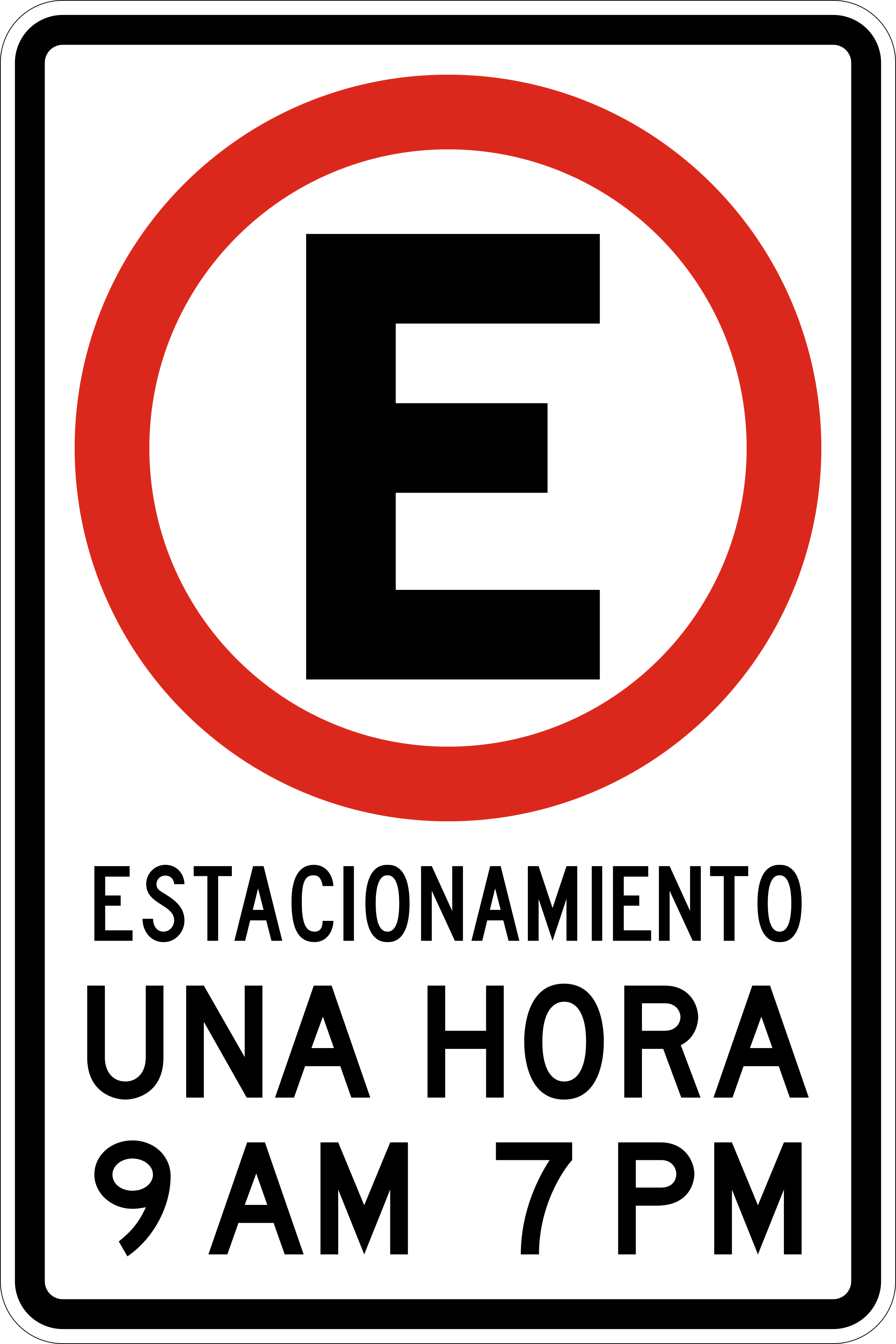
This traffic sign indicates that parking is permitted. Vehicles may park in the area covered by the sign, subject to any conditions shown on supplementary signs or road markings.
English • Traffic sign R-26 • Parking permitted. Observe the conditions. In this example parking is limited to one hour between 9:00 and 19:00.
Español • R-26 • Permitido estacionar. Permite estacionar bajo las condiciones indicadas. En este ejemplo, el estacionamiento se limita a una hora entre las 9:00 y las 19:00.
Sources
🔗 Commons.wikimedia.org
🔗 Cdn.www.gob.pe • MTC: Manual 2024, página PDF 84 (impresa 80)
SVG source: Government of the Republic of Peru – Ministry of Transport and Communications • Public domain • Original revision 2025-02-11. Wikimedia original unmodified.

3. What does this traffic sign mean?
This traffic sign indicates a warning for cattle. Cattle or other livestock may be crossing, walking along or standing near the road. Reduce speed, be prepared to stop and avoid sudden movements or unnecessary use of the horn that could startle the animals.
English • Traffic sign P-53 • Animals on the road. Livestock may be present. Reduce speed and be prepared to stop.
Español • P-53 • Animales en la vía. Advierte la posible presencia de ganado en la vía. Reduce la velocidad y prepárate para detenerte.
Sources
🔗 Commons.wikimedia.org (Amateria1121 • CC BY-SA 3.0)
🔗 Cdn.www.gob.pe • MTC: Manual 2024, página PDF 108 (impresa 104)
Image via Commons.wikimedia.org
Amateria1121 • CC BY-SA 3.0 • Source revision 2014-03-12. Wikimedia original unmodified.
4. What does this traffic sign mean?
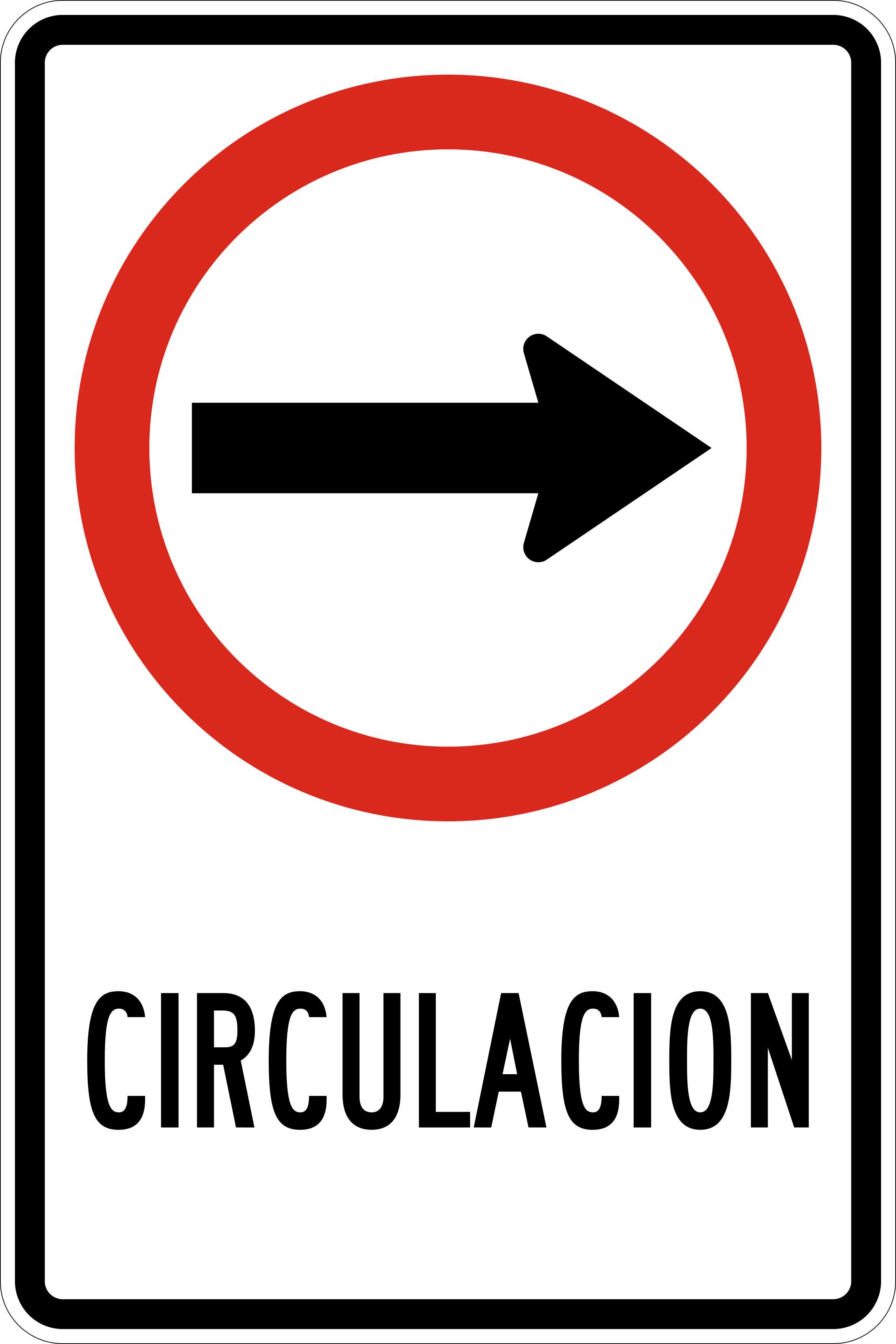
This traffic sign indicates a mandatory direction to the right. Traffic must proceed to the right at the sign and may not continue straight ahead or to the left.
English • Traffic sign R-14 • Compulsory direction. Follow the arrow, to the right in this drawing.
Español • R-14 • Circulación obligatoria. Obliga a circular en el sentido indicado por la flecha, hacia la derecha en este dibujo.
Sources
🔗 Commons.wikimedia.org
🔗 Cdn.www.gob.pe • MTC: Manual 2024, página PDF 81 (impresa 77)
SVG source: Amateria1121 • Public domain • Original revision 2025-02-13. Wikimedia original unmodified.
5. What does this traffic sign mean?
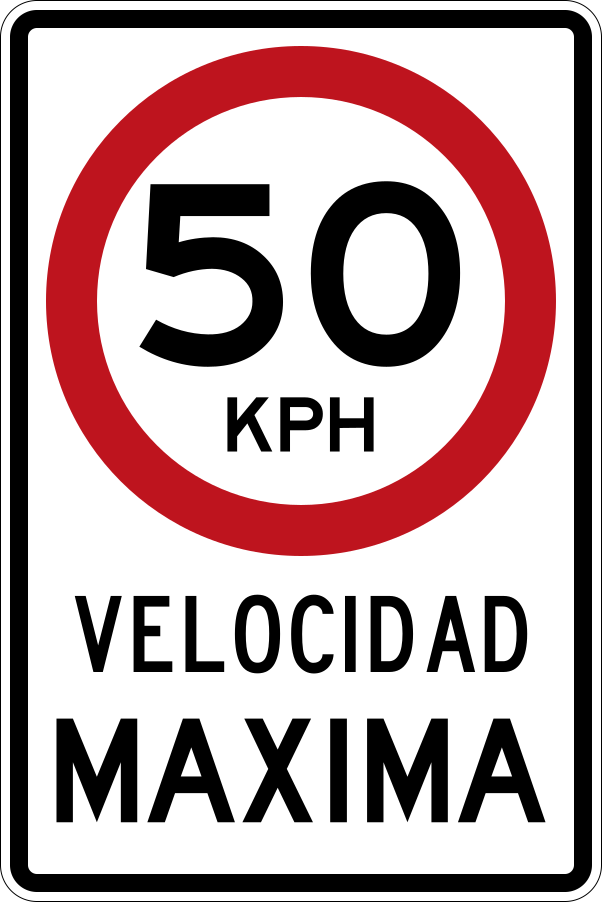
This traffic sign indicates the start of a speed limit. The displayed value is the maximum permitted speed from this point. The limit remains in force until it ends or is replaced according to the applicable traffic signs and local rules.
English • Traffic sign R-30 · historical • Maximum speed: 50 km/h. Sets a 50 km/h maximum. Reduce speed when conditions require. Historical design identified in the manual approved by R.M. No. 210-2000-MTC/15.02. This drawing is explained without presenting it as the current 2024 design.
Español • R-30 · histórico • Velocidad máxima: 50 km/h. Establece una velocidad máxima de 50 kilómetros por hora. Reduce la velocidad cuando las condiciones lo exijan. Diseño histórico identificado en el manual aprobado por R.M. N.º 210-2000-MTC/15.02. Se explica este dibujo, sin presentarlo como el diseño vigente de 2024.
Sources
🔗 Commons.wikimedia.org
🔗 Sutran.gob.pe • MTC: manual histórico, página PDF 19
🔗 Sutran.gob.pe • Manual histórico: dibujo de referencia, página PDF 26
Image via Commons.wikimedia.org
Government of the Republic of Peru – Ministry of Transport and Communications • Public domain • Source revision 2026-04-20. Wikimedia original unmodified.
6. What does this traffic sign mean?
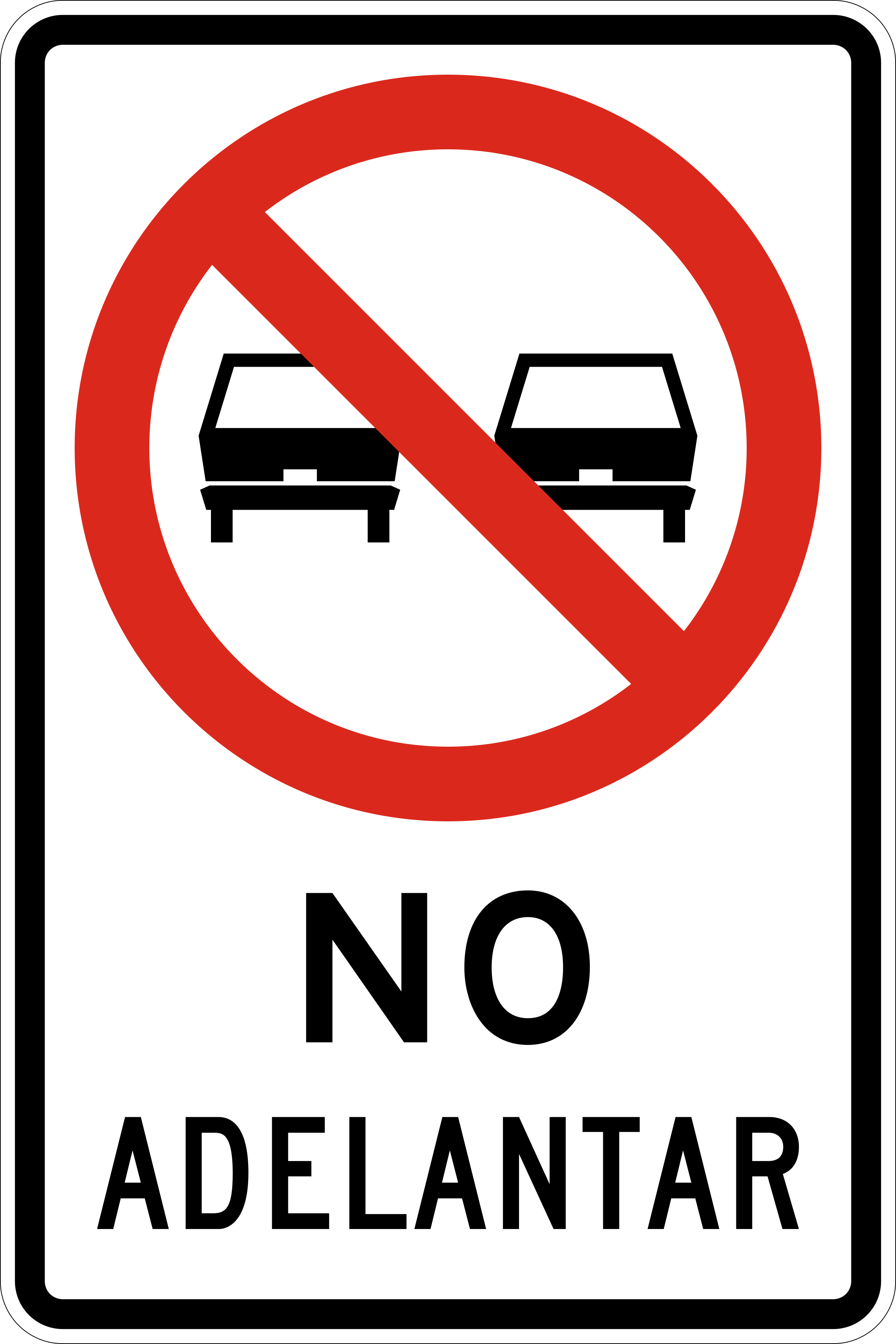
This traffic sign indicates that overtaking is prohibited. The vehicles covered by the prohibition and any categories that may still be overtaken depend on the applicable local rules.
English • Traffic sign R-16 • No overtaking. Prohibits overtaking preceding vehicles by crossing the carriageway centre line.
Español • R-16 • Prohibido adelantar. Prohíbe adelantar a los vehículos precedentes traspasando el eje de la calzada.
Sources
🔗 Commons.wikimedia.org
🔗 Cdn.www.gob.pe • MTC: Manual 2024, página PDF 81 (impresa 77)
Image via Commons.wikimedia.org
Government of the Republic of Peru – Ministry of Transport and Communications • Public domain • Source revision 2025-02-16. Wikimedia original unmodified.

7. What does this traffic sign mean?
This traffic sign indicates a warning for falling rocks. Rocks or stones may fall from nearby slopes or may already be lying on the road. Reduce speed, scan the road ahead and be prepared to avoid or stop for fallen material.
English • Traffic sign P-37 • Rockfall area. Rocks or other material may fall onto the road. Reduce speed and watch the carriageway.
Español • P-37 • Zona de derrumbes. Advierte una zona donde pueden caer rocas u otros materiales sobre la vía. Reduce la velocidad y observa la calzada.
Sources
🔗 Commons.wikimedia.org (Amateria1121 • CC BY-SA 3.0)
🔗 Cdn.www.gob.pe • MTC: Manual 2024, página PDF 104 (impresa 100)
Image via Commons.wikimedia.org
Amateria1121 • CC BY-SA 3.0 • Source revision 2014-03-12. Wikimedia original unmodified.
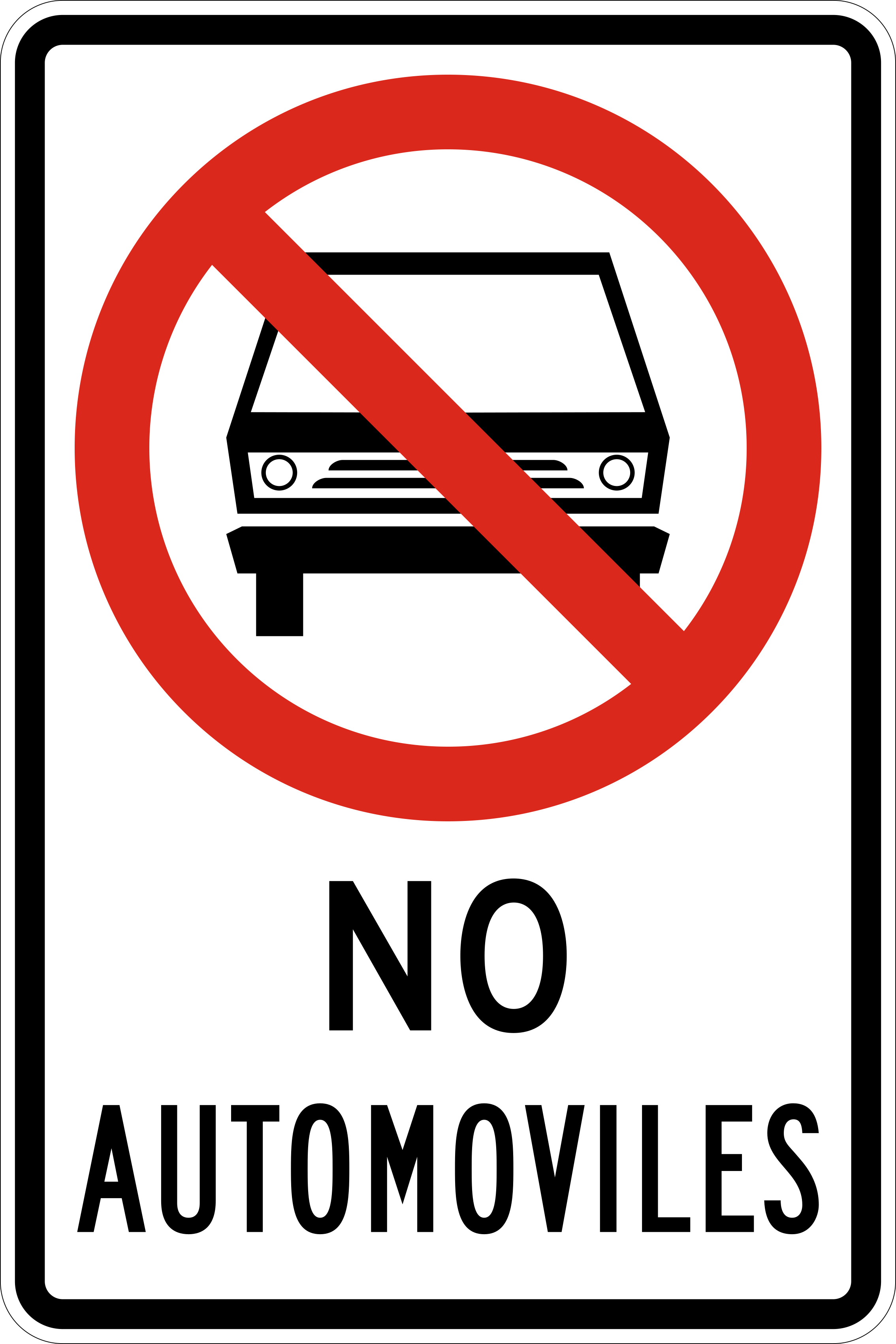
8. What does this traffic sign mean?
This traffic sign indicates that cars are prohibited. Cars may not enter or continue beyond the sign. Other road users may still be permitted unless another restriction applies.
English • Traffic sign R-17 • No motor vehicles. The prohibition covers motor vehicles, not only passenger cars.
Español • R-17 • Prohibida circulación de vehículos automotores. Prohíbe la circulación de vehículos motorizados. La prohibición no se limita a los automóviles.
Sources
🔗 Commons.wikimedia.org
🔗 Cdn.www.gob.pe • MTC: Manual 2024, página PDF 81 (impresa 77)
Image via Commons.wikimedia.org
Government of the Republic of Peru – Ministry of Transport and Communications • Public domain • Source revision 2025-02-15. Wikimedia original unmodified.

9. What does this traffic sign mean?
This traffic sign indicates that turning left is prohibited. A left turn may not be made where the sign applies. Other movements may still be permitted unless another restriction applies.
English • Traffic sign R-6 • No left turn. Under the current manual, this also prohibits U-turns.
Español • R-6 • Prohibido voltear a la izquierda. Prohíbe girar a la izquierda; según el manual vigente, también prohíbe el giro en U.
Sources
🔗 Commons.wikimedia.org
🔗 Cdn.www.gob.pe • MTC: Manual 2024, página PDF 78 (impresa 74)
🔗 Cdn.www.gob.pe • Manual 2024: alcance de la prohibición de giro
Image via Commons.wikimedia.org
Government of the Republic of Peru – Ministry of Transport and Communications • Public domain • Source revision 2014-03-12. Wikimedia original unmodified.
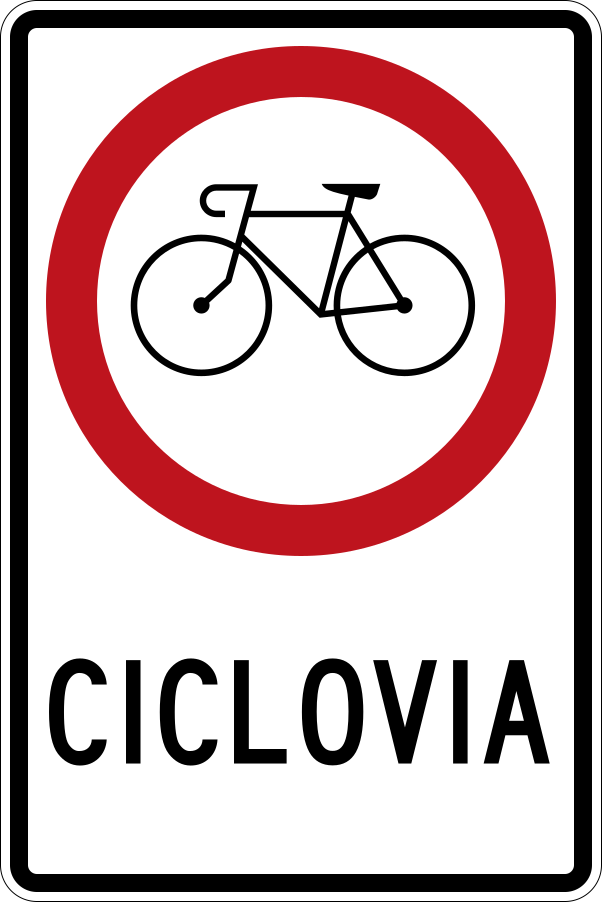
10. What does this traffic sign mean?
This traffic sign indicates a mandatory path for cyclists. Cyclists must use the designated path where the sign applies. Other road users may use the path only where the applicable signs or local rules permit them to do so.
English • Traffic sign R-42 • Cycleway. Marks a road exclusively for cycle traffic.
Español • R-42 • Ciclovía. Indica una vía exclusiva para el tránsito de ciclos: ciclovía.
Sources
🔗 Commons.wikimedia.org
🔗 Cdn.www.gob.pe • MTC: Manual 2024, página PDF 89 (impresa 85)
SVG source: Government of the Republic of Peru – Ministry of Transport and Communications • Public domain • Original revision 2026-10-09. Wikimedia original unmodified.

11. What does this traffic sign mean?
This traffic sign indicates that vehicles higher than indicated are prohibited. A vehicle or vehicle combination whose overall height, including its load, exceeds the displayed limit may not continue beyond the sign.
English • Traffic sign R-35 • Maximum permitted height: 4.50 m. Limits the vehicle's overall height including its load to 4.50 m.
Español • R-35 • Altura máxima permitida: 4,50 m. Limita la altura total permitida del vehículo y de su carga a 4,50 metros.
Sources
🔗 Commons.wikimedia.org
🔗 Cdn.www.gob.pe • MTC: Manual 2024, página PDF 88 (impresa 84)
Image via Commons.wikimedia.org
Government of the Republic of Peru – Ministry of Transport and Communications • Public domain • Source revision 2014-03-12. Wikimedia original unmodified.
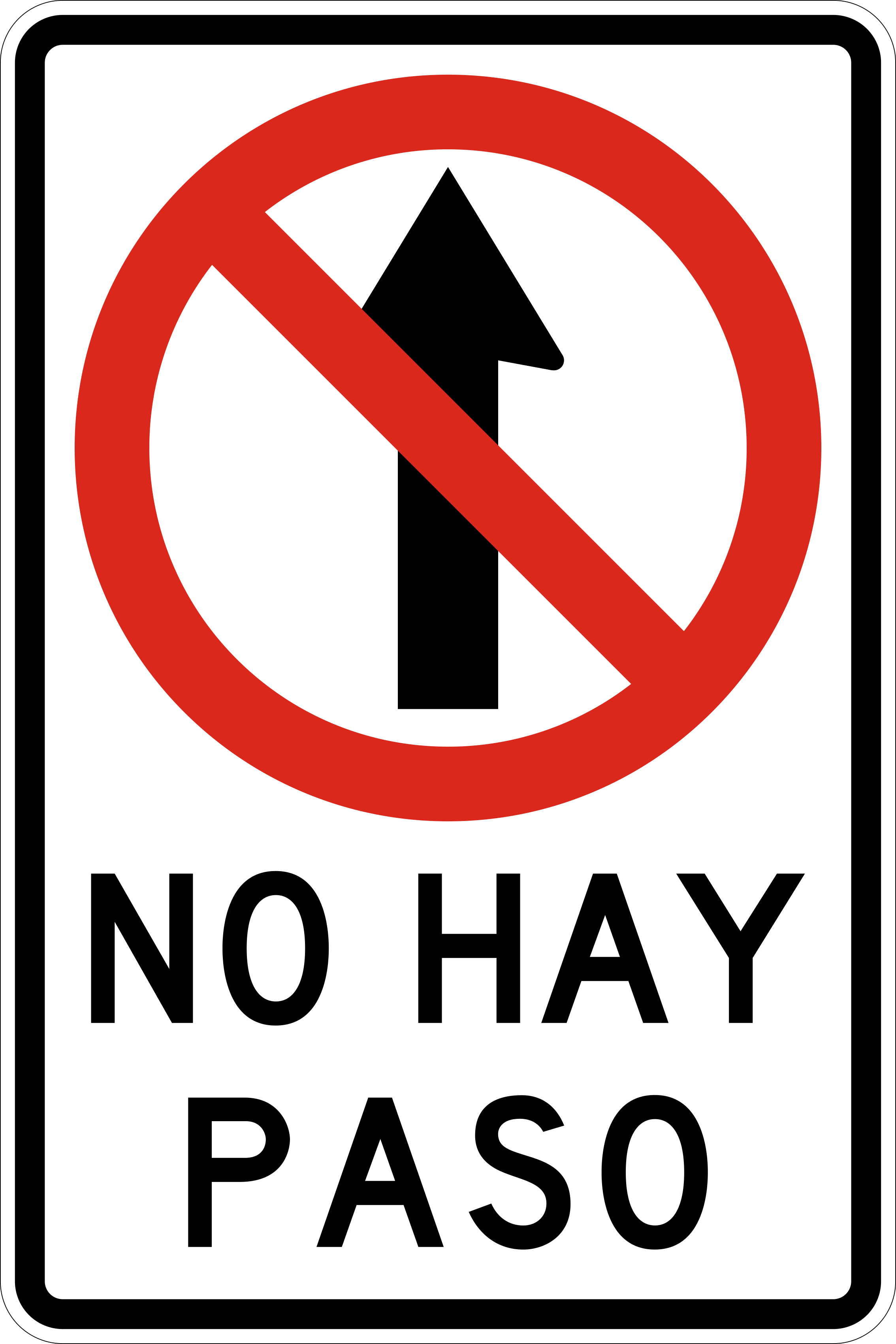
12. What does this traffic sign mean?
This traffic sign indicates that drivers may not enter the road from either direction.
English • Traffic sign R-4 · historical • Do not continue straight ahead. Prohibits continuing in your current direction. Historical design identified in the manual approved by R.M. No. 210-2000-MTC/15.02. This drawing is explained without presenting it as the current 2024 design. In the current manual R-4 means NO ENTRY and has another symbol.
Español • R-4 · histórico • Prohibido seguir de frente. Prohíbe continuar de frente en la dirección en la que venías circulando. Diseño histórico identificado en el manual aprobado por R.M. N.º 210-2000-MTC/15.02. Se explica este dibujo, sin presentarlo como el diseño vigente de 2024. En el manual vigente, R-4 corresponde a NO ENTRE y tiene otro símbolo.
Sources
🔗 Commons.wikimedia.org
🔗 Sutran.gob.pe • MTC: manual histórico, página PDF 15
🔗 Sutran.gob.pe • Manual histórico: dibujo de referencia, página PDF 22
Image via Commons.wikimedia.org
Government of the Republic of Peru – Ministry of Transport and Communications • Public domain • Source revision 2025-02-13. Wikimedia original unmodified.

13. What does this traffic sign mean?
This traffic sign indicates a warning for a road narrowing. The available width of the road or carriageway decreases ahead. Reduce speed, maintain sufficient lateral clearance and watch carefully for approaching or adjacent traffic.
English • Traffic sign P-17 · historical • Road narrows. The carriageway narrows on both sides while retaining its centre line and two-way traffic. Historical design identified in the manual approved by R.M. No. 210-2000-MTC/15.02. This drawing is explained without presenting it as the current 2024 design.
Español • P-17 · histórico • Reducción de la calzada. Advierte una reducción del ancho de la calzada por ambos lados, manteniendo su eje y la circulación en ambos sentidos. Diseño histórico identificado en el manual aprobado por R.M. N.º 210-2000-MTC/15.02. Se explica este dibujo, sin presentarlo como el diseño vigente de 2024.
Sources
🔗 Commons.wikimedia.org (Amateria1121 • CC BY-SA 3.0)
🔗 Sutran.gob.pe • MTC: manual histórico, página PDF 90
🔗 Sutran.gob.pe • Manual histórico: dibujo de referencia, página PDF 98
Image via Commons.wikimedia.org
Amateria1121 • CC BY-SA 3.0 • Source revision 2014-03-12. Wikimedia original unmodified.
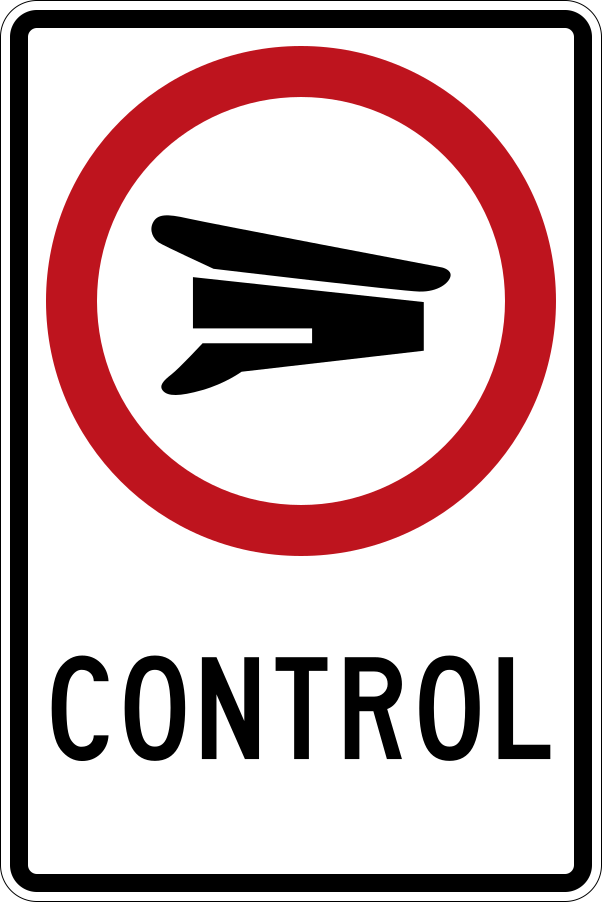
14. What does this traffic sign mean?
This traffic sign indicates a checkpoint with restricted entry. Road users may not proceed beyond the checkpoint unless they are authorised or permitted to continue according to the applicable rules and instructions.
English • Traffic sign R-37 • Checkpoint. Traffic, police, customs or another checkpoint may require you to stop. Follow staff instructions.
Español • R-37 • Control. Indica un puesto de control de tránsito, policía, aduana u otro tipo de control donde puedes ser obligado a detenerte. Sigue las instrucciones del personal.
Sources
🔗 Commons.wikimedia.org
🔗 Cdn.www.gob.pe • MTC: Manual 2024, página PDF 89 (impresa 85)
SVG source: Government of the Republic of Peru – Ministry of Transport and Communications • Public domain • Original revision 2026-04-17. Wikimedia original unmodified.
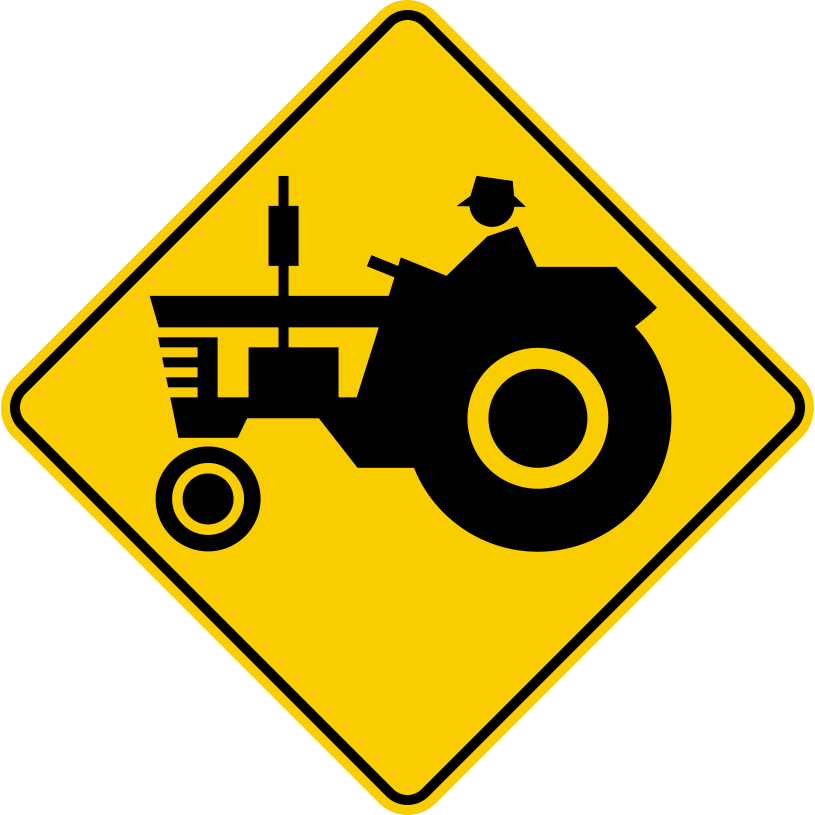
15. What does this traffic sign mean?
This traffic sign indicates a warning for tractors or other agricultural vehicles. Slow-moving agricultural vehicles may enter, cross or travel along the road ahead. Reduce speed and overtake only where it is permitted and clearly safe.
English • Traffic sign P-51 • Agricultural machinery. Prepare for slow or larger vehicles on the road.
Español • P-51 • Maquinaria agrícola en la vía. Advierte la posible presencia de maquinaria agrícola en la vía. Prepárate para vehículos lentos o de mayor tamaño.
Sources
🔗 Commons.wikimedia.org (Amateria1121 • CC BY-SA 3.0)
🔗 Cdn.www.gob.pe • MTC: Manual 2024, página PDF 108 (impresa 104)
SVG source: Amateria1121 • CC BY-SA 3.0 • Original revision 2024-03-10. Wikimedia original unmodified.

16. What does this traffic sign mean?
This traffic sign indicates that parking and stopping are prohibited. Vehicles may not stop or park voluntarily where the restriction applies, except where an applicable rule provides an exemption or stopping is required by traffic conditions.
English • Traffic sign R-28 • No stopping. Stopping the vehicle is prohibited in the signed area or section.
Español • R-28 • Prohibido detenerse. Prohíbe detener el vehículo en el área o tramo de la vía señalizado.
Sources
🔗 Commons.wikimedia.org
🔗 Cdn.www.gob.pe • MTC: Manual 2024, página PDF 85 (impresa 81)
Image via Commons.wikimedia.org
Government of the Republic of Peru – Ministry of Transport and Communications • Public domain • Source revision 2014-03-12. Wikimedia original unmodified.
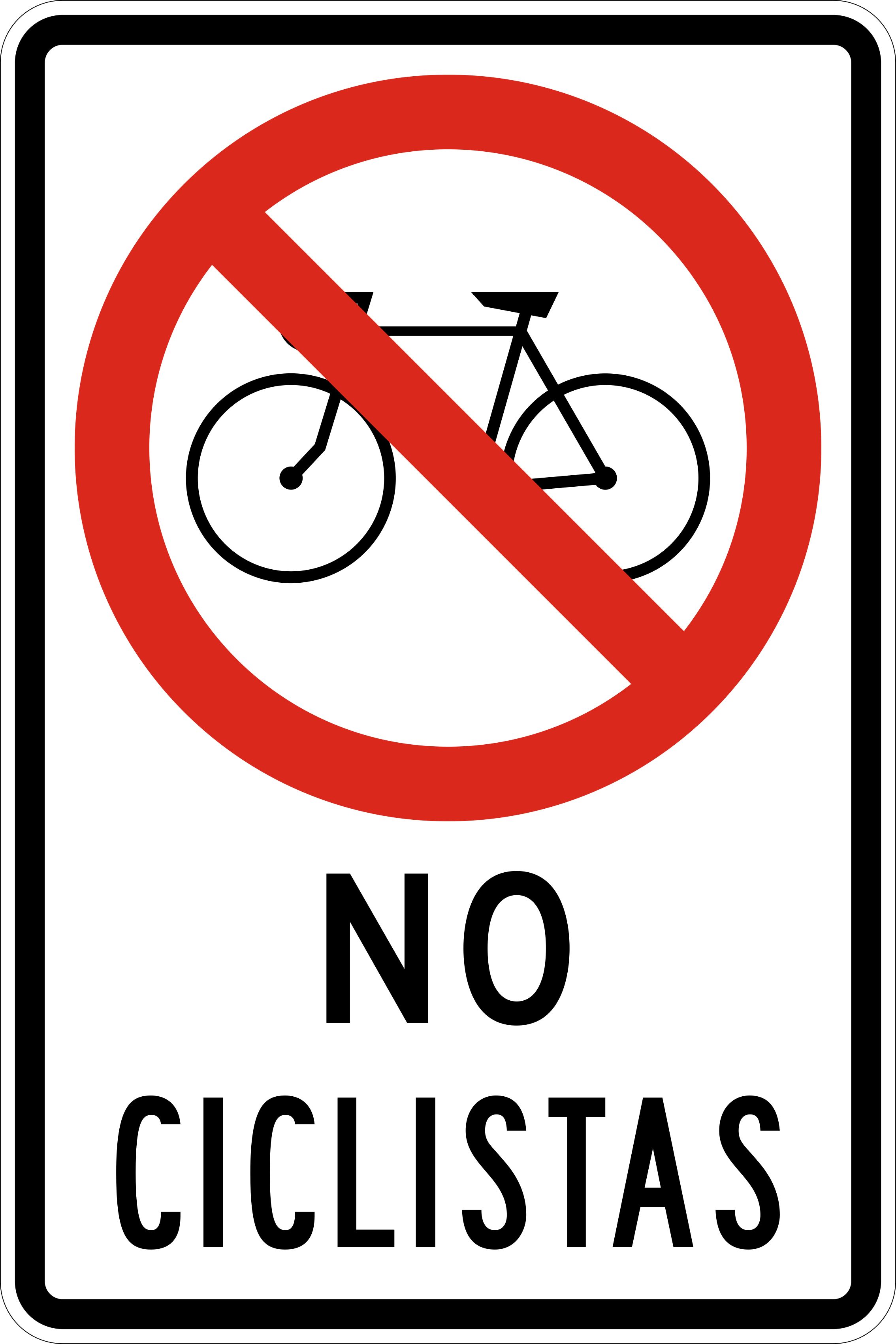
17. What does this traffic sign mean?
This traffic sign indicates that cyclists are prohibited. Cyclists may not enter or continue beyond the sign. Other road users may still be permitted unless another restriction applies.
English • Traffic sign R-22 • No bicycles or motorised cycles. Both are prohibited on the signed road or facility.
Español • R-22 • Prohibida circulación de bicicletas y motociclos. Prohíbe el paso o la circulación de bicicletas y motociclos por la vía o infraestructura señalizada.
Sources
🔗 Commons.wikimedia.org
🔗 Cdn.www.gob.pe • MTC: Manual 2024, página PDF 82 (impresa 78)
Image via Commons.wikimedia.org
Government of the Republic of Peru – Ministry of Transport and Communications • Public domain • Source revision 2025-02-16. Wikimedia original unmodified.
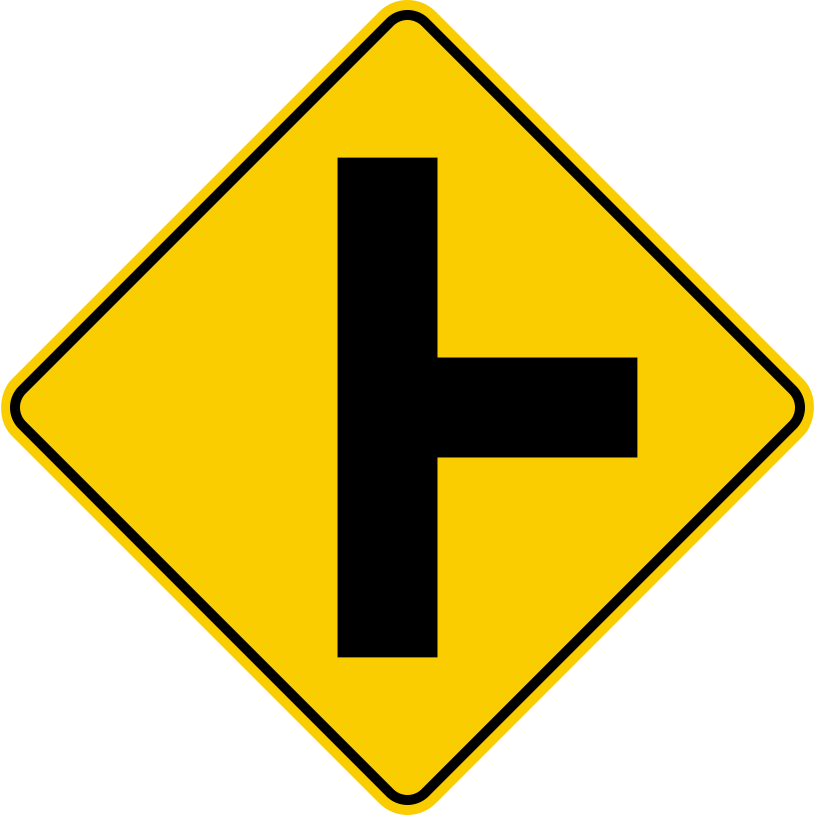
18. What does this traffic sign mean?
This traffic sign indicates a warning for a side road from the right. A side road joins the road ahead from the right at an uncontrolled junction. Reduce speed, watch for traffic entering from the side road and follow the applicable default priority rules.
English • Traffic sign P-9A • Right-angle junction with a side road on the right. Reduce speed and watch for joining traffic.
Español • P-9A • Empalme en ángulo recto con vía lateral a la derecha. Advierte una vía lateral que se une por la derecha. Reduce la velocidad y observa el tránsito que pueda incorporarse.
Sources
🔗 Commons.wikimedia.org (Amateria1121 • CC BY-SA 3.0)
🔗 Cdn.www.gob.pe • MTC: Manual 2024, página PDF 98 (impresa 94)
SVG source: Amateria1121 • CC BY-SA 3.0 • Original revision 2024-03-13. Wikimedia original unmodified.
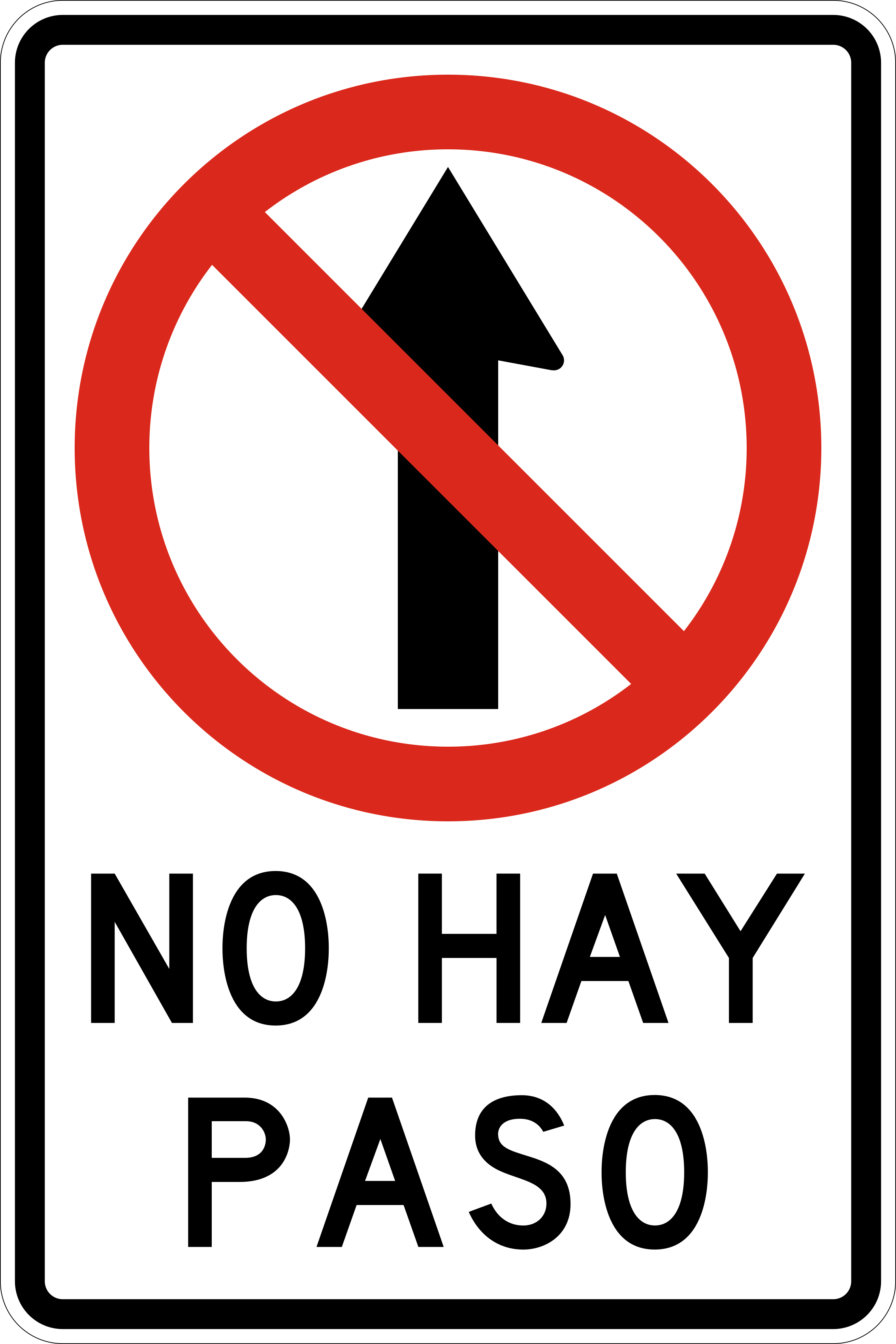
19. What does this traffic sign mean?
This traffic sign indicates that driving straight ahead is prohibited. Traffic may not continue straight ahead where the sign applies. Other movements may still be permitted unless another restriction applies.
English • Traffic sign R-4 · historical • Do not continue straight ahead. Prohibits continuing in your current direction. Historical design identified in the manual approved by R.M. No. 210-2000-MTC/15.02. This drawing is explained without presenting it as the current 2024 design. In the current manual R-4 means NO ENTRY and has another symbol.
Español • R-4 · histórico • Prohibido seguir de frente. Prohíbe continuar de frente en la dirección en la que venías circulando. Diseño histórico identificado en el manual aprobado por R.M. N.º 210-2000-MTC/15.02. Se explica este dibujo, sin presentarlo como el diseño vigente de 2024. En el manual vigente, R-4 corresponde a NO ENTRE y tiene otro símbolo.
Sources
🔗 Commons.wikimedia.org
🔗 Sutran.gob.pe • MTC: manual histórico, página PDF 15
🔗 Sutran.gob.pe • Manual histórico: dibujo de referencia, página PDF 22
Image via Commons.wikimedia.org
Government of the Republic of Peru – Ministry of Transport and Communications • Public domain • Source revision 2025-02-13. Wikimedia original unmodified.

20. What does this traffic sign mean?
This traffic sign indicates stop and give way ahead. A stop sign applies at the location ahead. Reduce speed in good time and be prepared to come to a complete stop.
English • Traffic sign P-58 · historical • Stop ahead. You must stop completely at the sign ahead. Historical design identified in the manual approved by R.M. No. 210-2000-MTC/15.02. This drawing is explained without presenting it as the current 2024 design.
Español • P-58 · histórico • Proximidad de Pare. Advierte que más adelante encontrarás una señal Pare y deberás detenerte completamente. Diseño histórico identificado en el manual aprobado por R.M. N.º 210-2000-MTC/15.02. Se explica este dibujo, sin presentarlo como el diseño vigente de 2024.
Sources
🔗 Commons.wikimedia.org (Amateria1121 • CC BY-SA 3.0)
🔗 Sutran.gob.pe • MTC: manual histórico, página PDF 94
🔗 Sutran.gob.pe • Manual histórico: dibujo de referencia, página PDF 102
Image via Commons.wikimedia.org
Amateria1121 • CC BY-SA 3.0 • Source revision 2014-03-12. Wikimedia original unmodified.

21. What does this traffic sign mean?
This traffic sign indicates a warning for a dip in the road. A sudden depression in the road surface lies ahead and may affect vehicle stability or visibility. Reduce speed before reaching the dip and be prepared for water or other hazards that may collect in the lowered section.
English • Traffic sign P-34 • Dip ahead. Warns of a transverse depression in the carriageway. Reduce speed before crossing it.
Español • P-34 • Proximidad de badén. Advierte una depresión transversal en la calzada. Reduce la velocidad antes de pasar por ella.
Sources
🔗 Commons.wikimedia.org (Amateria1121 • CC BY-SA 3.0)
🔗 Cdn.www.gob.pe • MTC: Manual 2024, página PDF 103 (impresa 99)
Image via Commons.wikimedia.org
Amateria1121 • CC BY-SA 3.0 • Source revision 2014-03-12. Wikimedia original unmodified.

22. What does this traffic sign mean?
This traffic sign indicates a warning for the end of a divided road. The separation between opposing directions of traffic ends ahead, and oncoming traffic will no longer be divided by a central reservation. Reduce speed and adjust to the new road layout.
English • Traffic sign P-29 • Divided two-way road ends. Traffic continues in both directions without the central separation.
Español • P-29 • Final de vía de doble sentido con separador central. Advierte que termina el separador central de una vía de doble sentido. Continúa la circulación en ambos sentidos sin esa separación.
Sources
🔗 Commons.wikimedia.org (Amateria1121 • CC BY-SA 3.0)
🔗 Cdn.www.gob.pe • MTC: Manual 2024, página PDF 102 (impresa 98)
Image via Commons.wikimedia.org
Amateria1121 • CC BY-SA 3.0 • Source revision 2014-03-12. Wikimedia original unmodified.

23. What does this traffic sign mean?
This traffic sign indicates a warning for a railway crossing with barriers. It alerts drivers to an upcoming level crossing with gates or barriers that close when a train approaches. Drivers should be ready to stop when the barriers are down or flashing lights activate. Never attempt to cross when gates are closing or closed.
English • Traffic sign P-43 · historical • Railway level crossing with barriers. Obey barriers and other crossing signs. Historical design identified in the manual approved by R.M. No. 210-2000-MTC/15.02. This drawing is explained without presenting it as the current 2024 design.
Español • P-43 · histórico • Cruce a nivel con línea férrea con barrera. Advierte un cruce ferroviario a nivel provisto de barreras. Respeta las barreras y las demás señales del cruce. Diseño histórico identificado en el manual aprobado por R.M. N.º 210-2000-MTC/15.02. Se explica este dibujo, sin presentarlo como el diseño vigente de 2024.
Sources
🔗 Commons.wikimedia.org (Amateria1121 • CC BY-SA 3.0)
🔗 Sutran.gob.pe • MTC: manual histórico, página PDF 92
🔗 Sutran.gob.pe • Manual histórico: dibujo de referencia, página PDF 100
Image via Commons.wikimedia.org
Amateria1121 • CC BY-SA 3.0 • Source revision 2014-03-12. Wikimedia original unmodified.
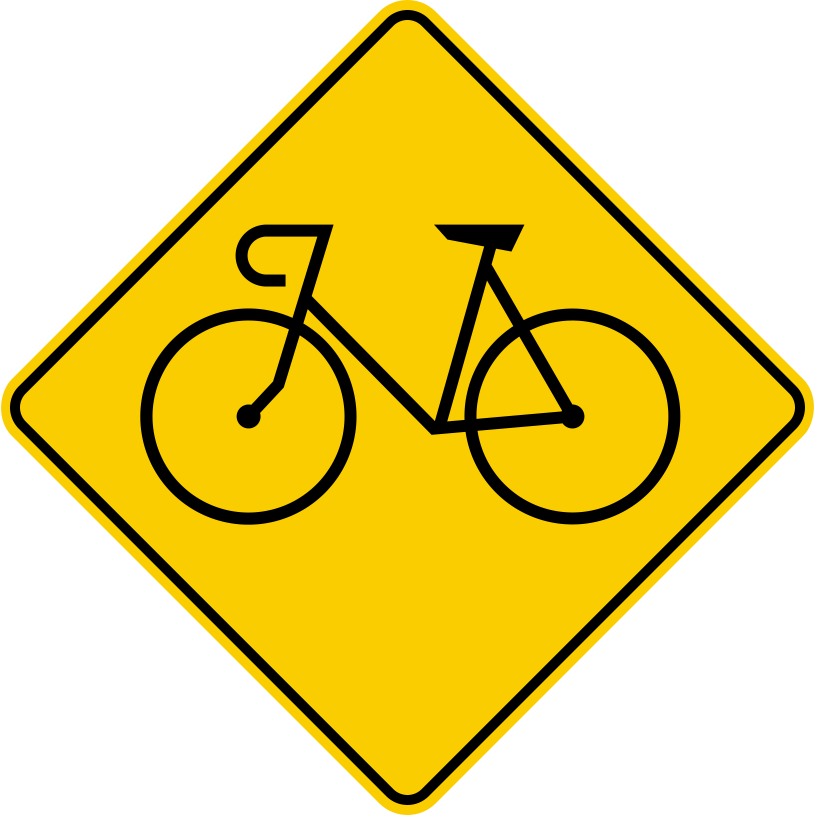
24. What does this traffic sign mean?
This traffic sign indicates a warning for cyclists. Cyclists may be riding along or crossing the road ahead. Reduce speed, watch carefully for cyclists and maintain the passing distance required by the applicable local rules.
English • Traffic sign P-46 · historical • Cycle route. Warns of a section frequently or exclusively used by bicycles. Watch for cyclists. Historical design identified in the manual approved by R.M. No. 210-2000-MTC/15.02. This drawing is explained without presenting it as the current 2024 design.
Español • P-46 · histórico • Ciclovía. Advierte un tramo utilizado frecuente o exclusivamente por bicicletas. Presta atención a los ciclistas. Diseño histórico identificado en el manual aprobado por R.M. N.º 210-2000-MTC/15.02. Se explica este dibujo, sin presentarlo como el diseño vigente de 2024.
Sources
🔗 Commons.wikimedia.org (Amateria1121 • CC BY-SA 3.0)
🔗 Sutran.gob.pe • MTC: manual histórico, página PDF 93
🔗 Sutran.gob.pe • Manual histórico: dibujo de referencia, página PDF 101
Image via Commons.wikimedia.org
Amateria1121 • CC BY-SA 3.0 • Source revision 2024-03-10. Wikimedia original unmodified.
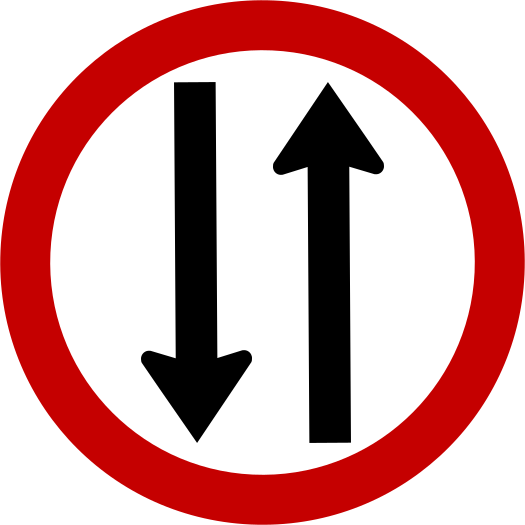
25. What does this traffic sign mean?
This traffic sign indicates the start of two-way traffic. From this point, traffic may travel in both directions on the road. Be prepared for oncoming vehicles.
English • Traffic sign R-11 • Two-way traffic. The next section carries traffic in both directions without a central divider.
Español • R-11 • Circulación en ambos sentidos. Indica que el tramo siguiente tiene circulación en ambos sentidos y no dispone de separador central.
Sources
🔗 Commons.wikimedia.org
🔗 Cdn.www.gob.pe • MTC: Manual 2024, página PDF 80 (impresa 76)
Replacement SVG: Commons.wikimedia.org • Wikimedia Commons original • Amateria1121 • CC BY-SA 3.0 • Original revision 2014-04-09. Wikimedia original unmodified.
Artwork verified against Cdn.www.gob.pe • official published diagram R-11.
Image via Commons.wikimedia.org
Amateria1121 • CC BY-SA 3.0 • Source revision 2014-04-09. Wikimedia original unmodified.

26. What does this traffic sign mean?
This traffic sign indicates that motorcycles are prohibited. Motorcyclists may not enter or continue beyond the sign. Other road users may still be permitted unless another restriction applies.
English • Traffic sign R-23 • No motorcycles. Motorcycle traffic is prohibited on the signed road.
Español • R-23 • Prohibida circulación de motocicletas. Prohíbe la circulación de motocicletas por la vía señalizada.
Sources
🔗 Commons.wikimedia.org
🔗 Cdn.www.gob.pe • MTC: Manual 2024, página PDF 83 (impresa 79)
Image via Commons.wikimedia.org
Government of the Republic of Peru – Ministry of Transport and Communications • Public domain • Source revision 2014-03-12. Wikimedia original unmodified.

27. What does this traffic sign mean?
This traffic sign indicates that tractors are prohibited. Tractors covered by the sign may not enter or continue beyond it. Other road users may still be permitted unless another restriction applies.
English • Traffic sign R-24 • No agricultural machinery. Agricultural machinery is prohibited on the signed road.
Español • R-24 • Prohibida circulación de maquinaria agrícola. Prohíbe el paso o circulación de maquinaria agrícola por la vía señalizada.
Sources
🔗 Commons.wikimedia.org
🔗 Cdn.www.gob.pe • MTC: Manual 2024, página PDF 83 (impresa 79)
Image via Commons.wikimedia.org
Government of the Republic of Peru – Ministry of Transport and Communications • Public domain • Source revision 2014-03-12. Wikimedia original unmodified.

28. What does this traffic sign mean?
This traffic sign indicates that vehicles wider than indicated are prohibited. A vehicle or vehicle combination whose overall width, including its load, exceeds the displayed limit may not continue beyond the sign.
English • Traffic sign R-36 • Maximum permitted width: 3.20 m. Limits the vehicle's overall width including its load to 3.20 m.
Español • R-36 • Ancho máximo permitido: 3,20 m. Limita el ancho total permitido del vehículo y de su carga a 3,20 metros.
Sources
🔗 Commons.wikimedia.org
🔗 Cdn.www.gob.pe • MTC: Manual 2024, página PDF 88 (impresa 84)
Image via Commons.wikimedia.org
Government of the Republic of Peru – Ministry of Transport and Communications • Public domain • Source revision 2014-03-12. Wikimedia original unmodified.
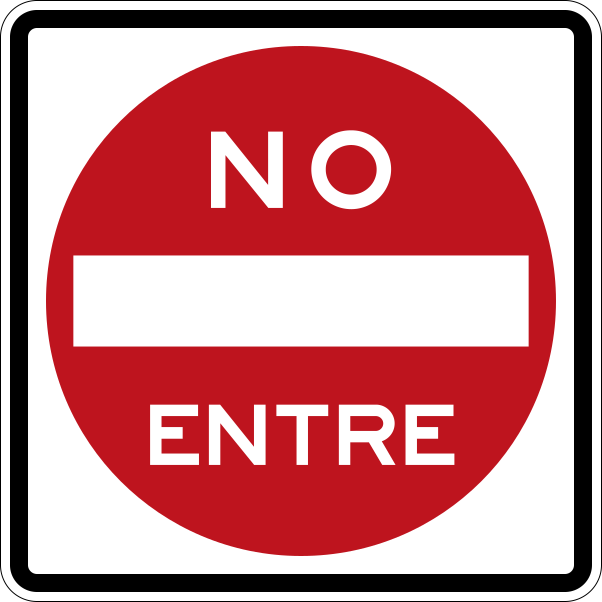
29. What does this traffic sign mean?
This traffic sign means no entry. Drivers may not enter from the direction in which the sign is placed.
English • Traffic sign R-4 • No entry. Prohibits entry to the restricted area or road from the direction faced by the sign.
Español • R-4 • No entre. Prohíbe entrar en la zona restringida o en la vía desde el sentido que enfrenta la señal.
Sources
🔗 Commons.wikimedia.org
🔗 Cdn.www.gob.pe • MTC: Manual 2024, página PDF 77 (impresa 73)
SVG source: Government of the Republic of Peru – Ministry of Transport and Communications • Public domain • Original revision 2024-03-05. Wikimedia original unmodified.
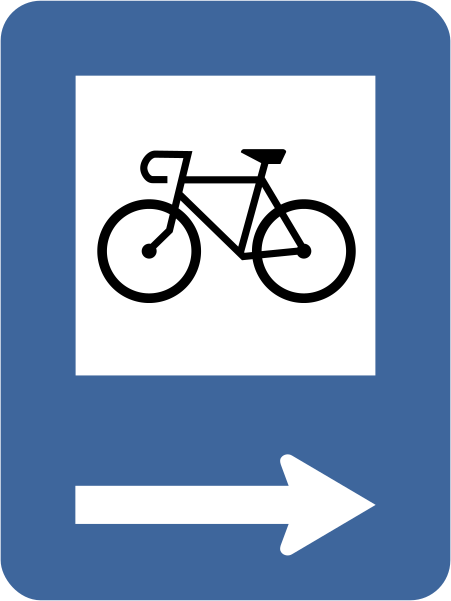
30. What does this traffic sign mean?
This traffic sign indicates a lane for cyclists. The lane is designated for bicycle traffic, subject to the applicable road markings, traffic signs and local rules.
English • Traffic sign I-22 · historical • Direction to cycleway. Points towards a cycleway, to the right in this drawing. Historical design identified in the manual approved by R.M. No. 210-2000-MTC/15.02. This drawing is explained without presenting it as the current 2024 design. Current code I-22 refers to an information service; that meaning is not assigned to this drawing.
Español • I-22 · histórico • Dirección hacia ciclovía. Indica la dirección hacia una ciclovía, a la derecha en este dibujo. Diseño histórico identificado en el manual aprobado por R.M. N.º 210-2000-MTC/15.02. Se explica este dibujo, sin presentarlo como el diseño vigente de 2024. El código I-22 del manual vigente corresponde a servicio de información; no se atribuye ese significado a este dibujo.
Sources
🔗 Commons.wikimedia.org
🔗 Sutran.gob.pe • MTC: manual histórico, página PDF 186
🔗 Sutran.gob.pe • Manual histórico: dibujo de referencia, página PDF 193
Image via Commons.wikimedia.org
Ministerio de Transportes y Comunicaciones del República del Perú • Public domain • Source revision 2023-01-03. Wikimedia original unmodified.
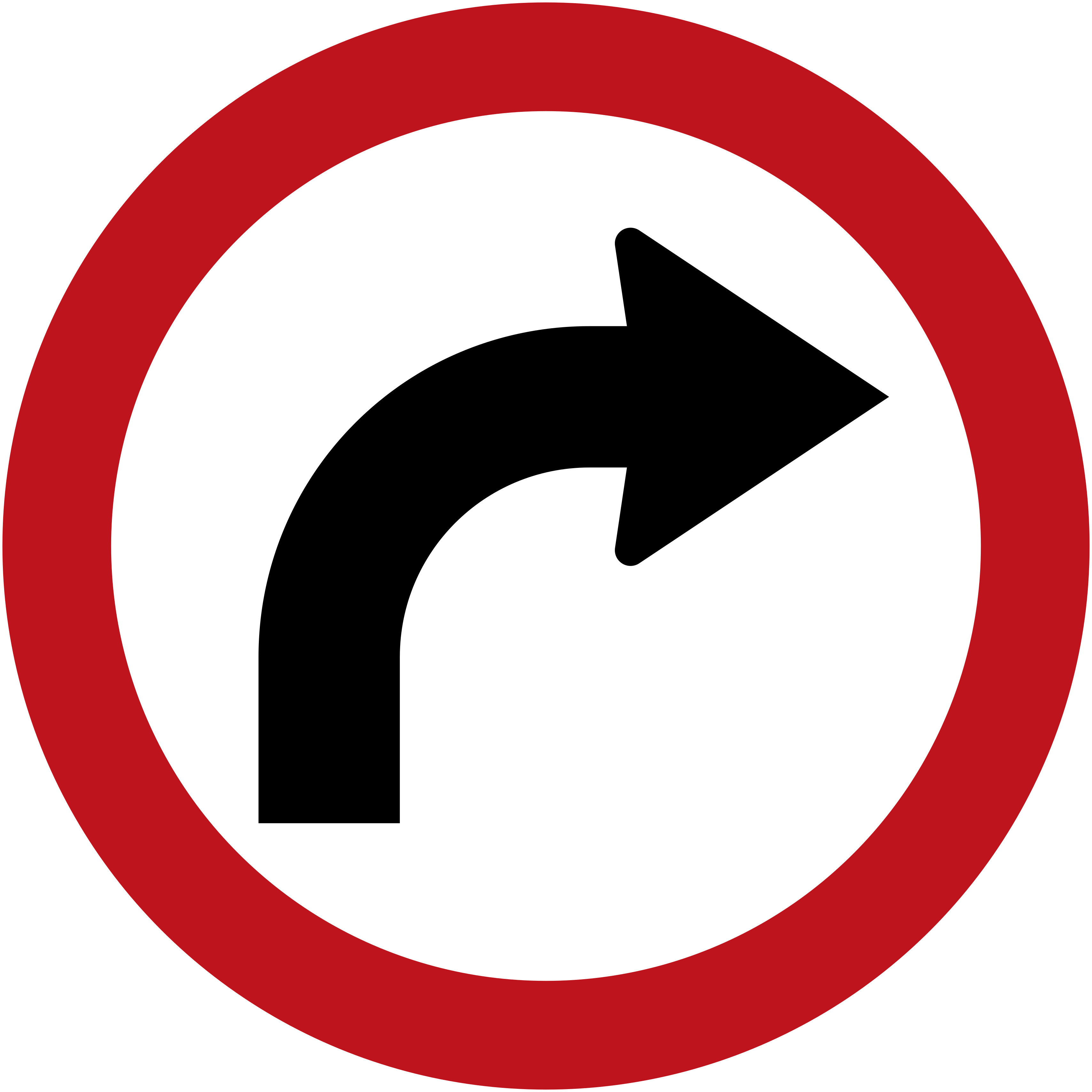
31. What does this traffic sign mean?
This traffic sign indicates that turning right is mandatory at the junction ahead. Traffic must turn right and may not continue straight ahead or turn left.
English • Traffic sign R-7 • Right turn only. Turning right is the only permitted movement in the indicated lane or lanes.
Español • R-7 • Giro solamente a la derecha. Indica que el único movimiento permitido en el carril o los carriles señalizados es girar a la derecha.
Sources
🔗 Commons.wikimedia.org
🔗 Cdn.www.gob.pe • MTC: Manual 2024, página PDF 79 (impresa 75)
Replacement SVG: Commons.wikimedia.org • Wikimedia Commons original • Gobierno de Colombia • Public domain • Original revision 2017-08-25. Wikimedia original unmodified.
Artwork verified against Cdn.www.gob.pe • official published diagram R-7.
Image via Commons.wikimedia.org
Gobierno de Colombia • Public domain • Source revision 2017-08-25. Wikimedia original unmodified.
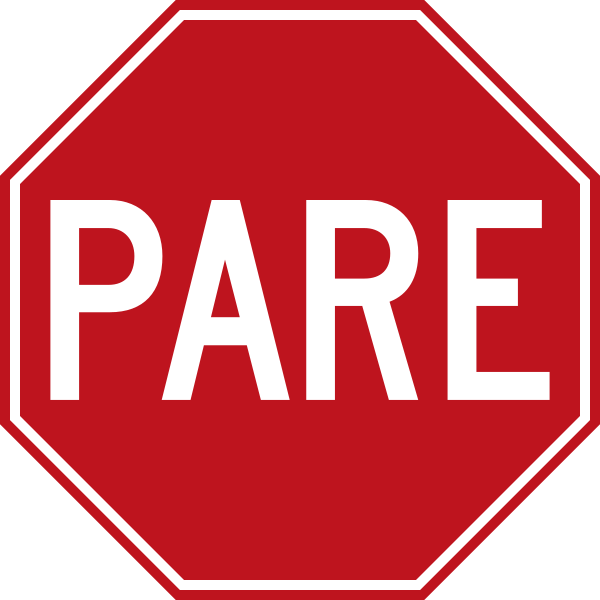
32. What does this traffic sign mean?
This traffic sign means stop and give way. You must come to a complete stop before entering the intersection and give way to traffic that has priority. Proceed only when it is safe.
English • Traffic sign R-1 • Stop. Stop completely before crossing or joining the road. Proceed only when safe.
Español • R-1 • Pare. Detén completamente el vehículo antes de cruzar o incorporarte a la vía. Continúa solo cuando puedas hacerlo con seguridad.
Sources
🔗 Commons.wikimedia.org
🔗 Cdn.www.gob.pe • MTC: Manual 2024, página PDF 77 (impresa 73)
SVG source: Government of the Republic of Peru – Ministry of Transport and Communications • Public domain • Original revision 2024-03-04. Wikimedia original unmodified.
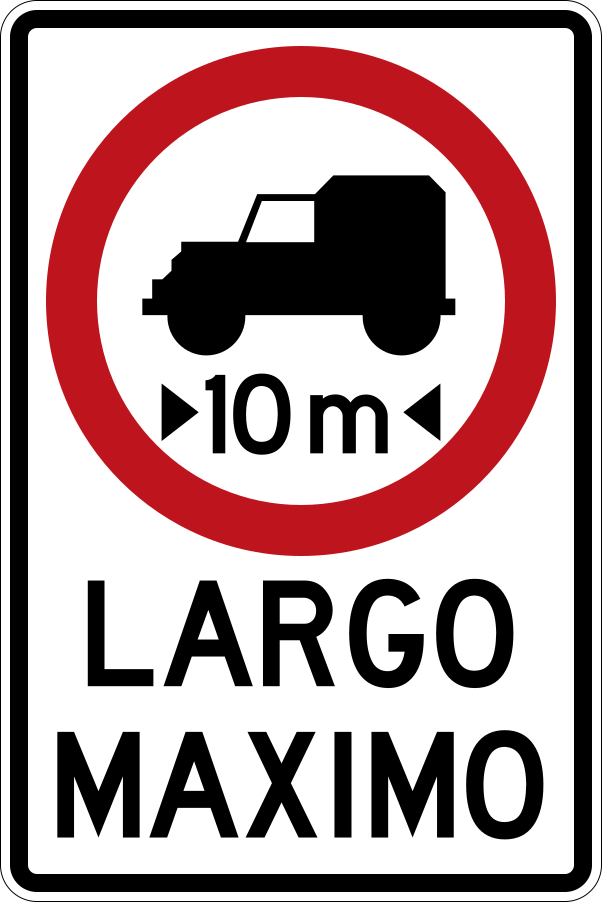
33. What does this traffic sign mean?
This traffic sign indicates that vehicles longer than indicated are prohibited. A vehicle or vehicle combination whose overall length, including its load, exceeds the displayed limit may not continue beyond the sign.
English • Traffic sign R-33 • Maximum permitted length: 10 m. Limits vehicle length to 10 m.
Español • R-33 • Largo máximo permitido: 10 m. Limita el largo permitido del vehículo a 10 metros.
Sources
🔗 Commons.wikimedia.org
🔗 Cdn.www.gob.pe • MTC: Manual 2024, página PDF 88 (impresa 84)
Image via Commons.wikimedia.org
Government of the Republic of Peru – Ministry of Transport and Communications • Public domain • Source revision 2026-05-08. Wikimedia original unmodified.
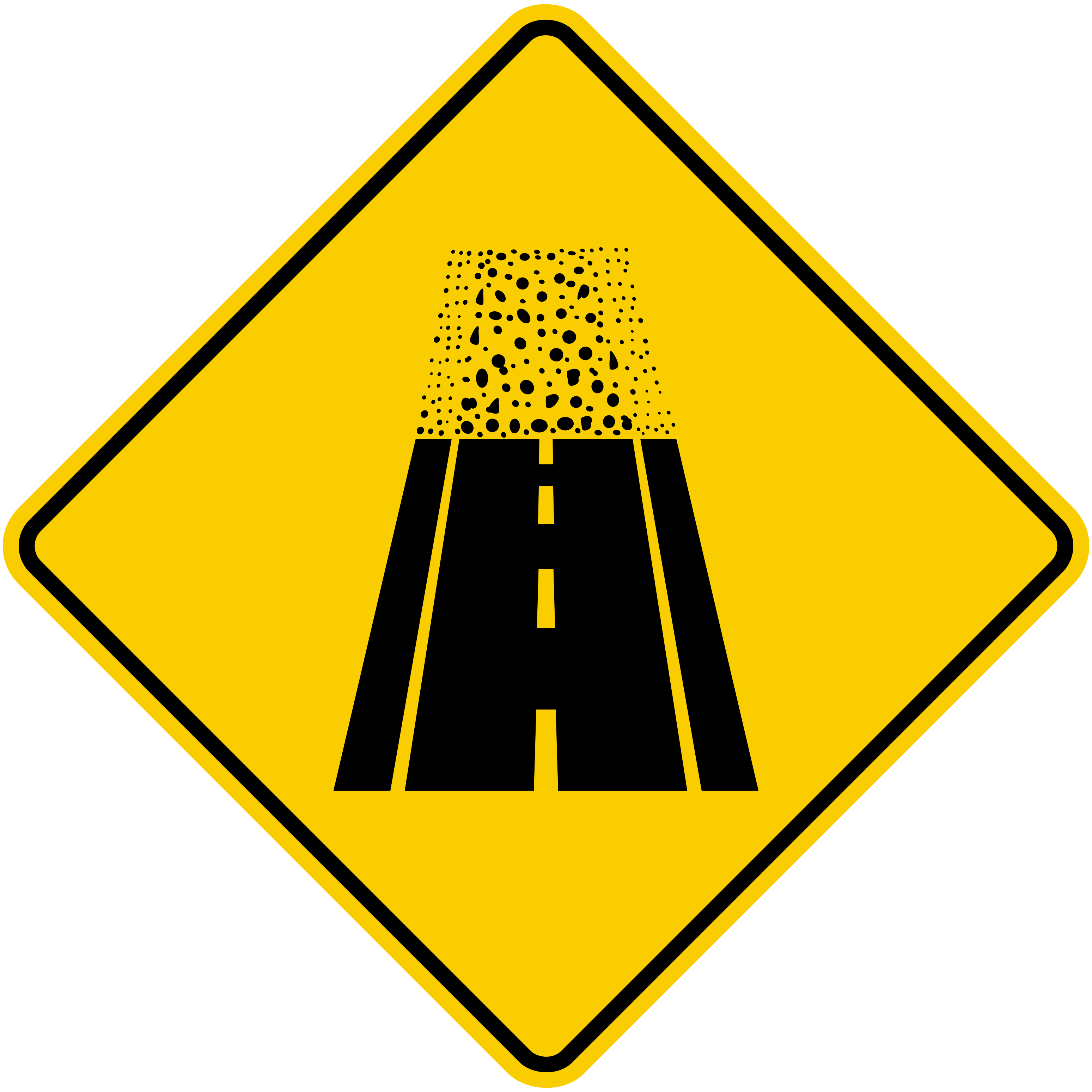
34. What does this traffic sign mean?
This traffic sign indicates a warning for an unpaved road surface. The paved surface ends or changes to gravel, dirt or another loose material. Reduce speed and be prepared for reduced grip, uneven surfaces, dust and loose stones.
English • Traffic sign P-31 • Paved road ends. The road changes from paved to unpaved. Reduce speed before the change.
Español • P-31 • Final de vía pavimentada. Advierte la transición de una vía pavimentada a una vía sin pavimento. Reduce la velocidad antes del cambio de superficie.
Sources
🔗 Commons.wikimedia.org (Amateria1121 • CC BY-SA 3.0)
🔗 Cdn.www.gob.pe • MTC: Manual 2024, página PDF 102 (impresa 98)
Replacement SVG: Commons.wikimedia.org • Wikimedia Commons original • Gobierno de Colombia • Public domain • Original revision 2017-09-06. Wikimedia original unmodified.
Image via Commons.wikimedia.org
Gobierno de Colombia • Public domain • Source revision 2017-09-06. Wikimedia original unmodified.

35. What does this traffic sign mean?
This traffic sign indicates a warning for a bad or uneven road surface. Potholes, bumps, depressions or other surface irregularities may affect vehicle stability and braking. Reduce speed and avoid sudden manoeuvres.
English • Traffic sign P-32 · historical • Undulating carriageway. Warns of successive surface irregularities. Reduce speed to maintain control. Historical design identified in the manual approved by R.M. No. 210-2000-MTC/15.02. This drawing is explained without presenting it as the current 2024 design.
Español • P-32 · histórico • Calzada ondulada. Advierte un tramo con irregularidades sucesivas en la superficie de la calzada. Reduce la velocidad para mantener el control del vehículo. Diseño histórico identificado en el manual aprobado por R.M. N.º 210-2000-MTC/15.02. Se explica este dibujo, sin presentarlo como el diseño vigente de 2024.
Sources
🔗 Commons.wikimedia.org (Amateria1121 • CC BY-SA 3.0)
🔗 Sutran.gob.pe • MTC: manual histórico, página PDF 91
🔗 Sutran.gob.pe • Manual histórico: dibujo de referencia, página PDF 99
Image via Commons.wikimedia.org
Amateria1121 • CC BY-SA 3.0 • Source revision 2014-03-12. Wikimedia original unmodified.

36. What does this traffic sign mean?
This traffic sign indicates a lane for buses. The lane is intended for buses and any other road users permitted by the applicable signs or local rules.
English • Traffic sign I-20 · historical • Bus stop. Marks a public passenger transport stop. Historical design identified in the manual approved by R.M. No. 210-2000-MTC/15.02. This drawing is explained without presenting it as the current 2024 design. The current bus-stop design is I-6.
Español • I-20 · histórico • Paradero de ómnibus. Indica un paradero del servicio colectivo de transporte público de pasajeros. Diseño histórico identificado en el manual aprobado por R.M. N.º 210-2000-MTC/15.02. Se explica este dibujo, sin presentarlo como el diseño vigente de 2024. El diseño vigente de paradero es I-6.
Sources
🔗 Commons.wikimedia.org
🔗 Sutran.gob.pe • MTC: manual histórico, página PDF 186
🔗 Sutran.gob.pe • Manual histórico: dibujo de referencia, página PDF 193
Image via Commons.wikimedia.org
Ministerio de Transportes y Comunicaciones del República del Perú • Public domain • Source revision 2014-04-09. Wikimedia original unmodified.
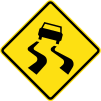
37. What does this traffic sign mean?
This traffic sign indicates a warning for a slippery road surface. The road ahead may provide reduced tyre grip because of water, ice, mud, oil or another surface condition. Reduce speed and avoid sudden braking, acceleration or steering movements.
English • Traffic sign P-36 • Slippery surface. Avoid harsh braking, acceleration or steering changes.
Español • P-36 • Superficie deslizante. Advierte que el pavimento puede ser resbaladizo. Evita frenadas, aceleraciones y cambios de dirección bruscos.
Sources
🔗 Commons.wikimedia.org (Amateria1121 • CC BY-SA 3.0)
🔗 Cdn.www.gob.pe • MTC: Manual 2024, página PDF 104 (impresa 100)
Replacement SVG: Commons.wikimedia.org • Wikimedia Commons original • Gobierno de Chile • Public domain • Original revision 2012-12-11. Wikimedia original unmodified.
Artwork verified against Cdn.www.gob.pe • official published diagram P-36.
Image via Commons.wikimedia.org
Gobierno de Chile • Public domain • Source revision 2012-12-11. Wikimedia original unmodified.
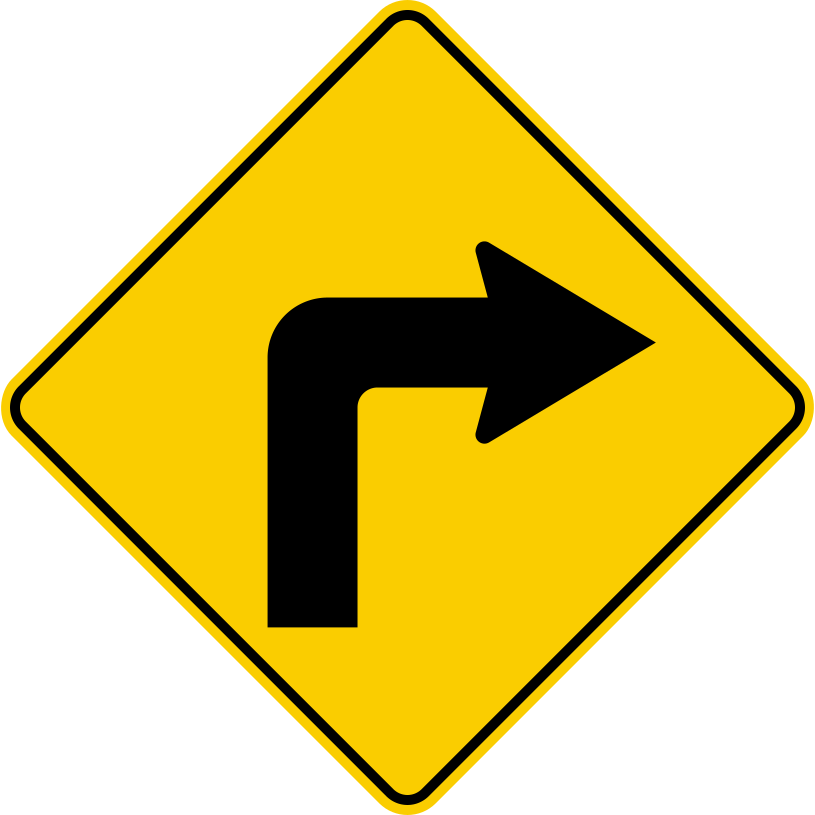
38. What does this traffic sign mean?
This traffic sign indicates a warning for a sharp curve to the right. A tight right-hand bend lies ahead. Reduce speed before entering the curve, remain within your lane and use smooth steering, particularly when visibility or road grip is reduced.
English • Traffic sign P-1A • Sharp right-hand bend. Reduce speed in advance.
Español • P-1A • Curva pronunciada a la derecha. Advierte una curva pronunciada hacia la derecha. Reduce la velocidad con anticipación.
Sources
🔗 Commons.wikimedia.org (Amateria1121 • CC BY-SA 3.0)
🔗 Cdn.www.gob.pe • MTC: Manual 2024, página PDF 95 (impresa 91)
SVG source: Amateria1121 • CC BY-SA 3.0 • Original revision 2024-03-10. Wikimedia original unmodified.
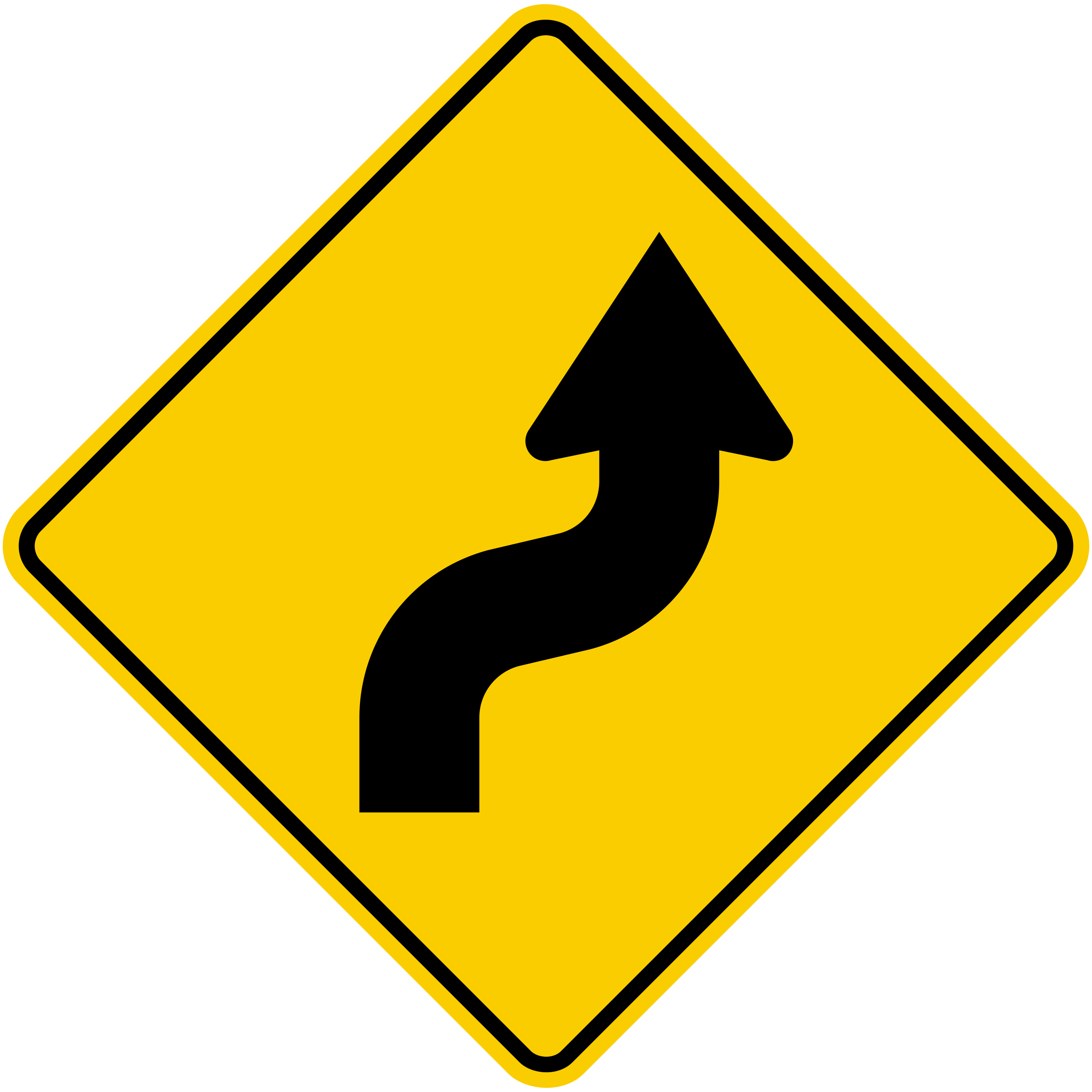
39. What does this traffic sign mean?
This traffic sign indicates a warning for successive curves, with the first curve to the right. Reduce speed before entering the winding section, maintain your lane position and be prepared for further changes in direction.
English • Traffic sign P-4A • Double bend, first to the right. Warns of successive bends, first right then left.
Español • P-4A • Curva y contracurva a la derecha. Advierte dos curvas sucesivas, la primera a la derecha y la siguiente a la izquierda.
Sources
🔗 Commons.wikimedia.org (Amateria1121 • CC BY-SA 3.0)
🔗 Cdn.www.gob.pe • MTC: Manual 2024, página PDF 96 (impresa 92)
Replacement SVG: Commons.wikimedia.org • Wikimedia Commons original • Gobierno de Colombia • Public domain • Original revision 2017-09-10. Wikimedia original unmodified.
Artwork verified against Cdn.www.gob.pe • official published diagram P-4A.
Image via Commons.wikimedia.org
Gobierno de Colombia • Public domain • Source revision 2017-09-10. Wikimedia original unmodified.
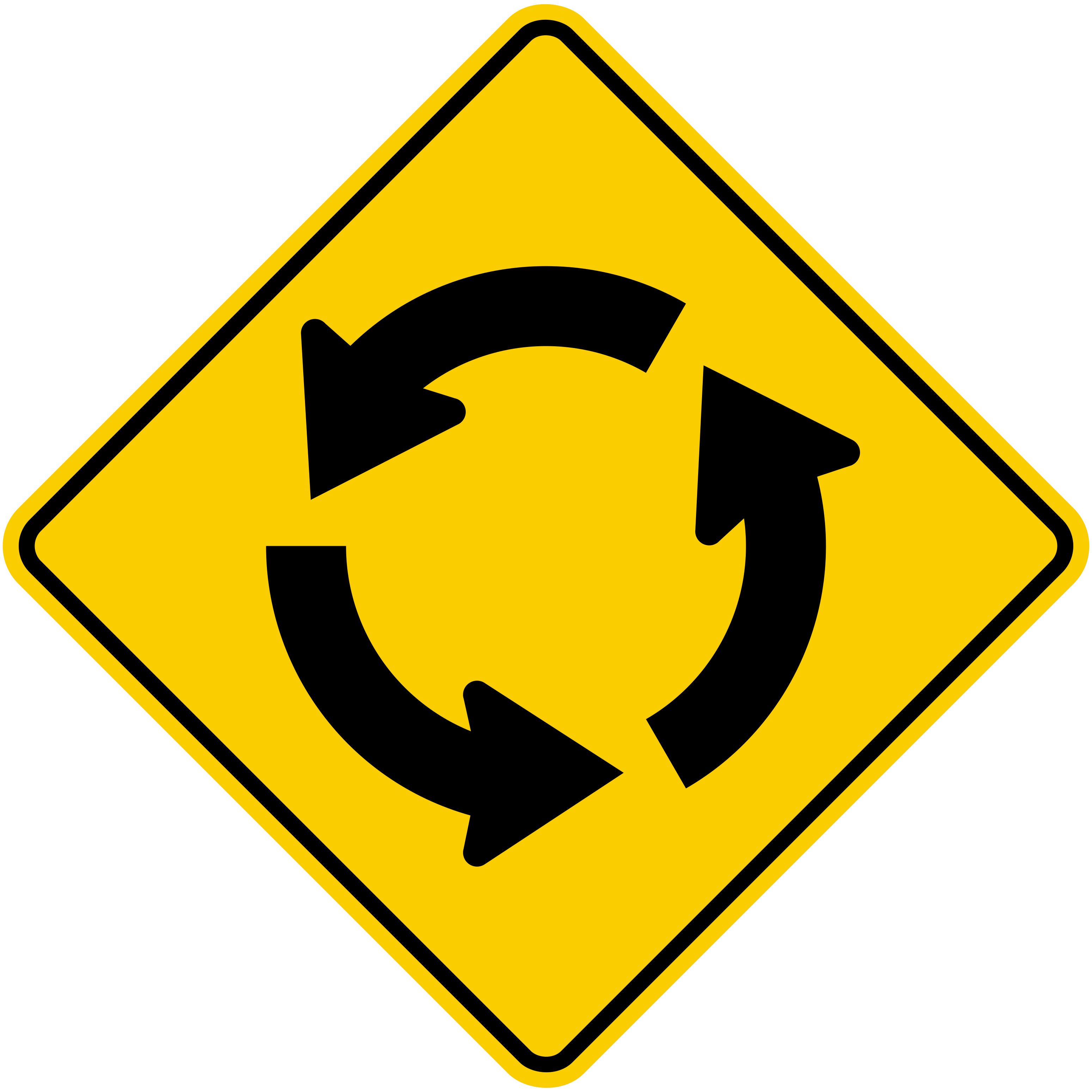
40. What does this traffic sign mean?
This traffic sign indicates a warning for a roundabout. A roundabout lies ahead. Reduce speed and follow the applicable priority signs, traffic signals and local roundabout rules when approaching and entering it.
English • Traffic sign P-15 • Roundabout junction. Reduce speed and watch the circulating traffic and priority signs.
Español • P-15 • Intersección rotatoria. Advierte la proximidad de un óvalo o rotonda. Reduce la velocidad y presta atención a la circulación y a las señales de prioridad.
Sources
🔗 Commons.wikimedia.org (Amateria1121 • CC BY-SA 3.0)
🔗 Cdn.www.gob.pe • MTC: Manual 2024, página PDF 99 (impresa 95)
Replacement SVG: Commons.wikimedia.org • Wikimedia Commons original • Gobierno de Colombia • Public domain • Original revision 2017-09-05. Wikimedia original unmodified.
Artwork verified against Cdn.www.gob.pe • official published diagram P-15.
Image via Commons.wikimedia.org
Gobierno de Colombia • Public domain • Source revision 2017-09-05. Wikimedia original unmodified.

41. What does this traffic sign mean?
This traffic sign indicates a warning for emergency vehicles. Emergency vehicles may enter, leave or cross the road unexpectedly. Reduce speed, keep access clear and be prepared to give way when required.
English • Traffic sign P-52 • Fire vehicle exit. Watch for fire vehicles responding to an emergency.
Español • P-52 • Salida de vehículos de bomberos. Advierte la proximidad de una salida de vehículos de bomberos. Presta atención a los vehículos que puedan acudir a una emergencia.
Sources
🔗 Commons.wikimedia.org (Amateria1121 • CC BY-SA 3.0)
🔗 Cdn.www.gob.pe • MTC: Manual 2024, página PDF 108 (impresa 104)
Image via Commons.wikimedia.org
Amateria1121 • CC BY-SA 3.0 • Source revision 2014-03-12. Wikimedia original unmodified.
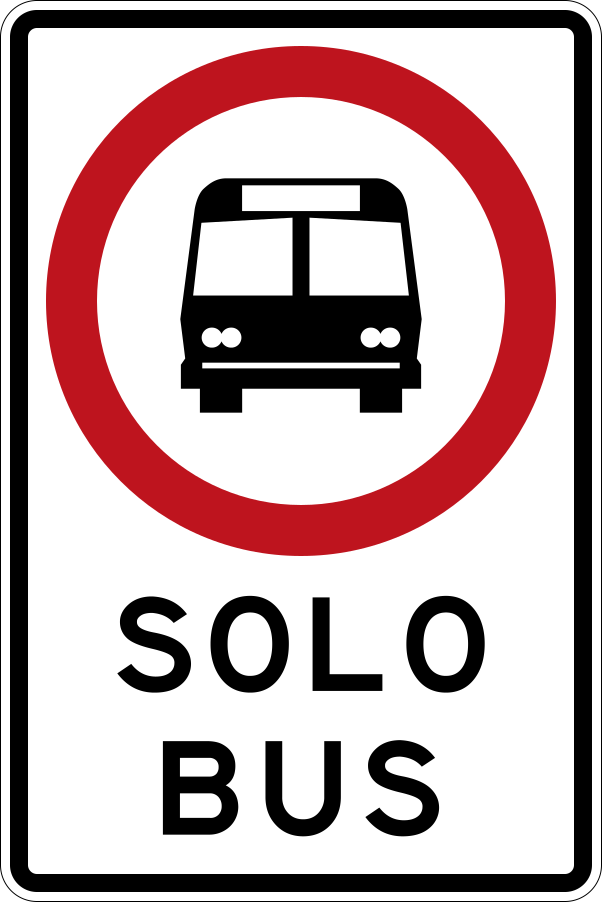
42. What does this traffic sign mean?
This traffic sign indicates a mandatory lane for buses. Buses must use the designated lane where the sign applies. Other road users may use the lane only where the applicable signs or local rules permit them to do so.
English • Traffic sign R-34 • Buses only. Reserves the lane or road exclusively for buses.
Español • R-34 • Circulación solo de buses. Reserva el carril o la vía para la circulación exclusiva de buses.
Sources
🔗 Commons.wikimedia.org
🔗 Cdn.www.gob.pe • MTC: Manual 2024, página PDF 88 (impresa 84)
SVG source: Government of the Republic of Peru – Ministry of Transport and Communications • Public domain • Original revision 2024-03-07. Wikimedia original unmodified.
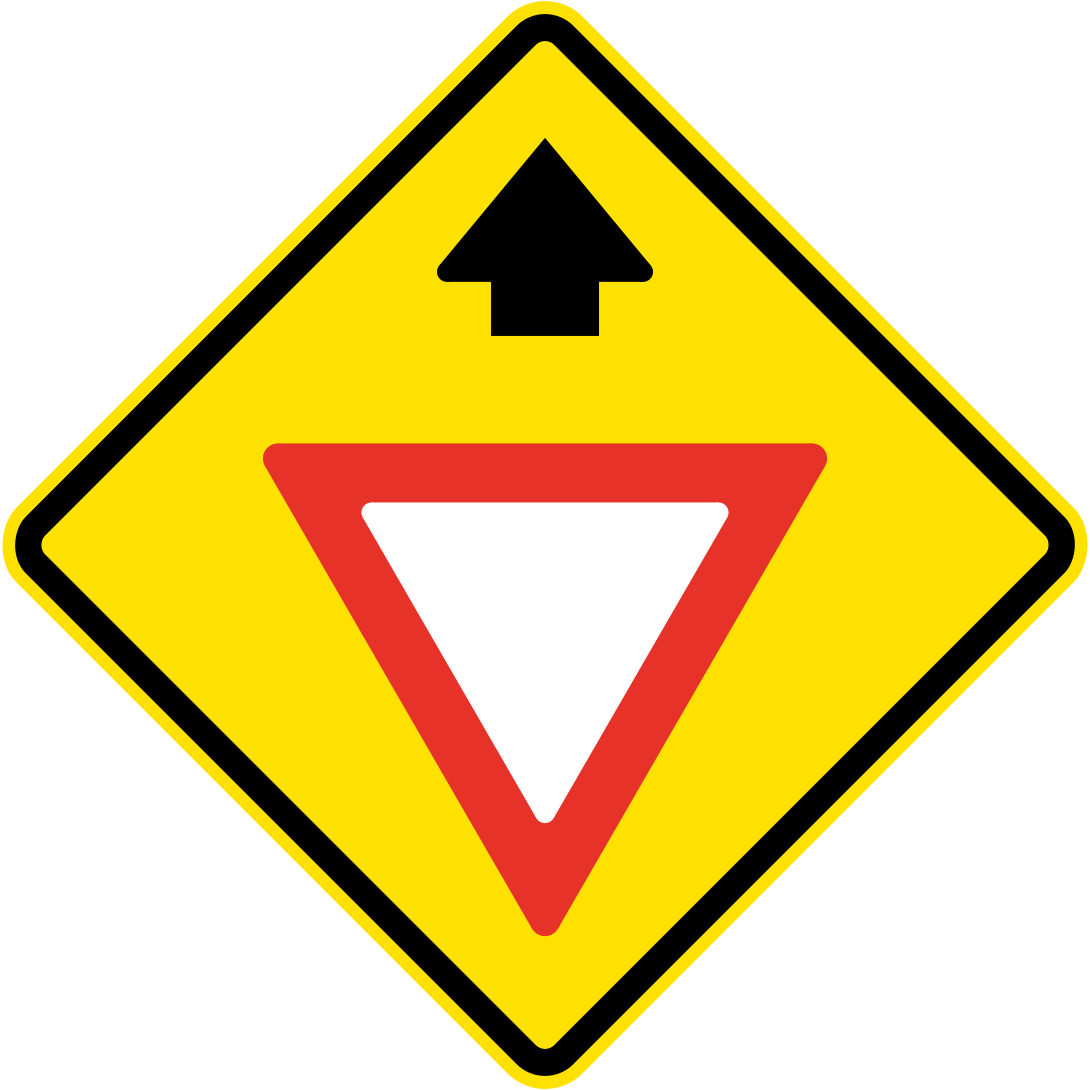
43. What does this traffic sign mean?
This traffic sign indicates give way ahead. A give-way requirement applies at the location ahead. Reduce speed in good time and be prepared to stop if necessary.
English • Traffic sign P-59 • Give way ahead. Be prepared to reduce speed and give priority.
Español • P-59 • Proximidad de Ceda el paso. Advierte que más adelante encontrarás una señal Ceda el paso. Prepárate para reducir la velocidad y ceder la prioridad.
Sources
🔗 Commons.wikimedia.org (Amateria1121 • CC BY-SA 3.0)
🔗 Cdn.www.gob.pe • MTC: Manual 2024, página PDF 109 (impresa 105)
Replacement SVG: Commons.wikimedia.org • Wikimedia Commons original • Government of Chile – National Traffic Safety Commission • Public domain • Original revision 2024-02-06. Wikimedia original unmodified.
Artwork verified against Cdn.www.gob.pe • official published diagram P-59.
Image via Commons.wikimedia.org
Government of Chile – National Traffic Safety Commission • Public domain • Source revision 2024-02-06. Wikimedia original unmodified.

44. What does this traffic sign mean?
This traffic sign indicates that turning around (making a U-turn) is prohibited. A U-turn may not be made where the prohibition applies. Other movements may still be permitted unless another restriction applies.
English • Traffic sign R-10 • No U-turns. Turning around to travel in the opposite direction is prohibited.
Español • R-10 • Prohibido voltear en U. Prohíbe efectuar un viraje en U para cambiar al sentido contrario.
Sources
🔗 Commons.wikimedia.org
🔗 Cdn.www.gob.pe • MTC: Manual 2024, página PDF 80 (impresa 76)
Image via Commons.wikimedia.org
Government of the Republic of Peru – Ministry of Transport and Communications • Public domain • Source revision 2014-03-12. Wikimedia original unmodified.
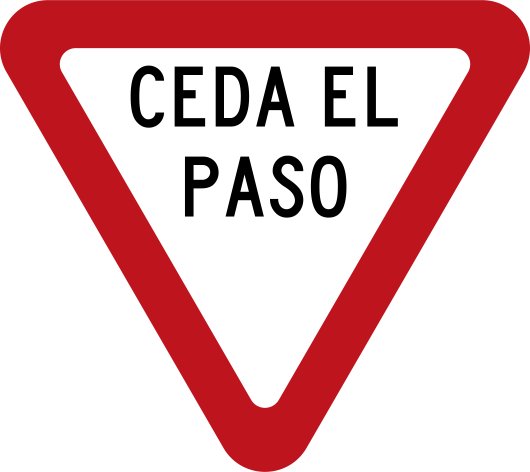
45. What does this traffic sign mean?
This traffic sign means give way. Slow down and give way to traffic that has priority. Stop if necessary and proceed only when it is safe.
English • Traffic sign R-2 • Give way. Give priority to vehicles on the priority road or roundabout. Stop if necessary to join safely.
Español • R-2 • Ceda el paso. Cede el paso a los vehículos que circulan por la vía preferencial o por la rotonda. Detente cuando sea necesario para incorporarte con seguridad.
Sources
🔗 Commons.wikimedia.org
🔗 Cdn.www.gob.pe • MTC: Manual 2024, página PDF 77 (impresa 73)
SVG source: Government of the Republic of Peru – Ministry of Transport and Communications • Public domain • Original revision 2024-03-04. Wikimedia original unmodified.
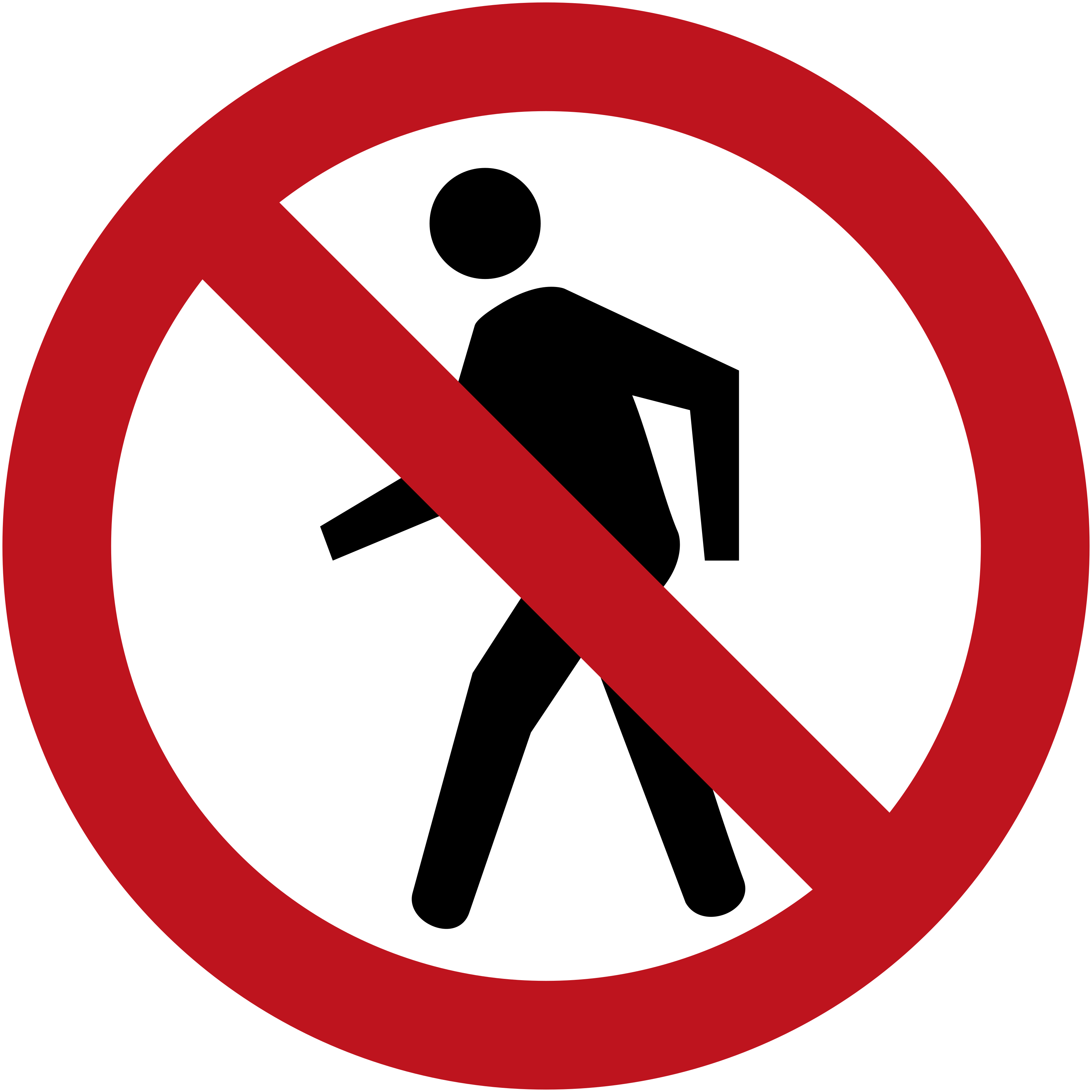
46. What does this traffic sign mean?
This traffic sign indicates that pedestrians are prohibited. Pedestrians may not enter or continue beyond the sign. Other road users may still be permitted unless another restriction applies.
English • Traffic sign R-21 • No pedestrians. Pedestrian traffic is prohibited on the signed road.
Español • R-21 • Prohibido el paso o circulación de peatones. Prohíbe la circulación de peatones por la vía señalizada.
Sources
🔗 Commons.wikimedia.org
🔗 Cdn.www.gob.pe • MTC: Manual 2024, página PDF 82 (impresa 78)
Replacement SVG: Commons.wikimedia.org • Wikimedia Commons original • Gobierno de Colombia • Public domain • Original revision 2017-08-27. Wikimedia original unmodified.
Artwork verified against Cdn.www.gob.pe • official published diagram R-21.
Image via Commons.wikimedia.org
Gobierno de Colombia • Public domain • Source revision 2017-08-27. Wikimedia original unmodified.
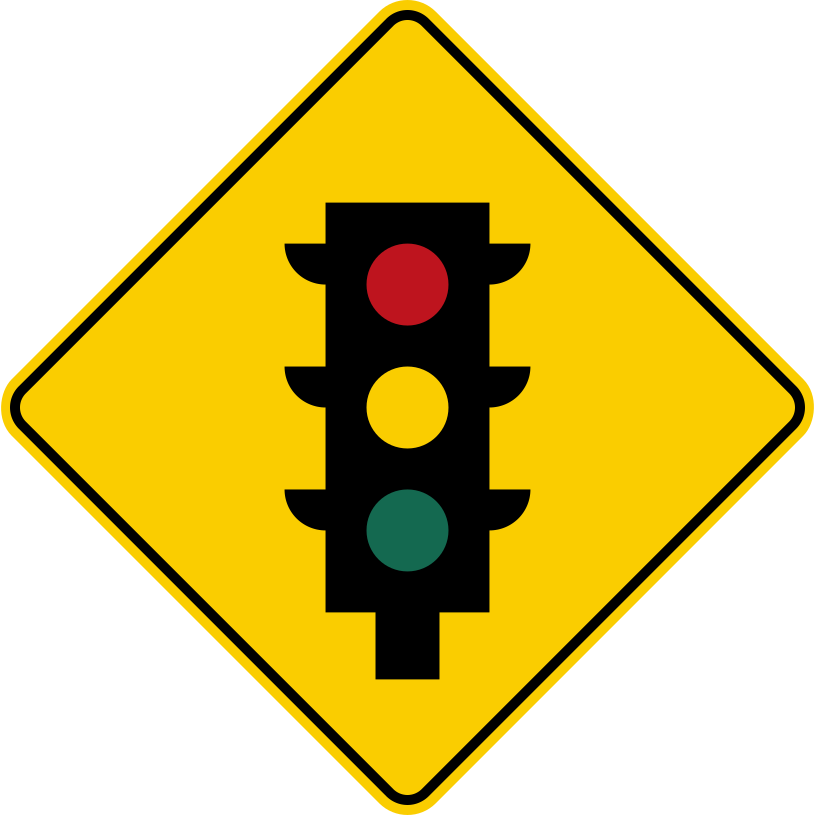
47. What does this traffic sign mean?
This traffic sign indicates a warning for traffic lights ahead. Traffic signals are located ahead and may not be visible early enough without advance warning. Reduce speed and be prepared to stop if the signal requires it.
English • Traffic sign P-55 • Traffic signals ahead. Prepare to reduce speed or stop according to the signal.
Español • P-55 • Proximidad de semáforo. Advierte que hay un semáforo más adelante. Prepárate para reducir la velocidad o detenerte según su indicación.
Sources
🔗 Commons.wikimedia.org (Amateria1121 • CC BY-SA 3.0)
🔗 Cdn.www.gob.pe • MTC: Manual 2024, página PDF 109 (impresa 105)
SVG source: Amateria1121 • CC BY-SA 3.0 • Original revision 2024-03-13. Wikimedia original unmodified.

48. What does this traffic sign mean?
This traffic sign indicates a warning for a steep descent. A steep downhill gradient lies ahead and the vehicle may gain speed quickly. Reduce speed before the descent, select a suitable gear and use engine braking where appropriate. Allow extra distance for heavy or towing vehicles.
English • Traffic sign P-35 · family • Steep descent. Reduce speed and control the descent. The drawing uses a passenger car where the current example uses a goods vehicle. The sign family is identified without claiming an exact reproduction.
Español • P-35 · familia • Fuerte pendiente en descenso. Advierte un tramo con fuerte pendiente de descenso. Reduce la velocidad y controla el descenso. El dibujo usa un automóvil donde el ejemplo vigente usa un vehículo de carga. Se identifica la familia Fuerte pendiente en descenso, sin afirmar que sea una reproducción exacta.
Sources
🔗 Commons.wikimedia.org (Amateria1121 • CC BY-SA 3.0)
🔗 Cdn.www.gob.pe • MTC: Manual 2024, página PDF 103 (impresa 99)
Image via Commons.wikimedia.org
Amateria1121 • CC BY-SA 3.0 • Source revision 2014-03-12. Wikimedia original unmodified.
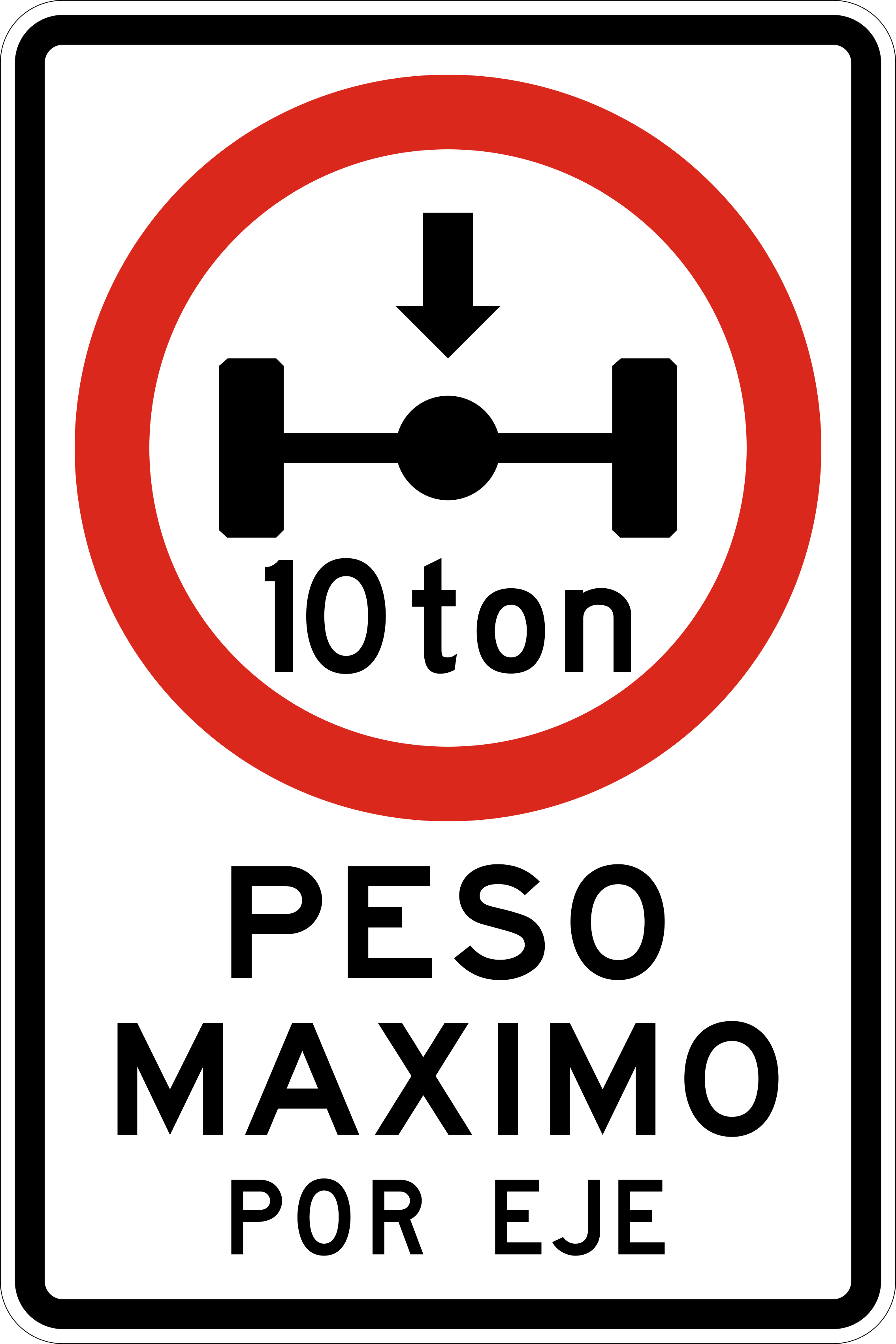
49. What does this traffic sign mean?
This traffic sign indicates that vehicles exceeding the indicated axle-load limit are prohibited. A vehicle whose load on an axle exceeds the displayed limit may not continue beyond the sign.
English • Traffic sign R-31 • Maximum permitted axle load: 10 tonnes. Limits axle load to 10 tonnes.
Español • R-31 • Peso máximo permitido por eje: 10 toneladas. Limita el peso permitido por eje del vehículo a 10 toneladas.
Sources
🔗 Commons.wikimedia.org
🔗 Cdn.www.gob.pe • MTC: Manual 2024, página PDF 87 (impresa 83)
Image via Commons.wikimedia.org
Government of the Republic of Peru – Ministry of Transport and Communications • Public domain • Source revision 2025-02-14. Wikimedia original unmodified.
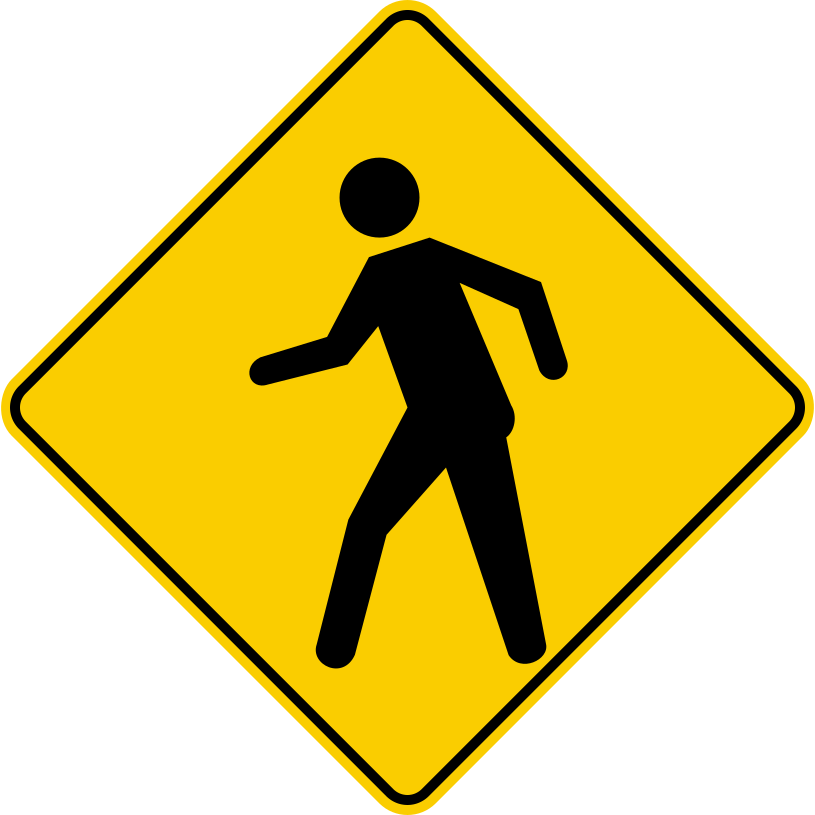
50. What does this traffic sign mean?
This traffic sign indicates a warning for pedestrians. Pedestrians may be walking near or crossing the road ahead. Reduce speed, watch carefully and be prepared to stop.
English • Traffic sign P-48 · historical • Pedestrian crossing. Reduce speed and watch for people about to cross. Historical design identified in the manual approved by R.M. No. 210-2000-MTC/15.02. This drawing is explained without presenting it as the current 2024 design.
Español • P-48 · histórico • Cruce de peatones. Advierte la proximidad de un cruce de peatones. Reduce la velocidad y presta atención a quienes vayan a cruzar. Diseño histórico identificado en el manual aprobado por R.M. N.º 210-2000-MTC/15.02. Se explica este dibujo, sin presentarlo como el diseño vigente de 2024.
Sources
🔗 Commons.wikimedia.org (Amateria1121 • CC BY-SA 3.0)
🔗 Sutran.gob.pe • MTC: manual histórico, página PDF 93
🔗 Sutran.gob.pe • Manual histórico: dibujo de referencia, página PDF 101
Image via Commons.wikimedia.org
Amateria1121 • CC BY-SA 3.0 • Source revision 2024-03-10. Wikimedia original unmodified.