


Separated pathSweden
 Traffic rules
 Sweden
1. Separated path
A separated path is a path or part of a road where different categories of road users, typically pedestrians and cyclists, are assigned separate sections of the same overall route. The sections may be distinguished by road markings, different paving materials, a kerb or another physical separation.
Users should remain within the part of the path intended for them and take particular care where the sections cross, merge or connect with roads. The permitted users, priority rules and any speed restrictions depend on the local traffic signs and regulations.
What is Sweden’s official sign name for divided walking and cycling paths?
It is påbjudna gång- och cykelbanor. The sign identifies paths divided by markings, a separating strip or similar means into a pedestrian part and a cycling part. The symbol positions indicate the allocation.
🔗 data.riksdagen.se • Traffic Ordinance, Ch 3 §6, Ch 7 §1; Signs Ordinance D7
🔗 riksdagen.se • Signs Ordinance 2007:90: walking, cycling and restriction signs
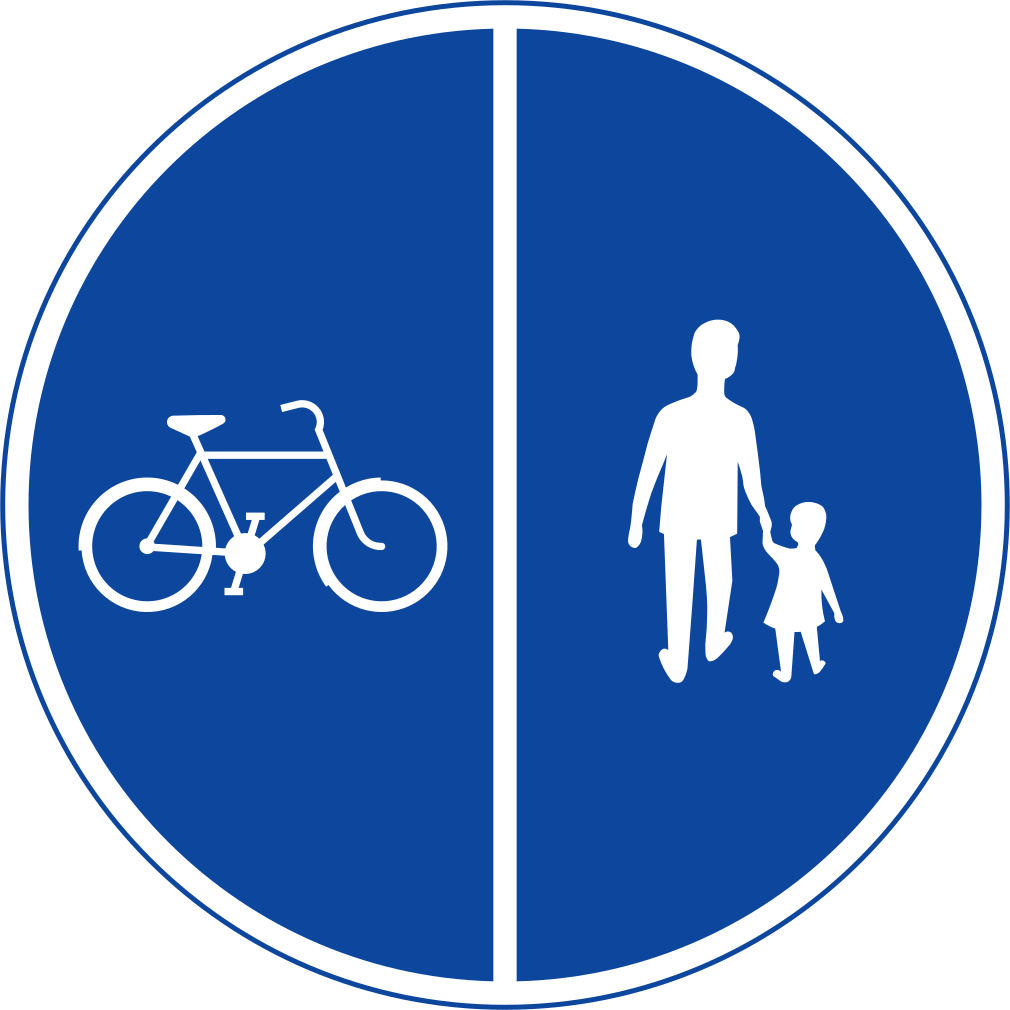 Mandatory divided pedestrian and cycle path.
English • Traffic sign D7 • Compulsory separate pedestrian and cycle paths. Markings, a dividing strip or similar feature separate the pedestrian and cycle parts. The symbol positions show which part each group must use. A supplementary plate indicates if class II mopeds are prohibited.
Svenska • Vägmärke D7 • Påbjudna gång- och cykelbanor. Märket anger banor som är delade genom vägmarkering, skiljeremsa eller liknande i en del för gående och en del för cyklande. Symbolernas placering på märket anger vilken del av banan som är avsedd för gående respektive cyklande. Om moped klass II inte får föras på banan anges det på en tilläggstavla.
Sources
🔗 Commons.wikimedia.org
🔗 Transportstyrelsen.se • Transportstyrelsen • D7 (SV)
SVG source: Transportstyrelsen • Public domain • Original revision 2014-04-23. Wikimedia original unmodified.
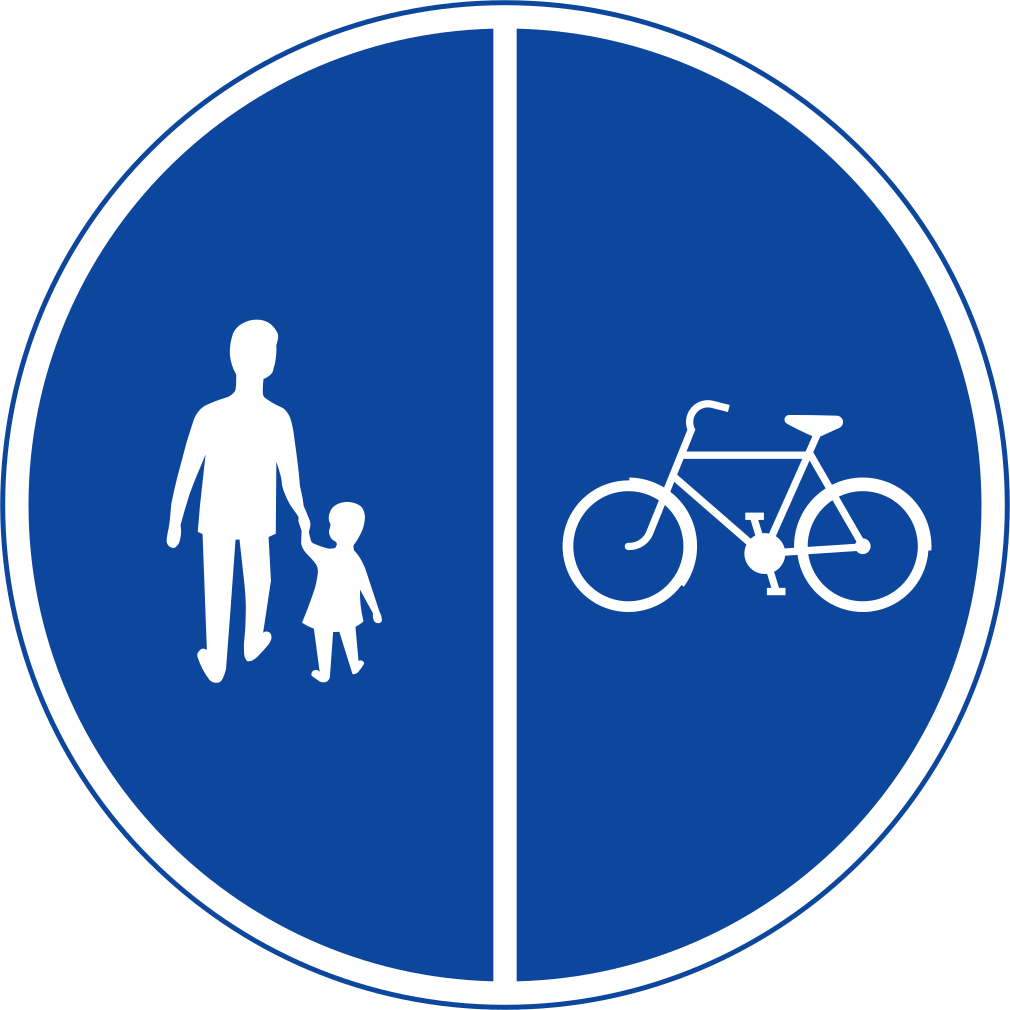 Mandatory divided pedestrian and cycle path.
English • Traffic sign D7 • Compulsory separate pedestrian and cycle paths. Markings, a dividing strip or similar feature separate the pedestrian and cycle parts. The symbol positions show which part each group must use. A supplementary plate indicates if class II mopeds are prohibited.
Svenska • Vägmärke D7 • Påbjudna gång- och cykelbanor. Märket anger banor som är delade genom vägmarkering, skiljeremsa eller liknande i en del för gående och en del för cyklande. Symbolernas placering på märket anger vilken del av banan som är avsedd för gående respektive cyklande. Om moped klass II inte får föras på banan anges det på en tilläggstavla.
Sources
🔗 Commons.wikimedia.org
🔗 Transportstyrelsen.se • Transportstyrelsen • D7 (SV)
SVG source: Transportstyrelsen • Public domain • Original revision 2014-04-23. Wikimedia original unmodified.
Should walkers keep left across the whole width of a Swedish divided path?
No. Use the pedestrian part of the divided facility. The rule advising pedestrians to keep left where possible on an undivided walking and cycling path does not make its separately allocated cycling part available for ordinary walking.
🔗 data.riksdagen.se • Traffic Ordinance, Ch 3 §6, Ch 7 §1; Signs Ordinance D7
🔗 riksdagen.se • Signs Ordinance 2007:90: walking, cycling and restriction signs
Should Swedish cyclists treat the walking section as an extra overtaking lane?
No. Use the section allocated for cycling rather than treating both parts as one shared surface. The divided-path sign expressly identifies separate walking and cycling space. Read the symbol positions and the markings on the path.
🔗 data.riksdagen.se • Traffic Ordinance, Ch 3 §6, Ch 7 §1; Signs Ordinance D7
🔗 riksdagen.se • Signs Ordinance 2007:90: walking, cycling and restriction signs

