


Traffic signsSweden
 Traffic rules
 Sweden
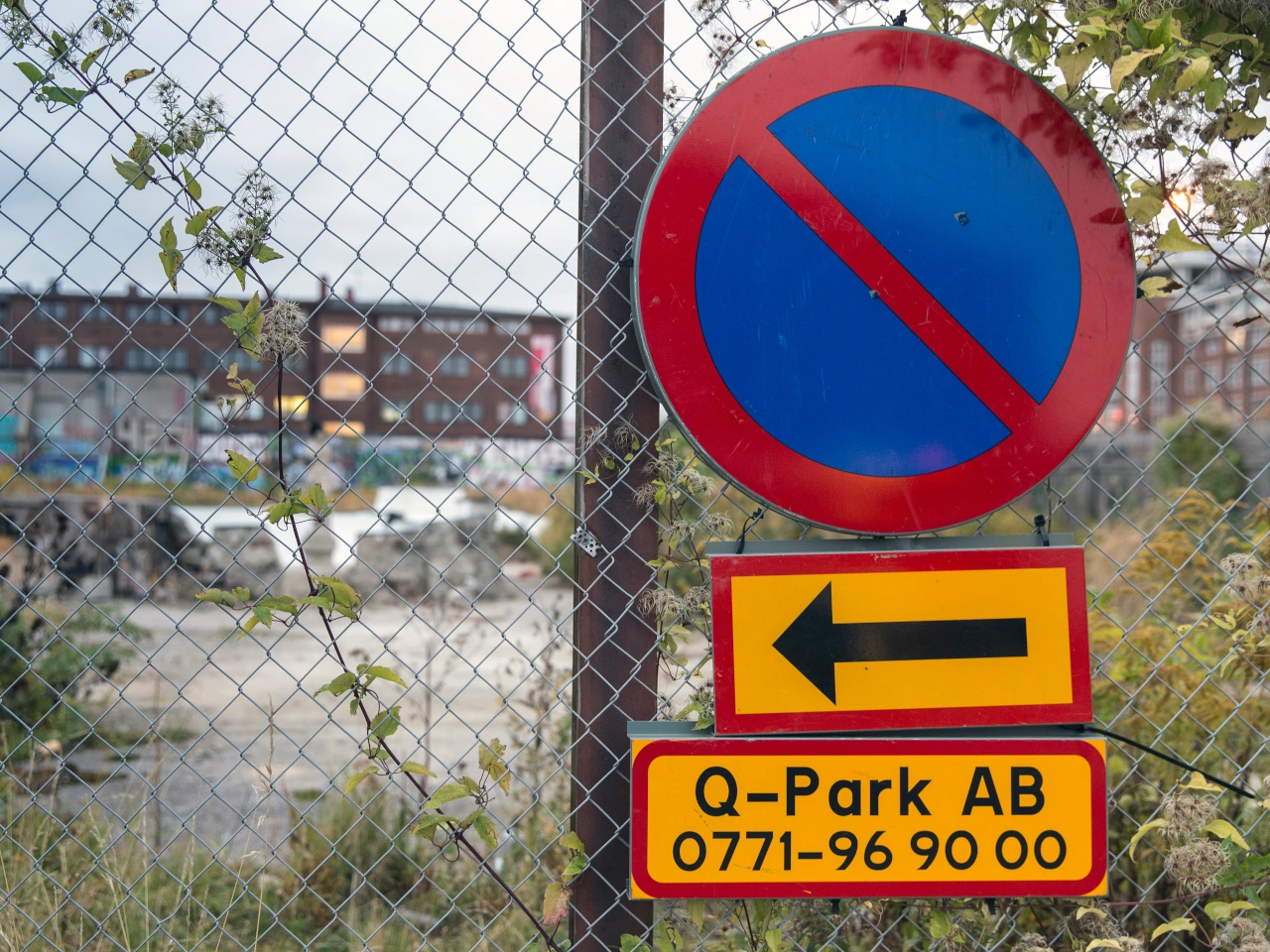
26. No parking
No parking indicates that vehicles may not be left parked at the location or along the section of road covered by the restriction. Depending on local law, a driver may still be allowed to stop briefly to pick up or drop off passengers or to load or unload goods, provided stopping itself is not prohibited.
A no-parking restriction may apply continuously or only during specified times, days, vehicle categories or sections of road. Its exact extent and exceptions are determined by the traffic sign, supplementary panels, road markings and local traffic regulations.
Wikimedia.org • News Oresund • CC BY
Can you park across an entrance to a Swedish property?
No. Do not park in front of a vehicle entrance or in a way that makes entering or leaving the property difficult.
🔗 transportstyrelsen.se • Swedish Transport Agency, Stopping and Parking, 2024
Does Sweden’s no-parking sign normally apply on both sides of a road?
No. It applies on the side where it is installed. Supplementary panels, another parking rule or the relevant next junction determine its extent.
🔗 transportstyrelsen.se • Swedish Transport Agency, no-parking sign
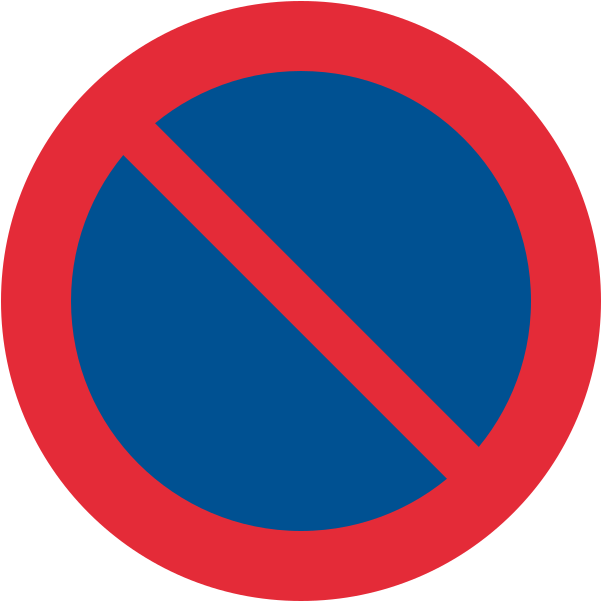 Parking prohibited.
English • Traffic sign C35 • No parking. Applies on the side where the sign stands, from that point as specified on a supplementary plate, until another stopping or parking rule is signposted, the next junction with a road other than one covered by chapter 3, section 21, second paragraph of the Traffic Ordinance (1998:1276), or an earlier matching sign with T11 extent plate and a downward arrow. If another rule applies over a short section, the prohibition resumes afterwards without repetition. It also resumes without repetition after a parking area beside the carriageway. The sign does not permit stopping where the Traffic Ordinance prohibits stopping or parking unless its placement or a supplementary plate clearly indicates this.
Svenska • Vägmärke C35 • Förbud mot att parkera fordon. Märket anger förbud mot att parkera fordon. Angivelsen gäller på den sida av vägen där märket är uppsatt. Angivelsen börjar gälla där märket satts upp och gäller enligt vad som anges på en tilläggstavla, till den plats där någon annan bestämmelse om stannande eller parkering märkts ut, till nästa korsning med en annan väg än sådan som avses i 3 kap. 21 § andra stycket trafikförordningen (1998:1276) eller till den plats dessförinnan där ett motsvarande märke med tilläggstavla T11, utsträckning, med nedåtriktad pil, har satts upp. Om en annan bestämmelse gäller på en kortare sträcka gäller angivelsen på nytt efter sträckans slut utan att det upprepas. Angivelsen gäller också på nytt utan att märket satts upp igen i det fall en parkeringsplats anordnats vid sidan av körbanan. Märket anger inte rätt att stanna där fordon inte får stannas eller parkeras enligt trafikförordningen, om inte detta tydligt framgår av märkets placering eller anges på en tilläggstavla.
Sources
🔗 Commons.wikimedia.org
🔗 Transportstyrelsen.se • Transportstyrelsen • C35 (SV)
SVG source: Government of the Kingdom of Sweden • Public domain • Original revision 2022-01-23. Wikimedia original unmodified.

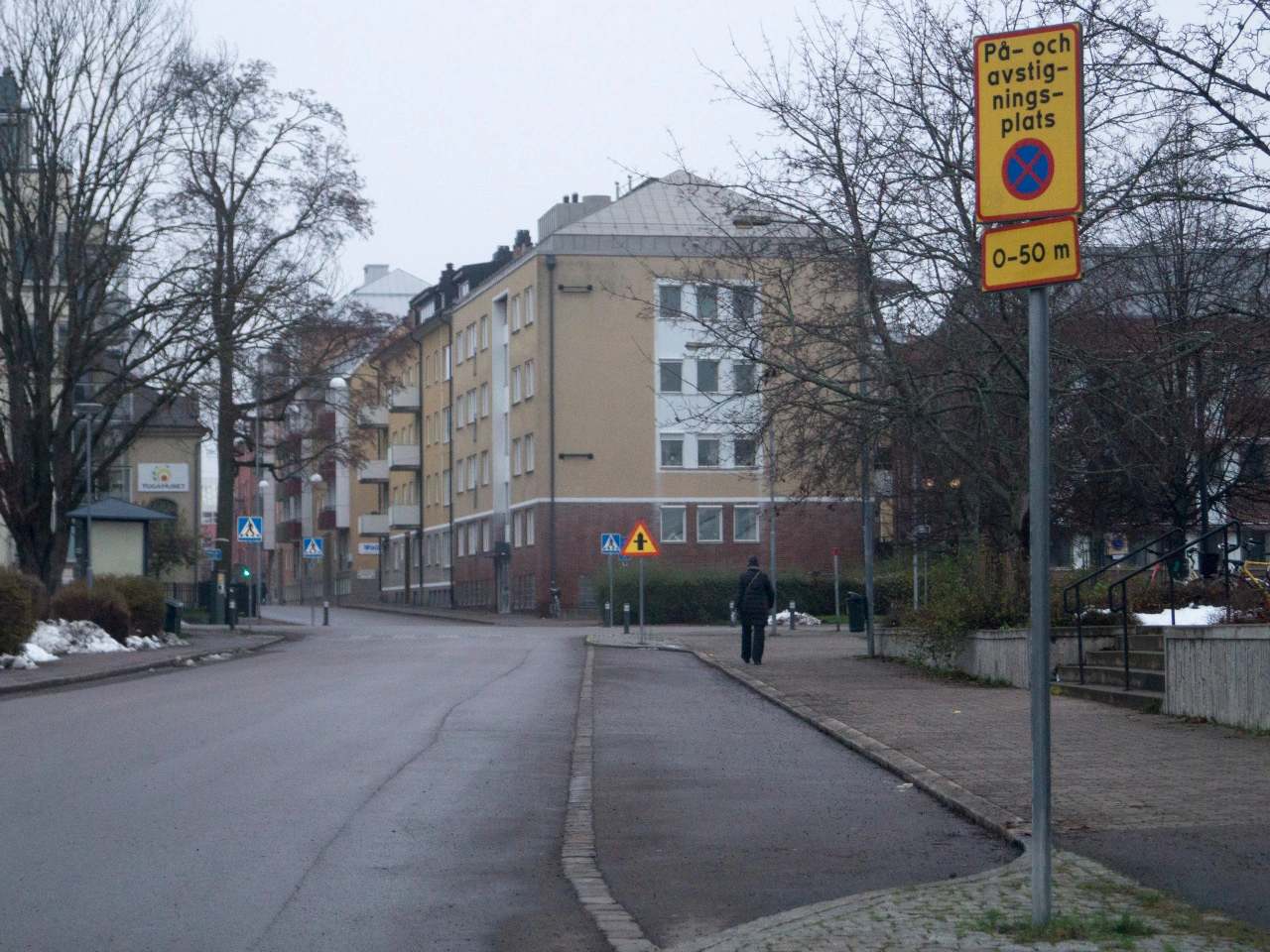
27. No stopping
No stopping means that vehicles are not permitted to stop voluntarily at the indicated location, even briefly for picking up or dropping off passengers or loading or unloading goods. It is a stricter restriction than a no-parking rule.
A no-stopping restriction may be indicated by a traffic sign, road marking or local traffic regulation. Drivers should continue to a place where stopping is permitted unless they are forced to stop by traffic conditions, an emergency or another legal requirement.
Wikimedia.org • Riiga • CC BY-SA
How far before a Swedish pedestrian crossing must you keep clear?
Do not stop or park on the crossing or within 10 metres before it.
🔗 transportstyrelsen.se • Swedish Transport Agency, Stopping and Parking, 2024
28. Reversing
Reversing means driving a vehicle backwards. It is commonly used when parking, leaving a confined space or repositioning a vehicle where forward movement is not practical.
Before reversing, the driver should check mirrors and blind spots, look carefully around the vehicle and make sure the area behind is clear. Reversing should be performed slowly and only for as long as necessary because visibility behind the vehicle is often limited.
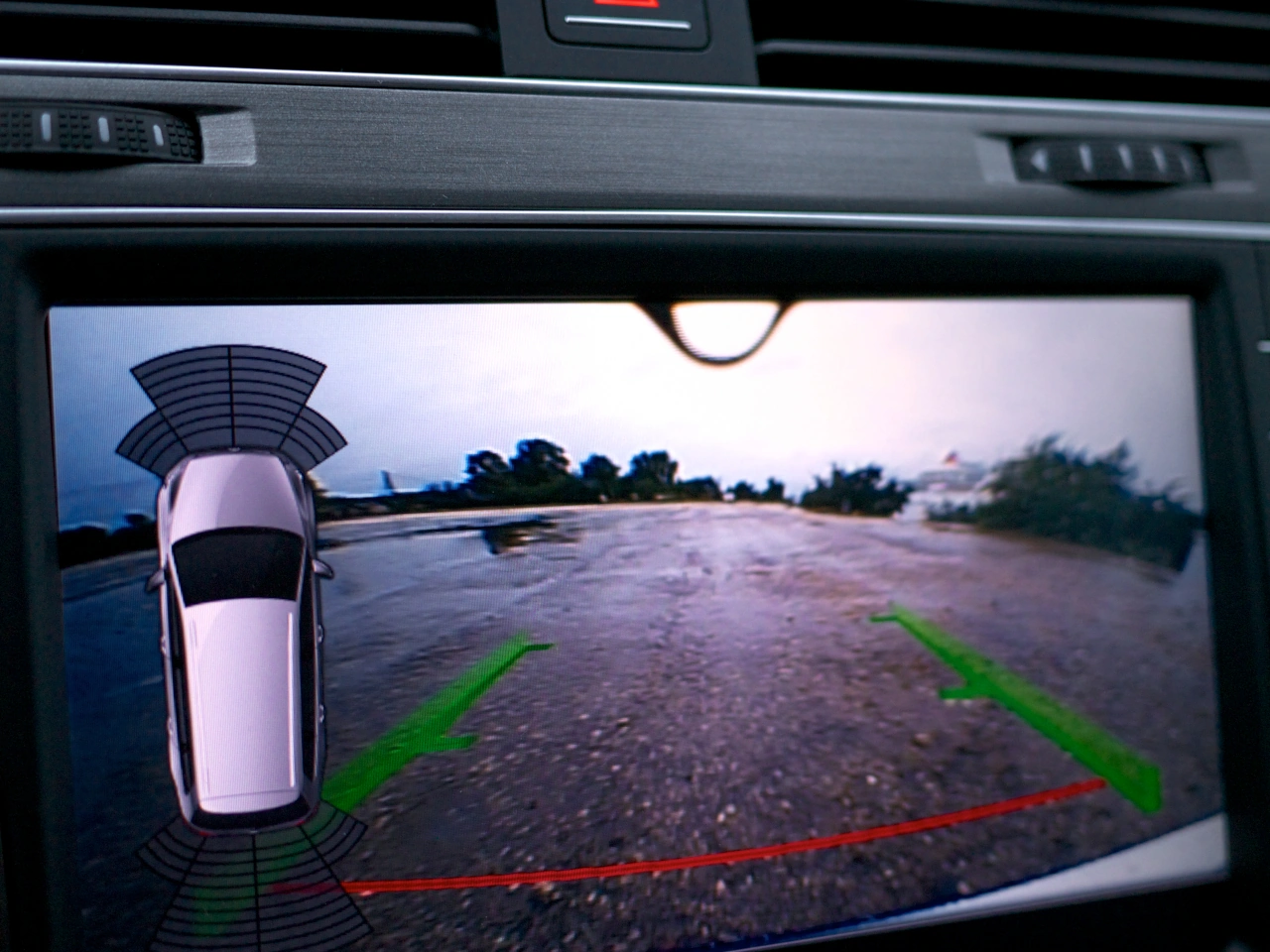
Wikimedia.org • Kārlis Dambrāns • CC BY
When may Swedish drivers reverse or turn around?
Only without danger or obstruction to other road users.
🔗 data.riksdagen.se • Traffic Ordinance, Ch 3 §46: reversing and turning
29. Licence plate
A licence plate, also called a registration plate or number plate, is a plate displaying a unique registration identifier assigned to a vehicle by the competent registration authority. It allows the vehicle to be identified for purposes such as registration, traffic enforcement, taxation, insurance and parking control.
The appearance, format, placement and number of plates required vary between countries and vehicle categories. Drivers must ensure that required licence plates are correctly fitted, clearly visible and legible and must follow the local rules when a plate is lost, stolen, damaged or replaced.
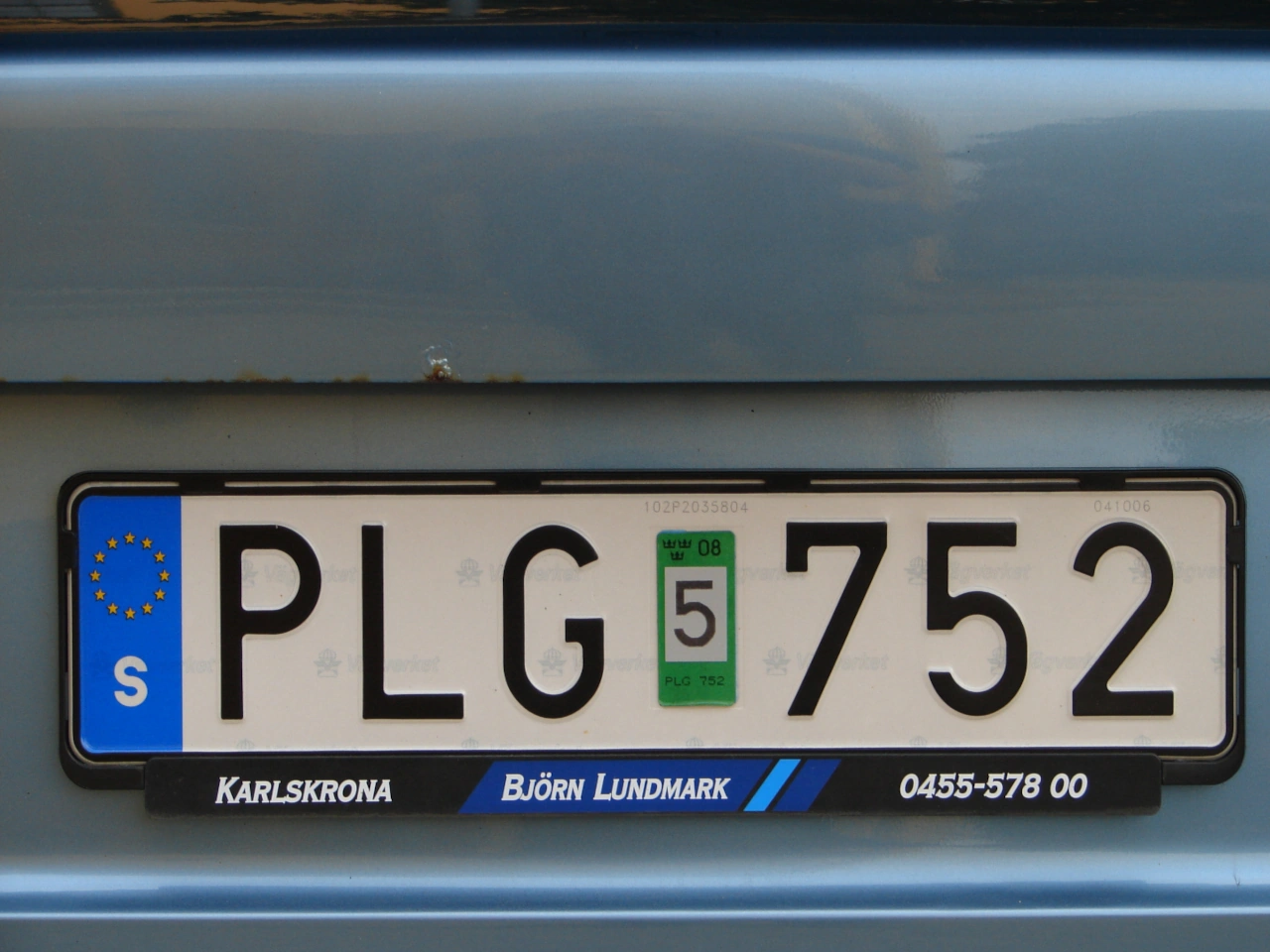
Wikimedia.org • Diego Tirira • CC BY-SA
What is a licence plate?
A licence plate is a plate displaying the registration identifier assigned to a vehicle. It allows authorities and other authorised systems to identify the vehicle's registration.
Is a licence plate the same as a registration plate?
Yes. Licence plate, registration plate and number plate are different terms commonly used for the plate displaying a vehicle's official registration number.
What should you do if a licence plate is lost or stolen?
Follow the local reporting and replacement procedure. For example, UK guidance says stolen plates should be reported to the police and DVLA, and replacement plates are needed before driving. Check the registration authority’s procedure for a lost plate; it may differ from the theft process.
30. Charging station
A charging station is a location equipped with one or more charging points where the battery of an electric or plug-in hybrid vehicle can be connected to an electricity supply and recharged. Charging stations may be located along public roads, in car parks, at service areas or on private property.
Charging spaces may be reserved for vehicles that are charging and can be subject to parking restrictions, time limits, payment requirements or other conditions. Drivers must follow the traffic signs, parking regulations and charging instructions applying at the location.
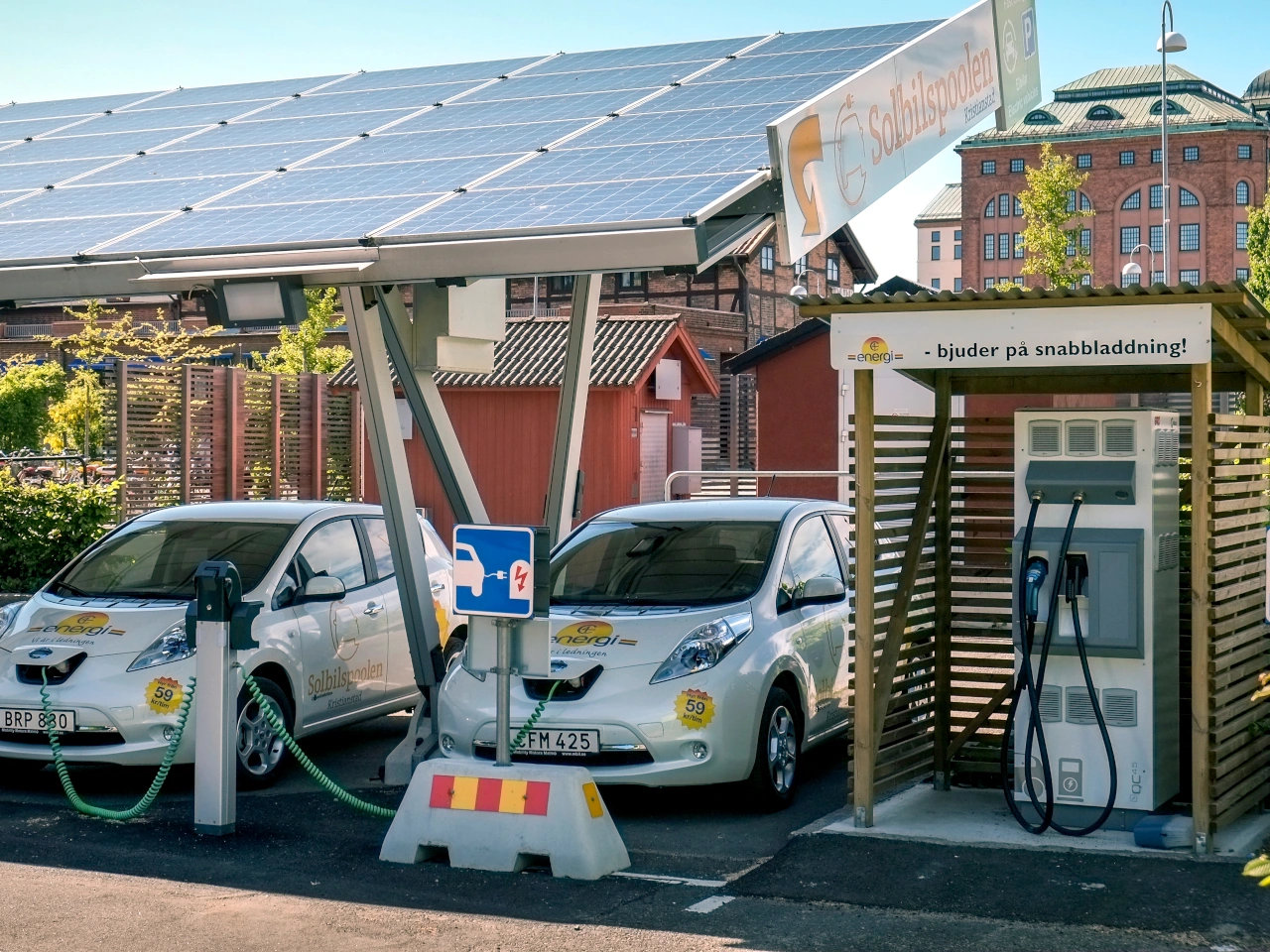
Wikimedia.org • News Oresund • CC BY
What is a charging station?
A charging station is a location where electric vehicles can be connected to an electricity supply to recharge their batteries. A station may contain one or several individual charging points.
🔗 tfl.gov.uk • Transport for London, electric vehicles and charging points; London example
Who can use an electric-vehicle charging station?
Charging stations are intended for vehicles that can be externally charged, such as battery-electric vehicles and plug-in hybrid vehicles. The exact vehicle categories permitted may be indicated by local signs or operator conditions.
🔗 tfl.gov.uk • Transport for London, electric vehicles and charging points; London example
Can a charging station have a maximum parking time?
Yes. Traffic signs, parking regulations or charging conditions may establish a maximum duration to encourage drivers to move their vehicles and make the charger available to others.
🔗 tfl.gov.uk • Transport for London, electric vehicles and charging points; London example
31. Dangers
A general danger warning sign warns road users of a hazard ahead that is not represented by a more specific warning sign. The particular danger may be explained by a supplementary panel, text, symbol or other indication placed with the warning sign.
Drivers should increase their attention, observe the road ahead and adapt their speed to the nature of the hazard and surrounding conditions. The exact appearance of the sign and the way the danger is identified vary between countries, so road users must follow the local traffic signs and regulations.
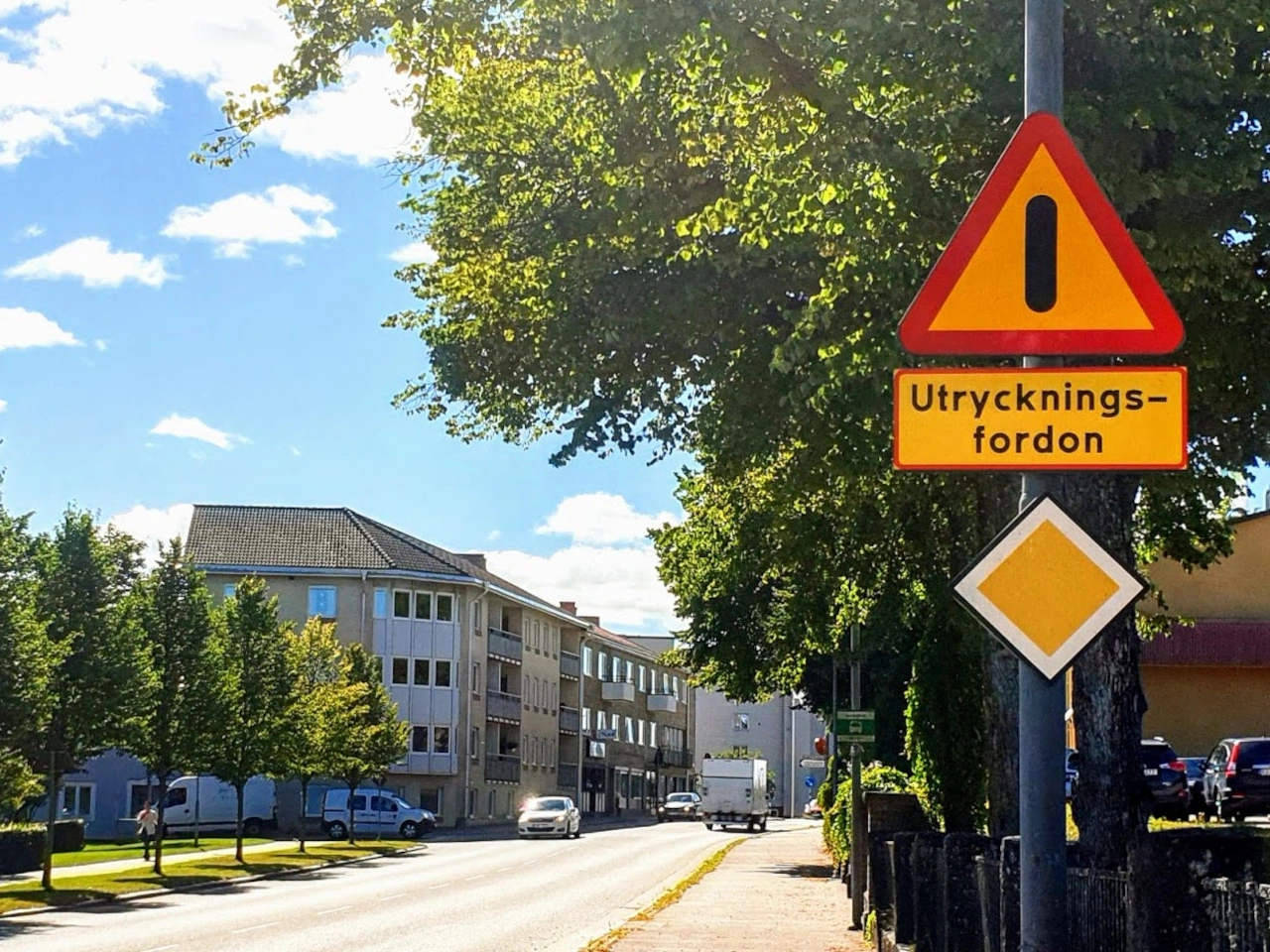
Wikimedia.org • Christoffre • CC BY-SA
What does a general danger warning sign mean?
A general danger warning sign indicates that there is a hazard ahead that is not represented by a more specific warning sign in the local traffic-sign system.
 Warning for a danger with no specific traffic sign.
What should you do when you see a general danger warning sign?
Increase your attention, observe the road and surroundings carefully and adapt your speed where necessary so that you can respond safely to the hazard.
Does the sign impose a specific speed limit?
Not normally. A warning sign alerts road users to danger rather than establishing a numerical speed limit. A separate speed-limit sign may be provided where a specific maximum speed is required.
32. Bus
A bus is a motor vehicle designed to transport multiple passengers, usually along roads as part of public transport, school transport, private transport or another passenger service. Buses generally have more passenger capacity than cars and may be designed to carry seated passengers, standing passengers or both.
Special rules may apply to buses concerning the driving licence, passenger capacity, speed limits, seat belts, bus lanes, stops and passenger boarding. The legal classification of buses and coaches and the rules applying to them vary between countries, so drivers and passengers must follow the local traffic regulations.
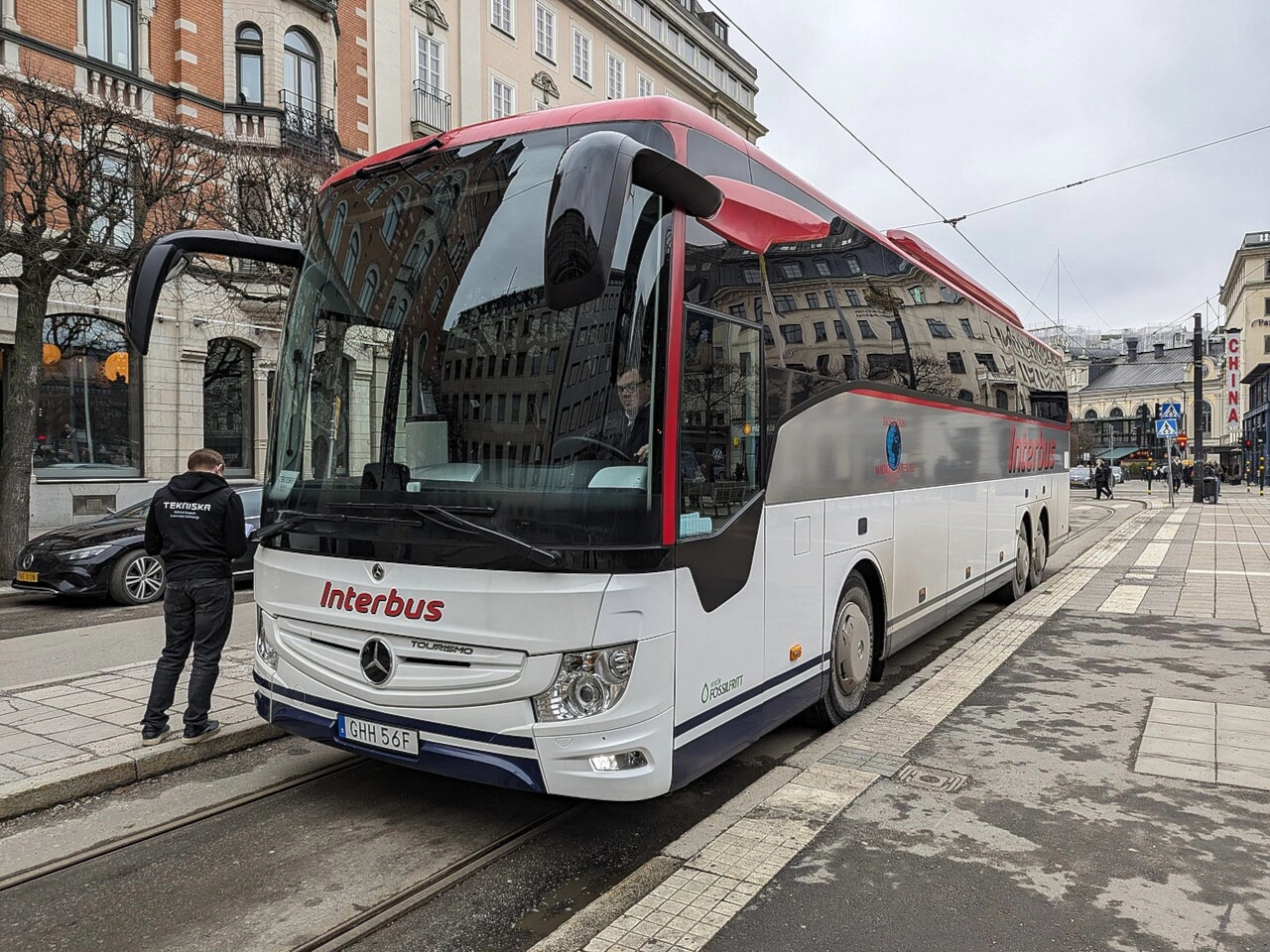
Wikimedia.org • AleWi • CC BY-SA
What is a bus?
A bus is a motor vehicle designed to transport a relatively large number of passengers. It may be used for public transport, school transport, private services or other passenger transport.
🔗 gov.uk • Great Britain Highway Code, Rules 83–88; national guidance example
🔗 gov.uk • Great Britain Highway Code, Rules 221–223; national guidance example
Do buses always have priority when leaving a bus stop?
No. Some countries require other drivers to give way to buses leaving designated stops, particularly in urban areas, while others apply the normal merging rules.
🔗 gov.uk • Great Britain Highway Code, Rules 83–88; national guidance example
🔗 gov.uk • Great Britain Highway Code, Rules 221–223; national guidance example
Do buses have special speed limits?
They can. Some countries impose lower maximum speeds on buses than on passenger cars, particularly on high-speed roads. Different limits may apply to buses and coaches.
🔗 gov.uk • Great Britain Highway Code, Rules 83–88; national guidance example
🔗 gov.uk • Great Britain Highway Code, Rules 221–223; national guidance example
33. Police
Police are public authorities responsible for enforcing laws, maintaining public safety and managing situations that may affect road traffic. In traffic, police officers may control vehicles, enforce traffic rules, investigate collisions, direct traffic and respond to emergencies.
Road users must follow lawful instructions given by police officers or other authorised traffic-control personnel. Police directions may temporarily override traffic lights, road signs or normal traffic arrangements, depending on local law.
Wikimedia.org • News Oresund • CC BY
What is the role of police in road traffic?
Police help enforce traffic law, investigate collisions and respond to risks on the road. For example, Greater Manchester Police describe targeted road enforcement, a round-the-clock roads-policing response and specialist serious-collision investigation. Exact responsibilities and powers vary by jurisdiction.
🔗 gmp.police.uk • Greater Manchester Police, Roads Policing Strategy2024–2026
Must you obey a police officer directing traffic?
Yes. Lawful directions given by an authorised police officer must be followed. In many countries, those directions take precedence over traffic lights, road signs and normal priority rules.
What should you do if police signal you to stop?
Slow down, follow the officer's directions and stop at a safe location as instructed. Do not make sudden movements or continue driving unless directed to do so.
34. Ambulance
An ambulance is a vehicle equipped and used to provide emergency medical assistance or transport patients to or between healthcare facilities. Ambulances may carry medical equipment and trained personnel who can provide treatment during transport.
During an emergency response, an ambulance may use warning lights and a siren and may receive special priority or exemptions from certain traffic rules. Other road users must follow the local rules for emergency vehicles, make sufficient space and avoid obstructing their passage.
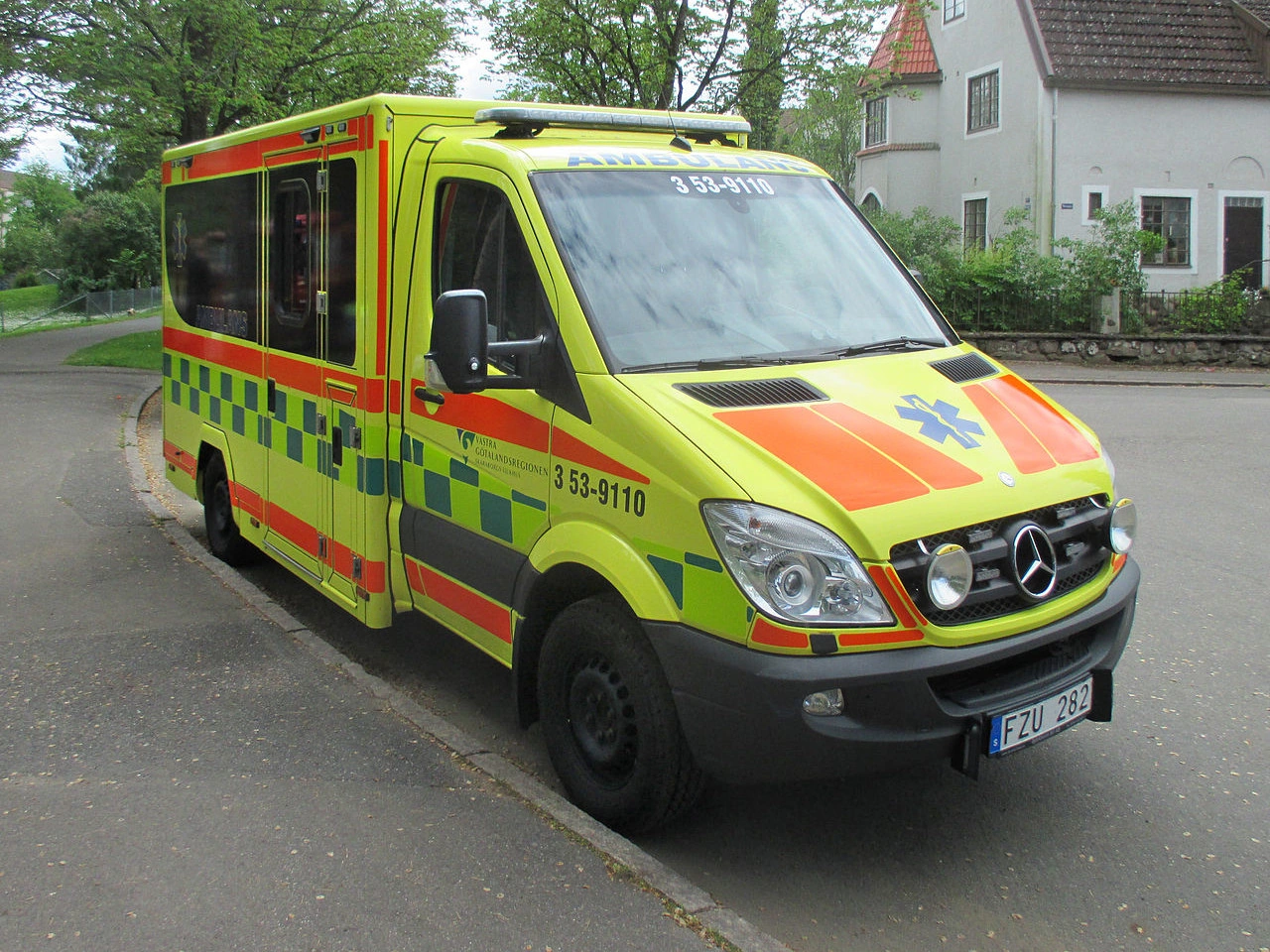
Wikimedia.org • Gunnar Creutz • CC BY-SA
What is an ambulance?
An ambulance is a specially equipped vehicle used to provide emergency medical assistance and transport sick or injured people.
🔗 gov.uk • Great Britain Highway Code, Rule 219, emergency vehicles; national guidance example
What should you do when an ambulance approaches?
Make space safely for an ambulance on an emergency response, following the local rules and any lawful directions. Slow down or stop where necessary without sudden or dangerous movements. Do not assume that its emergency status allows you to pass a red light or disregard another traffic control.
🔗 gov.uk • Great Britain Highway Code, Rule 219, emergency vehicles; national guidance example
Can an ambulance exceed the speed limit?
Many countries permit emergency vehicles to depart from certain normal speed rules during an urgent mission, subject to safety requirements and national legislation.
🔗 gov.uk • Great Britain Highway Code, Rule 219, emergency vehicles; national guidance example
35. European emission standard
A European emission standard, commonly called a Euro standard, is a European vehicle classification based on limits for pollutants emitted by vehicles and their engines. Successive standards, such as Euro 4, Euro 5 and Euro 6, introduced progressively stricter requirements for pollutants such as nitrogen oxides, particulate matter, carbon monoxide and hydrocarbons.
A vehicle's Euro standard is determined as part of its type approval and depends on factors including the vehicle category, fuel type and applicable emissions legislation when it was approved. Euro standards may also be used by authorities to determine access to low-emission zones, but local access rules vary between countries and cities.

Wikimedia.org • Rfeba • CC0
What is a European emission standard?
A European emission standard, or Euro standard, classifies vehicles according to the emissions requirements they had to satisfy when approved for use in the European market.
🔗 consilium.europa.eu • Council of the EU, Euro 7 adoption explanation, 12 April 2024
What do Euro 4, Euro 5 and Euro 6 mean?
Euro 4, Euro 5 and Euro 6 identify successive stages of European vehicle-pollutant requirements. The applicable limits depend on the vehicle, engine and pollutant, so a higher number does not mean that every individual numerical limit changed. Later stages can also alter testing and durability requirements.
🔗 consilium.europa.eu • Council of the EU, Euro 7 adoption explanation, 12 April 2024
Can petrol and diesel vehicles with the same Euro number have different emission limits?
Yes. The applicable emission limits and testing requirements can differ according to the vehicle category, engine and fuel type even when vehicles belong to the same general Euro generation.
🔗 consilium.europa.eu • Council of the EU, Euro 7 adoption explanation, 12 April 2024
36. Pothole
A pothole is a hole or depression in the road surface caused by wear, weather, water, repeated traffic loads or deterioration of the pavement. Potholes can vary greatly in size and depth and may develop gradually or become worse after freezing, heavy rain or repeated vehicle traffic.
Potholes can affect steering, braking and vehicle stability and may damage tyres, wheels or suspension components. Drivers and riders should observe the road ahead, adapt their speed and avoid sudden or dangerous manoeuvres when encountering damaged road surfaces.

Wikimedia.org • State Farm • CC BY
What is a pothole?
A pothole is a hole or depression that develops in a road surface when the pavement becomes damaged or deteriorates.
What should you do when you see a pothole?
Reduce speed when necessary, maintain control of the vehicle and avoid abrupt steering or braking. Only move around the pothole when this can be done safely without endangering other road users.
🔗 gov.uk • Great Britain Highway Code, Rules 226–237; national guidance example
Are potholes dangerous for cyclists?
Yes. Bicycle wheels can be strongly affected by deep holes or sharp edges, particularly when the cyclist has little time or space to avoid the hazard.
🔗 gov.uk • Great Britain Highway Code, Rules 226–237; national guidance example
37. Path
A path is a relatively narrow route intended for pedestrians and, where permitted, other road users or small vehicles. Paths may run through urban areas, countryside, parks, forests or between other roads and can be surfaced or unsurfaced.
A path is not necessarily the same as a footpath or cycle path. The road users permitted to use it depend on its legal status, width, traffic signs and local regulations.

Wikimedia.org • Tangopaso • CC0
Is a path the same as a footpath?
Not necessarily. A footpath is specifically intended for pedestrians, while a path may also permit cyclists or other users according to local rules.
Can cyclists use a path?
This depends on the legal status, width and signs applying to the path. Some paths permit cyclists, while others are reserved for pedestrians or particular users.
Can motor vehicles use a path?
This depends on local law. Some paths prohibit motor vehicles entirely, while narrow vehicles may be permitted on other paths unless traffic signs restrict access.
Who has priority when a path joins a larger road?
The applicable local priority rules determine who must give way. Special rules often apply when a minor path joins an ordinary road.
38. Particulates
Particulates, or particulate matter (PM), are tiny solid particles or liquid droplets suspended in the air. In road traffic, particulate emissions can come from vehicle exhaust, brake wear, tyre wear and road-surface wear, as well as dust that is disturbed by passing traffic.
Particulate matter is commonly classified by particle size. PM10 refers to particles with a diameter of up to approximately 10 micrometres, while PM2.5 refers to finer particles of up to approximately 2.5 micrometres. Vehicle emission standards, particulate filters and air-quality measures are used to reduce exposure to these pollutants.
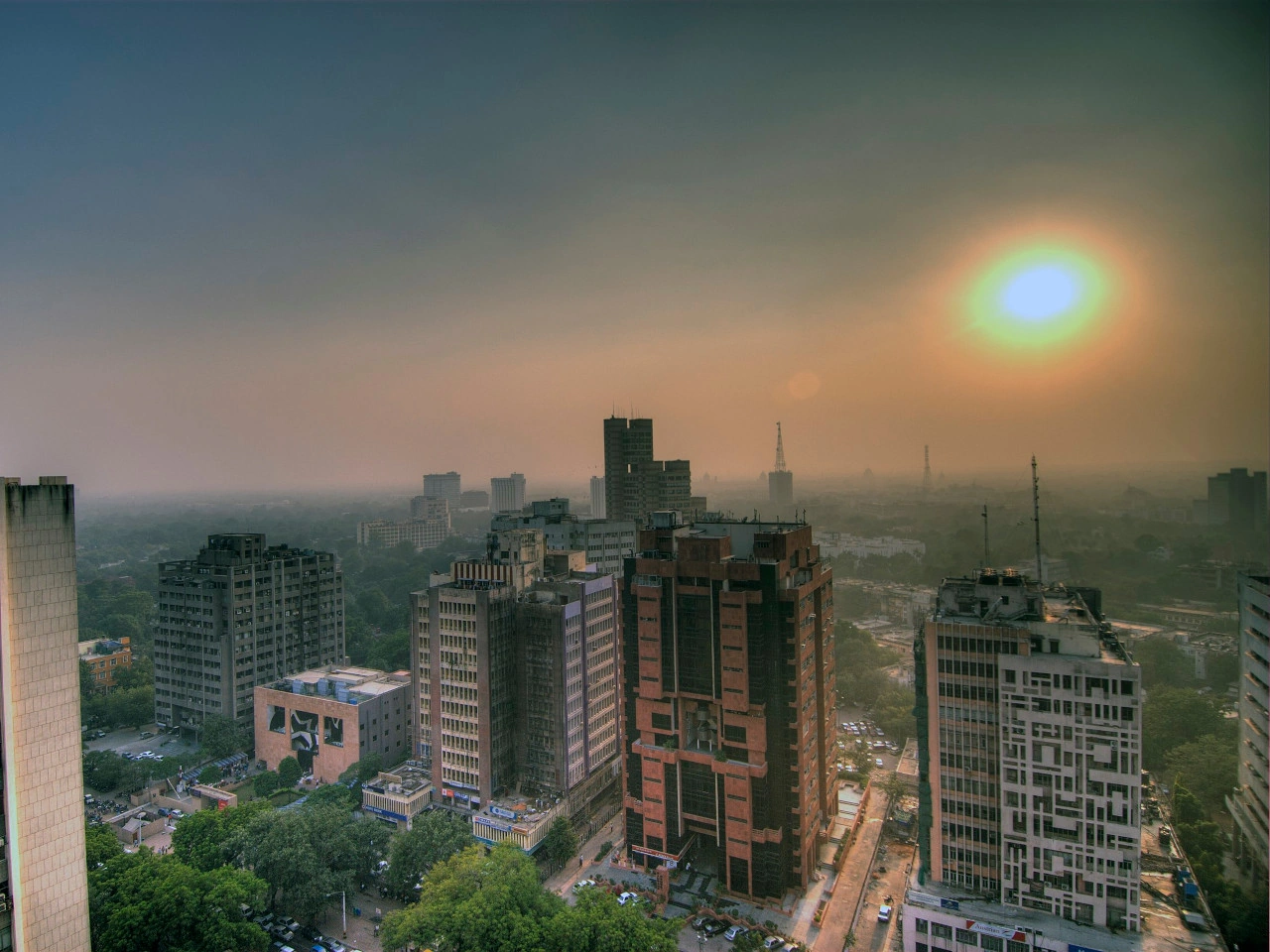
Wikimedia.org • wili hybrid • CC BY
What are particulates?
Particulates, or particulate matter, are very small solid particles or liquid droplets suspended in the air.
🔗 epa.gov • US EPA, Particulate Matter Basics
🔗 fhwa.dot.gov • US FHWA, particulate matter and road-transport sources
🔗 epa.gov • US EPA, AP-42 section 13.2.1.1, paved-road emissions and dust resuspension
What are PM10 and PM2.5?
PM10 refers to particles with a diameter of up to approximately 10 micrometres. PM2.5 refers to finer particles with a diameter of up to approximately 2.5 micrometres.
🔗 epa.gov • US EPA, Particulate Matter Basics
🔗 fhwa.dot.gov • US FHWA, particulate matter and road-transport sources
🔗 epa.gov • US EPA, AP-42 section 13.2.1.1, paved-road emissions and dust resuspension
Where do traffic particulates come from?
Road traffic can produce particles through engine exhaust, brake wear, tyre wear and road-surface wear. Passing traffic can also resuspend dust already present on the road.
🔗 epa.gov • US EPA, Particulate Matter Basics
🔗 fhwa.dot.gov • US FHWA, particulate matter and road-transport sources
🔗 epa.gov • US EPA, AP-42 section 13.2.1.1, paved-road emissions and dust resuspension
39. Air pollution
Air pollution is the presence of gases, particles or other substances in the air at concentrations that can harm human health, the environment or ecosystems. Road traffic contributes to air pollution through exhaust emissions and through non-exhaust sources such as brake wear, tyre wear and road dust.
Important traffic-related pollutants include nitrogen oxides, particulate matter, carbon monoxide and volatile organic compounds. Some pollutants are emitted directly by vehicles, while others can form in the atmosphere through chemical reactions. Vehicle-emission standards, cleaner technologies and traffic-management measures are used to reduce these emissions.

Wikimedia.org • Emmanuelkwizera • CC BY-SA
What is air pollution?
Air pollution is the presence of harmful gases, particles or other contaminants in the air. Road transport can contribute through engine emissions, vehicle wear and dust; the sources and pollutants differ by vehicle and conditions.
🔗 epa.gov • US EPA, smog and vehicle emissions
🔗 epa.gov • US EPA, Particulate Matter Basics
🔗 fhwa.dot.gov • US FHWA, particulate matter and road-transport sources
🔗 epa.gov • US EPA, AP-42 section 13.2.1.1, paved-road emissions and dust resuspension
How does road traffic cause air pollution?
Vehicles with combustion engines can emit exhaust pollutants. Road traffic also produces particles through brake, tyre and road-surface wear and can stir up road dust. Vehicles without tailpipe emissions can still contribute to these non-exhaust sources.
🔗 epa.gov • US EPA, smog and vehicle emissions
🔗 epa.gov • US EPA, Particulate Matter Basics
🔗 fhwa.dot.gov • US FHWA, particulate matter and road-transport sources
🔗 epa.gov • US EPA, AP-42 section 13.2.1.1, paved-road emissions and dust resuspension
Which air pollutants are associated with road traffic?
Important traffic-related pollutants include nitrogen oxides, particulate matter, carbon monoxide and volatile organic compounds. Their relative importance depends on the vehicle, fuel and driving conditions.
🔗 epa.gov • US EPA, smog and vehicle emissions
🔗 epa.gov • US EPA, Particulate Matter Basics
🔗 fhwa.dot.gov • US FHWA, particulate matter and road-transport sources
🔗 epa.gov • US EPA, AP-42 section 13.2.1.1, paved-road emissions and dust resuspension
40. Rush hour
Rush hour is a period when roads and public transport networks experience particularly high demand, commonly because large numbers of people are travelling to or from work, school or other regular destinations. It usually occurs during the morning and late afternoon or evening on working days.
Rush-hour traffic can result in congestion, slower speeds, longer journeys and frequent stopping. Drivers should maintain a safe following distance, remain patient, anticipate changing traffic conditions and follow any temporary or dynamic traffic-management measures.

Wikimedia.org • MDRX • CC BY-SA
What is rush hour?
Rush hour is a period when unusually large numbers of people travel at the same time, resulting in increased traffic and often congestion.
🔗 gov.uk • Great Britain Highway Code, Rules 126 and 133–134; national guidance example
🔗 gov.uk • Great Britain Highway Code, Rules 174 and 192; national guidance example
Should you increase your following distance in rush-hour traffic?
Yes. Leave sufficient distance to react to sudden braking and frequent changes in traffic speed. Avoid following another vehicle too closely even when traffic is moving slowly.
🔗 gov.uk • Great Britain Highway Code, Rules 126 and 133–134; national guidance example
🔗 gov.uk • Great Britain Highway Code, Rules 174 and 192; national guidance example
Can speed limits change during rush hour?
Yes. Roads equipped with variable traffic management may display lower speed limits during congestion. Drivers must follow the speed limit currently indicated.
🔗 gov.uk • Great Britain Highway Code, Rules 126 and 133–134; national guidance example
🔗 gov.uk • Great Britain Highway Code, Rules 174 and 192; national guidance example
41. Road code
A road code is a collection of laws and traffic rules that regulate how people use public roads. It establishes rules for drivers, cyclists, pedestrians and other road users and covers subjects such as priority, speed, overtaking, parking, traffic lights, road signs and road markings.
Road codes differ between countries and sometimes between regions. Every road user is expected to know and follow the rules that apply where they are travelling, even when those rules differ from those in their home country.
Are road codes the same in every country?
No. Although many traffic rules and signs are similar internationally, each country establishes its own traffic legislation and may apply different rules, signs, speed limits and requirements.
42. 2+1 Road
A 2+1 road is a road with three traffic lanes where one direction has two lanes and the opposite direction has one lane. The two-lane section normally alternates between directions at intervals, giving traffic in each direction regular opportunities to overtake slower vehicles.
The opposing directions may be separated by road markings or a central safety barrier. Where a barrier is used, the design can reduce the risk of head-on collisions while still providing periodic overtaking sections.

Wikimedia.org • Skvattram • CC0
Are the opposing directions separated on a 2+1 road?
They may be separated by road markings or by a central safety barrier. Barrier-separated designs are particularly intended to prevent vehicles from entering the opposing traffic stream.
43. 2-1 Road
A 2-1 road, also called a 2-minus-1 road, is a two-way road with one central area used by motor traffic and an advisory lane or edge strip on each side, commonly intended for cyclists. The central part is too narrow for two opposing motor vehicles to pass each other while remaining entirely within it.
When motor vehicles meet, they may need to move temporarily into the side strips to pass each other, where local rules permit. Drivers must first check that they can do so safely and must take particular care not to endanger cyclists or other road users using the side areas.
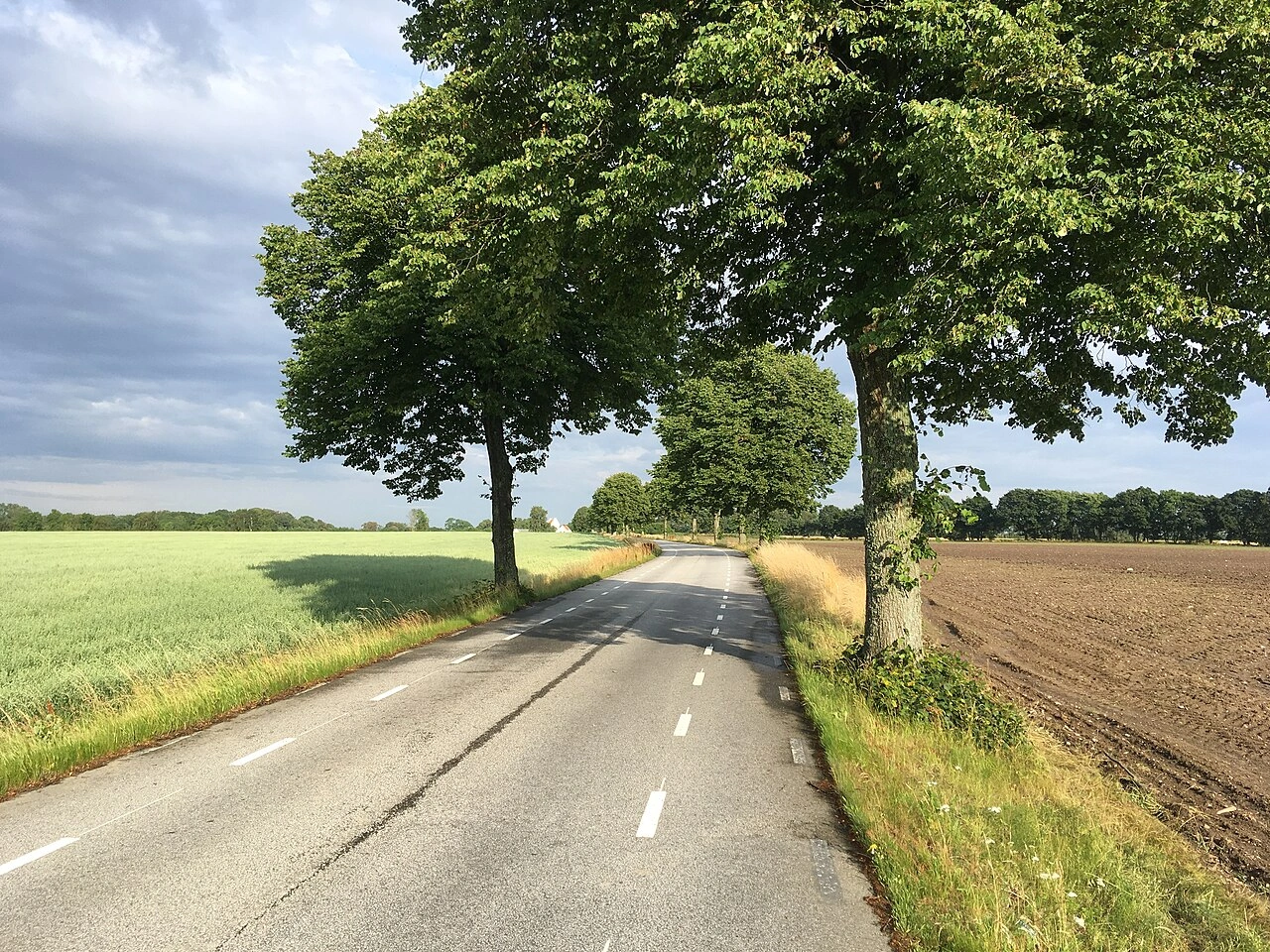
Wikimedia.org • UFO-monumentet • CC BY-SA
Why are 2-1 roads used?
They are intended to provide more visible space for cycling on roads that are too narrow for conventional cycle lanes and two full motor-vehicle lanes, while still allowing two-way motor traffic.
🔗 fhwa.dot.gov • FHWA, Small Town and Rural Multimodal Networks, advisory shoulders
44. Street gutter
A street gutter is a narrow channel along the edge of a road or street that collects and carries rainwater toward drains or other drainage systems. It is commonly located between the carriageway and the kerb and may be formed from concrete, paving stones or part of the road surface.
A street gutter is primarily a drainage feature rather than a traffic lane. Road users should take care near gutters because they may contain water, debris, drain openings or uneven surfaces.

Wikimedia.org • Airman 1st Class Alystria Maurer • CC0
Why should cyclists take care near street gutters?
Gutters may contain water, leaves, debris, drain covers or uneven surfaces, which can reduce grip or make cycling less stable.
🔗 gov.uk • Great Britain Highway Code, Rules 226–237; national guidance example
45. Cargo bike
A cargo bike is a bicycle designed to transport goods, children or other larger loads than can normally be carried on a conventional bicycle. Cargo bikes may use a box or platform in front of or behind the rider, an extended rear carrier or a multi-wheel design.
Cargo bikes can be powered entirely by the rider or equipped with electric pedal assistance. Their permitted dimensions, passenger capacity, use of cycle paths and electrical-assistance limits depend on the local traffic and vehicle regulations.

Wikimedia.org • Clément Bucco-Lechat • CC BY-SA
What is a cargo bike?
A cargo bike is a bicycle designed to carry goods, children or larger loads than a conventional bicycle.
🔗 nsw.gov.au • NSW Government, bicycle safety equipment; NSW helmet rule
🔗 service-public.gouv.fr • French Service Public, mandatory bicycle equipment; child helmet example
Can a cargo bike carry children?
Yes, when it is designed and equipped for passenger transport. Children should use the seats, restraints, foot protection or other safety equipment provided by the manufacturer and required by local law.
🔗 nsw.gov.au • NSW Government, bicycle safety equipment; NSW helmet rule
🔗 service-public.gouv.fr • French Service Public, mandatory bicycle equipment; child helmet example
Is a helmet compulsory on a cargo bike?
This depends on the country's bicycle rules and the vehicle's classification. A model legally classified as a faster motorised vehicle may have different helmet requirements from an ordinary cargo bicycle.
🔗 nsw.gov.au • NSW Government, bicycle safety equipment; NSW helmet rule
🔗 service-public.gouv.fr • French Service Public, mandatory bicycle equipment; child helmet example
46. Forestry vehicle
A forestry vehicle is a vehicle designed, equipped or adapted for work connected with forestry and woodland management. It may be used to pull machinery, transport timber, carry equipment or perform operations such as harvesting, forwarding or maintaining forest land.
Forestry vehicles can include tractors, specialised self-propelled machines, trailers and interchangeable equipment. Their registration, driving-licence requirements, maximum speed, road access and technical requirements depend on the vehicle's legal classification and the local traffic regulations.
Wikimedia.org • Antti Leppänen • CC BY-SA
What is a forestry vehicle?
A forestry vehicle is a vehicle designed or adapted for forestry work, such as pulling machinery, carrying equipment, transporting timber or working on forest land.
Do forestry vehicles have special speed limits?
They may. The permitted speed can depend on the vehicle's construction speed, mass, road type and local traffic rules. Posted speed limits must also be respected.
Can forestry equipment extend beyond the normal width of the vehicle?
Yes. Machinery and attached implements can make a forestry vehicle unusually wide or long. Check the applicable dimensions and special-vehicle rules before using the road. British guidance, for example, includes attached implements in width checks and describes extra arrangements for wide agricultural or forestry vehicles.
🔗 gov.uk • DfT, tractors and tracked vehicles on public roads
47. Construction vehicle
A construction vehicle is a vehicle or mobile machine designed or adapted for work connected with construction, roadworks, excavation, lifting or the movement of materials. Examples include excavators, loaders, bulldozers, road rollers, mobile cranes, dump trucks and concrete mixers.
Construction vehicles vary greatly in size, speed and legal classification. Some are ordinary road vehicles, while others are specialised machines intended mainly for use on construction sites. When travelling on public roads, they must comply with the applicable registration, licensing, lighting, dimensions, weight, speed and traffic rules.
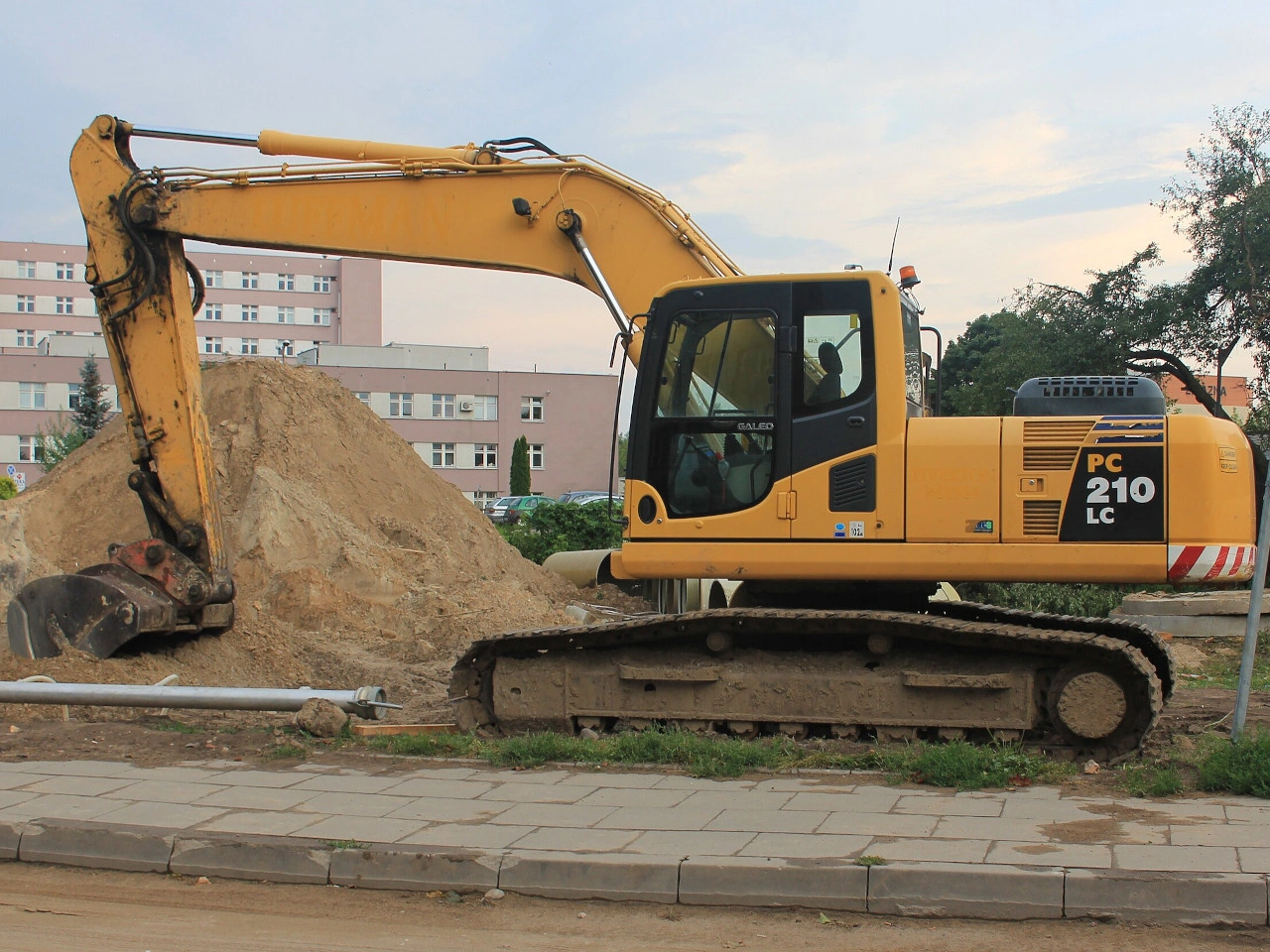
Wikimedia.org • Sunridin • CC BY
What is a construction vehicle?
A construction vehicle is a vehicle or mobile machine used for construction, excavation, lifting, roadworks or transporting construction materials.
Do construction vehicles have special speed limits?
They may. The permitted speed can depend on the vehicle’s design, mass, legal category and the road. Do not assume that a construction machine has the same limit as a car; follow both the road limit and any lower vehicle-specific limit.
What should you do when passing a construction vehicle?
Reduce speed where necessary and leave sufficient space. Be aware of blind spots, projecting equipment, wide turns and workers who may be present nearby.
48. Semi-trailer truck
A semi-trailer truck is a combination consisting of a road tractor and a semi-trailer used primarily for transporting goods. The semi-trailer is coupled to the tractor so that a significant part of its weight is supported by the tractor rather than entirely by its own wheels.
Semi-trailer trucks are commonly used for long-distance freight transport and may carry containers, refrigerated goods, liquids, bulk materials or other cargo. Special rules can apply concerning driving licences, maximum dimensions and masses, speed limits, lane use, overtaking, loading and driving and rest periods.
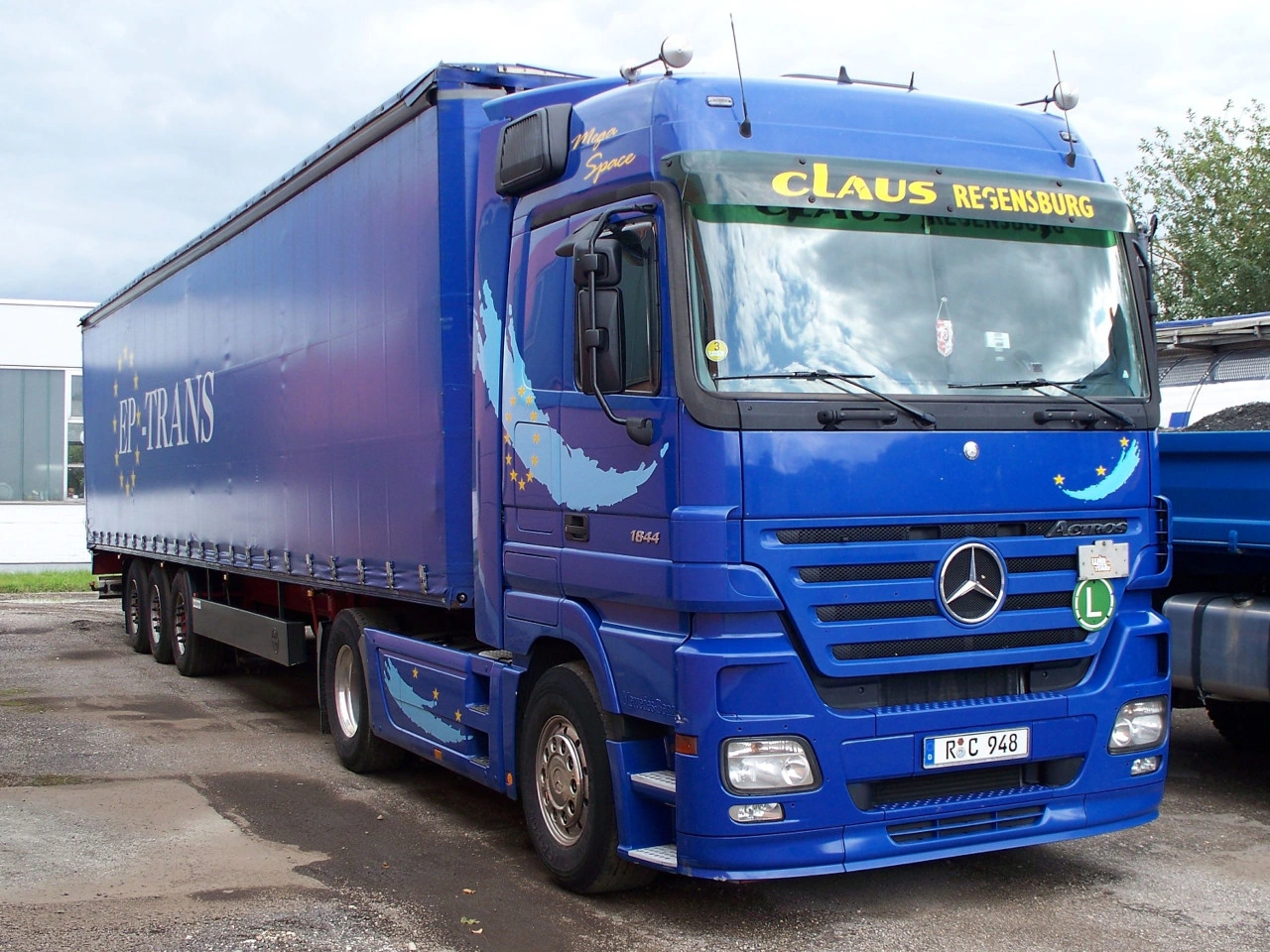
Wikimedia.org • High Contrast • CC BY
What is a semi-trailer truck?
A semi-trailer truck consists of a powered road tractor coupled to a semi-trailer primarily used to transport goods.
What is the difference between a semi-trailer and an ordinary trailer?
A semi-trailer is designed so that a substantial part of its own weight and load is supported by the towing vehicle. Other trailer designs support the load differently; some also impose a vertical load on the towing vehicle. Check the actual trailer and coupling ratings.
Do semi-trailer trucks have lower speed limits?
They often do. Many countries impose vehicle-specific maximum speeds on heavy goods vehicles, particularly on motorways and other high-speed roads.
49. Trolleybus
A trolleybus is an electrically powered bus that normally obtains its energy from overhead electrical wires through current collectors mounted on the vehicle. Unlike a tram, a trolleybus runs on ordinary road wheels and is steered by its driver rather than being guided by rails.
Trolleybuses are generally used for public passenger transport and may use bus lanes, stops and other public-transport infrastructure. Some modern trolleybuses also have batteries or auxiliary power systems that allow them to travel short distances without remaining connected to the overhead wires.

Wikimedia.org • Carl-Johan Aberger • CC0
What is a trolleybus?
A trolleybus is an electrically powered bus that normally receives electricity from overhead wires while travelling on ordinary road wheels.
🔗 gov.uk • Great Britain Highway Code, Rule 223, buses; national guidance example
Is a trolleybus the same as a tram?
No. A tram runs on rails and follows the path of its tracks. A trolleybus has ordinary tyres and is steered like a conventional bus.
🔗 gov.uk • Great Britain Highway Code, Rule 223, buses; national guidance example
Do trolleybuses have priority when leaving stops?
This depends on the local traffic law. Some countries require other drivers to allow public-transport buses, including trolleybuses, to leave designated stops.
🔗 gov.uk • Great Britain Highway Code, Rule 223, buses; national guidance example
50. Speed pedelec
A speed pedelec is a high-speed electrically assisted bicycle whose motor can continue providing pedal assistance above the normal electric-bicycle assistance limit, typically up to approximately 45 km/h. It has pedals and is primarily designed to assist the rider while pedalling.
Because of its higher speed, a speed pedelec may legally be treated differently from an ordinary bicycle or electric bicycle. Special rules can apply concerning the minimum age, driving licence, helmet, registration, insurance, cycle-path use and permitted roads, depending on the country.

Wikimedia.org • Sänger • CC BY-SA
What is a speed pedelec?
In the Belgian example, a speed pedelec is an electrically assisted pedal vehicle in a faster legal category, with assistance up to 45 km/h. Other countries may classify faster electric bicycles differently; the name alone does not establish their legal status.
🔗 gov.uk • GOV.UK, Riding an electric bike: the rules; GB EAPC example
🔗 gov.uk • Great Britain Highway Code, Rules 59–82, cycling; national guidance example
What is the difference between a speed pedelec and an ordinary electric bicycle?
The assistance cut-off differs. For example, Belgium’s ordinary pedal-assisted cycle category uses a 25 km/h cut-off, while a speed pedelec can provide assistance up to 45 km/h. These are assistance and classification rules, not a universal maximum speed every bicycle can physically reach.
🔗 gov.uk • GOV.UK, Riding an electric bike: the rules; GB EAPC example
🔗 gov.uk • Great Britain Highway Code, Rules 59–82, cycling; national guidance example
Is a helmet compulsory on a speed pedelec?
Helmet requirements vary between countries, but because speed pedelecs travel considerably faster than ordinary bicycles, specific helmet requirements commonly apply.
🔗 gov.uk • GOV.UK, Riding an electric bike: the rules; GB EAPC example
🔗 gov.uk • Great Britain Highway Code, Rules 59–82, cycling; national guidance example