


Slippery roadThailand
 Traffic rules
 Thailand
1. Slippery road
A slippery road has reduced tyre grip and can make steering, braking and acceleration less effective. Roads may become slippery because of rain, ice, snow, mud, oil, loose material or other substances on the surface. Drivers should reduce speed, increase their following distance and avoid sudden steering, braking or acceleration. Extra caution is needed in bends, on bridges and wherever the road surface changes unexpectedly.
What can make roads slippery in Thailand?
Water, mud, loose material, oil or other contamination can reduce tyre grip. Assess the actual surface and weather, slow smoothly and increase following distance. A slippery-road warning identifies a hazard; a separate regulatory sign establishes any numerical restriction.
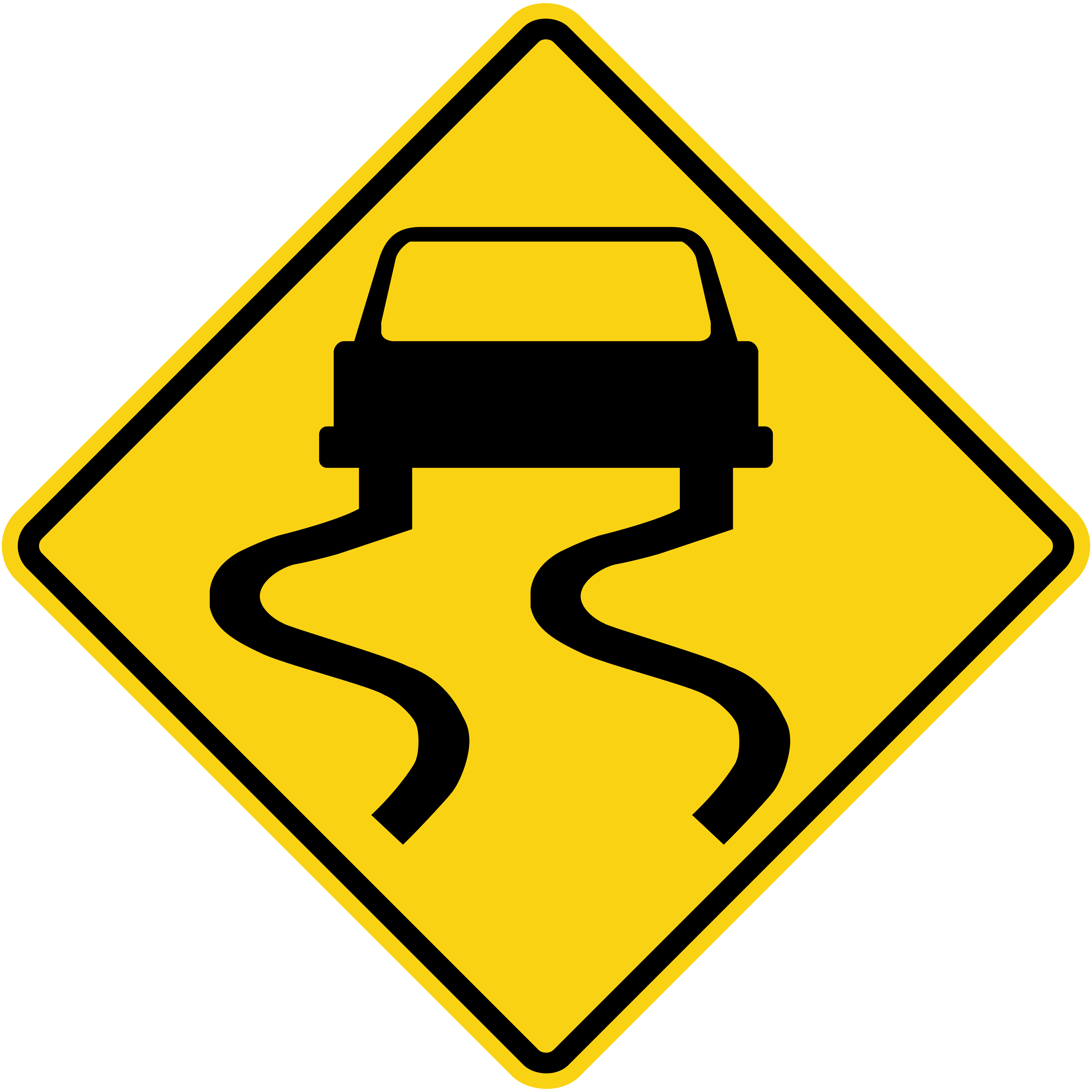 Warning for a slippery road surface.
English • Traffic sign ต.38 • Slippery road. Reduce speed and avoid sudden braking or turning.
ไทย • ต.38 • ทางลื่น. ผิวทางข้างหน้าอาจลื่น ให้ลดความเร็วและหลีกเลี่ยงการเบรกหรือเลี้ยวอย่างกะทันหัน
Sources
🔗 Doh.go.th • กรมทางหลวง • คู่มือ พ.ศ. 2561 • เล่ม 1 • หน้า PDF 103
SVG source: Commons.wikimedia.org • Original SVG
Government of Thailand • Public domain • Original revision 2018-01-11. Wikimedia original unmodified.
Artwork reviewed against the Thai Department of Highways 2018 catalogue: Doh.go.th • PDF page 103. Catalogue-equivalent illustration; intentional update from the previous PNG.
How should you drive on a slippery road in Thailand?
Reduce speed early, increase the gap to the vehicle ahead and use smooth steering, braking and acceleration. Do not rely on the posted maximum as a safe target when grip is poor.
Does a slippery-road warning sign in Thailand automatically impose a lower number?
The warning sign highlights a reduced-grip risk; it normally does not itself prescribe a new numerical speed limit. A separate speed-limit sign, temporary restriction or local condition may still apply. Travel below the legal maximum when necessary for safety.

