

Traffic signsTurkey
 Traffic rules
 Turkey
26. Path
A path is a relatively narrow route intended for pedestrians and, where permitted, other road users or small vehicles. Paths may run through urban areas, countryside, parks, forests or between other roads and can be surfaced or unsurfaced.
A path is not necessarily the same as a footpath or cycle path. The road users permitted to use it depend on its legal status, width, traffic signs and local regulations.

Wikimedia.org • Tangopaso • CC0
What is a path?
A path is a relatively narrow route intended primarily for pedestrians and, where permitted, other road users or small vehicles.
Is a path the same as a footpath?
Not necessarily. A footpath is specifically intended for pedestrians, while a path may also permit cyclists or other users according to local rules.
Is a path the same as a cycle path?
No. A cycle path is specifically designated for bicycles and other permitted users. An ordinary path does not automatically have that legal status.
Can cyclists use a path?
This depends on the legal status, width and signs applying to the path. Some paths permit cyclists, while others are reserved for pedestrians or particular users.
Can motor vehicles use a path?
This depends on local law. Some paths prohibit motor vehicles entirely, while narrow vehicles may be permitted on other paths unless traffic signs restrict access.
Can a path be part of the public-road network?
Yes. A narrow path can legally form part of the public-road network even when it is unsuitable for ordinary cars.
Does a path need to be paved?
No. Paths can be paved, gravelled, compacted or unsurfaced depending on their location and purpose.
Can traffic signs restrict access to a path?
Yes. Signs can reserve a path for particular road users or prohibit certain vehicles, regardless of whether they could physically fit on it.
Who has priority when a path joins a larger road?
The applicable local priority rules determine who must give way. Special rules often apply when a minor path joins an ordinary road.
Can pedestrians and cyclists share a path?
Yes, where both are permitted. Faster users should adapt their speed and avoid endangering or unnecessarily obstructing pedestrians.
Can a path cross another road?
Yes. At the crossing, users must follow the applicable priority signs, traffic lights, road markings and general right-of-way rules.
Is every narrow route legally a path?
No. Its legal classification depends on the definitions and regulations of the country concerned. A narrow route might instead be a footpath, cycle path, private access road or another type of facility.

27. Particulates
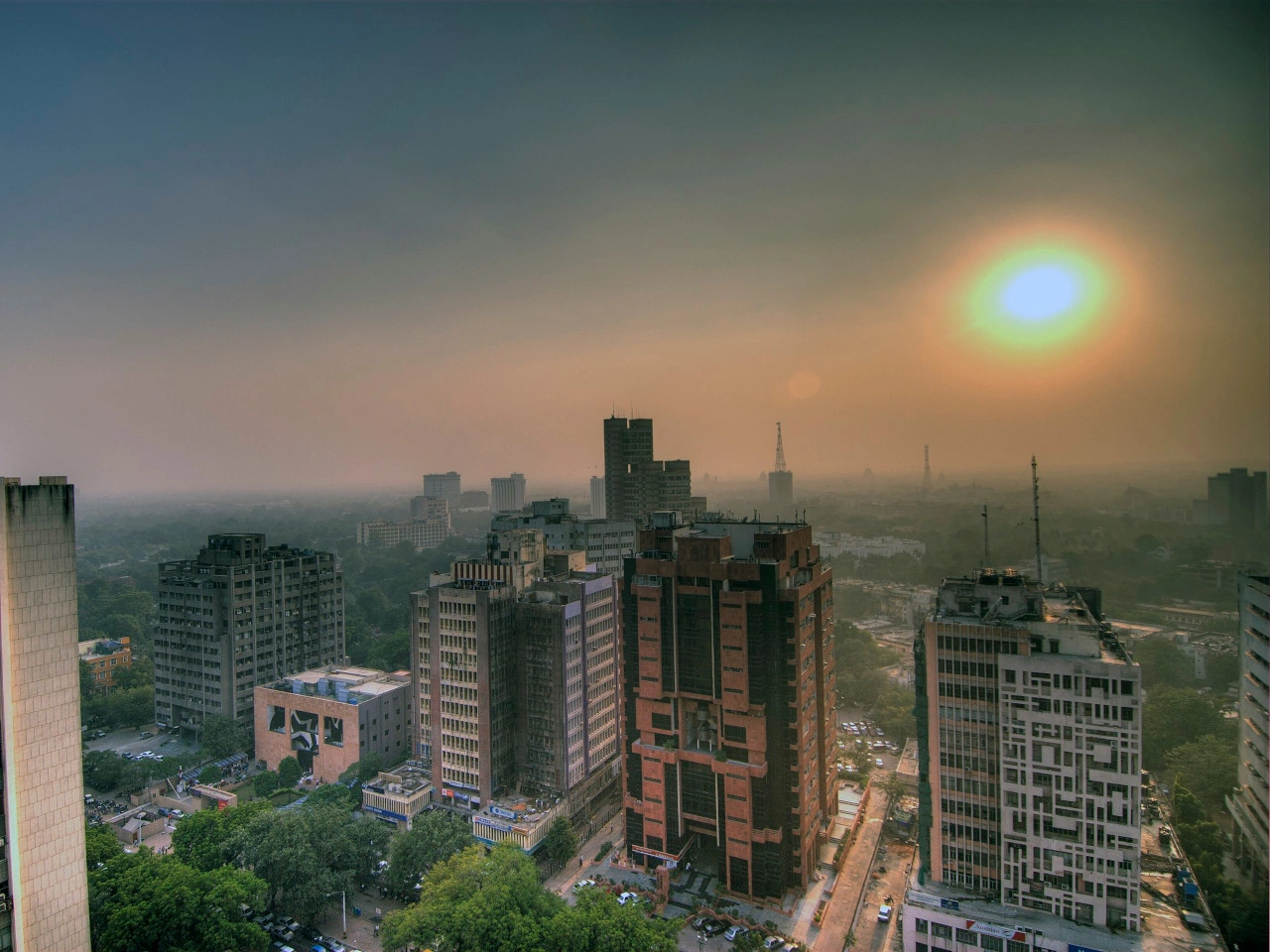
Particulates, or particulate matter (PM), are tiny solid particles or liquid droplets suspended in the air. In road traffic, particulate emissions can come from vehicle exhaust, brake wear, tyre wear and road-surface wear, as well as dust that is disturbed by passing traffic.
Particulate matter is commonly classified by particle size. PM10 refers to particles with a diameter of up to approximately 10 micrometres, while PM2.5 refers to finer particles of up to approximately 2.5 micrometres. Vehicle emission standards, particulate filters and air-quality measures are used to reduce exposure to these pollutants.
Wikimedia.org • wili hybrid • CC BY
What are particulates?
Particulates, or particulate matter, are very small solid particles or liquid droplets suspended in the air.
What are PM10 and PM2.5?
PM10 refers to particles with a diameter of up to approximately 10 micrometres. PM2.5 refers to finer particles with a diameter of up to approximately 2.5 micrometres.
Where do traffic particulates come from?
Road traffic can produce particles through engine exhaust, brake wear, tyre wear and road-surface wear. Passing traffic can also resuspend dust already present on the road.
Are diesel vehicles a source of particulates?
Yes. Combustion in diesel engines can produce very small soot particles. Modern diesel vehicles commonly use particulate filters to capture a large proportion of these exhaust particles.
What is a particulate filter?
A particulate filter is an exhaust-treatment device designed to trap particulate matter produced by an engine. Diesel particulate filters are commonly known as DPFs.
Do petrol engines produce particulates?
Yes. Petrol engines can also produce particulate emissions, particularly certain direct-injection engines. Appropriate emission-control systems may therefore include particulate filters.
Do electric vehicles produce particulates?
Fully electric vehicles produce no exhaust particulates from a combustion engine, but particles can still result from tyre wear, road wear and braking.
Are brake and tyre particles regulated?
Vehicle-emission regulation is increasingly addressing non-exhaust emissions. The European Euro 7 framework includes requirements concerning brake-particle emissions and tyre abrasion.
Is particulate matter the same as CO2?
No. Particulate matter consists of tiny airborne particles, while carbon dioxide is a gas. They are different types of vehicle emissions and are regulated for different environmental reasons.
How can vehicle particulate emissions be reduced?
Measures include effective particulate filters, cleaner vehicle technologies, correctly maintained emission-control systems and reductions in brake, tyre and road-wear emissions.
28. Air pollution
Air pollution is the presence of gases, particles or other substances in the air at concentrations that can harm human health, the environment or ecosystems. Road traffic contributes to air pollution through exhaust emissions and through non-exhaust sources such as brake wear, tyre wear and road dust.
Important traffic-related pollutants include nitrogen oxides, particulate matter, carbon monoxide and volatile organic compounds. Some pollutants are emitted directly by vehicles, while others can form in the atmosphere through chemical reactions. Vehicle-emission standards, cleaner technologies and traffic-management measures are used to reduce these emissions.

Wikimedia.org • Emmanuelkwizera • CC BY-SA
What is air pollution?
Air pollution is contamination of the air by gases, particles or other substances that can adversely affect human health, the environment or ecosystems.
How does road traffic cause air pollution?
Vehicles produce pollutants through fuel combustion, exhaust systems, brake wear, tyre wear and road-surface interaction. Moving traffic can also resuspend dust already present on the road.
Which air pollutants are associated with road traffic?
Important traffic-related pollutants include nitrogen oxides, particulate matter, carbon monoxide and volatile organic compounds. Their relative importance depends on the vehicle, fuel and driving conditions.
What is nitrogen dioxide?
Nitrogen dioxide (NO2) is an air pollutant associated particularly with combustion processes and road traffic. High concentrations are commonly found near busy roads and densely trafficked urban areas.
What is particulate matter?
Particulate matter consists of tiny solid particles or liquid droplets suspended in the air. Road traffic can produce particles from exhaust, brakes, tyres and road surfaces.
Is CO2 the same as ordinary air pollution?
No. Carbon dioxide is primarily regulated as a greenhouse gas because of its contribution to climate change. Local air-quality pollution generally focuses on substances such as nitrogen dioxide, particulate matter, ozone and other pollutants that directly affect air quality and health.
Do electric vehicles cause air pollution?
Fully electric vehicles produce no combustion-engine exhaust emissions while driving, but they can still contribute to non-exhaust particulate emissions through tyres, brakes and road wear.
Can air pollution be worse near busy roads?
Yes. Concentrations of traffic-related pollutants can be higher close to heavily trafficked roads because many emissions occur close to ground level and near where people live and travel.
What is a low-emission zone?
A low-emission zone is an area where access by more polluting vehicles is restricted in order to reduce traffic-related air pollution. Access criteria may depend on factors such as fuel type, vehicle category and emission standard.
How can traffic-related air pollution be reduced?
Measures include cleaner vehicles, stricter emission standards, effective emission-control equipment, low-emission zones, public transport, cycling and walking, as well as traffic-management measures that reduce unnecessary congestion and emissions.
29. Rush hour
Rush hour is a period when roads and public transport networks experience particularly high demand, commonly because large numbers of people are travelling to or from work, school or other regular destinations. It usually occurs during the morning and late afternoon or evening on working days.
Rush-hour traffic can result in congestion, slower speeds, longer journeys and frequent stopping. Drivers should maintain a safe following distance, remain patient, anticipate changing traffic conditions and follow any temporary or dynamic traffic-management measures.

Wikimedia.org • MDRX • CC BY-SA
What is rush hour?
Rush hour is a period when unusually large numbers of people travel at the same time, resulting in increased traffic and often congestion.
When does rush hour occur?
Rush hour commonly occurs during the morning and late afternoon or evening on working days, but the exact times vary according to the city, road and local travel patterns.
Does rush hour always last one hour?
No. The term does not mean that congestion lasts exactly one hour. In busy urban areas, peak traffic conditions may continue for several hours.
Why does traffic become congested during rush hour?
Congestion develops when traffic demand approaches or exceeds the available road capacity. Intersections, merging traffic, collisions, roadworks and weather can make the congestion worse.
Should you increase your following distance in rush-hour traffic?
Yes. Leave sufficient distance to react to sudden braking and frequent changes in traffic speed. Avoid following another vehicle too closely even when traffic is moving slowly.
Should you frequently change lanes during congestion?
Unnecessary lane changes can create additional conflicts and may not significantly reduce journey time. Choose an appropriate lane, observe surrounding traffic and change lane only when it can be done safely.
Can speed limits change during rush hour?
Yes. Roads equipped with variable traffic management may display lower speed limits during congestion. Drivers must follow the speed limit currently indicated.
What is a rush-hour lane?
A rush-hour lane is an additional traffic lane that can be opened during busy periods to increase road capacity. It may use a lane or shoulder that is closed to normal traffic at other times.
Can you use a rush-hour lane whenever traffic is congested?
No. Such a lane may only be used when traffic signals or signs indicate that it is open. Never assume that congestion alone permits its use.
How can you prepare for a journey during rush hour?
Check current traffic conditions and expected journey times, allow additional travel time and consider an alternative route, departure time or mode of transport where appropriate.
30. Road code
A road code is a collection of laws and traffic rules that regulate how people use public roads. It establishes rules for drivers, cyclists, pedestrians and other road users and covers subjects such as priority, speed, overtaking, parking, traffic lights, road signs and road markings.
Road codes differ between countries and sometimes between regions. Every road user is expected to know and follow the rules that apply where they are travelling, even when those rules differ from those in their home country.
What is a road code?
A road code is the body of traffic rules and regulations governing how road users must behave on public roads.
What does a road code regulate?
A road code can regulate subjects such as priority, speed, overtaking, turning, parking, traffic signals, road signs and road markings, as well as the responsibilities of different road users.
Are road codes the same in every country?
No. Although many traffic rules and signs are similar internationally, each country establishes its own traffic legislation and may apply different rules, signs, speed limits and requirements.
31. Street gutter
A street gutter is a narrow channel along the edge of a road or street that collects and carries rainwater toward drains or other drainage systems. It is commonly located between the carriageway and the kerb and may be formed from concrete, paving stones or part of the road surface.
A street gutter is primarily a drainage feature rather than a traffic lane. Road users should take care near gutters because they may contain water, debris, drain openings or uneven surfaces.

Wikimedia.org • Airman 1st Class Alystria Maurer • CC0
What is a street gutter?
A street gutter is a drainage channel along the edge of a road that collects rainwater and directs it toward drains or another drainage system.
Is a street gutter a traffic lane?
Normally, no. A gutter is primarily part of the road's drainage system and is not intended to function as a normal traffic lane.
Why should cyclists take care near street gutters?
Gutters may contain water, leaves, debris, drain covers or uneven surfaces, which can reduce grip or make cycling less stable.
32. Cargo bike
A cargo bike is a bicycle designed to transport goods, children or other larger loads than can normally be carried on a conventional bicycle. Cargo bikes may use a box or platform in front of or behind the rider, an extended rear carrier or a multi-wheel design.
Cargo bikes can be powered entirely by the rider or equipped with electric pedal assistance. Their permitted dimensions, passenger capacity, use of cycle paths and electrical-assistance limits depend on the local traffic and vehicle regulations.

Wikimedia.org • Clément Bucco-Lechat • CC BY-SA
What is a cargo bike?
A cargo bike is a bicycle designed to carry goods, children or larger loads than a conventional bicycle.
What types of cargo bikes are there?
Common designs include two-wheel box bikes, three-wheel cargo bikes and longtail bicycles with an extended rear carrying area.
Can a cargo bike be electric?
Yes. Many cargo bikes use electric pedal assistance to make it easier to move heavier loads or travel longer distances.
Is an electric cargo bike still a bicycle?
It can be. If the electrical assistance remains within the applicable power and assistance-speed limits, the vehicle may remain legally classified as a bicycle. More powerful or faster models may belong to another category.
Can a cargo bike carry children?
Yes, when it is designed and equipped for passenger transport. Children should use the seats, restraints, foot protection or other safety equipment provided by the manufacturer and required by local law.
Can a cargo bike carry goods?
Yes. Transporting goods is one of its main purposes. Loads must be securely positioned and must not make the bicycle unstable, obstruct the rider's view or exceed applicable dimensional or weight limits.
Can a cargo bike use a cycle path?
This depends on its dimensions and legal classification. Ordinary-sized cargo bicycles generally follow bicycle rules, while unusually wide models may be excluded from certain cycle facilities.
Does a cargo bike need a driving licence?
Normally not when it remains legally classified as an ordinary bicycle or electrically assisted bicycle. Faster or more powerful vehicles may be subject to different licensing requirements.
Is a helmet compulsory on a cargo bike?
This depends on the country's bicycle rules and the vehicle's classification. A model legally classified as a faster motorised vehicle may have different helmet requirements from an ordinary cargo bicycle.
Should you ride differently when a cargo bike is heavily loaded?
Yes. Additional weight can affect acceleration, braking, steering and stability. Reduce speed where necessary, allow greater stopping distance and take particular care when turning.
Can a cargo bike tow a trailer?
Yes, where permitted. The bicycle, trailer and total load must comply with the applicable dimensional, mass, braking and passenger-transport requirements.
Why should drivers take care around cargo bikes?
Cargo bikes can be longer, wider and heavier than ordinary bicycles and may need additional space when turning or stopping. Drivers should leave sufficient passing distance and avoid cutting across their path.
33. Forestry vehicle
A forestry vehicle is a vehicle designed, equipped or adapted for work connected with forestry and woodland management. It may be used to pull machinery, transport timber, carry equipment or perform operations such as harvesting, forwarding or maintaining forest land.
Forestry vehicles can include tractors, specialised self-propelled machines, trailers and interchangeable equipment. Their registration, driving-licence requirements, maximum speed, road access and technical requirements depend on the vehicle's legal classification and the local traffic regulations.
Wikimedia.org • Antti Leppänen • CC BY-SA
What is a forestry vehicle?
A forestry vehicle is a vehicle designed or adapted for forestry work, such as pulling machinery, carrying equipment, transporting timber or working on forest land.
Is a forestry vehicle always a tractor?
No. Forestry vehicles can include tractors, specialised self-propelled machines, trailers and other equipment. Their legal classification depends on their design and use.
What is a forestry tractor?
A forestry tractor is a powered vehicle primarily designed to pull, push, carry or operate equipment or trailers used for forestry work.
Can forestry vehicles travel on public roads?
Yes, when legally permitted and properly equipped. Registration, insurance, lighting, dimensions, speed and driving-licence requirements may apply before a forestry vehicle can use public roads.
Do you need a special driving licence for a forestry vehicle?
This depends on the vehicle classification, mass and country. Some countries have special agricultural or forestry vehicle licence categories, while other machines require ordinary car or heavy-vehicle licences.
Do forestry vehicles have special speed limits?
They may. The permitted speed can depend on the vehicle's construction speed, mass, road type and local traffic rules. Posted speed limits must also be respected.
Can forestry vehicles use motorways?
This depends on the country and vehicle classification. Agricultural and forestry vehicles are often restricted from high-speed roads, particularly when their construction speed is unsuitable for motorway traffic.
Why should drivers take care when passing a forestry vehicle?
Forestry vehicles can be large, slow, wide or equipped with projecting machinery. Reduce speed where necessary and overtake only when there is sufficient visibility and space.
Can a forestry vehicle tow a trailer?
Yes, where the vehicle is designed and approved to do so. Forestry tractors commonly tow trailers carrying timber, machinery or other forestry materials.
Can forestry equipment extend beyond the normal width of the vehicle?
Some machinery or loads may make a forestry vehicle unusually wide or long. Where legal limits are exceeded, special markings, lighting, permits or escort arrangements may be required under local law.
34. Construction vehicle
A construction vehicle is a vehicle or mobile machine designed or adapted for work connected with construction, roadworks, excavation, lifting or the movement of materials. Examples include excavators, loaders, bulldozers, road rollers, mobile cranes, dump trucks and concrete mixers.
Construction vehicles vary greatly in size, speed and legal classification. Some are ordinary road vehicles, while others are specialised machines intended mainly for use on construction sites. When travelling on public roads, they must comply with the applicable registration, licensing, lighting, dimensions, weight, speed and traffic rules.
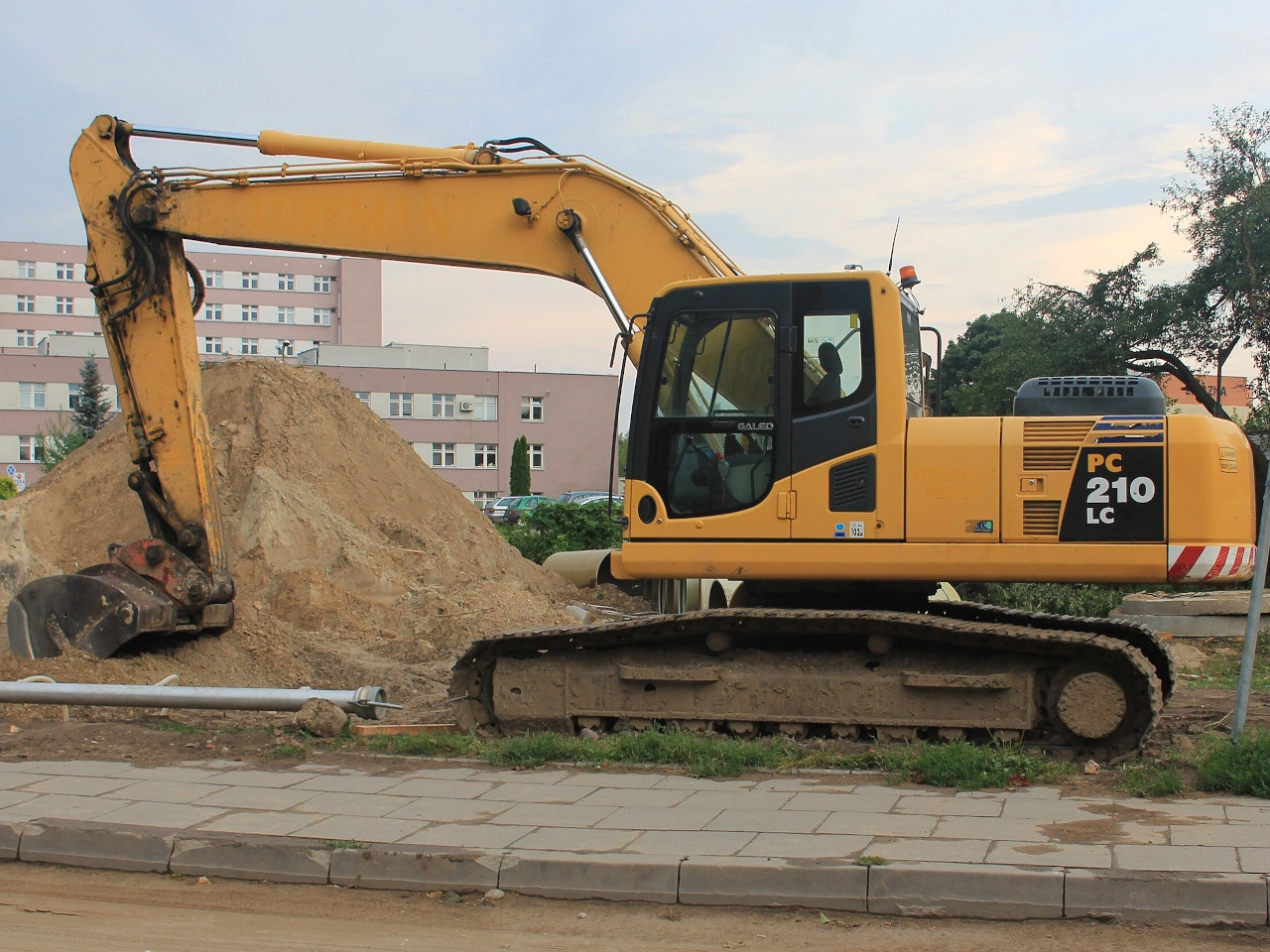
Wikimedia.org • Sunridin • CC BY
What is a construction vehicle?
A construction vehicle is a vehicle or mobile machine used for construction, excavation, lifting, roadworks or transporting construction materials.
What are examples of construction vehicles?
Examples include excavators, wheel loaders, bulldozers, road rollers, mobile cranes, dump trucks and concrete mixers.
Is every construction vehicle legally the same type of vehicle?
No. A construction vehicle may legally be classified as a truck, mobile machine, special-purpose vehicle or another vehicle category depending on its design and use.
Can construction vehicles travel on public roads?
Yes, when the vehicle is legally permitted and suitably equipped for road use. Some machines are designed mainly for construction sites and may be subject to special restrictions when travelling on public roads.
Do you need a driving licence for a construction vehicle?
This depends on the vehicle category, mass, speed and local law. Heavy trucks, mobile cranes and specialised machines may require different licence categories.
Do construction vehicles have special speed limits?
They may. A vehicle's design speed, mass, tyres, suspension and legal classification can result in a lower permitted speed than that applying to ordinary cars.
Why should you take extra care near construction vehicles?
Construction vehicles can be large, slow and difficult to manoeuvre and may have significant blind spots. They may also turn, reverse or enter a construction site unexpectedly.
What do flashing amber lights on a construction vehicle mean?
Flashing amber lights generally warn other road users that the vehicle is working, moving slowly or creating an unusual obstruction or hazard. They do not normally give the vehicle the same priority as an emergency vehicle.
Can a construction vehicle be wider or heavier than an ordinary vehicle?
Yes. Some construction machinery exceeds normal vehicle dimensions or masses. Special permits, route restrictions, warning equipment or escorts may then be required.
What should you do when passing a construction vehicle?
Reduce speed where necessary and leave sufficient space. Be aware of blind spots, projecting equipment, wide turns and workers who may be present nearby.
35. Semi-trailer truck
A semi-trailer truck is a combination consisting of a road tractor and a semi-trailer used primarily for transporting goods. The semi-trailer is coupled to the tractor so that a significant part of its weight is supported by the tractor rather than entirely by its own wheels.
Semi-trailer trucks are commonly used for long-distance freight transport and may carry containers, refrigerated goods, liquids, bulk materials or other cargo. Special rules can apply concerning driving licences, maximum dimensions and masses, speed limits, lane use, overtaking, loading and driving and rest periods.
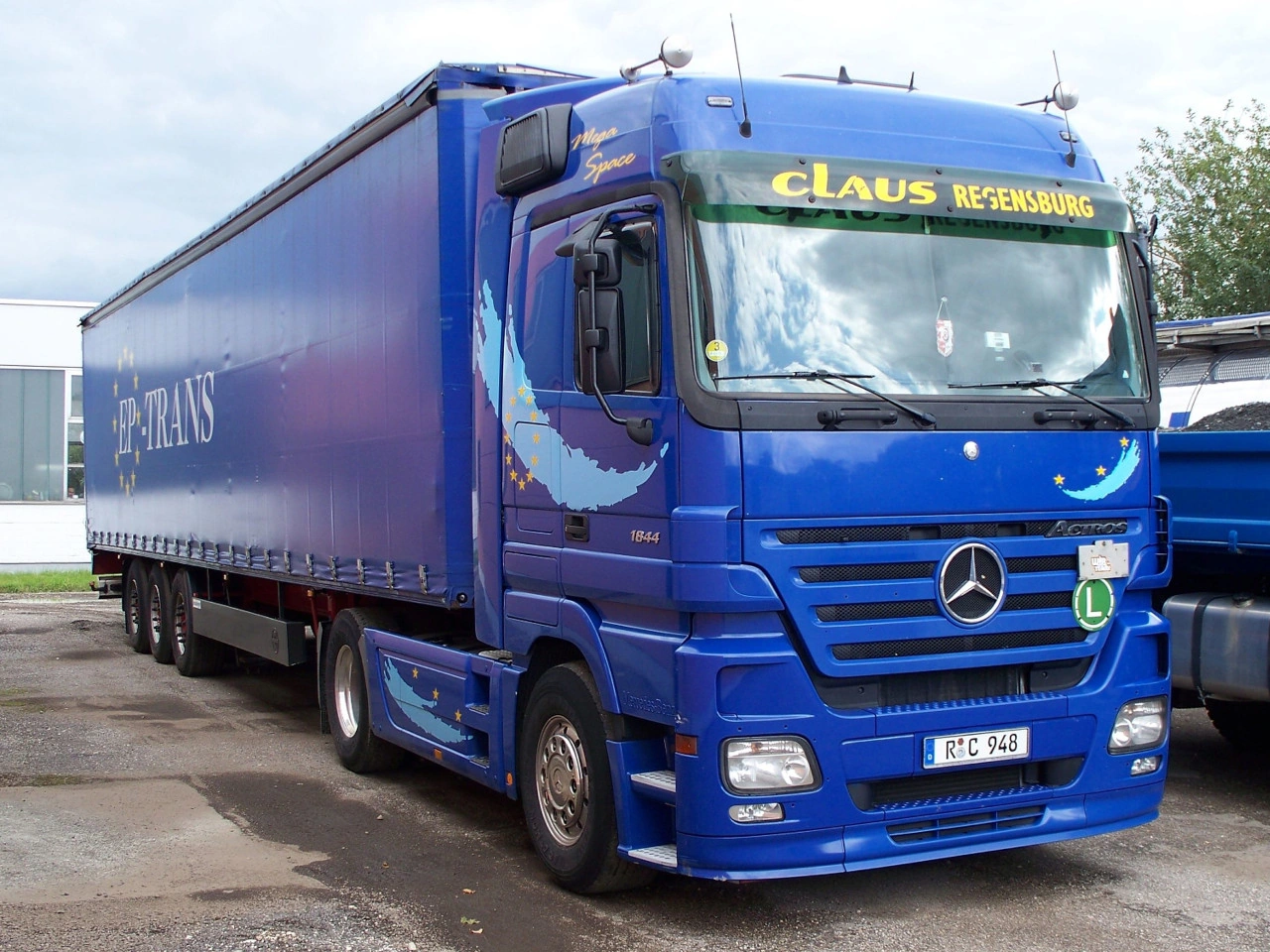
Wikimedia.org • High Contrast • CC BY
What is a semi-trailer truck?
A semi-trailer truck consists of a powered road tractor coupled to a semi-trailer primarily used to transport goods.
What is a semi-trailer?
A semi-trailer is a trailer designed so that part of the trailer and a significant part of its load are supported by the towing tractor.
What is the difference between a semi-trailer and an ordinary trailer?
An ordinary trailer generally supports its own weight through its axles, while a semi-trailer transfers a substantial vertical load to the tractor through its coupling.
How is a semi-trailer connected to the tractor?
The semi-trailer is normally connected through a kingpin and fifth-wheel coupling mounted behind the tractor cab.
Why are semi-trailer trucks called articulated vehicles?
The tractor and semi-trailer are connected by a pivoting coupling, allowing the two parts to turn relative to each other when the combination changes direction.
Do you need a special licence to drive a semi-trailer truck?
Yes. Heavy articulated trucks normally require a heavy-goods-vehicle licence that also authorises the driver to tow a heavy trailer or semi-trailer. The precise licence categories differ between countries.
Do semi-trailer trucks have lower speed limits?
They often do. Many countries impose vehicle-specific maximum speeds on heavy goods vehicles, particularly on motorways and other high-speed roads.
Why do semi-trailer trucks need more space to turn?
The semi-trailer's rear wheels follow a tighter path than the tractor's front wheels. Drivers therefore need additional space when turning, particularly at narrow intersections.
Why should you leave extra distance behind a semi-trailer truck?
Large trucks can restrict your view of traffic ahead and require considerable stopping distance. Keeping an appropriate following distance improves visibility and reaction time.
Why should you take care when driving beside a semi-trailer truck?
Large trucks have substantial blind spots around the cab and trailer. Avoid remaining beside the vehicle unnecessarily and be particularly careful when the truck is turning or changing lane.
36. Trolleybus
A trolleybus is an electrically powered bus that normally obtains its energy from overhead electrical wires through current collectors mounted on the vehicle. Unlike a tram, a trolleybus runs on ordinary road wheels and is steered by its driver rather than being guided by rails.
Trolleybuses are generally used for public passenger transport and may use bus lanes, stops and other public-transport infrastructure. Some modern trolleybuses also have batteries or auxiliary power systems that allow them to travel short distances without remaining connected to the overhead wires.

Wikimedia.org • Carl-Johan Aberger • CC0
What is a trolleybus?
A trolleybus is an electrically powered bus that normally receives electricity from overhead wires while travelling on ordinary road wheels.
Is a trolleybus the same as a tram?
No. A tram runs on rails and follows the path of its tracks. A trolleybus has ordinary tyres and is steered like a conventional bus.
Is a trolleybus an electric bus?
Yes. A trolleybus uses an electric motor, but unlike a battery-electric bus it traditionally receives most or all of its operating power from overhead electrical wires.
How does a trolleybus receive electricity?
Electrical current is normally collected from overhead wires through poles or another current-collection system mounted on the vehicle.
Can a trolleybus drive without overhead wires?
Some trolleybuses can. Modern vehicles may have batteries or auxiliary motors that allow limited operation away from the overhead wiring.
Can a trolleybus change lane?
Yes. Because it is steered rather than rail-guided, a trolleybus can move sideways within the range permitted by its overhead electrical connection and road layout.
Can trolleybuses use bus lanes?
Yes, where local rules permit. Trolleybuses operating public-transport services can normally use infrastructure reserved for authorised buses and public transport.
Do trolleybuses have priority when leaving stops?
This depends on the local traffic law. Some countries require other drivers to allow public-transport buses, including trolleybuses, to leave designated stops.
Should drivers slow down near a stopped trolleybus?
Yes. Passengers may be boarding, leaving or crossing the roadway. Drivers should approach carefully and give passengers sufficient space where required.
Does a trolleybus produce exhaust emissions?
A trolleybus operating entirely on electric power produces no combustion-engine exhaust emissions at the vehicle. Non-exhaust emissions from tyres, brakes and road wear can still occur.
37. Speed pedelec
A speed pedelec is a high-speed electrically assisted bicycle whose motor can continue providing pedal assistance above the normal electric-bicycle assistance limit, typically up to approximately 45 km/h. It has pedals and is primarily designed to assist the rider while pedalling.
Because of its higher speed, a speed pedelec may legally be treated differently from an ordinary bicycle or electric bicycle. Special rules can apply concerning the minimum age, driving licence, helmet, registration, insurance, cycle-path use and permitted roads, depending on the country.

Wikimedia.org • Sänger • CC BY-SA
What is a speed pedelec?
A speed pedelec is an electrically assisted pedal cycle capable of providing motor assistance at higher speeds than an ordinary electric bicycle, commonly up to approximately 45 km/h.
What is the difference between a speed pedelec and an ordinary electric bicycle?
An ordinary electrically assisted bicycle normally stops providing motor assistance at a lower speed, commonly around 25 km/h. A speed pedelec can continue assisting the rider at higher speeds.
Do you still have to pedal a speed pedelec?
Normally yes. A speed pedelec is primarily designed to provide assistance while the rider pedals, although limited walking or starting assistance may also be provided.
Can a speed pedelec travel at 45 km/h?
Many speed pedelecs are designed to provide assistance up to approximately 45 km/h. The actual permitted speed must still comply with the local speed limit and traffic conditions.
Do you need a driving licence for a speed pedelec?
This depends on the country's legal classification. Some countries classify speed pedelecs similarly to mopeds and require an appropriate driving licence.
Is a helmet compulsory on a speed pedelec?
Helmet requirements vary between countries, but because speed pedelecs travel considerably faster than ordinary bicycles, specific helmet requirements commonly apply.
Does a speed pedelec need a licence plate?
In countries where speed pedelecs are classified as mopeds or another motor-vehicle category, registration and a licence plate may be compulsory.
Does a speed pedelec need insurance?
This depends on its technical characteristics and local law. Some jurisdictions require motor-vehicle liability insurance, while others exempt pedal-assisted speed pedelecs under specified conditions.
Can a speed pedelec use a cycle path?
This depends on the country, road speed limit and traffic signs. Speed pedelecs may be permitted, required or prohibited on particular cycle paths.
Can a speed pedelec use a motorway?
Speed pedelecs are generally unsuitable for motorways and are commonly prohibited where mopeds or low-speed vehicles are not permitted. Follow the local access rules.
Can you carry a passenger on a speed pedelec?
This depends on the vehicle's construction and local rules. Where passengers are permitted, the speed pedelec must be designed and equipped to carry them safely.
Is a speed pedelec the same as an electric moped?
No. A speed pedelec is primarily designed to provide pedal assistance, while an electric moped can normally propel itself without requiring the rider to pedal. Their legal classifications may nevertheless be closely related.
38. Delivery vehicle
A delivery vehicle is a vehicle used to transport and deliver goods, parcels, supplies or other items to homes, businesses or other destinations. Delivery vehicles can include vans, trucks, cars, motorcycles, cargo bicycles and other vehicles depending on the type and quantity of goods being transported.
Delivery vehicles must follow the ordinary traffic rules applying to their vehicle category as well as any specific rules concerning loading and unloading, restricted-access areas, parking, vehicle dimensions and low-emission zones. Permission to make a delivery does not automatically allow a vehicle to stop or park anywhere.

Wikimedia.org • 28704869 • CC BY
What is a delivery vehicle?
A delivery vehicle is a vehicle used to transport goods, parcels, supplies or other items to a particular destination.
Is a delivery vehicle always a van or truck?
No. Deliveries can be made using vans, trucks, cars, motorcycles, cargo bicycles or other suitable vehicles.
Can a delivery vehicle stop to load or unload goods?
Yes, where stopping is legally permitted. Many traffic systems distinguish genuine loading or unloading from ordinary parking when the vehicle remains only for the time necessary to perform the activity.
Can a delivery driver wait in a loading area?
A loading area is intended for active loading or unloading. Remaining there after the delivery activity has finished may constitute parking and may therefore violate the applicable restrictions.
Can delivery vehicles use restricted streets?
Sometimes. Traffic signs may provide an exception for deliveries, loading and unloading or local access. The driver must comply with any times, vehicle restrictions or other conditions shown.
Can delivery vehicles enter pedestrian zones?
Only where local rules or signs specifically allow delivery access. Access may be limited to certain hours, and vehicles may be required to travel at very low speed and give priority to pedestrians.
Can a delivery vehicle park on a pavement or cycle path while unloading?
Not automatically. Loading or unloading does not override general stopping restrictions or rules protecting pavements, cycle paths and other road users.
Can a delivery vehicle use hazard warning lights while illegally stopped?
No. Hazard warning lights warn other road users but do not make an otherwise prohibited stopping or parking position legal.
Can delivery vehicles be restricted by low-emission zones?
Yes. Vans and trucks may be subject to low-emission-zone requirements based on factors such as fuel type, vehicle category and emission standard.
Should drivers take extra care around delivery vehicles?
Yes. Delivery vehicles may stop frequently, reverse, open doors or move between the roadway and loading areas. Other road users should allow sufficient space and anticipate pedestrians or workers moving around the vehicle.
39. Idling
Idling means allowing a vehicle's engine to continue running while the vehicle is stationary and the engine is not being used to move the vehicle. This may occur while waiting, parking, loading or unloading or before beginning a journey.
Unnecessary idling consumes fuel and produces exhaust emissions, air pollution and noise. Many countries or local authorities restrict prolonged or unnecessary idling, although exceptions may apply when the engine is required for safety, technical equipment or another necessary purpose.
Wikimedia.org • Spacekid • CC0
What is idling?
Idling means keeping a vehicle's engine running while the vehicle remains stationary and the engine is not being used to propel it.
Why should unnecessary idling be avoided?
Unnecessary idling uses fuel, produces exhaust emissions and creates noise without moving the vehicle.
Is idling illegal everywhere?
No. Rules differ between countries and local authorities. Some prohibit unnecessary idling generally, while others restrict it only in particular locations or circumstances.
Does an idling engine still produce exhaust emissions?
Yes. A combustion engine continues to produce exhaust gases while running even though the vehicle is not moving.
Does idling use fuel?
Yes. A combustion engine consumes fuel while it remains running, even when the vehicle is stationary.
Should you leave the engine running while waiting for someone?
Where it is safe and legal to switch the engine off, unnecessary prolonged idling should generally be avoided. Local rules may specifically require the engine to be switched off.
Is waiting at a red traffic light the same as parking with the engine idling?
No. A vehicle temporarily prevented from moving by traffic conditions is different from a vehicle voluntarily parked or waiting. The rules concerning engine shutdown may therefore differ.
Can an engine remain running when vehicle equipment needs power?
Some laws provide exceptions when the engine is genuinely required to operate refrigeration, hydraulic equipment, emergency equipment or another essential system. The precise exceptions depend on local law.
Should you rev the engine while stationary?
Unnecessary engine revving should be avoided because it increases noise, fuel consumption and emissions. It may also be specifically prohibited by local traffic or noise regulations.
Do electric vehicles idle?
Not in the conventional combustion-engine sense. An electric vehicle can remain stationary while switched on without an internal-combustion engine running, although electrical systems such as heating or air conditioning may still consume energy.
40. Tow truck
A tow truck is a specialised vehicle used to recover, tow, lift or transport vehicles that are broken down, damaged, incorrectly parked or otherwise unable to continue their journey normally. Tow trucks may use lifting equipment, a winch, wheel-lift equipment or a loading platform.
Because vehicle recovery can take place beside moving traffic, tow trucks commonly use warning lights and other safety equipment while working. Drivers approaching a recovery operation should reduce speed where necessary, leave sufficient space and follow any temporary traffic control or instructions from authorised personnel.
Wikimedia.org • Stolbovsky • CC BY-SA
What is a tow truck?
A tow truck is a specialised vehicle designed to recover, tow, lift or transport vehicles that are disabled, damaged or otherwise need to be removed.
How can a tow truck move another vehicle?
Tow trucks may use a wheel lift, lifting arm, winch, towing equipment or loading platform. The recovery method depends on the type and condition of the vehicle being moved.
What is a flatbed tow truck?
A flatbed tow truck carries the recovered vehicle on a loading platform rather than leaving some of its wheels on the road.
When is a tow truck used?
A tow truck may be used after a breakdown, collision, vehicle defect or other situation in which a vehicle cannot safely continue or must be removed.
Why do tow trucks use flashing warning lights?
Warning lights alert other road users that the tow truck is working, moving slowly or creating an unusual roadside hazard. The meaning and permitted colour of the lights depend on local law.
Do flashing lights give a tow truck emergency-vehicle priority?
Not necessarily. Warning lights used for vehicle recovery usually indicate a hazard rather than giving the tow truck the same legal priority as a police car, ambulance or fire vehicle.
Can any vehicle tow a broken-down car?
This depends on the local towing rules and equipment. Emergency towing may be permitted under limited conditions, while professional recovery vehicles can use specialised equipment designed for the task.
Can a tow truck recover a vehicle from a motorway?
Yes, where authorised and suitably equipped. Motorway recovery may be subject to special safety procedures because of the high traffic speeds and restricted stopping areas.
Should you slow down when passing a working tow truck?
Yes. Recovery personnel may be working close to live traffic and vehicles or equipment may occupy part of the roadway. Reduce speed where necessary and leave sufficient space.
Can a tow truck recover heavy trucks and buses?
Yes, if it is designed and rated for the vehicle concerned. Heavy recovery vehicles use specialised lifting and towing equipment for trucks, buses and other large vehicles.
41. Four-wheel drive
Four-wheel drive, commonly abbreviated as 4WD or 4x4, is a drivetrain system capable of transmitting power to all four wheels of a vehicle. This can provide additional traction on surfaces such as snow, mud, gravel, sand or uneven terrain.
Four-wheel-drive systems may operate permanently or be engaged automatically or manually when additional traction is required. Four-wheel drive can improve the vehicle's ability to move on slippery or difficult surfaces, but it does not remove the need for suitable tyres, safe speed and careful braking and steering.

Wikimedia.org • B101uk • CC BY-SA
What is four-wheel drive?
Four-wheel drive is a drivetrain system that can send power to all four wheels of a vehicle rather than only the front or rear wheels.
What does 4x4 mean?
4x4 normally indicates a vehicle with four wheels of which all four can be driven by the powertrain.
Is four-wheel drive the same as all-wheel drive?
The terms 4WD and AWD are sometimes used interchangeably, but manufacturers often use them for different types of system. Traditional 4WD systems commonly provide selectable driving modes, while AWD systems often distribute power automatically.
Does four-wheel drive improve traction?
Yes. Sending power to more wheels can improve traction when accelerating on snow, mud, gravel, sand or other low-grip surfaces.
Does four-wheel drive shorten braking distance?
Not automatically. Braking performance depends primarily on the tyres, road surface, speed, braking system and vehicle condition. Four-wheel drive should not encourage a driver to travel faster on slippery roads.
Does a four-wheel-drive vehicle still need suitable tyres?
Yes. The tyres provide the contact between the vehicle and road. Four-wheel drive cannot compensate for tyres that are unsuitable, excessively worn or incorrectly inflated.
Can four-wheel drive help in snow?
Yes. It can improve the ability to move away and climb on snow-covered roads, but safe braking and cornering still depend heavily on tyre grip and appropriate speed.
Can a four-wheel-drive vehicle drive off-road?
Some 4x4 vehicles are designed for off-road use, but four-wheel drive alone does not make every vehicle suitable for difficult terrain. Ground clearance, tyres, suspension and the drivetrain design are also important.
Can you use four-wheel drive on dry roads?
This depends on the type of drivetrain. Permanent or automatic systems are designed for normal road use, while some selectable 4WD systems should only be engaged under particular conditions. Follow the manufacturer's instructions.
Does four-wheel drive increase towing capacity?
It can improve traction when towing, but the legally and technically permitted trailer mass is determined by the vehicle's approved towing limits and local regulations, not simply by the presence of four-wheel drive.
42. Bicycle
A bicycle is a vehicle with two or more wheels that is primarily propelled by the rider using pedals or hand cranks. Bicycles are used for transport, recreation, sport and the carriage of small loads or passengers when appropriately equipped.
Some bicycles have an electric motor that assists the rider while pedalling. Whether an electrically assisted bicycle remains legally classified as a bicycle depends on its motor power, assistance speed and local regulations. Cyclists must follow the traffic rules, signs, signals and road-use requirements that apply to bicycles.
Wikimedia.org • Datendelphin • CC0
What is a bicycle?
A bicycle is a wheeled vehicle primarily propelled by the rider using pedals or hand cranks.
Is an electric bicycle still a bicycle?
It can be. Electrically assisted bicycles that remain within specified power and assistance-speed limits are commonly treated as bicycles. Faster or more powerful vehicles may be classified differently.
Where should cyclists ride?
Cyclists should use cycle paths, cycle lanes or the roadway according to the local traffic rules and signs. The required position varies between countries and road types.
Must cyclists use a cycle path?
This depends on the country and type of cycle facility. Some cycle paths are compulsory, while others are optional.
Do bicycles need lights?
Yes, when required by local law. Bicycles commonly need a white or yellow light at the front and a red light at the rear during darkness or poor visibility.
Do bicycles need brakes?
Yes. A bicycle used on public roads must have an effective braking system appropriate to its design and local technical requirements.
Is a bicycle helmet compulsory?
This varies between countries. Some require helmets for all cyclists or particular age groups, while others recommend helmets without making them compulsory.
Can a bicycle carry a passenger?
Yes, where the bicycle is appropriately equipped and local law permits it. A passenger should use a proper seat and any other required safety equipment.
Can cyclists ride side by side?
This depends on local law and the road conditions. Many countries allow two cyclists to ride beside each other in certain circumstances but require single-file riding when necessary for safety or traffic flow.
Is someone walking a bicycle still a cyclist?
In many traffic systems, a person who dismounts and walks the bicycle by hand is treated as a pedestrian. The exact legal definition depends on local law.
43. Motorcycle equipment
Motorcycle equipment includes the protective equipment used by the rider and passenger and the safety equipment fitted to the motorcycle. Rider equipment commonly includes a helmet, protective clothing, gloves, boots and eye protection, while the motorcycle itself requires equipment such as lights, brakes, mirrors, tyres and signalling devices according to local law.
The equipment that is legally required varies between countries and motorcycle categories. Riders should ensure that both their protective equipment and motorcycle are suitable, correctly used and in safe condition before travelling.
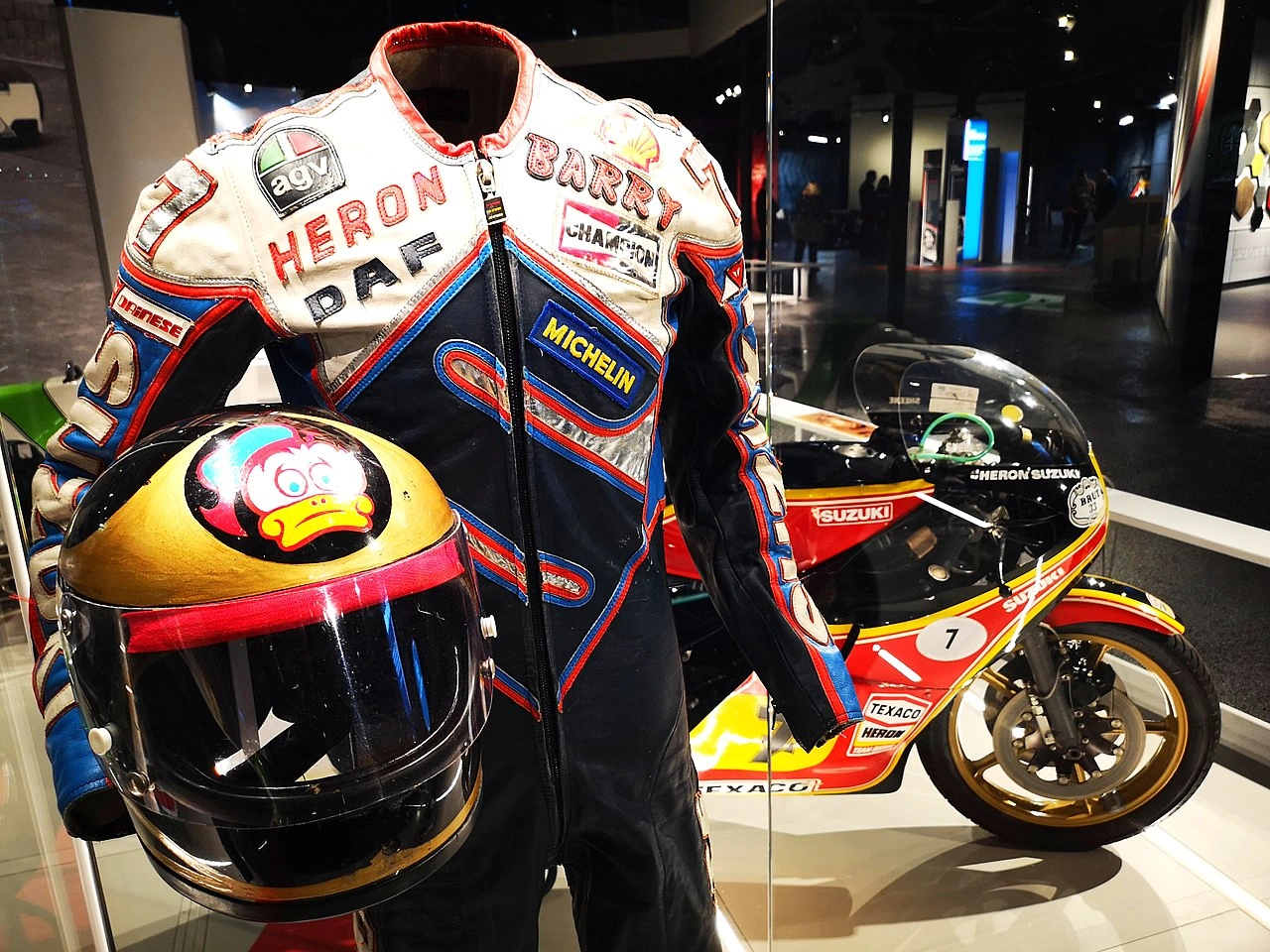
Wikimedia.org • 35mmMan • CC BY
What equipment should a motorcyclist use?
Motorcyclists should use appropriate protective equipment, commonly including a helmet, gloves, protective jacket and trousers, and footwear that protects the feet and ankles.
Is a motorcycle helmet compulsory?
Helmet requirements depend on local law, although approved motorcycle helmets are compulsory in many countries. The helmet should fit correctly and be used in a way that preserves its protective function.
Why is protective motorcycle clothing important?
Protective clothing can reduce injuries caused by impact, abrasion and contact with the road surface. Purpose-designed motorcycle clothing may also include impact protectors for vulnerable parts of the body.
Why should motorcyclists wear gloves?
Gloves help protect the hands and wrists against abrasion, weather and impact and can also improve grip on the motorcycle controls.
Why are motorcycle boots important?
Suitable boots provide protection for the feet and ankles and can reduce injuries caused by impact, abrasion or the motorcycle falling onto the rider.
Does a motorcycle passenger need protective equipment?
Yes. Passengers are exposed to many of the same risks as riders and should use appropriate protective equipment. Local law may require the passenger to wear the same helmet and clothing as the rider.
What safety equipment must a motorcycle have?
A road-legal motorcycle normally requires functioning brakes, tyres, lights, reflectors, mirrors, a horn and other prescribed equipment. Exact technical requirements vary between countries and motorcycle categories.
Should motorcycle lights be checked before riding?
Yes. Check that the headlight, rear light, brake light and direction indicators work correctly where fitted or required. Motorcycle visibility is especially important because motorcycles can be difficult for other road users to detect.
Should motorcycle tyres be checked regularly?
Yes. Check tyre condition, tread and pressure regularly. Because motorcycles rely on two relatively small tyre contact areas, damaged or incorrectly inflated tyres can significantly affect stability, steering and braking.
Should motorcycle equipment be checked before every journey?
A brief check of the tyres, brakes, lights, controls, mirrors and general condition of the motorcycle can help identify problems before riding. Protective equipment should also be correctly fitted and in usable condition.
44. Rail track
A rail track is a pair of rails used to guide trams, trains or other rail vehicles. Tracks may run alongside a road, cross it or be embedded directly in the carriageway so that rail vehicles and other road users travel through the same area.
Road users should take particular care around tracks because rail vehicles cannot steer around obstacles and require considerable distance to stop. Drivers, cyclists and pedestrians must follow the applicable priority rules, traffic lights, warning signs and crossing rules and must avoid unnecessarily obstructing the tracks.

Wikimedia.org • Fifo • CC BY-SA
What is a track?
A track consists of rails that guide trams, trains or other rail vehicles. Tracks may be separated from ordinary traffic or incorporated into a road.
Can tram tracks run along an ordinary road?
Yes. Tram tracks may be embedded in the carriageway and share part of the road with other traffic, depending on the local road layout and traffic rules.
Who has priority when a road crosses tram tracks?
The applicable priority rules vary between countries, but rail vehicles commonly receive special priority because they cannot leave their tracks. Always obey traffic lights, signs and local rules.
Can you drive on tram tracks?
This depends on the road layout and local regulations. Tracks incorporated into an ordinary traffic lane may sometimes be used by other vehicles, while reserved tram tracks or separate railway tracks may not.
Can you stop or park on railway or tram tracks?
You should never stop or park where your vehicle would obstruct a rail vehicle. Local traffic law may specifically prohibit stopping or parking on or close to tracks.
Why are tracks dangerous for cyclists and motorcyclists?
Wheels can slip on wet rails or become trapped in the groove beside a rail. Riders should cross tracks carefully and, where possible, at an angle that reduces the risk of a wheel following the rail groove.
Should you follow a tram closely?
No. Maintain sufficient distance so that you can react safely if the tram stops, passengers enter the roadway or traffic conditions change.
Can pedestrians cross tram tracks?
Yes, where crossing is permitted, but pedestrians should carefully check for approaching rail vehicles and obey pedestrian lights and crossing restrictions.
Is a tram track the same as a railway level crossing?
No. Tram tracks can be incorporated directly into a street or carriageway. A railway level crossing is a specific place where a road or path crosses railway tracks, usually with dedicated warning signs or signals.
What should you do if traffic stops while you are crossing tracks?
Do not enter a track crossing unless there is enough space to clear it completely. Never deliberately stop where a tram or train could be blocked.
45. Caravan
A caravan is a towable trailer designed to provide temporary living accommodation while travelling or camping. It commonly contains sleeping space and may also include cooking, seating, storage, washing or toilet facilities.
When towing a caravan, drivers should make sure it is correctly coupled, safely loaded and within the permitted towing and weight limits. A caravan changes the vehicle combination's length, weight, handling and stopping distance.

Wikimedia.org • Travelarz • CC BY-SA
What is a caravan?
A caravan is a trailer designed to be towed by another vehicle and used as temporary accommodation while travelling or camping.
Is a caravan a trailer?
Yes. A towable caravan is a type of trailer and is therefore subject to the applicable rules for trailers as well as any specific rules concerning caravans.
What should you check before towing a caravan?
Check that the caravan is properly coupled, correctly loaded and secured and that the towing vehicle, trailer and driver comply with the applicable weight, equipment and driving-licence requirements.
46. Trailer
A trailer is a vehicle designed to be pulled by another vehicle rather than move under its own power. Trailers are used to transport goods, equipment, boats, caravans or other loads and can vary greatly in size and weight.
Drivers towing a trailer should make sure it is correctly coupled, properly loaded and suitable for the towing vehicle. The trailer can increase the combination's length, weight, stopping distance and space required for turning.

Wikimedia.org • Donald Trung • CC BY-SA
What is a trailer?
A trailer is a vehicle designed to be pulled by another vehicle rather than propelled by its own motor.
What can trailers be used for?
Trailers can transport goods, equipment, vehicles, boats or other loads and can also include caravans designed for accommodation.
What should you check before towing a trailer?
Check that the trailer is properly coupled, correctly loaded and secured and that the towing vehicle, trailer and driver meet the applicable weight, equipment and licensing requirements.
47. Tow hitch
A tow hitch, also called a trailer hitch or towing coupling, is a device fitted to a vehicle so that a trailer, caravan or other towable vehicle can be securely connected to it. Passenger cars commonly use a tow ball, while heavier vehicles may use other types of mechanical coupling.
The tow hitch and towing vehicle must be suitable for the trailer and the loads involved. Drivers must respect the vehicle's approved towing capacity, the coupling limits, trailer mass and any applicable driving-licence, braking and safety requirements.

Wikimedia.org • Tony Webster • CC BY
What is a tow hitch?
A tow hitch is a mechanical coupling fitted to a vehicle so that a trailer, caravan or other towable vehicle can be attached.
What is a tow ball?
A tow ball is the ball-shaped part of a common passenger-car towing system onto which the trailer coupling is secured.
Can every car have a tow hitch?
No. The vehicle must be approved or technically suitable for the coupling and intended towing load. Some vehicles have limited or no approved towing capacity.
Does fitting a tow hitch automatically mean you may tow any trailer?
No. You must respect the towing vehicle's approved towing capacity, the hitch rating, trailer limits and the driving-licence rules applying to the combination.
What is the maximum load on a tow hitch?
The permitted load depends on the vehicle and coupling. The coupling normally has specified maximum towing and vertical-load ratings that must not be exceeded.
What is nose weight?
Nose weight is the downward vertical force that a trailer applies to the towing vehicle through the coupling. It must remain within the limits specified for the vehicle, hitch and trailer.
Can a tow hitch be removable?
Yes. Tow hitches may be fixed, detachable or retractable. Detachable systems must be correctly installed and securely locked before towing.
Can a tow hitch be used for a bicycle carrier?
Yes, if the hitch and carrier are designed for that purpose. The permitted vertical load and vehicle manufacturer's restrictions must still be respected.
Does a trailer need a secondary safety connection?
Depending on the trailer's braking system and local law, a safety cable, chain or breakaway system may be required in addition to the main coupling.
What should you check before towing?
Check that the coupling is fully engaged and locked, the safety connection is correctly attached, the electrical connector works and the trailer lights and brakes operate correctly where required.
48. Fire truck
A fire truck is an emergency vehicle used by the fire and rescue services to transport firefighters, firefighting equipment, rescue equipment or water to fires, collisions and other emergencies. Different types of fire trucks may be designed for firefighting, rescue operations, aerial access or other specialised tasks.
During an emergency response, a fire truck may use warning lights and a siren and may receive priority or exemptions from certain traffic rules. Other road users must follow the local rules for emergency vehicles, make sufficient space and avoid obstructing their passage.
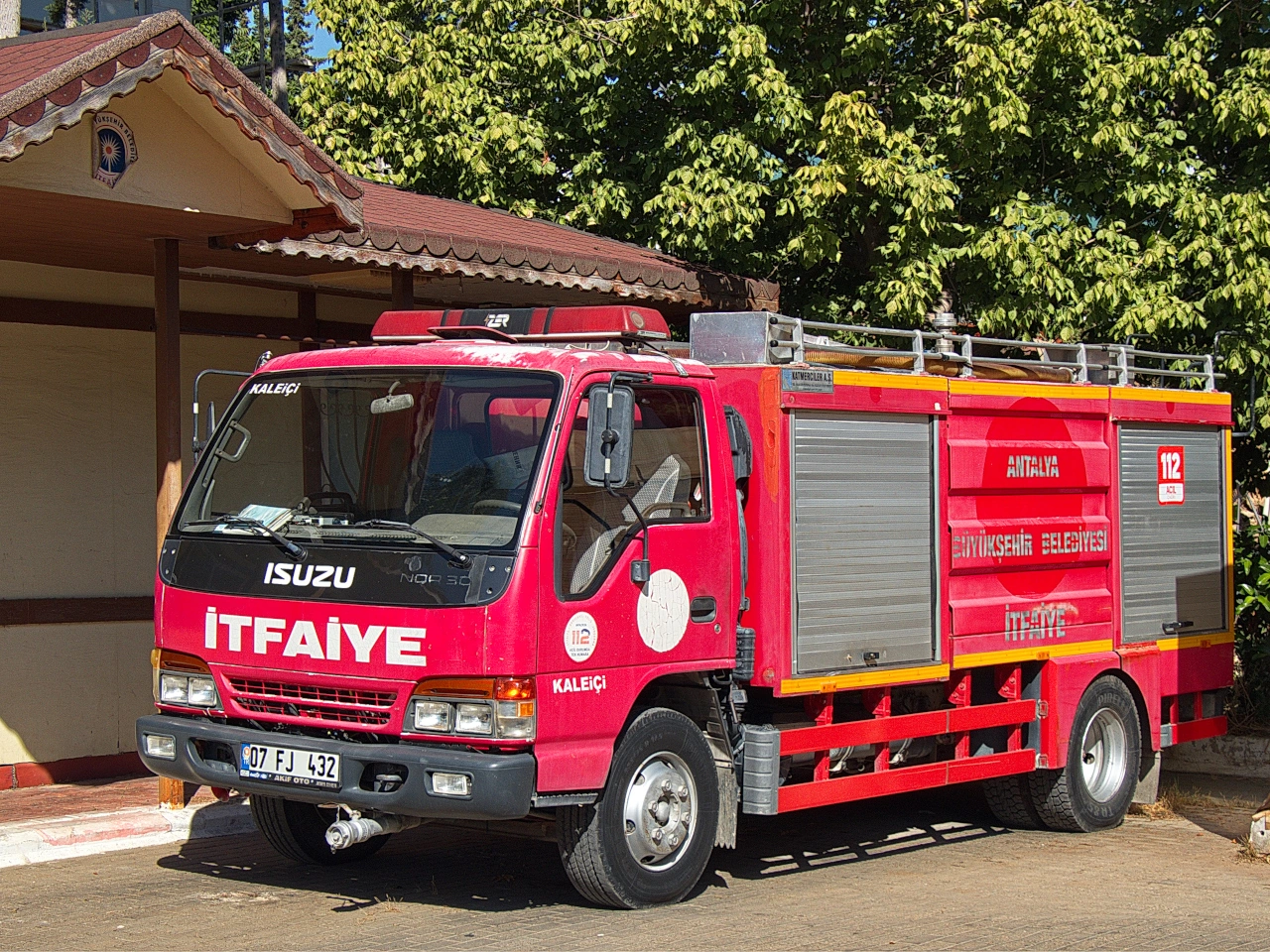
Wikimedia.org • Joe Wallace • CC BY-SA
What is a fire truck?
A fire truck is an emergency vehicle used by firefighters to respond to fires, collisions, rescues and other emergencies. It may carry firefighters, water, ladders and specialised rescue equipment.
When does a fire truck have priority?
This depends on the local traffic laws and emergency signals being used. Fire trucks responding to urgent incidents commonly use flashing warning lights and a siren to indicate that other road users must make way.
What should you do when a fire truck approaches?
Make sufficient space and allow it to pass. Slow down or stop where necessary, but avoid sudden manoeuvres that could endanger other road users or block the emergency vehicle.
Should you enter an intersection to make way for a fire truck?
Do not create another dangerous situation. Make room in a safe and controlled manner and follow any directions given by police, firefighters or other authorised personnel.
Can a fire truck pass a red traffic light?
Emergency vehicles may be permitted to pass a red light during an urgent response under special legal conditions. The precise rules and precautions required vary between countries.
Can a fire truck exceed the speed limit?
Many countries allow emergency vehicles to depart from certain speed restrictions while carrying out an urgent mission. Emergency drivers must nevertheless take appropriate precautions and comply with the applicable emergency-driving rules.
Can a fire truck use lanes that ordinary traffic cannot use?
Emergency vehicles may sometimes use emergency lanes, restricted lanes or other parts of the road during urgent missions when local law permits it.
Can you follow a fire truck through traffic?
You should not follow closely or use the path created for the fire truck to bypass traffic. Maintain a safe distance and continue to obey the normal traffic rules.
Do fire trucks always use their sirens?
No. Warning lights and sirens are generally used according to the urgency of the mission and local law. A fire-service vehicle travelling on a non-urgent assignment may operate without emergency signals.
What should you do near a stationary fire truck?
Reduce speed and remain alert. Firefighters, hoses, equipment or other emergency personnel may be on or near the roadway, and temporary traffic restrictions may be in place.
49. Siren
A siren is a loud warning device used to attract attention and warn people that an emergency or priority vehicle is approaching. Sirens are commonly fitted to vehicles such as ambulances, fire engines and police vehicles and may produce alternating or changing tones so they can be recognised quickly.
When an emergency vehicle approaches with its siren operating, road users should remain alert, identify where the vehicle is coming from and safely make room for it to pass. The exact priority rules and permitted use of sirens vary between countries.

Wikimedia.org • David R. Tribble • CC BY-SA
What is a siren?
A siren is a powerful audible warning device used primarily by emergency or priority vehicles to alert other road users of their approach.
Which vehicles commonly use sirens?
Sirens are commonly used by ambulances, fire engines, police vehicles and other authorised emergency vehicles.
What should you do when you hear an emergency siren?
Stay alert, determine where the emergency vehicle is approaching from and make room for it to pass safely according to the traffic rules of the country.
50. Convoy
A convoy is a group of vehicles travelling together as an organised group, usually following the same route and destination. Convoys may consist of ordinary vehicles, military vehicles, exceptional transports or vehicles participating in an organised journey.
Drivers travelling in a convoy should maintain a safe distance, follow the applicable traffic rules and avoid obstructing other traffic. Being part of a convoy does not automatically give vehicles special priority unless specific laws, escorts or traffic-control measures apply.
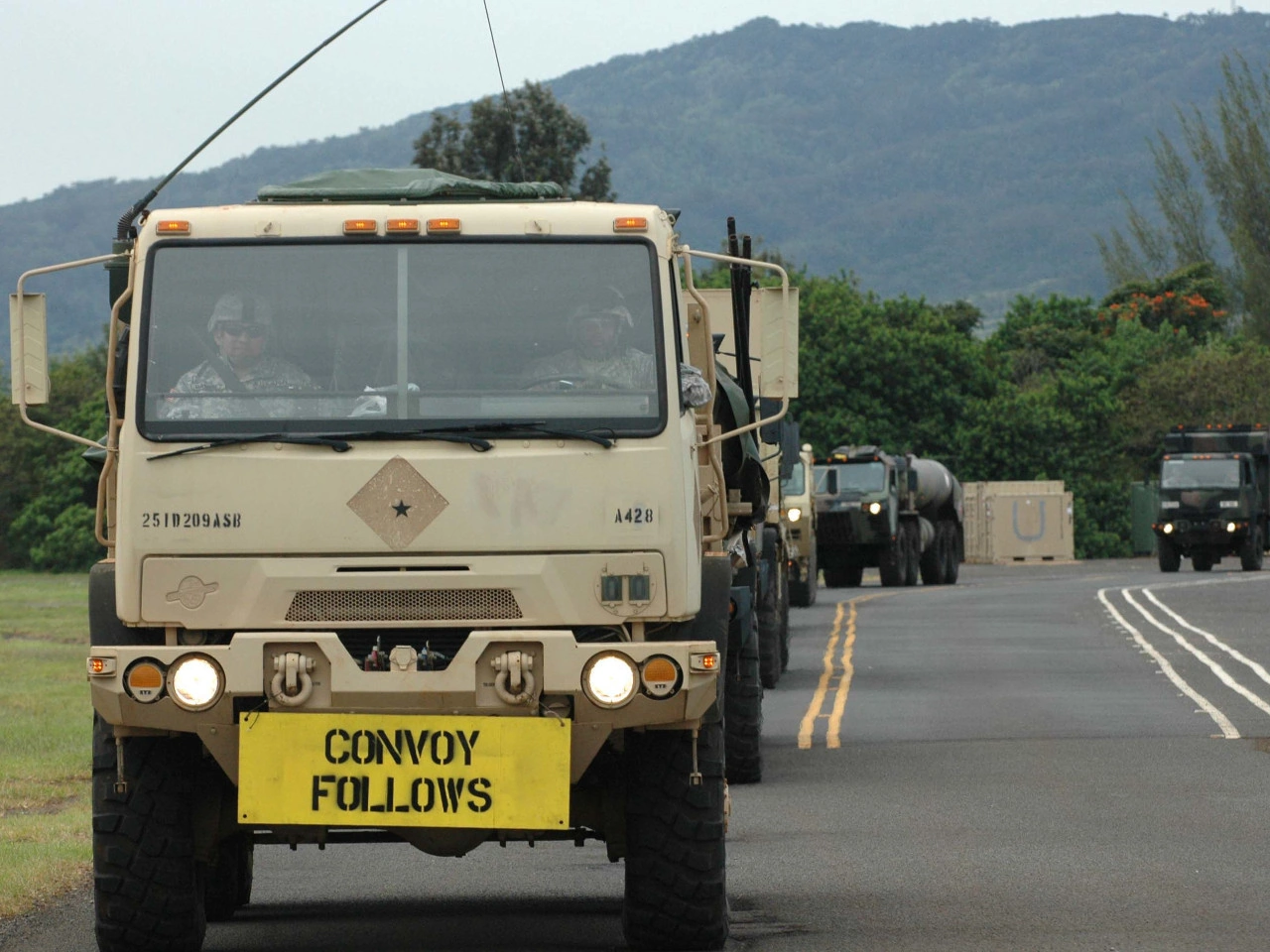
Wikimedia.org • The U.S. Army • CC0
What is a convoy?
A convoy is an organised group of vehicles travelling together along the same route.
Do vehicles in a convoy automatically have priority?
No. An ordinary convoy does not automatically have priority over other traffic. Special rules may apply to military convoys, exceptional transports or officially escorted groups.
Should vehicles in a convoy maintain a safe distance?
Yes. Drivers should maintain sufficient distance from the vehicle ahead so they can react safely and so that other traffic can interact with the convoy where permitted.