

Traffic signsTurkey
 Traffic rules
 Turkey
126. GPS
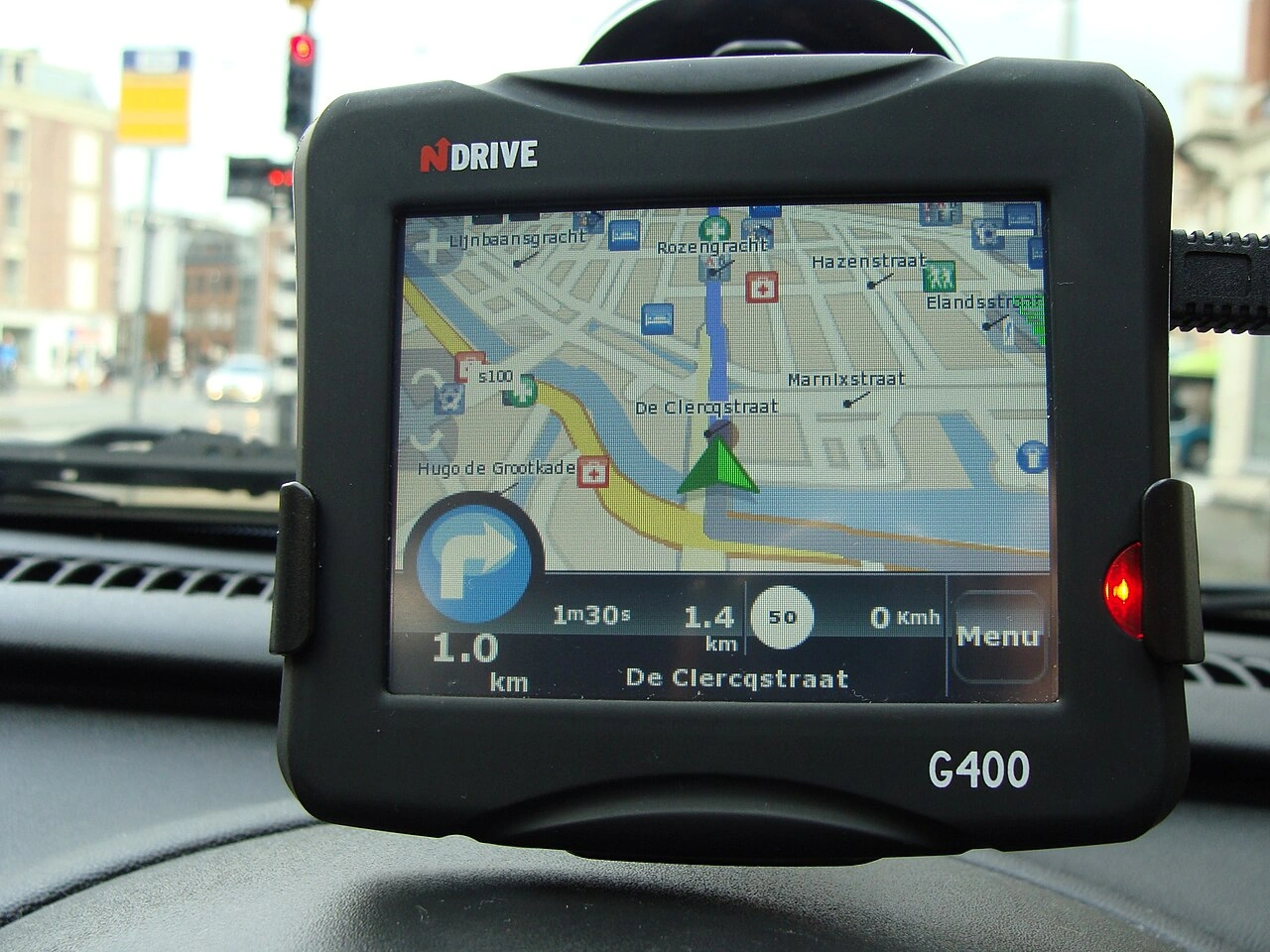
GPS (Global Positioning System) is a satellite-based positioning and navigation system that allows a compatible device to determine its location. In vehicles, GPS navigation can combine positioning information with digital maps to calculate routes and provide visual or spoken directions.
Drivers should preferably set their destination before starting the journey and avoid unnecessary interaction with the navigation system while driving. GPS directions are advisory and should never be followed when they conflict with traffic signs, road rules or actual road conditions.
Wikimedia.org • ines s. • CC BY
What does GPS do in a vehicle?
A GPS navigation system determines the vehicle's position and uses digital map information to calculate routes and provide directions towards a destination.
Should you always follow GPS directions?
No. Traffic signs, signals, road closures and actual road conditions take priority over navigation instructions. A driver remains responsible for choosing a legal and safe route.
Should you program a GPS while driving?
It is safer to enter the destination and adjust the route before starting the journey. If significant changes are needed, stop in a safe and permitted place rather than becoming distracted while driving.

127. Brake
A brake is a vehicle system used to reduce speed, bring the vehicle to a stop or keep it stationary. Most road vehicles use friction brakes at the wheels, while electric and hybrid vehicles may also use regenerative braking to recover energy while slowing down.
The braking system must remain in good working condition. Worn brake components, overheating, mechanical faults or reduced tyre grip can increase braking distance and reduce the driver's ability to control the vehicle safely.

Wikimedia.org • Andrea Volpato • CC BY-SA
What is the purpose of a vehicle's brakes?
The brakes allow the driver to reduce speed and stop the vehicle in a controlled manner. A separate parking brake is normally used to keep the vehicle stationary after it has stopped.
What are signs of a possible brake problem?
Warning signs can include reduced braking performance, unusual noises, vibration, a soft or unusually hard brake pedal, pulling to one side or a brake-system warning light. A suspected brake problem should be inspected promptly.
Can brakes become less effective when they overheat?
Yes. Prolonged or repeated heavy braking can cause brake fade, reducing braking effectiveness. On long descents, appropriate gear selection and engine braking can help reduce excessive use of the service brakes.
128. Handbrake
A handbrake, commonly called the parking brake, is a braking system used to keep a stationary vehicle from moving after it has been parked. Traditional systems use a hand-operated lever, while modern vehicles may use a foot-operated or electronic parking brake.
The parking brake should be applied securely whenever the vehicle is parked, particularly on a slope. It operates separately from the normal service brake so that the vehicle can remain stationary even when the driver is absent.
Wikimedia.org • CC BY-SA
What is a handbrake used for?
The handbrake or parking brake keeps a stationary vehicle from rolling after it has been parked. It is particularly important when parking on a slope.
Is every handbrake operated by a hand lever?
No. Traditional parking brakes use a hand-operated lever, but some vehicles use a foot pedal or an electronic switch. These systems perform the same basic parking-brake function.
Should you use the handbrake every time you park?
Yes. The parking brake should normally be applied whenever the vehicle is parked so that it remains securely stationary. Selecting an appropriate gear or transmission position provides additional security but does not replace the parking brake.
129. Brake fluid
Brake fluid is a hydraulic fluid used in many vehicle braking systems to transmit force from the brake pedal through the hydraulic system to the brakes at the wheels. It must withstand high temperatures and maintain suitable hydraulic properties for reliable braking.
The brake-fluid level and condition should be checked according to the vehicle manufacturer's instructions. Only the specified type of brake fluid should be used, because incompatible or contaminated fluid can impair braking-system performance.

Wikimedia.org • Frettie • CC BY
What does brake fluid do?
Brake fluid transmits hydraulic pressure from the driver's brake input to the braking mechanisms at the wheels, allowing the vehicle to slow or stop.
Can you use any type of brake fluid?
No. The correct specification depends on the vehicle and braking system. Drivers should use only the brake fluid specified by the vehicle manufacturer and should not mix incompatible types.
What does a low brake-fluid level mean?
A low level can indicate brake-system wear, a leak or another problem. If the level is below the specified minimum or a brake warning light appears, the braking system should be checked promptly.
130. Tyres
Tyres are the rubber components fitted around a vehicle's wheels that provide contact with the road. They transmit braking, acceleration and steering forces and play an important role in vehicle stability and road holding.
Tyres should have sufficient tread depth, correct pressure and no serious damage or excessive wear. Drivers should use tyres that are suitable for the vehicle and regularly check their condition, particularly before long journeys or driving in difficult weather.

Wikimedia.org • Ambiguous • CC BY
Why are tyres important for road safety?
Tyres are the vehicle's contact with the road and transmit the forces required for steering, acceleration and braking. Their condition and available grip therefore directly affect vehicle control.
What should you check on your tyres?
Regularly check tyre pressure, tread depth and general condition. Look for excessive or uneven wear, cuts, cracks, bulges or other damage and replace tyres when they are no longer safe or legally compliant.
Should tyres on the same axle match?
Requirements vary between countries, but tyres fitted to the same axle should be compatible in dimensions, construction and performance. National rules may impose specific matching requirements.
131. Tyre code
A tyre code is the series of letters and numbers marked on a tyre's sidewall that identifies important characteristics such as tyre width, aspect ratio, construction, wheel diameter, load capacity and speed rating. A typical example is 205/55 R16 91V.
Drivers should use tyres whose specifications are suitable for the vehicle. The required tyre sizes and ratings can normally be found in the vehicle handbook, certificate of conformity or other manufacturer information.

Wikimedia.org • F l a n k e r • CC BY
What does a tyre code such as 205/55 R16 mean?
205 indicates the nominal tyre width in millimetres, 55 is the aspect ratio between sidewall height and tyre width, R indicates radial construction and 16 indicates the diameter of the wheel rim in inches.
What do numbers and letters such as 91V mean on a tyre?
The number is the load index, which identifies the maximum load the tyre is designed to carry under specified conditions. The letter is the speed rating or speed-category symbol, which indicates the tyre's approved speed capability.
What other markings can appear on a tyre?
Tyres can carry additional markings indicating approval, manufacturer information, production date, suitability for winter conditions, reinforced construction or other technical characteristics. The exact markings depend on the tyre type and applicable standards.
132. Winter tyres
Winter tyres are tyres designed to provide improved traction and braking performance in cold weather, snow and other winter conditions. Their tread pattern and rubber compound are designed to remain effective at lower temperatures and provide better grip than ordinary summer tyres in appropriate winter conditions.
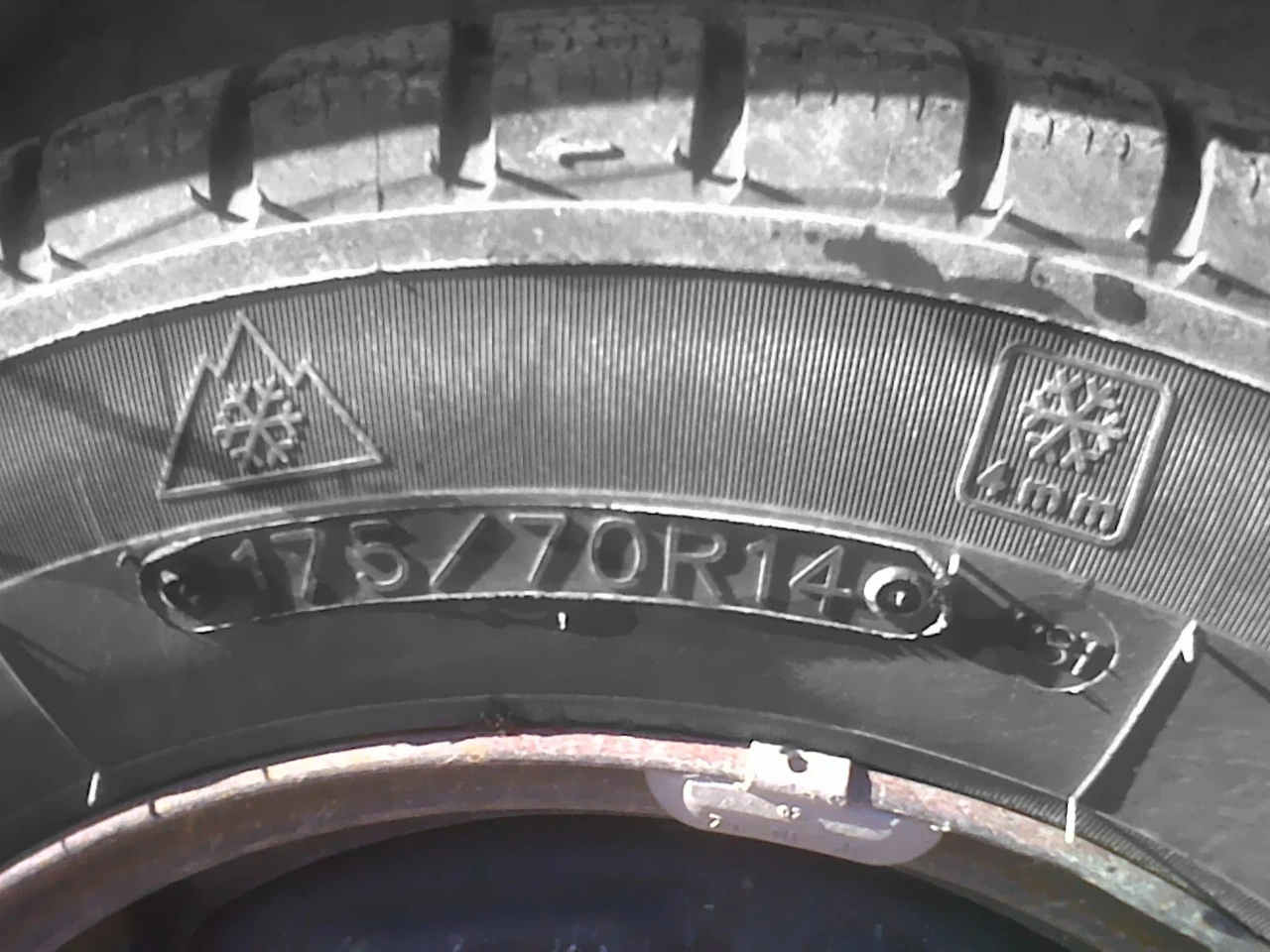
Winter tyres can be identified by markings on the sidewall. The 3PMSF symbol, showing a snowflake inside a three-peaked mountain, indicates that the tyre has met specified performance requirements for severe snow conditions.
Wikimedia.org • A7N8X • CC BY-SA
What is the difference between winter and summer tyres?
Winter tyres use tread patterns and rubber compounds designed to provide better performance in cold temperatures, snow and other winter conditions. Summer tyres are optimised primarily for warmer conditions.
What does the 3PMSF symbol mean?
The Three-Peak Mountain Snowflake symbol identifies a tyre that has met specified performance requirements for use in severe snow conditions. It provides a more specific indication of tested snow performance than an M+S marking alone.
Are winter tyres compulsory everywhere?
No. Some countries require winter tyres during particular months or whenever winter conditions occur, while others have no general requirement. Drivers travelling abroad should check the rules of every country on their route.
133. Tyre pressure
Tyre pressure is the amount of air pressure inside a vehicle's tyre. Correct tyre pressure helps the tyre maintain its intended shape and contact with the road and is important for handling, braking, tyre wear and fuel consumption.
Tyre pressure should be checked regularly and adjusted to the pressure specified by the vehicle manufacturer. The recommended pressure can vary according to the vehicle, tyre size and load, and the front and rear tyres may require different pressures.
Wikimedia.org • JEG14 • CC0
Why is correct tyre pressure important?
Correct tyre pressure helps provide predictable handling, braking and tyre wear. Incorrect pressure can reduce performance, increase tyre wear and increase fuel consumption.
How do you know the correct tyre pressure?
Use the pressure specified by the vehicle manufacturer rather than the maximum pressure marked on the tyre. The recommended values can normally be found in the vehicle handbook or on a vehicle information label.
Should tyre pressure be checked regularly?
Yes. Tyres gradually lose air over time, so their pressure should be checked regularly and before demanding or long journeys. The pressure should be adjusted to the manufacturer's recommended value.
134. Snow chains
Snow chains are traction devices fitted around vehicle tyres to improve grip on roads covered with snow or ice. They are especially useful on steep or mountainous roads where ordinary tyres may not provide sufficient traction.
Snow chains should be fitted according to the vehicle and chain manufacturer's instructions, normally on the driven wheels. They should be removed when they are no longer needed because driving with chains on clear roads can damage the tyres, chains and road surface.

Wikimedia.org • Domitori • CC BY-SA
What are snow chains used for?
Snow chains increase traction when driving on roads covered with snow or ice. They can help a vehicle accelerate, steer and brake where ordinary tyre grip is insufficient.
Which tyres should snow chains be fitted to?
Snow chains are normally fitted to the driven wheels, but the correct arrangement depends on the vehicle and its drivetrain. Drivers should follow the vehicle and chain manufacturer's instructions.
Are snow chains compulsory everywhere in winter?
No. Requirements vary between countries and roads. Some countries require chains to be carried during certain periods or fitted when indicated by traffic signs or winter conditions, while others impose no general requirement.
135. Bicycle tyre
A bicycle tyre is the rubber tyre fitted around a bicycle wheel and provides contact between the bicycle and the road or other riding surface. Its tread, pressure, width and construction affect grip, rolling resistance, comfort and handling.
Bicycle tyres should be properly inflated and regularly checked for wear, cuts, cracks, embedded objects or other damage. The appropriate tyre type and pressure depend on the bicycle, rider, load and riding conditions.

Wikimedia.org • Ivan Radic • CC BY
Why are bicycle tyres important for safety?
Bicycle tyres provide the grip needed for steering and braking and help absorb irregularities in the road surface. Worn, damaged or incorrectly inflated tyres can reduce control and increase the risk of a puncture or loss of grip.
What should you check on a bicycle tyre?
Check the tyre for adequate pressure, excessive tread wear, cuts, cracks, bulges and objects embedded in the tread. The tyre should also be correctly seated on the rim.
Do all bicycles use the same type of tyre?
No. Tyre width, diameter, tread and construction vary according to the bicycle and its intended use. Road bicycles commonly use relatively narrow tyres, while mountain bikes generally use wider tyres with more pronounced tread.
136. Continuous track
Continuous track is a vehicle propulsion system in which a continuous belt or chain runs around a series of wheels or rollers instead of the vehicle travelling on conventional road wheels. It is commonly used on construction machinery, agricultural vehicles, military vehicles and other machines that need good traction on soft or uneven ground.
Continuous tracks spread the vehicle's weight over a relatively large contact area, which can improve traction and reduce ground pressure. Tracks may be made from metal, rubber or a combination of materials, and their suitability for use on public roads depends on the vehicle and applicable regulations.

Wikimedia.org • Ingolfson • CC0
What is a continuous track used for?
Continuous tracks provide traction and distribute a vehicle's weight over a larger contact area than conventional wheels. They are particularly useful on mud, snow, loose soil, construction sites and other difficult terrain.
What are continuous tracks made from?
Tracks can consist of linked metal sections, continuous rubber belts or systems combining metal and rubber components. The design depends on the vehicle and its intended operating conditions.
Can tracked vehicles travel on normal roads?
Some tracked vehicles can use public roads when they meet the applicable vehicle, registration and road-use requirements. Restrictions may apply because certain track designs can damage road surfaces or because the vehicle has unusual dimensions, weight or speed characteristics.
137. Gross Vehicle Weight
Gross Vehicle Weight (GVW) is the actual total weight of a vehicle at a particular moment, including the vehicle itself, driver, passengers, fuel, luggage and other cargo. It changes as people or goods are added or removed.
GVW should not be confused with Gross Vehicle Weight Rating (GVWR) or Maximum Authorised Mass (MAM), which is the maximum permitted total weight specified for the vehicle. The actual gross vehicle weight must not exceed that permitted maximum.
What does Gross Vehicle Weight include?
Gross Vehicle Weight includes the weight of the vehicle itself together with the driver, passengers, fuel, luggage, cargo and other items being carried at that moment.
What is the difference between GVW and GVWR?
GVW is the vehicle's actual weight at a particular moment. GVWR is the maximum total weight the vehicle is designed or legally permitted to have when loaded. The actual GVW must remain within the applicable maximum.
Why is Gross Vehicle Weight important?
Vehicle weight affects braking, handling, tyre and axle loading and legal weight limits. Overloading can reduce safety and may also cause the vehicle to exceed permitted axle or total-mass limits.
138. Gross Vehicle Weight Rating
Gross Vehicle Weight Rating (GVWR) is the maximum total weight at which a vehicle is designed or approved to operate when fully loaded. It includes the vehicle itself together with the driver, passengers, fuel, luggage, cargo and other equipment carried by the vehicle.
GVWR is a fixed maximum value and should not be confused with Gross Vehicle Weight (GVW), which is the vehicle's actual weight at a particular moment. The actual loaded weight of the vehicle must not exceed its permitted maximum.
What does GVWR include?
GVWR represents the permitted maximum total weight of the loaded vehicle, including the vehicle itself, driver, passengers, fuel, luggage, cargo and other equipment carried by the vehicle.
What is the difference between GVWR and GVW?
GVWR is the maximum permitted or rated weight of the vehicle, while GVW is its actual weight at a particular moment. The GVW changes as passengers or cargo are added or removed, while the GVWR remains a fixed limit.
Why is GVWR important?
GVWR determines how heavily a vehicle may be loaded and can affect driving-licence categories, vehicle classification and other legal requirements. Exceeding the permitted maximum can also adversely affect braking, handling, tyres and other vehicle components.
139. Cargo
Cargo is the goods, materials, equipment or other items carried by a vehicle or trailer. Cargo can range from personal luggage and bicycles to commercial goods, machinery or bulk materials.
Cargo must be positioned and secured so that it cannot shift, fall from the vehicle, interfere with the driver's visibility or affect vehicle stability. The total load must also remain within the vehicle's permitted weight and axle-load limits.
Why must cargo be secured?
Unsecured cargo can move during acceleration, braking or cornering and can affect vehicle stability or fall onto the road. Proper securing protects the occupants, other road users and the cargo itself.
Can cargo affect vehicle handling?
Yes. Heavy or poorly distributed cargo can change the vehicle's centre of gravity, braking distance, steering and stability. Loads should therefore be distributed appropriately and kept within the vehicle's permitted limits.
Can cargo extend beyond a vehicle?
In some circumstances it can, but national rules normally limit how far a load may project beyond the front, rear or sides of a vehicle and may require projecting loads to be specially marked.
140. Car body
A car body, also called bodywork, is the outer structure of a car that surrounds the passenger and luggage compartments and gives the vehicle its shape. It includes components such as the roof, doors, bonnet, boot lid, wings, body panels and, on many modern cars, load-bearing structural sections.
The car body helps protect occupants and supports components such as doors, windows, lights and bumpers. Damage, corrosion or poorly repaired structural sections can reduce the vehicle's safety and should be repaired correctly.

Wikimedia.org • Cjp24 • CC BY-SA
What is the car body?
The car body is the structure and exterior bodywork surrounding the vehicle's occupants and cargo areas. It includes visible panels as well as structural sections that can contribute to the strength of the vehicle.
Is the car body the same as the chassis?
Not always. In some vehicles the body is mounted on a separate chassis or frame. Most modern passenger cars use a self-supporting body in which much of the body structure also performs the structural function traditionally provided by a separate chassis.
Why is the condition of the car body important?
The body helps protect occupants and supports many vehicle components. Serious corrosion, deformation, loose panels or structural damage can reduce crash protection or create hazards for other road users.
141. Trunk
A trunk, also called a boot or luggage compartment, is the enclosed storage area of a car used for carrying luggage, tools, shopping and other cargo. It is usually located at the rear of the vehicle, although some vehicles have a front storage compartment.
Items carried in the trunk should be positioned securely so that they cannot shift dangerously during braking, acceleration or cornering. Heavy objects should be placed carefully and the vehicle's permitted load and axle limits must not be exceeded.

Wikimedia.org • Atomic Taco • CC BY-SA
What is a car trunk used for?
A trunk is primarily used for carrying luggage and other cargo separately from the passenger compartment. Its size and location depend on the vehicle's design.
Should items in the trunk be secured?
Yes. Heavy or loose objects can move during sudden braking, acceleration or cornering. Cargo should therefore be positioned and secured so that it cannot affect vehicle stability or cause injury.
Can you overload a car trunk?
No. The combined weight of the vehicle, occupants and cargo must remain within the vehicle's permitted total and axle-load limits. Excessive loading can adversely affect braking, steering and stability.
142. Roof rack
A roof rack is a load-carrying system attached to the roof of a vehicle. It can be used to transport items such as luggage, bicycles, skis, surfboards or a roof box when they cannot conveniently be carried inside the vehicle.
A roof rack and its cargo must be securely attached and must remain within the vehicle manufacturer's permitted roof-load limit. Roof-mounted loads raise the vehicle's centre of gravity and can affect handling, stability, fuel consumption and overall vehicle height.
Wikimedia.org • Matti Blume • CC BY-SA
What can be carried on a roof rack?
A suitable roof rack can carry items such as luggage boxes, bicycles, skis and other equipment, provided the rack and attachments are designed for the load and the vehicle's permitted roof-load limit is respected.
Does a roof rack affect vehicle handling?
Yes. Weight carried high on the vehicle raises its centre of gravity and can affect stability, particularly during cornering or sudden manoeuvres. Drivers should secure the load carefully and adapt their driving accordingly.
How do you know the maximum roof load?
Check the vehicle manufacturer's specifications and the limits of the roof rack itself. The permitted load can vary significantly between vehicles, and the lowest applicable limit should not be exceeded.
143. Windscreen
A windscreen, also called a windshield, is the transparent front window of a vehicle through which the driver views the road ahead. It also helps protect occupants from wind, rain, debris and other external elements.
The windscreen must provide the driver with a clear and sufficiently undistorted view. Cracks, chips, dirt, stickers or other objects can reduce visibility, particularly when they are located within the area swept by the windscreen wipers.
Wikimedia.org • Vcx • CC BY-SA
What is the purpose of a windscreen?
The windscreen allows the driver to see the road ahead while protecting vehicle occupants from wind, rain, insects, stones and other debris.
Can a cracked windscreen be dangerous?
Yes. Cracks, chips or deformation can interfere with the driver's view and may weaken the windscreen. Damage in the driver's main field of vision is particularly important and should be repaired or assessed promptly.
Why must windscreen wipers keep the glass clear?
Windscreen wipers remove rain, snow and dirt from the driver's viewing area. A clear windscreen is essential for maintaining adequate forward visibility in poor weather.
144. Emergency hammer
An emergency hammer is a safety tool designed to break certain vehicle windows when normal doors or exits cannot be used during an emergency. It is commonly found in buses, coaches and other passenger vehicles near windows designated as emergency exits.
An emergency hammer should only be used when evacuation through the normal exits is impossible or unsafe. The tool must remain accessible and, where provided for an emergency window, should be used according to the instructions displayed in the vehicle.

Wikimedia.org • Santeri Viinamäki • CC BY-SA
What is an emergency hammer used for?
An emergency hammer is used to break a suitable vehicle window so occupants can escape when normal doors or emergency exits cannot be opened.
Where are emergency hammers normally located?
In vehicles equipped with them, emergency hammers are normally mounted in an easily accessible position close to an emergency window or other designated escape point.
Can an emergency hammer break every vehicle window?
No. Vehicle windows can use different types of glazing, and not every window is designed to be broken as an emergency exit. Occupants should use designated emergency windows and follow the instructions provided in the vehicle.
145. Car battery
A car battery is an electrical energy-storage device that supplies power to a vehicle's electrical system. In conventional petrol and diesel cars, the 12-volt starter battery provides the high current needed to start the engine and supplies electrical equipment when the engine or charging system is not providing enough power.
Car batteries gradually lose charge and capacity with age and use. A weak battery can cause slow or unsuccessful starting, electrical problems or warning messages, and the replacement battery should have specifications suitable for the vehicle.
Wikimedia.org • Filipograf • CC BY-SA
What does a car battery do?
A car battery stores electrical energy, supplies the power required to start the engine and supports the vehicle's electrical and electronic systems when necessary.
What are signs of a weak car battery?
Possible signs include slow engine cranking, difficulty starting, dim or unstable electrical equipment and battery or charging-system warnings. Similar symptoms can also have other causes, so the charging system may need to be checked.
Can any replacement battery be fitted to a car?
No. The battery must have specifications and technology suitable for the vehicle. Cars equipped with start-stop systems, for example, may require AGM or EFB battery technology designed for repeated starting and charging cycles.
146. Traction battery
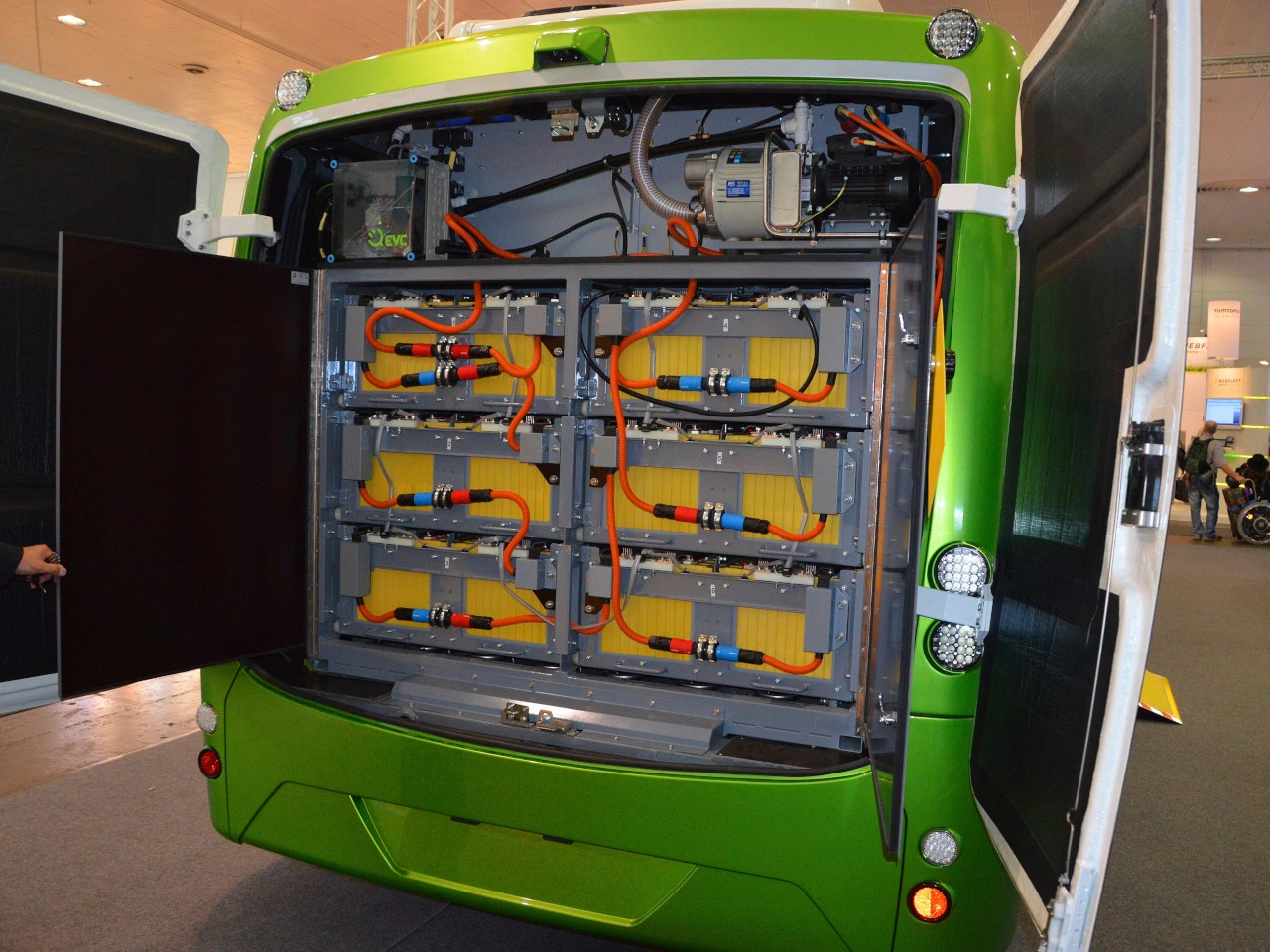
A traction battery is a rechargeable battery that stores electrical energy used to propel an electric or hybrid vehicle. It supplies power to one or more electric traction motors and is normally much larger and more powerful than the vehicle's conventional 12-volt starter battery.
Traction-battery capacity is commonly expressed in kilowatt-hours (kWh) and strongly influences an electric vehicle's driving range. Its performance and usable capacity can gradually decrease with age, charging cycles, temperature and use.
Wikimedia.org • Spielvogel • CC0
What does a traction battery do?
A traction battery stores electrical energy and supplies it to the electric motor or motors that propel the vehicle. In hybrid vehicles it works together with another power source, while in battery-electric vehicles it provides the main source of propulsion energy.
What is the difference between a traction battery and a 12-volt car battery?
The traction battery provides the large amount of electrical energy needed to propel the vehicle. The conventional 12-volt battery mainly supplies low-voltage systems and supports functions such as vehicle electronics, control systems and starting procedures.
What does traction-battery capacity mean?
Battery capacity indicates how much electrical energy the battery can store and is commonly expressed in kilowatt-hours (kWh). A larger usable capacity generally allows more electrical energy to be available for driving.
147. Suspension
Suspension is the system that connects a vehicle's wheels and axles to its body or chassis. It includes components such as springs, shock absorbers, control arms, joints and links that allow the wheels to move while helping keep the vehicle stable and comfortable.
The suspension helps maintain tyre contact with the road, absorbs bumps and contributes to steering, braking and vehicle stability. Worn or damaged suspension components can reduce handling and increase uneven tyre wear.
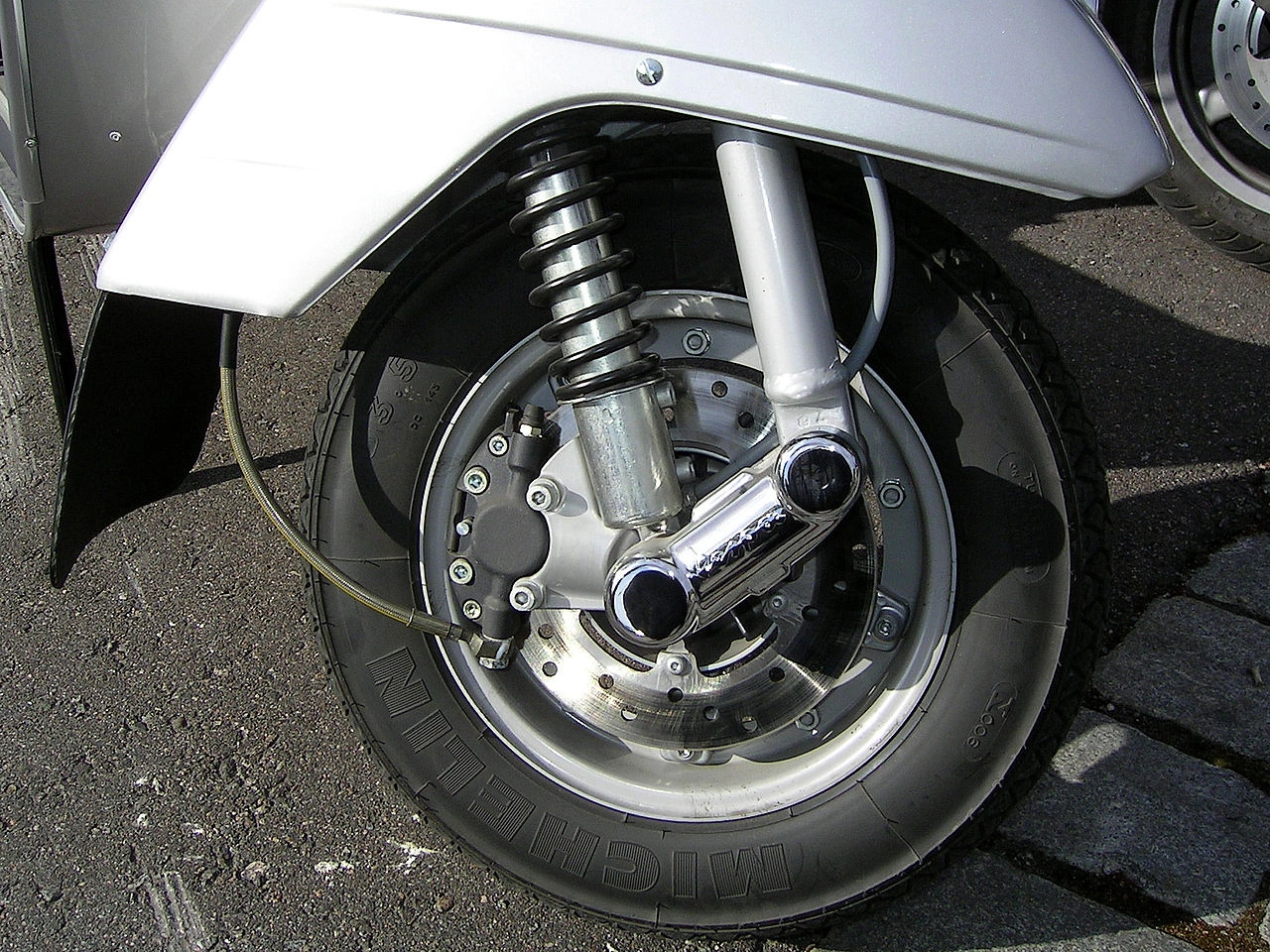
Wikimedia.org • Khaosaming • CC BY-SA
What does a vehicle suspension system do?
The suspension supports the vehicle, allows the wheels to move over uneven surfaces and helps keep the tyres in contact with the road while controlling body movement.
What components are part of the suspension?
Common suspension components include springs, shock absorbers or dampers, control arms, bushings, ball joints and other links connecting the wheels to the vehicle structure.
What are signs of worn suspension?
Possible signs include excessive bouncing, unusual noises, poor stability, uneven tyre wear, excessive body movement in bends or a vehicle that sits unevenly. These symptoms should be inspected because they can also have other causes.
148. Shock absorber
A shock absorber is a suspension component that controls the movement of a vehicle's springs and wheels. It reduces excessive bouncing after bumps and helps keep the tyres in consistent contact with the road.
Worn or damaged shock absorbers can reduce vehicle stability, increase body movement and negatively affect steering and braking behaviour. They should be inspected if the vehicle bounces excessively, handles poorly or shows signs of fluid leakage.

Wikimedia.org • Avsar Aras • CC BY-SA
What does a shock absorber do?
A shock absorber controls suspension movement by damping the repeated movement of the springs. This helps stabilise the vehicle and maintain tyre contact with the road.
What are signs of worn shock absorbers?
Possible signs include excessive bouncing, increased body movement, poor stability, unusual suspension noises, uneven tyre wear or visible fluid leakage from the shock absorber.
Are shock absorbers the same as springs?
No. Springs support the vehicle and allow the suspension to move over bumps, while shock absorbers control and damp that movement. The two components work together as part of the suspension system.
149. Spring
A spring is a suspension component that supports the vehicle's weight and allows the wheels to move vertically over bumps and uneven road surfaces. Common types include coil springs, leaf springs, torsion bars and air springs.
Springs absorb and store energy as the suspension moves, while shock absorbers control that movement. A damaged or broken spring can change the vehicle's ride height, handling and stability and should be repaired promptly.

Wikimedia.org • Qz10 • CC BY-SA
What does a suspension spring do?
A suspension spring supports the vehicle and allows the wheels to move over uneven surfaces while helping maintain the vehicle's normal ride height.
What types of suspension springs are used in vehicles?
Common designs include coil springs, leaf springs, torsion bars and air springs. The type used depends on the vehicle and suspension design.
What are signs of a damaged suspension spring?
Possible signs include an uneven ride height, unusual suspension noises, poor handling or a visibly cracked or broken spring. A suspected spring defect should be inspected promptly.
150. Exhaust
An exhaust system carries combustion gases away from a vehicle’s engine and releases them safely behind or beneath the vehicle. The exhaust system can include pipes, silencers or mufflers, catalytic converters, particulate filters and other emissions-control components.
A damaged or leaking exhaust can increase noise, allow harmful gases to escape in unintended locations and interfere with the vehicle's emissions-control system. Exhaust components should therefore remain securely attached and in good condition.

Wikimedia.org • Steevven1 • CC BY
What does a vehicle exhaust system do?
The exhaust system carries combustion gases away from the engine and directs them out of the vehicle. It can also reduce exhaust noise and use emissions-control equipment to reduce pollutants.
What are signs of an exhaust problem?
Possible signs include unusually loud exhaust noise, rattling, visible damage, unusual exhaust smells, warning lights or emissions problems. A suspected leak should be inspected promptly.
What is included in an exhaust system?
Depending on the vehicle, the system can include an exhaust manifold, pipes, silencers, catalytic converters, particulate filters, sensors and other emissions-control components.