


Traffic signsWorldwide
 Traffic rules
 Worldwide
451. Damage
Damage after a traffic accident can affect vehicles, road infrastructure or other property. Damage may be minor, such as scratches or dents, or serious enough to make a vehicle unsafe to drive. After an accident involving only material damage, drivers should make the scene safe, exchange the required information, document the circumstances and notify the insurer when necessary. A damaged vehicle should not be driven if faults involving lights, tyres, steering, brakes, windows or other safety-related parts make continued driving unsafe.

Wikimedia.org • FlyByFire • CC BY-SA
What is material damage in a traffic accident?
Material damage means damage to property, such as vehicles, road infrastructure or buildings, as distinct from bodily injury. A collision can involve both property damage and injuries; the term does not by itself mean that nobody was hurt.
🔗 wikifin.be • Belgian FSMA Wikifin, what to do after a collision
🔗 nhtsa.gov • US NHTSA, CAFE technical support document (2021), multi-vehicle crash usage
What should you do after an accident with only material damage?
Make the scene safe, exchange the required details, record the damage and circumstances and follow the applicable insurance and reporting rules.
🔗 wikifin.be • Belgian FSMA Wikifin, what to do after a collision
🔗 nhtsa.gov • US NHTSA, CAFE technical support document (2021), multi-vehicle crash usage
Should you take photos of accident damage?
Photographs can help document damage and circumstances if they can be taken safely. Prioritise people, emergency assistance and protection from traffic. Record vehicles, signs and surroundings from a safe position rather than entering live traffic or creating another hazard.
🔗 wikifin.be • Belgian FSMA Wikifin, what to do after a collision
🔗 nhtsa.gov • US NHTSA, CAFE technical support document (2021), multi-vehicle crash usage

452. Breakdown
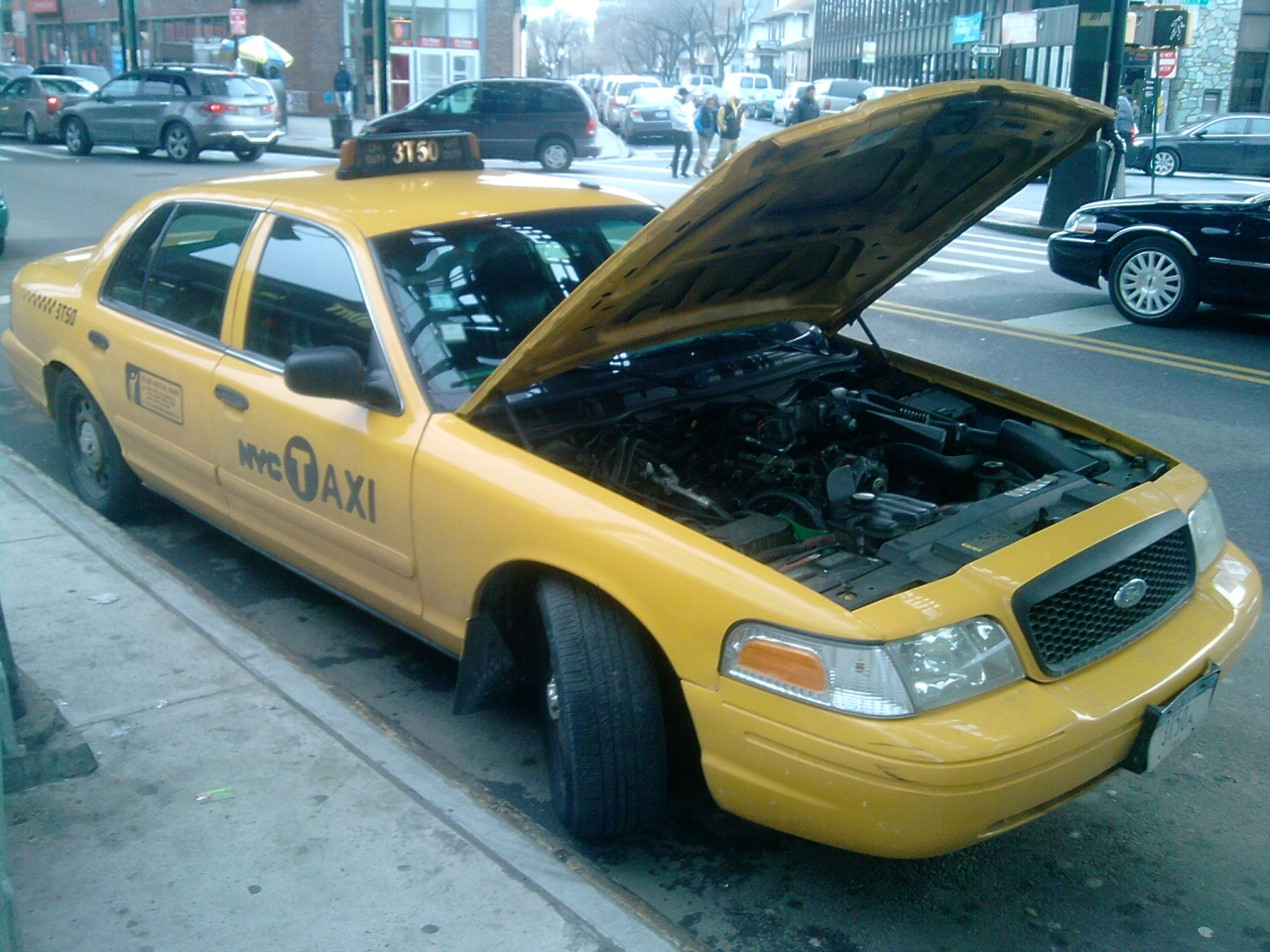
A breakdown occurs when a vehicle can no longer continue safely because of a mechanical, electrical or other technical problem. If possible, move the vehicle away from moving traffic, switch on the hazard warning lights and warn other road users. On high-speed roads, leave the vehicle only when it is safe to do so and wait in a protected place away from traffic. Contact roadside assistance or emergency services when necessary, and do not attempt repairs that put you or others in danger.
Wikimedia.org • Cookie Nguyen • CC BY-SA
What should you do first if your vehicle breaks down?
If possible, move the vehicle to a safe place away from moving traffic, switch on the hazard warning lights and warn approaching road users.
🔗 wikifin.be • Belgian FSMA Wikifin, what to do after a collision
🔗 nhtsa.gov • US NHTSA, CAFE technical support document (2021), multi-vehicle crash usage
Should you stay inside a broken-down vehicle?
The safest action depends on the location. Leave only if you can reach a safer place away from traffic, such as behind a suitable barrier. If you cannot get out safely, remain belted and call emergency help, following local procedures.
🔗 wikifin.be • Belgian FSMA Wikifin, what to do after a collision
🔗 nhtsa.gov • US NHTSA, CAFE technical support document (2021), multi-vehicle crash usage
Should you use a warning triangle after a breakdown?
Check the country and road-type rules before using a triangle, and never endanger yourself to place it. Some roads prohibit its use: Great Britain’s Highway Code advises against placing a warning triangle on a motorway. A triangle requirement elsewhere does not override that restriction.
🔗 wikifin.be • Belgian FSMA Wikifin, what to do after a collision
🔗 nhtsa.gov • US NHTSA, CAFE technical support document (2021), multi-vehicle crash usage
453. Total loss
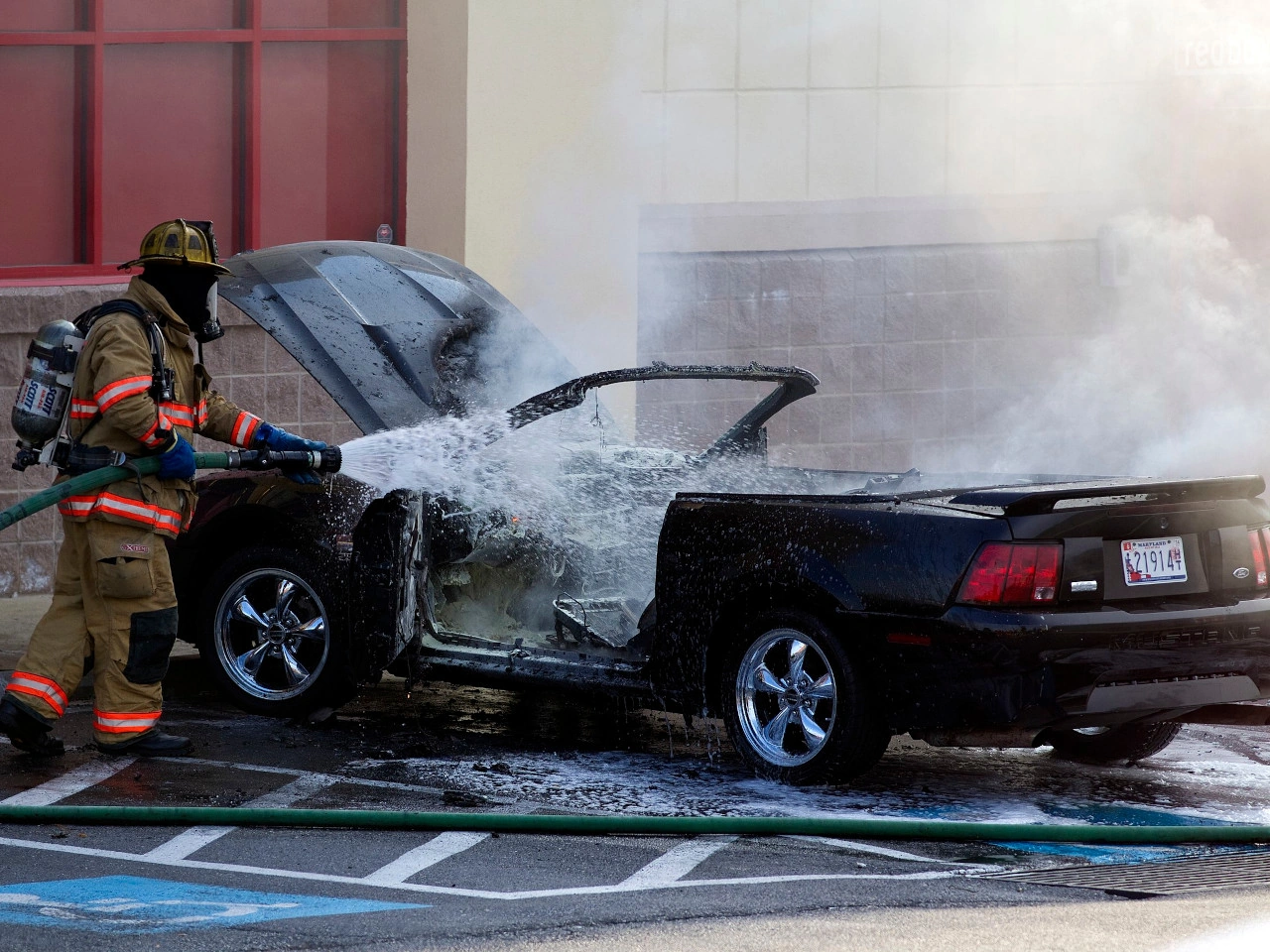
A total loss occurs when a damaged vehicle is considered unsuitable or uneconomical to repair. A vehicle may be declared an economic total loss when the cost of repair is too high compared with its value, or a technical total loss when the damage makes safe restoration impossible or subject to special requirements. An automotive expert or insurer normally assesses the damage, repair cost, vehicle value and salvage value. The exact definition, compensation and rules for repairing or disposing of a total-loss vehicle vary between countries and insurance policies.
Wikimedia.org • Mark Taylor • CC BY
What is a total loss?
A total loss means that a damaged vehicle is considered unsuitable or uneconomical to repair because of the extent of the damage, repair cost or applicable technical requirements.
🔗 wikifin.be • Belgian FSMA Wikifin, repair cost, actual/salvage value and total loss
🔗 gov.uk • GOV.UK, insurance write-off categories; British example
What is an economic total loss?
An economic total loss occurs when repairing the vehicle is no longer financially reasonable compared with its value and, where applicable, its remaining salvage value.
🔗 wikifin.be • Belgian FSMA Wikifin, repair cost, actual/salvage value and total loss
🔗 gov.uk • GOV.UK, insurance write-off categories; British example
What is a technical total loss?
Technical total loss commonly describes a vehicle that cannot be safely repaired or restored to a roadworthy condition, rather than one that is simply uneconomical to repair. Legal write-off categories differ; some vehicles must be destroyed and cannot return to road use.
🔗 wikifin.be • Belgian FSMA Wikifin, repair cost, actual/salvage value and total loss
🔗 gov.uk • GOV.UK, insurance write-off categories; British example
454. Multiple-vehicle collision
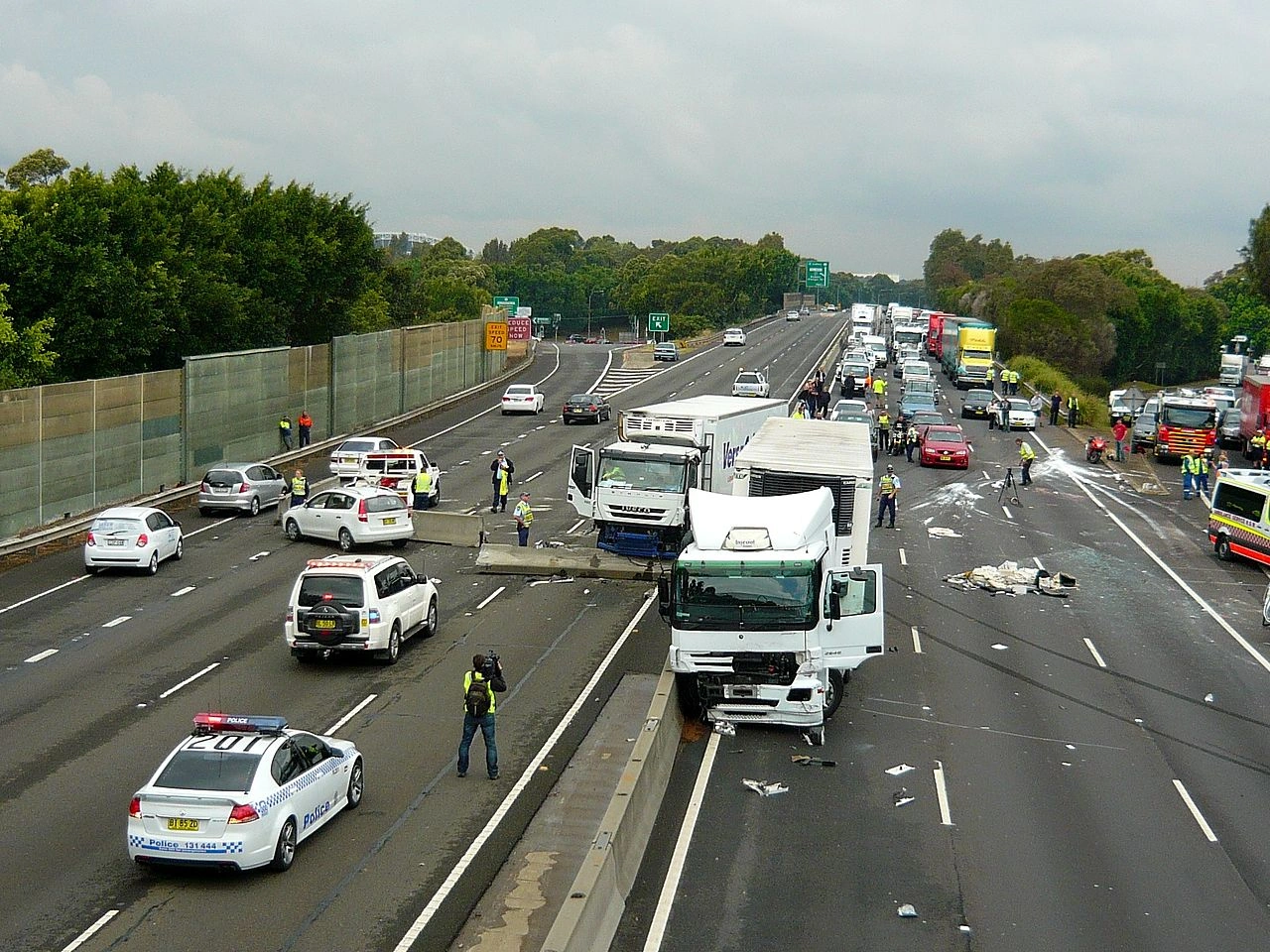
A multiple-vehicle collision is a traffic accident involving three or more vehicles. It can occur when one collision triggers additional impacts, especially in heavy traffic, poor visibility or slippery conditions. These crashes can be difficult to assess because several vehicles may be damaged and responsibility may involve more than one driver. After a multiple-vehicle collision, drivers should make the scene safe, assist injured people, contact emergency services when necessary and carefully document the vehicles, damage and circumstances.
Wikimedia.org • sv1ambo • CC BY
What is a multiple-vehicle collision?
A multiple-vehicle collision involves more than one vehicle. It is not universally defined as requiring at least three: NHTSA’s technical material expressly includes two-vehicle crashes within multi-vehicle crashes.
🔗 wikifin.be • Belgian FSMA Wikifin, what to do after a collision
🔗 nhtsa.gov • US NHTSA, CAFE technical support document (2021), multi-vehicle crash usage
What is a chain collision?
A chain collision occurs when an initial crash leads to additional vehicles colliding one after another. It is a common type of multiple-vehicle collision.
🔗 wikifin.be • Belgian FSMA Wikifin, what to do after a collision
🔗 nhtsa.gov • US NHTSA, CAFE technical support document (2021), multi-vehicle crash usage
What should you do after a multiple-vehicle collision?
Protect yourself and others from further danger, check for injuries, contact emergency services when necessary and document the accident. Follow local rules on moving vehicles and reporting the crash.
🔗 wikifin.be • Belgian FSMA Wikifin, what to do after a collision
🔗 nhtsa.gov • US NHTSA, CAFE technical support document (2021), multi-vehicle crash usage
455. Warning triangle
A warning triangle is a portable reflective safety device used to warn approaching traffic about a stopped, broken-down or crashed vehicle or another obstruction on the road. It should be placed far enough from the hazard to give other drivers time to react and should remain clearly visible. The required distance and situations in which a warning triangle must be used vary between countries, so drivers should know the local rules and keep the triangle easily accessible in the vehicle.
Wikimedia.org • Roulex 45 • CC BY-SA
What is a warning triangle?
A warning triangle is a portable reflective device placed on the road to warn approaching traffic about a stopped vehicle, accident or other hazard.
🔗 gov.uk • Great Britain Highway Code, Annex 6, warning equipment; national guidance example
When should a warning triangle be used?
Use a warning triangle only where the applicable rules permit or require it and where placement is safe. Do not assume it belongs on every road after a breakdown: Great Britain specifically advises against placing one on a motorway.
🔗 gov.uk • Great Britain Highway Code, Annex 6, warning equipment; national guidance example
How far from the vehicle should a warning triangle be placed?
There is no universal placement distance. Check the rules for the country and road type, including whether use is prohibited altogether. For example, Great Britain’s motorway guidance says not to place a warning triangle there; moving it farther away is not the answer.
🔗 gov.uk • Great Britain Highway Code, Annex 6, warning equipment; national guidance example
456. International Driving Permit
An International Driving Permit (IDP) is a document that translates the information on a national driving licence into a standardised format for use abroad. It can help authorities understand a foreign licence when driving in another country, but it does not replace the original driving licence. Drivers normally need to carry both documents together. Whether an IDP is required depends on the countries that issued the licence and where the person intends to drive, so requirements should be checked before travelling.
Wikimedia.org • Tony Webster • CC BY
What is an International Driving Permit?
An International Driving Permit (IDP) is a standardised document that translates information from a national driving licence for use in other countries.
🔗 gov.uk • GOV.UK, driving abroad and destination-specific IDP requirements
Is an International Driving Permit a driving licence?
No. An IDP does not replace a valid national driving licence. It is normally valid only when carried together with the licence on which it is based.
🔗 gov.uk • GOV.UK, driving abroad and destination-specific IDP requirements
When do you need an International Driving Permit?
This depends on where your driving licence was issued and the country where you want to drive. Some countries recognise foreign national licences directly, while others require or recommend an IDP.
🔗 gov.uk • GOV.UK, driving abroad and destination-specific IDP requirements
457. Traffic rules
Traffic rules are laws and regulations that govern how road users behave on public roads. They cover subjects such as speed, priority, overtaking, parking, traffic lights, road signs, lane use and the responsibilities of drivers, cyclists and pedestrians. Traffic rules are designed to organise traffic, reduce conflicts and improve road safety. Rules differ between countries and sometimes between regions, so road users should know the regulations that apply where they are travelling.
What are traffic rules?
Traffic rules are laws and regulations that determine how drivers, cyclists, pedestrians and other road users must behave on the road.
🔗 gov.uk • UK Department for Transport, regulatory signs
🔗 gov.uk • UK Department for Transport, the signing system
Why are traffic rules important?
Traffic rules help organise traffic, prevent conflicts and reduce the risk of accidents by making the behaviour of road users more predictable.
🔗 gov.uk • UK Department for Transport, regulatory signs
🔗 gov.uk • UK Department for Transport, the signing system
What is the difference between traffic rules and traffic signs?
Traffic rules are the laws governing road use, while traffic signs communicate specific warnings, restrictions, obligations or information to road users.
🔗 gov.uk • UK Department for Transport, regulatory signs
🔗 gov.uk • UK Department for Transport, the signing system
458. Driving school
A driving school is an organisation that provides professional theory and practical training for learner drivers. Qualified instructors teach traffic rules, vehicle control, observation, manoeuvres and safe driving in real traffic. Depending on the country and licence category, driving-school lessons may be optional, required before obtaining a provisional licence or compulsory after repeated exam failures. Driving schools prepare candidates for the official exams, but the exams themselves are normally conducted by an independent exam centre or licensing authority.
What is a driving school?
A driving school provides professional instruction to help learner drivers prepare for their theory and practical driving examinations.
🔗 vlaanderen.be • Flemish Government, category B theory exam
🔗 vlaanderen.be • Flemish Government, category B practical exam
🔗 vlaanderen.be • Flemish Government, category B follow-up training
🔗 vlaanderen.be • Flemish Government, category B training overview
What do you learn at a driving school?
Training can include traffic rules, road signs, vehicle control, observation, manoeuvres, hazard awareness and driving safely in normal traffic.
🔗 vlaanderen.be • Flemish Government, category B theory exam
🔗 vlaanderen.be • Flemish Government, category B practical exam
🔗 vlaanderen.be • Flemish Government, category B follow-up training
🔗 vlaanderen.be • Flemish Government, category B training overview
Are driving-school lessons mandatory?
This depends on the country, licence category and chosen training route. Some learners may practise privately, while others must complete a minimum number of professional lessons.
🔗 vlaanderen.be • Flemish Government, category B theory exam
🔗 vlaanderen.be • Flemish Government, category B practical exam
🔗 vlaanderen.be • Flemish Government, category B follow-up training
🔗 vlaanderen.be • Flemish Government, category B training overview
459. Traffic signs
A traffic sign is a standardised visual symbol placed along roads to guide, warn, or regulate drivers, cyclists, and pedestrians. These signs provide essential information about road conditions, rules, directions, and potential hazards, helping to ensure safety and smooth traffic flow. They come in various shapes and colours—such as triangular warning signs, circular prohibitory or mandatory signs, and rectangular information signs—each designed for quick recognition and clear understanding.
What do traffic signs help road users do?
They communicate warnings, instructions and information. Learn the signing system of the country where you are travelling; the British guide, for example, distinguishes these three broad functions.
Can I identify every traffic sign from its shape alone?
No. Shape and colour are useful clues, but read the symbol, wording and any supplementary plate. Even within one system there are exceptions, such as Britain’s STOP and GIVE WAY signs.
