


Traffic signsWorldwide
 Traffic rules
 Worldwide
176. Pedestrian
A pedestrian is a person travelling on foot along or across a road, street, path or other public space. Depending on local traffic law, people pushing bicycles, wheelchairs, prams or certain other small devices may also be treated as pedestrians.
Pedestrians normally use pavements, sidewalks, footpaths and pedestrian areas where these are available. When crossing a road or walking where no suitable pedestrian facility exists, they must follow the applicable crossing rules, traffic lights and other local traffic regulations.
Wikimedia.org • Smiley.toerist • CC BY-SA
What is a pedestrian?
A pedestrian is primarily a person travelling on foot. Local traffic laws may also treat people pushing bicycles, wheelchairs, prams or certain other devices as pedestrians.
Which side of the road should pedestrians walk on when there is no pavement?
This depends on the country's traffic rules. Many countries require or recommend pedestrians to face approaching traffic, but the exact rule varies.
Do pedestrians always have priority at a pedestrian crossing?
The exact priority rule varies between countries. Drivers are commonly required to give way to pedestrians using or entering designated crossings, but pedestrians must still obey traffic lights and avoid entering the road dangerously.

177. Cyclist
A cyclist is a person who rides and controls a bicycle. Cyclists are road users and, in many countries, bicycles are legally treated as vehicles, meaning cyclists must follow many of the same traffic rules that apply to other drivers together with rules specifically intended for cycling.
Cyclists should use designated cycling facilities where required, obey traffic signs and signals and ride in a predictable and safe manner. The exact rules governing road position, priority, equipment and permitted cycling areas vary between countries.
Wikimedia.org • ProfDEH • CC BY-SA
Where should cyclists ride?
This depends on local rules. Cyclists may be required to use a cycle path or designated cycling facility, while in other situations they may ride on the carriageway.
178. Moped
A moped is a lightweight motor vehicle, usually with two or three wheels, whose power, engine capacity or maximum design speed is limited by law. Mopeds generally occupy a legal category between bicycles and motorcycles, although their exact classification varies between countries.
Special rules may apply concerning the minimum riding age, driving licence, helmet, registration, insurance, maximum speed and use of cycle paths or roadways. Riders must therefore follow the classification and traffic regulations applying in the country where they are travelling.
Wikimedia.org • Marc Mongenet • CC BY-SA
What is a moped?
A moped is a lightweight motor vehicle whose engine power, capacity or maximum design speed is restricted by law. The precise technical definition differs between countries.
🔗 gov.uk • Great Britain Highway Code, Rules 83–88; national guidance example
🔗 gov.uk • Great Britain Highway Code, Rules 221–223; national guidance example
Is a moped the same as a motorcycle?
Mopeds commonly form a lower-speed or lower-power vehicle category, but their legal relationship to motorcycles varies. Some traffic laws treat certain mopeds as motorcycles or apply other special rules. Check the local technical, access and licensing definitions.
🔗 gov.uk • Great Britain Highway Code, Rules 83–88; national guidance example
🔗 gov.uk • Great Britain Highway Code, Rules 221–223; national guidance example
Do moped riders have to wear a helmet?
Helmet requirements vary between countries, but an approved protective helmet is compulsory for moped riders in many jurisdictions. Passengers may also be required to wear one.
🔗 gov.uk • Great Britain Highway Code, Rules 83–88; national guidance example
🔗 gov.uk • Great Britain Highway Code, Rules 221–223; national guidance example
179. Motorcycle
A motorcycle is a motor-powered vehicle with two wheels, with or without a sidecar. Motorcycles include many different types and sizes of vehicles designed for road travel, recreation, touring or other purposes.
Motorcyclists should maintain full control of the motorcycle, obey the applicable traffic rules and use appropriate protective equipment. Licensing, helmet, equipment and road-use requirements vary between countries.
Wikimedia.org • CC0
What protective equipment should a motorcyclist use?
Motorcyclists should use an approved helmet and suitable protective clothing. The exact mandatory equipment depends on the country's traffic laws.
🔗 wetten.overheid.nl • Vienna Convention on Road Traffic, Article 27; 🔗 gov.uk • UK Highway Code, motorcyclists, Rules 83–88
180. Car
A car is a motor vehicle primarily designed to transport a small number of people and their luggage on roads. Cars may be powered by petrol, diesel, electricity, hydrogen or a combination of different energy sources.
Drivers must comply with the applicable requirements concerning the driving licence, vehicle registration, insurance, technical condition, seat belts and passenger safety. Speed limits, equipment requirements, road access and other traffic rules vary between countries, so drivers must follow the local traffic signs and regulations.
Wikimedia.org • Lothar Spurzem • CC BY-SA
What is a car?
A car is a motor vehicle primarily designed to carry a relatively small number of passengers and their luggage on roads.
🔗 gov.uk • Great Britain Highway Code, Rules 83–88; national guidance example
🔗 gov.uk • Great Britain Highway Code, Rules 221–223; national guidance example
Is a car the same as a motor vehicle?
No. A car is a type of motor vehicle. The broader category of motor vehicles can also include motorcycles, buses, trucks, mopeds and other powered vehicles, depending on local legal definitions.
🔗 gov.uk • Great Britain Highway Code, Rules 83–88; national guidance example
🔗 gov.uk • Great Britain Highway Code, Rules 221–223; national guidance example
Must people in a car wear seat belts?
Where seat belts are fitted, drivers and passengers are generally required to wear them correctly. Exact requirements and exemptions vary between countries.
🔗 gov.uk • Great Britain Highway Code, Rules 83–88; national guidance example
🔗 gov.uk • Great Britain Highway Code, Rules 221–223; national guidance example
181. Truck
A truck is a motor vehicle designed primarily for transporting goods. Trucks range from relatively small delivery vehicles to large heavy goods vehicles and articulated combinations used for long-distance freight transport.
Because trucks are generally larger, heavier and slower to manoeuvre than passenger cars, they require more space for turning and braking and often have larger blind spots. Specific speed, lane-use, overtaking and access rules may apply depending on the vehicle's weight and the country.
Wikimedia.org • Marc Mongenet • CC BY-SA
Why should other road users take extra care around trucks?
Trucks may have larger blind spots, longer stopping distances and wider turning paths than smaller vehicles, so other road users should avoid remaining unnecessarily close beside or in front of them.
🔗 gov.uk • Great Britain Highway Code, Rules 83–88; national guidance example
🔗 gov.uk • Great Britain Highway Code, Rules 221–223; national guidance example
182. Bus
A bus is a motor vehicle designed to transport multiple passengers, usually along roads as part of public transport, school transport, private transport or another passenger service. Buses generally have more passenger capacity than cars and may be designed to carry seated passengers, standing passengers or both.
Special rules may apply to buses concerning the driving licence, passenger capacity, speed limits, seat belts, bus lanes, stops and passenger boarding. The legal classification of buses and coaches and the rules applying to them vary between countries, so drivers and passengers must follow the local traffic regulations.
Wikimedia.org • Günthoa Schreyner • CC BY-SA
What is a bus?
A bus is a motor vehicle designed to transport a relatively large number of passengers. It may be used for public transport, school transport, private services or other passenger transport.
🔗 gov.uk • Great Britain Highway Code, Rules 83–88; national guidance example
🔗 gov.uk • Great Britain Highway Code, Rules 221–223; national guidance example
Do buses always have priority when leaving a bus stop?
No. Some countries require other drivers to give way to buses leaving designated stops, particularly in urban areas, while others apply the normal merging rules.
🔗 gov.uk • Great Britain Highway Code, Rules 83–88; national guidance example
🔗 gov.uk • Great Britain Highway Code, Rules 221–223; national guidance example
Do buses have special speed limits?
They can. Some countries impose lower maximum speeds on buses than on passenger cars, particularly on high-speed roads. Different limits may apply to buses and coaches.
🔗 gov.uk • Great Britain Highway Code, Rules 83–88; national guidance example
🔗 gov.uk • Great Britain Highway Code, Rules 221–223; national guidance example
183. Police
Police are public authorities responsible for enforcing laws, maintaining public safety and managing situations that may affect road traffic. In traffic, police officers may control vehicles, enforce traffic rules, investigate collisions, direct traffic and respond to emergencies.
Road users must follow lawful instructions given by police officers or other authorised traffic-control personnel. Police directions may temporarily override traffic lights, road signs or normal traffic arrangements, depending on local law.
Wikimedia.org • Soenke Rahn • CC BY-SA
What is the role of police in road traffic?
Police help enforce traffic law, investigate collisions and respond to risks on the road. For example, Greater Manchester Police describe targeted road enforcement, a round-the-clock roads-policing response and specialist serious-collision investigation. Exact responsibilities and powers vary by jurisdiction.
🔗 gmp.police.uk • Greater Manchester Police, Roads Policing Strategy2024–2026
Must you obey a police officer directing traffic?
Yes. Lawful directions given by an authorised police officer must be followed. In many countries, those directions take precedence over traffic lights, road signs and normal priority rules.
What should you do if police signal you to stop?
Slow down, follow the officer's directions and stop at a safe location as instructed. Do not make sudden movements or continue driving unless directed to do so.
184. Ambulance
An ambulance is a vehicle equipped and used to provide emergency medical assistance or transport patients to or between healthcare facilities. Ambulances may carry medical equipment and trained personnel who can provide treatment during transport.
During an emergency response, an ambulance may use warning lights and a siren and may receive special priority or exemptions from certain traffic rules. Other road users must follow the local rules for emergency vehicles, make sufficient space and avoid obstructing their passage.
Wikimedia.org • ITW Münster • CC BY-SA
What is an ambulance?
An ambulance is a specially equipped vehicle used to provide emergency medical assistance and transport sick or injured people.
🔗 gov.uk • Great Britain Highway Code, Rule 219, emergency vehicles; national guidance example
What should you do when an ambulance approaches?
Make space safely for an ambulance on an emergency response, following the local rules and any lawful directions. Slow down or stop where necessary without sudden or dangerous movements. Do not assume that its emergency status allows you to pass a red light or disregard another traffic control.
🔗 gov.uk • Great Britain Highway Code, Rule 219, emergency vehicles; national guidance example
Can an ambulance exceed the speed limit?
Many countries permit emergency vehicles to depart from certain normal speed rules during an urgent mission, subject to safety requirements and national legislation.
🔗 gov.uk • Great Britain Highway Code, Rule 219, emergency vehicles; national guidance example
185. Taxi
A taxi is a vehicle used to transport passengers for payment, usually providing individual or small-group journeys between locations chosen by the passenger. Taxi services may operate from designated taxi stands, accept street hails or be booked by telephone or digital platform.
Taxis are commonly identified by special markings, roof signs, licence plates or local taxi permits. The licensing, fare and operating rules vary between countries and cities.
Wikimedia.org • Petar Milošević • CC BY-SA
Are taxis regulated?
Yes. Taxi services are generally subject to licensing and operating requirements, although the exact rules concerning vehicles, drivers, fares and permitted operating areas vary between jurisdictions.
186. Police signals
Police signals are hand gestures, body positions, lights or other signals used by police officers or other authorised persons to control traffic. They may require road users to stop, proceed, change direction or follow another temporary traffic arrangement.
Road users should observe and obey police signals even when they differ from the normal traffic signs or signals. The exact gestures and their meanings vary between countries.
Wikimedia.org • Alvesgaspar • CC BY-SA
What should you do if a police officer gives a signal you do not expect?
Slow down, pay close attention and follow the officer's instruction. Do not continue simply because a traffic light or road sign would normally allow you to proceed.
187. Rescue lane
A rescue lane, also called an emergency corridor, is a clear space created between lanes of congested traffic so emergency and authorised assistance vehicles can reach an incident quickly. Drivers normally form the lane as soon as traffic becomes heavily congested rather than waiting until an emergency vehicle approaches. The exact position of the rescue lane and which vehicles may use it vary between countries, so drivers should know the local rules before travelling.
Wikimedia.org • TypeZero • CC BY-SA
What is a rescue lane?
A rescue lane is a clear corridor formed between lanes of congested traffic so emergency and authorised assistance vehicles can pass.
🔗 gesetze-im-internet.de • Germany, StVO section 11(2), emergency corridor; German example
When should you create a rescue lane?
Follow the local rule and form the corridor at the required stage. For example, Germany requires it on motorways and qualifying roads outside built-up areas when traffic is stationary or moving at walking pace, rather than waiting for an emergency vehicle to arrive.
🔗 gesetze-im-internet.de • Germany, StVO section 11(2), emergency corridor; German example
Where is a rescue lane formed?
Follow the local rules for the road and direction of traffic. Germany, for example, requires the corridor between the leftmost lane and the lane immediately to its right on the roads covered by its rule. That arrangement is not a worldwide requirement.
🔗 gesetze-im-internet.de • Germany, StVO section 11(2), emergency corridor; German example
188. Tailgating
Tailgating means driving too closely behind another vehicle without leaving enough distance to react and stop safely if the vehicle ahead slows down or stops suddenly. The safe following distance depends on factors such as speed, road conditions, weather and visibility.
Drivers should leave sufficient space between their vehicle and the vehicle ahead and increase that distance in rain, snow, fog or other conditions that increase stopping distance.
Wikimedia.org • Marc Mongenet • CC BY-SA
When should you increase your following distance?
You should increase the distance in conditions such as rain, snow, ice, fog, darkness or poor road surfaces and whenever visibility or tyre grip is reduced.
🔗 gov.uk • Great Britain Highway Code, Rules 226–237; national guidance example
189. Bicycle parking station
A bicycle parking station is a designated place or facility where bicycles can be parked and secured. It may consist of simple bicycle racks or a larger covered, enclosed or access-controlled parking facility with many bicycle spaces.
Bicycle parking stations are commonly provided near railway stations, public-transport stops, workplaces, schools, shopping areas and city centres. Users should park their bicycles in the designated spaces, secure them properly and avoid obstructing pedestrian routes, cycle facilities, entrances or other road users.
Wikimedia.org • Donald Trung Quoc Don • CC BY-SA
What is a bicycle parking station?
A bicycle parking station is a designated facility where bicycles can be parked and secured.
Can speed pedelecs use bicycle parking stations?
Check the signs and the facility’s admission rules before using a space with a speed pedelec. Vehicle reservations can differ: for example, Belgian M19 reserves parking for speed pedelecs, while M20 covers bicycles and speed pedelecs together. A bicycle-parking label alone does not establish permission for every vehicle.
Can bicycles block pedestrian routes when parked?
No. Bicycle parking should leave sufficient space for pedestrians, including people using wheelchairs, mobility aids or tactile guidance routes.
190. Gravel road
A gravel road is an unpaved road surfaced with gravel, crushed stone or similar loose aggregate instead of asphalt or concrete. Gravel roads are commonly found in rural areas, forests, construction zones and locations where a paved surface is unnecessary or impractical.
Drivers on gravel roads should reduce speed when necessary, increase following distance and avoid sudden braking or steering. Loose stones, dust, potholes and reduced tyre grip can make vehicle control more difficult.

Wikimedia.org • Idawriter • CC BY-SA
How should you drive on a gravel road?
Use a suitable speed, maintain extra distance from other vehicles and accelerate, brake and steer smoothly to reduce the risk of losing traction.
🔗 gov.uk • Great Britain Highway Code, Rules 226–237; national guidance example
191. Tram lights
Tram lights are special traffic signals used to control the movement of trams and, in some countries, other public-transport vehicles. They are often designed differently from ordinary red, amber and green traffic lights so that public-transport drivers can clearly distinguish the signals intended for them.
The signals may indicate stop, prepare to stop, proceed or proceed only in a specified direction. Their shapes, colours and meanings vary between countries, so road users must follow the local traffic-signal system and regulations.
Wikimedia.org • Robot8A • CC BY-SA
What are tram lights?
Tram lights are special traffic signals used to control trams and sometimes other authorised public-transport vehicles.
🔗 gov.uk • Great Britain Highway Code, Rules 300–307; national guidance example
Can cyclists ever have to follow tram lights?
In some road layouts, cyclists or other authorised users may share infrastructure controlled by public-transport signals. Whether those signals apply to them depends on local traffic law and signage.
🔗 gov.uk • Great Britain Highway Code, Rules 300–307; national guidance example
Do tram lights replace normal priority rules for everyone?
No. They primarily regulate the vehicles to which they apply. Other road users must continue to obey their own traffic lights, signs and applicable priority rules.
🔗 gov.uk • Great Britain Highway Code, Rules 300–307; national guidance example
192. European emission standard
A European emission standard, commonly called a Euro standard, is a European vehicle classification based on limits for pollutants emitted by vehicles and their engines. Successive standards, such as Euro 4, Euro 5 and Euro 6, introduced progressively stricter requirements for pollutants such as nitrogen oxides, particulate matter, carbon monoxide and hydrocarbons.
A vehicle's Euro standard is determined as part of its type approval and depends on factors including the vehicle category, fuel type and applicable emissions legislation when it was approved. Euro standards may also be used by authorities to determine access to low-emission zones, but local access rules vary between countries and cities.

Wikimedia.org • Rfeba • CC0
What is a European emission standard?
A European emission standard, or Euro standard, classifies vehicles according to the emissions requirements they had to satisfy when approved for use in the European market.
🔗 consilium.europa.eu • Council of the EU, Euro 7 adoption explanation, 12 April 2024
What do Euro 4, Euro 5 and Euro 6 mean?
Euro 4, Euro 5 and Euro 6 identify successive stages of European vehicle-pollutant requirements. The applicable limits depend on the vehicle, engine and pollutant, so a higher number does not mean that every individual numerical limit changed. Later stages can also alter testing and durability requirements.
🔗 consilium.europa.eu • Council of the EU, Euro 7 adoption explanation, 12 April 2024
Can petrol and diesel vehicles with the same Euro number have different emission limits?
Yes. The applicable emission limits and testing requirements can differ according to the vehicle category, engine and fuel type even when vehicles belong to the same general Euro generation.
🔗 consilium.europa.eu • Council of the EU, Euro 7 adoption explanation, 12 April 2024
193. Public road
A public road is a road, street, path or other traffic area that is open for use by the public. It can contain different parts intended for motor vehicles, cyclists, pedestrians and other road users, such as carriageways, cycle paths, pavements, verges and parking areas.
Different parts of a public road may be reserved for particular categories of road users and can be subject to different traffic rules. Everyone using the public road must follow the applicable traffic signs, signals, road markings and local traffic regulations.
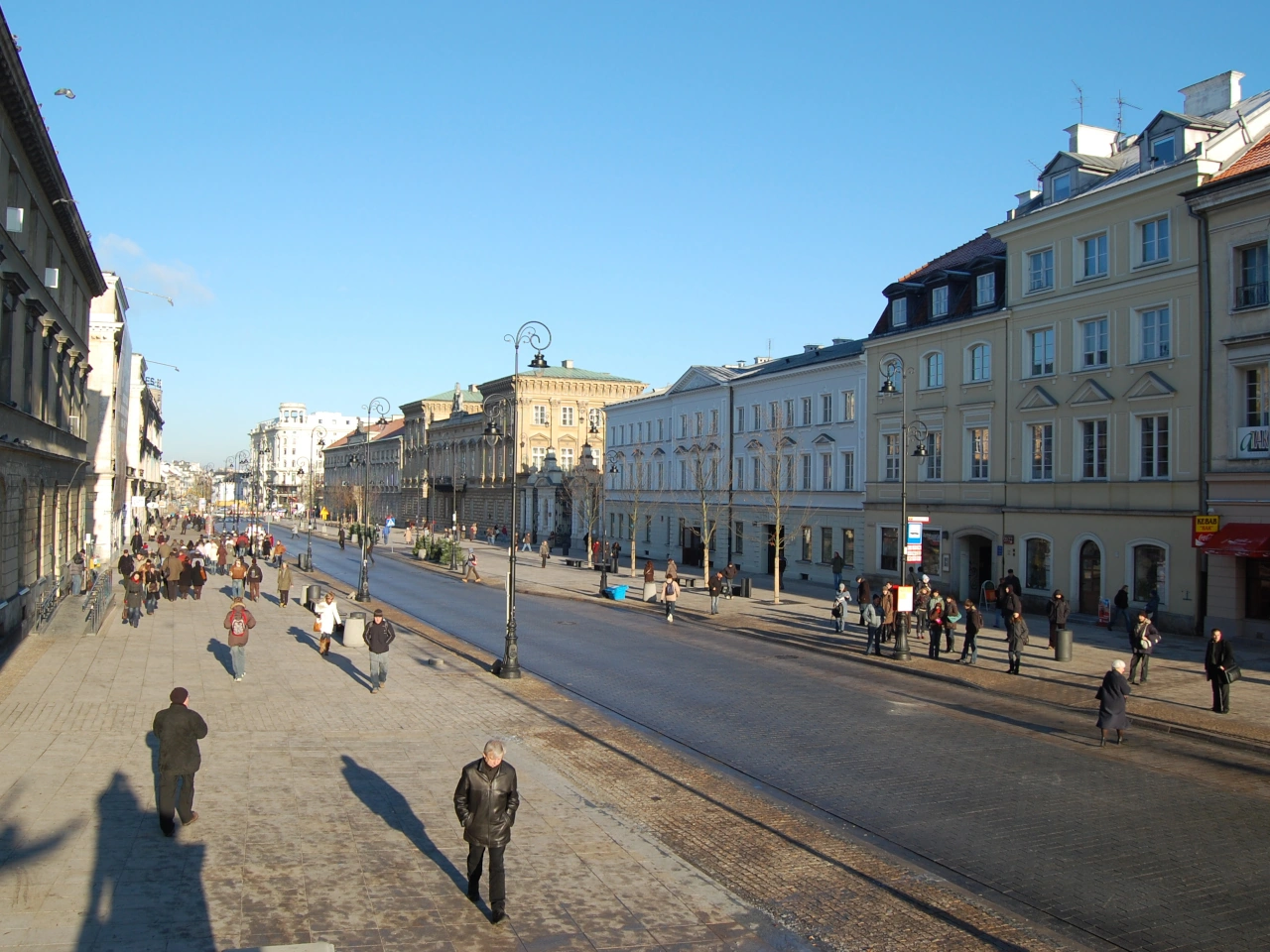
Wikimedia.org • sfu • CC BY-SA
What is a public road?
A public road is a road, street, path or other traffic area that is open for use by the public.
Do traffic rules apply on every public road?
Yes, generally. Road users must comply with the traffic regulations applying to the road and to the particular part of it they are using.
What should you do when entering a public road from private property?
Follow the local rules for entering traffic from a driveway, property or other private area. Drivers commonly have to give way to road users already using the public road.
194. Roadway
A roadway, also called a carriageway, is the part of a road primarily intended for the movement of vehicles. A roadway may carry traffic in one or both directions and may be divided into one or more traffic lanes.
The roadway is only one part of the wider road environment. Cycle paths, pavements, verges, parking areas and other roadside facilities may form separate parts of the road and can be subject to different traffic rules.

Wikimedia.org • welshbabe • CC BY-SA
What is a roadway?
A roadway, or carriageway, is the part of a road primarily intended for the movement of vehicles.
Is the roadway the same as the entire road?
No. The complete road can also contain pavements, cycle paths, verges, parking areas, central reservations and other sections that do not form part of the roadway.
Can cyclists use the roadway?
Yes. Cyclists may or must use the roadway when permitted by local rules, particularly where no applicable cycle facility is available or compulsory.
195. Street
A street is a road in a built-up or developed area that provides access to homes, businesses, schools, shops and other properties or activities. Streets are commonly shared by several types of road users, including motorists, cyclists and pedestrians.
A street may contain a roadway, pavements, cycle facilities, parking spaces, public-transport stops and other infrastructure. Speed limits, priority rules, parking restrictions and permitted road users depend on the local traffic signs, road design and regulations.

Wikimedia.org • Neil Owen • CC BY-SA
What is a street?
A street is a road in a built-up or developed area that commonly provides access to buildings, properties and activities along it.
Can pedestrians use a street?
Yes. Pedestrians normally use the pavement or other pedestrian facilities provided along the street and cross the roadway according to the applicable crossing rules.
Is there one speed limit for all streets?
No. The applicable speed depends on the country, location, type of street and traffic signs. Special lower limits commonly apply in residential, school or pedestrian-oriented areas.
196. Pothole
A pothole is a hole or depression in the road surface caused by wear, weather, water, repeated traffic loads or deterioration of the pavement. Potholes can vary greatly in size and depth and may develop gradually or become worse after freezing, heavy rain or repeated vehicle traffic.
Potholes can affect steering, braking and vehicle stability and may damage tyres, wheels or suspension components. Drivers and riders should observe the road ahead, adapt their speed and avoid sudden or dangerous manoeuvres when encountering damaged road surfaces.

Wikimedia.org • State Farm • CC BY
What is a pothole?
A pothole is a hole or depression that develops in a road surface when the pavement becomes damaged or deteriorates.
What should you do when you see a pothole?
Reduce speed when necessary, maintain control of the vehicle and avoid abrupt steering or braking. Only move around the pothole when this can be done safely without endangering other road users.
🔗 gov.uk • Great Britain Highway Code, Rules 226–237; national guidance example
Are potholes dangerous for cyclists?
Yes. Bicycle wheels can be strongly affected by deep holes or sharp edges, particularly when the cyclist has little time or space to avoid the hazard.
🔗 gov.uk • Great Britain Highway Code, Rules 226–237; national guidance example
197. Median strip
A median strip, also called a central reservation or median, is an area running longitudinally between separate roadways, usually to divide traffic travelling in opposite directions. It may consist of grass, paving, barriers, vegetation or another physical separation.
A median strip helps separate opposing traffic flows and can reduce the risk of vehicles crossing directly into oncoming traffic. Openings may be provided at selected locations for turning traffic, intersections, emergency access or other authorised movements.

Wikimedia.org • Jakec • CC BY-SA
What is a median strip?
A median strip is a longitudinal area that separates two roadways, usually carrying traffic in opposite directions.
Is a median strip the same as a road marking?
Not necessarily. A median is normally a physically distinguishable area or structure, while painted centre lines simply separate traffic using road markings.
Can pedestrians stand on a median strip?
Some medians contain a pedestrian refuge specifically designed to allow people to cross a road in stages. Other medians may not be intended for pedestrian use.
198. Public property
Public property is land, buildings, infrastructure or other property owned or controlled by a government or other public authority. Examples can include roads, parks, public squares, government buildings, railway infrastructure and other facilities used for public services.
Public property is not necessarily freely accessible to everyone. Some public property is open to general public use, while other areas may have restricted access or be reserved for particular services. Traffic rules depend on whether the area forms part of a public road or another place to which the relevant traffic laws apply.

Wikimedia.org • AbhiSuryawanshi • CC BY-SA
What is public property?
Public property is property belonging to a government, municipality or another public body. For example, council-owned land is public property. Public ownership does not by itself mean that everyone may enter or drive there.
🔗 gov.uk • UK Government, property standard GovS004, April2026
🔗 npt.gov.uk • Neath Port Talbot Council, public-property ownership
What are examples of public property?
Examples include government buildings and council-owned land. Roads, parks and transport facilities can also be publicly owned, but check the actual owner and access rules; a place being open to visitors does not by itself establish public ownership.
🔗 gov.uk • UK Government, property standard GovS004, April2026
🔗 npt.gov.uk • Neath Port Talbot Council, public-property ownership
Do traffic rules automatically apply to all public property?
No. Whether ordinary road-traffic rules apply depends on the legal status and use of the area rather than simply on who owns it.
🔗 ris.bka.gv.at • Austria, StVO section 1, scope of roads with/without public traffic
🔗 gesetze-im-internet.de • Germany, StVO section 10, entering from property
199. Private property
Private property is land, buildings or other property owned or controlled by a private person, company or organisation rather than by a public authority. Examples can include private homes, driveways, company grounds, private car parks and access roads.
Private property may be completely closed to the public or may allow access to customers, visitors or other authorised users. The traffic rules that apply depend not only on ownership but also on whether the area is open to public traffic and how it is legally classified.
Wikimedia.org • Addshore • CC BY-SA
What is private property?
Private property is property belonging to a private person or group, rather than being available for everyone’s use. In a road context, check the actual access rules before entering private land.
🔗 dictionary.cambridge.org • Cambridge Dictionary, ordinary private-property definition
Do road traffic rules apply on every private driveway?
Not necessarily. The applicable rules depend on the legal status and accessibility of the area. A driveway used only by its owner is different from a privately owned road that is open to general traffic.
🔗 ris.bka.gv.at • Austria, StVO section 1, scope of roads with/without public traffic
🔗 gesetze-im-internet.de • Germany, StVO section 10, entering from property
What should you do when leaving private property and entering a road?
Enter carefully and follow the applicable rules for joining traffic from a driveway or adjoining property. In many countries, the driver entering the road must give way to road users already using it.
🔗 ris.bka.gv.at • Austria, StVO section 1, scope of roads with/without public traffic
🔗 gesetze-im-internet.de • Germany, StVO section 10, entering from property
200. Private road
A private road is a road located on private property whose use is controlled or restricted by its owner or operator. It may serve homes, businesses, industrial sites, farms, car parks or other privately managed property.
A private road may be completely closed to the public or accessible only to residents, customers, employees, visitors or other authorised users. Whether ordinary road-traffic rules apply depends on the legal status and public accessibility of the road, not simply on who owns the land.
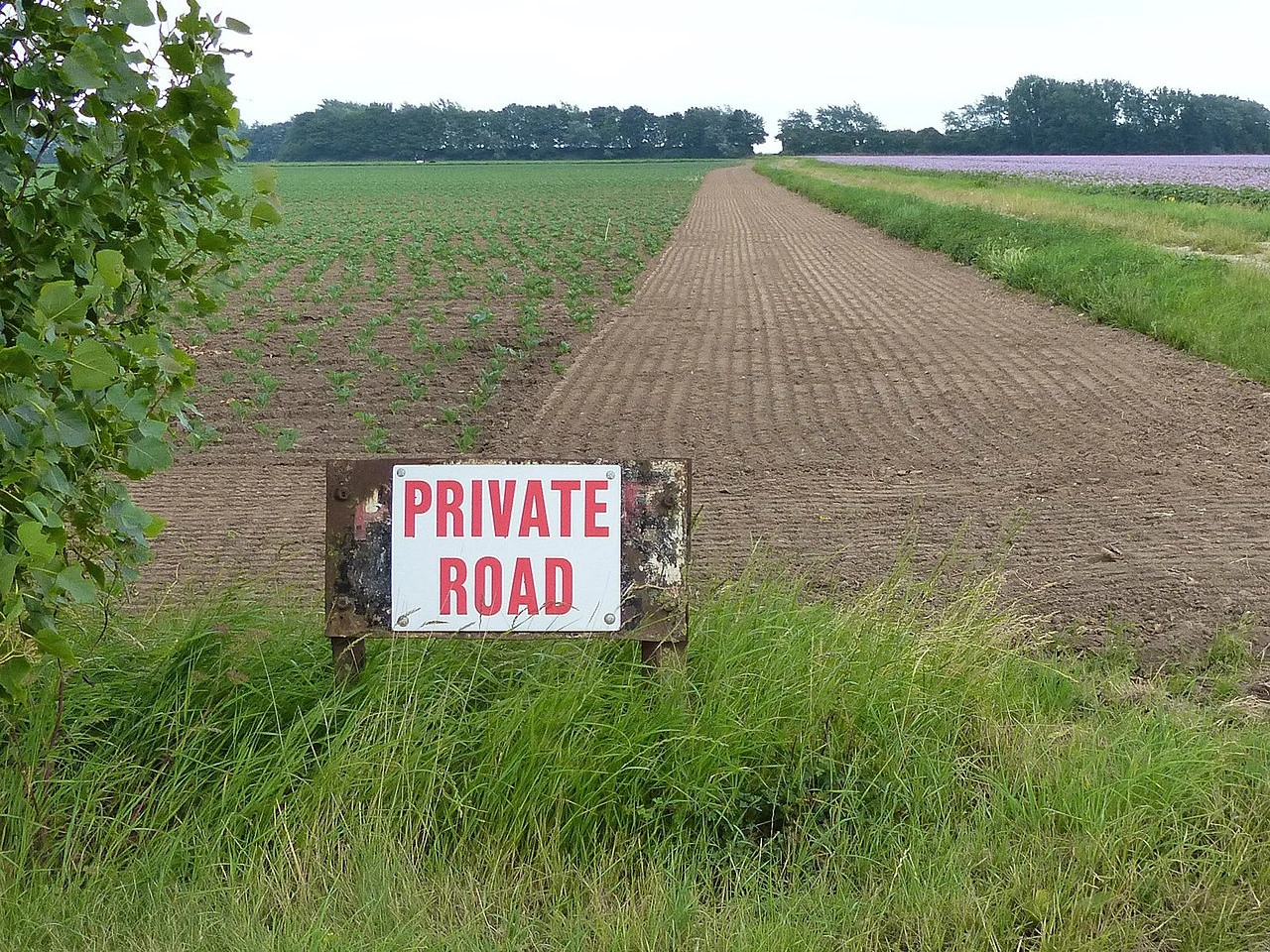
Wikimedia.org • Mat Fascione • CC BY-SA
What is a private road?
In an ownership sense, a private road is owned by a private person or organisation. That does not by itself show whether the public may use it or which traffic laws apply. Check access rights, actual restrictions and the jurisdiction’s legal definition.
🔗 ris.bka.gv.at • Austria, StVO section 1, scope of roads with/without public traffic
🔗 gesetze-im-internet.de • Germany, StVO section 10, entering from property
Do normal speed limits apply on a private road?
This depends on whether the road falls within the scope of the country's road-traffic legislation. The owner may also impose additional private speed restrictions.
🔗 ris.bka.gv.at • Austria, StVO section 1, scope of roads with/without public traffic
🔗 gesetze-im-internet.de • Germany, StVO section 10, entering from property
What should you do when leaving a private road?
Approach the public road carefully and follow the applicable rules for joining traffic from private property or an access road. Drivers commonly have to give way to road users already using the public road.
🔗 ris.bka.gv.at • Austria, StVO section 1, scope of roads with/without public traffic
🔗 gesetze-im-internet.de • Germany, StVO section 10, entering from property