

Here you can study for the exam. Look up keywords and learn definitions about all kind of subjects.
High-speed roads generally have a ramp/slip-in lane to give you time to build up speed. Use the ramp to achieve the same speed as the vehicles on the main road. If you have to wait for space on the main road, drive slower so that you have enough space to merge onto the main road.
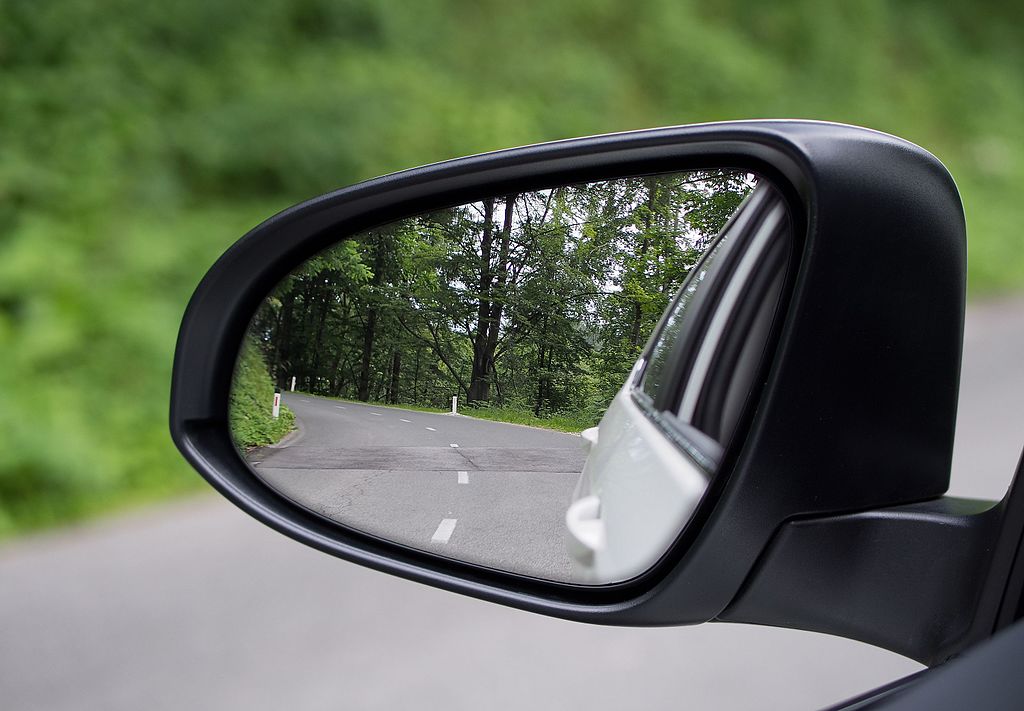
A rear-view mirror is a flat mirror in automobiles and other vehicles, designed to allow the driver to see rearward through the vehicle's rear window (rear windshield).
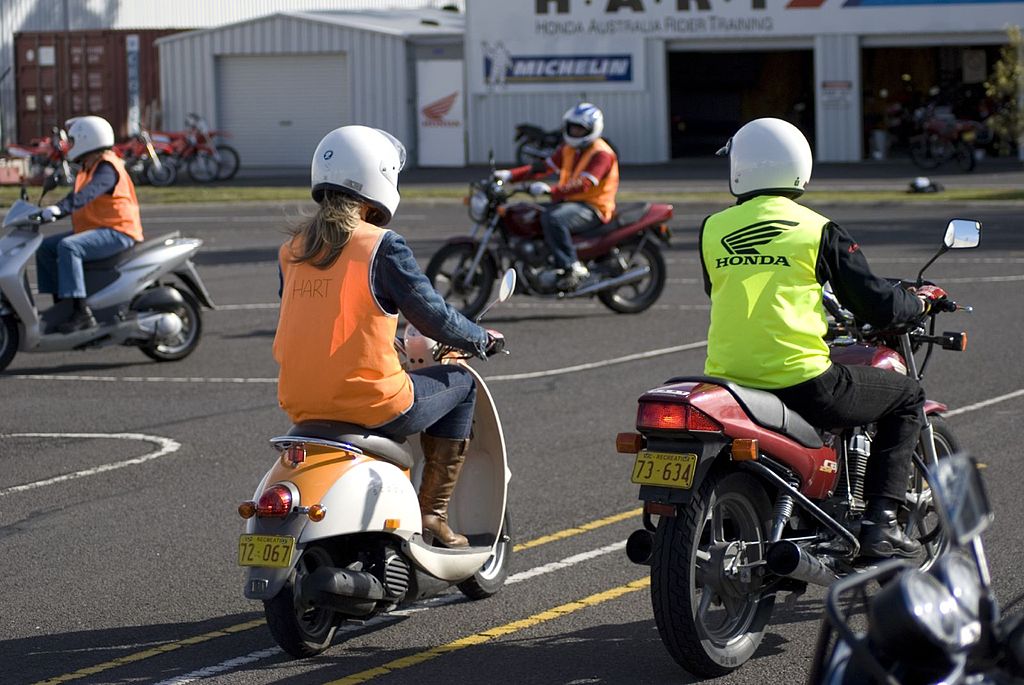
Mopeds are road users who move with the moped in traffic. Generally having a less licensing requirement than a full motorcycle.
A motorcyclist is a road user who moves with a motorcycle in traffic. Motorcycles have a higher rate of fatal accidents than cars, trucks or buses. Many countries mandate the wearing of protective equipment such as protective clothing and a helmet.
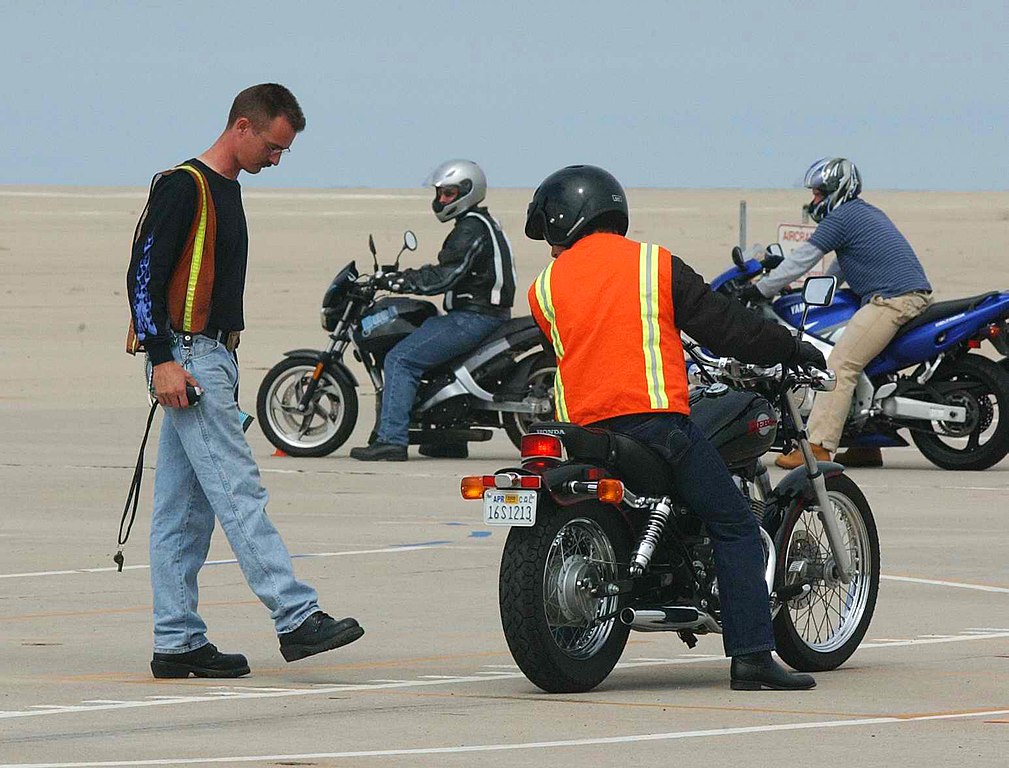 © Wikimedia.org/Deris Jeannette, CC0
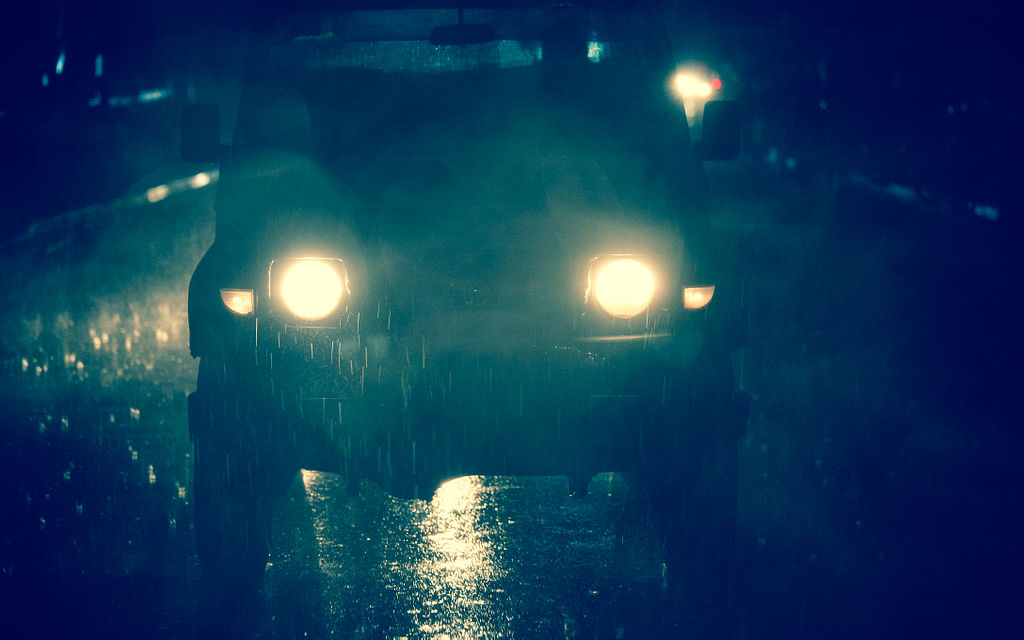
Night-blindness is a condition making it difficult or impossible to see in relatively low light. It is a symptom of several eye diseases. Night blindness may exist from birth, or be caused by injury or malnutrition (for example, vitamin A deficiency). It can be described as insufficient adaptation to darkness.
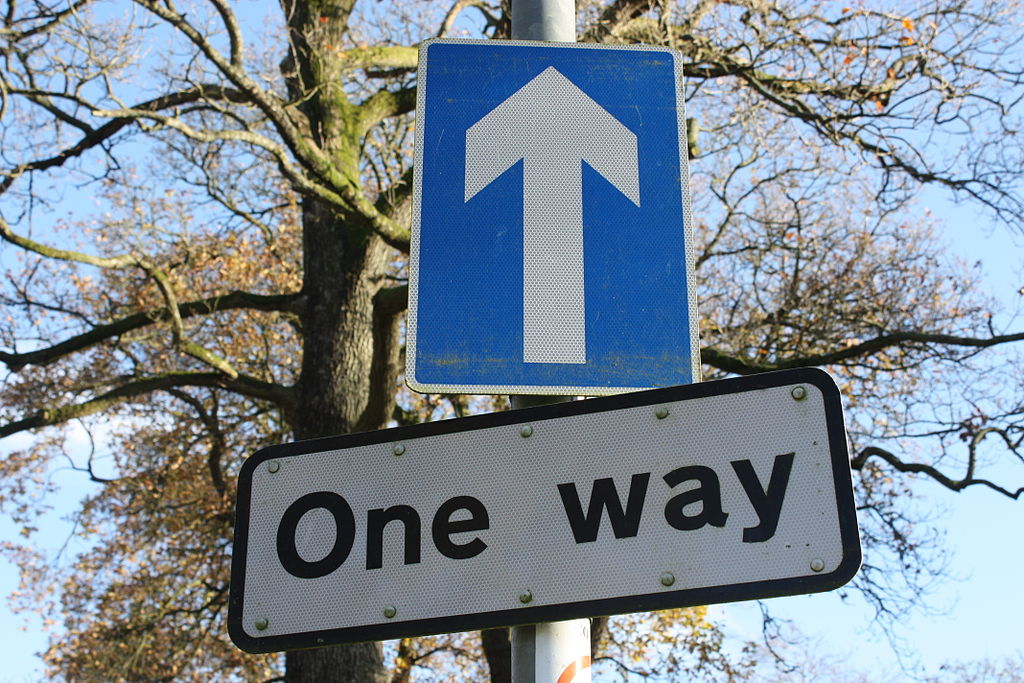
One-way traffic is traffic that moves in a single direction. A one-way street is a street either facilitating only one-way traffic, or designed to direct vehicles to move in one direction. One-way streets typically result in higher traffic flow as drivers may avoid encountering oncoming traffic or turns through oncoming traffic.
Overtaking or passing is the act of one vehicle going past another slower moving vehicle, travelling in the same direction, on a road. When a vehicle is driving slower than the maximum speed, you can overtake the vehicle on the left. Overtaking is a very dangerous maneuver. Only overtake if there is enough space and if the road is completely free. When overtaking a pedestrian, cyclist or moped, there must be at least 1 meter distance. Overtaking is prohibited at crossroads, slopes, dangerous curves and crossings.
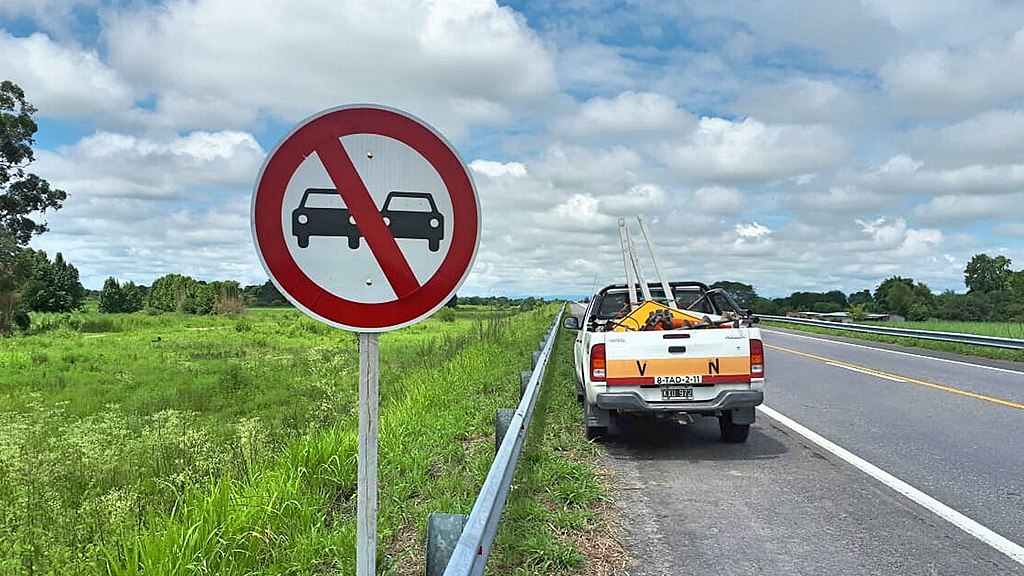 © Wikimedia.org/Argentina.gob.ar, CC BY
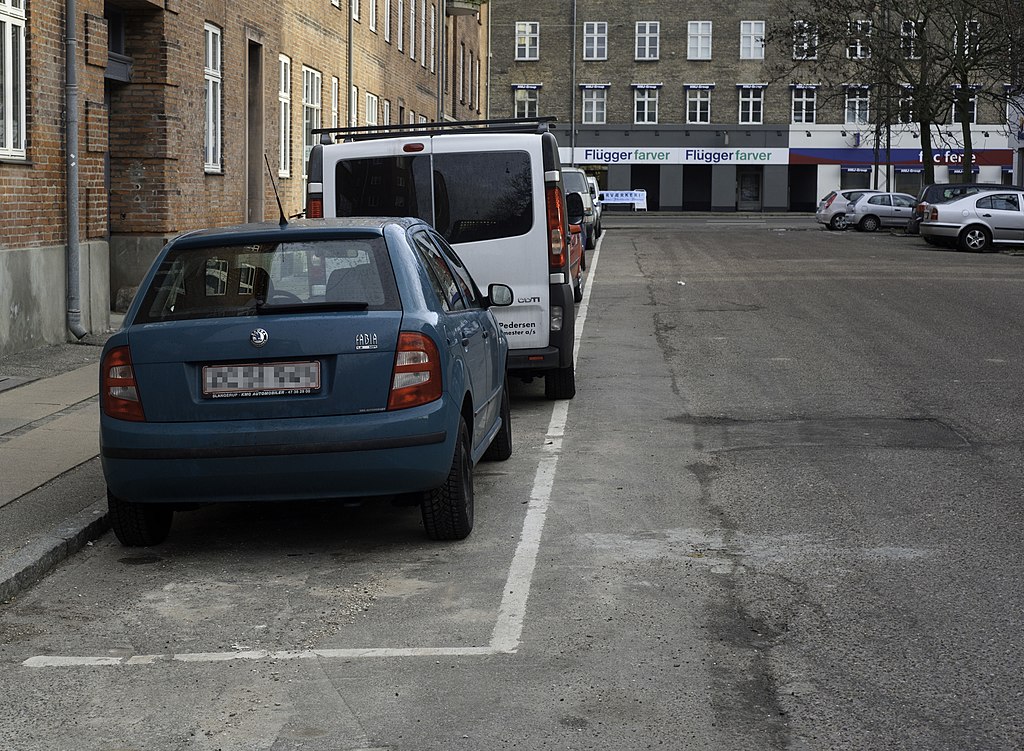
Parallel parking is a method of parking a vehicle parallel to the road, in line with other parked vehicles. Parallel parking usually requires initially driving slightly past the parking space, parallel to the parked vehicle in front of that space, keeping a safe distance, then followed by reversing into that space. Subsequent position adjustment may require the use of forward and reverse gears.
Park and ride facilities are parking lots with public transport connections that allow commuters and other people heading to city centres to leave their vehicles and transfer to a bus, rail system or carpool for the remainder of the journey. The vehicle is left in the parking lot during the day and retrieved when the owner returns. Park and rides are generally located in the suburbs of metropolitan areas or on the outer edges of large cities.
Parking is the act of stopping and disengaging a vehicle and leaving it unoccupied. Parking on one or both sides of a road is often permitted, though sometimes with restrictions. Some buildings have parking facilities for use of the buildings' users. Countries and local governments have rules for design and use of parking spaces. Drivers are responsible for making sure that their vehicle is not a hazard when it is parked. Park your vehicle at a place where it is allowed and make sure it is clearly visible for other road users.
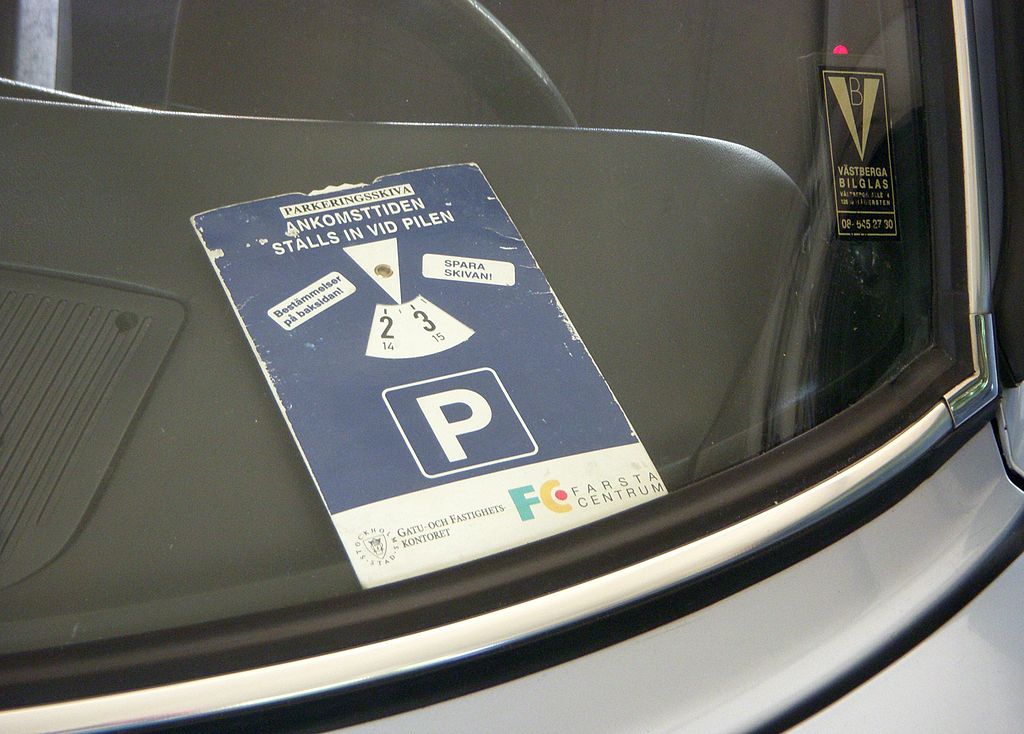
Disc parking is a system of allowing time-restricted free parking through display of a parking disc or clock disc showing the time at which the vehicle was parked. A patrolling parking attendant can inspect the disc to check whether payment is owed. The system is common in Europe. The original system had been introduced along with establishing a Blue Zone area. The blue zones in the city centers allow for free parking of about 2 hours by using a parking disc.
A pay and display machine is a type of ticket machine used for regulating parking in urban areas or in car parks. It relies on a customer purchasing a ticket from a machine and displaying the ticket on the dashboard, windscreen or passenger window of the vehicle. Details included on a printed ticket are generally the location and operator of the machine, expiry time, fee paid and time entered.
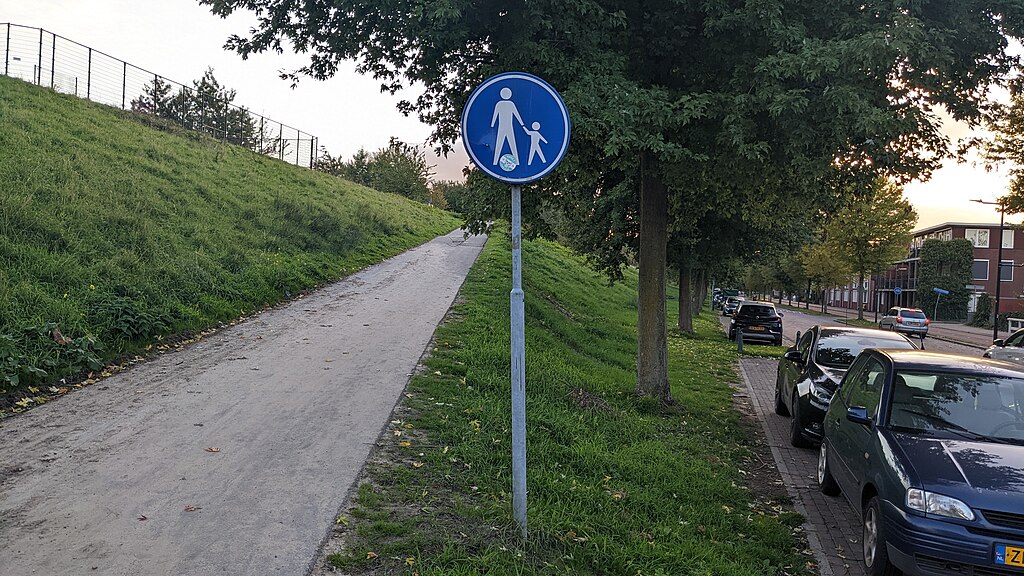
A path is a narrow road that only allows the traffic of pedestrians and vehicles that do not need more space than pedestrians.
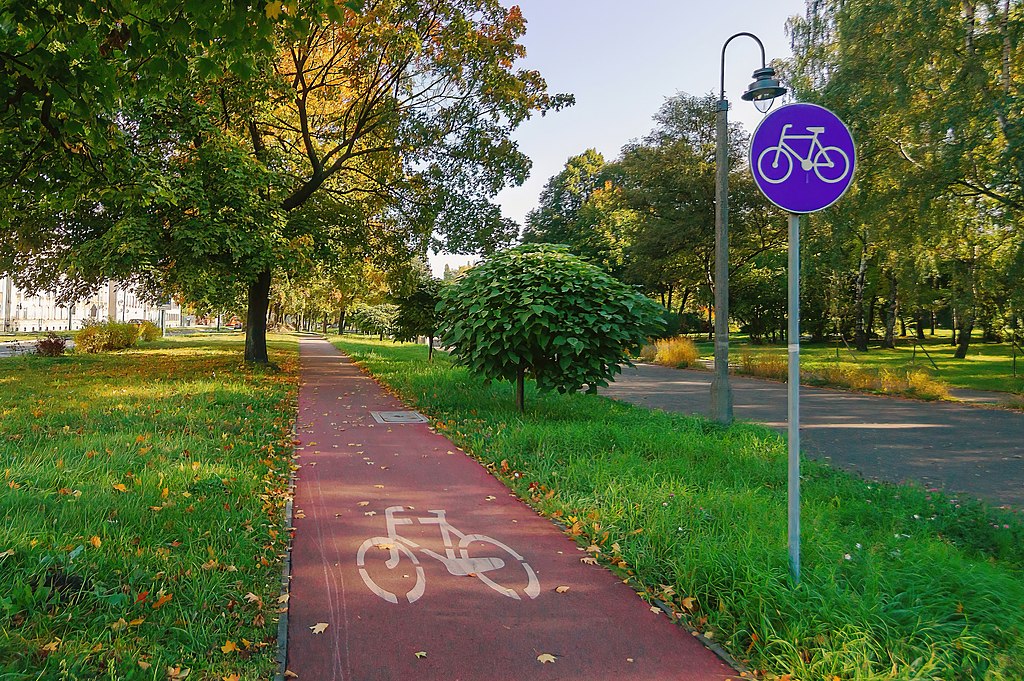
The bike path is part of the public road intended for the traffic of cyclists. If a bike path is available, cyclists must use it. The bike path is not part of the roadway. Cars may not park, stand or drive on the cycle path.
The footpath is the part of the public road intended for pedestrian traffic. Sometimes it is also called a pavement or sidewalk. If a footpath is present, pedestrians must use it.
A pedestrian is a person travelling on foot, whether walking or running. In modern times, the term usually refers to someone walking on a road or footpath. Because pedestrians are not protected by their vehicle they are classified as vulnerable road users, especially children, elderly and persons with disabilities.
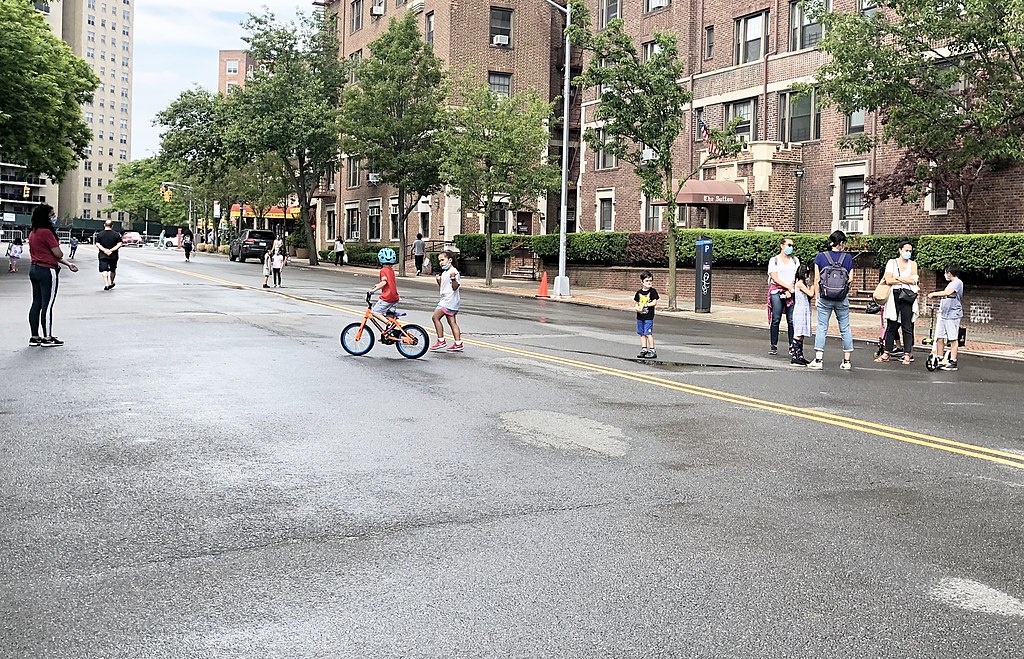
A public road where temporarily and during certain hours at the entrances a fence is placed with the indication 'play street'.
The police is a government agency charged with maintaining public order and security, tracking down and investigating criminal offenses, providing direct assistance and carrying out detentions.
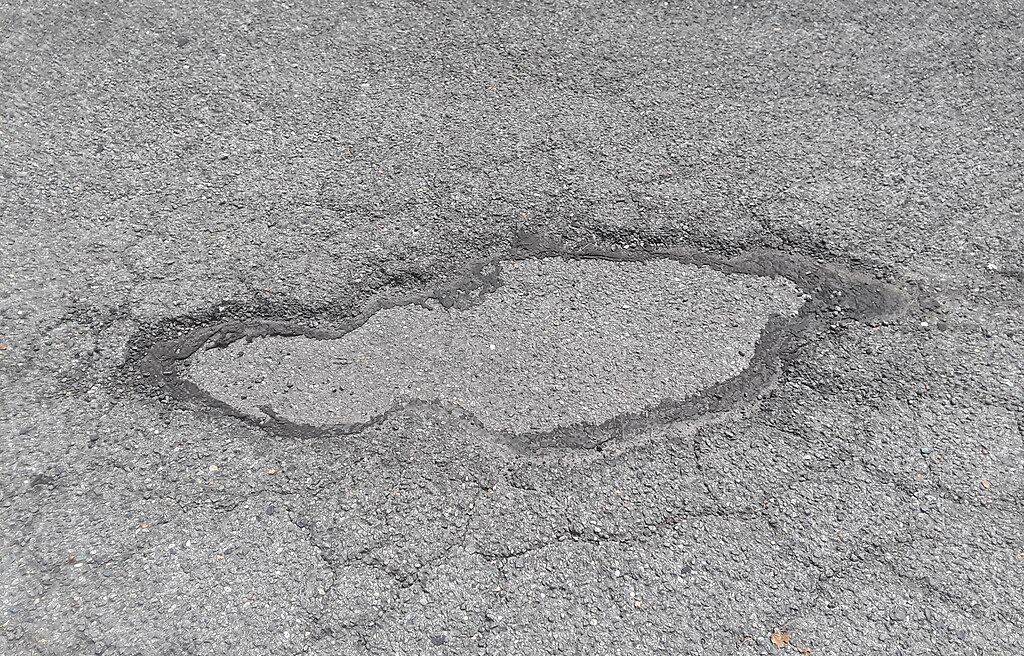
A pothole is a depression in a road surface, usually asphalt pavement, where traffic has removed broken pieces of the pavement. It is usually the result of water in the underlying soil structure and traffic passing over the affected area. Water first weakens the underlying soil; traffic then fatigues and breaks the poorly supported asphalt surface in the affected area. Continued traffic action ejects both asphalt and the underlying soil material to create a hole in the pavement.
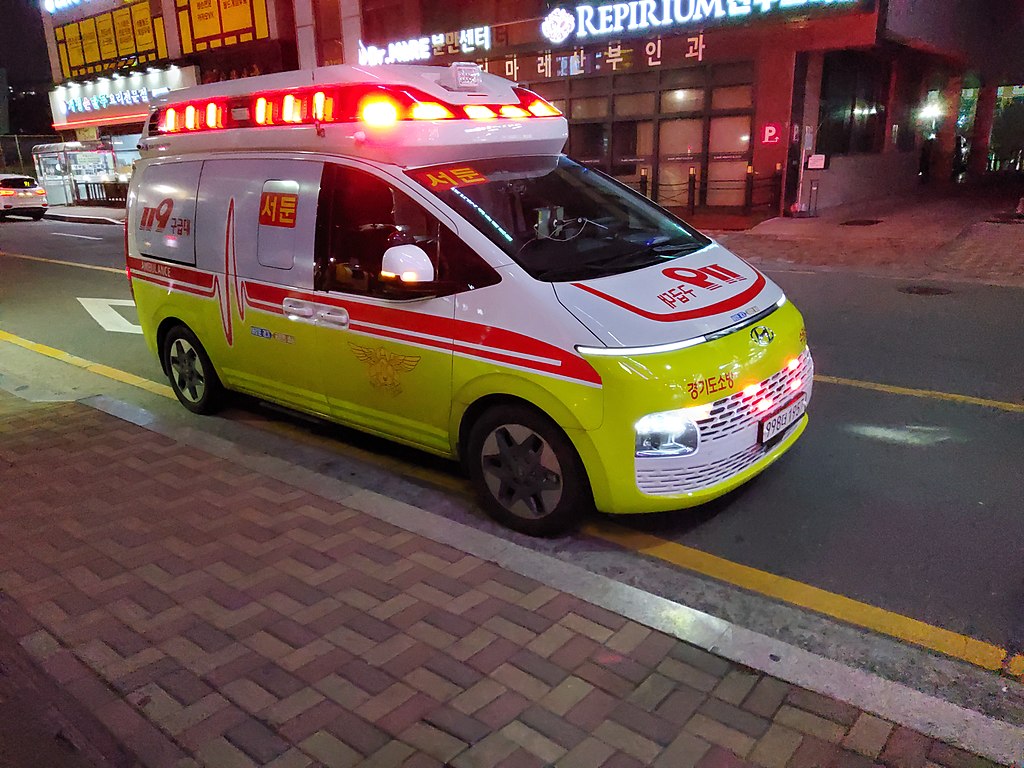
A priority vehicle is any vehicle that is designated and authorized to respond to an emergency in a life-threatening situation. These vehicles are usually operated by designated agencies, often part of the government, but also run by charities, non-governmental organizations and some commercial companies. Emergency vehicles are permitted by law to break conventional road rules in order to reach their destinations in the fastest possible time, such as driving through an intersection when the traffic light is red, or exceeding the speed limit.
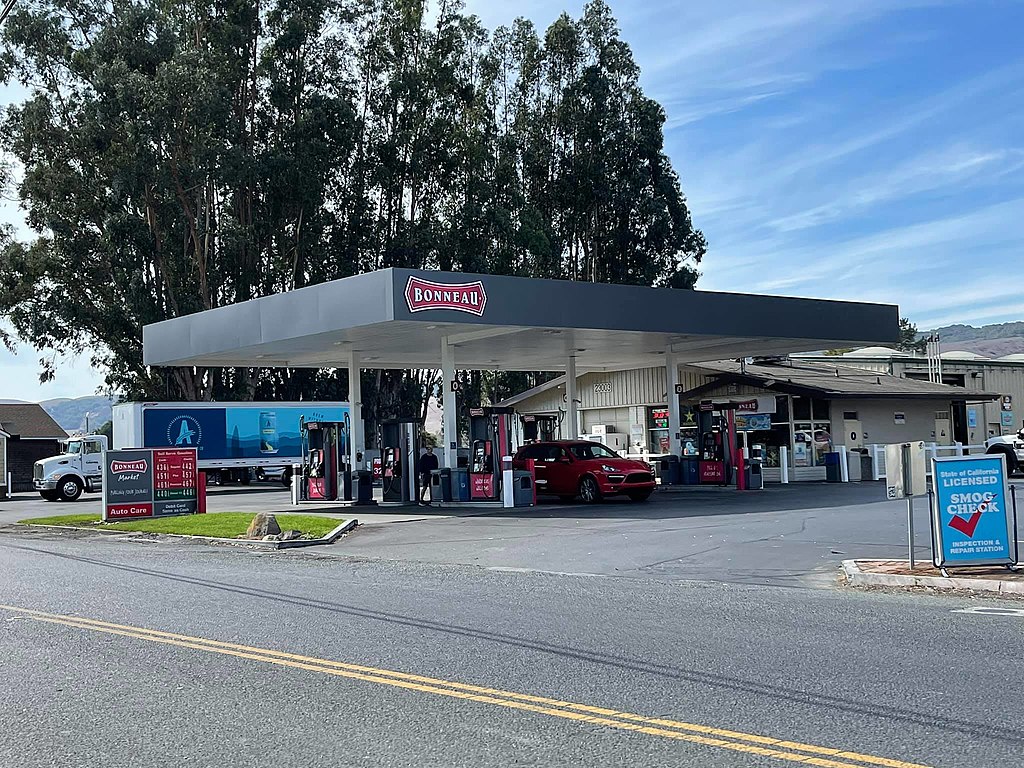
A private property is a place where we can only come if we have permission to do so. For example a parking lot of a company, a private road or a driveway of a garage.
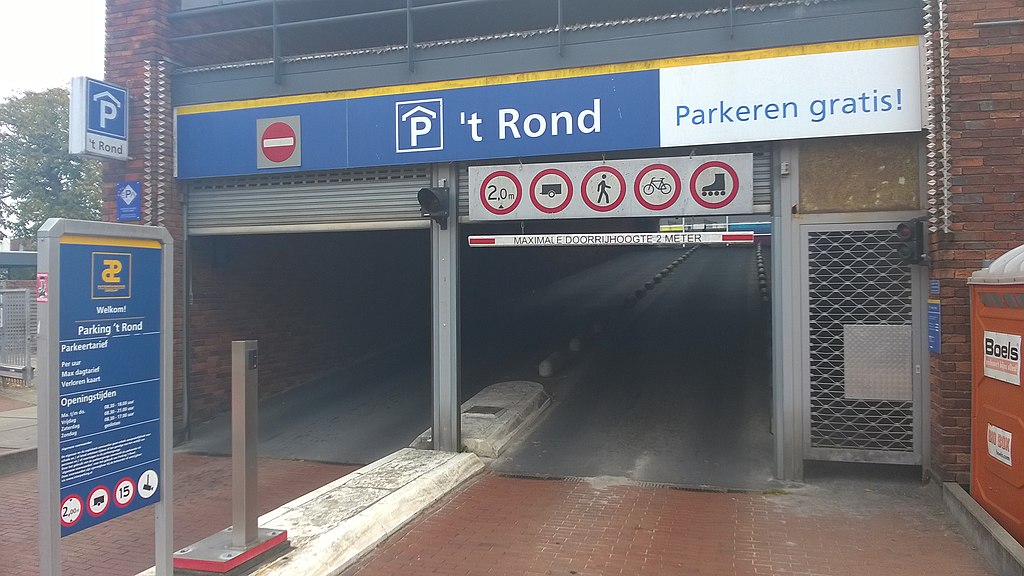 © Wikimedia.org/Ant1234567, CC BY-SA
A public property or public space is a place where we will only come if we have to be there for something. The traffic regulations only apply to public roads, but it is usually also applied on a public property.
The public road contains the lane, bicycle path, footpath and roadside and goes all the way to the canal or a property. On public roads we are allowed to drive with all vehicles (if no restrictions are imposed by traffic signs).
A quay is a structure on the shore of a harbour or on the bank of a river or canal where ships may dock to load and unload cargo or passengers.
High-speed roads generally have a ramp / slip-in lane to give you time to build up speed. Use the ramp to achieve the same speed as the vehicles on the main road. If you have to wait for space on the main road, drive slower so that you have enough space to merge onto the main road.
Pedestrians walk on the road in a residential area, but they are not allowed to hinder traffic.
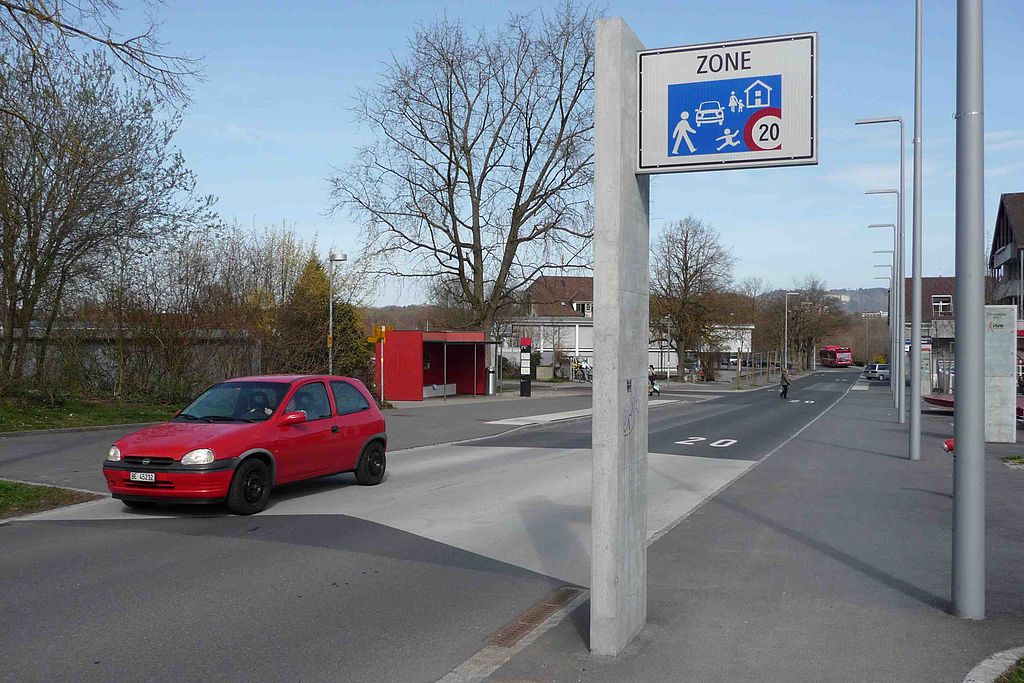 © Wikimedia.org/Suzanne Michel, CC BY-SA
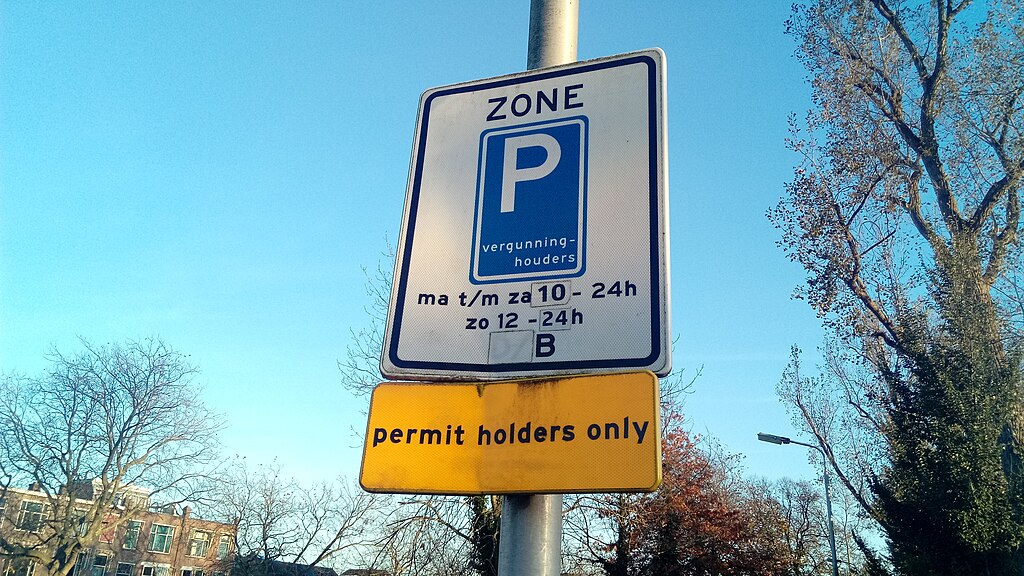
A municipal parking card specifically intended for persons who have their main residence or domicile in the municipality, zone or street indicated on the map.
A ring road is a road or a series of connected roads encircling a town, city, or country. The most common purpose of a ring road is to assist in reducing traffic volumes in the urban centre, such as by offering an alternate route around the city for drivers who do not need to stop in the city core.
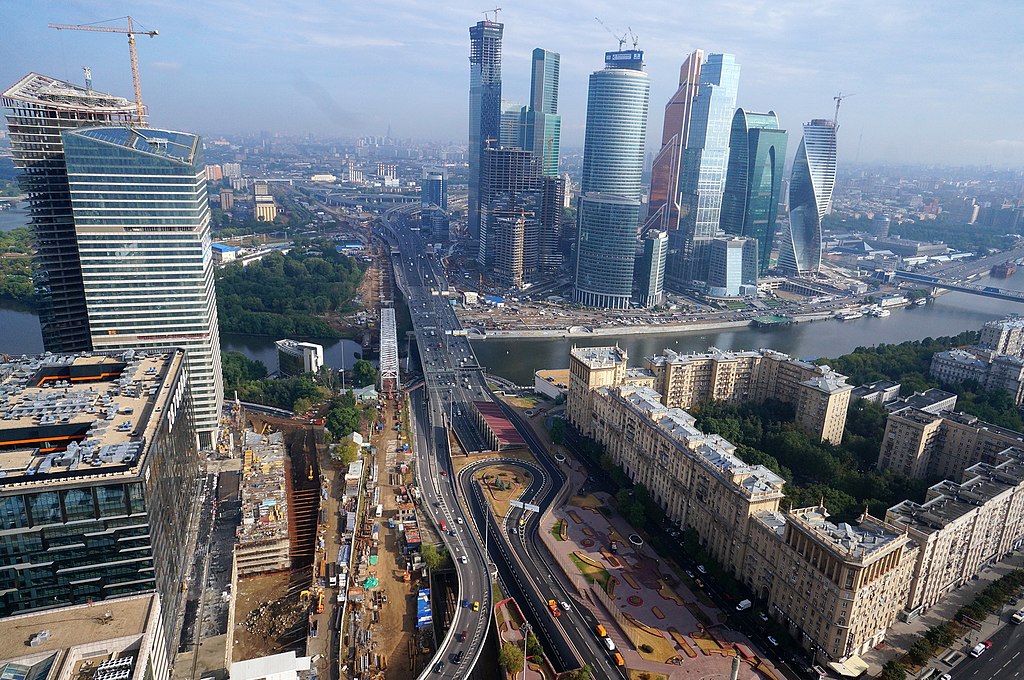 © Wikimedia.org/Stroi.mos.ru, CC BY
The roadway or carriageway is a part of the public road intended for the movement of vehicles. The lane is intended for the traffic of cars, trucks, buses, tractors and motorbikes. If there is no footpath or bicycle path, pedestrians and cyclists also use the roadway.
A road surface or pavement is the durable surface material laid down on an area intended to sustain vehicular or foot traffic, such as a road or walkway. In the past, gravel road surfaces, cobblestone and granite setts were extensively used, but thet have mostly been replaced by asphalt or concrete laid on a compacted base course.
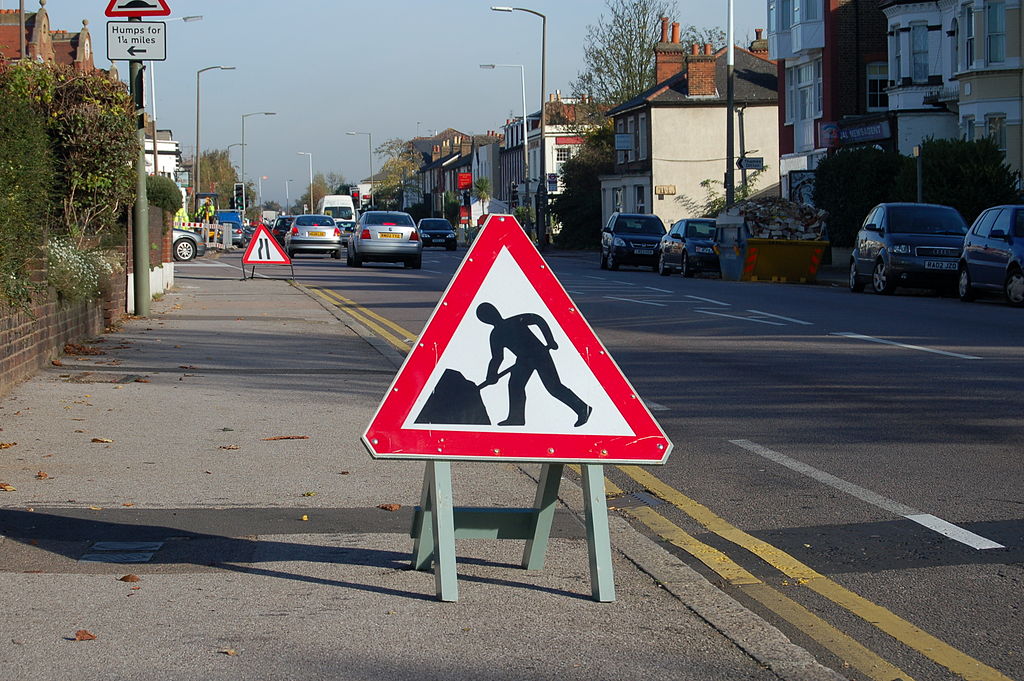
In roadworks, temporary orange colored lines are often painted on the road surface. The orange stripes then replace the white ones.
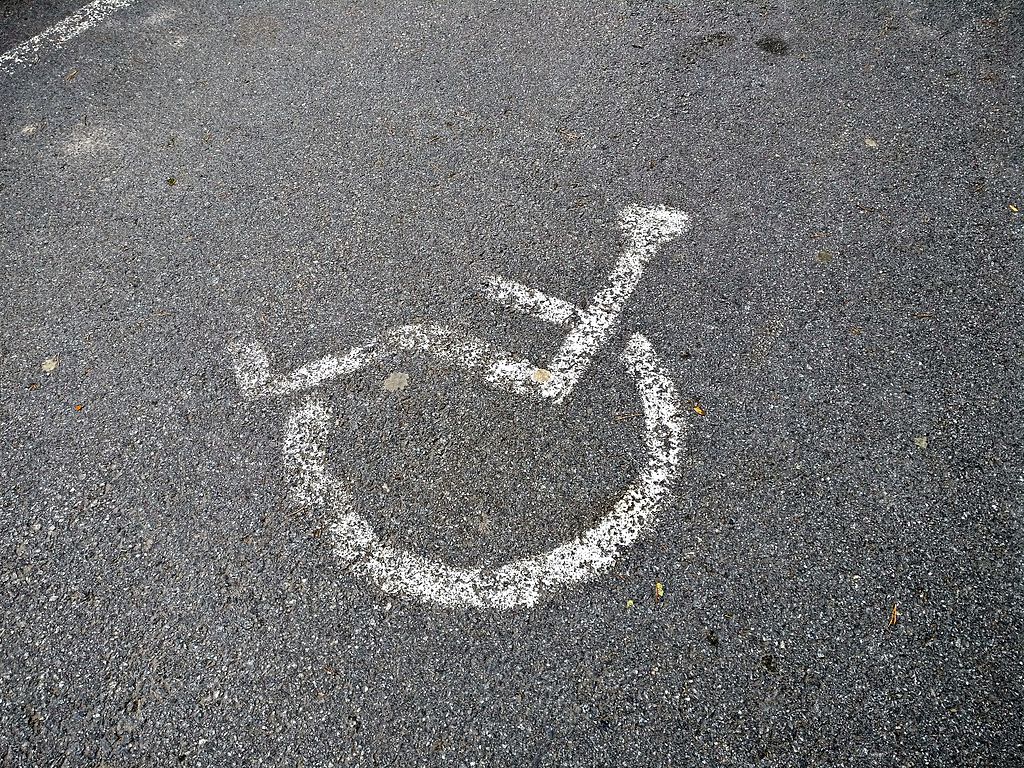
Roadmarks are used on paved roadways to provide guidance and information to drivers and pedestrians. Uniformity of the markings is an important factor in minimizing confusion and uncertainty about their meaning, and efforts exist to standardize such markings across borders. However, countries and areas categorize and specify road surface markings in different ways.
Roadrage is aggressive or angry behavior exhibited by motorists. These behaviors include rude and offensive gestures, verbal insults, physical threats or dangerous driving methods targeted toward another driver or non-drivers such as pedestrians or cyclists in an effort to intimidate or release frustration. Road rage can lead to altercations, assaults and collisions that result in serious physical injuries or even death. Strategies include long horn honks, swerving, tailgating, brake checking, and attempting to fight.
 © Wikimedia.org/DaleHulm, CC BY-SA
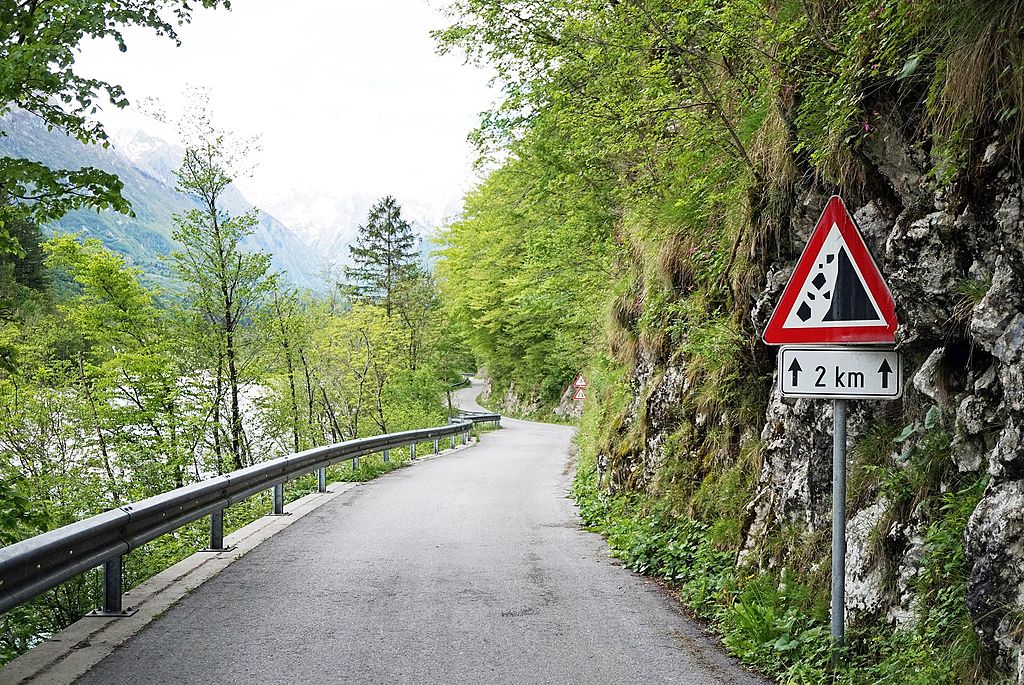
Rockfall refers to quantities of rock falling freely from a cliff face. A rockfall is a fragment of rock detached by sliding or falling, that falls along a vertical or sub-vertical cliff, proceeds down slope by bouncing and flying along ballistic trajectories or by rolling on talus or debris slopes.
A roof rack is a set of bars secured to the roof of a car. It is used to carry bulky items such as luggage, bicycles, canoes, kayaks, skis, or various carriers and containers. They allow users of an automobile to transport objects on the roof of the vehicle without reducing interior space for occupants, or the cargo area volume limits such as in the typical car's trunk design. These include car top weatherproof containers, some designed for specific cargo such as skis or luggage.
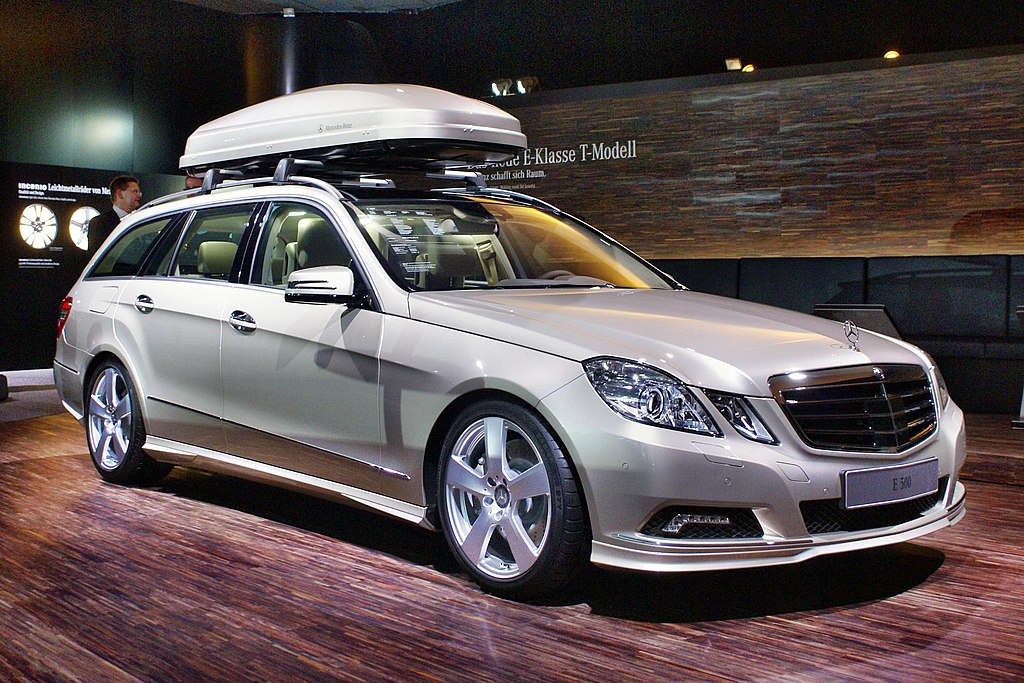 © Wikimedia.org/Matti Blume, CC BY-SA
A roundabout is a kind of circular intersection in which the traffic continuously drives in one direction around a central island. The drivers at the roundabout always have priority.
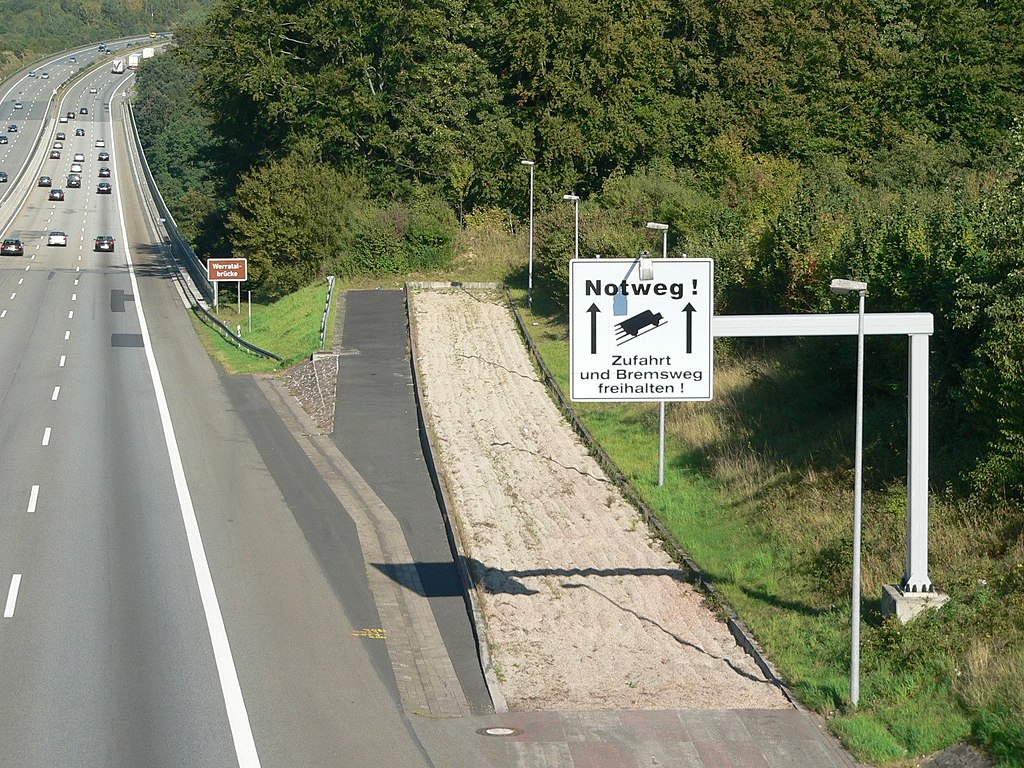
A runaway truck ramp is a traffic device that enables vehicles which are having braking problems to safely stop. It is typically a long, sand- or gravel-filled lane connected to a steep downhill grade section of a main road, and is designed to accommodate large trucks or buses. The ramp allows a moving vehicle's kinetic energy to be dissipated gradually in a controlled and relatively harmless way, helping the operator to stop it safely without a violent crash.
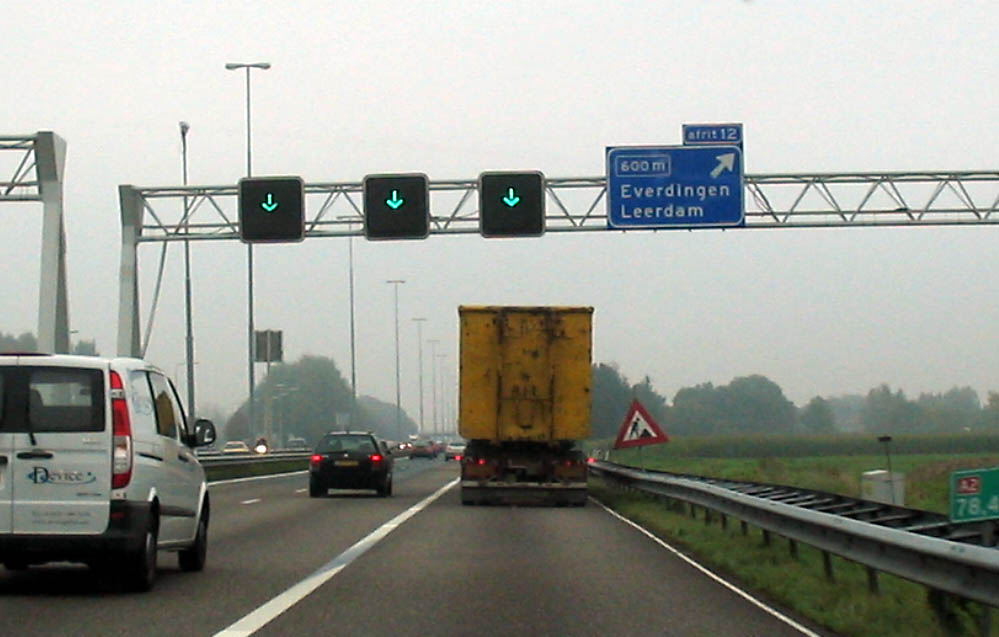
A rush-hour lane is an extra lane on a lane of a motorway. The rush-hour lane is often at the expense of the emergency lane. The rush-hour lane is only opened in heavy traffic.
To improve the safety of the passengers and the driver, there are a number of safety systems in your vehicle. Below you will find the most important ones.
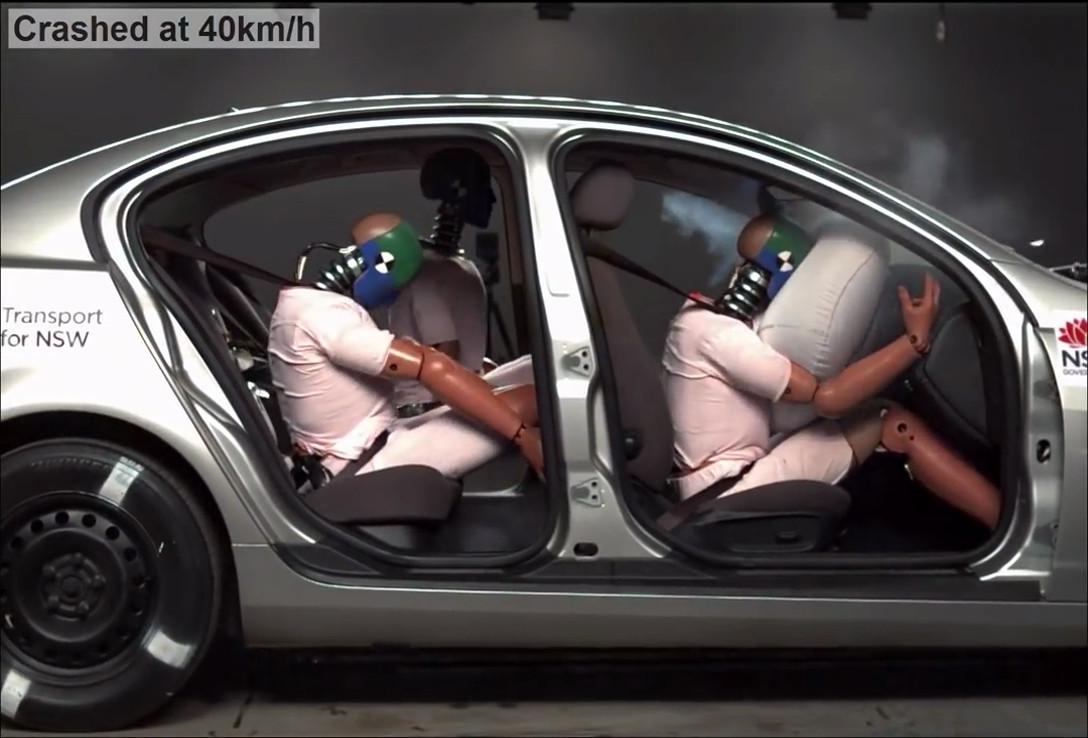 © Wikimedia.org/Transport For NSW, CC BY-SA
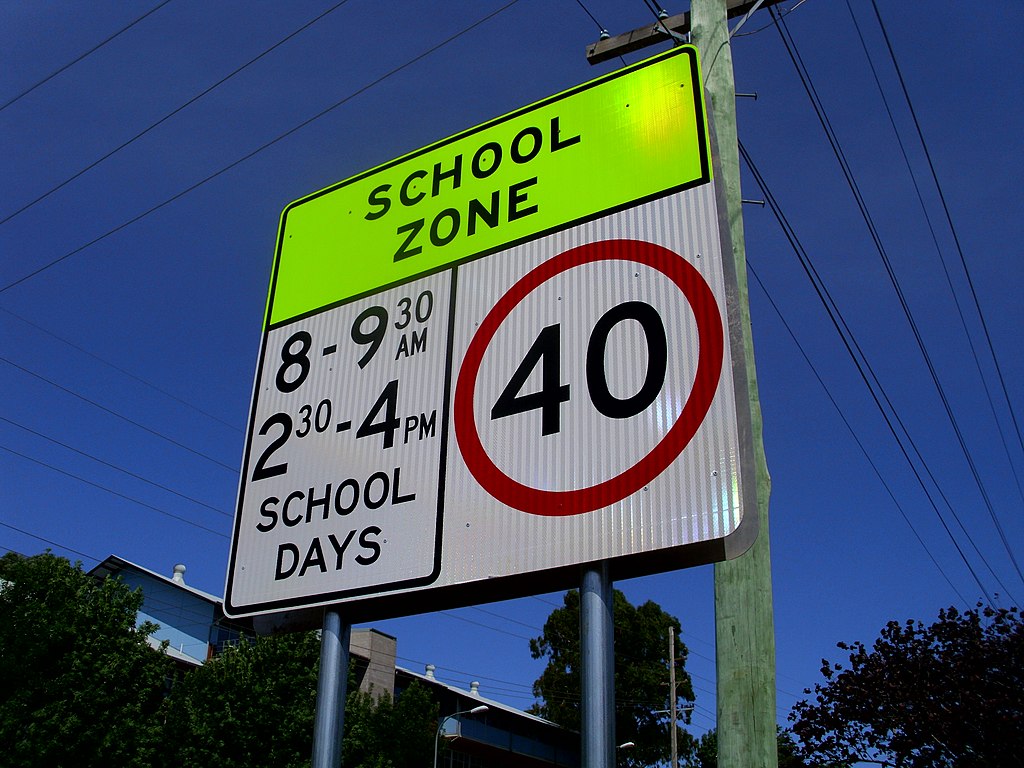
A school environment is a place near a school. Pay extra attention to children playing.

Help us promote traffic rules on the internet, together we can make the public road safer for everyone. Post a comment or share on social media!

The Finnish version is clearly made by a guesser who certainly does not know the road traffic law of Finland. A few mistakes I noticed: 1. The supposed "Road with two-way traffic." sign is in fact "Passing place" and implies a parking restriction. 2. The "Entry prohibited." sign is really "Operation of a vehicle prohibited". It doesn't ban pedestrians from entering or cyclists from pushing their bikes. 3. The "Motorcycles and cars prohibited." sign should be "Operation of a motor vehicle prohibited". Even though not on the sign, every type of motor vehicle, mopeds and tractors for example, is banned. 4 The "Turning left prohibited." sign prohibits not only left turns but also U-turns. This is not mentioned. 5. The "Overtaking prohibited." only applies to overtaking moving motor vehicles other than 2-wheel mopeds and motorcycles without a sidecar that are not in a turning/entry/exit lane. 6. The "Trucks prohibited." is actually "Trucks and vans prohibited." 7. Also, the pictograms are outdated after they were updated in 2020.

This is WRONG... It will specifically be a bus, not a tram. I don't even know how a mandatory sign for trams would work, as they're literally stuck on their rails... They have no choice but to follow their path.
specifically for the British test, there are countless inaccuracies, signs that don't exist in the UK Highways Code, and incorrect explanation of the signage.
I have a small issue with the "manditory lane for buses" sign.... that isn't the sign used, the sign used that I know of shows a bus, the sign here shows SPECIFICALLY a Tram, which is a different vehicle.(the bus used looks like the bus on the bus and tram sign.)

alot of the sighs aren't known or used in my area so I had no clue what they were and had to randomly guest, honestly didn't do to bad. 75/85
 1
1


As a hungarian driver i got 6 wrong. One 2 of them was an idicator light that i never seen in a car (we have older cars) But its a nice test.
1

This sign means that you must be given priority from both sides, not a warning for crossroads

The Czech prohibitory sign with a car and a motorbike separated by a red horizontal line means "All motor vehicles prohibited" not just "Cars and motorbikes prohibited" Also, the prohibitory sign "CLO / ZOLL" (sign B 27 of the Czech traffic code) does not mean access prohibited (checkpoint), but "You're required to stop"
0

Hello, sorry but this is wrong, in Italy motorway (autostrada) has the same sign but is green instead an expressway (that in Italy should be called super-strada) have that sign with blue
0

Dass "Gesenkter Balken" Abblendlicht bedeutet, habe ich nicht gewusst. Ansonsten Danke für die Möglichkeit zu üben.
0

Hey, I appreciate y'all posting the road signs on this website. I plan to study abroad over there in Austria (areas would most likely be Graz, or Vienna) for college, and then still plan so far on wanting to move to Austria or Germany (more so Austria) during or after my study abroad program (With dual citizenship through ancestry with The Czech Republic (assuming it will apply). I just wanted to say thanks for your time making this website possible, and I appreciate this to help me study for a possible driving exam for me (if move to Austria), and every citizen of your country.

I want to get the greek driving license, so should i study from here and thats it for the oral exam ? thanks a lot

According to Article 14 this diagram is incorrect. You stay in the inside lane unless you are coming off at the FIRST exit only.
3
Aerial Silks, Aerial Yoga Hammock all in over 46 colors. Of No-low and Low-medium Stretch Silks. Aerial Lyra, Hardware and more! Build your response time with Aerials www.aerialsusa.com
1

Speedlimit signs in Norway are not just at the start of the speedlimit. Every speedlimit sign exept 50 and 80 are also placed with a specific distance between eachother as a reminding. If there is no speedlimit sign for a while, you are either in a 50 or 80 area, depending on the road and amout of houses/buildings
2
Most of these DOES NOT exist on the official Greek test. //Someone that not only practiced it in Greece, but also scraped sites that had the official test (1:1 copy to the official one) in order to build a better learning site than existing ones (still a work in progress).
-2














 Feb 22, 2026












More community