

Here you can study for the exam. Look up keywords and learn definitions about all kind of subjects.
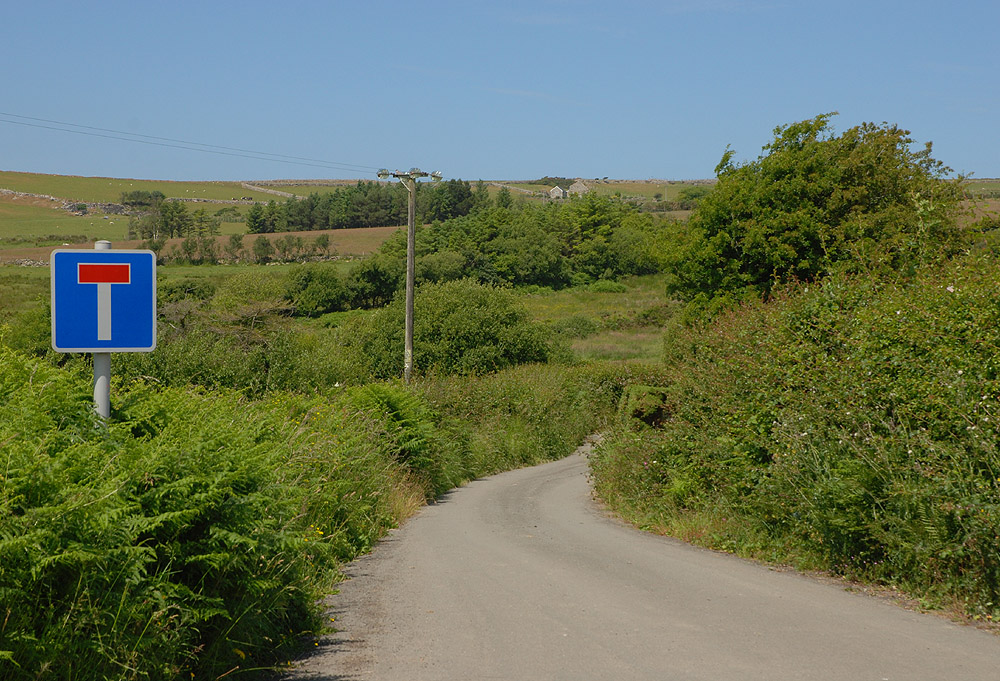
A dead end, also known as a cul-de-sac, no through road or no exit road, is a street with only one inlet or outlet. Dead ends are created in urban planning to limit through-traffic in residential areas. While some dead ends provide no possible passage except in and out of their road entry, others allow cyclists, pedestrians or other non-automotive traffic to pass through connecting easements or paths.
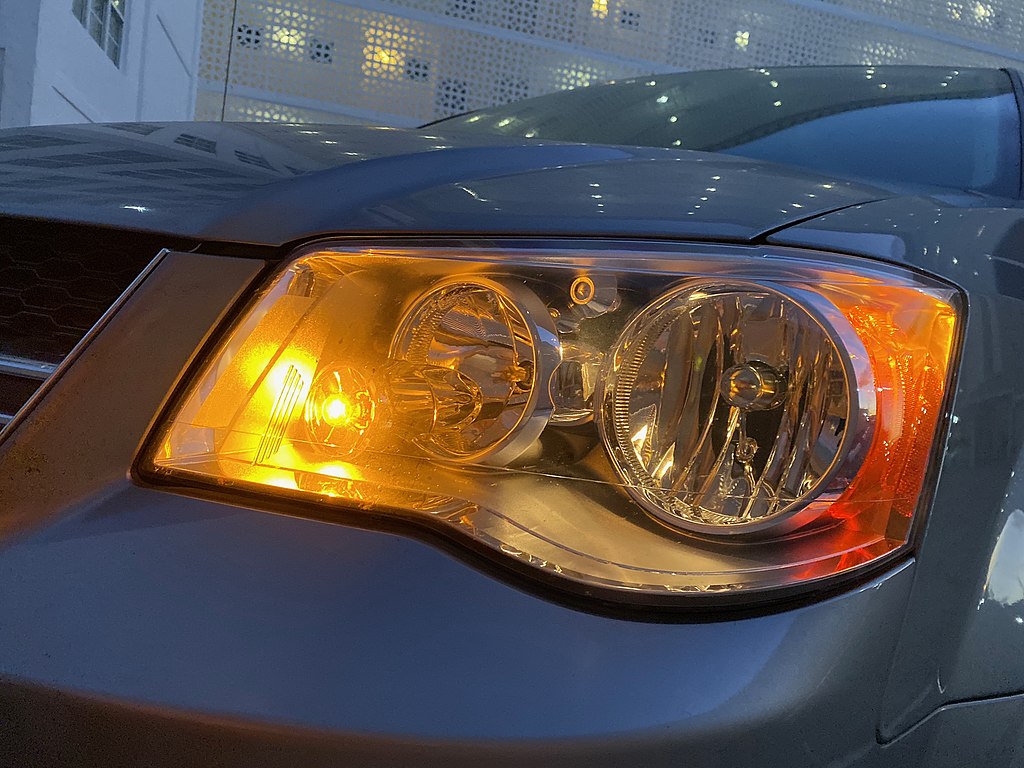
The dipped beam is used to illuminate the road without dazzling other road users, they illuminate the road to about 30 meters. The red tail lights also illuminate when the dipped beam is switched on. The low beam is the standard lighting that you have to use when it gets dark.
 © Wikimedia.org/Ehsnils, CC BY-SA
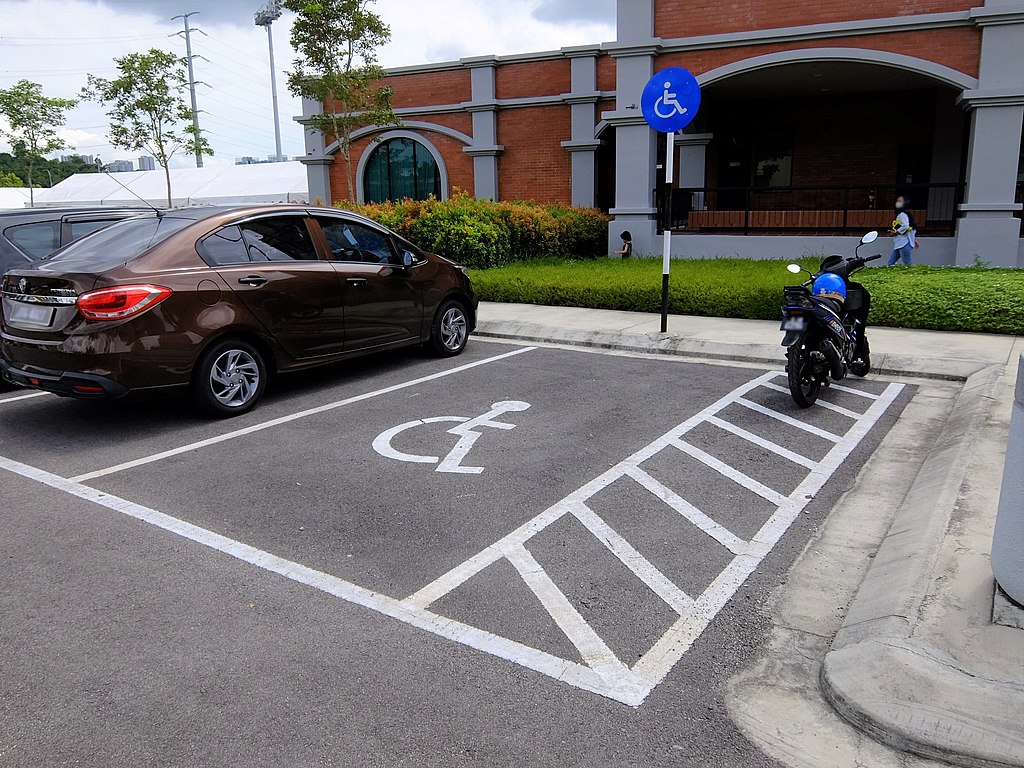
A disabled parking permitis displayed upon parking a vehicle permitting the operator of a vehicle to special privileges regarding the parking of that vehicle. These privileges include parking in a space reserved for persons with disabilities, or in some situations, permission to park in a time-limited space for a longer time, or to park at a meter without payment.
A driver must concentrate on driving his vehicle. A driver is distracted when something pulls away his attention from the road, so he can focus less on driving his vehicle. A distracted driver is at greater risk of being involved in an accident. With the known consequences (property damage, injuries, deaths).
 © Wikimedia.org/Melissa Wenger, CC0
A driver is someone who drives a vehicle. Anyone who drives a vehicle or guides, or guards, towing, loading and riding animals or cattle.
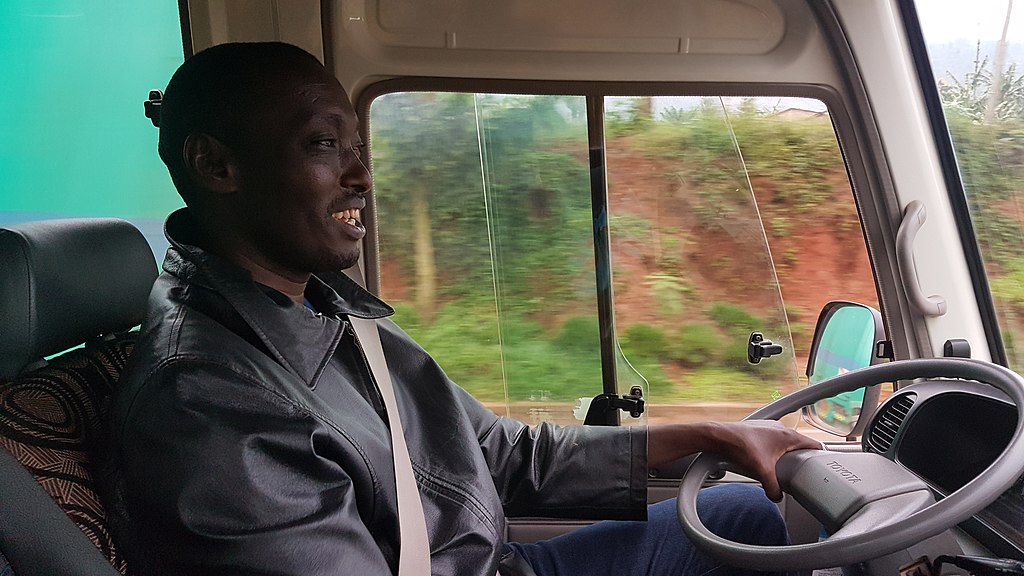 © Wikimedia.org/Kchorst, CC BY-SA
Driving is a very complex skill, because you often have to perform with different actions at the same time. Here you will find the basis for safe driving.
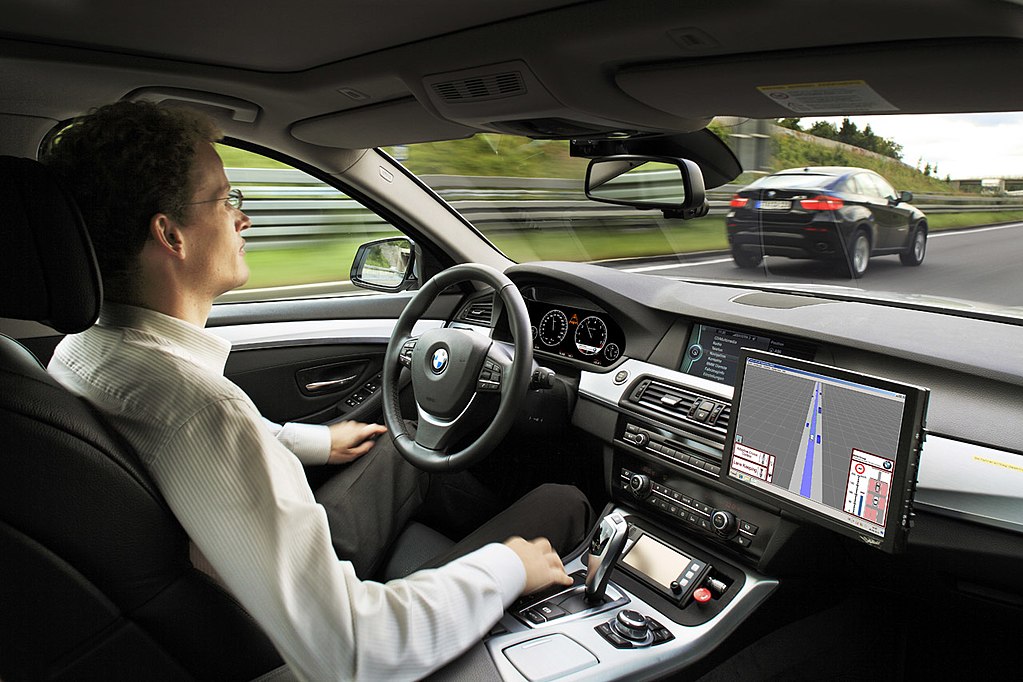 © Wikimedia.org/BP63Vincent, CC BY-SA
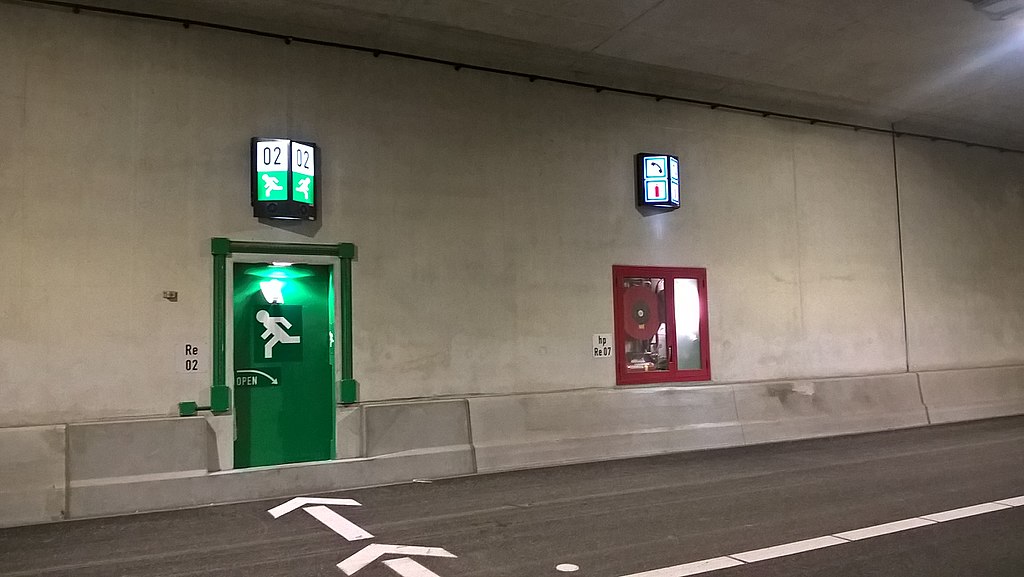
An emergency exit in a structure is a special exit for emergencies such as a fire: the combined use of regular and special exits allows for faster evacuation, while it also provides an alternative if the route to the regular exit is blocked by fire.
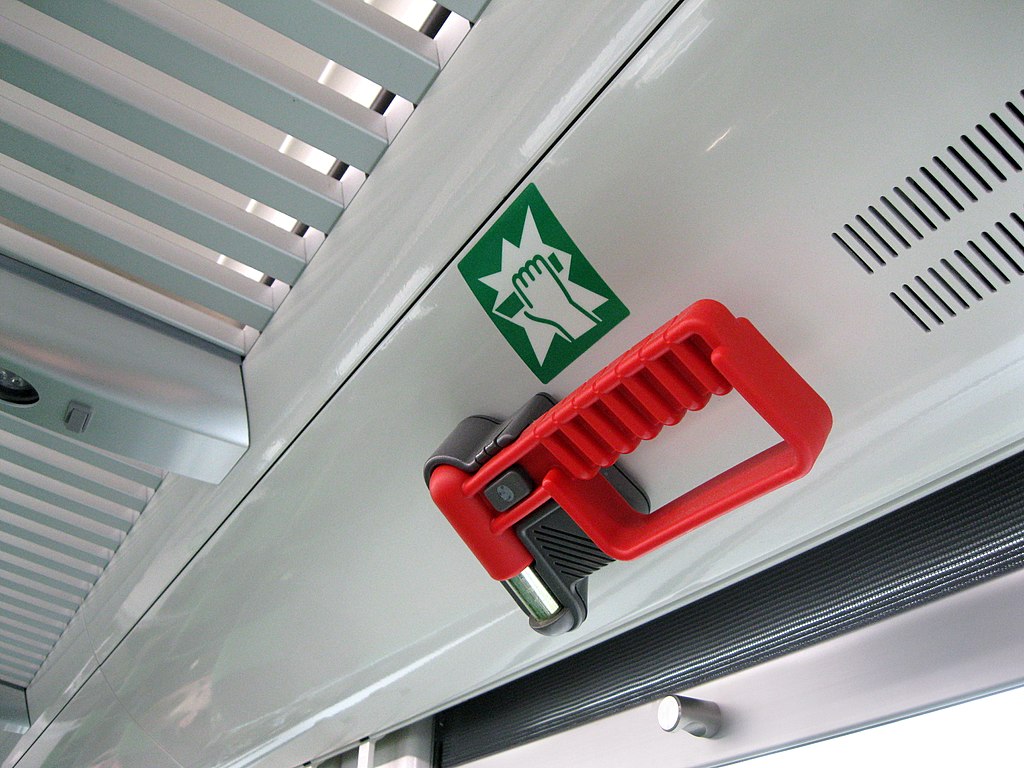
An emergency hammer is a safety device used in vehicles or buildings to break through window glass in an emergency. Many are attached to a cable or an alarm device to deter theft or vandalism. It is a simple tool with a plastic handle and steel tips. Its primary use is for breaking through vehicle windows and vertical glazing, which are often tempered, in the event of a crash which prevents exit through the doors.
A shoulder is an emergency stopping lane by the verge of a road or motorway. The purpose of building a shoulder is that in the event of an emergency or breakdown, a motorist can pull into the shoulder to get out of the flow of traffic and obtain a greater degree of safety.
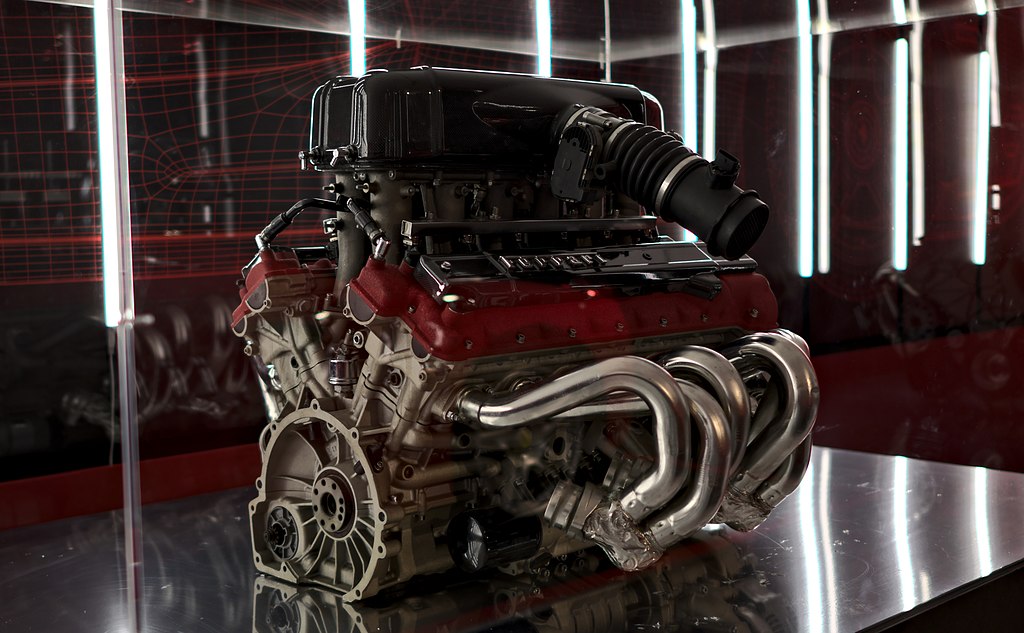
A badly running engine may fail while you are driving, this can cause serious problems for you and other road users. A poorly maintained engine is difficult to start, polluting, and uses more fuel.
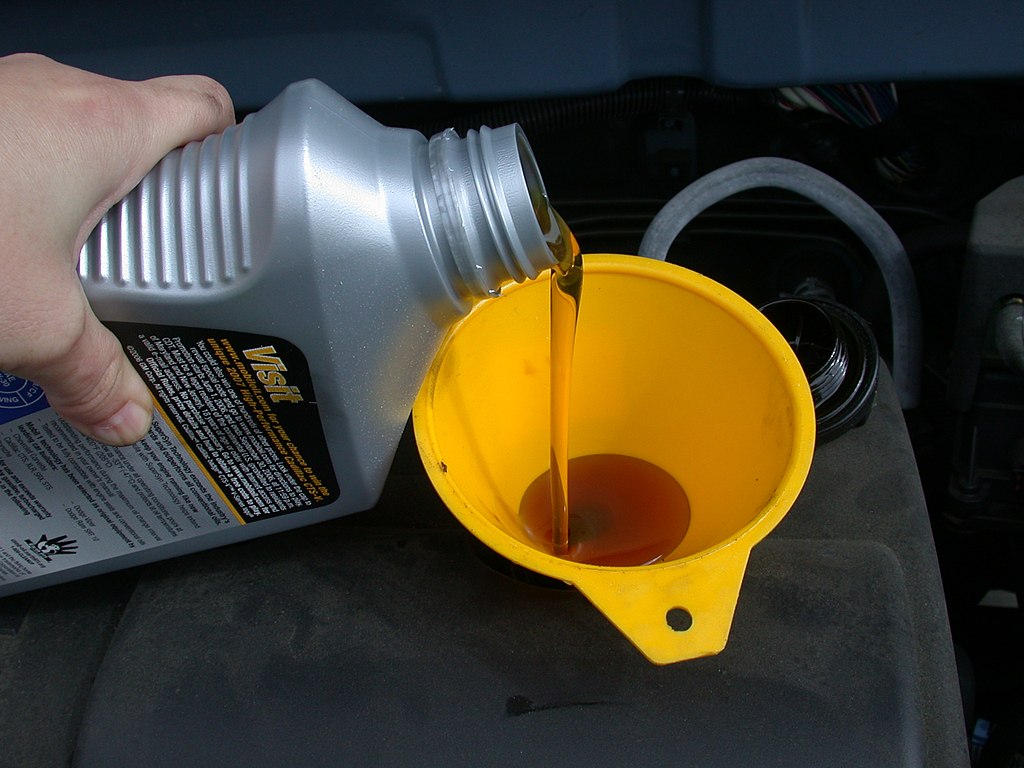
The engine oil ensures smooth engine operation and prevents overheating. There must always be sufficient engine oil in the engine. So make sure you know where the dipstick is and regularly check the oil level. You have to do that when the engine is cold (or stopped for a while) and the car is horizontal.
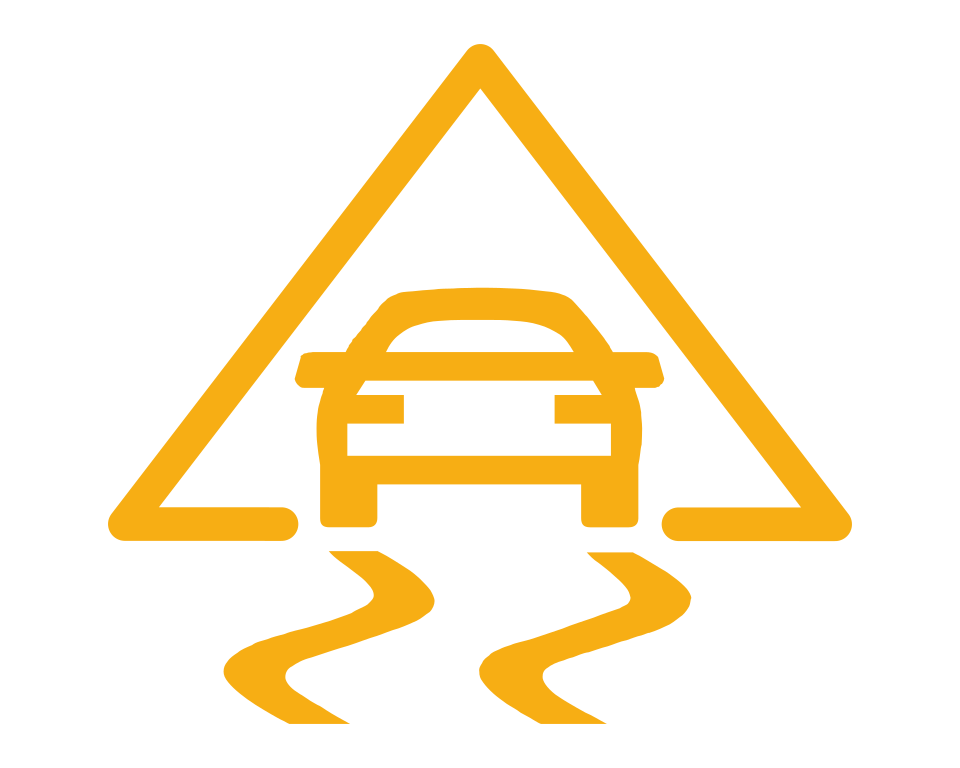
The 'Electronic Stability Program' (esp) helps the driver to control the vehicle when it is in a critical situation. A microcomputer checks the signals from the esp sensors and checks 25 times per second whether the driver's steering input matches the actual direction in which the vehicle is traveling. When the vehicle is moving in a different direction, esp detects the critical situation and reacts immediately. It uses the vehicle's braking system to stabilize the vehicle. Esp will brake the wheels individually so that the vehicle is stabilized and steered in the right direction.
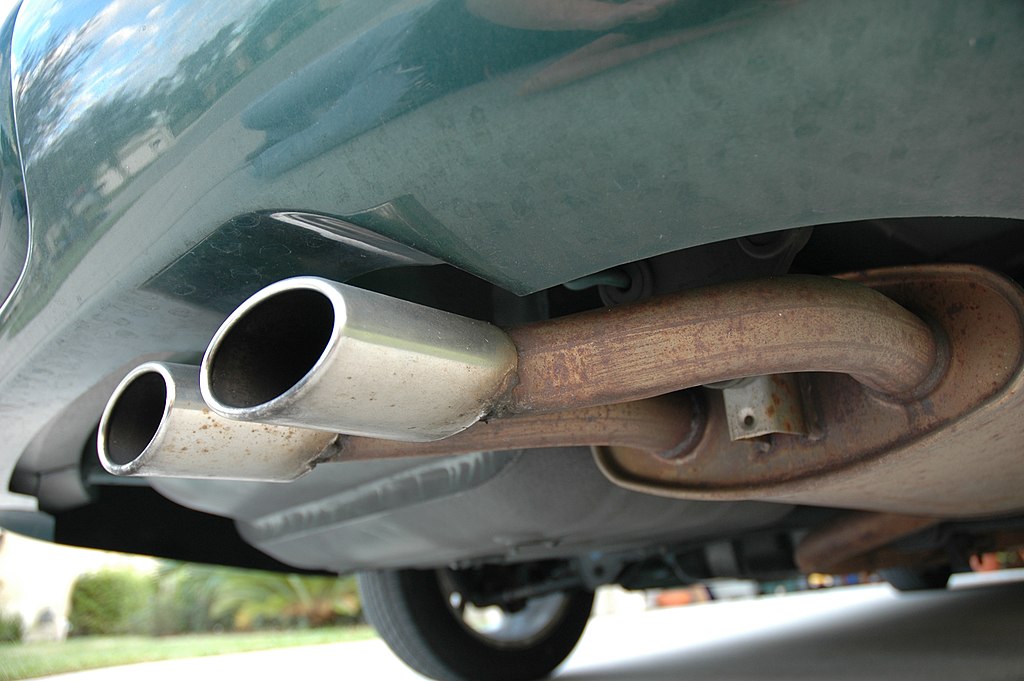
The exhaust system reduces the noise coming from the engine and helps cool the exhaust fumes from the engine. It transports the gases to the rear of the vehicle. Gasses that are released from a leaking exhaust system can be deadly in a short time. Never run an engine in a closed garage or small space.
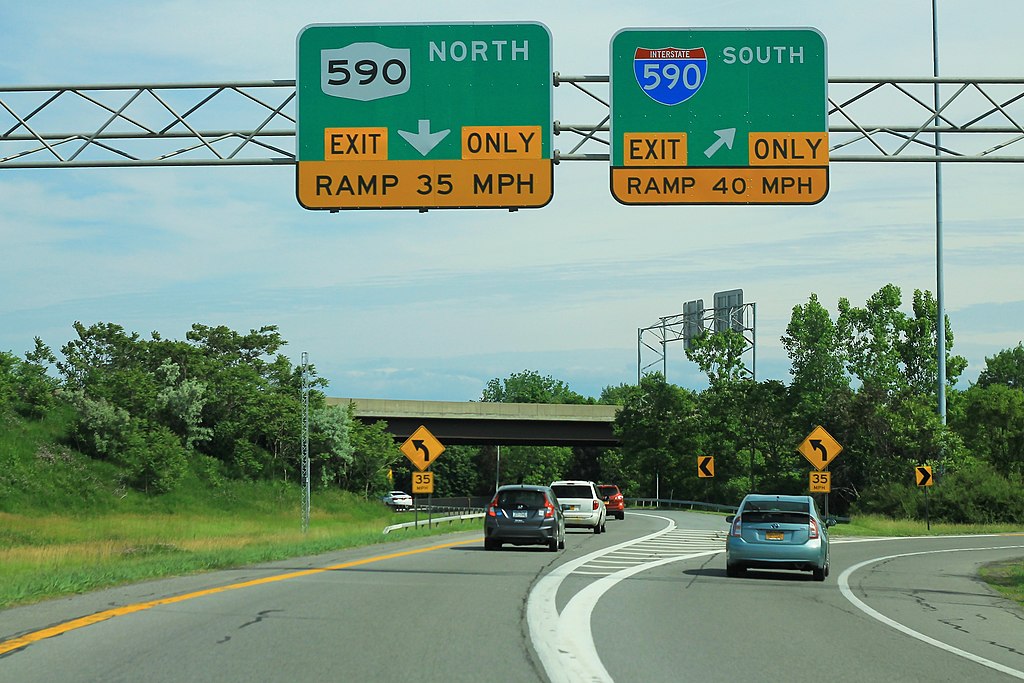
High-speed roads generally have an exit / exit lane to give you time to reduce speed.
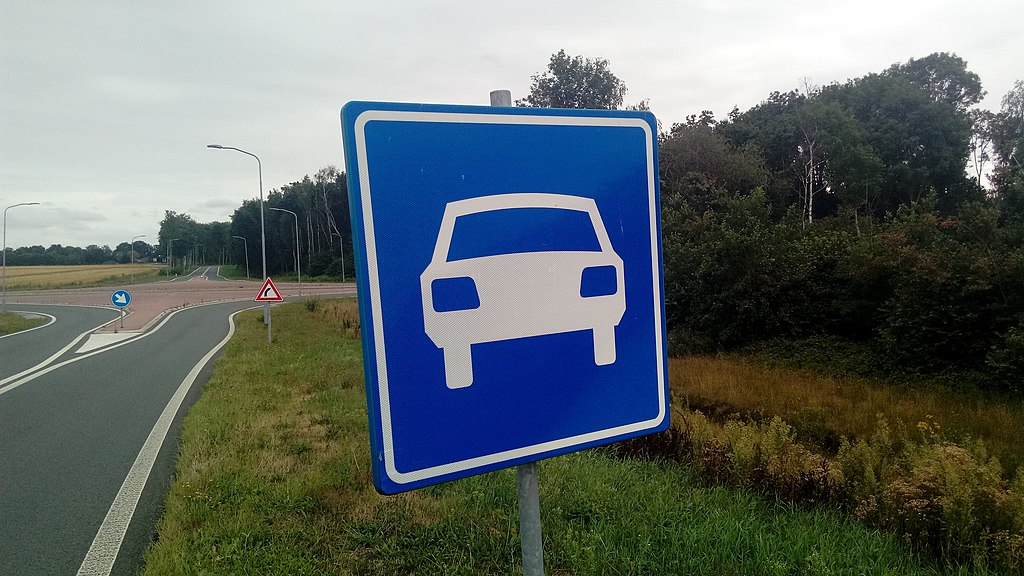
An expressway is a public road, similar to a motorway but often with intersections and traffic lights.
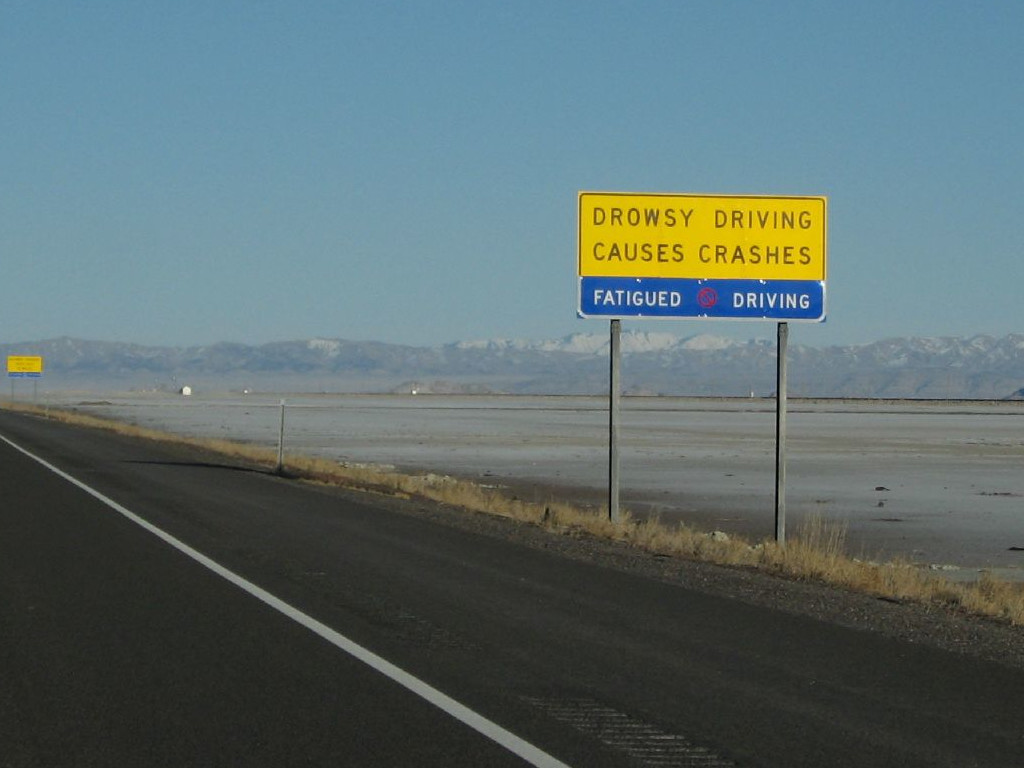
Fatigue is a feeling of tiredness. It may be sudden or gradual in onset. It is a normal phenomenon if it follows prolonged physical or mental activity, and resolves completely with rest. However, it may be a symptom of a medical condition if it is prolonged, severe, progressive, or occurs without provocation.
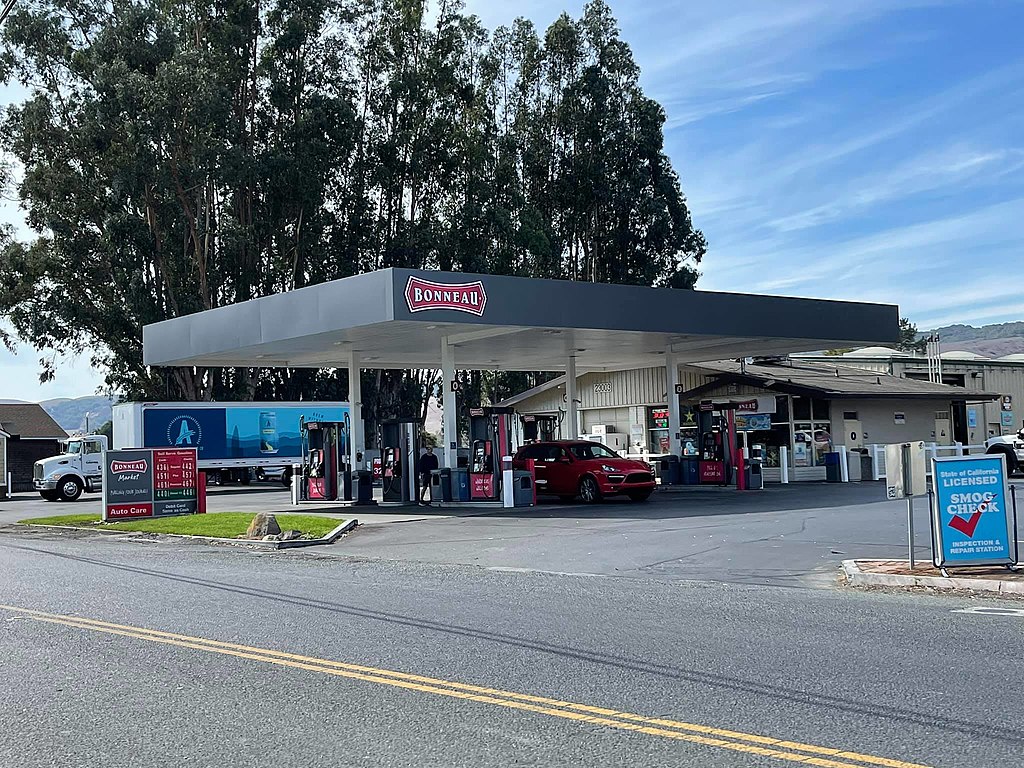
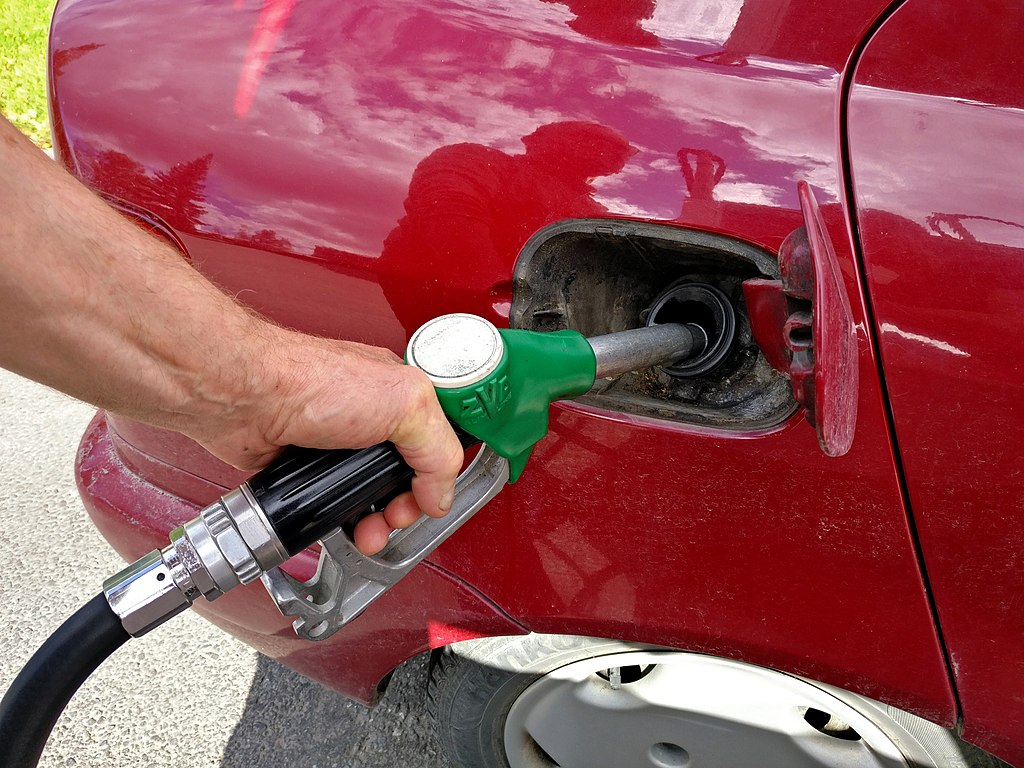
A filling station is a facility that sells fuel and engine lubricants for motor vehicles. The most common fuels sold in the 2010s are gasoline (gasoline or gas in the United States and Canada, generally petrol elsewhere) and diesel fuel. A filling station that sells only electric energy is also known as a charging station.
A fire truck is a vehicle that the fire service uses in the event of a fire or an accident. They are normally fitted with sirens and emergency vehicle lighting.
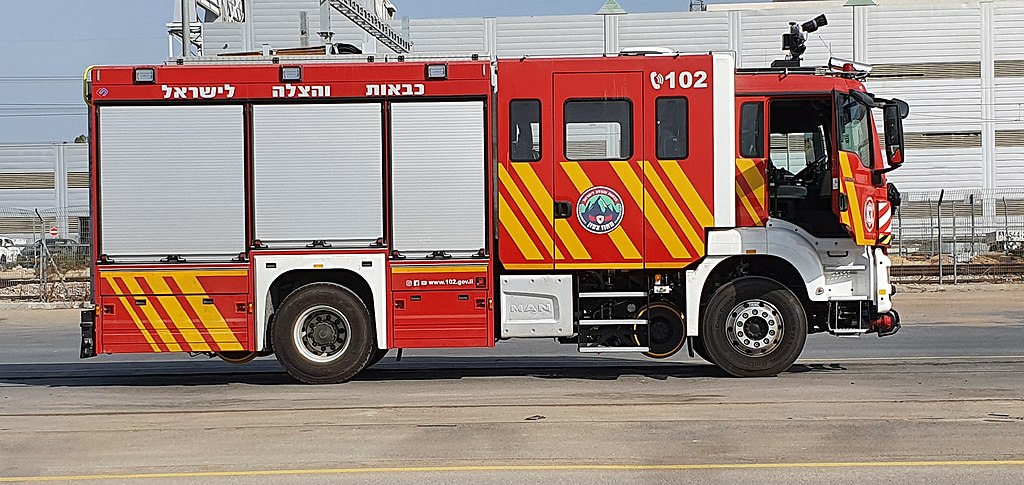 © Wikimedia.org/Yaron dozetas, CC BY-SA
The fog light may be used in bad weather conditions such as heavy rain, fog, or snow. The fog light can dazzle other road users, so use it only in bad weather. Not all cars are equipped with fog lights, so they are not required to use.
 © Wikimedia.org/Ehsnils, CC BY-SA
The fuel economy of an automobile relates distance traveled by a vehicle and the amount of fuel consumed. Consumption can be expressed in terms of volume of fuel to travel a distance, or the distance travelled per unit volume of fuel consumed. Since fuel consumption of vehicles is a significant factor in air pollution, and since importation of motor fuel can be a large part of a nation's foreign trade, many countries impose requirements for fuel economy. Different methods are used to approximate the actual performance of the vehicle.
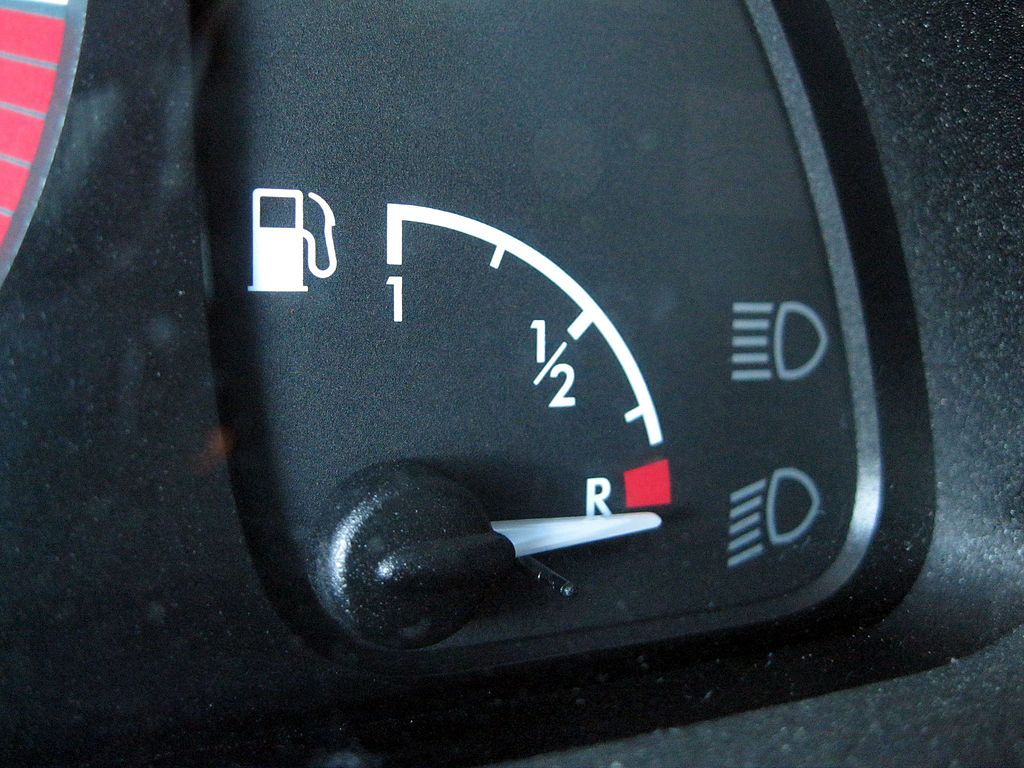
A fuel gauge or gas gauge is an instrument used to indicate the amount of fuel in a fuel tank. As used in vehicles, the gauge consists of two parts: The sending unit - in the tank and the indicator on the dashboard.
A glove compartment or glovebox or glovie is a compartment built into the dashboard of an automobile, located over the front-seat passenger's footwell, and often used for miscellaneous storage. The name derives from the original purpose of the compartment, to store driving gloves.
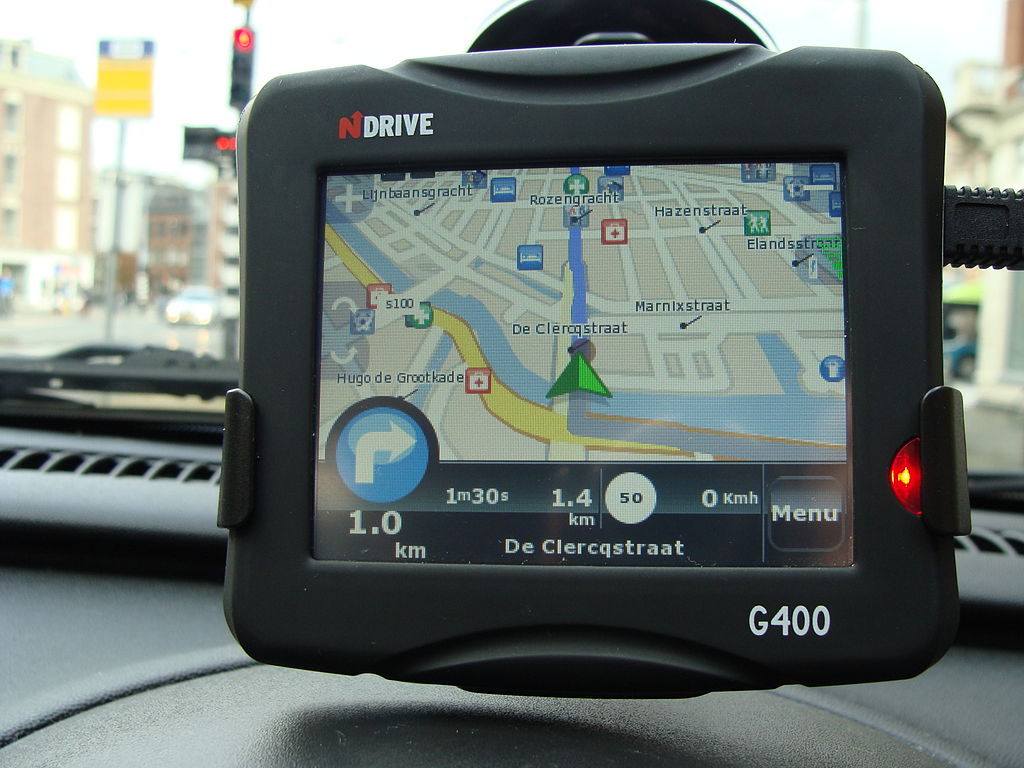
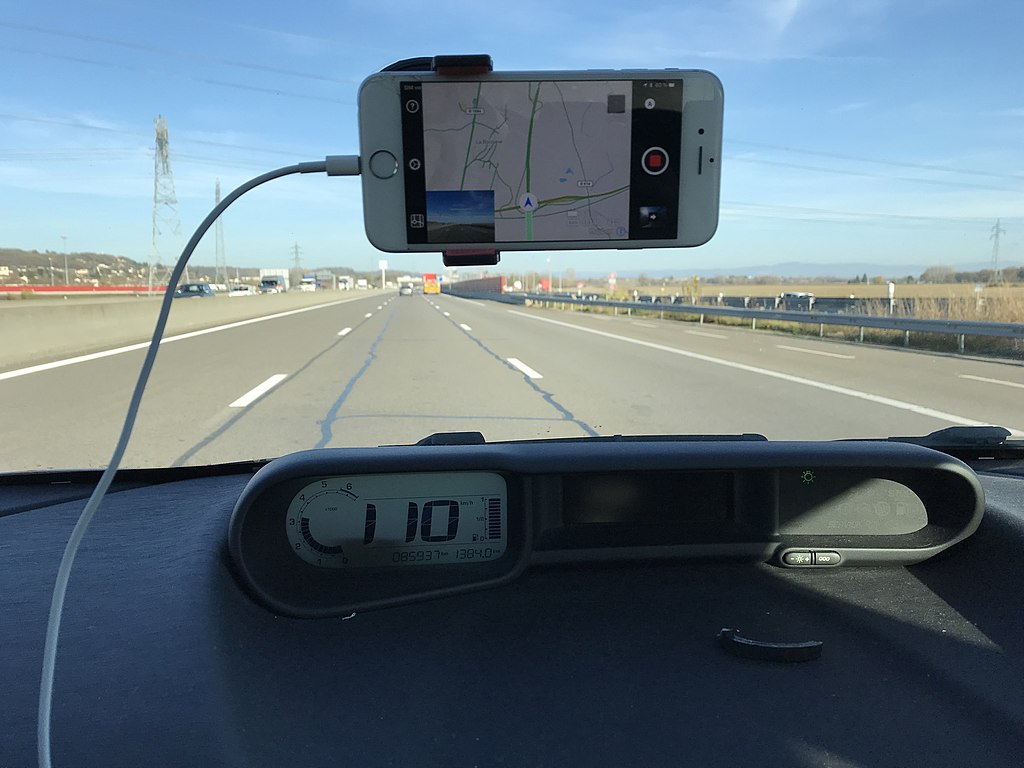
A Global Positioning System, also known as gps, is a system designed to help navigate on the Earth, in the air, and on water.
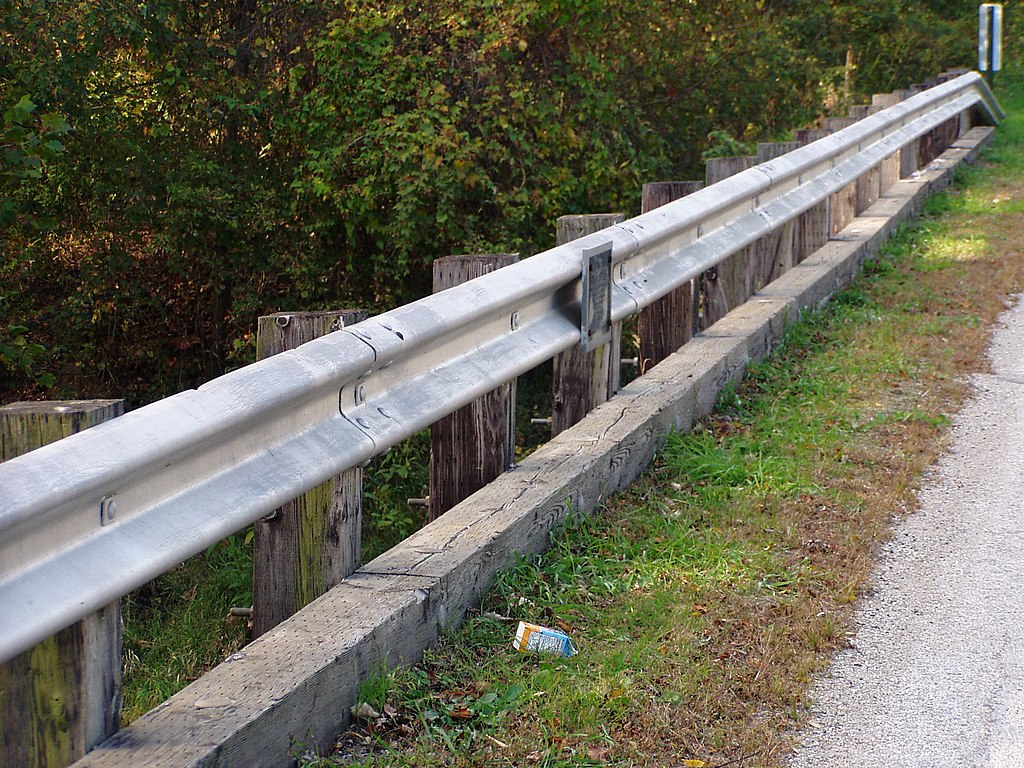
A guardrail or crash barrier is a barrier placed next to roads to prevent vehicles from leaving the road in a lateral direction, tilting or traversing the central reservation. This reduces injury to occupants and damage to the car as much as possible.
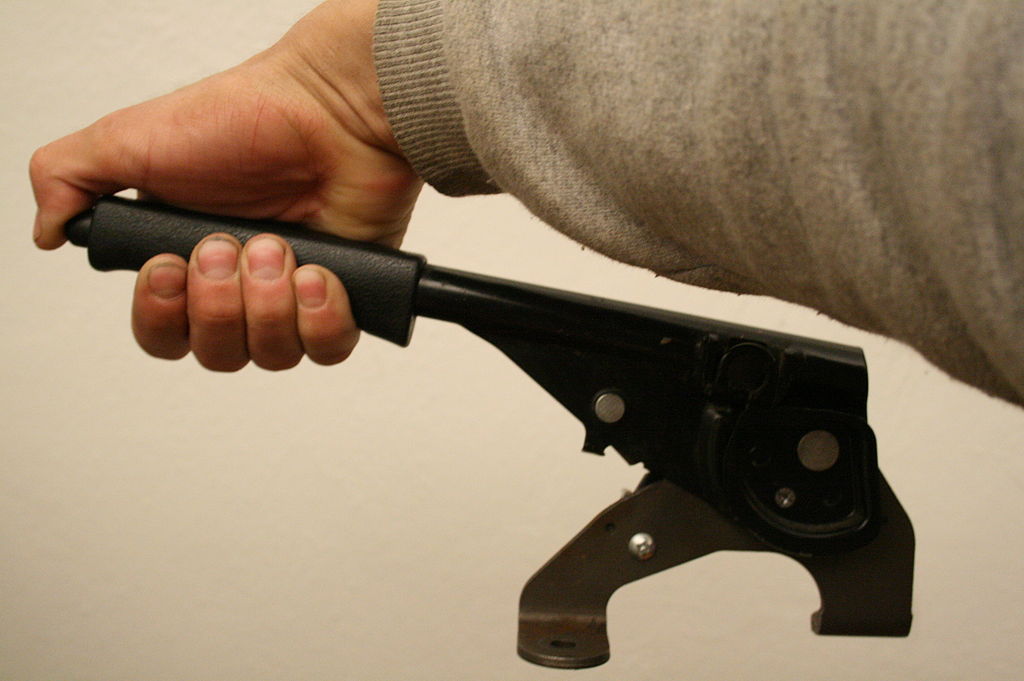
A handbrake or parking brake is a mechanism used to keep the vehicle securely motionless when parked. Historically, it was also used to help perform an emergency stop should the main hydraulic brakes fail. Parking brakes often consist of a cable connected to two wheel brakes, which is then connected to a pulling mechanism. In most vehicles, the parking brake operates only on the rear wheels, which have reduced traction while braking. The mechanism may be a hand-operated lever, a straight pull handle located near the steering column or a foot-operated pedal located with the other pedals.
Handsfree is an English term that indicates that a device can be operated without the use of the hands. It is mostly used in the sense of mobile telephony in the car. The counterpart is handheld, a device is held in the hand during operation.
A motorcycle helmet is a type of helmet used by motorcycle riders. The primary goal of a motorcycle helmet is motorcycle safety – to protect the rider's head during impact, thus preventing or reducing head injury and saving the rider's life. Some helmets provide additional conveniences, such as ventilation, face shields, ear protection, intercom.
The high beam is used to illuminate the road so that you can see further, it provides a clear view to about 100 meters. Because the high beam emits a very bright light, it can blind other road users. You may not use the driving beam if you drive behind another road user or when approaching an oncoming vehicle.
 © Wikimedia.org/Ehsnils, CC BY-SA
A driver commits a hit and run if he leaves the scene of the accident with the intention of escaping the consequences. Never commit a jit and run, there are very strict penalties!
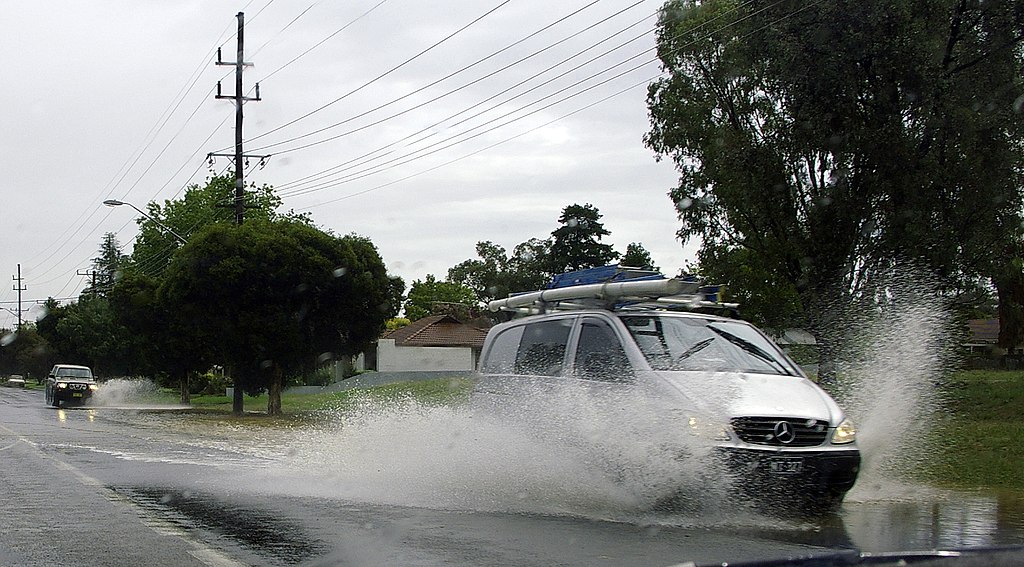
In case of rain or a wet road surface, most tires have a good grip up to about 55 km / h. If you drive faster, the tires start riding on the water like water skis. We call this 'hydroplaning', in dutch water smoothness or aquaplaning. If there is water on the road surface, the tires can completely lose their grip with the road. Bare or worn tires can lose their grip at much lower speeds. The best way to prevent hydroplaning is to reduce the speed in case of rain or a wet road surface.
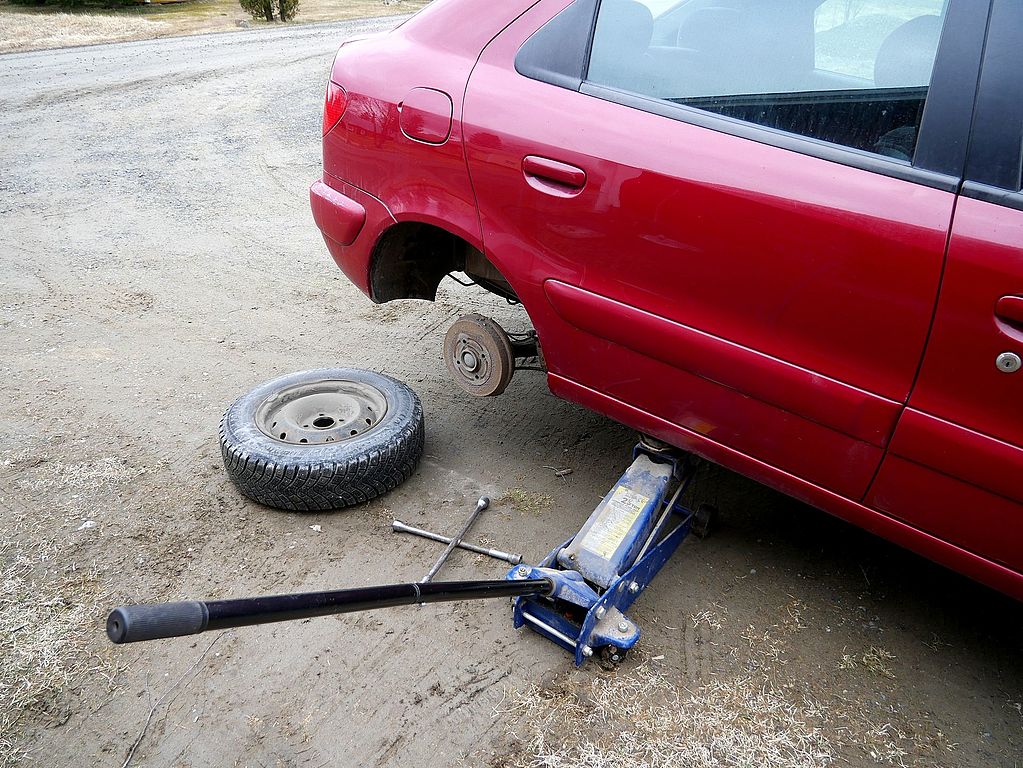
A jack is an object to lift heavy things with. A common use is to lift a car slightly to replace a wheel.
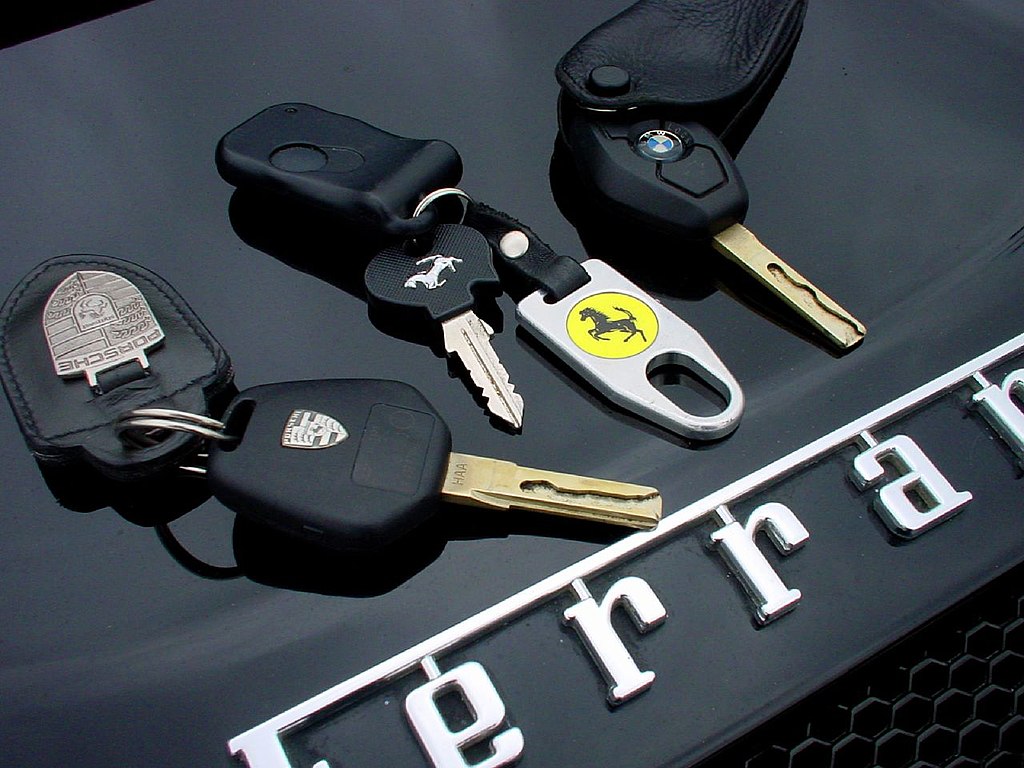
A car key or an automobile key is a key used to open and/or start an automobile. Modern key designs are usually symmetrical, and some use grooves on both sides, rather than a cut edge, to actuate the lock. It has multiple uses for the automobile with which it was sold. A car key can open the doors, as well as start the ignition, open the glove compartment and also open the trunk (boot) of the car.
A lane is part of a roadway that is designated to be used by a single line of vehicles, to control and guide drivers and reduce traffic conflicts. Most public roads have at least two lanes, one for traffic in each direction, separated by lane markings. On multilane roadways and busier two-lane roads, lanes are designated with road surface markings. Major highways often have two multi-lane roadways separated by a median.
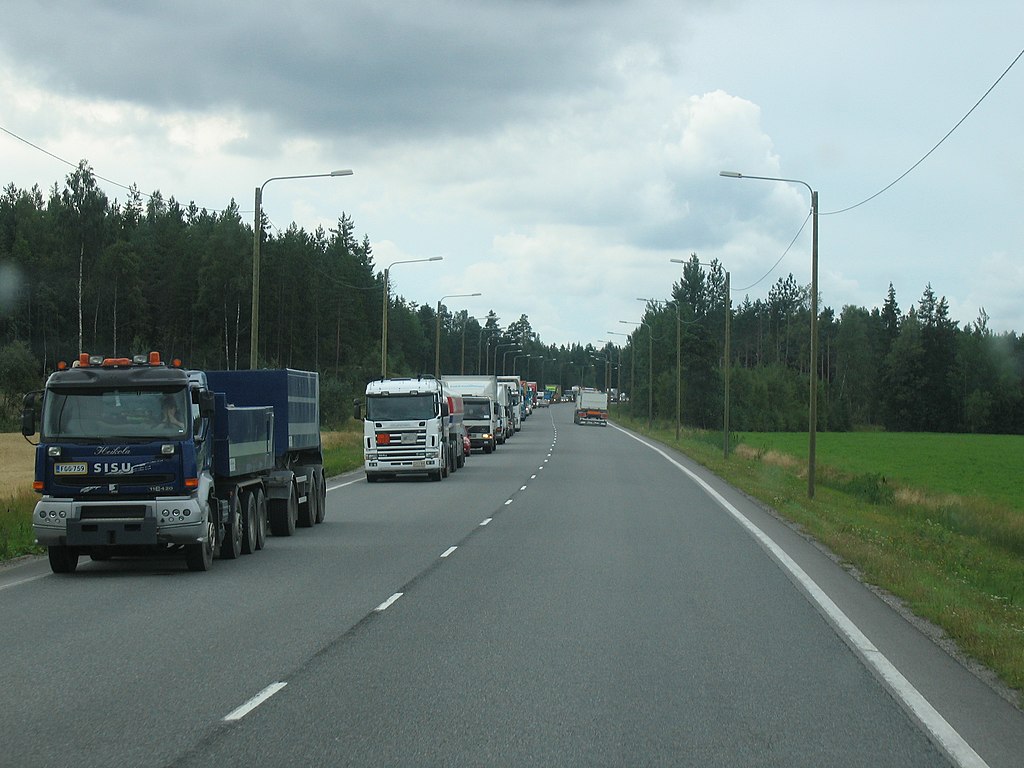 © Wikimedia.org/Teppo Lainio, CC BY-SA
Left-hand traffic (LHT) and right-hand traffic (RHT) are the practice, in bidirectional traffic, of keeping to the left side or to the right side of the road, respectively. A fundamental element to traffic flow, it is sometimes referred to as the rule of the road.
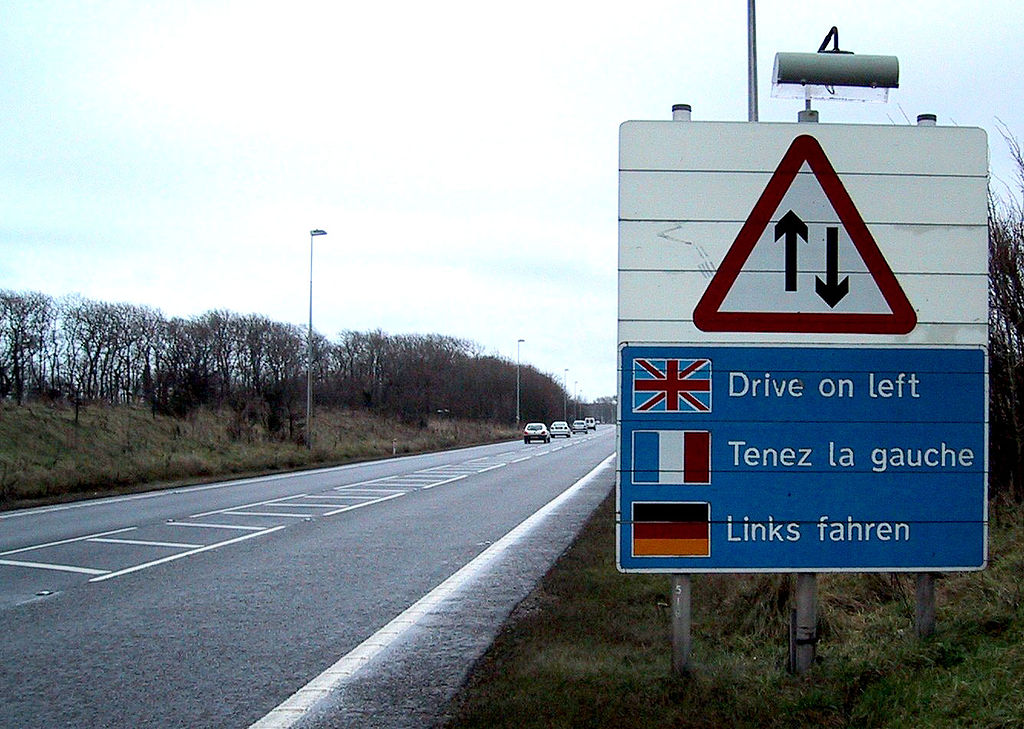 © Wikimedia.org/NFH, CC0
The lights on a vehicle have different functions and are an important part of road safety. The lights of your vehicle improve visibility at night. They also ensure that other road users can better see the presence, position, size and direction of your vehicle.
The vehicles of the residents and their visitors, the vehicles for delivery included.
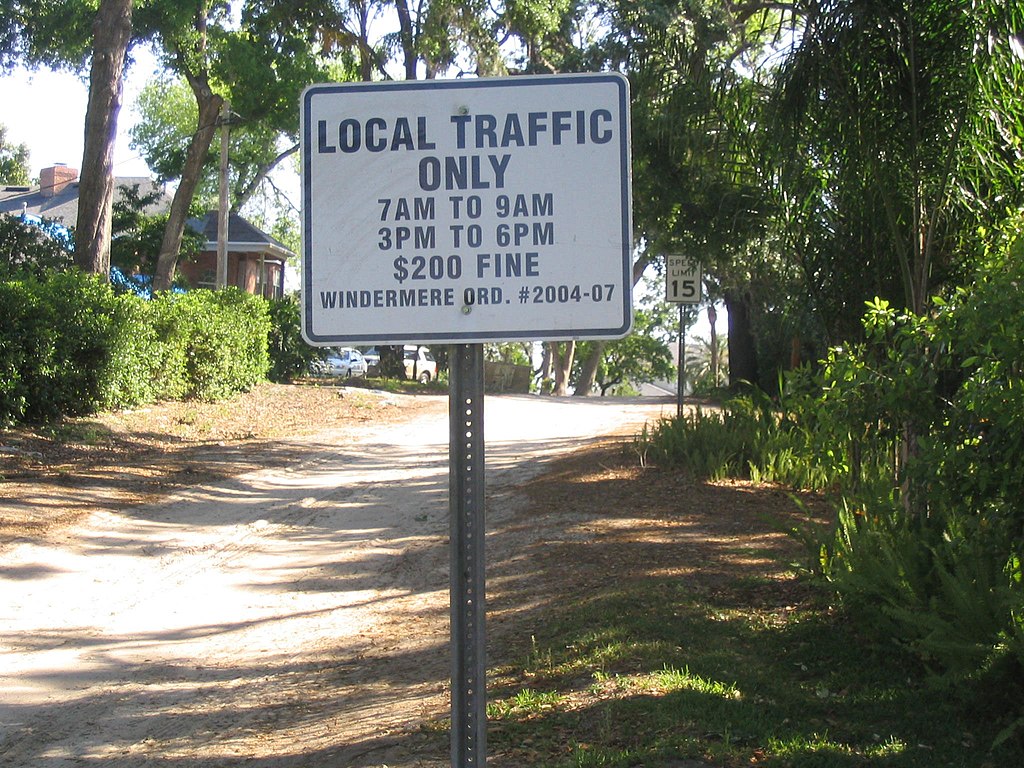 © Wikimedia.org/SPUI, CC0
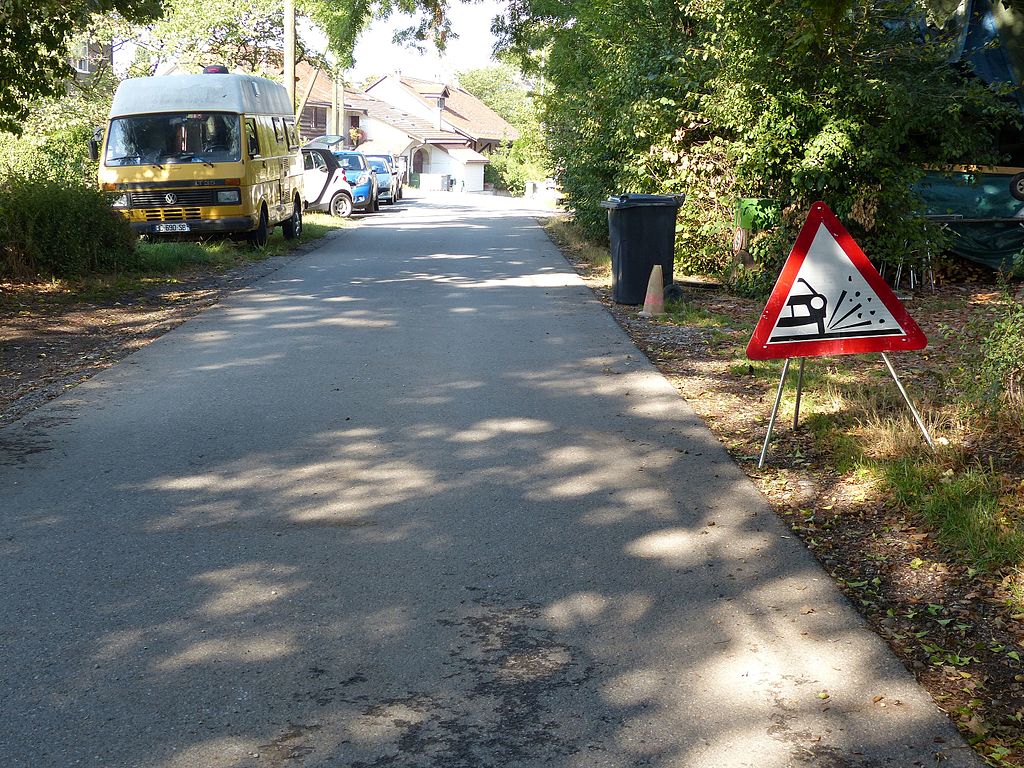
Loose chippings are loose gravel or stone fragments on a road surface and form a hazard to vehicles using that road. It may come from the road's chip seal. Excessive speed while driving through loose chippings damage both the road and vehicles. Loose chippings can reduce traction and cause loss of control. This is a special hazard to motorcyclists and bicyclists, who may lose their balance and fall if their tires start sliding. Loose chippings can be picked up by tyres and damage them, or may be spun off to become high speed missiles, which may injure or damage other persons or vehicles on the road.
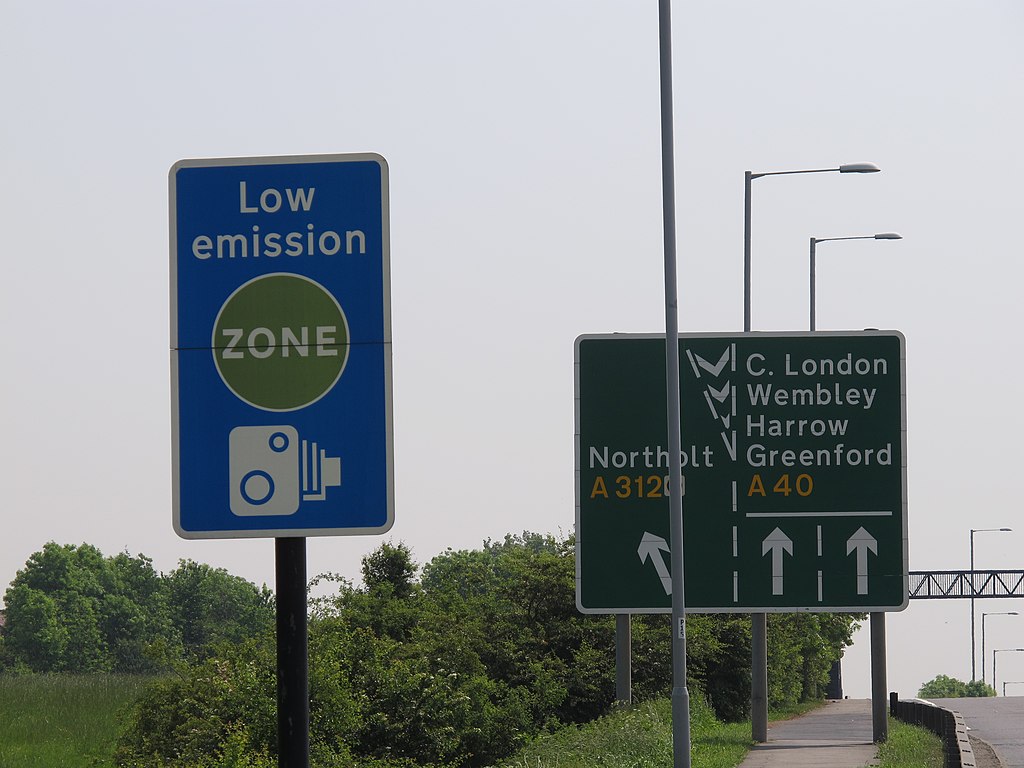
A low-emission zone is a selective admission policy for motor vehicles is used in relation to the environmental nuisance caused by these vehicles because of the quality of life, in particular the environmental and health problems caused by poor air quality.
A manual transmission, also known as a manual gearbox, a standard transmission, stick shift, or simply stick, clutch, or gearbox, is a type of transmission used in motor vehicle applications. It uses a driver-operated clutch, usually engaged and disengaged by a foot pedal or hand lever, for regulating torque transfer from the engine to the transmission; and a gear selector that can be operated by hands.
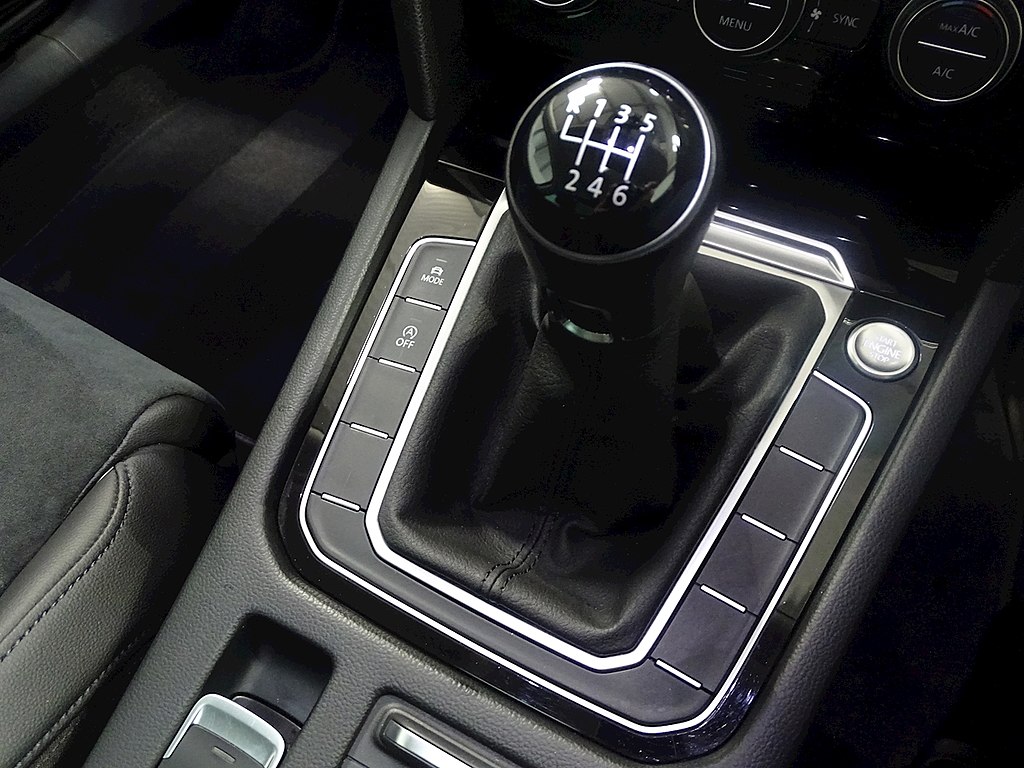 © Wikimedia.org/21C117, CC BY-SA
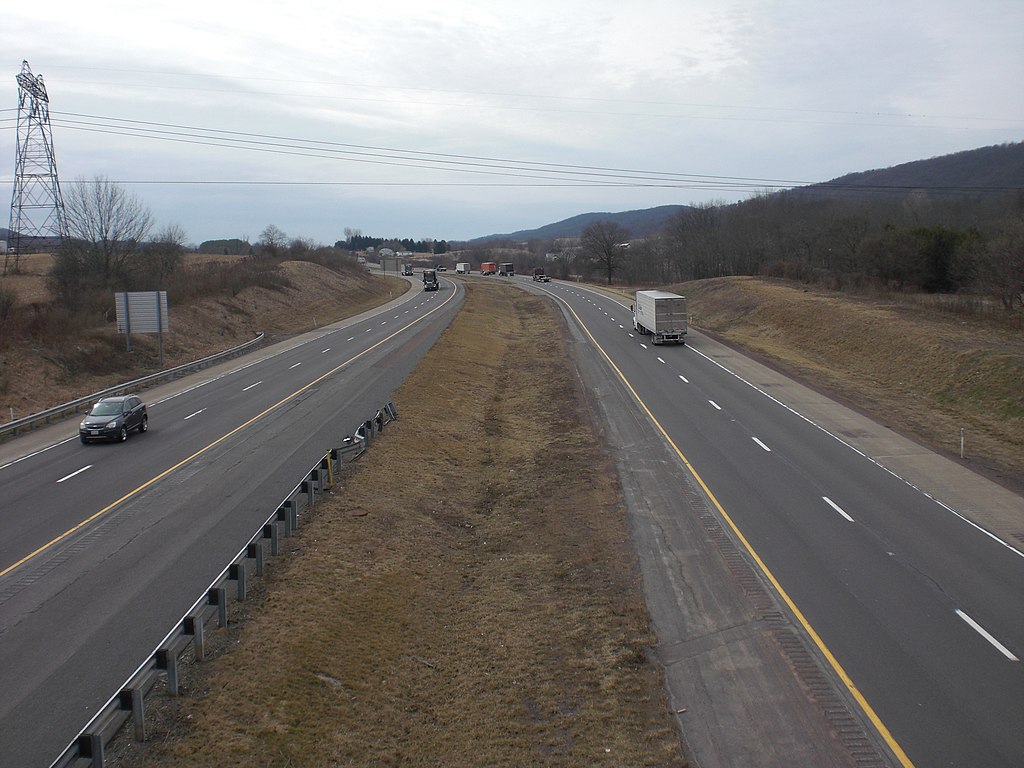
The median strip or central reservation is the reserved area that separates opposing lanes of traffic on divided roadways, such as divided highways, dual carriageways, freeways, and motorways. The term also applies to divided roadways other than highways, such as some major streets in urban or suburban areas. The reserved area may simply be paved, but commonly it is adapted to other functions.

Help us promote traffic rules on the internet, together we can make the public road safer for everyone. Post a comment or share on social media!

I want to get the greek driving license, so should i study from here and thats it for the oral exam ? thanks a lot
 0
0



Complete solutions and walkthroughs for all Brain Test game levels. Get step-by-step guides and video tutorials to solve every tricky puzzle.https://braintest.games/
-1

According to Article 14 this diagram is incorrect. You stay in the inside lane unless you are coming off at the FIRST exit only.
3

Aerial Silks, Aerial Yoga Hammock all in over 46 colors. Of No-low and Low-medium Stretch Silks. Aerial Lyra, Hardware and more! Build your response time with Aerials www.aerialsusa.com
1

Speedlimit signs in Norway are not just at the start of the speedlimit. Every speedlimit sign exept 50 and 80 are also placed with a specific distance between eachother as a reminding. If there is no speedlimit sign for a while, you are either in a 50 or 80 area, depending on the road and amout of houses/buildings
1
Most of these DOES NOT exist on the official Greek test. //Someone that not only practiced it in Greece, but also scraped sites that had the official test (1:1 copy to the official one) in order to build a better learning site than existing ones (still a work in progress).
-1

I think the wording is a bit unlucky. "Warning for cyclists" is wrong. It's a "Warning OF cyclists FOR everybody". I think all those "Warning for X" signs should be "Warning of X" or "Warning against X". And then it's not really as specific as some of them are described. E.g. there's one that says "Warning for deer", which should be "Warning against wildlife crossing". It's not deer, it could be warthogs or boars or foxes as well.
Traffic signs in Portugal follow European standards, using clear symbols and colors. They regulate speed, directions, and warnings https://bomcondutor.com.pt/ . Understanding them is essential for safe driving and avoiding fines or accidents.
0

This is a solid breakdown. But honestly, road safety starts with knowing the basics. Check this out for some cool tech related to it—might be worth a look: https://www.ainanobanana.pro
1
Driving tips are crucial, but people often forget the fun side of road trips. A good way to unwind is to play games while waiting in traffic, like maybe this cute puzzle game. <a href="https://chiikawapuzzle.art"; target="_blank">chiikawa puzzle</a>
0

Super useful for reviewing the driving code in Japan! I hope it will help me remember all the signs. Good luck to everyone taking the exam and play the https://sprunkiretake.io
0
This looks useful for studying! I hope it helps me not panic on the day of the exam. Fingers crossed for https://buzzcut.style!
1
Lot of info here, but I gotta say, knowing the right tire pressure is a game changer. Keeps your ride smooth and safe—check out this tool for some handy pixel art that might spark your creative side too. https://www.wplace.pro
0

To sum-up: A-3 and A-4 are wrong - the sign only tells you the direction of the first curve, the second one can be whatever A-6d and A-6e are not about sharpness, but about the incoming roads being one-way towards the road you're currently on A-18a is not about cattle specifically, but about farm animals or domesticated animals A-18b is not limited to deer, but any wild animals that might suddenly appear on the road, like elk or boars B-32a is literally "border control", but may also have different variations with different text meaning in general "stop here until you're explicitly allowed to go" All that info can be found on wikipedia.
2
A-4 also wrong. It means "dangerous curves — first to the left", the second one can be either left or right. It doesn't specify.
1
Wrong. This is A-6d, which "entry of the one-way road from the right". Nothing about sharpness. See: https://en.wikipedia.org/wiki/Road_signs_in_Poland
0

The questions are pretty good, but unfortunately there's no variety at all. Would be nice if there were questions about things other than the signs, which are arguably one of the easiest parts of traffic rules
2
If you don’t wear a seatbelt, you’re just asking for trouble. Plus, knowing how to handle slippery roads is crucial, or you’ll end up in a ditch. For those who enjoy homegrown food, check this out for some cool garden-to-table ideas. https://www.growagardenrecipes.pro
0
Look, safety on the road is no joke. All that talk about seatbelts and tire pressure? Spot on. But hey, if you're into photography too, check out this neat tool for some cool filters. Could make your car pics pop a bit more, ya know? https://www.digitalcamerafilter.art
0
A lot of good info here, but let's be real—nobody thinks about tire pressure until it's too late. By the way, if you're looking for something to get those creative juices flowing, check out this :https://www.my-doodle.art
-1
Look, all this stuff is basic driving knowledge. But seriously, if you're gonna drive, at least know when to ditch the old-school habits. Check out this game to blow off some steam after a long drive, it’s got some epic battles <a href="https://www.animefinalstrike.org"; target="_blank">animefinalstrike</a>.
-1
The polish sign "Curve of the main road" is actually a complimentary sign showing the "actual course of priority road" and there are several thousand variations of it as this is often "crossroad specific"
1
This goat is so beautiful! Living in the wild makes it look a bit thin. You can check out my website about whatsmyname的.https://whatsmynameapp.net/
1
What a lively walking crab! Its sideways scuttle is so full of character—like a tiny, determined navigator on a mission.https://animefinalstriketier.com/
1







 Dec 06, 2025










More community