


Señales de tráficoBosnia y Herzegovina
 Normas de tráfico
 Bosnia y Herzegovina
101. Intermitentes
Los intermitentes, también llamados indicadores de dirección, son luces intermitentes utilizadas para comunicar la intención del conductor de girar o desplazarse lateralmente, por ejemplo al cambiar de carril. Normalmente parpadean en el lado hacia el que pretende desplazarse el vehículo.
Deben activarse con suficiente antelación para advertir de forma útil a otros usuarios y desactivarse una vez completado el movimiento. Señalizar no concede por sí mismo prioridad ni convierte en permitida una maniobra insegura.

When should turn signals be used?
Turn signals should be used when turning, changing lanes or making another lateral movement where signalling is required. The signal should be given early enough for other road users to understand the driver's intention.
Does using a turn signal give you priority?
No. A turn signal only communicates an intended movement. The driver must still follow the applicable priority rules and make sure the movement can be completed safely.
When should a turn signal be switched off?
The signal should be cancelled once the turn, lane change or other indicated movement has been completed so that it does not mislead other road users.

102. Luces de emergencia
Las luces de emergencia hacen parpadear simultáneamente todos los indicadores de dirección del vehículo. Se utilizan para advertir a otros usuarios de que el vehículo o la situación del tráfico presenta un peligro inusual o inmediato.
Pueden ser apropiadas tras una avería, una colisión o para advertir al tráfico que circula detrás de un peligro repentino. Normalmente no deben utilizarse como sustituto de un estacionamiento correcto, una señalización adecuada o el alumbrado reglamentario.

What are hazard lights used for?
Hazard lights warn other road users of an unusual or potentially dangerous situation involving the vehicle or traffic ahead. Common examples include breakdowns, collisions and sudden obstructions.
Do hazard lights give a driver permission to park anywhere?
No. Switching on hazard lights does not normally make prohibited stopping or parking legal. The driver must still comply with the applicable stopping and parking rules.
Can hazard lights be used to warn drivers behind of sudden congestion?
In many countries they may be used briefly to warn following traffic of an immediate danger such as a sudden queue. The exact rules governing their use vary between countries.
103. Testigos del cuadro de instrumentos
Los testigos del cuadro de instrumentos son símbolos e indicadores iluminados que proporcionan información sobre el funcionamiento del vehículo, sus sistemas y posibles averías. Pueden indicar funciones como faros, intermitentes, nivel de combustible, estado del motor, presión de los neumáticos, sistemas de frenado y equipos de seguridad.
Suelen utilizar distintos colores para indicar su importancia. El verde o azul suele mostrar que un sistema está funcionando, el ámbar o amarillo generalmente indica que puede requerirse atención, y el rojo suele advertir de una situación grave que exige actuar con rapidez.
What do dashboard warning lights mean?
Dashboard warning lights communicate information about vehicle systems. Their exact meaning depends on the symbol, colour and vehicle, so drivers should consult the vehicle handbook when a warning is unfamiliar.
What does a red dashboard warning light usually mean?
A red warning light generally indicates a serious problem or a condition requiring immediate attention. Depending on the warning, the driver may need to stop the vehicle safely and switch off the engine.
What does an amber or yellow dashboard light mean?
An amber or yellow light usually indicates a fault, maintenance requirement or condition that should be checked soon. The vehicle may still be driveable, but the warning should not be ignored.
104. Alumbrado de bicicleta
El alumbrado de bicicleta se refiere a las luces y reflectantes instalados en una bicicleta para ayudar al ciclista a ver y ser visto, especialmente con poca luz o de noche. Es esencial para la seguridad y a menudo es obligatorio por ley.

105. Timbre de bicicleta
Un timbre de bicicleta es un pequeño dispositivo sonoro instalado en una bicicleta, normalmente en el manillar, que se utiliza para advertir a peatones, otros ciclistas o vehículos de la presencia del ciclista. En muchos países o ciudades es obligatorio disponer de un timbre en funcionamiento en vías públicas y carriles bici. Es una herramienta pequeña pero muy útil para la seguridad y la cortesía, similar al claxon de un vehículo pero más discreta.

106. Ráfagas de luces
Las ráfagas de luces consisten en encender y apagar brevemente las luces de carretera de un vehículo —o, a veces, las de cruce— para comunicar un aviso a otros usuarios. Deben utilizarse con claridad y prudencia: no de forma demasiado rápida o agresiva, y deben evitarse en niebla, lluvia intensa o de noche si pueden deslumbrar a otras personas.

107. Cinturón de seguridad
Un cinturón de seguridad es un sistema de retención diseñado para mantener a un ocupante firmemente en su asiento durante una frenada brusca o una colisión. Ayuda a reducir el riesgo de que golpee el interior del vehículo o salga despedido.
Debe ajustarse firmemente al cuerpo, con la parte abdominal colocada baja sobre las caderas y la banda diagonal cruzando el pecho. No debe estar retorcido, colocarse detrás de la espalda ni utilizarse de una manera que reduzca su efecto protector.

Why is wearing a seat belt important?
A seat belt restrains the occupant during sudden deceleration or a collision, helping prevent contact with the vehicle interior and reducing the risk of being thrown from the vehicle.
How should a seat belt be worn?
The belt should fit securely without twists. The lap section should lie low across the hips and the shoulder section should pass across the chest and shoulder rather than behind the back or under the arm.
Do airbags replace the need for a seat belt?
No. Seat belts and airbags are designed to work together. An airbag does not replace the restraint provided by a correctly worn seat belt.
108. Sistemas de retención infantil
Los sistemas de retención infantil son sistemas de seguridad diseñados para proteger a los niños que viajan en vehículos. Incluyen sillas orientadas hacia atrás o hacia delante y elevadores que colocan y sujetan al niño según su tamaño y las especificaciones del sistema.
El sistema debe ser adecuado para el niño y el vehículo, instalarse conforme a las instrucciones del fabricante y sujetarse correctamente en cada viaje. Un sistema orientado hacia atrás nunca debe colocarse delante de un airbag frontal activo.
What is a child restraint system?
A child restraint system is a safety device designed to secure a child in a vehicle. Depending on the child's size and the system, it can include a child seat, harness or booster seat used together with the vehicle's seat belt or dedicated anchorage system.
How should you choose a child restraint?
The restraint should be approved for the child's size and compatible with the vehicle. The manufacturer's instructions should be followed carefully when selecting, installing and using it.
Can a rear-facing child seat be placed in front of an active airbag?
No. A rear-facing child restraint must not be used on a seat with an active frontal airbag because deployment of the airbag can seriously endanger the child.
109. Reposacabezas
Los reposacabezas son dispositivos de seguridad diseñados para limitar el movimiento hacia atrás de la cabeza de un ocupante respecto al cuerpo durante una colisión. Ayudan a reducir el riesgo de lesiones en el cuello y la columna cervical, especialmente en impactos traseros.
Un reposacabezas ajustable debe colocarse de modo que apoye la parte posterior de la cabeza, no el cuello, y tan cerca de la cabeza como resulte práctico. Conductores y pasajeros deben ajustarlo a su tamaño corporal antes de viajar.
What is the purpose of a head restraint?
A head restraint limits excessive rearward movement of the head during a collision, helping reduce the forces acting on the neck and cervical spine.
How should a head restraint be adjusted?
It should be adjusted to support the back of the head rather than the neck and positioned as close to the head as practical. The seat and head restraint should be adjusted together to provide a comfortable and protective driving position.
Are head restraints part of passive safety?
Yes. Head restraints are passive safety devices because their main purpose is to reduce injury when a collision occurs rather than to prevent the collision itself.
110. Airbag
Un airbag es un dispositivo de seguridad que se infla rápidamente durante determinadas colisiones para ayudar a reducir el riesgo de que un ocupante golpee el volante, cuadro de instrumentos, puertas u otras partes del interior del vehículo. Los vehículos pueden disponer de airbags frontales, laterales, de cortina u otros tipos.
Los airbags forman parte de un sistema de retención suplementario (SRS) y están diseñados para funcionar junto con los cinturones, no para sustituirlos. Los ocupantes deben sentarse correctamente, utilizar el cinturón y seguir las instrucciones del fabricante sobre airbags y sistemas de retención infantil.
What is an airbag?
An airbag is an inflatable vehicle safety device designed to help protect occupants during certain types of collision.
How does an airbag work?
Sensors detect collision conditions and, when the system determines that deployment is required, the airbag inflates extremely quickly to provide additional protection between the occupant and parts of the vehicle interior.
Does an airbag replace a seat belt?
No. Airbags are supplemental restraints and are designed to work together with seat belts. Occupants should always wear their seat belts where required.
What types of airbags can a car have?
Vehicles may have front airbags, side airbags, curtain airbags, knee airbags and other specialised airbags. The number and location depend on the vehicle design.
Does an airbag deploy in every collision?
No. Airbag systems are designed to deploy only when sensors detect collision conditions for which deployment is intended. Different airbags may deploy in different types of crashes.
Can an airbag be dangerous to a rear-facing child seat?
Yes. A rear-facing child restraint must not be placed in front of an active frontal passenger airbag because deployment can cause severe injury. The airbag must be deactivated where the vehicle and local rules permit such installation.
Can you switch off a passenger airbag?
Some vehicles allow the front passenger airbag to be deactivated, particularly when a rear-facing child restraint must be installed there. Follow the vehicle manufacturer's instructions carefully.
What does the airbag warning light mean?
An illuminated airbag or SRS warning light can indicate a fault in the restraint system. The system should be checked and repaired according to the vehicle manufacturer's instructions.
Can an airbag be reused after it deploys?
No. A deployed airbag is normally a single-use component and must be replaced together with any other affected restraint-system components before the system can function correctly again.
Should you sit close to an airbag?
Occupants should use a normal, correctly adjusted seating position and avoid placing themselves unnecessarily close to the airbag cover. Follow the seating and steering-wheel adjustment guidance provided by the vehicle manufacturer.
111. ABS
El ABS (sistema antibloqueo de frenos) es un sistema de seguridad activa que ayuda a evitar que las ruedas se bloqueen durante una frenada intensa. Ajusta automáticamente la presión de frenado en cada rueda para que continúen girando lo suficiente como para mantener el control direccional.
Cuando actúa el ABS, el conductor puede notar pulsaciones o vibraciones rápidas en el pedal de freno. Normalmente debe mantener una presión firme sobre el freno y continuar dirigiendo el vehículo hacia una trayectoria segura, en lugar de soltar y volver a aplicar repetidamente el freno.

What does ABS do?
ABS helps prevent the wheels from locking during heavy braking. By controlling wheel slip, it helps the driver retain steering control while braking strongly.
How should you brake when ABS activates?
Apply firm, continuous pressure to the brake pedal and keep steering as necessary. Pulsing or vibration through the pedal is normal while ABS is regulating the braking pressure.
Does ABS always reduce braking distance?
No. The main purpose of ABS is to prevent wheel lock and help maintain vehicle control. Actual stopping distance still depends on speed, tyres, road surface, weather and other conditions.
112. ESP
El ESP (programa electrónico de estabilidad), también conocido como control electrónico de estabilidad (ESC), es un sistema de seguridad activa diseñado para ayudar a evitar que el vehículo derrape o pierda el control direccional. Compara la dirección pretendida por el conductor con el movimiento real del vehículo y puede intervenir cuando detecta inestabilidad.
Puede frenar automáticamente ruedas individuales y, según el vehículo, reducir la potencia del motor para ayudar a devolverlo hacia la trayectoria prevista. Funciona dentro de los límites de adherencia de los neumáticos y no puede compensar una velocidad excesiva ni unas condiciones extremadamente deslizantes.

What does ESP do?
ESP helps maintain vehicle stability when it detects that the vehicle is beginning to deviate from the driver's intended direction. It can selectively brake individual wheels and may reduce engine power to help restore control.
What is the difference between ESP and ESC?
ESP and ESC refer to the same general type of electronic stability-control system. ESP means Electronic Stability Program, while ESC means Electronic Stability Control. Vehicle manufacturers may also use other names for similar systems.
Can ESP prevent every skid?
No. ESP can assist in maintaining stability, but it cannot overcome the physical limits of tyre grip. Excessive speed, worn tyres, ice or other very slippery conditions can still cause a vehicle to lose control.
113. Sistema de control de tracción
El sistema de control de tracción (TCS) es un sistema de seguridad activa que ayuda a evitar que las ruedas motrices patinen excesivamente durante la aceleración. Cuando detecta pérdida de tracción, puede reducir la potencia del motor, aplicar el freno a una o varias ruedas o combinar ambas acciones.
Es especialmente útil al acelerar sobre superficies mojadas, heladas, nevadas o sueltas. Ayuda al vehículo a aprovechar mejor la adherencia disponible, pero no puede crear adherencia donde existe poca o ninguna.

What does traction control do?
Traction control detects excessive wheel spin during acceleration and intervenes to help the driven wheels regain grip. Depending on the vehicle, it can reduce engine power or apply braking to individual wheels.
When is traction control most useful?
It is particularly useful when accelerating on surfaces with limited grip, such as wet roads, snow, ice, mud or loose gravel.
What is the difference between traction control and ESP?
Traction control primarily limits wheel spin during acceleration. ESP or ESC has a broader function and helps stabilise the vehicle when it begins to deviate from the driver's intended direction. The systems commonly share wheel-speed sensors and braking components.
114. Casco
Un casco es un equipo de protección para la cabeza diseñado para reducir el riesgo y la gravedad de lesiones craneales durante una colisión o caída. Existen cascos específicos para motocicletas, ciclomotores, bicicletas y otras actividades, y pueden estar sujetos a normas de seguridad concretas.
Que su uso sea obligatorio depende del país, categoría del vehículo, usuario y, a veces, edad. Debe ser adecuado para su finalidad, ajustarse correctamente y llevarse bien abrochado para proporcionar la protección para la que fue diseñado.

What is a helmet?
A helmet is protective headgear designed to reduce the risk and severity of head injury if a rider falls or is involved in a collision.
Who should wear a helmet?
Helmet requirements depend on the vehicle and local traffic law. Motorcyclists and moped riders commonly have compulsory helmet requirements, while bicycle rules vary between countries.
Is a motorcycle helmet the same as a bicycle helmet?
No. Motorcycle and bicycle helmets are designed and tested for different conditions and are subject to different safety standards. Use a helmet approved for the type of vehicle concerned.
Should a passenger also wear a helmet?
Yes, where required. Passengers on motorcycles, mopeds and certain other vehicles are generally exposed to the same head-injury risks as the rider and may be subject to the same helmet requirement.
How should a helmet fit?
A helmet should fit securely and comfortably without excessive movement. It should be worn and fastened according to the manufacturer's instructions.
Can you use a damaged helmet?
A helmet that has suffered a significant impact or has visible structural damage may no longer provide its intended protection and should normally be inspected or replaced.
Can any helmet be used on a motorcycle?
No. Where motorcycle helmets are regulated, the helmet must comply with the applicable approval or safety standard. A recreational or ordinary bicycle helmet is generally not an acceptable substitute.
Are bicycle helmets compulsory everywhere?
No. Some countries require helmets for all cyclists, others only for particular age groups or types of bicycle, and some recommend them without making them compulsory.
Do speed pedelecs require a special helmet?
They may. Because speed pedelecs can travel considerably faster than ordinary bicycles, some countries require an approved moped helmet or a bicycle helmet satisfying additional requirements.
Does wearing a helmet replace safe riding?
No. A helmet provides additional protection but does not replace safe speed, observation, correct road position, appropriate clothing or compliance with traffic rules.
115. Casco de bicicleta
Un casco de bicicleta es un equipo de protección para la cabeza diseñado para reducir el riesgo y gravedad de las lesiones craneales si un ciclista cae o se ve implicado en una colisión. Normalmente consta de un revestimiento absorbente de impactos, una carcasa exterior y una correa de retención que mantiene el casco firmemente en la cabeza.
Debe ajustarse correctamente, quedar nivelado sobre la cabeza y estar bien abrochado. Un casco dañado debe sustituirse porque su capacidad de protección puede haberse reducido incluso cuando el daño no es inmediatamente visible.

What is the purpose of a bicycle helmet?
A bicycle helmet is designed to absorb part of the impact energy during a fall or collision and help reduce the risk and severity of head injuries.
How should a bicycle helmet fit?
The helmet should fit snugly, sit level on the head and be secured with the retention strap. It should not move excessively when the cyclist moves their head.
Is wearing a bicycle helmet compulsory everywhere?
No. Helmet requirements vary between countries and may also depend on the cyclist's age or the type of bicycle being used. Riders should check the rules that apply where they are cycling.
116. Manos libres
Manos libres se refiere al uso de un teléfono o sistema de comunicación sin sostener el dispositivo con la mano. Puede utilizar el sistema integrado del vehículo, auriculares, control por voz o un teléfono fijado en un soporte adecuado.
El funcionamiento manos libres reduce la necesidad de manipular físicamente el dispositivo, pero una conversación o interacción todavía puede distraer al conductor. Por ello, conviene minimizar su uso y mantener la atención en la carretera.
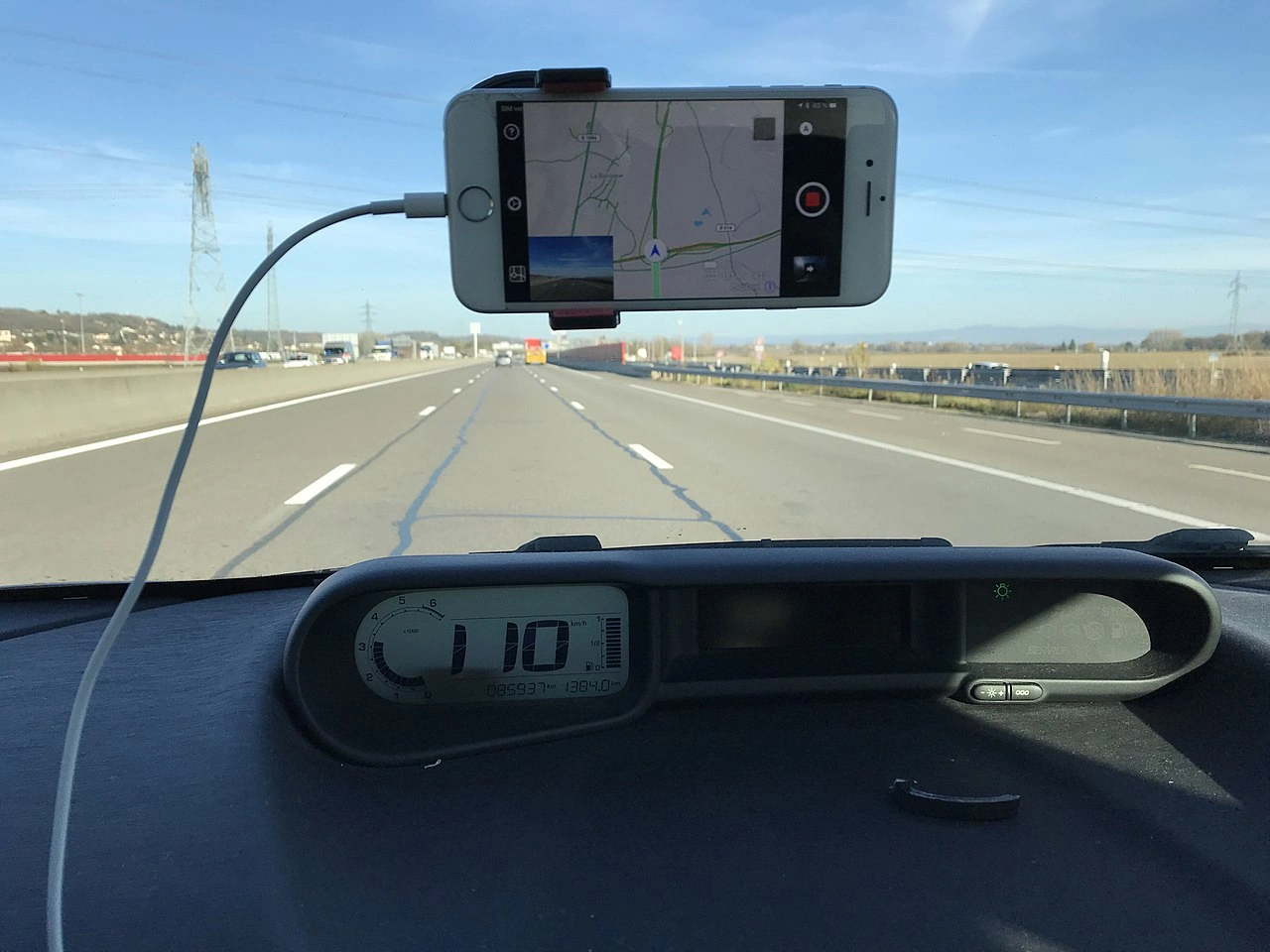
What does hands-free mean while driving?
Hands-free means using a communication device without holding it. Calls can be handled through a vehicle system, headset, earphones, voice control or another permitted system.
Is hands-free phone use completely distraction-free?
No. Even when the driver does not physically handle the phone, a conversation or interaction with a device can reduce attention to traffic. Drivers should keep such use to a minimum.
Does hands-free use allow you to hold the phone?
No. Holding a telephone while calling is not hands-free use. Whether handheld or mounted-device use is legally permitted depends on the traffic rules of the country.
117. Smartphone
Un smartphone es un dispositivo electrónico móvil que combina funciones de teléfono, mensajería, internet, navegación, cámara y aplicaciones. En el tráfico puede ofrecer funciones útiles como navegación o comunicación manos libres, pero también puede generar una importante distracción visual, manual y mental.
Los conductores deben evitar manipularlo o mirarlo mientras conducen. Cuando su uso esté permitido, el dispositivo debe colocarse y utilizarse conforme a las normas locales sin interferir con el control seguro del vehículo.

Why is smartphone use dangerous while driving?
Using a smartphone can take the driver's eyes off the road, hands away from the controls and attention away from traffic. Reading messages, typing or selecting apps can therefore significantly increase distraction.
Can a smartphone be used for navigation while driving?
It may be permitted when the device is properly mounted and used according to local traffic rules. The route should preferably be programmed before starting the journey and interaction with the screen should be kept to a minimum.
Is hands-free smartphone use completely safe?
No. Hands-free operation removes the need to hold the device but conversations, navigation changes and other interactions can still distract the driver.
118. GPS
El GPS (Sistema de Posicionamiento Global) es un sistema de posicionamiento y navegación por satélite que permite a un dispositivo compatible determinar su ubicación. En los vehículos, la navegación GPS puede combinar información de posición con mapas digitales para calcular rutas y proporcionar indicaciones visuales o habladas.
Es preferible configurar el destino antes de iniciar el viaje y evitar interacciones innecesarias con el sistema durante la conducción. Las indicaciones del GPS son orientativas y nunca deben seguirse si contradicen señales, normas de tráfico o las condiciones reales de la carretera.
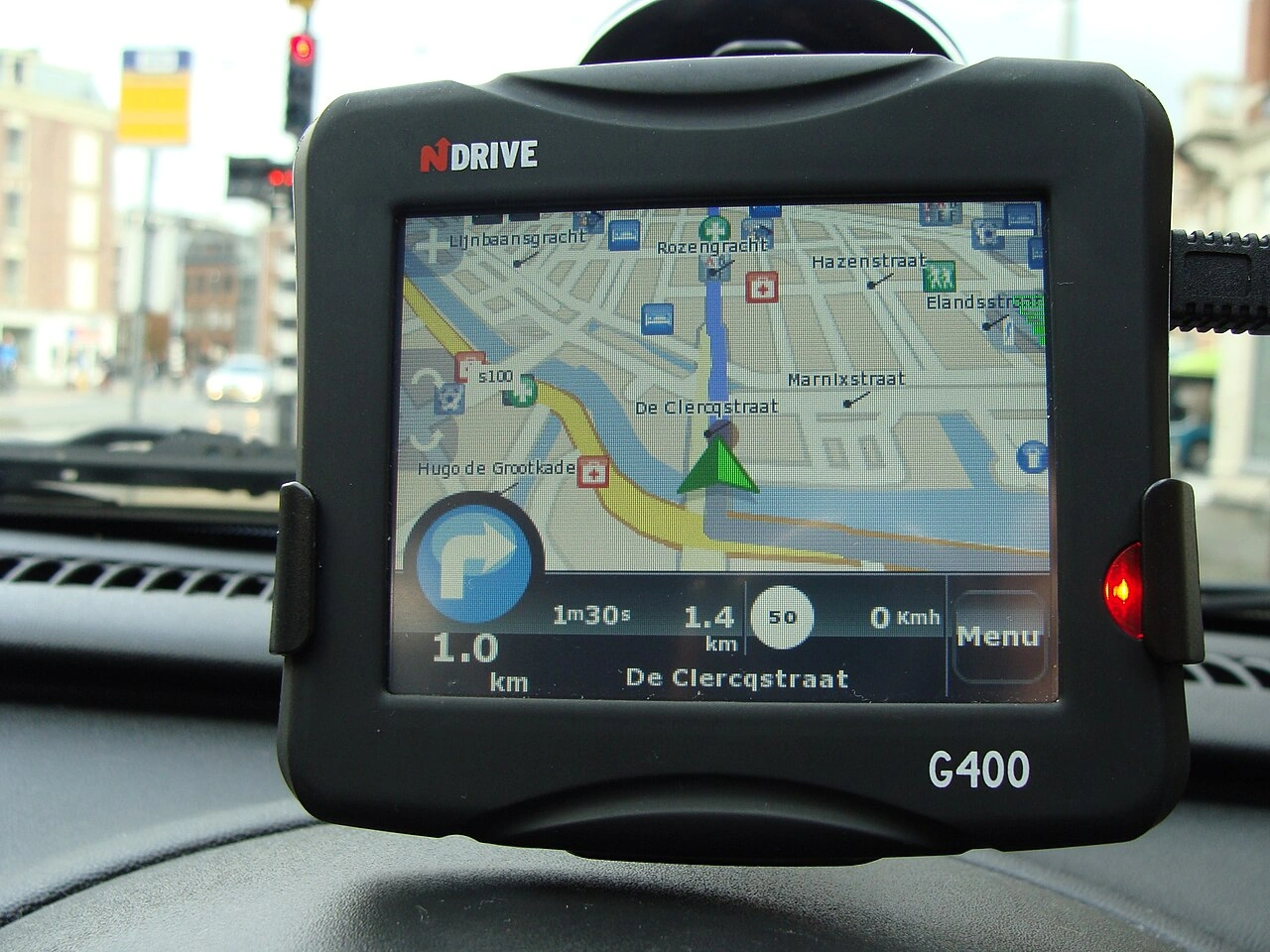
What does GPS do in a vehicle?
A GPS navigation system determines the vehicle's position and uses digital map information to calculate routes and provide directions towards a destination.
Should you always follow GPS directions?
No. Traffic signs, signals, road closures and actual road conditions take priority over navigation instructions. A driver remains responsible for choosing a legal and safe route.
Should you program a GPS while driving?
It is safer to enter the destination and adjust the route before starting the journey. If significant changes are needed, stop in a safe and permitted place rather than becoming distracted while driving.
119. Freno
Un freno es un sistema del vehículo utilizado para reducir la velocidad, detenerlo o mantenerlo inmóvil. La mayoría de los vehículos de carretera utilizan frenos de fricción en las ruedas, mientras que los eléctricos e híbridos también pueden emplear frenado regenerativo para recuperar energía al reducir la velocidad.
El sistema de frenado debe mantenerse en buen estado. Componentes desgastados, sobrecalentamiento, fallos mecánicos o menor adherencia de los neumáticos pueden aumentar la distancia de frenado y reducir la capacidad del conductor para controlar el vehículo con seguridad.

What is the purpose of a vehicle's brakes?
The brakes allow the driver to reduce speed and stop the vehicle in a controlled manner. A separate parking brake is normally used to keep the vehicle stationary after it has stopped.
What are signs of a possible brake problem?
Warning signs can include reduced braking performance, unusual noises, vibration, a soft or unusually hard brake pedal, pulling to one side or a brake-system warning light. A suspected brake problem should be inspected promptly.
Can brakes become less effective when they overheat?
Yes. Prolonged or repeated heavy braking can cause brake fade, reducing braking effectiveness. On long descents, appropriate gear selection and engine braking can help reduce excessive use of the service brakes.
120. Freno de estacionamiento
El freno de estacionamiento, también conocido como freno de mano, es un sistema de frenado utilizado para impedir que un vehículo detenido se mueva después de haber sido estacionado. Los sistemas tradicionales utilizan una palanca accionada con la mano, mientras que los vehículos modernos pueden emplear un freno de estacionamiento accionado con el pie o de tipo electrónico.
El freno de estacionamiento debe aplicarse firmemente siempre que el vehículo esté estacionado, especialmente en una pendiente. Funciona de forma independiente del freno de servicio normal para que el vehículo pueda permanecer inmóvil incluso cuando el conductor no esté presente.
What is a handbrake used for?
The handbrake or parking brake keeps a stationary vehicle from rolling after it has been parked. It is particularly important when parking on a slope.
Is every handbrake operated by a hand lever?
No. Traditional parking brakes use a hand-operated lever, but some vehicles use a foot pedal or an electronic switch. These systems perform the same basic parking-brake function.
Should you use the handbrake every time you park?
Yes. The parking brake should normally be applied whenever the vehicle is parked so that it remains securely stationary. Selecting an appropriate gear or transmission position provides additional security but does not replace the parking brake.
121. Líquido de frenos
El líquido de frenos es un fluido hidráulico utilizado en muchos sistemas de frenado para transmitir la fuerza desde el pedal de freno, a través del circuito hidráulico, hasta los frenos de las ruedas. Debe soportar altas temperaturas y mantener propiedades hidráulicas adecuadas para garantizar una frenada fiable.
El nivel y el estado del líquido de frenos deben comprobarse siguiendo las instrucciones del fabricante del vehículo. Solo debe utilizarse el tipo de líquido especificado, ya que un fluido incompatible o contaminado puede perjudicar el funcionamiento del sistema de frenos.

What does brake fluid do?
Brake fluid transmits hydraulic pressure from the driver's brake input to the braking mechanisms at the wheels, allowing the vehicle to slow or stop.
Can you use any type of brake fluid?
No. The correct specification depends on the vehicle and braking system. Drivers should use only the brake fluid specified by the vehicle manufacturer and should not mix incompatible types.
What does a low brake-fluid level mean?
A low level can indicate brake-system wear, a leak or another problem. If the level is below the specified minimum or a brake warning light appears, the braking system should be checked promptly.
122. Neumáticos
Los neumáticos son los componentes de caucho montados alrededor de las ruedas de un vehículo que proporcionan el contacto con la carretera. Transmiten las fuerzas de frenado, aceleración y dirección y desempeñan un papel importante en la estabilidad y adherencia del vehículo.
Deben tener una profundidad de dibujo suficiente, la presión correcta y no presentar daños graves ni desgaste excesivo. Los conductores deben utilizar neumáticos adecuados para el vehículo y comprobar regularmente su estado, especialmente antes de viajes largos o de conducir con condiciones meteorológicas difíciles.

Why are tyres important for road safety?
Tyres are the vehicle's contact with the road and transmit the forces required for steering, acceleration and braking. Their condition and available grip therefore directly affect vehicle control.
What should you check on your tyres?
Regularly check tyre pressure, tread depth and general condition. Look for excessive or uneven wear, cuts, cracks, bulges or other damage and replace tyres when they are no longer safe or legally compliant.
Should tyres on the same axle match?
Requirements vary between countries, but tyres fitted to the same axle should be compatible in dimensions, construction and performance. National rules may impose specific matching requirements.
123. Código del neumático
El código del neumático es la serie de letras y números marcada en el flanco de un neumático que identifica características importantes como la anchura, relación de aspecto, construcción, diámetro de la llanta, capacidad de carga e índice de velocidad. Un ejemplo habitual es 205/55 R16 91V.
Los conductores deben utilizar neumáticos cuyas especificaciones sean adecuadas para el vehículo. Las dimensiones e índices requeridos normalmente figuran en el manual del vehículo, el certificado de conformidad u otra información del fabricante.

What does a tyre code such as 205/55 R16 mean?
205 indicates the nominal tyre width in millimetres, 55 is the aspect ratio between sidewall height and tyre width, R indicates radial construction and 16 indicates the diameter of the wheel rim in inches.
What do numbers and letters such as 91V mean on a tyre?
The number is the load index, which identifies the maximum load the tyre is designed to carry under specified conditions. The letter is the speed rating or speed-category symbol, which indicates the tyre's approved speed capability.
What other markings can appear on a tyre?
Tyres can carry additional markings indicating approval, manufacturer information, production date, suitability for winter conditions, reinforced construction or other technical characteristics. The exact markings depend on the tyre type and applicable standards.
124. Neumáticos de invierno
Los neumáticos de invierno están diseñados para ofrecer una mejor tracción y rendimiento de frenado con bajas temperaturas, nieve y otras condiciones invernales. Su dibujo y compuesto de caucho están concebidos para seguir siendo eficaces a temperaturas reducidas y proporcionar más adherencia que los neumáticos de verano en condiciones apropiadas de invierno.
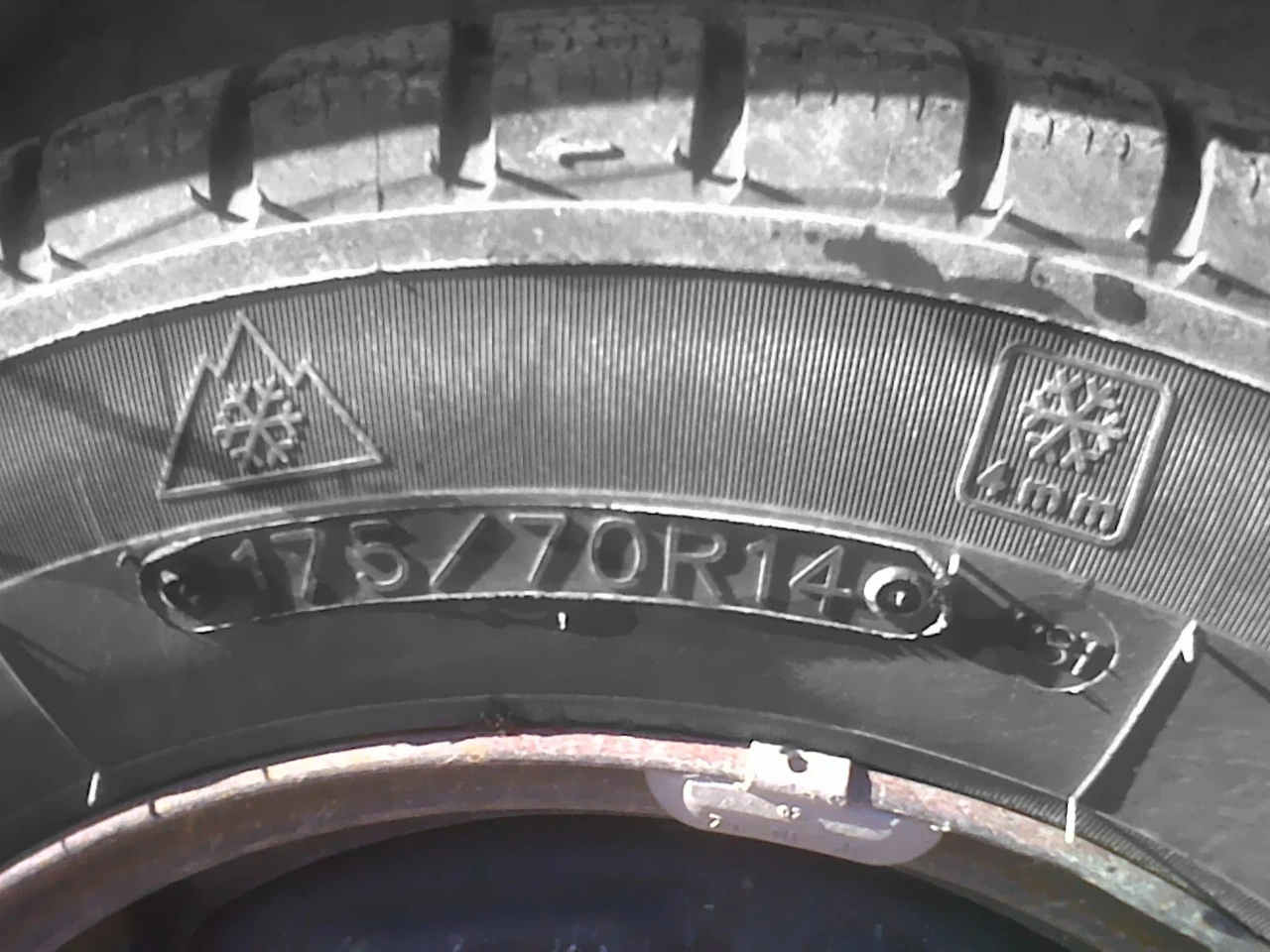
Pueden identificarse mediante marcas en el flanco. El símbolo 3PMSF, que muestra un copo de nieve dentro de una montaña de tres picos, indica que el neumático ha cumplido requisitos de rendimiento especificados para condiciones de nieve intensa.
What is the difference between winter and summer tyres?
Winter tyres use tread patterns and rubber compounds designed to provide better performance in cold temperatures, snow and other winter conditions. Summer tyres are optimised primarily for warmer conditions.
What does the 3PMSF symbol mean?
The Three-Peak Mountain Snowflake symbol identifies a tyre that has met specified performance requirements for use in severe snow conditions. It provides a more specific indication of tested snow performance than an M+S marking alone.
Are winter tyres compulsory everywhere?
No. Some countries require winter tyres during particular months or whenever winter conditions occur, while others have no general requirement. Drivers travelling abroad should check the rules of every country on their route.
125. Presión de los neumáticos
La presión de los neumáticos es la presión del aire contenida en el interior de un neumático. Una presión correcta ayuda a mantener su forma prevista y el contacto adecuado con la carretera, y es importante para el comportamiento, frenado, desgaste y consumo de combustible.
Debe comprobarse periódicamente y ajustarse al valor indicado por el fabricante del vehículo. La presión recomendada puede variar según el vehículo, el tamaño del neumático y la carga, y los neumáticos delanteros y traseros pueden requerir valores diferentes.
Why is correct tyre pressure important?
Correct tyre pressure helps provide predictable handling, braking and tyre wear. Incorrect pressure can reduce performance, increase tyre wear and increase fuel consumption.
How do you know the correct tyre pressure?
Use the pressure specified by the vehicle manufacturer rather than the maximum pressure marked on the tyre. The recommended values can normally be found in the vehicle handbook or on a vehicle information label.
Should tyre pressure be checked regularly?
Yes. Tyres gradually lose air over time, so their pressure should be checked regularly and before demanding or long journeys. The pressure should be adjusted to the manufacturer's recommended value.