


Señales de tráficoBangladés
 Normas de tráfico
 Bangladés
176. Dispositivo de bloqueo por alcohol
Un dispositivo de bloqueo por alcohol, también llamado alcolock, es un equipo de análisis de aliento conectado al sistema de arranque del vehículo. Antes de poder arrancar, el conductor debe proporcionar una muestra de aliento por debajo de un límite de alcohol programado. El dispositivo también puede exigir pruebas adicionales durante el viaje y registrar información sobre pruebas, intentos fallidos y posibles manipulaciones. En algunos países se utiliza como medida de seguridad o requisito legal para conductores condenados por infracciones relacionadas con el alcohol.

What is an ignition interlock device?
An ignition interlock device is a breath-testing system connected to a vehicle that prevents the engine from starting when the driver’s alcohol concentration exceeds the programmed limit.
How does an ignition interlock work?
Before starting the vehicle, the driver provides a breath sample. If the alcohol concentration is below the permitted threshold, the vehicle can be started.
Can an ignition interlock require another test while driving?
Some systems require additional breath tests during a journey to confirm that the authorised driver remains compliant. The exact procedure depends on the device and applicable rules.
Does an ignition interlock record information?
Yes. Many systems can record breath-test results, failed attempts, events and possible attempts to interfere with the device.
Who may be required to use an ignition interlock?
Depending on the country, an ignition interlock may be required for drivers convicted of serious or repeated alcohol-related driving offences.
Can another person blow into an ignition interlock for the driver?
No. Having another person provide the breath sample defeats the purpose of the system and may be treated as tampering or non-compliance under the applicable rules.

177. Prueba de aliento
Una prueba de aliento es una prueba preliminar en carretera utilizada para detectar alcohol en el aire espirado y determinar si se necesita una comprobación adicional. La persona sopla en un dispositivo portátil que compara el nivel de alcohol con umbrales predefinidos. Generalmente se utiliza como prueba de detección, no como medición probatoria definitiva. Si el resultado alcanza el límite aplicable, puede realizarse un análisis de aire espirado más preciso u otra prueba reconocida legalmente.
What is a breath test?
A breath test is a preliminary test that detects alcohol in exhaled breath and indicates whether the alcohol level is below or above specified thresholds.
How does a breath test work?
The person blows into a portable breath-testing device, which analyses a sample of exhaled air for alcohol.
Is a breath test the same as a breath analysis?
No. A breath test is generally a screening test, while a breath analysis provides a more precise measurement of the alcohol concentration in exhaled breath.
What happens after a positive breath test?
Depending on local law, a positive result may be followed by a breath analysis, blood test or other evidential procedure.
Can police perform random breath tests?
In many countries, police may conduct roadside alcohol checks even when a driver does not show obvious signs of impairment. The exact powers vary by country.
Can you refuse a breath test?
Rules vary between countries, but refusing a legally required breath test can itself lead to penalties or an immediate restriction on driving.
178. Análisis de aire espirado
Un análisis de aire espirado es una medición precisa de la concentración de alcohol en el aire exhalado por una persona. A diferencia de una prueba preliminar, que se utiliza principalmente como detección, se realiza con un dispositivo probatorio homologado y produce un resultado medido que puede utilizarse para sancionar. El resultado suele expresarse en miligramos de alcohol por litro de aire espirado, aunque los procedimientos y umbrales legales varían entre países.
What is a breath analysis?
A breath analysis measures the concentration of alcohol in exhaled breath using an approved evidential device.
Is a breath analysis the same as a breath test?
No. A breath test is generally used for preliminary screening, while a breath analysis provides a more precise measured alcohol concentration.
How is a breath analysis performed?
The person blows into an approved breath-analysis device, which measures the alcohol concentration in the exhaled air.
How is a breath-analysis result expressed?
The result is commonly expressed as milligrams of alcohol per litre of exhaled breath. The units and legal thresholds depend on the country.
What happens if a breath analysis exceeds the legal limit?
Depending on local law, the result can lead to a temporary driving prohibition, fine, licence restriction or court proceedings.
Can a breath-analysis result be checked again?
In some countries, the person may have a right to a second breath analysis, blood test or other counter-analysis. The procedure depends on local law.
179. Concentración de alcohol en sangre
La concentración de alcohol en sangre (BAC) indica la cantidad de alcohol presente en la sangre de una persona. Suele expresarse como porcentaje, gramos por litro o partes por mil (‰). El alcohol puede perjudicar el juicio, tiempo de reacción, coordinación y visión incluso antes de alcanzar el límite legal. Los límites varían entre países y pueden ser menores para conductores profesionales, noveles o jóvenes.
What is blood alcohol content?
Blood alcohol content (BAC) measures the concentration of alcohol in a person’s blood and is used to assess alcohol consumption and legal driving limits.
How is blood alcohol content expressed?
BAC can be expressed as a percentage, grams of alcohol per litre of blood or parts per thousand (‰). The units commonly used depend on the country.
What does 0.5‰ BAC mean?
A BAC of 0.5‰ means 0.5 grams of alcohol per litre of blood, which is equivalent to 0.05% BAC.
Is BAC the same as breath alcohol concentration?
No. BAC measures alcohol in the blood, while a breath test or breath analysis measures alcohol in exhaled air. Legal systems may establish corresponding limits for both measurements.
Does everyone reach the same BAC after drinking the same amount?
No. BAC can be influenced by factors such as body composition, sex, the amount and speed of drinking, food intake and the time since alcohol was consumed.
Can alcohol affect driving below the legal BAC limit?
Yes. Alcohol can impair driving ability before the legal limit is reached. Being below the legal BAC limit does not guarantee that a person is safe to drive.
180. Análisis de sangre
Un análisis de sangre puede utilizarse para medir la concentración de alcohol en la sangre de una persona. Un profesional sanitario toma una muestra que después se analiza en laboratorio para determinar la concentración de alcohol. En controles de tráfico puede emplearse cuando una prueba de aliento es imposible o inadecuada, después de un accidente o como contraanálisis de un resultado de aire espirado. Las circunstancias en que puede exigirse y los límites legales varían entre países.
What is an alcohol blood test?
An alcohol blood test measures the concentration of alcohol in a blood sample and provides a blood alcohol concentration (BAC).
How is a blood test different from a breath analysis?
A blood test measures alcohol directly in the blood, while a breath analysis measures alcohol in exhaled breath. Both can be used to determine whether a legal alcohol limit has been exceeded.
Who takes the blood sample?
A blood sample used for legal testing is normally taken by an authorised healthcare professional and analysed according to an approved procedure.
When can a blood test be used after an alcohol control?
Depending on local law, a blood test may be used when breath testing cannot be performed, after certain accidents or as a counter-analysis of a breath result.
How is a blood alcohol result expressed?
Blood alcohol concentration is commonly expressed as grams of alcohol per litre of blood, parts per thousand (‰) or a percentage, depending on the country.
Can refusing a required blood test lead to penalties?
Yes. In countries where a blood sample can lawfully be required, refusing without a legally accepted reason may itself be an offence.
181. Prueba de saliva
Una prueba de saliva es una prueba de detección en carretera utilizada para identificar el consumo reciente de determinadas drogas que pueden afectar a la capacidad de conducir. Se recoge una muestra de saliva de la boca y se analiza con un dispositivo portátil para determinadas sustancias. Generalmente se usa como prueba inicial y no como análisis probatorio definitivo. Si el resultado es positivo, puede realizarse un análisis de saliva más preciso o, en determinadas circunstancias, un análisis de sangre.
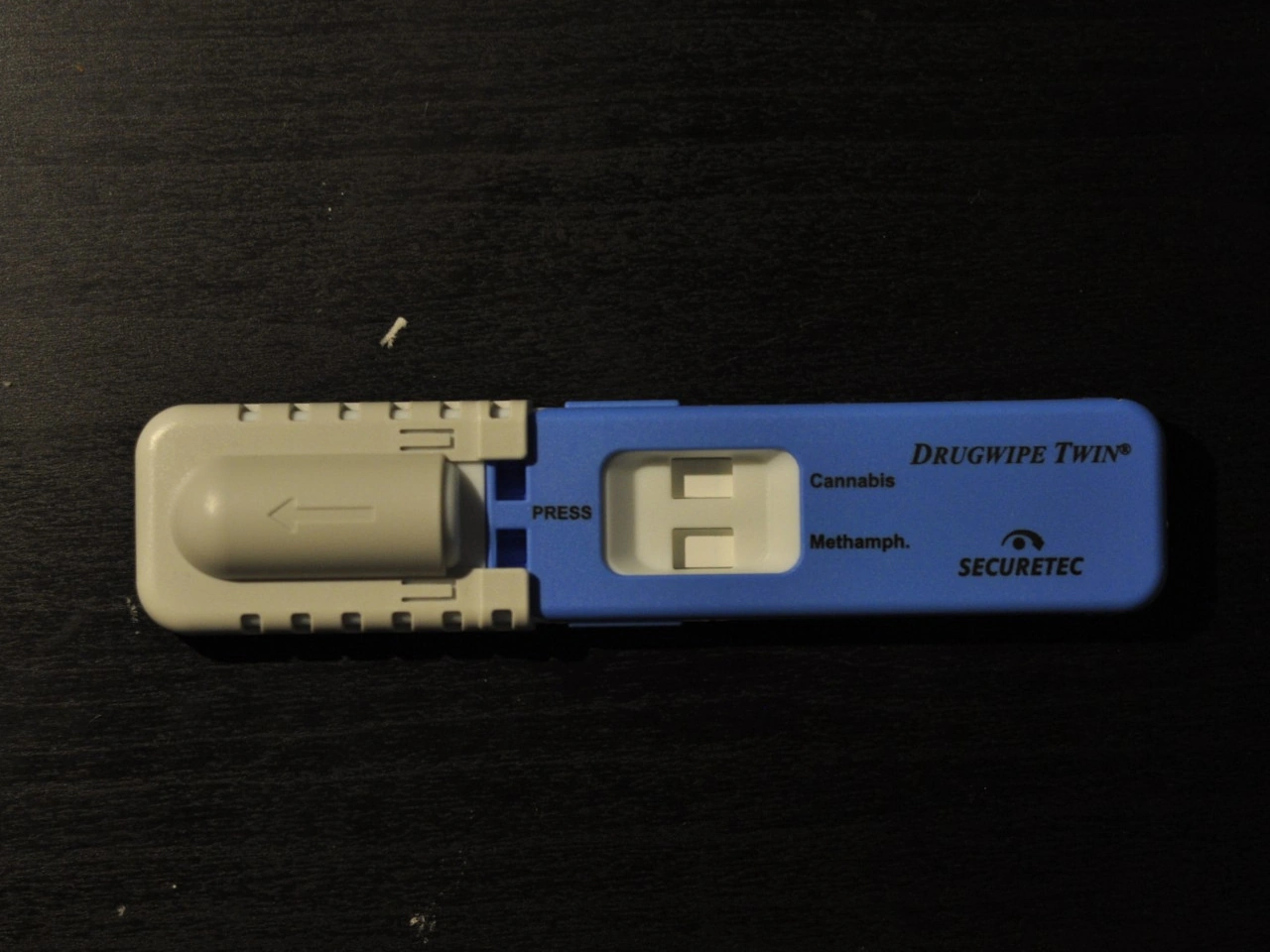
What is a saliva test?
A saliva test is a screening test that uses oral fluid to detect the recent presence of certain drugs or their metabolites.
How is a roadside saliva test performed?
A sample of saliva is collected from inside the mouth and tested using an approved portable device. The exact procedure and substances tested depend on the country.
Is a saliva test the same as a saliva analysis?
No. A saliva test is generally a preliminary roadside screening, while a saliva analysis is a laboratory examination used to confirm and measure specified substances more precisely.
What happens after a positive saliva test?
Depending on local law, a positive result can lead to a saliva analysis, blood test, temporary driving prohibition or further legal proceedings.
Can a saliva test detect every drug?
No. Saliva tests are designed to detect specific substances. The drugs included and the detection thresholds depend on the testing device and applicable law.
Can you refuse a saliva test?
Rules vary between countries, but refusing a legally required saliva test can itself lead to penalties or an immediate restriction on driving.
182. Drogas
Las drogas pueden afectar seriamente a la conducción al alterar percepción, concentración, tiempo de reacción, coordinación y juicio. Estimulantes, cannabis, opioides y otras sustancias psicoactivas pueden perjudicar de formas distintas, y combinarlas con alcohol u otras sustancias puede aumentar aún más el riesgo. Los efectos pueden continuar incluso cuando la persona ya no se siente intoxicada. Las normas varían entre países, pero nunca se debe conducir cuando una sustancia afecta a la capacidad de controlar el vehículo con seguridad.
How can drugs affect driving?
Drugs can impair concentration, perception, reaction time, coordination and judgement. The effects depend on the substance, dose, individual and whether other substances are also present.
Can cannabis affect driving?
Yes. Cannabis can affect attention, reaction time, coordination and perception, which can make driving unsafe.
Can stimulant drugs affect driving?
Yes. Stimulants can cause overconfidence, agitation, impulsive behaviour and reduced judgement, while their effects may later be followed by fatigue or reduced concentration.
Can drugs still affect you after the main effects have worn off?
Yes. Some substances can continue to affect alertness, coordination or judgement after the strongest effects appear to have passed.
Is combining drugs and alcohol especially dangerous?
Yes. Combining substances can produce stronger or unpredictable impairment and significantly increase the risk of a crash.
How can police test drivers for drugs?
Depending on the country, police may use behavioural observations, saliva tests, saliva analyses or blood tests to detect specified substances.
Are drug-driving laws the same in every country?
No. Some countries prohibit driving above specified drug concentrations, while others focus on impairment or the presence of certain substances. Testing procedures and penalties also vary.
183. Medicamentos
Los medicamentos pueden afectar a la capacidad de conducir incluso cuando son recetados legalmente o se venden sin receta. Algunos pueden provocar somnolencia, mareos, visión borrosa, menor concentración, reacciones más lentas o alteraciones de coordinación y juicio. El conductor debe leer el prospecto, respetar la dosis indicada y consultar a un médico o farmacéutico si duda de si puede conducir. Se requiere especial precaución al empezar un nuevo medicamento, cambiar la dosis o combinar varios medicamentos o medicación con alcohol.
Can medication affect driving?
Yes. Some medicines can cause drowsiness, dizziness, blurred vision, slower reactions or reduced concentration, which can make driving unsafe.
Can prescription medicine make you unsafe to drive?
Yes. A medicine can be legally prescribed and still impair your ability to drive safely. Follow the instructions provided by your doctor, pharmacist and patient information leaflet.
Can over-the-counter medicine affect driving?
Yes. Medicines available without a prescription can also affect driving. Some antihistamines, cough medicines and other common products may cause drowsiness or other side effects.
Where can you check whether a medicine affects driving?
Read the patient information leaflet, especially the section about driving and using machines, and ask a doctor or pharmacist if you are unsure.
Should you drive when taking a medicine for the first time?
Be especially cautious when starting a new medicine or changing the dose, because you may not yet know how it affects your alertness, coordination or judgement.
Can alcohol increase the effects of medication?
Yes. Alcohol can interact with some medicines and increase drowsiness, dizziness or other impairing effects. Follow the medicine instructions and professional medical advice.
184. Sanciones
Las sanciones son consecuencias legales impuestas por incumplir las normas de tráfico. Según la infracción y el país, pueden incluir advertencias, multas, pérdida de puntos, suspensión del permiso, prohibiciones de conducir, inmovilización del vehículo o procedimientos judiciales. La gravedad suele depender de factores como el peligro creado, antecedentes y seriedad de la infracción. Algunas infracciones pueden ser tramitadas directamente por la policía, mientras que los casos más graves deben ser resueltos por un tribunal.
What is a traffic penalty?
A traffic penalty is a legal consequence imposed when a road user violates an applicable traffic law or regulation.
What types of traffic penalties are there?
Penalties can include fines, penalty points, driving bans, licence suspension, vehicle restrictions and court proceedings. The available sanctions depend on the country.
Do more serious violations receive higher penalties?
Generally, yes. Traffic systems often apply heavier penalties to offences that create greater danger, involve excessive speed, impaired driving or repeated violations.
Can repeated traffic offences lead to higher penalties?
Yes. Many countries apply stronger sanctions to repeat offenders, such as higher fines, longer driving bans or mandatory rehabilitation measures.
Can a court take away your driving licence?
Yes. Serious offences can result in a temporary or longer disqualification from driving, depending on the applicable law and circumstances.
Are traffic penalties the same in every country?
No. Fine amounts, penalty-point systems, driving bans and enforcement procedures vary between countries.
185. Exceso de velocidad
El exceso de velocidad consiste en conducir por encima de la velocidad máxima permitida por la ley o una señal. Una mayor velocidad reduce el tiempo disponible para reaccionar, aumenta la distancia de detención y hace más graves las colisiones. El conductor también debe adaptar la velocidad al tráfico, visibilidad, tiempo y estado de la carretera, por lo que incluso circular al límite legal puede ser demasiado rápido para determinadas circunstancias. Las sanciones varían entre países y pueden depender de cuánto se superó el límite y del lugar donde ocurrió la infracción.
What is speeding?
Speeding means driving faster than the applicable maximum speed limit.
Why is speeding dangerous?
Higher speeds reduce reaction time, increase stopping distance and increase the severity of a collision.
Can you drive too fast without exceeding the speed limit?
Yes. A speed limit is normally a maximum. Drivers may need to drive more slowly because of traffic, weather, visibility or road conditions.
How is speeding detected?
Authorities may use fixed or mobile speed cameras, radar, laser equipment, average-speed checks or police measurements, depending on the country.
Do speeding penalties increase when you drive much faster than the limit?
Usually, yes. Many countries impose higher fines or additional penalties for larger speed-limit violations.
Can speeding lead to losing your driving licence?
Yes. Serious or repeated speeding offences can lead to a driving ban, licence suspension or court proceedings, depending on local law.
186. Fumar
Fumar mientras se conduce puede distraer al ocupar una mano, apartar la atención de la carretera y generar humo, ceniza u objetos que pueden caer dentro del vehículo. El humo del tabaco también reduce la calidad del aire y expone a los pasajeros al humo ajeno. Algunos países restringen o prohíben fumar en vehículos, especialmente cuando viajan niños. El conductor debe mantener siempre el control total y evitar cualquier actividad que interfiera con una conducción segura.

Can smoking distract a driver?
Yes. Lighting, holding or extinguishing a cigarette can create manual and visual distraction, while smoke or dropped ash can also interfere with concentration.
Is smoking while driving illegal?
This depends on the country. Some countries allow smoking while driving but prohibit it when children are present or in certain types of vehicles.
Why is smoking in a car with children a problem?
Smoking in an enclosed vehicle exposes passengers to second-hand smoke, and children are particularly vulnerable to its harmful effects.
Do smoking bans in vehicles also apply to electronic cigarettes?
In some countries, yes. Laws may treat vaping or electronic cigarettes in the same way as smoking when restricting their use inside vehicles.
Can cigarette smoke affect visibility?
Heavy smoke inside a vehicle can reduce comfort and visibility, while smoke residue can also create a film on the windscreen and windows that increases glare.
Can throwing a cigarette from a vehicle be dangerous?
Yes. A discarded cigarette can create litter, distract other road users or start a fire, particularly in dry vegetation.
187. Cámara de control de tráfico
Una cámara de control de tráfico es un sistema automatizado o controlado a distancia utilizado para detectar infracciones. Según el sistema, puede medir velocidad, detectar vehículos que pasan un semáforo en rojo, leer matrículas o vigilar otros comportamientos prohibidos. Algunas cámaras miden el vehículo en un punto concreto, mientras que sistemas como el control de tramo calculan la velocidad media a lo largo de una distancia mayor. Los tipos de cámaras, infracciones que detectan y procedimientos de sanción varían entre países.
What is a traffic enforcement camera?
A traffic enforcement camera is a camera system used to detect or record traffic violations for enforcement purposes.
What violations can traffic enforcement cameras detect?
Depending on the system, cameras can detect speeding, red-light violations, prohibited lane use, insufficient following distance and other traffic offences.
What is a speed camera?
A speed camera measures the speed of vehicles at a particular location and can record vehicles exceeding the applicable speed limit.
What is a red-light camera?
A red-light camera records vehicles that pass a traffic signal after it has turned red. Some systems can also measure vehicle speed.
Is section control a traffic enforcement camera?
Yes. Section control uses cameras at multiple points to calculate a vehicle's average speed over a defined road section rather than measuring speed at a single location.
Do all traffic cameras enforce traffic laws?
No. Some cameras are used only for traffic monitoring, traffic management or incident detection. A traffic camera is therefore not necessarily an enforcement camera.
188. Accidente
Un accidente es un suceso inesperado que implica a uno o más usuarios de la vía y causa daños, lesiones o ambos. Después de un accidente de tráfico, la primera prioridad es la seguridad: detenerse, proteger el lugar, ayudar a las personas heridas cuando sea posible y contactar con los servicios de emergencia cuando sea necesario. El conductor debe evitar crear peligros adicionales, intercambiar la información exigida y seguir las normas locales sobre notificación del accidente. En siniestros graves puede ser necesario dejar los vehículos en su posición hasta la llegada de la policía.
What should you do first after a traffic accident?
Stop and make the scene as safe as possible. Warn approaching traffic, check whether anyone is injured and call the emergency services when necessary.
Should you move the vehicles after an accident?
This depends on the circumstances and local law. After a minor collision with no injuries, vehicles may need to be moved out of the traffic flow when it is safe. After a serious injury accident, they may need to remain in place for investigation.
What information should drivers exchange after an accident?
Drivers commonly exchange names, contact details, vehicle information and insurance details. The exact legal requirements vary between countries.
When should the police be called after an accident?
Police should generally be contacted when there are injuries, serious damage, disagreement, suspected offences or difficulty identifying the people involved. Local reporting rules may require police involvement in additional situations.
What is an accident report form?
An accident report form records information about the vehicles, drivers, damage and circumstances of a collision and can help insurers process the claim.
Can you leave the scene of an accident?
Drivers and other involved persons are normally required to stop and fulfil their legal duties. Leaving without doing so may constitute a serious offence such as hit-and-run.
189. Lesiones
Las lesiones tras un accidente de tráfico pueden ir desde pequeños cortes y contusiones hasta traumatismos graves o potencialmente mortales. La prioridad es evitar nuevos peligros, contactar con los servicios de emergencia cuando sea necesario y prestar ayuda adecuada dentro de las propias capacidades. No debe moverse a una persona gravemente herida salvo que dejarla en ese lugar suponga un peligro inmediato, y deben seguirse las instrucciones de los operadores de emergencias o personal formado. Incluso cuando las lesiones parezcan leves al principio, puede ser necesaria una valoración médica porque algunos síntomas aparecen más tarde.

What should you do if someone is injured in a traffic accident?
Make the scene as safe as possible, call the emergency services when necessary and provide assistance within your abilities. Follow instructions given by emergency operators or trained responders.
Should you move an injured person after an accident?
Generally, avoid moving a seriously injured person unless they face an immediate danger from traffic, fire or another hazard. Unnecessary movement can worsen certain injuries.
Should you remove a motorcyclist's helmet after an accident?
Do not routinely remove a helmet from an injured motorcyclist. Helmet removal may require special care, particularly when a head, neck or spinal injury is possible. Follow emergency-service instructions unless immediate action is necessary to preserve life.
Can someone be seriously injured without obvious wounds?
Yes. Internal injuries, concussion and other trauma may not be immediately visible. Seek medical assistance when there is concern about the person's condition.
What information should you give emergency services?
Give the exact location, what happened, the number of injured people and any immediate dangers. Stay on the line and follow the operator's instructions.
Should you give first aid after a traffic accident?
Provide first aid that you are trained and able to give safely. Do not put yourself or others in additional danger, and follow professional instructions whenever possible.
190. Hemorragia nasal
Una hemorragia nasal es un sangrado por una o ambas fosas nasales y normalmente se debe a pequeños vasos sanguíneos del interior de la nariz. La mayoría son leves, pero pueden distraer al conductor y hacer inseguro continuar conduciendo. Si comienza mientras se conduce, hay que detenerse en un lugar seguro cuando sea posible. Conviene sentarse erguido, inclinarse ligeramente hacia delante y pinzar de forma continua la parte blanda de la nariz durante unos 10–15 minutos. No debe echarse la cabeza hacia atrás, ya que la sangre puede pasar a la garganta. Se debe buscar asistencia médica si el sangrado es intenso, se produce tras una lesión grave o no se detiene.
What should you do if you get a nosebleed while driving?
Stop at a safe place as soon as possible. Sit upright, lean slightly forward and pinch the soft part of the nose continuously for about 10–15 minutes.
Should you tilt your head back during a nosebleed?
No. Keep your head slightly forward so blood does not run into the throat, where it can cause choking, coughing or vomiting.
How long should you pinch your nose?
Pinch the soft part of the nose continuously for about 10–15 minutes before checking whether the bleeding has stopped.
When should you seek medical help for a nosebleed?
Seek medical help if the bleeding is heavy, does not stop after sustained pressure, follows a significant head or facial injury, causes weakness or dizziness, or makes breathing difficult.
Can you continue driving with a nosebleed?
Only if the bleeding has stopped and you feel fully able to drive safely. If the nosebleed distracts you, affects visibility or makes you feel weak or unwell, stop and do not continue until it is safe.
Can blood-thinning medication make nosebleeds more serious?
Yes. Medicines that reduce blood clotting can make bleeding more difficult to stop. Seek medical advice if bleeding persists or you are concerned.
191. Daños
Los daños tras un accidente de tráfico pueden afectar a vehículos, infraestructura vial u otros bienes. Pueden ser menores, como arañazos o abolladuras, o tan graves que hagan inseguro conducir el vehículo. Después de un accidente con solo daños materiales, los conductores deben asegurar el lugar, intercambiar la información exigida, documentar las circunstancias y avisar a la aseguradora cuando corresponda. Un vehículo dañado no debe circular si fallos en luces, neumáticos, dirección, frenos, cristales u otros elementos de seguridad hacen inseguro continuar.

What is material damage in a traffic accident?
Material damage is damage to vehicles, road infrastructure, buildings or other property without bodily injury.
What should you do after an accident with only material damage?
Make the scene safe, exchange the required details, record the damage and circumstances and follow the applicable insurance and reporting rules.
Should you take photos of accident damage?
Yes. Photos of the vehicles, damage, road position, signs and surrounding area can help document what happened and support an insurance claim.
Can you continue driving a damaged vehicle?
Only if the vehicle remains safe and roadworthy. Do not continue driving if the damage affects steering, brakes, tyres, lights, visibility or another safety-critical component.
Should damage be reported to the insurer?
Usually, yes. Insurance policies commonly require an accident or claim to be reported as soon as possible. The exact procedure and deadline depend on the country and policy.
What if you damage property and the owner is not present?
You should follow local rules for identifying yourself and reporting the damage. Leaving without providing the required information can lead to legal consequences.
192. Avería
Una avería se produce cuando un vehículo ya no puede continuar con seguridad debido a un problema mecánico, eléctrico o técnico. Si es posible, debe apartarse del tráfico en movimiento, encender las luces de emergencia y advertir a otros usuarios. En vías de alta velocidad, solo debe abandonarse el vehículo cuando sea seguro y conviene esperar en un lugar protegido alejado del tráfico. Hay que contactar con asistencia en carretera o servicios de emergencia cuando sea necesario y evitar reparaciones que pongan en peligro a uno mismo o a otras personas.
What should you do first if your vehicle breaks down?
If possible, move the vehicle to a safe place away from moving traffic, switch on the hazard warning lights and warn approaching road users.
Should you stay inside a broken-down vehicle?
This depends on the location and danger. On high-speed roads, it is often safer to leave the vehicle carefully and wait behind a safety barrier or another protected place when this can be done safely.
Should you use a warning triangle after a breakdown?
Many countries require or recommend a warning triangle when a broken-down vehicle creates a danger or obstruction. The required distance and conditions vary by country.
Should you wear a reflective vest after a breakdown?
In many countries, a high-visibility or reflective vest is required or recommended when leaving a broken-down vehicle near traffic. Check the local rules.
Can you repair a vehicle at the roadside?
Only when it can be done safely. Do not attempt repairs if they expose you to moving traffic or another serious hazard. Roadside assistance is often the safer option.
Who should you call after a breakdown?
Contact roadside assistance when the vehicle cannot continue safely. Call the emergency services when there is immediate danger, injury, fire or another emergency.
193. Triángulo de emergencia
Un triángulo de emergencia es un dispositivo reflectante portátil utilizado para advertir al tráfico que se aproxima de un vehículo detenido, averiado o accidentado u otro obstáculo en la carretera. Debe colocarse a suficiente distancia del peligro para dar tiempo a reaccionar y permanecer claramente visible. La distancia exigida y las situaciones en que debe utilizarse varían entre países, por lo que el conductor debe conocer las normas locales y mantener el triángulo fácilmente accesible en el vehículo.
What is a warning triangle?
A warning triangle is a portable reflective device placed on the road to warn approaching traffic about a stopped vehicle, accident or other hazard.
When should a warning triangle be used?
It is generally used when a vehicle is broken down, involved in an accident or creating an obstruction. The exact legal requirements vary between countries.
How far from the vehicle should a warning triangle be placed?
The required distance depends on the country and type of road. Higher-speed roads usually require the triangle to be placed farther away so approaching drivers have more time to react.
Where should the warning triangle be placed?
Place it where it is clearly visible to approaching traffic and where doing so does not put you in unnecessary danger.
Should you use hazard warning lights as well as a warning triangle?
Often, yes. Hazard warning lights and a warning triangle can work together to make a stopped vehicle more visible. The legal requirements vary by country.
Should the warning triangle be easy to reach?
Yes. It is useful to keep it accessible without having to unload large amounts of luggage, especially because it may be needed quickly in a dangerous roadside situation.
194. Normas de tráfico
Las normas de tráfico son leyes y reglamentos que regulan el comportamiento de los usuarios en las vías públicas. Abarcan materias como velocidad, prioridad, adelantamiento, estacionamiento, semáforos, señales, uso de carriles y responsabilidades de conductores, ciclistas y peatones. Están diseñadas para organizar el tráfico, reducir conflictos y mejorar la seguridad vial. Las normas difieren entre países y a veces entre regiones, por lo que los usuarios deben conocer las que se aplican en el lugar donde circulan.
What are traffic rules?
Traffic rules are laws and regulations that determine how drivers, cyclists, pedestrians and other road users must behave on the road.
Why are traffic rules important?
Traffic rules help organise traffic, prevent conflicts and reduce the risk of accidents by making the behaviour of road users more predictable.
Are traffic rules the same in every country?
No. Traffic rules vary between countries and can differ in areas such as speed limits, priority, parking, overtaking and permitted road use.
What is the difference between traffic rules and traffic signs?
Traffic rules are the laws governing road use, while traffic signs communicate specific warnings, restrictions, obligations or information to road users.
Do traffic rules apply only to drivers?
No. Traffic rules can apply to drivers, cyclists, pedestrians, motorcyclists and other road users, depending on the rule and type of road.
Do temporary traffic signs override normal traffic rules?
Temporary signs and authorised traffic directions can change how traffic must behave at a particular location. Road users must follow the applicable signs, signals and authorised instructions according to local law.
195. Autoescuela
Una autoescuela es una organización que ofrece formación teórica y práctica profesional a aspirantes a conductores. Instructores cualificados enseñan normas de tráfico, control del vehículo, observación, maniobras y conducción segura en tráfico real. Según el país y la categoría del permiso, las clases pueden ser opcionales, obligatorias antes de obtener un permiso provisional o exigirse después de suspensos repetidos. Las autoescuelas preparan a los candidatos para los exámenes oficiales, pero estos suelen ser realizados por un centro examinador independiente o la autoridad competente.
What is a driving school?
A driving school provides professional instruction to help learner drivers prepare for their theory and practical driving examinations.
What do you learn at a driving school?
Training can include traffic rules, road signs, vehicle control, observation, manoeuvres, hazard awareness and driving safely in normal traffic.
Are driving-school lessons mandatory?
This depends on the country, licence category and chosen training route. Some learners may practise privately, while others must complete a minimum number of professional lessons.
Is a driving school the same as an exam centre?
No. A driving school provides training, while an exam centre officially assesses whether the candidate meets the requirements for a driving licence.
Can a driving school arrange the practical exam?
Often, yes. When a candidate takes the practical exam through a driving school, the school may book the appointment and provide the examination vehicle, depending on local rules.
How should you choose a driving school?
Choose an authorised or recognised driving school where required, and compare factors such as instructor qualifications, training options, availability and cost.
196. Señales de tráfico
Una señal de tráfico es un símbolo visual estandarizado colocado junto a las vías para guiar, advertir o regular a conductores, ciclistas y peatones. Estas señales proporcionan información esencial sobre condiciones de la carretera, normas, direcciones y posibles peligros, ayudando a garantizar la seguridad y fluidez del tráfico. Existen en distintas formas y colores —como señales triangulares de advertencia, circulares de prohibición u obligación y rectangulares de información— diseñados para facilitar un reconocimiento rápido y una comprensión clara.
