


Vía separadaReino Unido
 Normas de tráfico
 Reino Unido
1. Vía separada
Una vía separada es un camino o parte de una carretera donde diferentes categorías de usuarios, normalmente peatones y ciclistas, tienen asignadas secciones separadas de la misma ruta general. Las secciones pueden distinguirse mediante marcas viales, distintos materiales de pavimento, un bordillo u otra separación física.
Los usuarios deben permanecer en la parte del camino destinada a ellos y tener especial cuidado donde las secciones se cruzan, se unen o conectan con carreteras. Los usuarios permitidos, las normas de prioridad y cualquier restricción de velocidad dependen de las señales y normas de tráfico locales.
¿Cómo se identifican las rutas peatonales y ciclistas separadas en Gran Bretaña?
El Highway Code describe pistas junto a caminos o aceras separadas por línea blanca, material distinto, franja lateral o bordillo. Señales y diseño identifican secciones. Una pista contigua no abre la parte peatonal al ciclismo ordinario.
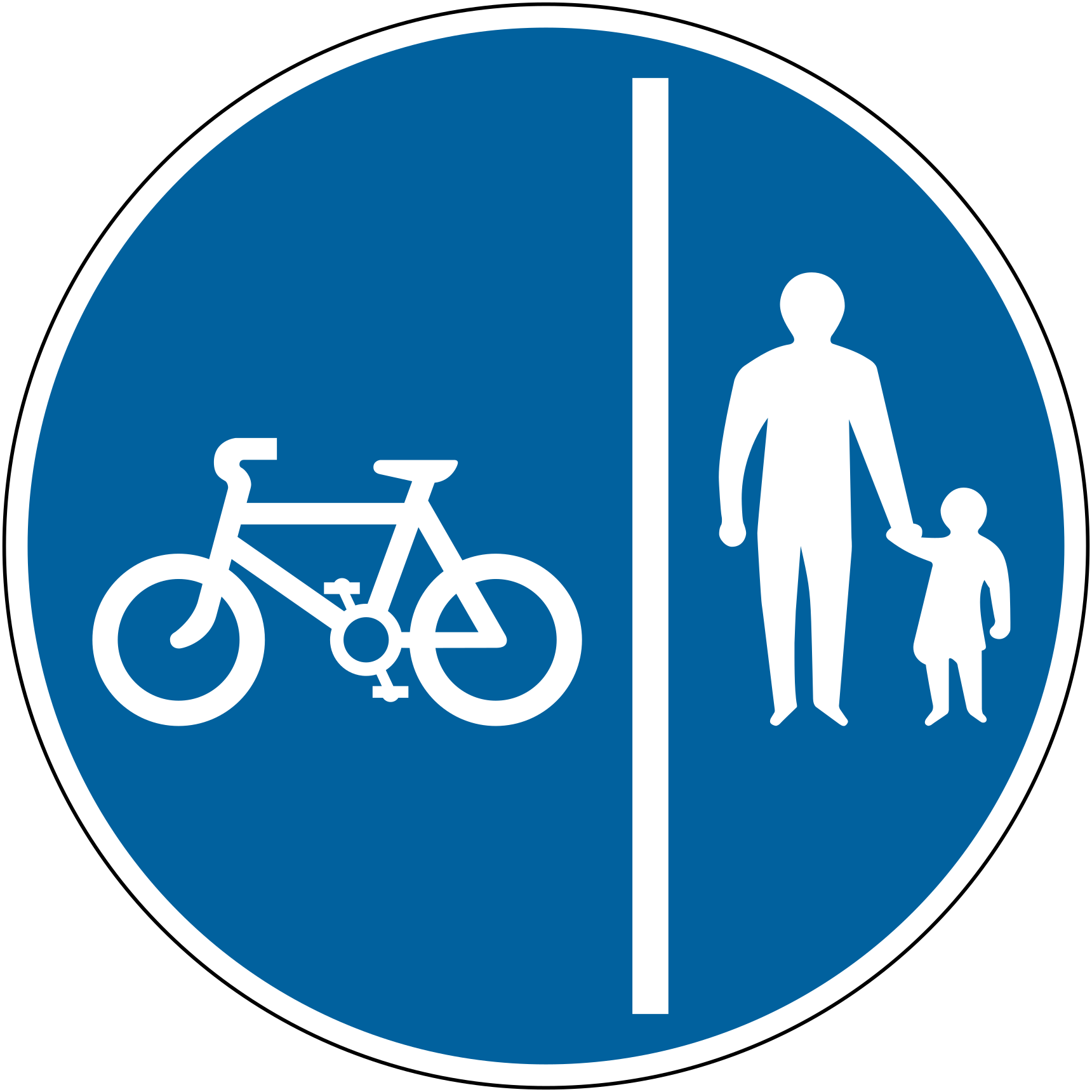 Vía dividida obligatoria para peatones y ciclistas.
English • GB diagram 957 • Segregated pedestrian and cycle route. Use the side shown for your class of traffic: cycles on the left and pedestrians on the right. In Great Britain, permitted trial electric scooters use the cycle side where applicable.
Fuentes
🔗 Commons.wikimedia.org (Government of the United Kingdom – Department for Transport • Crown copyright • OGL v1.0)
🔗 Legislation.gov.uk • Traffic Signs Regulations and General Directions • Great Britain
🔗 Gov.uk • Department for Transport • Know your traffic signs
SVG source: Government of the United Kingdom – Department for Transport • OGL v1.0 • Original revision 2021-08-02. Wikimedia original unmodified. © Crown copyright. Traffic signs are Crown copyright. You may reproduce traffic signs free of charge and without having to seek permission, but you must reproduce them accurately and not in a misleading context (e.g. not on roadside billboards where they could mislead drivers). (ref [1])
Artwork verified against Gov.uk • official published diagram 957.
Current design and permitted variants verified against Legislation.gov.uk • TSRGD, current text.
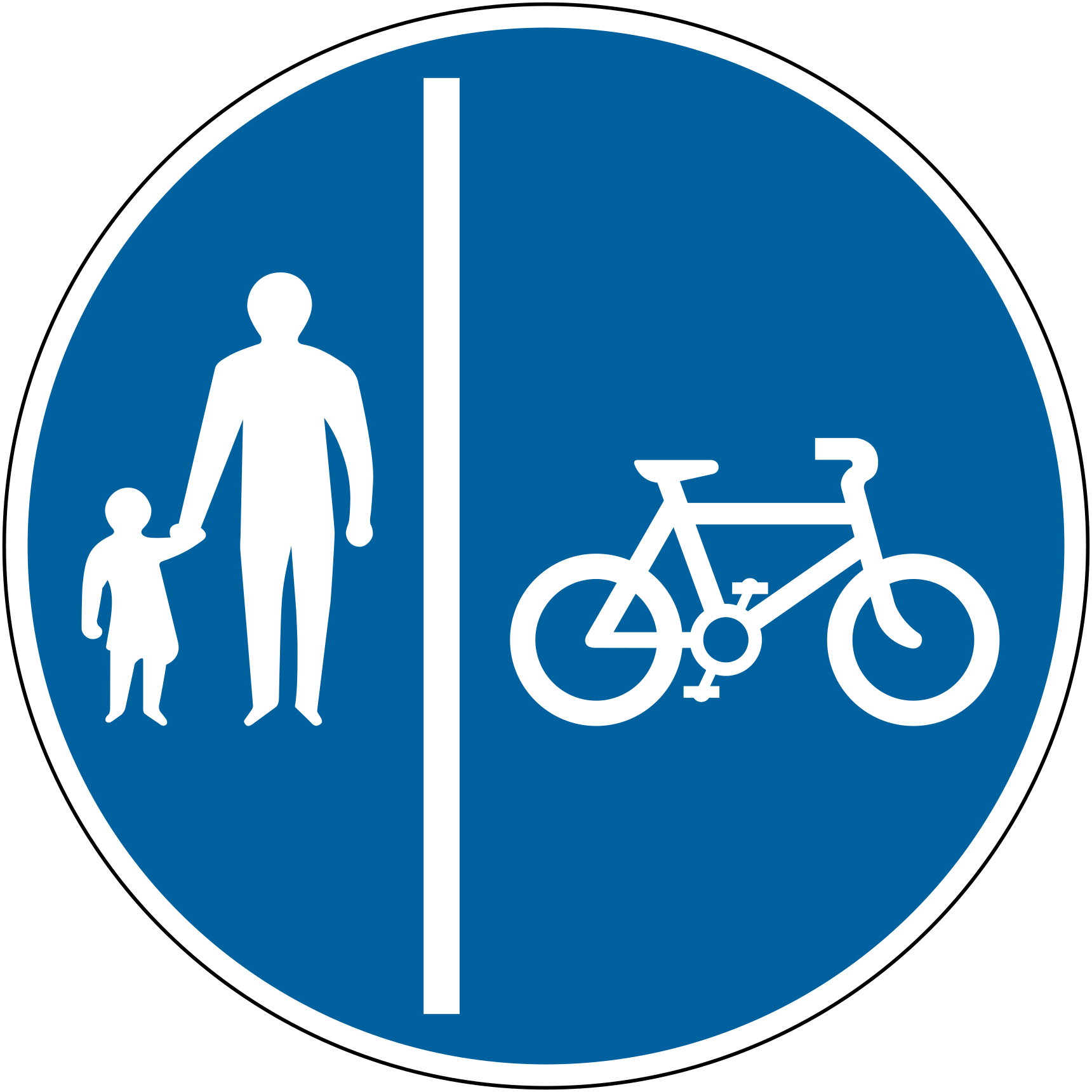 Vía dividida obligatoria para peatones y ciclistas.
English • GB diagram 957 • Segregated pedestrian and cycle route. Use the side shown for your class of traffic: pedestrians on the left and cycles on the right. In Great Britain, permitted trial electric scooters use the cycle side where applicable.
Fuentes
🔗 Commons.wikimedia.org (Government of the United Kingdom – Department for Transport • Crown copyright • OGL v1.0)
🔗 Legislation.gov.uk • Traffic Signs Regulations and General Directions • Great Britain
🔗 Gov.uk • Department for Transport • Know your traffic signs
SVG source: Government of the United Kingdom – Department for Transport • OGL v1.0 • Original revision 2021-08-02. Wikimedia original unmodified. © Crown copyright. Traffic signs are Crown copyright. You may reproduce traffic signs free of charge and without having to seek permission, but you must reproduce them accurately and not in a misleading context (e.g. not on roadside billboards where they could mislead drivers). (ref [1])
Artwork verified against Gov.uk • official published diagram 957R.
Current design and permitted variants verified against Legislation.gov.uk • TSRGD, current text.
¿Deben los ciclistas mantenerse en el lado ciclista de una ruta segregada en Gran Bretaña?
Sí. Según el Highway Code, los ciclistas deben permanecer en el lado destinado a bicicletas si está segregado. Difiere de una ruta sin dividir donde ambos grupos comparten superficie.
¿Qué significan las franjas táctiles de una vía británica separada?
La guía táctil del DfT describe un patrón de escalera transversal al desplazamiento en el lado peatonal y un patrón de raíles longitudinales en el ciclista de la ruta dividida correspondiente. Ayudan a identificar las partes asignadas. Los ciclistas deben usar su lado.
🔗 gov.uk • DfT, Guía de uso de pavimentos táctiles, enero de 2022, artículo 5

