


Señales de tráficoMéxico
 Normas de tráfico
 México
201. Cámara de control de tráfico
Una cámara de control de tráfico es un sistema automatizado o controlado a distancia utilizado para detectar infracciones. Según el sistema, puede medir velocidad, detectar vehículos que pasan un semáforo en rojo, leer matrículas o vigilar otros comportamientos prohibidos. Algunas cámaras miden el vehículo en un punto concreto, mientras que sistemas como el control de tramo calculan la velocidad media a lo largo de una distancia mayor. Los tipos de cámaras, infracciones que detectan y procedimientos de sanción varían entre países.
What is a traffic enforcement camera?
A traffic enforcement camera is a camera system used to detect or record traffic violations for enforcement purposes.
What violations can traffic enforcement cameras detect?
Depending on the system, cameras can detect speeding, red-light violations, prohibited lane use, insufficient following distance and other traffic offences.
What is a speed camera?
A speed camera measures the speed of vehicles at a particular location and can record vehicles exceeding the applicable speed limit.
What is a red-light camera?
A red-light camera records vehicles that pass a traffic signal after it has turned red. Some systems can also measure vehicle speed.
Is section control a traffic enforcement camera?
Yes. Section control uses cameras at multiple points to calculate a vehicle's average speed over a defined road section rather than measuring speed at a single location.
Do all traffic cameras enforce traffic laws?
No. Some cameras are used only for traffic monitoring, traffic management or incident detection. A traffic camera is therefore not necessarily an enforcement camera.

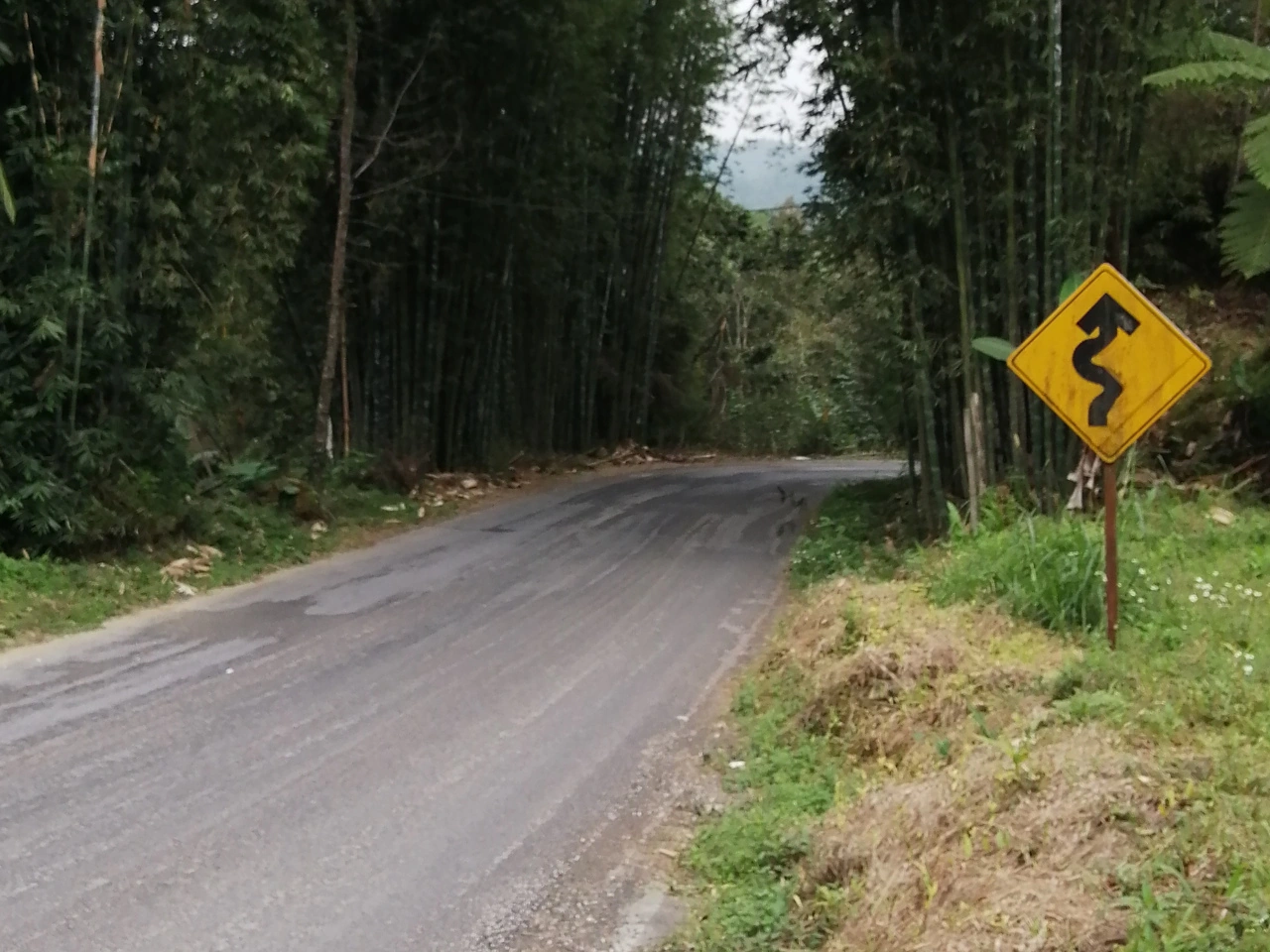
202. Doble curva
Una doble curva es un tramo de carretera con dos curvas consecutivas en sentidos opuestos. La primera puede girar a la izquierda y después a la derecha, o viceversa.
La misma señal de advertencia también puede indicar una sucesión más larga de curvas. El conductor debe reducir la velocidad antes de la primera curva, mantenerse dentro de su carril y estar preparado para que las siguientes curvas difieran en sentido, radio y longitud.
What is a double curve?
A double curve consists of two successive curves in opposite directions.
How can you recognise a double-curve warning sign?
It normally shows an S-shaped road symbol. The symbol indicates whether the first curve turns left or right.
What does first curve to the left mean?
It means that the road first bends left and is then followed by a curve in the opposite direction.
What does first curve to the right mean?
It means that the road first bends right and is then followed by a curve in the opposite direction.
Can the sign warn of more than two curves?
Yes. In many countries, the same sign may warn of a longer succession of curves. A supplementary panel may indicate the length of the winding section.
Does the sign show the exact shape of every curve?
No. It normally shows only the general direction of the first curves. Their radius, length and spacing may be different from the symbol.
Does a double-curve sign impose a speed limit?
No. It normally warns of danger rather than establishing a numerical limit. Drivers must reduce speed whenever the legal maximum would be unsafe.
When should you reduce speed?
Reduce speed before entering the first curve, while the vehicle is still travelling straight and has maximum stability.
Should you accelerate between the two curves?
Do not accelerate strongly merely because there is a short straight section between them. Maintain a controlled speed until the direction and exit of the following curve are clear.
Should you brake while changing direction?
Avoid harsh braking while steering from one curve into the next. Complete most braking beforehand and use smooth control inputs.
Where should you look?
Look towards the visible road ahead and through each curve while continuing to monitor your lane position, road surface and nearby traffic.
Must you remain within your lane?
Yes. Do not cut across the centre line or another traffic lane to straighten the sequence of curves.
Why can a double curve be more difficult than one curve?
The vehicle’s weight shifts from one side to the other, visibility may change rapidly and the second curve may be sharper or closer than expected.
Why should you leave more following distance?
The vehicle ahead may brake unexpectedly for the second curve, an obstruction or changing road conditions that are not yet visible to you.
May you overtake in a double curve?
Do not overtake when you cannot see far enough ahead to complete the manoeuvre safely. Signs, continuous lines and local law may also prohibit overtaking.
May you stop or park in a double curve?
Only where it is permitted and your vehicle remains clearly visible. Stopping or parking where visibility is limited may create a serious hazard.
How do rain, snow or ice affect double curves?
They reduce tyre grip and increase the risk of skidding during the rapid change of direction. Reduce speed earlier and steer, brake and accelerate smoothly.
Why should motorcyclists take extra care?
Motorcyclists must change lean direction between the curves and depend heavily on tyre grip. Loose material, markings or wet surfaces can make the transition hazardous.
How can a double curve affect a trailer or caravan?
A trailer may sway or follow a tighter path through the curves. Excessive speed or abrupt steering can reduce stability.
Why do trucks and buses need additional space?
Long vehicles may track towards the inside of each curve or approach lane boundaries. Other drivers should avoid travelling beside them through a tight sequence.
What should you do if the second curve is sharper than expected?
Look towards the intended path, reduce acceleration and steer smoothly. Avoid sudden braking or crossing into another lane.
Does the absence of a warning sign mean the curves are safe at the speed limit?
No. Drivers must assess every road section and choose a safe speed even when no warning sign is displayed.
203. Accidente
Un accidente es un suceso inesperado que implica a uno o más usuarios de la vía y causa daños, lesiones o ambos. Después de un accidente de tráfico, la primera prioridad es la seguridad: detenerse, proteger el lugar, ayudar a las personas heridas cuando sea posible y contactar con los servicios de emergencia cuando sea necesario. El conductor debe evitar crear peligros adicionales, intercambiar la información exigida y seguir las normas locales sobre notificación del accidente. En siniestros graves puede ser necesario dejar los vehículos en su posición hasta la llegada de la policía.
What should you do first after a traffic accident?
Stop and make the scene as safe as possible. Warn approaching traffic, check whether anyone is injured and call the emergency services when necessary.
Should you move the vehicles after an accident?
This depends on the circumstances and local law. After a minor collision with no injuries, vehicles may need to be moved out of the traffic flow when it is safe. After a serious injury accident, they may need to remain in place for investigation.
What information should drivers exchange after an accident?
Drivers commonly exchange names, contact details, vehicle information and insurance details. The exact legal requirements vary between countries.
When should the police be called after an accident?
Police should generally be contacted when there are injuries, serious damage, disagreement, suspected offences or difficulty identifying the people involved. Local reporting rules may require police involvement in additional situations.
What is an accident report form?
An accident report form records information about the vehicles, drivers, damage and circumstances of a collision and can help insurers process the claim.
Can you leave the scene of an accident?
Drivers and other involved persons are normally required to stop and fulfil their legal duties. Leaving without doing so may constitute a serious offence such as hit-and-run.
204. Lesiones
Las lesiones tras un accidente de tráfico pueden ir desde pequeños cortes y contusiones hasta traumatismos graves o potencialmente mortales. La prioridad es evitar nuevos peligros, contactar con los servicios de emergencia cuando sea necesario y prestar ayuda adecuada dentro de las propias capacidades. No debe moverse a una persona gravemente herida salvo que dejarla en ese lugar suponga un peligro inmediato, y deben seguirse las instrucciones de los operadores de emergencias o personal formado. Incluso cuando las lesiones parezcan leves al principio, puede ser necesaria una valoración médica porque algunos síntomas aparecen más tarde.

What should you do if someone is injured in a traffic accident?
Make the scene as safe as possible, call the emergency services when necessary and provide assistance within your abilities. Follow instructions given by emergency operators or trained responders.
Should you move an injured person after an accident?
Generally, avoid moving a seriously injured person unless they face an immediate danger from traffic, fire or another hazard. Unnecessary movement can worsen certain injuries.
Should you remove a motorcyclist's helmet after an accident?
Do not routinely remove a helmet from an injured motorcyclist. Helmet removal may require special care, particularly when a head, neck or spinal injury is possible. Follow emergency-service instructions unless immediate action is necessary to preserve life.
Can someone be seriously injured without obvious wounds?
Yes. Internal injuries, concussion and other trauma may not be immediately visible. Seek medical assistance when there is concern about the person's condition.
What information should you give emergency services?
Give the exact location, what happened, the number of injured people and any immediate dangers. Stay on the line and follow the operator's instructions.
Should you give first aid after a traffic accident?
Provide first aid that you are trained and able to give safely. Do not put yourself or others in additional danger, and follow professional instructions whenever possible.
205. Hemorragia nasal
Una hemorragia nasal es un sangrado por una o ambas fosas nasales y normalmente se debe a pequeños vasos sanguíneos del interior de la nariz. La mayoría son leves, pero pueden distraer al conductor y hacer inseguro continuar conduciendo. Si comienza mientras se conduce, hay que detenerse en un lugar seguro cuando sea posible. Conviene sentarse erguido, inclinarse ligeramente hacia delante y pinzar de forma continua la parte blanda de la nariz durante unos 10–15 minutos. No debe echarse la cabeza hacia atrás, ya que la sangre puede pasar a la garganta. Se debe buscar asistencia médica si el sangrado es intenso, se produce tras una lesión grave o no se detiene.
What should you do if you get a nosebleed while driving?
Stop at a safe place as soon as possible. Sit upright, lean slightly forward and pinch the soft part of the nose continuously for about 10–15 minutes.
Should you tilt your head back during a nosebleed?
No. Keep your head slightly forward so blood does not run into the throat, where it can cause choking, coughing or vomiting.
How long should you pinch your nose?
Pinch the soft part of the nose continuously for about 10–15 minutes before checking whether the bleeding has stopped.
When should you seek medical help for a nosebleed?
Seek medical help if the bleeding is heavy, does not stop after sustained pressure, follows a significant head or facial injury, causes weakness or dizziness, or makes breathing difficult.
Can you continue driving with a nosebleed?
Only if the bleeding has stopped and you feel fully able to drive safely. If the nosebleed distracts you, affects visibility or makes you feel weak or unwell, stop and do not continue until it is safe.
Can blood-thinning medication make nosebleeds more serious?
Yes. Medicines that reduce blood clotting can make bleeding more difficult to stop. Seek medical advice if bleeding persists or you are concerned.
206. Daños
Los daños tras un accidente de tráfico pueden afectar a vehículos, infraestructura vial u otros bienes. Pueden ser menores, como arañazos o abolladuras, o tan graves que hagan inseguro conducir el vehículo. Después de un accidente con solo daños materiales, los conductores deben asegurar el lugar, intercambiar la información exigida, documentar las circunstancias y avisar a la aseguradora cuando corresponda. Un vehículo dañado no debe circular si fallos en luces, neumáticos, dirección, frenos, cristales u otros elementos de seguridad hacen inseguro continuar.

What is material damage in a traffic accident?
Material damage is damage to vehicles, road infrastructure, buildings or other property without bodily injury.
What should you do after an accident with only material damage?
Make the scene safe, exchange the required details, record the damage and circumstances and follow the applicable insurance and reporting rules.
Should you take photos of accident damage?
Yes. Photos of the vehicles, damage, road position, signs and surrounding area can help document what happened and support an insurance claim.
Can you continue driving a damaged vehicle?
Only if the vehicle remains safe and roadworthy. Do not continue driving if the damage affects steering, brakes, tyres, lights, visibility or another safety-critical component.
Should damage be reported to the insurer?
Usually, yes. Insurance policies commonly require an accident or claim to be reported as soon as possible. The exact procedure and deadline depend on the country and policy.
What if you damage property and the owner is not present?
You should follow local rules for identifying yourself and reporting the damage. Leaving without providing the required information can lead to legal consequences.
207. Avería
Una avería se produce cuando un vehículo ya no puede continuar con seguridad debido a un problema mecánico, eléctrico o técnico. Si es posible, debe apartarse del tráfico en movimiento, encender las luces de emergencia y advertir a otros usuarios. En vías de alta velocidad, solo debe abandonarse el vehículo cuando sea seguro y conviene esperar en un lugar protegido alejado del tráfico. Hay que contactar con asistencia en carretera o servicios de emergencia cuando sea necesario y evitar reparaciones que pongan en peligro a uno mismo o a otras personas.
What should you do first if your vehicle breaks down?
If possible, move the vehicle to a safe place away from moving traffic, switch on the hazard warning lights and warn approaching road users.
Should you stay inside a broken-down vehicle?
This depends on the location and danger. On high-speed roads, it is often safer to leave the vehicle carefully and wait behind a safety barrier or another protected place when this can be done safely.
Should you use a warning triangle after a breakdown?
Many countries require or recommend a warning triangle when a broken-down vehicle creates a danger or obstruction. The required distance and conditions vary by country.
Should you wear a reflective vest after a breakdown?
In many countries, a high-visibility or reflective vest is required or recommended when leaving a broken-down vehicle near traffic. Check the local rules.
Can you repair a vehicle at the roadside?
Only when it can be done safely. Do not attempt repairs if they expose you to moving traffic or another serious hazard. Roadside assistance is often the safer option.
Who should you call after a breakdown?
Contact roadside assistance when the vehicle cannot continue safely. Call the emergency services when there is immediate danger, injury, fire or another emergency.
208. Triángulo de emergencia
Un triángulo de emergencia es un dispositivo reflectante portátil utilizado para advertir al tráfico que se aproxima de un vehículo detenido, averiado o accidentado u otro obstáculo en la carretera. Debe colocarse a suficiente distancia del peligro para dar tiempo a reaccionar y permanecer claramente visible. La distancia exigida y las situaciones en que debe utilizarse varían entre países, por lo que el conductor debe conocer las normas locales y mantener el triángulo fácilmente accesible en el vehículo.
What is a warning triangle?
A warning triangle is a portable reflective device placed on the road to warn approaching traffic about a stopped vehicle, accident or other hazard.
When should a warning triangle be used?
It is generally used when a vehicle is broken down, involved in an accident or creating an obstruction. The exact legal requirements vary between countries.
How far from the vehicle should a warning triangle be placed?
The required distance depends on the country and type of road. Higher-speed roads usually require the triangle to be placed farther away so approaching drivers have more time to react.
Where should the warning triangle be placed?
Place it where it is clearly visible to approaching traffic and where doing so does not put you in unnecessary danger.
Should you use hazard warning lights as well as a warning triangle?
Often, yes. Hazard warning lights and a warning triangle can work together to make a stopped vehicle more visible. The legal requirements vary by country.
Should the warning triangle be easy to reach?
Yes. It is useful to keep it accessible without having to unload large amounts of luggage, especially because it may be needed quickly in a dangerous roadside situation.
209. Normas de tráfico
Las normas de tráfico son leyes y reglamentos que regulan el comportamiento de los usuarios en las vías públicas. Abarcan materias como velocidad, prioridad, adelantamiento, estacionamiento, semáforos, señales, uso de carriles y responsabilidades de conductores, ciclistas y peatones. Están diseñadas para organizar el tráfico, reducir conflictos y mejorar la seguridad vial. Las normas difieren entre países y a veces entre regiones, por lo que los usuarios deben conocer las que se aplican en el lugar donde circulan.
What are traffic rules?
Traffic rules are laws and regulations that determine how drivers, cyclists, pedestrians and other road users must behave on the road.
Why are traffic rules important?
Traffic rules help organise traffic, prevent conflicts and reduce the risk of accidents by making the behaviour of road users more predictable.
Are traffic rules the same in every country?
No. Traffic rules vary between countries and can differ in areas such as speed limits, priority, parking, overtaking and permitted road use.
What is the difference between traffic rules and traffic signs?
Traffic rules are the laws governing road use, while traffic signs communicate specific warnings, restrictions, obligations or information to road users.
Do traffic rules apply only to drivers?
No. Traffic rules can apply to drivers, cyclists, pedestrians, motorcyclists and other road users, depending on the rule and type of road.
Do temporary traffic signs override normal traffic rules?
Temporary signs and authorised traffic directions can change how traffic must behave at a particular location. Road users must follow the applicable signs, signals and authorised instructions according to local law.
210. Autoescuela
Una autoescuela es una organización que ofrece formación teórica y práctica profesional a aspirantes a conductores. Instructores cualificados enseñan normas de tráfico, control del vehículo, observación, maniobras y conducción segura en tráfico real. Según el país y la categoría del permiso, las clases pueden ser opcionales, obligatorias antes de obtener un permiso provisional o exigirse después de suspensos repetidos. Las autoescuelas preparan a los candidatos para los exámenes oficiales, pero estos suelen ser realizados por un centro examinador independiente o la autoridad competente.
What is a driving school?
A driving school provides professional instruction to help learner drivers prepare for their theory and practical driving examinations.
What do you learn at a driving school?
Training can include traffic rules, road signs, vehicle control, observation, manoeuvres, hazard awareness and driving safely in normal traffic.
Are driving-school lessons mandatory?
This depends on the country, licence category and chosen training route. Some learners may practise privately, while others must complete a minimum number of professional lessons.
Is a driving school the same as an exam centre?
No. A driving school provides training, while an exam centre officially assesses whether the candidate meets the requirements for a driving licence.
Can a driving school arrange the practical exam?
Often, yes. When a candidate takes the practical exam through a driving school, the school may book the appointment and provide the examination vehicle, depending on local rules.
How should you choose a driving school?
Choose an authorised or recognised driving school where required, and compare factors such as instructor qualifications, training options, availability and cost.
211. Señales de tráfico
Una señal de tráfico es un símbolo visual estandarizado colocado junto a las vías para guiar, advertir o regular a conductores, ciclistas y peatones. Estas señales proporcionan información esencial sobre condiciones de la carretera, normas, direcciones y posibles peligros, ayudando a garantizar la seguridad y fluidez del tráfico. Existen en distintas formas y colores —como señales triangulares de advertencia, circulares de prohibición u obligación y rectangulares de información— diseñados para facilitar un reconocimiento rápido y una comprensión clara.
