


Señales de tráficoMundial
 Normas de tráfico
 Mundial
151. Ruta de esquí
Una ruta de esquí es un itinerario designado para esquiar, como una pista alpina o una ruta de esquí de fondo. Son habituales en zonas de deportes de invierno y montaña y pueden conectar pistas, estaciones, remontes o redes recreativas.
Pueden identificarse mediante marcas de colores, símbolos, números de ruta o señales de dirección. Las clasificaciones de dificultad, usuarios permitidos y sistemas de señalización varían entre países y estaciones de esquí.

What is a ski route?
A ski route is a designated route intended for skiing, such as an alpine or cross-country skiing route.
How are ski routes marked?
They may be indicated by coloured markers, skiing symbols, arrows or route numbers. The marking system depends on the country and ski area.
Are ski-route signs traffic signs?
Not necessarily. Many ski-route markers form part of a recreational trail system rather than ordinary road-traffic regulation.

152. Zona de equipamiento de invierno
Una zona de equipamiento de invierno es un área o tramo de carretera donde los vehículos pueden estar obligados a utilizar equipamiento invernal específico debido a nieve, hielo u otras condiciones invernales. El equipamiento exigido puede incluir neumáticos de invierno, cadenas para nieve u otros dispositivos de tracción homologados, según las normas del país.
El inicio y final de estas zonas puede indicarse mediante señales de tráfico o señales temporales de condiciones invernales. Los conductores deben comprobar qué vehículos están afectados y si la obligación se aplica permanentemente durante una temporada o solo cuando existan determinadas condiciones meteorológicas.
What is a winter equipment zone?
A winter equipment zone is an area where vehicles may be required to use specified winter equipment such as winter tyres or snow chains.
What equipment can be required in a winter equipment zone?
Depending on the country and conditions, requirements may include winter tyres, snow chains or other approved traction equipment.
Does a winter equipment requirement always apply throughout winter?
Not necessarily. Some requirements apply during a fixed seasonal period, while others apply only when snow, ice or particular road conditions are present.
153. Atracción turística
Una atracción turística es un lugar de interés al que los visitantes pueden desplazarse por motivos culturales, históricos, recreativos, naturales o de entretenimiento. Entre los ejemplos se incluyen monumentos, castillos, museos, parajes escénicos, parques de atracciones y otros destinos destacados.
Las atracciones turísticas pueden indicarse mediante señales turísticas o de dirección que ayudan a los viajeros a encontrar el destino. Los colores, símbolos y tipos de atracciones mostrados varían entre países.
What is a tourist attraction?
A tourist attraction is a place that visitors travel to because of its cultural, historical, natural, recreational or entertainment value.
What are examples of tourist attractions?
Examples include monuments, castles, museums, scenic locations, cultural sites, amusement parks and recreational destinations.
Can tourist attractions be indicated by road signs?
Yes. Many countries use tourist or direction signs to guide travellers toward important attractions and places of interest.
154. Mirador
Un mirador es un lugar designado donde los viajeros pueden detenerse o visitar para disfrutar de una vista panorámica del paisaje. Suelen encontrarse junto a carreteras de montaña, rutas costeras, valles fluviales u otras zonas de interés natural o cultural.
Un mirador puede incluir aparcamiento, plataforma de observación, bancos, paneles informativos u otras instalaciones para visitantes. Pueden utilizarse señales turísticas o de dirección para guiar a los viajeros hasta el lugar.
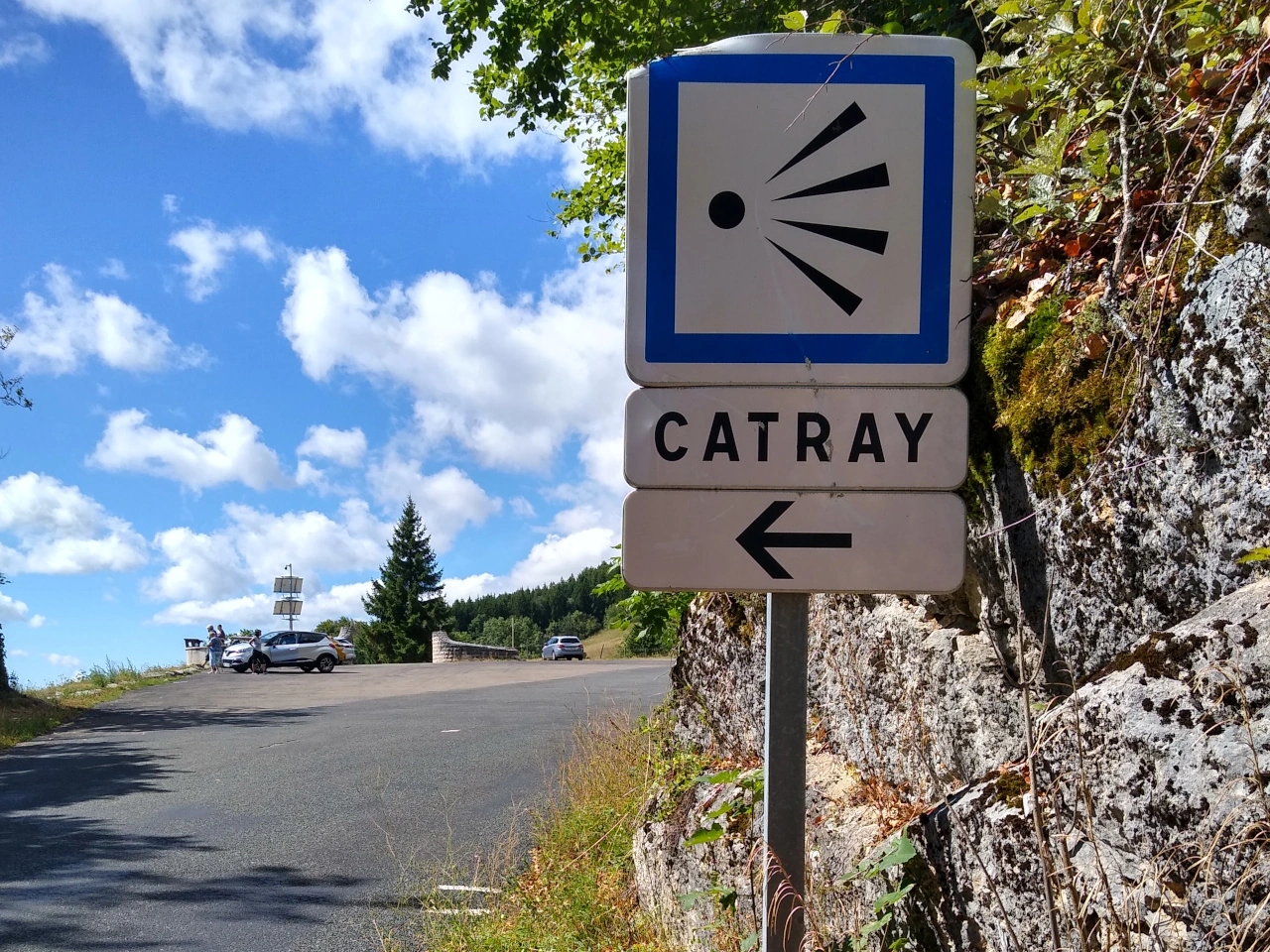
What is a viewpoint?
A viewpoint is a designated location that provides visitors with a scenic or notable view of the surrounding landscape.
Where are viewpoints commonly located?
Viewpoints are commonly found along mountain roads, coastlines, valleys, scenic routes and other areas with notable landscapes.
Can viewpoints be indicated by road signs?
Yes. Tourist or direction signs may guide travellers toward scenic viewpoints, although the signs and symbols used vary between countries.
155. Claxon
El claxon es un dispositivo sonoro utilizado para advertir a otros usuarios de un peligro o llamar su atención cuando sea necesario por seguridad. La mayoría de los vehículos de motor disponen de un claxon eléctrico accionado desde el volante. Las normas de tráfico suelen restringir su uso innecesario o excesivo, especialmente en zonas urbanas o residenciales. Por ello, debe utilizarse como dispositivo de advertencia y no como forma de expresar frustración o saludar a otros usuarios.
What is a car horn?
A car horn is a sound-producing warning device used to alert other road users when their attention is needed for safety.
When should you use the horn?
The horn should generally be used when a sound warning is necessary to help prevent danger or an accident. The exact circumstances in which horn use is permitted depend on local traffic laws.
Can you use the horn to show annoyance?
Generally, no. A horn is intended as a safety warning device, and unnecessary or excessive use may be prohibited by local traffic rules.
Can you use the horn at night?
Rules for using the horn at night vary between countries. Some traffic laws restrict sound signals at night and require drivers to use their lights instead, except when there is immediate danger.
Can a vehicle horn be modified?
Vehicle horns may have to meet technical requirements for their sound and operation. Horns that imitate emergency-service sirens or otherwise fail applicable vehicle standards may be prohibited.
Is the horn checked during a vehicle inspection?
In countries with periodic technical inspections, the operation and condition of the horn may be checked as part of the vehicle's safety equipment.
156. Límite de carga por eje
Un límite de carga por eje es el peso o carga máxima permitida soportada por un solo eje de un vehículo. Limita la fuerza que un eje y sus ruedas pueden transmitir a la carretera, independientemente del peso total del vehículo.
Estos límites ayudan a proteger puentes y superficies viales de cargas excesivas y contribuyen al funcionamiento seguro del vehículo. Un vehículo puede cumplir un límite de peso total y aun así superar el límite de un eje si la carga está distribuida incorrectamente.
What does an axle weight limit mean?
An axle weight limit specifies the maximum permitted load carried by an individual axle or axle group. A vehicle exceeding the indicated axle load may not use the restricted road or structure.
Is axle weight the same as total vehicle weight?
No. Total vehicle weight is the combined weight of the entire vehicle and its load, while axle weight is the portion of that weight supported by a particular axle. Both limits may apply at the same time.
Why are axle weight limits used?
They help prevent excessive stress on roads and structures such as bridges. They also ensure that vehicle loads are distributed safely between the axles.
157. Matrícula
Una matrícula, también llamada placa de matrícula, es una placa que muestra un identificador único asignado a un vehículo por la autoridad competente. Permite identificarlo para fines como matriculación, control de tráfico, impuestos, seguro y control de estacionamiento.
El aspecto, formato, ubicación y número de placas exigidas varían entre países y categorías de vehículos. Los conductores deben asegurarse de que las matrículas estén correctamente instaladas, claramente visibles y legibles y seguir las normas locales cuando una placa se pierda, sea robada, dañada o sustituida.
What is a licence plate?
A licence plate is a plate displaying the registration identifier assigned to a vehicle. It allows authorities and other authorised systems to identify the vehicle's registration.
Is a licence plate the same as a registration plate?
Yes. Licence plate, registration plate and number plate are different terms commonly used for the plate displaying a vehicle's official registration number.
Does every vehicle need a licence plate?
Most motor vehicles used on public roads must display one or more registration plates, but requirements differ for motorcycles, trailers, agricultural vehicles and other special vehicle categories.
Do vehicles need both front and rear licence plates?
This depends on the country and vehicle type. Cars commonly require front and rear plates, while motorcycles and certain other vehicles may require only a rear plate.
Must a licence plate remain visible?
Yes. A required registration plate must normally remain clearly visible and readable. It should not be hidden by luggage, dirt, accessories or other objects.
Can you modify a licence plate?
Generally no. Changing the characters, colours, dimensions or appearance of an official plate may make it invalid or illegal. Plates and authorised reproductions must comply with local specifications.
What should you do if a licence plate is lost or stolen?
Follow the local reporting and replacement procedure. Many countries require the loss or theft to be reported to the police or vehicle-registration authority before a replacement plate can be issued.
Can you drive with a damaged licence plate?
A plate must remain legible and compliant with local requirements. If damage prevents it from being read or makes it invalid, it should be replaced according to the local registration procedure.
Can a licence plate be personalised?
Some countries allow motorists to request a personalised registration combination. The available characters, formats and prohibited combinations are determined by the registration authority.
Does a licence plate stay with the vehicle when it is sold?
This varies between countries. In some systems the plate remains with the vehicle, while in others it remains associated with the registered holder and may be retained or returned when the vehicle is sold.
158. Estación de carga
Una estación de carga es un lugar equipado con uno o más puntos donde la batería de un vehículo eléctrico o híbrido enchufable puede conectarse a una fuente de electricidad y recargarse. Puede estar situada junto a vías públicas, en aparcamientos, áreas de servicio o propiedades privadas.
Las plazas de carga pueden estar reservadas a vehículos que estén cargando y sujetas a restricciones de estacionamiento, límites de tiempo, pago u otras condiciones. Los conductores deben respetar las señales, normas de estacionamiento e instrucciones de carga aplicables.
What is a charging station?
A charging station is a location where electric vehicles can be connected to an electricity supply to recharge their batteries. A station may contain one or several individual charging points.
Who can use an electric-vehicle charging station?
Charging stations are intended for vehicles that can be externally charged, such as battery-electric vehicles and plug-in hybrid vehicles. The exact vehicle categories permitted may be indicated by local signs or operator conditions.
Is a charging space an ordinary parking space?
Not necessarily. A space beside a charger may be reserved for electric vehicles or vehicles that are charging. Drivers must check the signs and markings before parking there.
Can a petrol or diesel vehicle park at a charging station?
Not where the parking space is officially reserved for electric vehicles. An ordinary parking space located near a charger may be different, so the applicable signs and markings determine who may park there.
Can an electric vehicle park at a charging point without charging?
This depends on the local traffic and parking rules. Many charging spaces require the vehicle to be connected to the charger, even if the vehicle itself is electric.
Do you have to pay to use a charging station?
Charging may be free or subject to payment. The price and payment method are determined by the charging operator, while separate parking charges may also apply.
Can a charging station have a maximum parking time?
Yes. Traffic signs, parking regulations or charging conditions may establish a maximum duration to encourage drivers to move their vehicles and make the charger available to others.
Must you move the vehicle when charging is finished?
Follow the local parking rules and charging conditions. Some locations require vehicles to leave after charging or impose additional fees or time limits when the charging session has ended.
Does using a charger override ordinary parking restrictions?
No. A charging station does not allow a driver to ignore no-parking rules, reserved spaces, time limits or other traffic regulations. The vehicle must still be legally parked.
Are all charging stations equally fast?
No. Charging stations can provide different charging powers. Some are intended for longer parking periods, while high-power chargers can recharge compatible vehicles much more quickly.
159. Peligros
Una señal de peligro general advierte de un riesgo próximo que no está representado por una señal de advertencia más específica. El peligro concreto puede explicarse mediante un panel complementario, texto, símbolo u otra indicación situada junto a la señal.
Los conductores deben aumentar la atención, observar la carretera por delante y adaptar la velocidad a la naturaleza del peligro y a las condiciones del entorno. El aspecto exacto y la forma de identificar el peligro varían entre países, por lo que deben respetarse las señales y normas de tráfico locales.
What does a general danger warning sign mean?
A general danger warning sign indicates that there is a hazard ahead that is not represented by a more specific warning sign in the local traffic-sign system.
What kind of danger can the sign indicate?
It can be used for unusual or uncommon hazards for which no dedicated warning symbol exists. The nature of the danger may be explained by an additional panel, symbol or message.
How can you know what the danger is?
Look for a supplementary panel, text or symbol accompanying the warning sign. It may describe the hazard or provide information needed to understand the warning.
What should you do when you see a general danger warning sign?
Increase your attention, observe the road and surroundings carefully and adapt your speed where necessary so that you can respond safely to the hazard.
Does the sign impose a specific speed limit?
Not normally. A warning sign alerts road users to danger rather than establishing a numerical speed limit. A separate speed-limit sign may be provided where a specific maximum speed is required.
Why is a general warning sign used instead of a specific warning sign?
It is used when the traffic-sign system does not contain a specific symbol that accurately represents the particular hazard.
Can the danger be temporary?
Yes. A general warning sign may be used for either a temporary or continuing hazard, depending on local signing rules and the circumstances.
Can a supplementary panel indicate the distance to the danger?
Yes. Depending on the country's traffic-sign system, an additional panel may indicate the distance to the hazard, the length of the dangerous section or other useful information.
Does a general danger sign give anyone priority?
No. A danger warning sign does not by itself change the priority rules. Drivers must continue to follow traffic lights, priority signs and the normal right-of-way rules.
Does the warning end immediately after the sign?
Not necessarily. The sign normally warns of a hazard ahead of the sign, and the dangerous situation may extend over a section of road. Supplementary information may indicate its location or length.
160. Condiciones meteorológicas
Las condiciones meteorológicas pueden afectar considerablemente a la conducción al reducir la visibilidad, la adherencia y el control del vehículo. La lluvia, niebla, nieve, hielo, viento fuerte y sol intenso pueden aumentar el riesgo de accidente. Los conductores deben adaptar la velocidad y distancia de seguimiento, evitar giros o frenadas bruscas sobre superficies deslizantes y utilizar las luces adecuadas cuando la visibilidad sea reducida. Incluso circulando por debajo del límite, una velocidad puede seguir siendo excesiva para el tiempo y el estado de la carretera.
How does weather affect driving?
Weather can reduce visibility, tyre grip and vehicle control. Rain, snow, ice, fog, strong wind and bright sunlight may require drivers to reduce speed and increase their following distance.
Should you drive slower in bad weather?
Yes. Drivers should adapt their speed to the weather, visibility and road conditions. The posted speed limit is a maximum and may still be too fast in poor conditions.
Why should you increase the following distance in bad weather?
Wet, snowy or icy roads can increase stopping distances. A larger following distance gives the driver more time and space to react and stop safely.
What should you do when driving in heavy rain?
Reduce speed, increase your following distance, use the appropriate lights and avoid sudden steering or braking. Heavy rain can reduce visibility and increase the risk of aquaplaning.
What should you do when driving in fog?
Reduce speed, increase your following distance and use the appropriate lights. Avoid relying on the vehicle ahead as a guide and make sure you can stop within the distance you can clearly see.
What should you do when driving on snow or ice?
Drive slowly and smoothly, increase the following distance and avoid sudden acceleration, steering or braking. Tyre grip can be greatly reduced on snow and ice.
161. Inundación
Una inundación se produce cuando el agua cubre o amenaza una carretera debido a lluvias intensas, desbordamiento de ríos, drenaje deficiente, marejadas u otras causas. Las carreteras inundadas pueden volverse peligrosas rápidamente porque el agua reduce la adherencia, oculta baches o residuos y dificulta calcular la profundidad o fuerza de la corriente.
Los conductores que se acerquen deben reducir la velocidad, evaluar cuidadosamente la situación y obedecer las señales o cierres. Si se desconoce la profundidad o estado del agua, la opción más segura es no entrar en el tramo inundado y utilizar otra ruta.

Why is flooding dangerous for road traffic?
Floodwater can reduce grip, hide damage or debris, affect vehicle control and make the actual depth of the water difficult to judge.
Should you drive through a flooded road?
Only when it is clearly safe and permitted. If the depth, current or road condition is uncertain, drivers should avoid entering the flooded section and find another route.
How can flooding be indicated to drivers?
Authorities may use warning signs, temporary traffic signs, barriers or road-closure signs to warn drivers or prevent access to a flooded road.
162. Cambio de rasante sin visibilidad
Un cambio de rasante sin visibilidad es la cresta de una pendiente donde no puede verse claramente la carretera que sigue porque la superficie ascendente bloquea la visión. Vehículos, ciclistas, peatones, curvas u otros peligros pueden permanecer ocultos hasta que el conductor alcance o supere la cresta.
Los conductores deben reducir la velocidad, mantener la posición correcta y evitar adelantar cuando no puedan ver suficientemente lejos. Deben poder reaccionar con seguridad ante tráfico u obstáculos que aparezcan más allá del cambio de rasante.
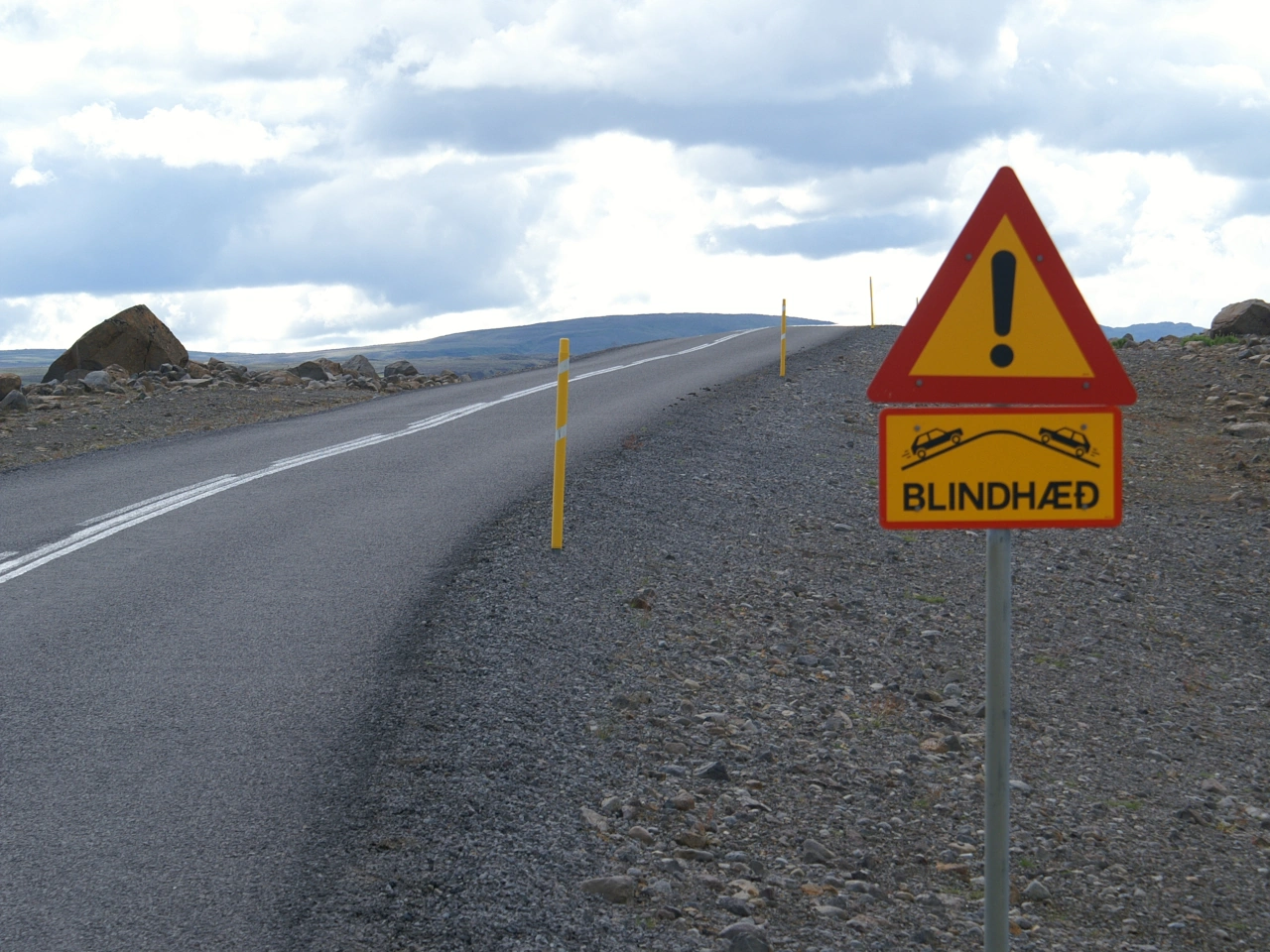
What is a blind summit?
A blind summit is the crest of a hill where the driver's view of the road beyond the summit is restricted.
Why is a blind summit dangerous?
Vehicles, pedestrians, cyclists, bends or obstacles may be hidden beyond the crest, leaving drivers less time to react.
Should you overtake near a blind summit?
Generally, no when visibility is insufficient. Drivers should avoid entering the path of opposing traffic unless they have a clear view and overtaking is permitted by the applicable traffic rules.
163. Categoría de túnel
Una categoría de túnel es una clasificación utilizada para determinar qué vehículos que transportan mercancías peligrosas pueden atravesar un túnel de carretera. Conforme al sistema ADR, los túneles pueden clasificarse de categoría A a categoría E según las restricciones impuestas al transporte de mercancías peligrosas.
La categoría A no tiene restricciones ADR de túnel, mientras que B, C, D y E imponen restricciones progresivamente más amplias según las posibles consecuencias de las mercancías transportadas. Los conductores que transporten mercancías peligrosas deben comparar la categoría del túnel con el código de restricción aplicable a su carga.
What is an ADR tunnel category?
An ADR tunnel category determines which dangerous-goods transports are permitted or prohibited from passing through a particular road tunnel.
What do tunnel categories A to E mean?
Category A has no ADR tunnel restrictions. Categories B, C, D and E impose increasingly extensive restrictions on dangerous goods that could cause consequences such as explosions, toxic releases or major fires.
Do tunnel categories apply to ordinary passenger cars?
Normally, no. ADR tunnel categories specifically regulate vehicles carrying dangerous goods covered by the ADR rules. Other vehicles must still obey the normal traffic and tunnel regulations.
164. Señal temporal
Una señal temporal es una señal instalada durante un periodo limitado para regular, advertir o guiar a los usuarios debido a condiciones temporales. Se utiliza habitualmente en obras, accidentes, eventos, desvíos, cierres de carril u otras situaciones donde la disposición normal del tráfico ha cambiado.
Los conductores deben seguir las señales temporales y la disposición del tráfico vigente. Las señales que hayan dejado de ser pertinentes normalmente deben retirarse, cubrirse o dejarse sin efecto para evitar instrucciones contradictorias.

What is a temporary traffic sign?
A temporary traffic sign is a sign installed for a limited period to regulate, warn or direct traffic because of temporary road conditions.
Where are temporary signs commonly used?
They are commonly used at roadworks, accidents, temporary closures, diversions and special events.
What happens when a temporary sign is no longer needed?
It should normally be removed, covered or otherwise made ineffective so that it does not confuse road users or conflict with the normal traffic arrangement.
165. Ramas salientes
Las ramas salientes son ramas de árboles que se extienden sobre una carretera, vía ciclista o acera y pueden reducir el espacio libre o crear un peligro. Las ramas bajas pueden ser especialmente peligrosas para camiones, autobuses, ciclistas y peatones y también pueden ocultar señales, semáforos o reducir la visibilidad.
Los conductores que se aproximen deben reducir la velocidad, evaluar la altura disponible y evitar maniobras bruscas. Los vehículos altos deben tener especial cuidado cuando las ramas se extiendan sobre la calzada.
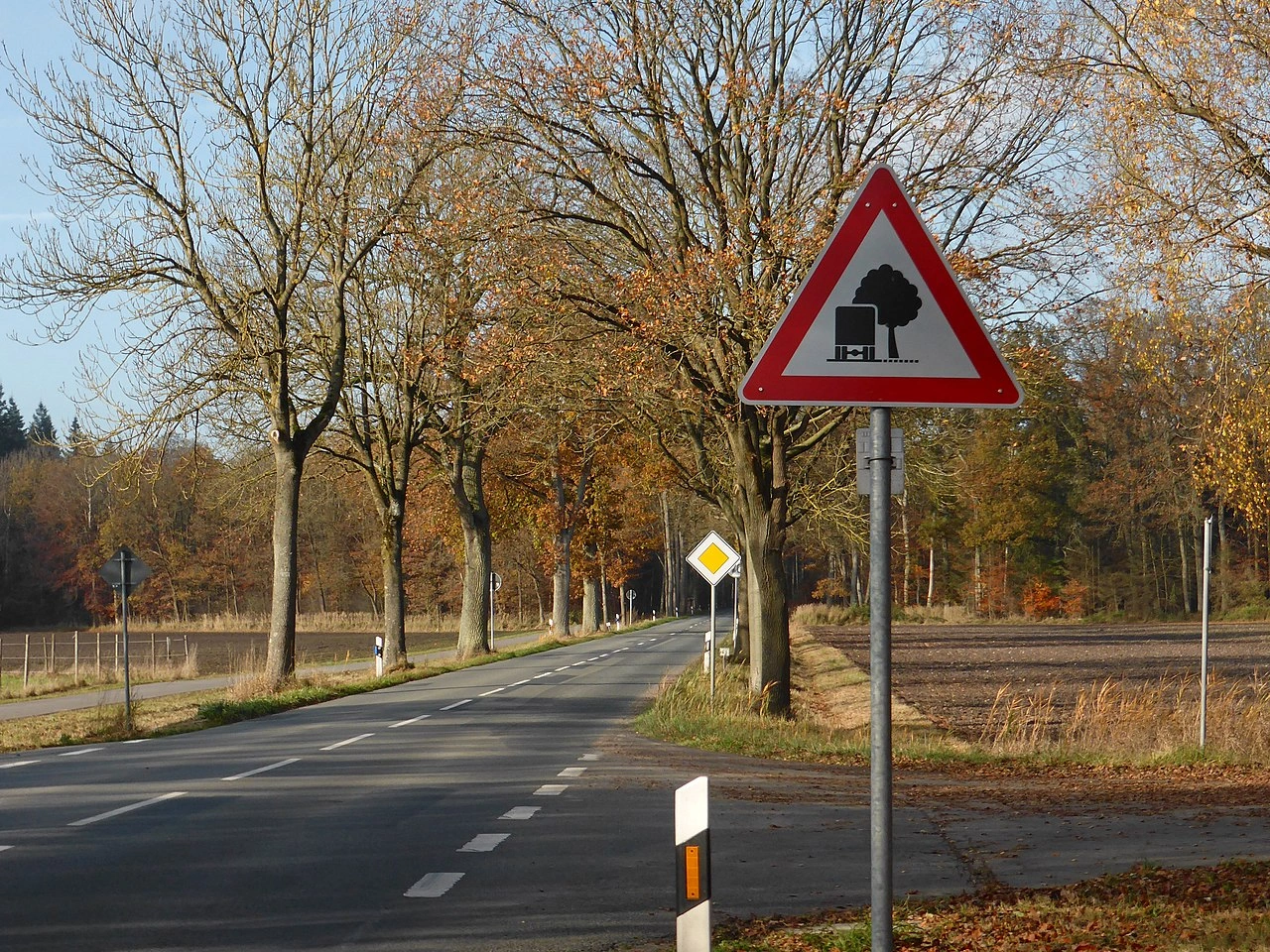
What are hanging trees?
Hanging trees are trees or branches that extend over or toward a road, cycle path or footpath and may interfere with the safe passage of road users.
Why can overhanging branches be dangerous?
They can reduce vertical or lateral clearance, obstruct signs or signals and create a collision hazard, particularly for tall vehicles, cyclists and pedestrians.
What should drivers do near low overhanging branches?
Drivers should slow down, check the available clearance and pass only when it can be done safely. They should avoid swerving suddenly into another lane or toward other road users.
166. Depresión
Una depresión es un tramo bajo o hundido de la carretera donde la superficie desciende y vuelve a subir en una distancia relativamente corta. Puede reducir la visibilidad, afectar a la estabilidad y acumular agua, dificultando valorar la carretera por delante.
Los conductores deben reducir la velocidad cuando sea necesario, mantener el control y vigilar vehículos, peatones, ciclistas o agua estancada ocultos más allá o dentro de la depresión.
What is a dip in the road?
A dip is a short depression in the road surface where the road falls and then rises again.
Why can a road dip be dangerous?
A dip can reduce visibility, affect vehicle stability and hide road users or obstacles. Water may also collect in the lowest part of the depression.
How should you drive through a dip?
Approach at a suitable speed, keep the vehicle under control and be prepared for hazards that may not be visible until you enter or leave the dip.
167. Giro con semáforo rojo
Girar con semáforo rojo es una norma o disposición semafórica que permite a determinados usuarios avanzar en una dirección concreta a pesar de una luz roja. Lo más habitual es permitir un giro después de que el conductor se haya detenido o haya cedido el paso, pero el procedimiento exacto varía entre países.
El giro con rojo no está permitido universalmente. Puede permitirse de forma general, solo cuando exista una señal o indicación específica o estar totalmente prohibido. Los conductores deben seguir siempre los semáforos, señales, normas de prioridad y pasos de peatones o ciclistas locales.
What does turn on red mean?
Turn on red means that a road user may proceed in a specified turning direction despite a red traffic light when local law or a specific sign or signal permits it.
Is turning on red allowed everywhere?
No. Some countries permit certain turns on red, while others prohibit them unless a special sign or signal provides an exception.
Do you have to stop before turning on red?
This depends on the local traffic rules. In some jurisdictions a complete stop is required before turning, while other systems use a give-way rule or a separate signal that permits the movement.
Do you have priority when turning on red?
Usually no. A road user permitted to proceed against a red light generally has to give way to traffic, pedestrians and cyclists who are lawfully moving through the intersection.
Can pedestrians have priority over a vehicle turning on red?
Yes. Drivers must check pedestrian crossings carefully and give way where required before making the permitted turn.
Can cyclists be allowed to pass a red light when motorists cannot?
Yes. Some countries use special signs or bicycle signals that allow cyclists to turn or continue in a specified direction while the main traffic light remains red.
Does a green arrow beside a red light allow you to proceed?
Where the local signal system provides this arrangement, a green arrow may permit movement only in the direction indicated even though the main signal remains red. Applicable give-way rules must still be followed.
Can a sign prohibit turning on red?
Yes. In countries where turning on red is normally permitted, a specific sign may prohibit the manoeuvre at particular intersections.
Can you turn left on red?
This depends entirely on the country and road layout. Some jurisdictions permit particular left turns on red, while many do not. Never assume that a rule allowing a right turn also permits a left turn.
What should you do if you are unsure whether turning on red is allowed?
Remain stopped until a signal clearly permits you to proceed. Never pass a red light based only on what is permitted in another country.
168. Alta tensión
Una advertencia de alta tensión indica la presencia de equipos, cables o instalaciones eléctricas con una tensión suficientemente elevada como para causar lesiones graves o muerte. Puede encontrarse cerca de líneas eléctricas, subestaciones, ferrocarriles electrificados u otras instalaciones.
Los usuarios deben mantenerse alejados del equipo eléctrico y obedecer las barreras, señales e instrucciones. Los conductores de vehículos altos o maquinaria deben prestar especial atención a la distancia de seguridad respecto a cables aéreos.
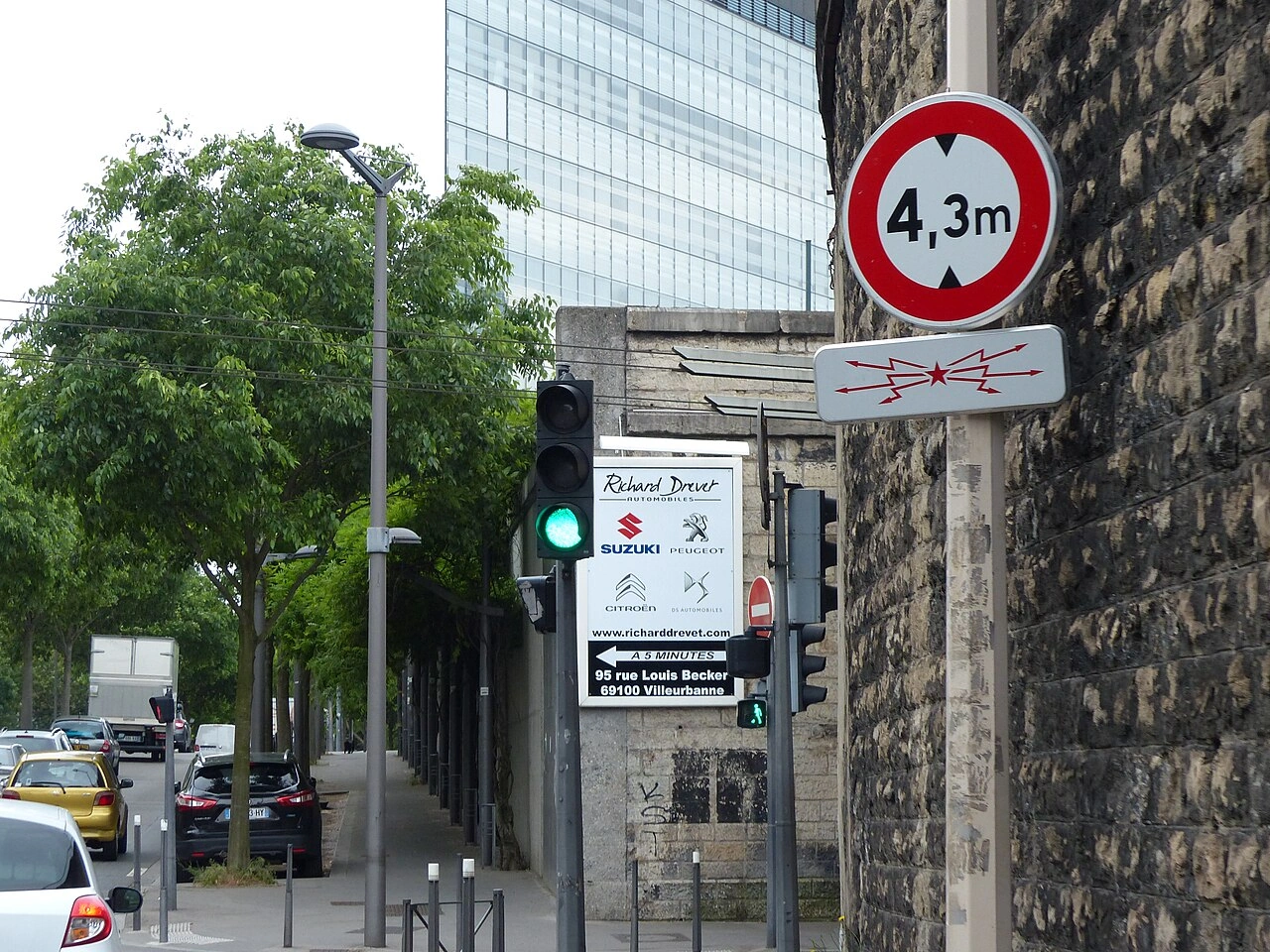
What does high voltage mean?
High voltage refers to electrical installations operating at voltage levels that can create a serious risk of electric shock, burns or electrocution.
Where can high-voltage equipment be found?
It may be found at power lines, substations, railway and tram infrastructure, industrial facilities and other electrical installations.
What should you do when you see a high-voltage warning?
Keep away from the electrical equipment, respect barriers and safety distances and do not enter restricted areas or touch electrical installations.
169. Carril de tranvía
Un carril de tranvía es una parte de la vía utilizada por tranvías, normalmente identificada por raíles y, en algunos casos, separada del resto del tráfico mediante marcas, bordillos u otras medidas. Puede ser exclusivo para tranvías o compartirse con determinados vehículos según las normas locales.
Los conductores deben respetar señales, marcas y normas de prioridad relativas al carril. Deben evitar bloquear los raíles y tener especial cuidado al cruzarlos o girar a través de ellos.
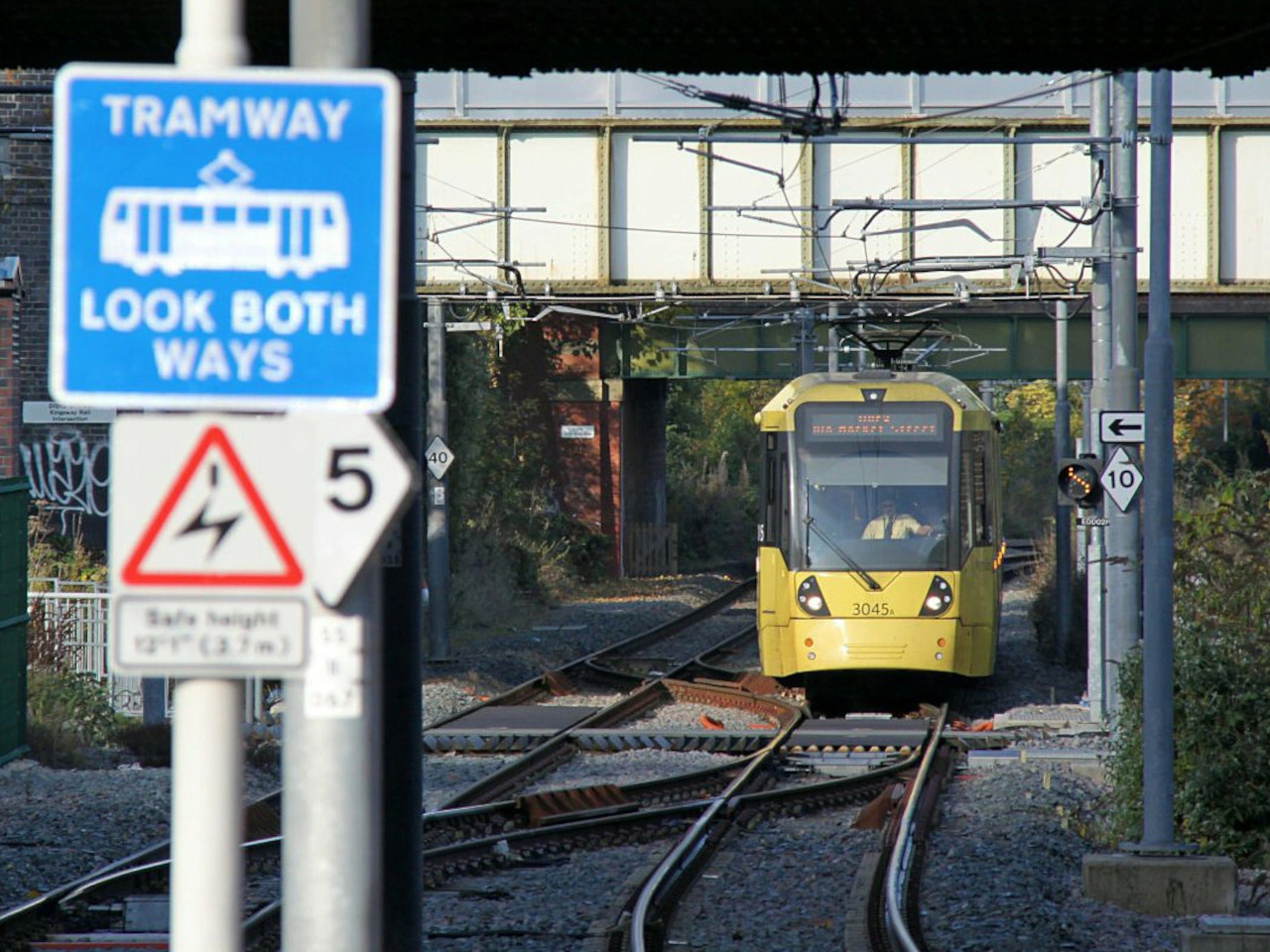
What is a tram lane?
A tram lane is a lane or track area intended primarily for trams and other authorised public-transport vehicles.
Can other vehicles use a tram lane?
It depends on the country and the signs provided. Some tram lanes are exclusively reserved for trams, while others may also be used by buses, taxis, cyclists or other authorised vehicles.
Can you cross a tram lane?
Usually, where permitted and necessary. Drivers may be allowed to cross tram tracks to turn, enter a property or cross an intersection, but they must follow the applicable signs and priority rules.
170. Seguridad ferroviaria
La seguridad ferroviaria comprende las normas y precauciones destinadas a evitar colisiones y otros accidentes donde carreteras, peatones o vehículos interactúan con vías férreas. Incluye pasos a nivel, señales, barreras, luces, avisos acústicos y zonas de separación.
Los usuarios nunca deben entrar en las vías cuando se aproxime un tren, estén activas las señales o la salida esté bloqueada. Los trenes necesitan largas distancias para detenerse y no pueden desviarse para evitar un obstáculo.
What is rail safety?
Rail safety covers the rules, equipment and precautions intended to prevent accidents involving trains, railway infrastructure and people.
Why are railway crossings particularly important for rail safety?
Railway crossings bring road users and railway vehicles into the same location. Road users must therefore obey the warning systems and never enter when a train is approaching or the crossing cannot be cleared safely.
Can you walk along railway tracks?
Normally, no. Railway tracks are operational transport infrastructure and should be entered only at authorised crossing points or where access is specifically permitted.
171. Ruta ecuestre
Una ruta ecuestre es un camino o itinerario destinado principalmente a caballos y jinetes. Puede discurrir por zonas rurales, bosques, parques o conectar con carreteras y otros caminos.
Los usuarios deben respetar las señales que indiquen quién puede utilizarla y cualquier norma de prioridad. Los conductores que crucen o circulen cerca deben reducir la velocidad y evitar asustar a los caballos.
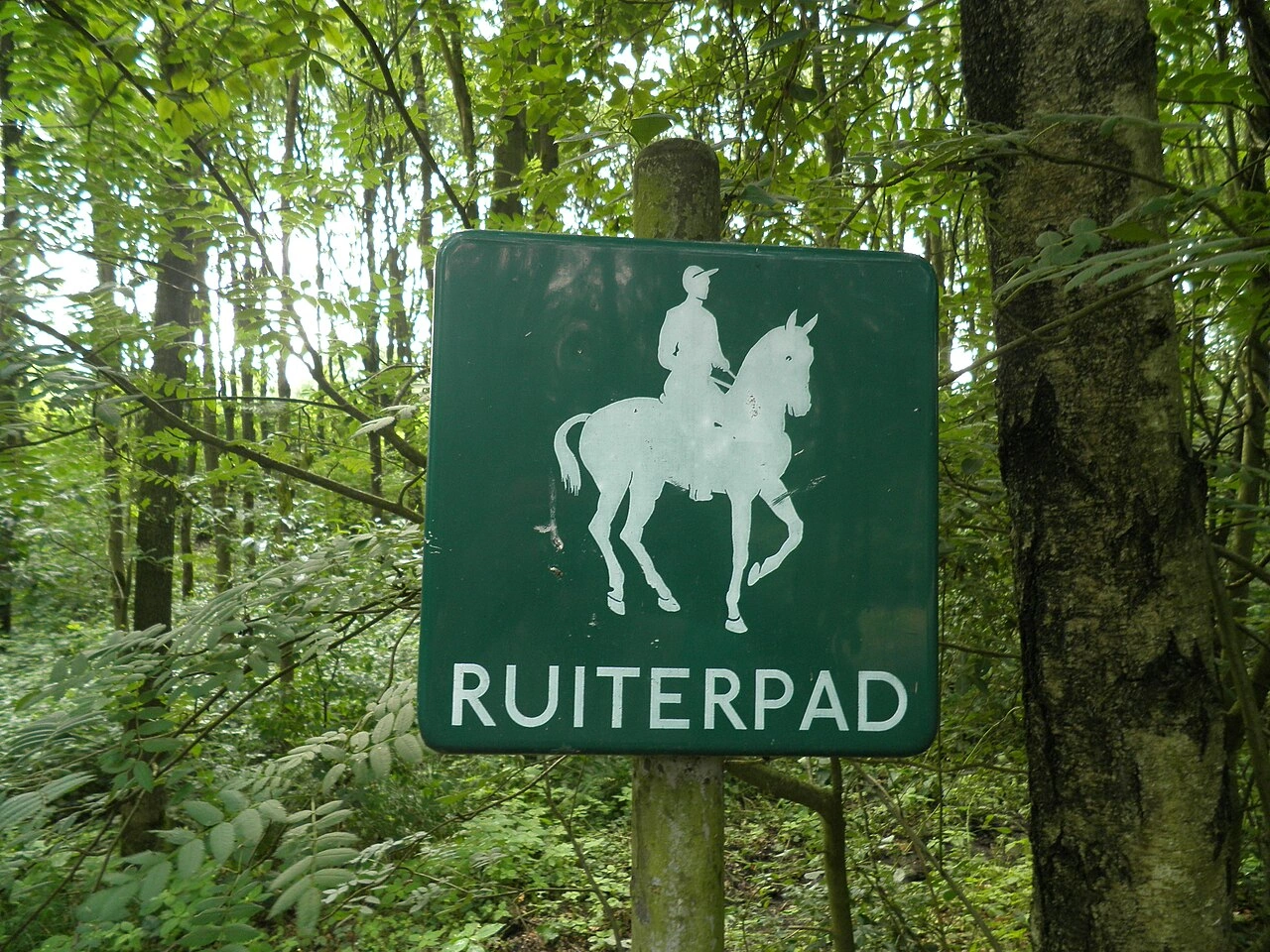
What is an equestrian trail?
An equestrian trail is a designated path or route intended primarily for people travelling on horseback.
Where are equestrian trails commonly found?
They are commonly found on forest paths, rural tracks, recreational routes and bridleways where horse riding is permitted.
Can other road users use an equestrian trail?
It depends on the route and local rules. Some trails are reserved for horse riders, while others are shared with pedestrians, cyclists or other authorised users.
172. Caballo
Un caballo es un animal grande que puede utilizarse para montar, tirar de vehículos u otras actividades. En las carreteras, los caballos pueden formar parte del tráfico mediante jinetes, carruajes o desplazamientos de animales.
Los conductores deben aproximarse despacio y con espacio suficiente, evitar ruidos bruscos y estar preparados para que el animal reaccione de forma imprevisible. Las normas aplicables a caballos y jinetes varían entre países.
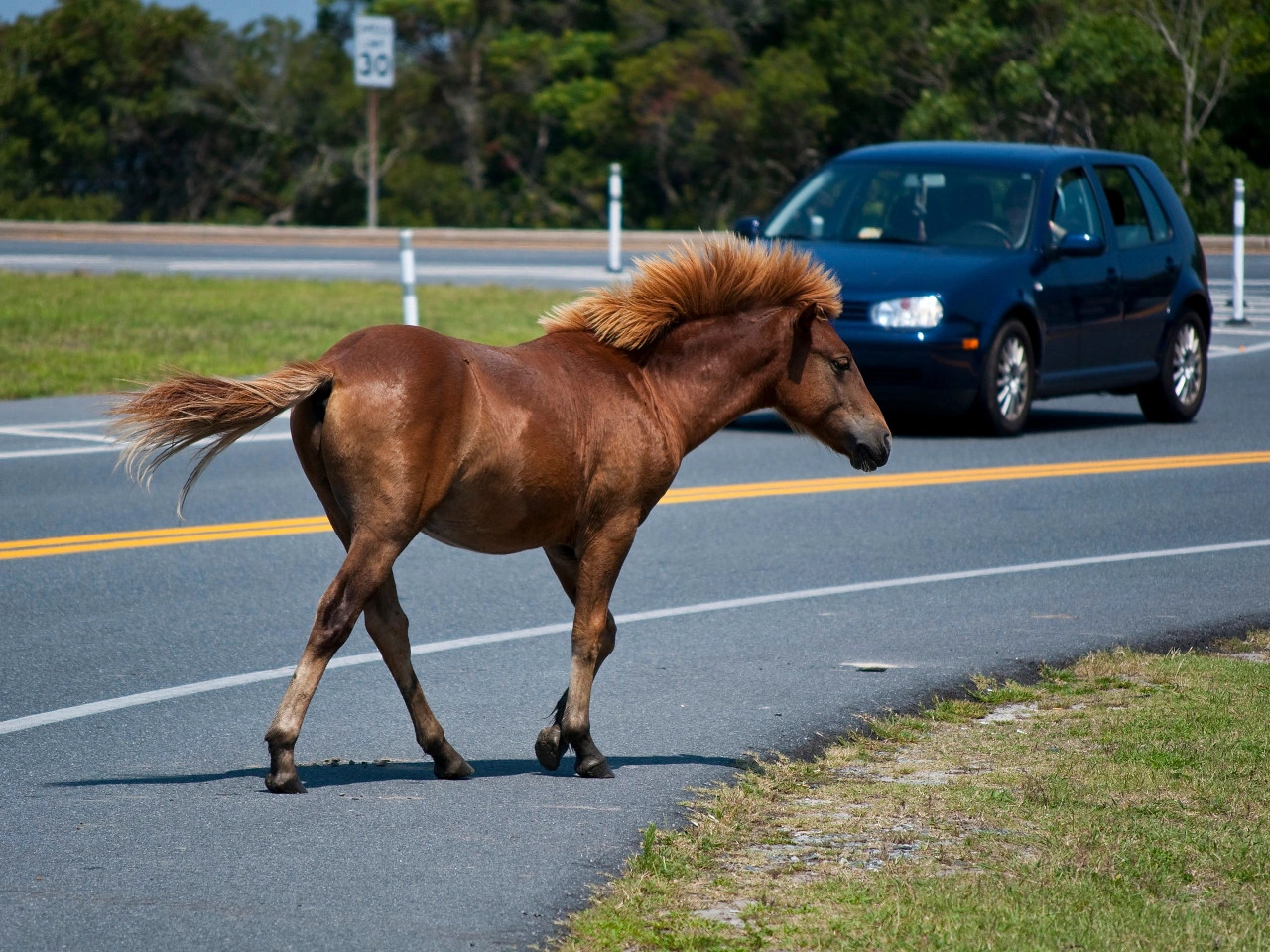
Can horses use public roads?
Yes, where local traffic rules permit. Horses may be ridden, led or used with animal-drawn vehicles on public roads and designated routes.
How should drivers behave near a horse?
Drivers should slow down, leave plenty of space and pass calmly, avoiding unnecessary horn use, sudden acceleration or other actions that could frighten the horse.
Are horse riders considered road users?
Yes. Horse riders using a road are road users and must follow the traffic rules that apply to riders and animals in that country.
173. Documento de identidad
Un documento de identidad es un documento oficial utilizado para acreditar la identidad de una persona. Normalmente lo expide un gobierno u otra autoridad competente y contiene información identificativa como el nombre, fecha de nacimiento, fotografía y un número único de documento o identificación.
Puede ser necesario para controles de identidad, trámites administrativos, viajes o acceso a servicios. La obligación de poseerlo o llevarlo, la información que contiene y si puede utilizarse como documento de viaje varían entre países.
What is an identity card?
An identity card is an official document used to prove who a person is. It is normally issued by a government or other competent authority.
What information is shown on an identity card?
Identity cards commonly contain information such as the holder's name, photograph, date of birth and identification or document number. The exact information varies between countries.
Do you have to carry an identity card?
This depends on the country. Some countries require residents or citizens above a certain age to carry official identification, while others require identification only in particular circumstances.
Can police ask to see your identity card?
Yes, where permitted by local law. Police and other authorised officials may require a person to identify themselves in circumstances such as traffic enforcement, investigations or other official checks.
Is an identity card the same as a driving licence?
No. An identity card primarily proves a person's identity, while a driving licence proves that the holder is authorised to drive particular categories of motor vehicle. A country may require drivers to carry both documents.
Can an identity card replace a driving licence?
No. Proof of identity does not by itself give a person permission to drive. A driver must hold the appropriate valid driving licence when one is required.
Can an identity card be used for international travel?
Some identity cards are accepted as travel documents between certain countries, while other journeys require a passport. Travellers should check the entry requirements for their destination.
What should you do if your identity card is lost or stolen?
Report the loss or theft according to the procedure of the issuing country so that the document can be cancelled or blocked and a replacement can be requested.
Can you use an expired identity card?
An expired card may no longer be accepted as valid identification or as a travel document. The holder should renew the document according to the rules of the issuing authority.
Is an electronic identity card different from an ordinary identity card?
An electronic identity card contains an electronic chip in addition to the information visible on the card. Depending on the national system, the chip may allow secure electronic identification or access to online government services.
174. Riesgo de incendio
Una señal de riesgo de incendio advierte a los usuarios de que existe un mayor peligro de incendio en la zona o cerca de ella. Puede utilizarse donde vegetación seca, materiales inflamables u otras condiciones hagan especialmente probable un incendio o requieran precauciones adicionales.
El aspecto y valor legal de estas señales varían entre países. Los conductores deben evitar acciones que puedan provocar un incendio, obedecer cualquier restricción complementaria y permanecer atentos a humo, llamas o actividad de los servicios de emergencia.
What does a fire risk sign mean?
It warns that conditions in or near the area create an increased risk of fire. Drivers should take extra care and avoid anything that could ignite vegetation, fuel or other flammable material.
Does a fire risk sign always prohibit access?
No. A warning sign by itself normally warns of a hazard rather than automatically closing the road. Access may nevertheless be restricted by additional signs, barriers or instructions when the fire danger is particularly high.
What should you do when you see a fire risk sign?
Remain alert, obey any accompanying restrictions and avoid actions that could cause a fire. If there is an active fire or smoke affecting the road, reduce your exposure to the danger and follow instructions from emergency services or road authorities.
175. Tráfico local
El tráfico local es el tráfico que necesita acceder a una calle o zona concreta porque su viaje comienza, termina o requiere una parada allí, en lugar de limitarse a atravesarla. Las carreteras pueden estar restringidas al tráfico local para reducir el tráfico de paso innecesario.
El significado exacto depende de las normas nacionales. Suele incluir residentes, visitantes, repartos y vehículos que prestan servicios dentro de la zona restringida.
What does local traffic mean?
Local traffic generally means vehicles that have a legitimate reason to enter a particular street or area, such as reaching a home, business, delivery address or other destination located there.
Is local traffic the same as through traffic?
No. Through traffic passes through an area without having a destination or other necessary stop there. A restriction allowing only local traffic is normally intended to prevent this type of unnecessary through traffic.
Who may enter a road restricted to local traffic?
This depends on national rules and the signs in place. Residents, visitors, deliveries, emergency services and certain service vehicles are commonly permitted, but the precise categories vary between countries.