


Panneaux de signalisationNorvège
 Règles de circulation
 Norvège
51. Speed pedelec
Un speed pedelec est un vélo à assistance électrique rapide dont le moteur peut continuer à fournir une assistance au pédalage au-delà de la limite normale des vélos électriques, généralement jusqu’à environ 45 km/h. Il possède des pédales et est principalement conçu pour assister le cycliste pendant qu’il pédale.
En raison de sa vitesse plus élevée, un speed pedelec peut être classé juridiquement différemment d’un vélo ou vélo électrique ordinaire. Des règles particulières peuvent s’appliquer concernant l’âge minimum, le permis de conduire, le casque, l’immatriculation, l’assurance, l’utilisation des pistes cyclables et les routes autorisées, selon le pays.

What is a speed pedelec?
A speed pedelec is an electrically assisted pedal cycle capable of providing motor assistance at higher speeds than an ordinary electric bicycle, commonly up to approximately 45 km/h.
What is the difference between a speed pedelec and an ordinary electric bicycle?
An ordinary electrically assisted bicycle normally stops providing motor assistance at a lower speed, commonly around 25 km/h. A speed pedelec can continue assisting the rider at higher speeds.
Do you still have to pedal a speed pedelec?
Normally yes. A speed pedelec is primarily designed to provide assistance while the rider pedals, although limited walking or starting assistance may also be provided.
Can a speed pedelec travel at 45 km/h?
Many speed pedelecs are designed to provide assistance up to approximately 45 km/h. The actual permitted speed must still comply with the local speed limit and traffic conditions.
Do you need a driving licence for a speed pedelec?
This depends on the country's legal classification. Some countries classify speed pedelecs similarly to mopeds and require an appropriate driving licence.
Is a helmet compulsory on a speed pedelec?
Helmet requirements vary between countries, but because speed pedelecs travel considerably faster than ordinary bicycles, specific helmet requirements commonly apply.
Does a speed pedelec need a licence plate?
In countries where speed pedelecs are classified as mopeds or another motor-vehicle category, registration and a licence plate may be compulsory.
Does a speed pedelec need insurance?
This depends on its technical characteristics and local law. Some jurisdictions require motor-vehicle liability insurance, while others exempt pedal-assisted speed pedelecs under specified conditions.
Can a speed pedelec use a cycle path?
This depends on the country, road speed limit and traffic signs. Speed pedelecs may be permitted, required or prohibited on particular cycle paths.
Can a speed pedelec use a motorway?
Speed pedelecs are generally unsuitable for motorways and are commonly prohibited where mopeds or low-speed vehicles are not permitted. Follow the local access rules.
Can you carry a passenger on a speed pedelec?
This depends on the vehicle's construction and local rules. Where passengers are permitted, the speed pedelec must be designed and equipped to carry them safely.
Is a speed pedelec the same as an electric moped?
No. A speed pedelec is primarily designed to provide pedal assistance, while an electric moped can normally propel itself without requiring the rider to pedal. Their legal classifications may nevertheless be closely related.

52. Véhicule de livraison
Un véhicule de livraison est un véhicule utilisé pour transporter et livrer des marchandises, colis, fournitures ou autres biens à des domiciles, entreprises ou autres destinations. Il peut s’agir de fourgonnettes, camions, voitures, motos, vélos cargo ou d’autres véhicules selon le type et la quantité de marchandises transportées.
Les véhicules de livraison doivent respecter les règles ordinaires applicables à leur catégorie ainsi que toute règle spécifique concernant le chargement et le déchargement, les zones à accès restreint, le stationnement, les dimensions du véhicule et les zones à faibles émissions. L’autorisation d’effectuer une livraison ne permet pas automatiquement de s’arrêter ou de stationner n’importe où.

What is a delivery vehicle?
A delivery vehicle is a vehicle used to transport goods, parcels, supplies or other items to a particular destination.
Is a delivery vehicle always a van or truck?
No. Deliveries can be made using vans, trucks, cars, motorcycles, cargo bicycles or other suitable vehicles.
Can a delivery vehicle stop to load or unload goods?
Yes, where stopping is legally permitted. Many traffic systems distinguish genuine loading or unloading from ordinary parking when the vehicle remains only for the time necessary to perform the activity.
Can a delivery driver wait in a loading area?
A loading area is intended for active loading or unloading. Remaining there after the delivery activity has finished may constitute parking and may therefore violate the applicable restrictions.
Can delivery vehicles use restricted streets?
Sometimes. Traffic signs may provide an exception for deliveries, loading and unloading or local access. The driver must comply with any times, vehicle restrictions or other conditions shown.
Can delivery vehicles enter pedestrian zones?
Only where local rules or signs specifically allow delivery access. Access may be limited to certain hours, and vehicles may be required to travel at very low speed and give priority to pedestrians.
Can a delivery vehicle park on a pavement or cycle path while unloading?
Not automatically. Loading or unloading does not override general stopping restrictions or rules protecting pavements, cycle paths and other road users.
Can a delivery vehicle use hazard warning lights while illegally stopped?
No. Hazard warning lights warn other road users but do not make an otherwise prohibited stopping or parking position legal.
Can delivery vehicles be restricted by low-emission zones?
Yes. Vans and trucks may be subject to low-emission-zone requirements based on factors such as fuel type, vehicle category and emission standard.
Should drivers take extra care around delivery vehicles?
Yes. Delivery vehicles may stop frequently, reverse, open doors or move between the roadway and loading areas. Other road users should allow sufficient space and anticipate pedestrians or workers moving around the vehicle.
53. Moteur au ralenti
Le ralenti consiste à laisser tourner le moteur d’un véhicule alors que celui-ci est immobile et que le moteur n’est pas utilisé pour le déplacer. Cela peut se produire pendant une attente, un stationnement, un chargement ou déchargement ou avant le départ.
Un ralenti inutile consomme du carburant et produit des émissions d’échappement, de la pollution de l’air et du bruit. De nombreux pays ou autorités locales limitent le ralenti prolongé ou inutile, même si des exceptions peuvent s’appliquer lorsque le moteur est nécessaire pour la sécurité, un équipement technique ou une autre raison justifiée.
What is idling?
Idling means keeping a vehicle's engine running while the vehicle remains stationary and the engine is not being used to propel it.
Why should unnecessary idling be avoided?
Unnecessary idling uses fuel, produces exhaust emissions and creates noise without moving the vehicle.
Is idling illegal everywhere?
No. Rules differ between countries and local authorities. Some prohibit unnecessary idling generally, while others restrict it only in particular locations or circumstances.
Does an idling engine still produce exhaust emissions?
Yes. A combustion engine continues to produce exhaust gases while running even though the vehicle is not moving.
Does idling use fuel?
Yes. A combustion engine consumes fuel while it remains running, even when the vehicle is stationary.
Should you leave the engine running while waiting for someone?
Where it is safe and legal to switch the engine off, unnecessary prolonged idling should generally be avoided. Local rules may specifically require the engine to be switched off.
Is waiting at a red traffic light the same as parking with the engine idling?
No. A vehicle temporarily prevented from moving by traffic conditions is different from a vehicle voluntarily parked or waiting. The rules concerning engine shutdown may therefore differ.
Can an engine remain running when vehicle equipment needs power?
Some laws provide exceptions when the engine is genuinely required to operate refrigeration, hydraulic equipment, emergency equipment or another essential system. The precise exceptions depend on local law.
Should you rev the engine while stationary?
Unnecessary engine revving should be avoided because it increases noise, fuel consumption and emissions. It may also be specifically prohibited by local traffic or noise regulations.
Do electric vehicles idle?
Not in the conventional combustion-engine sense. An electric vehicle can remain stationary while switched on without an internal-combustion engine running, although electrical systems such as heating or air conditioning may still consume energy.
54. Dépanneuse
Une dépanneuse est un véhicule spécialisé utilisé pour dépanner, remorquer, soulever ou transporter des véhicules en panne, accidentés, mal stationnés ou autrement incapables de poursuivre normalement leur trajet. Elle peut utiliser un équipement de levage, un treuil, un dispositif de levage des roues ou une plateforme.
Comme les opérations de dépannage peuvent avoir lieu à proximité de la circulation, les dépanneuses utilisent souvent des feux de signalisation et d’autres équipements de sécurité pendant leur intervention. Les conducteurs qui approchent doivent ralentir si nécessaire, laisser suffisamment d’espace et respecter toute signalisation temporaire ou instruction du personnel autorisé.
What is a tow truck?
A tow truck is a specialised vehicle designed to recover, tow, lift or transport vehicles that are disabled, damaged or otherwise need to be removed.
How can a tow truck move another vehicle?
Tow trucks may use a wheel lift, lifting arm, winch, towing equipment or loading platform. The recovery method depends on the type and condition of the vehicle being moved.
What is a flatbed tow truck?
A flatbed tow truck carries the recovered vehicle on a loading platform rather than leaving some of its wheels on the road.
When is a tow truck used?
A tow truck may be used after a breakdown, collision, vehicle defect or other situation in which a vehicle cannot safely continue or must be removed.
Why do tow trucks use flashing warning lights?
Warning lights alert other road users that the tow truck is working, moving slowly or creating an unusual roadside hazard. The meaning and permitted colour of the lights depend on local law.
Do flashing lights give a tow truck emergency-vehicle priority?
Not necessarily. Warning lights used for vehicle recovery usually indicate a hazard rather than giving the tow truck the same legal priority as a police car, ambulance or fire vehicle.
Can any vehicle tow a broken-down car?
This depends on the local towing rules and equipment. Emergency towing may be permitted under limited conditions, while professional recovery vehicles can use specialised equipment designed for the task.
Can a tow truck recover a vehicle from a motorway?
Yes, where authorised and suitably equipped. Motorway recovery may be subject to special safety procedures because of the high traffic speeds and restricted stopping areas.
Should you slow down when passing a working tow truck?
Yes. Recovery personnel may be working close to live traffic and vehicles or equipment may occupy part of the roadway. Reduce speed where necessary and leave sufficient space.
Can a tow truck recover heavy trucks and buses?
Yes, if it is designed and rated for the vehicle concerned. Heavy recovery vehicles use specialised lifting and towing equipment for trucks, buses and other large vehicles.
55. Quatre roues motrices
Les quatre roues motrices, généralement désignées par 4WD ou 4x4, est un système de transmission capable d’envoyer la puissance aux quatre roues d’un véhicule. Elle peut améliorer la motricité sur la neige, la boue, le gravier, le sable ou les terrains irréguliers.
Les systèmes à quatre roues motrices peuvent fonctionner en permanence ou s’enclencher automatiquement ou manuellement lorsqu’une adhérence supplémentaire est nécessaire. Ils peuvent améliorer la capacité du véhicule à avancer sur des surfaces glissantes ou difficiles, mais ne remplacent pas des pneus adaptés, une vitesse sûre et une conduite prudente au freinage et à la direction.

What is four-wheel drive?
Four-wheel drive is a drivetrain system that can send power to all four wheels of a vehicle rather than only the front or rear wheels.
What does 4x4 mean?
4x4 normally indicates a vehicle with four wheels of which all four can be driven by the powertrain.
Is four-wheel drive the same as all-wheel drive?
The terms 4WD and AWD are sometimes used interchangeably, but manufacturers often use them for different types of system. Traditional 4WD systems commonly provide selectable driving modes, while AWD systems often distribute power automatically.
Does four-wheel drive improve traction?
Yes. Sending power to more wheels can improve traction when accelerating on snow, mud, gravel, sand or other low-grip surfaces.
Does four-wheel drive shorten braking distance?
Not automatically. Braking performance depends primarily on the tyres, road surface, speed, braking system and vehicle condition. Four-wheel drive should not encourage a driver to travel faster on slippery roads.
Does a four-wheel-drive vehicle still need suitable tyres?
Yes. The tyres provide the contact between the vehicle and road. Four-wheel drive cannot compensate for tyres that are unsuitable, excessively worn or incorrectly inflated.
Can four-wheel drive help in snow?
Yes. It can improve the ability to move away and climb on snow-covered roads, but safe braking and cornering still depend heavily on tyre grip and appropriate speed.
Can a four-wheel-drive vehicle drive off-road?
Some 4x4 vehicles are designed for off-road use, but four-wheel drive alone does not make every vehicle suitable for difficult terrain. Ground clearance, tyres, suspension and the drivetrain design are also important.
Can you use four-wheel drive on dry roads?
This depends on the type of drivetrain. Permanent or automatic systems are designed for normal road use, while some selectable 4WD systems should only be engaged under particular conditions. Follow the manufacturer's instructions.
Does four-wheel drive increase towing capacity?
It can improve traction when towing, but the legally and technically permitted trailer mass is determined by the vehicle's approved towing limits and local regulations, not simply by the presence of four-wheel drive.
56. Vélo
Un vélo est un véhicule à deux roues ou plus principalement propulsé par son utilisateur au moyen de pédales ou de manivelles. Les vélos servent au transport, aux loisirs, au sport et, lorsqu’ils sont correctement équipés, au transport de petites charges ou de passagers.
Certains vélos disposent d’un moteur électrique qui assiste le cycliste pendant le pédalage. La classification juridique d’un vélo à assistance électrique dépend de la puissance du moteur, de la vitesse d’assistance et des règles locales. Les cyclistes doivent respecter les règles, panneaux, signaux et prescriptions d’utilisation de la route applicables aux vélos.
What is a bicycle?
A bicycle is a wheeled vehicle primarily propelled by the rider using pedals or hand cranks.
Is an electric bicycle still a bicycle?
It can be. Electrically assisted bicycles that remain within specified power and assistance-speed limits are commonly treated as bicycles. Faster or more powerful vehicles may be classified differently.
Where should cyclists ride?
Cyclists should use cycle paths, cycle lanes or the roadway according to the local traffic rules and signs. The required position varies between countries and road types.
Must cyclists use a cycle path?
This depends on the country and type of cycle facility. Some cycle paths are compulsory, while others are optional.
Do bicycles need lights?
Yes, when required by local law. Bicycles commonly need a white or yellow light at the front and a red light at the rear during darkness or poor visibility.
Do bicycles need brakes?
Yes. A bicycle used on public roads must have an effective braking system appropriate to its design and local technical requirements.
Is a bicycle helmet compulsory?
This varies between countries. Some require helmets for all cyclists or particular age groups, while others recommend helmets without making them compulsory.
Can a bicycle carry a passenger?
Yes, where the bicycle is appropriately equipped and local law permits it. A passenger should use a proper seat and any other required safety equipment.
Can cyclists ride side by side?
This depends on local law and the road conditions. Many countries allow two cyclists to ride beside each other in certain circumstances but require single-file riding when necessary for safety or traffic flow.
Is someone walking a bicycle still a cyclist?
In many traffic systems, a person who dismounts and walks the bicycle by hand is treated as a pedestrian. The exact legal definition depends on local law.
57. Équipement de moto
L’équipement de moto comprend les équipements de protection utilisés par le conducteur et le passager ainsi que les équipements de sécurité montés sur la moto. L’équipement du motocycliste comprend généralement un casque, des vêtements de protection, des gants, des bottes et une protection des yeux, tandis que la moto elle-même doit disposer d’éléments tels que feux, freins, rétroviseurs, pneus et dispositifs de signalisation conformément à la législation locale.
Les équipements légalement obligatoires varient selon les pays et les catégories de motos. Avant de partir, les motocyclistes doivent s’assurer que leurs équipements de protection et leur moto sont adaptés, correctement utilisés et en bon état de sécurité.
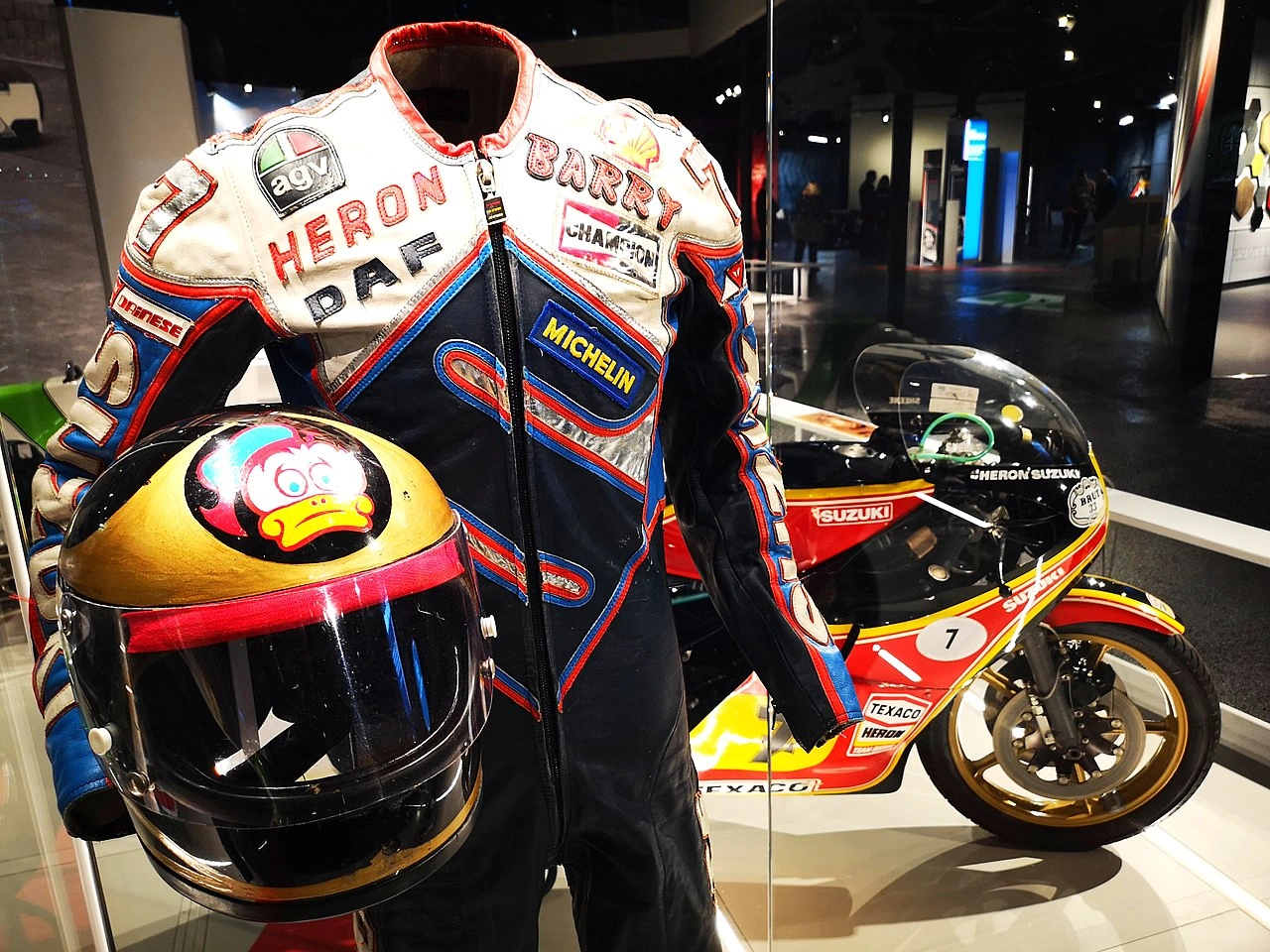
What equipment should a motorcyclist use?
Motorcyclists should use appropriate protective equipment, commonly including a helmet, gloves, protective jacket and trousers, and footwear that protects the feet and ankles.
Is a motorcycle helmet compulsory?
Helmet requirements depend on local law, although approved motorcycle helmets are compulsory in many countries. The helmet should fit correctly and be used in a way that preserves its protective function.
Why is protective motorcycle clothing important?
Protective clothing can reduce injuries caused by impact, abrasion and contact with the road surface. Purpose-designed motorcycle clothing may also include impact protectors for vulnerable parts of the body.
Why should motorcyclists wear gloves?
Gloves help protect the hands and wrists against abrasion, weather and impact and can also improve grip on the motorcycle controls.
Why are motorcycle boots important?
Suitable boots provide protection for the feet and ankles and can reduce injuries caused by impact, abrasion or the motorcycle falling onto the rider.
Does a motorcycle passenger need protective equipment?
Yes. Passengers are exposed to many of the same risks as riders and should use appropriate protective equipment. Local law may require the passenger to wear the same helmet and clothing as the rider.
What safety equipment must a motorcycle have?
A road-legal motorcycle normally requires functioning brakes, tyres, lights, reflectors, mirrors, a horn and other prescribed equipment. Exact technical requirements vary between countries and motorcycle categories.
Should motorcycle lights be checked before riding?
Yes. Check that the headlight, rear light, brake light and direction indicators work correctly where fitted or required. Motorcycle visibility is especially important because motorcycles can be difficult for other road users to detect.
Should motorcycle tyres be checked regularly?
Yes. Check tyre condition, tread and pressure regularly. Because motorcycles rely on two relatively small tyre contact areas, damaged or incorrectly inflated tyres can significantly affect stability, steering and braking.
Should motorcycle equipment be checked before every journey?
A brief check of the tyres, brakes, lights, controls, mirrors and general condition of the motorcycle can help identify problems before riding. Protective equipment should also be correctly fitted and in usable condition.
58. Voie ferrée
Une voie ferrée est une paire de rails utilisée pour guider les trams, trains ou autres véhicules ferroviaires. Les rails peuvent longer une route, la traverser ou être intégrés directement à la chaussée, de sorte que véhicules ferroviaires et autres usagers utilisent la même zone.
Les usagers doivent être particulièrement prudents près des voies, car les véhicules ferroviaires ne peuvent pas contourner les obstacles et nécessitent une distance importante pour s’arrêter. Conducteurs, cyclistes et piétons doivent respecter les règles de priorité, feux de circulation, panneaux d’avertissement et règles de franchissement applicables et éviter d’obstruer inutilement les voies.

What is a track?
A track consists of rails that guide trams, trains or other rail vehicles. Tracks may be separated from ordinary traffic or incorporated into a road.
Can tram tracks run along an ordinary road?
Yes. Tram tracks may be embedded in the carriageway and share part of the road with other traffic, depending on the local road layout and traffic rules.
Who has priority when a road crosses tram tracks?
The applicable priority rules vary between countries, but rail vehicles commonly receive special priority because they cannot leave their tracks. Always obey traffic lights, signs and local rules.
Can you drive on tram tracks?
This depends on the road layout and local regulations. Tracks incorporated into an ordinary traffic lane may sometimes be used by other vehicles, while reserved tram tracks or separate railway tracks may not.
Can you stop or park on railway or tram tracks?
You should never stop or park where your vehicle would obstruct a rail vehicle. Local traffic law may specifically prohibit stopping or parking on or close to tracks.
Why are tracks dangerous for cyclists and motorcyclists?
Wheels can slip on wet rails or become trapped in the groove beside a rail. Riders should cross tracks carefully and, where possible, at an angle that reduces the risk of a wheel following the rail groove.
Should you follow a tram closely?
No. Maintain sufficient distance so that you can react safely if the tram stops, passengers enter the roadway or traffic conditions change.
Can pedestrians cross tram tracks?
Yes, where crossing is permitted, but pedestrians should carefully check for approaching rail vehicles and obey pedestrian lights and crossing restrictions.
Is a tram track the same as a railway level crossing?
No. Tram tracks can be incorporated directly into a street or carriageway. A railway level crossing is a specific place where a road or path crosses railway tracks, usually with dedicated warning signs or signals.
What should you do if traffic stops while you are crossing tracks?
Do not enter a track crossing unless there is enough space to clear it completely. Never deliberately stop where a tram or train could be blocked.
59. Caravane
Une caravane est une remorque tractée conçue pour offrir un hébergement temporaire lors des voyages ou du camping. Elle comporte généralement un espace de couchage et peut également comprendre des installations de cuisine, des sièges, des rangements, un espace de toilette ou des sanitaires.
Lorsqu’ils tractent une caravane, les conducteurs doivent s’assurer qu’elle est correctement attelée, chargée en sécurité et qu’elle respecte les limites de remorquage et de poids autorisées. Une caravane modifie la longueur, le poids, le comportement et la distance d’arrêt de l’ensemble de véhicules.

What is a caravan?
A caravan is a trailer designed to be towed by another vehicle and used as temporary accommodation while travelling or camping.
Is a caravan a trailer?
Yes. A towable caravan is a type of trailer and is therefore subject to the applicable rules for trailers as well as any specific rules concerning caravans.
What should you check before towing a caravan?
Check that the caravan is properly coupled, correctly loaded and secured and that the towing vehicle, trailer and driver comply with the applicable weight, equipment and driving-licence requirements.
60. Remorque
Une remorque est un véhicule conçu pour être tracté par un autre véhicule plutôt que pour se déplacer par ses propres moyens. Les remorques servent à transporter des marchandises, équipements, bateaux, caravanes ou autres charges et peuvent varier fortement en taille et en poids.
Les conducteurs qui tractent une remorque doivent s’assurer qu’elle est correctement attelée, convenablement chargée et adaptée au véhicule tracteur. La remorque peut augmenter la longueur, le poids, la distance d’arrêt et l’espace nécessaire pour tourner de l’ensemble.

What is a trailer?
A trailer is a vehicle designed to be pulled by another vehicle rather than propelled by its own motor.
What can trailers be used for?
Trailers can transport goods, equipment, vehicles, boats or other loads and can also include caravans designed for accommodation.
What should you check before towing a trailer?
Check that the trailer is properly coupled, correctly loaded and secured and that the towing vehicle, trailer and driver meet the applicable weight, equipment and licensing requirements.
61. Attelage
Un attelage, aussi appelé dispositif d’attelage ou accouplement de remorque, est un dispositif fixé à un véhicule afin qu’une remorque, caravane ou autre véhicule tracté puisse y être relié en toute sécurité. Les voitures utilisent couramment une boule d’attelage, tandis que les véhicules plus lourds peuvent utiliser d’autres types d’accouplements mécaniques.
L’attelage et le véhicule tracteur doivent être adaptés à la remorque et aux charges concernées. Les conducteurs doivent respecter la capacité de remorquage homologuée du véhicule, les limites de l’attelage, la masse de la remorque et les éventuelles exigences concernant le permis de conduire, le freinage et la sécurité.

What is a tow hitch?
A tow hitch is a mechanical coupling fitted to a vehicle so that a trailer, caravan or other towable vehicle can be attached.
What is a tow ball?
A tow ball is the ball-shaped part of a common passenger-car towing system onto which the trailer coupling is secured.
Can every car have a tow hitch?
No. The vehicle must be approved or technically suitable for the coupling and intended towing load. Some vehicles have limited or no approved towing capacity.
Does fitting a tow hitch automatically mean you may tow any trailer?
No. You must respect the towing vehicle's approved towing capacity, the hitch rating, trailer limits and the driving-licence rules applying to the combination.
What is the maximum load on a tow hitch?
The permitted load depends on the vehicle and coupling. The coupling normally has specified maximum towing and vertical-load ratings that must not be exceeded.
What is nose weight?
Nose weight is the downward vertical force that a trailer applies to the towing vehicle through the coupling. It must remain within the limits specified for the vehicle, hitch and trailer.
Can a tow hitch be removable?
Yes. Tow hitches may be fixed, detachable or retractable. Detachable systems must be correctly installed and securely locked before towing.
Can a tow hitch be used for a bicycle carrier?
Yes, if the hitch and carrier are designed for that purpose. The permitted vertical load and vehicle manufacturer's restrictions must still be respected.
Does a trailer need a secondary safety connection?
Depending on the trailer's braking system and local law, a safety cable, chain or breakaway system may be required in addition to the main coupling.
What should you check before towing?
Check that the coupling is fully engaged and locked, the safety connection is correctly attached, the electrical connector works and the trailer lights and brakes operate correctly where required.
62. Camion de pompiers
Un camion de pompiers est un véhicule d’urgence utilisé par les services d’incendie et de secours pour transporter des pompiers, du matériel de lutte contre l’incendie, du matériel de secours ou de l’eau vers des incendies, collisions et autres urgences. Différents types peuvent être conçus pour l’extinction, le secours, l’accès en hauteur ou d’autres tâches spécialisées.
Pendant une intervention, un camion de pompiers peut utiliser des feux d’avertissement et une sirène et bénéficier d’une priorité ou d’exemptions à certaines règles de circulation. Les autres usagers doivent respecter les règles locales applicables aux véhicules d’urgence, laisser suffisamment d’espace et éviter de gêner leur passage.
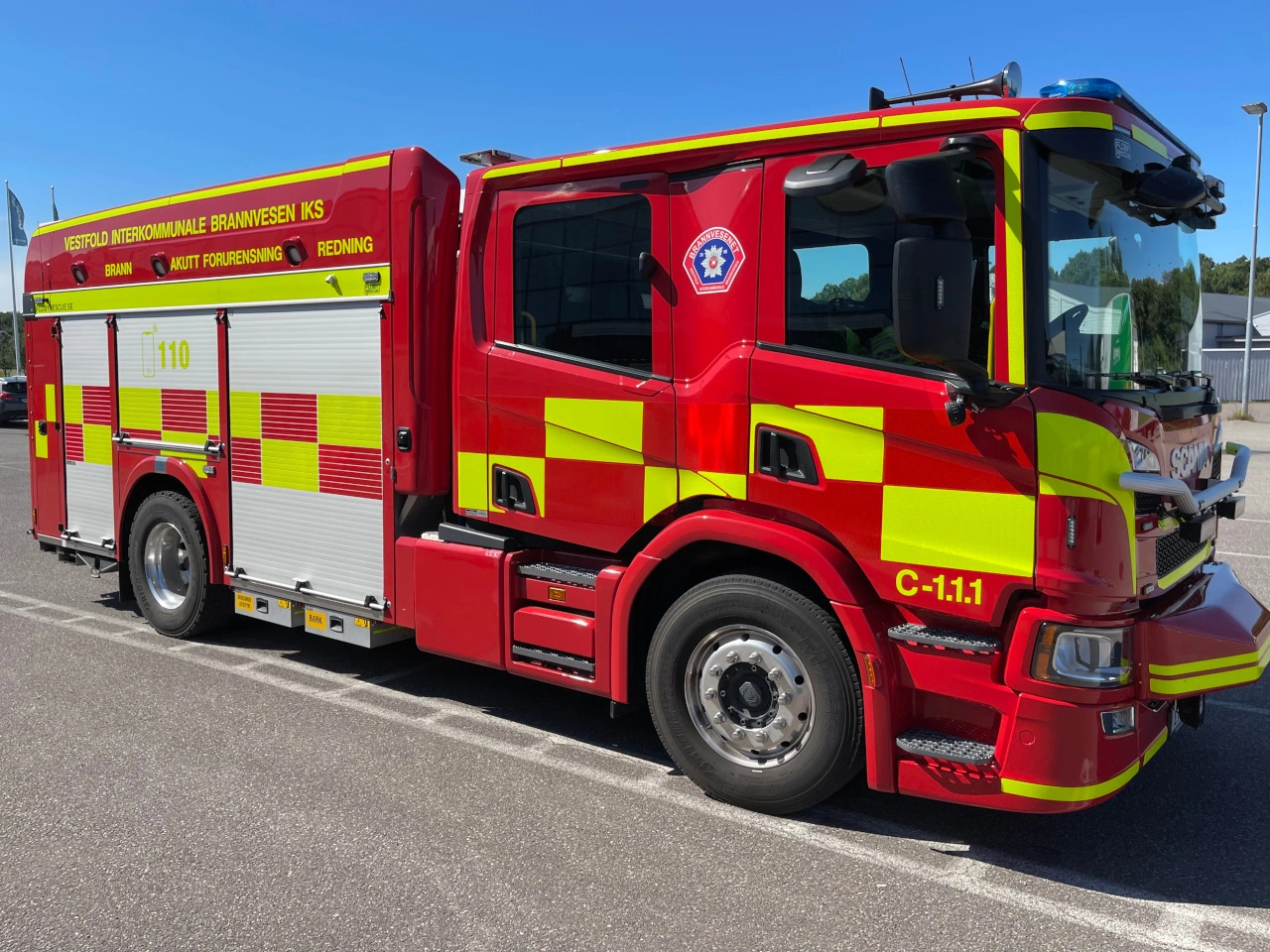
What is a fire truck?
A fire truck is an emergency vehicle used by firefighters to respond to fires, collisions, rescues and other emergencies. It may carry firefighters, water, ladders and specialised rescue equipment.
When does a fire truck have priority?
This depends on the local traffic laws and emergency signals being used. Fire trucks responding to urgent incidents commonly use flashing warning lights and a siren to indicate that other road users must make way.
What should you do when a fire truck approaches?
Make sufficient space and allow it to pass. Slow down or stop where necessary, but avoid sudden manoeuvres that could endanger other road users or block the emergency vehicle.
Should you enter an intersection to make way for a fire truck?
Do not create another dangerous situation. Make room in a safe and controlled manner and follow any directions given by police, firefighters or other authorised personnel.
Can a fire truck pass a red traffic light?
Emergency vehicles may be permitted to pass a red light during an urgent response under special legal conditions. The precise rules and precautions required vary between countries.
Can a fire truck exceed the speed limit?
Many countries allow emergency vehicles to depart from certain speed restrictions while carrying out an urgent mission. Emergency drivers must nevertheless take appropriate precautions and comply with the applicable emergency-driving rules.
Can a fire truck use lanes that ordinary traffic cannot use?
Emergency vehicles may sometimes use emergency lanes, restricted lanes or other parts of the road during urgent missions when local law permits it.
Can you follow a fire truck through traffic?
You should not follow closely or use the path created for the fire truck to bypass traffic. Maintain a safe distance and continue to obey the normal traffic rules.
Do fire trucks always use their sirens?
No. Warning lights and sirens are generally used according to the urgency of the mission and local law. A fire-service vehicle travelling on a non-urgent assignment may operate without emergency signals.
What should you do near a stationary fire truck?
Reduce speed and remain alert. Firefighters, hoses, equipment or other emergency personnel may be on or near the roadway, and temporary traffic restrictions may be in place.
63. Sirène
Une sirène est un dispositif sonore puissant utilisé pour attirer l’attention et avertir qu’un véhicule d’urgence ou prioritaire approche. Les sirènes équipent couramment les ambulances, véhicules de pompiers et véhicules de police et peuvent produire des sons alternés ou variables afin d’être rapidement reconnues.
Lorsqu’un véhicule d’urgence approche avec sa sirène en fonctionnement, les usagers doivent rester attentifs, identifier d’où vient le véhicule et lui laisser un passage en toute sécurité. Les règles précises de priorité et d’utilisation des sirènes varient selon les pays.

What is a siren?
A siren is a powerful audible warning device used primarily by emergency or priority vehicles to alert other road users of their approach.
Which vehicles commonly use sirens?
Sirens are commonly used by ambulances, fire engines, police vehicles and other authorised emergency vehicles.
What should you do when you hear an emergency siren?
Stay alert, determine where the emergency vehicle is approaching from and make room for it to pass safely according to the traffic rules of the country.
64. Convoi
Un convoi est un groupe de véhicules circulant ensemble de manière organisée, généralement sur le même itinéraire et vers la même destination. Il peut être composé de véhicules ordinaires, de véhicules militaires, de transports exceptionnels ou de véhicules participant à un déplacement organisé.
Les conducteurs circulant en convoi doivent maintenir une distance de sécurité, respecter les règles de circulation applicables et éviter de gêner les autres usagers. Le fait de faire partie d’un convoi ne confère pas automatiquement une priorité particulière, sauf si des lois spécifiques, une escorte ou des mesures de régulation de la circulation le prévoient.
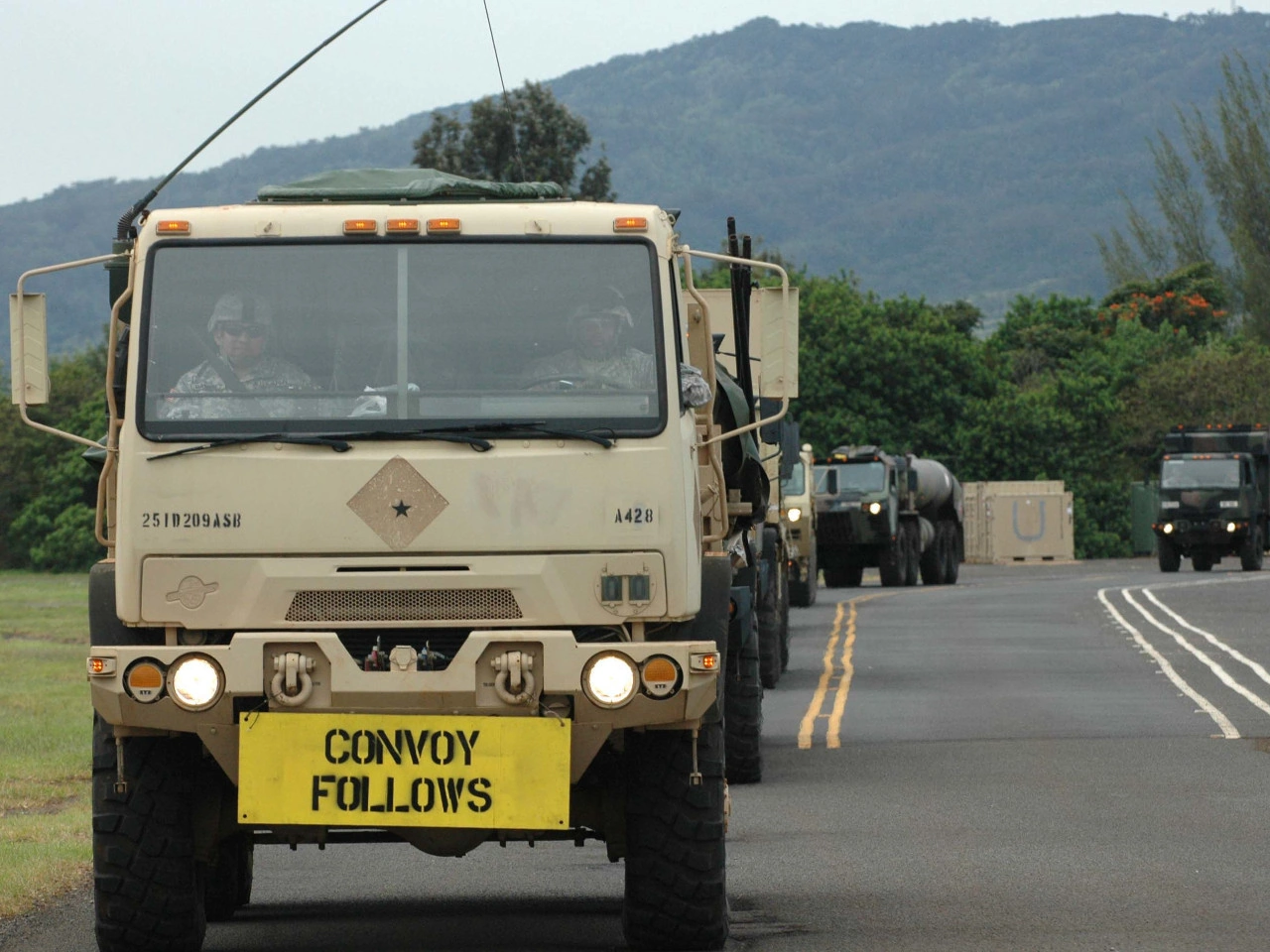
What is a convoy?
A convoy is an organised group of vehicles travelling together along the same route.
Do vehicles in a convoy automatically have priority?
No. An ordinary convoy does not automatically have priority over other traffic. Special rules may apply to military convoys, exceptional transports or officially escorted groups.
Should vehicles in a convoy maintain a safe distance?
Yes. Drivers should maintain sufficient distance from the vehicle ahead so they can react safely and so that other traffic can interact with the convoy where permitted.
65. Feux des véhicules d’urgence
Les feux des véhicules d’urgence sont des feux spéciaux clignotants ou rotatifs utilisés sur les véhicules d’urgence ou prioritaires autorisés afin de les rendre très visibles et d’avertir les autres usagers. Les véhicules de police, ambulances, véhicules de pompiers et autres véhicules d’intervention utilisent couramment des feux distinctifs lorsqu’ils répondent à un incident.
La couleur, la signification et l’utilisation autorisée des feux d’urgence varient selon les pays. Lorsque ces feux sont activés, les usagers doivent rester attentifs, identifier le véhicule qui approche et respecter les règles locales concernant la priorité ou la création d’un passage libre.
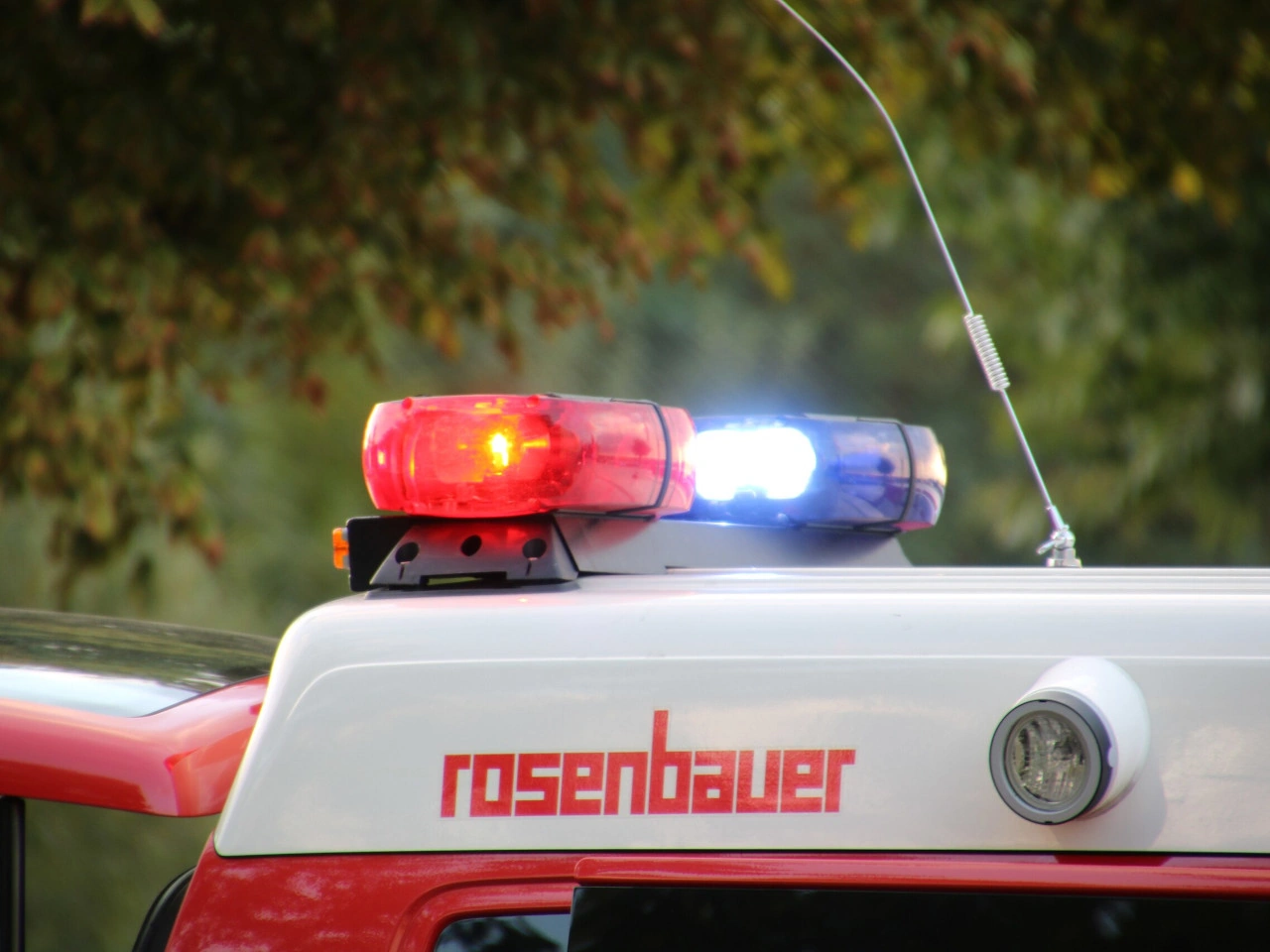
What is emergency vehicle lighting?
Emergency vehicle lighting consists of special warning lights fitted to authorised emergency or priority vehicles to increase their visibility and alert other road users.
Which vehicles use emergency warning lights?
Depending on the country, they may be used by police vehicles, ambulances, fire engines, rescue vehicles and other authorised emergency services.
What should you do when you see emergency lights?
Remain alert, determine where the emergency vehicle is coming from and follow the applicable rules for giving way or creating a safe passage. The precise obligation depends on the country's traffic laws and whether an audible warning is also being used.
66. Machines agricoles
Les machines agricoles comprennent les véhicules, machines et équipements conçus pour les travaux agricoles, comme le travail du sol, les semis, la récolte, la tonte, le transport des cultures ou l’utilisation d’outils agricoles. Il peut s’agir de tracteurs, moissonneuses-batteuses, pulvérisateurs automoteurs, faucheuses et autres équipements spécialisés.
Les machines agricoles peuvent être principalement destinées aux champs, mais doivent parfois circuler sur la voie publique. Dans ce cas, les règles applicables concernant l’immatriculation, le permis de conduire, l’éclairage, les dimensions, la vitesse et l’accès aux routes dépendent du type et de la classification juridique de la machine.
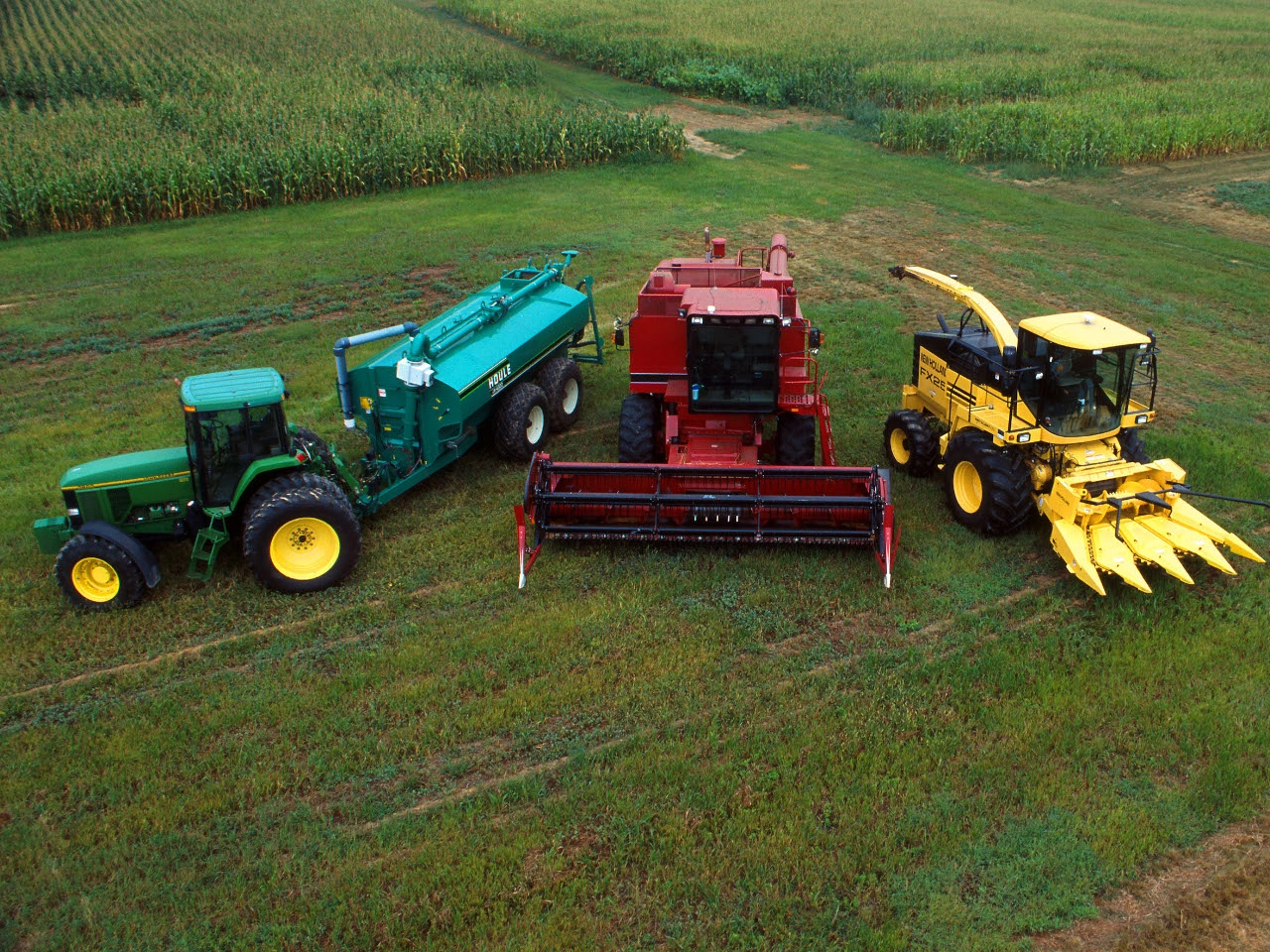
What is agricultural machinery?
Agricultural machinery includes vehicles and machines designed to perform farming operations such as cultivating, planting, harvesting, mowing or transporting agricultural materials.
What are examples of agricultural machinery?
Examples include tractors, combine harvesters, self-propelled sprayers, forage harvesters, mowing machines and agricultural trailers.
Is all agricultural machinery legally considered a vehicle?
No. Some agricultural machines are self-propelled vehicles, while others are implements or equipment that must be attached to or towed by another vehicle. Their legal classification depends on their construction and use.
Can agricultural machinery use public roads?
Yes, when legally permitted and suitably equipped. Registration, insurance, lighting, dimensions, speed and driving-licence requirements may apply.
Do you need a special licence to drive agricultural machinery?
This depends on the country and type of machine. Some countries have a dedicated agricultural-vehicle licence, while other vehicles fall under ordinary car or heavy-vehicle licence categories.
Do agricultural machines have special speed limits?
They may. The permitted speed can depend on the machine's construction speed, mass, tyres and road type. Many agricultural machines are designed to travel considerably more slowly than ordinary road vehicles.
Can agricultural machinery use motorways?
Agricultural vehicles are frequently prohibited from motorways or other high-speed roads. The exact restrictions depend on local traffic law.
Why should drivers take care when approaching agricultural machinery?
Agricultural machinery can be slow, wide or unusually long and may turn into fields or farm entrances. Drivers should reduce speed where necessary and overtake only with sufficient visibility and space.
Can agricultural machinery be wider than an ordinary vehicle?
Yes. Some machinery exceeds normal road dimensions. Folding equipment, special markings, permits or other restrictions may apply before it can travel on public roads.
Can agricultural machinery tow trailers or implements?
Yes, when designed and approved to do so. Tractors commonly tow agricultural trailers and implements, subject to applicable mass, braking, coupling and dimensional requirements.
67. Vélo électrique
Un vélo électrique, ou e-bike, est un vélo équipé d’un moteur électrique qui assiste le cycliste pendant le déplacement. La plupart utilisent une assistance au pédalage, ce qui signifie que le moteur fournit une puissance supplémentaire pendant que le cycliste pédale.
La classification juridique d’un vélo électrique dépend notamment de la puissance du moteur, de la vitesse maximale d’assistance et de la capacité éventuelle du moteur à propulser le vélo sans pédalage. Les vélos électriques plus rapides ou plus puissants peuvent être classés comme cyclomoteurs ou comme un autre type de véhicule à moteur et être soumis à des exigences différentes en matière de permis, casque, immatriculation et assurance.

What is an electric bicycle?
An electric bicycle is a bicycle equipped with an electric motor that provides assistance to the rider.
What is pedal assistance?
Pedal assistance means that the electric motor provides power while the rider pedals. The assistance normally decreases or stops when a specified speed is reached.
Is an electric bicycle still a bicycle?
It can be. Electric bicycles that remain within the applicable motor-power and assistance-speed limits are commonly treated as bicycles. Faster or more powerful models may belong to another vehicle category.
How fast can an electric bicycle assist the rider?
The permitted assistance speed depends on the vehicle category and local law. Ordinary pedal-assisted bicycles commonly stop providing motor assistance at approximately 25 km/h.
Can you ride an electric bicycle faster than the assistance limit?
Yes, by your own effort where otherwise permitted. The assistance limit normally determines when the motor stops helping; it does not necessarily prevent the bicycle itself from travelling faster downhill or through pedalling.
Do you need a driving licence for an electric bicycle?
This depends on its legal classification. Ordinary low-power pedal-assisted bicycles commonly require no driving licence, while faster electric bicycles may require a moped or another licence.
Does an electric bicycle need a licence plate?
Ordinary pedal-assisted bicycles generally do not require registration, but high-speed electric bicycles may require registration and a licence plate.
Is a helmet compulsory on an electric bicycle?
Helmet requirements depend on the country and vehicle category. Ordinary e-bikes may follow normal bicycle helmet rules, while faster electric bicycles can have specific compulsory helmet requirements.
Can an electric bicycle use a cycle path?
Ordinary electric bicycles generally follow the same cycle-path rules as conventional bicycles. Different rules can apply to faster or more powerful electric bicycles.
Does an electric bicycle need insurance?
This depends on the vehicle's technical characteristics and local law. Ordinary pedal-assisted bicycles commonly do not require motor-vehicle insurance, while vehicles capable of greater independent motor propulsion may be subject to insurance requirements.
Can you ride an electric bicycle when the battery is empty?
Usually yes. Most electric bicycles can still be pedalled like conventional bicycles when the motor is switched off or the battery is depleted, although their additional weight may make pedalling harder.
Can an electric bicycle carry passengers or goods?
Yes, when the bicycle is designed and legally equipped for them. Passenger seats, cargo areas, child restraints and trailers must satisfy the applicable safety and traffic rules.
68. Véhicule électrique
Un véhicule électrique, ou VE, est un véhicule utilisant un ou plusieurs moteurs électriques pour sa propulsion et stockant l’énergie électrique dans une batterie rechargeable ou un autre système de stockage. Un véhicule entièrement électrique utilise uniquement l’électricité pour se propulser, tandis qu’un hybride rechargeable associe une chaîne de traction électrique à une autre source d’énergie, comme un moteur à combustion.
Les véhicules électriques peuvent être rechargés à partir d’une alimentation électrique externe au moyen d’un point de recharge ou d’une borne de recharge approprié. Les règles concernant le permis de conduire, l’immatriculation, l’assurance, le stationnement et l’accès aux routes dépendent de la catégorie du véhicule et de la réglementation locale, et non simplement de sa propulsion électrique.

What is an electric vehicle?
An electric vehicle is a vehicle that uses one or more electric motors for propulsion and stores electrical energy in a rechargeable battery or another electrical energy-storage system.
What is a fully electric vehicle?
A fully electric or battery-electric vehicle uses only electric motors for propulsion and obtains its driving energy from rechargeable electrical energy storage rather than a combustion engine.
Is a plug-in hybrid an electric vehicle?
A plug-in hybrid uses both electric propulsion and another power source, normally a combustion engine, and its battery can be charged from an external electricity supply. It is therefore different from a fully electric vehicle.
How is an electric vehicle charged?
An electric vehicle is connected to a suitable charging point that supplies electrical energy to its rechargeable battery. Charging power and connector types vary between vehicles and charging stations.
Do all electric vehicles charge at the same speed?
No. Charging speed depends on the vehicle, battery, charger, electrical supply, temperature and current battery condition.
Does an electric vehicle produce exhaust emissions?
A fully electric vehicle produces no combustion-engine exhaust emissions while driving. It can still contribute to non-exhaust emissions through tyres, brakes and road wear.
Is an electric vehicle automatically allowed to park at a charging point?
Not necessarily. Charging spaces can have specific conditions requiring the vehicle to be connected, actively charging, within a time limit or otherwise complying with local parking rules.
Do electric vehicles follow different traffic rules?
Normally no. A car remains subject to the rules for cars, a motorcycle to those for motorcycles and so on. Electric propulsion does not generally change ordinary priority, speed or lane rules.
Do electric vehicles need registration and insurance?
Where an electric vehicle belongs to a vehicle category that normally requires registration and insurance, those requirements continue to apply.
Can an electric vehicle use a low-emission zone?
Fully electric vehicles are commonly permitted in low-emission zones because they have no combustion-engine exhaust emissions, but access rules are determined locally.
Can electric vehicles use motorways?
Yes, when their vehicle category satisfies the normal motorway-access requirements. Electric propulsion by itself neither grants nor prevents motorway access.
Is an electric vehicle the same as an electric bicycle?
No. Electric bicycles belong to separate pedal-cycle categories and are subject to their own power, assistance-speed and traffic rules.
69. Pedelec
Un pedelec, abréviation de cycle électrique à pédalage, est un vélo équipé d’un moteur électrique qui fournit une assistance pendant que le cycliste pédale. Le moteur complète l’effort du cycliste sans remplacer entièrement le pédalage.
La puissance maximale du moteur et la vitesse d’assistance autorisée dépendent de la législation locale. Lorsque le vélo reste dans les limites applicables, il est normalement considéré comme un vélo plutôt que comme un cyclomoteur ou une moto. Les vélos électriques plus rapides sont généralement classés séparément comme speed pedelecs.

What is a pedelec?
A pedelec is an electrically assisted bicycle whose motor provides assistance while the rider pedals.
What does pedal assistance mean?
Pedal assistance means that the electric motor provides additional power when the rider uses the pedals. The assistance stops according to the speed and operating limits applying to the bicycle.
Is a pedelec the same as an electric bicycle?
A pedelec is a type of electric bicycle. The term specifically emphasises that the motor assists the rider while pedalling rather than functioning primarily as an independent means of propulsion.
Is a pedelec the same as a speed pedelec?
No. A speed pedelec can provide assistance at considerably higher speeds and is commonly subject to additional requirements concerning helmets, licences, registration or road use.
Do you have to pedal a pedelec?
Yes. With an ordinary pedelec, the motor is intended to assist the rider's pedalling rather than propel the bicycle independently during normal riding.
Can you ride a pedelec faster than the assistance limit?
Yes, by your own effort where otherwise permitted. The assistance limit determines when the motor stops helping; it does not normally prevent the bicycle itself from travelling faster through pedalling or downhill.
Do you need a driving licence for a pedelec?
Ordinary low-power pedelecs are generally treated as bicycles in jurisdictions that recognise the category and therefore commonly require no driving licence. Local rules should always be checked.
Does a pedelec need a licence plate?
Ordinary pedelecs commonly require no registration plate when they remain legally classified as bicycles. Faster electric cycles may have different requirements.
Can a pedelec use cycle paths?
When legally classified as a bicycle, a pedelec normally follows the same cycle-path rules as conventional bicycles.
Is a helmet compulsory on a pedelec?
This depends on local bicycle law. Some countries require helmets for particular riders or circumstances, while others recommend them without making them compulsory.
Can a pedelec carry passengers?
Yes, where the bicycle is designed and legally equipped to carry them. Appropriate seating, foot protection or child-restraint requirements may apply.
What happens if an electric bicycle is too powerful or too fast to qualify as a pedelec?
It may be classified as a motorised cycle, speed pedelec, moped or another vehicle category, resulting in different technical and traffic requirements.
70. Quadricycle
Un quadricycle est un véhicule à moteur à quatre roues appartenant à une catégorie inférieure ou distincte de celle d’une voiture de tourisme ordinaire. Il peut être conçu pour le transport de passagers, le transport de marchandises ou les loisirs et être propulsé par un moteur à combustion ou électrique.
La législation distingue souvent les quadricycles légers, à puissance et vitesse maximale par construction relativement faibles, des quadricycles plus lourds ou plus puissants. Les exigences concernant le permis de conduire, le casque, l’immatriculation, l’assurance et l’accès aux routes dépendent de la classification juridique du véhicule et de la réglementation locale.

What is a quadricycle?
A quadricycle is a four-wheeled motor vehicle belonging to a specialised vehicle category distinct from an ordinary passenger car.
What is a light quadricycle?
A light quadricycle is a relatively low-powered four-wheel motor vehicle with a restricted maximum design speed. In European vehicle classification, light quadricycles belong to category L6e.
What is a heavy quadricycle?
A heavier or more powerful quadricycle that does not qualify as a light quadricycle can fall within category L7e under European vehicle-classification rules.
Is a quadricycle the same as a car?
No. Although some enclosed quadricycles resemble very small cars, they belong to a different technical and legal vehicle category and can have different licence, power, mass and road-access rules.
Is a quadricycle the same as a quad or ATV?
Not necessarily. The quadricycle category includes several types of four-wheel motor vehicles. Some are open recreational quads, while others are enclosed road-going microcars designed for passengers or goods.
Can a quadricycle be electric?
Yes. Quadricycles can use electric motors, combustion engines or other approved propulsion systems.
Do you need a driving licence for a quadricycle?
Usually yes, but the required licence depends on whether the vehicle is classified as a light or heavier quadricycle and on the country's licensing system.
Does a quadricycle need a licence plate?
Road-going quadricycles commonly require registration and a registration plate. Exact requirements vary between countries.
Must quadricycle occupants wear helmets?
This depends on the vehicle design and local law. Open quadricycles may require helmets, while enclosed vehicles with a passenger compartment and restraint systems can be subject to seat-belt rules instead.
Can a quadricycle carry passengers?
Yes, when it is designed and approved to do so. The number of passengers may not exceed the vehicle's approved seating capacity.
Can a quadricycle use a motorway?
This depends on its vehicle category, construction speed and local motorway-access rules. Low-speed light quadricycles are normally unsuitable for motorway traffic.
Does a quadricycle follow motorcycle or car traffic rules?
This depends on its legal classification. Some light quadricycles are treated similarly to mopeds, while heavier quadricycles may follow many of the ordinary rules applying to cars.
71. Voiturette
Une voiturette est un très petit véhicule à moteur principalement conçu pour les courts trajets et les déplacements urbains. Elle possède généralement un habitacle fermé, quatre roues et une ou deux places, même si les conceptions et classifications juridiques varient.
De nombreuses voiturettes sont juridiquement classées comme quadricycles légers plutôt que comme voitures de tourisme ordinaires. Les modèles plus puissants ou rapides peuvent relever d’une catégorie de quadricycle plus lourd ou de voiture particulière. Le permis requis, l’âge minimum, l’immatriculation, l’assurance, la vitesse maximale et l’accès aux routes dépendent donc de la classification juridique officielle du véhicule.

What is a microcar?
A microcar is a very small enclosed motor vehicle generally intended for short journeys and urban transport.
Is a microcar the same as an ordinary car?
Not necessarily. Many microcars are legally classified as light or heavy quadricycles rather than passenger cars and can therefore have different licence, speed and road-access rules.
Is a microcar the same as a light quadricycle?
Many microcars are light quadricycles, but the terms are not identical. Microcar describes the general vehicle design, while light quadricycle is a specific legal vehicle category.
Can a microcar be electric?
Yes. Microcars may use electric motors, combustion engines or other approved propulsion systems.
How fast can a microcar travel?
This depends on its legal category and construction. Light quadricycles commonly have a substantially lower maximum design speed than ordinary passenger cars.
Do you need a driving licence for a microcar?
Usually yes. The required licence depends on whether the vehicle is classified as a light quadricycle, heavier quadricycle or ordinary passenger car.
Can teenagers drive a microcar?
Some countries allow light quadricycles to be driven at a younger age than ordinary cars, subject to the appropriate licence. Minimum ages vary between countries.
Does a microcar need a licence plate?
Road-going microcars generally require registration and a registration plate according to their vehicle category.
Does a microcar need insurance?
Normally yes. Motor vehicles used on public roads are generally subject to the motor-liability insurance requirements of the country in which they are registered or used.
Must you wear a helmet inside a microcar?
This depends on the vehicle construction and local law. Enclosed quadricycles equipped with seat belts may be treated differently from open quadricycles, where helmet requirements are more common.
Can a microcar use a motorway?
Low-speed microcars classified as light quadricycles are commonly prohibited from motorways. Faster vehicles may have different access rights according to their classification and construction speed.
Is a microcar as protective as a conventional passenger car?
A microcar belongs to a different vehicle category and may be subject to different construction and type-approval requirements from an ordinary passenger car. Drivers should not assume that the two vehicle types provide identical levels of crash protection.
72. Véhicule tout-terrain
Un véhicule tout-terrain (VTT/ATV) est un véhicule à moteur conçu pour circuler sur des surfaces accidentées ou irrégulières ainsi que, dans certains cas, sur des routes ordinaires. Ces véhicules ont généralement quatre roues, des pneus larges et une carrosserie compacte et sont utilisés pour les loisirs, l’agriculture, la sylviculture ou d’autres activités hors route.
La possibilité d’utiliser un véhicule tout-terrain sur la voie publique dépend de sa classification, de son immatriculation, de son équipement et des règles locales de circulation. Certains sont homologués pour la route, tandis que d’autres sont exclusivement destinés à un usage hors route.

What is an all-terrain vehicle?
An all-terrain vehicle is a motor vehicle designed to travel over rough or uneven terrain, commonly using four wheels and wide tyres.
Can an ATV be driven on public roads?
It depends on the country and vehicle. An ATV may need to meet specific registration, equipment, insurance and licensing requirements before it can legally use public roads.
Are all ATVs four-wheeled vehicles?
Not necessarily. The term can cover different types of off-road vehicles, although four-wheeled quads are among the most common forms.
73. Fourgonnette
Une fourgonnette est un véhicule à moteur à carrosserie fermée couramment utilisé pour transporter des marchandises, du matériel ou des passagers. Les fourgonnettes vont des petits véhicules de livraison aux véhicules utilitaires plus grands et peuvent être aménagées avec un espace de chargement, des sièges passagers ou les deux.
Comme les fourgonnettes varient fortement en taille, poids et usage, des règles différentes concernant le permis, la vitesse, le stationnement ou l’accès aux routes peuvent s’appliquer selon leur classification dans chaque pays.

What is a van?
A van is an enclosed motor vehicle commonly designed to transport goods, equipment or passengers.
Are all vans goods vehicles?
No. Many vans are designed primarily for goods transport, while others are configured mainly or partly for carrying passengers.
Do all vans follow the same traffic rules?
Not necessarily. Rules can depend on the van's maximum authorised mass, vehicle category, use and number of passenger seats.
74. Véhicule de loisirs
Un véhicule de loisirs (RV) est un véhicule conçu ou aménagé pour le voyage, les loisirs et l’hébergement temporaire. Le terme peut inclure les camping-cars, fourgons aménagés et, dans un sens plus large, les caravanes ou remorques de camping tractées.
Les véhicules de loisirs peuvent comporter des installations de couchage, des sièges, une cuisine, des rangements et des équipements sanitaires. Leur classification juridique, les exigences de permis, les règles de stationnement ainsi que les dimensions ou poids autorisés varient selon les pays.

What is a recreational vehicle?
A recreational vehicle is a vehicle designed or adapted for travelling and temporary living accommodation.
What types of vehicles are considered recreational vehicles?
The term commonly includes motorhomes and campervans and may also be used more broadly for caravans and camping trailers.
Do recreational vehicles follow the same rules as passenger cars?
Not always. The applicable rules can depend on the vehicle's classification, weight, dimensions and whether it is self-propelled or towed.
75. Scooter
Un scooter est un véhicule motorisé à deux roues généralement caractérisé par un cadre ouvert, une plateforme ou des repose-pieds pour le conducteur et des roues relativement petites. Il peut fonctionner à l’essence ou à l’électricité et aller du cyclomoteur à faible vitesse à des véhicules plus puissants juridiquement classés comme motos.
Les règles applicables à un scooter dépendent principalement de sa vitesse maximale, de sa puissance, de sa cylindrée et de sa catégorie juridique. Les exigences concernant le casque, le permis, l’immatriculation et la position sur la route varient donc selon les pays et les types de scooters.

What is a scooter?
A scooter is a two-wheeled motor vehicle with a characteristic step-through design that may be powered by a combustion engine or electric motor.
Is a scooter a moped or a motorcycle?
It can be either. The legal classification depends on characteristics such as the scooter's maximum design speed, power and engine capacity.
Do all scooters follow the same traffic rules?
No. Different rules may apply according to whether the scooter is legally classified as a moped, motorcycle or another vehicle category.