


道路標識スペイン
 交通ルール
交通ルール
 スペイン
スペイン
226. アルコール検査
アルコール検査は、運転者が飲酒しているか、法定上限を超えているか確認する路上検査です。警察はスクリーニング装置、呼気検査、精密呼気分析、場合によっては血液検査を使用します。手順と法定値は国によって異なります。通常、運転者は権限ある検査へ協力する必要があり、適法な検査を拒否すること自体が処罰対象となる場合があります。
What is an alcohol control?
An alcohol control is a police check used to determine whether a driver has consumed alcohol and whether the applicable legal limit has been exceeded.
How is alcohol tested at the roadside?
Police commonly use a breath-testing device. Depending on the result and local procedure, a more precise breath analysis or blood test may follow.
Can police test a driver who does not appear drunk?
In many countries, yes. Police may conduct random or routine alcohol checks without first observing obvious signs of intoxication.
Can you refuse an alcohol test?
Rules vary by country, but refusing a legally required alcohol test can itself be an offence and may result in penalties or an immediate driving restriction.
Can a blood test be used to measure alcohol?
Yes. A blood test may be used when breath testing is impossible, disputed or required by the applicable legal procedure.
Can you be prevented from driving after an alcohol control?
Yes. If the result exceeds the applicable limit, authorities may impose an immediate temporary driving prohibition in addition to any later fine, licence suspension or court proceedings.

227. アルコール・インターロック
アルコール・インターロック(alcolock)は、車両の始動系へ接続された呼気検査装置です。始動前に運転者が設定上限未満の呼気サンプルを提出する必要があります。走行中の追加検査を求めたり、検査、失敗、改ざんの可能性を記録したりする場合もあります。一部の国では飲酒運転違反者への安全措置や法的義務として使用されます。

What is an ignition interlock device?
An ignition interlock device is a breath-testing system connected to a vehicle that prevents the engine from starting when the driver’s alcohol concentration exceeds the programmed limit.
How does an ignition interlock work?
Before starting the vehicle, the driver provides a breath sample. If the alcohol concentration is below the permitted threshold, the vehicle can be started.
Can an ignition interlock require another test while driving?
Some systems require additional breath tests during a journey to confirm that the authorised driver remains compliant. The exact procedure depends on the device and applicable rules.
Does an ignition interlock record information?
Yes. Many systems can record breath-test results, failed attempts, events and possible attempts to interfere with the device.
Who may be required to use an ignition interlock?
Depending on the country, an ignition interlock may be required for drivers convicted of serious or repeated alcohol-related driving offences.
Can another person blow into an ignition interlock for the driver?
No. Having another person provide the breath sample defeats the purpose of the system and may be treated as tampering or non-compliance under the applicable rules.
228. 呼気スクリーニング検査
呼気スクリーニング検査は、呼気中のアルコールを検知し、さらに精密な検査が必要か判断する予備的な路上検査です。携帯装置へ息を吹き込み、アルコール値を所定の基準と比較します。通常、最終的な証拠測定ではなくスクリーニングに使われます。結果が基準へ達した場合、より精密な呼気分析など法的に認められた検査が続くことがあります。
What is a breath test?
A breath test is a preliminary test that detects alcohol in exhaled breath and indicates whether the alcohol level is below or above specified thresholds.
How does a breath test work?
The person blows into a portable breath-testing device, which analyses a sample of exhaled air for alcohol.
Is a breath test the same as a breath analysis?
No. A breath test is generally a screening test, while a breath analysis provides a more precise measurement of the alcohol concentration in exhaled breath.
What happens after a positive breath test?
Depending on local law, a positive result may be followed by a breath analysis, blood test or other evidential procedure.
Can police perform random breath tests?
In many countries, police may conduct roadside alcohol checks even when a driver does not show obvious signs of impairment. The exact powers vary by country.
Can you refuse a breath test?
Rules vary between countries, but refusing a legally required breath test can itself lead to penalties or an immediate restriction on driving.
229. 呼気分析
呼気分析は、吐き出した息のアルコール濃度を精密に測定する検査です。予備的な呼気検査と異なり、承認された証拠用装置で測定し、取締りに利用できる結果を出します。一般に呼気1リットルあたりのアルコールmgで示しますが、手順と法定基準は国によって異なります。
What is a breath analysis?
A breath analysis measures the concentration of alcohol in exhaled breath using an approved evidential device.
Is a breath analysis the same as a breath test?
No. A breath test is generally used for preliminary screening, while a breath analysis provides a more precise measured alcohol concentration.
How is a breath analysis performed?
The person blows into an approved breath-analysis device, which measures the alcohol concentration in the exhaled air.
How is a breath-analysis result expressed?
The result is commonly expressed as milligrams of alcohol per litre of exhaled breath. The units and legal thresholds depend on the country.
What happens if a breath analysis exceeds the legal limit?
Depending on local law, the result can lead to a temporary driving prohibition, fine, licence restriction or court proceedings.
Can a breath-analysis result be checked again?
In some countries, the person may have a right to a second breath analysis, blood test or other counter-analysis. The procedure depends on local law.
230. 血中アルコール濃度
血中アルコール濃度(BAC)は、人の血液中に存在するアルコール量を示します。一般にパーセント、g/L、パーミル(‰)などで表示します。法定BAC未満でもアルコールは判断、反応時間、協調運動、視力を損なうことがあります。法定上限は国によって異なり、職業運転者、初心者、若年者に低い基準が適用される場合があります。
What is blood alcohol content?
Blood alcohol content (BAC) measures the concentration of alcohol in a person’s blood and is used to assess alcohol consumption and legal driving limits.
How is blood alcohol content expressed?
BAC can be expressed as a percentage, grams of alcohol per litre of blood or parts per thousand (‰). The units commonly used depend on the country.
What does 0.5‰ BAC mean?
A BAC of 0.5‰ means 0.5 grams of alcohol per litre of blood, which is equivalent to 0.05% BAC.
Is BAC the same as breath alcohol concentration?
No. BAC measures alcohol in the blood, while a breath test or breath analysis measures alcohol in exhaled air. Legal systems may establish corresponding limits for both measurements.
Does everyone reach the same BAC after drinking the same amount?
No. BAC can be influenced by factors such as body composition, sex, the amount and speed of drinking, food intake and the time since alcohol was consumed.
Can alcohol affect driving below the legal BAC limit?
Yes. Alcohol can impair driving ability before the legal limit is reached. Being below the legal BAC limit does not guarantee that a person is safe to drive.
231. 血液検査
血液検査は、血液中のアルコール濃度を測定するために使われます。医療従事者が採血し、検査室で血中アルコール濃度(BAC)を分析します。交通取締りでは、呼気検査が不可能・不適切な場合、事故後、呼気結果への再検査などで使用されることがあります。血液検査を要求できる状況と法定アルコール基準は国によって異なります。
What is an alcohol blood test?
An alcohol blood test measures the concentration of alcohol in a blood sample and provides a blood alcohol concentration (BAC).
How is a blood test different from a breath analysis?
A blood test measures alcohol directly in the blood, while a breath analysis measures alcohol in exhaled breath. Both can be used to determine whether a legal alcohol limit has been exceeded.
Who takes the blood sample?
A blood sample used for legal testing is normally taken by an authorised healthcare professional and analysed according to an approved procedure.
When can a blood test be used after an alcohol control?
Depending on local law, a blood test may be used when breath testing cannot be performed, after certain accidents or as a counter-analysis of a breath result.
How is a blood alcohol result expressed?
Blood alcohol concentration is commonly expressed as grams of alcohol per litre of blood, parts per thousand (‰) or a percentage, depending on the country.
Can refusing a required blood test lead to penalties?
Yes. In countries where a blood sample can lawfully be required, refusing without a legally accepted reason may itself be an offence.
232. 唾液検査
唾液検査は、運転能力へ影響する特定薬物の最近の使用を検出する路上スクリーニング検査です。口内から唾液サンプルを採取し、携帯装置で指定物質を検査します。通常、最終的な証拠分析ではなく初期スクリーニングとして使用されます。陽性の場合、より精密な唾液分析や場合によっては血液検査が続くことがあります。
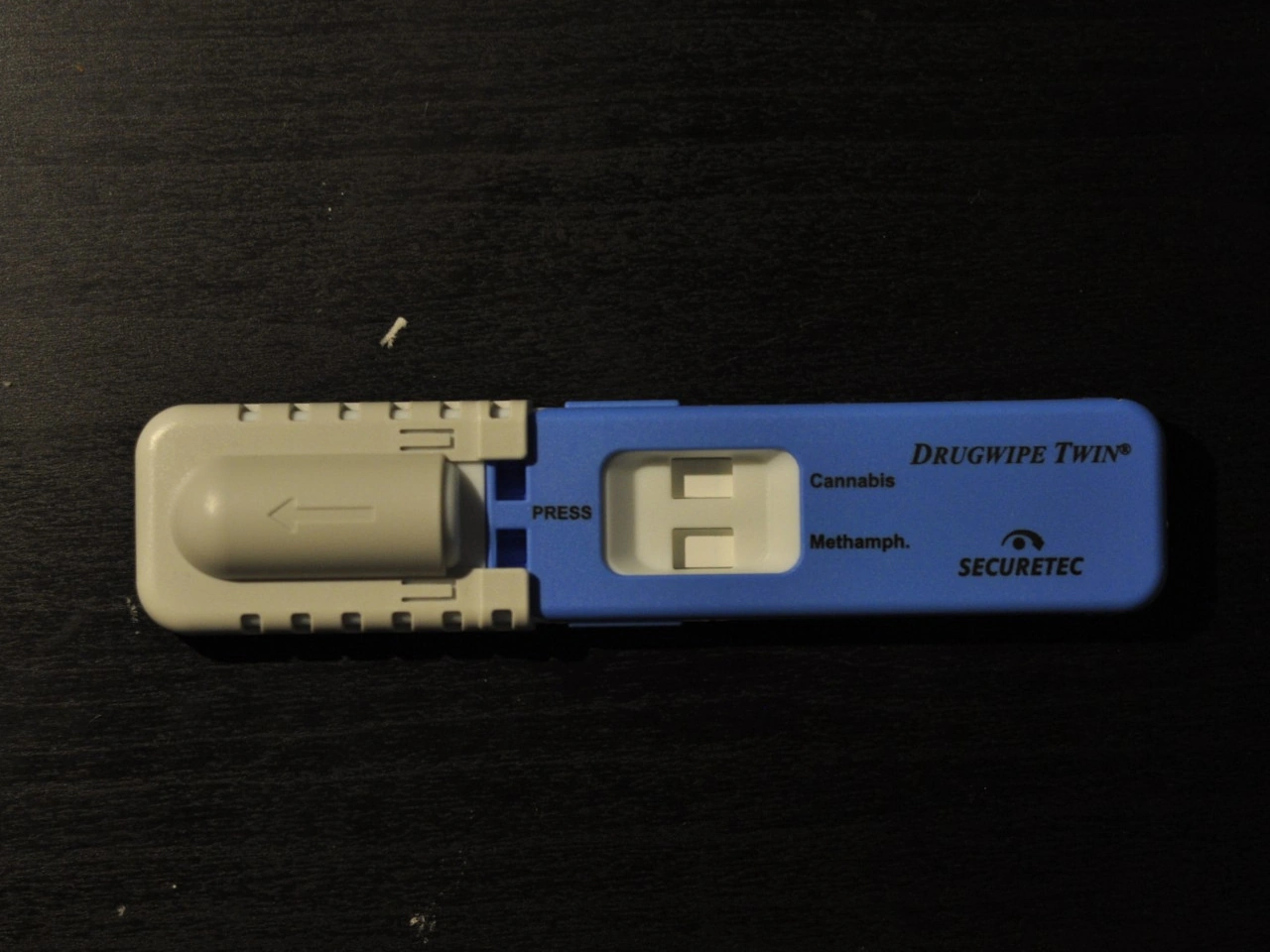
What is a saliva test?
A saliva test is a screening test that uses oral fluid to detect the recent presence of certain drugs or their metabolites.
How is a roadside saliva test performed?
A sample of saliva is collected from inside the mouth and tested using an approved portable device. The exact procedure and substances tested depend on the country.
Is a saliva test the same as a saliva analysis?
No. A saliva test is generally a preliminary roadside screening, while a saliva analysis is a laboratory examination used to confirm and measure specified substances more precisely.
What happens after a positive saliva test?
Depending on local law, a positive result can lead to a saliva analysis, blood test, temporary driving prohibition or further legal proceedings.
Can a saliva test detect every drug?
No. Saliva tests are designed to detect specific substances. The drugs included and the detection thresholds depend on the testing device and applicable law.
Can you refuse a saliva test?
Rules vary between countries, but refusing a legally required saliva test can itself lead to penalties or an immediate restriction on driving.
233. 薬物
薬物は、知覚、集中力、反応時間、協調運動、判断を変化させ、運転へ重大な影響を与えることがあります。覚醒剤、大麻、オピオイドなどの精神作用物質はそれぞれ異なる方法で運転能力を損ない、アルコールなどとの併用でリスクがさらに高まります。酔った感覚がなくなっても影響が残る場合があります。薬物運転法は国によって異なりますが、物質が安全な車両制御へ影響している場合は運転してはいけません。
How can drugs affect driving?
Drugs can impair concentration, perception, reaction time, coordination and judgement. The effects depend on the substance, dose, individual and whether other substances are also present.
Can cannabis affect driving?
Yes. Cannabis can affect attention, reaction time, coordination and perception, which can make driving unsafe.
Can stimulant drugs affect driving?
Yes. Stimulants can cause overconfidence, agitation, impulsive behaviour and reduced judgement, while their effects may later be followed by fatigue or reduced concentration.
Can drugs still affect you after the main effects have worn off?
Yes. Some substances can continue to affect alertness, coordination or judgement after the strongest effects appear to have passed.
Is combining drugs and alcohol especially dangerous?
Yes. Combining substances can produce stronger or unpredictable impairment and significantly increase the risk of a crash.
How can police test drivers for drugs?
Depending on the country, police may use behavioural observations, saliva tests, saliva analyses or blood tests to detect specified substances.
Are drug-driving laws the same in every country?
No. Some countries prohibit driving above specified drug concentrations, while others focus on impairment or the presence of certain substances. Testing procedures and penalties also vary.
234. 医薬品
医薬品は、処方薬でも市販薬でも運転能力へ影響することがあります。眠気、めまい、かすみ目、集中力低下、反応遅延、協調運動や判断の低下を引き起こすものがあります。説明書を読み、処方用量を守り、安全に運転できるか不明なら医師や薬剤師へ相談します。新しい薬を始める、用量を変更する、複数薬やアルコールと併用する場合は特に注意します。
Can medication affect driving?
Yes. Some medicines can cause drowsiness, dizziness, blurred vision, slower reactions or reduced concentration, which can make driving unsafe.
Can prescription medicine make you unsafe to drive?
Yes. A medicine can be legally prescribed and still impair your ability to drive safely. Follow the instructions provided by your doctor, pharmacist and patient information leaflet.
Can over-the-counter medicine affect driving?
Yes. Medicines available without a prescription can also affect driving. Some antihistamines, cough medicines and other common products may cause drowsiness or other side effects.
Where can you check whether a medicine affects driving?
Read the patient information leaflet, especially the section about driving and using machines, and ask a doctor or pharmacist if you are unsure.
Should you drive when taking a medicine for the first time?
Be especially cautious when starting a new medicine or changing the dose, because you may not yet know how it affects your alertness, coordination or judgement.
Can alcohol increase the effects of medication?
Yes. Alcohol can interact with some medicines and increase drowsiness, dizziness or other impairing effects. Follow the medicine instructions and professional medical advice.
235. 罰則
罰則は、交通法違反に対して科される法的な結果です。違反と国により、警告、罰金、違反点数、免許停止、運転禁止、車両使用停止、裁判などがあります。危険の程度、過去の違反、違反の重大性などで重さが決まるのが一般的です。一部は警察が直接処理し、重大案件は裁判所で判断されます。
What is a traffic penalty?
A traffic penalty is a legal consequence imposed when a road user violates an applicable traffic law or regulation.
What types of traffic penalties are there?
Penalties can include fines, penalty points, driving bans, licence suspension, vehicle restrictions and court proceedings. The available sanctions depend on the country.
Do more serious violations receive higher penalties?
Generally, yes. Traffic systems often apply heavier penalties to offences that create greater danger, involve excessive speed, impaired driving or repeated violations.
Can repeated traffic offences lead to higher penalties?
Yes. Many countries apply stronger sanctions to repeat offenders, such as higher fines, longer driving bans or mandatory rehabilitation measures.
Can a court take away your driving licence?
Yes. Serious offences can result in a temporary or longer disqualification from driving, depending on the applicable law and circumstances.
Are traffic penalties the same in every country?
No. Fine amounts, penalty-point systems, driving bans and enforcement procedures vary between countries.
236. 速度超過
速度超過は、交通法または掲示された速度制限を超えて運転することです。速度が高いほど反応時間の余裕が減り、停止距離が伸び、衝突時の被害も大きくなります。また交通、視界、天候、路面へ速度を合わせる必要があるため、法定速度内でも状況に対して速すぎる場合があります。罰則は国によって異なり、超過量や場所などで変わります。
What is speeding?
Speeding means driving faster than the applicable maximum speed limit.
Why is speeding dangerous?
Higher speeds reduce reaction time, increase stopping distance and increase the severity of a collision.
Can you drive too fast without exceeding the speed limit?
Yes. A speed limit is normally a maximum. Drivers may need to drive more slowly because of traffic, weather, visibility or road conditions.
How is speeding detected?
Authorities may use fixed or mobile speed cameras, radar, laser equipment, average-speed checks or police measurements, depending on the country.
Do speeding penalties increase when you drive much faster than the limit?
Usually, yes. Many countries impose higher fines or additional penalties for larger speed-limit violations.
Can speeding lead to losing your driving licence?
Yes. Serious or repeated speeding offences can lead to a driving ban, licence suspension or court proceedings, depending on local law.
237. 喫煙
喫煙しながらの運転は、片手を使い、道路から注意をそらし、車内へ煙、灰、落下物を生じることで注意散漫につながります。受動喫煙で乗客にも影響します。一部の国では特に子どもが同乗する車内で喫煙を制限・禁止しています。運転者は常に車両を十分に制御し、安全運転を妨げる行為を避けます。

Can smoking distract a driver?
Yes. Lighting, holding or extinguishing a cigarette can create manual and visual distraction, while smoke or dropped ash can also interfere with concentration.
Is smoking while driving illegal?
This depends on the country. Some countries allow smoking while driving but prohibit it when children are present or in certain types of vehicles.
Why is smoking in a car with children a problem?
Smoking in an enclosed vehicle exposes passengers to second-hand smoke, and children are particularly vulnerable to its harmful effects.
Do smoking bans in vehicles also apply to electronic cigarettes?
In some countries, yes. Laws may treat vaping or electronic cigarettes in the same way as smoking when restricting their use inside vehicles.
Can cigarette smoke affect visibility?
Heavy smoke inside a vehicle can reduce comfort and visibility, while smoke residue can also create a film on the windscreen and windows that increases glare.
Can throwing a cigarette from a vehicle be dangerous?
Yes. A discarded cigarette can create litter, distract other road users or start a fire, particularly in dry vegetation.
238. 交通取締カメラ
交通取締カメラは、交通違反を検出する自動または遠隔操作のカメラシステムです。システムにより速度測定、赤信号無視の検出、ナンバー読み取り、その他の禁止行為監視などを行います。1地点で測定するものと、区間取締りのように長い距離の平均速度を測るものがあります。使用されるカメラ、検出可能な違反、取締手順は国によって異なります。
What is a traffic enforcement camera?
A traffic enforcement camera is a camera system used to detect or record traffic violations for enforcement purposes.
What violations can traffic enforcement cameras detect?
Depending on the system, cameras can detect speeding, red-light violations, prohibited lane use, insufficient following distance and other traffic offences.
What is a speed camera?
A speed camera measures the speed of vehicles at a particular location and can record vehicles exceeding the applicable speed limit.
What is a red-light camera?
A red-light camera records vehicles that pass a traffic signal after it has turned red. Some systems can also measure vehicle speed.
Is section control a traffic enforcement camera?
Yes. Section control uses cameras at multiple points to calculate a vehicle's average speed over a defined road section rather than measuring speed at a single location.
Do all traffic cameras enforce traffic laws?
No. Some cameras are used only for traffic monitoring, traffic management or incident detection. A traffic camera is therefore not necessarily an enforcement camera.
239. 連続カーブ
連続カーブは、反対方向へ続く2つのカーブを含む道路区間です。最初が左、その後右、またはその逆になります。
同じ警告標識がより長い連続カーブを示す場合もあります。最初のカーブ前に減速し、車線内を維持し、その後のカーブの方向、急さ、長さが異なることに備えます。
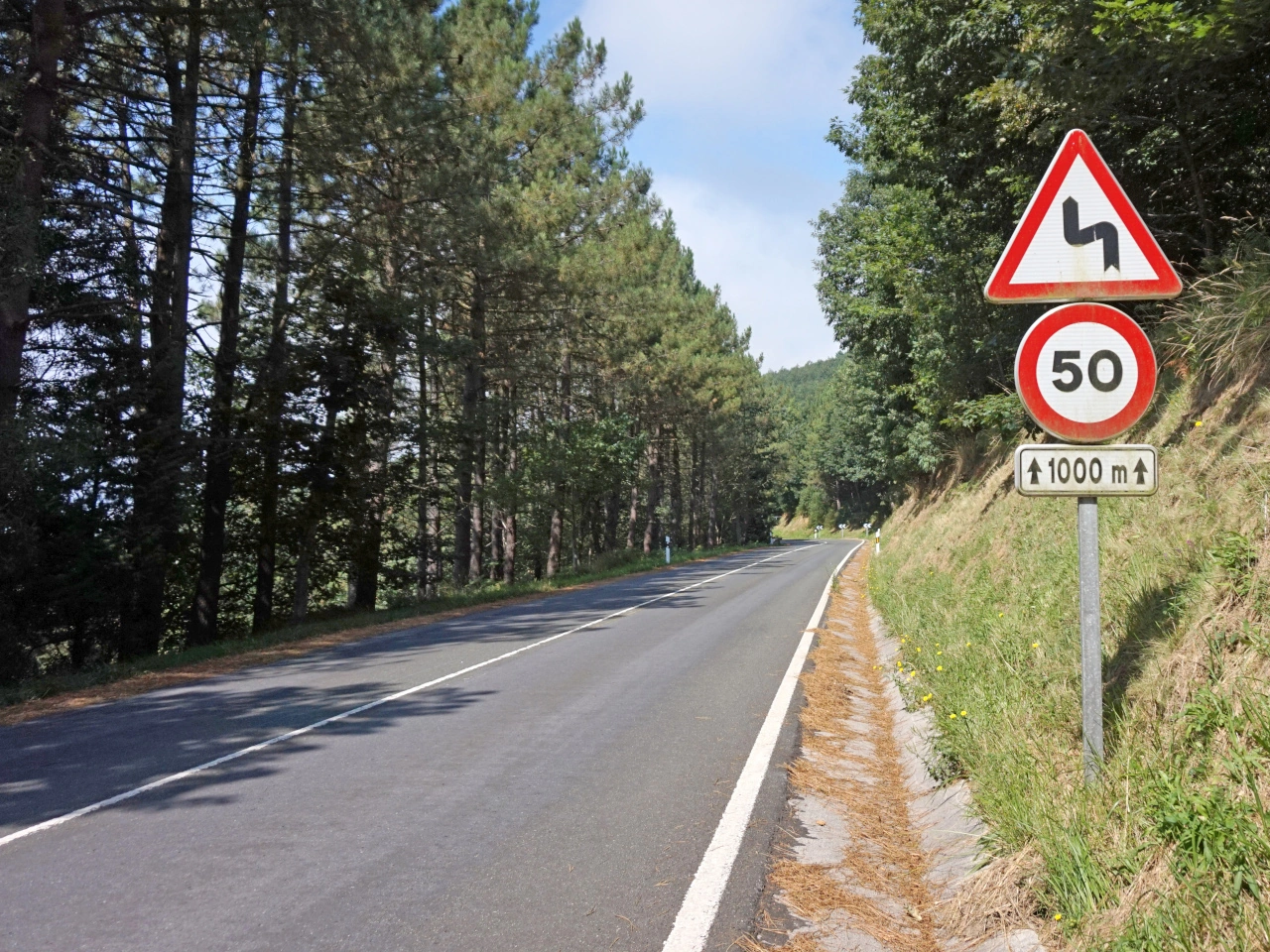
What is a double curve?
A double curve consists of two successive curves in opposite directions.
How can you recognise a double-curve warning sign?
It normally shows an S-shaped road symbol. The symbol indicates whether the first curve turns left or right.
What does first curve to the left mean?
It means that the road first bends left and is then followed by a curve in the opposite direction.
What does first curve to the right mean?
It means that the road first bends right and is then followed by a curve in the opposite direction.
Can the sign warn of more than two curves?
Yes. In many countries, the same sign may warn of a longer succession of curves. A supplementary panel may indicate the length of the winding section.
Does the sign show the exact shape of every curve?
No. It normally shows only the general direction of the first curves. Their radius, length and spacing may be different from the symbol.
Does a double-curve sign impose a speed limit?
No. It normally warns of danger rather than establishing a numerical limit. Drivers must reduce speed whenever the legal maximum would be unsafe.
When should you reduce speed?
Reduce speed before entering the first curve, while the vehicle is still travelling straight and has maximum stability.
Should you accelerate between the two curves?
Do not accelerate strongly merely because there is a short straight section between them. Maintain a controlled speed until the direction and exit of the following curve are clear.
Should you brake while changing direction?
Avoid harsh braking while steering from one curve into the next. Complete most braking beforehand and use smooth control inputs.
Where should you look?
Look towards the visible road ahead and through each curve while continuing to monitor your lane position, road surface and nearby traffic.
Must you remain within your lane?
Yes. Do not cut across the centre line or another traffic lane to straighten the sequence of curves.
Why can a double curve be more difficult than one curve?
The vehicle’s weight shifts from one side to the other, visibility may change rapidly and the second curve may be sharper or closer than expected.
Why should you leave more following distance?
The vehicle ahead may brake unexpectedly for the second curve, an obstruction or changing road conditions that are not yet visible to you.
May you overtake in a double curve?
Do not overtake when you cannot see far enough ahead to complete the manoeuvre safely. Signs, continuous lines and local law may also prohibit overtaking.
May you stop or park in a double curve?
Only where it is permitted and your vehicle remains clearly visible. Stopping or parking where visibility is limited may create a serious hazard.
How do rain, snow or ice affect double curves?
They reduce tyre grip and increase the risk of skidding during the rapid change of direction. Reduce speed earlier and steer, brake and accelerate smoothly.
Why should motorcyclists take extra care?
Motorcyclists must change lean direction between the curves and depend heavily on tyre grip. Loose material, markings or wet surfaces can make the transition hazardous.
How can a double curve affect a trailer or caravan?
A trailer may sway or follow a tighter path through the curves. Excessive speed or abrupt steering can reduce stability.
Why do trucks and buses need additional space?
Long vehicles may track towards the inside of each curve or approach lane boundaries. Other drivers should avoid travelling beside them through a tight sequence.
What should you do if the second curve is sharper than expected?
Look towards the intended path, reduce acceleration and steer smoothly. Avoid sudden braking or crossing into another lane.
Does the absence of a warning sign mean the curves are safe at the speed limit?
No. Drivers must assess every road section and choose a safe speed even when no warning sign is displayed.
240. 交通事故
交通事故は、1人以上の道路利用者が関係し、損害、負傷、またはその両方を引き起こす予期しない出来事です。事故後は安全を最優先し、停止して現場を保護し、可能なら負傷者を助け、必要に応じて救急サービスへ連絡します。追加の危険を生じないようにし、必要情報を交換し、現地の事故報告規則に従います。重大事故では警察到着まで車両を動かさないことが求められる場合があります。
What should you do first after a traffic accident?
Stop and make the scene as safe as possible. Warn approaching traffic, check whether anyone is injured and call the emergency services when necessary.
Should you move the vehicles after an accident?
This depends on the circumstances and local law. After a minor collision with no injuries, vehicles may need to be moved out of the traffic flow when it is safe. After a serious injury accident, they may need to remain in place for investigation.
What information should drivers exchange after an accident?
Drivers commonly exchange names, contact details, vehicle information and insurance details. The exact legal requirements vary between countries.
When should the police be called after an accident?
Police should generally be contacted when there are injuries, serious damage, disagreement, suspected offences or difficulty identifying the people involved. Local reporting rules may require police involvement in additional situations.
What is an accident report form?
An accident report form records information about the vehicles, drivers, damage and circumstances of a collision and can help insurers process the claim.
Can you leave the scene of an accident?
Drivers and other involved persons are normally required to stop and fulfil their legal duties. Leaving without doing so may constitute a serious offence such as hit-and-run.
241. 負傷
負傷は、軽い切り傷や打撲から生命に関わる重傷までさまざまです。まず追加の危険を防ぎ、必要に応じて救急サービスへ連絡し、自分が安全に行える範囲で援助します。頭部、首、背中の重傷が疑われる人は、放置すると直ちに危険な場合を除き不必要に動かさず、救急指令員や訓練された救助者の指示に従います。軽傷に見えても後から症状が出る場合があり、医療評価が必要なことがあります。

What should you do if someone is injured in a traffic accident?
Make the scene as safe as possible, call the emergency services when necessary and provide assistance within your abilities. Follow instructions given by emergency operators or trained responders.
Should you move an injured person after an accident?
Generally, avoid moving a seriously injured person unless they face an immediate danger from traffic, fire or another hazard. Unnecessary movement can worsen certain injuries.
Should you remove a motorcyclist's helmet after an accident?
Do not routinely remove a helmet from an injured motorcyclist. Helmet removal may require special care, particularly when a head, neck or spinal injury is possible. Follow emergency-service instructions unless immediate action is necessary to preserve life.
Can someone be seriously injured without obvious wounds?
Yes. Internal injuries, concussion and other trauma may not be immediately visible. Seek medical assistance when there is concern about the person's condition.
What information should you give emergency services?
Give the exact location, what happened, the number of injured people and any immediate dangers. Stay on the line and follow the operator's instructions.
Should you give first aid after a traffic accident?
Provide first aid that you are trained and able to give safely. Do not put yourself or others in additional danger, and follow professional instructions whenever possible.
242. 鼻血
鼻血は片方または両方の鼻孔からの出血で、通常は鼻内の小血管から起こります。多くは軽症ですが、運転者の注意をそらし、運転継続が危険になることがあります。運転中に始まったら可能な限り安全な場所へ停止します。上体を起こして少し前傾し、鼻の柔らかい部分を10~15分ほど連続してつまみます。頭を後ろへ反らすと血が喉へ流れるため避けます。大量出血、重大なけが後、止まらない場合は医療援助を求めます。
What should you do if you get a nosebleed while driving?
Stop at a safe place as soon as possible. Sit upright, lean slightly forward and pinch the soft part of the nose continuously for about 10–15 minutes.
Should you tilt your head back during a nosebleed?
No. Keep your head slightly forward so blood does not run into the throat, where it can cause choking, coughing or vomiting.
How long should you pinch your nose?
Pinch the soft part of the nose continuously for about 10–15 minutes before checking whether the bleeding has stopped.
When should you seek medical help for a nosebleed?
Seek medical help if the bleeding is heavy, does not stop after sustained pressure, follows a significant head or facial injury, causes weakness or dizziness, or makes breathing difficult.
Can you continue driving with a nosebleed?
Only if the bleeding has stopped and you feel fully able to drive safely. If the nosebleed distracts you, affects visibility or makes you feel weak or unwell, stop and do not continue until it is safe.
Can blood-thinning medication make nosebleeds more serious?
Yes. Medicines that reduce blood clotting can make bleeding more difficult to stop. Seek medical advice if bleeding persists or you are concerned.
243. 物的損害
物的損害は、交通事故によって車両、道路設備、その他の財産へ生じる損傷です。傷やへこみなど軽微なものから、安全に走れないほど重大なものまであります。物損事故後は現場を安全にし、必要情報を交換し、状況を記録し、必要なら保険会社へ連絡します。灯火、タイヤ、操舵、ブレーキ、窓など安全関連部品の損傷で走行が危険な場合は運転を続けてはいけません。

What is material damage in a traffic accident?
Material damage is damage to vehicles, road infrastructure, buildings or other property without bodily injury.
What should you do after an accident with only material damage?
Make the scene safe, exchange the required details, record the damage and circumstances and follow the applicable insurance and reporting rules.
Should you take photos of accident damage?
Yes. Photos of the vehicles, damage, road position, signs and surrounding area can help document what happened and support an insurance claim.
Can you continue driving a damaged vehicle?
Only if the vehicle remains safe and roadworthy. Do not continue driving if the damage affects steering, brakes, tyres, lights, visibility or another safety-critical component.
Should damage be reported to the insurer?
Usually, yes. Insurance policies commonly require an accident or claim to be reported as soon as possible. The exact procedure and deadline depend on the country and policy.
What if you damage property and the owner is not present?
You should follow local rules for identifying yourself and reporting the damage. Leaving without providing the required information can lead to legal consequences.
244. 故障
故障は、機械、電気、その他の技術的問題により車両が安全に走行を続けられなくなることです。可能なら走行中の交通から離して停止し、ハザードランプを点灯し、他の道路利用者へ警告します。高速道路では安全な場合だけ車外へ出て、交通から離れた保護された場所で待ちます。必要ならロードサービスや救急サービスへ連絡し、自分や他者を危険にする修理は行いません。
What should you do first if your vehicle breaks down?
If possible, move the vehicle to a safe place away from moving traffic, switch on the hazard warning lights and warn approaching road users.
Should you stay inside a broken-down vehicle?
This depends on the location and danger. On high-speed roads, it is often safer to leave the vehicle carefully and wait behind a safety barrier or another protected place when this can be done safely.
Should you use a warning triangle after a breakdown?
Many countries require or recommend a warning triangle when a broken-down vehicle creates a danger or obstruction. The required distance and conditions vary by country.
Should you wear a reflective vest after a breakdown?
In many countries, a high-visibility or reflective vest is required or recommended when leaving a broken-down vehicle near traffic. Check the local rules.
Can you repair a vehicle at the roadside?
Only when it can be done safely. Do not attempt repairs if they expose you to moving traffic or another serious hazard. Roadside assistance is often the safer option.
Who should you call after a breakdown?
Contact roadside assistance when the vehicle cannot continue safely. Call the emergency services when there is immediate danger, injury, fire or another emergency.
245. 三角表示板
三角表示板は、停止、故障、事故車両など道路上の障害物を接近交通へ知らせる携帯式反射安全装置です。他の運転者が反応できるよう危険から十分離れ、はっきり見える位置へ設置します。必要距離と使用義務のある状況は国によって異なるため、現地規則を確認し、車内ですぐ取り出せる場所に保管します。
What is a warning triangle?
A warning triangle is a portable reflective device placed on the road to warn approaching traffic about a stopped vehicle, accident or other hazard.
When should a warning triangle be used?
It is generally used when a vehicle is broken down, involved in an accident or creating an obstruction. The exact legal requirements vary between countries.
How far from the vehicle should a warning triangle be placed?
The required distance depends on the country and type of road. Higher-speed roads usually require the triangle to be placed farther away so approaching drivers have more time to react.
Where should the warning triangle be placed?
Place it where it is clearly visible to approaching traffic and where doing so does not put you in unnecessary danger.
Should you use hazard warning lights as well as a warning triangle?
Often, yes. Hazard warning lights and a warning triangle can work together to make a stopped vehicle more visible. The legal requirements vary by country.
Should the warning triangle be easy to reach?
Yes. It is useful to keep it accessible without having to unload large amounts of luggage, especially because it may be needed quickly in a dangerous roadside situation.
246. 交通規則
交通規則は、公道で道路利用者がどのように行動するかを定める法律・規則です。速度、優先、追い越し、駐車、信号機、道路標識、車線利用、運転者・自転車利用者・歩行者の責任などを扱います。交通を整理し、衝突を減らし、道路安全を高めることを目的とします。規則は国によって、場合によっては地域によって異なるため、道路利用者は走行地で適用される規則を知る必要があります。
What are traffic rules?
Traffic rules are laws and regulations that determine how drivers, cyclists, pedestrians and other road users must behave on the road.
Why are traffic rules important?
Traffic rules help organise traffic, prevent conflicts and reduce the risk of accidents by making the behaviour of road users more predictable.
Are traffic rules the same in every country?
No. Traffic rules vary between countries and can differ in areas such as speed limits, priority, parking, overtaking and permitted road use.
What is the difference between traffic rules and traffic signs?
Traffic rules are the laws governing road use, while traffic signs communicate specific warnings, restrictions, obligations or information to road users.
Do traffic rules apply only to drivers?
No. Traffic rules can apply to drivers, cyclists, pedestrians, motorcyclists and other road users, depending on the rule and type of road.
Do temporary traffic signs override normal traffic rules?
Temporary signs and authorised traffic directions can change how traffic must behave at a particular location. Road users must follow the applicable signs, signals and authorised instructions according to local law.
247. 自動車学校
自動車学校は、学習運転者へ専門的な学科・実技訓練を提供する組織です。資格を持つ指導員が交通規則、車両操作、観察、運転操作、実交通での安全運転を教えます。国や免許区分により、教習は任意、仮免許取得前に必須、または試験不合格後に義務となる場合があります。自動車学校は公的試験へ向けて準備しますが、試験自体は通常、独立した試験場や免許当局が実施します。
What is a driving school?
A driving school provides professional instruction to help learner drivers prepare for their theory and practical driving examinations.
What do you learn at a driving school?
Training can include traffic rules, road signs, vehicle control, observation, manoeuvres, hazard awareness and driving safely in normal traffic.
Are driving-school lessons mandatory?
This depends on the country, licence category and chosen training route. Some learners may practise privately, while others must complete a minimum number of professional lessons.
Is a driving school the same as an exam centre?
No. A driving school provides training, while an exam centre officially assesses whether the candidate meets the requirements for a driving licence.
Can a driving school arrange the practical exam?
Often, yes. When a candidate takes the practical exam through a driving school, the school may book the appointment and provide the examination vehicle, depending on local rules.
How should you choose a driving school?
Choose an authorised or recognised driving school where required, and compare factors such as instructor qualifications, training options, availability and cost.
248. 交通標識
交通標識は、道路沿いに設置され、運転者、自転車利用者、歩行者を案内、警告、規制する標準化された視覚記号です。道路状況、規則、方向、潜在的危険など重要な情報を提供し、安全で円滑な交通を支えます。三角形の警戒標識、円形の禁止・指示標識、長方形の案内標識など、素早く認識しやすいようさまざまな形と色が使われます。
