

ТестПравила дорожного движенияВаллония
Проверьте свои знания с помощью теста с вариантами ответов. Разбирайте ответы и лучше понимайте правила дорожного движения и дорожные знаки (Валлония).
 Дорожные знаки
 Правила дорожного движения
 Валлония
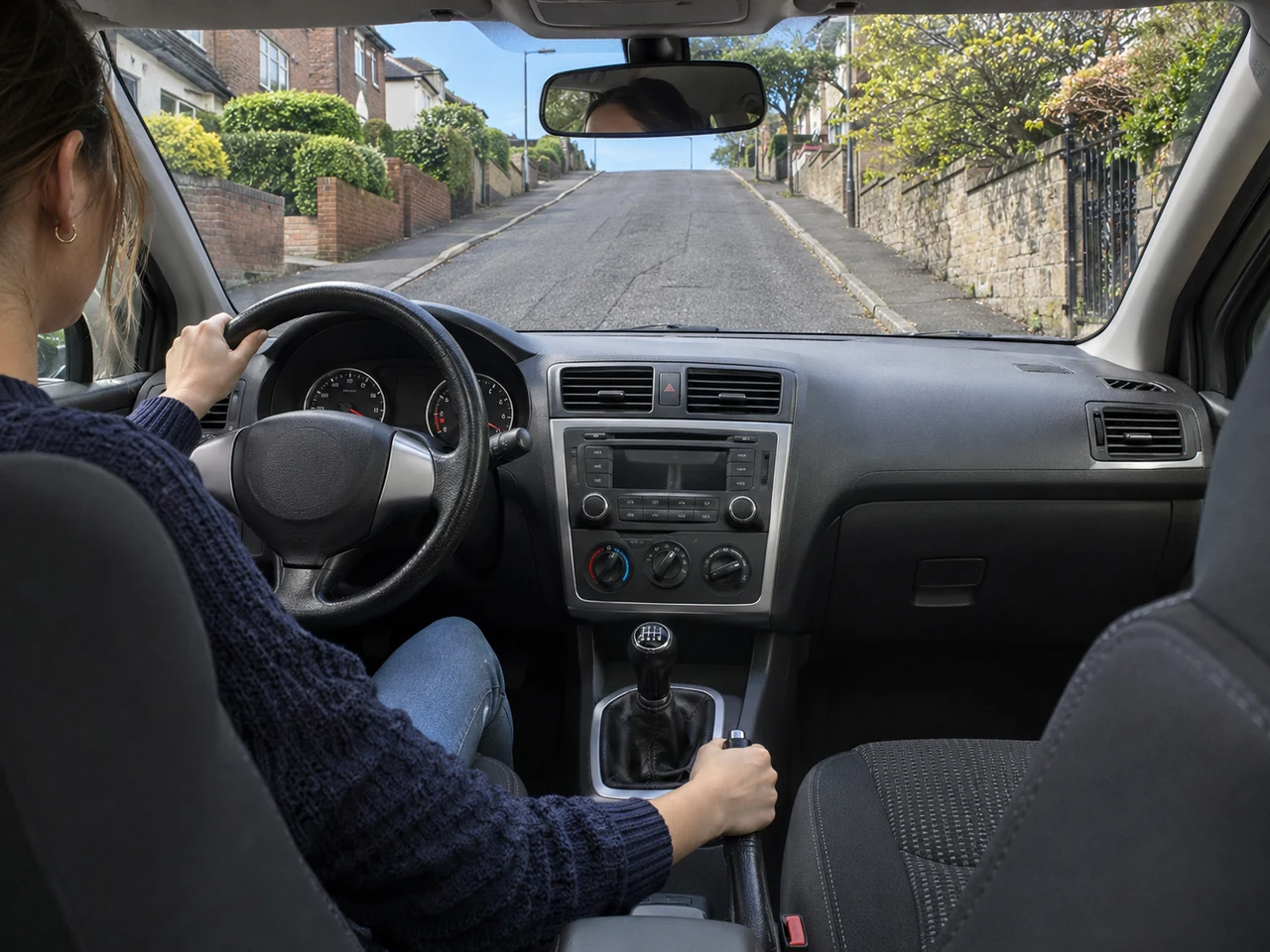
51. Как стояночный тормоз может помочь при трогании в гору?
При трогании в гору стояночный тормоз может удерживать автомобиль на месте, пока вы готовитесь начать движение. Плавно отпустите его после достижения точки схватывания сцепления и достаточной тяги.

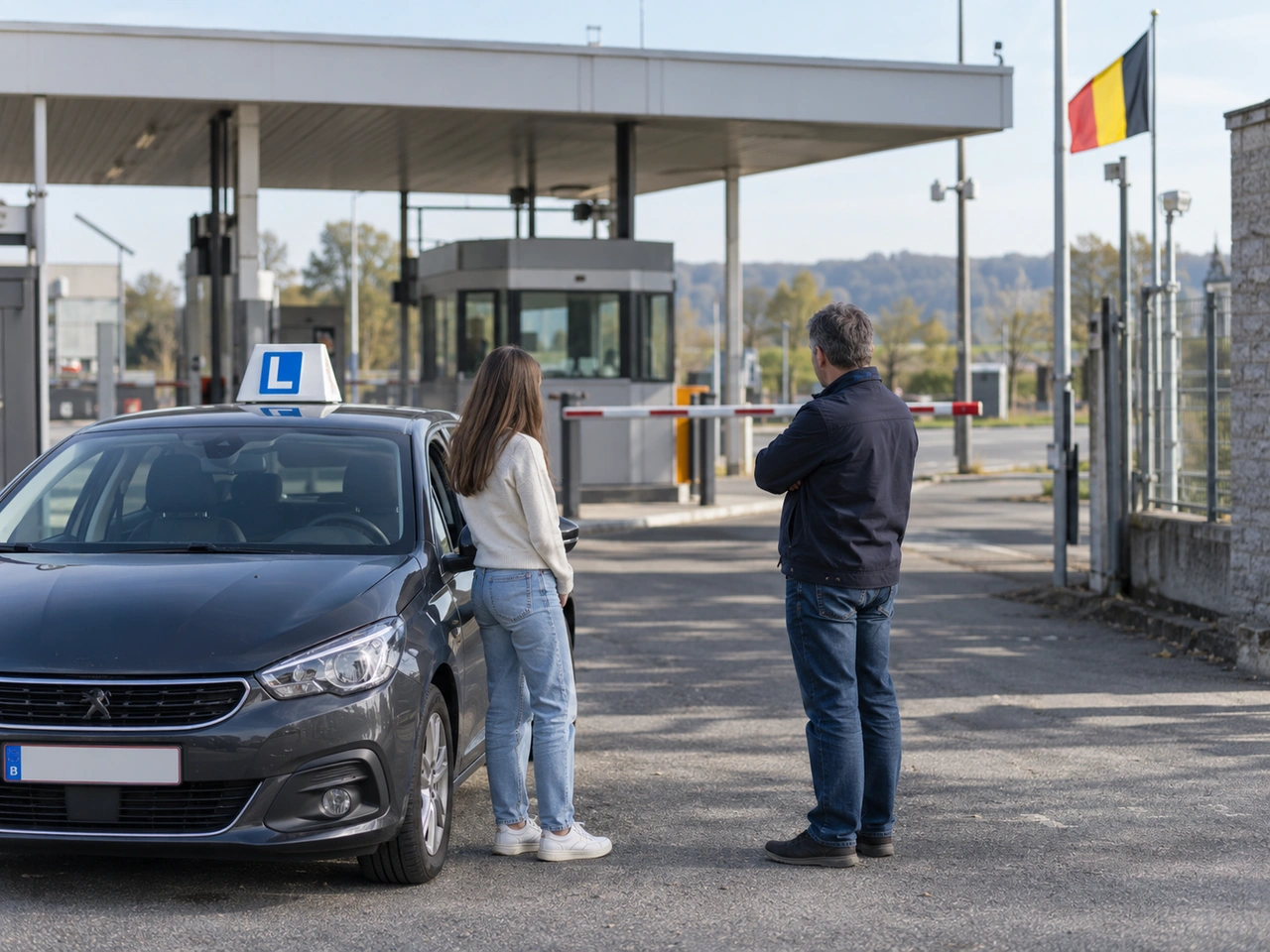
52. Где действительно бельгийское временное водительское удостоверение?
Бельгийские временные водительские удостоверения M36, M18 и M12 действительны только в Бельгии. Их нельзя использовать для учебной езды за границей.
🔗 Источники
FOD Mobiliteit en Vervoer · Voorlopig rijbewijs categorie B
Code de la route · Arrêté royal du 10 juillet 2006 · Annexes 1 à 3
Image credit: AI-generated
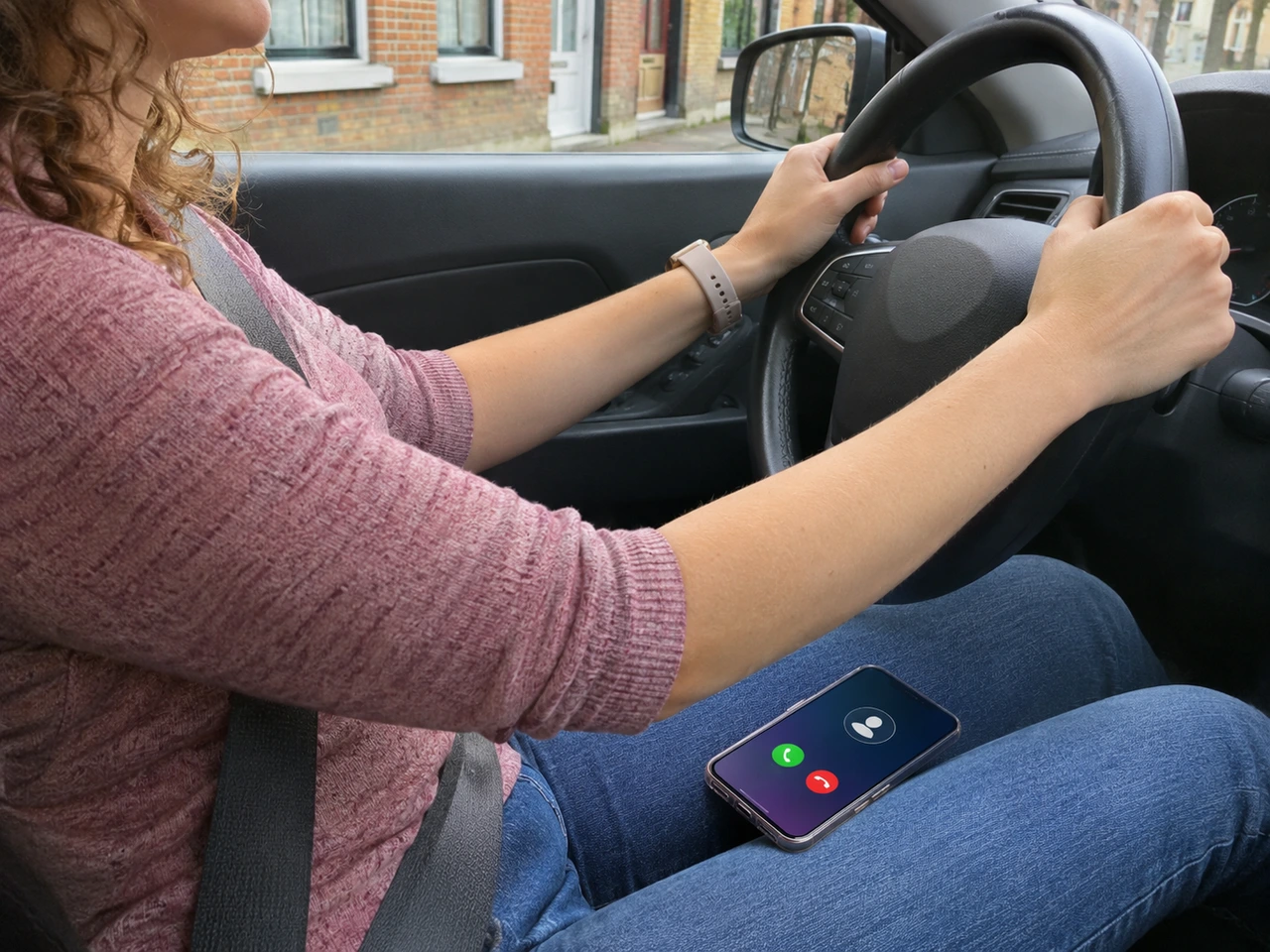
53. May you make a call while driving with the phone loose on your lap and both hands on the wheel?
The rule covers using a mobile electronic device with a screen, not only holding it. Keeping the phone loose on your lap while using it for a call does not satisfy the requirement for a suitable holder attached to the vehicle.
🔗 Источники
Wegcode.be — Belgian road legislation
Reference: Article 8.4; official police clarification on phones on the lap.
Image credit: AI-generated
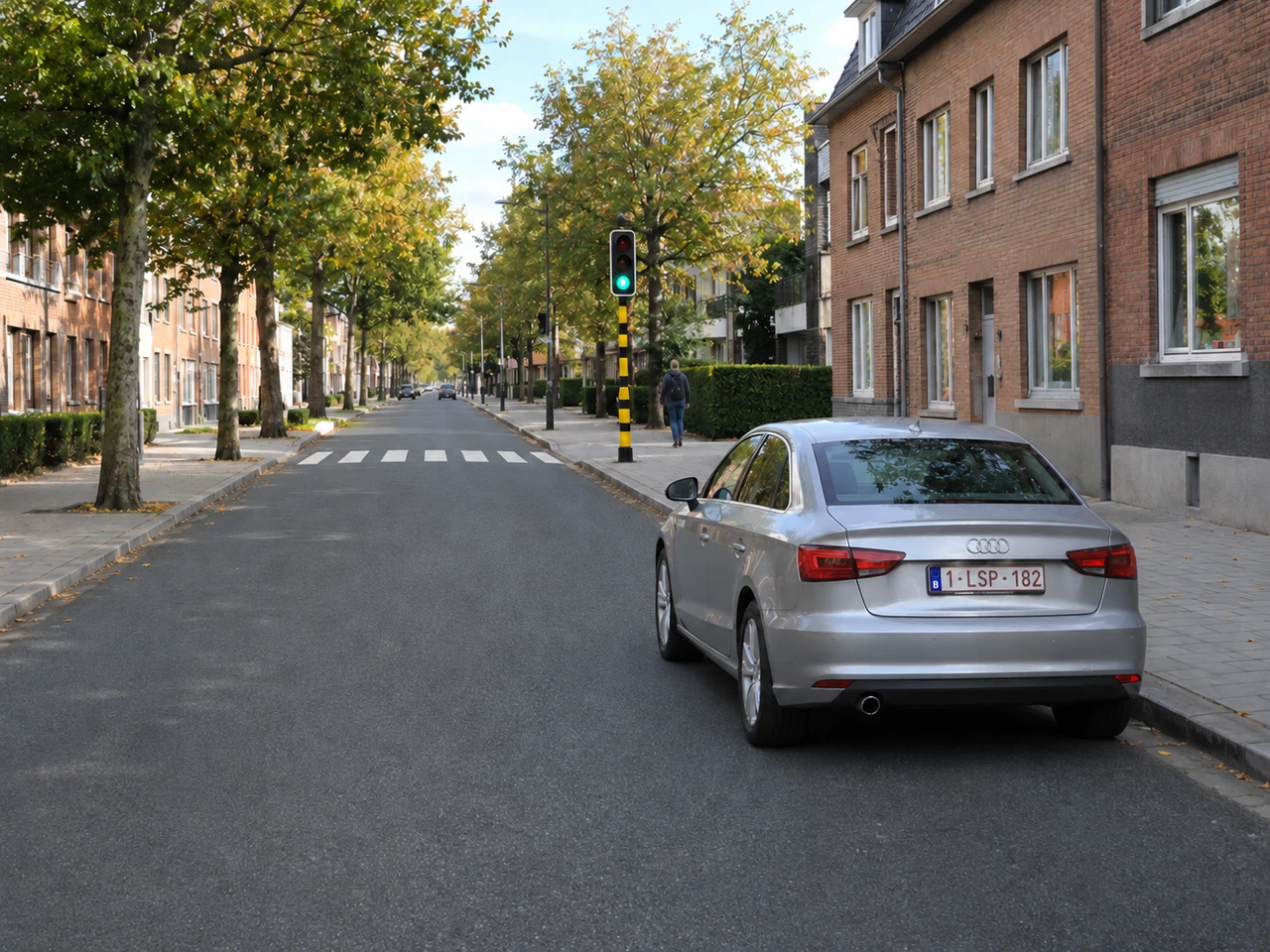
54. May a 1.5 m-high car stop 10 m before lights outside a junction if their bottom is 2.2 m high?
Before lights outside junctions, the 20-metre prohibition has a height exception: the vehicle, including its load, must be no higher than 1.65 metres and the bottom of the lights at least 2 metres above the carriageway. This car qualifies. Other stopping restrictions still apply.
🔗 Источники
Wegcode.be — Belgian road legislation
Reference: Article 24(9), final paragraph
Image credit: AI-generated
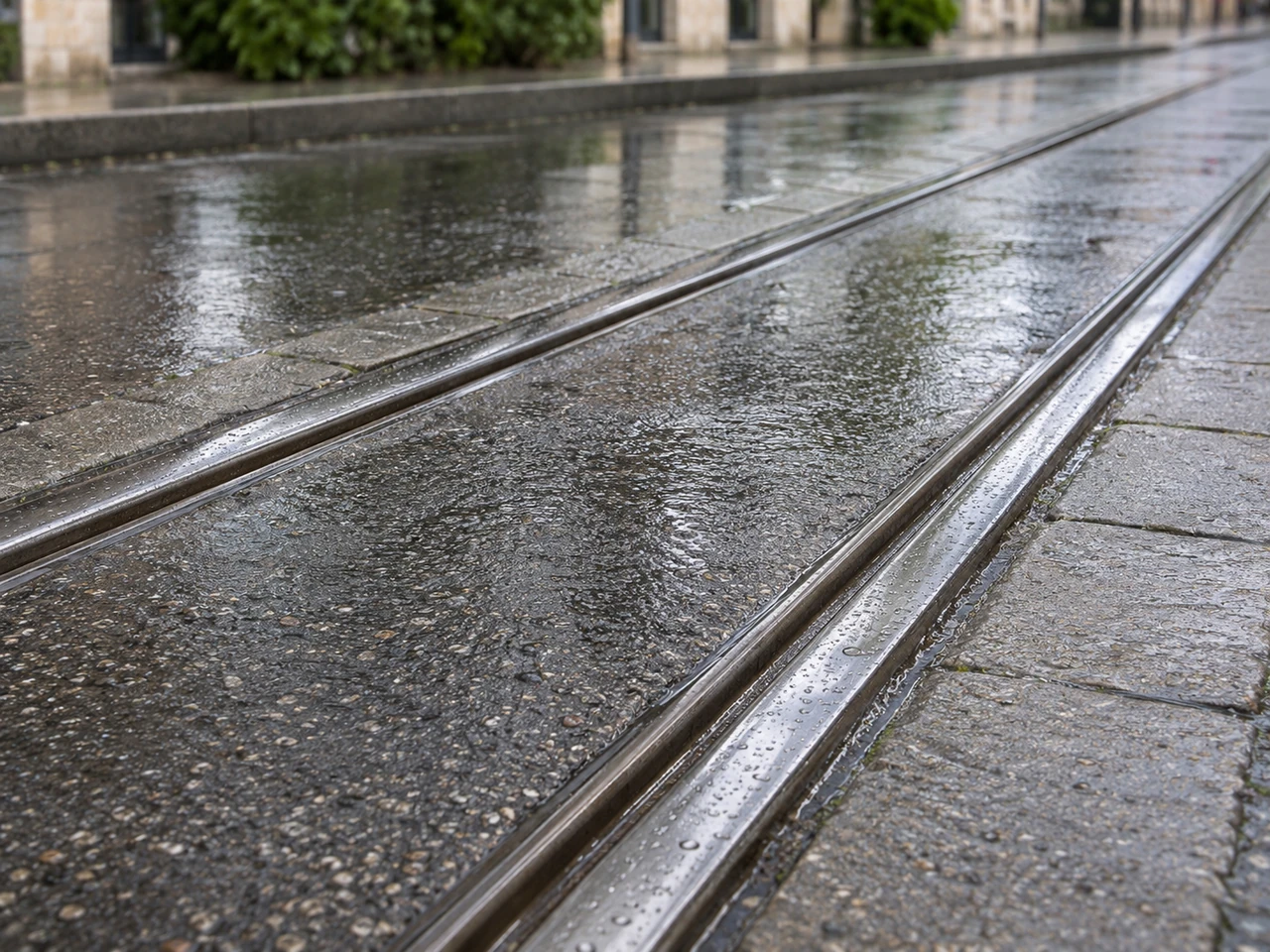
55. Wet tram rails can be slippery for cyclists and motorcyclists.
Wet rails can reduce tyre grip and affect a rider's line. Leave cyclists and motorcyclists room to cross safely.
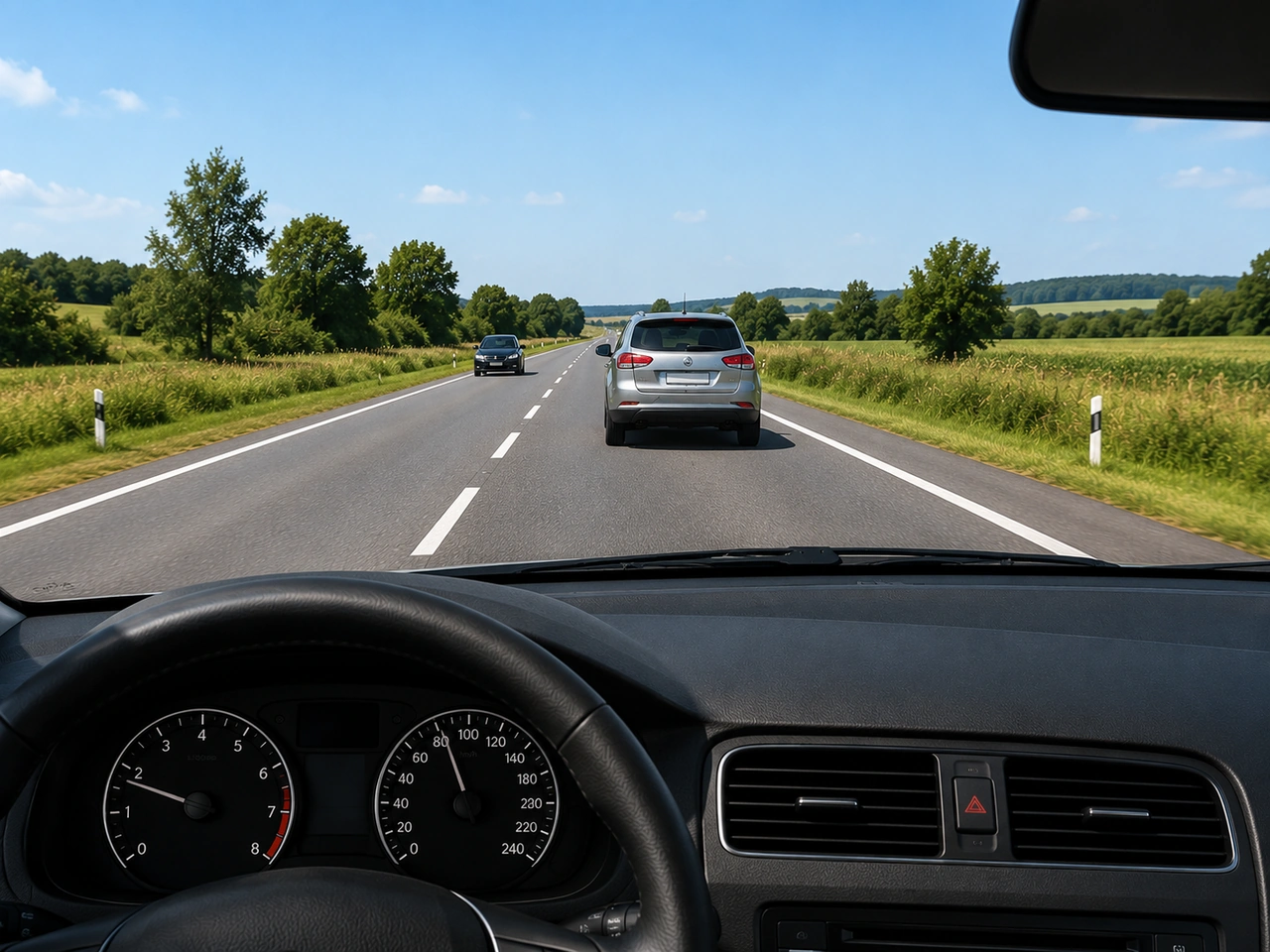
56. Почему следует соблюдать безопасную дистанцию?
Безопасная дистанция даёт достаточно времени на реакцию, если автомобиль впереди внезапно замедлится или остановится.
🔗 Источники
Great Britain — Highway Code, rule 126; general following space
Image credit: AI-generated
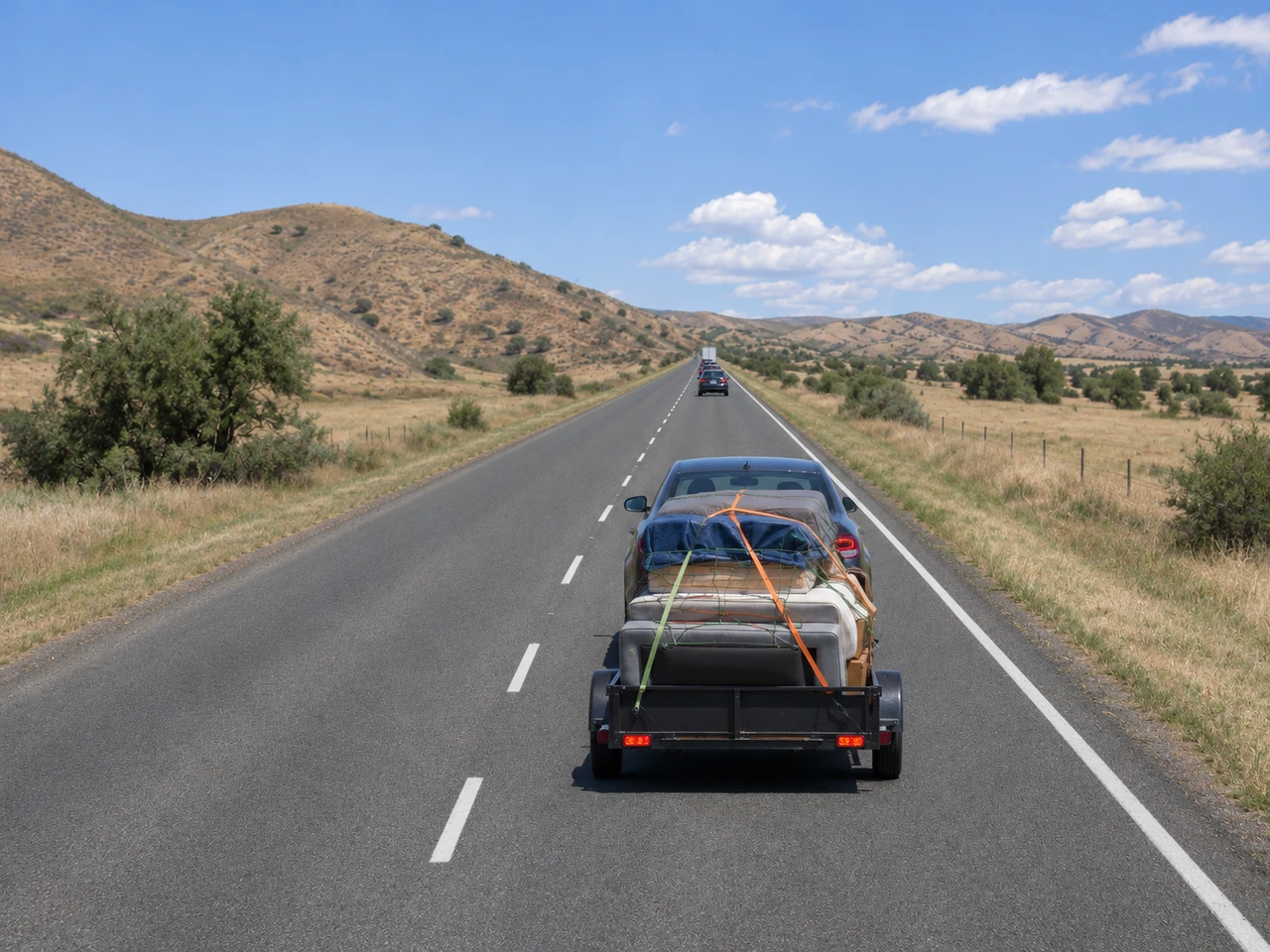
57. Как тяжёлый груз может повлиять на тормозной путь?
Сильно загруженный автомобиль имеет большую массу и может требовать большего расстояния для замедления или безопасной остановки.
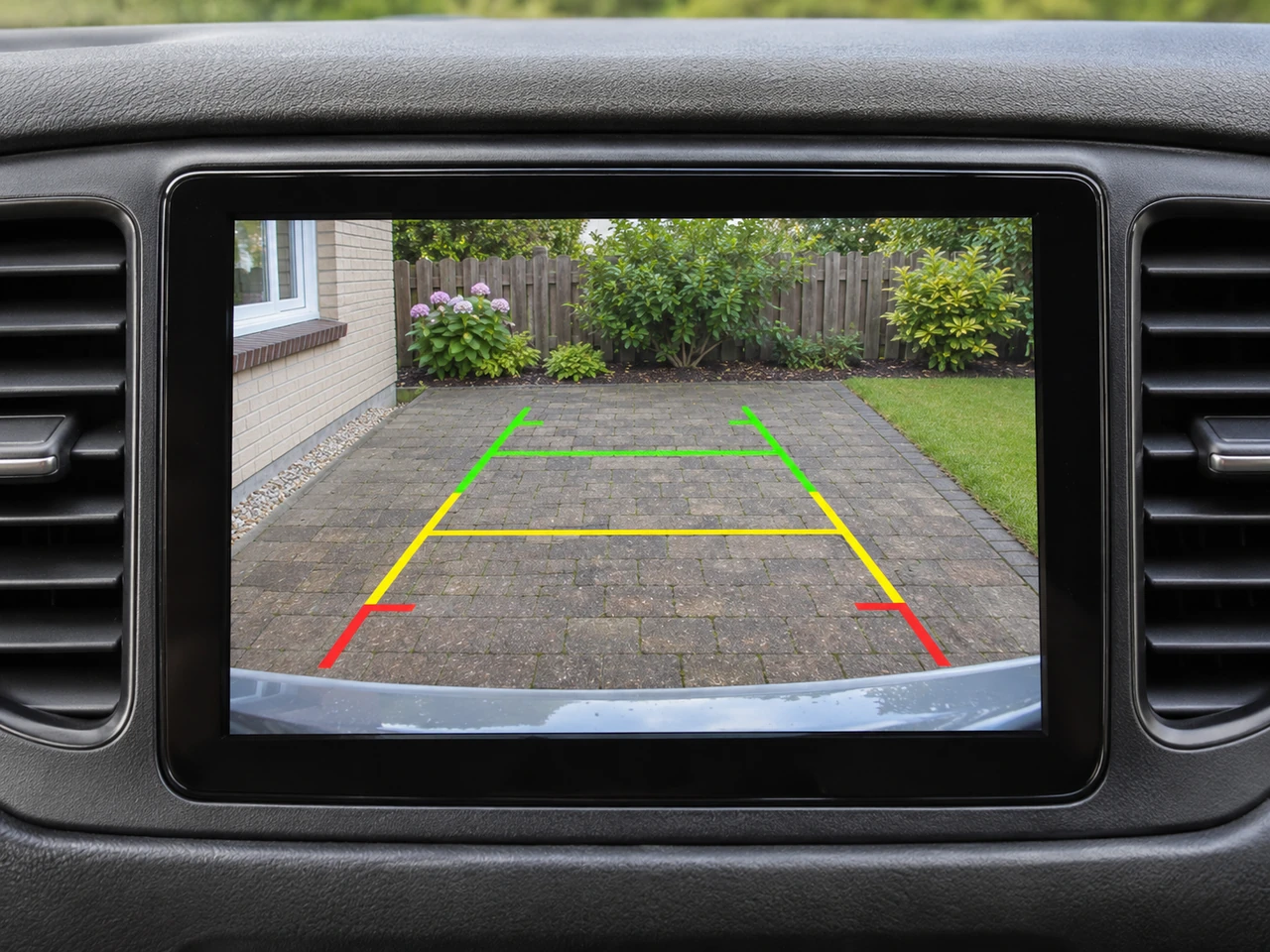
58. A reversing camera replaces the need to check all around your vehicle.
A reversing camera is an aid and may not show every hazard. Use your mirrors, check blind spots and keep checking all around while reversing.
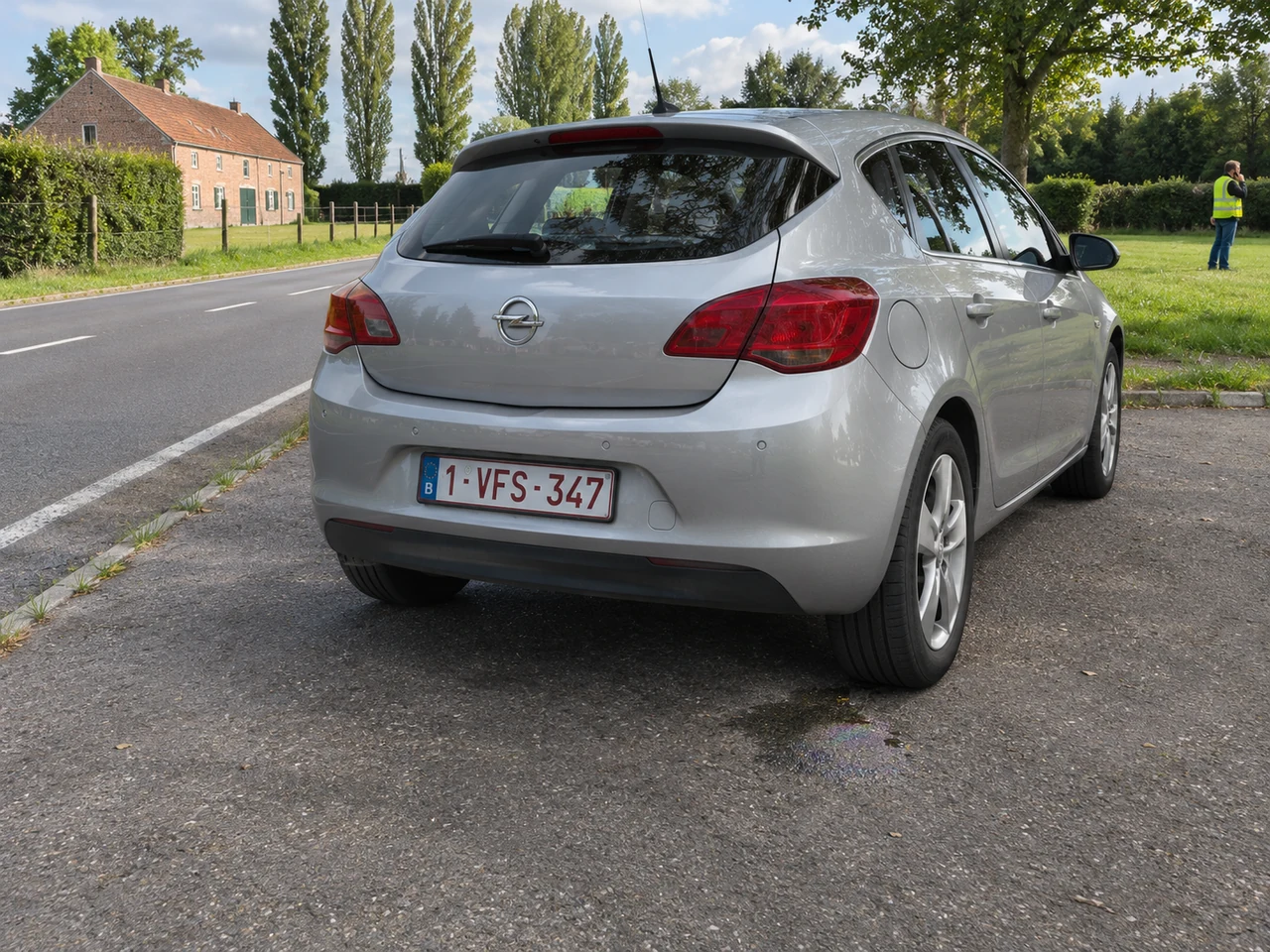
59. Что следует делать, если вы почувствовали запах топлива или увидели утечку топлива из автомобиля?
Утечка топлива создаёт серьёзный риск пожара. Не подпускайте людей, не запускайте двигатель повторно и вызовите профессиональную помощь.
🔗 Источники
Ford.com.ph • Manufacturer guidance on suspected fuel leaks and recovery
Fordservicecontent.com • Manufacturer warning against starting when fuel is seen or smelled
112.be • Belgian emergency-call situations
Image credit: AI-generated
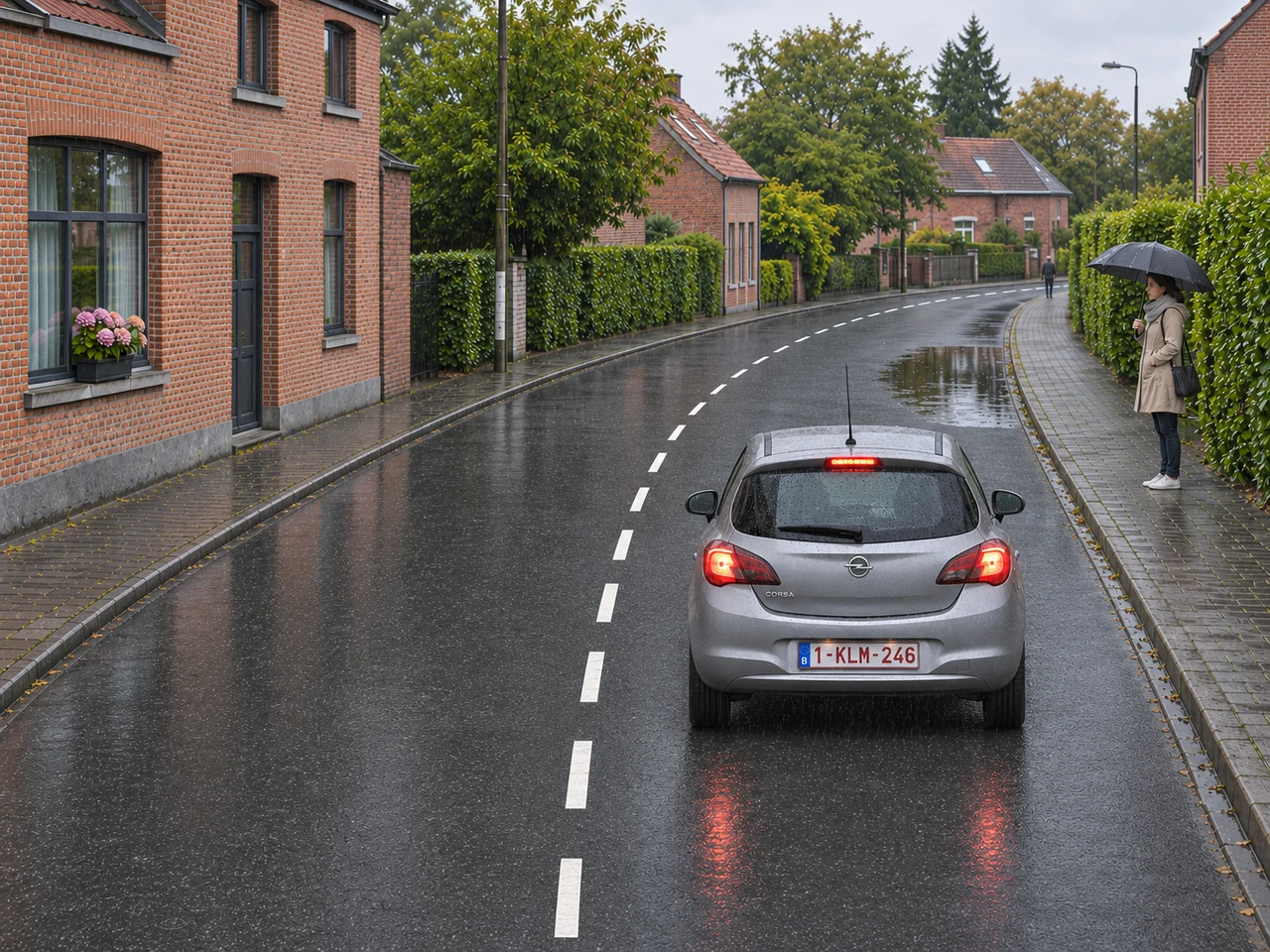
60. Что следует делать перед проездом через лужу?
Большие лужи могут скрывать ямы, снижать сцепление или приводить к попаданию воды на пешеходов и другие автомобили. Снизьте скорость и двигайтесь осторожно.
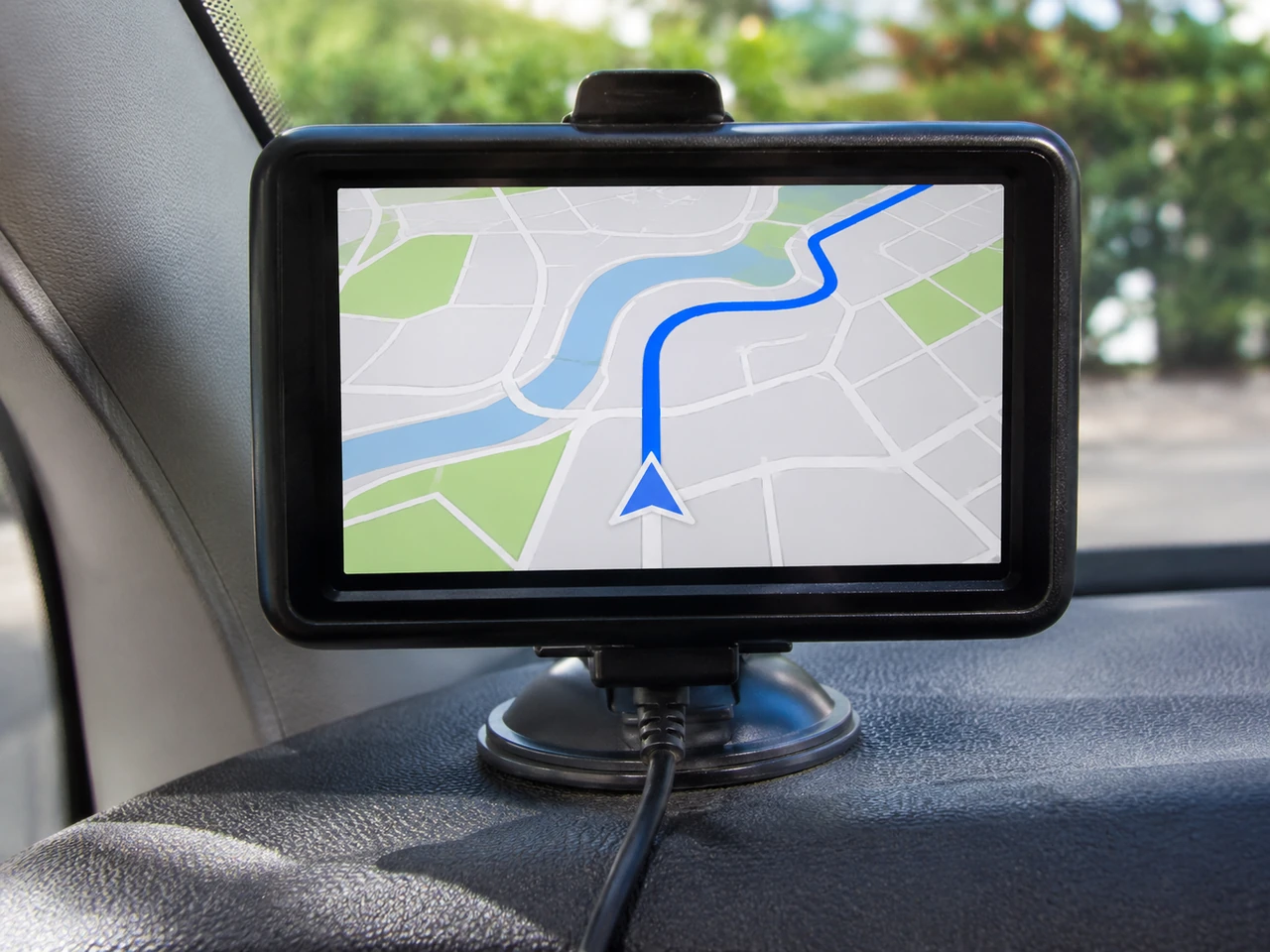
61. Sat-nav directions take priority over traffic signs.
Navigation advice does not override traffic signs or restrictions. Follow the signs and find a safe alternative route when necessary.
🔗 Источники
The Highway Code (Great Britain) • Safety guidance, Rules 109 and 150
Image credit: AI-generated
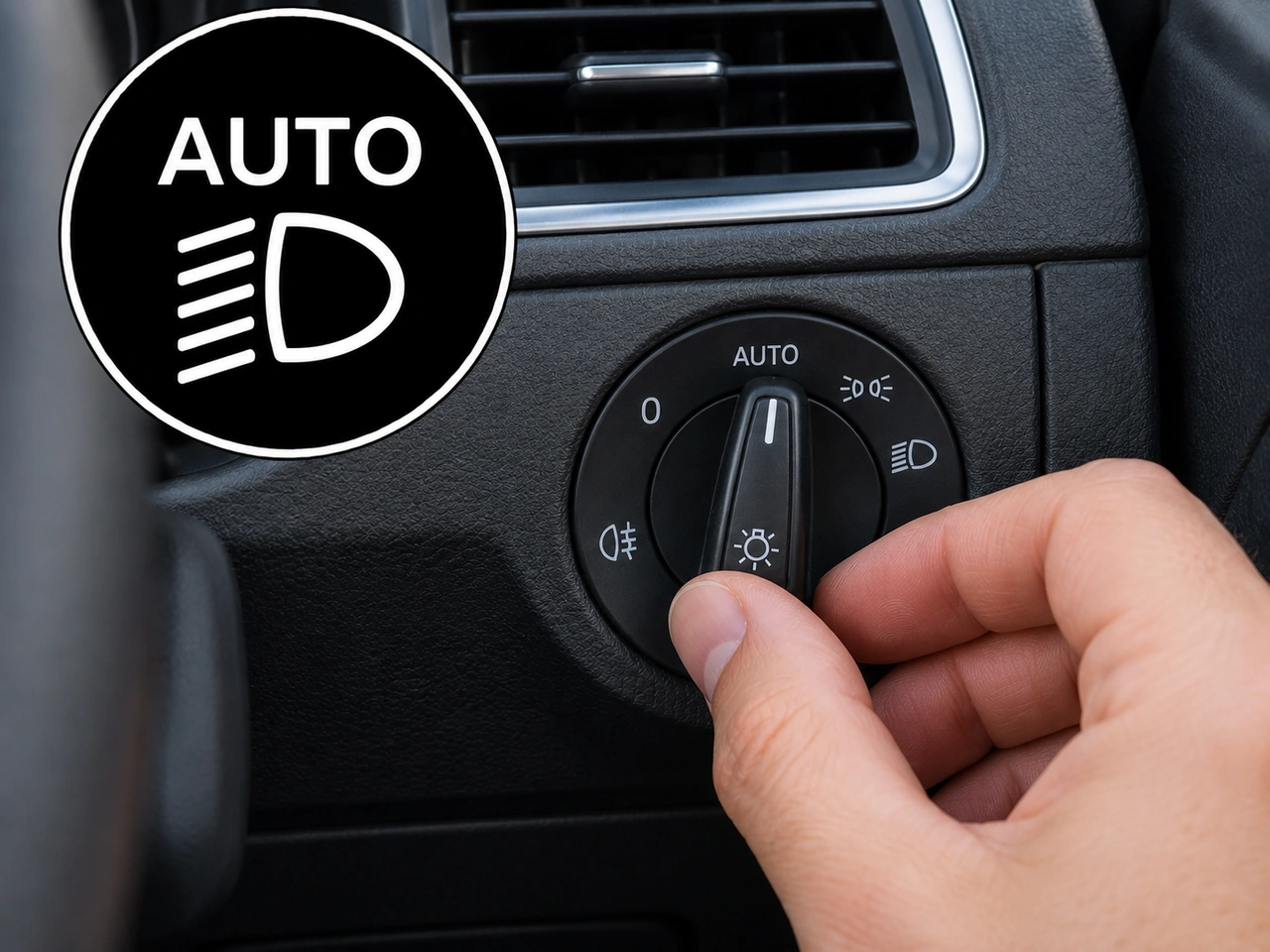
62. Что делает режим AUTO на переключателе освещения?
Режим освещения AUTO позволяет автомобилю автоматически включать или выключать наружное освещение в зависимости от окружающей освещённости. Водитель всё равно отвечает за использование правильных световых приборов.
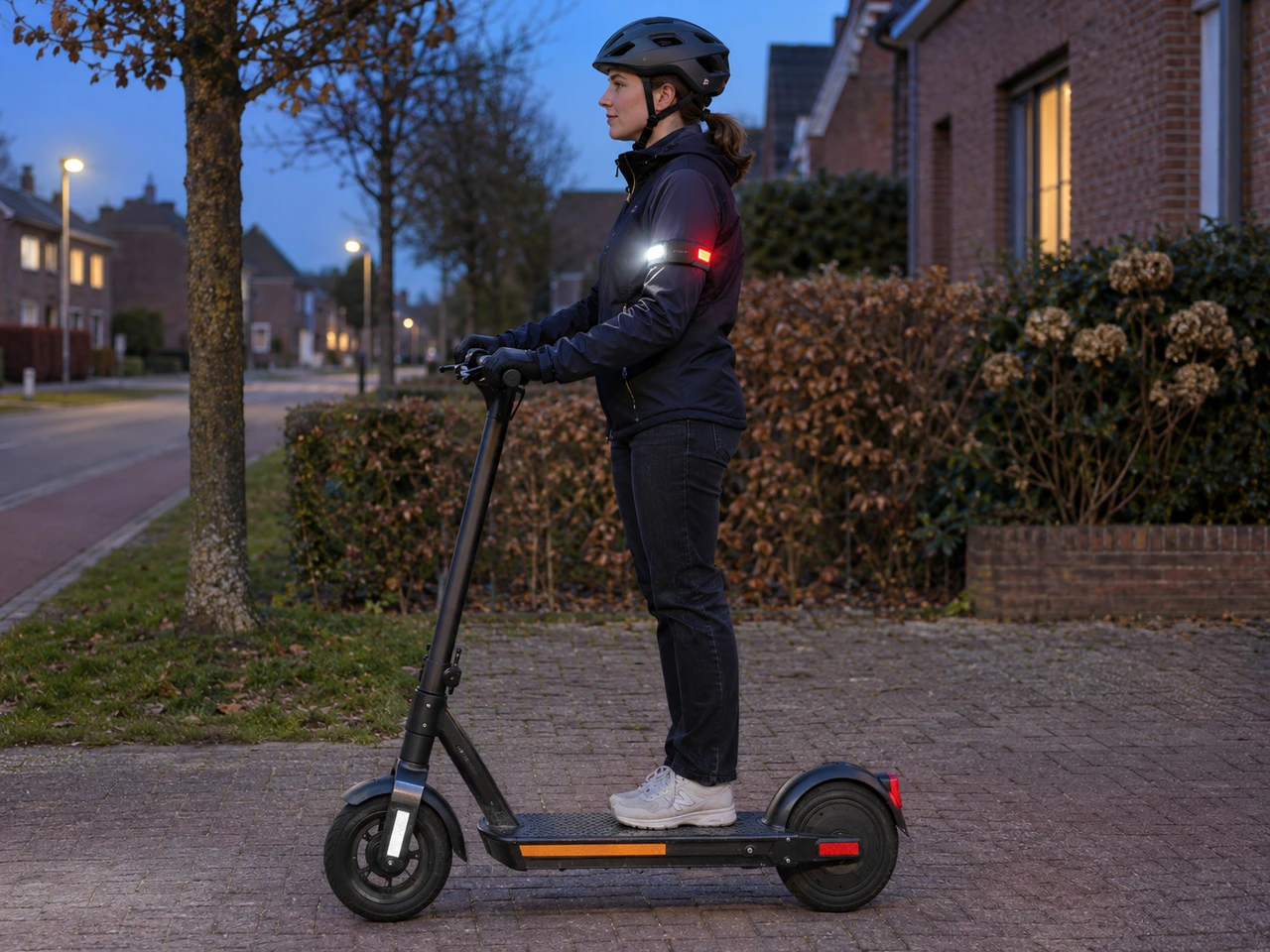
63. May an electric-scooter rider wear a combined light unit on the left on a cycle path at night?
For a mobility-device user on a cycle path, the front and rear lights may be combined in one unit placed or worn on the left. It must show white or yellow forwards and red backwards. The scooter must still have its required reflectors.
🔗 Источники
Wegcode.be — Belgian road legislation
Reference: Article 30.3, 6°, and Article 82bis.1.
Image credit: AI-generated
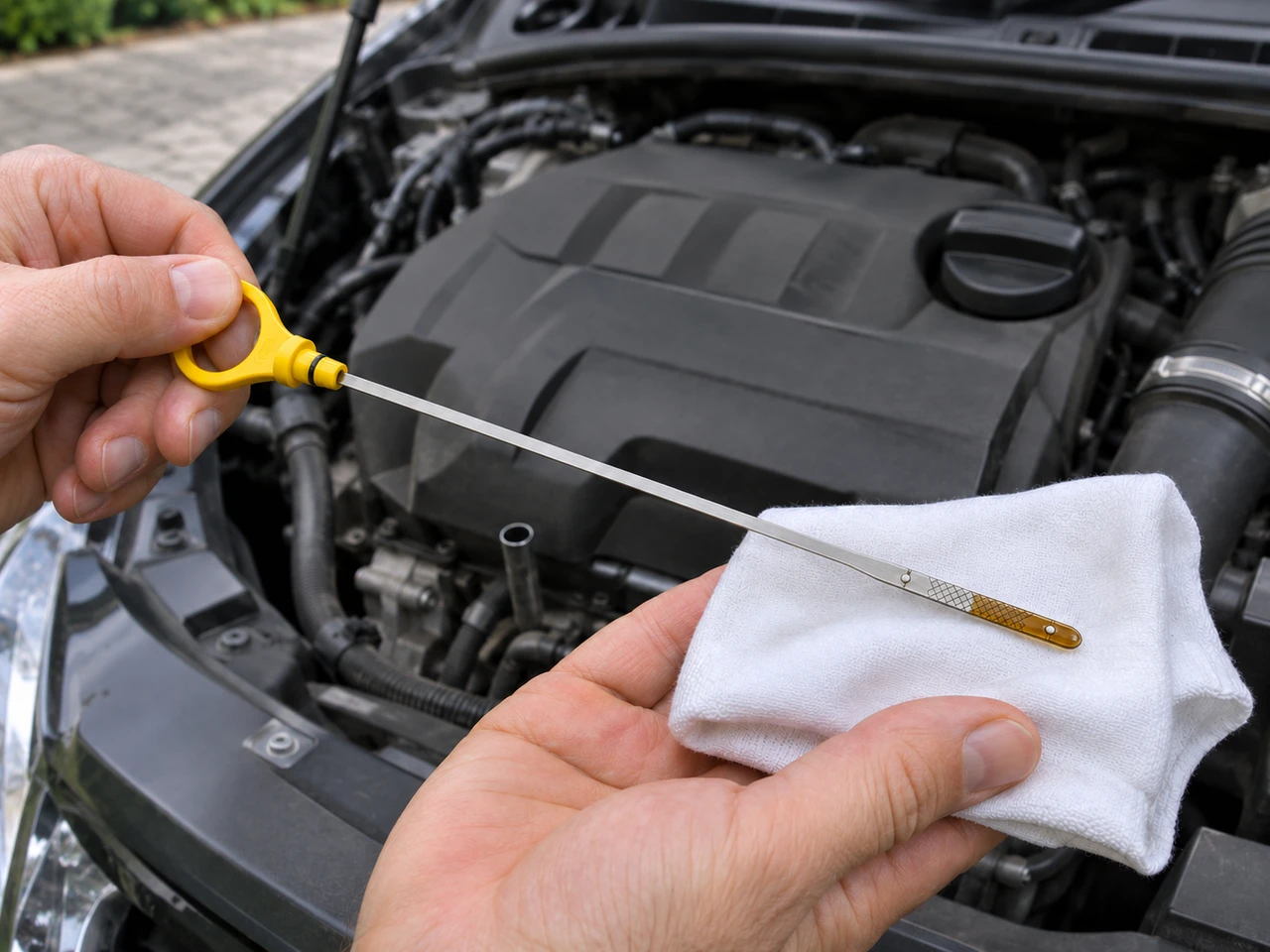
64. Как следует проверять уровень моторного масла?
Используйте щуп или электронную систему контроля уровня масла, как указано в руководстве по эксплуатации. Обычно двигатель должен быть выключен, а автомобиль стоять на ровной поверхности.
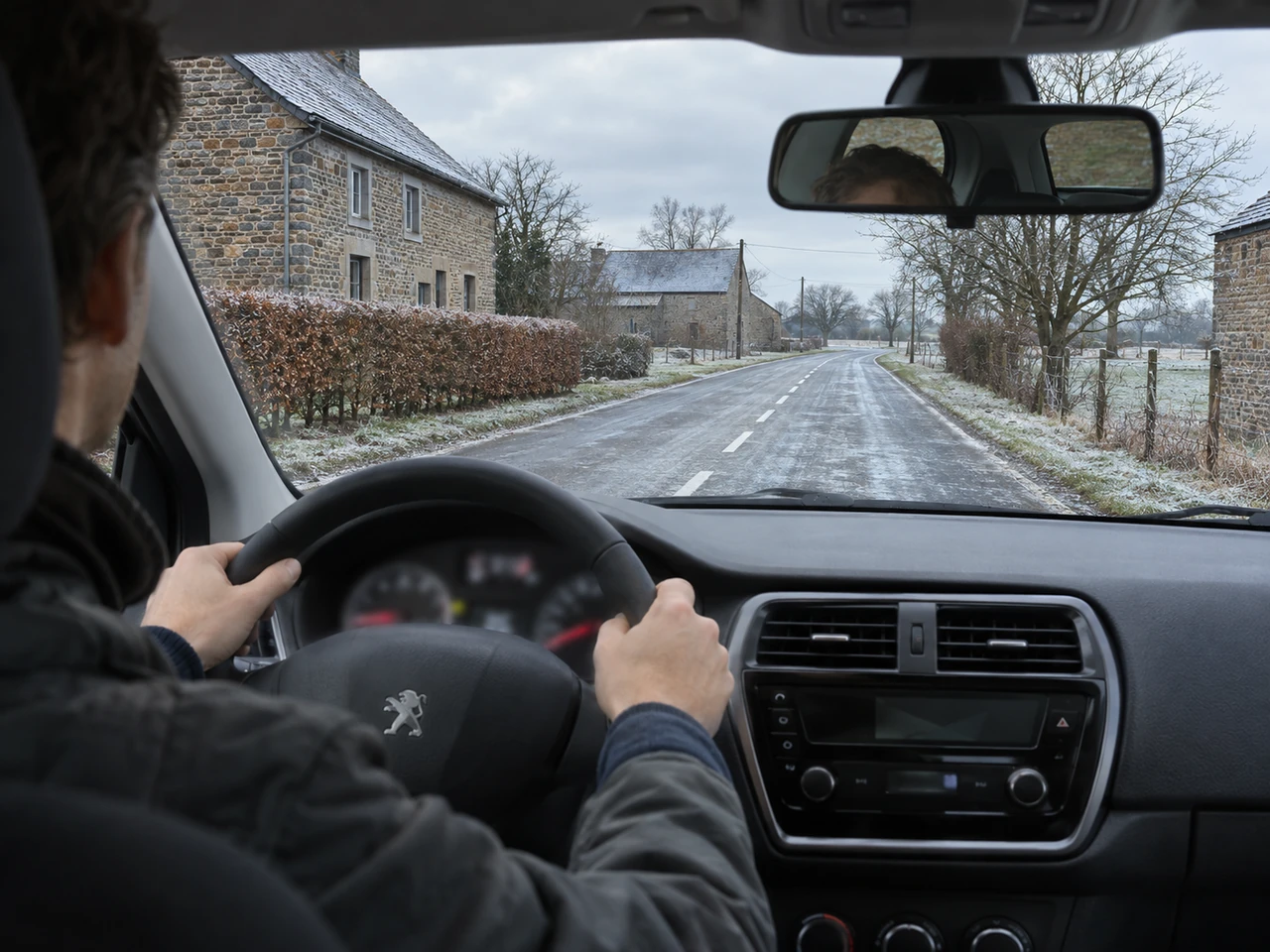
65. Что следует делать, если автомобиль начал скользить на льду?
Избегайте резкого торможения и руления. Смотрите туда, куда хотите двигаться, и действуйте плавно, пока шины восстанавливают сцепление.
🔗 Источники
Police.be — reducing acceleration when grip is lost
AWSR.be — avoiding abrupt reactions on ice
Image credit: AI-generated
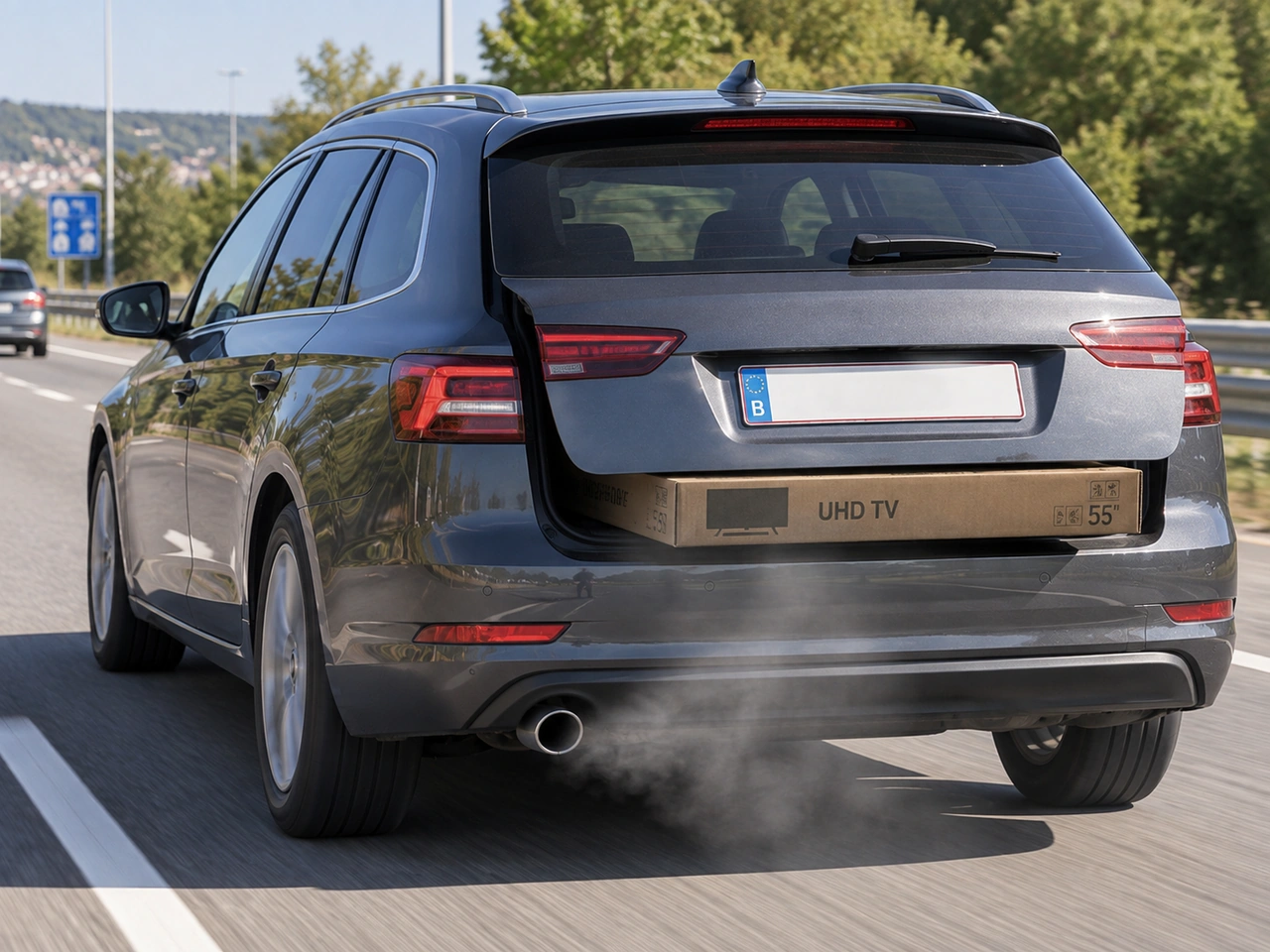
66. В чём опасность езды на бензиновом или дизельном автомобиле с открытым багажником или задней дверью?
Езда с открытым багажником или задней дверью может привести к попаданию выхлопных газов в салон. Выхлоп может содержать угарный газ, который ядовит и трудно обнаруживается. По возможности держите багажное отделение закрытым во время движения.
🔗 Источники
Nissan 2025 Sentra manual — Model-specific exhaust gases, closed spaces and hot components example
Image credit: AI-generated
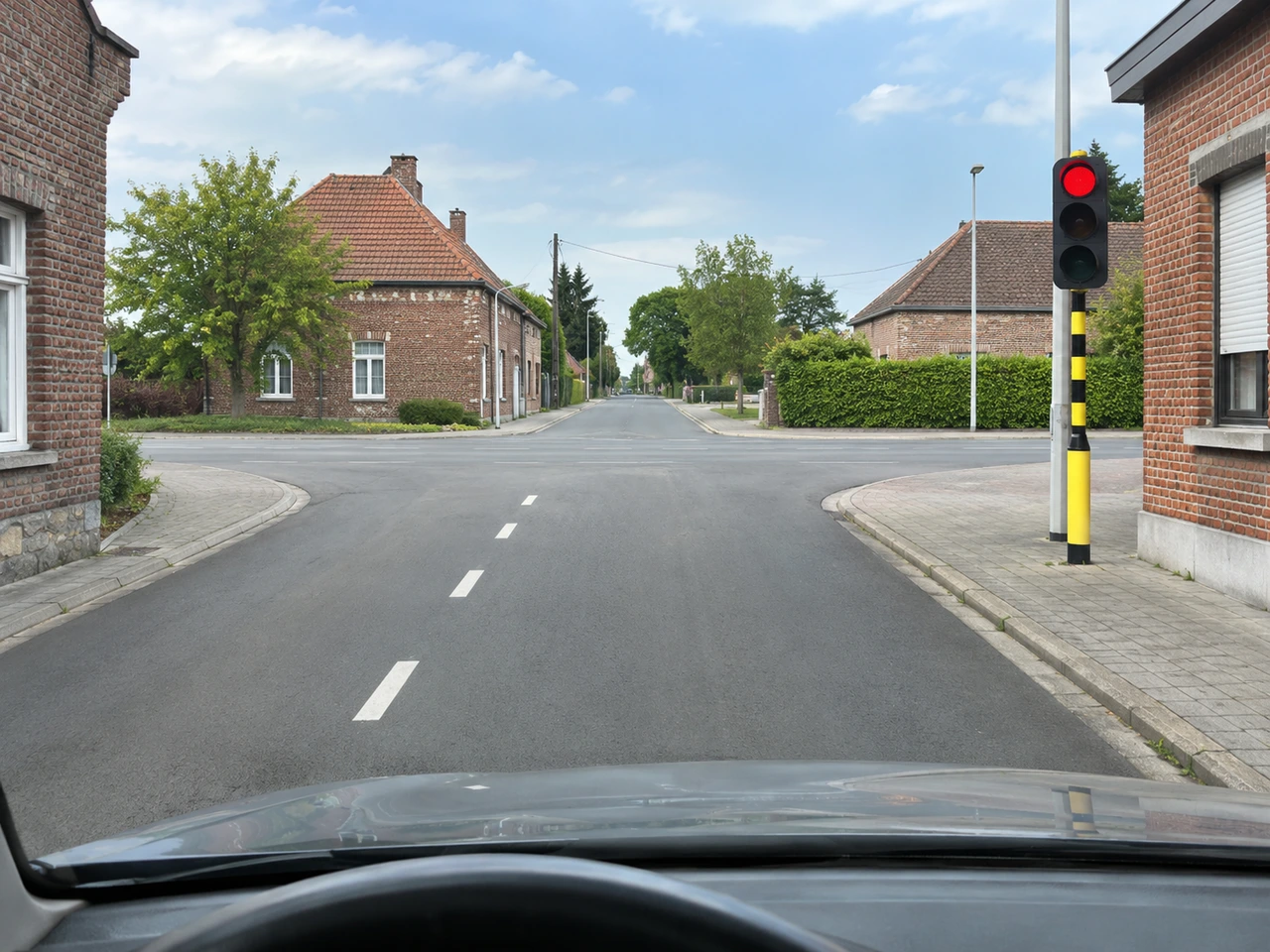
67. Where must you stop at this red traffic light if there is no stop line?
At red, you must not pass the stop line or, if there is no stop line, the traffic light itself. Stop before the signal; the absence of a painted line does not let you drive beyond it.
🔗 Источники
Wegcode.be — Belgian road legislation
Reference: Article 61.1, 1°
Image credit: AI-generated
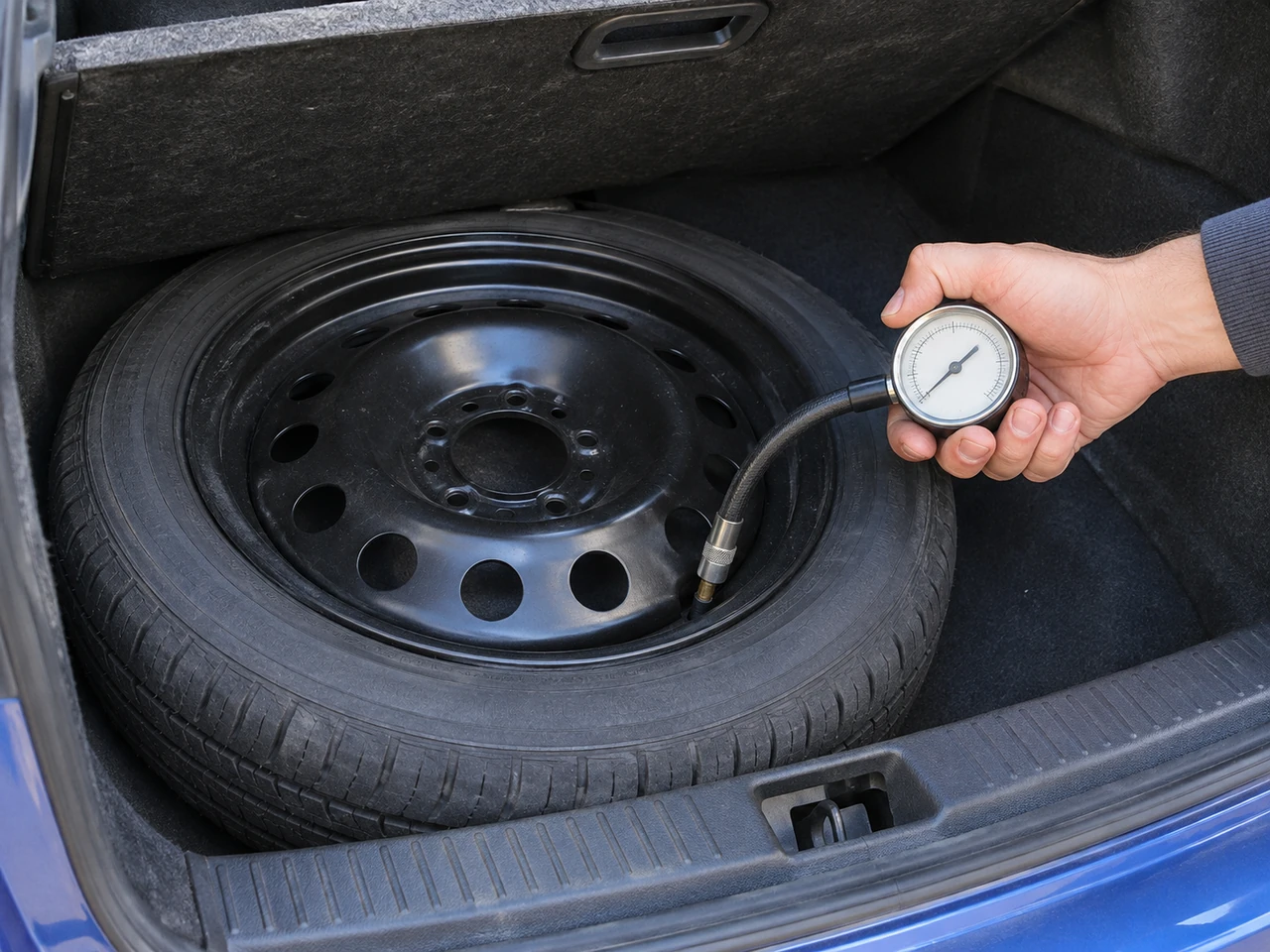
68. You should check the pressure of a spare tyre, even if it has not been used.
A stored spare can lose air over time. Check it regularly and use the pressure specified for that spare in the vehicle instructions; it may differ from the pressure for the road tyres.
🔗 Источники
NHTSA (United States) • Safety guidance, tyre-pressure checks including the spare
Image credit: AI-generated
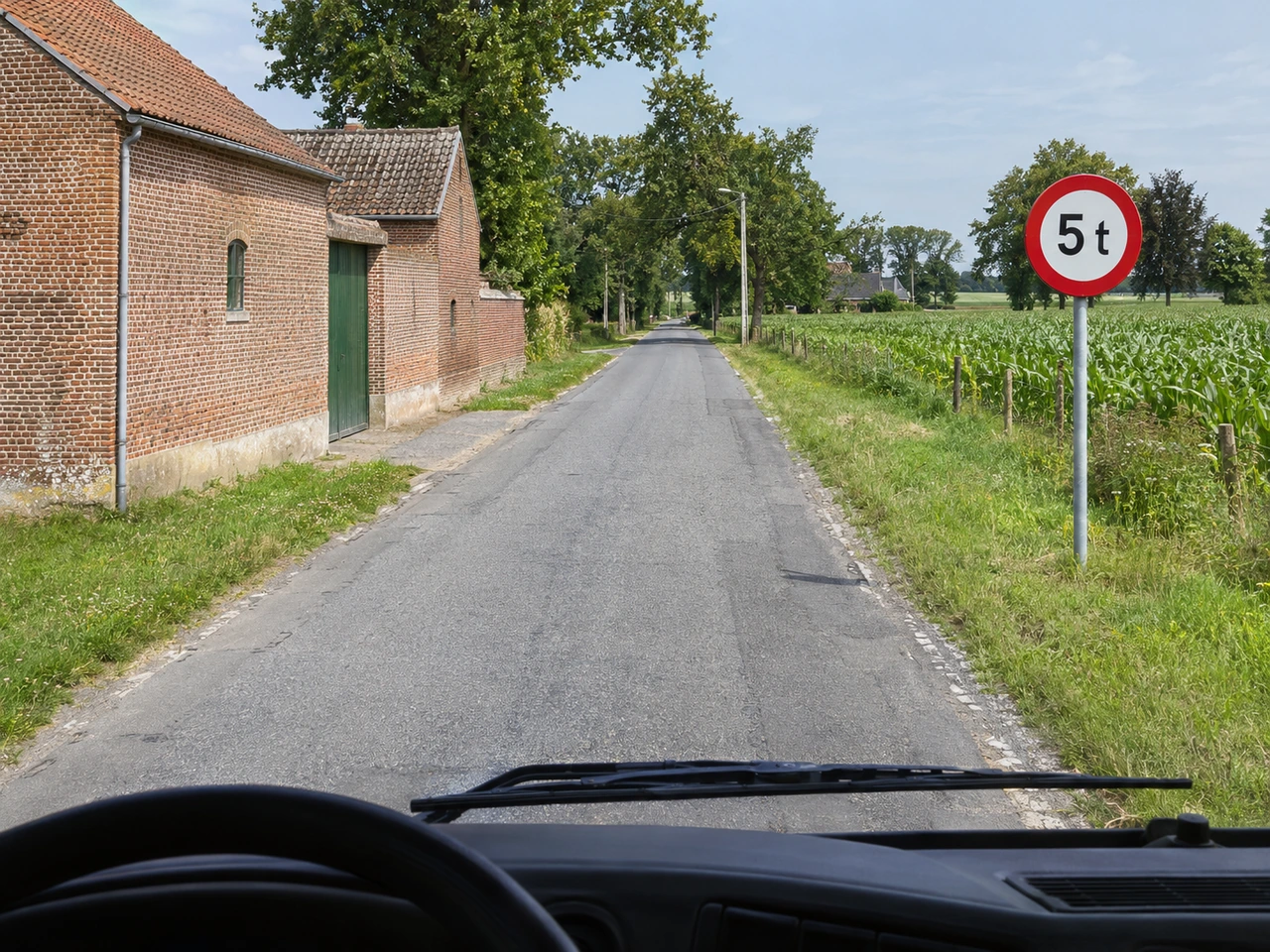
69. May a vehicle with 6 tonnes MAM but an actual mass of 4 tonnes pass this 5 t sign?
The actual-mass restriction shown uses the vehicle's actual mass, including its load. A vehicle actually weighing 4 tonnes is not barred by the signed 5-tonne limit merely because its maximum authorised mass is 6 tonnes. Other applicable restrictions still apply.
🔗 Источники
Wegcode.be — Belgian road legislation
Reference: Article 68.3, C21
Image credit: AI-generated
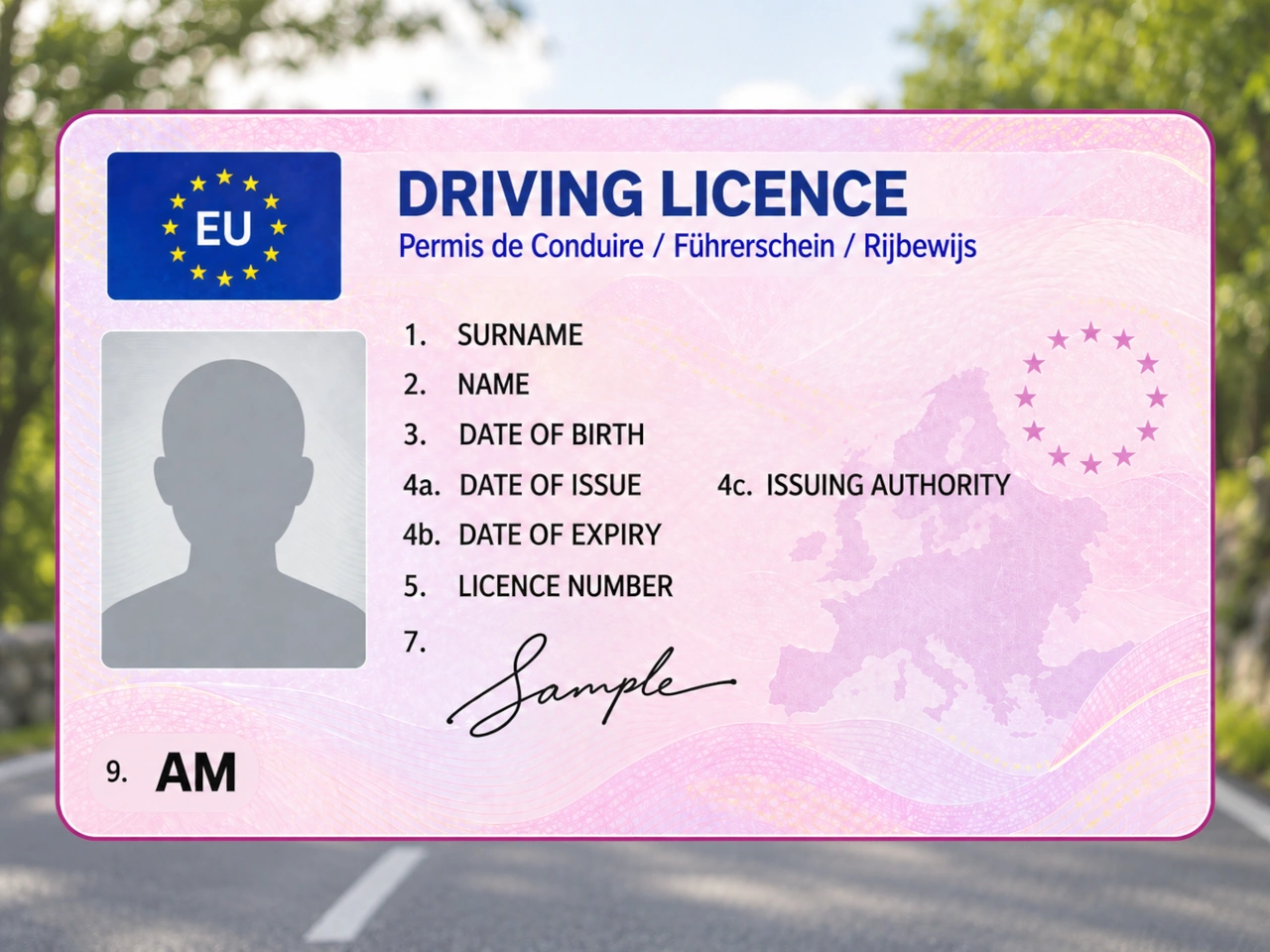
70. Для какого транспорта в основном предназначено водительское удостоверение категории AM?
Водительское удостоверение категории AM в основном предназначено для мопедов. Категория AM распространяется на мопеды с конструктивной скоростью свыше 25 км/ч и до 45 км/ч.
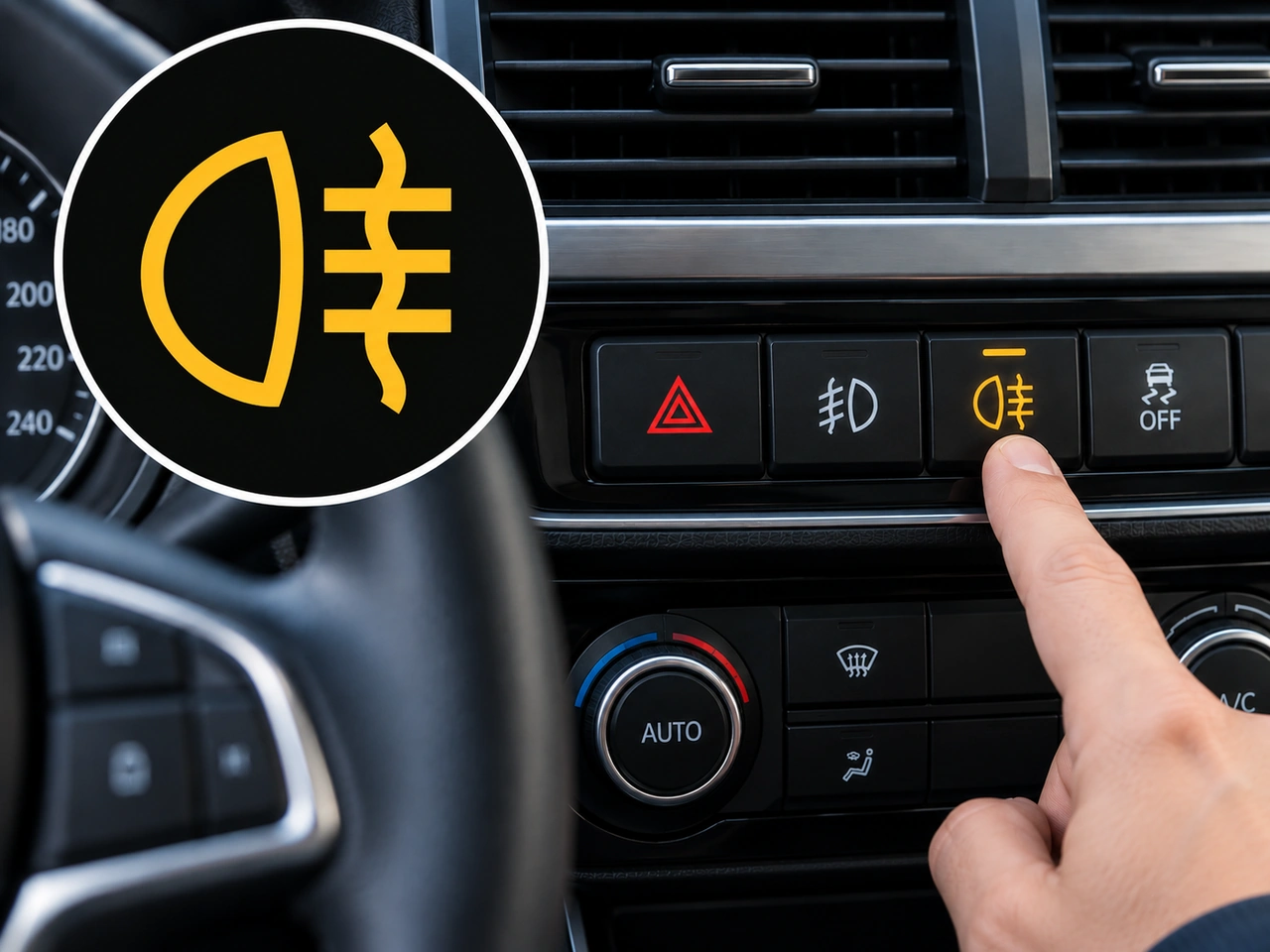
71. Что означает этот символ на приборной панели?
Этот символ означает, что включены задние противотуманные фонари. Они делают автомобиль заметнее сзади при сильно сниженной видимости, но при ненужном использовании могут ослеплять других участников движения.
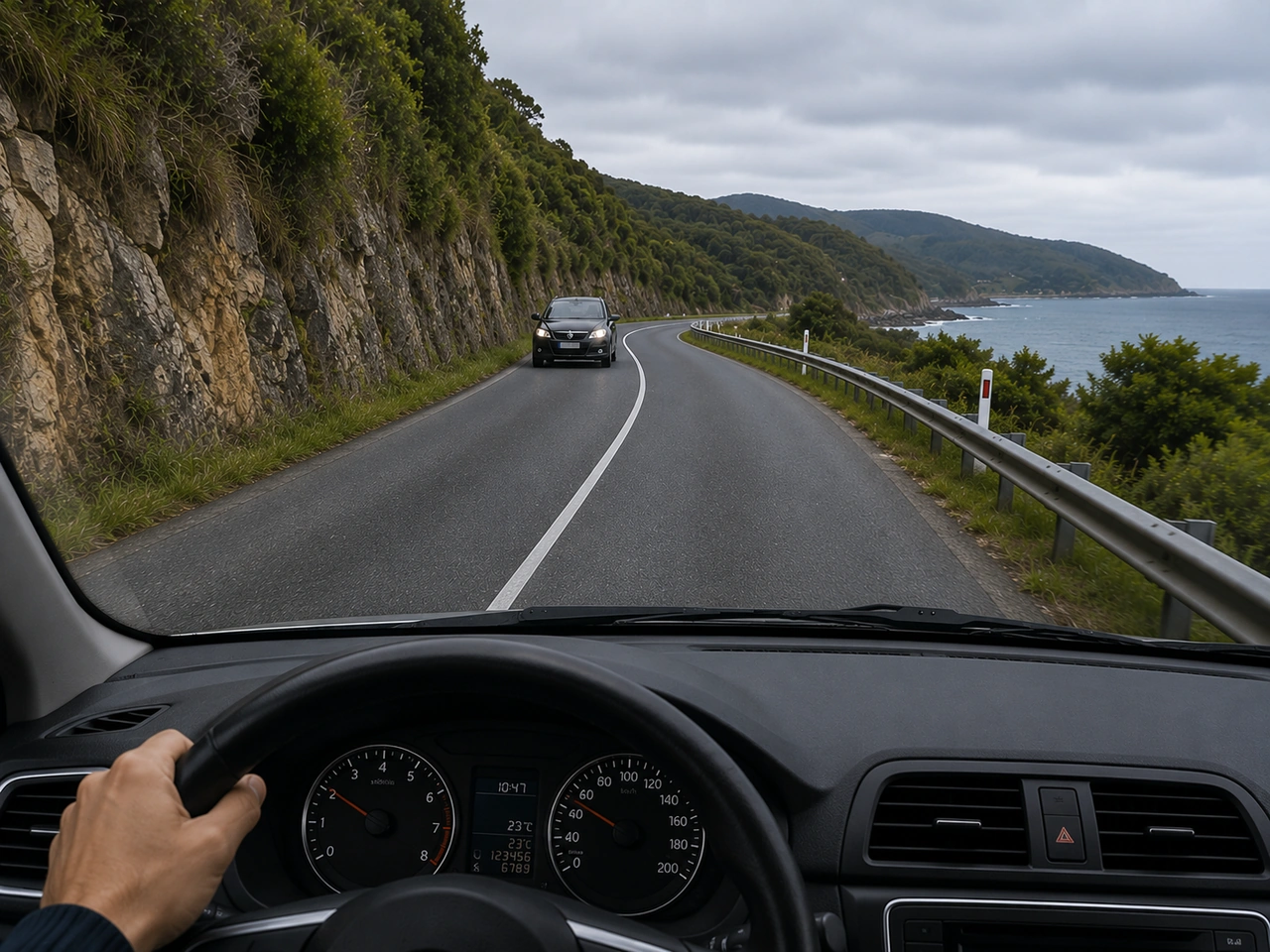
72. Что следует делать при приближении к повороту с плохой видимостью?
За поворотом могут скрываться встречные автомобили, препятствия, велосипедисты или пешеходы. Снизьте скорость и занимайте безопасное положение.
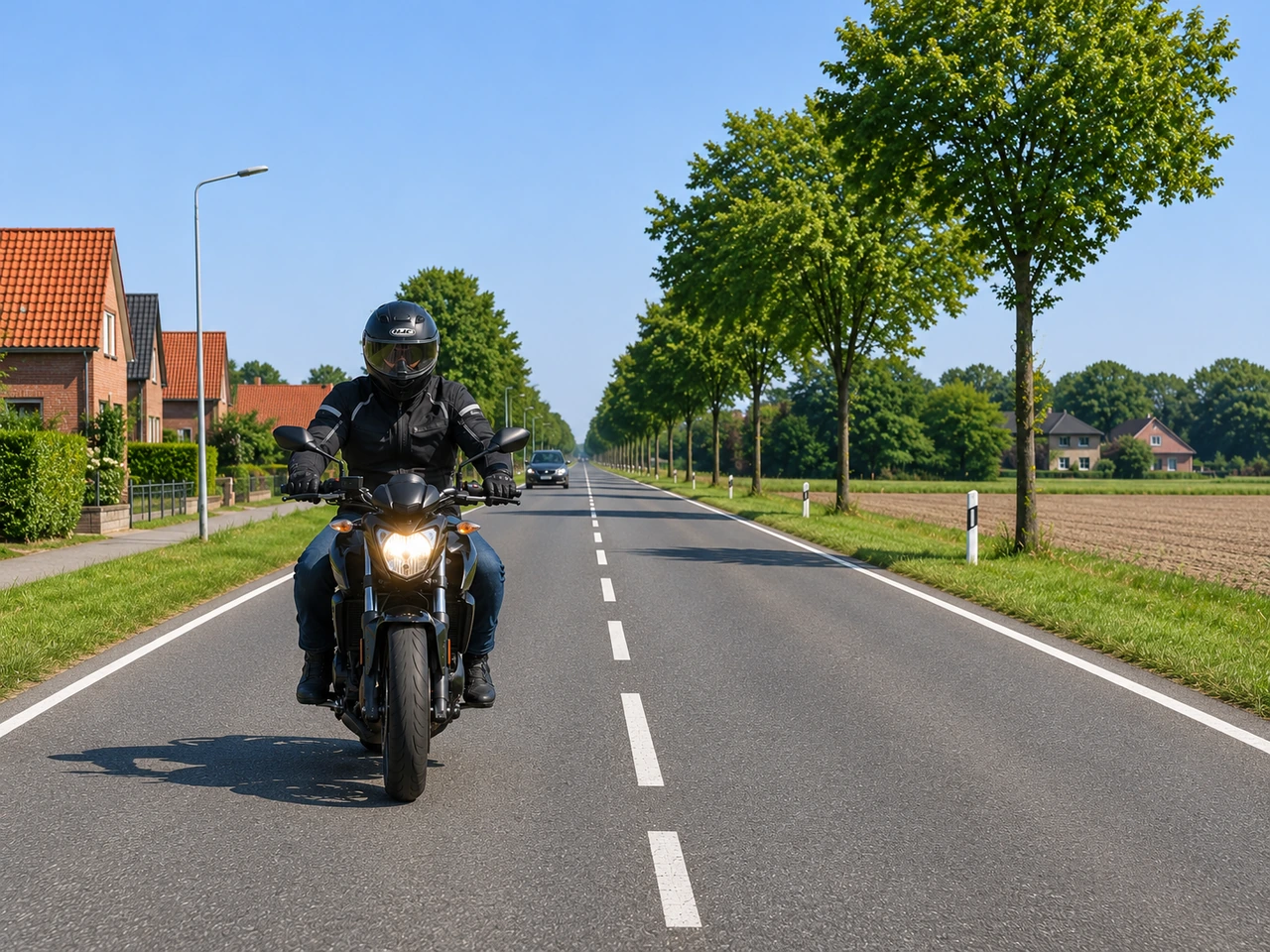
73. Which lights must a motorcyclist normally use during daylight?
Two-wheeled mopeds and motorcycles must use their dipped headlight and red rear light continuously, including during daylight.
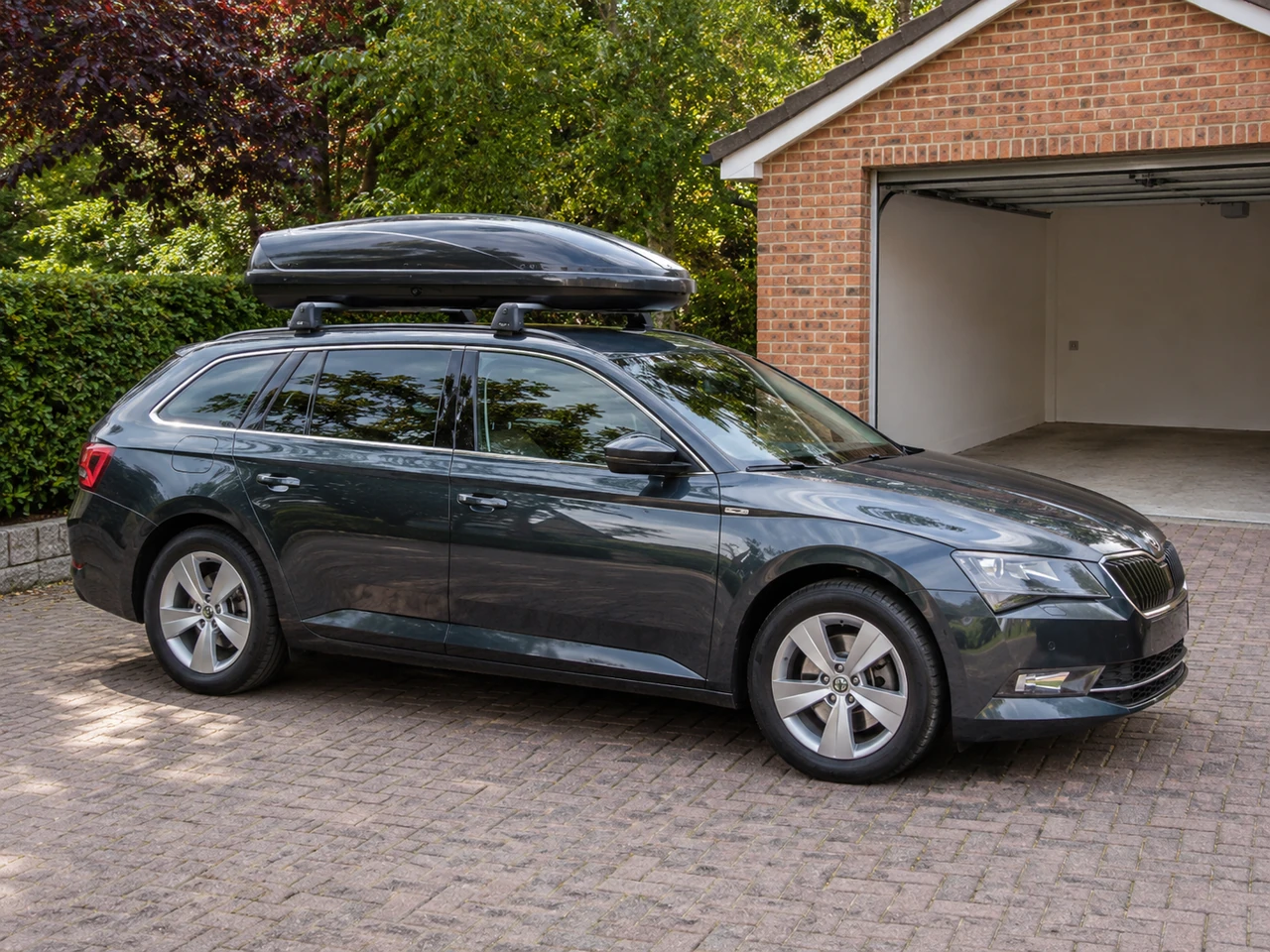
74. A roof box increases the height you must allow for at low entrances.
Allow for the car, roof bars and roof box together when checking clearance. Measure the overall height before approaching low garages, barriers or other overhead obstructions.
🔗 Источники
Thule (manufacturer guidance) • Safety guidance, increased overall height; model-specific fitting instructions
Image credit: AI-generated
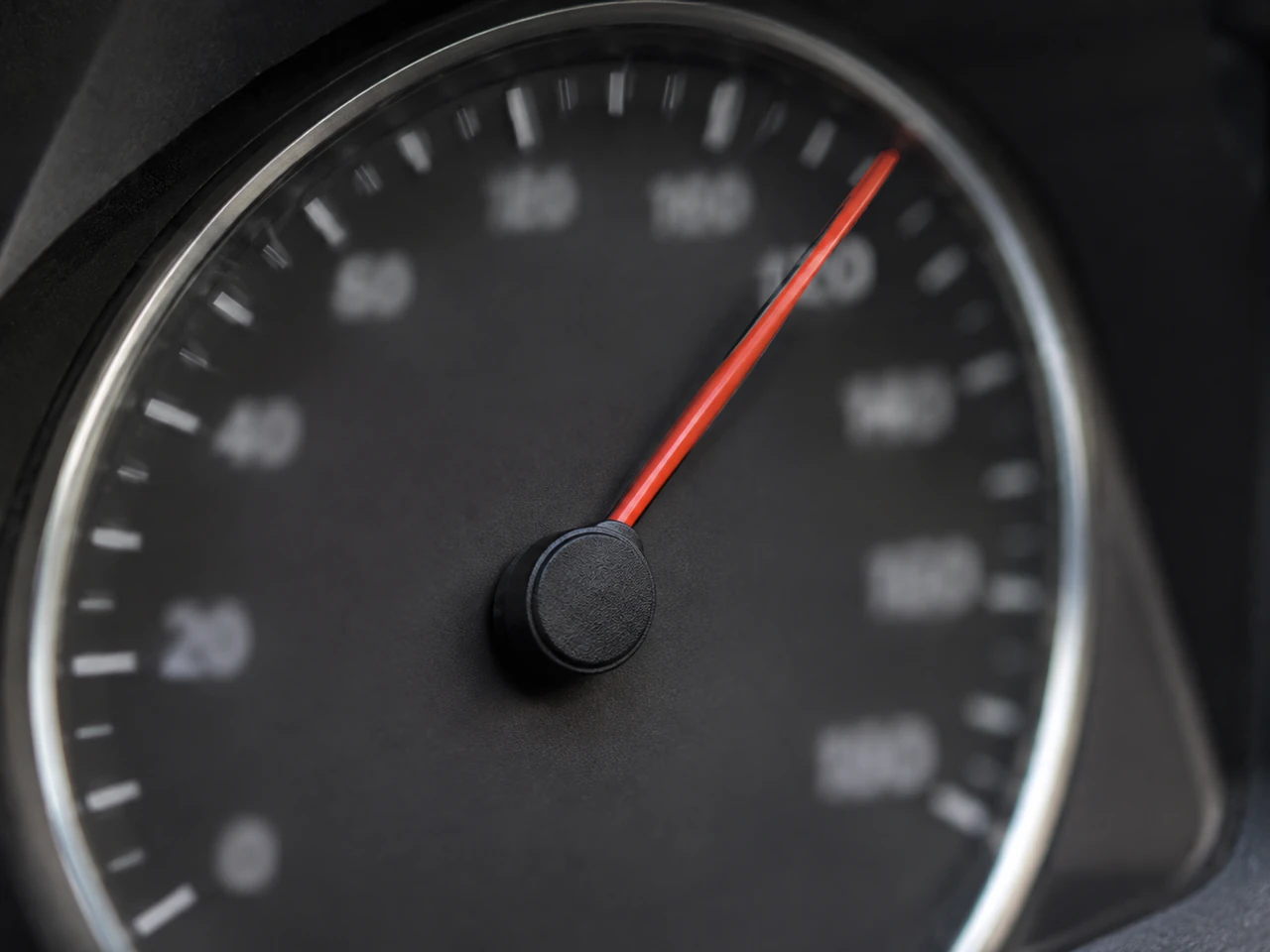
75. In the same conditions, doubling speed only doubles the braking distance.
Braking distance grows much faster than speed. Under comparable conditions, doubling speed makes braking distance roughly four times as long. This is separate from the distance travelled while reacting.
🔗 Источники
Queensland Government (Australia) • Safety guidance, dry-road comparison: 40 and 80 km/h; comparable conditions
Image credit: AI-generated
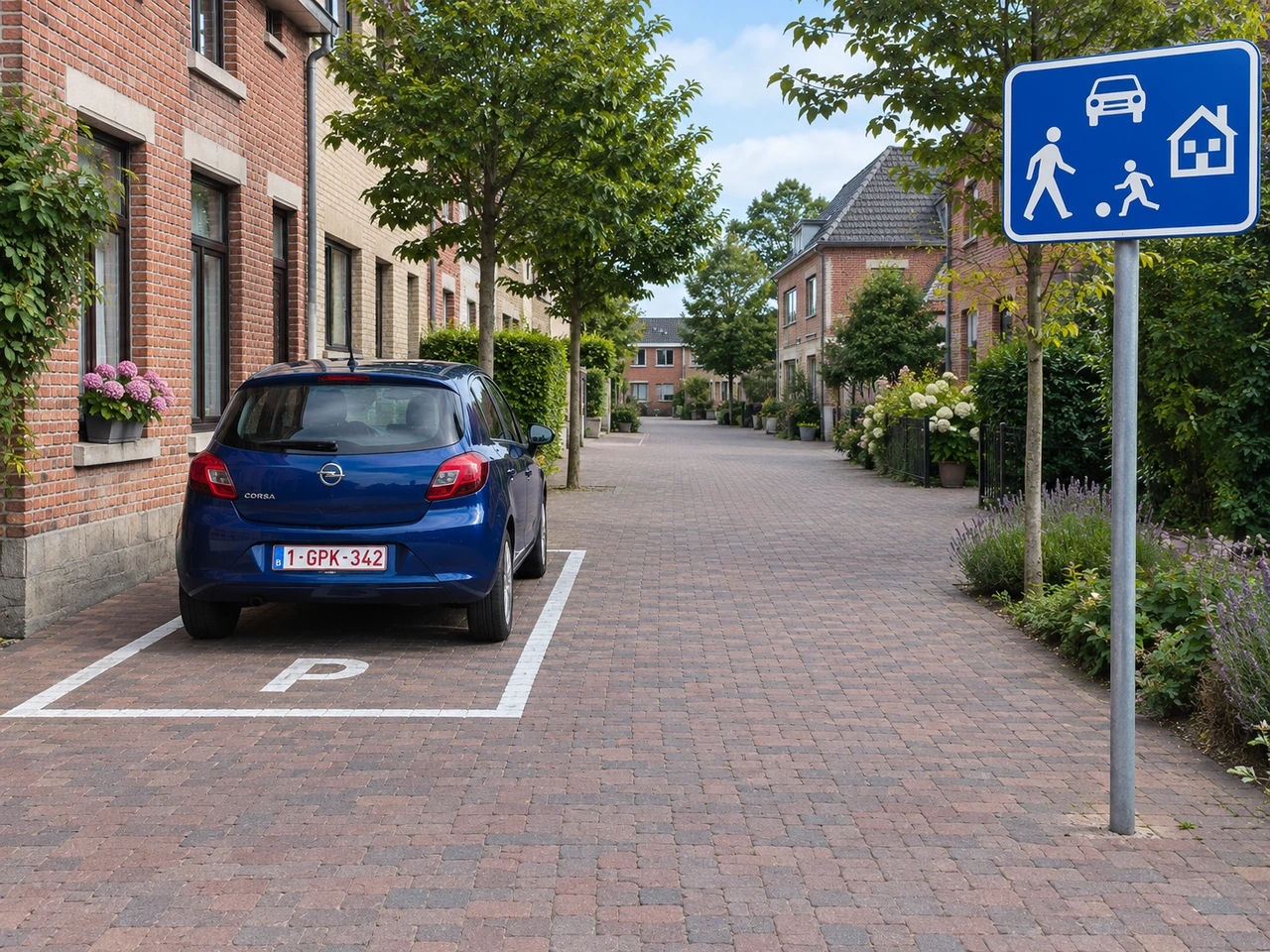
76. In a residential zone, may this car park on the left in a permitted bay on a two-way street?
In a signed residential or shared-space zone, stopped or parked vehicles may be positioned on either side relative to their direction of travel. Parking must still be in a place permitted under the zone rules. This is a specific exception to the normal parking-direction rule on an ordinary two-way street.
🔗 Источники
Wegcode.be — Belgian road legislation
Reference: Article 22bis, 4°; Article 23.1, 1°
Image credit: AI-generated
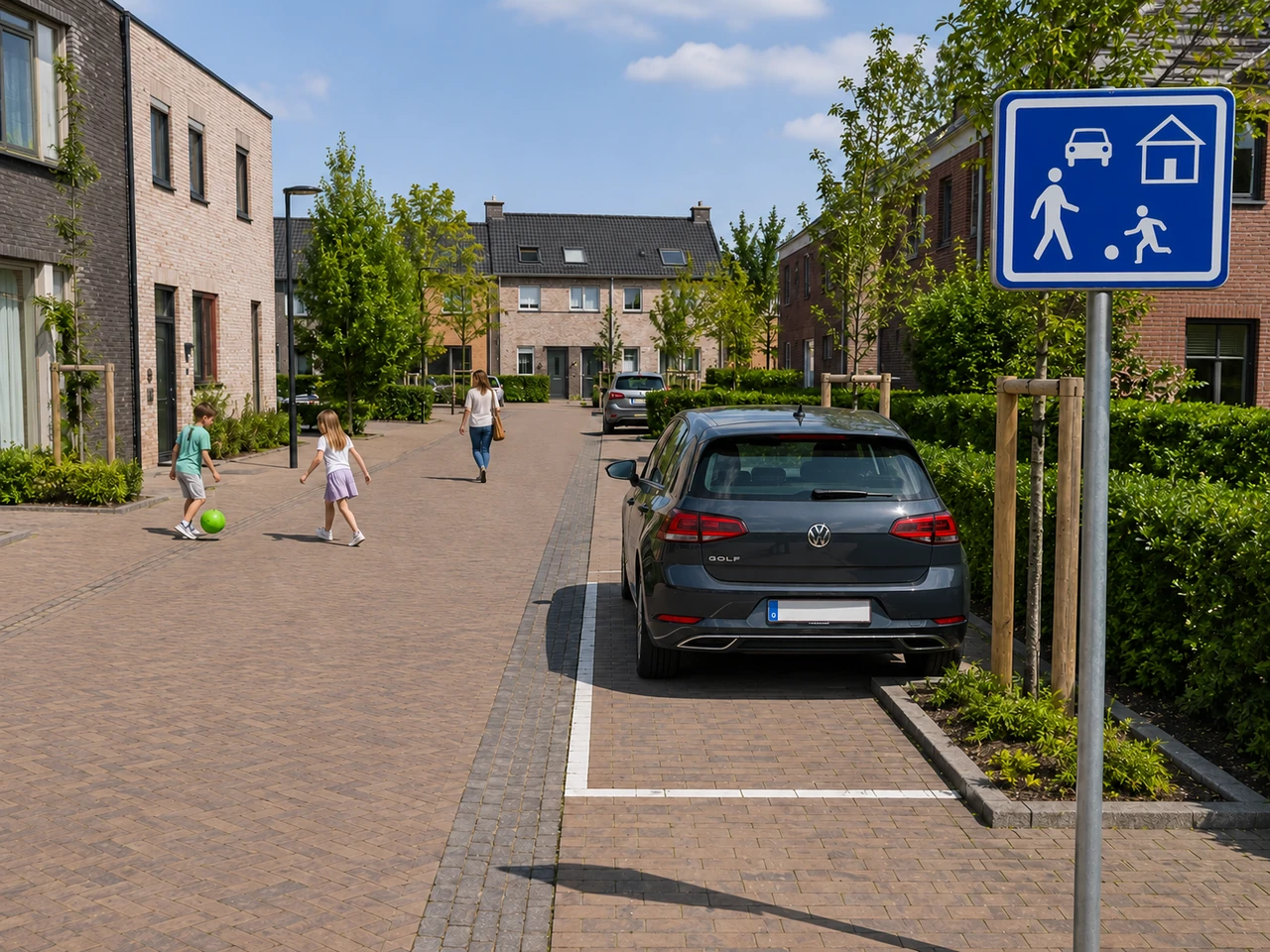
77. Where may you park inside a residential zone or shared-space zone?
Parking is prohibited inside a woonerf or erf except in designated parking places or where a traffic sign expressly allows it.
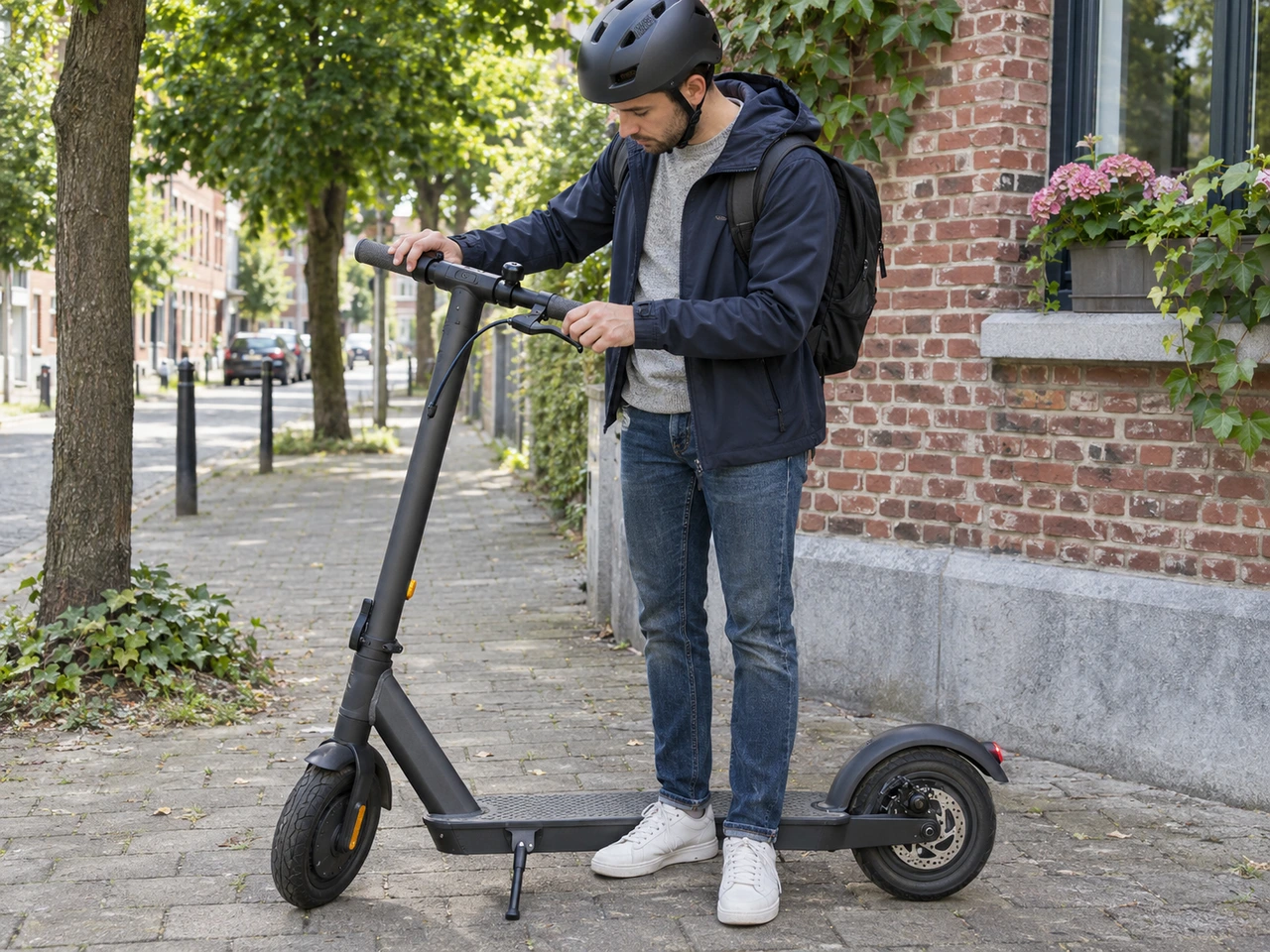
78. May you ride an electric scooter with ineffective brakes if you can stop by dragging a foot?
An electric scooter must have a sufficiently effective braking device. Dragging a foot does not replace this requirement. Have defective brakes repaired before riding.
🔗 Источники
Wegcode.be — Belgian road legislation
Reference: Article 82bis.3.
Image credit: AI-generated
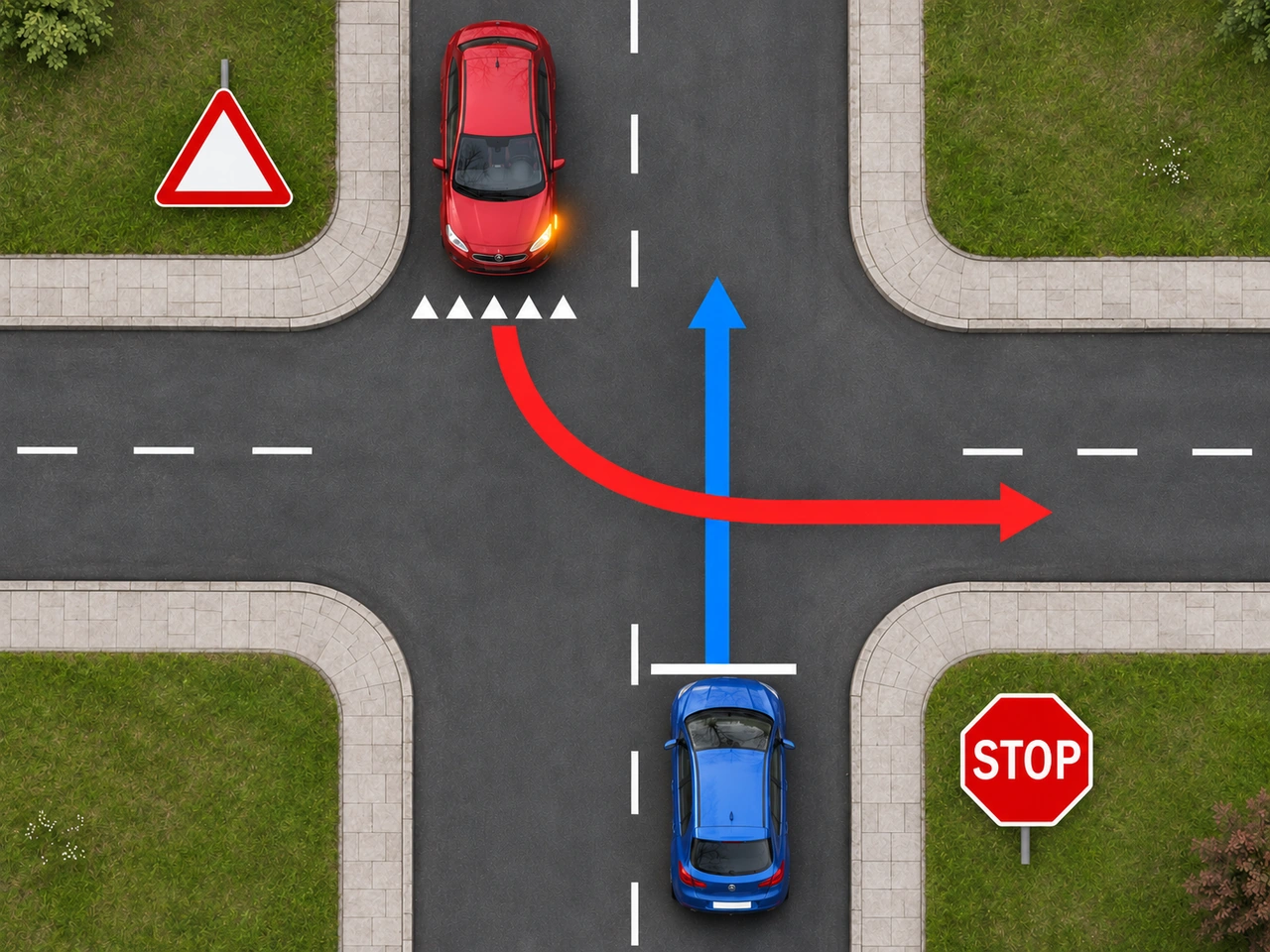
79. Inside a built-up area, blue has stopped at STOP and the priority road is clear. Who goes first?
Both drivers must obey their signs and give way to traffic on the crossing priority road. Blue has made its required complete stop. With that road clear, red must let oncoming blue continue straight before turning left across its path. Facing Give Way does not give red priority over an opposing driver facing STOP. This is not an arrival-order system.
🔗 Источники
AI-generated illustration • Traffic-rules.com / Rijbewijs-online.be • WCIT • CC BY-SA 4.0.
🔗 Wegcode.be • Current Belgian road code 12.3.1(a), 12.5, 19.3.3, 67.3 and 76.1-76.2
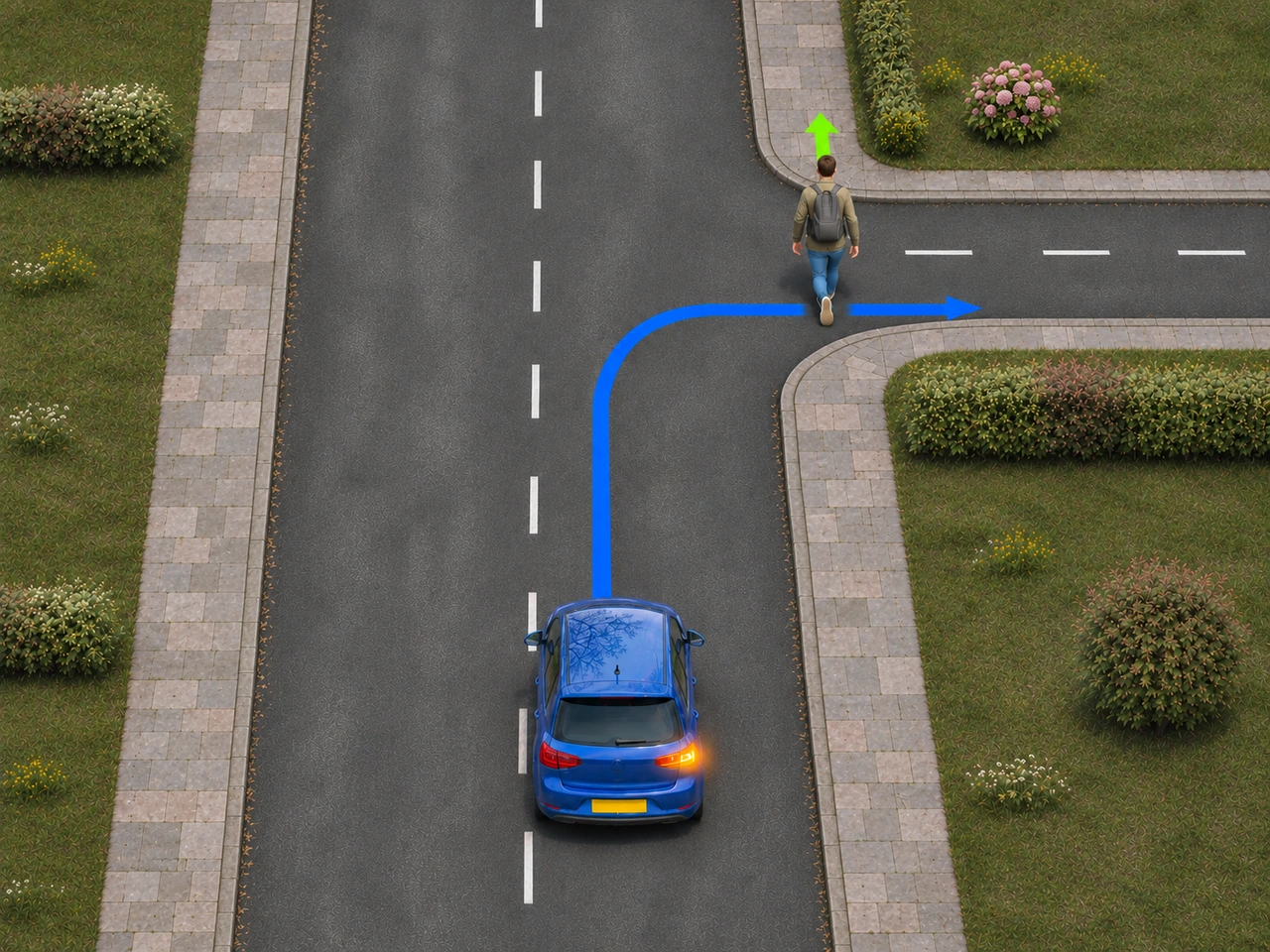
80. Blue turns into this side road. Must it let the pedestrian already crossing lawfully finish?
Blue is turning across the pedestrian's route into the side road. It must let the pedestrian already crossing finish safely before completing the turn, even without a zebra crossing. An indicator does not give blue priority. This encounter concerns a pedestrian continuing across the road blue is entering, rather than a general right to cross anywhere.
🔗 Источники
AI-generated illustration • Traffic-rules.com / Rijbewijs-online.be • WCIT • CC BY-SA 4.0.
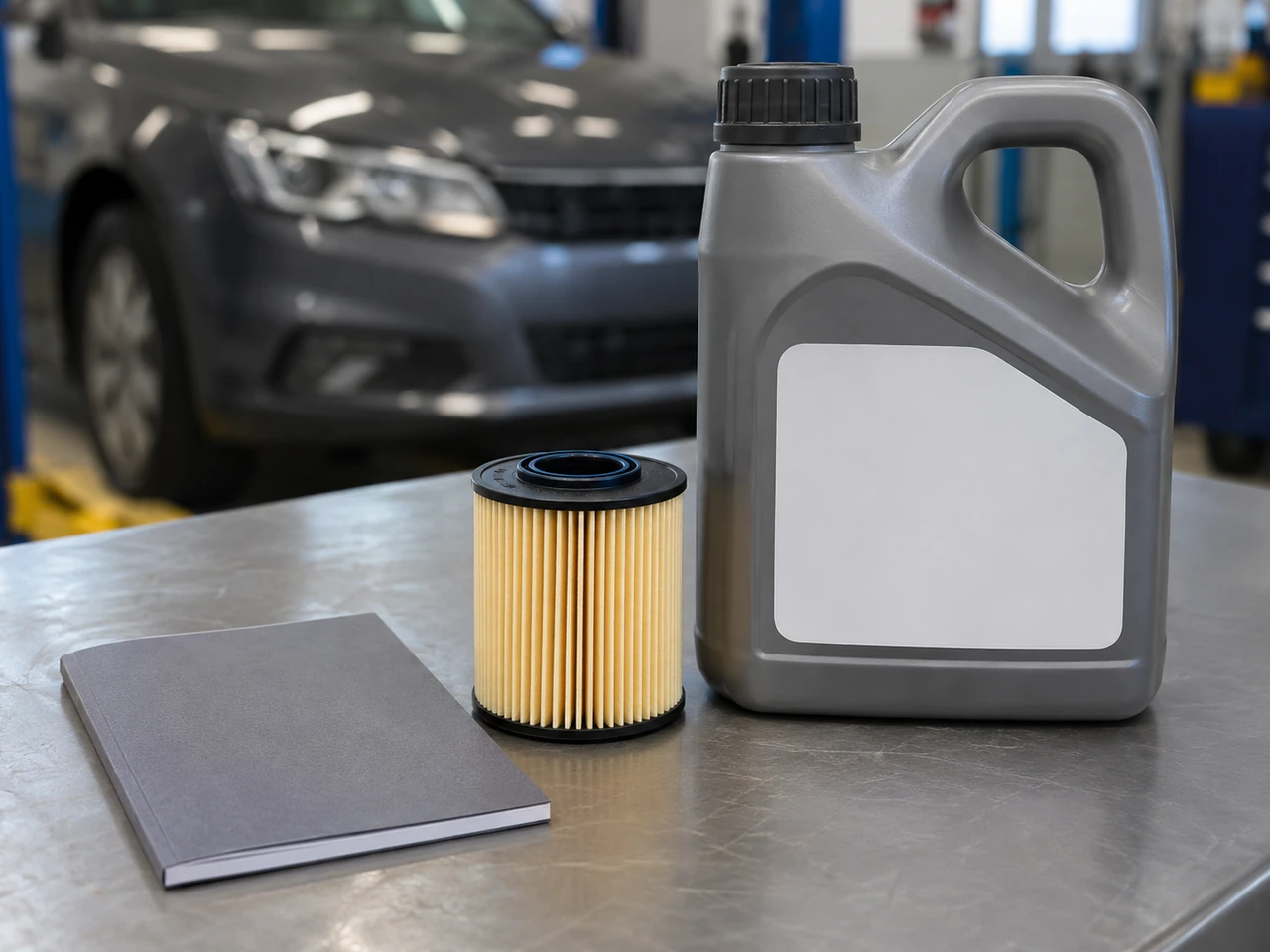
81. Engine oil only needs changing when its level falls below the minimum mark.
The oil level does not tell you whether an oil change is due. Follow the vehicle's oil-change schedule and service reminders, including any time or distance limit. Topping up does not replace an oil and filter change.
🔗 Источники
Ford owner’s manual (manufacturer guidance) • Safety guidance, service intervals and oil-change service
Image credit: AI-generated
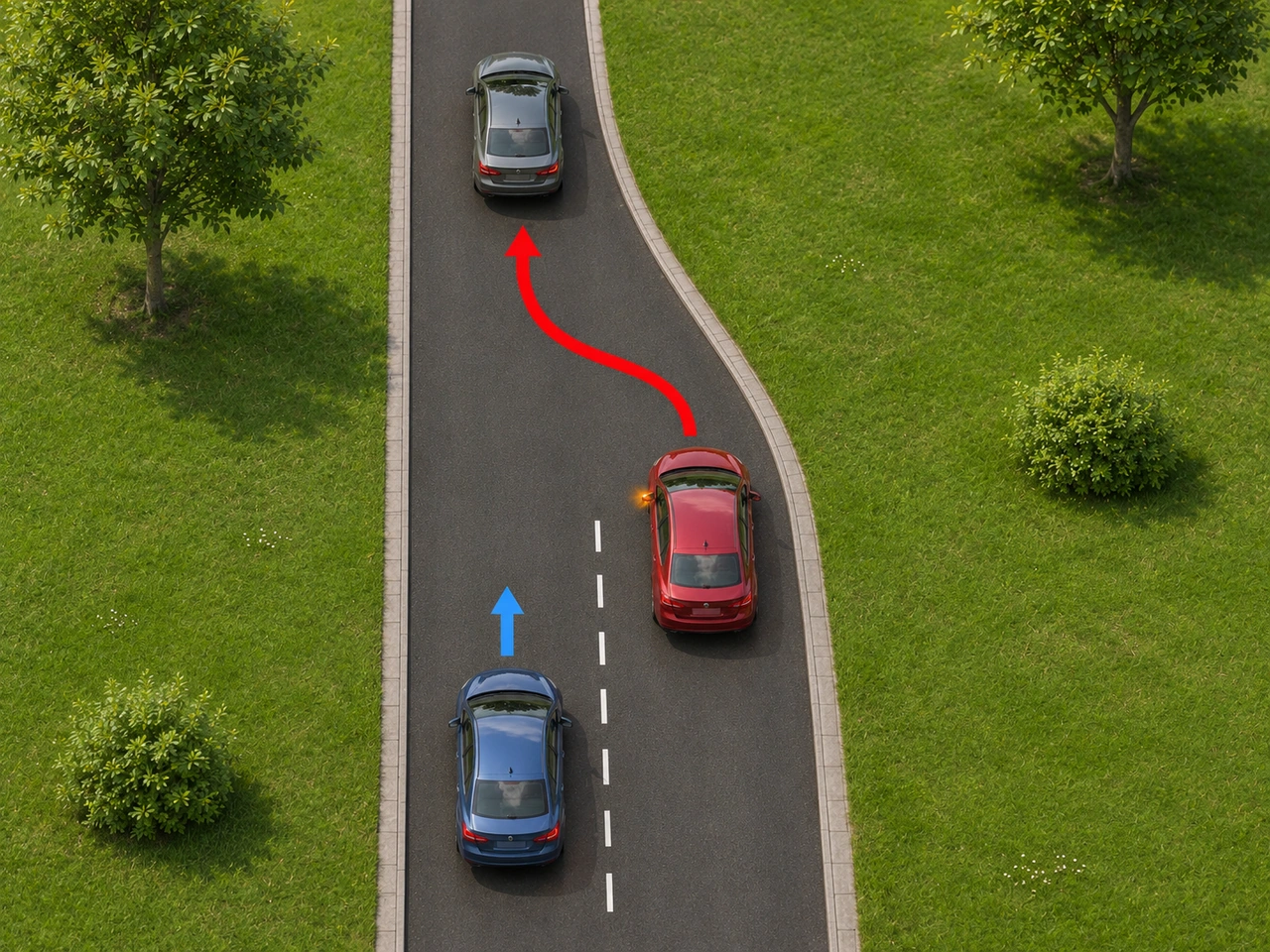
82. Blue follows grey in slow traffic as red's lane ends. Must blue let red merge at the narrowing?
At this narrowing, drivers from the two lanes take turns merging. Grey has just gone ahead in the continuing lane, so blue must leave room for red to merge immediately before the narrowing. Red should signal and merge only when it can do so safely.
🔗 Источники
AI-generated illustration • Traffic-rules.com / Rijbewijs-online.be • WCIT • CC BY-SA 4.0.
🔗 Wegcode.be • Current Belgian road code, articles 12bis, 12.4 and 13
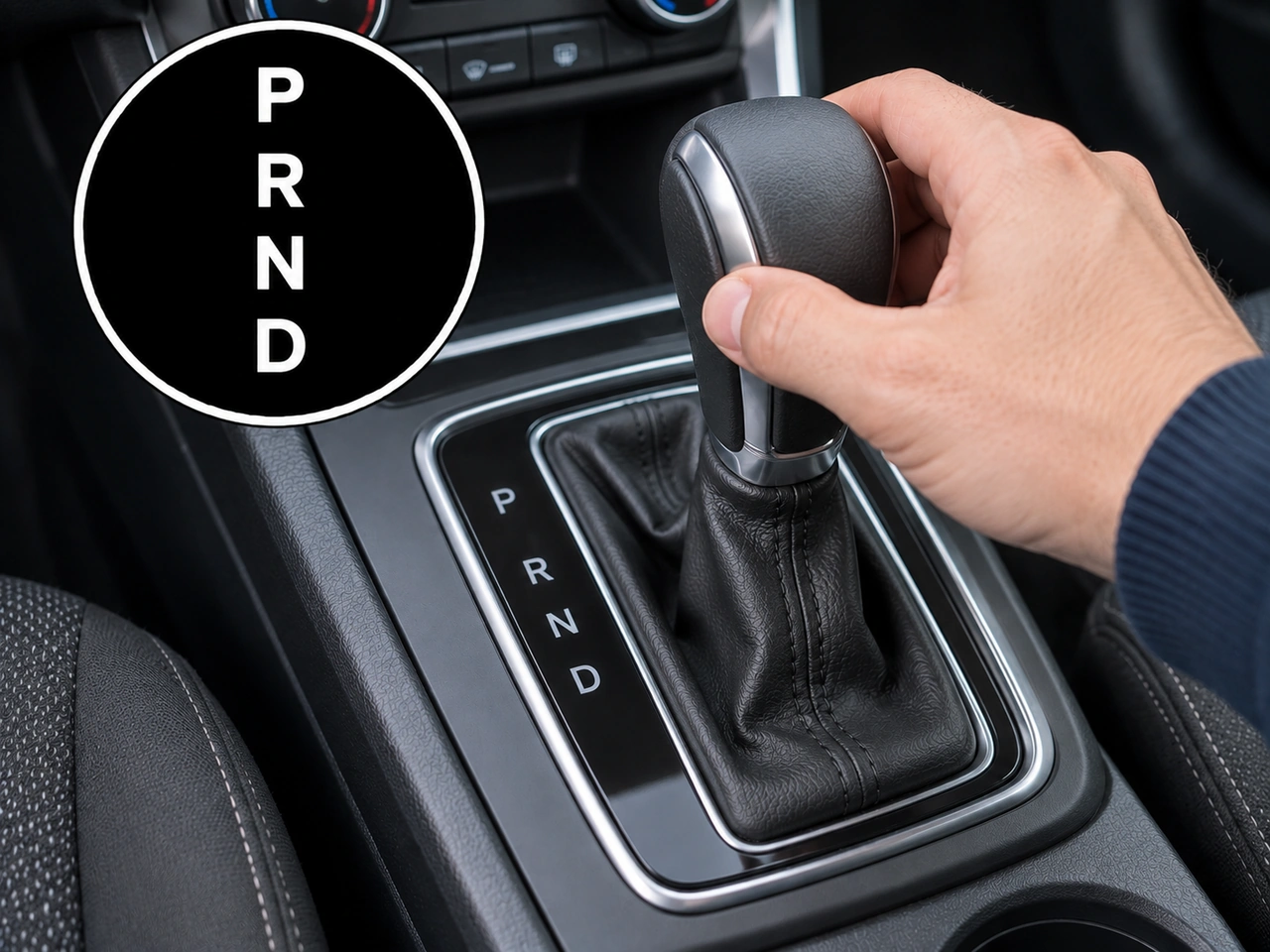
83. Какое положение селектора используется для движения автомобиля назад?
Выберите R (Reverse), когда нужно двигаться задним ходом. Перед включением Reverse автомобиль должен быть неподвижен.
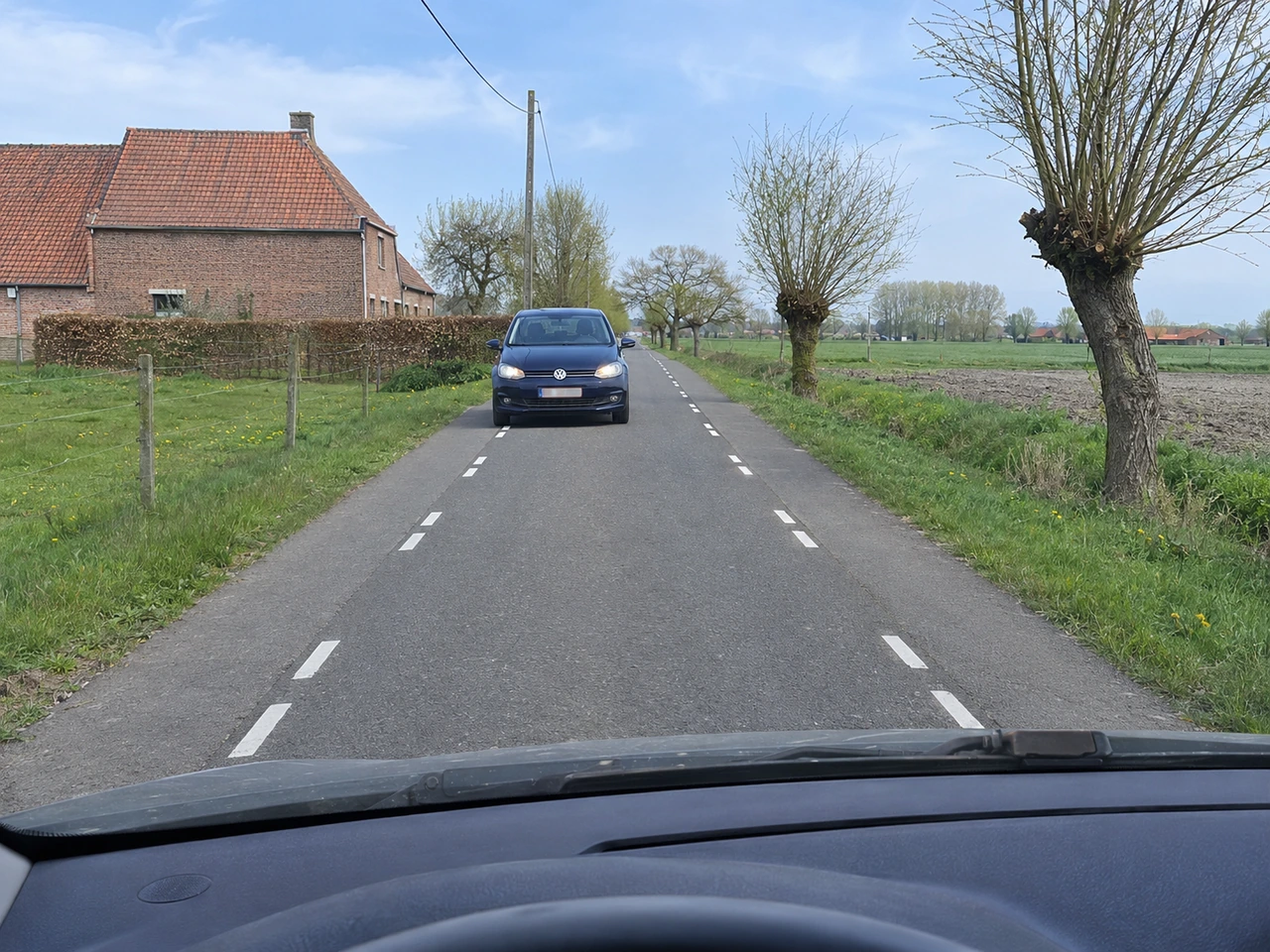
84. May a car use a clear side strip to pass an oncoming vehicle on a narrow central carriageway?
If the carriageway is too narrow for easy passing, a driver may use the side strip without endangering its users. Slow down and wait when there is no safe space.
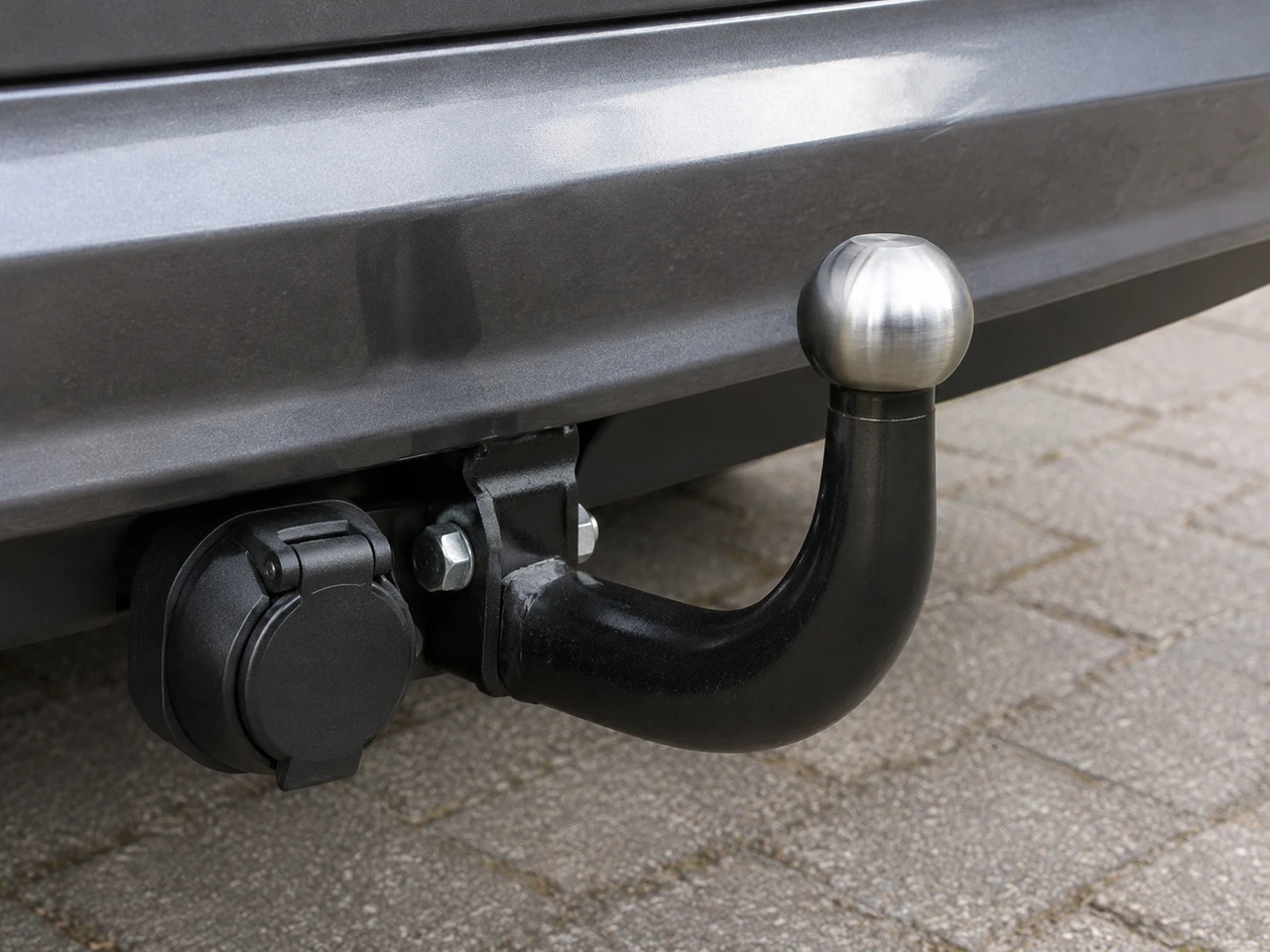
85. Towbar vertical-load limits do not matter when using a towbar-mounted cycle carrier.
Count the carrier, bicycles and accessories against the vehicle and towbar's permitted vertical load. Also follow the carrier's own load limits. Maximum towing weight is a different rating.
🔗 Источники
Ford / Thule carrier specification (manufacturer guidance) • Safety guidance, combined carrier and load versus vehicle noseweight limit; check all component limits
Image credit: AI-generated
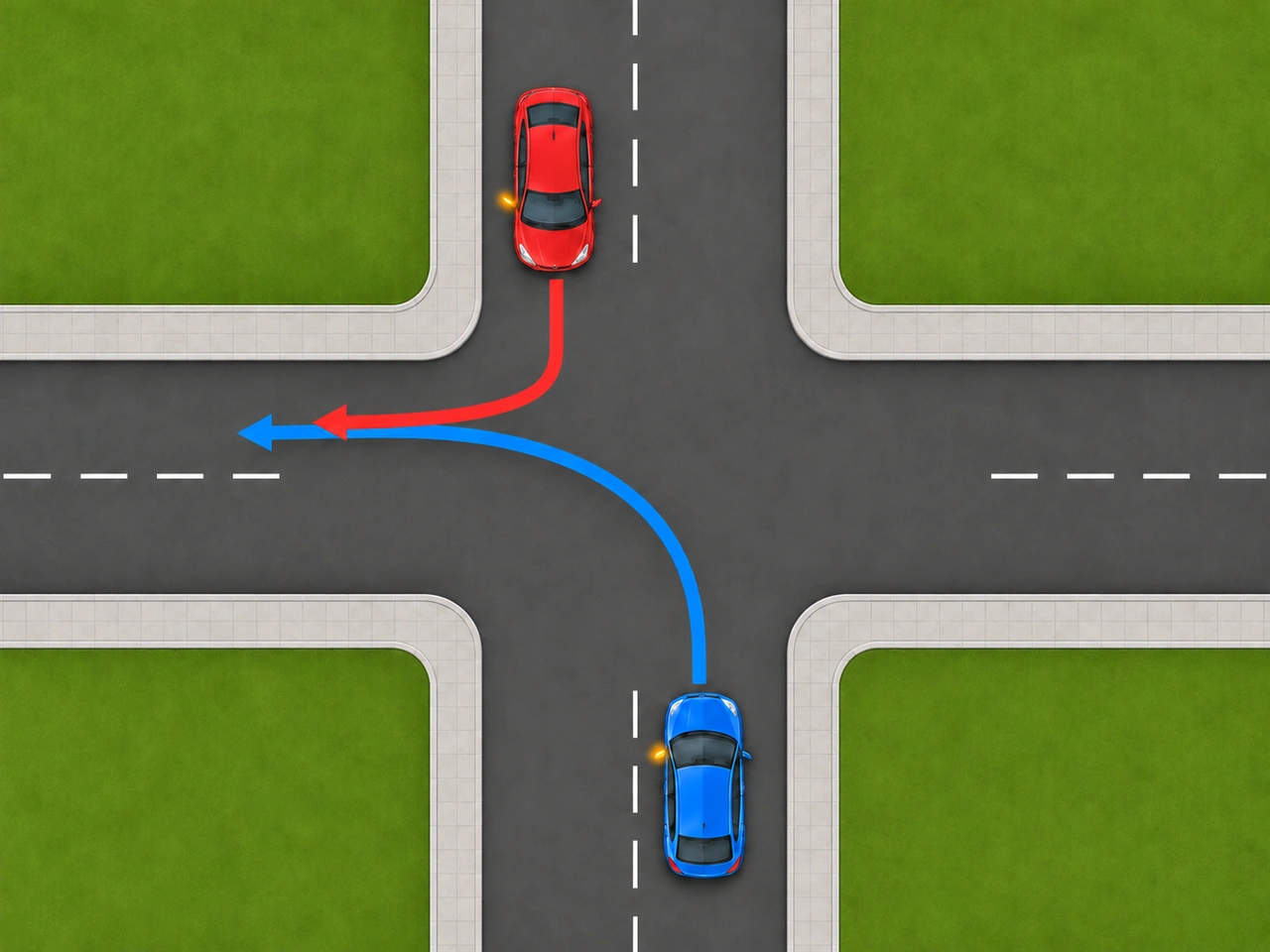
86. Both cars are turning into the same lane. Who must give way?
Blue is turning left across the route of oncoming red, which is turning right into the same receiving lane. Blue must let red complete its turn first. Indicators communicate intentions without deciding priority, and using one first does not change the rule. Do not assume that both cars can safely turn together into this single lane.
🔗 Источники
AI-generated illustration • Traffic-rules.com / Rijbewijs-online.be • WCIT • CC BY-SA 4.0.
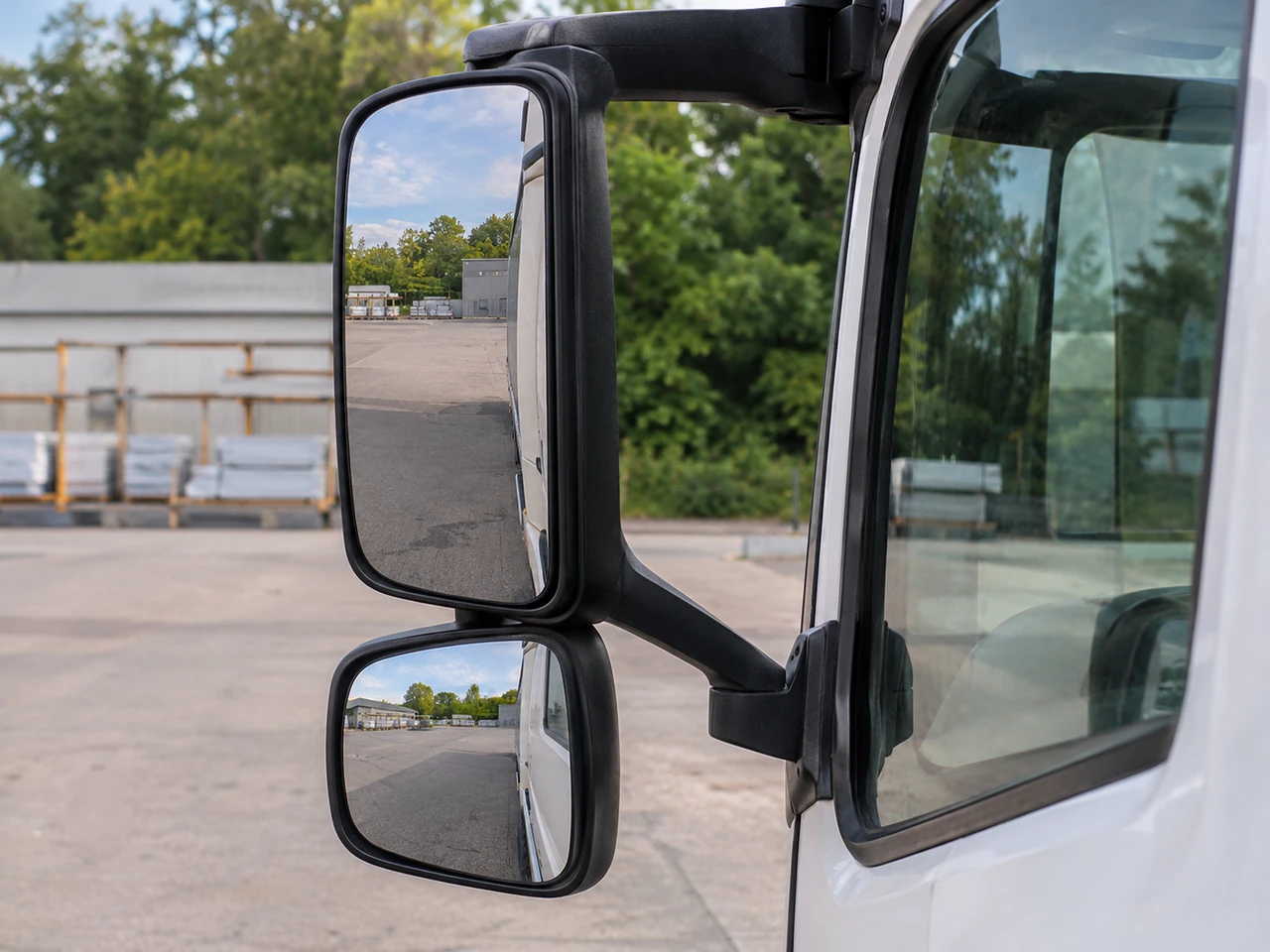
87. Large mirrors mean a lorry driver has no blind spots.
Even large mirrors leave areas outside the driver's view. Avoid lingering in a lorry's blind spots and never assume its driver can see you.
🔗 Источники
Virginia DMV (United States) • Safety guidance, No zones and large-vehicle mirrors
Image credit: AI-generated
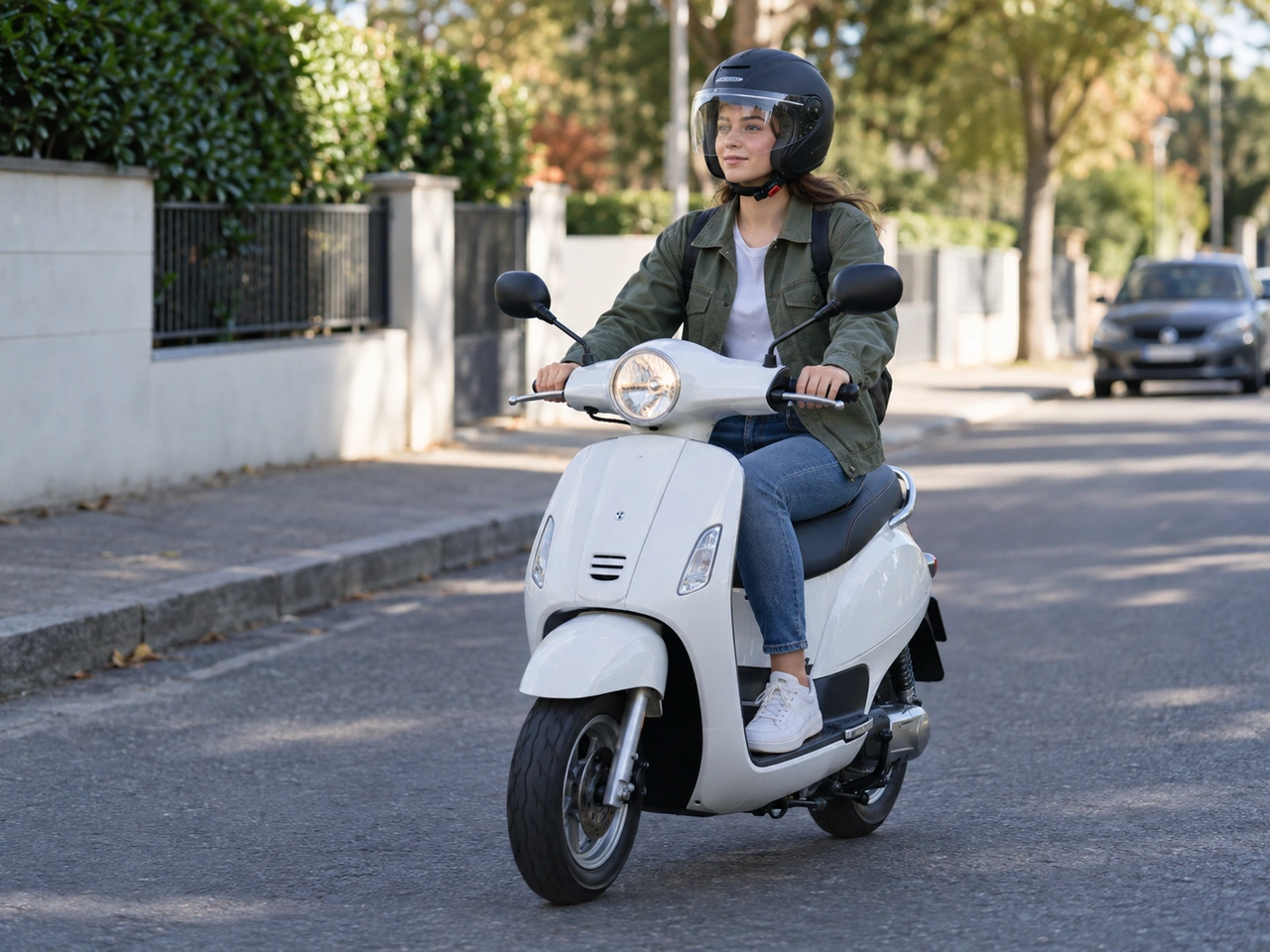
88. Обязаны ли водители мопедов в целом носить шлем в Валлония?
Водители мопедов в Валлония обычно обязаны носить шлем, соответствующий установленным требованиям.
🔗 Источники
Image credit: AI-generated
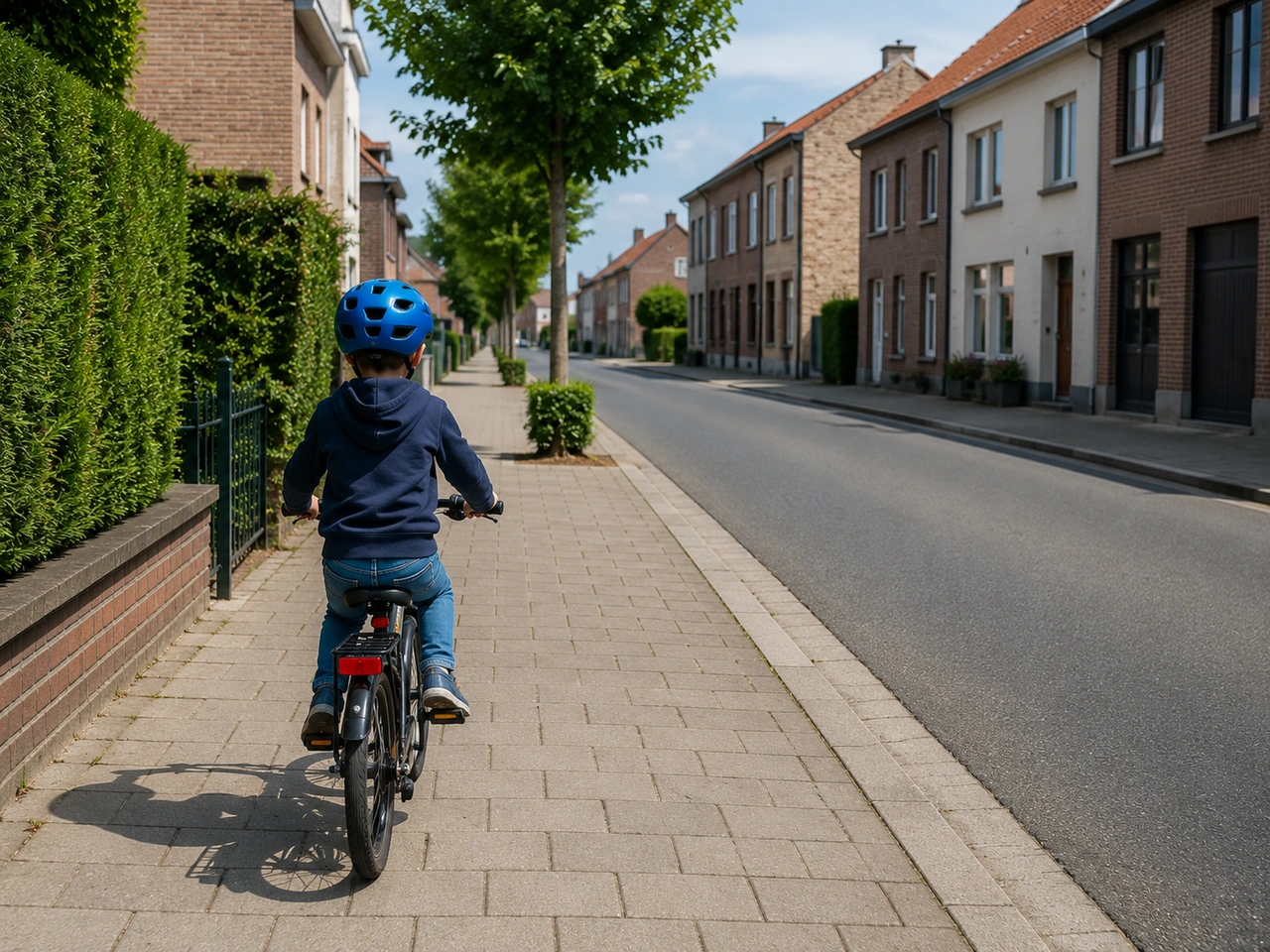
89. May a cyclist younger than 10 ride on the pavement?
Cyclists younger than 10 may use pavements and raised verges in all circumstances.
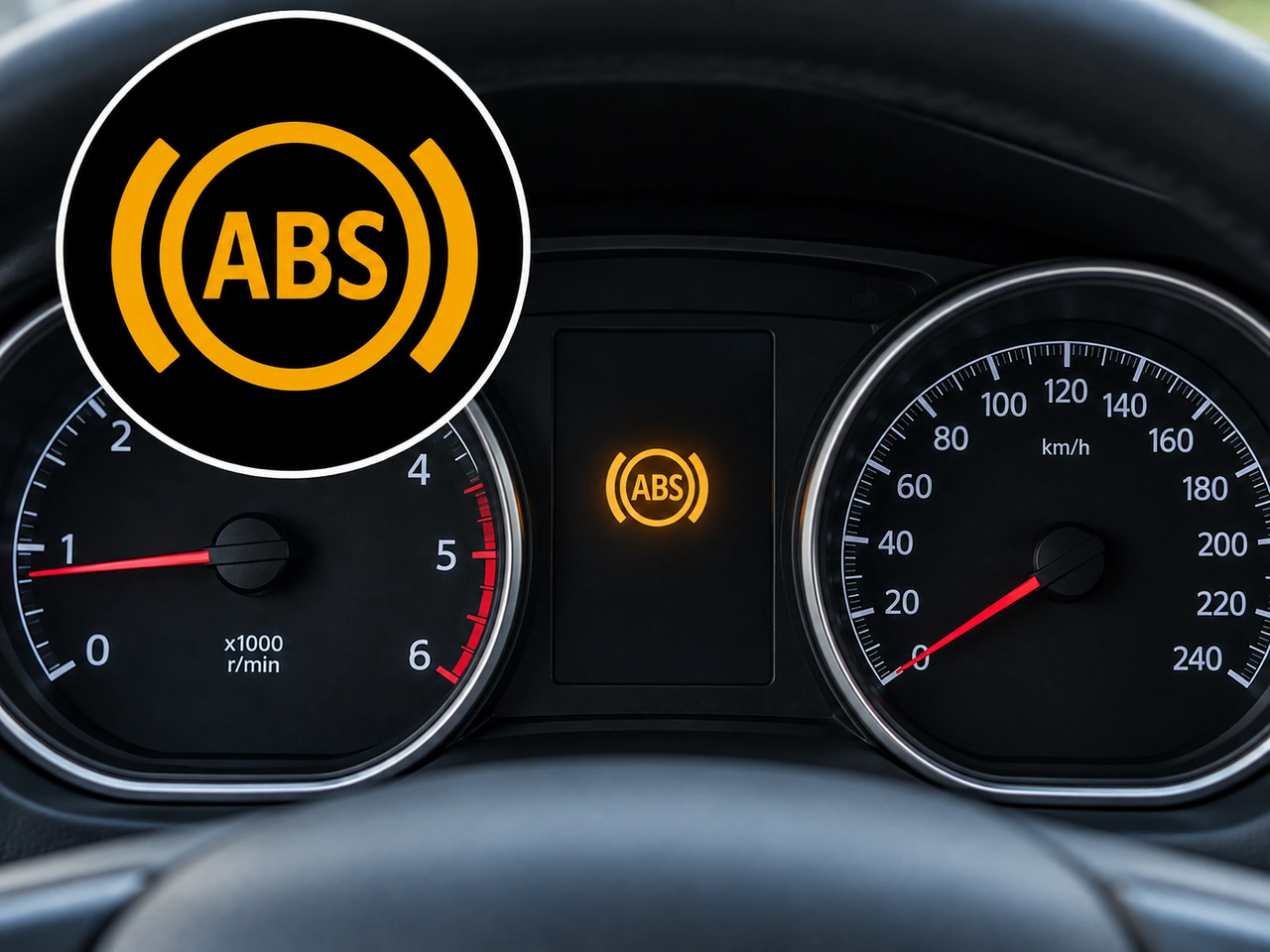
90. Что означает этот символ на приборной панели?
Этот символ указывает на возможную неисправность антиблокировочной тормозной системы (ABS). Обычное торможение может оставаться доступным, но при интенсивном торможении ABS может не работать, поэтому систему следует проверить.
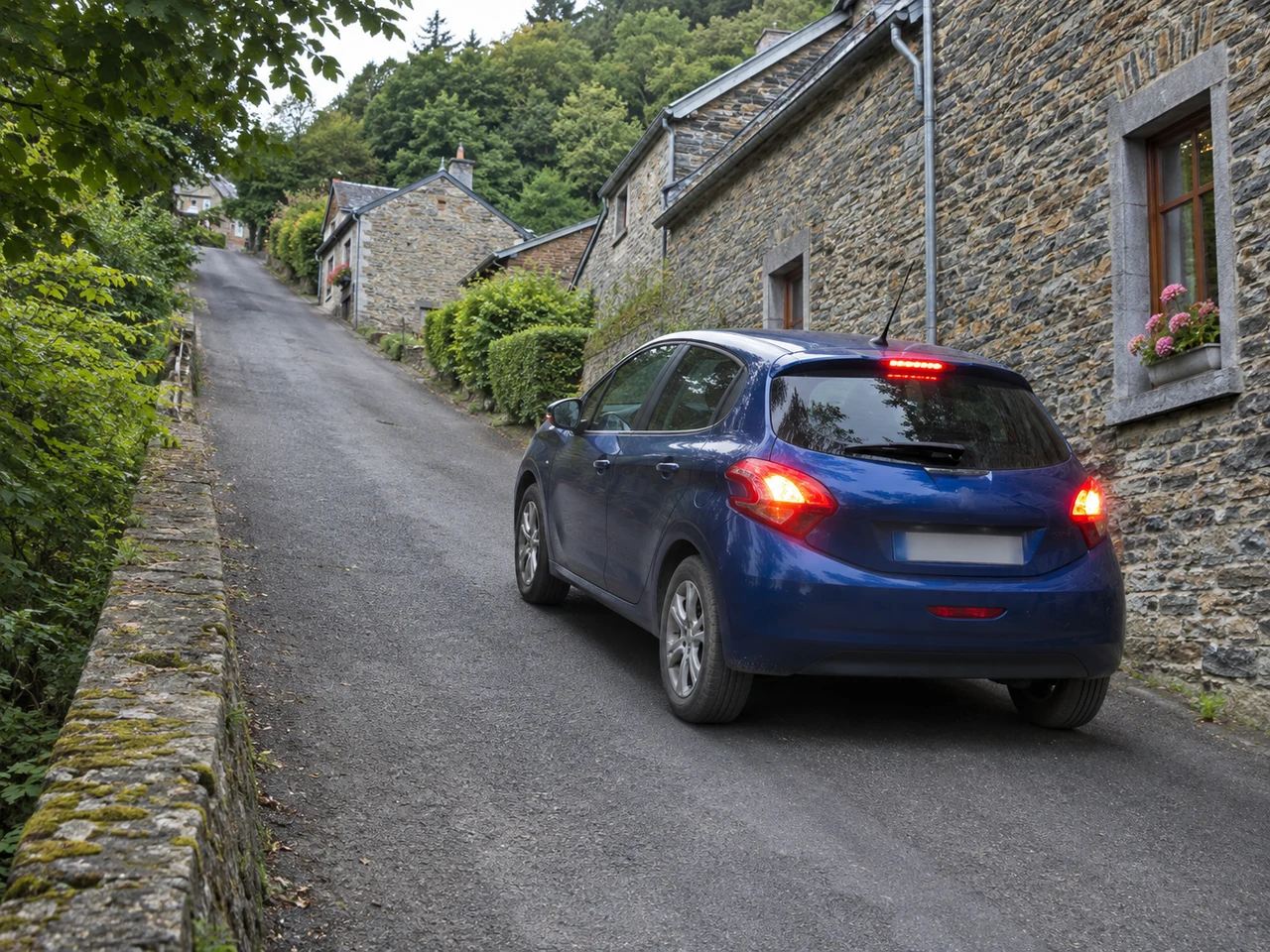
91. Что следует делать, если автомобиль начал катиться назад на крутом подъёме?
Остановите автомобиль, сохраняя контроль над ним, при необходимости включите стояночный тормоз и подготовьтесь снова безопасно начать движение.
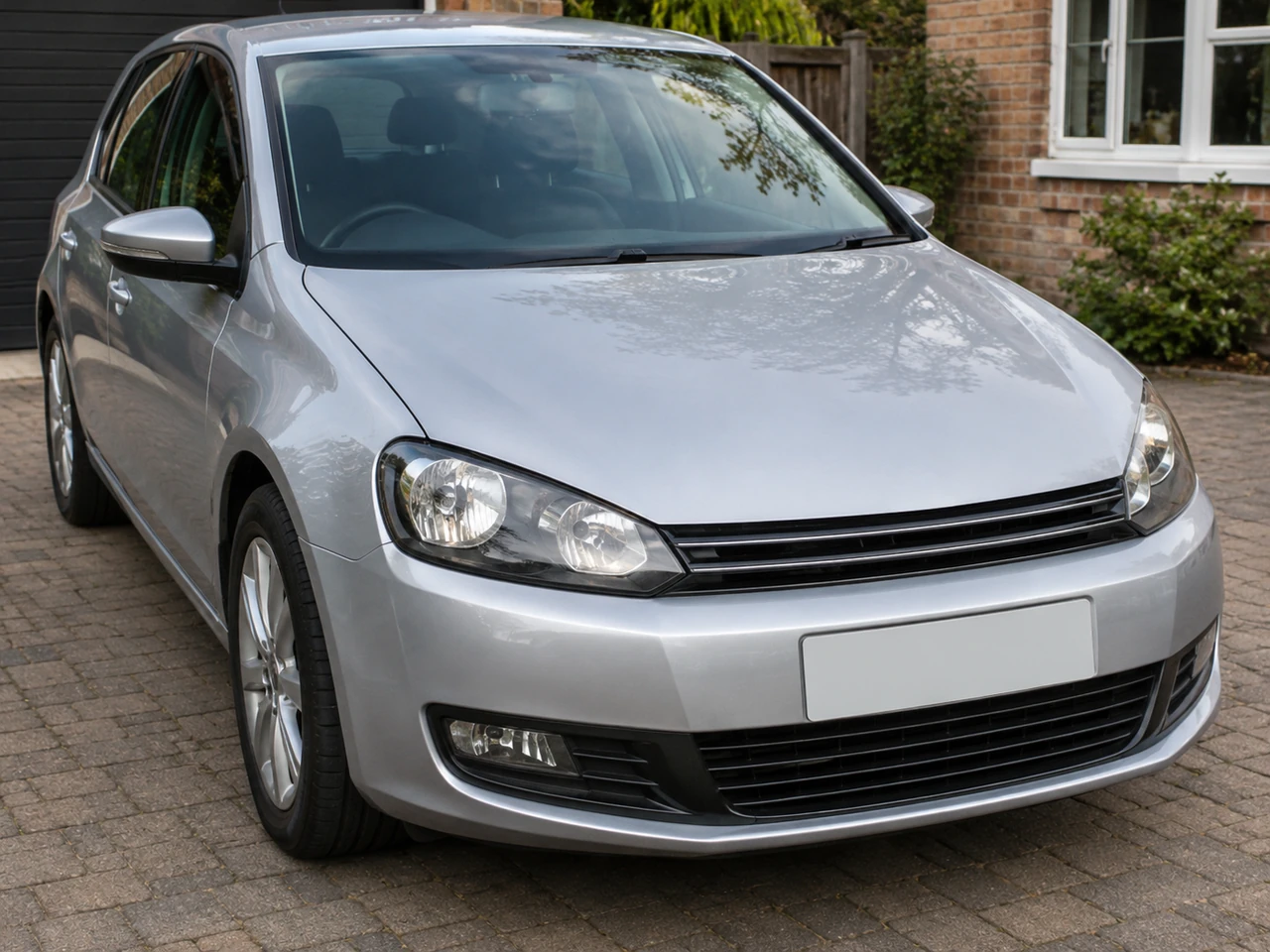
92. You should check that the bonnet is securely closed before driving.
An unsecured bonnet can open while driving and block your view. Check that it is fully latched, using the closing procedure in the vehicle handbook.
🔗 Источники
DVSA (Great Britain) • Safety guidance, Field of vision: bonnet catches
Image credit: AI-generated
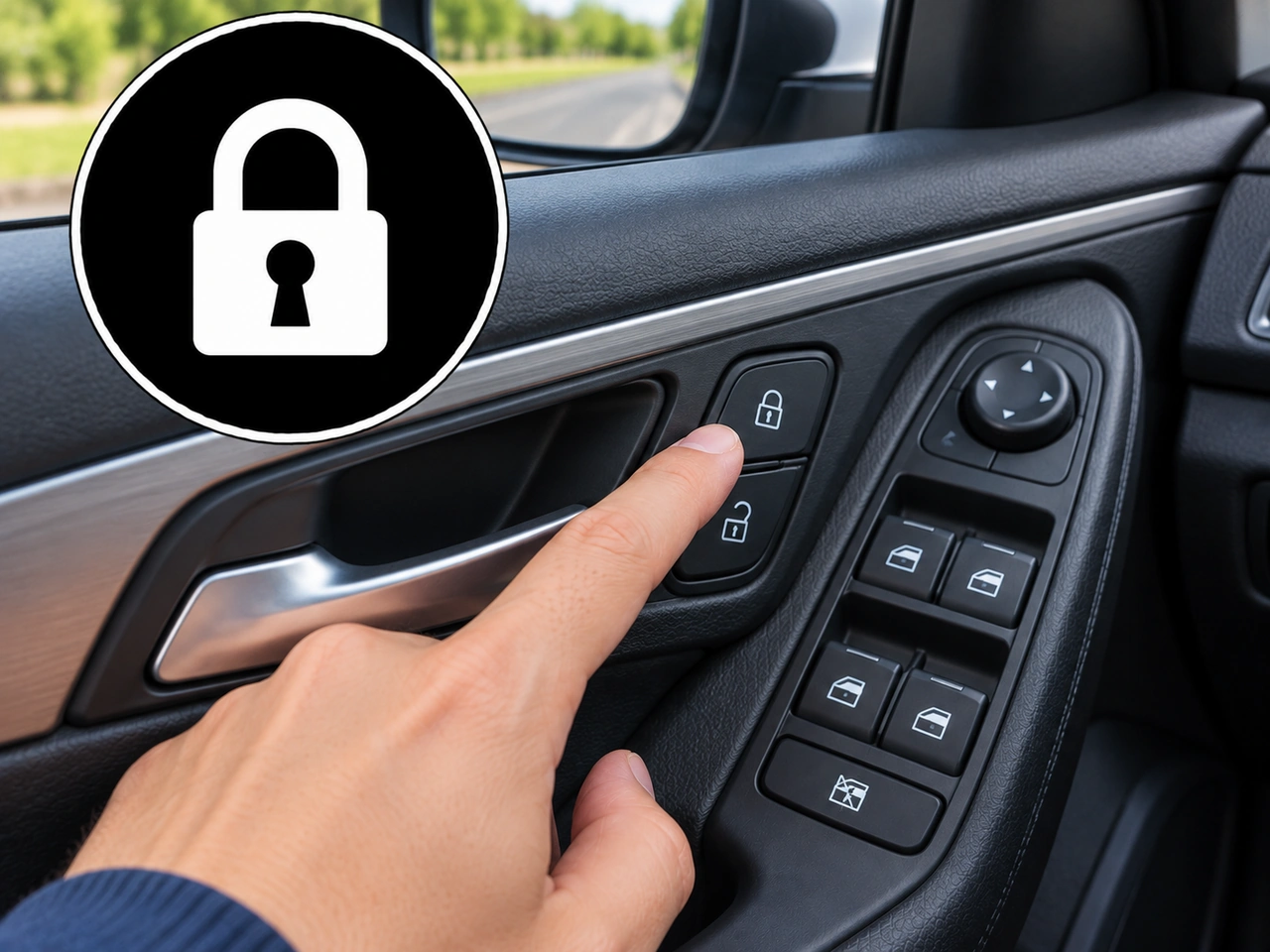
93. Что означает этот символ органа управления автомобилем?
Этот переключатель управляет центральным замком автомобиля. Нажатие блокирует или разблокирует двери в зависимости от текущего состояния замков.
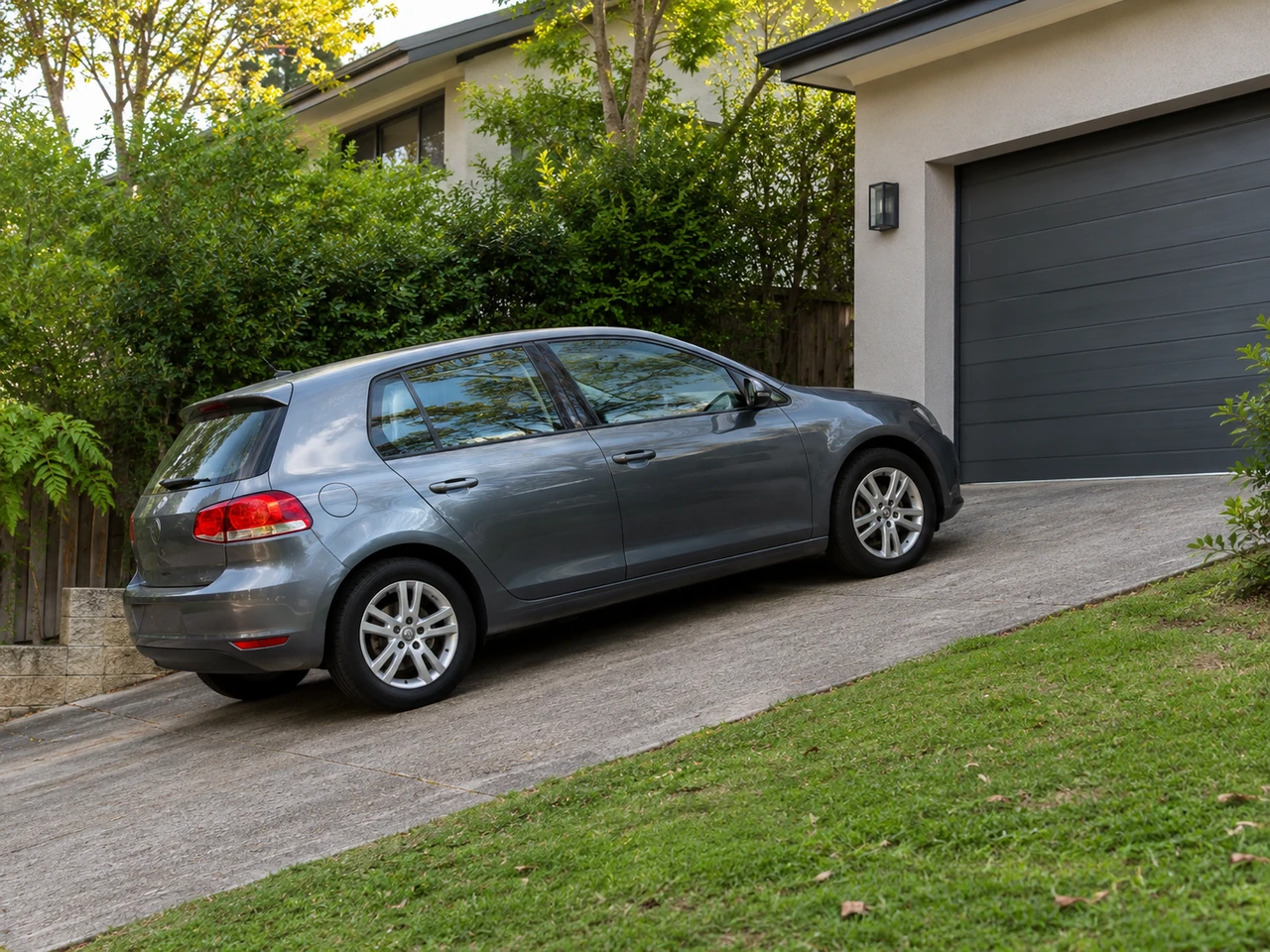
94. Hill-start assist replaces the parking brake when you leave a car parked on a slope.
Hill-start assist holds the brakes briefly to help you move off on a slope. It does not replace the parking brake. Secure the parked car as directed in the vehicle handbook.
🔗 Источники
Ford owner’s manual (manufacturer guidance) • Safety guidance, brief brake hold; parking-brake precautions
Image credit: AI-generated
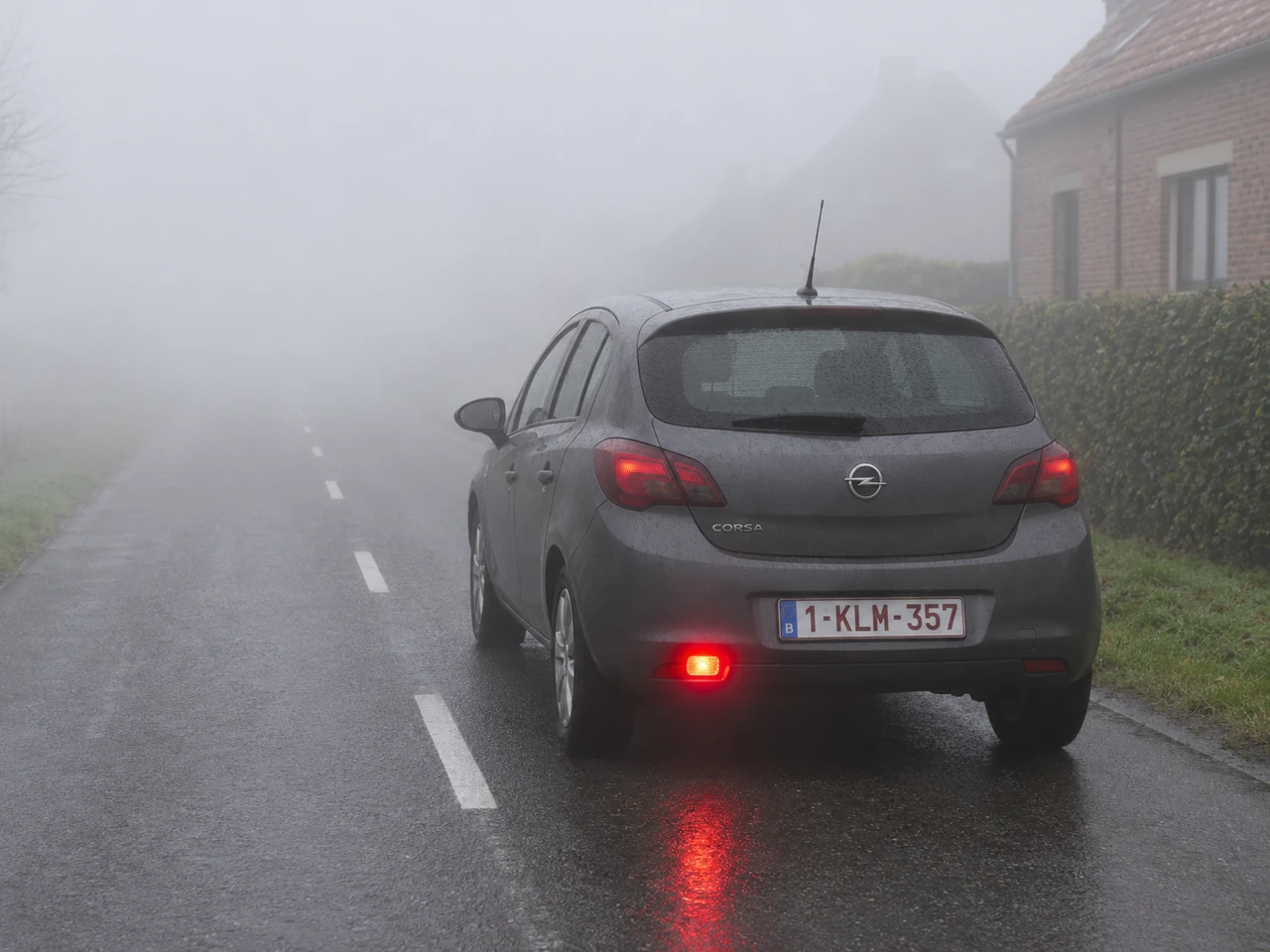
95. Когда следует использовать задние противотуманные фонари?
Задние противотуманные фонари очень яркие и должны использоваться только тогда, когда видимость настолько плохая, что они действительно необходимы.
🔗 Источники
Wegcode.be — Article 30.1.2
Police.be — front and rear fog-light rules
Image credit: AI-generated
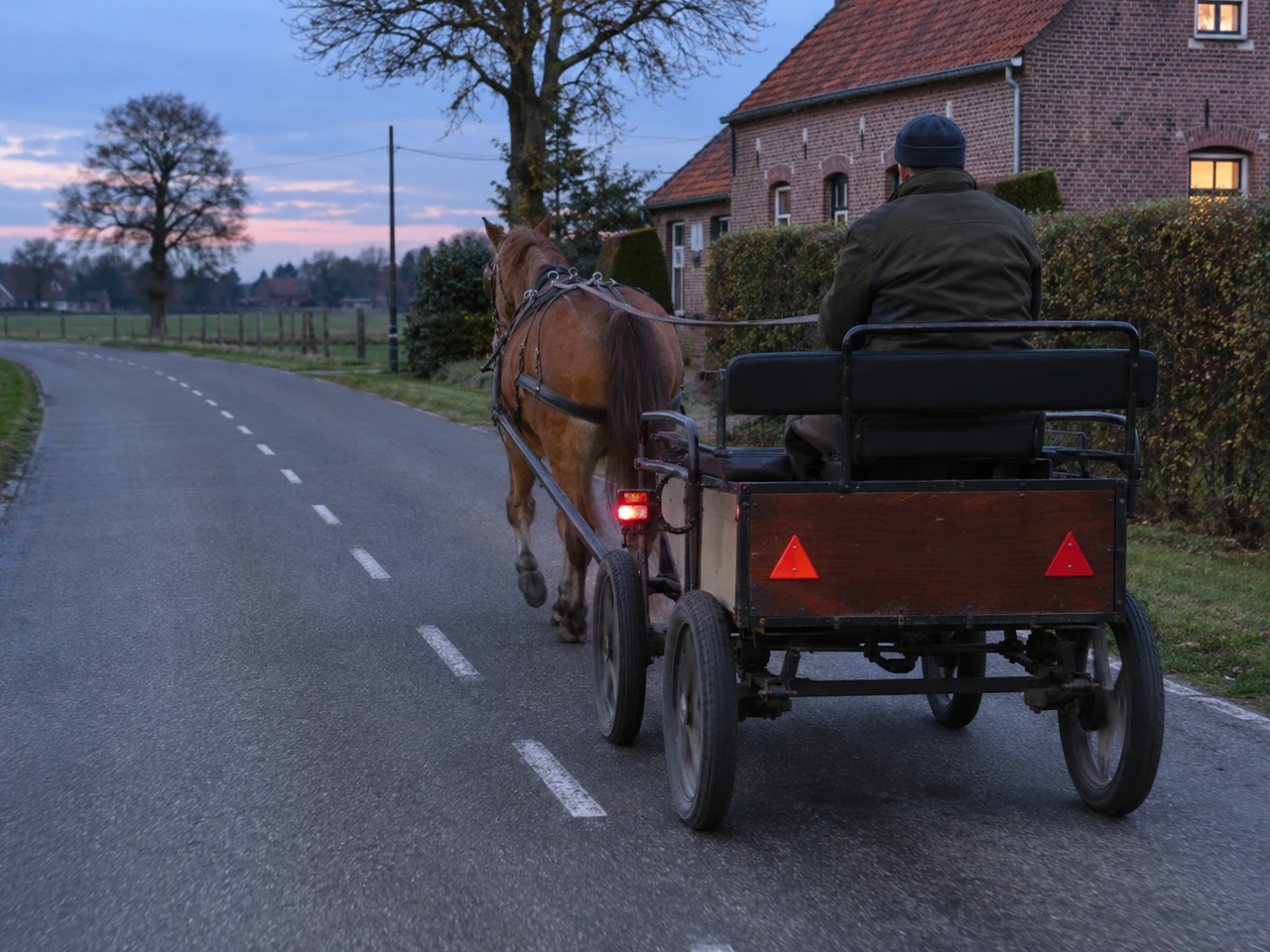
96. May a horse-drawn carriage without a trailer use one combined light unit at night?
For an animal-drawn carriage not towing another vehicle, the required white or yellow front light and red rear light may be combined in one unit placed or carried on the left. The front and rear indications must remain visible in their respective directions. The required rear reflectors are still needed.
🔗 Источники
Wegcode.be — Belgian road legislation
Reference: Article 30.3, 3°; Article 83.1.1
Image credit: AI-generated
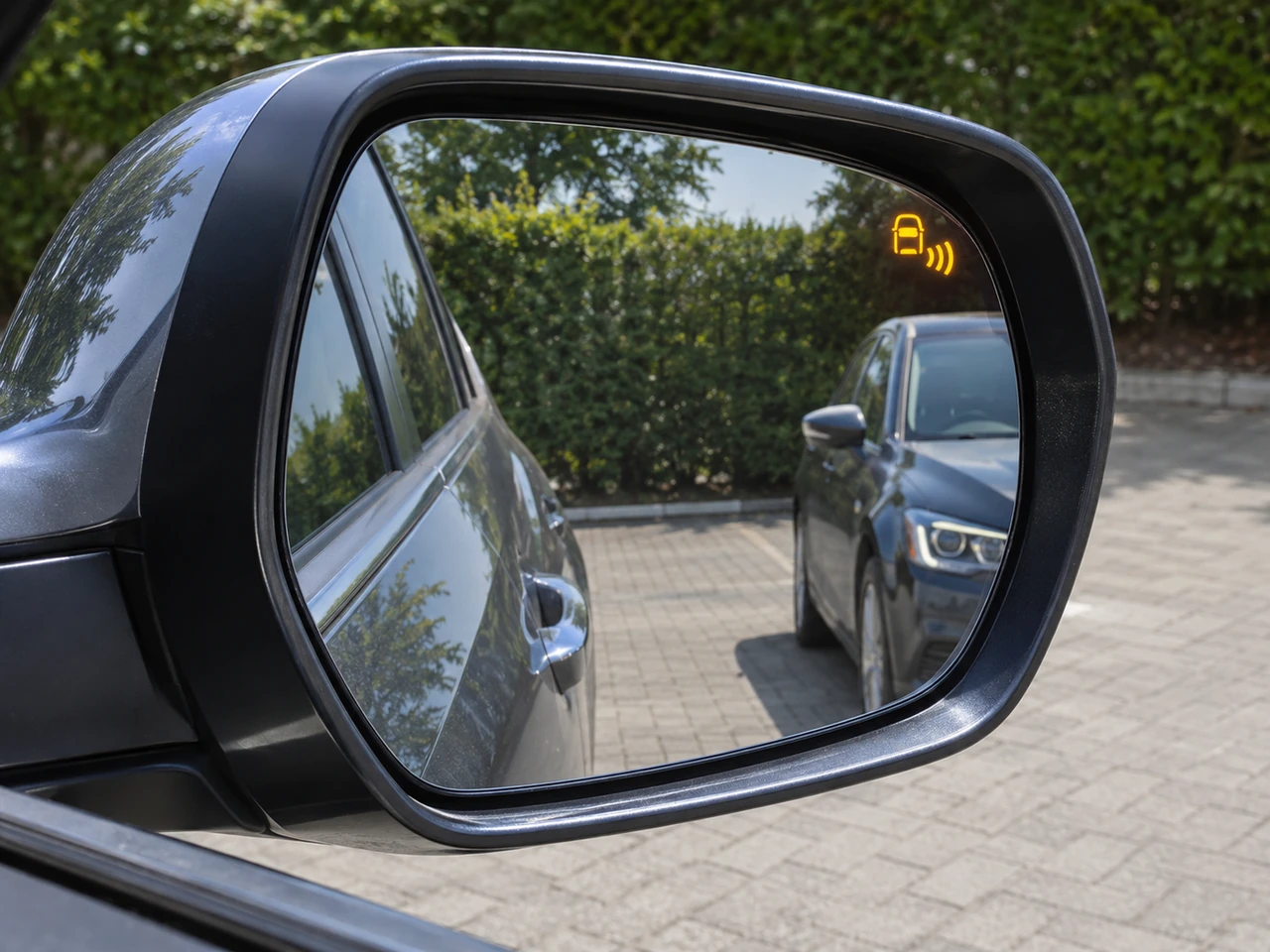
97. You still need to check your blind spots when using blind-spot warnings.
Warning systems can miss vehicles. Check your mirrors and the relevant blind spots before changing lanes, and move only when it is safe. Learn the system's limits from the vehicle handbook.
🔗 Источники
The Highway Code (Great Britain) • Safety guidance, Rules 159–161
Image credit: AI-generated
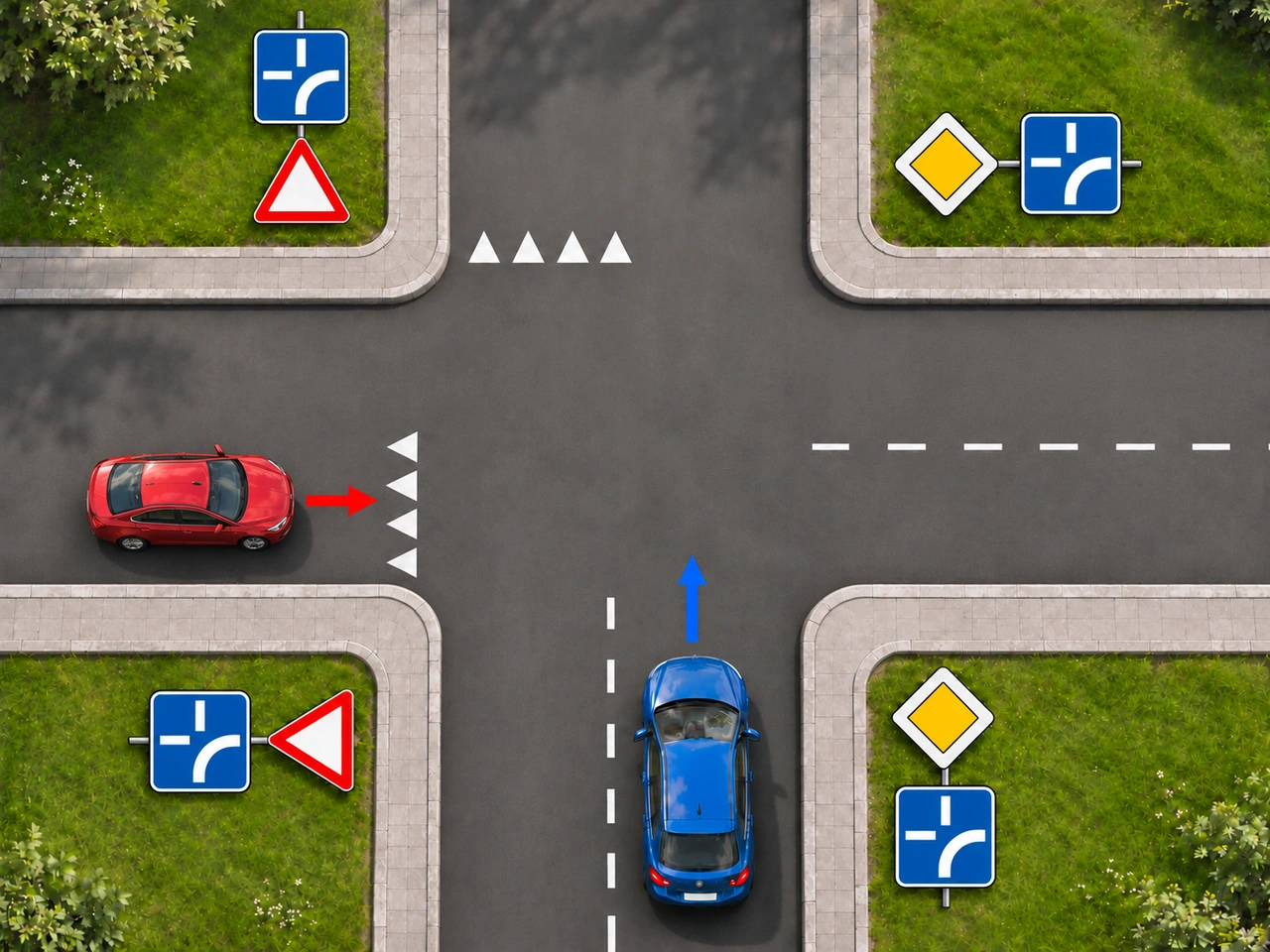
98. Must the blue car give way to the red car here?
The thick line on the supplementary panel shows the bending priority route. Blue approaches on that route but leaves it by continuing straight. Red approaches from a signed side road and must still give way to blue. Blue's intended departure from the priority route does not cancel red's duty. This does not decide a different encounter between two drivers both approaching on the priority route.
🔗 Источники
AI-generated illustration • Traffic-rules.com / Rijbewijs-online.be • WCIT • CC BY-SA 4.0.
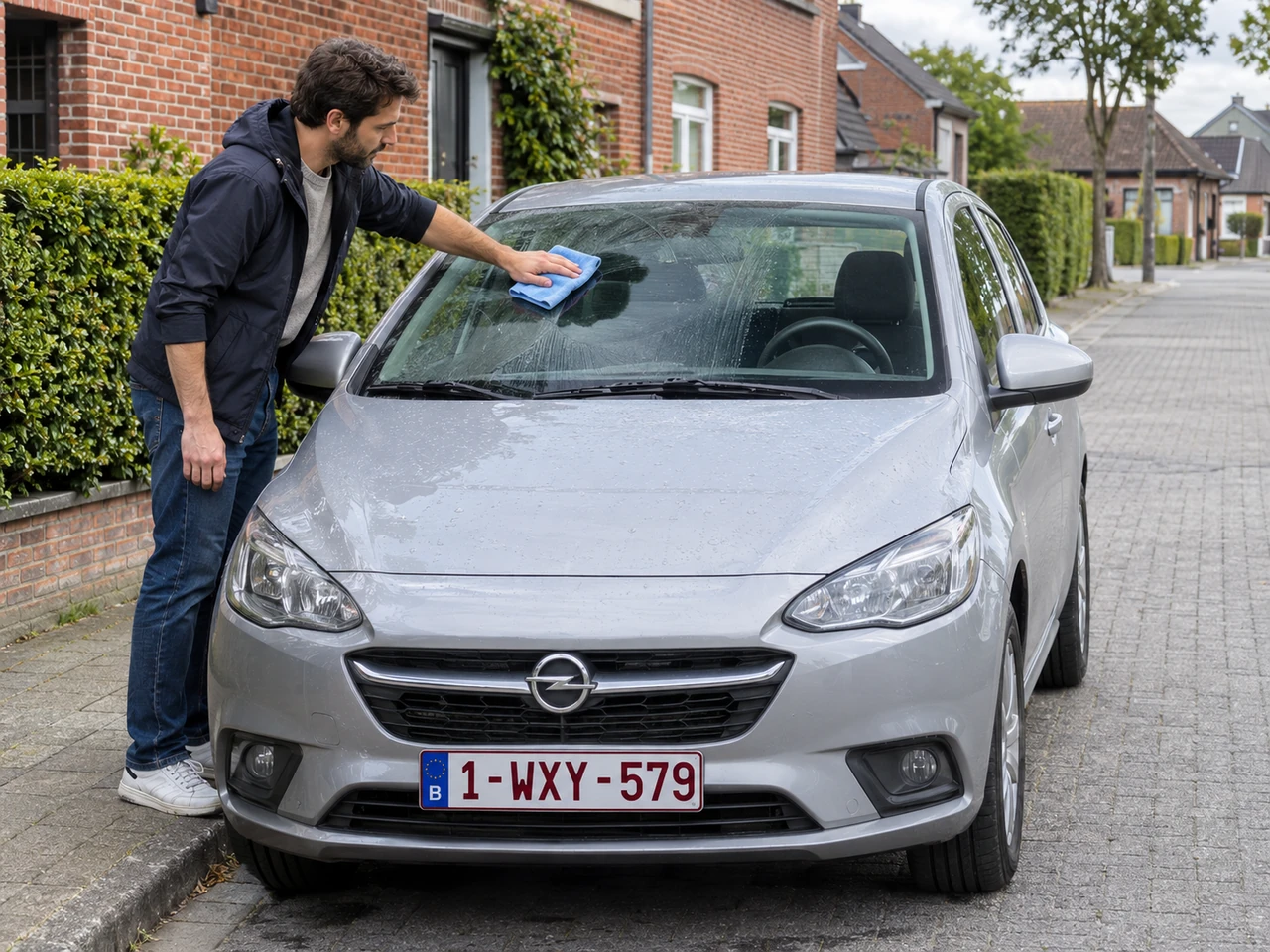
99. Почему важно поддерживать ветровое стекло чистым?
Чистое ветровое стекло обеспечивает хороший обзор дороги, знаков, пешеходов, велосипедистов и других транспортных средств.
🔗 Источники
Police.be — clean vehicle glass
Police.be — autumn visibility advice
Image credit: AI-generated
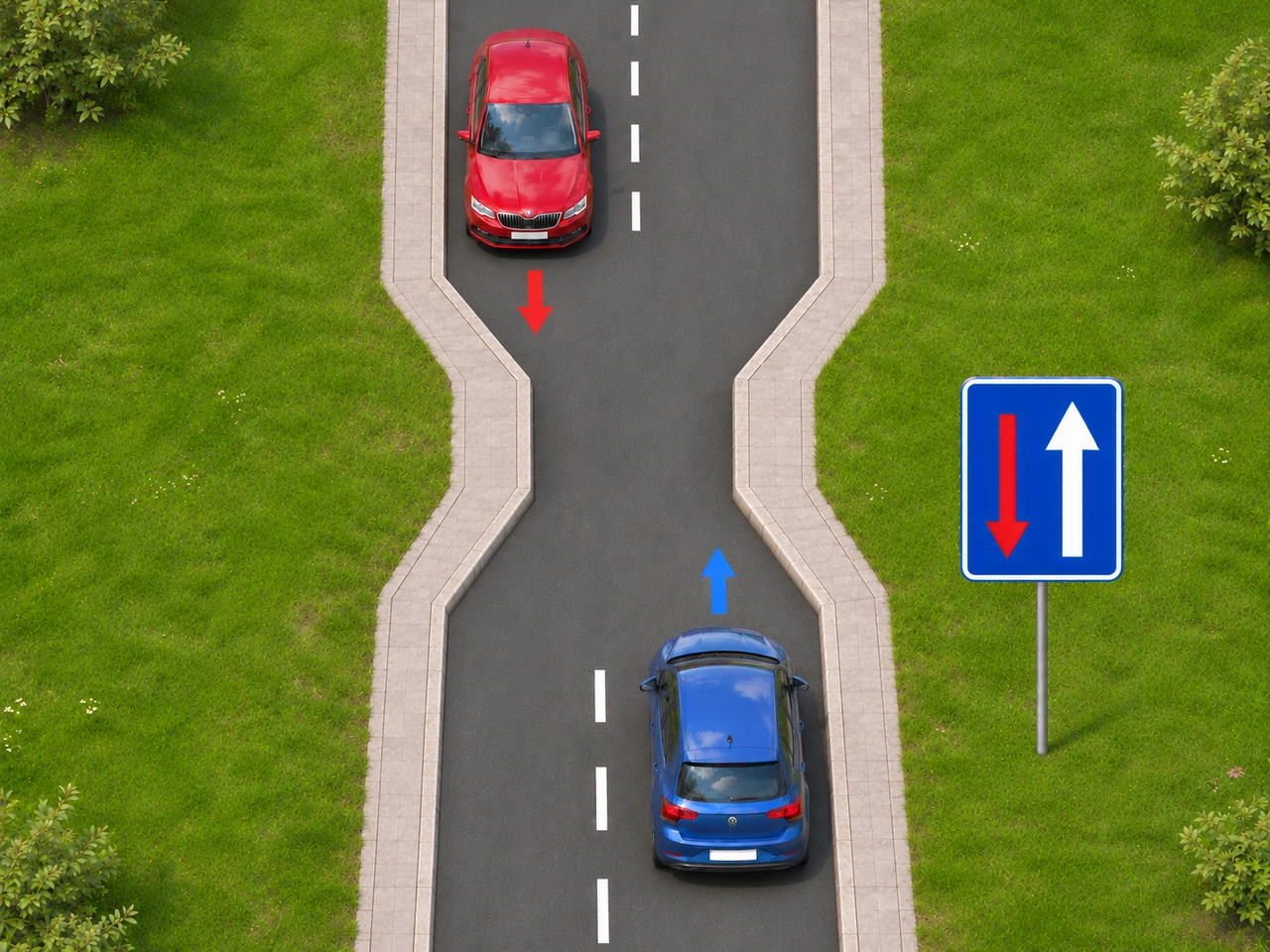
100. Both cars are before this narrow passage. What does the blue sign facing blue mean?
The blue sign gives blue priority over approaching red at this narrow passage. Both cars are outside it, and red faces the matching round red-bordered sign, so red must let blue pass. The signs do not make the road one-way or permit blue to enter an occupied or unsafe passage.
🔗 Источники
AI-generated illustration • Traffic-rules.com / Rijbewijs-online.be • WCIT • CC BY-SA 4.0.