


QuizTraffic rulesArgentina
Test your knowledge with our multiple-choice quiz. Learn from each answer and improve your understanding of the traffic rules and road signs of Argentina.
 Traffic signs
 Traffic rules
 Argentina
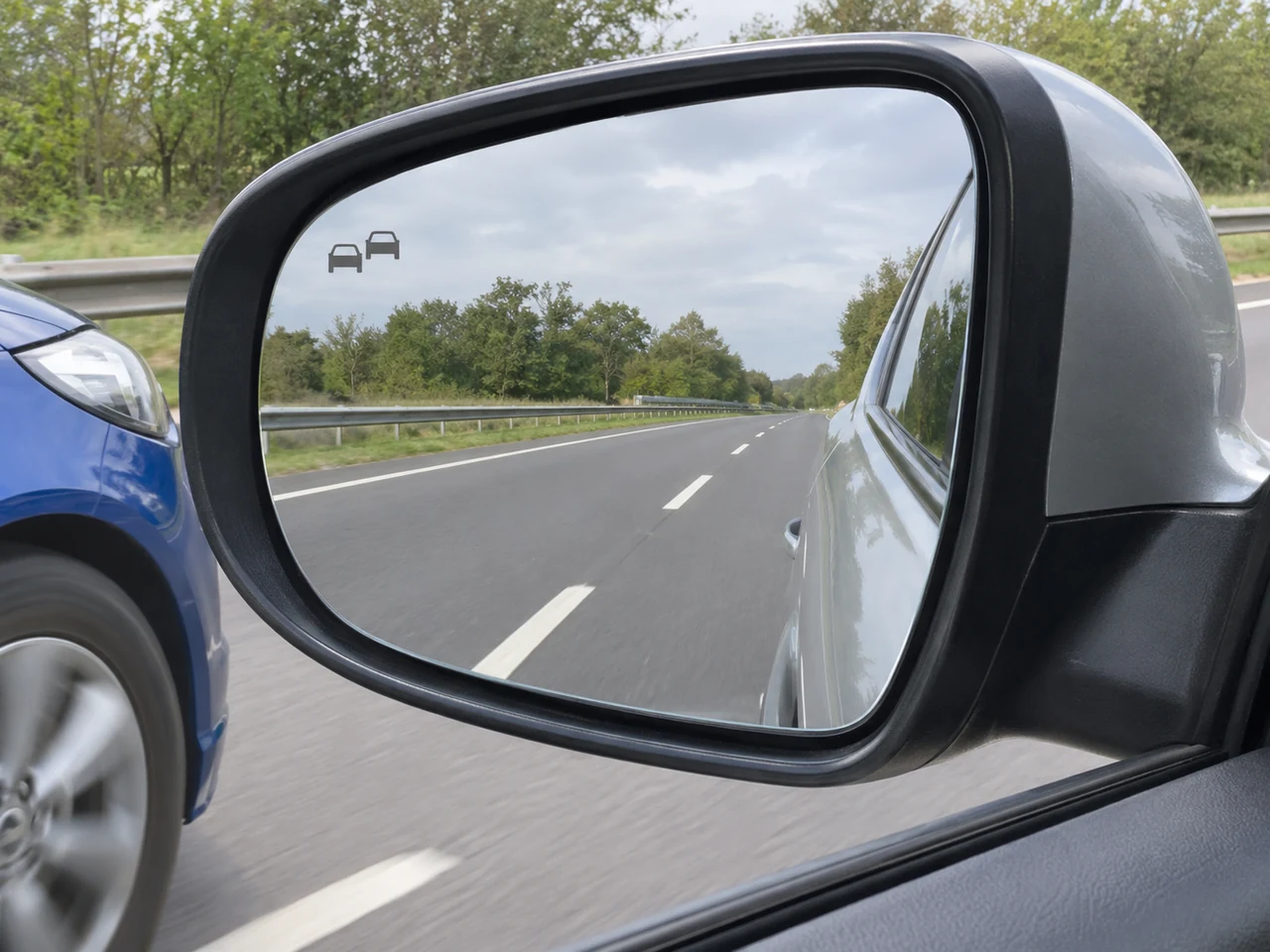
851. What should you do before changing lanes if no blind-spot warning appears?
A blind-spot system may not detect every vehicle or work in every situation. The absence of a warning is not confirmation that a lane change is safe. Make your own observations before moving.

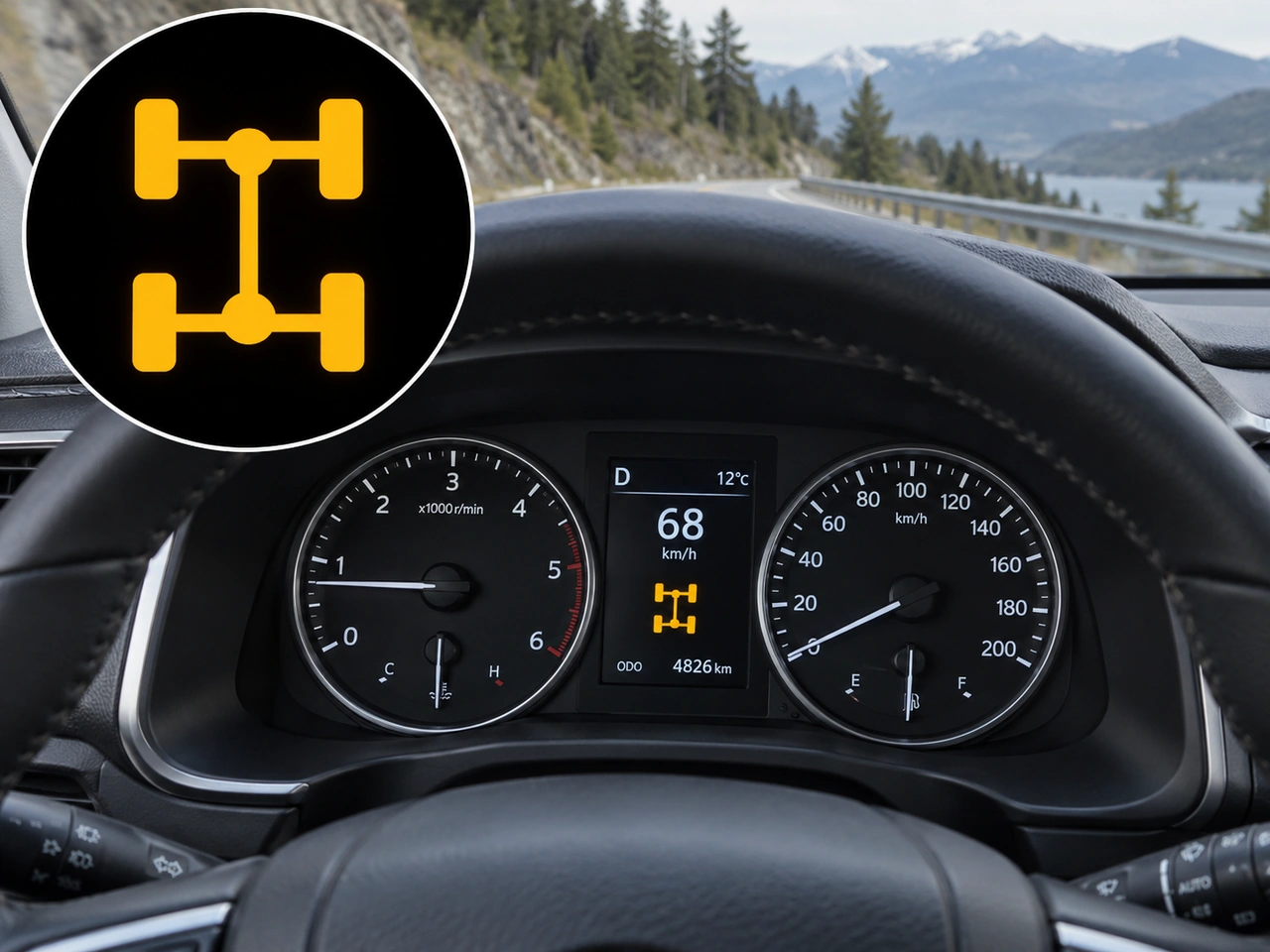
852. What does this dashboard symbol indicate?
This symbol relates to the vehicle's four-wheel-drive system, which can transmit power to all four wheels. The exact symbol and operating modes vary between vehicles.
A four-wheel-drive indicator can identify the selected mode. On vehicles with high and low ranges, 4H denotes high range and 4L denotes low range.
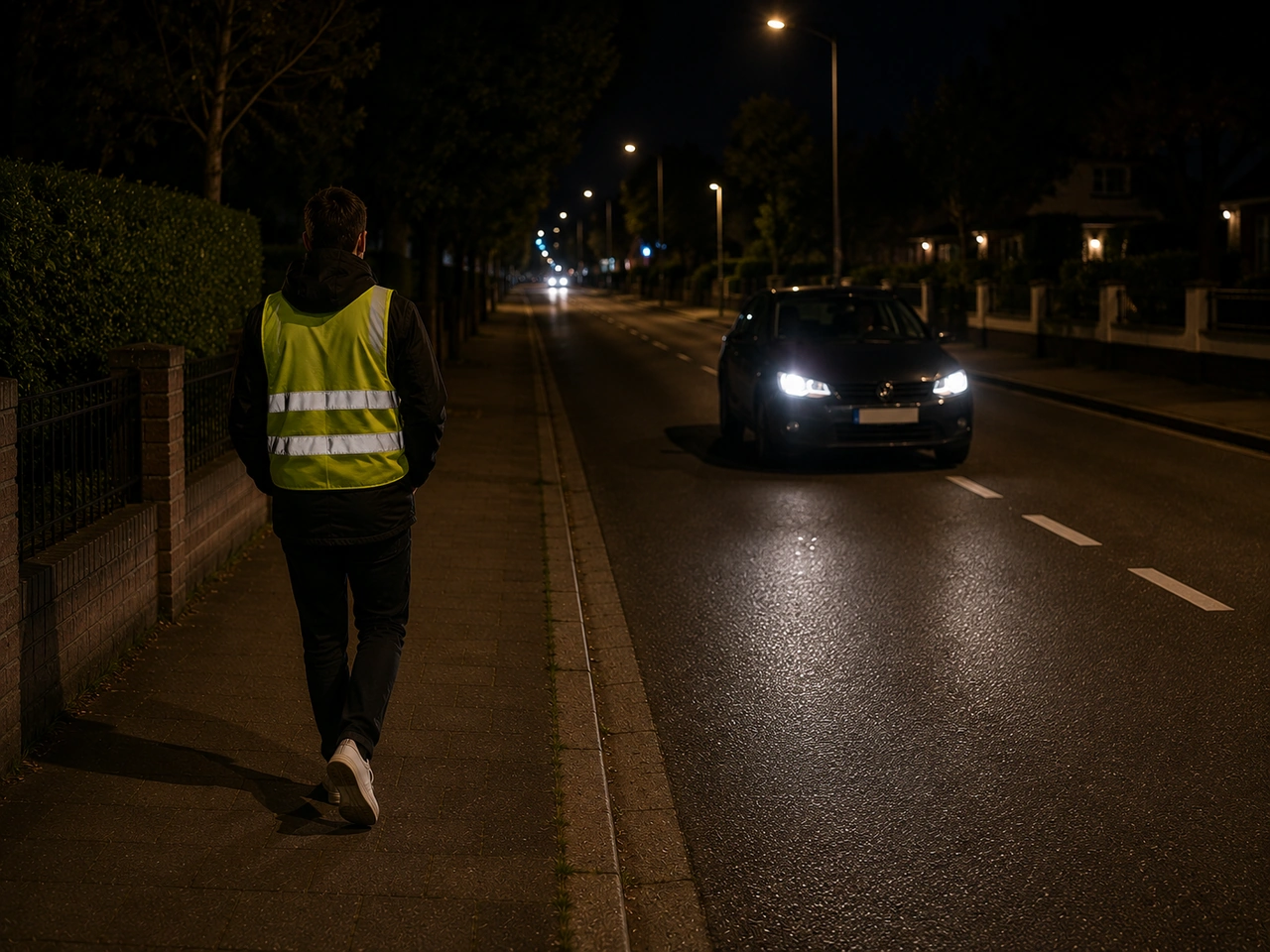
853. Why is it important to make yourself visible at night?
Reflective material helps drivers using headlights notice pedestrians in darkness. Bright or fluorescent clothing is useful in poor daylight, while reflective strips, bands or other reflective items are particularly useful at night. Stay on the pavement where available and remain alert: being more visible does not guarantee that a driver has seen you or can stop in time.
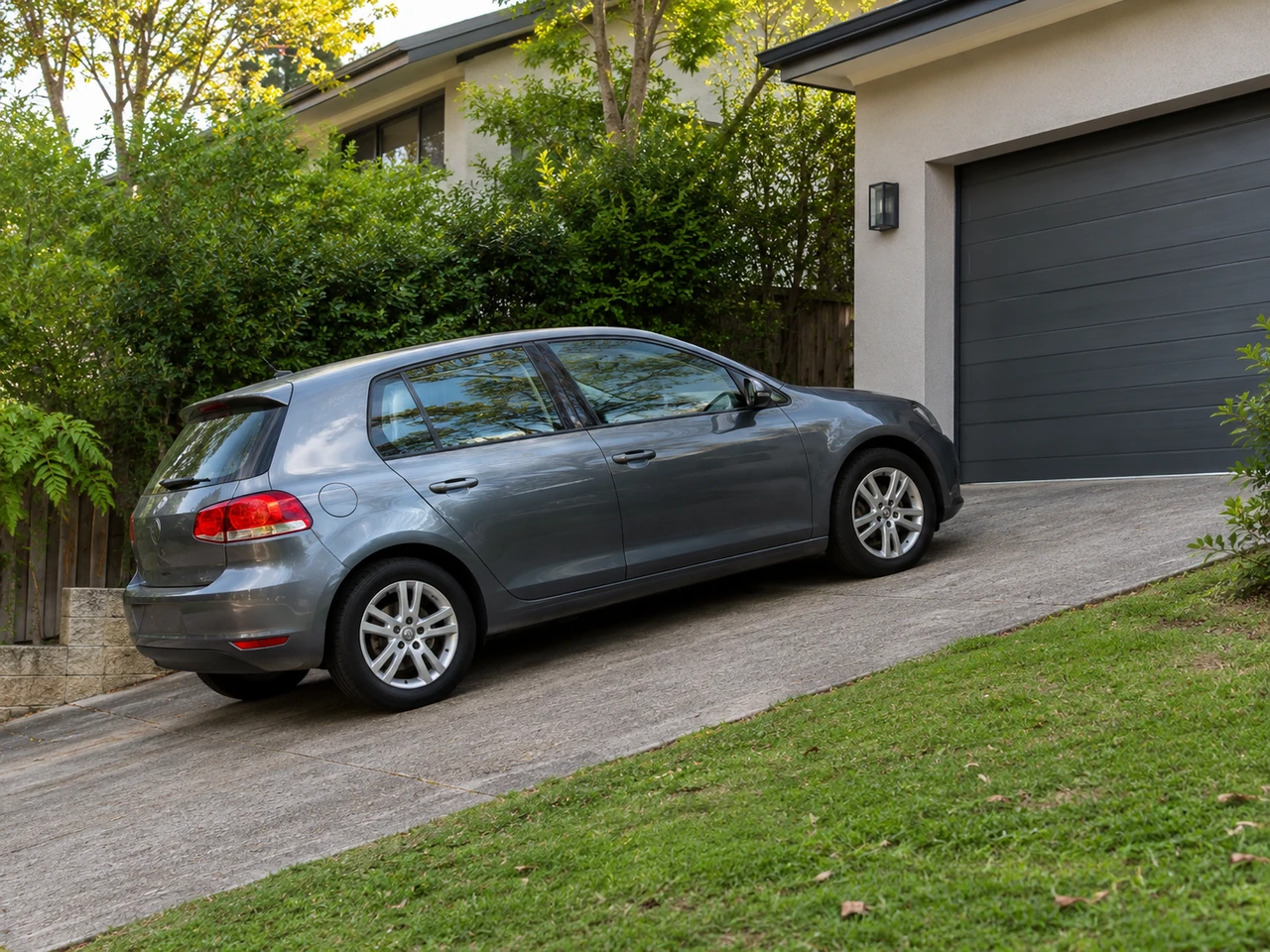
854. Hill-start assist replaces the parking brake when you leave a car parked on a slope.
Hill-start assist holds the brakes briefly to help you move off on a slope. It does not replace the parking brake. Secure the parked car as directed in the vehicle handbook.
🔗 Sources
Ford owner’s manual (manufacturer guidance) • Safety guidance, brief brake hold; parking-brake precautions
Image credit: AI-generated
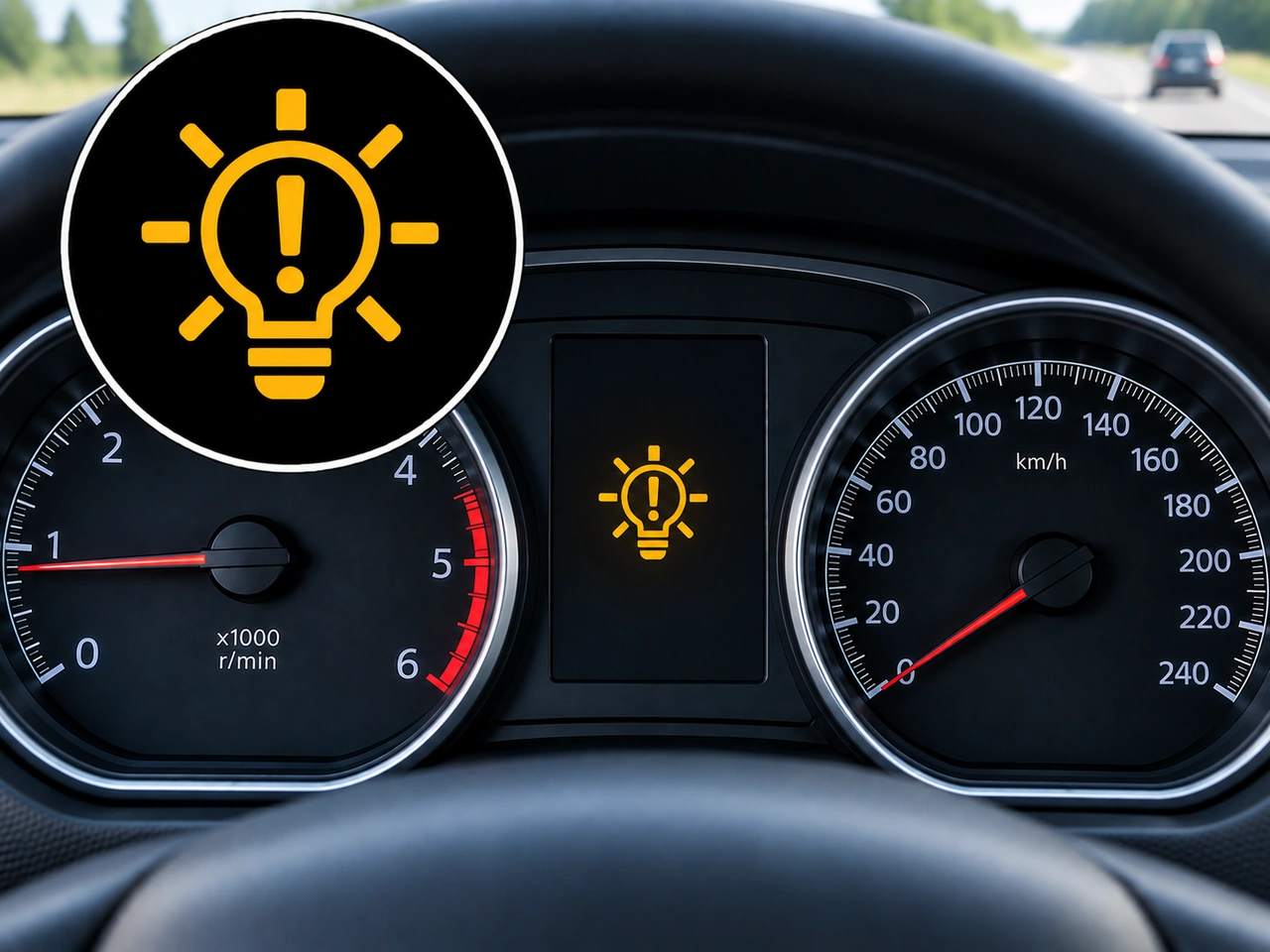
855. What does this dashboard symbol indicate?
This symbol indicates a possible failure of an exterior vehicle light, such as a headlight, tail light, brake light or indicator. Check the vehicle's exterior lights and replace or repair any faulty light.
Check the instrument display for the affected light, then check the exterior lamps and repair any fault.
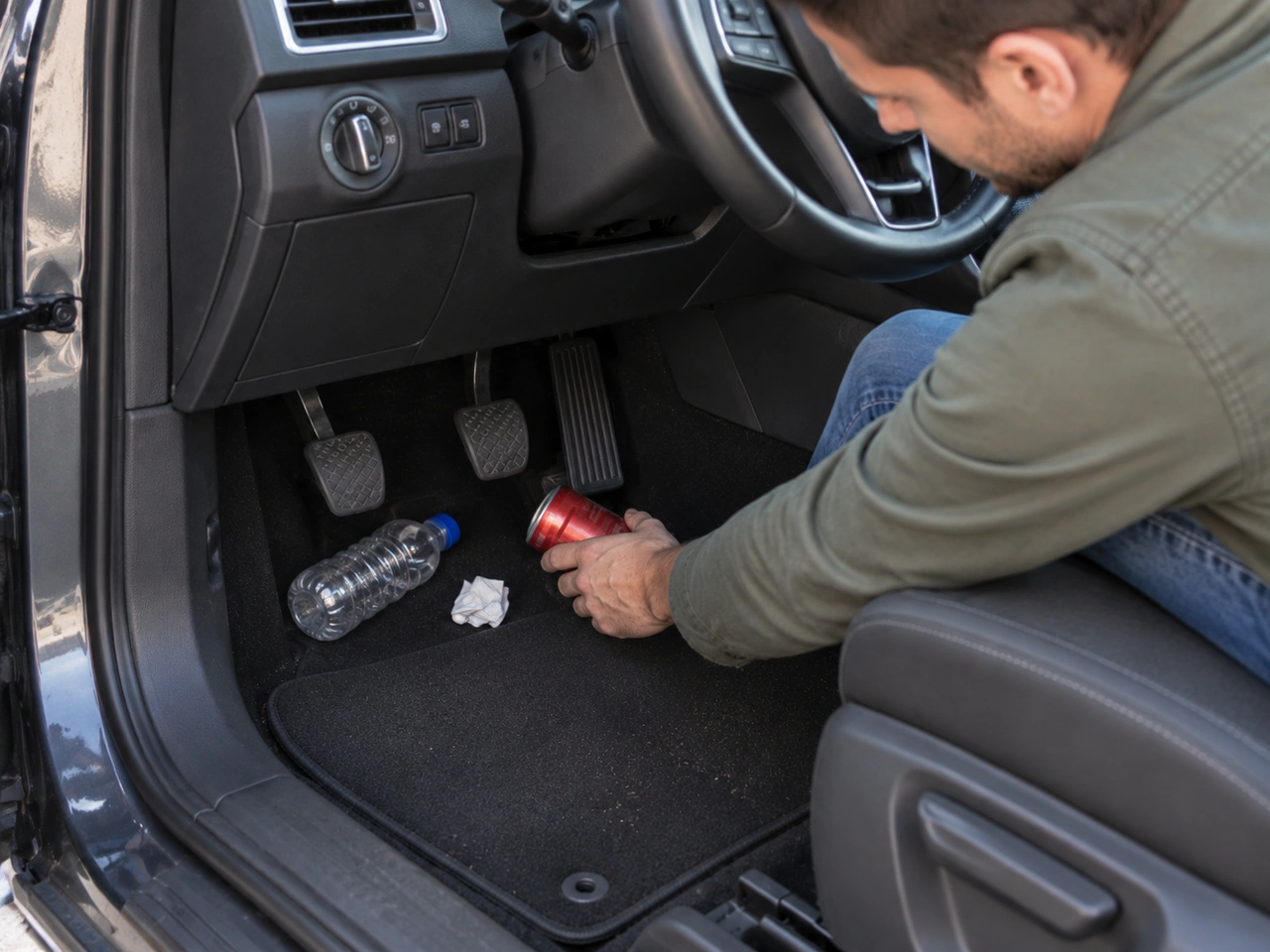
856. Why should you keep the driver's footwell free of loose objects?
Loose objects in the driver's footwell, such as bottles, cans, or rubbish, can roll into the pedal area and interfere with the accelerator, brake, or clutch. Keep the footwell clear so you can operate the pedals safely and without obstruction.
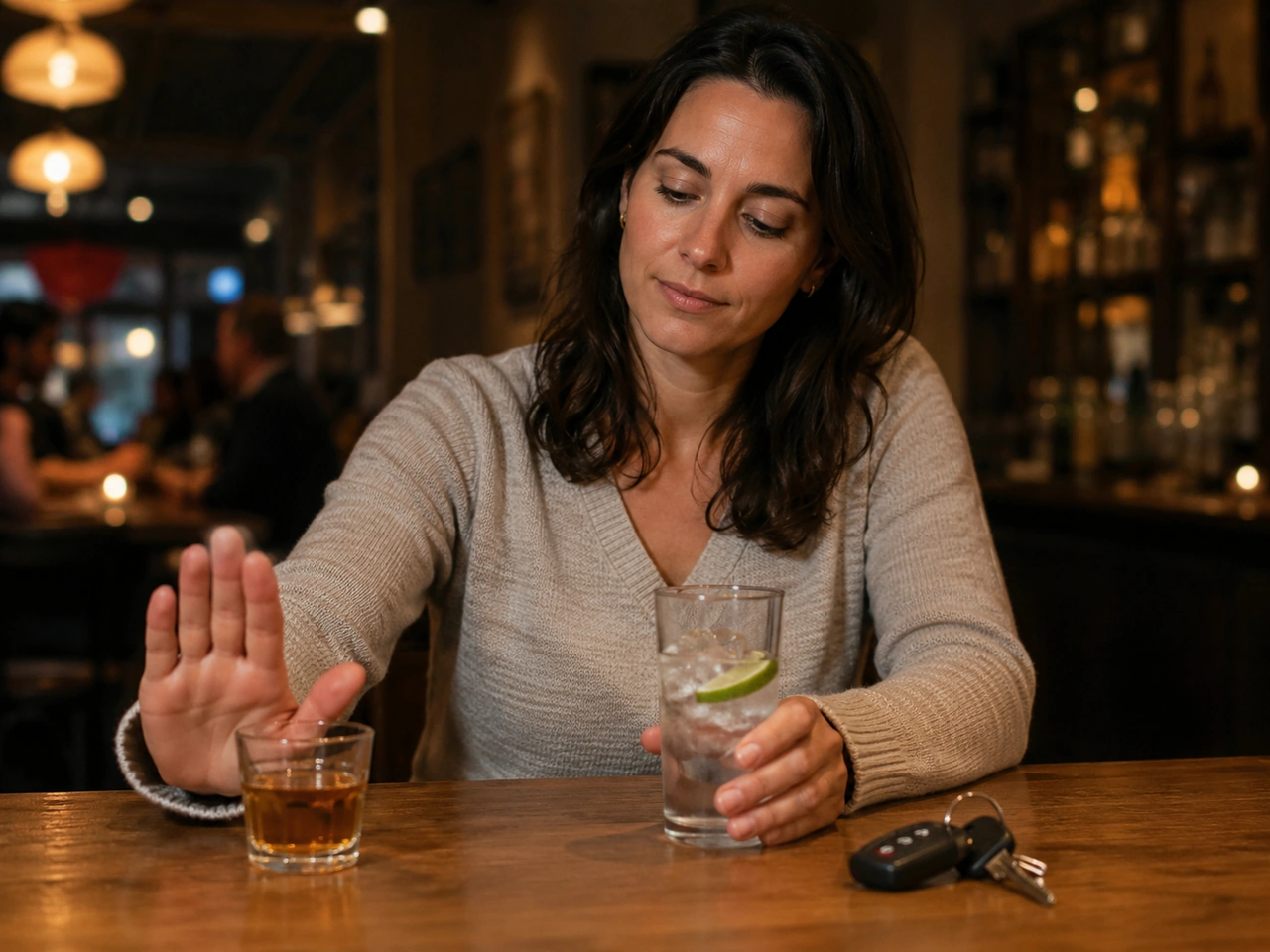
857. Should the legal alcohol limit be treated as a safe target?
A legal limit is an enforcement threshold, not a recommended drinking level. Even a small amount of alcohol can affect driving performance.
Argentina. Argentina’s national traffic law sets a zero blood alcohol limit on national roads. Provincial and local rules apply on their own roads. Stay alcohol-free whenever you plan to drive.
🔗 Sources
Argentina · Traffic Law 24.449, Article 48
Argentina Ministry of Health · Alcohol cero al volante
Image credit: AI-generated
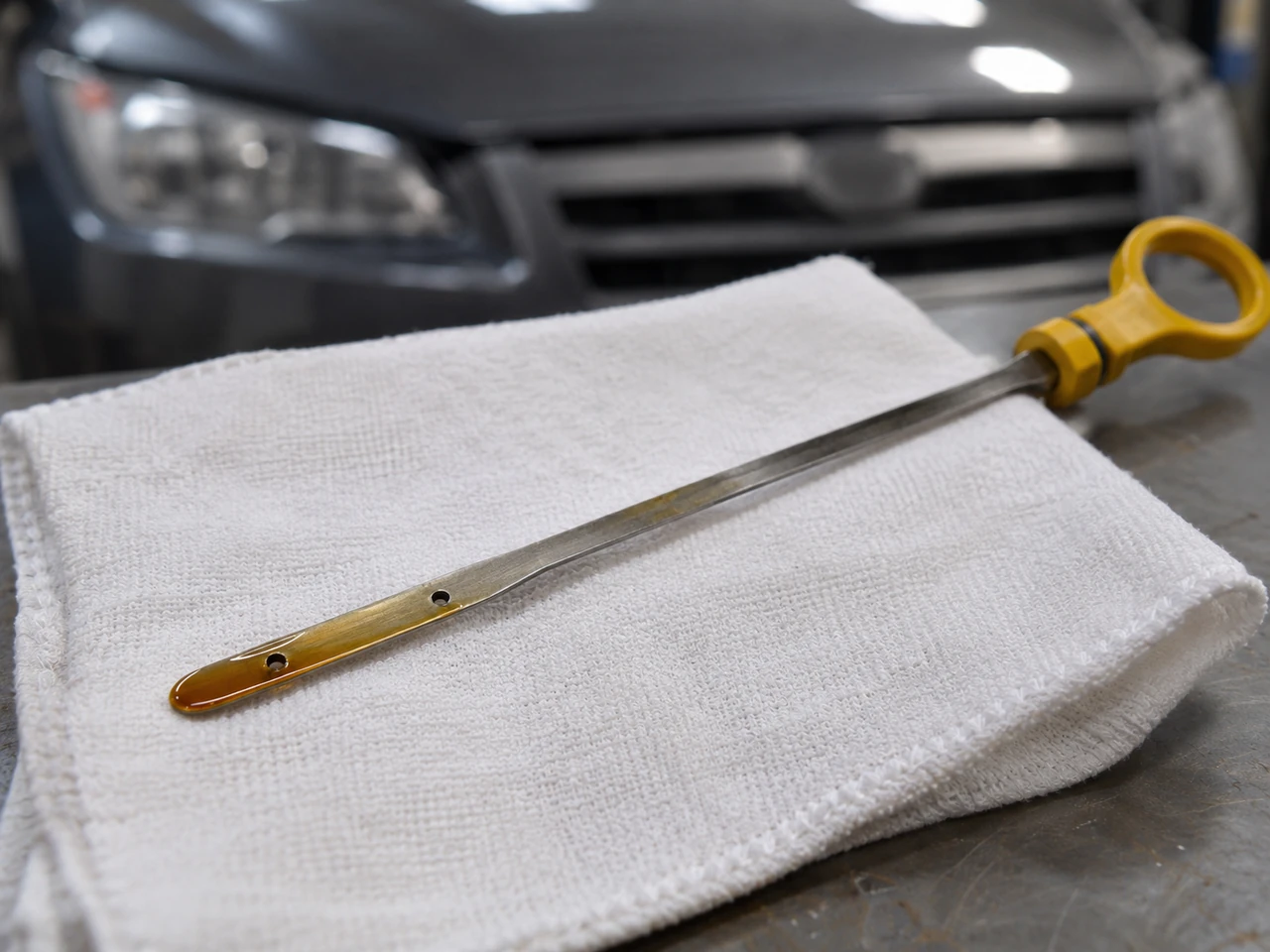
858. Overfilling the engine with oil can cause damage.
Do not fill above the maximum level specified for your engine. Check the level using the procedure in the handbook, and have excess oil removed correctly if it has been overfilled.
🔗 Sources
Ford owner’s manual (manufacturer guidance) • Safety guidance, maximum oil level and engine damage; follow your handbook
Image credit: AI-generated
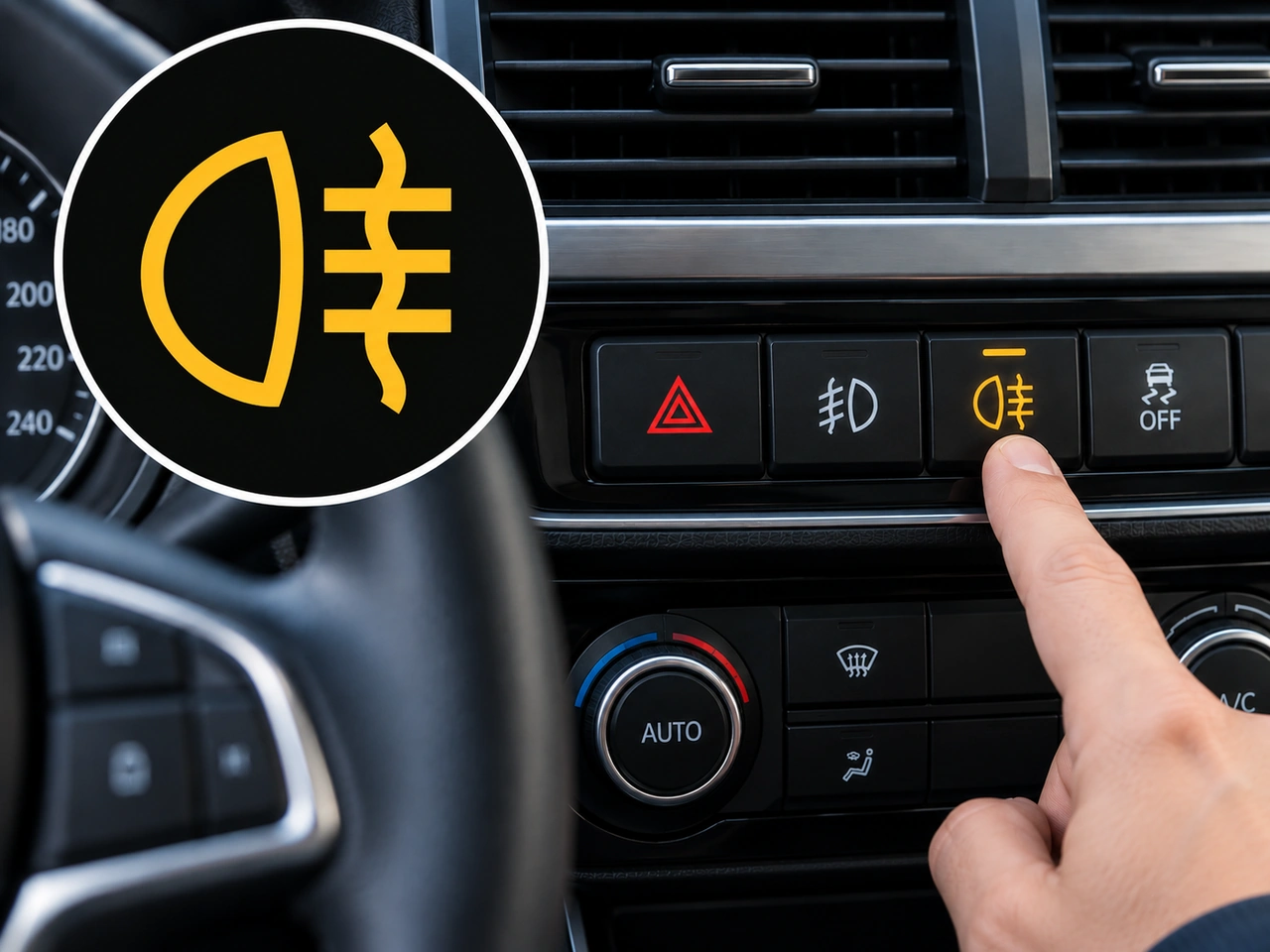
859. What does this dashboard symbol indicate?
This symbol indicates that the rear fog lights are switched on. Rear fog lights make the vehicle more visible from behind in conditions of severely reduced visibility, but they can dazzle other road users when used unnecessarily.
The rear fog-light symbol has horizontal beam lines crossed by a wavy line. Its indicator is amber.
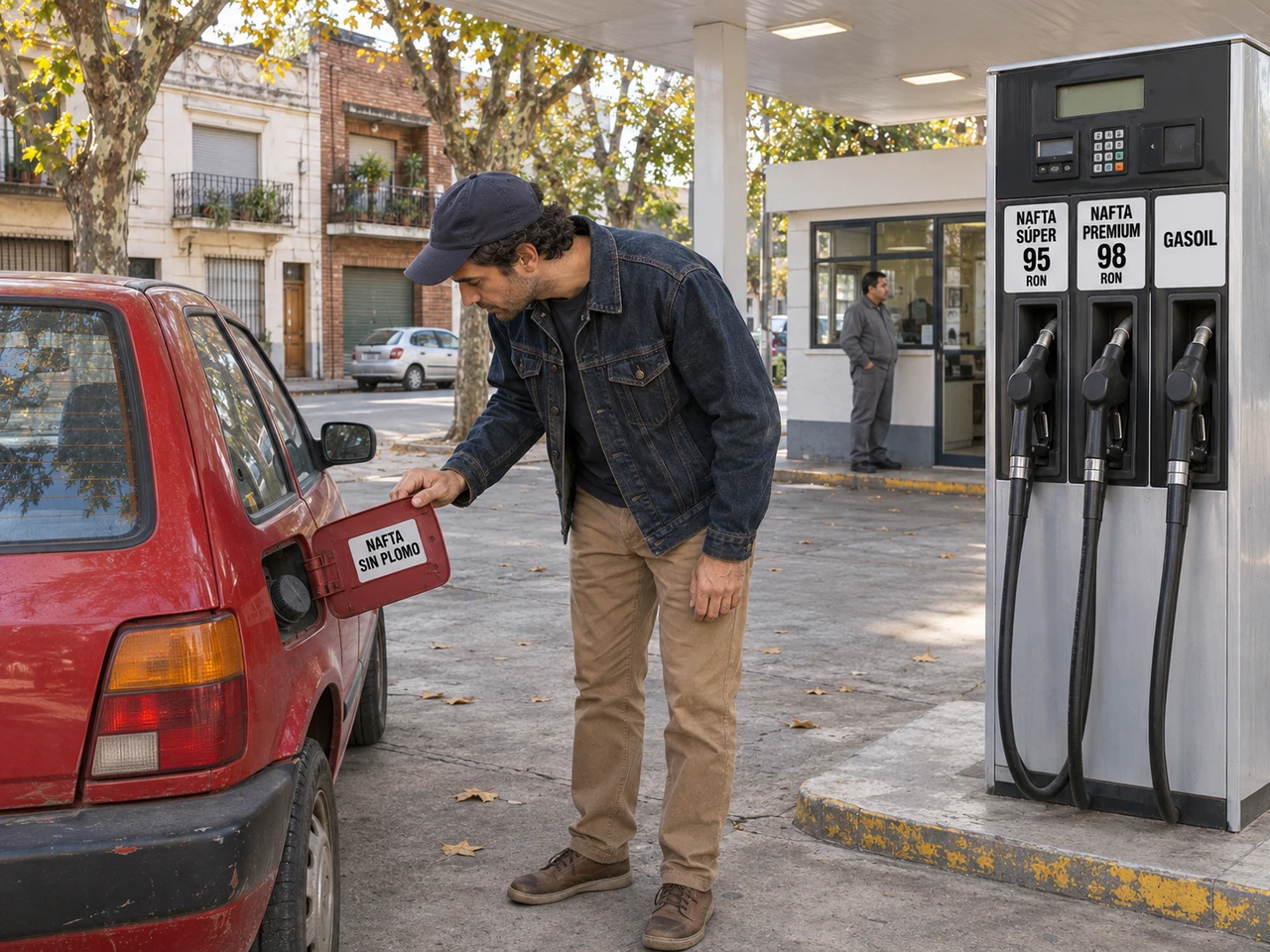
860. How can you check which fuel is suitable for your vehicle?
Before refuelling, check which fuel type the vehicle requires. The correct fuel is often shown inside the fuel-filler flap, on or near the fuel cap, or in the vehicle information or owner's manual. Do not rely only on nozzle colours, as these can vary between filling stations and countries.
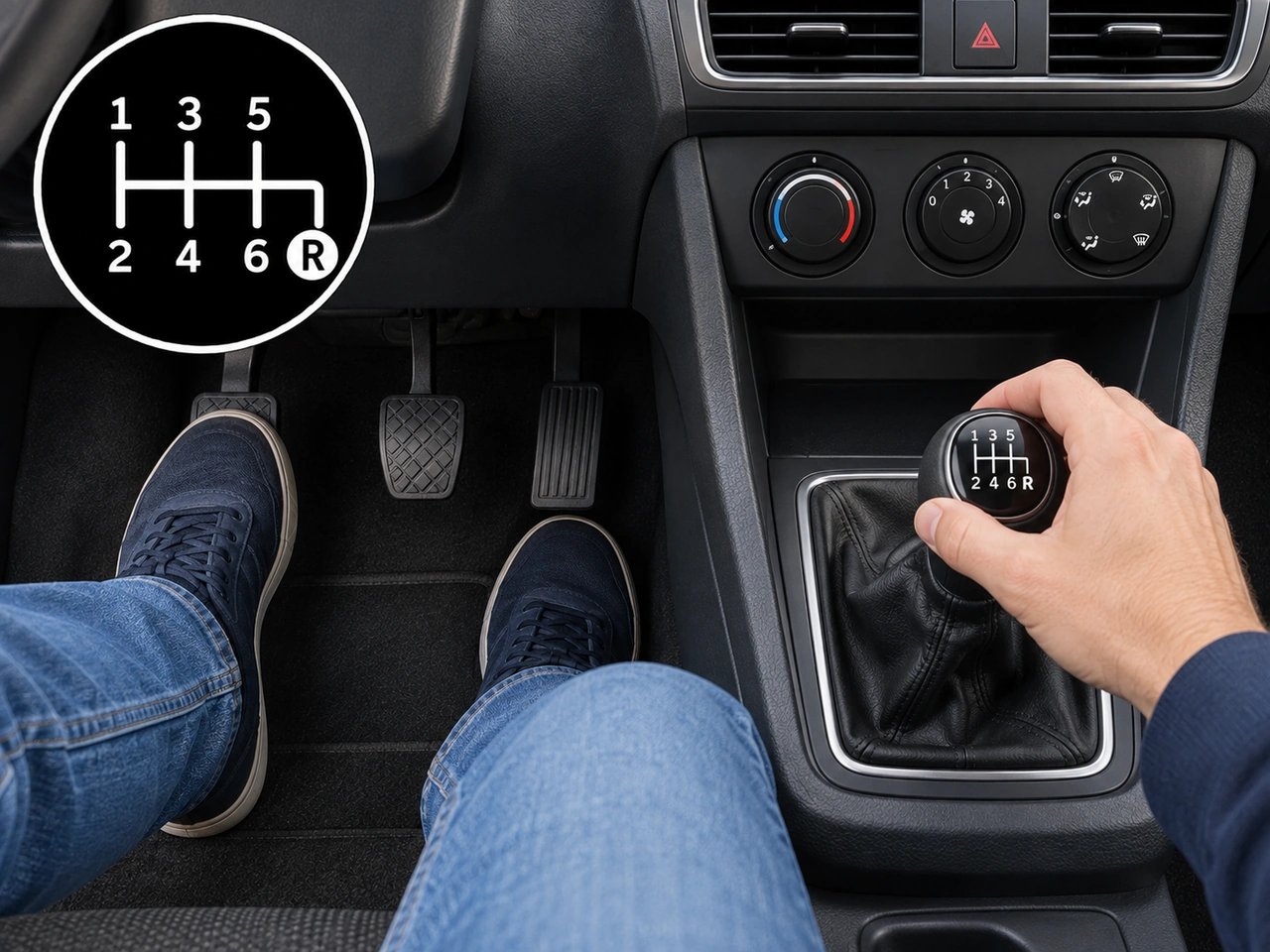
861. When should you select reverse gear in a manual vehicle?
Select reverse gear only after the vehicle has come to a complete stop. Press the clutch fully before selecting reverse to avoid unnecessary wear or damage to the transmission.
Stop completely and press the clutch fully before selecting Reverse. The method for releasing the reverse lockout varies by car.
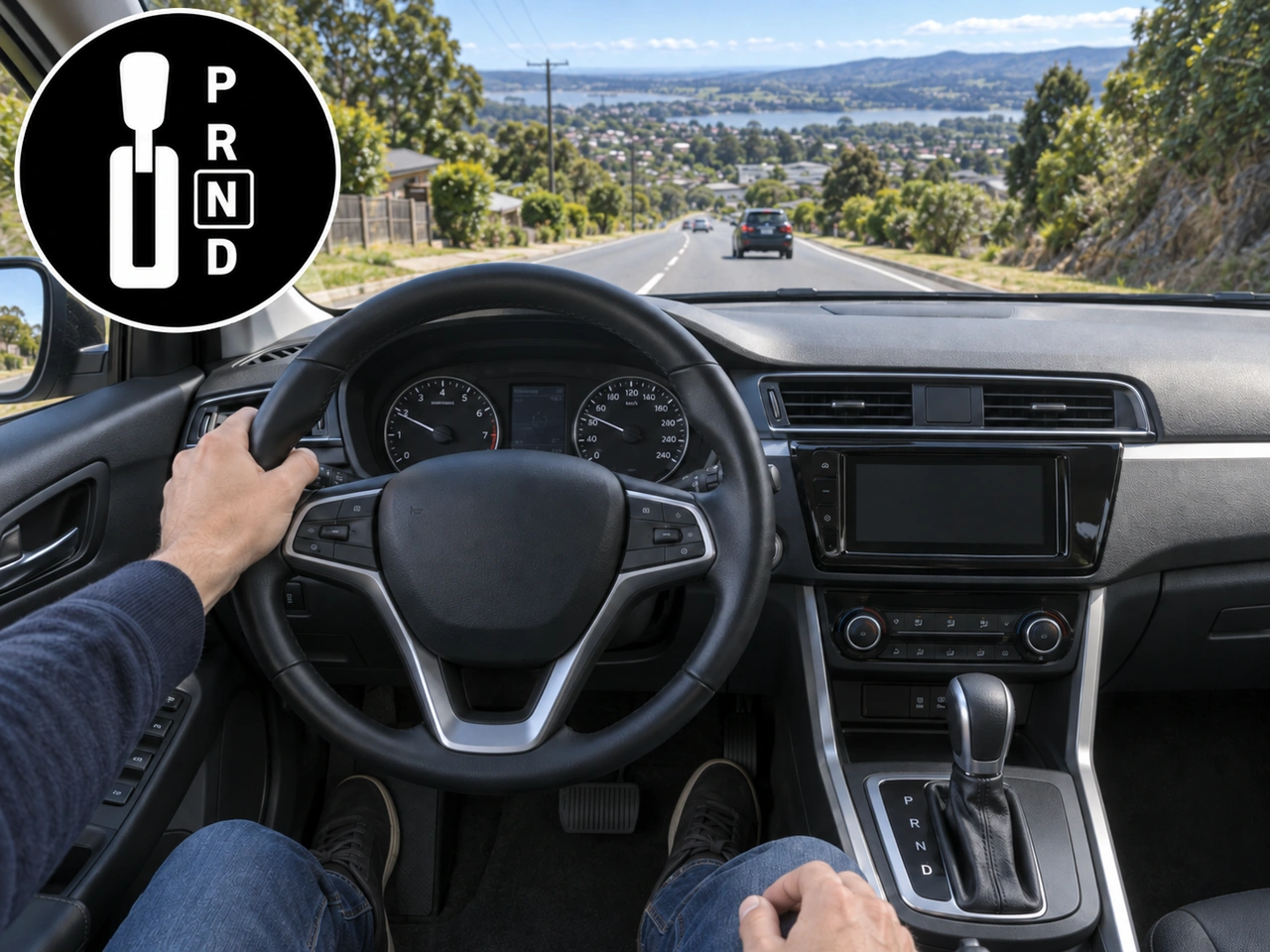
862. Why should you avoid selecting N while driving downhill in an automatic vehicle?
Selecting N (Neutral) while driving downhill disconnects the engine from the driven wheels, reducing engine braking. Keep an appropriate drive or gear selected so you can maintain better control of the vehicle.
Keep a suitable driving range engaged on descents so engine braking can help control speed.
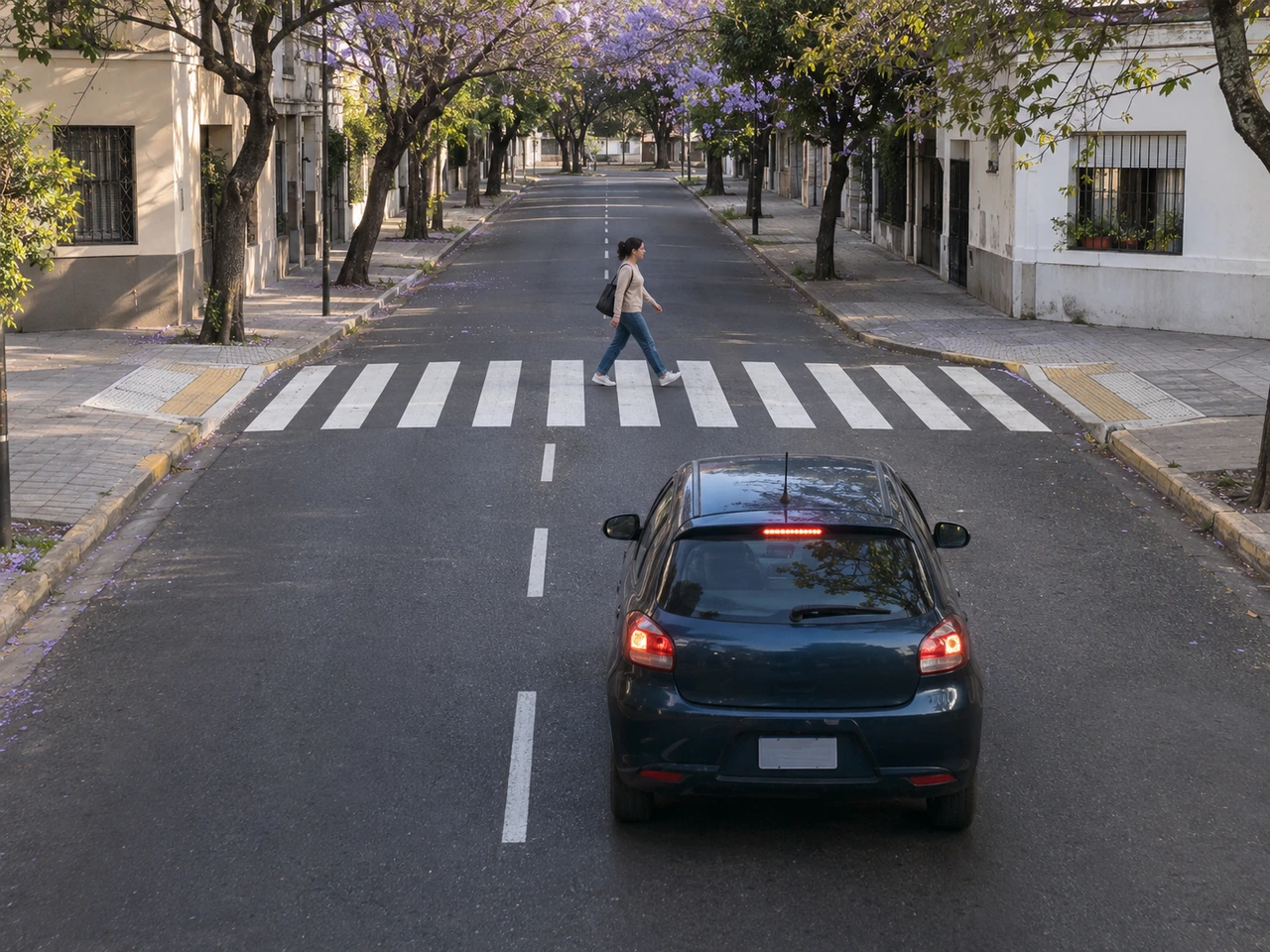
863. A pedestrian crossing means you should be ready to slow down or stop.
Pedestrian crossings require extra attention because people may be crossing or preparing to cross.
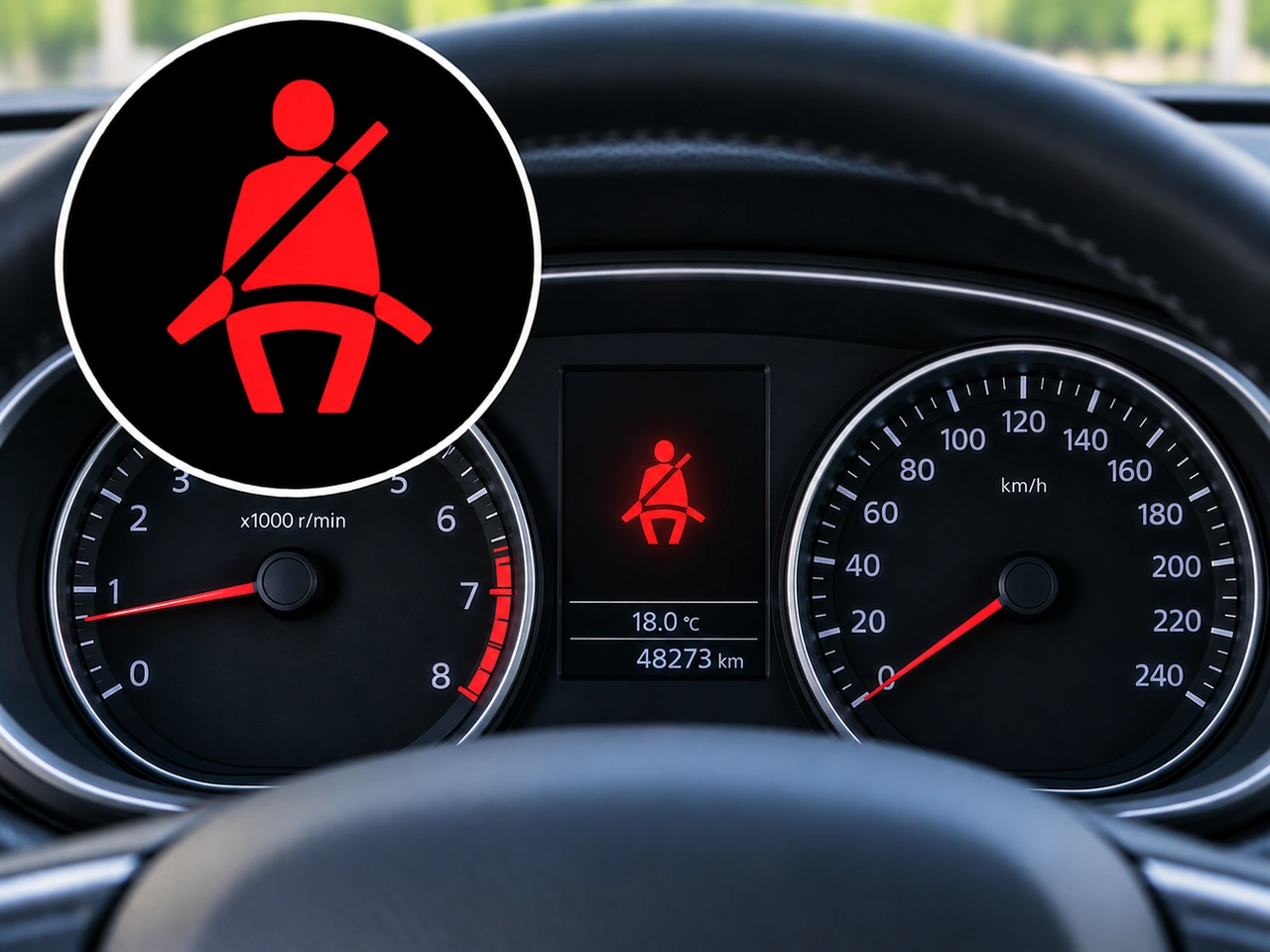
864. What does this dashboard symbol indicate?
This symbol is a seat-belt reminder. It indicates that the driver or another detected occupant has not fastened their seat belt.
Fasten the seat belt before driving. Some vehicles identify the seat whose belt is unfastened.
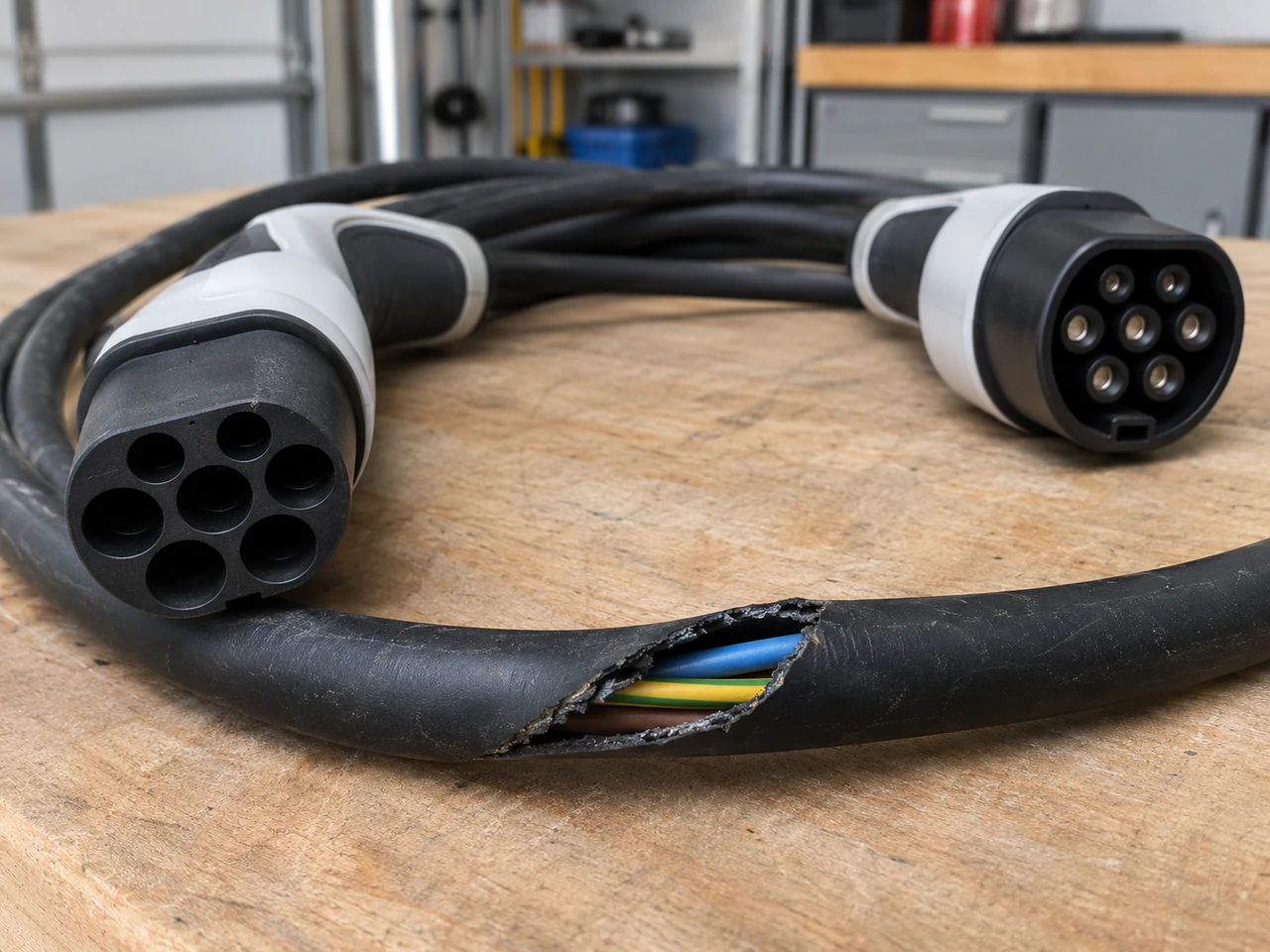
865. A damaged EV charging cable is safe to use if the car still charges.
A cable can be unsafe even if charging still works. Do not use damaged charging equipment. Report public-charger damage to the operator and arrange an appropriate replacement for a damaged personal cable.
🔗 Sources
Kent Fire and Rescue Service (Great Britain) • Safety guidance, safety checklist, point 9
Image credit: AI-generated
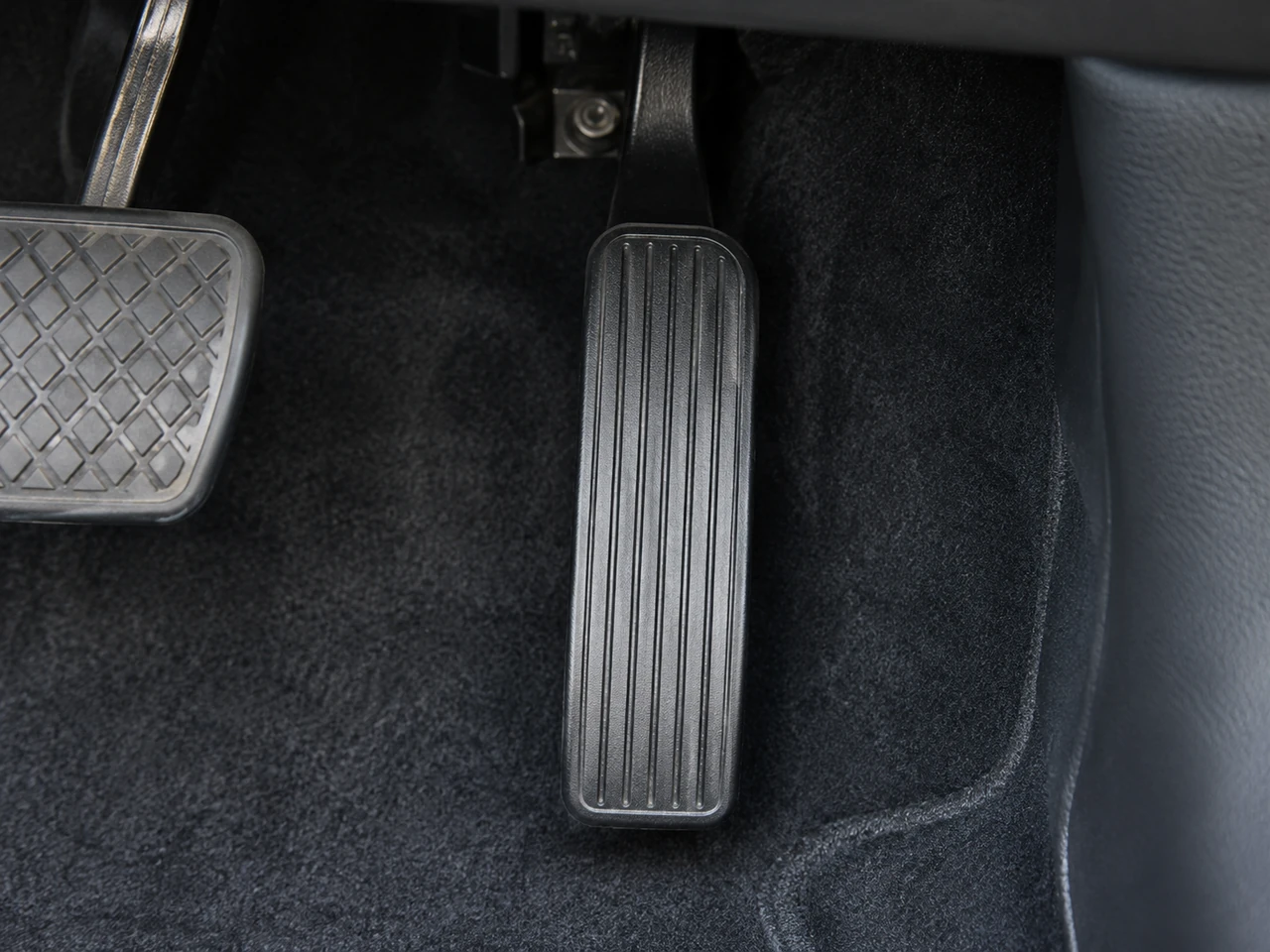
866. Harsh acceleration is a good way to save fuel.
Unnecessarily harsh acceleration wastes fuel. Use smooth, appropriate acceleration while maintaining control and responding safely to traffic. Fuel saving must not prevent you from gaining speed when needed for a safe manoeuvre.
🔗 Sources
Vehicle Certification Agency (United Kingdom) • Safety guidance, Drive smoothly; safe acceleration when power is needed
Image credit: AI-generated
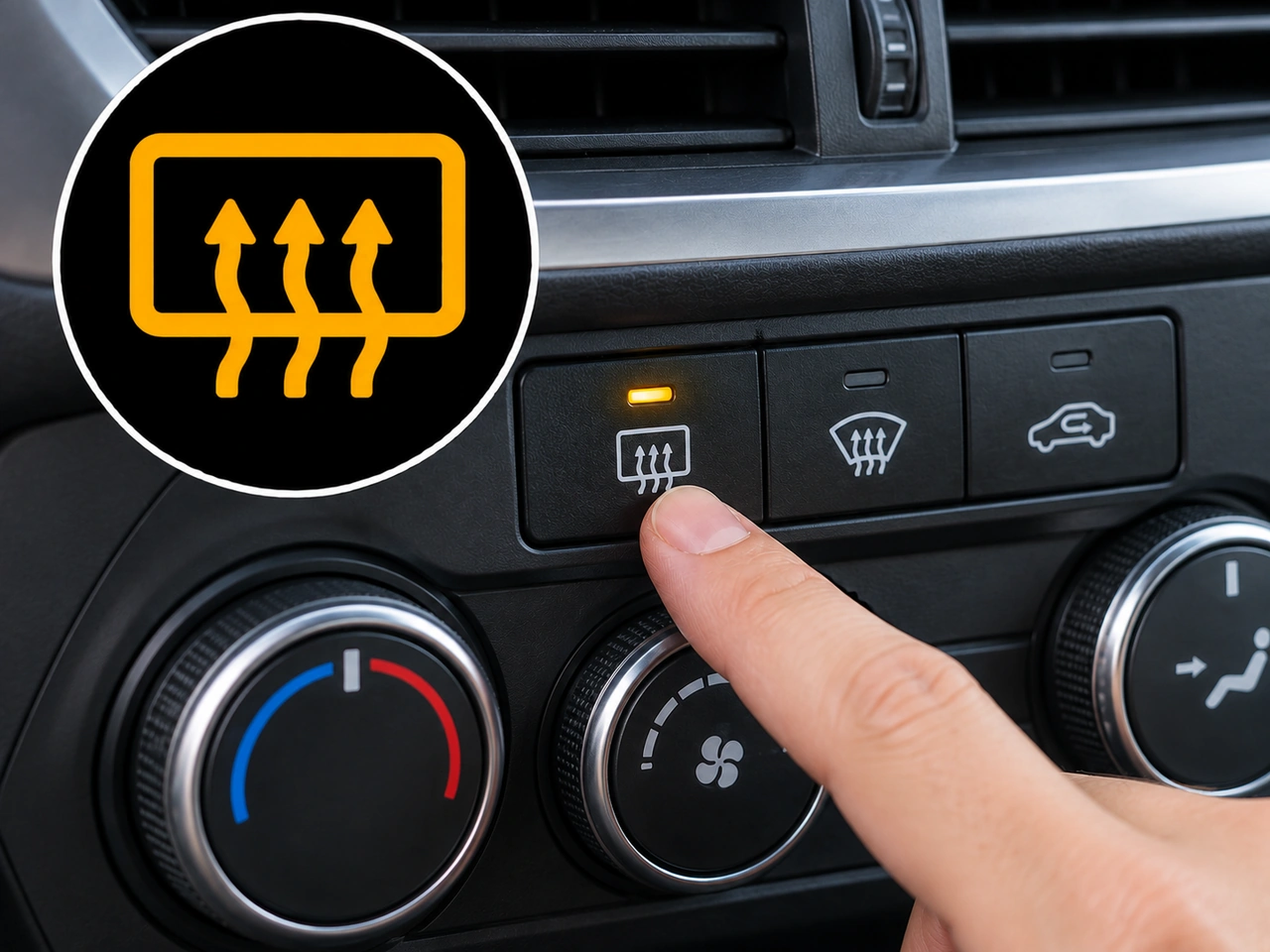
867. What does this dashboard symbol indicate?
This symbol indicates the rear window demister. It heats the rear window to help clear condensation, mist or frost and improve visibility.
The rectangular window outline with rising lines identifies the rear window heater. It clears condensation from the rear glass.
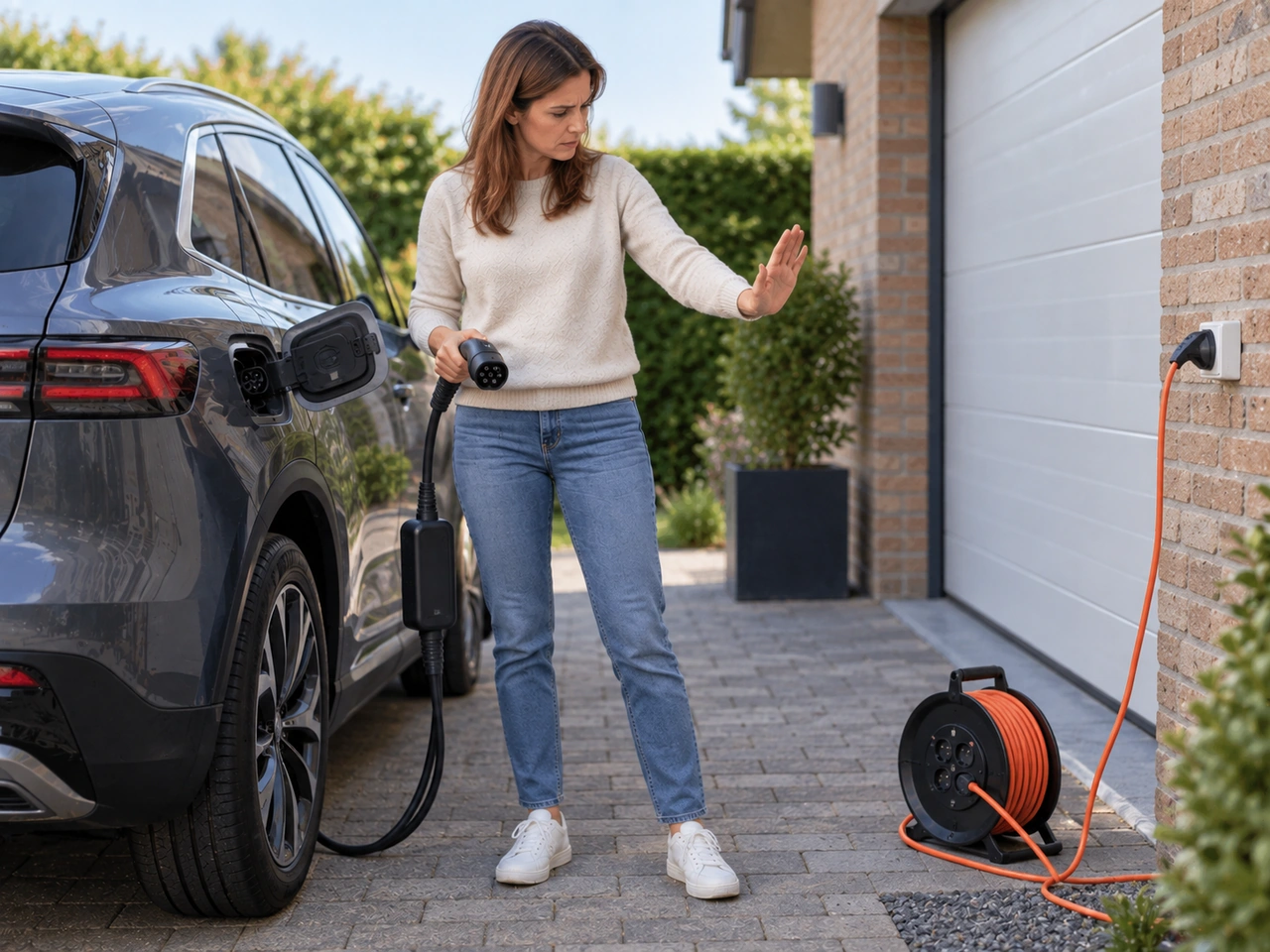
868. Why should you avoid using an ordinary extension lead to charge an electric vehicle?
An ordinary household extension lead may not be designed for the sustained electrical load required for EV charging and can overheat. Use suitable approved charging equipment and follow the vehicle and charging-equipment manufacturer's instructions.
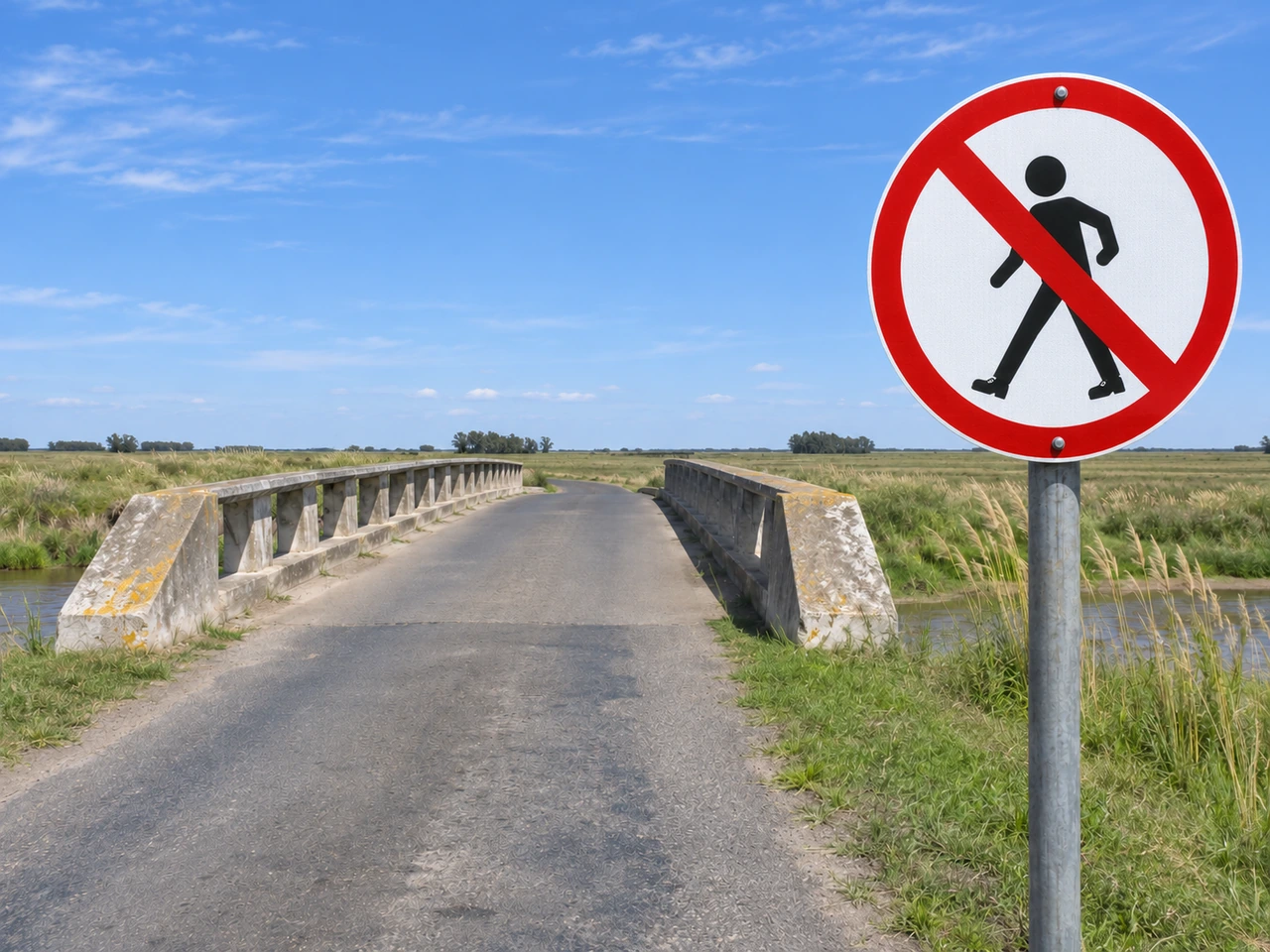
869. This sign prohibits pedestrians from entering.
This sign prohibits pedestrian traffic. Use a route that is open to pedestrians.
🔗 Sources
Agencia Nacional de Seguridad Vial • Manual del Conductor • Regulatory signs, R3(6), printed page 77
Argentina • Decree 196/2025 • Annex L, R.3 Prohibición de circular
Image credit: AI-generated
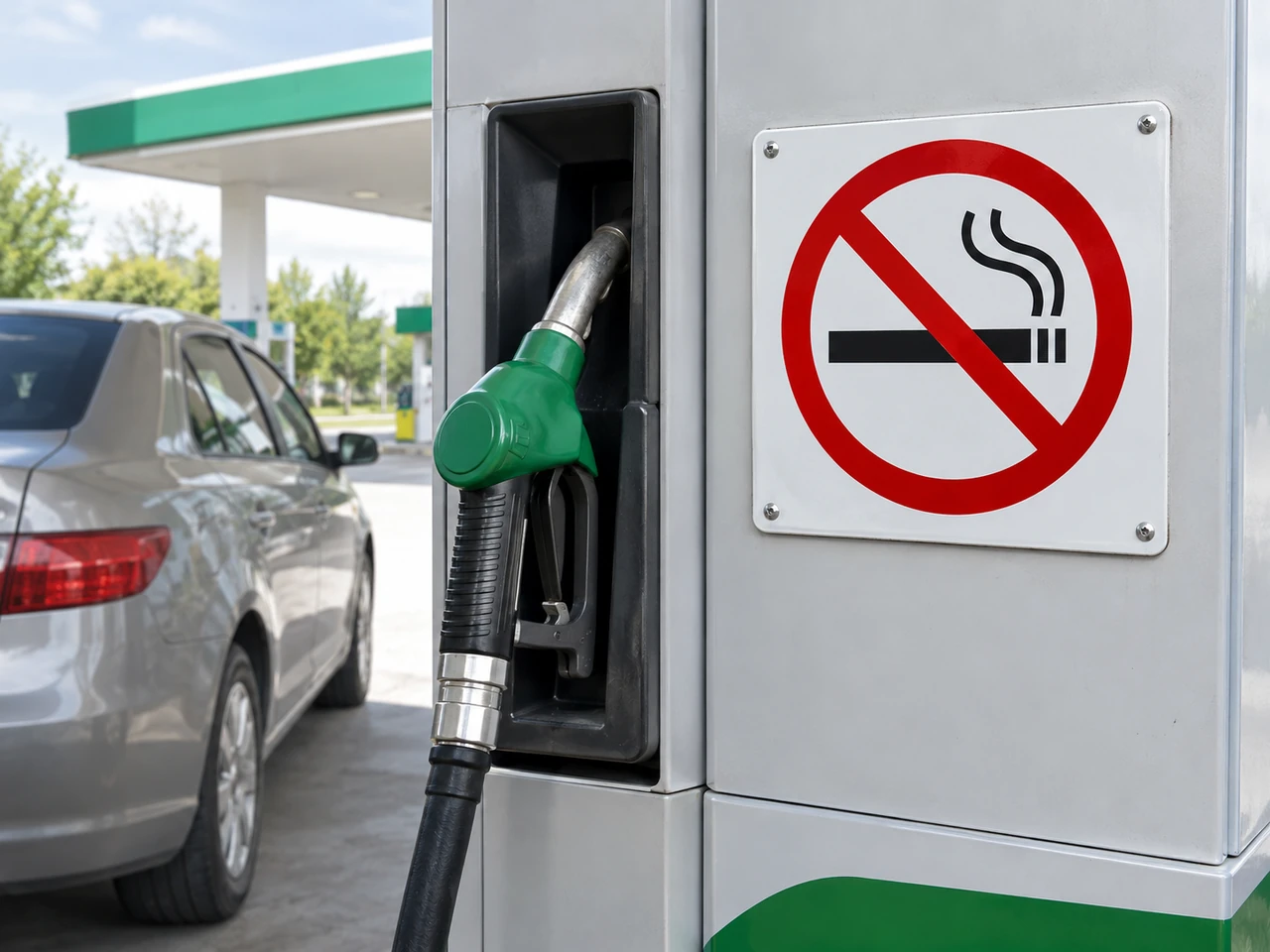
870. Smoking beside a petrol pump is safe if no fuel has spilled.
Petrol gives off flammable vapour even without a visible spill. Never smoke near fuel pumps or while refuelling, and follow the station's safety instructions.
🔗 Sources
HSE (Great Britain) • Safety guidance, fire precautions and flammable fuel vapour
Image credit: AI-generated
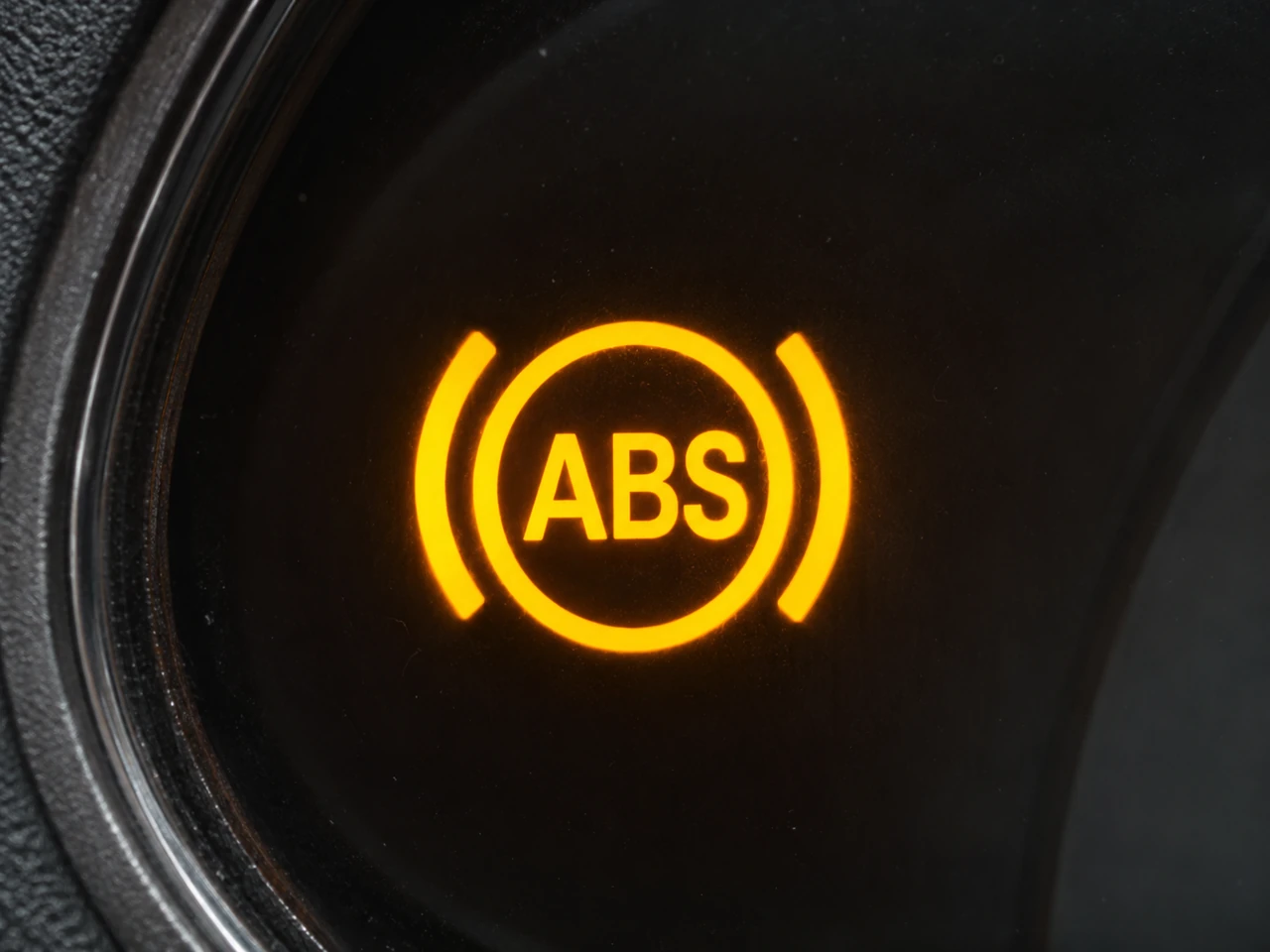
871. An ABS fault warning always means the car has no working brakes.
An ABS fault can leave conventional braking working without the anti-lock function. Other warnings or changes in braking may indicate a more serious problem. Follow the handbook and have the fault checked promptly; stop safely if braking is affected.
🔗 Sources
Ford owner’s manual (manufacturer guidance) • Safety guidance, ABS fault: conventional braking may remain; heed other warnings
Image credit: AI-generated
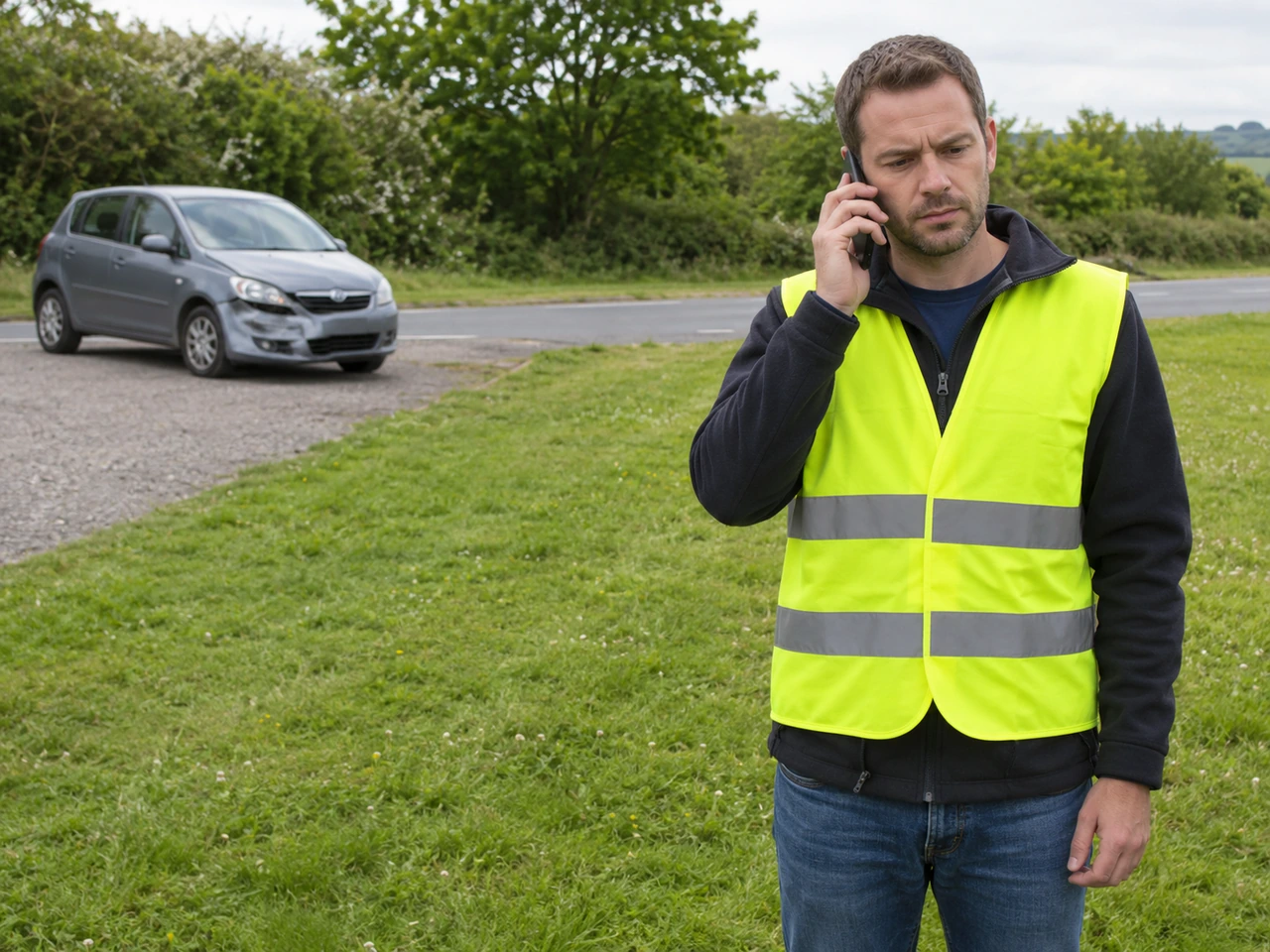
872. What should you do when an emergency call handler gives instructions after a collision?
Follow the call handler's instructions and answer their questions. Ask for clarification if you do not understand, and tell them if the situation changes. Keep yourself out of danger.
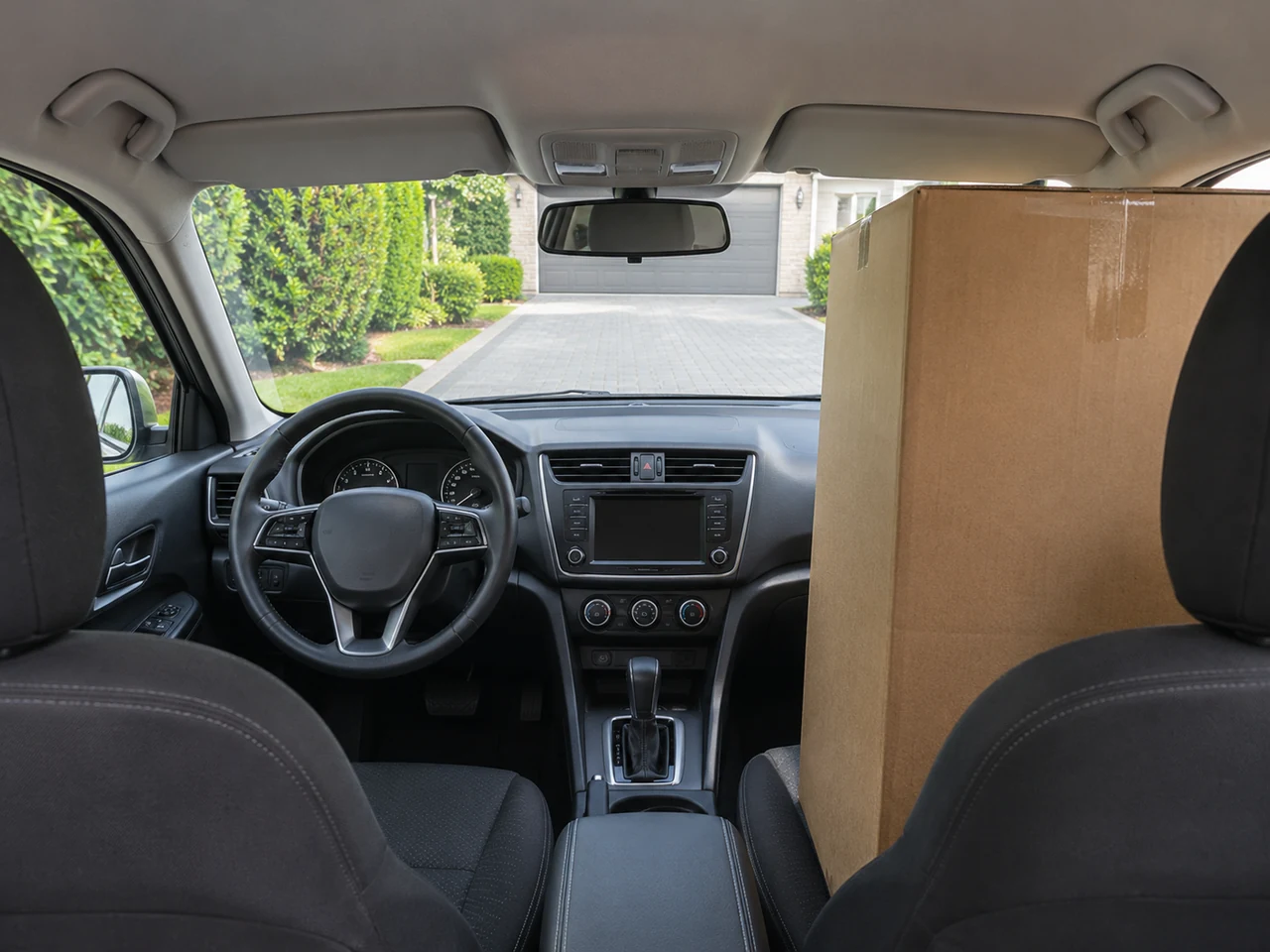
873. Why must luggage or other objects not obstruct the driver's view?
The driver must have a clear view of the road and surroundings. Luggage, decorations, or other objects that obstruct the windscreen, windows, or mirrors can hide pedestrians, cyclists, vehicles, signs, or other hazards.
🔗 Sources
Argentina National Traffic Law 24.449, articles 48 and 57
NZTA safe loading and towing guide, practical guidance
Image credit: AI-generated
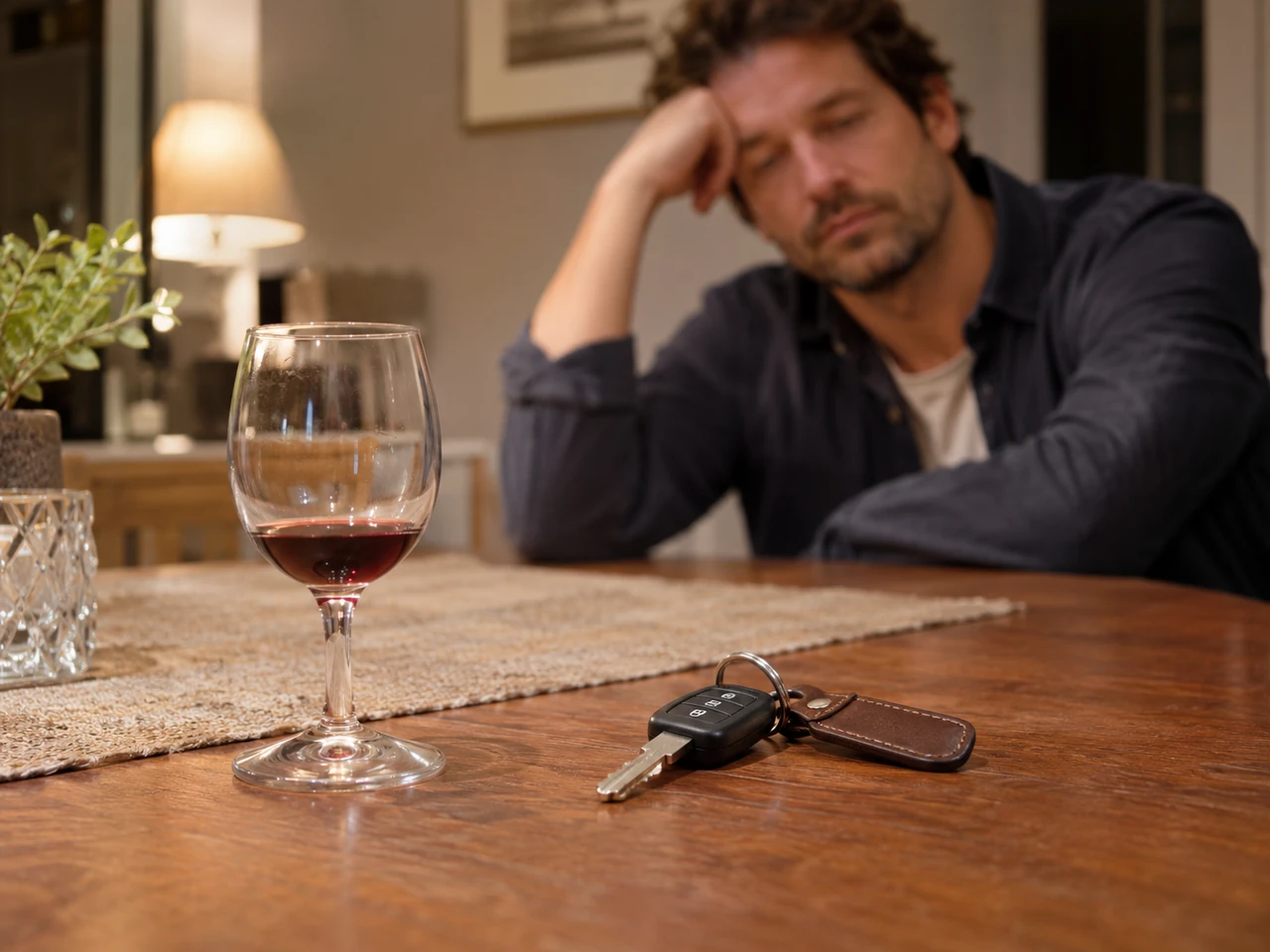
874. Alcohol can make the effects of sleepiness worse.
Alcohol can combine with sleepiness to increase impairment. Avoid drinking before driving, and do not drive when you are too tired.
🔗 Sources
NHTSA (United States) • Safety guidance, alcohol increases drowsiness and impairment
Image credit: AI-generated
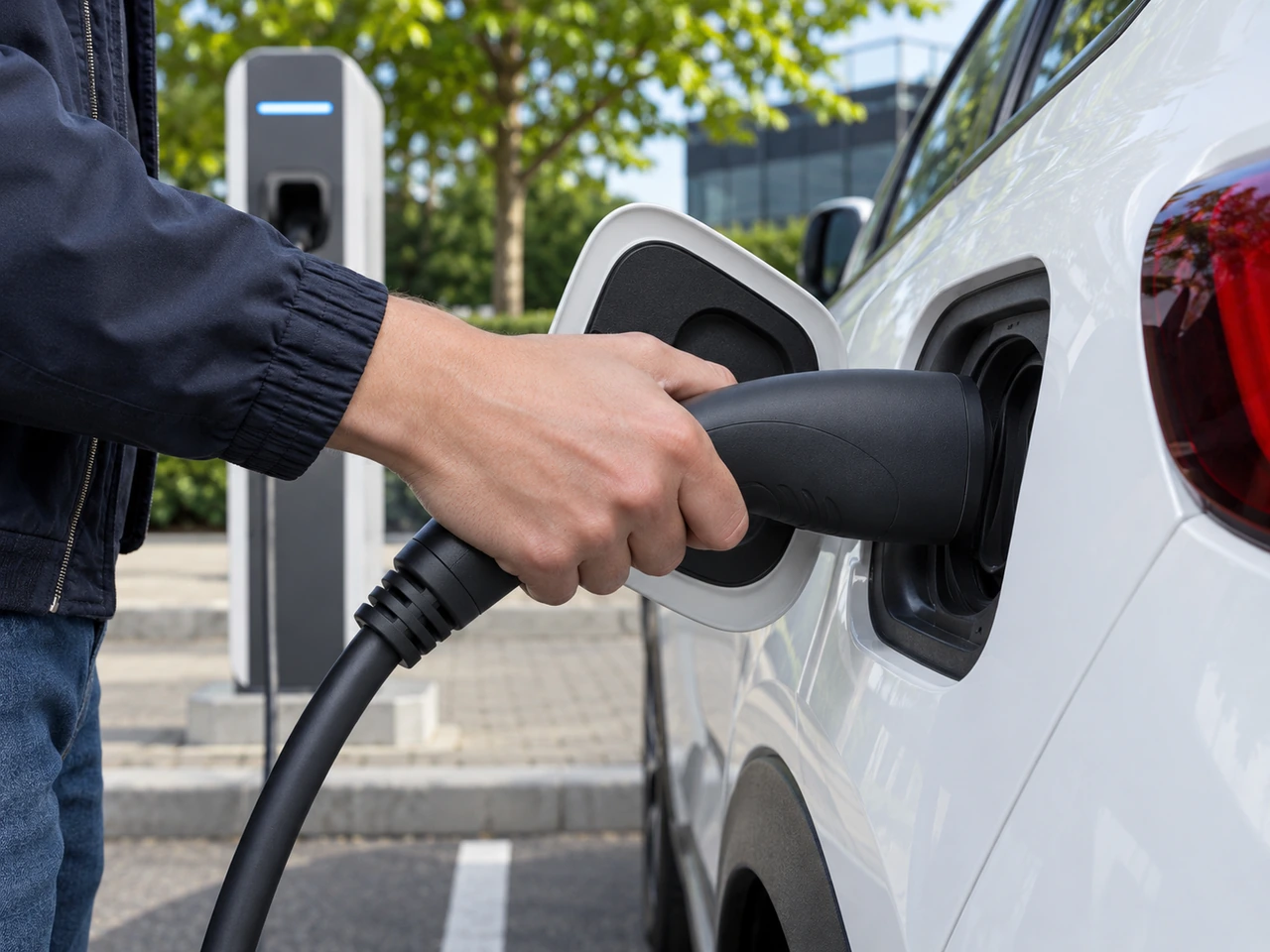
875. What should you check before connecting an electric vehicle to a charger?
Charging connectors and charging capabilities can vary between vehicles and charging stations. Use compatible charging equipment that is suitable for the vehicle and follow the vehicle and charger manufacturer's instructions.
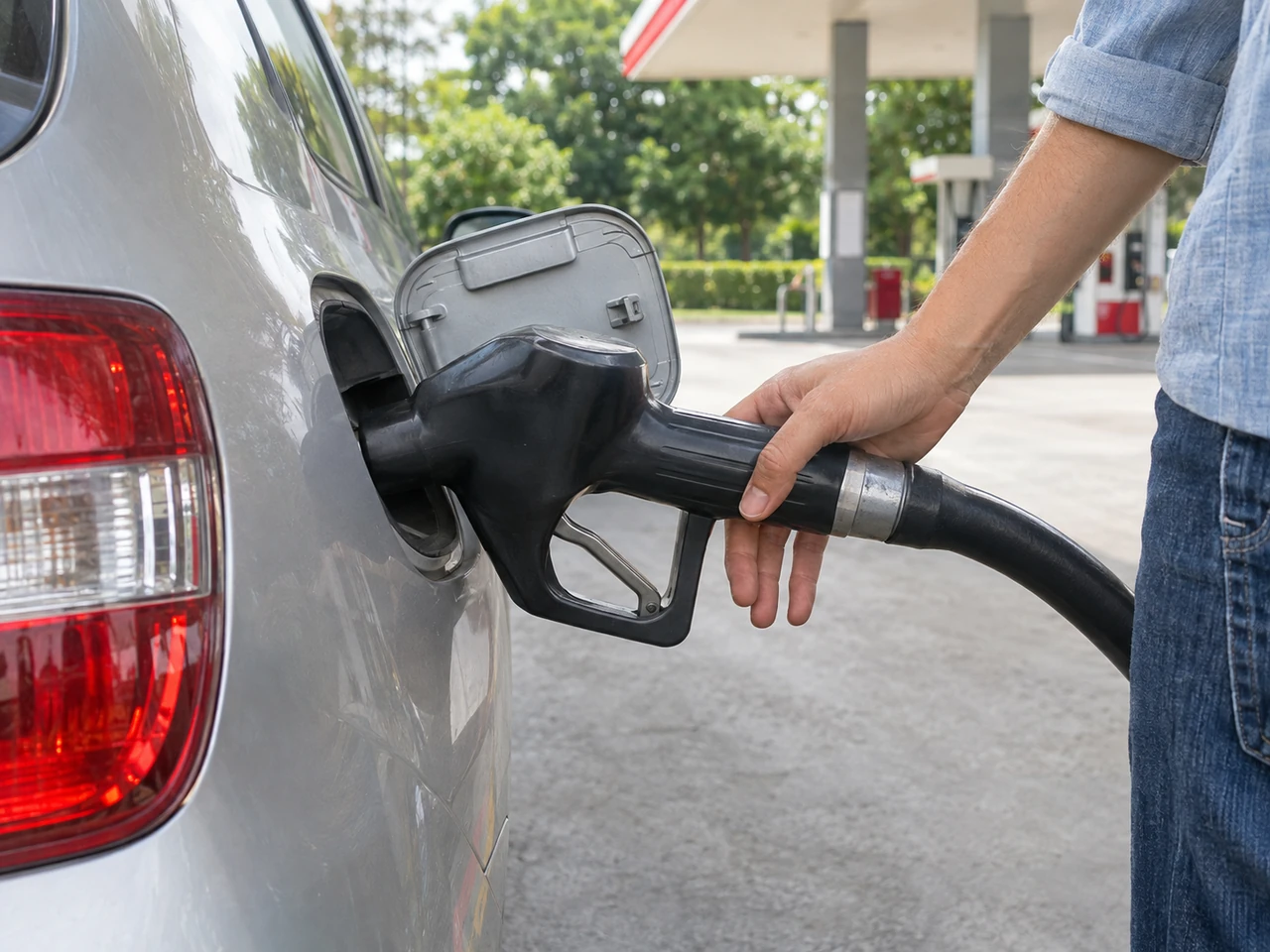
876. You should stop filling when the fuel nozzle first shuts off automatically.
Do not keep topping up after the first automatic cut-off. Overfilling can cause fuel to overflow or leak. Follow the vehicle handbook and report any spill to the station attendant.
🔗 Sources
Ford owner’s manual (manufacturer guidance) • Safety guidance, refuelling precautions; follow your vehicle’s handbook
Image credit: AI-generated
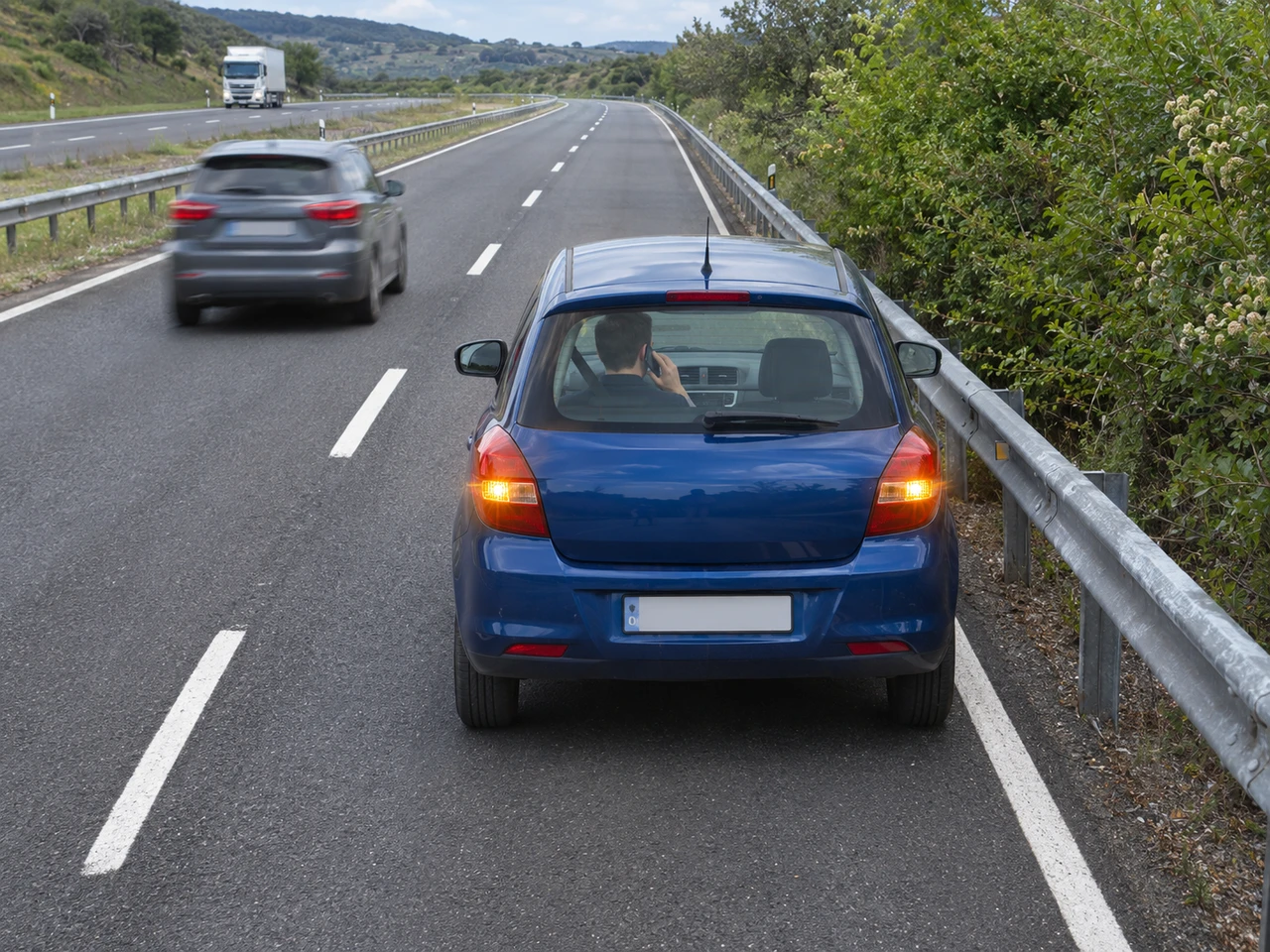
877. What should you do if it is unsafe to leave a stranded vehicle?
If you cannot leave safely, keep your seat belt fastened, use the hazard warning lights and contact the emergency services immediately. Explain that you are stranded and cannot get out safely, give your location and follow the operator’s instructions. Do not attempt to cross live traffic lanes. This advice concerns an unsafe exit; fire or another immediate threat inside the vehicle may require urgent evacuation.
On motorways, if safe exit is impossible, remain belted with hazards on and call emergency services.
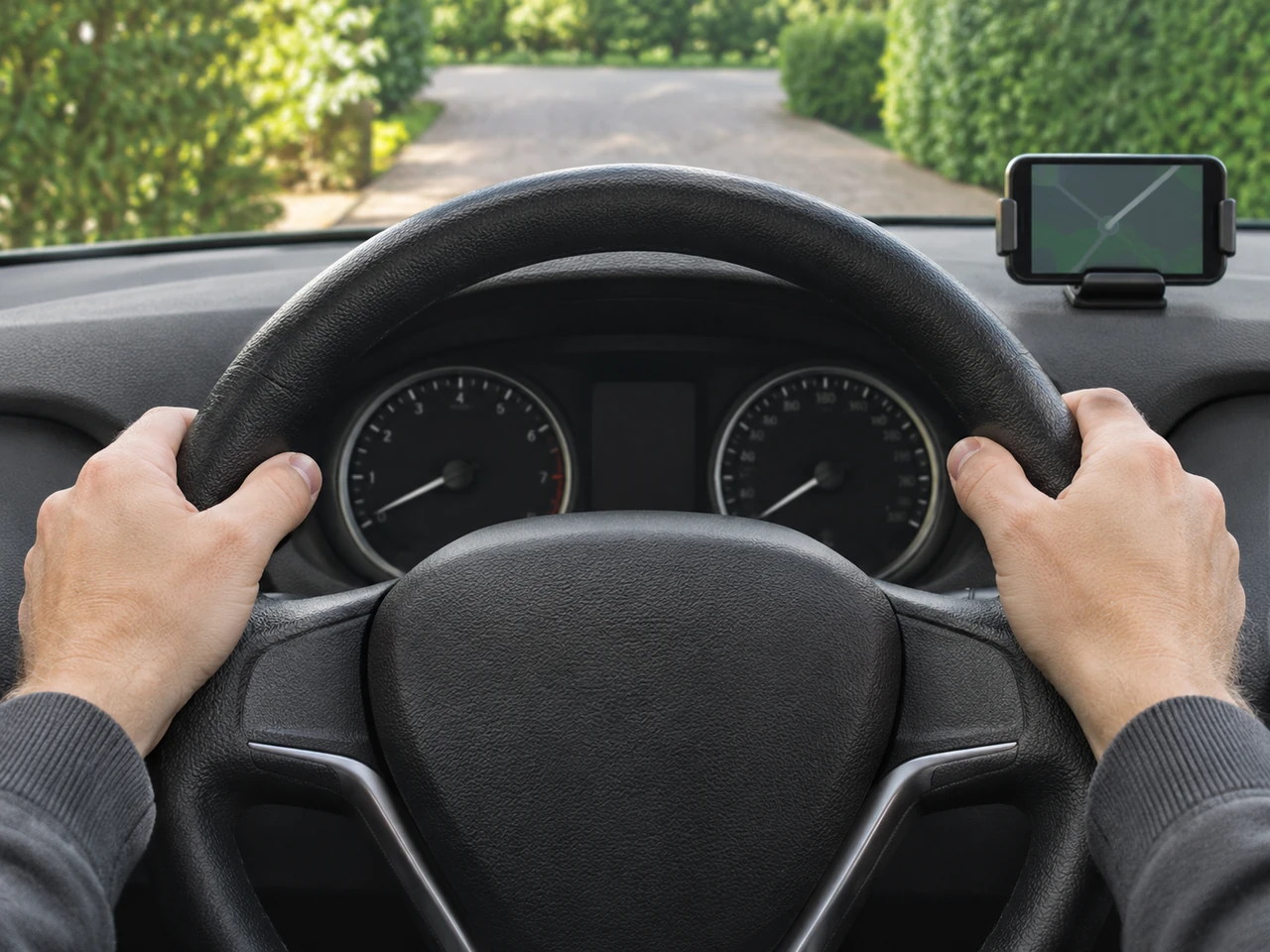
878. A phone holder removes the driver's duty to remain in control of the vehicle.
A proper holder does not remove the duty to remain able to perform the necessary driving movements and continuously control the vehicle. Mounted-device use must not prevent safe driving. Stop in a safe, lawful place if a task would interfere with driving.
🔗 Sources
Argentine National Road Safety Agency • Mobile phones and driver attention
Image credit: AI-generated
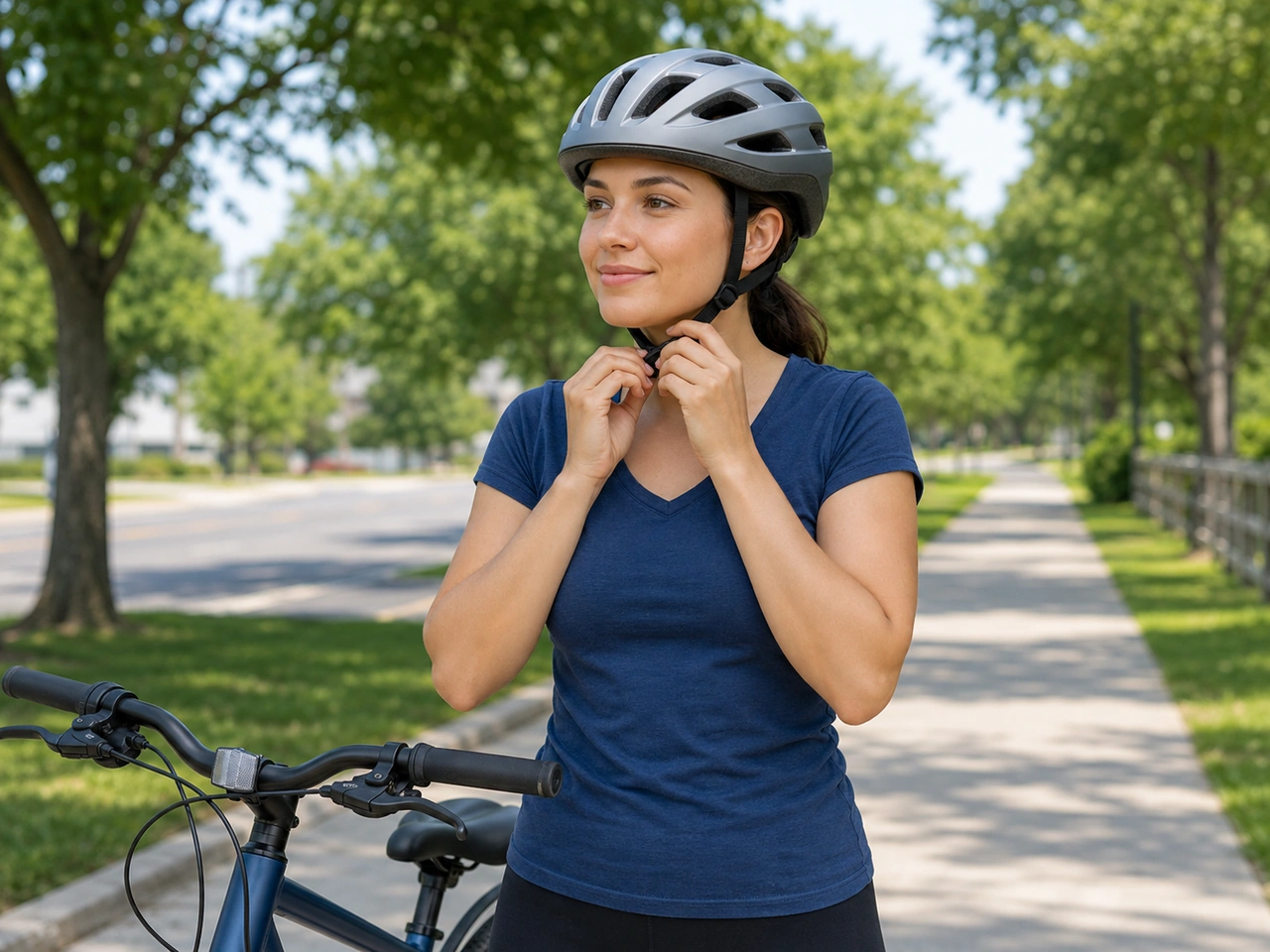
879. How should a bicycle helmet fit?
Wear a correctly sized helmet level on your head, with the front low enough to protect your forehead. Fasten and adjust the chin strap so the helmet stays secure without causing discomfort. Follow the fitting instructions supplied with the helmet.
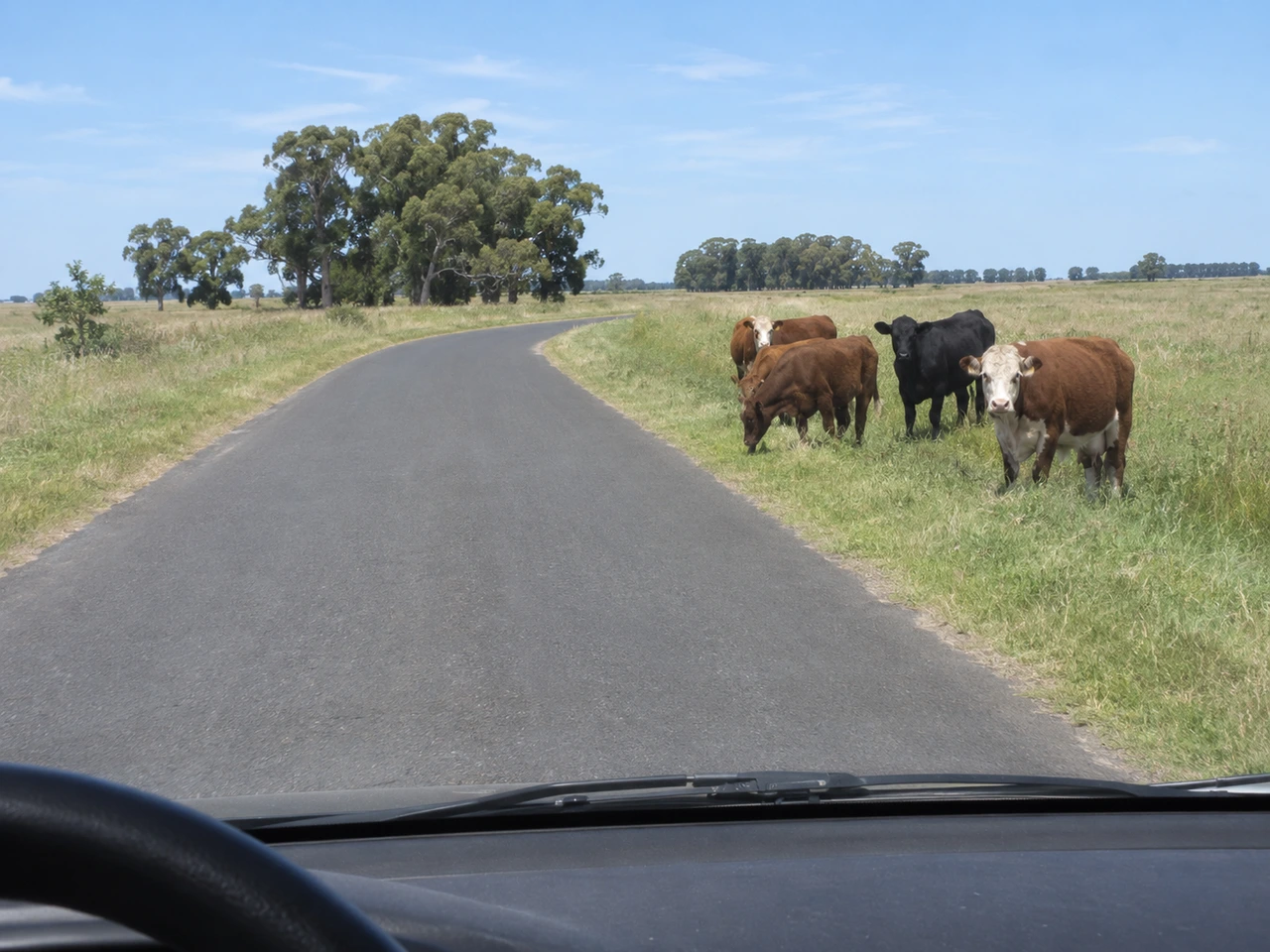
880. What should you do if animals are gathered beside a narrow rural road?
Animals beside a narrow road may step into your path. Slow down and leave as much safe space as possible.
🔗 Sources
Great Britain Highway Code, Rule 214 (general guidance on passing animals).
Image credit: AI-generated.
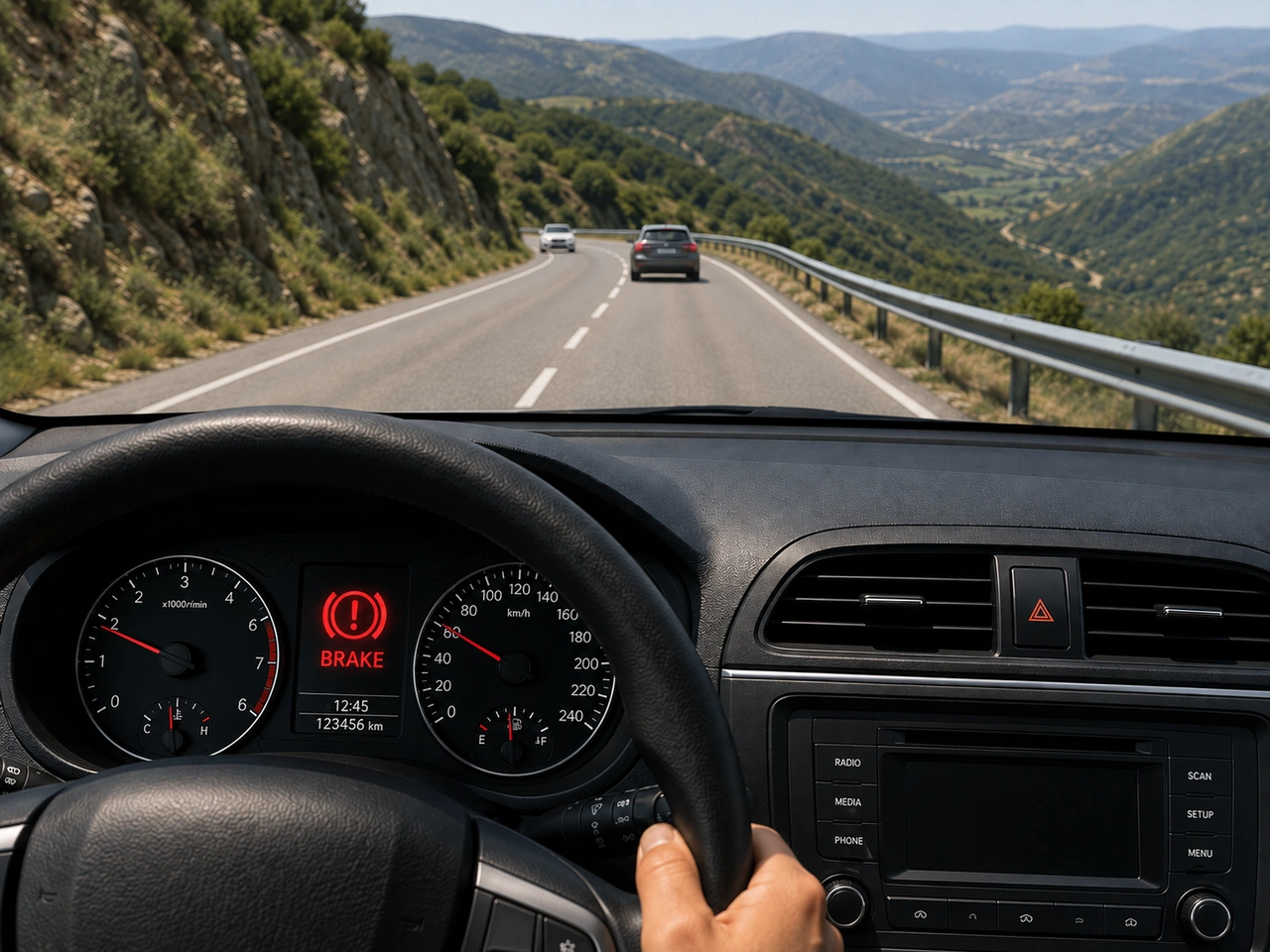
881. What should you do if the brakes fade during a long descent?
Repeated or continuous braking on a long descent can overheat the brakes and reduce their effectiveness. Select a suitable lower gear smoothly where the vehicle permits, keep control and stop in a protected place to allow the brakes to cool. Do not coast in neutral. If the vehicle is not slowing adequately, follow its emergency stopping procedure. Arrange inspection if braking performance has been impaired; cooling alone does not prove that the brakes are safe.
Before a long descent, select a lower gear to help control speed. This is preventive downhill-driving advice.
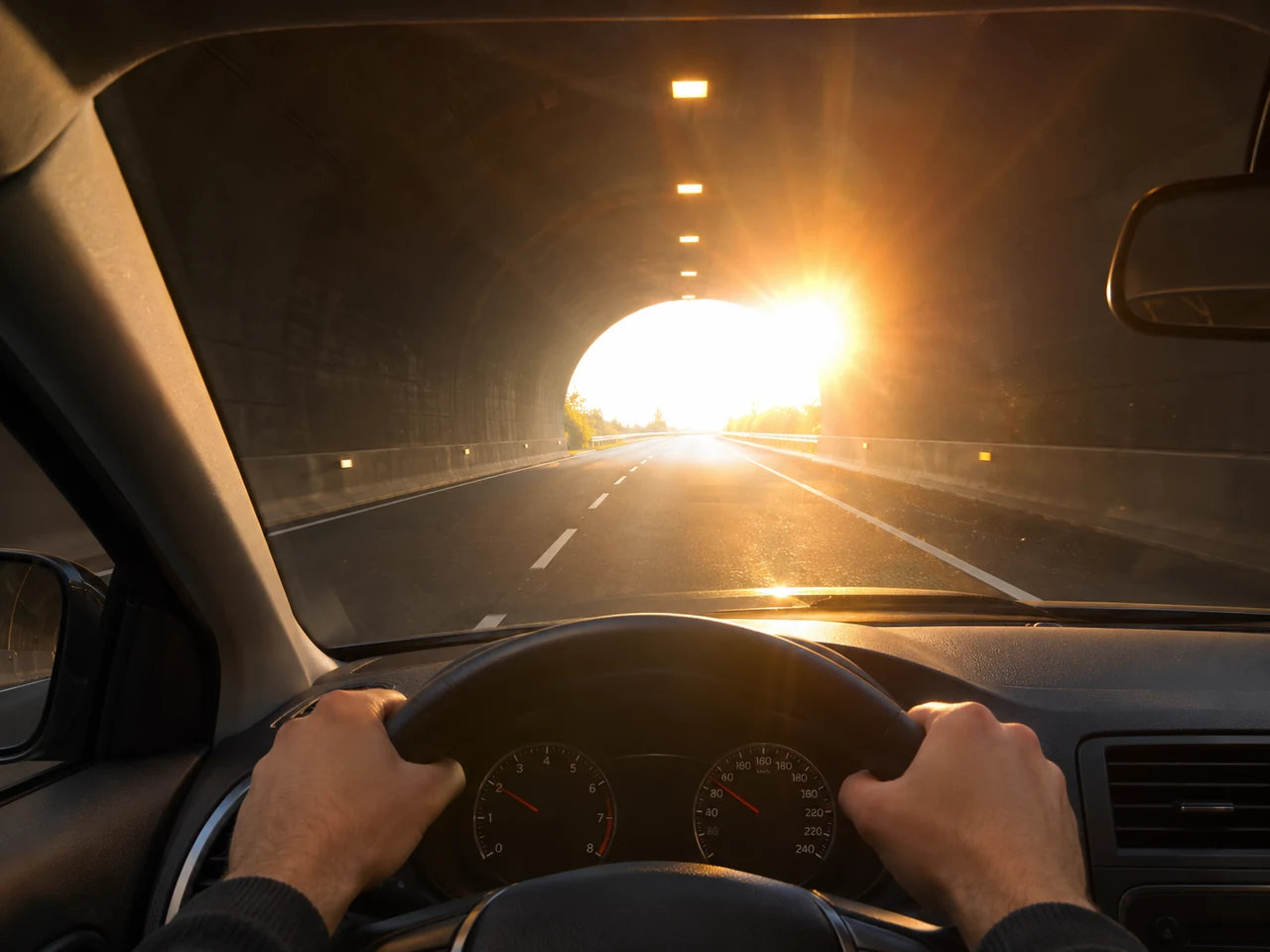
882. What should you expect when leaving a tunnel in bright sunlight?
Your eyes may need time to adjust from the darker tunnel to bright daylight. Reduce speed if necessary and remain alert.
🔗 Sources
Spain DGT — General tunnel visibility, observation and emergency guidance
Great Britain — Highway Code, rule 93; sun glare
Image credit: AI-generated
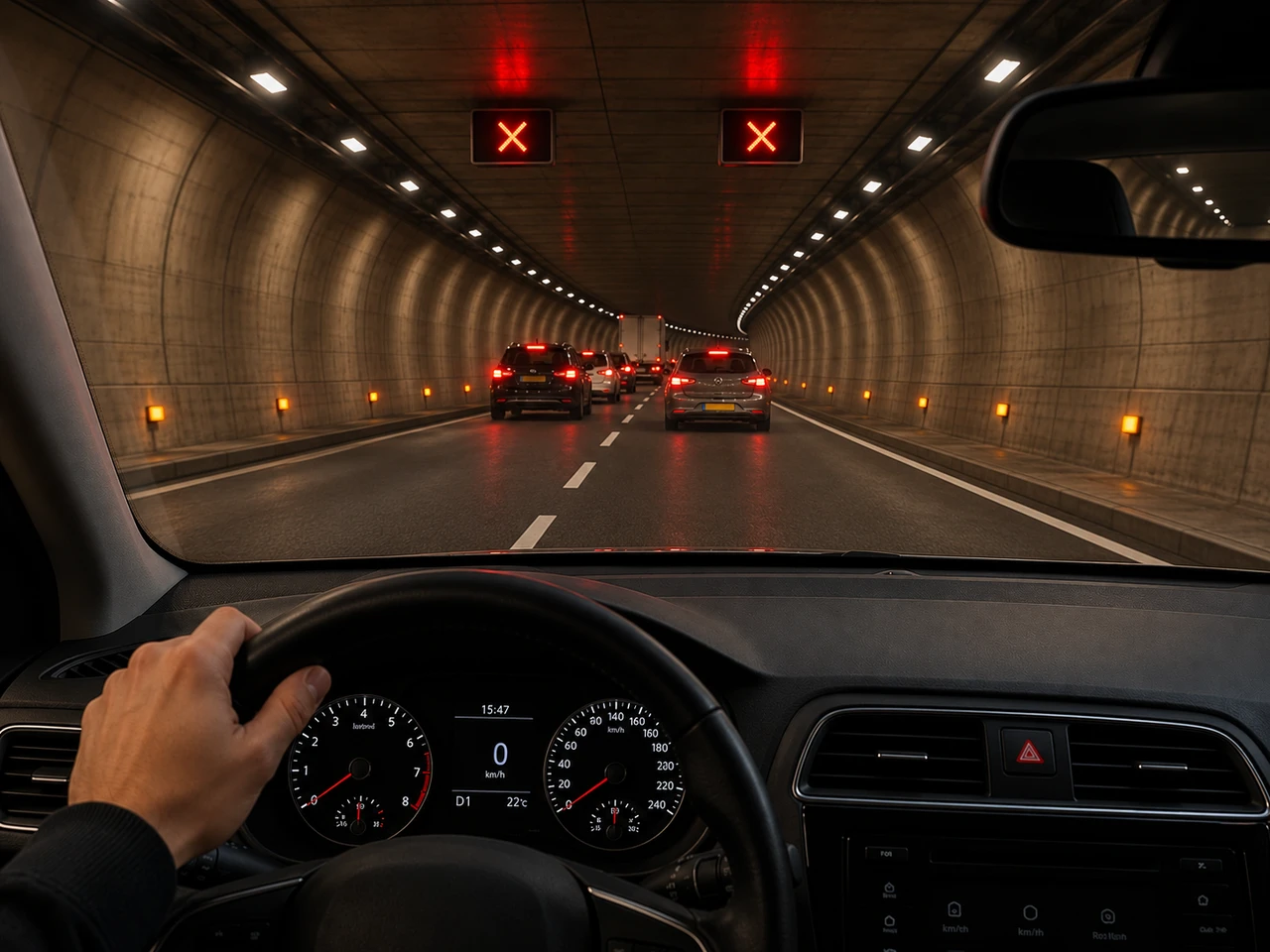
883. What should you do if traffic stops inside a tunnel?
Remain calm, keep space from the vehicle ahead, and obey traffic signals, signs, or instructions from tunnel staff.
🔗 Sources
Great Britain Merseytravel — Operator guidance on tunnel traffic, breakdowns and evacuation
Image credit: AI-generated
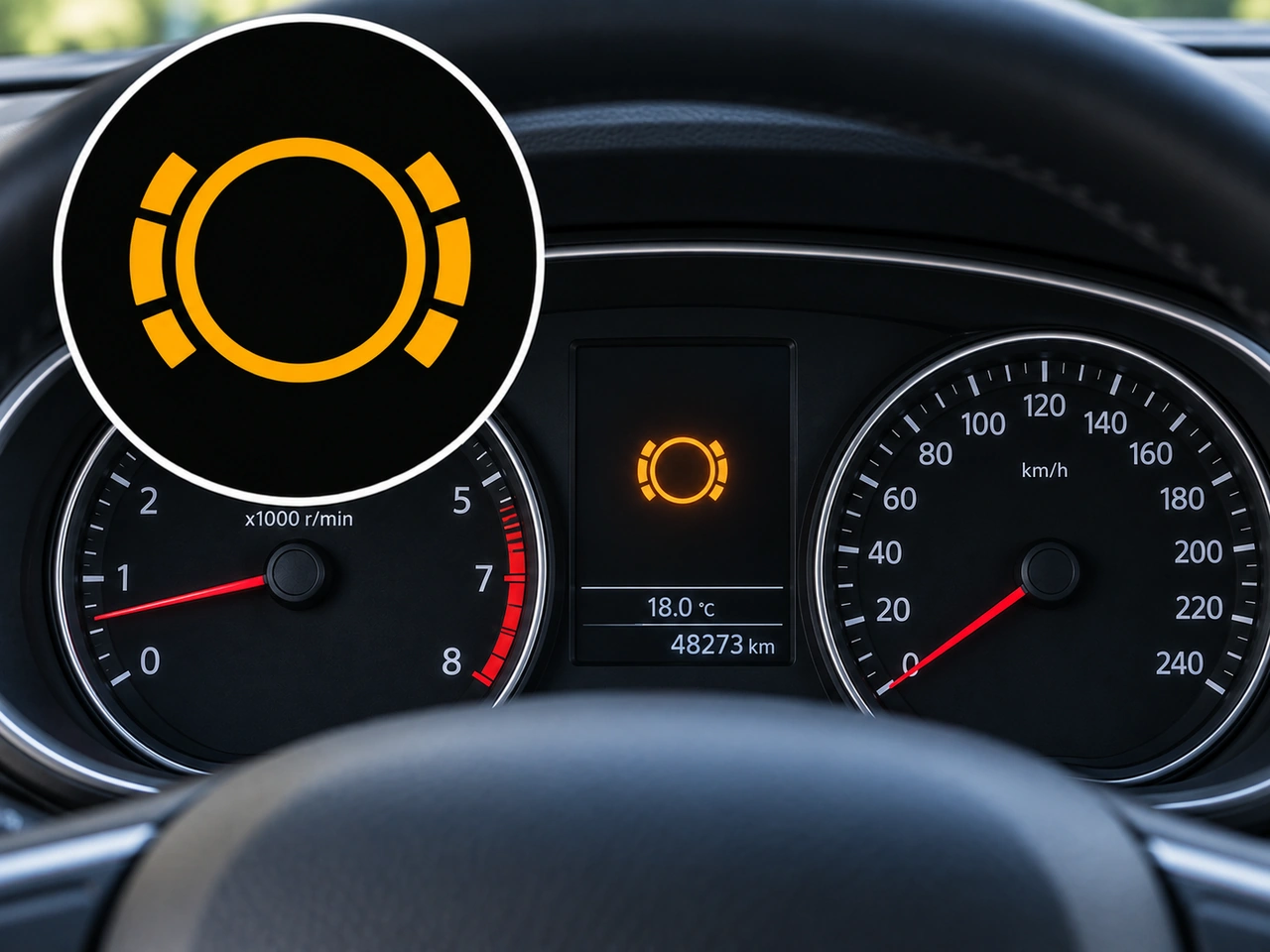
884. What does this dashboard symbol indicate?
This symbol indicates that the brake pads may be worn and should be inspected. Continuing to drive with excessively worn brake pads can reduce braking performance and damage other brake components.
On vehicles with a pad-wear warning, this light means the brake pads need inspection. Arrange a check with a repairer.
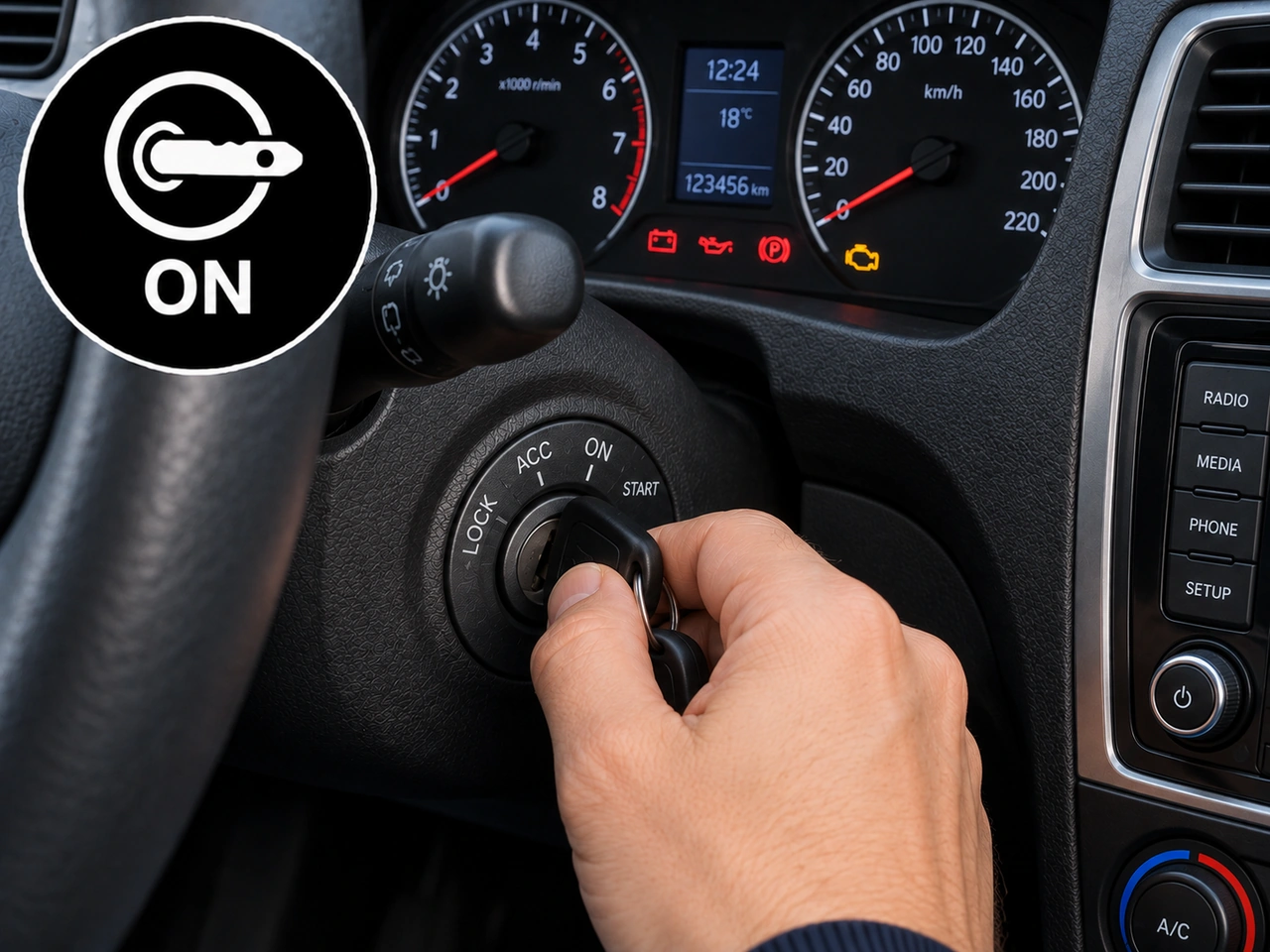
885. What does the ON position of a traditional ignition switch normally do?
The ON position normally switches on the vehicle's electrical and ignition systems without operating the starter motor. The engine is started by turning the key further to the START position.
On a keyed ignition, ON powers the vehicle systems and may light warning lamps as part of a check. START operates the starter motor.
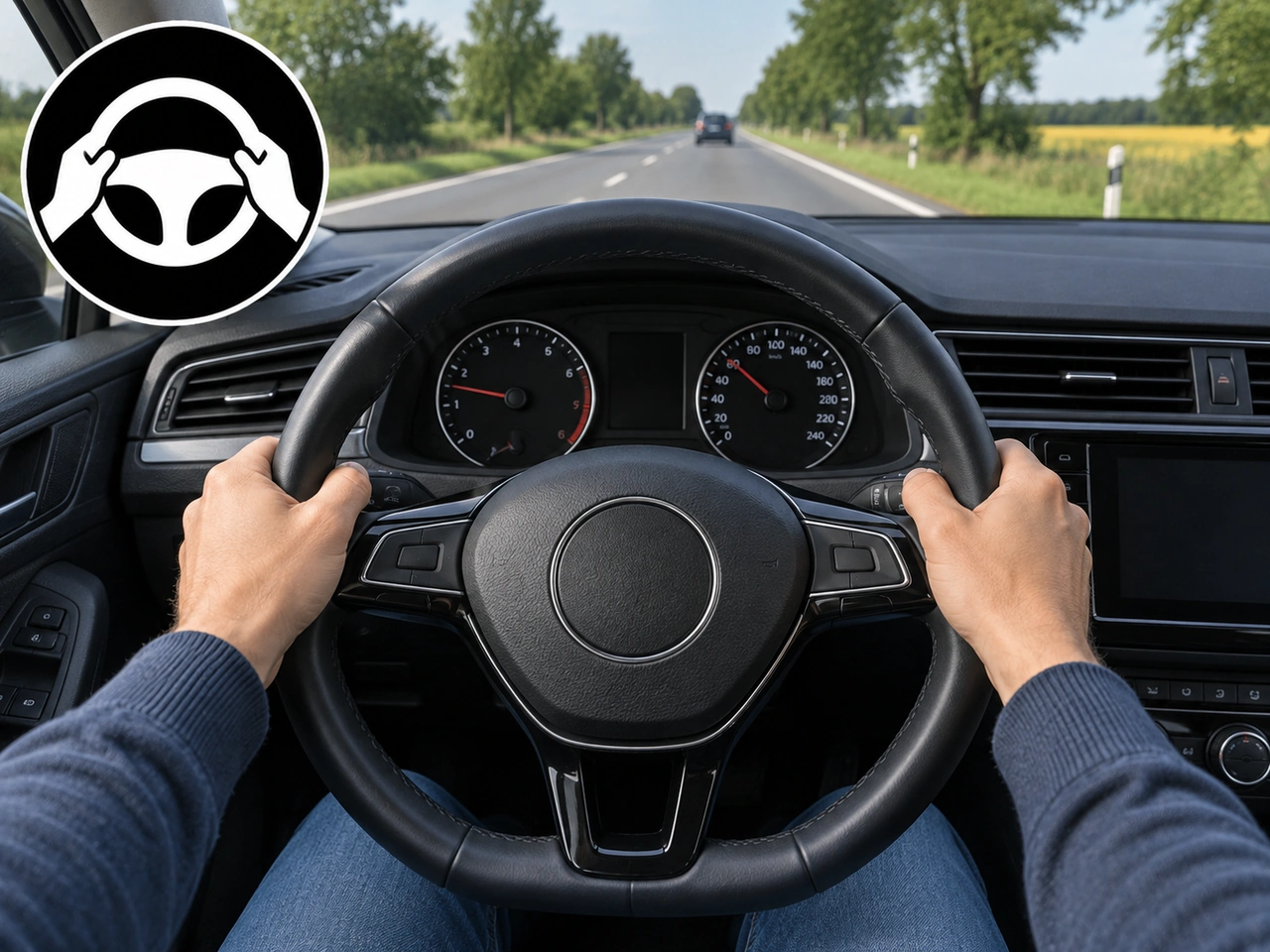
886. How should you normally hold the steering wheel while driving?
Hold the steering wheel with both hands in a balanced position so that you can steer smoothly and react quickly. A position around nine and three o'clock generally provides good control.
Use a light grip with hands near nine and three o’clock as you move off and steer.
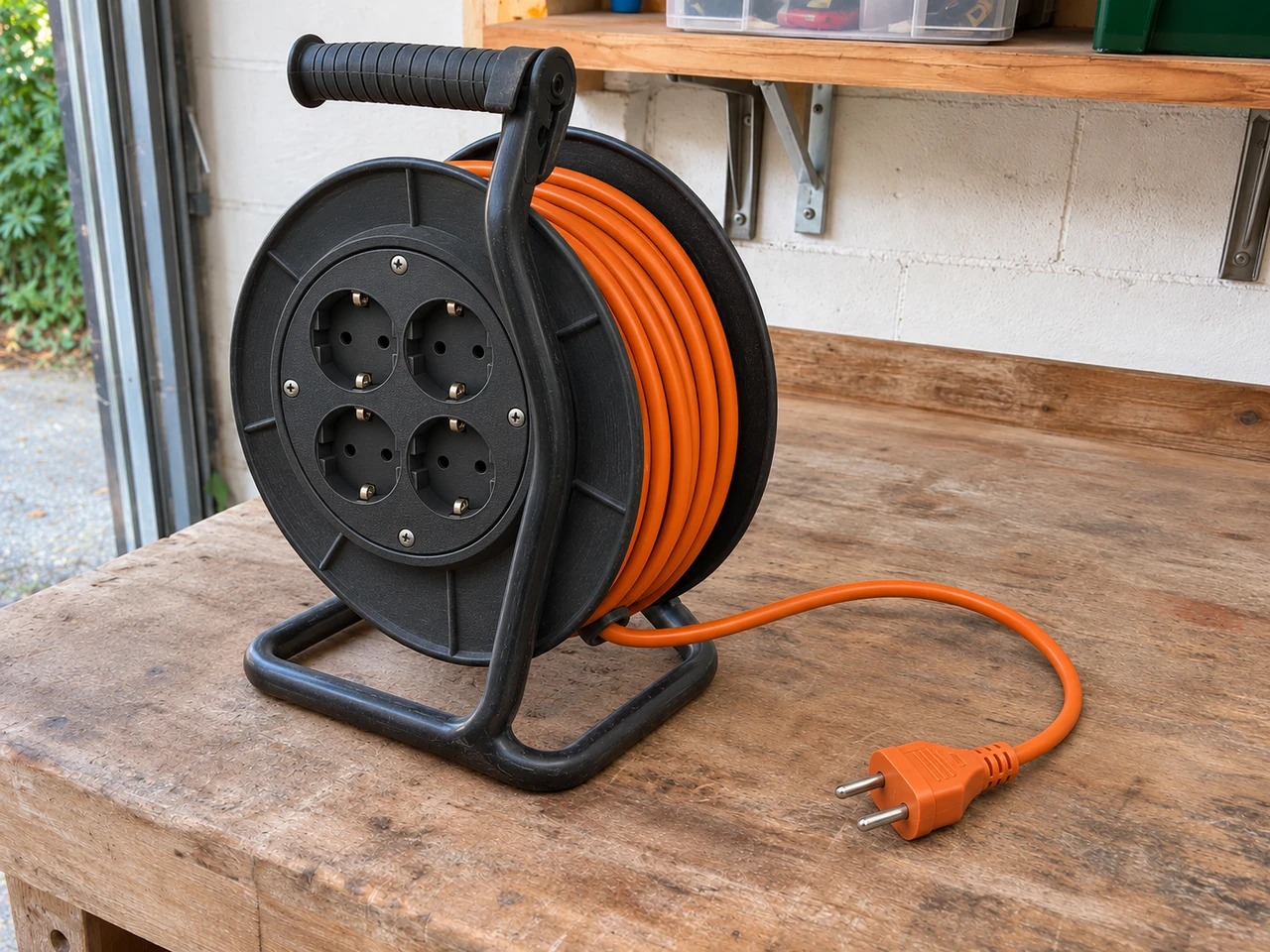
887. Any household extension lead is suitable for charging an electric car.
Ordinary household extension leads and multi-socket adapters can be unsuitable for EV charging. Use the charging equipment and supply arrangement specified by the manufacturer; do not improvise an extension.
🔗 Sources
EECA (New Zealand) • Safety guidance, Best practice for home charging: extensions and adapters
Image credit: AI-generated
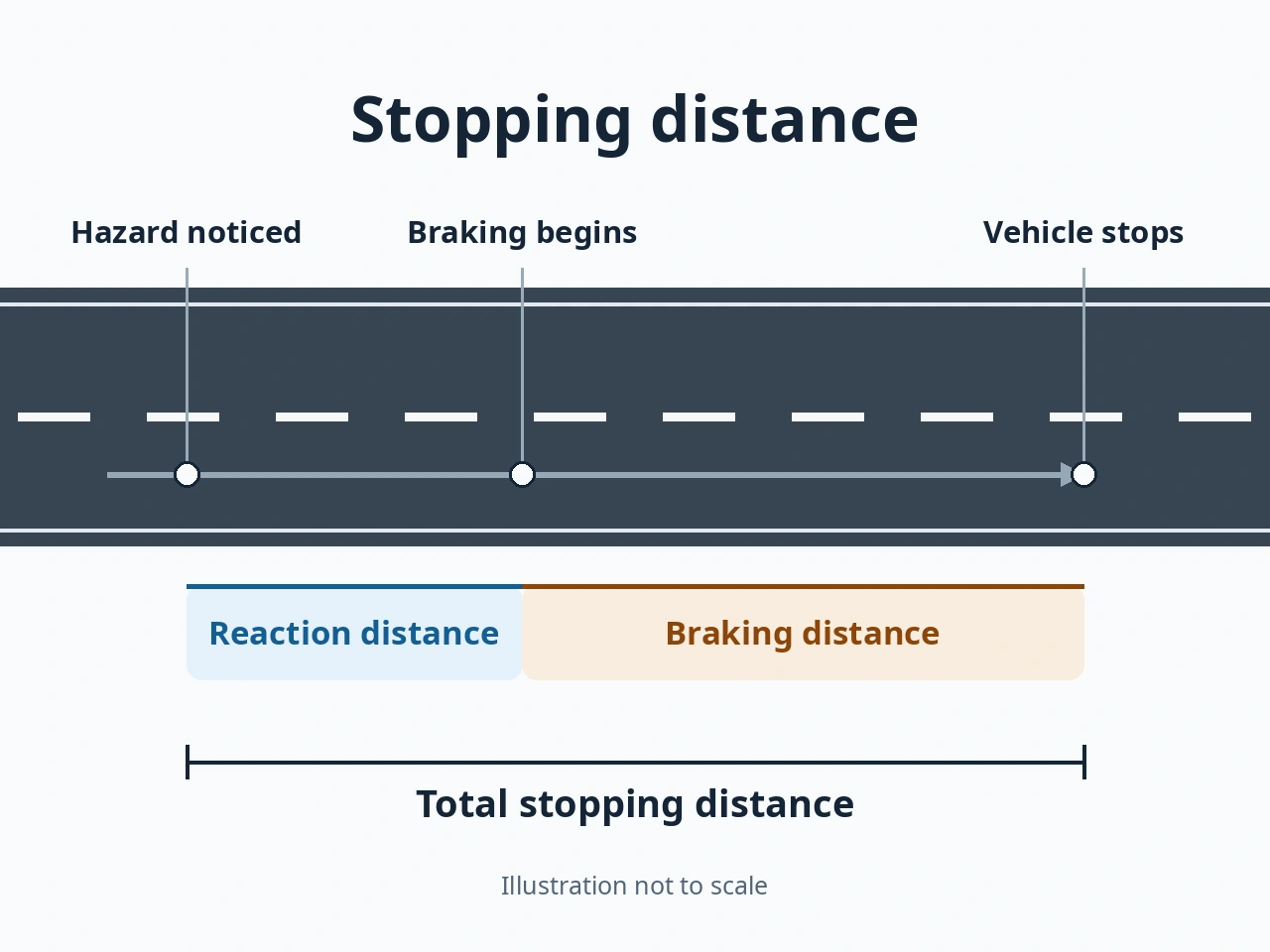
888. What makes up the total stopping distance of a vehicle?
The total stopping distance consists of the distance travelled while the driver reacts to a hazard plus the distance travelled while the vehicle is braking to a stop.
🔗 Sources
Image credit: AI-generated
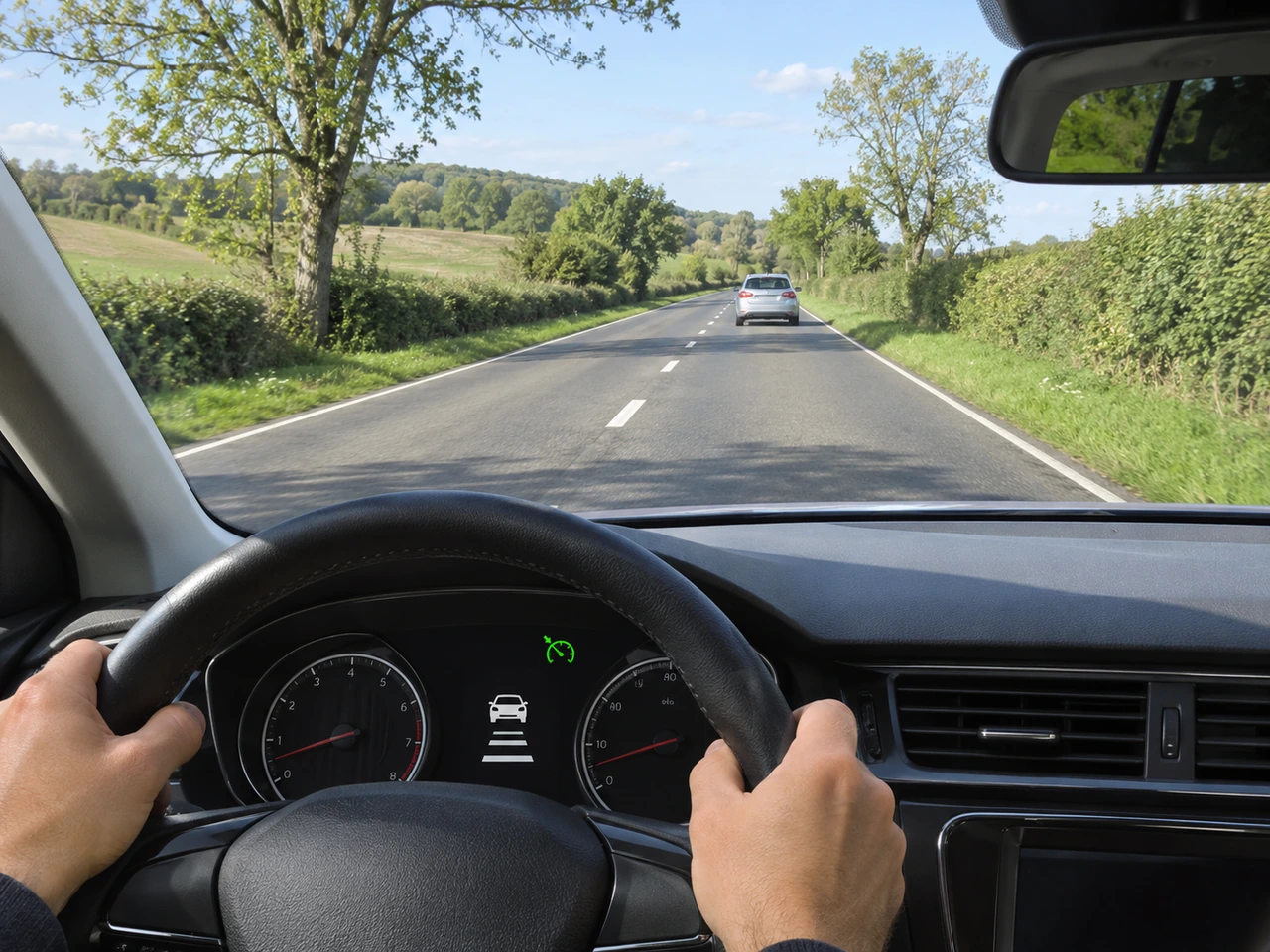
889. What must you still judge when using adaptive cruise control?
Adaptive cruise control can adjust speed to maintain a selected gap, but you must choose a suitable setting and monitor the situation. Follow the vehicle instructions and intervene when necessary.
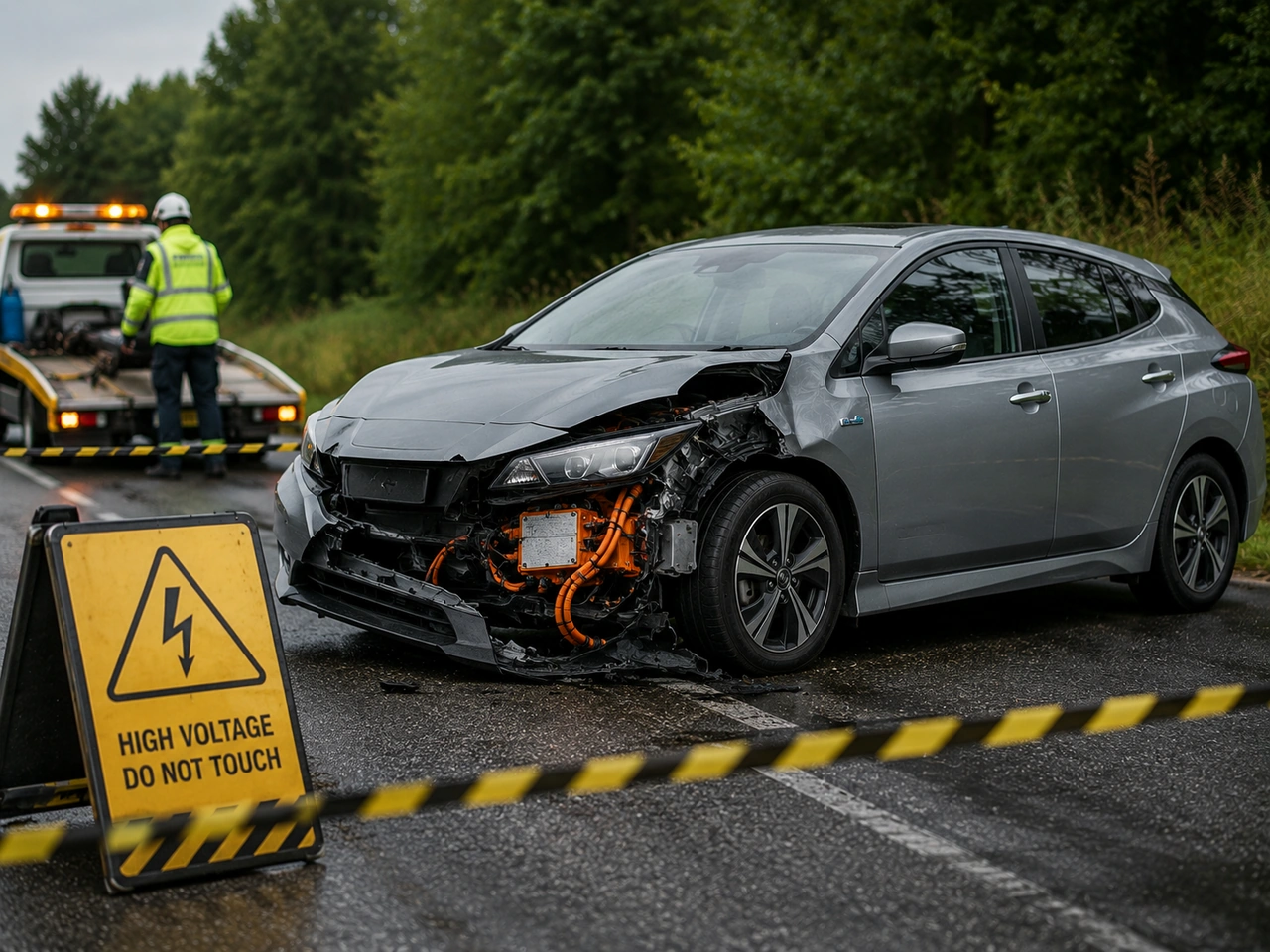
890. What should you do around a damaged electric or hybrid vehicle?
Keep away from damaged high-voltage cables, batteries and electrical components. They can remain dangerous even when the vehicle is switched off. Do not touch, disconnect or attempt repairs. Call trained assistance and identify the vehicle as electric or hybrid. Move away and alert the emergency services if there is smoke, heat, fire or another immediate danger; battery damage can cause a delayed fire.
Treat exposed high-voltage components as live. Keep clear and obtain specialist help; physical battery damage may cause delayed fire or hazardous gas release.
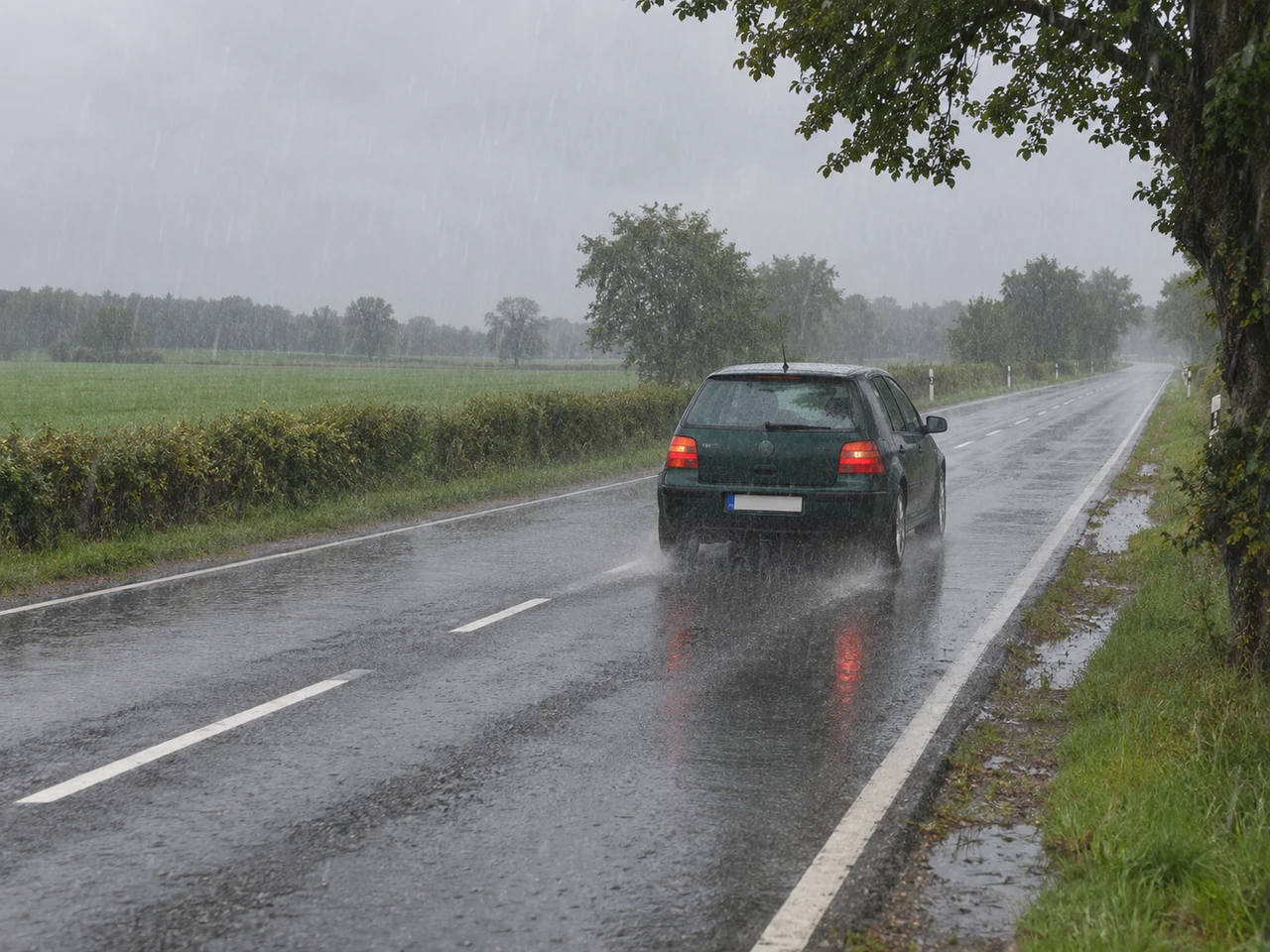
891. Rain can reduce tyre grip and increase stopping distance.
Wet roads reduce traction, so your vehicle may need more distance to stop safely.
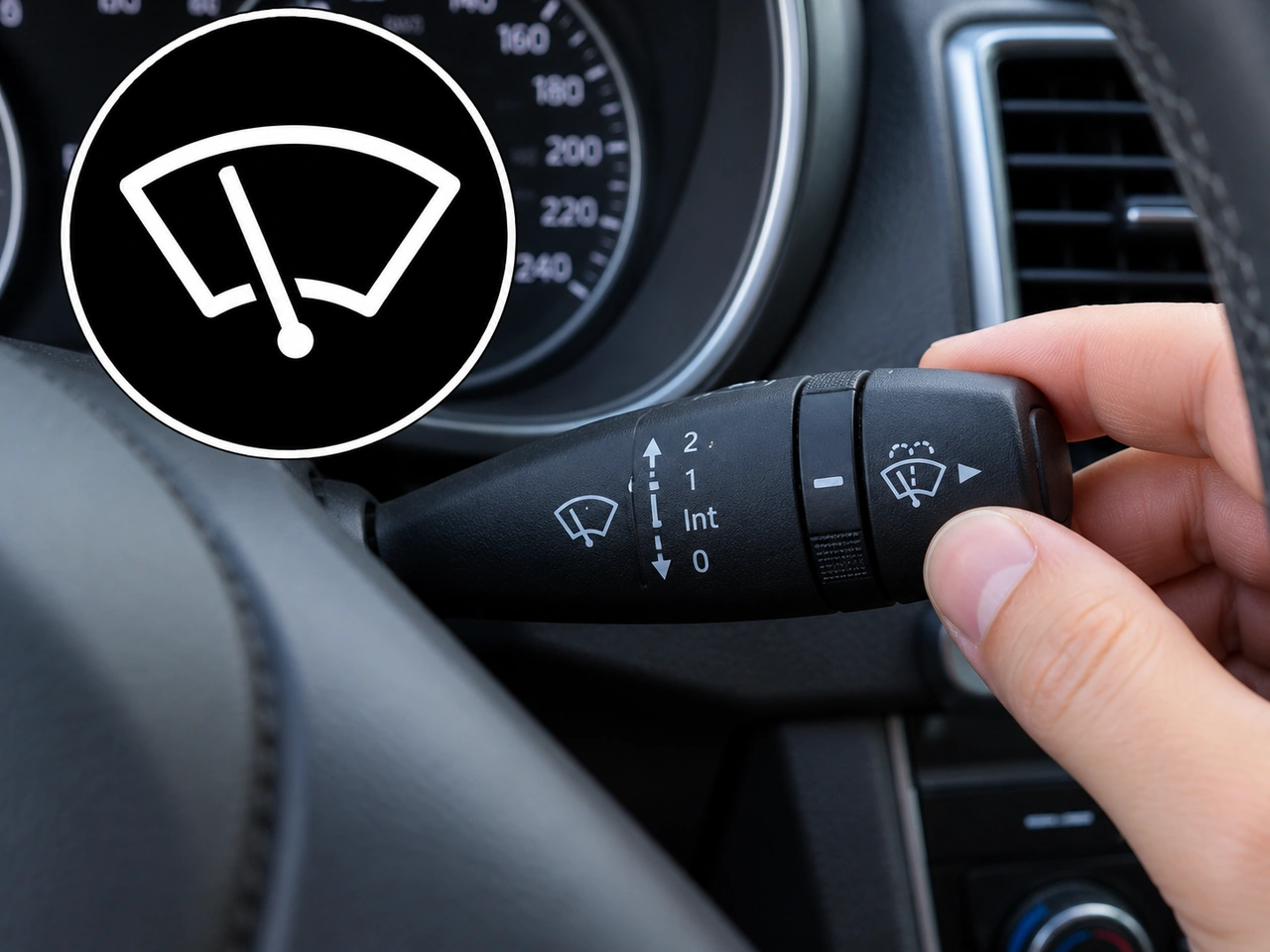
892. What does this vehicle-control symbol indicate?
This symbol relates to the windscreen wipers. The control allows the driver to select an appropriate wiping mode or speed for the amount of rain and visibility conditions.
Intermittent wiping leaves a pause between sweeps. Use continuous wiping when rain is heavy enough to obscure the windscreen between sweeps.
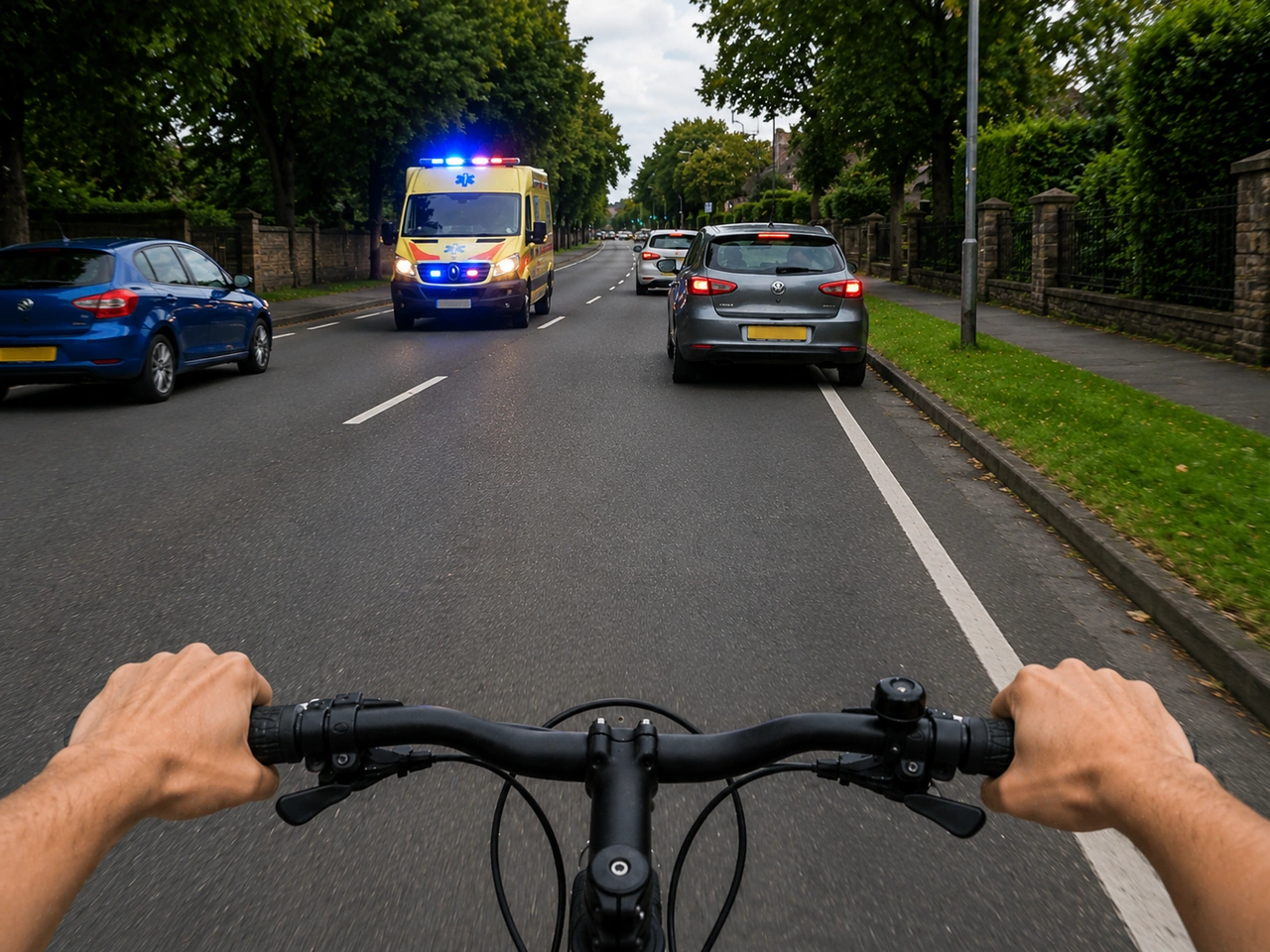
893. What should cyclists do when an emergency vehicle with lights and siren approaches?
Respond promptly and predictably so the emergency vehicle has a clear route. Check around you, make room and give way, stopping if necessary. Avoid sudden movements that could create another danger, and do not follow closely behind the emergency vehicle once it has passed.
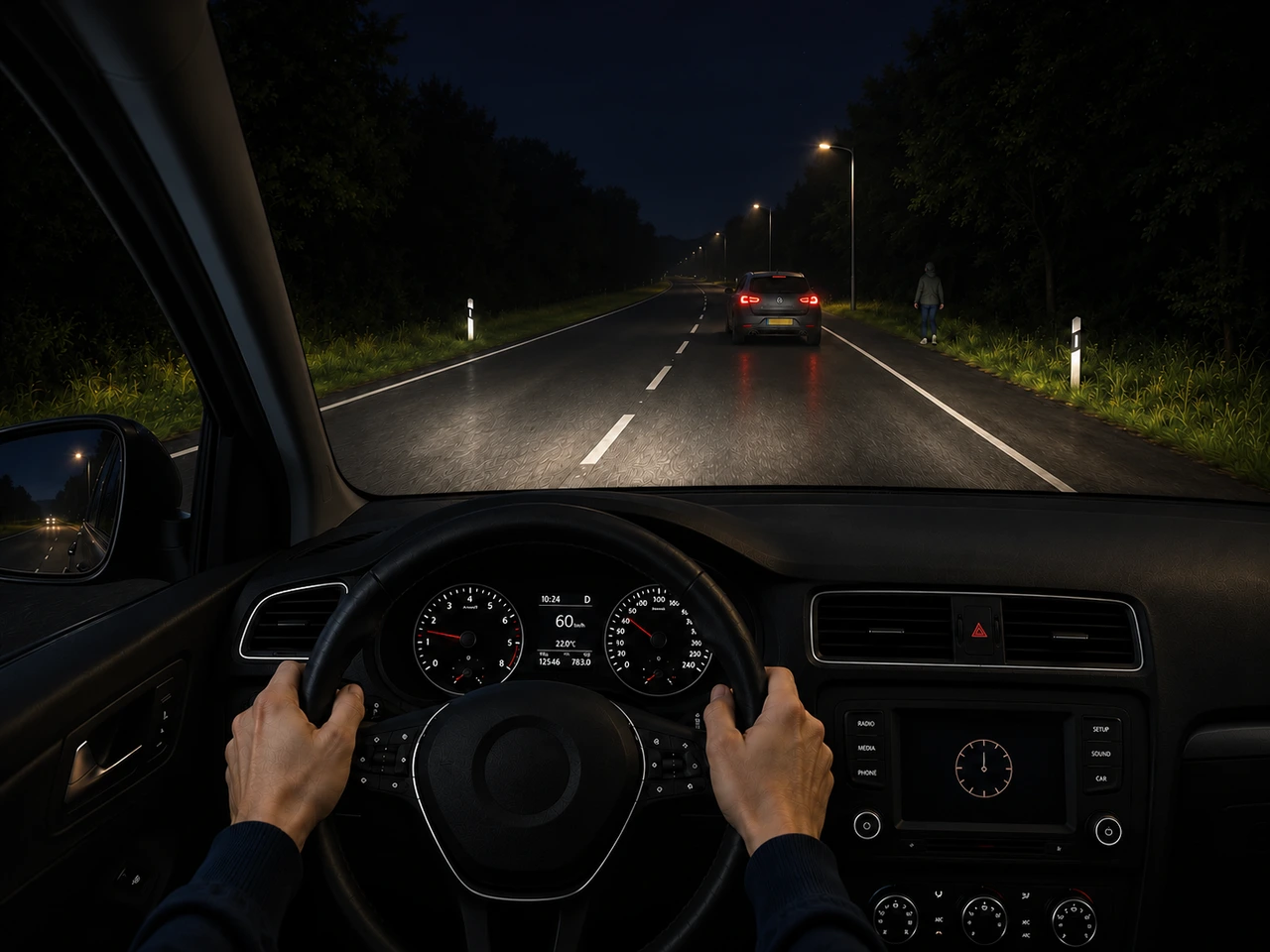
894. Why should you be extra careful at night?
At night, it is harder to see pedestrians, cyclists, road markings, and hazards. Reduce speed and use the correct lights.
Argentina. On national routes, dipped headlights or daytime running lights must be on at all times, except where main beam is required or at rail crossings as specified by the law. Use dipped headlights when meeting other traffic.
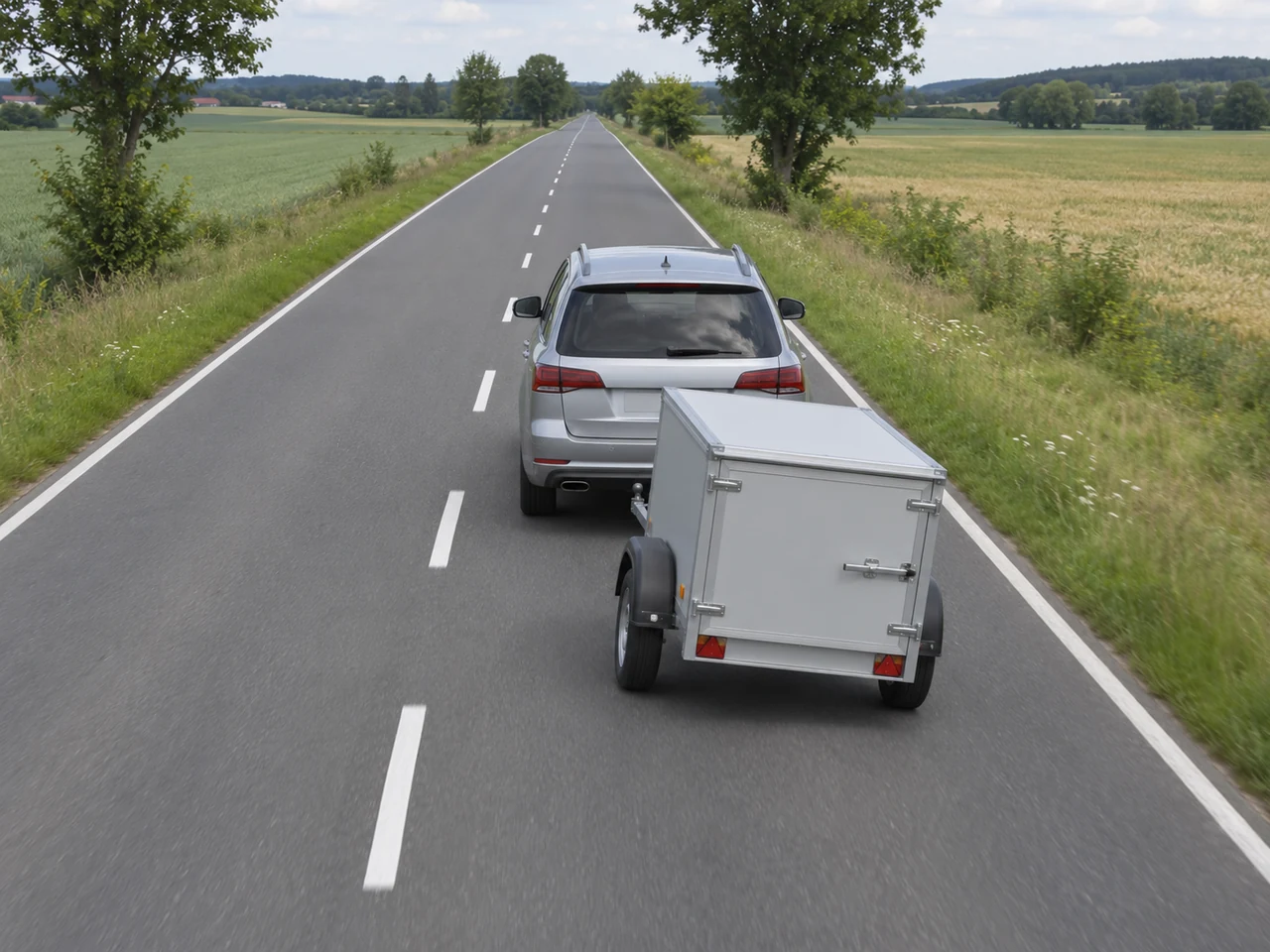
895. What should you do if a trailer begins to sway?
Sudden braking or steering can worsen trailer sway. Keep a steady course and avoid abrupt control inputs while regaining control.
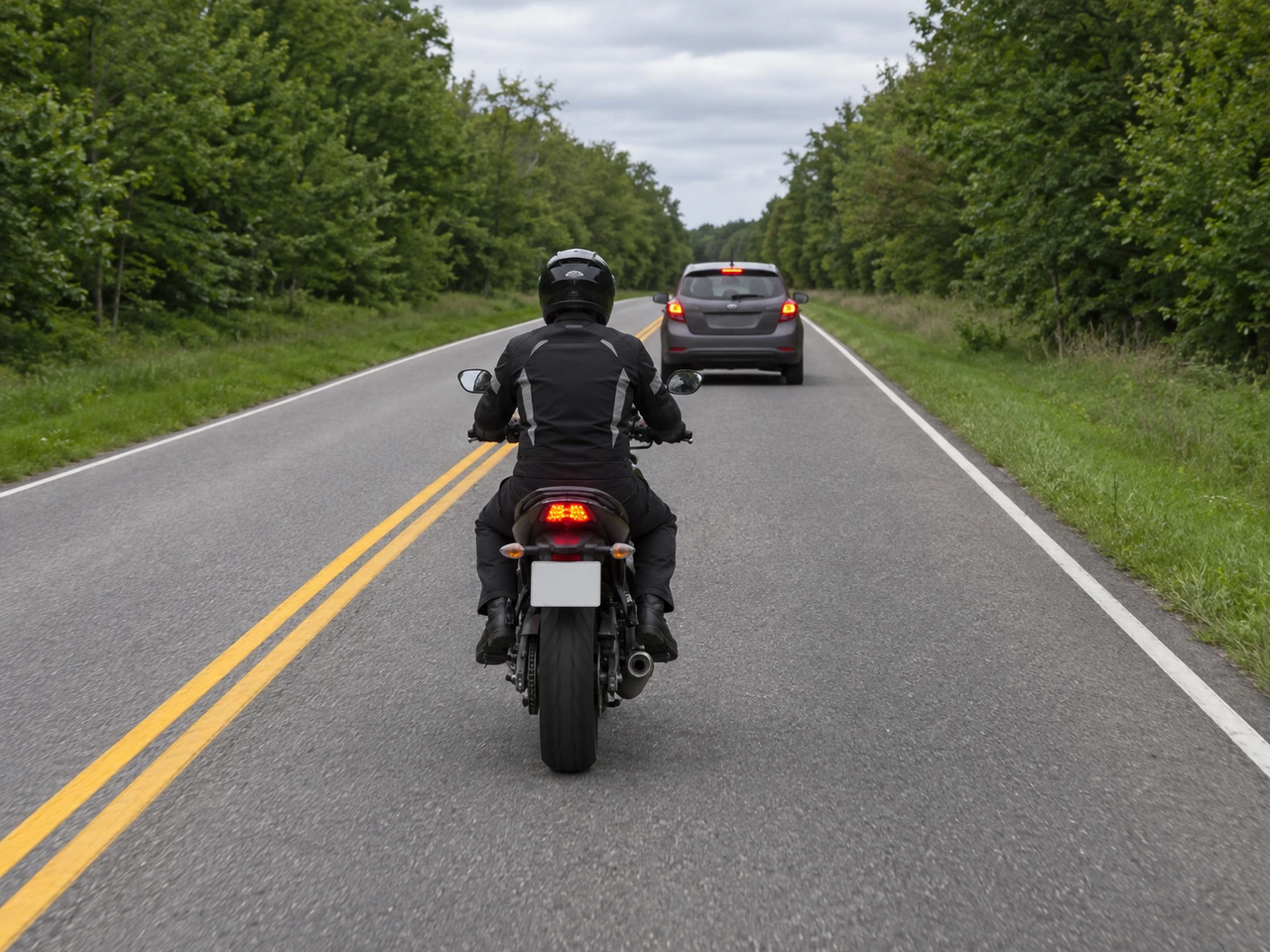
896. How should a motorcyclist brake in an emergency?
During emergency braking, use both brakes firmly and progressively while keeping the motorcycle as upright and stable as practical. Avoid sudden steering. If ABS is fitted, maintain firm braking pressure and allow the system to work.
🔗 Sources
DLD.Utah.gov — Motorcycle Handbook, Braking and Turning
Argentina.gob.ar — Decree 196/2025, Horizontal markings
Image credit: AI-generated
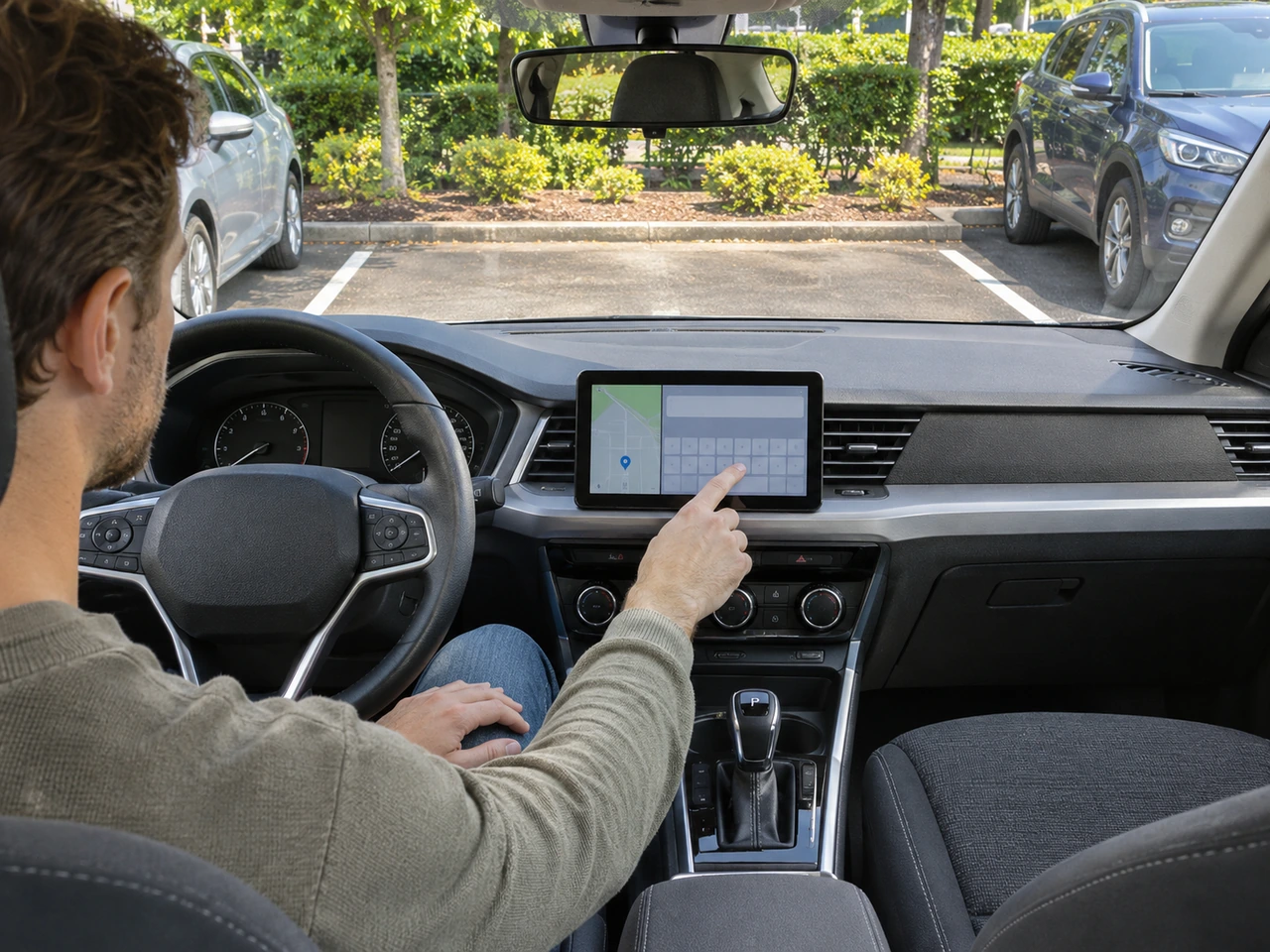
897. When should you manually enter a new destination on your satnav during a journey?
Entering a destination can take your eyes and attention away from driving. Park safely before making the adjustment; waiting briefly in a traffic queue is not a suitable substitute.
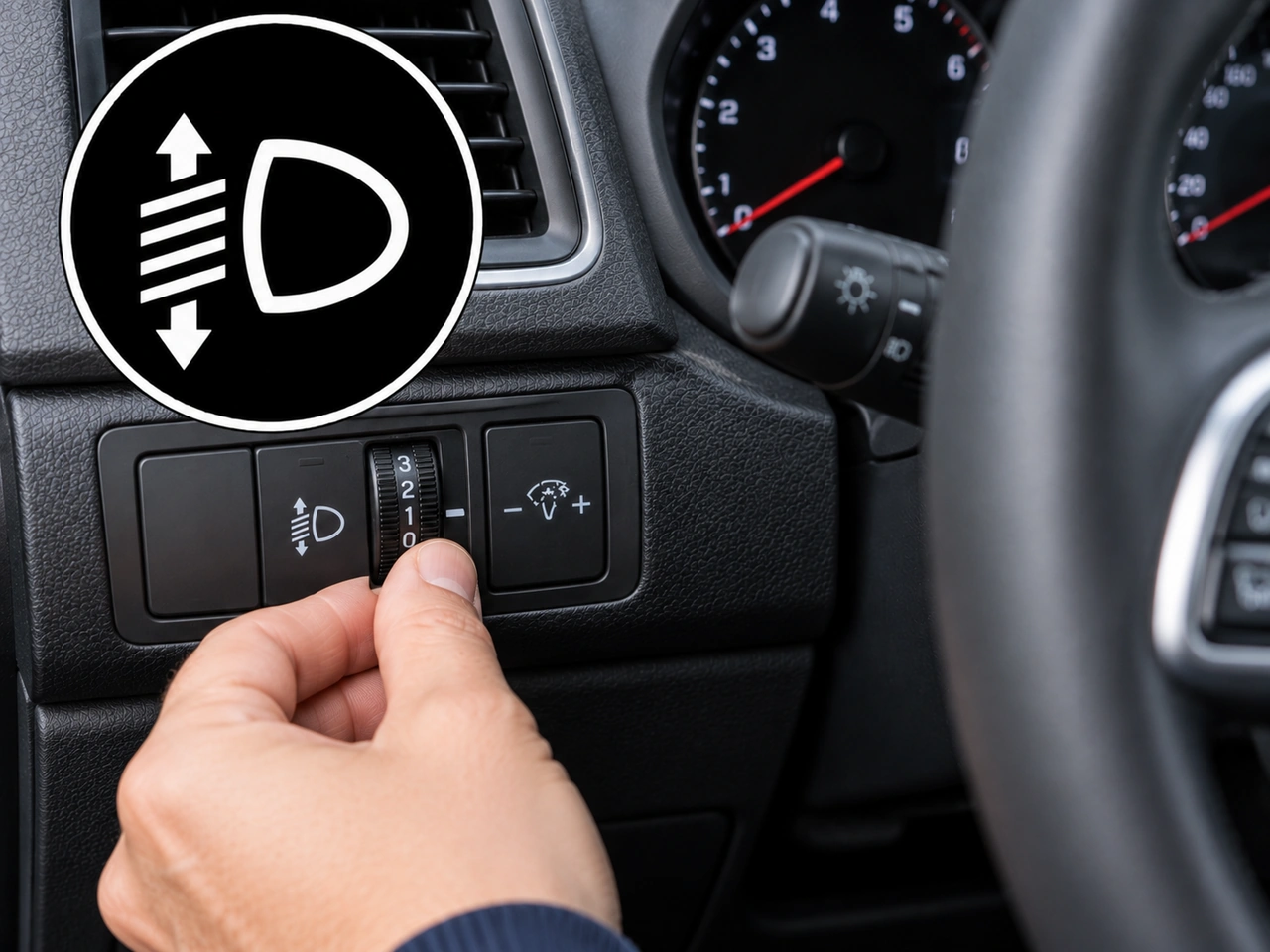
898. What does this vehicle-control symbol indicate?
This control adjusts the vertical aim of the headlights. It can be used to lower the beam when the vehicle is heavily loaded, helping to avoid dazzling other road users.
Use the handbook’s load settings to adjust the beam height. A heavy load at the rear can raise the beam and dazzle approaching drivers.
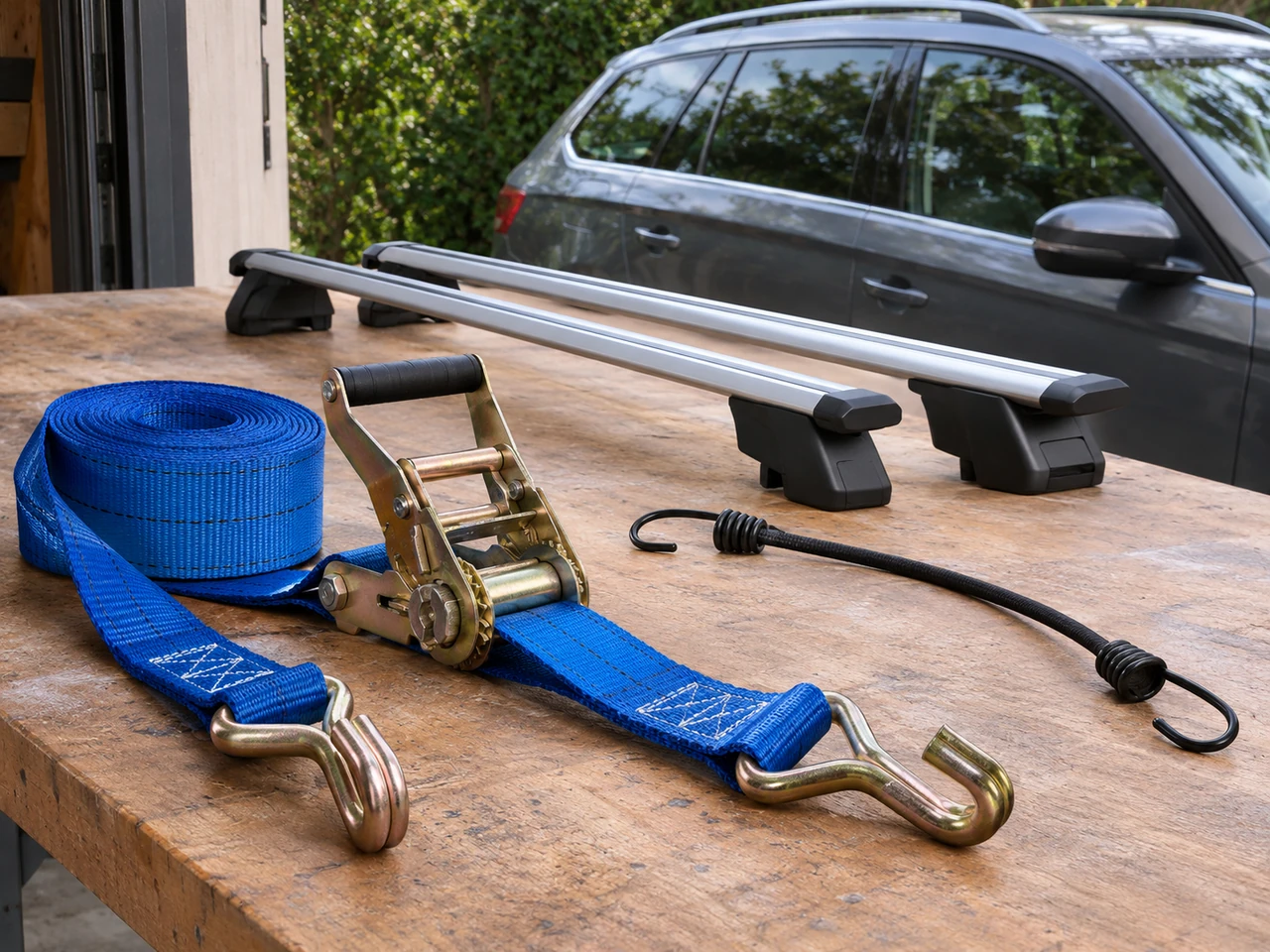
899. Bungee cords alone are a reliable way to secure a heavy roof load.
Elastic bungee cords do not secure a heavy roof load effectively. Use suitable load restraints or approved clamps and follow the vehicle and carrying-equipment instructions.
🔗 Sources
DVSA load-securing guidance (Great Britain) • Safety guidance, Cars: roof racks, ratchet straps and clamping
Image credit: AI-generated
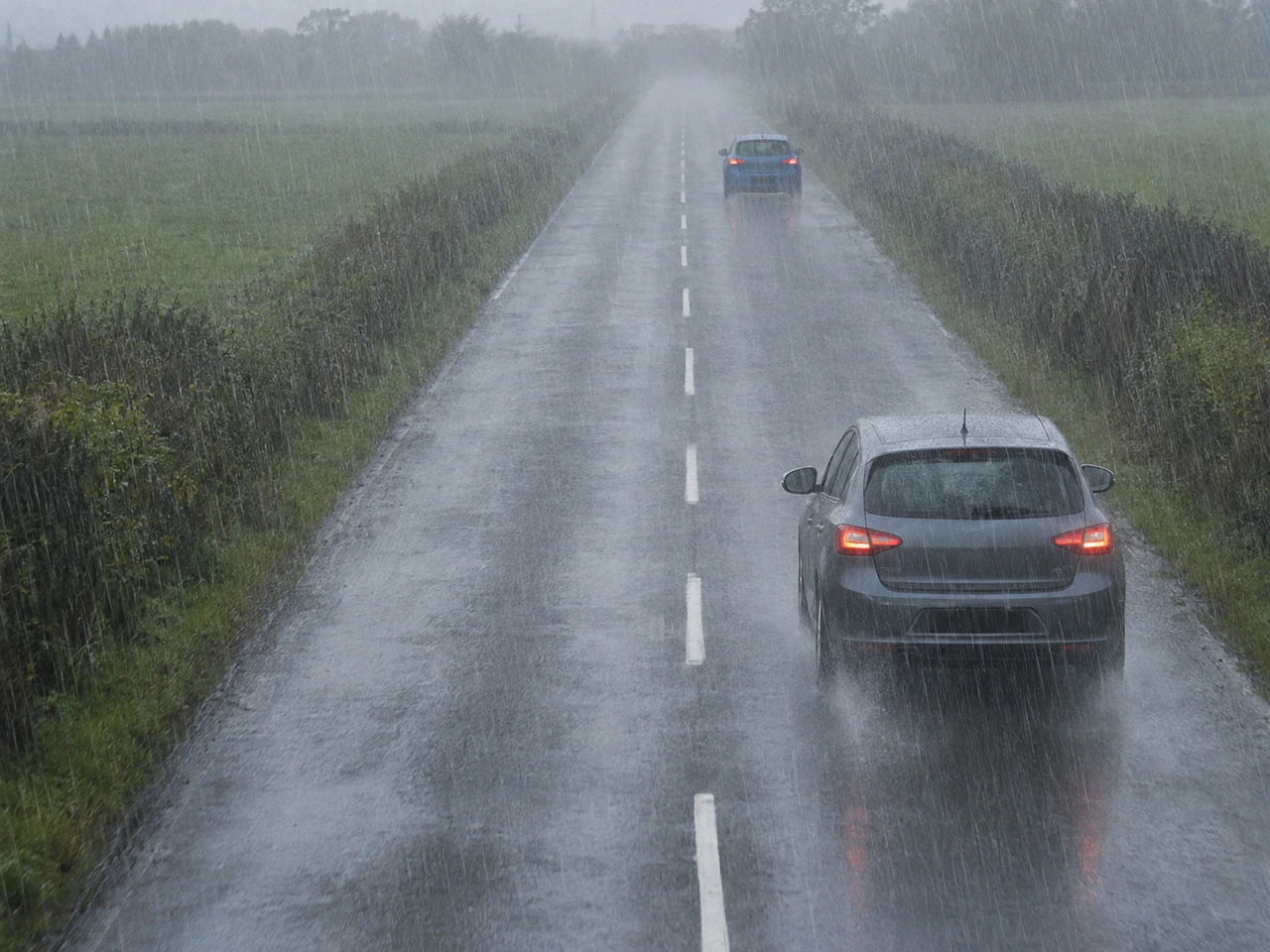
900. What should you do when driving through heavy rain?
Heavy rain reduces visibility and wet-road grip. Slow down smoothly and leave a larger following gap so you have more time to see hazards and stop. Avoid cruise control in these conditions. Before setting off, check the tyres, wipers and demisting system, and clean the windows inside and outside. If visibility becomes too poor, find a safe place to stop.
🔗 Sources
Great Britain — Highway Code, rule 227; general wet-road safety
Michelin — Technical aquaplaning explanation and prevention
Image credit: AI-generated
