


QuizTraffic rulesArgentina
Test your knowledge with our multiple-choice quiz. Learn from each answer and improve your understanding of the traffic rules and road signs of Argentina.
 Traffic signs
 Traffic rules
 Argentina
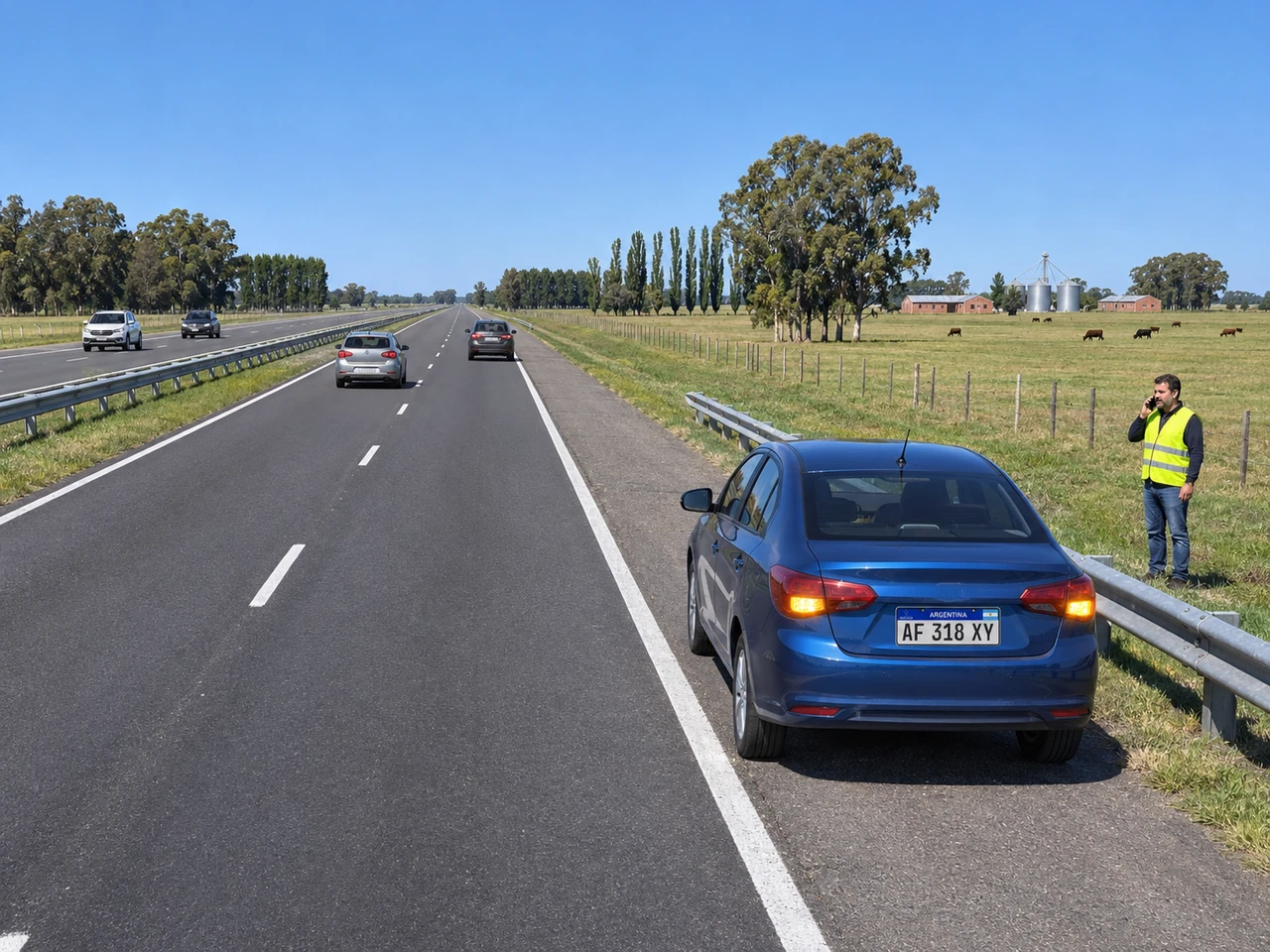
1. What is the main purpose of a motorway emergency lane or hard shoulder?
A motorway emergency lane or hard shoulder is primarily intended for emergencies and breakdowns, not normal driving. In some places it may be opened temporarily as a traffic lane when signs or signals specifically permit this.
Keep the hard shoulder clear during ordinary driving. If a breakdown forces you to stop, pull clear of the traffic lanes if possible. A vehicle being towed after a breakdown must leave the motorway at the first exit.

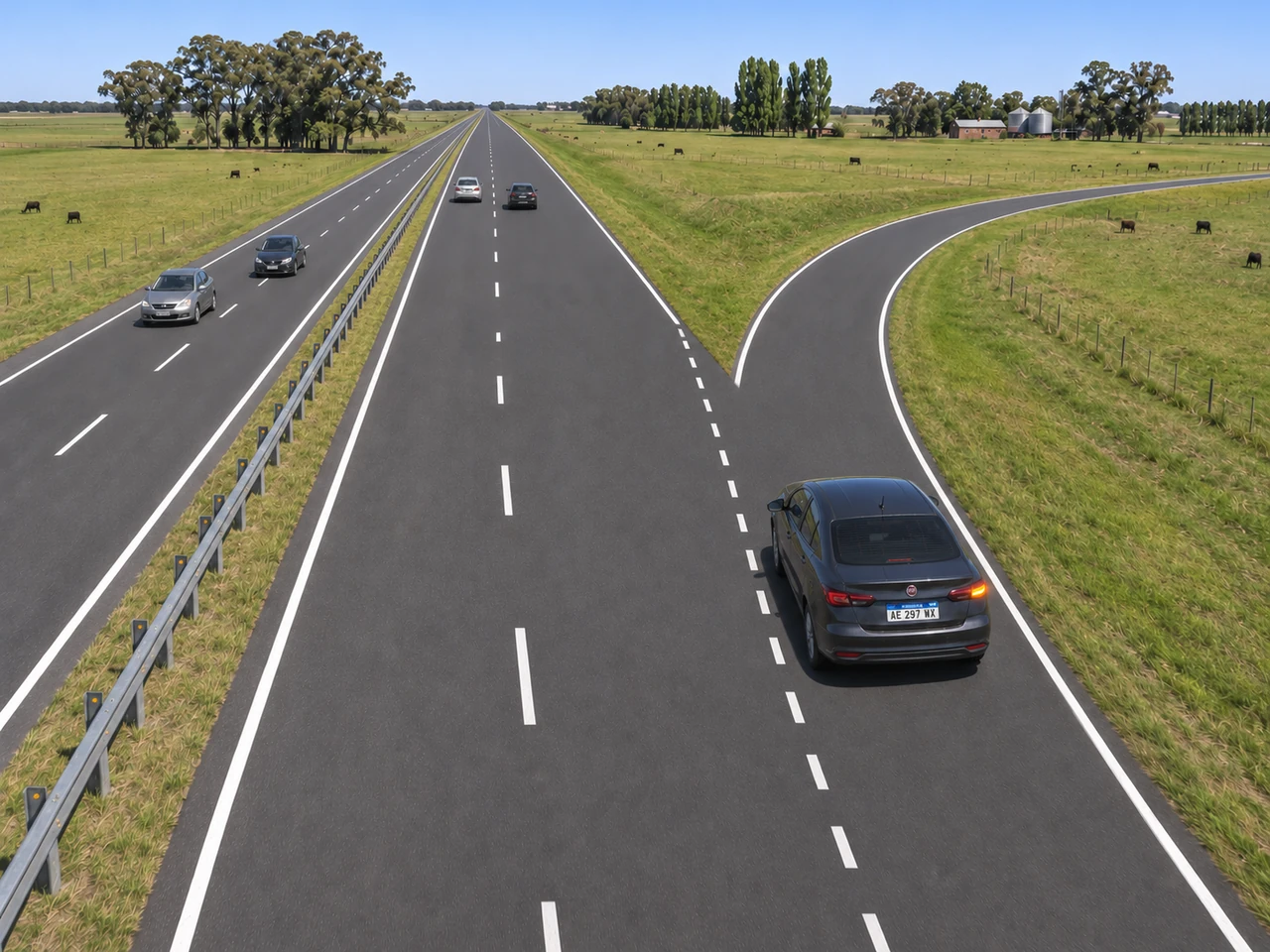
2. What should you do before leaving a motorway?
Plan your exit early, move into the correct lane safely, and reduce speed after entering the exit road where appropriate.
Follow the exit signs and move into the marked exit lane in good time. Signal before changing lanes and adjust your speed for the ramp.
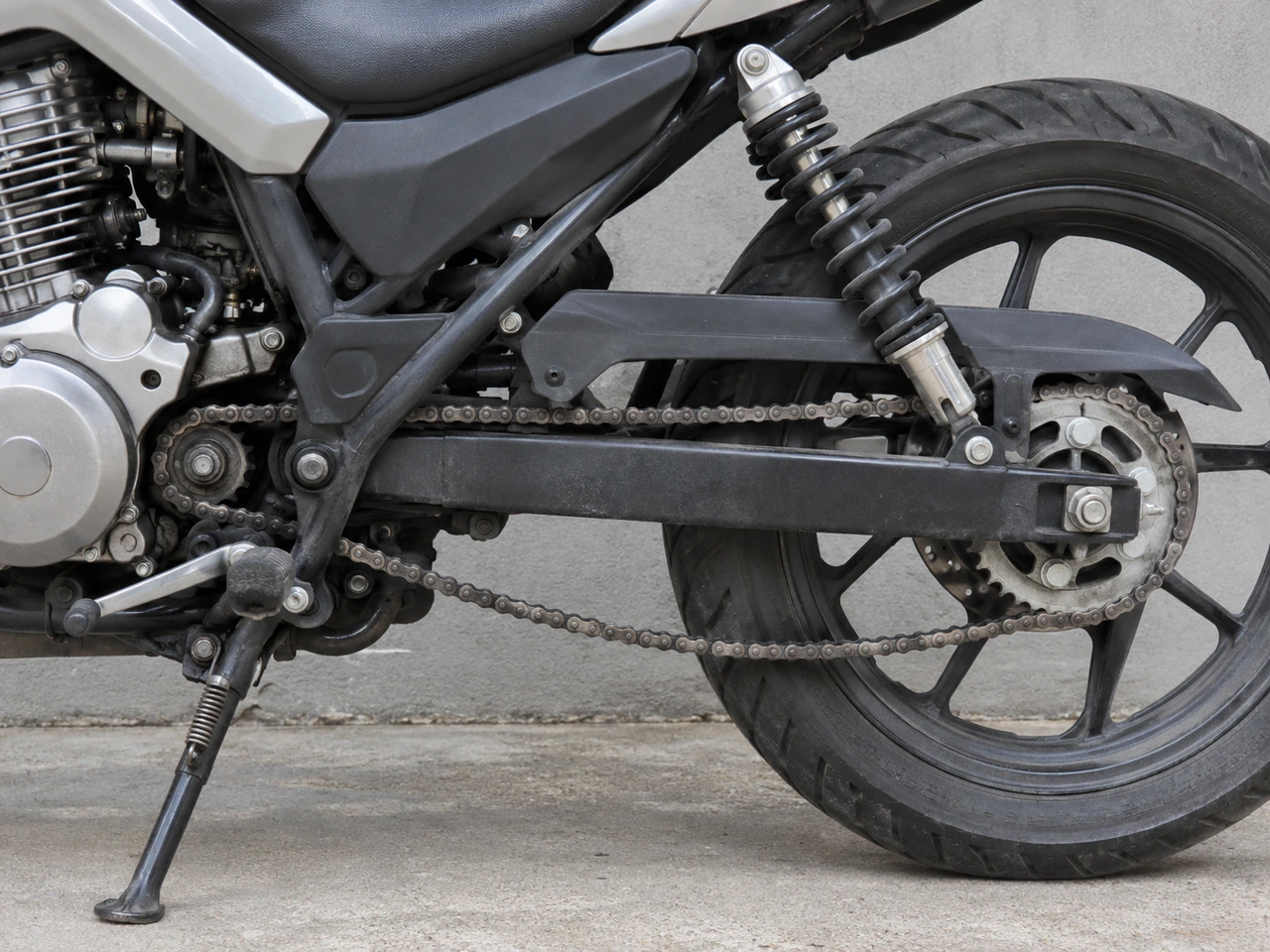
3. What should you do if a motorcycle's drive chain is too loose?
A loose drive chain can affect power transmission, damage components, or come off the sprockets. The chain should have the correct tension and lubrication specified by the motorcycle manufacturer. A chain that is too tight can also cause damage.
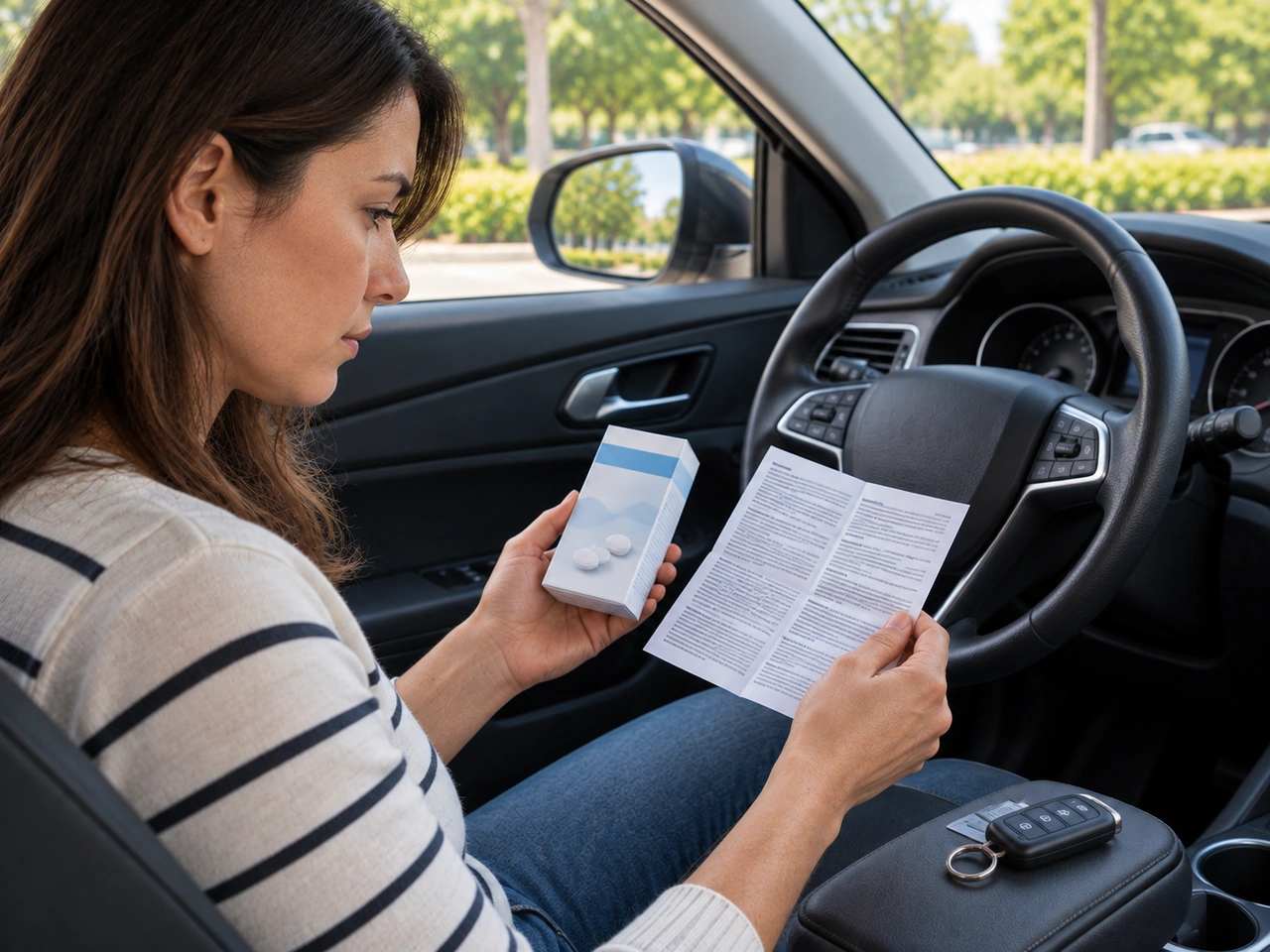
4. What should you do before driving after taking medicine?
Some medicines can affect driving ability by causing drowsiness, dizziness, blurred vision, slower reactions, or reduced concentration. Check the label or patient information and follow advice from your doctor or pharmacist before driving.
Argentina. Check the patient leaflet for driving warnings and ask a pharmacist or doctor if you are unsure. Article 48 prohibits driving after taking medicines that reduce fitness to drive.
🔗 Sources
Argentina · Traffic Law 24.449, Article 48
Agencia Nacional de Seguridad Vial · Curso Nacional, Module 8
Image credit: AI-generated
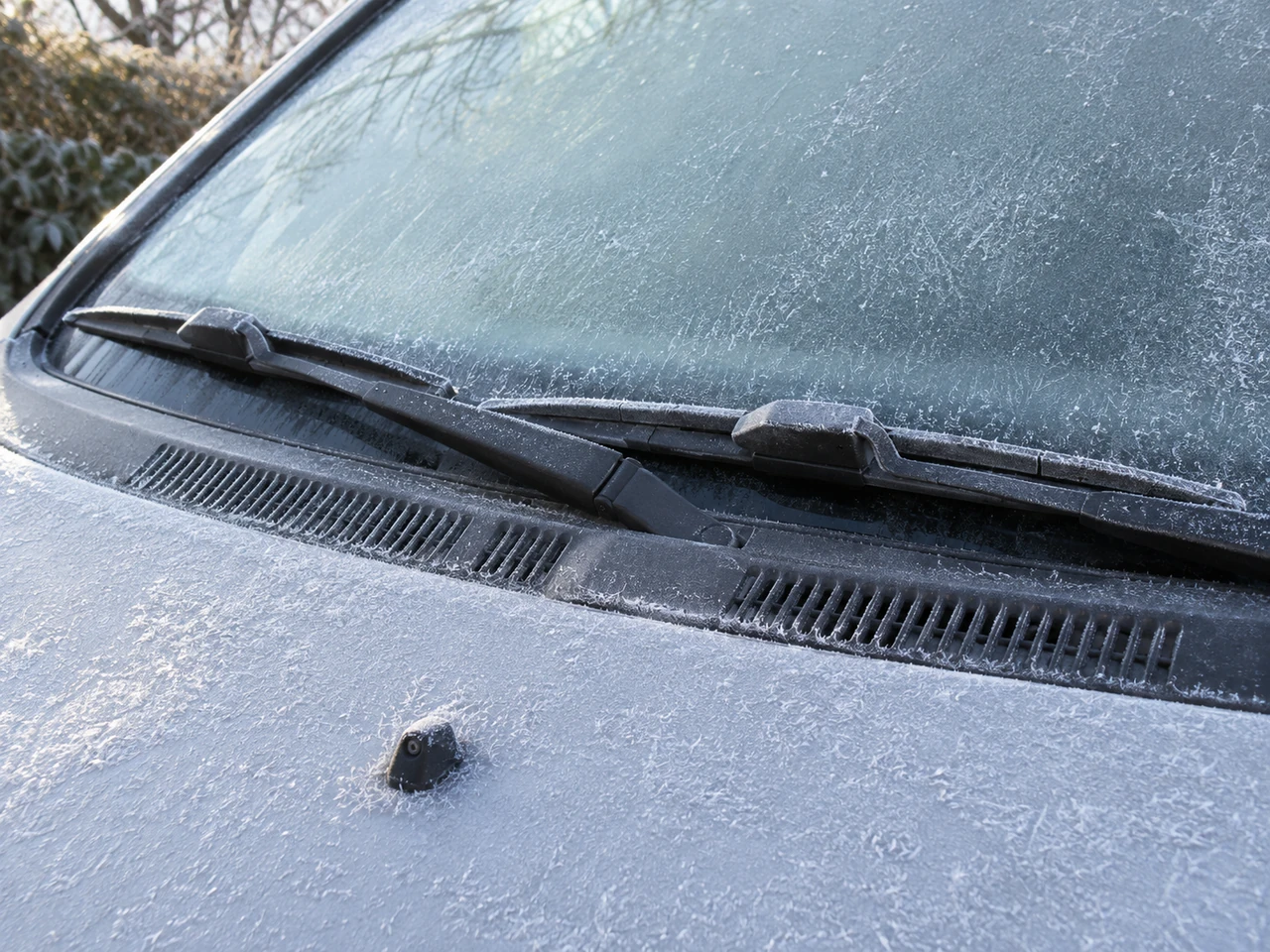
5. Plain water in the windscreen washer system cannot freeze.
Plain water can freeze in the reservoir, pipes and washer jets. Use suitable windscreen washer fluid at the dilution specified for the expected temperature. Do not substitute engine coolant.
🔗 Sources
Kia owner’s manual (manufacturer guidance) • Safety guidance, cold-climate washer fluid; do not use engine coolant
Image credit: AI-generated
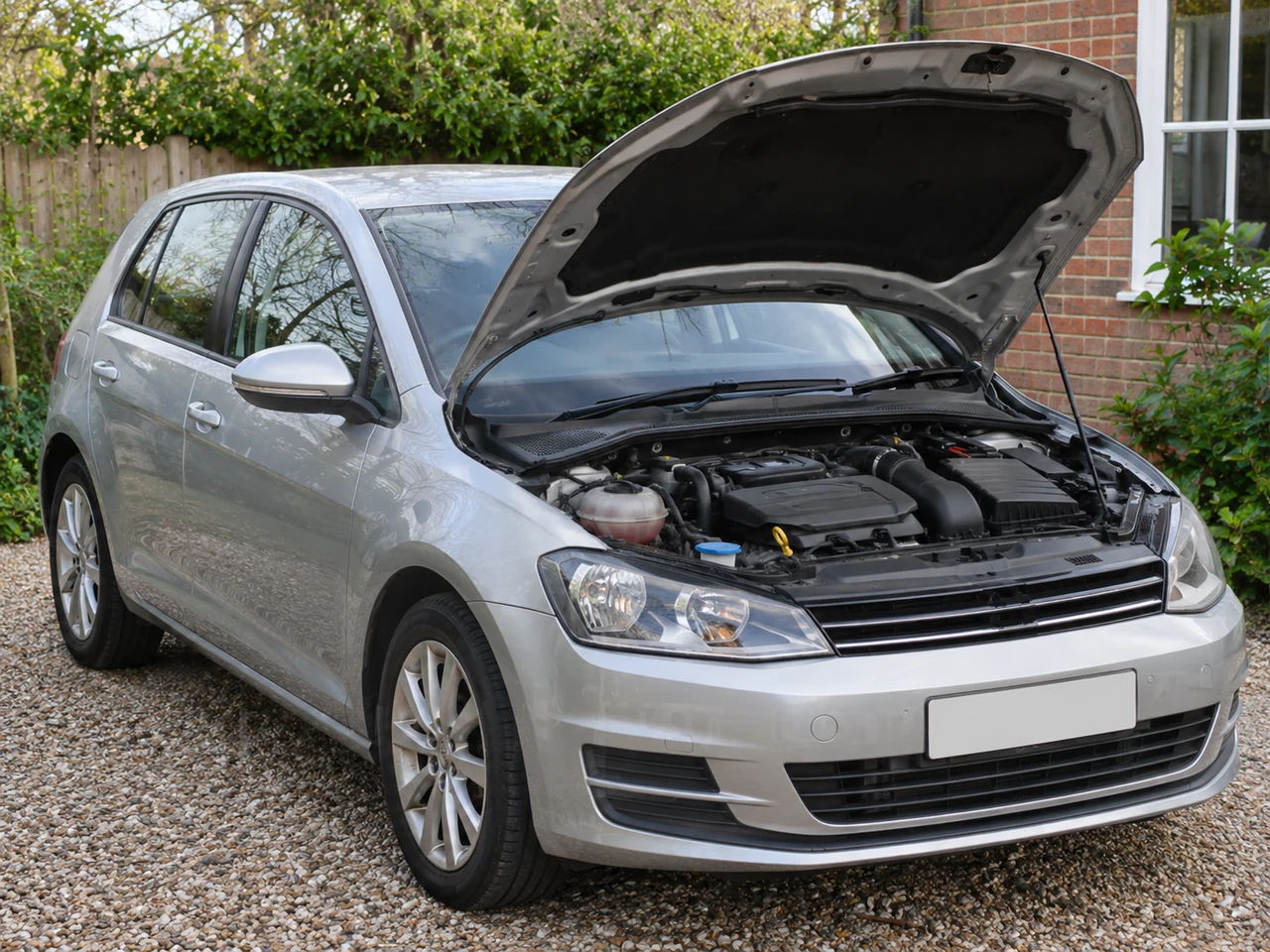
6. If an overheating warning appears while driving, you should stop as soon as it is safe.
Stop safely and follow the vehicle handbook, which may instruct you to switch off the engine. Let the engine cool and arrange help if needed. Do not remove a coolant cap while the system is hot.
🔗 Sources
The Highway Code (Great Britain) • Safety guidance, overheated engines and coolant filler caps
Image credit: AI-generated
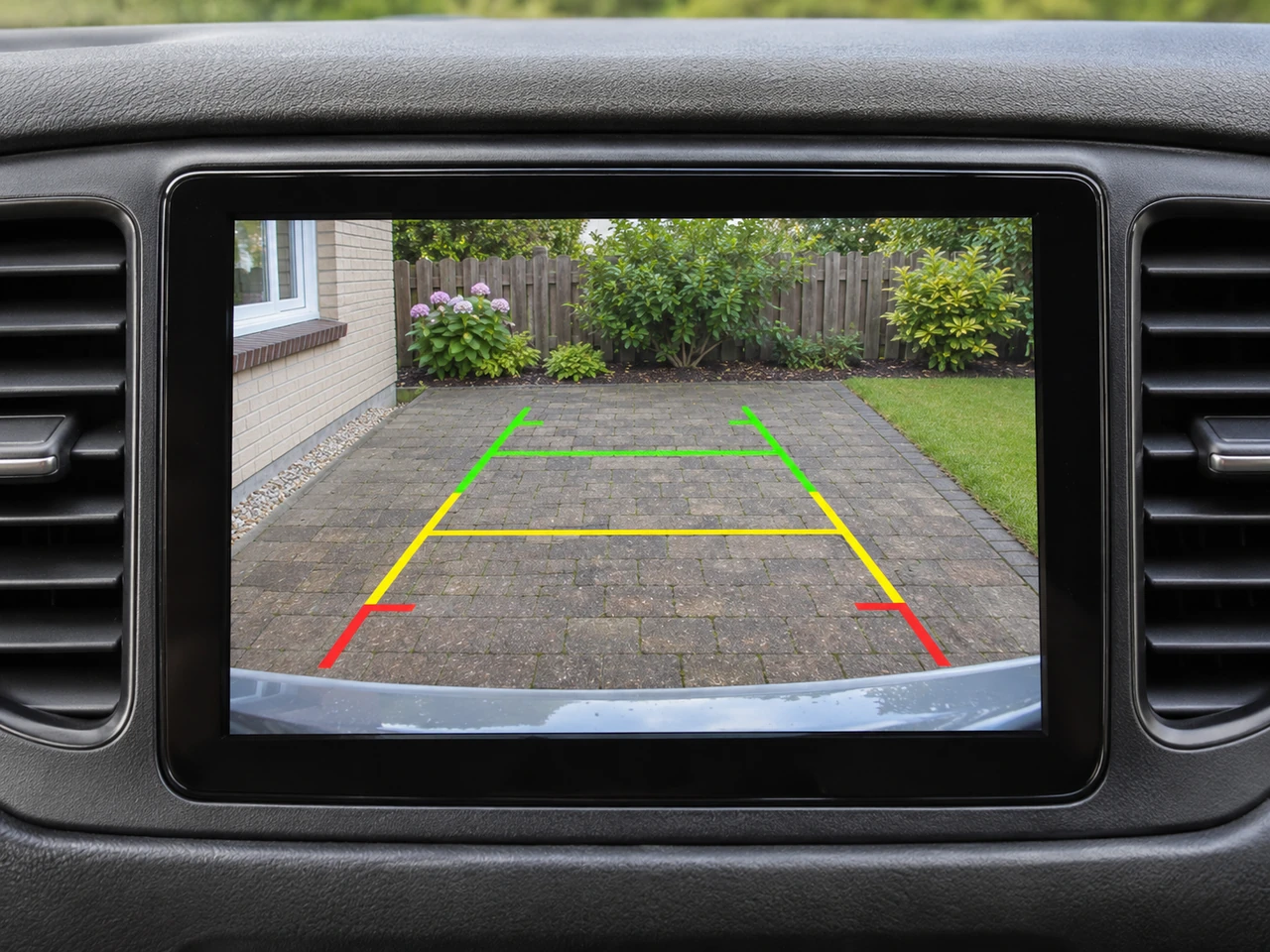
7. A reversing camera replaces the need to check all around your vehicle.
A reversing camera is an aid and may not show every hazard. Use your mirrors, check blind spots and keep checking all around while reversing.
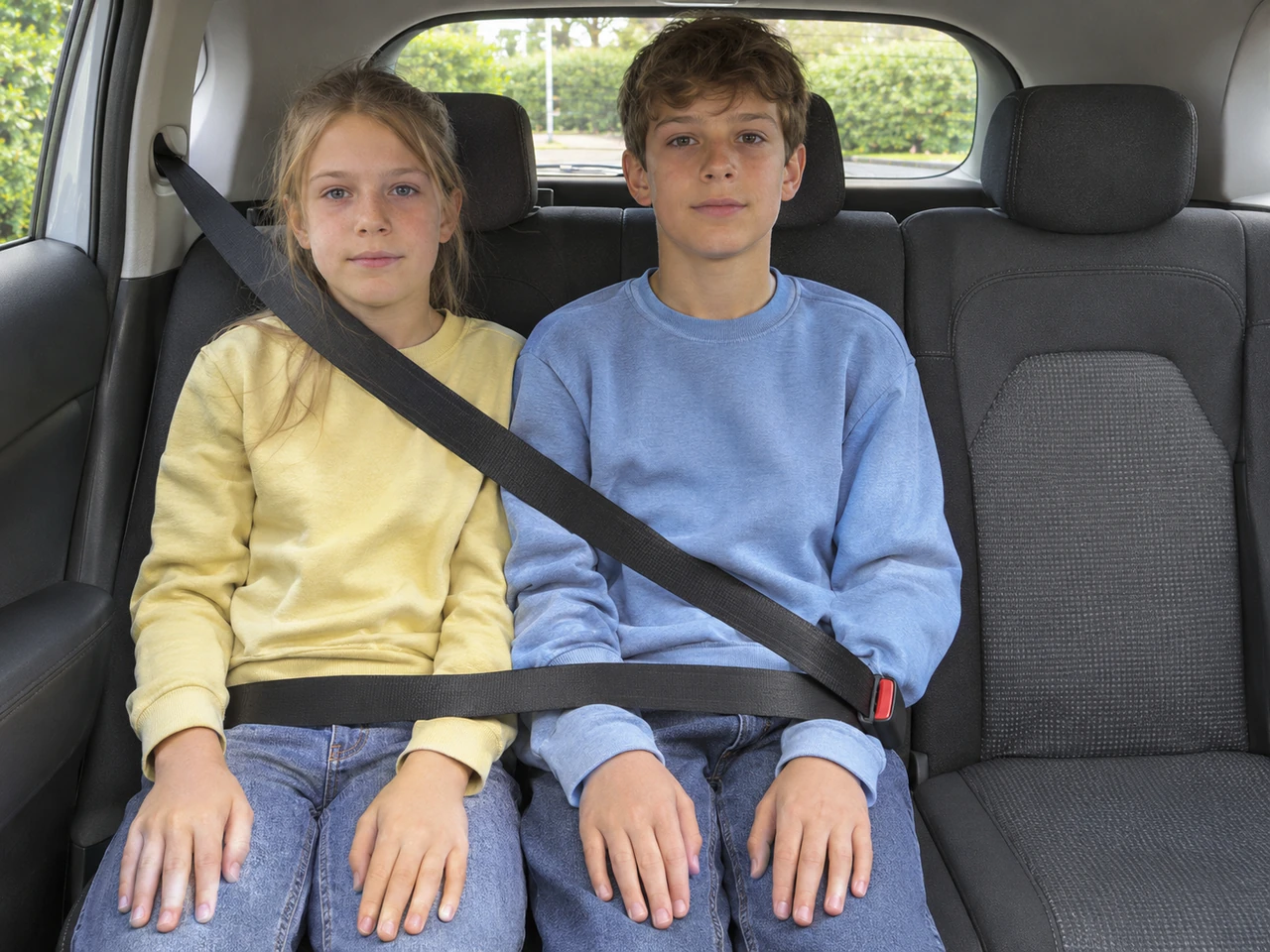
8. Two passengers can safely share one seat belt if they sit close together.
Each passenger needs a separate seating position and their own suitable restraint. A belt shared around two people cannot restrain each of them correctly.
🔗 Sources
Ford owner’s manual (manufacturer guidance) • Safety guidance, seatbelt precautions: one person per belt
Image credit: AI-generated
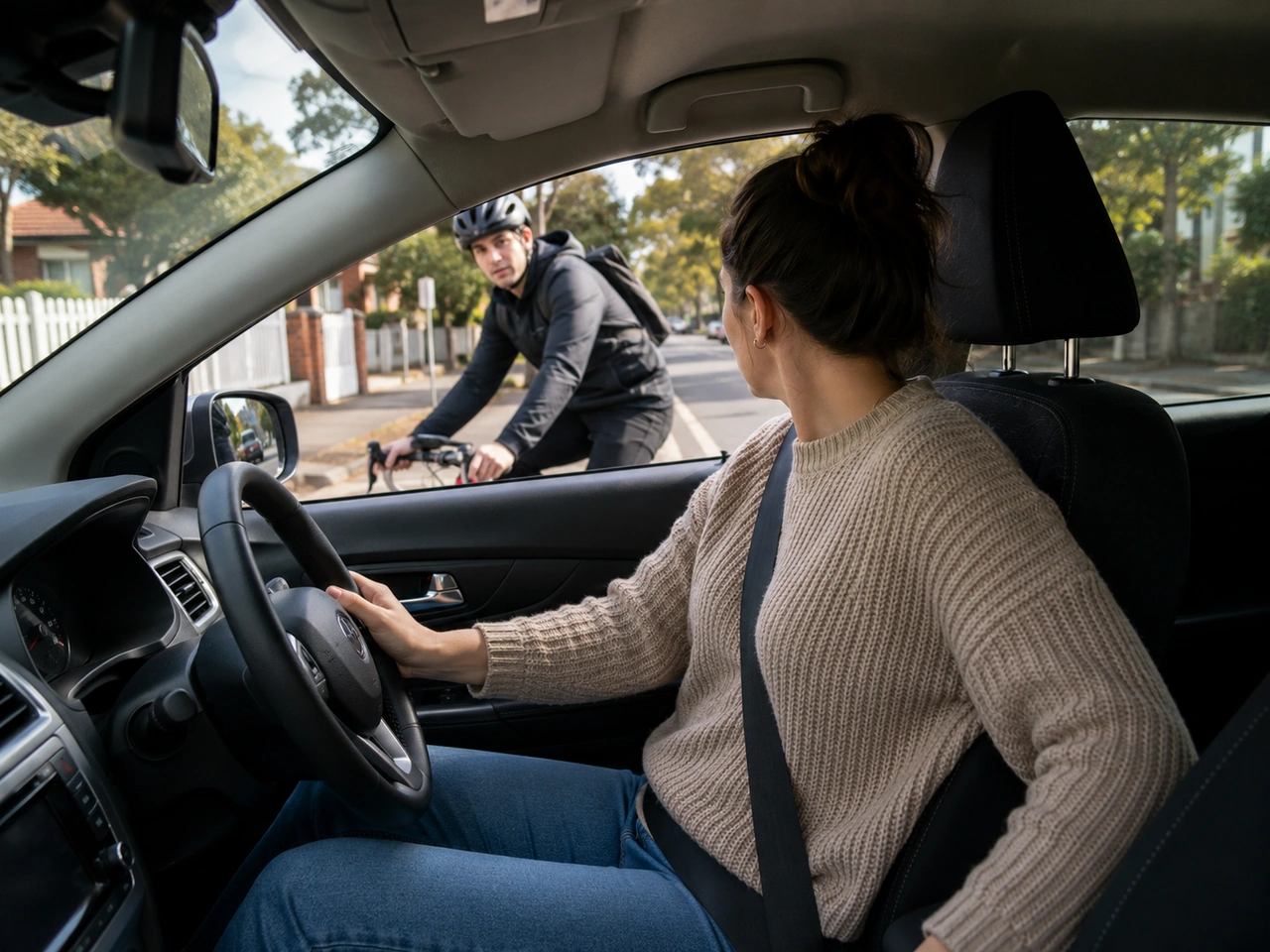
9. Why should you check blind spots before moving off?
Mirrors do not show every area around your vehicle. A blind-spot check can reveal cyclists, pedestrians, motorcyclists, or vehicles before you move off.
🔗 Sources
Great Britain — Highway Code, rule 159; blind-spot checks before moving
Image credit: AI-generated
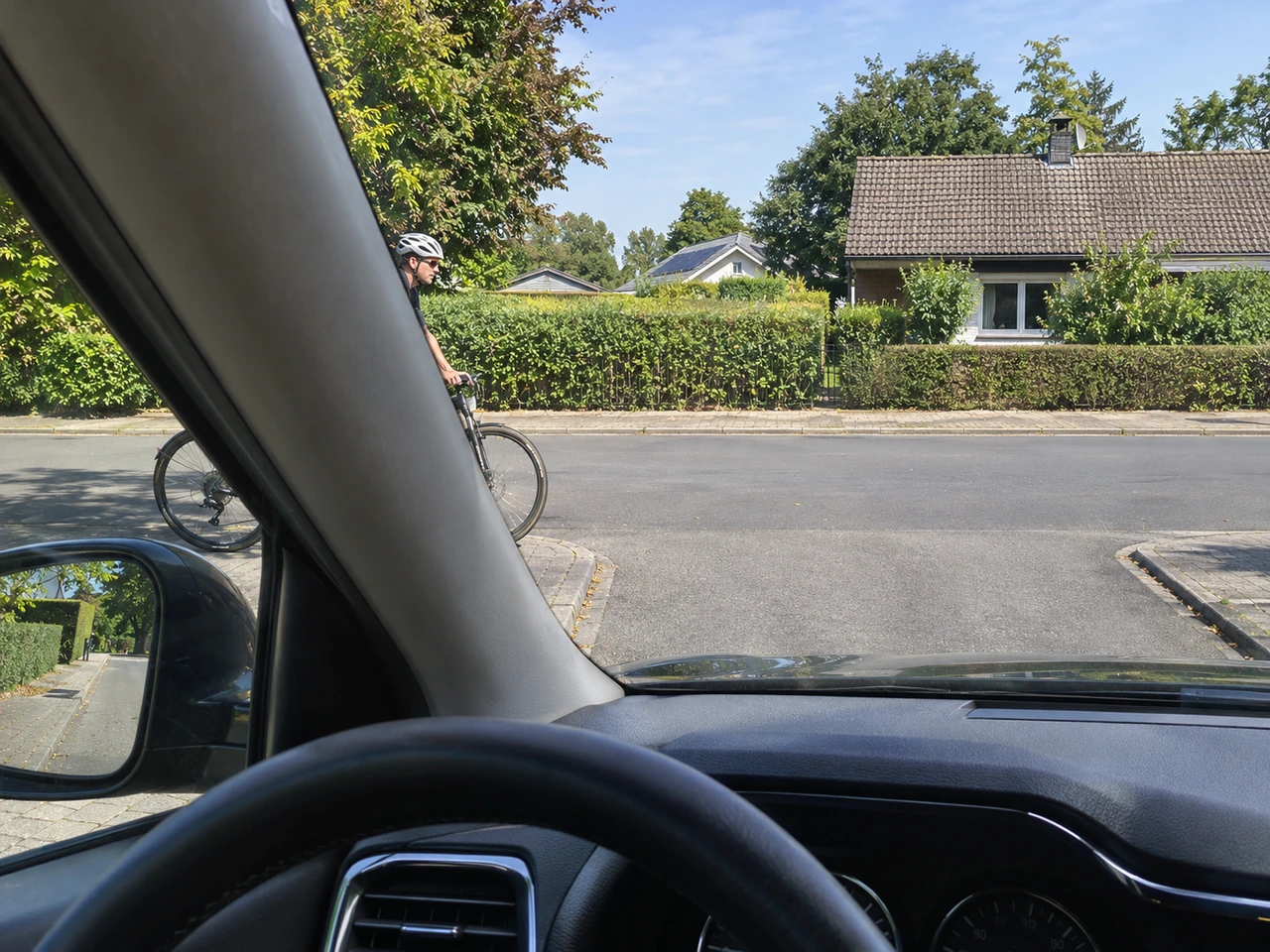
10. Why should you look around the windscreen pillars at a junction?
The pillars beside the windscreen can obstruct your view. Adjust your viewing position as needed and check carefully before entering the junction.
🔗 Sources
AWSR — Walloon road safety agency
Reference: Windscreen elements can obstruct the view; check visibility carefully at junctions.
Image credit: AI-generated
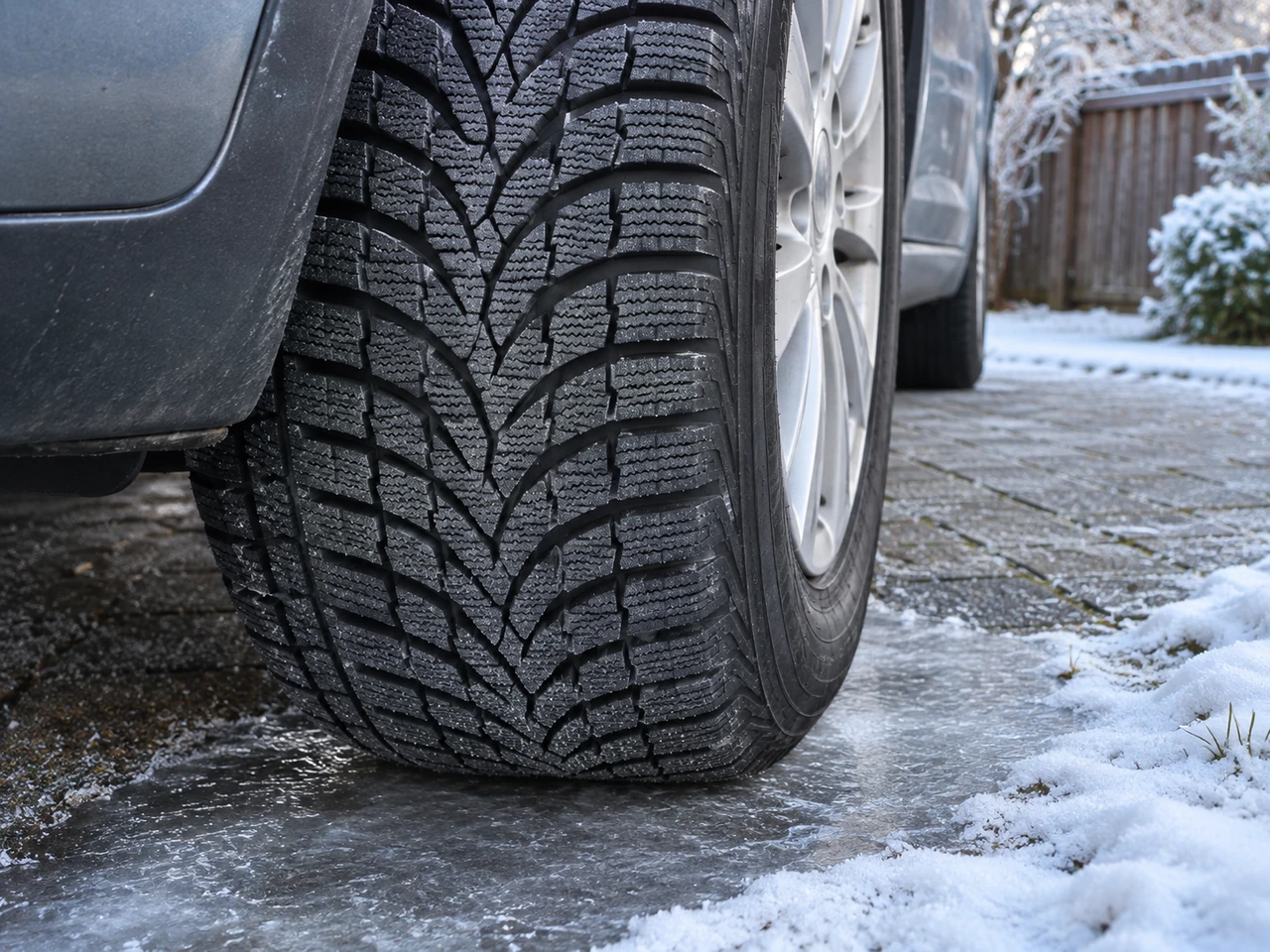
11. Winter tyres remove the risk of skidding on ice.
Winter tyres can improve grip in wintry conditions, but ice can still be extremely slippery. Reduce speed, leave generous stopping space and use steering, acceleration and braking smoothly.
🔗 Sources
Traffic Scotland (Great Britain) • Safety guidance, winter tyres and careful driving on ice
Image credit: AI-generated
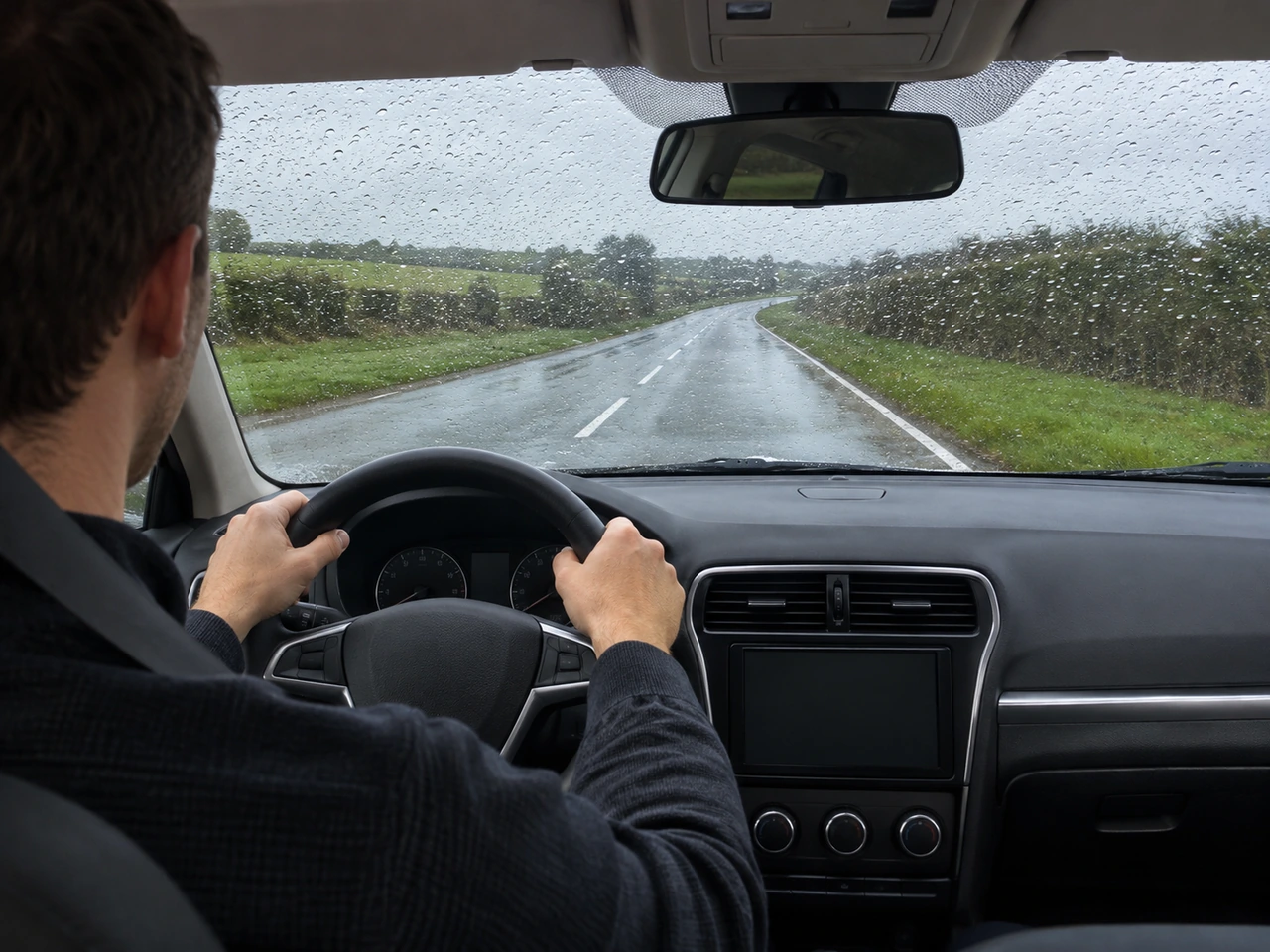
12. What should you avoid if your vehicle loses grip on a wet road?
Abrupt braking or steering can demand more grip than the wet road can provide and make the loss of control worse. Stay calm, ease off excessive acceleration smoothly and look along your intended path. Avoid sudden corrections. Prevention starts with a lower speed and more space before reaching a slippery section. Emergency braking with ABS requires a different response: apply firm, sustained brake pressure as directed in the vehicle handbook.
🔗 Sources
Great Britain — Highway Code, rule 119; harsh inputs and loss of grip
Great Britain — Highway Code, rule 120; ABS emergency braking
Image credit: AI-generated
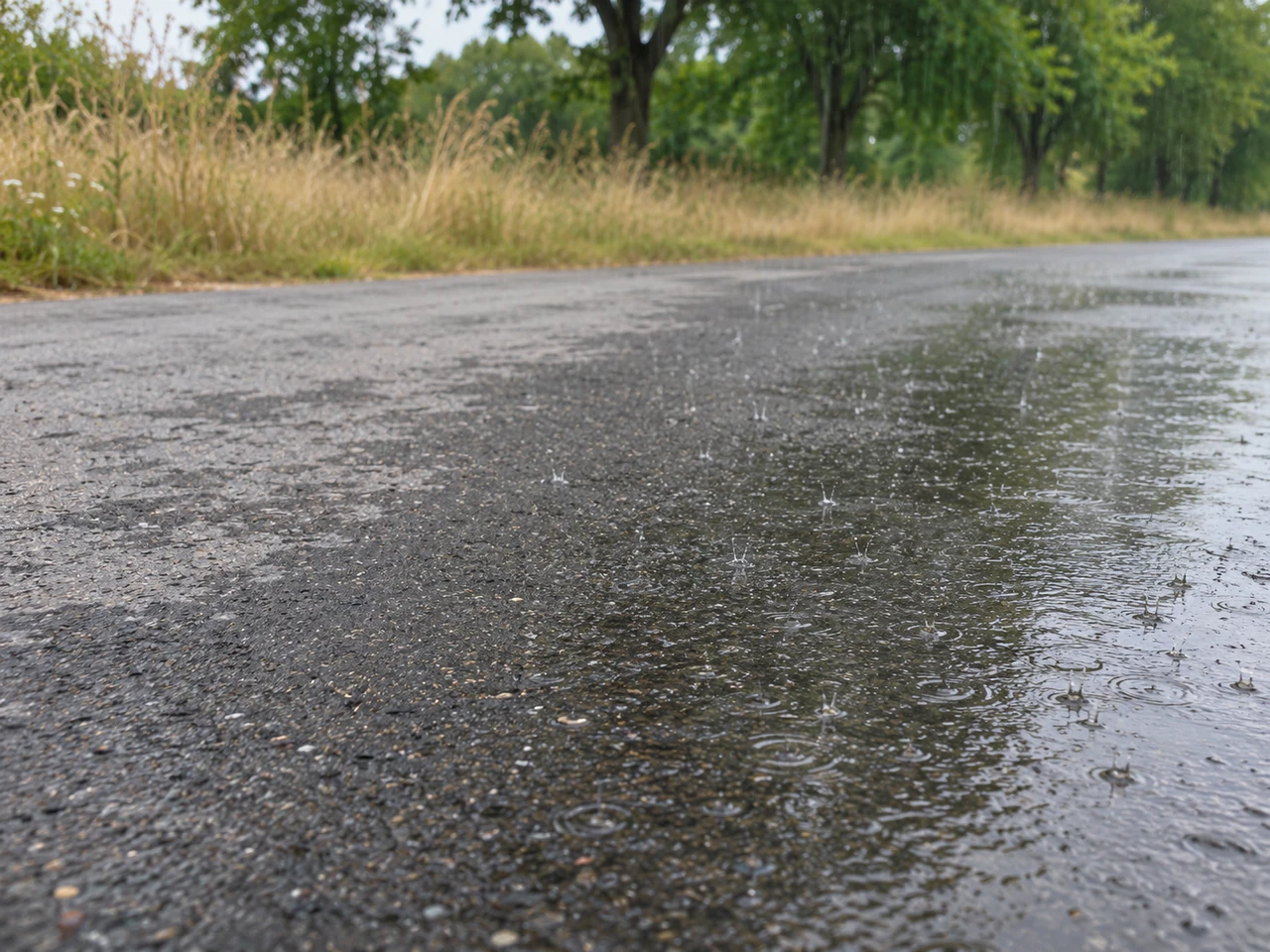
13. Rain after a dry spell can make the road slippery.
A road surface can become slippery when rain follows dry weather. Adapt your speed to the conditions and allow extra space to stop.
🔗 Sources
National Weather Service (United States) • Safety guidance, Rain After a Long Dry Stretch
Image credit: AI-generated
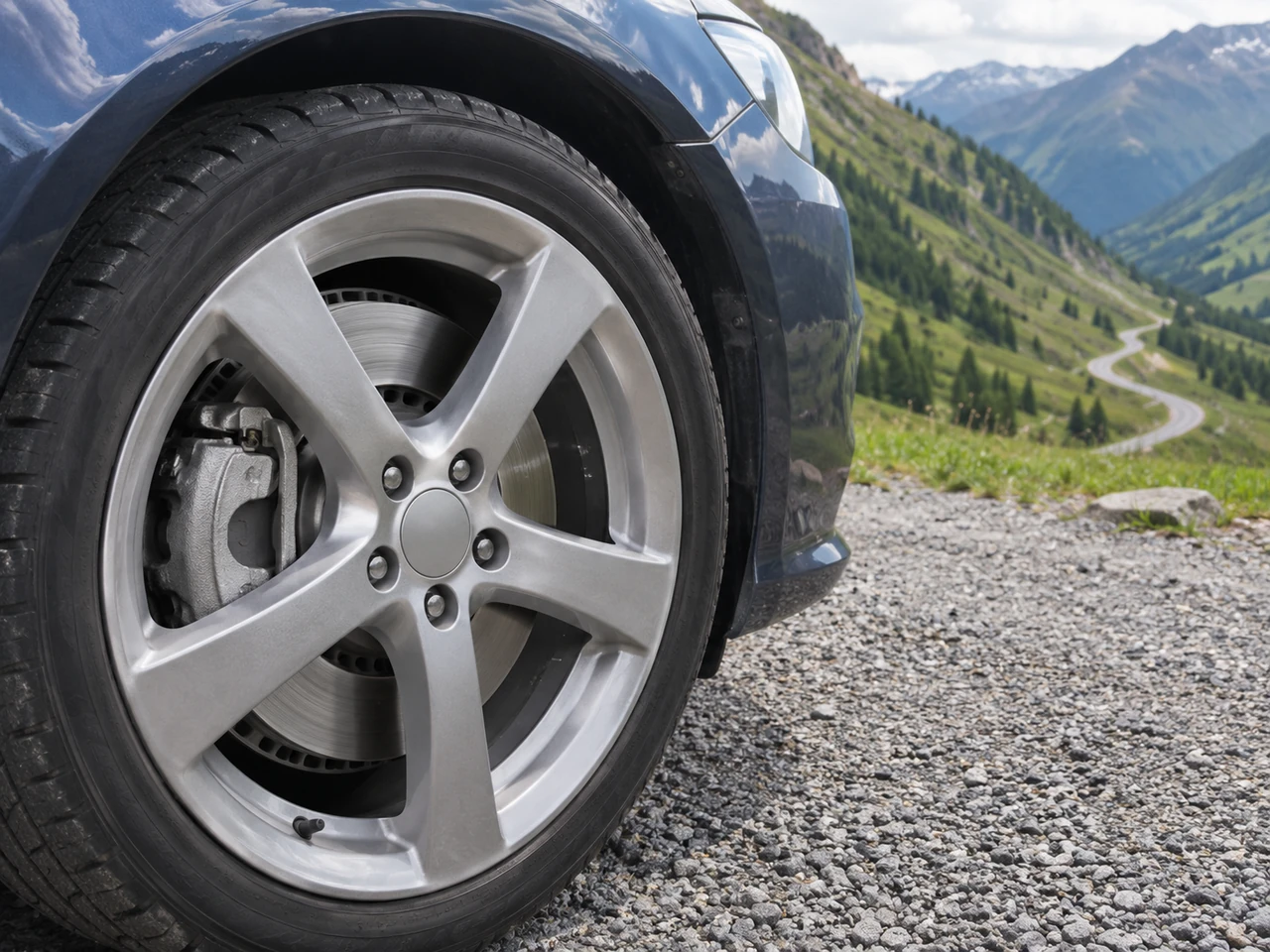
14. Repeated heavy braking on long descents can reduce braking performance.
Overheating can cause brake fade. Use a suitable gear or descent setting as described in the vehicle handbook to help control speed, rather than relying on continuous heavy braking.
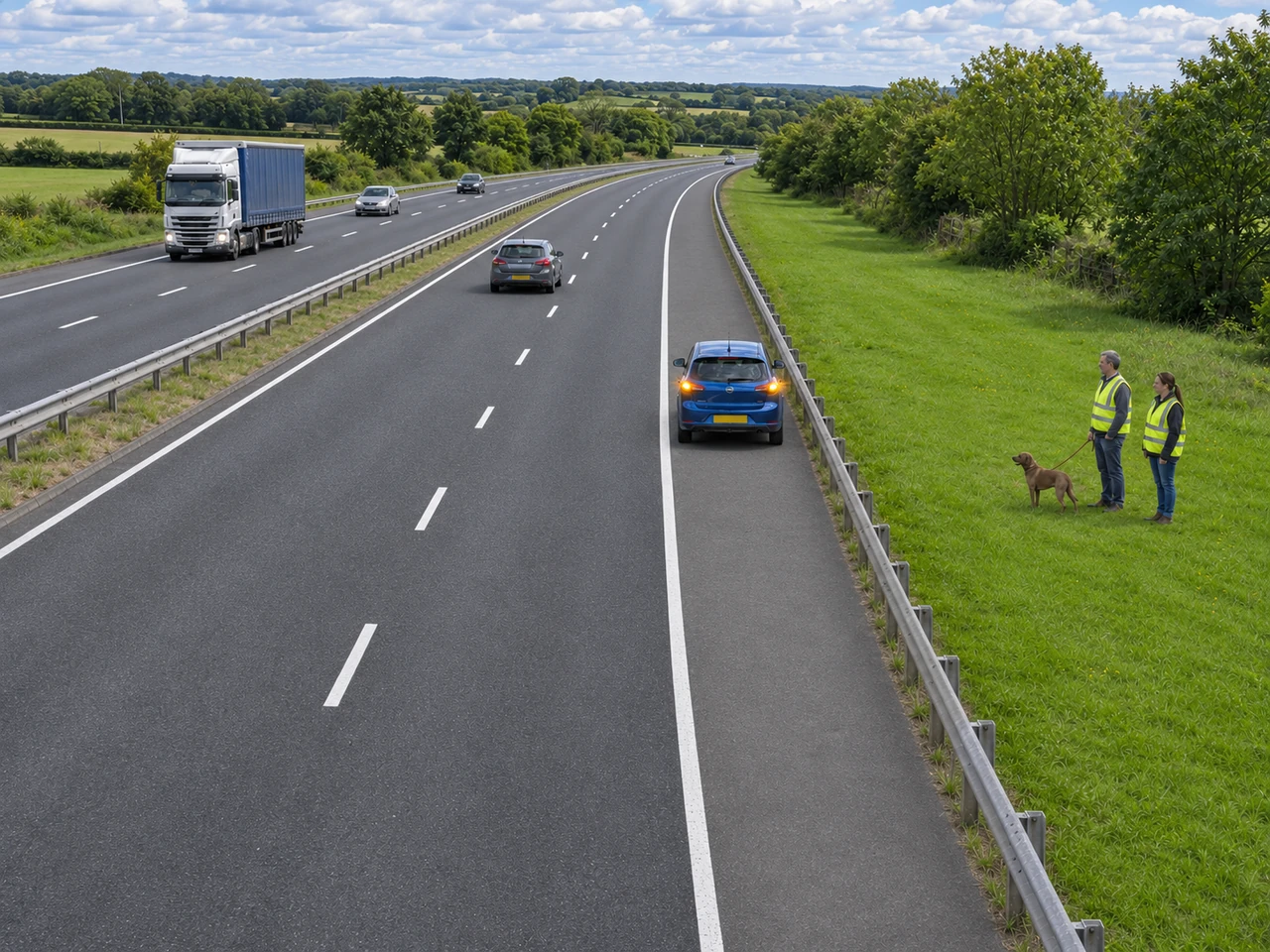
15. Where should passengers wait after safely leaving a broken-down vehicle?
After a safe exit, keep everyone well away from the carriageway and the stopped vehicle. On high-speed roads, wait behind a safety barrier where safely accessible and check the ground beyond it for hazards. Do not wait between the vehicle and the barrier or cross the carriageway. Keep children supervised and pets under control.
Keep evacuated passengers clear of traffic and animals under control. Great Britain motorway guidance normally keeps animals in the vehicle, with emergency control on the verge as the exception.
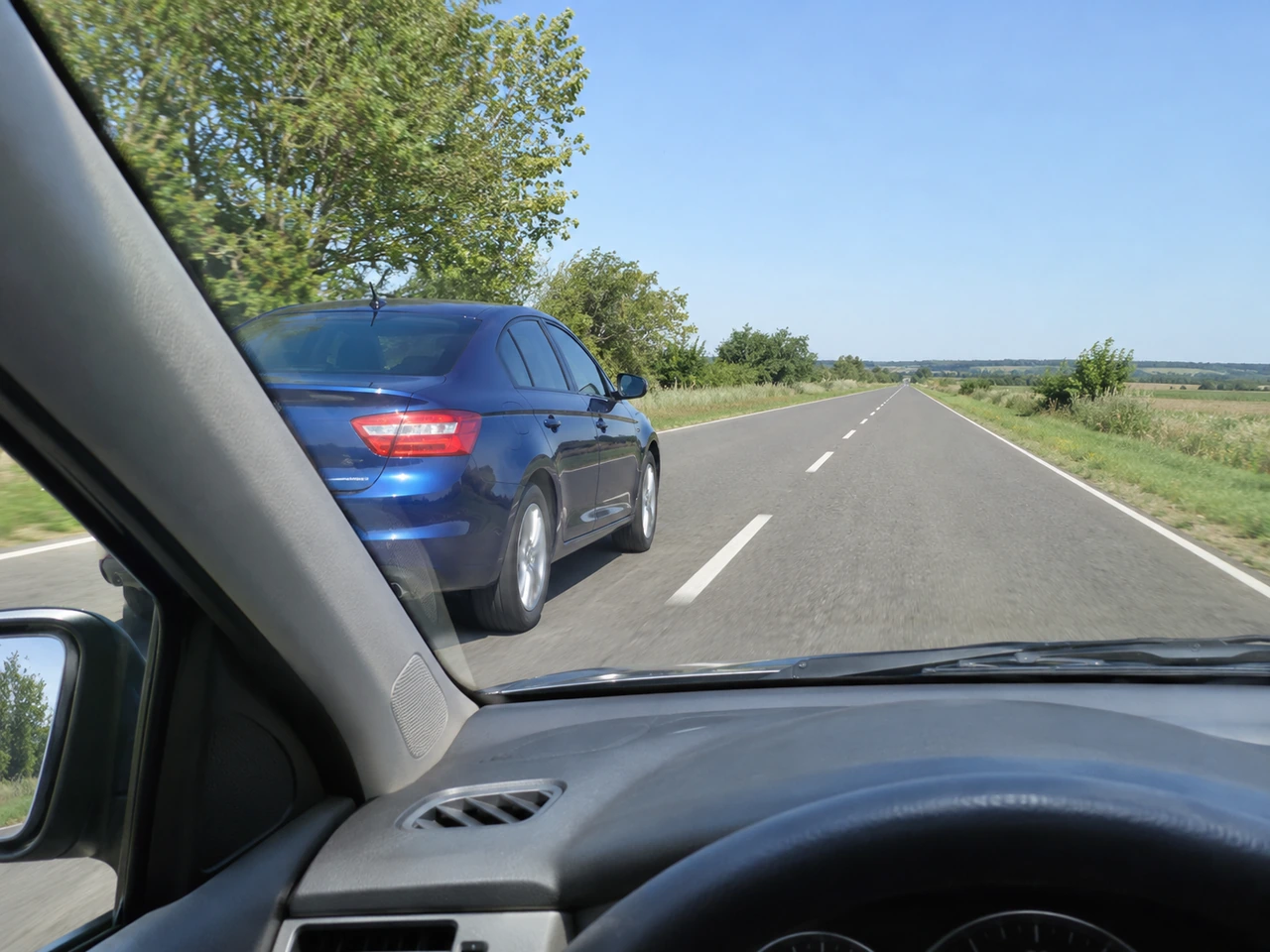
16. What should you do when another vehicle is overtaking you?
Stay predictable and let the other vehicle pass safely. Reduce speed if needed to help it pass; do not accelerate or obstruct it.
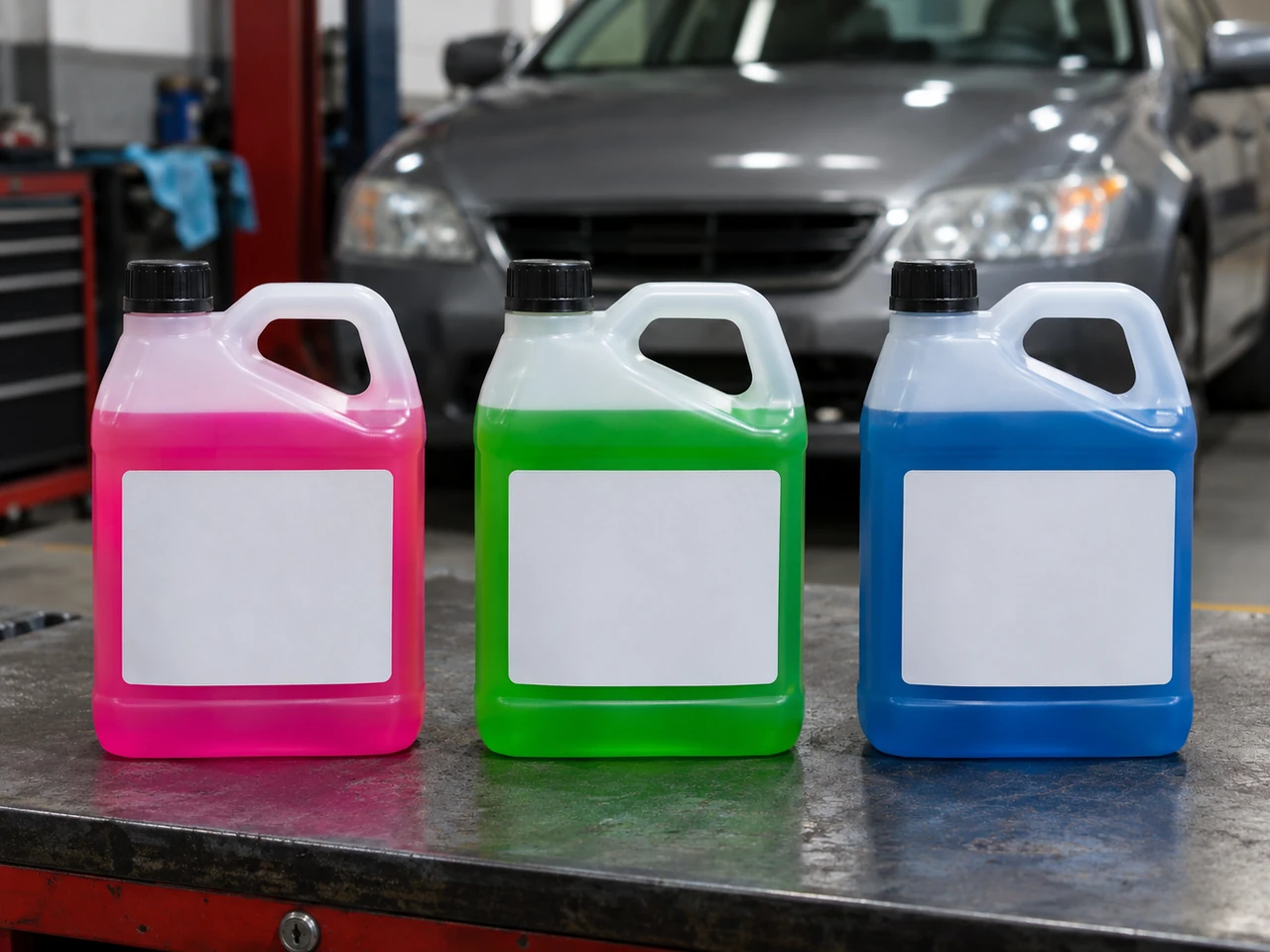
17. Colour alone is enough to identify the correct engine coolant for your car.
Coolant colour is not a reliable guide to its type or suitability. Check the product specification against the vehicle handbook, and ask a qualified repairer if you are unsure. Do not mix coolants based only on colour.
🔗 Sources
Shell (manufacturer guidance) • Safety guidance, coolant colour, composition and compatibility
Image credit: AI-generated
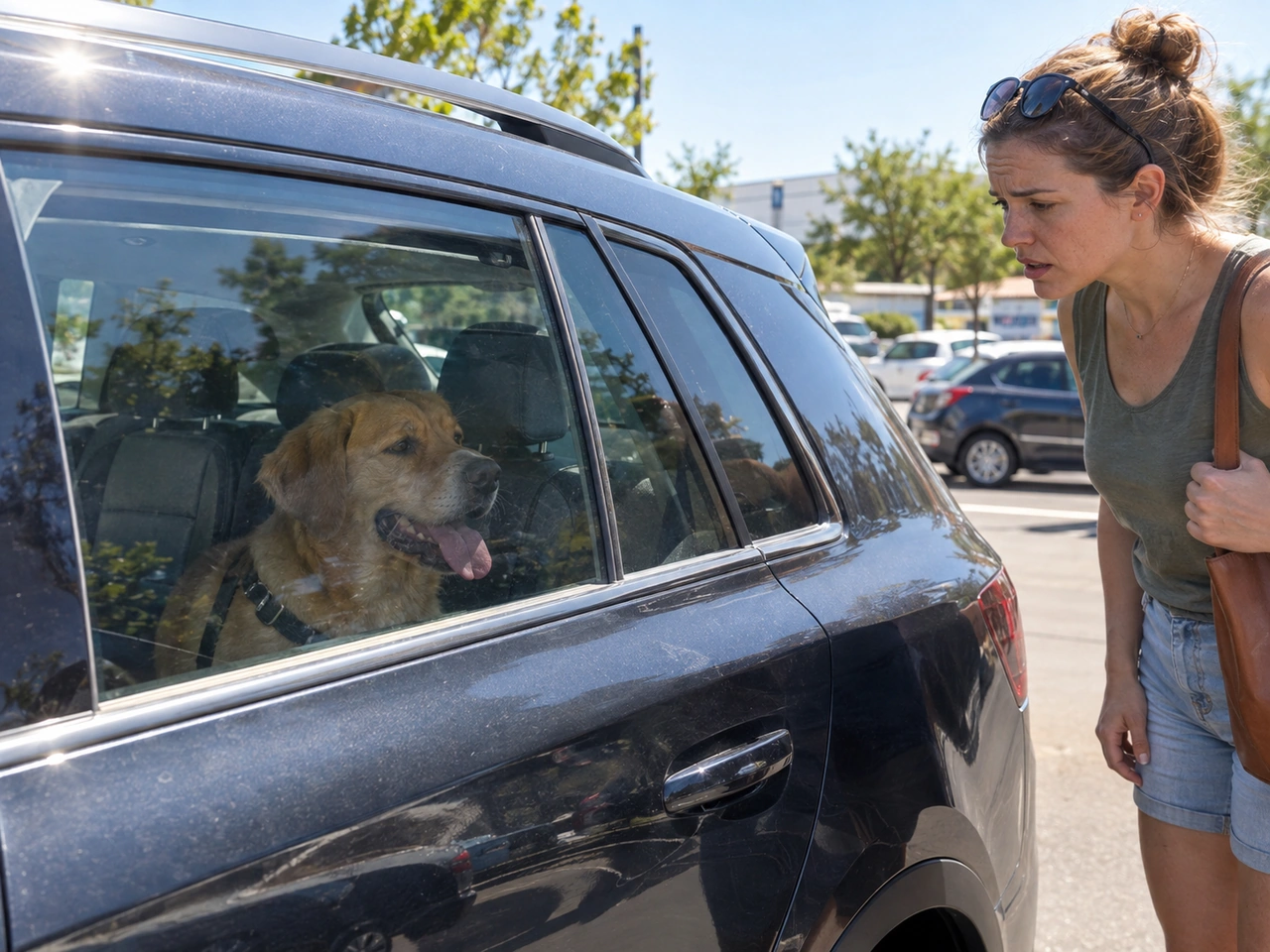
18. Why should you never leave a child or pet alone in a parked vehicle on a warm day?
The inside of a parked vehicle can heat up rapidly, even when the outside temperature does not feel extreme. Children and animals are particularly vulnerable to overheating and heatstroke. Leaving a window partly open does not make the vehicle safe.
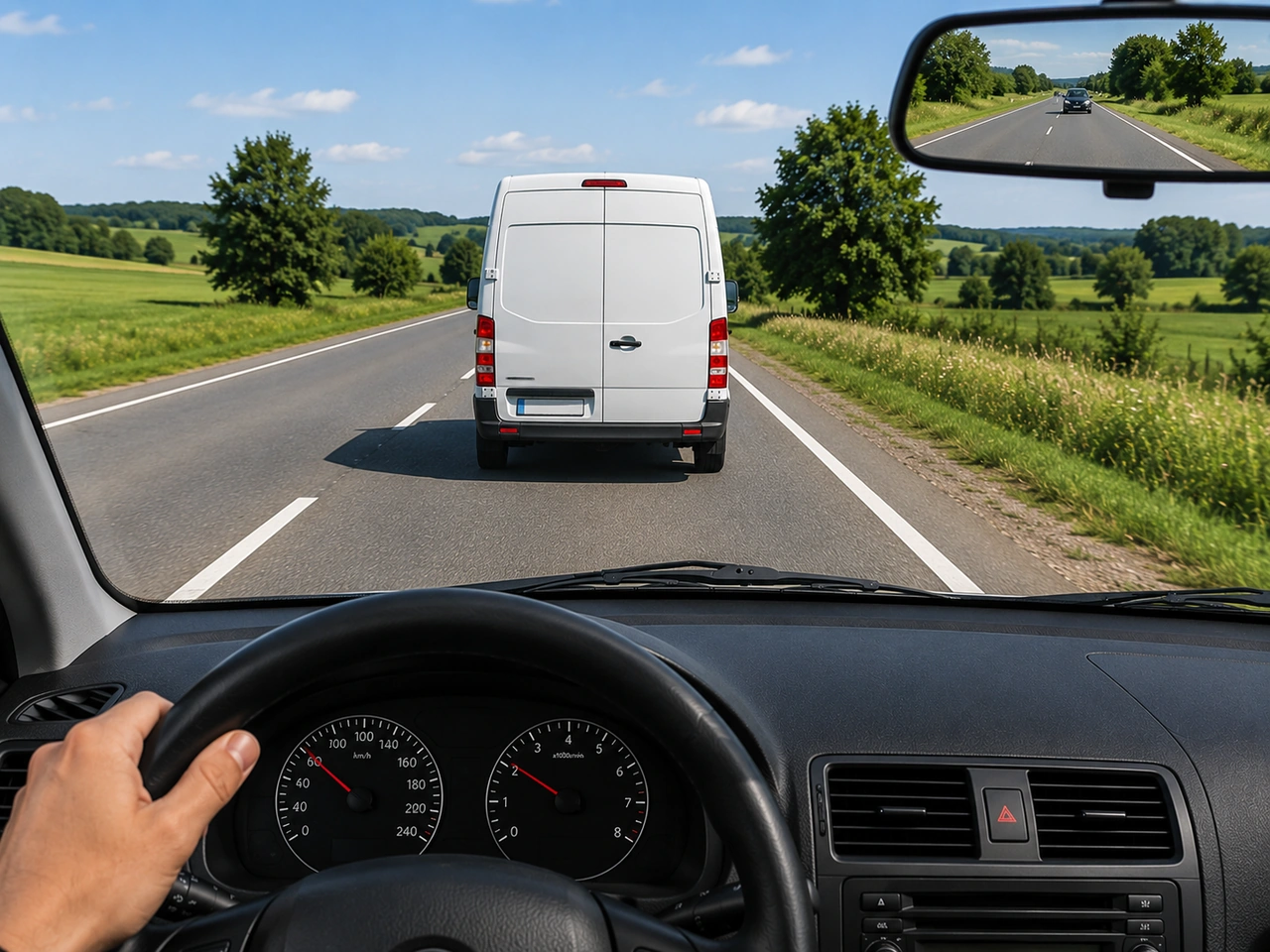
19. What is the main risk when following a vehicle with limited rear visibility?
Vans, trucks, and vehicles with blocked rear windows may have limited visibility. Keep extra distance and avoid sitting in blind spots.
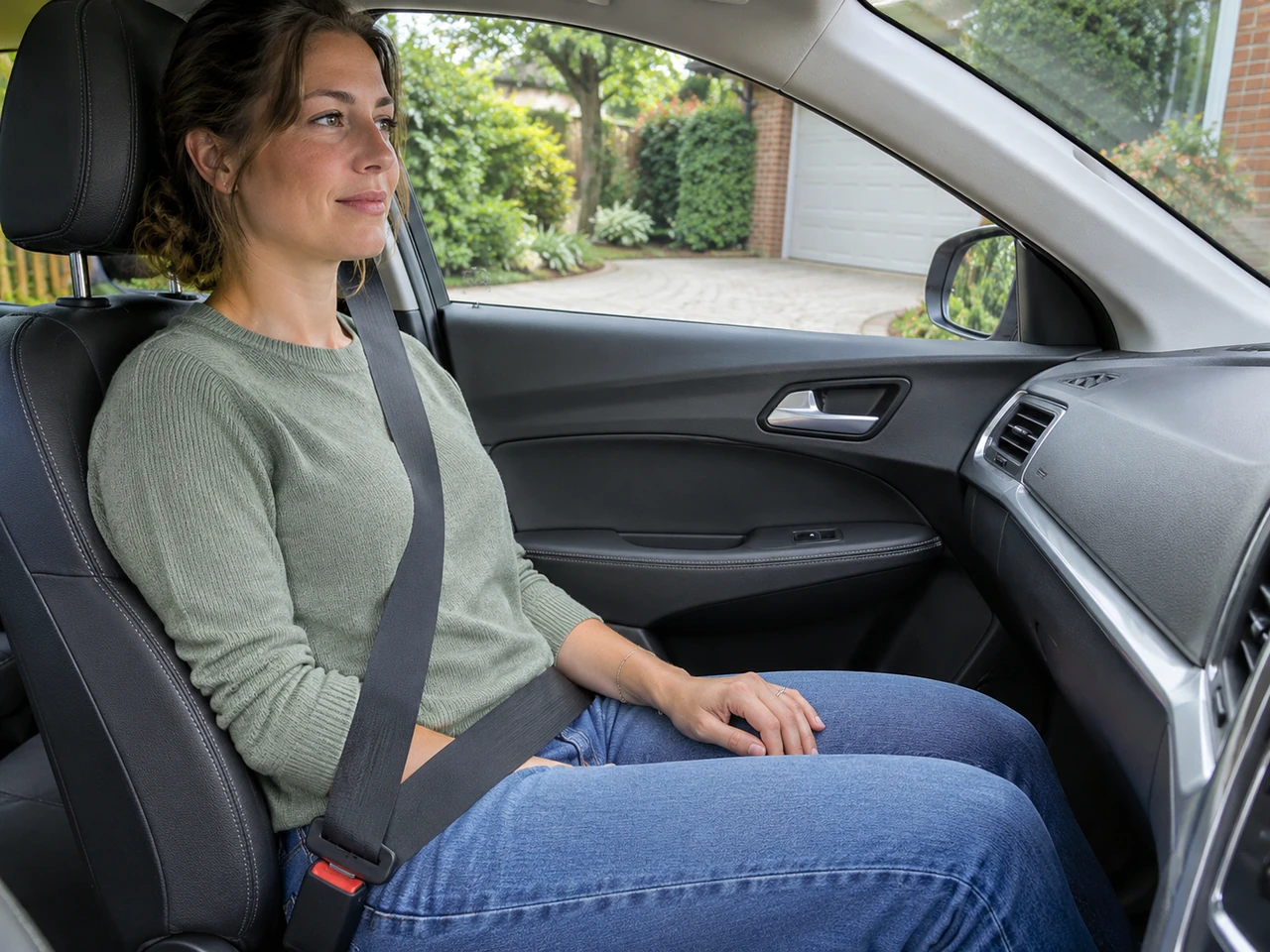
20. Airbags remove the need to wear a seat belt.
Airbags supplement seat belts rather than replace them. Wear your seat belt correctly even when the vehicle has airbags.
🔗 Sources
NHTSA (United States) • Safety guidance: airbags work with seat belts
Image credit: AI-generated
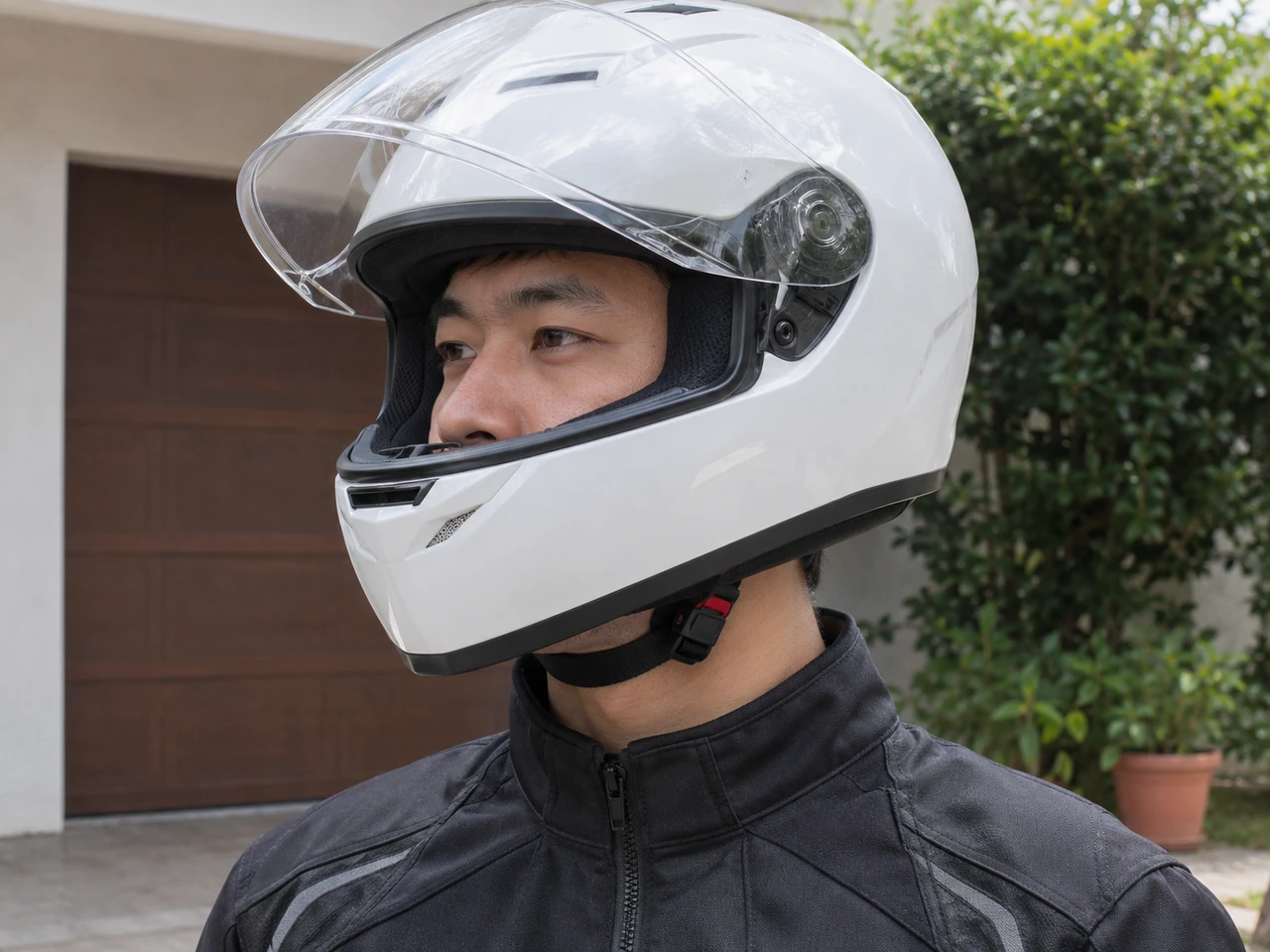
21. A motorcycle helmet should fit correctly and be securely fastened.
A correctly fitted, securely fastened helmet helps keep it in position during a crash. Use a suitable approved helmet and follow its fitting and fastening instructions.
🔗 Sources
The Highway Code (Great Britain) • Safety guidance, Rule 83; use a helmet approved locally
Image credit: AI-generated
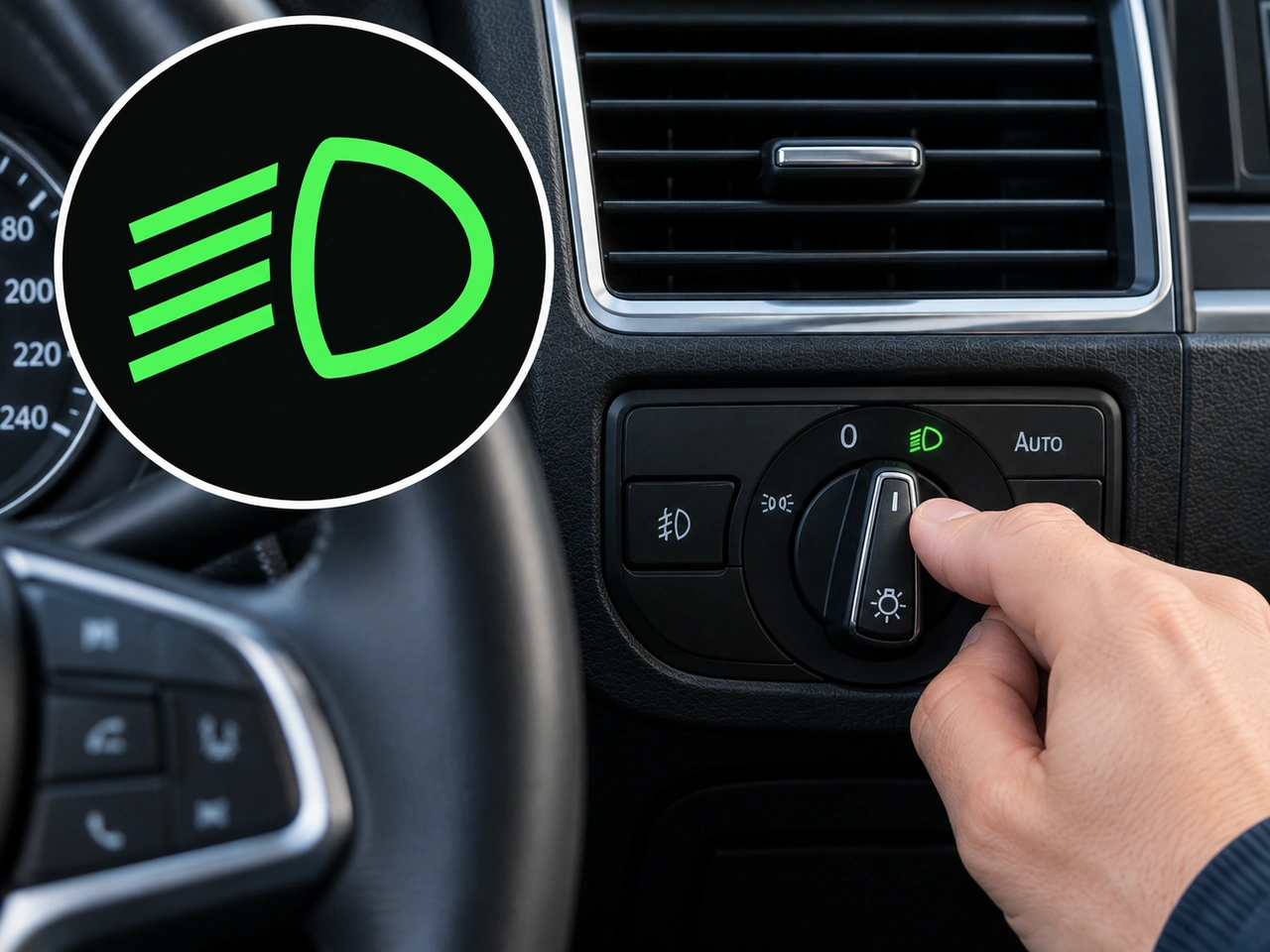
22. What does this dashboard symbol indicate?
This symbol indicates that the dipped headlights are switched on. Dipped headlights illuminate the road ahead while limiting glare for other road users.
The downward-slanting lines distinguish the dipped-beam symbol from the straight lines on the main-beam symbol.
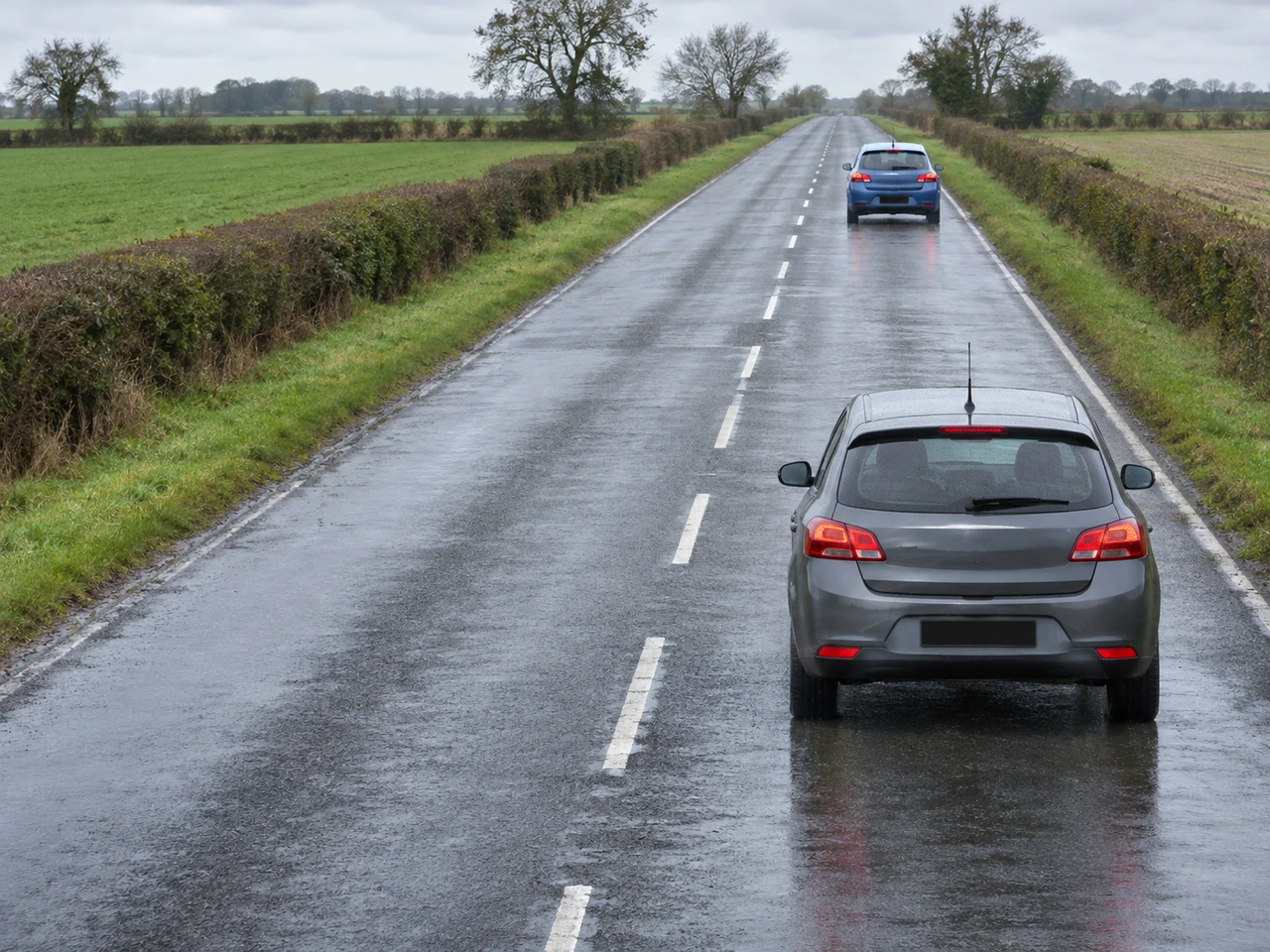
23. Why should you increase your following distance on wet roads?
Wet roads reduce tyre grip and can lengthen the braking distance. Leave a larger gap than you would in dry conditions, and reduce speed as needed. The extra space also gives you more time to notice hazards and react to changes ahead. Increase the gap further when grip or visibility is especially poor.
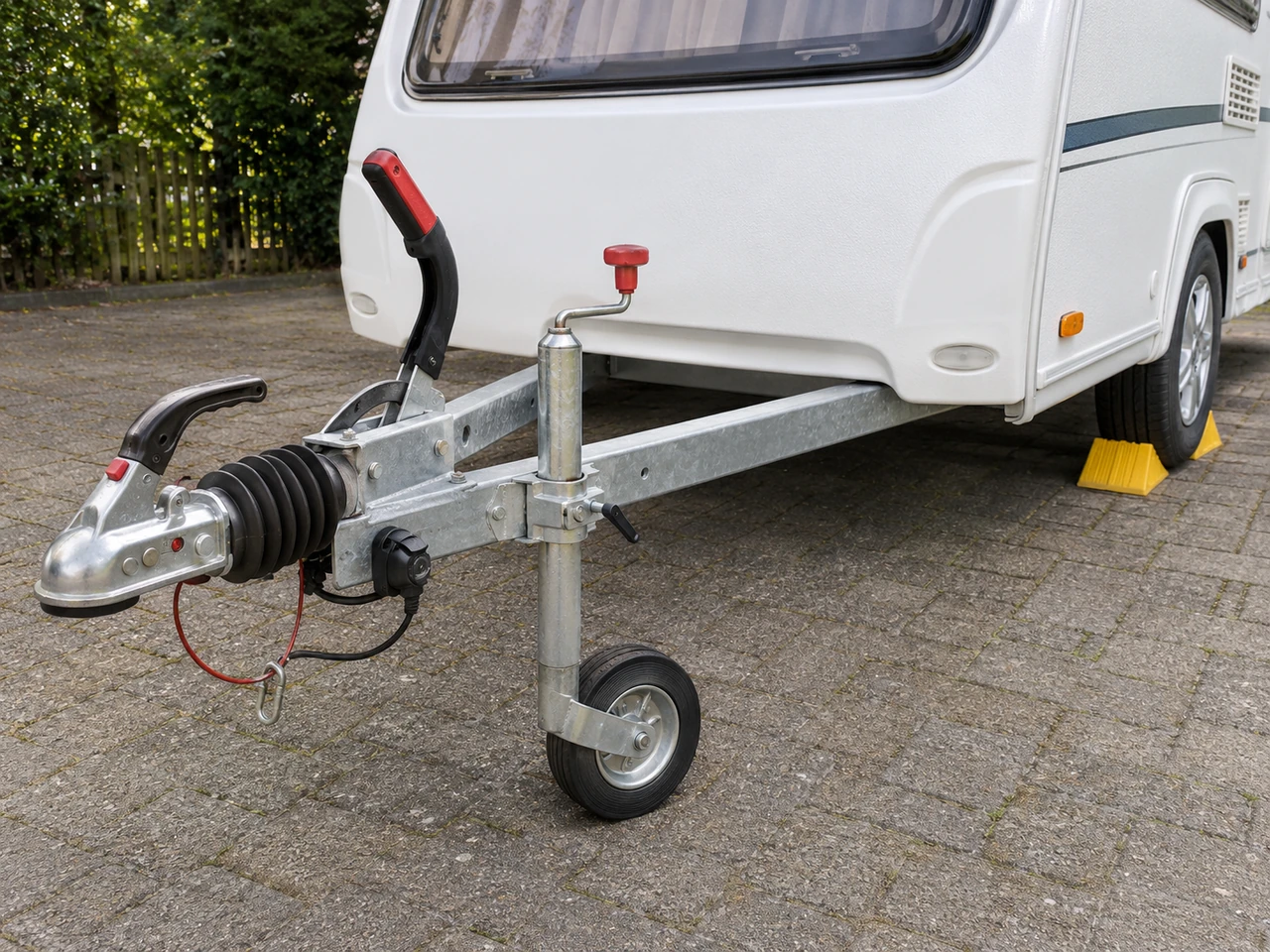
24. When towing, the trailer's noseweight must stay within all applicable component limits.
Noseweight is the static downward load at the coupling. Check the limits for the towing vehicle, towbar, coupling head and trailer; the lowest limit applies. Follow the loading guidance too, as too little noseweight can reduce stability.
🔗 Sources
National Caravan Council (Great Britain) • Safety guidance, static coupling load; vehicle, towbar and coupling limits; safe loading
Image credit: AI-generated
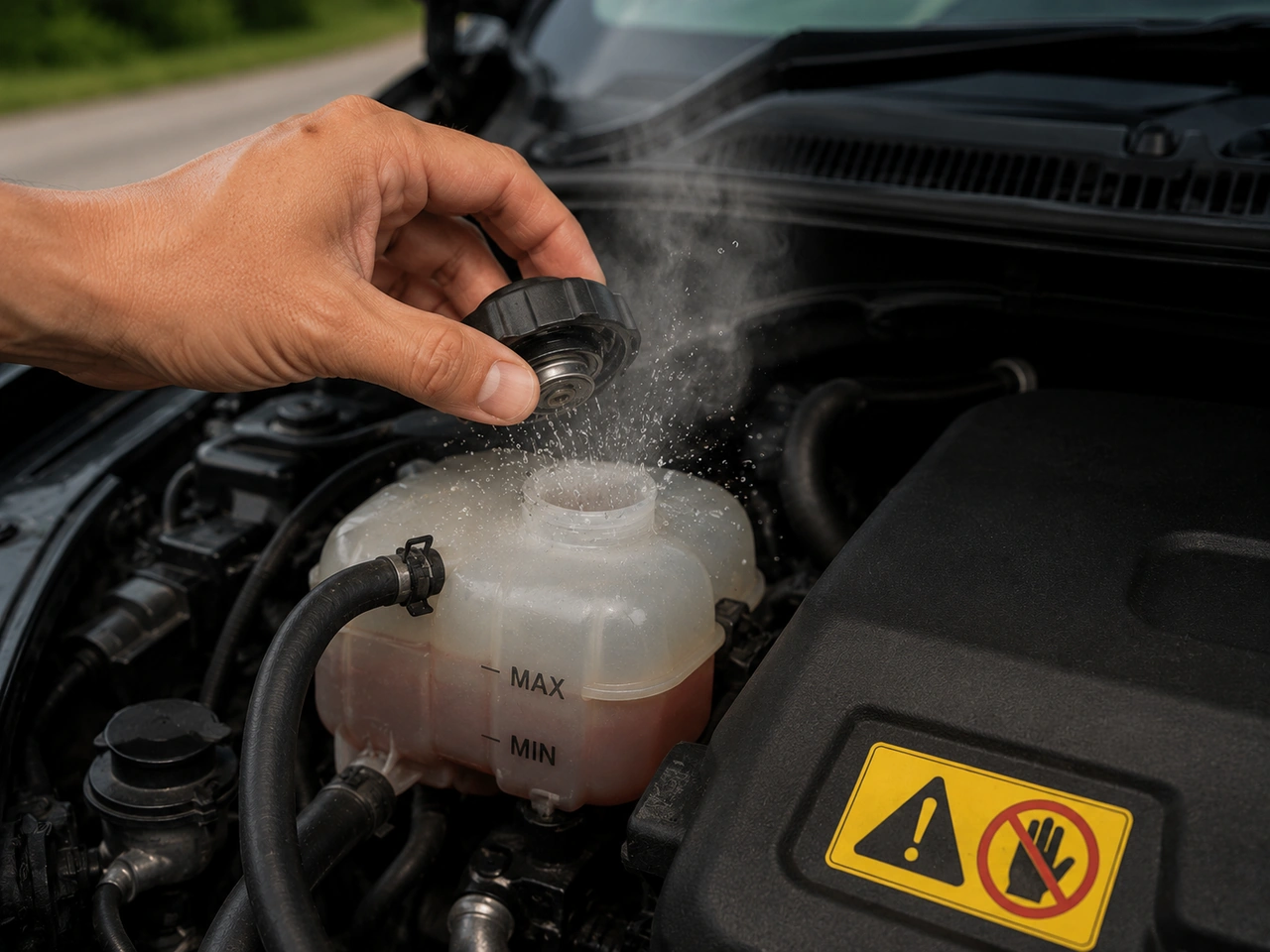
25. Why should you avoid removing the coolant cap while the engine is hot?
A hot cooling system may remain under pressure. Allow the engine to cool and follow the manufacturer's instructions before checking or adding coolant.
Argentina. Check the coolant as your handbook directs. Wait for the engine to cool before opening the cap, as hot coolant can escape under pressure and cause burns.
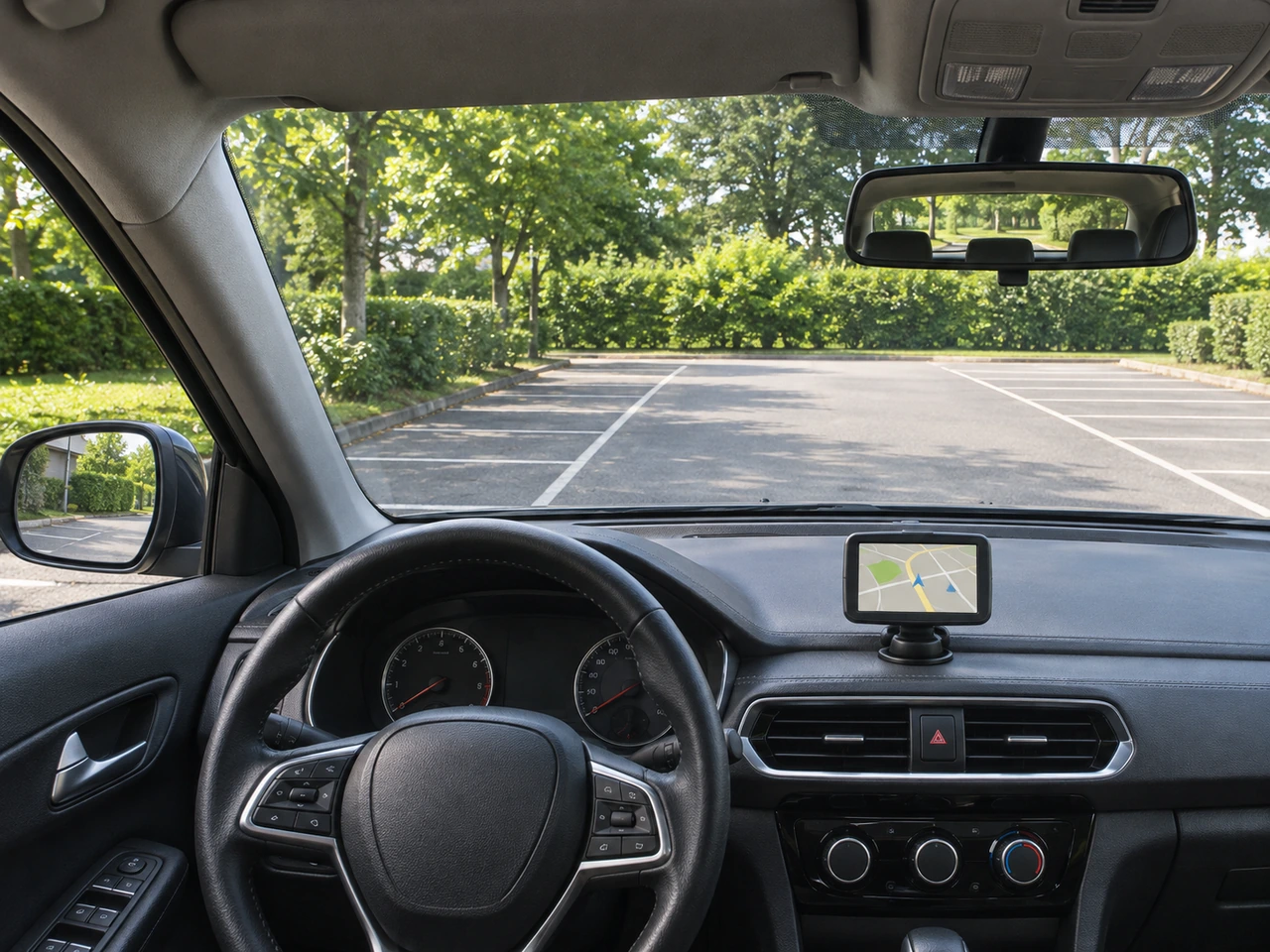
26. Where should you mount a satnav for a safe view of the road?
Fit the device securely before setting off, without obstructing your view of the road, traffic or mirrors. Follow the vehicle and device instructions.
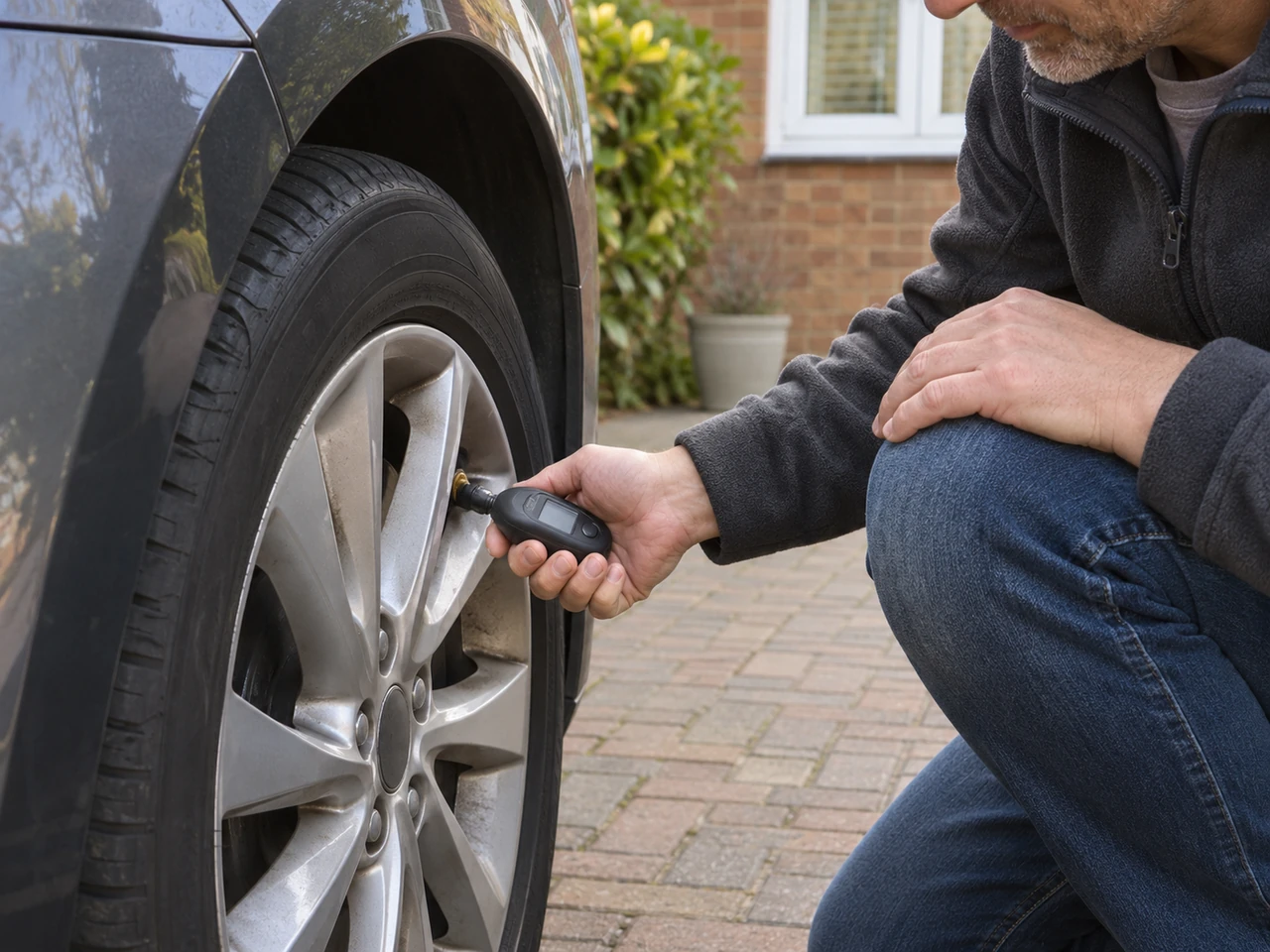
27. You should normally check tyre pressures when the tyres are cold.
Driving warms the tyres and raises their pressure. Check them when cold and use the pressure specified by the vehicle manufacturer for the load.
🔗 Sources
NHTSA (United States) • TireWise • Cold-pressure checks and vehicle-manufacturer recommendations.
Image credit: AI-generated. Existing same-entry detail photograph, reused for both driving sides.
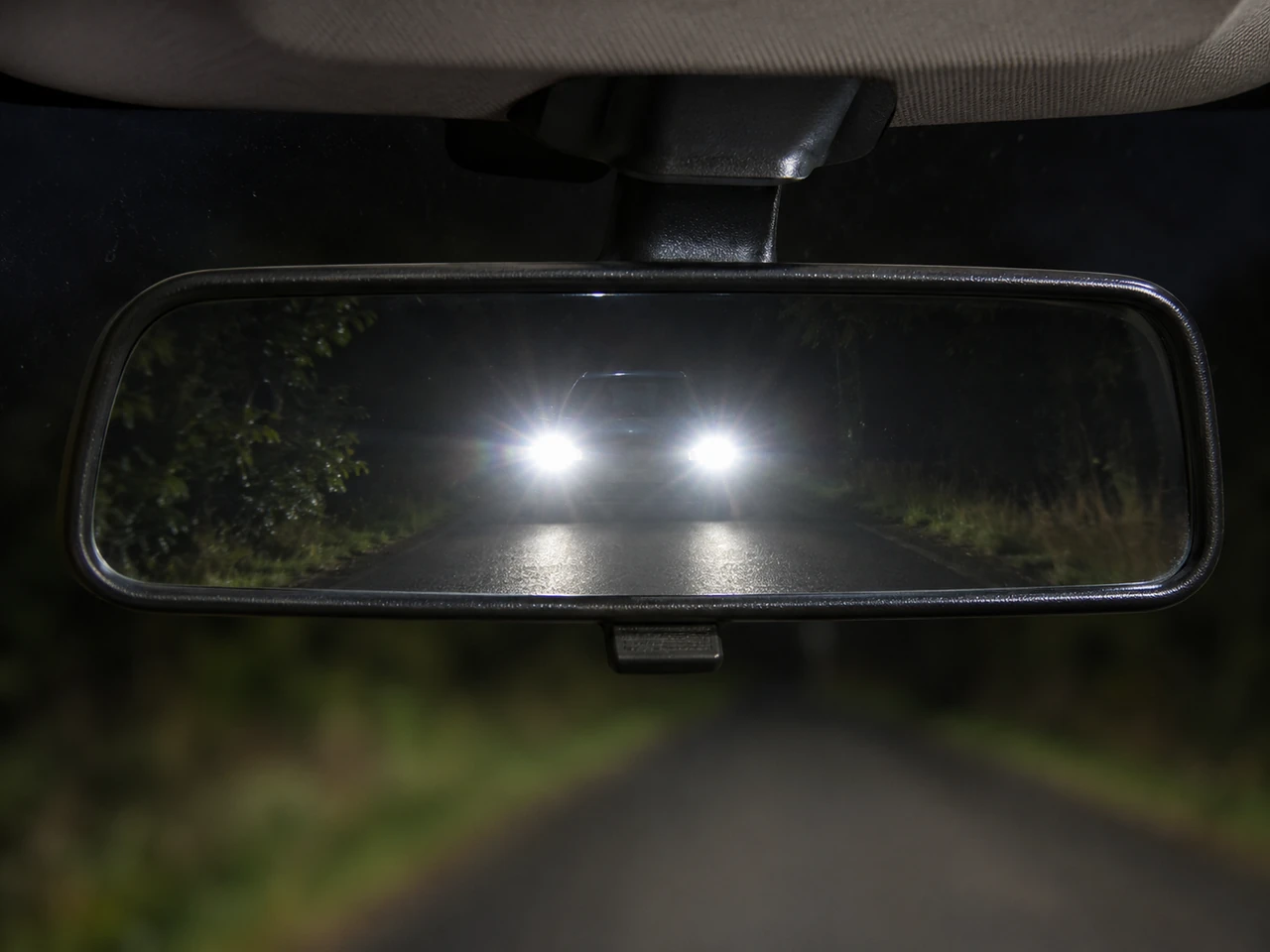
28. Main beam can dazzle drivers ahead as well as oncoming drivers.
Bright headlights can dazzle oncoming drivers and reflect in the mirrors of drivers ahead. Dip your headlights whenever main beam could dazzle another road user.
🔗 Sources
The Highway Code (Great Britain) • Safety guidance, Rules 114–115
Image credit: AI-generated
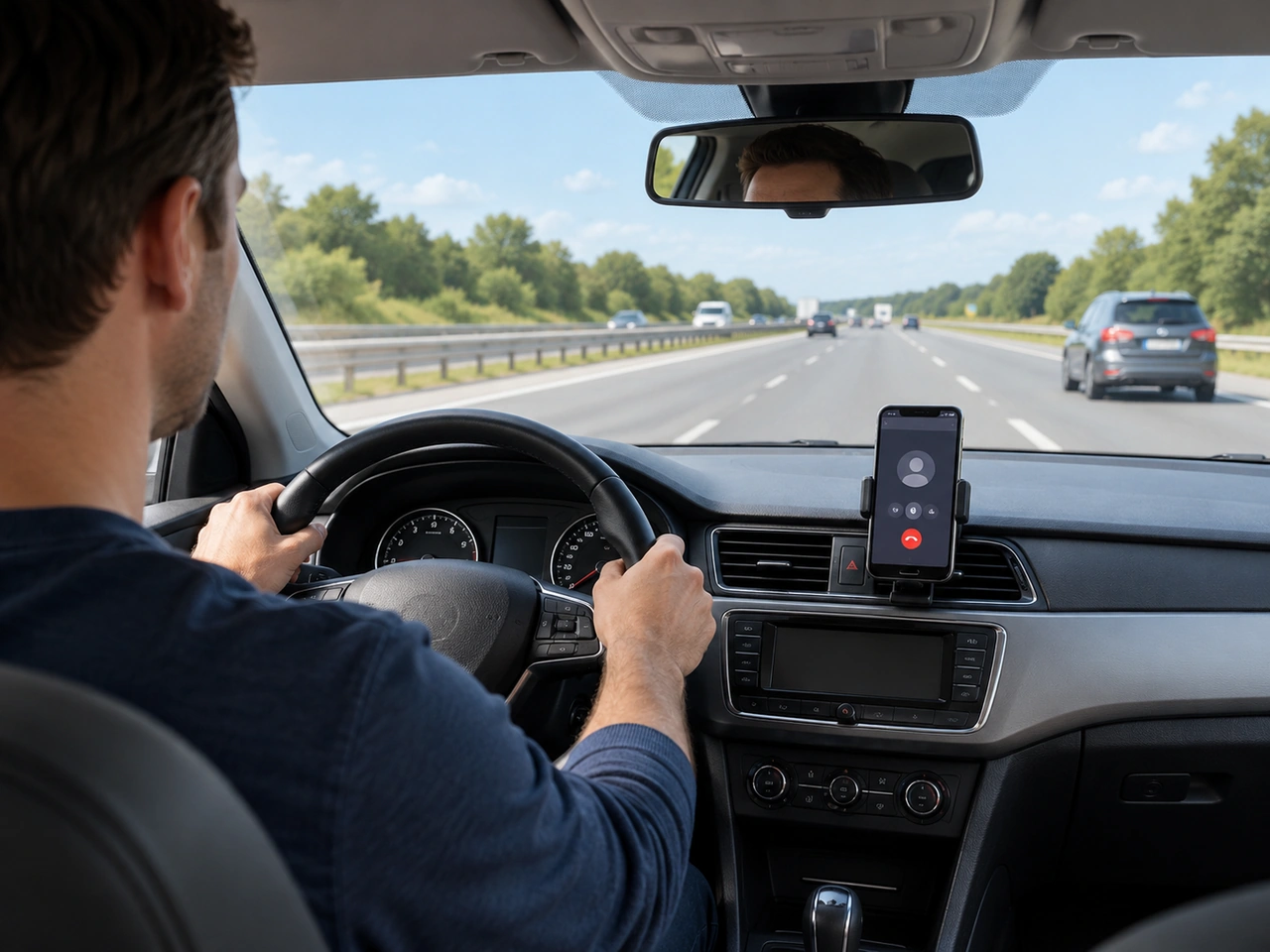
29. How may drivers normally use a phone while driving?
When phone use while driving is permitted in Argentina, drivers must generally use a hands-free system. Local rules may restrict which devices are allowed.
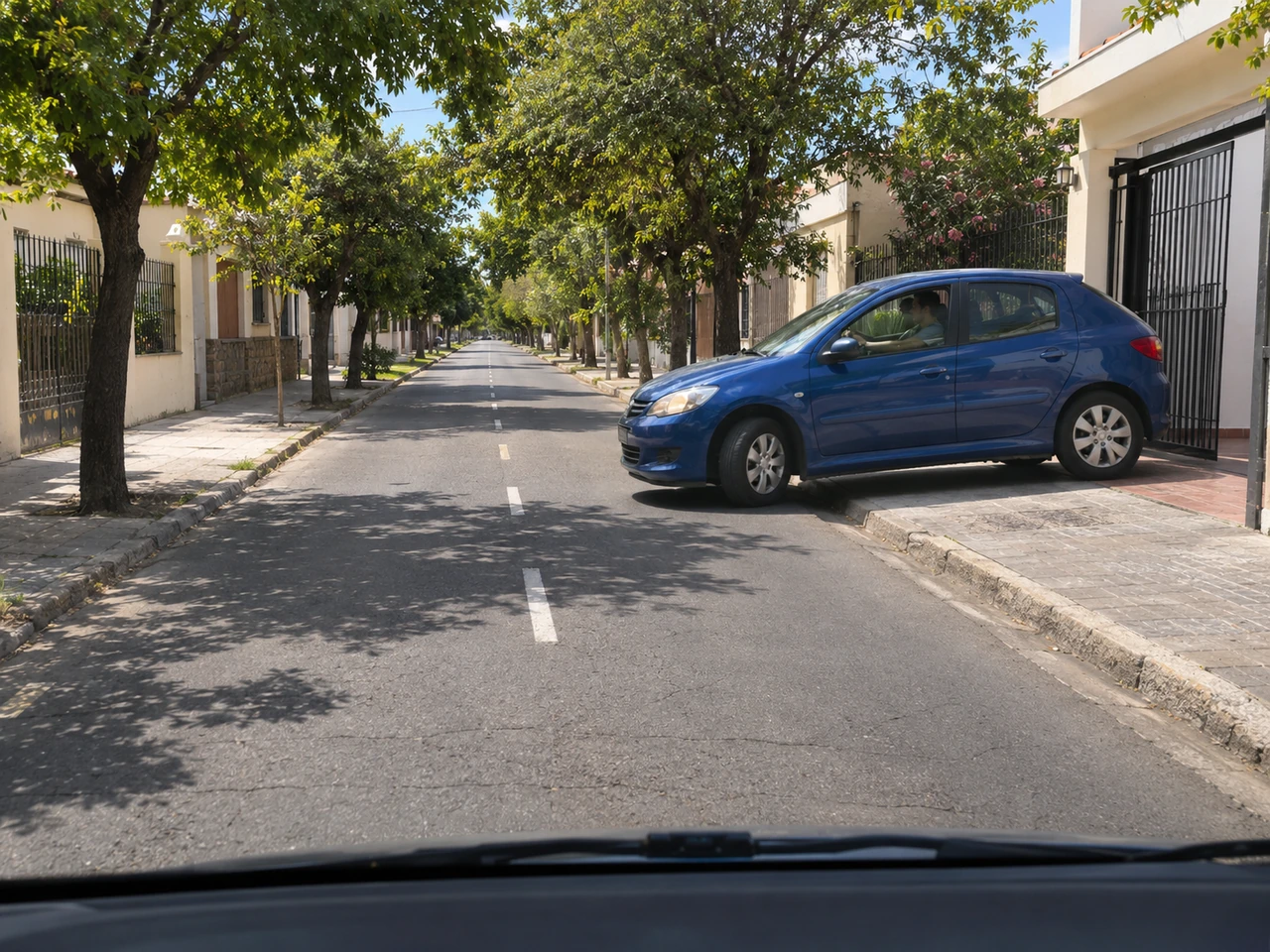
30. What should you do if another driver does not give way when they should?
Even if you have priority, safety comes first. Slow down, stay calm, and avoid creating a dangerous situation.
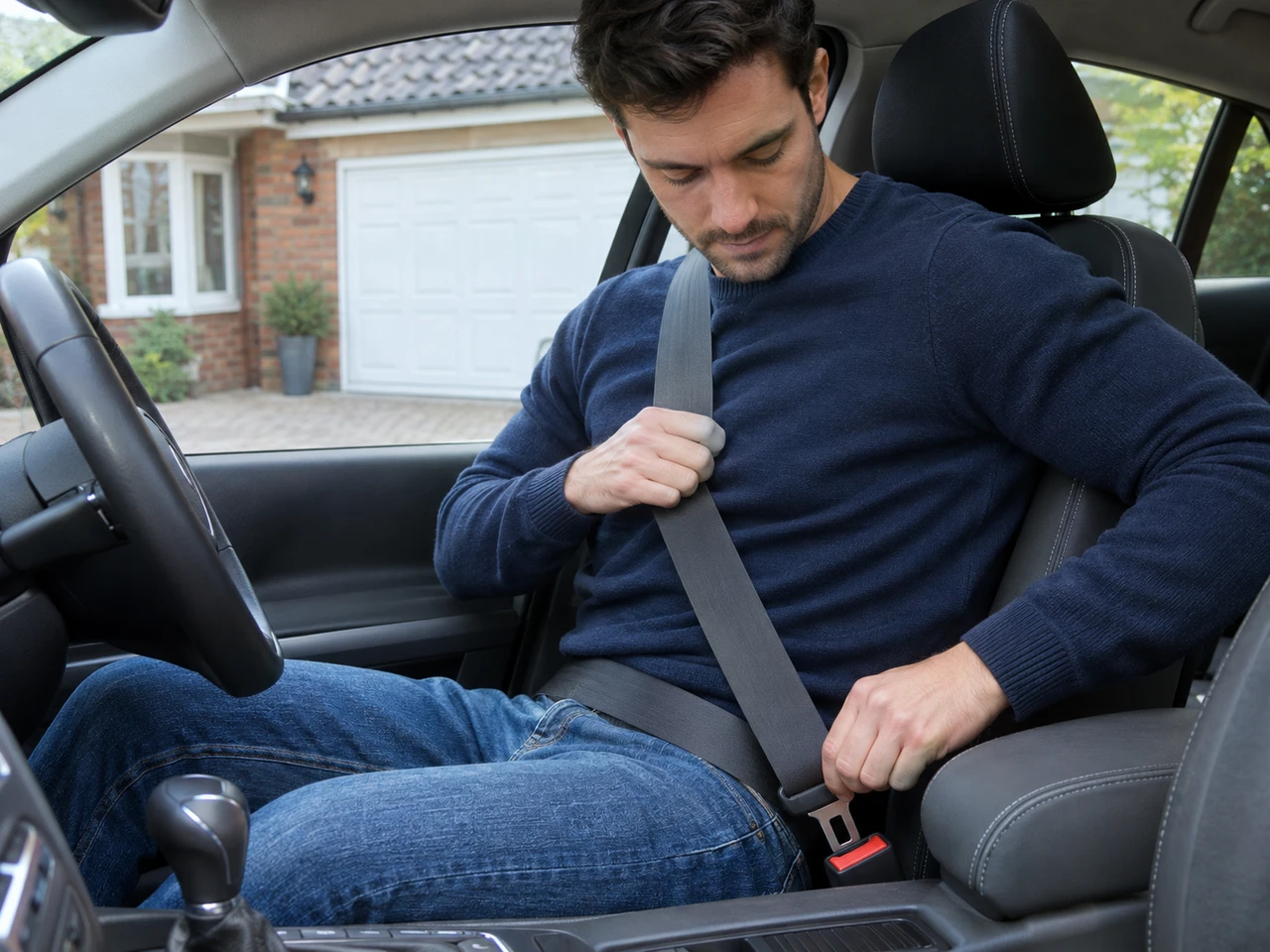
31. When should you fasten your seat belt?
Fasten your seat belt before the vehicle starts moving and keep it fastened throughout the journey. Make sure your passengers are also safely seated and properly restrained.
Argentina. Fasten the belt before you set off and check that passengers are using theirs or the appropriate child restraint.
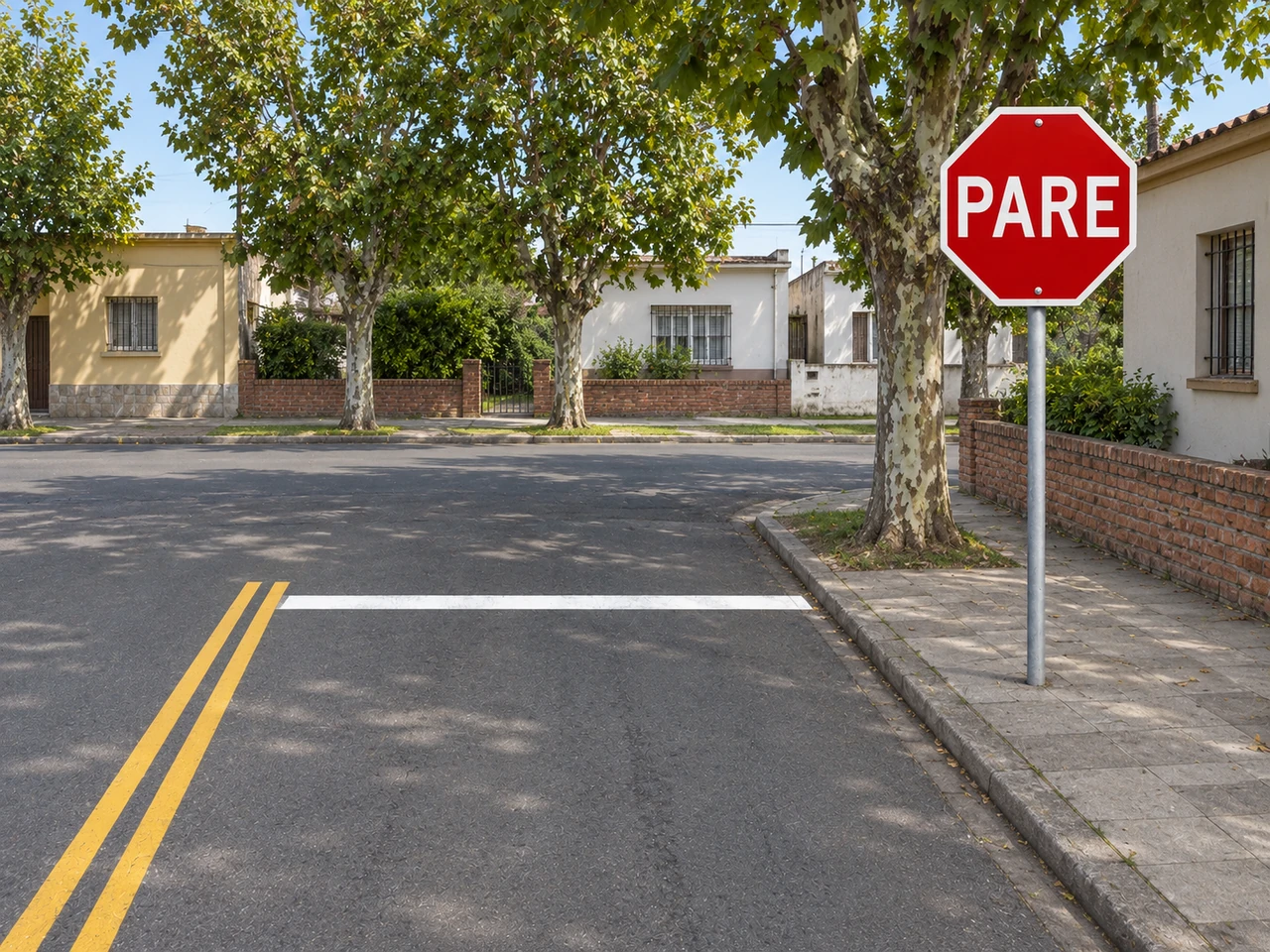
32. You may ignore a stop sign if the road looks empty.
A stop sign means you must come to a complete stop, even if no other traffic is visible.
🔗 Sources
Argentina — Decree 196/2025, Annex L, sign R.27.
Image credit: AI-generated country-specific scene.
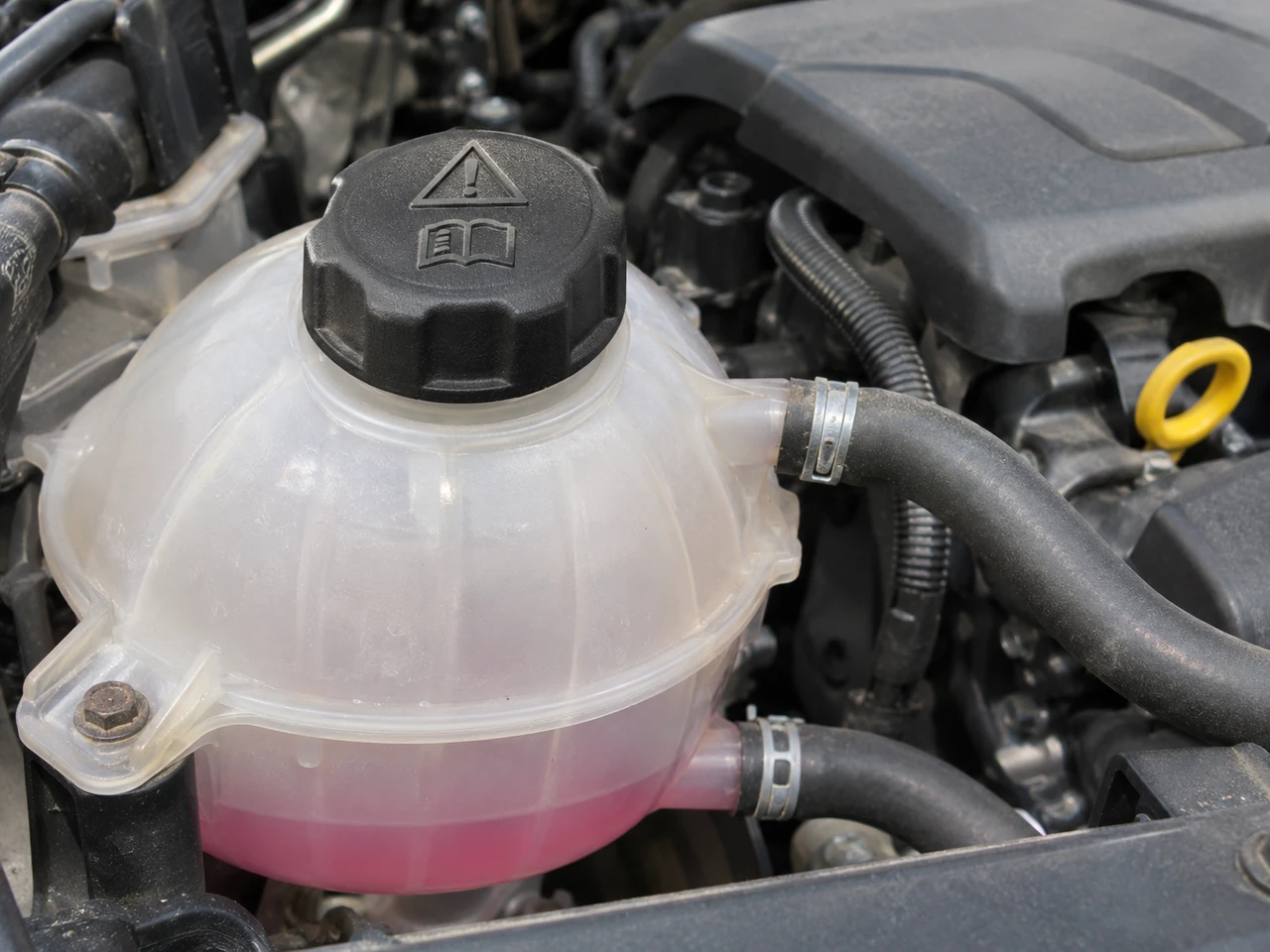
33. It is safe to open the coolant cap while the engine is still hot.
Let the engine cool before opening the cooling system, and follow the vehicle handbook. Do not open the coolant cap while the engine is hot.
🔗 Sources
The Highway Code (Great Britain) • Safety guidance, overheated engines and coolant filler caps
Image credit: AI-generated
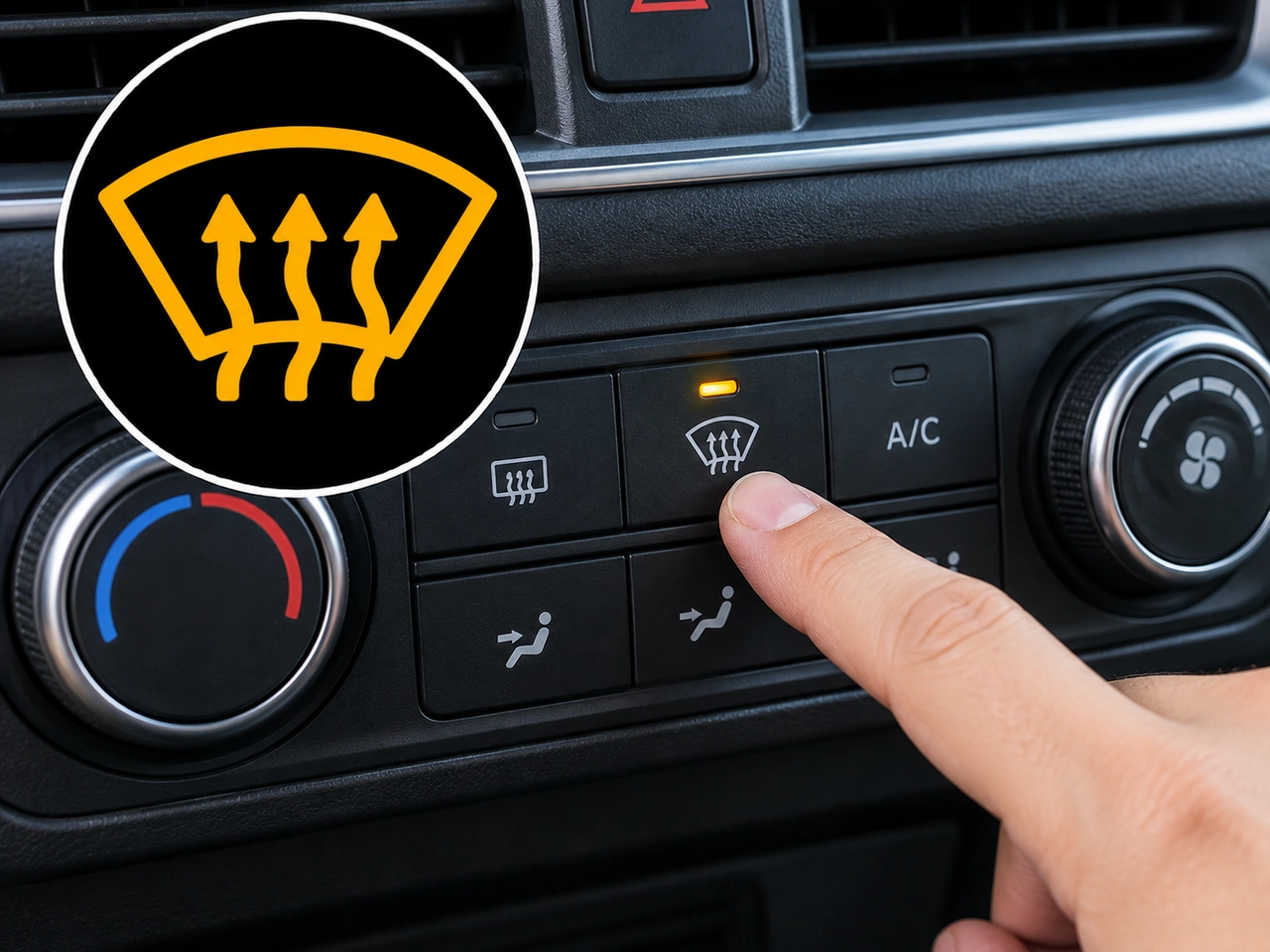
34. What does this dashboard symbol indicate?
This symbol indicates the front windscreen demister. It directs airflow towards the windscreen to help clear condensation, mist or frost and restore a clear view.
The curved windscreen outline with rising arrows identifies the front demist control. It directs air towards the windscreen.
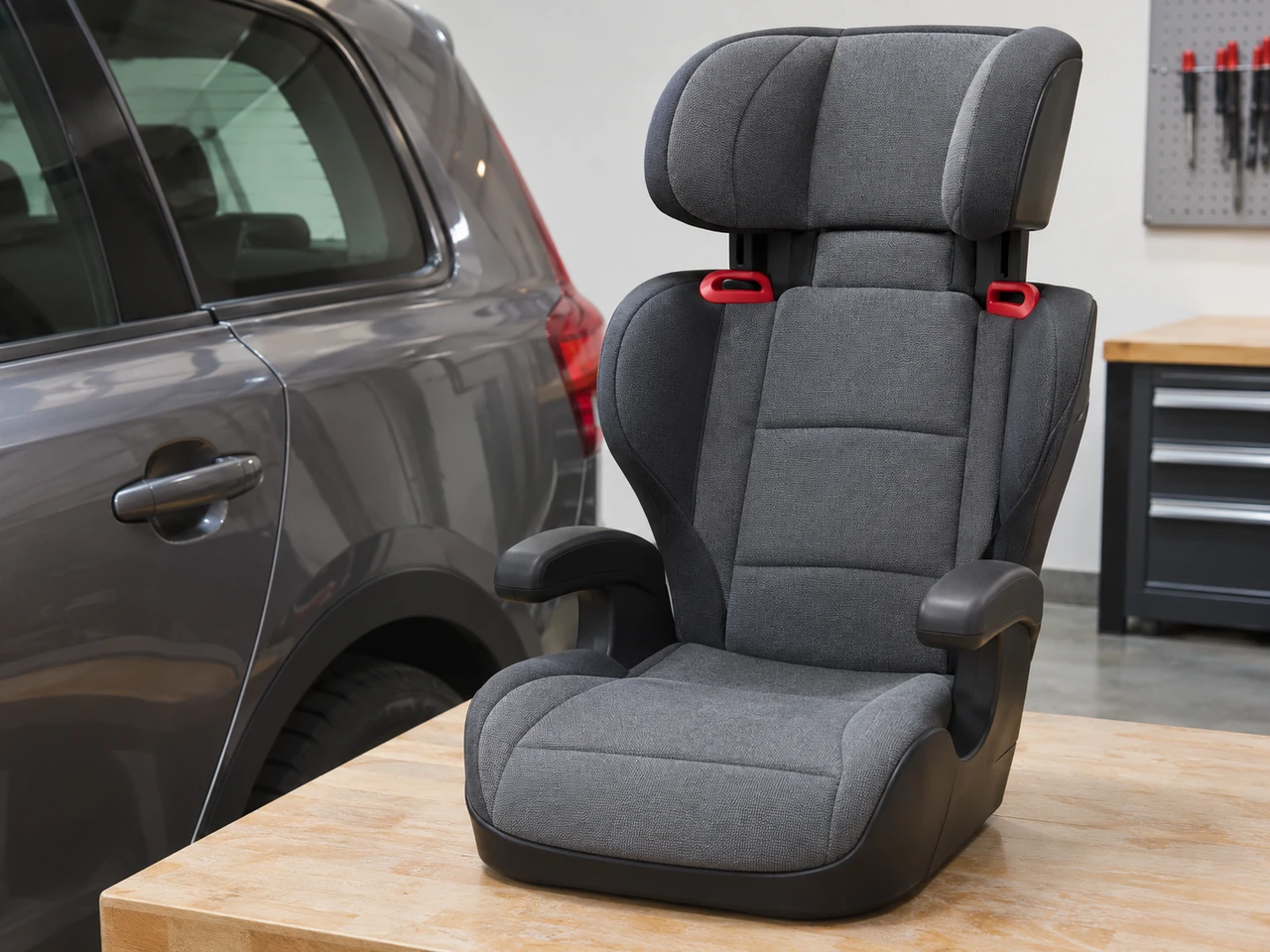
35. A suitable booster seat helps the vehicle's seat belt fit a child correctly.
A booster raises and positions a child so the lap-and-shoulder belt fits correctly. Use a restraint suitable for the child and vehicle, follow both sets of instructions, and observe local requirements.
🔗 Sources
NHTSA (United States) • Safety guidance, booster-seat purpose and correct belt fit; local restraint requirements apply
Image credit: AI-generated
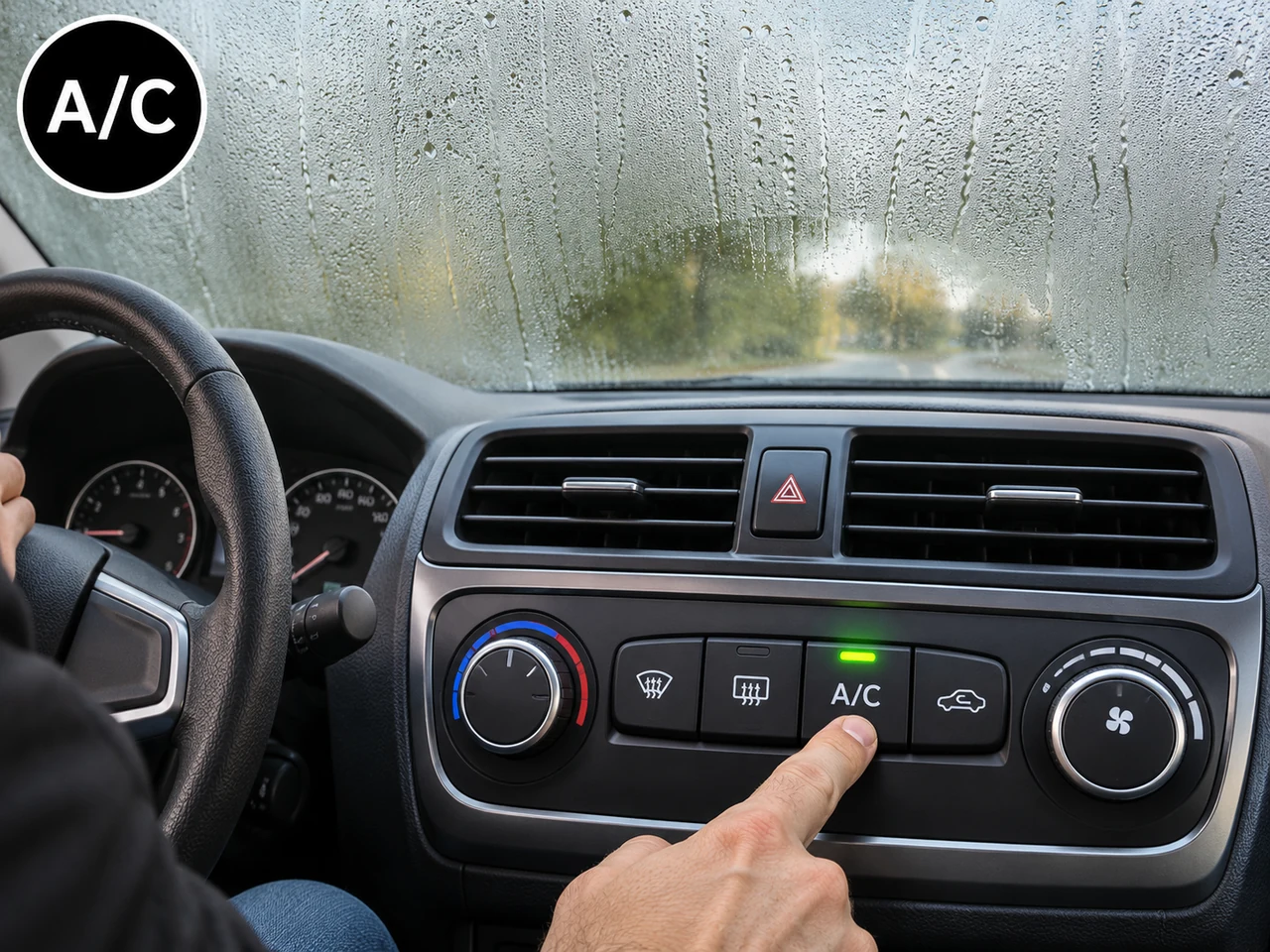
36. How can air conditioning help demist the windows?
Using the air conditioning can help demist the windows because it removes moisture from the cabin air. Directing this drier air towards the windscreen can clear condensation more quickly.
Direct the airflow towards the windscreen and use the air conditioning to remove moisture from the air.
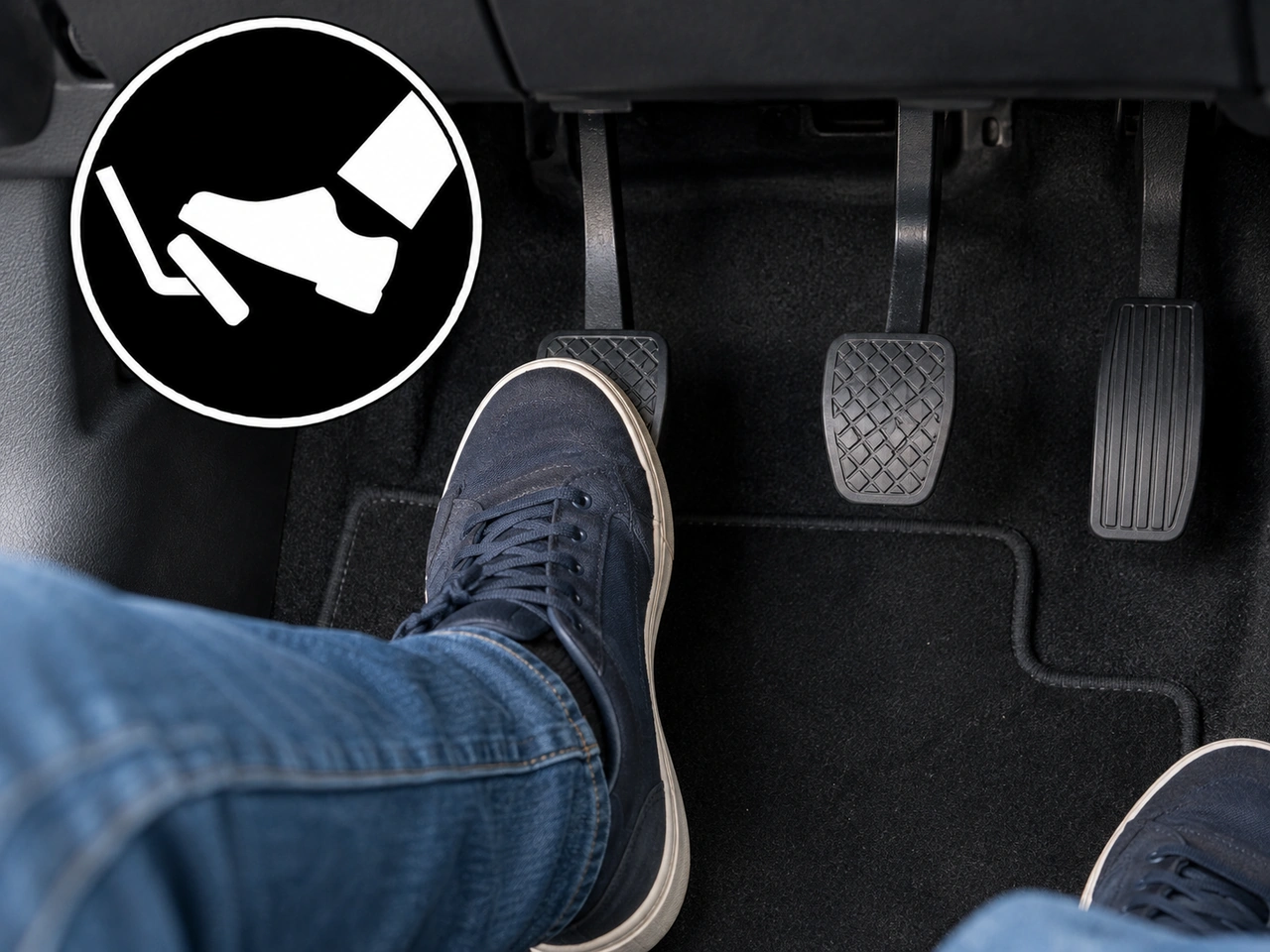
37. What is the purpose of the clutch pedal in a manual vehicle?
Pressing the clutch pedal temporarily disconnects the engine from the transmission, allowing the driver to change gear or stop without stalling the engine.
In a manual car, the clutch is the left pedal. Keep your foot off it between gear changes unless you need it to prevent stalling.
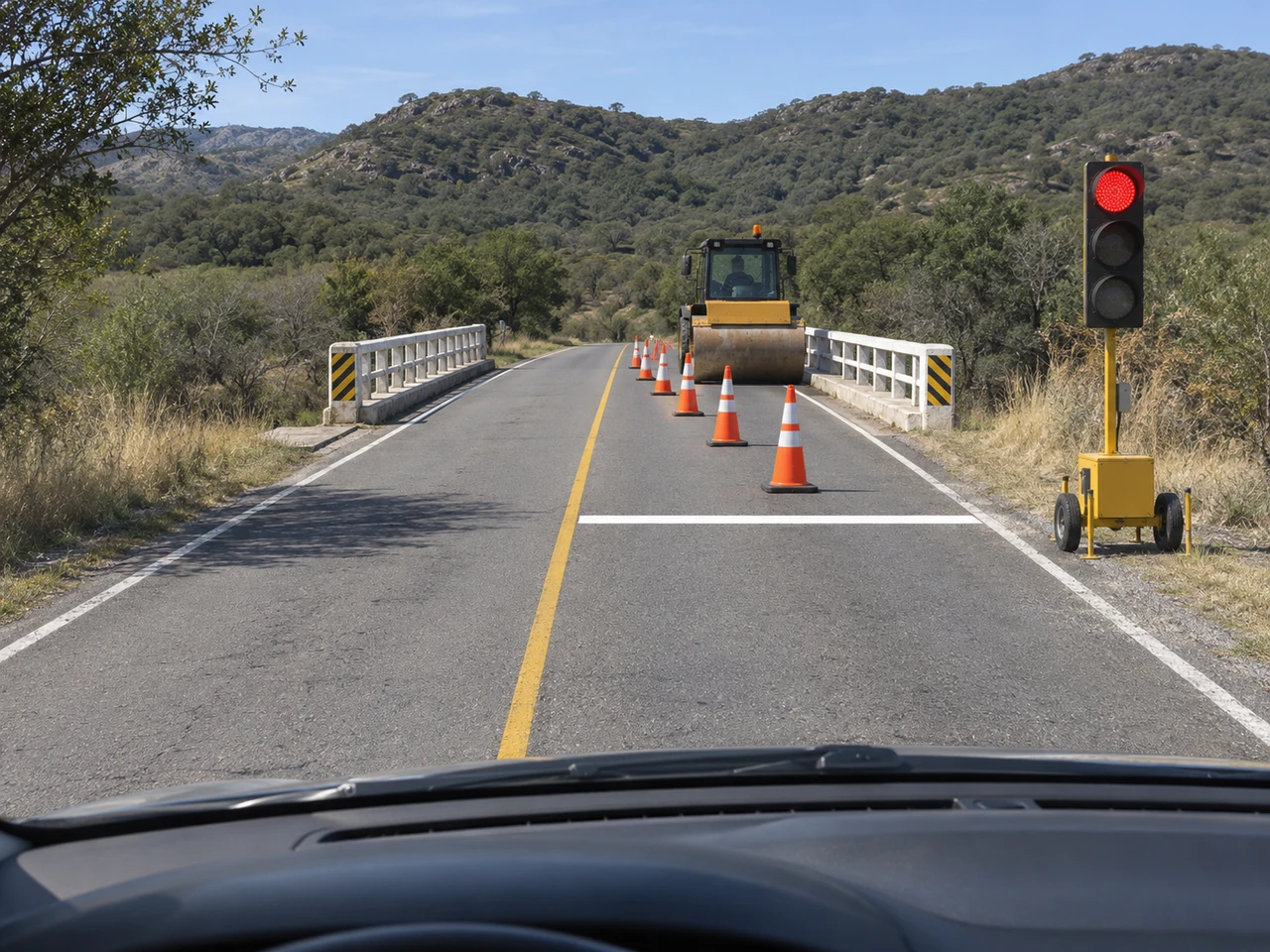
38. What should you do when temporary traffic lights show red?
Temporary traffic signals must be obeyed like permanent signals. Stop and wait until you are permitted to continue.
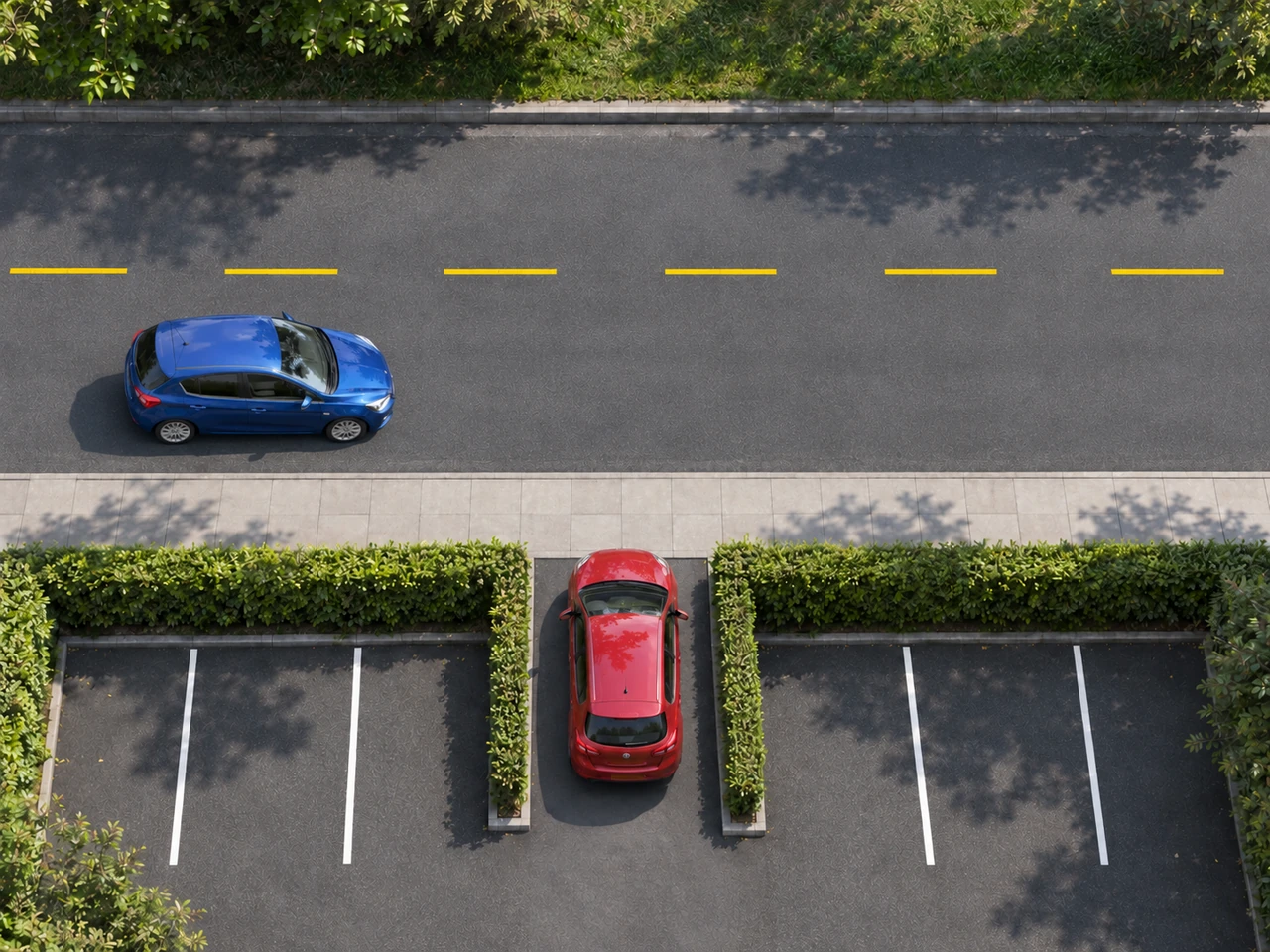
39. There is no room to wait between the pavement and the road. Where should red wait while blue passes?
Wait before crossing the pavement while blue passes. Once there is a safe gap on the road, check for pedestrians again and move across only when both routes are clear.
🔗 Sources
AI-generated illustration • Traffic-rules.com / Rijbewijs-online.be • WCIT • CC BY-SA 4.0.
🔗 Argentina Government • National Traffic Law 24,449, article 39(b)
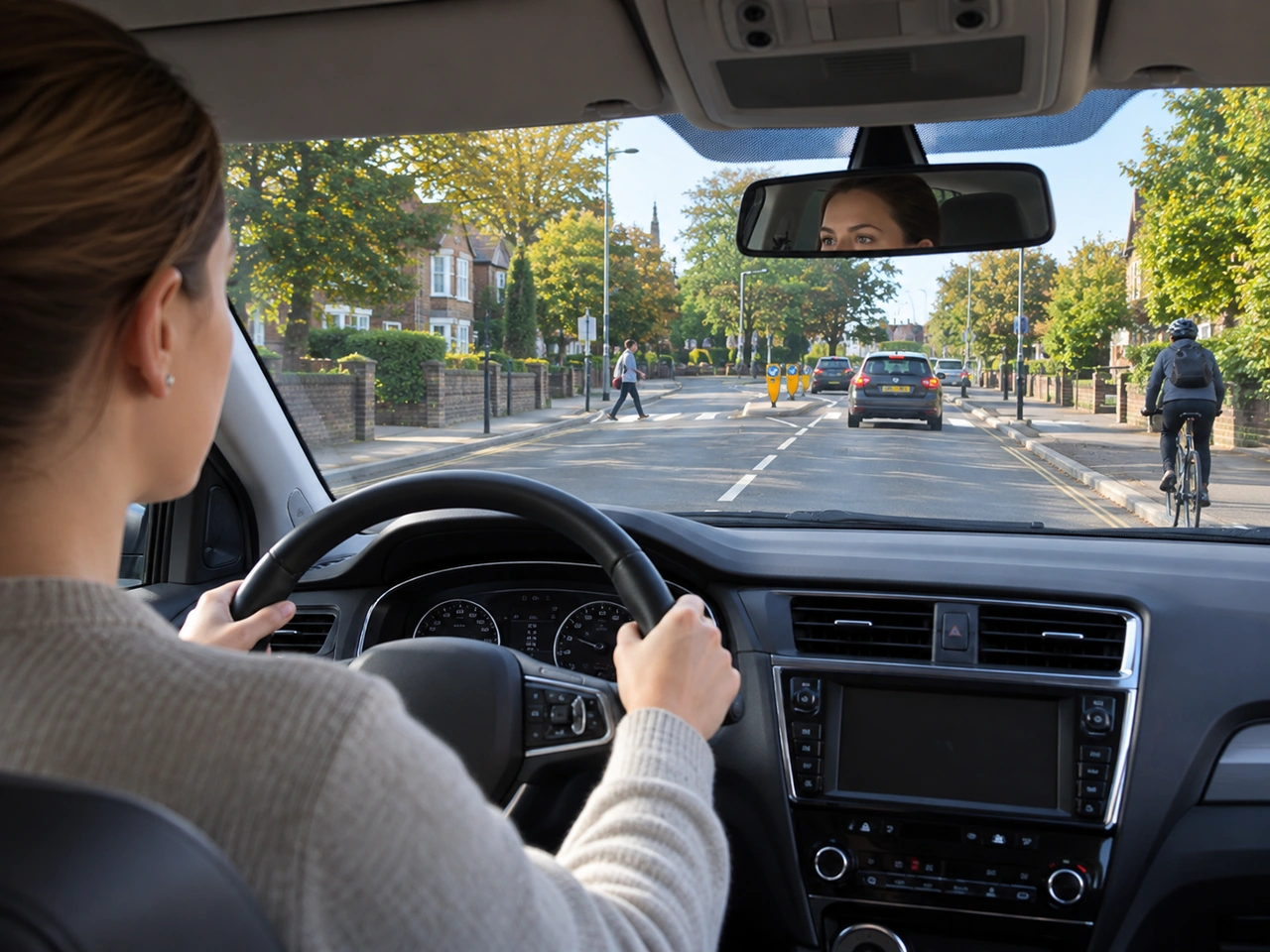
40. Why should you look well ahead while driving?
Looking well ahead helps you identify developing hazards early, such as slowing traffic, pedestrians, junctions, or changing road conditions. Earlier detection gives you more time to assess the situation and respond smoothly and safely.
🔗 Sources
Oregon DMV — general advice on spacing, lane changes, curves, scanning and overtaking
Image credit: AI-generated
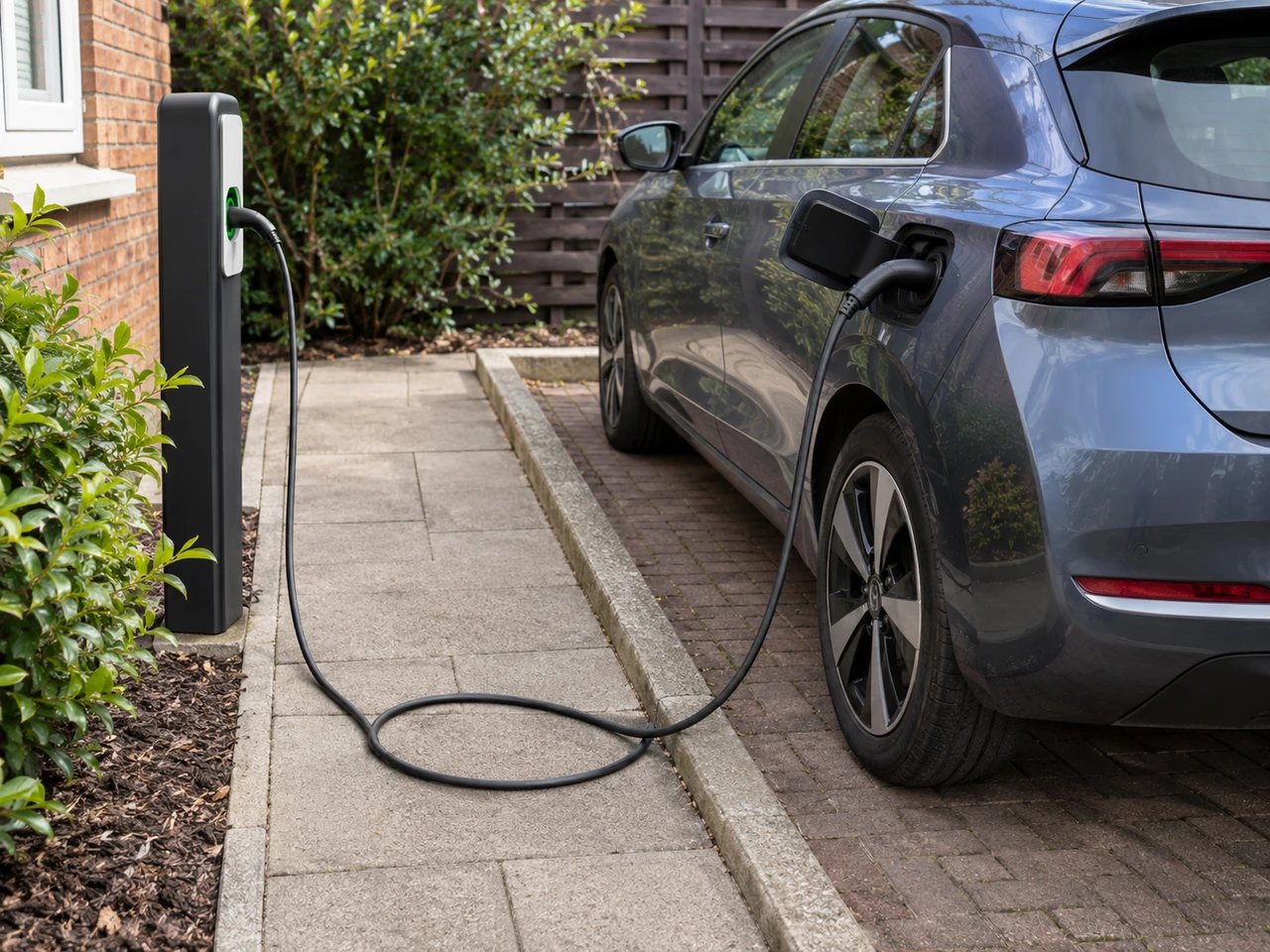
41. A trailing EV charging cable can be a trip hazard for pedestrians.
Position the vehicle and cable to keep pedestrian routes clear. After charging, return the cable and connector neatly to their holders or storage, following the equipment instructions.
🔗 Sources
The Highway Code (Great Britain) • Safety guidance, Rule 239: trailing charging cables
Image credit: AI-generated
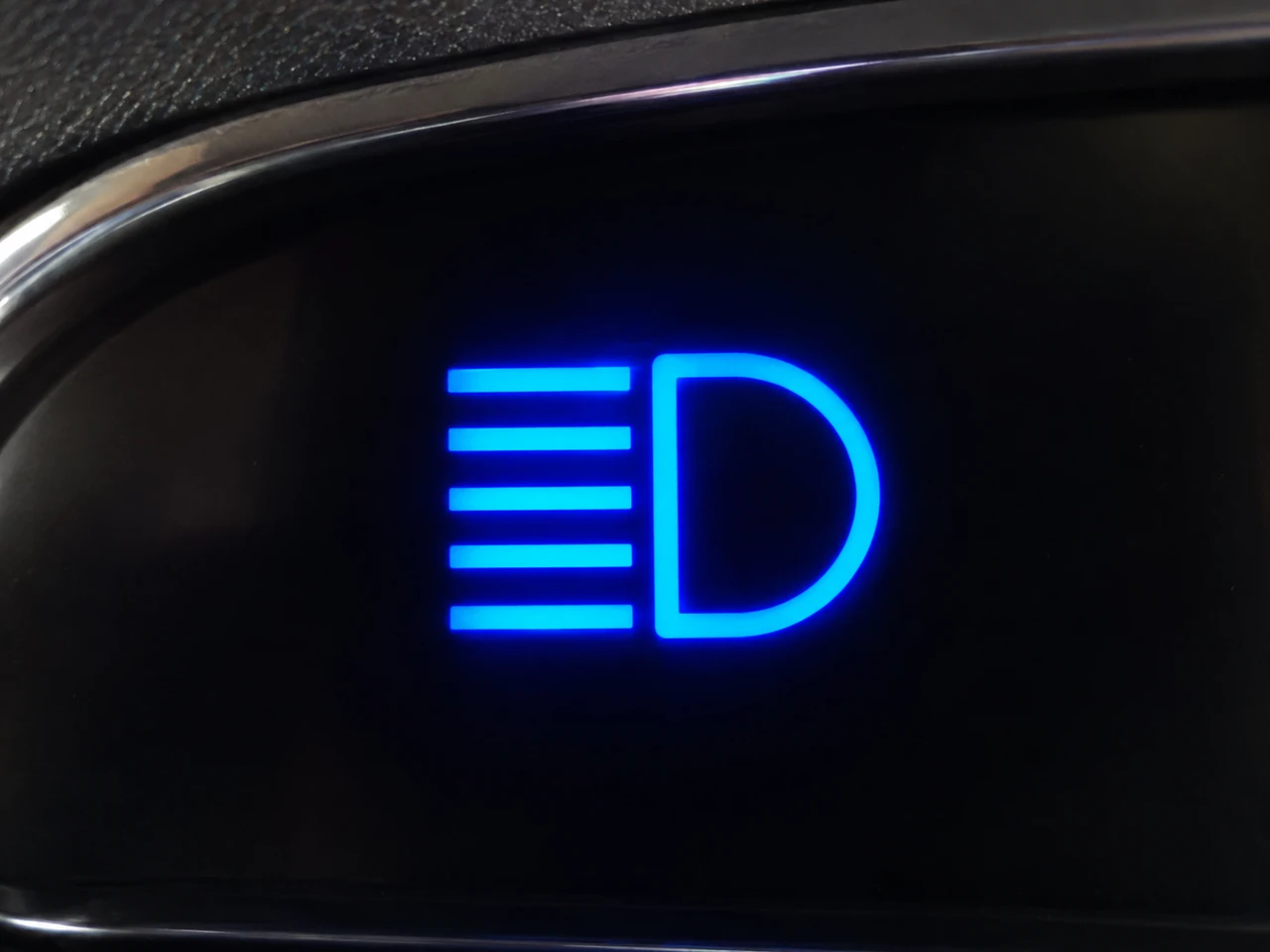
42. The blue main-beam indicator normally means that main beam is selected.
The blue headlamp tell-tale normally lights when main beam or the headlamp flasher is activated. Check your handbook and dip the lights when necessary to avoid dazzling others. The indicator does not replace checking that the lamps work.
🔗 Sources
Ford owner’s manual (manufacturer guidance) • Safety guidance, Switching high beam on and off; blue indicator; follow your handbook
Image credit: AI-generated
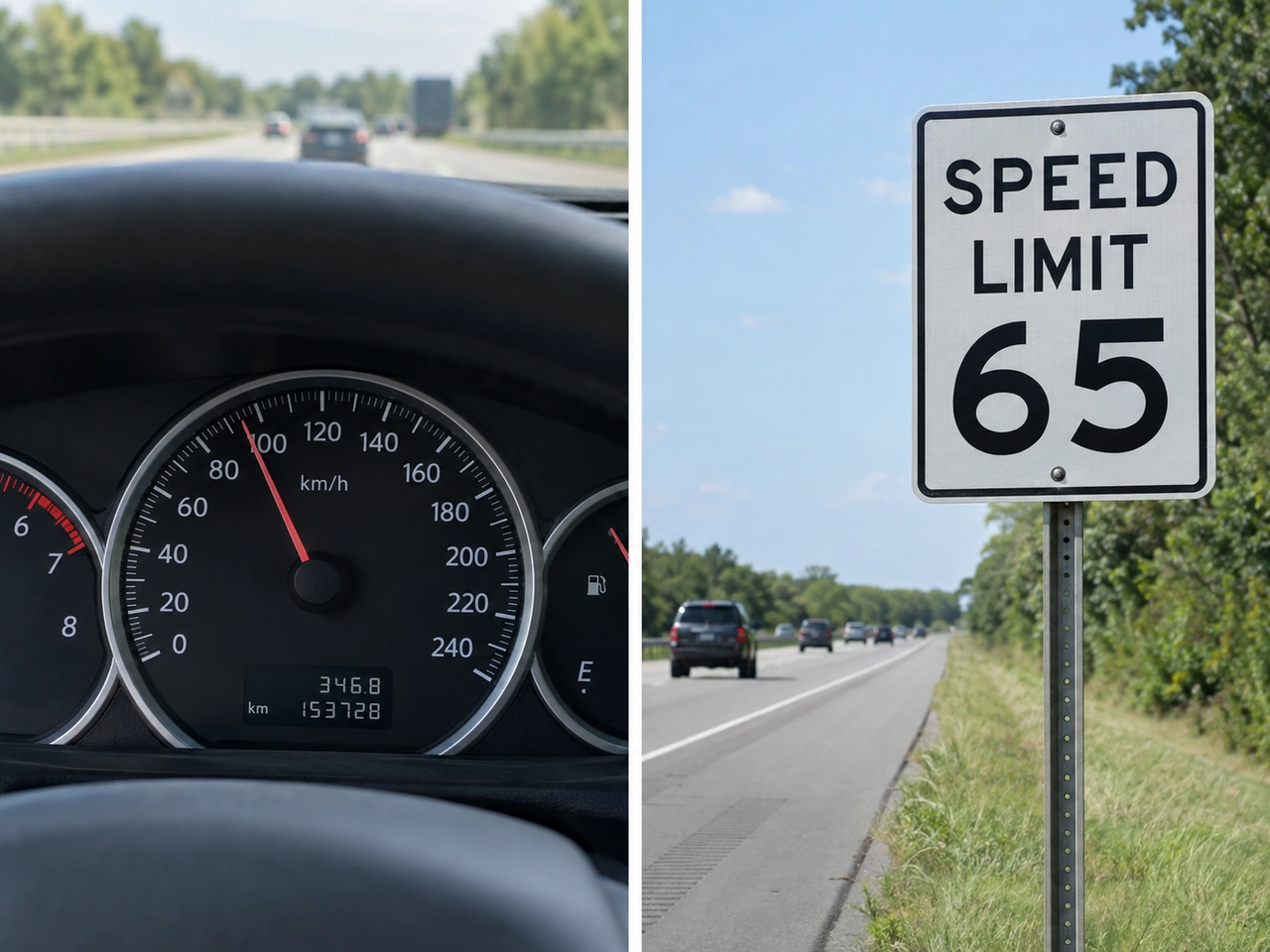
43. Which speed unit is used?
Road speeds in Argentina are shown in kilometres per hour (km/h).
🔗 Sources
Country example: Republic of Ireland — Tourism Ireland; kilometres and km/h on road signs
Image credit: AI-generated
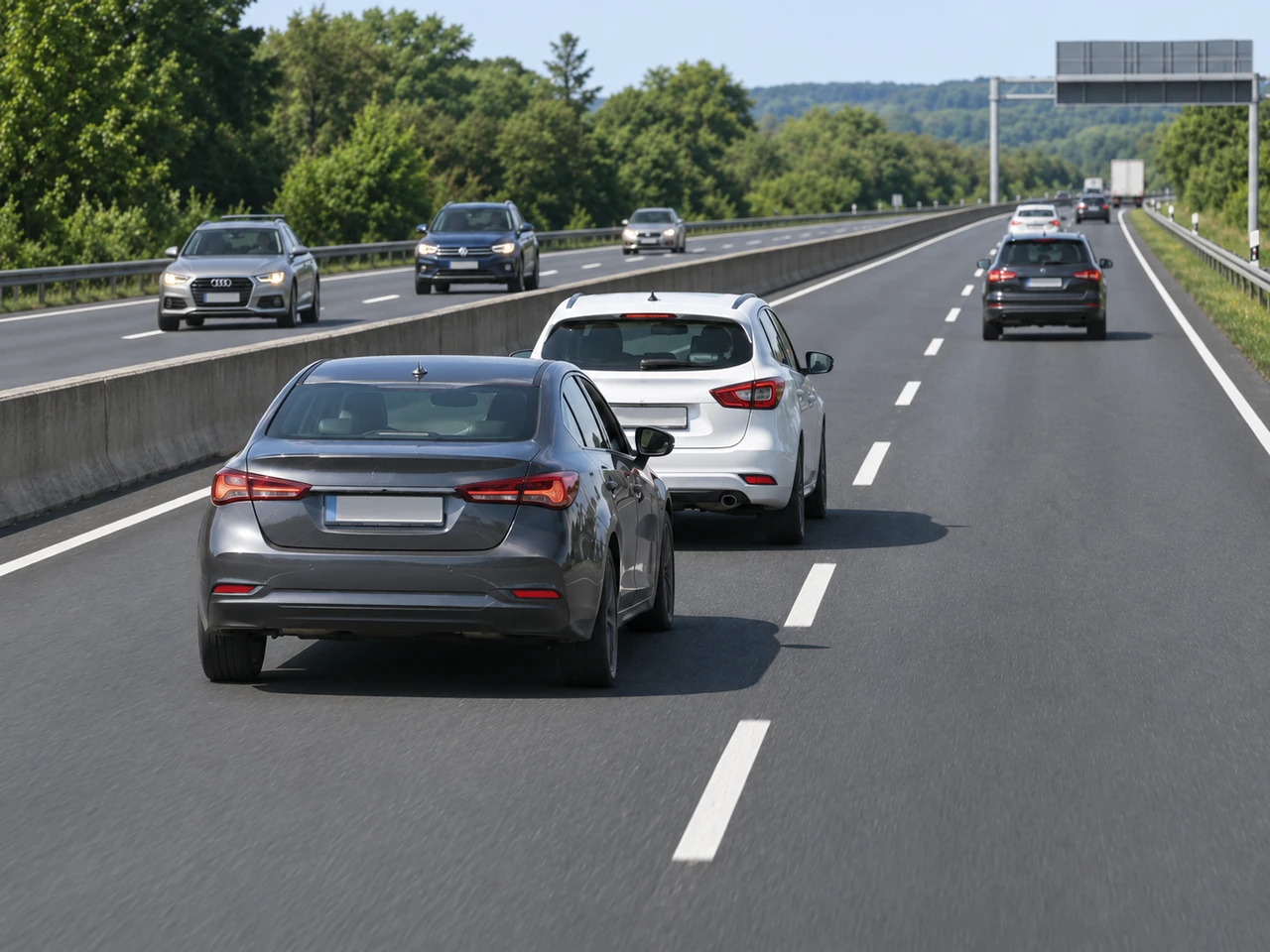
44. What is the main safety risk of aggressive driving?
Aggressive driving, such as tailgating, speeding, or sudden lane changes, reduces safety margins and increases the risk of crashes and conflict with other road users.
🔗 Sources
Great Britain — Highway Code, rule 147; general calm and considerate driving
Great Britain — Highway Code, rule 126; general following space
Image credit: AI-generated
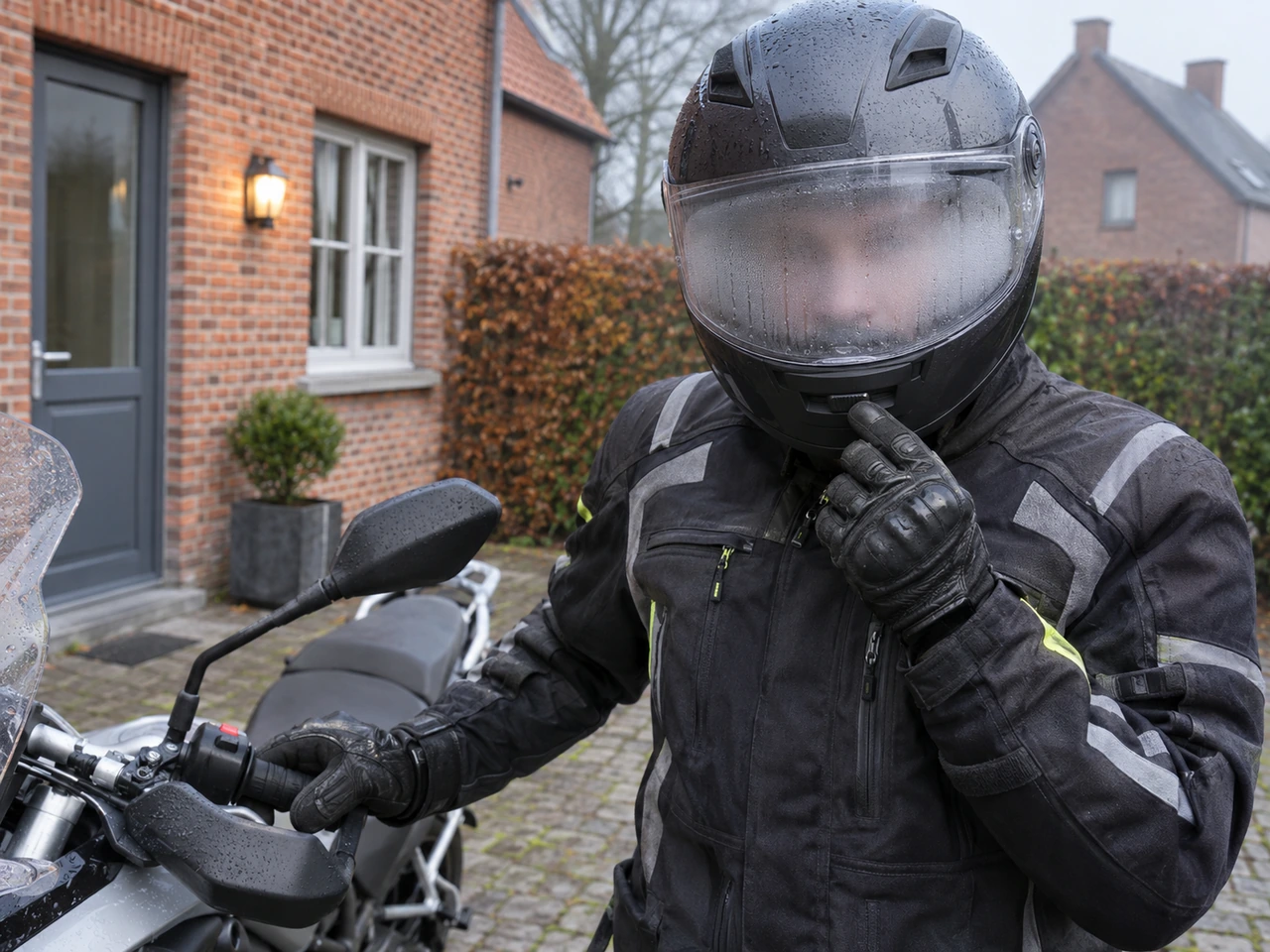
45. What should you do if your motorcycle helmet visor starts to fog?
A fogged visor can seriously reduce your view of the road. Reduce speed and use the helmet's ventilation, demisting or anti-fog features where available. If you cannot restore a clear view safely, stop in a safe place before continuing.
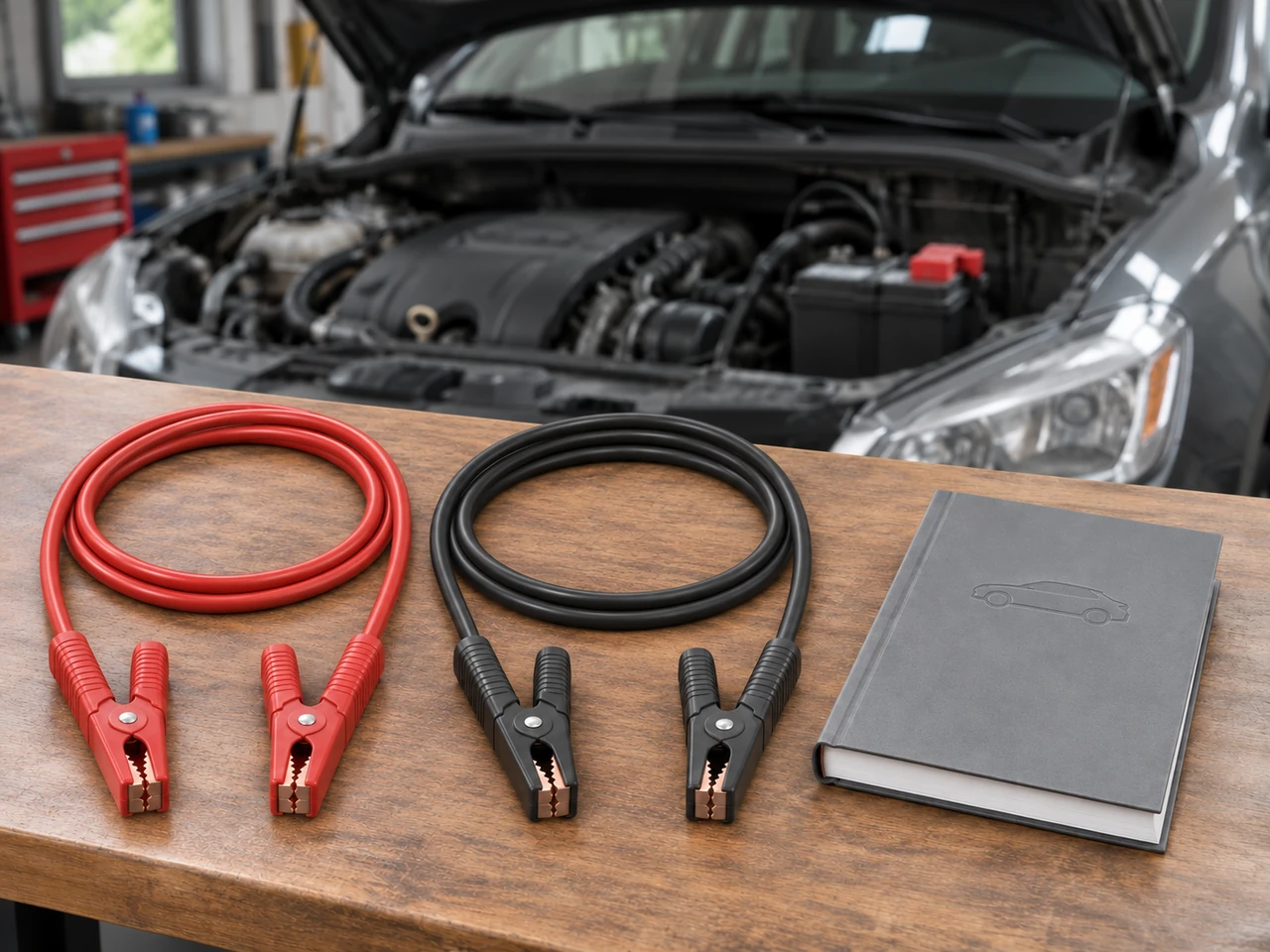
46. The jump-starting procedure is identical for every car.
Connection points, equipment requirements and procedures can vary. Follow the vehicle handbook and the jump-lead or booster instructions. Incorrect connections or an unsuitable supply can cause damage or injury; seek professional help if unsure.
🔗 Sources
Volvo Support Argentina — XC40 jump-starting and battery hazards; manufacturer example.
Image credit: AI-generated
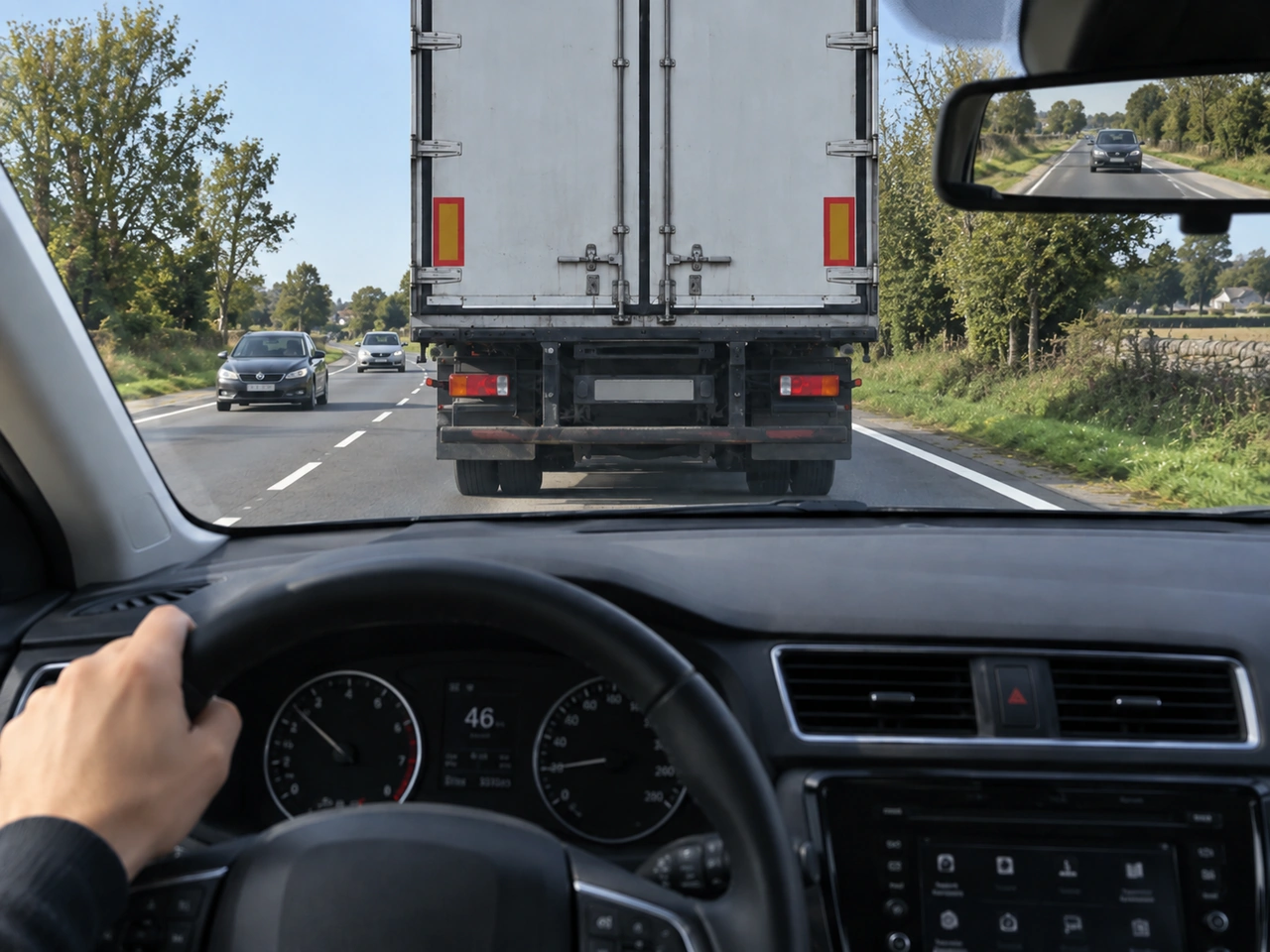
47. Why should you leave extra space when following a large vehicle?
A large vehicle can block your view of traffic, signs, junctions, or hazards ahead. Leaving extra space improves your view and gives you more time to react if traffic slows or a hazard develops.
Argentina. Keep a prudent gap for the speed you are travelling. If a large vehicle limits your view, allowing more room helps you spot hazards earlier.
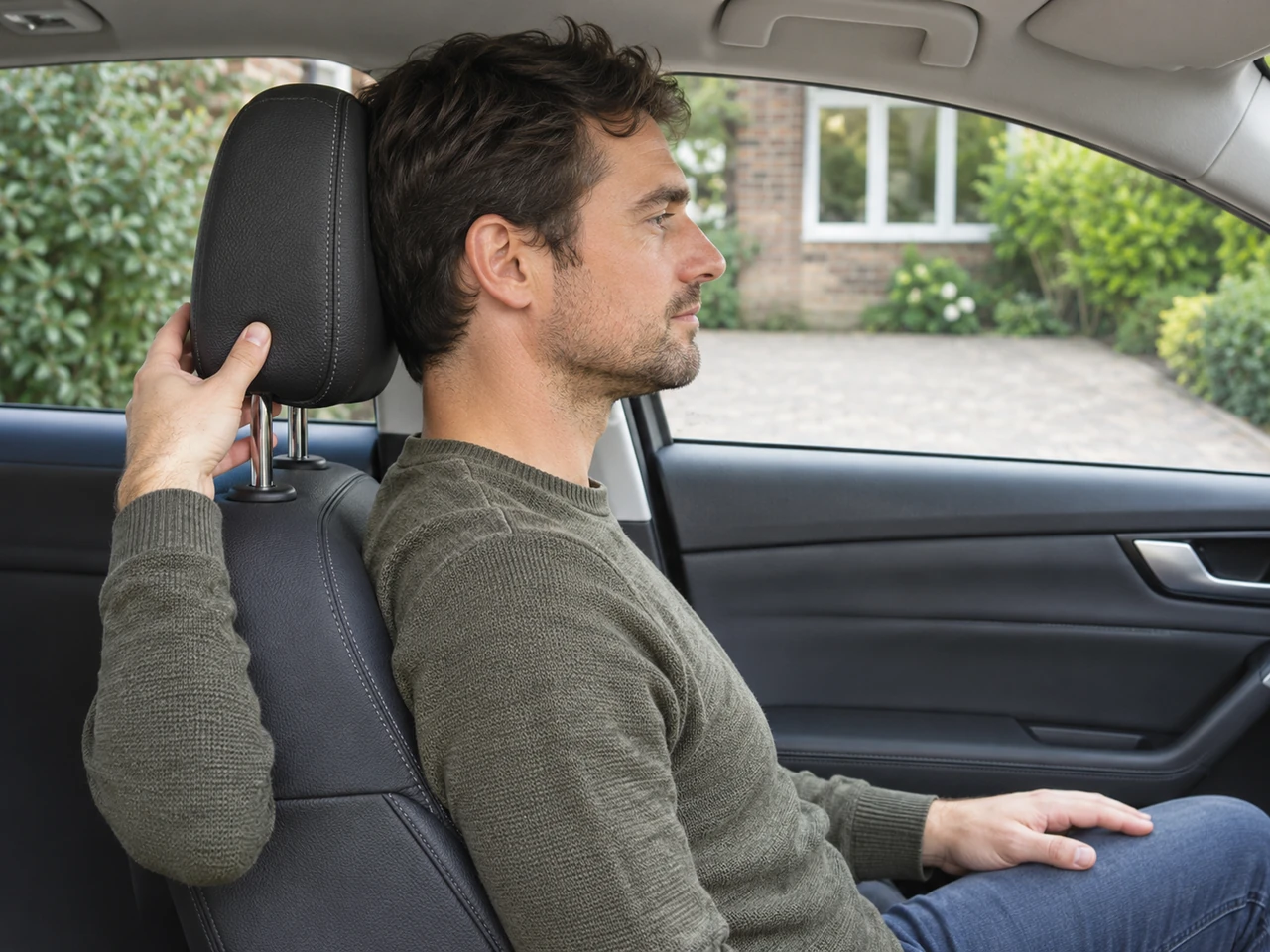
48. Head restraints are only there to make the seat comfortable.
A properly adjusted head restraint helps reduce the risk of neck injury in a collision. Adjust it before travelling, following the vehicle handbook.
🔗 Sources
The Highway Code (Great Britain) • Rule 97 • General safety guidance on head-restraint adjustment.
Image credit: AI-generated. Existing same-entry detail photograph, reused for both driving sides.
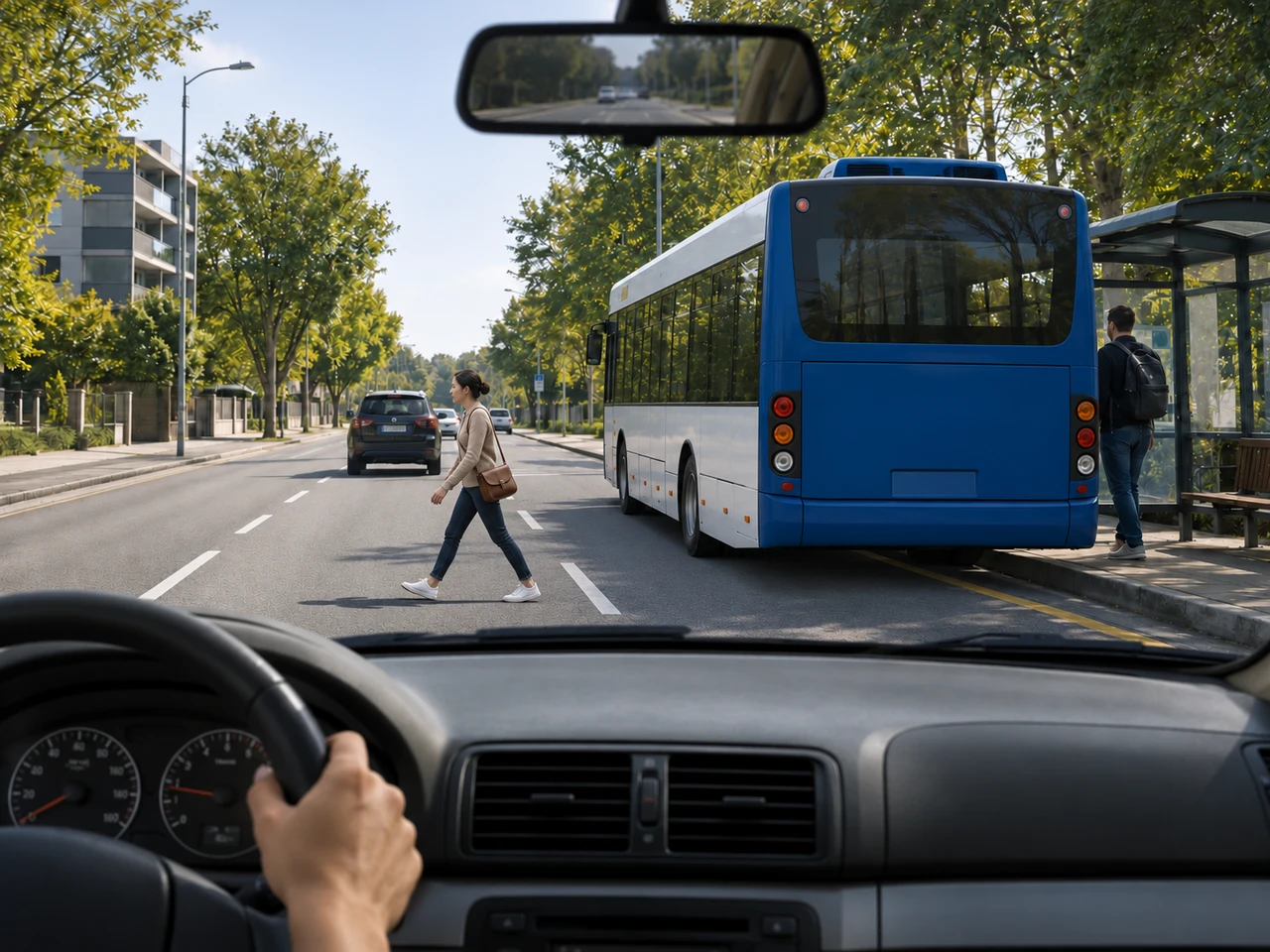
49. Why should you be careful when driving beside a bus at a stop?
Stopped buses can hide pedestrians, and passengers may cross unexpectedly. Slow down and be ready to react.
🔗 Sources
Great Britain — Highway Code, rule 206; pedestrians hidden near bus stops
Image credit: AI-generated
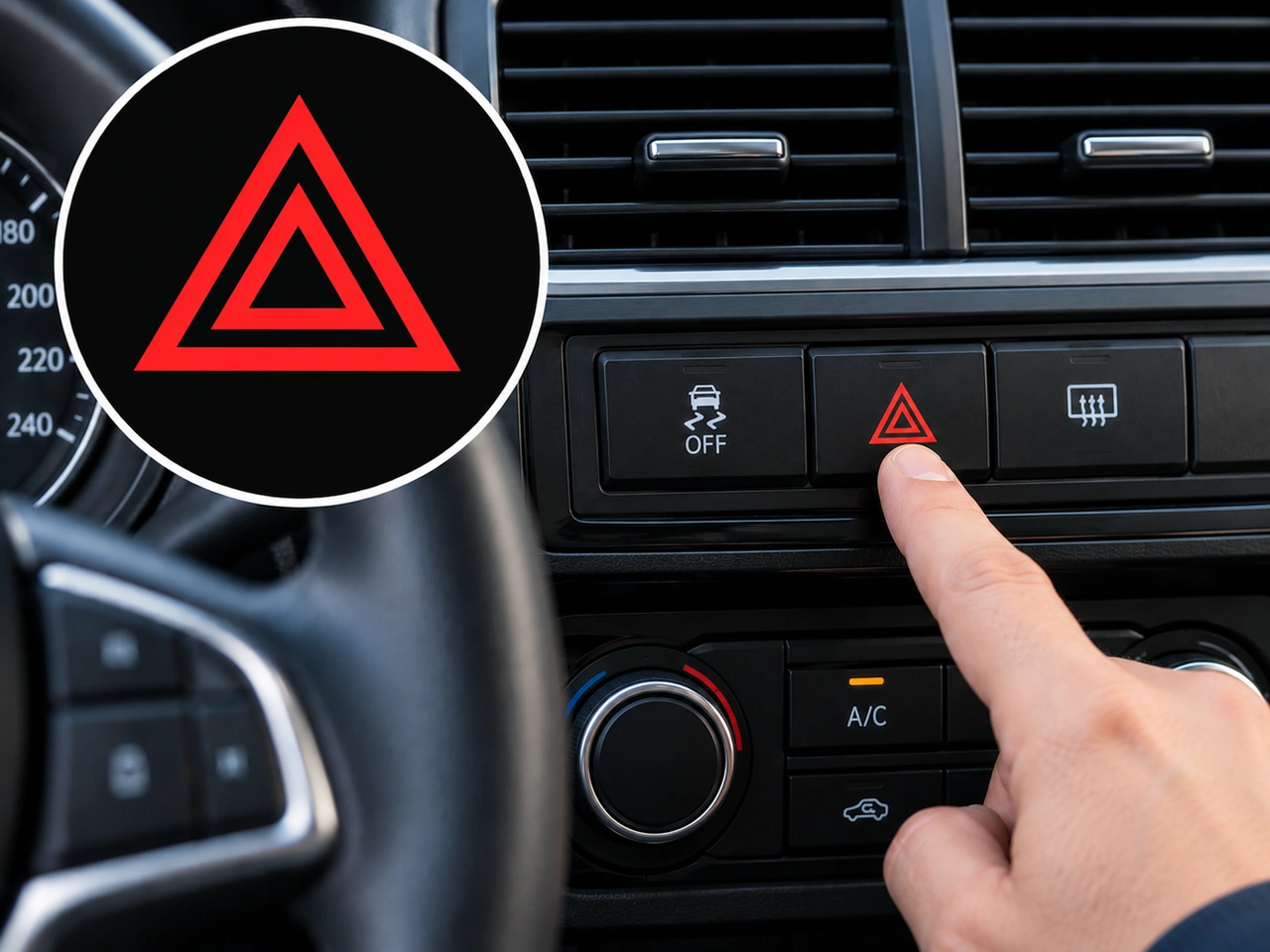
50. What does this dashboard symbol indicate?
This symbol indicates the hazard warning lights. When activated, all direction indicators flash simultaneously to warn other road users of a hazard or unusual situation.
The triangle identifies the hazard warning control. Activating it flashes the left and right direction indicators together.