


Speed limitAustralia
 Traffic rules
 Australia
4. Speed limit
A speed limit is the maximum legal speed permitted on a road, lane or within a designated area. It may be established by general traffic law or indicated by fixed, variable or temporary traffic signs.
A speed limit is a maximum, not a target speed. Drivers must travel more slowly whenever traffic, visibility, weather, road conditions, vulnerable road users or the condition of the vehicle make the maximum permitted speed unsafe.
Wikimedia.org • Shinjiman • CC0
Which general speed limits should car drivers know in Australia?
Australia has state and territory rules. For example, unsigned defaults in New South Wales are generally 50 km/h in built-up areas and 100 km/h elsewhere. In the Northern Territory they are generally 60 and 110 km/h, with lower gazetted town defaults possible. Follow the jurisdiction’s rules and any different signed limit.
🔗 nsw.gov.au • Australia, NSW official road-user guidance — speed-limit
🔗 nt.gov.au • Australia, official supporting guidance — speed-limit
🔗 nsw.gov.au • Transport for NSW — Road User Handbook, relevant topic
Can I carry a remembered Australian state default into another state or territory?
No. Defaults and special speed rules depend on the jurisdiction. The New South Wales and Northern Territory examples already differ. On crossing a border, use the destination’s road rules and actual signs rather than assuming one nationwide default.
🔗 nsw.gov.au • Australia, NSW official road-user guidance — speed-limit
🔗 nt.gov.au • Australia, official supporting guidance — speed-limit
🔗 nsw.gov.au • Transport for NSW — Road User Handbook, relevant topic
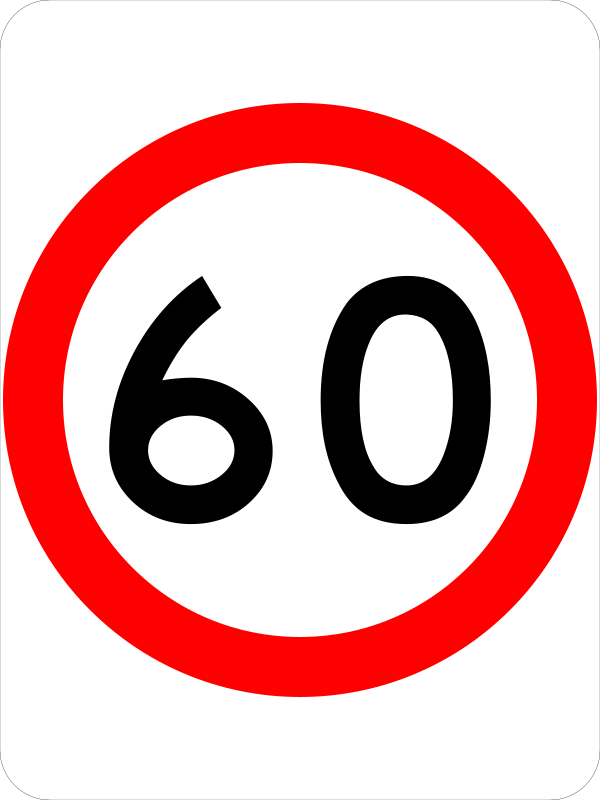 Start of a speed limit.
English • Model rules 20–21 • speed-limit sign • Maximum speed 60 km/h. Do not exceed 60 km/h where this sign applies. Drive more slowly when road, traffic or weather conditions require it. State and territory rules and exceptions apply.
Sources
🔗 Commons.wikimedia.org
🔗 Pcc.gov.au • Australian Road Rules • model law • rules20–21; Schedule2p316
🔗 Legislation.qld.gov.au • Queensland Road Rules • local legislation example
SVG source: Standards Australia • Public domain • Original revision 2025-09-12. Wikimedia original unmodified.
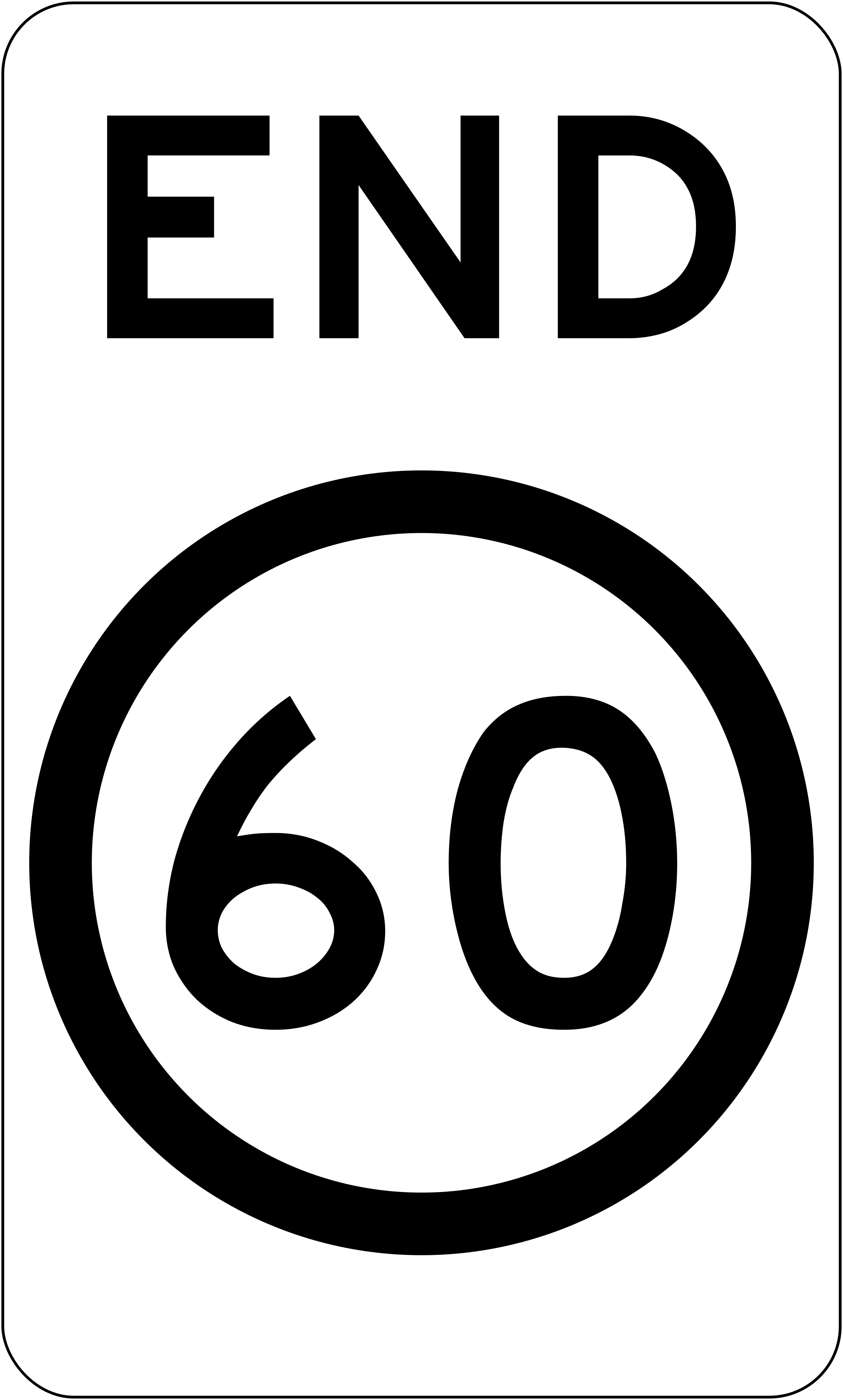 End of the speed limit.
English • Model rule 21 • end speed-limit sign • End of 60 km/h limit. The signed 60 km/h limit ends here. Follow any other applicable speed restriction or the default limit under the local rules. State and territory rules and exceptions apply.
Sources
🔗 Commons.wikimedia.org
🔗 Pcc.gov.au • Australian Road Rules • model law • rule21; Schedule2p307
🔗 Legislation.qld.gov.au • Queensland Road Rules • local legislation example
SVG source: Standards Australia • Public domain • Original revision 2020-03-21. Wikimedia original unmodified.
What happens when a New South Wales school-zone sign has operating times?
In New South Wales, the school-zone maximum applies on school days during the times shown on the sign. School days are published by the NSW Department of Education. Do not infer whether the limit applies from whether children are visible. Outside those periods, follow the other limit governing the road.
🔗 nsw.gov.au • Australia, NSW official road-user guidance — speed-limit
🔗 nt.gov.au • Australia, official supporting guidance — speed-limit
🔗 nsw.gov.au • Transport for NSW — Road User Handbook, relevant topic


