


Traffic managementBelgium
 Traffic rules
 Belgium
54. Traffic management
Traffic management is the organised control, regulation and guidance of road users to improve safety, traffic flow and the efficient use of roads. It can include traffic lights, road signs, road markings, lane controls, variable speed limits, diversions and directions given by authorised persons.
Traffic management may be permanent or temporary. Temporary measures are commonly introduced during roadworks, congestion, collisions, public events or other incidents. Drivers and other road users must follow the signs, signals and instructions applying at the location, even when they differ from the normal traffic arrangement.
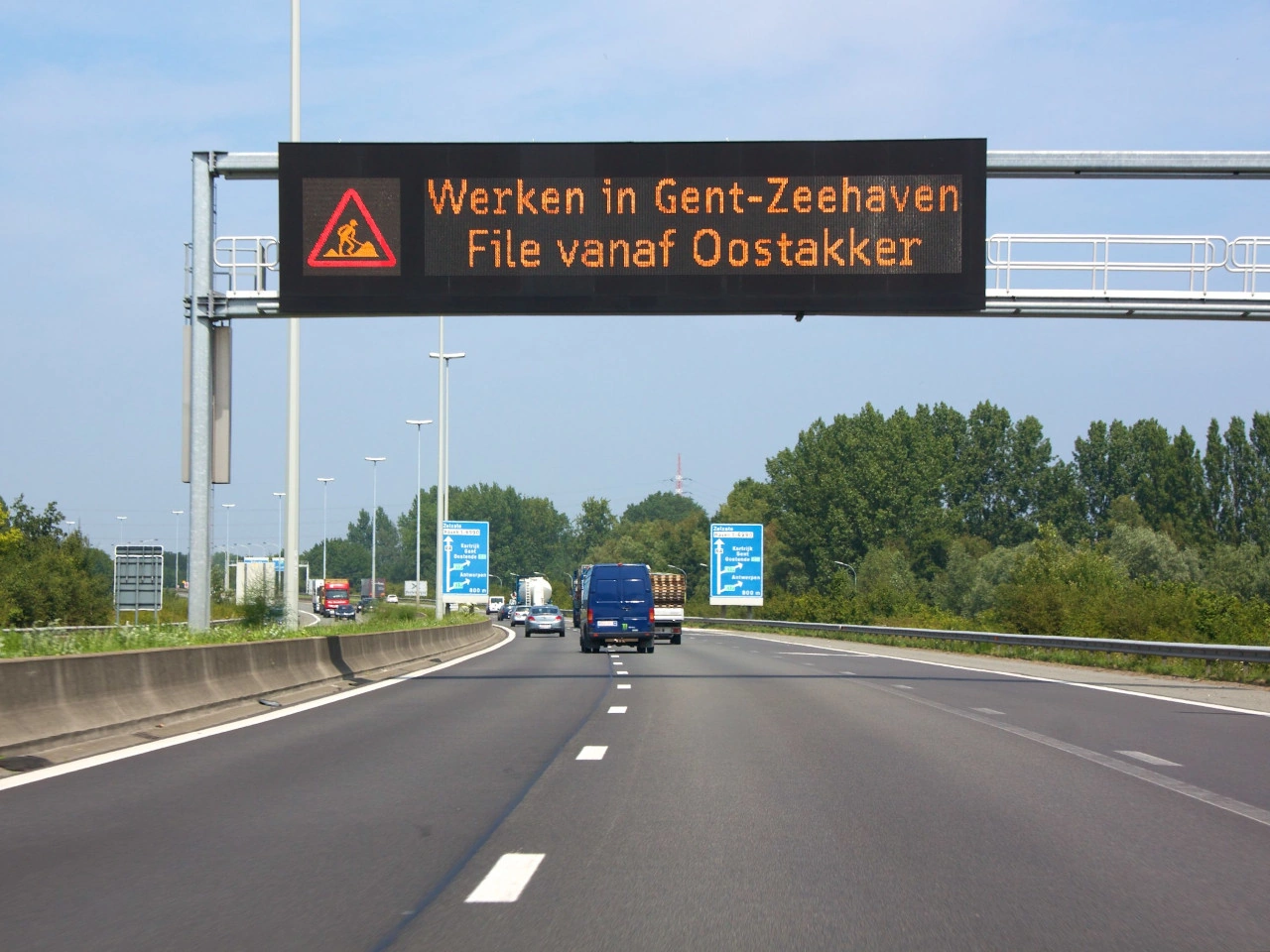
Wikimedia.org • Thomas Vlerick • CC BY
How is traffic managed in Belgium?
Belgian traffic can be managed using traffic lights, road signs, road markings, lane-control signals, temporary traffic arrangements and instructions from authorised persons. Different measures may be used depending on traffic conditions, roadworks or incidents.
Must you obey traffic-management signs in Belgium?
Yes. Road users must obey official traffic lights, road signs and road markings when they comply with the prescribed form, are sufficiently visible and have been installed according to the applicable rules.
Which instruction has priority in Belgian traffic?
The orders of an authorised person take precedence over traffic signs and over the ordinary traffic rules. Traffic signs in turn take precedence over the general traffic rules.
What should you do if a police officer gives an instruction that conflicts with a traffic light?
You must follow the police officer's instruction. Orders given by an authorised person have a higher legal priority than traffic lights, road signs, road markings and the normal traffic rules.
Do traffic lights take precedence over priority signs in Belgium?
When traffic lights are operating at a location, the priority signs on the same road normally do not apply. There are specific exceptions, including flashing amber lights, lane-control signals and the B22 and B23 signs for cyclists and certain other riders.
What does a red cross above a Belgian traffic lane mean?
A red cross above a lane means that traffic is prohibited from using that lane or part of the road. Drivers must leave or avoid the closed lane as directed by the traffic-management signals.
What does a green arrow above a Belgian traffic lane mean?
A green downward-pointing arrow indicates that traffic may use the lane or part of the public road beneath it.
What does an orange diagonal arrow above a Belgian traffic lane mean?
An orange diagonal arrow, whether flashing or not, indicates that the lane must be left in the direction shown by the arrow. Drivers should change lane safely before reaching the closure.
What does a flashing amber traffic light mean in Belgium?
A flashing amber light means that road users may pass the signal but must proceed with increased caution. The flashing amber light does not change the normal priority rules.
What do temporary orange road markings mean in Belgium?
At roadworks, orange temporary lane markings may be used to guide traffic. They have the same meaning as the corresponding white continuous or broken lines and make white longitudinal markings at the same location temporarily inapplicable.
Can traffic be temporarily diverted in Belgium?
Yes. Traffic may be diverted or channelled because of roadworks, incidents or other obstructions. Temporary signs, barriers, markings and other traffic-management measures indicate the route that road users must follow.
Can police temporarily change the traffic arrangement during an emergency?
Yes. In urgent situations where traffic is obstructed, the police may use temporary traffic signs to divert or channel traffic. Such temporary signs must be removed when normal traffic conditions have been restored.


