QuizTraffic rulesBelgium

This interesting quiz helps you test your knowledge in a clear and visual way. With easy multiple-choice questions, you can quickly build confidence and learn new facts while keeping it simple, interactive, and fun.


Which vehicle combination is covered by driving licence DE?

1. Which vehicle combination is covered by driving licence DE?

A category D vehicle with a trailer up to 750 kg.
✓ A category D vehicle with a trailer over 750 kg.
A category D1 vehicle without a trailer.
A category B vehicle with a small trailer.

Category DE covers combinations consisting of a category D towing vehicle and a trailer with a maximum authorised mass above 750 kg.

Bus and trailer covered by category DE
AI-generated by Traffic-rules.com • WCIT • CC BY-SA
How close may you normally park to a sign marking a bus, trolleybus, or tram stop?

2. How close may you normally park to a sign marking a bus, trolleybus, or tram stop?

Not within 5 metres in front of the sign.
Not within 2 metres behind the sign.
✓ Not within 15 metres on either side of the sign.
The restriction applies only at night.

Parking is prohibited within 15 metres on either side of a sign marking a bus, trolleybus, or tram stop.

Parked vehicle near a public-transport stop
AI-generated by Traffic-rules.com • WCIT • CC BY-SA
What should you do if EV charging equipment becomes unusually hot or smells burnt?

3. What should you do if EV charging equipment becomes unusually hot or smells burnt?

Cover the equipment to contain the heat.
Continue charging at a lower power setting.
✓ Stop the charging session, keep clear, and report the fault.
Keep charging until the vehicle reaches full charge.

Unusual heat, a burning smell, smoke, sparks, or repeated charging faults can indicate an electrical problem. Stop using the charging equipment if it is safe to do so, keep clear of anything damaged or overheating, and report the fault or seek appropriate assistance.

Faulty electric-vehicle charging equipment
AI-generated by Traffic-rules.com • WCIT • CC BY-SA
What should you do if the accelerator becomes stuck while you are driving?

4. What should you do if the accelerator becomes stuck while you are driving?

Switch off the engine immediately before selecting neutral.
Keep driving and wait for the accelerator to release.
✓ Select neutral, brake firmly, and steer to a safe stopping place.
Apply the parking brake sharply while moving.

Selecting neutral disconnects engine power from the wheels. Brake firmly, maintain steering control, and switch off the engine after stopping safely.

Stuck accelerator pedal in a vehicle
AI-generated by Traffic-rules.com • WCIT • CC BY-SA

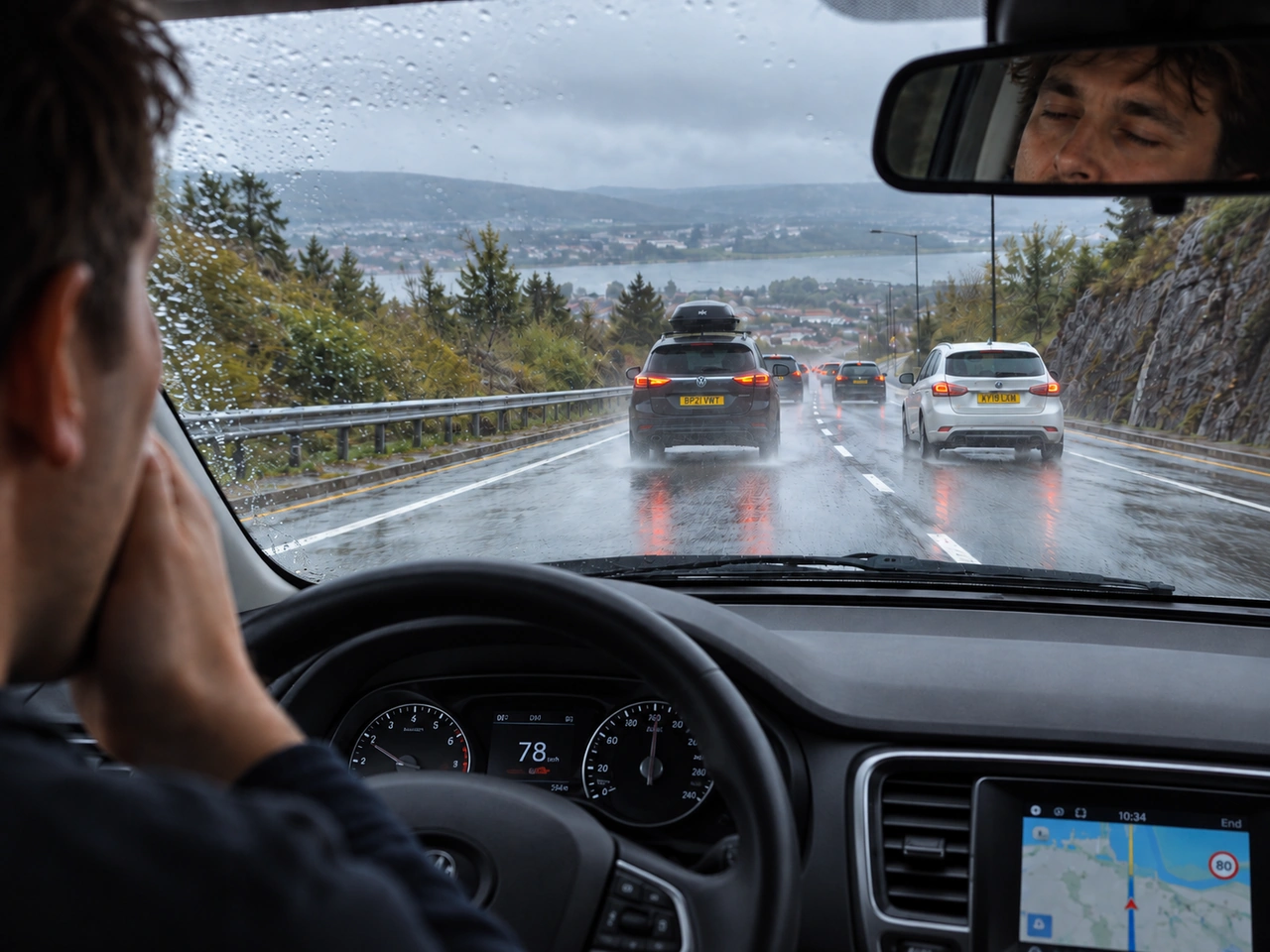
What should you do if the windscreen wipers stop working during heavy rain?

5. What should you do if the windscreen wipers stop working during heavy rain?

Use the washer fluid repeatedly to clear the windscreen.
✓ Reduce speed and stop in a safe place as soon as possible.
Open a side window and continue driving carefully.
Continue slowly using the hazard lights.

Do not continue when you cannot see clearly. Slow down smoothly and stop somewhere protected from traffic.

Windscreen wipers failing during heavy rain
AI-generated by Traffic-rules.com • WCIT • CC BY-SA
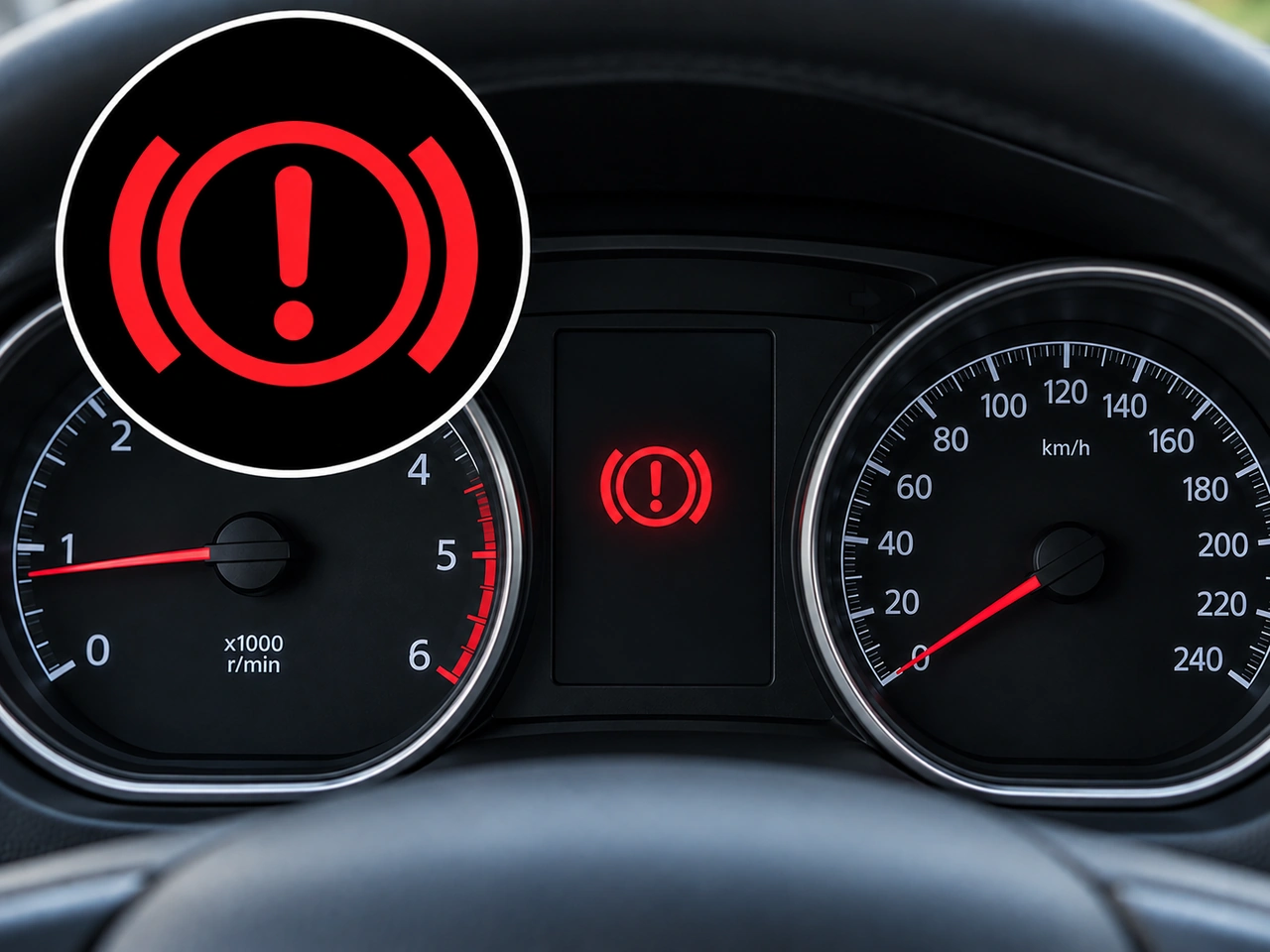
What does this dashboard symbol indicate?

6. What does this dashboard symbol indicate?

✓ Low engine oil level.
Charging-system warning.
Low oil pressure.
Engine-temperature warning.

This symbol indicates that the engine oil level is low. Check the oil level according to the manufacturer's instructions and add the correct oil if necessary.

Low oil-level warning symbol on the dashboard
AI-generated by Traffic-rules.com • WCIT • CC BY-SA
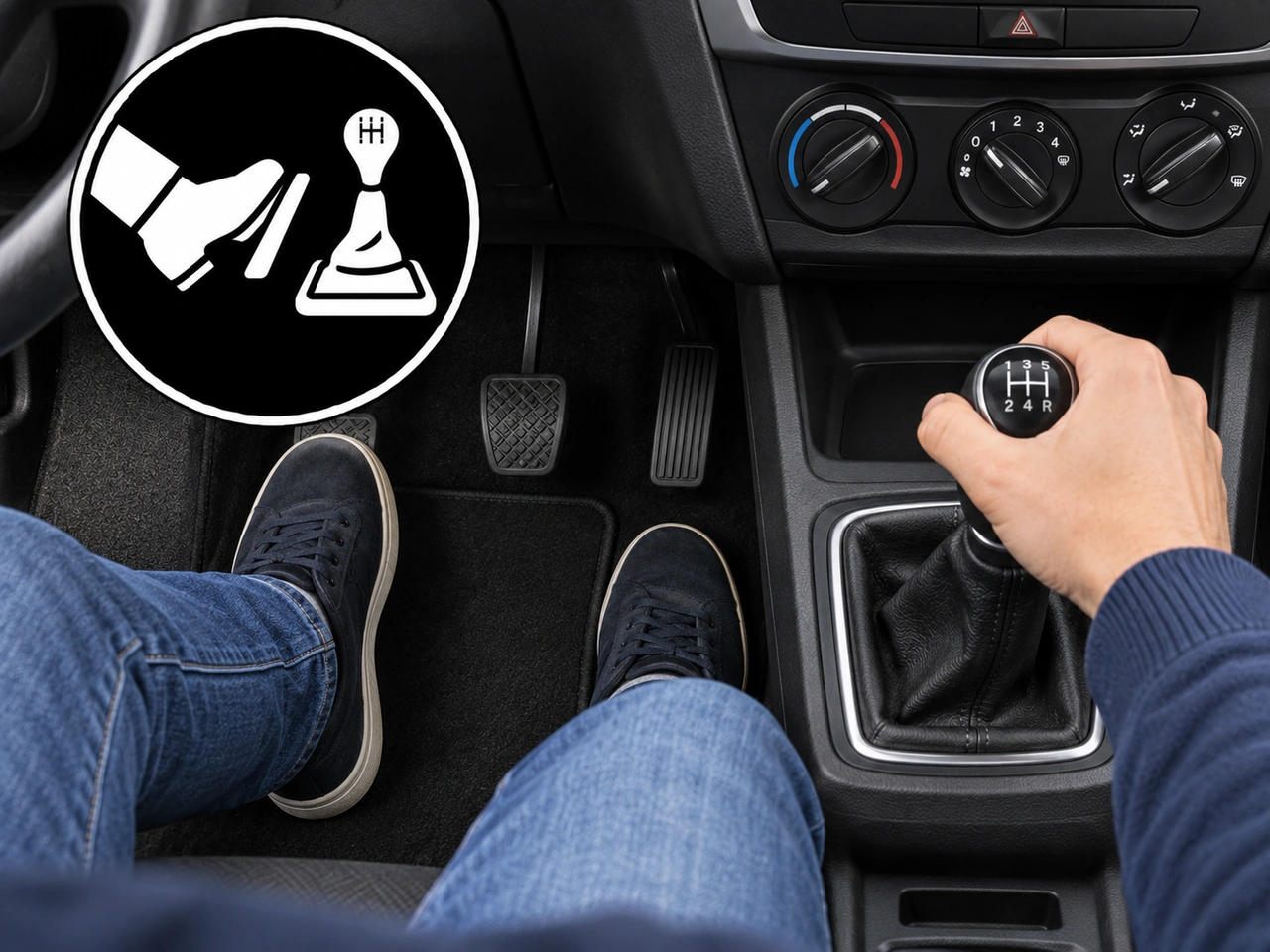
Which foot normally operates the brake and accelerator in a manual vehicle?

7. Which foot normally operates the brake and accelerator in a manual vehicle?

Either foot.
The left foot for the brake and right foot for the accelerator.
The left foot.
✓ The right foot.

In a manual vehicle, the right foot normally operates both the brake and accelerator pedals, while the left foot operates the clutch.

Pedal arrangement and foot controls in a manual vehicle
AI-generated by Traffic-rules.com • WCIT • CC BY-SA
How should cyclists cross railway or tram tracks?

8. How should cyclists cross railway or tram tracks?

Follow the rails briefly before crossing them.
Increase speed so the wheels cannot get caught.
✓ Cross at a safe angle, as close to perpendicular as possible.
Keep the wheels parallel with the rails while crossing.

A bicycle wheel can become trapped in a rail groove. Crossing at a wider angle reduces this risk.

Cyclist crossing rails in the road
AI-generated by Traffic-rules.com • WCIT • CC BY-SA
What should you do if traffic beyond a railway crossing is blocked?

9. What should you do if traffic beyond a railway crossing is blocked?

Follow the vehicle ahead closely across the tracks.
Enter the crossing and wait for traffic to move.
✓ Wait until there is enough space to clear the tracks completely.
Cross quickly before the warning signals activate.

Never enter a railway crossing unless you can clear the tracks completely. If traffic ahead is blocked, wait before the crossing so you cannot become trapped on the railway.

Congested traffic beyond a railway crossing
AI-generated by Traffic-rules.com • WCIT • CC BY-SA
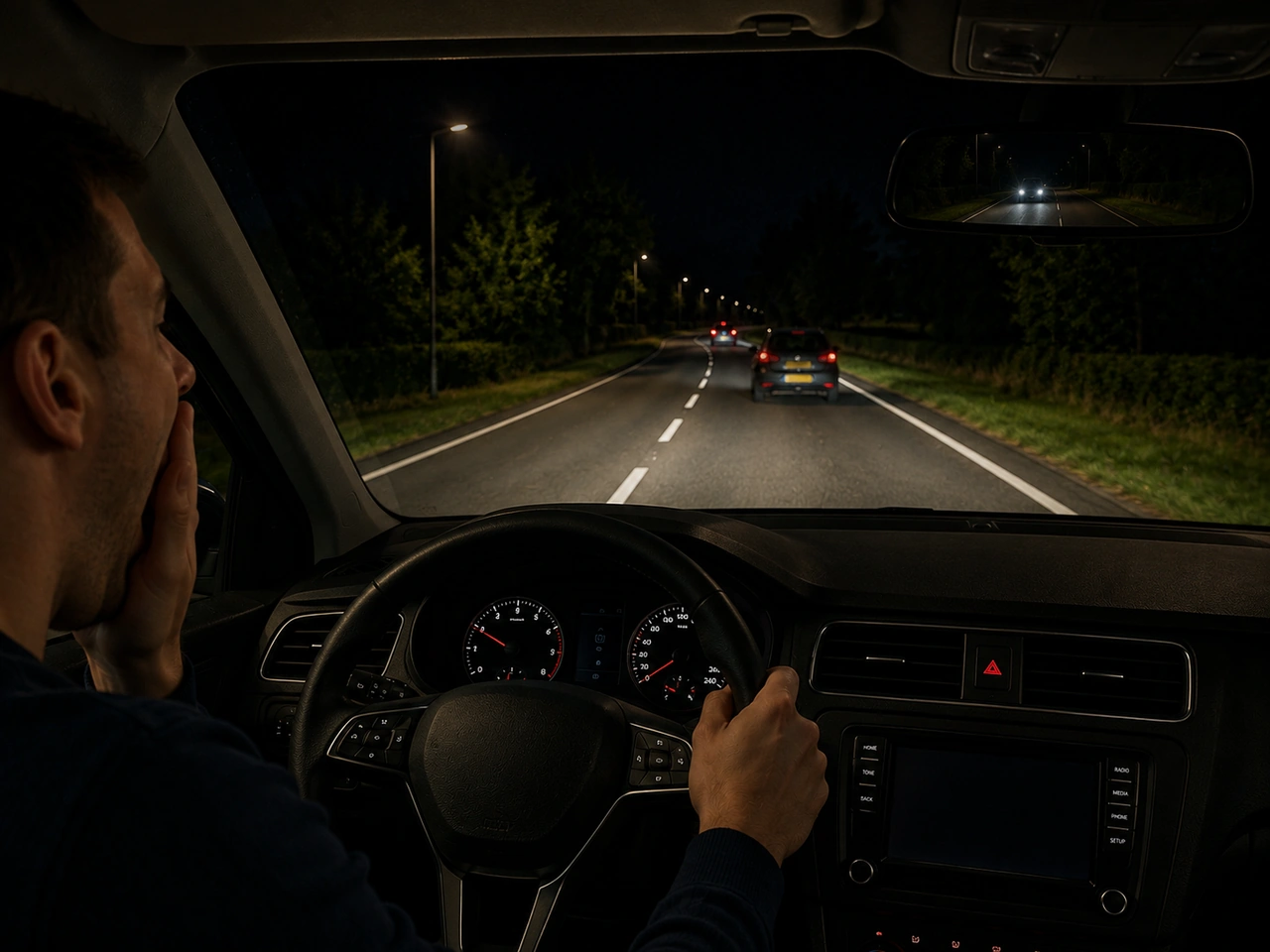
What should you do when an automatic vehicle is stationary in D?

10. What should you do when an automatic vehicle is stationary in D?

Release the parking brake.
✓ Keep the brake pedal pressed.
Press the accelerator lightly.
Select reverse gear.

An automatic vehicle may creep forward when D (Drive) is selected, even without pressing the accelerator. Keep the brake pedal pressed while stationary to prevent unintended movement.

Automatic gear selector in Drive and brake-pedal control
AI-generated by Traffic-rules.com • WCIT • CC BY-SA
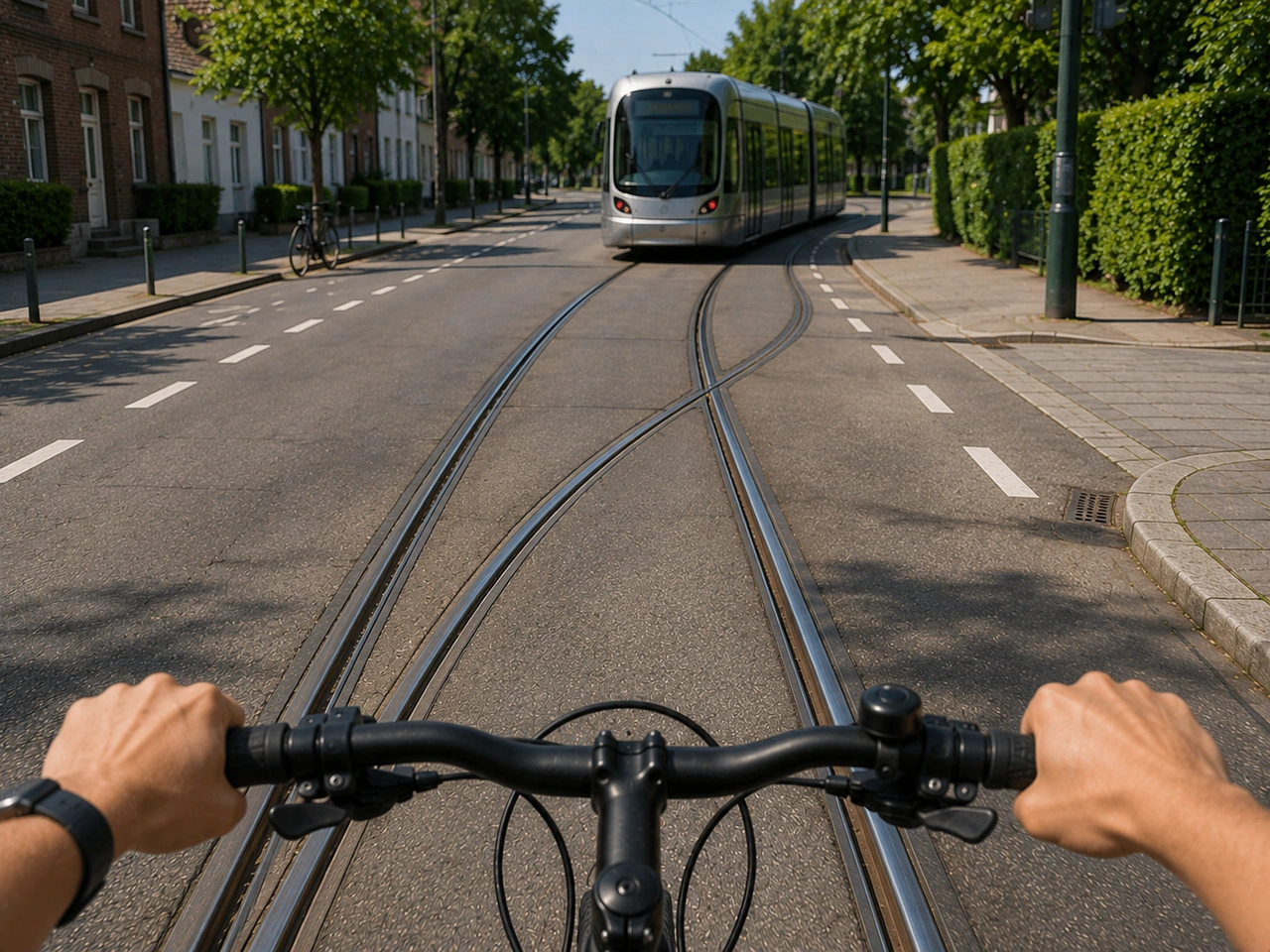
How should pets be carried safely in a vehicle?

11. How should pets be carried safely in a vehicle?

On the driver's lap if they remain calm.
✓ Securely restrained so they cannot distract the driver or move dangerously.
Beside an open window so they can see outside.
Loose on the front passenger seat.

A pet moving freely inside a vehicle can distract the driver and may be thrown around during sudden braking or a collision. Use a suitable carrier, harness, barrier, or other secure restraint appropriate for the animal and vehicle.

Pet travelling inside a vehicle
AI-generated by Traffic-rules.com • WCIT • CC BY-SA
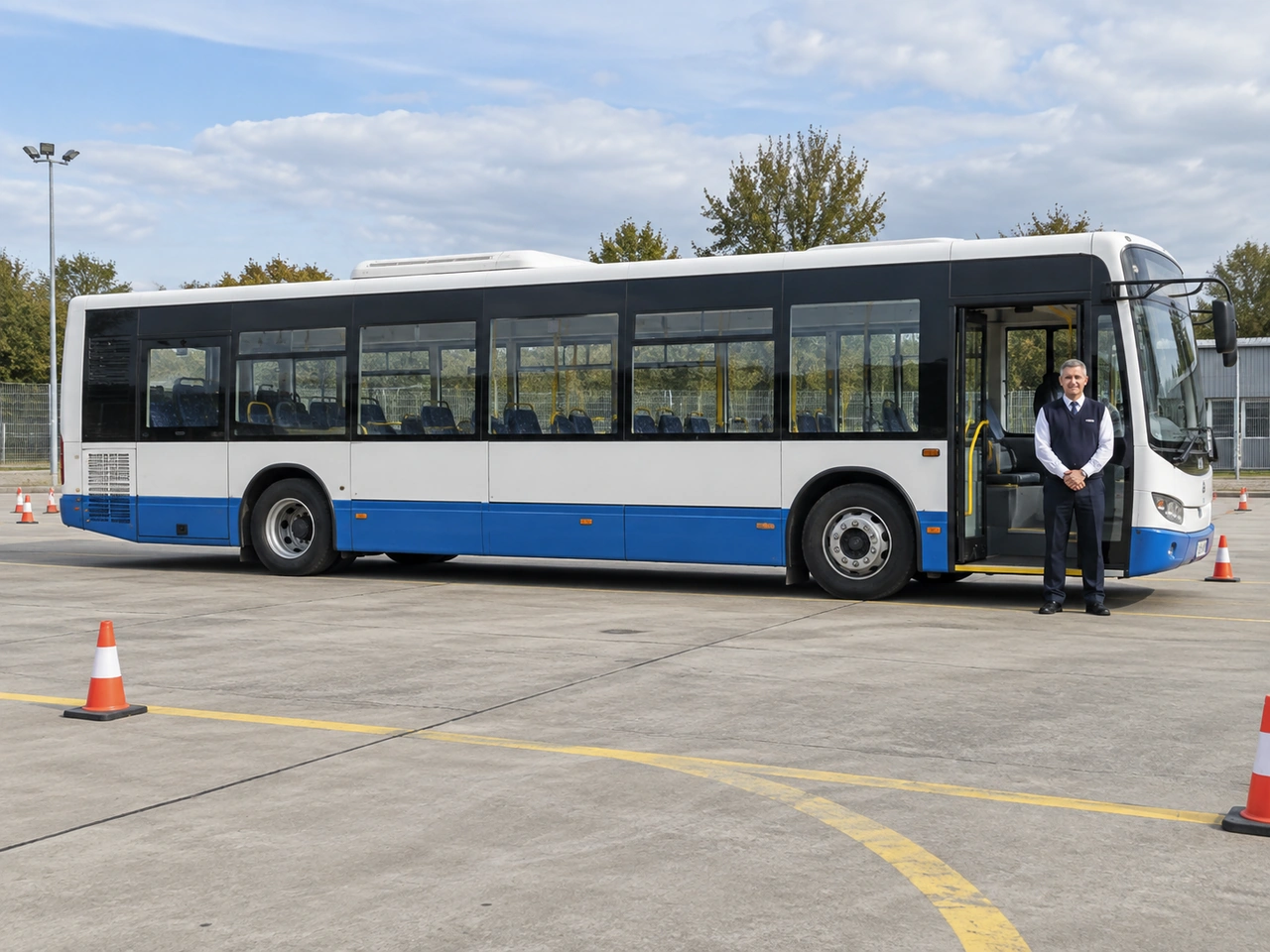
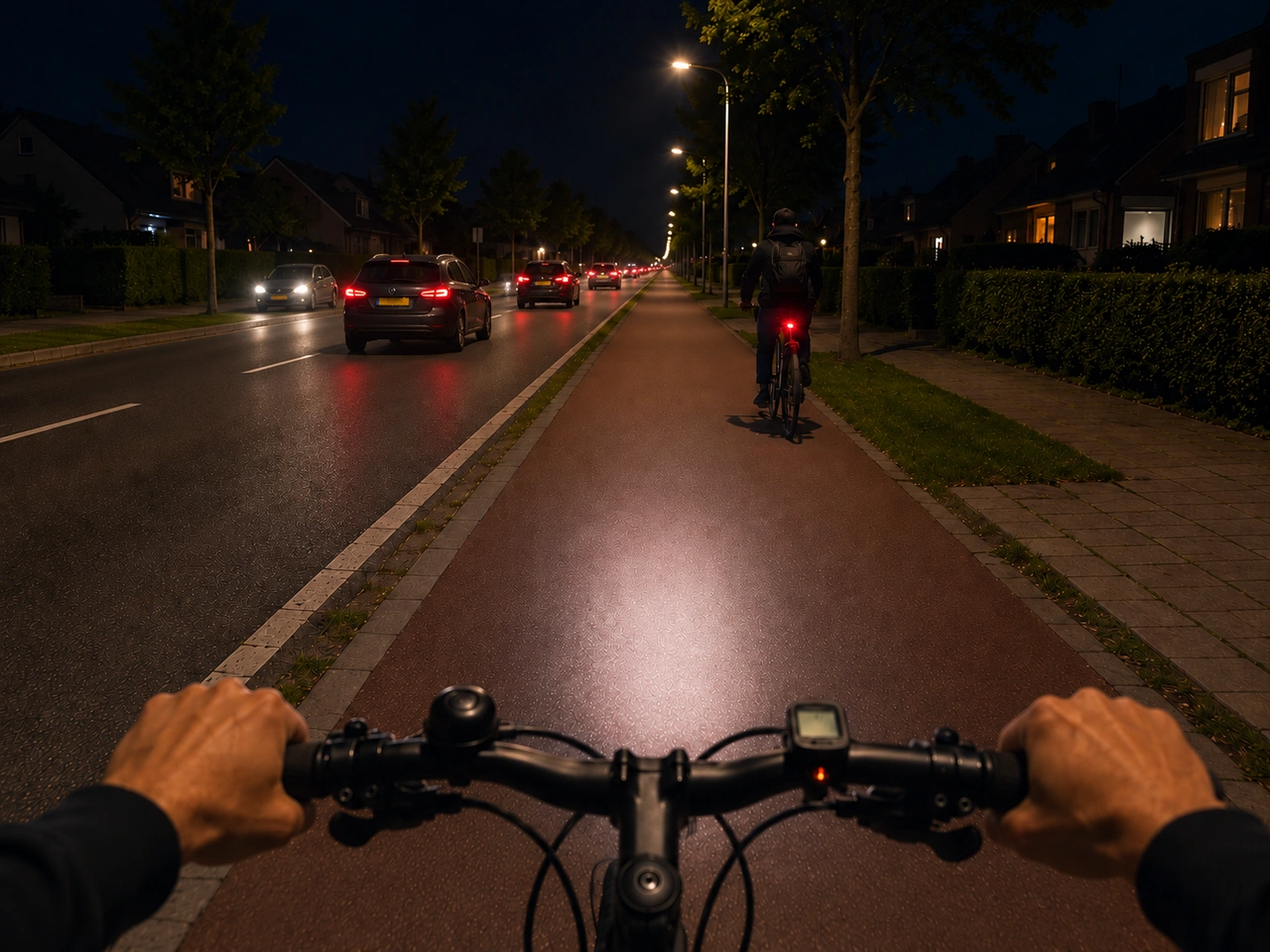
What should cyclists do when approaching a junction?

12. What should cyclists do when approaching a junction?

Accelerate so you spend less time at the junction.
✓ Reduce speed, observe carefully, and be ready to stop.
Rely on other road users to give way to you.
Maintain your speed if no traffic is visible.

Junctions create conflict points between road users. Slowing down gives you more time to see hazards and react safely.

Cyclist approaching a road junction
AI-generated by Traffic-rules.com • WCIT • CC BY-SA
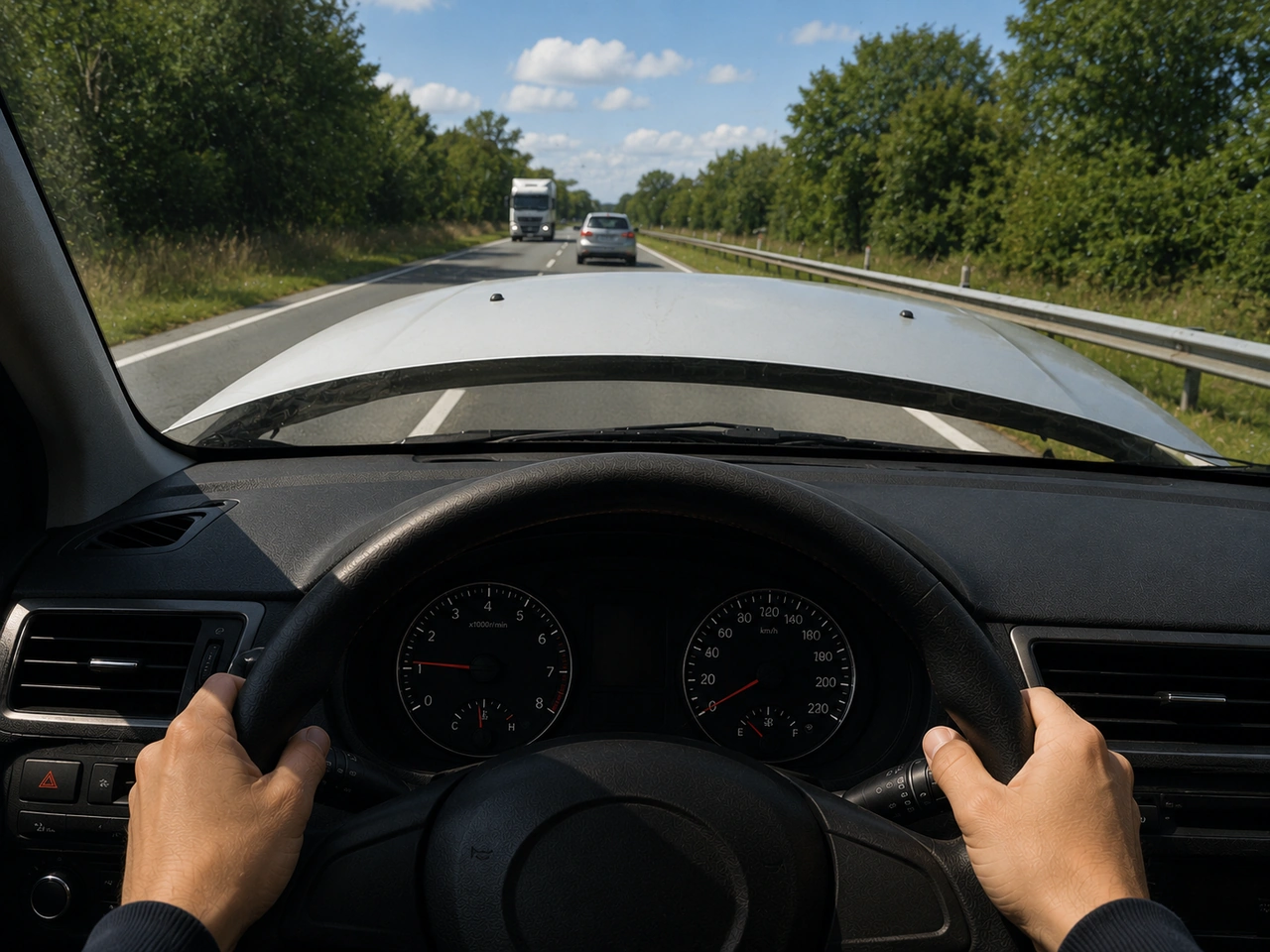
What should you do if you miss your motorway exit?

13. What should you do if you miss your motorway exit?

Move onto the shoulder and reverse carefully.
Use an emergency opening in the central reservation.
✓ Continue to the next exit.
Turn around if traffic is light enough.

Never reverse or make a sudden manoeuvre. Continue safely and change your route at the next suitable exit.

Vehicle continuing past a motorway exit
AI-generated by Traffic-rules.com • WCIT • CC BY-SA
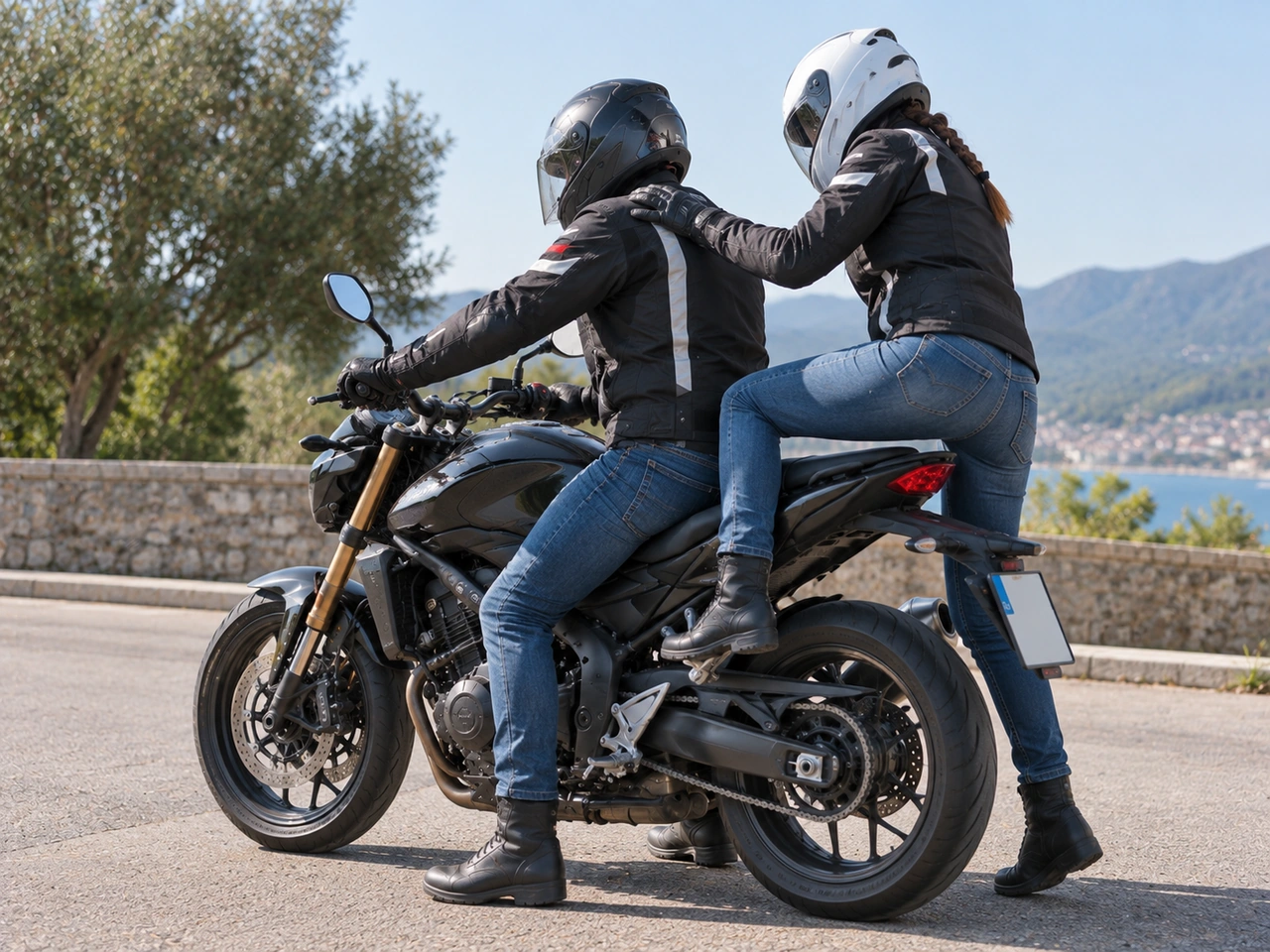
Why can bridges be dangerous in strong winds?

14. Why can bridges be dangerous in strong winds?

✓ They are often exposed to stronger gusts.
Steering works less effectively above water.
Vehicles require more engine power on bridges.
Vehicles automatically accelerate on bridges.

Bridges are often open and exposed, allowing strong winds to affect vehicles more suddenly.

Exposed bridge in strong wind
AI-generated by Traffic-rules.com • WCIT • CC BY-SA
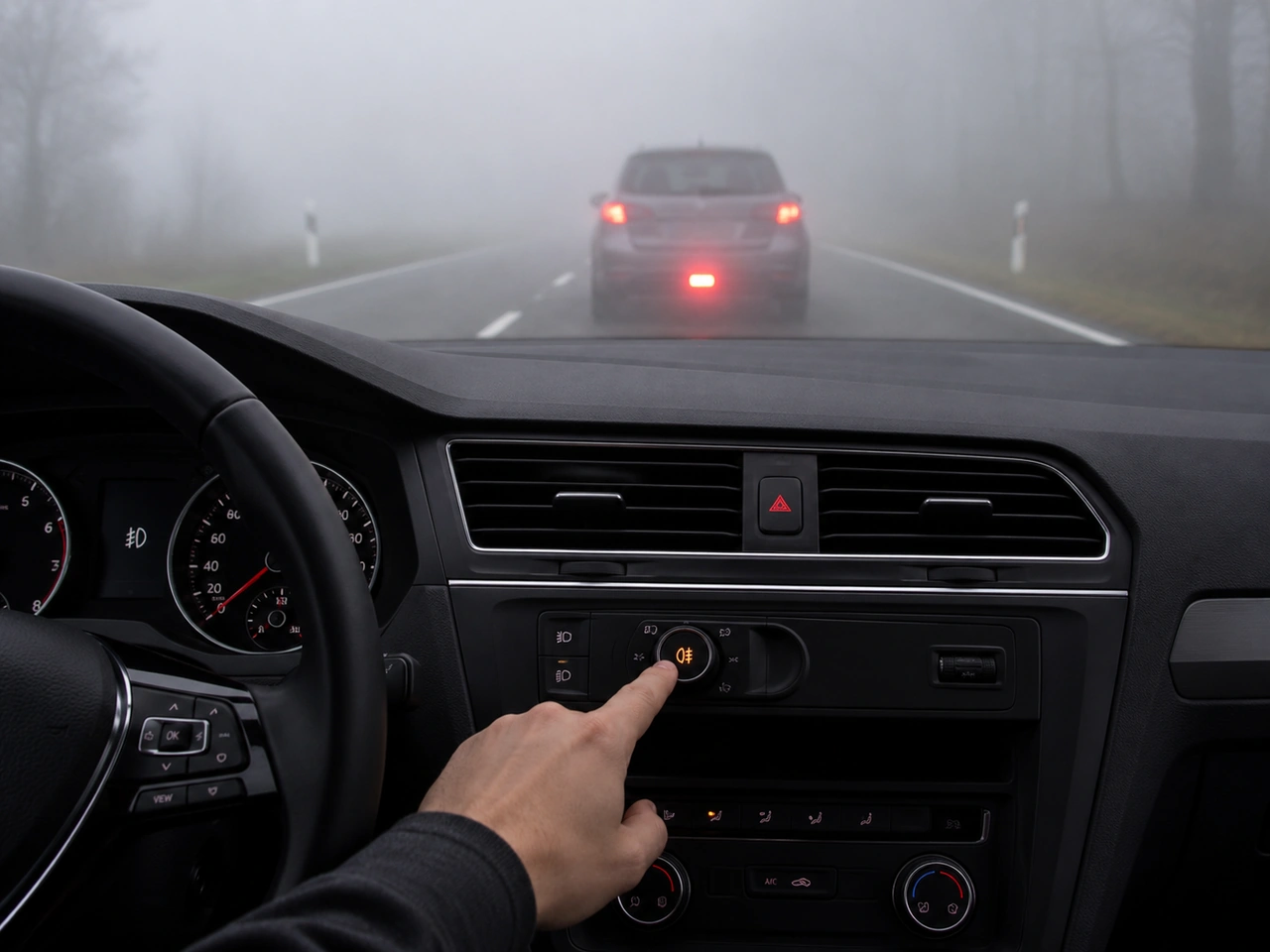
What should you do if your vehicle begins rolling backward on a steep incline?

15. What should you do if your vehicle begins rolling backward on a steep incline?

✓ Apply the brake, secure the vehicle, and restart carefully.
Switch off the engine and restart immediately.
Open the door and step out.
Accelerate while continuing to roll backward.

Stop the vehicle under control, apply the parking brake if necessary, and prepare to move away again safely.

Vehicle rolling backwards on a steep incline
AI-generated by Traffic-rules.com • WCIT • CC BY-SA
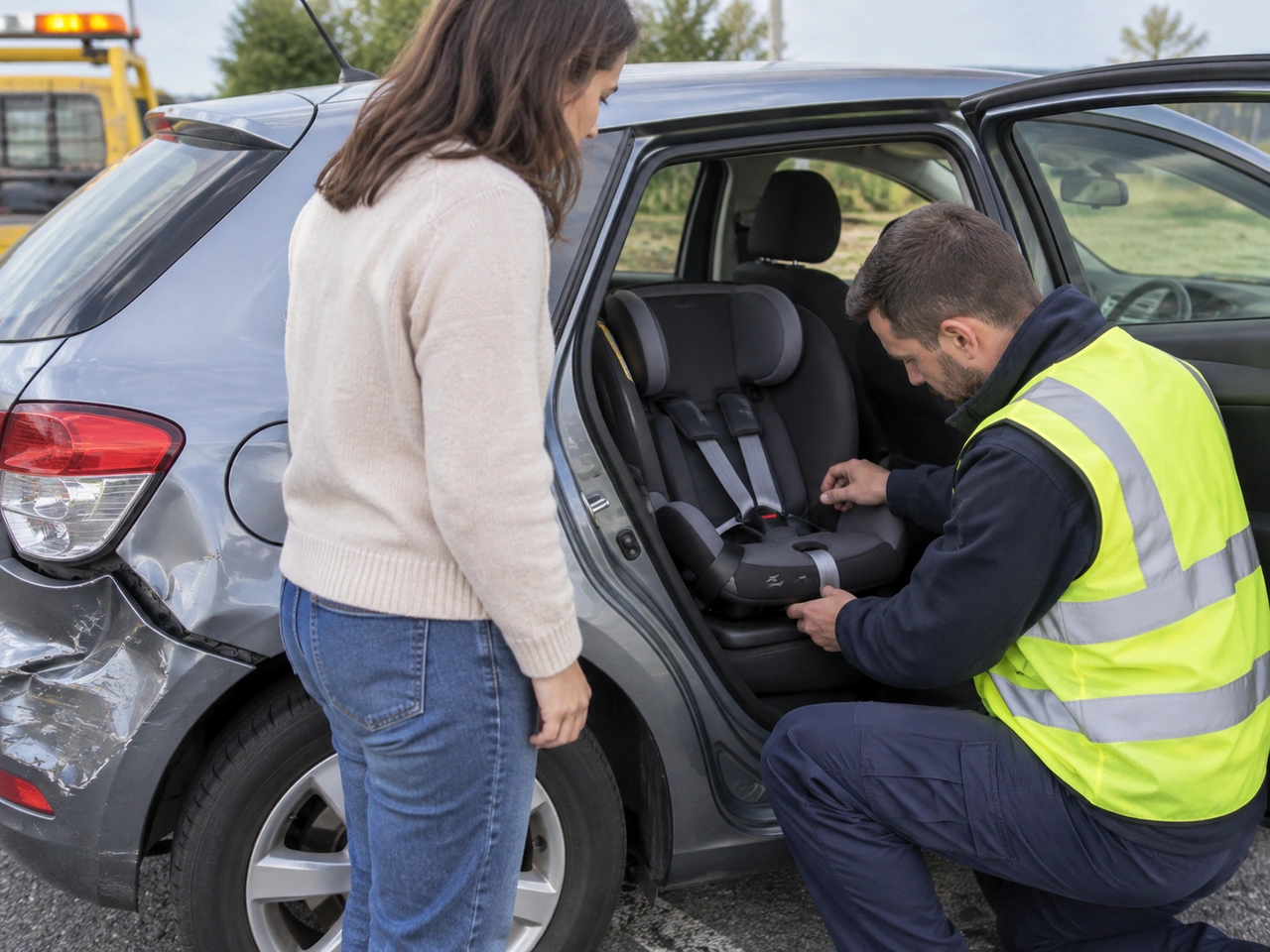
Why is counting drinks an unreliable way to decide whether you can drive?

16. Why is counting drinks an unreliable way to decide whether you can drive?

✓ Drink strength, serving size, and individual effects can vary.
Food makes each drink count as less alcohol.
You can judge your alcohol level by how sober you feel.
The number of drinks matters more than their strength.

Alcohol concentration and serving sizes vary, and factors such as body size, food, medication, and time can affect impairment.

Alcoholic drinks with different strengths and serving sizes
AI-generated by Traffic-rules.com • WCIT • CC BY-SA
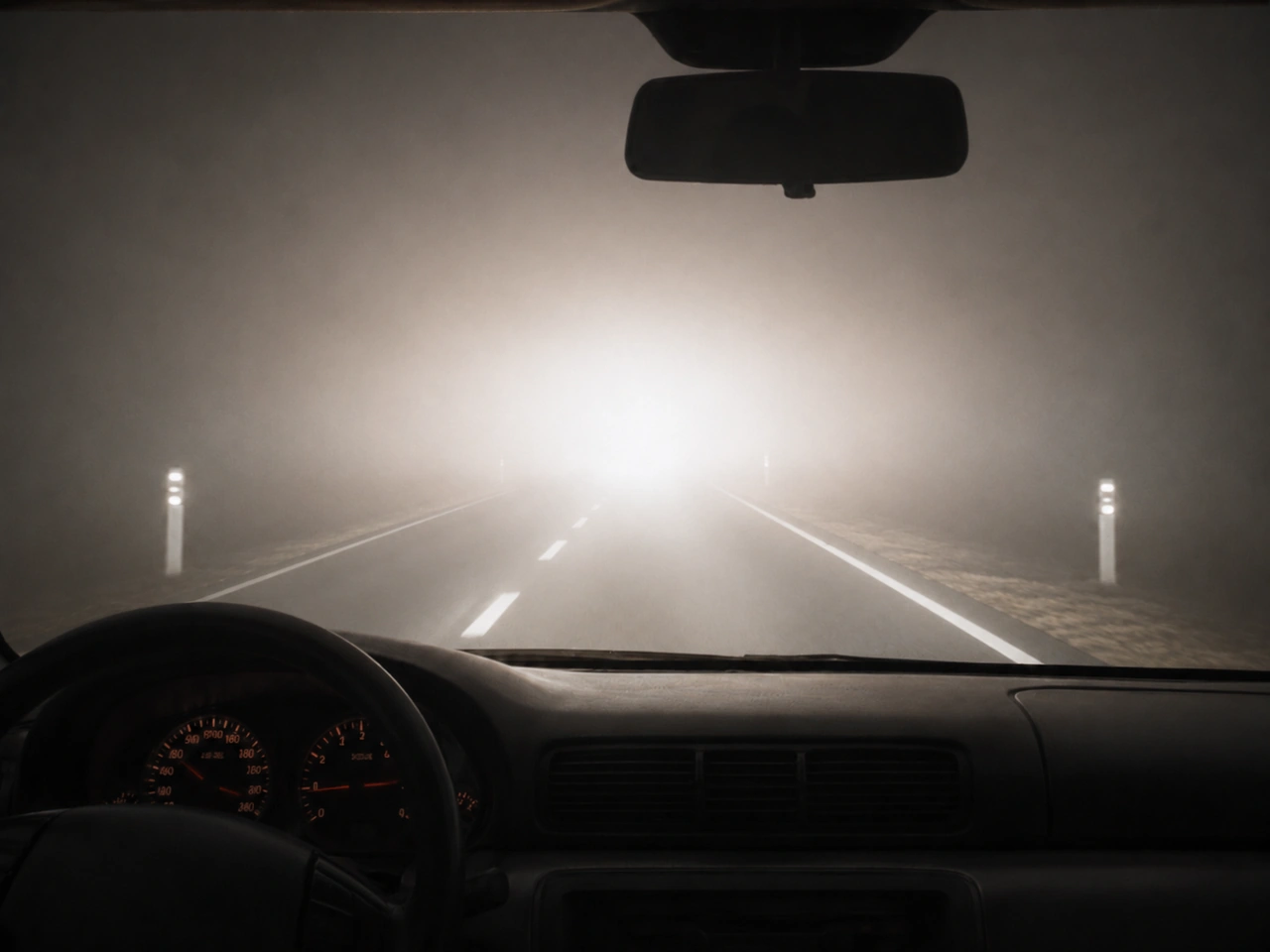
Why should you avoid changing lanes inside an intersection?

17. Why should you avoid changing lanes inside an intersection?

It can make your route through the junction longer.
✓ It can confuse other road users and increase collision risk.
It can make road markings harder to follow.
It can reduce the effectiveness of your indicators.

Changing lanes inside an intersection can surprise drivers, cyclists, and pedestrians. It is safer to choose the correct lane before entering.

Vehicle changing lanes within a junction
AI-generated by Traffic-rules.com • WCIT • CC BY-SA
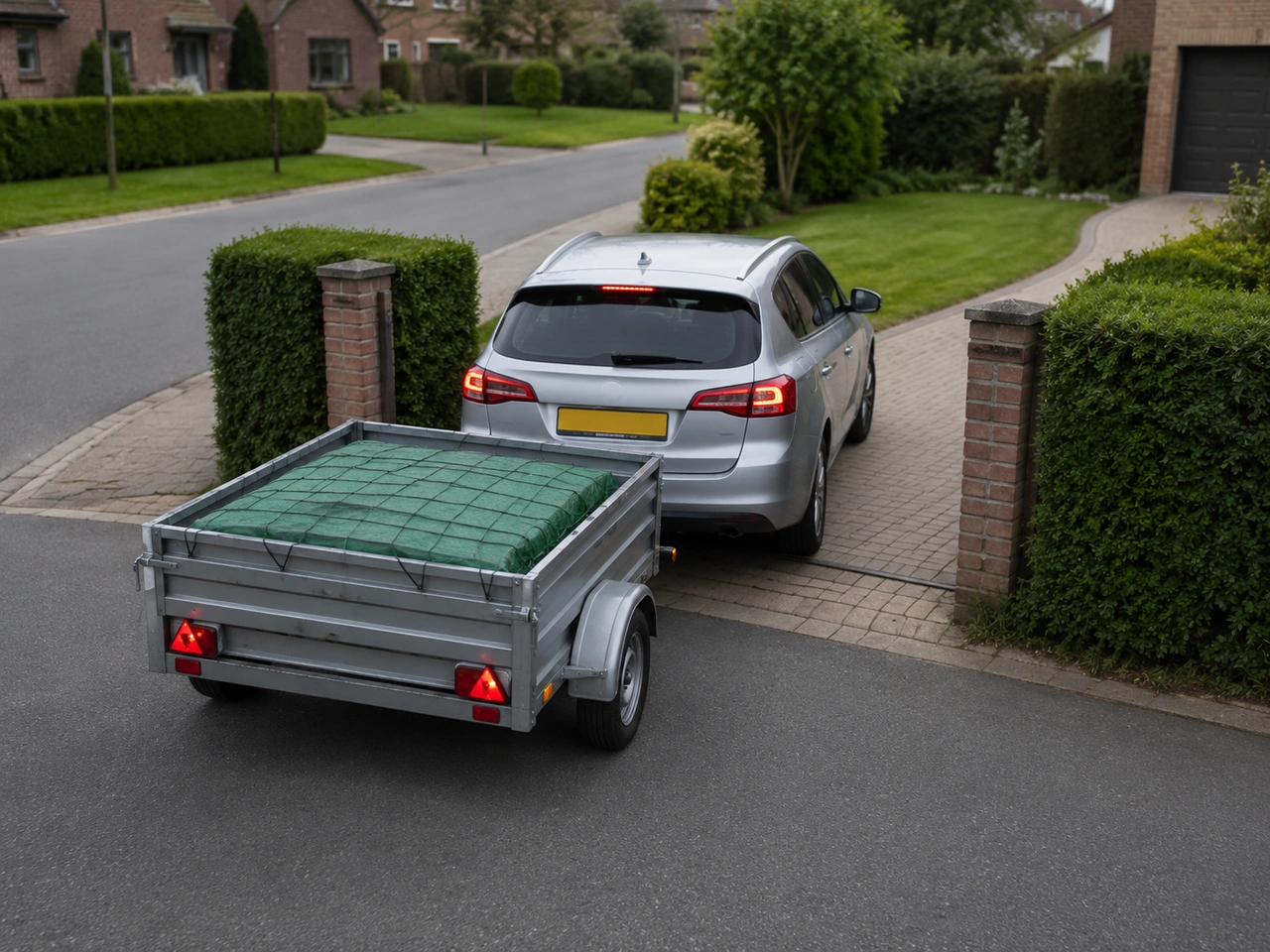
How should you approach a sharp bend on a mountain road?

18. How should you approach a sharp bend on a mountain road?

Move toward the centre of the road for a better view.
✓ Reduce speed before the bend and remain in your lane.
Brake hard while turning through the bend.
Accelerate through the bend to maintain momentum.

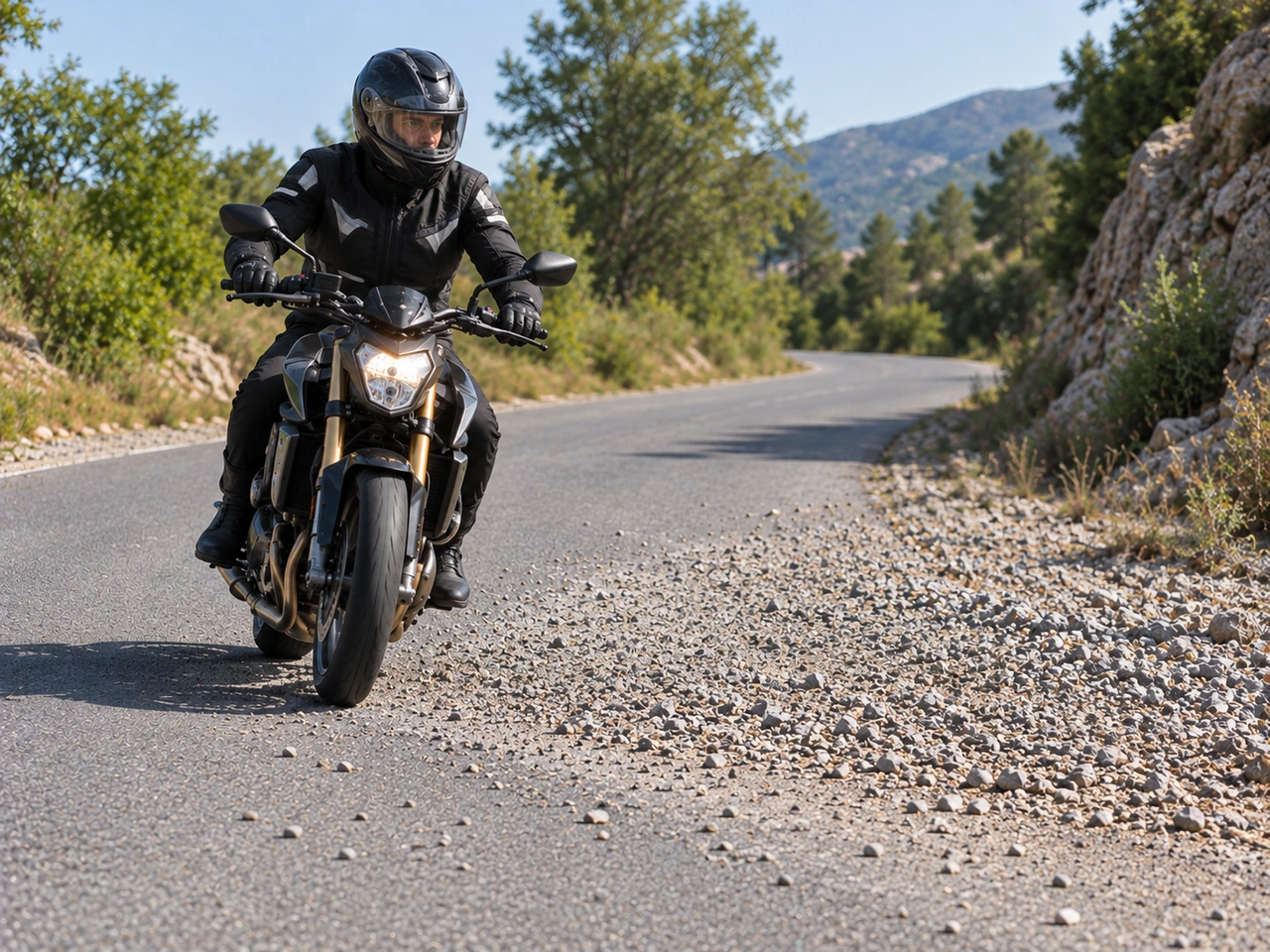
Mountain bends may hide oncoming vehicles, cyclists, animals, or debris. Slow down before entering and keep a safe road position.

Sharp bend on a mountain road
AI-generated by Traffic-rules.com • WCIT • CC BY-SA
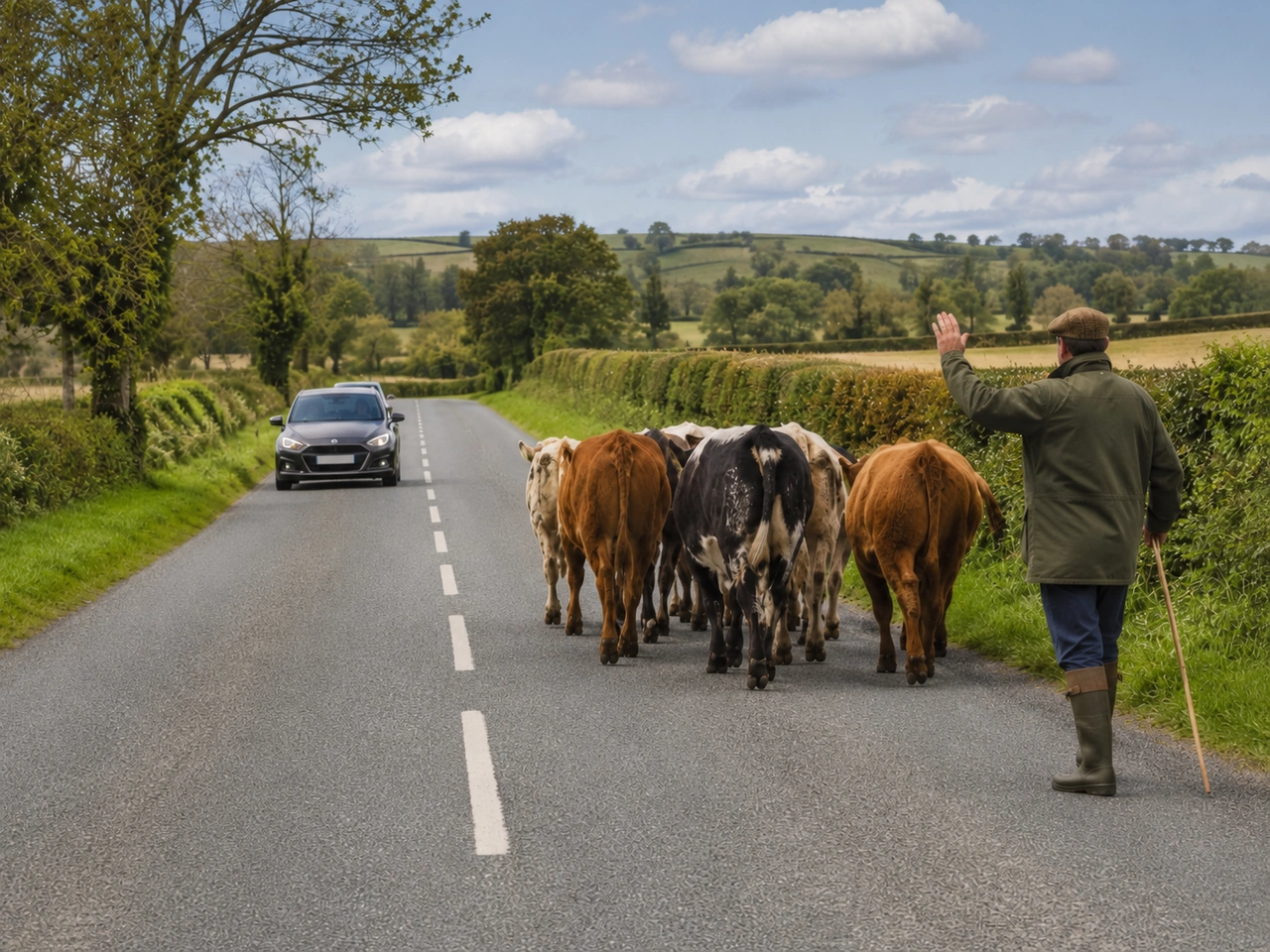
Which motorcycles are covered by driving licence A?

19. Which motorcycles are covered by driving licence A?

Motorcycles up to 35 kW only.
Mopeds up to 45 km/h only.
✓ Motorcycles without the A1 or A2 power limits.
Motorcycles with sidecars only.

Category A covers motorcycles without the power restrictions that apply to categories A1 and A2. It also covers powered tricycles with power exceeding 15 kW.

Motorcycle covered by unrestricted category A
AI-generated by Traffic-rules.com • WCIT • CC BY-SA
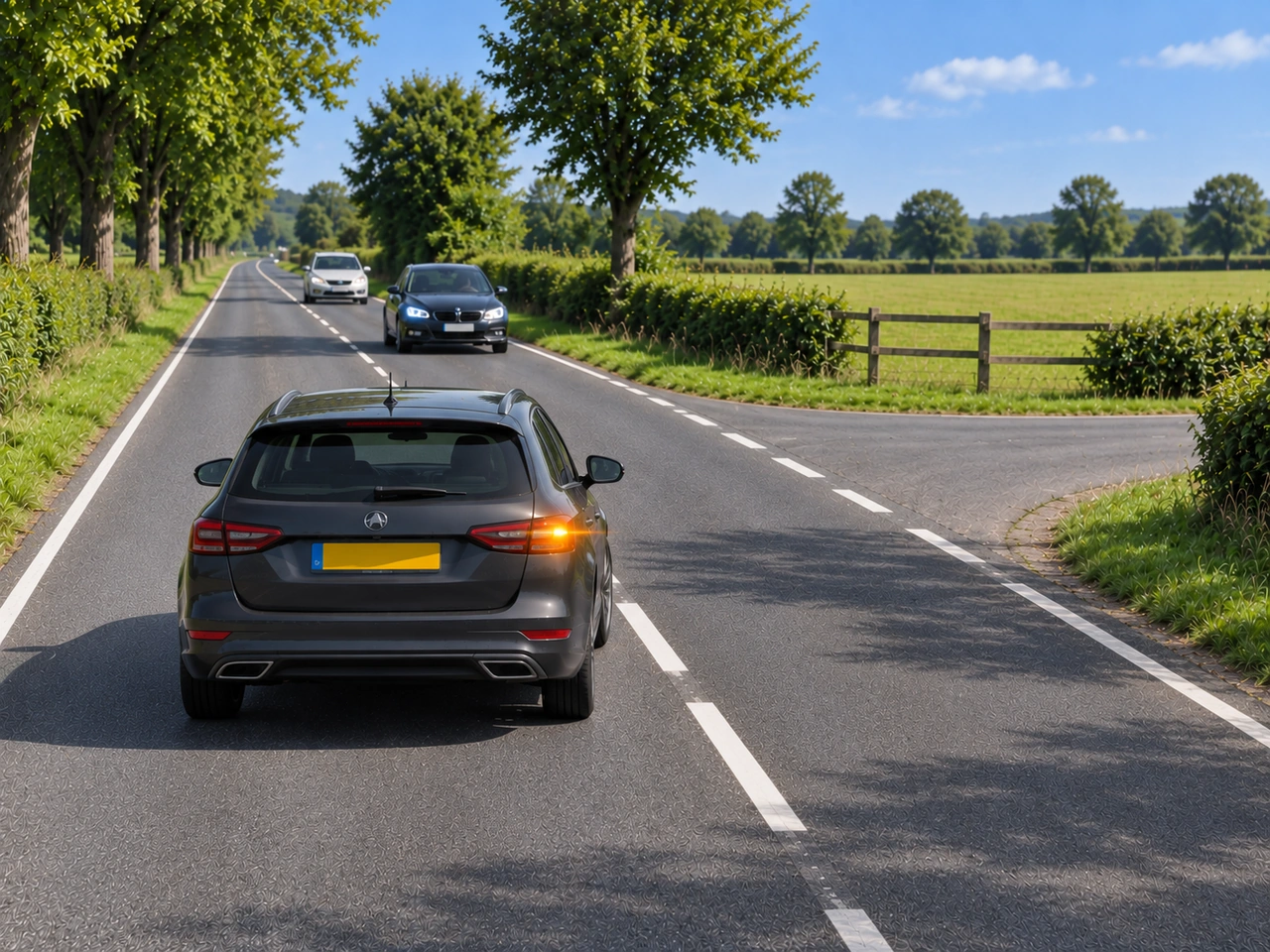
What should you check before starting a motorcycle journey?

20. What should you check before starting a motorcycle journey?

✓ Tyres, brakes, lights, steering, and controls.
Only the brakes and lights.
Nothing if the motorcycle was recently serviced.
Only the fuel level and mirrors.

Before riding, carry out a basic safety check. Check the tyres, brakes, lights, steering and controls, and inspect the drive chain, belt or other drive components where applicable. Finding a problem before setting off can prevent a breakdown or loss of control.

Checking a motorcycle before a journey
AI-generated by Traffic-rules.com • WCIT • CC BY-SA
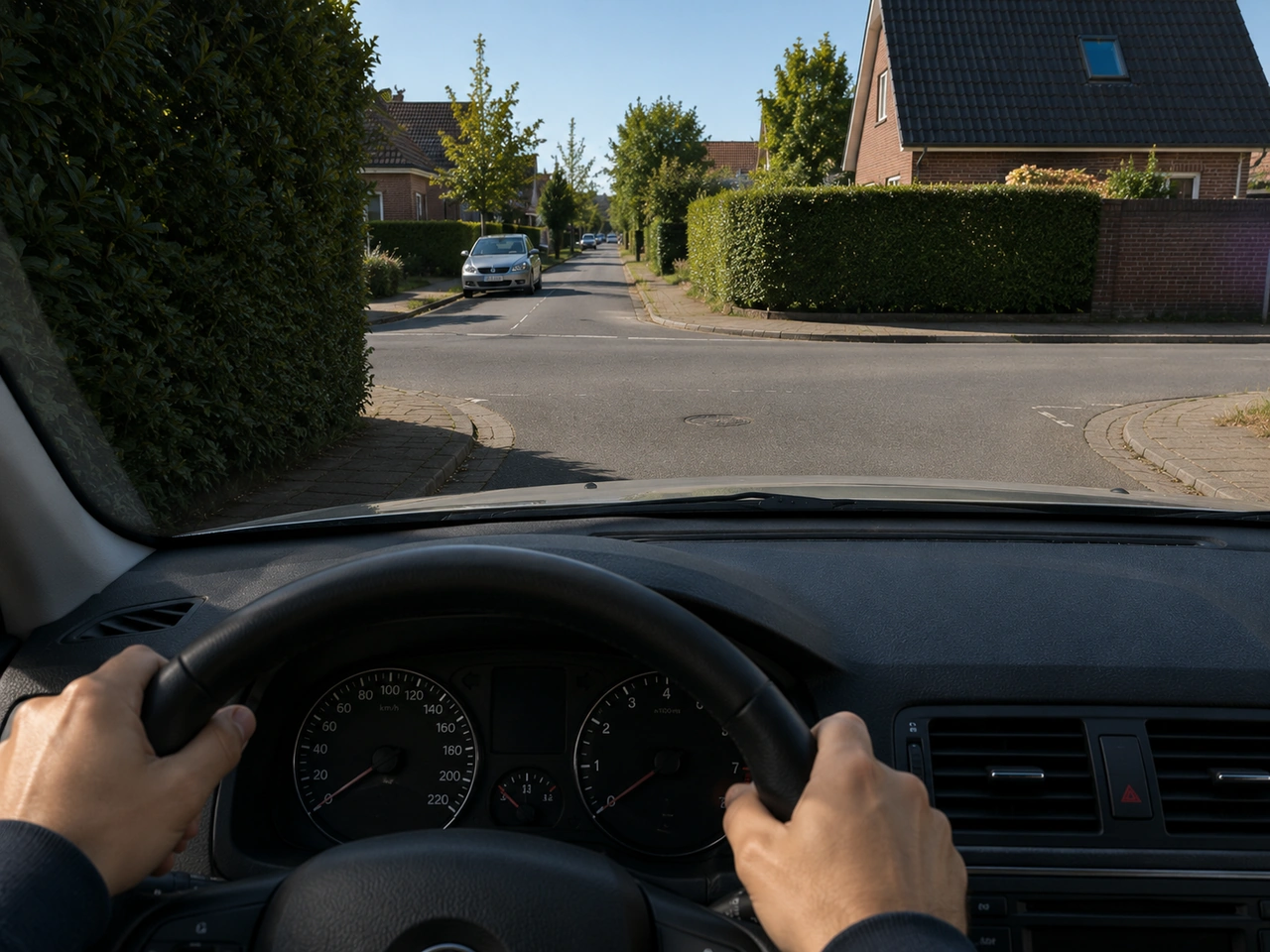
Which vehicle combination is covered by driving licence CE?

21. Which vehicle combination is covered by driving licence CE?

A category B vehicle with a small trailer.
A category D bus with a heavy trailer.
A C1 vehicle without a trailer.
✓ A category C vehicle with a trailer over 750 kg.

Category CE covers combinations consisting of a category C towing vehicle and a trailer or semi-trailer with a maximum authorised mass above 750 kg.

Heavy goods vehicle and trailer covered by category CE
AI-generated by Traffic-rules.com • WCIT • CC BY-SA
What does the AUTO setting on the lighting control do?

22. What does the AUTO setting on the lighting control do?

It flashes the headlights automatically.
✓ It switches the headlights on or off automatically when needed.
It keeps the main beam switched on.
It switches on the hazard warning lights.

The AUTO lighting setting allows the vehicle to switch its exterior lights on or off automatically according to ambient light conditions. The driver remains responsible for ensuring that the correct lights are being used.

AUTO setting on the vehicle's lighting control
AI-generated by Traffic-rules.com • WCIT • CC BY-SA
What should you do before releasing the parking brake on a slope?

23. What should you do before releasing the parking brake on a slope?

Press the accelerator fully.
Turn the steering wheel fully.
✓ Make sure the vehicle is securely controlled before releasing it.
Select neutral and release all pedals.

Before releasing the parking brake on a slope, make sure the vehicle cannot roll unexpectedly. Use the service brake or, when moving off in a manual vehicle, establish the clutch biting point and sufficient power before releasing the parking brake.

Preparing to release the parking brake on a slope
AI-generated by Traffic-rules.com • WCIT • CC BY-SA
What should you do if spray from other vehicles makes it hard to see?

24. What should you do if spray from other vehicles makes it hard to see?

Speed up to move out of the spray more quickly.
✓ Slow down and increase following distance.
Move closer to the vehicle ahead for guidance.
Use main beam so the spray is easier to see through.

Spray can seriously reduce visibility. Slowing down and increasing your distance gives you more time and a clearer view.

Road spray from a vehicle ahead
AI-generated by Traffic-rules.com • WCIT • CC BY-SA
What should you do if your vehicle begins to skid on ice?

25. What should you do if your vehicle begins to skid on ice?

Apply the parking brake to straighten the vehicle.
Press the brake pedal hard and hold it.
✓ Ease off the accelerator and steer smoothly in the direction you want to travel.
Accelerate sharply to regain traction.

Avoid sudden braking or steering. Look where you want to go and use gentle controls while the tyres regain grip.

Vehicle skidding on an icy road
AI-generated by Traffic-rules.com • WCIT • CC BY-SA
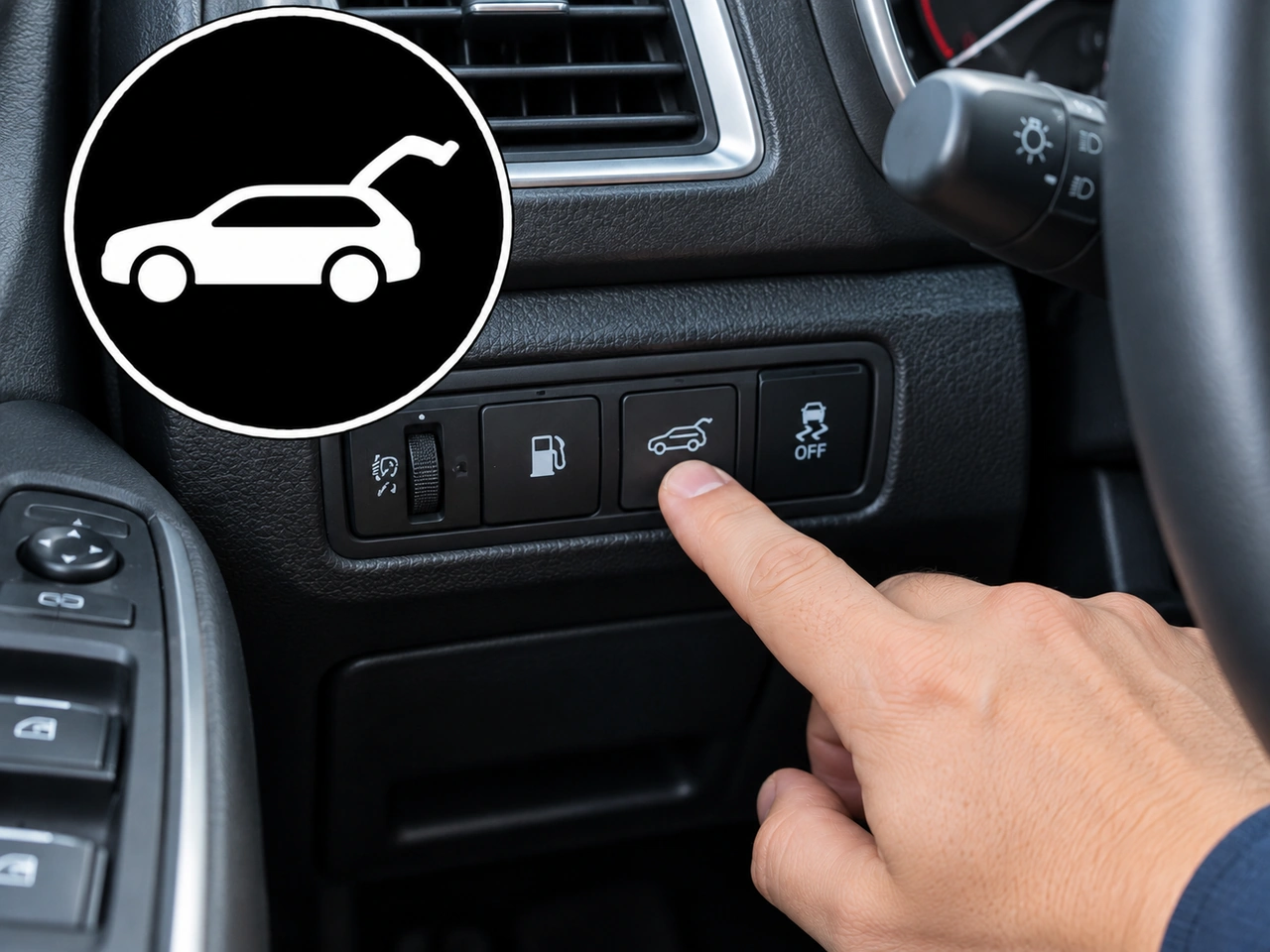
What should you do if your vehicle catches fire?

26. What should you do if your vehicle catches fire?

Try to move personal belongings out before leaving.
Open the bonnet fully to find where the fire started.
Stay inside the vehicle while waiting for assistance.
✓ Stop, switch off the engine, evacuate everyone, and call the emergency services.

Move everyone well away from the vehicle and call emergency services. If the fire is small and it is safe to do so, use a suitable fire extinguisher. Opening the bonnet fully can supply additional oxygen and cause the fire to intensify.

Vehicle with a fire breaking out
AI-generated by Traffic-rules.com • WCIT • CC BY-SA
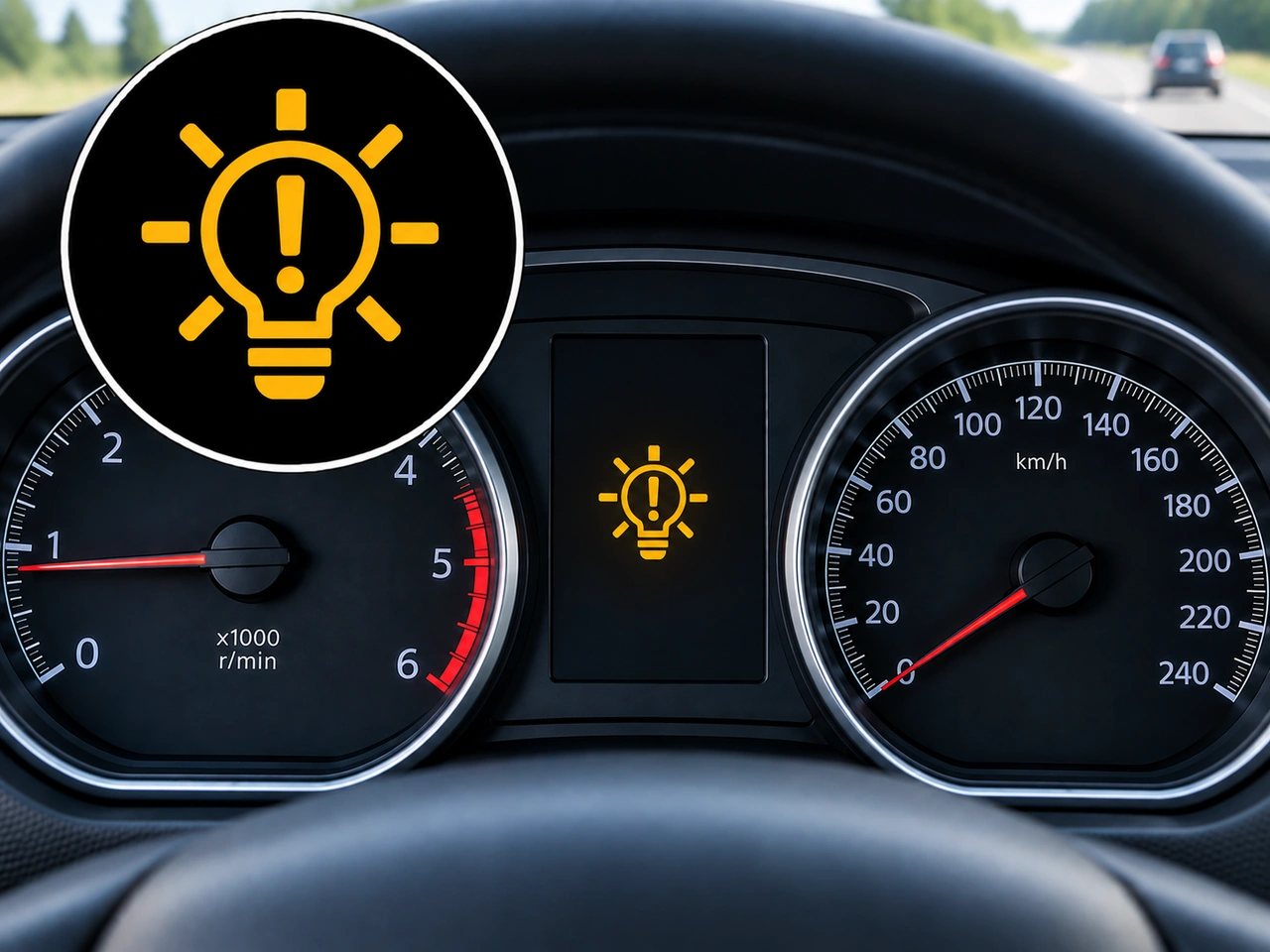
You should signal before turning or changing lanes.

27. You should signal before turning or changing lanes.

False.
✓ True.

A clear signal helps other road users understand your intentions, but you must still check that the manoeuvre can be made safely.

Vehicle signalling before a turn
AI-generated by Traffic-rules.com • WCIT • CC BY-SA
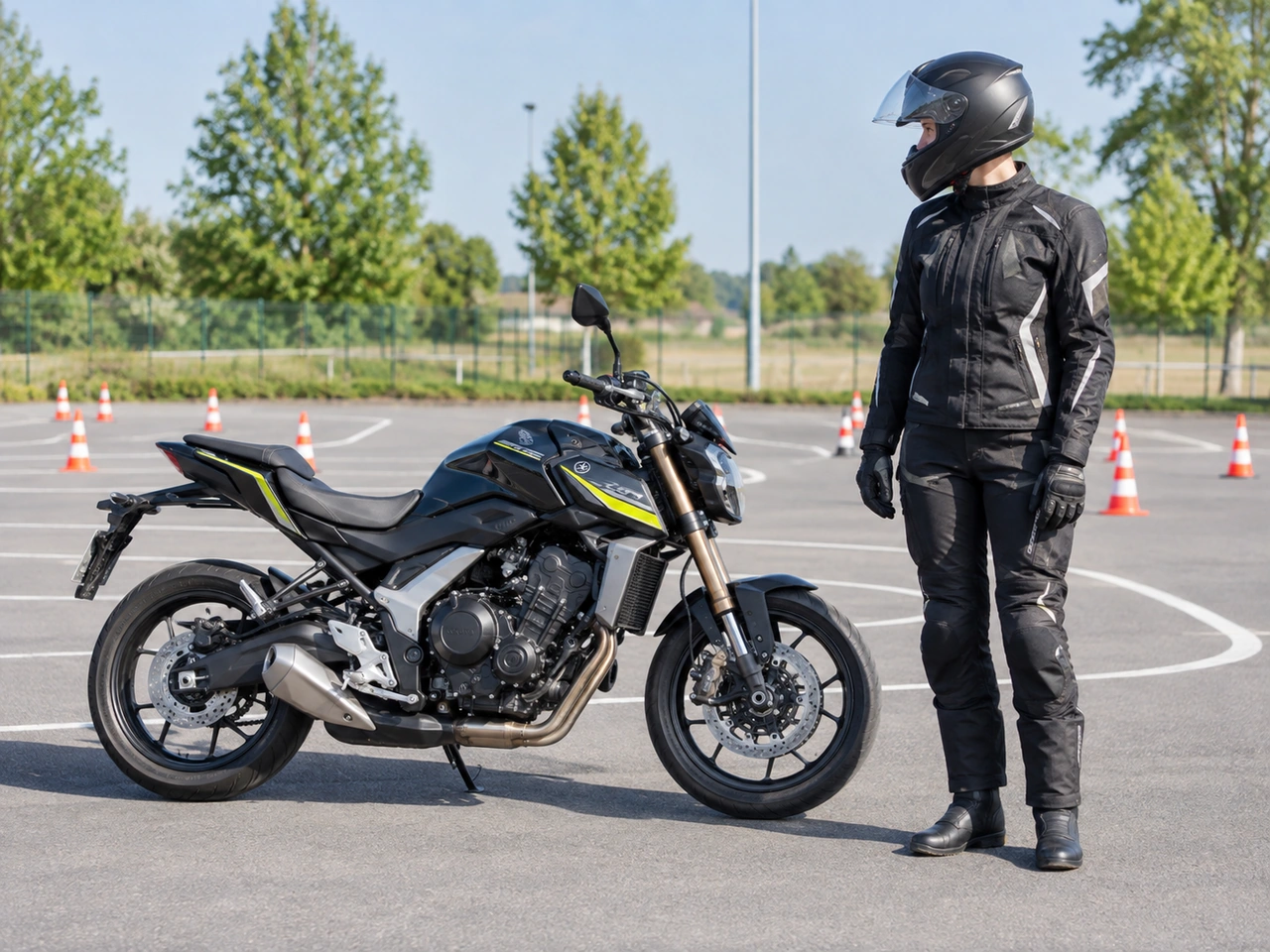
Who has priority when a driver enters a paved road from a dirt road or path?

28. Who has priority when a driver enters a paved road from a dirt road or path?

The larger vehicle.
The vehicle travelling uphill.
Whichever driver reaches the junction first.
✓ Traffic already using the paved road.

A driver entering a public road with a carriageway from a dirt road or path must give way to traffic already using that road. Priority from the right does not override this rule.

Vehicle entering a paved road from a dirt road
AI-generated by Traffic-rules.com • WCIT • CC BY-SA
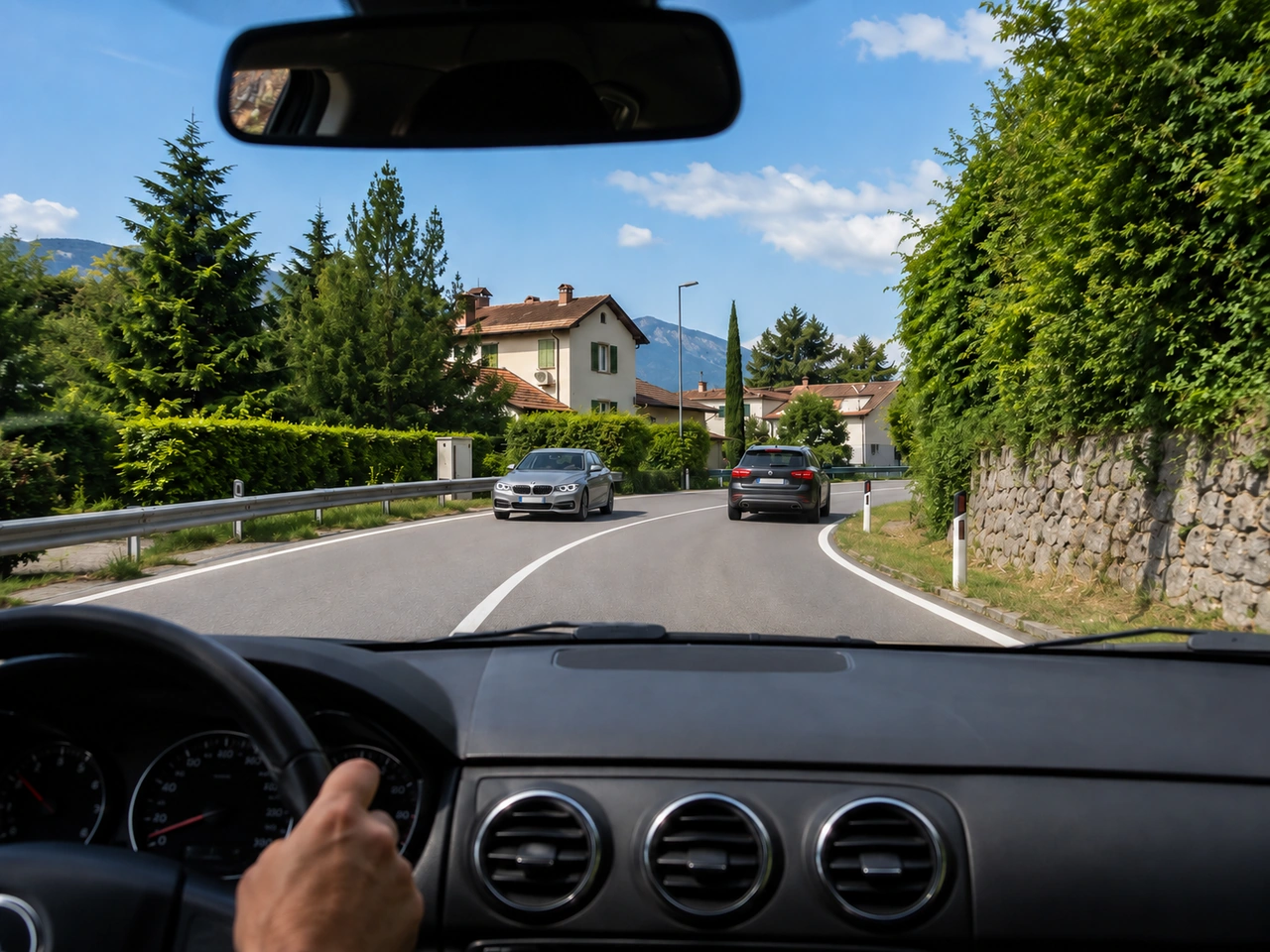
What should you do if a gear does not engage easily in a manual vehicle?

29. What should you do if a gear does not engage easily in a manual vehicle?

✓ Avoid forcing the gear lever.
Press the accelerator fully.
Release the clutch suddenly.
Push the lever harder until the gear engages.

If a gear does not engage easily, do not force the gear lever. Make sure the clutch is fully pressed and the vehicle's speed is suitable for the gear before trying again.

Operating a manual gear lever without forcing it
AI-generated by Traffic-rules.com • WCIT • CC BY-SA
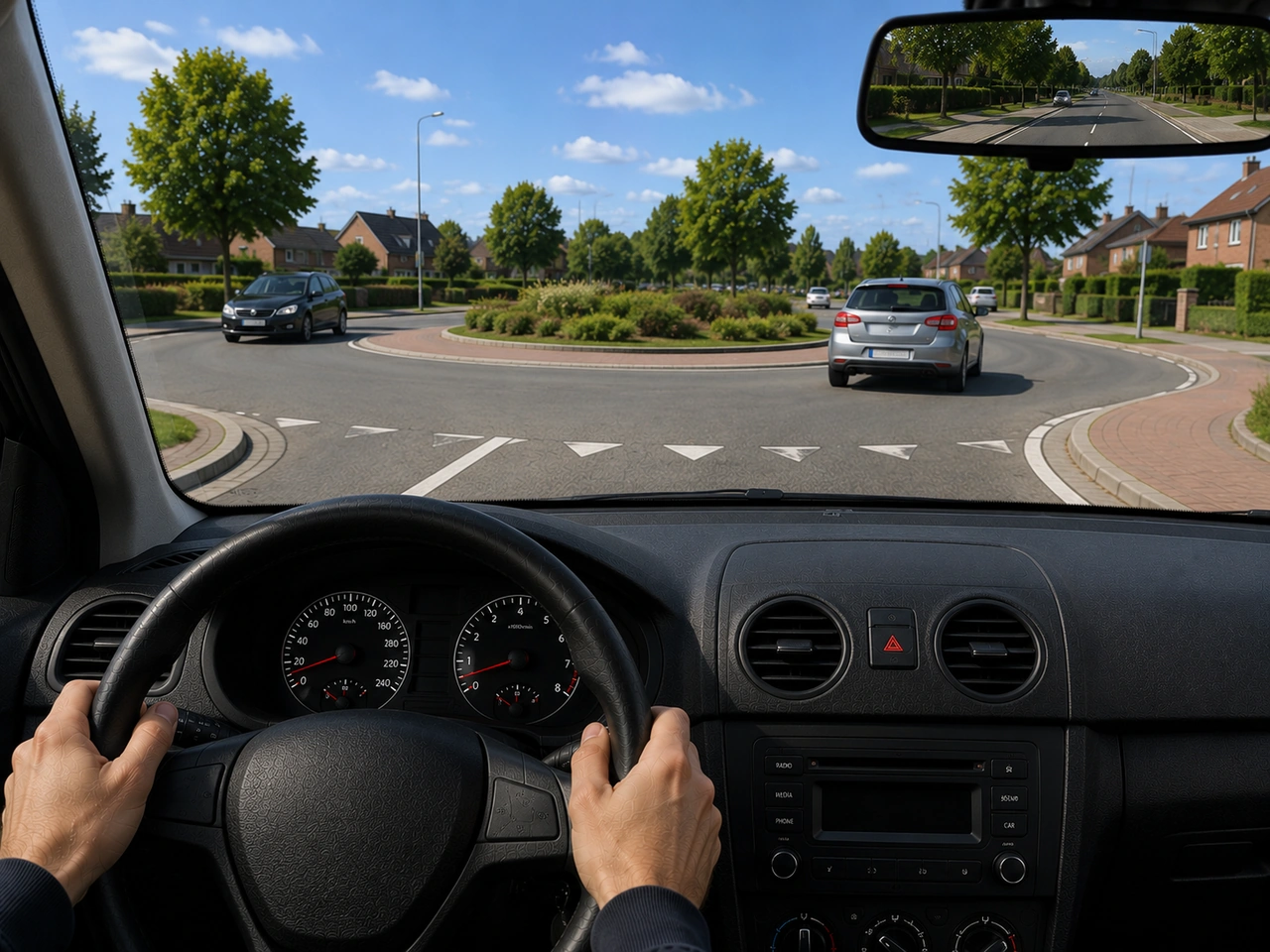
What should you do when meeting another vehicle on a narrow mountain road?

30. What should you do when meeting another vehicle on a narrow mountain road?

Move toward the centre so the other driver gives way.
Stop where the road is narrowest and wait.
Drive onto the roadside without checking the surface.
✓ Slow down and use a safe passing place if necessary.

Narrow mountain roads may not provide enough space for two vehicles. Reduce speed and cooperate to pass safely.

Vehicles meeting on a narrow mountain road
AI-generated by Traffic-rules.com • WCIT • CC BY-SA
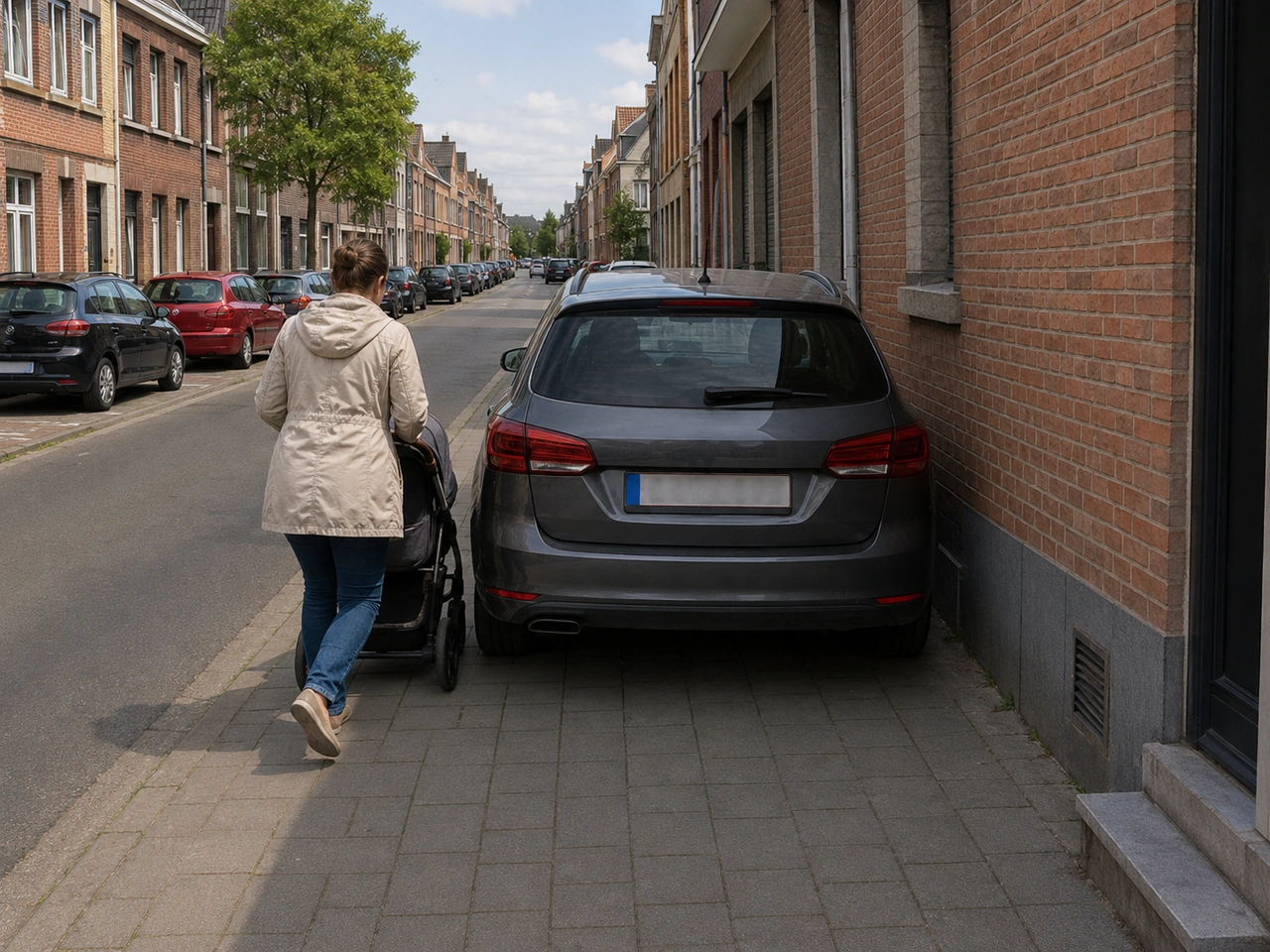
Why should you avoid selecting N while driving downhill in an automatic vehicle?

31. Why should you avoid selecting N while driving downhill in an automatic vehicle?

It applies the parking brake.
✓ It reduces engine braking and vehicle control.
It increases engine braking.
It automatically selects a lower gear.

Selecting N (Neutral) while driving downhill disconnects the engine from the driven wheels, reducing engine braking. Keep an appropriate drive or gear selected so you can maintain better control of the vehicle.

Neutral selection and downhill coasting in an automatic vehicle
AI-generated by Traffic-rules.com • WCIT • CC BY-SA
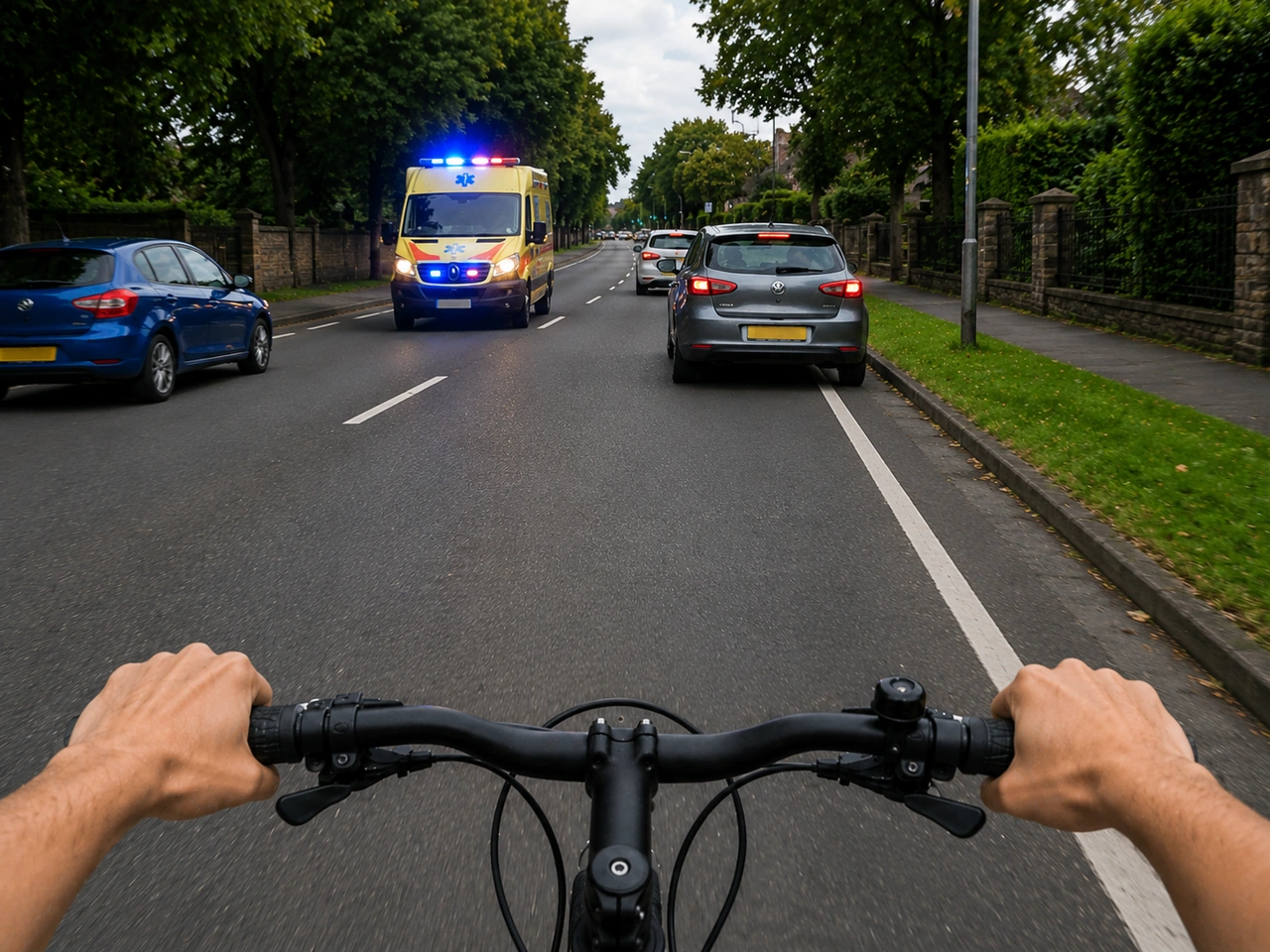
Why should you avoid stopping in a blind spot of a large vehicle?

32. Why should you avoid stopping in a blind spot of a large vehicle?

✓ The driver may not be able to see you.
Large vehicles always have priority when changing lanes.
The driver can always see you in the mirrors.
Blind spots only matter when a vehicle is reversing.

Large vehicles have bigger blind spots. If you stop where the driver cannot see you, you may be at risk when the vehicle moves or turns.

Vehicle positioned in a large vehicle's blind spot
AI-generated by Traffic-rules.com • WCIT • CC BY-SA
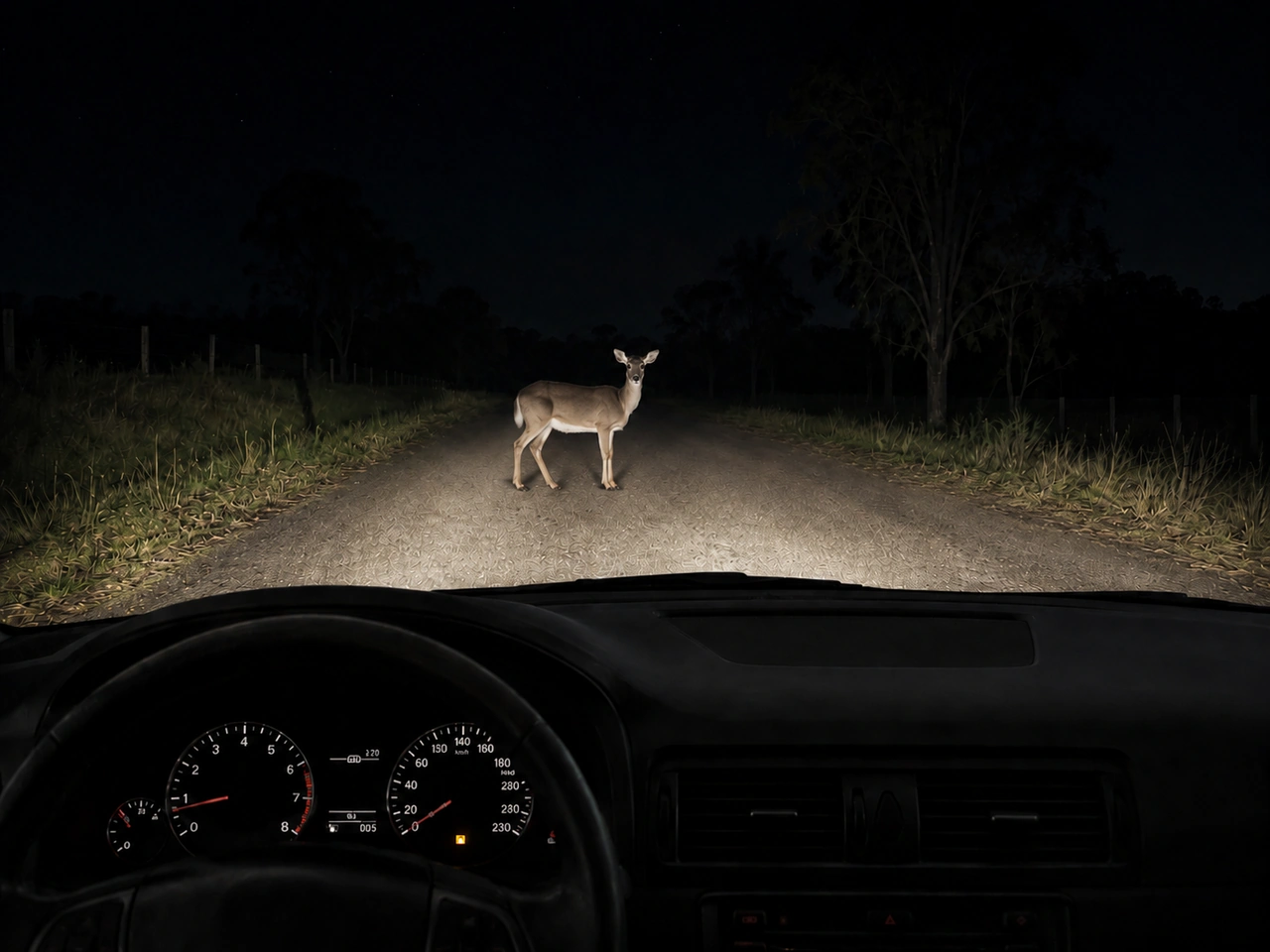
What should you avoid if your vehicle loses grip on a wet road?

33. What should you avoid if your vehicle loses grip on a wet road?

Holding the steering wheel firmly.
Easing off the accelerator gradually.
Keeping your movements smooth and controlled.
✓ Sudden braking or sharp steering.

Abrupt inputs can upset the vehicle further. Smooth control gives the tyres a better chance to regain grip.

Vehicle losing grip on a wet road
AI-generated by Traffic-rules.com • WCIT • CC BY-SA
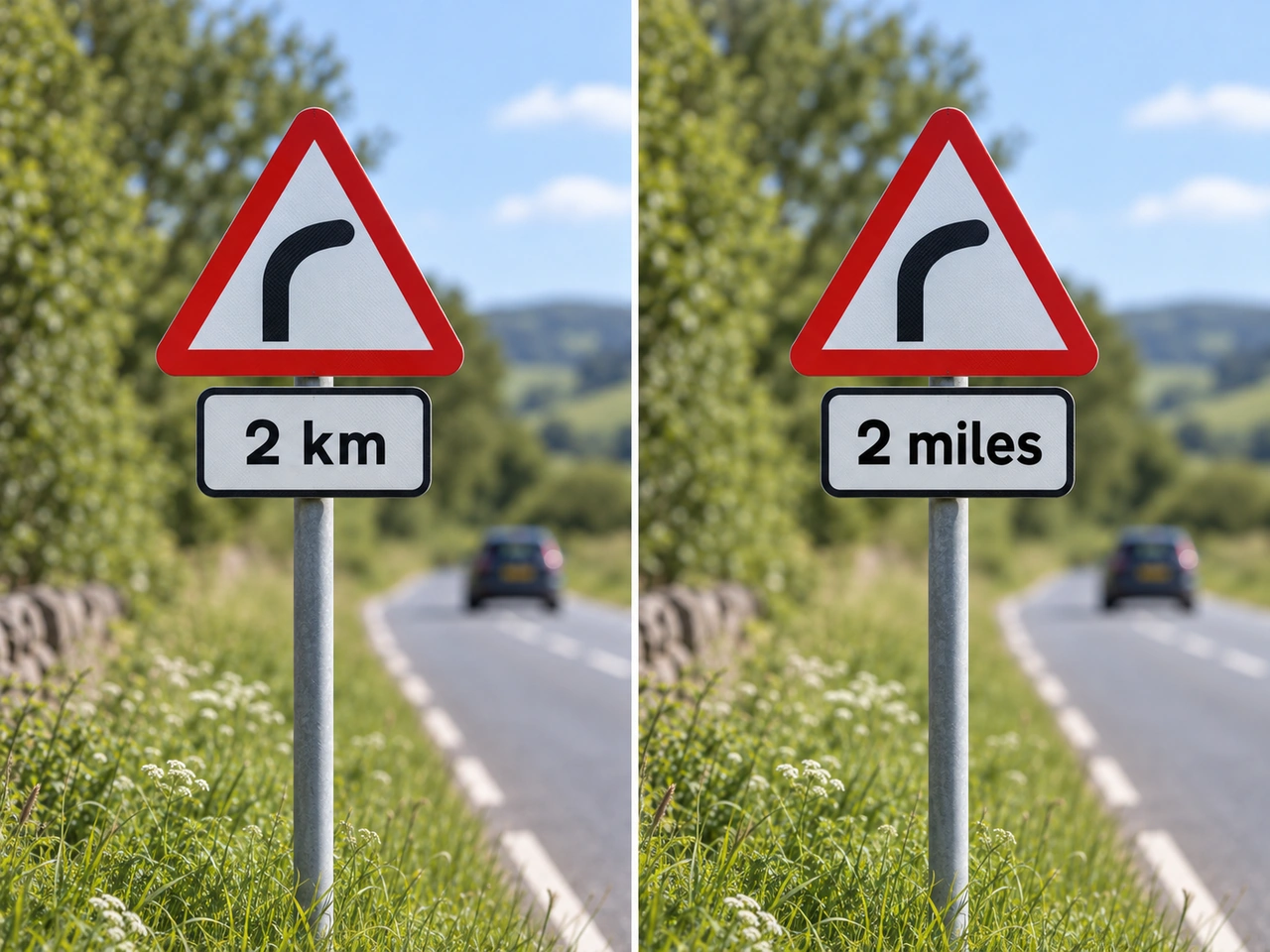
What should you do if the windscreen becomes damaged while driving?

34. What should you do if the windscreen becomes damaged while driving?

Continue driving if you can still see part of the road.
Rely on the mirrors instead of the windscreen.
✓ Reduce speed and stop safely if your view is affected.
Remove loose glass while the vehicle is moving.

Severe damage can obstruct your view and weaken the glass. Do not continue if you cannot see the road clearly.

Damaged windscreen affecting the driver's view
AI-generated by Traffic-rules.com • WCIT • CC BY-SA
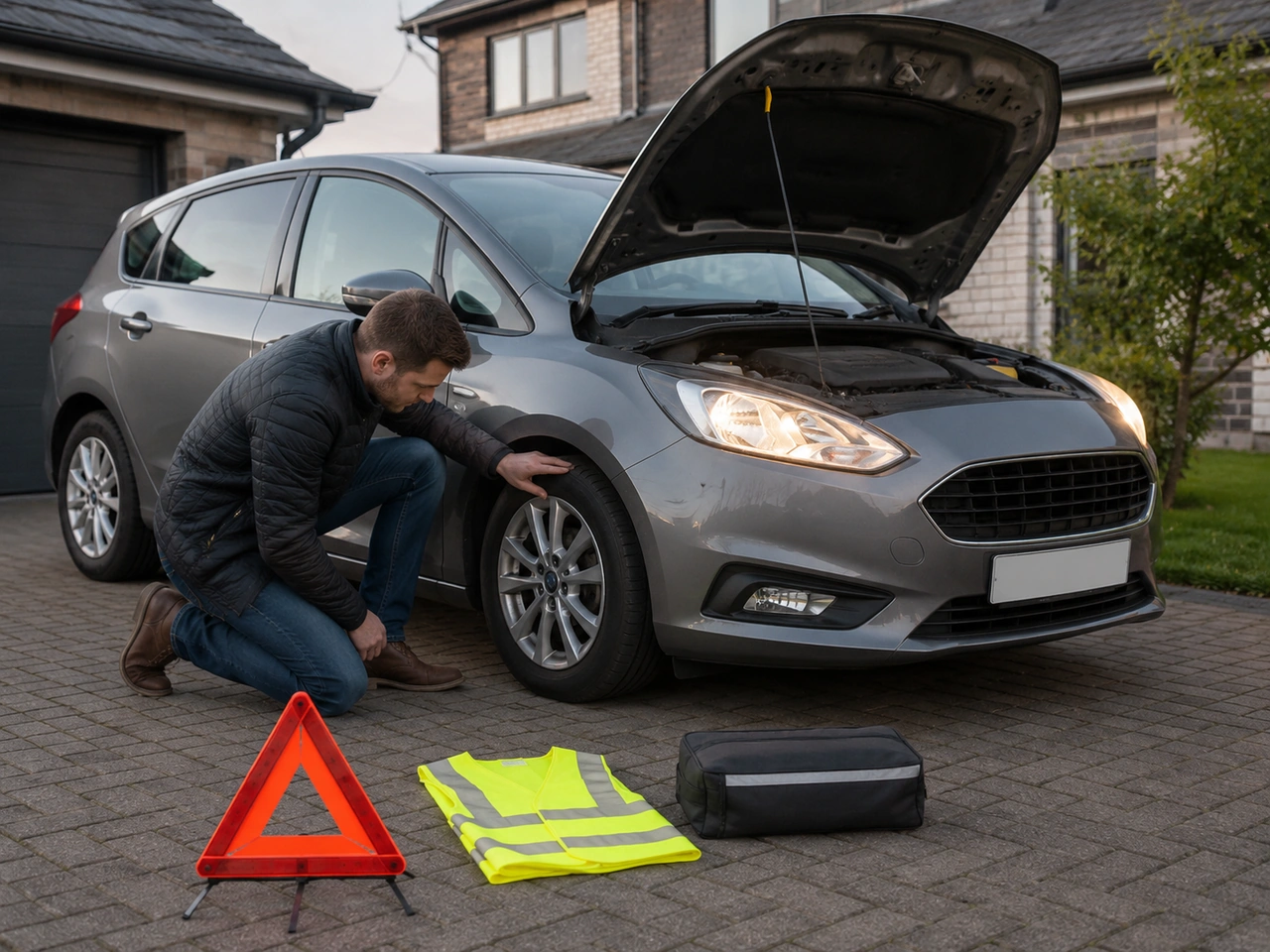
Why can main-beam headlights make driving in fog more difficult?

35. Why can main-beam headlights make driving in fog more difficult?

The brighter light makes the windscreen mist more quickly.
✓ The light can reflect off fog droplets and reduce visibility.
The stronger beam uses too much electrical power.
Main beam reduces the effectiveness of the fog lights.

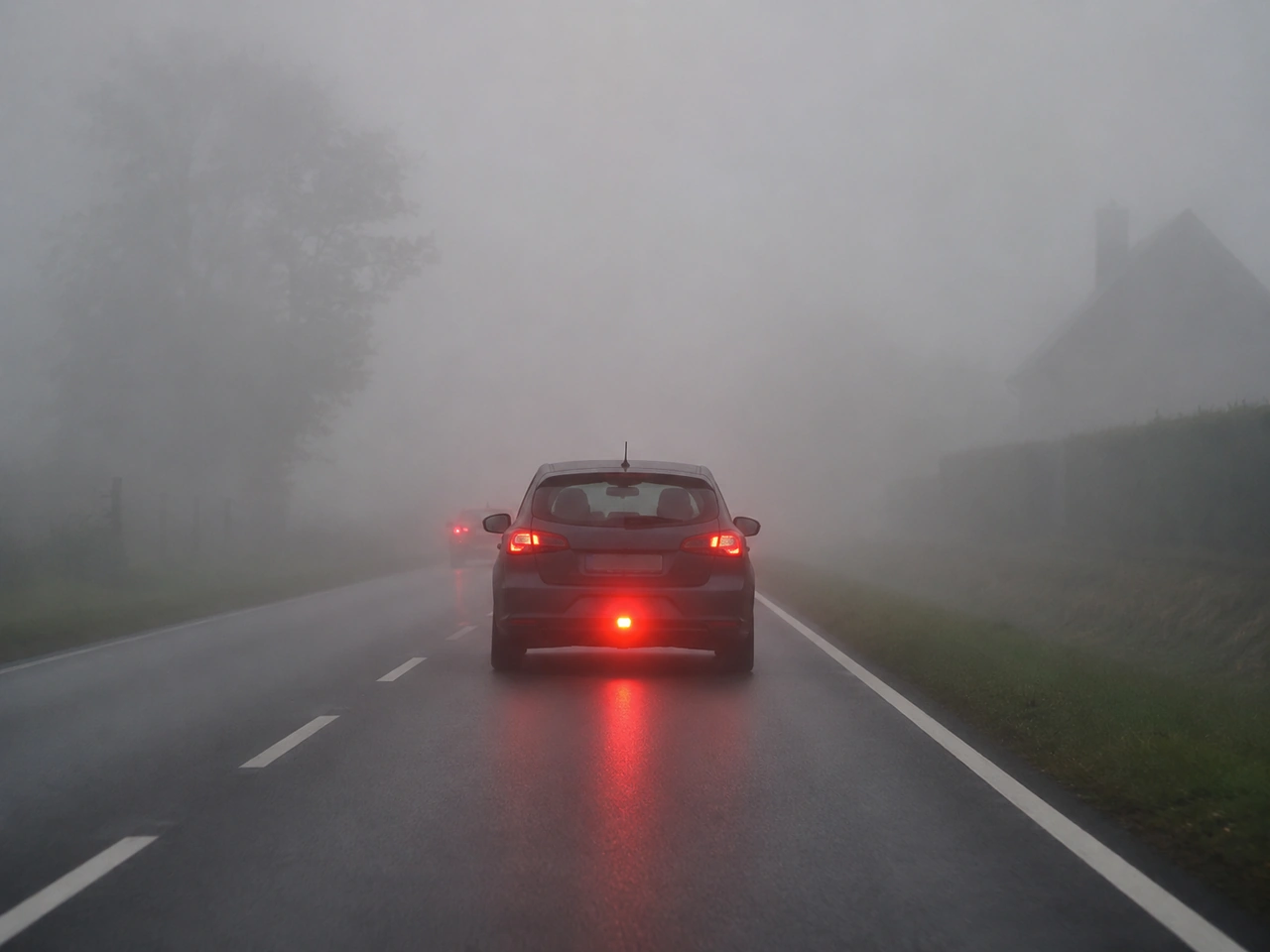
Main beam can reflect back from fog and create glare, making it harder to see the road ahead.

Headlight glare reflected by fog
AI-generated by Traffic-rules.com • WCIT • CC BY-SA
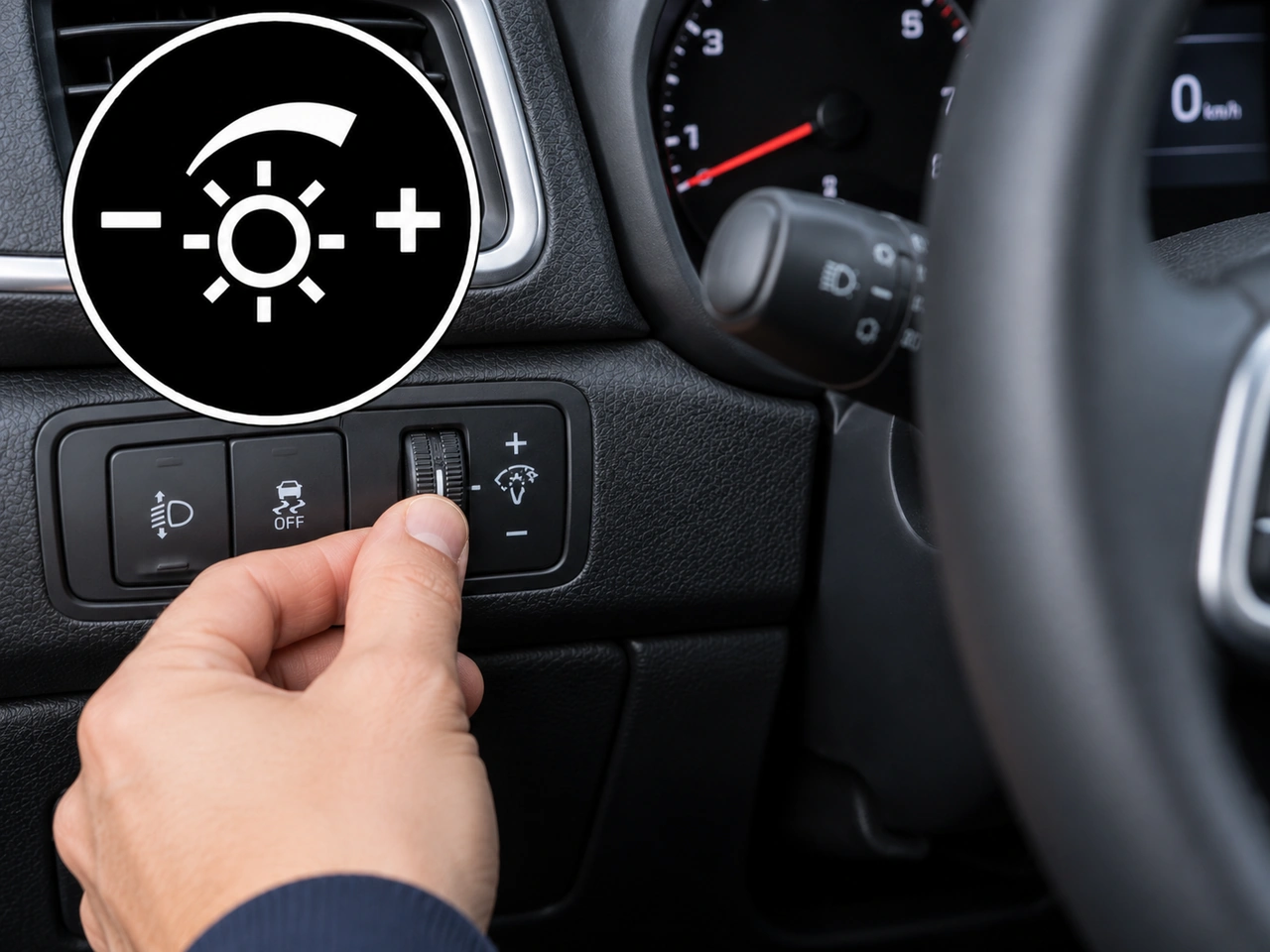
How can a heavy load affect stopping distance?

36. How can a heavy load affect stopping distance?

It makes the brakes respond more quickly.
✓ It can increase the distance needed to stop.
It affects stopping distance only on steep roads.
It always shortens the stopping distance.

A heavily loaded vehicle has more mass and may require additional distance to slow down or stop safely.

Loaded vehicle and the space needed for braking
AI-generated by Traffic-rules.com • WCIT • CC BY-SA
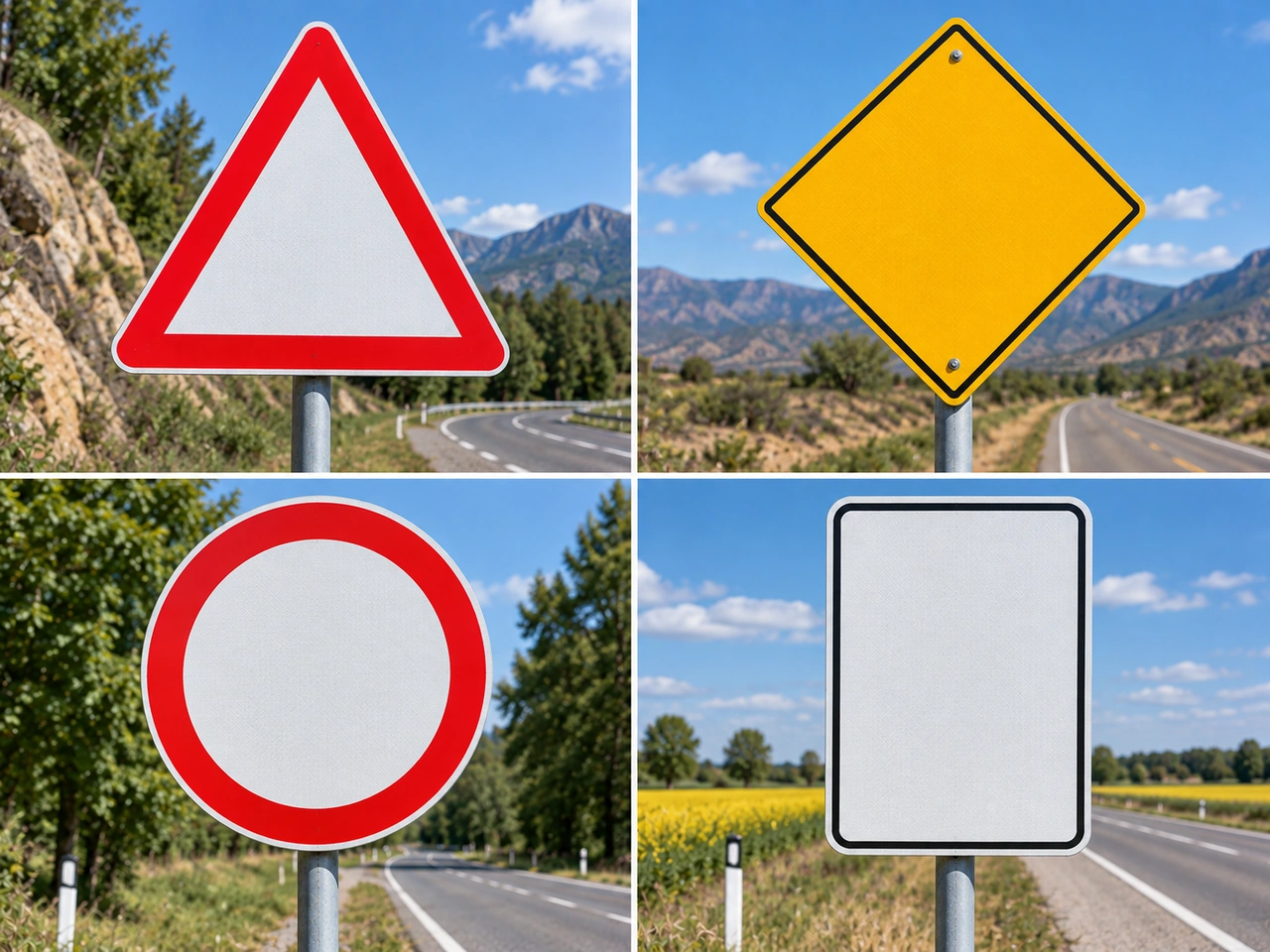
What should you do when driving near a school area?

37. What should you do when driving near a school area?

✓ Slow down and watch carefully for children.
Use your horn so children stay away from traffic.
Drive close behind other vehicles to keep traffic moving.
Maintain your usual speed if the road looks clear.

Children near schools may cross unexpectedly or be hidden between parked vehicles. Reduce speed and be ready to stop.

Vehicle travelling near a school
AI-generated by Traffic-rules.com • WCIT • CC BY-SA
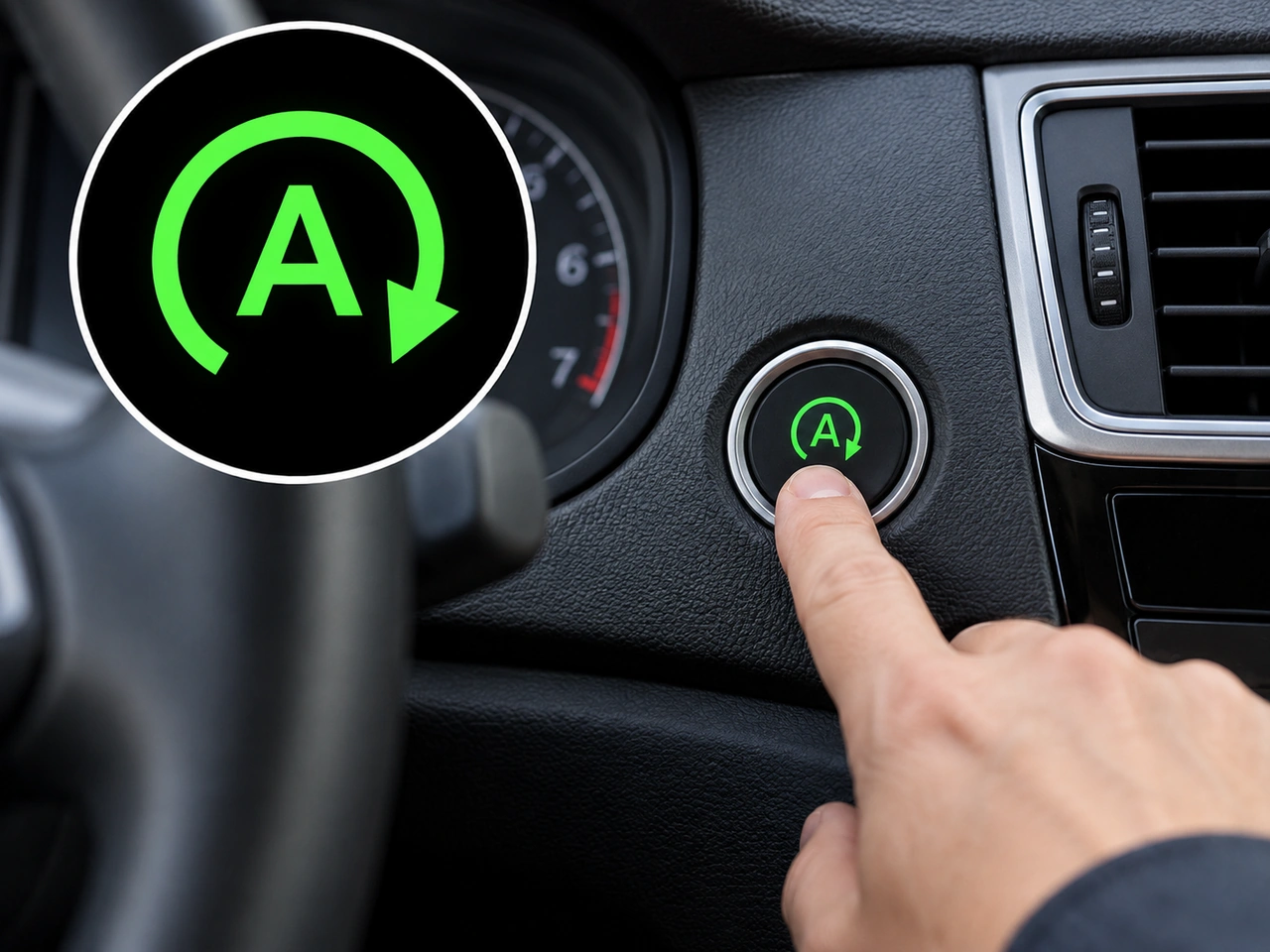
Why should you leave extra following distance when towing?

38. Why should you leave extra following distance when towing?

To make the trailer easier to steer.
To reduce tyre wear on the towing vehicle.
To keep the trailer from moving side to side.
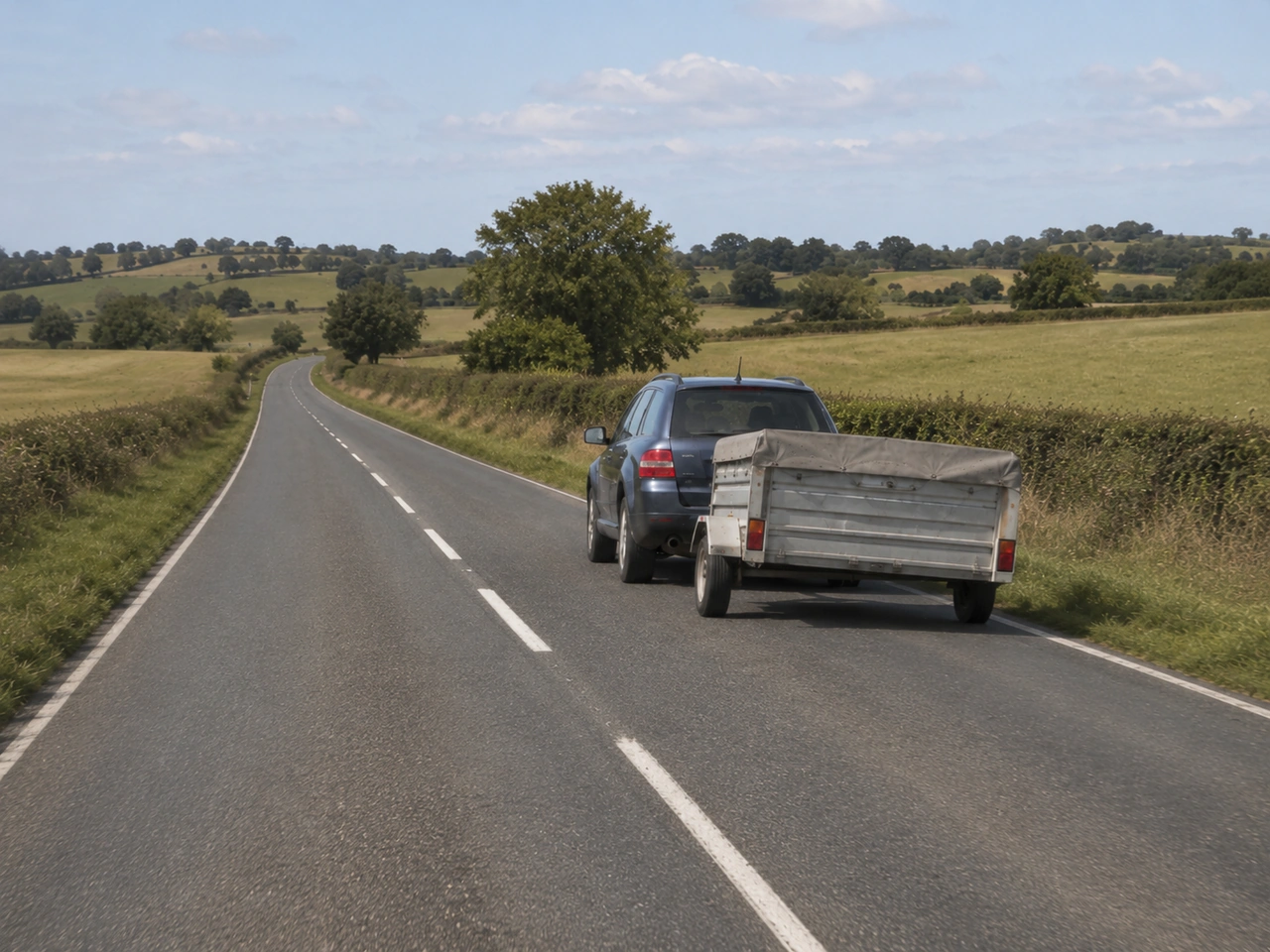
✓ Your vehicle combination may take longer to stop.

Towing adds weight and can increase stopping distance. Extra space gives you more time to react and brake smoothly.

Vehicle towing a trailer behind other traffic
AI-generated by Traffic-rules.com • WCIT • CC BY-SA
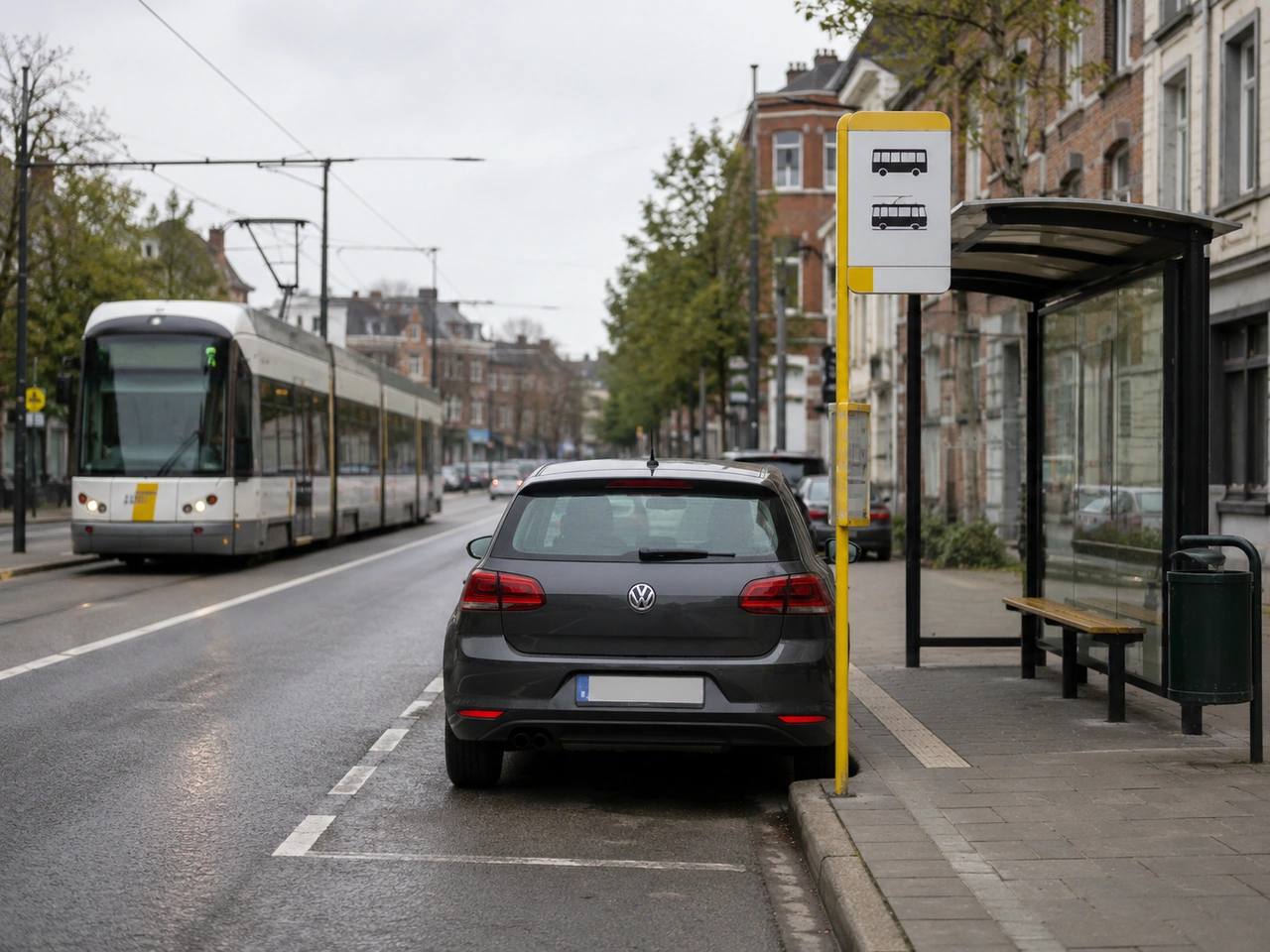
What should you do if your main beam could dazzle another driver?

39. What should you do if your main beam could dazzle another driver?

Keep the main beam on unless the other driver flashes you.
✓ Switch to dipped headlights.
Move farther from the centre and keep the main beam on.
Reduce speed but leave the main beam on.

Main beam can dazzle other road users and reduce their visibility. Switch to dipped headlights whenever your main beam could dazzle another driver.

Headlight glare affecting another road user
AI-generated by Traffic-rules.com • WCIT • CC BY-SA
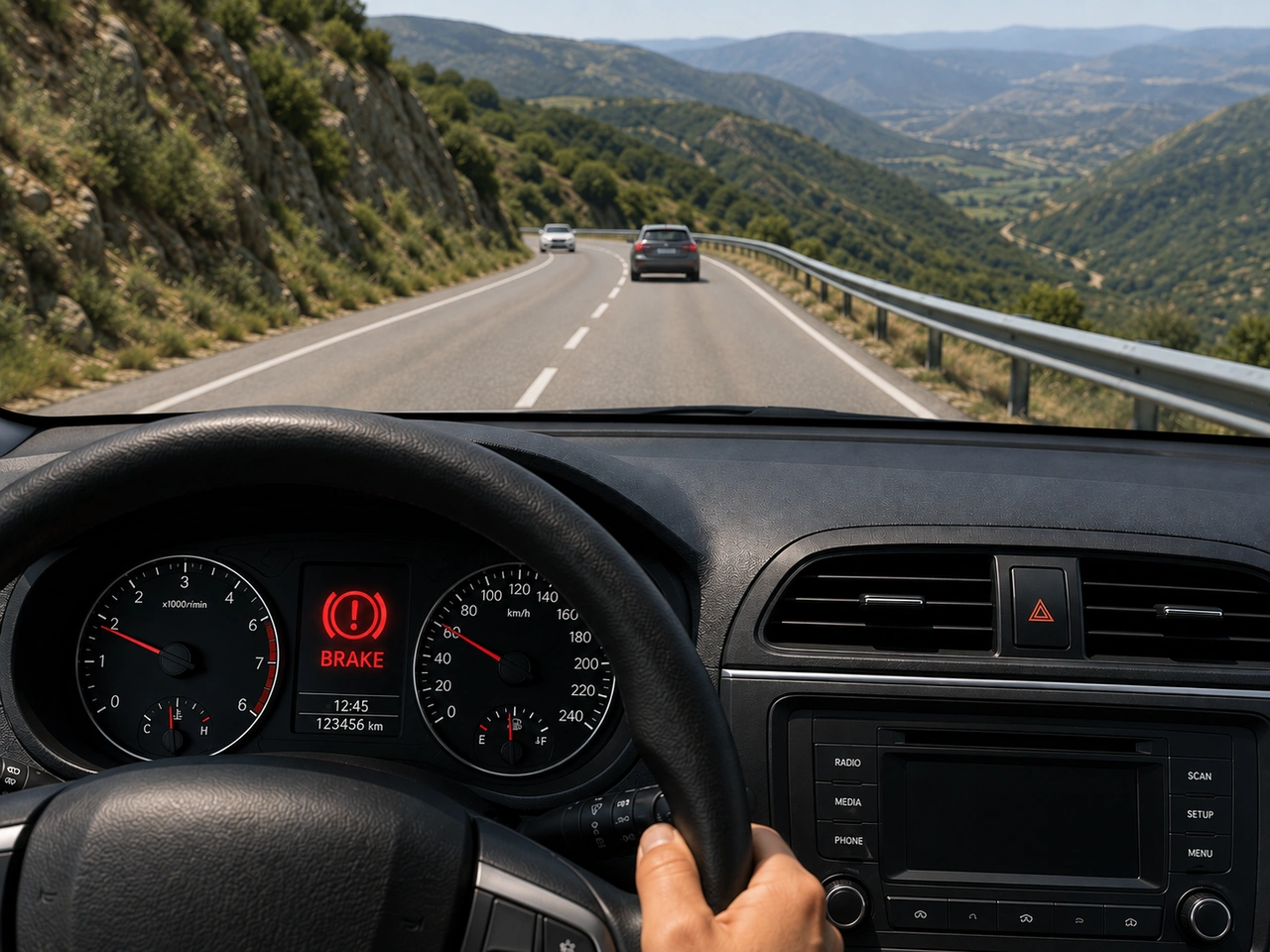
What is the main safety risk of aggressive driving?

40. What is the main safety risk of aggressive driving?

It can increase tyre and brake wear.
It can make the journey less comfortable.
It may attract the attention of the police.
✓ It increases the risk of crashes.

Aggressive driving, such as tailgating, speeding, or sudden lane changes, reduces safety margins and increases the risk of crashes and conflict with other road users.

Driver displaying aggressive behaviour in traffic
AI-generated by Traffic-rules.com • WCIT • CC BY-SA
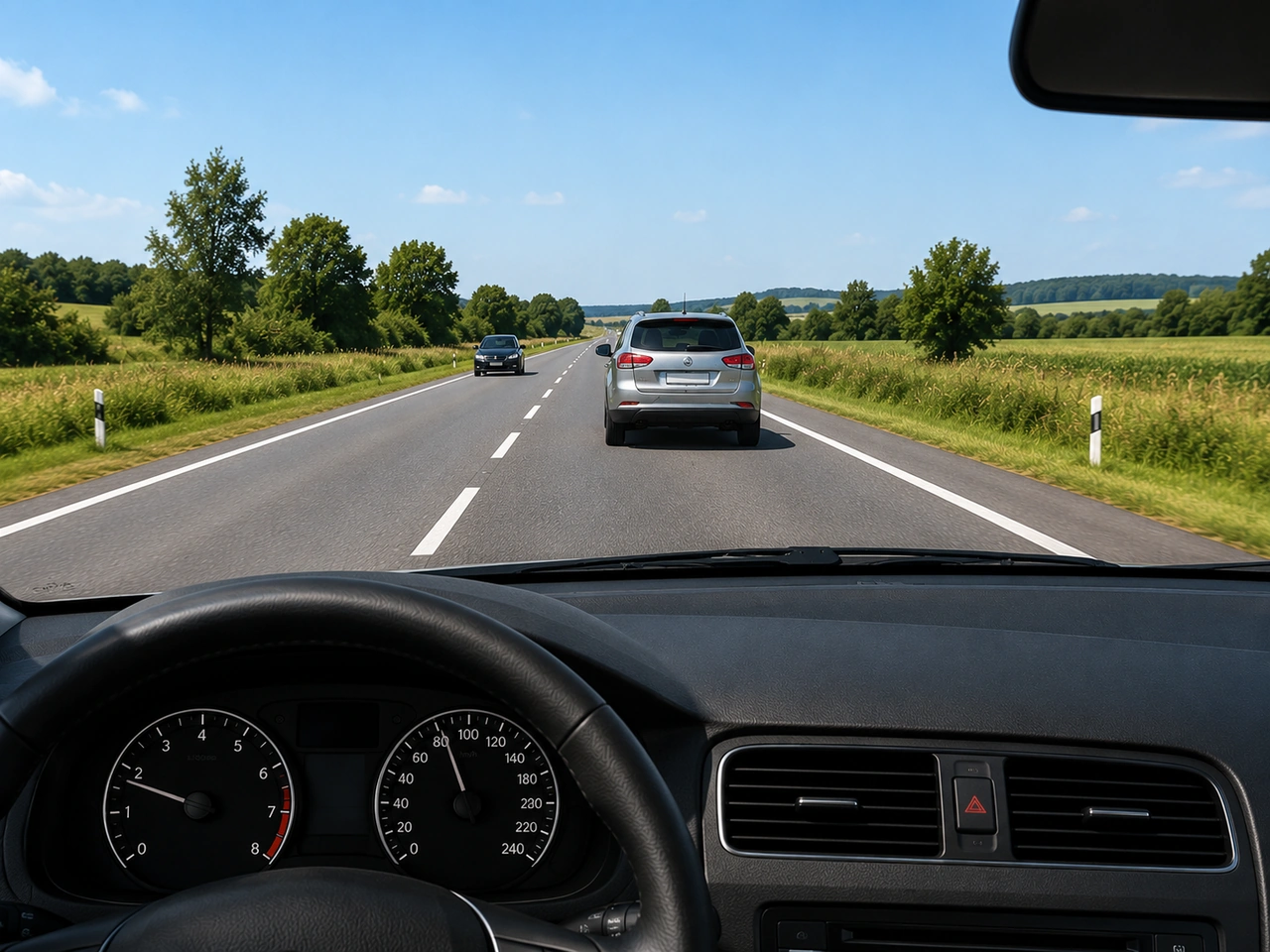
Which control is normally used to operate the direction indicators?

41. Which control is normally used to operate the direction indicators?

✓ The steering-column indicator stalk.
The hazard-warning button.
The windscreen-wiper stalk.
The cruise-control button.

The direction indicators are normally operated using a stalk beside the steering wheel. Moving the stalk up or down activates the indicators on the corresponding side of the vehicle.

Steering-column stalk for the direction indicators
AI-generated by Traffic-rules.com • WCIT • CC BY-SA
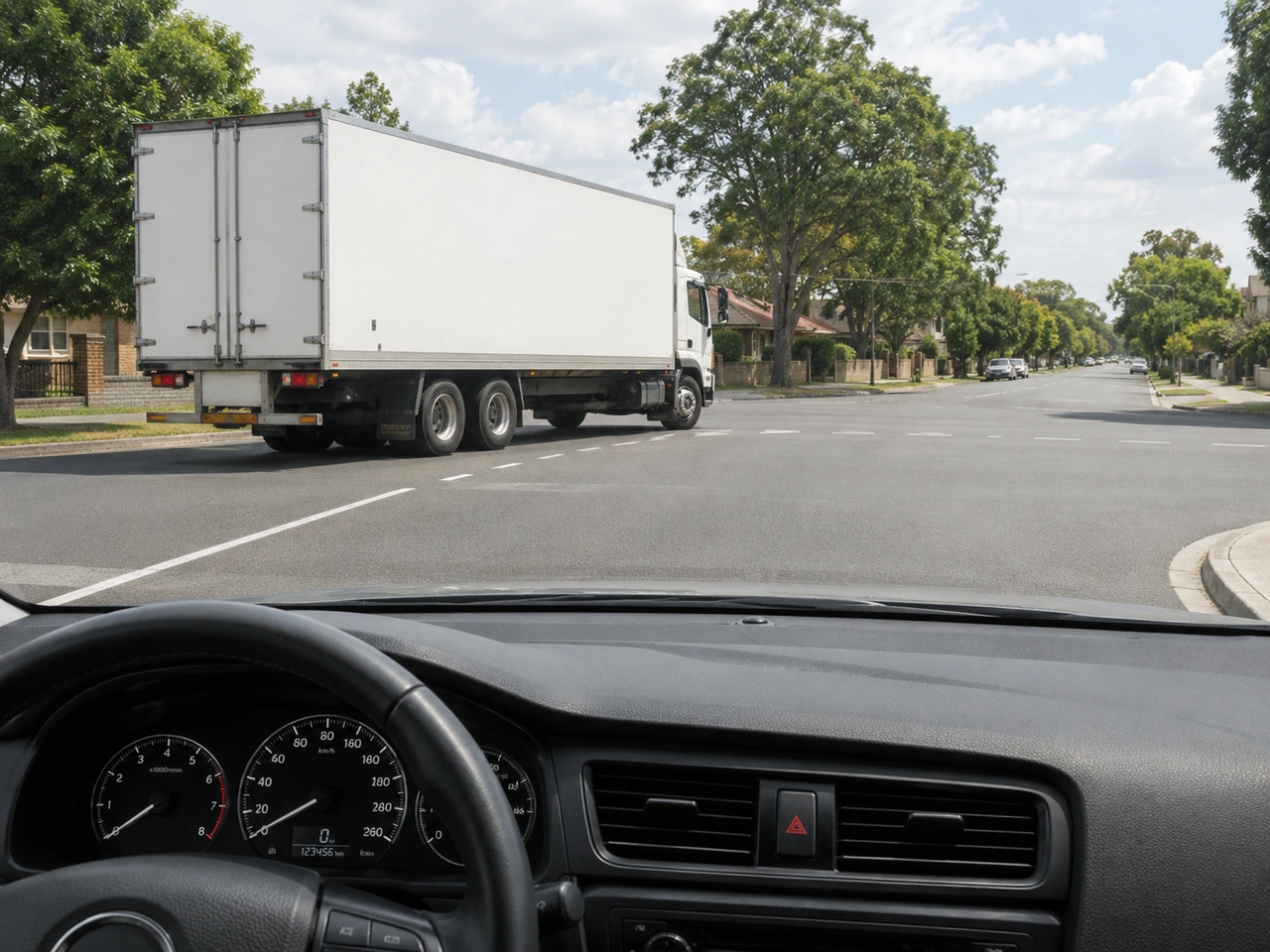
What does this dashboard symbol indicate?

42. What does this dashboard symbol indicate?

✓ Dipped headlights.
Rear fog lights.
Main beam.
Front fog lights.

This symbol indicates that the dipped headlights are switched on. Dipped headlights illuminate the road ahead while limiting glare for other road users.

Dipped-headlight symbol on the dashboard
AI-generated by Traffic-rules.com • WCIT • CC BY-SA
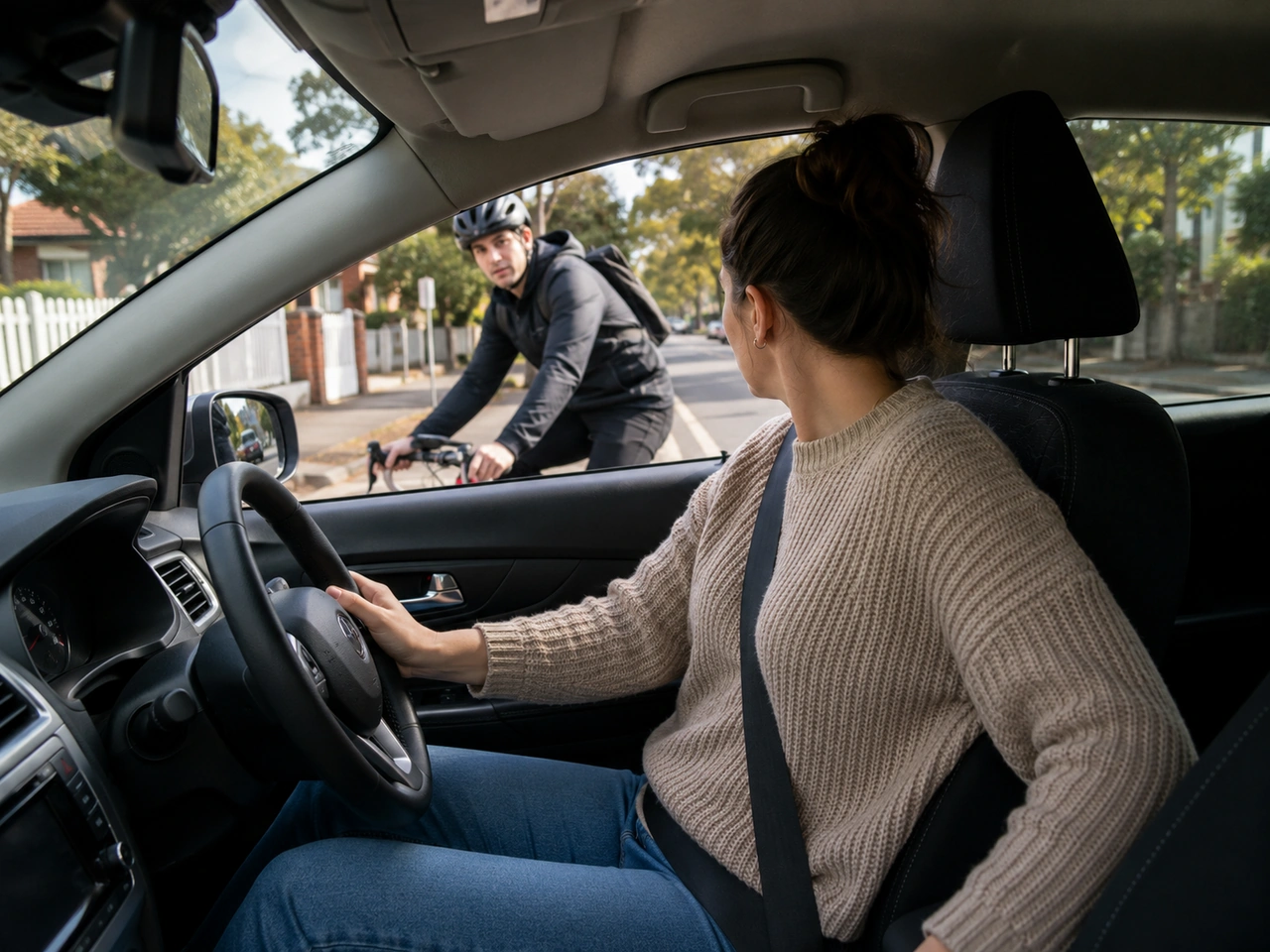
What does this vehicle-control symbol indicate?

43. What does this vehicle-control symbol indicate?

Fan speed.
Front windscreen demister.
Rear window demister.
✓ Air conditioning.

The A/C symbol controls the vehicle's air-conditioning system. Air conditioning can cool and dehumidify the air inside the vehicle, which can also help clear mist from the windows.

Air-conditioning control with the A/C symbol
AI-generated by Traffic-rules.com • WCIT • CC BY-SA
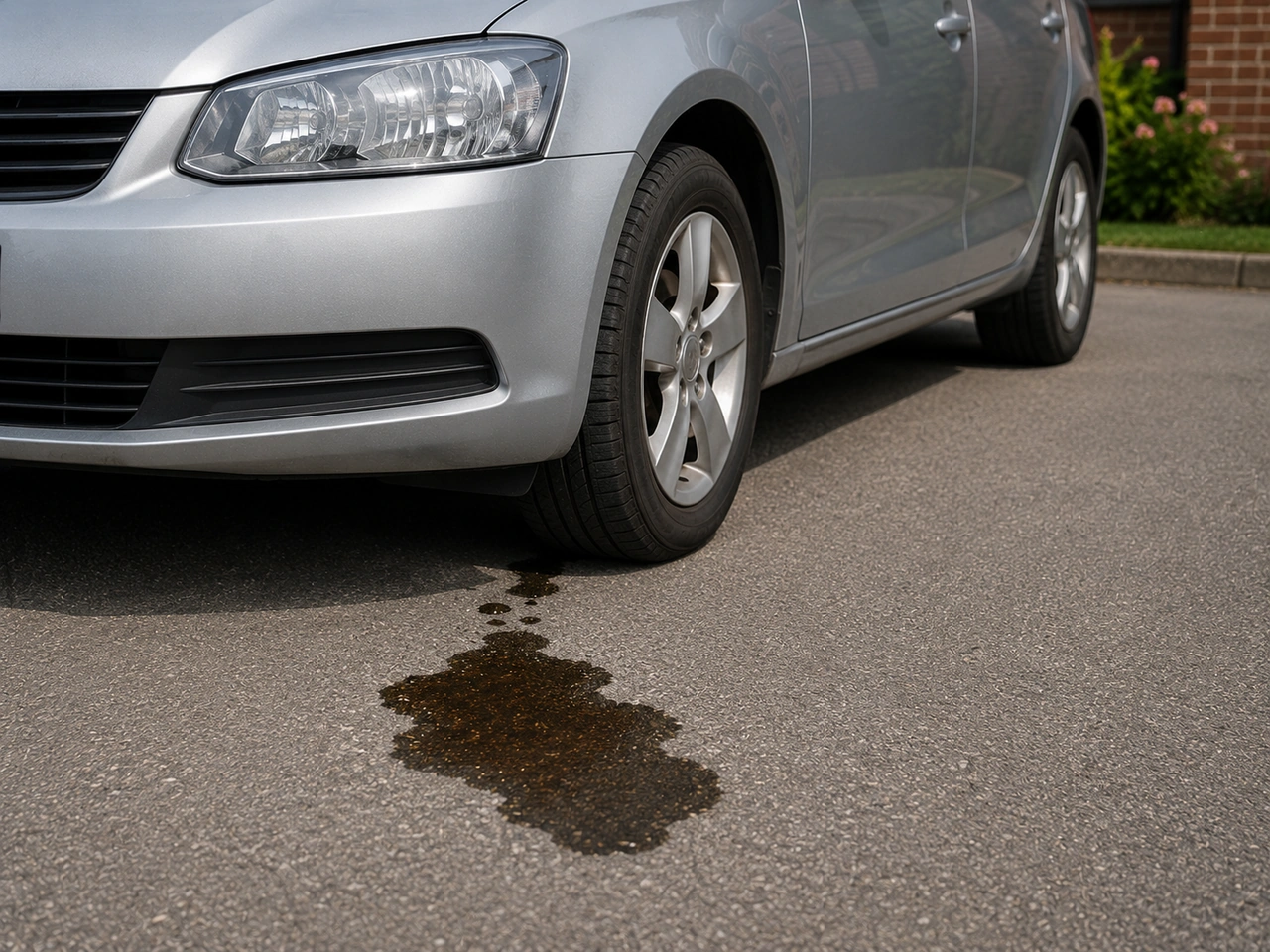
Why should the seat-belt height be adjusted correctly?

44. Why should the seat-belt height be adjusted correctly?

To prevent the seat from moving.
To increase the length of the lap belt.
✓ To position the shoulder belt correctly across the body.
To make the belt easier to unfasten.

The seat-belt height adjustment helps position the shoulder belt correctly across the chest and shoulder. It should not run across the neck or under the arm.

Height adjustment for the shoulder section of a seat belt
AI-generated by Traffic-rules.com • WCIT • CC BY-SA
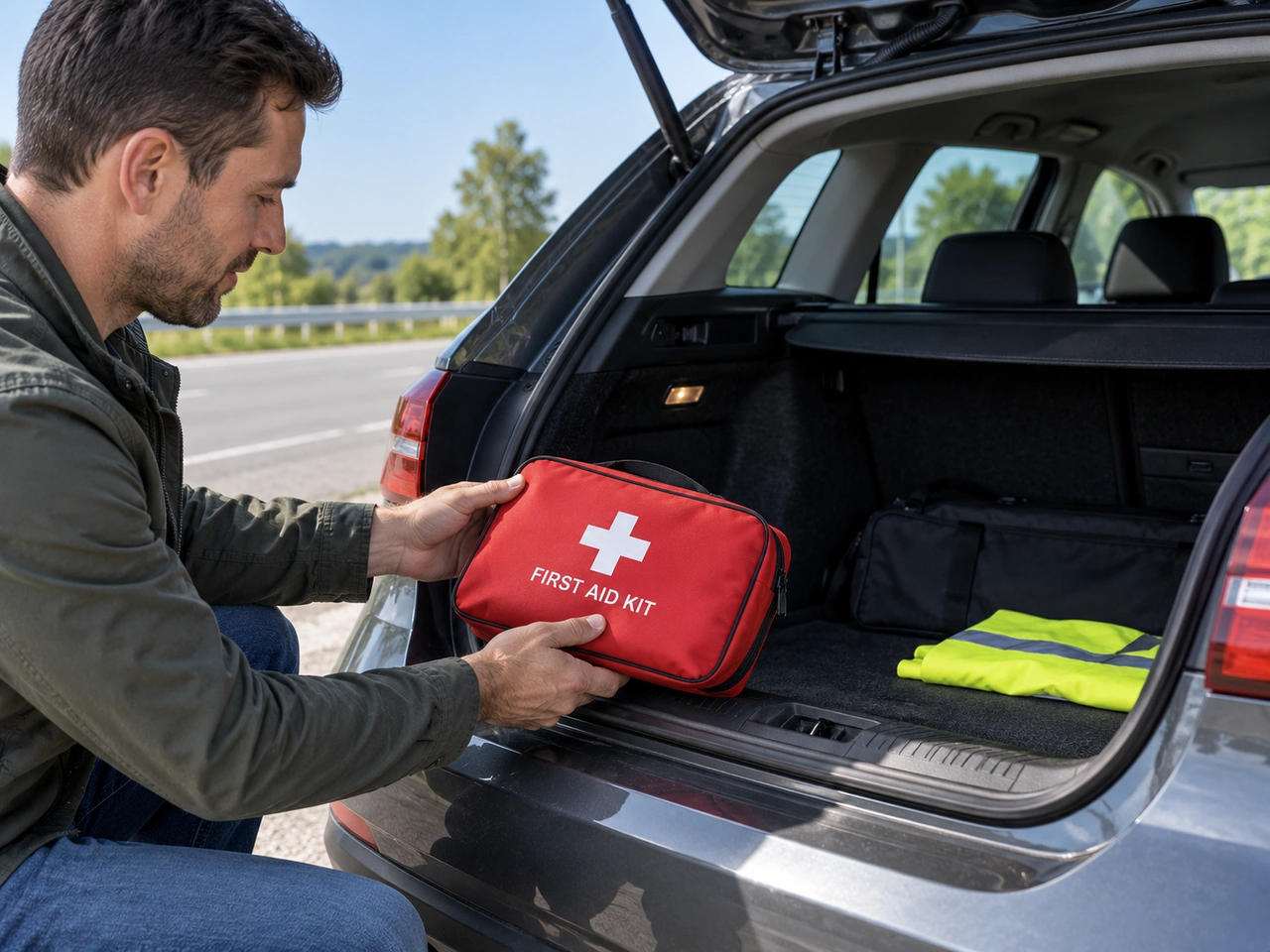
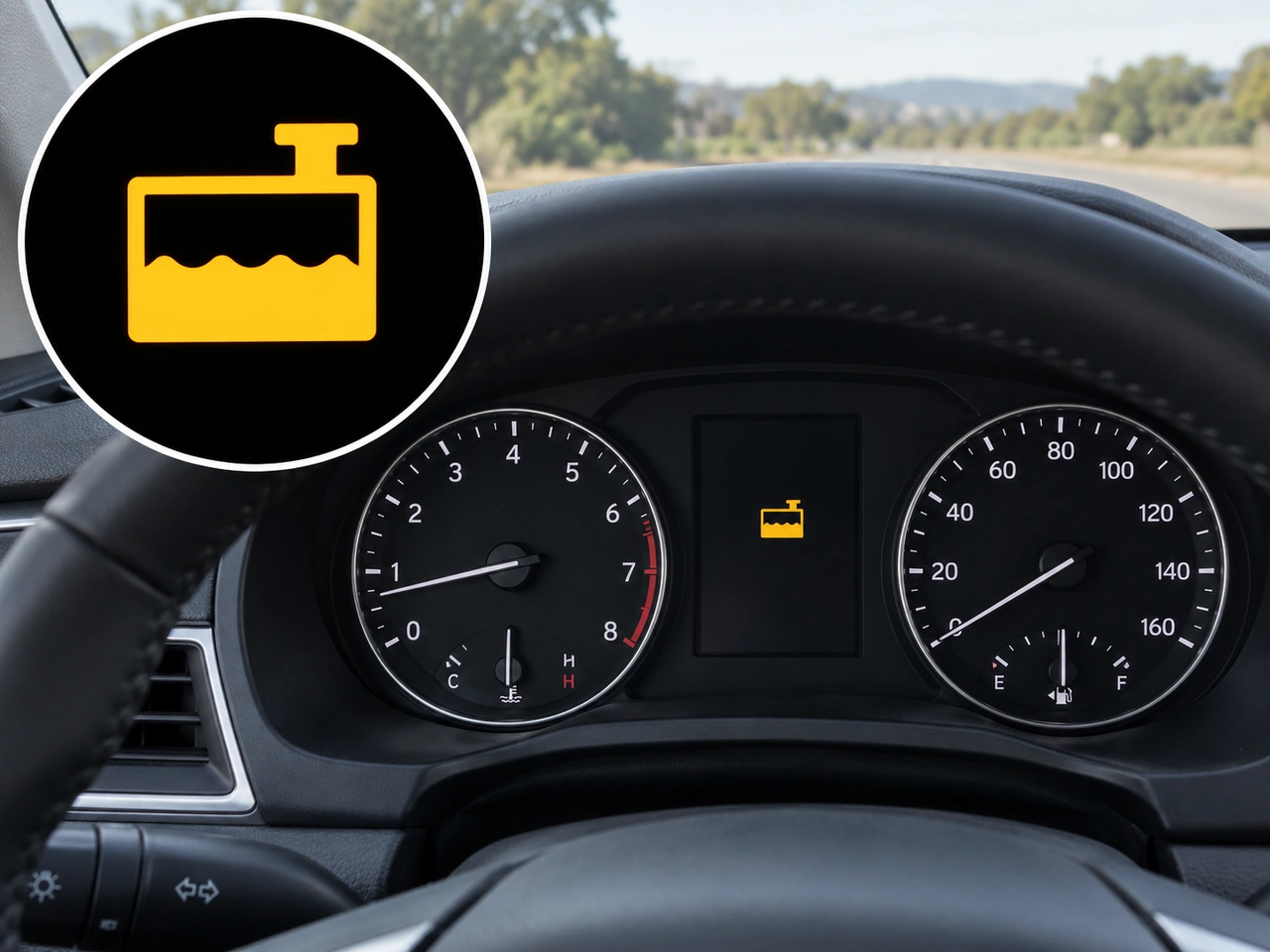
What does this dashboard symbol indicate?

45. What does this dashboard symbol indicate?

Engine overheating.
Low tyre pressure.
✓ Low engine coolant level.
Low engine oil.

This symbol indicates that the engine coolant level is low. Check the coolant level when the engine is cool and refill it with the correct coolant if necessary.

Low coolant-level warning symbol on the dashboard
AI-generated by Traffic-rules.com • WCIT • CC BY-SA
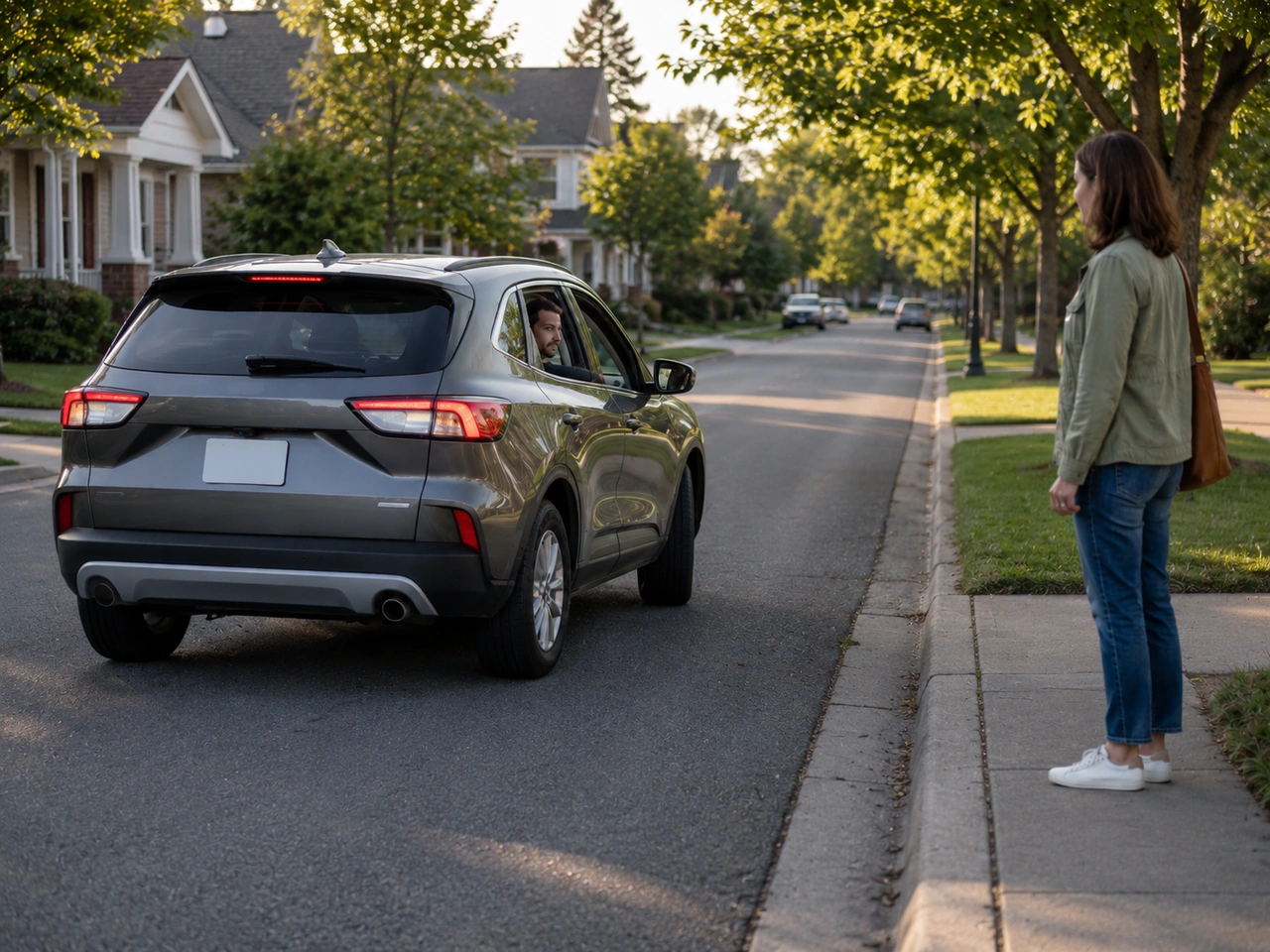
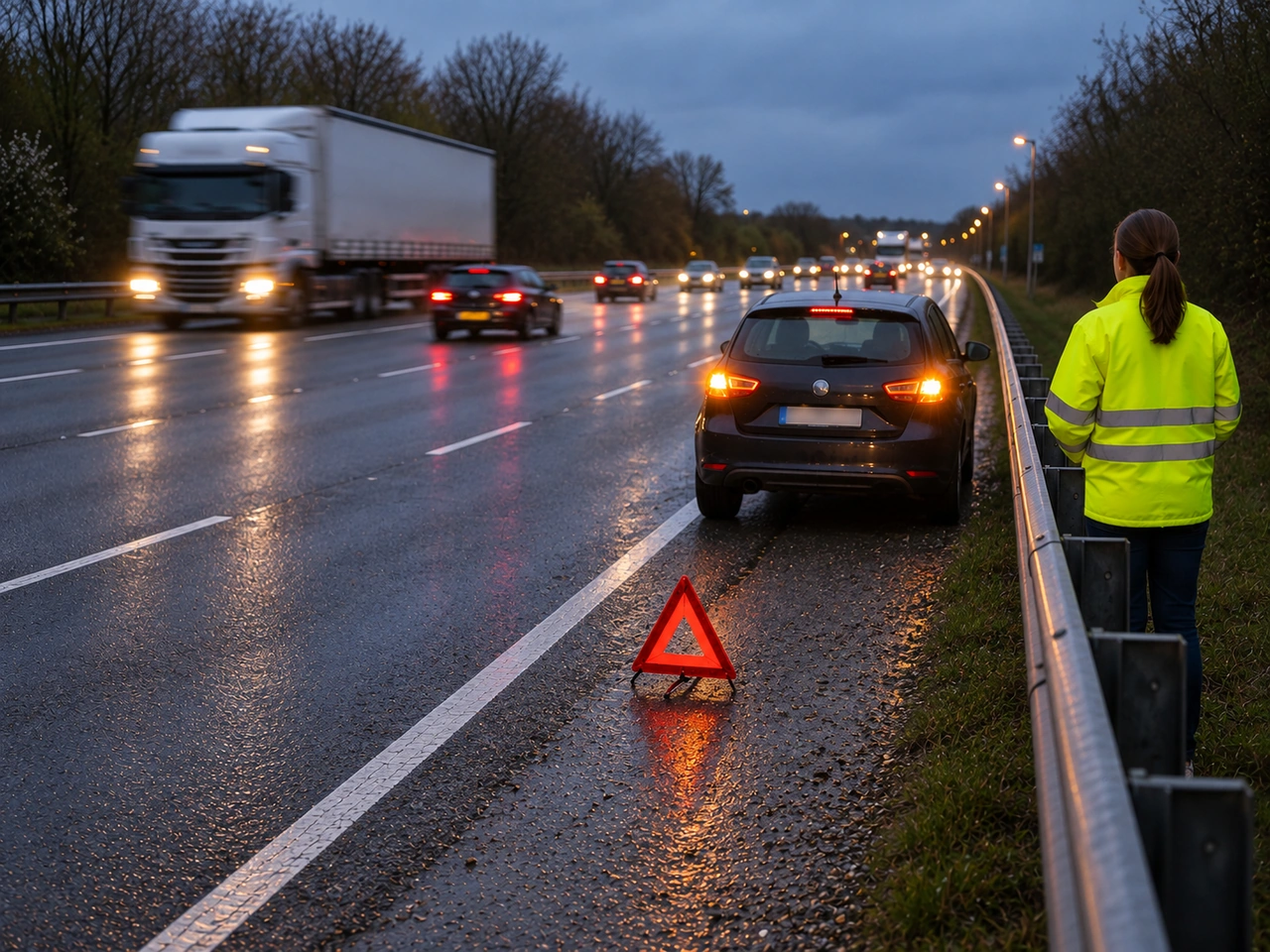
What should you do if the engine-temperature warning shows overheating?

46. What should you do if the engine-temperature warning shows overheating?

Open the coolant cap immediately to release heat.
Increase engine speed to improve coolant circulation.
Ignore it if the engine still sounds normal.
✓ Stop safely, switch off the engine, and allow it to cool.

Continuing to drive an overheating vehicle can cause severe damage. Allow the engine to cool and follow the manufacturer's instructions.

Engine-overheating warning on the dashboard
AI-generated by Traffic-rules.com • WCIT • CC BY-SA
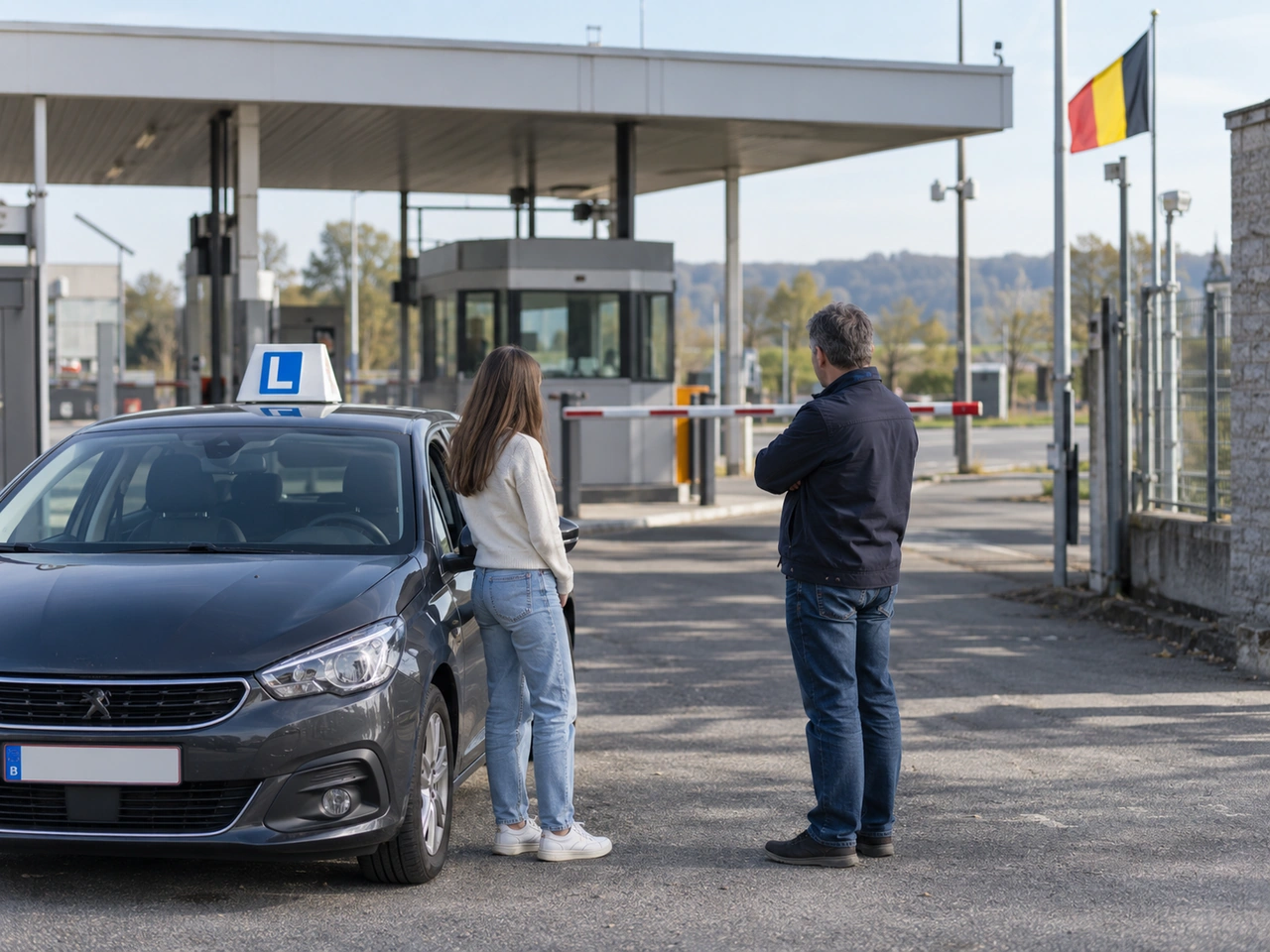
What helmet must a speed-pedelec rider wear in Belgium?

47. What helmet must a speed-pedelec rider wear in Belgium?

✓ An approved moped helmet or a suitable protective bicycle helmet.
Only a construction helmet.
No helmet is required during daylight.
Any soft cap with reflective material.

A speed-pedelec rider must wear either an approved moped helmet or a bicycle helmet that provides additional protection to the temples and the back of the head.

Speed-pedelec rider wearing a protective helmet
AI-generated by Traffic-rules.com • WCIT • CC BY-SA
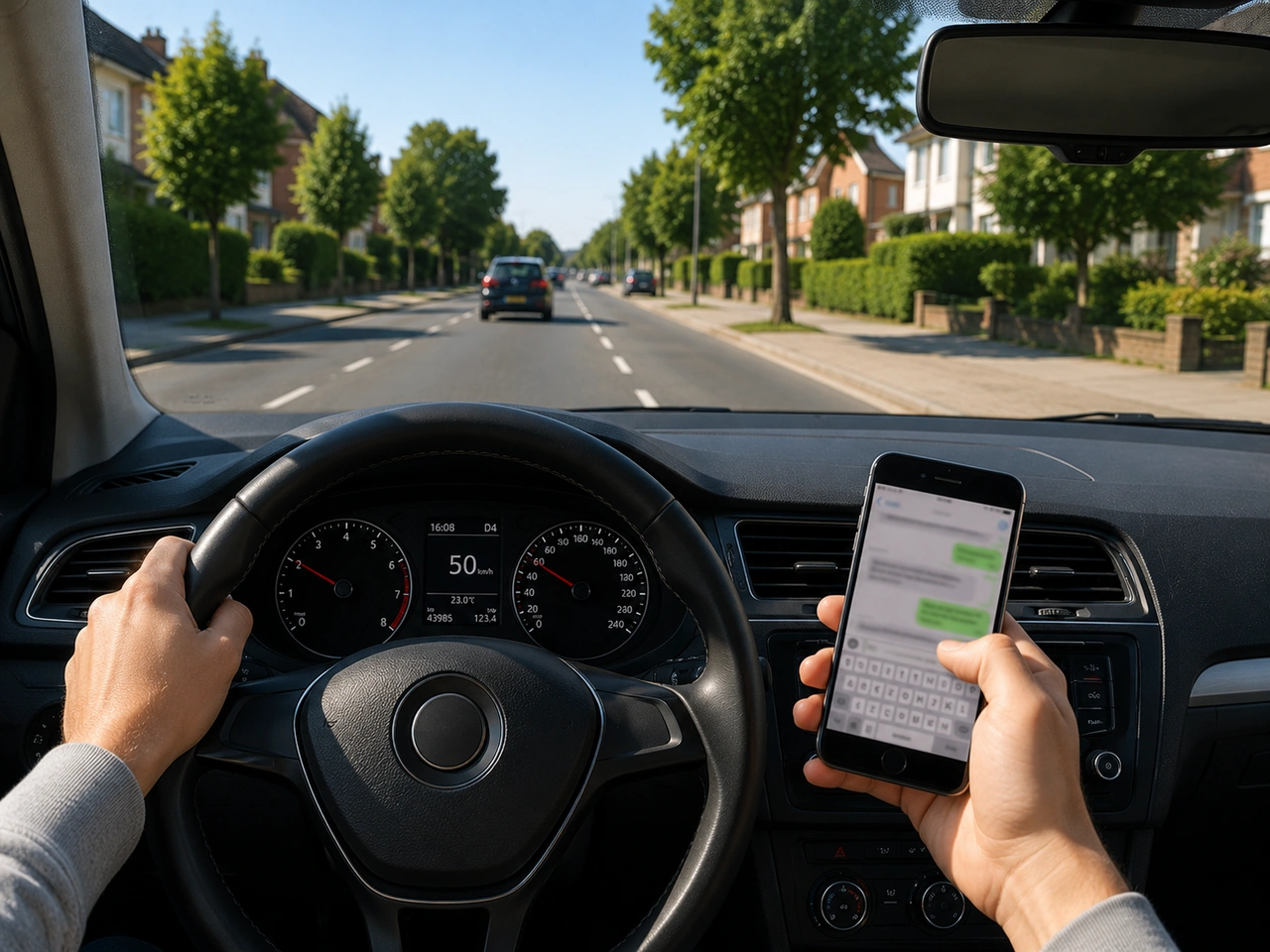
Why should a motorcyclist avoid riding in another vehicle's blind spot?

48. Why should a motorcyclist avoid riding in another vehicle's blind spot?

The motorcycle will use more fuel.
✓ The driver may not be able to see the motorcycle.
The vehicle ahead must always change lanes.
The motorcycle's brakes may become less effective.

Motorcycles can be difficult to see, particularly when they remain in another vehicle's blind spot. Avoid staying alongside a vehicle where the driver may not see you, and choose a position where you are more likely to be visible.

Motorcycle in another vehicle's blind spot
AI-generated by Traffic-rules.com • WCIT • CC BY-SA
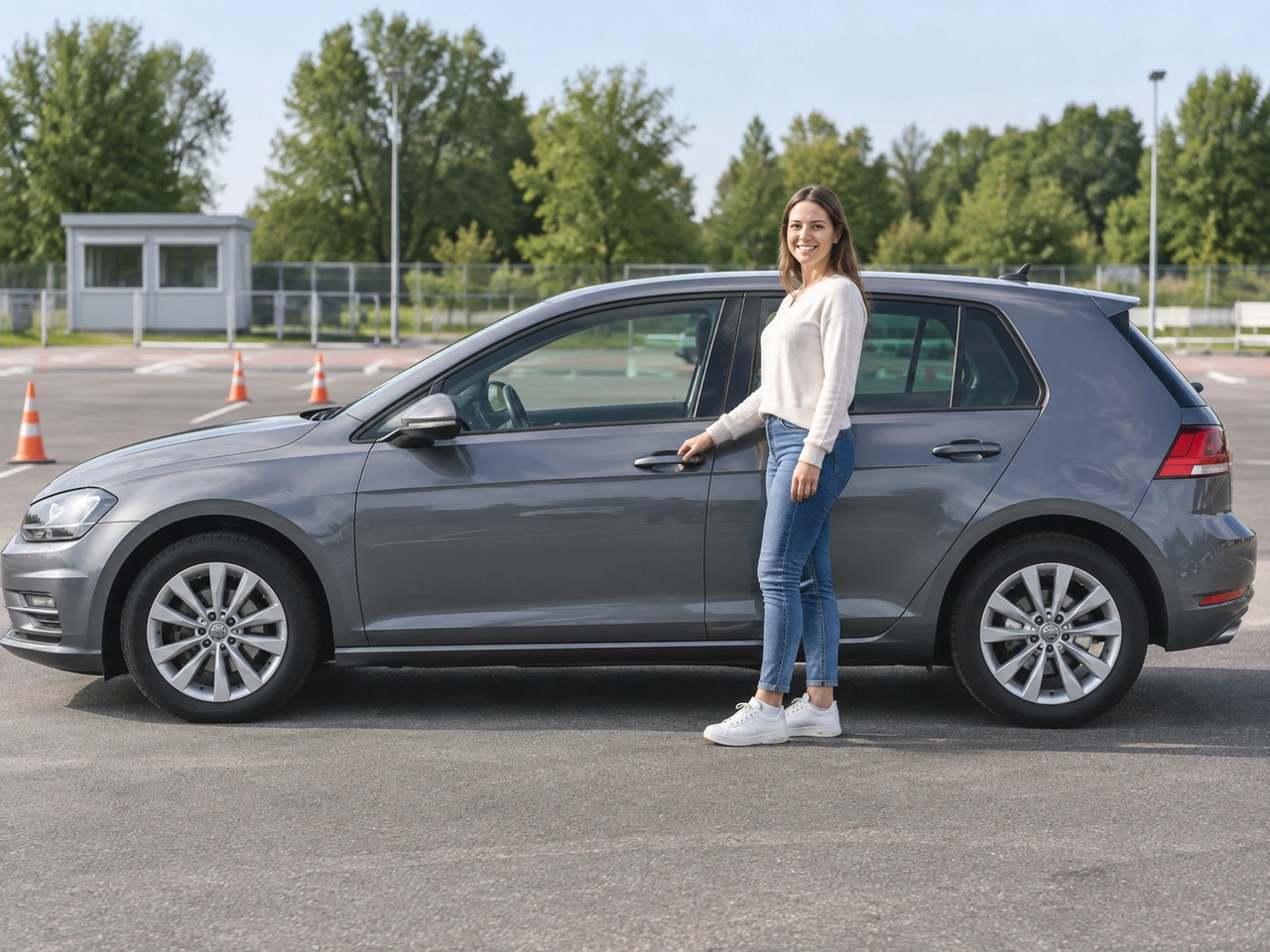
What should you do if your vehicle begins to drift onto the shoulder?

49. What should you do if your vehicle begins to drift onto the shoulder?

Brake firmly before returning to the road.
Steer back onto the road as quickly as possible.
✓ Ease off the accelerator and steer back smoothly when safe.
Keep driving on the shoulder until the road becomes wider.

If you drift onto the shoulder, avoid sudden steering or braking. Slow gently and return to the road smoothly when it is safe.

Vehicle drifting towards the road shoulder
AI-generated by Traffic-rules.com • WCIT • CC BY-SA
What should you do when a school-transport vehicle uses all its indicators?

50. What should you do when a school-transport vehicle uses all its indicators?

Continue at the same speed.
Sound the horn so the children wait.
Drive between the vehicle and the pavement.
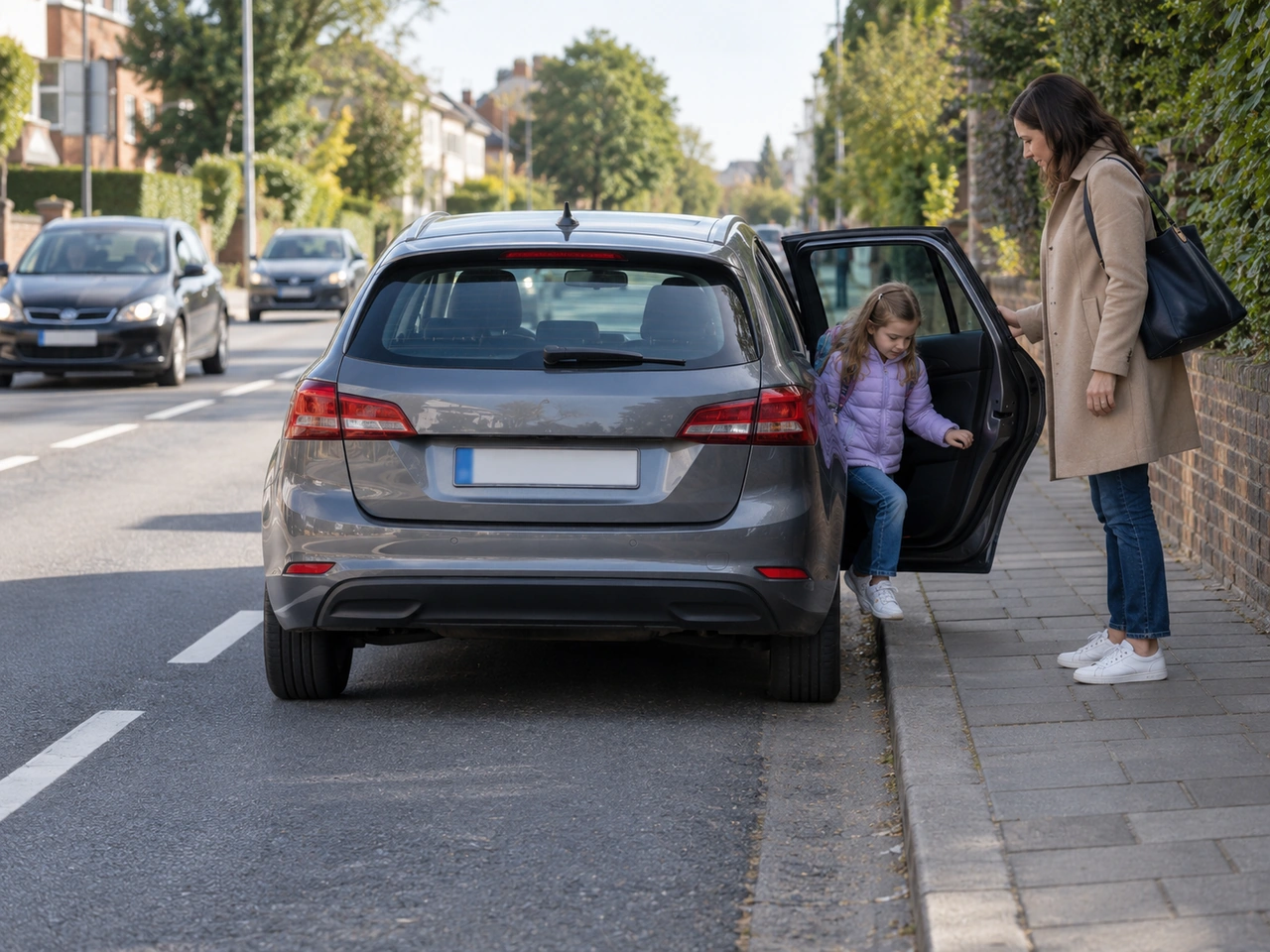
✓ Reduce speed considerably and stop if necessary.

When a marked school-transport vehicle uses all its direction indicators to show that children are entering or leaving, approaching drivers must be especially careful, reduce speed considerably, and stop if necessary.

School-transport vehicle with all direction indicators flashing
AI-generated by Traffic-rules.com • WCIT • CC BY-SA