

Traffic signsBrussels
 Traffic rules
 Brussels
51. No parking
No parking indicates that vehicles may not be left parked at the location or along the section of road covered by the restriction. Depending on local law, a driver may still be allowed to stop briefly to pick up or drop off passengers or to load or unload goods, provided stopping itself is not prohibited.
A no-parking restriction may apply continuously or only during specified times, days, vehicle categories or sections of road. Its exact extent and exceptions are determined by the traffic sign, supplementary panels, road markings and local traffic regulations.

Wikimedia.org • Aktron • CC BY
Which sign means no parking in Belgium?
The Belgian E1 sign, a blue circular sign with a red border and a single red diagonal bar, means parking prohibited. It must not be confused with the E3 sign, which prohibits both stopping and parking.
 Parking prohibited.
Signal routier E1 • Stationnement interdit.
Verkeersbord E1 • Parkeerverbod.
 Parking and stopping prohibited.
Signal routier E3 • Arrêt et stationnement interdits.
Verkeersbord E3 • Stilstaan en parkeren verboden.
May you stop where an E1 no-parking sign applies?
Yes, if stopping is otherwise permitted. Under Belgian law, a vehicle that remains stationary only for the time necessary for passengers to get in or out or for goods to be loaded or unloaded is considered stopped rather than parked.
May you pick up or drop off passengers beside an E1 sign?
Yes, provided you remain there only for the time necessary for passengers to get in or out and stopping is not prohibited for another reason. Waiting for passengers beyond that necessary time constitutes parking.
May you load or unload goods beside an E1 sign?
Yes, genuine loading or unloading is considered stopping rather than parking when the vehicle remains stationary only for the time necessary to perform it. Other stopping prohibitions must still be respected.
Can you wait in the car beside an E1 sign?
Simply remaining behind the wheel does not make parking legal. If the vehicle stays stationary for longer than necessary for passengers to board or leave or for goods to be loaded or unloaded, it is considered parked.
May you refuel or charge a vehicle where parking is prohibited?
No, where the E1 prohibition applies. Belgian law specifically considers both refuelling and charging the battery of an electric or hybrid-electric vehicle to be parking.
How far does an E1 sign apply in Belgium?
An ordinary E1 sign applies on the side of the public road where it is placed, from the sign to the next intersection. Supplementary signs can indicate that the restriction begins or ends at another point or applies over a specified distance.
Does an E1 sign apply to the verge in Belgium?
Yes. The E1 parking prohibition normally applies to both the carriageway and the verge on the side where the sign is placed. Specific supplementary signs can also extend its effect to the pavement for the road-user categories indicated.
Can an E1 prohibition apply only during certain hours?
Yes. A supplementary inscription may specify the period during which the parking prohibition applies, such as particular hours or days. Outside that period, the E1 restriction does not apply, although other parking rules still do.
Can an E1 sign apply only to certain vehicles?
Yes. A supplementary inscription or authorised symbol may indicate the vehicle category to which the parking prohibition applies.
What do arrows below an E1 sign mean?
Supplementary arrow signs can indicate the beginning or end of the parking restriction. Another type of supplementary sign can indicate that the restriction applies over a stated distance or that the sign is repeating an existing restriction.
What does a zonal no-parking sign mean in Belgium?
A zonal parking prohibition applies throughout the entire area between the zone-entry and zone-exit signs. Unlike an ordinary E1 sign, it is not automatically terminated by each intersection. A specifically signposted different parking arrangement can apply at particular places within the zone.

52. Kiss and ride
A Kiss and Ride area is a designated place where drivers may stop briefly to drop off or pick up passengers. These areas are commonly provided near schools, railway stations, airports and other busy destinations to allow passengers to enter or leave a vehicle without occupying ordinary parking spaces.
A Kiss and Ride area is intended for very short stops rather than waiting or parking. Drivers should remain only as long as necessary for passengers to get in or out and must follow any traffic signs, time limits, road markings or local regulations applying to the area.
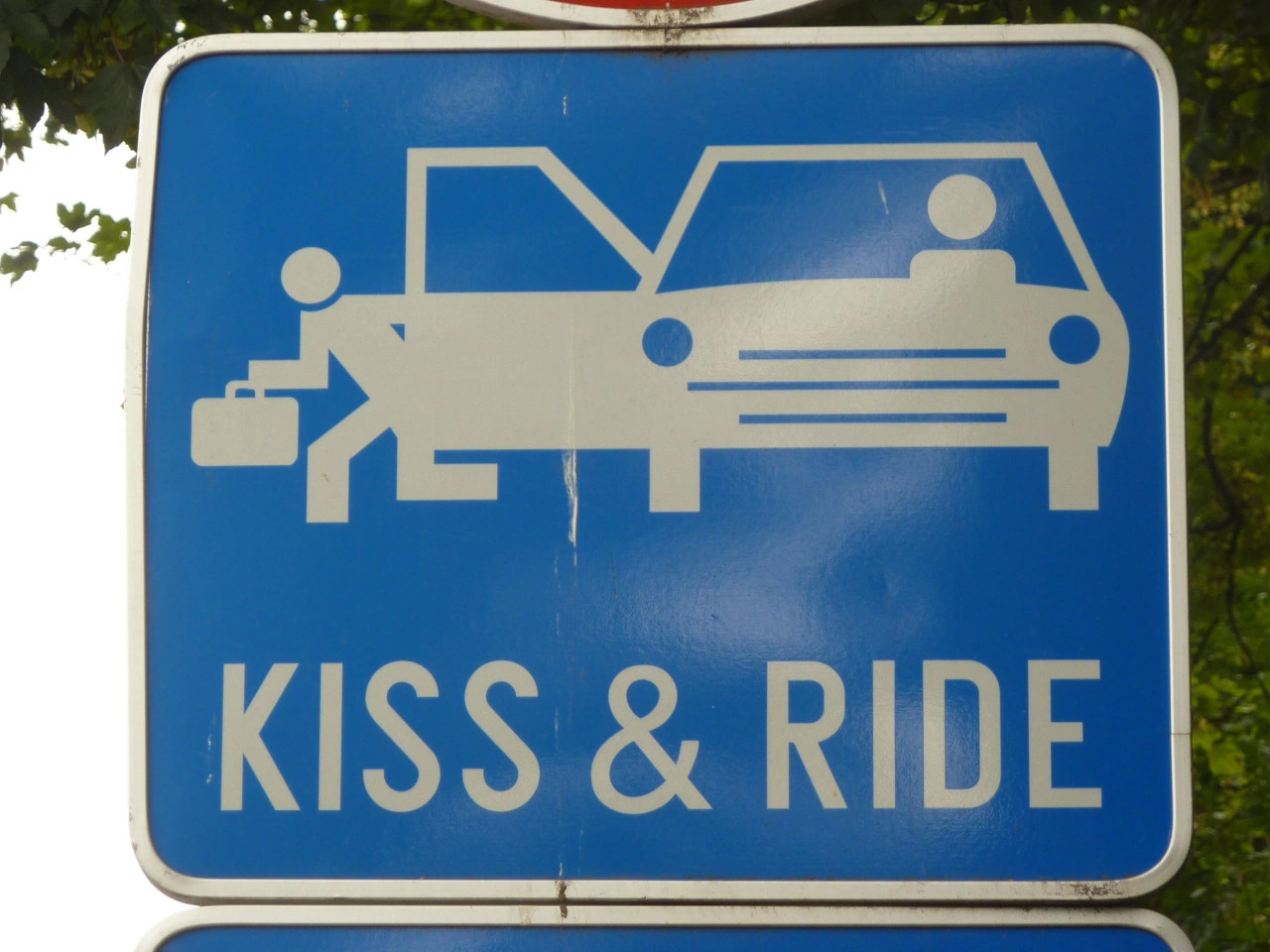
Wikimedia.org • Lumixbx • CC BY-SA
What is a Kiss and Ride zone in Belgium?
A Kiss and Ride zone is an area intended for drivers to stop briefly while passengers get into or out of the vehicle. Such areas are commonly used near schools, railway stations and other locations where many passengers are dropped off or collected.
Is Kiss and Ride an official Belgian traffic sign?
There is currently no dedicated national Kiss and Ride traffic sign with its own separate legal regime in the Belgian Road Code. The enforceable conditions at a particular Kiss and Ride area therefore depend on the official traffic signs, road markings and local regulations used to organise it.
May you park in a Belgian Kiss and Ride zone?
A Kiss and Ride zone is intended for passenger drop-off and pick-up rather than parking. If official signs prohibit or restrict parking, those rules must be followed. Drivers who need to remain longer should use a normal parking space.
When is dropping off a passenger considered stopping rather than parking in Belgium?
A vehicle is considered stopped when it remains stationary only for the time necessary for passengers to get in or out or for goods to be loaded or unloaded. Remaining stationary for longer than necessary is considered parking.
May you wait for your child in a Belgian Kiss and Ride zone?
You should not occupy the zone while waiting for a child who is not yet ready to enter the vehicle. Such waiting can constitute parking rather than stopping. Use an ordinary parking place and enter the Kiss and Ride area when the passenger is ready.
Should you remain behind the wheel in a Kiss and Ride zone?
Where possible, yes. Remaining ready to leave immediately helps keep the area available for other drivers. Belgian police guidance for school Kiss and Ride zones specifically recommends remaining behind the wheel where practical.
May you leave the car to accompany your child to school?
A Kiss and Ride zone is generally not intended for this purpose. If you need to leave the vehicle and accompany the child, use a suitable parking place instead so that the Kiss and Ride area remains available for immediate drop-off and pick-up.
How long may you stay in a Belgian Kiss and Ride zone?
There is no single nationwide Kiss and Ride time limit. The applicable limit depends on the signs and local regulations at the location. Where the area is intended solely for immediate passenger transfer, you should remain only for the time necessary for passengers to get in or out.
Can a Belgian municipality impose specific Kiss and Ride rules?
Yes. Local authorities can organise the area using official parking or stopping signs, supplementary indications, road markings and local traffic regulations. The precise conditions can therefore differ between locations.
Are Kiss and Ride zones commonly used near Belgian schools?
Yes. They are used at many schools to organise short passenger drop-offs and collections and to reduce vehicles waiting or parking immediately beside the school entrance.
Which side should children use when leaving the car?
Whenever possible, passengers should leave the vehicle on the safest side, away from moving traffic, typically directly towards the pavement. Drivers should make sure that opening the doors does not endanger cyclists, pedestrians or other road users.
What should you do if the Kiss and Ride area is full?
Do not stop in a dangerous or prohibited position or block the traffic while waiting. Continue to a legal parking or waiting place and return when space becomes available or when the passenger is ready.
53. Parking meter
A parking meter is a device used to regulate and usually collect payment for parking in a designated parking space or area. It may require drivers to pay for a particular parking period, enter a vehicle registration number or obtain a ticket that must be displayed in the vehicle.
Parking meters may accept coins, payment cards, contactless payments or electronic payment methods, depending on the local system. Drivers must follow the instructions, operating hours, maximum parking duration and tariffs indicated on the meter, nearby signs or other official parking information.

Wikimedia.org • Jeanhousen • CC BY-SA
How does a parking meter work in Belgium?
At a Belgian parking meter or parking machine, parking must take place according to the method and conditions indicated on the device. These conditions may include the tariff, operating period, maximum parking duration and required payment procedure.
Do you always need a paper parking ticket in Belgium?
No. Some parking systems require a ticket or parking card to be displayed visibly, while others register the parking session electronically using the vehicle's registration number or another authorised system.
Can Belgian paid parking use a mobile application?
Yes. Belgian rules allow paid parking to be organised using other methods and conditions that are communicated locally. This can include authorised mobile or electronic payment systems.
What should you do if a Belgian parking meter is out of order?
If the parking meter or parking machine is out of service, you must use a parking disc according to the applicable Belgian blue-zone rules, unless another valid local arrangement applies.
How should you set the parking disc when the parking meter is broken?
The arrow of the parking disc must be set to the mark immediately following your arrival time. Unless different conditions are indicated, the standard blue-zone rules apply from 09:00 to 18:00 on working days and allow a maximum parking period of two hours.
Do you also need a parking disc when a working parking meter is present?
Normally no. Where parking meters or parking machines are operating, the parking disc is not additionally required merely because the area is also within a limited-parking zone. The disc becomes relevant when the meter or machine is out of service or when signs specifically require it.
Can a Belgian parking meter impose a maximum parking time?
Yes. Drivers must respect the maximum parking duration indicated by the meter, parking machine or local parking rules. Using another permitted payment method does not allow the maximum authorised period to be exceeded.
Can you use a paid parking card instead of a Belgian parking meter?
Where the system permits it, the use of a paid parking card may replace use of the parking meter or parking machine. The permitted parking time may not exceed the maximum duration imposed by the meter or machine.
Do parking conditions differ between Belgian municipalities?
Yes. Tariffs, operating hours, maximum parking periods and authorised payment methods can be determined locally. Drivers should therefore follow the information displayed on the parking machine, traffic signs and other official parking instructions at the location.
Do two motorcycles in one Belgian car parking space each have to pay?
When more than one motorcycle is parked within a marked parking space intended for one car, payment for that parking space only has to be made once.
Can parking enforcement in Belgium use the registration number?
Yes. Parking arrangements can use electronic supervision based on the vehicle's registration number. Where such a system applies, a physical parking card does not necessarily have to be displayed behind the windscreen.
Does paying a Belgian parking meter allow you to park where parking is otherwise prohibited?
No. Payment only satisfies the applicable paid-parking requirement. All other Belgian stopping and parking rules remain in force, including restrictions concerning crossings, intersections, driveways, reserved spaces and places where a vehicle would create an obstruction or danger.
54. Traffic management
Traffic management is the organised control, regulation and guidance of road users to improve safety, traffic flow and the efficient use of roads. It can include traffic lights, road signs, road markings, lane controls, variable speed limits, diversions and directions given by authorised persons.
Traffic management may be permanent or temporary. Temporary measures are commonly introduced during roadworks, congestion, collisions, public events or other incidents. Drivers and other road users must follow the signs, signals and instructions applying at the location, even when they differ from the normal traffic arrangement.
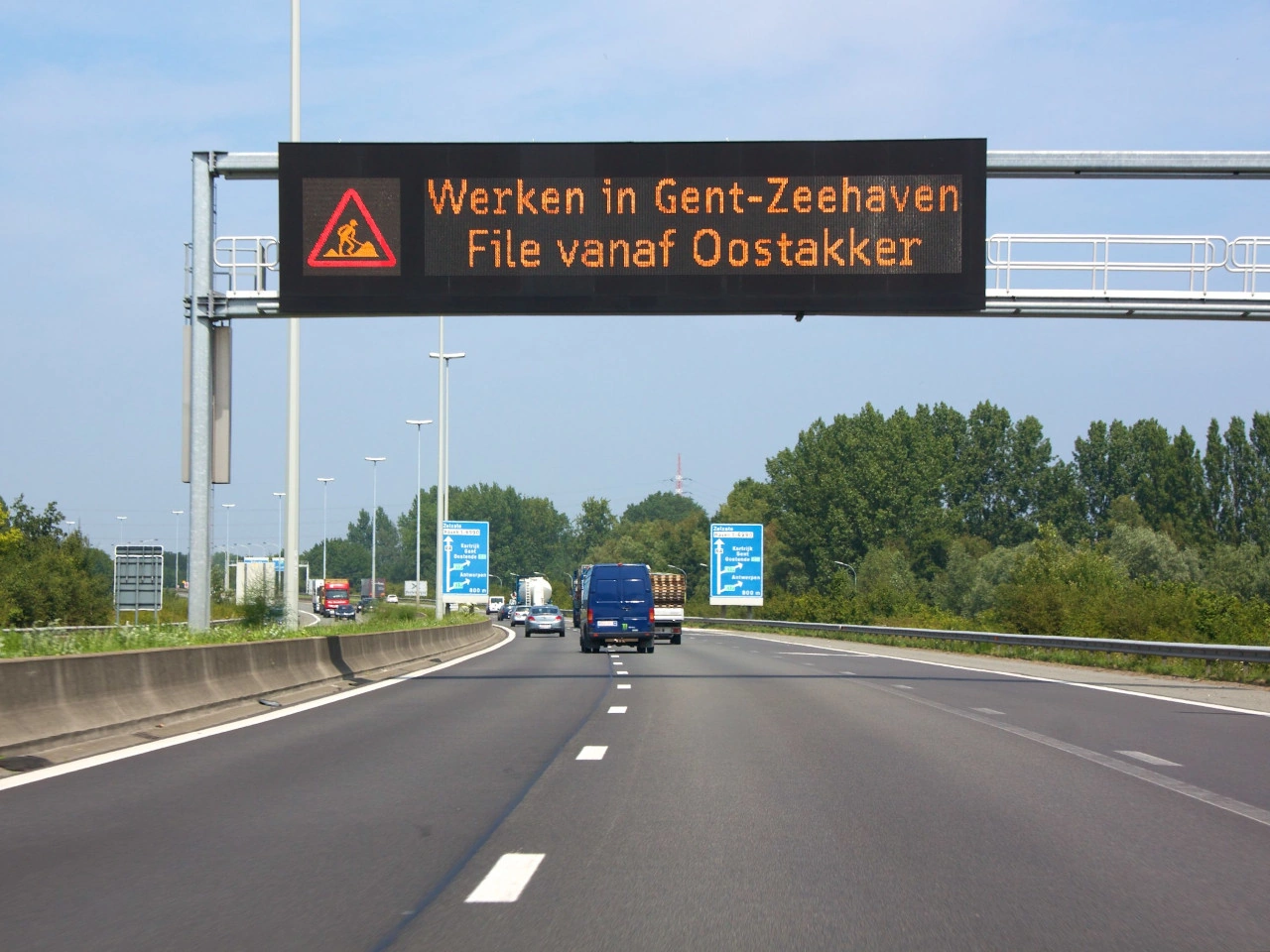
Wikimedia.org • Thomas Vlerick • CC BY
How is traffic managed in Belgium?
Belgian traffic can be managed using traffic lights, road signs, road markings, lane-control signals, temporary traffic arrangements and instructions from authorised persons. Different measures may be used depending on traffic conditions, roadworks or incidents.
Must you obey traffic-management signs in Belgium?
Yes. Road users must obey official traffic lights, road signs and road markings when they comply with the prescribed form, are sufficiently visible and have been installed according to the applicable rules.
Which instruction has priority in Belgian traffic?
The orders of an authorised person take precedence over traffic signs and over the ordinary traffic rules. Traffic signs in turn take precedence over the general traffic rules.
What should you do if a police officer gives an instruction that conflicts with a traffic light?
You must follow the police officer's instruction. Orders given by an authorised person have a higher legal priority than traffic lights, road signs, road markings and the normal traffic rules.
Do traffic lights take precedence over priority signs in Belgium?
When traffic lights are operating at a location, the priority signs on the same road normally do not apply. There are specific exceptions, including flashing amber lights, lane-control signals and the B22 and B23 signs for cyclists and certain other riders.
What does a red cross above a Belgian traffic lane mean?
A red cross above a lane means that traffic is prohibited from using that lane or part of the road. Drivers must leave or avoid the closed lane as directed by the traffic-management signals.
What does a green arrow above a Belgian traffic lane mean?
A green downward-pointing arrow indicates that traffic may use the lane or part of the public road beneath it.
What does an orange diagonal arrow above a Belgian traffic lane mean?
An orange diagonal arrow, whether flashing or not, indicates that the lane must be left in the direction shown by the arrow. Drivers should change lane safely before reaching the closure.
What does a flashing amber traffic light mean in Belgium?
A flashing amber light means that road users may pass the signal but must proceed with increased caution. The flashing amber light does not change the normal priority rules.
What do temporary orange road markings mean in Belgium?
At roadworks, orange temporary lane markings may be used to guide traffic. They have the same meaning as the corresponding white continuous or broken lines and make white longitudinal markings at the same location temporarily inapplicable.
Can traffic be temporarily diverted in Belgium?
Yes. Traffic may be diverted or channelled because of roadworks, incidents or other obstructions. Temporary signs, barriers, markings and other traffic-management measures indicate the route that road users must follow.
Can police temporarily change the traffic arrangement during an emergency?
Yes. In urgent situations where traffic is obstructed, the police may use temporary traffic signs to divert or channel traffic. Such temporary signs must be removed when normal traffic conditions have been restored.
55. Reversing
Reversing means driving a vehicle backwards. It is commonly used when parking, leaving a confined space or repositioning a vehicle where forward movement is not practical.
Before reversing, the driver should check mirrors and blind spots, look carefully around the vehicle and make sure the area behind is clear. Reversing should be performed slowly and only for as long as necessary because visibility behind the vehicle is often limited.
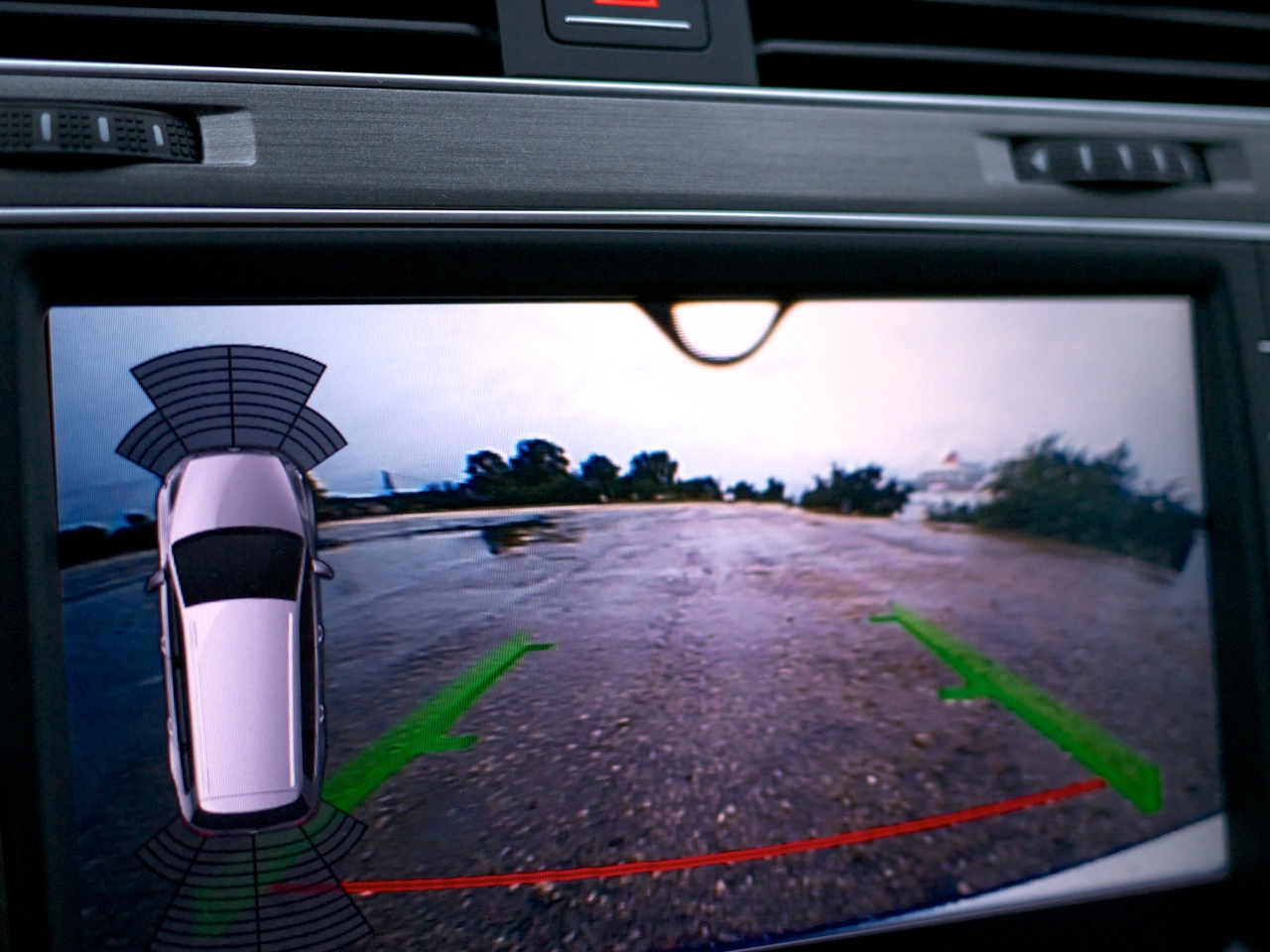
Wikimedia.org • Kārlis Dambrāns • CC BY
Must you give way when reversing in Belgium?
Yes. Reversing is considered a manoeuvre, so the reversing driver must give way to other road users and may only continue when the movement can be carried out safely.
Is reversing allowed on Belgian motorways?
No. Reversing is prohibited on motorways, even if a driver has missed an exit or needs to return to an earlier point.
Is reversing allowed on Belgian autowegen?
No. The prohibition on reversing that applies to motorways also applies to autowegen. A driver who misses an exit or turning must continue and find a legal route back.
56. Uncontrolled crossroad
An uncontrolled crossroad is an intersection where traffic priority is not specifically regulated by traffic lights, an authorised person or signs assigning priority to particular approaches. Drivers must therefore determine who has priority using the default traffic rules that apply in that country.
The applicable rule varies between countries and may include priority from the right, priority from the left or another default right-of-way rule. Drivers should approach an uncontrolled crossroad carefully, observe traffic from every direction and never assume that a wider or busier road automatically has priority.
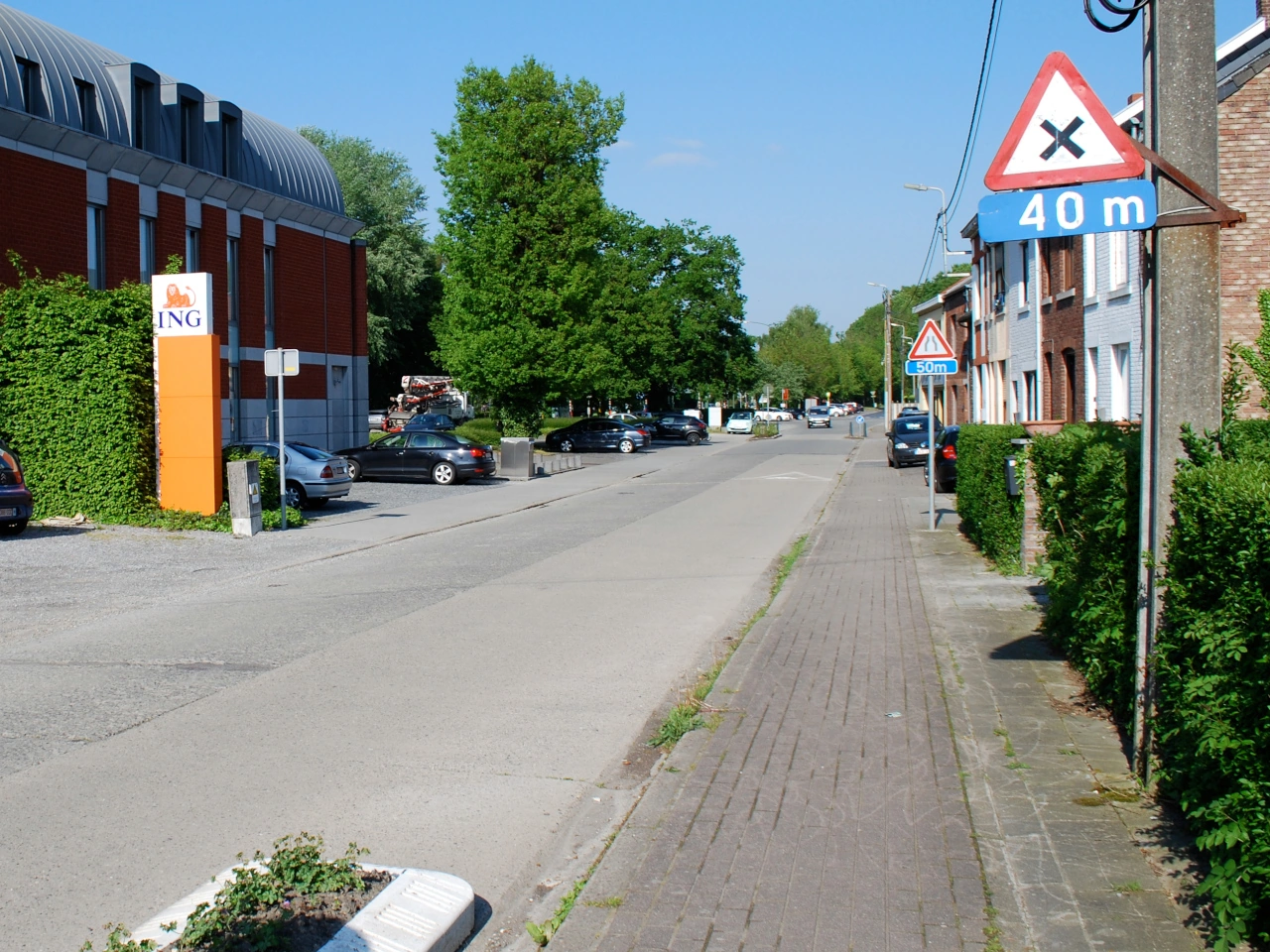
Wikimedia.org • Jean Housen • CC BY-SA
Who has priority at an uncontrolled crossroad in Belgium?
At a Belgian crossroad where no other priority rule applies, every driver must give way to a driver approaching from the right.
 Warning for an uncontrolled crossroad.
Signal routier B17 • Carrefour où la priorité de droite est applicable.
Verkeersbord B17 • Kruispunt waar de voorrang van rechts geldt.
How should you approach an uncontrolled crossroad in Belgium?
You must approach the intersection with particular caution and be able to give way when required. Check carefully for traffic approaching from the right as well as for other road users who may have priority.
Does the wider road have priority in Belgium?
No. A wider, busier or apparently more important road does not automatically have priority. If no signs or special rules establish another priority arrangement, the priority-from-the-right rule applies.
Does a vehicle coming from the right still have priority if it stops?
Yes. Merely slowing down or stopping does not by itself remove the driver's priority from the right. You should not assume that the driver has surrendered priority simply because the vehicle has stopped.
Do cyclists coming from the right have priority in Belgium?
Yes, when the normal priority-from-the-right rule applies. A cyclist is a driver and can therefore have priority when approaching from the right, unless another traffic rule or sign changes the situation.
Does traffic coming from a prohibited direction have priority from the right?
No. Belgian law specifically provides that you do not have to give priority under the priority-from-the-right rule to a driver approaching from a direction in which that driver is prohibited from travelling.
Does a driver coming from an earth road or path have priority from the right?
No. A driver entering a public road with a carriageway from an earth road or path must give way to drivers travelling on the road being entered.
Does priority from the right apply on a Belgian roundabout?
No. A driver already travelling on a roundabout does not have to give way under the ordinary priority-from-the-right rule to traffic entering from the right. Drivers entering the roundabout must follow the applicable signs and priority rules.
Does a vehicle leaving a driveway have priority if it comes from the right?
No. Leaving an adjoining property or driveway is considered a manoeuvre. A driver performing a manoeuvre must give way to the other road users.
What if you cross a cycle path at an uncontrolled crossroad?
A driver crossing a cycle path or pavement must give way to the road users who are lawfully using that cycle path or pavement. This obligation applies independently of the ordinary priority-from-the-right rule.
Do trams have to follow priority from the right?
No. Belgian road users must give way to rail vehicles such as trams. This special rule takes precedence over the ordinary priority-from-the-right rule.
What does the Belgian B17 sign mean?
The B17 sign warns that you are approaching a crossroad where priority from the right applies. Drivers should therefore be particularly alert for vehicles approaching from the right.
57. Road surface
A road surface warning indicates that the road ahead may be uneven, damaged or in poor condition and could affect the stability, steering or braking of a vehicle. The hazard may include bumps, depressions, potholes, broken pavement or other irregularities in the road surface.
Drivers should reduce speed where necessary, maintain a safe distance and avoid sudden steering or braking when passing over an irregular surface. The exact meaning and appearance of the warning sign vary between countries, so drivers must follow the local traffic signs and regulations.
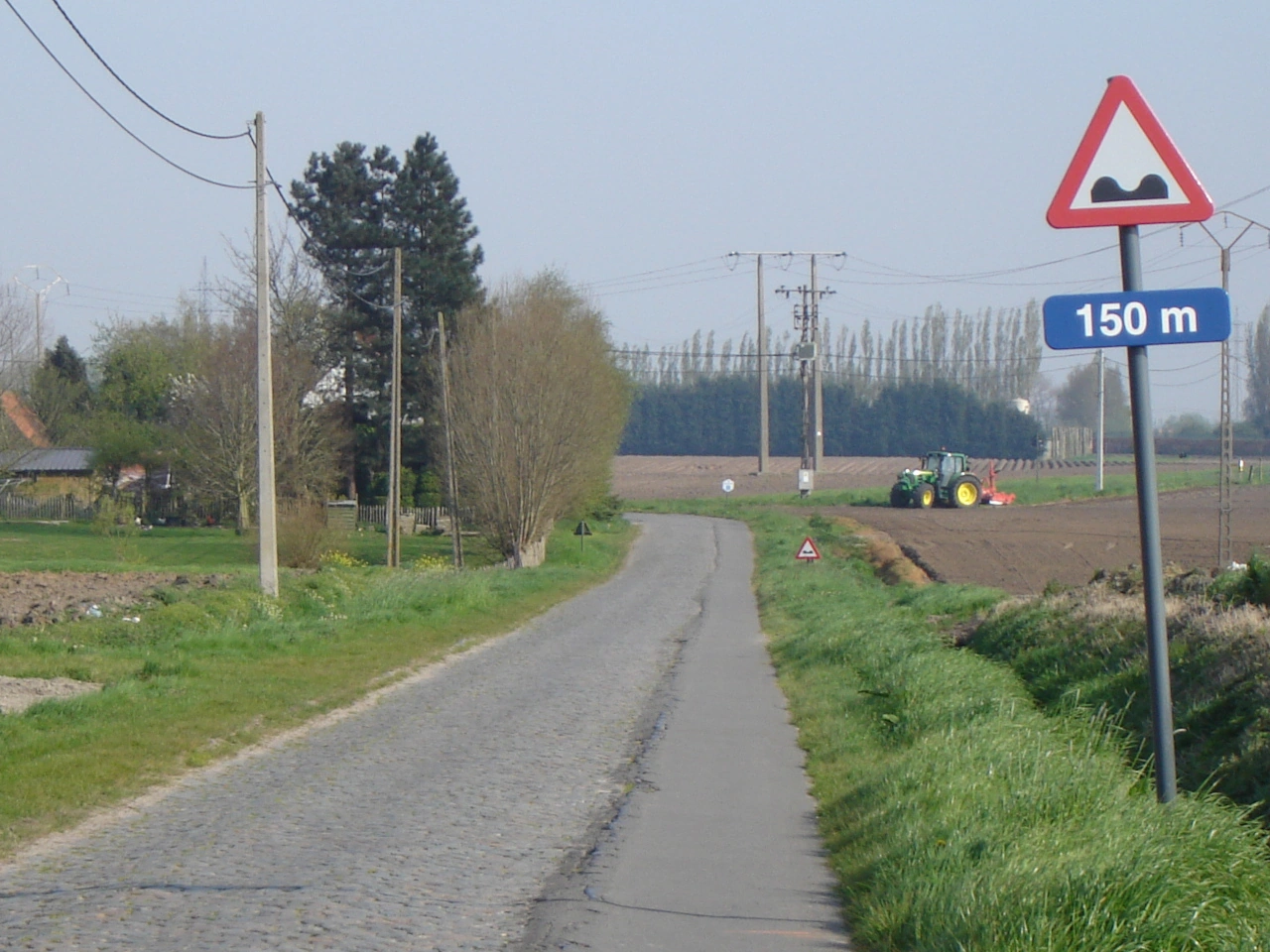
Wikimedia.org • LimoWreck • CC BY-SA
Which Belgian sign warns about an uneven road surface?
The Belgian A13 warning sign currently warns of a transverse depression or hump in the carriageway that may require drivers to reduce speed significantly.
 Warning for a bad road surface.
Signal routier A13 • Cassis ou dos d'âne.
Verkeersbord A13 • Uitholling overdwars of ezelsrug.
What should you do when you see an A13 sign in Belgium?
Observe the road ahead carefully and adapt your speed to the condition of the road. You should approach at a speed that allows you to pass the irregularity safely without losing control or causing danger.
Does the Belgian A13 sign impose a specific speed limit?
No. A13 is a warning sign and does not itself establish a numerical speed limit. Drivers must nevertheless adapt their speed to the road condition, and a separate speed-limit sign may impose a lower maximum speed.
Does A13 currently mean any damaged road surface in Belgium?
Not yet. Under the Road Code currently in force, A13 specifically refers to a transverse depression or hump. Its meaning will become broader when the new Code of the Public Road enters into force.
When will the meaning of the Belgian A13 sign change?
From 1 June 2027, A13 will warn of an uneven road surface or a road surface in poor condition. This broader meaning will replace the current definition referring specifically to a transverse depression or hump.
Is A13 the same as the Belgian raised-road warning sign?
No. A14 warns of an officially constructed raised traffic-calming feature on the public road. A13 currently warns of a transverse depression or hump that represents a road-surface hazard.
Is A13 the same as the slippery-road sign?
No. The Belgian A15 sign warns of a slippery carriageway. A13 concerns an irregularity in the shape or condition of the road surface rather than reduced grip.
Is there a special speed rule for an A13 road-surface warning?
There is no special fixed speed attached to A13. Belgian drivers must always adapt their speed to the condition of the road, visibility, traffic and other circumstances and must be able to stop for a foreseeable obstacle.
Can a supplementary sign indicate how long the hazard continues?
Yes. A supplementary sign may indicate the length of the dangerous section. Warning signs can also be accompanied by information indicating the distance to the hazard where appropriate.
Where are Belgian warning signs normally placed?
In Brussels and Flanders, warning signs are generally placed approximately 150 metres before the danger. If special circumstances require a different distance, a supplementary sign indicates the approximate distance to the hazard.
Should motorcyclists and cyclists take extra care at an A13 warning?
Yes. Depressions, humps and other surface irregularities can disturb the balance and direction of two-wheeled vehicles. Riders should approach at an appropriate speed and avoid abrupt steering or braking where possible.
58. Ring road
A ring road is a road or connected system of roads that runs around or partly around a city, town or urban area. It is designed to distribute traffic between different parts of the area and to allow through traffic to bypass congested central streets.
A ring road is not necessarily a motorway or expressway. It may consist of motorways, divided highways, ordinary roads or a combination of different road types. The applicable speed limits, access restrictions, priority rules and lane rules therefore depend on the individual section and the local traffic signs and regulations.

Wikimedia.org • Aktron • CC BY
What is a ring road in Belgium?
A Belgian ring road is a route that runs around or partly around a city or urban area and connects different roads and destinations. Belgian rings are commonly identified by a ring route number.
Which Belgian sign identifies the number of a ring?
The F23d sign indicates the number of a ring. Ring-route information can also appear on direction and advance-direction signs.
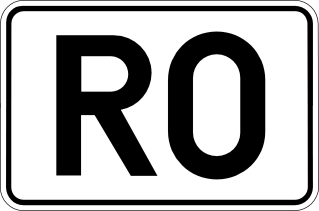 Ring road number.
Verkeersbord F23d • Nummer van een ring.
 Signpost to ring road.
Verkeersbord F33a • Wegwijzer op afstand: luchthaven, beurs- of tentoonstellingshal, haven, car-ferry, zone met economische activiteiten, ziekenhuis.
Is every Belgian ring road a motorway?
No. Being part of a ring does not itself make a road a motorway. A ring may contain motorway sections and other types of roads, so drivers must follow the signs and rules applying to each section.
When do Belgian motorway rules apply on a ring?
The special motorway rules apply from the point where the road is indicated by the F5 motorway sign and continue until the applicable end-of-motorway indication. A ring-route number by itself does not establish motorway status.
Is there a special Belgian speed limit for ring roads?
No. There is no single speed limit that applies simply because a road is a ring. The maximum speed depends on the road type, region, vehicle category and traffic signs applying to the particular section.
Can the speed limit change while following the same Belgian ring?
Yes. Different sections of a ring may have different road characteristics and speed limits. Drivers must follow the speed-limit signs and the general limit applicable to the road they are currently using.
Can a Belgian ring have ordinary intersections?
Yes. A ring does not have to consist entirely of grade-separated roads. Depending on the route, sections may include ordinary intersections, traffic lights, roundabouts or motorway-style interchanges.
Can cyclists use a Belgian ring road?
This depends on the individual section. Cyclists may use roads where they are legally permitted, but they may not use motorway sections or other sections where their access is prohibited by traffic signs or regulations.
Can pedestrians use a Belgian ring road?
This also depends on the road type. Pedestrians may be permitted along appropriate ordinary-road sections but are prohibited on motorways and wherever signs or other rules exclude them.
How should you choose a lane on a Belgian ring?
Follow the normal Belgian keep-right rule together with lane-direction signs and road markings. When approaching a major interchange, choose the lane for your destination in good time without making sudden lane changes.
How are destinations indicated on Belgian ring roads?
Belgian advance-direction and direction signs can indicate destinations reached by following the ring. The signing rules contain specific provisions for displaying road numbers and destinations when the route concerned is a ring.
What should you do if you miss an exit on a Belgian motorway ring?
Continue to the next suitable exit or interchange and find a safe legal route back. Never reverse, make a U-turn, drive against the direction of traffic or use connections through the central reservation on a motorway.
59. Cycle highway
A cycle highway is a high-quality, continuous cycling route designed to provide fast, direct and comfortable travel over longer distances. Cycle highways commonly connect cities, residential areas, workplaces, schools, public transport hubs and other important destinations.
A cycle highway may consist of separate cycle paths, shared paths, quiet roads, bridges, tunnels or other cycling infrastructure. It is therefore not necessarily one continuous type of road. Access rules, priority, speed limits and permitted road users depend on the individual sections and on the local traffic signs and regulations.

Wikimedia.org • FrDr • CC BY-SA
What is a cycle highway in Belgium?
A Belgian cycle highway, particularly known in Flanders as a fietssnelweg or fietsostrade, is a continuous cycling route intended to connect cities and important destinations using high-quality cycling infrastructure.
How can you recognise a Flemish cycle highway?
Flemish cycle highways are recognisable by the F-logo and an F route number. These route indications help cyclists follow the cycle-highway network between destinations.
Is the F-logo an ordinary regulatory traffic sign?
No. The F-logo primarily identifies and guides cyclists along the cycle-highway network. The traffic rules applying on the route are determined by the official traffic signs, road markings and type of infrastructure used on each section.
Is a Belgian cycle highway the same as a cycle path?
No. A cycle highway is an entire route. Individual sections may legally be cycle paths, separate paths, towpaths, low-traffic roads or other types of public road, each with its own applicable rules.
Must cyclists use a cycle highway in Belgium?
The fact that a route is designated as a cycle highway does not by itself make its use compulsory. However, an individual section may contain a compulsory cycle path or another road arrangement that cyclists must use according to the applicable traffic signs and rules.
Do cyclists have priority on a Belgian cycle highway?
Not automatically. Being on a cycle highway does not itself give cyclists priority at every intersection. Priority depends on the traffic signs, road markings, traffic lights and other Belgian priority rules applying at each crossing.
Are cars prohibited from Belgian cycle highways?
Not on every section. Many cycle-highway sections are separated from motor traffic, but others may follow roads shared with motor vehicles. The applicable access signs determine whether motor vehicles are permitted.
Can pedestrians use Belgian cycle highways?
This depends on the individual section. A cycle highway may include infrastructure that is also available to pedestrians, while other sections may be reserved for cyclists or other specified road users. The local signs determine how the section may be used.
Can speed pedelecs use Belgian cycle highways?
Whether a speed pedelec may use a particular section depends on the type of infrastructure and the applicable traffic signs. Special rules apply because speed pedelecs are legally classified differently from ordinary bicycles.
Can speed pedelecs use towpaths that form part of a cycle highway?
Yes, under the applicable Belgian rules. Speed pedelecs may use towpaths when they form part of a cycle highway or where their access is expressly permitted by a supplementary sign. Specific speed rules can apply on these paths.
Is there one speed limit for all Belgian cycle highways?
No. The cycle-highway designation does not create one nationwide speed limit. Drivers and riders must respect the rules and speed restrictions applying to the particular road or path and adapt their speed to other users and local conditions.
Are all planned Flemish cycle highways already fully completed?
No. A cycle highway is a route within a wider network, and individual sections may be completed, improved, temporarily diverted or still under development. The quality and type of infrastructure can therefore change along the same route.
60. Licence plate
A licence plate, also called a registration plate or number plate, is a plate displaying a unique registration identifier assigned to a vehicle by the competent registration authority. It allows the vehicle to be identified for purposes such as registration, traffic enforcement, taxation, insurance and parking control.
The appearance, format, placement and number of plates required vary between countries and vehicle categories. Drivers must ensure that required licence plates are correctly fitted, clearly visible and legible and must follow the local rules when a plate is lost, stolen, damaged or replaced.
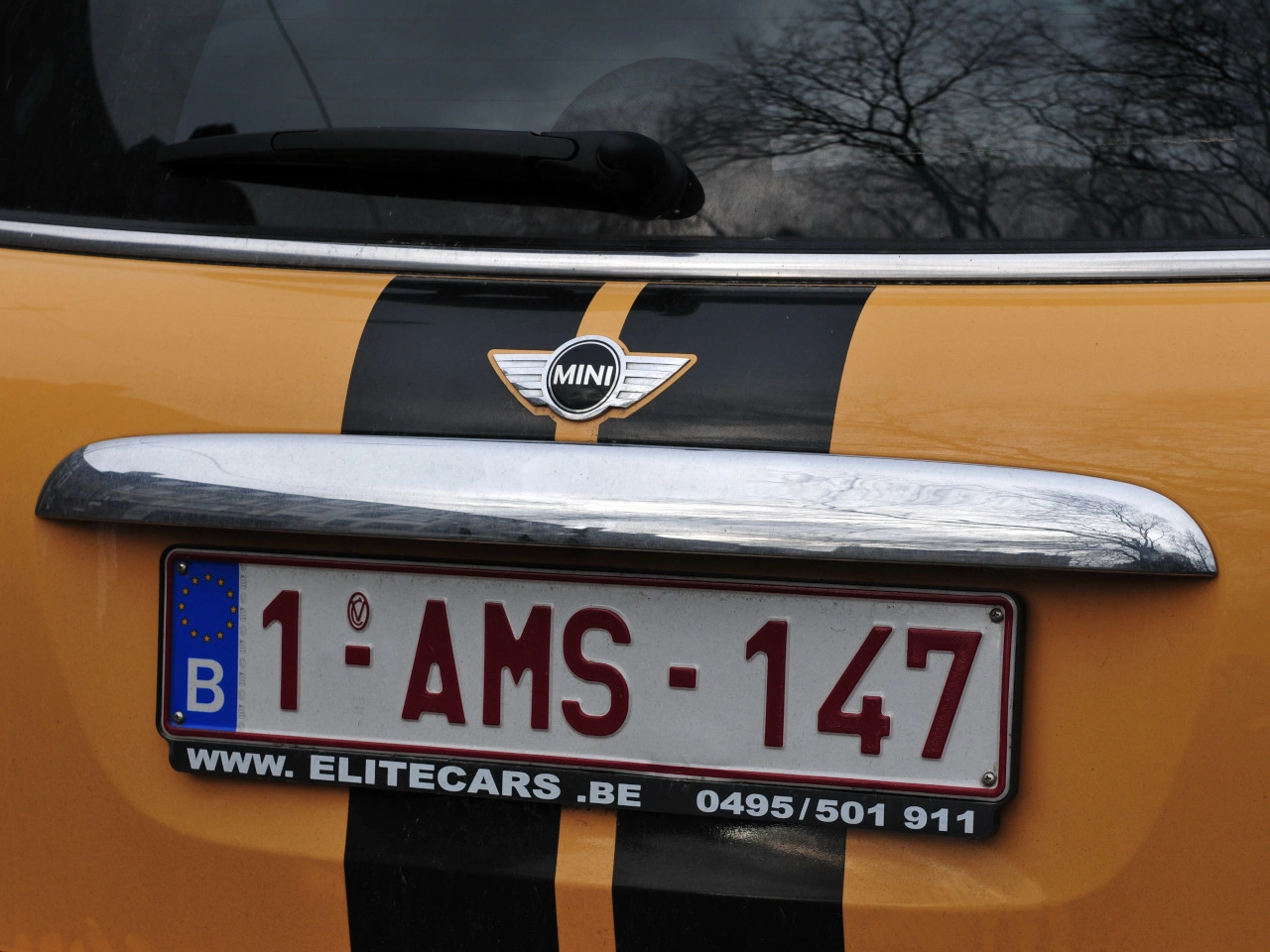
Wikimedia.org • Ralf_Roletschek • GFDL
Who issues Belgian licence plates?
Belgian registration plates are issued through the Vehicle Registration Service (DIV) of the Federal Public Service Mobility and Transport when a vehicle is registered.
Must a vehicle be registered before it can be driven in Belgium?
Yes, as a general rule. A vehicle may only be put into circulation once it has been registered and carries the registration plate assigned to that registration, subject to the specific legal exemptions for certain vehicle categories.
Which plate is the official Belgian registration plate?
For an ordinary car, the rear plate bearing the official DIV mark is the official registration plate issued by the DIV. The plate at the front is a reproduction of the registration number.
Do Belgian cars need a front licence plate?
Yes. A reproduction of the registration plate must be fitted to the front of the vehicle. Motorcycles, mopeds, speed pedelecs and trailers are among the vehicle categories that do not require such a front plate.
Where is the front registration plate fitted in Belgium?
For vehicles required to carry one, the front reproduction is fitted in the centre of the vehicle or to the left of the centre.
What does a normal Belgian licence plate look like?
A standard Belgian registration plate has a white background with ruby-red characters and border. European-format plates also have a blue band containing the European stars and the white country identifier B.
Must a Belgian licence plate remain visible and readable?
Yes. The registration plate and its reproduction must be securely attached, remain visible at all times and normally be readable in clear daylight from at least 40 metres, with shorter prescribed distances for certain smaller plate formats.
May you cover a Belgian registration plate with a transparent protector?
No. Belgian rules state that a registration plate or its reproduction may not be covered, even with a transparent material. Alterations that could create confusion about its characters are also prohibited.
What if a bicycle rack covers the rear licence plate?
If a rear-mounted bicycle rack covers the registration plate, a reproduction of the plate must also be fitted to the bicycle rack so that the registration number remains visible.
What plate does a Belgian trailer under 750 kg display?
A trailer with a maximum authorised mass not exceeding 750 kg is generally not separately registered and must display a reproduction of the towing vehicle's official registration plate at the rear.
Can you keep your Belgian plate when changing vehicles?
Yes, in certain circumstances. When changing vehicle, you currently have four months to register another vehicle under the same plate number when the new vehicle falls within the same plate category.
What should you do if you no longer need your Belgian registration plate?
If you are not keeping it for another eligible vehicle, the official rear plate bearing the DIV mark must be returned to the DIV for deregistration. The front reproduction is not the official plate used for deregistration.
What should you do if your Belgian licence plate is lost or stolen?
You must report the loss or theft to the police. The police record the involuntary loss and the registration plate is deregistered. The appropriate re-registration or replacement procedure must then be followed.
Can you have a personalised licence plate in Belgium?
Yes. Personalised registration plates are available for several vehicle categories. The chosen combination is subject to Belgian formatting rules and may contain a maximum of eight characters in addition to the mandatory DIV seal position.
61. Charging station
A charging station is a location equipped with one or more charging points where the battery of an electric or plug-in hybrid vehicle can be connected to an electricity supply and recharged. Charging stations may be located along public roads, in car parks, at service areas or on private property.
Charging spaces may be reserved for vehicles that are charging and can be subject to parking restrictions, time limits, payment requirements or other conditions. Drivers must follow the traffic signs, parking regulations and charging instructions applying at the location.

Wikimedia.org • Aschroet • CC0
How is an electric-vehicle charging space indicated in Belgium?
A Belgian parking space may be indicated by an E9 parking sign combined with the electric-vehicle symbol. This reserves the parking for electric or hybrid-electric vehicles.
 Parking allowed.
Signal routier E9a • Stationnement autorisé.
Verkeersbord E9a • Parkeren toegelaten.
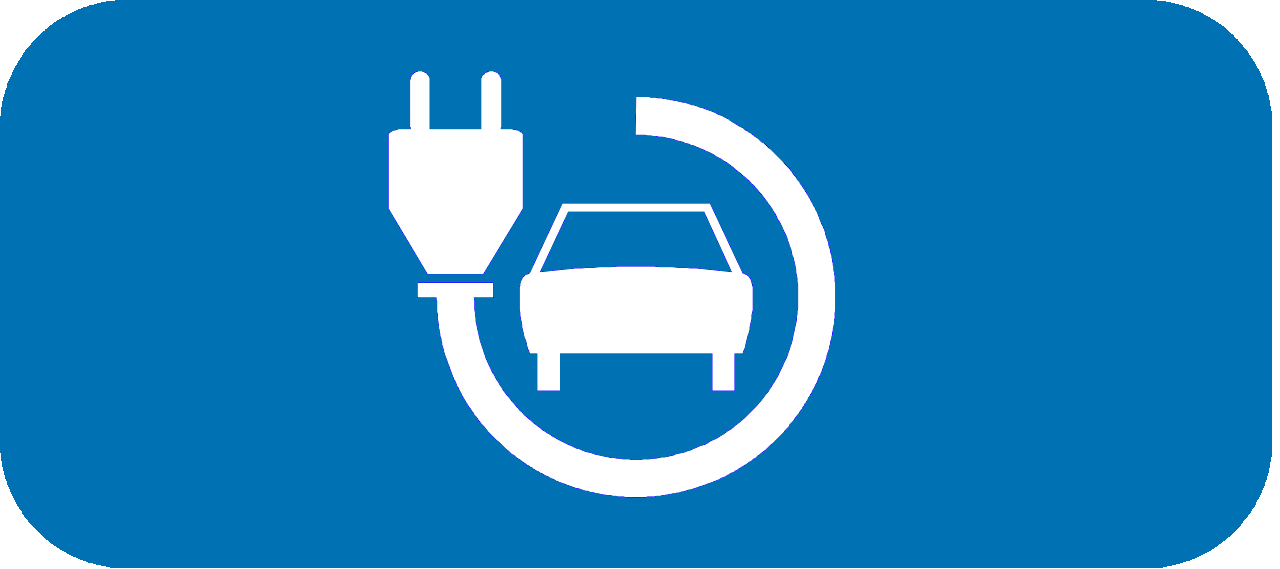 For electric vehicles.
Panonceau utilisé avec les signaux de la série E9 pour indiquer que l'emplacement de stationnement est réservé aux véhicules électriques.
Onderbord gebruikt samen met de E9-reeks dat aanduidt dat de parkeerplaats voorbehouden is voor elektrische voertuigen.
Which vehicles may use a Belgian parking space reserved for electric vehicles?
The reservation applies to electric and hybrid-electric vehicles. The sign may also indicate one or more specific vehicle categories to which the reservation applies.
Must an electric vehicle be connected to the charger in Belgium?
Yes. When a reserved parking place is equipped with public charging infrastructure, an electric or hybrid-electric vehicle parked there must be connected to that charging infrastructure.
Can an electric vehicle simply park beside a Belgian public charger without plugging in?
No when the space is reserved for electric or hybrid-electric vehicles and provided with public charging infrastructure. The vehicle must be connected to the charger while parked there.
Can a plug-in hybrid use a Belgian charging space?
Yes. Belgian parking rules specifically include hybrid-electric vehicles in the category that may use parking spaces reserved with the electric-vehicle symbol.
Can a petrol or diesel vehicle park in a Belgian space reserved for electric vehicles?
No. Where the parking space is officially reserved for electric or hybrid-electric vehicles, vehicles that do not belong to that category may not park there.
Does charging an electric vehicle count as parking in Belgium?
Yes. Belgian law expressly states that charging the battery of an electric or hybrid-electric vehicle is considered parking.
Can you charge a vehicle where parking is prohibited?
No. Because charging is legally considered parking, connecting a vehicle to a charger does not override a parking prohibition or another restriction applying at that location.
Does connecting to a Belgian public charger mean charging must actually be in progress?
The Belgian Road Code specifically requires the vehicle to be connected to the public charging infrastructure. Additional conditions concerning an active charging session may be imposed by local parking rules or by the charging operator.
Can a Belgian charging space also be subject to paid parking?
Yes. Reservation for electric vehicles does not automatically make parking free. Drivers must also comply with any paid-parking conditions indicated for the location.
Can a Belgian charging space have a maximum parking duration?
Yes. Parking signs and supplementary information may impose a maximum parking duration or other restrictions. Being connected to the charger does not exempt the driver from those conditions.
Must you move your vehicle when charging is complete in Belgium?
Follow the parking signs, time limits and charging conditions at the location. The Road Code requires connection to public charging infrastructure where the charging-space rule applies, while additional rules may limit how long the vehicle may remain there.
62. Dangers
A general danger warning sign warns road users of a hazard ahead that is not represented by a more specific warning sign. The particular danger may be explained by a supplementary panel, text, symbol or other indication placed with the warning sign.
Drivers should increase their attention, observe the road ahead and adapt their speed to the nature of the hazard and surrounding conditions. The exact appearance of the sign and the way the danger is identified vary between countries, so road users must follow the local traffic signs and regulations.

Wikimedia.org • G. Friedrich • CC BY-SA
Which Belgian sign warns of a danger without a specific warning symbol?
The Belgian A51 sign warns of a danger that is not represented by a specific warning symbol.
 Warning for a danger with no specific traffic sign.
Signal routier A51 • Danger non défini par un symbole spécial. Un panneau additionnel indique la nature du danger.
Verkeersbord A51 • Gevaar dat niet door een speciaal symbool wordt bepaald. Een onderbord duidt de aard van het gevaar aan.
 Queues.
What does the supplementary panel below an A51 sign mean?
The supplementary panel identifies the nature of the danger for which the A51 sign has been placed.
When may an A51 sign be used in Belgium?
A51 is used when no other Belgian warning sign can appropriately indicate the danger. If a specific warning sign exists for the hazard, that sign should normally be used instead.
What should you do when you see an A51 sign?
Increase your attention, read the supplementary information and observe the road and surroundings carefully. Adapt your speed where necessary to deal safely with the indicated danger.
Does an A51 sign impose a speed limit?
No. A51 is a warning sign and does not itself impose a numerical speed limit. A separate C43 speed-limit sign may be used when a specific maximum speed is required.
Must you slow down when approaching an A51 danger?
You must adapt your speed to the circumstances. Belgian drivers must take account of factors such as visibility, traffic, road conditions, local conditions and foreseeable obstacles, so a reduction in speed may be necessary depending on the danger.
Does A51 give priority to other road users?
No. A51 warns of danger but does not itself change the priority rules. Any applicable priority signs, traffic lights and general priority rules remain in force.
Can A51 warn about a temporary danger?
Yes. A51 can be used where an unusual temporary danger needs to be signalled and no more specific warning sign is suitable.
Can A51 warn about a permanent or recurring danger?
Yes. The sign is not limited to temporary hazards. It can also identify another unusual or recurring danger when no dedicated warning symbol appropriately represents it.
Can additional information show where the danger begins?
Yes. Supplementary information can be used in accordance with Belgian signing rules to provide details such as the location or distance of a hazard.
Can A51 be used instead of a slippery-road or roadworks sign?
Normally no when the specific sign accurately represents the hazard. Belgium already has dedicated warning signs for hazards such as slippery roads, roadworks, traffic lights, falling rocks and pedestrians. A51 is reserved for dangers that cannot be represented by another suitable warning sign.
Will the general danger sign still exist under the new Belgian Road Code?
Yes. The new Code of the Public Road, which is scheduled to apply from 1 June 2027, retains the A51 sign for a danger not represented by a specific symbol and continues to use a supplementary panel to identify the nature of the danger.
63. Turn on red
Turn on red is a traffic rule or signal arrangement that allows certain road users to proceed in a specified direction despite a red traffic light. It most commonly permits a turn after the driver has stopped or yielded, but the exact procedure varies between countries.
A turn on red is not universally permitted. It may be allowed generally, only when a specific sign or signal is present, or prohibited entirely. Drivers must always follow the local traffic lights, signs, priority rules and pedestrian or cyclist crossings before proceeding.

Wikimedia.org • ArticCynda • CC BY-SA
May motorists normally turn right on red in Belgium?
No. Belgium does not have a general rule allowing ordinary motorists to turn right simply because the way is clear. A red traffic light normally prohibits passing the stop line or traffic light.
Can a Belgian driver proceed while the main traffic light is red?
Yes, when a specific additional green arrow permits it. If a green arrow is illuminated together with the red or orange-yellow light, drivers may proceed only in the direction indicated by the arrow.
Do you have priority when following a green arrow beside a red light?
No. A driver proceeding under an additional green arrow must give way to drivers lawfully approaching from other directions and to pedestrians.
Can cyclists turn right on red in Belgium?
Yes, where a B22 sign is installed. Cyclists and speed-pedelec riders may pass a red or orange-yellow traffic light to turn right, provided they give way to the other road users who have priority.
Does every Belgian red light allow cyclists to turn right?
No. The exception applies only where the appropriate B22 sign or another authorised signal specifically permits the movement.
What does the Belgian B22 sign mean?
The B22 sign allows cyclists and speed-pedelec riders to pass a red or orange-yellow traffic light in order to turn right, while giving way to other road users.
What does the Belgian B23 sign mean?
The B23 sign allows cyclists and speed-pedelec riders to pass a red or orange-yellow traffic light and continue straight ahead, while giving way to other road users.
May a B23 sign be installed at every intersection?
No. Under the current Belgian rules, B23 may only be used where cyclists proceeding straight ahead do not have to cross another traffic stream.
Must cyclists come to a complete stop at B22 or B23?
The current B22 and B23 rules do not impose a separate general requirement to make a complete stop. However, cyclists and speed-pedelec riders must give way to other road users and may proceed only when this can be done safely.
Can ordinary cars use the B22 or B23 exception?
No. B22 and B23 are specifically intended for cyclists and speed-pedelec riders. They do not allow cars, motorcycles or other ordinary motor vehicles to pass the red light.
Can Belgian cyclists also receive a special flashing signal at a red light?
Yes. An additional flashing orange-yellow bicycle signal with an arrow can permit cyclists and certain two-wheeled riders to proceed in the direction indicated while the main signal is red or orange-yellow, provided they give way as required.
Will the Belgian turn-on-red rules change in 2027?
Yes. From 1 June 2027, the new Code of the Public Road will use a single B22 system with one or more arrows. It will allow cyclists and speed-pedelec riders to pass a prohibiting traffic light in the direction or directions shown, including right, straight ahead or left where indicated, while giving way to other road users.
64. Identity card
An identity card is an official document used to prove a person's identity. It is normally issued by a government or another competent authority and contains identifying information such as the holder's name, date of birth, photograph and a unique document or identification number.
Identity cards may be required for identification checks, administrative procedures, travel or access to services. The obligation to possess or carry an identity card, the information it contains and whether it can be used as a travel document vary between countries.
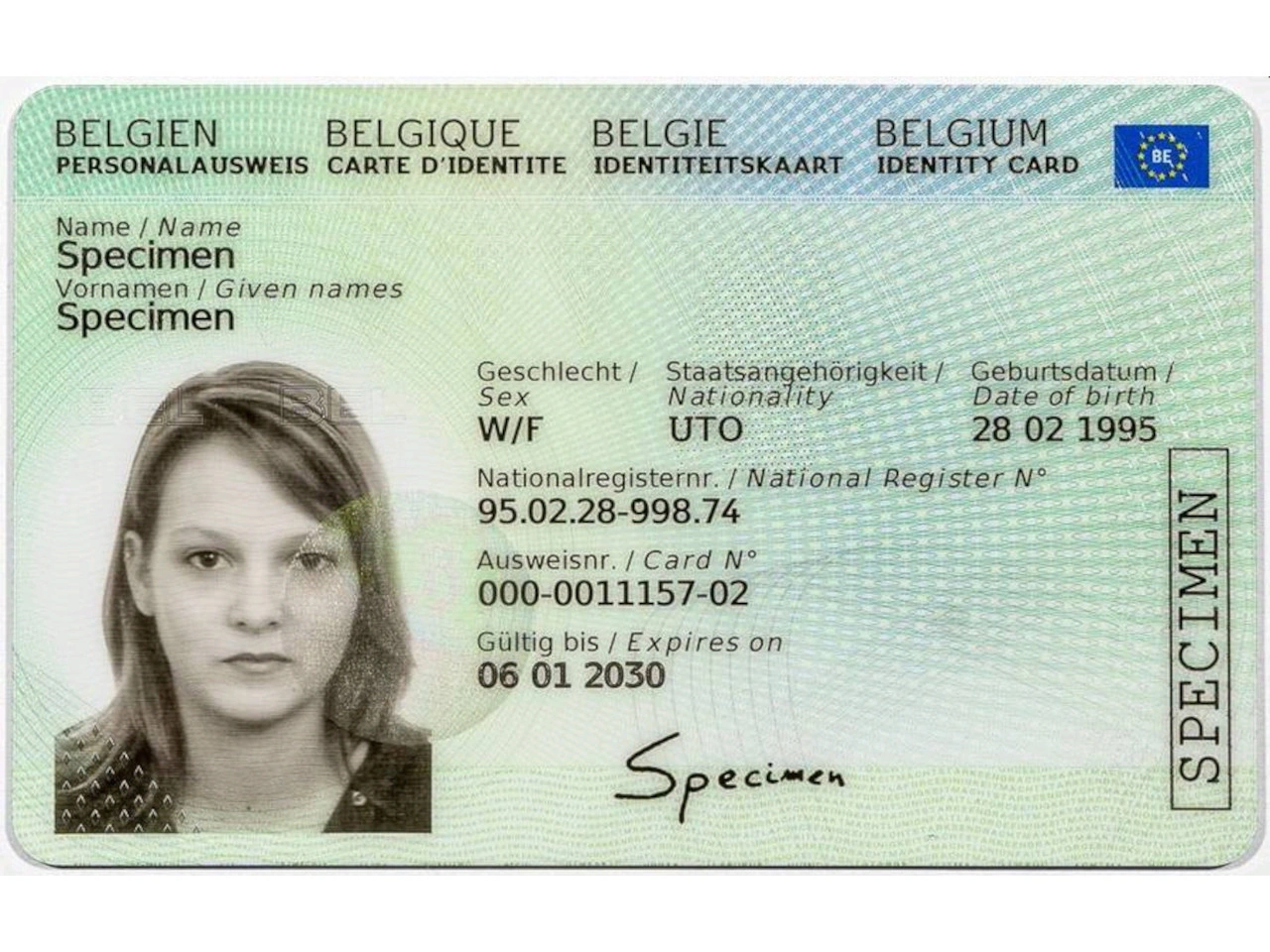
Wikimedia.org • Government of Belgium • CC0
What is the Belgian eID?
The Belgian eID is the electronic identity card issued to Belgian citizens from the age at which the ordinary Belgian identity-card system applies. It proves the holder's identity and contains an electronic chip that can also be used for electronic identification.
At what age do Belgians receive an identity card?
The Belgian eID is issued from the age of 12. Belgian children younger than 12 can instead have a Kids-ID.
From what age must you carry an identity card in Belgium?
Every Belgian must normally carry their identity card from the age of 15. In the event of loss, theft or destruction, the recognised temporary proof of the declaration can serve as identification in the circumstances provided by law.
Must a driver carry an identity card in Belgium?
A Belgian who is subject to the general obligation to carry an identity card must continue to do so while driving. The identity card and driving licence are separate documents and serve different purposes.
Is a Belgian identity card the same as a driving licence?
No. The identity card proves the person's identity. A driving licence proves that the person is authorised to drive the vehicle category concerned.
Can a Belgian identity card replace your driving licence?
No. A person driving a motor vehicle for which a driving licence is required must hold and carry the appropriate valid driving licence. Carrying an identity card does not replace this requirement.
Can the police ask for your identity card after a traffic offence?
Yes. A person over 15 must show their identity card or equivalent proof when requested by an authorised person following an offence against Belgian road-traffic legislation.
Must you show your identity card after a traffic accident?
Yes, when required. A person over 15 involved in a road accident must show their identity card or equivalent proof to other persons involved who request it. An authorised person may also require identification.
Why is identification important after a traffic accident?
Identification allows the people involved and the authorities to establish the identity of the parties so that the accident can be properly recorded and the necessary information exchanged.
Can a Belgian eID be used as a travel document?
Yes. A valid Belgian eID can be used as an identity and travel document within the European Union and in certain other destinations that accept it. Entry requirements should always be checked before travelling.
What should you do if your Belgian identity card is lost or stolen?
Report the loss or theft as quickly as possible through DOC STOP so that the document can be blocked. You must then follow the applicable procedure to obtain temporary identification and request a new identity card.
Can you receive temporary identification after losing your Belgian eID?
Yes. After the loss, theft or destruction has been reported, the municipality or police can issue an Annex 12 in the applicable circumstances. It serves as temporary proof of identity within Belgium.
65. Fire risk
A fire risk sign warns road users that there is an increased danger of fire in or near the area. It may be used where dry vegetation, flammable materials or other conditions make fires particularly likely or where additional caution is required.
The appearance and legal status of fire-risk signs vary between countries. Drivers should avoid actions that could start a fire, obey any accompanying restrictions and remain alert for smoke, flames or emergency activity.

Wikimedia.org • Bokske • CC BY-SA
Is there a specific fire risk traffic sign in Belgium?
No dedicated standard Belgian traffic sign is specifically assigned to fire risk. A general warning sign or other local safety signage may instead be used to warn road users where a particular fire hazard exists.
Can Belgium use a general warning sign for fire risk?
Yes. Belgian sign A51 indicates a danger for which no specific warning symbol exists, and a supplementary panel states the nature of the danger. A fire-related hazard could therefore be indicated in this way when appropriate.
What should you do when warned of fire danger in Belgium?
Take extra care, respect any access restrictions or instructions and avoid behaviour that could start a fire. During periods of high fire danger, additional restrictions can apply in forests and nature areas.
66. Pedestrian
A pedestrian is a person travelling on foot along or across a road, street, path or other public space. Depending on local traffic law, people pushing bicycles, wheelchairs, prams or certain other small devices may also be treated as pedestrians.
Pedestrians normally use pavements, sidewalks, footpaths and pedestrian areas where these are available. When crossing a road or walking where no suitable pedestrian facility exists, they must follow the applicable crossing rules, traffic lights and other local traffic regulations.

Wikimedia.org • Jeanhousen • CC BY-SA
Who is considered a pedestrian in Belgium?
A Belgian pedestrian is a person travelling on foot. Certain people pushing small vehicles or mobility devices are also legally treated as pedestrians.
 Pedestrians prohibited.
Signal routier C19 • Accès interdit aux piétons.
Verkeersbord C19 • Verboden toegang voor voetgangers.
 Mandatory path for pedestrians.
Signal routier D11 • Chemin obligatoire pour les piétons.
Verkeersbord D11 • Verplichte weg voor voetgangers.
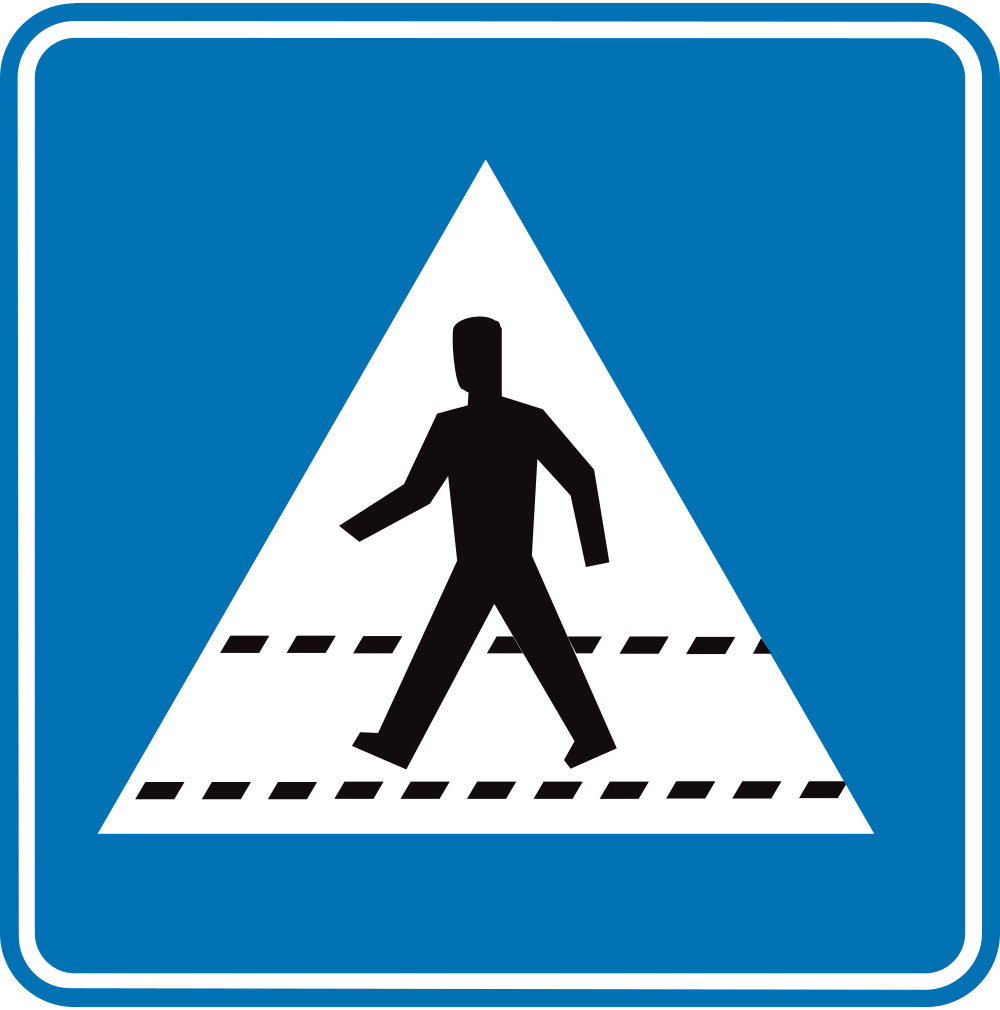 Crossing for pedestrians.
Signal routier F49 • Passage pour piétons.
Verkeersbord F49 • Oversteekplaats voor voetgangers.
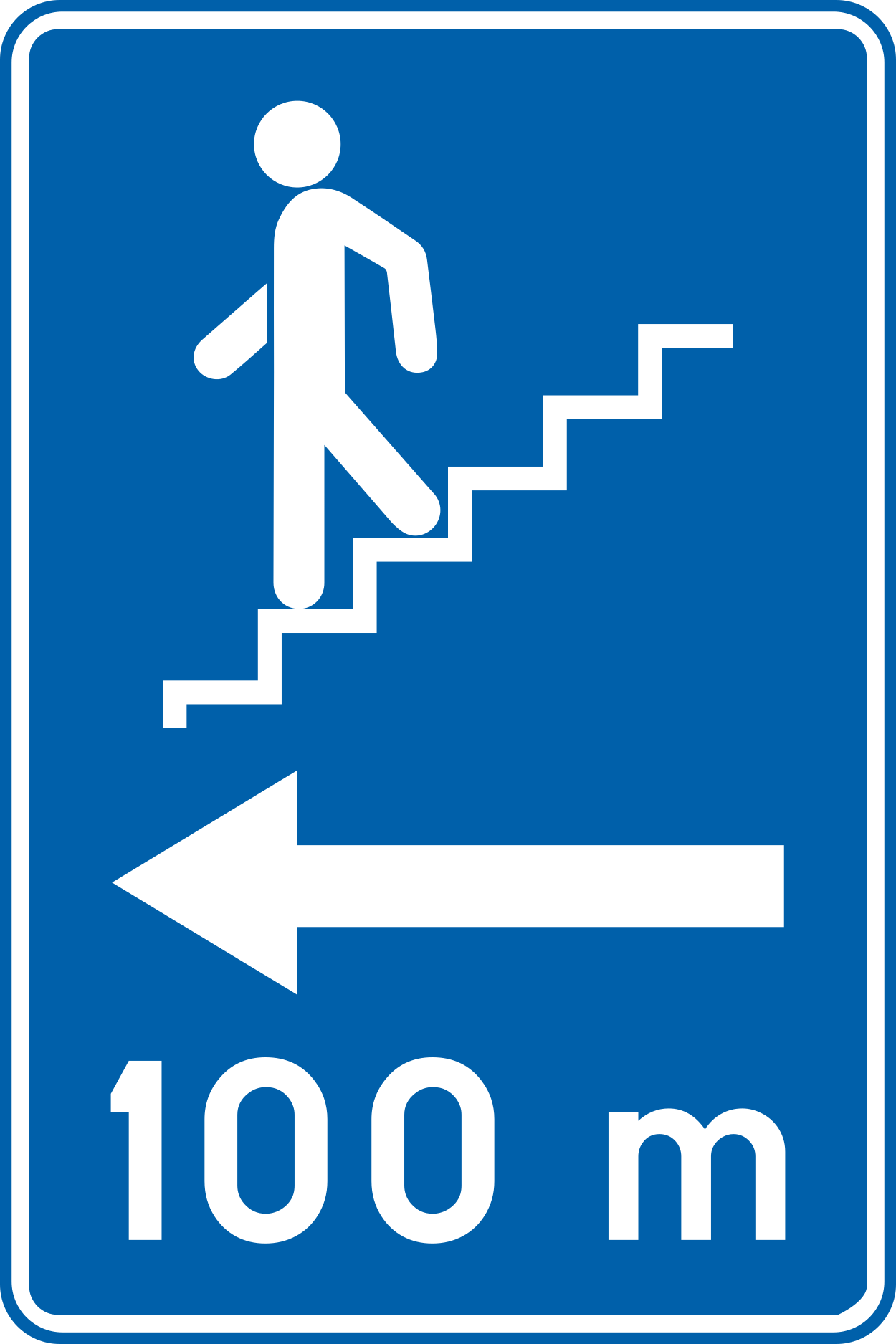 Direction to pedestrian underpass.
Verkeersbord F51 • Ondergrondse of bovengrondse toegang voor voetgangers.
 Start of a zone for pedestrians.
Signal routier F103 • Commencement d'une zone piétonne. Ce signal est placé à droite, à chaque accès d'une zone piétonne; il peut être répété à gauche.
Verkeersbord F103 • Begin van een voetgangerszone. Dit verkeersbord wordt rechts geplaatst aan elke toegang tot een voetgangerszone; het mag links herhaald worden.
 End of the zone for pedestrians.
Signal routier F105 • Fin d'une zone piétonne. Ce signal est placé à droite, à chaque sortie d'une zone piétonne; il peut être répété à gauche.
Verkeersbord F105 • Einde van een voetgangerszone. Dit verkeersbord wordt rechts geplaatst aan elke uitgang van een voetgangerszone; het mag links herhaald worden.
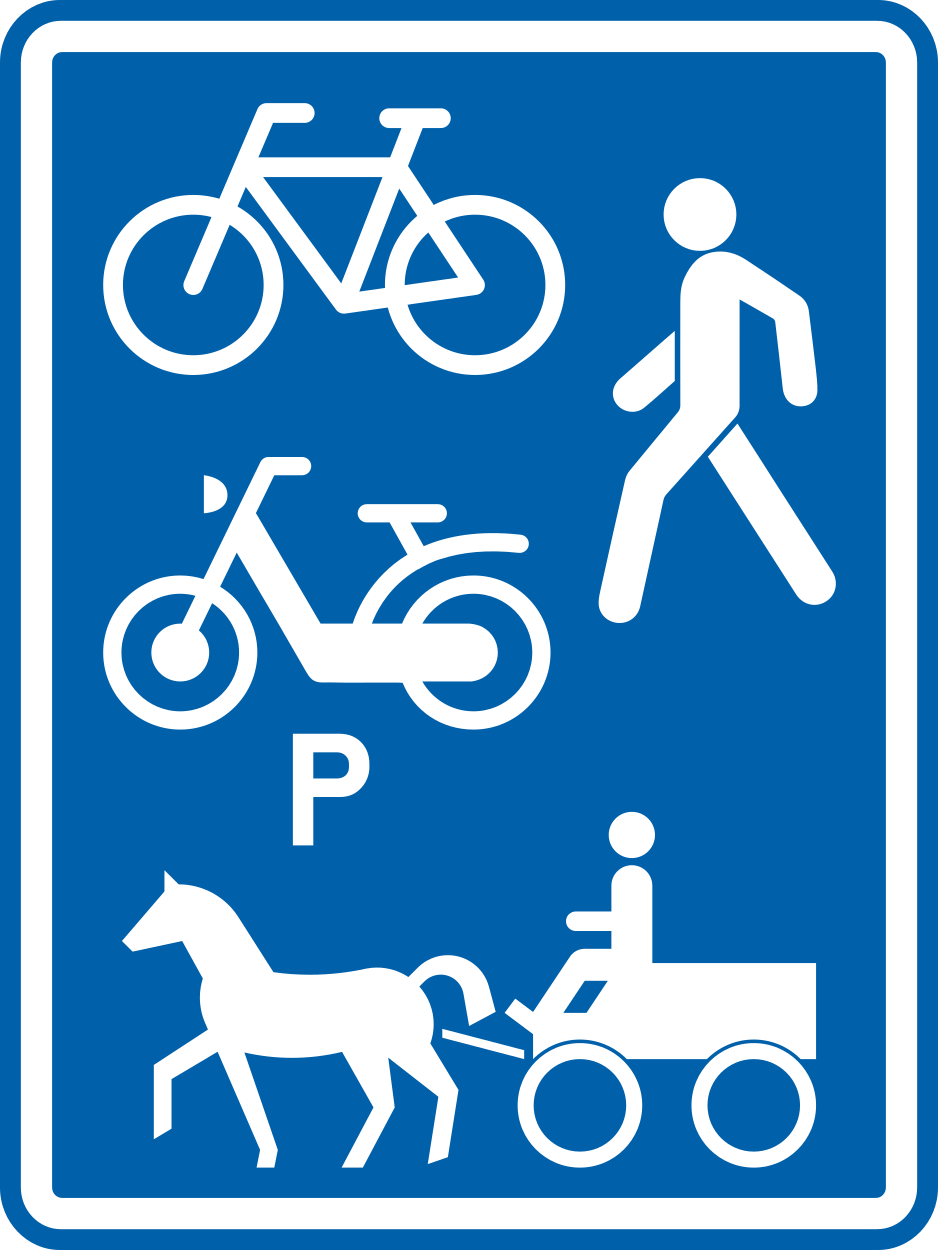 Reserved road for the indicated road users.
Verkeersbord R9 • Begin van een weg of van wegen voorbehouden voor het verkeer van de aangeduide weggebruikers (voorbeelden). Het verkeersbord kan aangepast zijn volgens de categorieën van weggebruikers. Op dit bord zijn ten minste 2 categorieën van weggebruikers aangeduid. De maximale snelheid die er geldt, kan als aanwijzing rechtsonder op het verkeersbord aangeduid zijn.
 End of reserved road.
Verkeersbord R11 • Einde van een weg of van wegen voorbehouden voor het verkeer van de aangeduide weggebruikers (voorbeelden).
Is someone walking a bicycle considered a pedestrian in Belgium?
Yes. A person who leads a bicycle by hand is legally treated as a pedestrian. The same applies to someone walking a motorised bicycle or two-wheeled moped by hand.
Are wheelchair users considered pedestrians in Belgium?
People using certain mobility devices at walking speed can be treated as pedestrians. Belgian rules specifically include persons with reduced mobility using a motorised device intended exclusively for them when travelling no faster than walking pace.
Where must pedestrians walk in Belgium?
Pedestrians must use the available and passable parts of the public road in a prescribed order, starting with the pavement or designated pedestrian facility, followed where necessary by suitable verges and other permitted parts of the road.
May pedestrians walk on the carriageway in Belgium?
Yes, when the more appropriate pedestrian facilities are unavailable or unusable. When pedestrians use the carriageway, they must remain as close as possible to its edge.
Which side of the road should Belgian pedestrians walk on?
When walking on the carriageway or lateral strip, pedestrians normally walk on the left relative to their direction of travel so that they face approaching traffic. They may walk on the right when safety reasons justify it.
Must pedestrians use a pedestrian crossing in Belgium?
Yes, when a pedestrian crossing is less than approximately 20 metres away. Pedestrians must then use that crossing rather than cross elsewhere.
Do pedestrians have priority on an uncontrolled pedestrian crossing in Belgium?
Yes. Where traffic is not controlled by traffic lights or an authorised person, drivers must approach a pedestrian crossing at moderate speed and give way to pedestrians who are on the crossing or about to enter it.
Can a pedestrian step onto a Belgian crossing without looking?
No. At locations without traffic lights or an authorised person, pedestrians may enter the carriageway only with caution and while taking account of approaching vehicles.
What does a red pedestrian light mean in Belgium?
A red pedestrian light means that pedestrians may not enter the carriageway. A green pedestrian light means that they may enter it.
Must turning drivers give way to pedestrians in Belgium?
Yes. A driver changing direction must give way to pedestrians crossing the carriageway that the driver is about to enter.
How much distance must a driver leave when passing a pedestrian on the carriageway?
A driver must leave at least 1 metre between the vehicle and a pedestrian lawfully using the carriageway. Outside a built-up area, the minimum distance is 1.5 metres. If that distance cannot be maintained, the driver must travel at walking speed and stop if necessary.
67. Moped
A moped is a lightweight motor vehicle, usually with two or three wheels, whose power, engine capacity or maximum design speed is limited by law. Mopeds generally occupy a legal category between bicycles and motorcycles, although their exact classification varies between countries.
Special rules may apply concerning the minimum riding age, driving licence, helmet, registration, insurance, maximum speed and use of cycle paths or roadways. Riders must therefore follow the classification and traffic regulations applying in the country where they are travelling.

Wikimedia.org • Spotter2 • CC BY-SA
What is a moped in Belgium?
Belgian law distinguishes mainly between class A and class B mopeds. Their classification depends on characteristics including maximum design speed, engine capacity and motor power.
 Mopeds prohibited.
Signal routier C9 • Accès interdit aux conducteurs de cyclomoteurs.
Verkeersbord C9 • Verboden toegang voor bestuurders van bromfietsen.
What is a Belgian class A moped?
A class A moped is a two- or three-wheeled moped with a maximum design speed of 25 km/h. For an internal-combustion engine, the cylinder capacity is generally limited to 50 cm³, while applicable power limits also apply.
What is a Belgian class B moped?
A class B moped is a moped that does not belong to class A and has a maximum design speed of no more than 45 km/h. For many two- and three-wheeled models, the engine capacity is limited to 50 cm³ or the applicable electric-motor power limit.
How old must you be to ride a moped in Belgium?
You must normally be at least 16 years old to ride a moped on the public road.
Do you need a licence for a class A moped in Belgium?
No. A driving licence is not required for a Belgian class A moped, although the rider must satisfy the applicable minimum-age and traffic rules.
Which licence is required for a class B moped?
A class B moped normally requires a category AM driving licence. Holders of a Belgian licence valid for category A1, A2, A or B automatically have access to category AM. Specific exemptions also exist for certain older drivers.
Must moped riders wear a helmet in Belgium?
Yes. Drivers and passengers of mopeds without a passenger compartment must wear an approved protective helmet. Specific helmet rules apply to speed pedelecs.
What is the maximum speed of a Belgian moped?
A class A moped is limited to 25 km/h, while a class B moped is limited to 45 km/h. A lower speed limit applying to the road must still be respected.
Must a class A moped use the cycle path in Belgium?
Where a suitable cycle path is provided and indicated in the manner prescribed by Belgian law, a two-wheeled class A moped must normally use it in the applicable direction.
Can a class B moped use a Belgian cycle path?
Under the rules currently in force, where the speed limit is 50 km/h or lower, a two-wheeled class B moped may use an applicable cycle path provided it does not endanger other users. Where the speed limit is higher than 50 km/h, it must normally use an available and usable applicable cycle path. Traffic signs can impose different requirements.
Can you carry a passenger on a moped in Belgium?
Yes, if the moped is designed with a passenger seat and the other applicable conditions are satisfied. A moped rider must be at least 18 years old to carry a passenger, and the vehicle may not carry more people than the number of seats for which it is designed.
Must a Belgian moped be registered?
Yes. Mopeds must normally be registered and display a registration plate. Belgian plates identify class A mopeds with S-A and class B mopeds with S-B.
Does a Belgian moped need insurance?
Yes. Class A and class B mopeds are subject to compulsory motor-vehicle liability insurance before they are used on the public road.
Can a moped use a Belgian motorway?
No. Mopeds are expressly prohibited from Belgian motorways. They are also excluded from roads legally designated as autowegen.
Is a speed pedelec legally related to mopeds in Belgium?
Yes. Belgian legislation places the speed pedelec within the broader legal definition of a moped, but speed pedelecs are identified separately and are subject to several specific rules concerning equipment, cycle-path use, helmets and insurance.
68. Car
A car is a motor vehicle primarily designed to transport a small number of people and their luggage on roads. Cars may be powered by petrol, diesel, electricity, hydrogen or a combination of different energy sources.
Drivers must comply with the applicable requirements concerning the driving licence, vehicle registration, insurance, technical condition, seat belts and passenger safety. Speed limits, equipment requirements, road access and other traffic rules vary between countries, so drivers must follow the local traffic signs and regulations.

Wikimedia.org • Jean Housen • CC BY-SA
What is considered a car in Belgium?
In everyday use, a car usually means a passenger motor vehicle. The Belgian Road Code uses the broader legal term auto for motor vehicles that do not fall within the definitions of a moped, motorcycle or motorised three- or four-wheeler.
Which driving licence do you normally need for a car in Belgium?
An ordinary passenger car normally requires a category B driving licence.
What vehicles can you drive with a Belgian category B licence?
Category B covers vehicles with a maximum authorised mass of no more than 3500 kg that are designed and constructed to carry no more than eight passengers in addition to the driver.
How old must you be to obtain a full category B licence in Belgium?
The category B practical driving test can be taken from the age of 18. The theory test can be taken from the age of 17.
Must a Belgian car be registered?
Yes. As a general rule, a vehicle may only be put into circulation once it has been registered and carries the registration plate assigned to that registration.
Does a Belgian car need insurance?
Yes. Motor-vehicle third-party liability insurance, commonly called BA auto, is compulsory. It covers the civil liability for damage caused to third parties under the applicable rules.
Must people wear seat belts in a Belgian car?
Yes. Drivers and passengers must wear the seat belts provided at their seating positions, subject to the limited exemptions specified by law.
What child-restraint rule applies in Belgian cars?
Children under 18 years old and shorter than 135 cm must normally be transported in a suitable approved child-restraint system. Specific exceptions apply in certain circumstances and vehicle types.
How many people may travel in a Belgian car?
The number of occupants may not exceed the number of authorised seating positions equipped with seat belts or approved child-restraint systems, together with any seating positions that are legally exempt from having them.
What safety equipment must a Belgian car carry?
Belgian cars must carry the prescribed safety equipment, including a warning triangle, fire extinguisher and first-aid kit or case. Other equipment requirements may apply depending on the vehicle and circumstances.
What is the minimum tyre tread depth for a Belgian car?
The main grooves of ordinary car tyres must have a tread depth of at least 1.6 mm. Tyres must also remain in a safe and serviceable condition.
Can a Belgian category B car tow a trailer?
Yes. A category B vehicle may normally tow a trailer with an MTM of up to 750 kg. Heavier trailers or combinations may require category B with code 96 or a category BE licence, depending on the authorised masses involved.
69. Truck
A truck is a motor vehicle designed primarily for transporting goods. Trucks range from relatively small delivery vehicles to large heavy goods vehicles and articulated combinations used for long-distance freight transport.
Because trucks are generally larger, heavier and slower to manoeuvre than passenger cars, they require more space for turning and braking and often have larger blind spots. Specific speed, lane-use, overtaking and access rules may apply depending on the vehicle's weight and the country.
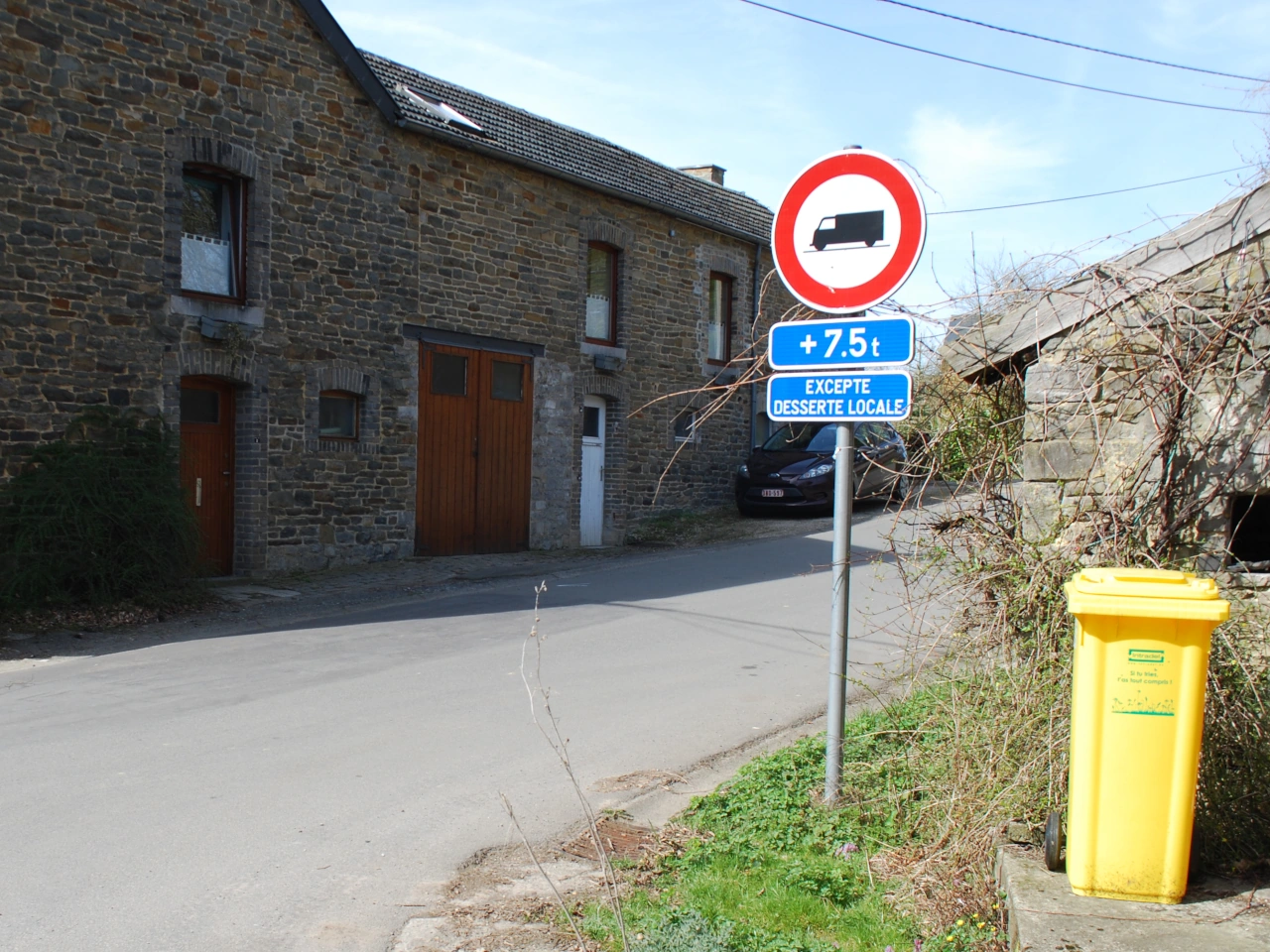
Wikimedia.org • Jeanhousen • CC BY-SA
How is a truck defined in Belgium?
A Belgian truck is a motor vehicle of category N1, N2 or N3 that is designed and built exclusively or mainly for transporting goods.
What is the maximum motorway speed for heavier trucks in Belgium?
Vehicles and combinations with a maximum authorised mass of more than 3.5 tonnes are limited to a maximum of 90 km/h on Belgian motorways, unless a lower speed limit applies.
Can trucks use every lane on a Belgian motorway?
No. On a motorway with three or more lanes in the same direction, vehicles and combinations with a maximum authorised mass of more than 3.5 tonnes may normally use only the two right-hand lanes, except where specific lane-direction signs indicate otherwise.
70. Bus
A bus is a motor vehicle designed to transport multiple passengers, usually along roads as part of public transport, school transport, private transport or another passenger service. Buses generally have more passenger capacity than cars and may be designed to carry seated passengers, standing passengers or both.
Special rules may apply to buses concerning the driving licence, passenger capacity, speed limits, seat belts, bus lanes, stops and passenger boarding. The legal classification of buses and coaches and the rules applying to them vary between countries, so drivers and passengers must follow the local traffic regulations.

Wikimedia.org • Arflhn • CC BY-SA
What is legally considered a bus in Belgium?
A Belgian autobus is a motor vehicle designed and constructed to carry seated and standing passengers and having more than eight passenger seats, excluding the driver's seat.
What is the difference between a bus and a coach in Belgium?
An autobus is designed for both seated and standing passengers, while an autocar is designed for passengers who are exclusively seated. Both have more than eight passenger seats, excluding the driver.
Which driving licence is required to drive a bus in Belgium?
A bus normally requires a category D1 or D driving licence. D1 permits vehicles carrying up to 16 passengers excluding the driver and measuring no more than 8 metres. Category D covers vehicles designed for more than eight passengers without those D1 limits.
Do professional Belgian bus drivers need Code 95?
Yes, in most cases. Professional drivers using category D-group vehicles generally need the professional-competence qualification identified by Code 95, although specific exemptions exist.
Can passengers stand in a Belgian bus?
Yes, if the vehicle is designed and approved for standing passengers. The Belgian legal definition of an autobus specifically includes vehicles constructed for both seated and standing passengers. An autocar, by contrast, is designed exclusively for seated passengers.
Must passengers wear seat belts on Belgian buses?
Where a passenger seat is equipped with a seat belt, the applicable seat-belt requirement must be followed. In vehicles with more than eight passenger seats, passengers must also be informed of the obligation to wear available seat belts by the driver, another responsible person, audiovisual information or notices at the seats.
What is the maximum speed of a Belgian bus on a motorway?
An autobus is limited to 90 km/h on Belgian motorways, even though the general motorway limit for many passenger cars is 120 km/h. Different rules can apply to qualifying coaches.
Does a bus leaving a stop have priority in Belgium?
Inside a built-up area, yes in the specified circumstances. A driver travelling in the same direction must allow an autobus or trolleybus to leave its stop when its driver indicates the intention to move off with the direction indicators. The approaching driver must slow down and stop if necessary.
Does a Belgian bus have the same priority when leaving a stop outside a built-up area?
No special priority under this rule applies outside the built-up area. The specific Belgian obligation to let an autobus or trolleybus leave its stop applies within built-up areas.
What should you do when passing a stopped bus in Belgium?
You must reduce your speed when passing a bus, coach, trolleybus, minibus or rail vehicle that is stopped for passengers to board or leave. Be especially alert for passengers moving between the vehicle and the pavement or verge.
What if passengers must cross your path to reach a Belgian bus stop?
If there is no refuge island and you are travelling on the side where passengers are boarding or leaving a public-transport vehicle, you must allow them to reach the vehicle, pavement or verge safely. You must stop when necessary and may resume driving only at moderate speed.
Can every bus use a Belgian bus lane?
No. A bus lane is primarily reserved for vehicles operating scheduled public passenger services. Other passenger vehicles with more than eight passenger seats may use it only when the appropriate symbol or indication on the F17 sign or a supplementary panel permits them.
Can other vehicles use a Belgian bus lane?
Only in the circumstances allowed by Belgian rules or the signs. Supplementary indications can permit categories such as taxis, bicycles, mopeds, motorcycles or school-transport vehicles. Other drivers may also enter or cross a bus lane in specific situations such as turning near an intersection.
May you park close to a Belgian bus stop?
No. Parking is prohibited within 15 metres on either side of a sign indicating a bus, trolleybus or tram stop.
71. Police
Police are public authorities responsible for enforcing laws, maintaining public safety and managing situations that may affect road traffic. In traffic, police officers may control vehicles, enforce traffic rules, investigate collisions, direct traffic and respond to emergencies.
Road users must follow lawful instructions given by police officers or other authorised traffic-control personnel. Police directions may temporarily override traffic lights, road signs or normal traffic arrangements, depending on local law.
Wikimedia.org • CC0
Must you obey a police officer directing traffic in Belgium?
Yes. Road users must immediately obey the orders of an authorised person, including police officers acting within their authority.
Do police instructions take priority over Belgian traffic lights and signs?
Yes. Orders from authorised persons take precedence over traffic lights, traffic signs, road markings and the ordinary traffic rules.
What does a Belgian police officer with one arm raised vertically mean?
An arm raised vertically means stop for all road users, except those already within an intersection who must continue sufficiently to clear it.
What do horizontally extended arms mean when police direct Belgian traffic?
A police officer holding one or both arms horizontally extended requires road users approaching from directions that cross the direction indicated by the arms to stop.
What does a police officer waving a red light mean?
A red light waved transversely means that the drivers towards whom the light is directed must stop.
Can Belgian police order you to move a parked vehicle?
Yes. The driver of a stopped or parked vehicle must move it when instructed by an authorised person. If the driver refuses or is absent, the authorised person may arrange for the vehicle to be moved.
Must you show identification to Belgian police after a traffic offence?
Yes. A person over 15 years old must show their identity card or equivalent identification when requested by an authorised person following a road-traffic offence or traffic accident.
Must a Belgian driver carry a driving licence?
Yes. A person driving a motor vehicle for which a driving licence is required must hold the appropriate valid licence and normally carry it while driving so that it can be presented when lawfully required.
Can Belgian police carry out alcohol checks?
Yes. Authorised officers may require drivers and other persons covered by the traffic legislation to undergo the prescribed breath test and, where applicable, breath analysis.
Can Belgian police test drivers for drugs?
Yes. Belgian traffic legislation provides for a procedure involving observations or a checklist followed, where applicable, by a saliva test and saliva analysis.
What should you do when a Belgian police vehicle approaches with its siren?
When the special audible warning announces the approach of a priority vehicle, every road user must immediately make way and give priority. You must stop if necessary.
Do blue flashing lights alone always mean you must stop?
Not by themselves. Priority vehicles use blue flashing lights during urgent missions, while the specific obligation for every road user to immediately clear the way and give priority is linked to the special audible warning.
Can a Belgian priority police vehicle pass a red light?
Yes, during an urgent mission under the applicable conditions. A priority vehicle using its special audible warning may pass a red traffic light at moderate speed provided this does not create danger for other road users.
72. Ambulance
An ambulance is a vehicle equipped and used to provide emergency medical assistance or transport patients to or between healthcare facilities. Ambulances may carry medical equipment and trained personnel who can provide treatment during transport.
During an emergency response, an ambulance may use warning lights and a siren and may receive special priority or exemptions from certain traffic rules. Other road users must follow the local rules for emergency vehicles, make sufficient space and avoid obstructing their passage.

Wikimedia.org • Thibault Latinne • CC BY-SA
Is an ambulance a priority vehicle in Belgium?
An ambulance or other vehicle used for urgent medical assistance can operate as a priority vehicle when it satisfies the applicable requirements for priority vehicles, including the prescribed blue warning lights and special audible warning device.
What should you do when a Belgian ambulance approaches with its siren?
You must immediately clear the way and give priority. You must stop if necessary so that the ambulance can pass safely.
Must an ambulance use its blue flashing lights during an urgent mission?
Yes. Belgian priority vehicles must use their blue flashing lights when carrying out an urgent mission.
Must a Belgian ambulance use its siren throughout an urgent mission?
No. The special audible warning device may only be used during an urgent mission, but Belgian law does not require it to sound continuously throughout every urgent journey.
What if an ambulance is using blue lights but no siren?
The specific Belgian obligation requiring every road user to immediately clear the way and give priority is triggered when the special audible warning announces the approach of the priority vehicle. Drivers should nevertheless remain alert and avoid obstructing an ambulance displaying blue warning lights.
Can a Belgian ambulance pass a red traffic light?
Yes, under specific conditions. A priority vehicle using its special audible warning may pass a red traffic light at moderate speed, provided doing so does not create danger for other road users.
Can a Belgian ambulance depart from normal traffic rules during an emergency?
Yes. The driver of a vehicle used for urgent medical assistance may depart from many ordinary Road Code provisions while carrying out an urgent mission. Certain rules specifically listed in the Road Code continue to apply.
Can a Belgian ambulance exceed the normal speed limit?
During an urgent mission, the driver of an emergency medical vehicle can benefit from exemptions from many normal traffic rules, including ordinary speed provisions. The driver must nevertheless operate the vehicle in a manner compatible with the applicable safety obligations.
Should you enter an intersection to make room for an ambulance?
Do not make a manoeuvre that creates a new danger. You must clear the way as quickly and safely as possible, stopping where necessary and following any directions from police or other authorised persons.
What should you do in congestion when an ambulance approaches?
Create as much safe space as possible and keep the required emergency corridor clear. Do not use the corridor yourself or move into a position that prevents the ambulance from passing.
Does an ambulance have special traffic exemptions when it is not on an urgent mission?
Not simply because it is an ambulance. The broad Belgian exemptions for emergency medical vehicles apply when the priority vehicle is carrying out an urgent mission. Outside such circumstances, the normal traffic rules apply except where another specific provision provides otherwise.
What should you do when passing a stationary ambulance at an incident?
Reduce speed, leave sufficient space and remain especially alert for medical personnel, patients and other emergency workers. Follow any temporary traffic control or instructions given by police or authorised persons.
73. Tram lights
Tram lights are special traffic signals used to control the movement of trams and, in some countries, other public-transport vehicles. They are often designed differently from ordinary red, amber and green traffic lights so that public-transport drivers can clearly distinguish the signals intended for them.
The signals may indicate stop, prepare to stop, proceed or proceed only in a specified direction. Their shapes, colours and meanings vary between countries, so road users must follow the local traffic-signal system and regulations.

Wikimedia.org • Robot8A • CC BY-SA
What are tram lights in Belgium?
Belgian tram lights are special traffic signals for vehicles used in regular public passenger transport. They use white bars, circles and triangles on a black background instead of ordinary red, amber and green lenses.
What does a horizontal white bar mean?
A horizontal white bar means stop. It has the same meaning for the vehicles concerned as an ordinary red traffic light.
What does a white circle mean?
A steady white circle has the same meaning as a steady orange-yellow traffic light: the vehicle must stop unless it is already so close to the signal that it cannot stop safely.
What does an inverted white triangle mean?
An inverted white triangle has the same meaning as a green traffic light and permits the vehicle concerned to pass the signal.
What does a vertical white bar mean?
A vertical white bar permits the vehicle to proceed straight ahead only.
What does a diagonal white bar mean?
A white bar inclined approximately 45 degrees to the left or right permits the vehicle to proceed only in the direction indicated by the bar.
What does a flashing white circle mean?
A flashing white circle has the same meaning as a flashing orange-yellow traffic light. The signal may be passed with increased caution and it does not by itself change the applicable priority rules.
Do ordinary car drivers follow Belgian tram lights?
No. These special signals are intended for vehicles used in regular public passenger transport. Ordinary drivers must follow the traffic lights, signs and markings that apply to their own traffic stream.
Are Belgian tram lights used only for trams?
No. Although commonly associated with trams, Belgian law defines them more broadly as special signals for vehicles of regular public passenger transport services.
Can cyclists have to follow these special public-transport lights?
Yes, in certain situations. Cyclists using a special traversable reserved lane controlled by these public-transport signals must follow the special signals applying there.
Can a tram receive permission to move while cars remain stopped?
Yes. The special public-transport signals can separately control tram or public-transport movements, so a tram may be permitted to proceed while ordinary road traffic remains stopped by its own signal.
Should motorists enter an intersection simply because a tram receives a proceed signal?
No. Motorists must obey the traffic signals applying to them. A white public-transport signal giving permission to a tram does not authorise ordinary traffic to proceed.
74. European emission standard
A European emission standard, commonly called a Euro standard, is a European vehicle classification based on limits for pollutants emitted by vehicles and their engines. Successive standards, such as Euro 4, Euro 5 and Euro 6, introduced progressively stricter requirements for pollutants such as nitrogen oxides, particulate matter, carbon monoxide and hydrocarbons.
A vehicle's Euro standard is determined as part of its type approval and depends on factors including the vehicle category, fuel type and applicable emissions legislation when it was approved. Euro standards may also be used by authorities to determine access to low-emission zones, but local access rules vary between countries and cities.

Wikimedia.org • Rfeba • CC0
What is a Euro emission standard in Belgium?
The Euro emission standard, often called the euronorm in Belgium, indicates the European emissions requirements that a vehicle satisfies. It is used as an official vehicle characteristic and can influence access to low-emission zones.
Where can you find the Euro standard of a Belgian vehicle?
The Euro standard is normally indicated in field V.9 of the registration certificate.
What if the Euro standard is not shown on the Belgian registration certificate?
It may be determined using information such as the date of first registration, homologation code or European Certificate of Conformity. The Euro standard may also appear on the vehicle's Car-Pass.
Does a higher Euro number mean a cleaner vehicle?
In general, a higher Euro standard represents stricter pollutant-emission requirements. However, the exact limits depend on the vehicle category, fuel type and applicable version of the standard.
Does the Euro standard determine whether a vehicle may enter a Belgian low-emission zone?
It is one of the main factors. Belgian low-emission zones can use the vehicle category, fuel type and Euro standard to determine access. The exact requirements depend on the particular low-emission zone.
Are low-emission-zone requirements the same everywhere in Belgium?
No. Low-emission zones are governed by regional and local rules, so the required Euro standard, exemptions, registration procedures and temporary access arrangements can differ between locations.
What Euro standard is currently required in the Brussels Low Emission Zone?
As of 2026, most diesel cars, vans, buses and lorries must meet at least Euro 6 to enter the Brussels LEZ normally, while petrol, CNG and LPG vehicles concerned by the rules generally need at least Euro 3. Exemptions and day-pass arrangements exist for certain vehicles.
Does a particulate-filter retrofit change a vehicle's Euro standard in Belgium?
No. Installing a particulate filter does not change the vehicle's official Euro standard for Belgian low-emission-zone purposes.
Can engine modifications change the Euro standard for Brussels LEZ purposes?
No. The Brussels LEZ rules state that modifications to the vehicle's engine do not change its official Euro standard.
Do hybrid vehicles also have a Euro standard?
Yes. Hybrid and plug-in hybrid vehicles with a combustion engine can have a Euro standard. For Brussels LEZ purposes, petrol hybrids follow the petrol criteria and diesel hybrids follow the diesel criteria.
Do fully electric vehicles have the same Euro-standard restrictions?
Fully electric vehicles do not produce combustion-engine exhaust emissions. In the Brussels LEZ they are currently automatically authorised, as are hydrogen-powered vehicles under the applicable rules.
What should you do if the Euro standard recorded for your vehicle is incorrect?
You should request a correction of the vehicle data through the competent authority and provide supporting evidence, such as the European Certificate of Conformity, where required.
75. Pothole
A pothole is a hole or depression in the road surface caused by wear, weather, water, repeated traffic loads or deterioration of the pavement. Potholes can vary greatly in size and depth and may develop gradually or become worse after freezing, heavy rain or repeated vehicle traffic.
Potholes can affect steering, braking and vehicle stability and may damage tyres, wheels or suspension components. Drivers and riders should observe the road ahead, adapt their speed and avoid sudden or dangerous manoeuvres when encountering damaged road surfaces.

Wikimedia.org • State Farm • CC BY
What is a pothole?
A pothole is a local hole or depression in the road surface caused by deterioration or damage to the pavement.
What should you do when approaching a pothole in Belgium?
Adapt your speed and remain in control of the vehicle. Observe surrounding traffic carefully and avoid sudden braking or steering that could endanger other road users.
Must Belgian drivers adapt their speed to damaged road surfaces?
Yes. Belgian drivers must adapt their speed to circumstances including the condition of the road, visibility, traffic conditions and foreseeable obstacles.
Should you cross into another lane to avoid a pothole?
Only when this can be done safely and legally. Check surrounding traffic, mirrors and blind spots where necessary and do not force another road user to brake or change direction.
Should you suddenly brake for a pothole?
A sudden braking manoeuvre should be avoided unless required for safety. When the hazard can be seen in advance, reduce speed progressively before reaching it.
Are Belgian cyclists especially vulnerable to potholes?
Yes. Deep holes, broken pavement and sharp edges can affect bicycle steering and balance and can damage tyres or wheels.
Are potholes dangerous for motorcyclists?
Yes. A pothole can disturb the direction and stability of a motorcycle, particularly when encountered at speed or while the motorcycle is leaning.
Is there currently a specific Belgian pothole warning sign?
No. The current Belgian warning-sign system does not contain a sign whose specific legal meaning is simply 'pothole'. An appropriate road-surface or general-danger warning may be used depending on the situation.
Does the current Belgian A13 sign mean potholes?
Not specifically. Under the Road Code currently in force, A13 means a transverse depression or hump. It should therefore not be described simply as a universal pothole sign.
Can the Belgian A51 general-danger sign be used for an unusual road hazard?
Yes. A51 warns of a danger that is not represented by a specific warning symbol. A supplementary panel indicates the nature of the danger.
Will Belgium's A13 sign have a broader meaning from 2027?
Yes. From 1 June 2027, the new Code of the Public Road defines A13 as warning of an uneven road surface or a road surface in poor condition, which is broad enough to cover road deterioration such as potholes.
What should you do after hitting a serious pothole?
Check whether the vehicle still behaves normally and inspect the tyres and wheels when this can be done safely. If you suspect serious damage, stop at a safe location and arrange assistance rather than continuing with an unsafe vehicle.