

Traffic signsBrussels
 Traffic rules
 Brussels
 Priority signs
 Warning signs
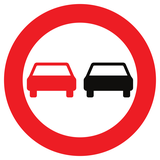 Prohibitory signs
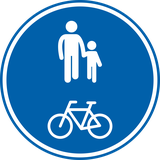 Mandatory signs
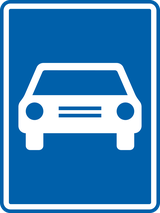 Information signs
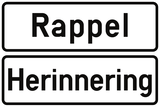 Additional signs
Traffic signs
A traffic sign is a standardised visual symbol placed along roads to guide, warn, or regulate drivers, cyclists, and pedestrians. These signs provide essential information about road conditions, rules, directions, and potential hazards, helping to ensure safety and smooth traffic flow. They come in various shapes and colours—such as triangular warning signs, circular prohibitory or mandatory signs, and rectangular information signs—each designed for quick recognition and clear understanding.
What are Belgian A-series traffic signs?
The A series mainly consists of warning signs. They warn road users of a danger ahead, such as dangerous curves, road narrowing, slippery roads, pedestrian crossings or railway crossings.
 Warning for a danger with no specific traffic sign.
Signal routier A51 • Danger non défini par un symbole spécial. Un panneau additionnel indique la nature du danger.
Verkeersbord A51 • Gevaar dat niet door een speciaal symbool wordt bepaald. Een onderbord duidt de aard van het gevaar aan.
 Warning for a movable bridge.
Signal routier A9 • Pont mobile.
Verkeersbord A9 • Beweegbare brug.
What are Belgian B-series traffic signs?
The B series contains priority signs. These signs regulate matters such as giving way, stopping, priority roads, priority from the right and priority at narrow passages.
 Stop and give way.
Signal routier B5 • Marquer l’arrêt et céder la priorité.
Verkeersbord B5 • Stoppen en voorrang verlenen.
 Give way.
Signal routier B1 • Céder la priorité.
Verkeersbord B1 • Voorrang verlenen.
What are Belgian C-series traffic signs?
The C series contains prohibition and restriction signs. They can prohibit access, restrict particular categories of vehicles, impose a maximum speed or prohibit certain manoeuvres.
 No entry.
Signal routier C1 • Sens interdit à tout conducteur.
Verkeersbord C1 • Verboden richting voor iedere bestuurder.
 Access prohibited in both directions.
Signal routier C3 • Accès interdit, dans les deux sens, à tout conducteur.
Verkeersbord C3 • Verboden toegang, in beide richtingen, voor iedere bestuurder.
What are Belgian D-series traffic signs?
The D series contains mandatory signs. They can require drivers to follow a particular direction or require certain road users to use a designated part of the public road.
 Driving straight ahead mandatory.
Signal routier D1 • Obligation de suivre la direction indiquée par la flèche. La disposition des lieux détermine la position de la flèche. Si le signal présentant une flèche non coudée, est placé sur un obstacle, il signifie obligation de passer du côté indiqué par la flèche.
Verkeersbord D1 • Verplichting de door de pijl aangeduide richting te volgen. De plaatsgesteldheid bepaalt de stand van de pijl. Wanneer het verkeersbord dat een niet-gebogen pijl voorstelt, op een hindernis geplaatst is, betekent het dat langs de door de pijl aangeduide richting moet voorbijgereden worden.
What are Belgian E-series traffic signs?
The E series contains signs concerning stopping and parking. They can prohibit stopping or parking or indicate and regulate parking places.
 Parking prohibited.
Signal routier E1 • Stationnement interdit.
Verkeersbord E1 • Parkeerverbod.
What are Belgian F-series traffic signs?
The F series mainly contains indication signs and signs establishing particular traffic situations, such as motorways, built-up areas, one-way roads, bus lanes, pedestrian crossings and dead-end roads.
 Start of a built-up area.
Signal routier F1b • Commencement d'une agglomération. Ce signal est placé à droite, à chaque accès d'une agglomération; il peut être répété à gauche.
Verkeersbord F1b • Begin van een bebouwde kom. Dit verkeersbord wordt rechts geplaatst op elke toegangsweg tot een bebouwde kom; het mag links herhaald worden.
Are Belgian traffic signs legally binding?
Yes. Road users must obey Belgian traffic signs when they are regular in form, sufficiently visible and installed in accordance with the applicable rules.
What takes priority if Belgian traffic instructions, signs and rules conflict?
Instructions given by authorised persons take priority over traffic signs and the ordinary traffic rules. Traffic signs take priority over the ordinary traffic rules. When traffic lights are operating at a location, priority signs placed on the same road do not apply there.
Are traffic lights and road markings also traffic signs?
No. Belgian law distinguishes between traffic lights, traffic signs and road markings. Together they form the traffic-signalling system that road users must follow.
How are Belgian traffic signs currently classified?
Under the current Belgian Road Code, traffic signs are divided into six categories: warning signs, priority signs, prohibitory signs, mandatory signs, signs concerning stopping and parking, and information signs.
Can an additional sign change the meaning of a Belgian traffic sign?
Yes. An additional sign placed below a traffic sign can supplement, specify or limit its meaning. It may indicate matters such as a distance, the length of a regulation, a period, a particular vehicle category or an exception.
Can Belgian traffic signs be displayed electronically?
Yes. Traffic signs can be displayed using dynamic or variable signalling. Their colours may be adapted for the electronic display, but red remains red and the legal meaning of the sign does not change.
Who is allowed to place traffic signs on Belgian public roads?
Traffic signs may normally only be placed by the legally competent authorities. Temporary signalling may also be used in specific circumstances, such as roadworks, traffic obstructions or emergencies, in accordance with the applicable rules.
Why is Belgium introducing new traffic signs?
Belgium’s new Code of the Public Road modernises and reorganises the traffic-sign system. Many signs have been adapted to use simpler and more internationally harmonised symbols, while obsolete signs are removed and several situations receive their own dedicated signs instead of relying on combinations of existing signs and additional panels.
How will Belgian traffic signs look different under the new Road Code?
Many signs receive modernised and simplified symbols. Warning and prohibitory signs receive a white contrast border, additional contrast is introduced between blue and red areas on certain signs, and the current blue additional signs are replaced by white panels with black symbols or text.
How are traffic signs classified under Belgium’s new Road Code?
The new Code keeps the familiar A, B, C, D, E and F series and adds a clearer structure with R-series signs for special regulations, Z-series signs for zonal regulations and M-series additional signs.
When do Belgium’s new traffic signs become valid?
Belgium’s new Code of the Public Road takes effect on 1 June 2027. The new traffic signs may not be used before that date.
Must all current Belgian traffic signs be replaced on 1 June 2027?
No. Most current Belgian traffic signs may remain in use during a long transition period and do not have to be replaced immediately. Most old models remain valid until 1 January 2045.
Are there Belgian traffic signs that must be replaced earlier?
Yes. Traffic signs E5, E7 and E11 lose their meaning on 1 June 2027. The current F17 and F18 bus-lane signs and associated markings lose their meaning on 1 June 2030, while certain current F111 and F113 cycling-zone signs lose their meaning on 1 January 2035.
Can an old Belgian traffic sign remain in place but receive the meaning of the new Road Code?
Yes. Many current signs may physically remain in place during the transition period. From 1 June 2027, they are interpreted according to the new Code of the Public Road unless a specific transitional provision provides otherwise.
Should drivers learn both the current and new Belgian traffic signs?
Yes. The current traffic signs remain relevant until the new Code takes effect, and many old designs will remain on Belgian roads for years afterwards. During the transition period, drivers should therefore be able to recognise both current and new traffic signs.

1. Stop and give way
This traffic sign means stop and give way. You must come to a complete stop before entering the intersection and give way to traffic that has priority. Proceed only when it is safe.

Signal routier B5 • Marquer l’arrêt et céder la priorité.
Verkeersbord B5 • Stoppen en voorrang verlenen.
2. Give way
This traffic sign means give way. Slow down and give way to traffic that has priority. Stop if necessary and proceed only when it is safe.

Signal routier B1 • Céder la priorité.
Verkeersbord B1 • Voorrang verlenen.
3. Warning for an uncontrolled crossroad
This traffic sign indicates a warning for an uncontrolled crossroad. An intersection without traffic signals or signs assigning priority lies ahead. Reduce speed, watch for traffic approaching from other directions and follow the applicable local priority rules.
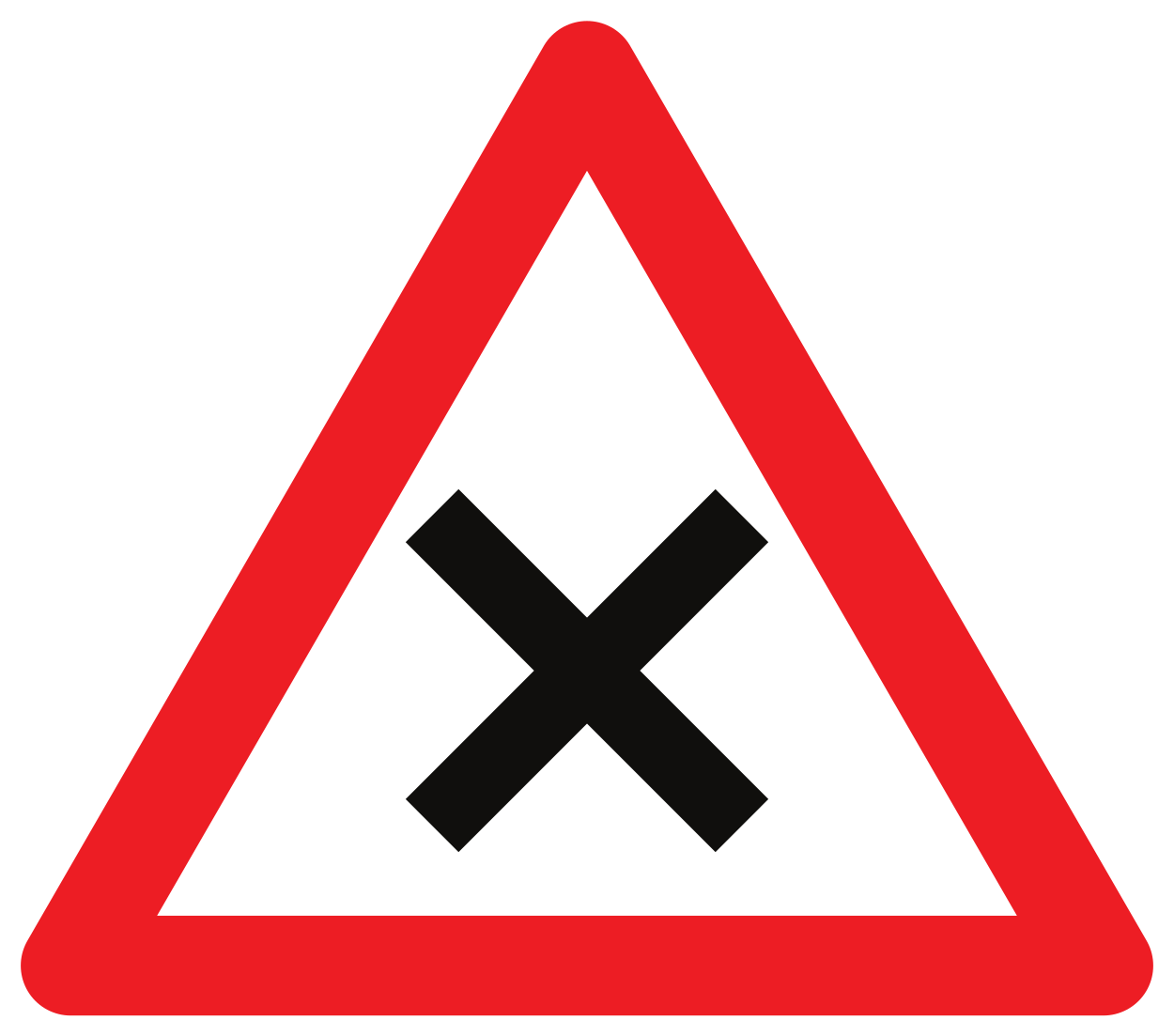
Signal routier B17 • Carrefour où la priorité de droite est applicable.
Verkeersbord B17 • Kruispunt waar de voorrang van rechts geldt.
4. Cyclists and speed pedelecs may proceed on red or amber
This traffic sign permits cyclists and speed pedelecs to pass a red or amber traffic light in the direction indicated by the arrow. They must give way to other road users as required and proceed only when it is safe.
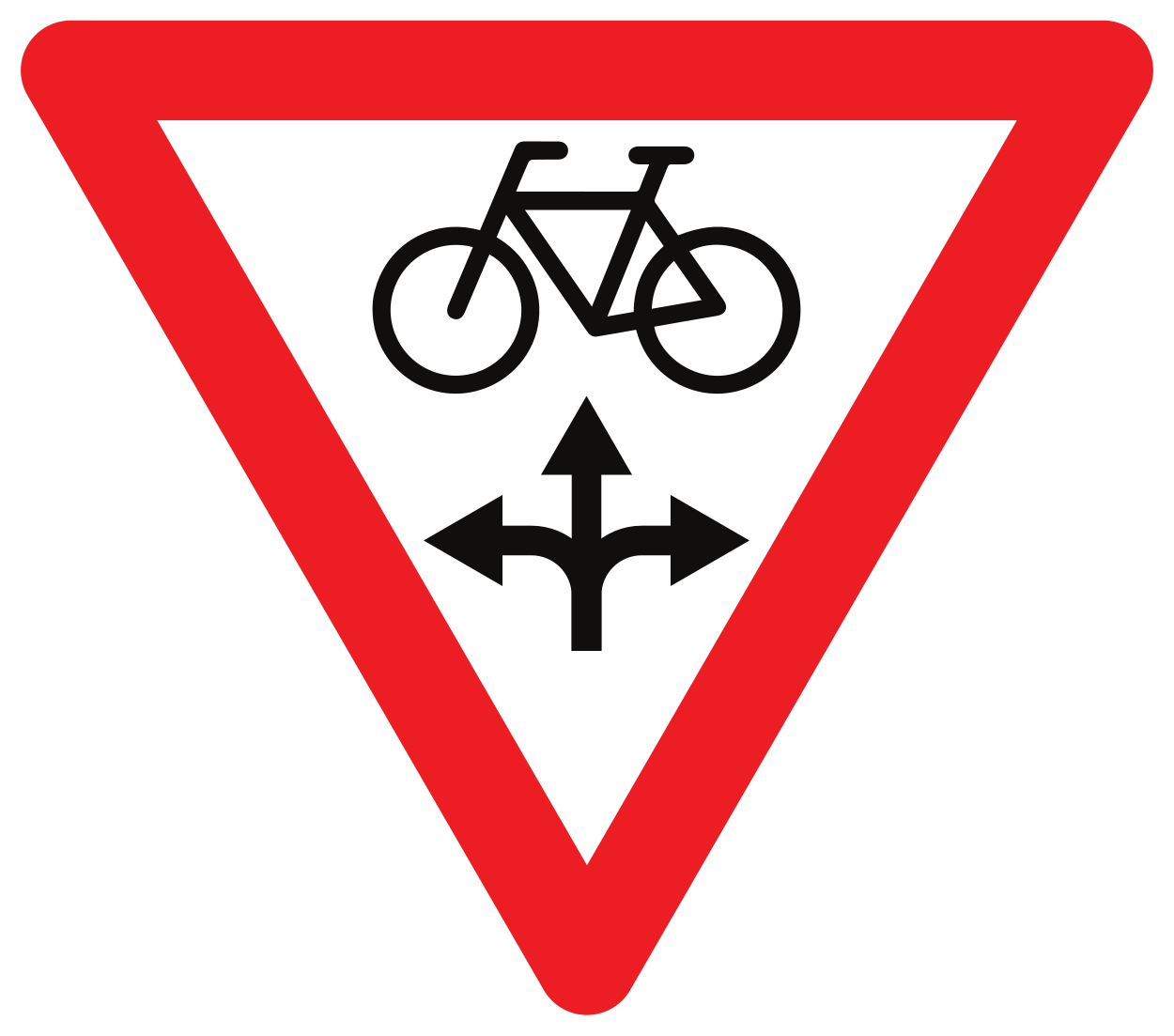
Signal routier B22 • Autorisation pour les cyclistes et les conducteurs de speedpedelecs de franchir les signaux lumineux mentionnés aux articles 57 et 60 et de continuer dans la ou les directions indiquées par la ou les flèches lorsque ces signaux lumineux l’interdisent, à condition de céder la priorité aux autres usagers circulant sur la voie publique (exemple).
Verkeersbord B22 • Toelating voor fietsers en bestuurders van speedpedelecs om de in de artikelen 57 en 60 bedoelde verkeerslichten voorbij te rijden in de door de pijl of pijlen aangegeven richtingen, wanneer deze verkeerslichten het verbieden, onder de voorwaarde voorrang te verlenen aan de andere weggebruikers die zich op de openbare weg verplaatsen (voorbeeld).
5. Priority at the junction
This traffic sign indicates that you have priority at the next intersection. Side roads join from the left and right, and traffic entering from those side roads must give way.
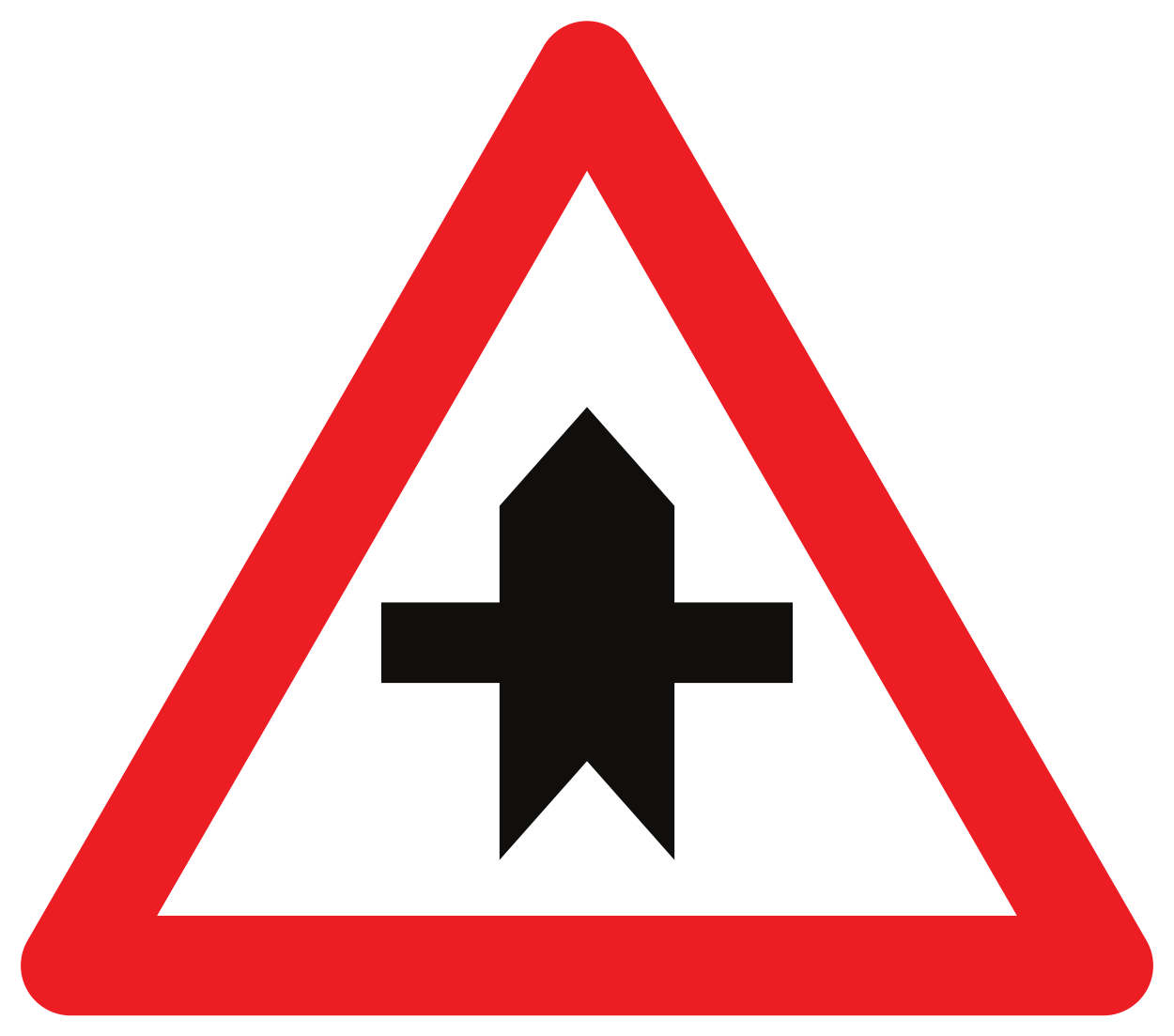
Signal routier B15 • Priorité au prochain carrefour.
Verkeersbord B15 • Voorrang op het volgende kruispunt.
6. Warning for a curve to the left
This traffic sign indicates a warning for a curve to the left. A left-hand bend lies ahead. Reduce speed before entering the curve, maintain your lane position and use smooth steering.
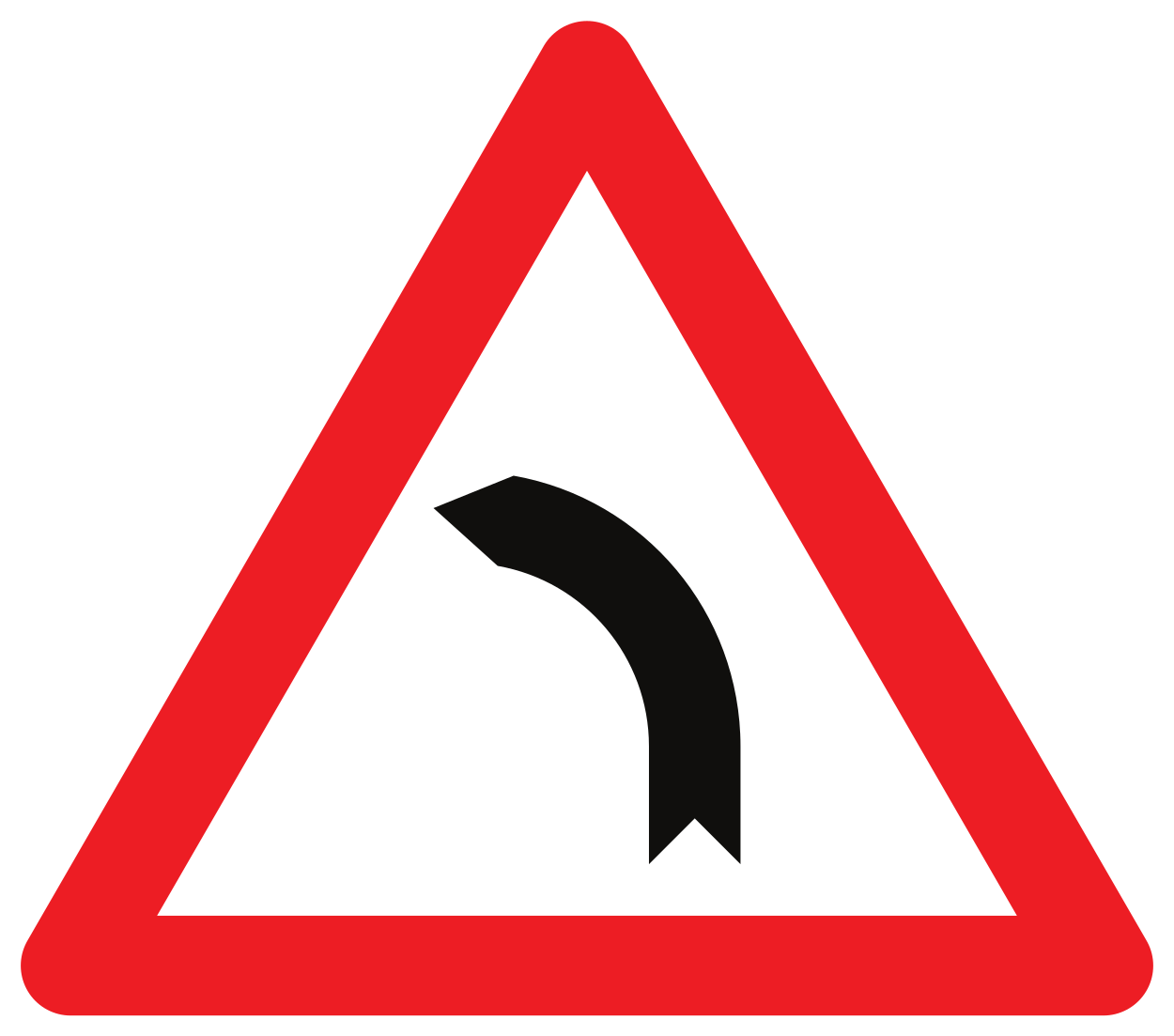
Signal routier A1a • Virage dangereux à gauche.
Verkeersbord A1a • Gevaarlijke bocht naar links.
7. Warning for a curve to the right
This traffic sign indicates a warning for a curve to the right. A right-hand bend lies ahead. Reduce speed before entering the curve, maintain your lane position and use smooth steering.
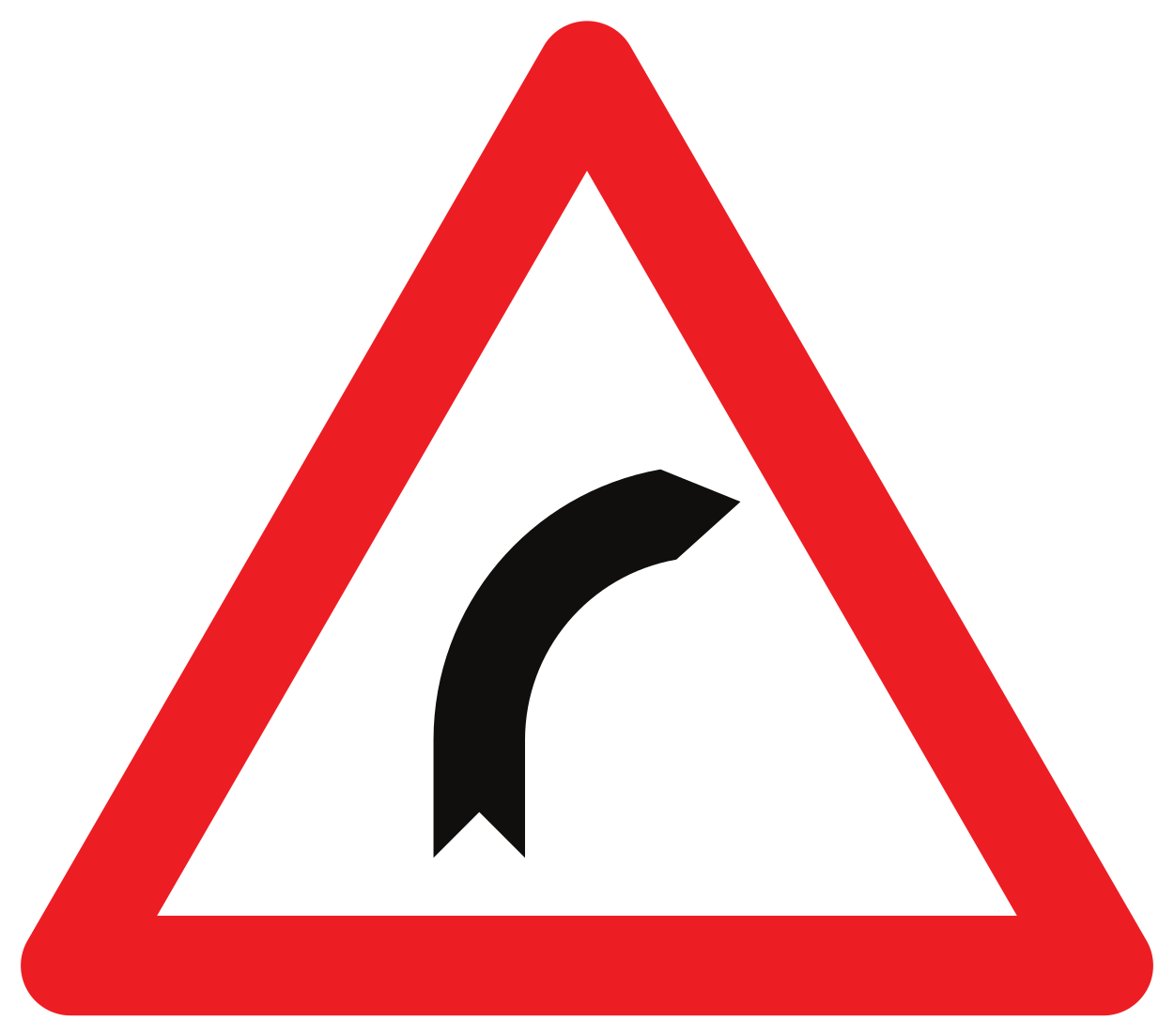
Signal routier A1b • Virage dangereux à droite.
Verkeersbord A1b • Gevaarlijke bocht naar rechts.
8. Warning for a double curve, first left then right
This traffic sign indicates a warning for successive curves, with the first curve to the left. Reduce speed before entering the winding section, maintain your lane position and be prepared for further changes in direction.
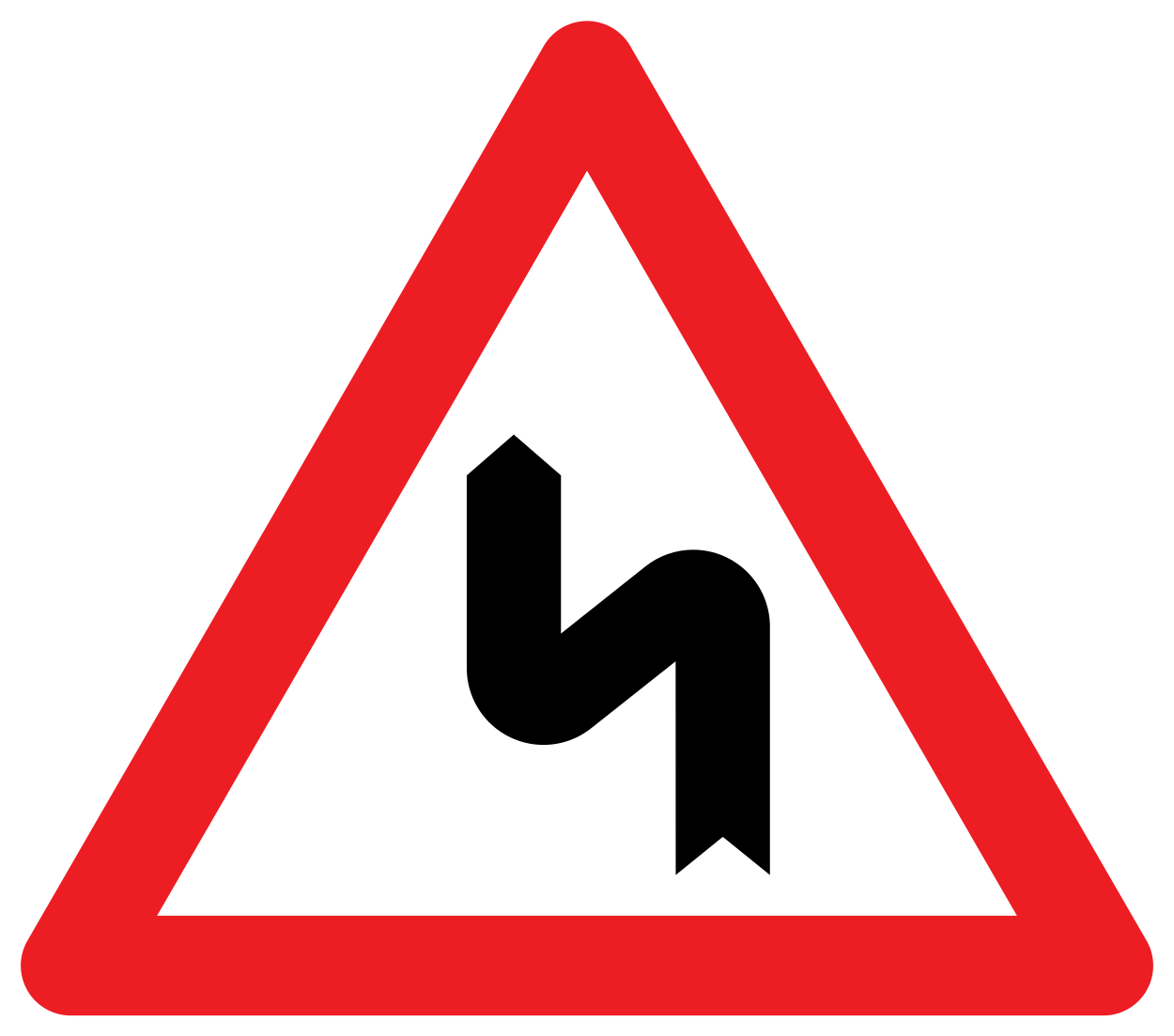
Signal routier A1c • Double virage ou succession de plus de deux virages, le premier à gauche.
Verkeersbord A1c • Dubbele bocht of opeenvolging van meer dan twee bochten, de eerste naar links.
9. Warning for a double curve, first right then left
This traffic sign indicates a warning for successive curves, with the first curve to the right. Reduce speed before entering the winding section, maintain your lane position and be prepared for further changes in direction.
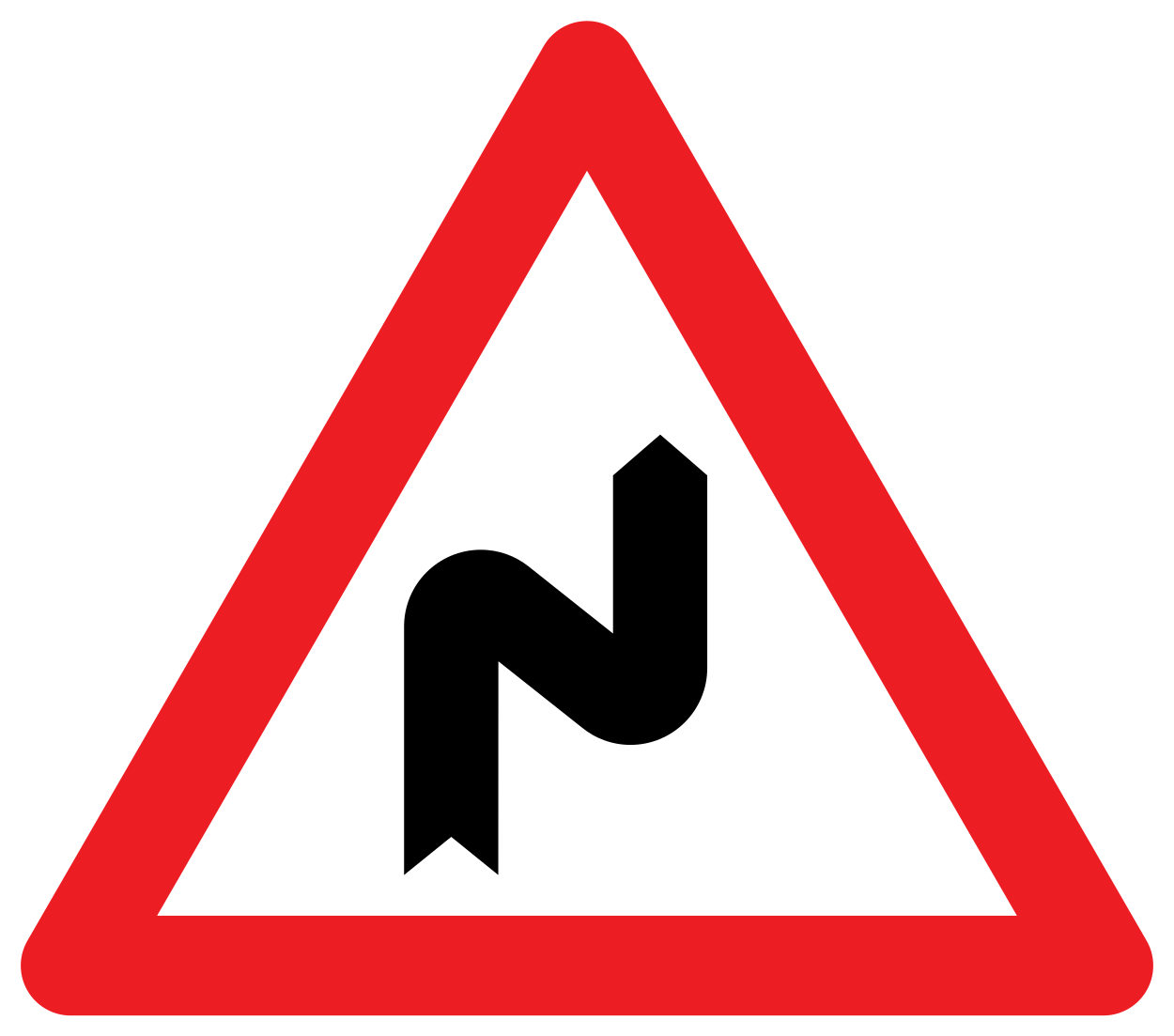
Signal routier A1d • Double virage ou succession de plus de deux virages, le premier à droite.
Verkeersbord A1d • Dubbele bocht of opeenvolging van meer dan twee bochten, de eerste naar rechts.
10. Warning for a road narrowing
This traffic sign indicates a warning for a road narrowing. The available width of the road or carriageway decreases ahead. Reduce speed, maintain sufficient lateral clearance and watch carefully for approaching or adjacent traffic.

Signal routier A7a • Rétrécissement de la chaussée.
Verkeersbord A7a • Rijbaanversmalling.
11. Warning for a road narrowing on the left
This traffic sign indicates a warning for a road narrowing on the left. The available road width decreases from the left side ahead. Reduce speed, follow the lane markings and maintain sufficient clearance from other traffic and the road edge.

Signal routier A7b • Rétrécissement de la chaussée.
Verkeersbord A7b • Rijbaanversmalling.
12. Warning for a road narrowing on the right
This traffic sign indicates a warning for a road narrowing on the right. The available road width decreases from the right side ahead. Reduce speed, follow the lane markings and maintain sufficient clearance from other traffic and the road edge.

Signal routier A7c • Rétrécissement de la chaussée.
Verkeersbord A7c • Rijbaanversmalling.
13. Warning for a road with two-way traffic
This traffic sign indicates a warning for two-way traffic. Oncoming traffic will use the same road or carriageway ahead. Keep to the correct side of the road and overtake only where it is permitted and clearly safe.
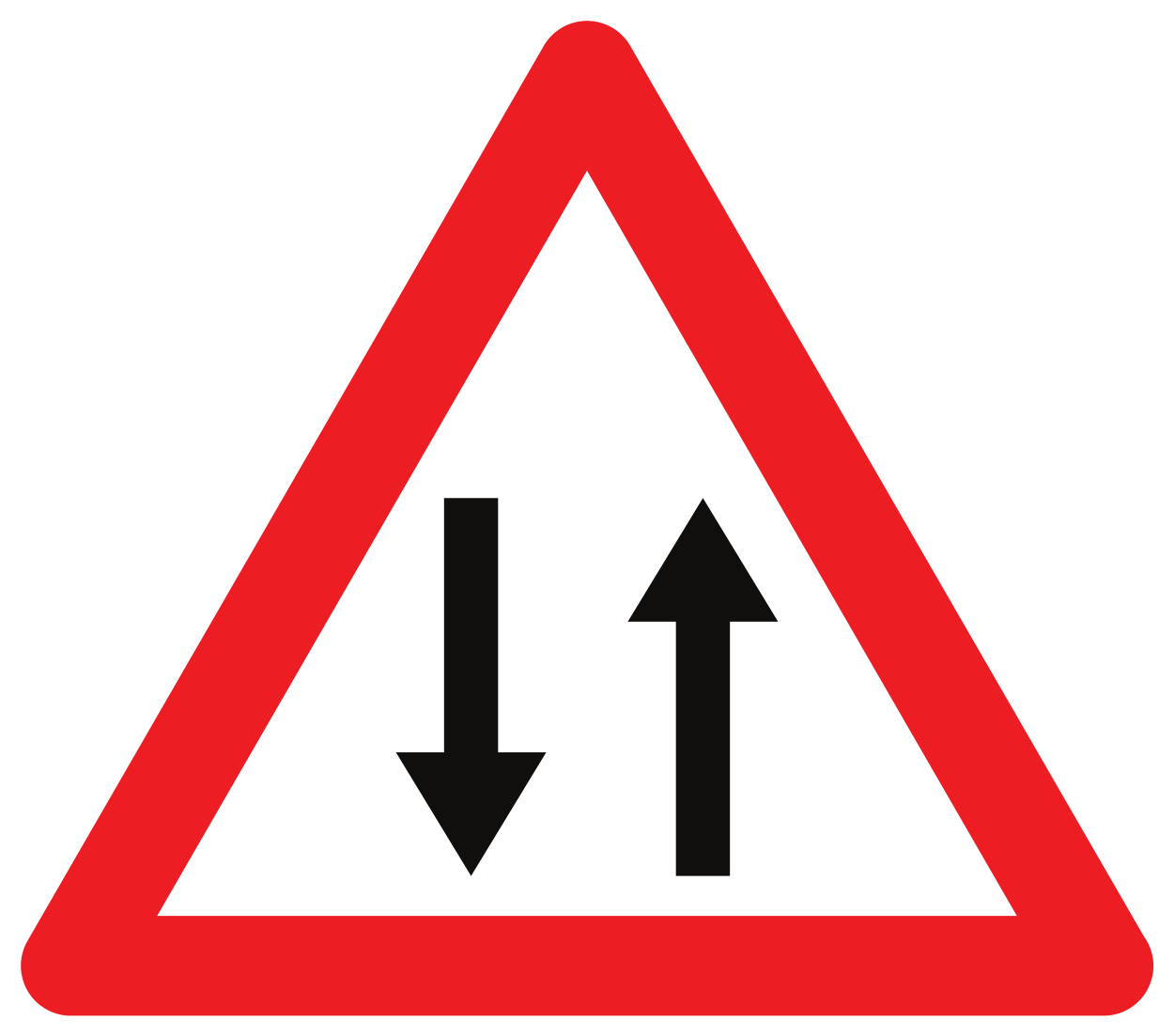
Signal routier A39 • Circulation admise dans les deux sens après une section de chaussée à sens unique.
Verkeersbord A39 • Verkeer toegelaten in beide richtingen na een gedeelte van de rijbaan met éénrichtingsverkeer.
14. Warning for a danger with no specific traffic sign
This traffic sign indicates a warning for a danger with no specific traffic sign. It's a general warning sign used when there is a hazard ahead that does not have its own dedicated warning sign. For example: road accidents, flooded roads and roads blocked by fallen trees. It usually has a supplementary sign attached that tells drivers of what hazard to expect.
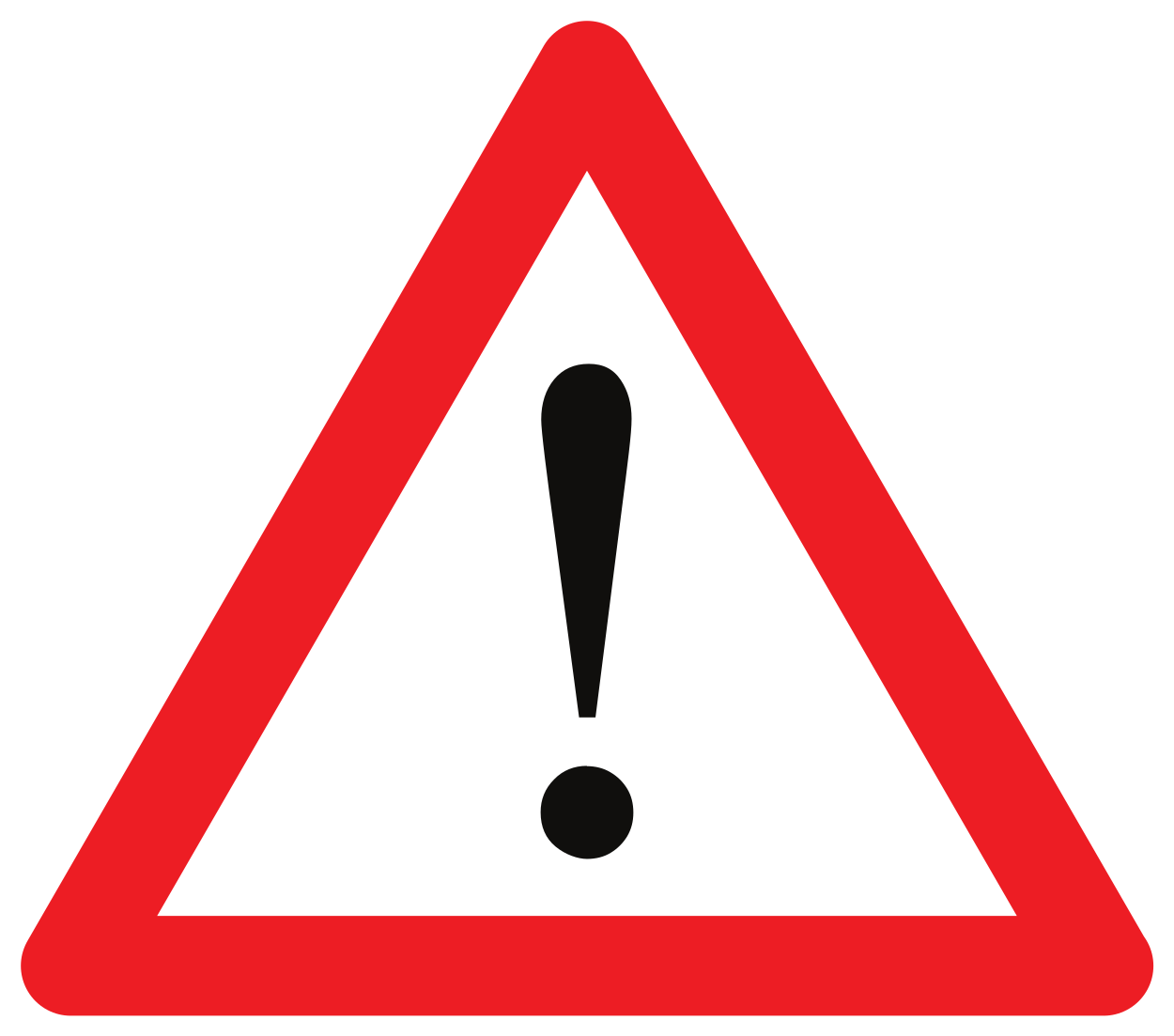
Signal routier A51 • Danger non défini par un symbole spécial. Un panneau additionnel indique la nature du danger.
Verkeersbord A51 • Gevaar dat niet door een speciaal symbool wordt bepaald. Een onderbord duidt de aard van het gevaar aan.
15. Warning for a speed bump
This traffic sign indicates a warning for a speed bump. A raised traffic-calming feature lies ahead. Reduce speed before reaching it to maintain vehicle control and avoid damage or discomfort.

Signal routier A14 • Dispositif surélevé.
Verkeersbord A14 • Verhoogde inrichting.
16. Warning for a bad road surface
This traffic sign indicates a warning for a bad or uneven road surface. Potholes, bumps, depressions or other surface irregularities may affect vehicle stability and braking. Reduce speed and avoid sudden manoeuvres.
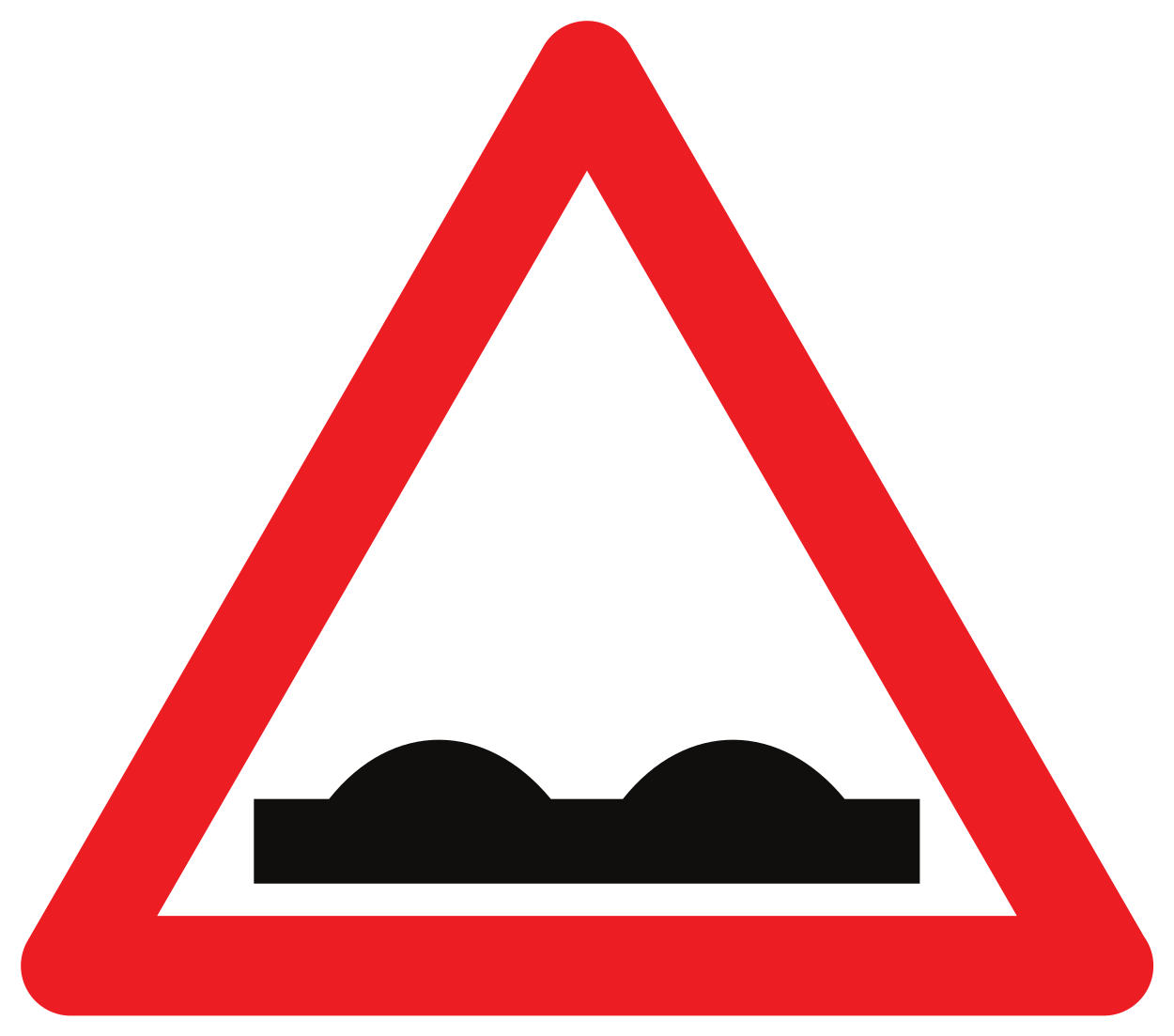
Signal routier A13 • Revêtement irrégulier ou en mauvais état.
Verkeersbord A13 • Oneffen wegdek of wegdek in slechte staat.
17. Warning for a steep ascent
This traffic sign indicates a warning for a steep ascent. A steep uphill gradient lies ahead and may cause heavy or low-powered vehicles to lose speed. Select a suitable gear, maintain a safe following distance and be prepared for slower traffic.
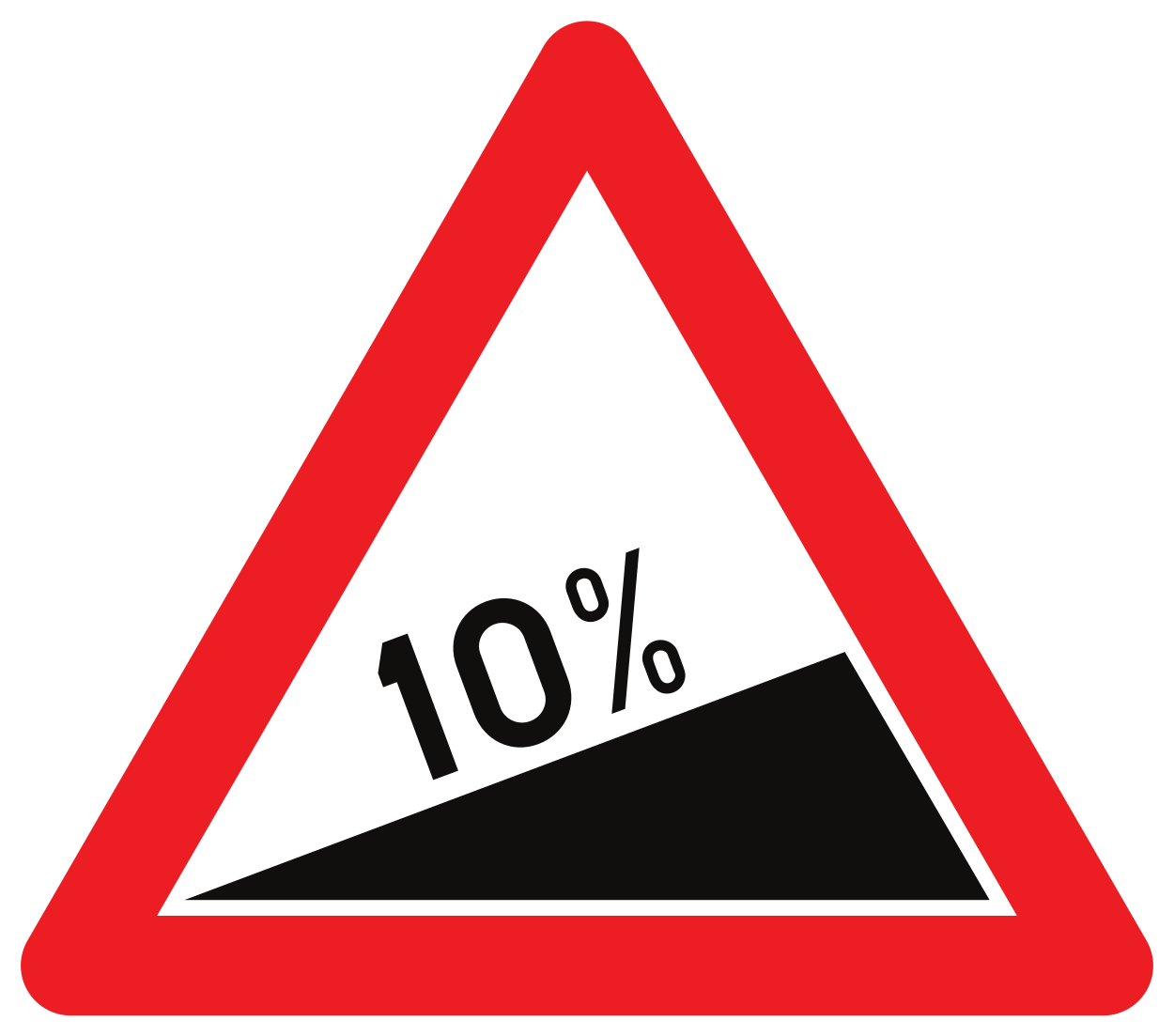
Signal routier A5 • Montée dangereuse. Le pourcentage indique l’inclinaison de la pente.
Verkeersbord A5 • Steile helling. Het percentage duidt de hellingsgraad aan.
18. Warning for a steep descent
This traffic sign indicates a warning for a steep descent. A steep downhill gradient lies ahead and the vehicle may gain speed quickly. Reduce speed before the descent, select a suitable gear and use engine braking where appropriate. Allow extra distance for heavy or towing vehicles.

Signal routier A3 • Descente dangereuse. Le pourcentage indique l’inclinaison de la pente.
Verkeersbord A3 • Gevaarlijke daling. Het percentage duidt de hellingsgraad aan.
19. Warning for a movable bridge
This traffic sign indicates a warning for a movable bridge. The bridge ahead can open, lift or move to allow water traffic to pass. Reduce speed and be prepared to stop when required by barriers, traffic lights or other signals.
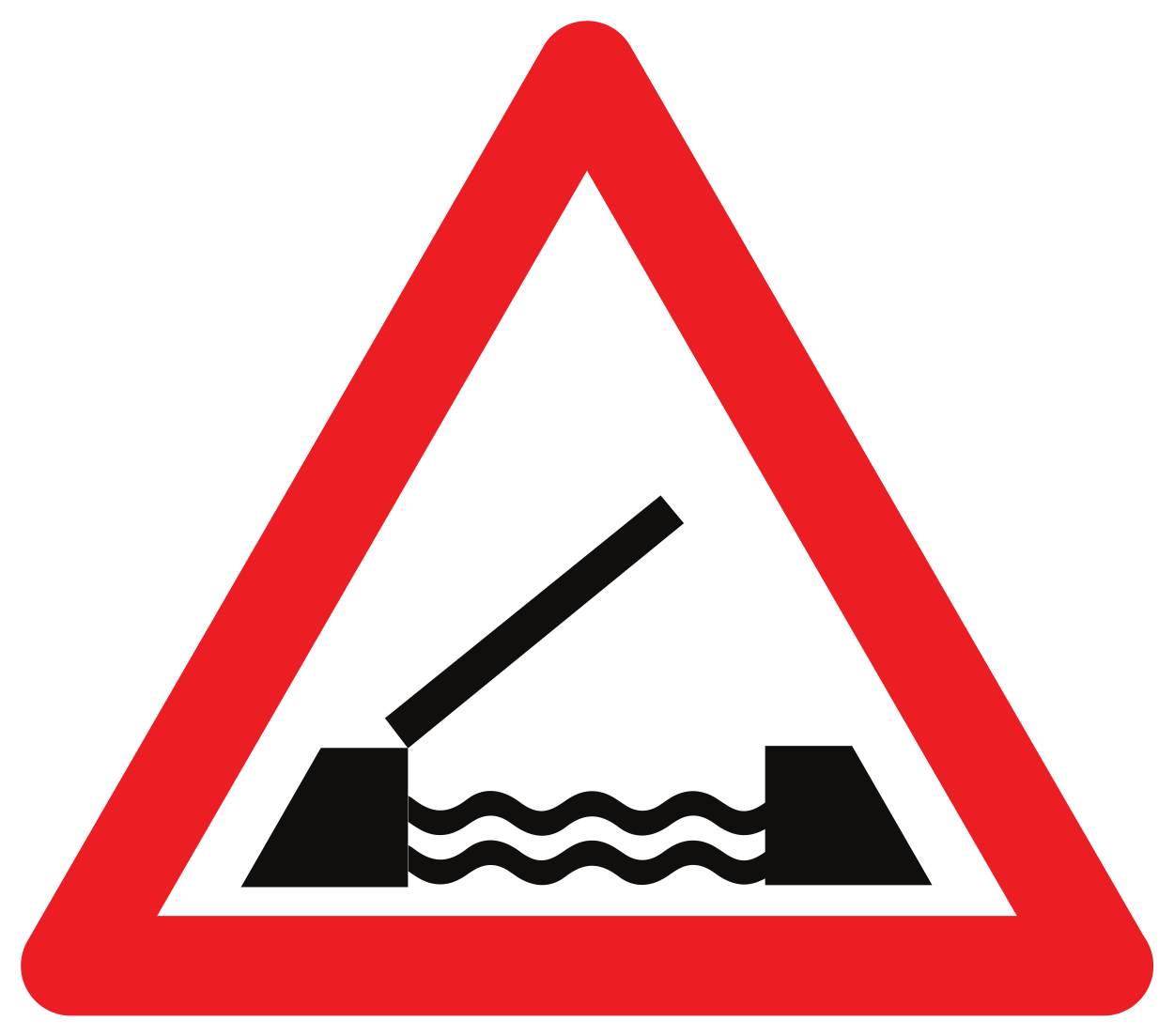
Signal routier A9 • Pont mobile.
Verkeersbord A9 • Beweegbare brug.
20. Warning for a quayside or riverbank
This traffic sign indicates a warning for a quayside or riverbank. The road approaches or runs close to an edge beside water, where a vehicle could leave the roadway and enter the water. Reduce speed, identify the road edge carefully and take extra care in darkness or poor visibility.
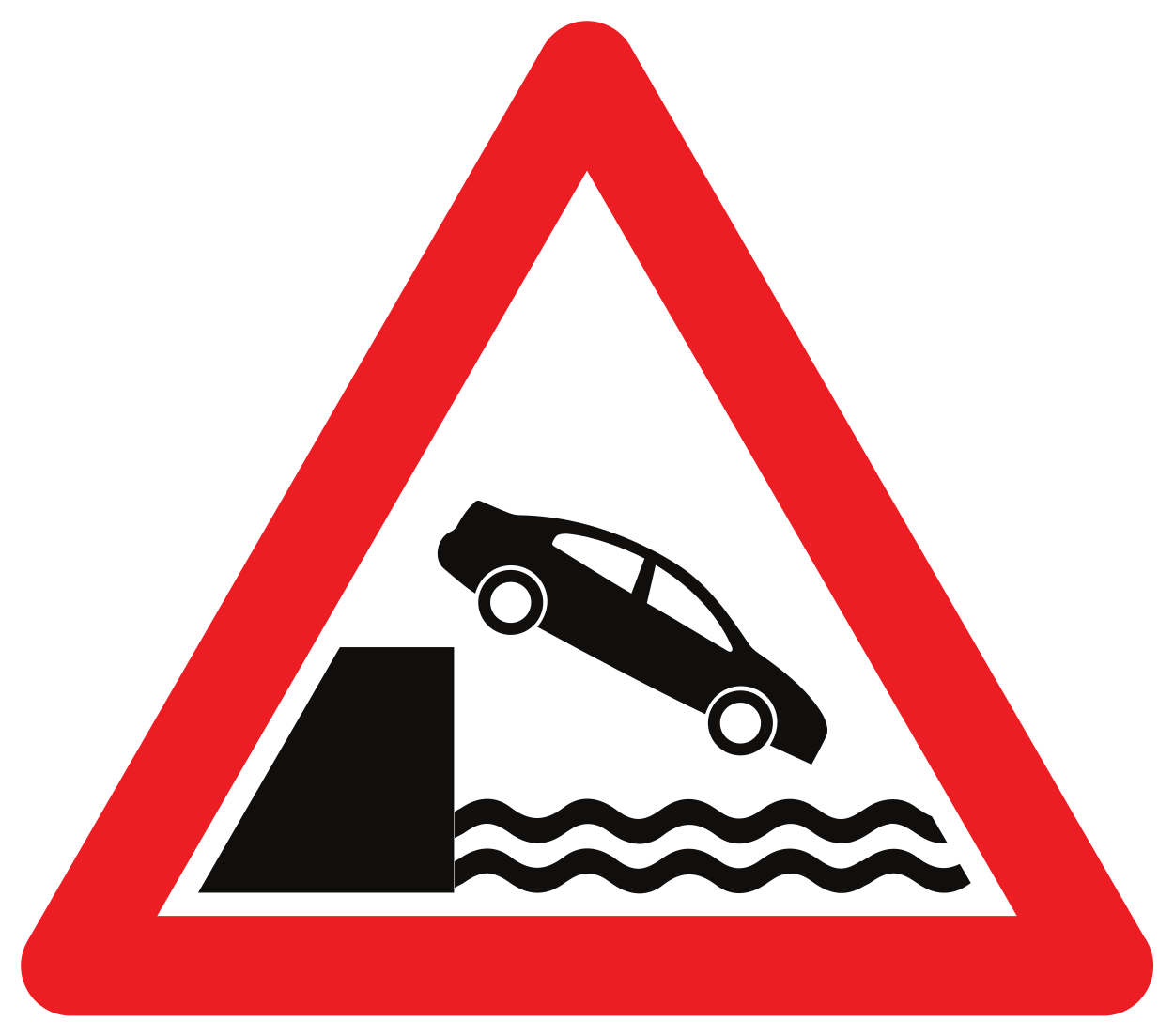
Signal routier A11 • Débouché sur un quai ou une berge.
Verkeersbord A11 • Uitweg op kaai of oever.
21. Warning for retractable bollards
This traffic sign indicates a warning for retractable bollards. They may rise from the road surface ahead. Reduce speed, obey any traffic lights or instructions and do not continue until the bollards are fully lowered and it is safe to pass.
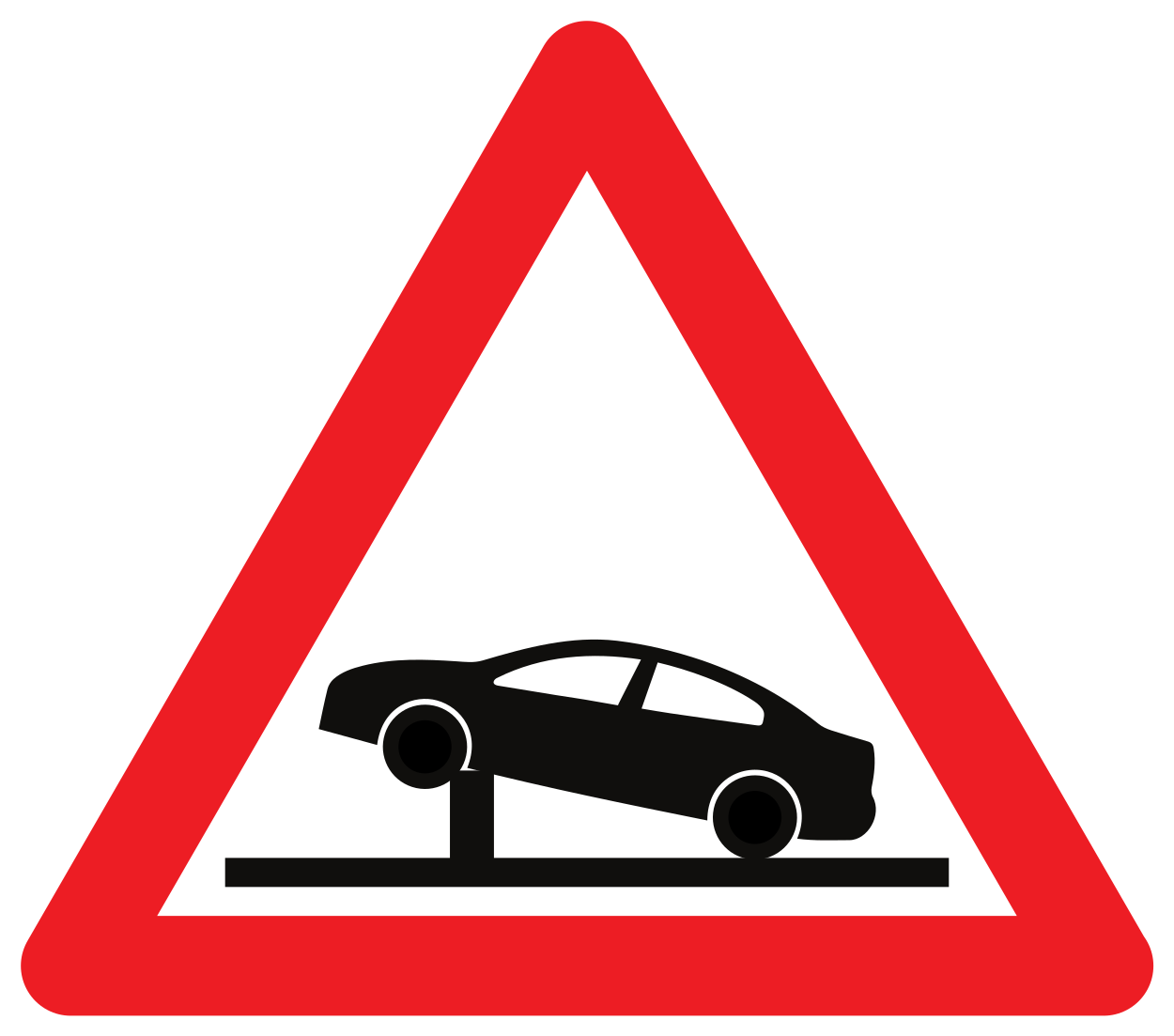
Signal routier A53 • Bornes rétractables.
Verkeersbord A53 • Verzinkbare paaltjes.
22. Warning for traffic lights ahead
This traffic sign indicates a warning for traffic lights ahead. Traffic signals are located ahead and may not be visible early enough without advance warning. Reduce speed and be prepared to stop if the signal requires it.
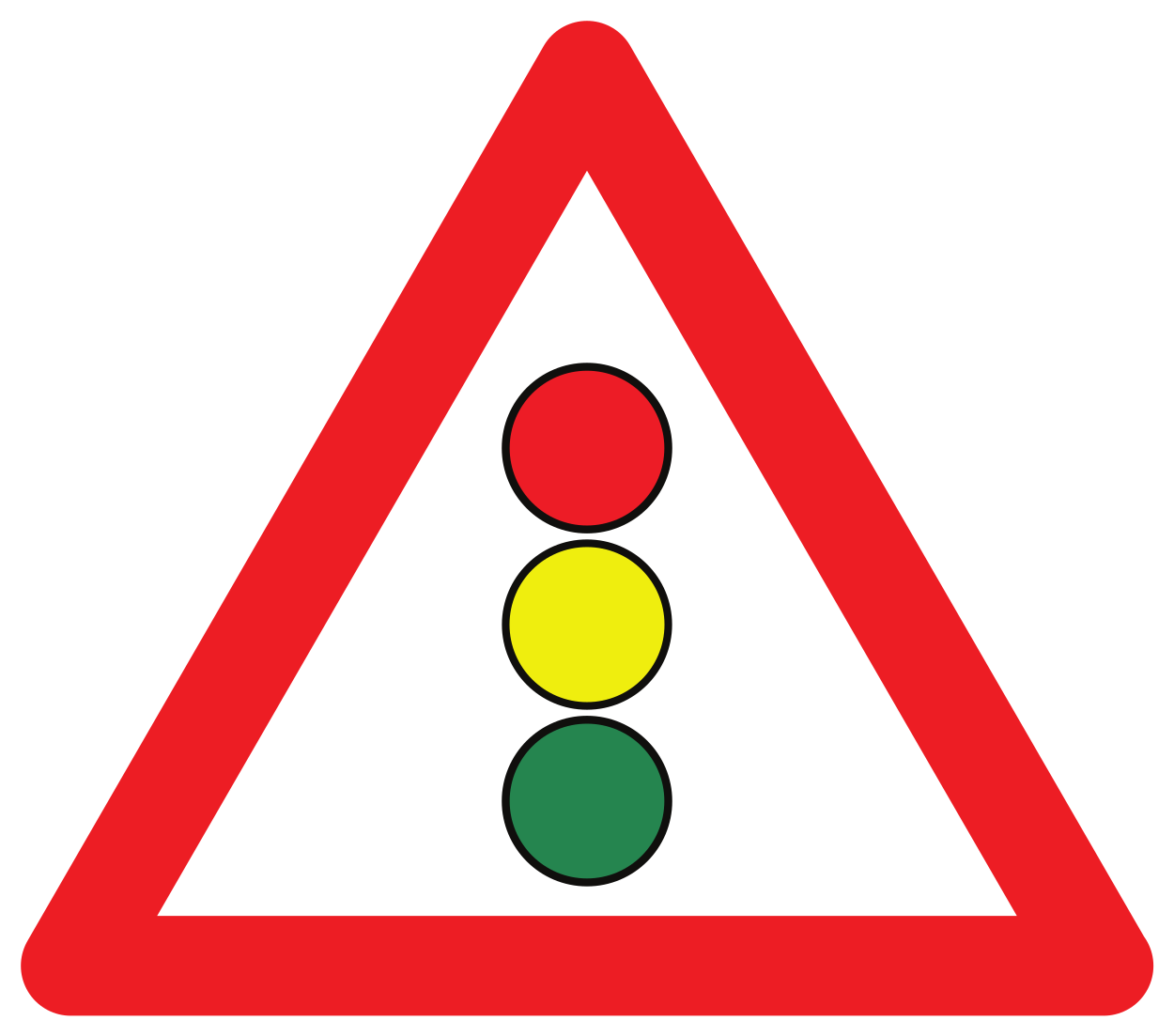
Signal routier A33 • Signaux lumineux de circulation.
Verkeersbord A33 • Verkeerslichten.
23. Warning for falling rocks
This traffic sign indicates a warning for falling rocks. Rocks or stones may fall from nearby slopes or may already be lying on the road. Reduce speed, scan the road ahead and be prepared to avoid or stop for fallen material.
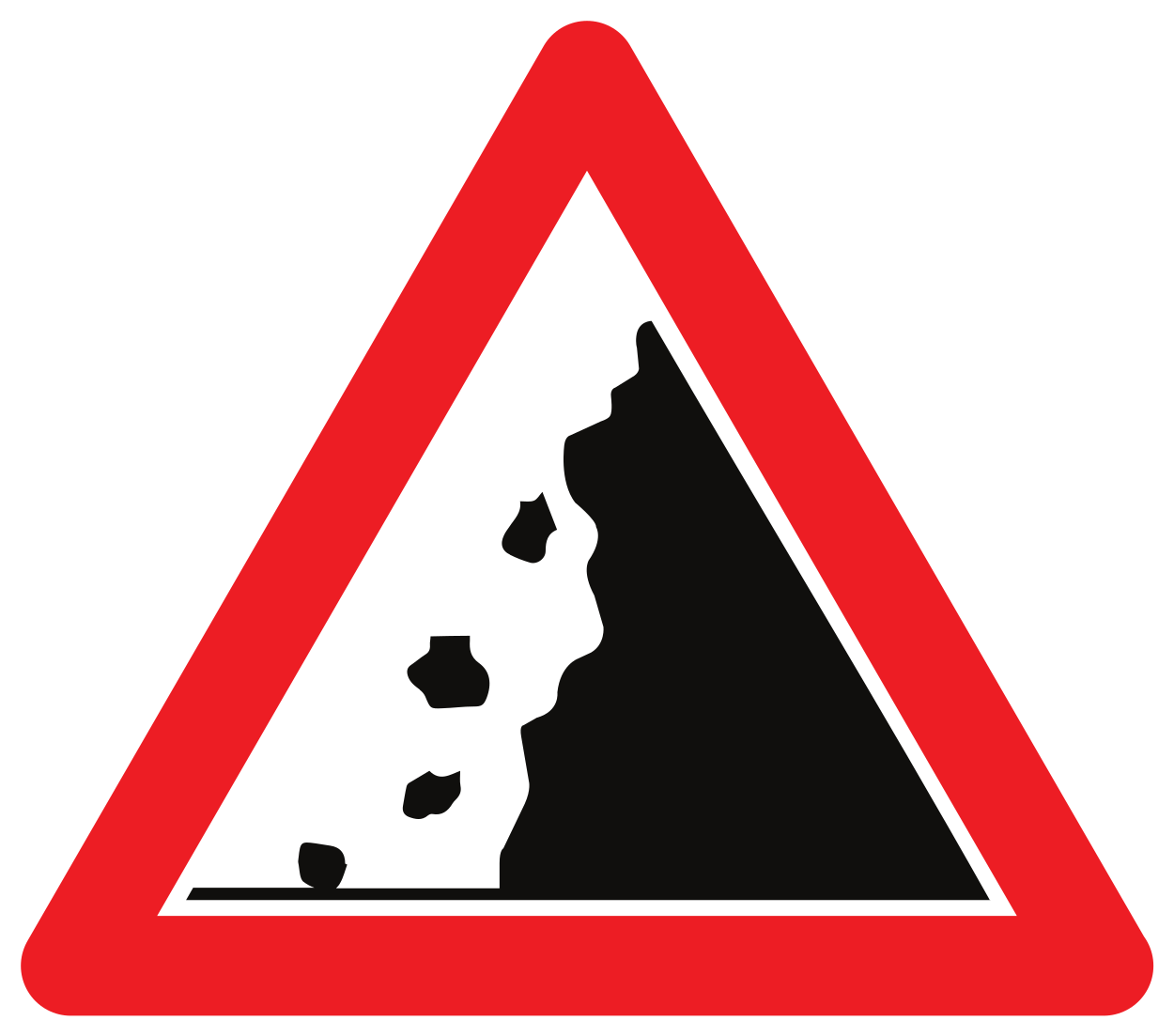
Signal routier A19 • Chutes de pierres ou présence de pierres.
Verkeersbord A19 • Vallende stenen of aanwezigheid van stenen.
24. Warning for roadworks
This traffic sign indicates a warning for roadworks. Construction or maintenance work is taking place on or beside the road. Reduce speed where necessary and be prepared for workers, machinery, temporary traffic signals, changed lane layouts or uneven road surfaces.
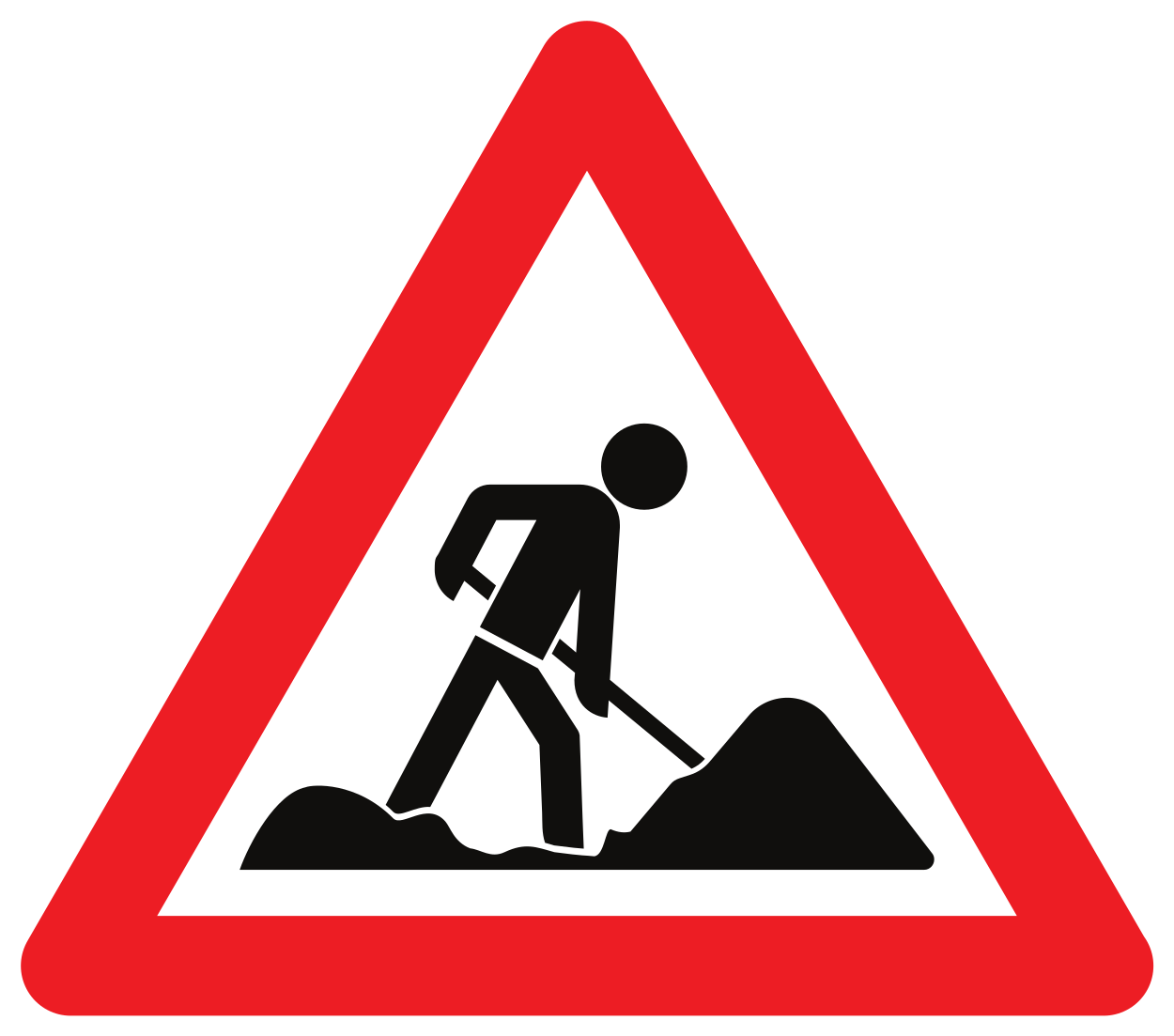
Signal routier A31 • Travaux.
Verkeersbord A31 • Werken.
25. Warning for loose chippings on the road surface
This traffic sign indicates a warning for loose chippings. Loose stones or gravel may reduce tyre grip and can be thrown up by passing vehicles. Reduce speed, increase your following distance and avoid sudden braking, acceleration or steering movements.
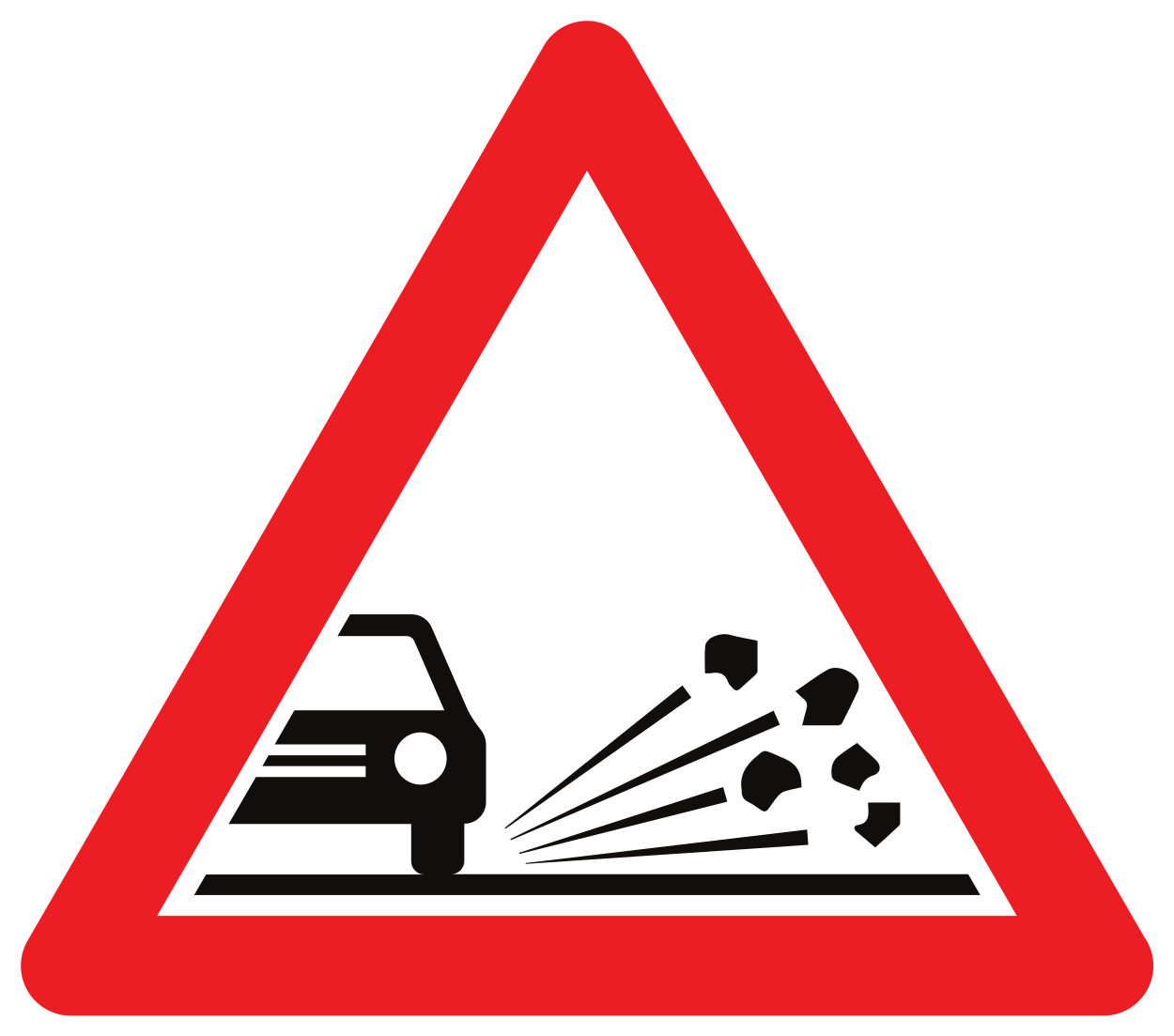
Signal routier A17 • Projection de gravillons.
Verkeersbord A17 • Kiezelprojectie.
26. Warning for ruts
This traffic sign indicates a warning for ruts. Deep wheel tracks or grooves may be present in the road surface and can affect steering and tyre grip. Reduce speed, avoid sudden steering or braking and take extra care when water collects in the ruts.
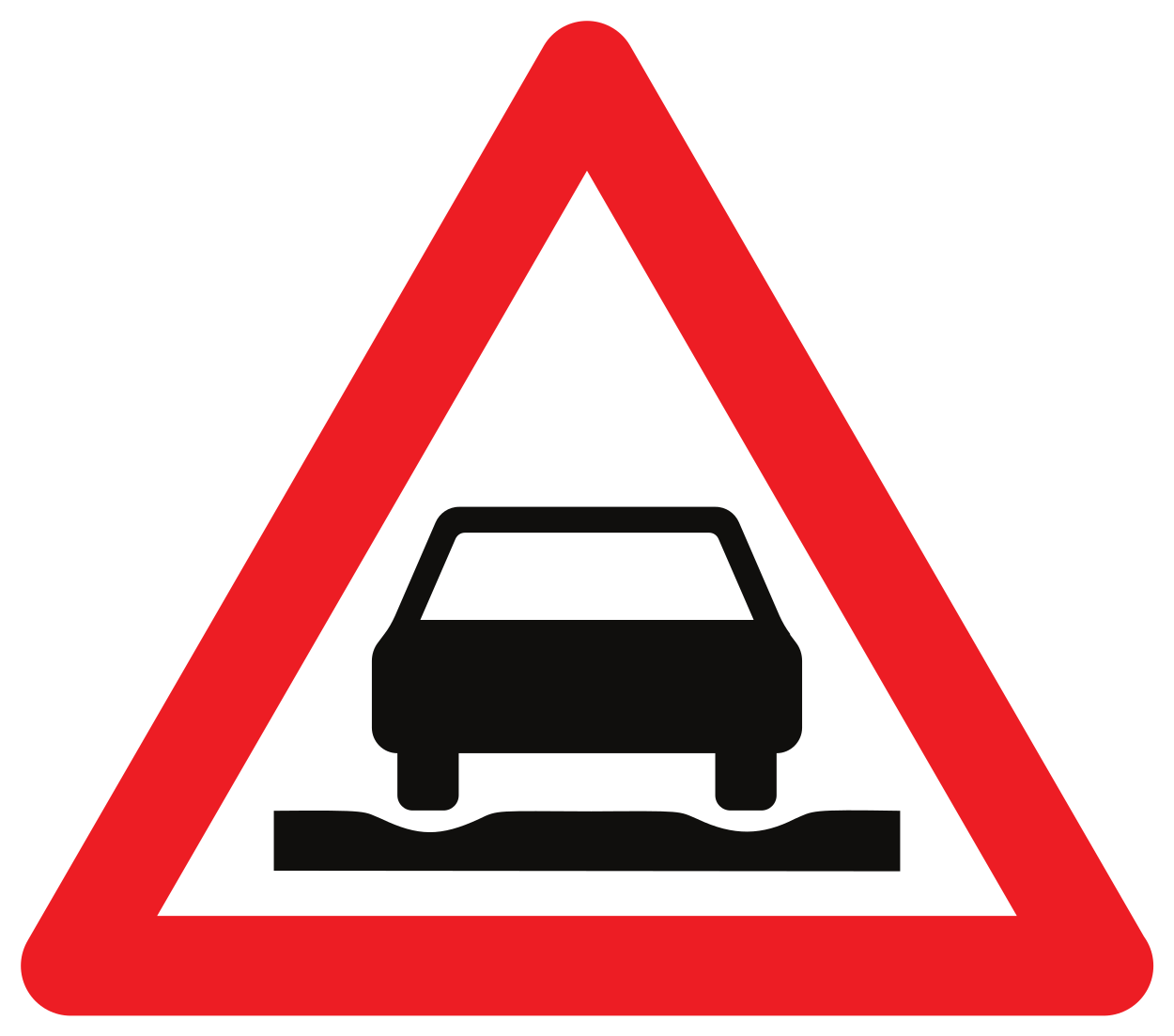
Signal routier A52 • Ornières.
Verkeersbord A52 • Spoorvorming.
27. Warning for a soft verge
This traffic sign indicates a warning for a soft or unstable verge. The edge of the road may provide less grip or support than the roadway and can affect steering or vehicle stability. Avoid driving onto the verge unless necessary and reduce speed if you must use it.
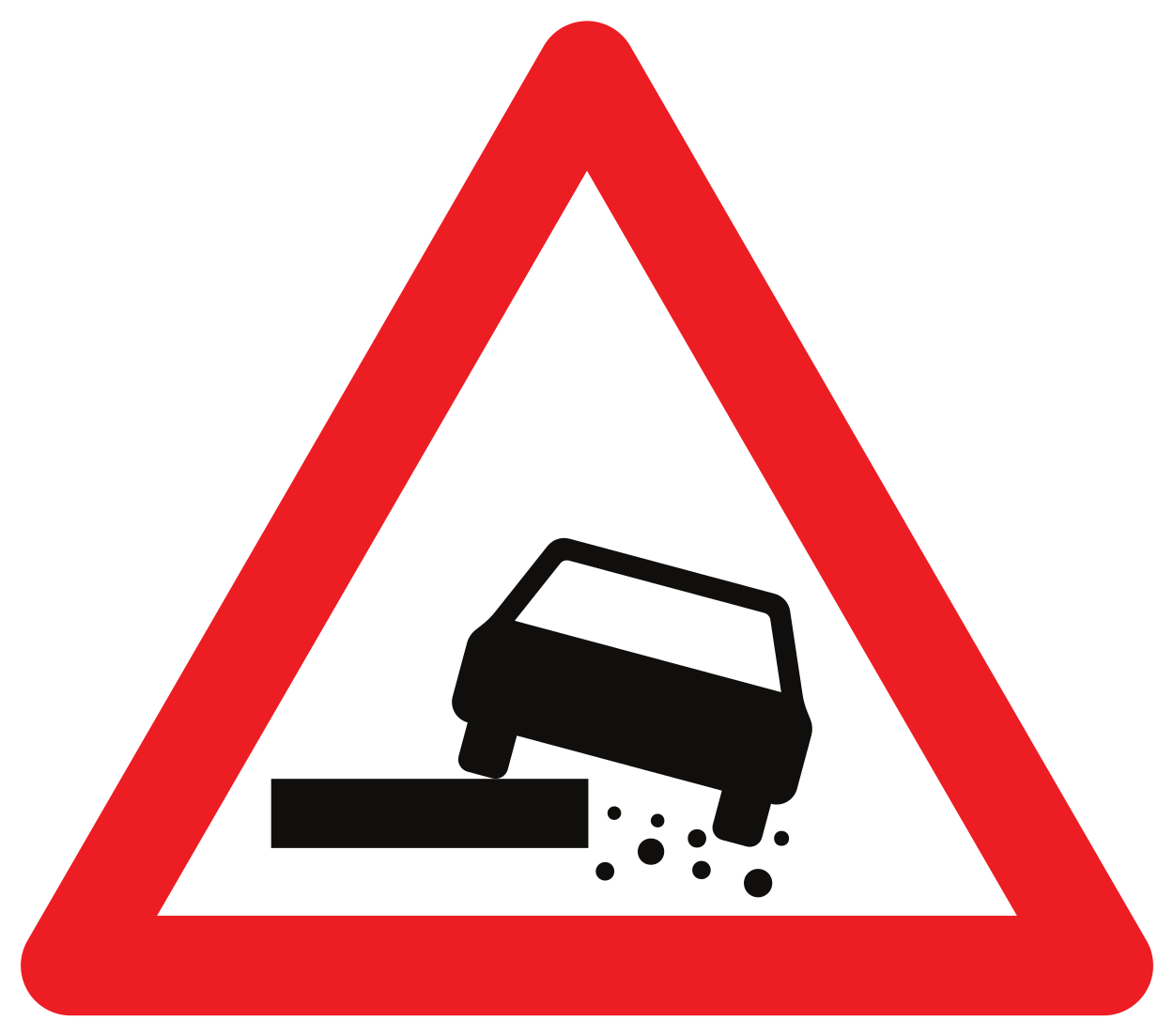
Signal routier A8 • Accotement non stabilisé.
Verkeersbord A8 • Zachte berm.
28. Warning for accidents
This traffic sign indicates a warning for accidents. It warns drivers of an accident hazard or an accident affecting the road ahead. Reduce speed, increase your following distance and be prepared for stopped traffic, emergency services or an obstruction.
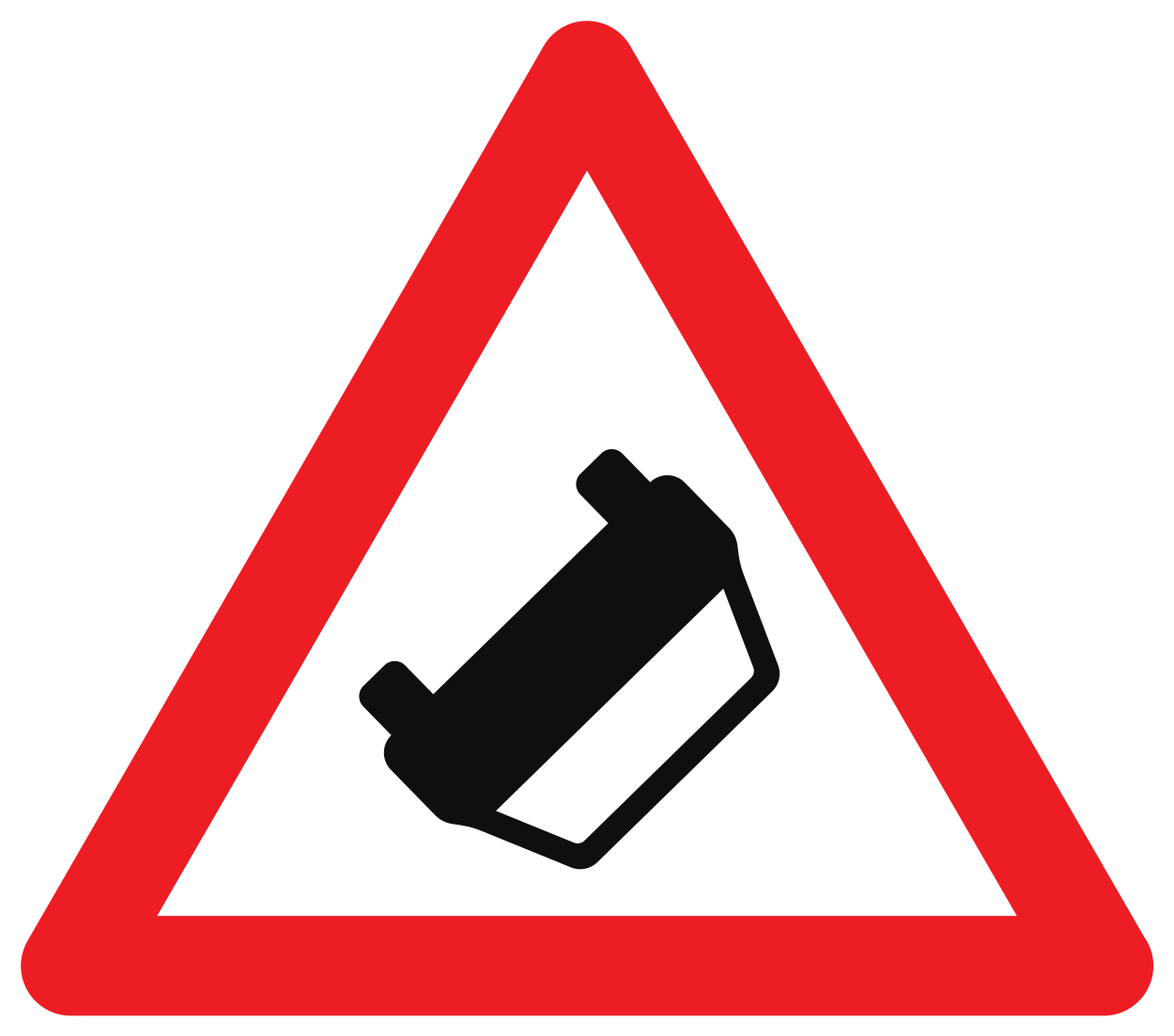
Signal routier A34 • Accident.
Verkeersbord A34 • Ongeval.
29. Warning for traffic queues
This traffic sign indicates a warning for traffic queues. Slow-moving or stationary traffic may occur ahead, sometimes unexpectedly. Reduce speed, increase your following distance and be prepared to stop.
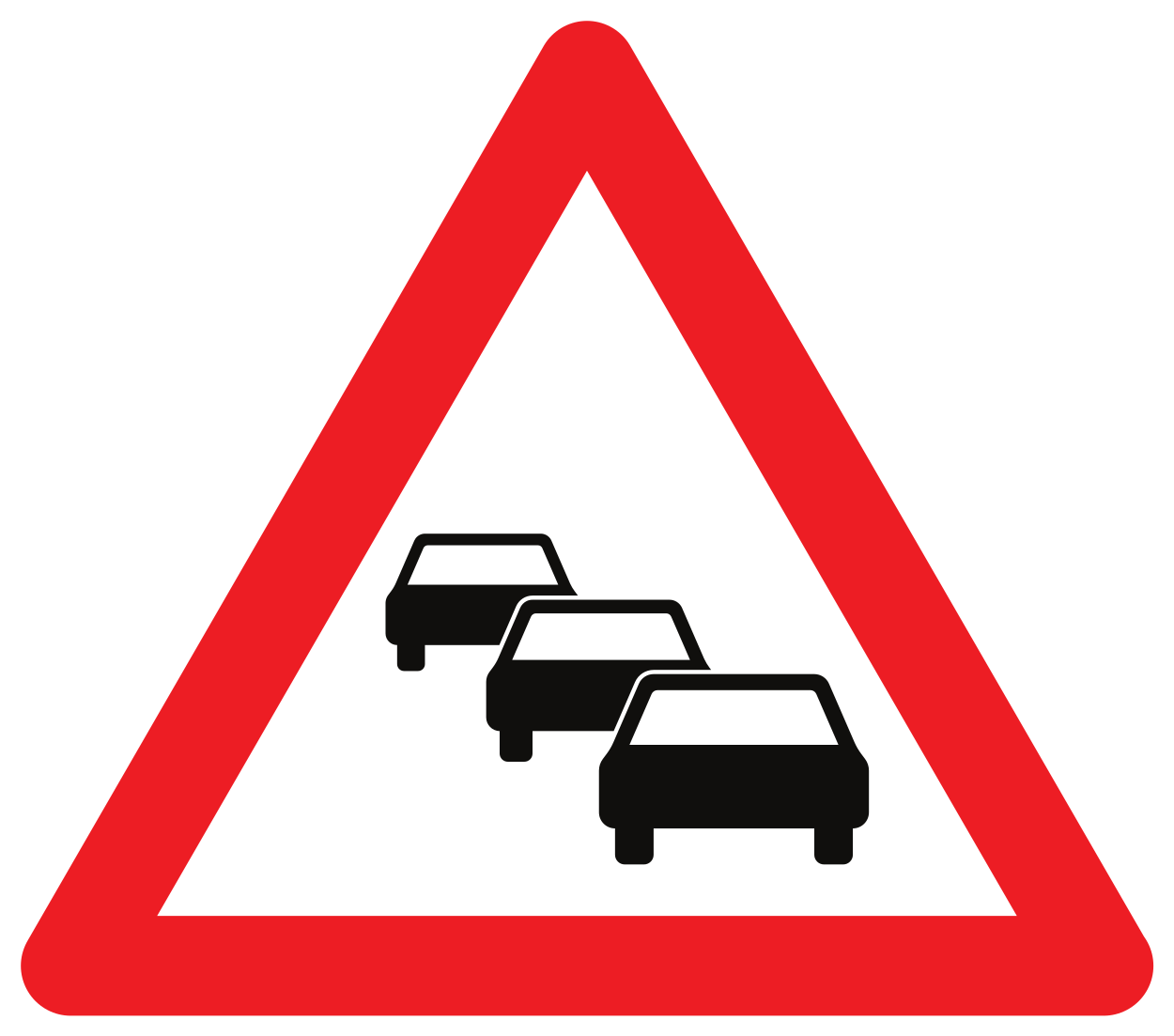
Signal routier A32 • File.
Verkeersbord A32 • File.
30. Warning for a slippery road surface
This traffic sign indicates a warning for a slippery road surface. The road ahead may provide reduced tyre grip because of water, ice, mud, oil or another surface condition. Reduce speed and avoid sudden braking, acceleration or steering movements.
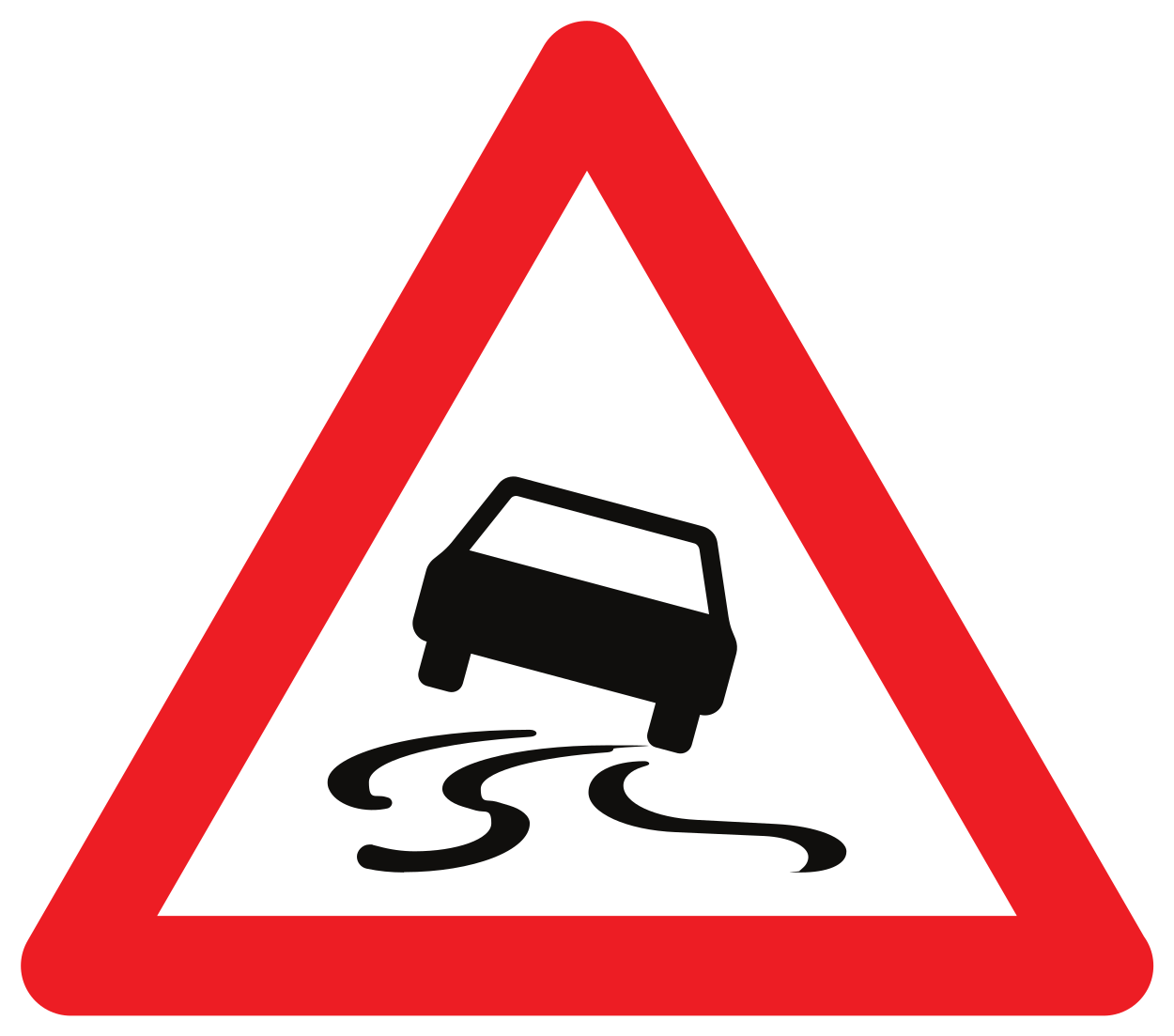
Signal routier A15 • Chaussée glissante.
Verkeersbord A15 • Glibberige rijbaan.
31. Warning of poor visibility due to rain, fog or snow
This traffic sign indicates a warning for poor visibility. Fog, heavy rain, snow, smoke or another condition may significantly reduce how far you can see. Reduce speed, increase your following distance and use the vehicle lighting required by the local rules and conditions.
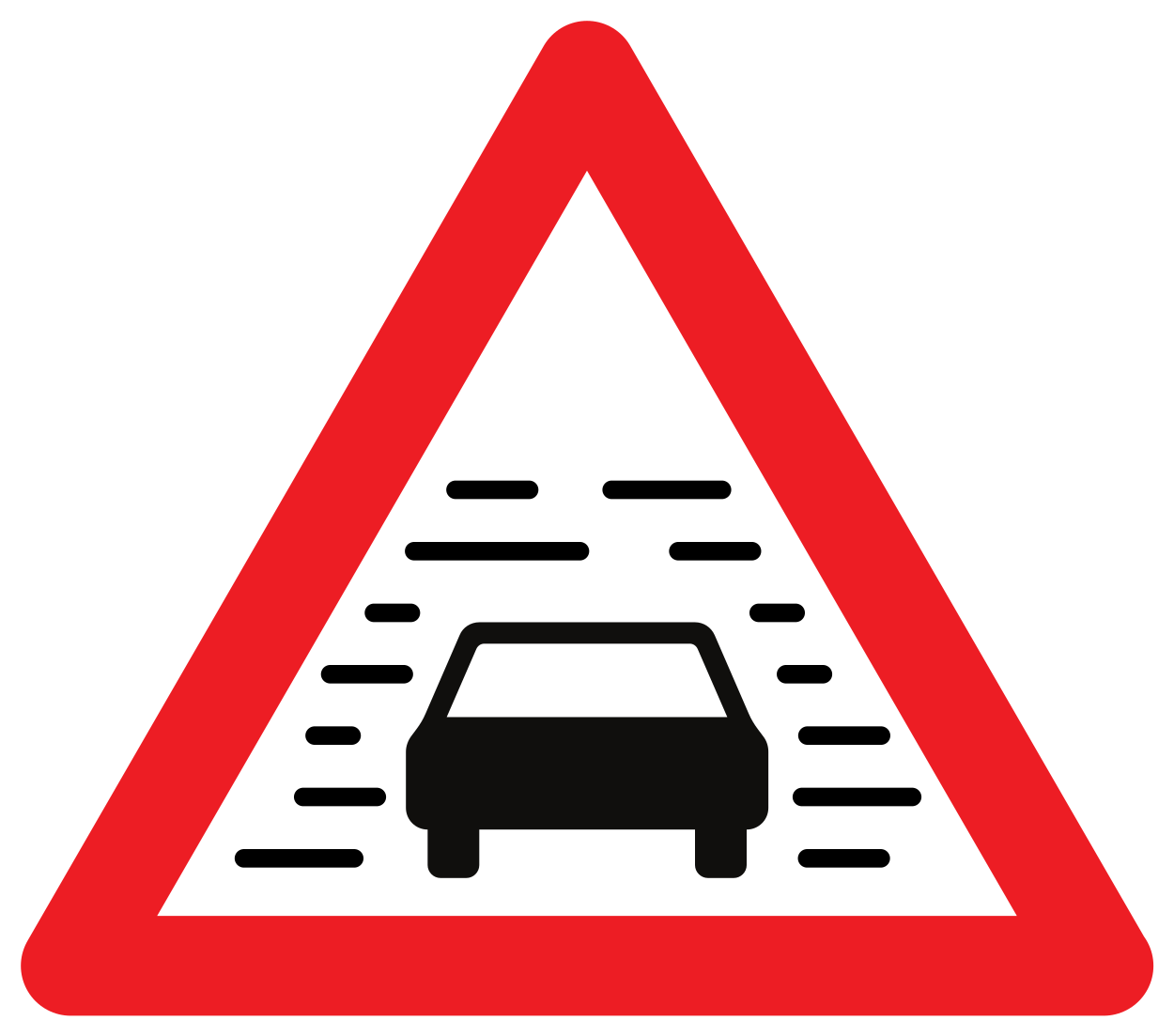
Signal routier A18 • Brouillard.
Verkeersbord A18 • Mist.
32. Warning for snow and sleet
This traffic sign indicates a warning for snow or sleet. Snow, sleet or ice may reduce tyre grip, increase stopping distances and impair visibility. Reduce speed, increase your following distance and use any winter equipment required by the applicable rules or road conditions.
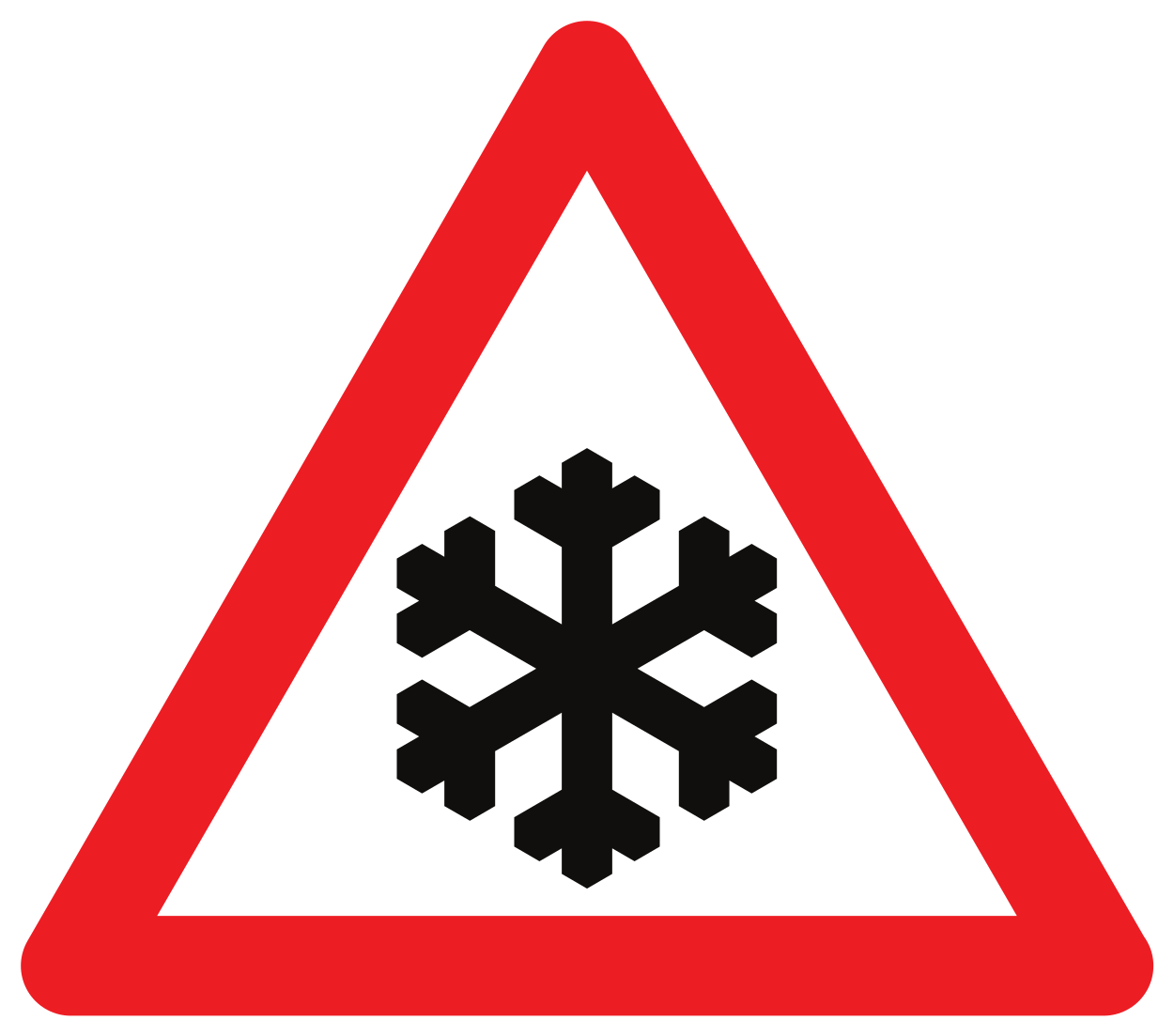
Signal routier A16 • Verglas ou neige.
Verkeersbord A16 • Ijzel of sneeuw.
33. Warning for strong crosswinds
This traffic sign indicates a warning for strong crosswinds. Side winds may suddenly affect vehicle stability and steering. Reduce speed, keep a firm but controlled grip on the steering wheel and take extra care with high-sided vehicles, motorcycles and trailers.
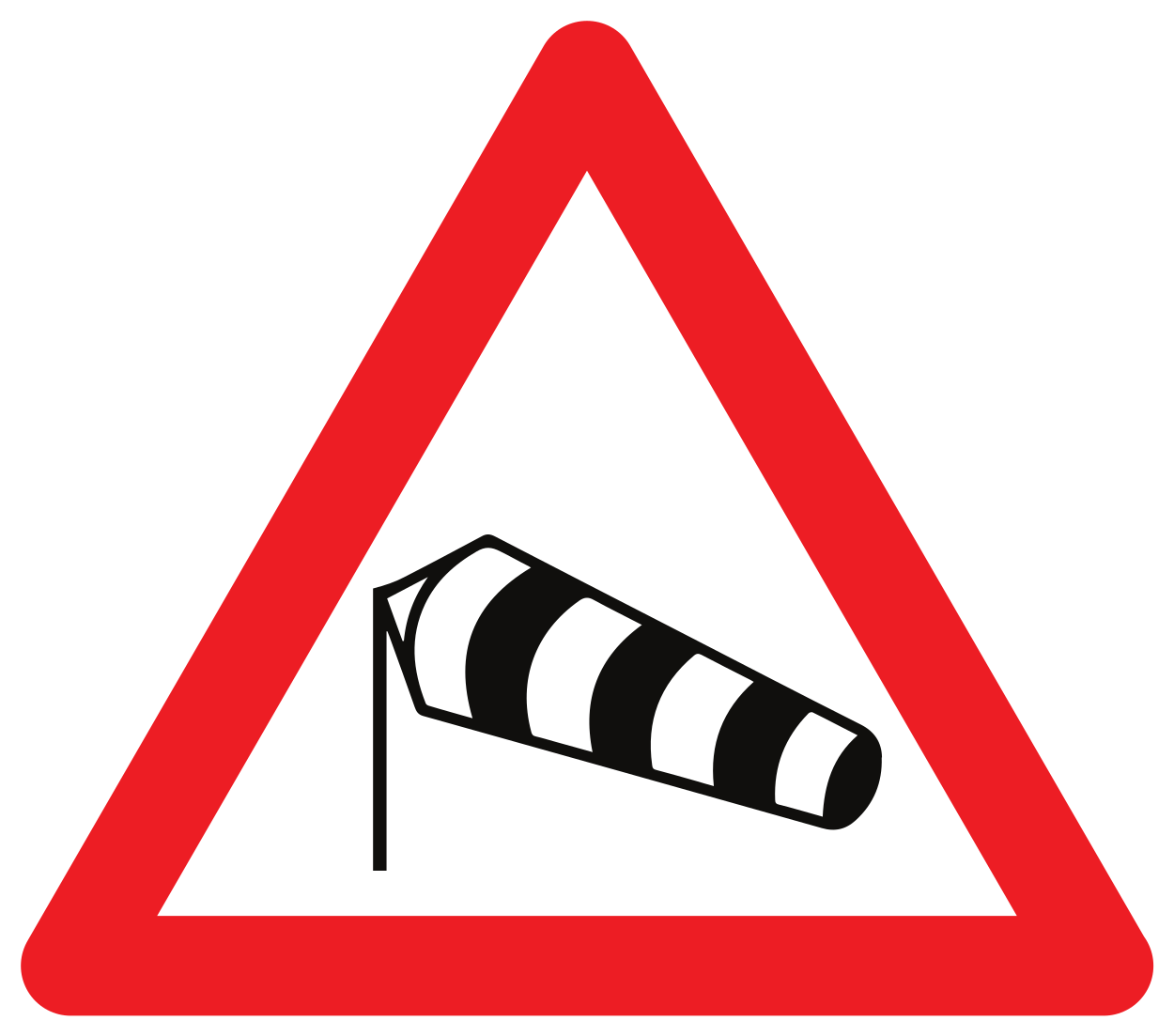
Signal routier A37 • Vent latéral.
Verkeersbord A37 • Zijwind.
34. Warning for low-flying aircraft
This traffic sign indicates a warning for low-flying aircraft. Aircraft may pass over the road at low altitude and can create sudden noise or visual distraction. Keep your attention on the road and maintain control of the vehicle.
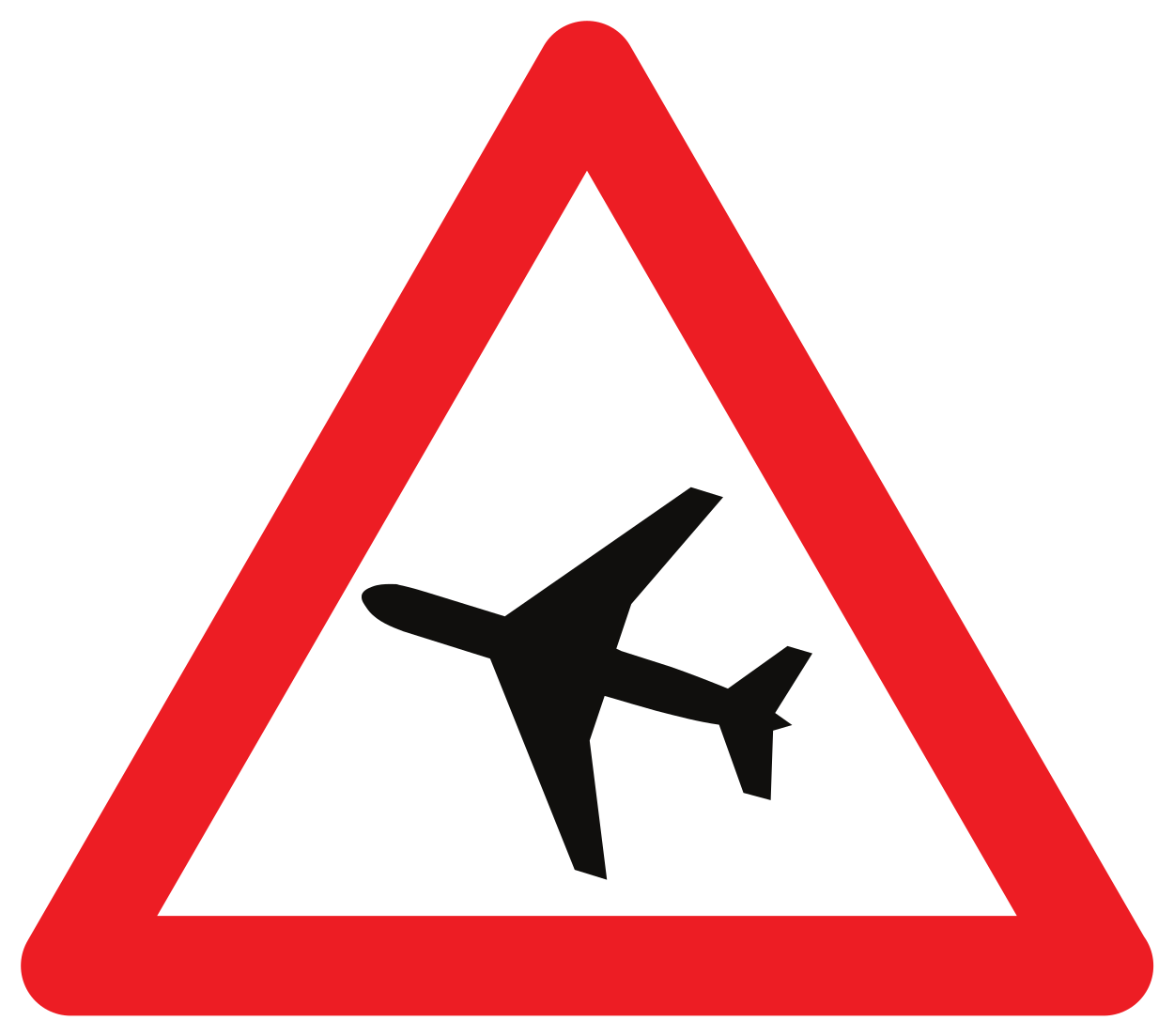
Signal routier A35 • Survol d’avions à basse altitude.
Verkeersbord A35 • Overtocht van vliegtuigen op geringe hoogte.
35. Warning for cattle on the road
This traffic sign indicates a warning for cattle. Cattle or other livestock may be crossing, walking along or standing near the road. Reduce speed, be prepared to stop and avoid sudden movements or unnecessary use of the horn that could startle the animals.
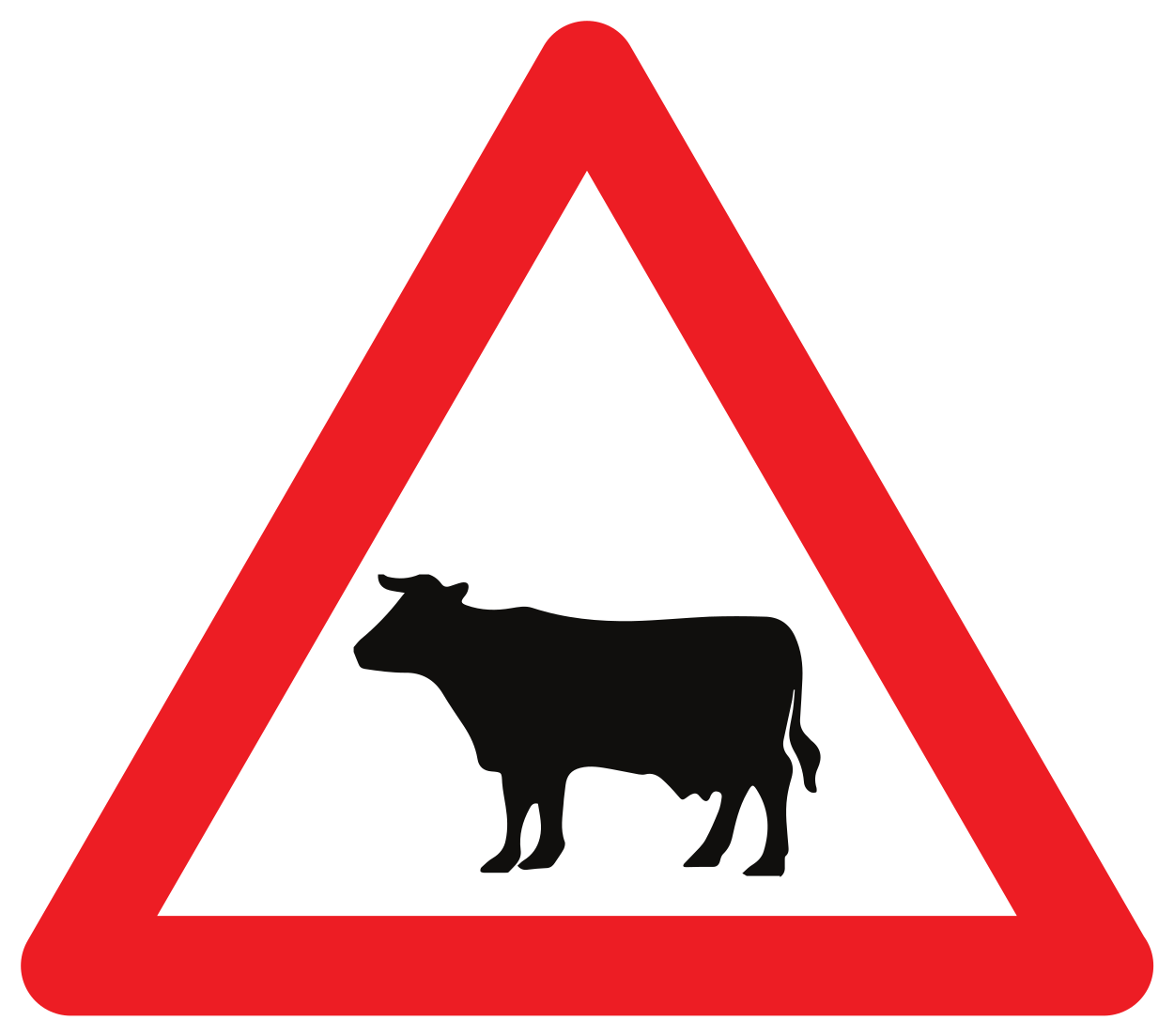
Signal routier A27 • Traversée d’animaux. Le symbole indique l’espèce animale visée.
Verkeersbord A27 • Doortocht van dieren. Het symbool duidt de beoogde diersoort aan.
36. Warning for crossing deer
This traffic sign indicates a warning for crossing deer. Deer or other wild animals may enter the road unexpectedly, especially around dawn or dusk. Reduce speed, watch the roadside carefully and be prepared for more than one animal to cross.
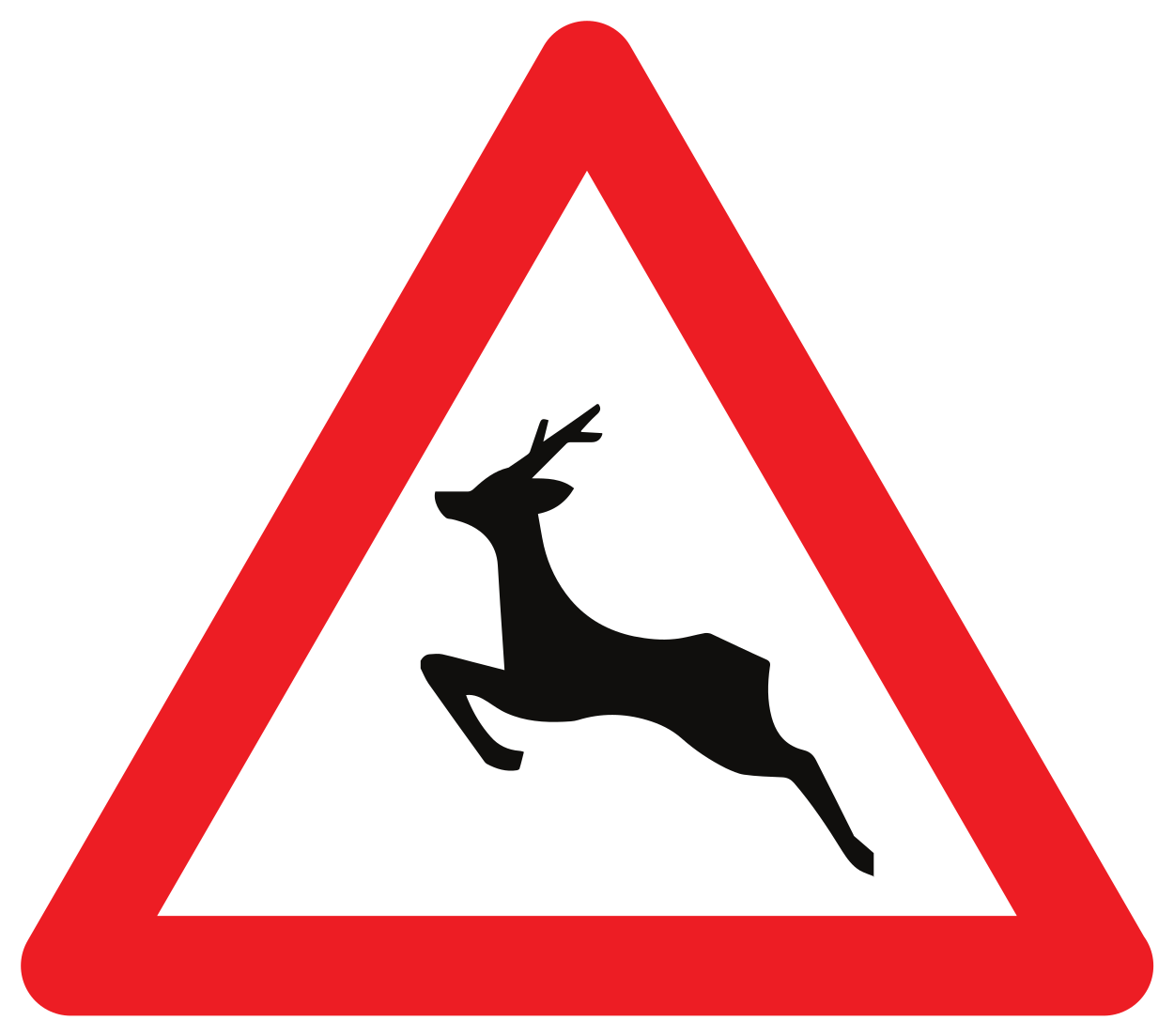
Signal routier A27 • Traversée d’animaux. Le symbole indique l’espèce animale visée.
Verkeersbord A27 • Doortocht van dieren. Het symbool duidt de beoogde diersoort aan.
37. Warning for children
This traffic sign indicates a warning for children. Children may be present on or near the road and may cross unexpectedly. Reduce speed, scan both sides of the road carefully and be prepared to stop.
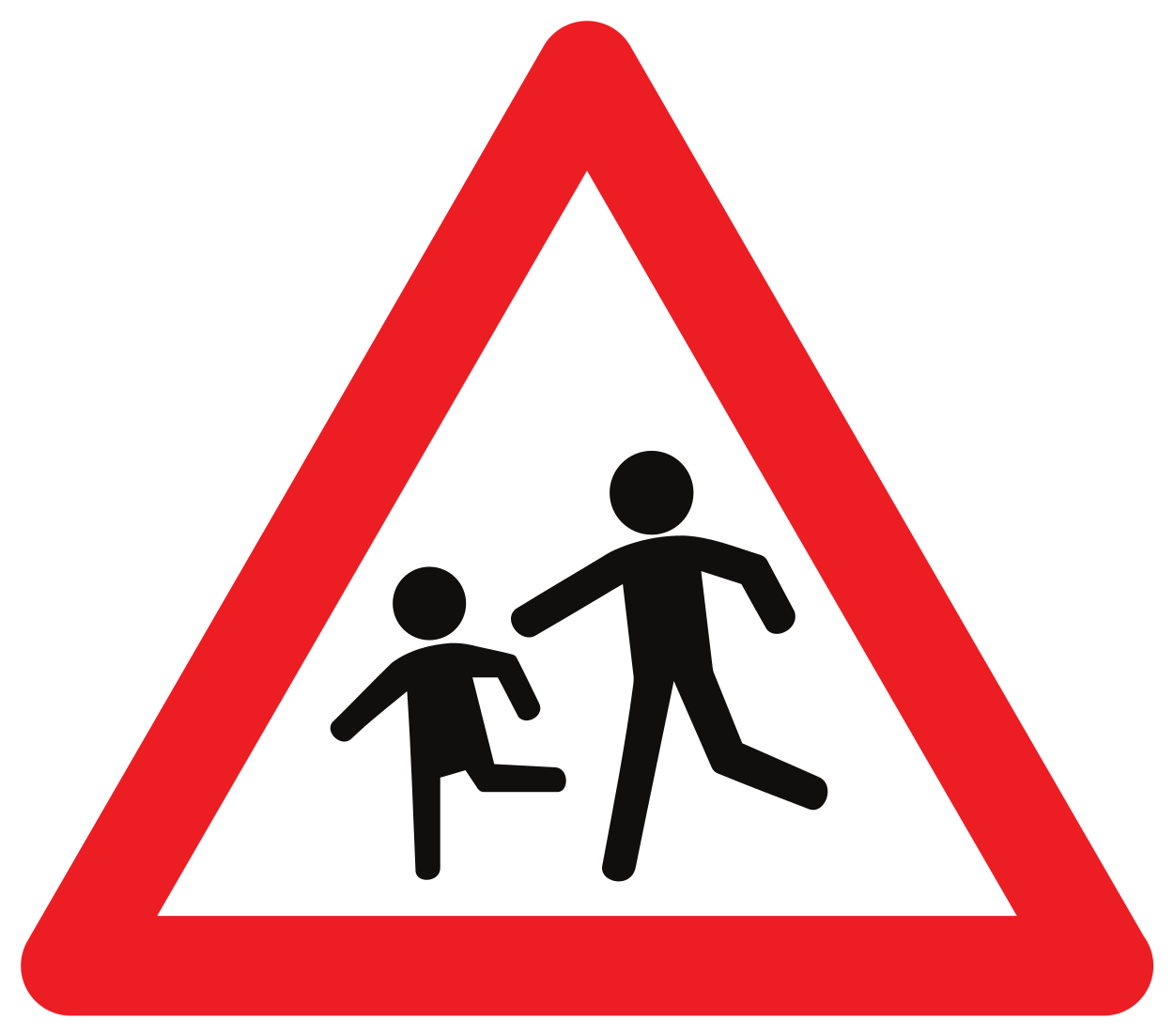
Signal routier A23 • Endroit spécialement fréquenté par des enfants.
Verkeersbord A23 • Plaats waar speciaal veel kinderen komen.
38. Warning for a pedestrian crossing
This traffic sign indicates a warning for a pedestrian crossing. A designated pedestrian crossing lies ahead. Reduce speed when necessary, watch carefully for pedestrians and be prepared to give way or stop according to the applicable local priority rules.
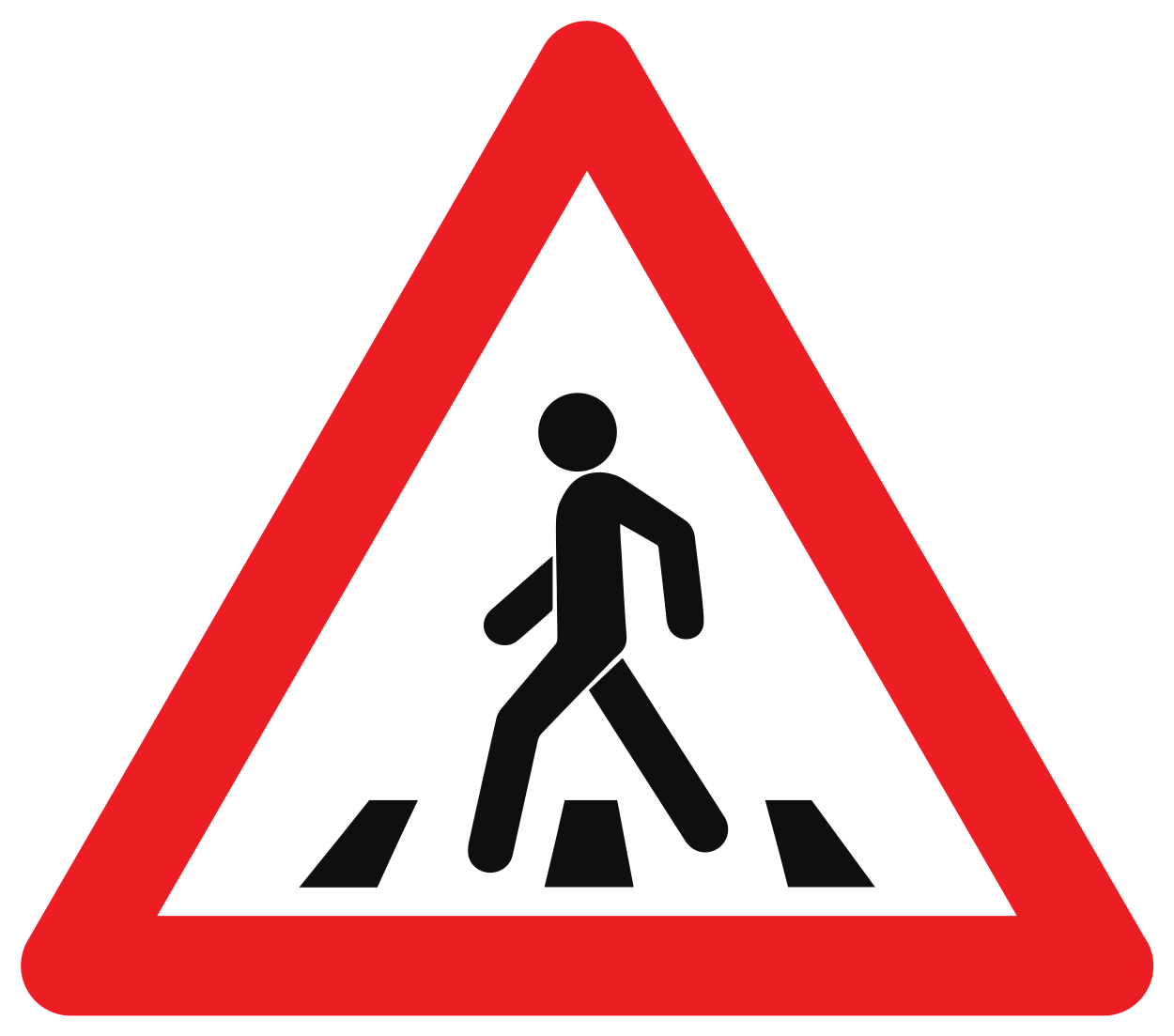
Signal routier A21 • Passage pour piétons.
Verkeersbord A21 • Oversteekplaats voor voetgangers.
39. Warning for cyclists
This traffic sign indicates a warning for cyclists. Cyclists may be riding along or crossing the road ahead. Reduce speed, watch carefully for cyclists and maintain the passing distance required by the applicable local rules.
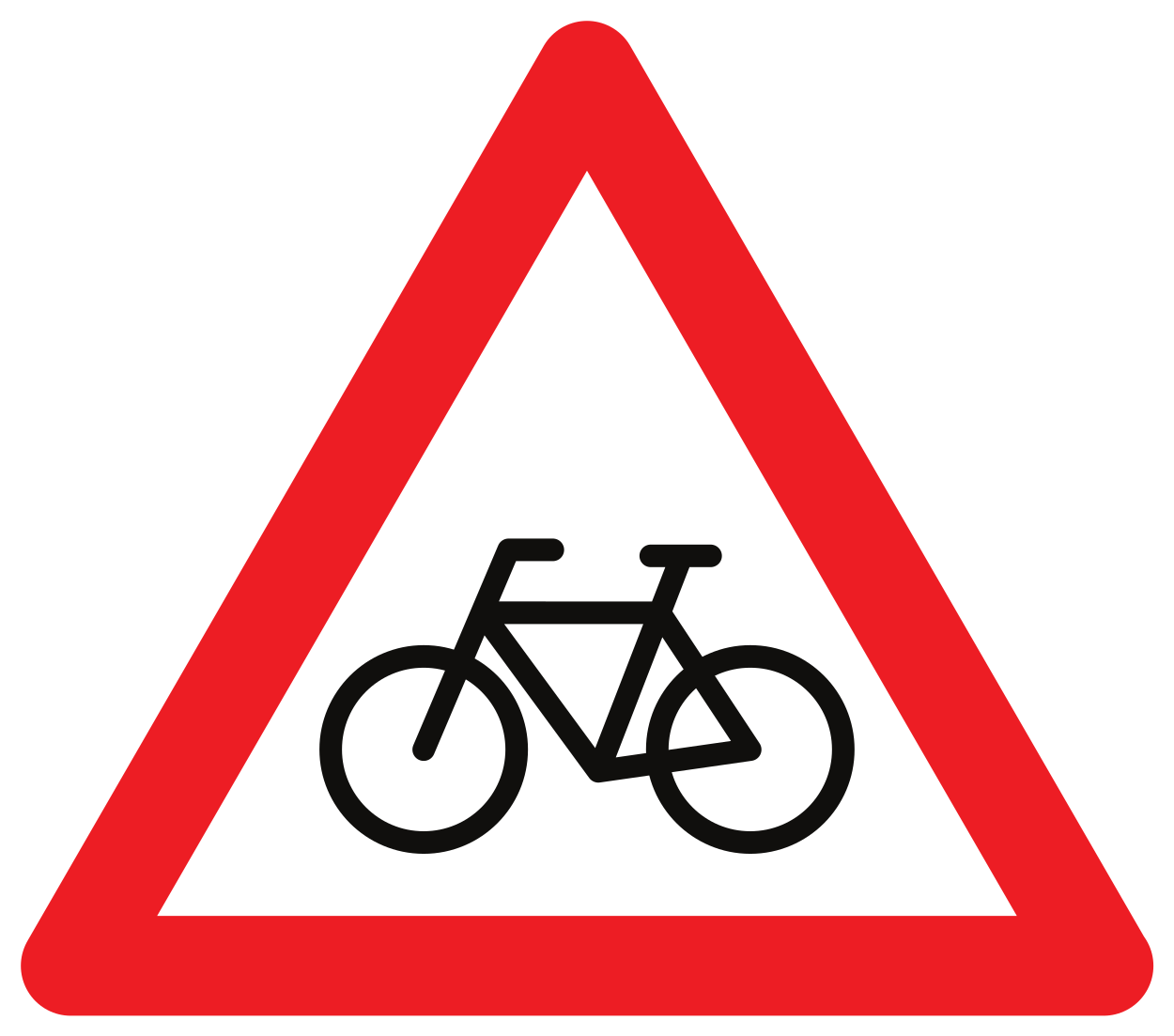
Signal routier A25 • Traversée pour cyclistes et conducteurs de cyclomoteurs à deux roues, ou endroit où ces conducteurs débouchent sur la chaussée.
Verkeersbord A25 • Oversteekplaats voor fietsers en bestuurders van tweewielige bromfietsen of plaats waar die bestuurders op de rijbaan komen.
40. Warning for equestrians
This traffic sign indicates a warning for equestrians. Horse riders may be on or near the road ahead. Reduce speed, allow plenty of space and avoid unnecessary use of the horn or sudden movements that could startle a horse.
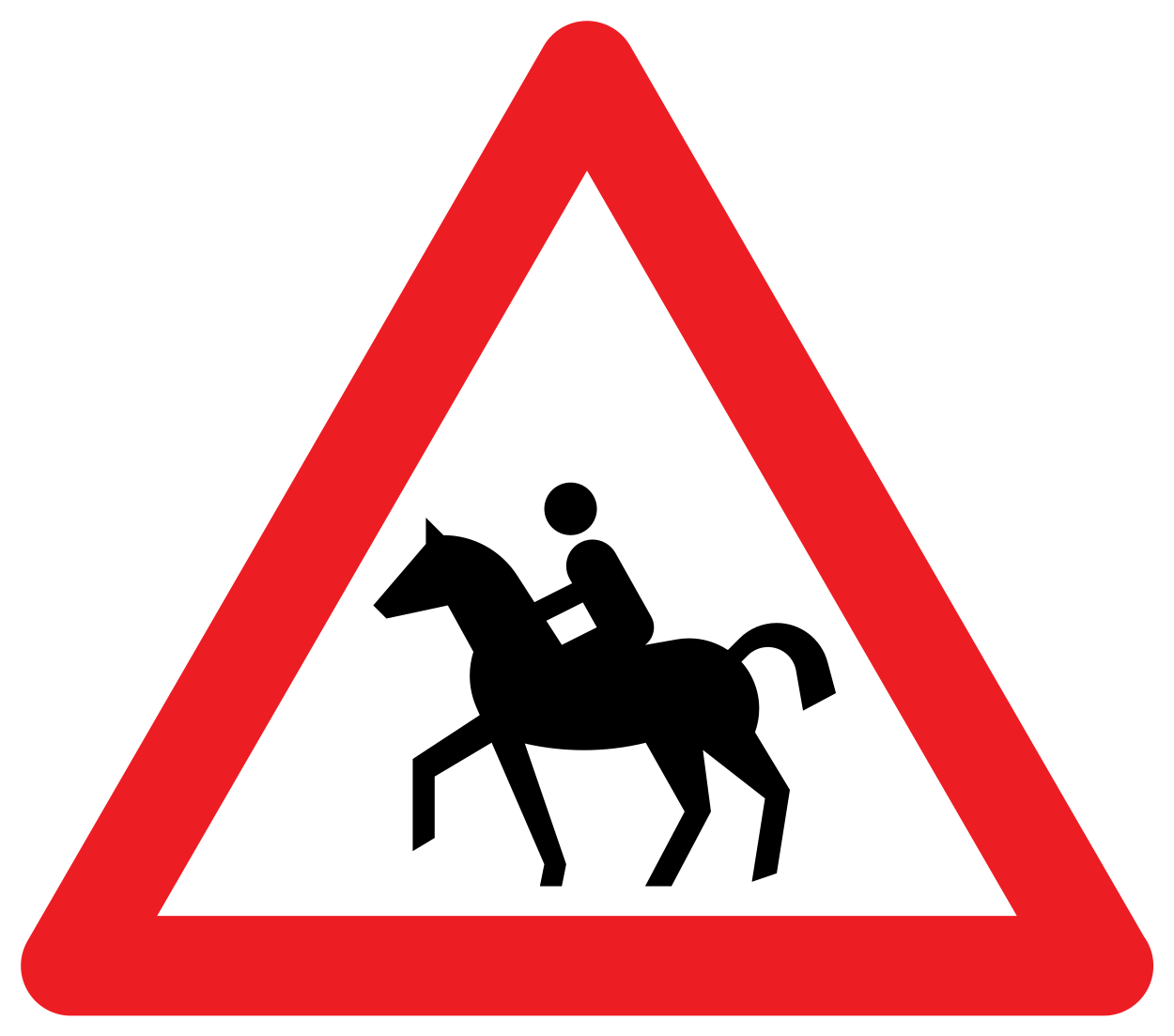
Signal routier A24 • Endroit spécialement fréquenté par des cavaliers.
Verkeersbord A24 • Plaats waar speciaal veel ruiters komen.
41. Warning for trams
This traffic sign indicates a warning for trams. Tram tracks cross or run along the road ahead, and trams may enter the traffic path. Reduce speed, watch carefully for approaching trams and follow the applicable traffic signals, priority signs and local rules.
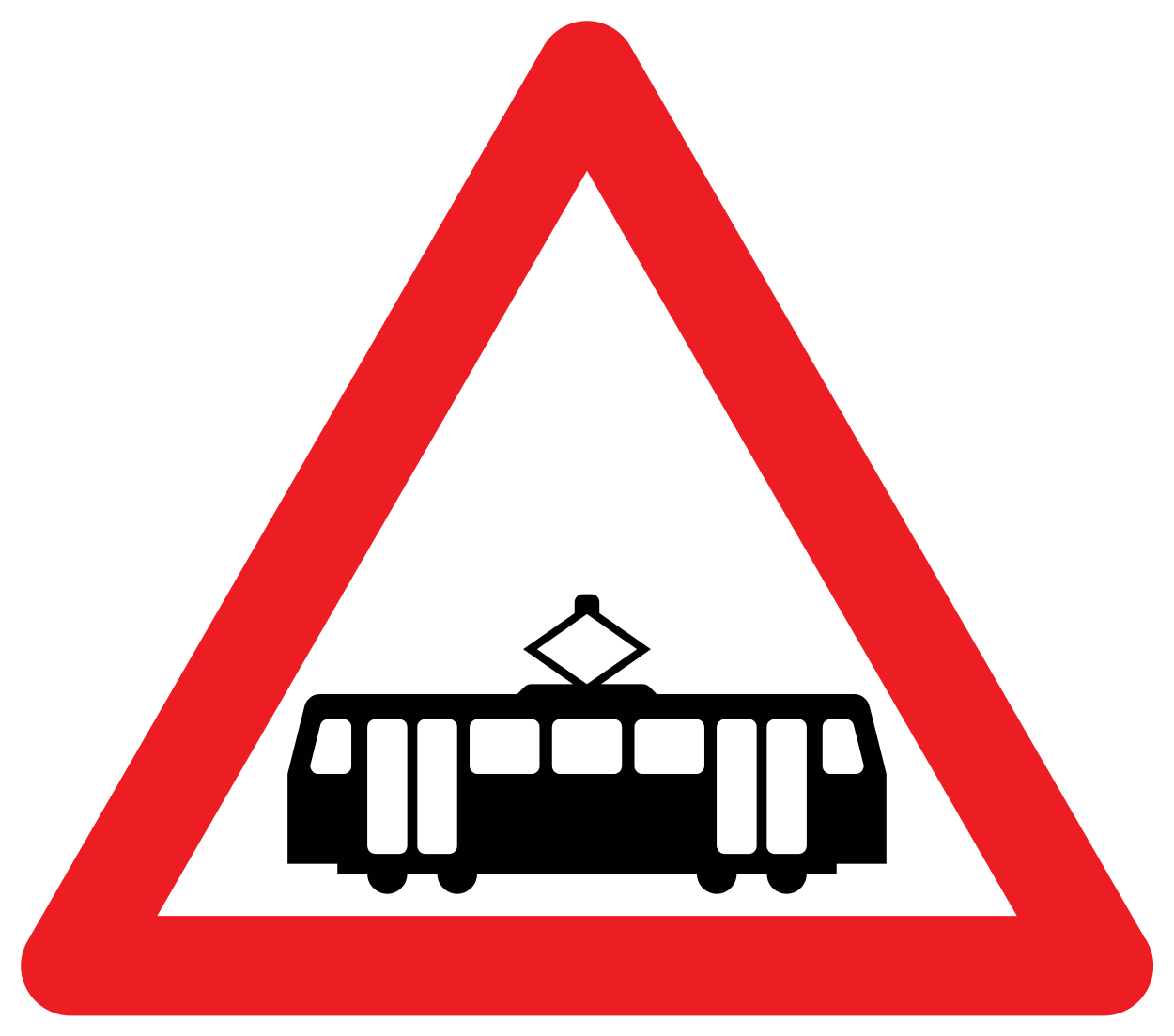
Signal routier A49 • Croisement de la voie publique par une ou plusieurs voies ferrées établies sur la chaussée.
Verkeersbord A49 • Kruising van een openbare weg door een of meer in de rijbaan aangelegde sporen.
42. Warning for a railway crossing without barriers
This traffic sign indicates a warning for a railway crossing without barriers. It alerts drivers to an upcoming level crossing where railway tracks cross the road and no barriers or gates are present to stop traffic. Drivers should slow down and look both ways for trains.
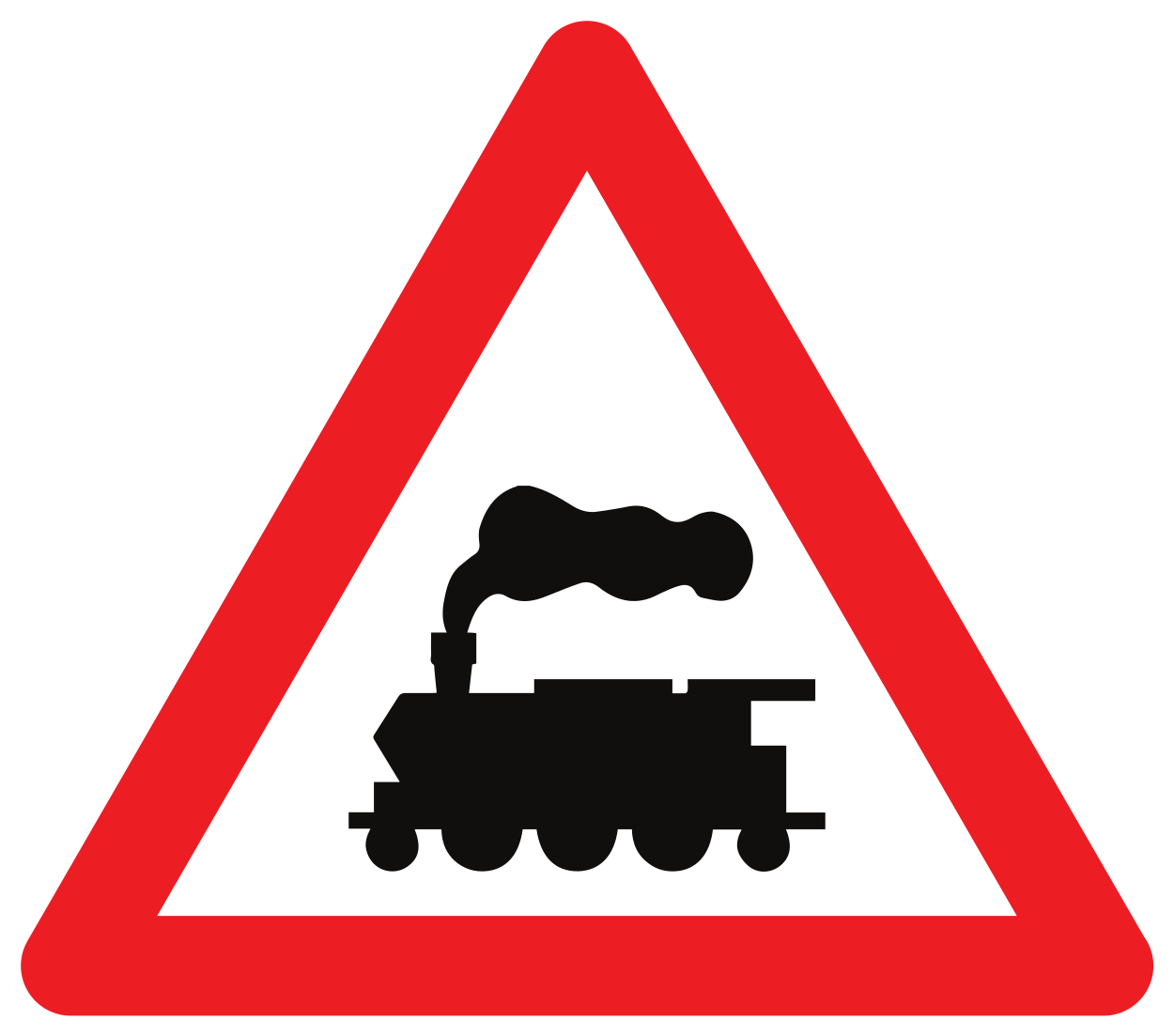
Signal routier A43 • Passage à niveau sans barrières.
Verkeersbord A43 • Overweg zonder slagbomen.
43. Warning for a railway crossing with barriers
This traffic sign indicates a warning for a railway crossing with barriers. It alerts drivers to an upcoming level crossing with gates or barriers that close when a train approaches. Drivers should be ready to stop when the barriers are down or flashing lights activate. Never attempt to cross when gates are closing or closed.
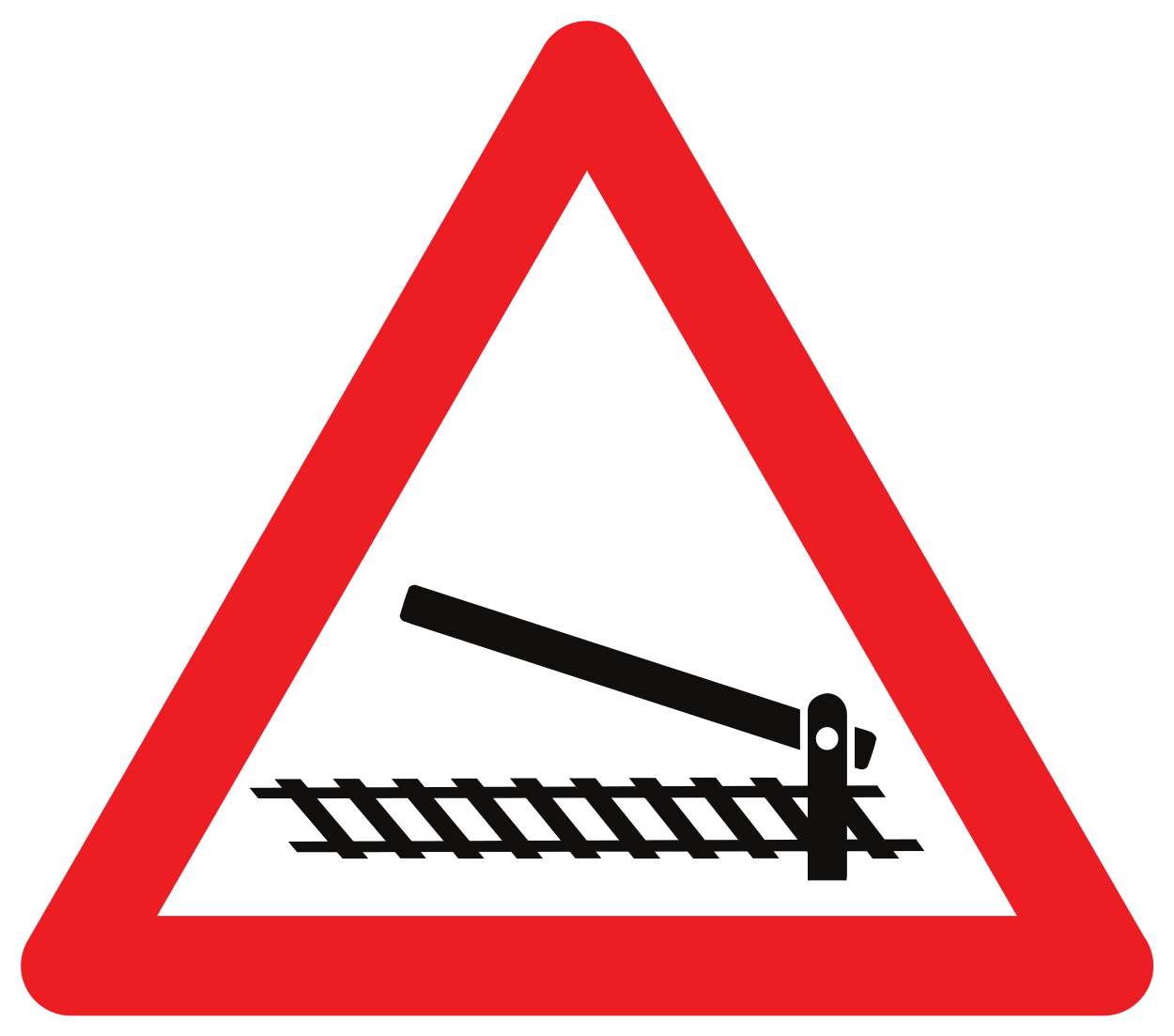
Signal routier A41 • Passage à niveau avec barrières.
Verkeersbord A41 • Overweg met slagbomen.
44. Warning for a railway crossing with one track
This traffic sign indicates a warning for a railway crossing with one track. It alerts drivers to a level crossing where a single railway track crosses the road. Drivers should approach with caution and be prepared to stop, even if no barriers or warning lights are active.

Signal routier A45 • Passage à niveau à voie unique.
Verkeersbord A45 • Overweg voor enkel spoor.
45. Warning for a railway crossing with two or more tracks
This traffic sign indicates a warning for a railway crossing with two or more tracks. It alerts drivers to a level crossing where more than one railway track crosses the road. More than one train may pass in succession or from different directions, so drivers should check carefully before crossing and never proceed until all tracks are clear.

Signal routier A47 • Passage à niveau à deux ou plusieurs voies.
Verkeersbord A47 • Overweg voor twee of meer sporen.
46. No entry
This traffic sign means no entry. Drivers may not enter from the direction in which the sign is placed.

Signal routier C1 • Sens interdit à tout conducteur.
Verkeersbord C1 • Verboden richting voor iedere bestuurder.
47. Access prohibited in both directions
This traffic sign indicates that drivers may not enter the road from either direction.
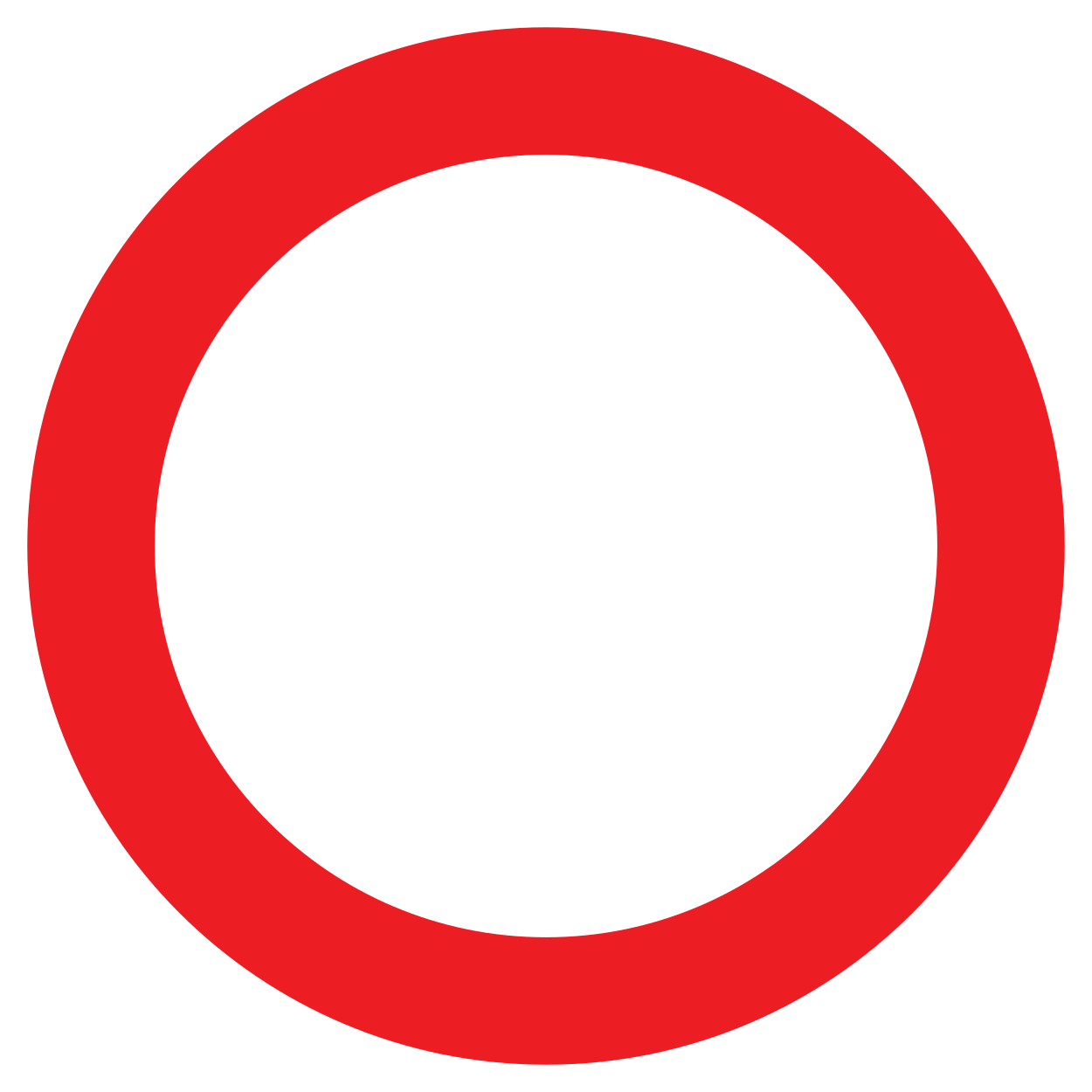
Signal routier C3 • Accès interdit, dans les deux sens, à tout conducteur.
Verkeersbord C3 • Verboden toegang, in beide richtingen, voor iedere bestuurder.
48. Pedestrians prohibited
This traffic sign indicates that pedestrians are prohibited. Pedestrians may not enter or continue beyond the sign. Other road users may still be permitted unless another restriction applies.
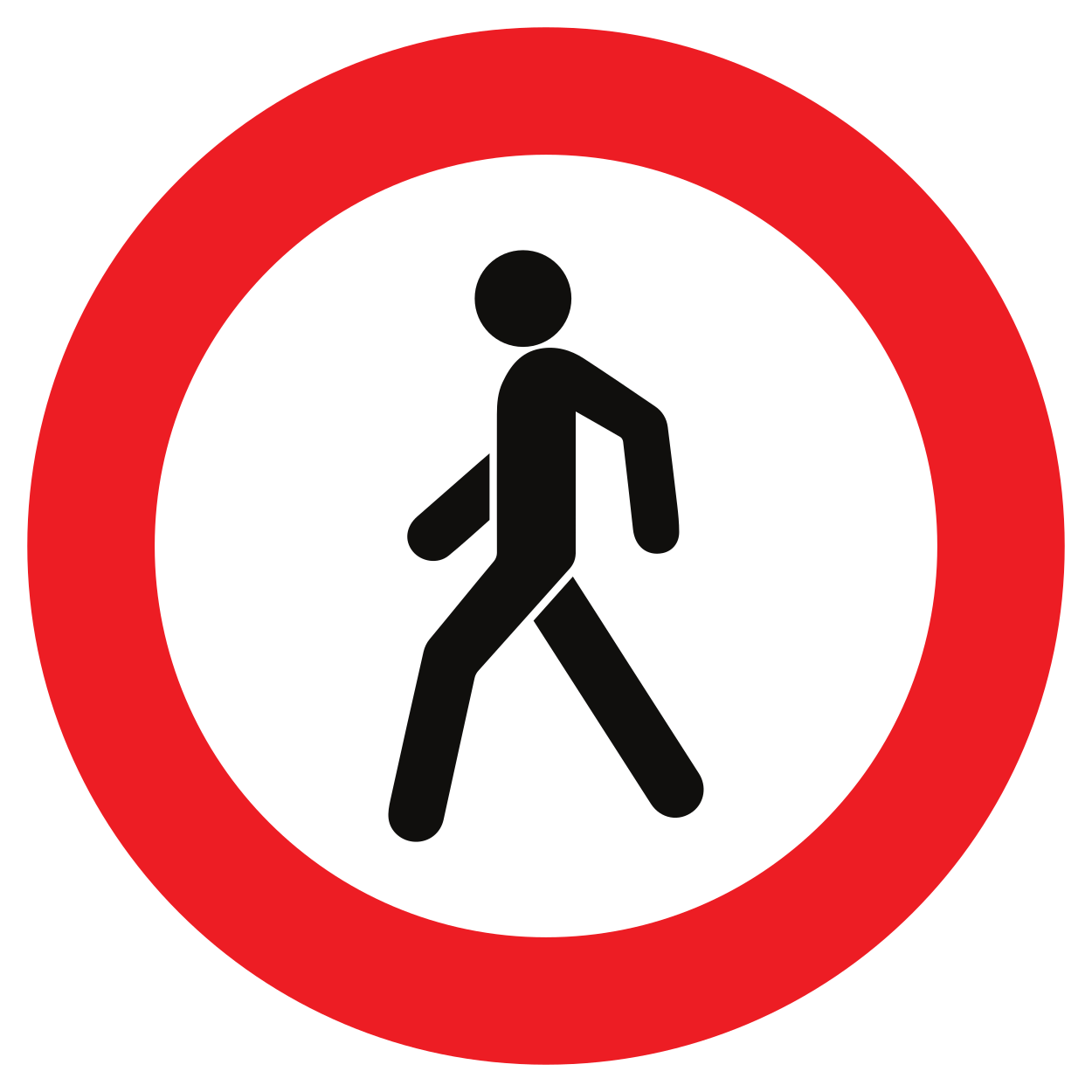
Signal routier C19 • Accès interdit aux piétons.
Verkeersbord C19 • Verboden toegang voor voetgangers.
49. Cyclists prohibited
This traffic sign indicates that cyclists are prohibited. Cyclists may not enter or continue beyond the sign. Other road users may still be permitted unless another restriction applies.
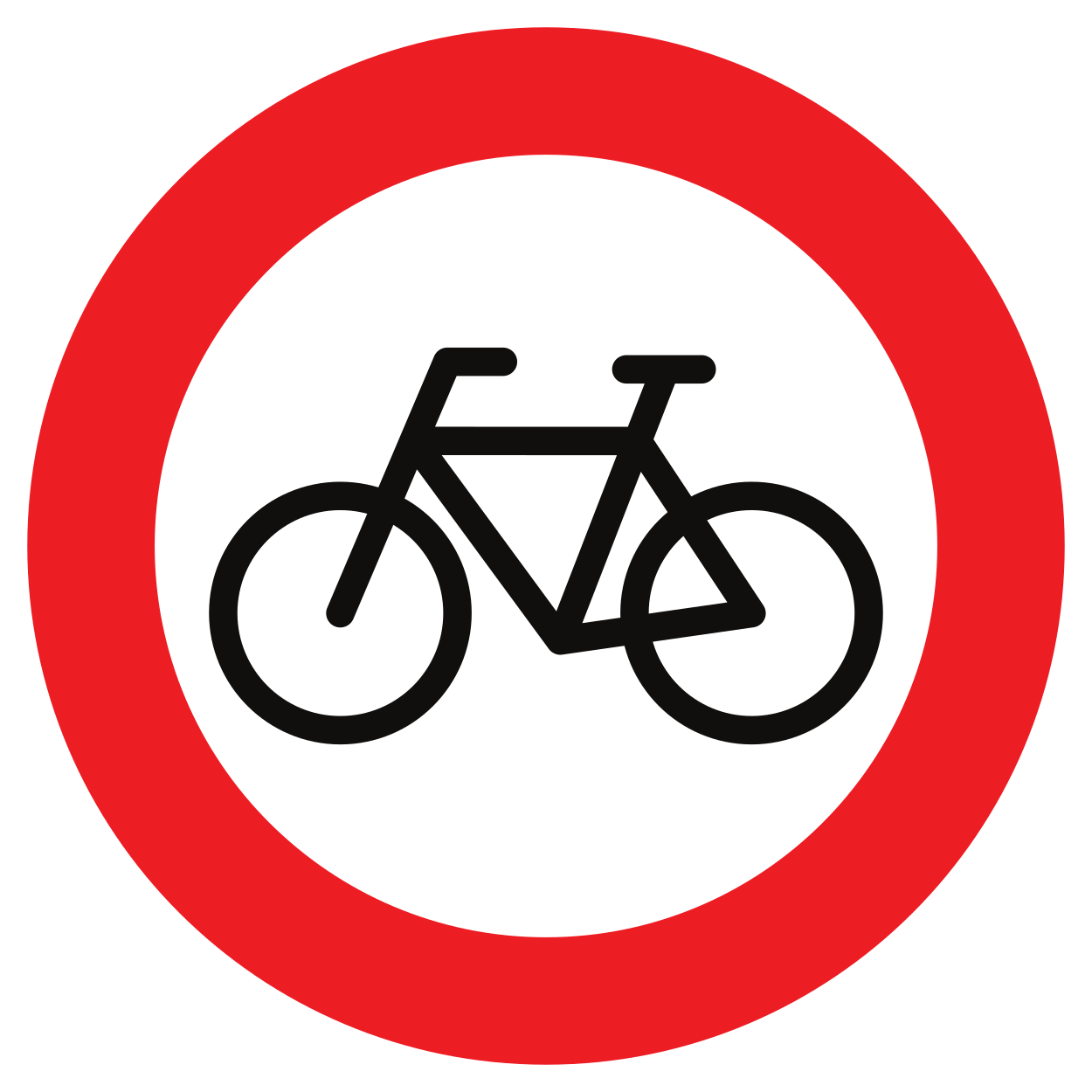
Signal routier C11 • Accès interdit aux cycles.
Verkeersbord C11 • Verboden toegang voor rijwielen.
50. Mopeds prohibited
This traffic sign indicates that mopeds are prohibited. Moped riders may not enter or continue beyond the sign. The affected moped categories depend on the applicable local rules. Other road users may still be permitted unless another restriction applies.
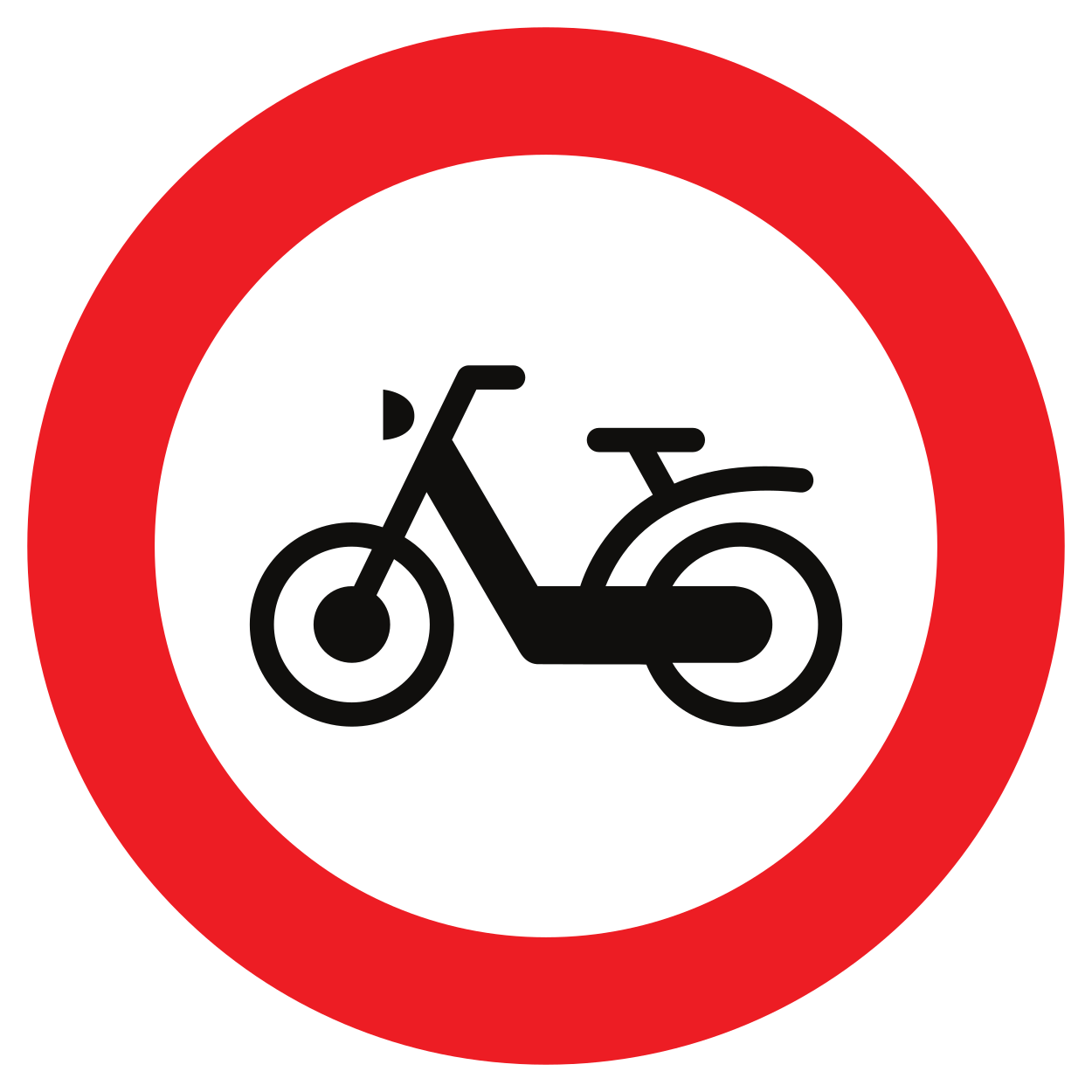
Signal routier C9 • Accès interdit aux cyclomoteurs.
Verkeersbord C9 • Verboden toegang voor bromfietsen.