
Traffic rulesChile
Learn the traffic rules of Chile with lots of pictures, clear traffic signs and interactive quizzes. Simple, visual and easy to follow.


The driving-licence system in Chile
Who issues driving licences in Chile?
Driving licences are issued by the Municipal Department of Transit and Public Transport in a municipality authorised to provide the service.
Where must a person apply for a licence?
The application must normally be made in the municipality corresponding to the applicant’s residence.
Is there one national licence record?
Yes. Municipalities report issued licences, restrictions, suspensions and other relevant information to the National Register of Motor Vehicle Drivers, administered by the Civil Registry and Identification Service.
Which authority sets national licensing rules?
The Ministry of Transport and Telecommunications establishes national rules, while CONASET develops road-safety material and the municipalities conduct the licensing process.
What is CONASET?
The National Traffic Safety Commission is the public body responsible for coordinating road-safety policy and producing official study material for licence applicants.
Is a Chilean licence valid throughout the country?
Yes. A licence lawfully issued by an authorised municipality is valid throughout Chile, subject to its class, restrictions and current legal status.
Can one person hold several separate Chilean licences?
No. The law provides for one driving licence for each driver, with all authorised classes recorded on it.
Is the licence available in physical and digital form?
Yes. Chile’s current system provides a redesigned physical licence and a digital version accessed through the official application where the system is enabled.
Does the digital licence replace the physical card?
The digital document is legally valid within the official system, while the physical card remains part of the licensing model and may still be required in practical situations.
Do municipal fees and appointment procedures differ?
Yes. National law defines the licensing standards, but appointment systems, local service hours and municipal charges can vary.
Eligibility and first applications
What is the normal minimum age for a Class B licence?
The normal minimum age is 18 years.
Can a 17-year-old obtain a Class B licence?
Exceptionally, a person older than 17 may obtain Class B after completing an approved driving-school course and receiving express authorisation from a parent, guardian or legal representative.
What restriction applies to a 17-year-old Class B holder?
Until turning 18, the driver must be accompanied in the front seat by a person able to take over who has held an appropriate licence for at least five years.
Does the accompanying-driver restriction end automatically at 18?
Yes. Once the holder turns 18, the special accompaniment condition ends by operation of law.
What education is required for Class B?
The applicant must have completed basic education and provide the evidence requested by the municipality.
What education is required for Class C?
A Class C applicant must normally have completed basic education, with a specific exception for an applicant restricted to motorised cargo tricycles.
What identification is normally required?
A valid Chilean identity card and the documents requested to establish residence and education are normally required.
Must the applicant prove residence in the municipality?
Yes. Municipalities commonly request a residence certificate, utility document or another locally accepted proof.
Must an applicant have suitable moral fitness?
Yes. The municipality considers the applicant’s moral suitability using the legal criteria and information from the national driver record.
Can criminal or traffic history affect an application?
Yes. Relevant convictions, licence cancellations, suspensions or other legal disqualifications can prevent or delay issue.
Can a foreign resident apply for a Chilean licence?
Yes, if the person satisfies the residence, identity, education, medical and examination requirements or qualifies for a recognised exchange procedure.
Does passing a driving-school course guarantee a licence?
No. Except where a specific legal recognition applies, the applicant must still pass the required municipal examinations.
Medical, eyesight and psychotechnical assessment
Is a medical examination required?
Yes. Applicants must pass the physical and psychological fitness assessment required for the relevant licence class.
Is eyesight tested?
Yes. Visual acuity and other relevant visual functions are assessed as part of the municipal examination.
What is a psychotechnical examination?
It is an assessment of functions important for safe driving, such as reaction, coordination, attention and perception.
Can hearing be assessed?
Yes. Hearing ability can be tested where required by the applicable medical standards.
Must applicants disclose health conditions?
Yes. The application and medical process require truthful disclosure of illnesses, treatments and conditions that may affect driving.
What is the Ley Jacinta declaration?
A person applying for or renewing a licence must provide the required sworn declaration concerning illnesses or conditions that could make driving unsafe.
Does a medical condition automatically prevent licensing?
No. The municipal doctor assesses the individual condition and may approve the applicant, impose restrictions, shorten the control period or reject the application.
Can glasses or contact lenses be required?
Yes. A restriction can require corrective lenses whenever the driver is operating a vehicle.
Can a licence require an adapted vehicle?
Yes. Restrictions may specify vehicle adaptations or operating conditions needed for safe driving.
What happens after a medical rejection?
The applicant can request the official medical reassessment procedure through the competent health service within the applicable rules.
Can a court or authority order an early medical review?
Yes. A judge or municipal authority can require a new control before the ordinary renewal date where fitness is in doubt.
Can a licence be suspended for a later medical condition?
Yes. A licence can be suspended or cancelled if a later physical or psychological incapacity makes driving dangerous.
The Class B theory examination
Is a theory examination required for Class B?
Yes. A first-time Class B applicant must pass the national computer-based theory examination administered by the municipality.
What material should applicants study?
The principal official resource is CONASET’s Book for Driving in Chile for Class B.
How many questions are in the Class B theory test?
The test contains 35 randomly selected questions.
How are the questions scored?
Three questions carry double points, producing a maximum score of 38 points.
What score is required to pass?
The applicant must obtain at least 33 points.
Which topics can receive double points?
Double-point subjects include alcohol or drugs, speed, helmets, seat belts and child-restraint systems.
Can the Class B theory test be taken in English?
Yes. At the applicant’s request, the Class B theory test may be taken in English.
Is the official question bank fully public?
No. The exam draws from a national bank. Applicants should understand the official handbook rather than memorise unofficial question lists.
What subjects are tested?
The test covers traffic law, signs, priority, safe driving, vulnerable road users, vehicle safety, risk perception, alcohol, drugs, speed and environmental responsibility.
How many theory-test attempts are allowed in one application process?
The applicant has two opportunities within the same process.
How soon must the second theory attempt be taken?
The repeat test must be taken within no more than 25 working days after the first failure, unless an authorised extension applies.
What happens after failing the second attempt or missing the deadline?
The licence application is denied and a new process must be started after the applicable waiting period.
Practical preparation and the Class B road test
Is a driving-school course compulsory for an adult Class B applicant?
No. It is generally optional for an applicant aged 18 or older, although professional instruction is strongly recommended.
Is a course compulsory for the exceptional licence at age 17?
Yes. The applicant must have passed a course at a duly authorised driving school.
May a person practise on public roads without a licence?
No. Chile does not issue a general learner permit that authorises an unlicensed person to practise independently on public roads.
Who supplies the road-test vehicle?
The applicant normally arranges a suitable vehicle, frequently through a driving school. Local municipal instructions must be followed.
What condition must the test vehicle be in?
It must be legally permitted to circulate, properly documented, equipped with the required safety elements and mechanically safe.
How long is the Class B practical test?
It lasts at least 25 minutes.
What minimum distance must be covered?
The route must cover at least five kilometres.
What are the two parts of the road test?
The test includes a free-driving stage lasting about 10 to 15 minutes and a guided-driving stage following the examiner’s instructions.
What situations must the route allow the examiner to assess?
The route must enable assessment of pedestrian crossings, stop and give-way signs, traffic lights, parking and other normal traffic situations.
How can a candidate fail the practical test?
Failure results from one disqualifying error, at least two serious errors, at least ten minor errors, or at least one serious and five minor errors.
How many practical-test attempts are allowed in one process?
Two attempts are allowed, with the second normally required within 25 working days after the first failure.
Application denials, retesting and licence issue
What happens after the first denied licence process?
A new application can generally be started after waiting 30 working days.
What happens after a second denied process?
Later applications normally require a waiting period of six months from each denial.
Can a retest deadline be extended?
A municipality may grant an extension for a properly justified reason under the applicable procedure.
Must documents be submitted again for a new process?
Yes. The applicant must normally present current documents and satisfy the requirements again.
Is a failed medical examination repeated on the same timetable as theory?
No. The medical professional determines the appropriate period before a medical reassessment.
Who makes the final decision to grant the licence?
The Director of the Municipal Department of Transit and Public Transport grants and signs the licence after all legal requirements are met.
When is the licence entered in the national register?
The municipality must report issue to the Civil Registry within the legally specified period, generally within five working days.
Can a municipality refuse issue even after test passes?
Yes, if another legal requirement is not satisfied or a disqualification, false statement or record problem is discovered.
Can false information cancel the process?
Yes. False declarations or documents can lead to denial, cancellation and possible criminal consequences.
Can an applicant appeal a municipal rejection?
The available review depends on the reason. Medical rejection has a specific reassessment route, while other decisions may be challenged through administrative or judicial procedures.
Non-professional and special licence classes
What vehicles does Class B cover?
Class B covers private passenger vehicles with up to nine passenger seats excluding the driver, and cargo vehicles with a gross vehicle weight up to 3,500 kg.
Can a Class B vehicle tow a trailer?
Yes, when the trailer is not heavier than the unladen towing vehicle and the combined weight does not exceed 3,500 kg.
Does Class B cover motorcycles?
No. Motorcycles require Class C.
What vehicles does Class C cover?
Class C covers motorised vehicles with two or three wheels, including motorcycles, scooters and similar vehicles.
Can Class C be restricted to motorised cargo tricycles?
Yes. A specific restricted Class C route exists for motorised cargo tricycles.
What does Class D authorise?
Class D authorises specified self-propelled machinery such as tractors, harvesters, bulldozers, loaders, cranes and similar equipment.
What does Class E authorise?
Class E authorises animal-drawn vehicles such as carts, carriages and similar vehicles.
What does Class F authorise?
Class F covers institutional vehicles of the Armed Forces, Carabineros, Investigations Police, Gendarmerie, specified aeronautical rescue services and firefighters.
What is the minimum age for Classes C, D, E and F?
The ordinary minimum age is 18, together with the class-specific requirements.
Does a professional Class A licence include Class B privileges?
Yes. A professional licence holder may also drive vehicles that require Class B.
Must a driver pass additional examinations to add another class?
Yes. The driver must satisfy the requirements and examinations applicable to the new class.
Professional Class A licences
What is the minimum age for a professional Class A licence?
The applicant must be at least 20 years old.
How much Class B experience is required?
The applicant must normally have held Class B for at least two years.
Is professional driver training compulsory?
Yes. Applicants must complete the required theoretical and practical course at a professional driving school officially recognised by the State.
What does Class A1 authorise?
Class A1 authorises taxis.
What does Class A2 authorise?
Class A2 authorises taxis, ambulances and public or private passenger vehicles with 10 to 17 seats excluding the driver.
Can an experienced A2 driver operate a larger passenger vehicle?
After holding A2 for at least two years, the driver may operate a vehicle with up to 32 seats if its length does not exceed nine metres.
What does Class A3 authorise?
Class A3 authorises taxis, paid school transport, ambulances and public or private passenger vehicles without a passenger-seat limit.
What does Class A4 authorise?
Class A4 authorises simple cargo vehicles with a gross vehicle weight above 3,500 kg.
What does Class A5 authorise?
Class A5 authorises simple or articulated cargo vehicles above 3,500 kg.
What experience is normally required for A3?
The applicant normally needs at least two years with A1, A2, A4 or A5, unless using the authorised special-course route.
What experience is normally required for A5?
The applicant normally needs at least two years with A2, A3 or A4, unless using the authorised special-course route.
Do professional applicants take a municipal theory test?
Applicants for the relevant professional classes must pass the municipal professional theory examination in addition to completing the required course.
Validity, renewal and the digital licence
Is a Chilean licence legally of indefinite duration?
The underlying entitlement is described as indefinite while the holder continues to satisfy the law, but periodic controls are mandatory.
How often must Class B and C holders complete control?
They must normally demonstrate continued moral, physical and psychological fitness every six years.
How often must professional Class A holders complete control?
Professional drivers must normally complete the required control every four years.
Can the municipality issue a shorter control period?
Yes. Age, health or another relevant condition can justify a shorter validity or review period.
What is checked during Class B renewal?
The municipality verifies identity, the driver record, moral suitability and the required physical, psychological, vision and psychotechnical fitness.
Is a new road test normally required for routine Class B renewal?
Not normally, although a court or authority may order new examinations in an individual case.
Must renewal be completed in the municipality of residence?
Yes, subject to current municipal service and transfer procedures.
Can an expired licence still be used?
A driver should not operate after the legally valid period has ended unless a specific statutory extension applies.
How is the digital licence obtained?
It is generated through the current national licensing platform when the municipality issues or renews the new-format licence, and is accessed using the official digital service.
Does an old valid physical licence have to be replaced immediately?
No. Holders normally move to the new format when they renew or complete another issue procedure, unless an authority directs otherwise.
Loss, theft, changes and driver records
What should a driver do after losing a licence?
The driver should block the lost document and request a duplicate through the competent municipal and Civil Registry procedures.
Can a licence be blocked online?
The Civil Registry provides a temporary blocking service, while a permanent block follows the required identification procedure.
What should be done after theft?
The driver should report the theft where appropriate, block the document and request a replacement.
Does a duplicate restore a suspended licence?
No. A replacement card does not change a suspension, cancellation or other restriction recorded against the driver.
Must a change of address be reported?
Yes. The driver should update the address and municipal record according to the current procedure.
Must a legal name change be reflected on the licence?
Yes. Civil-status records should be updated first, followed by the licence record and replacement document.
What is the driver history certificate?
The hoja de vida del conductor is an official Civil Registry certificate showing relevant serious and very serious infringements and other driver-record information.
Can an employer request a driver history certificate?
A driver can obtain the certificate for lawful employment or administrative purposes, and an authorised organisation may request it under applicable rules.
Can old annotations be removed?
Certain annotations can be removed from the National Driver Register once the statutory conditions and waiting periods are satisfied.
Does the digital licence display current status?
The official digital system is designed to allow authorities to verify the licence and its current validity through secure national records.
Foreign licences and international driving permits
Can a tourist drive in Chile with a foreign licence?
A visitor may generally drive with a valid licence from the country of origin during the authorised stay, subject to Chilean law and any translation or rental-company requirements.
Is an International Driving Permit required for every visitor?
Not always, but it is advisable when the national licence is not in Spanish or is not readily understandable.
Does an International Driving Permit replace the national licence?
No. It must be used together with the valid domestic licence.
What is Chile’s international permit called?
It is the Permiso Internacional de Conducir or PIC.
Who issues the Chilean PIC?
The Automobile Club of Chile issues it through its authorised offices.
How long is a Chilean PIC valid?
It is valid for one year, and cannot remain valid beyond the underlying Chilean licence.
Can every foreign resident exchange a licence without tests?
No. Test-free exchange or recognition is available only under specific bilateral arrangements.
Which countries have official exchange or recognition procedures?
Current procedures include agreements involving Argentina, Bolivia, Colombia, Ecuador, Japan, Paraguay and Peru, with class and documentary conditions varying by agreement.
Where is a foreign-licence exchange started?
The applicant normally requests the required recognition or exchange certificate through the Subsecretariat of Transport and then completes the municipal process.
Can a foreign commercial class always be exchanged directly?
No. Only the classes covered by the relevant agreement can be recognised, and Chilean age, medical, residence and professional requirements still apply.
Suspensions, cancellations and driver conduct
Does Chile currently use a general licence-points system?
No general national demerit-points system is currently in force. Chile uses recorded infringements, court-ordered suspensions, cancellation rules and administrative fitness measures.
Can one very serious infringement suspend the licence?
Yes. A very serious infringement can lead to a suspension generally ranging from five to 45 days, without prejudice to special penalties.
What happens after two very serious infringements within 12 months?
The licence can be suspended for 45 to 90 days.
What happens after two serious infringements within 12 months?
The licence can be suspended for five to 30 days.
When can repeated infringements cancel a licence?
Cancellation can apply after three or more very serious infringements within 12 months or after the other repeat conditions specified by law.
Can a person apply again after ordinary cancellation?
Unless a longer or permanent disqualification applies, a person may generally seek a new licence after two years and must complete the legal first-licence requirements.
What is the alcohol range for driving under the influence?
A blood-alcohol concentration from 0.31 to 0.79 grams per litre is treated as driving under the influence of alcohol.
What is considered driving while intoxicated?
A blood-alcohol concentration of 0.8 grams per litre or more is treated as intoxicated driving.
Can refusing an alcohol or drug test be punished?
Yes. Unjustified refusal can lead to criminal penalties, fines and licence suspension, with more severe consequences after a serious collision.
Can alcohol or drug offences lead to permanent disqualification?
Yes. Serious injury, death, repeat offending or driving while already cancelled or disqualified can lead to cancellation or permanent inability to drive under the applicable judgment.
Sources and methodology
How was this FAQ prepared?
This FAQ was prepared from the consolidated Chilean Traffic Law, current licensing regulations, official ChileAtiende information, CONASET study material and Subsecretariat of Transport guidance.
Which source defines the licence classes and main legal requirements?
Library of Congress: consolidated Traffic LawWhich source explains the Class B application?
ChileAtiende: non-professional Class B licenceWhich source explains professional licences?
ChileAtiende: professional Class A licenceWhere is the official Class B study book available?
CONASET: Mejores ConductoresWhich regulation defines the theory and practical examinations?
Library of Congress: regulation for granting driving licencesWhere can foreign exchanges be checked?
Subsecretariat of Transport: foreign licence exchanges and recognitionWhere can the international permit be checked?
ChileAtiende: International Driving PermitWhen was this FAQ reviewed?
Last reviewed: 4 August 2026.
Is this website affiliated with a Chilean authority?
This website is an independent educational resource and is not affiliated with CONASET, the Ministry of Transport, the Civil Registry, a municipality, examination authority or driving school.
Official law and the instructions of the competent municipality always take precedence.

1. What does this traffic sign mean?
This traffic sign indicates that parking and stopping are prohibited. Vehicles may not stop or park voluntarily where the restriction applies, except where an applicable rule provides an exemption or stopping is required by traffic conditions.
English • Traffic sign CONASET · annex 1 • No parking or stopping. Both are prohibited in the signed area.
Español • CONASET · anexo 1 • Prohibido estacionar y detenerse. Prohíbe estacionar y efectuar detenciones en el sector señalizado.
Sources
🔗 Commons.wikimedia.org
🔗 Mejoresconductores.conaset.cl • CONASET: Libro para la conducción en Chile, anexo 1, página 151
SVG source: Commons.wikimedia.org • Original SVG
Government of Chile – National Traffic Safety Commission • Public domain • Original revision 2023-05-11. Wikimedia original unmodified.
Artwork reviewed against the Chilean CONASET Libro para la conducción en Chile, Annex 1 (February 2026): Mejoresconductores.conaset.cl • Prohibido estacionar y detenerse., PDF page 151. Intentional educational illustration update from the previous PNG; original SVG unmodified.
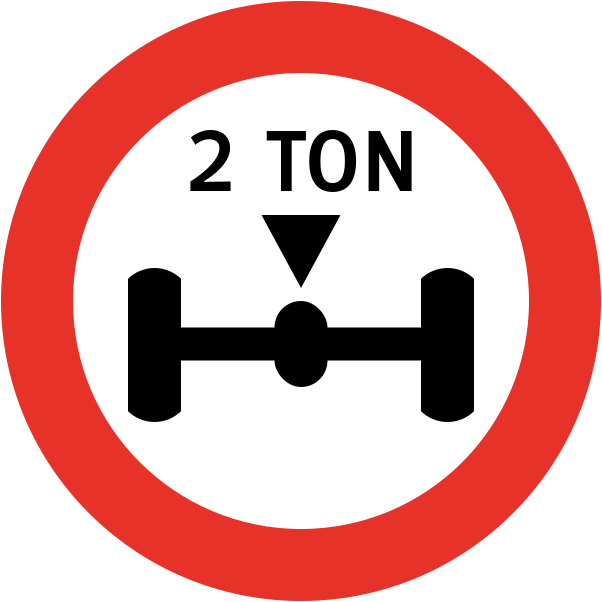
2. What does this traffic sign mean?
This traffic sign indicates that vehicles exceeding the indicated axle-load limit are prohibited. A vehicle whose load on an axle exceeds the displayed limit may not continue beyond the sign.
English • Traffic sign CONASET · annex 1 • Maximum axle load: 2 tonnes. Vehicles exceeding 2 tonnes on an axle must not pass.
Español • CONASET · anexo 1 • Peso máximo por eje: 2 toneladas. Prohíbe el paso de vehículos cuyo peso por eje exceda de 2 toneladas.
Sources
🔗 Commons.wikimedia.org
🔗 Mejoresconductores.conaset.cl • CONASET: Libro para la conducción en Chile, anexo 1, página 151
SVG source: Commons.wikimedia.org • Original SVG
Government of Chile – National Traffic Safety Commission • Public domain • Original revision 2023-08-04. Wikimedia original unmodified.
Artwork reviewed against the Chilean CONASET Libro para la conducción en Chile, Annex 1 (February 2026): Mejoresconductores.conaset.cl • Peso máximo por eje: 2 toneladas., PDF page 151. Intentional educational illustration update from the previous PNG; original SVG unmodified.

3. What does this traffic sign mean?
This traffic sign indicates a warning for a narrowing ahead. The available road width decreases ahead. Reduce speed when necessary and be prepared for less lateral space between vehicles, obstacles or the road edge.
English • Traffic sign CONASET · annex 1 • Narrow bridge. Reduce speed and watch for oncoming traffic.
Español • CONASET · anexo 1 • Puente angosto. Advierte la proximidad de un puente de ancho reducido. Disminuye la velocidad y presta atención al tránsito contrario.
Sources
🔗 Commons.wikimedia.org
🔗 Mejoresconductores.conaset.cl • CONASET: Libro para la conducción en Chile, anexo 1, página 154
SVG source: Commons.wikimedia.org • Original SVG
Gobierno de Chile • Public domain • Original revision 2012-12-08. Wikimedia original unmodified.
Artwork reviewed against the Chilean CONASET Libro para la conducción en Chile, Annex 1 (February 2026): Mejoresconductores.conaset.cl • Puente angosto., PDF page 154. Intentional educational illustration update from the previous PNG; original SVG unmodified.

4. What does this traffic sign mean?
This traffic sign indicates a warning for cattle. Cattle or other livestock may be crossing, walking along or standing near the road. Reduce speed, be prepared to stop and avoid sudden movements or unnecessary use of the horn that could startle the animals.
English • Traffic sign CONASET · annex 1 • Animals on the road. Livestock may be present. Reduce speed and be prepared to stop.
Español • CONASET · anexo 1 • Animales en la vía. Advierte la posible presencia de ganado en la vía. Reduce la velocidad y prepárate para detenerte.
Sources
🔗 Commons.wikimedia.org
🔗 Mejoresconductores.conaset.cl • CONASET: Libro para la conducción en Chile, anexo 1, página 155
SVG source: Commons.wikimedia.org • Original SVG
Government of Chile – National Traffic Safety Commission • Public domain • Original revision 2024-01-29. Wikimedia original unmodified.
Artwork reviewed against the Chilean CONASET Libro para la conducción en Chile, Annex 1 (February 2026): Mejoresconductores.conaset.cl • Animales en la vía., PDF page 155. Intentional educational illustration update from the previous PNG; original SVG unmodified.
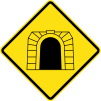
5. What does this traffic sign mean?
This traffic sign indicates a warning for a tunnel. Driving conditions may change at the tunnel entrance because of reduced light, limited visibility or restricted space. Reduce speed when necessary and follow the applicable rules for vehicle lighting, stopping, overtaking and lane use.
English • Traffic sign CONASET · annex 1 • Tunnel ahead. Prepare for lighting changes and observe the entrance signs.
Español • CONASET · anexo 1 • Proximidad de túnel. Advierte la proximidad de un túnel. Prepárate para los cambios de iluminación y respeta la señalización del acceso.
Sources
🔗 Commons.wikimedia.org
🔗 Mejoresconductores.conaset.cl • CONASET: Libro para la conducción en Chile, anexo 1, página 153
SVG source: Commons.wikimedia.org • Original SVG
Gobierno de Chile • Public domain • Original revision 2012-12-11. Wikimedia original unmodified.
Artwork reviewed against the Chilean CONASET Libro para la conducción en Chile, Annex 1 (February 2026): Mejoresconductores.conaset.cl • Proximidad de túnel., PDF page 153. Intentional educational illustration update from the previous PNG; original SVG unmodified.
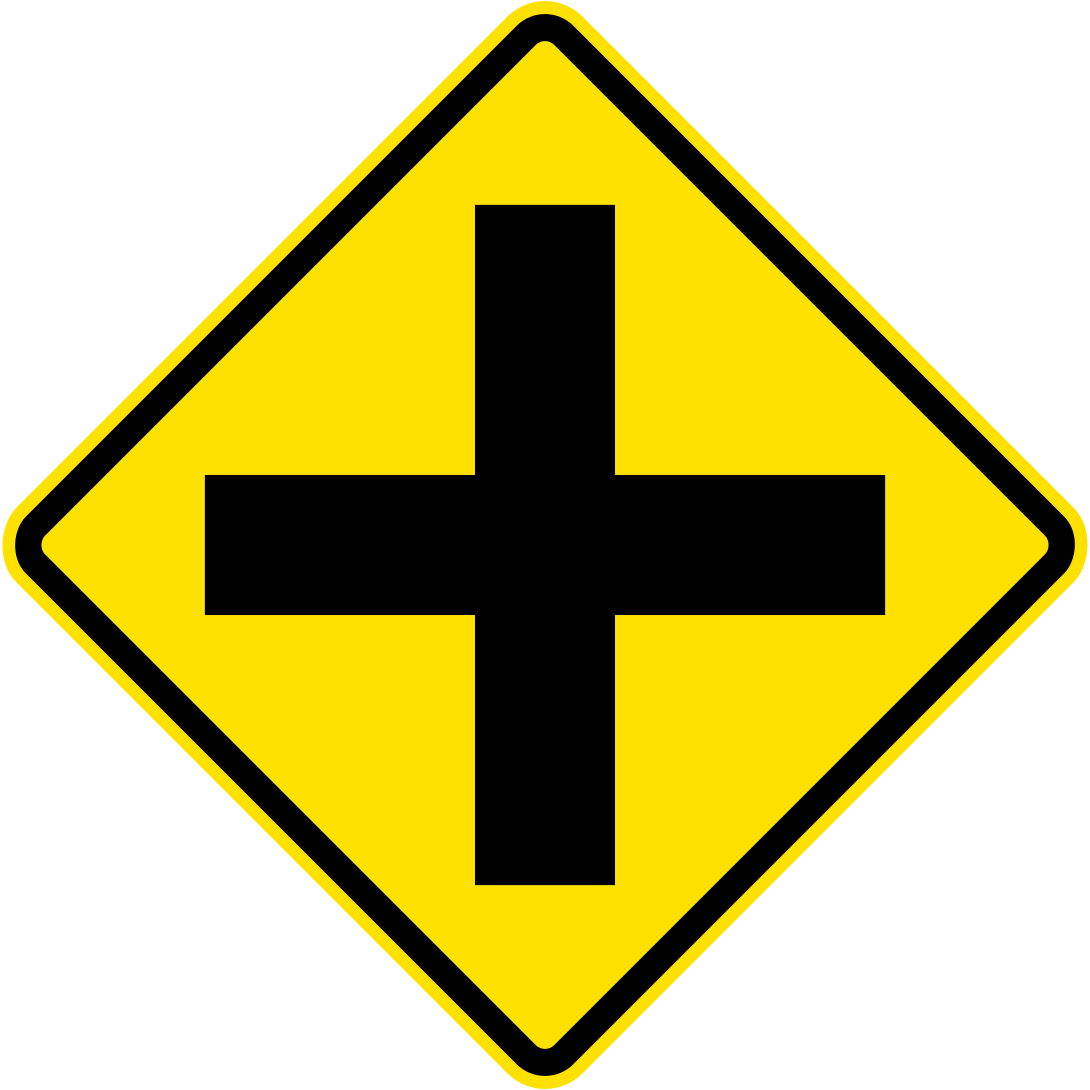
6. What does this traffic sign mean?
This traffic sign indicates a warning for an uncontrolled crossroad. An intersection without traffic signals or signs assigning priority lies ahead. Reduce speed, watch for traffic approaching from other directions and follow the applicable local priority rules.
English • Traffic sign CONASET · annex 1 • Crossings, forks and merges — crossroads. Watch for crossing traffic and priority signs at the junction ahead.
Español • CONASET · anexo 1 • Cruces, bifurcaciones y convergencias: cruce. Advierte la proximidad de un cruce de vías. Presta atención al tránsito transversal y a la señalización de prioridad.
Sources
🔗 Commons.wikimedia.org
🔗 Mejoresconductores.conaset.cl • CONASET: Libro para la conducción en Chile, anexo 1, página 155
SVG source: Commons.wikimedia.org • Original SVG
Government of Chile – National Traffic Safety Commission • Public domain • Original revision 2024-01-20. Wikimedia original unmodified.
Artwork reviewed against the Chilean CONASET Libro para la conducción en Chile, Annex 1 (February 2026): Mejoresconductores.conaset.cl • Cruces, bifurcaciones y convergencias: cruce., PDF page 155. Intentional educational illustration update from the previous PNG; original SVG unmodified.

7. What does this traffic sign mean?
This traffic sign indicates a warning for roadworks. Construction or maintenance work is taking place on or beside the road. Reduce speed where necessary and be prepared for workers, machinery, temporary traffic signals, changed lane layouts or uneven road surfaces.
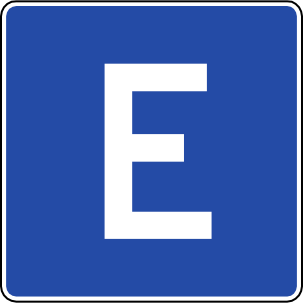
8. What does this traffic sign mean?
This traffic sign indicates that parking is allowed. Vehicles may be parked in the area covered by the sign subject to any indicated conditions, restrictions or local parking rules.
English • Traffic sign CONASET · annex 1 • Parking permitted. Marks a parking place subject to local conditions and signs.
Español • CONASET · anexo 1 • Estacionamiento permitido. Indica un lugar donde está permitido estacionar, sujeto a las condiciones y señalización del lugar.
Sources
🔗 Commons.wikimedia.org
🔗 Mejoresconductores.conaset.cl • CONASET: Libro para la conducción en Chile, anexo 1, página 158
SVG source: Gobierno de Chile • Public domain • Original revision 2012-12-08. Wikimedia original unmodified.

9. What does this traffic sign mean?
This traffic sign indicates a warning for a side road from the right. A side road joins the road ahead from the right at an uncontrolled junction. Reduce speed, watch for traffic entering from the side road and follow the applicable default priority rules.
English • Traffic sign CONASET · annex 1 • Crossings, forks and merges — side road on the right. Reduce speed and watch for joining traffic.
Español • CONASET · anexo 1 • Cruces, bifurcaciones y convergencias: vía lateral derecha. Advierte una vía lateral que se une por la derecha. Reduce la velocidad y observa el tránsito que pueda incorporarse.
Sources
🔗 Commons.wikimedia.org
🔗 Mejoresconductores.conaset.cl • CONASET: Libro para la conducción en Chile, anexo 1, página 155
SVG source: Commons.wikimedia.org • Original SVG
Government of Chile – National Traffic Safety Commission • Public domain • Original revision 2024-01-24. Wikimedia original unmodified.
Artwork reviewed against the Chilean CONASET Libro para la conducción en Chile, Annex 1 (February 2026): Mejoresconductores.conaset.cl • Cruces, bifurcaciones y convergencias: vía lateral derecha., PDF page 155. Intentional educational illustration update from the previous PNG; original SVG unmodified.
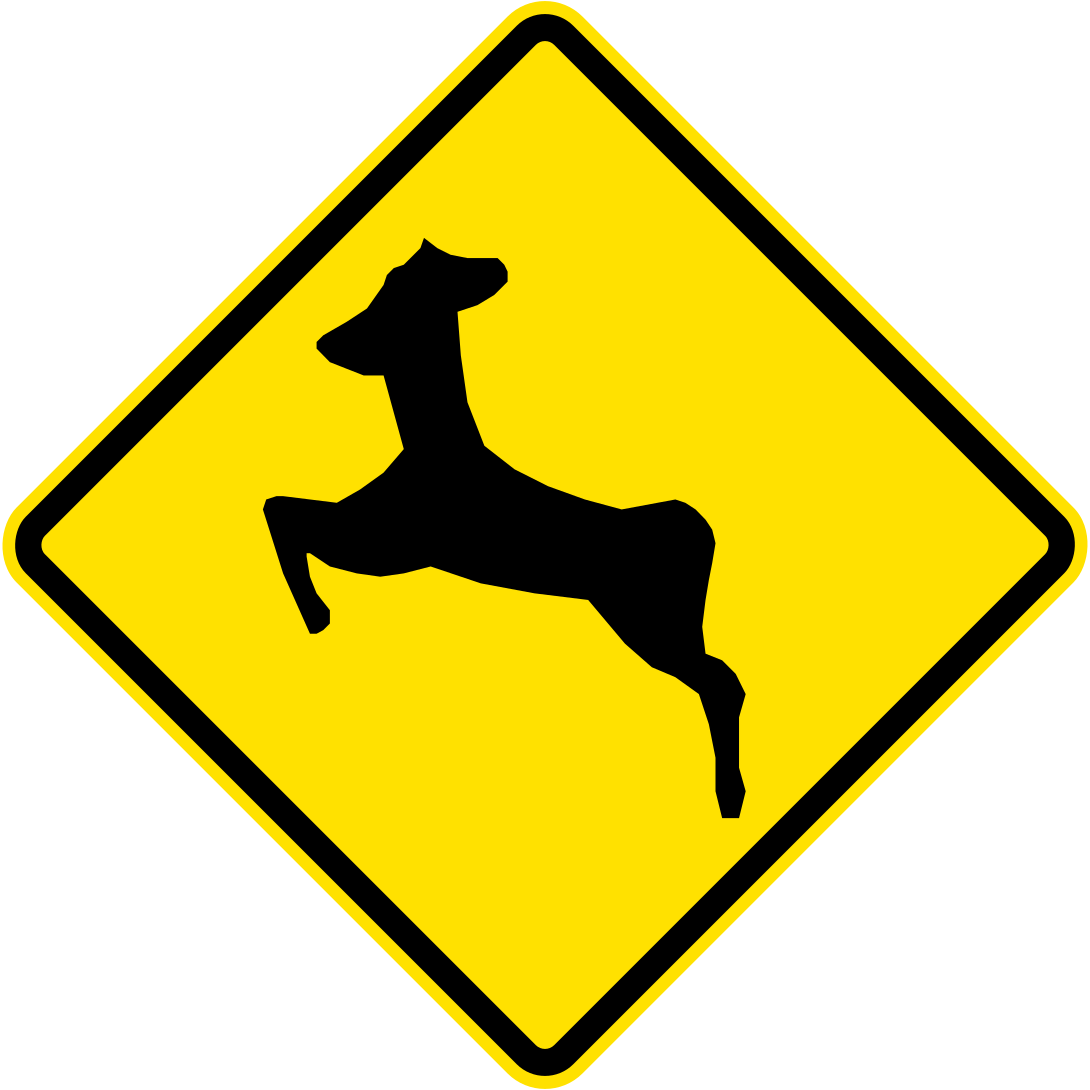
10. What does this traffic sign mean?
This traffic sign indicates a warning for crossing deer. Deer or other wild animals may enter the road unexpectedly, especially around dawn or dusk. Reduce speed, watch the roadside carefully and be prepared for more than one animal to cross.
English • Traffic sign CONASET · annex 1 • Animals on the road. Wild animals may be present. Reduce speed and watch their movements.
Español • CONASET · anexo 1 • Animales en la vía. Advierte la posible presencia de animales silvestres en la vía. Reduce la velocidad y presta atención a sus movimientos.
Sources
🔗 Commons.wikimedia.org
🔗 Mejoresconductores.conaset.cl • CONASET: Libro para la conducción en Chile, anexo 1, página 155
SVG source: Commons.wikimedia.org • Original SVG
Government of Chile – National Traffic Safety Commission • Public domain • Original revision 2024-01-24. Wikimedia original unmodified.
Artwork reviewed against the Chilean CONASET Libro para la conducción en Chile, Annex 1 (February 2026): Mejoresconductores.conaset.cl • Animales en la vía., PDF page 155. Intentional educational illustration update from the previous PNG; original SVG unmodified.

11. What does this traffic sign mean?
This traffic sign indicates that turning left is prohibited. A left turn may not be made where the sign applies. Other movements may still be permitted unless another restriction applies.
English • Traffic sign CONASET · annex 1 • No left turn. Turning left at the signed location is prohibited.
Español • CONASET · anexo 1 • No virar izquierda. Prohíbe efectuar un viraje hacia la izquierda en el lugar señalizado.
Sources
🔗 Commons.wikimedia.org
🔗 Mejoresconductores.conaset.cl • CONASET: Libro para la conducción en Chile, anexo 1, página 150
SVG source: Commons.wikimedia.org • Original SVG
Government of Chile – National Traffic Safety Commission • Public domain • Original revision 2023-05-13. Wikimedia original unmodified.
Artwork reviewed against the Chilean CONASET Libro para la conducción en Chile, Annex 1 (February 2026): Mejoresconductores.conaset.cl • No virar izquierda., PDF page 150. Intentional educational illustration update from the previous PNG; original SVG unmodified.
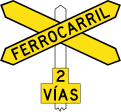
12. What does this traffic sign mean?
This traffic sign indicates a warning for a railway crossing with two or more tracks. It alerts drivers to a level crossing where more than one railway track crosses the road. More than one train may pass in succession or from different directions, so drivers should check carefully before crossing and never proceed until all tracks are clear.
English • Traffic sign CONASET · annex 1 • Crossbuck — two tracks. After a train passes, check for another on the second track.
Español • CONASET · anexo 1 • Cruz de San Andrés: dos vías. Identifica un cruce ferroviario con dos vías. Después del paso de un tren, comprueba que no se aproxime otro por la segunda vía.
Sources
🔗 Commons.wikimedia.org
🔗 Mejoresconductores.conaset.cl • CONASET: Libro para la conducción en Chile, anexo 1, página 154
SVG source: Gobierno de Chile • Public domain • Original revision 2012-12-09. Wikimedia original unmodified.
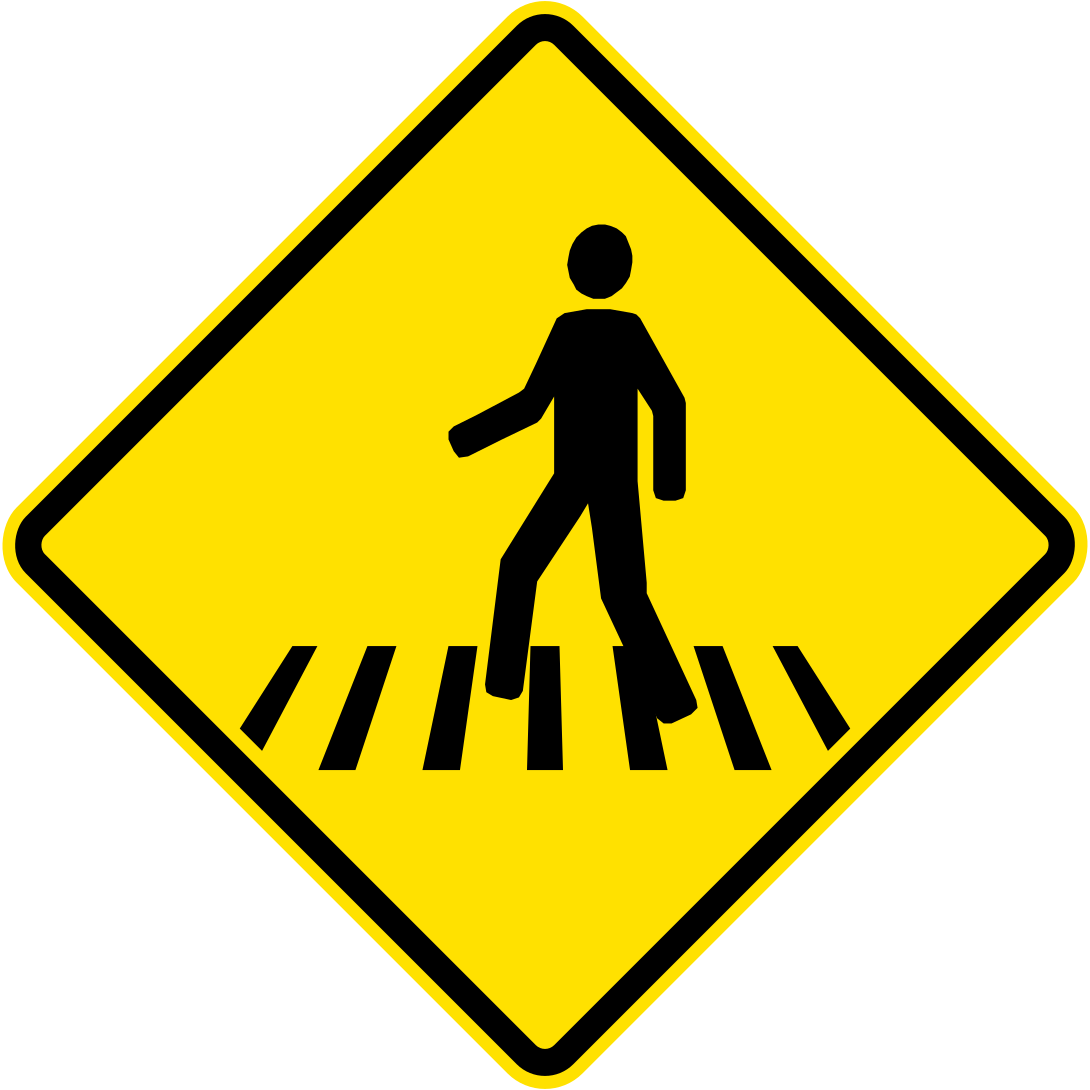
13. What does this traffic sign mean?
This traffic sign indicates a warning for a pedestrian crossing. A designated pedestrian crossing lies ahead. Reduce speed when necessary, watch carefully for pedestrians and be prepared to give way or stop according to the applicable local priority rules.
English • Traffic sign CONASET · annex 1 • Zebra crossing ahead. Reduce speed and give way to people about to cross.
Español • CONASET · anexo 1 • Proximidad de paso de cebra. Advierte un paso de cebra más adelante. Reduce la velocidad y cede el paso a quienes se dispongan a cruzar.
Sources
🔗 Commons.wikimedia.org
🔗 Mejoresconductores.conaset.cl • CONASET: Libro para la conducción en Chile, anexo 1, página 155
🔗 Mejoresconductores.conaset.cl • CONASET: normas y explicación, página 85
SVG source: Commons.wikimedia.org • Original SVG
Government of Chile – National Traffic Safety Commission • Public domain • Original revision 2024-02-01. Wikimedia original unmodified.
Artwork reviewed against the Chilean CONASET Libro para la conducción en Chile, Annex 1 (February 2026): Mejoresconductores.conaset.cl • Proximidad de paso de cebra., PDF page 155. Intentional educational illustration update from the previous PNG; original SVG unmodified.

14. What does this traffic sign mean?
This traffic sign indicates a warning for a roundabout. A roundabout lies ahead. Reduce speed and follow the applicable priority signs, traffic signals and local roundabout rules when approaching and entering it.
English • Traffic sign CONASET · annex 1 • Roundabout ahead. Give way to vehicles already circulating when joining.
Español • CONASET · anexo 1 • Proximidad de rotonda. Advierte la proximidad de una rotonda. Al incorporarte, cede el paso a los vehículos que ya circulan por ella.
Sources
🔗 Commons.wikimedia.org
🔗 Mejoresconductores.conaset.cl • CONASET: Libro para la conducción en Chile, anexo 1, página 155
🔗 Mejoresconductores.conaset.cl • CONASET: normas y explicación, página 84
SVG source: Commons.wikimedia.org • Original SVG
Government of Chile – National Traffic Safety Commission • Public domain • Original revision 2024-02-01. Wikimedia original unmodified.
Artwork reviewed against the Chilean CONASET Libro para la conducción en Chile, Annex 1 (February 2026): Mejoresconductores.conaset.cl • Proximidad de rotonda., PDF page 155. Intentional educational illustration update from the previous PNG; original SVG unmodified.

15. What does this traffic sign mean?
This traffic sign indicates a warning for a bad or uneven road surface. Potholes, bumps, depressions or other surface irregularities may affect vehicle stability and braking. Reduce speed and avoid sudden manoeuvres.
English • Traffic sign CONASET · annex 1 • Successive humps. Reduce speed and remain cautious throughout the section. The drawing's distance plate is blank; the warning is identified without assigning a length in metres.
Español • CONASET · anexo 1 • Resaltos sucesivos. Advierte varios resaltos consecutivos en la calzada. Reduce la velocidad y mantén la precaución durante el tramo. La placa complementaria del dibujo deja en blanco la distancia: se identifica la advertencia de resaltos sucesivos, sin asignar metros al tramo.
Sources
🔗 Commons.wikimedia.org
🔗 Mejoresconductores.conaset.cl • CONASET: Libro para la conducción en Chile, anexo 1, página 154
Image via Commons.wikimedia.org
Government of Chile – National Traffic Safety Commission • Public domain • Source revision 2024-03-23. Wikimedia original unmodified.
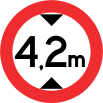
16. What does this traffic sign mean?
This traffic sign indicates that vehicles higher than indicated are prohibited. A vehicle or vehicle combination whose overall height, including its load, exceeds the displayed limit may not continue beyond the sign.
English • Traffic sign CONASET · annex 1 • Maximum height: 4.2 m. Vehicles exceeding 4.2 m overall height including the load must not pass.
Español • CONASET · anexo 1 • Altura máxima: 4,2 m. Prohíbe el paso de vehículos cuya altura total, incluida la carga, exceda de 4,2 metros.
Sources
🔗 Commons.wikimedia.org
🔗 Mejoresconductores.conaset.cl • CONASET: Libro para la conducción en Chile, anexo 1, página 151
SVG source: Commons.wikimedia.org • Original SVG
Gobierno de Chile • Public domain • Original revision 2012-12-08. Wikimedia original unmodified.
Artwork reviewed against the Chilean CONASET Libro para la conducción en Chile, Annex 1 (February 2026): Mejoresconductores.conaset.cl • Altura máxima: 4,2 m., PDF page 151. Intentional educational illustration update from the previous PNG; original SVG unmodified.
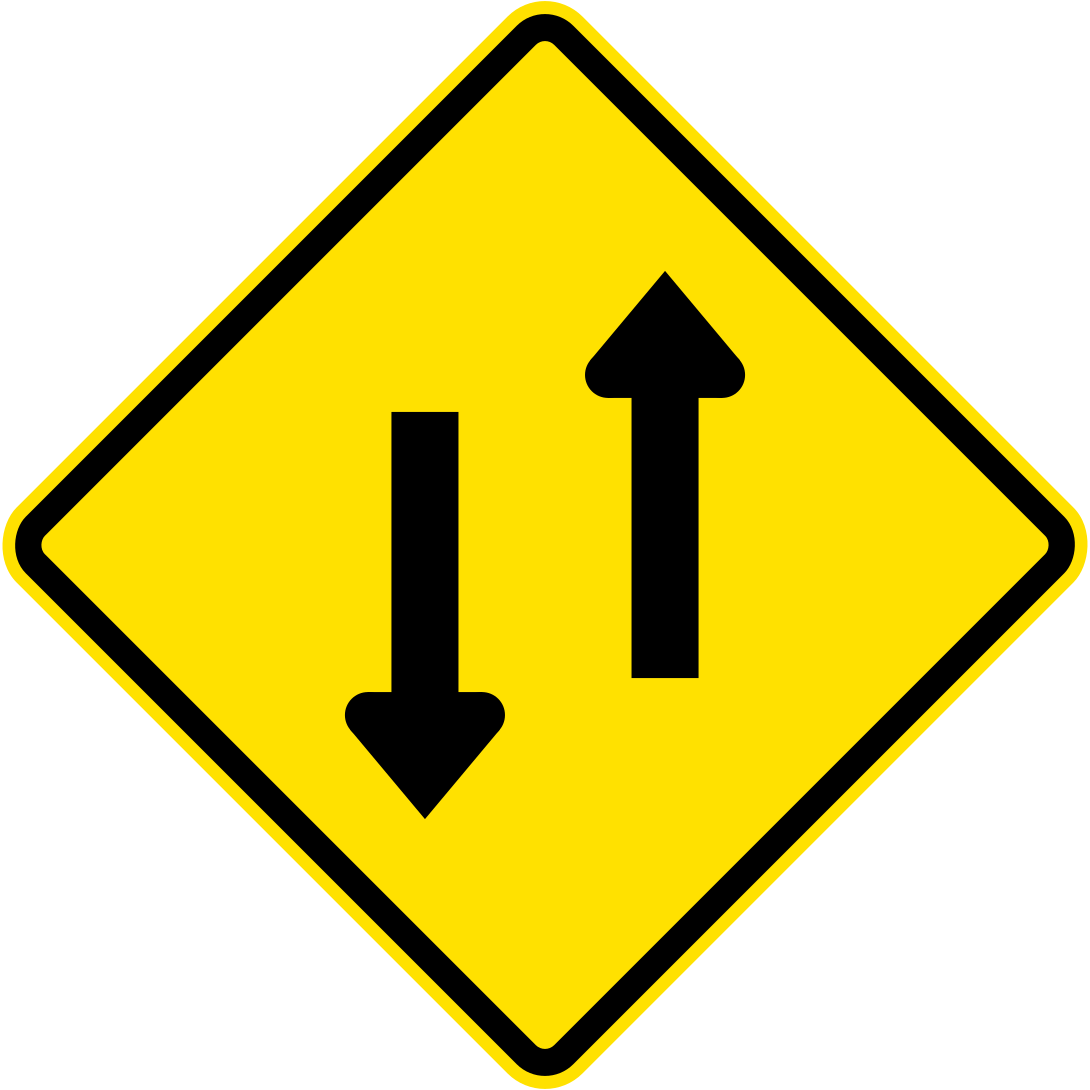
17. What does this traffic sign mean?
This traffic sign indicates a warning for two-way traffic. Oncoming traffic will use the same road or carriageway ahead. Keep to the correct side of the road and overtake only where it is permitted and clearly safe.
English • Traffic sign CONASET · annex 1 • Two-way traffic. Stay on your side and watch for oncoming traffic.
Español • CONASET · anexo 1 • Dos sentidos de tránsito. Advierte que el tramo tiene circulación en ambos sentidos. Mantente en tu lado y presta atención al tránsito contrario.
Sources
🔗 Commons.wikimedia.org
🔗 Mejoresconductores.conaset.cl • CONASET: Libro para la conducción en Chile, anexo 1, página 155
SVG source: Commons.wikimedia.org • Original SVG
Government of Chile – National Traffic Safety Commission • Public domain • Original revision 2024-03-07. Wikimedia original unmodified.
Artwork reviewed against the Chilean CONASET Libro para la conducción en Chile, Annex 1 (February 2026): Mejoresconductores.conaset.cl • Dos sentidos de tránsito., PDF page 155. Intentional educational illustration update from the previous PNG; original SVG unmodified.
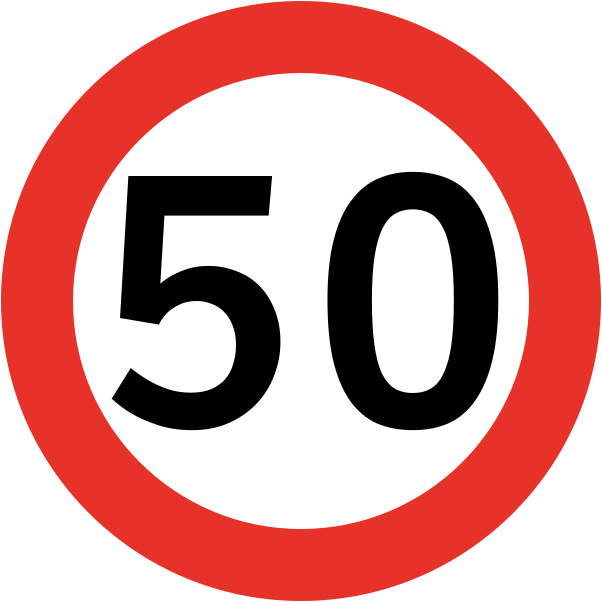
18. What does this traffic sign mean?
This traffic sign indicates the start of a speed limit. The displayed value is the maximum permitted speed from this point. The limit remains in force until it ends or is replaced according to the applicable traffic signs and local rules.
English • Traffic sign CONASET · annex 1 • Maximum speed: 50 km/h. Sets a 50 km/h maximum. Travel slower when conditions require.
Español • CONASET · anexo 1 • Velocidad máxima: 50 km/h. Establece una velocidad máxima de 50 kilómetros por hora. Circula a una velocidad menor cuando las condiciones lo exijan.
Sources
🔗 Commons.wikimedia.org
🔗 Mejoresconductores.conaset.cl • CONASET: Libro para la conducción en Chile, anexo 1, página 151
SVG source: Commons.wikimedia.org • Original SVG
Government of Chile – National Traffic Safety Commission • Public domain • Original revision 2024-01-18. Wikimedia original unmodified.
Artwork reviewed against the Chilean CONASET Libro para la conducción en Chile, Annex 1 (February 2026): Mejoresconductores.conaset.cl • Velocidad máxima: 50 km/h., PDF page 151. Intentional educational illustration update from the previous PNG; original SVG unmodified.
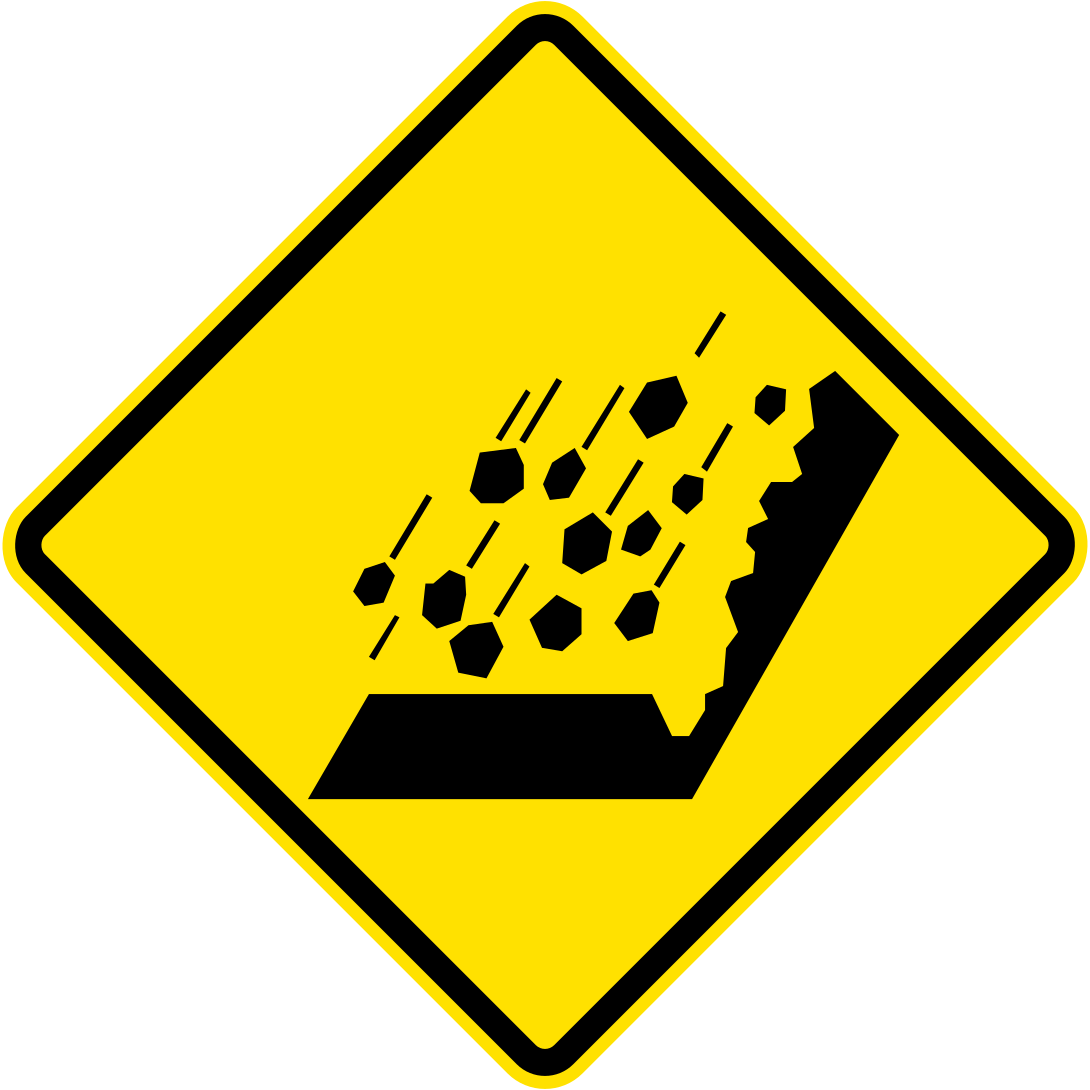
19. What does this traffic sign mean?
This traffic sign indicates a warning for falling rocks. Rocks or stones may fall from nearby slopes or may already be lying on the road. Reduce speed, scan the road ahead and be prepared to avoid or stop for fallen material.
English • Traffic sign CONASET · annex 1 • Rockfall area. Rocks or other material may fall onto the road. Reduce speed and watch the carriageway.
Español • CONASET · anexo 1 • Zona de derrumbes. Advierte una zona donde pueden caer rocas u otros materiales sobre la vía. Reduce la velocidad y observa la calzada.
Sources
🔗 Commons.wikimedia.org
🔗 Mejoresconductores.conaset.cl • CONASET: Libro para la conducción en Chile, anexo 1, página 156
SVG source: Commons.wikimedia.org • Original SVG
Government of Chile – National Traffic Safety Commission • Public domain • Original revision 2024-02-20. Wikimedia original unmodified.
Artwork reviewed against the Chilean CONASET Libro para la conducción en Chile, Annex 1 (February 2026): Mejoresconductores.conaset.cl • Zona de derrumbes., PDF page 156. Intentional educational illustration update from the previous PNG; original SVG unmodified.
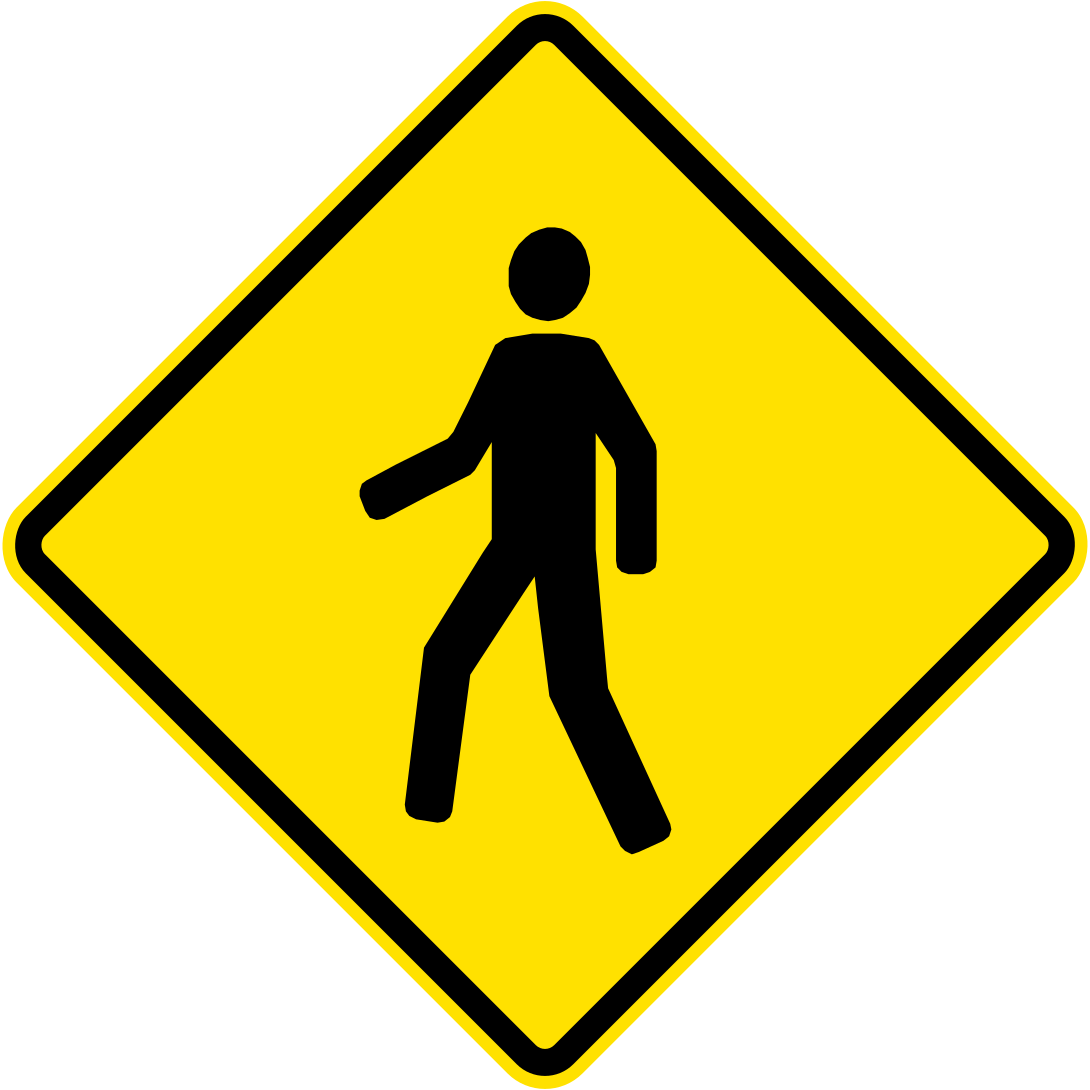
20. What does this traffic sign mean?
This traffic sign indicates a warning for pedestrians. Pedestrians may be walking near or crossing the road ahead. Reduce speed, watch carefully and be prepared to stop.
English • Traffic sign CONASET · annex 1 • Pedestrian area. Pedestrians may be present. Reduce speed and watch for people entering the carriageway.
Español • CONASET · anexo 1 • Zona de peatones. Advierte una zona con presencia de peatones. Reduce la velocidad y presta atención a quienes puedan entrar en la calzada.
Sources
🔗 Commons.wikimedia.org
🔗 Mejoresconductores.conaset.cl • CONASET: Libro para la conducción en Chile, anexo 1, página 155
SVG source: Commons.wikimedia.org • Original SVG
Government of Chile – National Traffic Safety Commission • Public domain • Original revision 2024-02-01. Wikimedia original unmodified.
Artwork reviewed against the Chilean CONASET Libro para la conducción en Chile, Annex 1 (February 2026): Mejoresconductores.conaset.cl • Zona de peatones., PDF page 155. Intentional educational illustration update from the previous PNG; original SVG unmodified.
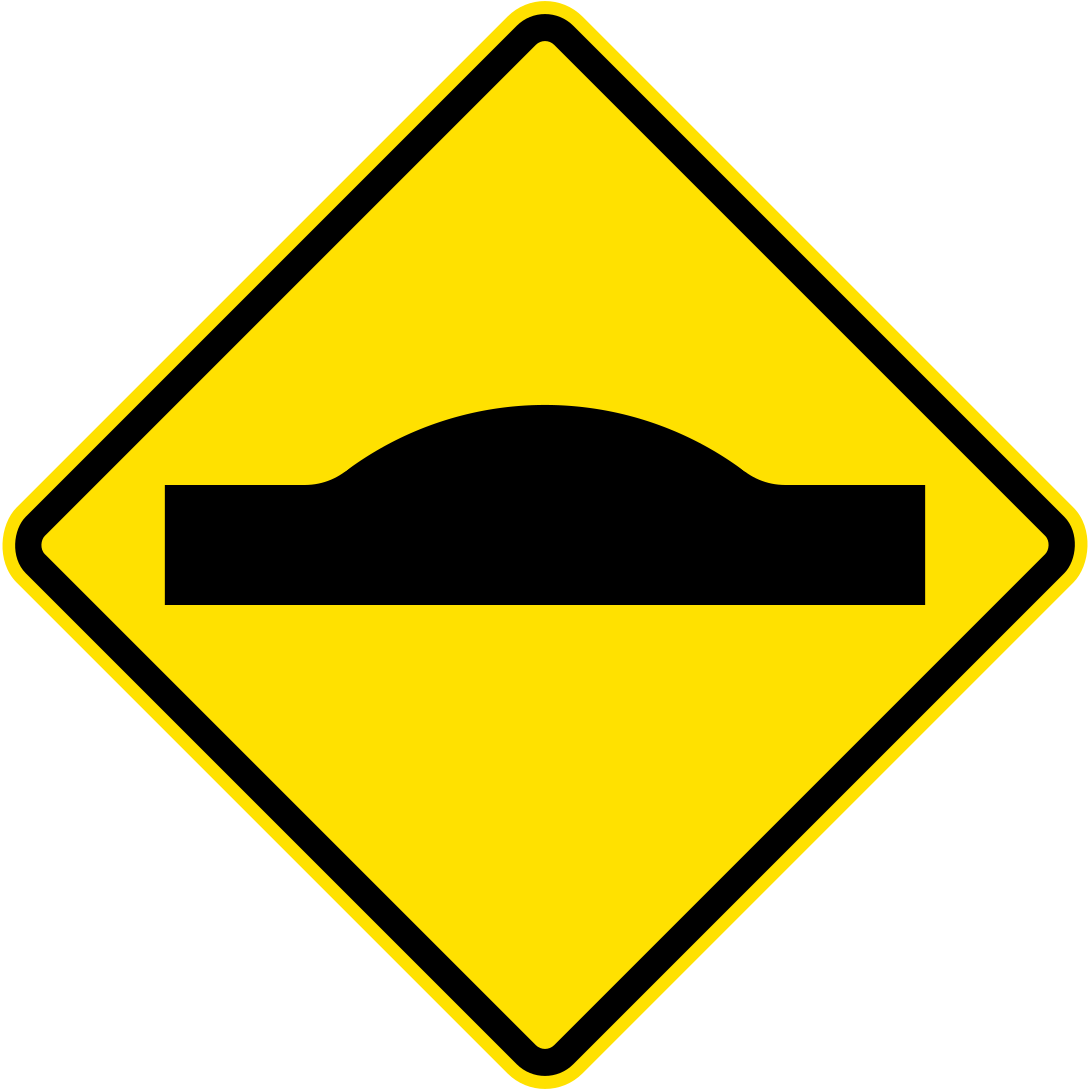
21. What does this traffic sign mean?
This traffic sign indicates a warning for a speed bump. A raised traffic-calming feature lies ahead. Reduce speed before reaching it to maintain vehicle control and avoid damage or discomfort.
English • Traffic sign CONASET · annex 1 • Road hump. Reduce speed before reaching it.
Español • CONASET · anexo 1 • Resalto. Advierte un resalto en la calzada. Reduce la velocidad antes de alcanzarlo.
Sources
🔗 Commons.wikimedia.org
🔗 Mejoresconductores.conaset.cl • CONASET: Libro para la conducción en Chile, anexo 1, página 154
SVG source: Commons.wikimedia.org • Original SVG
Government of Chile – National Traffic Safety Commission • Public domain • Original revision 2024-02-17. Wikimedia original unmodified.
Artwork reviewed against the Chilean CONASET Libro para la conducción en Chile, Annex 1 (February 2026): Mejoresconductores.conaset.cl • Resalto., PDF page 154. Intentional educational illustration update from the previous PNG; original SVG unmodified.
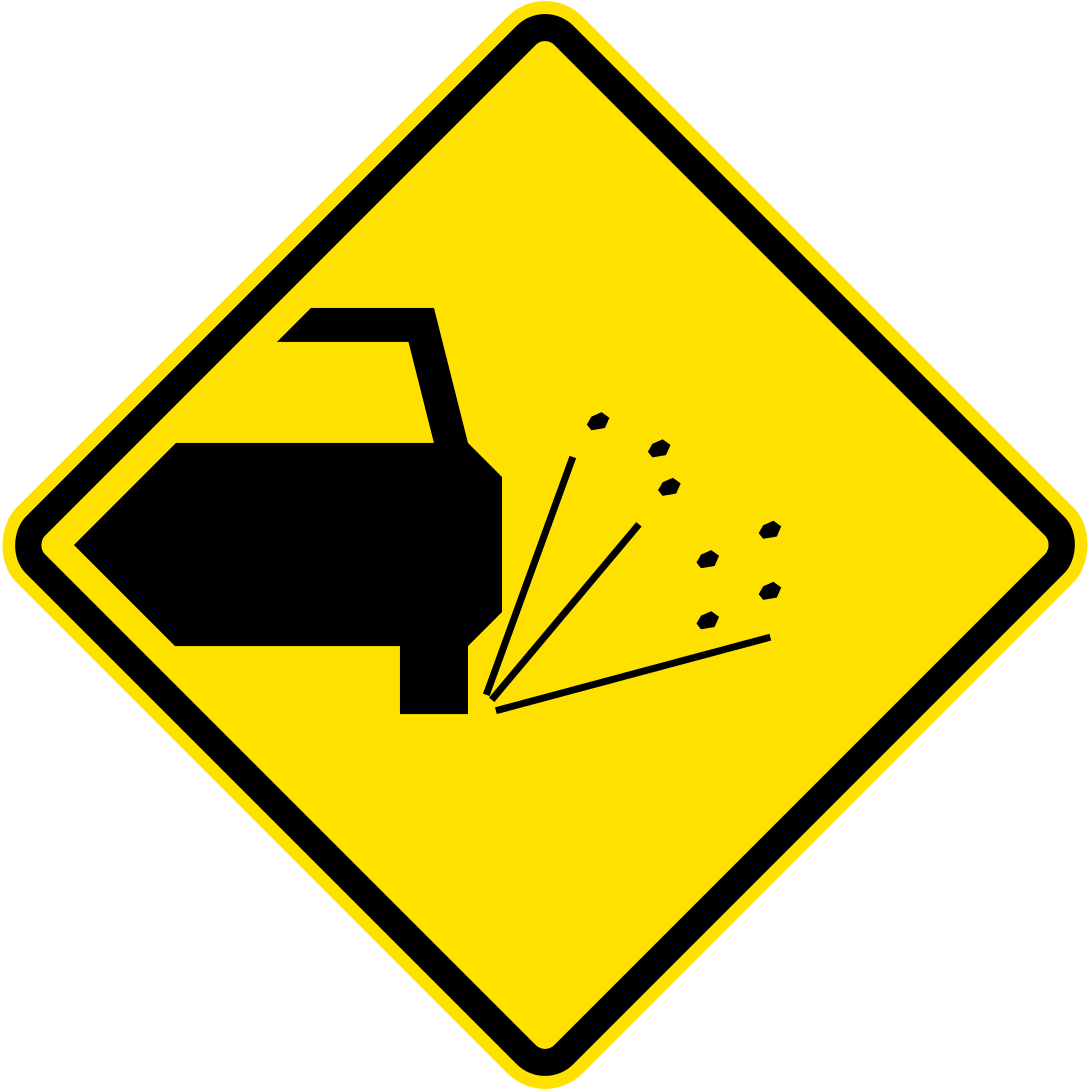
22. What does this traffic sign mean?
This traffic sign indicates a warning for loose chippings. Loose stones or gravel may reduce tyre grip and can be thrown up by passing vehicles. Reduce speed, increase your following distance and avoid sudden braking, acceleration or steering movements.
English • Traffic sign CONASET · annex 1 • Loose chippings. Tyres may throw up chippings. Reduce speed and increase following distance.
Español • CONASET · anexo 1 • Proyección de gravilla. Advierte gravilla que puede ser proyectada por los neumáticos. Reduce la velocidad y aumenta la distancia con otros vehículos.
Sources
🔗 Commons.wikimedia.org
🔗 Mejoresconductores.conaset.cl • CONASET: Libro para la conducción en Chile, anexo 1, página 154
SVG source: Commons.wikimedia.org • Original SVG
Government of Chile – National Traffic Safety Commission • Public domain • Original revision 2024-02-22. Wikimedia original unmodified.
Artwork reviewed against the Chilean CONASET Libro para la conducción en Chile, Annex 1 (February 2026): Mejoresconductores.conaset.cl • Proyección de gravilla., PDF page 154. Intentional educational illustration update from the previous PNG; original SVG unmodified.
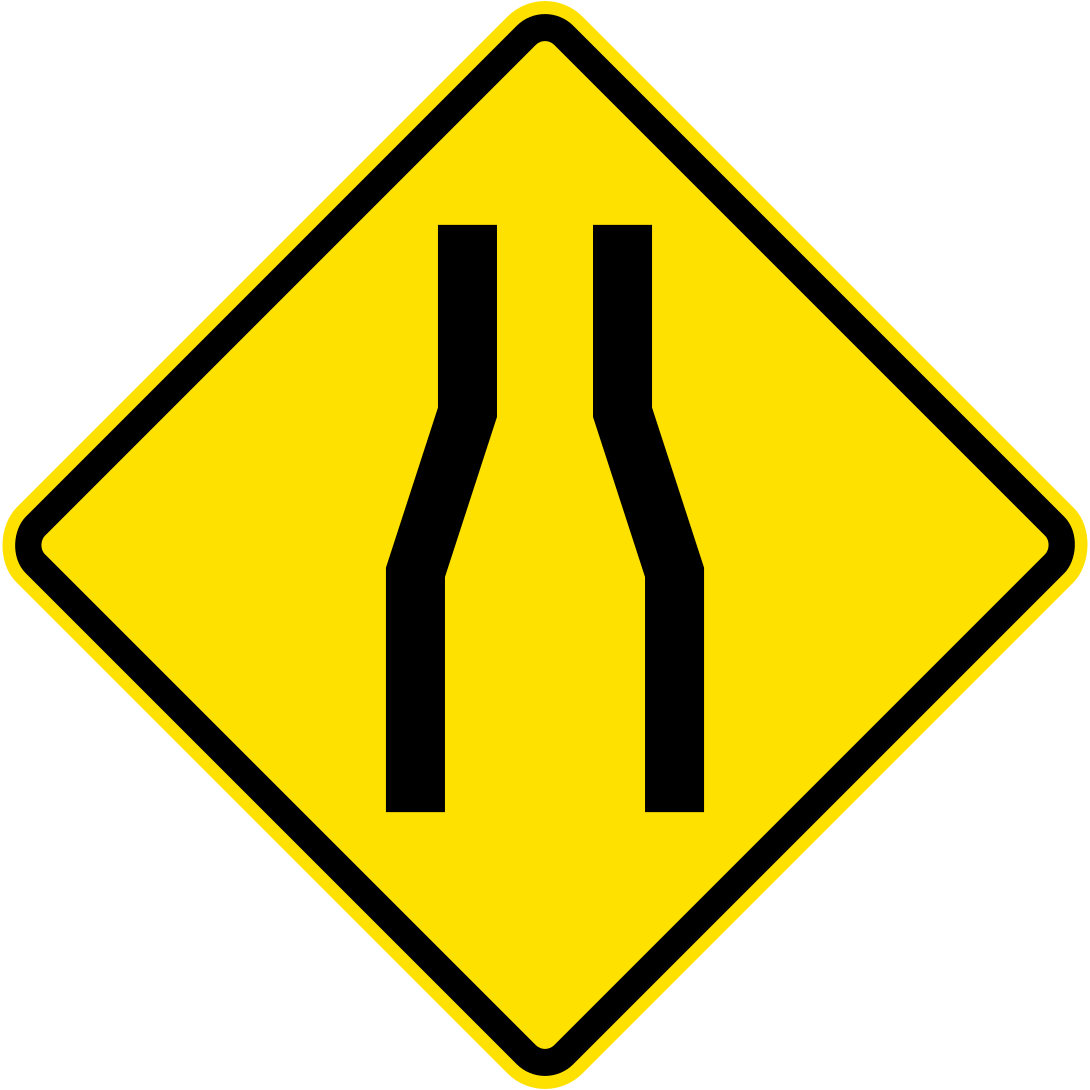
23. What does this traffic sign mean?
This traffic sign indicates a warning for a road narrowing. The available width of the road or carriageway decreases ahead. Reduce speed, maintain sufficient lateral clearance and watch carefully for approaching or adjacent traffic.
English • Traffic sign CONASET · annex 1 • Road narrows on both sides. Reduce speed and maintain safe lateral clearance.
Español • CONASET · anexo 1 • Angostamiento a ambos lados. Advierte que la calzada se estrecha por ambos lados. Reduce la velocidad y conserva una separación lateral segura.
Sources
🔗 Commons.wikimedia.org
🔗 Mejoresconductores.conaset.cl • CONASET: Libro para la conducción en Chile, anexo 1, página 154
SVG source: Commons.wikimedia.org • Original SVG
Government of Chile – National Traffic Safety Commission • Public domain • Original revision 2024-03-28. Wikimedia original unmodified.
Artwork reviewed against the Chilean CONASET Libro para la conducción en Chile, Annex 1 (February 2026): Mejoresconductores.conaset.cl • Angostamiento a ambos lados., PDF page 154. Intentional educational illustration update from the previous PNG; original SVG unmodified.
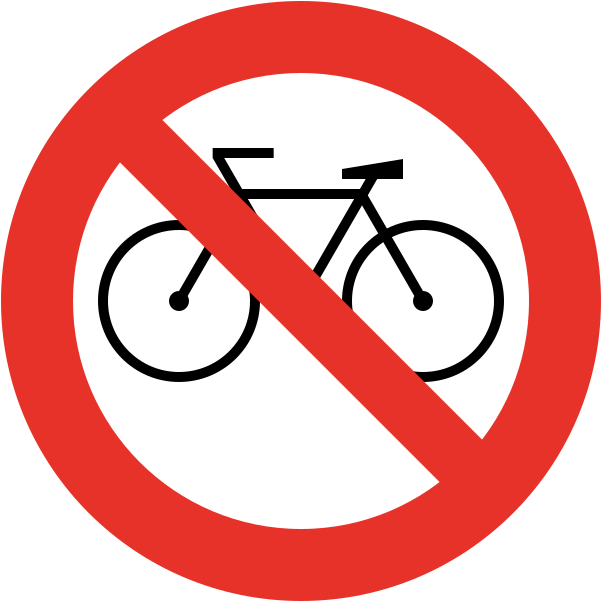
24. What does this traffic sign mean?
This traffic sign indicates that cyclists are prohibited. Cyclists may not enter or continue beyond the sign. Other road users may still be permitted unless another restriction applies.
English • Traffic sign CONASET · annex 1 • No bicycles. Bicycle traffic is prohibited on the signed road.
Español • CONASET · anexo 1 • Prohibida circulación de bicicletas. Prohíbe la circulación de bicicletas por la vía señalizada.
Sources
🔗 Commons.wikimedia.org
🔗 Mejoresconductores.conaset.cl • CONASET: Libro para la conducción en Chile, anexo 1, página 151
SVG source: Commons.wikimedia.org • Original SVG
Government of Chile – National Traffic Safety Commission • Public domain • Original revision 2023-05-18. Wikimedia original unmodified.
Artwork reviewed against the Chilean CONASET Libro para la conducción en Chile, Annex 1 (February 2026): Mejoresconductores.conaset.cl • Prohibida circulación de bicicletas., PDF page 151. Intentional educational illustration update from the previous PNG; original SVG unmodified.
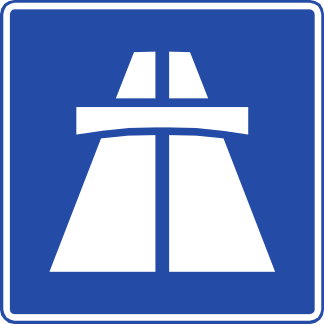
25. What does this traffic sign mean?
This traffic sign indicates the start of a motorway. From this point, special motorway rules apply, including restrictions on which road users may enter and on stopping, reversing and other manoeuvres. Follow the applicable speed limits, lane rules and local motorway regulations.
English • Traffic sign CONASET · annex 1 • Motorway begins. Observe its traffic rules and signs.
Español • CONASET · anexo 1 • Inicio de autopista. Indica el inicio de una autopista. Respeta las reglas de circulación y la señalización aplicables a ella.
Sources
🔗 Commons.wikimedia.org
🔗 Mejoresconductores.conaset.cl • CONASET: Libro para la conducción en Chile, anexo 1, página 158
SVG source: Gobierno de Chile • Public domain • Original revision 2012-12-14. Wikimedia original unmodified.
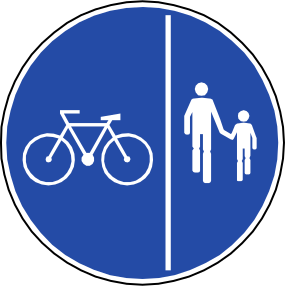
26. What does this traffic sign mean?
This traffic sign indicates a mandatory divided path for pedestrians and cyclists. Pedestrians and cyclists must use the section designated for them. Other road users may use the path only where the applicable signs or local rules permit them to do so.
English • Traffic sign CONASET · annex 1 • Separate pedestrian and cycle surface. Use the side for your road-user category. The drawing places cycles on the left and pedestrians on the right. The official book's example reverses the symbols; the family is identified without confirming this version as an approved design.
Español • CONASET · anexo 1 • Superficie segregada peatones-ciclos. Identifica una superficie con espacios separados para peatones y ciclos. Utiliza el lado indicado para tu tipo de circulación. El dibujo sitúa los ciclos a la izquierda y los peatones a la derecha. El ejemplo del libro oficial dispone los símbolos al revés; se identifica la familia, sin confirmar esta variante como diseño aprobado.
Sources
🔗 Commons.wikimedia.org
🔗 Mejoresconductores.conaset.cl • CONASET: Libro para la conducción en Chile, anexo 1, página 152
SVG source: Gobierno de Chile • Public domain • Original revision 2012-12-08. Wikimedia original unmodified.
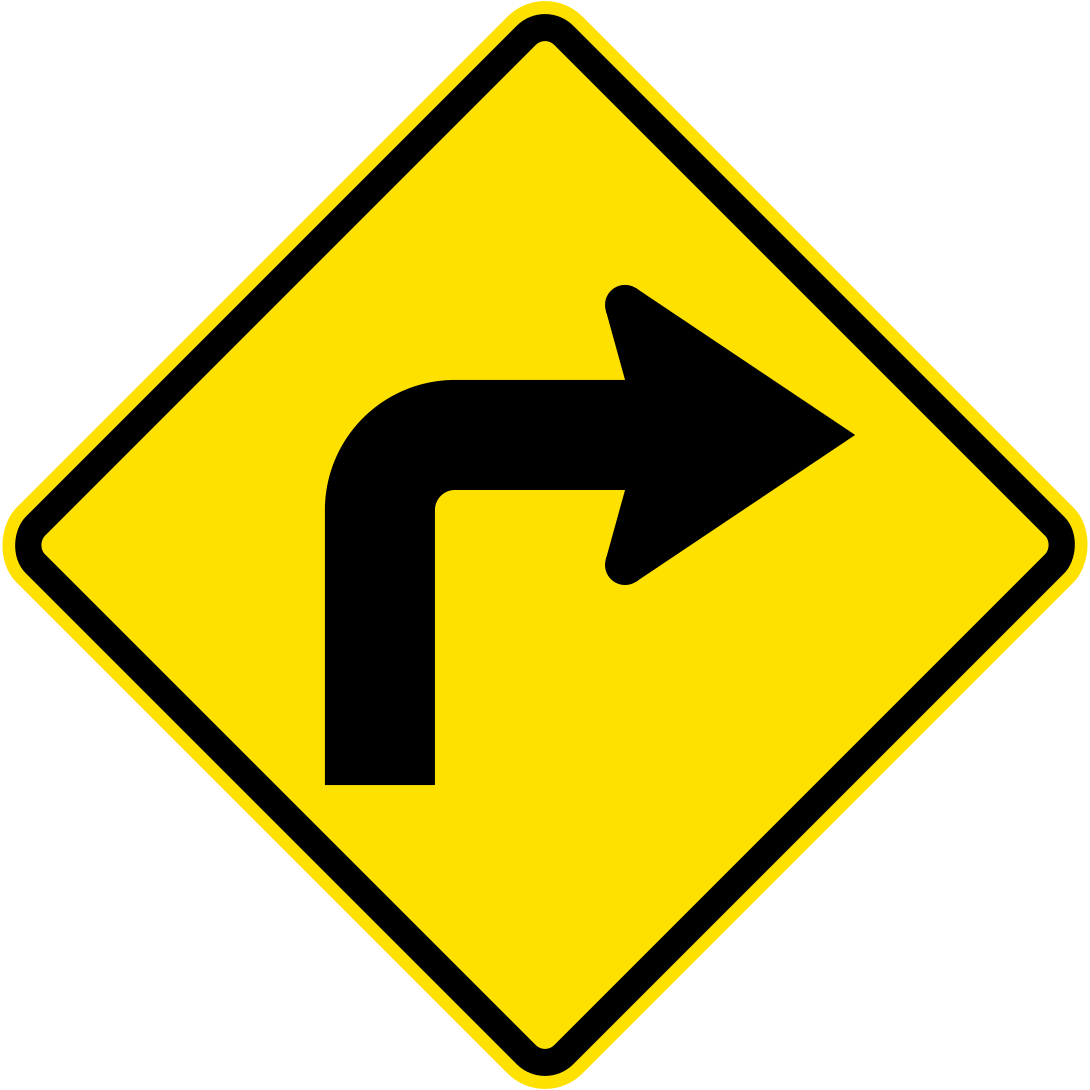
27. What does this traffic sign mean?
This traffic sign indicates a warning for a sharp curve to the right. A tight right-hand bend lies ahead. Reduce speed before entering the curve, remain within your lane and use smooth steering, particularly when visibility or road grip is reduced.
English • Traffic sign CONASET · annex 1 • Sharp right-hand bend. Reduce speed in advance.
Español • CONASET · anexo 1 • Curva cerrada a la derecha. Advierte una curva cerrada hacia la derecha. Reduce la velocidad con anticipación.
Sources
🔗 Commons.wikimedia.org
🔗 Mejoresconductores.conaset.cl • CONASET: Libro para la conducción en Chile, anexo 1, página 153
SVG source: Commons.wikimedia.org • Original SVG
Government of Chile – National Traffic Safety Commission • Public domain • Original revision 2024-02-25. Wikimedia original unmodified.
Artwork reviewed against the Chilean CONASET Libro para la conducción en Chile, Annex 1 (February 2026): Mejoresconductores.conaset.cl • Curva cerrada a la derecha., PDF page 153. Intentional educational illustration update from the previous PNG; original SVG unmodified.
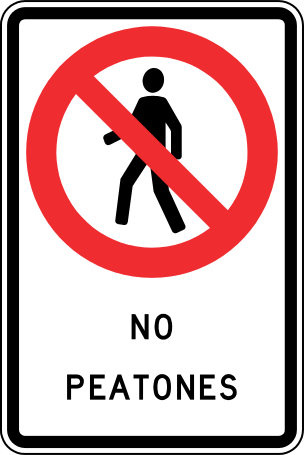
28. What does this traffic sign mean?
This traffic sign indicates that pedestrians are prohibited. Pedestrians may not enter or continue beyond the sign. Other road users may still be permitted unless another restriction applies.
English • Traffic sign CONASET · annex 1 • No pedestrians. Pedestrian traffic is prohibited on the signed road.
Español • CONASET · anexo 1 • No peatones. Prohíbe la circulación de peatones por la vía señalizada.
Sources
🔗 Commons.wikimedia.org
🔗 Mejoresconductores.conaset.cl • CONASET: Libro para la conducción en Chile, anexo 1, página 151
SVG source: Gobierno de Chile • Public domain • Original revision 2012-12-08. Wikimedia original unmodified.
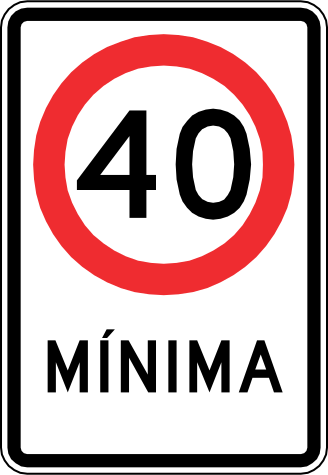
29. What does this traffic sign mean?
This traffic sign indicates the start of a minimum speed. Road users covered by the sign must travel at or above the indicated speed when conditions allow. Driving more slowly may still be necessary because of traffic, weather, road conditions or another safety-related reason.
English • Traffic sign CONASET · annex 1 • Minimum speed: 40 km/h. Sets a 40 km/h minimum on the signed section, subject to road safety conditions.
Español • CONASET · anexo 1 • Velocidad mínima: 40 km/h. Establece una velocidad mínima de 40 kilómetros por hora en el tramo señalizado, de acuerdo con las condiciones de seguridad de la vía.
Sources
🔗 Commons.wikimedia.org
🔗 Mejoresconductores.conaset.cl • CONASET: Libro para la conducción en Chile, anexo 1, página 151
SVG source: Gobierno de Chile • Public domain • Original revision 2012-12-08. Wikimedia original unmodified.
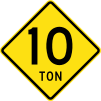
30. What does this traffic sign mean?
This traffic sign indicates a warning for a weight restriction. A maximum permitted vehicle weight applies ahead. Drivers of heavy vehicles should check the applicable vehicle weight and use another route if the limit would be exceeded.
English • Traffic sign CONASET · annex 1 • Maximum mass: 10 tonnes. A 10-tonne restriction is ahead. Check total vehicle mass before proceeding.
Español • CONASET · anexo 1 • Peso máximo: 10 toneladas. Advierte una limitación de peso de 10 toneladas más adelante. Comprueba el peso total del vehículo antes de continuar.
Sources
🔗 Commons.wikimedia.org
🔗 Mejoresconductores.conaset.cl • CONASET: Libro para la conducción en Chile, anexo 1, página 154
SVG source: Commons.wikimedia.org • Original SVG
Gobierno de Chile • Public domain • Original revision 2012-12-09. Wikimedia original unmodified.
Artwork reviewed against the Chilean CONASET Libro para la conducción en Chile, Annex 1 (February 2026): Mejoresconductores.conaset.cl • Peso máximo: 10 toneladas., PDF page 154. Intentional educational illustration update from the previous PNG; original SVG unmodified.
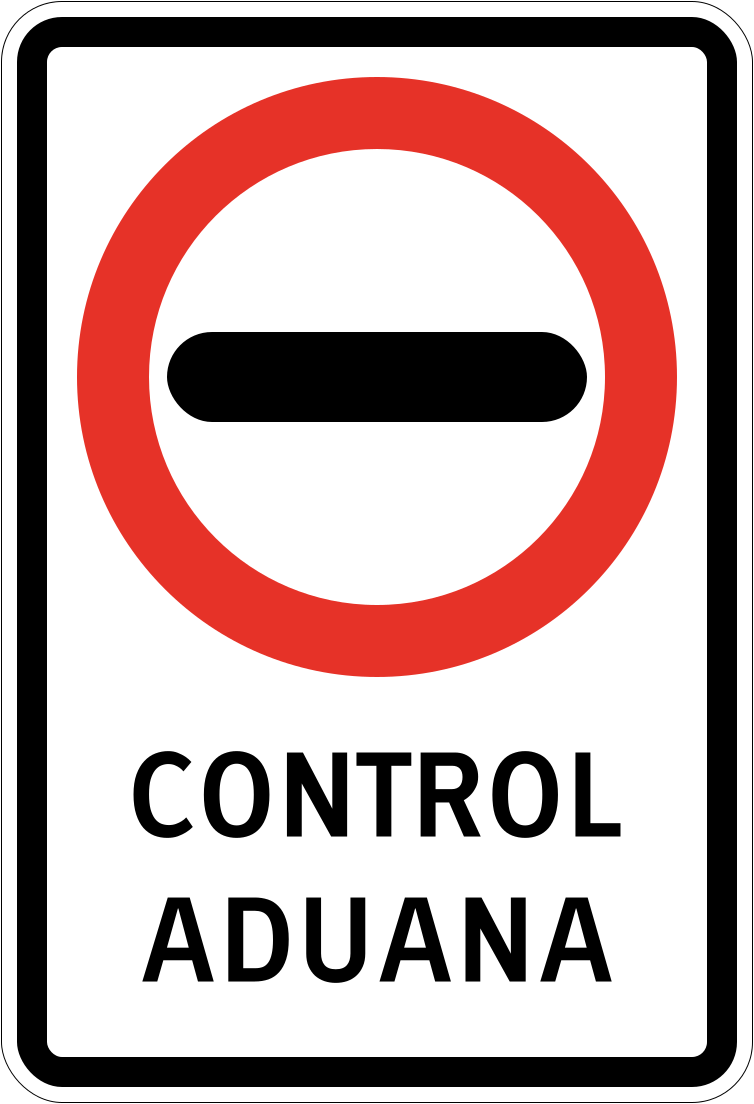
31. What does this traffic sign mean?
This traffic sign indicates a checkpoint with restricted entry. Road users may not proceed beyond the checkpoint unless they are authorised or permitted to continue according to the applicable rules and instructions.
English • Traffic sign CONASET · annex 1 • Customs checkpoint. Stop and follow the control staff's instructions.
Español • CONASET · anexo 1 • Control aduana. Indica un punto de control aduanero. Detente y cumple las instrucciones del personal de control.
Sources
🔗 Commons.wikimedia.org
🔗 Mejoresconductores.conaset.cl • CONASET: Libro para la conducción en Chile, anexo 1, página 152
SVG source: Commons.wikimedia.org • Original SVG
Government of Chile – National Traffic Safety Commission • Public domain • Original revision 2023-06-24. Wikimedia original unmodified.
Artwork reviewed against the Chilean CONASET Libro para la conducción en Chile, Annex 1 (February 2026): Mejoresconductores.conaset.cl • Control aduana., PDF page 152. Intentional educational illustration update from the previous PNG; original SVG unmodified.
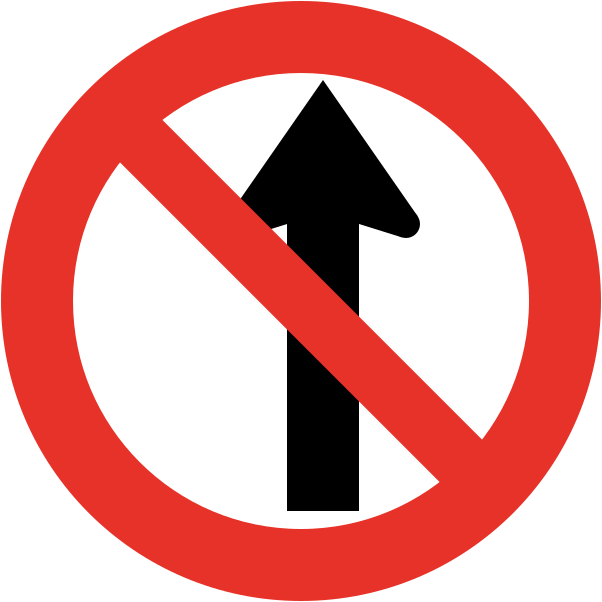
32. What does this traffic sign mean?
This traffic sign indicates that driving straight ahead is prohibited. Traffic may not continue straight ahead where the sign applies. Other movements may still be permitted unless another restriction applies.
English • Traffic sign CONASET · annex 1 • No entry. Prohibits entering the road or access from the direction faced by the sign.
Español • CONASET · anexo 1 • No entrar. Prohíbe entrar en la vía o acceso señalizado desde el sentido que enfrenta la señal.
Sources
🔗 Commons.wikimedia.org
🔗 Mejoresconductores.conaset.cl • CONASET: Libro para la conducción en Chile, anexo 1, página 150
SVG source: Commons.wikimedia.org • Original SVG
Government of Chile – National Traffic Safety Commission • Public domain • Original revision 2023-05-12. Wikimedia original unmodified.
Artwork reviewed against the Chilean CONASET Libro para la conducción en Chile, Annex 1 (February 2026): Mejoresconductores.conaset.cl • No entrar., PDF page 150. Intentional educational illustration update from the previous PNG; original SVG unmodified.
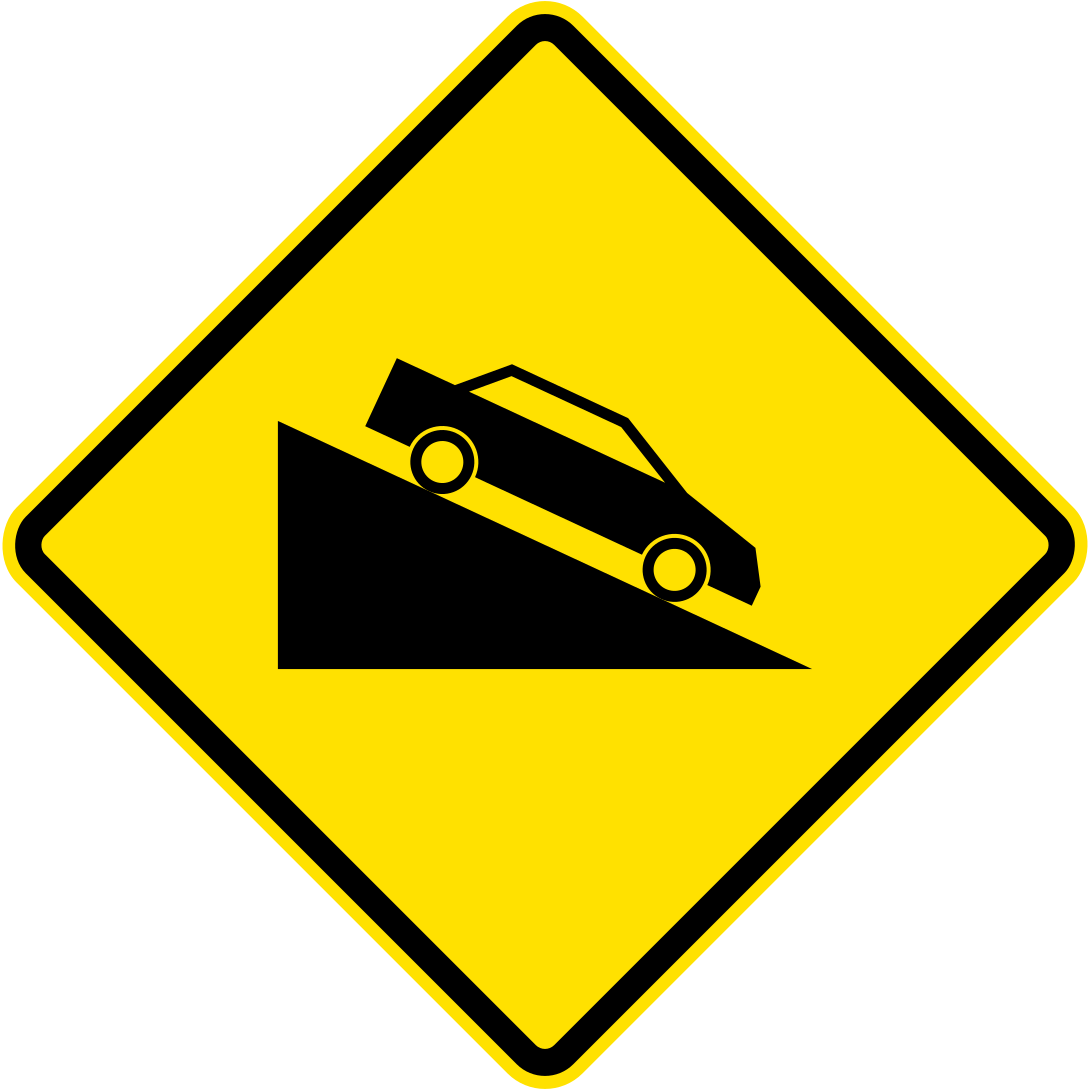
33. What does this traffic sign mean?
This traffic sign indicates a warning for a steep descent. A steep downhill gradient lies ahead and the vehicle may gain speed quickly. Reduce speed before the descent, select a suitable gear and use engine braking where appropriate. Allow extra distance for heavy or towing vehicles.
English • Traffic sign CONASET · annex 1 • Steep descent. Reduce speed and control the descent.
Español • CONASET · anexo 1 • Pendiente fuerte en bajada. Advierte una pendiente descendente pronunciada. Reduce la velocidad y controla el descenso.
Sources
🔗 Commons.wikimedia.org
🔗 Mejoresconductores.conaset.cl • CONASET: Libro para la conducción en Chile, anexo 1, página 153
SVG source: Commons.wikimedia.org • Original SVG
Government of Chile – National Traffic Safety Commission • Public domain • Original revision 2024-02-28. Wikimedia original unmodified.
Artwork reviewed against the Chilean CONASET Libro para la conducción en Chile, Annex 1 (February 2026): Mejoresconductores.conaset.cl • Pendiente fuerte en bajada., PDF page 153. Intentional educational illustration update from the previous PNG; original SVG unmodified.

34. What does this traffic sign mean?
This traffic sign indicates a warning for a railway crossing without barriers. It alerts drivers to an upcoming level crossing where railway tracks cross the road and no barriers or gates are present to stop traffic. Drivers should slow down and look both ways for trains.
English • Traffic sign CONASET · annex 1 • Railway level crossing without barriers. Approach carefully and check that no train is approaching.
Español • CONASET · anexo 1 • Cruce ferroviario a nivel sin barreras. Advierte un cruce ferroviario a nivel sin barreras. Acércate con precaución y comprueba que no se aproxime un tren.
Sources
🔗 Commons.wikimedia.org
🔗 Mejoresconductores.conaset.cl • CONASET: Libro para la conducción en Chile, anexo 1, página 154
SVG source: Commons.wikimedia.org • Original SVG
Government of Chile – National Traffic Safety Commission • Public domain • Original revision 2024-01-21. Wikimedia original unmodified.
Artwork reviewed against the Chilean CONASET Libro para la conducción en Chile, Annex 1 (February 2026): Mejoresconductores.conaset.cl • Cruce ferroviario a nivel sin barreras., PDF page 154. Intentional educational illustration update from the previous PNG; original SVG unmodified.
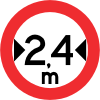
35. What does this traffic sign mean?
This traffic sign indicates that vehicles wider than indicated are prohibited. A vehicle or vehicle combination whose overall width, including its load, exceeds the displayed limit may not continue beyond the sign.
English • Traffic sign CONASET · annex 1 • Maximum width: 2.4 m. Vehicles exceeding 2.4 m overall width including the load must not pass.
Español • CONASET · anexo 1 • Ancho máximo: 2,4 m. Prohíbe el paso de vehículos cuyo ancho total, incluida la carga, exceda de 2,4 metros.
Sources
🔗 Commons.wikimedia.org
🔗 Mejoresconductores.conaset.cl • CONASET: Libro para la conducción en Chile, anexo 1, página 151
SVG source: Gobierno de Chile • Public domain • Original revision 2012-12-08. Wikimedia original unmodified.
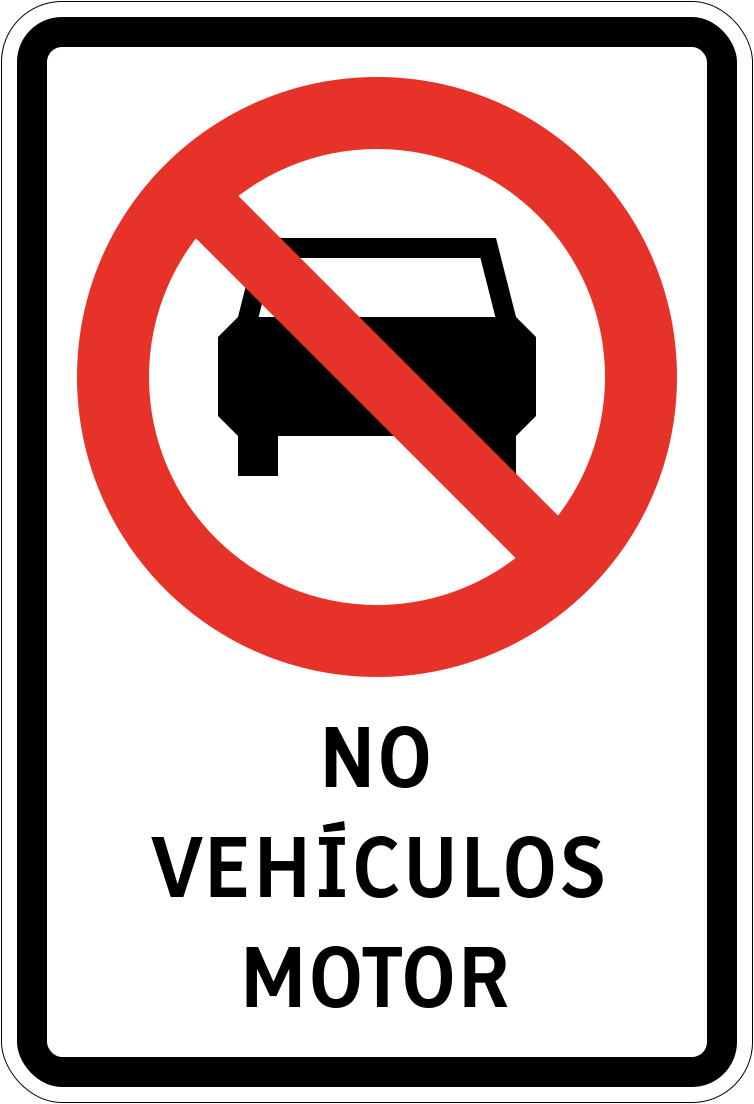
36. What does this traffic sign mean?
This traffic sign indicates that cars are prohibited. Cars may not enter or continue beyond the sign. Other road users may still be permitted unless another restriction applies.
English • Traffic sign CONASET · annex 1 • No motor vehicles. The prohibition covers motor vehicles, not only passenger cars.
Español • CONASET · anexo 1 • Prohibida circulación de vehículos motorizados. Prohíbe la circulación de vehículos motorizados. La prohibición no se limita a los automóviles.
Sources
🔗 Commons.wikimedia.org
🔗 Mejoresconductores.conaset.cl • CONASET: Libro para la conducción en Chile, anexo 1, página 150
SVG source: Commons.wikimedia.org • Original SVG
Government of Chile – National Traffic Safety Commission • Public domain • Original revision 2023-06-21. Wikimedia original unmodified.
Artwork reviewed against the Chilean CONASET Libro para la conducción en Chile, Annex 1 (February 2026): Mejoresconductores.conaset.cl • Prohibida circulación de vehículos motorizados., PDF page 150. Intentional educational illustration update from the previous PNG; original SVG unmodified.
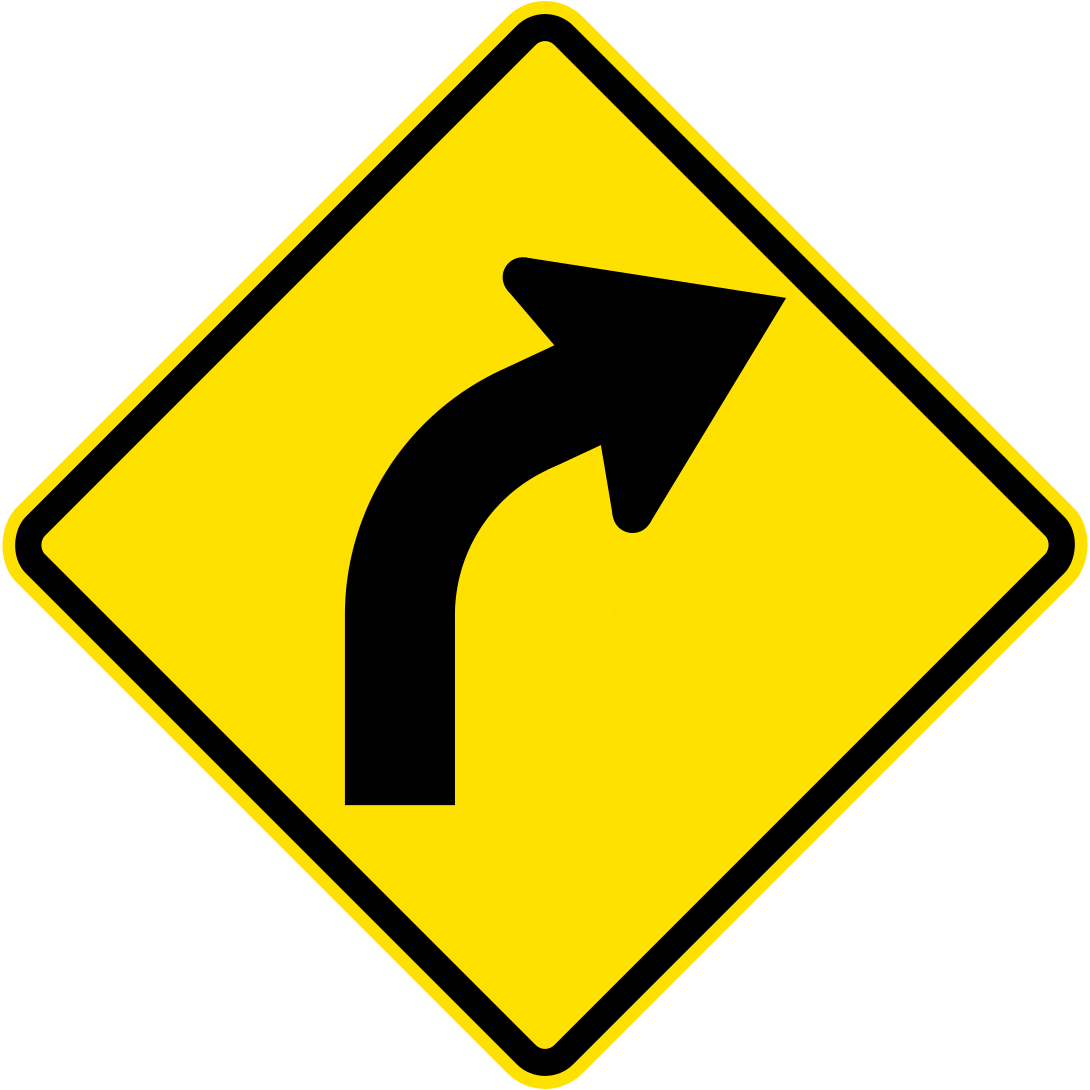
37. What does this traffic sign mean?
This traffic sign indicates a warning for a curve to the right. A right-hand bend lies ahead. Reduce speed before entering the curve, maintain your lane position and use smooth steering.
English • Traffic sign CONASET · annex 1 • Right-hand bend. Adjust speed before the bend.
Español • CONASET · anexo 1 • Curva a la derecha. Advierte una curva hacia la derecha. Adapta la velocidad antes de la curva.
Sources
🔗 Commons.wikimedia.org
🔗 Mejoresconductores.conaset.cl • CONASET: Libro para la conducción en Chile, anexo 1, página 153
SVG source: Commons.wikimedia.org • Original SVG
Government of Chile – National Traffic Safety Commission • Public domain • Original revision 2024-03-17. Wikimedia original unmodified.
Artwork reviewed against the Chilean CONASET Libro para la conducción en Chile, Annex 1 (February 2026): Mejoresconductores.conaset.cl • Curva a la derecha., PDF page 153. Intentional educational illustration update from the previous PNG; original SVG unmodified.
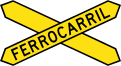
38. What does this traffic sign mean?
This traffic sign indicates a warning for a railway crossing with one track. It alerts drivers to a level crossing where a single railway track crosses the road. Drivers should approach with caution and be prepared to stop, even if no barriers or warning lights are active.
English • Traffic sign CONASET · annex 1 • Crossbuck. Identifies a railway level crossing. Check that passage is clear and obey railway signals. The drawing has no track-number plate; the family is identified without inferring the number of tracks.
Español • CONASET · anexo 1 • Cruz de San Andrés. Identifica un cruce ferroviario a nivel. Comprueba que el paso esté libre y respeta la señalización ferroviaria. El dibujo muestra la cruz ferroviaria sin placa de número de vías. Se identifica la familia Cruz de San Andrés, sin deducir cuántas vías tiene el cruce.
Sources
🔗 Commons.wikimedia.org
🔗 Mejoresconductores.conaset.cl • CONASET: Libro para la conducción en Chile, anexo 1, página 154
Image via Commons.wikimedia.org
Gobierno de Chile • Public domain • Source revision 2012-12-09. Wikimedia original unmodified.
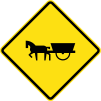
39. What does this traffic sign mean?
This traffic sign indicates a warning for horse-drawn vehicles. Horse-drawn vehicles may be travelling along or crossing the road ahead and can move considerably more slowly than motor traffic. Reduce speed, allow plenty of space and overtake only where it is permitted and clearly safe.
English • Traffic sign CONASET · annex 1 • Animal-drawn carts. Animal-drawn vehicles may be on the road. Reduce speed and watch their movements.
Español • CONASET · anexo 1 • Carretelas en la vía. Advierte la posible presencia de vehículos de tracción animal. Reduce la velocidad y presta atención a su circulación.
Sources
🔗 Commons.wikimedia.org
🔗 Mejoresconductores.conaset.cl • CONASET: Libro para la conducción en Chile, anexo 1, página 155
SVG source: Commons.wikimedia.org • Original SVG
Gobierno de Chile • Public domain • Original revision 2012-12-10. Wikimedia original unmodified.
Artwork reviewed against the Chilean CONASET Libro para la conducción en Chile, Annex 1 (February 2026): Mejoresconductores.conaset.cl • Carretelas en la vía., PDF page 155. Intentional educational illustration update from the previous PNG; original SVG unmodified.
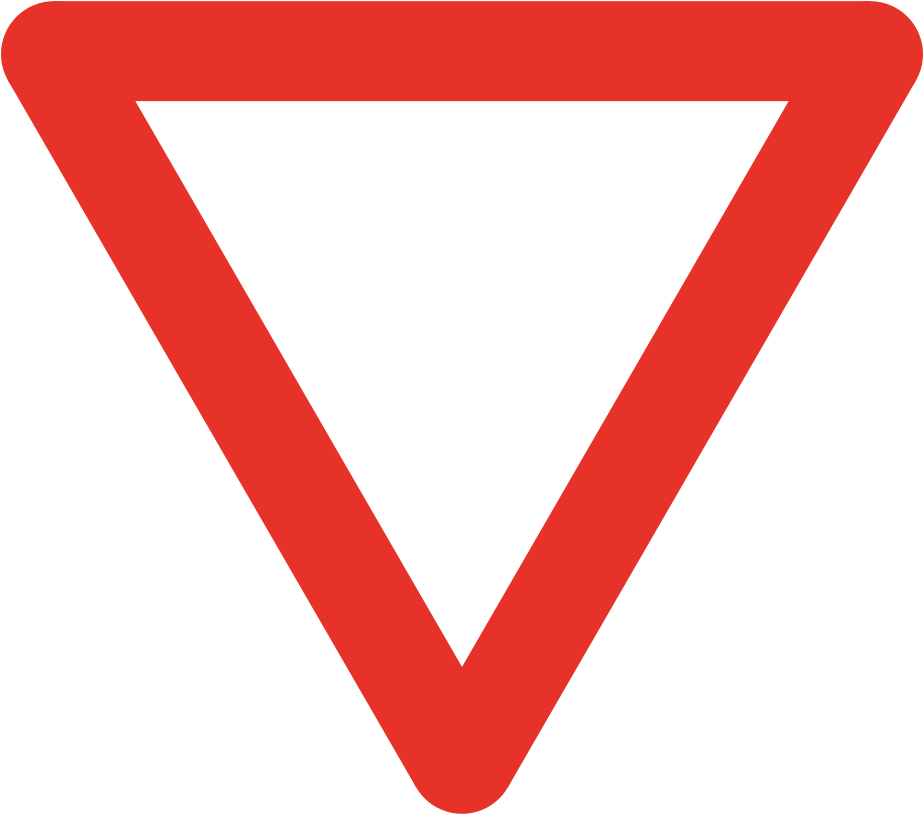
40. What does this traffic sign mean?
This traffic sign means give way. Slow down and give way to traffic that has priority. Stop if necessary and proceed only when it is safe.
English • Traffic sign CONASET · annex 1 • Give way. Reduce speed and give priority to vehicles on the other road; stop if necessary.
Español • CONASET · anexo 1 • Ceda el paso. Reduce la velocidad y cede el paso a los vehículos de la otra vía; detente cuando sea necesario.
Sources
🔗 Commons.wikimedia.org
🔗 Mejoresconductores.conaset.cl • CONASET: Libro para la conducción en Chile, anexo 1, página 150
🔗 Mejoresconductores.conaset.cl • CONASET: normas y explicación, página 84
SVG source: Government of Chile – National Traffic Safety Commission • Public domain • Original revision 2023-06-20. Wikimedia original unmodified.
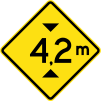
41. What does this traffic sign mean?
This traffic sign indicates a warning for a height restriction. The available clearance ahead is limited, for example at a bridge, tunnel or other overhead structure. Drivers of tall vehicles should check their vehicle height and use another route if the vehicle cannot pass safely.
English • Traffic sign CONASET · annex 1 • Maximum height: 4.2 m. A 4.2 m restriction is ahead. Check the vehicle's overall height including the load.
Español • CONASET · anexo 1 • Altura máxima: 4,2 m. Advierte una limitación de altura de 4,2 metros más adelante. Comprueba la altura total del vehículo y de su carga antes de continuar.
Sources
🔗 Commons.wikimedia.org
🔗 Mejoresconductores.conaset.cl • CONASET: Libro para la conducción en Chile, anexo 1, página 154
SVG source: Commons.wikimedia.org • Original SVG
Gobierno de Chile • Public domain • Original revision 2012-12-09. Wikimedia original unmodified.
Artwork reviewed against the Chilean CONASET Libro para la conducción en Chile, Annex 1 (February 2026): Mejoresconductores.conaset.cl • Altura máxima: 4,2 m., PDF page 154. Intentional educational illustration update from the previous PNG; original SVG unmodified.
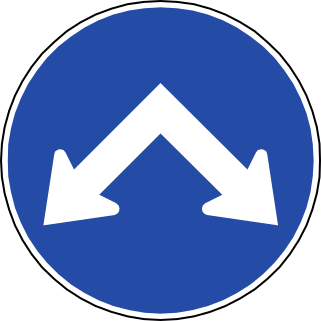
42. What does this traffic sign mean?
This traffic sign indicates that traffic must pass an obstacle on either the left or the right. Use either permitted side while following the road layout and any accompanying signs or markings.
English • Traffic sign CONASET · annex 1 • Pass either side of the island. Either side of the obstacle or indicated point may be used, following one of the arrows.
Español • CONASET · anexo 1 • Paso vértice. Indica que puedes pasar por cualquiera de los dos lados del obstáculo o vértice señalizado, siguiendo una de las direcciones de las flechas.
Sources
🔗 Commons.wikimedia.org
🔗 Mejoresconductores.conaset.cl • CONASET: Libro para la conducción en Chile, anexo 1, página 152
SVG source: Gobierno de Chile • Public domain • Original revision 2012-12-08. Wikimedia original unmodified.
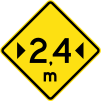
43. What does this traffic sign mean?
This traffic sign indicates a warning for a width restriction. The available passage ahead is limited in width. Drivers of wide vehicles should check their vehicle width and use another route if the vehicle cannot pass safely.
English • Traffic sign CONASET · annex 1 • Maximum width: 2.4 m. A 2.4 m restriction is ahead. Check the vehicle's overall width including the load.
Español • CONASET · anexo 1 • Ancho máximo: 2,4 m. Advierte una limitación de ancho de 2,4 metros más adelante. Comprueba el ancho total del vehículo y de su carga.
Sources
🔗 Commons.wikimedia.org
🔗 Mejoresconductores.conaset.cl • CONASET: Libro para la conducción en Chile, anexo 1, página 154
SVG source: Commons.wikimedia.org • Original SVG
Gobierno de Chile • Public domain • Original revision 2012-12-09. Wikimedia original unmodified.
Artwork reviewed against the Chilean CONASET Libro para la conducción en Chile, Annex 1 (February 2026): Mejoresconductores.conaset.cl • Ancho máximo: 2,4 m., PDF page 154. Intentional educational illustration update from the previous PNG; original SVG unmodified.
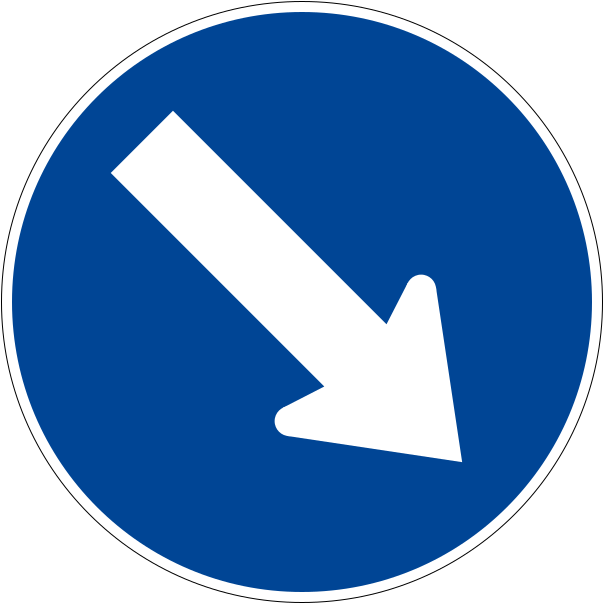
44. What does this traffic sign mean?
This traffic sign indicates that traffic must pass an obstacle on the right. Keep to the right of the obstacle and follow any accompanying signs or road markings.
English • Traffic sign CONASET · annex 1 • Pass on the right. Pass to the right of the obstacle or indicated feature.
Español • CONASET · anexo 1 • Paso obligado derecha. Obliga a pasar por el lado derecho del obstáculo o elemento señalizado.
Sources
🔗 Commons.wikimedia.org
🔗 Mejoresconductores.conaset.cl • CONASET: Libro para la conducción en Chile, anexo 1, página 152
SVG source: Commons.wikimedia.org • Original SVG
Government of Chile – National Traffic Safety Commission • Public domain • Original revision 2023-07-14. Wikimedia original unmodified.
Artwork reviewed against the Chilean CONASET Libro para la conducción en Chile, Annex 1 (February 2026): Mejoresconductores.conaset.cl • Paso obligado derecha., PDF page 152. Intentional educational illustration update from the previous PNG; original SVG unmodified.
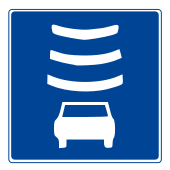
45. What does this traffic sign mean?
This traffic sign indicates section control, also called average-speed enforcement. A vehicle’s average speed is measured over a defined section of road and compared with the applicable speed limit.
English • Traffic sign CONASET · annex 1 • Motorway with Televía or a complementary system. Indicates electronic toll collection using Televía or a complementary system. Check payment conditions and options before using it.
Español • CONASET · anexo 1 • Autopista con Televía o sistema complementario. Indica una autopista con cobro electrónico de peaje mediante Televía o un sistema complementario. Comprueba las condiciones y opciones de pago antes de utilizarla.
Sources
🔗 Commons.wikimedia.org (GPOChile • CC BY-SA 3.0)
🔗 Mejoresconductores.conaset.cl • CONASET: Libro para la conducción en Chile, anexo 1, página 158
🔗 Mejoresconductores.conaset.cl • CONASET: normas y explicación, página 116
Image via Commons.wikimedia.org
GPOChile • CC BY-SA 3.0 • Source revision 2012-12-02. Wikimedia original unmodified.
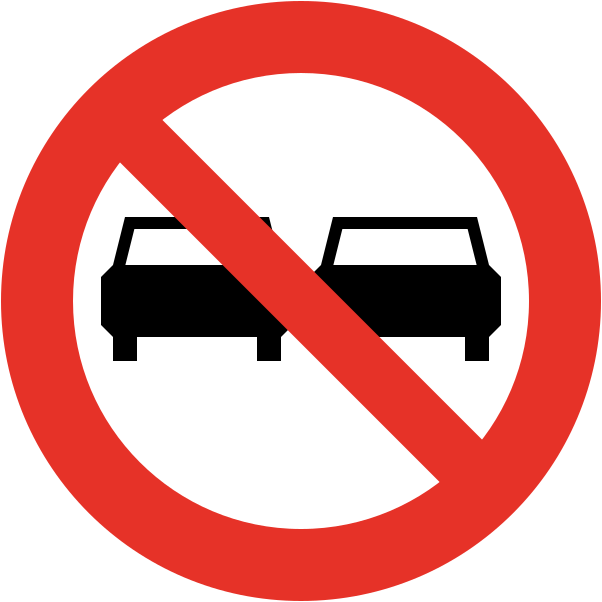
46. What does this traffic sign mean?
This traffic sign indicates that overtaking is prohibited. The vehicles covered by the prohibition and any categories that may still be overtaken depend on the applicable local rules.
English • Traffic sign CONASET · annex 1 • No overtaking. Prohibits the overtaking manoeuvre represented by the sign.
Español • CONASET · anexo 1 • No adelantar. Prohíbe la maniobra de adelantamiento indicada por la señal.
Sources
🔗 Commons.wikimedia.org
🔗 Mejoresconductores.conaset.cl • CONASET: Libro para la conducción en Chile, anexo 1, página 150
SVG source: Commons.wikimedia.org • Original SVG
Government of Chile – National Traffic Safety Commission • Public domain • Original revision 2023-05-11. Wikimedia original unmodified.
Artwork reviewed against the Chilean CONASET Libro para la conducción en Chile, Annex 1 (February 2026): Mejoresconductores.conaset.cl • No adelantar., PDF page 150. Intentional educational illustration update from the previous PNG; original SVG unmodified.

47. What does this traffic sign mean?
This traffic sign means stop and give way. You must come to a complete stop before entering the intersection and give way to traffic that has priority. Proceed only when it is safe.
English • Traffic sign CONASET · annex 1 • Stop. Stop completely and give way to traffic on the other road. Proceed when safe.
Español • CONASET · anexo 1 • Pare. Detén completamente el vehículo y cede el paso a quienes circulan por la otra vía. Reanuda la marcha cuando puedas hacerlo con seguridad.
Sources
🔗 Commons.wikimedia.org
🔗 Mejoresconductores.conaset.cl • CONASET: Libro para la conducción en Chile, anexo 1, página 150
🔗 Mejoresconductores.conaset.cl • CONASET: normas y explicación, página 84
SVG source: Commons.wikimedia.org • Original SVG
Government of Chile – National Traffic Safety Commission • Public domain • Original revision 2023-06-19. Wikimedia original unmodified.
Artwork reviewed against the Chilean CONASET Libro para la conducción en Chile, Annex 1 (February 2026): Mejoresconductores.conaset.cl • Pare., PDF page 150. Intentional educational illustration update from the previous PNG; original SVG unmodified.
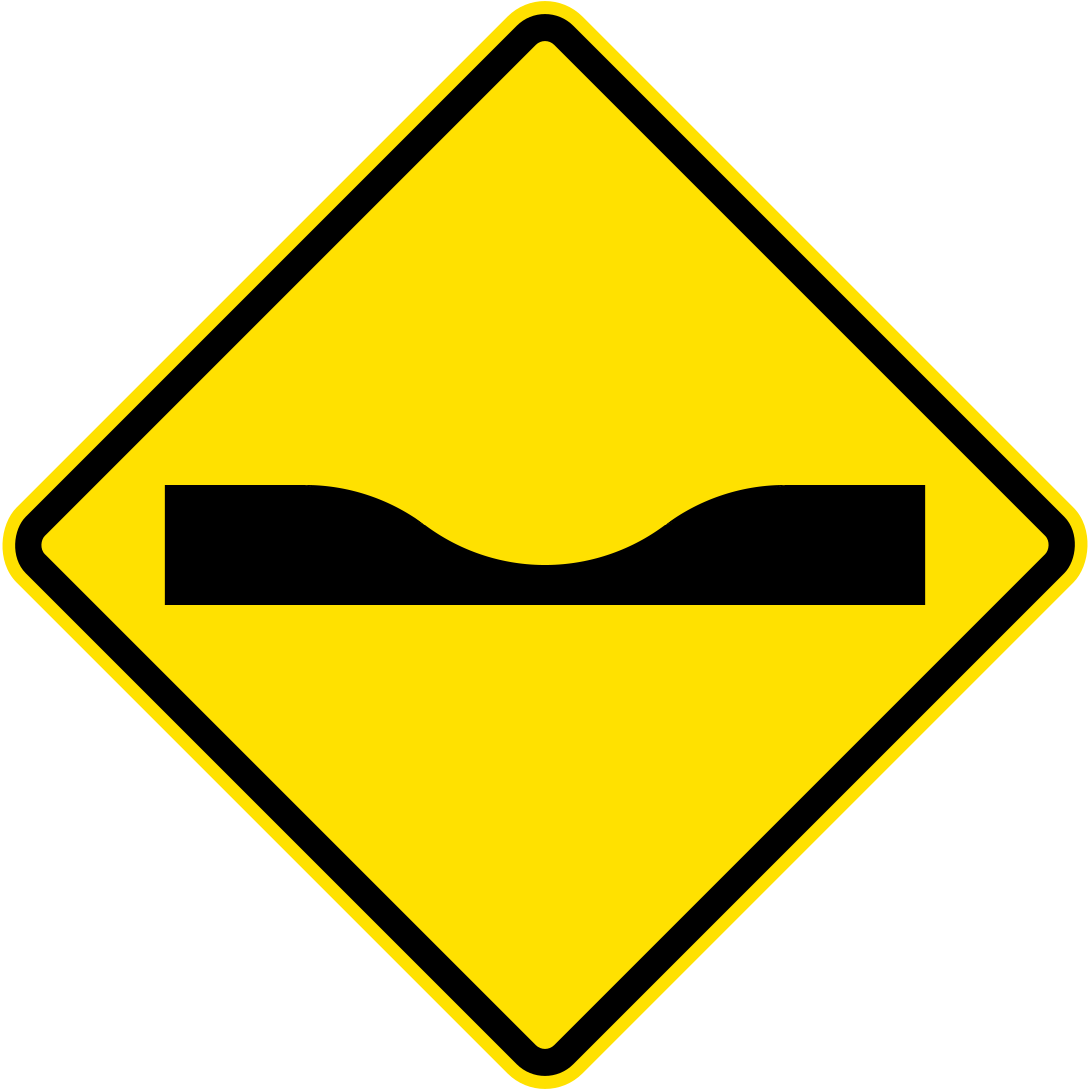
48. What does this traffic sign mean?
This traffic sign indicates a warning for a dip in the road. A sudden depression in the road surface lies ahead and may affect vehicle stability or visibility. Reduce speed before reaching the dip and be prepared for water or other hazards that may collect in the lowered section.
English • Traffic sign CONASET · annex 1 • Dip. Warns of a transverse depression in the carriageway. Reduce speed before crossing it.
Español • CONASET · anexo 1 • Badén. Advierte una depresión transversal en la calzada. Reduce la velocidad antes de pasar por ella.
Sources
🔗 Commons.wikimedia.org
🔗 Mejoresconductores.conaset.cl • CONASET: Libro para la conducción en Chile, anexo 1, página 154
SVG source: Commons.wikimedia.org • Original SVG
Government of Chile – National Traffic Safety Commission • Public domain • Original revision 2024-02-18. Wikimedia original unmodified.
Artwork reviewed against the Chilean CONASET Libro para la conducción en Chile, Annex 1 (February 2026): Mejoresconductores.conaset.cl • Badén., PDF page 154. Intentional educational illustration update from the previous PNG; original SVG unmodified.
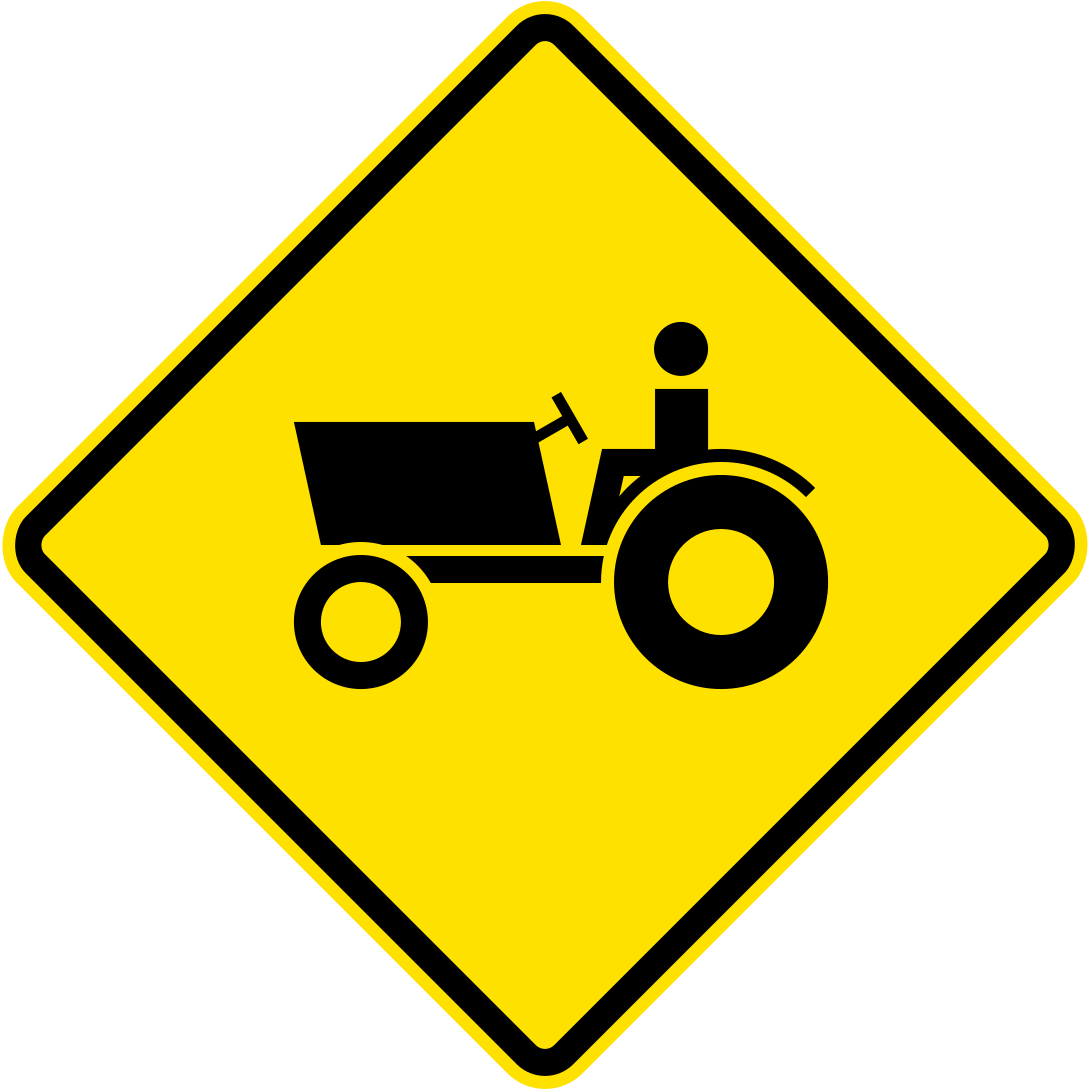
49. What does this traffic sign mean?
This traffic sign indicates a warning for tractors or other agricultural vehicles. Slow-moving agricultural vehicles may enter, cross or travel along the road ahead. Reduce speed and overtake only where it is permitted and clearly safe.
English • Traffic sign CONASET · annex 1 • Agricultural machinery. Prepare for slow or larger vehicles on the road.
Español • CONASET · anexo 1 • Maquinaria agrícola. Advierte la posible presencia de maquinaria agrícola en la vía. Prepárate para vehículos lentos o de mayor tamaño.
Sources
🔗 Commons.wikimedia.org
🔗 Mejoresconductores.conaset.cl • CONASET: Libro para la conducción en Chile, anexo 1, página 155
SVG source: Commons.wikimedia.org • Original SVG
Government of Chile – National Traffic Safety Commission • Public domain • Original revision 2024-04-23. Wikimedia original unmodified.
Artwork reviewed against the Chilean CONASET Libro para la conducción en Chile, Annex 1 (February 2026): Mejoresconductores.conaset.cl • Maquinaria agrícola., PDF page 155. Intentional educational illustration update from the previous PNG; original SVG unmodified.
50. What does this traffic sign mean?
This traffic sign indicates a warning for a slippery road surface. The road ahead may provide reduced tyre grip because of water, ice, mud, oil or another surface condition. Reduce speed and avoid sudden braking, acceleration or steering movements.
English • Traffic sign CONASET · annex 1 • Slippery surface. Avoid harsh braking, acceleration or steering changes.
Español • CONASET · anexo 1 • Pavimento resbaladizo. Advierte que el pavimento puede ser resbaladizo. Evita frenadas, aceleraciones y cambios de dirección bruscos.
Sources
🔗 Commons.wikimedia.org
🔗 Mejoresconductores.conaset.cl • CONASET: Libro para la conducción en Chile, anexo 1, página 156
SVG source: Commons.wikimedia.org • Original SVG
Gobierno de Chile • Public domain • Original revision 2012-12-11. Wikimedia original unmodified.
Artwork reviewed against the Chilean CONASET Libro para la conducción en Chile, Annex 1 (February 2026): Mejoresconductores.conaset.cl • Pavimento resbaladizo., PDF page 156. Intentional educational illustration update from the previous PNG; original SVG unmodified.