QuizTraffic rulesChile

This interesting quiz helps you test your knowledge in a clear and visual way. With easy multiple-choice questions, you can quickly build confidence and learn new facts while keeping it simple, interactive, and fun.


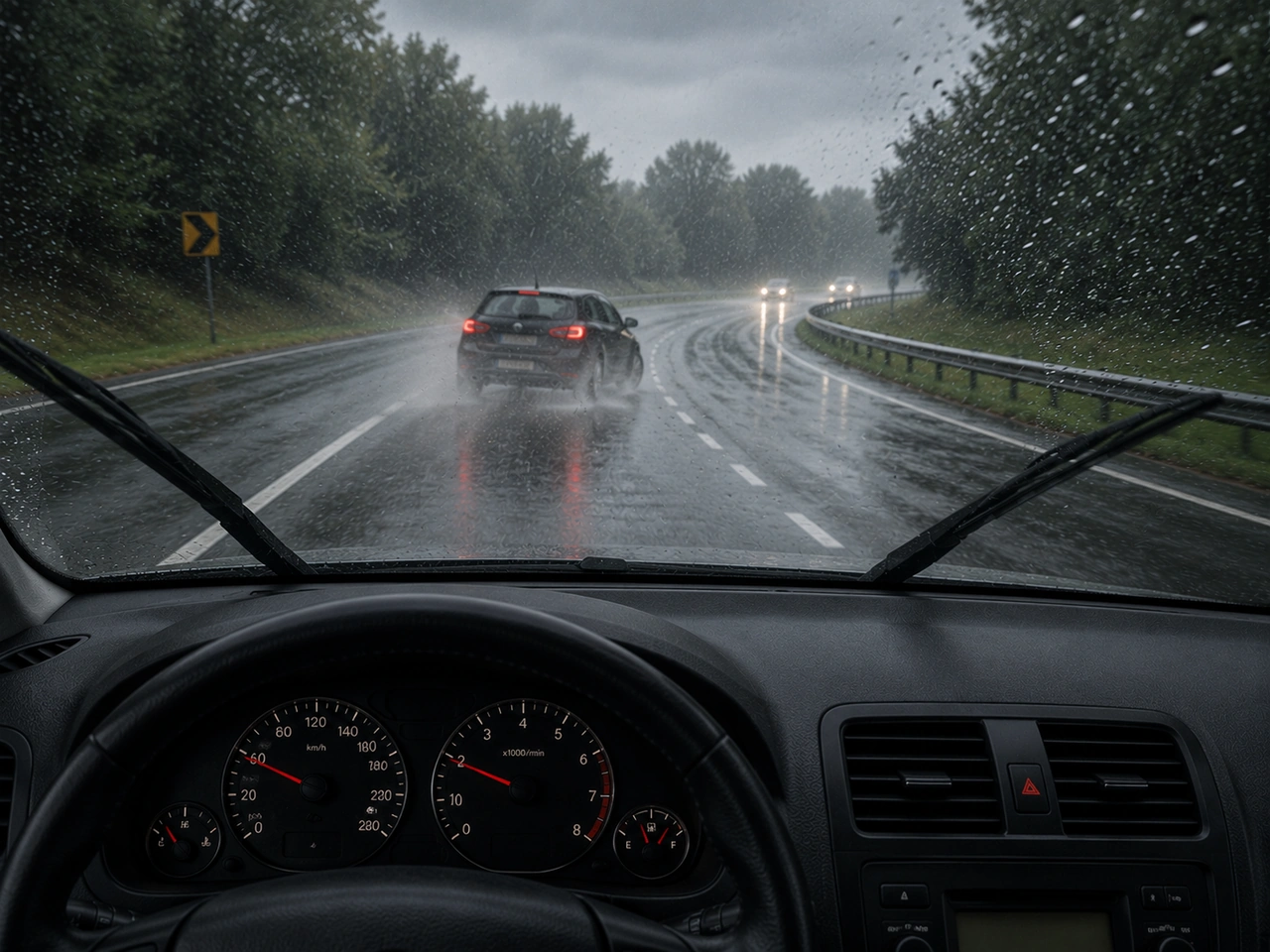
What should you avoid if your vehicle loses grip on a wet road?

251. What should you avoid if your vehicle loses grip on a wet road?

Looking ahead and staying alert.
✓ Sudden braking or sharp steering.
Easing off the accelerator gradually.
Holding the steering wheel firmly.

Abrupt inputs can upset the vehicle further. Smooth control gives the tyres a better chance to regain grip.

Vehicle losing grip on a wet road
AI-generated by Traffic-rules.com • WCIT • CC BY-SA
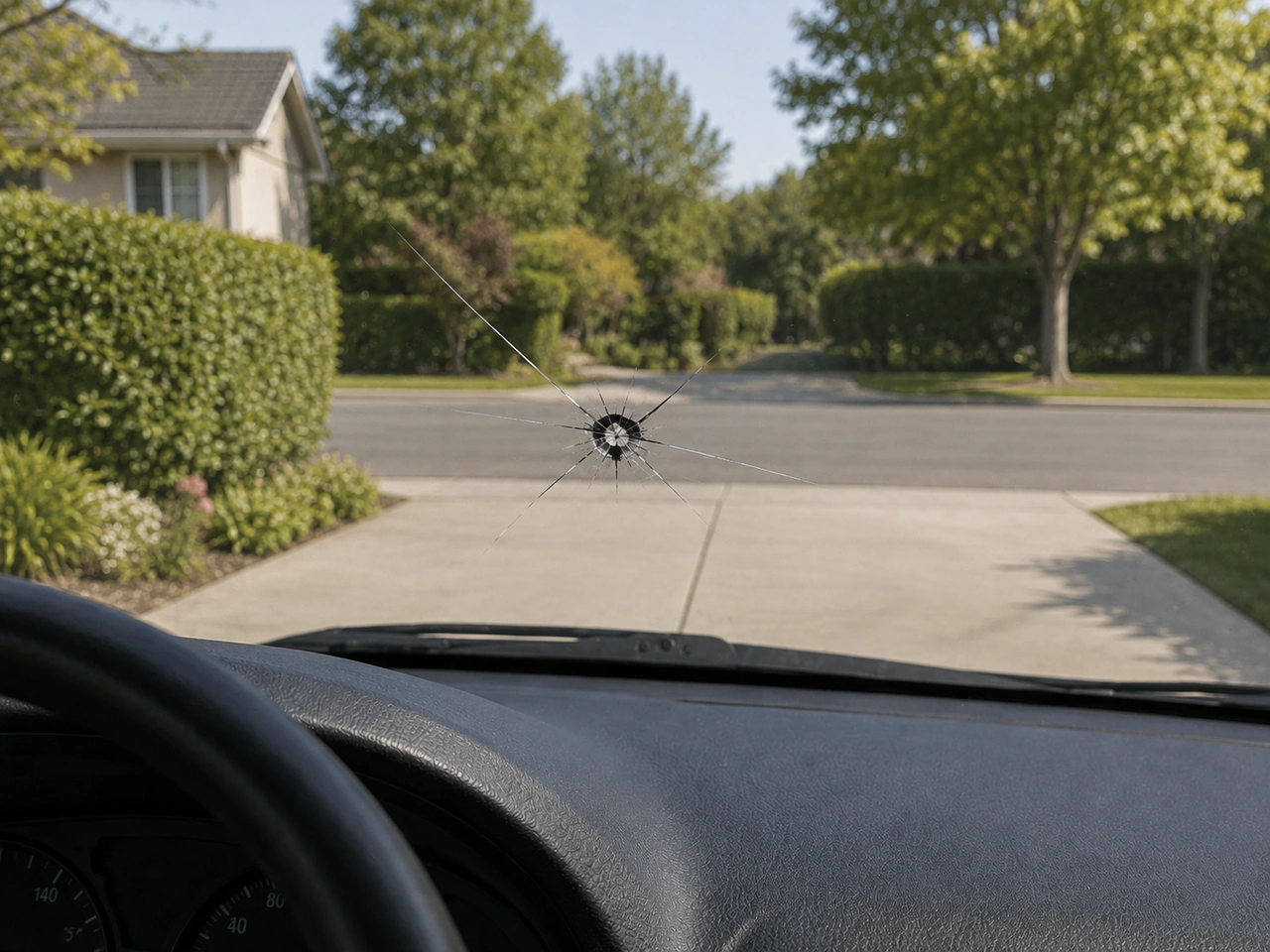
What should you do about a chip in the windscreen?

252. What should you do about a chip in the windscreen?

Cover the chip so it cannot spread.
Ignore it if it is outside your direct view.
✓ Have it assessed and repaired promptly.
Wait until the chip becomes a larger crack.

A chip can obstruct your view, weaken the glass, and develop into a larger crack. Have it checked and repaired promptly.

Stone chip in a vehicle's windscreen
AI-generated by Traffic-rules.com • WCIT • CC BY-SA
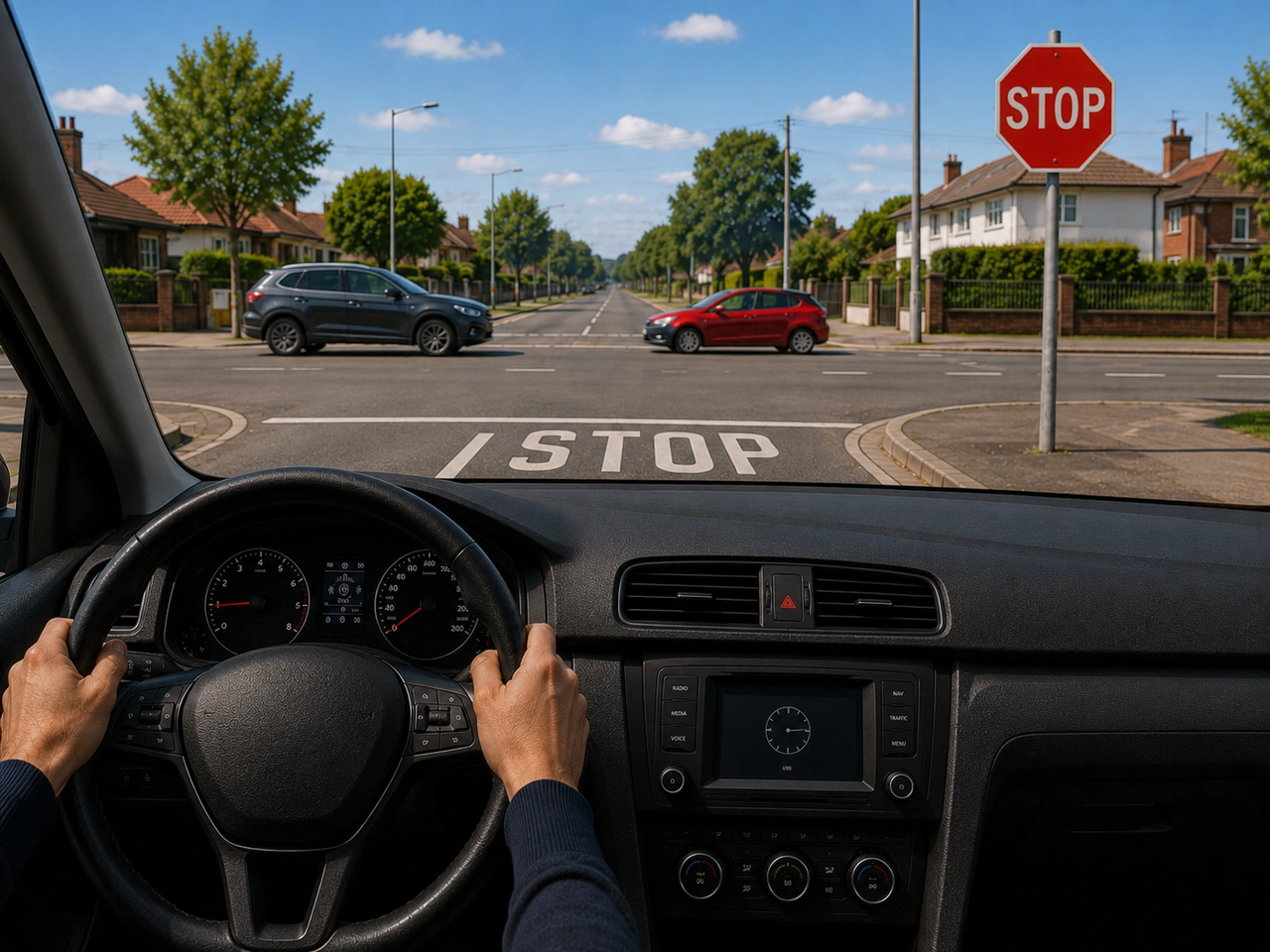
What should you do when approaching a stop sign?

253. What should you do when approaching a stop sign?

Slow down and stop only if traffic is approaching.
✓ Come to a complete stop before proceeding.
Stop only after entering the junction.
Give way without stopping if the road is clear.

A stop sign requires you to come to a complete stop at the required position. Check carefully for other road users and proceed only when it is safe.

Vehicle approaching a stop sign
AI-generated by Traffic-rules.com • WCIT • CC BY-SA
You should keep both hands ready to control the steering.

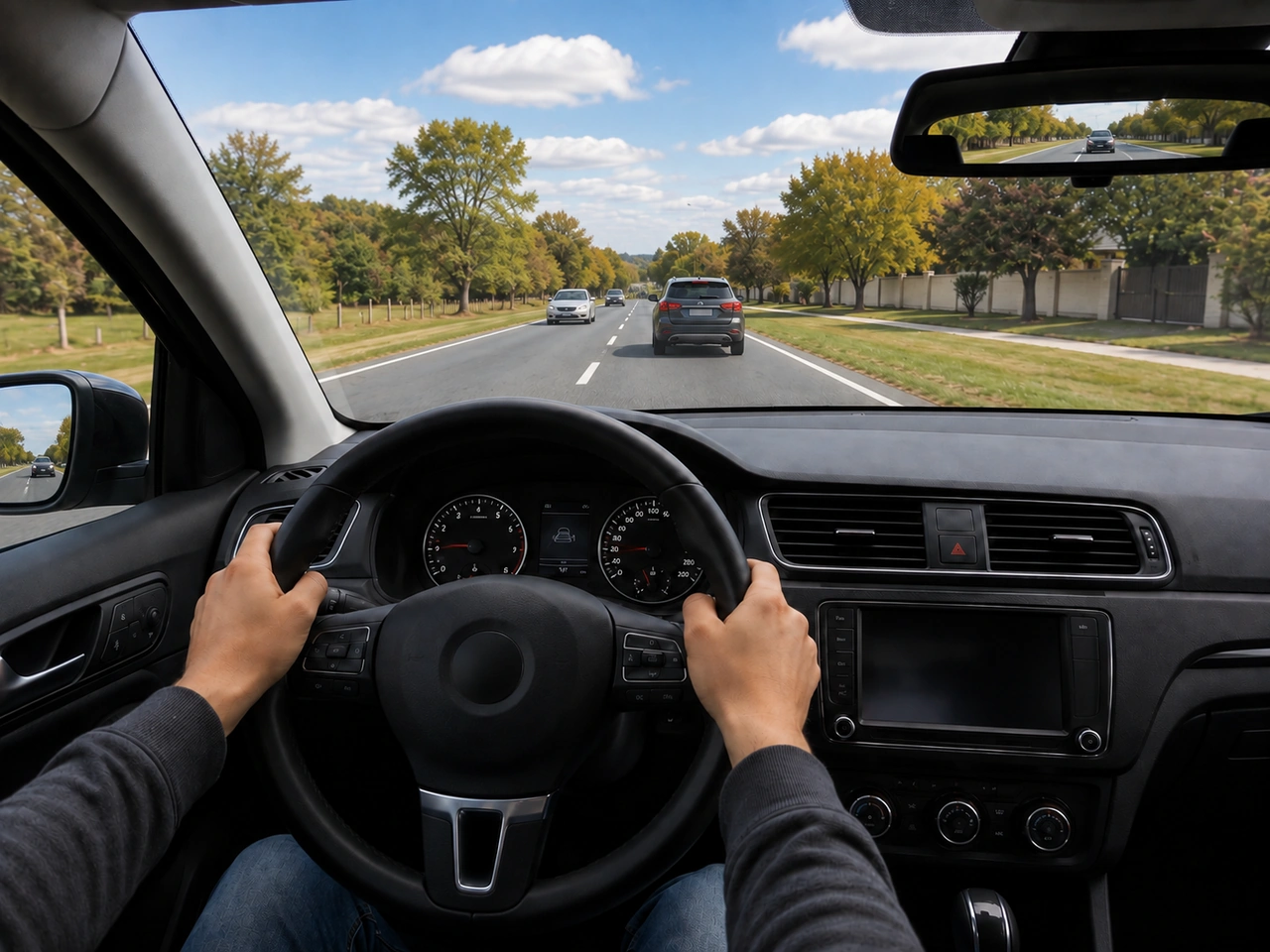
254. You should keep both hands ready to control the steering.

✓ True.
False.

Keeping proper control of the steering wheel helps you react safely to changes in traffic and road conditions.

Driver keeping both hands on the steering wheel
AI-generated by Traffic-rules.com • WCIT • CC BY-SA
Why should you be prepared for changing conditions on mountain roads?

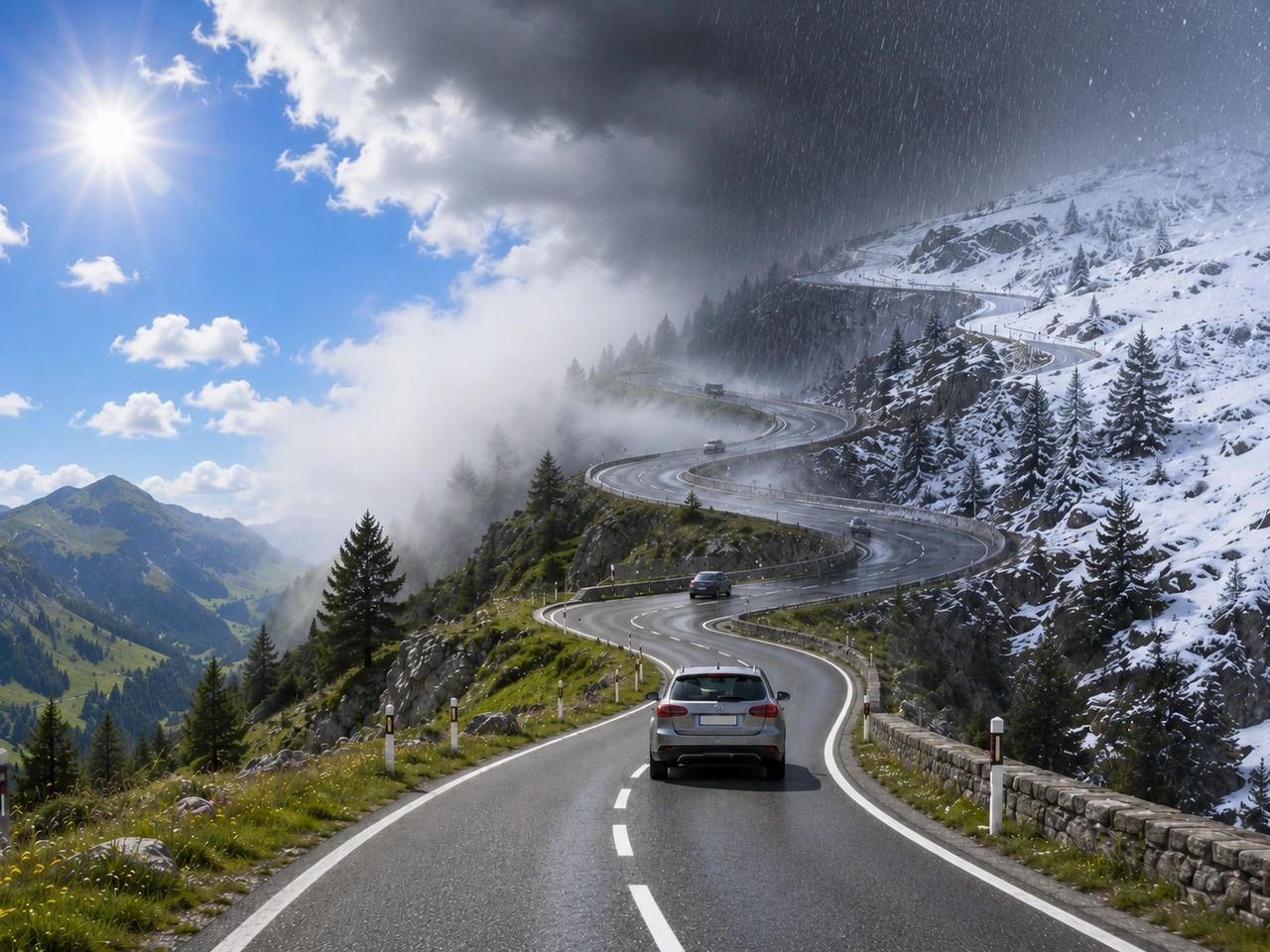
255. Why should you be prepared for changing conditions on mountain roads?

Vehicles automatically lose engine power in the mountains.
✓ Weather, visibility, and road conditions can change quickly.
Mountain roads always have the same weather.
Road conditions usually improve as altitude increases.

Fog, rain, snow, ice, falling rocks, and strong winds can develop rapidly in mountainous areas.

Changing visibility and weather on a mountain road
AI-generated by Traffic-rules.com • WCIT • CC BY-SA
What should you do before changing lanes?

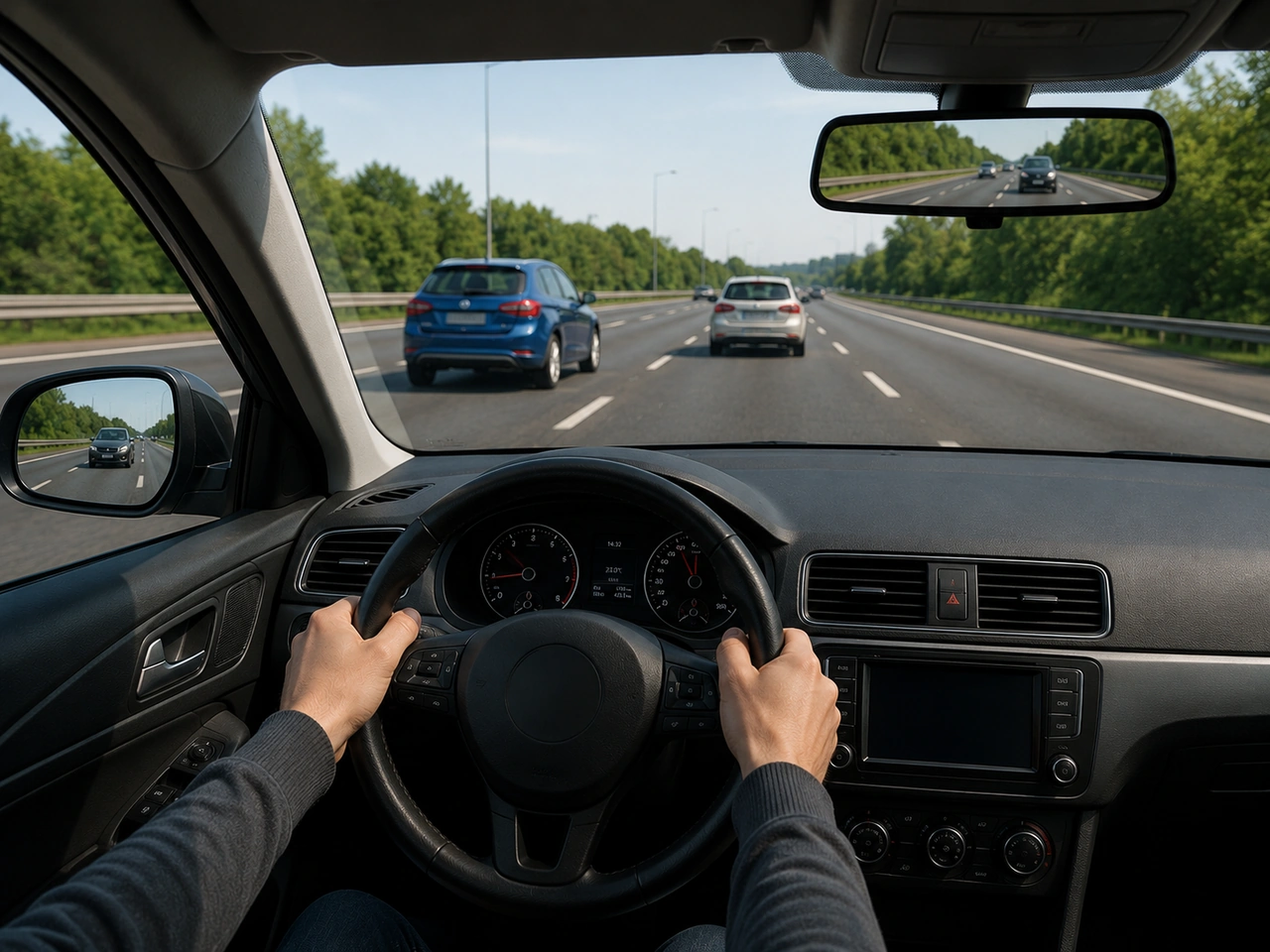
256. What should you do before changing lanes?

Check only the lane directly beside you.
Rely on your mirrors without checking the blind spot.
✓ Check your mirrors and blind spot.
Check the blind spot only after starting to move.

Always check your mirrors, look over your shoulder if necessary, and make sure it is safe before changing lanes.

Driver checking surrounding traffic before changing lanes
AI-generated by Traffic-rules.com • WCIT • CC BY-SA
What does this dashboard symbol indicate?

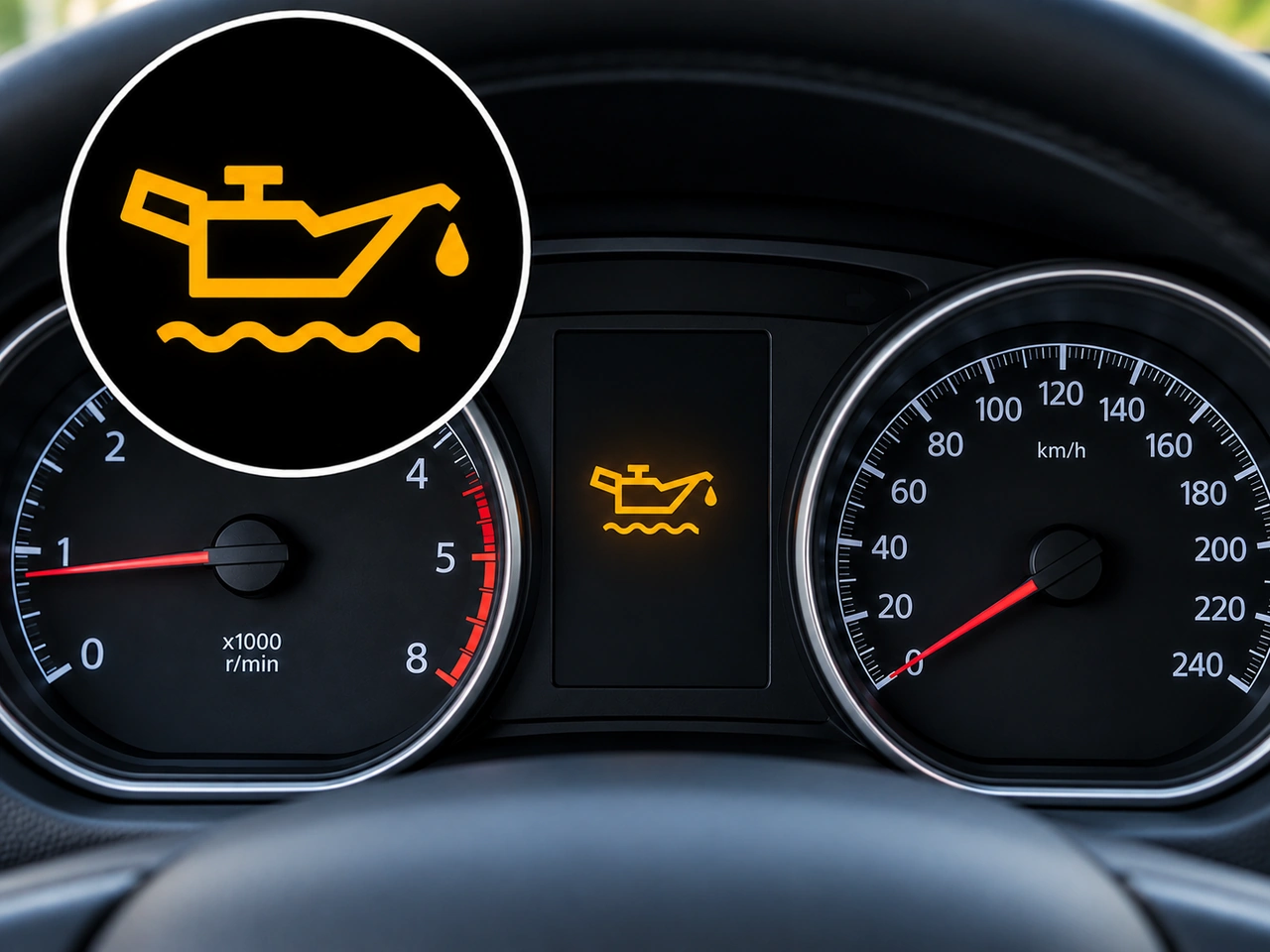
257. What does this dashboard symbol indicate?

Low coolant level.
Engine-temperature warning.
Charging-system warning.
✓ Low engine oil level.

This symbol indicates that the engine oil level is low. Check the oil level according to the manufacturer's instructions and add the correct oil if necessary.

Low oil-level warning symbol on the dashboard
AI-generated by Traffic-rules.com • WCIT • CC BY-SA
What is the best place to cross the road?

258. What is the best place to cross the road?

Between parked vehicles if traffic appears quiet.
Near a bend if approaching traffic seems slow.
✓ At a designated crossing.
At the shortest point, even if visibility is limited.

Use a designated crossing whenever possible. It is usually the safest place to cross the road.

Designated crossing for pedestrians
AI-generated by Traffic-rules.com • WCIT • CC BY-SA
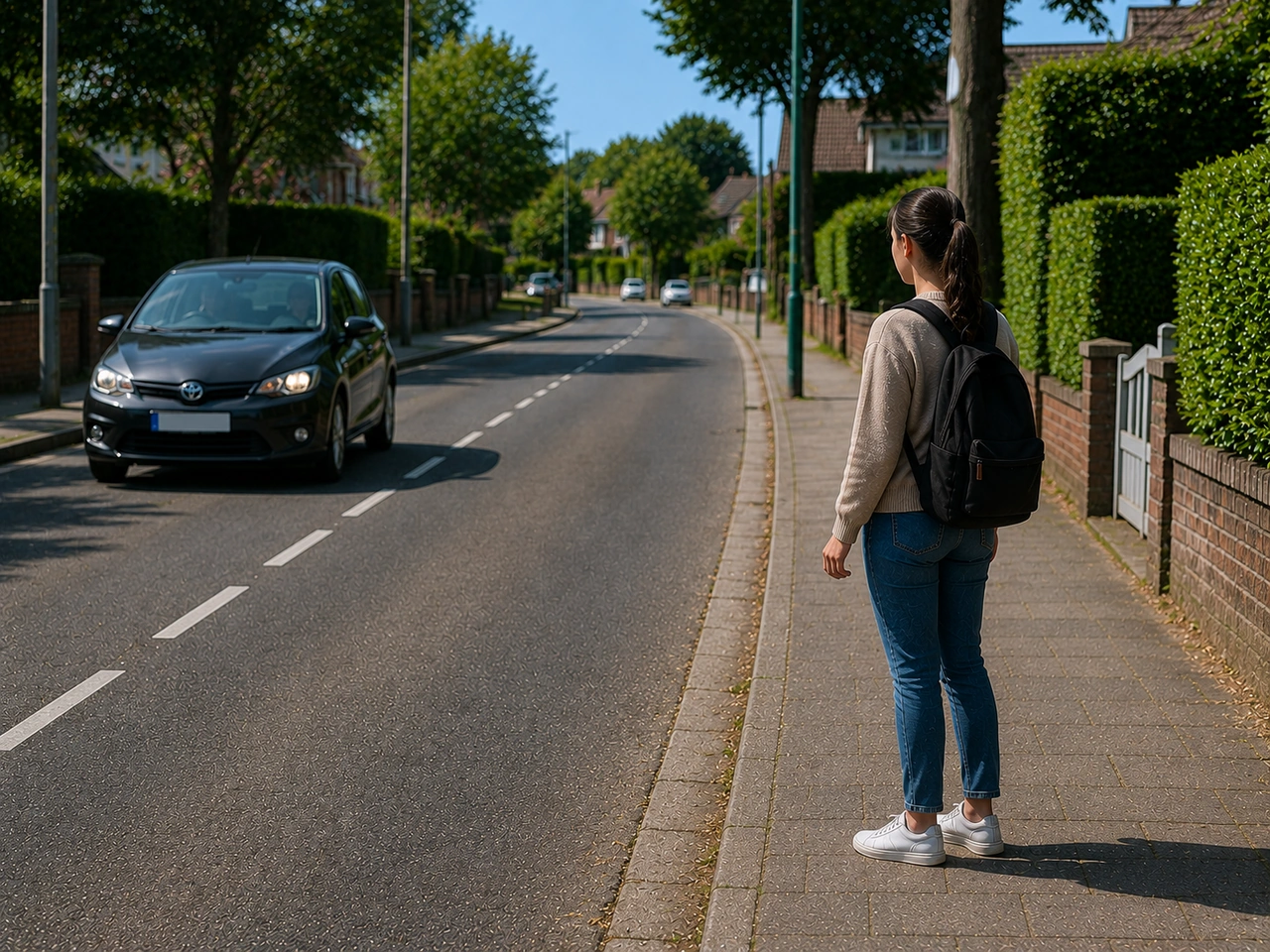
Why is a larger following distance needed at motorway speeds?

259. Why is a larger following distance needed at motorway speeds?

It prevents the tyres from becoming too warm.
✓ You need more distance to react and stop safely.
It reduces the effect of crosswinds.
It keeps the engine from working too hard.

At higher speeds, you travel farther during your reaction time and need more distance to brake. A larger gap gives you more time and space to stop safely.

Following distance between vehicles on a motorway
AI-generated by Traffic-rules.com • WCIT • CC BY-SA
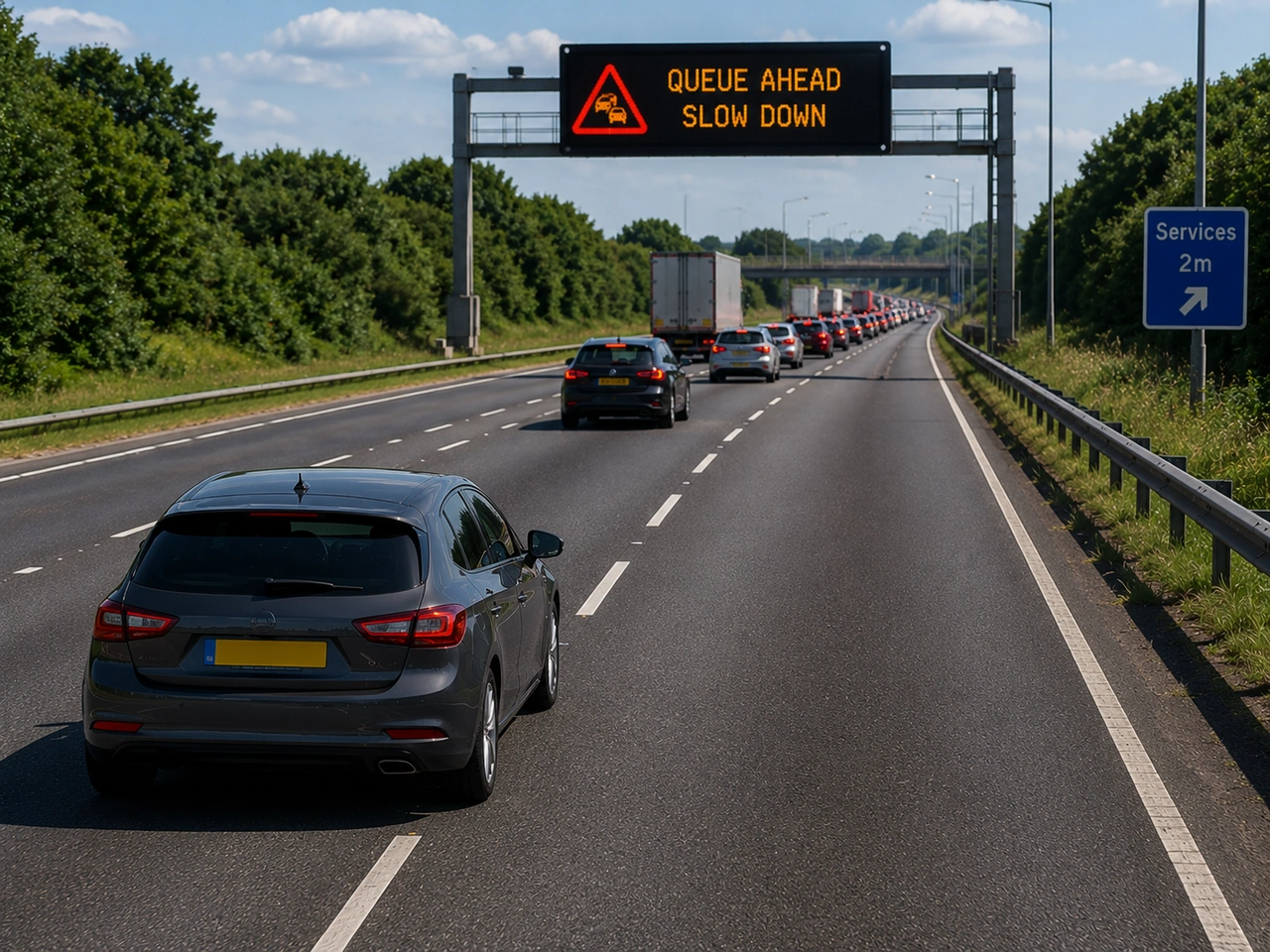
Should motorcyclists wear protective clothing?

260. Should motorcyclists wear protective clothing?

No, protective clothing is only needed in bad weather.
✓ Yes, it can reduce injuries from falls and contact with the road.
Yes, but only when riding on motorways.
No, a helmet provides enough protection on its own.

Motorcyclists should wear protective clothing because it can reduce injuries from falls, impacts and sliding on the road. Suitable jackets, trousers, gloves and boots provide additional protection, but they do not replace a securely fitted helmet or safe riding.

Motorcyclist wearing protective riding clothing
AI-generated by Traffic-rules.com • WCIT • CC BY-SA
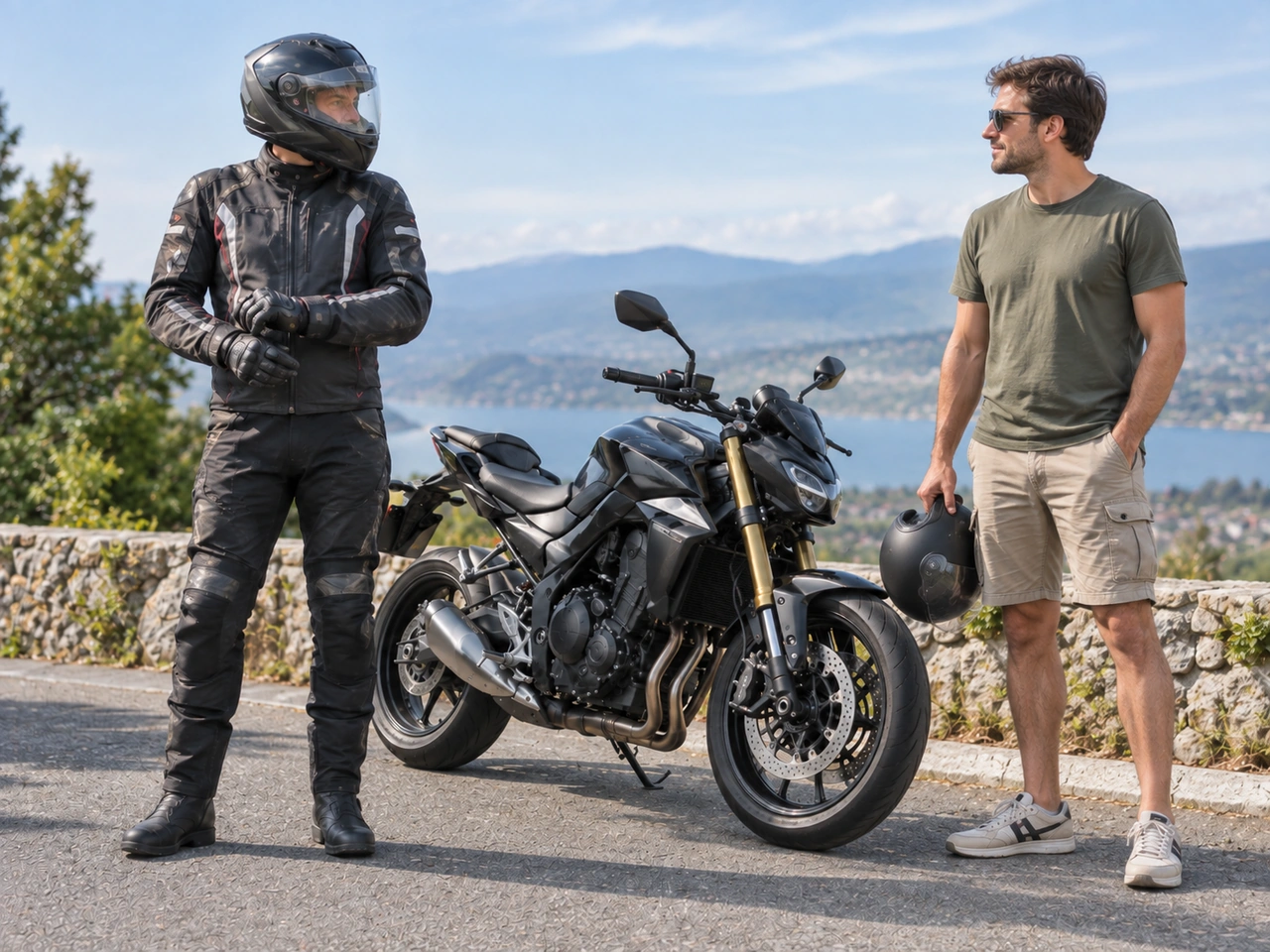
Why should loose items inside a vehicle be secured?

261. Why should loose items inside a vehicle be secured?

They can increase the vehicle's fuel consumption.
They can make the engine overheat.
✓ They can become dangerous projectiles during sudden braking or a collision.
They can interfere with the vehicle's exterior lights.

Loose objects can move or be thrown forwards during sudden braking or a collision. Secure luggage and other items so they cannot injure occupants or interfere with the driver or vehicle controls.

Loose luggage and objects inside a vehicle
AI-generated by Traffic-rules.com • WCIT • CC BY-SA
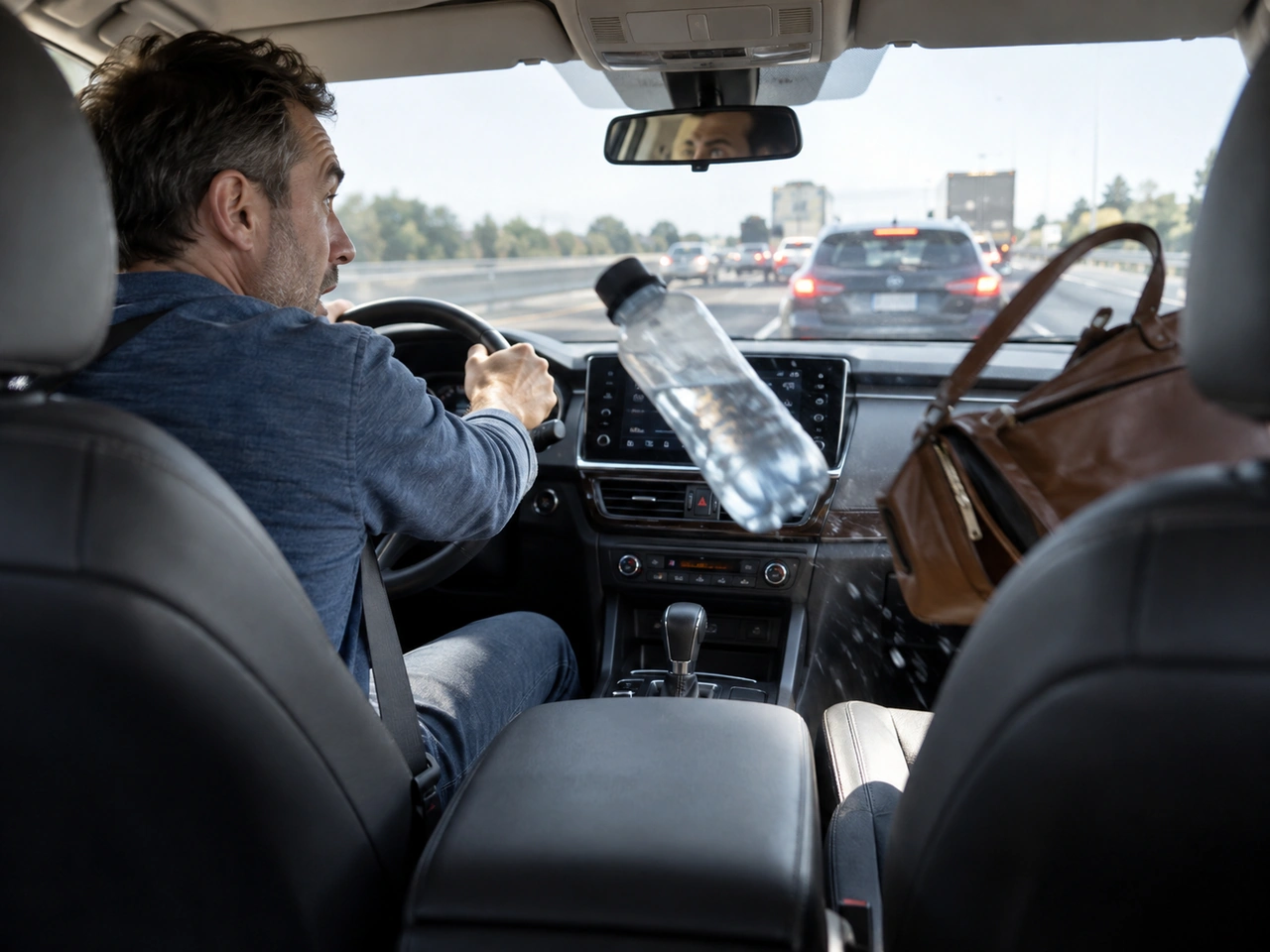
How can a heavy load affect stopping distance?

262. How can a heavy load affect stopping distance?

It always shortens the stopping distance.
✓ It can increase the distance needed to stop.
It affects stopping distance only on steep roads.
It reduces the driver's reaction time.

A heavily loaded vehicle has more mass and may require additional distance to slow down or stop safely.

Loaded vehicle and the space needed for braking
AI-generated by Traffic-rules.com • WCIT • CC BY-SA
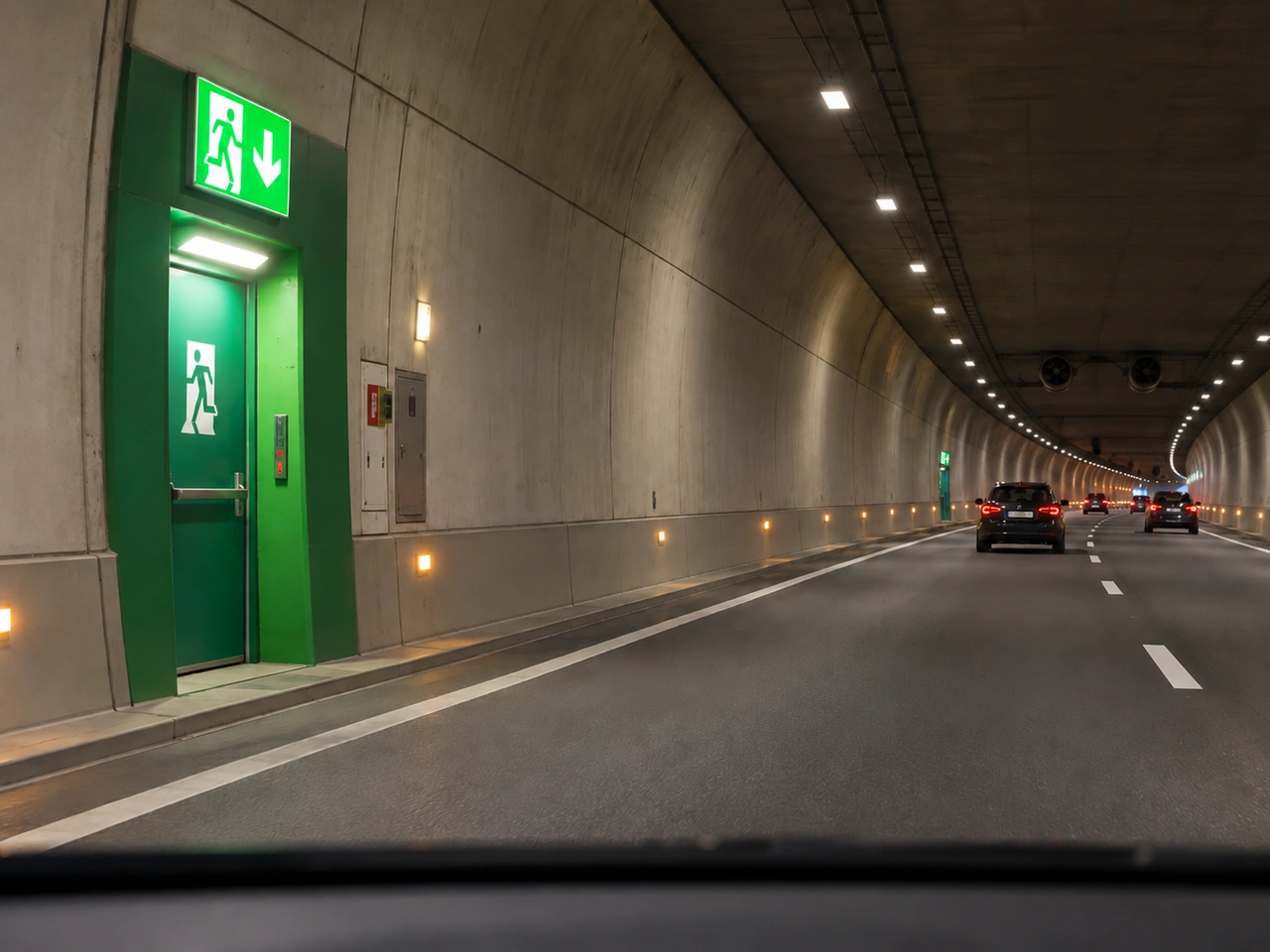
Why should you notice the location of emergency exits in a tunnel?

263. Why should you notice the location of emergency exits in a tunnel?

Pedestrians may be crossing near them.
They provide shortcuts to nearby roads.
✓ You may need to reach one quickly during an emergency.
They show where overtaking is prohibited.

Knowing where emergency exits and refuge areas are located can save valuable time during a fire, collision, or evacuation.

Emergency exit inside a road tunnel
AI-generated by Traffic-rules.com • WCIT • CC BY-SA
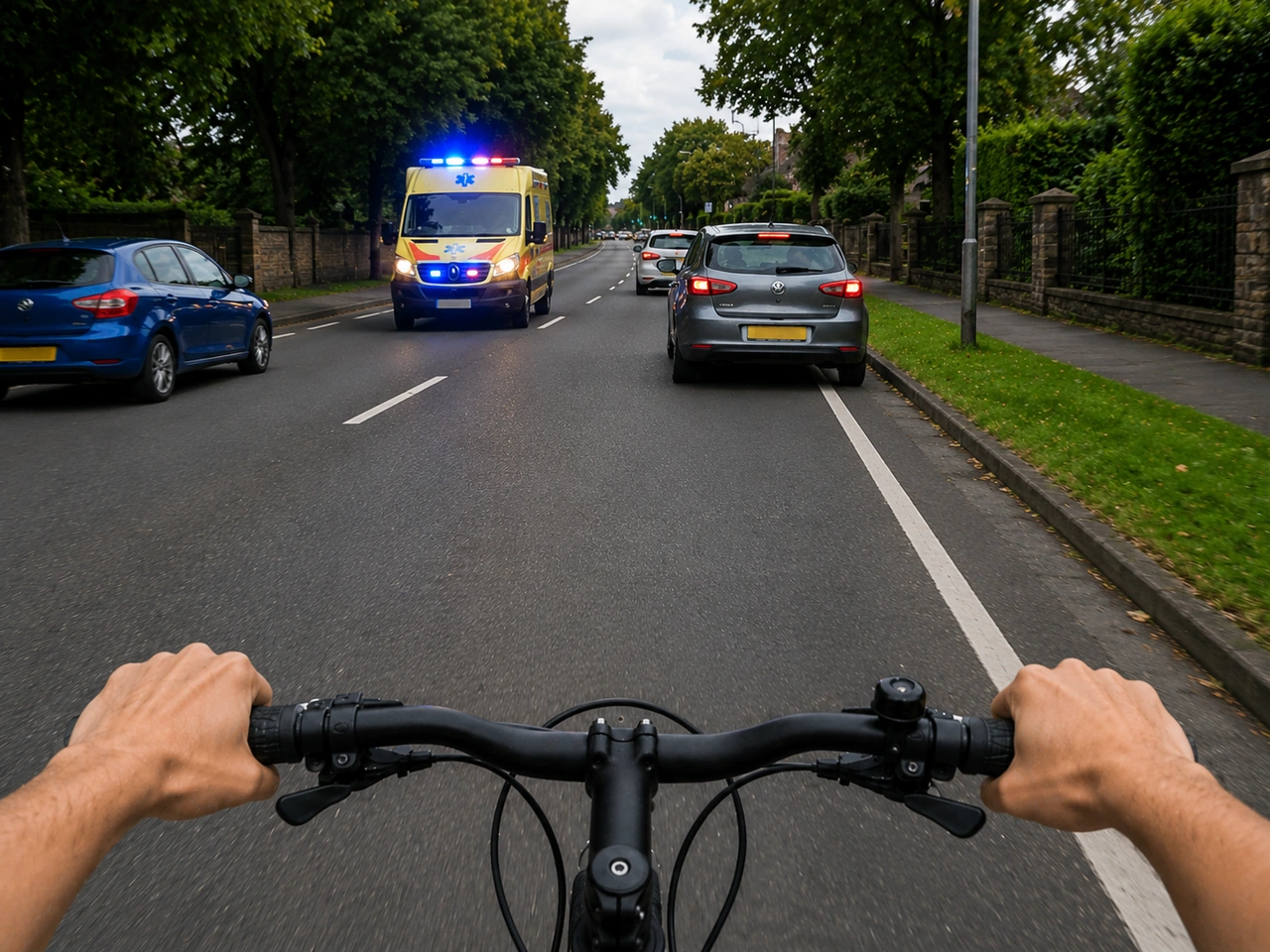
What should cyclists do when an emergency vehicle with lights and siren approaches?

264. What should cyclists do when an emergency vehicle with lights and siren approaches?

Keep riding normally and let the driver find a way past.
Move aside quickly without checking around you.
Follow closely behind it once it passes.
✓ Stay alert and move to a safe position without obstructing it.

Emergency vehicles need a clear route. Move predictably and stop only where doing so is safe.

Cyclist near an approaching emergency vehicle
AI-generated by Traffic-rules.com • WCIT • CC BY-SA
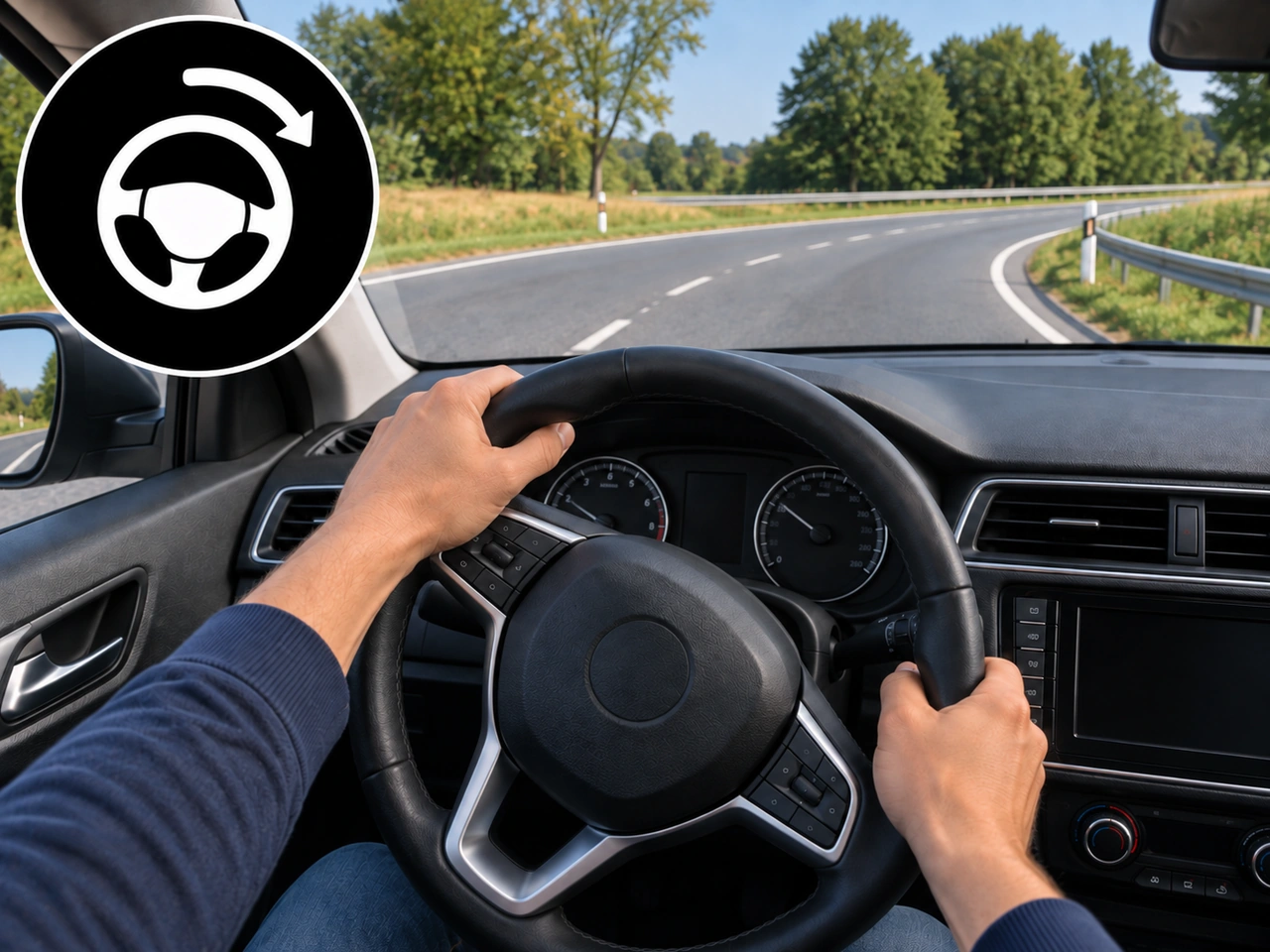
What should you do with the steering wheel after completing a turn?

265. What should you do with the steering wheel after completing a turn?

Release it completely and let it spin freely.
Turn it quickly in the opposite direction.
✓ Guide it smoothly back towards the straight-ahead position.
Hold it in the turned position.

After completing a turn, guide the steering wheel smoothly back towards the straight-ahead position while maintaining control. Do not allow the wheel to spin freely through your hands.

Guiding the steering wheel back after a turn
AI-generated by Traffic-rules.com • WCIT • CC BY-SA
Why should you not drive too close behind another vehicle?

266. Why should you not drive too close behind another vehicle?

It causes the vehicle ahead to use more fuel.
It increases tyre pressure.
It makes your headlights less effective.
✓ You may not have enough time to stop.

Driving too close, or tailgating, reduces the time and space available to react and increases the risk of a rear-end collision. Use defensive driving and keep a safe following distance.

Vehicle tailgating the traffic ahead
AI-generated by Traffic-rules.com • WCIT • CC BY-SA
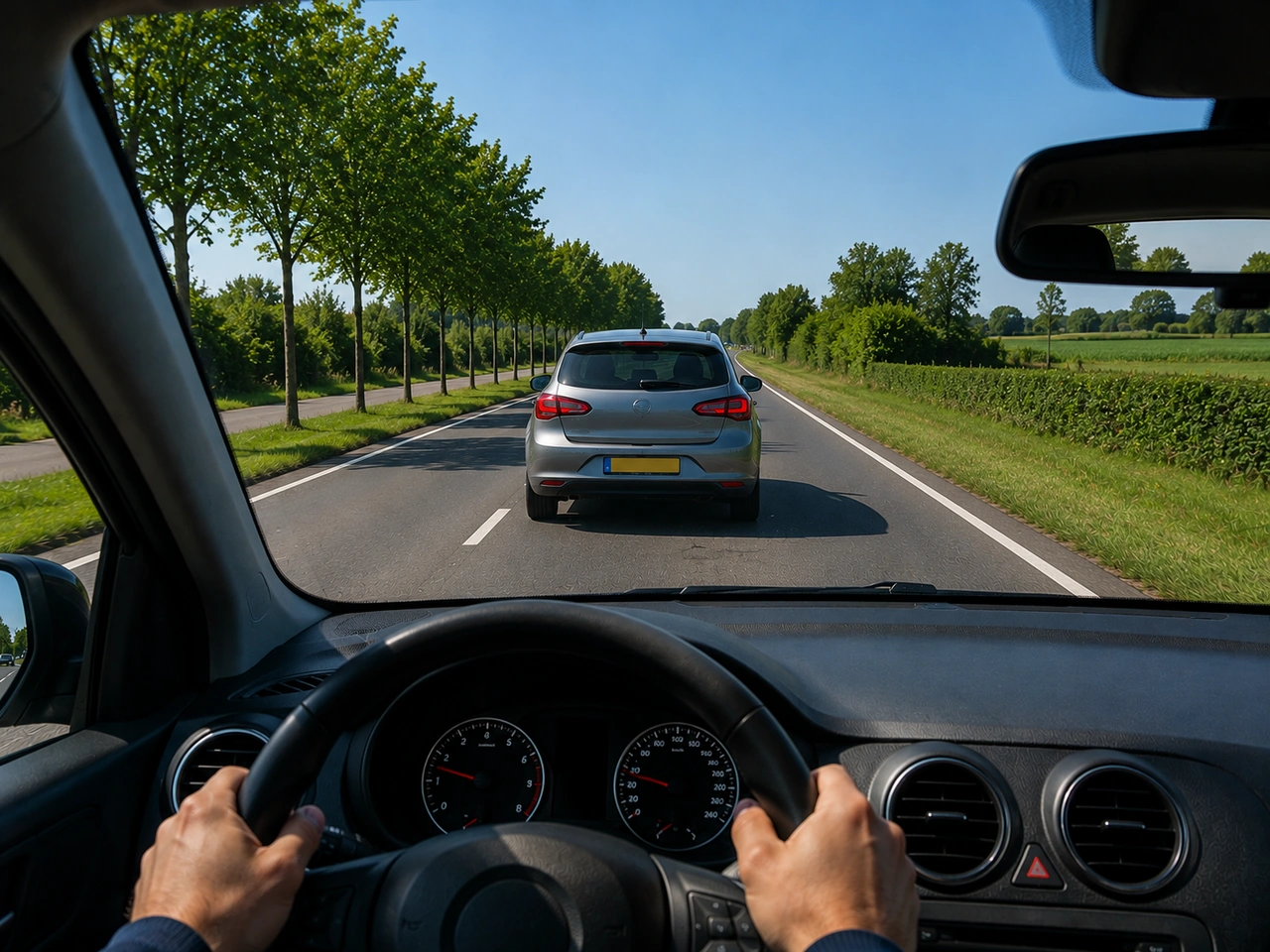
What should you do if your vehicle begins to drift onto the shoulder?

267. What should you do if your vehicle begins to drift onto the shoulder?

Brake firmly before returning to the road.
Accelerate slightly before steering back onto the road.
Keep driving on the shoulder until the road becomes wider.
✓ Ease off the accelerator and steer back smoothly when safe.

If you drift onto the shoulder, avoid sudden steering or braking. Slow gently and return to the road smoothly when it is safe.

Vehicle drifting towards the road shoulder
AI-generated by Traffic-rules.com • WCIT • CC BY-SA
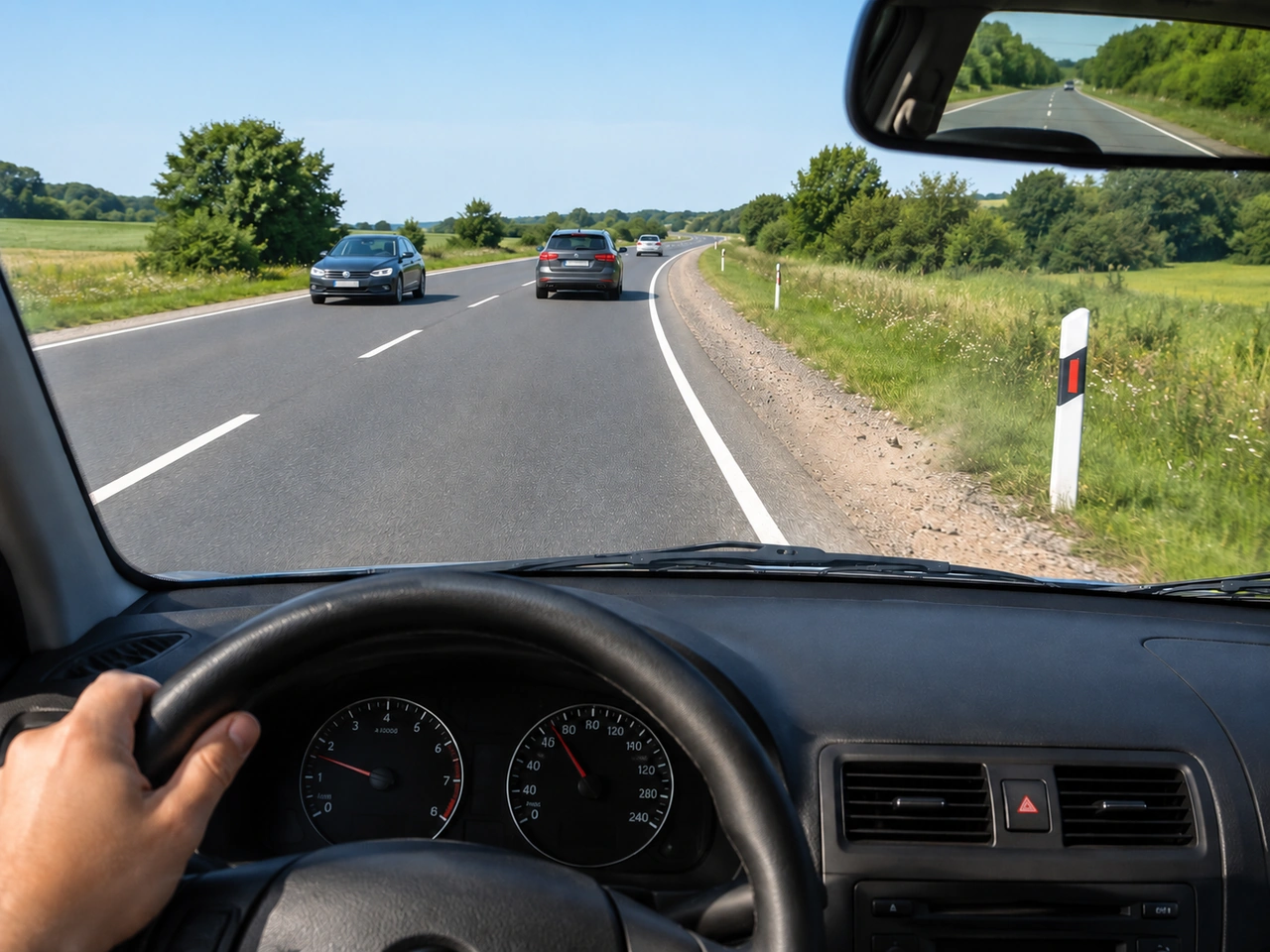
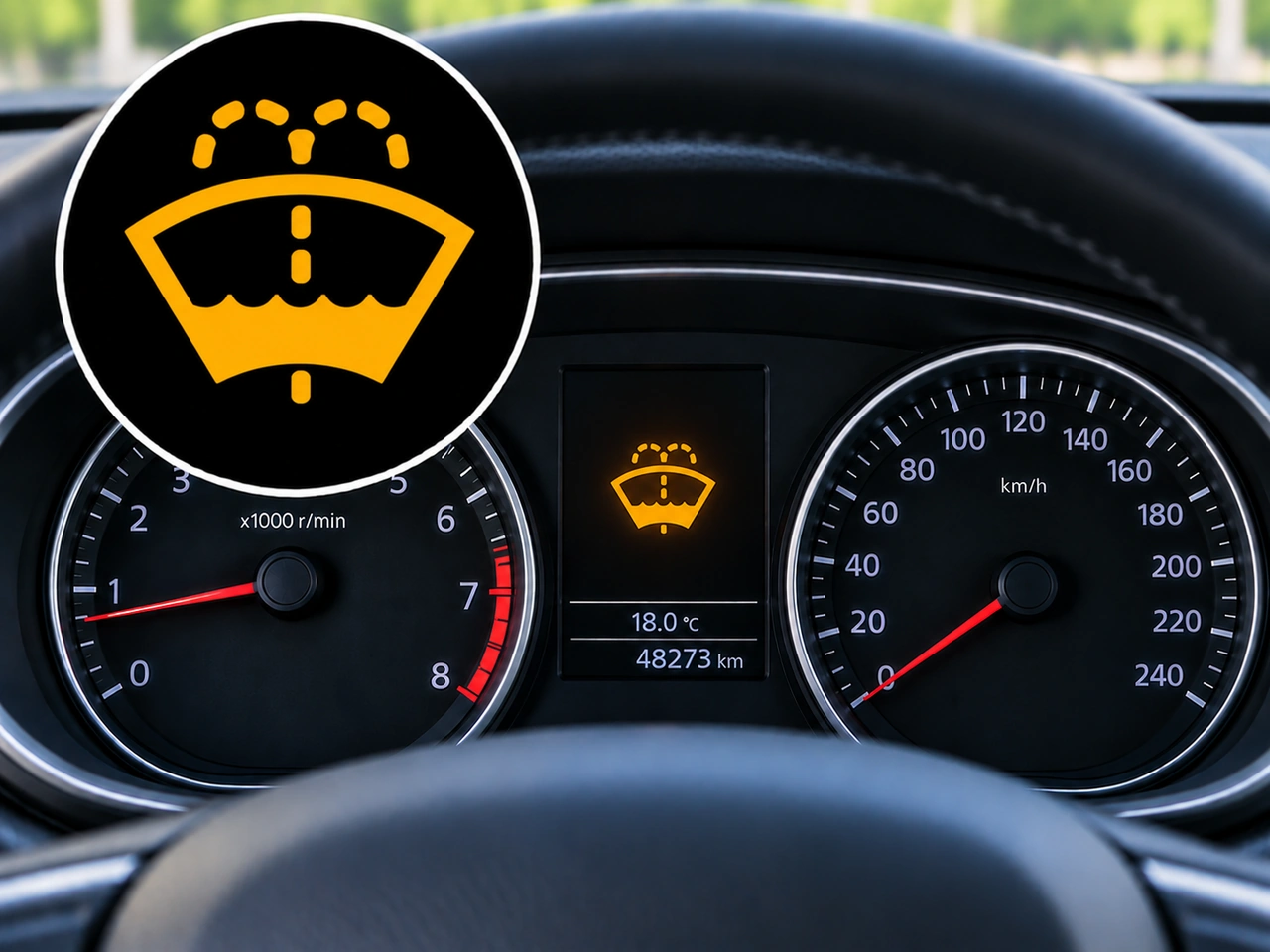
What does this dashboard symbol indicate?

268. What does this dashboard symbol indicate?

Low coolant level.
✓ Low windscreen washer fluid.
Low tyre pressure.
Engine-temperature warning.

This symbol indicates that the windscreen washer fluid level is low. Refill the washer-fluid reservoir with suitable fluid when possible.

Low washer-fluid warning symbol on the dashboard
AI-generated by Traffic-rules.com • WCIT • CC BY-SA
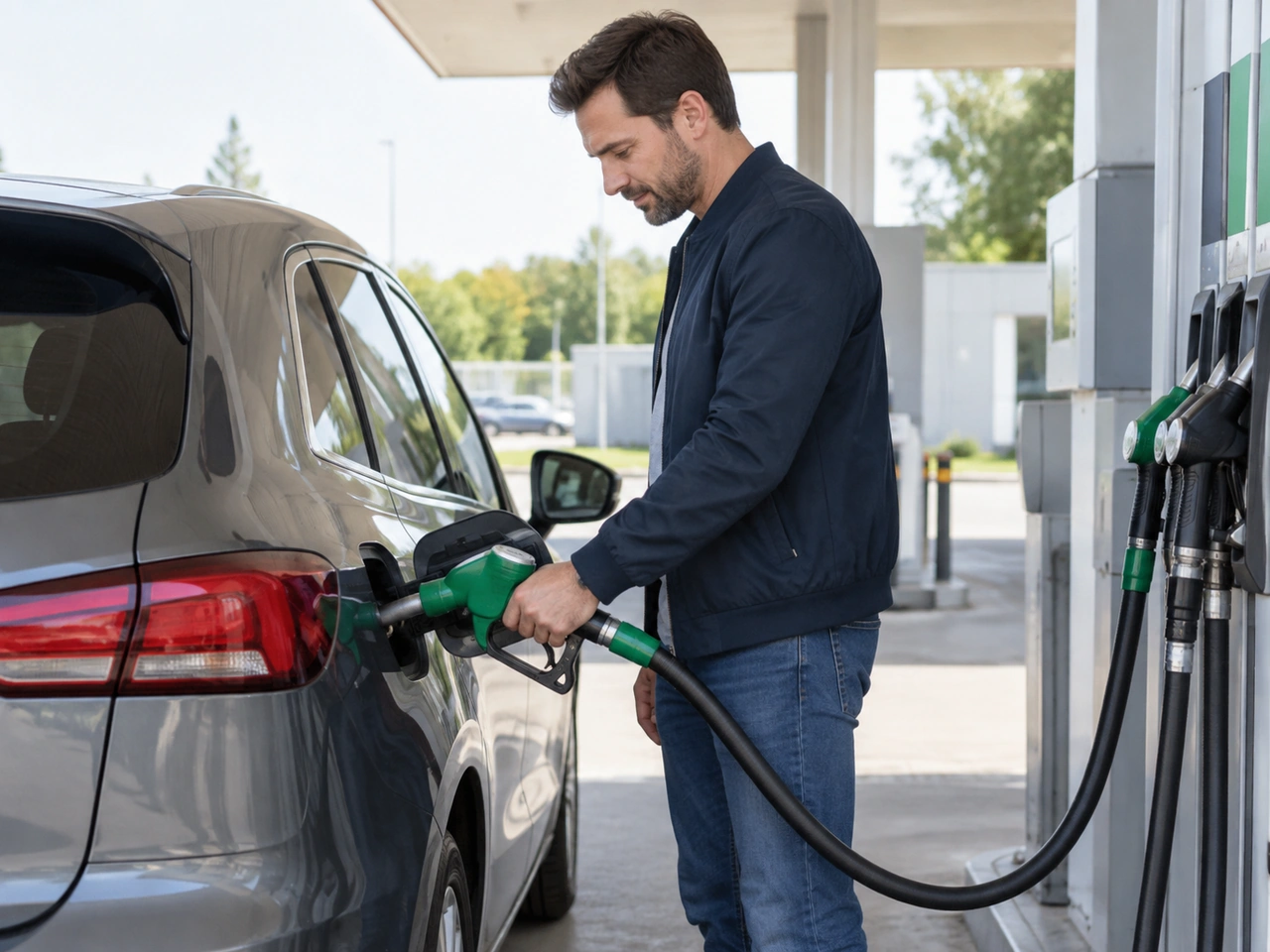
What should you normally do when the fuel nozzle automatically clicks off?

269. What should you normally do when the fuel nozzle automatically clicks off?

✓ Stop refuelling rather than continuing to top up the tank.
Shake the vehicle to make room for more fuel.
Pull the nozzle partly out and continue filling.
Keep filling until fuel reaches the filler opening.

When the fuel nozzle automatically clicks off, stop refuelling rather than repeatedly topping up the tank. Continuing can cause fuel to spill or overflow and may interfere with the vehicle's fuel-vapour control system.

Fuel nozzle in a vehicle's filler opening
AI-generated by Traffic-rules.com • WCIT • CC BY-SA
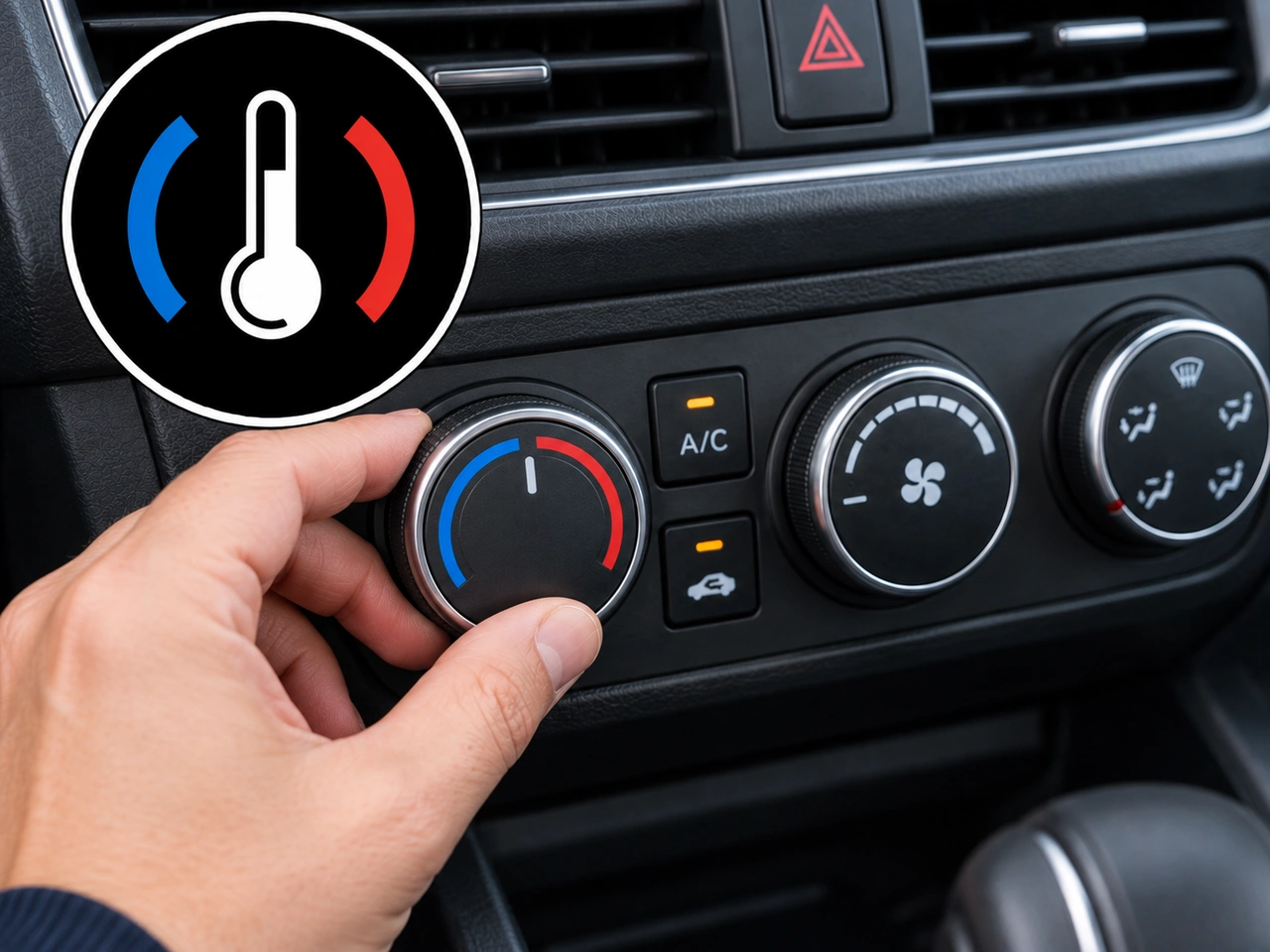
What does this vehicle-control symbol indicate?

270. What does this vehicle-control symbol indicate?

✓ Cabin temperature adjustment.
Air conditioning.
Cabin fan speed.
Seat heating.

This control adjusts the temperature of the air supplied to the cabin. Turning it towards the blue side lowers the selected temperature, while turning it towards the red side raises it.

Control for adjusting the cabin temperature
AI-generated by Traffic-rules.com • WCIT • CC BY-SA
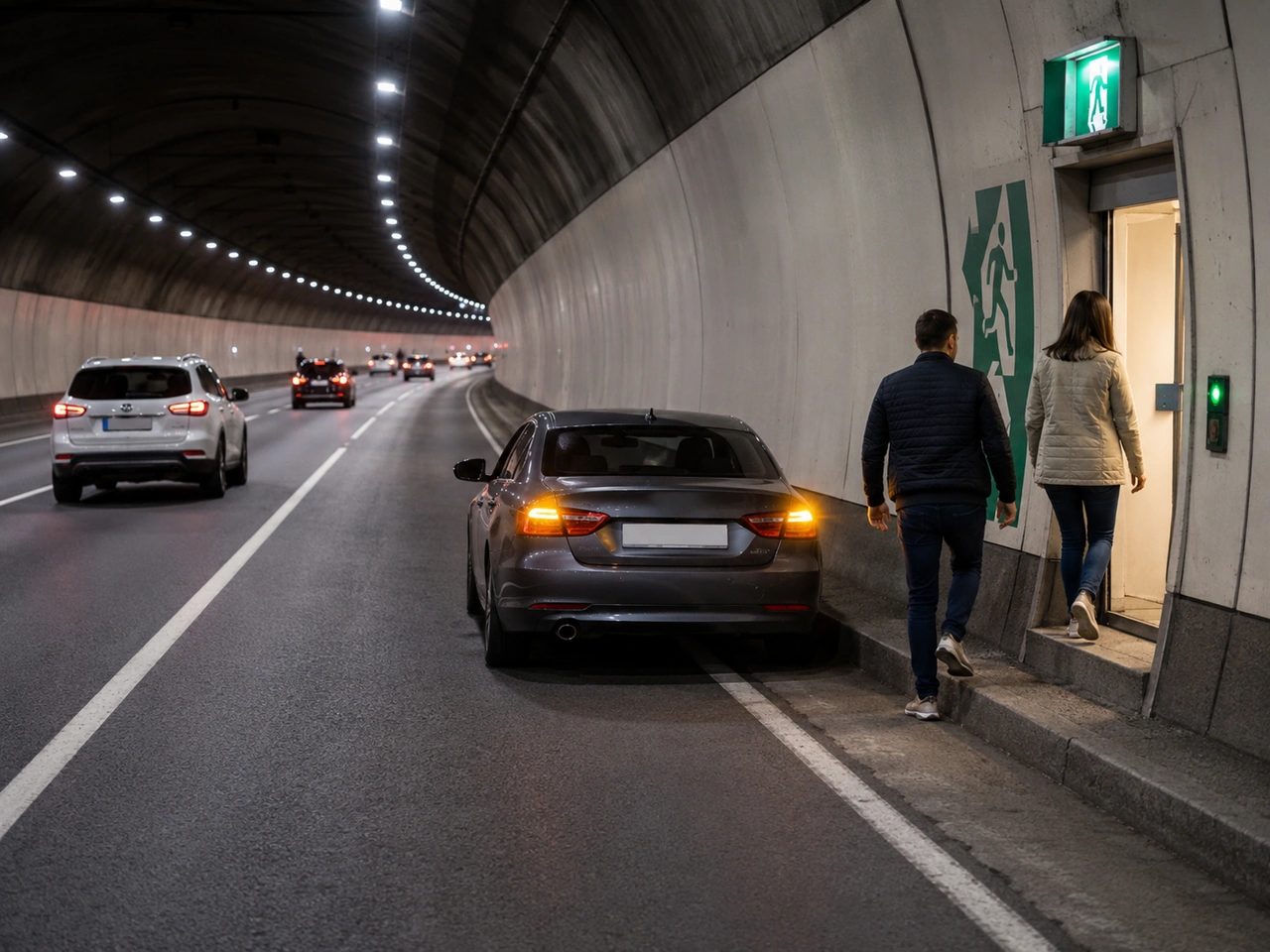
Where should you go after safely leaving a disabled vehicle in a tunnel?

271. Where should you go after safely leaving a disabled vehicle in a tunnel?

Walk along the traffic lane toward the tunnel entrance.
✓ To a protected emergency area or exit away from traffic.
Remain beside the vehicle and wait for assistance.
Stay close to the vehicle until traffic starts moving.

Move away from live traffic and use a marked emergency exit, refuge area, or protected walkway where available.

Leaving a disabled vehicle for a tunnel emergency area
AI-generated by Traffic-rules.com • WCIT • CC BY-SA
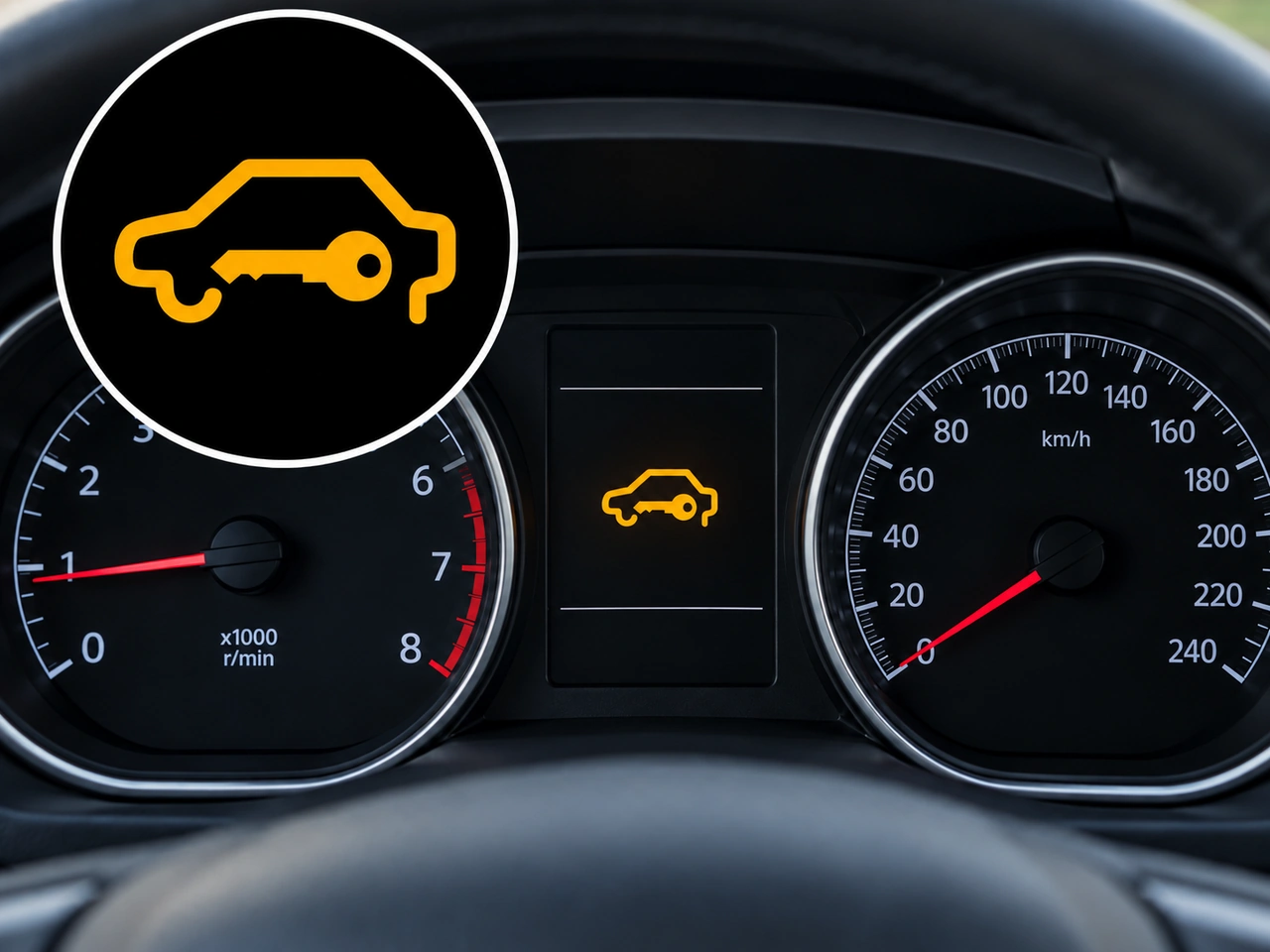
What does this dashboard symbol indicate?

272. What does this dashboard symbol indicate?

Power-steering warning.
Door-open warning.
Charging-system warning.
✓ Immobiliser or anti-theft system.

This symbol relates to the vehicle's immobiliser or anti-theft system. If it remains illuminated or flashes unexpectedly, the vehicle may not recognise the key or there may be a fault in the security system.

Immobiliser indicator symbol on the dashboard
AI-generated by Traffic-rules.com • WCIT • CC BY-SA
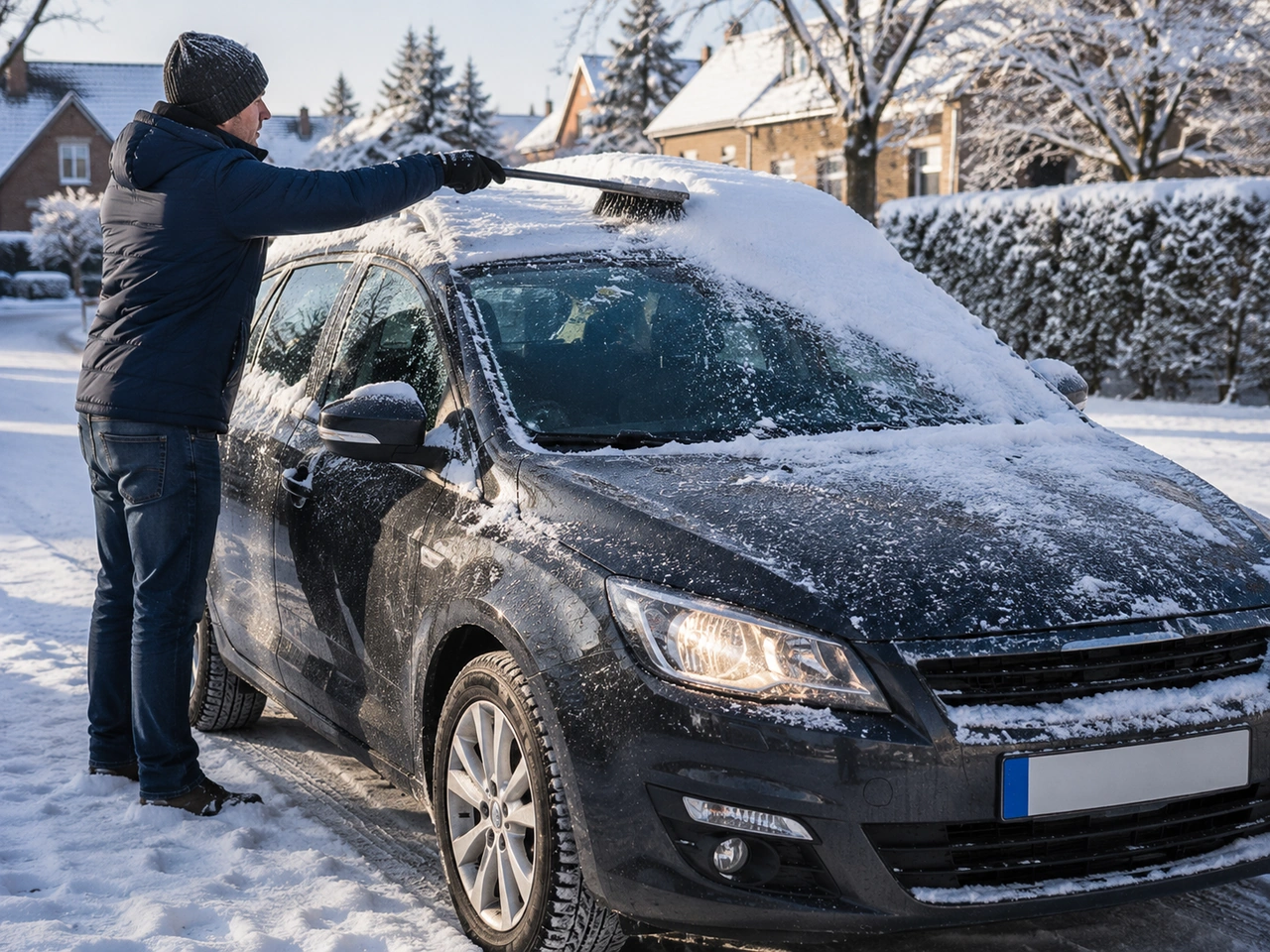
What should you do before driving if snow or ice covers your vehicle?

273. What should you do before driving if snow or ice covers your vehicle?

Leave snow on the roof if it is firmly packed.
Let the heater clear the ice while you drive.
Clear only the areas needed for your immediate view.
✓ Clear the windows, mirrors, lights, roof, and number plates.

You need a clear view in every direction. Snow or ice left on the roof can also fall or blow onto other road users.

Clearing snow and ice from a vehicle before driving
AI-generated by Traffic-rules.com • WCIT • CC BY-SA
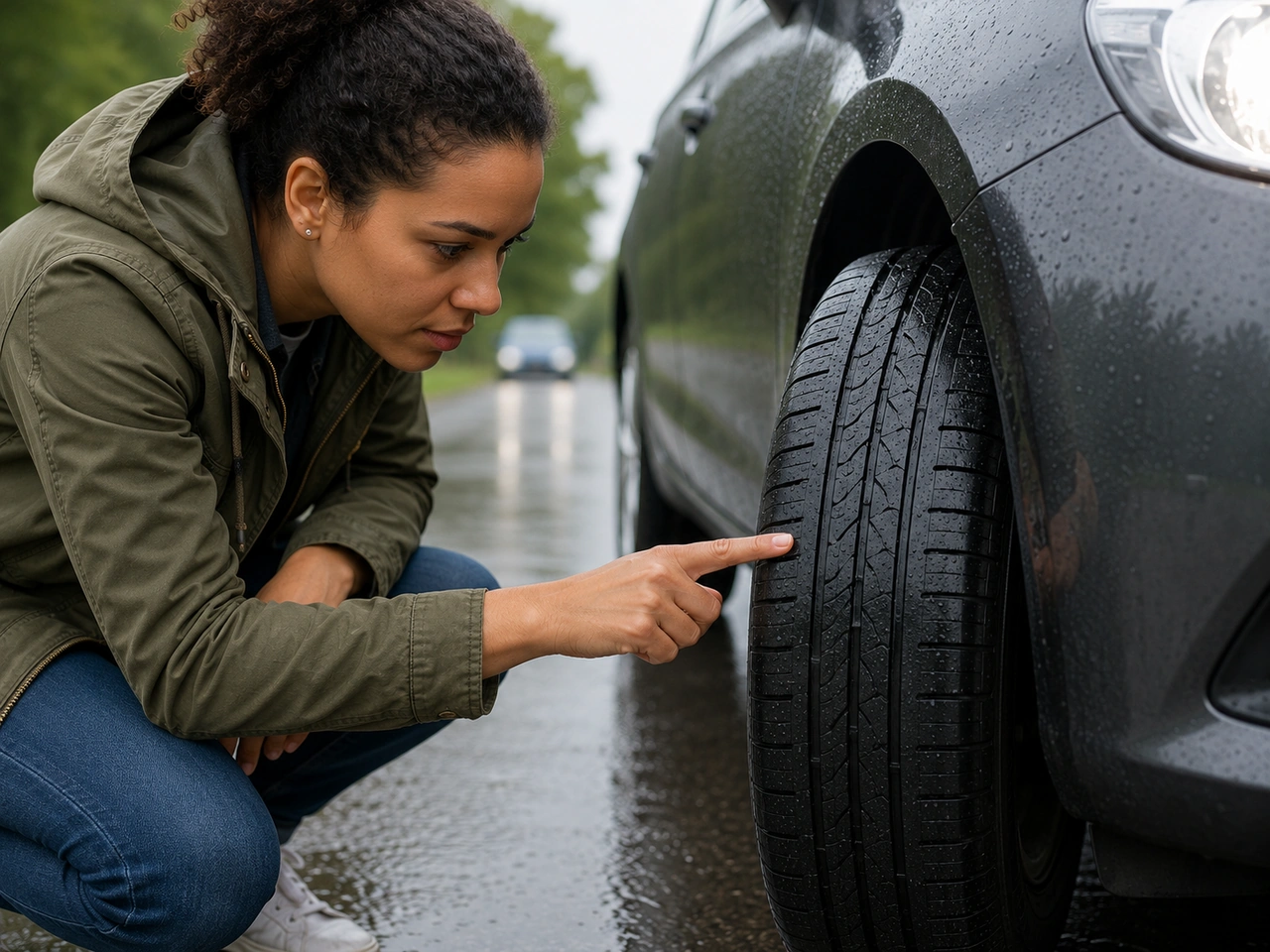
Why is adequate tyre tread important?

274. Why is adequate tyre tread important?

✓ It helps maintain grip and move water away from the tyre.
It makes wheel alignment unnecessary.
It keeps the tyres from becoming warm while driving.
It increases the amount of power from the engine.

Tyre tread helps the vehicle grip the road and disperse water. Worn tread increases the risk of skidding and aquaplaning, especially in wet conditions.

Tread grooves on a vehicle tyre
AI-generated by Traffic-rules.com • WCIT • CC BY-SA
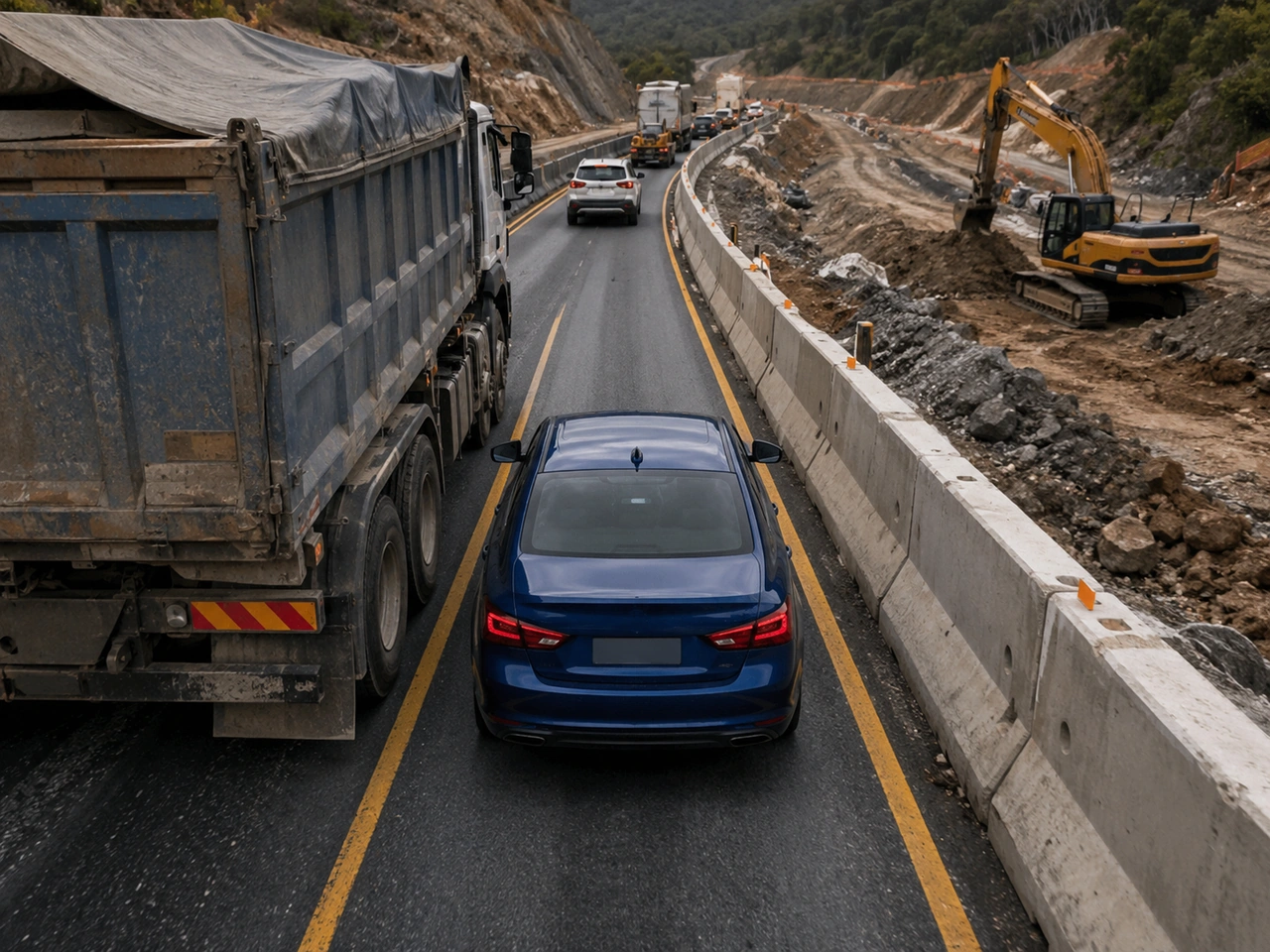
Why should you avoid unnecessary lane changes in roadworks?

275. Why should you avoid unnecessary lane changes in roadworks?

Drivers should always use the lane with fewer vehicles.
Temporary lanes are designed for frequent lane changes.
Lane changes are safer when traffic is moving slowly.
✓ Narrow lanes and changing layouts increase the risk of collision.

Frequent lane changes create additional risk where space is limited and drivers are already adapting to temporary layouts.

Vehicles travelling through restricted roadworks lanes
AI-generated by Traffic-rules.com • WCIT • CC BY-SA
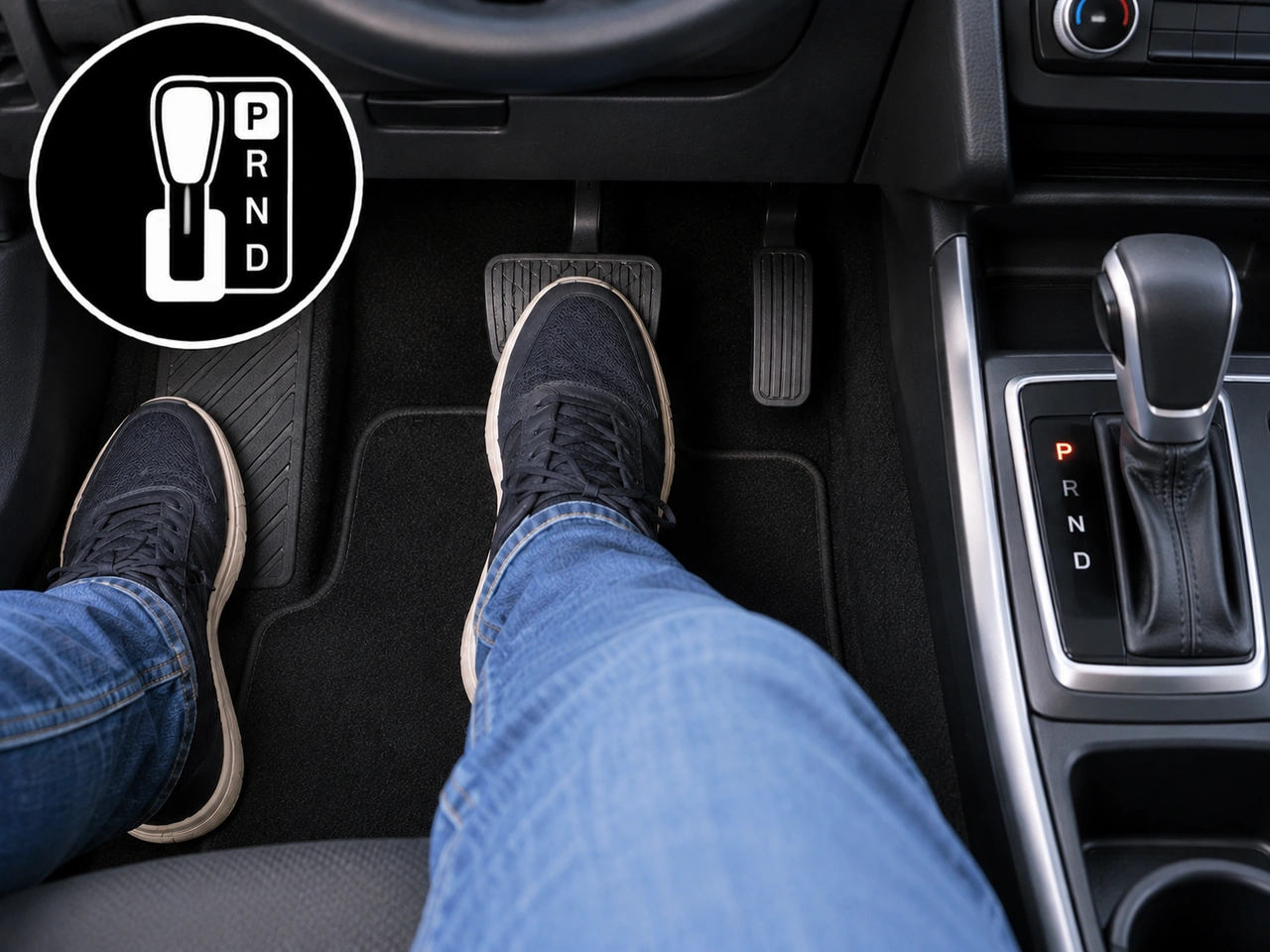
What should you normally do before starting an automatic vehicle?

276. What should you normally do before starting an automatic vehicle?

Leave the selector between two positions.
✓ Select P or N and press the brake pedal.
Select R and release the parking brake.
Select D and press the accelerator.

Before starting an automatic vehicle, make sure P (Park) or N (Neutral) is selected and press the brake pedal. Many automatic vehicles will only allow the engine to start when these conditions are met.

Gear selector and brake before starting an automatic vehicle
AI-generated by Traffic-rules.com • WCIT • CC BY-SA
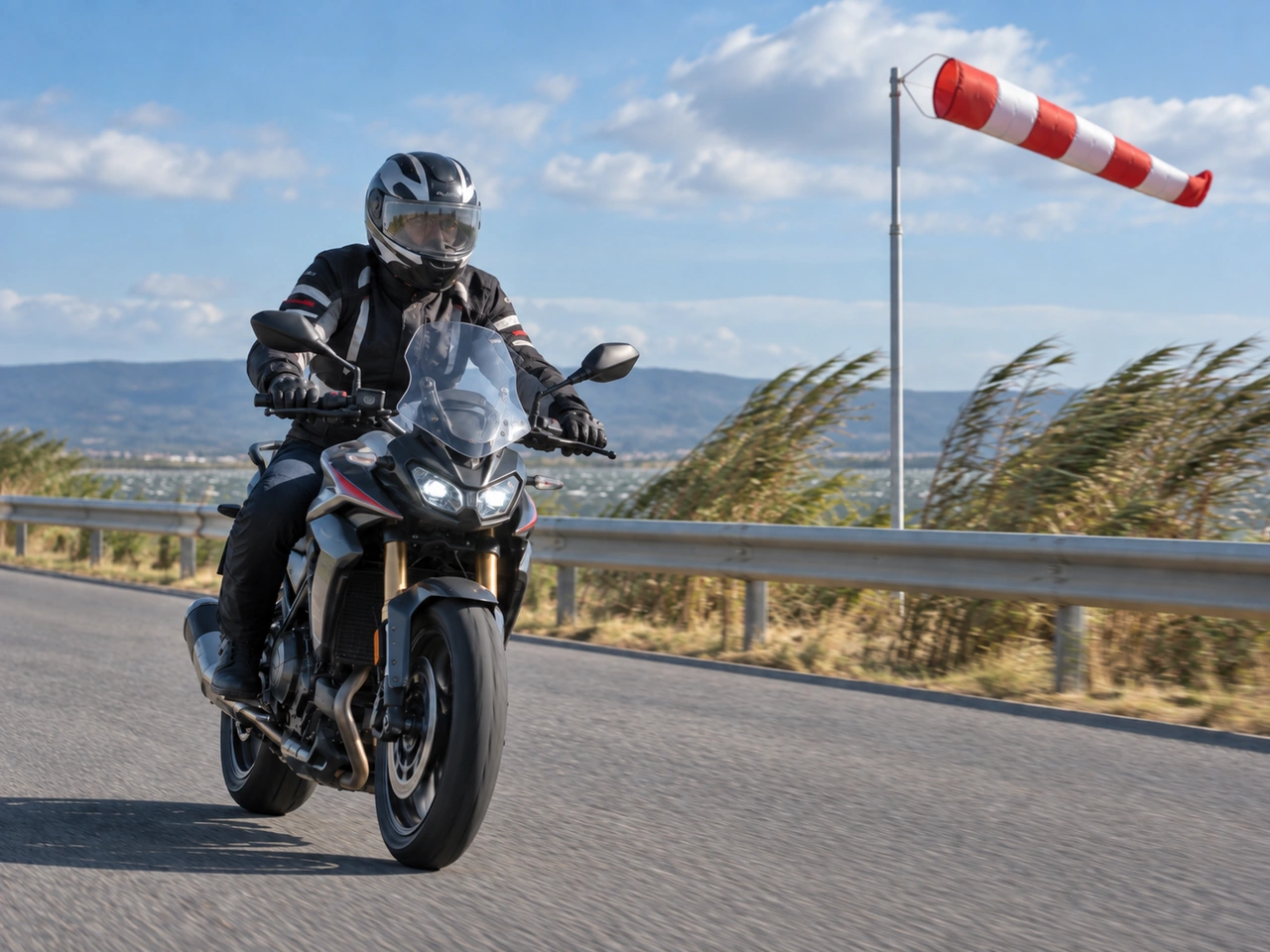
What should a motorcyclist do in strong crosswinds?

277. What should a motorcyclist do in strong crosswinds?

Ride as close to the edge of the road as possible.
✓ Reduce speed and be prepared for sudden gusts.
Make sudden steering movements whenever the wind changes.
Accelerate to get through the windy area quickly.

Strong crosswinds can push a motorcycle sideways and sudden gusts can affect its stability. Reduce speed, keep a steady grip on the handlebars and allow extra space, especially on exposed roads, bridges, or when passing gaps and large vehicles.

Motorcyclist riding in strong crosswinds
AI-generated by Traffic-rules.com • WCIT • CC BY-SA
What should you do if a trailer begins to sway?

278. What should you do if a trailer begins to sway?

Accelerate to pull the trailer straight.
✓ Ease off the accelerator and reduce speed smoothly.
Move into another lane to create more space.
Brake hard as soon as the sway begins.

Sudden steering or braking can worsen trailer sway. Stay calm, hold a steady course, and reduce speed smoothly.

Trailer swaying behind a towing vehicle
AI-generated by Traffic-rules.com • WCIT • CC BY-SA
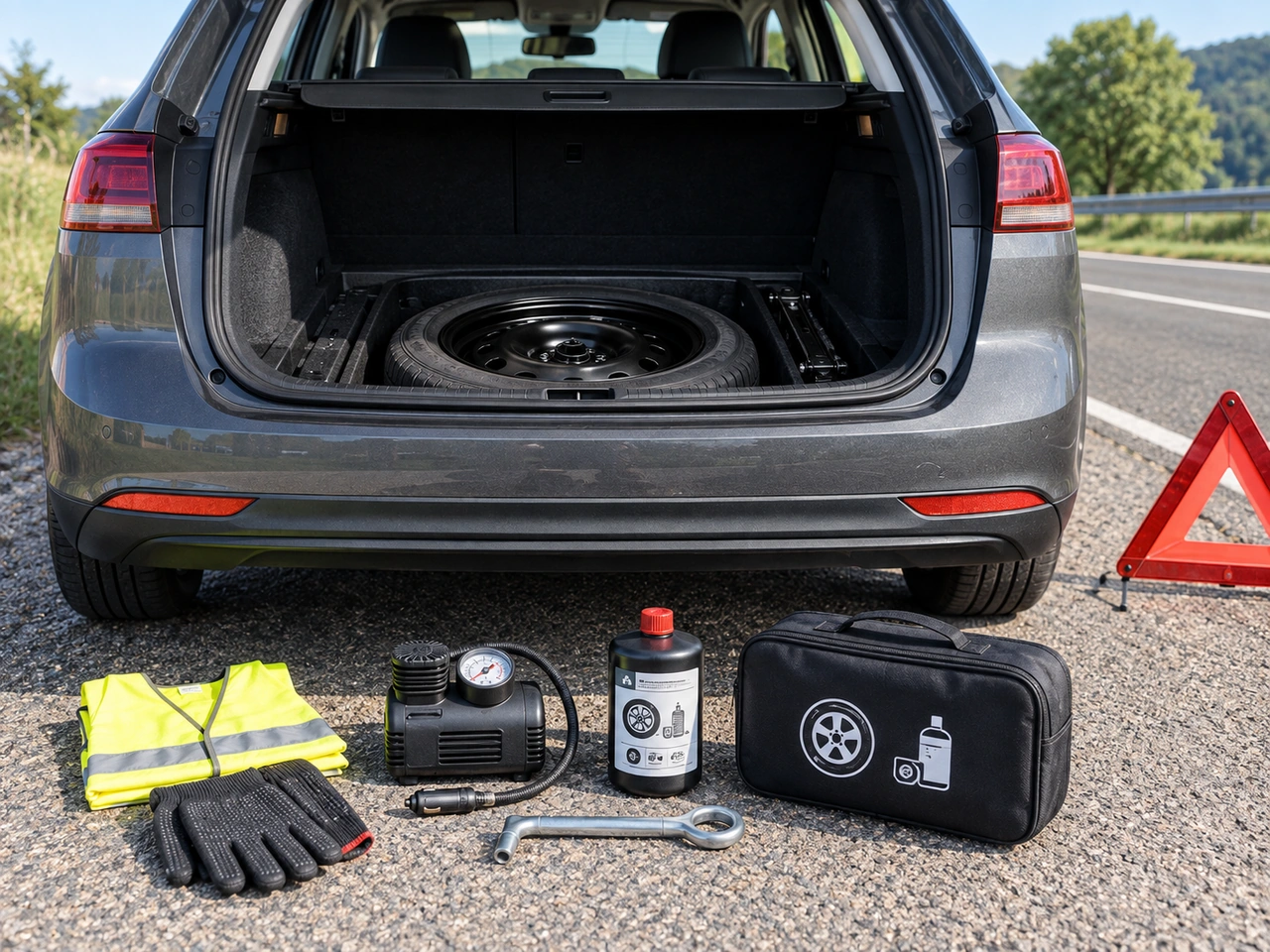
Must cars carry equipment for dealing with a puncture in Chile?

279. Must cars carry equipment for dealing with a puncture in Chile?

No.
✓ Yes.

Cars in Chile are generally required to carry equipment for dealing with a puncture, such as a spare wheel or tyre repair kit.

Vehicle equipment for dealing with a puncture
AI-generated by Traffic-rules.com • WCIT • CC BY-SA
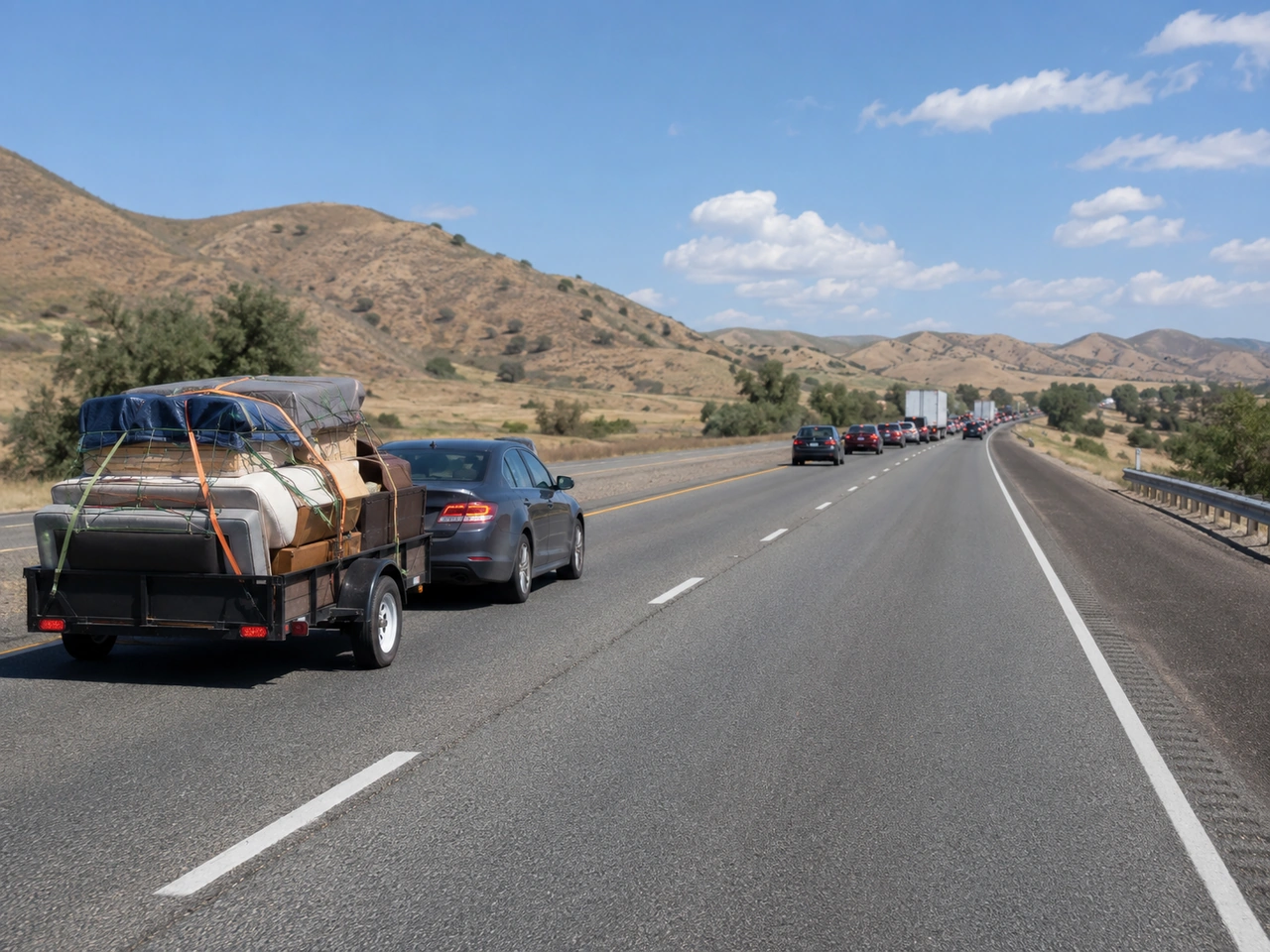
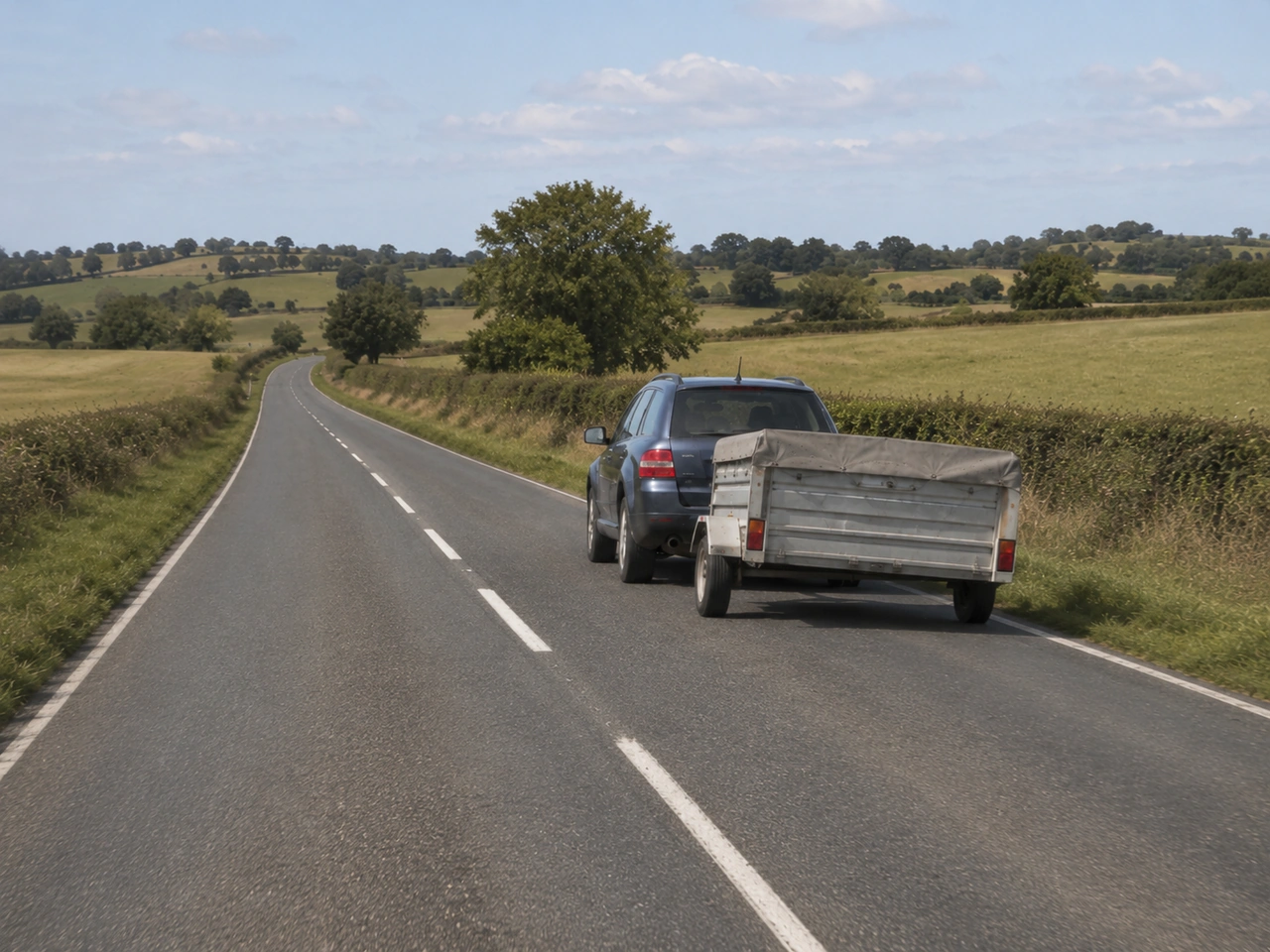
What should you do before overtaking while towing a trailer?

280. What should you do before overtaking while towing a trailer?

Begin overtaking as soon as the road looks clear.
Assume the trailer will follow the same path as the vehicle.
✓ Allow extra time and distance for the manoeuvre.
Follow closely before moving out to overtake.

A towing vehicle accelerates more slowly, and the trailer makes the whole vehicle combination longer. Remember to allow a much larger safe gap before overtaking and enough space to return safely to your lane.

Vehicle preparing to overtake while towing a trailer
AI-generated by Traffic-rules.com • WCIT • CC BY-SA
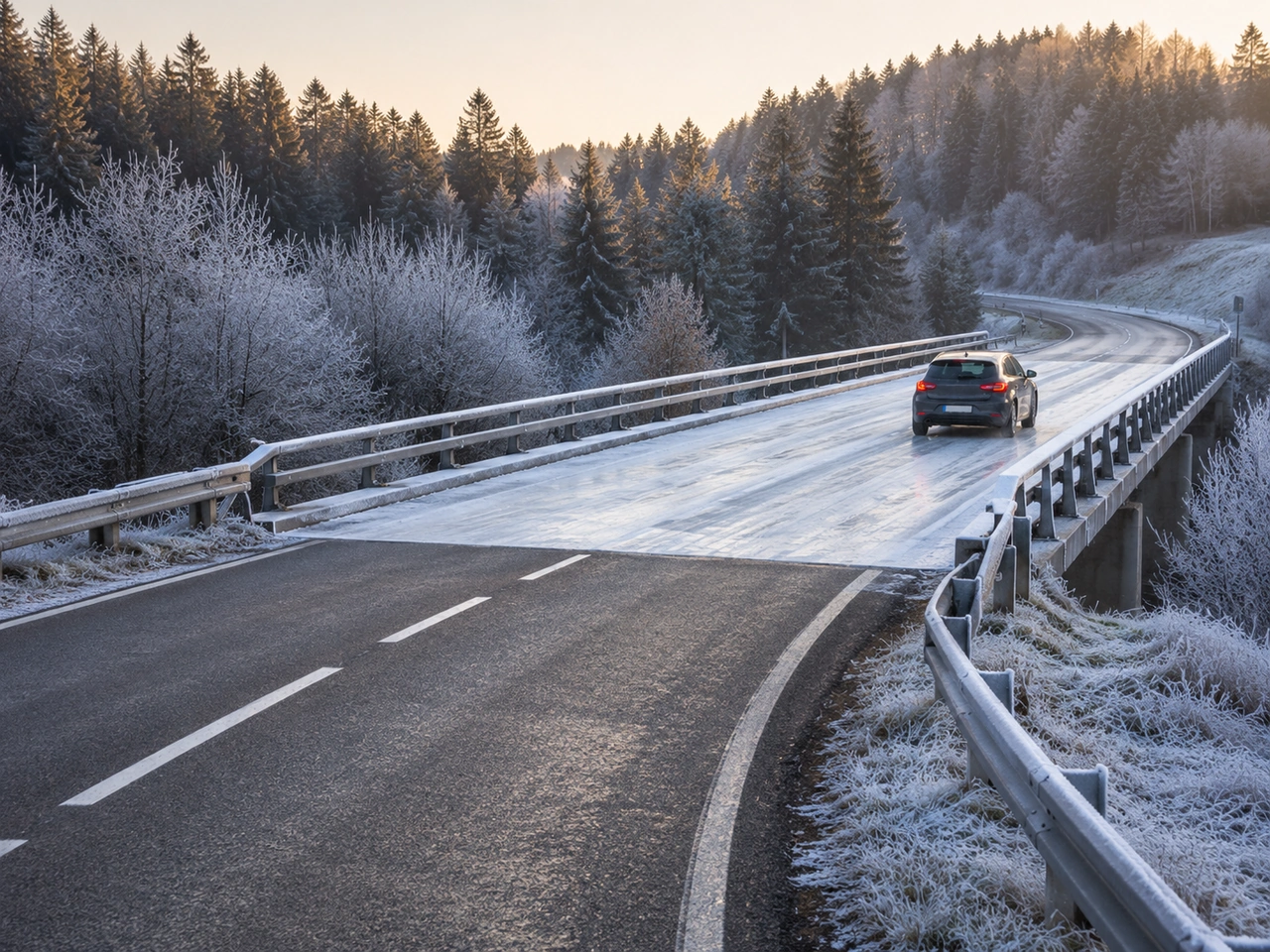
Why can bridges and overpasses become icy before nearby roads?

281. Why can bridges and overpasses become icy before nearby roads?

Road salt is less effective on bridges.
✓ Cold air circulates above and below them.
Their barriers trap cold air on the road surface.
Traffic usually moves faster across bridges.

Bridges lose heat from both their upper and lower surfaces, so they can freeze before roads built directly on the ground.

Icy surface on an exposed bridge
AI-generated by Traffic-rules.com • WCIT • CC BY-SA
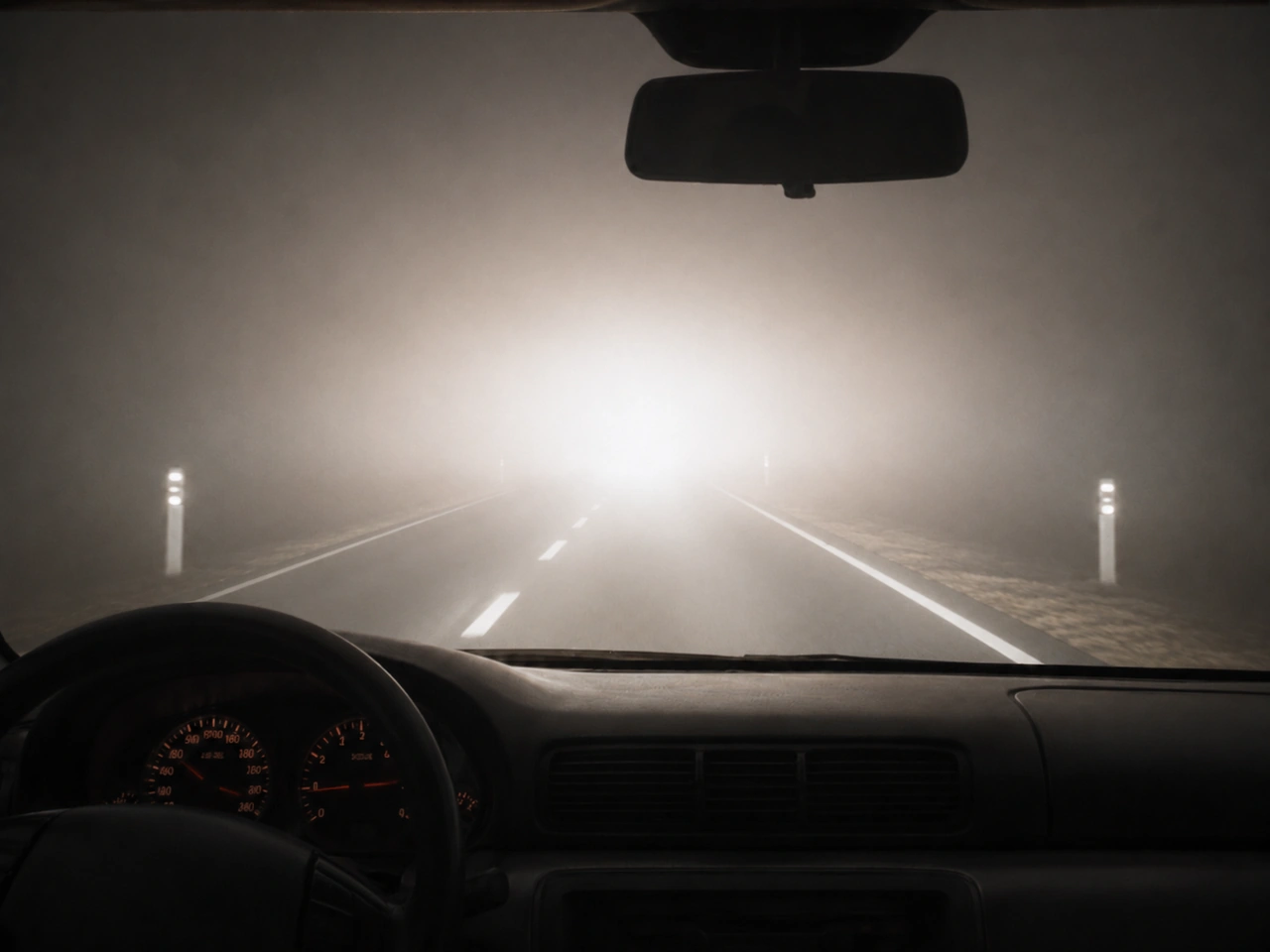
Why can main-beam headlights make driving in fog more difficult?

282. Why can main-beam headlights make driving in fog more difficult?

Main beam reduces the effectiveness of the fog lights.
The brighter light makes the windscreen mist more quickly.
✓ The light can reflect off fog droplets and reduce visibility.
Main beam makes interior lights less effective.

Main beam can reflect back from fog and create glare, making it harder to see the road ahead.

Headlight glare reflected by fog
AI-generated by Traffic-rules.com • WCIT • CC BY-SA
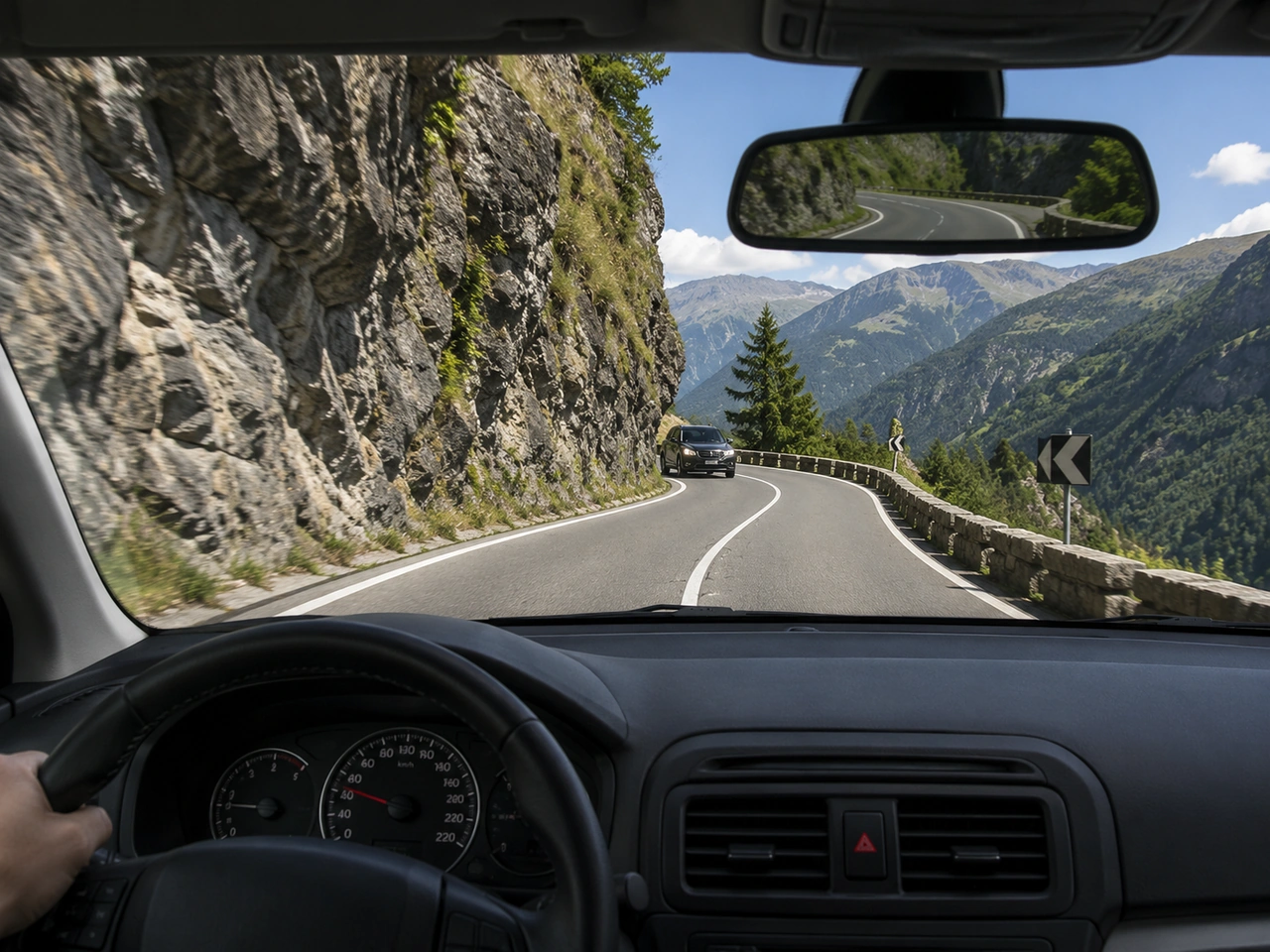
How should you approach a sharp bend on a mountain road?

283. How should you approach a sharp bend on a mountain road?

Accelerate through the bend to maintain momentum.
Brake hard while turning through the bend.
✓ Reduce speed before the bend and remain in your lane.
Move toward the centre of the road for a better view.

Mountain bends may hide oncoming vehicles, cyclists, animals, or debris. Slow down before entering and keep a safe road position.

Sharp bend on a mountain road
AI-generated by Traffic-rules.com • WCIT • CC BY-SA
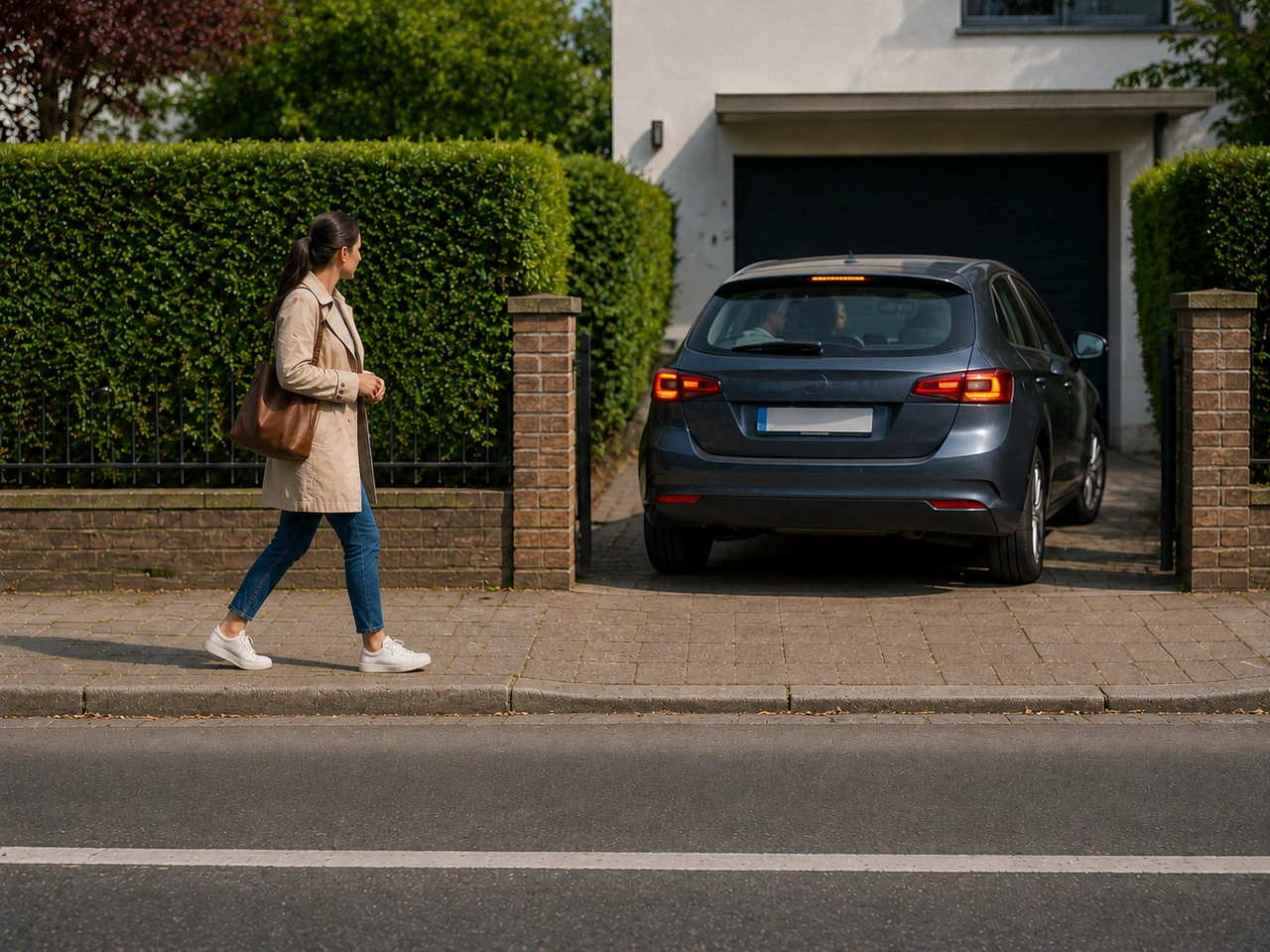
What should you do when walking near a driveway?

284. What should you do when walking near a driveway?

✓ Watch for vehicles entering or leaving.
Assume vehicles will stop before crossing your path.
Rely on engine noise to warn you of vehicles.
Watch only for vehicles leaving the driveway.

Vehicles may enter or leave driveways suddenly. Stay alert and check for moving vehicles.

Pedestrian passing a driveway entrance
AI-generated by Traffic-rules.com • WCIT • CC BY-SA
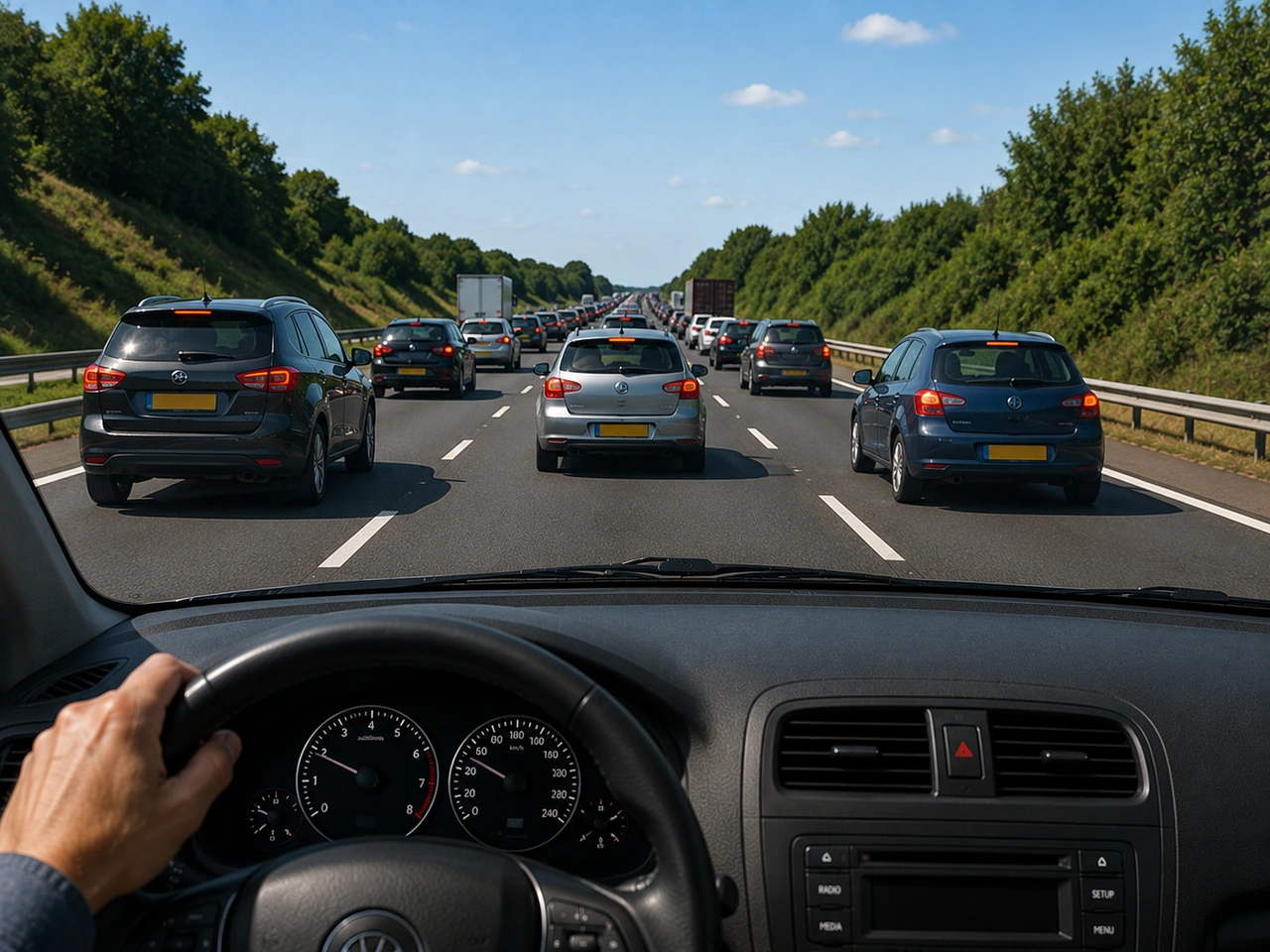
What should you do if traffic suddenly slows on a motorway?

285. What should you do if traffic suddenly slows on a motorway?

Change lanes immediately to avoid slowing down.
Move onto the shoulder and continue driving.
Maintain speed until the vehicle ahead brakes.
✓ Slow down smoothly and warn traffic behind if needed.

When traffic slows suddenly, reduce speed smoothly, keep a safe distance, and use hazard lights if needed to warn following traffic.

Motorway traffic slowing ahead
AI-generated by Traffic-rules.com • WCIT • CC BY-SA
What should you do if you smell fuel or see fuel leaking from your vehicle?

286. What should you do if you smell fuel or see fuel leaking from your vehicle?

✓ Stop, switch off the engine, avoid flames or sparks, and call for assistance.
Restart the engine to check whether the leak continues.
Ignore a small leak if the fuel level remains stable.
Drive slowly to the nearest fuel station.

Leaking fuel creates a serious fire risk. Keep people away, do not restart the engine, and arrange professional assistance.

Fuel leaking from a vehicle
AI-generated by Traffic-rules.com • WCIT • CC BY-SA
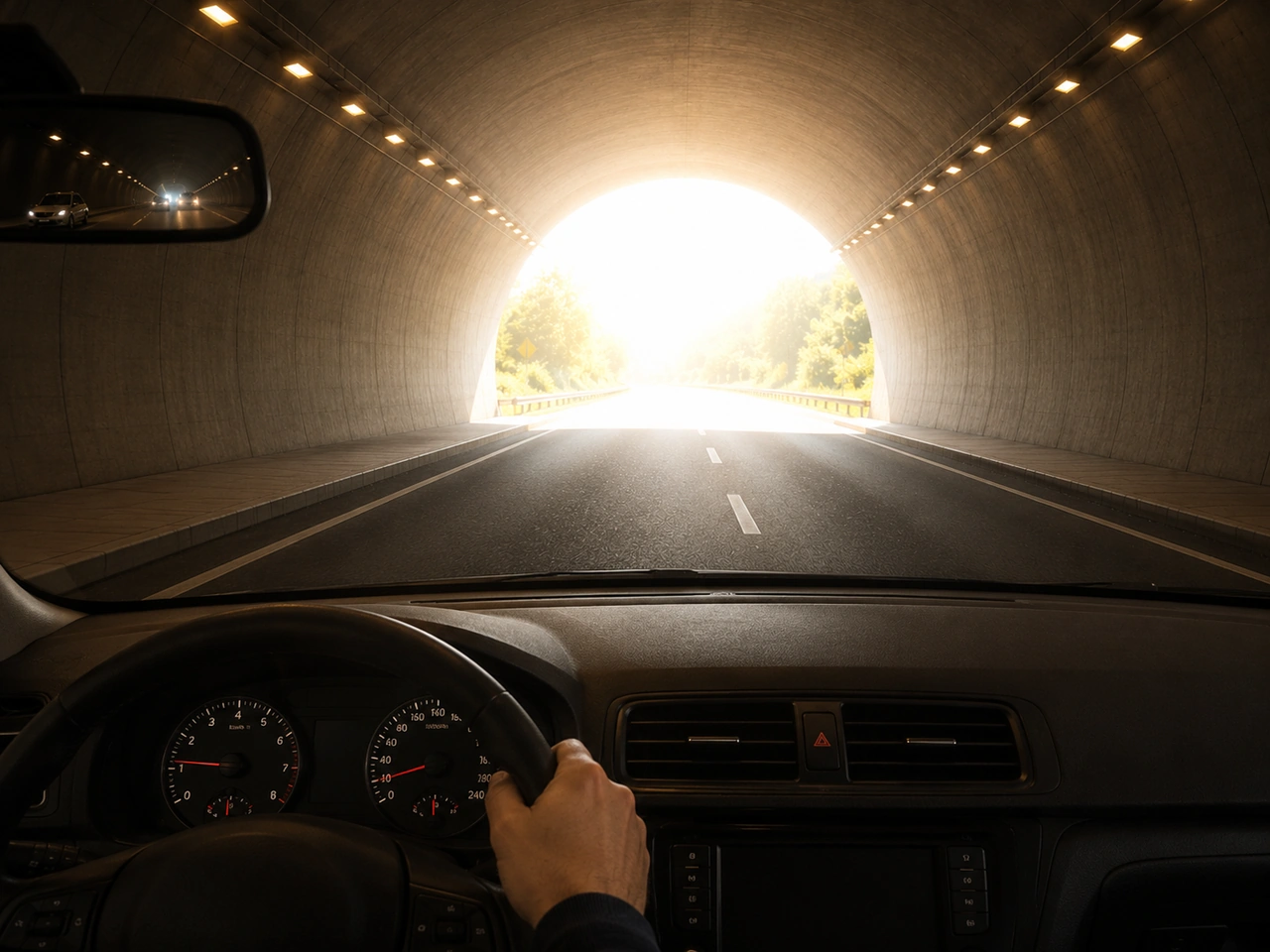
What should you expect when leaving a tunnel in bright sunlight?

287. What should you expect when leaving a tunnel in bright sunlight?

The road surface becoming more slippery.
✓ Temporary glare and reduced visibility.
The steering becoming heavier.
The brakes becoming more powerful.

Your eyes may need time to adjust from the darker tunnel to bright daylight. Reduce speed if necessary and remain alert.

Bright sunlight at the exit of a road tunnel
AI-generated by Traffic-rules.com • WCIT • CC BY-SA
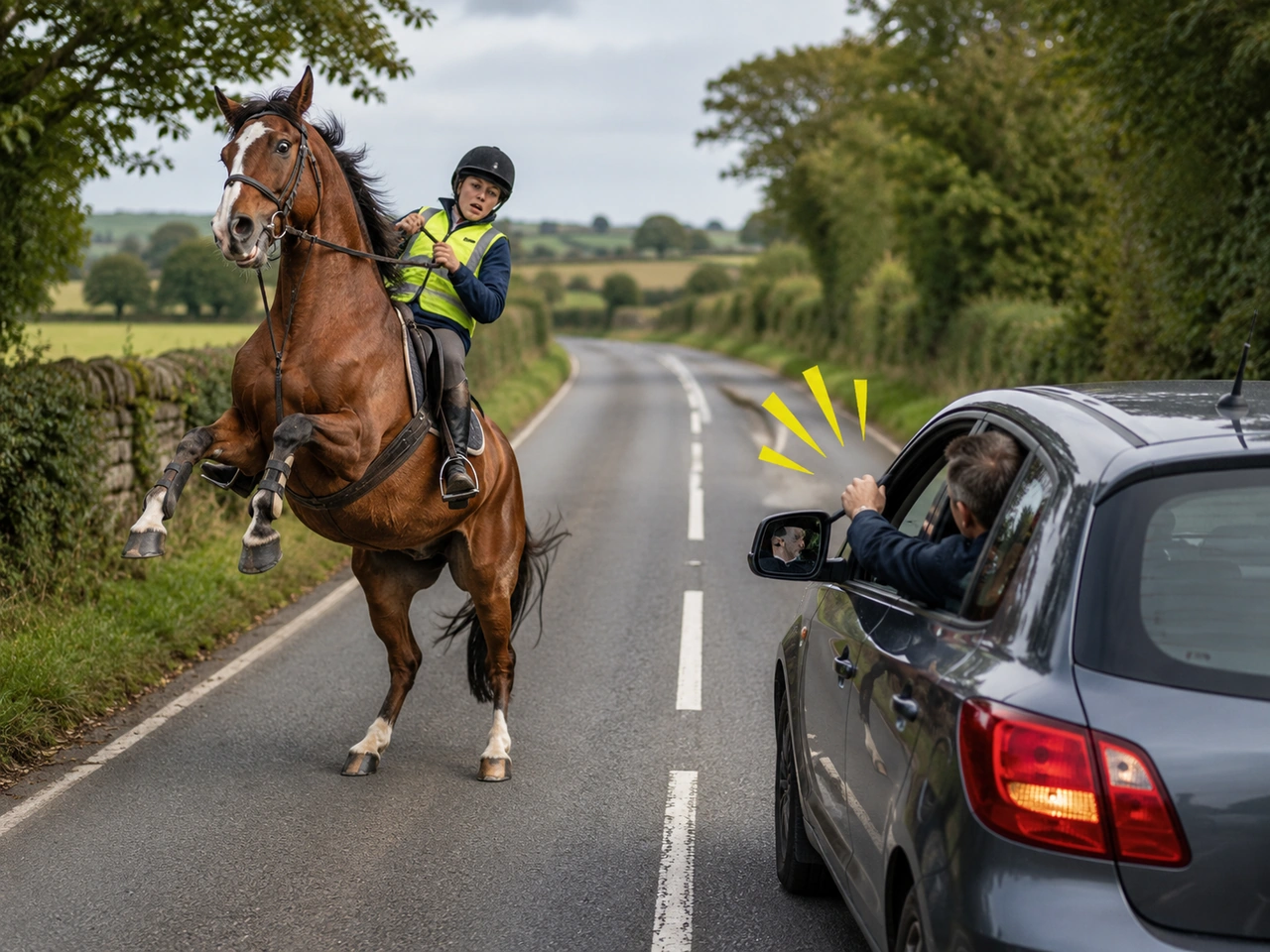
Why should you avoid sounding the horn near horses?

288. Why should you avoid sounding the horn near horses?

✓ The noise may frighten them.
Horses cannot hear a vehicle horn clearly.
The rider may think you are signalling them to stop.
The horn may make the horse move faster.

Horses can be startled by sudden or loud noises and may move unpredictably. Slow down, give them plenty of space, and avoid using the horn unless necessary.

Vehicle approaching a horse and rider
AI-generated by Traffic-rules.com • WCIT • CC BY-SA
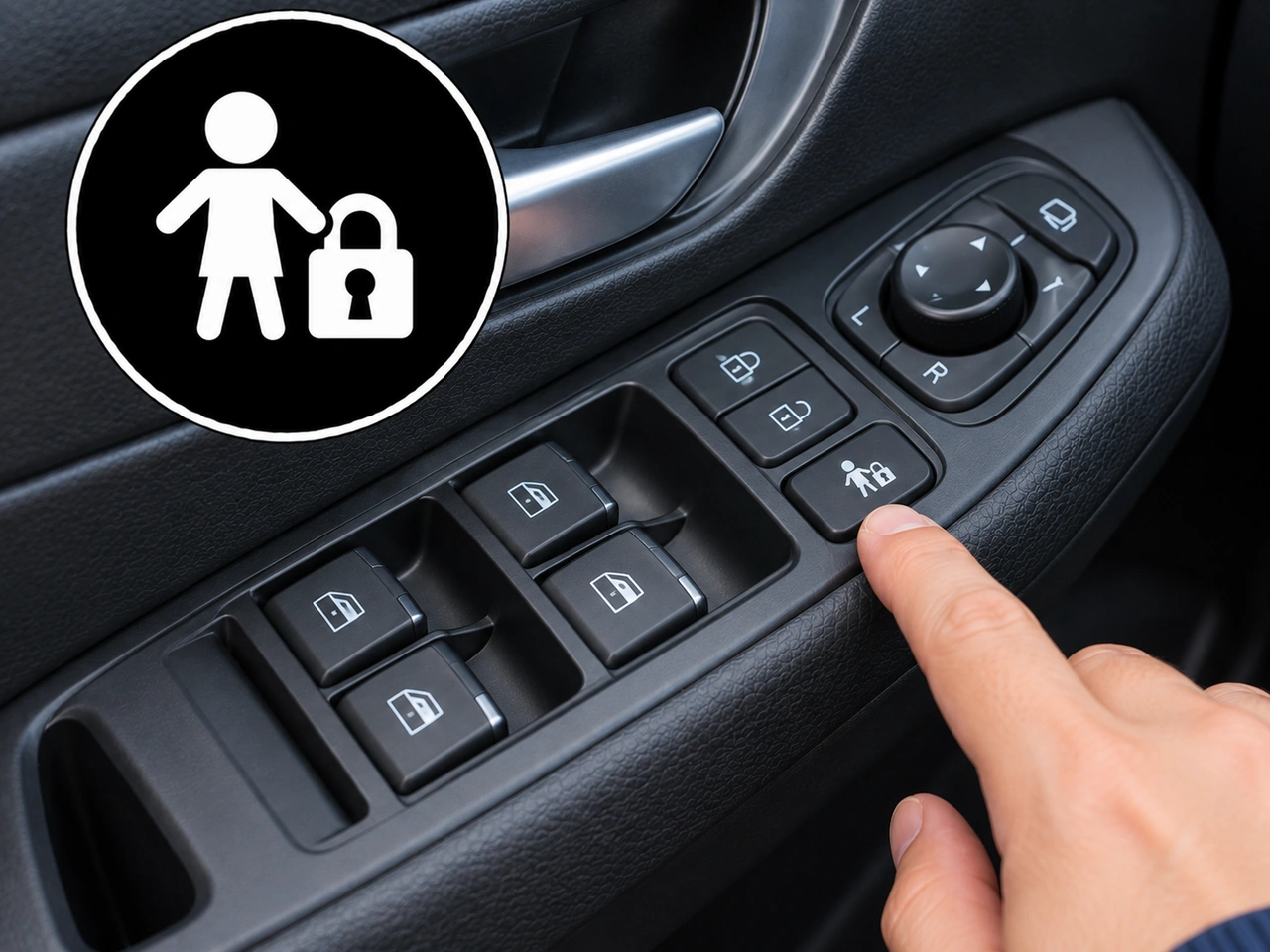
What does this vehicle-control symbol indicate?

289. What does this vehicle-control symbol indicate?

✓ Child safety lock.
Central door locking.
Window lock.
Boot release.

This control activates the child safety lock. It helps prevent a rear door from being opened from inside the vehicle, depending on the vehicle and system design.

Child safety lock control and symbol
AI-generated by Traffic-rules.com • WCIT • CC BY-SA
Using indicators helps other road users understand your intentions.

290. Using indicators helps other road users understand your intentions.

✓ True.
False.

Indicators help communicate your intended direction and improve safety for everyone on the road.

Vehicle signalling its intended direction
AI-generated by Traffic-rules.com • WCIT • CC BY-SA
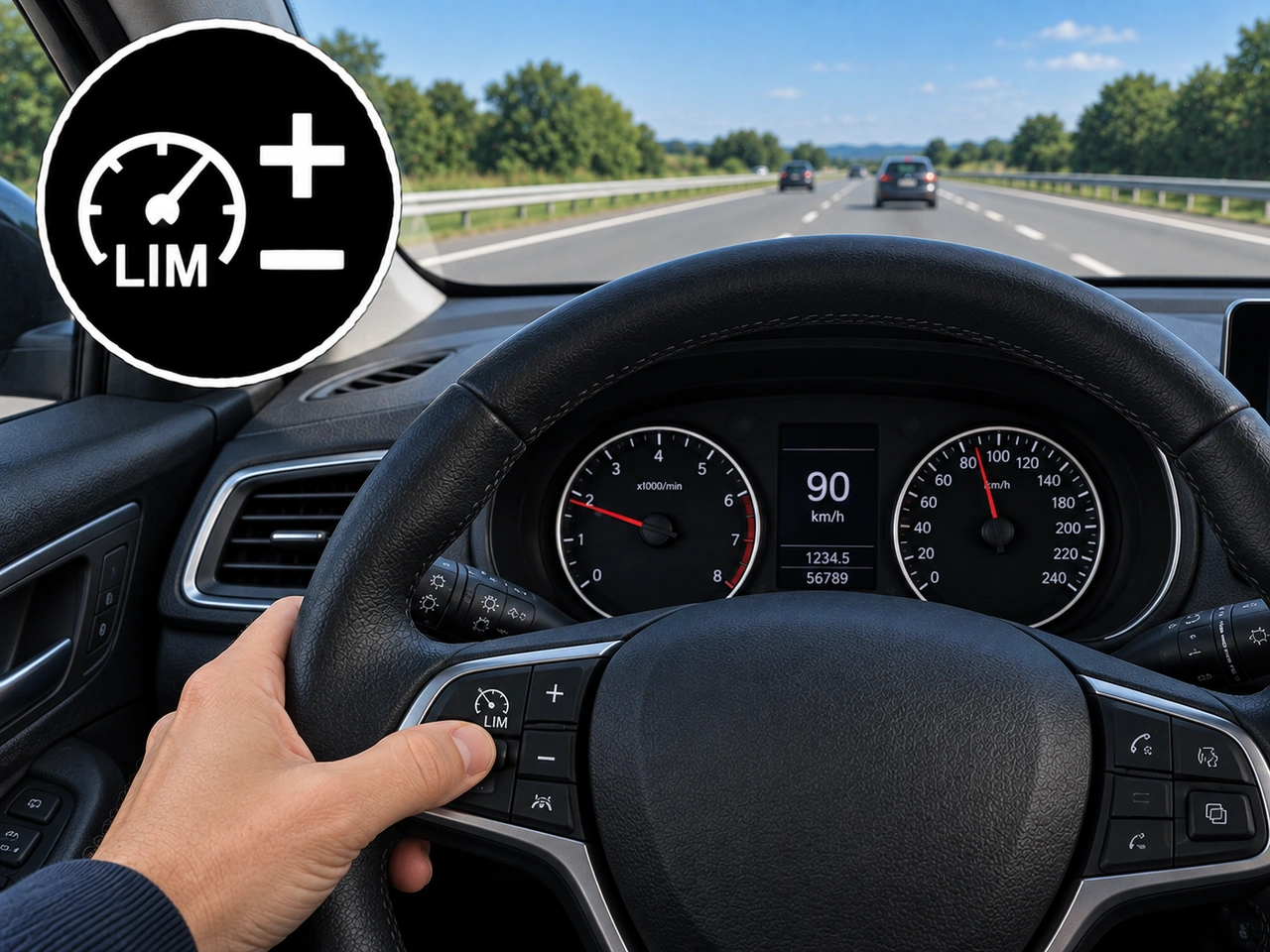
What do the + and − controls normally adjust when the speed limiter is active?

291. What do the + and − controls normally adjust when the speed limiter is active?

The following distance.
The engine idle speed.
The transmission gear.
✓ The selected maximum speed.

When the speed limiter is active, the + and − controls normally increase or decrease the selected maximum speed. The exact adjustment steps can vary between vehicles.

Plus and minus controls for the speed limiter
AI-generated by Traffic-rules.com • WCIT • CC BY-SA
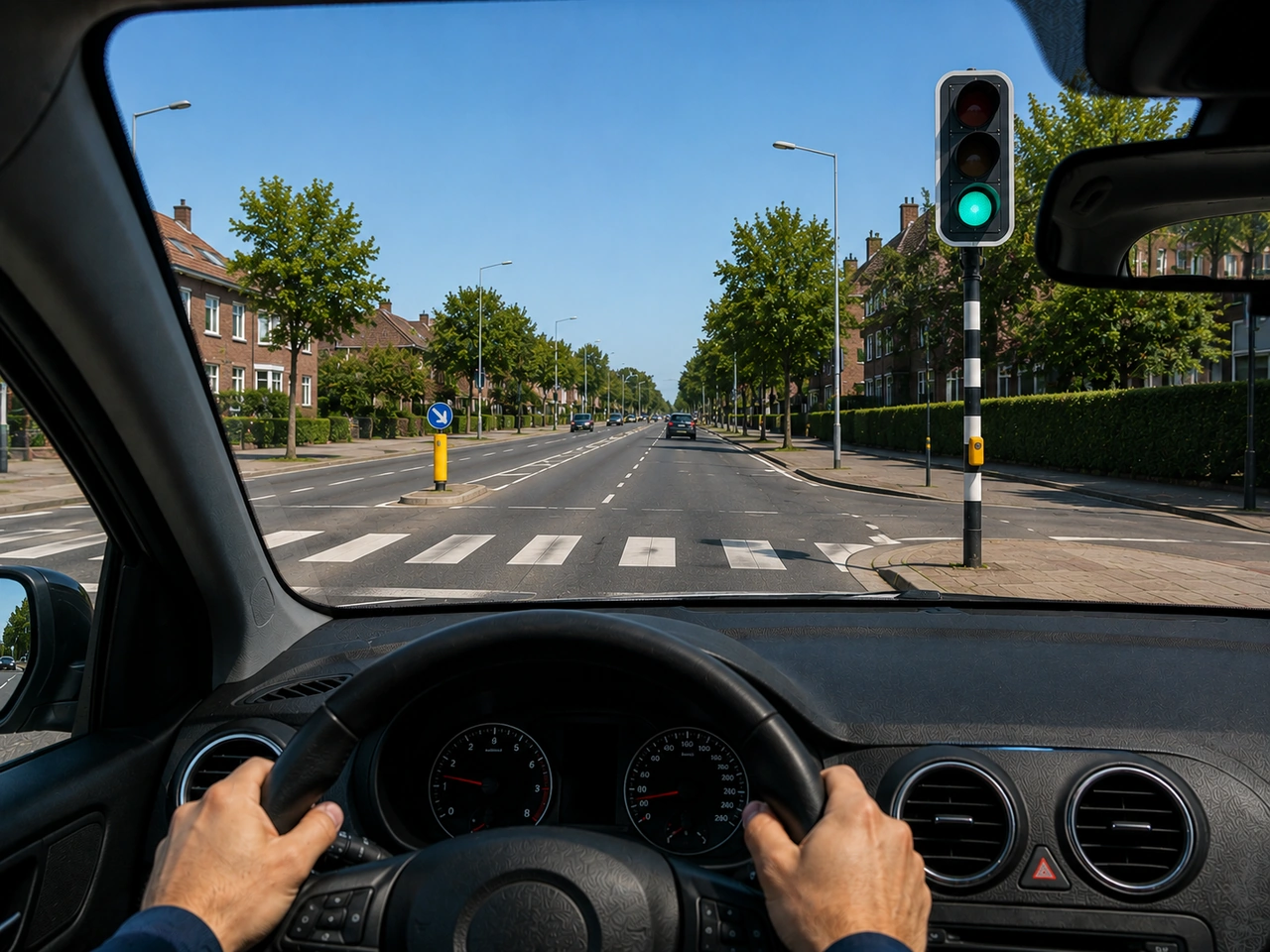
What does a green traffic light mean?

292. What does a green traffic light mean?

You have priority over all other road users.
✓ You may proceed if it is safe.
You may turn in any direction without checking the signs.
You must proceed as soon as the light turns green.

A green light allows you to continue, but you must still watch for pedestrians, cyclists, and other road users.

Green traffic light at a junction
AI-generated by Traffic-rules.com • WCIT • CC BY-SA
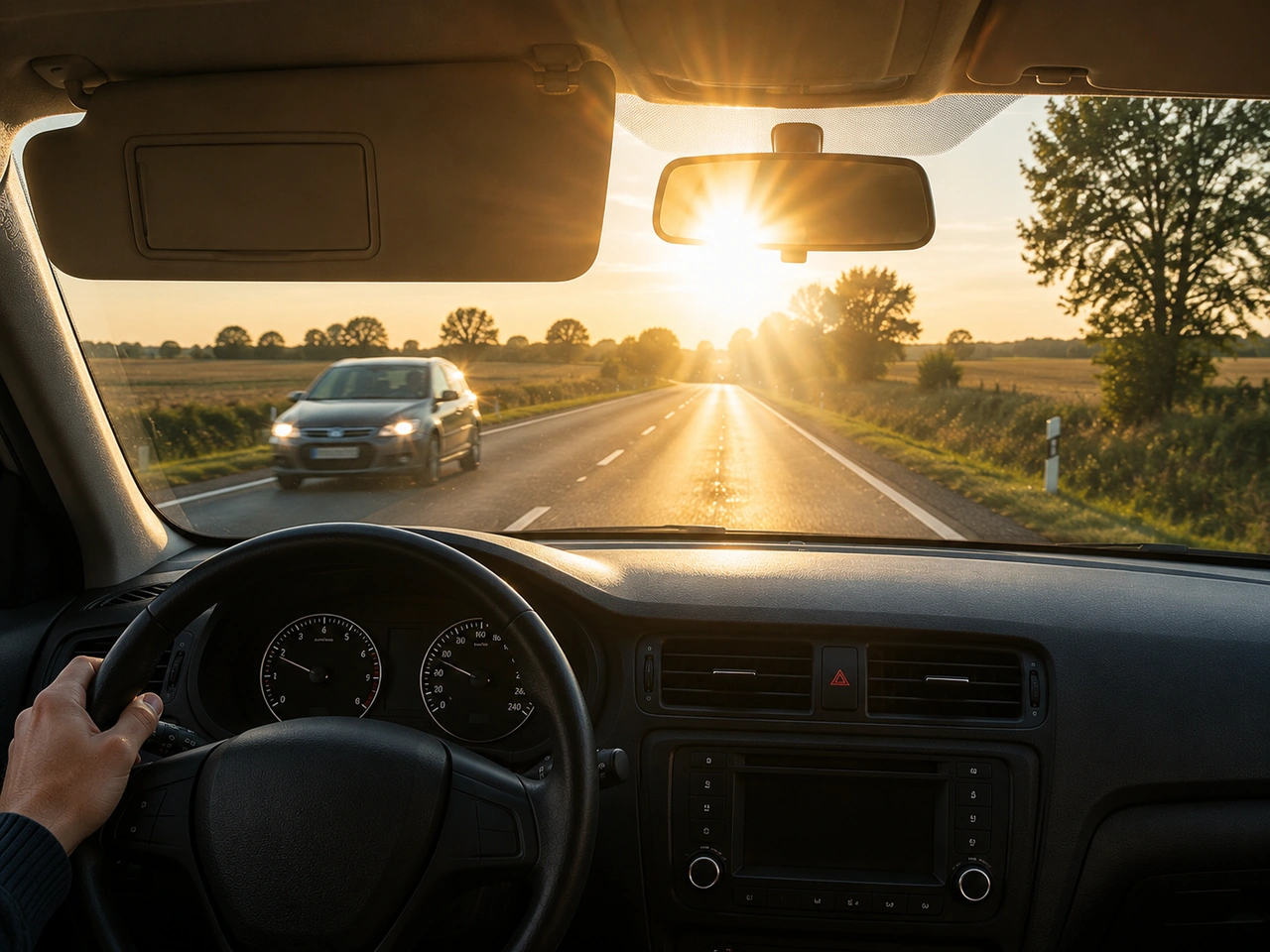
What should you do if you are dazzled by low sun?

293. What should you do if you are dazzled by low sun?

Follow the vehicle ahead closely as a guide.
✓ Slow down and use the sun visor if needed.
Increase speed to get through the glare more quickly.
Maintain your speed if you can still see the road markings.

Low sun can greatly reduce visibility. Slow down, increase your safety margin, and use the sun visor or sunglasses if needed.

Low sunlight dazzling a driver
AI-generated by Traffic-rules.com • WCIT • CC BY-SA
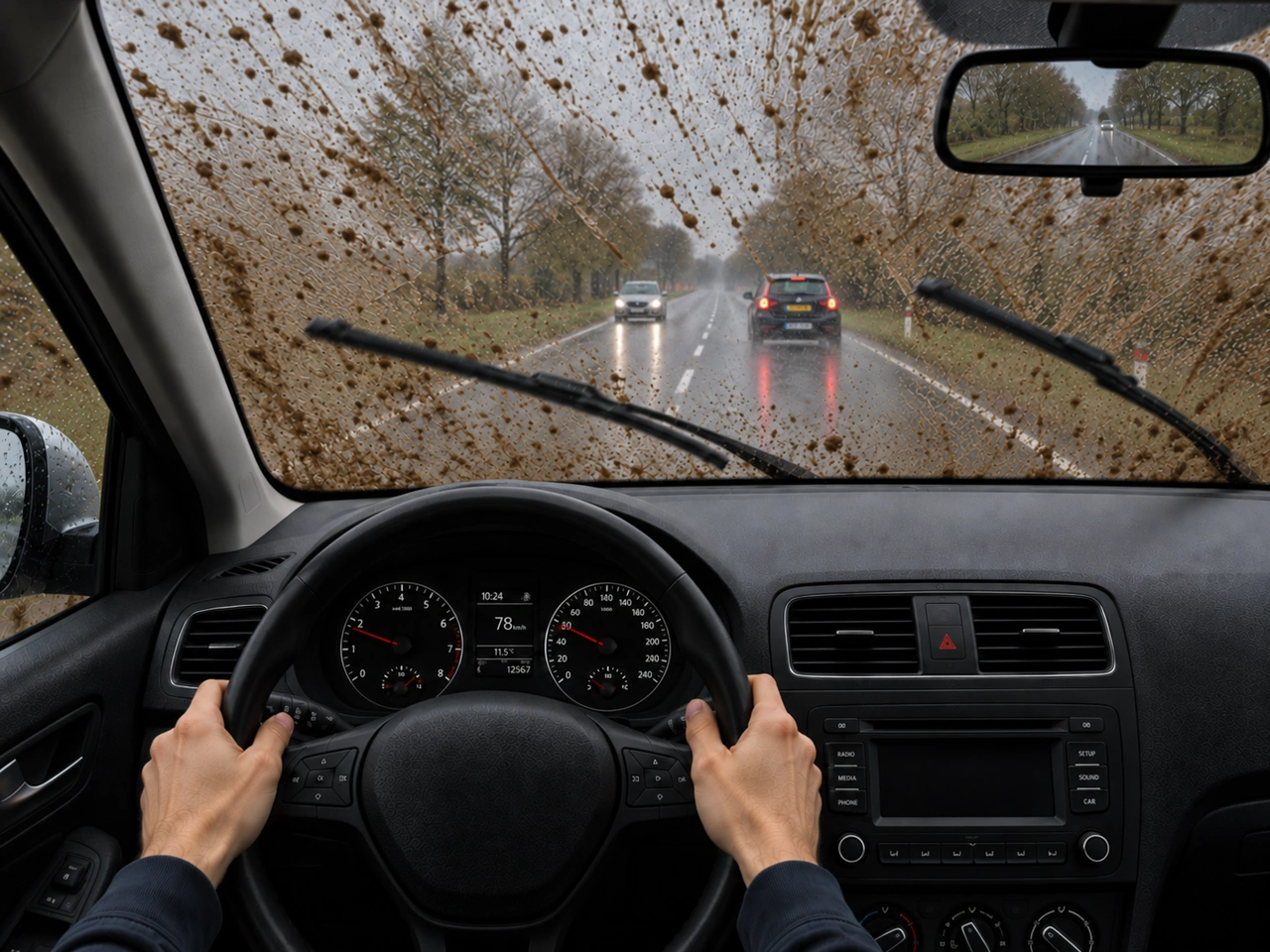
What should you do if your windscreen becomes covered with mud or spray?

294. What should you do if your windscreen becomes covered with mud or spray?

Use the demister instead of the washers.
Increase speed so the airflow clears the windscreen.
✓ Slow down and use the washers and wipers to restore clear vision.
Continue driving and wait for the spray to clear.

Clear visibility is essential. Slow down safely and use your washers and wipers until you can see the road clearly again.

Mud and spray obscuring a vehicle's windscreen
AI-generated by Traffic-rules.com • WCIT • CC BY-SA
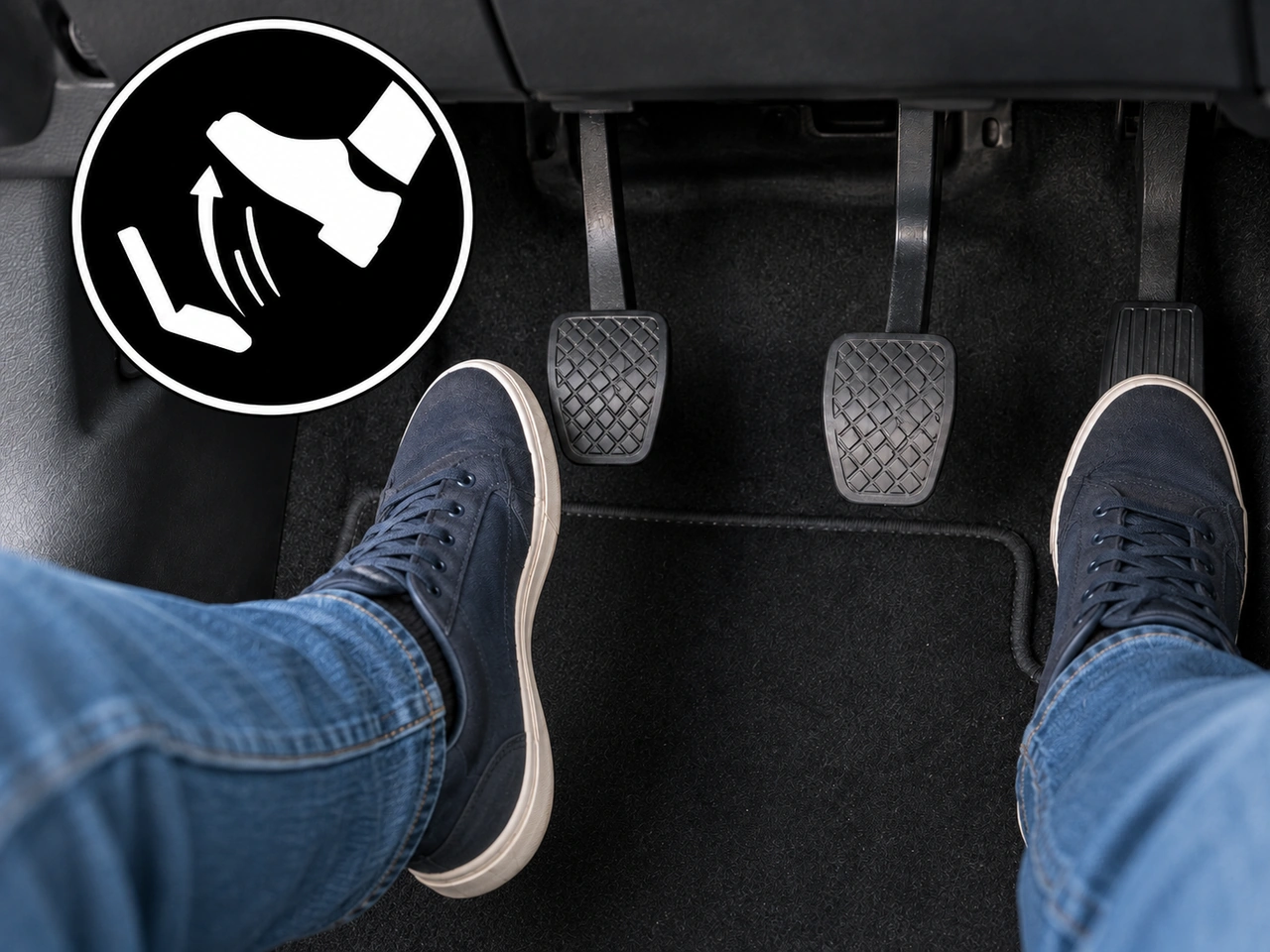
What may happen if you release the clutch too quickly when moving off?

295. What may happen if you release the clutch too quickly when moving off?

✓ The engine may stall.
The parking brake may engage.
The headlights may switch off.
The steering may lock.

Releasing the clutch pedal too quickly when moving off can cause the engine to stall. Release the clutch smoothly through the biting point while applying the accelerator progressively.

Clutch release and engine stalling when moving off
AI-generated by Traffic-rules.com • WCIT • CC BY-SA
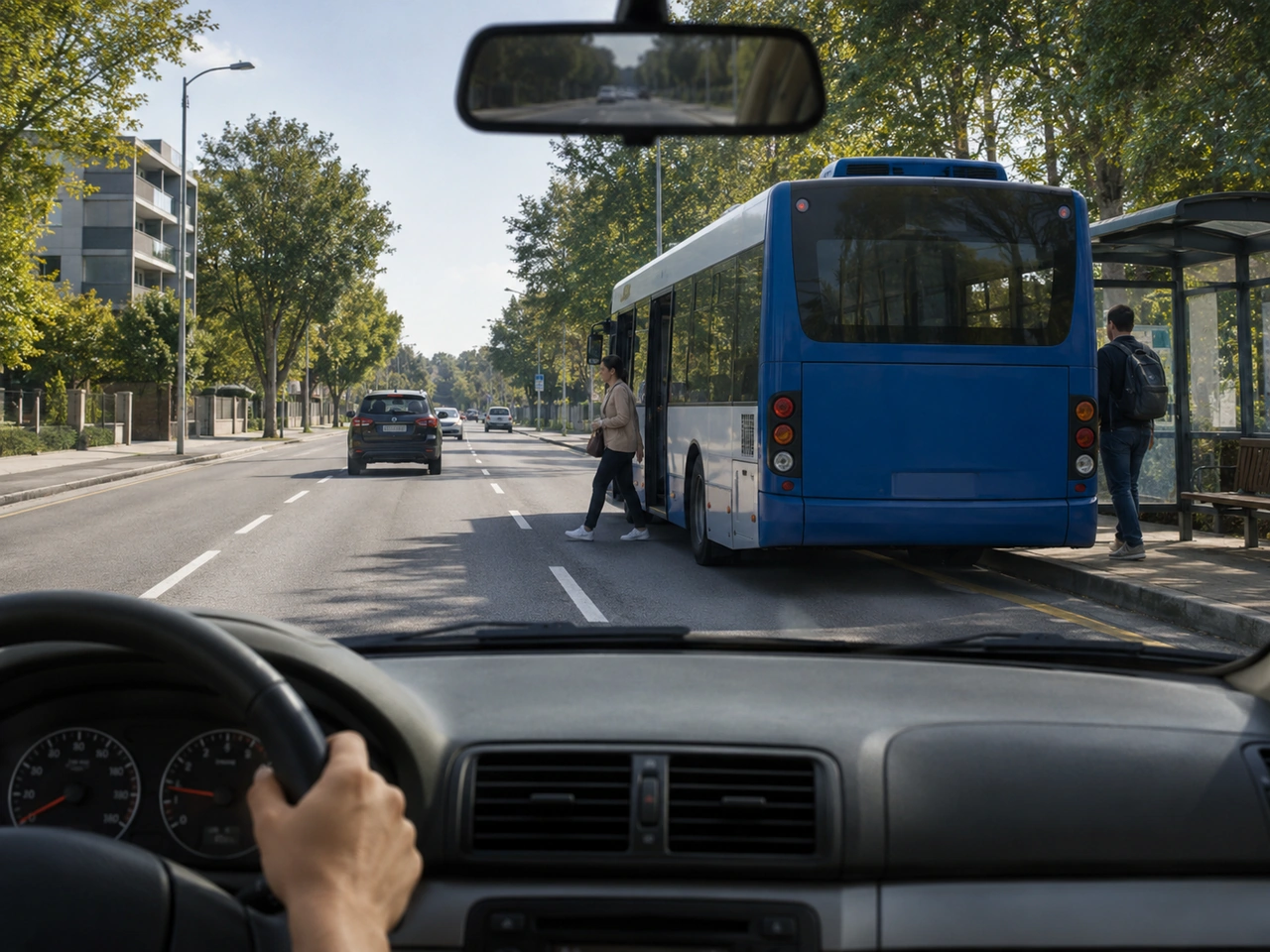
Why should you be careful when driving beside a bus at a stop?

296. Why should you be careful when driving beside a bus at a stop?

The road surface is usually more slippery near bus stops.
Bus stops usually have a lower speed limit.
✓ Passengers may step out or cross near the bus.
Vehicles beside a bus must always stop and wait.

Stopped buses can hide pedestrians, and passengers may cross unexpectedly. Slow down and be ready to react.

Vehicle passing a bus at a stop
AI-generated by Traffic-rules.com • WCIT • CC BY-SA
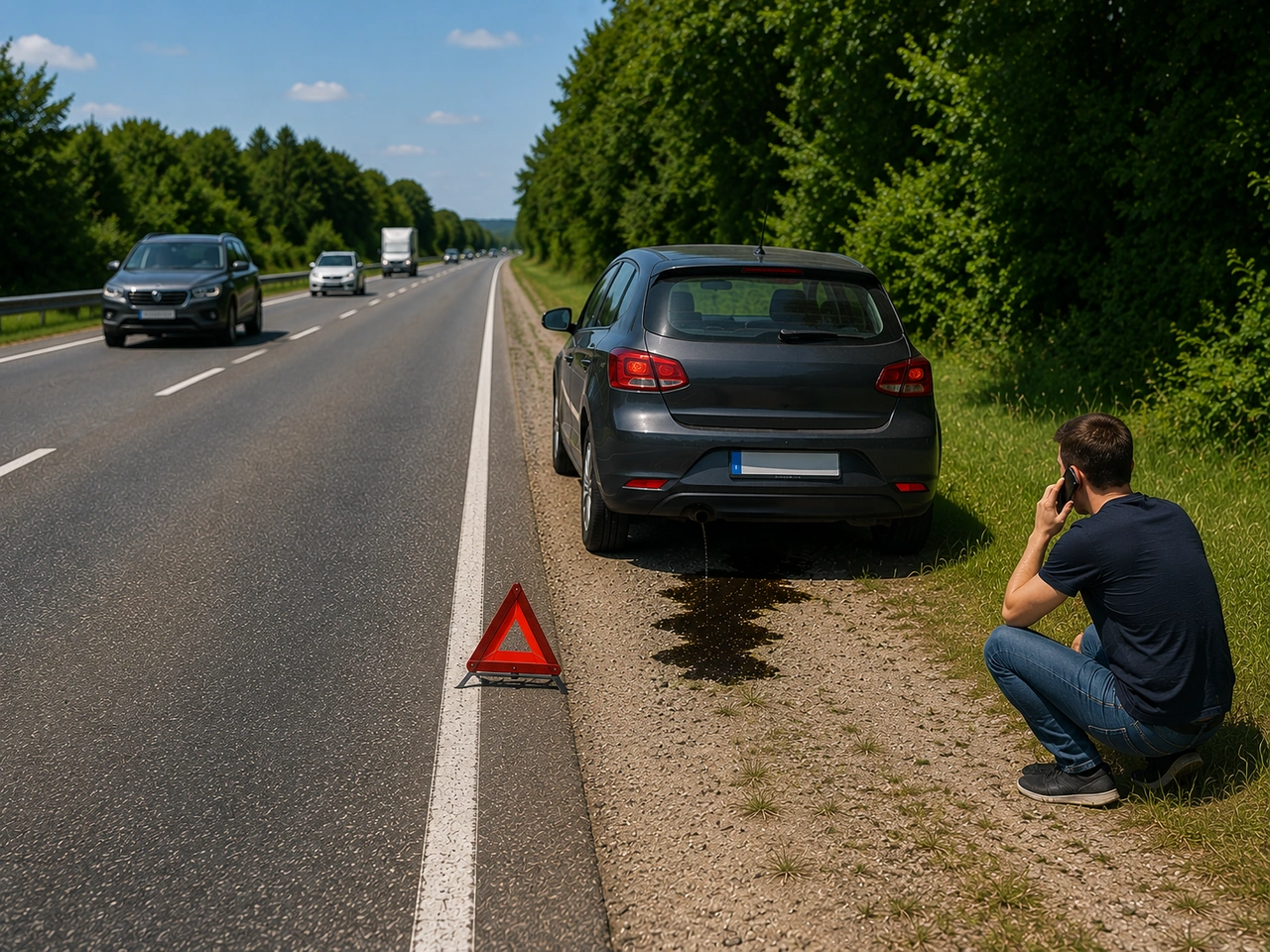
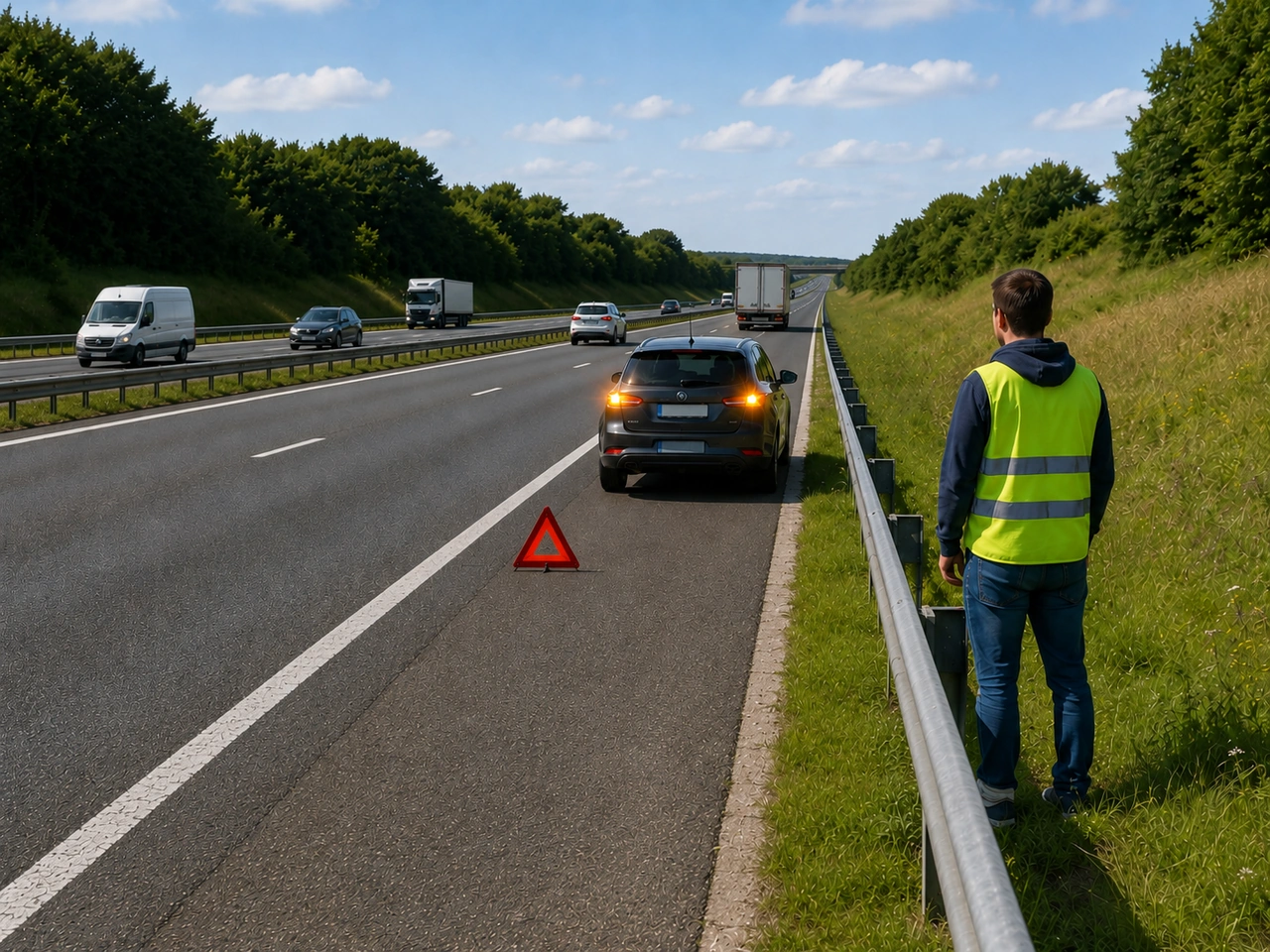
Where should you normally wait after a breakdown on a high-speed road?

297. Where should you normally wait after a breakdown on a high-speed road?

Immediately behind the vehicle so you remain visible.
✓ Behind a safety barrier and well away from the vehicle and traffic.
In front of the vehicle while facing approaching traffic.
On the verge beside the broken-down vehicle.

A stationary vehicle can be struck by passing traffic. Waiting behind a barrier provides better protection.

People waiting behind a safety barrier after a breakdown
AI-generated by Traffic-rules.com • WCIT • CC BY-SA
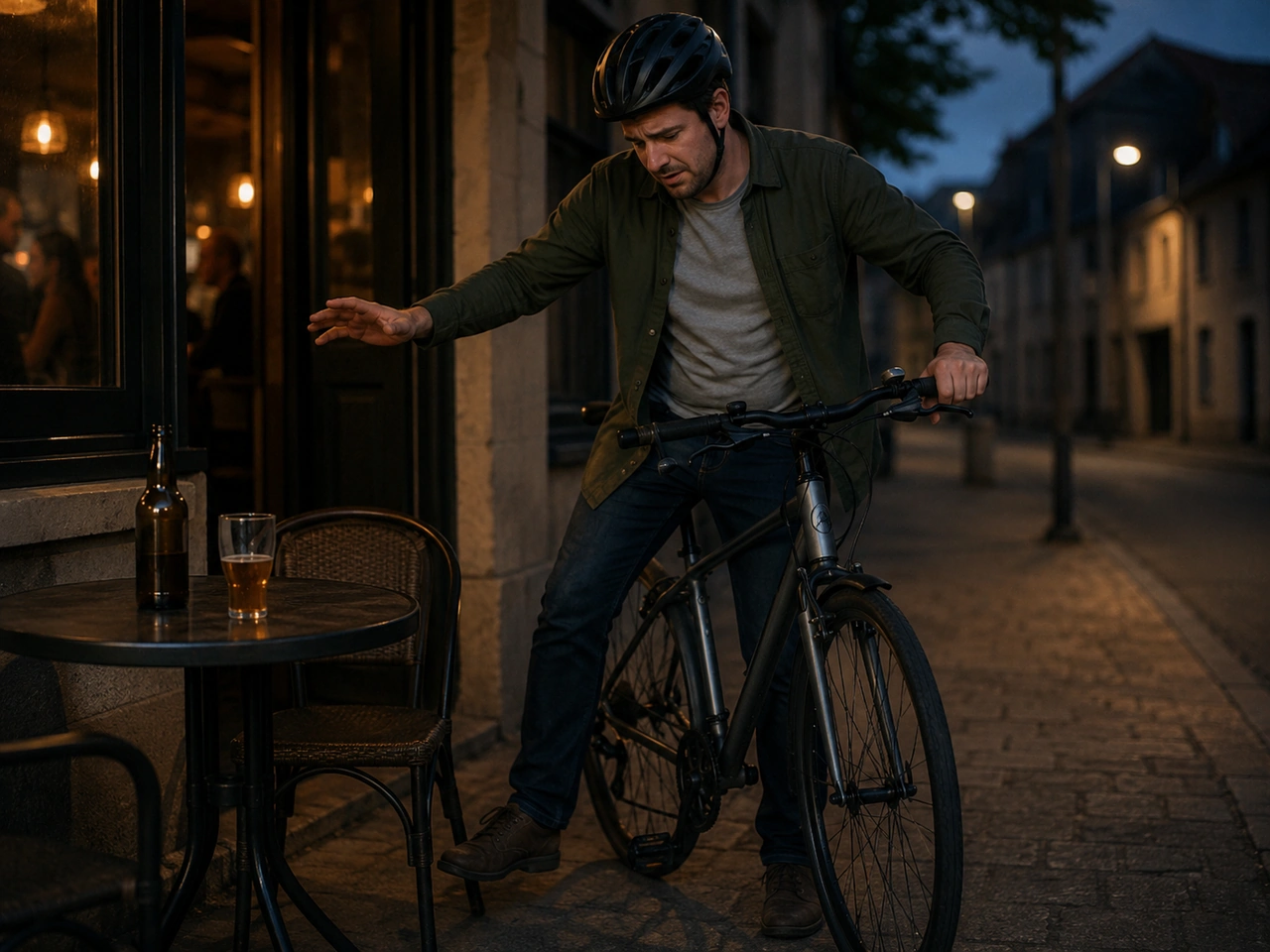
Why is riding a bicycle after drinking alcohol dangerous?

298. Why is riding a bicycle after drinking alcohol dangerous?

A small amount of alcohol improves balance.
A helmet protects you from alcohol-related risks.
Cycling after drinking is safe on quiet roads.
✓ Alcohol can reduce your balance, coordination, judgement, and reaction time.

Alcohol can make it harder to balance, steer, judge distances, and react to hazards. Riding a bicycle while impaired may also be against the law.

Alcohol consumption and bicycle-riding safety
AI-generated by Traffic-rules.com • WCIT • CC BY-SA
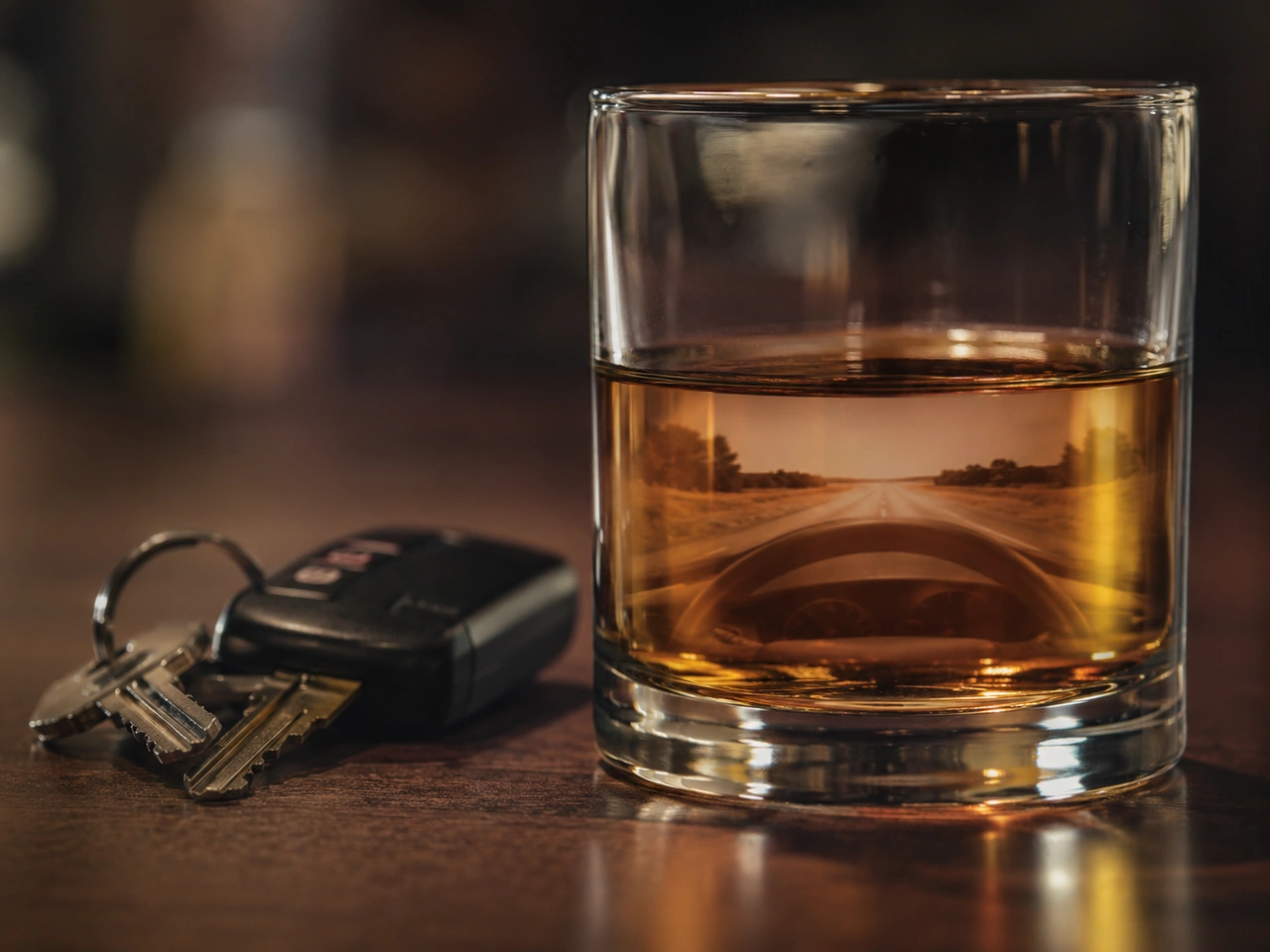
How can alcohol affect your driving ability?

299. How can alcohol affect your driving ability?

It has no effect if you drive slowly.
It improves your ability to judge distance.
✓ It can reduce judgement, coordination, and reaction speed.
It improves your vision in poor light.

Alcohol affects several abilities needed for safe driving, including concentration, decision-making, coordination, and hazard perception.

Alcohol impairment and driving ability
AI-generated by Traffic-rules.com • WCIT • CC BY-SA
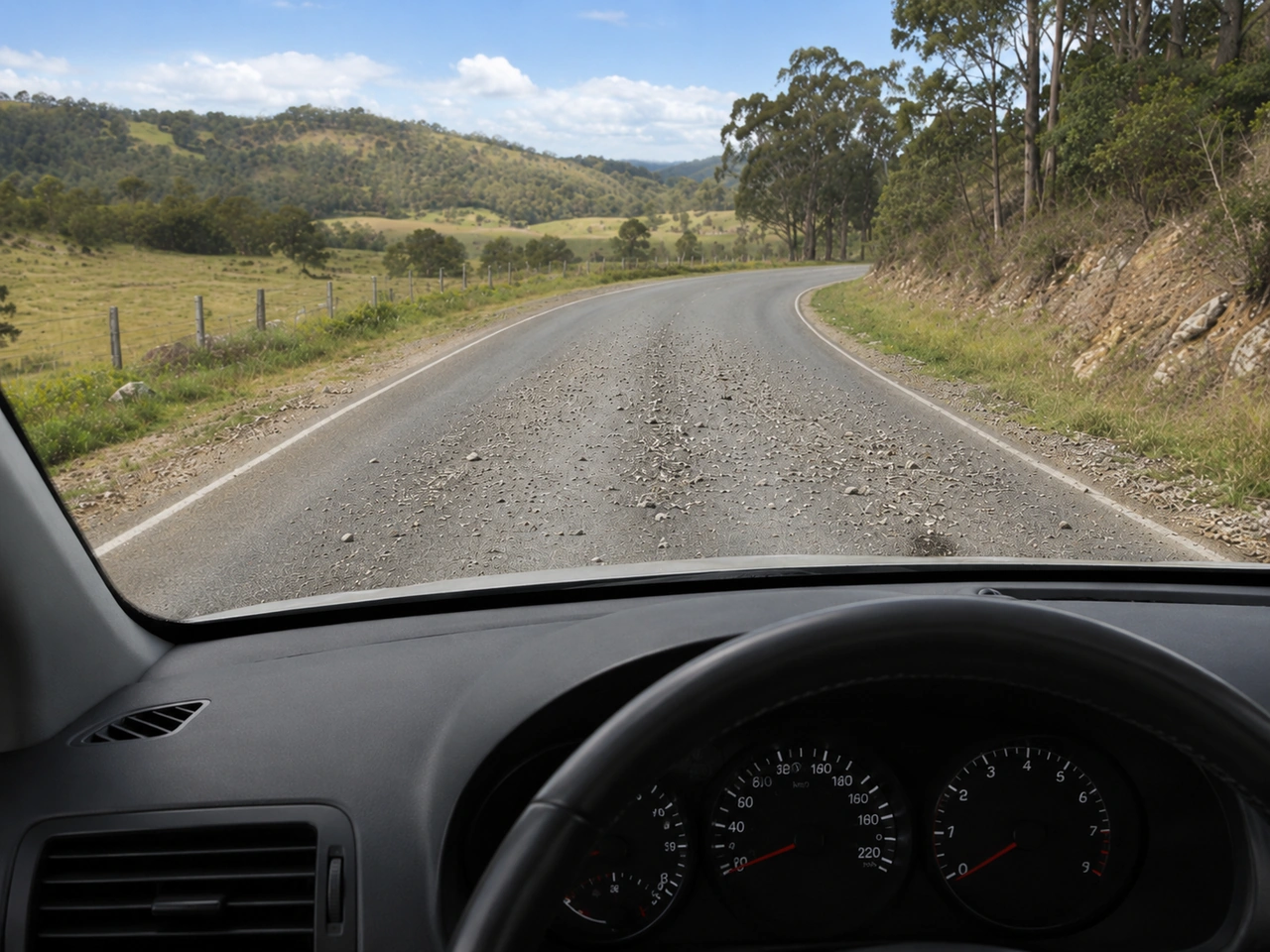
What should you do if you see loose gravel on the road?

300. What should you do if you see loose gravel on the road?

✓ Slow down and avoid sudden steering or braking.
Steer around loose patches whenever possible.
Follow the vehicle ahead closely in its tyre tracks.
Maintain your speed and avoid using the brakes.

Loose gravel reduces grip and can make the vehicle skid. Slow down and use smooth steering and braking.

Vehicle on a loose gravel road
AI-generated by Traffic-rules.com • WCIT • CC BY-SA