


Traffic signsGermany
 Traffic rules
 Germany
76. Parking disc
A parking disc is a device used to indicate the time a vehicle was parked in an area where parking duration is limited. The driver sets the disc to the required arrival time and displays it clearly inside the vehicle.
Parking-disc systems are commonly used in blue zones or other time-limited parking areas. The permitted parking duration, operating hours and method for setting the disc depend on national or local rules and the traffic signs in place.
Wikimedia.org • Christoph F. Siekermann • CC BY-SA
What is a parking disc used for?
A parking disc shows when a vehicle arrived at a time-limited parking space. It allows parking enforcement officers to determine whether the permitted parking period has been exceeded.
Where should a parking disc be displayed?
It should normally be placed clearly visible behind the windscreen or in another position specified by local traffic rules so that the indicated time can be read from outside the vehicle.
Can you change the time on a parking disc without moving the vehicle?
Generally no where the applicable rules prohibit extending the parking period in this way. The vehicle normally has to leave the parking space before a new parking period can begin.

77. Disabled parking
Disabled parking refers to parking spaces and parking privileges reserved for people with disabilities who meet the applicable eligibility requirements. Reserved spaces are normally identified by the international wheelchair symbol and are positioned to provide easier access to nearby facilities.
Use of a disabled parking space generally requires a valid disabled parking permit or card. The permit normally belongs to the eligible person rather than to a particular vehicle and may only be used when that person is driving or travelling in the vehicle.
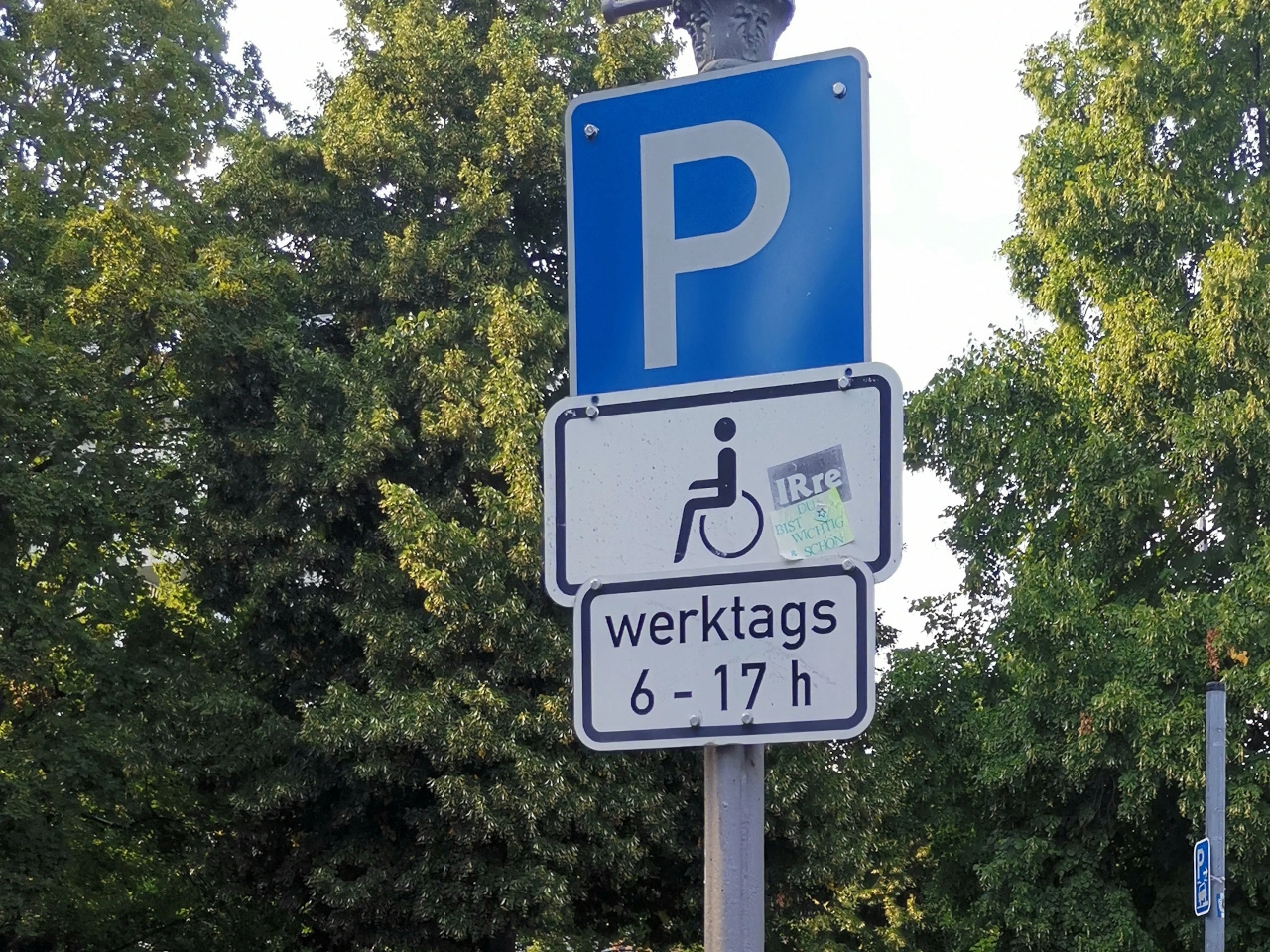
Wikimedia.org • SupapleX • CC BY-SA
Who may use a disabled parking space?
Disabled parking spaces are intended for eligible people who hold a valid disabled parking permit or card. The exact eligibility requirements and permit system depend on the country.
Can someone use a disabled parking permit when the holder is not present?
Generally no. Disabled parking permits are normally personal and may only be used when the permit holder is driving or travelling in the vehicle.
Does a disabled parking permit always provide free parking?
No. A permit may provide access to reserved spaces or exemptions from certain parking restrictions, but rules concerning parking charges and time limits vary between countries and local authorities.
78. Traffic management
Traffic management is the organised control, regulation and guidance of road users to improve safety, traffic flow and the efficient use of roads. It can include traffic lights, road signs, road markings, lane controls, variable speed limits, diversions and directions given by authorised persons.
Traffic management may be permanent or temporary. Temporary measures are commonly introduced during roadworks, congestion, collisions, public events or other incidents. Drivers and other road users must follow the signs, signals and instructions applying at the location, even when they differ from the normal traffic arrangement.
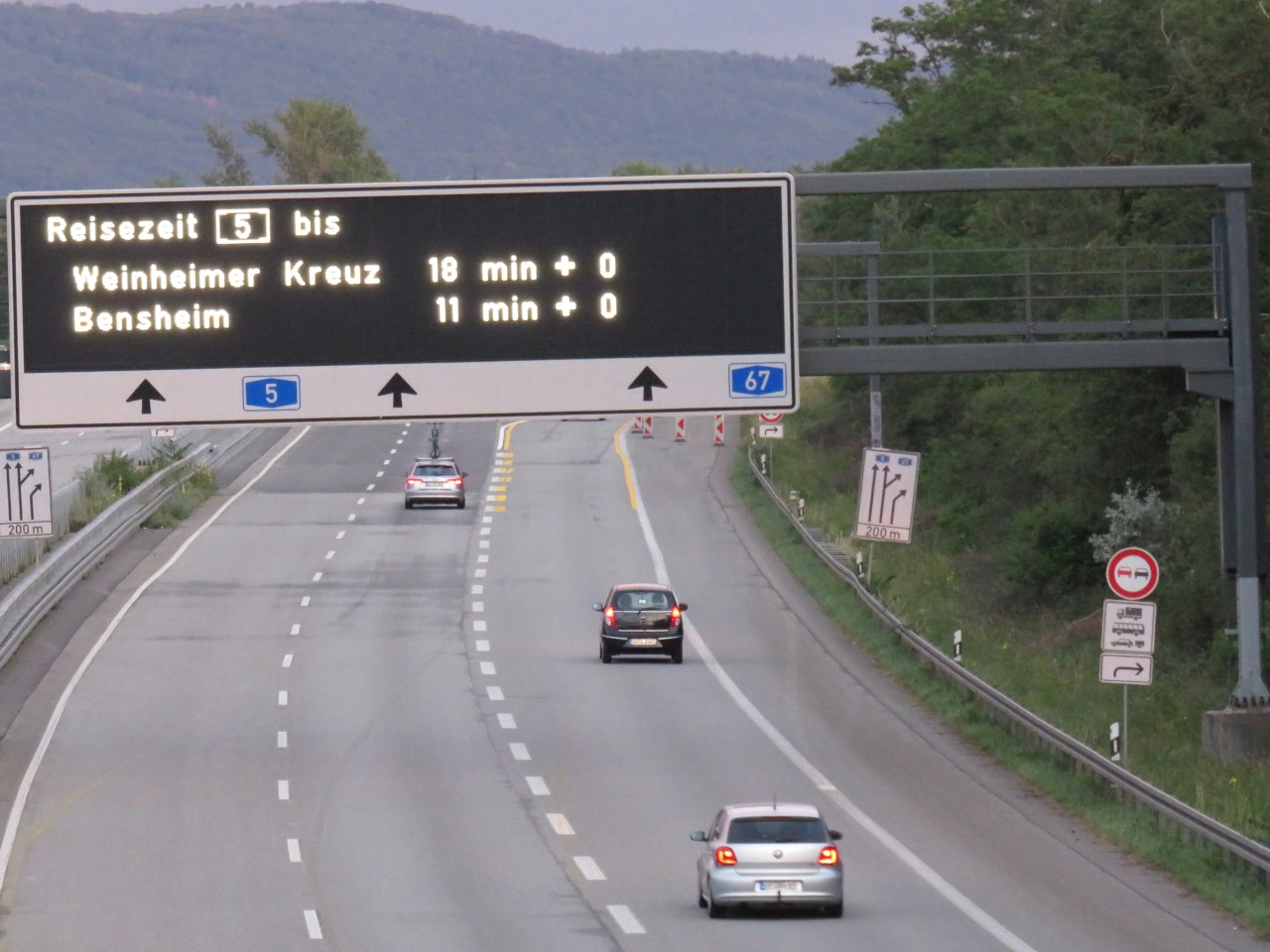
Wikimedia.org • Adl252 • CC BY-SA
What is traffic management?
Traffic management is the organised control and guidance of traffic using signs, signals, road markings, lane controls, speed restrictions, diversions and other measures.
Why is traffic management used?
Traffic management is used to improve safety, control traffic flow and reduce disruption. It can also protect road workers, pedestrians, cyclists and emergency services.
How can traffic be managed?
Common methods include traffic lights, road signs, road markings, variable-message signs, lane-control signals, temporary barriers, speed restrictions and diversions. Authorised persons may also direct traffic.
Can traffic management change the normal speed limit?
Yes. Temporary or variable speed-limit signs may impose a different maximum speed because of congestion, roadworks, weather, incidents or other conditions. Drivers must follow the limit currently displayed.
Can traffic management change which lanes you may use?
Yes. Lane-control signals, temporary signs or road markings may close lanes, move traffic into different lanes or require drivers to change lane. Follow the current signs and markings rather than the normal road layout.
What should you do when a traffic lane is closed?
Move into an open lane safely and in good time, following any arrows, signs and local merging rules. Never continue along a lane that is clearly indicated as closed.
Can temporary traffic signs be compulsory?
Yes. Properly authorised temporary signs used for roadworks, incidents or other traffic-management measures must be obeyed in the same way as other official traffic signs.
What should you do when an authorised person directs traffic?
Follow the directions of the authorised person. In many countries, these directions take precedence over traffic lights, road signs or the normal traffic rules.
How is traffic managed around roadworks?
Roadworks may use temporary speed limits, lane closures, barriers, temporary markings, traffic lights and diversions. Road users should reduce speed where necessary and carefully follow the temporary route.
Does traffic management also protect pedestrians and cyclists?
Yes. Temporary or permanent traffic arrangements should account for pedestrians and cyclists as well as motor vehicles. They may be provided with separate routes, crossings, signals or diversions where necessary.
79. Reversing
Reversing means driving a vehicle backwards. It is commonly used when parking, leaving a confined space or repositioning a vehicle where forward movement is not practical.
Before reversing, the driver should check mirrors and blind spots, look carefully around the vehicle and make sure the area behind is clear. Reversing should be performed slowly and only for as long as necessary because visibility behind the vehicle is often limited.
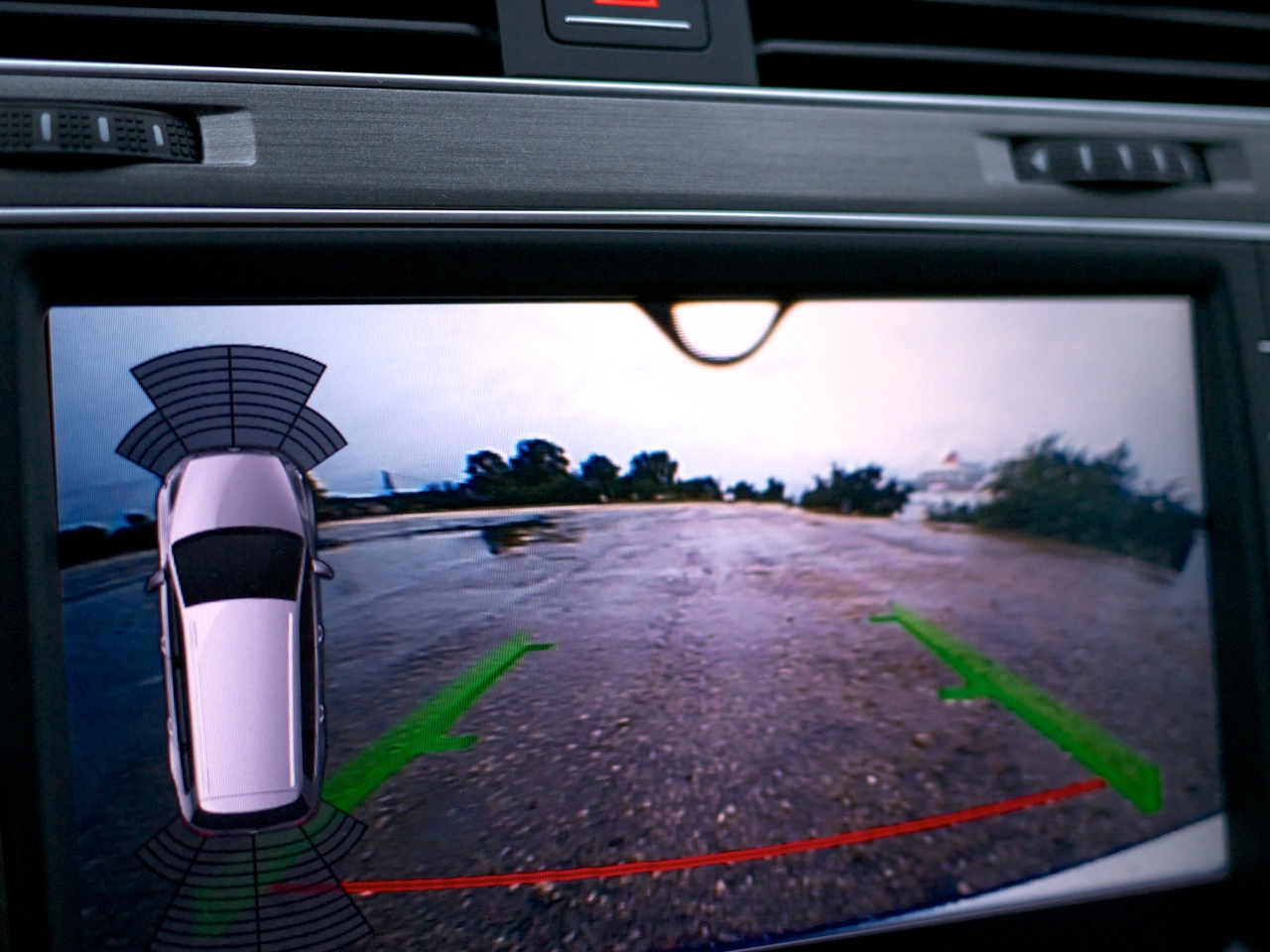
Wikimedia.org • Kārlis Dambrāns • CC BY
What should you check before reversing?
Check behind and around the vehicle for pedestrians, cyclists, other vehicles and obstacles. Use mirrors and cameras where available, but also look directly because monitoring systems can have blind spots.
Who has priority when a vehicle is reversing?
In many countries, reversing is treated as a manoeuvre and the reversing driver must give way to other road users. The exact legal requirements depend on national traffic rules.
Should you reverse for a long distance?
No. Reversing should normally be limited to the distance necessary to complete the manoeuvre safely. Driving forward generally provides better visibility and vehicle control.
80. Traffic jam
A traffic jam is a situation where traffic becomes heavily congested and vehicles move very slowly or stop for extended periods. Traffic jams are commonly caused by high traffic volumes, accidents, roadworks, lane closures or poor weather. Drivers should remain patient, keep a safe distance, avoid unnecessary lane changes and watch for motorcycles, emergency vehicles and sudden braking. Where lanes merge during congestion, local rules may require drivers to use a zipper-merging system.
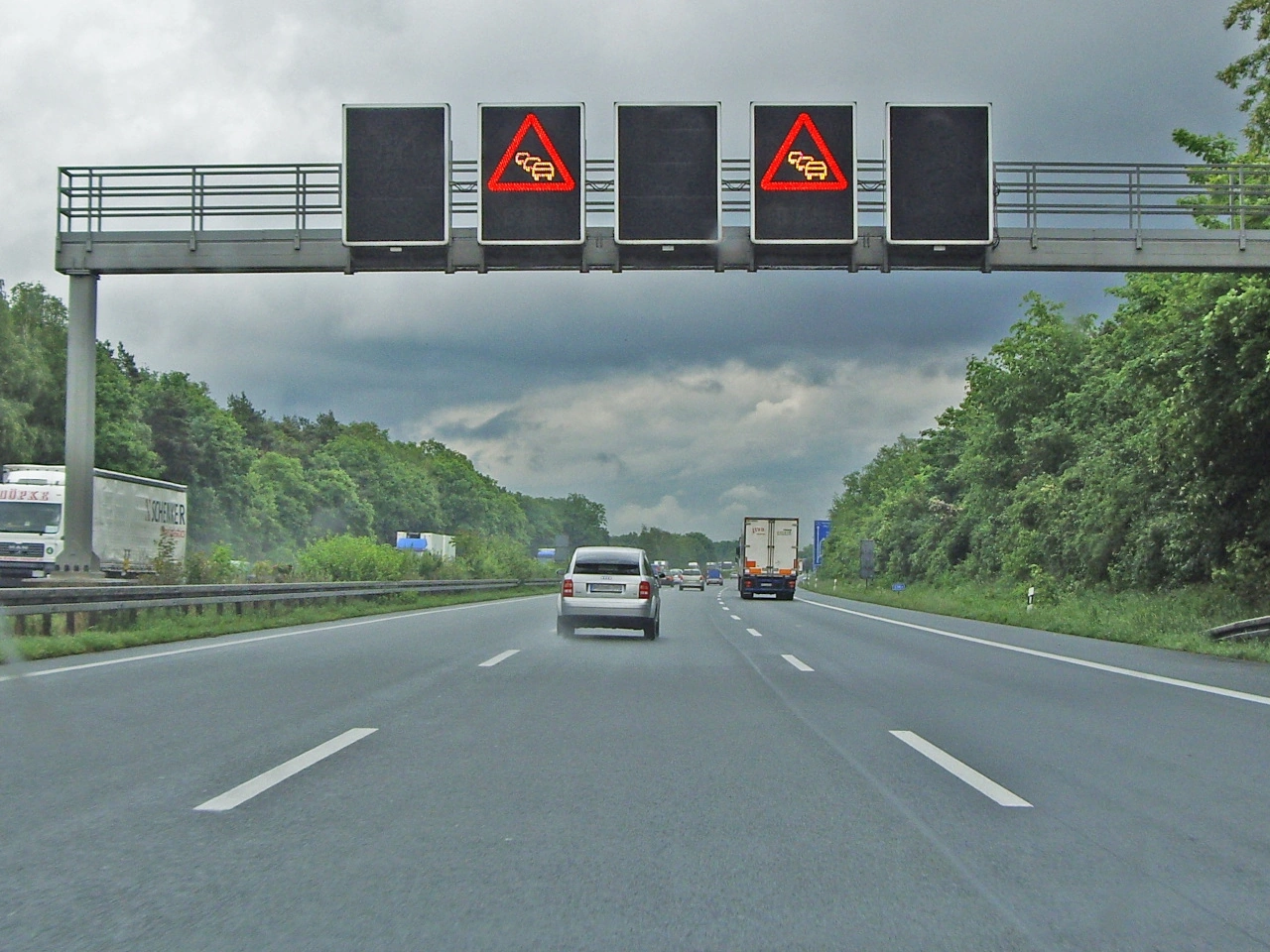
Wikimedia.org • Flor!an • CC BY
What is a traffic jam?
A traffic jam occurs when traffic becomes congested and vehicles move slowly or remain stationary because the road cannot accommodate the normal flow of traffic.
What causes traffic jams?
Common causes include heavy traffic, accidents, roadworks, lane closures, bottlenecks and poor weather.
How should you drive in a traffic jam?
Keep a safe distance, avoid sudden braking and unnecessary lane changes, and remain alert for changing traffic conditions and emergency vehicles.
Should you change lanes frequently in a traffic jam?
Usually not. Frequent lane changes can disrupt traffic flow and increase the risk of collisions. Change lanes only when necessary and safe.
What is zipper merging?
Zipper merging is a system where drivers use all available lanes until a lane ends or becomes blocked and then merge alternately into the remaining lane.
Should you leave space for emergency vehicles in a traffic jam?
Yes. Many countries require or recommend drivers to create space for emergency vehicles when traffic becomes congested or stationary.
81. Detour
A detour, also called a diversion, is a temporary alternative route used when the normal road is closed, blocked or unavailable. Detours are commonly introduced during roadworks, accidents, public events, flooding or other disruptions. Drivers should follow the temporary direction signs carefully, reduce speed where necessary and expect unfamiliar roads, changed priorities or additional traffic along the alternative route.
Wikimedia.org • Radosław Drożdżewski • CC BY-SA
What is a detour?
A detour is an alternative route that directs traffic around a closed, blocked or restricted section of road.
Why are detours used?
Detours may be introduced because of roadworks, accidents, flooding, public events or other temporary obstructions that prevent normal use of the road.
Do you have to follow a detour?
Drivers must follow mandatory traffic signs and authorised traffic directions. A signed detour should be followed when the normal route is closed or restricted.
Are detours always temporary?
Most detours are temporary and remain in place only while the normal route is unavailable, although they can sometimes last for an extended period during major works.
Should you drive differently on a detour?
Yes. Detours may use unfamiliar or smaller roads, so drivers should reduce speed where necessary, watch for changed priorities and follow temporary signs carefully.
What is the difference between a detour and a diversion?
Detour and diversion generally describe the same concept: an alternative route around a road that cannot be used normally. The preferred term varies between countries and languages.
82. Uncontrolled crossroad
An uncontrolled crossroad is an intersection where traffic priority is not specifically regulated by traffic lights, an authorised person or signs assigning priority to particular approaches. Drivers must therefore determine who has priority using the default traffic rules that apply in that country.
The applicable rule varies between countries and may include priority from the right, priority from the left or another default right-of-way rule. Drivers should approach an uncontrolled crossroad carefully, observe traffic from every direction and never assume that a wider or busier road automatically has priority.
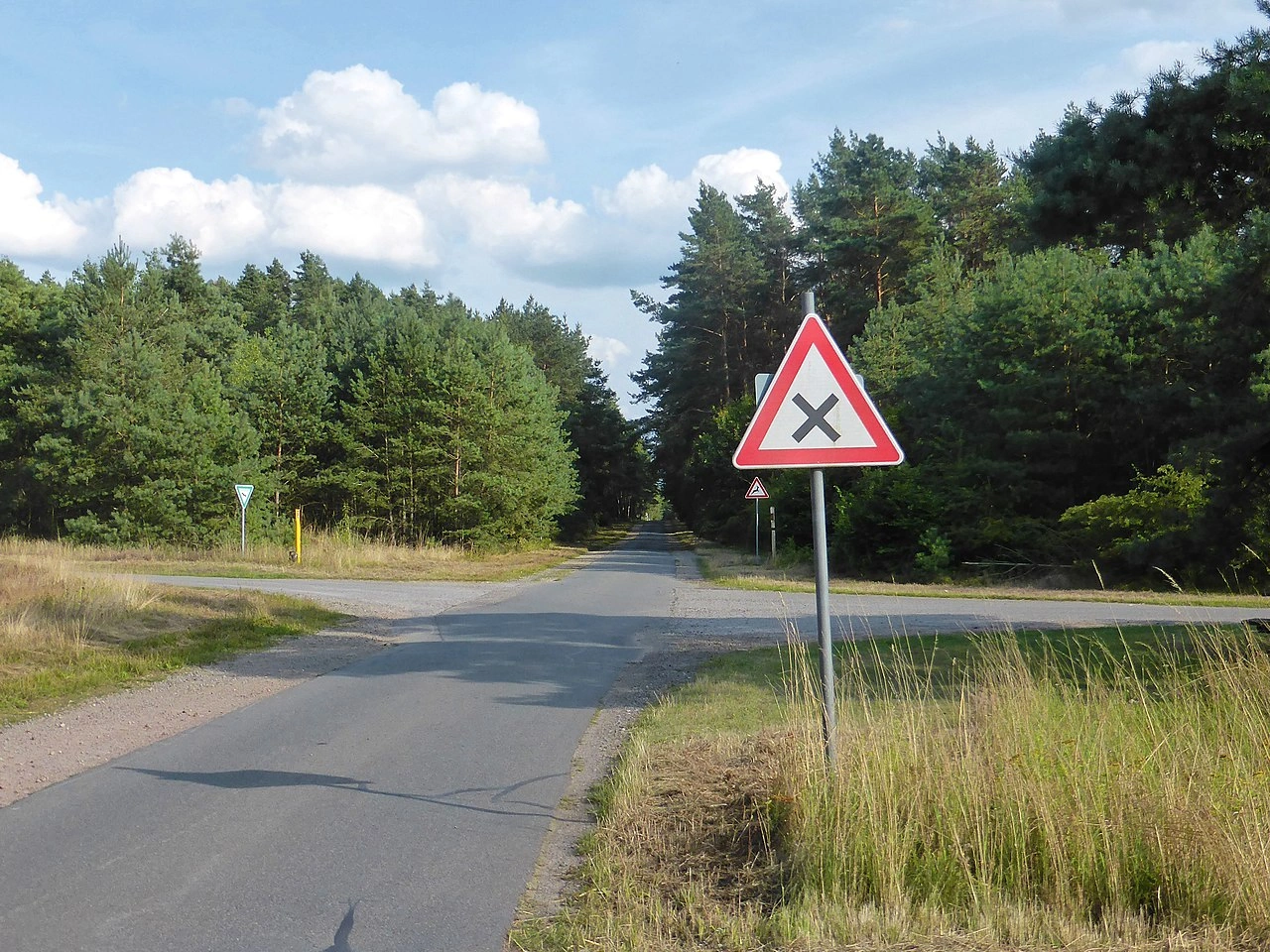
Wikimedia.org • Kirchenfan • CC0
What is an uncontrolled crossroad?
An uncontrolled crossroad is an intersection where priority is not specifically assigned by traffic lights, an authorised person or priority signs. Drivers must use the default priority rules of the country.
Who has priority at an uncontrolled crossroad?
This depends on the local traffic law. Some countries use priority from the right, while others use different rules. Drivers should know the default intersection rule of the country in which they are driving.
Does the wider road automatically have priority?
Not necessarily. The width, surface or amount of traffic on a road does not by itself determine priority unless local law specifically provides otherwise.
Should you slow down at an uncontrolled crossroad?
Yes. Approach at a speed that allows you to observe approaching traffic, determine who has priority and stop safely if necessary.
Do cyclists have to follow the priority rules at an uncontrolled crossroad?
Yes. Cyclists generally follow the applicable intersection priority rules unless a specific cycle facility, sign or local rule provides otherwise.
Does driving straight ahead automatically give you priority?
No. Continuing straight ahead does not automatically give priority over traffic approaching on another road. The applicable priority rules must still be followed.
Does turning right or left change the priority rules?
Turning may create additional obligations, particularly towards pedestrians, cyclists or opposing traffic. Drivers must follow both the intersection priority rule and the rules governing the intended turn.
What if two vehicles reach an uncontrolled crossroad at the same time?
Apply the country's default priority rule. Do not rely simply on which vehicle appears to have arrived first unless local law specifically uses that rule.
What if the traffic lights at an intersection are not working?
The intersection is not necessarily completely uncontrolled. Priority signs, road markings and default priority rules may still determine who must give way. Drivers should approach with particular caution.
What should you do if you are unsure who has priority?
Reduce speed and be prepared to stop. Never force your way through an intersection simply because the priority situation is unclear.
83. Road surface
A road surface warning indicates that the road ahead may be uneven, damaged or in poor condition and could affect the stability, steering or braking of a vehicle. The hazard may include bumps, depressions, potholes, broken pavement or other irregularities in the road surface.
Drivers should reduce speed where necessary, maintain a safe distance and avoid sudden steering or braking when passing over an irregular surface. The exact meaning and appearance of the warning sign vary between countries, so drivers must follow the local traffic signs and regulations.
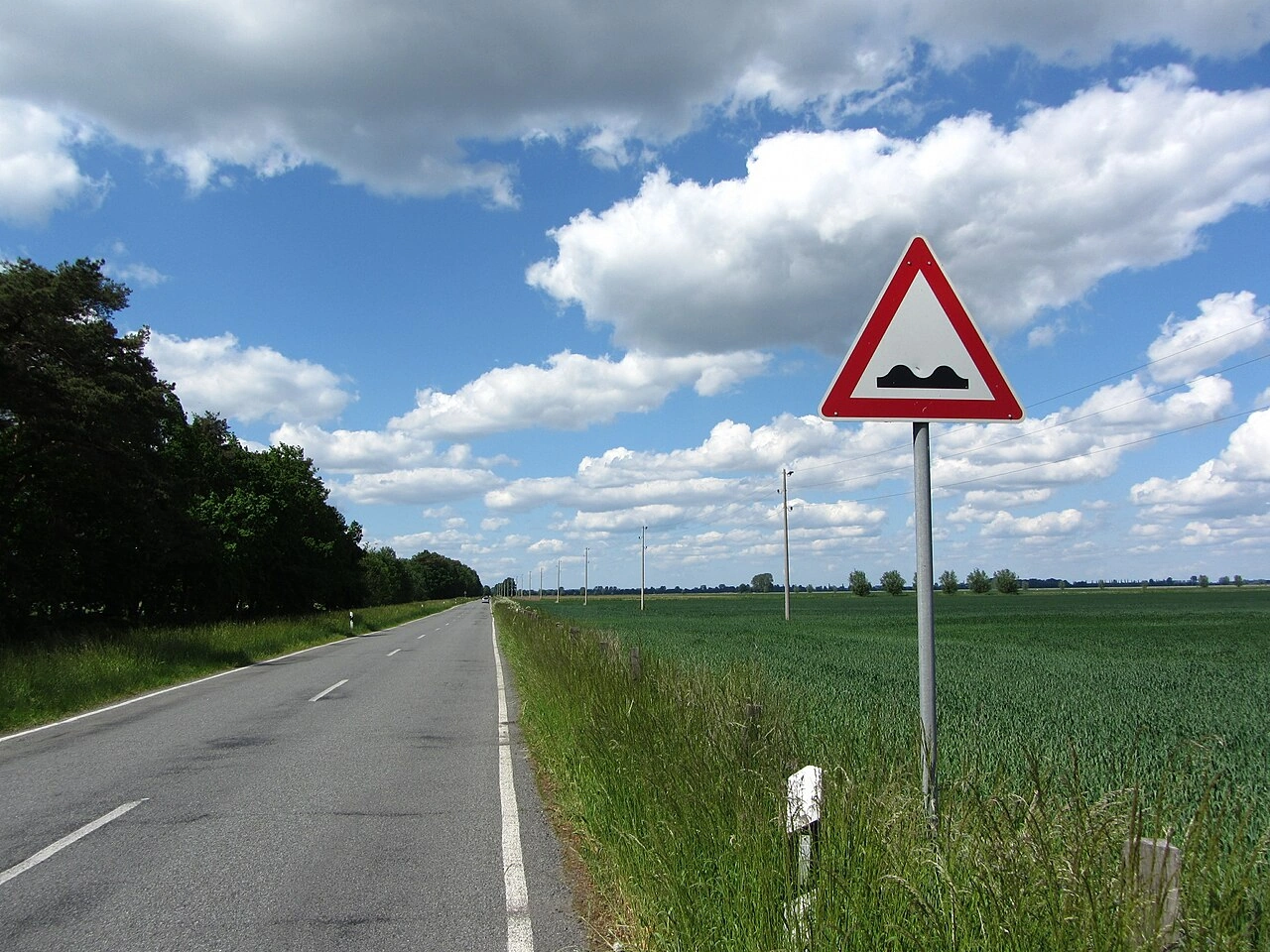
Wikimedia.org • Niteshift • CC BY-SA
What does a road surface warning mean?
A road surface warning indicates that the surface ahead may be uneven, damaged or otherwise capable of affecting the safe movement of vehicles.
What kinds of road defects can the warning indicate?
Depending on the country, it may warn of bumps, depressions, potholes, broken pavement, uneven repairs or other surface irregularities.
What should you do when you see a road surface warning?
Reduce speed where necessary, increase your awareness of the road ahead and be prepared for changes in the vehicle's stability or direction.
Does a road surface warning impose a specific speed limit?
Not normally. A warning sign alerts drivers to a hazard rather than establishing a numerical speed limit. A separate speed-limit sign may be used where a particular maximum speed is required.
Should you brake before reaching an uneven road surface?
Where slowing is necessary, it is generally safer to reduce speed before reaching the irregular surface rather than braking sharply while travelling over it.
Why can an uneven road surface be dangerous?
A severe surface irregularity can affect tyre contact, steering, braking and vehicle stability. It can also damage tyres, wheels or suspension components.
Are motorcycles and bicycles particularly affected by uneven surfaces?
Yes. Two-wheeled vehicles can be particularly sensitive to potholes, ridges and other irregularities because these hazards may disturb their balance or alter their direction suddenly.
Is an uneven-road warning the same as a slippery-road warning?
No. An uneven-road warning concerns the physical condition or shape of the road surface. A slippery-road warning concerns reduced tyre grip caused by the surface or conditions such as water, ice, mud or other substances.
Can the warning apply over a longer section of road?
Yes. A supplementary sign may indicate the distance to the hazard or the length of the affected section, depending on the country's traffic-sign system.
Should you increase your following distance on a poor road surface?
Yes, when conditions require it. Additional distance provides more time to react if the vehicle ahead slows suddenly to avoid a pothole or other surface defect.
84. Exit
An exit is a designated route or point where traffic leaves a road, motorway, expressway or other major route. On high-speed roads, an exit usually leads from the main carriageway onto an exit lane or ramp that connects with another road or destination.
Drivers approaching an exit should follow the direction signs and road markings, move into the appropriate lane in good time and adjust their speed as necessary after leaving the main traffic flow.
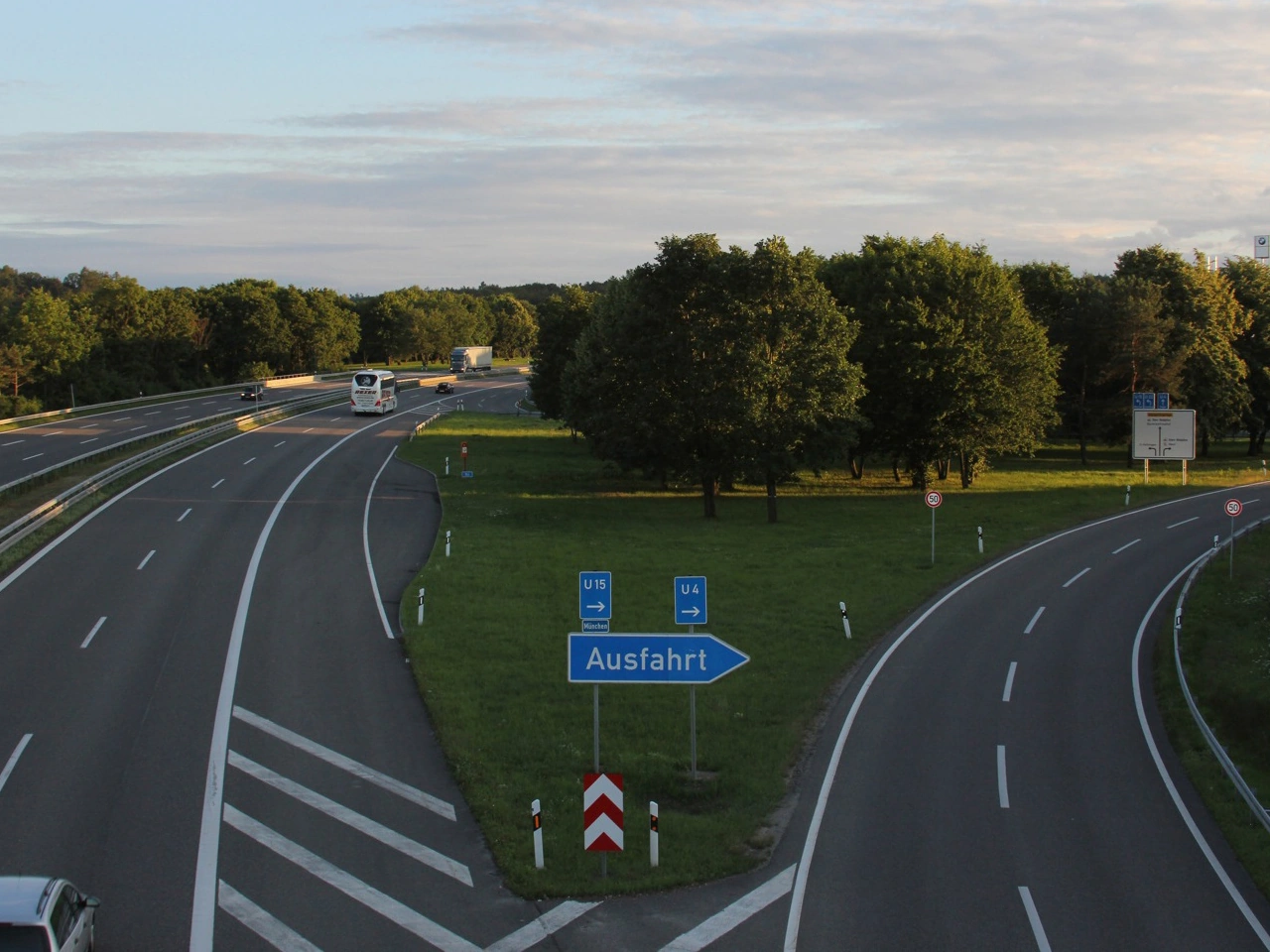
Wikimedia.org • Wiki-observer • CC BY-SA
What is a road exit?
An exit is a designated route or point that allows traffic to leave a road, motorway or expressway and continue toward another road or destination.
How should you prepare for an exit?
Check the direction signs, select the correct lane in good time, signal when required and avoid sudden lane changes when approaching the exit.
What should you do if you miss your exit?
Continue safely along the road and use a later exit or another permitted route. Do not stop, reverse or make a dangerous sudden manoeuvre simply to reach an exit you have missed.
85. Horse riding
Horse riding includes activities involving horses and riders. In road traffic, an equestrian or horse rider may use roads, bridleways or specially designated routes, depending on the rules and infrastructure provided.
Drivers approaching horses and riders should reduce speed, leave sufficient space and avoid sudden noise or movements that could frighten the animal. Riders must also follow the traffic rules that apply to them.
Wikimedia.org • JoachimKohler-HB • CC BY-SA
What does equestrian mean in road traffic?
Equestrian refers to horse riding and, in a traffic context, particularly to people travelling on horseback or using designated horse-riding routes.
Where can equestrians ride?
Depending on local rules, riders may use roads, bridleways, paths or routes specifically designated for horse riding.
How should drivers behave near horse riders?
Drivers should slow down, leave plenty of space and pass calmly, avoiding sudden acceleration, horn use or other actions that could frighten the horse.
86. Provisional licence
A provisional licence allows a learner driver to practise driving on public roads before obtaining a full driving licence. The conditions vary between countries and may determine whether the learner must be accompanied by an approved supervisor, which vehicles may be driven, where and when driving is permitted and how long the licence remains valid. A provisional licence is normally subject to stricter rules than a full licence and is intended specifically for learning and gaining practical driving experience.
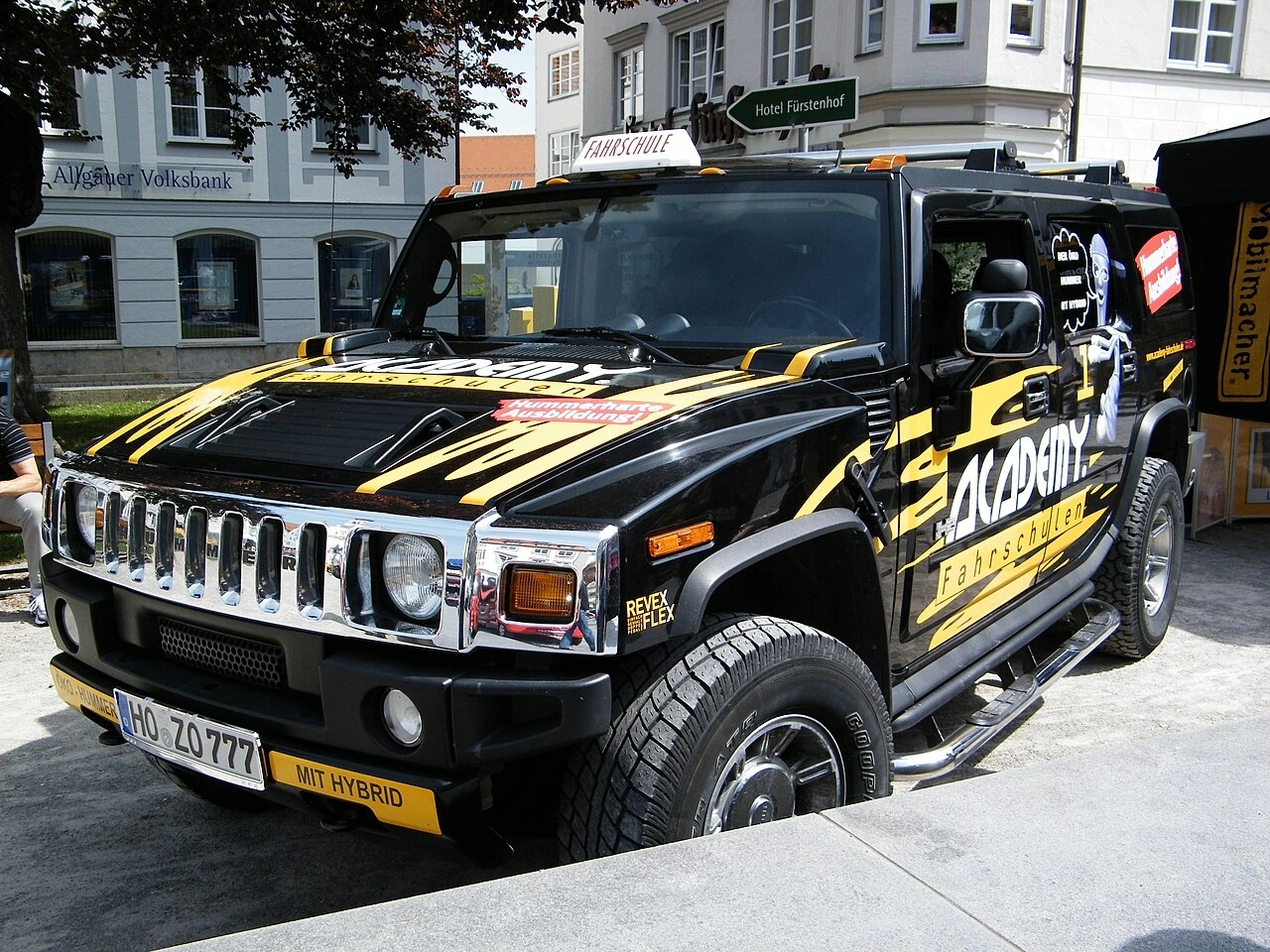
Wikimedia.org • Alofok • CC BY
What is a provisional driving licence?
A provisional driving licence allows a learner driver to practise driving under specified conditions before obtaining a full driving licence.
Can you drive alone with a provisional licence?
This depends on the type of provisional licence and local rules. Some licences require an approved supervisor, while others allow the learner to practise alone after completing specified training.
How long is a provisional licence valid?
The validity period varies between countries and licence types. If it expires before the learner passes the practical exam, additional conditions may apply before another provisional licence can be obtained.
Can you drive abroad with a provisional licence?
Often not. A provisional licence may be valid only in the country that issued it. Learners should check the applicable rules before attempting to drive abroad.
Are there restrictions on when a learner may drive?
Yes, in some countries. Provisional licences may include restrictions on night driving, passengers, trailers, vehicle types or certain roads.
Do you need to display a learner sign?
Many countries require a learner vehicle to display an L plate or another learner-driver sign. The design and conditions vary by country.
87. Hazardous cargo
Hazardous cargo, also called dangerous goods, consists of substances or articles that can create a significant risk to people, property or the environment during transport. Examples include explosives, flammable liquids and gases, toxic substances, corrosive materials and radioactive substances.
Transporting hazardous cargo can require special packaging, labels, vehicle markings, documentation, equipment and driver training. Additional route or tunnel restrictions may also apply depending on the type and quantity of dangerous goods being carried.
Wikimedia.org • Zwiadowca21 • CC BY-SA
What is considered hazardous cargo?
Hazardous cargo includes substances and articles classified as dangerous for transport, such as explosives, gases, flammable materials, toxic or infectious substances, radioactive materials and corrosive substances.
Does hazardous cargo need special markings?
Yes, when the applicable dangerous-goods rules require them. Packages and vehicles can require hazard labels, placards, identification numbers or other markings that identify the nature of the danger.
Can hazardous cargo be prohibited on certain roads or in tunnels?
Yes. Dangerous-goods vehicles can be subject to route and tunnel restrictions according to the type and quantity of goods being transported and the classification of the road or tunnel.
88. Emergency exit
An emergency exit is a marked escape route that allows road users to leave a tunnel or other enclosed traffic facility during a serious incident such as a fire, smoke development or another emergency. Emergency exits lead towards a safer area separated from the immediate danger.
In an emergency, occupants should leave their vehicle when evacuation is necessary and follow the emergency-exit signs and instructions. They should move away from the danger rather than remaining inside the tunnel or returning to their vehicle.
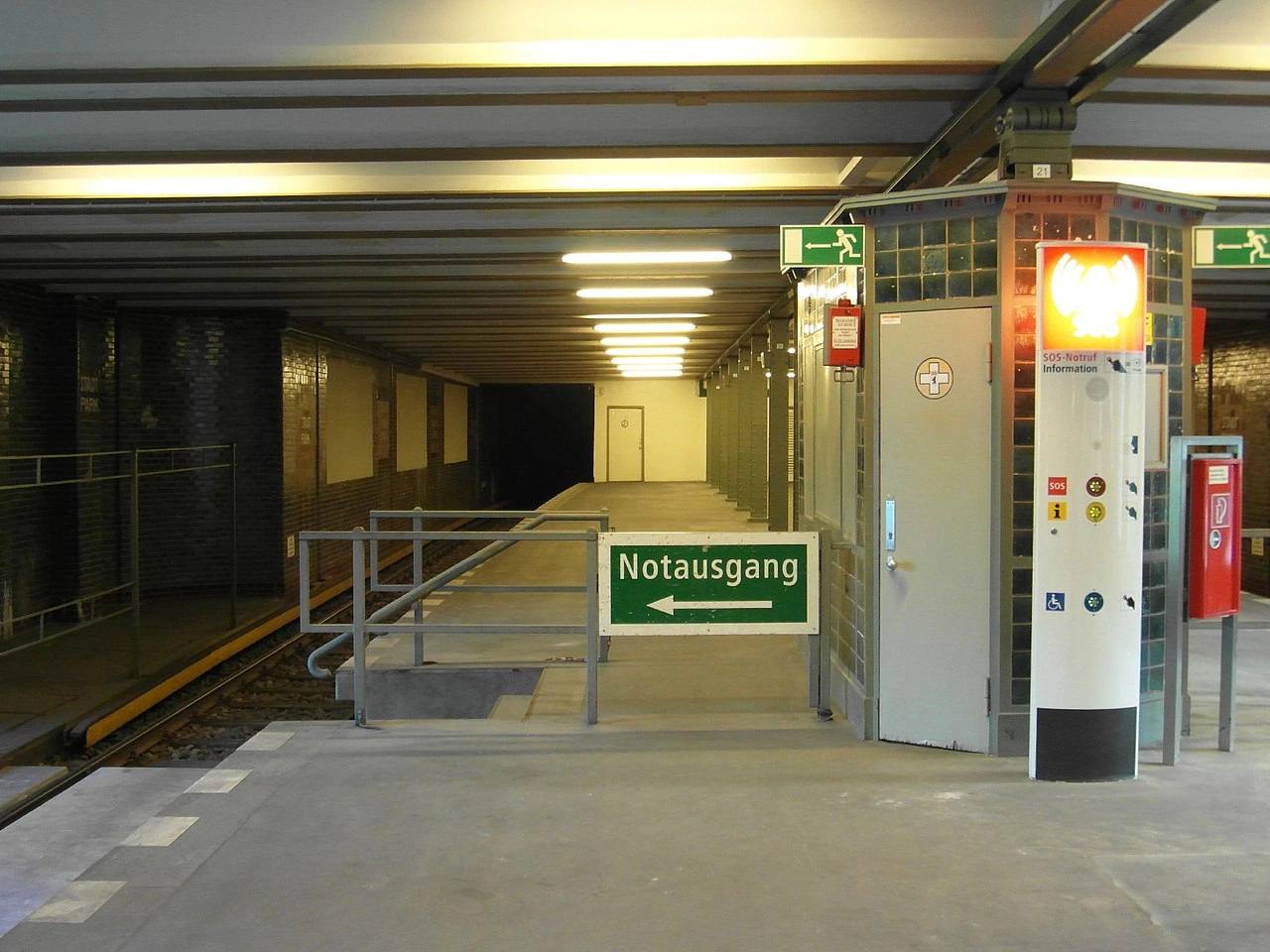
Wikimedia.org • IngolfBLN • CC BY-SA
What is an emergency exit in a road tunnel?
An emergency exit is a designated escape route that allows people to leave the traffic area of a tunnel and reach a safer location during an emergency.
When should you use a tunnel emergency exit?
Use an emergency exit when evacuation is necessary because of fire, smoke or another serious danger, or when instructed to evacuate by tunnel personnel or emergency services.
Should you take your vehicle through an emergency exit?
No. Tunnel emergency exits are intended for people evacuating on foot. Leave the vehicle when necessary and follow the marked escape route towards safety.
89. Runaway truck ramp
A runaway truck ramp, also called an emergency escape lane, is a specially constructed lane designed to stop a vehicle that has lost effective braking, particularly a heavy vehicle descending a steep hill. The ramp may use an uphill gradient, deep gravel or another energy-absorbing surface to slow and stop the vehicle.
A driver who has lost braking ability should enter the escape ramp as early and safely as possible rather than trying to continue down the hill. Escape ramps are emergency facilities and must not be used for ordinary stopping, parking or turning.
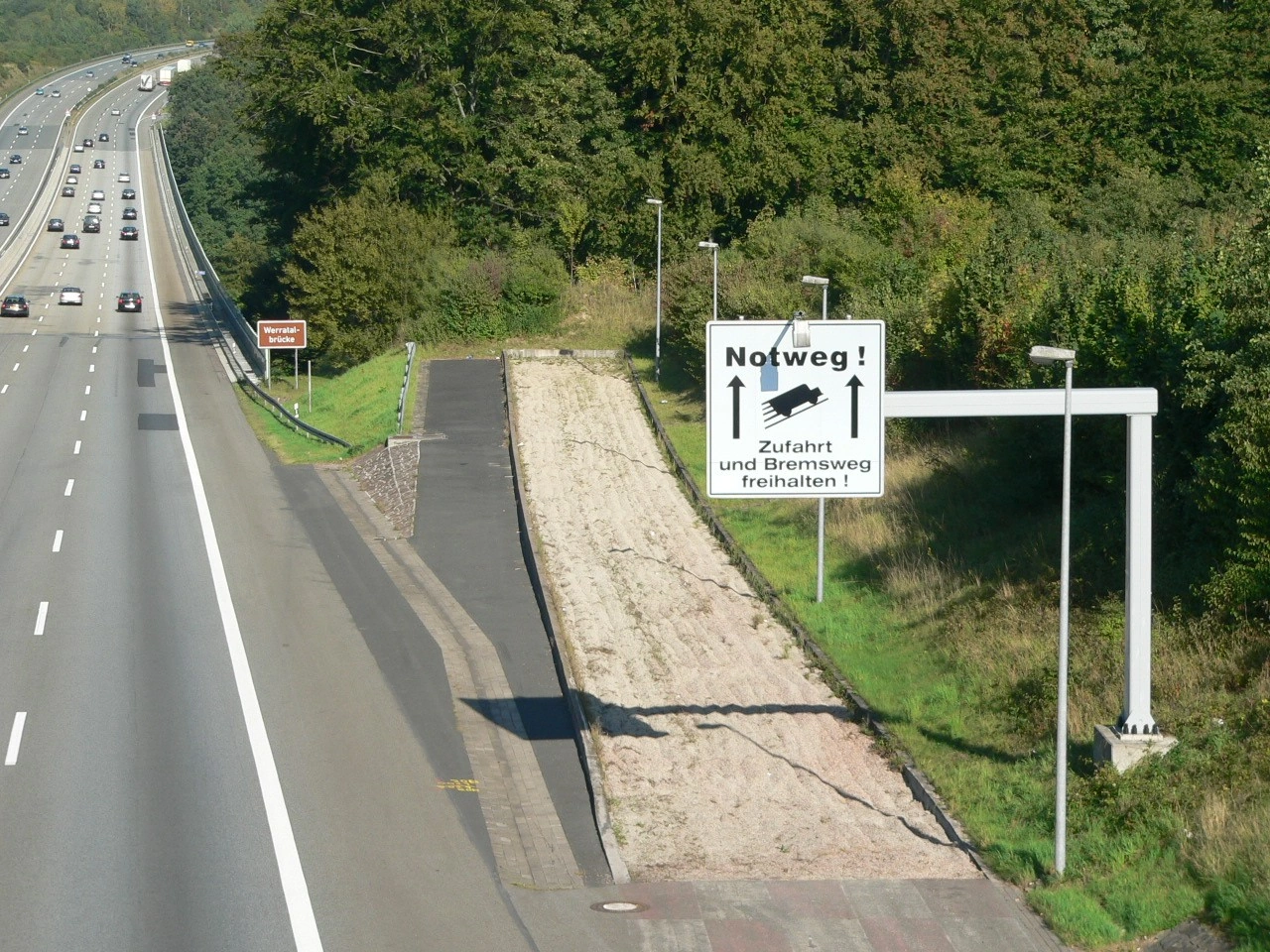
Wikimedia.org • Presse03 • CC BY-SA
What is a runaway truck ramp used for?
It provides an emergency stopping area for a vehicle that can no longer slow down adequately with its normal brakes. It is particularly intended for heavy vehicles on long or steep descents.
How does a runaway truck ramp stop a vehicle?
Depending on its design, the ramp may rise uphill or contain deep gravel, sand or another arresting material that creates resistance and rapidly reduces the vehicle's speed.
Can you use a runaway truck ramp for normal stopping or parking?
No. An escape ramp is an emergency safety facility and should be kept clear for vehicles that have lost effective braking or control.
90. Oversize load
An oversize load is a load that causes a vehicle or vehicle combination to exceed the normally permitted dimensions for road traffic, such as maximum length, width or height. Oversize loads often involve large machinery, construction components or other items that cannot reasonably be divided into smaller loads.
Transporting an oversize load may require a special permit, an approved route, warning signs, lights or escort vehicles. Drivers must comply with the conditions imposed by the authorities responsible for the roads on which the transport takes place.
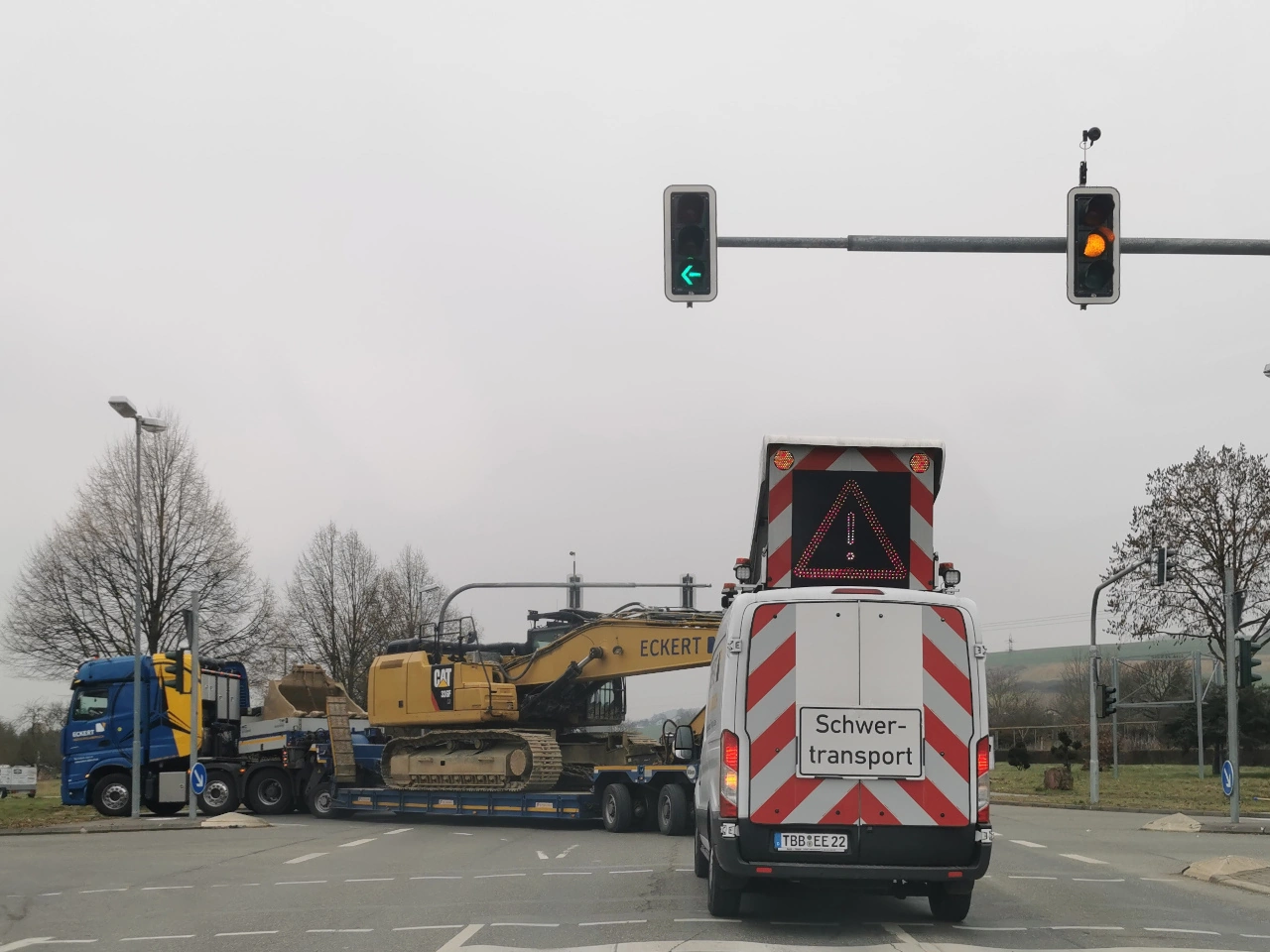
Wikimedia.org • Triplec85 • CC BY-SA
What is an oversize load?
An oversize load is a load that makes a vehicle or vehicle combination exceed one or more of the normal legal dimensions for road use, such as its permitted width, height or length.
Does an oversize load require a special permit?
Often yes. Depending on the country, dimensions and route, a permit may be required and can specify where and when the vehicle may travel and what additional safety measures must be used.
Why might an oversize load need an escort vehicle?
Escort vehicles can warn other road users, help manage difficult road sections and assist the exceptional vehicle when its size creates additional traffic risks. The number and type of escorts required depend on national rules and the dimensions of the transport.
91. Cycle highway
A cycle highway is a high-quality, continuous cycling route designed to provide fast, direct and comfortable travel over longer distances. Cycle highways commonly connect cities, residential areas, workplaces, schools, public transport hubs and other important destinations.
A cycle highway may consist of separate cycle paths, shared paths, quiet roads, bridges, tunnels or other cycling infrastructure. It is therefore not necessarily one continuous type of road. Access rules, priority, speed limits and permitted road users depend on the individual sections and on the local traffic signs and regulations.
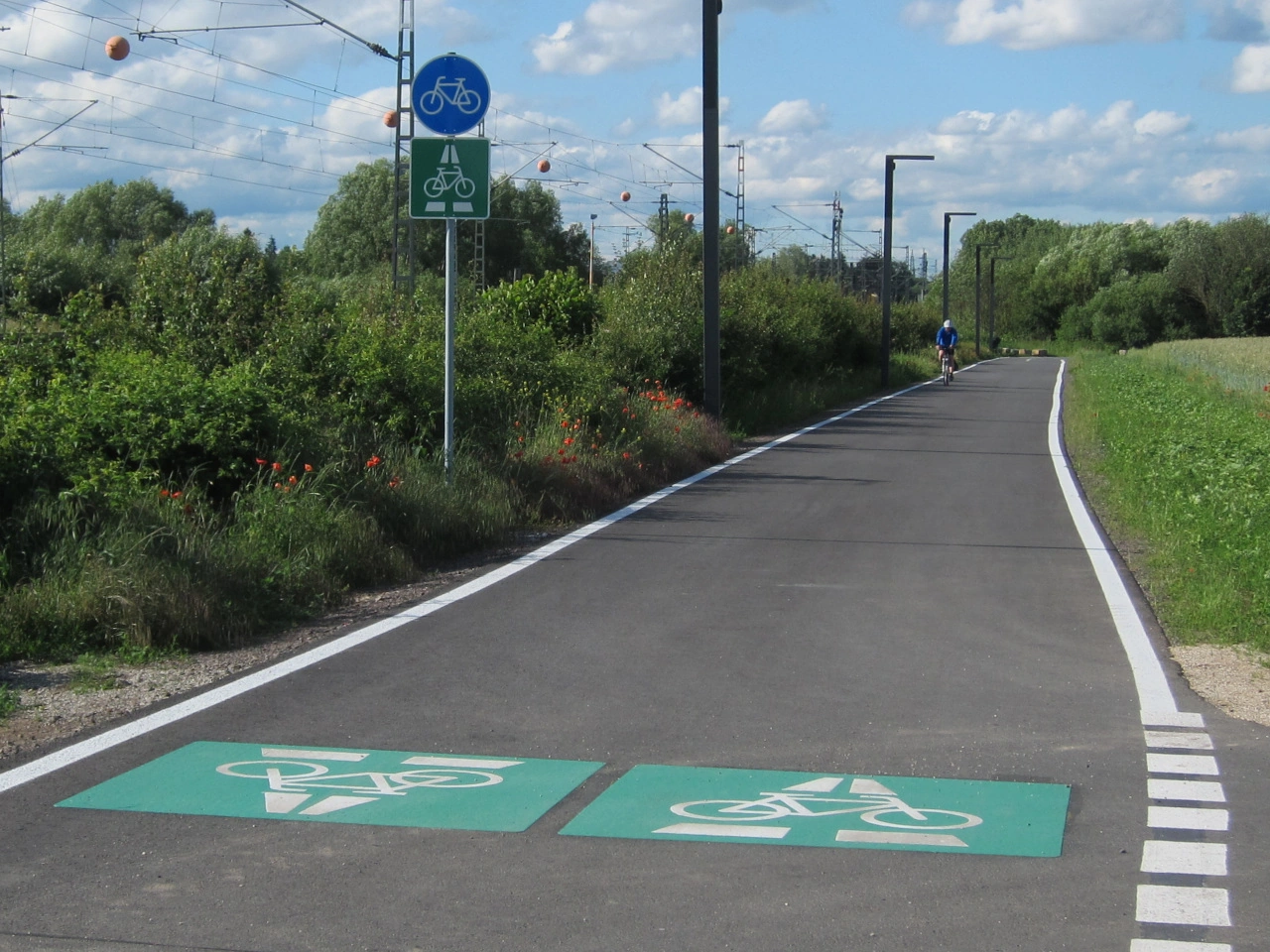
Wikimedia.org • CC0
What is a cycle highway?
A cycle highway is a continuous cycling route designed to make longer bicycle journeys fast, direct, safe and comfortable. It commonly connects towns, cities and important destinations.
Is a cycle highway the same as a cycle path?
No. A cycle path is a particular part of a road or a separate path intended for cyclists. A cycle highway is an entire route and may contain several different types of cycling infrastructure.
Does a cycle highway always have a separate cycle path?
No. Although high-quality separated infrastructure is common, a cycle highway may also use quiet streets, shared roads, greenways, bridges, tunnels and other suitable connections.
Do cyclists automatically have priority on a cycle highway?
No. The designation of a route as a cycle highway does not by itself give cyclists priority at every intersection or crossing. Priority is determined by the applicable traffic signs, markings and local traffic rules.
Are motor vehicles prohibited from cycle highways?
Not necessarily. Some sections may be completely separated from motor traffic, while others may follow roads that are also open to cars or other vehicles. Access depends on the rules applying to each section.
Can pedestrians use a cycle highway?
This depends on the infrastructure. Some sections may be shared with pedestrians, while others may be reserved for cyclists or particular categories of road users. Follow the signs at the location.
Can electric bicycles use a cycle highway?
Ordinary electrically assisted bicycles can generally use routes available to bicycles. Different rules may apply to high-speed electric bicycles or speed pedelecs, depending on their legal classification and the signs applying to each section.
Is there a special speed limit on a cycle highway?
There is no universal cycle-highway speed limit. Speed rules depend on the country, type of infrastructure, vehicle category and locally displayed restrictions.
Can a cycle highway have intersections?
Yes. Cycle highways may cross roads, railway lines and other routes. High-quality networks often use bridges, tunnels or carefully designed crossings to reduce delays and conflicts, but intersections may still occur.
How can you recognise a cycle highway?
Cycle highways may be identified by route numbers, logos, destination signs or distinctive wayfinding markings. The appearance and legal significance of this signage vary between countries and regions.
92. Carsharing
Carsharing is a transport system in which multiple people use the same vehicle at different times instead of each person owning a separate car. Vehicles may be reserved through an organisation, membership service or digital platform and can be collected from fixed parking locations or, in some systems, from within a designated operating area.
Carsharing can reduce the need for private vehicle ownership and may use parking spaces specifically reserved for shared vehicles. The rules, permits and parking arrangements for carsharing differ between countries and cities.
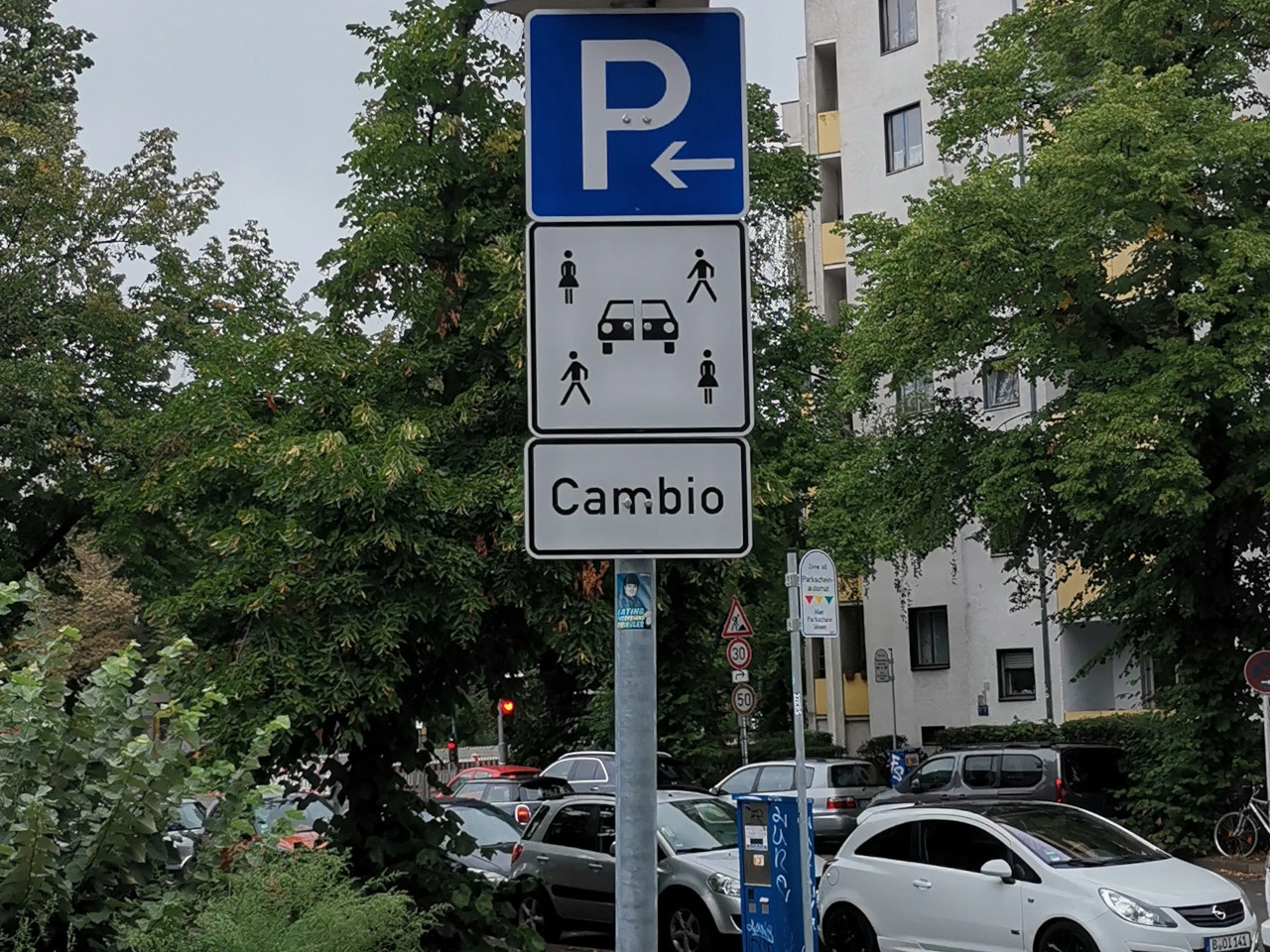
Wikimedia.org • SupapleX • CC BY-SA
What is carsharing?
Carsharing is a system in which several people use one or more shared cars at different times rather than each user owning the vehicle.
How does carsharing work?
Users normally reserve a shared vehicle for a particular journey or period through a carsharing organisation or platform and return or leave it according to the rules of that service.
Can parking spaces be reserved for carsharing vehicles?
Yes. Some countries and municipalities provide parking spaces specifically reserved for authorised shared vehicles. The signs, permits and conditions vary by location.
93. City limit
A city limit is a boundary or roadside indication showing that a driver is entering or leaving a named city, town, village, locality or municipality. It is commonly marked by a place-name or boundary sign.
The meaning of these signs varies between countries. A city-limit or locality sign may identify an administrative boundary, a named settlement or a traffic-related boundary. It does not necessarily mark the beginning or end of a legally defined built-up area, and passing the sign does not always change the applicable speed limit or other traffic rules.
Wikimedia.org • Tony Keyes • CC BY-SA
What is a city limit?
A city limit marks the boundary of a city, town, village, locality or municipality. On roads, it is often indicated by a place-name or boundary sign.
Does a city-limit sign always mark a built-up area?
No. A city-limit or locality sign may simply identify a place or administrative boundary. A legally defined built-up area can use a different sign or definition.
Does passing a city-limit sign always change the speed limit?
No. In some countries a locality or boundary sign has consequences for traffic rules, while in others it mainly identifies the place. Drivers must follow the traffic signs and rules that apply in that country.
Is a city limit the same as a municipal boundary?
Not always. Some signs indicate an administrative municipal boundary, while others identify a city, town, village or locality without exactly following the municipality's legal boundary.
What is the difference between a city limit and a built-up area?
A city limit identifies the boundary of a named place or administrative area. A built-up area is a traffic-law concept that may affect rules such as default speed limits. The two boundaries can coincide, but they do not have to.
94. Gantry
A gantry is a structure that spans above a road and supports traffic signs, lane-control signals, variable-message signs, cameras or other traffic-management equipment. Gantries are commonly used on motorways and other multi-lane roads where signs need to be positioned directly above individual traffic lanes.
Signs or signals mounted on a gantry may apply to specific lanes rather than the entire carriageway. Drivers should therefore pay attention to the position of each sign or signal and follow the instructions applying to their lane.
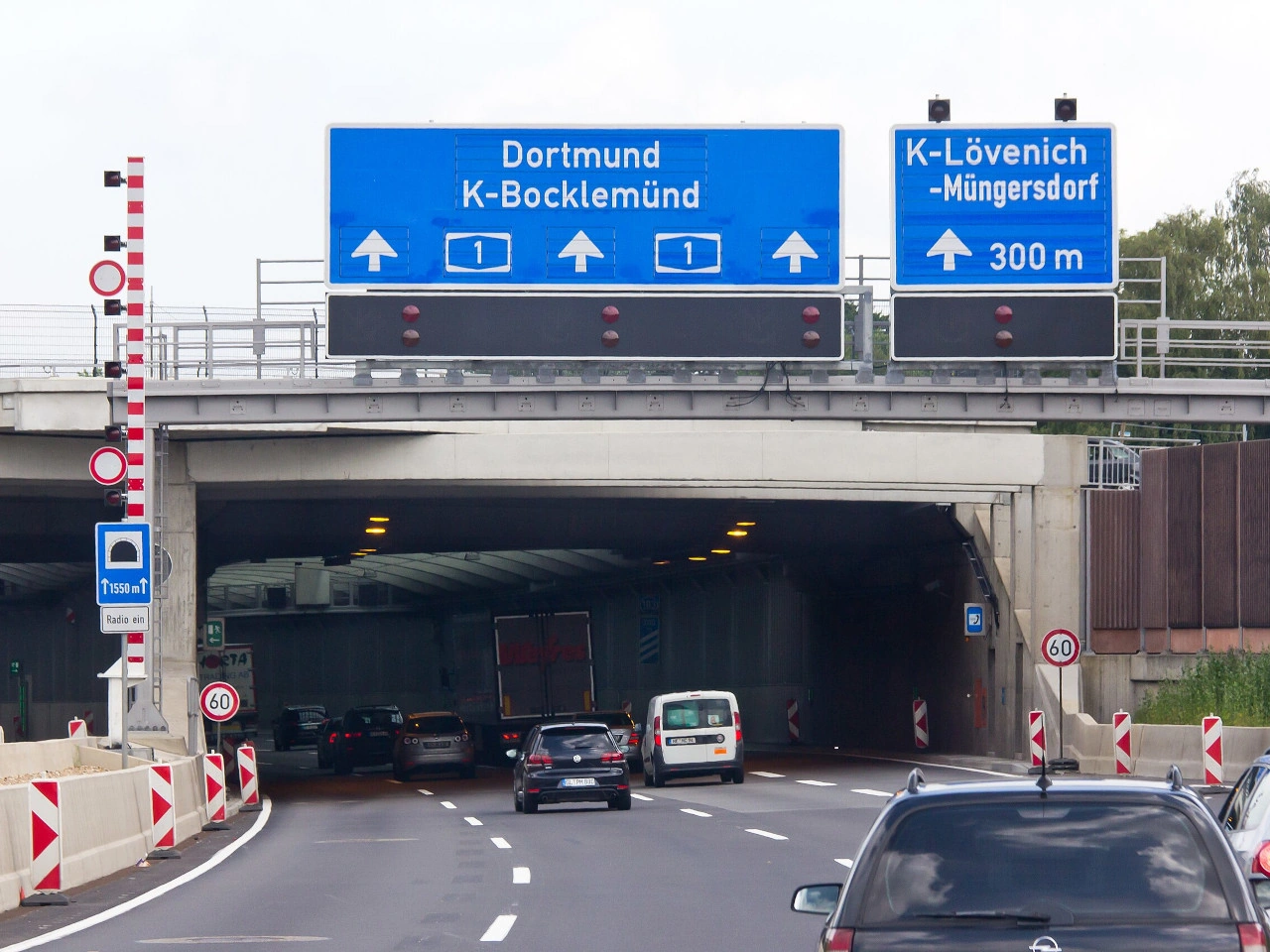
Wikimedia.org • Raimond Spekking • CC BY-SA
What is a road gantry?
A gantry is an overhead structure spanning a road that supports traffic signs, signals or other traffic-management equipment.
Why are gantries used?
Gantries allow signs and signals to be placed directly above traffic lanes, making lane-specific directions, restrictions and traffic information easier to see.
Can different signs on the same gantry apply to different lanes?
Yes. Where signs or lane-control signals are positioned above individual lanes, each indication may apply only to the lane directly below it.
95. Distance board
A distance board is a road sign that indicates the remaining distance to one or more destinations, such as towns, cities, junctions, services or important facilities. It helps drivers estimate how far they still need to travel and can form part of a wider direction-signing system.
Distances are usually displayed together with destination names, route numbers or directional information. The units, colours, layouts and types of destinations shown vary between countries.
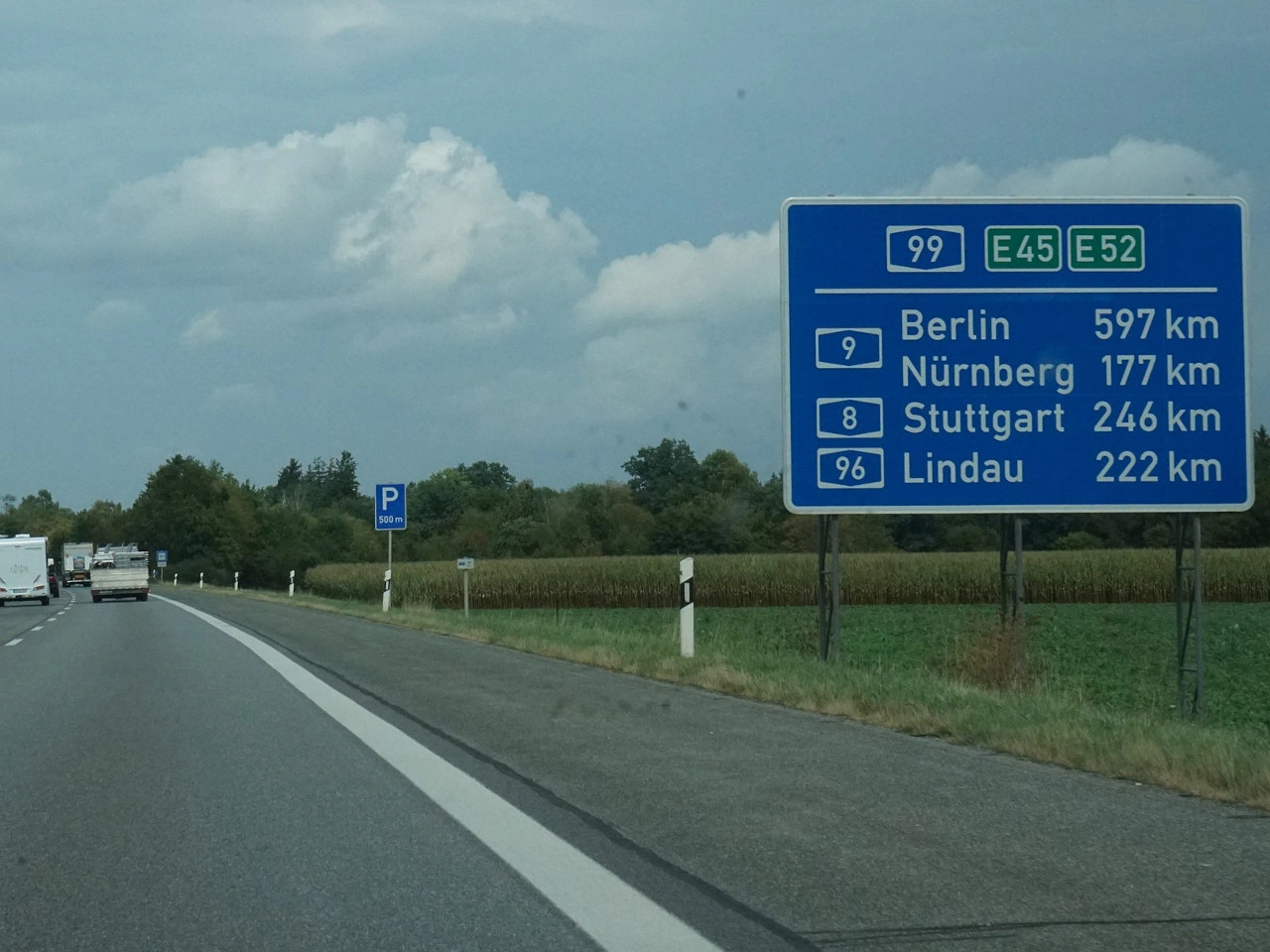
Wikimedia.org • PantheraLeo1359531 • CC0
What is a distance board?
A distance board is a sign that tells road users how far they are from one or more destinations or facilities.
What information can a distance board show?
It may show destination names, distances, route numbers and directional information, depending on the country's road-sign system.
Where are distance boards commonly used?
They are commonly used on motorways, major roads and other important routes to help drivers judge the remaining distance to destinations along their journey.
96. Breakdown bay
A breakdown bay is a designated area beside a road or within a tunnel where a vehicle can stop in an emergency without remaining in a normal traffic lane. Breakdown bays are particularly useful on roads where there is no continuous emergency lane or where stopping on the carriageway would create a serious hazard.
A breakdown bay is intended primarily for breakdowns and emergencies rather than ordinary parking or rest stops. Some bays are equipped with an emergency telephone, fire extinguisher or other safety equipment.
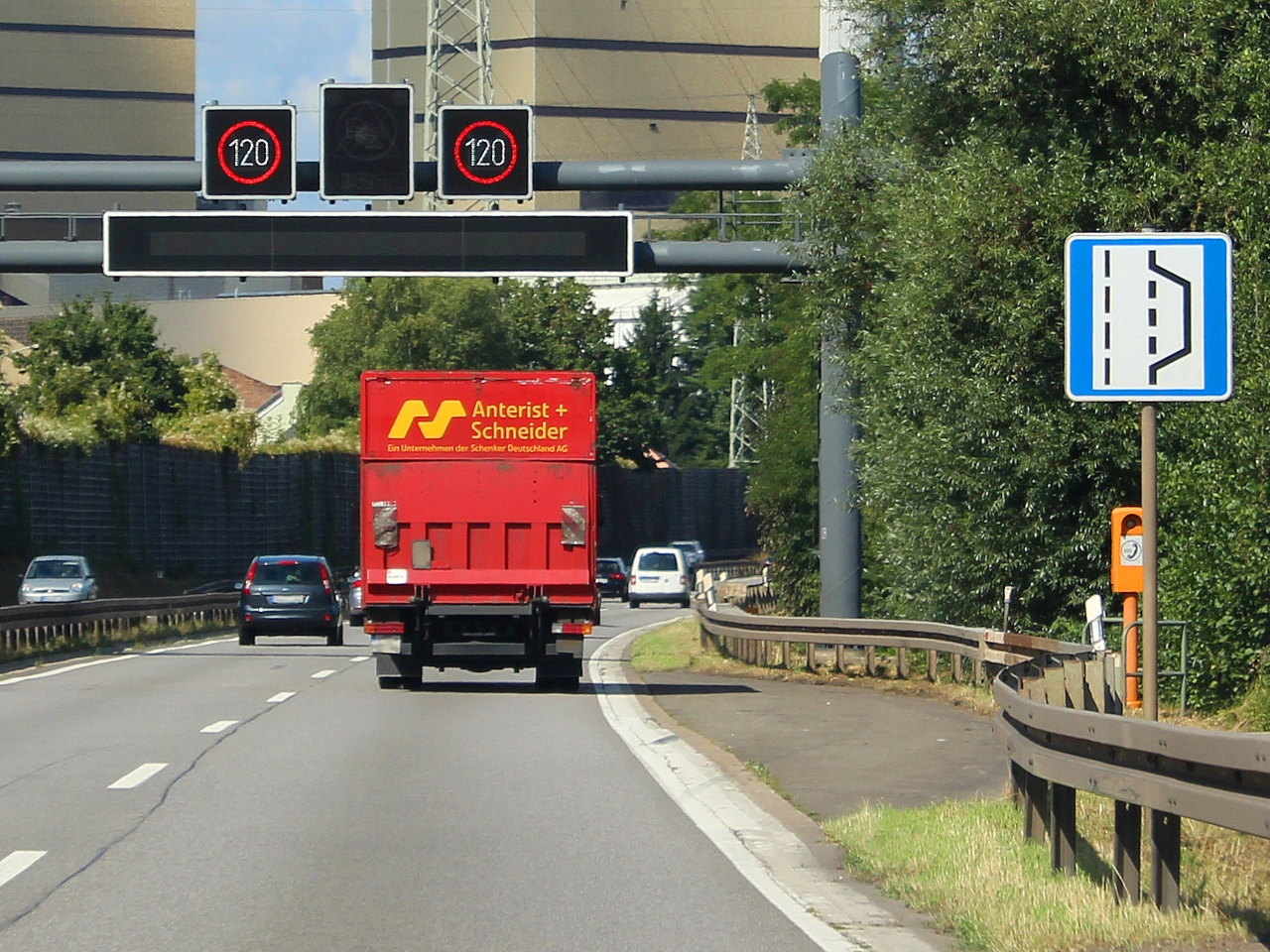
Wikimedia.org • atreyu • CC BY-SA
What is a breakdown bay?
A breakdown bay is a designated area where a vehicle can leave the normal traffic lanes and stop because of a breakdown or other emergency.
Where are breakdown bays commonly found?
They are commonly provided on motorways, major roads and in tunnels, particularly where there is no continuous emergency lane.
Can you use a breakdown bay as a normal parking place?
Normally, no. Breakdown bays are intended for emergencies and disabled vehicles rather than routine parking or rest stops.
97. Hiking
A hiking route is a designated route intended primarily for recreational walking or hiking. It may follow footpaths, forest tracks, rural roads or other suitable routes and can connect natural, cultural or tourist destinations.
Hiking routes are often identified by direction arrows, coloured markers, route numbers, symbols or numbered junctions. Their signs and markings are usually part of a recreational wayfinding system rather than ordinary traffic-control signage.
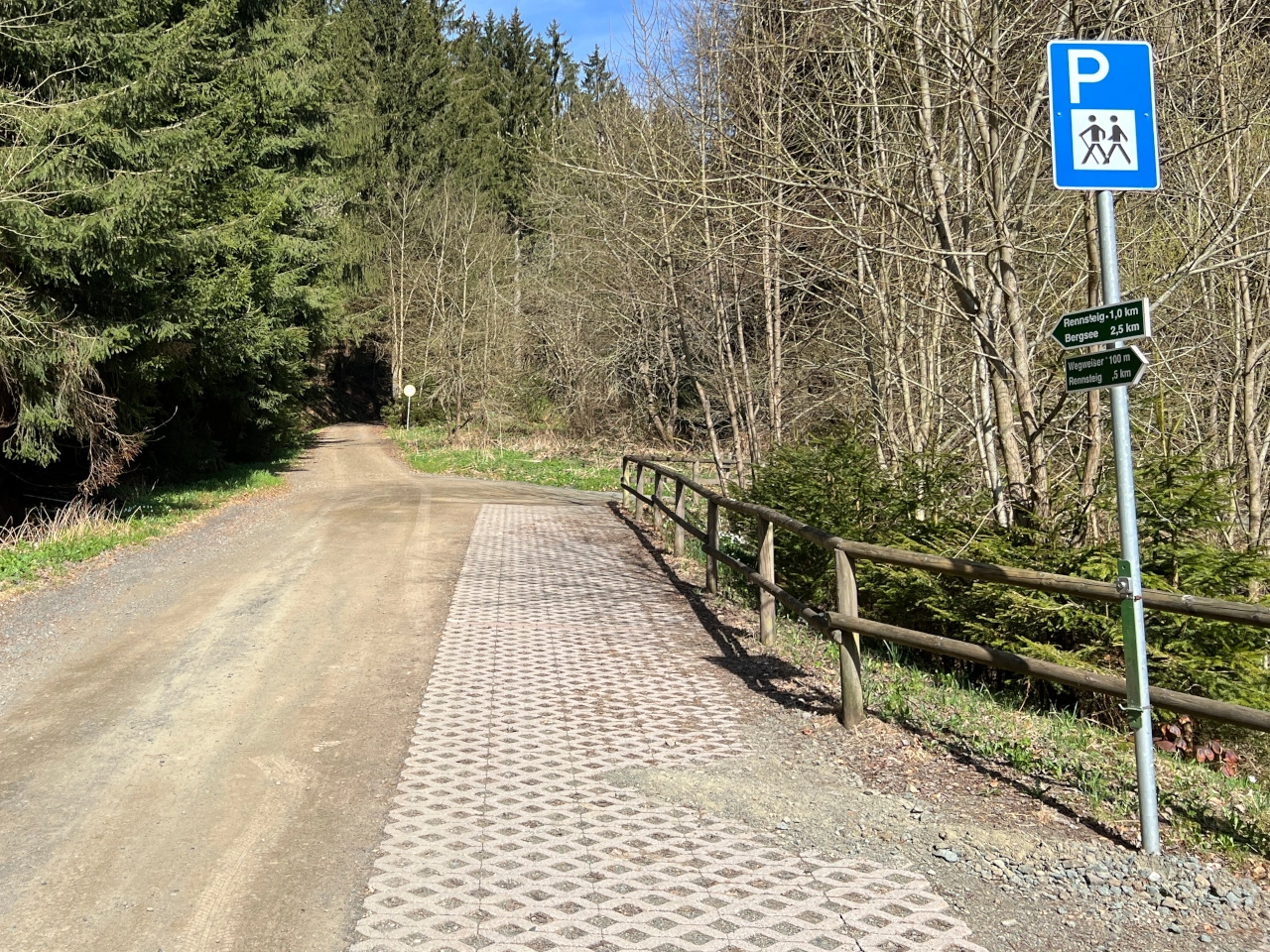
Wikimedia.org • Lukas Beck • CC BY
What is a hiking route?
A hiking route is a designated route intended for recreational walking or hiking, often through natural, rural or tourist areas.
How are hiking routes marked?
They may be marked using colours, arrows, symbols, route numbers or numbered junctions. The marking system varies between countries and individual trail networks.
Are hiking-route signs traffic signs?
Not necessarily. Hiking-route markers are often recreational or tourist wayfinding signs and do not normally impose traffic rules unless an official traffic sign is also present.
98. Pavement parking
Pavement parking means parking a vehicle fully or partly on a sidewalk or footway that is primarily intended for pedestrians. It can reduce the space available for people walking and may create particular difficulties for wheelchair users, people with pushchairs and pedestrians with visual impairments.
Pavement parking is prohibited or restricted in many countries unless signs or road markings specifically allow it. Where it is permitted, drivers should park only within the designated area and leave sufficient space for pedestrians.
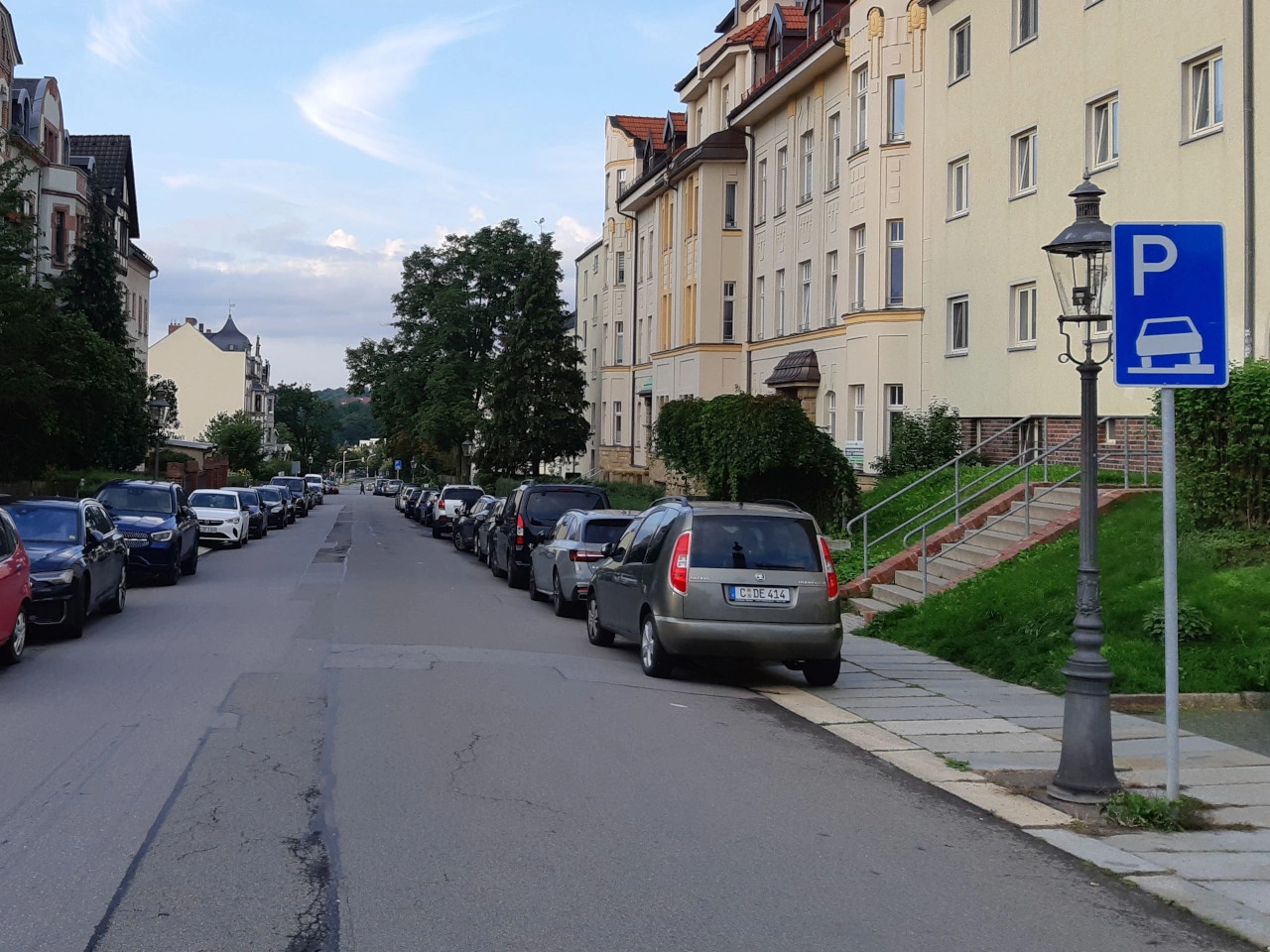
Wikimedia.org • Kleeblatt187 • CC BY-SA
What is pavement parking?
Pavement parking means parking a vehicle fully or partly on a sidewalk or footway intended primarily for pedestrians.
Is pavement parking normally allowed?
It depends on the country. Many countries prohibit pavement parking unless traffic signs, markings or local regulations specifically permit it.
Why can pavement parking be dangerous?
It can obstruct pedestrians and reduce accessibility, potentially forcing people with wheelchairs, pushchairs or other mobility needs into the roadway.
99. Road church
A road church is a church or chapel located close to a major road or motorway and intended to provide travellers with a convenient place for prayer, reflection or a break during their journey. Some are purpose-built beside major roads, while others are existing churches located near an interchange or roadside route.
Road churches are especially associated with parts of Europe and may be indicated by tourist, service or local direction signs. Their designation, facilities and signage vary between countries.
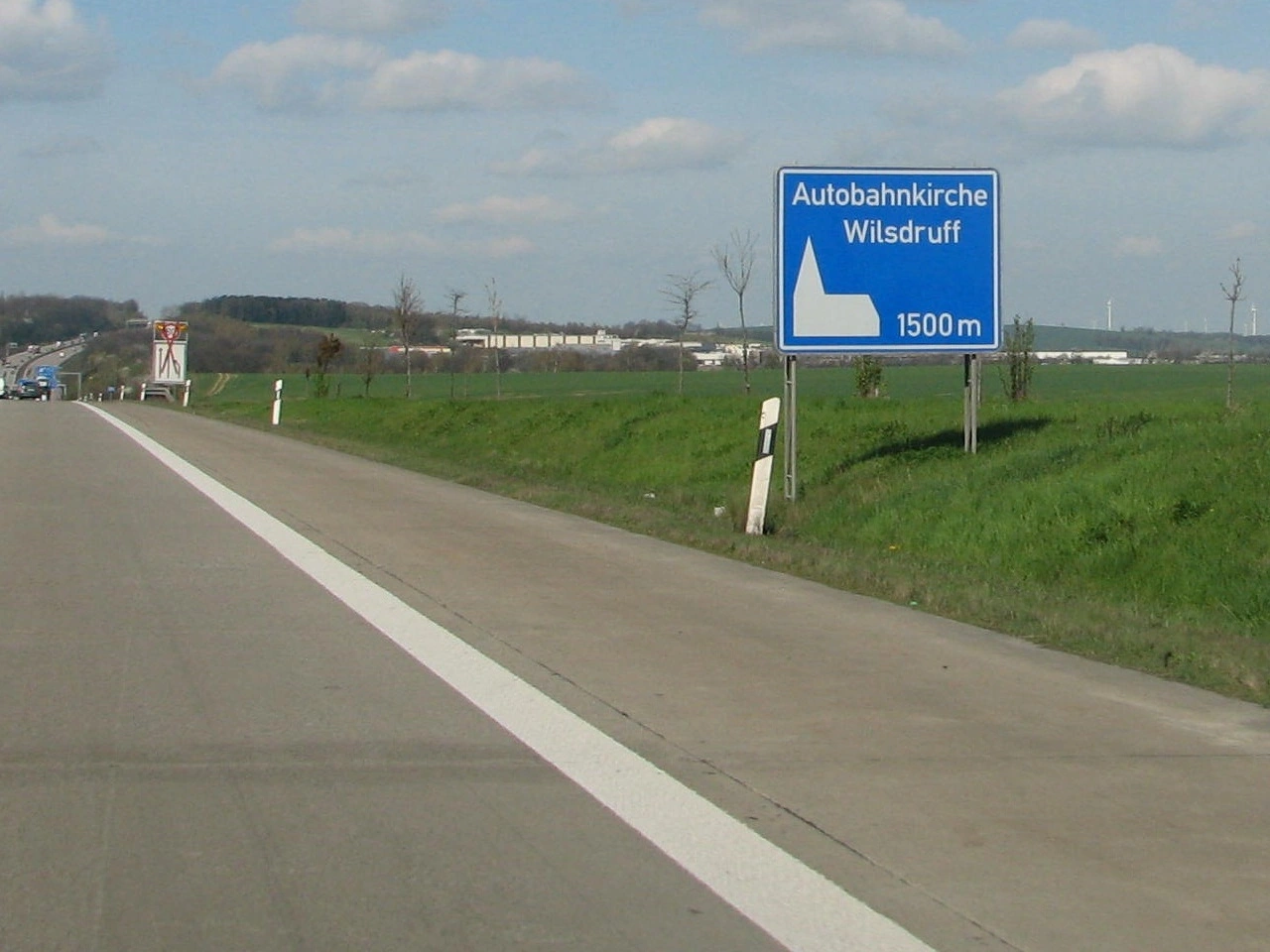
Wikimedia.org • Inkowik • CC BY-SA
What is a road church?
A road church is a church or chapel situated near a major road or motorway that is easily accessible to travellers.
What is the purpose of a road church?
Road churches provide travellers with a place for prayer, quiet reflection or a short break from their journey.
Are road churches found in every country?
No. Road churches are particularly associated with certain European countries, and their availability, designation and signage vary considerably.
100. Tourist attraction
A tourist attraction is a place of interest that visitors may travel to for cultural, historical, recreational, natural or entertainment purposes. Examples include monuments, castles, museums, scenic sites, amusement parks and other notable destinations.
Tourist attractions may be indicated by tourist or direction signs that help travellers find the destination. The colours, symbols and types of attractions shown vary between countries.
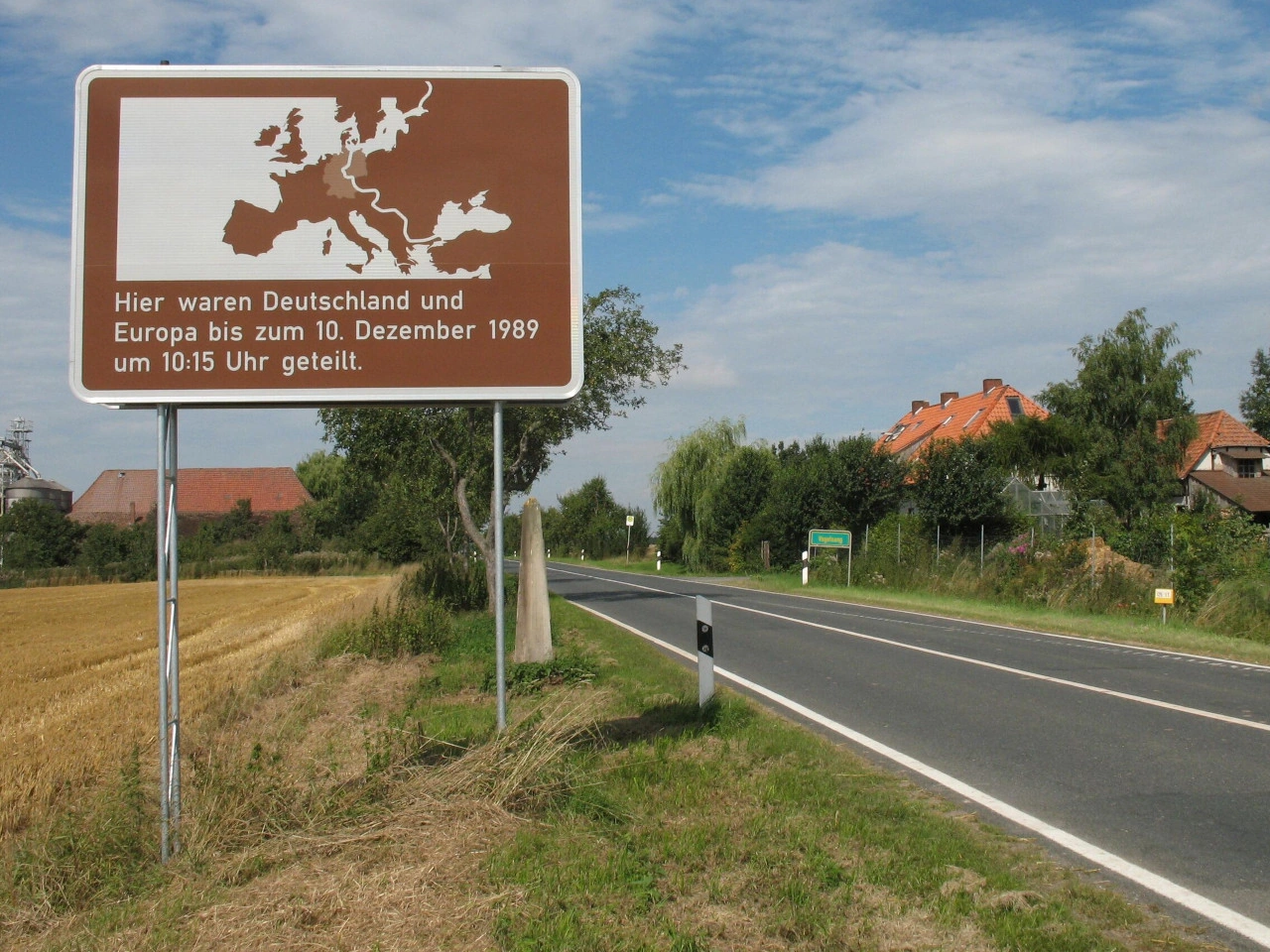
Wikimedia.org • Doris Antony • CC BY-SA
What is a tourist attraction?
A tourist attraction is a place that visitors travel to because of its cultural, historical, natural, recreational or entertainment value.
What are examples of tourist attractions?
Examples include monuments, castles, museums, scenic locations, cultural sites, amusement parks and recreational destinations.
Can tourist attractions be indicated by road signs?
Yes. Many countries use tourist or direction signs to guide travellers toward important attractions and places of interest.