
Traffic rulesIreland
Learn the traffic rules of Ireland with lots of pictures, clear traffic signs and interactive quizzes. Simple, visual and easy to follow.


The driving-licence system in Ireland
Who manages driver licensing in Ireland?
The Road Safety Authority (RSA) has responsibility for driver testing, driver education and licensing policy, while the National Driver Licence Service (NDLS) processes learner-permit and driving-licence applications.
Who conducts driving tests?
RSA driver testers conduct the practical driving tests.
Who delivers the driver theory test?
The official computer-based theory test is delivered through the RSA’s authorised theory-test service and approved test centres.
Is an Irish driving licence valid throughout Ireland?
Yes. A valid Irish licence is recognised throughout the State, subject to its categories, restriction codes and current legal status.
Is an Irish licence recognised elsewhere in the European Union?
Yes. A valid Irish EU-format licence is generally recognised throughout the EU and European Economic Area.
What is MyRoadSafety?
It is the RSA online portal used for driving-test applications, eligibility checks, invitations, bookings and test-related services.
What is NDLS Online?
It is the online service for applying for, renewing, replacing, exchanging or updating an Irish learner permit or driving licence.
What is MyEDT?
It is the RSA portal where category B learners can view their completed Essential Driver Training sessions.
Can one person hold two EU driving licences?
No. EU rules generally permit only one valid EU or EEA driving licence at a time.
Do driving-school prices differ?
Yes. RSA and NDLS fees are nationally set, while lesson prices, car hire and other driving-school charges vary.
Eligibility and the first learner permit
What is the minimum age for a category B learner permit?
The minimum age is 17 years.
Can the car theory test be taken before age 17?
Yes. The theory test can be taken before the minimum learner-permit age, but the learner permit cannot be issued until the age requirement is met.
What theory-test age change begins on 1 November 2026?
From that date, the minimum age to sit the driver theory test will be 15 years. This future rule does not change the minimum age for holding a category B learner permit.
Must the applicant pass theory before applying for the learner permit?
Yes. A valid category B theory-test certificate is required.
How long does the applicant have to use the theory pass?
The first learner-permit application must be made within two years after passing the theory test.
Must the applicant be normally resident in Ireland?
Yes. The applicant must normally reside in Ireland and provide evidence where required.
What does normal residence generally mean?
It generally means living in Ireland for at least 185 days in each calendar year because of personal or occupational ties.
What identification information is normally required?
The applicant must provide accepted identity details, an Irish residential address and a Personal Public Service Number or the authorised alternative evidence.
Can a foreign resident apply for an Irish learner permit?
Yes. A foreign resident who satisfies identity, residence, medical, age and theory-test requirements may apply.
Can a person apply while disqualified from driving?
No. A current court or administrative disqualification must be resolved.
How can the first learner permit be requested?
It can be requested through NDLS Online with a Public Services Card and verified MyGovID, or at an NDLS centre.
What is the current first learner-permit fee?
The standard fee is €45; applicants aged 70 or over are exempt from the first-issue or renewal fee.
Eyesight, medical fitness and disability
Is an eyesight report required for a first learner permit?
Yes, where required by the first-permit process. The approved eyesight report must be recent and submitted within the specified period.
When is a medical report required?
It is required for specified medical conditions, Group 2 truck or bus categories, applicants aged 75 or over and other cases identified by the licensing authority.
How recent must a required medical report be?
It must normally be submitted to the NDLS within one month after the doctor signs it.
Is a medical report automatically required from age 70?
No. The ordinary age threshold is 75, although licence fees remain waived from age 70.
Can glasses or contact lenses be required?
Yes. Code 01 or a related restriction is placed on the permit or licence when corrective lenses must be used.
Can a licence require an adapted vehicle?
Yes. Restriction codes can require hand controls, an automatic transmission, daylight driving, a geographic limit or another adaptation.
Does a disability automatically prevent licensing?
No. Fitness is assessed individually and the person may qualify with restrictions or a suitable adapted vehicle.
Must a driver report a later medical condition?
Yes. A driver must notify the NDLS when a specified condition develops or changes in a way that may affect safe driving.
Can medical fitness shorten the licence term?
Yes. A one-year or three-year licence can be issued where a longer period is not medically appropriate.
Can the NDLS refuse or revoke entitlement on medical grounds?
Yes. The licensing decision can restrict, refuse or remove entitlement where the medical standard is not met.
Learner rules, supervision and L plates
May a category B learner drive alone?
No. The learner must be accompanied at all times by an eligible accompanying driver.
Who can accompany a category B learner?
The person must have held a full, valid driving licence in category B for at least two years.
Where must the accompanying driver sit?
The accompanying driver must sit in the front passenger seat and be capable of properly supervising.
Can a novice driver accompany a category B learner?
No. A novice driver cannot act as the accompanying driver during the two-year novice period.
Must L plates be displayed?
Yes. Red L plates must be clearly displayed at the front and rear of the learner vehicle.
Can a category B learner drive on a motorway?
No. A learner permit does not authorise motorway driving.
Can a learner drive at night?
Yes. There is no general night-time prohibition, provided all learner, supervision, insurance and vehicle requirements are met.
Must the learner carry the permit while driving?
Yes. The valid learner permit must be carried and produced when required.
Must the vehicle be insured for the learner?
Yes. The learner must be correctly insured, and the vehicle must be taxed, roadworthy and hold a valid NCT where required.
Can a learner use an automatic car?
Yes. Passing the test in an automatic car results in an automatic-only category B restriction.
Can a learner practise with family or friends?
Yes, provided the accompanying driver, insurance, vehicle, permit and L-plate requirements are satisfied.
What can happen after unaccompanied learner driving?
The learner can receive a fixed charge, penalty points and vehicle detention or impoundment consequences under the applicable law.
The category B theory test
How many questions are in the category B theory test?
The test contains 40 multiple-choice questions.
How many correct answers are required?
At least 35 correct answers are required.
How long is the ordinary test?
The ordinary category B theory test normally allows 45 minutes.
What topics are tested?
The test covers the Rules of the Road, road signs, hazard awareness, risk perception, safe behaviour and eco-driving.
Is the test computer based?
Yes. It is taken at an authorised theory-test centre using the official computer system.
Must official identification be presented?
Yes. The centre checks and scans the accepted identity document before admission.
Can security checks be carried out?
Yes. Candidates may be screened for phones, Bluetooth devices and other unauthorised equipment, and the session is monitored.
Can reasonable accommodations be requested?
Yes. Assistance is available for candidates with reading, hearing, language or other recognised needs under the authorised arrangements.
What happens after failing?
A new test can be booked after at least three days, and the full fee is payable again.
Is there a limit on the number of theory attempts?
No general attempt limit applies, but each new sitting requires a booking and fee.
Does passing theory authorise driving?
No. The person must first receive the learner permit and then comply with learner rules.
What happens if the theory pass is not used within two years?
It expires and the applicant must pass the theory test again before applying for a first learner permit.
Essential Driver Training and practice
What is Essential Driver Training?
EDT is the compulsory structured training programme for most first-time category B learner drivers.
How many EDT sessions are required?
The standard programme contains 12 one-hour sessions.
Who may provide EDT?
Only an RSA Approved Driving Instructor registered to deliver category B EDT.
Does EDT replace all other driving practice?
No. The 12 sessions are minimum structured lessons and should be supported by extensive supervised practice.
How is EDT completion recorded?
The instructor records each completed session in the official system, which the learner can view through MyEDT.
Must all EDT sessions be completed before the driving test?
Yes. The sessions must be recorded before the learner becomes eligible for the category B test.
What is reduced EDT?
It is a six-session programme for qualifying holders of a full foreign category B licence from a country that does not have an exchange agreement with Ireland.
Does reduced EDT remove the six-month waiting rule?
Yes. An approved reduced-EDT participant is also exempt from the ordinary six-month minimum waiting period.
Can any foreign licence holder choose reduced EDT automatically?
No. Eligibility must be approved and documented through the licensing process.
What happens if an instructor has not uploaded a completed session?
The learner should contact the instructor and ensure every required lesson appears in MyEDT before test eligibility is checked.
The six-month rule and learner-permit renewals
How long must a first category B permit be held before the driving test?
Normally at least six months from the category issue date.
Why does the six-month rule exist?
It ensures that a first-time learner gains a minimum period of supervised practice before testing.
Who can be exempt from the six-month rule?
A qualifying foreign full-licence holder approved for reduced EDT can receive an exemption.
How long are the first and second learner permits normally valid?
Each is normally valid for two years.
How are third and later permits handled on 4 August 2026?
Current rules require evidence of a driving-test booking or a failed test in the previous two years, with the permit term depending on that evidence.
What changes on 1 November 2026?
A third or fourth permit will require the learner to have actually taken a driving test within the previous two years.
Can a first permit be renewed as a second permit after 1 November 2026 without taking a test?
Yes. The new test requirement does not apply to the first renewal.
How long will a fourth permit last under the new rules?
It will be valid for one year.
What happens after seven years or four permits under the new system?
The person must restart the learning process, including theory, training and testing.
Can the learner drive while the permit is expired?
No. The permit must be valid before driving.
The category B practical driving test
Who conducts the practical test?
An RSA driver tester conducts it at an RSA driving-test centre.
What does the test assess?
It checks knowledge of the Rules of the Road and the ability to drive safely, competently and considerately.
How long does the test take?
RSA states that tests take about 50 to 100 minutes depending on category; the category B test is at the shorter end of that range.
What happens before the road drive?
The tester checks identification, the learner permit and vehicle documentation and asks Rules of the Road, sign and vehicle-safety questions.
Which category B manoeuvres may be assessed?
They can include a turnabout, reversing around a corner, a hill start and other normal control and observation tasks.
Must the test vehicle be supplied by the candidate?
Yes. The candidate normally provides a suitable, insured and roadworthy vehicle.
Can the test be cancelled because of the vehicle?
Yes. Defective equipment, missing documents, invalid insurance, tax or NCT, unsuitable tyres or another safety issue can prevent the test.
How are driving faults graded?
The RSA records Grade 2 serious faults and Grade 3 dangerous or potentially dangerous faults; lesser errors may not be recorded.
What fault thresholds cause failure?
Failure occurs with one Grade 3 fault, four Grade 2 faults in a single aspect or nine Grade 2 faults overall.
What happens after passing?
The candidate receives a certificate of competency and must apply for the full licence within two years.
Novice drivers, penalty points and impairment
How long is a person treated as a novice driver?
For the first two years after receiving the first full driving licence.
Must a novice display N plates?
Yes. N plates must be clearly displayed on any vehicle the novice drives during the two-year period.
Can a novice accompany a category B learner?
No.
How many points disqualify a learner or novice driver?
Seven points within a three-year period normally cause a six-month disqualification.
How many points disqualify an ordinary full driver?
Twelve points within a three-year period normally cause a six-month disqualification.
When does a penalty-points disqualification begin?
It normally begins 28 days after the disqualification notification is issued.
What alcohol limit applies to learners, novices and professional drivers?
20 mg of alcohol per 100 ml of blood, 27 mg per 100 ml of urine or 9 micrograms per 100 ml of breath.
What alcohol limit applies to other drivers?
50 mg per 100 ml of blood, 67 mg per 100 ml of urine or 22 micrograms per 100 ml of breath.
Can refusing a lawful alcohol or drug specimen be an offence?
Yes. Refusal is a criminal offence and can lead to a substantial driving disqualification, fine and imprisonment.
Can drug-impaired driving lead to criminal and licensing consequences?
Yes. Driving while impaired by drugs or above a specified drug threshold can lead to prosecution and disqualification.
Does obtaining another category restart novice status?
The novice period is linked to the first full licence and does not normally restart merely because another category is added.
Can a novice drive on motorways?
Yes. A full licence authorises motorway driving, subject to the vehicle category and other restrictions.
Licence categories and professional driving
What does category AM cover?
It covers mopeds and light quadricycles within the statutory speed and vehicle limits.
What does category A1 cover?
It covers light motorcycles up to 125 cm³, 11 kW and the prescribed power-to-weight limit.
What does category A2 cover?
It covers motorcycles up to 35 kW with the prescribed power-to-weight and derivation rules.
What does category A cover?
It covers unrestricted motorcycles; direct access is available from age 24, or progressive access after holding A2 for two years.
What does category B cover?
It covers cars and light vans up to 3,500 kg MAM with no more than eight passenger seats in addition to the driver.
What trailer can category B tow?
A trailer up to 750 kg, or a heavier trailer where the combination remains within the category B limits.
What does category BE cover?
It covers a category B towing vehicle with a trailer or semi-trailer within the BE weight limits.
What do categories C1 and C cover?
C1 covers vehicles above 3,500 kg and up to 7,500 kg; C covers heavier goods vehicles.
What do categories D1 and D cover?
D1 covers minibuses within its passenger and length limits; D covers buses and coaches with more than eight passenger seats.
What is Driver CPC?
It is the professional qualification required for many drivers who operate trucks or buses for work.
What are the four initial CPC tests?
They are the appropriate theory test, case-study test, practical driving test and vehicle-safety walkaround test.
Is periodic CPC training required?
Yes. Qualified professional drivers normally complete 35 hours of periodic training every five years.
Validity, renewal, replacement and records
How long is a car or motorcycle licence normally valid below age 65?
The maximum ordinary term is 10 years.
How long are truck and bus categories normally valid?
The maximum ordinary term is five years.
What term applies from age 65 to 71?
The licence normally expires no later than the day before the holder’s seventy-fifth birthday, subject to Group 2 limits.
What term applies from age 72 to 74?
The ordinary term is three years.
What applies from age 75?
A medical report is required, and a one-year or three-year licence may be issued depending on fitness.
When can renewal be requested?
Within three months before expiry.
Can an expired licence be renewed?
Yes, for up to 10 years after expiry. After more than 10 years, the person must restart theory, learner-permit, training and driving-test requirements.
Can renewal and replacement be completed online?
Yes, when the applicant has a Public Services Card, verified MyGovID and satisfies the online-service conditions.
What should a driver do after loss, theft or damage?
Request a replacement through NDLS Online or an NDLS centre and provide the required declaration and identification.
Can a driver request an official driver statement?
Yes. The NDLS provides an official driver statement showing the licence record and relevant details.
Foreign licences and International Driving Permits
Can an EU or EEA licence be used in Ireland?
Yes. A valid EU or EEA licence can be used until it expires.
Must an EU or EEA licence be exchanged immediately after moving to Ireland?
No. Exchange is generally optional while the licence remains valid.
Can a UK or Northern Ireland licence be exchanged?
Yes. Ireland recognises qualifying UK and Northern Ireland licences under the applicable exchange arrangements.
Which other foreign licences can be exchanged?
Licences from recognised states can be exchanged when the holder, document and category meet the agreement conditions.
What if the foreign licence is not exchangeable?
The resident must normally pass the Irish theory test, obtain a learner permit, complete training and pass the driving test.
Can an ineligible foreign licence holder receive reduced EDT?
A qualifying holder of a full licence from a non-exchange country can apply for reduced EDT and the six-month-rule exemption.
Must a foreign licence be surrendered during exchange?
Yes. The original is normally submitted to the NDLS and checked with the issuing authority.
Does Ireland issue International Driving Permits?
Yes. Eligible Irish or EU or EEA licence holders resident in Ireland can apply through the authorised service.
Can a learner-permit holder receive an International Driving Permit?
No.
Does an International Driving Permit replace the Irish licence?
No. It is valid only when used with the underlying national driving licence.
Sources and methodology
How was this FAQ prepared?
This FAQ was prepared from current RSA, NDLS and Irish government guidance, with future November 2026 rules identified separately.
Which source explains the category B learning process?
RSA: steps to become a car or light-van driverWhich source explains the theory test?
RSA: applying for the driver theory testWhich source explains EDT?
RSA: Essential Driver TrainingWhich source explains learner-permit validity and the November 2026 changes?
RSA: multiple learner permitsWhich source explains the practical driving test?
RSA: about the driving testWhich source explains novice-driver rules?
RSA: novice drivers and N platesWhich source explains validity and renewal?
NDLS: learner-permit and driving-licence termsWhich source explains foreign-licence exchange?
NDLS: exchange a foreign driving licenceIs this website affiliated with an Irish authority?
This website is an independent educational resource and is not affiliated with the RSA, NDLS, a theory-test provider, driving-test centre, Approved Driving Instructor or driving school.
Official legislation and instructions from the competent authority always take precedence. Last reviewed: 4 August 2026.
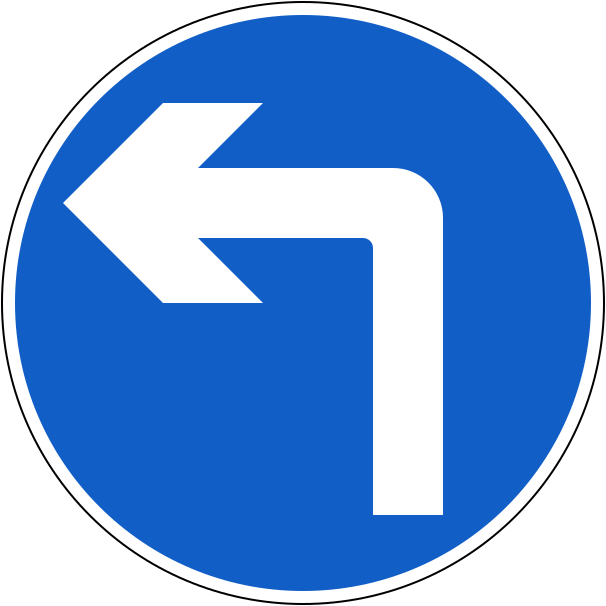
1. What does this traffic sign mean?
This traffic sign indicates that turning left is mandatory at the junction ahead. Traffic must turn left and may not continue straight ahead or turn right.
English • RUS 007 • Turn left ahead. Traffic must turn left ahead at the junction indicated.
Sources
🔗 Commons.wikimedia.org
🔗 Roadguidelines.ie • Department of Transport • Traffic Signs Manual • RUS 007
🔗 Irishstatutebook.ie • Road Traffic (Traffic Signs) Regulations 2025 (EN)
SVG source: Government of Ireland – Department of Transport • Public domain • Original revision 2023-07-31. Wikimedia original unmodified.
Artwork verified against Roadguidelines.ie • official published diagram RUS 007.
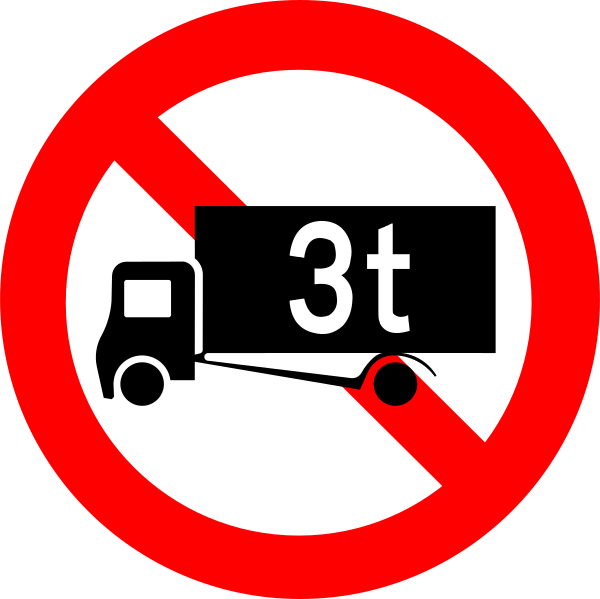
2. What does this traffic sign mean?
This traffic sign indicates that trucks heavier than indicated are prohibited. Trucks covered by the sign may not continue if they exceed the displayed mass limit. The legally relevant mass is determined by the applicable local rules.
Sources
Image via Commons.wikimedia.org
Government of Ireland – Department of Transport • Public domain • Source revision 2023-08-18. Wikimedia original unmodified.
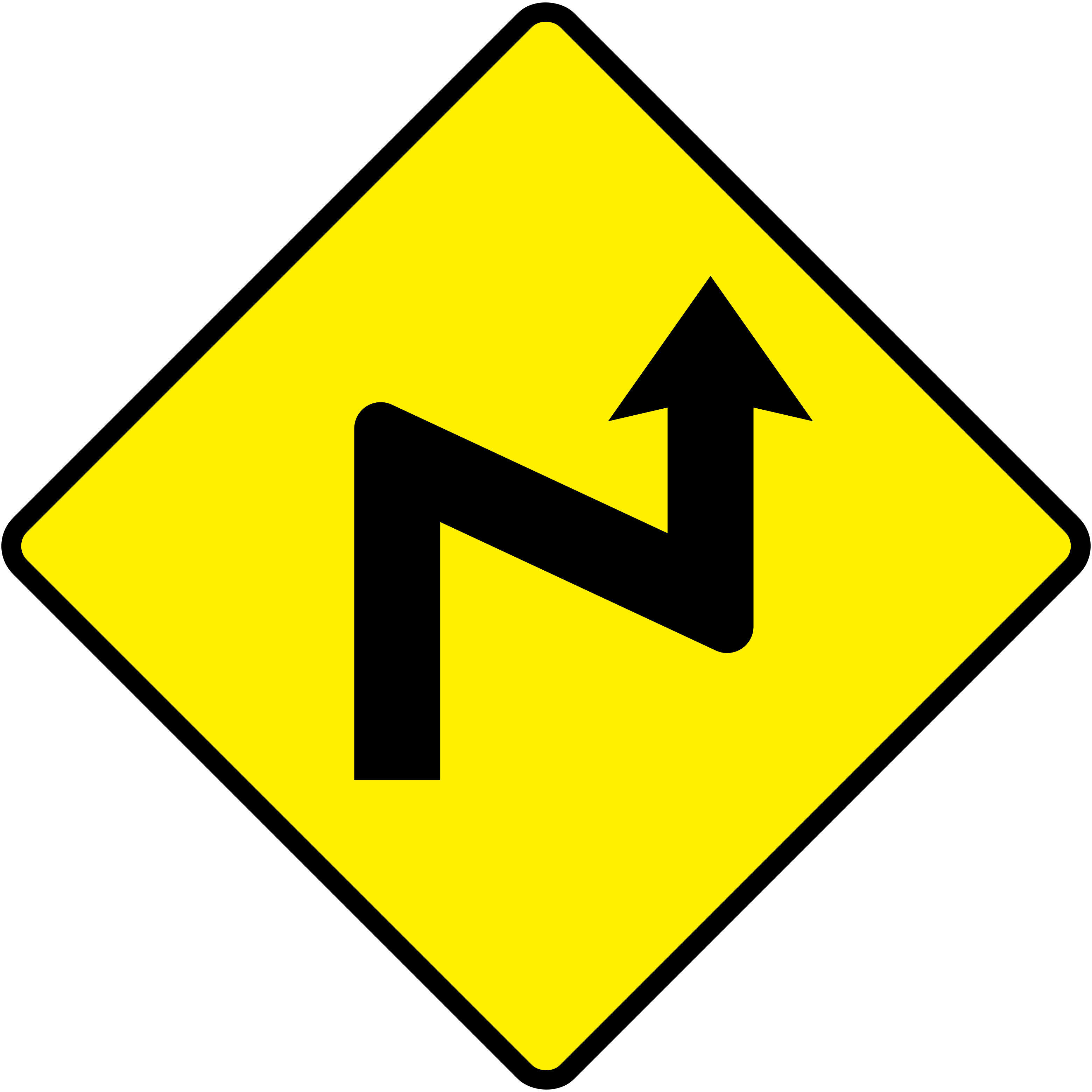
3. What does this traffic sign mean?
This traffic sign indicates a warning for successive curves, with the first curve to the right. Reduce speed before entering the winding section, maintain your lane position and be prepared for further changes in direction.
English • W 052R • Series of sharp corners — first right. A series of sharp corners is ahead, beginning with a right turn.
Sources
🔗 Commons.wikimedia.org
🔗 Roadguidelines.ie • Department of Transport • Traffic Signs Manual • W 052R
SVG source: Government of Ireland – Department of Transport • Public domain • Original revision 2021-11-02. Wikimedia original unmodified.
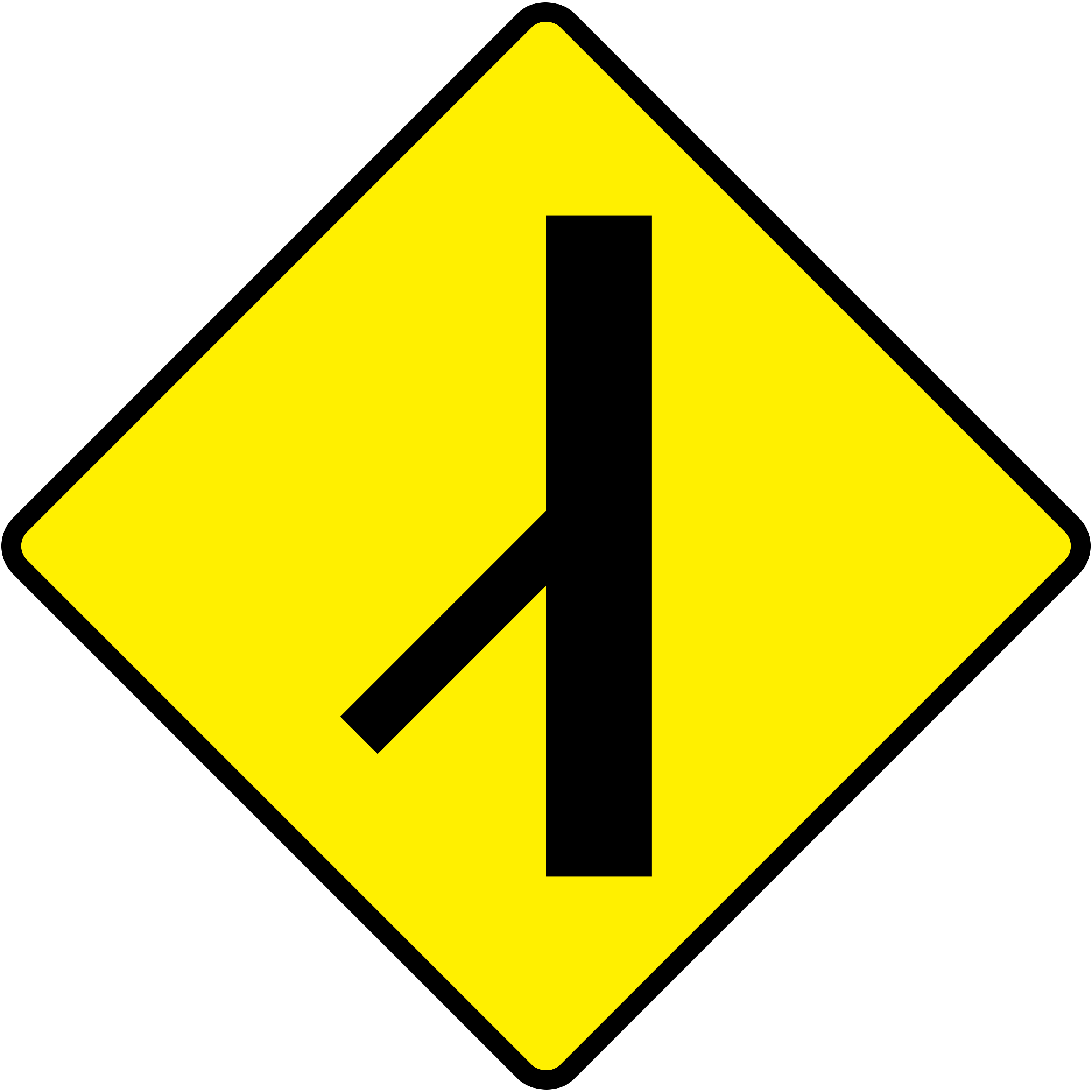
4. What does this traffic sign mean?
This traffic sign indicates a warning for merging traffic from the left. Traffic travelling in the same general direction may join your traffic stream from the left. Stay alert and adjust your speed or position when necessary to allow traffic to merge safely.
English • W 030 • Merging traffic from the left. Traffic merges from the left ahead. Watch for vehicles joining your route.
Sources
🔗 Commons.wikimedia.org
🔗 Roadguidelines.ie • Department of Transport • Traffic Signs Manual • W 030
SVG source: Government of Ireland – Department of Transport • Public domain • Original revision 2021-10-21. Wikimedia original unmodified.
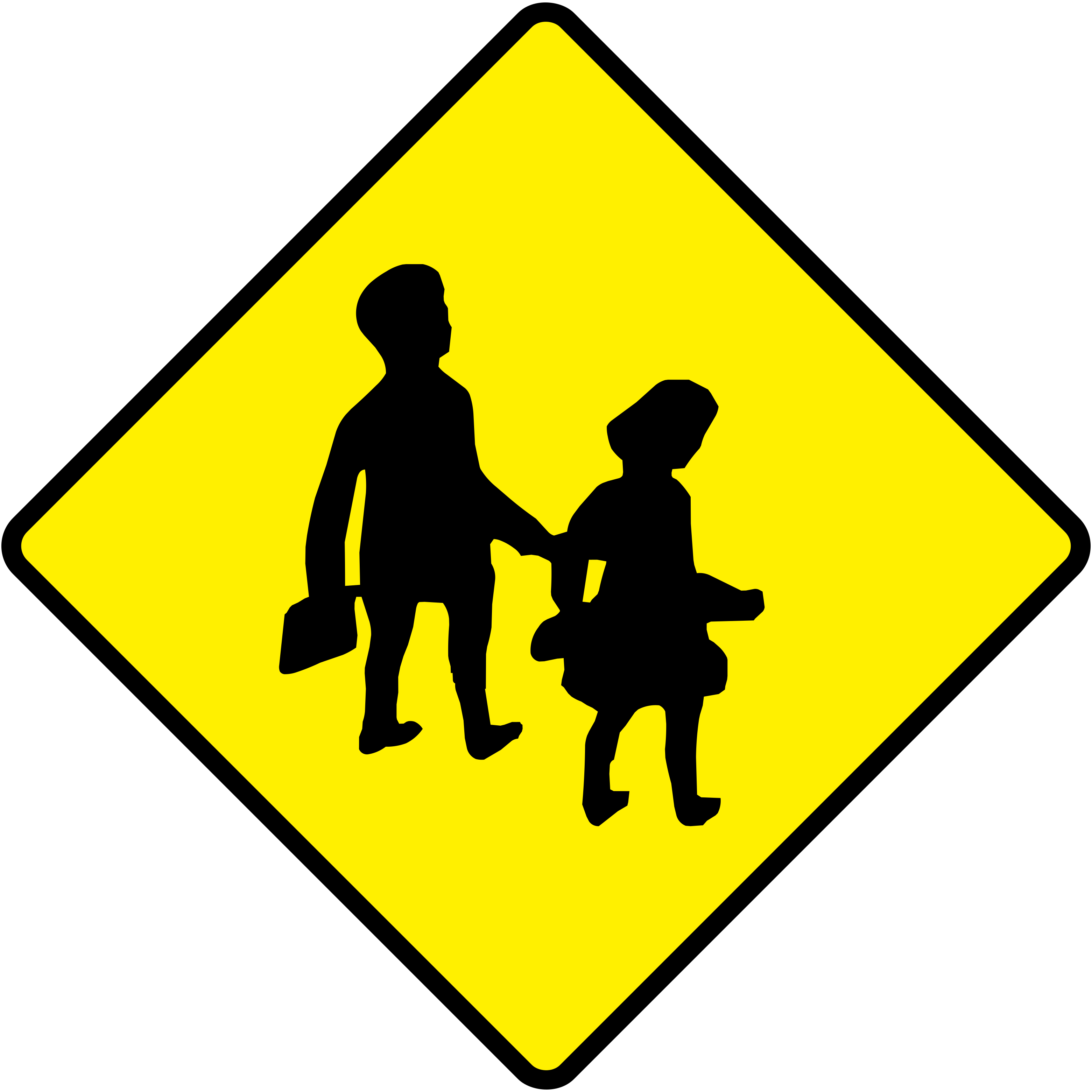
5. What does this traffic sign mean?
This traffic sign indicates a warning for children. Children may be present on or near the road and may cross unexpectedly. Reduce speed, scan both sides of the road carefully and be prepared to stop.
English • W 141 • School ahead. A school is ahead. Watch for children walking or crossing near the school.
Sources
🔗 Commons.wikimedia.org
🔗 Roadguidelines.ie • Department of Transport • Traffic Signs Manual • W 141
SVG source: Government of Ireland – Department of Transport • Public domain • Original revision 2021-10-22. Wikimedia original unmodified.
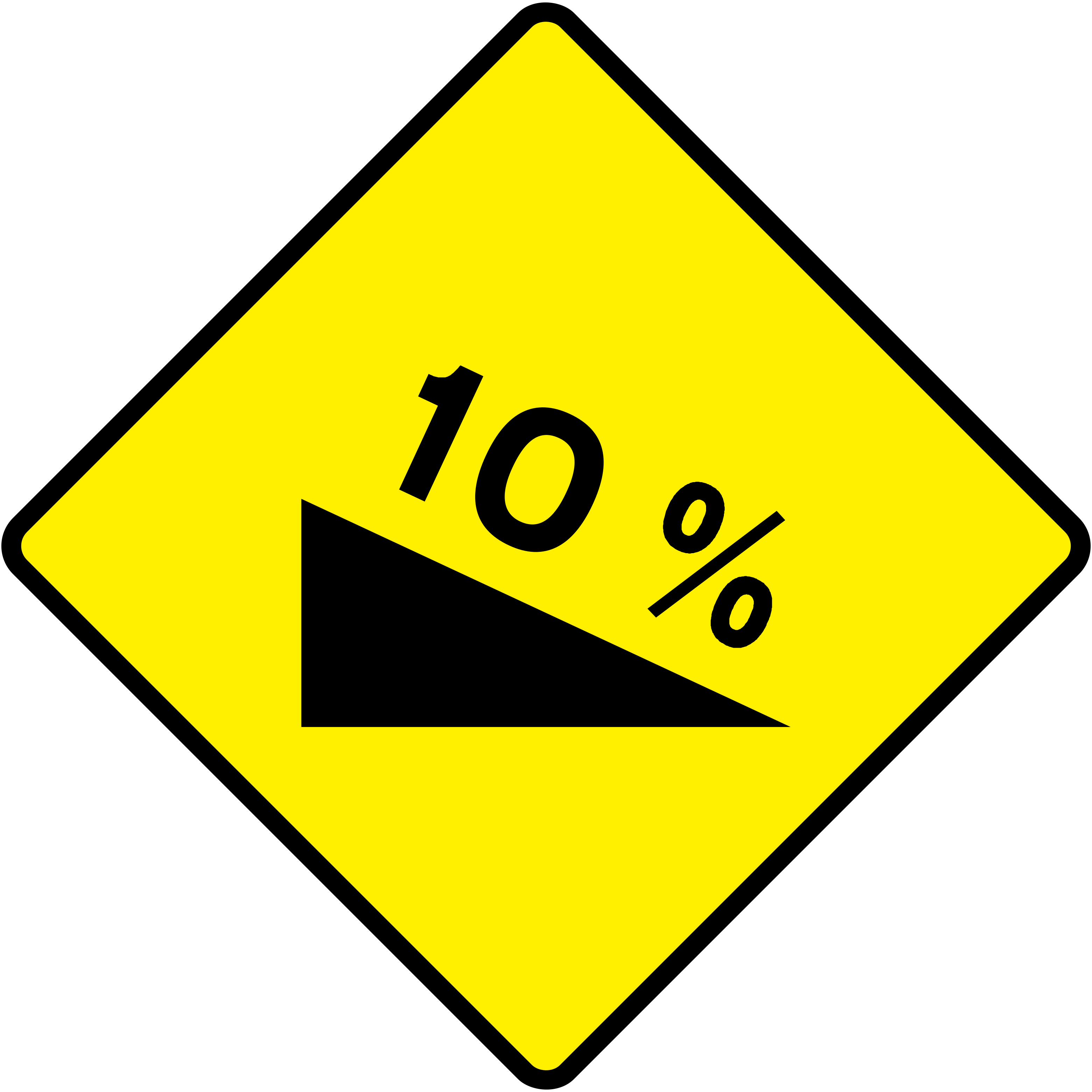
6. What does this traffic sign mean?
This traffic sign indicates a warning for a steep descent. A steep downhill gradient lies ahead and the vehicle may gain speed quickly. Reduce speed before the descent, select a suitable gear and use engine braking where appropriate. Allow extra distance for heavy or towing vehicles.
English • W 105 • Steep descent. A steep downhill gradient is ahead; the example shows 10%. Select a suitable gear and control your speed.
Sources
🔗 Commons.wikimedia.org
🔗 Roadguidelines.ie • Department of Transport • Traffic Signs Manual • W 105
SVG source: Government of Ireland – Department of Transport • Public domain • Original revision 2021-09-08. Wikimedia original unmodified.
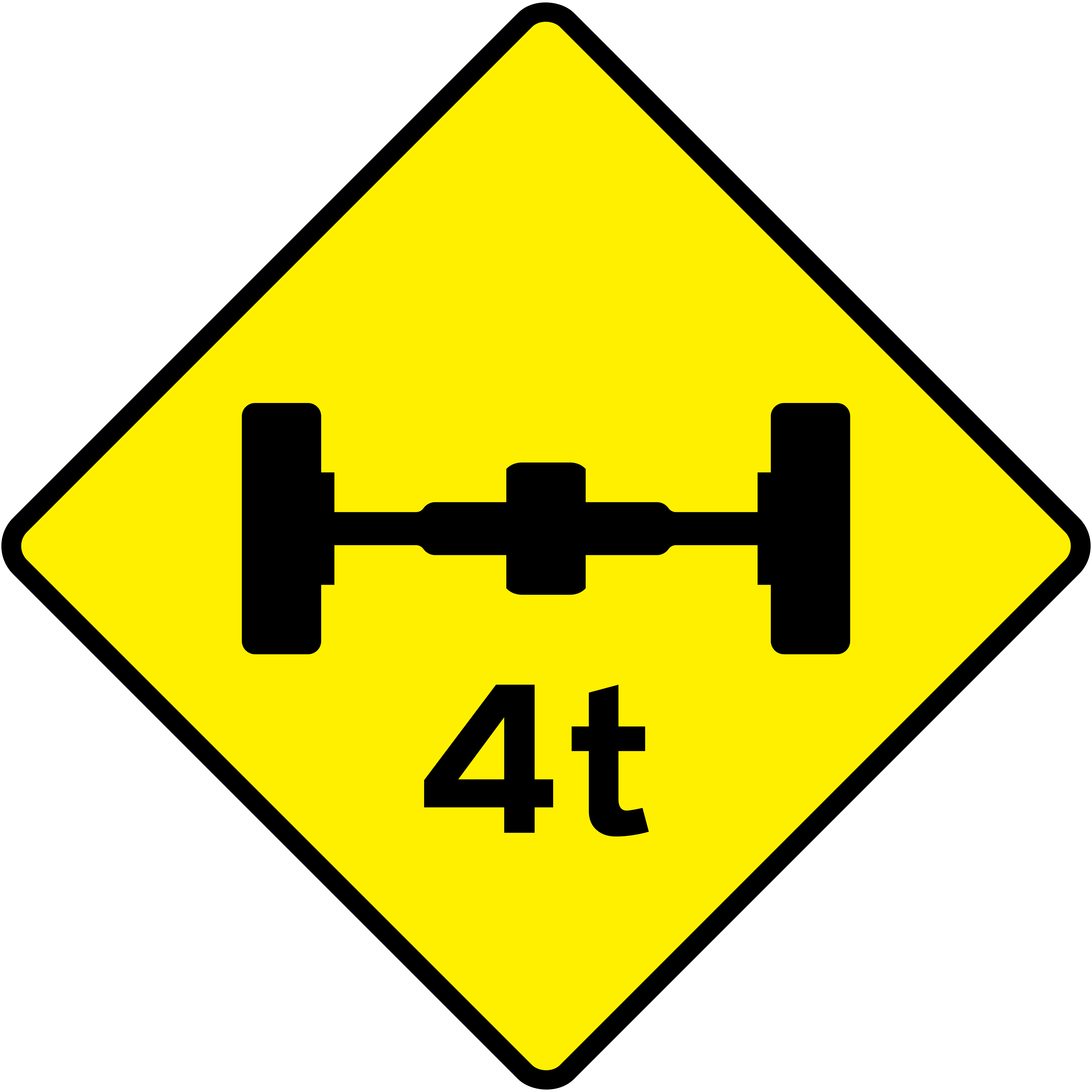
7. What does this traffic sign mean?
This traffic sign indicates a warning for an axle-load restriction. The maximum permitted load on an axle is limited ahead. Drivers of heavy vehicles should check their axle loads and use another route if the applicable limit would be exceeded.
English • W 116 • Maximum axle weight ahead. A maximum axle loading restriction of 4 tonnes is ahead. Do not continue towards the restriction if any axle exceeds the permitted load.
Sources
🔗 Commons.wikimedia.org
🔗 Roadguidelines.ie • Department of Transport • Traffic Signs Manual • W 116
SVG source: Government of Ireland – Department of Transport • Public domain • Original revision 2021-12-13. Wikimedia original unmodified.
Artwork verified against Roadguidelines.ie • official published diagram W 116.
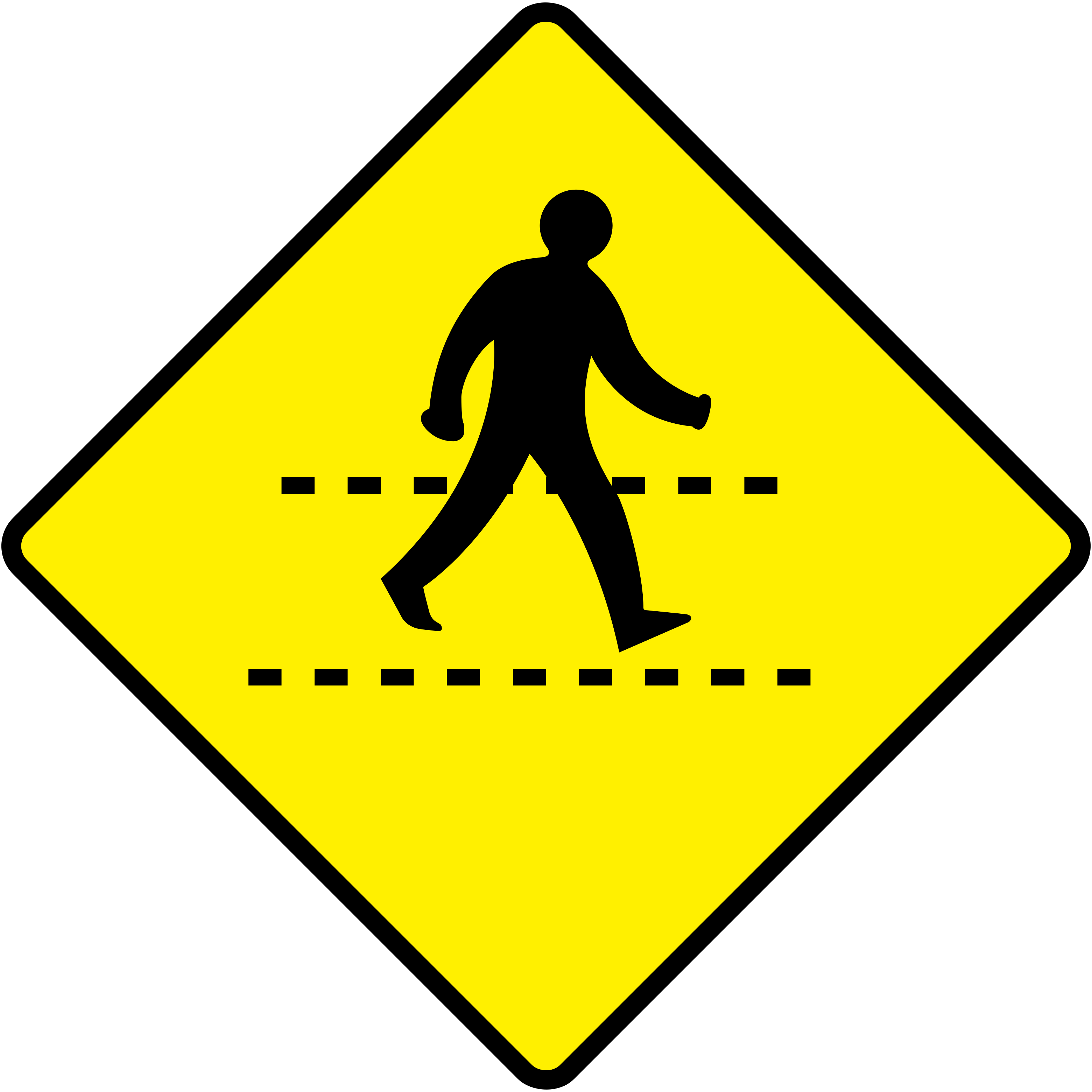
8. What does this traffic sign mean?
This traffic sign indicates a warning for a pedestrian crossing. A designated pedestrian crossing lies ahead. Reduce speed when necessary, watch carefully for pedestrians and be prepared to give way or stop according to the applicable local priority rules.
English • W 140A • Pedestrians crossing. Pedestrians may cross the road ahead. This warning does not by itself establish a controlled pedestrian crossing.
Sources
🔗 Commons.wikimedia.org
🔗 Roadguidelines.ie • Department of Transport • Traffic Signs Manual • W 140A
Image via Commons.wikimedia.org
Government of Ireland – Department of Transport • Public domain • Source revision 2021-12-16. Wikimedia original unmodified.
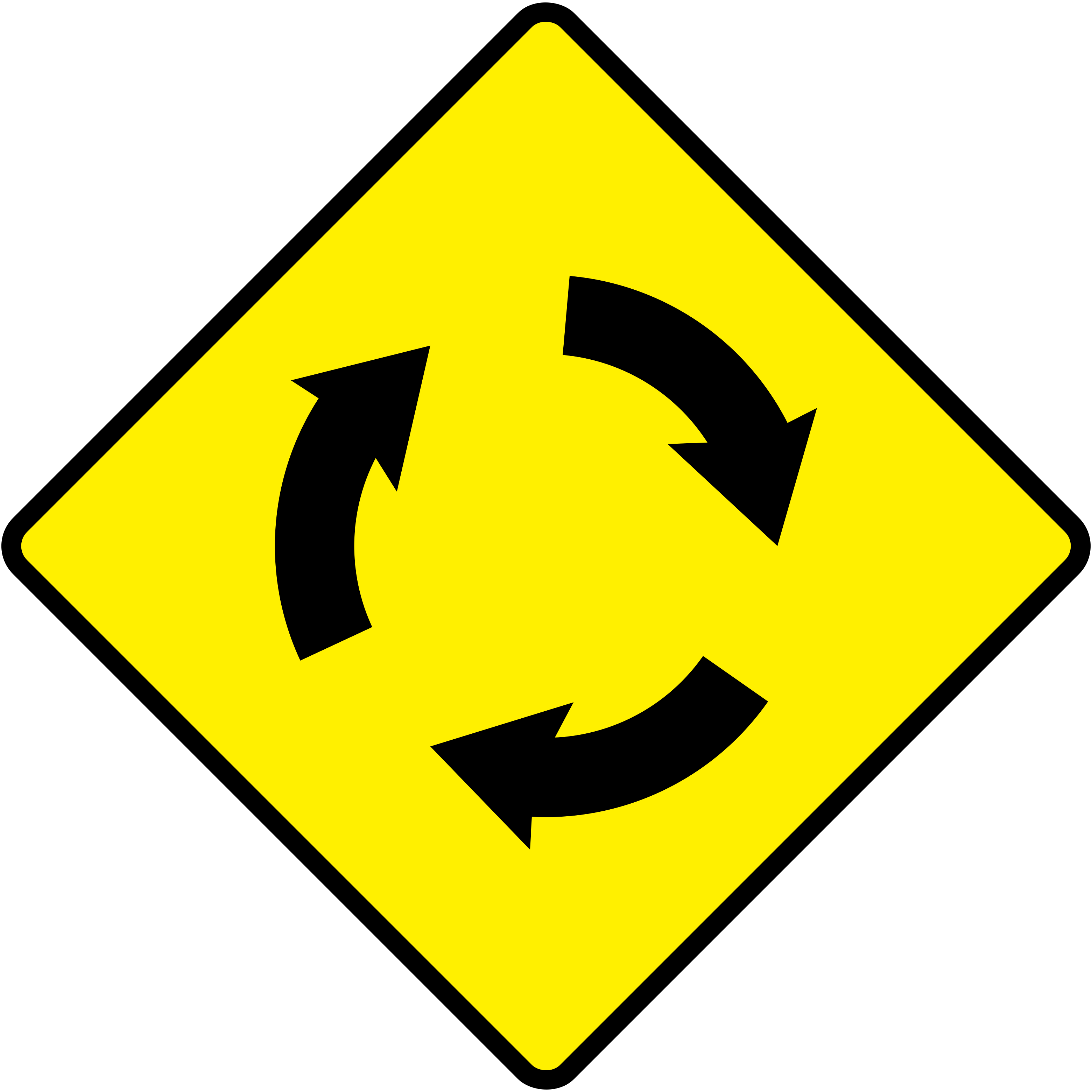
9. What does this traffic sign mean?
This traffic sign indicates a warning for a roundabout. A roundabout lies ahead. Reduce speed and follow the applicable priority signs, traffic signals and local roundabout rules when approaching and entering it.
English • W 043 • Roundabout ahead. A roundabout is ahead. Reduce speed and prepare to give way as required by its signs and markings.
Sources
🔗 Commons.wikimedia.org
🔗 Roadguidelines.ie • Department of Transport • Traffic Signs Manual • W 043
SVG source: Government of Ireland – Department of Transport • Public domain • Original revision 2021-10-28. Wikimedia original unmodified.
Artwork verified against Roadguidelines.ie • official published diagram W 043.
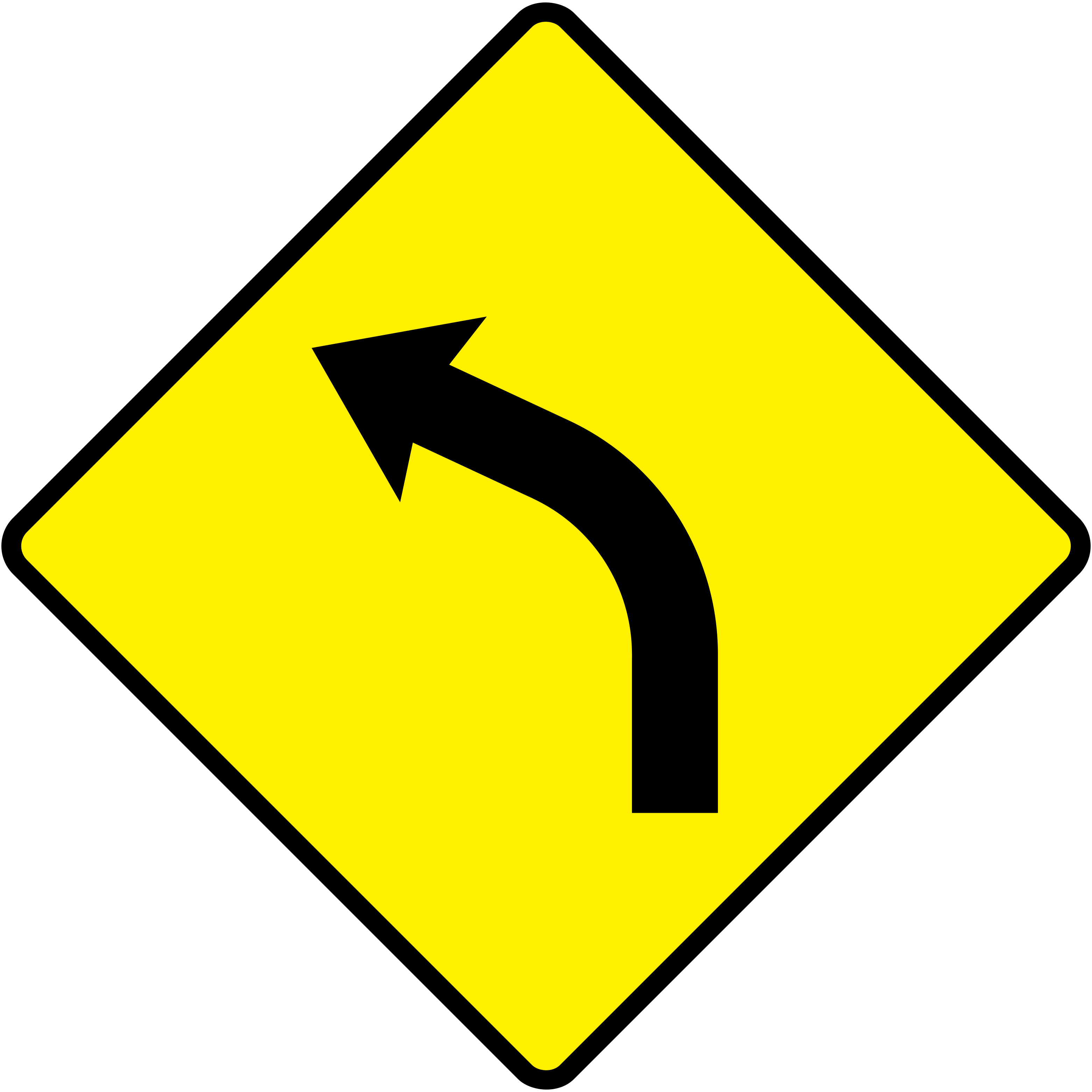
10. What does this traffic sign mean?
This traffic sign indicates a warning for a curve to the left. A left-hand bend lies ahead. Reduce speed before entering the curve, maintain your lane position and use smooth steering.
English • W 051L • Sharp bend to the left. A sharp bend to the left is ahead. Adjust your speed to the bend and visibility.
Sources
🔗 Commons.wikimedia.org
🔗 Roadguidelines.ie • Department of Transport • Traffic Signs Manual • W 051L
SVG source: Government of Ireland – Department of Transport • Public domain • Original revision 2021-11-02. Wikimedia original unmodified.
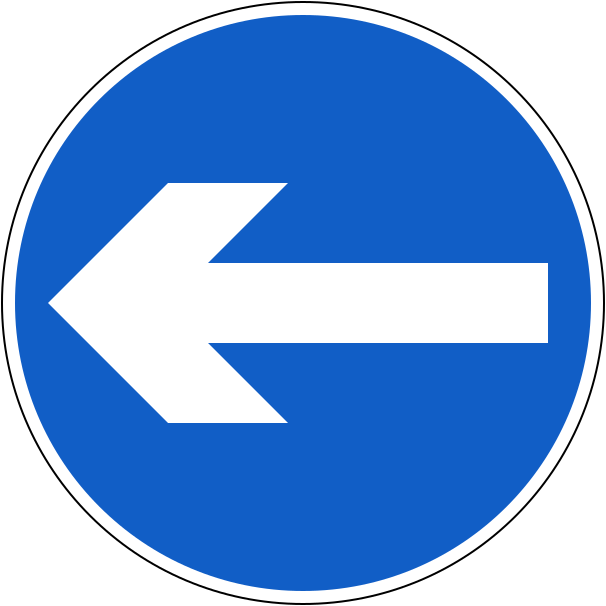
11. What does this traffic sign mean?
This traffic sign indicates a mandatory direction to the left. Traffic must proceed to the left at the sign and may not continue straight ahead or to the right.
English • RUS 006 • Turn left. Traffic must turn left at the junction indicated.
Sources
🔗 Commons.wikimedia.org
🔗 Roadguidelines.ie • Department of Transport • Traffic Signs Manual • RUS 006
🔗 Irishstatutebook.ie • Road Traffic (Traffic Signs) Regulations 2025 (EN)
SVG source: Government of Ireland – Department of Transport • Public domain • Original revision 2023-07-31. Wikimedia original unmodified.
Artwork verified against Roadguidelines.ie • official published diagram RUS 006.
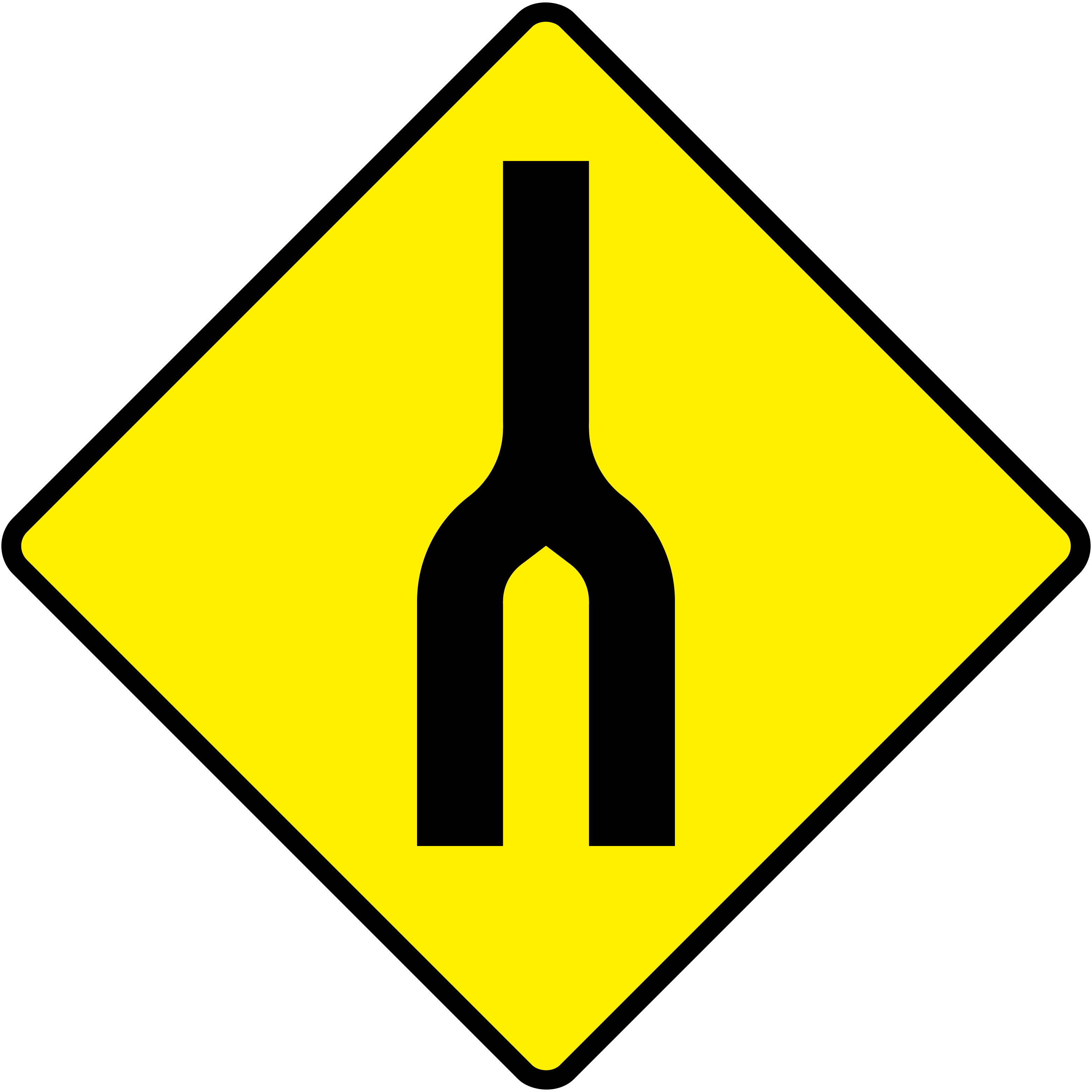
12. What does this traffic sign mean?
This traffic sign indicates a warning for two roads that merge. Two traffic streams join ahead. Adjust your speed and position, maintain a safe gap and be prepared for vehicles merging into the traffic flow.
English • W 095 • Dual carriageway ends. The dual carriageway ends ahead. Prepare for opposing traffic on an undivided carriageway.
Sources
🔗 Commons.wikimedia.org
🔗 Roadguidelines.ie • Department of Transport • Traffic Signs Manual • W 095
SVG source: Government of Ireland – Department of Transport • Public domain • Original revision 2021-10-27. Wikimedia original unmodified.
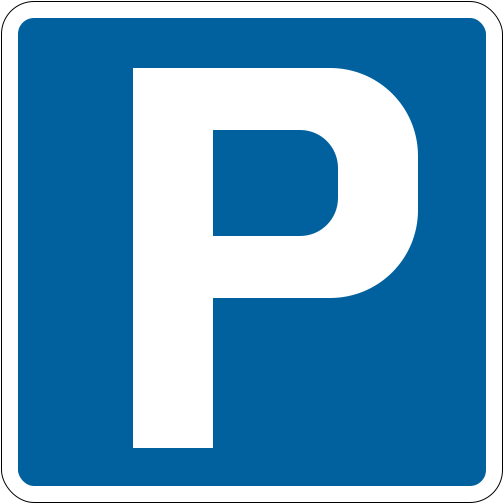
13. What does this traffic sign mean?
This traffic sign indicates that parking is allowed. Vehicles may be parked in the area covered by the sign subject to any indicated conditions, restrictions or local parking rules.
English • F 200 • Parking. A parking place is available. Observe any parking conditions, charges and time limits shown on accompanying signs.
Sources
🔗 Commons.wikimedia.org (Gigillo83 • CC BY-SA 3.0)
🔗 Roadguidelines.ie • Department of Transport • Traffic Signs Manual • F 200 © Crown copyright. Traffic signs are Crown copyright. You may reproduce traffic signs free of charge and without having to seek permission, but you must reproduce them accurately and not in a misleading context (e.g. not on roadside billboards where they could mislead drivers). (ref [1])
Replacement SVG: Commons.wikimedia.org • Wikimedia Commons original • Government of the United Kingdom – Department for Transport • OGL v1.0 • Original revision 2026-06-06. Wikimedia original unmodified.
Artwork verified against Roadguidelines.ie • official published diagram F 200.
Image via Commons.wikimedia.org
Government of the United Kingdom – Department for Transport • OGL v1.0 • Source revision 2026-06-06. Wikimedia original unmodified.
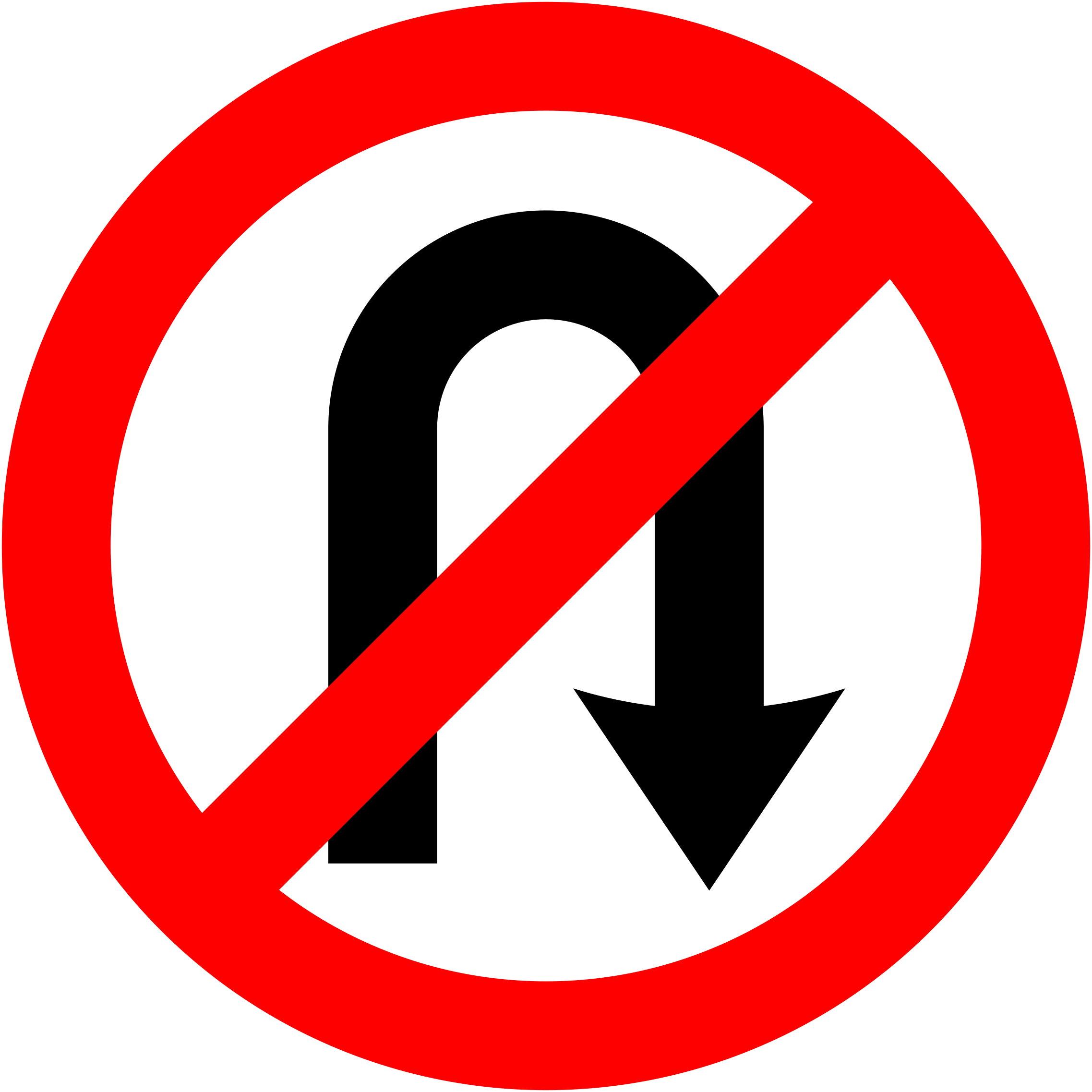
14. What does this traffic sign mean?
This traffic sign indicates that turning around (making a U-turn) is prohibited. A U-turn may not be made where the prohibition applies. Other movements may still be permitted unless another restriction applies.
English • RUS 017 • No U-turn. Vehicular traffic must not make a U-turn.
Sources
🔗 Commons.wikimedia.org
🔗 Roadguidelines.ie • Department of Transport • Traffic Signs Manual • RUS 017
🔗 Irishstatutebook.ie • Road Traffic (Traffic Signs) Regulations 2025 (EN)
SVG source: Government of Ireland – Department of Transport • Public domain • Original revision 2021-12-25. Wikimedia original unmodified.
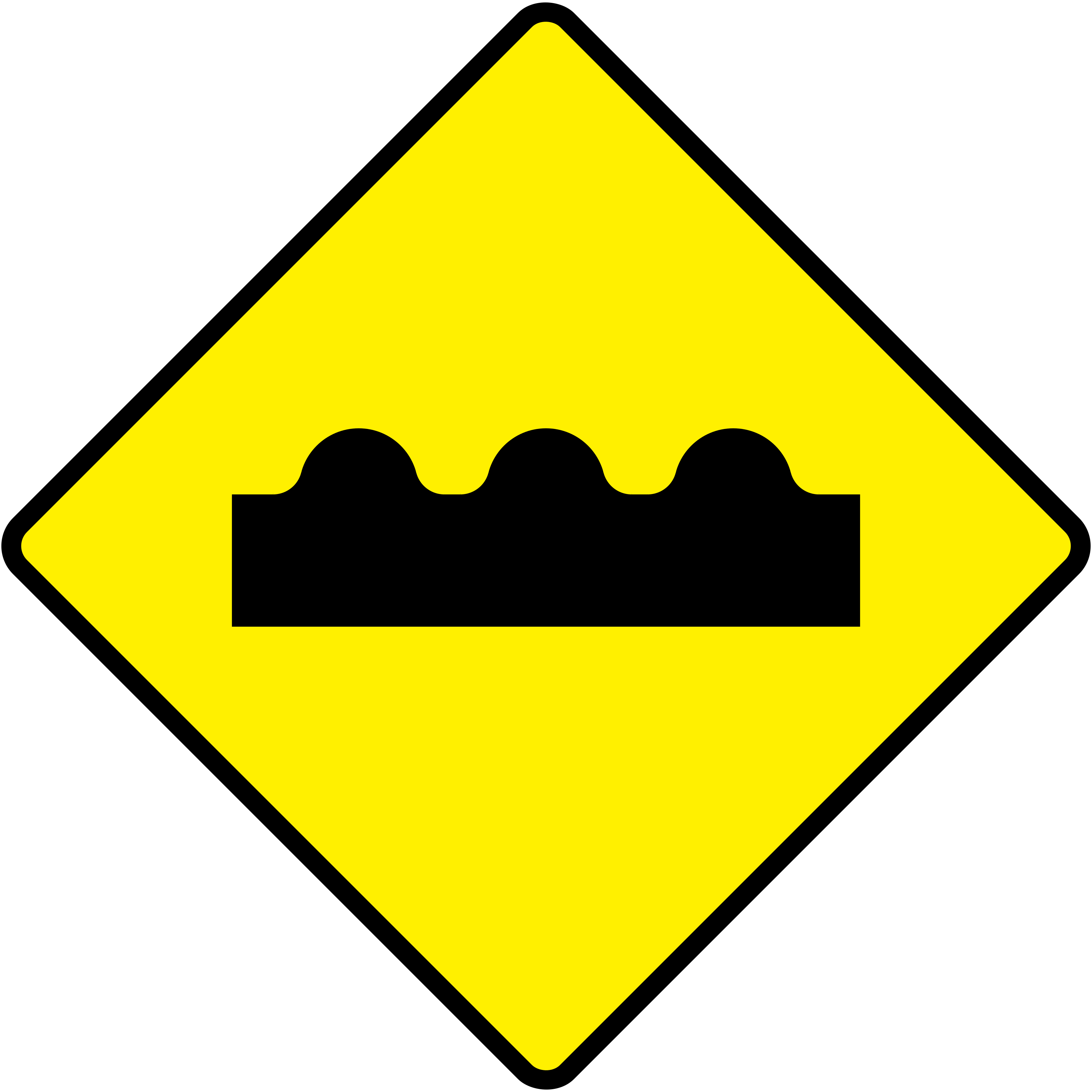
15. What does this traffic sign mean?
This traffic sign indicates a warning for a bad or uneven road surface. Potholes, bumps, depressions or other surface irregularities may affect vehicle stability and braking. Reduce speed and avoid sudden manoeuvres.
English • W 133 • Uneven road. The road surface is uneven ahead. Reduce speed as necessary.
Sources
🔗 Commons.wikimedia.org
🔗 Roadguidelines.ie • Department of Transport • Traffic Signs Manual • W 133
SVG source: Government of Ireland – Department of Transport • Public domain • Original revision 2021-08-20. Wikimedia original unmodified.
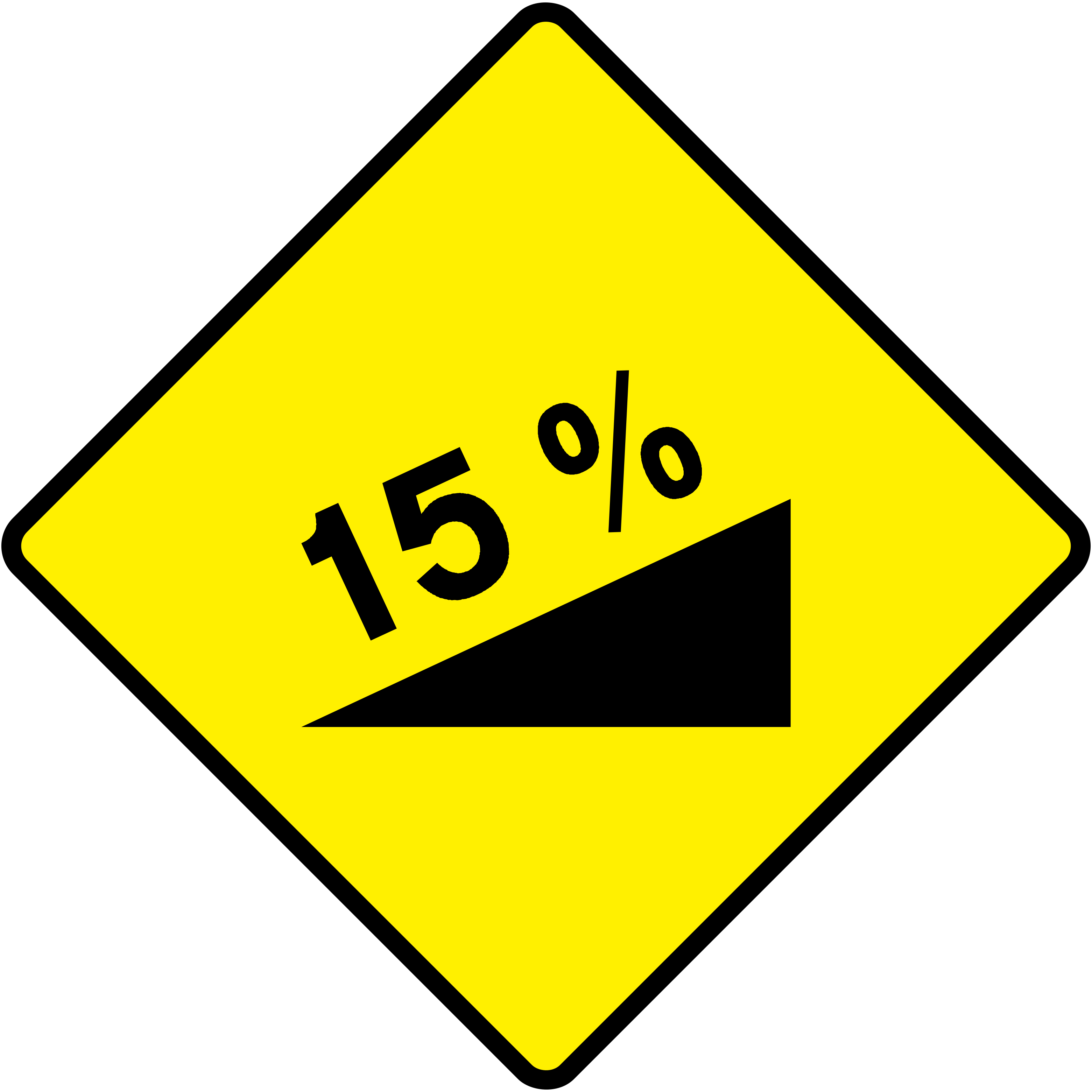
16. What does this traffic sign mean?
This traffic sign indicates a warning for a steep ascent. A steep uphill gradient lies ahead and may cause heavy or low-powered vehicles to lose speed. Select a suitable gear, maintain a safe following distance and be prepared for slower traffic.
English • W 106 • Steep ascent. A steep uphill gradient is ahead; the example shows 15%.
Sources
🔗 Commons.wikimedia.org
🔗 Roadguidelines.ie • Department of Transport • Traffic Signs Manual • W 106
SVG source: Government of Ireland – Department of Transport • Public domain • Original revision 2021-09-08. Wikimedia original unmodified.
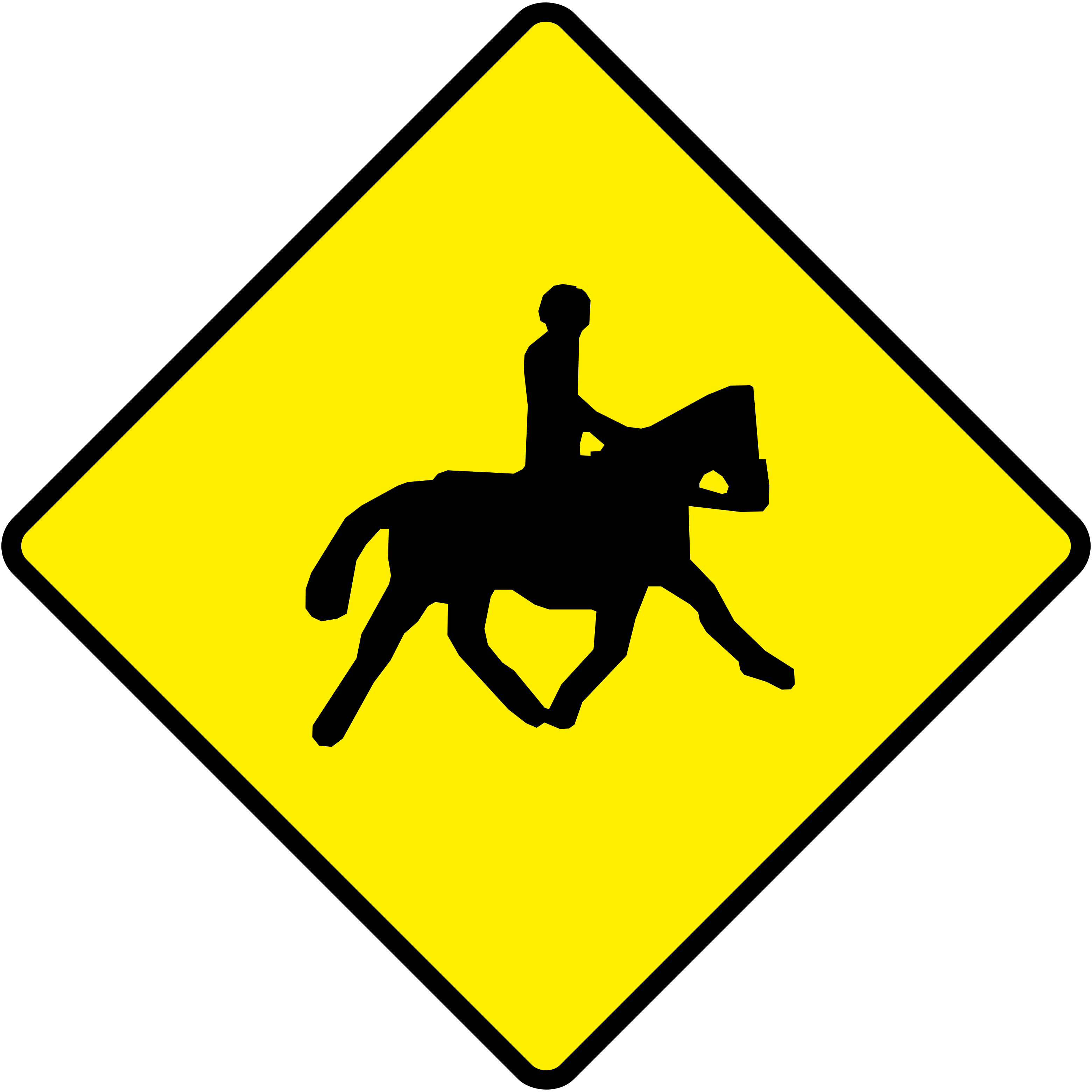
17. What does this traffic sign mean?
This traffic sign indicates a warning for equestrians. Horse riders may be on or near the road ahead. Reduce speed, allow plenty of space and avoid unnecessary use of the horn or sudden movements that could startle a horse.
English • W 150 • Accompanied horses. Accompanied horses or ponies may be on or crossing the road ahead. Pass slowly and leave ample space.
Sources
🔗 Commons.wikimedia.org
🔗 Roadguidelines.ie • Department of Transport • Traffic Signs Manual • W 150
SVG source: Government of Ireland – Department of Transport • Public domain • Original revision 2021-10-23. Wikimedia original unmodified.
Artwork verified against Roadguidelines.ie • official published diagram W 150.
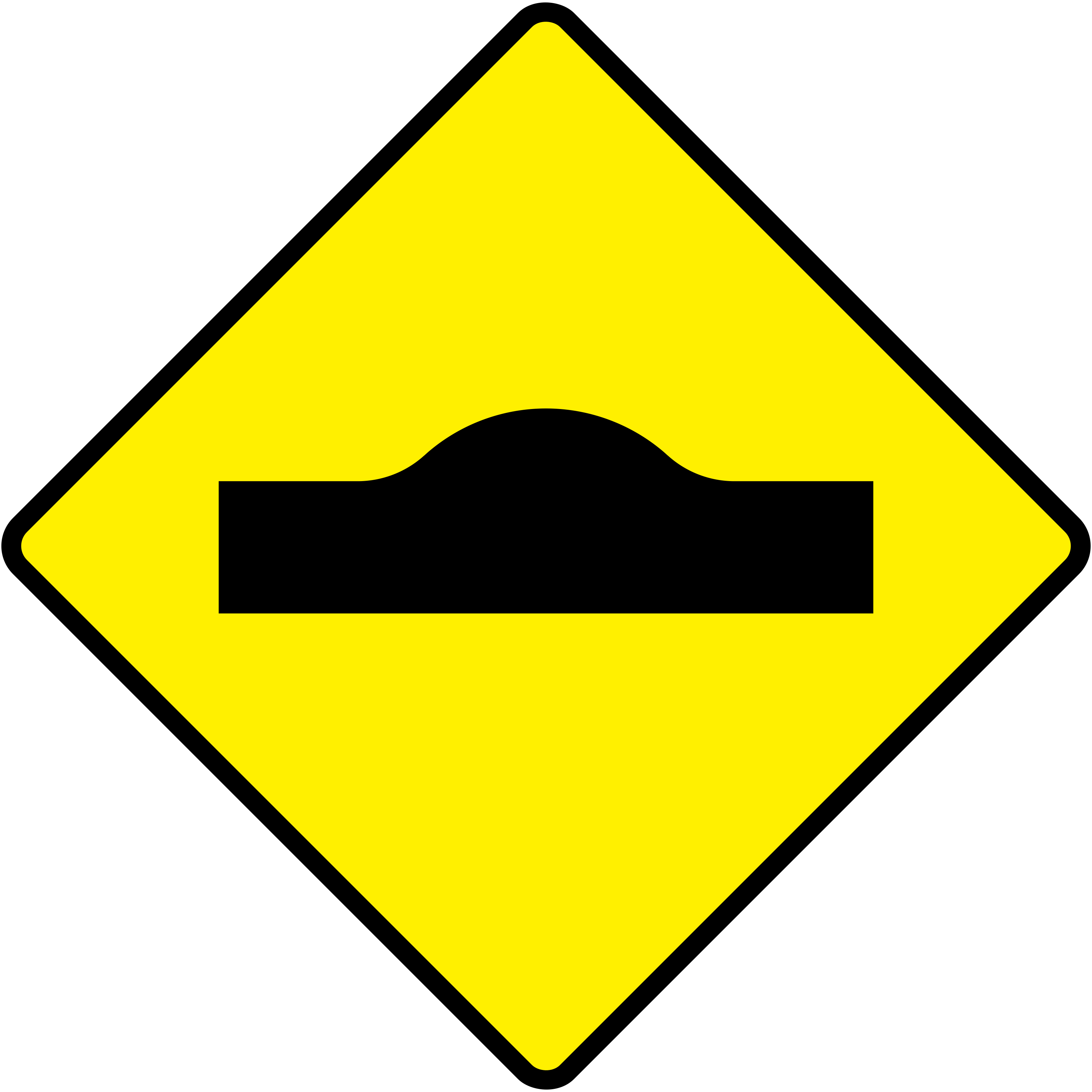
18. What does this traffic sign mean?
This traffic sign indicates a warning for a speed bump. A raised traffic-calming feature lies ahead. Reduce speed before reaching it to maintain vehicle control and avoid damage or discomfort.
English • W 130 • Road hump. A road hump is ahead. Reduce speed to pass over it safely.
Sources
🔗 Commons.wikimedia.org
🔗 Roadguidelines.ie • Department of Transport • Traffic Signs Manual • W 130
SVG source: Government of Ireland – Department of Transport • Public domain • Original revision 2021-08-22. Wikimedia original unmodified.
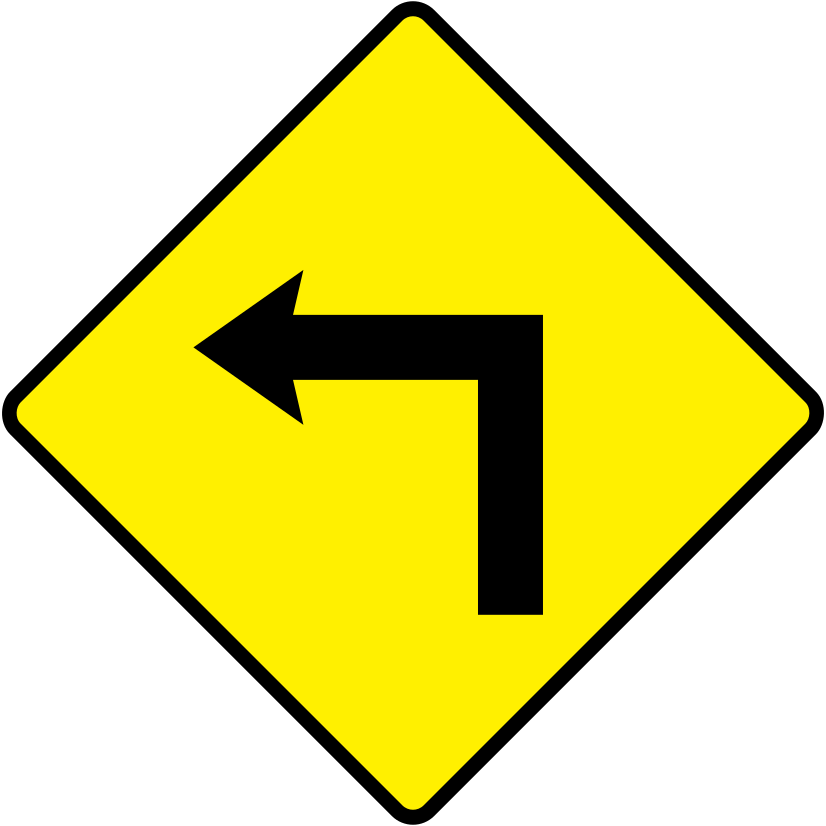
19. What does this traffic sign mean?
This traffic sign indicates a warning for a sharp curve to the left. A tight left-hand bend lies ahead. Reduce speed before entering the curve, remain within your lane and use smooth steering.
English • W 050L • Sharp corner to the left. A sharp corner to the left is ahead. Reduce speed before entering it.
Sources
🔗 Commons.wikimedia.org
🔗 Roadguidelines.ie • Department of Transport • Traffic Signs Manual • W 050L
SVG source: Government of Ireland – Department of Transport • Public domain • Original revision 2022-07-11. Wikimedia original unmodified.
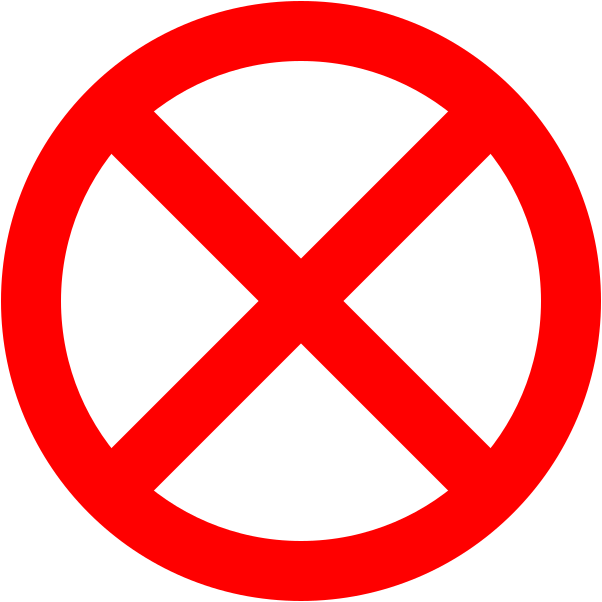
20. What does this traffic sign mean?
This traffic sign indicates that parking and stopping are prohibited. Vehicles may not stop or park voluntarily where the restriction applies, except where an applicable rule provides an exemption or stopping is required by traffic conditions.
English • RUS 010 • Clearway. Stopping or parking is prohibited during the periods shown on the accompanying plate. An END plate marks where the clearway restriction finishes.
Sources
🔗 Commons.wikimedia.org
🔗 Roadguidelines.ie • Department of Transport • Traffic Signs Manual • RUS 010
🔗 Irishstatutebook.ie • Road Traffic (Traffic Signs) Regulations 2025 (EN)
SVG source: Government of Ireland – Department of Transport • Public domain • Original revision 2022-01-23. Wikimedia original unmodified.
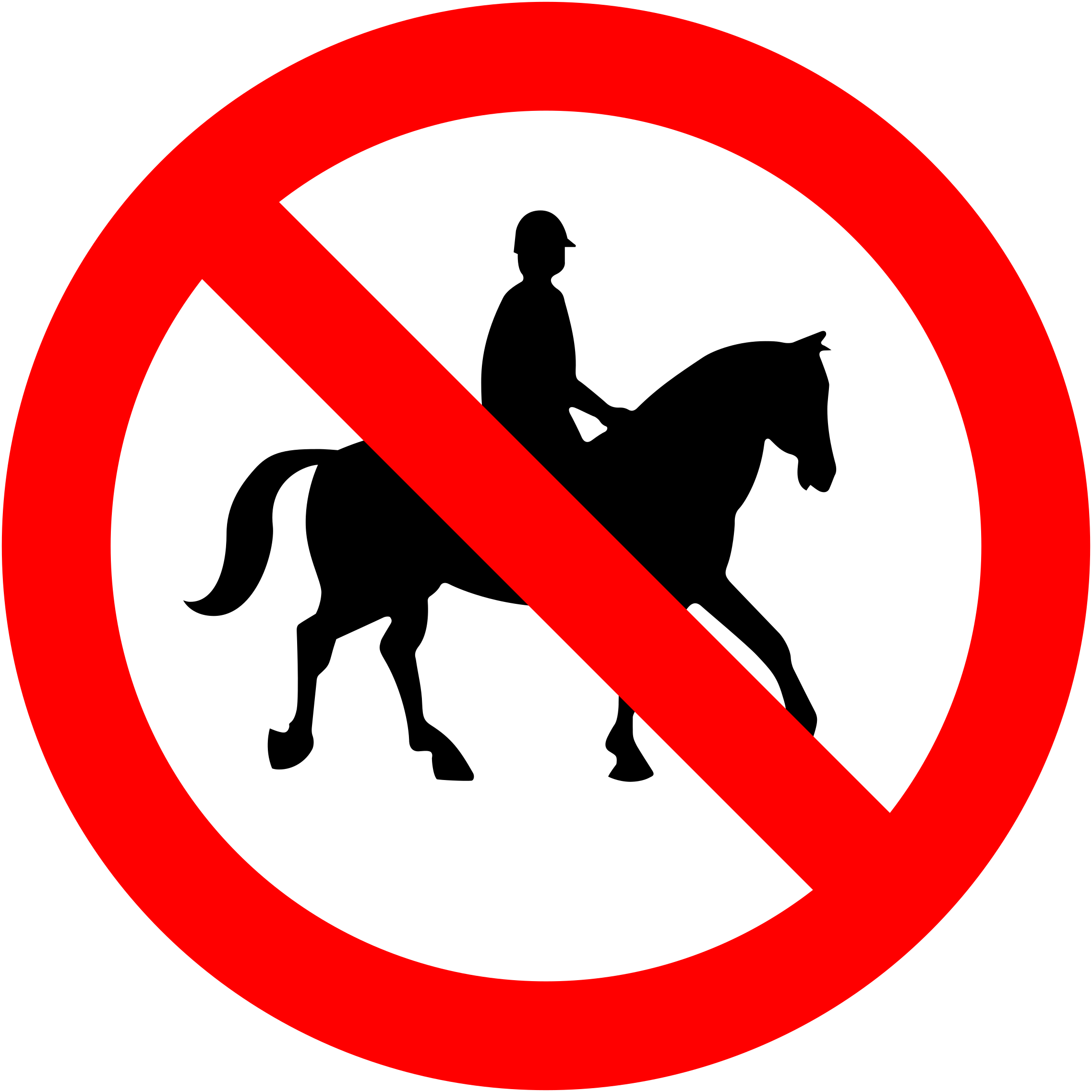
21. What does this traffic sign mean?
This traffic sign indicates that equestrians are prohibited. Equestrians may not enter or continue beyond the sign. Other road users may still be permitted unless another restriction applies.
English • RUS 056 • No animals. People riding, leading, driving or in charge of horses or other animals must not proceed beyond this sign. The statutory animal prohibition excludes cats and dogs.
Sources
🔗 Commons.wikimedia.org
🔗 Roadguidelines.ie • Department of Transport • Traffic Signs Manual • RUS 056
🔗 Irishstatutebook.ie • Road Traffic (Traffic Signs) Regulations 2025 (EN)
SVG source: Government of Ireland – Department of Transport • Public domain • Original revision 2021-07-14. Wikimedia original unmodified.
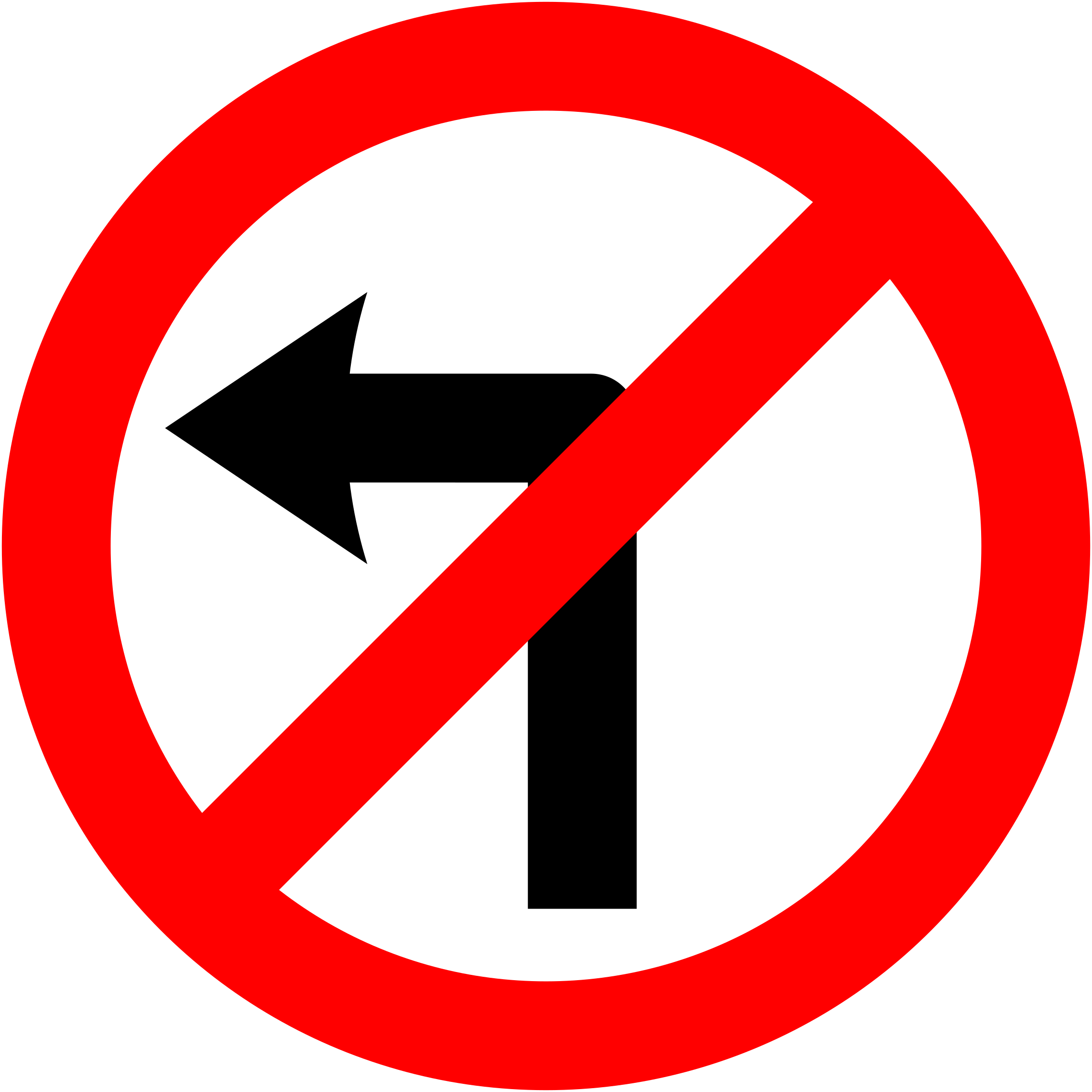
22. What does this traffic sign mean?
This traffic sign indicates that turning left is prohibited. A left turn may not be made where the sign applies. Other movements may still be permitted unless another restriction applies.
English • RUS 013 • No left turn. Vehicular traffic must not turn left at the junction, subject to any lawfully indicated exception.
Sources
🔗 Commons.wikimedia.org
🔗 Roadguidelines.ie • Department of Transport • Traffic Signs Manual • RUS 013
🔗 Irishstatutebook.ie • Road Traffic (Traffic Signs) Regulations 2025 (EN)
SVG source: Government of Ireland – Department of Transport • Public domain • Original revision 2021-12-25. Wikimedia original unmodified.
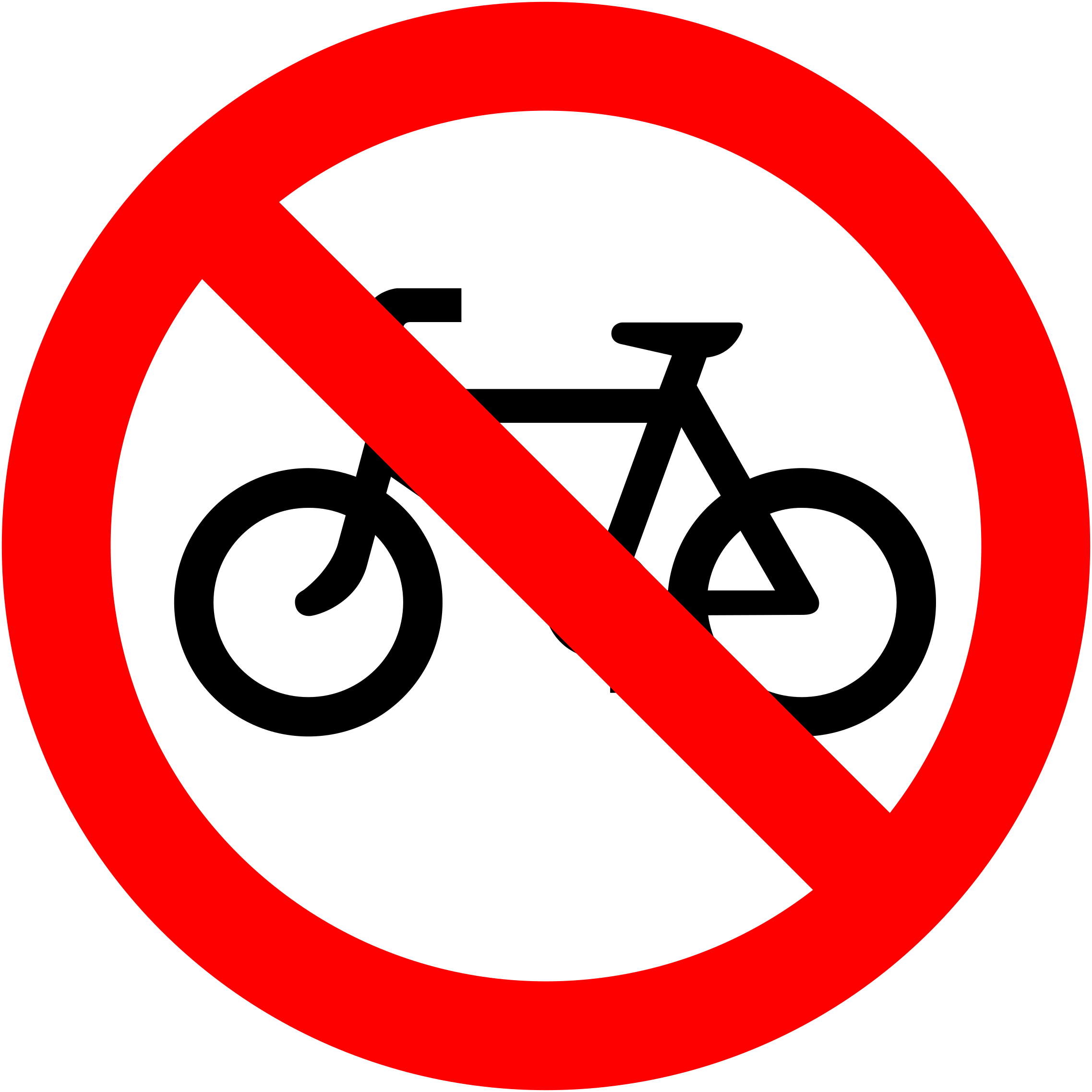
23. What does this traffic sign mean?
This traffic sign indicates that cyclists are prohibited. Cyclists may not enter or continue beyond the sign. Other road users may still be permitted unless another restriction applies.
English • RUS 055 • No cycles, e-mopeds or electric scooters. Pedal cycles, e-mopeds and electric scooters must not proceed beyond this sign.
Sources
🔗 Commons.wikimedia.org
🔗 Roadguidelines.ie • Department of Transport • Traffic Signs Manual • RUS 055
🔗 Irishstatutebook.ie • Road Traffic (Traffic Signs) Regulations 2025 (EN)
SVG source: Government of Ireland – Department of Transport • Public domain • Original revision 2021-07-16. Wikimedia original unmodified.
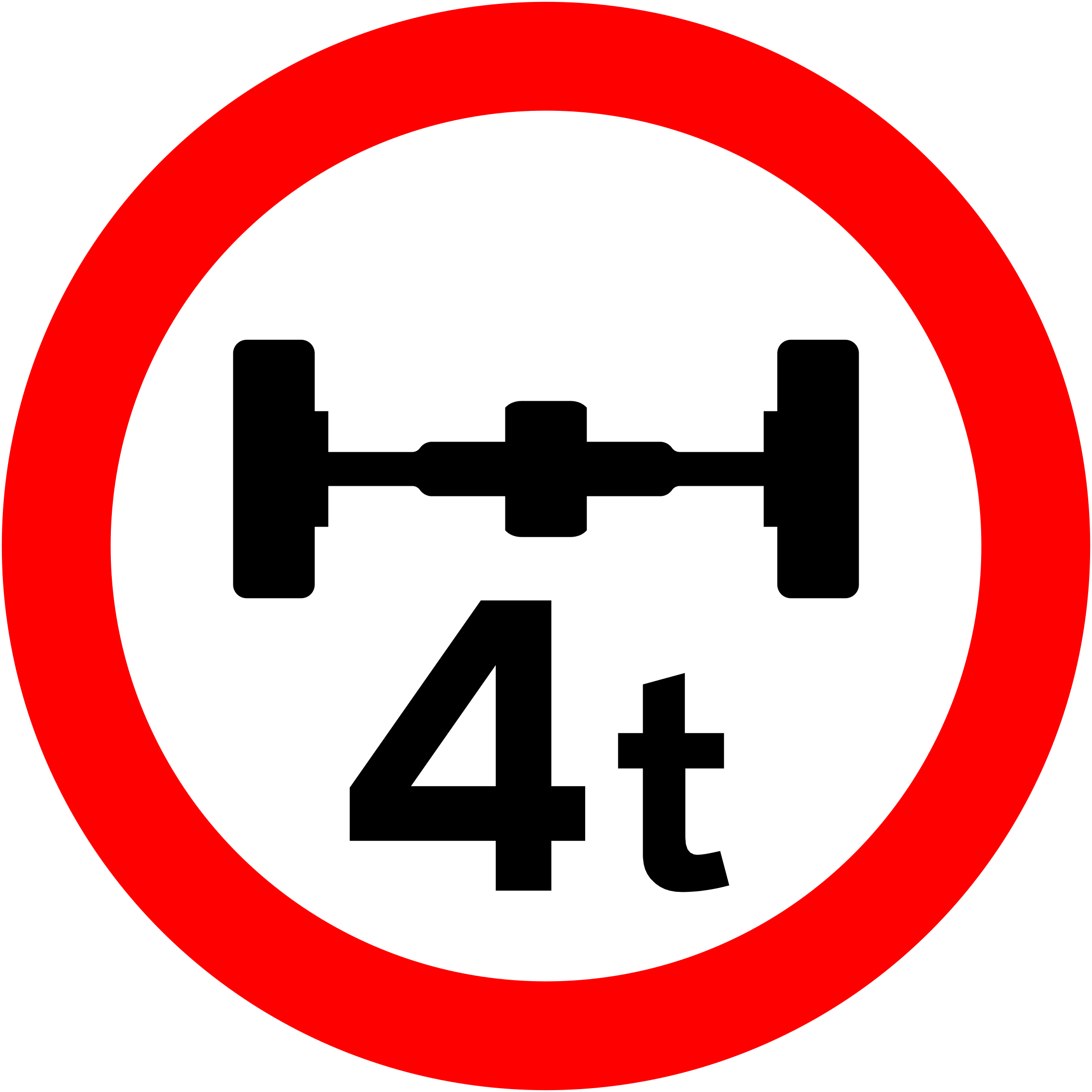
24. What does this traffic sign mean?
This traffic sign indicates that vehicles exceeding the indicated axle-load limit are prohibited. A vehicle whose load on an axle exceeds the displayed limit may not continue beyond the sign.
English • RUS 054 • Maximum axle weight. Do not proceed if the load on any axle exceeds 4 tonnes.
Sources
🔗 Commons.wikimedia.org
🔗 Roadguidelines.ie • Department of Transport • Traffic Signs Manual • RUS 054
🔗 Irishstatutebook.ie • Road Traffic (Traffic Signs) Regulations 2025 (EN)
SVG source: Government of Ireland – Department of Transport • Public domain • Original revision 2021-12-12. Wikimedia original unmodified.
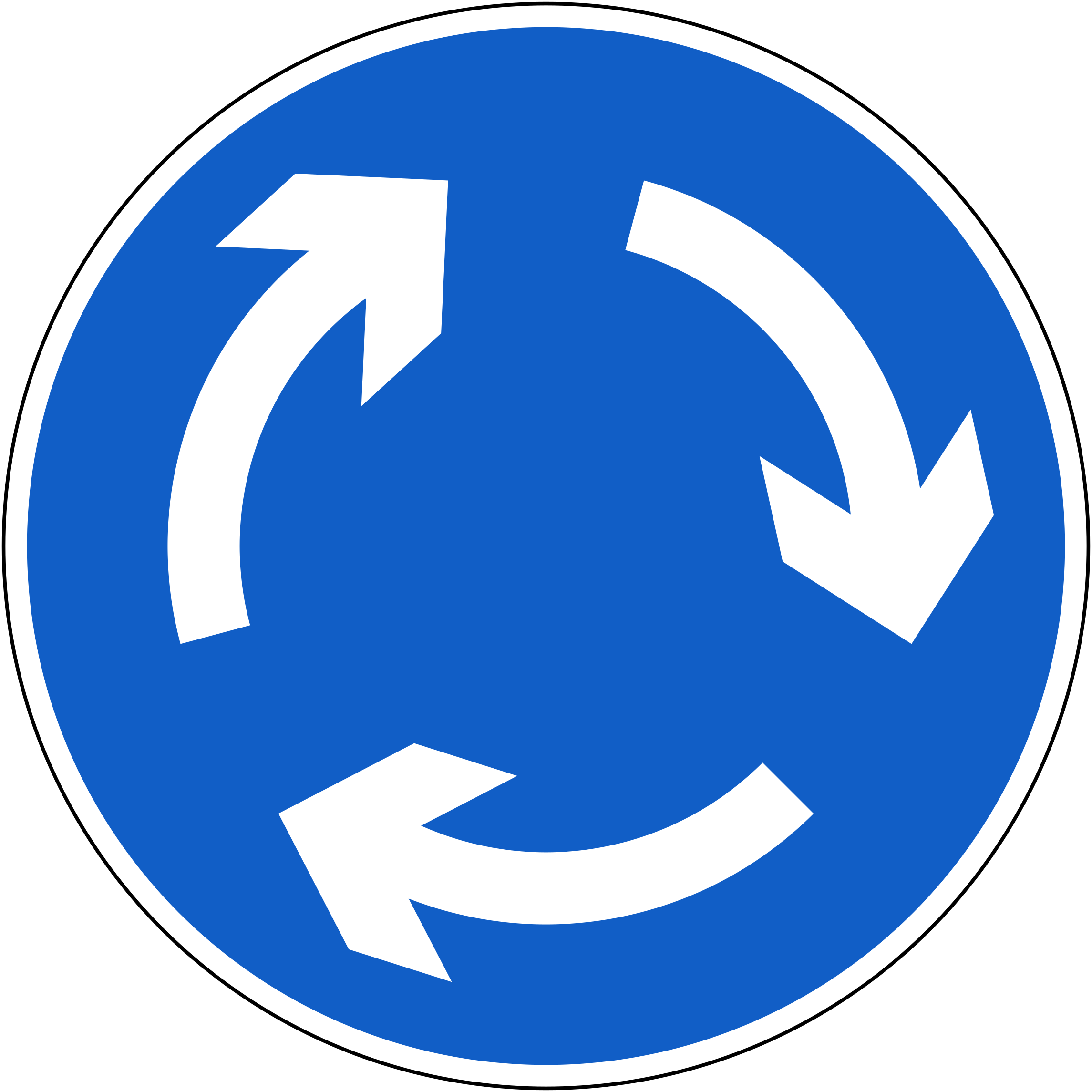
25. What does this traffic sign mean?
This traffic sign indicates the mandatory direction around a roundabout. Traffic must circulate in the direction shown by the arrows. The sign does not itself determine priority; follow the applicable priority signs, traffic signals and local rules.
English • RUS 049 • Mini-roundabout. Follow the clockwise direction indicated by the arrows at the mini-roundabout and yield to traffic approaching from the right as required.
Sources
🔗 Commons.wikimedia.org
🔗 Roadguidelines.ie • Department of Transport • Traffic Signs Manual • RUS 049
🔗 Irishstatutebook.ie • Road Traffic (Traffic Signs) Regulations 2025 (EN)
SVG source: Government of Ireland – Department of Transport • Public domain • Original revision 2023-08-01. Wikimedia original unmodified.
Artwork verified against Roadguidelines.ie • official published diagram RUS 049.
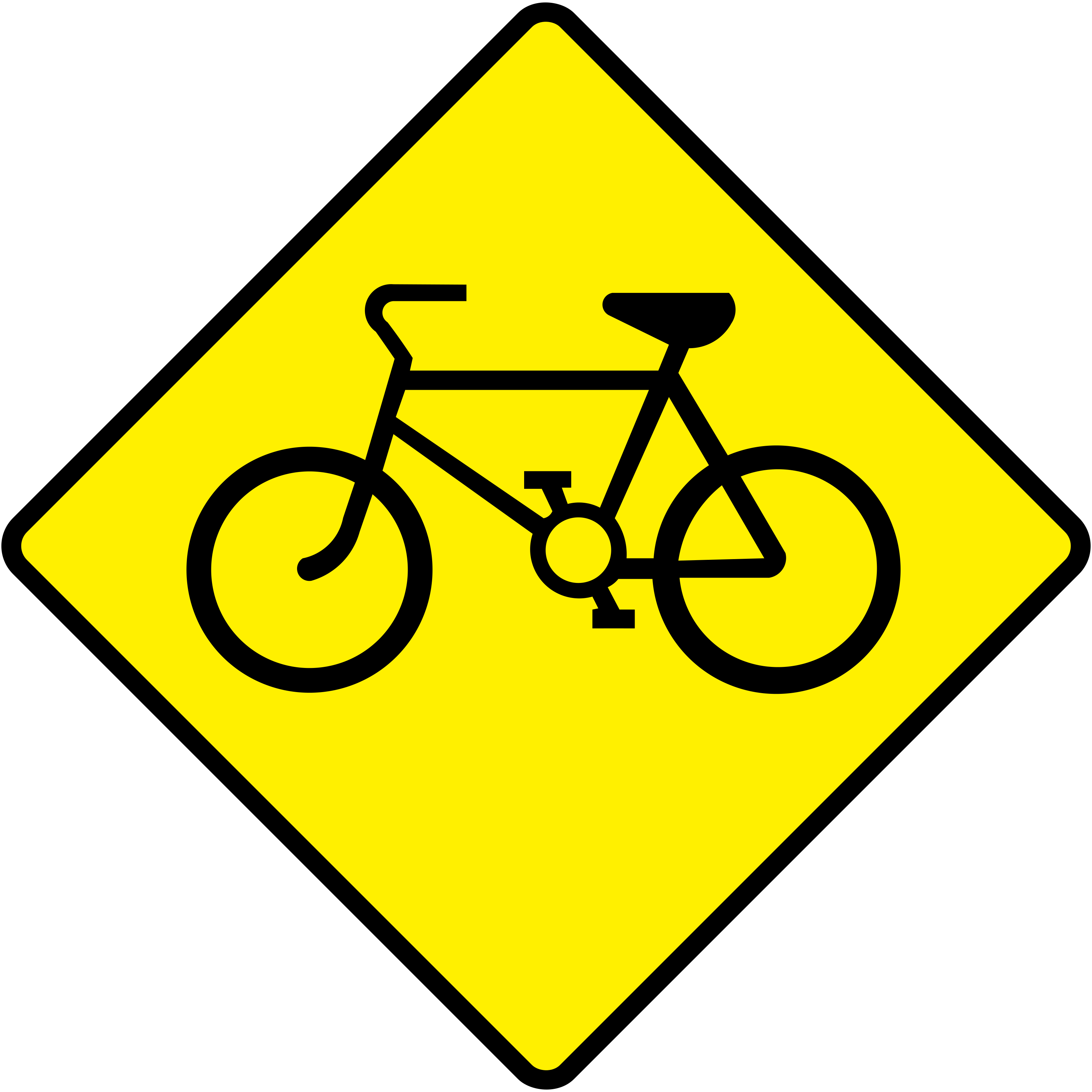
26. What does this traffic sign mean?
This traffic sign indicates a warning for cyclists. Cyclists may be riding along or crossing the road ahead. Reduce speed, watch carefully for cyclists and maintain the passing distance required by the applicable local rules.
English • W 143 • Cyclists. A cycle route may cross or join the road, or cyclists may be present along the route. Watch for cyclists and allow adequate space.
Sources
🔗 Commons.wikimedia.org
🔗 Roadguidelines.ie • Department of Transport • Traffic Signs Manual • W 143
SVG source: Government of Ireland – Department of Transport • Public domain • Original revision 2021-10-23. Wikimedia original unmodified.
Artwork verified against Roadguidelines.ie • official published diagram W 143.
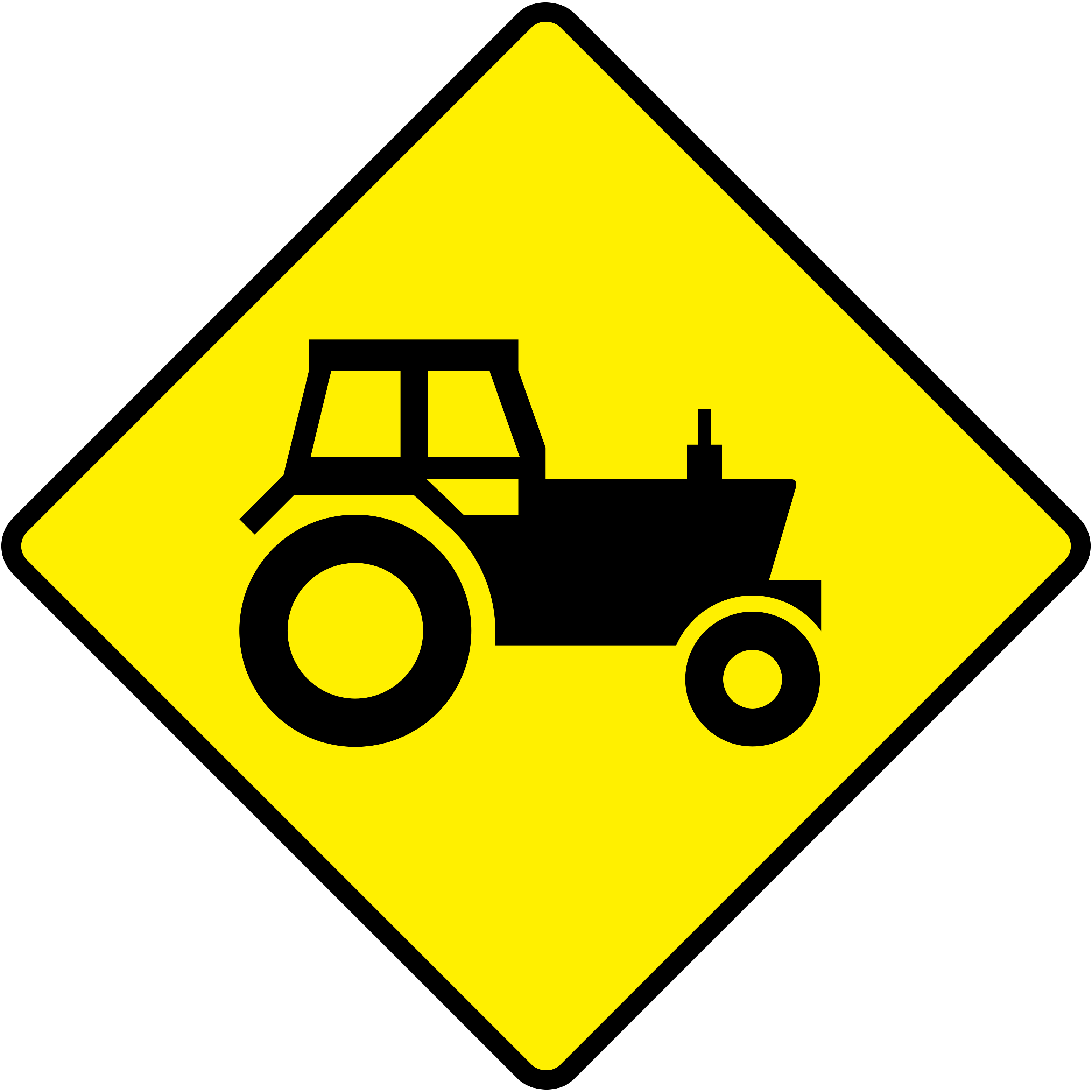
27. What does this traffic sign mean?
This traffic sign indicates a warning for tractors or other agricultural vehicles. Slow-moving agricultural vehicles may enter, cross or travel along the road ahead. Reduce speed and overtake only where it is permitted and clearly safe.
English • W 168 • Tractors. Tractors may be on or joining the road ahead.
Sources
🔗 Commons.wikimedia.org
🔗 Roadguidelines.ie • Department of Transport • Traffic Signs Manual • W 168
SVG source: Government of Ireland – Department of Transport • Public domain • Original revision 2021-07-27. Wikimedia original unmodified.
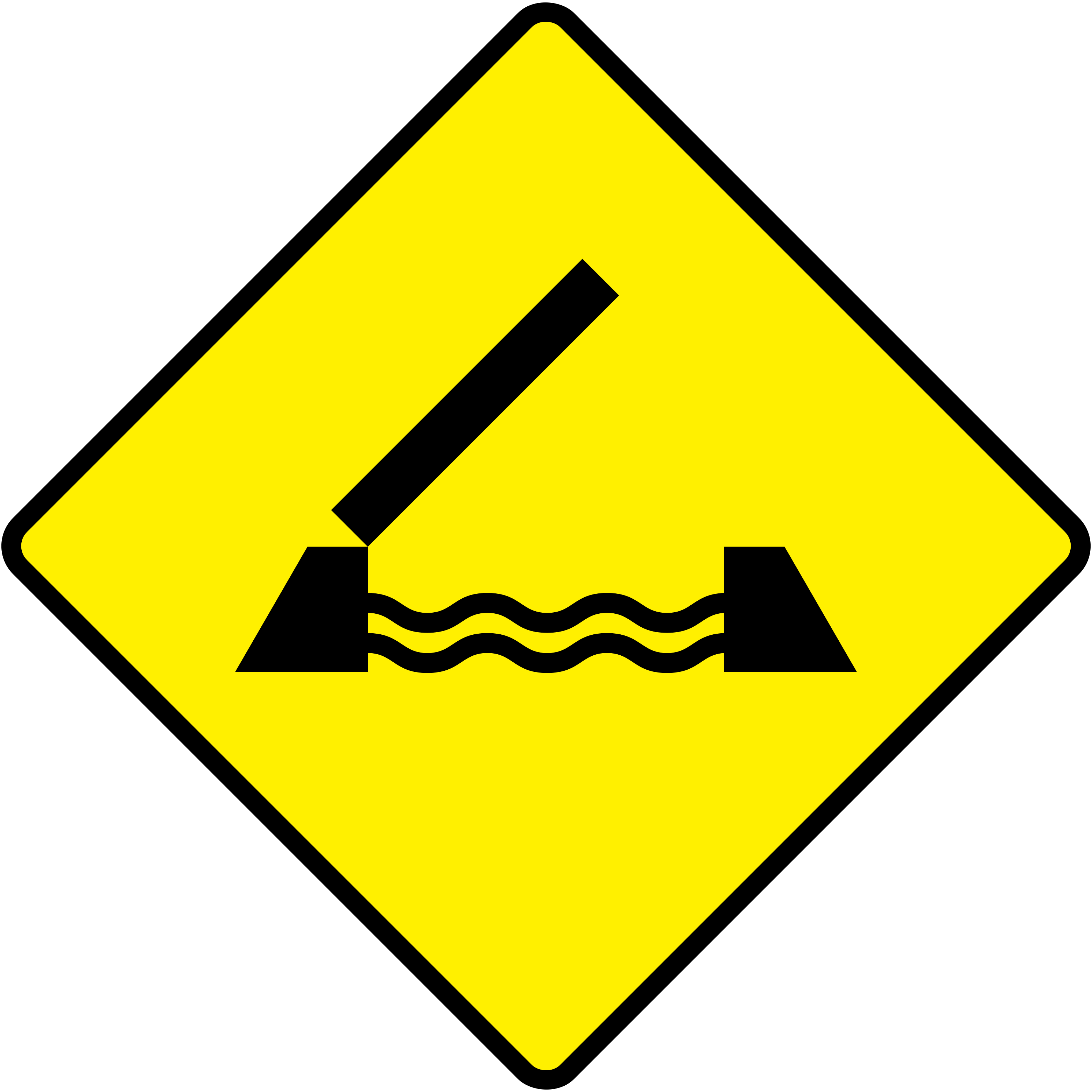
28. What does this traffic sign mean?
This traffic sign indicates a warning for a movable bridge. The bridge ahead can open, lift or move to allow water traffic to pass. Reduce speed and be prepared to stop when required by barriers, traffic lights or other signals.
English • W 167 • Opening bridge. An opening bridge is ahead. Be prepared to stop if the signals or barriers require it.
Sources
🔗 Commons.wikimedia.org
🔗 Roadguidelines.ie • Department of Transport • Traffic Signs Manual • W 167
SVG source: Government of Ireland – Department of Transport • Public domain • Original revision 2021-07-27. Wikimedia original unmodified.
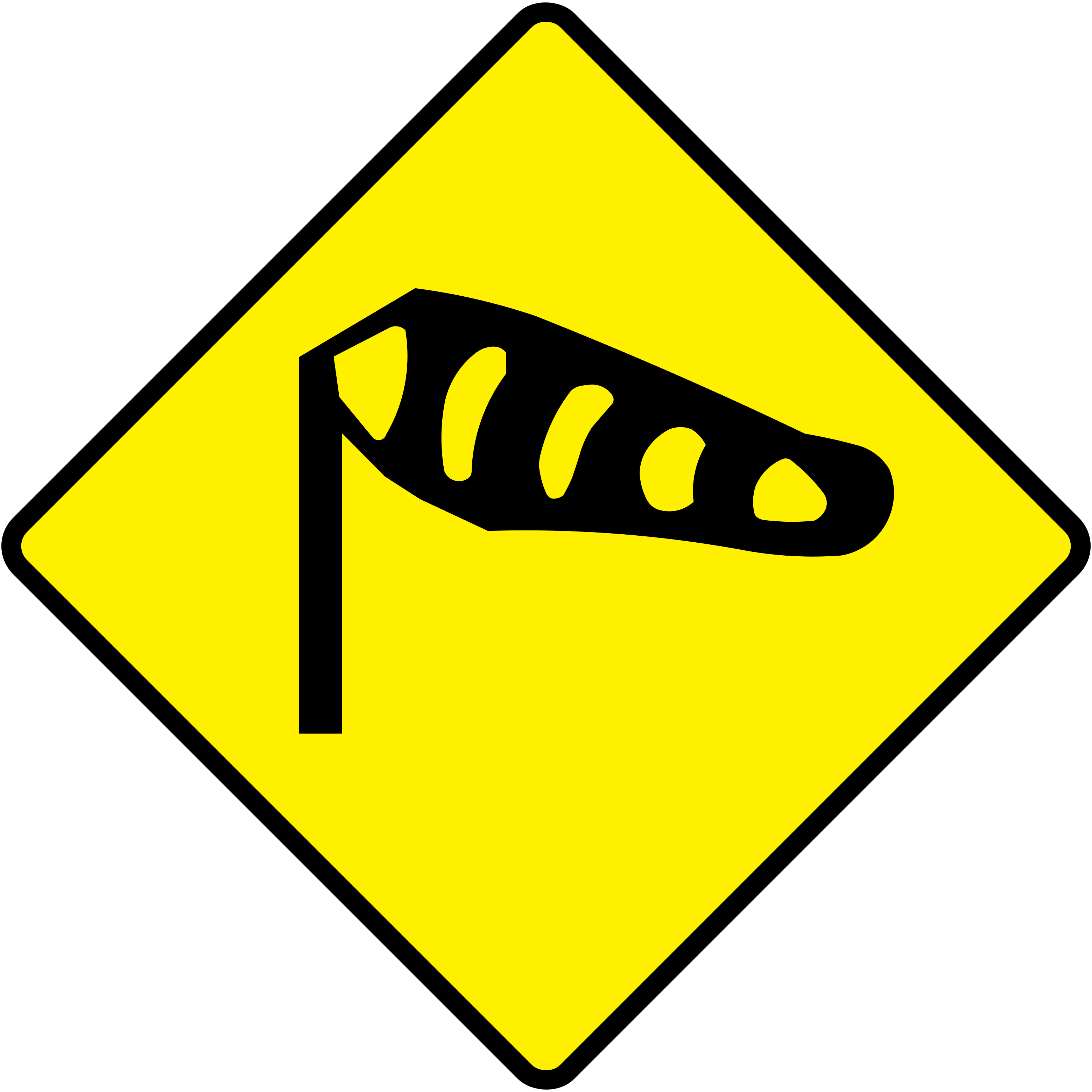
29. What does this traffic sign mean?
This traffic sign indicates a warning for strong crosswinds. Side winds may suddenly affect vehicle stability and steering. Reduce speed, keep a firm but controlled grip on the steering wheel and take extra care with high-sided vehicles, motorcycles and trailers.
English • W 166 • Crosswind. Strong crosswinds may affect vehicles and riders ahead.
Sources
🔗 Commons.wikimedia.org
🔗 Roadguidelines.ie • Department of Transport • Traffic Signs Manual • W 166
SVG source: Government of Ireland – Department of Transport • Public domain • Original revision 2021-10-22. Wikimedia original unmodified.
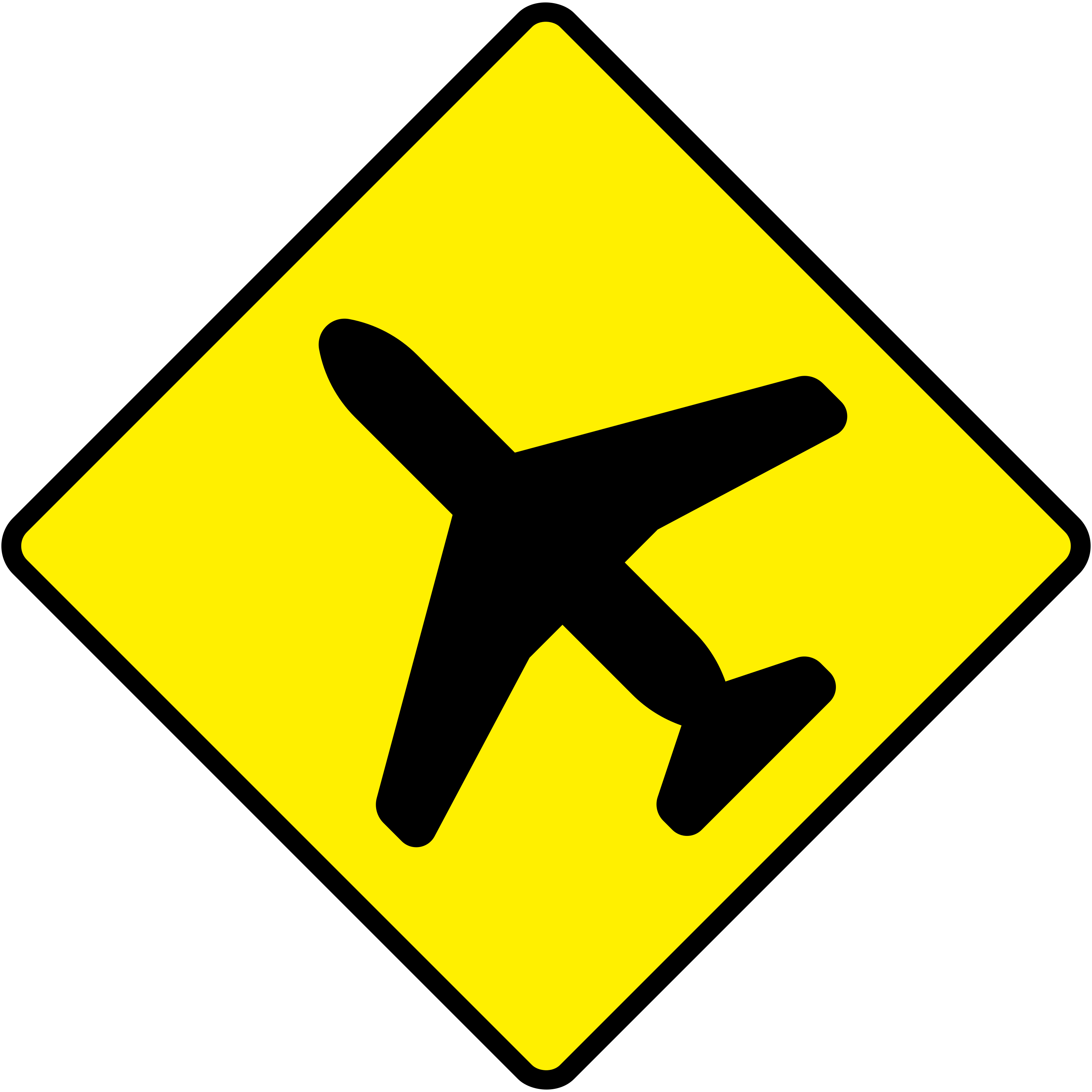
30. What does this traffic sign mean?
This traffic sign indicates a warning for low-flying aircraft. Aircraft may pass over the road at low altitude and can create sudden noise or visual distraction. Keep your attention on the road and maintain control of the vehicle.
English • W 165 • Low-flying aircraft. Low-flying aircraft may occur ahead. Do not be distracted by aircraft or sudden noise.
Sources
🔗 Commons.wikimedia.org
🔗 Roadguidelines.ie • Department of Transport • Traffic Signs Manual • W 165
SVG source: Government of Ireland – Department of Transport • Public domain • Original revision 2021-10-24. Wikimedia original unmodified.
Artwork verified against Roadguidelines.ie • official published diagram W 165.
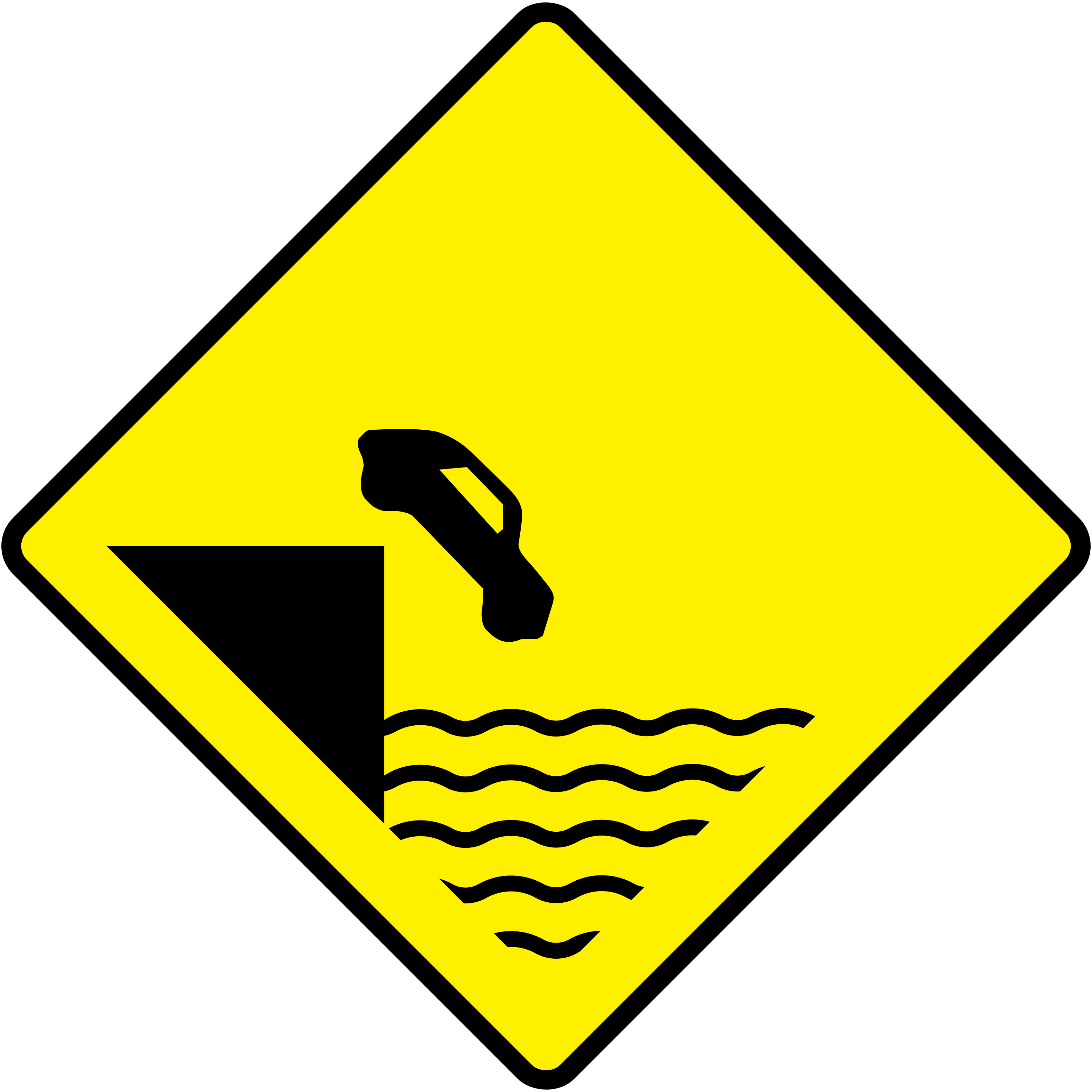
31. What does this traffic sign mean?
This traffic sign indicates a warning for a quayside or riverbank. The road approaches or runs close to an edge beside water, where a vehicle could leave the roadway and enter the water. Reduce speed, identify the road edge carefully and take extra care in darkness or poor visibility.
English • W 160 • Unprotected water. An unprotected quayside, river bank or other water hazard is ahead.
Sources
🔗 Commons.wikimedia.org (Stannered • CC BY-SA 3.0)
🔗 Roadguidelines.ie • Department of Transport • Traffic Signs Manual • W 160
SVG source: Government of Ireland – Department of Transport • Public domain • Original revision 2021-11-05. Wikimedia original unmodified.
Artwork verified against Roadguidelines.ie • official published diagram W 160.
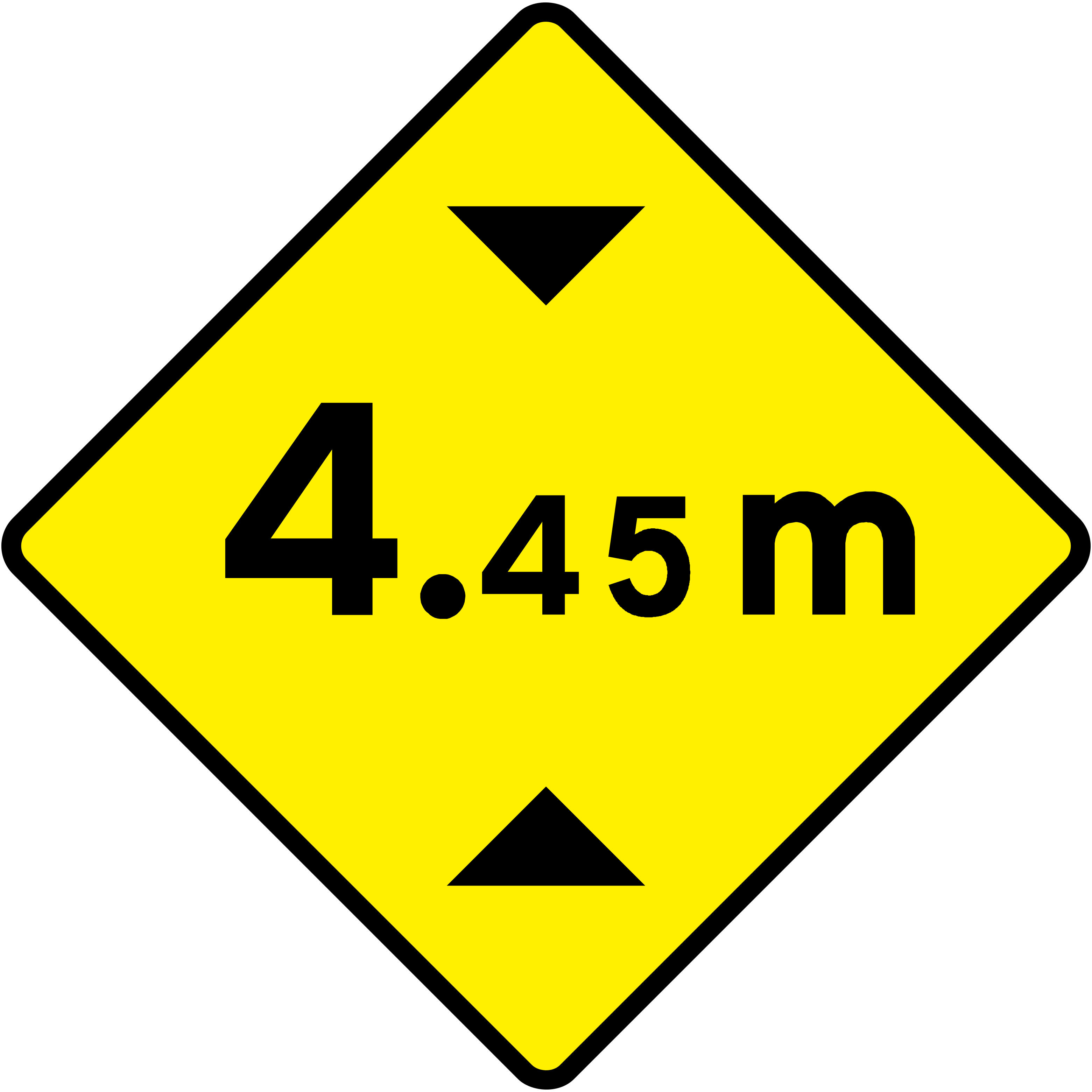
32. What does this traffic sign mean?
This traffic sign indicates a warning for a height restriction. The available clearance ahead is limited, for example at a bridge, tunnel or other overhead structure. Drivers of tall vehicles should check their vehicle height and use another route if the vehicle cannot pass safely.
English • W 110 • Restricted headroom. Restricted headroom of 4.65 m is ahead. Check your vehicle and load height; the associated restriction sign marks the limit itself.
Sources
🔗 Commons.wikimedia.org
🔗 Roadguidelines.ie • Department of Transport • Traffic Signs Manual • W 110
Image via Commons.wikimedia.org
Government of Ireland – Department of Transport • Public domain • Source revision 2021-08-26. Wikimedia original unmodified.
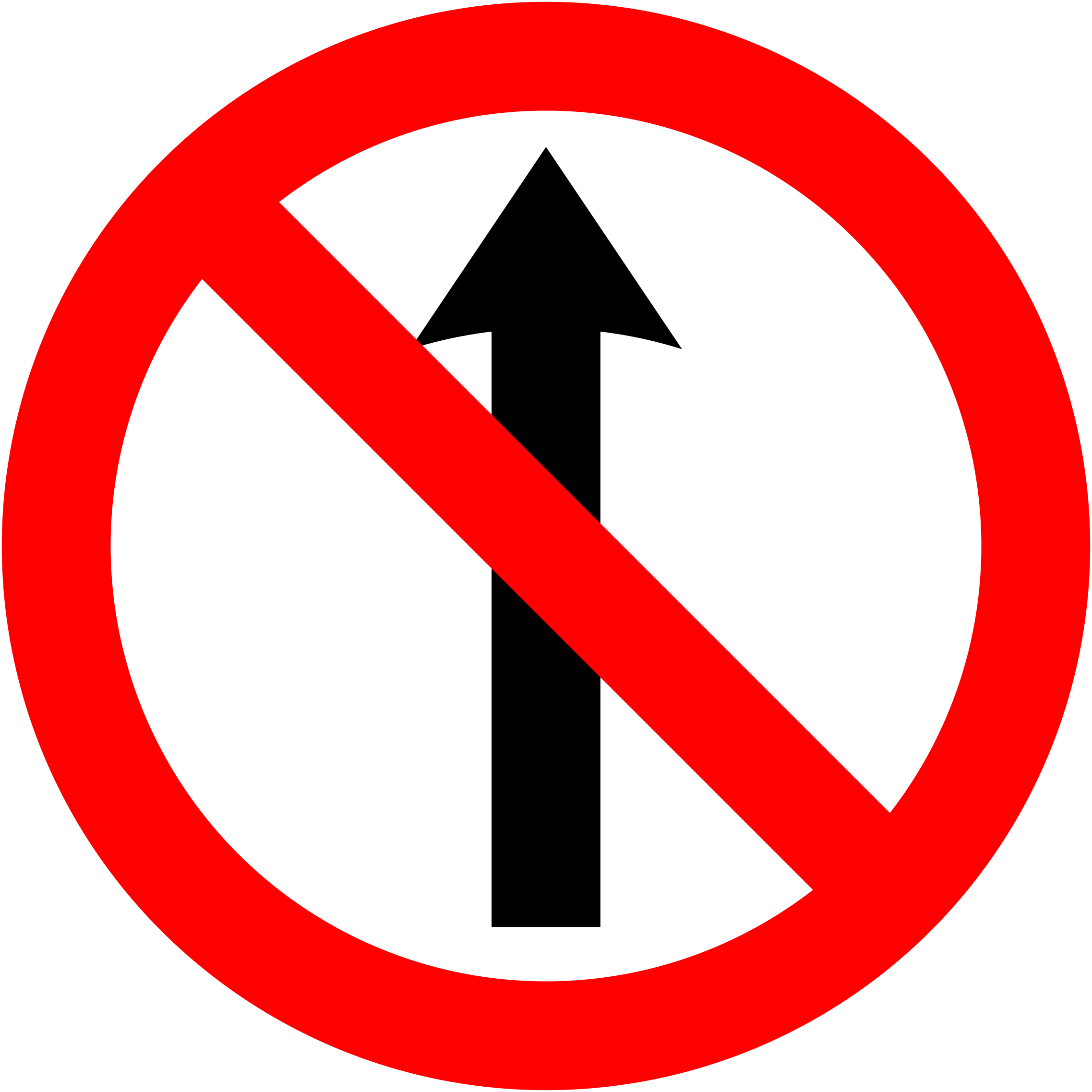
33. What does this traffic sign mean?
This traffic sign indicates that driving straight ahead is prohibited. Traffic may not continue straight ahead where the sign applies. Other movements may still be permitted unless another restriction applies.
English • RUS 011 • No straight ahead. Traffic must not proceed straight ahead past the sign. Follow the permitted route indicated by the other signs.
Sources
🔗 Commons.wikimedia.org
🔗 Roadguidelines.ie • Department of Transport • Traffic Signs Manual • RUS 011
🔗 Irishstatutebook.ie • Road Traffic (Traffic Signs) Regulations 2025 (EN)
SVG source: Government of Ireland – Department of Transport • Public domain • Original revision 2021-12-24. Wikimedia original unmodified.
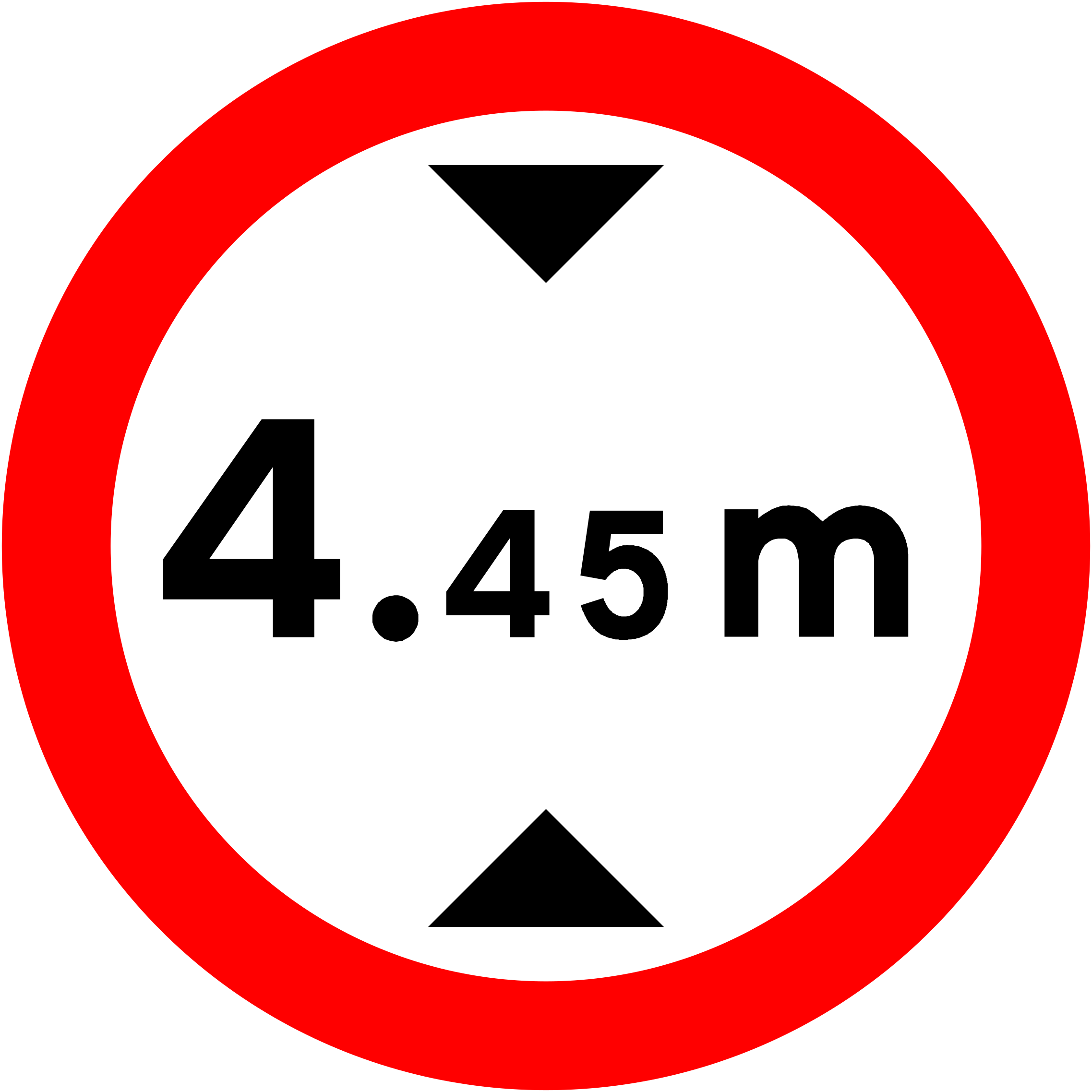
34. What does this traffic sign mean?
This traffic sign indicates that vehicles higher than indicated are prohibited. A vehicle or vehicle combination whose overall height, including its load, exceeds the displayed limit may not continue beyond the sign.
English • RUS 016 • Height restriction. Do not proceed if your vehicle or load exceeds the indicated clearance of 4.65 m.
Sources
🔗 Commons.wikimedia.org
🔗 Roadguidelines.ie • Department of Transport • Traffic Signs Manual • RUS 016
🔗 Irishstatutebook.ie • Road Traffic (Traffic Signs) Regulations 2025 (EN)
Image via Commons.wikimedia.org
Government of Ireland – Department of Transport • Public domain • Source revision 2021-08-01. Wikimedia original unmodified.
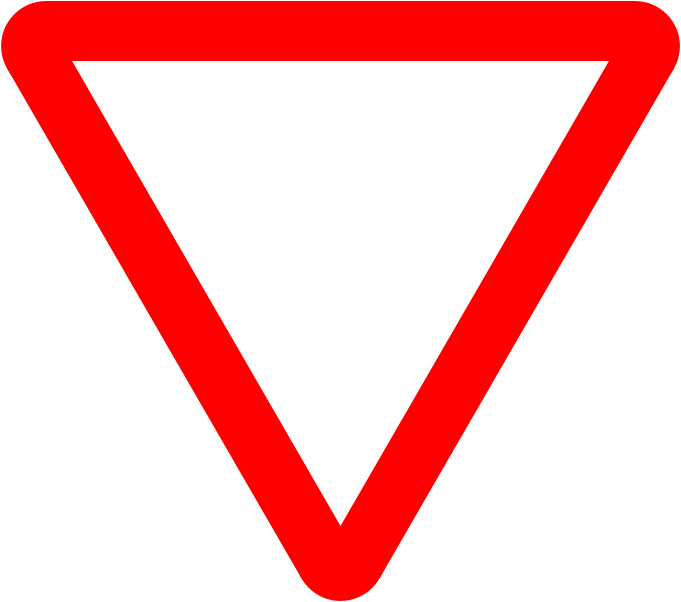
35. What does this traffic sign mean?
This traffic sign means give way. Slow down and give way to traffic that has priority. Stop if necessary and proceed only when it is safe.
English • W 041 • Yield ahead. A yield-controlled junction is ahead. The accompanying distance plate shows how far ahead it is; prepare to give way at the junction.
Sources
🔗 Commons.wikimedia.org
🔗 Roadguidelines.ie • Department of Transport • Traffic Signs Manual • W 041
Image via Commons.wikimedia.org
Government of Ireland – Department of Transport • Public domain • Source revision 2022-02-08. Wikimedia original unmodified.
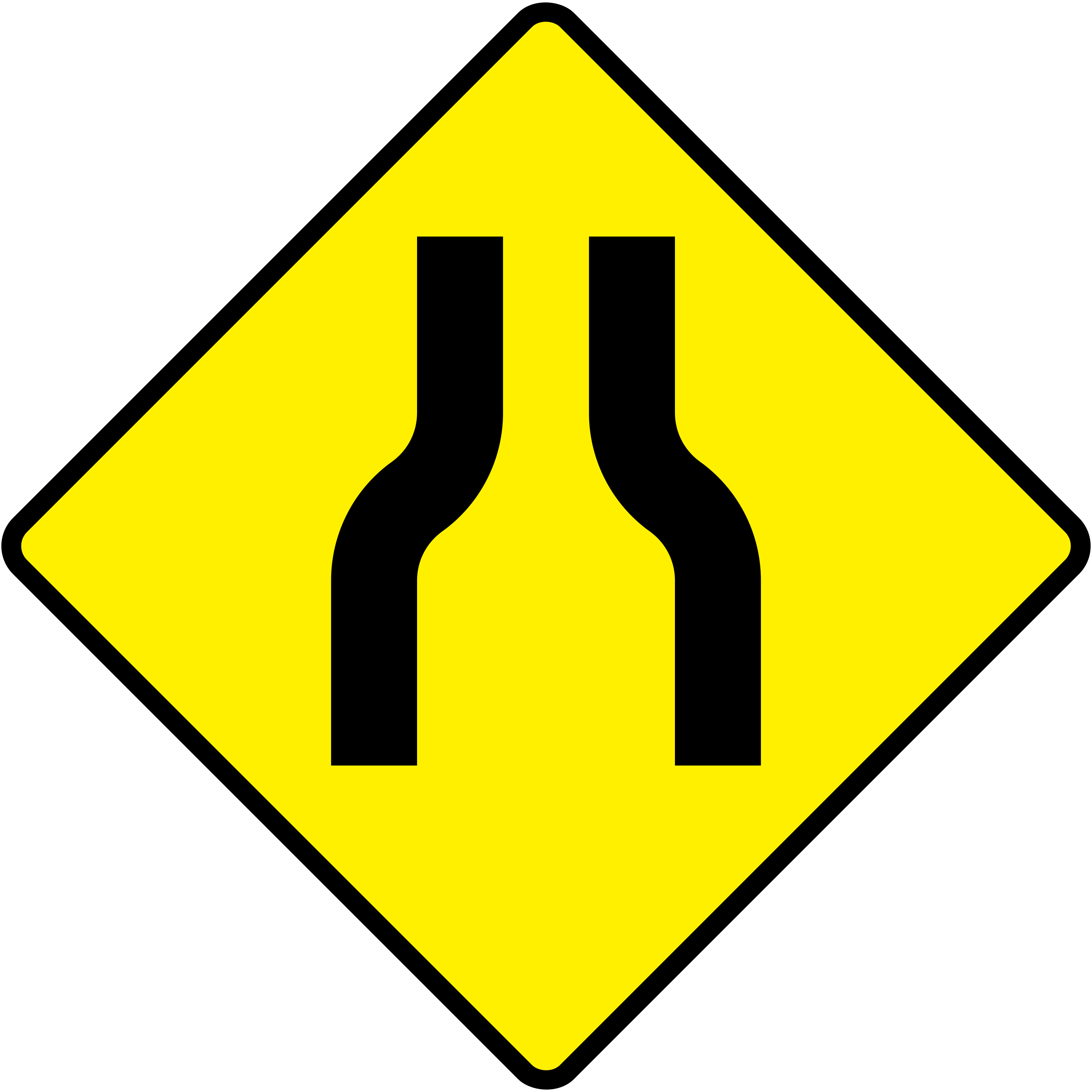
36. What does this traffic sign mean?
This traffic sign indicates a warning for a road narrowing. The available width of the road or carriageway decreases ahead. Reduce speed, maintain sufficient lateral clearance and watch carefully for approaching or adjacent traffic.
English • W 071 • Road narrows on both sides. The carriageway narrows on both sides ahead.
Sources
🔗 Commons.wikimedia.org
🔗 Roadguidelines.ie • Department of Transport • Traffic Signs Manual • W 071
SVG source: Government of Ireland – Department of Transport • Public domain • Original revision 2021-08-30. Wikimedia original unmodified.
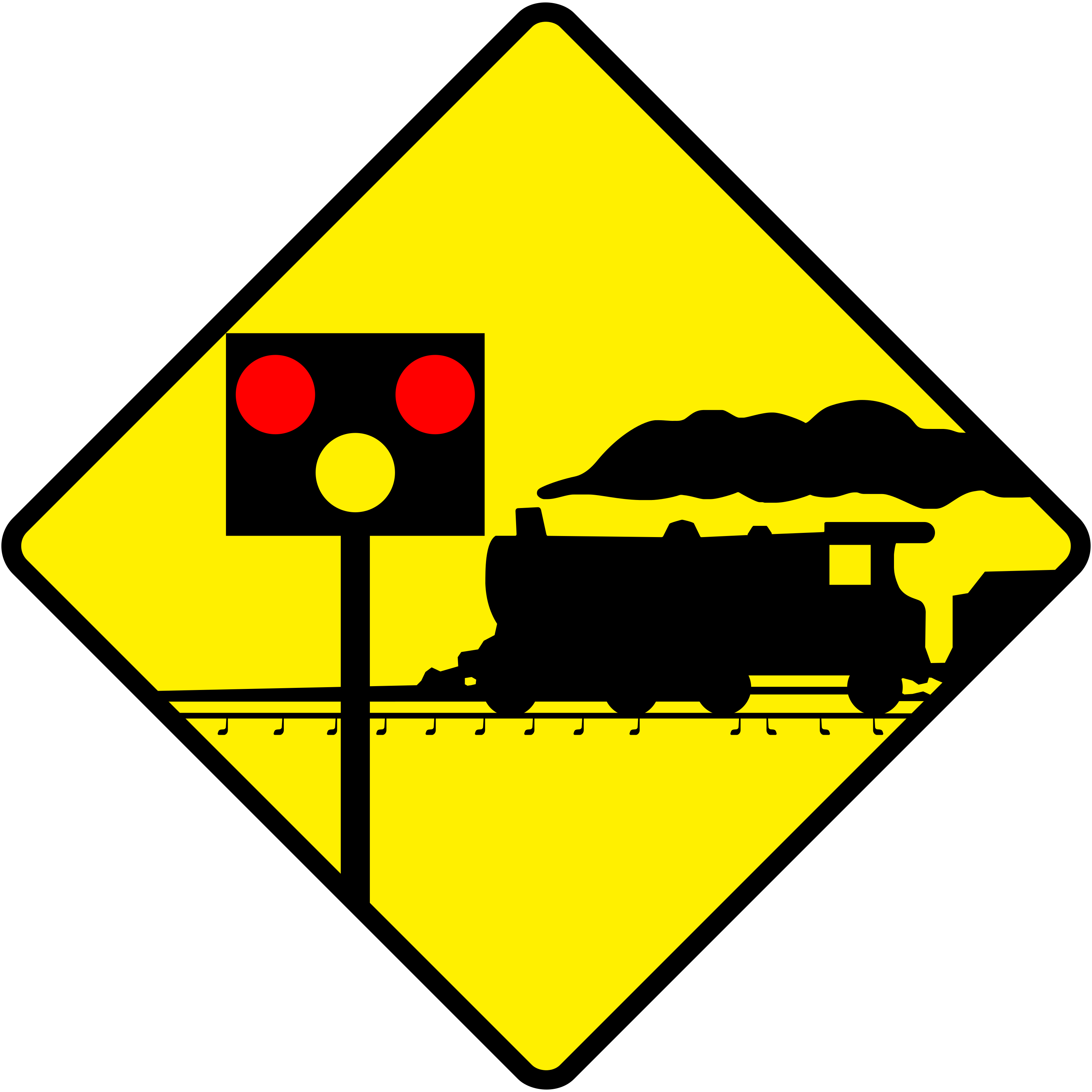
37. What does this traffic sign mean?
This traffic sign indicates a warning for a railway crossing without barriers. It alerts drivers to an upcoming level crossing where railway tracks cross the road and no barriers or gates are present to stop traffic. Drivers should slow down and look both ways for trains.
English • W 120 • Level crossing with flashing red signals. A railway level crossing controlled by flashing red signals is ahead. Stop when required by the signals; do not proceed until it is safe and the signals permit it.
Sources
🔗 Commons.wikimedia.org
🔗 Roadguidelines.ie • Department of Transport • Traffic Signs Manual • W 120
SVG source: Government of Ireland – Department of Transport • Public domain • Original revision 2021-11-05. Wikimedia original unmodified.
Artwork verified against Roadguidelines.ie • official published diagram W 120.
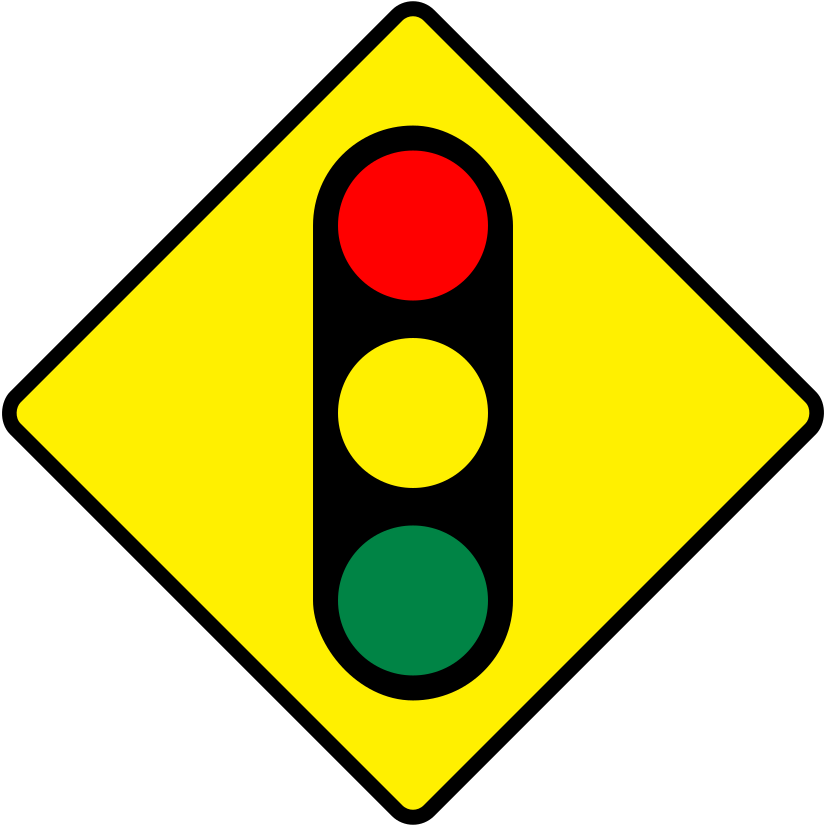
38. What does this traffic sign mean?
This traffic sign indicates a warning for traffic lights ahead. Traffic signals are located ahead and may not be visible early enough without advance warning. Reduce speed and be prepared to stop if the signal requires it.
English • W 042 • Traffic signals. Traffic signals are ahead. Be prepared to stop.
Sources
🔗 Commons.wikimedia.org
🔗 Roadguidelines.ie • Department of Transport • Traffic Signs Manual • W 042
SVG source: Government of Ireland – Department of Transport • Public domain • Original revision 2022-04-14. Wikimedia original unmodified.
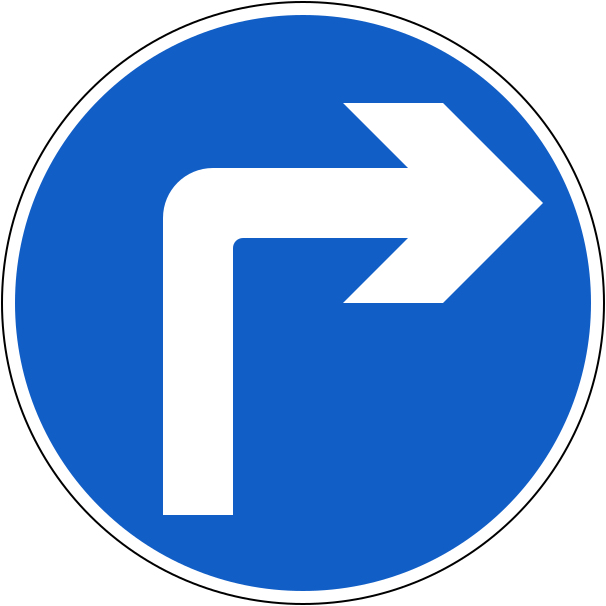
39. What does this traffic sign mean?
This traffic sign indicates that turning right is mandatory at the junction ahead. Traffic must turn right and may not continue straight ahead or turn left.
English • RUS 008 • Turn right ahead. Traffic must turn right ahead at the junction indicated.
Sources
🔗 Commons.wikimedia.org
🔗 Roadguidelines.ie • Department of Transport • Traffic Signs Manual • RUS 008
🔗 Irishstatutebook.ie • Road Traffic (Traffic Signs) Regulations 2025 (EN)
SVG source: Government of Ireland – Department of Transport • Public domain • Original revision 2023-07-31. Wikimedia original unmodified.
Artwork verified against Roadguidelines.ie • official published diagram RUS 008.
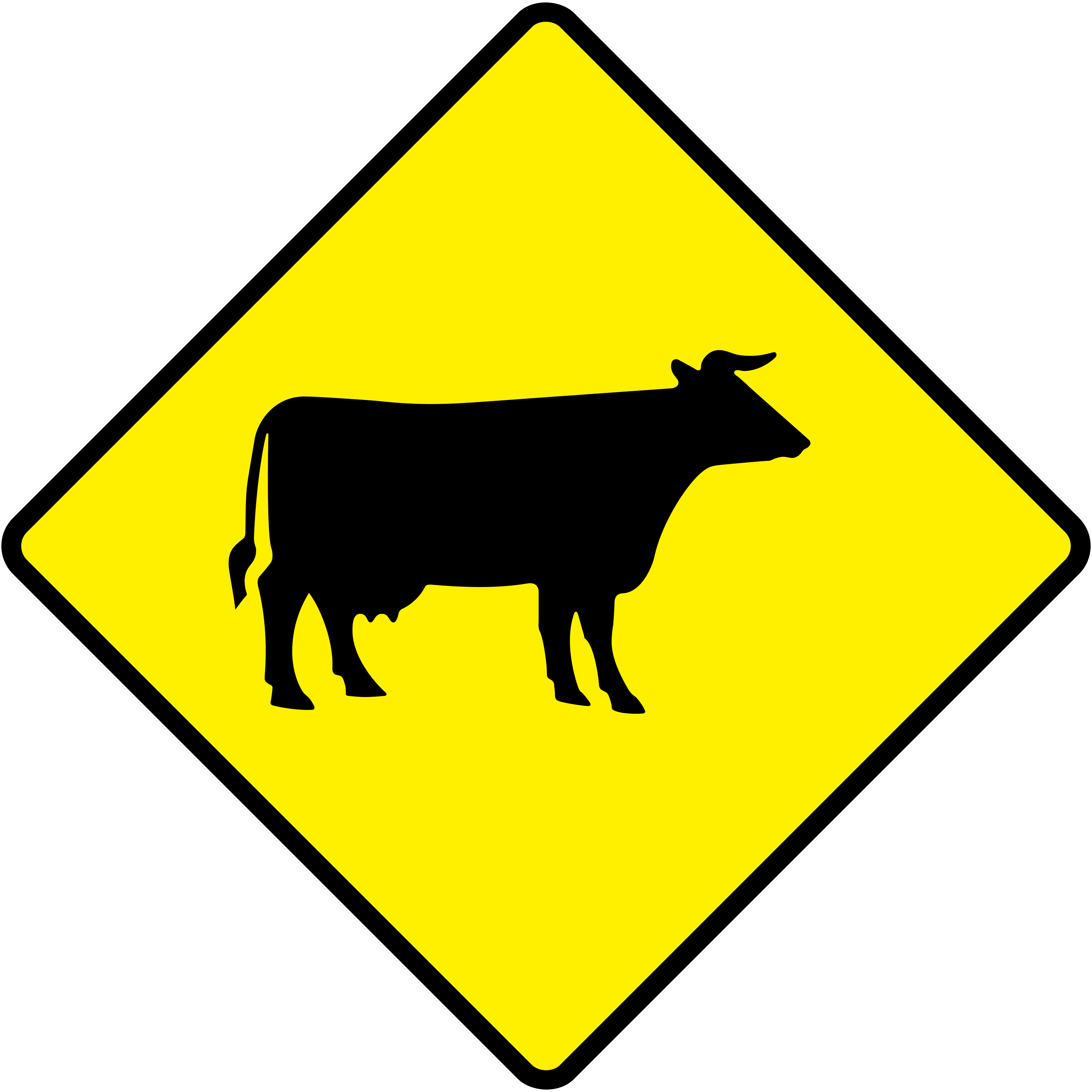
40. What does this traffic sign mean?
This traffic sign indicates a warning for cattle. Cattle or other livestock may be crossing, walking along or standing near the road. Reduce speed, be prepared to stop and avoid sudden movements or unnecessary use of the horn that could startle the animals.
English • W 151 • Cattle or farm animals. Cattle or other farm animals may be on or crossing the road ahead.
Sources
🔗 Commons.wikimedia.org
🔗 Roadguidelines.ie • Department of Transport • Traffic Signs Manual • W 151
SVG source: Government of Ireland – Department of Transport • Public domain • Original revision 2021-10-23. Wikimedia original unmodified.
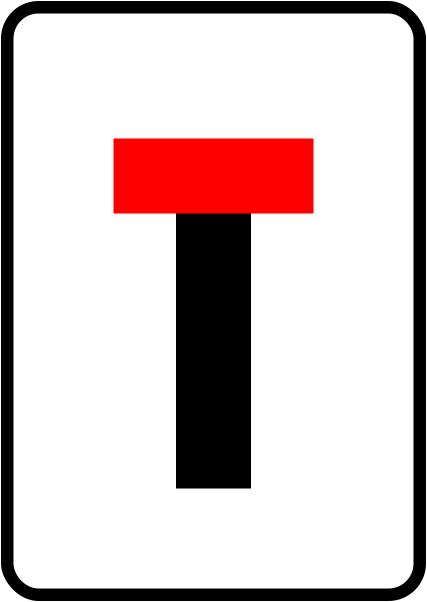
41. What does this traffic sign mean?
This traffic sign indicates a dead end street. The road has no through route for vehicles, although access to properties or other destinations along the road may still be possible.
English • F 350 • Cul-de-sac. The road indicated has no through route for vehicles.
Sources
🔗 Commons.wikimedia.org
🔗 Roadguidelines.ie • Department of Transport • Traffic Signs Manual • F 350
SVG source: Government of Ireland – Department of Transport • Public domain • Original revision 2022-01-09. Wikimedia original unmodified.
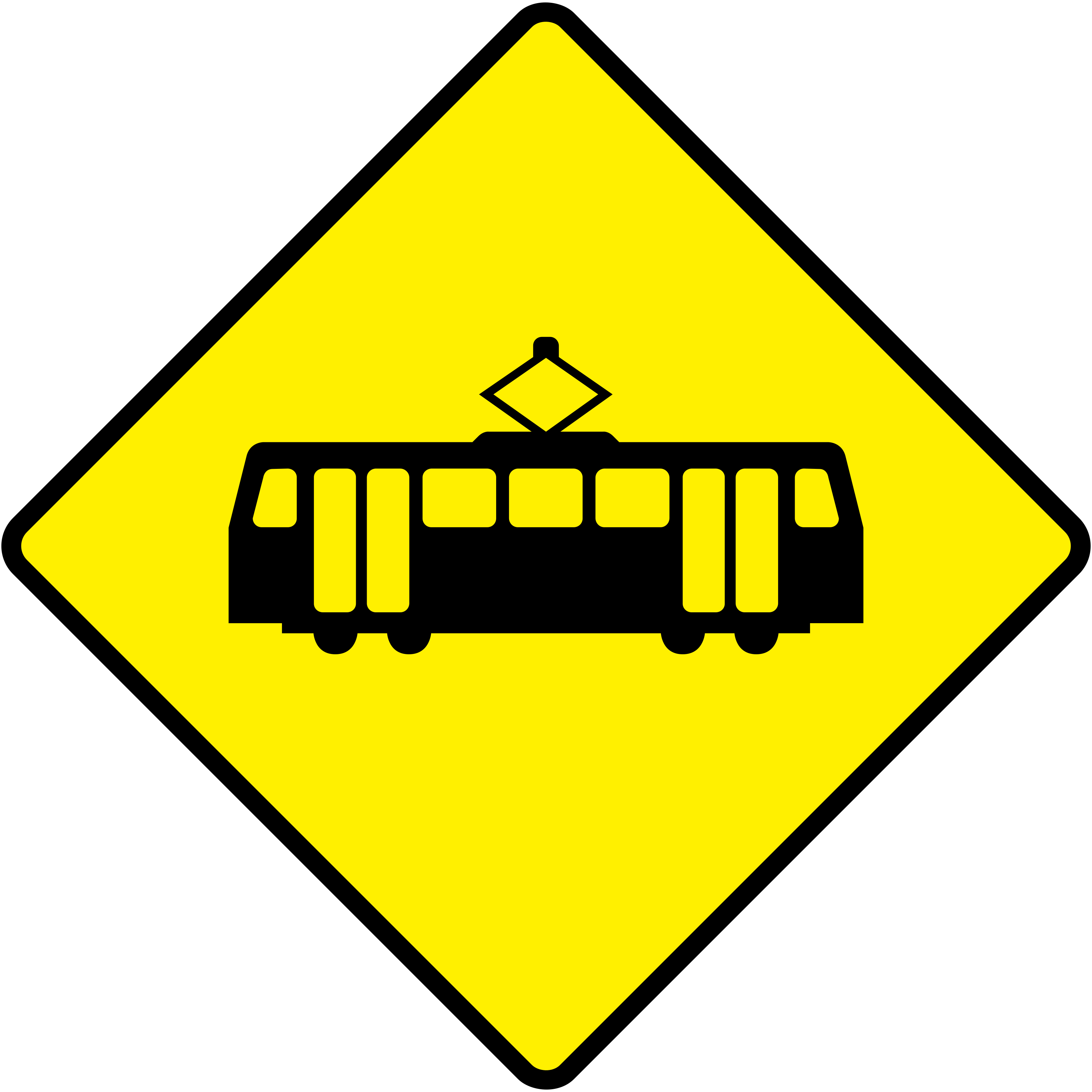
42. What does this traffic sign mean?
This traffic sign indicates a warning for trams. Tram tracks cross or run along the road ahead, and trams may enter the traffic path. Reduce speed, watch carefully for approaching trams and follow the applicable traffic signals, priority signs and local rules.
English • W 124 • Tram crossing. A tramway crossing is ahead. Observe its signals and markings.
Sources
🔗 Commons.wikimedia.org
🔗 Roadguidelines.ie • Department of Transport • Traffic Signs Manual • W 124
Image via Commons.wikimedia.org
Government of Ireland – Department of Transport • Public domain • Source revision 2021-07-27. Wikimedia original unmodified.
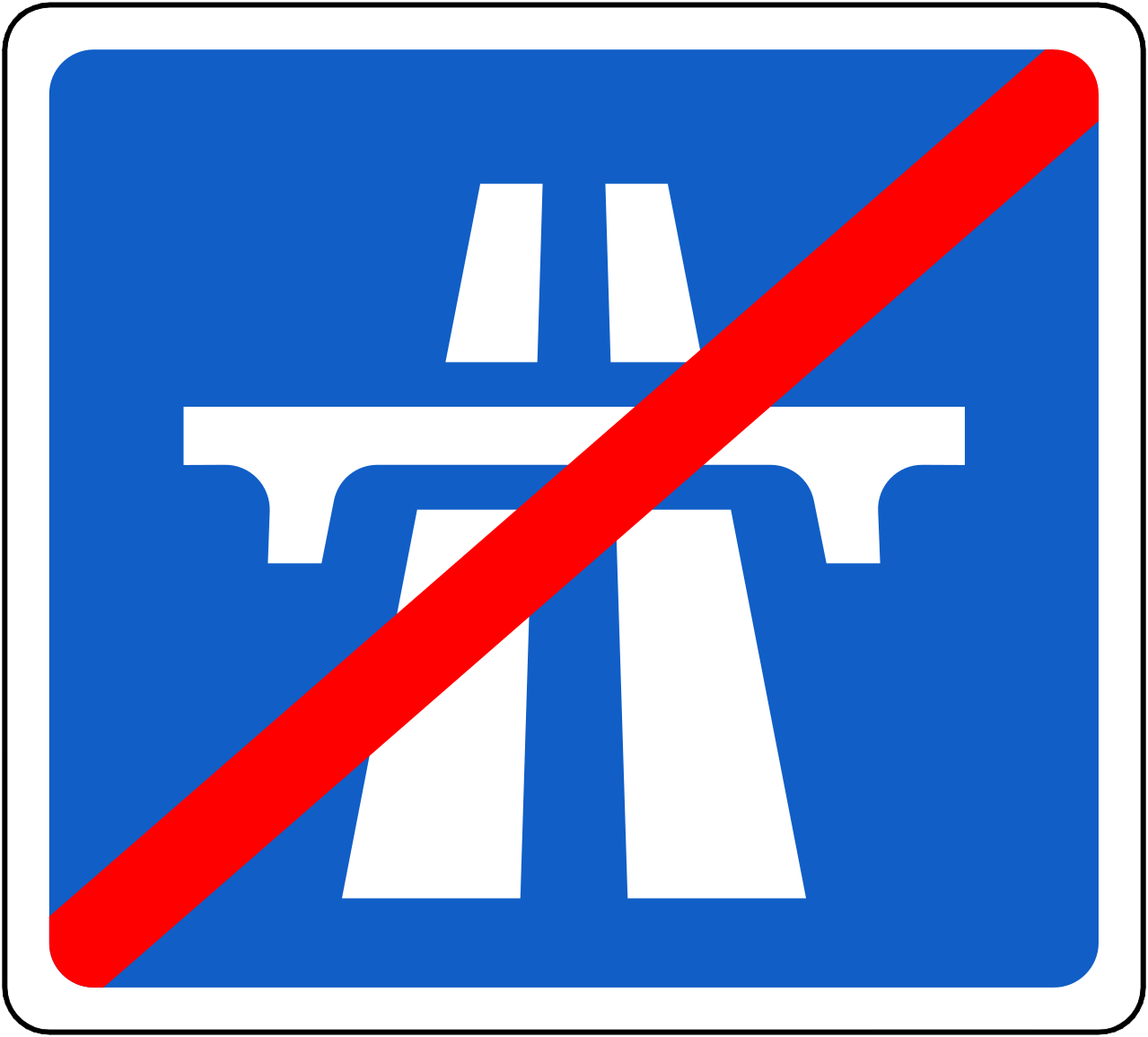
43. What does this traffic sign mean?
This traffic sign indicates the end of the motorway. The special motorway rules end at this point. Follow the speed limits, access rules and other traffic signs that apply to the road ahead.
English • F 333 • End of motorway. The motorway ends here. Follow the signs and limits applying to the road beyond.
Sources
🔗 Commons.wikimedia.org (Gigillo83 • CC BY-SA 3.0)
🔗 Roadguidelines.ie • Department of Transport • Traffic Signs Manual • F 333
Image via Commons.wikimedia.org
Government of Ireland – Department of Transport • Public domain • Source revision 2023-08-07. Wikimedia original unmodified.
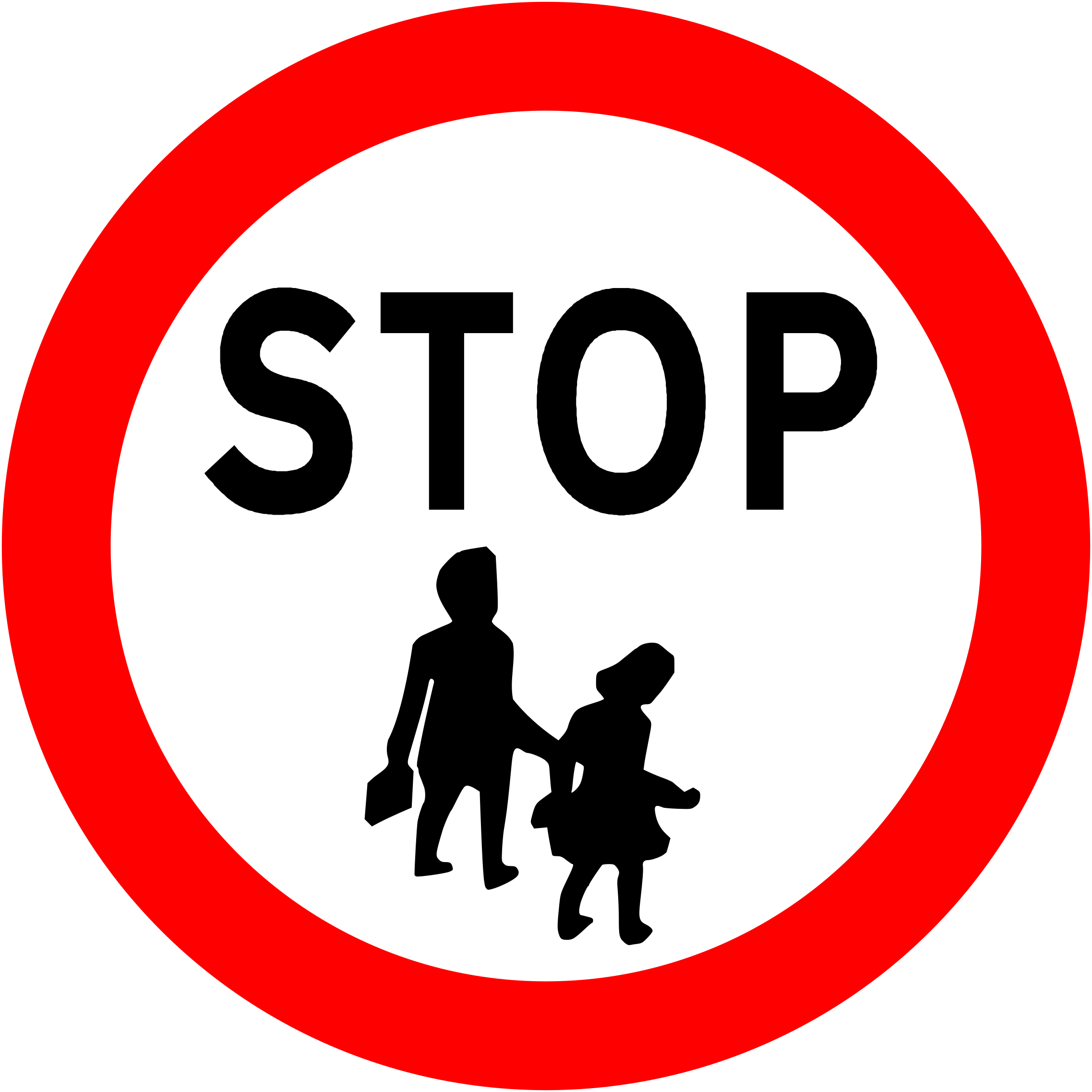
44. What does this traffic sign mean?
This traffic sign indicates a checkpoint with restricted entry. Road users may not proceed beyond the checkpoint unless they are authorised or permitted to continue according to the applicable rules and instructions.
English • RUS 031 • School warden stop sign. Stop when this sign is displayed by a school warden. Remain stopped until the warden permits traffic to proceed.
Sources
🔗 Commons.wikimedia.org
🔗 Roadguidelines.ie • Department of Transport • Traffic Signs Manual • RUS 031
🔗 Irishstatutebook.ie • Road Traffic (Traffic Signs) Regulations 2025 (EN)
SVG source: Government of Ireland – Department of Transport • Public domain • Original revision 2021-08-02. Wikimedia original unmodified.
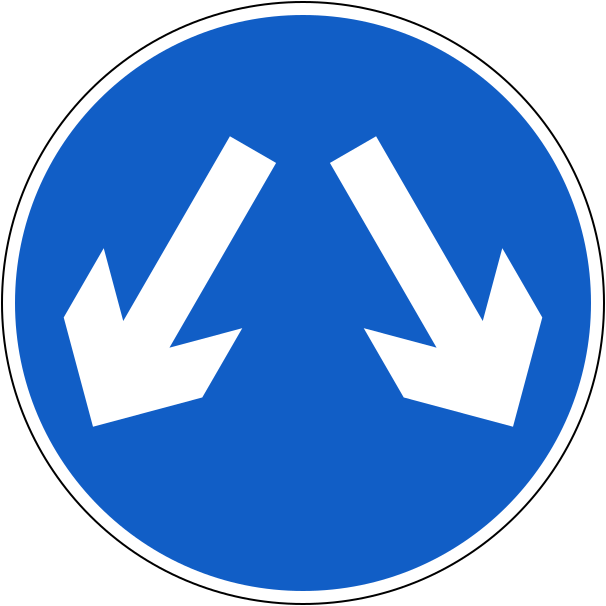
45. What does this traffic sign mean?
This traffic sign indicates that traffic must pass an obstacle on either the left or the right. Use either permitted side while following the road layout and any accompanying signs or markings.
English • RUS 003 • Pass either side. Traffic may pass either side of the sign or obstruction.
Sources
🔗 Commons.wikimedia.org
🔗 Roadguidelines.ie • Department of Transport • Traffic Signs Manual • RUS 003
🔗 Irishstatutebook.ie • Road Traffic (Traffic Signs) Regulations 2025 (EN)
SVG source: Government of Ireland – Department of Transport • Public domain • Original revision 2023-07-31. Wikimedia original unmodified.
Artwork verified against Roadguidelines.ie • official published diagram RUS 003.
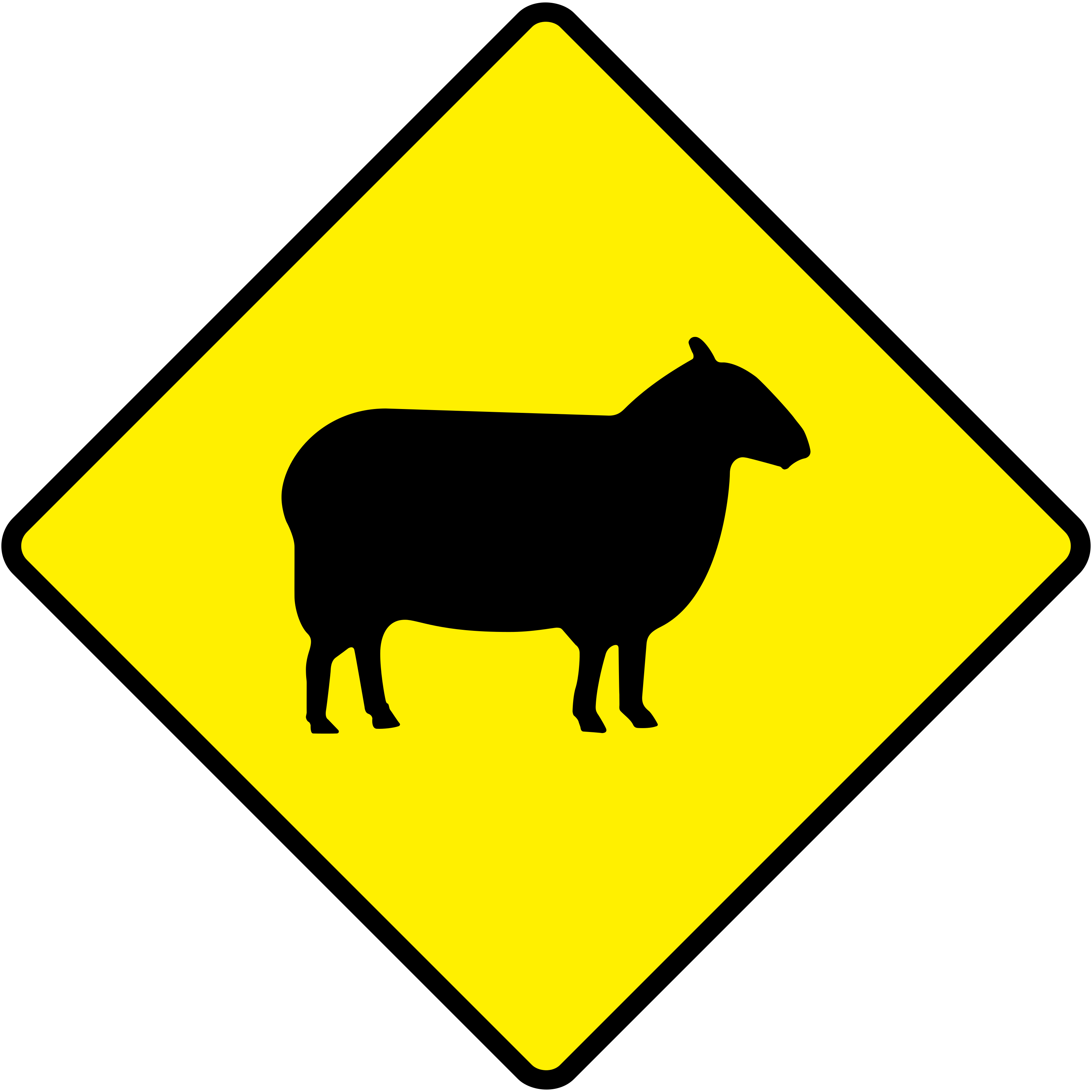
46. What does this traffic sign mean?
This traffic sign indicates a warning for sheep. Sheep may be grazing beside the road, crossing it or moving along it, sometimes in groups. Reduce speed, remain alert and be prepared to stop without startling the animals.
English • W 152 • Sheep. Sheep may be on or crossing the road ahead.
Sources
🔗 Commons.wikimedia.org
🔗 Roadguidelines.ie • Department of Transport • Traffic Signs Manual • W 152
SVG source: Government of Ireland – Department of Transport • Public domain • Original revision 2021-10-23. Wikimedia original unmodified.
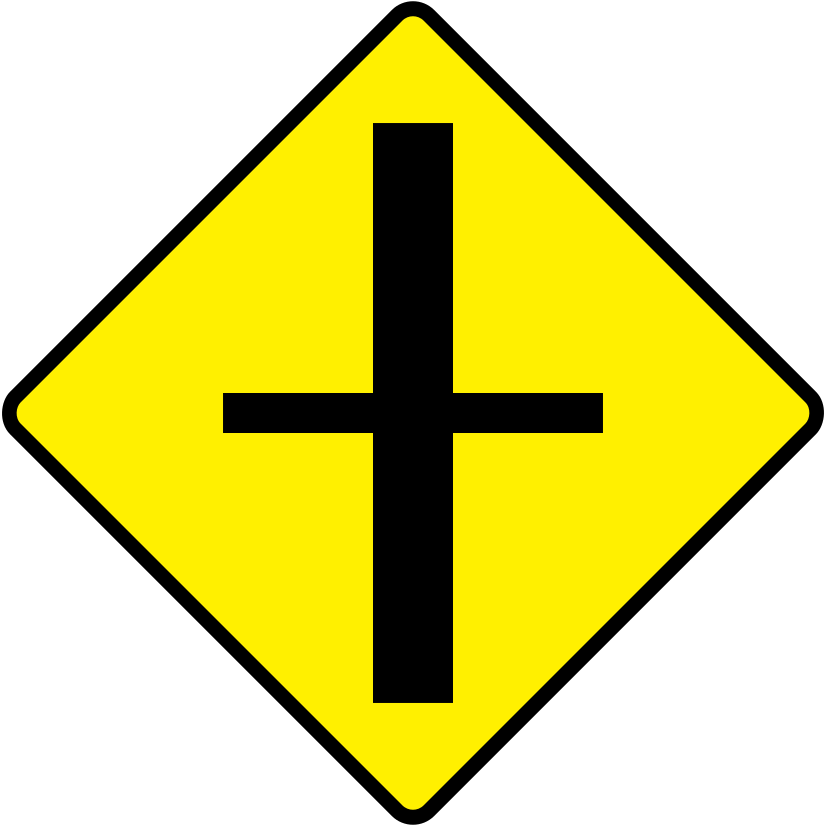
47. What does this traffic sign mean?
This traffic sign indicates that you have priority at the next intersection. Side roads join from the left and right, and traffic entering from those side roads must give way.
English • W 001 • Crossroads. A crossroads is ahead. Approach cautiously and obey any priority controls at the junction.
Sources
🔗 Commons.wikimedia.org
🔗 Roadguidelines.ie • Department of Transport • Traffic Signs Manual • W 001
SVG source: Government of Ireland – Department of Transport • Public domain • Original revision 2022-04-14. Wikimedia original unmodified.
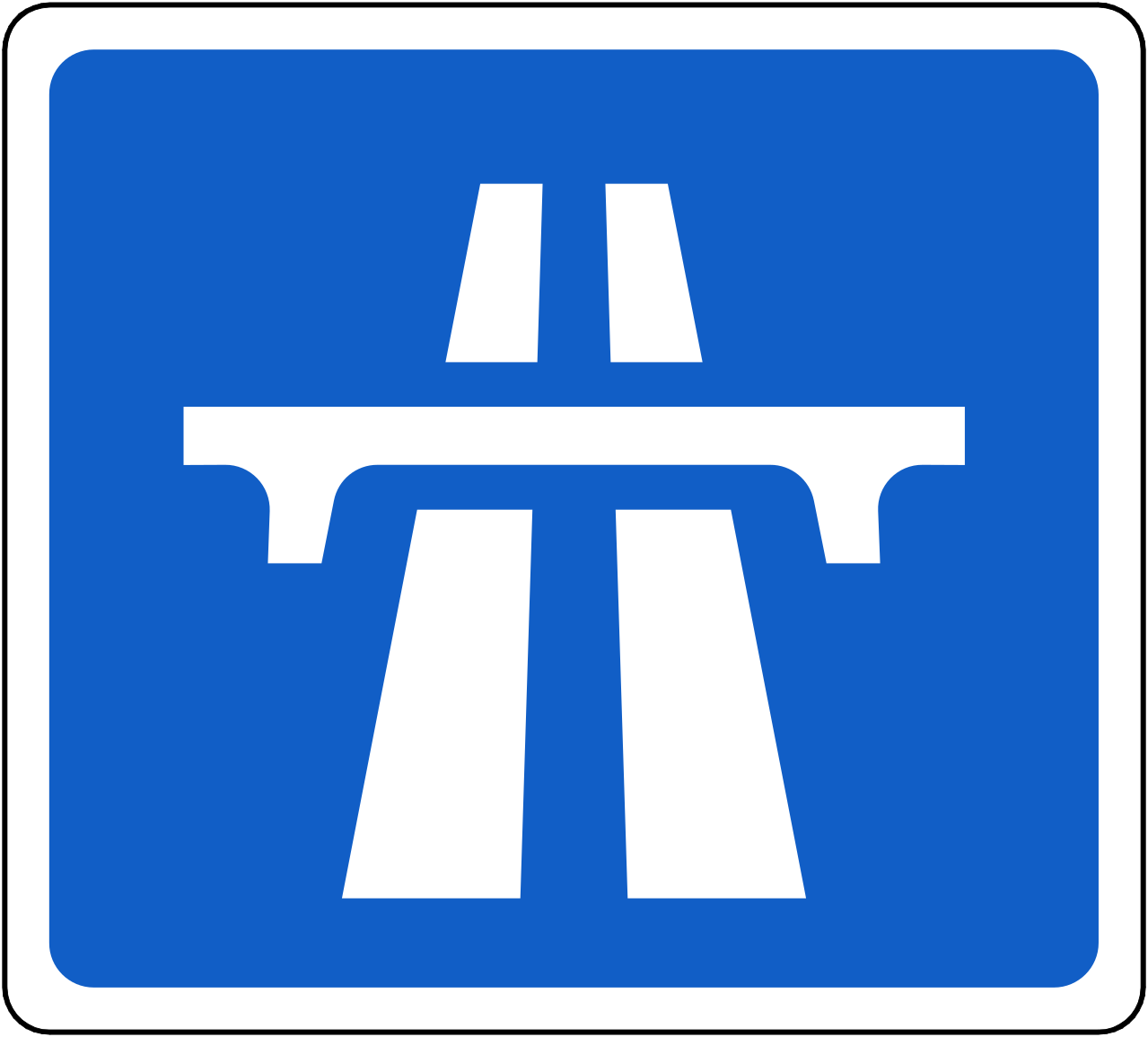
48. What does this traffic sign mean?
This traffic sign indicates the start of a motorway. From this point, special motorway rules apply, including restrictions on which road users may enter and on stopping, reversing and other manoeuvres. Follow the applicable speed limits, lane rules and local motorway regulations.
English • F 330 • Start of motorway. Motorway regulations apply from this point. Observe the access restrictions and the speed limit signs.
Sources
🔗 Commons.wikimedia.org (Gigillo83 • CC BY-SA 3.0)
🔗 Roadguidelines.ie • Department of Transport • Traffic Signs Manual • F 330
Image via Commons.wikimedia.org
Original: Government of Ireland – Department of Transport Version without red stroke: EthanL13 • Public domain • Source revision 2023-08-07. Wikimedia original unmodified.
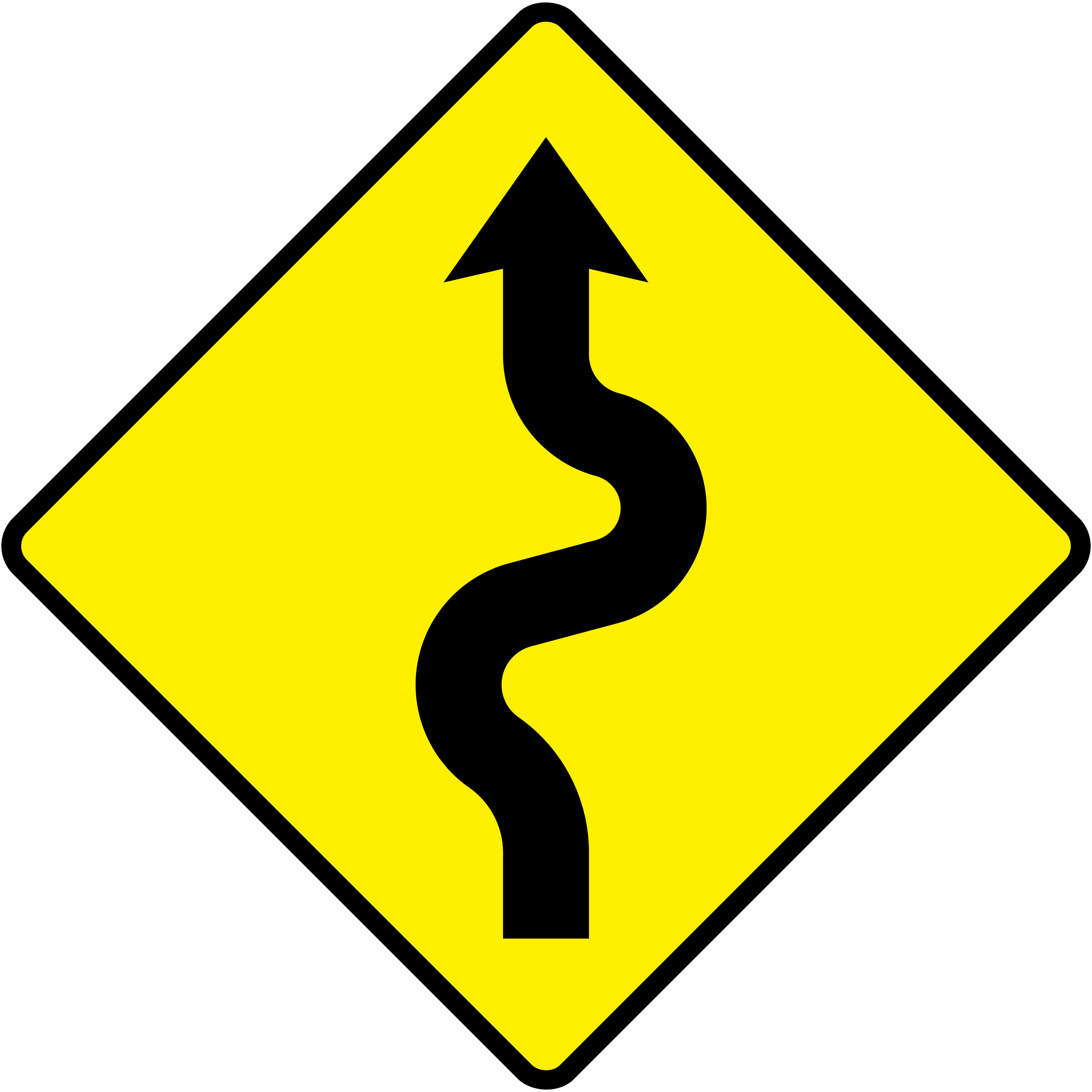
49. What does this traffic sign mean?
This traffic sign indicates a warning for a series of curves. One or more changes in direction lie ahead and may occur in quick succession. Reduce speed before entering the winding section, maintain your lane position and use smooth steering.
English • W 053L • Series of sharp bends — first left. A series of sharp bends is ahead, beginning with a bend to the left.
Sources
🔗 Commons.wikimedia.org
🔗 Roadguidelines.ie • Department of Transport • Traffic Signs Manual • W 053L
SVG source: Government of Ireland – Department of Transport • Public domain • Original revision 2021-09-25. Wikimedia original unmodified.
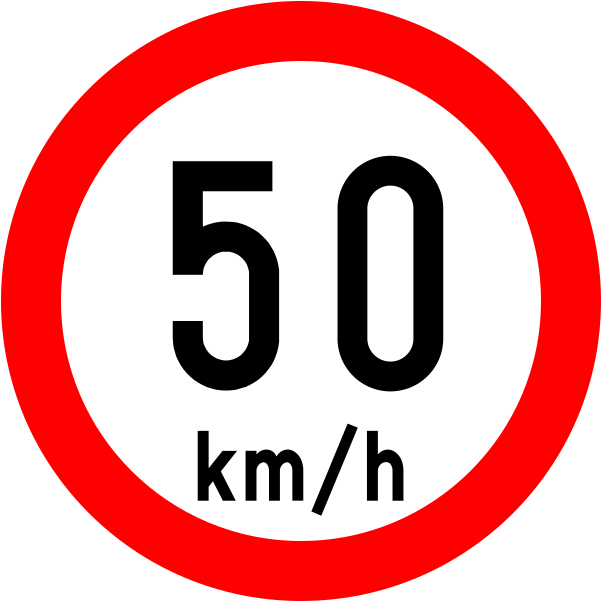
50. What does this traffic sign mean?
This traffic sign indicates the start of a speed limit. The displayed value is the maximum permitted speed from this point. The limit remains in force until it ends or is replaced according to the applicable traffic signs and local rules.
English • RUS 043 • 50 km/h speed limit. The maximum permitted speed is 50 km/h.
Sources
🔗 Commons.wikimedia.org
🔗 Roadguidelines.ie • Department of Transport • Traffic Signs Manual • RUS 043
🔗 Irishstatutebook.ie • Road Traffic (Traffic Signs) Regulations 2025 (EN)
SVG source: Government of Ireland – Department of Transport • Public domain • Original revision 2026-06-29. Wikimedia original unmodified.