


QuizTraffic rulesNorway
Test your knowledge with our multiple-choice quiz. Learn from each answer and improve your understanding of the traffic rules and road signs of Norway.
 Traffic signs
 Traffic rules
 Norway
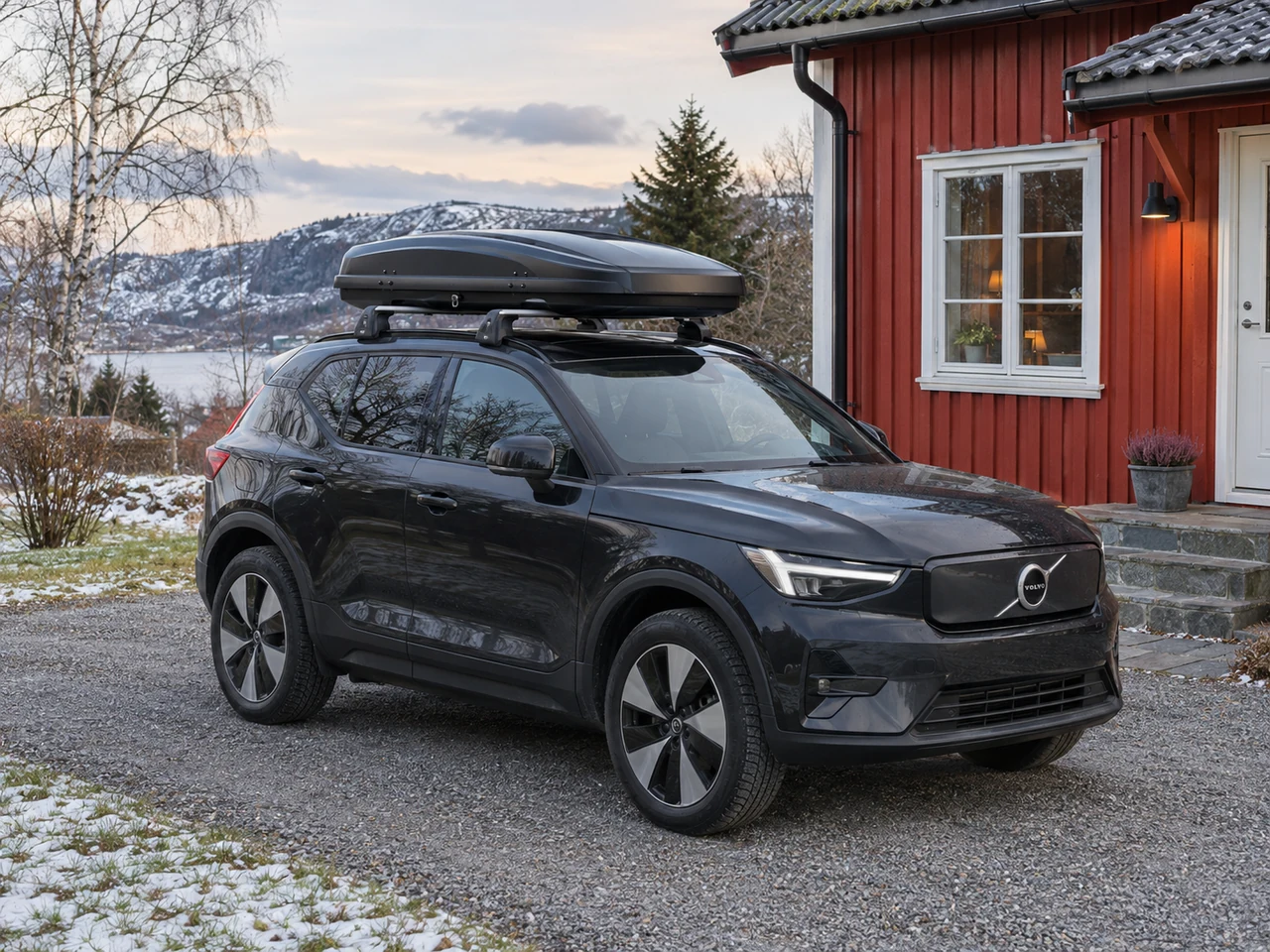
651. Why should an unused roof rack or roof box be removed?
An unused roof rack or roof box increases aerodynamic drag, particularly at higher speeds. Removing it when it is not needed can reduce fuel or energy consumption.

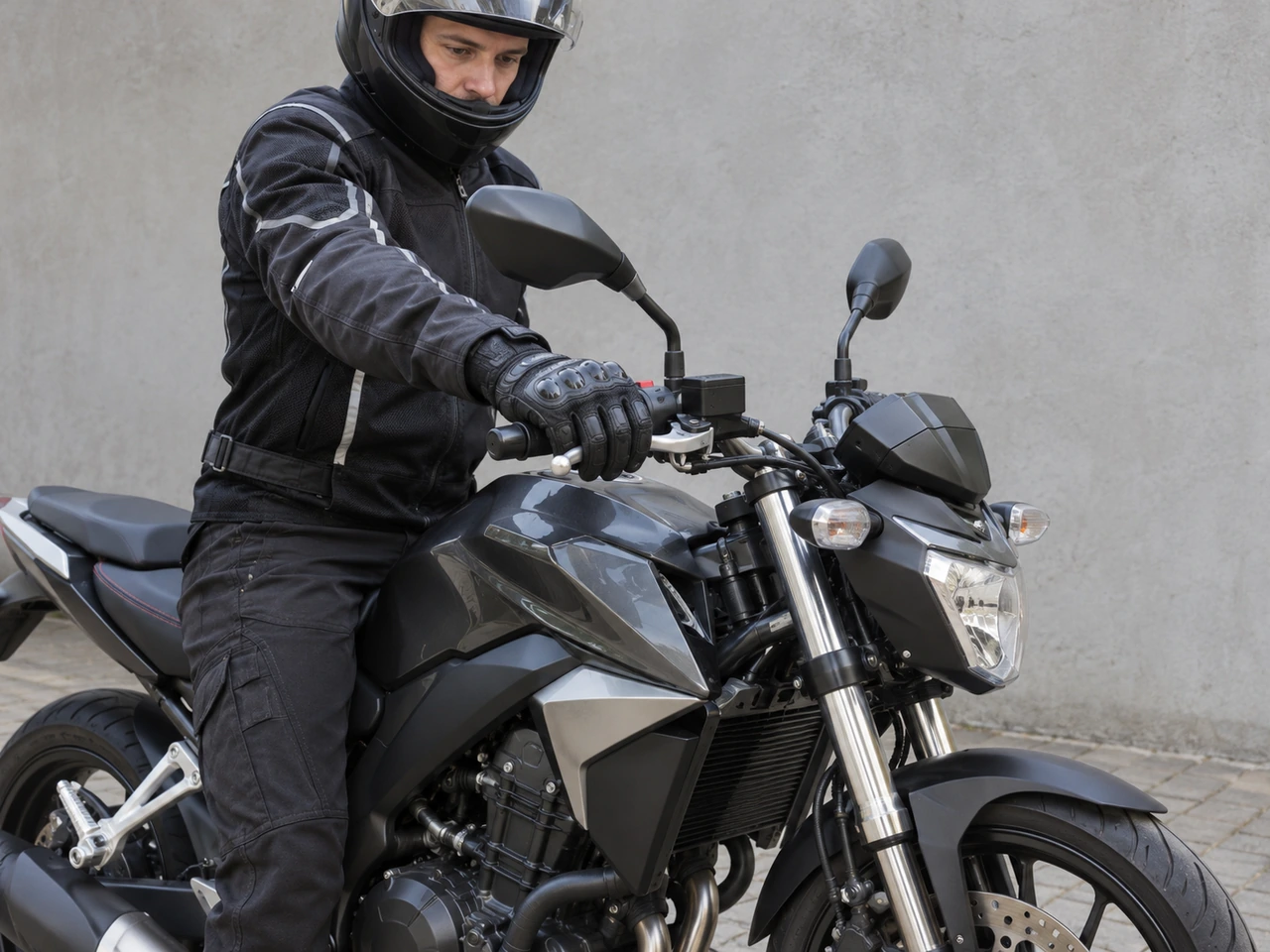
652. What should you check before starting a motorcycle journey?
Before riding, carry out a basic safety check. Check the tyres, brakes, lights, steering and controls, and inspect the drive chain, belt or other drive components where applicable. Finding a problem before setting off can prevent a breakdown or loss of control.
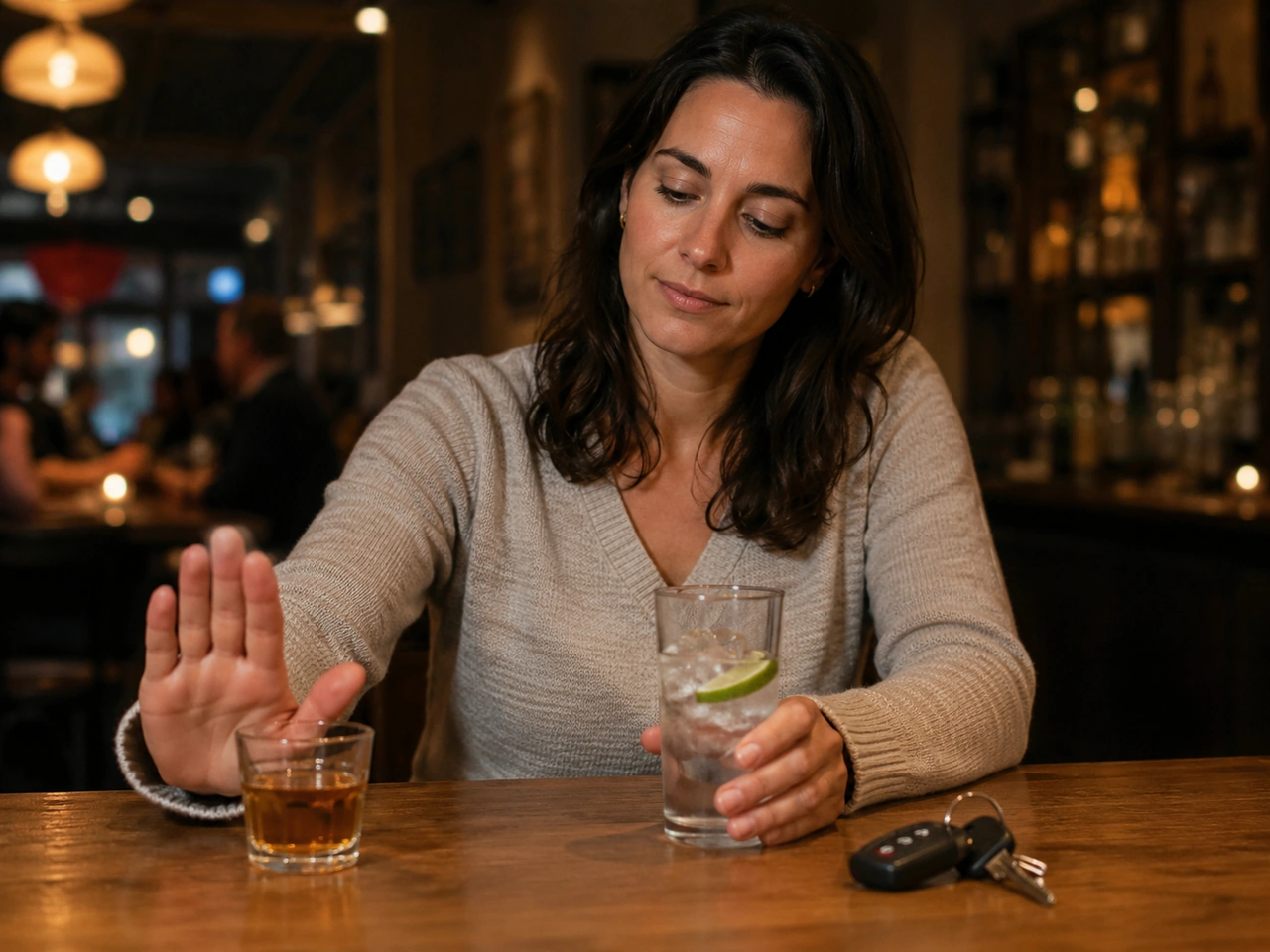
653. Should the legal alcohol limit be treated as a safe target?
A legal limit is an enforcement threshold, not a recommended drinking level. Even a small amount of alcohol can affect driving performance.
Norway. Under the Road Traffic Act, a motor vehicle driver with more than 0.2‰ alcohol in the blood or more than 0.10 mg/L in breath is considered under the influence. Choose an alcohol-free drink if you are driving.
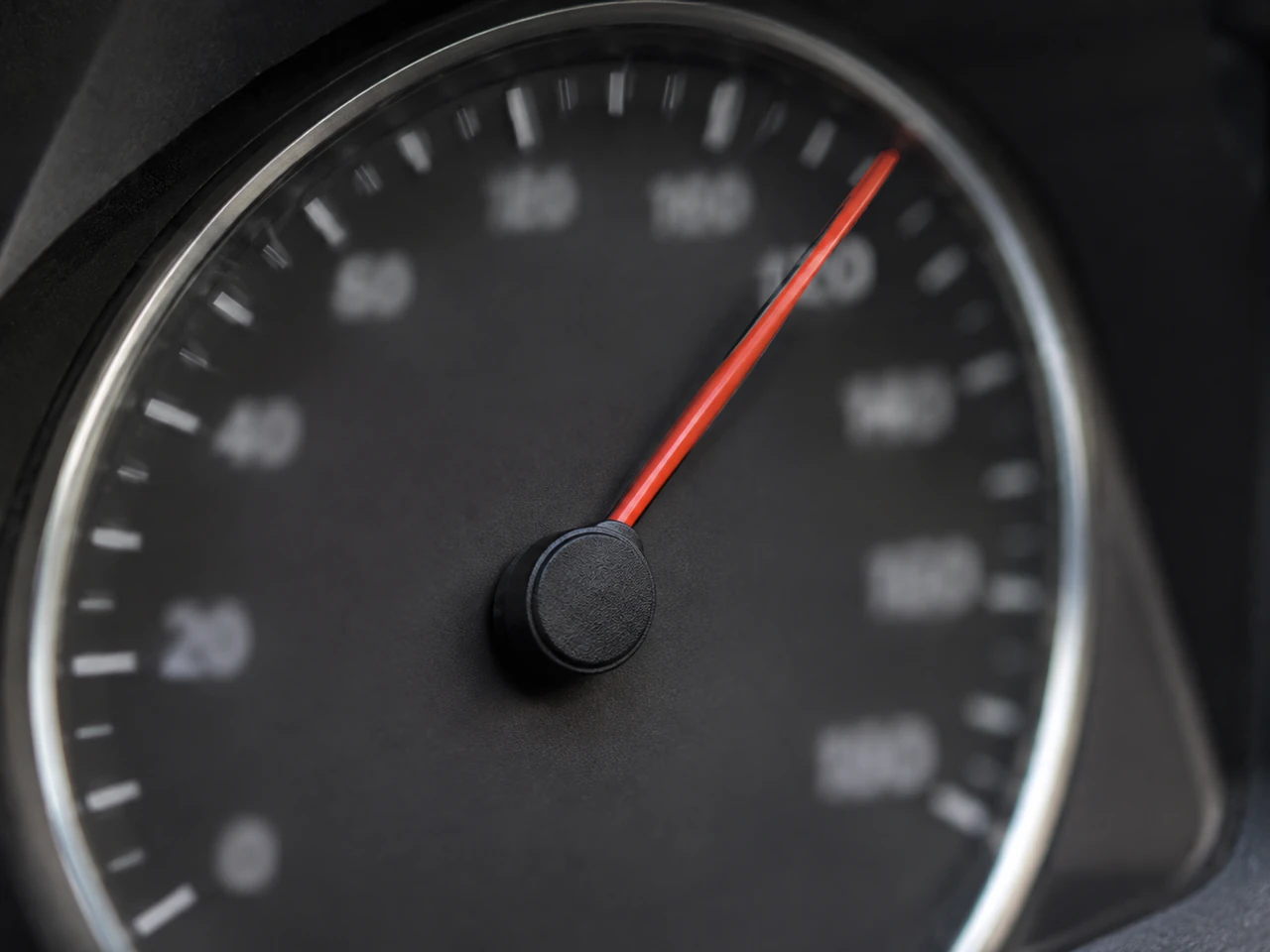
654. In the same conditions, doubling speed only doubles the braking distance.
Braking distance grows much faster than speed. Under comparable conditions, doubling speed makes braking distance roughly four times as long. This is separate from the distance travelled while reacting.
🔗 Sources
Queensland Government (Australia) • Safety guidance, dry-road comparison: 40 and 80 km/h; comparable conditions
Image credit: AI-generated
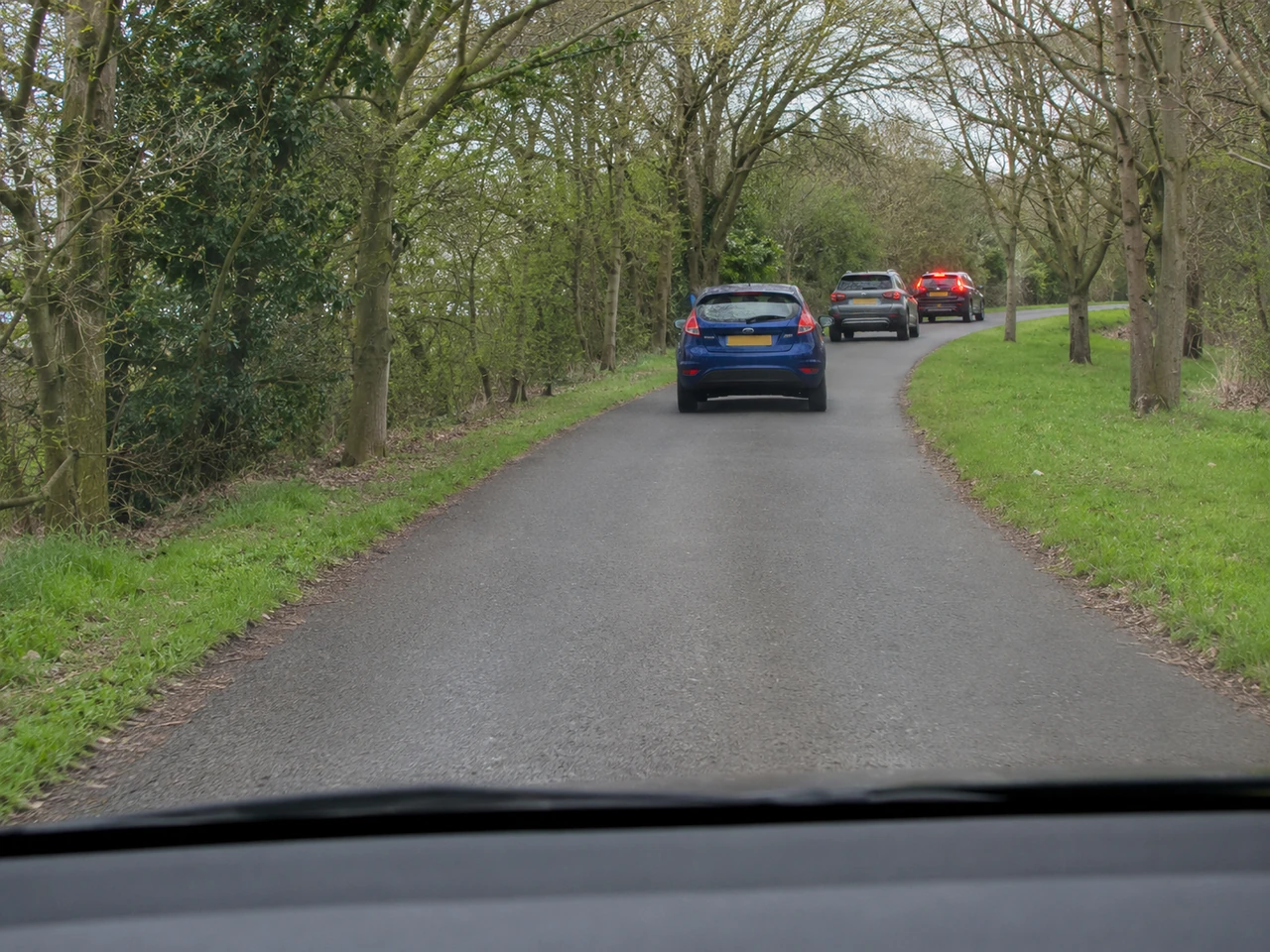
655. Anticipating traffic can help you avoid unnecessary braking and acceleration.
Look well ahead and leave enough space to respond smoothly. This can reduce unnecessary speed changes and fuel use. Always brake or stop when safety requires it.
🔗 Sources
Vehicle Certification Agency (United Kingdom) • Safety guidance, Drive smoothly and avoid unnecessary braking
Image credit: AI-generated
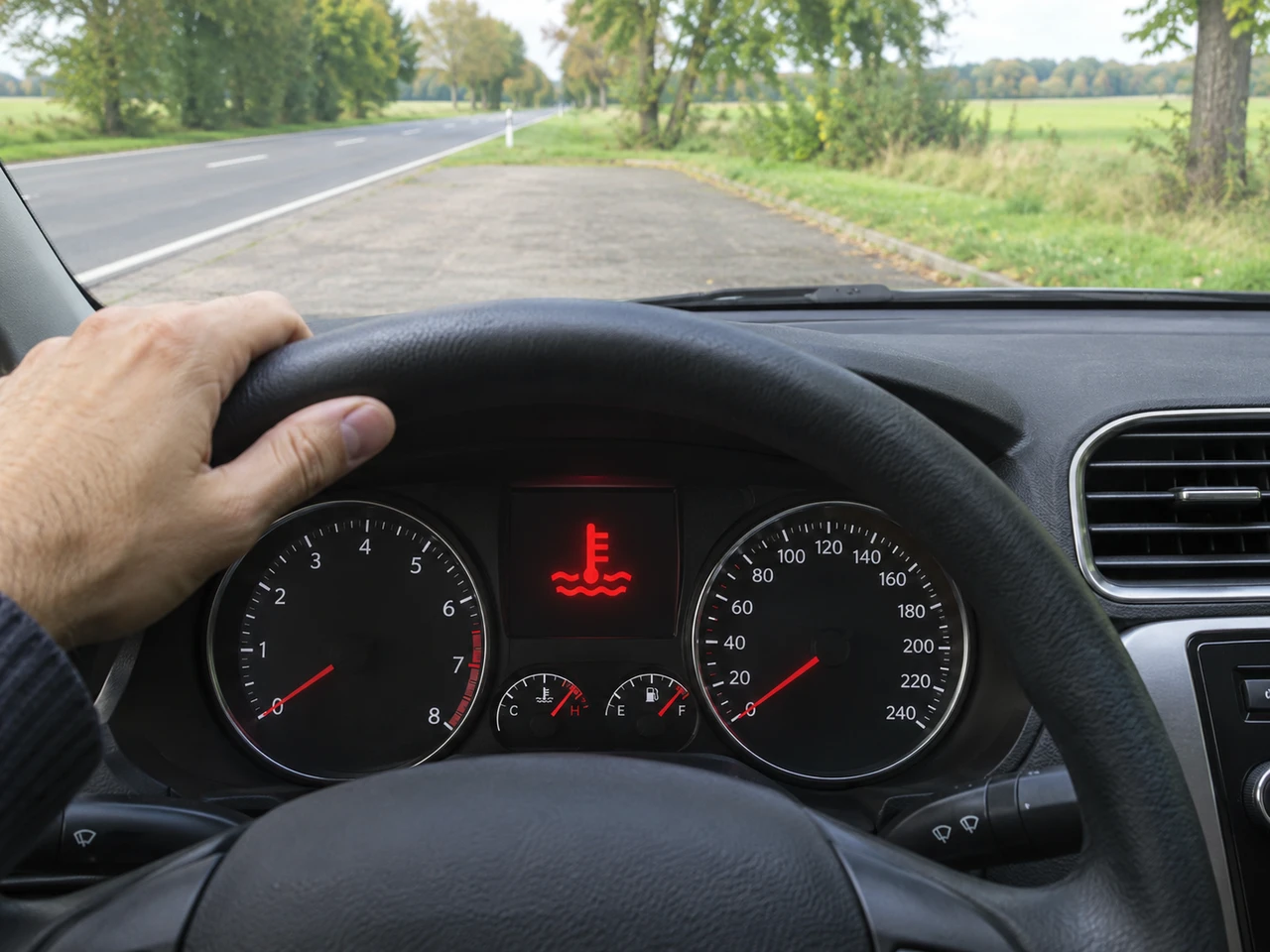
656. What should you do if the engine-temperature warning shows overheating?
An overheating warning requires a safe stop and the action specified by the vehicle handbook. Switching off the engine and allowing it to cool is the usual instruction, although some models specify a controlled cooling period at idle. Never remove a coolant cap while the system is hot: pressurised coolant and steam can cause severe burns. Arrange assistance if the warning persists or you suspect a leak; do not simply continue driving to see whether it clears.
Stop safely to investigate; let an overheated engine cool naturally before removing its coolant filler cap.
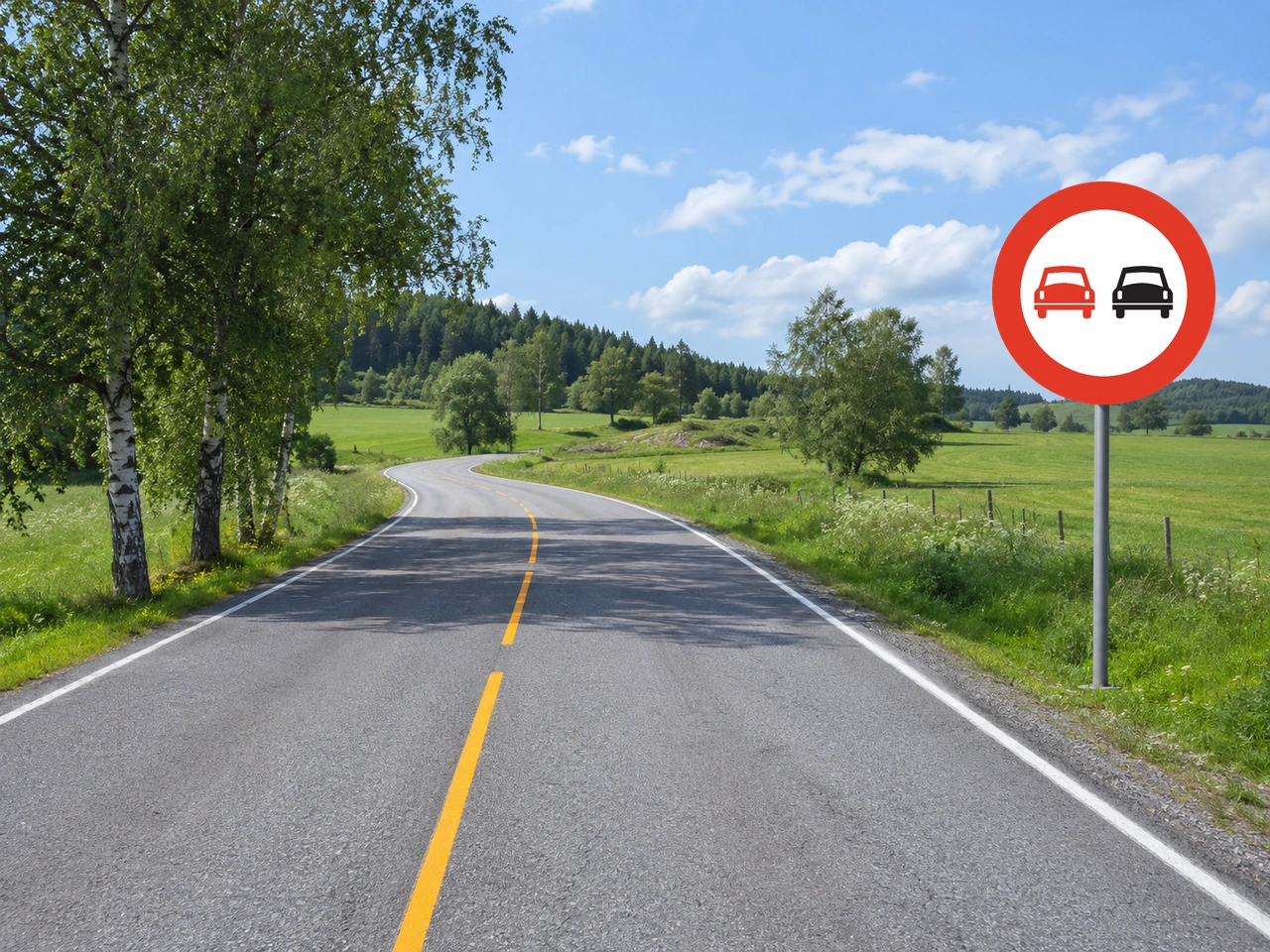
657. The standard no-overtaking sign does not by itself ban passing a two-wheeled bicycle.
The vehicles covered by the sign depend on national rules. An ordinary two-wheeled bicycle is not included in that prohibition. Passing must still be safe and comply with other rules, markings and restrictions, including the required clearance.
🔗 Sources
Norway • Skiltforskriften • Sign 334
Statens vegvesen • Official traffic-sign meanings
Statens vegvesen • Official sign artwork
Official Norwegian sign artwork: Statens vegvesen, sign 334, original EPS file 334_0.eps from the national sign artwork archive. Native numbers, lettering, pictogram, orientation, borders and proportions retained. Red follows the published PMS 179 web swatch, RGB 226/56/40, where present. Original files and colour guidance. No third-party open licence is asserted for the government artwork.

Image credit: AI-generated background with source sign artwork resized and placed on the sign face.
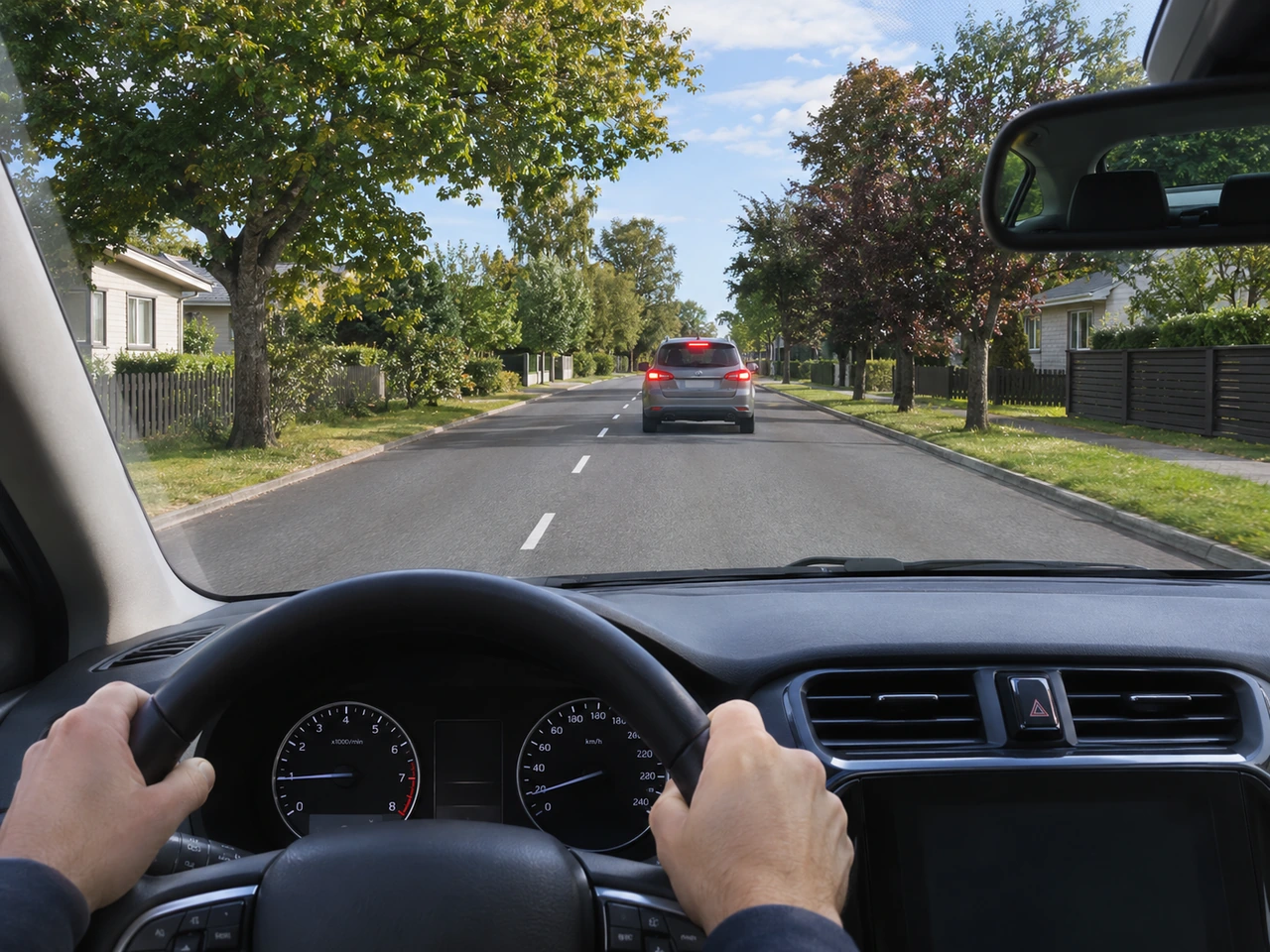
658. What should you remember about automatic emergency braking?
Automatic emergency braking may help avoid a collision or reduce its severity, but detection and braking have limits. Stay alert, keep a safe gap and act when needed. The exact capabilities depend on the vehicle.
🔗 Sources
Tesla — vehicle handbook
NHTSA — United States vehicle safety guidance
Image credit: AI-generated
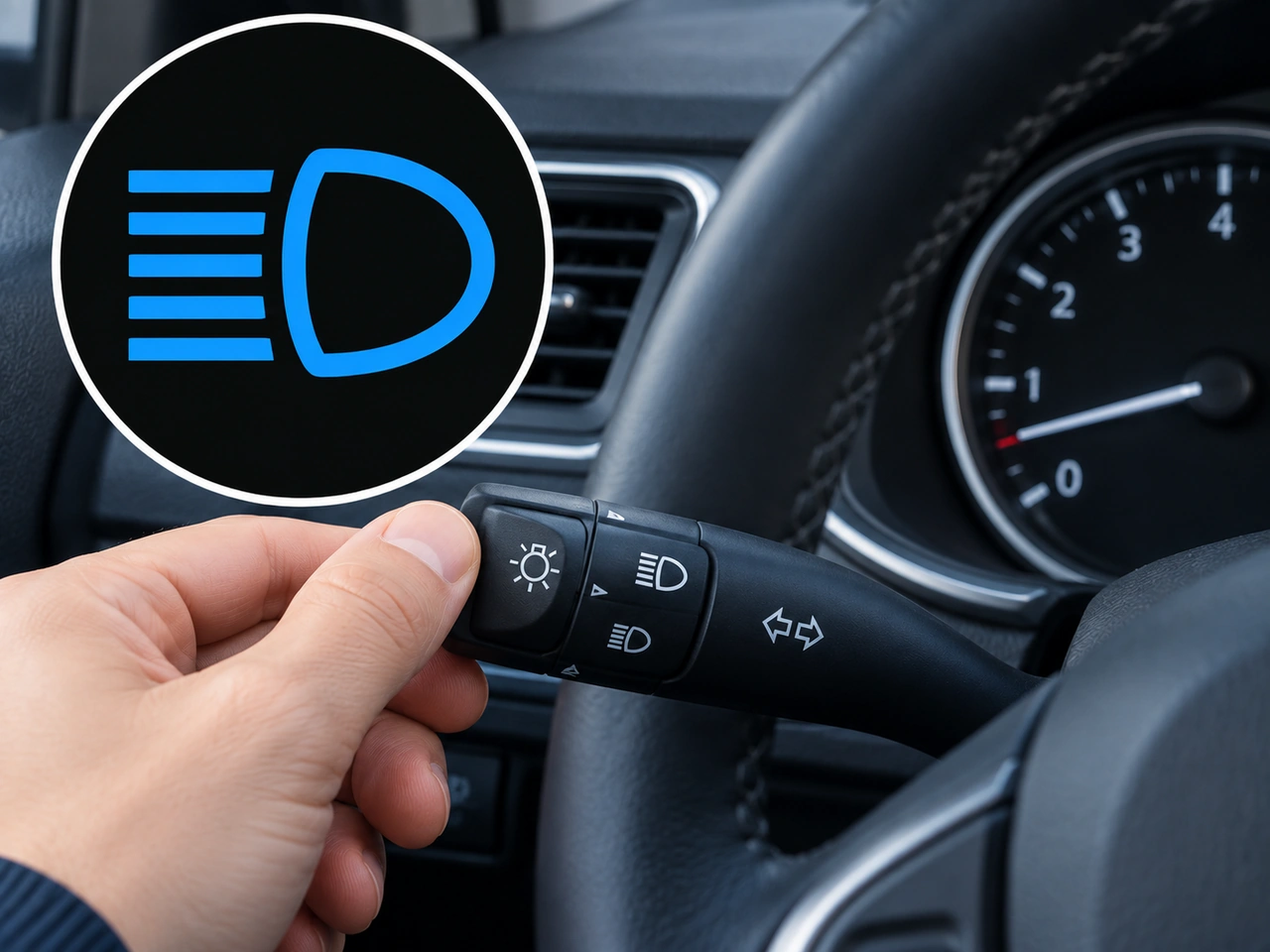
659. What does this dashboard symbol indicate?
This symbol indicates that the main beam headlights are switched on. Main beam illuminates the road farther ahead but can dazzle other road users, so it should be changed to dipped headlights when necessary.
A blue headlamp symbol with straight horizontal lines indicates that the main beam is on.
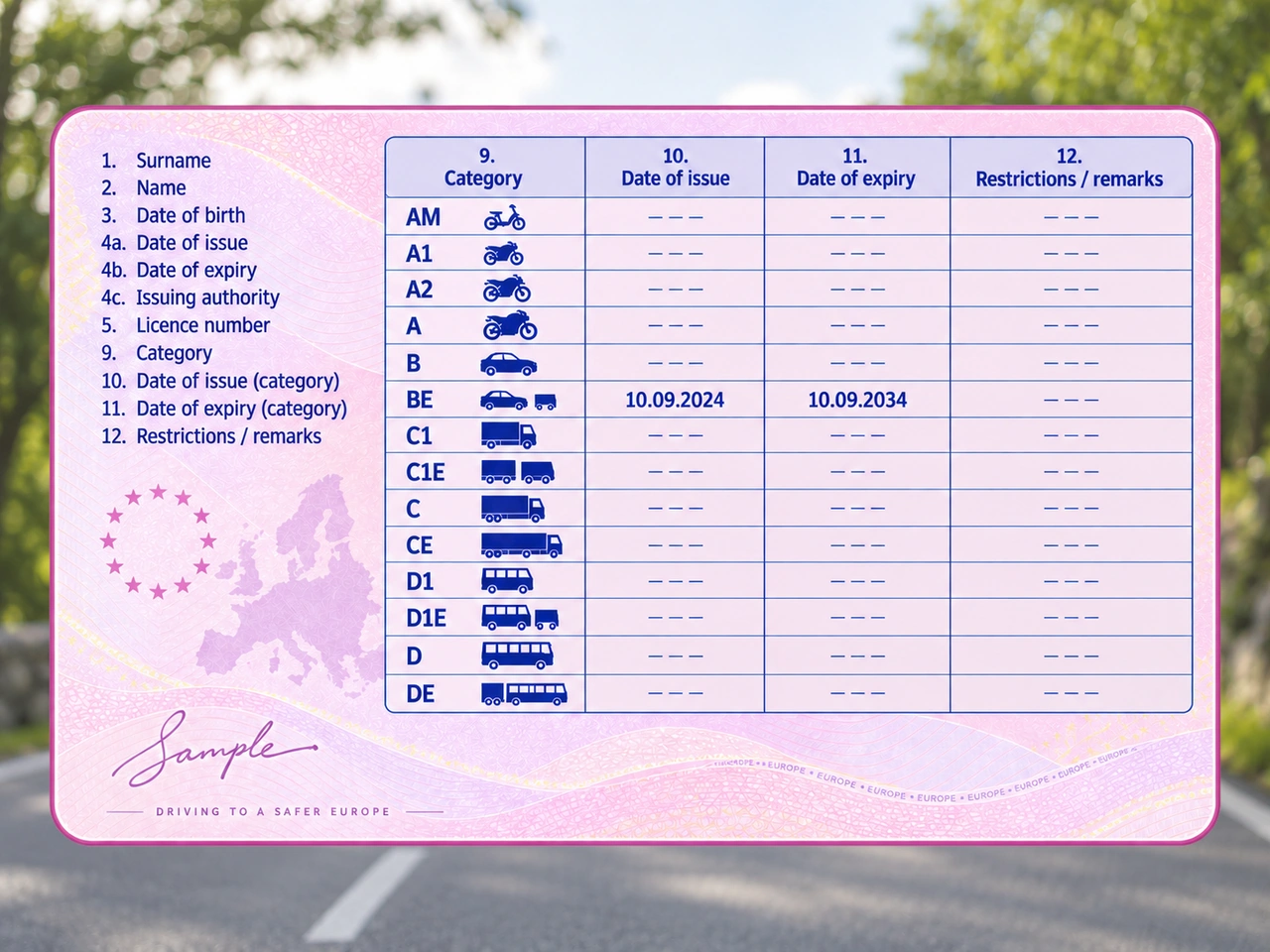
660. Which vehicle combination is covered by driving licence BE?
Category BE covers combinations consisting of a category B towing vehicle and a trailer or semi-trailer with a maximum authorised mass of no more than 3,500 kg. Lighter combinations may already be covered by category B.
Norway. If you acquired BE before 19 January 2013, code 79.06 shows your retained entitlement to trailers above the standard 3,500 kg limit.
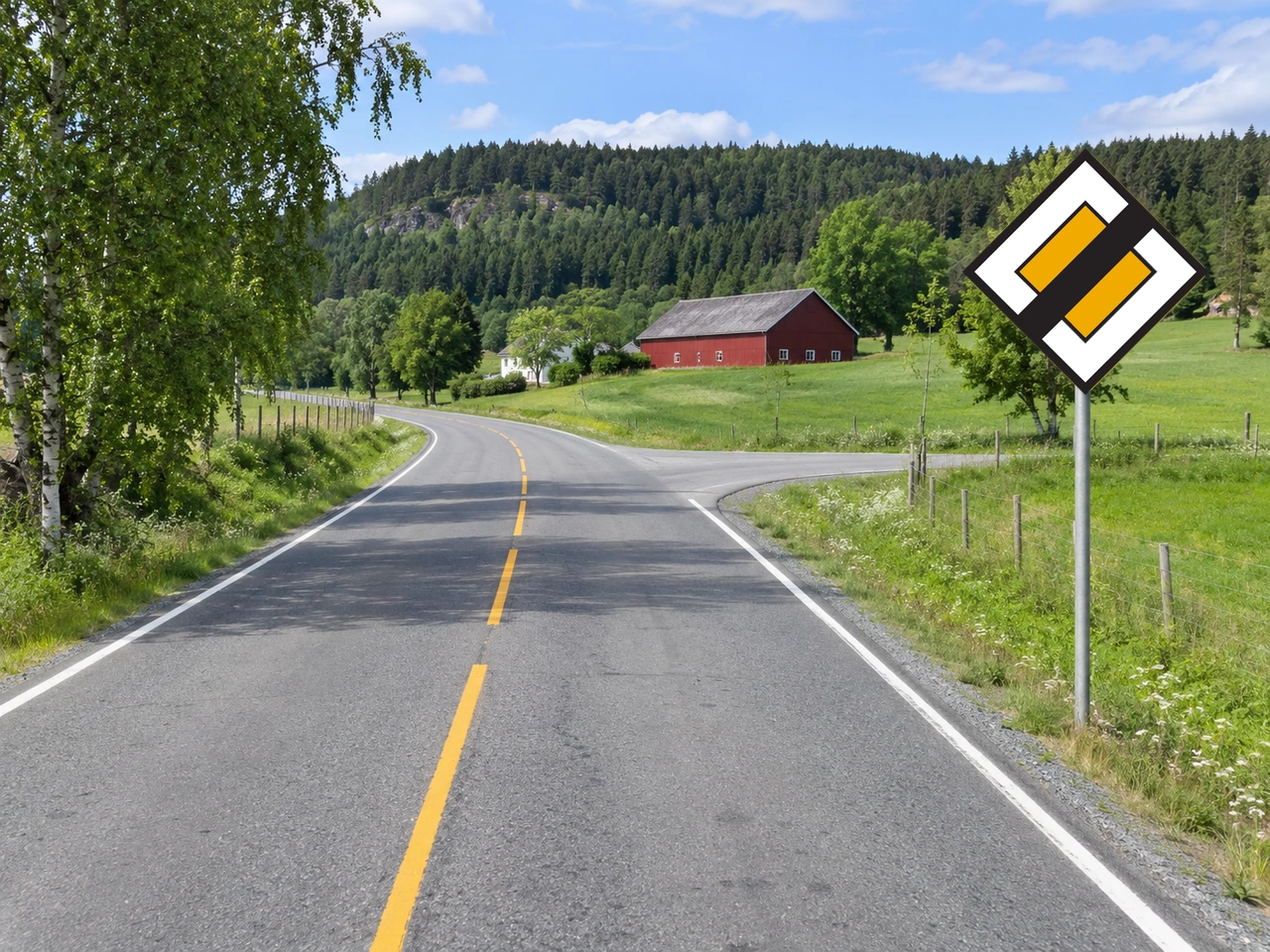
661. This end-of-priority-road sign alone requires every driver to stop.
This sign marks the end of a priority road. It does not itself impose a compulsory stop. Follow the signs and priority rules that apply ahead.
🔗 Sources
Norway • Skiltforskriften • Sign 208
Statens vegvesen • Official traffic-sign meanings
Statens vegvesen • Official sign artwork
Official Norwegian sign artwork: Statens vegvesen, sign 208, original EPS file 208_0.eps from the national sign artwork archive. Native geometry, orientation, borders and proportions retained. Colours use the authority's published PMS web swatches: red PMS 179, blue PMS 293 and yellow PMS 130 where present. Original files and colour guidance. No third-party open licence is asserted for the government artwork.
Image credit: AI-generated background with source sign artwork resized and placed on the sign face.
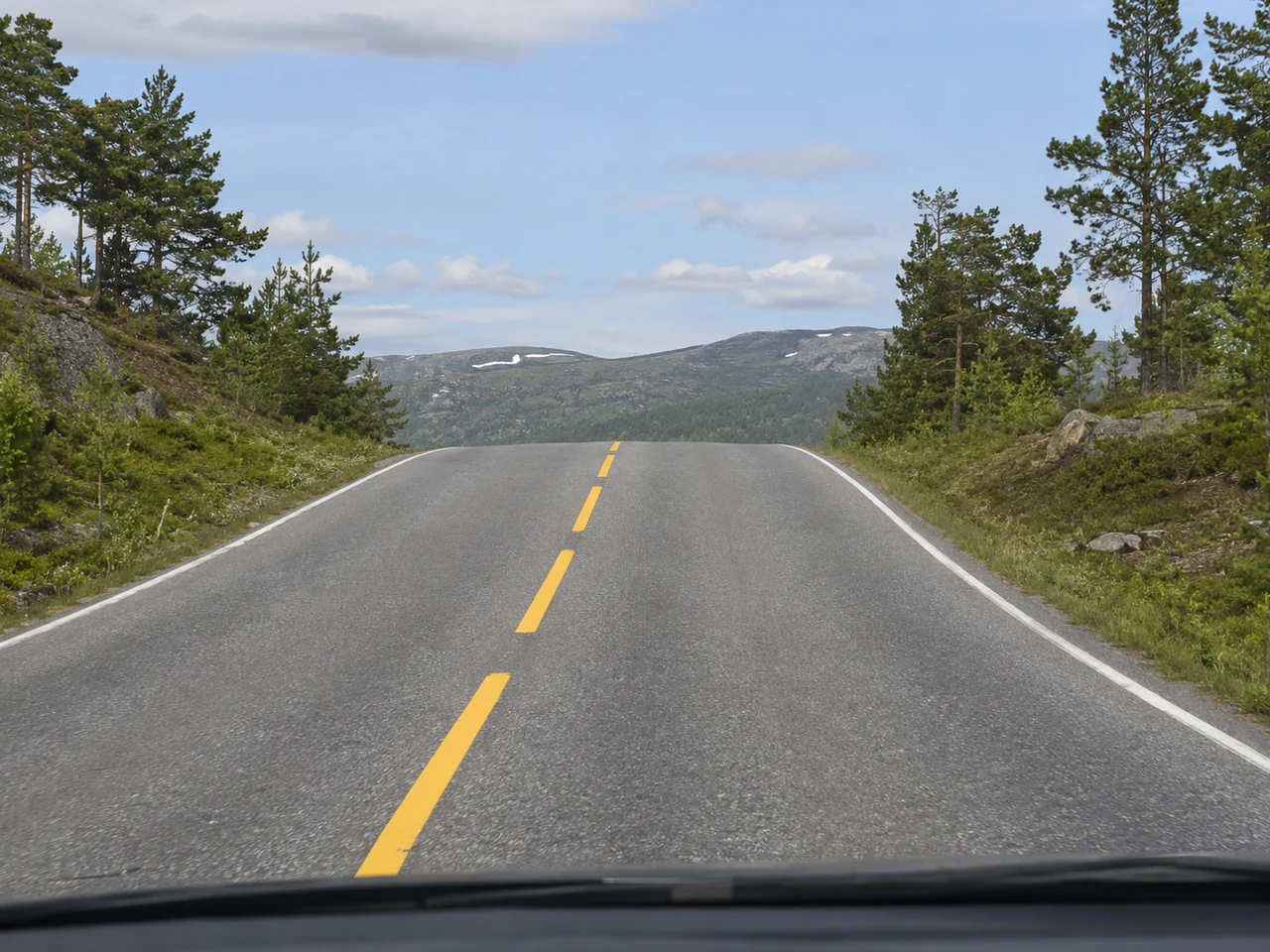
662. What should you do when approaching a hill crest?
A hill crest can hide vehicles, cyclists, pedestrians, or obstacles. Reduce speed and stay in your lane.
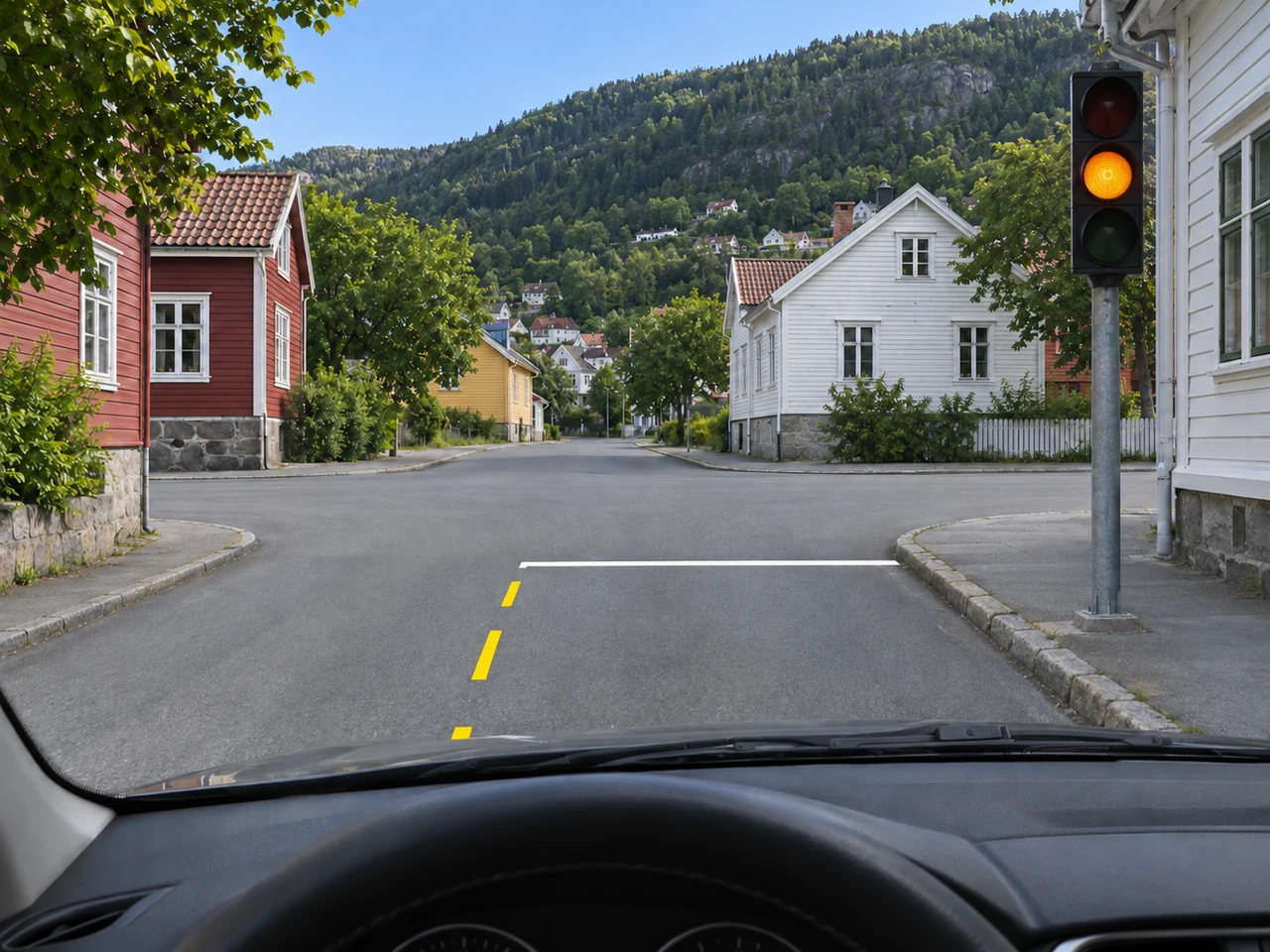
663. What should you do when traffic lights change to amber as you approach?
An amber light warns that the signal is changing. Stop if it is safe, but avoid sudden braking that could cause danger behind you.
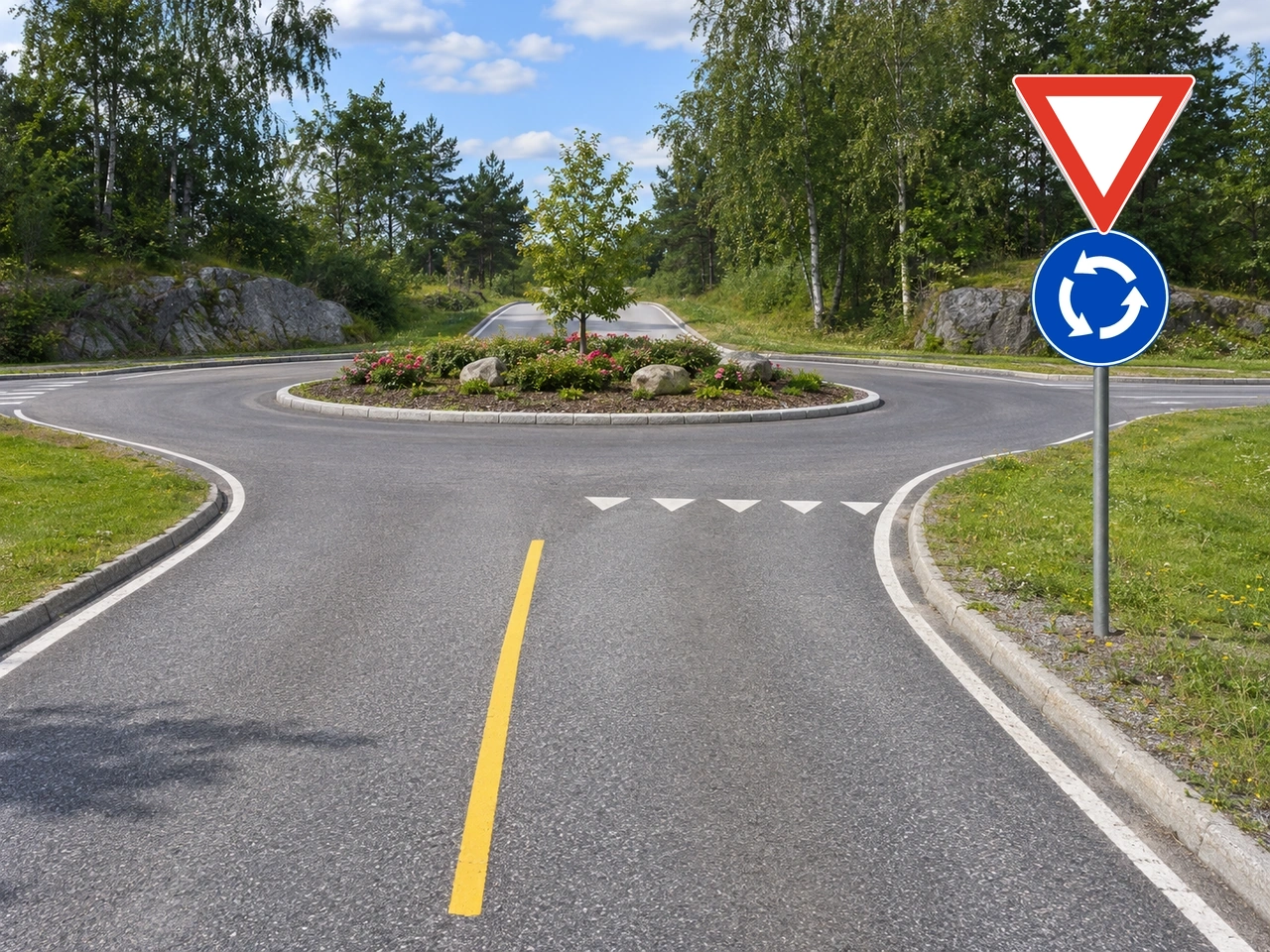
664. The blue roundabout sign alone gives traffic on the roundabout priority.
The blue sign prescribes the direction around the island. Use the applicable priority signs, road markings and junction rules to decide who goes first.
🔗 Sources
Norway • Skiltforskriften • Sign 406
Statens vegvesen • Official traffic-sign meanings
Statens vegvesen • Official sign artwork
Official Norwegian sign artwork: Statens vegvesen, sign 406 + 202, original EPS artwork 406_0.eps from the national sign artwork archive. The upper give-way face uses Statens vegvesen 202_0.eps. Native lettering, numbers, pictogram, orientation, borders and proportions retained. Colours use the authority's published PMS web swatches: blue PMS 293 and red PMS 179 where present. Original files and colour guidance. No third-party open licence is asserted for the government artwork.
Image credit: AI-generated background with source sign artwork resized and placed on the sign face.
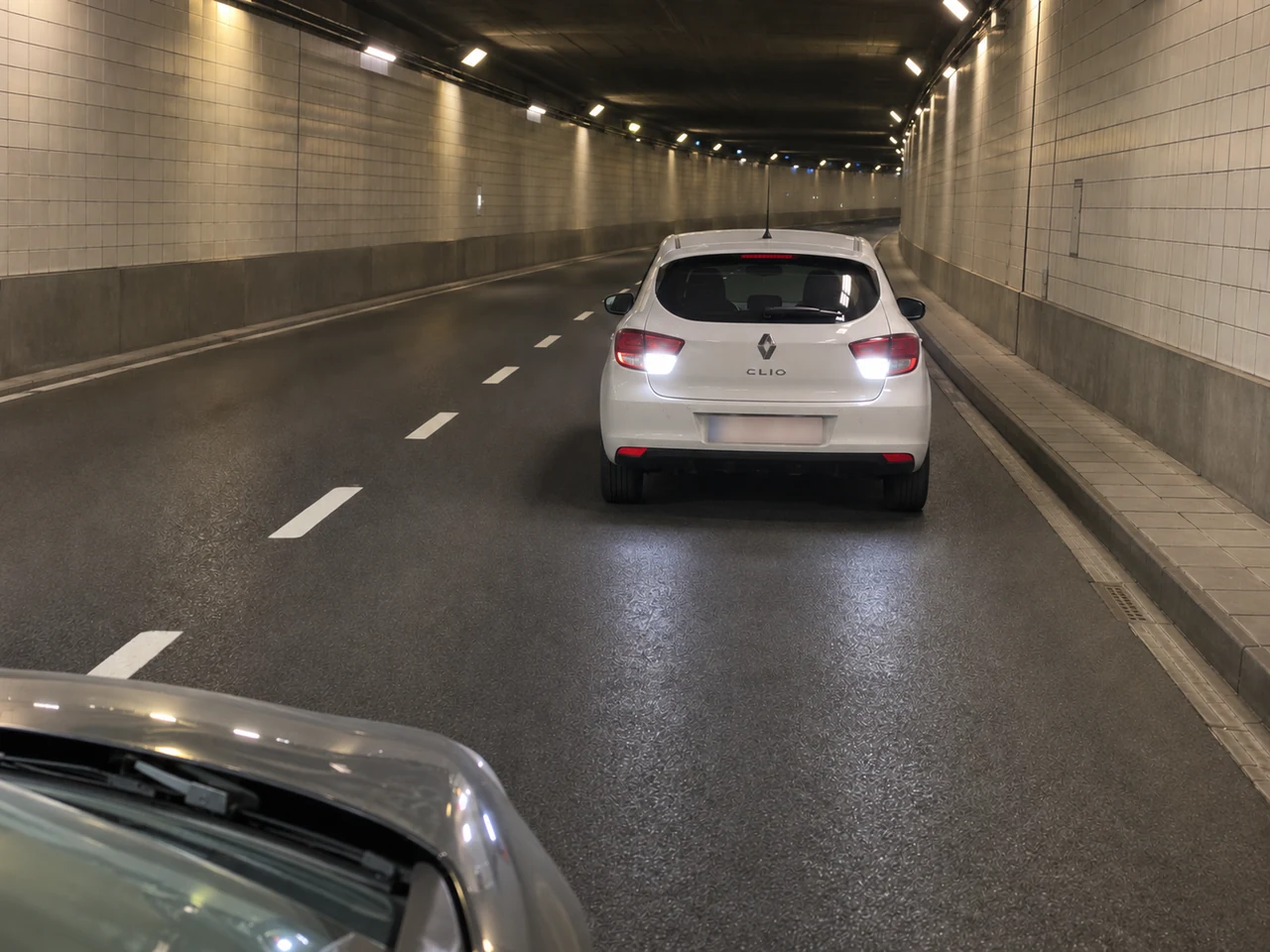
665. Why is unexpected reversing or a U-turn dangerous in normal tunnel traffic?
Unexpected reversing or a U-turn can put your vehicle in other traffic's path. Follow local controls and emergency instructions. Normal-traffic risk is distinct from directed or necessary emergency evacuation.
Norway: Unexpected reversing or a U-turn can put you in approaching traffic's path. Do not improvise these manoeuvres in normal traffic. Emergency advice depends on the layout: Bergen fire service distinguishes a two-way bore, where turning to escape fire may be necessary if safe or instructed, from a one-way bore, where it advises against turning. Follow the incident instructions for that tunnel.
🔗 Sources
Bergen brannvesen • Different fire procedures for two-way and one-way bores
Image credit: AI-generated
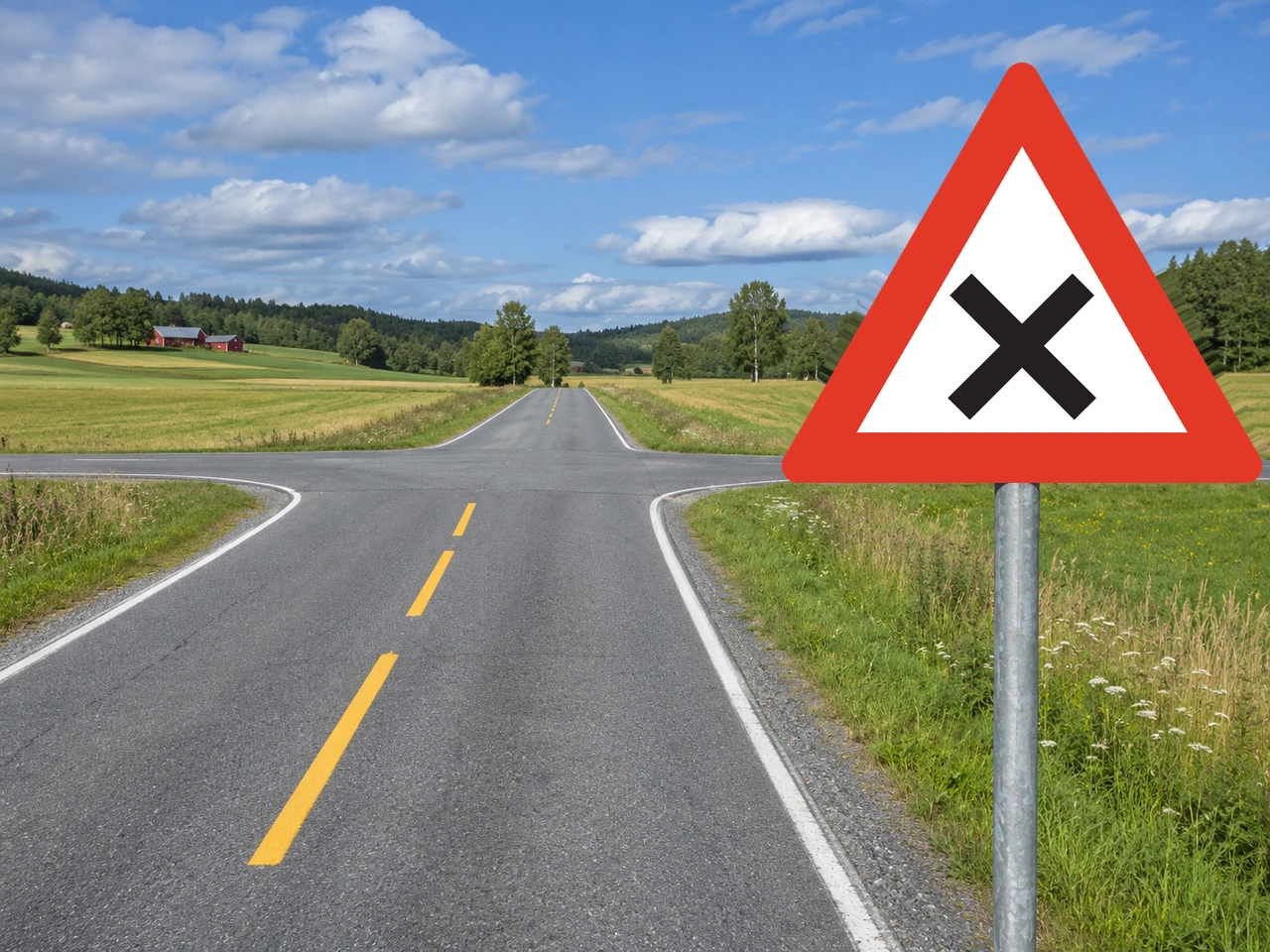
666. The triangular warning sign with a black cross warns of a junction with priority from the right.
This sign warns of a junction or side road where traffic from the right has priority. Approach carefully and give way as required. It does not mark your road as a priority road.
🔗 Sources
Norway • Skiltforskriften • Sign 124
Statens vegvesen • Official traffic-sign meanings
Statens vegvesen • Official sign artwork
Official Norwegian sign artwork: Statens vegvesen, sign 124, original EPS file 124_0.eps from the national sign artwork archive. Native geometry, orientation, borders and proportions retained. Colours use the authority's published PMS web swatches: red PMS 179, blue PMS 293 and yellow PMS 130 where present. Original files and colour guidance. No third-party open licence is asserted for the government artwork.
Image credit: AI-generated background with source sign artwork resized and placed on the sign face.
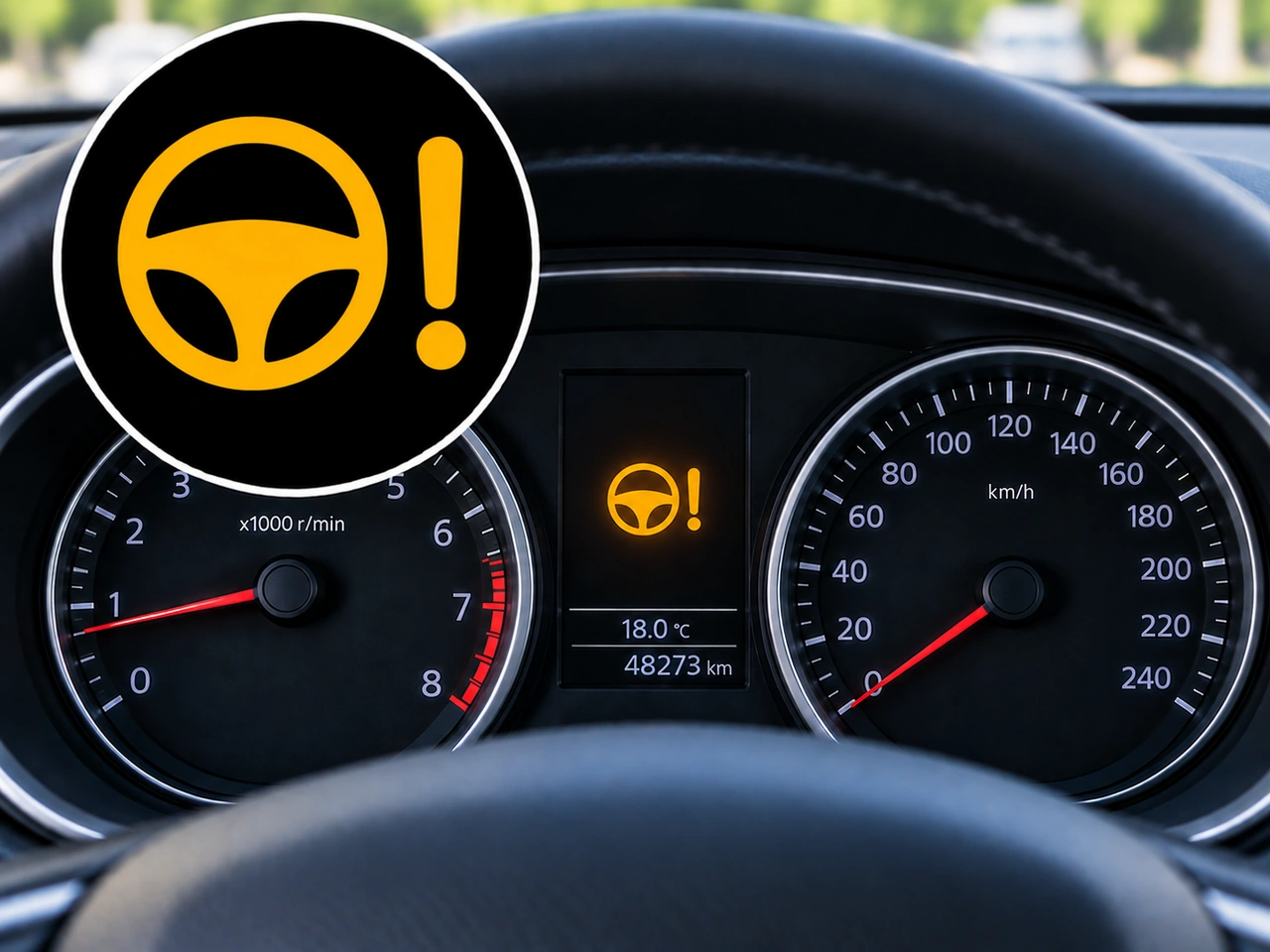
667. What does this dashboard symbol indicate?
This symbol indicates a possible fault with the power-steering system. Steering assistance may be reduced or unavailable, making the steering wheel harder to turn.
A steering warning can indicate reduced or lost assistance, which may make the wheel harder to turn. Follow the handbook for the warning shown.
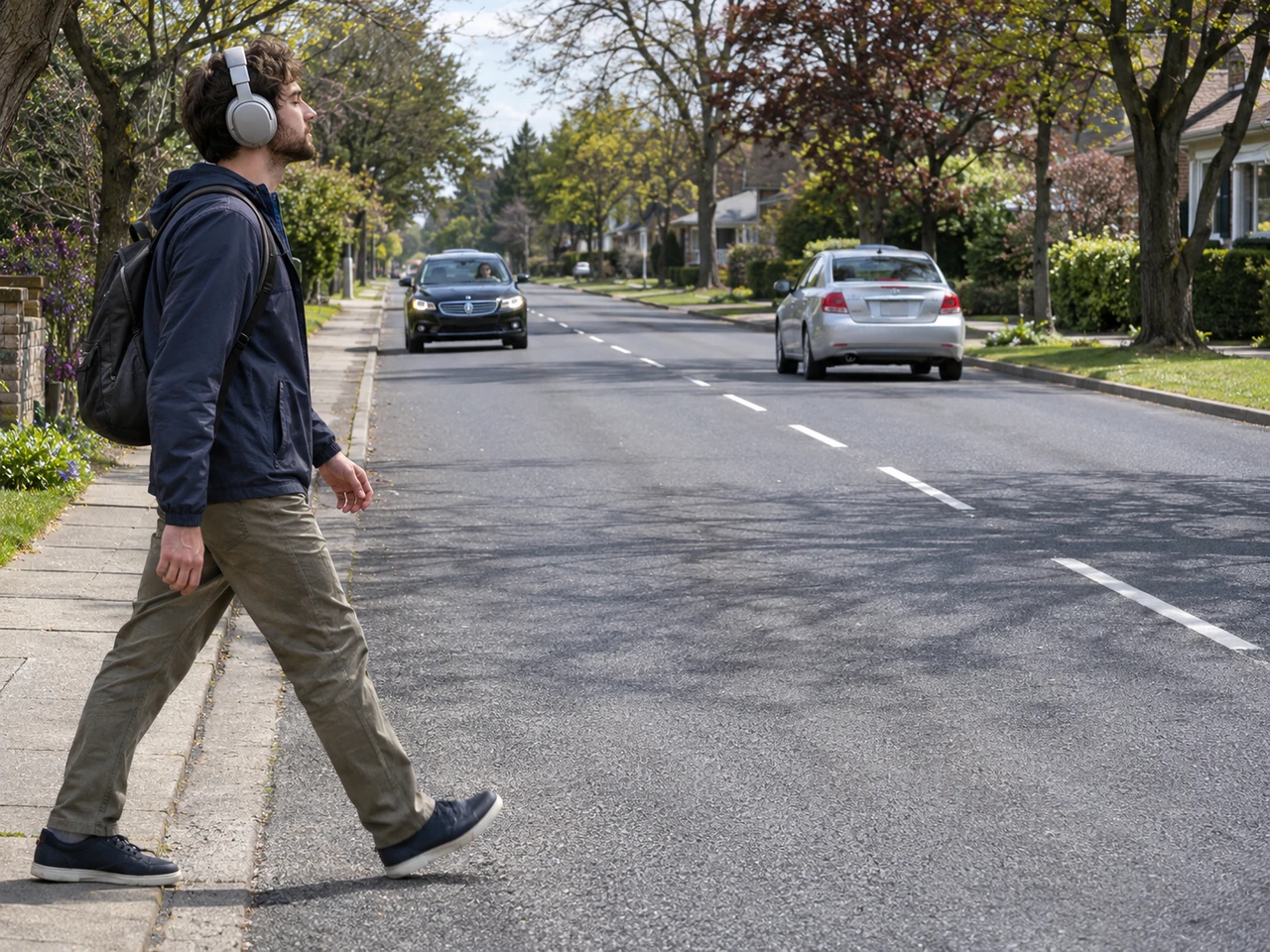
668. Why is it dangerous to cross while listening to loud music?
Loud music can mask approaching vehicles, bicycle bells, horns and other warning sounds. Pause the music before crossing so you can listen as well as look. Stop before the kerb, check traffic in all directions and cross only when it is safe. The image illustrates the risk of crossing without checking traffic.
🔗 Sources
Great Britain — Highway Code, rule 1; general safety
Great Britain — Highway Code, rule 7; crossing advice
Image credit: AI-generated
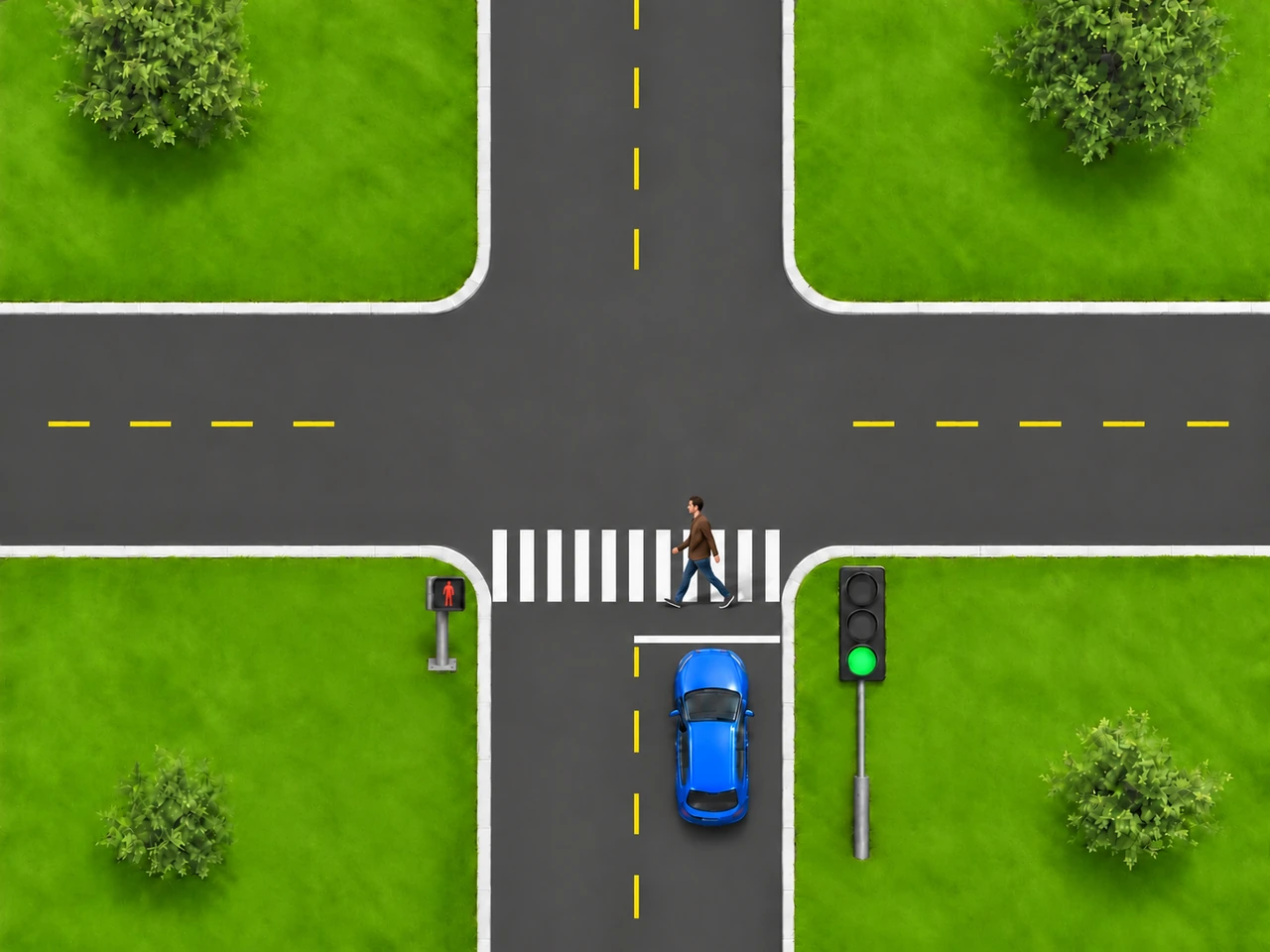
669. This pedestrian entered on green. Blue now has green. Must blue let the pedestrian finish?
The pedestrian entered lawfully on green and is still crossing. Blue must wait and allow the person to finish safely, despite its new green light. The pedestrian should continue promptly and safely; the changed signal does not authorise driving into their path. A waiting pedestrian may not start a new crossing on red.
🔗 Sources
AI-generated illustration • Traffic-rules.com / Rijbewijs-online.be • WCIT • CC BY-SA 4.0.
🔗 Lovdata • Norwegian Traffic Signs Regulations, main traffic signal 1080
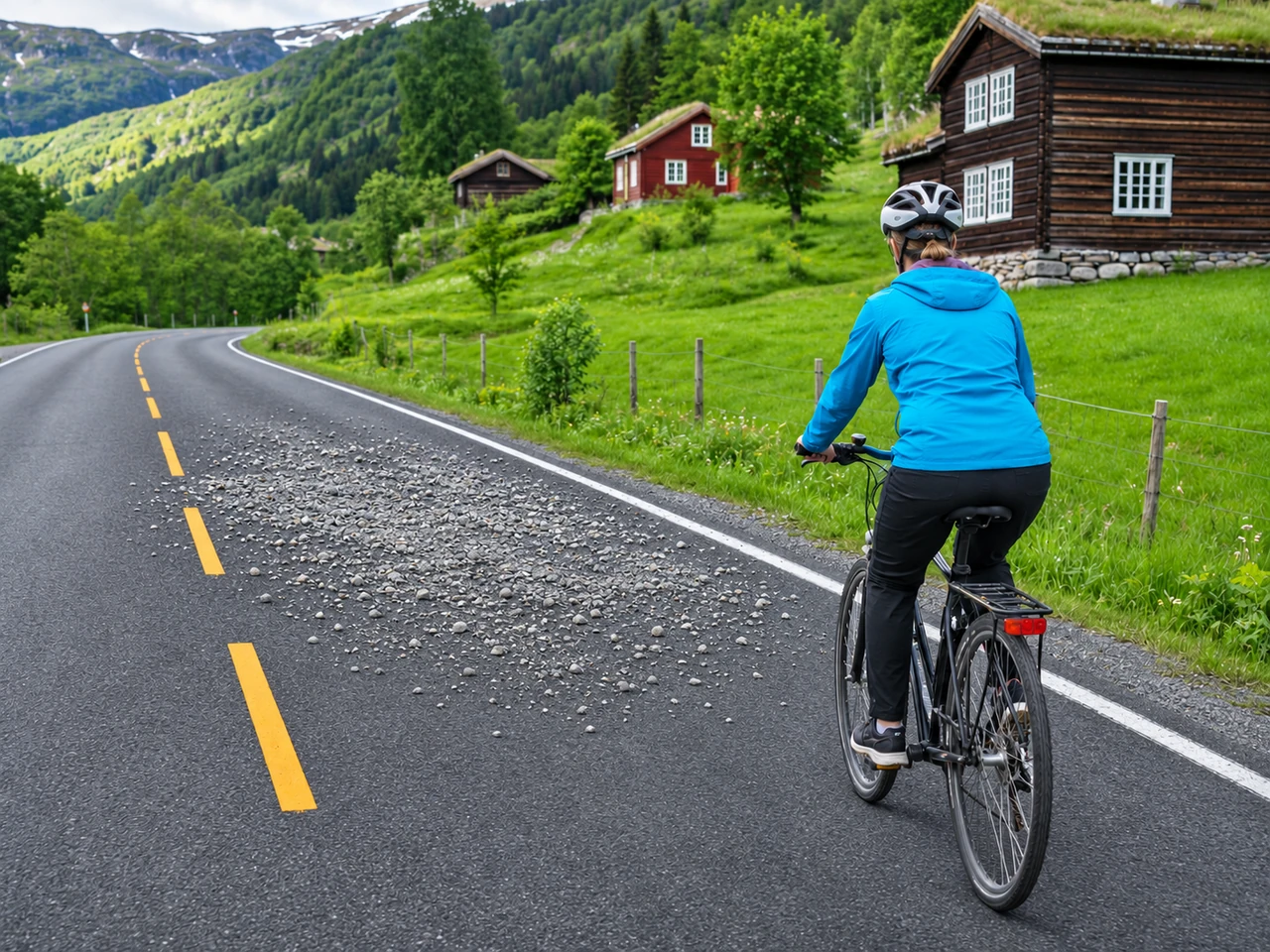
670. What should cyclists do when riding over loose gravel or road debris?
Loose gravel can move beneath the tyres and reduce grip. Slow down before reaching it where possible, keep the bicycle stable and steer smoothly. Avoid sharp braking, sudden acceleration and abrupt changes of direction. Check for traffic before changing your road position to avoid the patch.
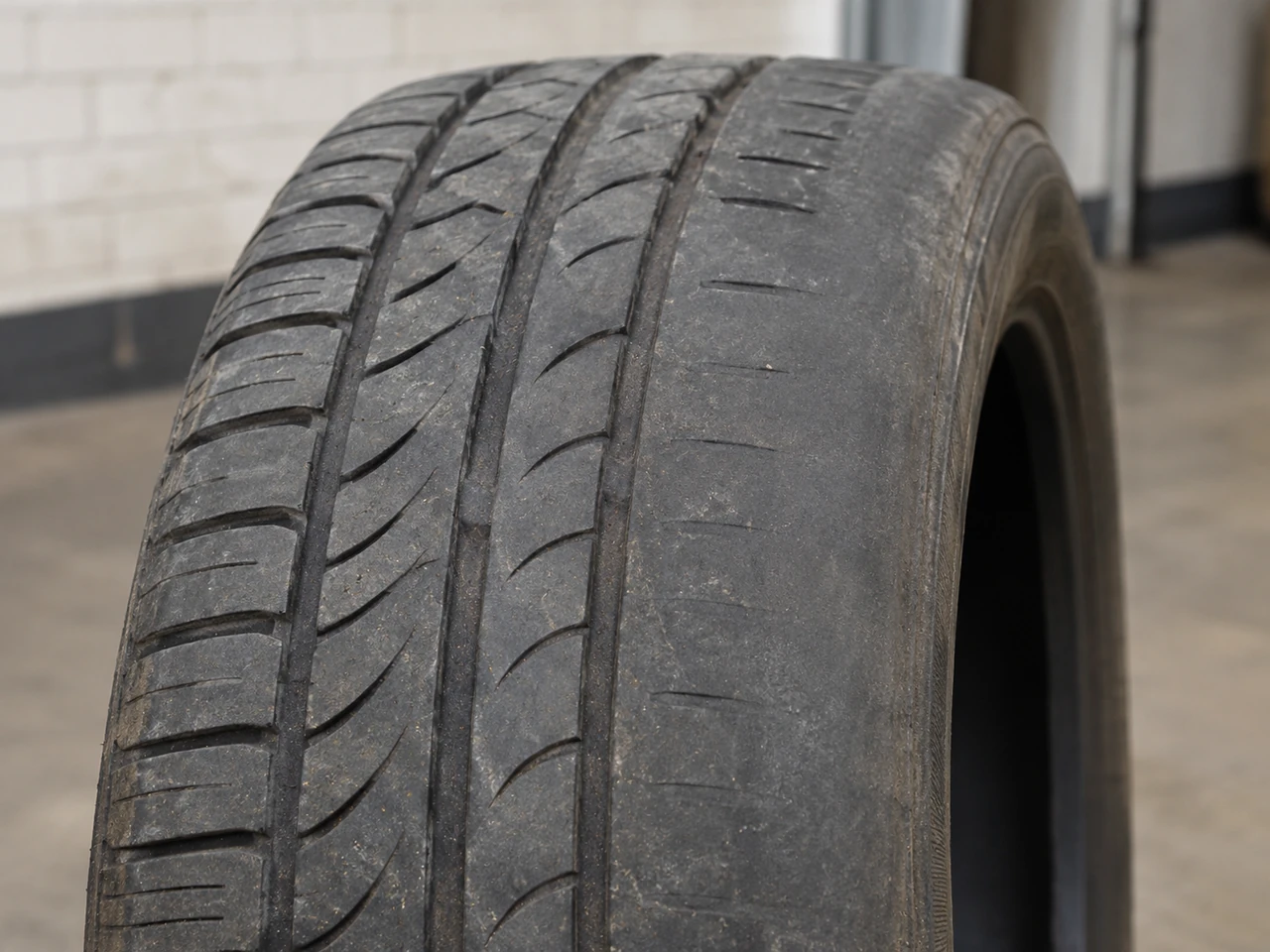
671. Uneven tyre wear can be a sign of an alignment or suspension problem.
Uneven wear can have several causes, including incorrect pressures, wheel alignment or worn suspension components. Have the tyre and vehicle checked by a professional rather than assuming the cause from appearance alone.
🔗 Sources
The Highway Code (Great Britain) • Safety guidance, tyre wear, braking, alignment and suspension faults
Image credit: AI-generated
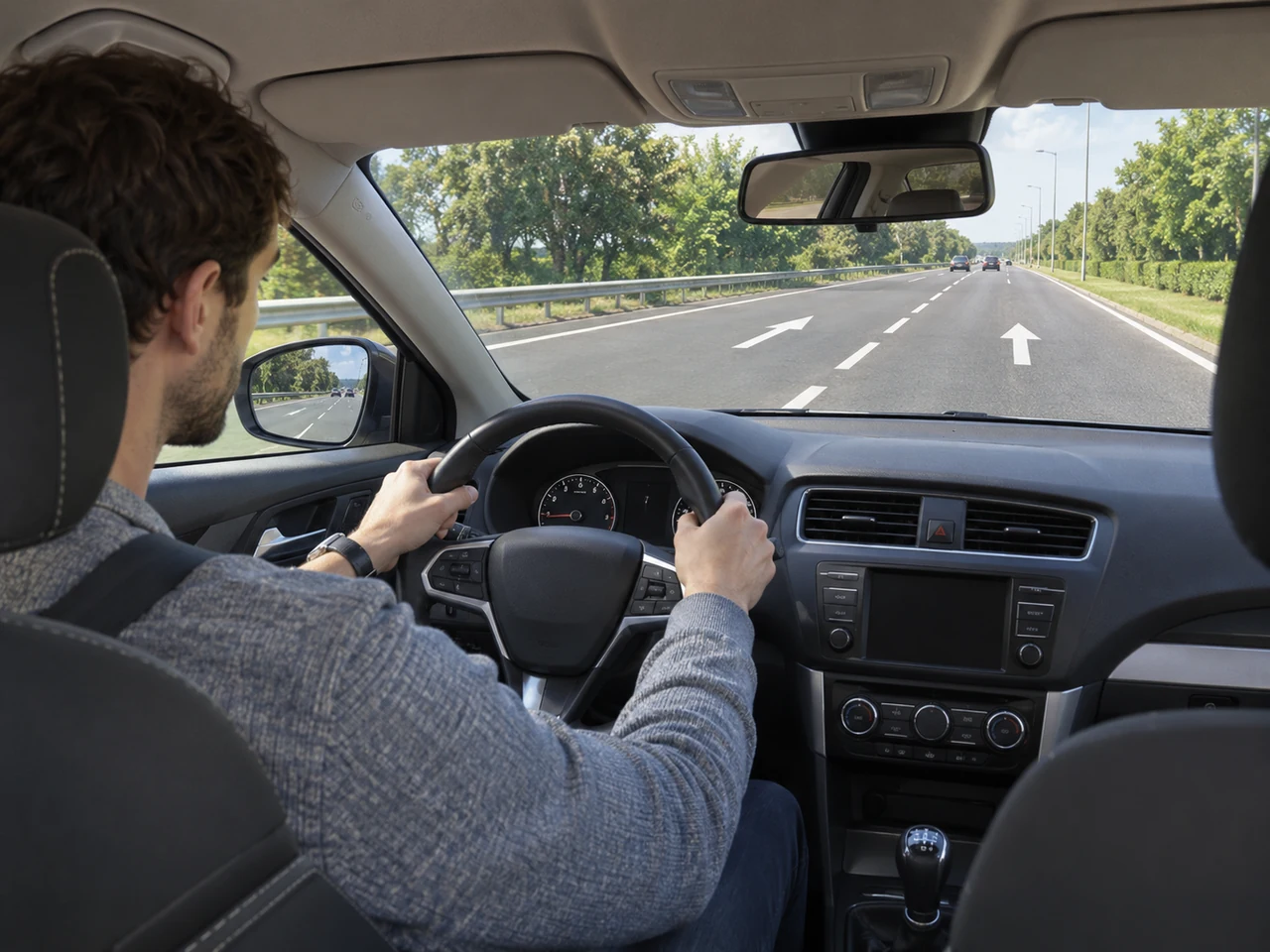
672. You should check your mirrors before changing lanes.
Check the relevant blind spots as well as your mirrors, and change lanes only when it is safe.
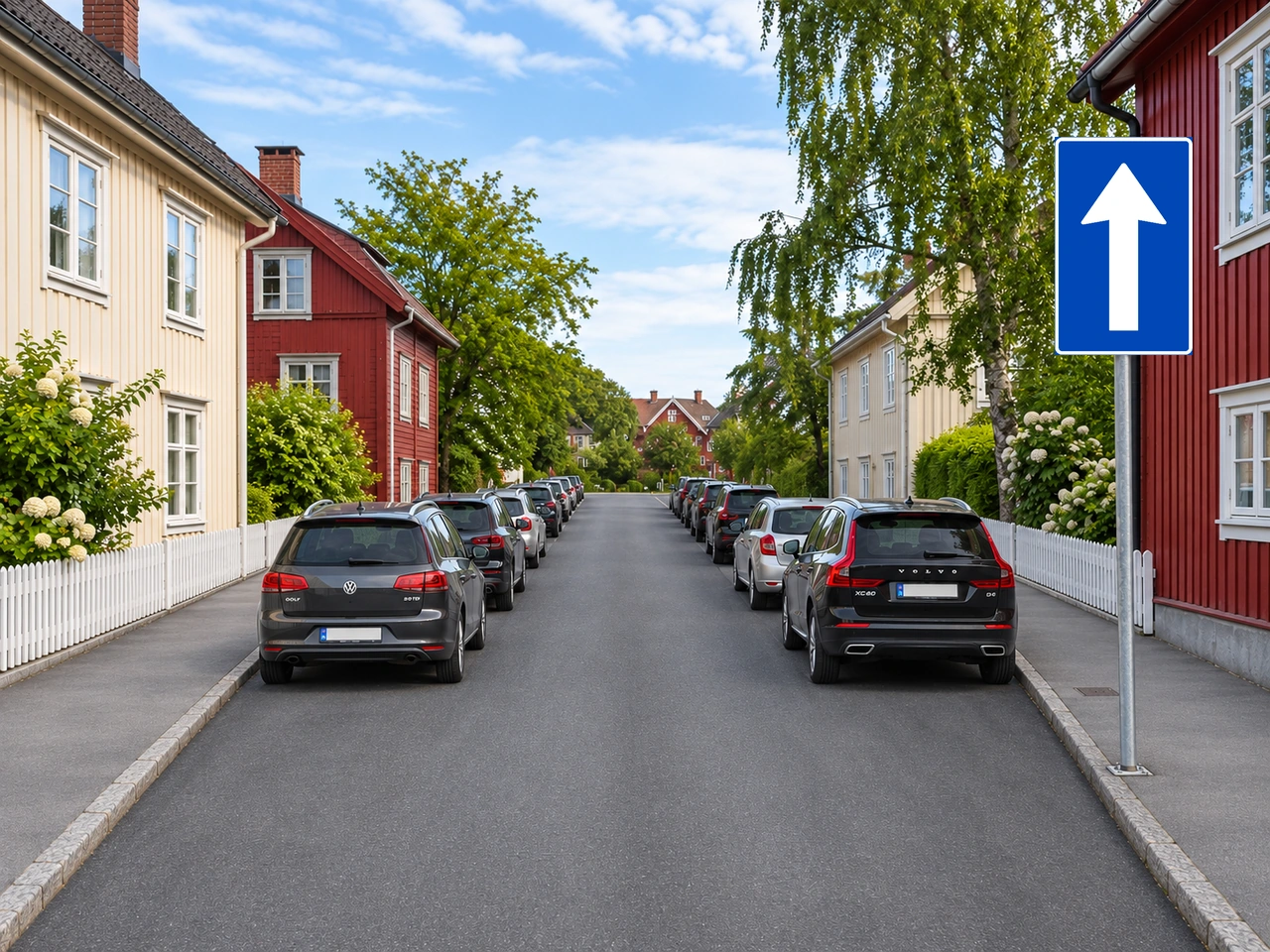
673. A one-way sign by itself allows cyclists to ride against the arrow.
The one-way direction applies to cyclists too. Opposite-direction cycling requires a lawful route arrangement and the correct signs. Do not assume every one-way street allows cycling against the arrow.
🔗 Sources
Norway • Skiltforskriften • Sign 526.1
Statens vegvesen • Official traffic-sign meanings
Statens vegvesen • Official sign artwork
Official Norwegian sign artwork: Statens vegvesen, sign 526.1, original EPS file 526_1.eps from the national sign artwork archive. Native numbers, pictogram, cancellation stripes, orientation, borders and proportions retained. Colours use the authority's published PMS web swatches: blue PMS 293 and red PMS 179 where present. Original files and colour guidance. No third-party open licence is asserted for the government artwork.
Image credit: AI-generated background with source sign artwork resized and placed on the sign face.
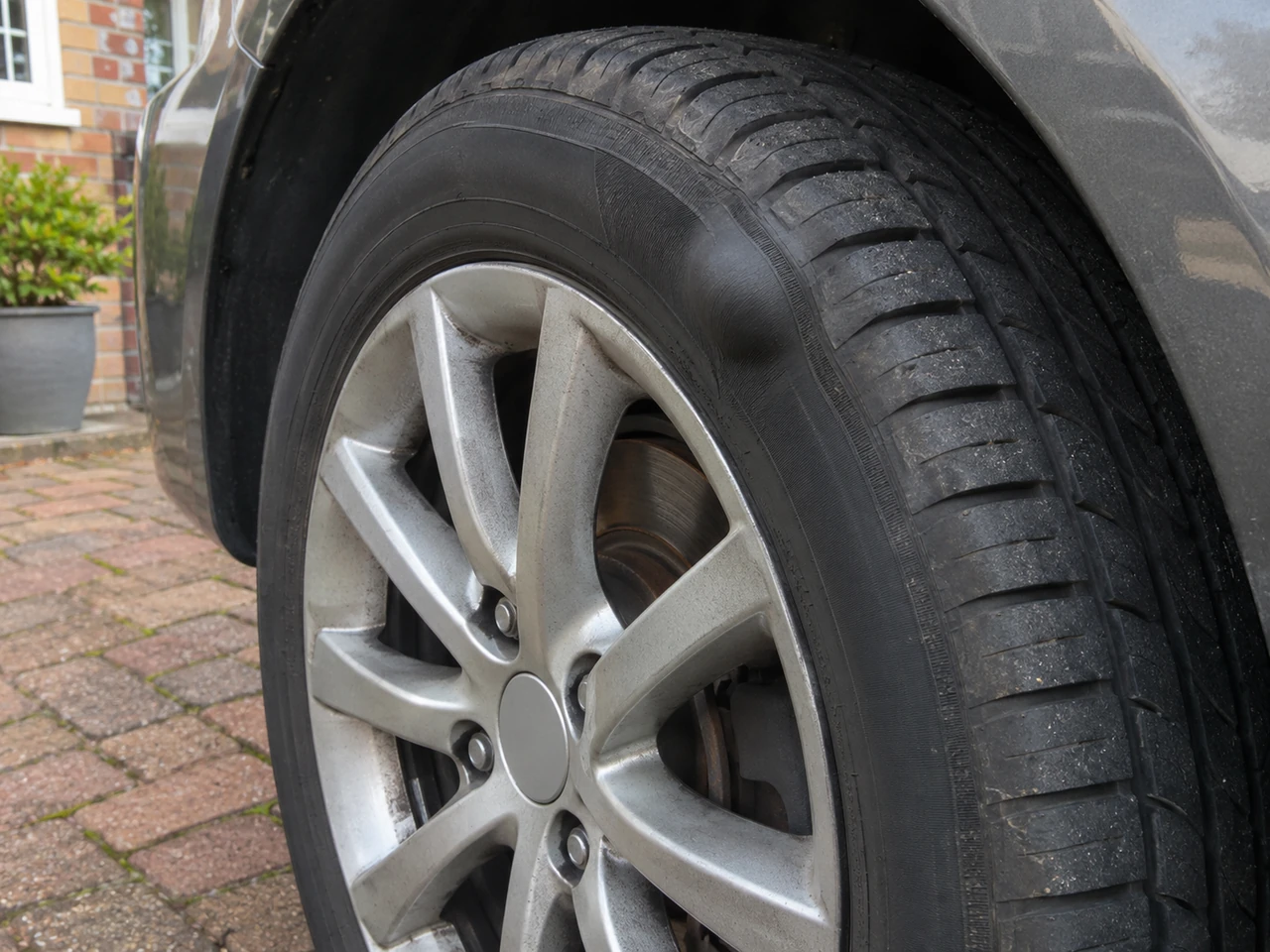
674. A tyre bulge is harmless if the tread is still deep.
A bulge is a sign of tyre damage, even when the tread is deep. Arrange a professional inspection or replacement rather than continuing to use it.
🔗 Sources
NHTSA (United States) • Safety guidance, physical tyre damage and professional advice
Image credit: AI-generated
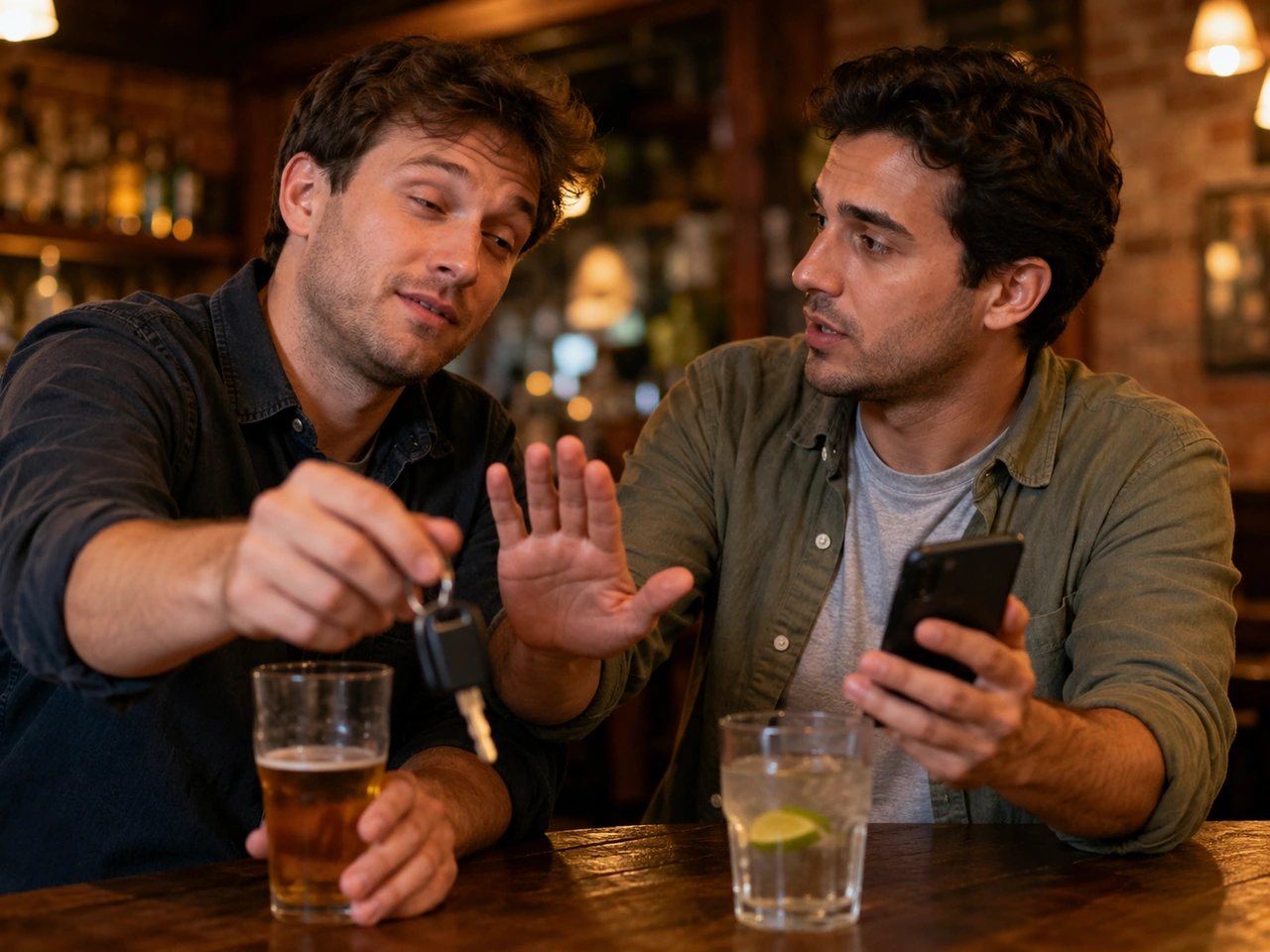
675. What should you do if a friend who has been drinking wants to drive?
Preventing an impaired person from driving can protect them, their passengers, and other road users. Arrange a sober driver, taxi, public transport, or accommodation.
Norway. Help your friend get a sober lift or call a taxi. Arrange to collect the car later when they are fit to drive.
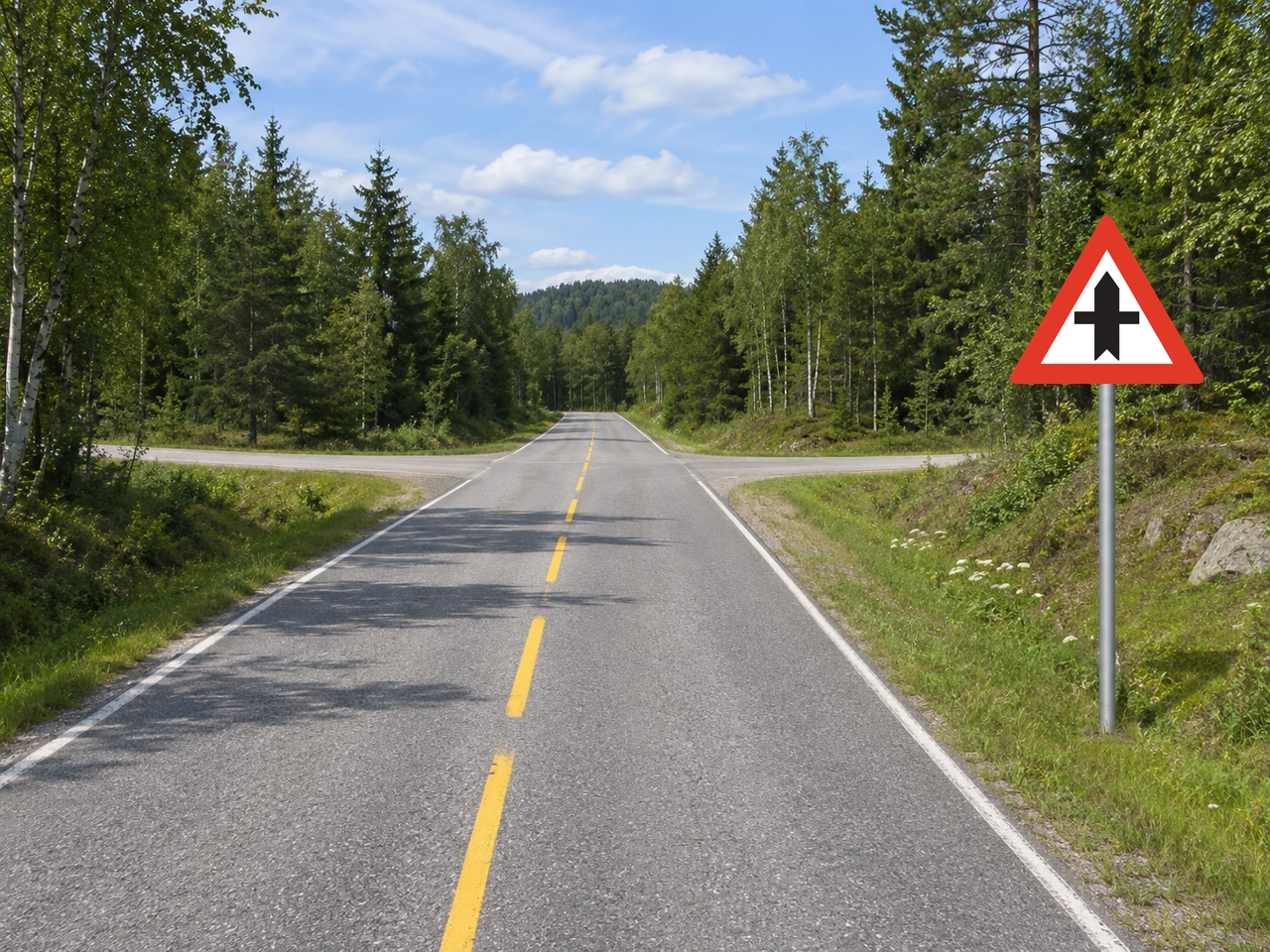
676. This triangular sign indicates priority over side-road traffic at the next junction.
This triangular sign indicates priority over traffic approaching from side roads at the next junction. It differs from the yellow diamond, which marks a continuing priority road.
🔗 Sources
Norwegian Public Roads Administration — Priority signs, 210 Forkjørskryss
Official Norwegian sign artwork: Statens vegvesen, sign 210, original EPS file 210_0.eps from the national sign artwork archive. Native geometry, orientation, borders and proportions retained. Colours use the authority's published PMS web swatches: red PMS 179, blue PMS 293 and yellow PMS 130 where present. Original files and colour guidance. No third-party open licence is asserted for the government artwork.
Image credit: AI-generated background with source sign artwork resized and placed on the sign face.
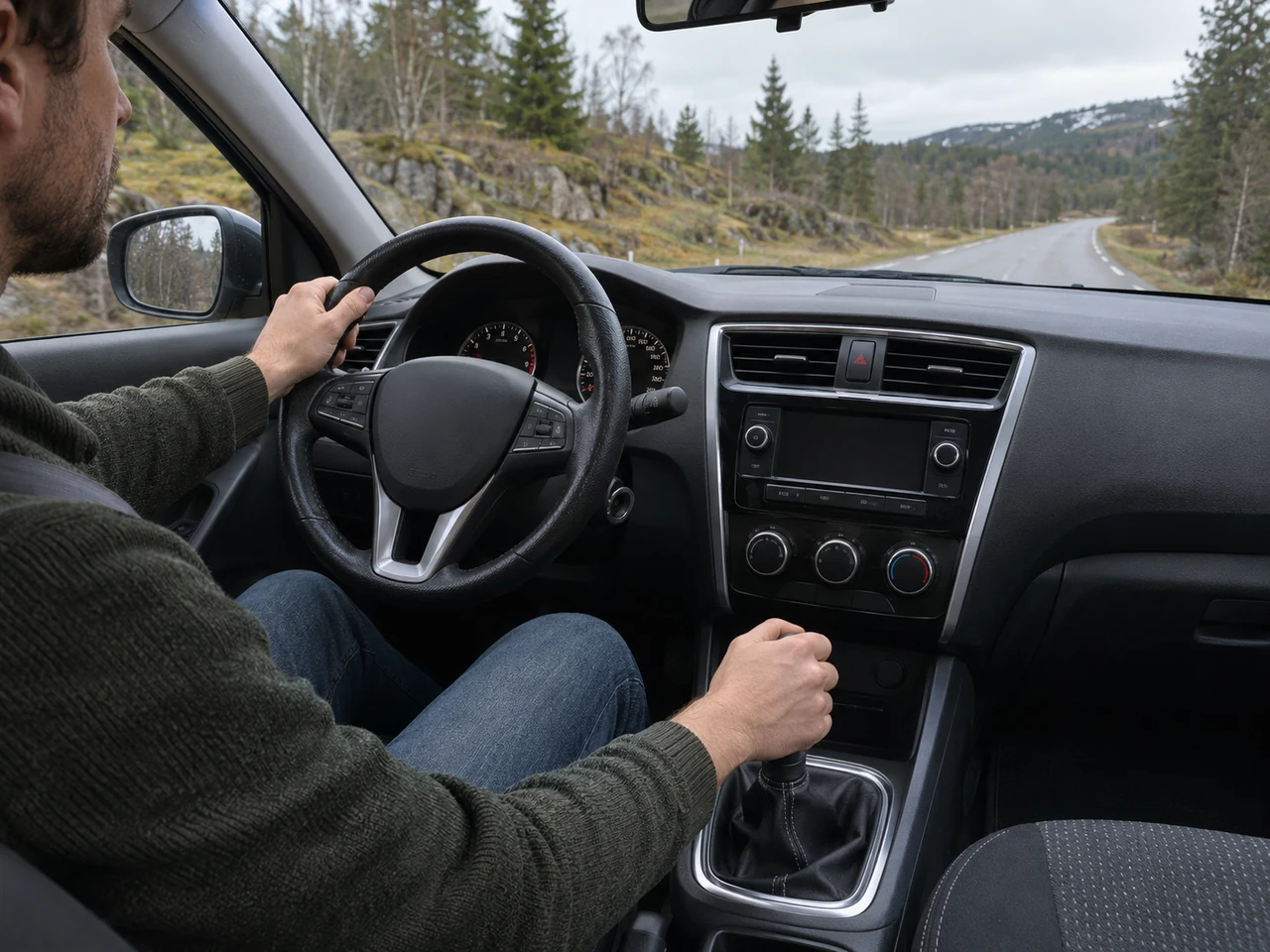
677. How can you reduce fuel use in a manual vehicle?
In a manual vehicle, use an appropriate gear and avoid unnecessarily high engine speeds. Change gear smoothly and follow the manufacturer's guidance for efficient operation.
🔗 Sources
Norwegian Public Roads Administration – Transport sector analysis
Image credit: AI-generated
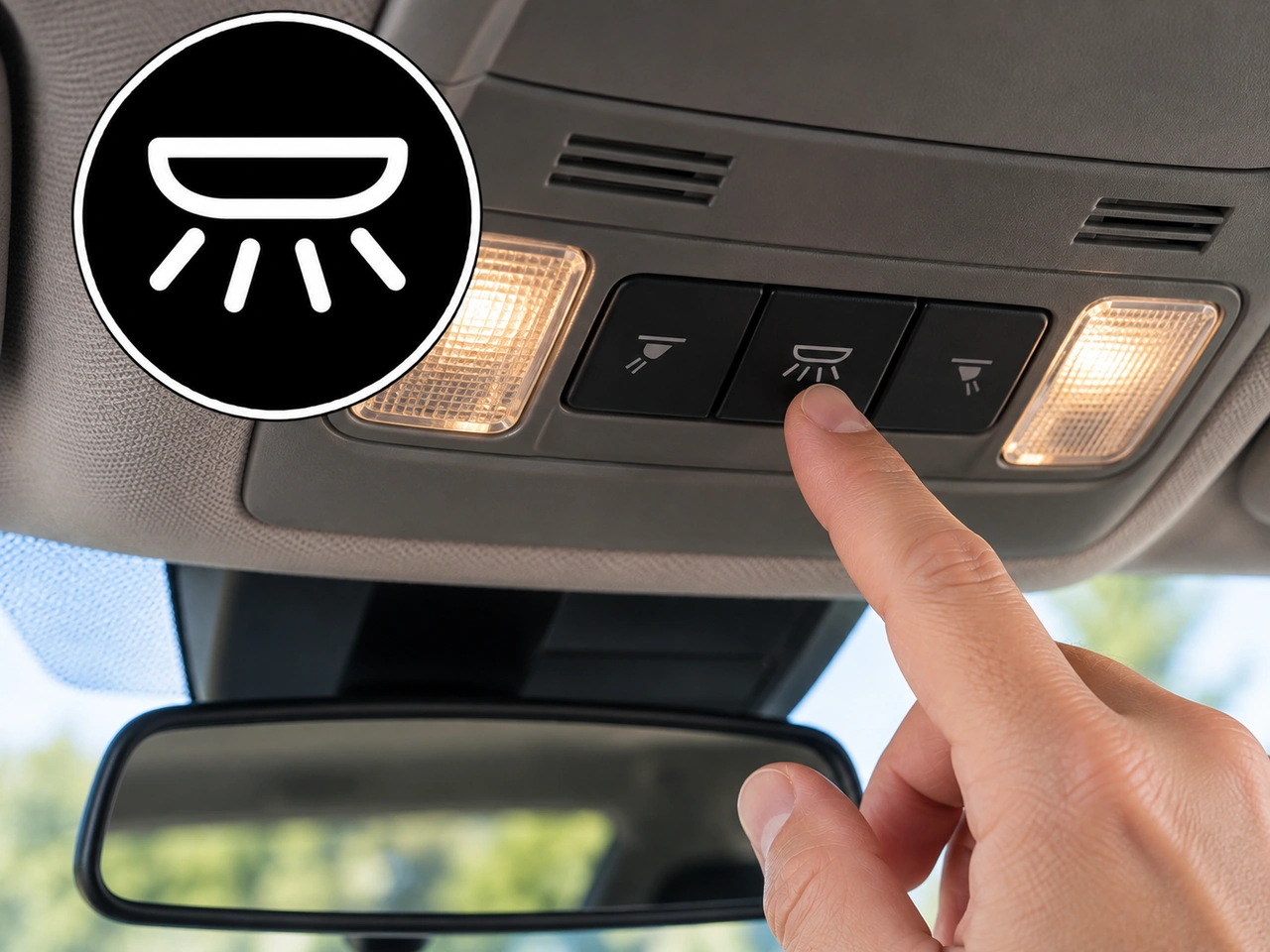
678. What does this vehicle-control symbol indicate?
This control operates the vehicle's interior lighting. Depending on the vehicle, the lights can be switched on manually or set to illuminate automatically when a door is opened.
The door-linked setting can switch the cabin lamps on automatically when a door opens. A separate setting may let you switch the lamps on manually.
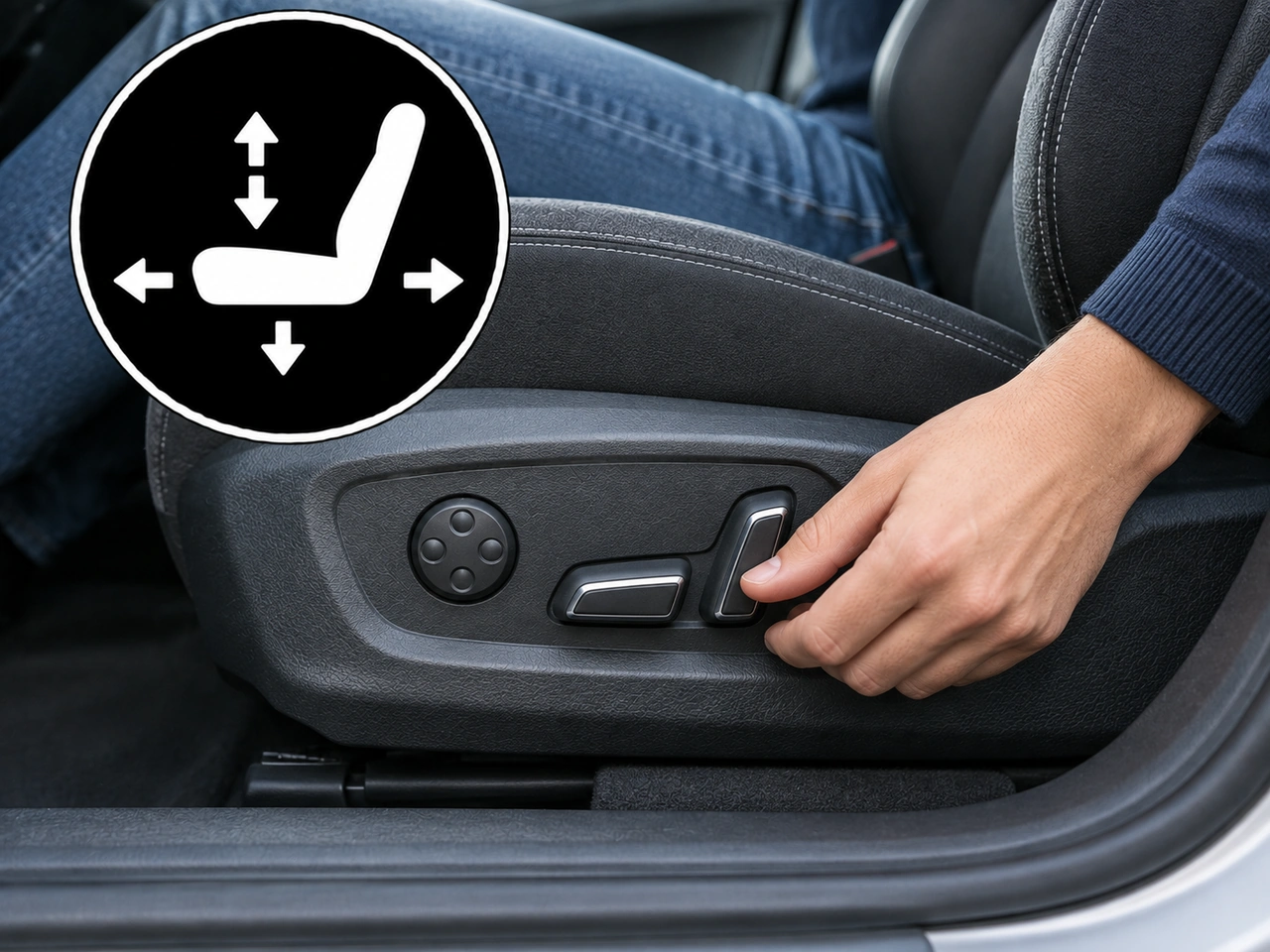
679. What does this vehicle-control symbol indicate?
This control adjusts the position of the seat. Depending on the vehicle, it may move the seat forwards or backwards, raise or lower it, or change the backrest angle.
Set your seat before driving. Make sure you can reach the pedals and controls comfortably and that the seat is secure.
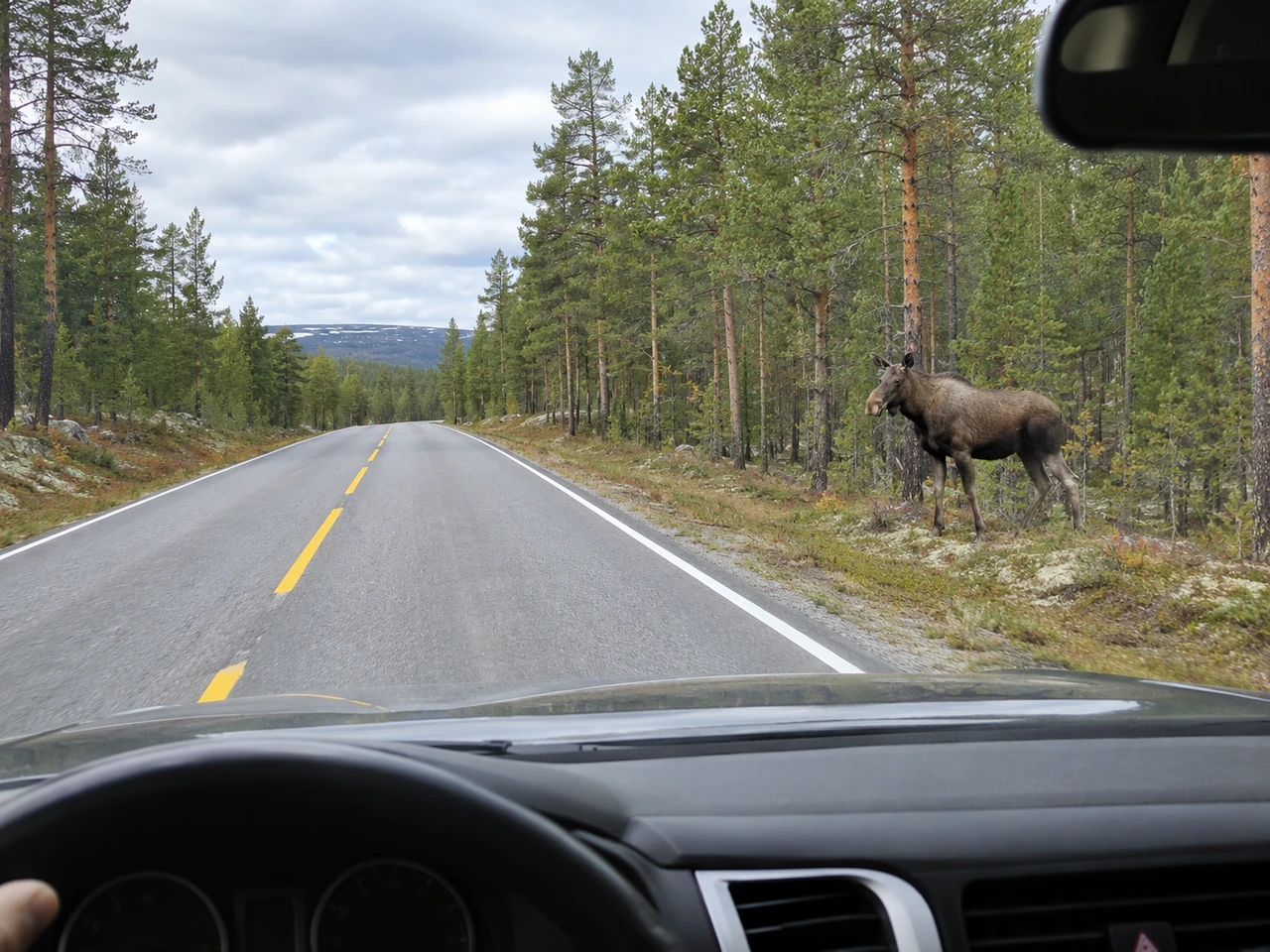
680. What should you do when driving near animals?
Animals can move unpredictably. Slow down, stay alert, and be prepared to stop safely.
🔗 Sources
Norwegian Public Roads Administration – Animal collisions and prevention
Image credit: AI-generated
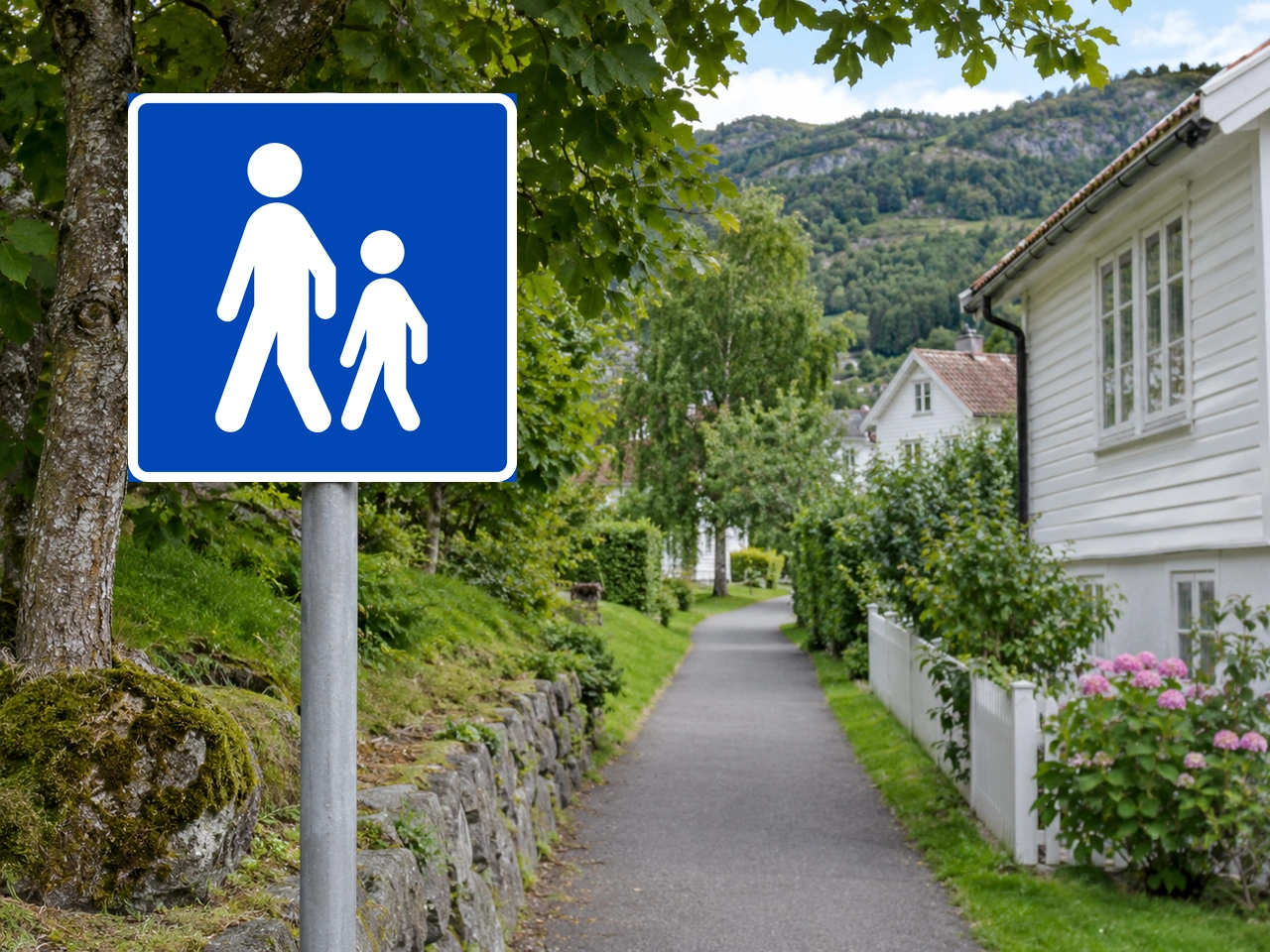
681. The blue pedestrian-path sign is the same as a shared pedestrian-and-cycle-path sign.
The sign designates a pedestrian path. Do not treat it as permission to cycle; check any supplementary plate and applicable local exceptions.
🔗 Sources
Lovdata • Sign Regulations • § 12 • Signs 518 and 522
Statens vegvesen • Traffic rules for cyclists
Official Norwegian sign artwork: Statens vegvesen, sign 518, original EPS file 518_0.eps from the national sign artwork archive. Native pictogram, orientation, borders and proportions retained. Colours use the authority's published PMS web swatches: blue PMS 293 and red PMS 179 where present. Original files and colour guidance. No third-party open licence is asserted for the government artwork.
Image credit: AI-generated background with source sign artwork resized and placed on the sign face.
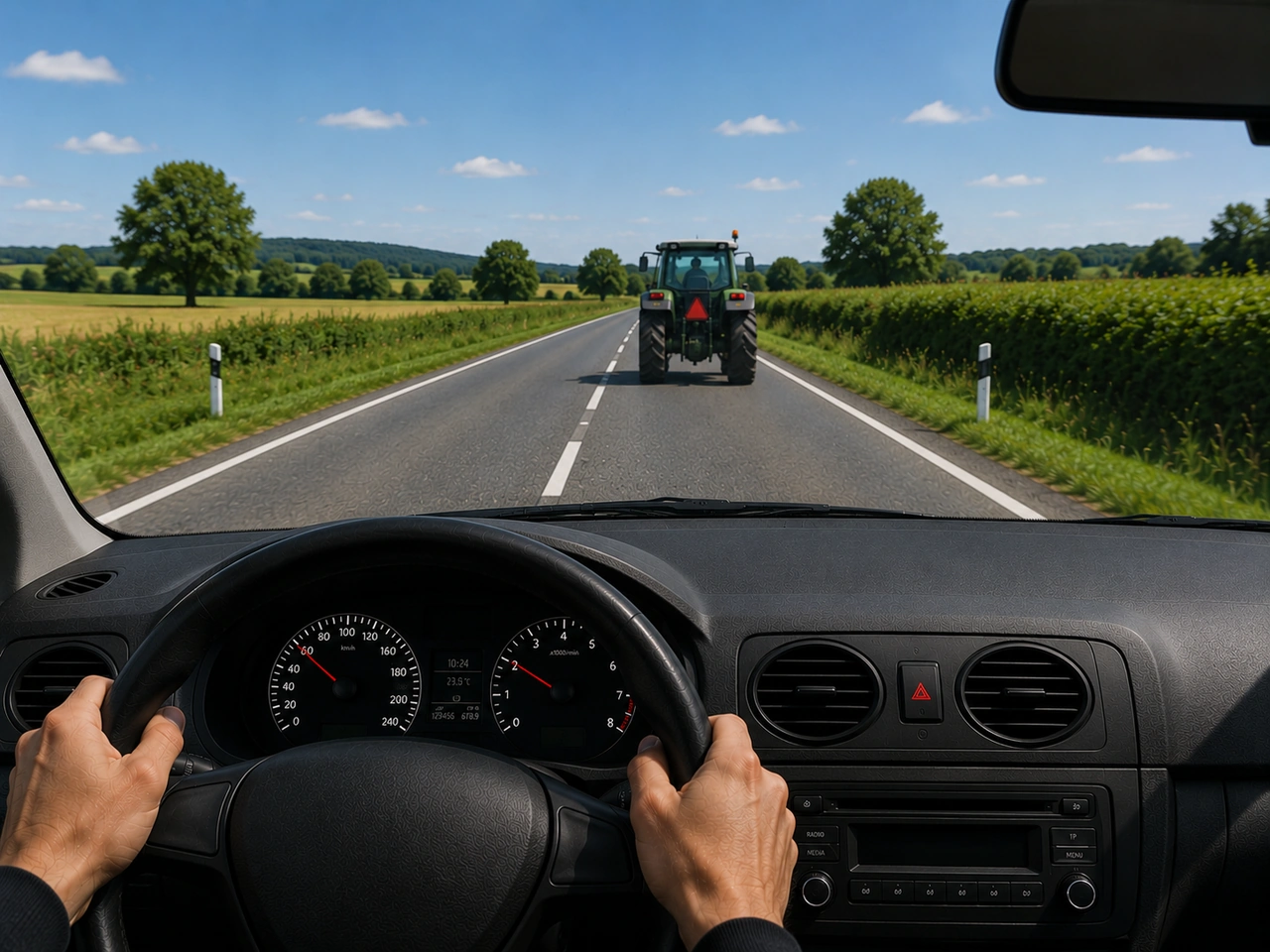
682. What should you do before overtaking a slow-moving vehicle?
Before overtaking, make sure you have enough visibility, space, and time. Signal clearly before moving out, do not exceed the speed limit, and never overtake if the road ahead is not clear.
Norway. Check that the road is clear of oncoming traffic and obstacles far enough ahead, and that you can rejoin without disrupting traffic.
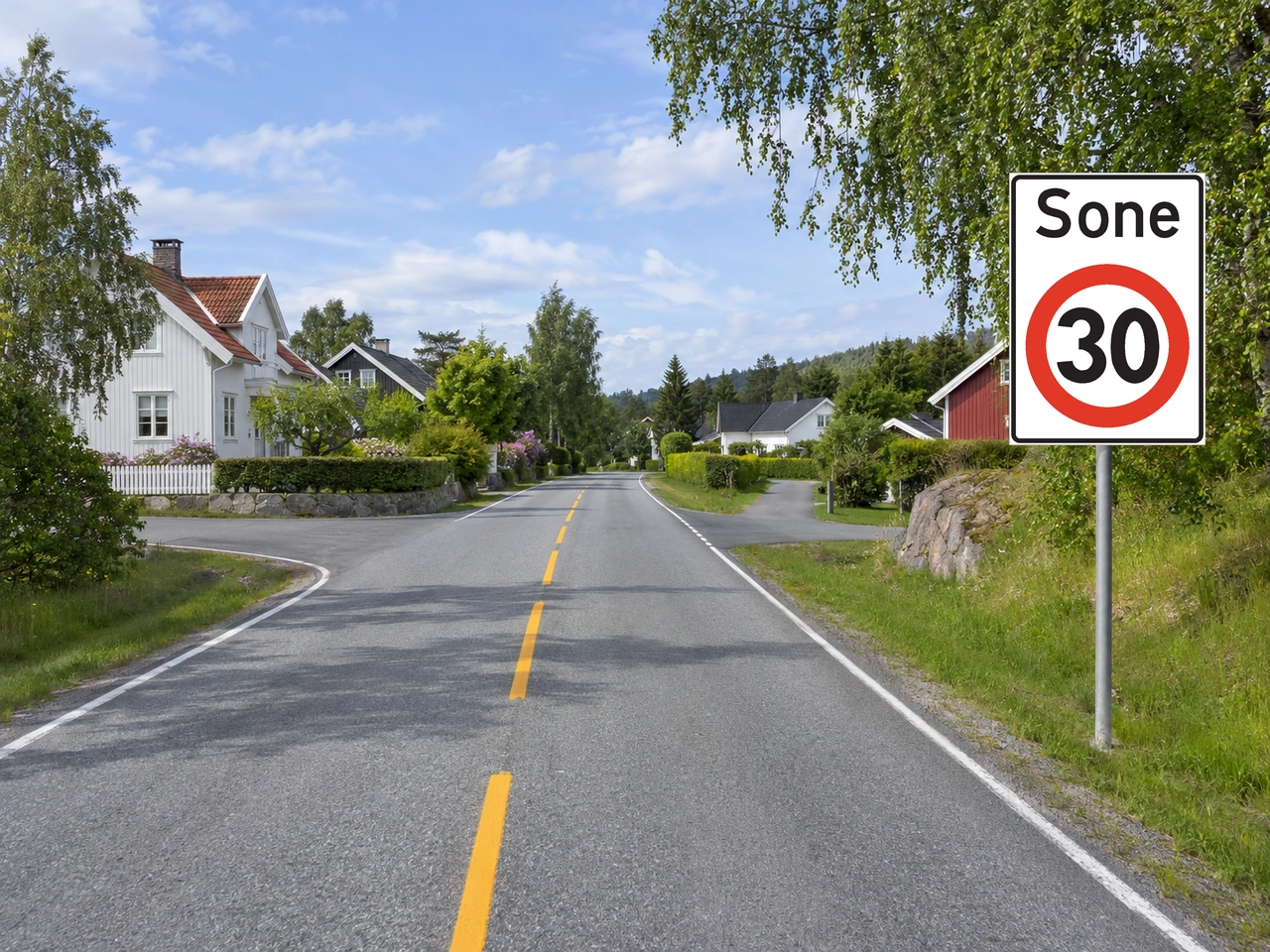
683. The 30 km/h zone limit also applies on side streets within the zone.
The zone sign sets the maximum speed for the zone, including its side streets. A junction within the same zone does not end the zone restriction. Follow any stricter applicable limit.
🔗 Sources
Norway • Skiltforskriften • Sign 366
Statens vegvesen • Official traffic-sign meanings
Statens vegvesen • Official sign artwork
Official Norwegian sign artwork: Statens vegvesen, sign 366, original EPS file 366_0.eps from the national sign artwork archive. Native numbers, lettering, pictogram, orientation, borders and proportions retained. Red follows the published PMS 179 web swatch, RGB 226/56/40, where present. Original files and colour guidance. No third-party open licence is asserted for the government artwork.
Image credit: AI-generated background with source sign artwork resized and placed on the sign face.
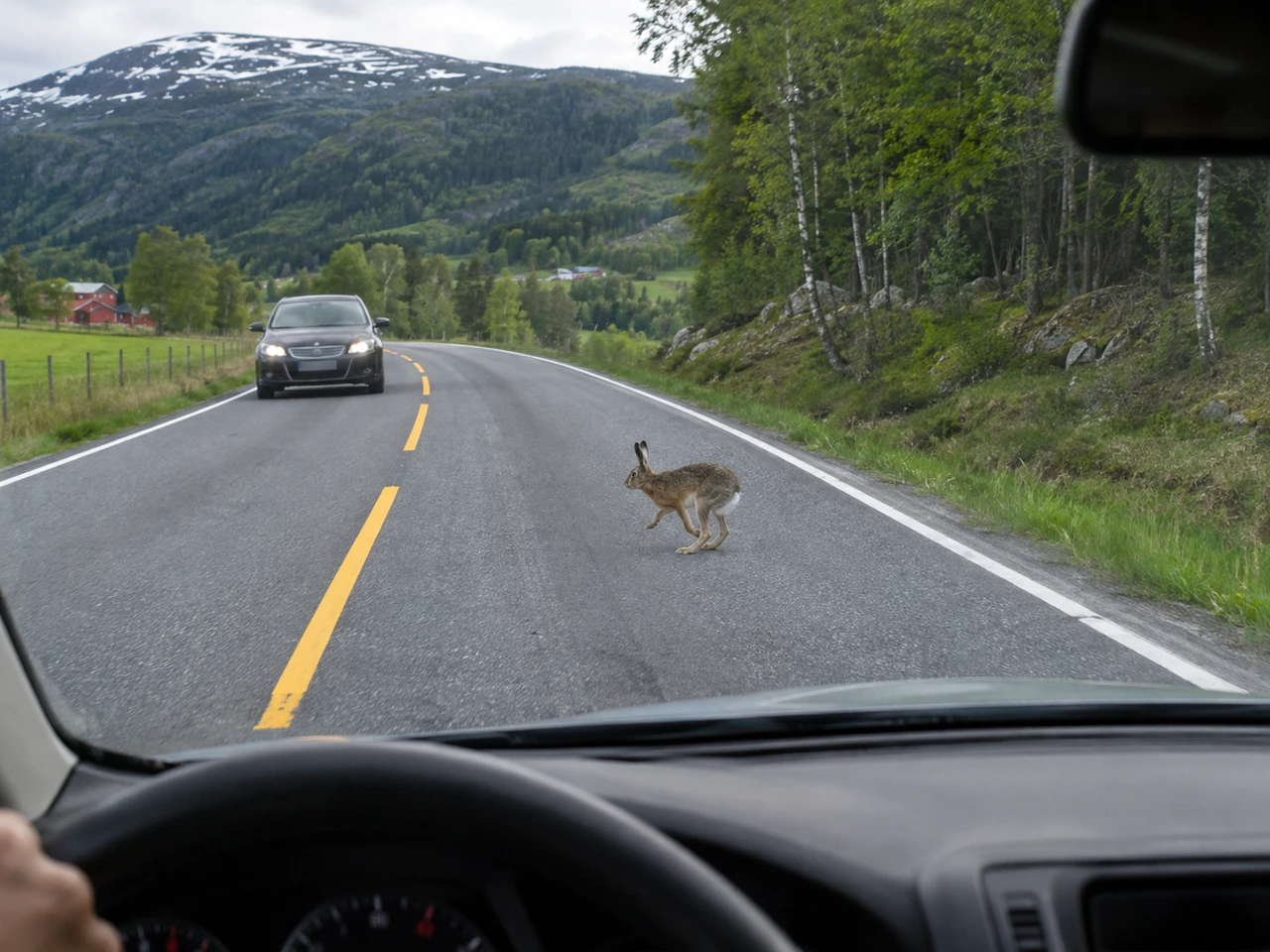
684. Why can swerving suddenly to avoid a small animal be dangerous?
A sudden swerve can take you into another lane, off the road, or into nearby traffic.
🔗 Sources
Norwegian Public Roads Administration – Animal collisions and prevention
Norwegian Traffic Rules, section 13
Image credit: AI-generated
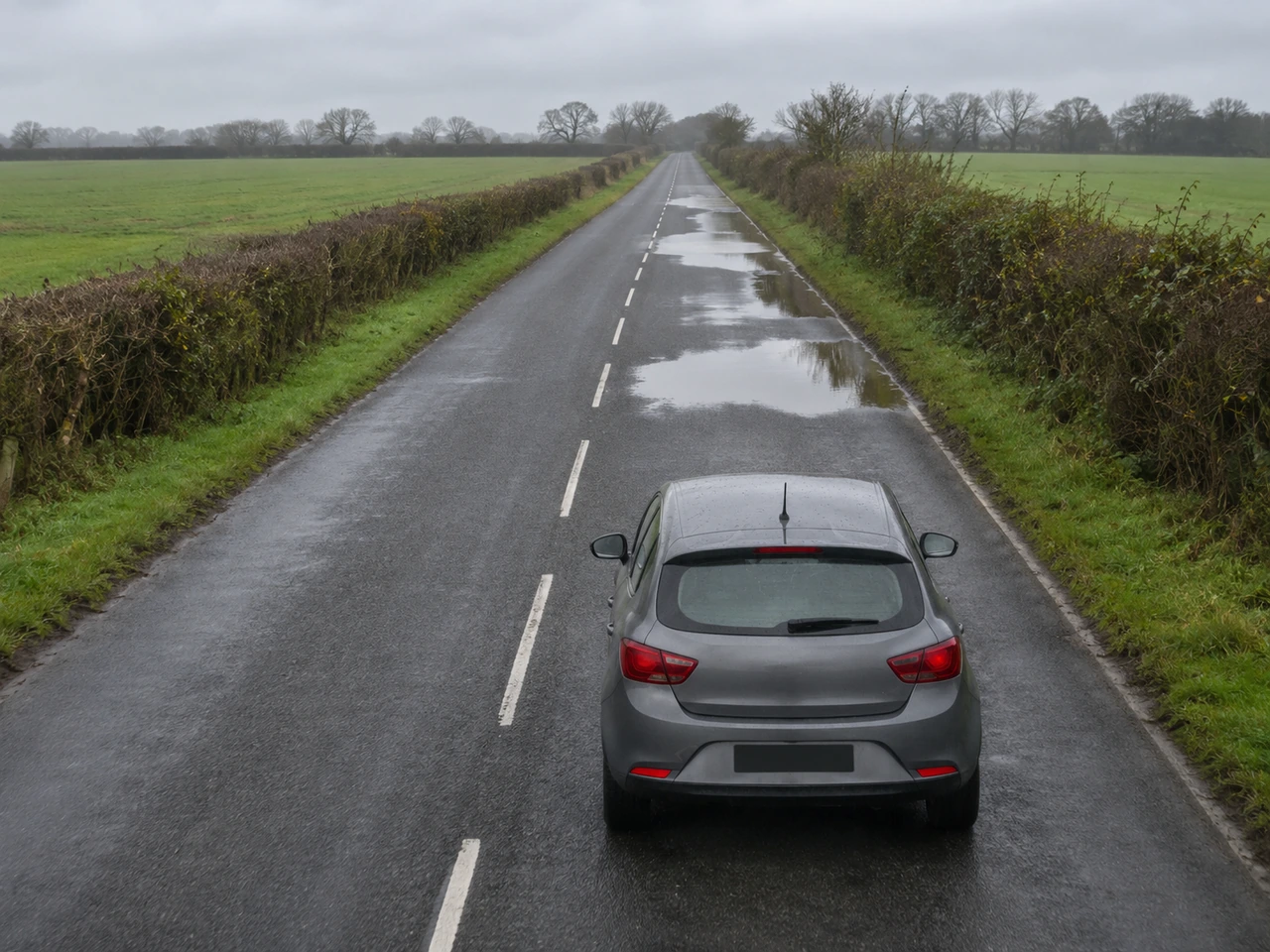
685. Which roads are most likely to cause aquaplaning?
Water can collect in ruts, dips and poorly drained parts of a road, especially at the bottom of a descent. The greater quantity of water makes it harder for tyres to maintain grip. Look well ahead and reduce speed smoothly before reaching surface water. Avoid sudden swerves into another lane. If the road is flooded or the water depth is uncertain, stop where safe and choose another route.
🔗 Sources
Michelin — Technical aquaplaning explanation and prevention
UK Met Office — General severe-weather, wind and flood safety
Image credit: AI-generated
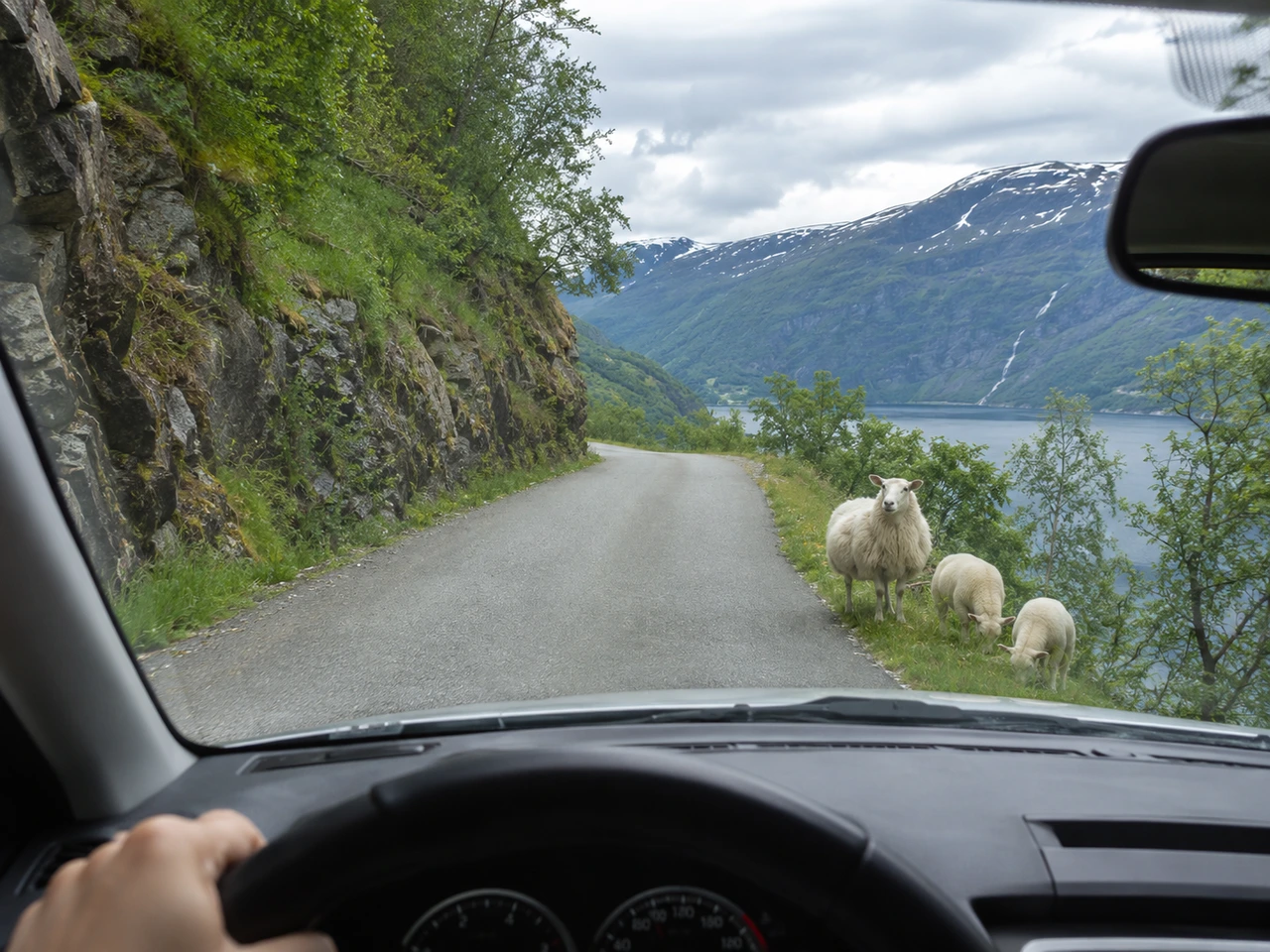
686. What should you do if animals are gathered beside a narrow rural road?
Animals beside a narrow road may step into your path. Slow down and leave as much safe space as possible.
🔗 Sources
Norwegian Public Roads Administration – Animal collisions and prevention
Norwegian Traffic Rules, section 13
Image credit: AI-generated
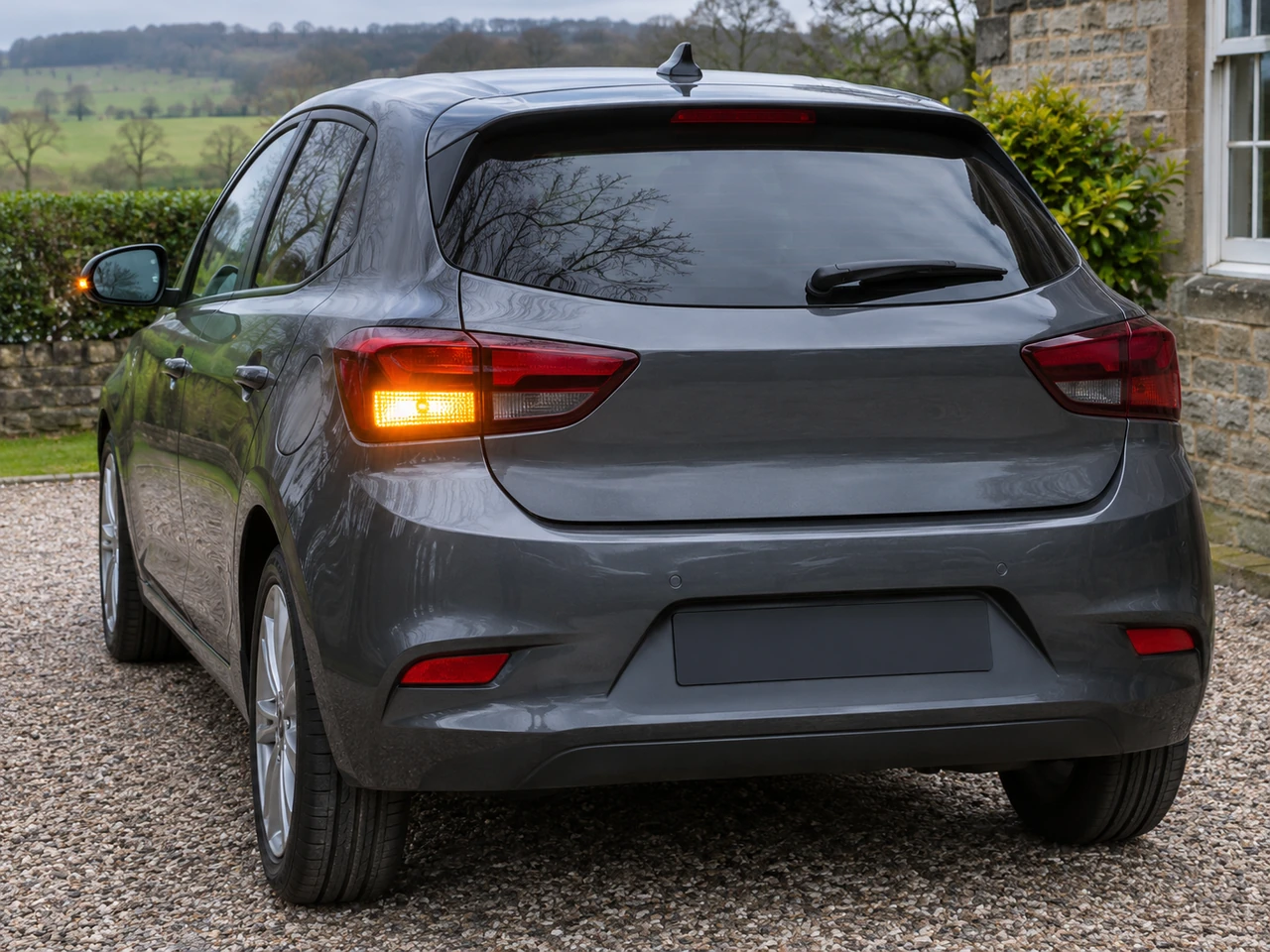
687. Using indicators helps other road users understand your intentions.
Indicators help communicate your intended direction and improve safety for everyone on the road.
🔗 Sources
The Highway Code (Great Britain) • Rule 103 • General safety guidance on signalling.
Image credit: AI-generated. Existing same-entry detail photograph, reused for both driving sides.
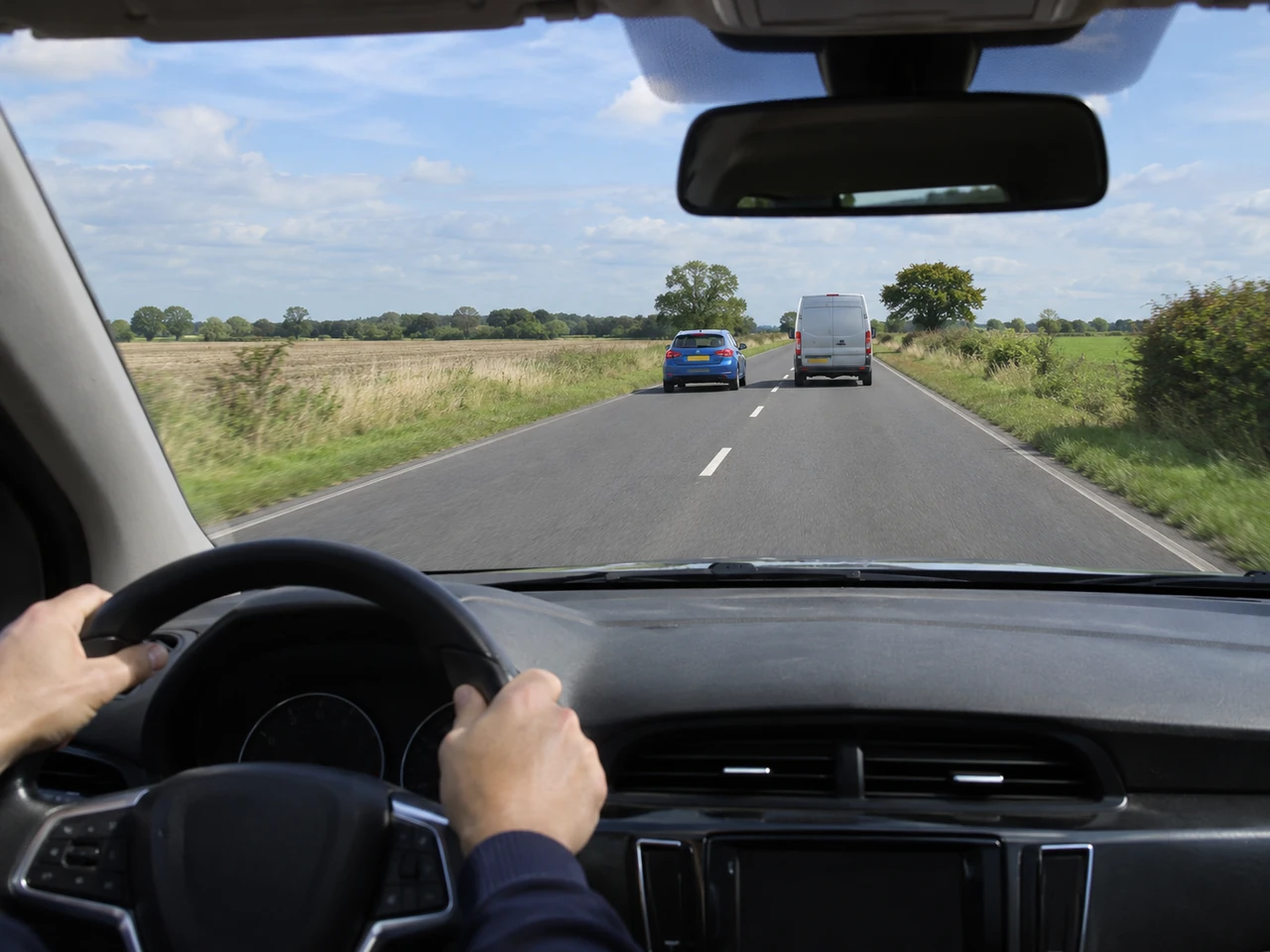
688. If another driver overtakes, it is safe to follow them past.
The other driver may have enough room to overtake when you do not. Check the road ahead and make your own safe decision before starting.
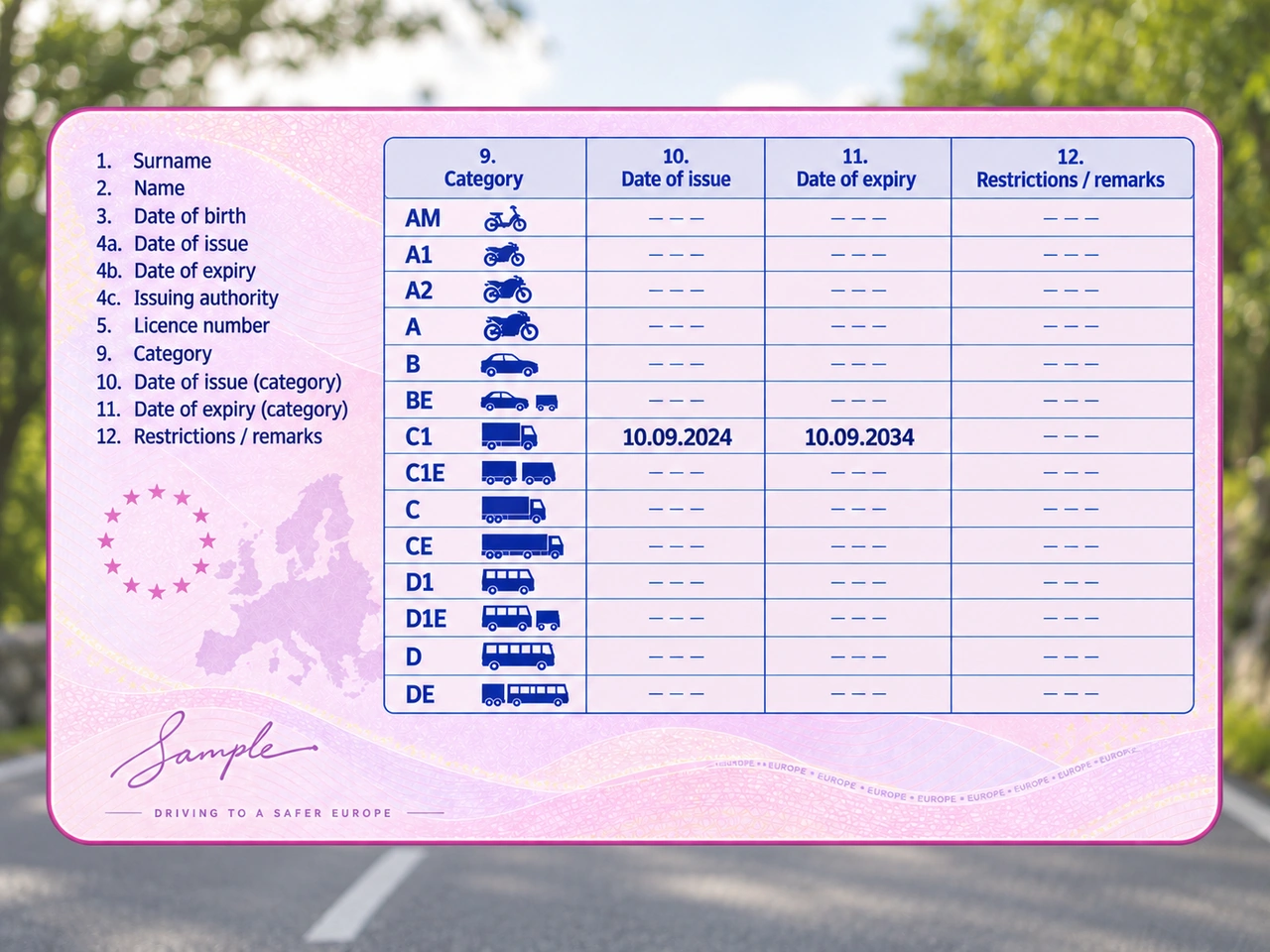
689. Which vehicles are covered by driving licence C1?
Category C1 covers motor vehicles, other than buses, with a maximum authorised mass above 3,500 kg and not exceeding 7,500 kg. They may carry no more than eight passengers in addition to the driver and may tow a trailer up to 750 kg.
Norway. A 6,000 kg goods vehicle and a trailer rated at exactly 750 kg can fall within C1. Check the vehicle’s approved towing limit before using the trailer.
🔗 Sources
EUR-Lex · Directive 2006/126/EC on driving licences · Article 4(4)(d)
Image credit: AI-generated
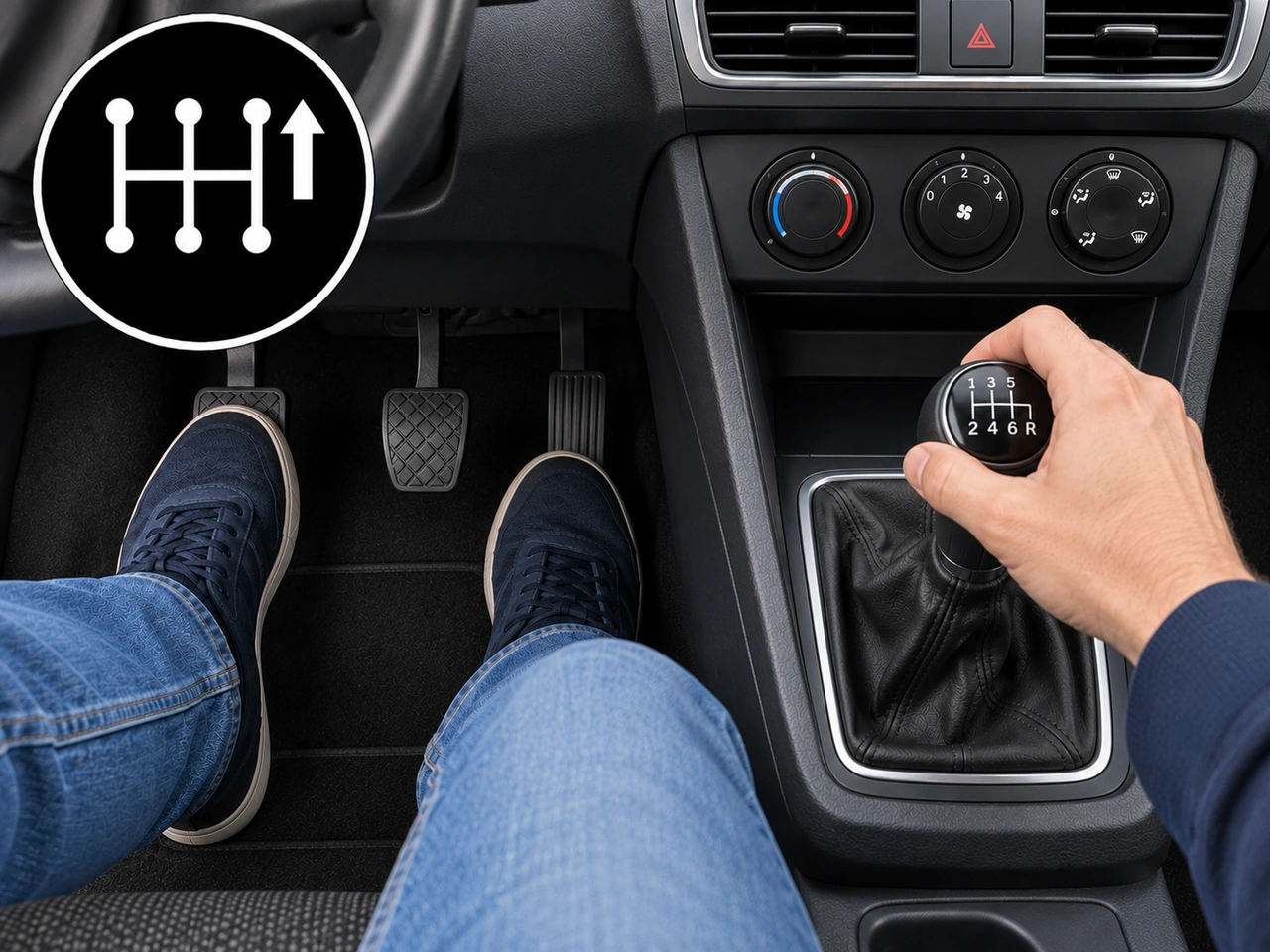
690. What should you normally do with the accelerator when changing to a higher gear?
When changing to a higher gear, ease off the accelerator as you press the clutch and select the next gear. Release the clutch smoothly and then apply the accelerator progressively.
Ease off the accelerator as you press the clutch, select the next gear, then ease the clutch up and reapply the accelerator. Return your hand to the wheel after the shift.
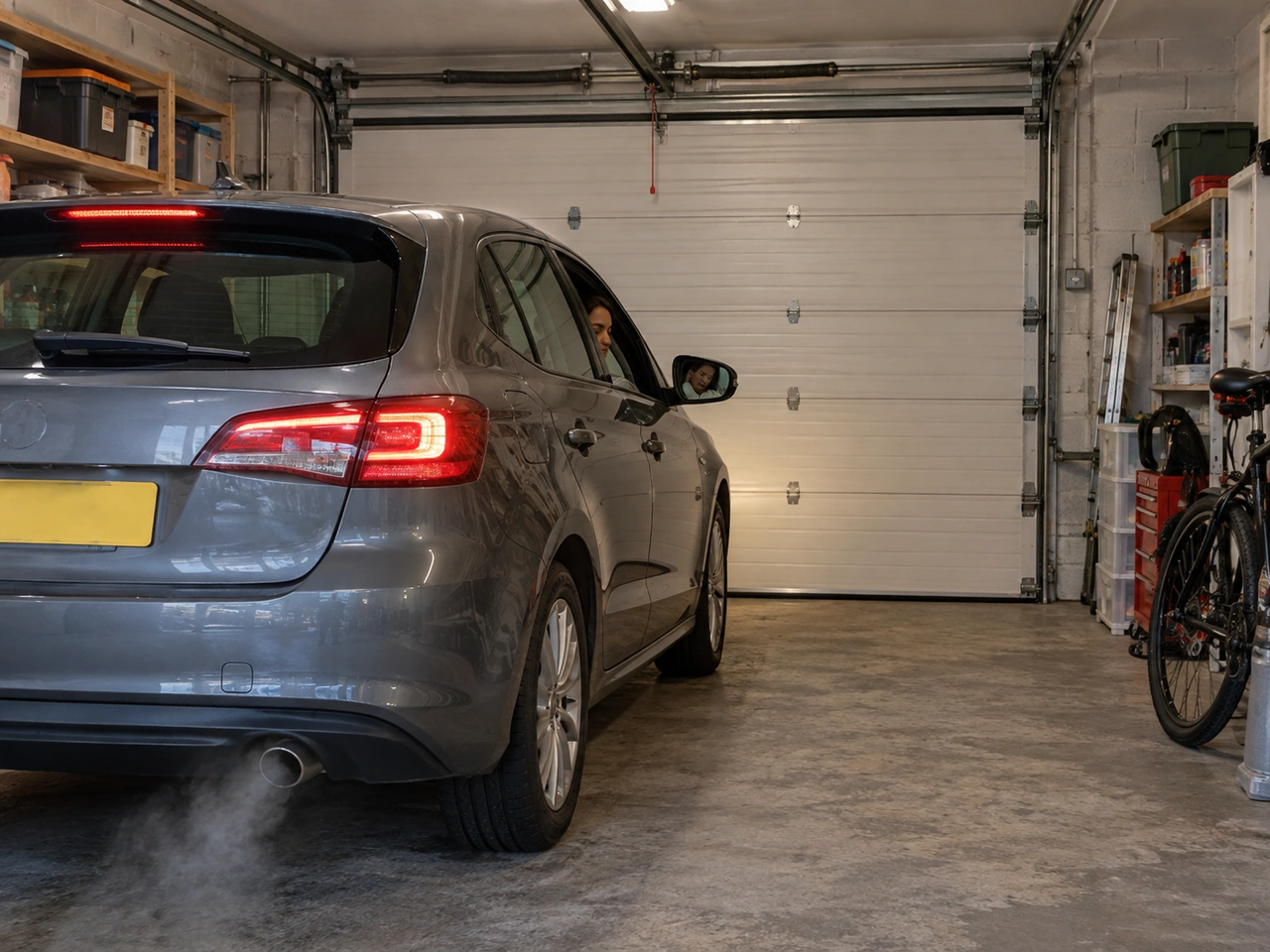
691. Why should you never leave a petrol or diesel engine running in an enclosed space?
Exhaust gases from petrol and diesel engines can contain carbon monoxide, a poisonous gas that can build up quickly in an enclosed or poorly ventilated space. Never leave the engine running inside a closed garage or similar area.
🔗 Sources
Nissan 2025 Sentra manual — Model-specific exhaust gases, closed spaces and hot components example
Image credit: AI-generated
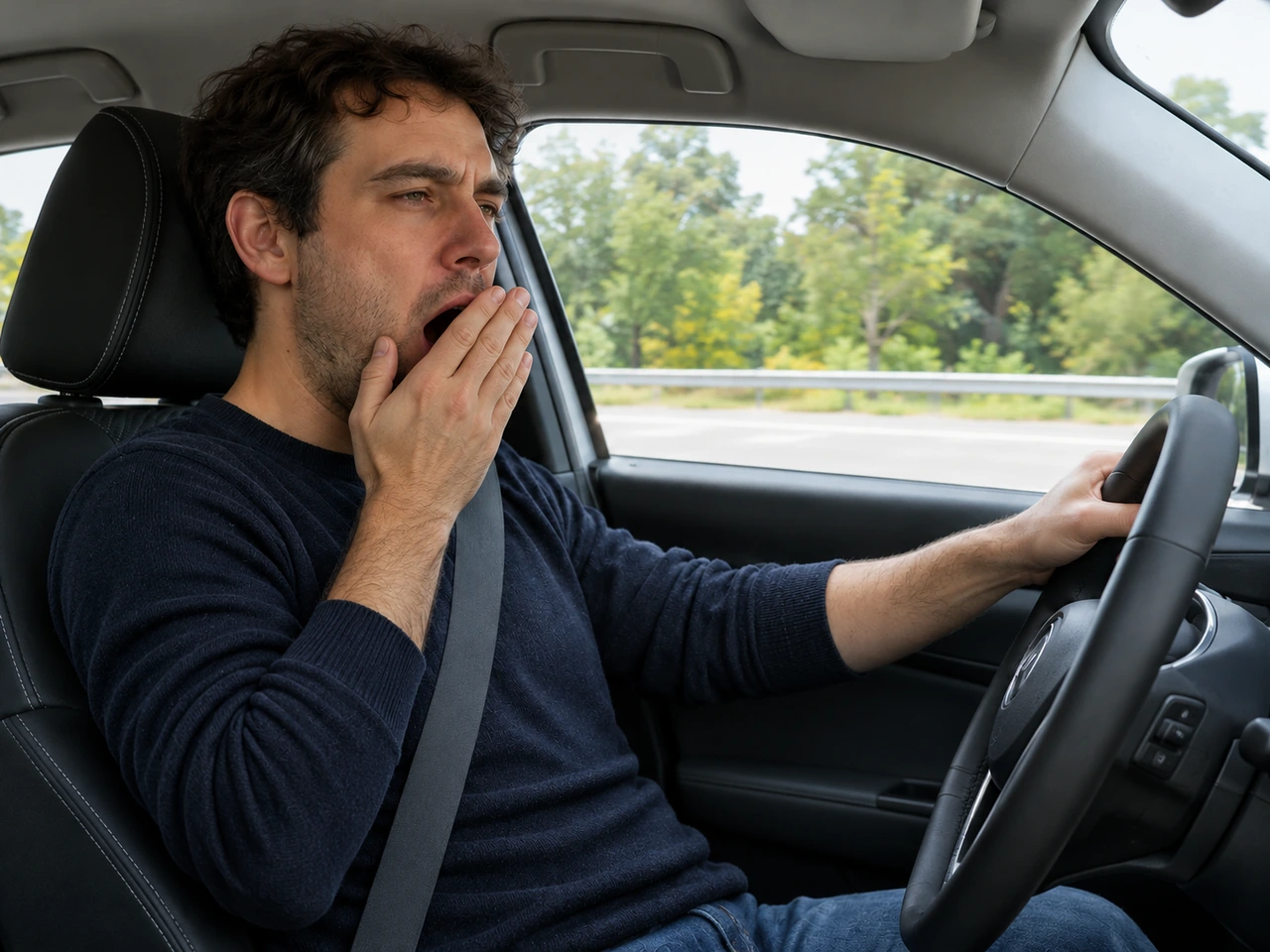
692. Driving when you are tired can be dangerous.
Fatigue reduces attention, slows reactions, and increases the risk of a crash.
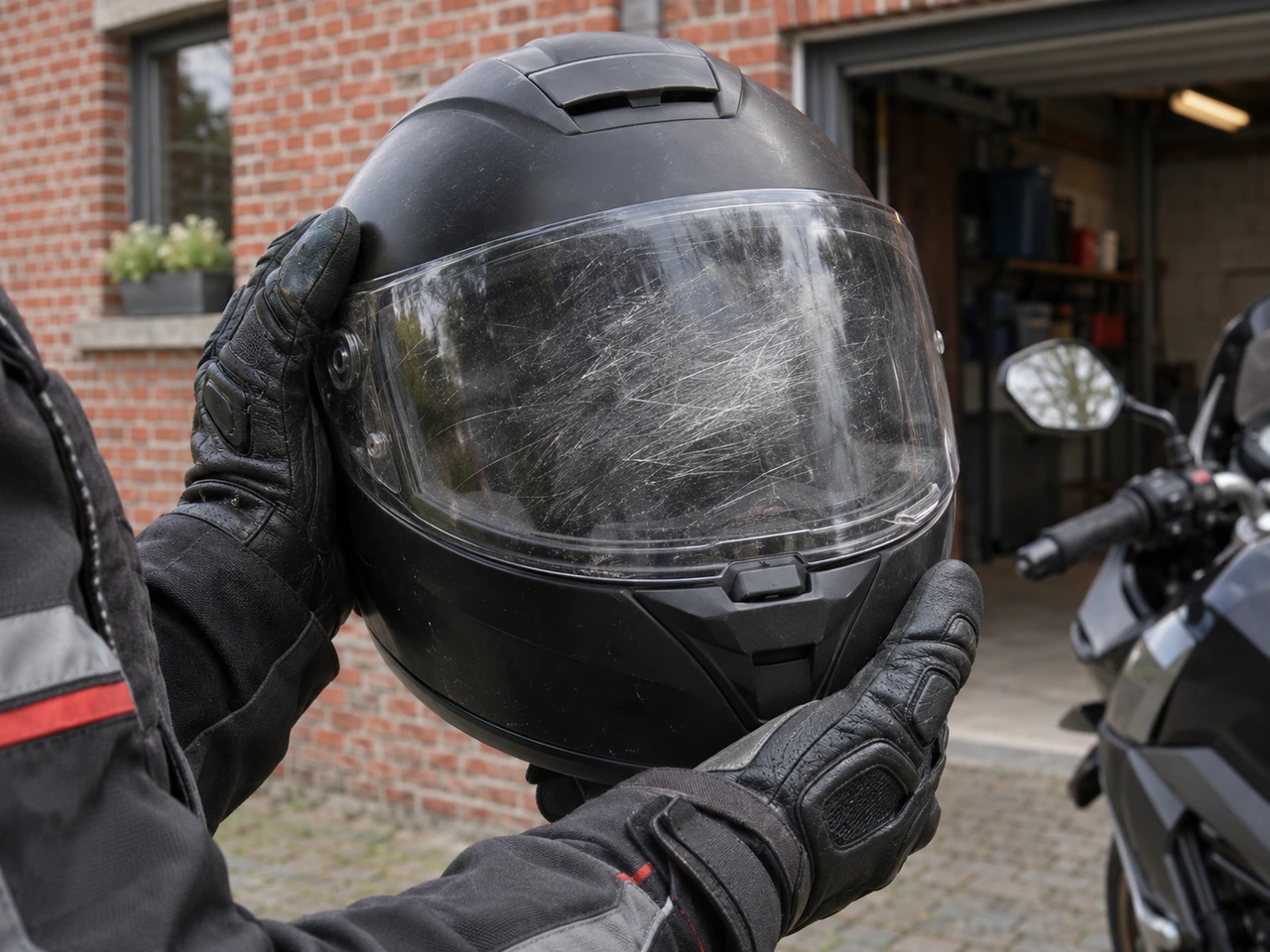
693. What should you do if a motorcycle helmet visor is badly scratched?
A badly scratched or damaged visor can reduce or distort your view, especially in bright sunlight or at night. Replace a visor that no longer provides a clear, safe view and follow the helmet manufacturer's instructions.
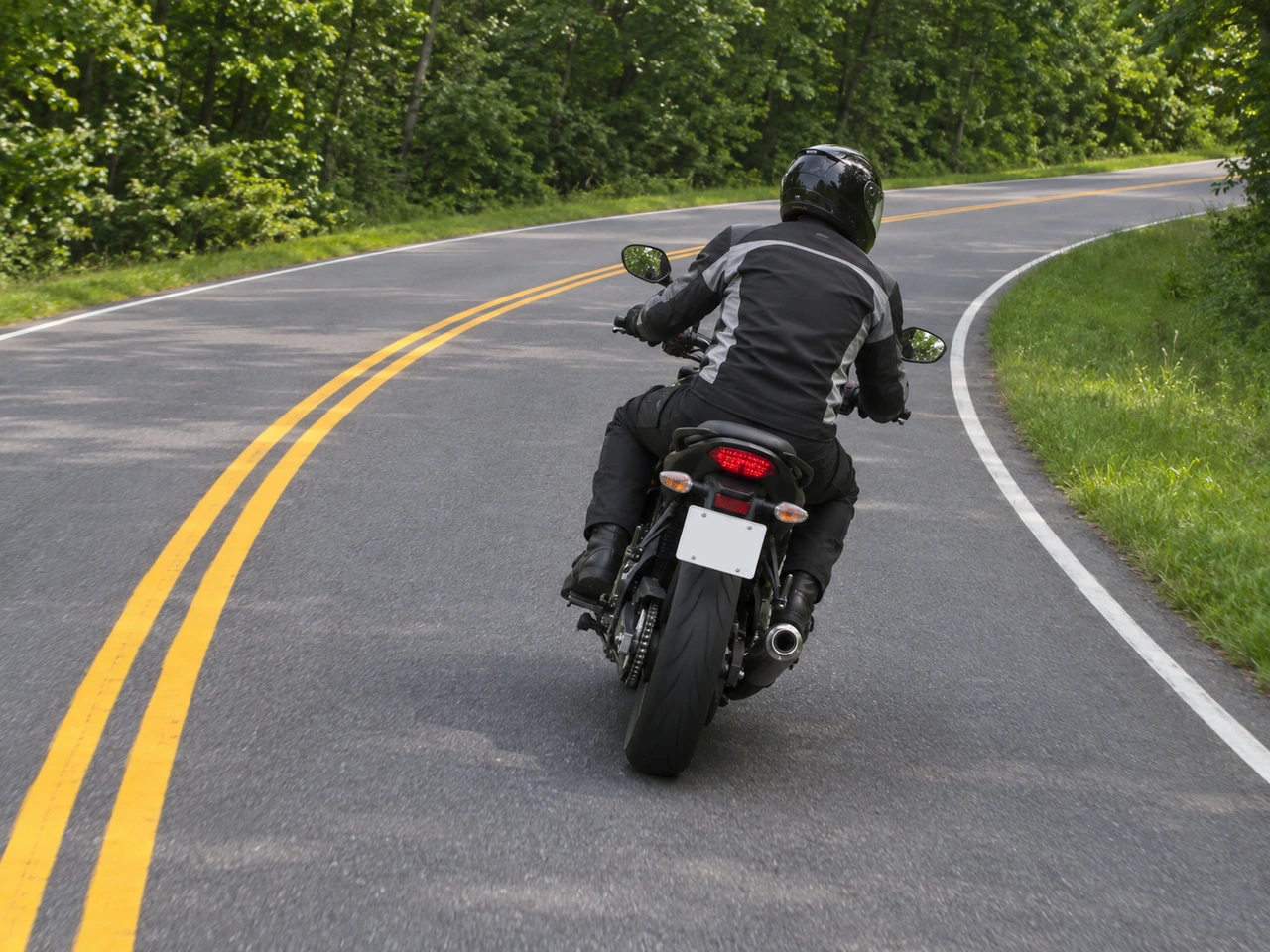
694. Why should hard braking be avoided while a motorcycle is leaning in a bend?
When a motorcycle is leaning, the tyres are already using grip to turn. Hard braking can demand additional grip and may reduce stability. Whenever possible, adjust speed before the bend and use smooth, controlled inputs while cornering.
🔗 Sources
DLD.Utah.gov — Motorcycle Handbook, Braking and Turning
Forsvaret.no — Driving in Norway, Road markings
Image credit: AI-generated
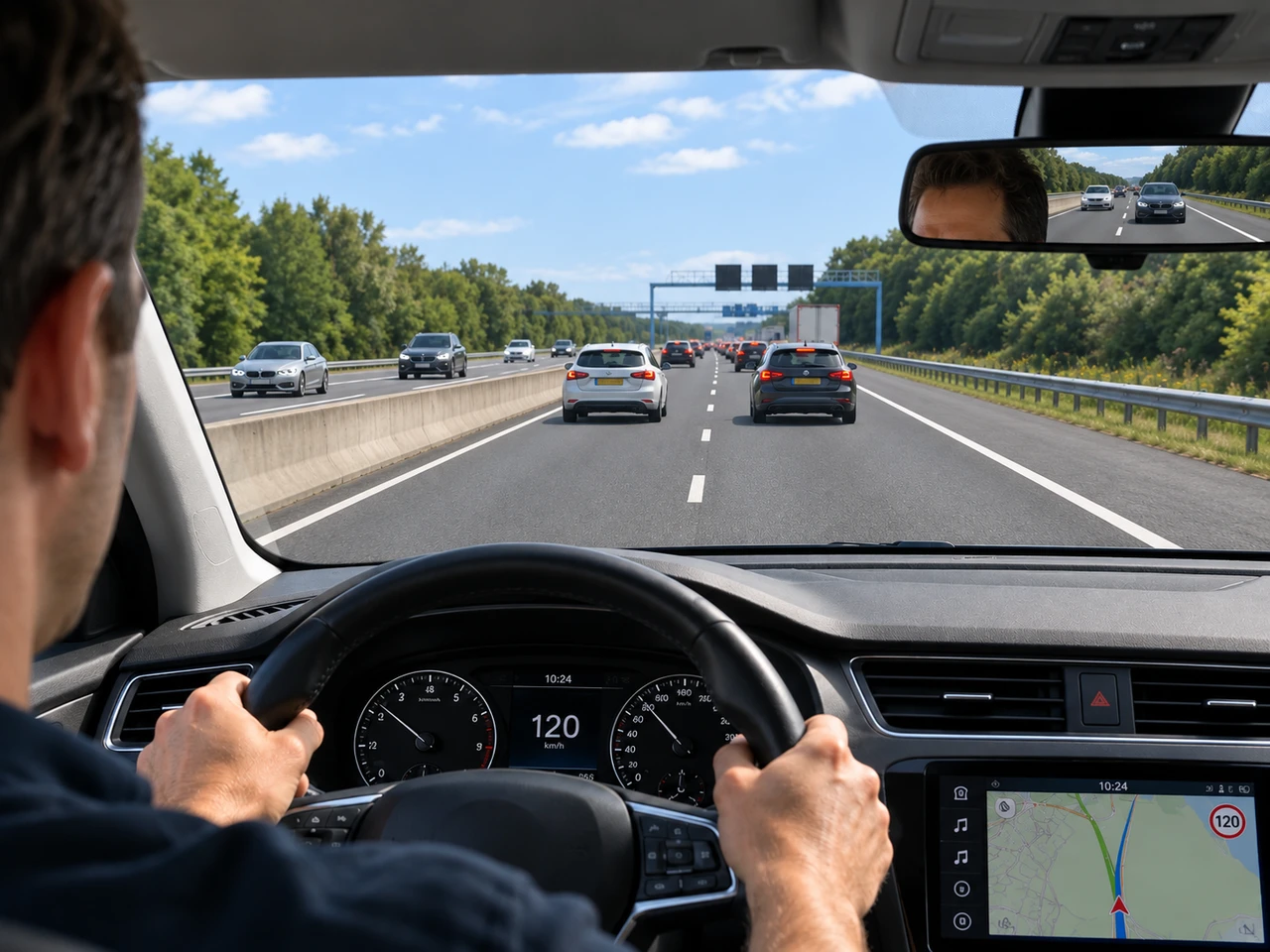
695. How does higher speed affect a vehicle's stopping distance?
As speed increases, the vehicle travels farther while the driver reacts and requires more distance to brake. This means the total stopping distance increases significantly as speed rises.
Norway. Higher speed uses more road before you stop. Choose a speed that lets you stop within your view.
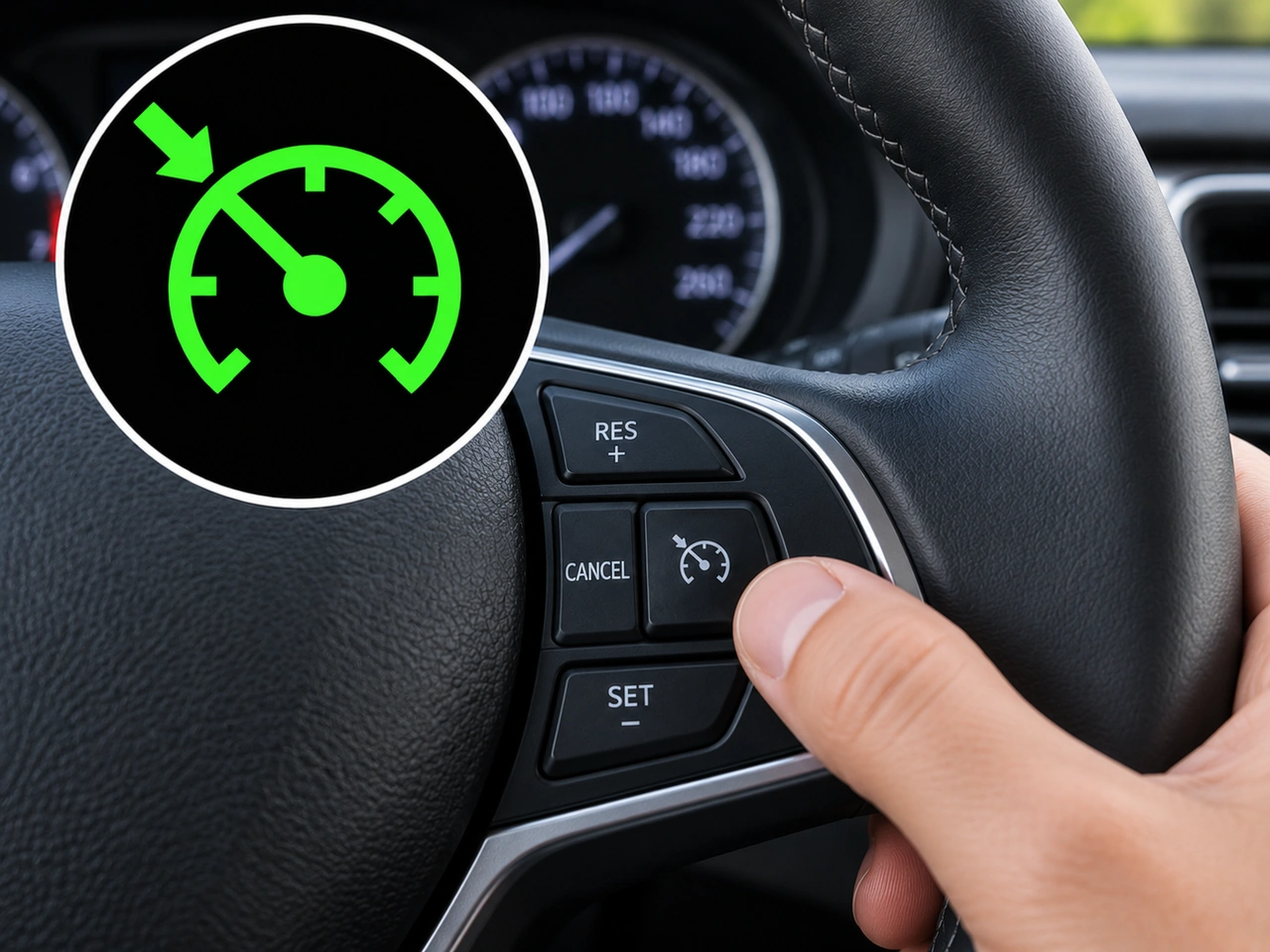
696. What does this dashboard symbol indicate?
This symbol indicates the cruise-control system. Cruise control can maintain a selected vehicle speed without the driver continuously pressing the accelerator. The exact indicator behaviour can vary between vehicles.
Check the cluster display for the set speed. Depending on the vehicle, the symbol can appear as soon as cruise control is switched on.
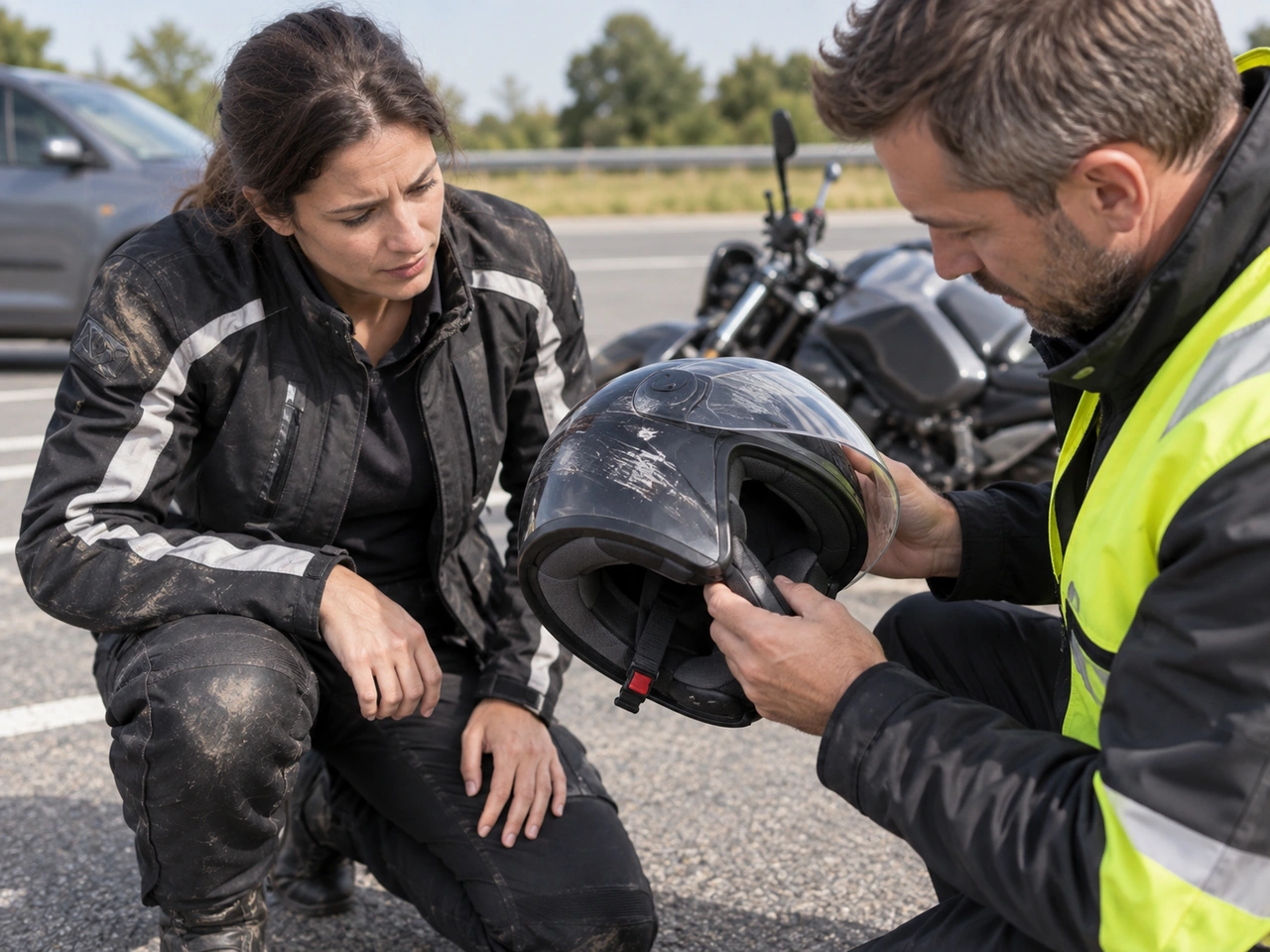
697. What should you do with a helmet that has taken a significant impact in a collision?
A helmet that has taken a significant impact while being worn can have hidden damage to its shell or energy-absorbing liner, even when no cracks are visible. Stop using it and follow the manufacturer's replacement guidance; significant collision impacts commonly require replacement. Tightening straps, changing the visor or a visual inspection cannot restore or confirm its protective performance. If you are unsure about an impact, ask the manufacturer or authorised dealer before using it again.
A helmet worn during a significant collision can hide impact damage. Stop using it and follow its manufacturer's replacement guidance; visual inspection cannot certify protection.
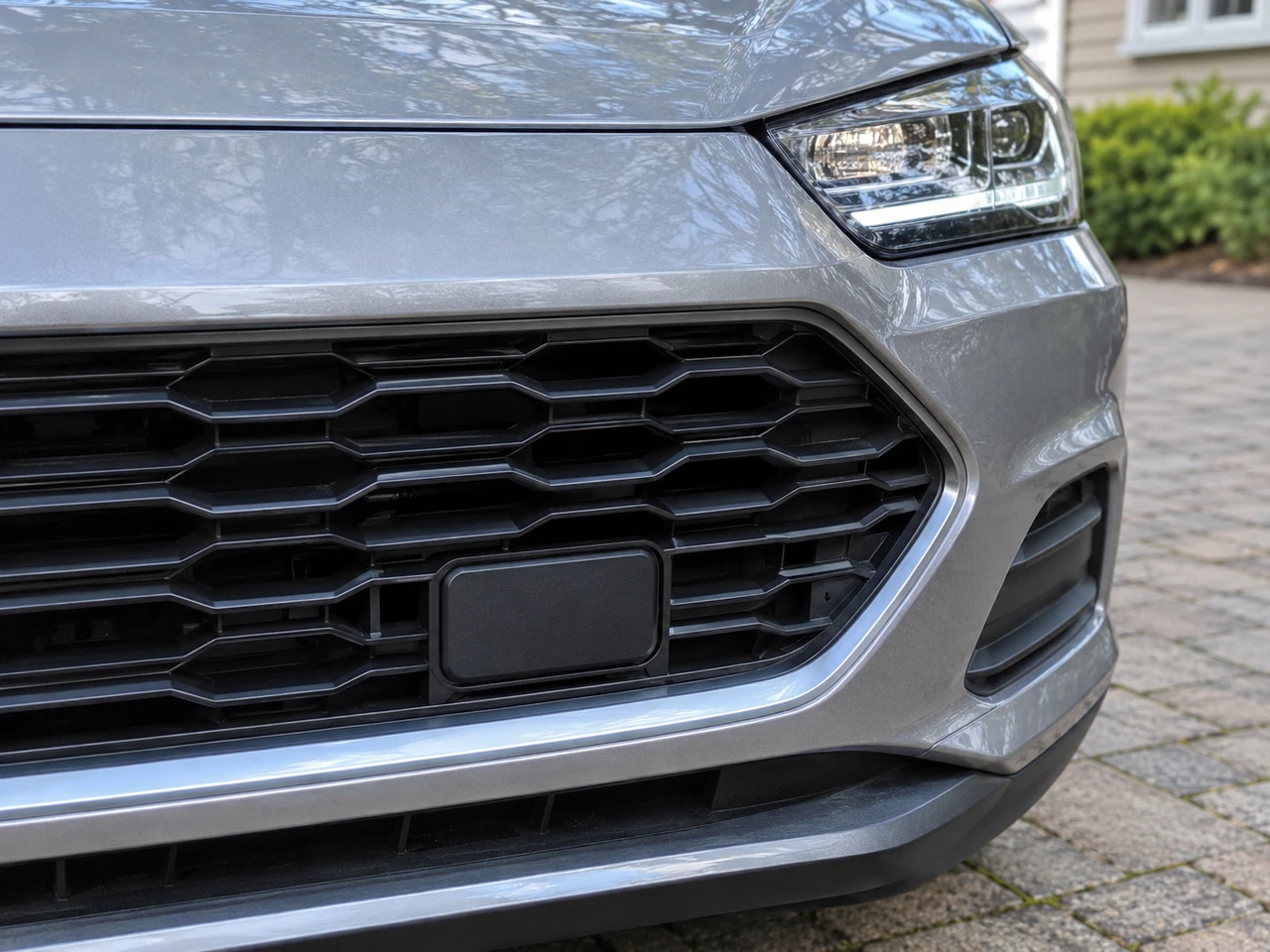
698. Forward-collision warning and automatic emergency braking are the same function.
Forward-collision warning alerts the driver to a possible collision. Automatic emergency braking can apply the brakes. Do not assume a warning-only system will brake for you.
🔗 Sources
NHTSA (United States) • Safety guidance, Forward Collision Warning and Automatic Emergency Braking
Image credit: AI-generated
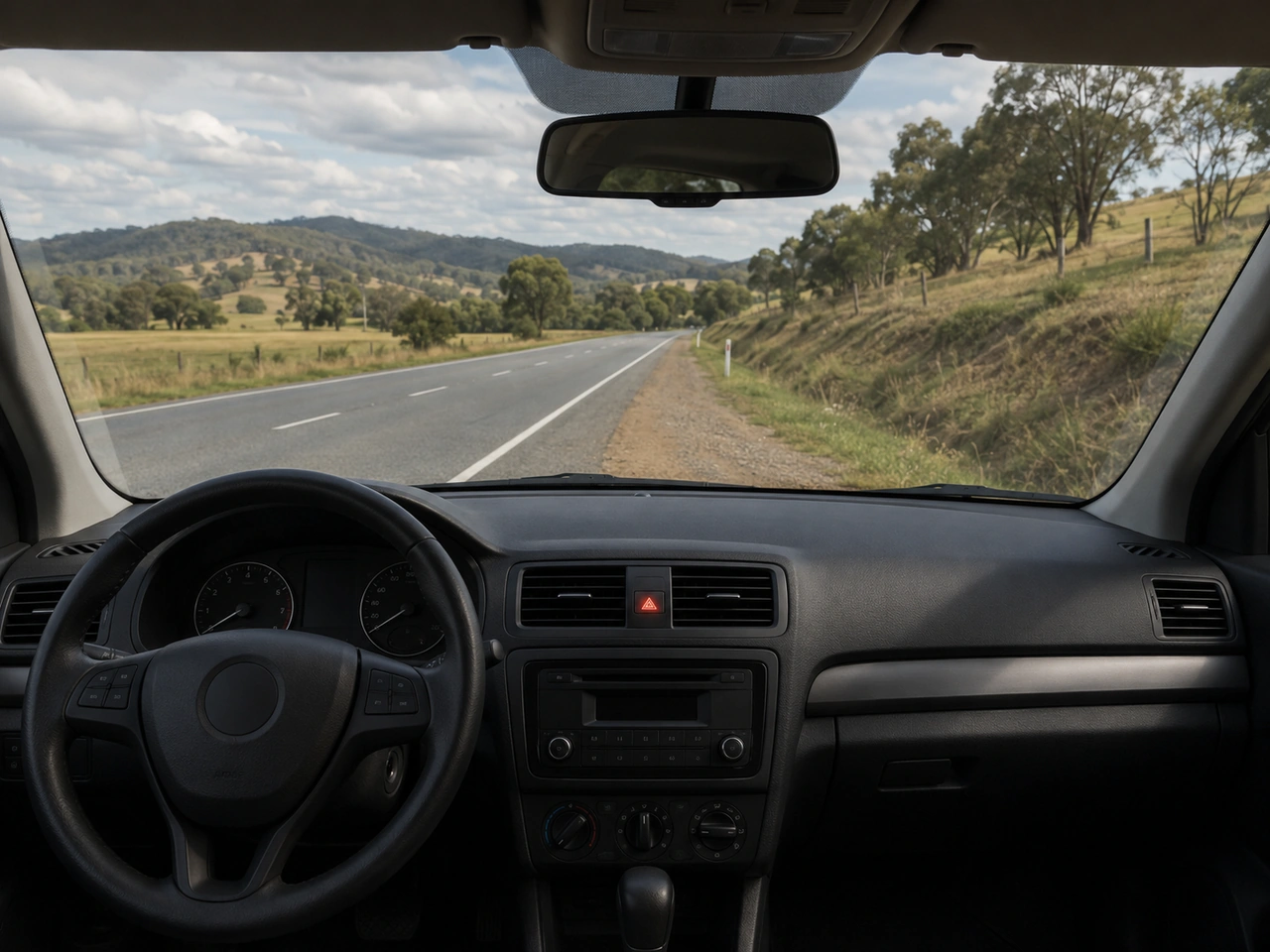
699. What should you do after stopping because of a breakdown?
Once safely stopped, apply the parking brake, switch off the engine and use hazard warning lights to alert other traffic. Follow the vehicle handbook for any additional securing steps. Warning lights do not make it safe to stand beside traffic. Use any additional warning equipment required by local rules, without exposing yourself to moving traffic.
Secure the parking brake and switch off the engine before leaving the vehicle.
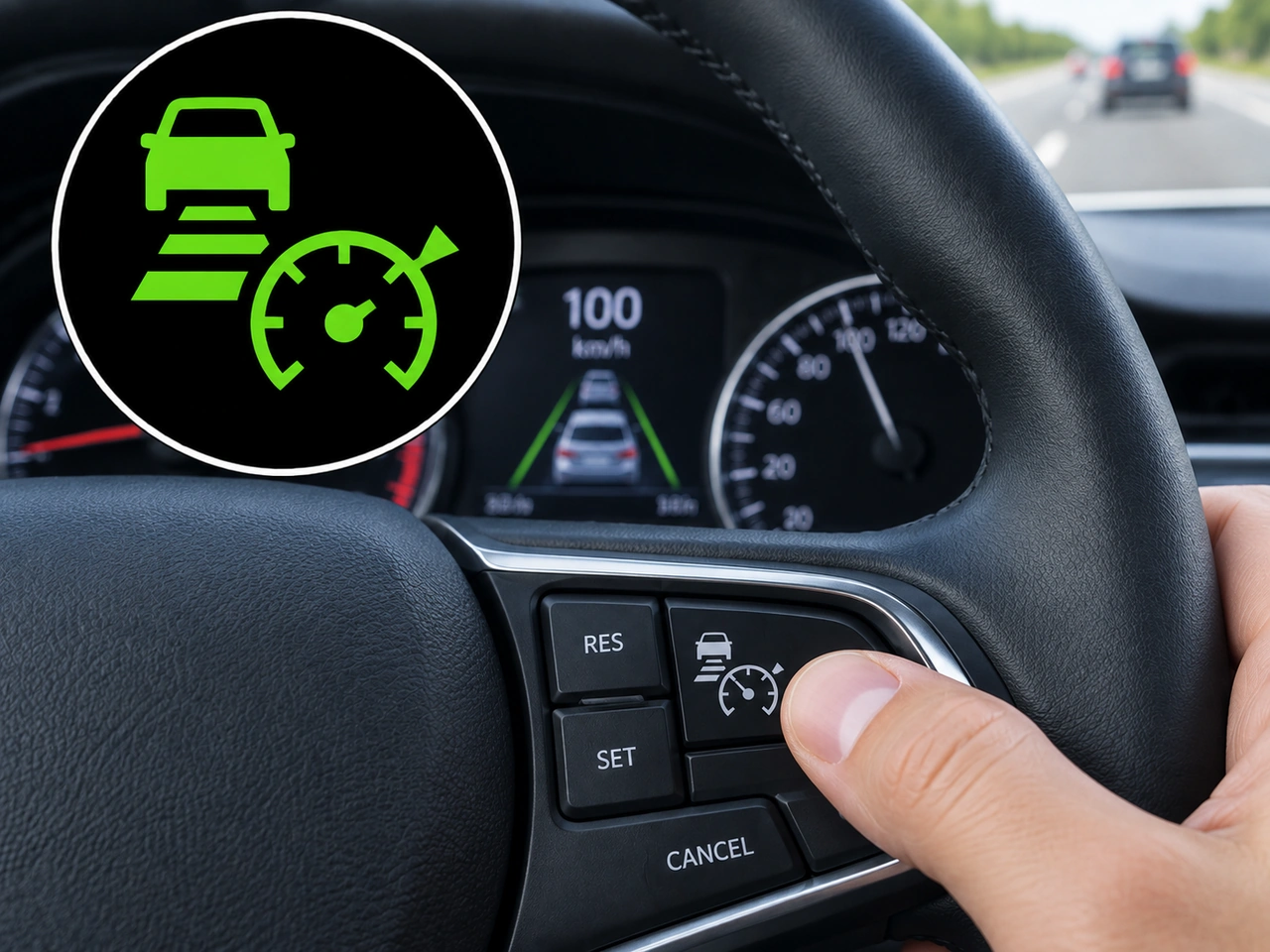
700. What does this dashboard symbol indicate?
This symbol relates to adaptive cruise control (ACC). The system can maintain a selected speed and automatically adjust the vehicle's speed to help maintain a set distance from traffic ahead.
Adaptive cruise control can adjust speed to help maintain the selected gap to vehicles ahead. Check the display to see whether the system is active.