


QuizTraffic rulesNorway
Test your knowledge with our multiple-choice quiz. Learn from each answer and improve your understanding of the traffic rules and road signs of Norway.
 Traffic signs
 Traffic rules
 Norway
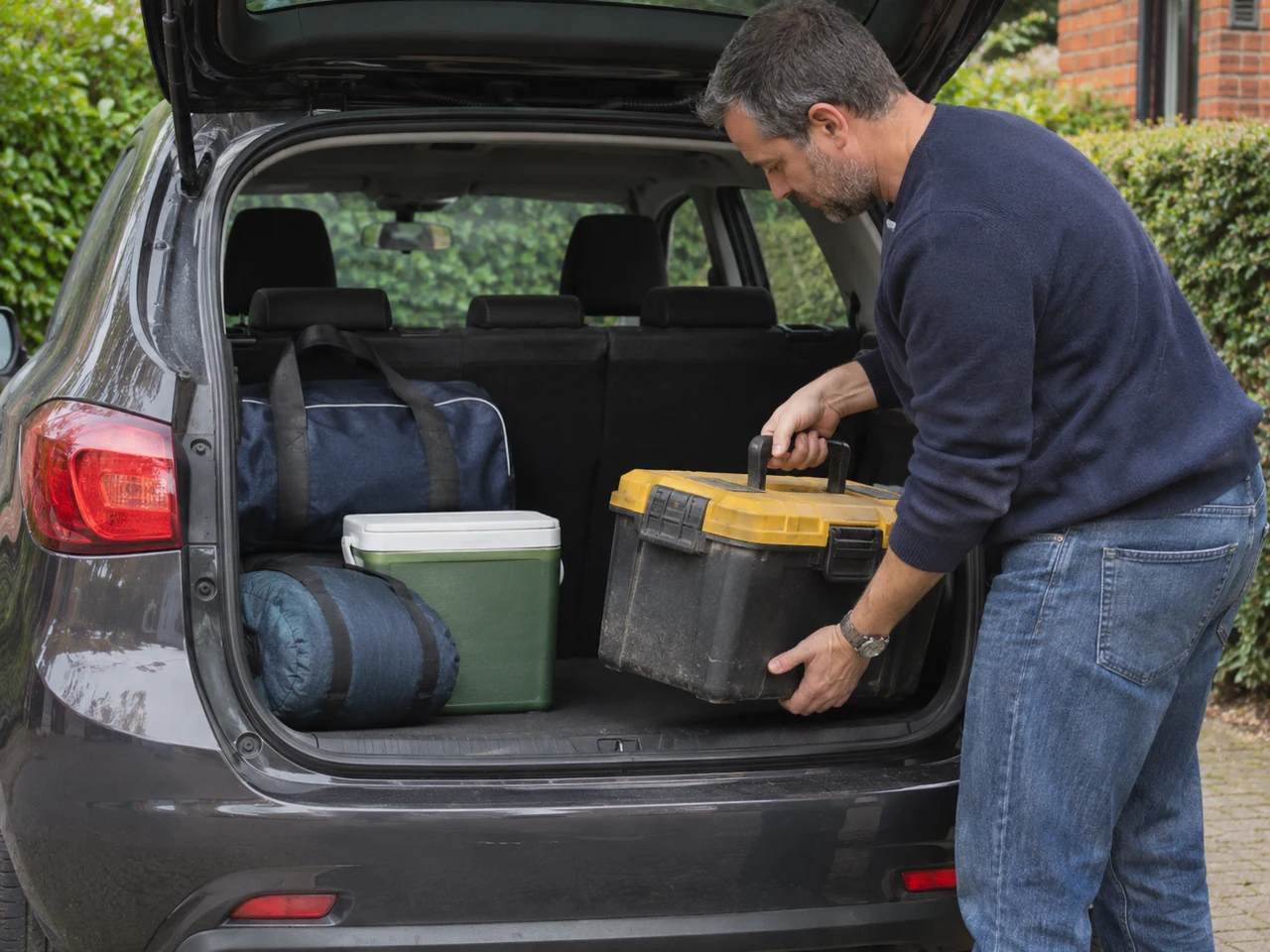
701. How can unnecessary weight affect a vehicle's energy use?
Extra weight generally requires more energy when accelerating and climbing. Removing unnecessary heavy items can help reduce fuel or energy consumption while keeping all essential equipment in the vehicle.

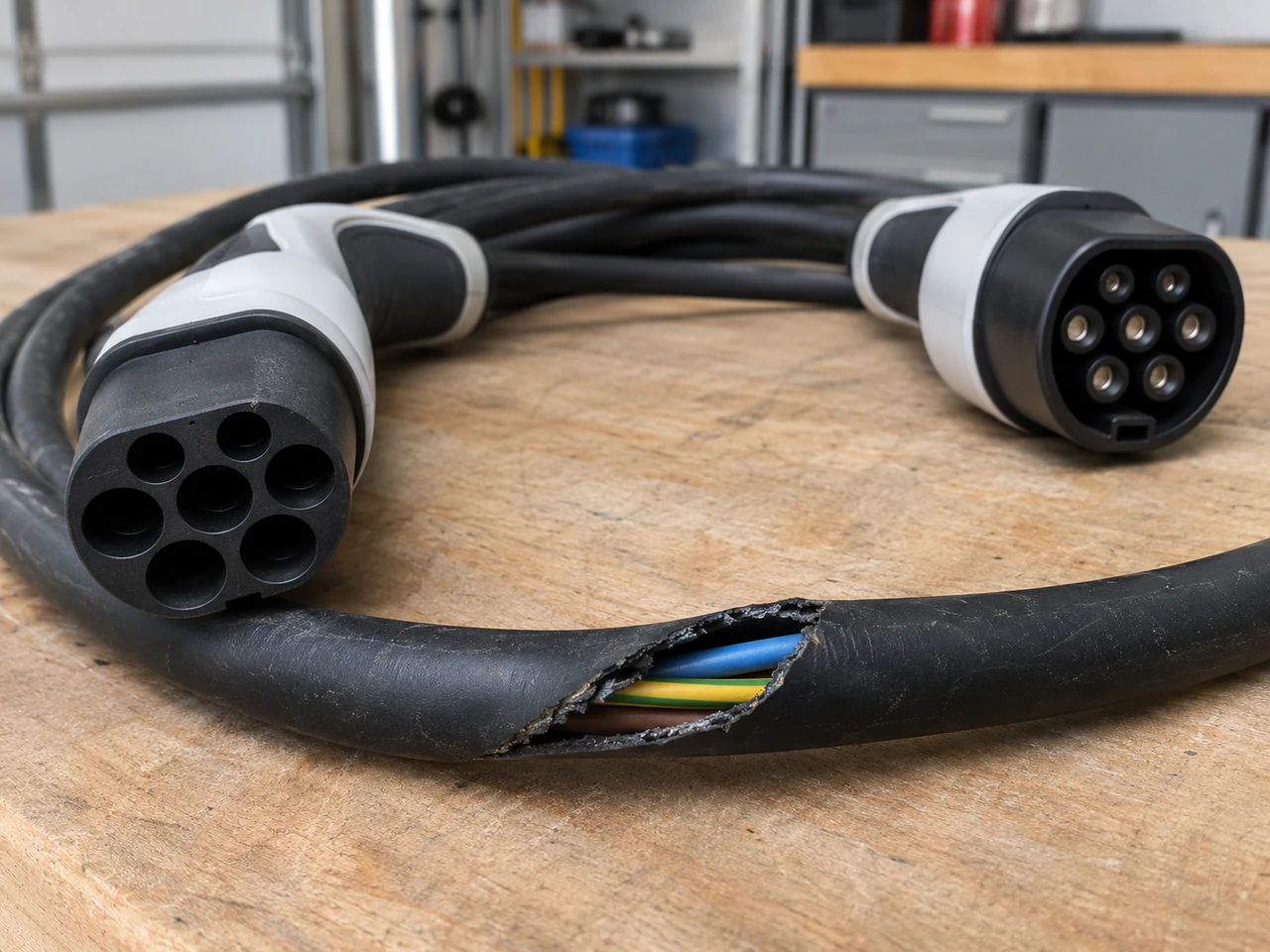
702. A damaged EV charging cable is safe to use if the car still charges.
A cable can be unsafe even if charging still works. Do not use damaged charging equipment. Report public-charger damage to the operator and arrange an appropriate replacement for a damaged personal cable.
🔗 Sources
Kent Fire and Rescue Service (Great Britain) • Safety guidance, safety checklist, point 9
Image credit: AI-generated
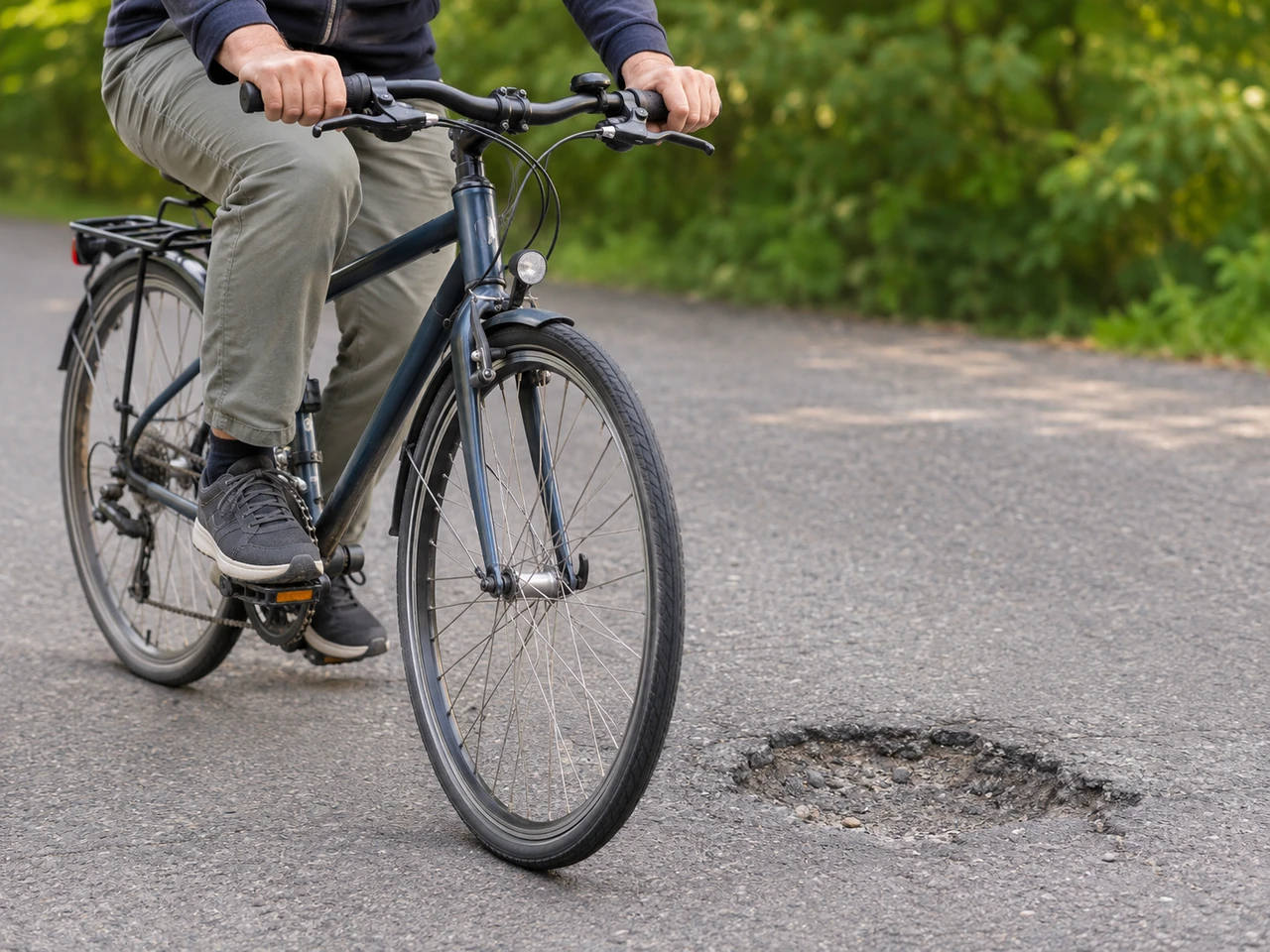
703. A cyclist may move sideways to avoid a pothole.
Potholes and other surface hazards may cause cyclists to change direction. Slow down as needed and leave enough room for them to avoid the hazard.
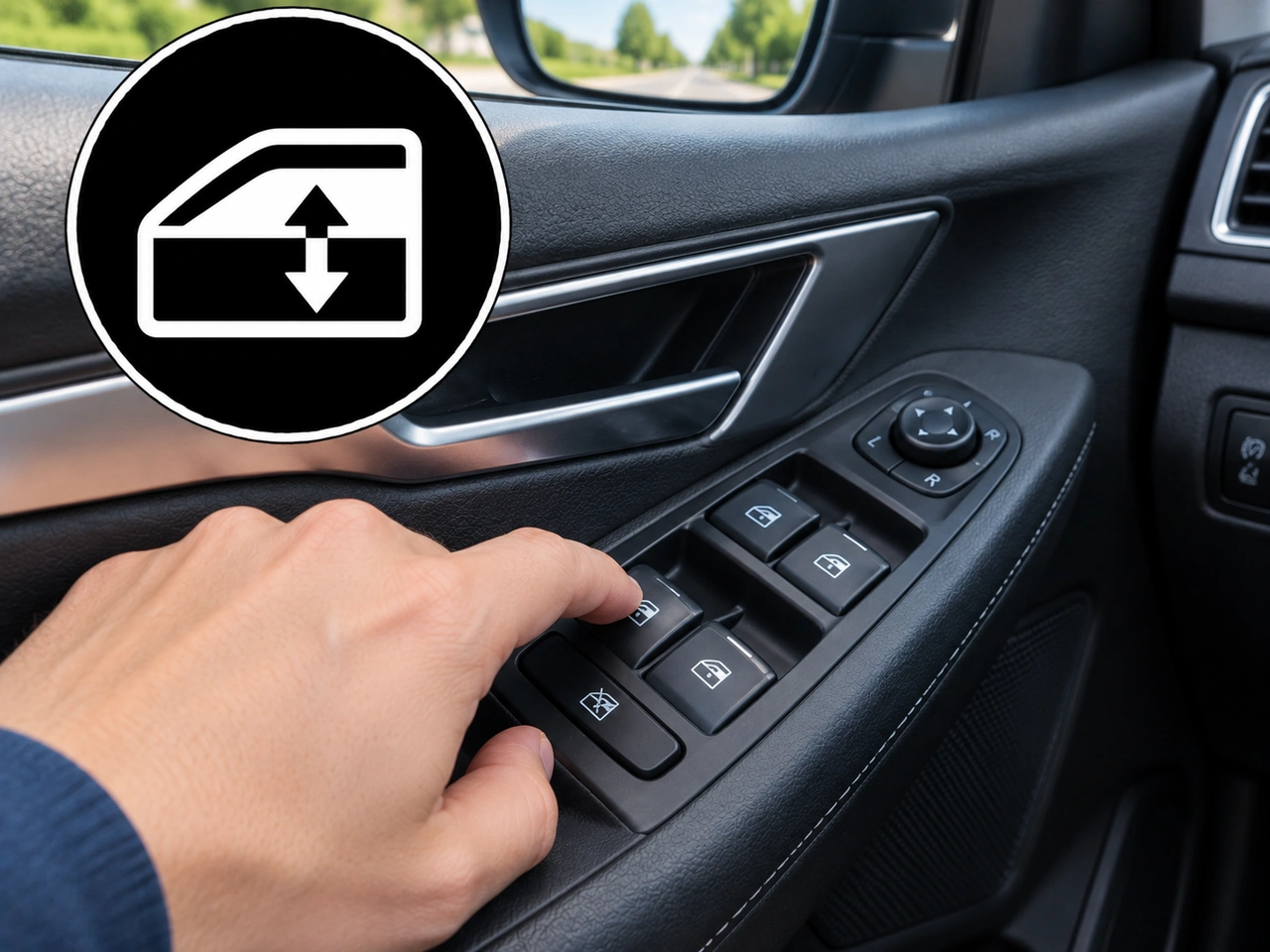
704. What does this vehicle-control symbol indicate?
This control operates the vehicle's electric windows. Pressing or pulling the switch lowers or raises the corresponding window.
On a typical window switch, press down to lower the glass and pull up to raise it. Keep hands clear when closing a window.
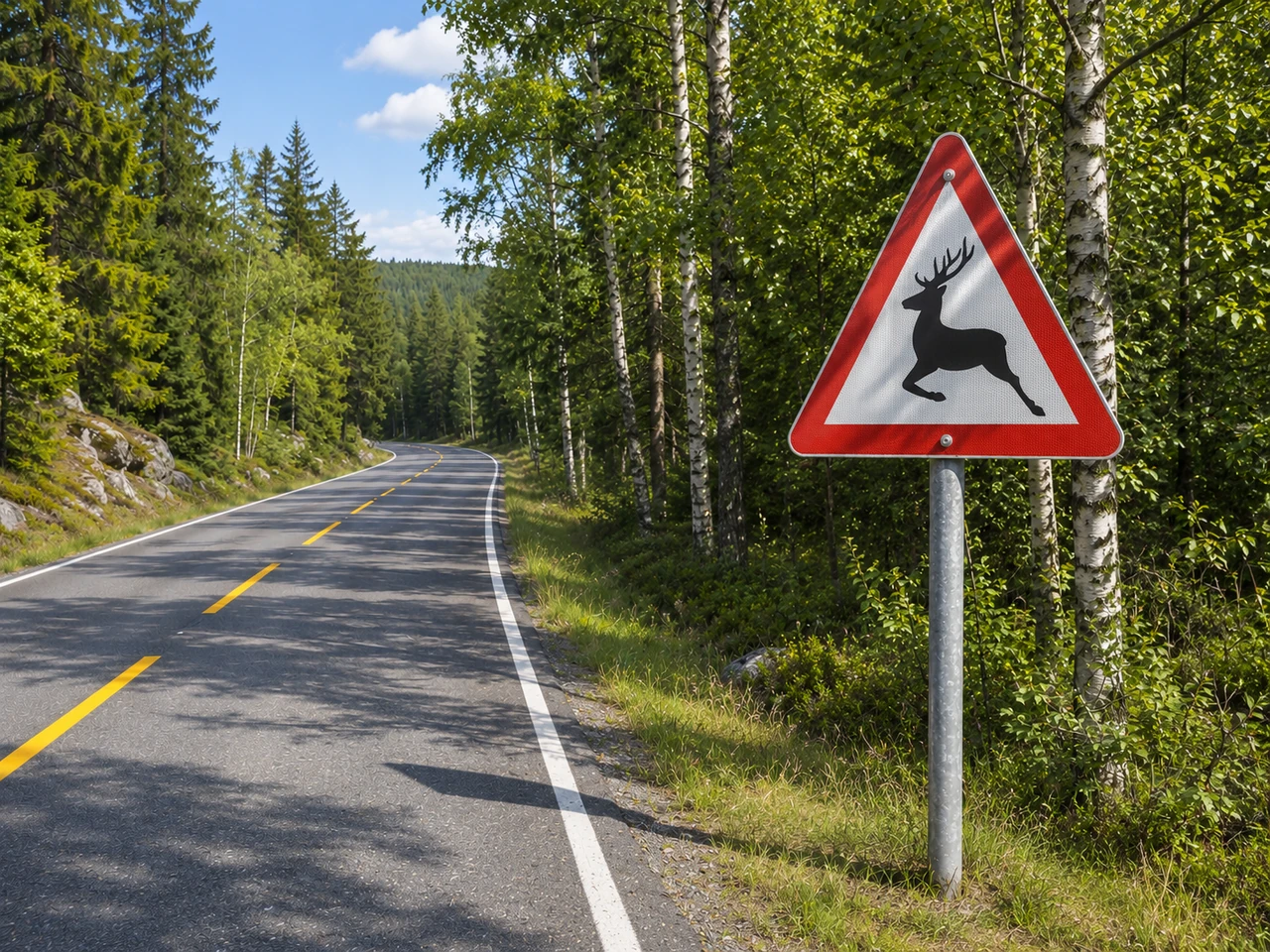
705. This deer warning sign specifically indicates a crossing for domestic cattle.
The deer symbol warns of large wild animals crossing. The separate cattle warning sign uses a domestic-animal symbol. Slow down as conditions require and watch for animals entering the road.
🔗 Sources
Norway • Skiltforskriften • Sign 146.3
Statens vegvesen • Official traffic-sign meanings
Statens vegvesen • Official sign artwork
Sign artwork: Statens vegvesen original EPS archive, Sign 146.3, file 146_3.eps. Native deer silhouette, orientation, border and proportions retained; resized and composited onto the existing same-entry scene. Border red follows the authority's published colour chart: PMS 179, using the published web swatch RGB 226/56/40. No third-party open licence is asserted for the government artwork.
Image credit: AI-generated background with source sign artwork resized and placed on the sign face.
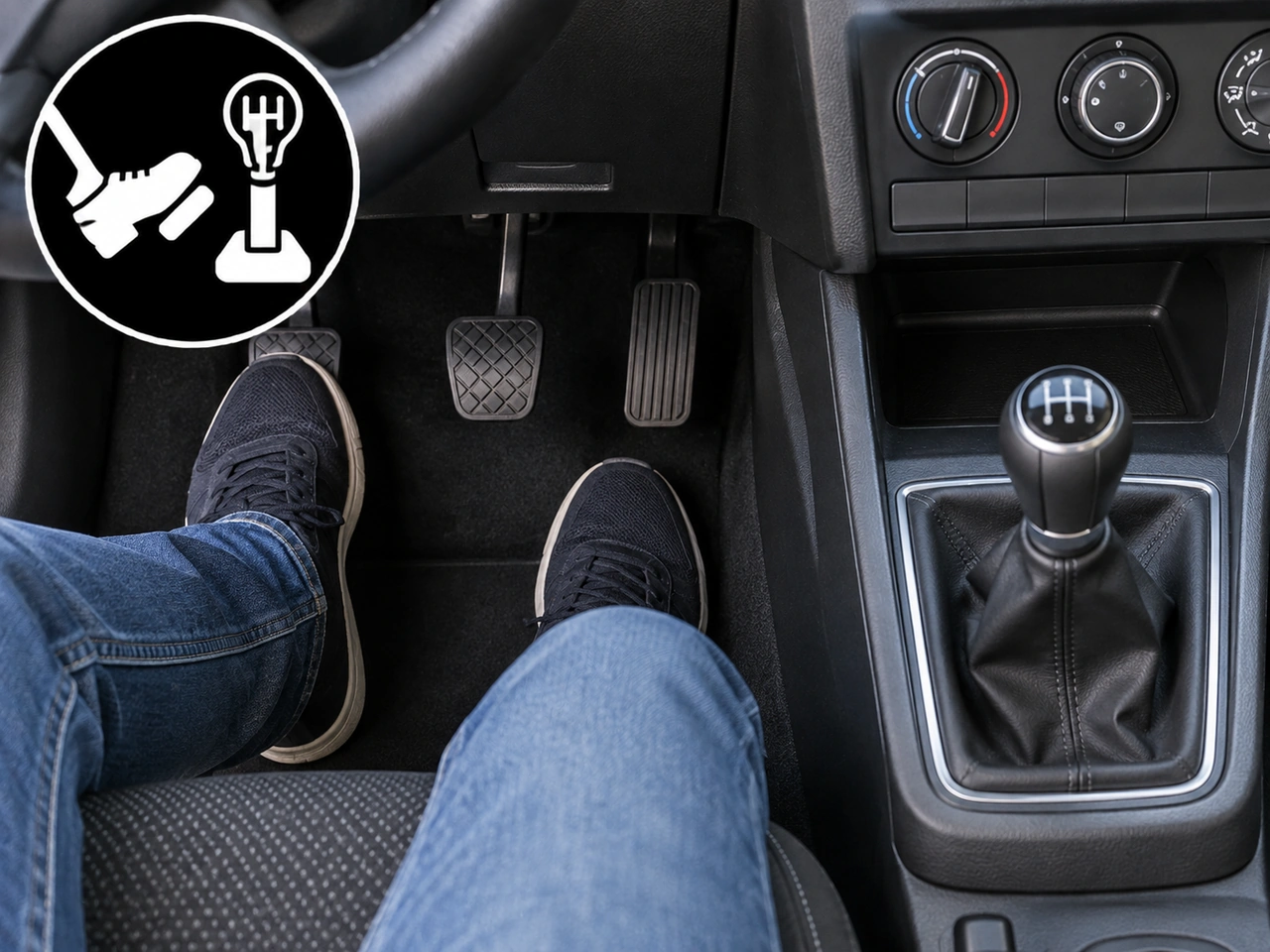
706. What should you check before starting a manual vehicle?
Before starting a manual vehicle, make sure the gearbox is in neutral and press the clutch pedal. This helps prevent the vehicle from moving unexpectedly when the engine starts.
Apply the parking brake, check that neutral is selected and press the clutch fully before starting.
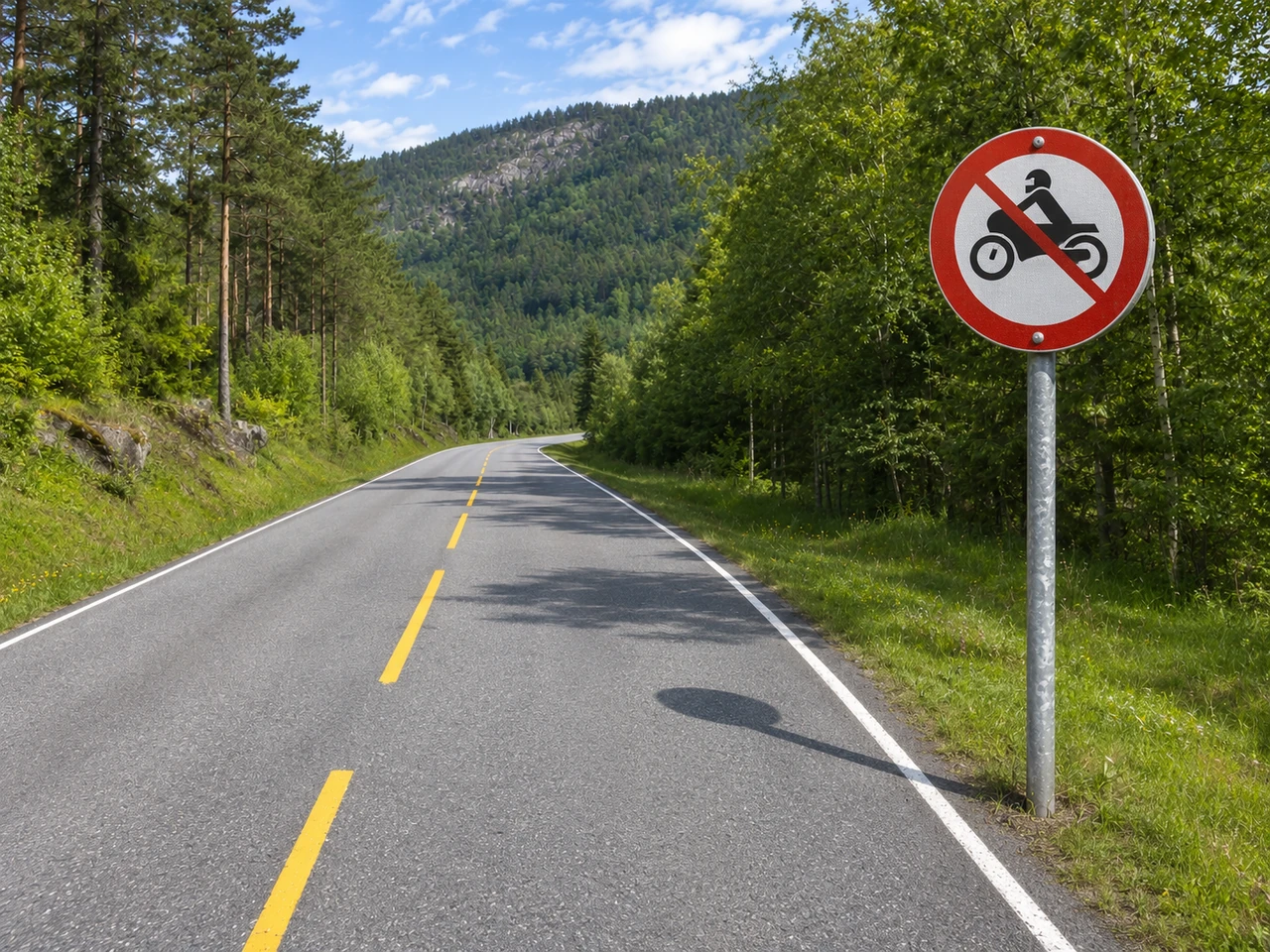
707. The red-bordered motorcycle prohibition sign allows mopeds as a general rule.
The prohibition includes motorcycles, motorcycles with sidecars, small motorcycles and mopeds. It is not limited to large motorcycles. Any applicable exemption must be checked separately.
🔗 Sources
Norway • Skiltforskriften • Sign 306.4
Statens vegvesen • Official traffic-sign meanings
Statens vegvesen • Official sign artwork
Official Norwegian sign artwork: Statens vegvesen, sign 306.4, original EPS file 306_4.eps from the national sign artwork archive. Native pictogram, orientation, borders and proportions retained. Colours use the authority's published PMS web swatches: blue PMS 293 and red PMS 179 where present. Original files and colour guidance. No third-party open licence is asserted for the government artwork.

Image credit: AI-generated background with source sign artwork resized and placed on the sign face.
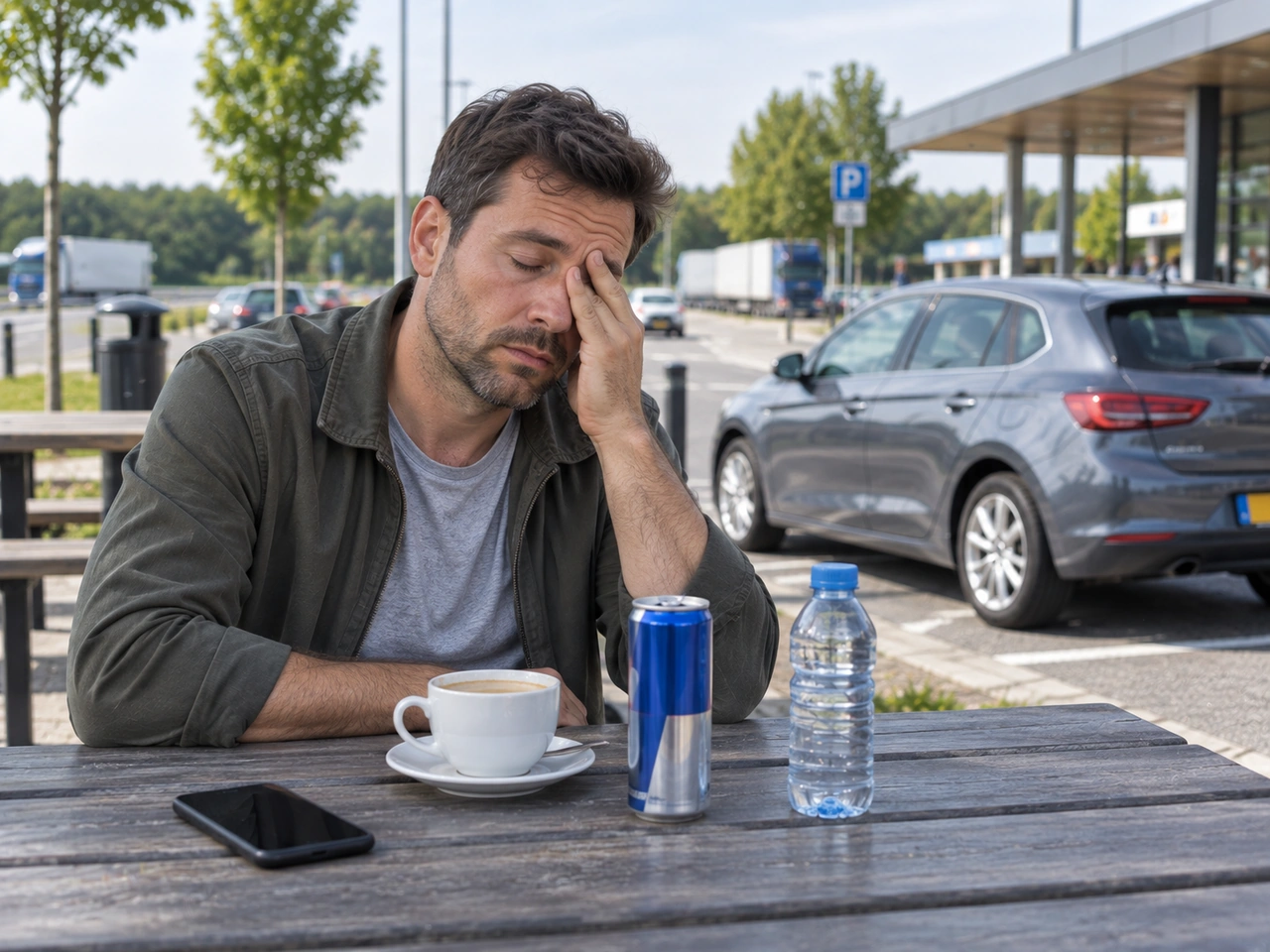
708. Can coffee, energy drinks, fresh air, or loud music replace proper rest when you are tired?
Coffee, energy drinks, fresh air, or loud music may make you feel more alert for a short time, but they do not remove fatigue. If you are too tired to drive safely, stop somewhere safe and get proper rest.
Norway. Statens vegvesen advises stopping and resting when you feel tired. Caffeine may briefly make you feel more alert. Resume driving only when you are rested and alert enough to drive.
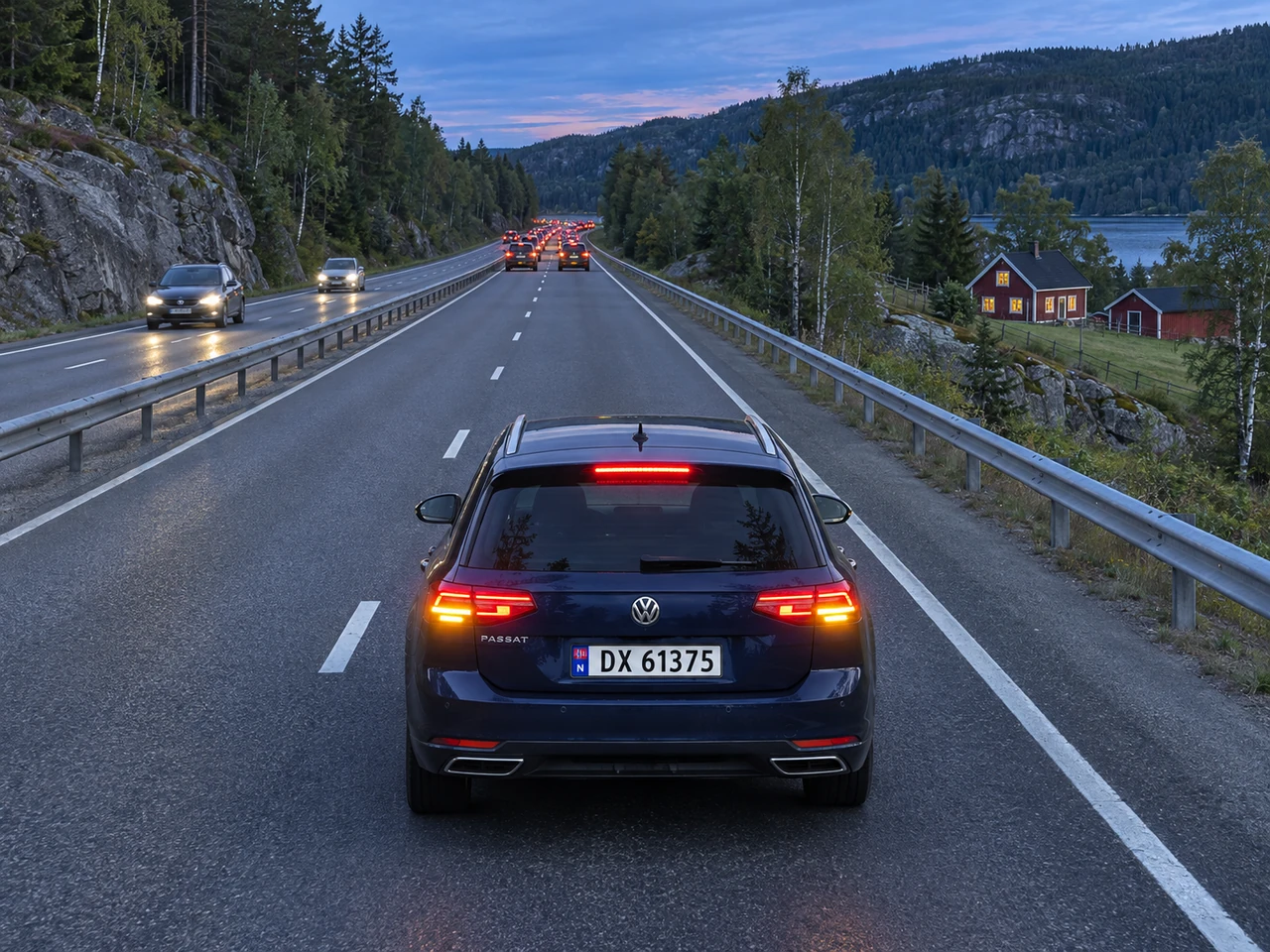
709. What should you do when approaching stationary or slow-moving traffic on a motorway?
Motorway queues can appear suddenly. Early braking gives following traffic more time to react.
Look ahead for the back of the queue. Slow early enough to stop safely if the vehicle in front comes to a standstill.
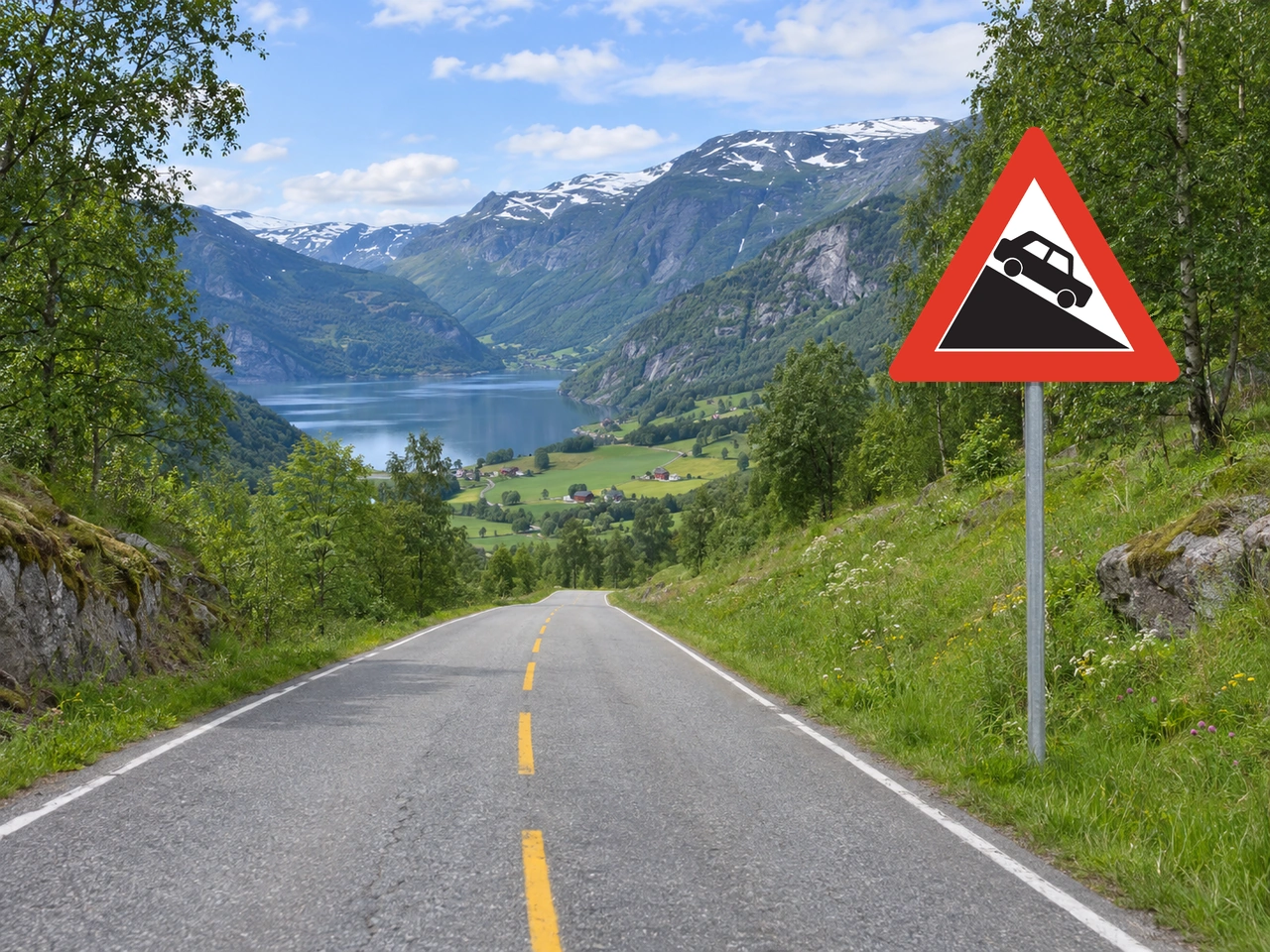
710. This triangular sign warns of a dangerous descent.
This sign warns of a dangerous descent. Any percentage shown indicates the gradient, not a speed limit. Control your speed and choose a suitable gear before descending.
🔗 Sources
Norway • Skiltforskriften • Sign 104.2
Statens vegvesen • Official traffic-sign meanings
Statens vegvesen • Official sign artwork
Sign artwork: Statens vegvesen original EPS archive, Sign 104.2, file 104_2.eps. Native car-on-descending-slope symbol, orientation, border and proportions retained; resized and composited onto the new same-entry photographic scene. Border red follows the authority's published colour chart: PMS 179, using the published web swatch RGB 226/56/40. No third-party open licence is asserted for the government artwork.
Image credit: AI-generated background with source sign artwork resized and placed on the sign face.
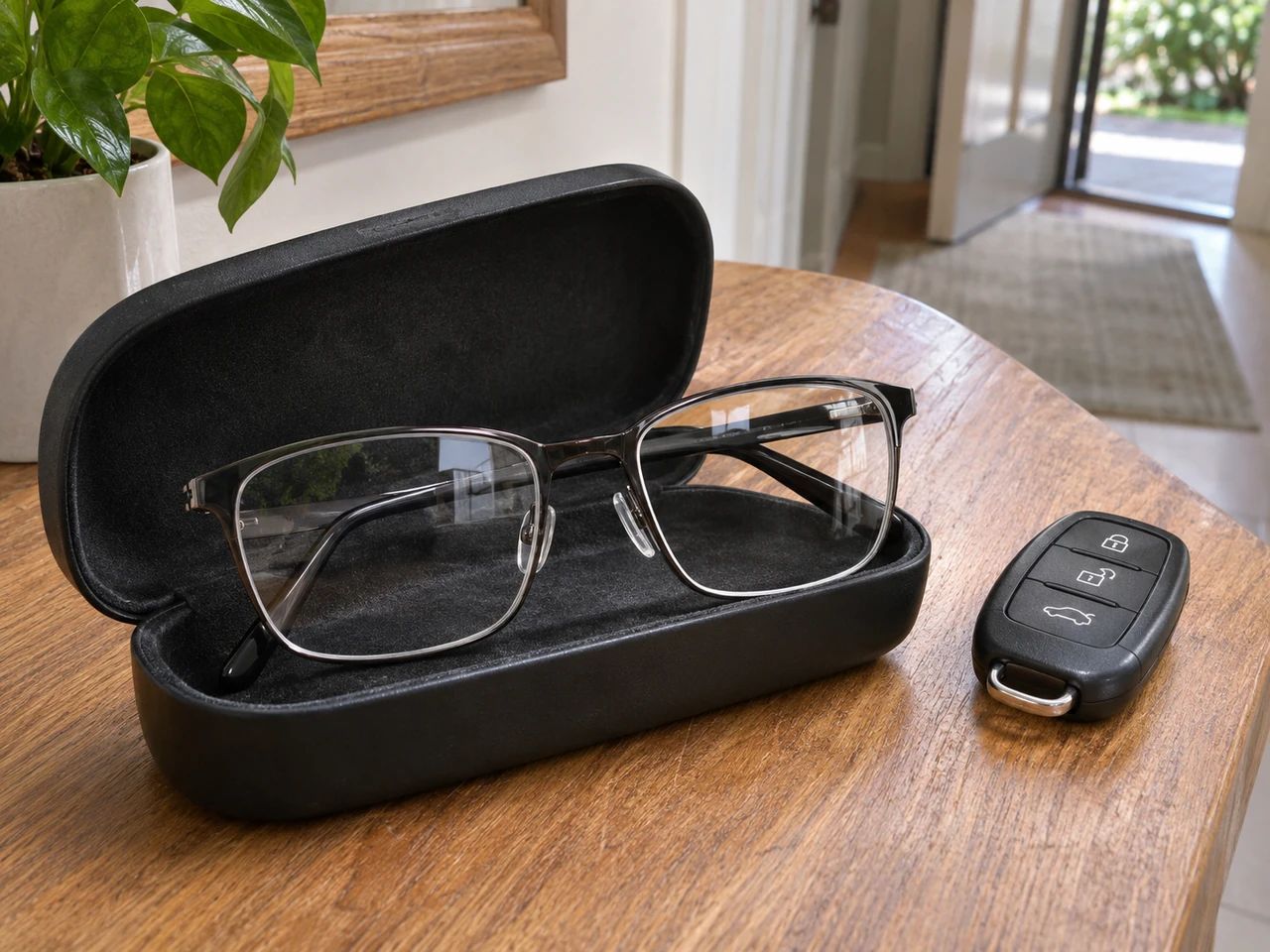
711. If you need glasses or contact lenses for driving, you should wear them on every journey.
Wear the corrective lenses you need to see clearly and meet the eyesight requirements for driving. A short or familiar journey does not remove that need.
🔗 Sources
The Highway Code (Great Britain) • Safety guidance, Rule 92; local eyesight requirements apply
Image credit: AI-generated
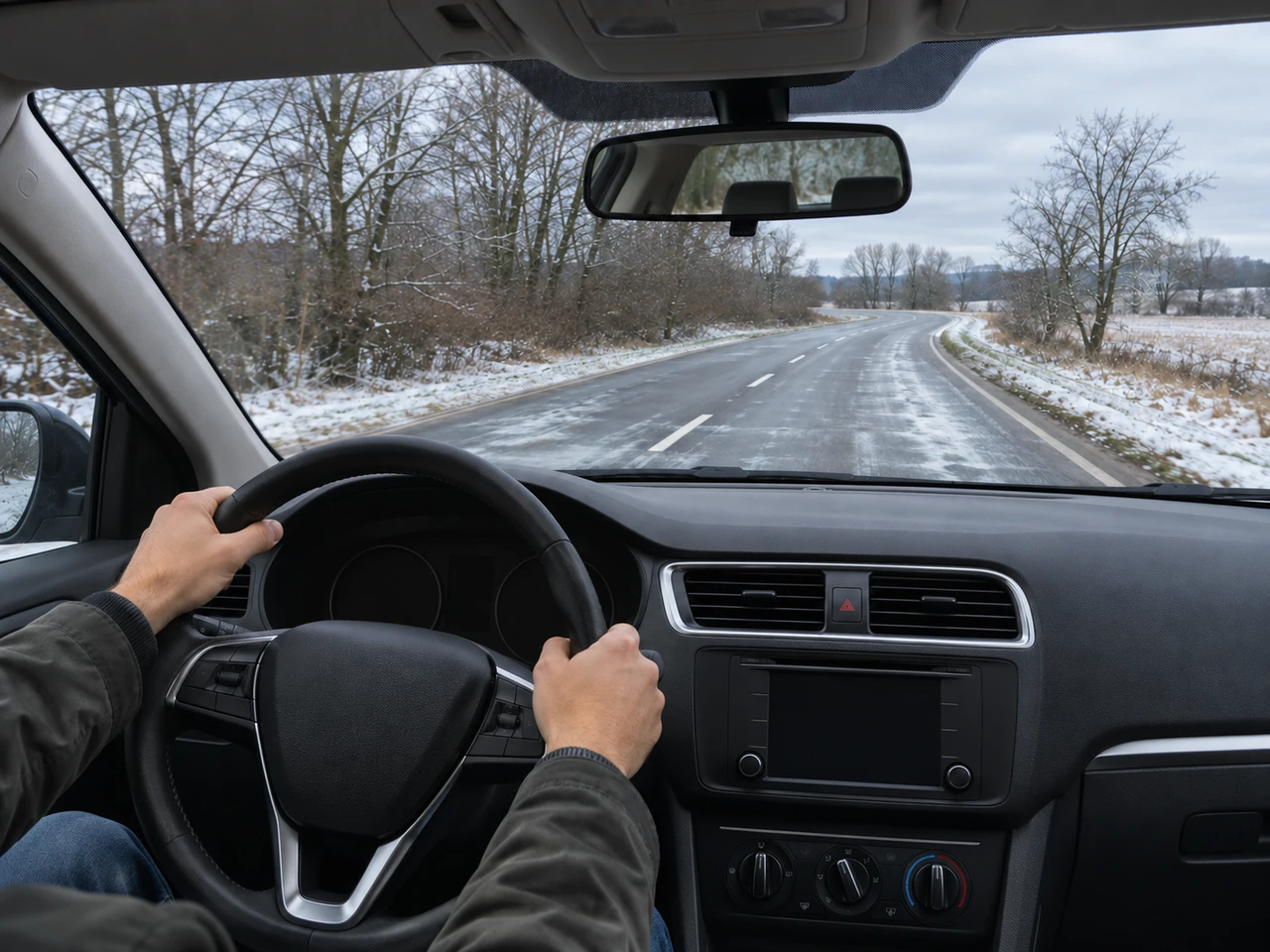
712. Smooth steering and braking help reduce skidding on icy roads.
Ice greatly reduces tyre grip. Drive slowly and use gentle steering, braking and acceleration to reduce the risk of losing control.
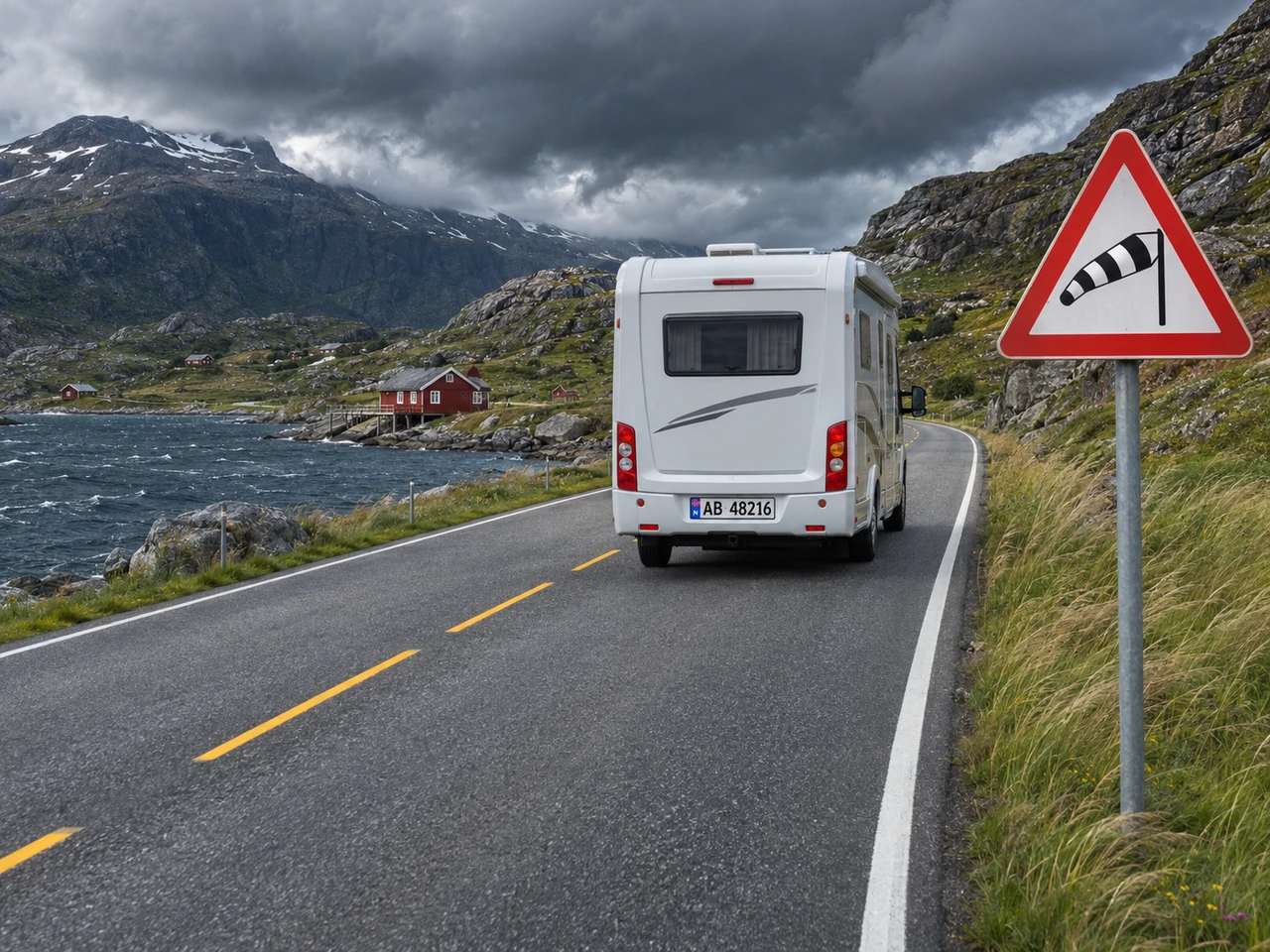
713. Which vehicles are especially vulnerable to strong crosswinds?
High-sided vehicles have a large surface exposed to crosswinds and may be pushed sideways by a sudden gust. Lightly loaded vehicles, caravans and trailers can also be unstable, while cyclists and motorcyclists may lose balance or change course. Leave room, avoid lingering alongside large vehicles and adapt your speed before exposed stretches. A crosswind warning sign identifies a hazard; it does not itself specify a numerical speed limit.
Norway. Sign 152, Sidevind, warns where strong crosswinds occur frequently. Statens vegvesen highlights gust sensitivity in large goods vehicles, buses, motorhomes and caravans when explaining its Dovrefjell wind information.
🔗 Sources
Lovdata.no • Norway — Sign Regulations § 5, sign 152
Vegvesen.no • Norway — Wind-sensitive vehicles and Dovrefjell warnings
Image credit: AI-generated
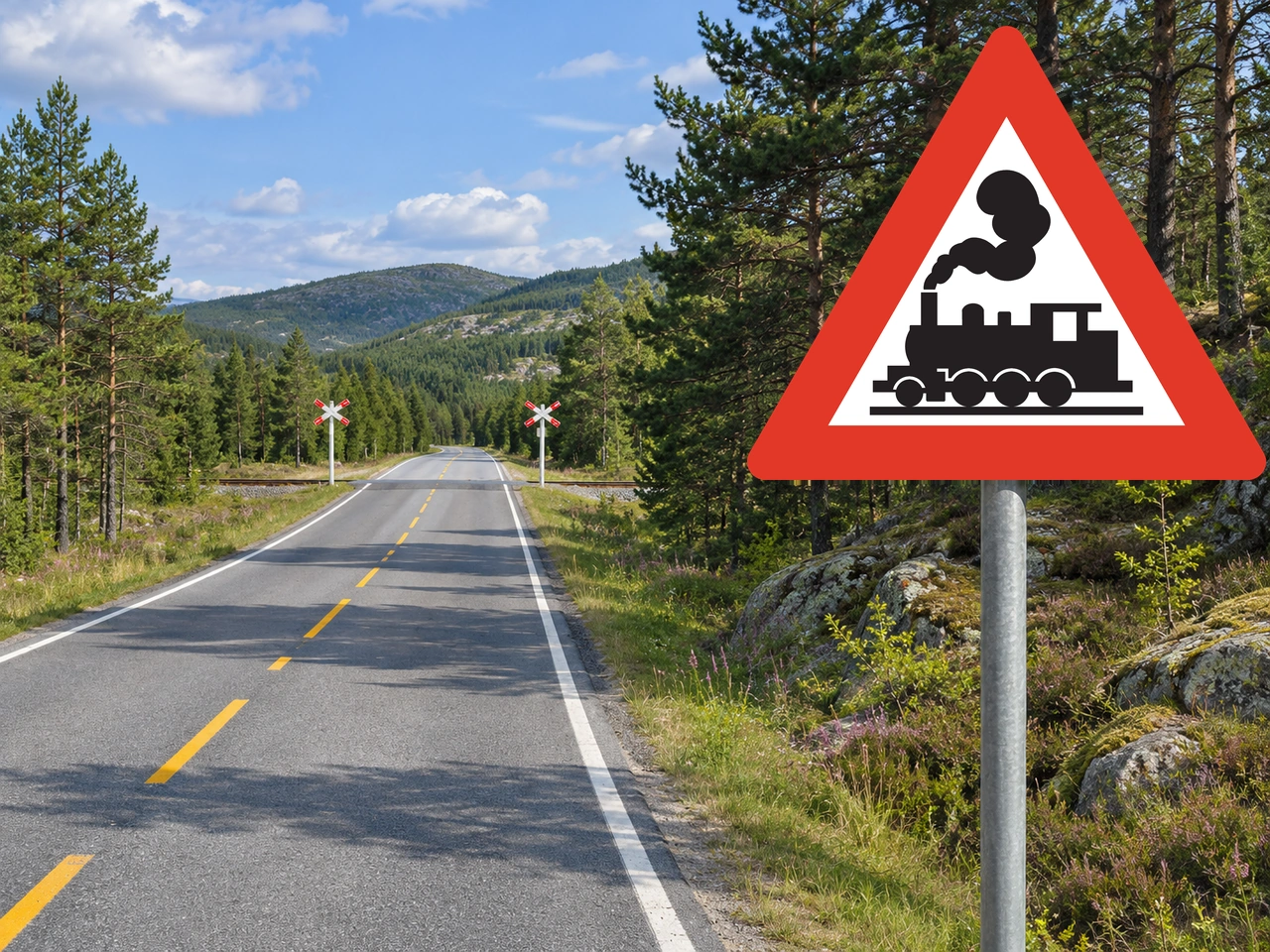
714. This warning sign means there is a railway crossing ahead.
This warning sign indicates a level crossing ahead. It does not tell you that a train is approaching at that moment or guarantee that the crossing is clear.
🔗 Sources
Norway • Skiltforskriften • Sign 135
Statens vegvesen • Official traffic-sign meanings
Statens vegvesen • Official sign artwork
Sign artwork: Statens vegvesen original EPS archive, Sign 135, file 135_0.eps. Native steam-locomotive silhouette, border and proportions retained; resized and composited onto the existing same-entry scene. Border red follows the authority's published colour chart: PMS 179, using the published web swatch RGB 226/56/40. No third-party open licence is asserted for the government artwork.
Image credit: AI-generated background with source sign artwork resized and placed on the sign face.
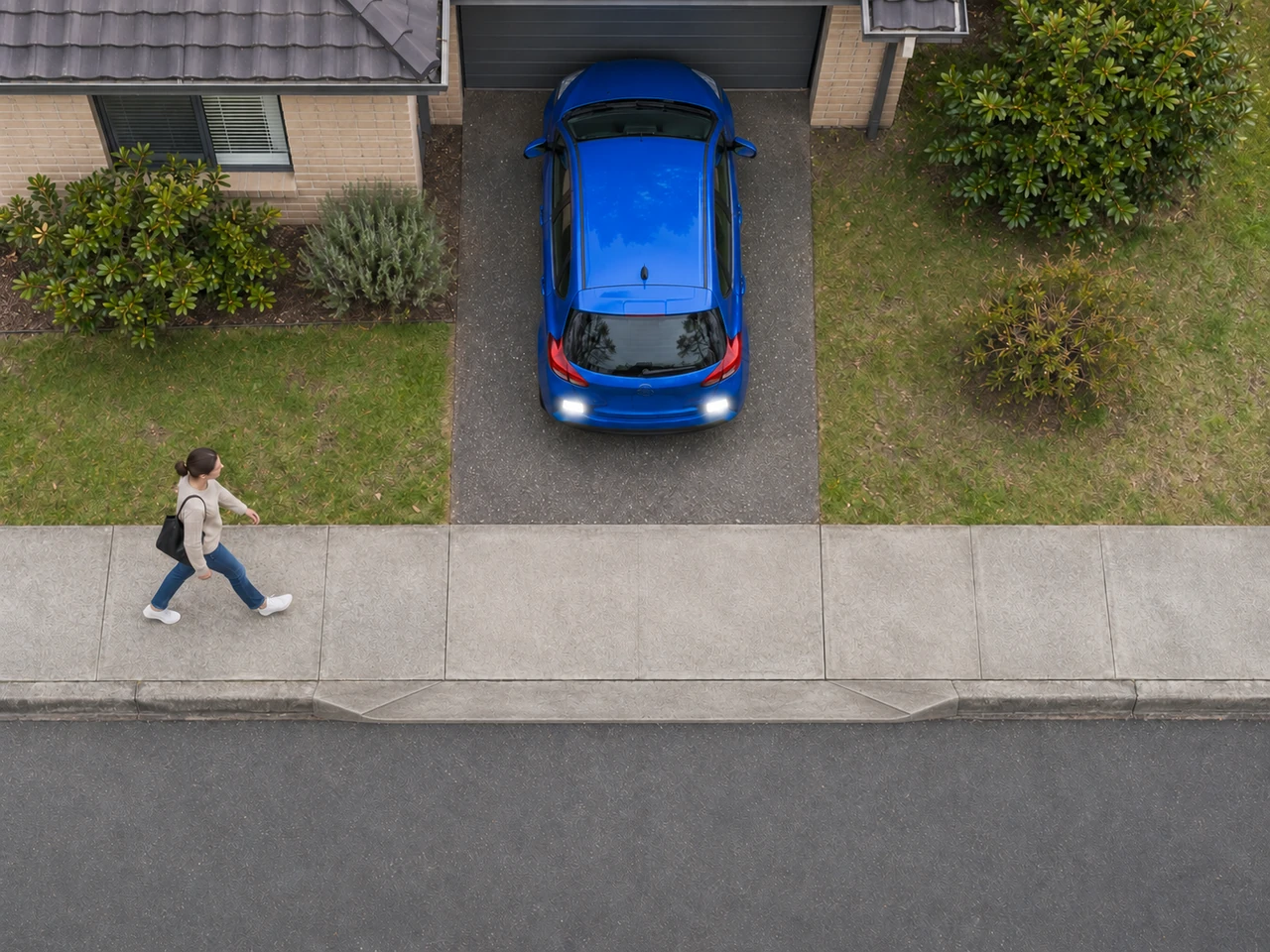
715. A pedestrian is approaching along the pavement. What should blue do now?
Keep the pavement clear until the pedestrian has passed. Before moving, check both directions on the pavement and road. Reverse only where the local rules permit it and the route is clear.
🔗 Sources
AI-generated illustration • Traffic-rules.com / Rijbewijs-online.be • WCIT • CC BY-SA 4.0.
🔗 Lovdata • Traffic Rules, section 11(1)
🔗 Supreme Court of Norway • HR-2024-2325-U, paragraphs 24–25
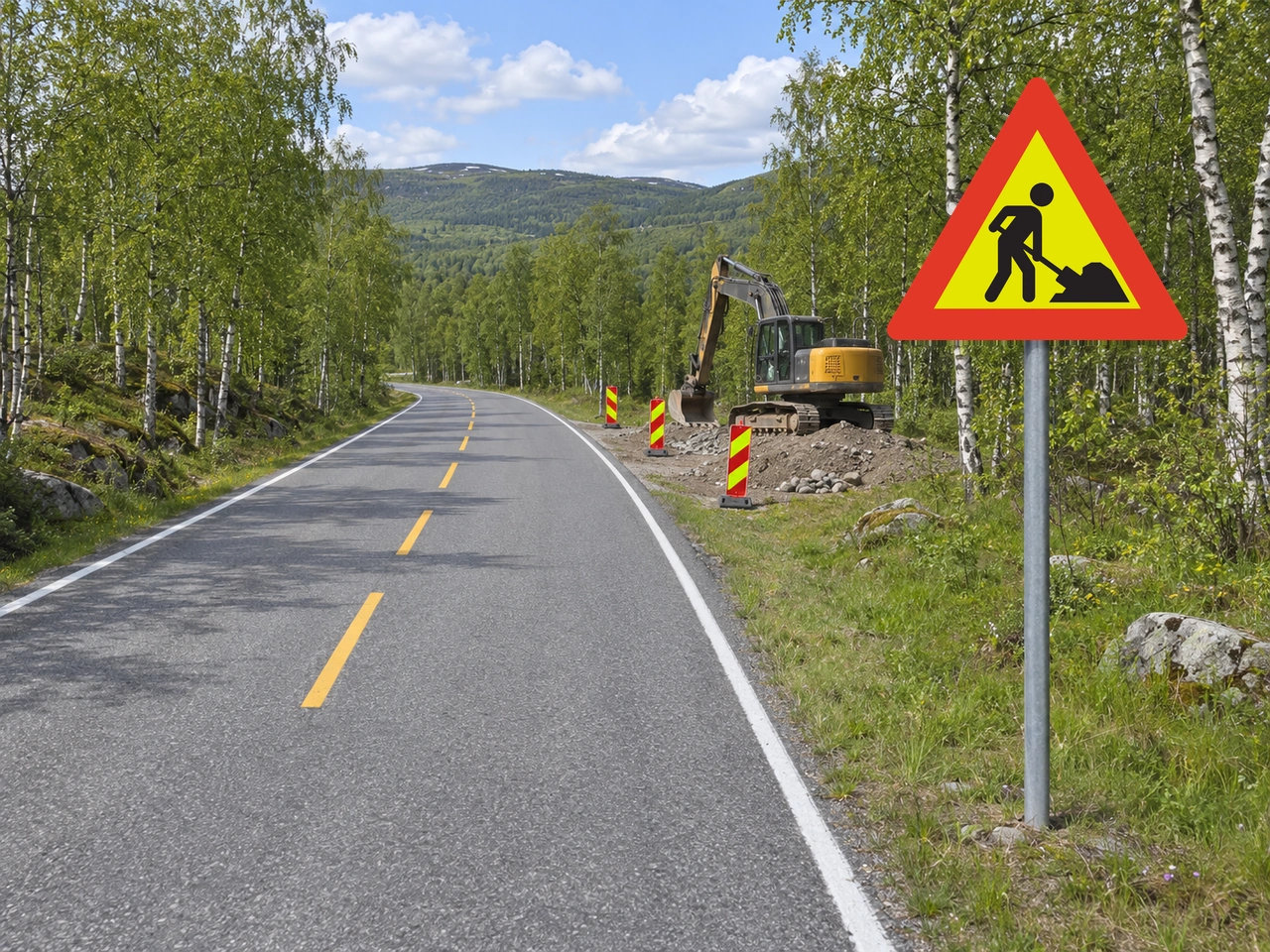
716. The roadworks warning sign shown means the road is closed even without a separate closure sign.
The sign warns of roadworks ahead. It does not by itself close the road. Follow any separate restrictions, temporary signals and directions at the works.
🔗 Sources
Norway • Skiltforskriften • Sign 110
Statens vegvesen • Official traffic-sign meanings
Statens vegvesen • Official sign artwork
Sign artwork: Statens vegvesen original Sign 110 EPS, file 110_0.eps. Native worker, shovel, mound, border and proportions retained. The temporary face uses the fluorescent yellow-green variant. N301:2024, Section 3.1.1, requirement 3.1.1—4, note 2 and Figure 3.1.1—1; N301:2024 original-document PDF export, pages 35–36. Colours follow the authority's published web swatches: PMS 179 red, RGB 226/56/40, and PMS 395 fluorescent yellow-green, RGB 228/228/0. The web colour is a digital representation of the specified fluorescent material. Artwork resized and composited onto the same-entry scene. No third-party open licence is asserted for the government artwork.
Image credit: AI-generated background with source sign artwork resized and placed on the sign face.
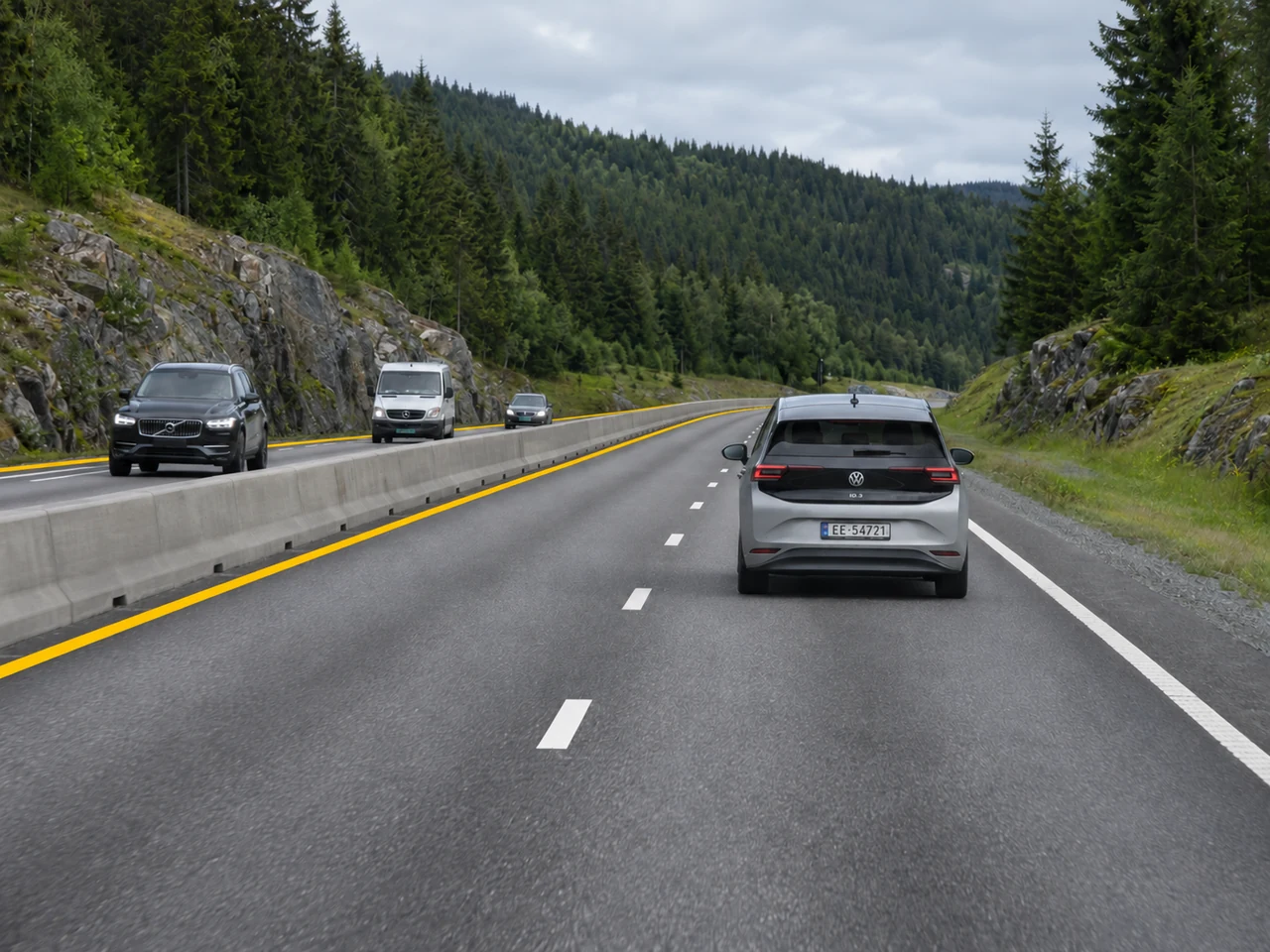
717. How can higher speed affect fuel or energy consumption?
As speed increases, aerodynamic resistance generally rises, so the vehicle needs more energy to maintain that speed. Driving smoothly at an appropriate speed can therefore reduce fuel or energy consumption.
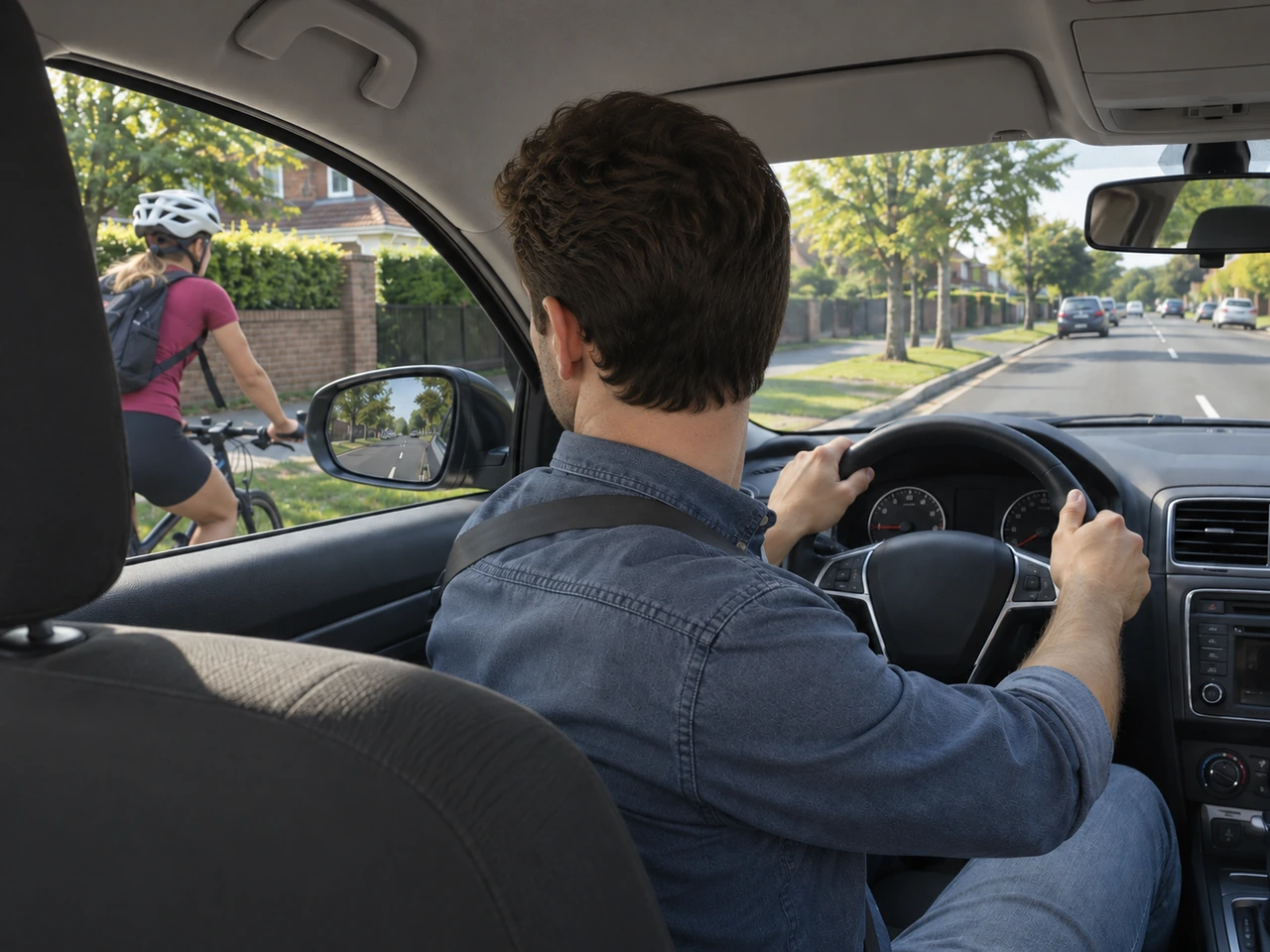
718. Your mirrors show every area around your vehicle.
Mirrors leave blind spots. Before moving off or changing lanes, check the relevant blind spots as well as your mirrors.
🔗 Sources
The Highway Code (Great Britain) • Safety guidance, Rules 159–161
Image credit: AI-generated
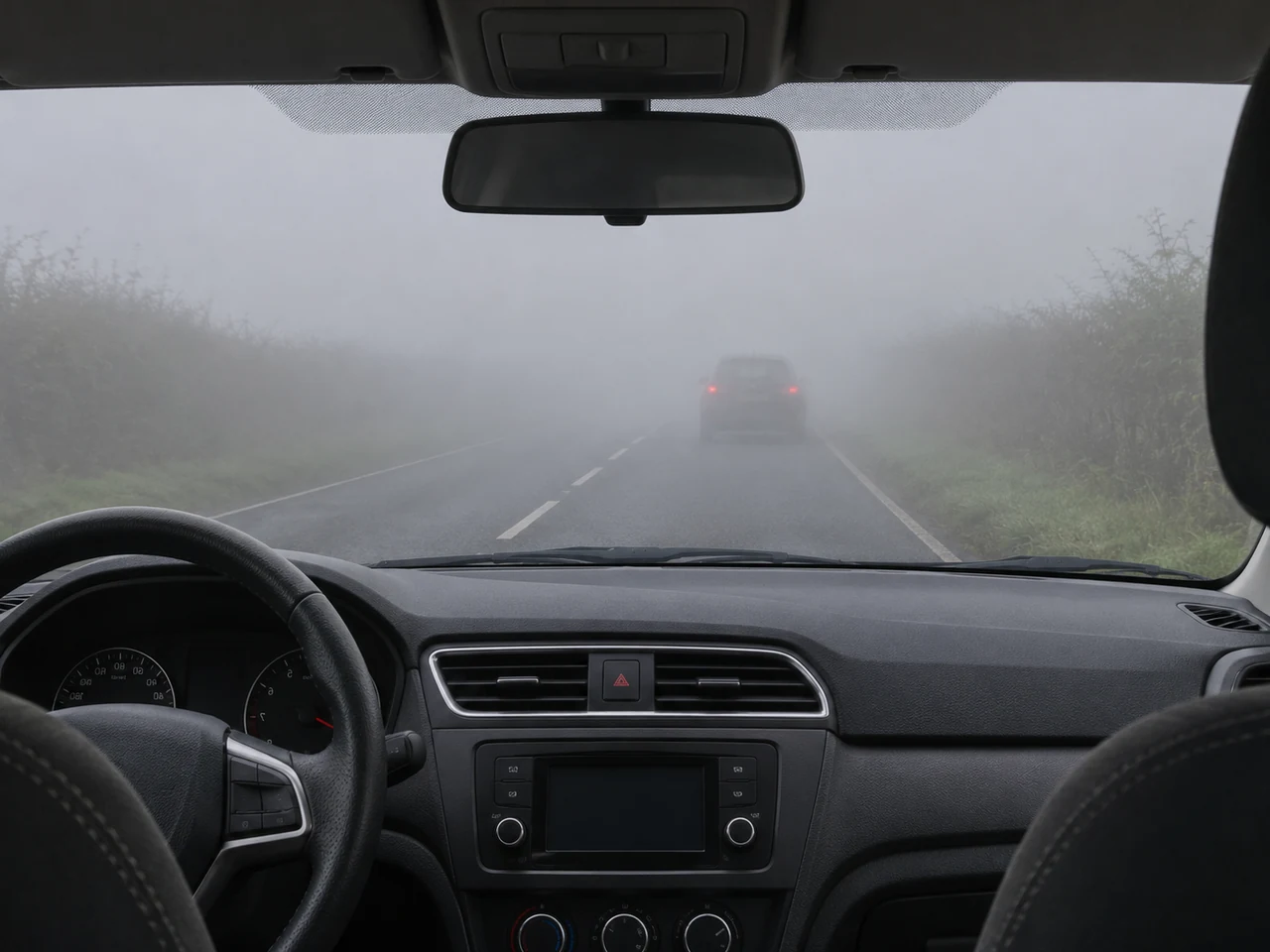
719. Why can fog make it difficult to judge the speed of other vehicles?
Fog removes visual detail and distant reference points, making another vehicle's distance and movement harder to judge. A faint light is not a reliable measure of how far away that vehicle is or how quickly it is approaching. Reduce speed, leave extra space and avoid overtaking on uncertain estimates. Fog can also make your own speed feel lower than it is, so check the speedometer without losing attention to the road.
🔗 Sources
UK Met Office — General fog visibility and speed-perception advice
Image credit: AI-generated
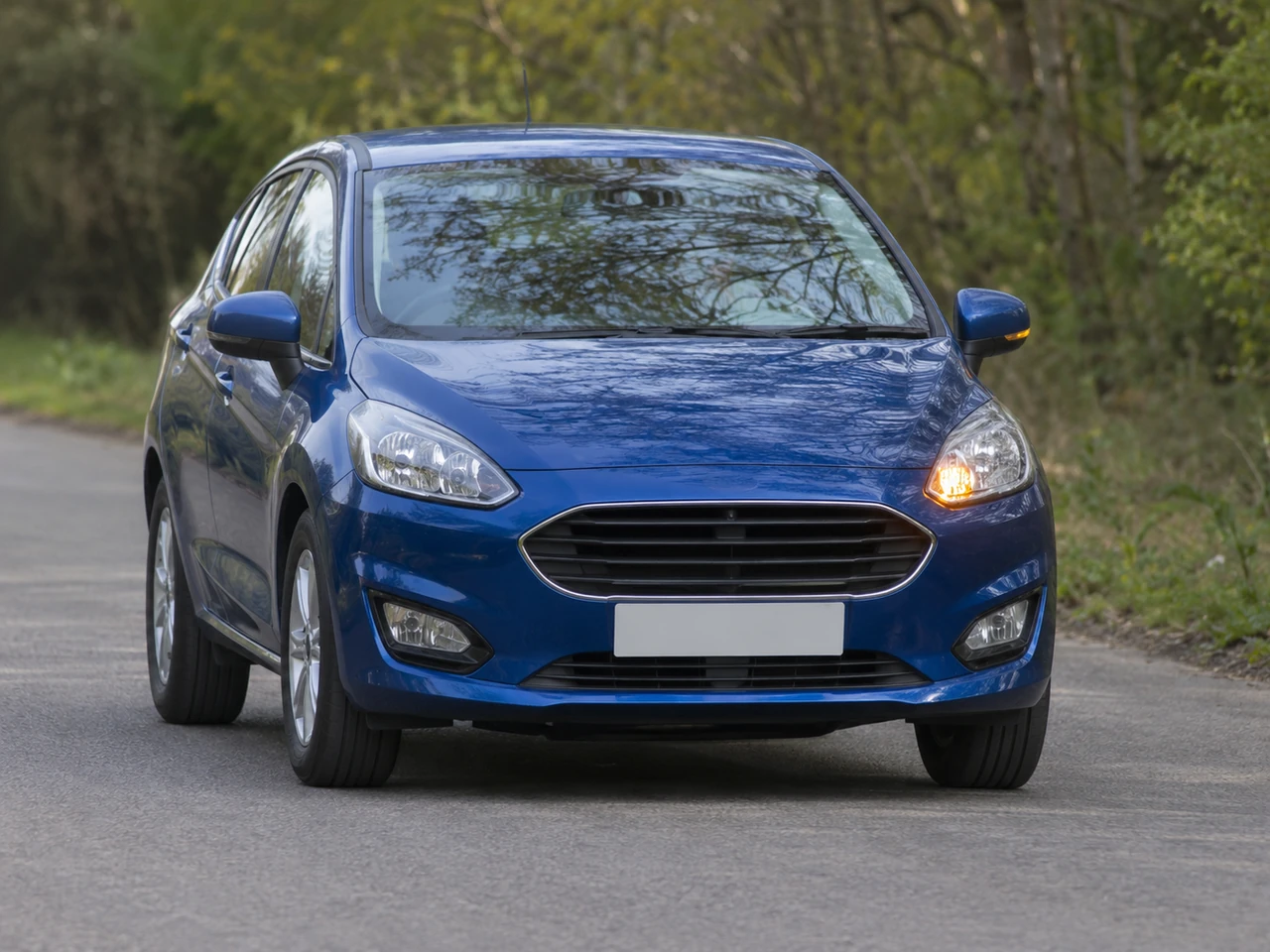
720. An approaching vehicle's indicator proves that it will turn.
An indicator may have been left on or used incorrectly. Wait until the vehicle's movement is clear and assess the gap before emerging.
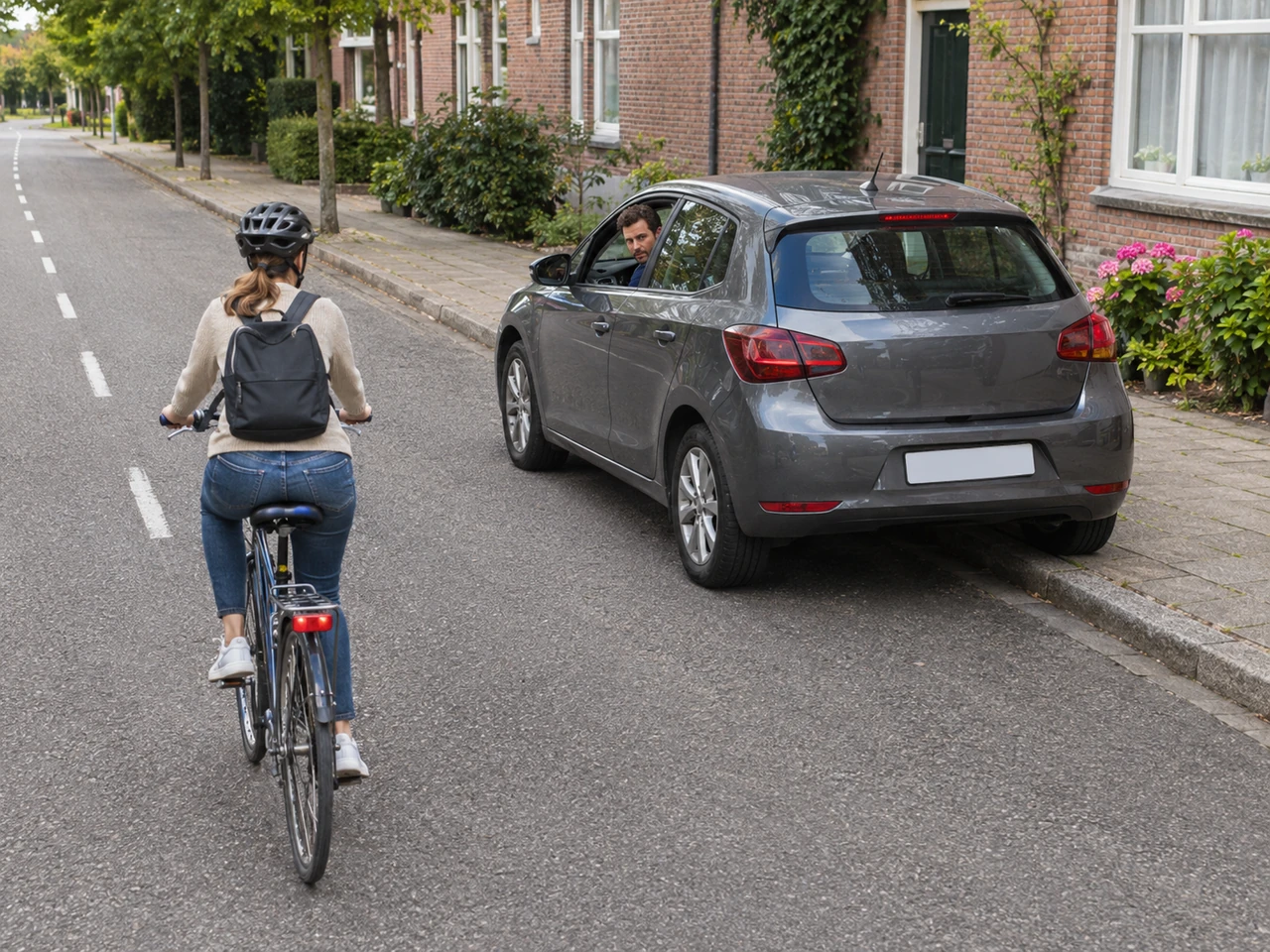
721. You do not need to look for cyclists when opening your car door.
You should always check for cyclists, motorcyclists, and other road users before opening a door.
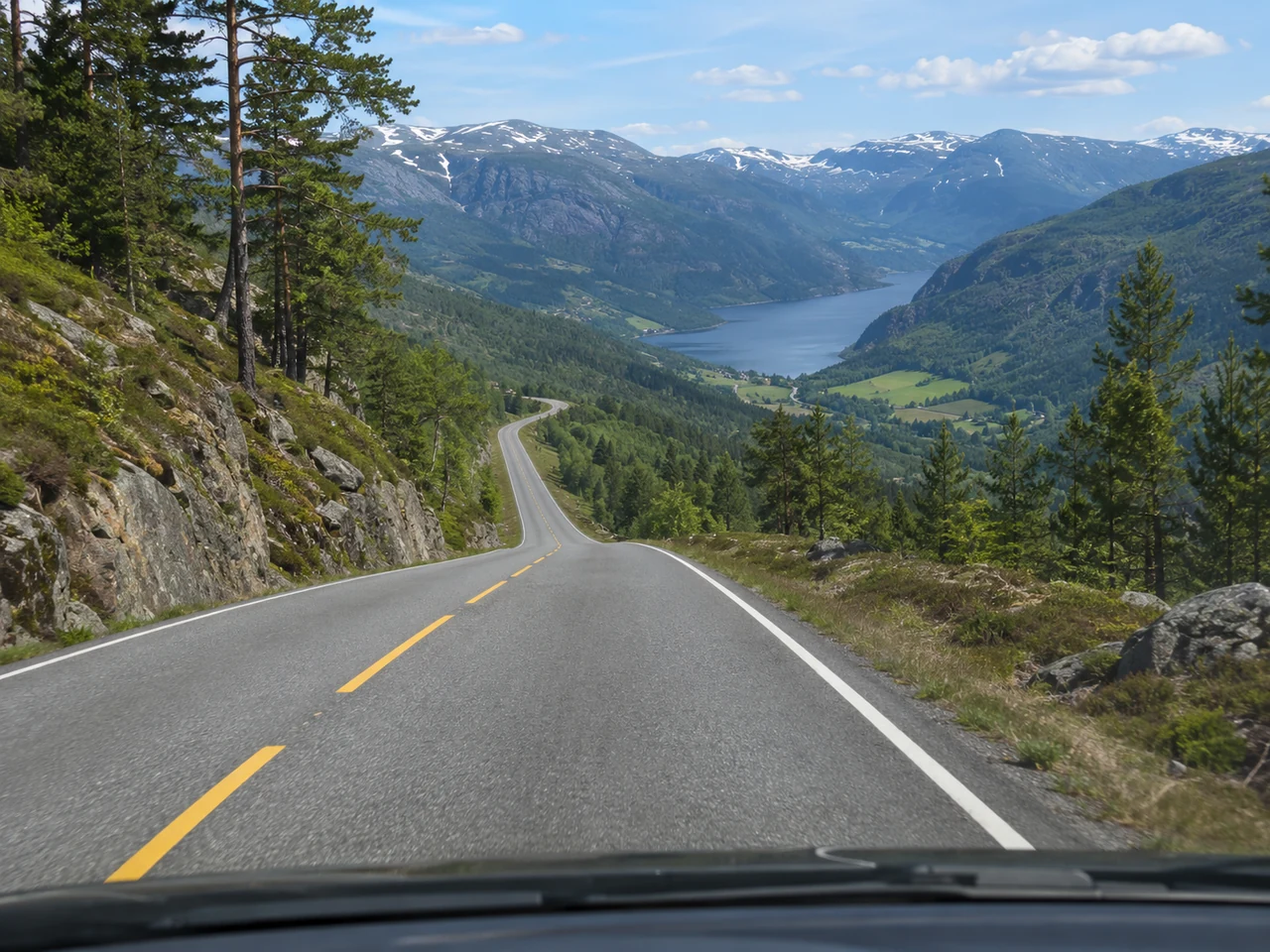
722. What should you do before driving down a long, steep hill?
A lower gear helps control your speed and reduces the amount of continuous braking needed on a long descent.
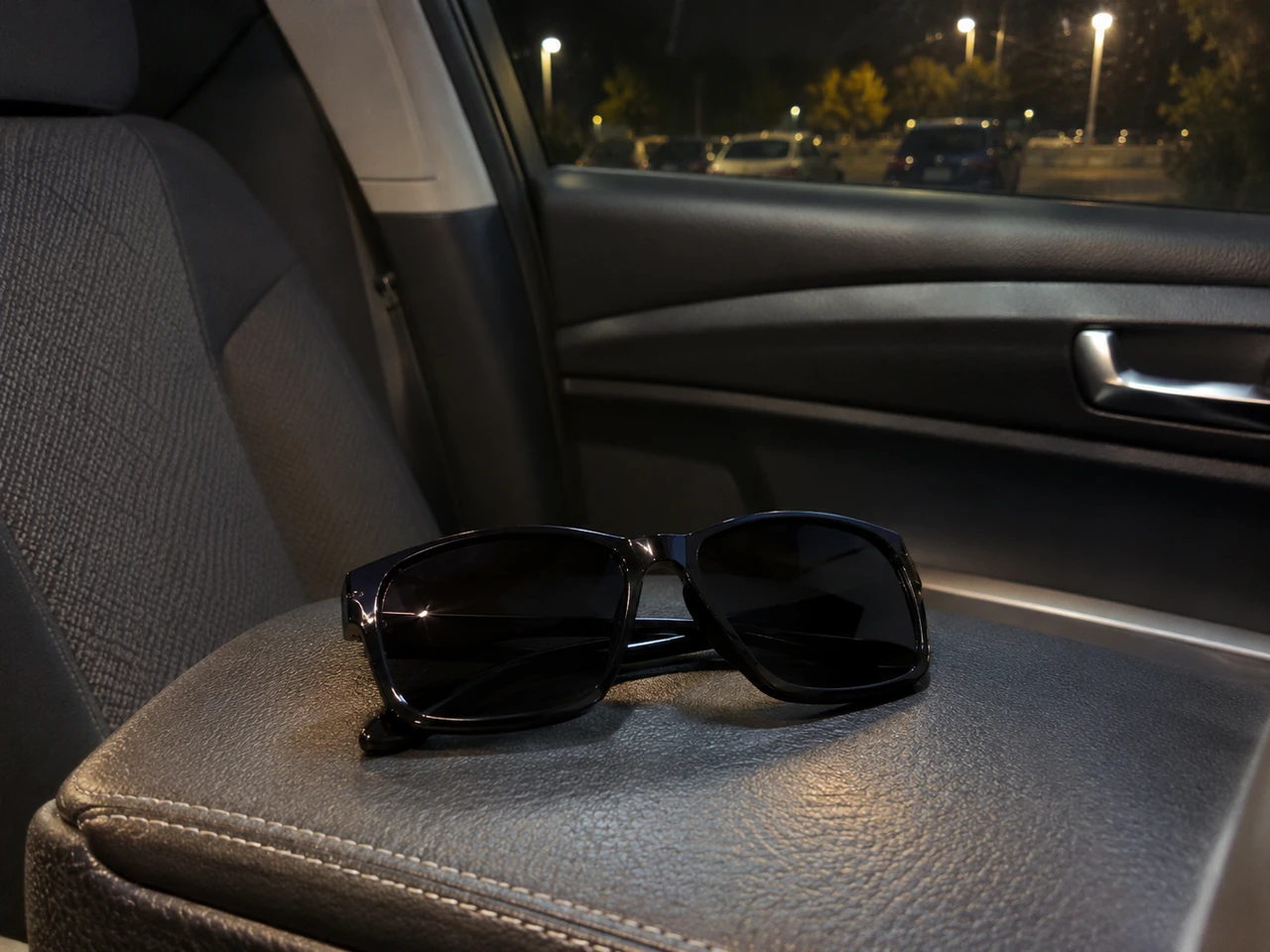
723. Dark sunglasses that restrict your vision are suitable for driving at night.
Dark lenses can reduce the light reaching your eyes and make hazards harder to see. Do not use tinted eyewear at night if it restricts your vision; wear prescribed corrective lenses when needed.
🔗 Sources
The Highway Code (Great Britain) • Safety guidance, Rules 92 and 94
Image credit: AI-generated
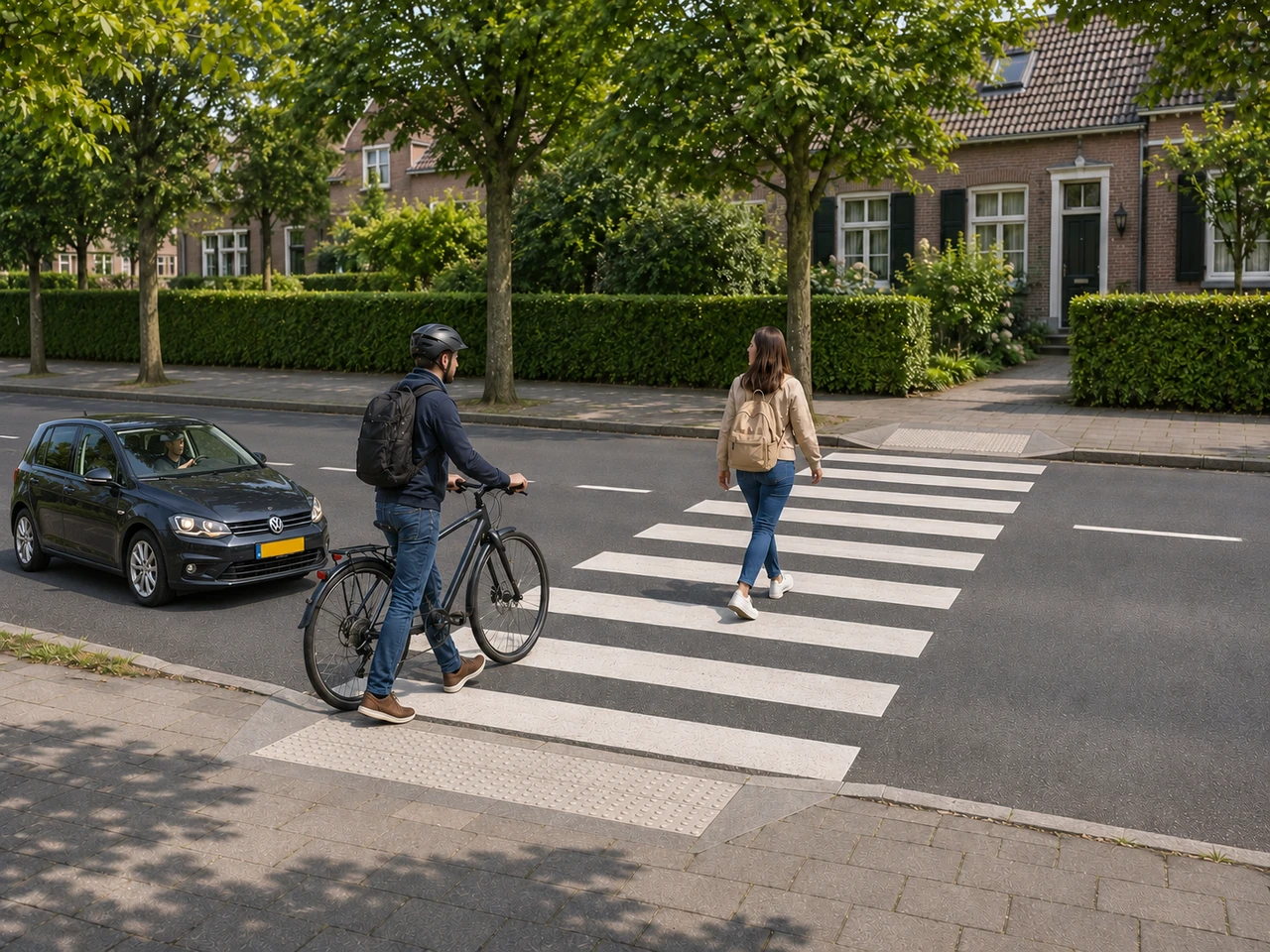
724. Who is responsible for staying safe when crossing the road?
Everyone using the road should stay alert and follow the rules. Drivers need to watch for people crossing and give way as required. Pedestrians and people walking bicycles should check traffic before entering the road and keep looking as they cross. Shared responsibility does not remove any duty to give way under local rules.
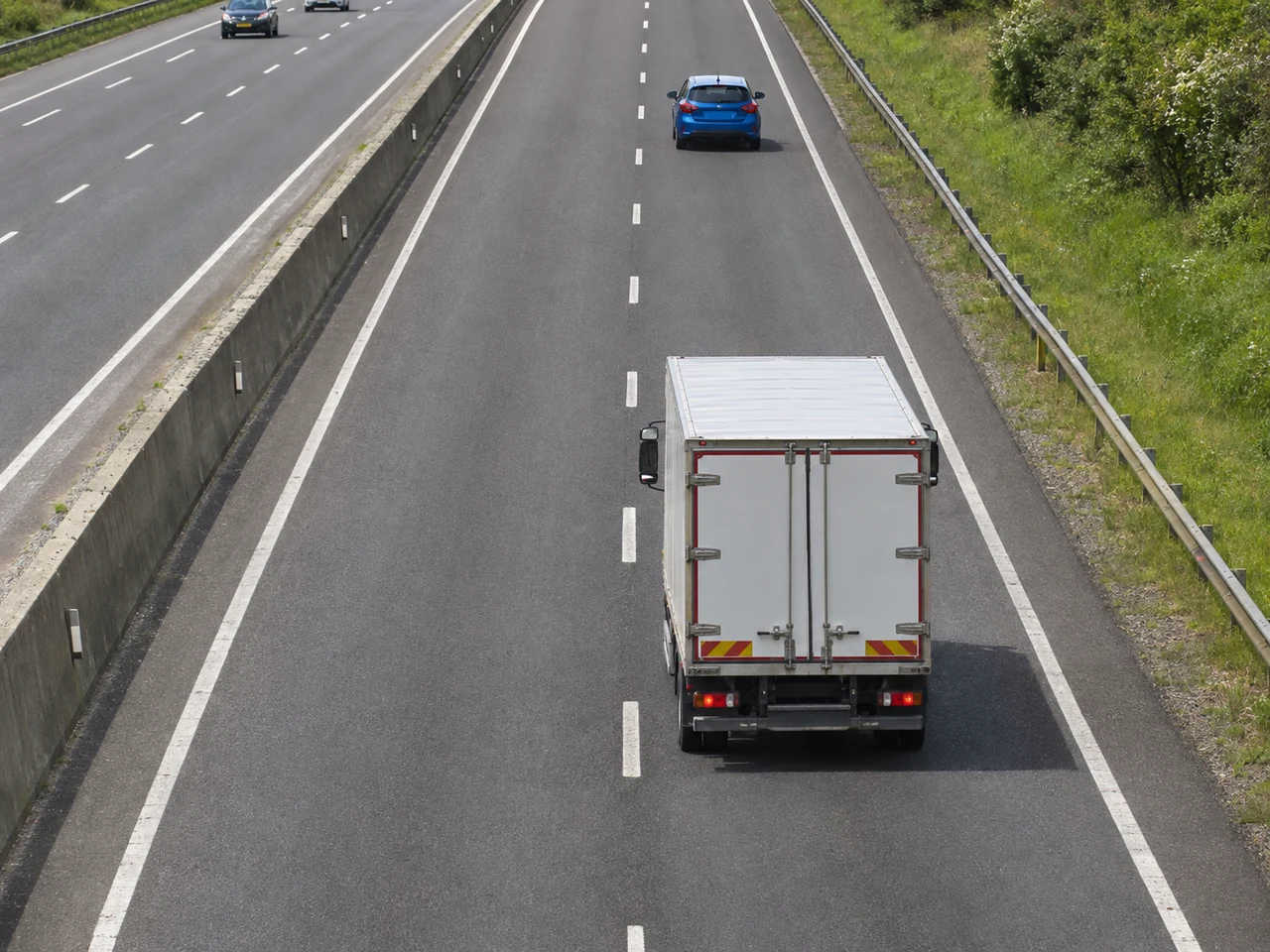
725. What should you normally do after completing an overtake?
After overtaking, return to the normal driving lane when you have passed the other vehicle by a safe distance. Check your mirrors, signal when appropriate, and avoid moving back too soon.
Norway. After overtaking on the left, move back to the right once you can do so without endangering, obstructing or unnecessarily inconveniencing the driver you passed.
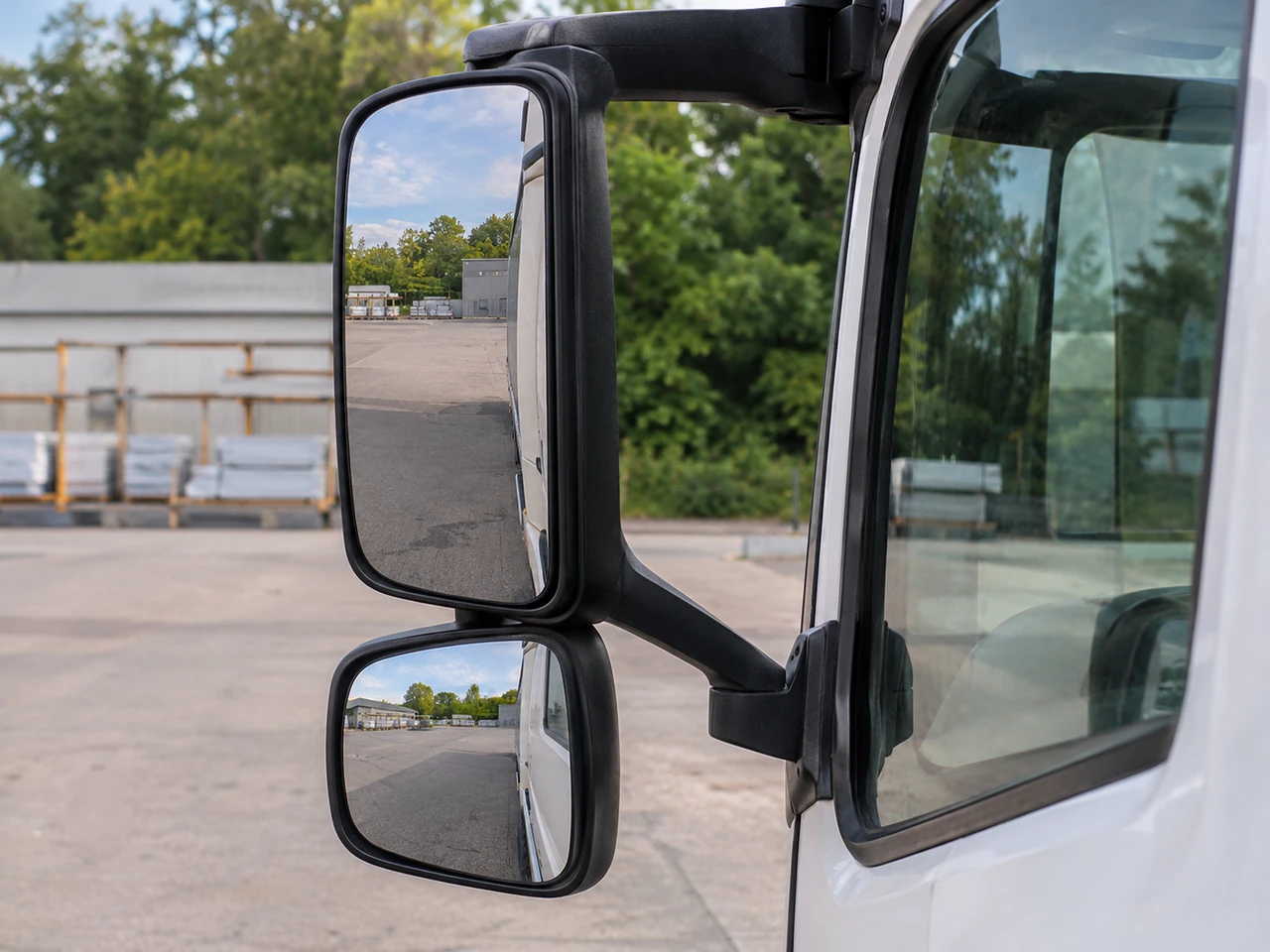
726. Large mirrors mean a lorry driver has no blind spots.
Even large mirrors leave areas outside the driver's view. Avoid lingering in a lorry's blind spots and never assume its driver can see you.
🔗 Sources
Virginia DMV (United States) • Safety guidance, No zones and large-vehicle mirrors
Image credit: AI-generated
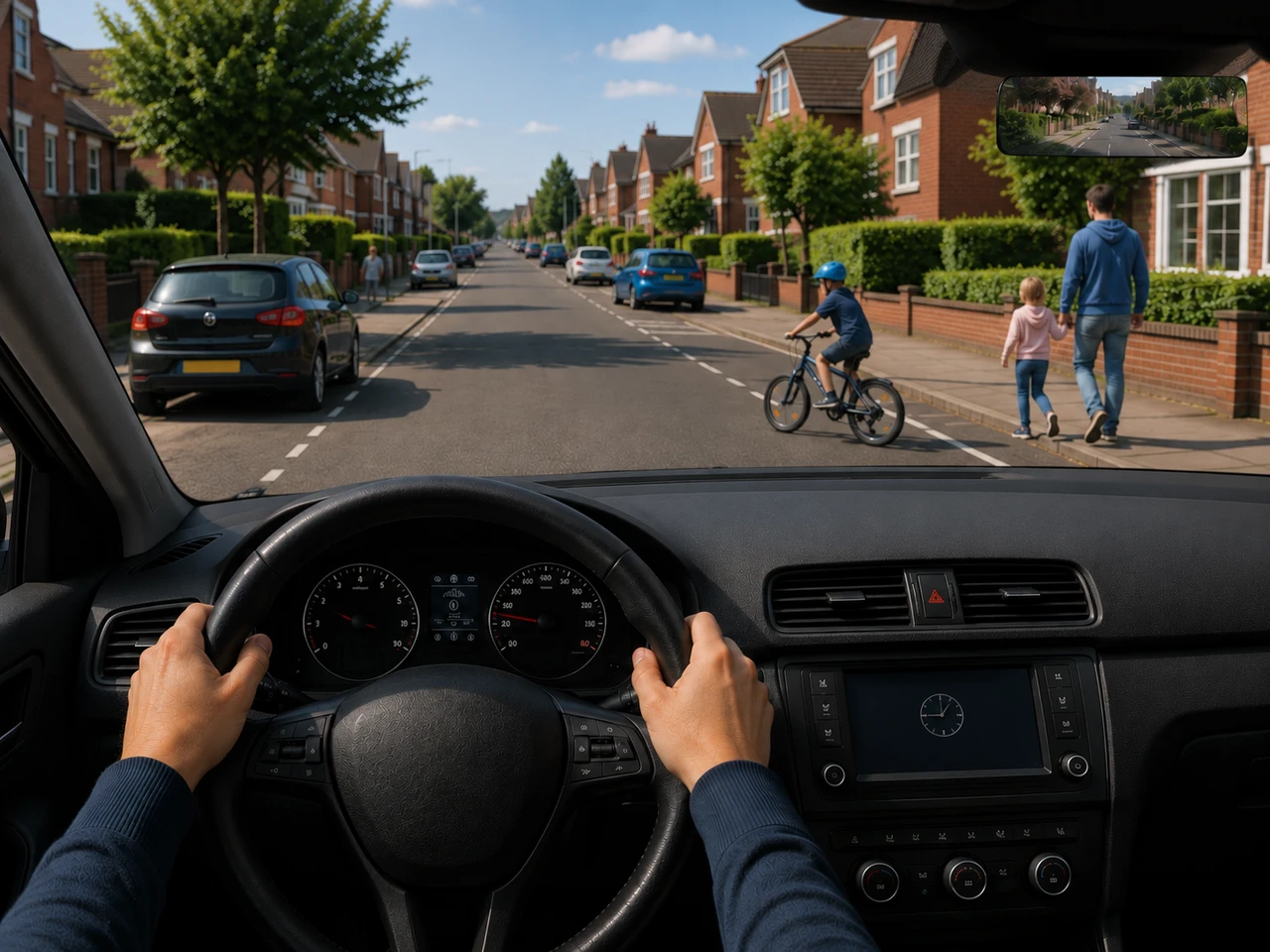
727. Why should you reduce speed in residential areas?
Residential areas often have pedestrians, cyclists, parked vehicles, driveways, and children, and hazards may appear suddenly. Lower speed gives you more time to react and stop safely.
Norway. In a signed residential shared street (gatetun), the maximum is walking pace. Expect pedestrians to use the street.
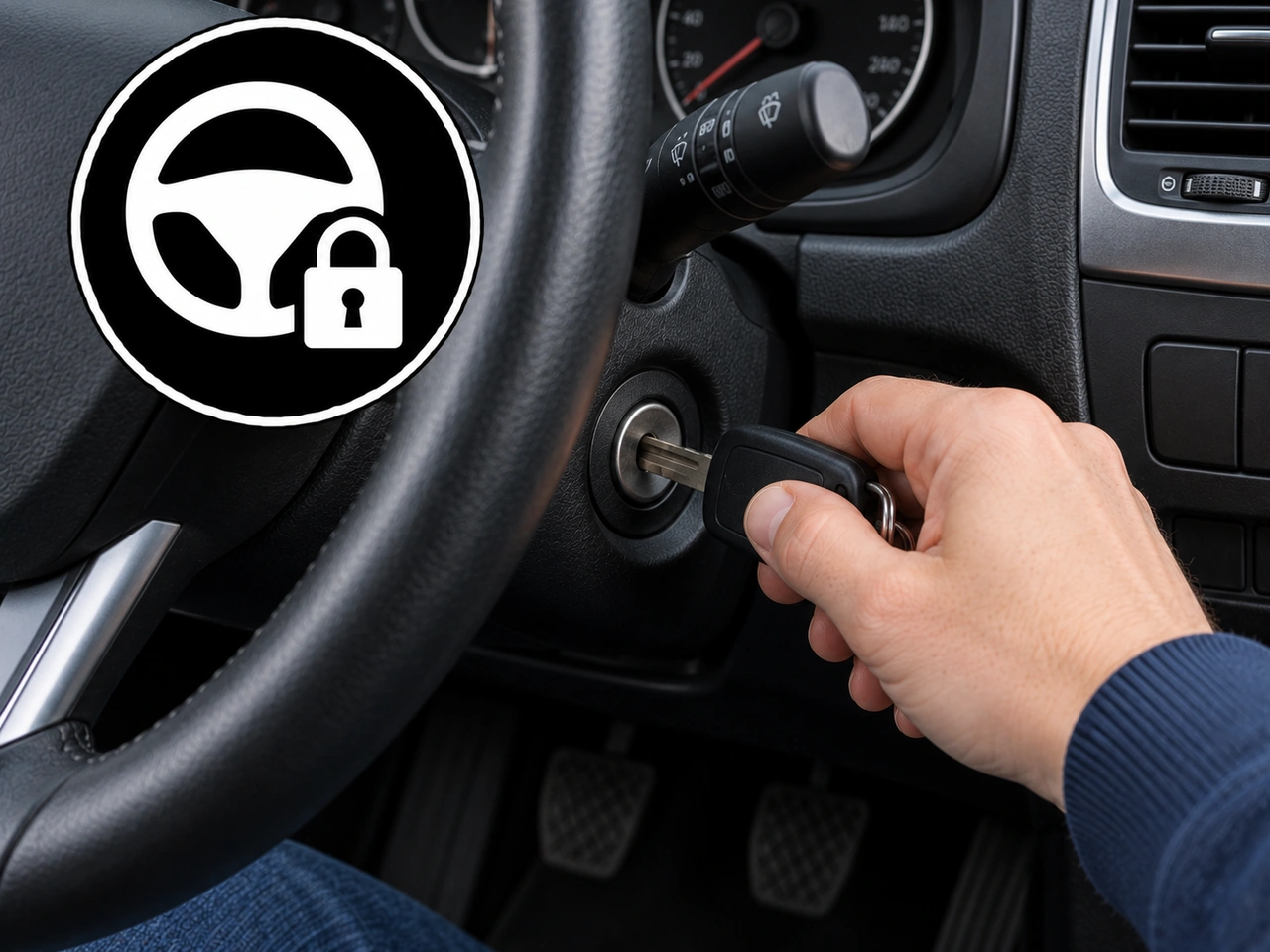
728. What may happen to the steering when the ignition key is removed?
On vehicles fitted with a steering lock, removing the ignition key may allow the steering lock to engage. Never remove the key while the vehicle is moving.
On some cars with a keyed ignition, the steering lock engages when the steering wheel is turned slightly after the key is removed. Check that the steering is unlocked before moving off.
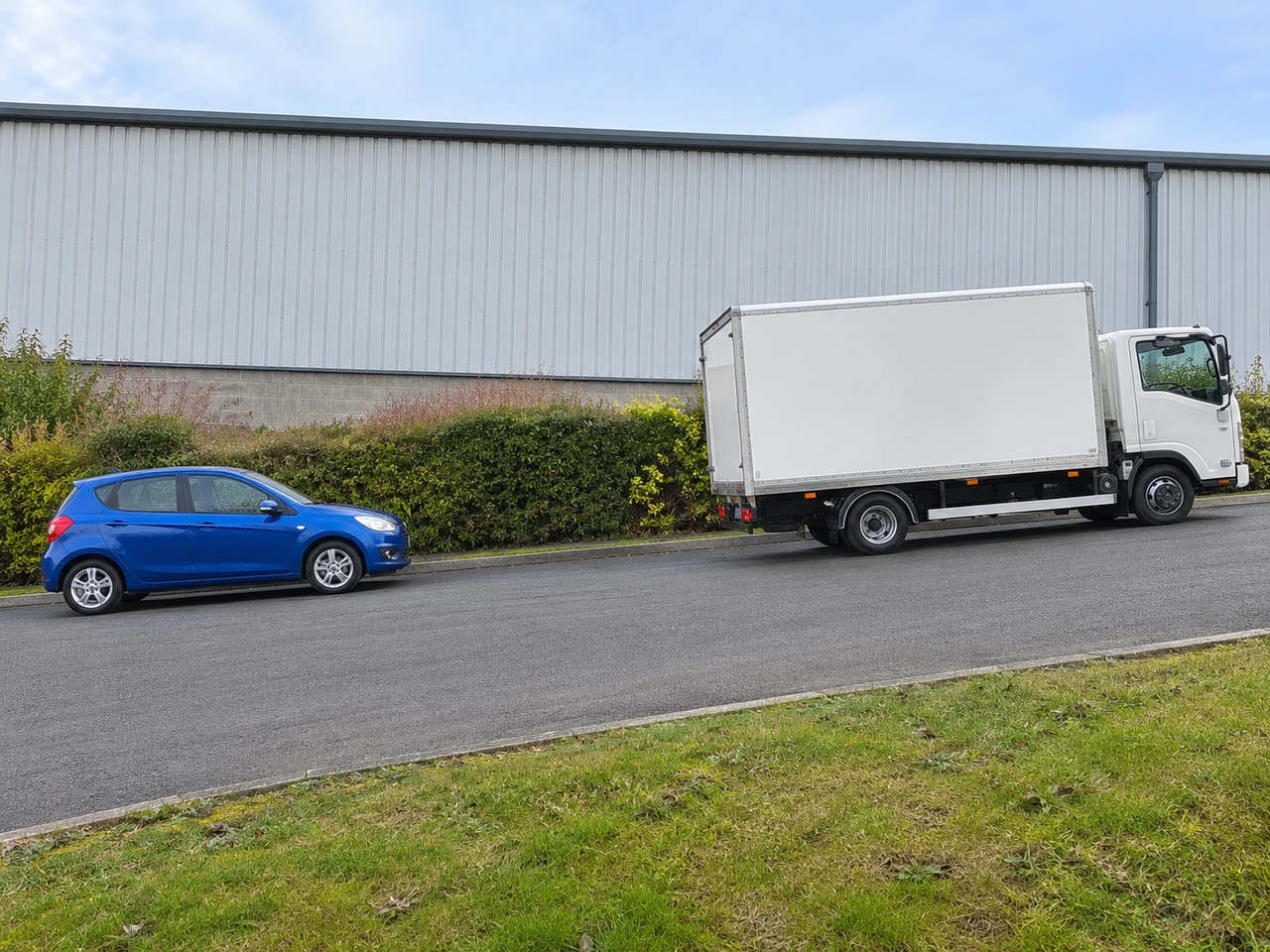
729. You should leave space when stopped behind a lorry on an uphill slope.
A lorry may roll backwards as it moves off uphill. Leave a safe gap rather than stopping close to its rear.
🔗 Sources
Virginia DMV (United States) • Safety guidance, Sharing the Road: rollback on inclines
Image credit: AI-generated
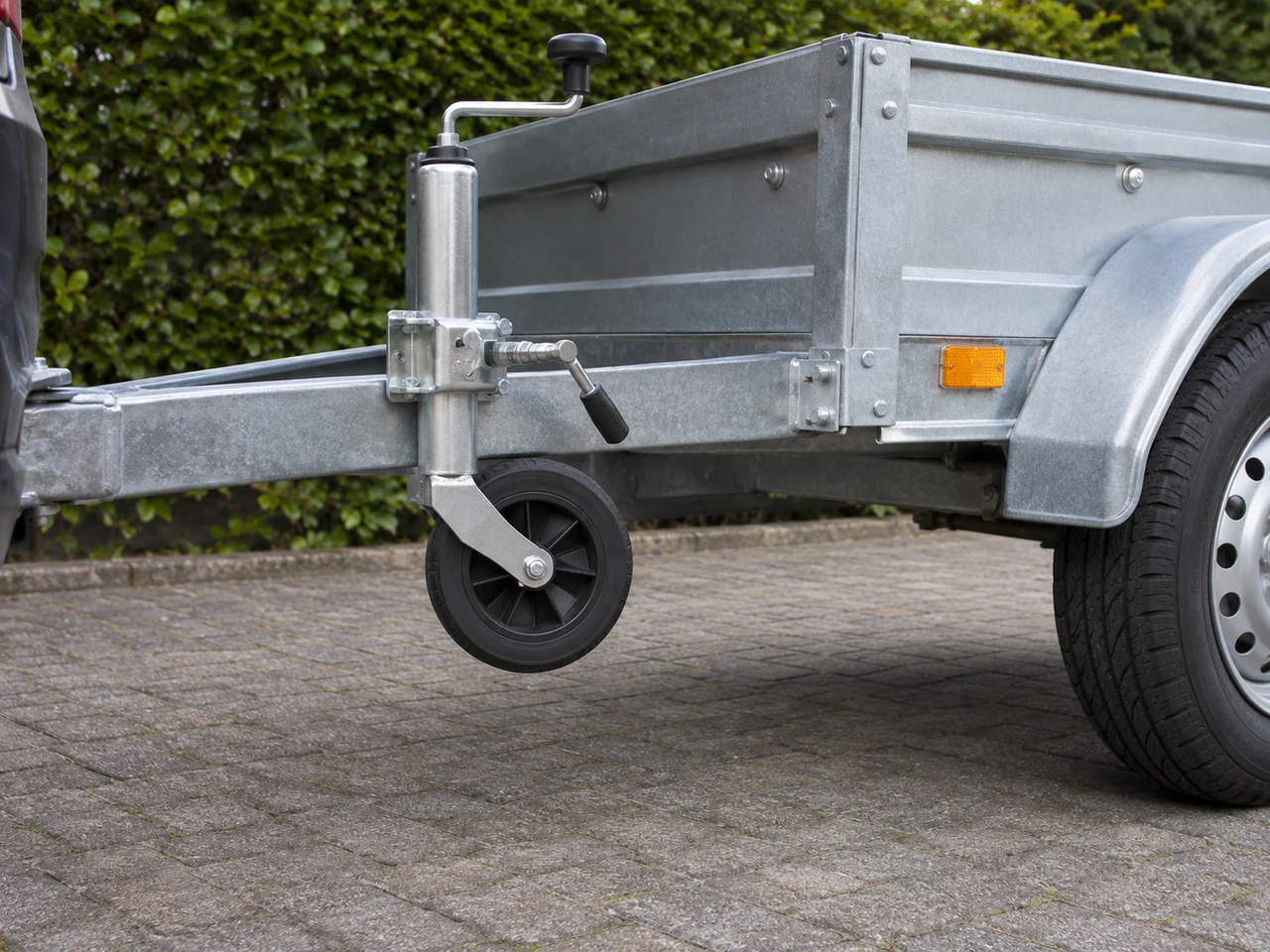
730. A trailer's jockey wheel can be left touching the road while towing.
Raise and secure the jockey wheel in its specified travelling position before towing. A wheel left down can strike the road or obstacles. Follow the trailer and jockey-wheel instructions for retraction and clamping.
🔗 Sources
National Trailer and Towing Association (Great Britain) • Safety guidance, pre-journey checks: jockey wheel and steadies secured
Image credit: AI-generated
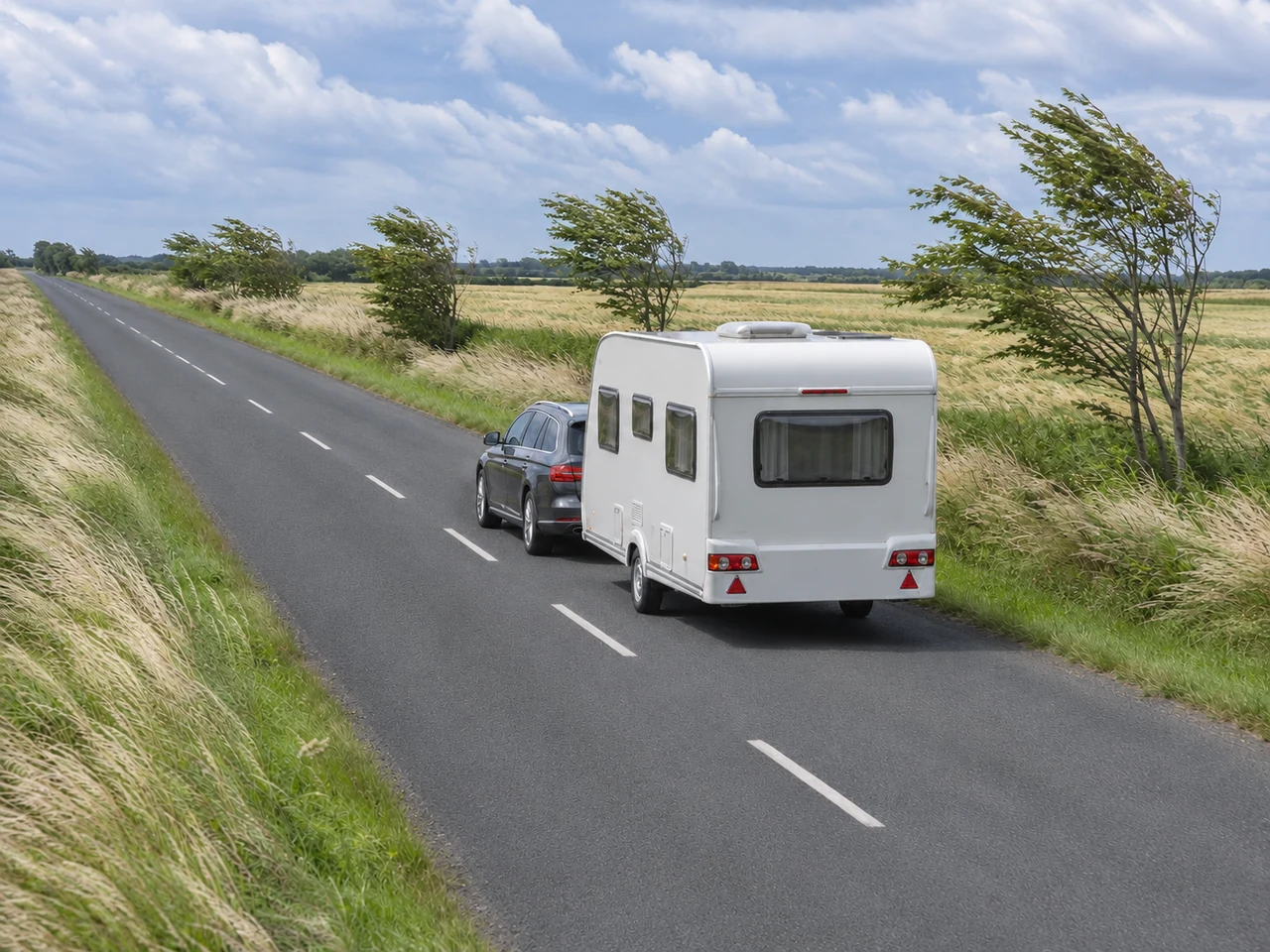
731. How can strong crosswinds affect a vehicle towing a trailer?
Trailers have large side surfaces and may be affected strongly by wind, especially on bridges and exposed roads.
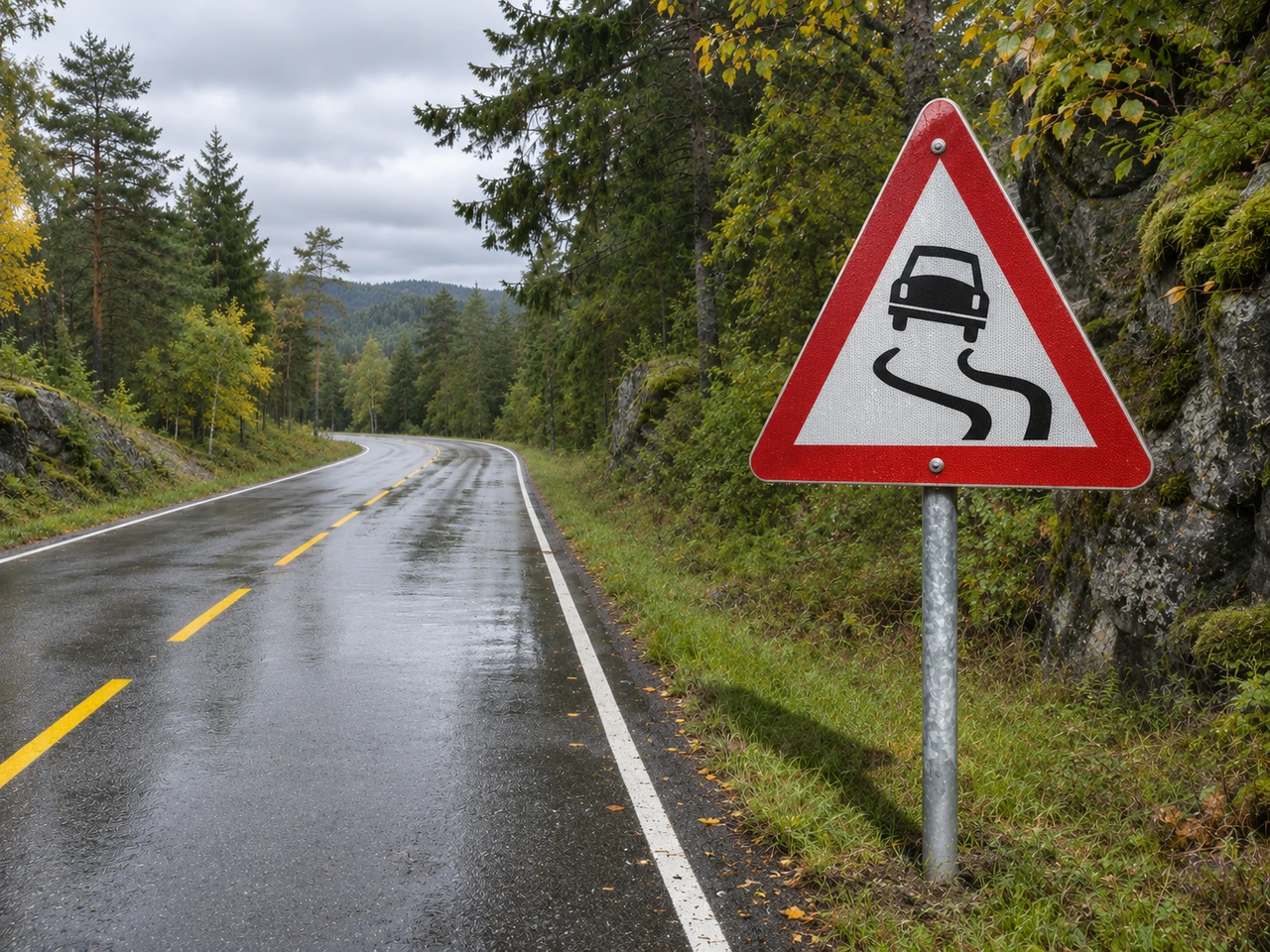
732. This triangular sign warns that the carriageway may be slippery.
The skidding-car symbol warns of a slippery carriageway. Adjust your speed and avoid sudden steering, braking or acceleration. The sign does not mean that skidding is unavoidable.
🔗 Sources
Norway • Skiltforskriften • Sign 116
Statens vegvesen • Official traffic-sign meanings
Statens vegvesen • Official sign artwork
Sign artwork: Statens vegvesen original EPS archive, Sign 116, file 116_0.eps. Native car and skid trails, orientation, border and proportions retained; resized and composited onto the existing same-entry scene. Border red follows the authority's published colour chart: PMS 179, using the published web swatch RGB 226/56/40. No third-party open licence is asserted for the government artwork.
Image credit: AI-generated background with source sign artwork resized and placed on the sign face.
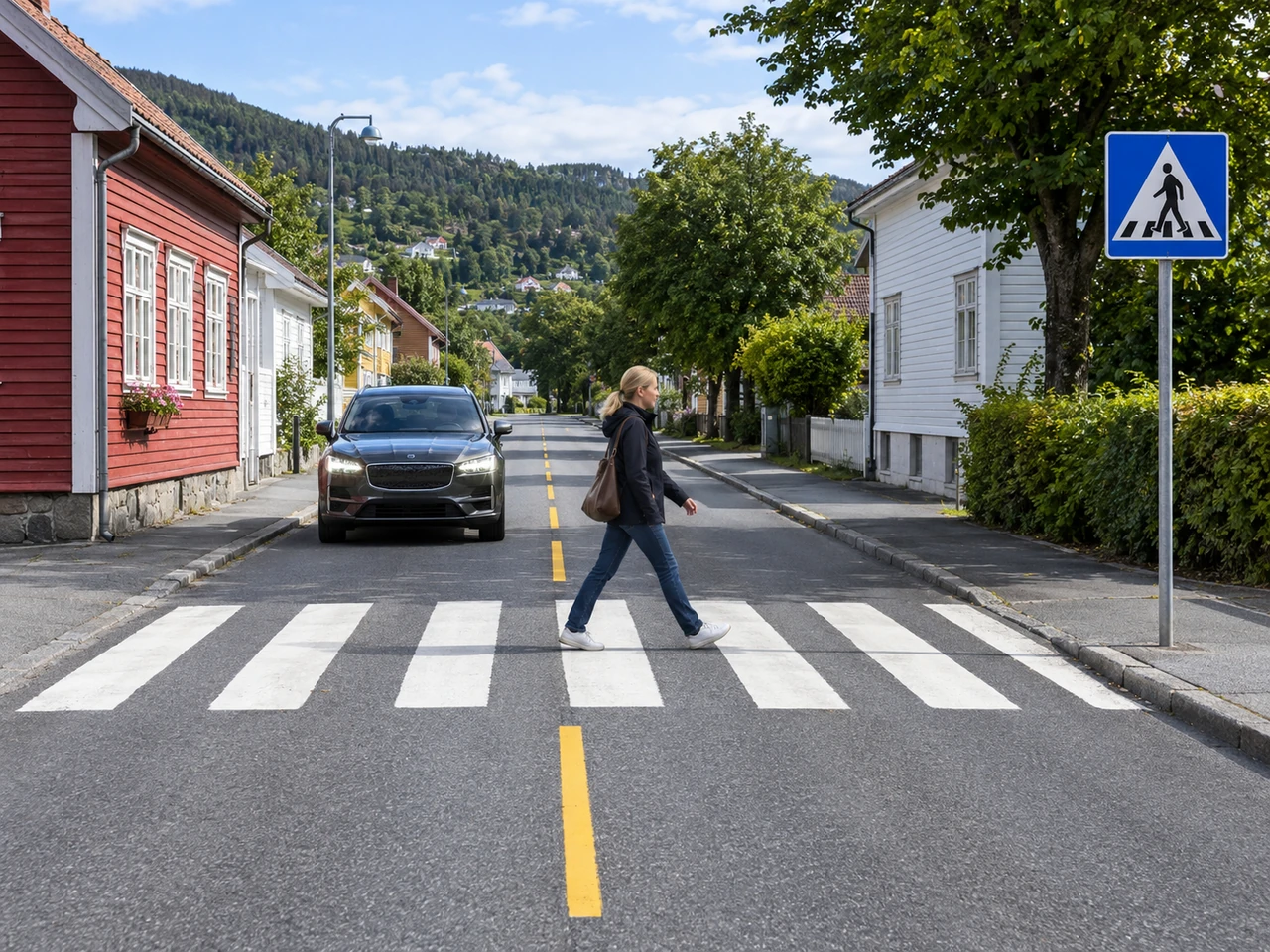
733. What is the purpose of a pedestrian crossing?
A pedestrian crossing provides a designated place to help people cross the road safely. Before entering, check all directions and every lane, and wait until traffic has stopped or the road is clear. Keep looking and listening while crossing. Follow any pedestrian signals and local rules; priority and crossing designs vary by country. A marked crossing does not remove the need to check traffic.
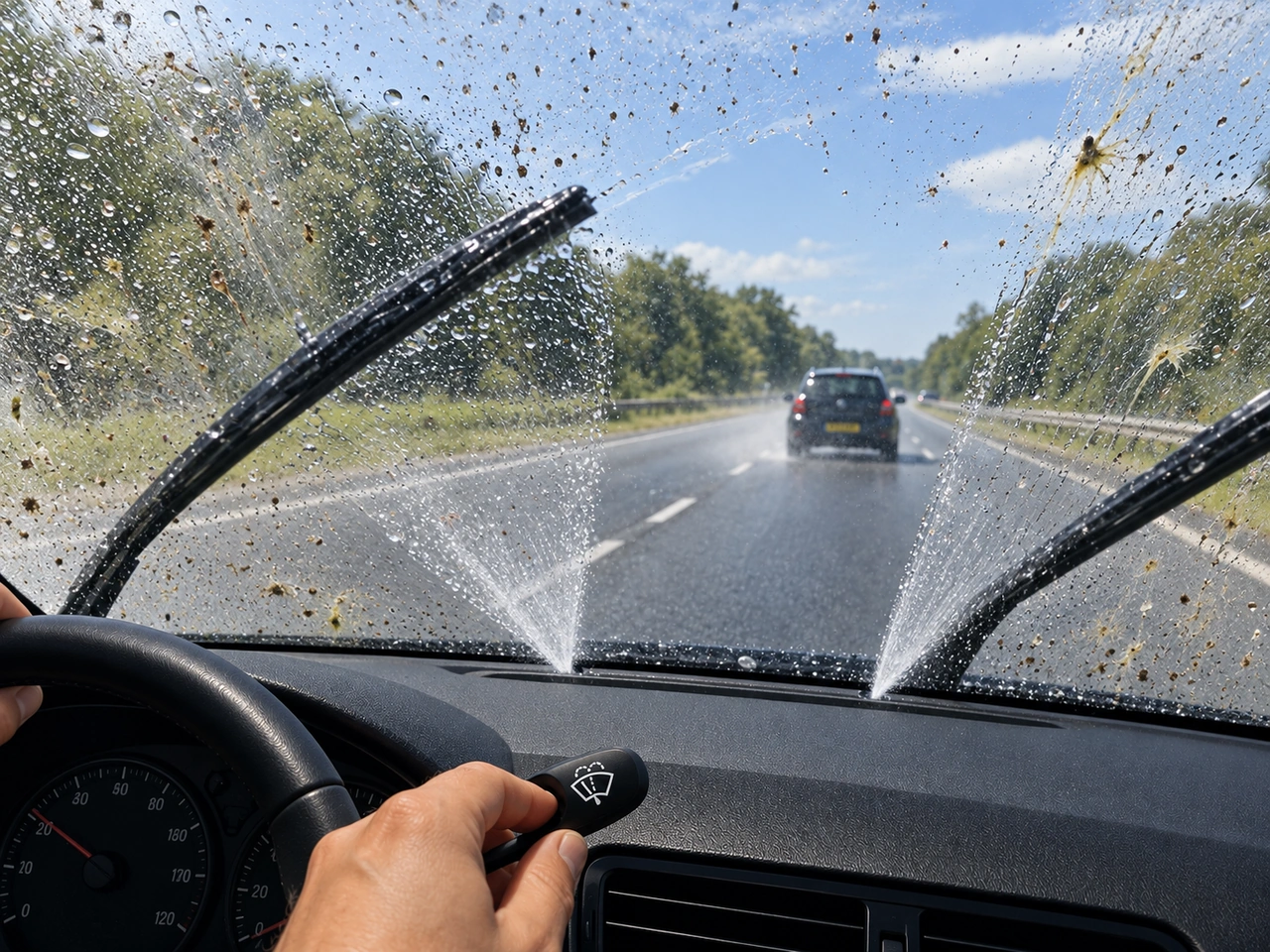
734. Why should the windscreen washer reservoir contain suitable washer fluid?
A clear windscreen is essential for safe observation. Suitable washer fluid helps clean the glass and may provide protection against freezing in cold conditions.
Norway. Use suitable screenwash so the washers can clear dirt from the glass. Follow the product instructions for cold weather.
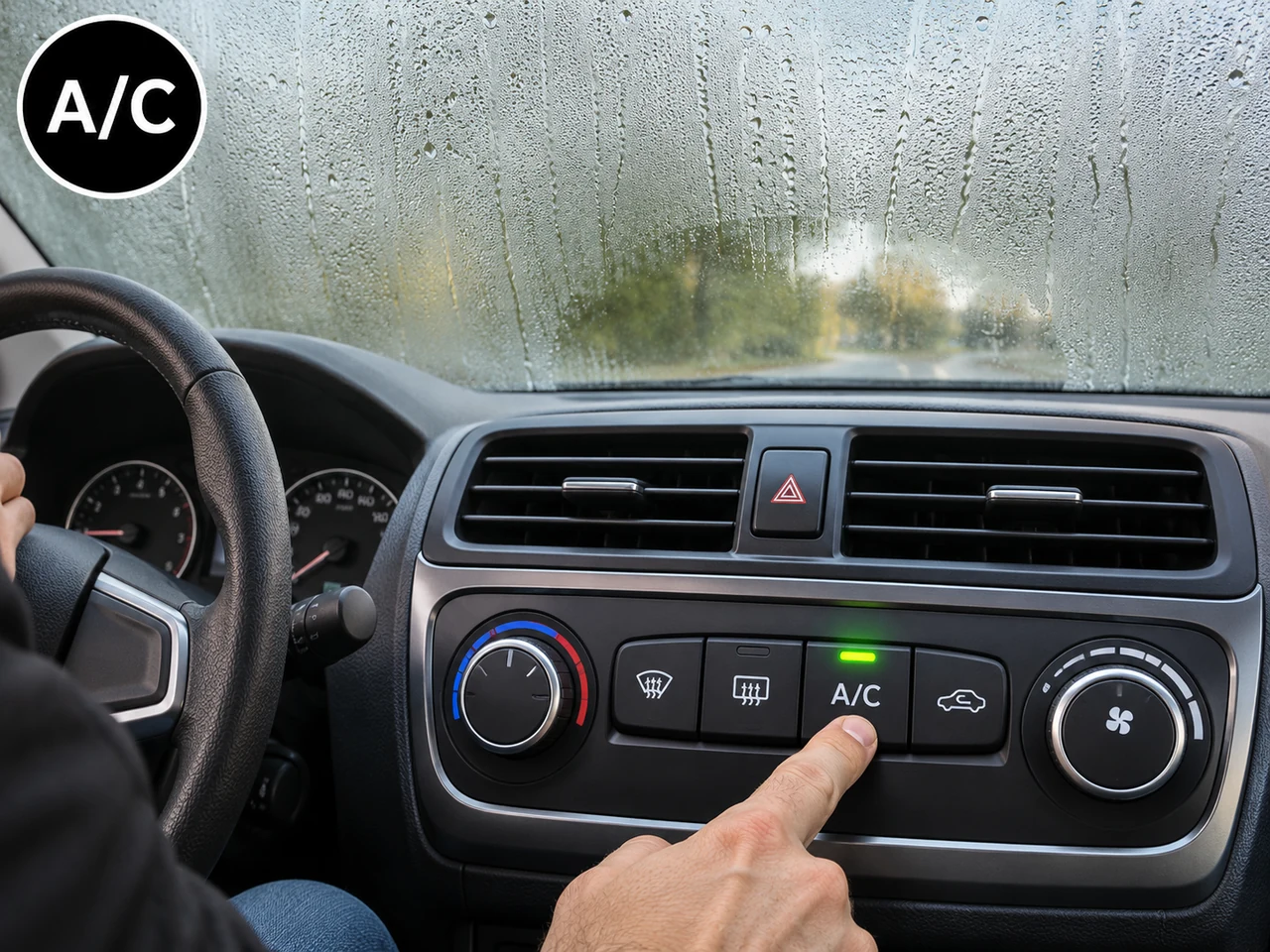
735. How can air conditioning help demist the windows?
Using the air conditioning can help demist the windows because it removes moisture from the cabin air. Directing this drier air towards the windscreen can clear condensation more quickly.
Direct the airflow towards the windscreen and use the air conditioning to remove moisture from the air.
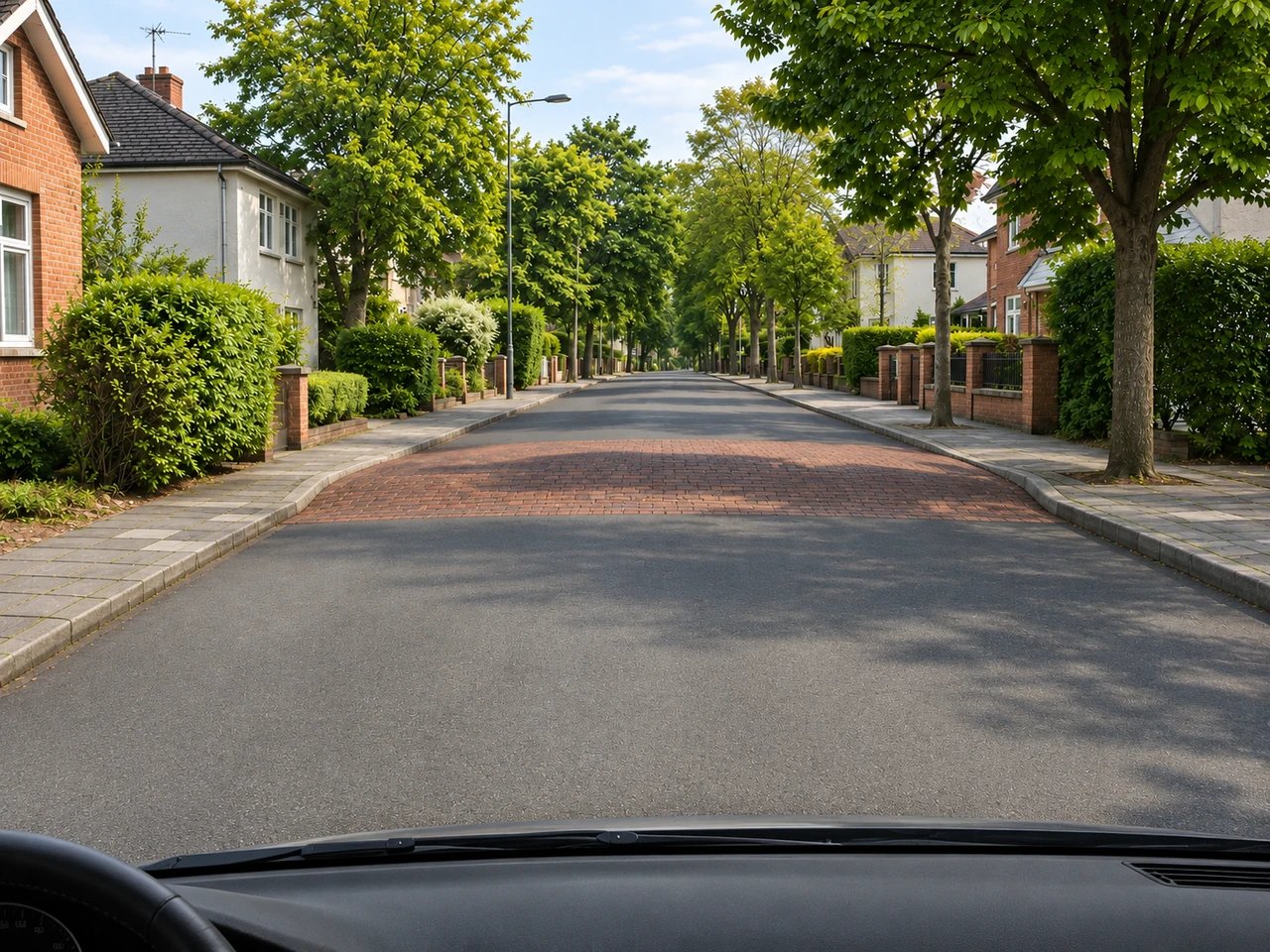
736. When should you reduce speed for a speed hump?
Approach a speed hump slowly enough to cross it safely and smoothly. A posted limit is not a target speed. Maintain a suitable reduced speed through traffic-calming areas and leave room for cyclists and motorcyclists.
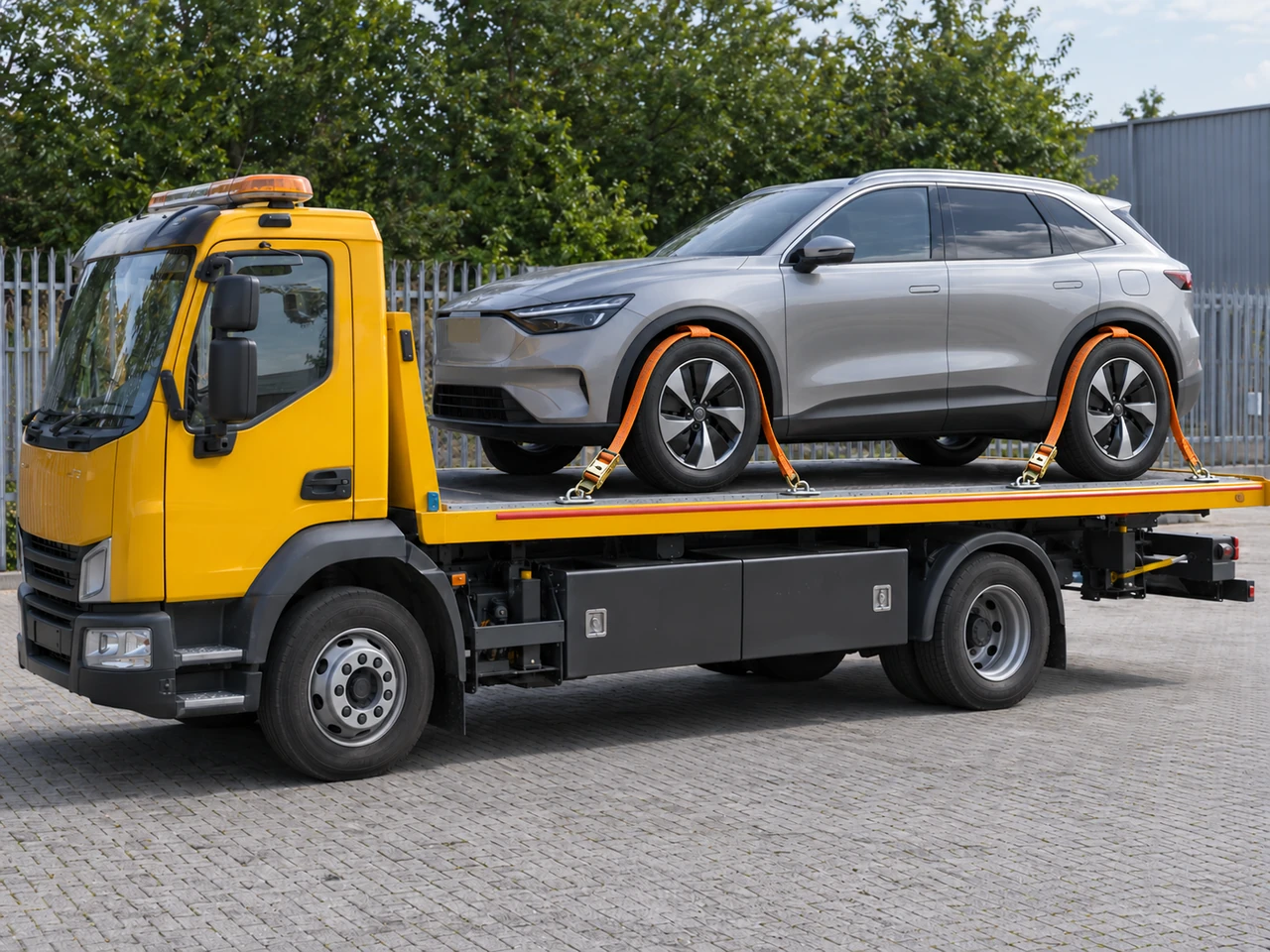
737. Every electric car can be towed with all four wheels rolling on the road.
Towing with the drive wheels turning can damage some electric cars or generate dangerous voltages. The permitted method varies by model. Tell the recovery operator it is an electric car and follow the manufacturer's instructions.
🔗 Sources
HSE (Great Britain) • Safety guidance, vehicle recovery: drive-wheel rotation and dangerous voltages; manufacturer-specific methods
Image credit: AI-generated
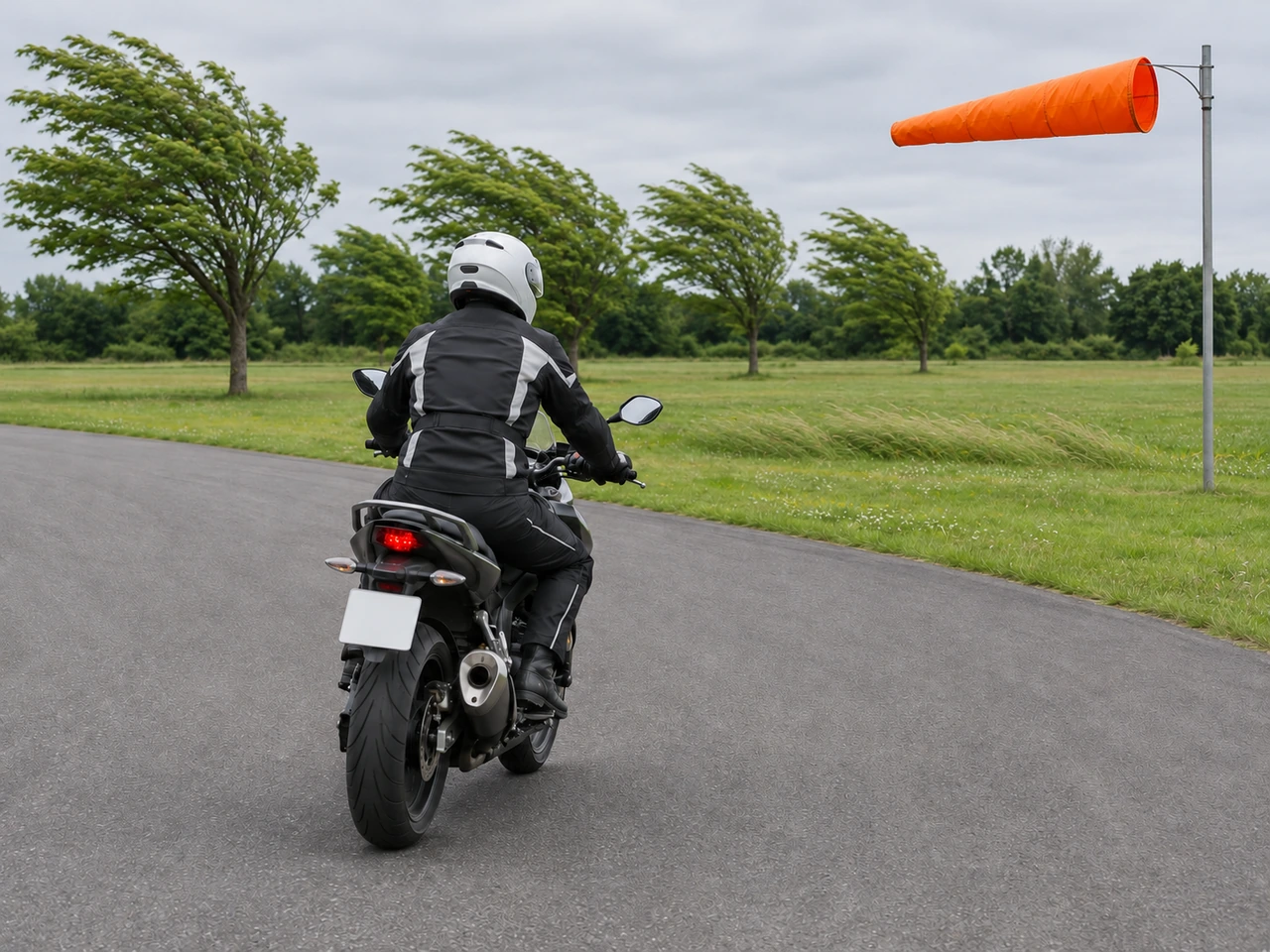
738. What should a motorcyclist do in strong crosswinds?
Strong crosswinds can push a motorcycle sideways and sudden gusts can affect its stability. Reduce speed, keep a steady grip on the handlebars and allow extra space, especially on exposed roads, bridges, or when passing gaps and large vehicles.
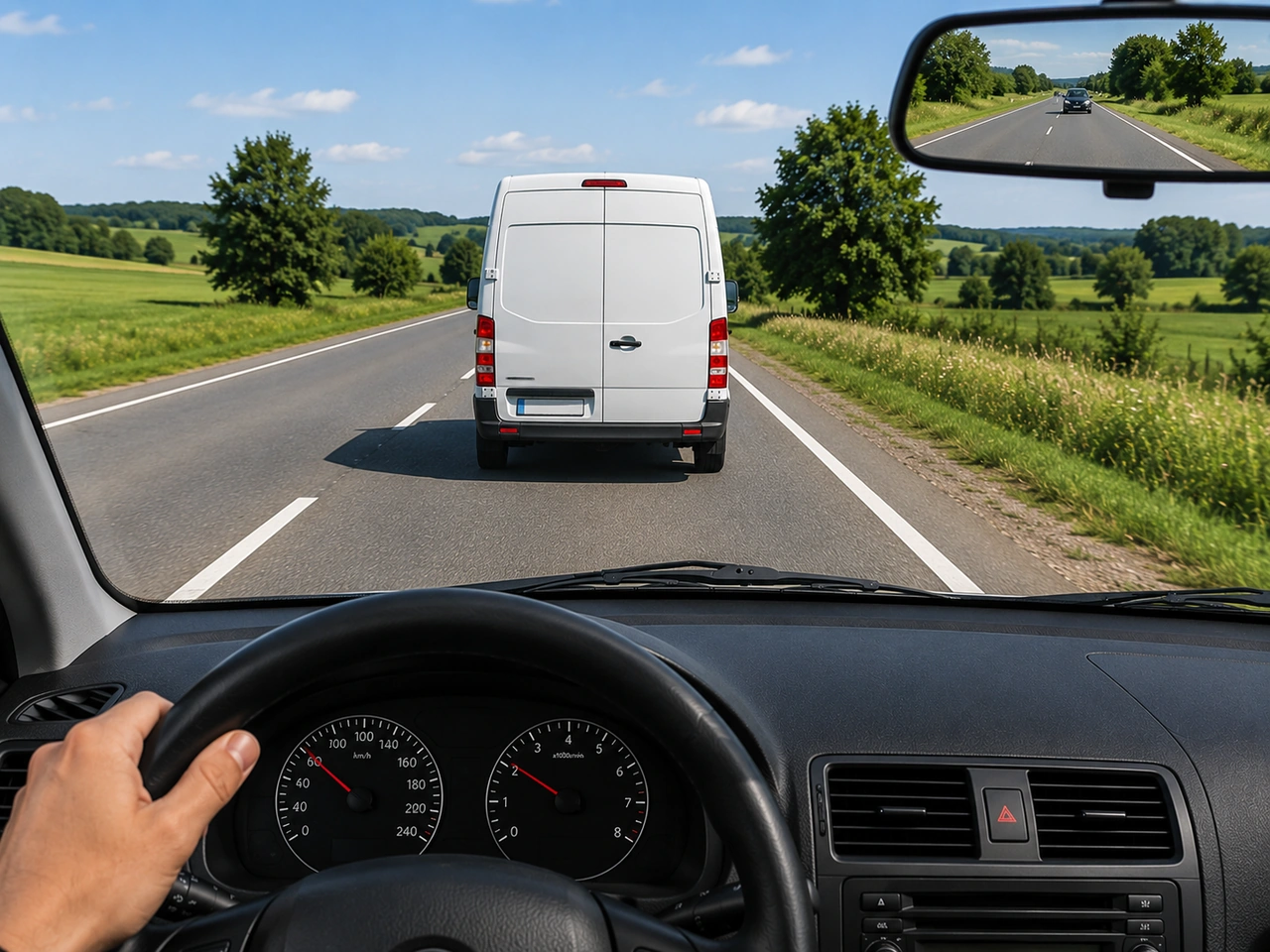
739. What is the main risk when following a vehicle with limited rear visibility?
Vans, trucks, and vehicles with blocked rear windows may have limited visibility. Keep extra distance and avoid sitting in blind spots.
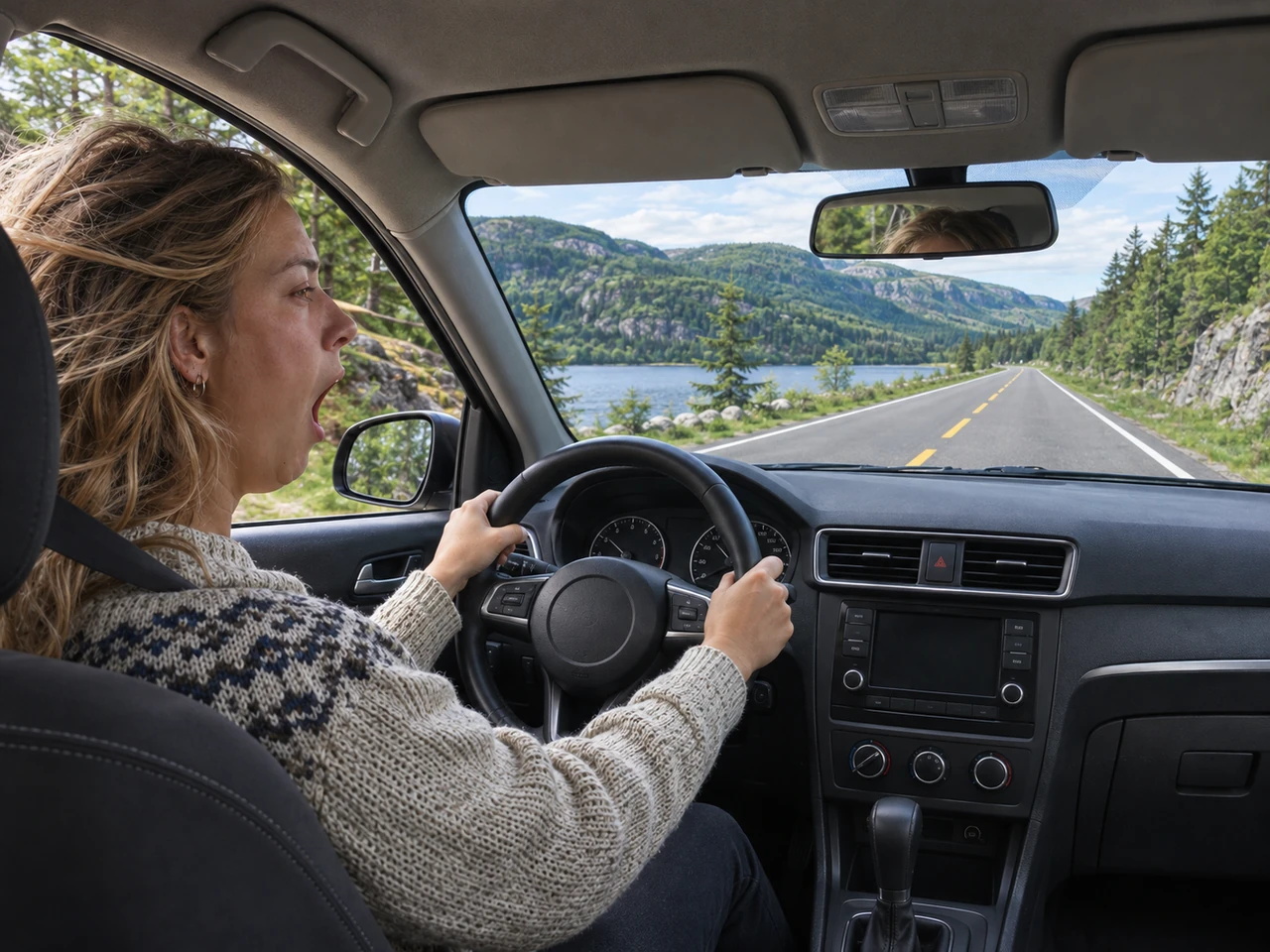
740. Opening a window makes it safe to keep driving when you feel sleepy.
Fresh air may make you feel more alert briefly, but it does not cure sleepiness. Stop at a suitable safe place and rest. Do not continue until you are fit to drive.
🔗 Sources
Image credit: AI-generated
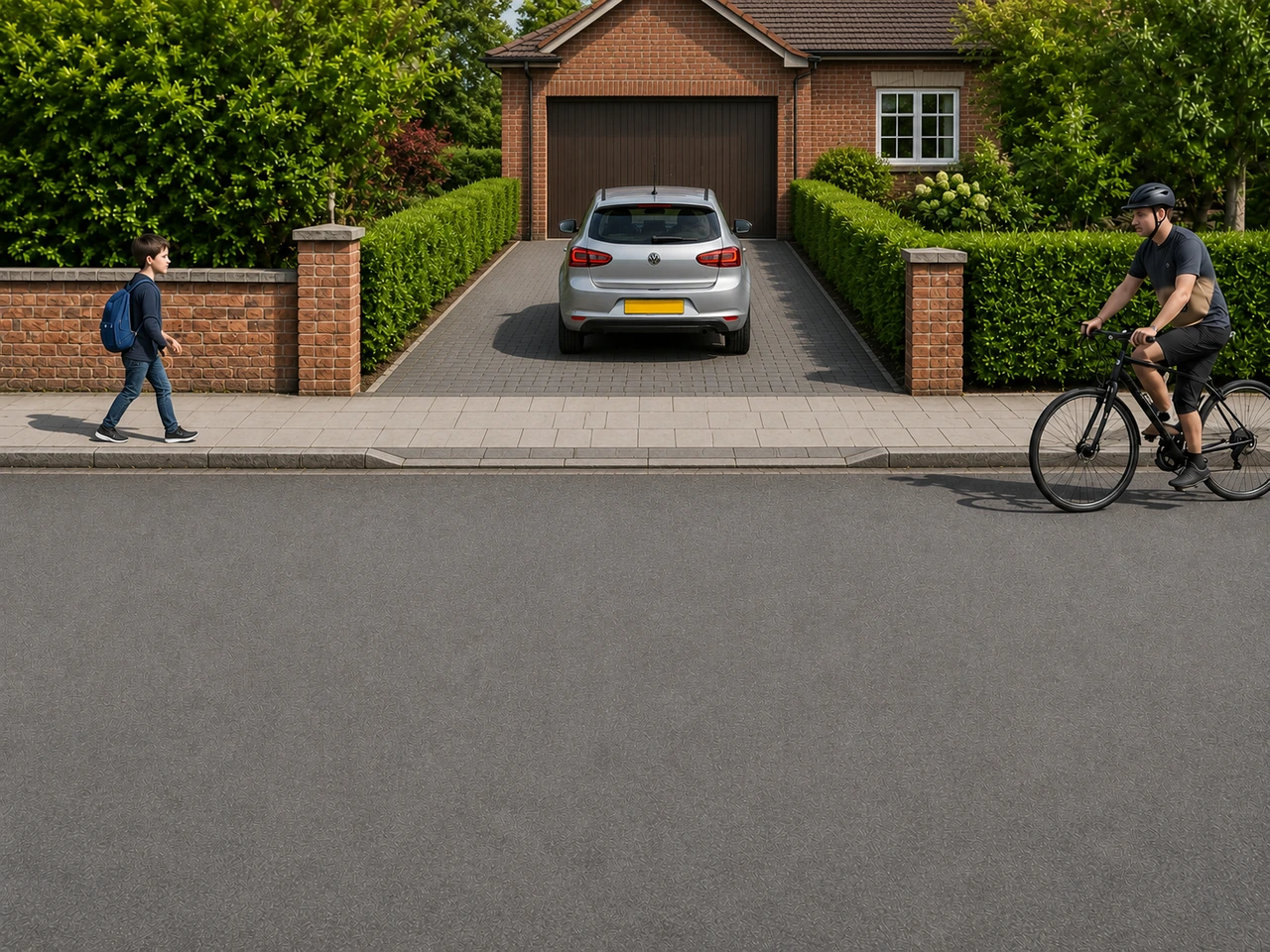
741. What should you do before reversing your vehicle?
Before reversing, check all around the vehicle, including blind spots, for pedestrians, cyclists, vehicles, and other hazards. Reverse slowly and keep checking as you move.
Norway. Give way to other road users. If you cannot see enough behind you, have someone watch for you or check personally that you can reverse without danger or damage.
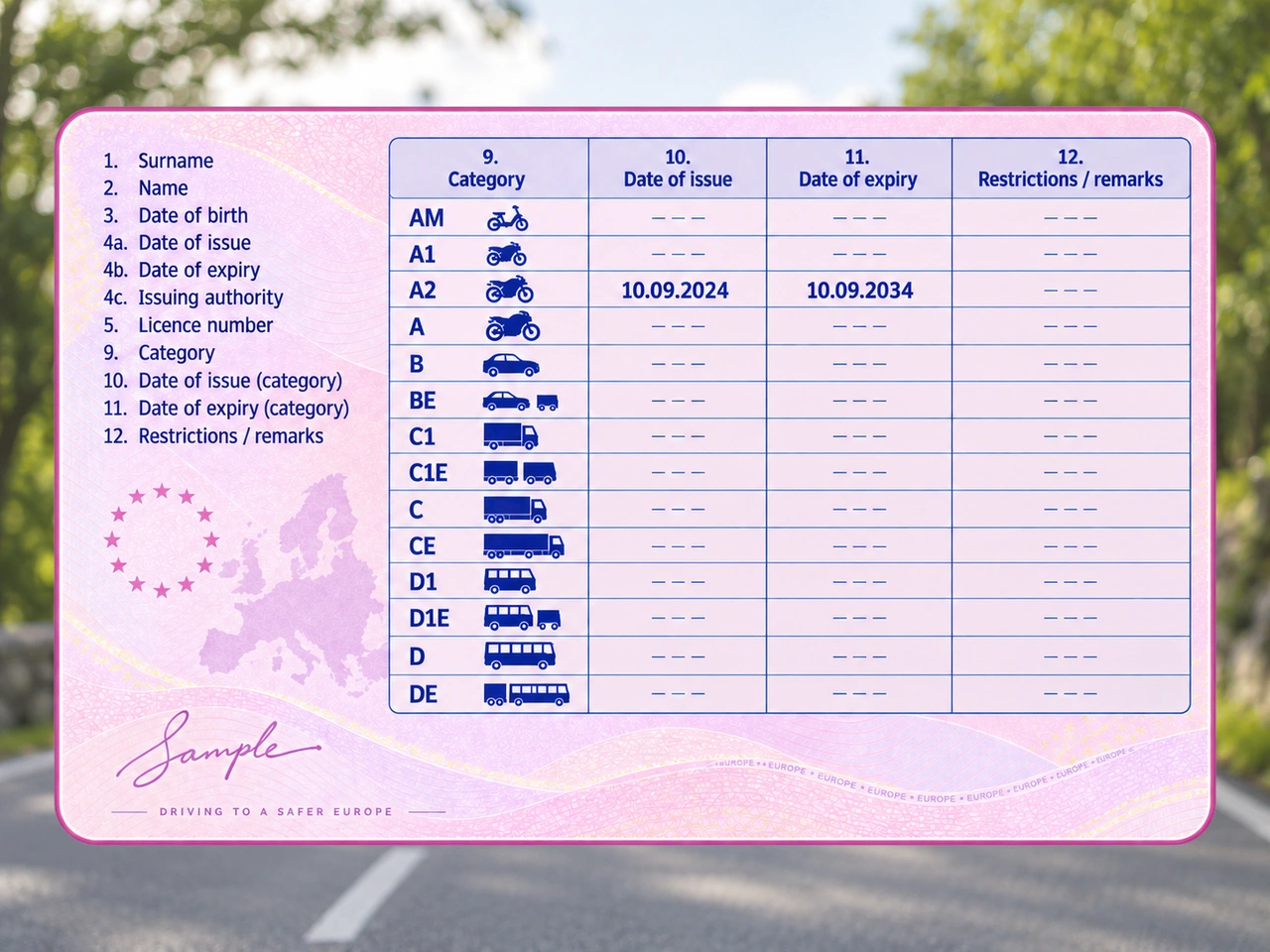
742. Which motorcycles are covered by driving licence A2?
Category A2 covers motorcycles with power not exceeding 35 kW and a power-to-weight ratio not exceeding 0.2 kW/kg. The motorcycle must not be derived from a vehicle with more than double its power.
Norway. The minimum age to obtain category A2 is 18.
🔗 Sources
Statens vegvesen · Hva kan du kjøre med førerkort klasse A2?
EUR-Lex · Directive 2006/126/EC on driving licences · Article 4(3)(b)
Image credit: AI-generated
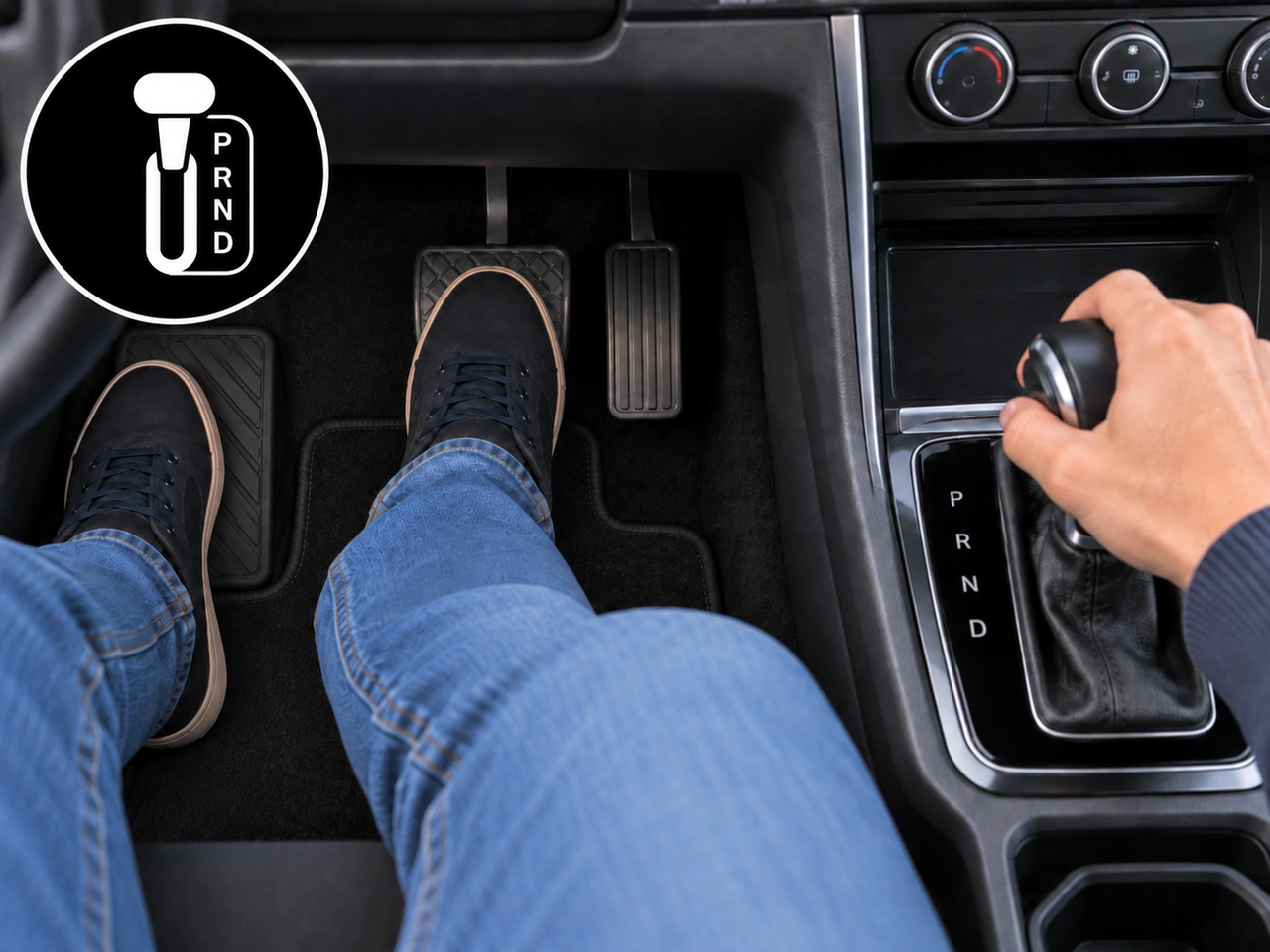
743. What should you normally do before selecting D or R in an automatic vehicle?
Before selecting D (Drive) or R (Reverse), keep the brake pedal pressed to prevent the vehicle from moving unexpectedly when the gear is engaged.
Keep the foot brake pressed while selecting Drive or Reverse. Stop completely before changing into or out of Reverse.
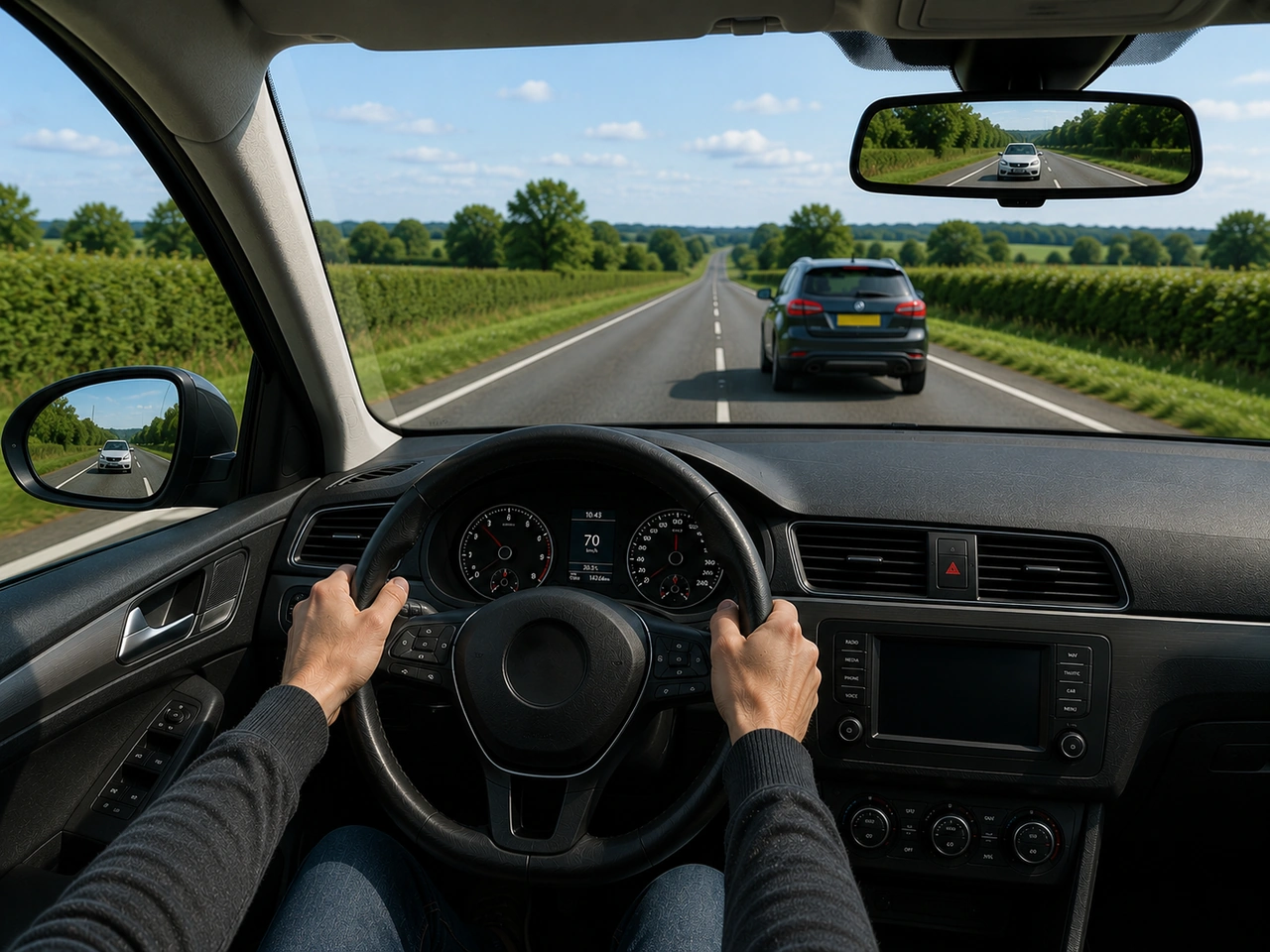
744. What should you do before overtaking another vehicle?
Before overtaking, check the road, mirrors, blind spots, signs, and markings, use your indicator, and only overtake when it is safe and permitted.
Norway. Check that the road is clear far enough ahead and that you can return without disrupting traffic. Wait if the driver ahead has signalled an overtake or a driver behind has already begun one.
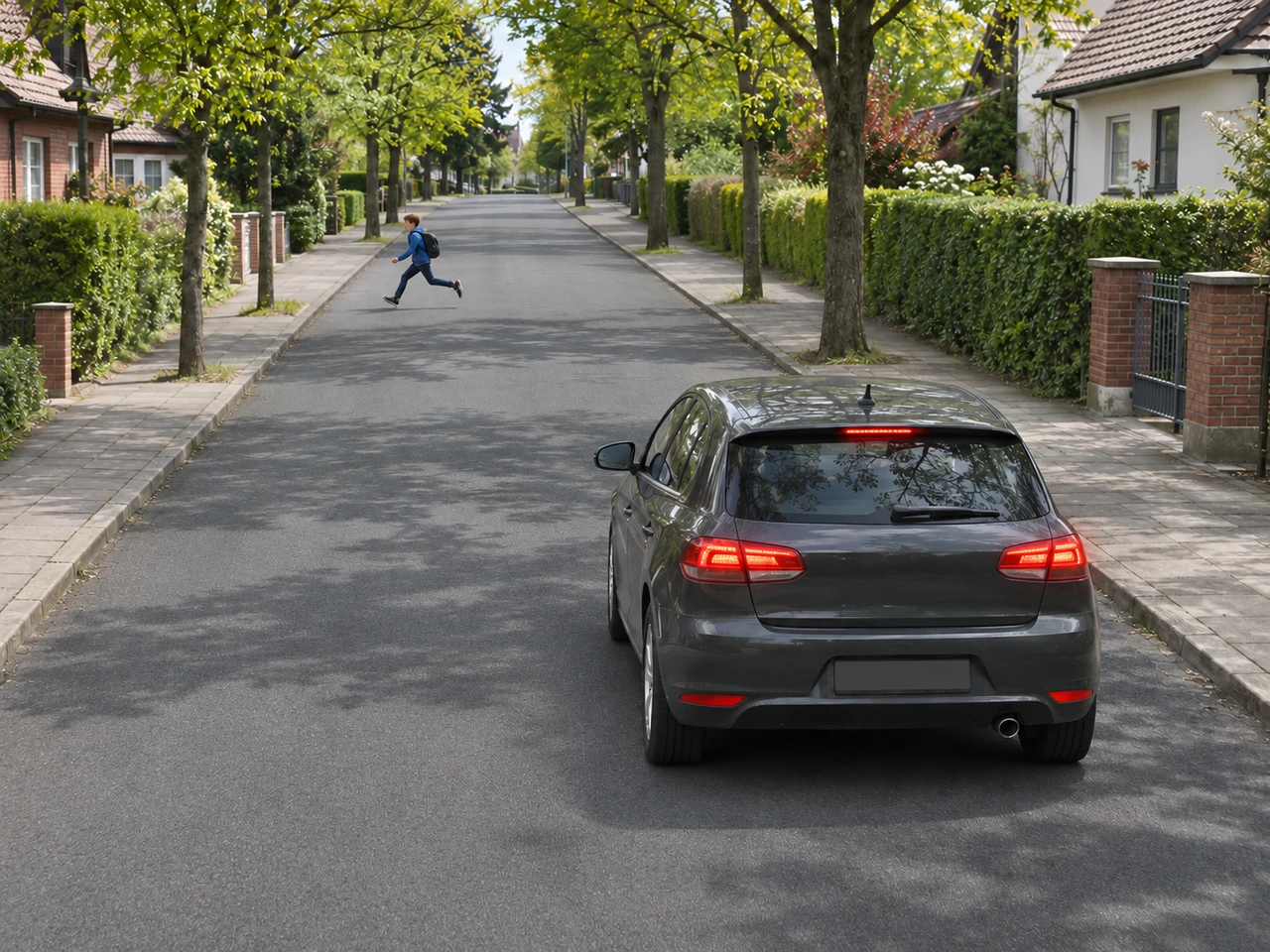
745. What should you do if a child runs onto the road ahead?
Children can act unpredictably. Brake firmly, stay alert, and be prepared for more children to follow.
🔗 Sources
UK Highway Code — General safety guidance around children: Rules 205–206
UK Highway Code — Emergency braking and control: Rules 118–120
Image credit: AI-generated
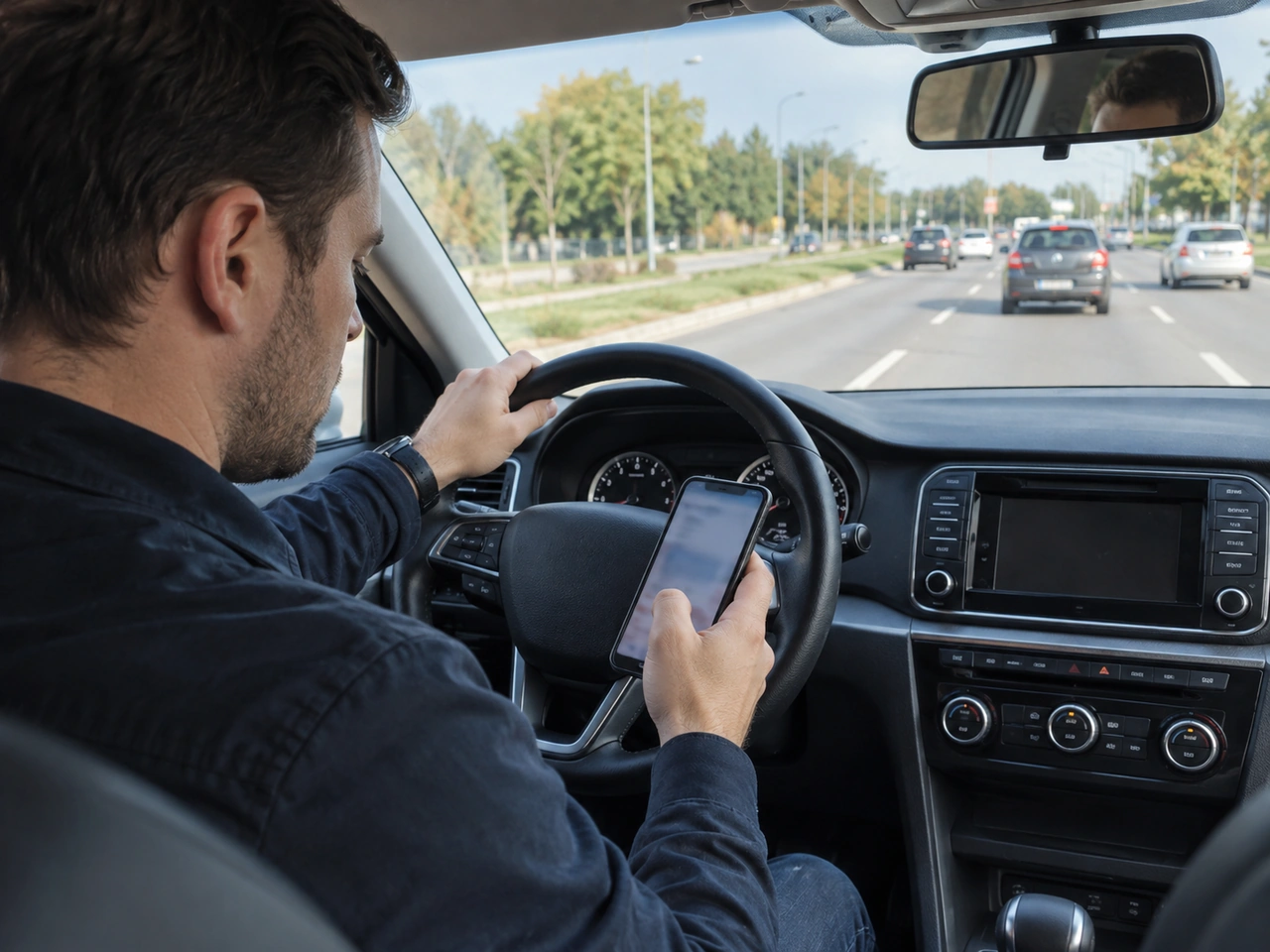
746. Why should you avoid using a phone while driving?
Using a phone while driving reduces attention, reaction time, and control of the vehicle. A hands-free system may reduce the need to handle the phone, but the conversation itself can still be distracting.
Norway. Do not use a hand-held phone while driving. The rules allow you to make, answer or end a call using a hands-free system or a phone secured in a holder.
🔗 Sources
Norwegian Public Roads Administration, using a mobile phone while driving
Image credit: AI-generated
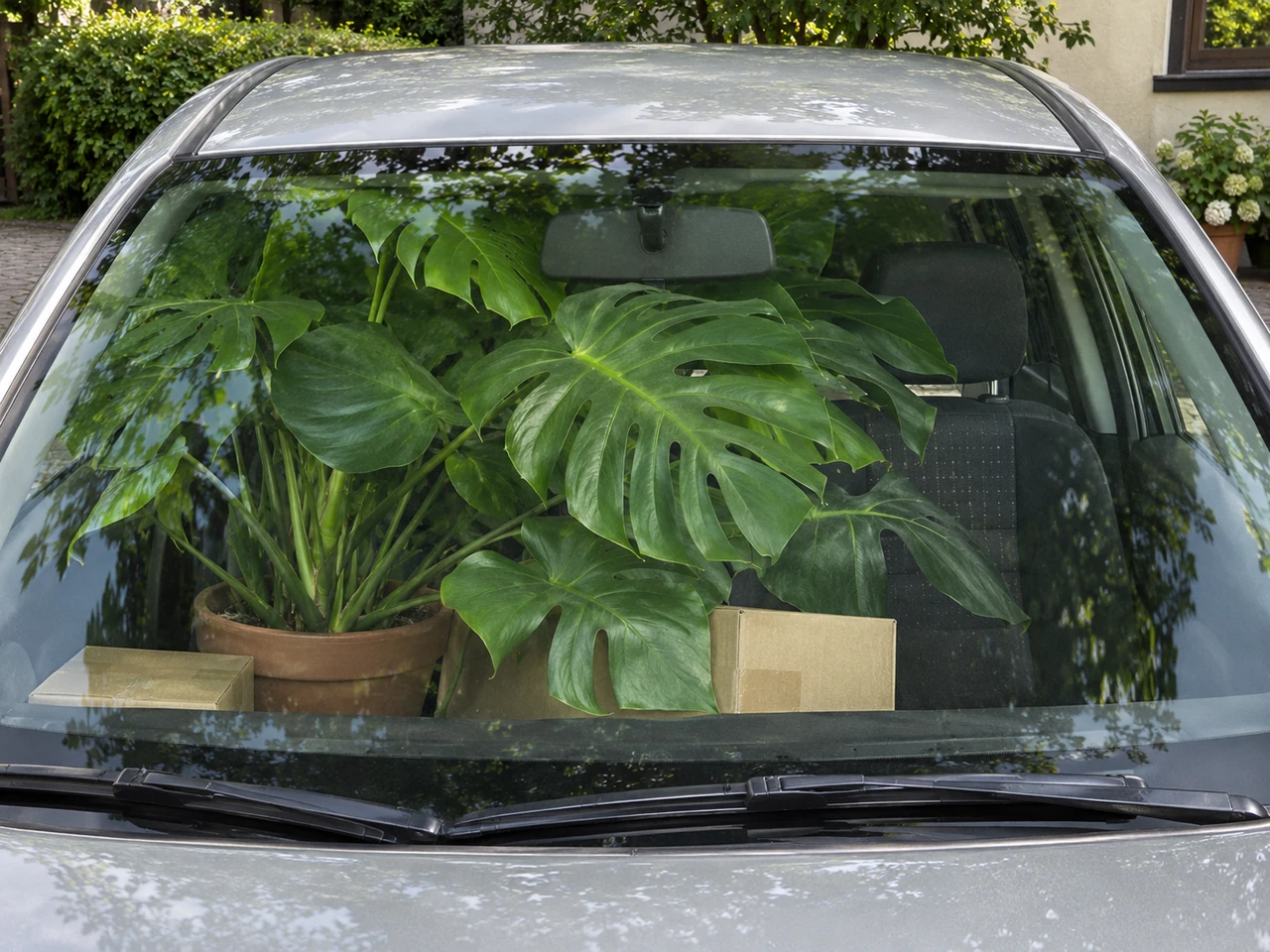
747. A load may block the driver's forward view if the mirrors still provide a clear view.
The load must be arranged so that it cannot obstruct the driver's visibility under normal road conditions. A clear view in the mirrors does not compensate for a load blocking the forward view. Reposition and secure the load before driving.
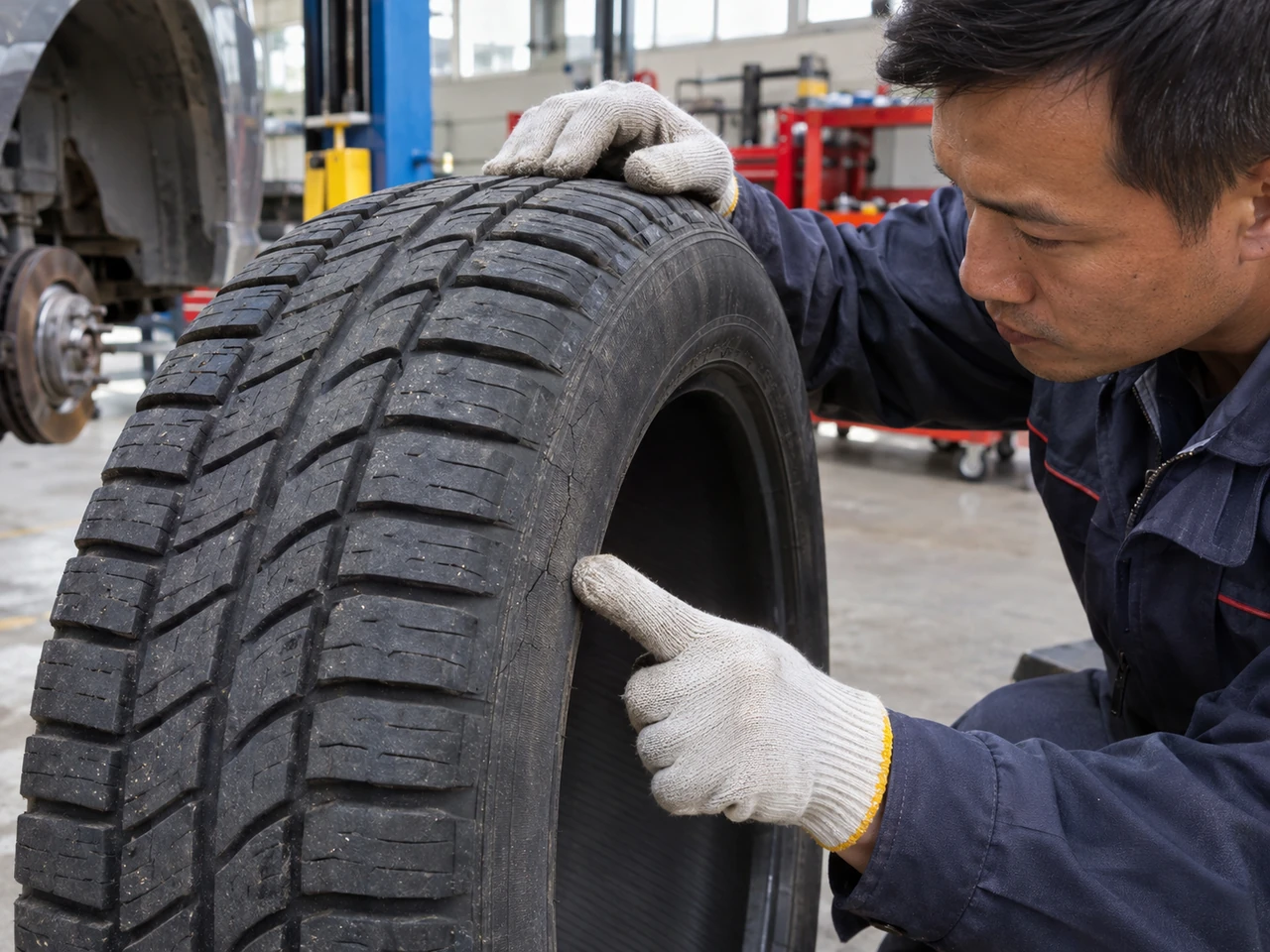
748. Deep tread guarantees that an old tyre is still safe.
Tyres can deteriorate with age even when the tread is deep. Follow the vehicle and tyre manufacturers' advice and have ageing or damaged tyres checked by a professional.
🔗 Sources
NHTSA (United States) • Safety guidance, tyre ageing and manufacturer replacement advice
Image credit: AI-generated
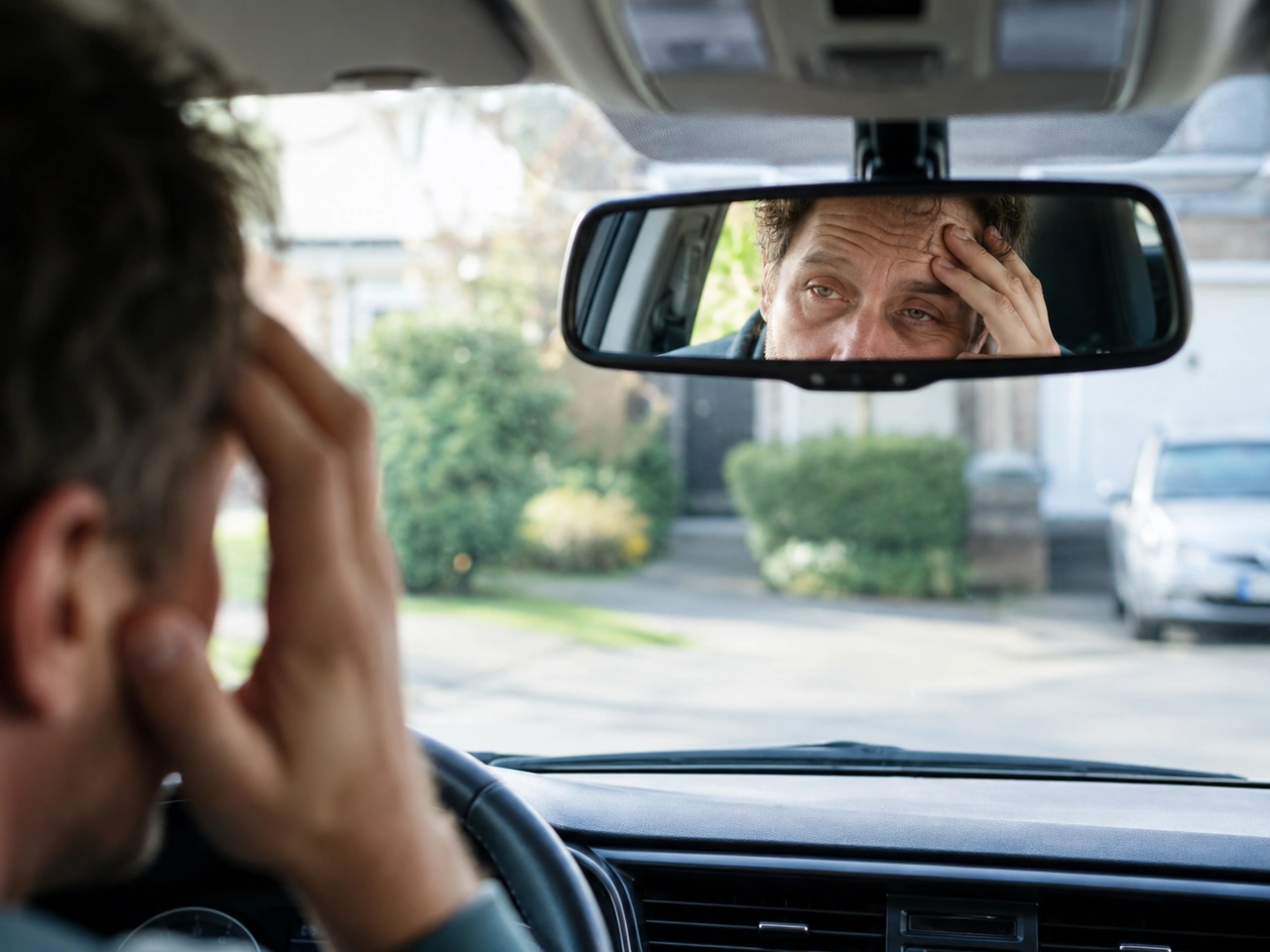
749. Can you assume that you are safe to drive the morning after drinking?
The body needs time to process alcohol. Sleeping, eating, showering, or drinking coffee does not instantly remove it.
Norway. Alcohol can remain in the blood the morning after drinking. If you are unsure whether you are fit to drive, leave the car parked and use another way to travel.
🔗 Sources
Oslo universitetssykehus · Alkoholpromille – eksempler på beregning
Trygg Trafikk · Slik påvirker rus deg i trafikken
Image credit: AI-generated
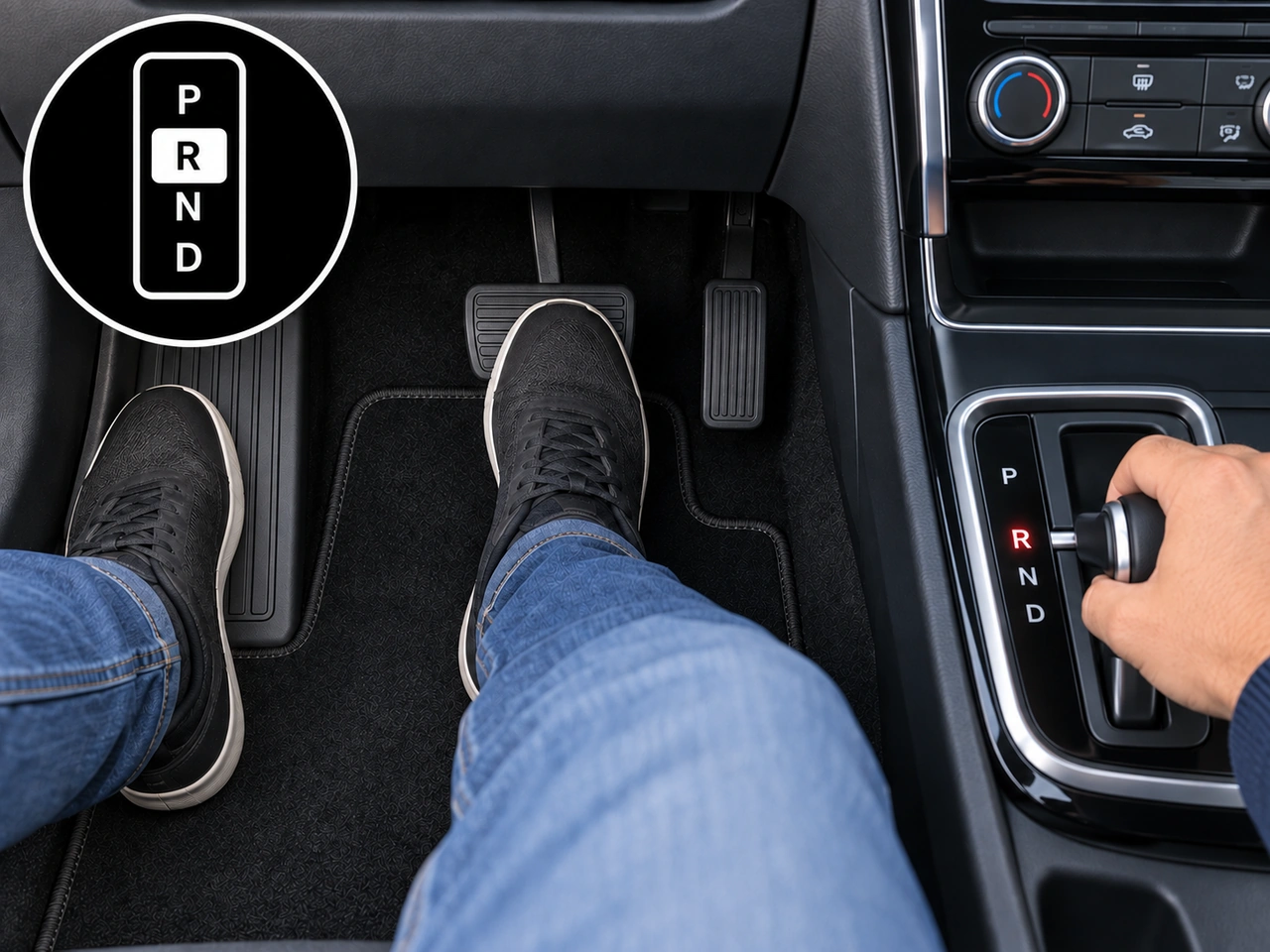
750. When should you select R (Reverse) in an automatic vehicle?
Select R (Reverse) only after the vehicle has come to a complete stop. Selecting Reverse while the vehicle is still moving forward can damage the transmission.
Bring the car to a complete stop with the foot brake before shifting into or out of Reverse.