


QuizTraffic rulesNorway
Test your knowledge with our multiple-choice quiz. Learn from each answer and improve your understanding of the traffic rules and road signs of Norway.
 Traffic signs
 Traffic rules
 Norway
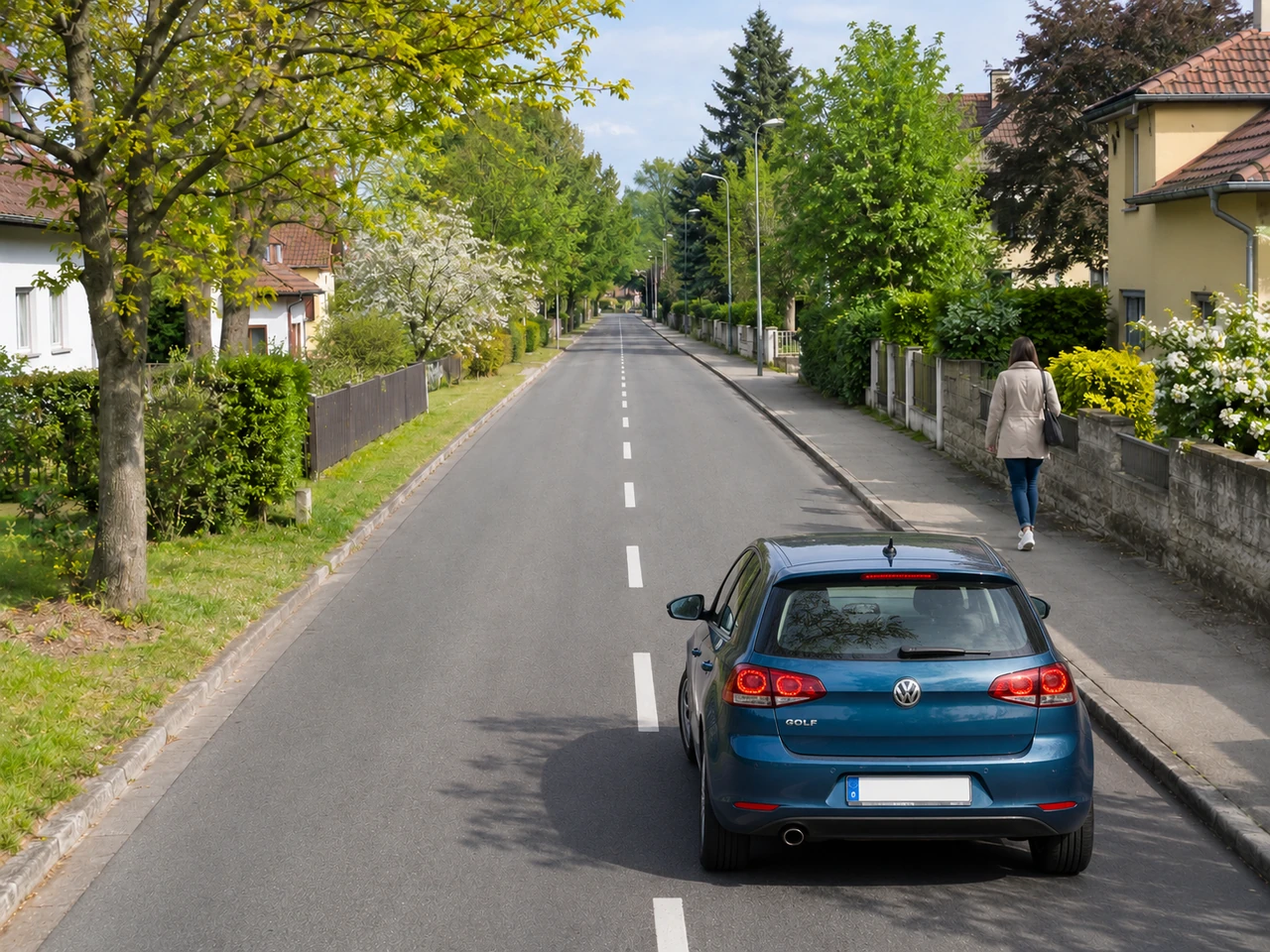
751. You can assume that a pedestrian has heard your car approaching.
A pedestrian may not hear or notice your vehicle. Slow down as needed, allow space and be prepared to stop.

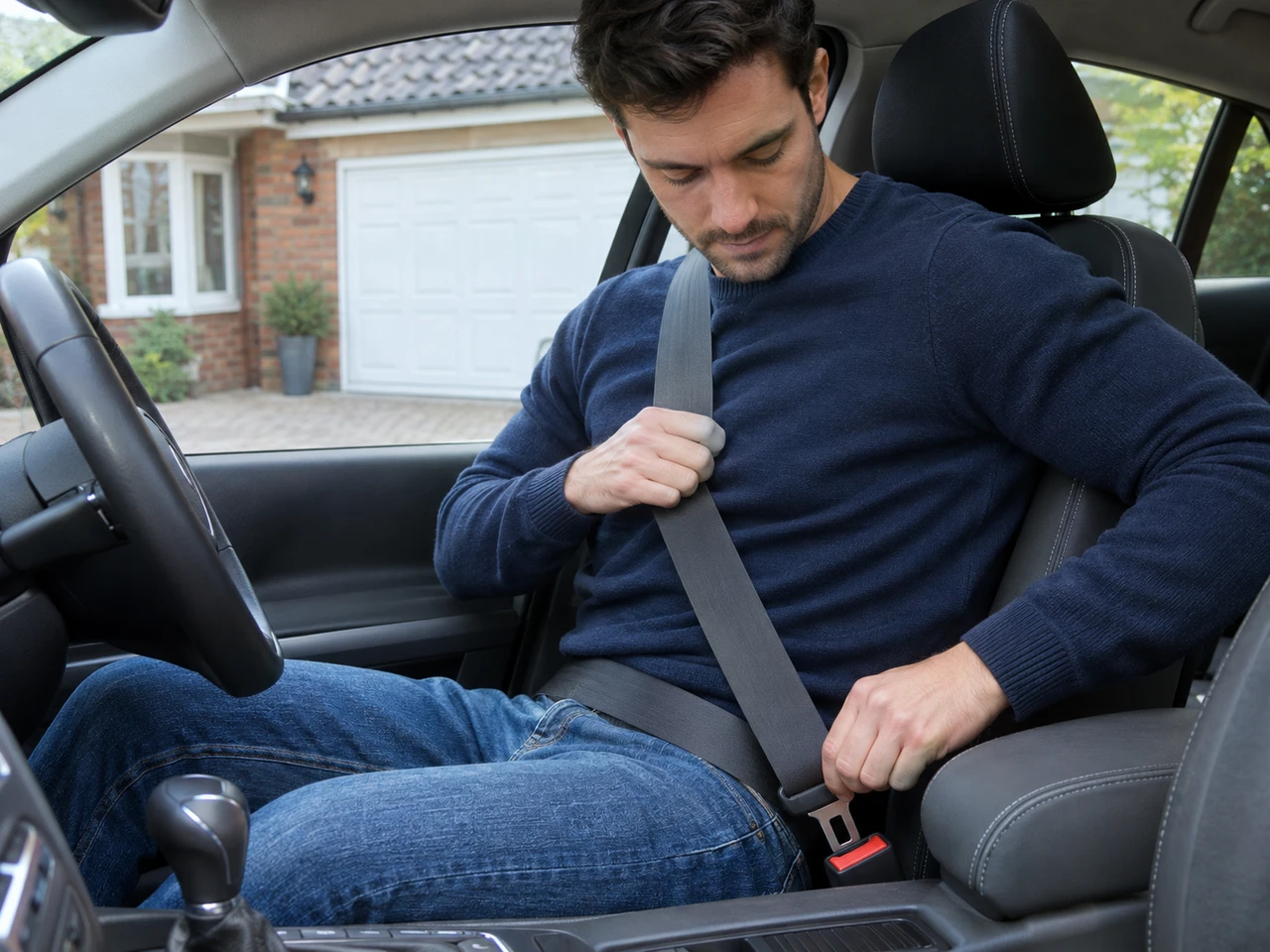
752. When should you fasten your seat belt?
Fasten your seat belt before the vehicle starts moving and keep it fastened throughout the journey. Make sure your passengers are also safely seated and properly restrained.
Norway. Before moving off, check that passengers under 15 are secured. Use the restraint appropriate for each child’s height and weight.
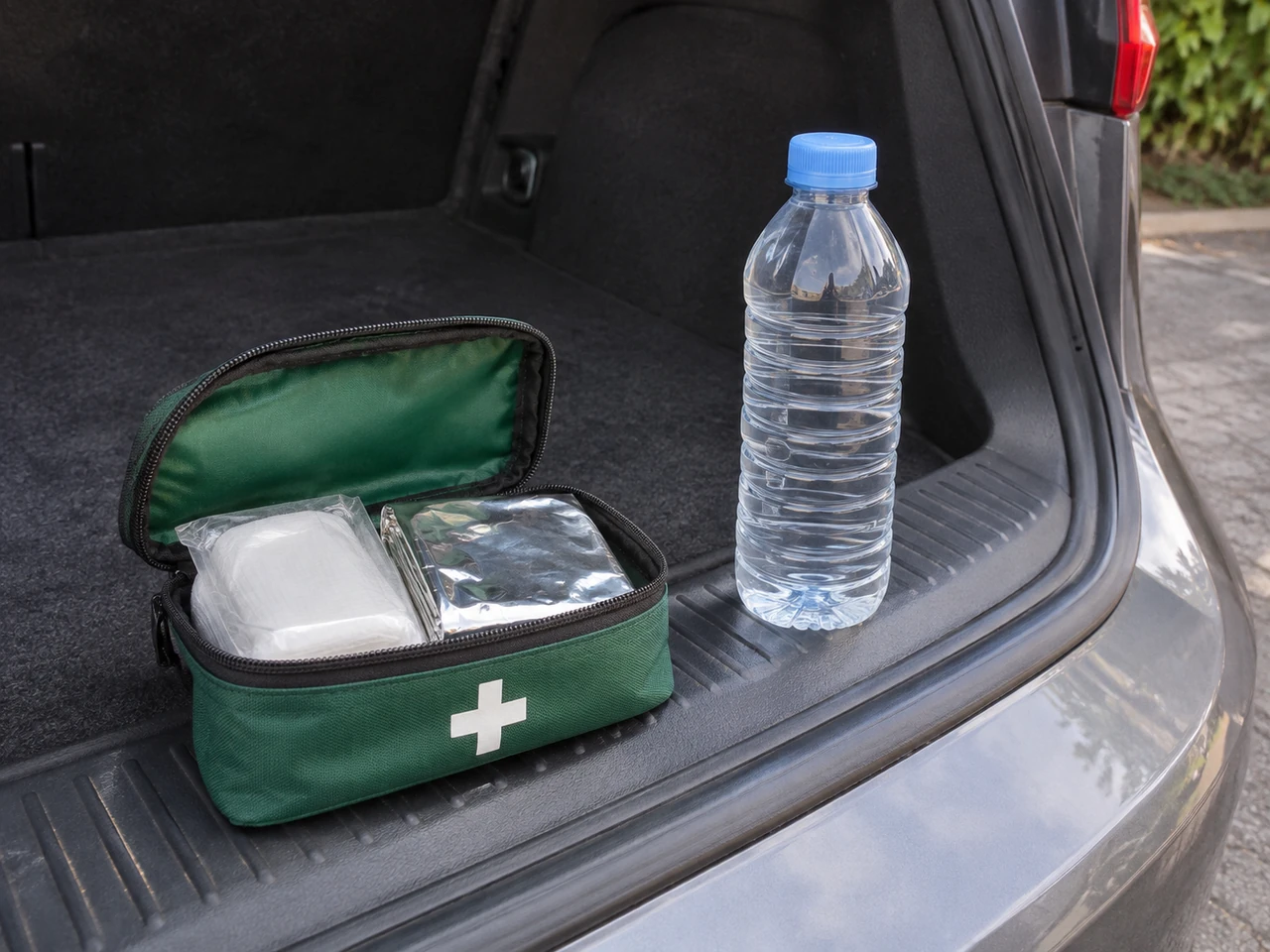
753. You should give water to an unconscious casualty.
An unconscious person may be unable to swallow safely. Do not give anything by mouth. Call the emergency services and follow the operator's instructions.
🔗 Sources
The Highway Code (Great Britain) • Safety guidance, 3. Help those involved: nothing to eat or drink
Image credit: AI-generated
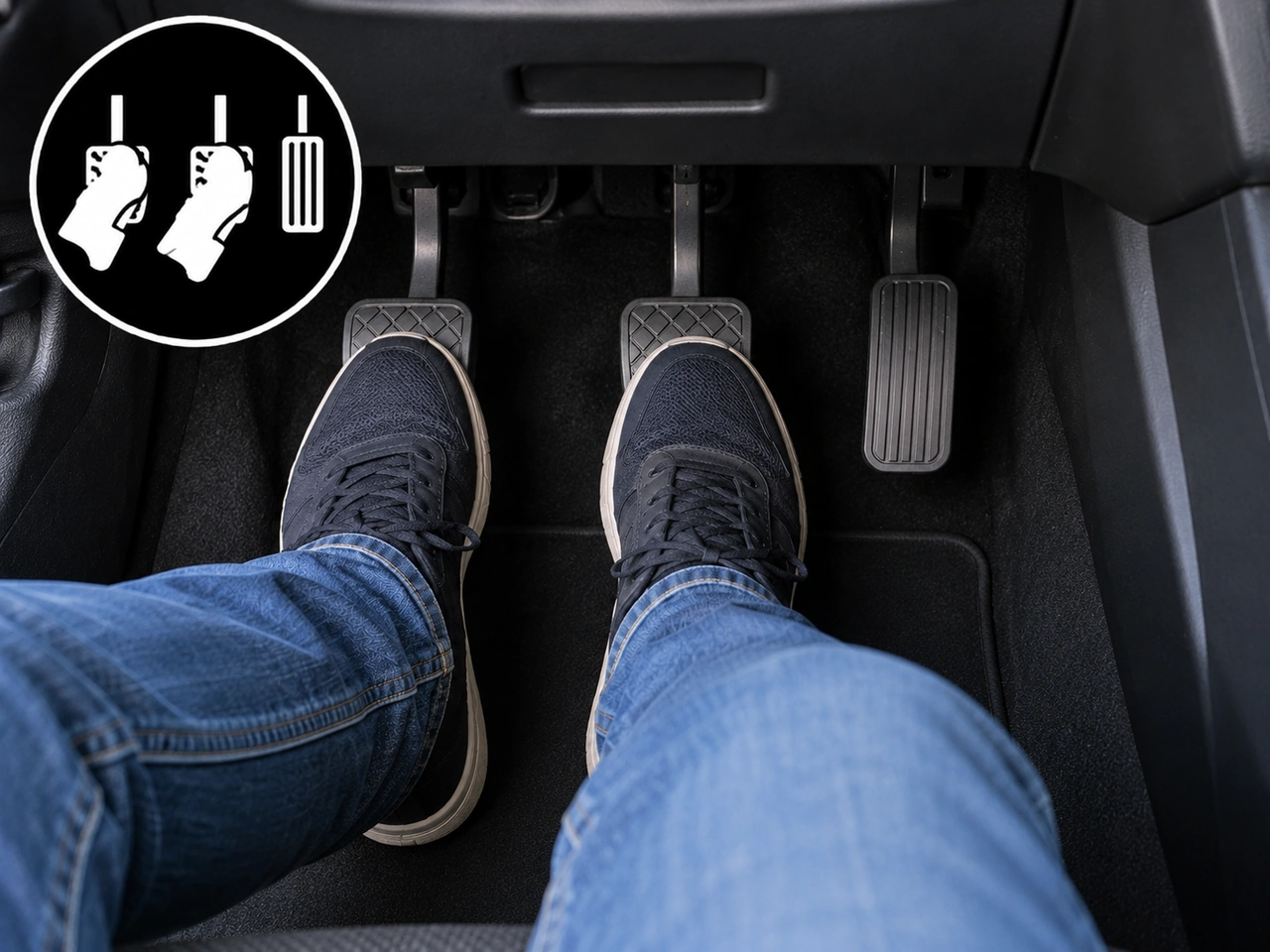
754. What should you do with the clutch when bringing a manual vehicle to a stop?
When stopping a manual vehicle, brake normally and press the clutch pedal before the engine speed becomes too low and the engine stalls. Avoid pressing the clutch unnecessarily early, as this reduces engine braking.
For a normal stop, brake smoothly and press the clutch fully just before the car comes to rest.
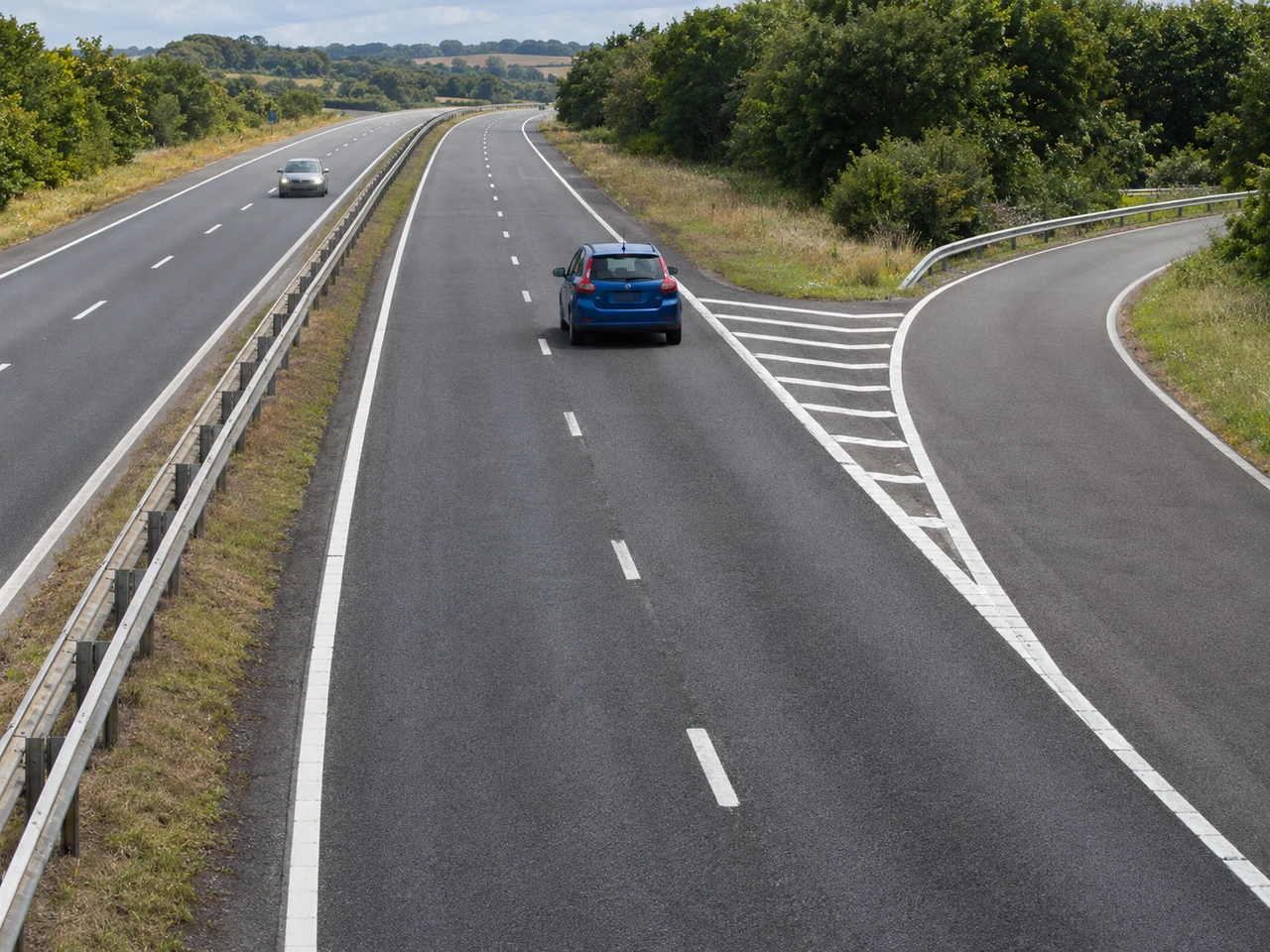
755. Missing a motorway exit makes it acceptable to reverse back to it.
If you miss an exit, continue to the next one and find a safe route back. Do not stop or reverse to reach the missed exit.
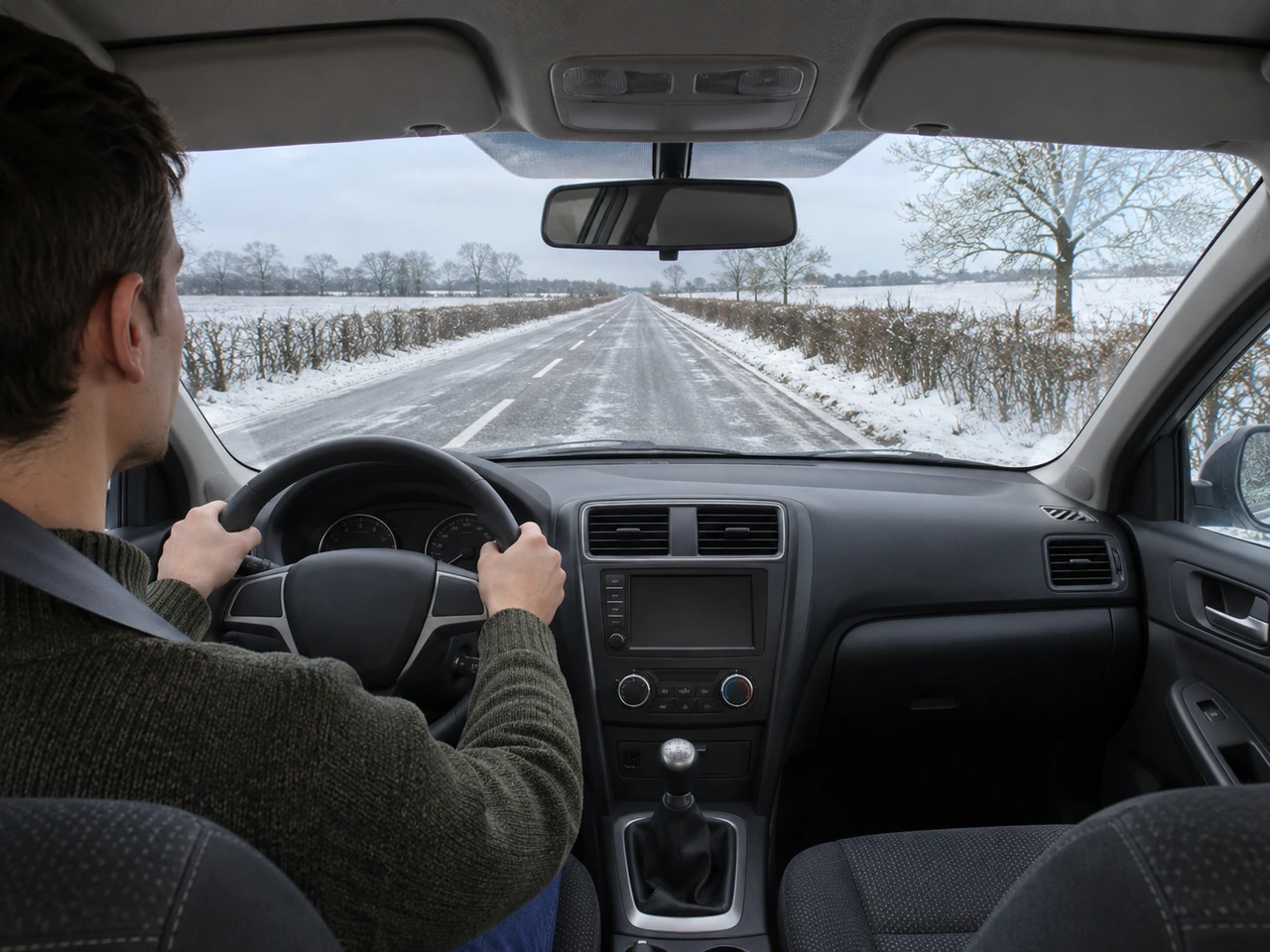
756. How should you react if accelerating causes a skid on ice?
If excessive acceleration makes the tyres slip, ease off smoothly so they can regain grip. Look along your intended path and avoid sharp steering corrections. Do not try to restore grip by accelerating harder, stamping on the brake or applying the parking brake. The correct recovery also depends on the vehicle and the type of skid; follow the handbook.
🔗 Sources
Great Britain — Highway Code, rule 231; smooth winter controls
Great Britain — Highway Code, rule 119; harsh inputs and loss of grip
Image credit: AI-generated
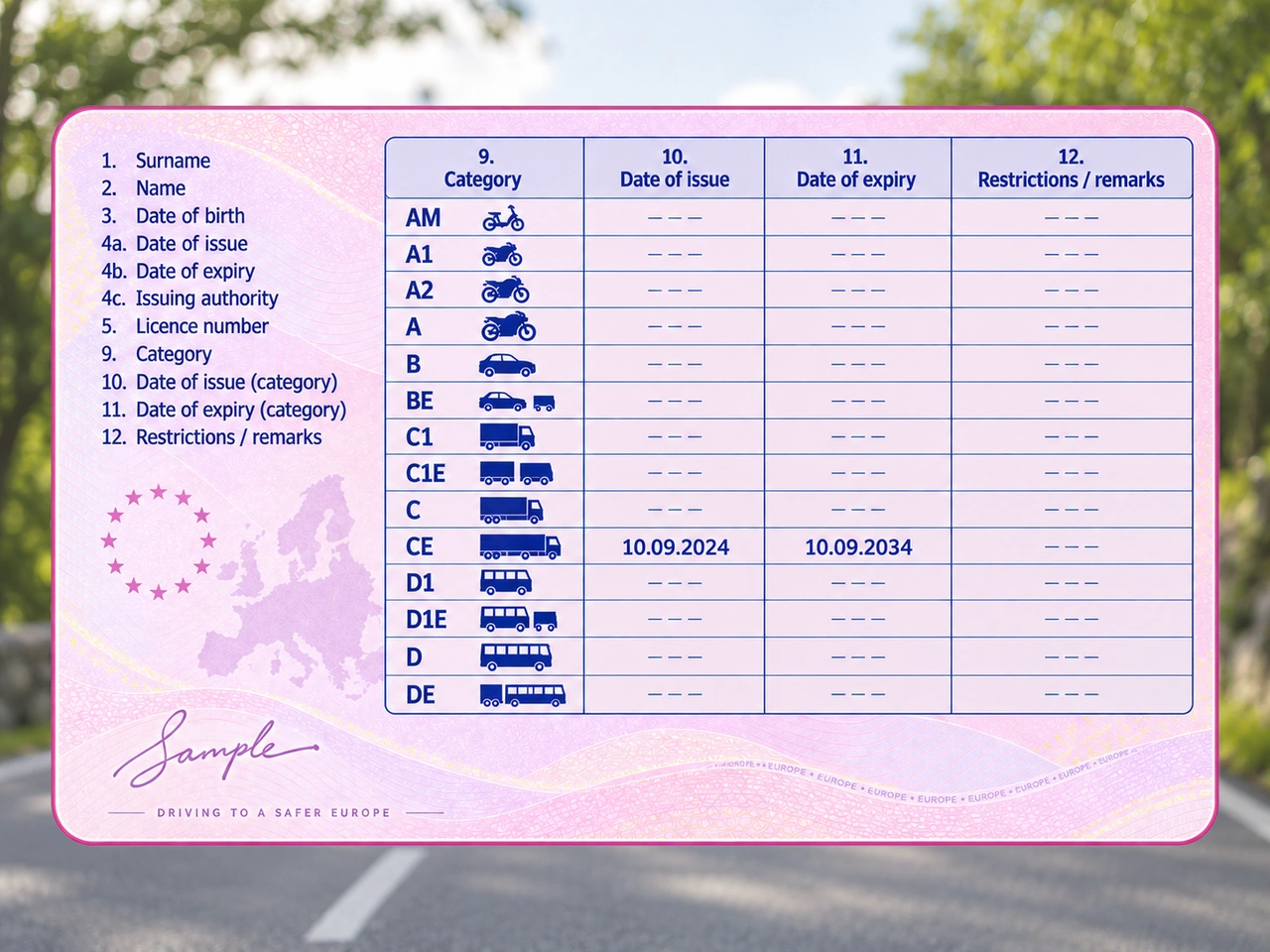
757. Which vehicle combination is covered by driving licence CE?
Category CE covers combinations consisting of a category C towing vehicle and a trailer or semi-trailer with a maximum authorised mass above 750 kg.
Norway. CE covers a category C lorry or tractor unit towing a trailer or semi-trailer rated above 750 kg. Check the vehicle’s approved towing limits as well.
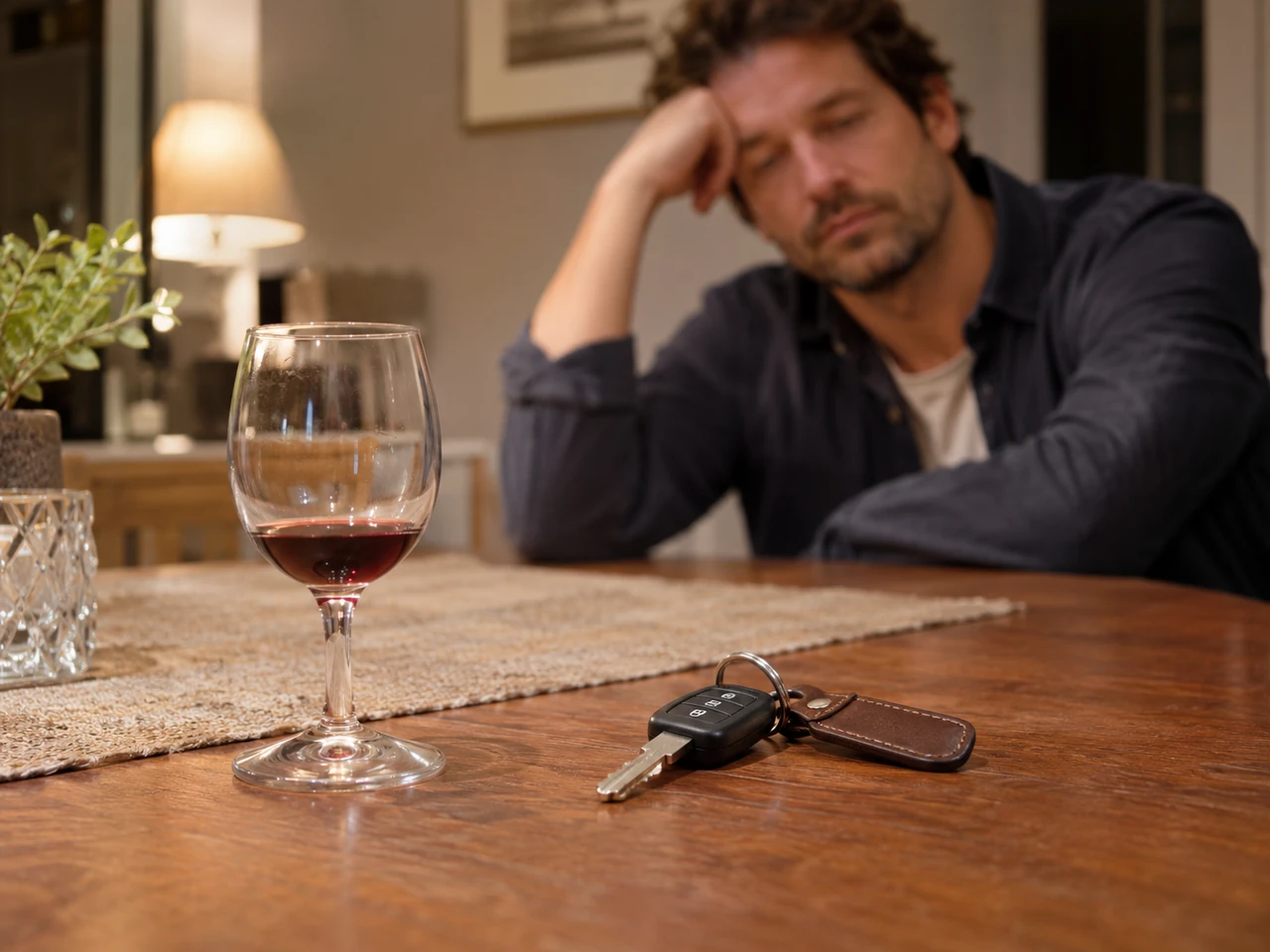
758. Alcohol can make the effects of sleepiness worse.
Alcohol can combine with sleepiness to increase impairment. Avoid drinking before driving, and do not drive when you are too tired.
🔗 Sources
NHTSA (United States) • Safety guidance, alcohol increases drowsiness and impairment
Image credit: AI-generated
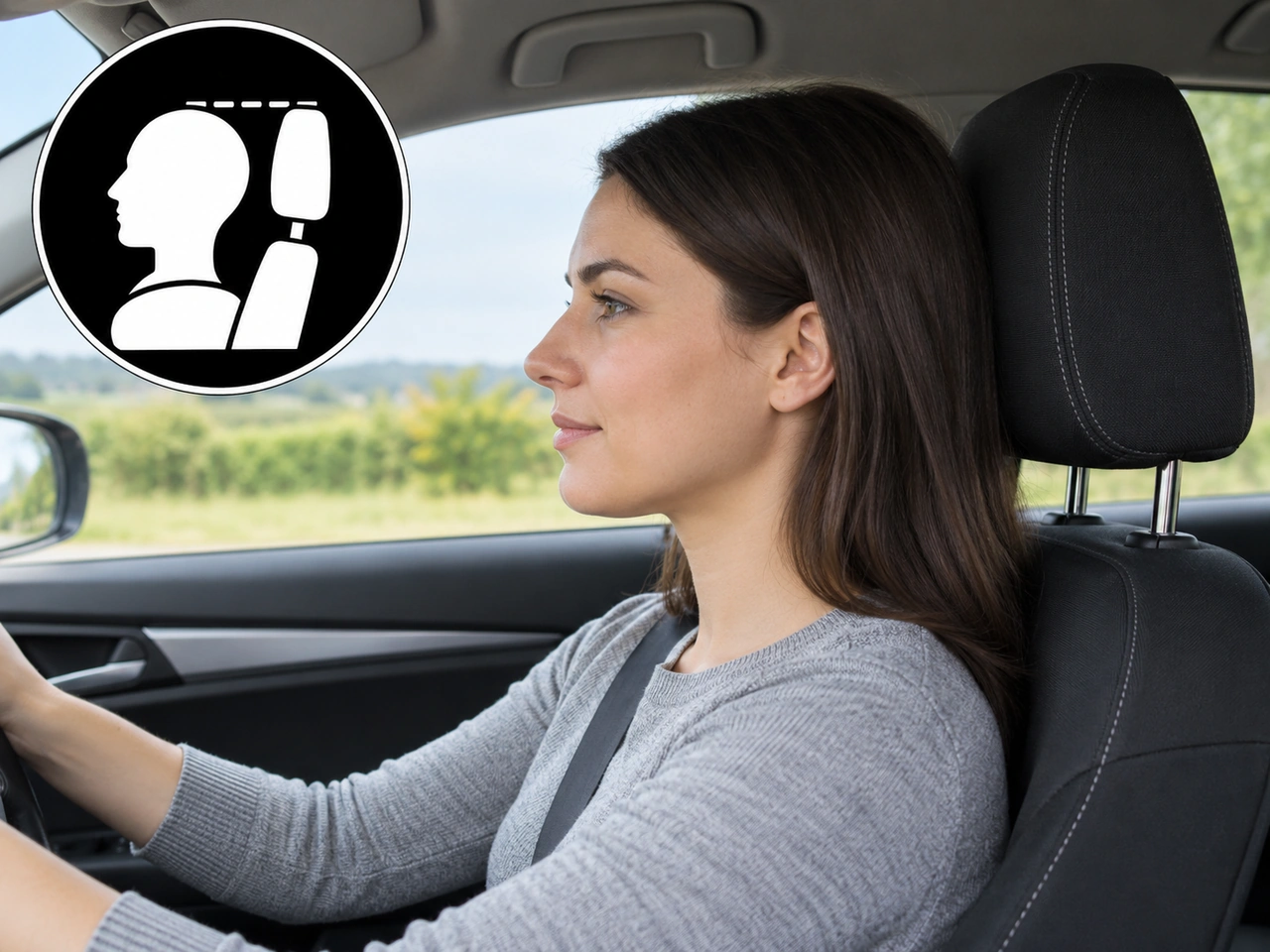
759. Where should the top of the head restraint normally be positioned?
The head restraint should normally be adjusted so that its top is approximately level with the top of the head. This helps reduce the risk of neck injury in a collision.
Set your seating position first, then adjust the head restraint so its top is around level with the top of your head.
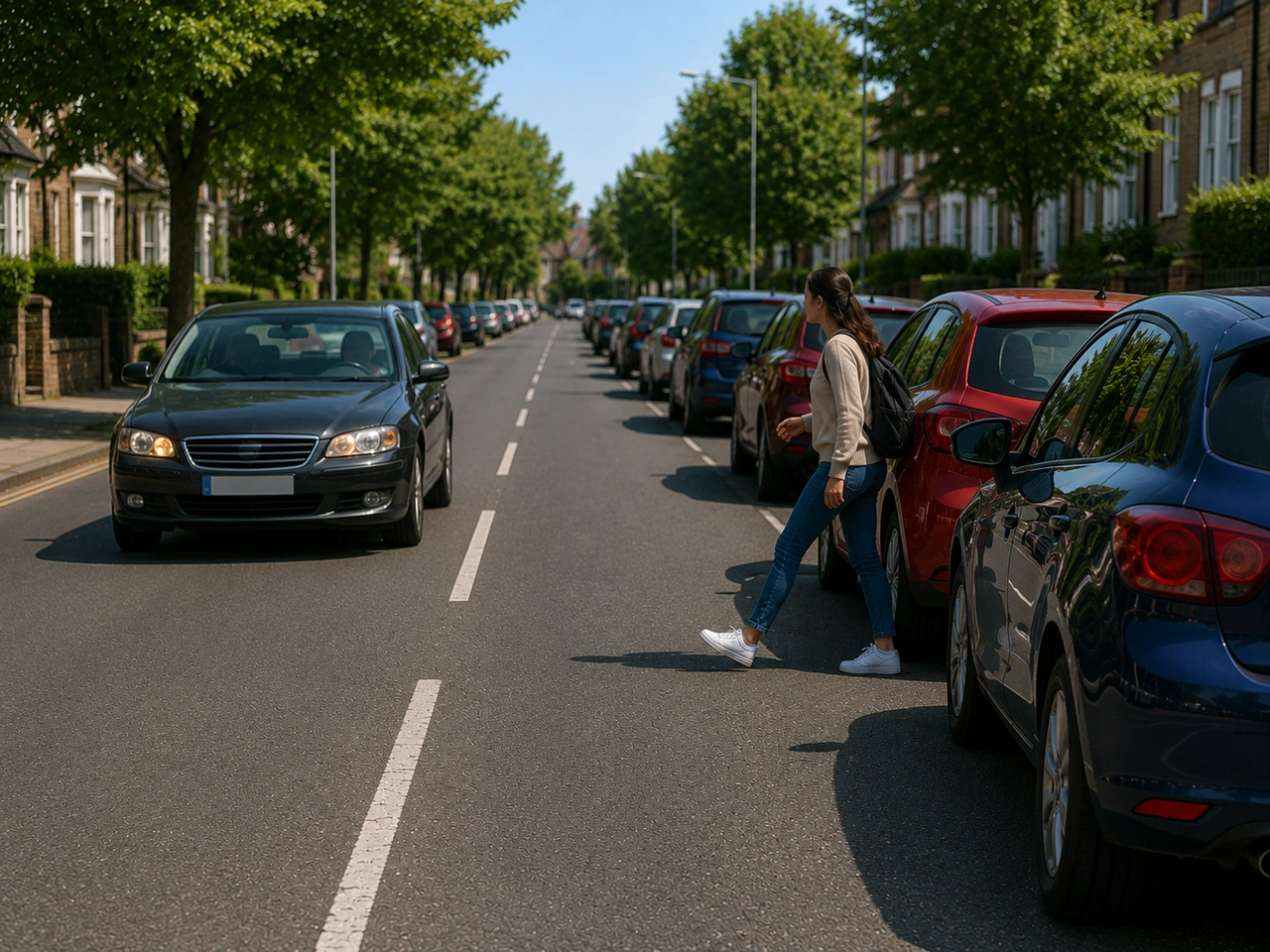
760. Why is it dangerous to cross between parked cars?
Parked vehicles can hide you from drivers and block your view of approaching traffic. Choose a crossing place with clear views whenever possible. If crossing between parked vehicles cannot be avoided, stop at their outer edges before entering the traffic lane, check all directions and make sure drivers can see you. Wait for a safe gap and check that you can reach the pavement on the other side. The images illustrate the visibility hazard, not recommended crossing behaviour.
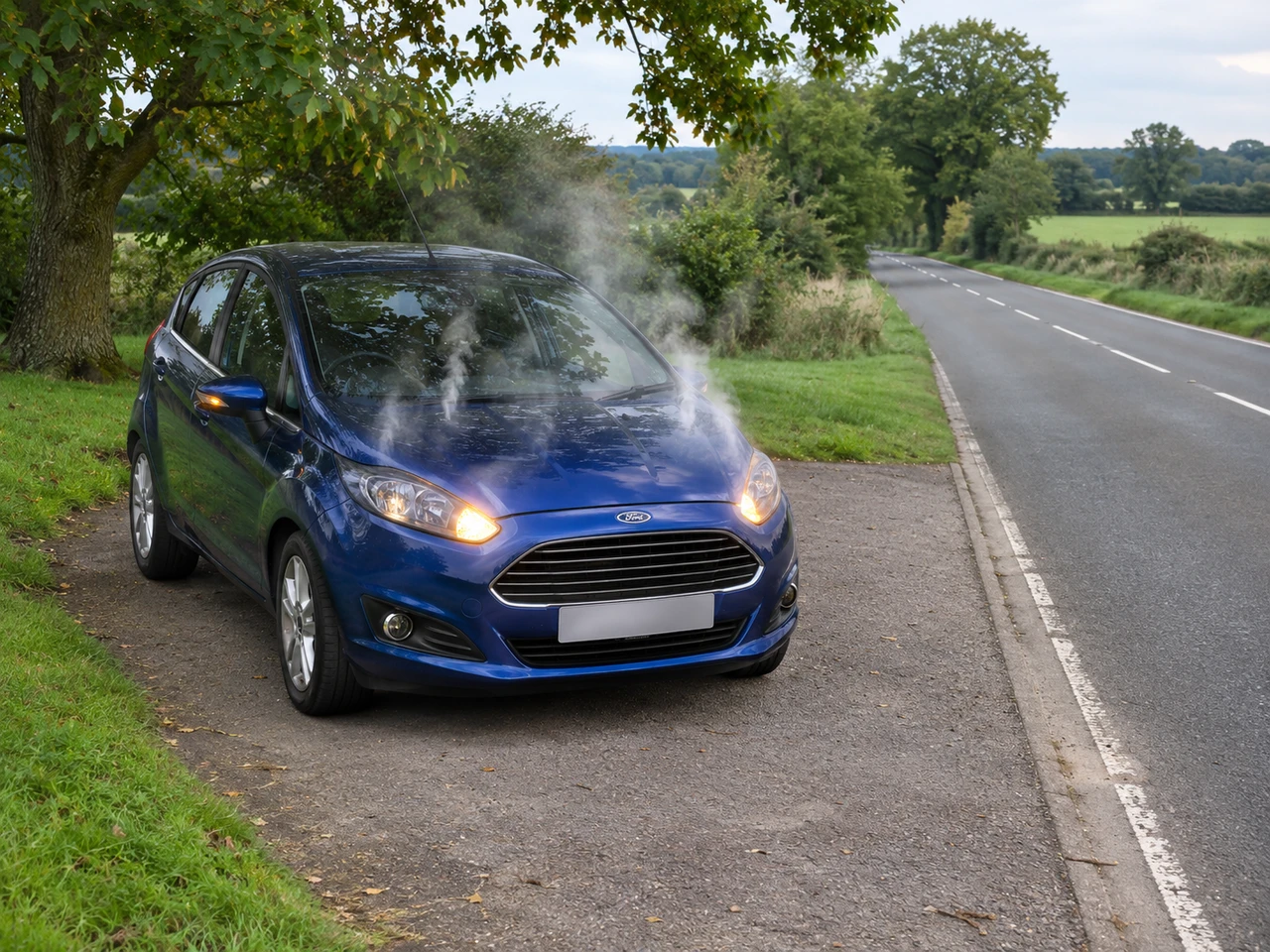
761. What should you do if steam begins coming from underneath the bonnet?
Steam or hot coolant escaping from the engine compartment can cause severe scalding. Stop safely, switch off the engine and keep people clear. Do not open the bonnet while steam is escaping, and never remove a coolant cap while the system is hot. Follow the vehicle handbook and arrange assistance. Do not use vapour colour alone to rule out a fire; move away and call the emergency services if a fire is suspected.
Allow an overheated engine to cool naturally before attempting coolant checks or removing its filler cap.
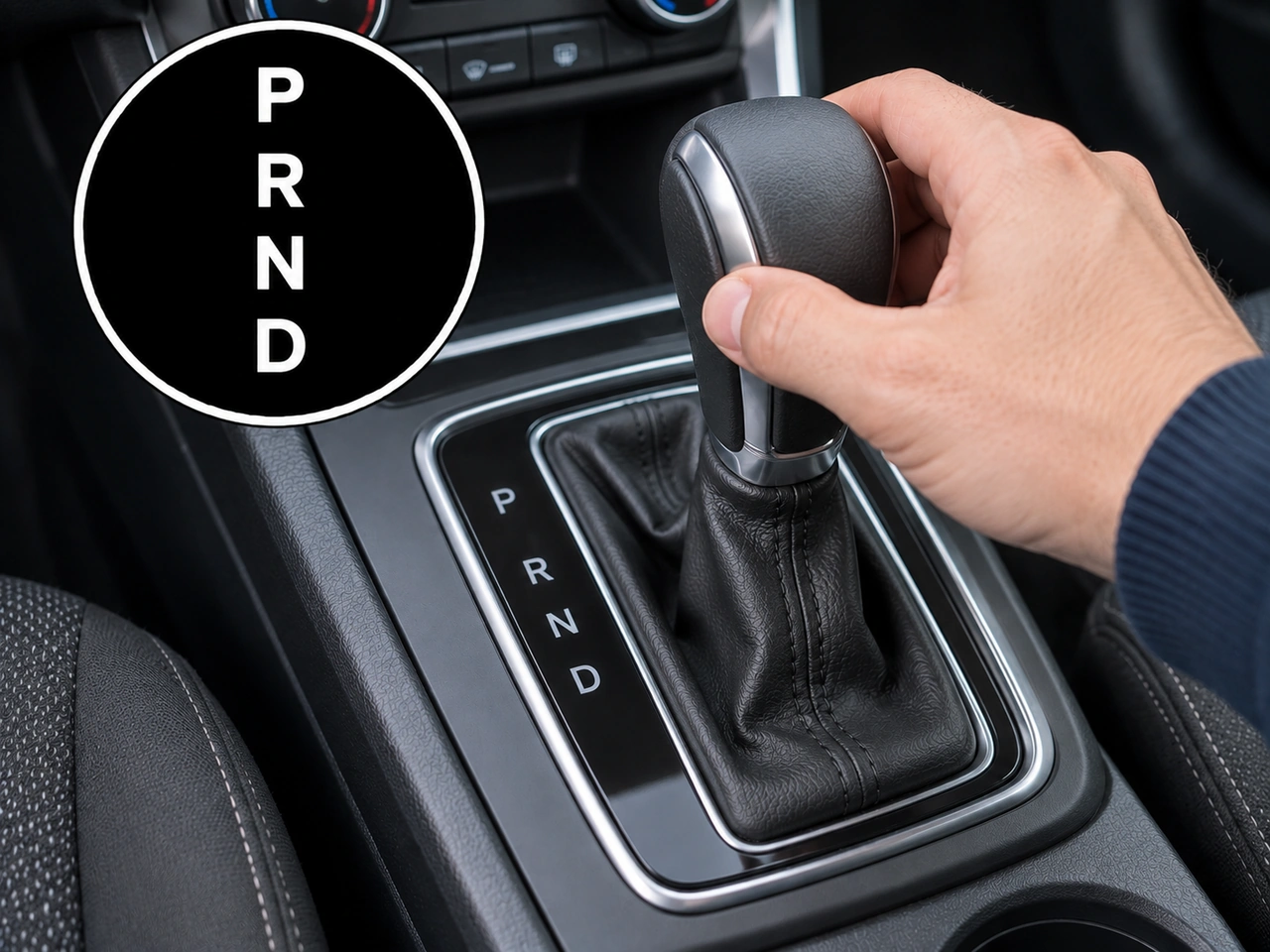
762. Which selector position is used for normal forward driving?
Select D (Drive) for normal forward driving in a vehicle with an automatic transmission. The transmission then selects the appropriate gear automatically.
D is the normal forward-driving setting. The transmission manages gear changes where the vehicle has multiple forward gears.
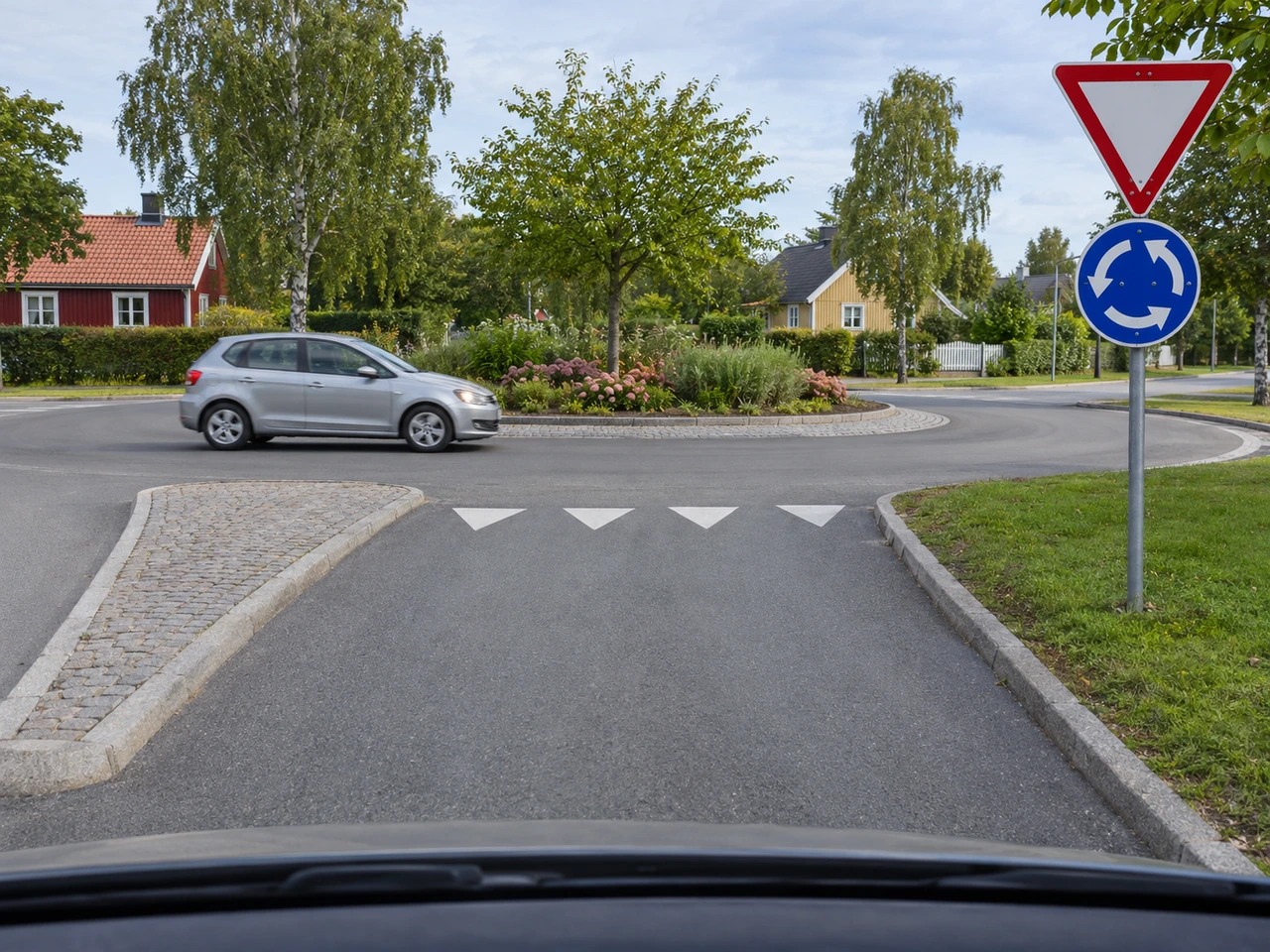
763. What should you do when entering a roundabout?
When approaching a roundabout, reduce your speed, observe traffic, follow the signs and local priority rules, and enter only when it is safe.
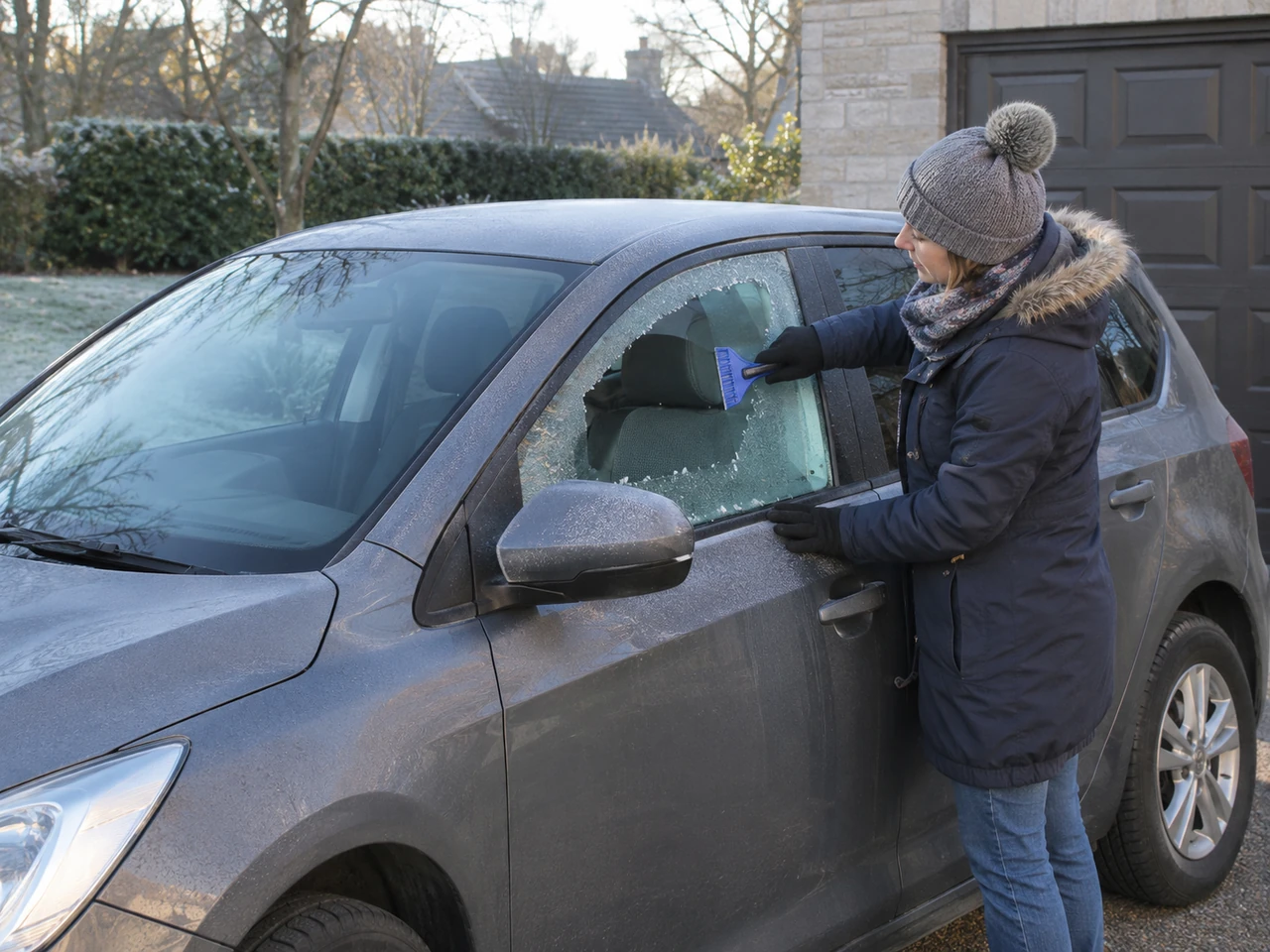
764. You should clear ice from all your windows before driving.
Clear snow and ice from your windows and mirrors, and demist the glass before setting off. A small clear patch does not give you an adequate view.
🔗 Sources
Image credit: AI-generated. Existing same-entry detail photograph, reused for both driving sides.
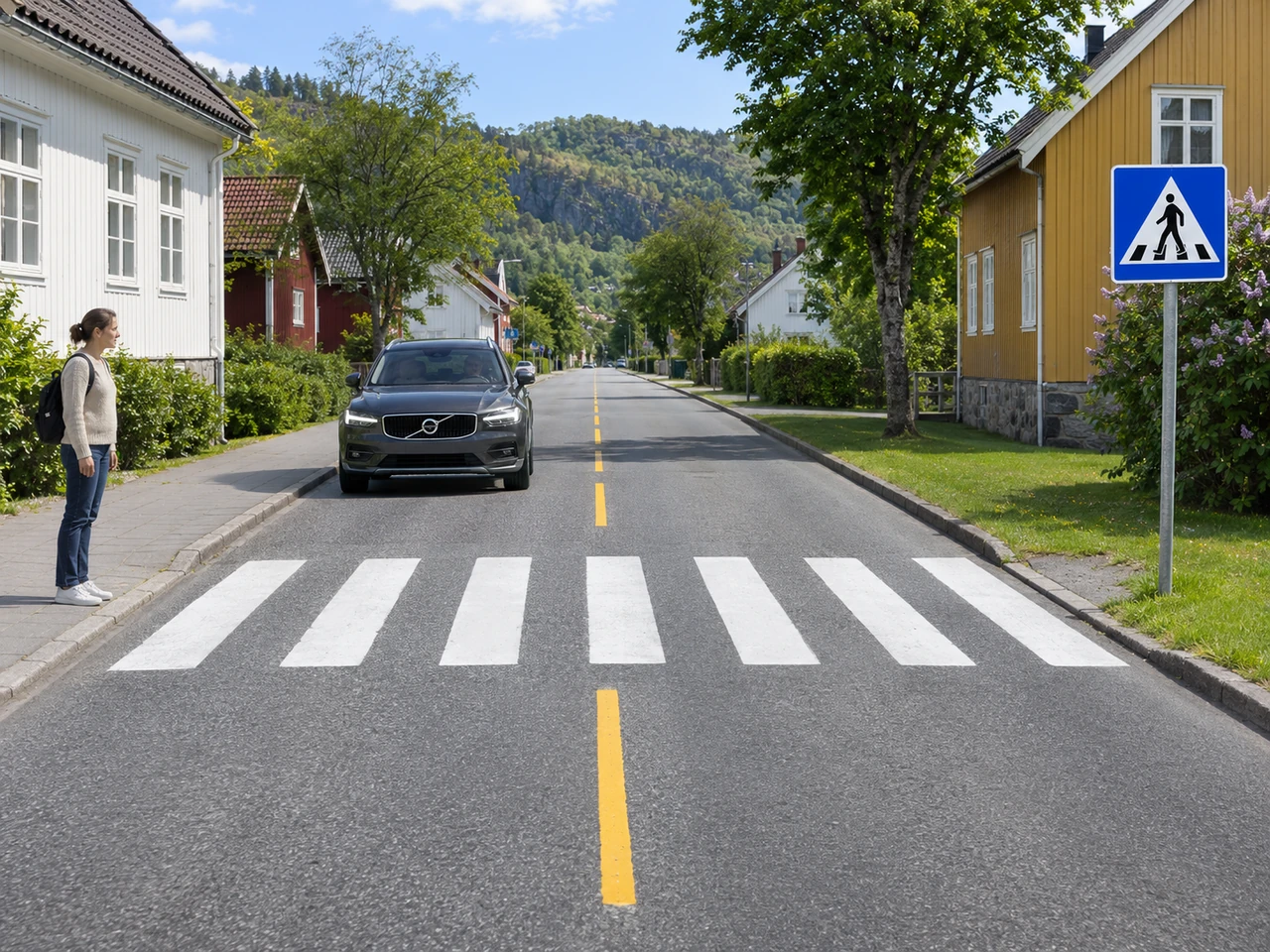
765. What should you do before using a pedestrian crossing?
Stop on the pavement before entering the crossing. Look and listen in both directions and check every lane. Wait until approaching traffic has stopped or the road is clear before stepping out. A vehicle slowing down, eye contact or the crossing markings alone do not show that every lane is safe. Keep checking traffic as you cross.
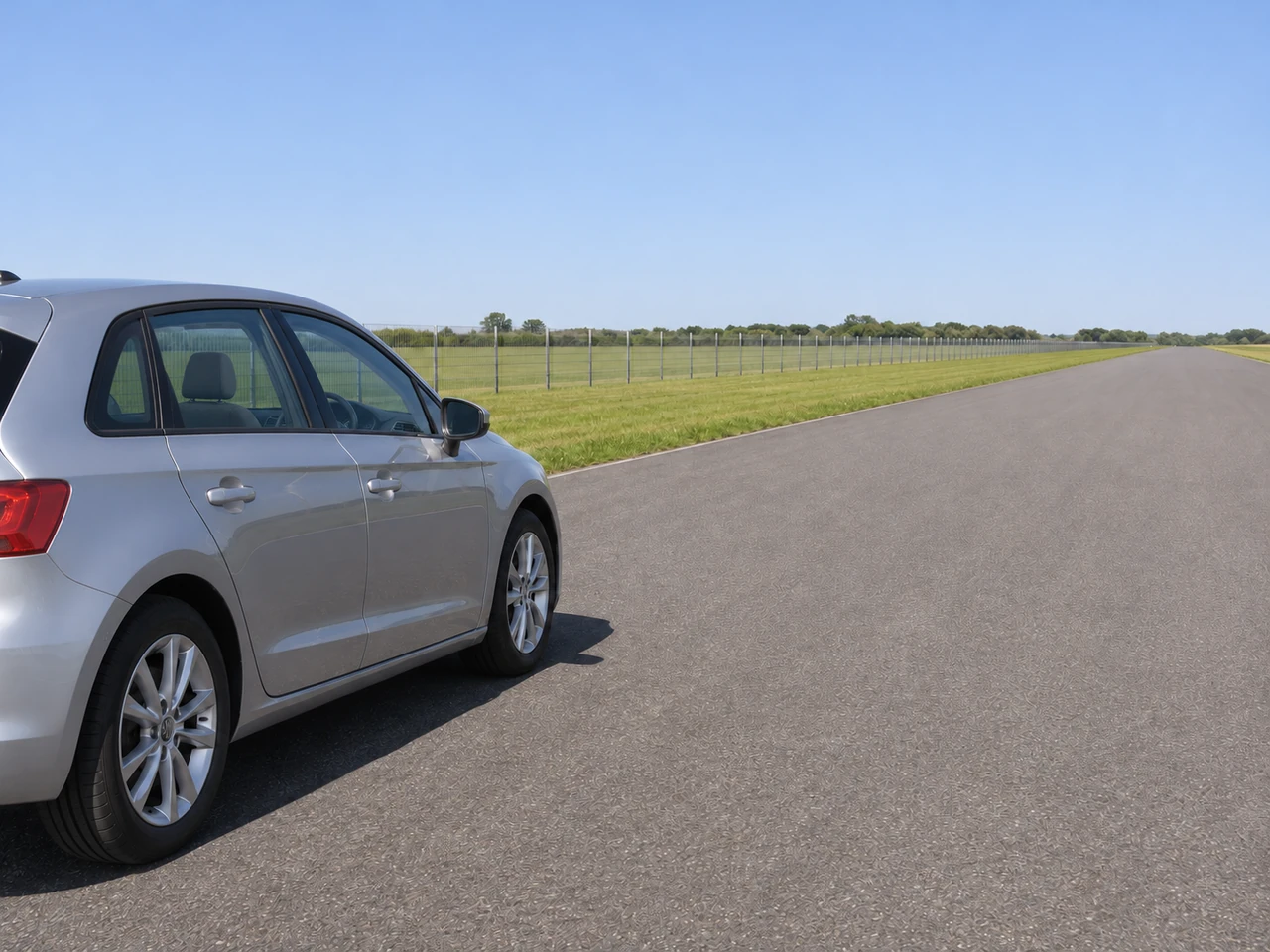
766. Stopping distance includes the distance travelled while you react to a hazard.
The car keeps moving while you recognise the hazard and start braking. Total stopping distance includes this reaction distance as well as the distance travelled while the brakes bring the car to a stop.
🔗 Sources
Queensland Government (Australia) • Safety guidance, reaction distance plus braking distance
Image credit: AI-generated
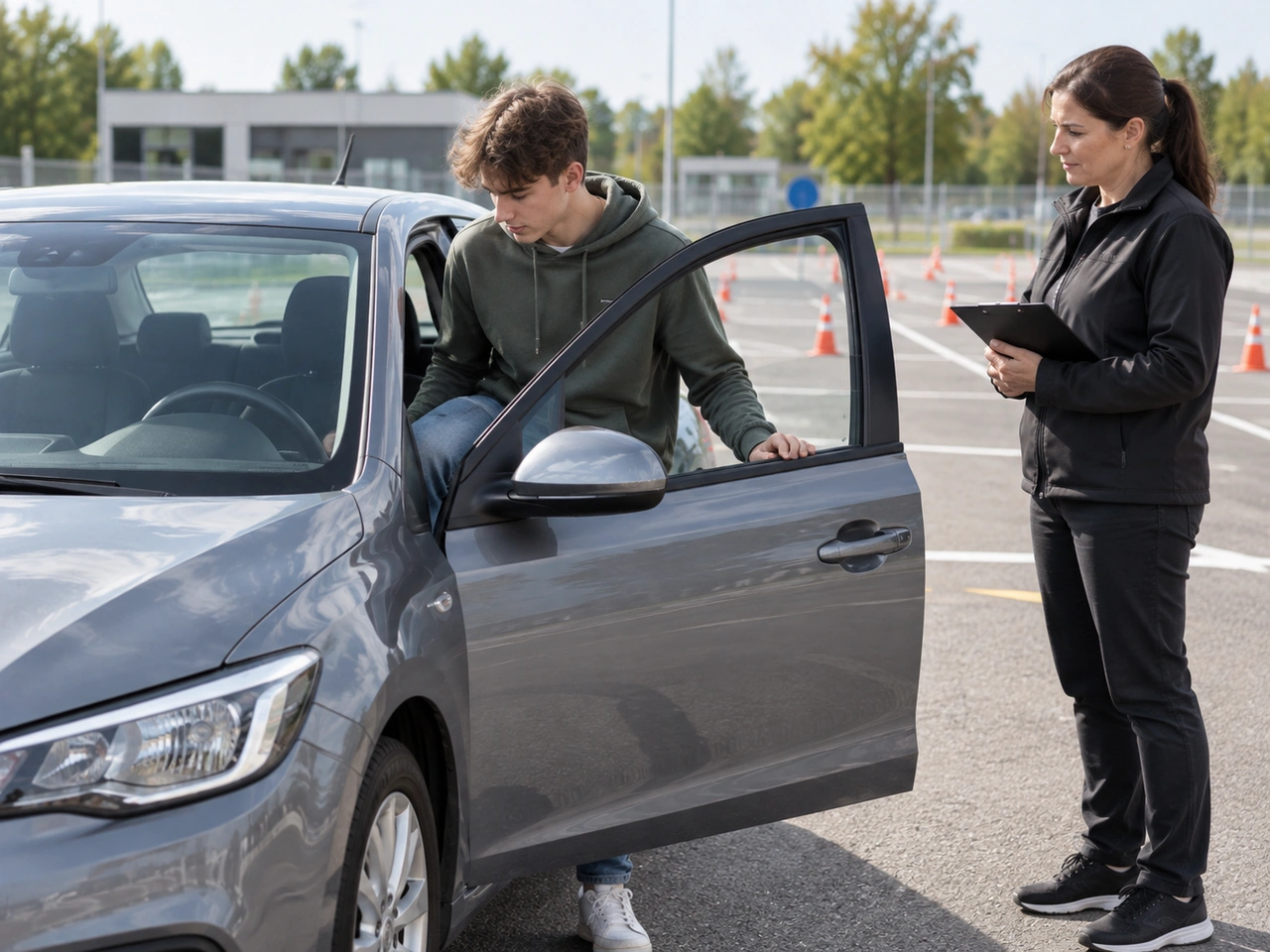
767. What is the minimum age for a standard car driving licence?
The minimum age for a standard car driving licence in Norway is 18 years.
🔗 Sources
Country example: Flanders — category B practical test from 18, distinct from earlier learner permits
Image credit: AI-generated
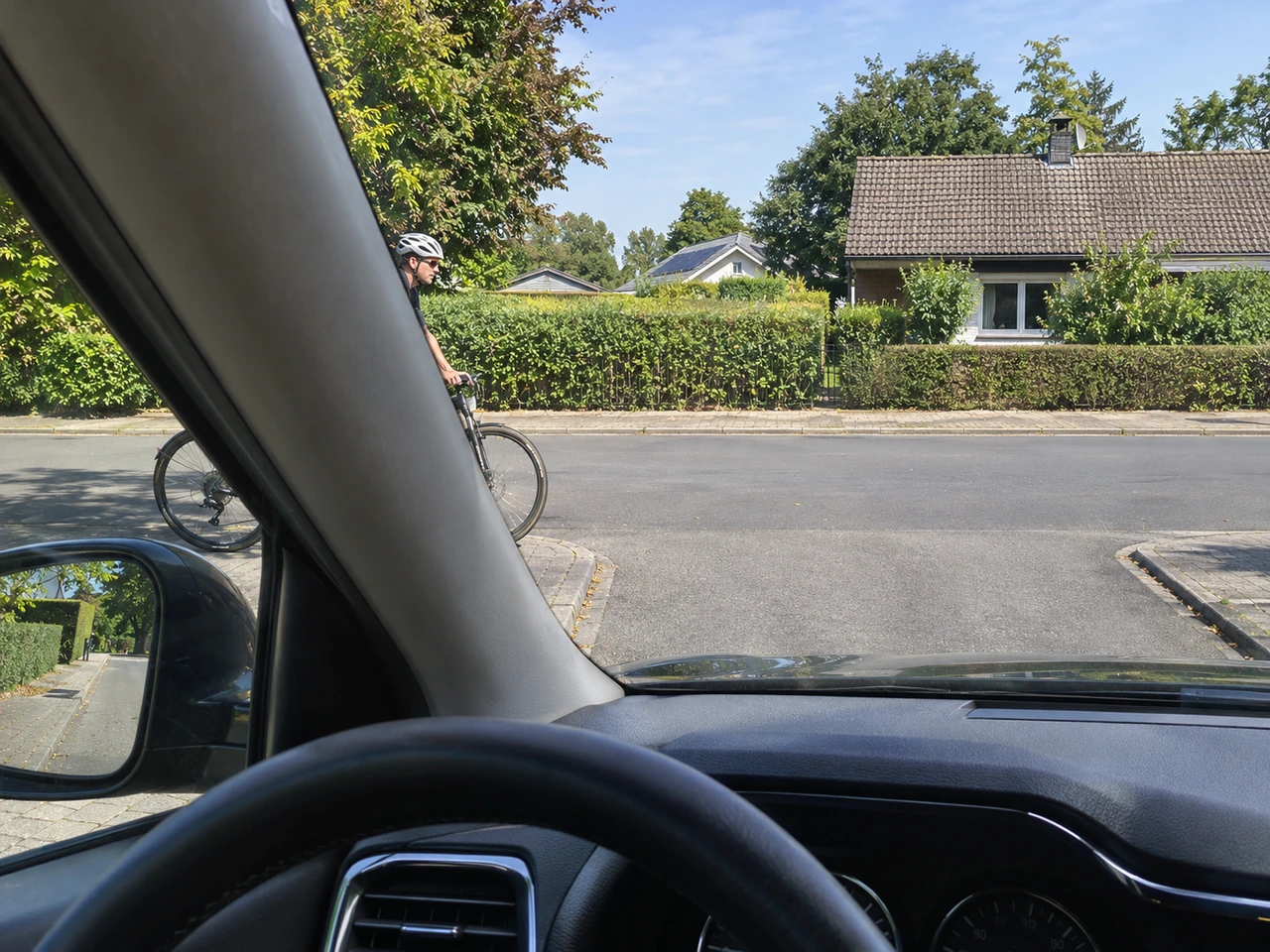
768. Why should you look around the windscreen pillars at a junction?
The pillars beside the windscreen can obstruct your view. Adjust your viewing position as needed and check carefully before entering the junction.
🔗 Sources
AWSR — Walloon road safety agency
Reference: Windscreen elements can obstruct the view; check visibility carefully at junctions.
Image credit: AI-generated
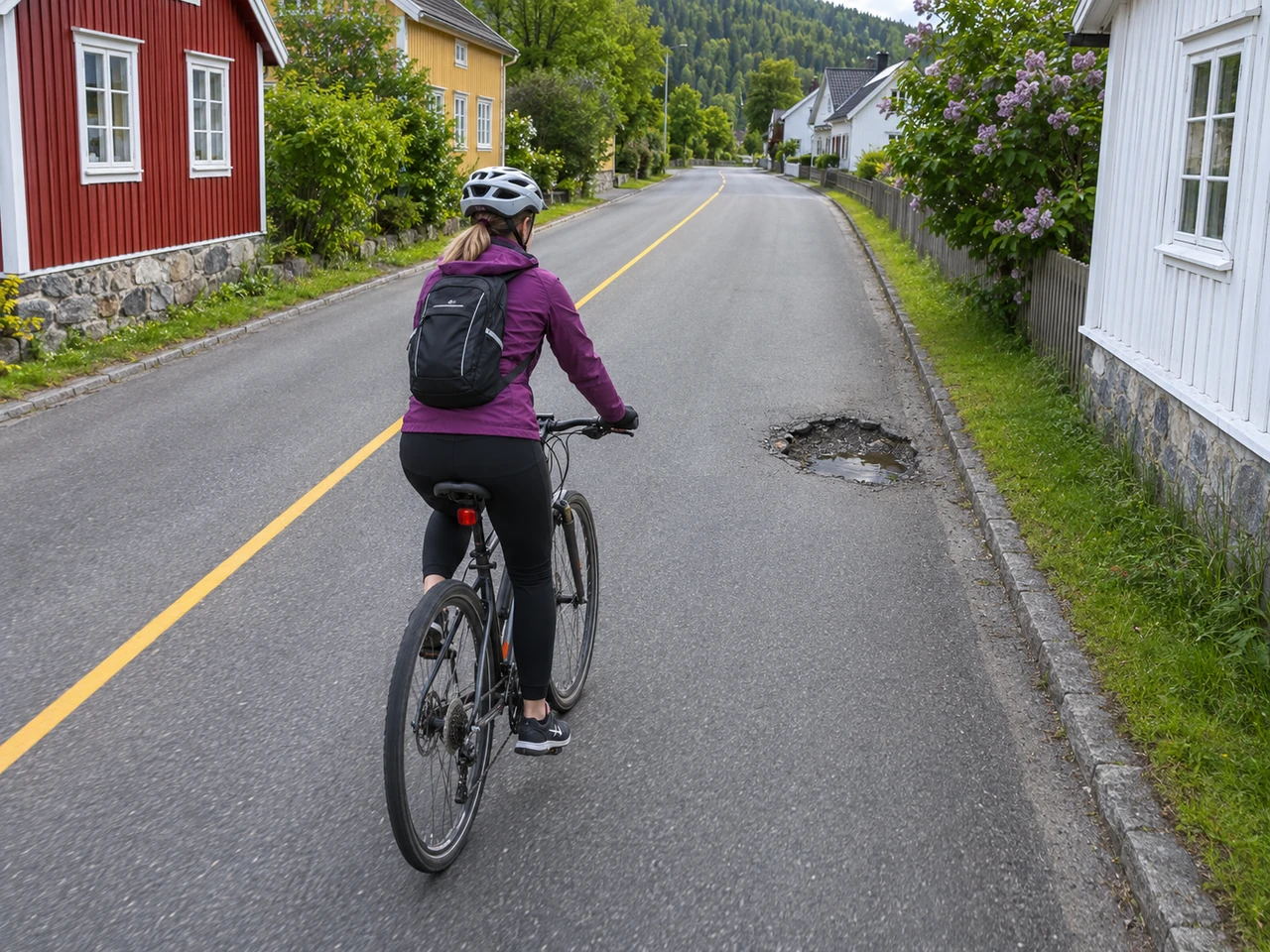
769. How should a cyclist react to a pothole?
Look ahead so you can slow down and plan a safe route around a pothole. Check behind and around you before changing road position, and signal if it is safe to do so. Avoid a sudden swerve into traffic. If there is no safe way past, stop rather than force your way around the hazard.
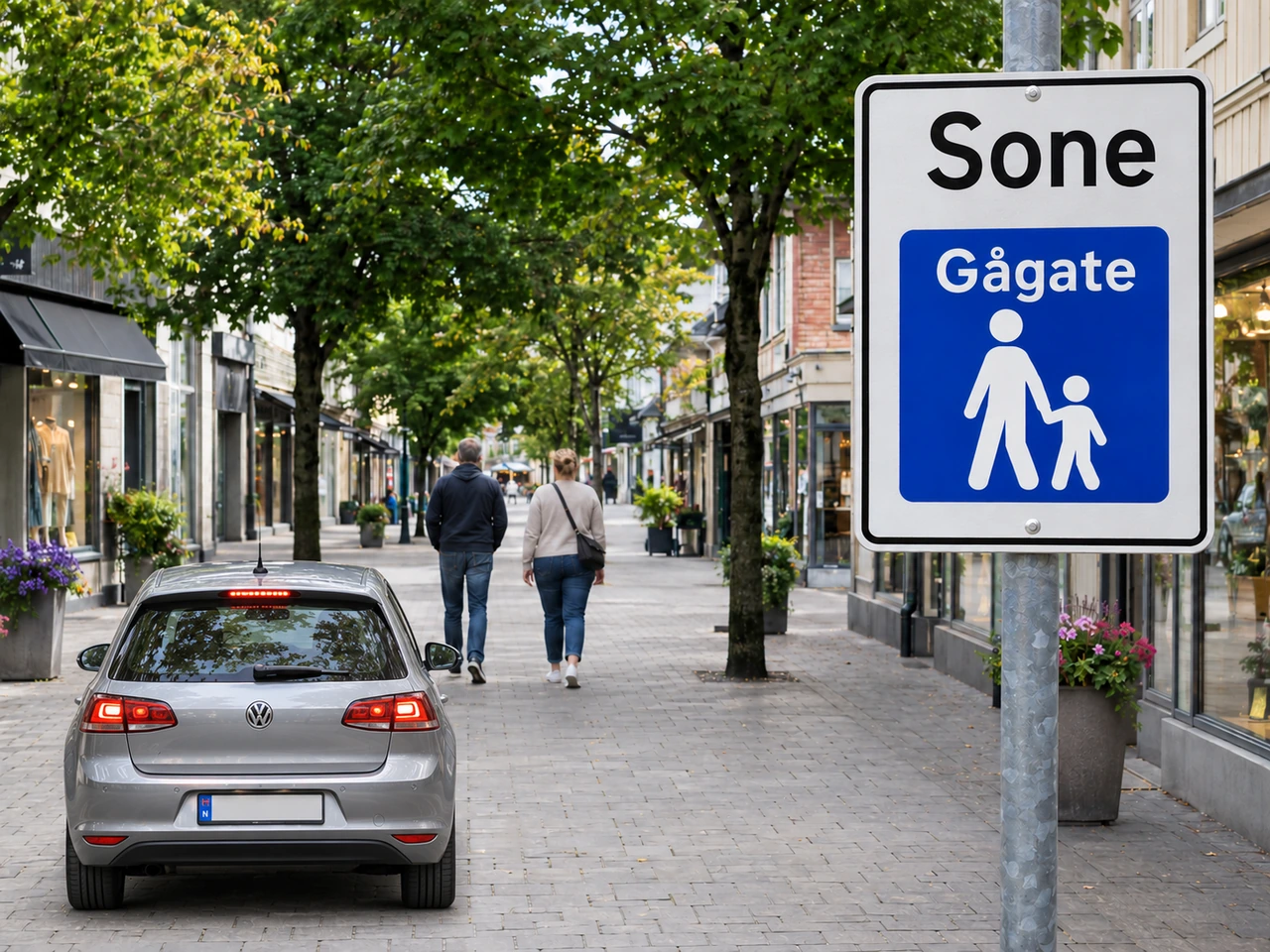
770. In pedestrian zones, pedestrians must keep to the road edge whenever a car approaches.
Pedestrians may use the carriageway rather than being confined to the road edge. Drivers must give them room and stop when necessary. Pedestrians should allow authorised vehicles to pass safely.
🔗 Sources
Lovdata • Traffic Rules • § 9(2) and § 13(3)
Statens vegvesen • Handbook V122 • Section 3.5.2
Image credit: AI-generated
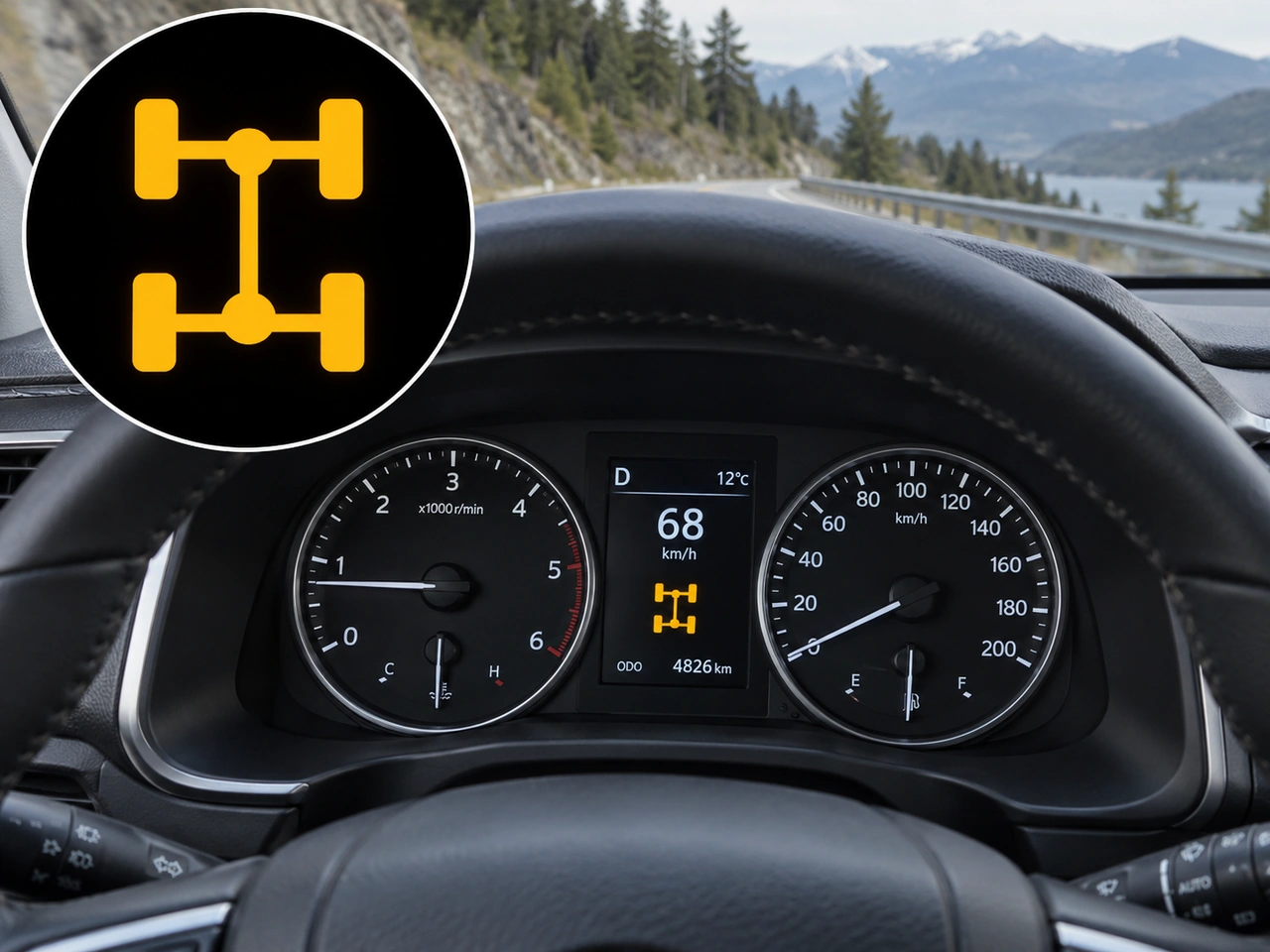
771. What does this dashboard symbol indicate?
This symbol relates to the vehicle's four-wheel-drive system, which can transmit power to all four wheels. The exact symbol and operating modes vary between vehicles.
A four-wheel-drive indicator can identify the selected mode. On vehicles with high and low ranges, 4H denotes high range and 4L denotes low range.
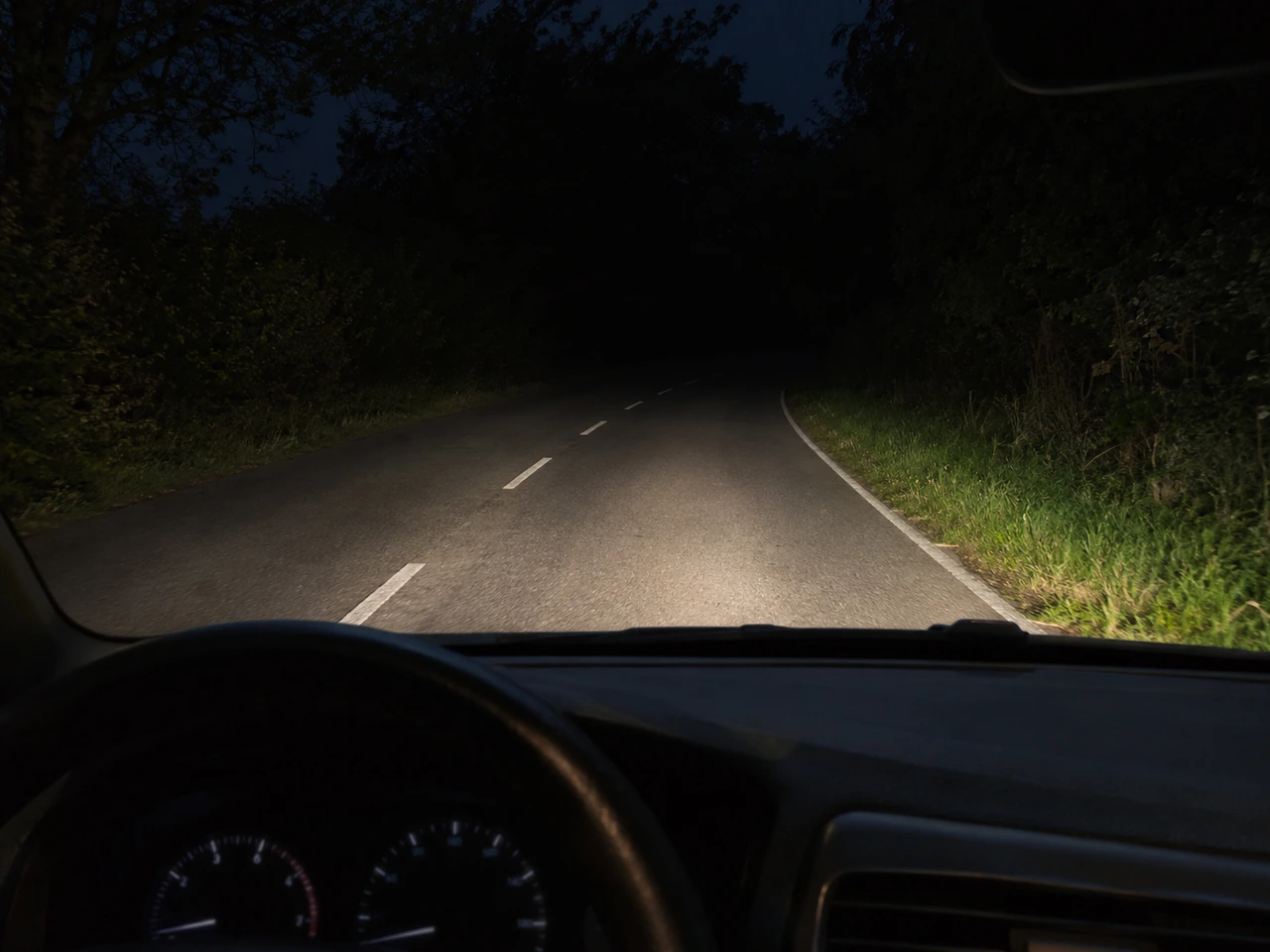
772. How should the distance you can see clearly ahead affect your speed at night?
Choose a speed that leaves enough distance to react and brake within the road you can see is clear. Reduce speed when darkness, bends or other obstructions shorten that view.
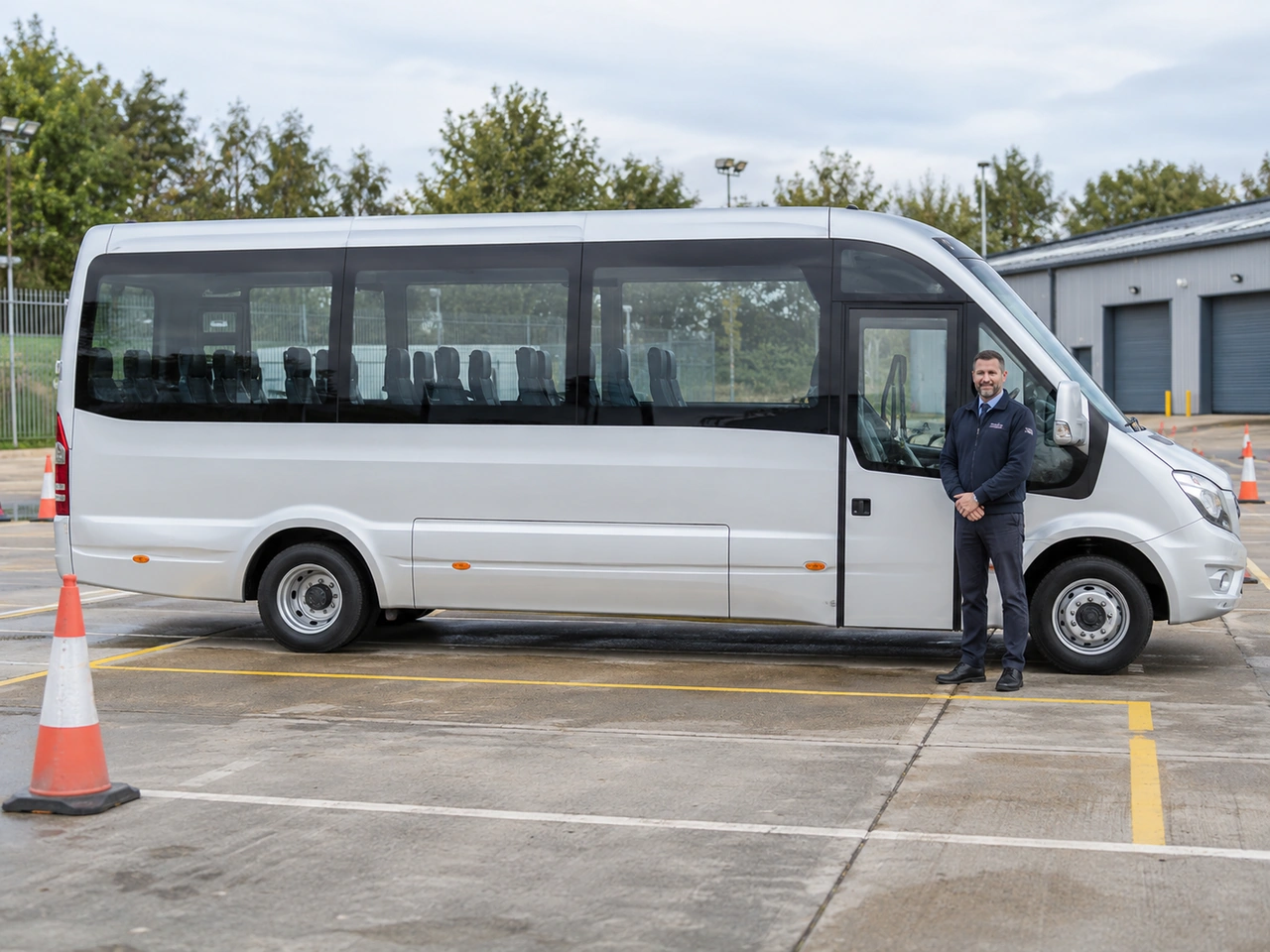
773. What is the minimum licence for an 8 m minibus designed for 16 passengers plus the driver?
Category D1 covers vehicles designed to carry no more than 16 passengers in addition to the driver and with a maximum length of 8 metres.
Norway. Use the approved passenger capacity and length. The driver’s seat is separate from the 16-passenger limit.
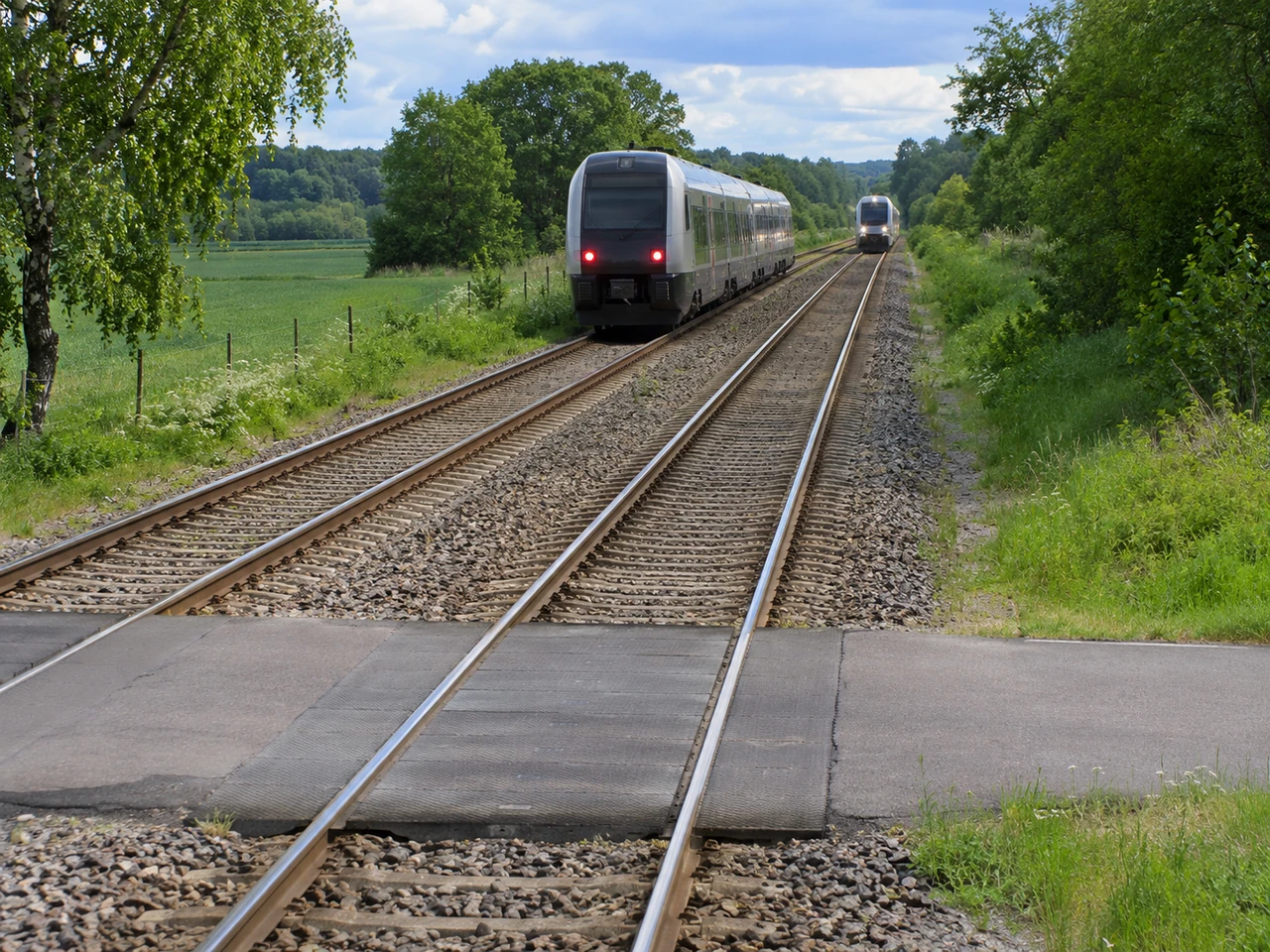
774. Once one train has passed, no other train can be approaching.
One train passing does not mean the crossing is clear. Another train may approach, so follow the crossing controls and check carefully before crossing.
🔗 Sources
The Highway Code (Great Britain) • Safety guidance, Rule 293; follow the crossing controls
Image credit: AI-generated
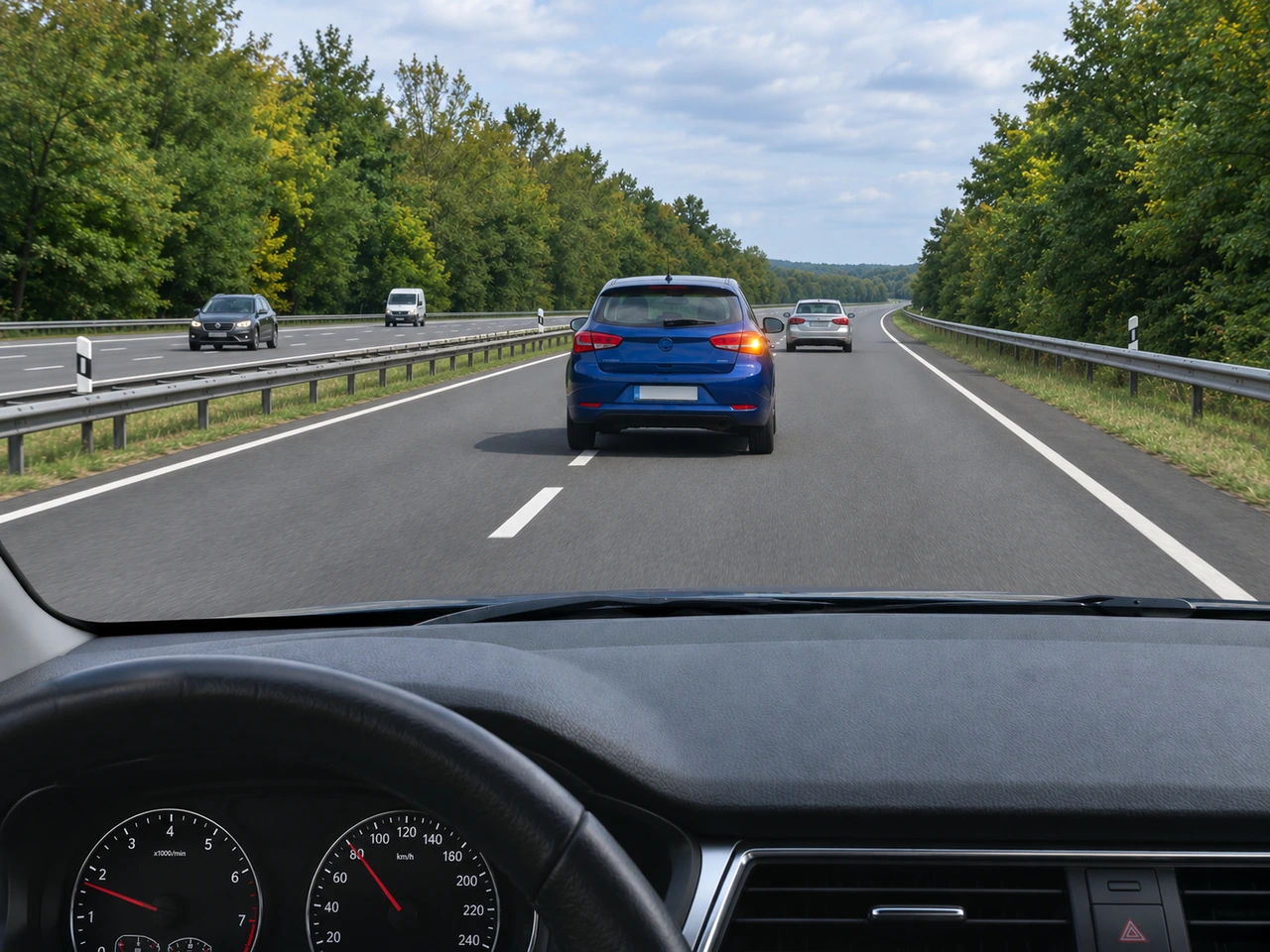
775. A vehicle moves into your following gap without immediate danger. What should you do?
Restore a safe following distance smoothly, allowing for the road and weather conditions. If a collision is imminent, brake as needed to avoid it rather than relying only on easing back.
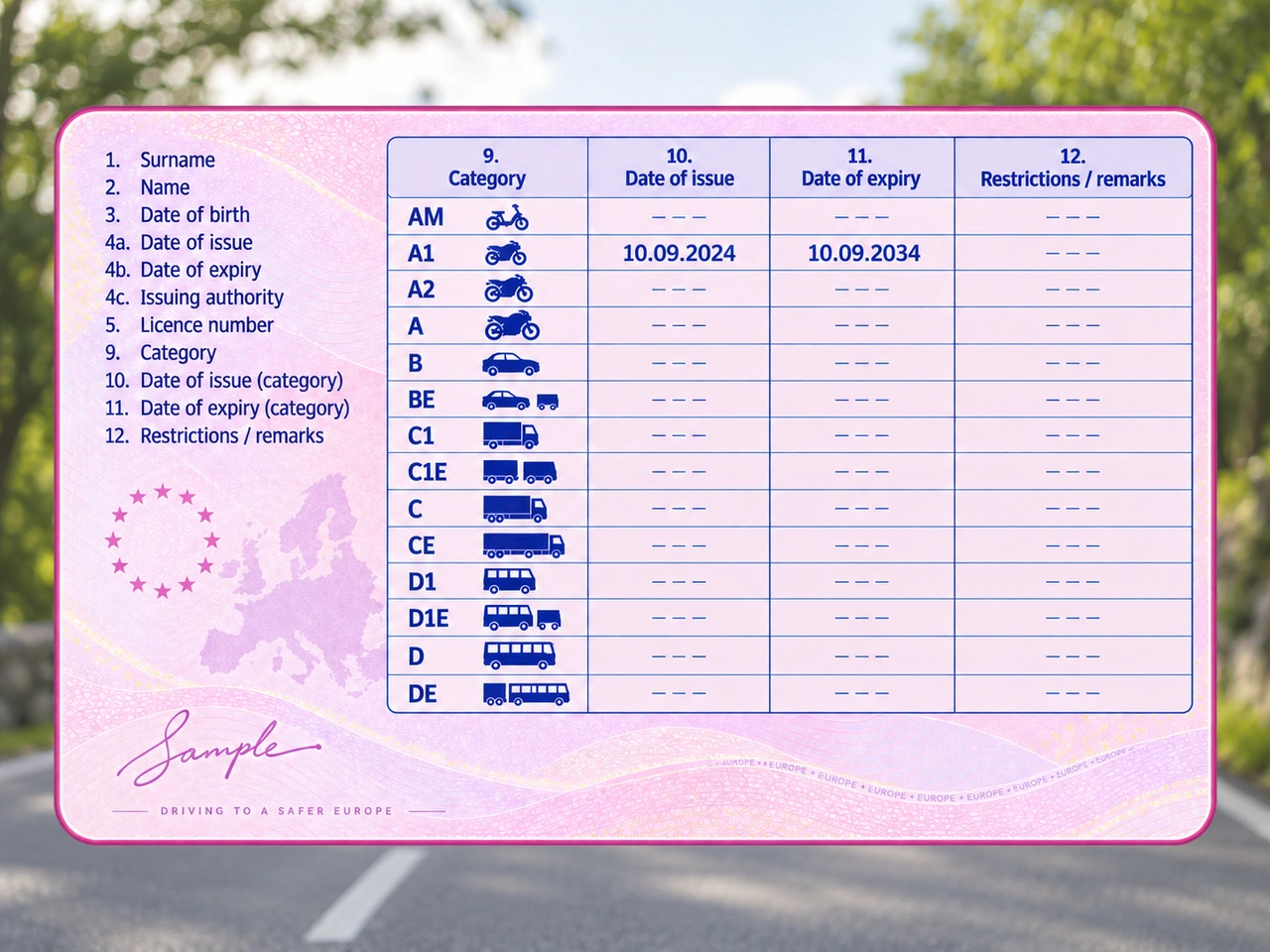
776. Which motorcycles are covered by driving licence A1?
Category A1 covers motorcycles with an engine capacity of no more than 125 cm³, power of no more than 11 kW, and a power-to-weight ratio of no more than 0.1 kW/kg. It also covers powered tricycles up to 15 kW.
Norway. The minimum age to obtain category A1 is 16.
🔗 Sources
Statens vegvesen · Hva kan du kjøre med førerkort klasse A1?
EUR-Lex · Directive 2006/126/EC on driving licences · Article 4(3)(a)
Image credit: AI-generated
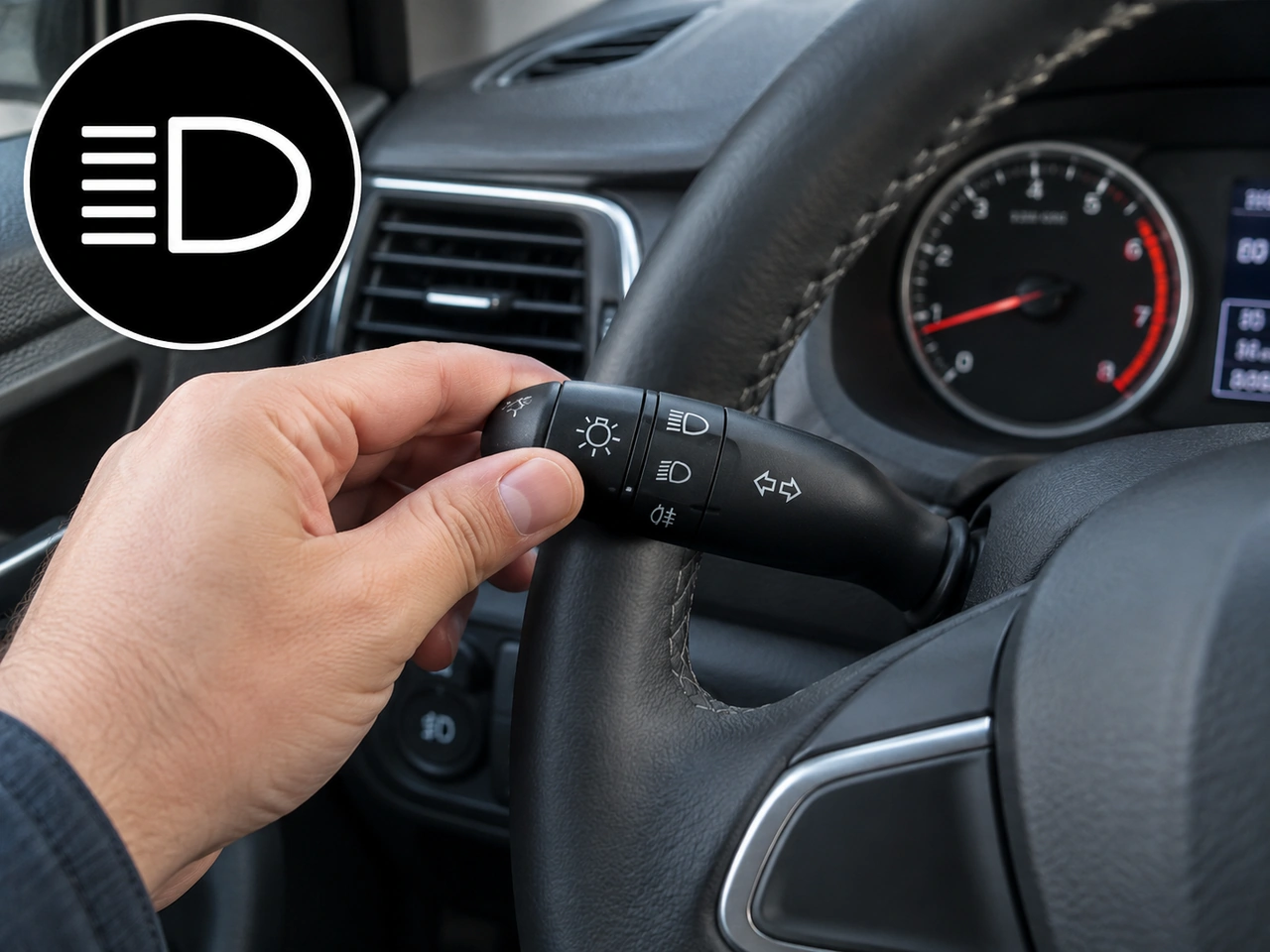
777. Which control is normally used to switch between dipped and main beam headlights?
The lighting stalk is normally used to switch between dipped and main beam headlights. The exact movement varies between vehicles, so check the vehicle controls before driving.
On many cars, pushing the lighting stalk away selects main beam. Check how your car switches back to dipped beam.
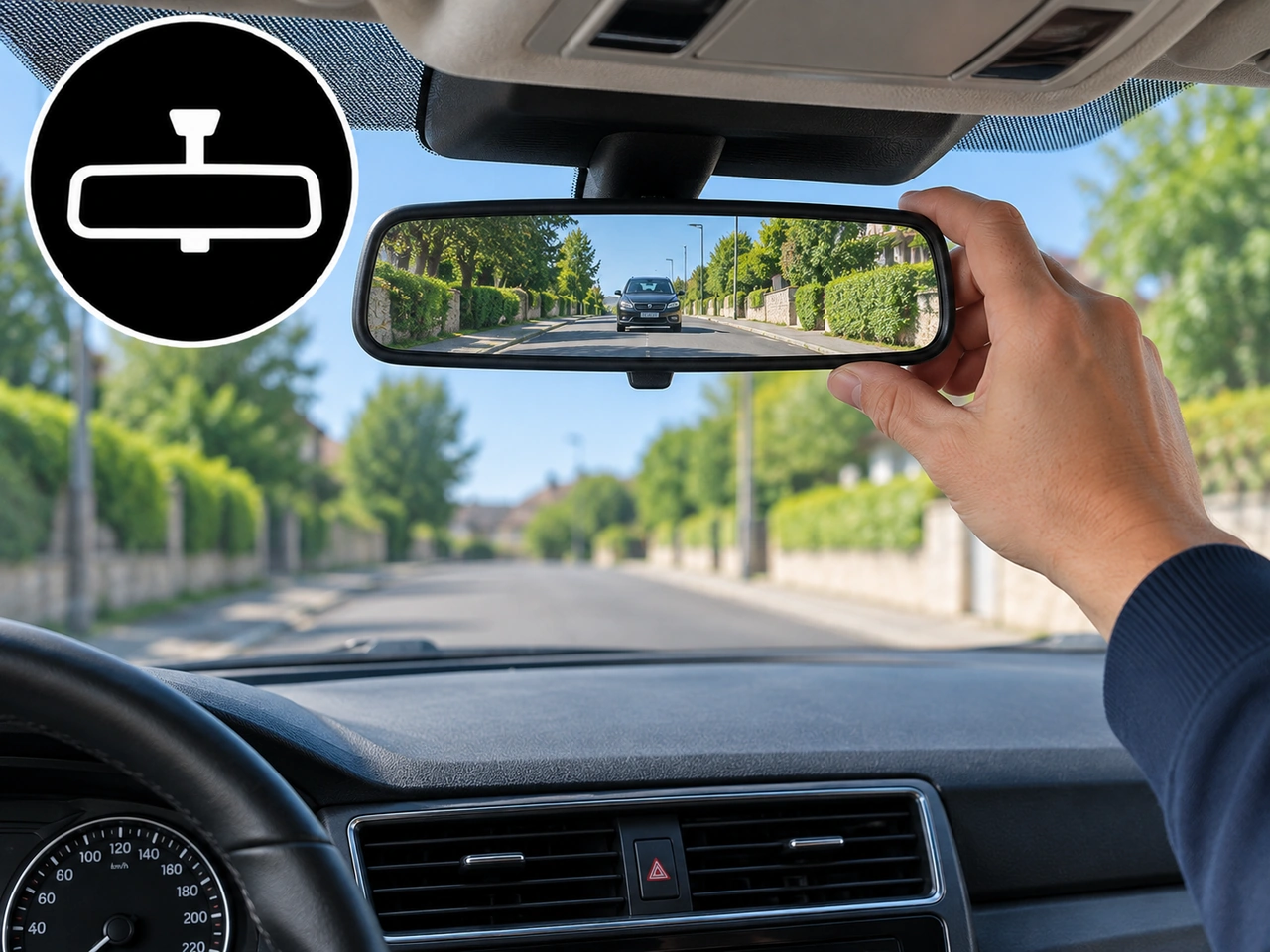
778. How should the interior rear-view mirror be adjusted?
Adjust the interior rear-view mirror before driving so that you have a clear view through the rear window without needing to move your head significantly.
Set your driving position first, then adjust the interior mirror to frame the rear window before moving off.
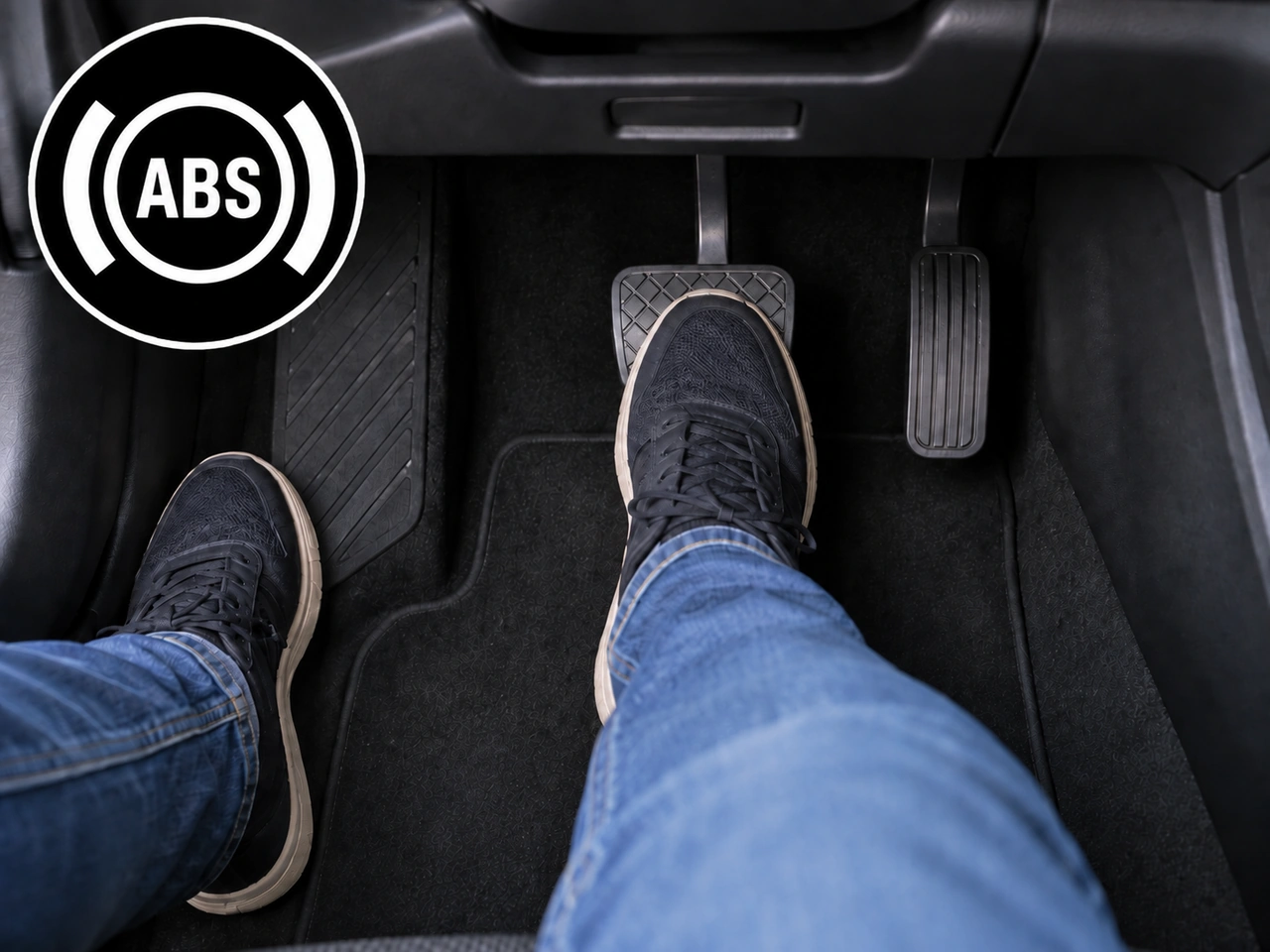
779. How should you use the brake pedal during emergency braking in a vehicle with ABS?
During emergency braking with ABS, press the brake pedal firmly and keep it pressed. Pulsation or vibration through the pedal can be normal while ABS is operating, so do not pump or release the brake.
In an emergency, apply the foot brake firmly and maintain pressure until you have slowed enough or stopped.
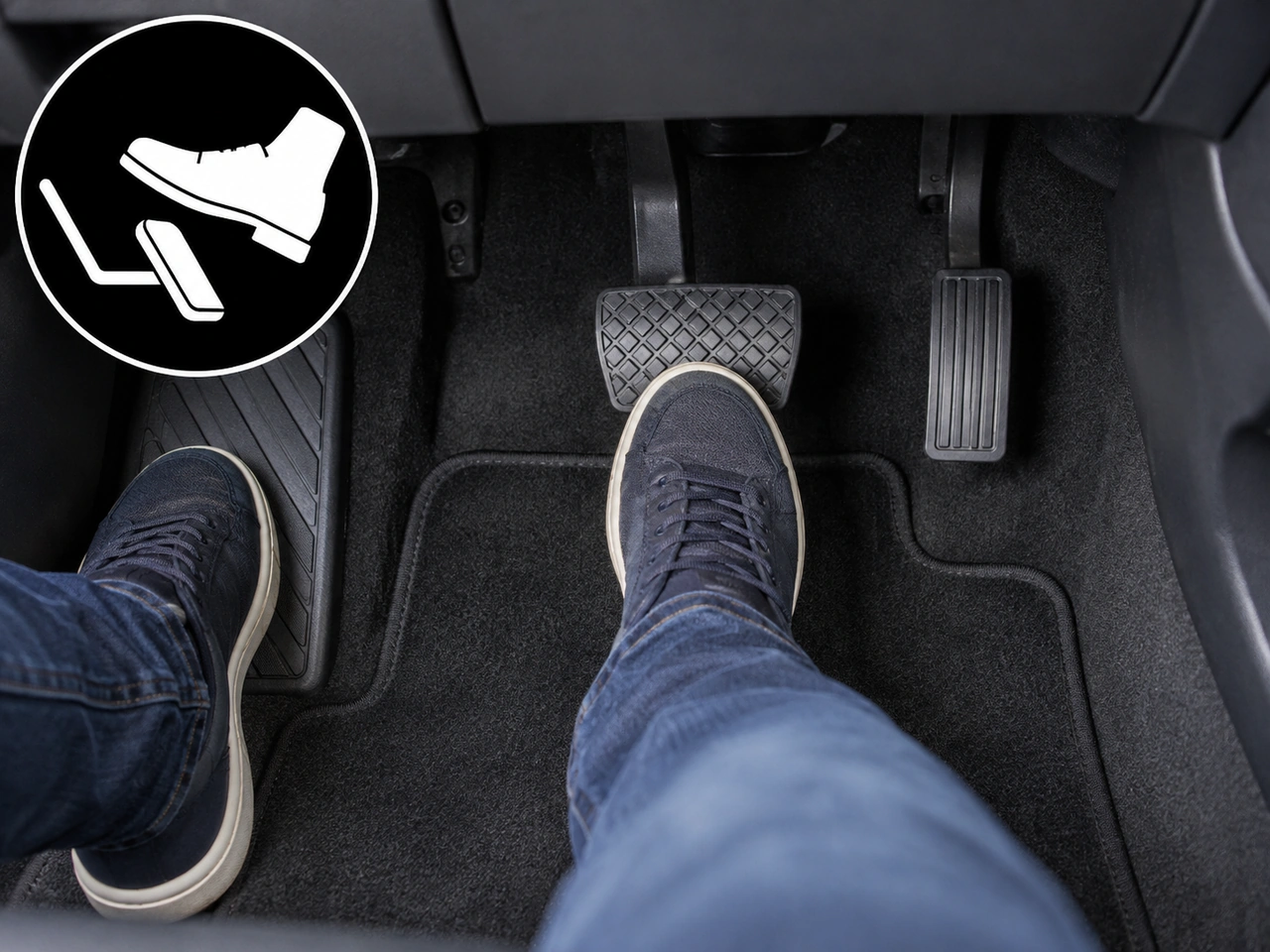
780. What does it mean to cover the brake pedal?
To cover the brake, move your right foot over the brake pedal without pressing it, so you are ready to brake quickly if a hazard develops.
When approaching a place where you may need to slow or stop quickly, move your foot from the accelerator to just above the brake pedal.
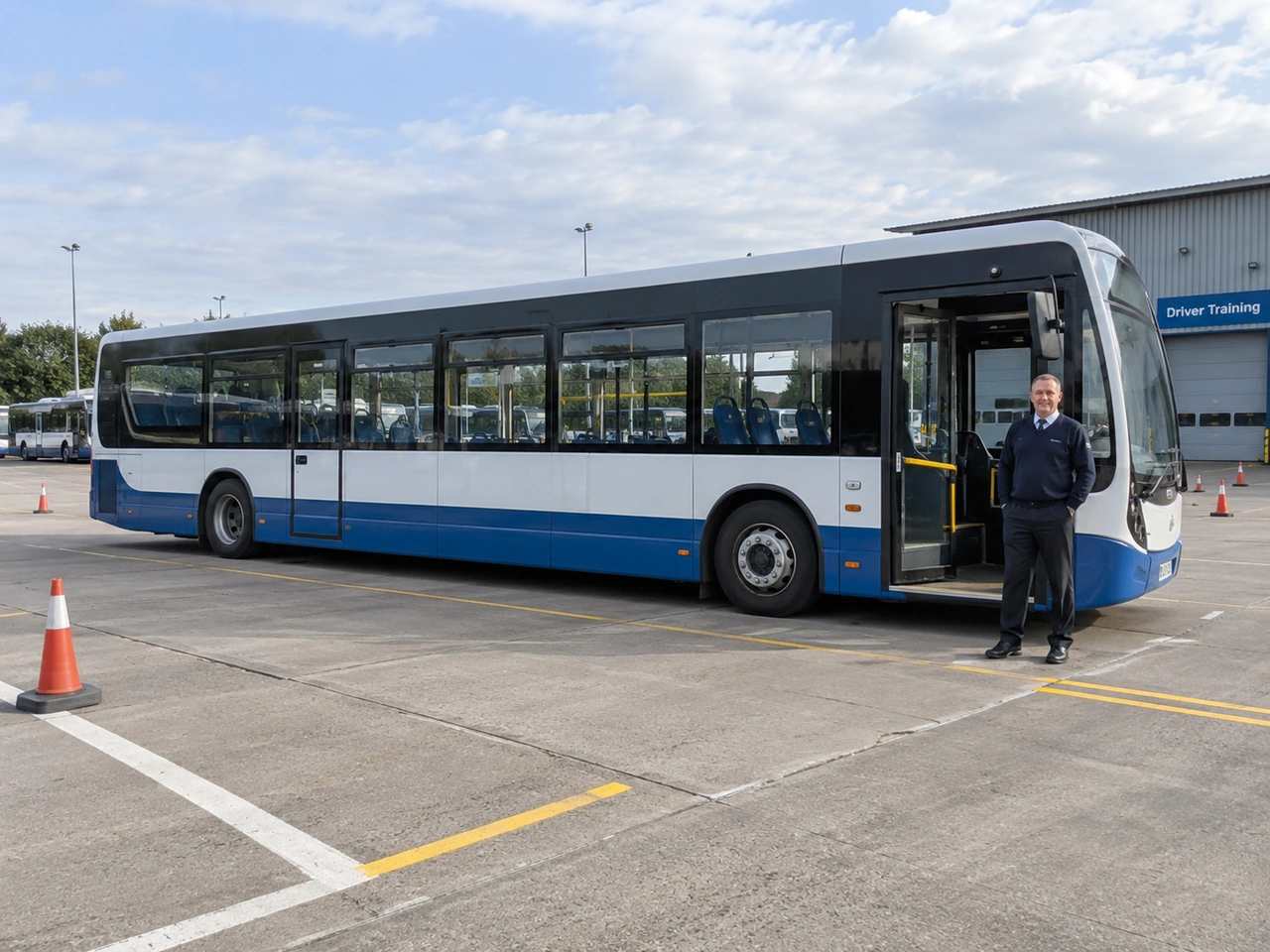
781. What is the minimum licence for a bus designed for more than 16 passengers?
Category D1 is limited to vehicles designed for no more than 16 passengers in addition to the driver. A bus designed for more than 16 passengers therefore requires category D.
Norway. A short bus designed for 17 passengers plus the driver exceeds D1’s passenger limit even if it is under 8 metres long.
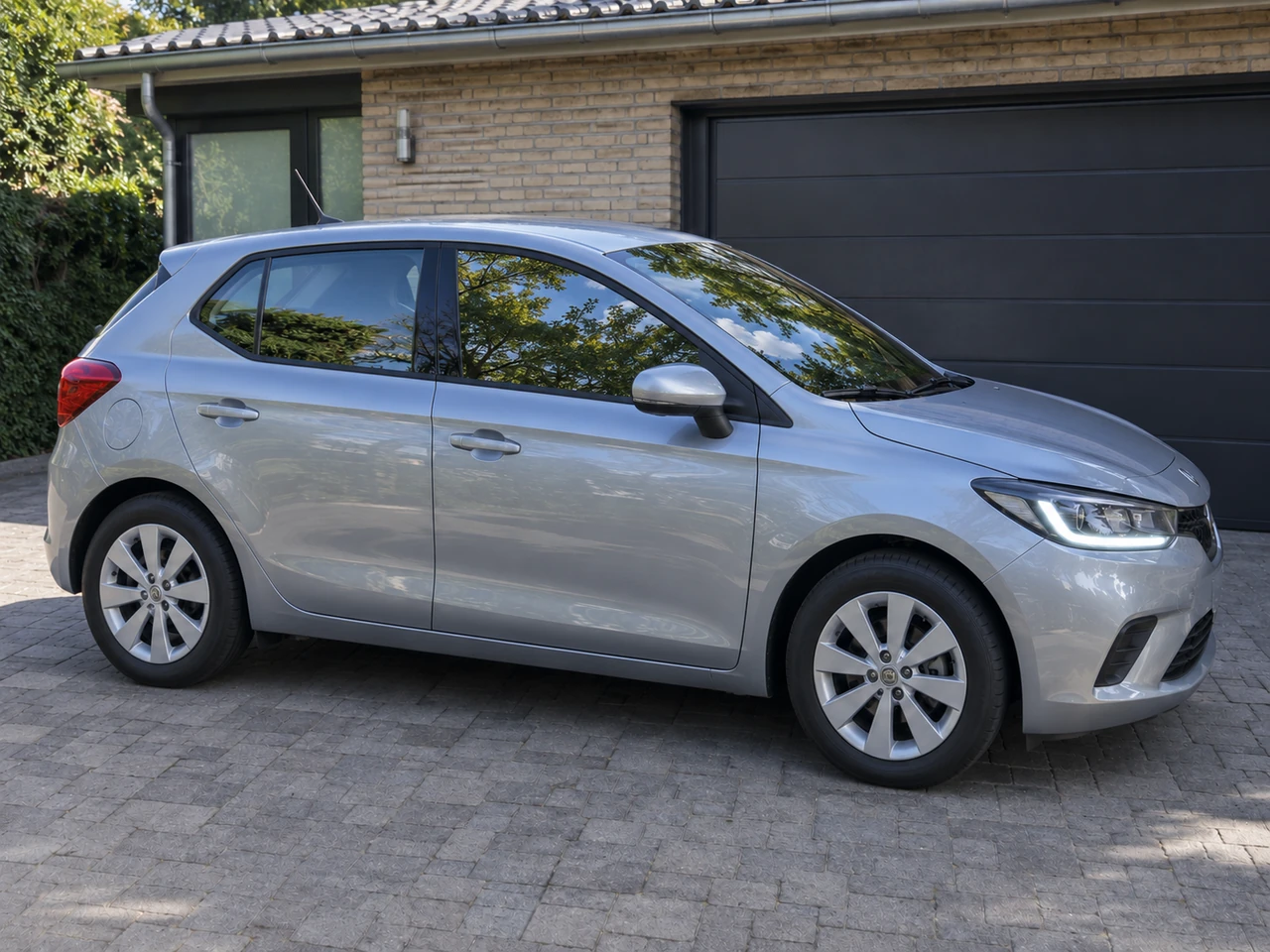
782. Daytime running lights always switch on the rear position lights.
On some vehicles, daytime running lights illuminate only the front. Learn how your lights operate and select the appropriate lighting for darkness or poor visibility; do not assume that the rear lights are on.
🔗 Sources
Department for Transport (Great Britain) • Safety guidance, DRLs and rear position lamps; local lighting rules apply
Image credit: AI-generated
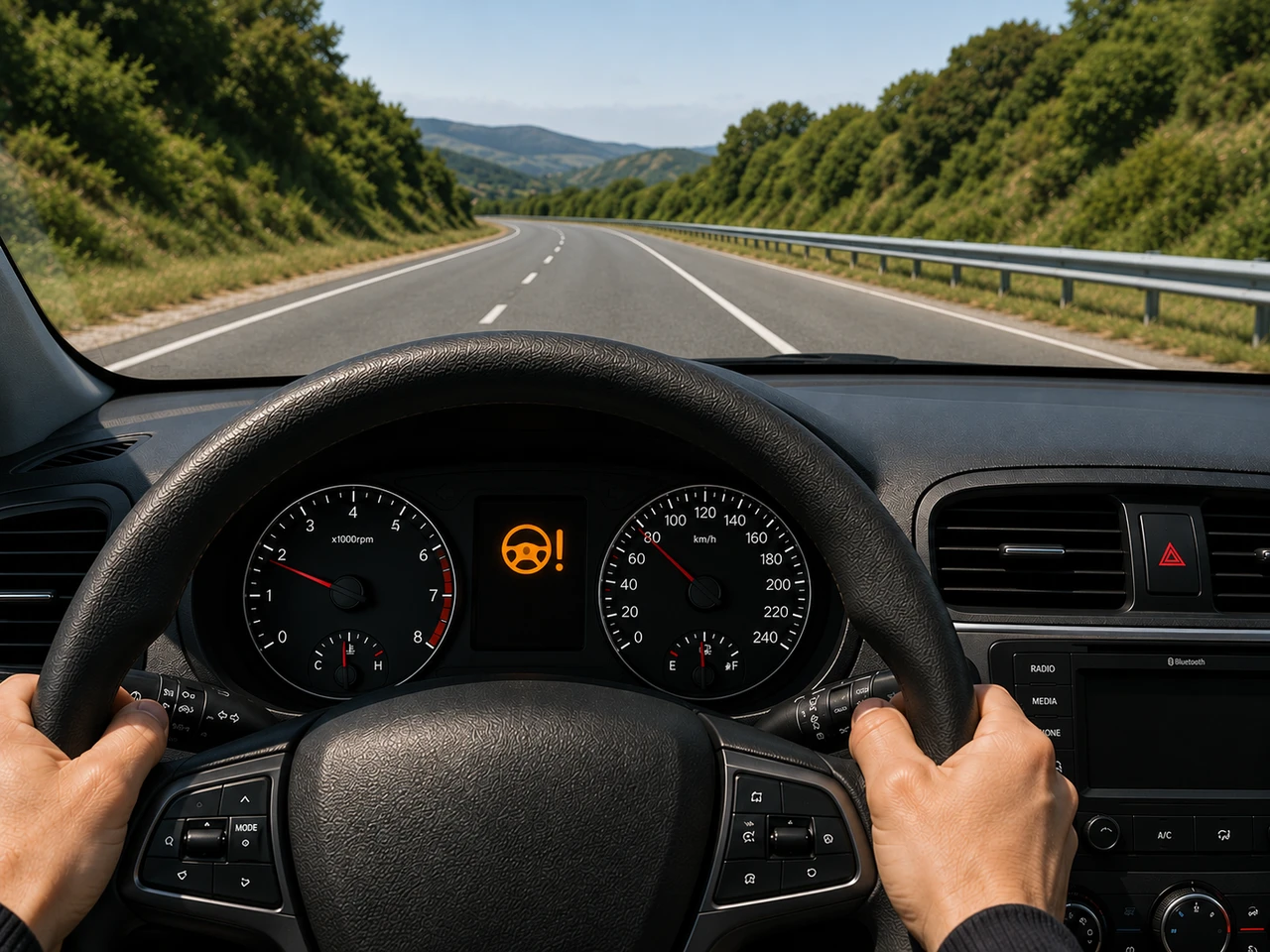
783. What should you do if the power steering suddenly stops assisting you?
Loss of power assistance normally makes the steering much heavier rather than disconnecting it. Hold the wheel firmly, use the additional effort needed to maintain direction, reduce speed smoothly and stop safely. Do not switch off the ignition while moving to try to reset the system. Follow the vehicle handbook and arrange professional assistance or inspection for a steering fault.
Loss of steering assistance can increase steering effort. This differs from a mechanical steering failure; follow your own handbook and stop safely.
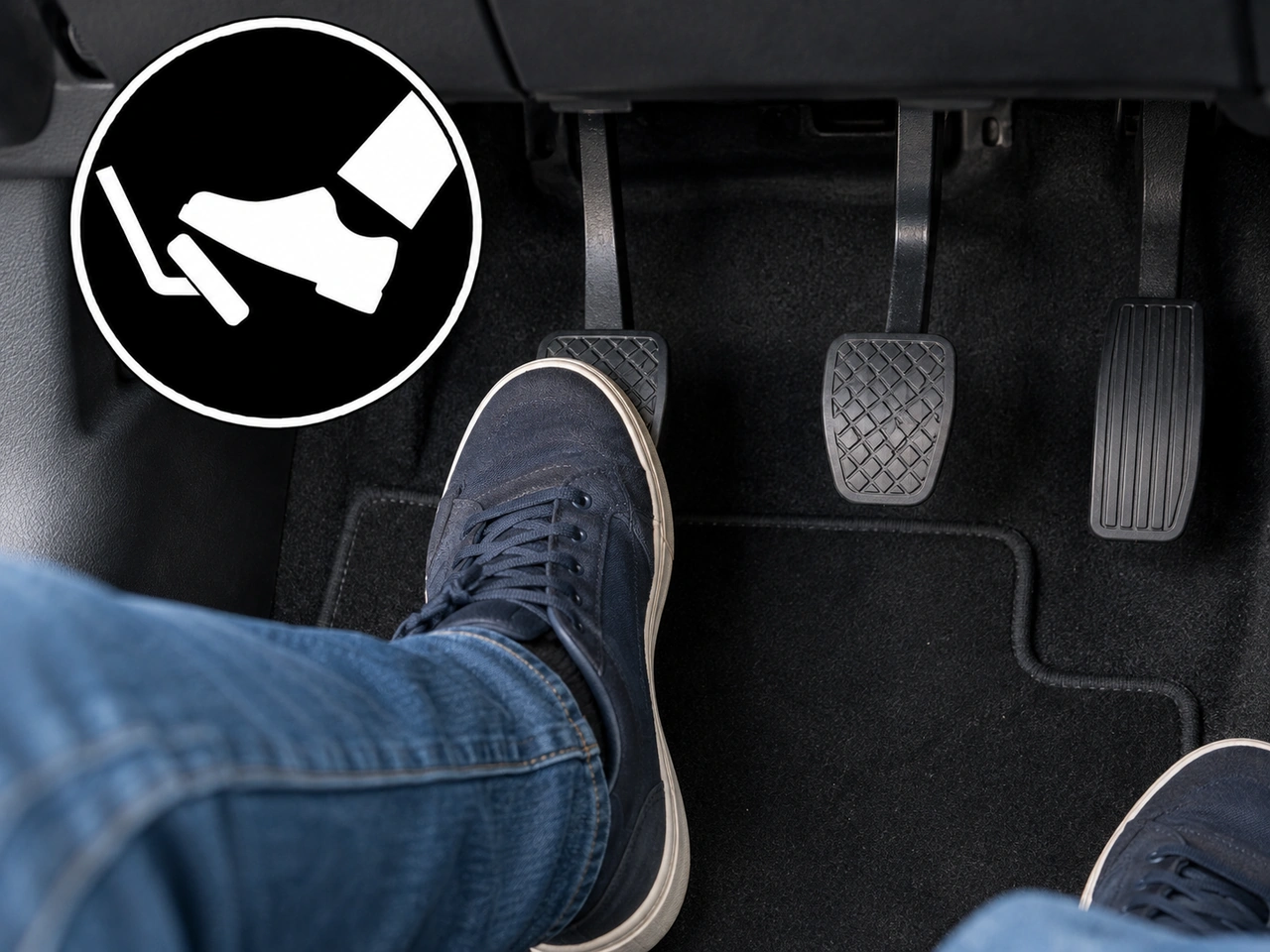
784. What is the purpose of the clutch pedal in a manual vehicle?
Pressing the clutch pedal temporarily disconnects the engine from the transmission, allowing the driver to change gear or stop without stalling the engine.
In a manual car, the clutch is the left pedal. Keep your foot off it between gear changes unless you need it to prevent stalling.
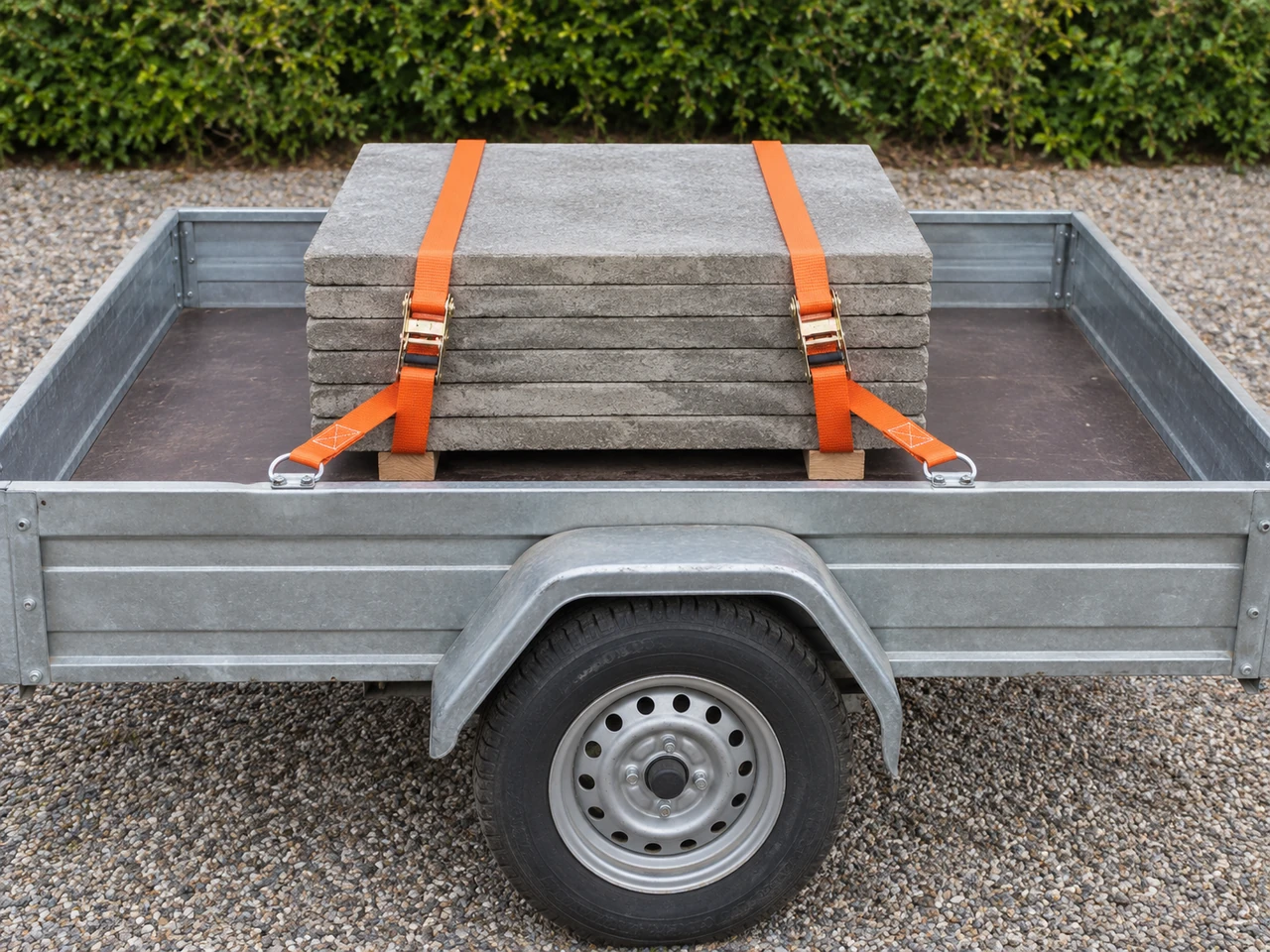
785. A load may compromise vehicle stability if it is firmly strapped down.
Under normal road conditions, the load must not compromise vehicle stability. Strapping it down does not remove that requirement. Position and distribute the load appropriately as well as securing it, and respect all applicable mass and equipment limits.
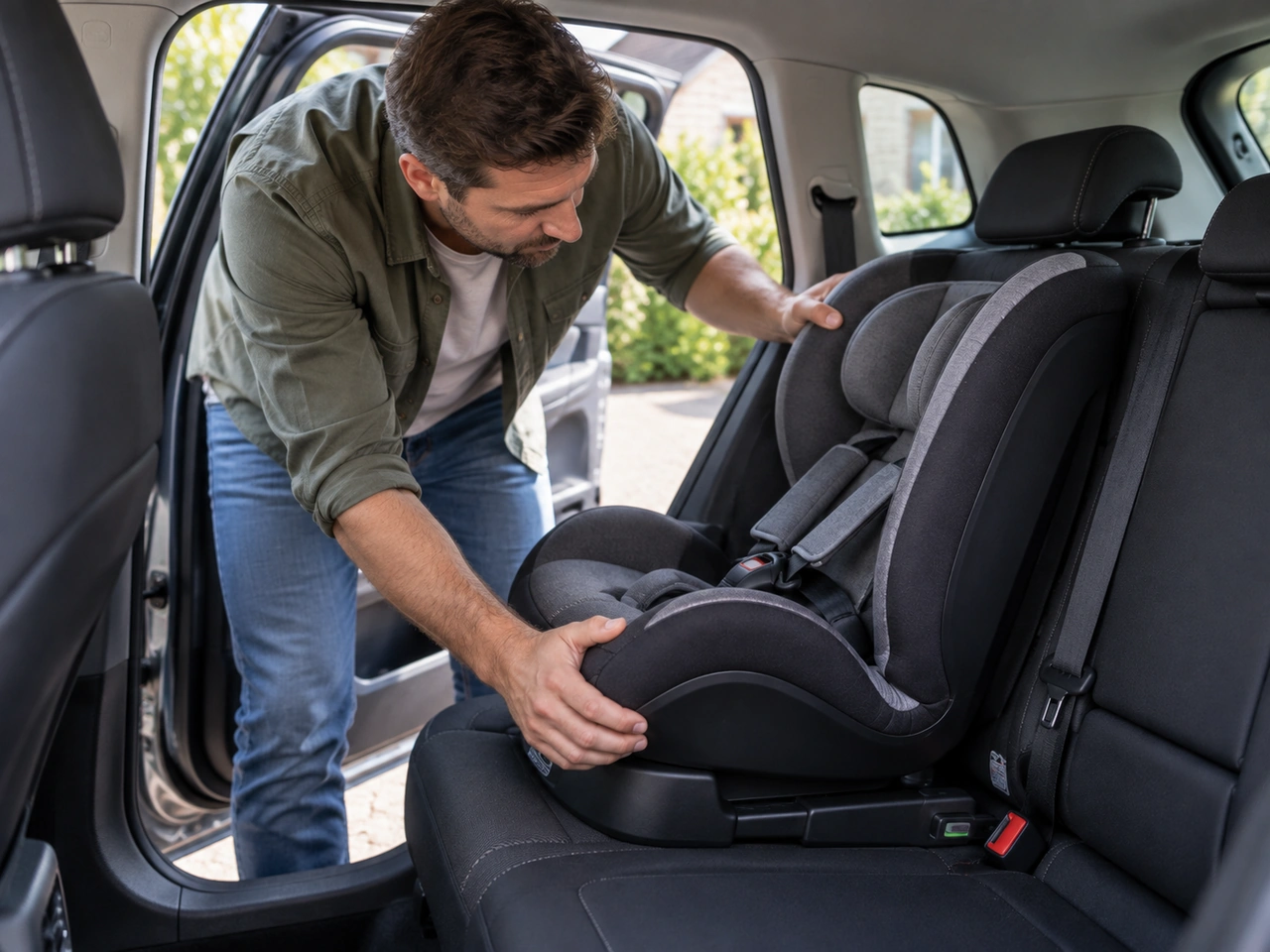
786. What should you check after fitting a child restraint?
A child restraint should be installed securely and used according to the manufacturer's instructions. Check that the seat is firmly attached, the belt or ISOFIX connection is correct, and the child is restrained properly before driving.
Norway. Do not put a rear-facing child restraint in front of an active frontal airbag. Check that the airbag is disabled before travelling.
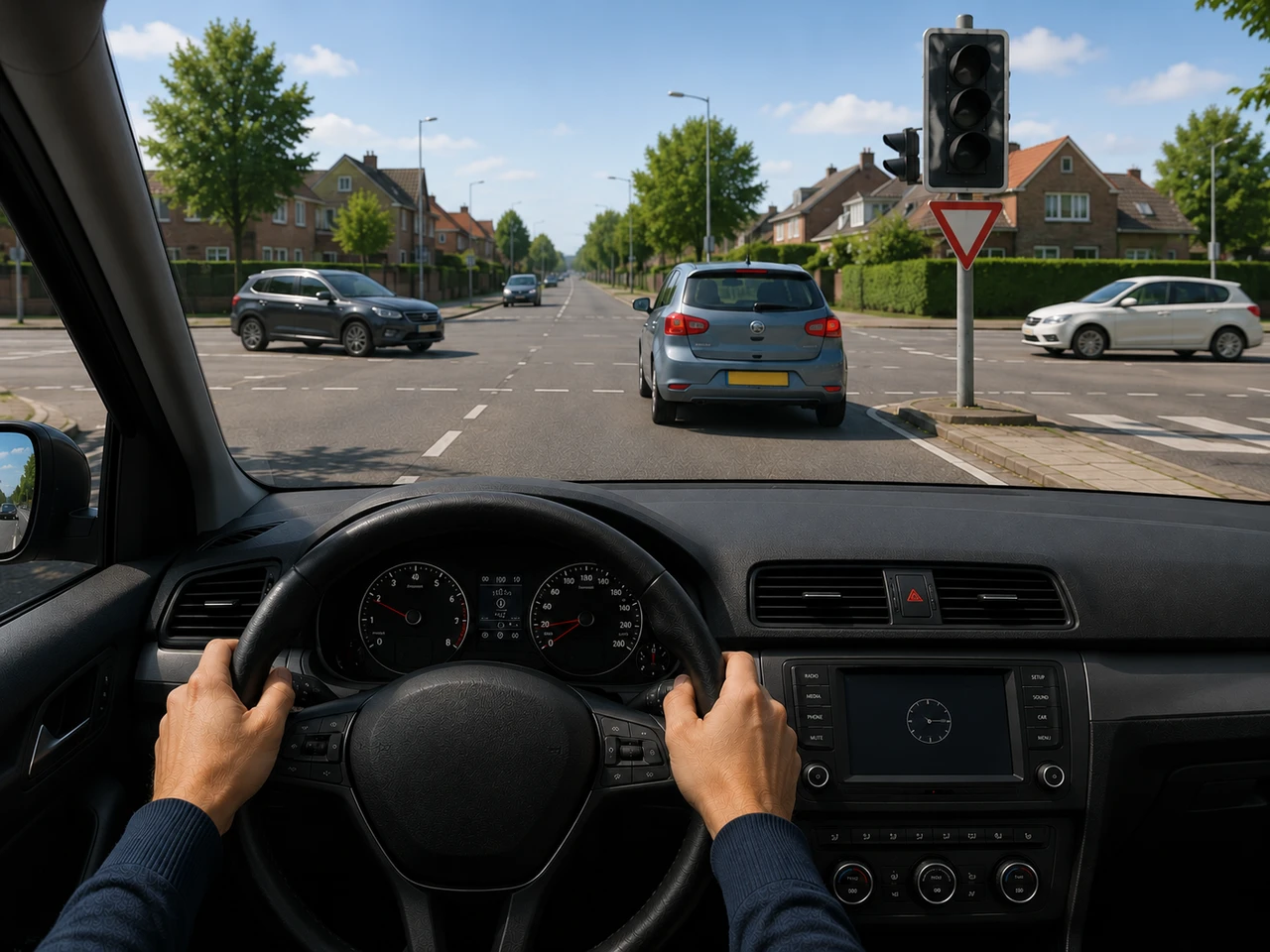
787. What should you do when traffic lights are not working?
If traffic lights are not working, slow down and check each approach. Some places require a full stop. Elsewhere, follow any applicable signs, markings or priority rules. Proceed only when it is safe.
Norway. Follow any applicable priority signs if the traffic lights are out. At an uncontrolled junction, give way to traffic from the right unless another rule applies.
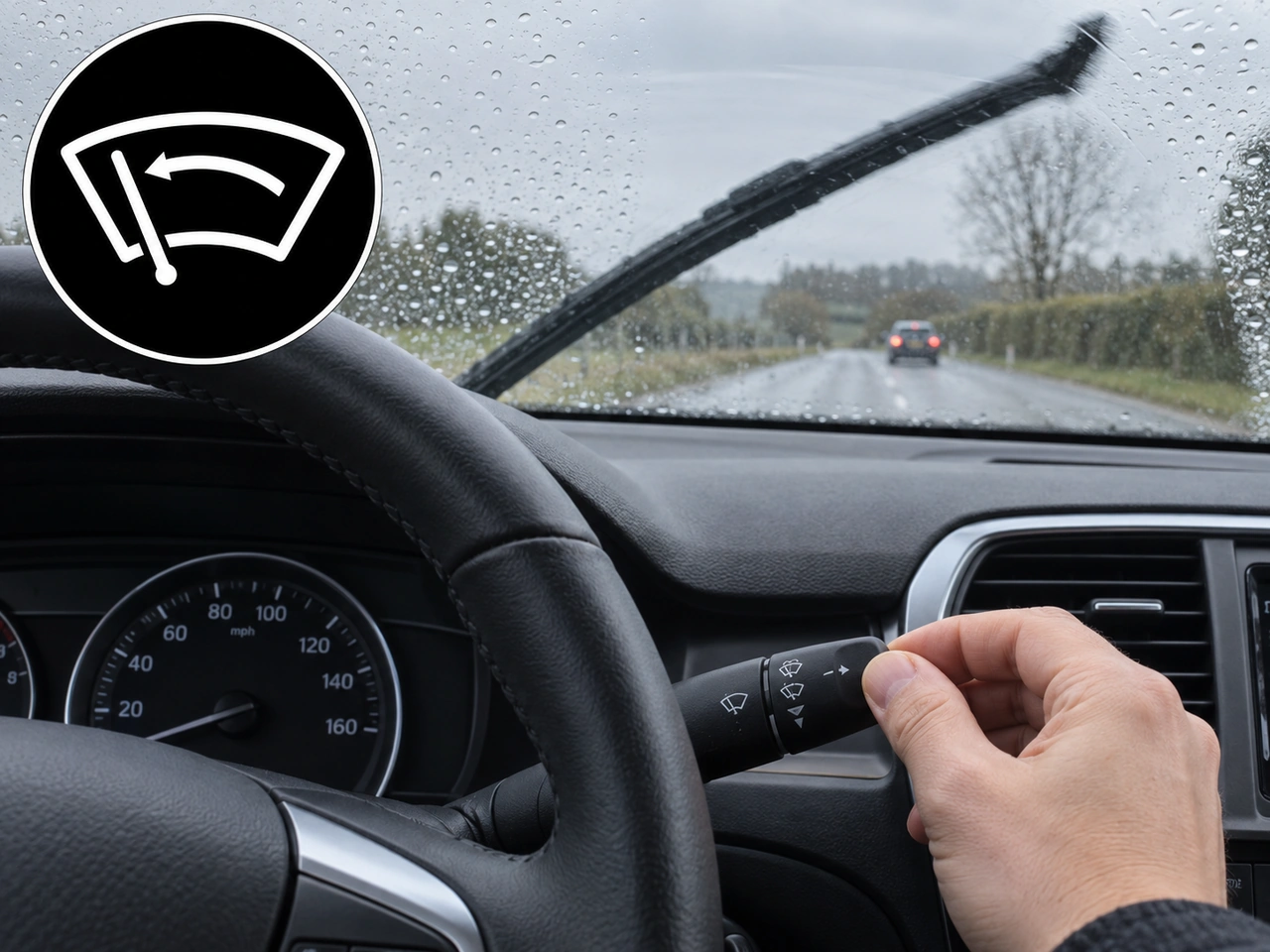
788. What does the single-wipe position of the windscreen-wiper control do?
The single-wipe position operates the windscreen wipers for one sweep and then stops. It is useful when only a small amount of water or spray needs to be cleared from the windscreen.
Use the momentary wiper setting for one sweep, for example to clear a splash from the windscreen.
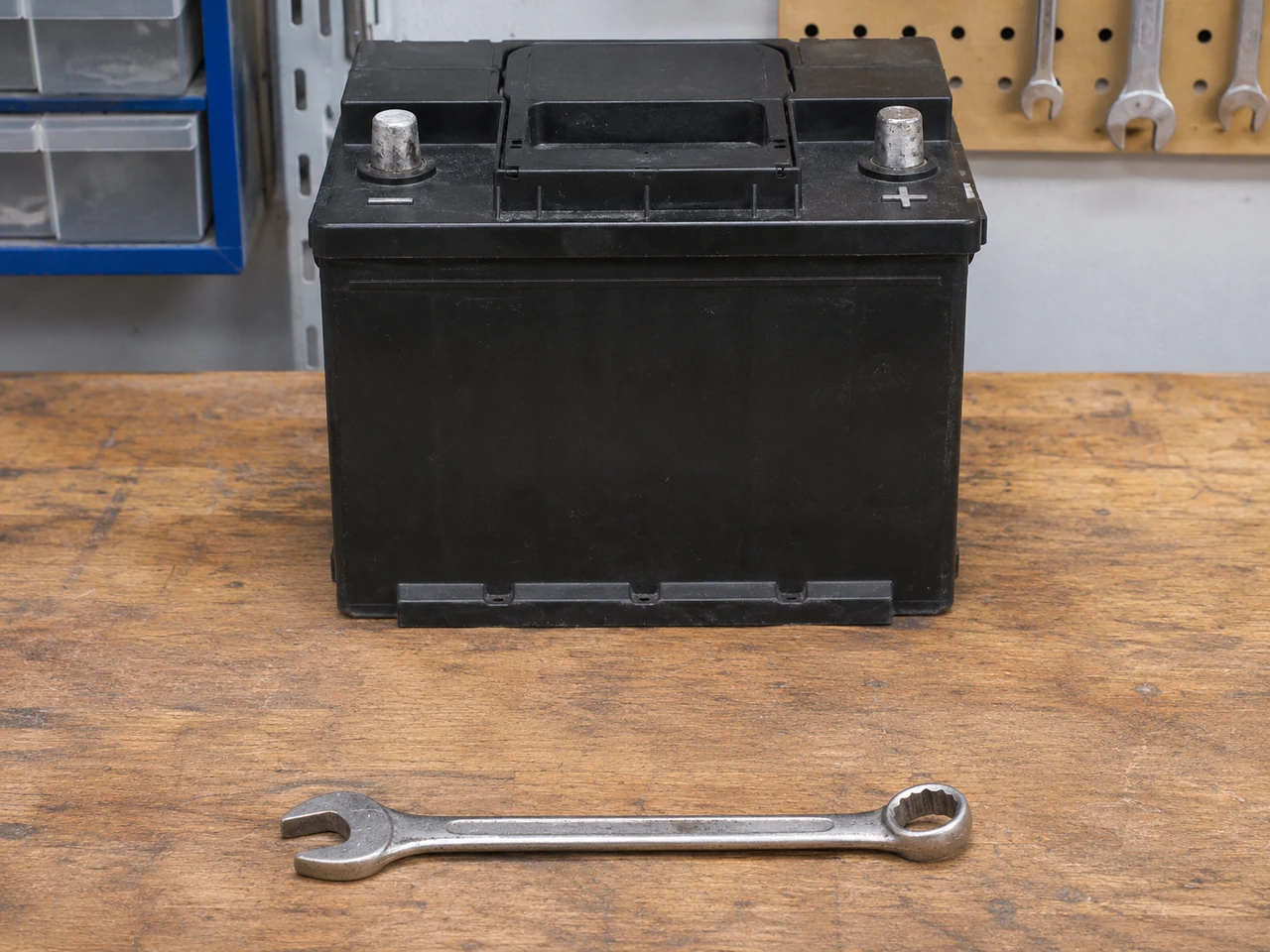
789. Bridging a car battery's terminals with a metal tool is harmless.
A metal tool touching both terminals can cause a short circuit, intense heat, burns and sparks. Keep metal objects clear of battery terminals and never test a battery by shorting it.
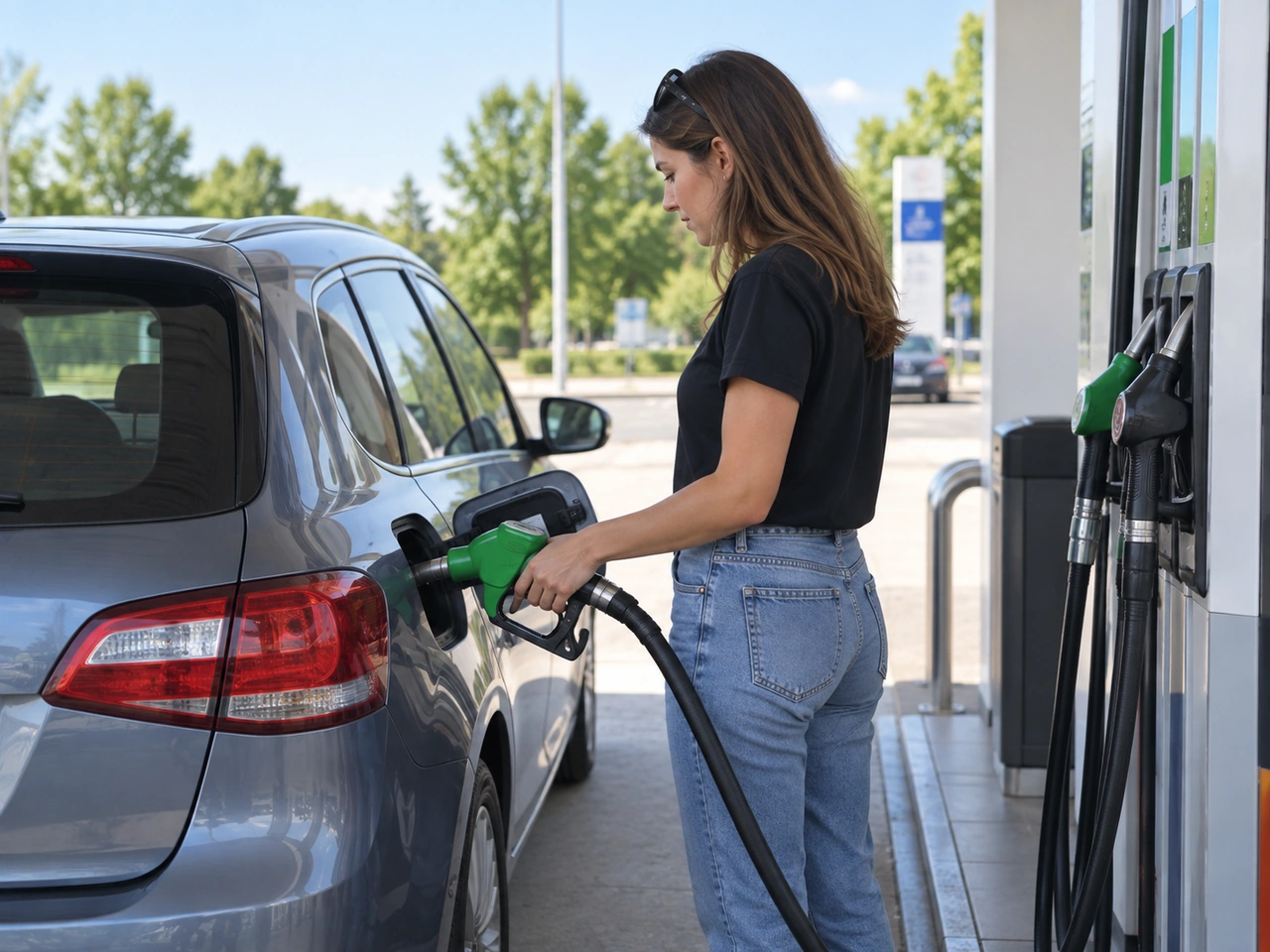
790. What should you do before refuelling a petrol or diesel vehicle?
Switch off the engine before refuelling. Fuel vapours are flammable, so avoid ignition sources and follow the safety instructions at the filling station. If fuel is spilled, do not start the vehicle until the situation has been made safe.
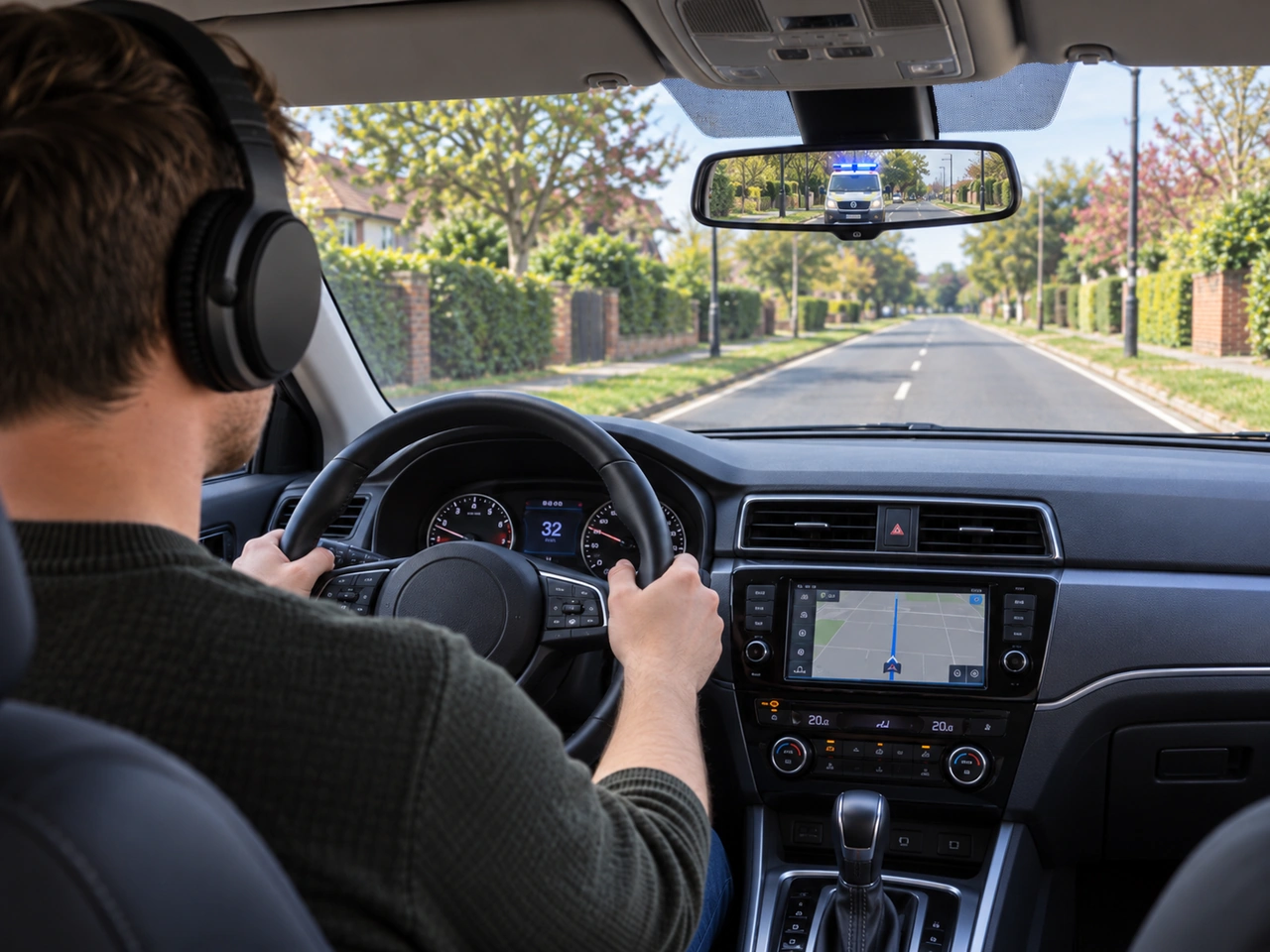
791. Why can headphones or very loud music be dangerous while driving?
Headphones or very loud music can reduce your awareness of horns, sirens, warning sounds, and surrounding traffic. Keep the volume at a level that allows you to remain aware of what is happening around the vehicle.
🔗 Sources
Great Britain — Highway Code, rule 148; distraction and warning sounds
Image credit: AI-generated
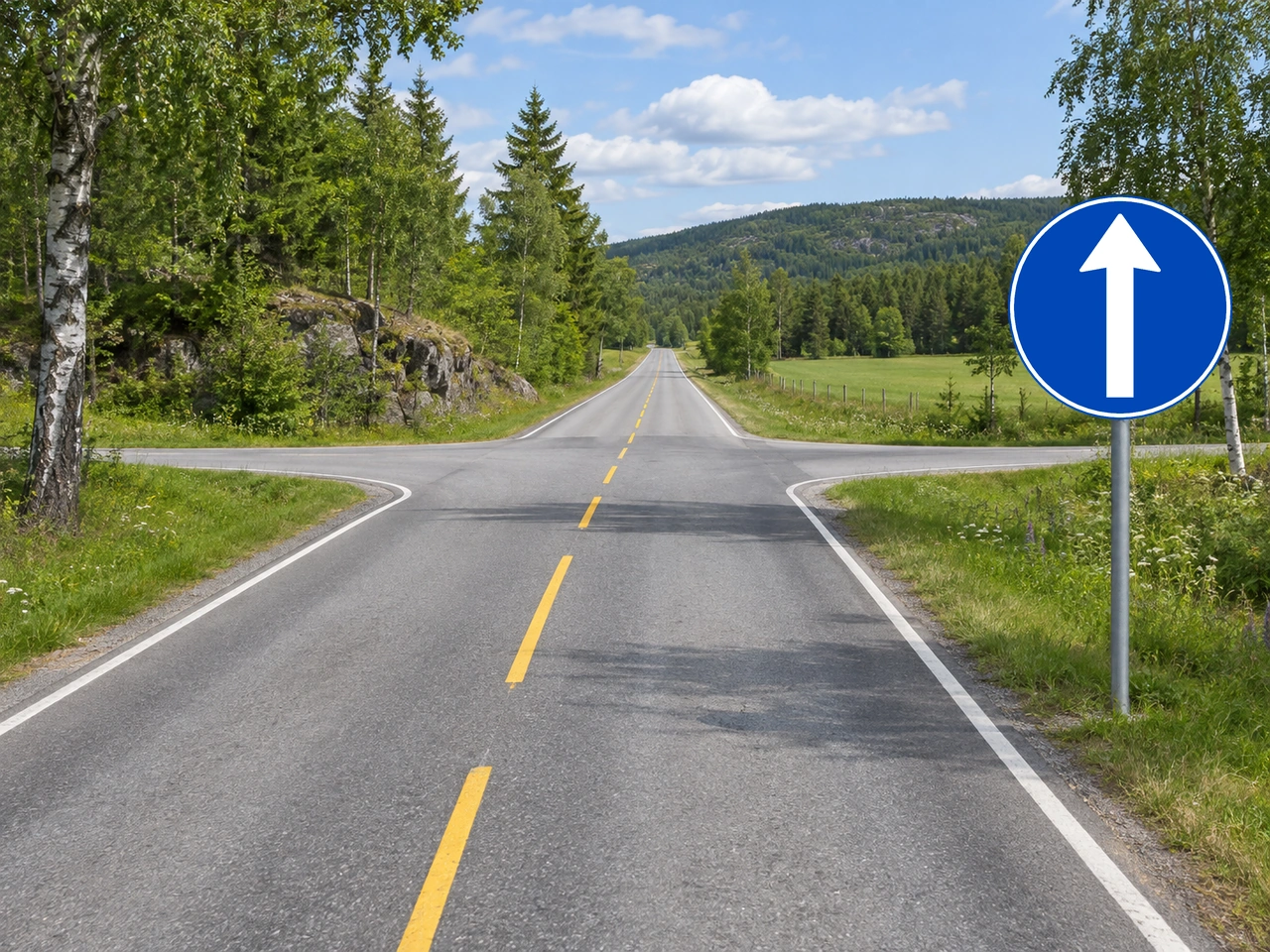
792. The blue circular straight-ahead arrow shown makes that direction compulsory.
The blue circular arrow requires drivers to follow the indicated direction. The sign shown requires straight ahead, rather than merely recommending it. It has no exemption panel.
🔗 Sources
Norway • Skiltforskriften • Sign 402.3
Statens vegvesen • Official traffic-sign meanings
Statens vegvesen • Official sign artwork
Official Norwegian sign artwork: Statens vegvesen, sign 402.3, original EPS file 402_3.eps from the national sign artwork archive. Native symbol, orientation, borders and proportions retained. Colours use the authority's published PMS web swatches: blue PMS 293 and red PMS 179 where present. Original files and colour guidance. No third-party open licence is asserted for the government artwork.

Image credit: AI-generated background with source sign artwork resized and placed on the sign face.
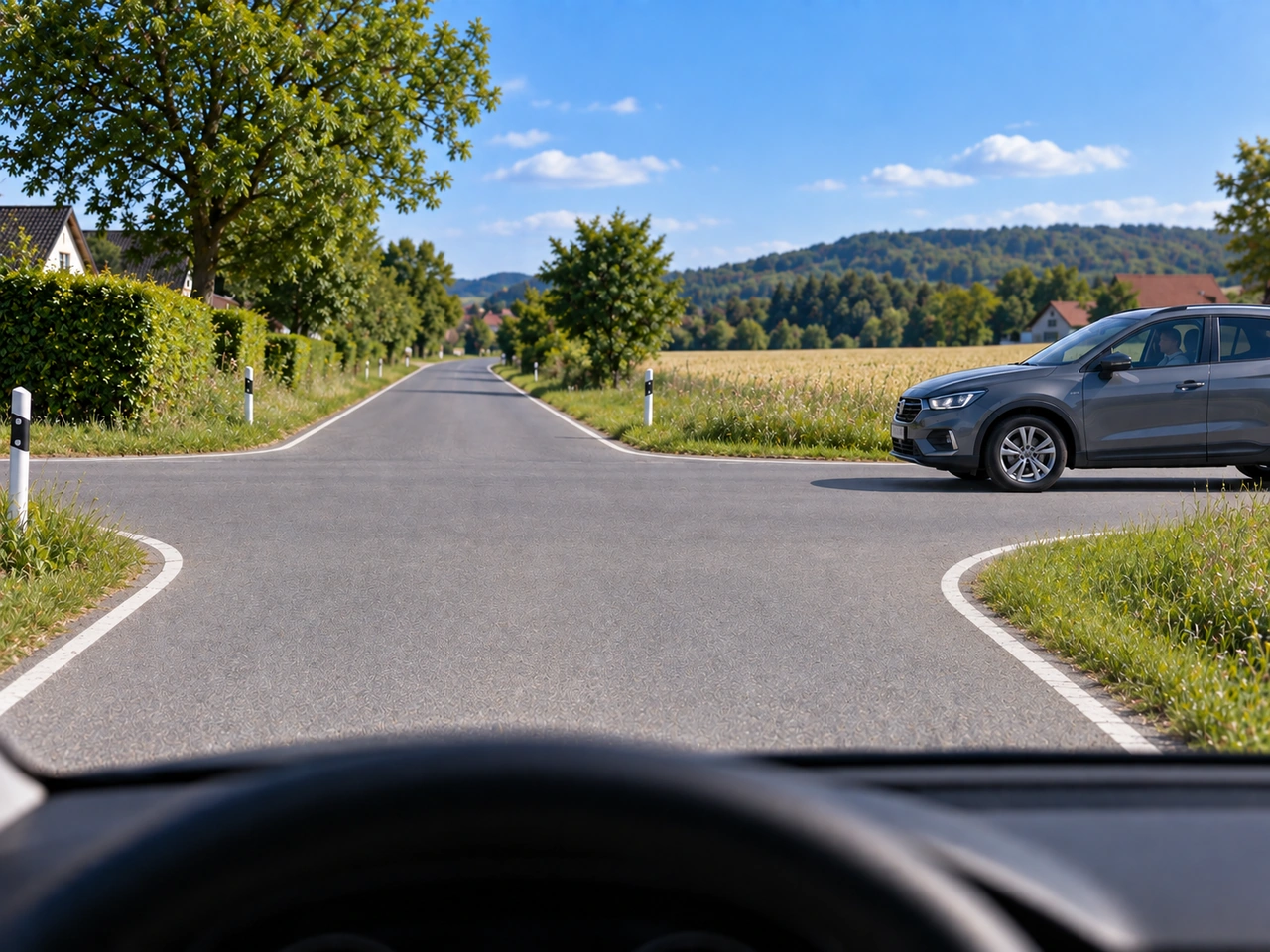
793. Who generally has priority at an uncontrolled intersection?
At an uncontrolled intersection in Norway, you generally give way to traffic approaching from the right.
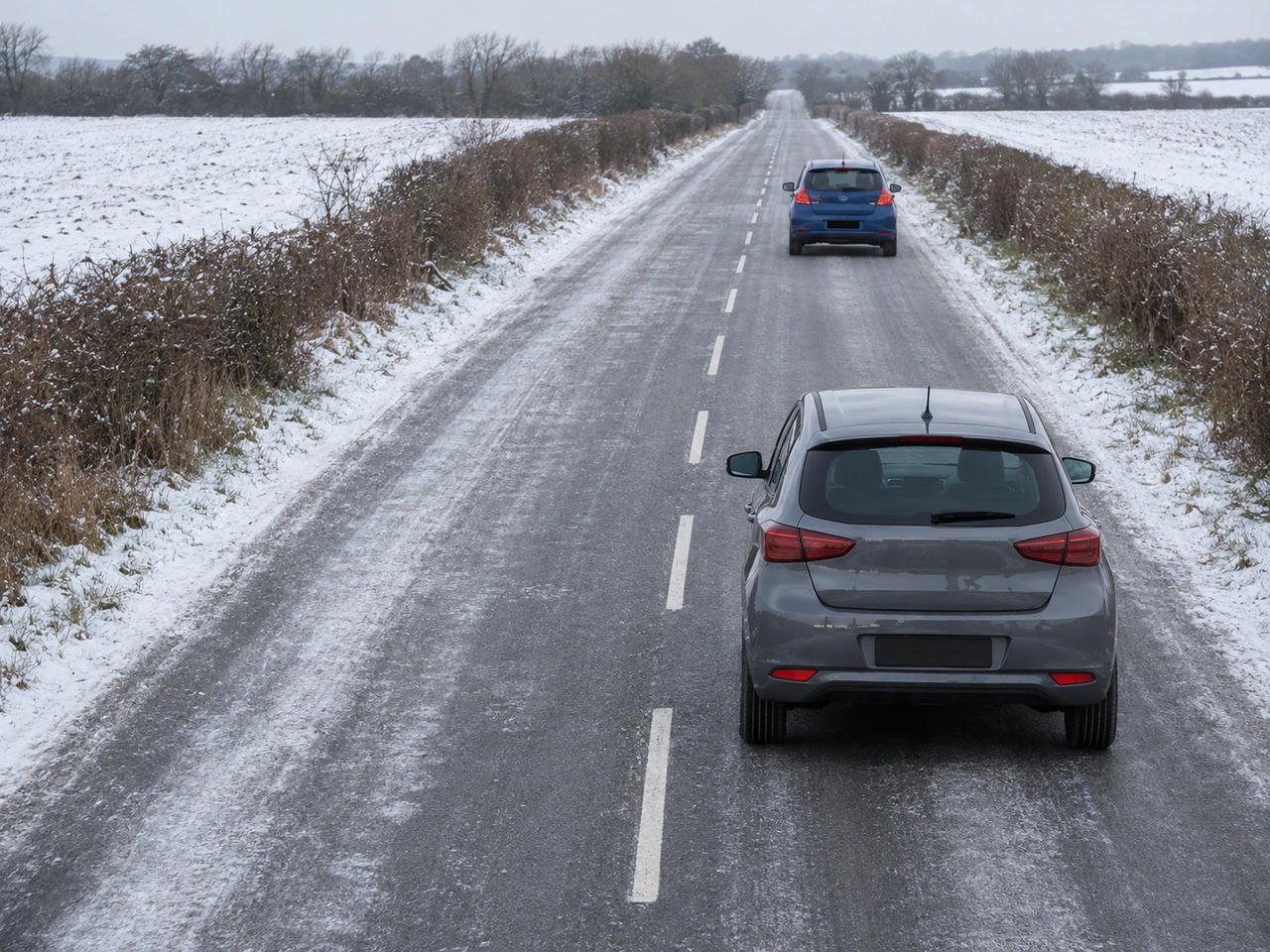
794. Why should you leave a much larger following distance on an icy road?
Ice provides very little grip, so the braking part of your stopping distance can increase greatly. A much larger following gap gives you more time to react and reduces the need for abrupt braking. Keep your speed low as well: extra distance alone does not make a high speed safe. Adapt the gap to the actual conditions rather than relying on a dry-road rule.
🔗 Sources
Great Britain — Highway Code, rule 230; extra winter following space
Image credit: AI-generated
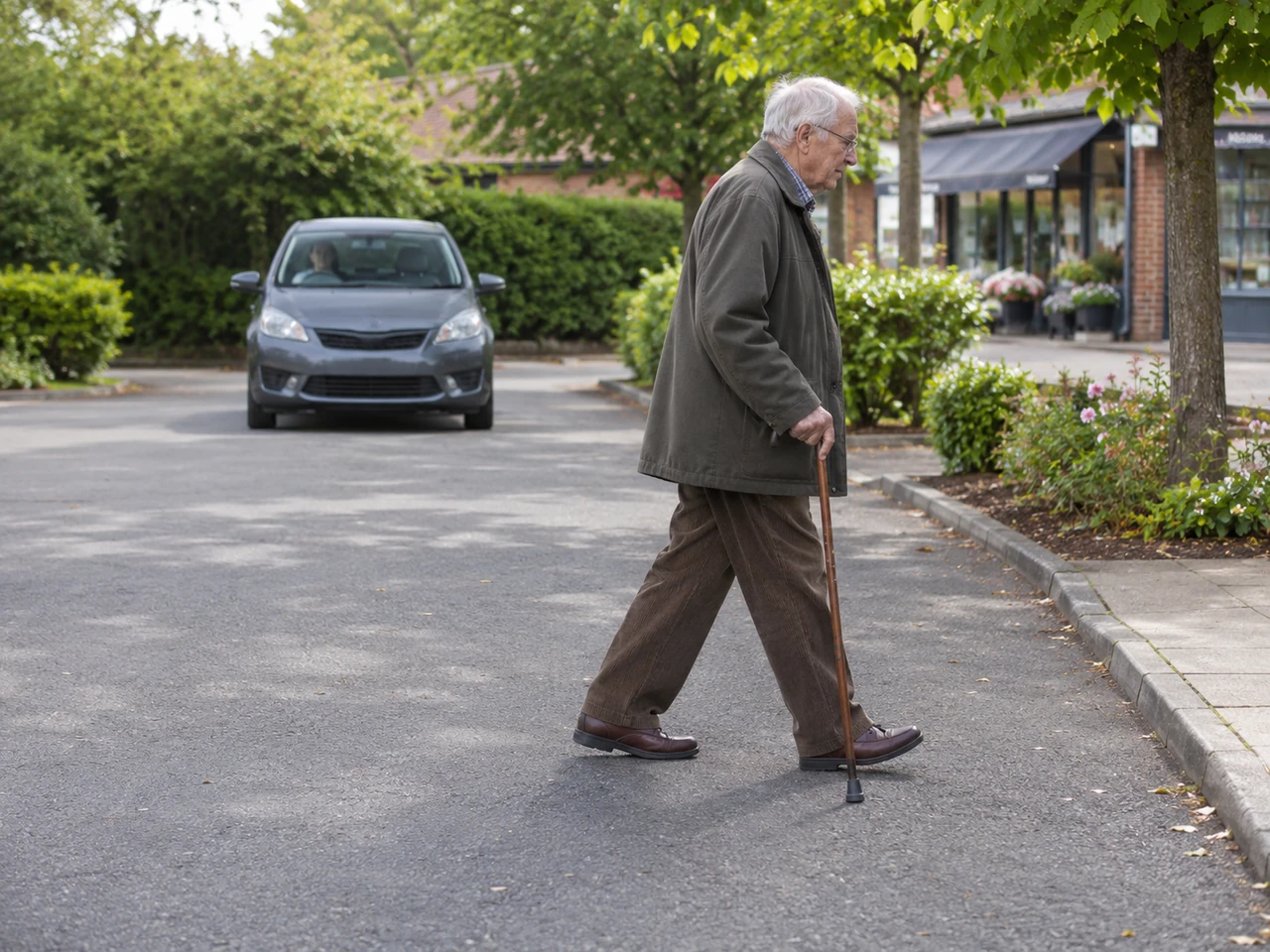
795. Some pedestrians need more time to cross the road.
Some people need extra time because of age, disability or difficulty walking. Be patient and do not pressure them to hurry.
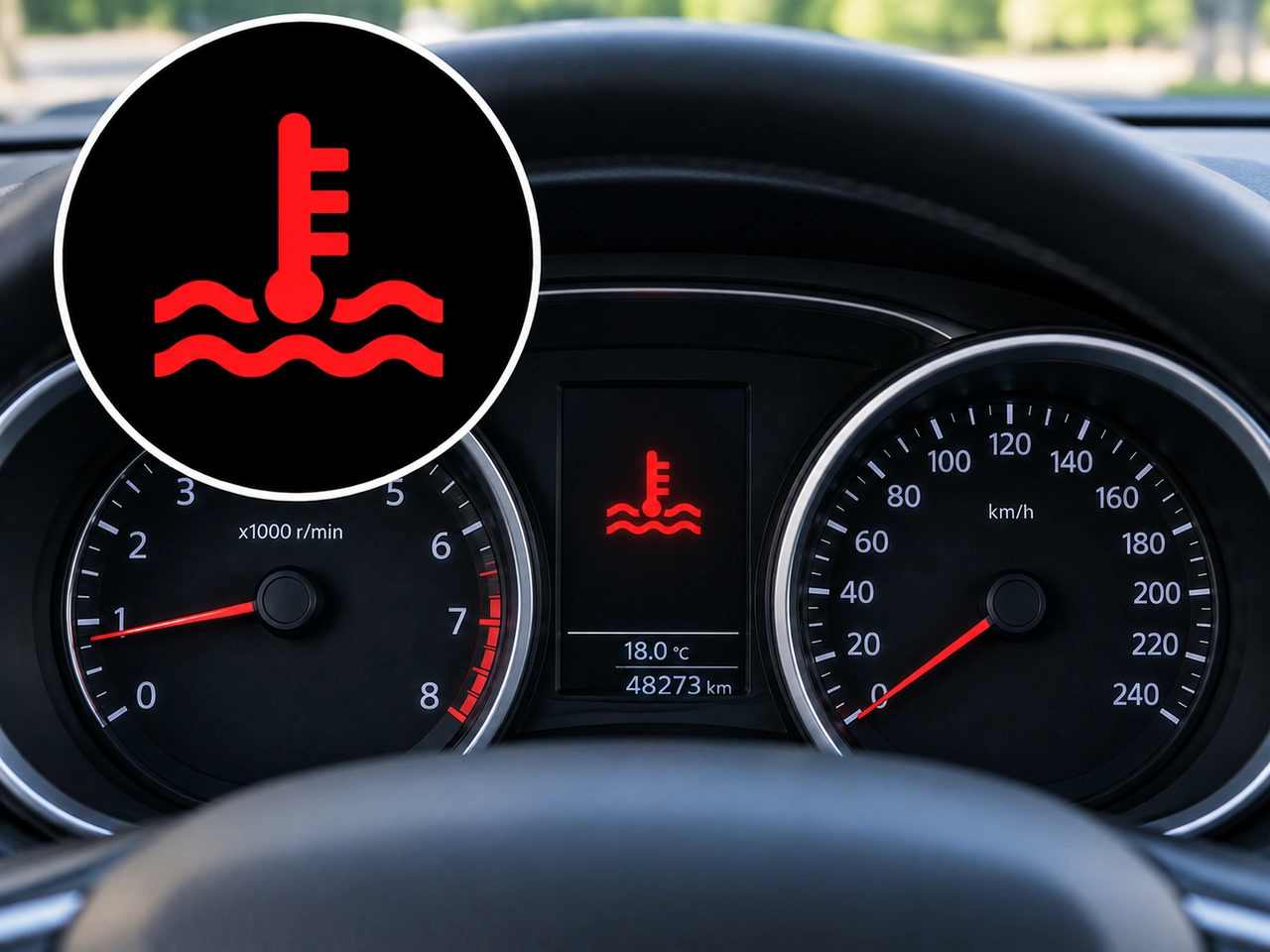
796. What does this dashboard symbol indicate?
This symbol indicates that the engine coolant temperature is too high. If it illuminates while driving, stop safely and allow the engine to cool before investigating the cause.
If the red coolant warning comes on while driving, pull over safely and switch off the engine. Let it cool before checking the coolant system.
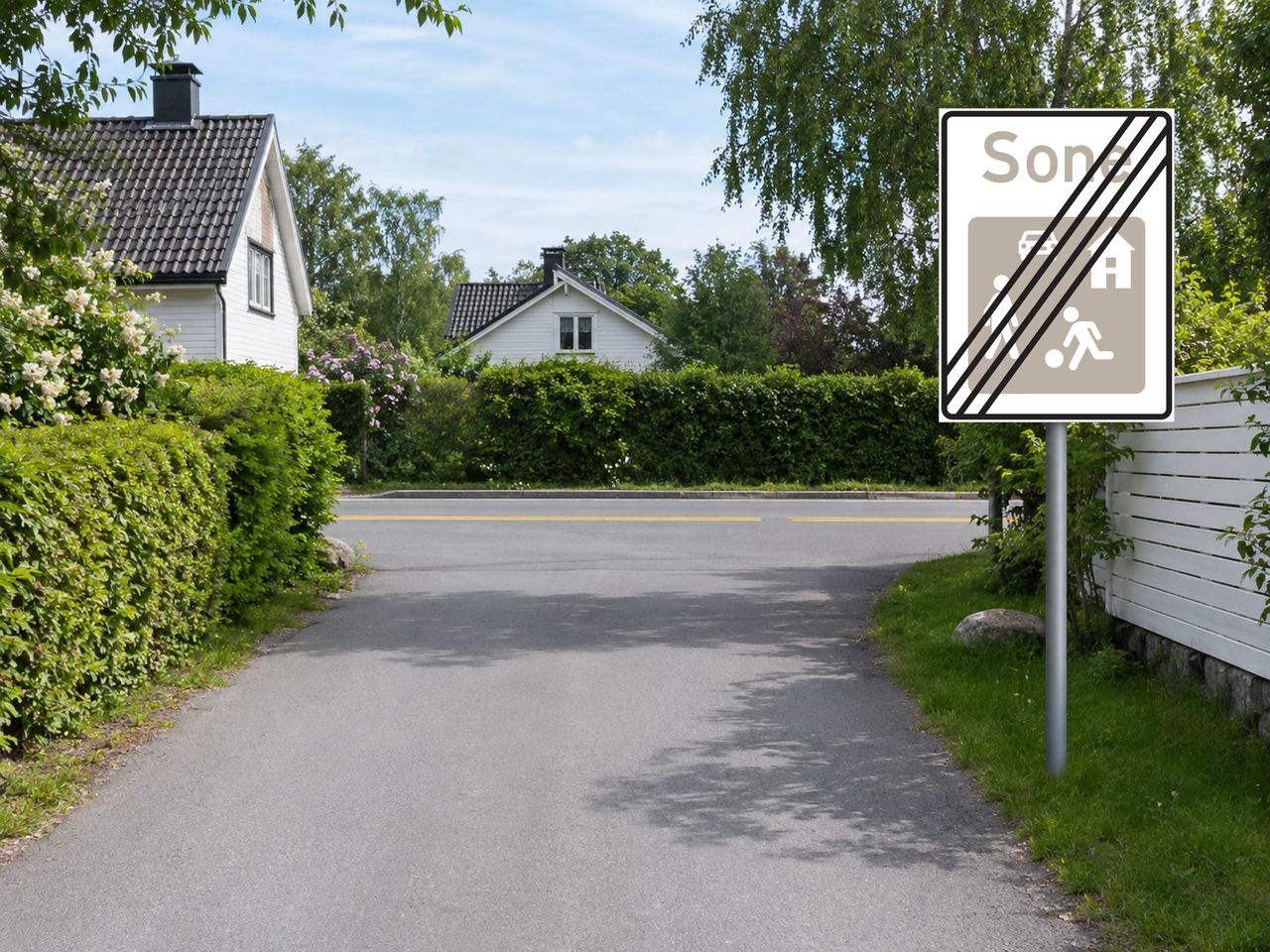
797. At the exit shown, you have priority because you are approaching the road from the right.
Check how the exit is marked or built. At the exit shown, give way before joining the road.
🔗 Sources
Norway • Skiltforskriften • Sign 542
Statens vegvesen • Official traffic-sign meanings
Statens vegvesen • Official sign artwork
Official Norwegian sign artwork: Statens vegvesen, sign 542, original EPS file 542_0.eps from the national sign artwork archive. Native Sone lettering, pictogram, cancellation stripes, arrow, orientation, borders and proportions retained. Colours use the authority's published PMS web swatches: blue PMS 293 and red PMS 179 where present. Original files and colour guidance. No third-party open licence is asserted for the government artwork.
Image credit: AI-generated background with source sign artwork resized and placed on the sign face.
Norway • Applicable traffic or parking rule
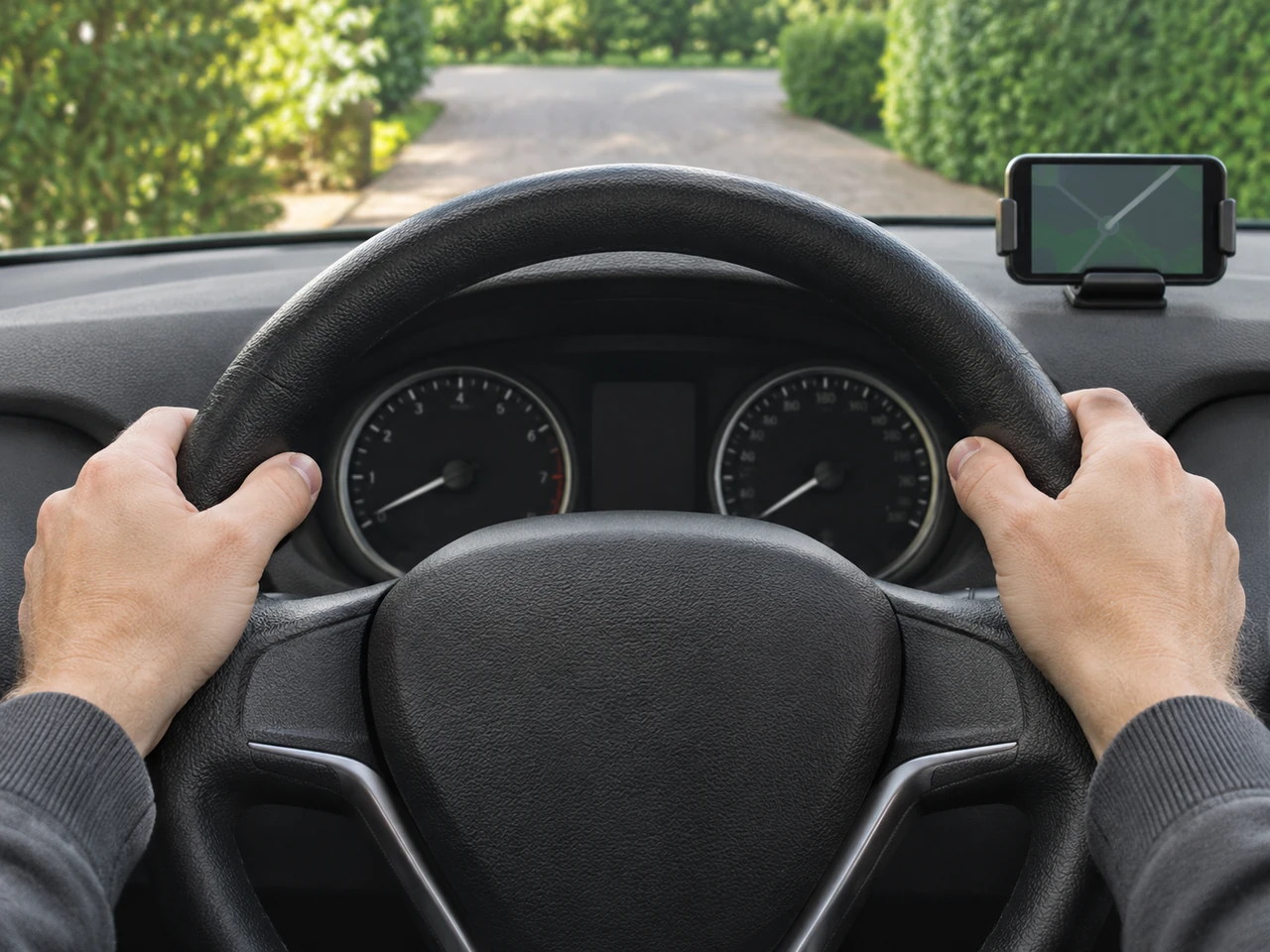
798. A phone holder removes the driver's duty to remain in control of the vehicle.
A proper holder does not remove the duty to remain able to perform the necessary driving movements and continuously control the vehicle. Mounted-device use must not prevent safe driving. Stop in a safe, lawful place if a task would interfere with driving.
🔗 Sources
Norwegian Police • Traffic safety • Careful driving and mobile phones
Image credit: AI-generated
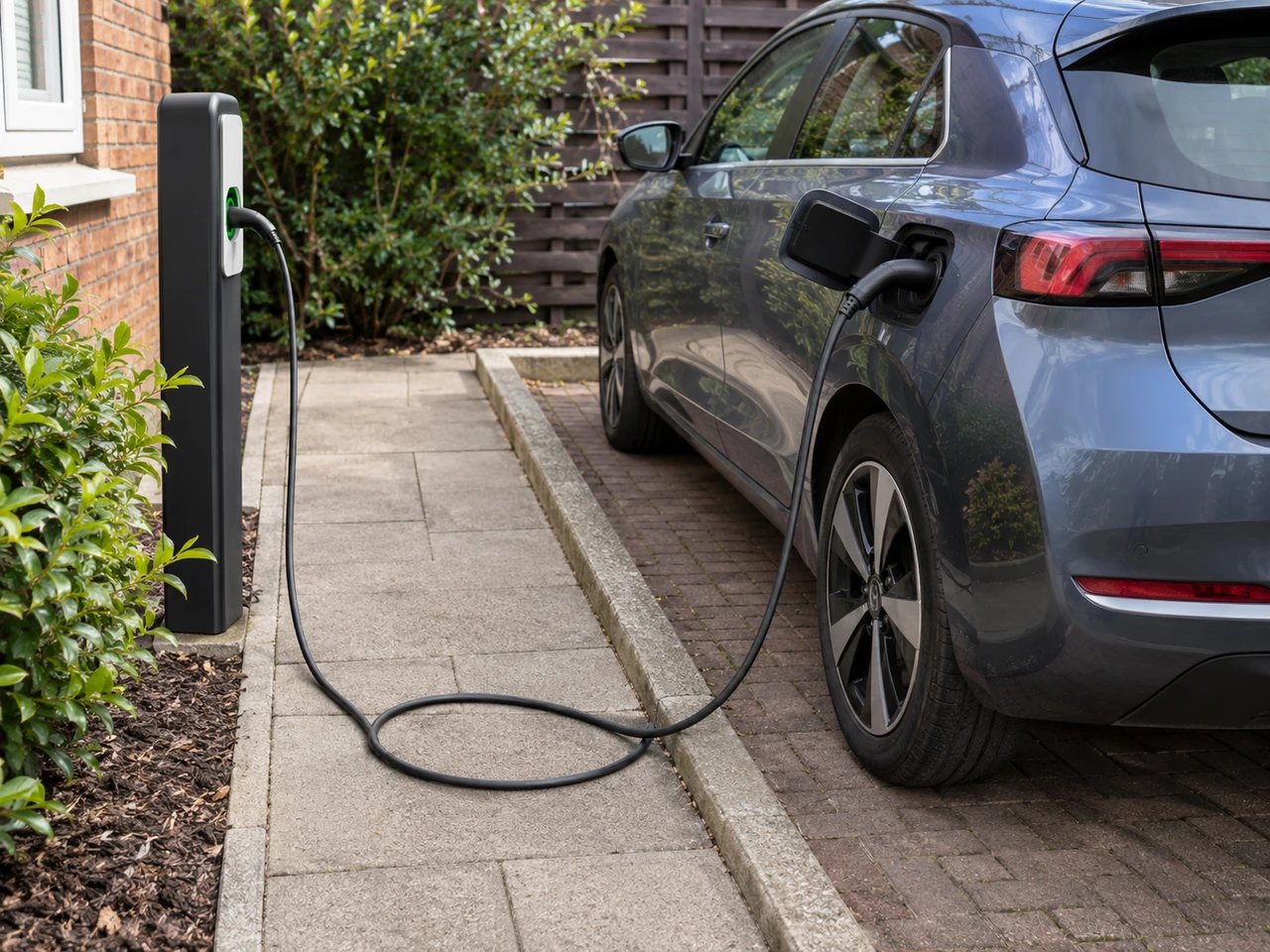
799. A trailing EV charging cable can be a trip hazard for pedestrians.
Position the vehicle and cable to keep pedestrian routes clear. After charging, return the cable and connector neatly to their holders or storage, following the equipment instructions.
🔗 Sources
The Highway Code (Great Britain) • Safety guidance, Rule 239: trailing charging cables
Image credit: AI-generated
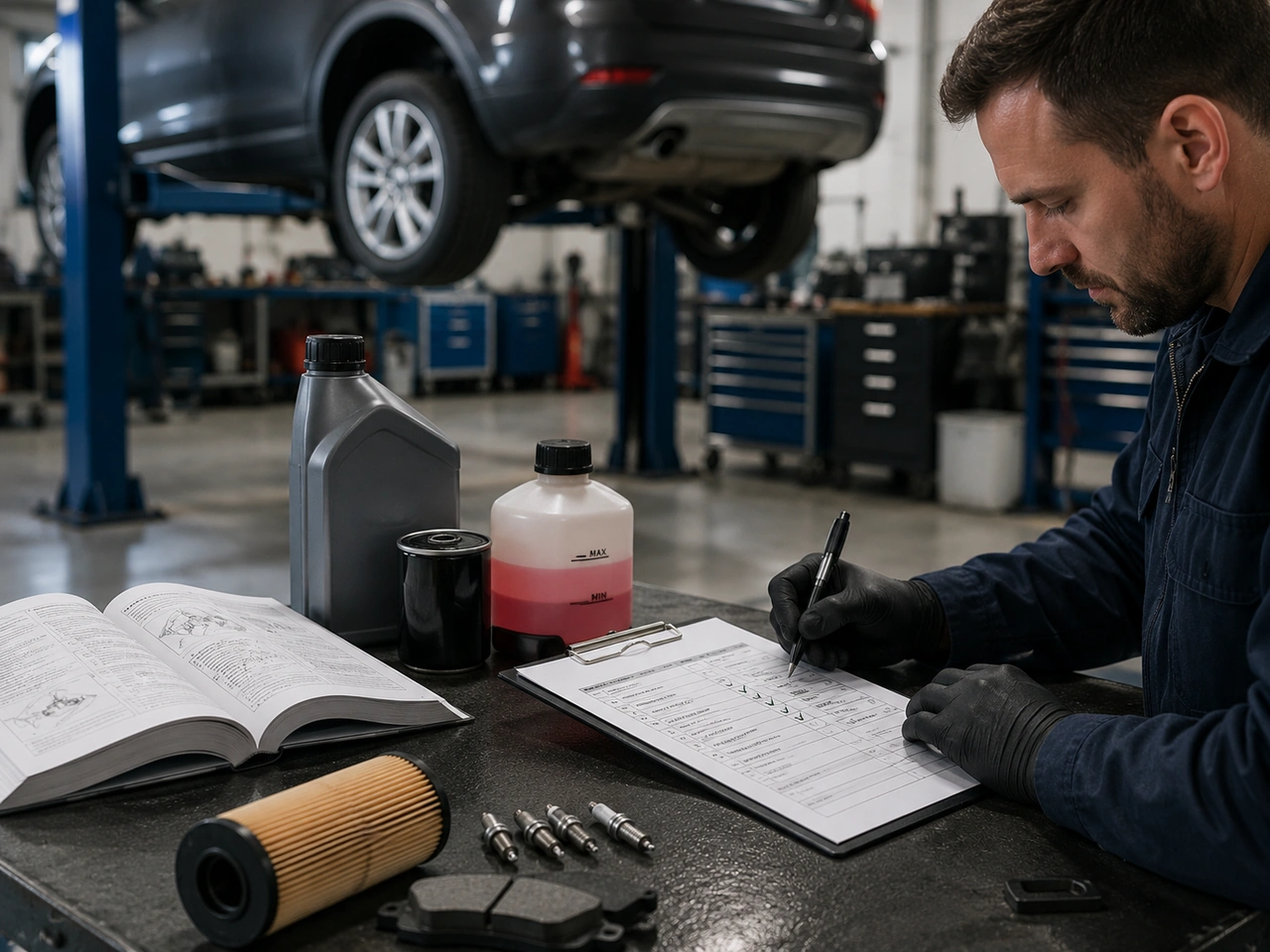
800. Why should you follow the manufacturer's service schedule?
Scheduled servicing helps ensure that brakes, tyres, fluids, filters, steering, suspension, and other important systems are checked and maintained before faults become more serious.
Norway. Follow the vehicle handbook’s service intervals and routine checks. Norway’s periodic vehicle inspection checks roadworthiness. Follow the manufacturer’s service schedule and deal with faults between inspections.